Has, Now, the Bell Tolled?

The pundits are still talking gold
But what is the reason it sold?
Liquidity drying
Means selling, not buying
Of havens. Has, now, the bell tolled?


One of the great things about FinX (FKA FinTwit) is that there are still a remarkable number of very smart folks who post things that help us better understand market gyrations.  The recent parabolic rise and this week’s reversal in the price of the barbarous relic seem unrelated to any concept of fundamentals one might have.  After all, perhaps the only fundamental that impacts gold is the rate of inflation, and since we haven’t seen a reading there in a month, it seems unlikely that had anything to do with this price action.  However, there is a far more likely explanation for the move lower, which has been very impressive in any context.  First, look at the chart below from tradingeconomics.com which shows the daily bars for the past 6 months.  The rise since early September has been nothing short of remarkable.

This begs two questions; first, why did it rise so far so fast, and second, what the heck happened on Friday to turn it around so dramatically?

The first question has several pieces to its answer including ongoing concerns over fiat currencies in general (the debasement trade that became popular), increased central bank buying and a recent change in financial advisors’ collective thought process about the merits of holding gold in an investment portfolio.  In fact, I think it was Bank of America (but I could be wrong) that recently suggested that the 60:40 portfolio should really be 60:20:20 with the final 20% being gold!  Given the human condition of jumping on bandwagons, it is no surprise that this type of ‘analysis’ has become more popular lately.  Whatever the driver, or combination of drivers, the price action was remarkable and clearly overdone.  After all, compare the current price, even after the recent sharp decline, to the 50-day moving average (the blue line on the chart) as an indicator of the extreme aspect of the price action.

But let’s focus on the last few days and the sharp reversal, which takes me back to X.  There is an account there (@_The_Prophet_) who put out an excellent step by step rationale of what led up to yesterday’s dramatic decline and why it is important.  I cannot recommend it highly enough as a short read.

In sum, his point is, and I fully subscribe to this idea, that when things get tough, investors/traders/speculators sell what they can sell, not what they want to sell.  If liquidity is drying up for the funding of speculative assets that are highly leveraged, then when margin and collateral calls come, and they always do, those owners sell whatever they have that they can liquidate.  In this case, given the massive run up in the price of gold, there was a significant amount of value to be drawn down and utilized to satisfy those margin calls.  

History has shown this to be the case time and again.  I would point to the Long-Term Capital Management fiasco back in 1998 where the Nobel Prize winning fund managers quickly found out that liquidity was much more important than ideas and they were forced to sell out their Treasury holdings rather than their leveraged positions because the former had prices and the latter didn’t.  This ultimately led to the liquidation of their fund along with some $5 billion in capital.

There has been much discussion as to the nature of the recent rise in asset prices with many pundits calling it the everything bubble.  Bubbles are created when central banks pump significant liquidity into the system and this is no different.  We know the Fed has allegedly (look at the graph of M2 below to see how much they have been increasing money supply during their tightening) been trying to reduce its balance sheet (i.e. liquidity) but this could well be a sign that phase is over.  Typically, the next step is QE in some form, so beware.  And when that comes, you can be sure that gold will rally sharply once again!

Of course, while the gold move has been the most spectacular, we have seen a lot more market volatility in the past several sessions, so let’s look at how things behaved overnight.  Yesterday’s mixed US session was followed by more laggards than leaders in Asia with Japan essentially unchanged, while HK (-0.9%) and China (-0.3%) both slid a bit.  Recent comments by President Trump that he may not sit down with President Xi next week have investors and traders there nervous.  Elsewhere, Korea (+1.5%) and Thailand (+1.1%) had solid sessions while the rest of the region (Indonesia -1.0%, Malaysia -0.9%, Australia -0.7%) all lagged.

In Europe, the UK (+0.9%) is benefitting this morning from softer than expected inflation readings (3.8% vs 4.0% expected) which has tongues wagging that the BOE will now be cutting rates.  The market priced probability has risen to 60% for a cut this year, up from 40% yesterday, before this morning’s data release.  However, on the continent, only Spain (+0.6%) is showing any life on local earnings performance while the rest of the markets are all lower by varying degrees between -0.1% and -0.5%.  As to US futures, at this hour (7:20) they are unchanged.

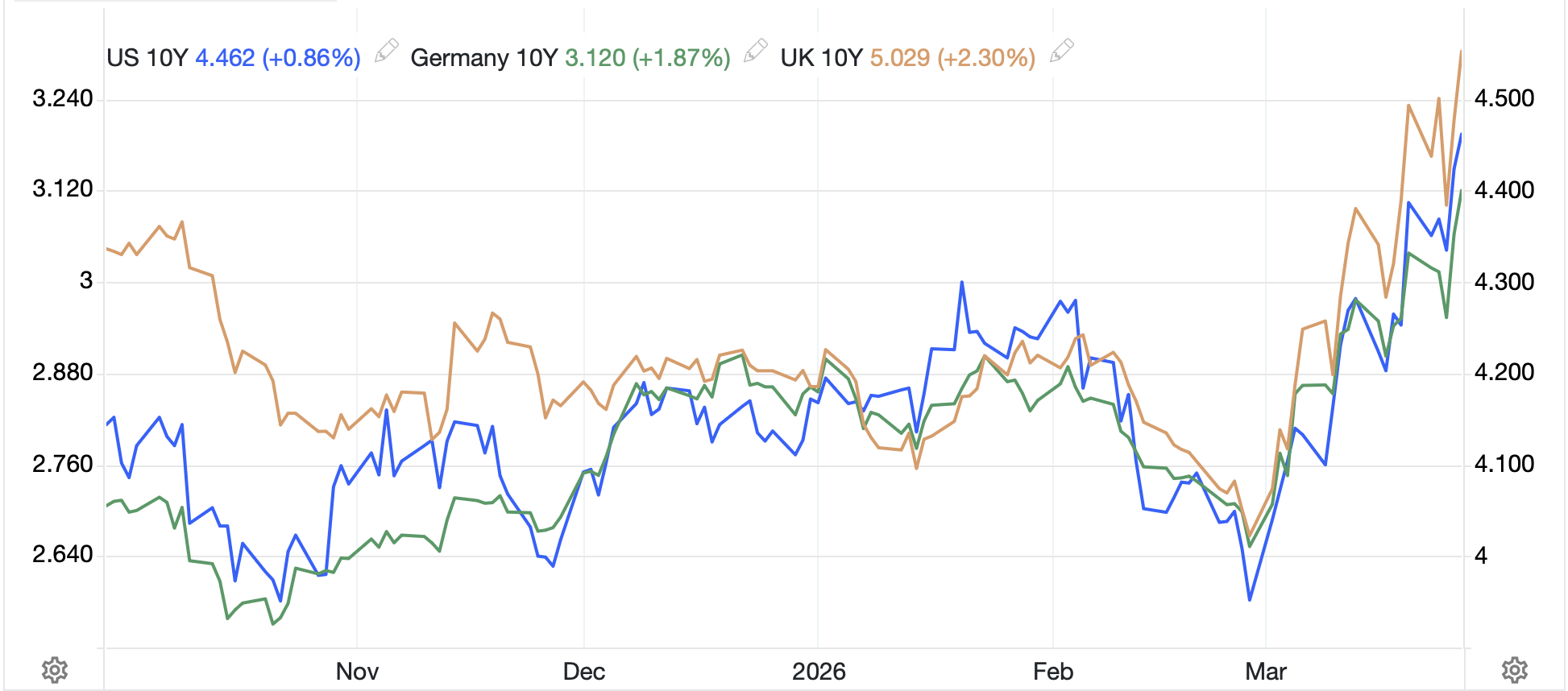
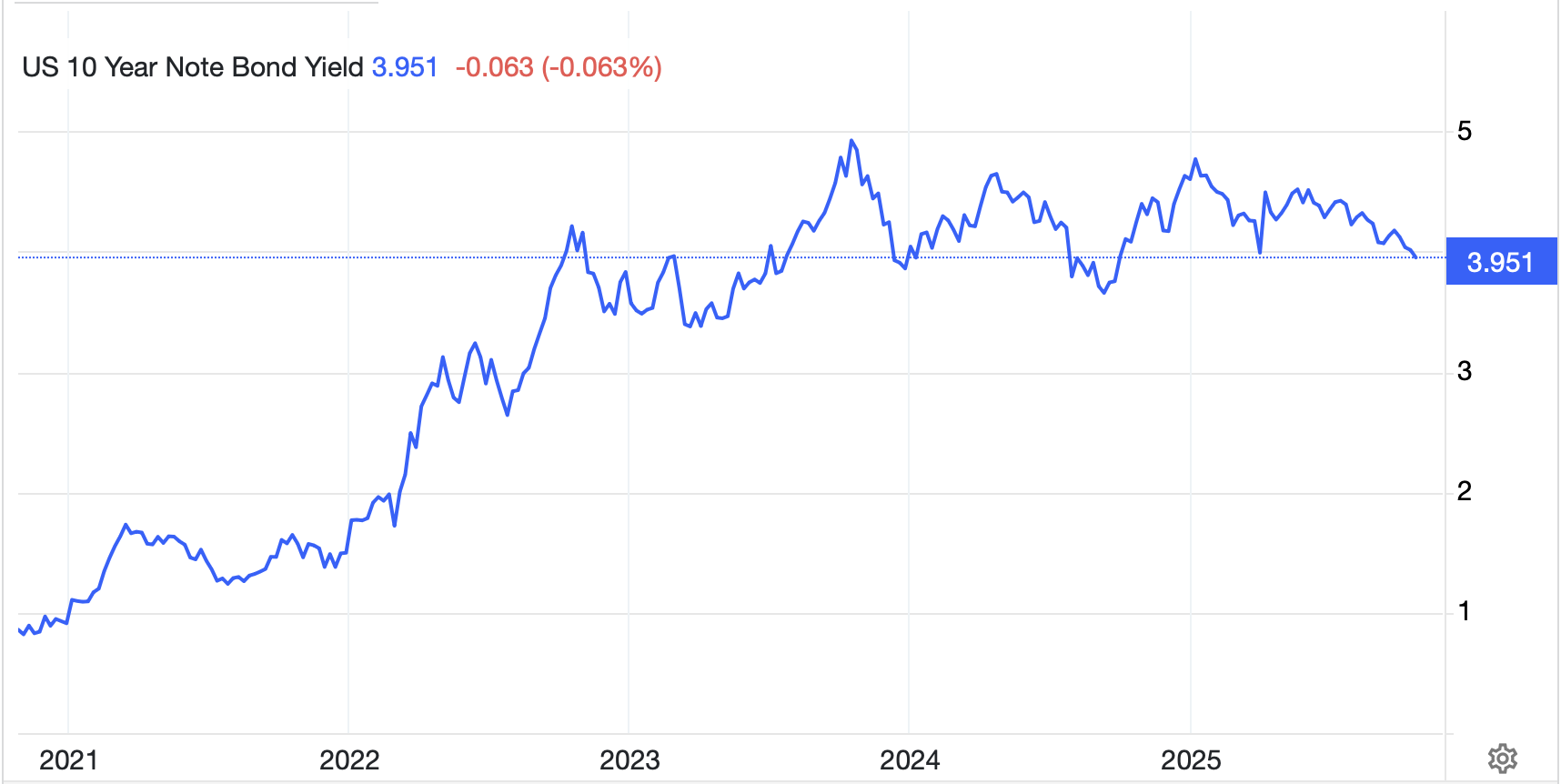
Bond markets continue to see yields slide lower with Treasuries (-1bp) now nicely below 4.00% and trading at their lowest level in more than a year (see below)

Source: tradingeconomics.com

European sovereign yields have seen similar movement, edging lower by -1bp except for UK gilts, which have fallen -10bps this morning after that inflation report.  Perhaps more interesting is the fact that despite Takaichi-san becoming PM, with her platform of increased fiscal spending, JGB yields are 2bps lower this morning.

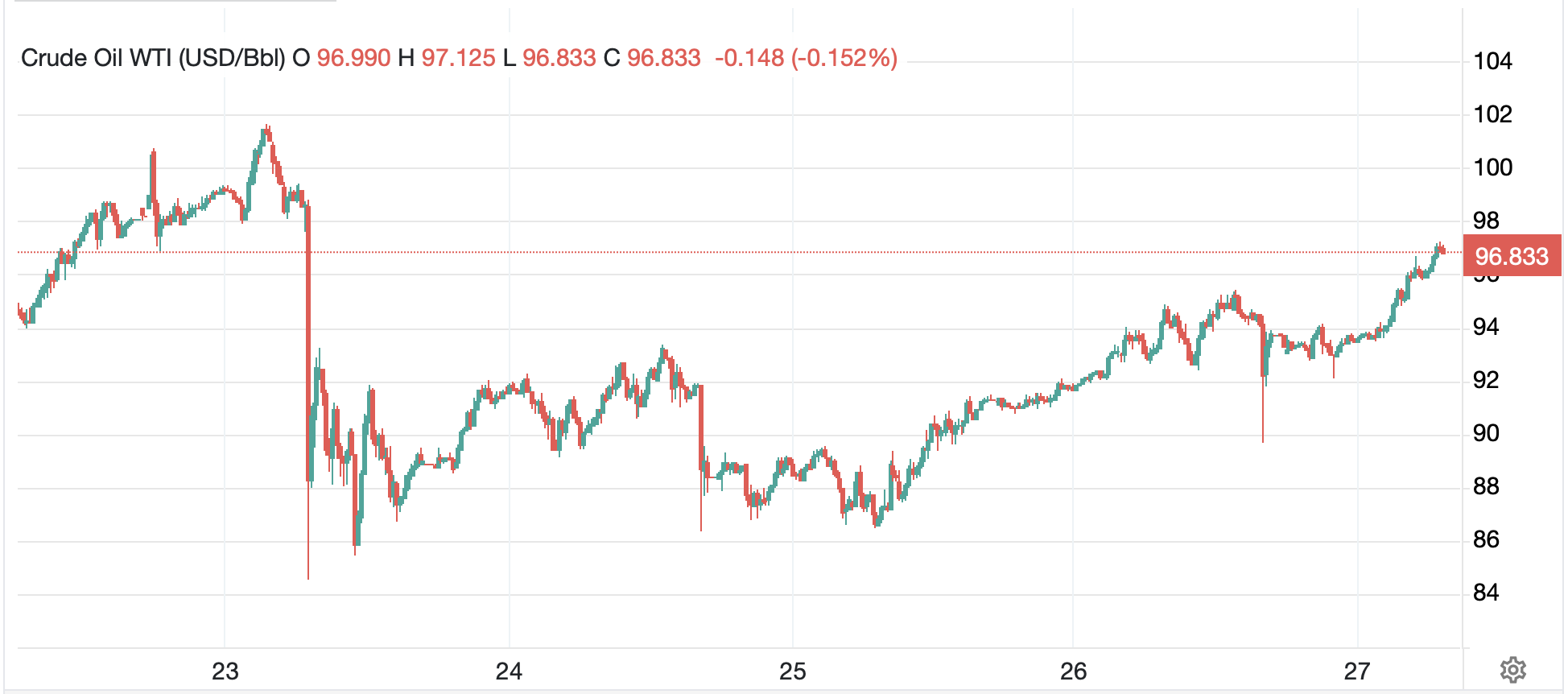
Turning to the rest of the commodity space, oil (+2.1%) is rising on the news that the US has started to refill the SPR.  While the initial bid is only for 1 million barrels, this is seen as the beginning of the process with the administration taking advantage of the recent low prices.  Arguably, given they want to see more drilling as well, it is very possible that $55/bbl is as low as they really want it to go.  As to the metals beyond gold (-2.4% this morning), silver (-1.6%) is still getting dragged along but copper (+0.6%) and platinum (+0.9%) seem to be consolidating after sharp declines in both.  My sense is gold remains the liquidity asset of choice given its far larger market value.  (One other thing to note is that there was much discussion how gold has replaced Treasuries as the most widely held central bank reserve asset.  That was entirely a valuation story, not a purchase story.  In other words, the dramatic rise in the price of gold increased the value of its holdings relative to other assets on central bank balance sheets.)  

Finally, the dollar is doing just fine.  It continues within its recent trading range and basically hasn’t gone anywhere in the past six months.  In fact, of you look at the DXY chart below from Yahoo Finance, it is arguably in the upper quintiles of its long-term price action.  It is very difficult for me to listen to all the reasons that the dollar is going to be replaced by some other reserve currency and take it very seriously.

As to specific currency moves today, the pound (-0.3%) is slipping on the increased belief in a rate cut coming soon and ZAR (-0.5%) is suffering on the ongoing gold price decline but away from those two, +/-0.1% is the story of the day.

EIA Crude Oil inventories are the only data of the day with a modest build expected.  Yesterday, Governor Waller discussed payment systems and cryptocurrencies never straying into monetary policy so we will need to wait for CPI on Friday, the FOMC next Wednesday and whenever the government reopens, which I sense is coming sooner rather than later as the Democrats have been completely unsuccessful in making the case this is President Trump’s fault.  

It appears the cracks in the leverage that has accompanied the recent rally in asset prices are beginning to appear.  If things get worse, and they probably will, look for the Fed to respond and haven assets to be in demand.  Amongst those will be the dollar.

Good luck

Adf

Voters Have Doubt

In France, Monsiuer Bayrou is out
In Norway, though, Labor held stout
Japan’s been discussed
And Starmer’s soon Trussed
In governments, voters have doubt
 
Investors, though, see all this news
And none of them have changed their views
Just one thing they heed
And that’s market greed
At some point they’ll all sing the blues


Here we are on Wednesday and already we have seen two major (Japan and France) and one minor (Nepal) nations make governmental changes.  Actually, they haven’t really changed yet, they just defenestrated the PM and now need to figure out what to do next.  In Japan, it appears there are two key candidates vying to lead a minority LDP government, Sanae Takaichi and Shinjiro Koizumi, although at this point it appears too close to call.  Regardless, it will be rough sledding for whoever wins the seat as the underlying problems that undermined Ishiba-san remain.  

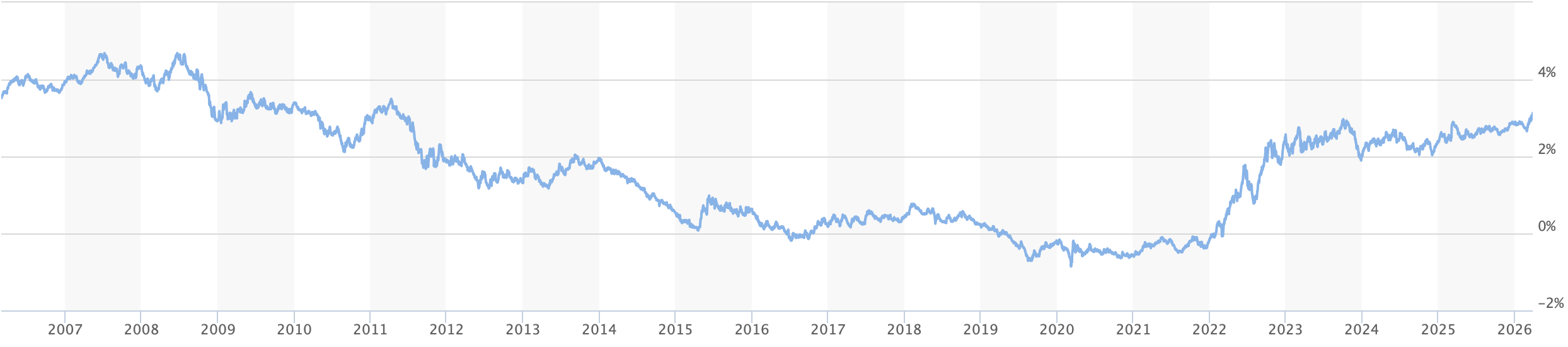
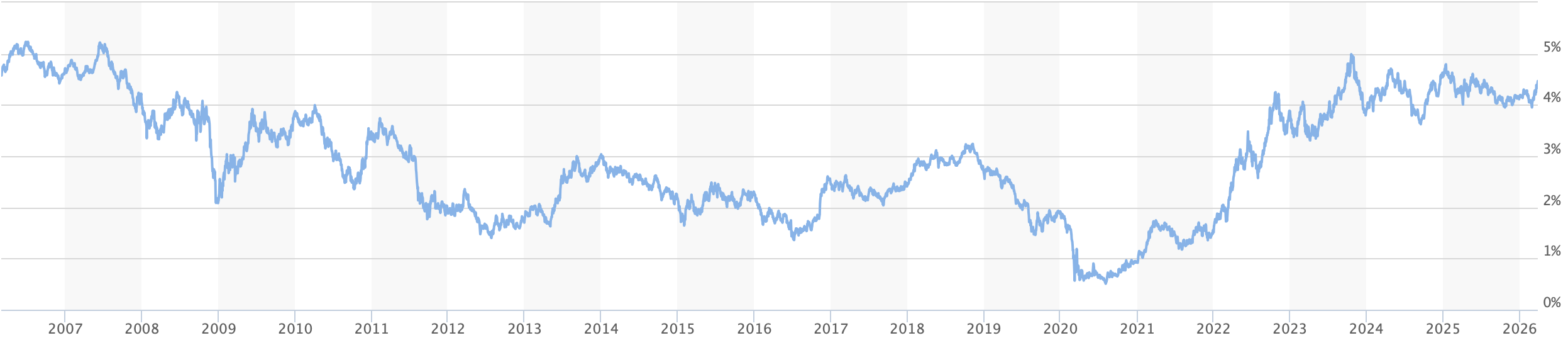
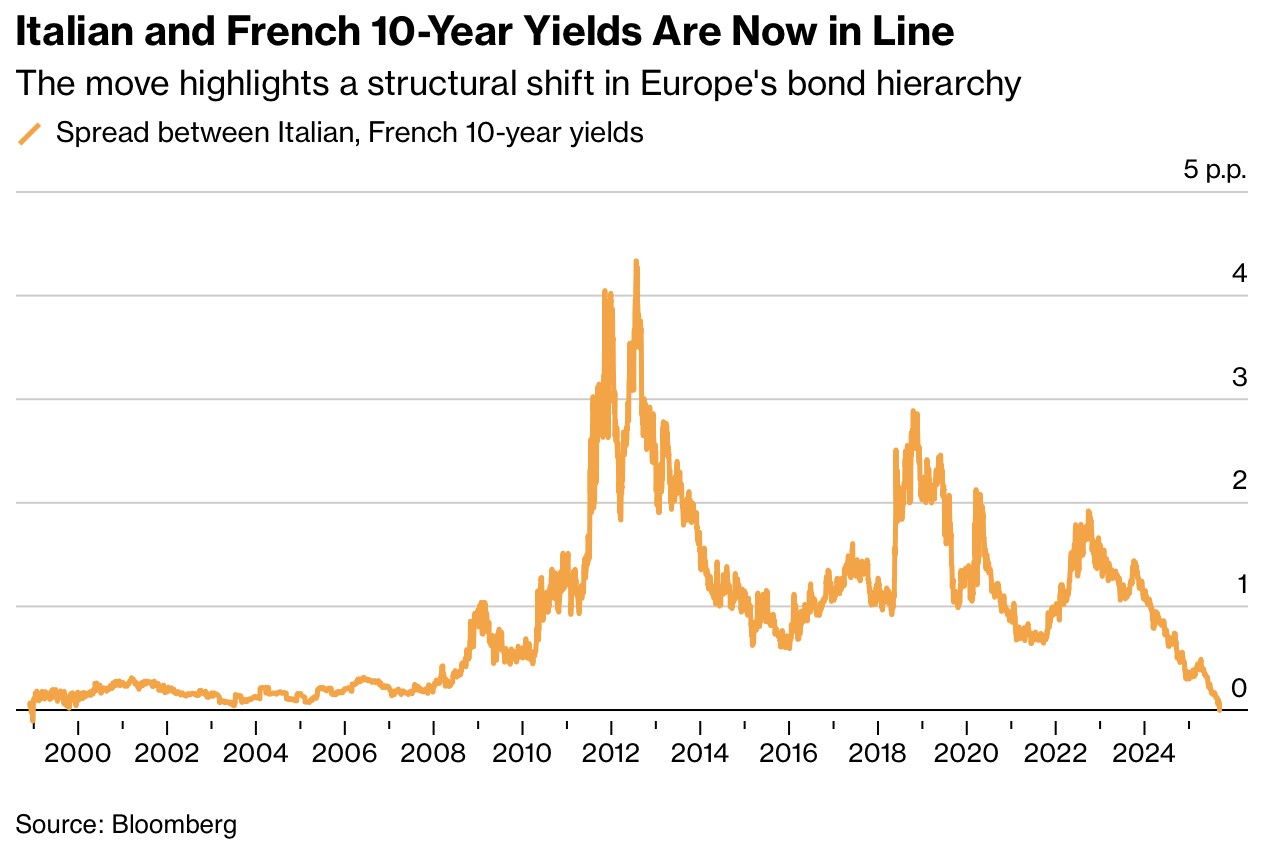
In France, President Macron has, so far, said he will not call for new elections, nor will he resign despite increasing pressure from both the left and the right for both measures.  He will appoint a new PM this week and they will go through this process yet again as the underlying issue, how to rein in spending and reduce the budget deficit, remains with nobody willing to make the hard decisions.  A side note here is that French 10-year OATs now trade at the same level as Italian 10-year BTPs, a catastrophic decline over the past 15 years as per the below chart. 

Recall, during the Eurozone crisis in 2011, Italy was perceived as the second worst situation after Greece in the PIGS, while France was grouped with Germany as hale and hearty.  Oh, how the mighty have fallen.

Nepal is clearly too insignificant from a global macroeconomic perspective to matter, but it strikes me that the fall of the PM there is merely in line with the growing unhappiness of populations around the world with their respective governments.

A friend of mine, Josh Myers, who writes a very thoughtful Substack published last night and it is well worth the read.  He makes the point that the Washington Consensus, which has since the 1980’s, underpinned essentially all G10 activity and focused on privatization of assets, free trade and liberalized financial systems, appears to have come to the end of the road.  I think this is an excellent observation and fits well with my thesis that the consensus views of appropriate policies are falling apart.  Too many people have been left behind as both income and wealth inequality in the G10 is rampant, and those who have fallen behind are now angry enough to make themselves heard.  

This is why we see governments fall.  It is why nationalist parties are gaining strength around the world as they focus on their own citizens rather than a global concept.  And it is why those governments still in power are desperately struggling to prevent their opponents from being able to speak.  This is the genesis of the restrictions on speech that are now rampant in Germany and the UK, two nations whose governments are under extreme pressure because of policy failures, but don’t want to give up the reins of power and are trying to prevent anybody from saying anything bad about them, thus literally jailing those who do!

And yet…investors are sanguine about it all!  At least that seems to be the case on the surface as equity indices around the world continue to trade higher with most major equity markets at or within a few percent of all-time highs.  This seems like misplaced confidence to me as the one thing I consistently read is that markets are performing well in anticipation of the FOMC cutting Fed funds next week, with hopes growing that it will be a 50bp cut.  

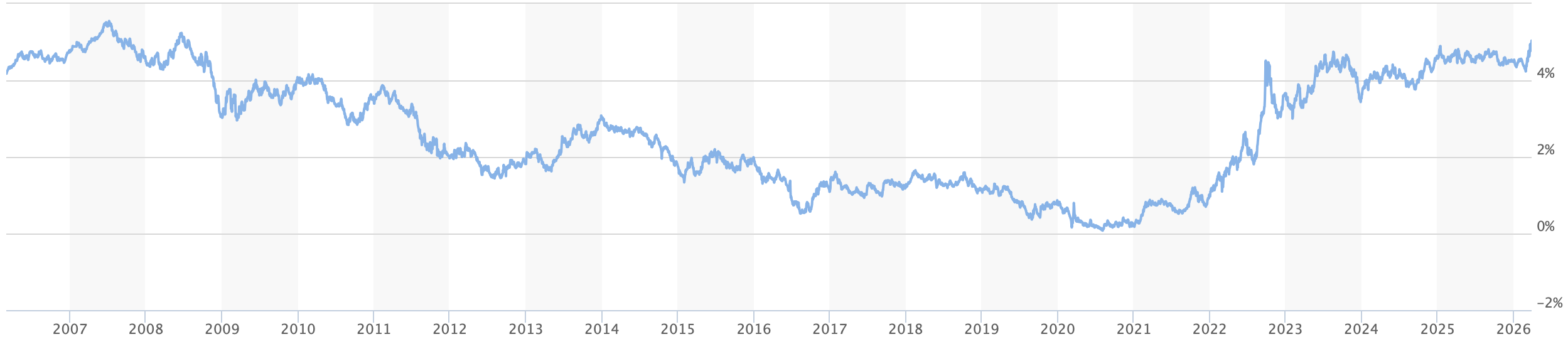
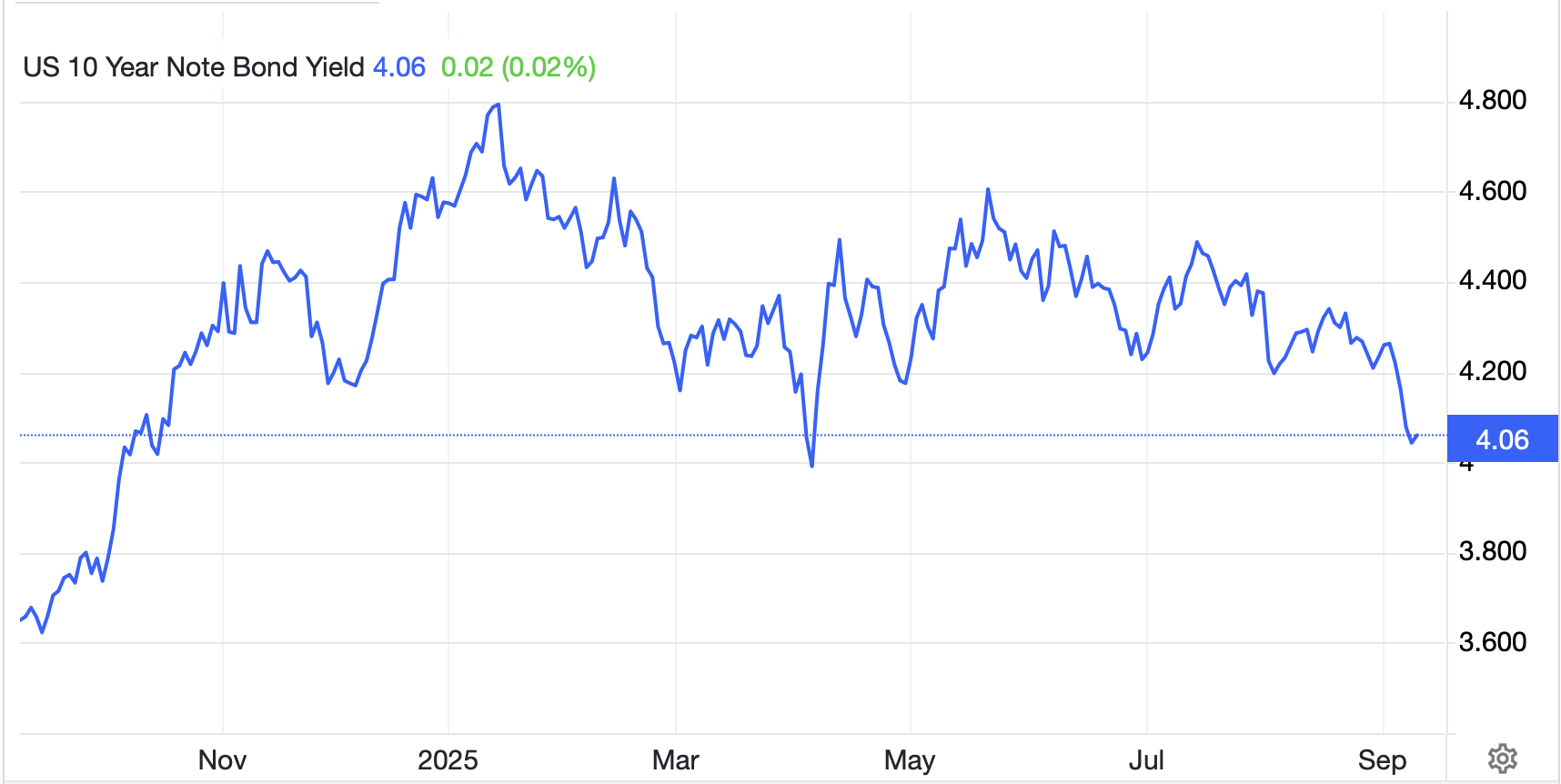
But if we look at the Treasury market, which has seen yields slide steadily since the beginning of the year, with 10-year yields now lower by 75bps since President Trump’s inauguration, it is difficult to square that circle.  

Source: tradingeconomics.com

Bond yields typically rise and fall based on two things, expected inflation and expected growth as those two have been conflated in investor (and economist) minds for a while.  The upshot is if yields are declining steadily, as they have been, it implies investors see slowing economic activity which will lead to lower inflation.  Now, if economic activity is set to slow, it strikes me that will not help corporate profitability, and in fact, has the potential to exacerbate the situation by forcing layoffs, reducing economic activity further.  Alas, it is not clear if that will drive inflation lower in any meaningful way.  The point is the bond market and the stock market are looking at the same data and seeing very different future outcomes.

Is there a tiebreaker we can use here?  The FX market might be one place, but the weakness in this idea is that FX rates are relative rates, not descriptive of the global economy.  Sure, historically the dollar has been the ultimate safe haven with funds flowing there when things got rough economically, but its recent weakness does not foretell that particular story.  Which brings us to the only other asset class around, commodities.  And the one thing we have seen lately is commodity prices continuously rising, or at least metals prices doing so, specifically gold.  Several millennia of history showing gold to be the one true store of value is not easily forgotten, and that is why the barbarous relic has rallied 39% so far in 2025.  

A number of analysts have likened the current situation to that of Wile E Coyote and I understand the idea.  It certainly is a potential outcome so beware.

Well, once again I have taken much time so this will be the lightning round.  Starting with bonds, this morning, yields in the US and Europe are higher by 2bps across the board, with one exception, France which has seen yields rise 6bps as discussed above.  JGB yields are unchanged as it appears investors there don’t know what to think yet and are awaiting the new PM decision.

In equities, yesterday’s very modest late rallies in the US were followed by a mixed session in Asia (Japan -0.4%, China -0.7%, HK +1.2%) although there were more winners (Korea, India, Taiwan, Thailand) than laggards (Australia, New Zealand, Indonesia) elsewhere in the region.  In Europe, mixed is also the proper adjective with the CAC (+0.4%) remarkably leading the way higher despite lousy IP data (-1.1%) while Germany (-0.4%) and Spain (-0.4%) both lag.  As to US futures, at this hour (7:20) they are marginally higher, 0.15% or so.

Oil (+0.8%) continues to trade back and forth each day with no direction for now.  I’m sure something will change the situation here, but I have no idea what it will be.  Gold (+0.5%) meanwhile goes from strength to strength and is sitting at yet another new all-time high, above $3600/oz.  While silver and copper are little changed this morning, the one thing that seems clear is there is no shortage of demand for gold.

Finally, the dollar is arguably slightly lower this morning, although mixed may be a better description.  The euro (-0.15%) is lagging but JPY (+0.6%) is the strongest currency across both G10 and EMG blocs.  Otherwise, it is largely +/-0.2% or less as traders ponder the data.

While CPI is released on Thursday, I think this morning’s NFP revision is likely to be the most impactful number we see this week, and truly, ahead of the FOMC next week.

TodayNFP Revision-500K to -950K
WednesdayPPI0.3% (3.3% Y/Y)
 -ex food & energy0.3% (3.5% Y/Y)
ThursdayECB Rate Decision2.0% (unchanged)
 CPI0.3% (2.9% Y/Y)
 -ex food & energy0.3% (3.1% Y/Y)
 Initial Claims235K
 Continuing Claims1950K
FridayMichigan Sentiment58.0

Source: tradingeconomics.com

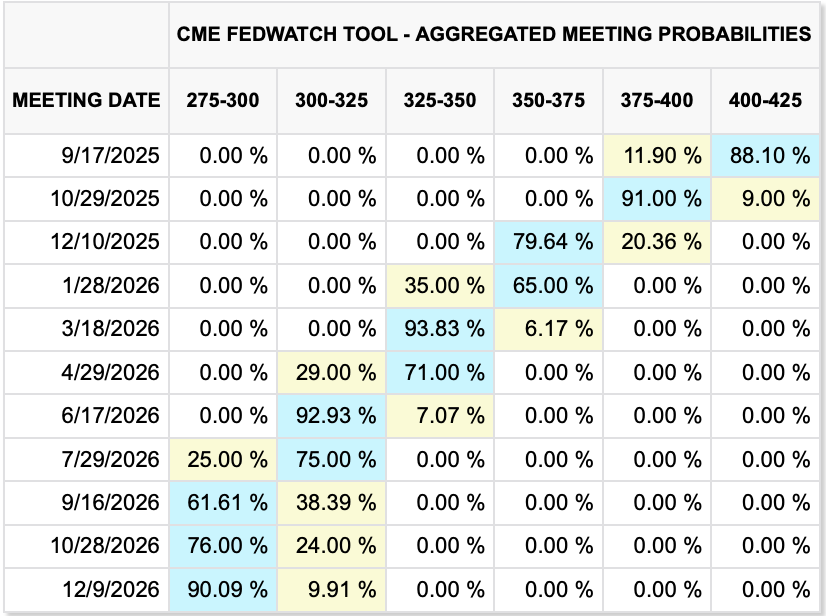
As I type, the Fed funds futures market is pricing a 12% probability of a 50bp cut next week and an 80% chance of 75bps this year.

Source: cmegroup.com

If the NFP revisions are more than -500K, I suspect that rate cut probabilities will rise sharply with the dollar falling, gold rising, and bond yields heading lower as well.  Equity markets will probably rally initially, although it strikes me that this type of bad news will not help corporate earnings.  So, buckle up for the fun this morning on a release that has historically been ignored but is now clearly center stage.

Good luck

Adf