Just Keeping Up

The yen slid further
Is it accelerating?
Or just keeping up?

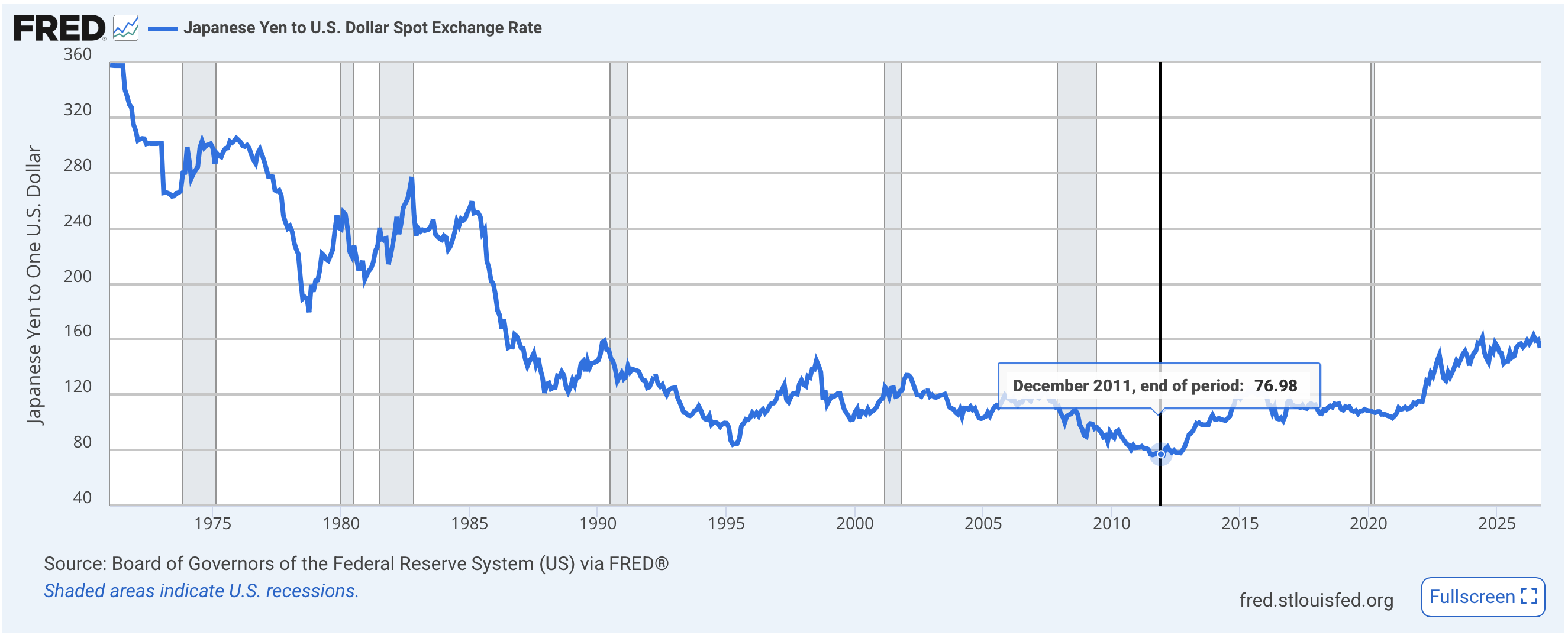
There has been a lot of press this morning regarding the yen (-0.25%) which as you can see has weakened a bit, but hardly an extraordinary move.  Thus, the press is all about the level at which it now trades, 162.30ish which is a new high for the move, although it has yet to break above its 1986 levels.  The nature of the articles has been a question as to when the BOJ is going to be back intervening again which then morphs into a discussion as to whether intervention is effective.  (While I don’t know if they will be back in, I imagine that will be the case at some point, we know it is not effective.)  At any rate, I have created the following chart on tradingeconomics.com so that you can (hopefully) see why they have not yet intervened.

One of the key features of the MOF seven step program to intervention is the pace of the yen’s movement.  A rapid decline is far less tolerable than a gradual movement.  As well, there is the question of whether the yen is declining across the board, or it if is declining specifically, or at least more rapidly, vs. the dollar.  It is no surprise to me that the MOF remains on the sidelines as the dollar is rallying everywhere right now, so yen weakness is really more about dollar strength.  If you look at the chart above, I tried to show the slope of the movement in USDJPY vs. DXY back in the beginning of 2024 which was the previous time the yen started to show serious weakness and the BOJ intervened.  To my eye, the slope of the two lines in 2024 are far different than the slope of the current movement.  In fact, the table below shows that the yen’s weakness over the past week and month is hardly an outlier.  In fact, it has basically held up better than its major counterparts.

My point is much is being made about the yen’s breech of the 162 level, but the movement has been quite gradual, hardly the rapid and volatile movement that has driven intervention decisions in the past.  Frankly, there is little reason to believe that with the dollar strong across the board, the BOJ can do anything other than waste money in an intervention effort.

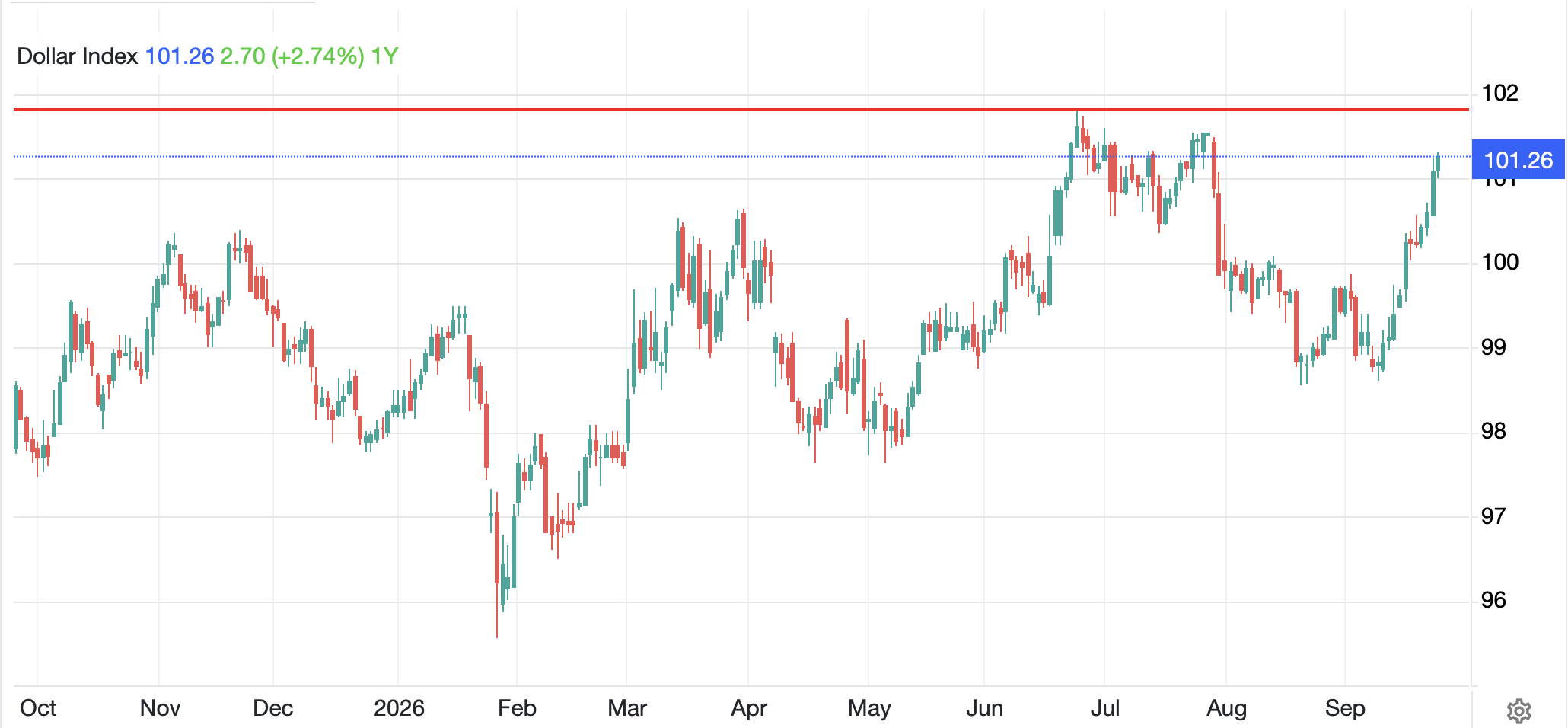
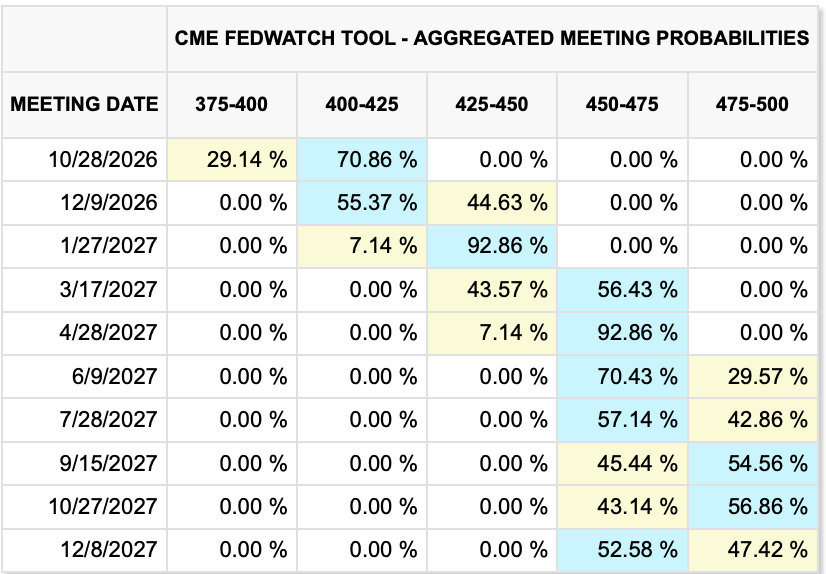
Which begs the question, why is the dollar performing so well?  The pat answer remains that the market is pricing in a suddenly hawkish FOMC with the Fed funds futures market pricing an October rate hike now, with a one-third chance of a second one in December.  See below from the CME.

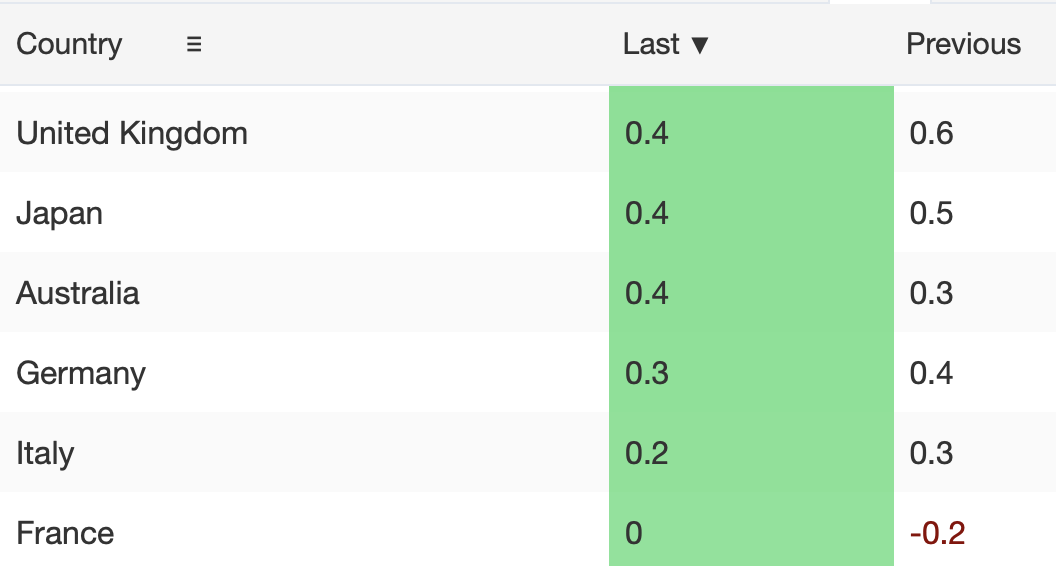
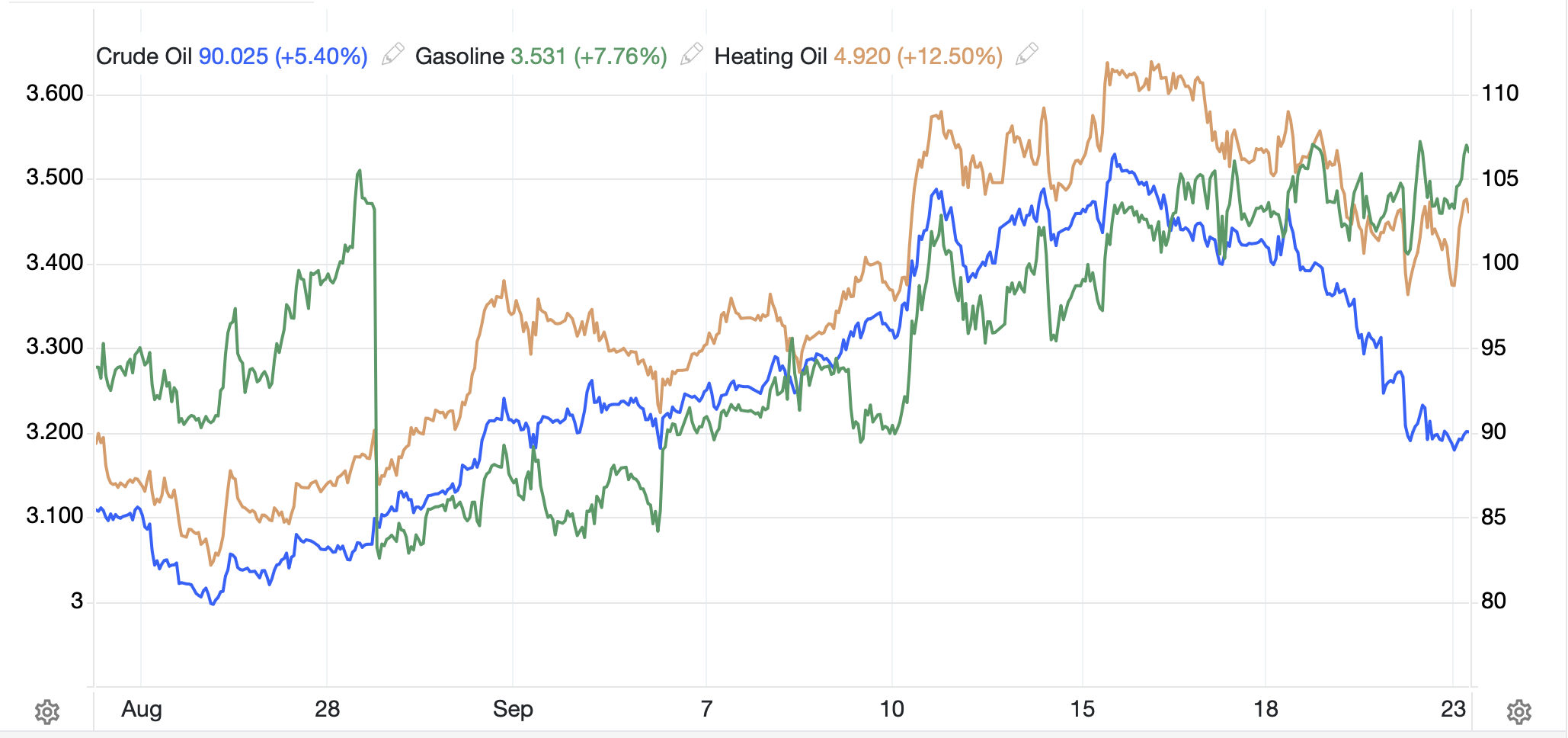
But I still don’t understand that pricing.  Despite all the ongoing chatter about the imminent shortage of oil/diesel/gasoline/jet fuel that has yet to appear and has now been delayed to H2 of this year, markets continue to price limited further interruption to energy availability.  In addition, one need only look at today’s raft of Eurozone inflation data where France (1.8%), Italy (3.0%) and every German state (between 2.1% and 2.4%) all printed lower than last month, as well as lower than forecast, and recognize that the significant decline in energy prices over the past month is going to push down measured inflation.  Nothing has changed my view that the Fed is on hold for now, and over the next several months the idea of rate cuts will come back into vogue.  At that point, I assume the dollar will give up its recent gains, although I do not foresee a reason for a substantial decline.  After all, investment flows into the US are going to remain robust.

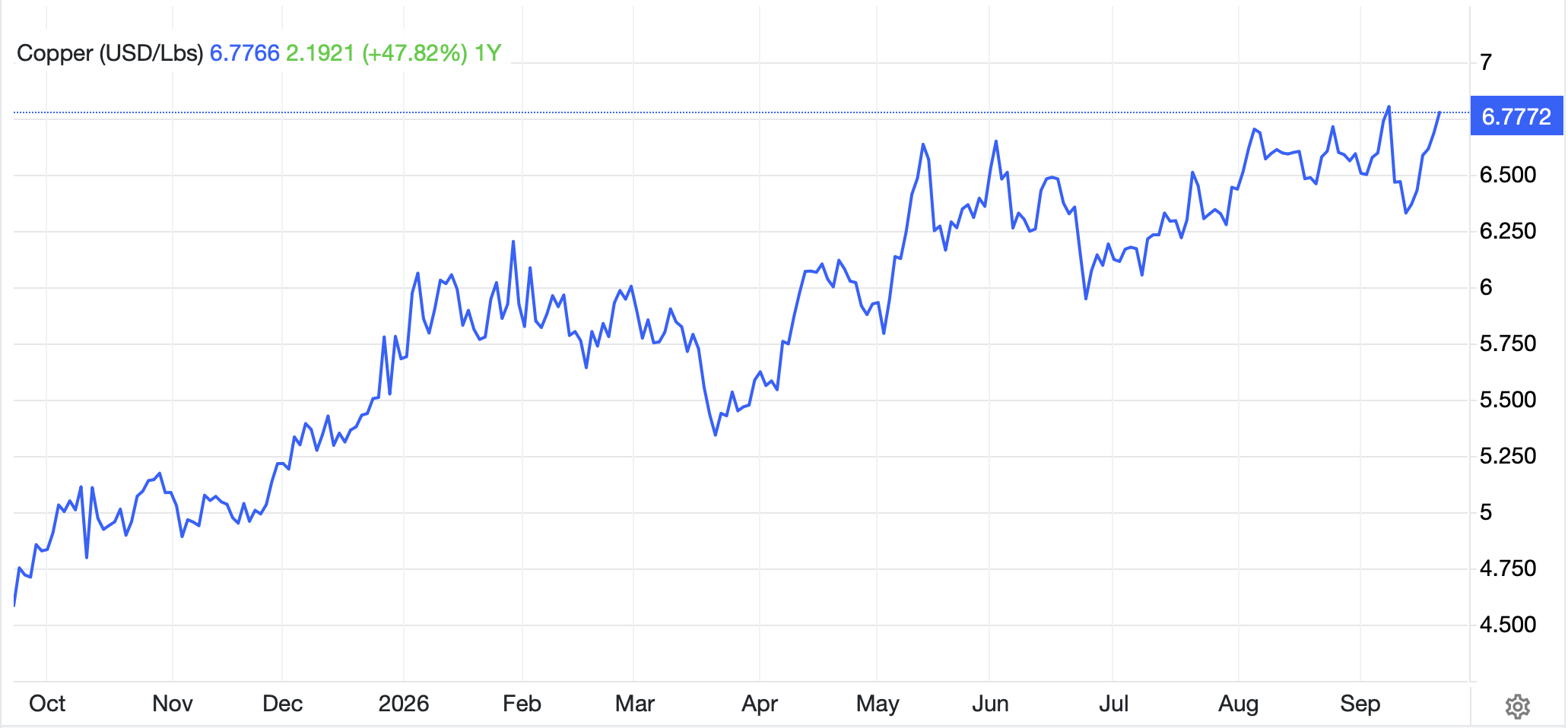
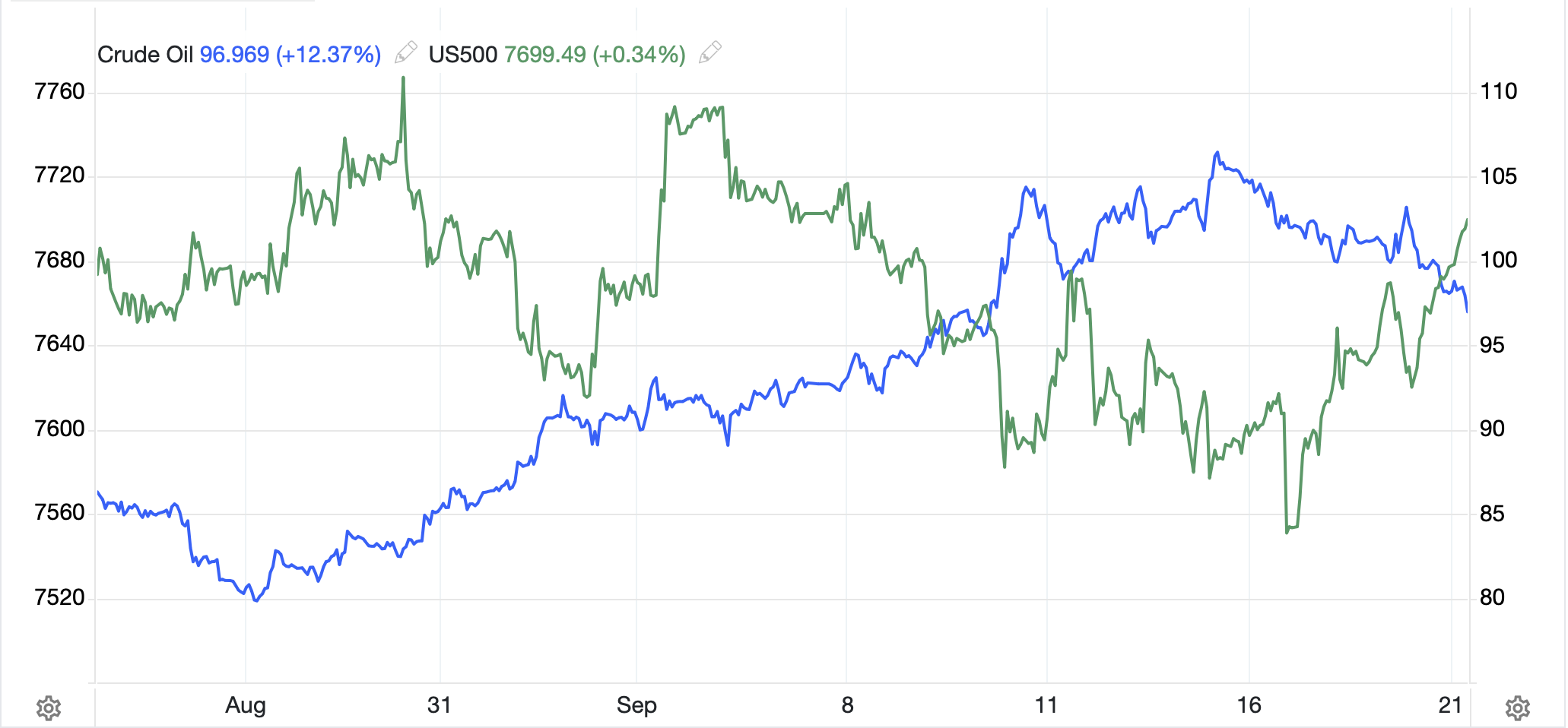
And with that, let’s look at other markets.  As proof positive that nothing is ongoing, oil is unchanged this morning, just above $70/bbl and there has been precious little new news about the situation in the Gulf.  Metals are edging higher (Au +0.4%, Ag +1.3%, Cu +1.3%) but the precious set remain in downtrends although copper is in demand.

You’ve already seen the dollar movement above, at least vs. the bulk of the G10.  But elsewhere, it is not a very interesting picture either.  Perhaps the fact that ZAR (+0.3%) is firmer this morning on the back of both the modest rise in gold and the fact that their fiscal situation looks a bit better (significantly reduced budget deficit in May) is the outlier of note.

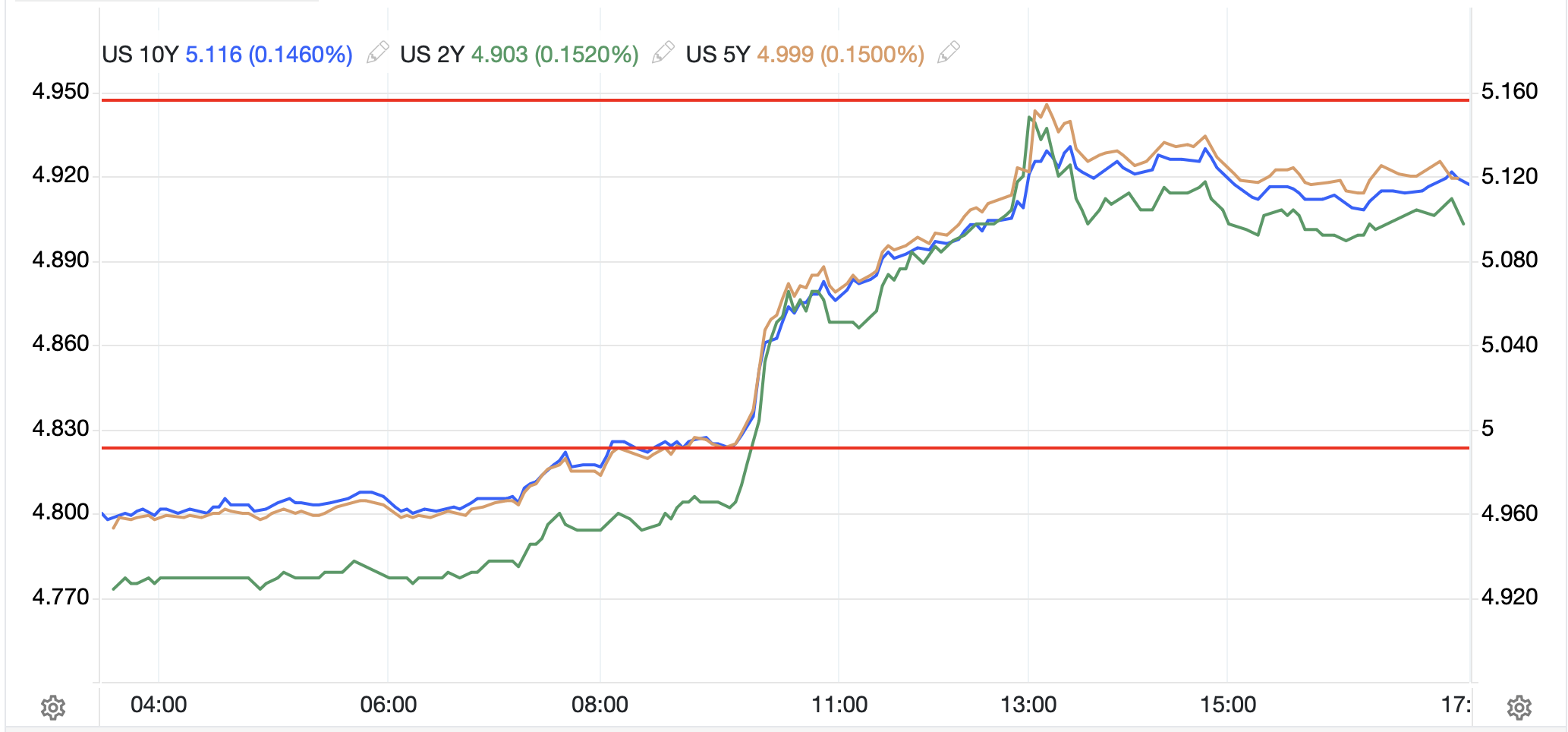
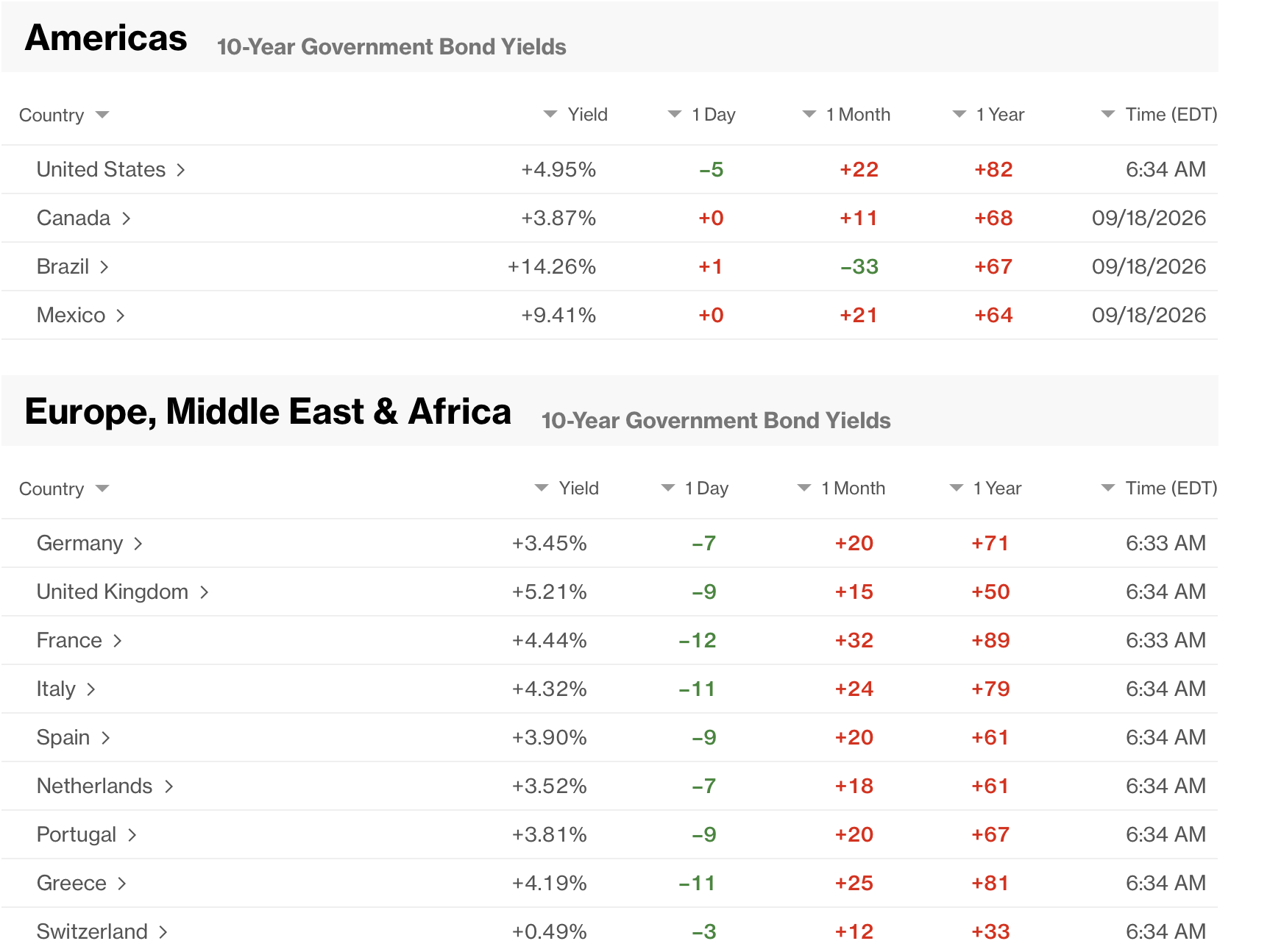
Bond markets continue to drift as 10-year Treasury yields slip -1bp and we see similar price action across most of Europe.  The outlier here is Italy (+3bps) which given the better-than-expected inflation data is confusing and I have seen no other cogent explanation.  As well JGB yields (+4bps) overnight reacted to the yen’s weakness as well as to comments by the newest BOJ member, Ayano Sato, who sounded modestly dovish.

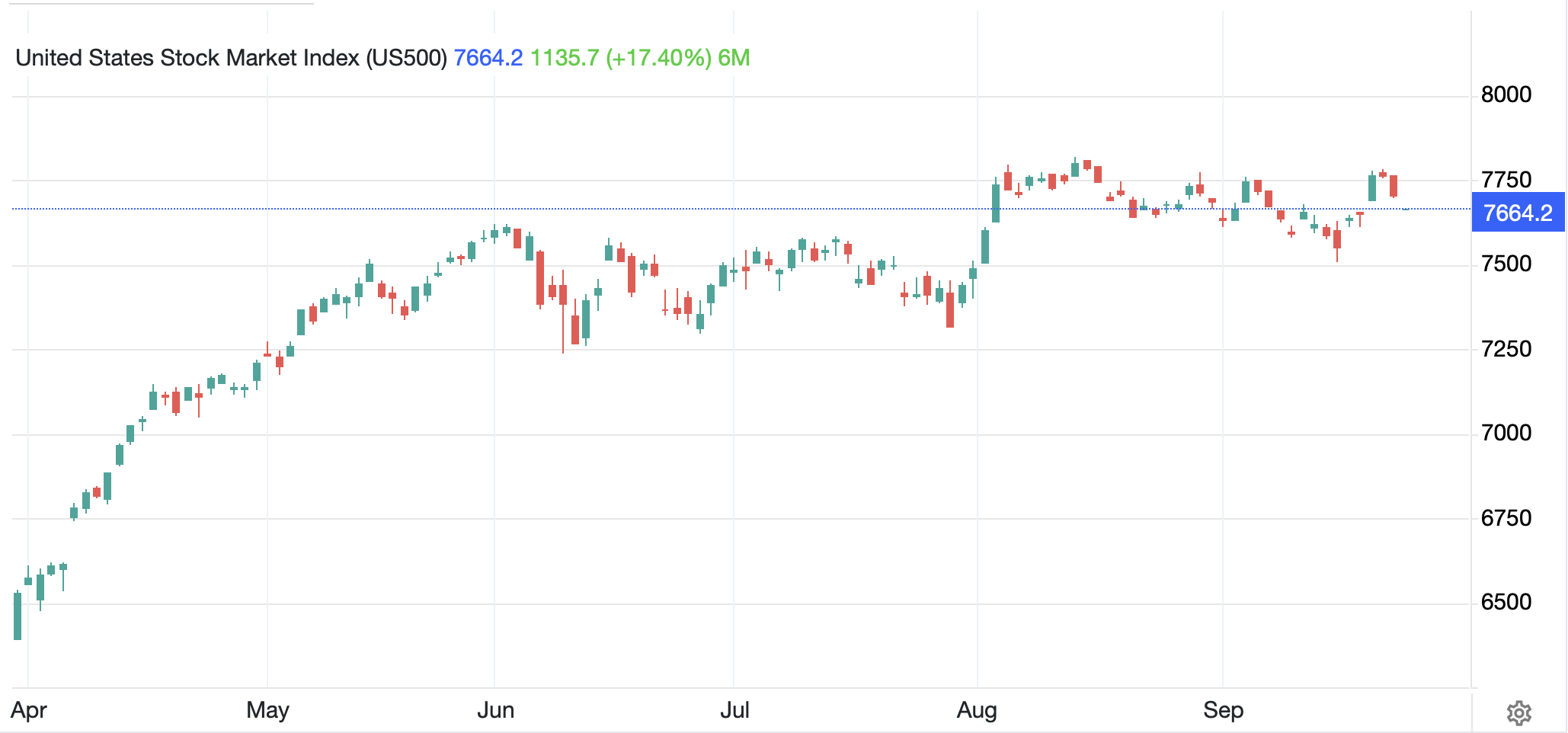
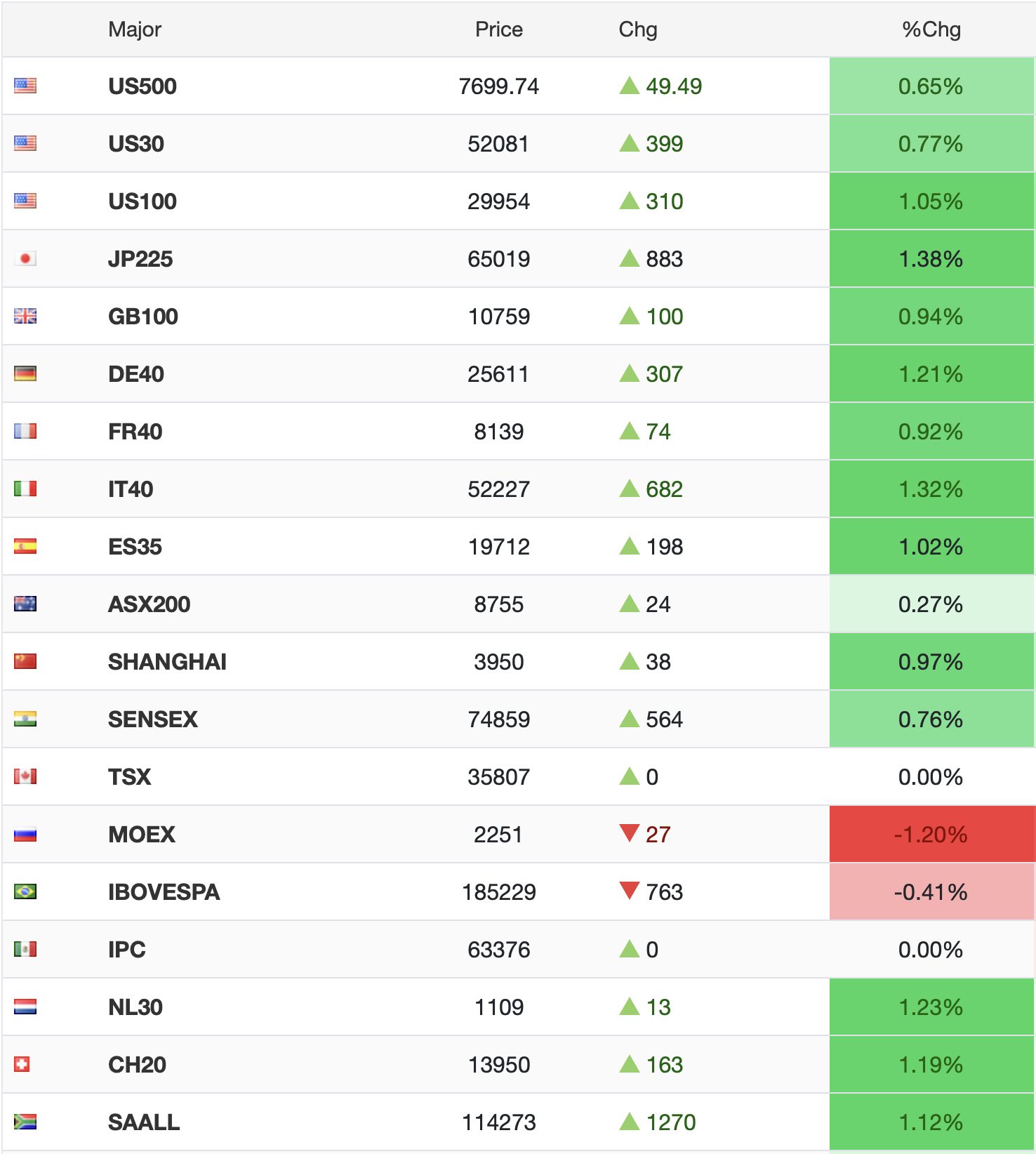
Finally, turning to the equity markets, another record setting day in the US was followed by a mixed picture in Asia with both gainers (Tokyo +0.9%, China +1.1%, Korea +1.0%, Taiwan +2.5%) and laggards (HK -0.6%, Australia -0.5%, India -0.3%, Indonesia -3.1%) with the latter a response to a legal verdict of corruption which the market has taken as a major government intrusion into the economy and frightened investors.

Turning to Europe, though, everybody is happy this morning with gains across the board (Germany +1.5%, UK +1.2%, Spain +0.7%, France +0.6%) as those slipping inflation numbers help the overall sentiment.  As to US futures, you will not be surprised that at this hour (7:25) they are marginally higher.  

One must be impressed with the consistency of equity market gains.  It is enough to make you reconsider your prior ideas as to how markets work.  Arguably, the key feature of the recent equity market performance is that earnings data continues to improve.  Now, if you look at the ongoing growth in money supply, both in the US and around the world, it is no surprise that nominal results continue to rise.  It is also not surprising that people are feeling stressed by inflation regardless of the data that is printed as all that money has to find a home somewhere.  And the Cantillon effect tells us that the first folks who get the newly printed money (banks and institutions) are the ones who benefit the most while the rest of us simply watch our cost of living increase.  This is the entire wealth/income inequality story and, arguably, the reason that the idea of socialism is making a comeback.  And socialism does have a perfect record in its economic outcomes; it has failed 100% of the time it has been tried.  But right now, I fear that record is not going to be a problem.  There is much potential trouble ahead.

Today’s data brings Case-Shiller Home Prices (exp 0.9%) as well as Chicago PMI (58.1), JOLTs Job Openings (7.30M) and Consumer Confidence (94.7).  But with Warsh on the tape tomorrow morning and then NFP on Thursday, I don’t see today’s data having much impact.

While the Iran situation is in the background right now, it remains the issue with the biggest potential impact going forward.  A successful conclusion of a deal and resumption of flows of energy through the SOH will put additional downward pressure on energy prices, and by extension general inflation.  In that scenario, central banks will be quick to turn away from rate hikes.  However, if things collapse there, then we will need to be prepared for another major hiccup, that’s for sure.

Good luck

Adf
Peace Was in Sight

The weekend saw missiles in flight
As both sides continued the fight
But just ere the open
The market put hope in
The idea that peace was in sight

So, here we are first thing today
And focus has moved far away
We’re back to AI
And pie in the sky
As stocks, once again, make more hay

Much has been made of the fact that President Trump is hyper aware of financial markets and seeks to ensure that whatever is happening in the world, it happens on weekends so that by the time markets reopen, the situation appears far less dire, hence less need to sell stocks.  This weekend is a perfect example as Friday after the close, it was announced that the US had responded to the several Iranian attacks on ships in the Strait of Hormuz last week with significant force.  The early punditry on Friday night and Saturday was that when markets reopened, the recent decline in oil prices would reverse as that has been predicated on a more lasting peace.  But then, last night shortly before futures markets opened, there were announcements that the US had finished its response and that the peace talks were back on under the guise of the 60-day ceasefire.  
I have to say, though, it almost appears as if Iran is in on the joke.  After all, if not, wouldn’t they try to force Trump’s hand during market hours?  Just asking.  Whatever the case, the situation as we wake up this morning is that oil (+0.8%) has edged back higher near $70/bbl but certainly doesn’t have the feel of breaking out higher.  Meanwhile, equity markets are generally positive and have been overnight while bond yields and the dollar are little changed.  in other words, there’s not much happening this morning.

In reality, it is not that surprising that things are quiet.  It is summer and summer markets are typically somewhat less active.  As well, away from the uncertainties of the Iran conflict, economic activity seems to be ticking along pretty well.  Arguably, the biggest story remains AI and both its potential impact on workers and the economy as well as the questions about its ability to generate sufficient revenue to repay the hundreds of billions of dollars being spent on it.  But those are longer-term stories, not day-to-day.

Which takes us to this morning.  Frankly, I don’t think there is an interesting market related them right now.  Instead, we have much time-biding until the next big thing.

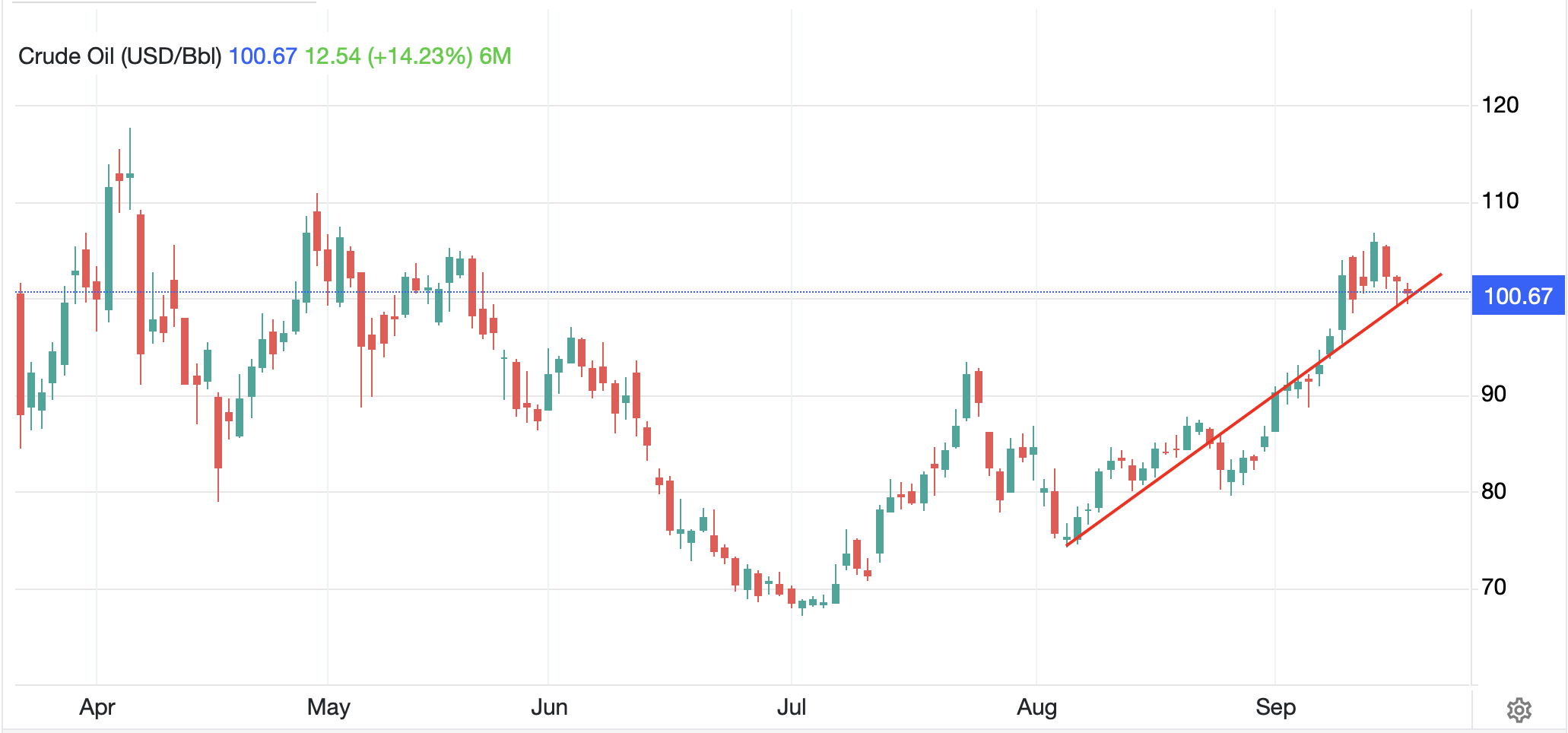
Let’s start with commodities as oil continues its multi-month decline from the early April peak.  it remains very difficult to look at the below daily chart and think, damn, oil is about to run away higher.  At least for me.

Source: tradingeconomics.com

There are still numerous analysts who maintain that the drawdown of reserves is going to come back and haunt the market, driving prices much higher as inventories fall and tank bottoms are reached.  And I am sure they earnestly believe those outcomes are ordained.  But the relative wisdom of market prices disagrees.

Remember back when this all started, there was another point that was made by these same analysts, that fertilizer shortages would be manifest and food prices would rise much higher.  The story was that the closing of the Strait would reduce the ability of Qatar to produce and ship LNG and that was a critical input into the making of Urea.  Let me show you the price chart for Urea.

Source: tradingeconomics.com

While it certainly rose initially, apparently there is sufficient urea around to continue with agriculture as we know it.  Again, much of the initial fear seems to have been misplaced.  I do not know if that is because analysts didn’t really understand the way these markets operated, or because they have models that they have used for years, and those models are no longer fit for purpose.  My observation is that many analysts try to determine the price trends by looking at their understanding of both supply and demand of a given commodity.  But I might argue that the price is what defines both supply and demand, and that at given prices, those two curves adjust to make the system work.  Think of it as price is the independent variable, not supply/demand.

Moving on to the metals markets, they remain under pressure this morning with both gold (-1.3%) and silver (-1.9%) unable to find support, especially the latter.  Copper (-0.3%) is holding up better and I continue to believe that all three will fare well over time, but not right now.

In the equity markets, Friday’s nondescript US markets were followed by more strength (Tokyo +0.15%, HK +1.6%, China +1.2%, Australia +0.7%, Taiwan +1.0%) than weakness (Korea -0.2%, India -0.5%, Indonesia -1.3%) in Asia.  The big news overnight was the South Korean government supporting a massive semiconductor investment by the two big Korean firms, SK Hynix and Samsung, to build four more fabs.  In Europe, though, things are less positive with Germany’s unchanged performance leading the way although the declines elsewhere (UK -0.2%, France -0.3%, Spain -0.4%) are hardly devastating.  We ought not be surprised that US futures are higher this morning as I type (7:25) led by the NASDAQ (+0.9%) as the AI/semiconductor theme continues.

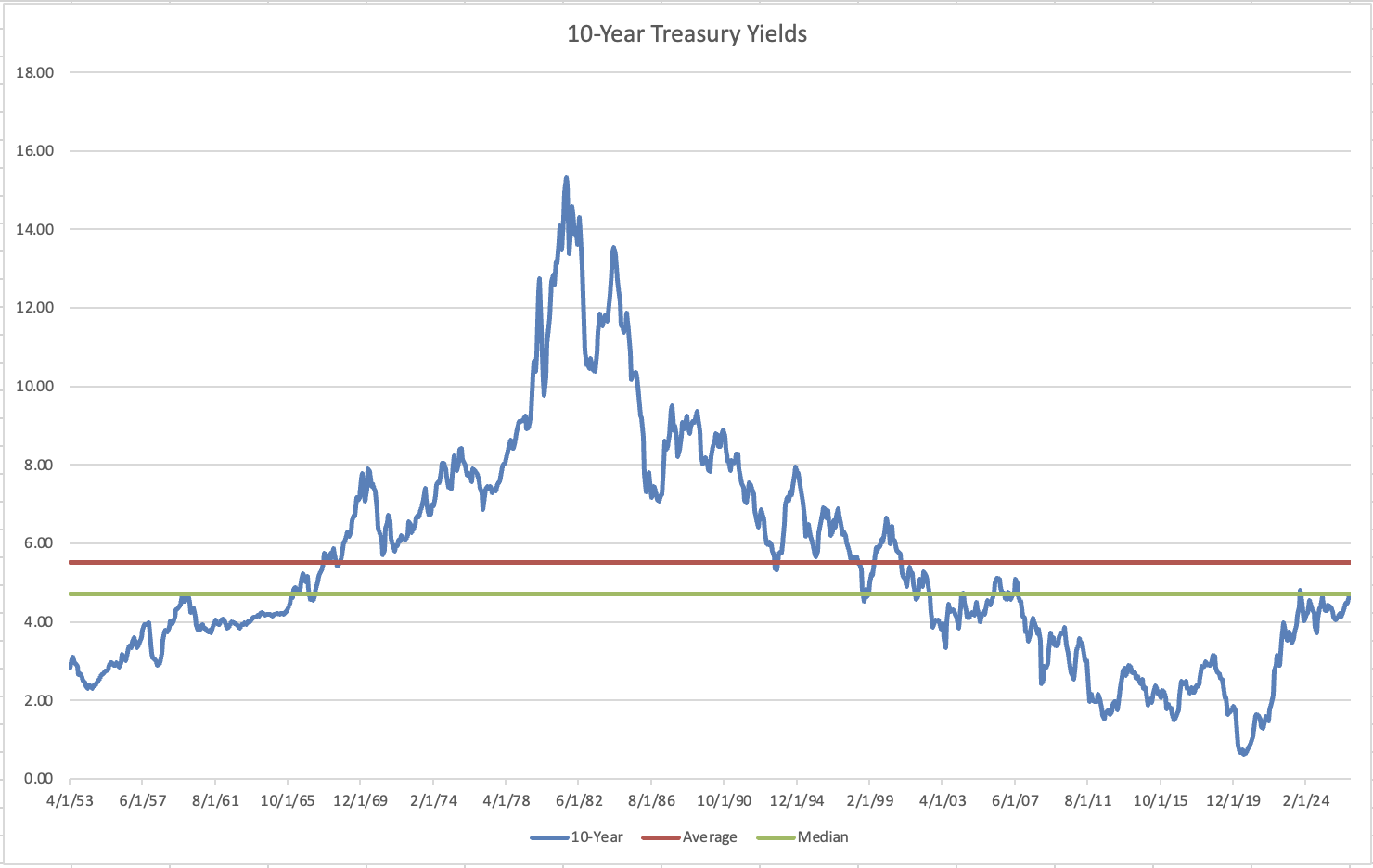
Bond markets continue to do very little with yields essentially unchanged on the day in Europe or the US.  10-year Treasury yields are currently 4.37%, well off the highs seem a month ago near 4.70% when there was much discussion about a breakout higher.  But look at the below longer-term chart of the 10-year Treasury yield and tell me that anything substantive has happened in the past 3+ years.  Since yields rise alongside the 2022 inflation surge, we have seen very little net movement.

Source: tradingeconomics.com

Finally, the dollar is a bit softer this morning but is clearly not the focus today.  I continue to read analyses about Chairman Warsh and what he is going to do and why he will not be able to achieve his goals.  The implication is that either he will need to be ultra hawkish, raise rates quickly and the dollar will soar, or he will wind up with QE 5 or 6 or whatever number we are on, and the dollar will collapse.  My personal view is neither of those scenarios will play out.  As I wrote in the wake of his first meeting, I expect inflation data will ease along with the recent decline in energy prices, and he will be able to do nothing without consequences as he works to change the way things work there.  In the meantime, the dollar will remain supported by real investment flows.

On the data front, even though it is a holiday-shortened week with markets closed Friday for July 4th, we get a lot of data.

TuesdayCase-Shiller Home Prices0.8%
 Chicago PMI60.0
 JOLTS Job Openings7.28M
 Consumer Confidence94.2
WednesdayADP Employment113K
 ISM Manufacturing54.0
 ISM Prices Paid79.0
ThursdayNonfarm Payrolls110K
 Private Payrolls115K
 Manufacturing Payrolls3K
 Unemployment Rate4.3%
 Average Hourly Earnings0.3% (3.5% Y/Y)
 Average Weekly Hours34.3
 Participation Rate61.7%
 Initial Claims220K
 Continuing Claims1825K
 Factory Orders-2.1%
 -ex Transport0.4%

Source: tradingeconomics.com

Obviously, all eyes will be on the payroll data on Thursday.  But Chairman Warsh will be at Europe’s version of Jackson Hole, in Sintra Portugal and speaking at 9am Wednesday morning.  It will certainly be interesting to hear what he has to say there.

It doesn’t seem like there is much about which to get excited today, or tomorrow frankly.  So, Warsh and then NFP will be this week’s story absent another major flareup in the gulf.

Good luck

Adf

Once Again Crumbled

The Techquity rally has stumbled
Though oil has once again crumbled
But pundits don’t care
As they’ll still declare
They’re right. They can never be humbled

Some days are simply less interesting than others, and based on the number of new stories, it seems today is falling into that category.  That’s not to say that some markets haven’t moved, there has been some significant movement, it’s just that the movement is based on the same rehashed story lines we’ve heard for the past several weeks.

For instance, the below chart of the NASDAQ, with daily candles, shows just how choppy the tech sector has been this month.

Source: tradingeconomics.com

For the market technicians, if you are inherently bearish, this will read as a double top and the next leg is lower, targeting something with a 26000 handle.  However, if you are bullish, you will make the case that this is the end of the “c” wave and we are ready to break to new highs above 31000. 

That’s the thing about market technicals, they remain in the eye of the beholder. If you ask about new news, arguably the Micron Technology earnings were the biggest story of the week, but despite a tremendous outcome, tech stocks could not hold any early gains.  The flipside is that OpenAI has postponed their IPO until next year, a clear sign that they are concerned with sufficient investor capacity.  Again, spin it as you see fit, since there is no right or wrong here, but there are conflicting sentiments.

My point is that while there have been headlines, there hasn’t been any news.  Or consider oil (-3.1% this morning), which as you can see from the chart below has fallen back to prewar levels.  

Source: tradingeconomics.com

Yes, there was an incident with some freighter being hit by an unidentified object in the SOH, and that jangled a few nerves yesterday, but apparently fully laden VLCCs carrying 2mm barrels of oil, are fleeing the Gulf in ever larger numbers.  I read that 78 ships transited yesterday and as you can see from the chart below from the WSJ this morning, the trend is higher.  

All of the stories about tank bottoms and a sudden spike higher in the price of oil continue to be nothing more than fear porn.  As Alyosha from Market Vibes notes, the likely reason for less inventory is the oil companies are expecting a huge influx of oil from the Gulf and they need some place to put it.  Again, these are warmed over stories and not new news.

By all accounts, we are continuing along the recent path where oil prices continue to normalize while other markets search for the next big thing.  For stocks, the AI debate continues to rage on as to its impact on the future, while resource companies continue to be seen as a place to hang out given the needs of the economy as it grows, and that is a global comment.  For bonds, is inflation fading or persistent and setting to move higher?  The recent view is fading, but obviously that is subject to change.  And the dollar?  It’s had a nice rally, but is it about to break to much higher levels or reverse course?  Over time I see it higher, but for now, not so much.

Ok, let’s review the overnight session.  Tech stocks in Asia had a rough go of it, reversing yesterday’s gains as Japan (-4.15%), China (-3.0%), HK (-1.8%), Taiwan (-3.6%) and Korea (-5.8%) all reversed yesterday’s rallies.  The below chart from finance.Yahoo.com of the KOSPI gives an excellent sense for the magnitude of the moves this week.

Elsewhere in the region, there was far more red than green, but those were the standouts.  In Europe, everything is lower this morning as well, with Germany (-1.2%) the laggard, although there is no news that would lead you to believe things are worse there than in the UK (-0.8%), France (-0.7%) or Spain (-0.4%).  It’s a soft day.  US futures are on this same path with NASDAQ (-1.2%) leading the way lower.

In the bond market, yields are little changed to slightly softer this morning with Treasuries (-2bps) actually leading while European sovereign yields have edged lower by -1bp across the board.  Interestingly, JGB yields (-3bps) are slipping and some pundits are making the case we have seen the highs in 10-year JGBs, at least for quite a while.  Certainly, looking at the chart below, the case that the uptrend has been broken is viable. Last night, Tokyo CPI data was released there at 1.6%, as expected and well below the 2.0% target.  Is it possible that inflation pressure there is abating as well?

Source: tradingeconomics.com

In the metals markets, it appears that the rout is on hold, at least for now, as gold (+0.5%), silver (+0.7%) and copper (+0.6%) all seem to have found recent support with gold holding the $4000/oz level and copper the $6.00/lb level.  We saw a massive bubble in these that has deflated, but real demand remains in place.  China continues to hoover up gold, and the electrification narrative has not disappeared, nor the data center one, both of which require massive amounts of copper.

Finally, the dollar is softer this morning, slipping somewhere between -0.1% and -0.3% vs. almost all its counterparts.  NOK (-0.4%) is an outlier as oil slides but otherwise, it is hard to get excited here at all.  JPY did not make another new low last night, so it has that going for it.

On the data front, this morning brings the Goods Trade Balance (exp -$85.0B) and then Michigan Sentiment (50.0).  Yesterday’s PCE data is a perfect example of the narrative, and how there is a real attempt to write a story from nothing.  While GDP rose more than expected, as did Personal Income and Spending, the PCE data was right on expectations, or even a tick low in the headline monthly number.  So, this was clearly priced into markets.  Yet virtually every headline I saw was how these were the highest prints since 2023, which as you can see in the chart below, is absolutely true, but hardly newsworthy.  But it makes for good headlines if you are trying to tell a story of rampant inflation.

Source: tradingeconomics.com

At any rate, that’s all I’ve got today.  My take is oil is still heading lower although Techquity prices just might follow for now.  However, I’m not in the collapse camp there.  And the dollar?  Softer for a bit, but I have a feeling all we’ve done is widen the range, not really broken out.

Good luck and good weekend

Adf

Rise Like the Sea

So, let’s take a sec to discuss
Inflation, and why it’s a plus
At least for some folks.
In gentle broad strokes,
Though most of us see it and cuss

For those who hate Trump it’s a key
To help destroy his legacy
For Congress, they need
Inflation to plead
That taxes must rise like the sea

And what of the Fed and their role
To keep it in check, on the whole
Now, if they’re successful
T’would truly be stressful
For everyone on their payroll

If you were a government and wanted to design the perfect process by which to extract more money from your citizens allowing you to spend more money on the things you wanted, whatever their views, all while explaining that their lying eyes were deceiving them when they complained, it would be hard to come up with a better process than the official inflation figures.  Of course, today we get more of those figures with PCE and its variants set to be released at 8:30.  While I am here, these are the current market median estimates: PCE (0.5%, 4.1% Y/Y), Core PCE (0.3%, 3.4% Y/Y) although I see no forecast for the Dallas Fed Trimmed Mean reading, the one that Chair Warsh says he wants to focus on.  Too, it is key to remember that they are May numbers.  How many of you can remember what happened in May?

For instance, looking at the easiest one, oil (-1.0% today), as per the below chart, you can see that WTI ranged between 86.50 and 106.50 during May, mostly sliding, bur arguably averaging in the low 90’s.

Source: tradingeconomics.com

This morning, it is trading below $70/bbl, back to the price on March 2nd, the first market day of the Iran conflict.  The BLS indicated that upwards of 60% of the rise in CPI was driven by the rise in energy prices, which tells me that whatever today’s numbers are, they are ancient history and next month’s are going to be lower.  I don’t know about you, but I am quite happy that energy prices are falling back to pre-war levels as, a) it makes life more affordable, and b) cheap and abundant energy leads to significant economic output, something good for us all.

But here’s the thing, with energy prices declining, those who benefit from high inflation need a new story, and there is none better than semiconductors.  The top headline in the WSJ this morning is The Data-Center Boom Is Sparking a Third Wave of Inflation, right on time for the next big inflation scare.  The big winner, at least today, Micron Technology, which had blowout earnings last night and jump-started a serious Techquity™ rally overnight with Tokyo (+4.6%), China (+1.6%) and Korea (+5.4%) leading the way.  HK (-1.4%) lagged and the rest of Asia was mixed, but that gives you an idea.

But the point of the article was that we all need to be prepared and accept that higher inflation is coming because the massive resource demands to build AI are coming along before the productivity gains can moderate the price impact.  And I have no doubt that the resource demands are going to support prices.  I remain uncertain over how quickly AI’s impact will be deflationary, even disinflationary.

And here’s the thing, my lived experience, plus my frequent conversations with The Inflation Guy, Mike Ashton, have me in the camp that CPI is going to live in the mid to high threes for a while to come, regardless of the metrics the Fed uses to measure things.

But I have begun to discern that there is a large community that benefits from rising inflation because it helps them achieve their goals.  After all, we know that governments love inflation as it devalues the real value of their outstanding debt, so a steady depreciation is their best friend.  As well, Congress’s baseline budgeting ruse, which starts each year from the previous year’s expenditures, not from zero, is a huge beneficiary of inflation.  I understand that since about 1980, the BLS has adjusted the CPI calculation somewhere between 30 and 40 times and you can guess the direction of most of those adjustments.  Of course, companies that sell products are a big fan as well, as they tend to adjust prices to both include new costs, and increase margins.  And they have a natural scapegoat; CPI is out of their hands.

All I’m saying is that while there appears to be a strong effort to fight inflation, I’m not a believer.  (And here I should highlight that I use the term ‘inflation’ in the manner it has become understood, rising prices, and not in its classical form of an increase in the money supply, which is 100% the Fed’s doing.)

One other thing.  My friend JJ who writes Market Vibes, posted a chart of 1yr breakevens as of yesterday and I reproduce it below.

This is not a signal that the market expects prices to rise, but rather is following the decline in oil prices pretty well.  Once again, I will ask, please explain given market signals, why everyone is so sure the Fed is going to hike.  I maintain my one cut by year end view which is at least 50bps below the current Fed funds futures market pricing.  Ask yourself how the FOMC ‘hawks’, and I use that term loosely, will be able to argue for higher rates if oil continues its trajectory and inflation readings decline.  Precautionary?  How about they will simply say, we want to screw Trump, at least they would be honest then.

Ok, on to other markets overnight.  European bourses are all higher this morning, but since none of them have any real tech exposure, they are not running away.  Rather, 0.3% to 0.7% encompasses the magnitude of movement we have seen.  As to US futures, at this hour (7:25), NASDAQ (+2.0%) is leading the way, but the whole group is higher.

In the bond market, yesterday saw yields decline about -8bps in the 10-year Treasury and -6bps in the 2-year.  this morning they are little changed, consolidating those price gains.  As to European sovereigns, yields there also slipped yesterday, but not as dramatically, about -4bps, and this morning they are largely unchanged.  Overnight, JGB yields fell -3bps as declining oil prices are feeding through to inflation expectations.

The precious metals complex continues to get hurt, with gold (-0.6%) and silver (-0.5%) still under pressure and at new lows for the year, but copper (+1.25%) seems to have found a short-term floor at $6.00/lb.

And finally, the dollar, which has been en fuego lately, rising for the past six consecutive sessions, as per the below chart, is consolidating for now.

Source: tradingeconomics.com

Nothing has changed the yen story, where the dollar creeps ever so slightly higher each day, now just below 162.00 but overall, today’s movement has been quite muted, about +0.15% in the dollar against most currencies, as the focus turns to inflation, at least for today.

On the data front, in addition to the PCE data we get a bunch more as follows:

Initial Claims225K
Continuing Claims1800K
GDP Q1 Final1.6%
Personal Income0.4%
Personal Spending0.6%
Durable Goods-4.5%
-ex Transport0.6%
Chicago Fed National Activity0.12

Source: tradingeconomics.com

Will anyone care about this data?  I doubt it, Core PCE is THE thing today, so we will watch and see how that comes out. But mark my words, if it is soft, the hawkish Fed narrative is going to come under real pressure as stocks rally and yields and the dollar slip.

Good luck

Adf

‘Pocalypse Dreams

Though many have preached the buck’s dead
The greenback keeps moving ahead
And right now, it seems
Their ‘pocalypse dreams
Are still all confined to their head(s)

But narrative writers ignore
Whatever they said from before
Right now, it’s the buck
That’s causing bad luck
As rate hike bets all start to soar

In a fairly rare set of circumstances, the dollar has drawn the spotlight in markets for the past few sessions.  While it always matters to some extent, it is rarely seen as the cause of many other market movements, just a coincident one.  But right now, I read more about how the strong dollar is driving equity weakness and commodity weakness as more and more bets get placed on the Fed hiking rates aggressively to address inflation by the end of the year.

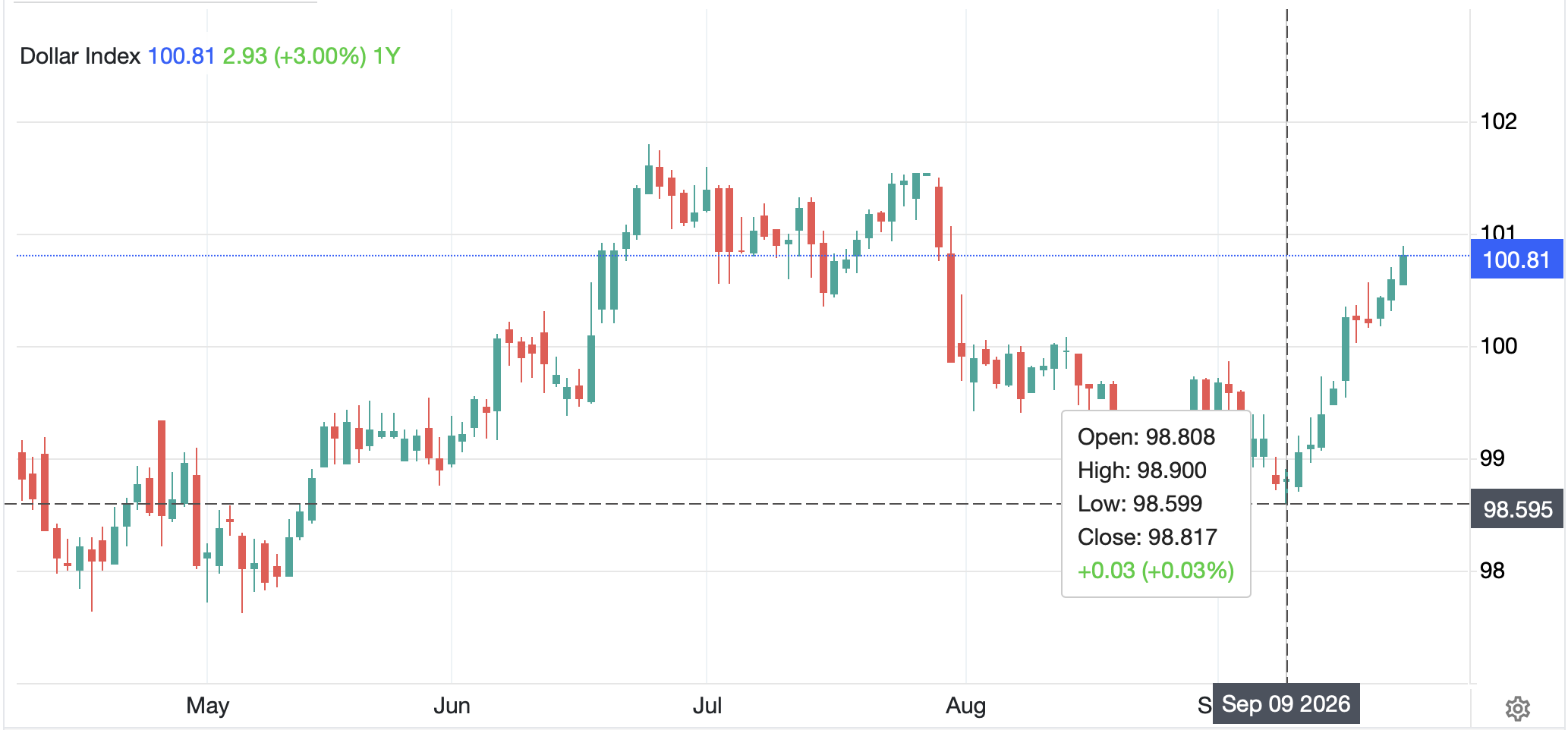
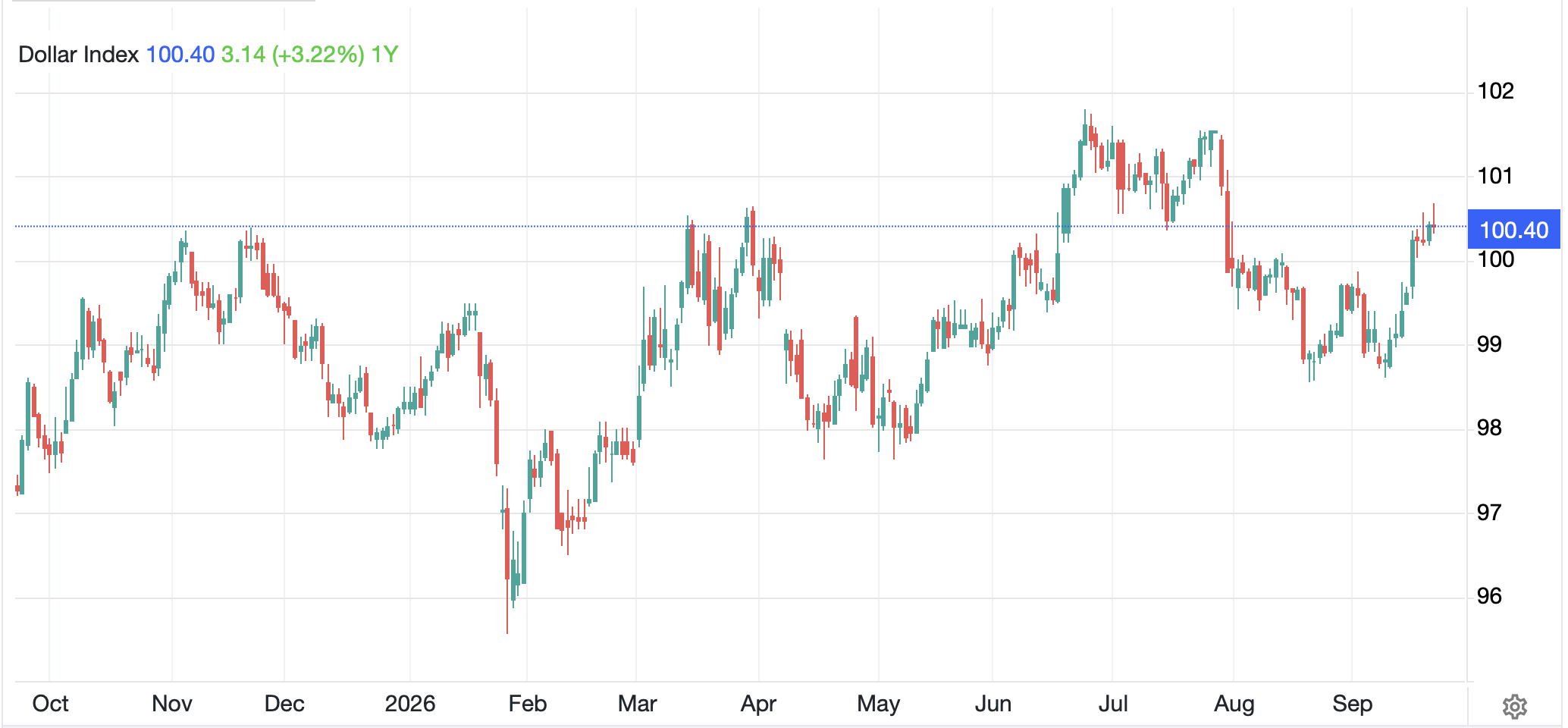
Using the DXY as proxy, the first chart is the one everybody wants you to focus on, showing the last year and how we have had a clear break above the trading range top of 100.50 and now people are creating targets for just how high it can go.

Source: tradingeconomics.com

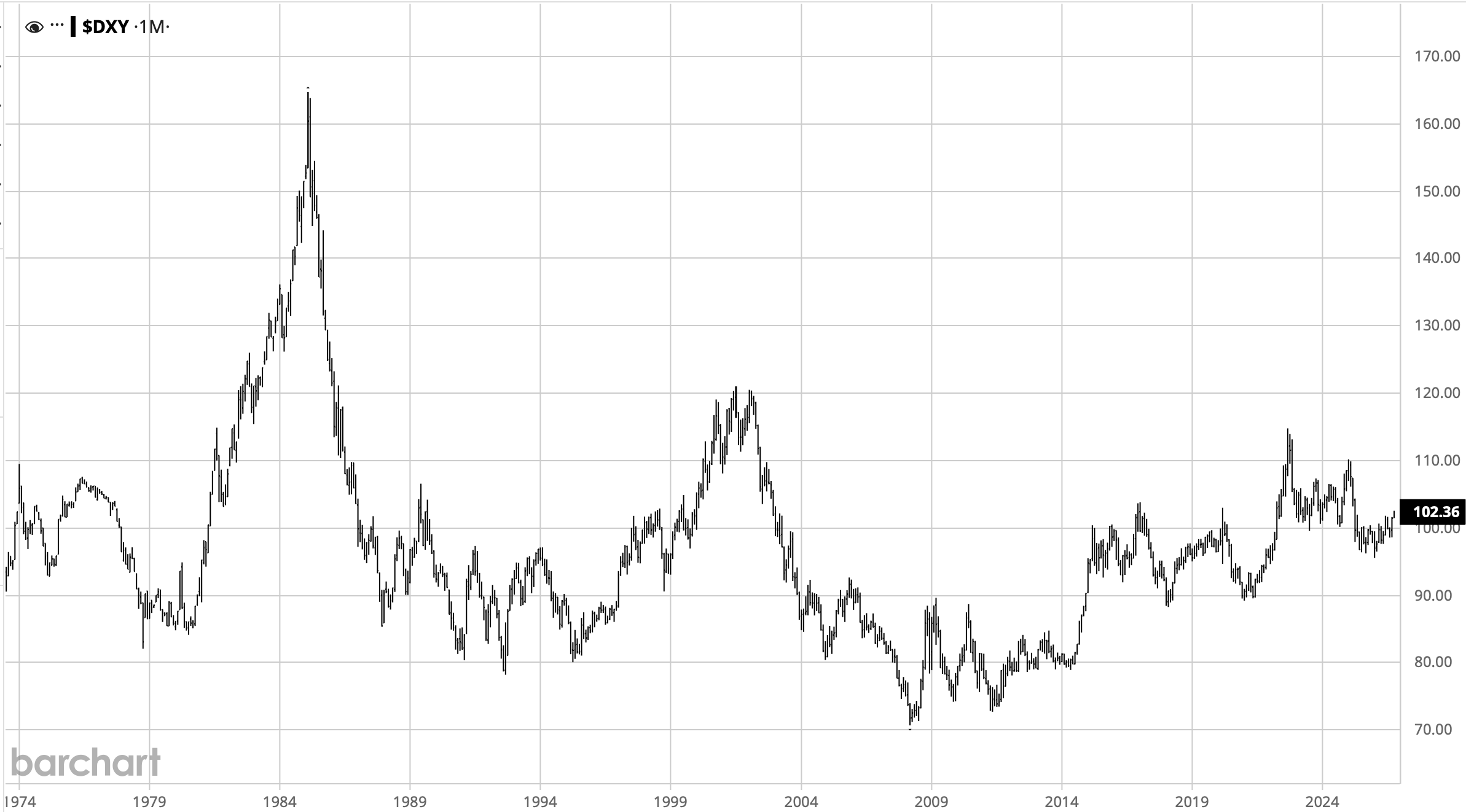
And it certainly can go higher, as a quick step back to get some more perspective shows where the dollar has been during the past 5 years. It seems to me I could create a narrative that the dollar has been massively undervalued over the past 18 months, and this move is simply returning it closer to its longer-term fair value.  In fact, just eyeballing, it seems quite reasonable to think the 5yr average of the DXY is somewhere around 103-104 (subsequently confirmed with Grok), still a few percent higher than current levels.  Reversion to the mean anyone?

Source: tradingeconomics.com

All of this, though, begs the question, are rate hikes really on the near-term horizon?  I remain firmly in the camp that is not the case.  Fortunately, someone on my side is super smart, Bob Elliott, former hedge fund manager at Bridgewater.

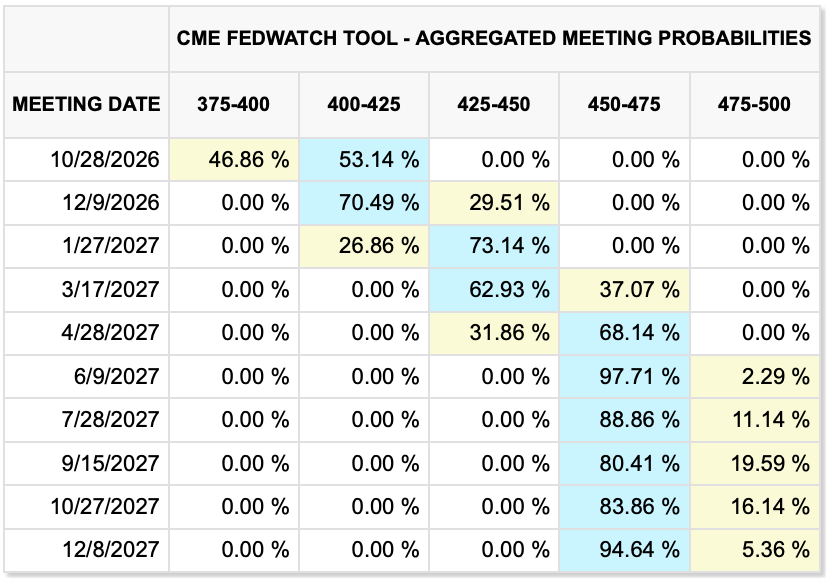
On the rate hike front, the below CME probability table has barely changed from yesterday as the narrative is strong that rate hikes are coming.  

I cannot really understand why this is suddenly the belief set given the fact that the key driver of recent higher inflation data has been the price of oil, and that price continues to fall, down a further -2.0% this morning.  I understand that gasoline prices have not fallen quite as dramatically, but nothing about the chemistry has changed and I remain highly confident that those prices will be falling as well, catching down to oil.

Source: tradingeconomics.com

So, I remain confused as to why everybody seems to believe the Fed, which despite a new Chair remains the same institution that observed inflation run higher for years during Covid and calling it transitory, has become the reincarnation of the Bundesbank.  In fact, the only rationale I see is that other than Waller, Warsh and Bowman, who were all appointed by Trump, everybody else in that room has TDS and is terrified that things will work out such that by the time the election rolls around, the economy is ticking over nicely with inflation a historical issue.  And frankly, I think most of them do share that affliction.

But other than Powell, and Cook to some extent, none of them have really felt the force of the critiques that come with upsetting President Trump, and frankly he didn’t care about Cook per se, she was just a convenient target to get ousted so he could put his man in there.  And in fairness, Cook is a massive dove, and should agree with Trump on this policy, but I’m sure she doesn’t because…Trump.  I am confident none of them signed up for being in that spotlight.

Apparently, BOA is calling for 3 rate hikes this year in the final four meetings.  I think that’s nuts, but futures are pricing a 2/3 chance of a hike at the end of July, which I also think is nuts.

The recent hiccup in stocks, and the steadier downturn in commodities has been blamed on dollar strength which is being driven by expectations of rate hikes coming soon.  While I like the dollar in the long-term, that is because I believe investment flows into the US will drive it, not financial arbitrage flows.  As things evolve, I expect the market to understand the Fed will not be hiking rates and narratives will need to find a new bogeyman.

Ok, let’s tour markets quickly.  Yesterday’s equity market selloff in the US, following the tech selloff in Asia closed well off the lows and futures this morning are pointing slightly higher.  Asia was mixed overnight with Korea (+3.3%) rebounding sharply although there was weakness in Japan (-0.9%), Taiwan (-2.25%), Indonesia (-3.6%) and the Philippines (-2.2%).  But on the flip side, China (+0.5%), HK (+0.3%) and India (+1.0%) all followed Korea while other regional exchanges had much more limited movement.  It appears that people are trying to figure out what to do for now.

In Europe, Germany (-1.0%) is the laggard after Germany cancelled its plans for a new warship and Rheinmetall, the company set to win biggest there, got crushed.  But elsewhere +/-0.3% or less is the norm with little new information as traders await the next shoe to drop.

In the bond market, interest is low as 10-year Treasury yields continue to track around the 4.5% level and movement has been 1bp or so lower across all of Europe.  Nothing to see here for now.  Just wait until views start to change on rate hikes though!

Metals markets continue to get hammered with gold (-1.7%), silver (-2.9%) and copper (-1.6%) all still falling as the opening narrative about higher rates and a stronger dollar play out.  The thing is, I think the fundamentals remain positive for metals markets as there continues to be central bank demand for gold as well as industrial interest in silver and copper and long-term shortages of supply.  But right now, none of that matters.

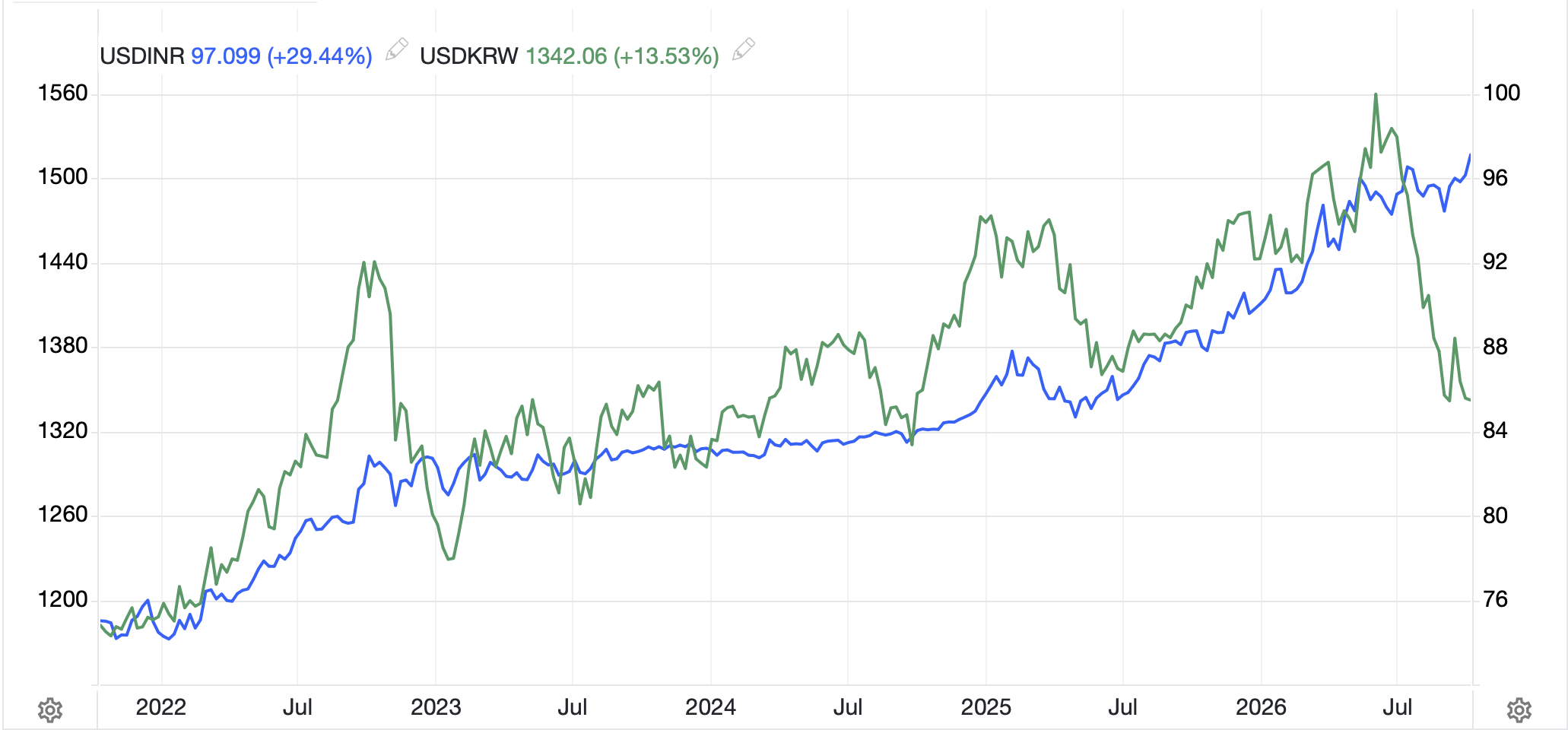
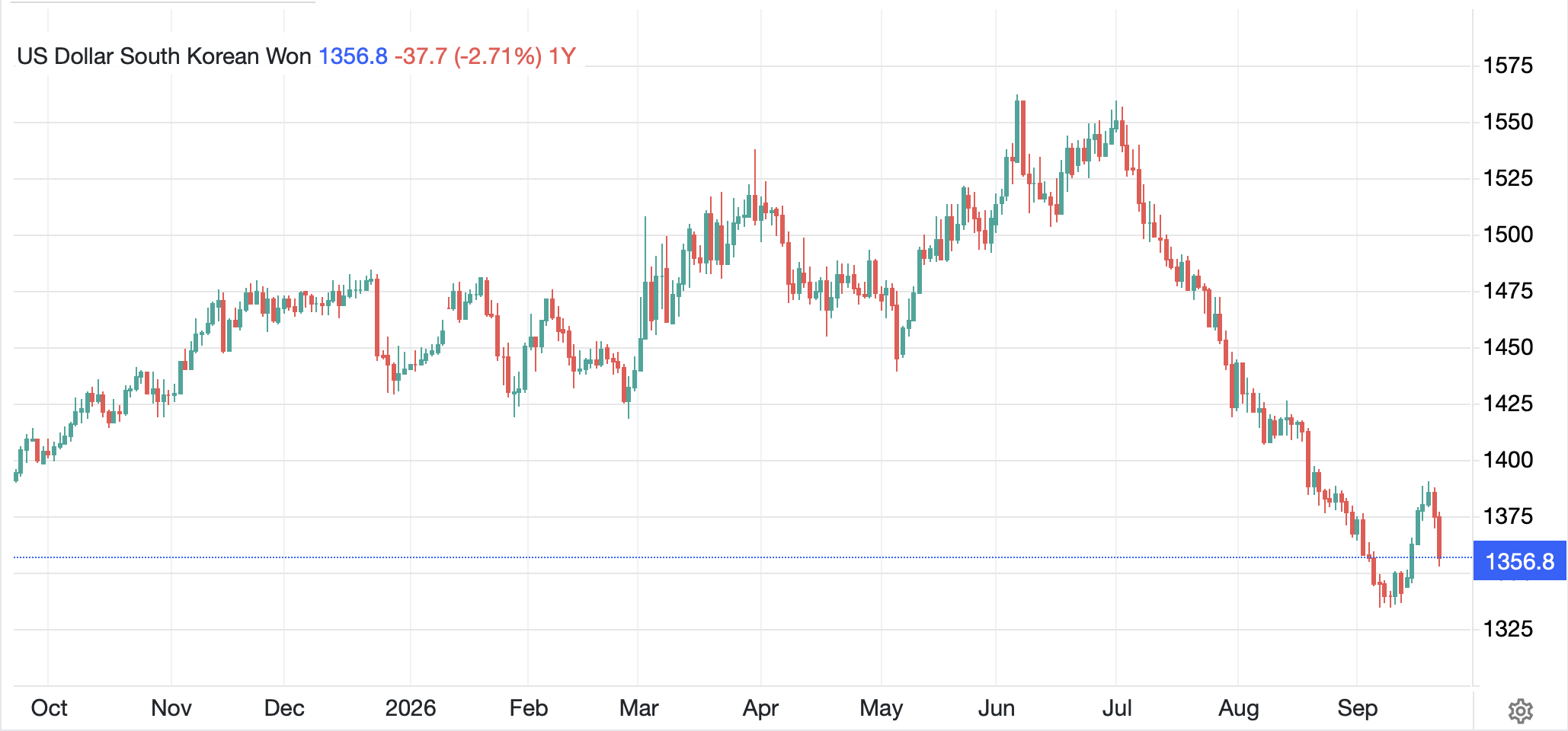
Finally, looking beyond the DXY, it is no surprise the euro (-0.35%) and pound (-0.35%) are lower given the DXY’s continued rise, but the yen (-0.1% and at a new low (dollar high) for the move) continues to slide and there is weakness pretty much across the board in both the G10 and EMG blocs.  KRW (-1.0%) is today’s laggard while INR (+0.2%) is the lone currency holding its own.  This continues to be a dollar focused story so when the rates story changes, so will the dollar.

On the data front, we see New Home Sales (exp 640K) and then EIA Oil inventories with yet another large draw expected.  And that’s it for today.  As long as this rate hike narrative remains primary, look for weaker risk appetite and a strong dollar.  But I think it is a short-term phenomenon.

Good luck

Adf

What’s Next To Be Feared?

For Holmes, when the dog didn’t bark
He recognized that was the spark
To solving the case
And so, we must brace
For narrative changes quite stark

This morning, no headline appeared
Regarding Iran, which is weird
Have markets moved past
This problem, at last?
And if so, what’s next to be feared?

So, perusing the WSJ on-line this morning, the notable absence was any story on Iran and the current situation regarding the ongoing peace talks.  There was a throwaway article about Trump and what he has said about Iran, but nothing of substance.  Part of me is amazed that this is the case as the conflict would still seem to be the most important issue in the markets given the impact on oil prices and inflation, as well as its general geopolitical impact.  But part of me cannot be surprised at all.  It’s not just traders who have the attention span of a fruit fly, apparently so does the general public.

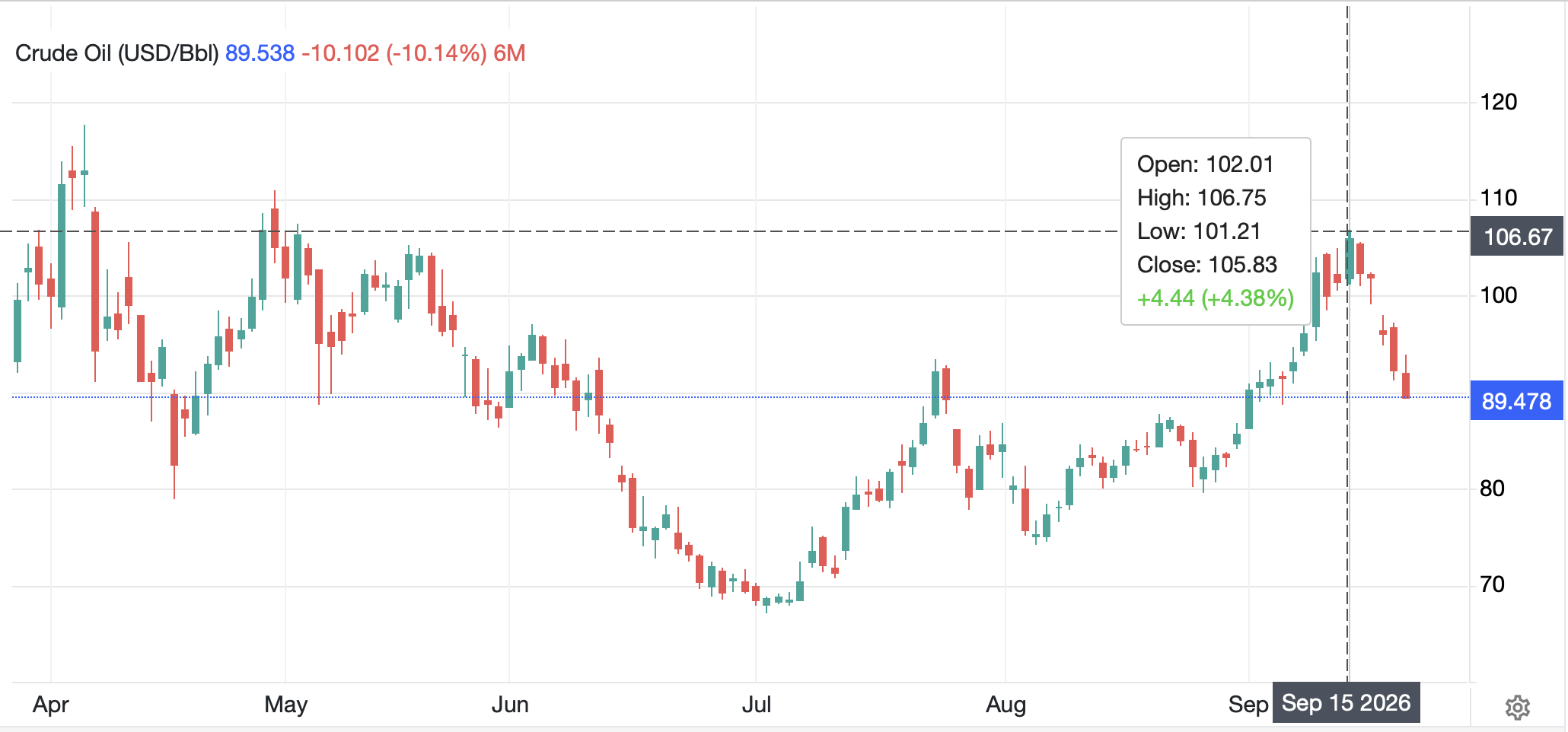
I made the point several weeks ago that this conflict would fade into history quickly when it was ending based on the fact that the Venezuela incursion, back in January, fell from headlines within about three days.  Given the generic MO for most publications of, if it bleeds, it leads, the fact that bombs are no longer falling, and peace talks are ongoing is no longer that interesting.  Add to that the generic TDS of most of the media, where they loved to play up rising oil prices as a major policy failure for Trump, now that those prices have been falling for the past 11 weeks and have slipped >30% in that period, and quite frankly, have further to fall, most editors have moved on.  If they cannot tar Trump with a policy failure, they would rather not discuss the subject at all.

Source: tradingeconomics.com

So, here we are this morning with the market now turning its focus to an ostensibly hawkish Fed despite the recent analysis by the BLS indicating that more than 60% of the recent uptick in inflation was driven by the rise in energy costs.  So, with energy costs reversing course dramatically, what does that say about their impact on inflation and exactly how hawkish does the Fed need to be in that case.

Right now, equity markets are under some pressure as some of the euphoria associated with the rising tech sector’s stock prices and the ongoing AI mania, is wearing a little thin.  And let’s face it, things certainly seemed a bit bubblicious.  But the combination of ongoing fiscal support from the OBBB and tax cuts and declining energy prices is likely to help support things going forward.  No matter the timeline you observe, we have seen a remarkable rally in tech stocks, as evidenced by the NASDAQ’s chart below.  A correction to the 50-day moving average would hardly be surprising, nor would it be damaging to the overall market structure, I think, although it would almost certainly result in ‘end of days’ headlines!

Source: tradingeconomics.com

So, while futures this morning are lower across the board (NASDAQ -2.9%, SPX -1.4%, DJIA -0.6%) as of 6:40am, and we could easily see some weakness for a few more days/weeks as positions shake out, I am not in the camp of things are about to collapse.

Speaking of equity markets, the overnight session was filled with red ink led by the KOSPI (-10.0%) in South Korea, although there was weakness pretty much everywhere (Nikkei -3.6%, CSI 300 -2.8%, Hang Seng -1.8%) with India and Taiwan also slipping more than -1.0% although Australia, NZ and Singapore had more muted declines.  Tech was clearly under pressure.  Of course, we cannot be surprised that European shares are also lower in a generally weak risk scenario, but given the lack of tech companies headquartered there, the declines have been far less significant (DAX -1.0%, CAC -0.6%, IBEX -0.2%, FTSE 100 -0.2%) although the Netherlands (-1.3%) home to ASML, the only tech name of note on the continent, is underperforming as well.

Meanwhile, the bond market has peeked at the oil market and decided, perhaps inflation is not a chronic condition, or at least not as bad as previously feared.  Yields are lower across the board with Treasuries (-3bps) leading the way while European sovereigns are all lower by between -3bps and -4bps.  Overnight, though, JGB yields could make no headway lower as the yen continues to be under enormous pressure.

Speaking of the yen, it continues to slowly weaken despite prominent statements by Japanese FinMin Katayama about her discussions with Treasury Secretary Bessent and their agreement to have the US coordinate with Japan in the event it is decided something needs to be done in the markets.  But so far, no signs of actual intervention.  A look at the chart below shows a very slow and steady climb in the dollar, and frankly, I do not see what will change this trajectory.

Source: tradingeconomics.com

While interest rates aren’t the only driver, they still have a key impact, and they are the one thing that can be changed quickly.  In fact, the best hope for the yen, in my view, is the fact that at some point soon, the market is going to understand the Fed is not about to raise rates again, and the next move will likely be lower, albeit not until later in the year.  but that change in tone will change a lot of opinions on how the yen should behave, and a move back toward 155 amid modest overall dollar weakness could easily be seen.  But right now, everybody is of the opinion that the FOMC is going to hike this year, and Japan cannot afford to be aggressive in that context, hence the yen’s weakness.

Here is a forecast I do not make lightly, Fed funds will finish the year lower than they are now, probably 3.25%-3.50%.  And the current Fed funds futures market has bottomed (rates peaked) as per the CME table below.

As to the rest of the FX world, the dollar reigns supreme this morning as the euro (-0.3%) is below 1.1400 this morning, its weakest in more than a year as the Flash PMI data did it no favors, but the new hawkish Fed, higher US rates strong dollar narrative has been the driver.  We have seen the same type of movement elsewhere, except where the dollar has moved further, with AUD (-0.8%) the worst performer in the G10 although HUF (-1.0%) is actually the biggest laggard.  However, given the overall decline in commodity prices, those currencies that benefit from rising commodities are also under pressure (NOK (-0.7%, ZAR -0.5%, SEK -0.8%, MXN -0.7%) and we already discussed AUD.

Lastly, the metals markets are also under serious pressure with gold (-1.6%), silver (-4.5%) and copper (-3.3%) all tumbling on the same new view of higher rates and a stronger dollar.  The thing about the commodities story is the fundamentals still seem positive to my eyes, and this seems like the last of the fluff getting taken out.

On the data front, Thursday’s PCE data is the big day and here’s what we have overall:

TodayFlash Manufacturing PMI54.8
 Flash Services PMI51.0
WednesdayNew Home Sales640K
ThursdayInitial Claims225K
 Continuing Claims1800K
 Q1 GDP Final1.6%
 Personal Income0.4%
 Personal Spending0.6%
 PCE0.5% (4.0% Y/Y)
 Core PCE0.3% (3.4% Y/Y)
 Durable Goods-4.3%
 -ex Transport0.7%
FridayMichigan Sentiment50.3

Source: tradingeconomics.com

In addition to the data, we start to hear from some of the FOMC members, although I am confident Chairman Warsh won’t be out and about.  Some analysts claim that Warsh’s view of less communication is going to weaken him as others will get to make their point and he won’t be able to counter it.  But I think that Warsh has a plan, and if we continue to see oil prices decline, which seems the likely outcome, then all the inflation fears are going to dissipate and by the time the next meeting rolls around, it will be far harder to make the case that tighter policy is necessary.  Historically, hiking into an energy price shock has been a central banking mistake, and I think Warsh knows this and is keen not to repeat it.

Net, for now, everybody loves the dollar and hates risk on this new hawkish Fed narrative.  But going forward, I like the dollar on the back of a better economy and better investments and expect that the hawkish Fed narrative is going to fade away.  But I’m just an FX poet.

Good luck

Adf

No Plan of Action

In England and Scotland and Wales
Kier Starmer has gone off the rails
A buffoon-like clown
He’s set to step down
As from the Brits eyes, fall their scales

But will his replacement gain traction
Or will Burnham be a distraction
From solving their woes
As Lord only knows
They’ve many, and no plan of action

It has been an eventful weekend for me so let me start by telling you that Marvel was Best of Breed in back-to-back shows last Thursday.  We are very proud and happy.

Second, Friday was a more difficult day for me as I wound up having emergency surgery, although everything is fine.  But I am still in recovery mode.  Sometimes, aging is harder than other times.

With that in mind, we can talk about the three things that matter, I believe, the change of PM in the UK, the on-again-off-again peace talks in Iran and the fact that the yen is now weaker than the level that got the MOF to intervene back in April.

Starting with the UK, PM Starmer has promised to step down now that his most likely successor, Andy Burnham, the former mayor of Manchester, is in Parliament and will now become PM sometime in the next several months depending on the actual timing of certain technicalities.  He is described as left-wing, even by the press, which tells you that he must be quite far to the left.  But the UK has serious problems with respect to their economy, slowing growth and high inflation, and the social structure due to massive immigration, both legal and illegal.  As well, the report that just dropped about the Pakistani grooming gangs that were systematically raping young English girls is so damning, it is hard to believe, yet it was all covered up.  The government doesn’t have to go to the national polls until 2029, so Burnham will have time to try to implement policies, but the nation has many troubles ahead.

As to UK markets, both the pound and FTSE 100 have been underperformers relative to their peer European counterparts over the past month or so as this process has heated up, but in truth, not by very much.  Much of the pound’s weakness can be attributed to dollar strength (see chart below), where the dollar has broken through key technical resistance in the DXY, while the FTSE is just drifting given the lack of positive news.  Certainly, this story didn’t help either one, as both are unchanged on the day.

Source: tradingeconomics.com

In Switzerland, talks are ongoing
As Trump and the Mullahs try showing
That they are the ones
Who have the most guns
But progress seems like it is growing

It cannot be a great surprise that there is a lot of bluster from both sides of this negotiation between the US and Iran as President Trump tries to end the conflict in Iran.  After all, both sides are famous for their bluster!  And you can read whatever you like from whatever source you want to get your spin, but I’m not smart enough to understand the intricacies of international diplomacy.  However, what I do understand is market price movement, and here we are this morning, with oil prices falling further, down -2.5%, and back to levels last seen in early March, right at the beginning of this conflict.

source tradingeconomics.com

Thus far, every story about tank bottoms being reached and an insufficient amount of oil for the pipeline infrastructure to be effective has proven not to be true.  There is still a large group of analysts who are calling for end of days, but the market signals just don’t agree.  I suspect that the only ones who really want to see oil prices remain high are the oil companies who sell the stuff, but for the rest of the world, lower is clearly better.  Obviously, anything can still happen, but by all appearances, it seems that more and more traffic is flowing through the Strait and we are going to see lower prices going forward.

In the end, from my vantage point thousands of miles away from the action, it appears that Iran was greatly weakened by this conflict on a military basis, but more importantly, every one of its Gulf neighbors realized that they needed alternative routes to get their oil to market, and we are going to see a lot more pipeline infrastructure built to do just that, so as time goes by, this choke point is going to lose its effectiveness.  And that is probably a bigger weakness for Iran, as that was something they held over the world, but now it seems it is not as impressive a strength as it had been made out to be in the past.

It’s no waterfall
But the yen keeps dripping down
Whence the BOJ?

Finally, the yen (-0.3%) is having a tough time right now as it has traded back to its lowest level vs. the dollar since 1986!  That’s right folks, it has been forty years since USDJPY traded above 162.00, and we are pushing that level right now as you can see in the chart below.

The last two times the yen reached these levels, back in April and in July 2024, the BOJ intervened in the markets aggressively.  But so far, crickets.  I think the issue for them is the dollar continues to be quite strong, especially as traders are now pricing in rate hikes by the Fed, and so intervening is going to be a waste of money.  And it’s true, if the dollar is rallying across the board, there is very little Ueda-san can do.  As I have repeatedly said, the only way for the yen to break this slide is for serious fiscal and monetary policy changes, and frankly, that doesn’t look like it is in the cards right now.  While I know there are many who think the dollar is heading to its graveyard, it apparently still has a bit of life left in it.

Which takes us to the overnight activity.  Equity markets have been mixed as all this new information gets digested.  In Asia, Tokyo (+1.6%) and China (+2.4%) both had strong sessions although HK (-0.7%) couldn’t keep up.  Elsewhere in the region, there was slightly more green than red led by Taiwan (+2.75%) while the Philippines (-1.65%) was the biggest laggard.  Uncertainty continues to reign although as the Iran situation slowly resolves, I expect to see things brighten here as Asia was the region hurt most by the entire conflict.

In Europe it is also a mixed picture with the UK (+0.3%) now rallying on the news that Starmer is leaving and Spain (+0.4%) has managed a gain as well while both Germany (-0.3%) and France (-0.7%) are lagging this morning, although there is no news of note in either place.  US futures are basically unchanged at this hour (7:15).

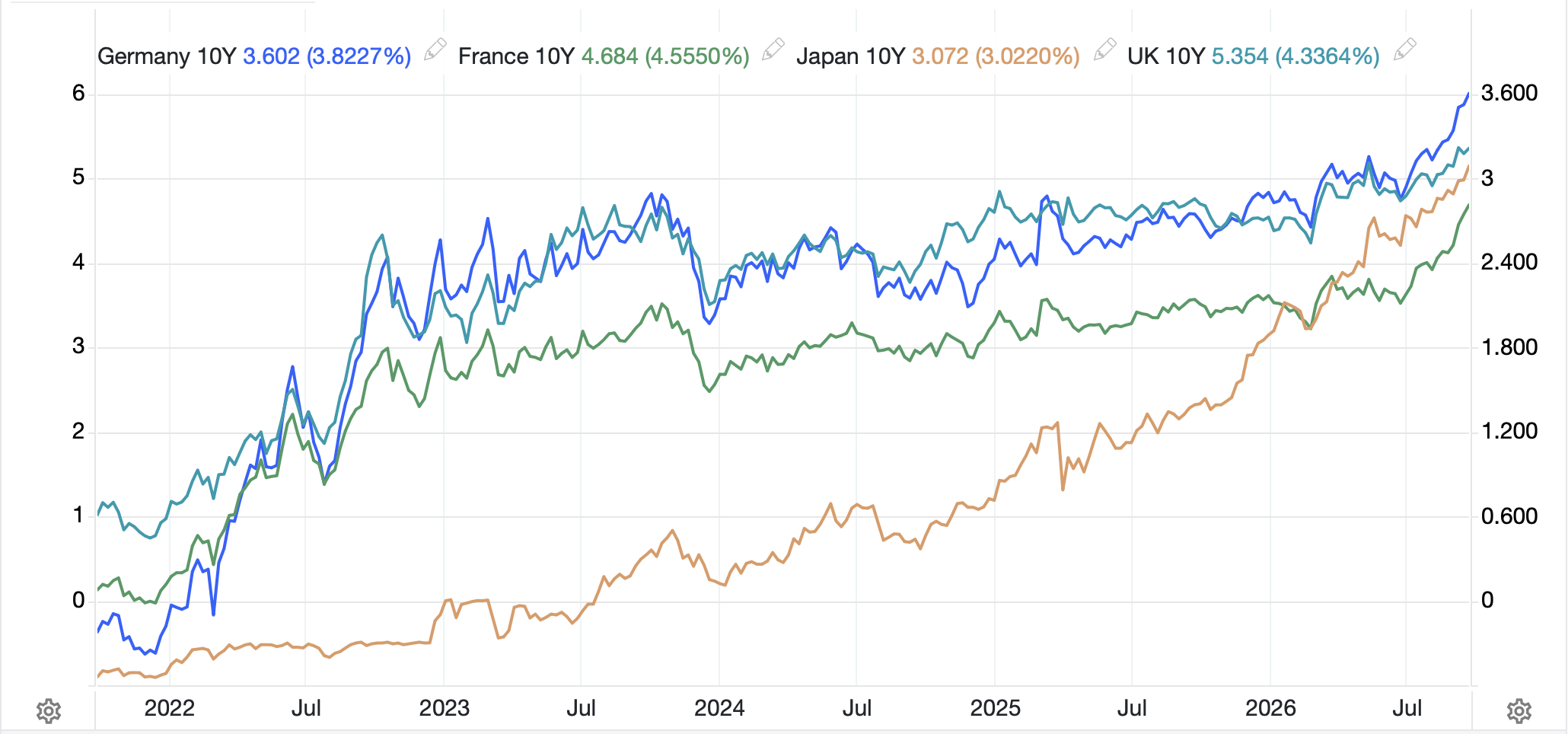
In the bond market, Treasury yields (+3bps) have edged higher this morning, I guess on this new belief in higher Fed funds, although I would have thought the bond market would appreciate a hawkish Fed fighting inflation.  European sovereign yields, though, are lower across the board down about -2bps everywhere.  Bonds remain less interesting now that they are back in their ranges and not breaking out as so many though was occurring back in May as per the below chart.

Source: tradingeconomics.com

With oil prices lower, it should be no surprise that gold (+1.35%) and silver (+2.4%) are both higher this morning.  Many have made the case that with the dollar strengthening, the precious metals complex will remain under pressure, and it is a valid case, but for some reason, I have a feeling it will not be as dramatic as they believe.

Finally, the dollar is firmer across the board this morning, albeit not by very much.  Wednesday and Thursday of last week were the big moving days in the wake of the FOMC meeting and the new hawkish read.  Since then, not much has happened, just a slow drift higher across the board.  FWIW, I don’t think that Chairman Warsh is going to be that hawkish, but I look forward to the structural changes that he makes.  However, for now, that is the market assessment.

On the data front, there is nothing today and really nothing of import until Thursday so I will go through it tomorrow.

That’s how things are shaping up, with the dollar gaining, oil sliding and stocks uncertain what to do next.  I am a fan of uncertainty as it will reduce systemic risk, and that is something we really need to see.

Good luck

Adf

My House

Said Kevin, the Fed’s now MY house
And views that we choose to espouse
Will no longer guide
So, when we decide
To move, we expect some to grouse

As well, we are set to review
Our policies all the way through
So, comms will be changed
And data arranged
In truth, it is quite the to-do

This is an evening note as I will be unavailable to write tomorrow morning as we head off to show GCH Nubia’s Take Your Breath Away, aka Marvel to a show.  That is his handler and the judge who awarded him Best of Breed that day.

But not surprisingly, the only thing that really mattered today was the FOMC meeting.  I have to say, having watched the entire press conference I am really impressed with Chairman Warsh.  I love the fact that he shortened the statement and that they are ending forward guidance.  And it was quite interesting that half the reporters’ questions were trying to get guidance about what the Fed may do in the future, despite him repeating that there was no more forward guidance.  My take is Fed reporters are going to have to learn about how markets work and more importantly, market practitioners are going to make up their own minds rather than rely on the Fed to bail them out.  This is all really positive!

The most noteworthy thing was the creation of five task forces to address issues with the way the Fed currently does things on the following subjects:

  1. Communications
  2. Balance Sheet
  3. Data Sources
  4. Productivity and Jobs
  5. Inflation Framework

So, it strikes me that Chairman Warsh is going to look to reprogram the Fed, something that has been sorely in need.  Do not be surprised when much of the commentary is negative on these subjects because those are the folks who benefitted from the old way of doing things.  They now need to change their models and their narratives and they are unhappy.  Another benefit.

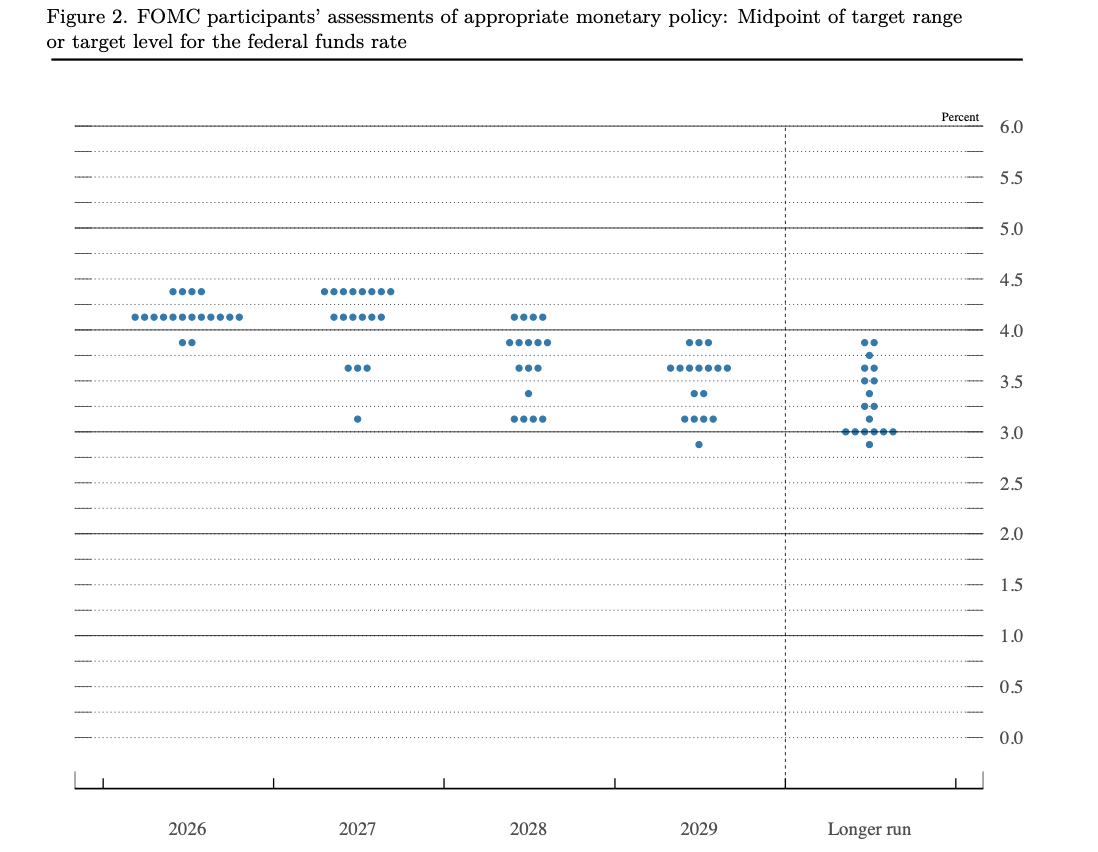
The upshot of the meeting was that rates were left on hold and the dot plot, where Warsh did not supply a dot, showed that half the committee thought rates appropriate, and half thought they would be higher by the end of the year.

Of course, this largely jibes with the Fed funds futures market as you can see in the latest table from the CME.

Of course, looking at this table, something seems amiss for September, perhaps there was a large position put in place that drove the market.  At any rate stock markets were unhappy with the major indices slipping -1.0% or more after the FOMC although bonds did very little and commodities continue to show oil slipping while gold and silver rise.  As to the dollar, it rallied pretty much across the board.

It is way too early to anticipate exactly how things are going to play out, but I am encouraged.  I strongly believe a little price volatility is a small price to pay to reduce systemic risk by reducing leverage in the system, and that is very likely to be the outcome if Mr Warsh has his way.  My forecast is the “ample reserves” balance sheet program is going to change before he is done.  If that is the case, I think they will have a real opportunity to get inflation under control.  As well, I believe that prospect will undermine much of the ‘death of the dollar’ narrative.  It truly will be significant.  We shall see.

Good luck

Adf

Future With Dread

The story today is the Fed
And whether, when looking ahead
Inflation they see
Stays well above three
Or if it just might fall instead

Meanwhile, every comment I’ve read
Discussing the ‘deal’ have all said
Too much was conceded
The US retreated
And look to the future with dread

Starting with the MOU with Iran, and having read the text of the agreement, at least the one published by Bloomberg, Iran has sworn to never have a nuclear weapon and then will effectively be readmitted to polite society, with sanctions and restrictions eventually removed.  The several comments I have read on the deal highlight numerous potential loopholes and semantics regarding tolls and fees and are uniformly unhappy with the deal.  But I’ve also read that many on Iran’s side are unhappy with the deal.  Arguably, the best sign the deal is going to last is just that, neither side got everything they wanted, but both got some of the things they wanted.  Time will tell how this all plays out, but certainly the oil market remains positive that the direction of travel is toward a normalization of flows through the Strait of Hormuz.

However, while the political pundits are going to continue to focus on that issue, markets have turned their focus to the FOMC meeting and how things play out under new Chairman Kevin Warsh.  The previous Fed whisperer, Nick Timiraos at the WSJ, continues to push Governor Powell’s message as there is not yet a new Fed whisperer.  My take is Timiraos will not be the one simply because his loyalties will not lie with Warsh. 

The thing in which we can be most confident is there will be no rate change at today’s meeting although the market continues to price a rate hike in December as per the below CME table.

All the drama will come with the release of the SEP (Summary of Economic Projections) which is the quarterly document the Fed publishes showing the range of economic forecasts by the individual FOMC members regarding GDP, Unemployment and interest rates.  This document also includes the dot plot.  It is important to note that the SEP only started to be released in 2007, so this is not a long-standing tradition, but part of Ben Bernanke’s changes to the institution.

And this is a key feature of what makes Kevin Warsh different.  He has indicated that the Fed talks too much (I agree) and believes that some ambiguity in what is going on is a desired outcome.  This is a controversial stance as Wall Street has minted money on the back of forward guidance, recognizing the Fed has their back whenever they blow up because they built up huge leverage and were wrong.  

While I completely understand the idea that political discussions need to be in the open, I am far more suspect with respect to monetary policy discussions.  Prior to forward guidance, market participants were far more cautious in their positioning as the probability of getting the direction of a trade wrong was far greater.  But once the Fed says, ‘rates are going to stay low for a very long time’, traders can lever up positions massively relying on the fact that their funding costs are going to remain in check.  And it is the massive leverage where the risks to the market lie, not the level of rates per se.

So, the question today is how Chairman Warsh will handle his desire to reduce communications compared to the previous actions of publishing the data and numerous FOMC members speeches.  One thought is he may refuse to put his own forecasts into the document, a sign of what he wants going forward but I am confident he has other ways to move forward.

The other issue is the question of the tone of the statement, which had ostensibly been leaning dovish but seems now likely to be neutral.  My sense is whatever he does, it will be incremental, at least at the beginning, but I anticipate that he is going to make substantial changes to the way the FOMC operates during his tenure as that is why he was put in the role. 

So, with that as our backdrop, let’s see how markets have absorbed the text of the deal as we all await the FOMC this afternoon.  Yesterday’s mixed US performance, with only the DJIA managing a gain while tech stocks dragged down both the NASDAQ and the S&P, was followed by more positivity than not in Asia with gains in Japan (+0.7%), China (+1.0%), Korea (+1.6%) and India (+0.5%) while HK (-0.75%) slipped a bit.  It is always a bit of a surprise when HK and China move in opposite directions, and it seems today’s split arose from different interpretations from a policy conference regarding future PBOC activities as well as potential future government support for a clearly weakening consumer economy.  Other regional exchanges had a mix of gainers and laggards as well, as the overall session was directionless.

In Europe, the picture is also mixed although the movement has been more muted than those in Asia.  Both Germany and the UK are flat to slightly lower this morning with the former under pressure after BMW offered a terrible profit forecast while the latter, despite lower-than-expected inflation readings, is lagging on growth concerns.  However, France (+0.2%) and Spain (+0.5%) have both managed to rally a bit on some slightly positive earnings news.  As to US futures, at this hour (7:15), they are modestly higher across the board.

Bond yields are generally little changed this morning with only UK gilts (-5bps) and JGBs (-4bps) showing any movement at all.  Gilts responded positively to the inflation data while JGBs seemed to take solace in the trade data showing Japan was back to a deficit.  

In the commodity markets, oil (+0.7%) is having a very quiet session after several sharp declines in a row while metals markets are largely unchanged this morning.  It appears even traders here are awaiting the FOMC outcome.  One thing I have seen is a recent report from the World Gold Council showing 45% of central banks surveyed plan to buy the barbarous relic in the next 12 months.

And finally, the dollar is slightly stronger this morning, but like most other markets, not showing much movement at all.  The below chart of the DXY for the past month shows just how lackluster price action has been with a total range of just 1.5%.  The red line is the midpoint of that range showing there is just not a lot of pressure in either direction right now.

Source: tradingeconomics.com

Meanwhile, USDJPY has basically spent the past two weeks hovering just above 160.00 with nary a peep from the MOF or BOJ.  Again, the situation there is the policy changes necessary to strengthen the yen are likely to have very negative economic consequences initially, and that is not something any government is likely to do.

On the data front, ahead of the Fed we see Retail Sales (exp +0.5%, +0.5% ex-autos) and then the EIA oil inventories with more draws expected.  And that’s really all there is.  I anticipate a very quiet session ahead of the Fed and then all will depend on how the market interprets Warsh’s signals.

Good luck

Adf

Leverage Doomsday

Though oil continues to be
The lens through which most of us see
The current events
In dollars and cents
There’s more going on causing glee

For instance, as stock markets rise
It cannot be such a surprise
The narrative writers
Are pulling all-nighters
Adjusting their views to seem wise

But naysayers need to say nay
And here’s what they’re pushing today
The Bank of Japan
And their current plan
Will lead to a leverage doomsday

We might as well start off with oil this morning since it is still the top story in markets, and still the major catalyst.  It is lower again this morning, down a further -2.8%, and despite many questions as to whether the deal will hold, both sides appear to be moving toward a signing on Friday.  The below chart from tradingeconomics.com shows WTI prices for the last year.  As you can see, the current price is the lowest since March 10th, which was a reaction low after the spike high on March 9th when it touched its highs for the entire situation.

I eyeballed a line at about $65.00/bbl as an estimate of what prices were like prior to the Iran conflict.  Based on that, the current front month futures price remains about 20% above the pre-war price, certainly high, but it doesn’t seem crippling.  I believe it is very clear that the analysts who were calling for $150/bbl or $200/bbl are now working hard to determine what they got wrong.  Doomberg wrote an interesting piece this morning (it is paywalled, but their stuff is fantastic) describing two likely reasons for the fact that oil prices never rose that high.  First, the original estimates of how much oil was stuck behind the Strait were overstated as all the players there found ways to export some, whether through tankers going dark or via rail or truck or pipeline.  But the more interesting observation was that China was able to reduce its imports by between 3mm and 4mm bpd and things were just fine.  China has altered their energy mix such that oil, while still important, can be substituted out as necessary.  That is a very interesting outcome with respect to one of China’s greatest perceived weaknesses, its lack of natural energy capacity.  If they don’t need as much oil to run their economy (which by the way based on overnight data is struggling) then they have less geopolitical weakness.  

Enough on oil, but while I’m here, it is not surprising that as oil slides, metals prices rise so gold (+0.9%) and silver (+0.8%) are continuing to benefit as is copper (+0.1%) although the latter not so much today.

Turning to the other story that has tongues wagging, the BOJ raised their base rate to 1.00% last night as had been universally expected by markets.  Now, the interesting thing here is that there is a group of analysts who believe that this will lead to net position liquidation by leveraged fund managers (i.e. hedge funds) as their funding costs will have risen.  I disagree, and so far, markets are on my side.  This is evident by the fact that equity markets continue to perform well, and USDJPY has shown no inkling of reversing its multi-year trend of rising.  Below is a table of the base interest rates of the G20 nations.  While Switzerland does have a lower rate, and Singapore is the same, if you are thinking about borrowing in a currency to lever up positions, Japan, given the yen’s depth and liquidity, remains the currency of choice by a long shot.

Source: tradingeconomics.com

Ask yourself if your borrowing costs rose 0.25% but you were still earning a net 13.5% return on your BRL deposits, would you flee the trade?  And if you have been buying equities, you are even less likely to get out.  Japan’s problem is not specifically that their base rate is low, it is that they currently are fighting a terrible demographic position of a shrinking population and they have a massive debt/GDP ratio.  They cannot afford to raise rates enough to have a meaningful impact on the yen without bankrupting the country and decimating the yen.  It is not clear to me how they get out of their current situation, but despite concerns elsewhere in the world about the yen’s weakness being a competitive advantage, I think it has further to go.  Basically, there needs to be another Plaza Accord type agreement to change things, and that doesn’t seem likely right now.  After all, in Evian, it doesn’t sound like things are going smoothly.

So, how have markets behaved overnight?  Well, risk is still in vogue.  Following yesterday’s strong US performance, where the DJIA made another all-time high, there were far more gainers (Korea, India, Taiwan, Malaysia, New Zealand, Indonesia) than laggards (HK -1.4%, China -0.2%) while Tokyo was little changed.  As I mentioned above, the Chinese data was pretty lousy as per the below table:

So, the housing market continues to suffer, and the domestic economy along with it, although the export economy continues to grow.

In Europe, the decline in oil prices is clearly helping as all major indices are higher between 0.4% and 0.75%.  As to US futures, at this hour (7:20), they are pointing slightly higher, about 0.15% across the board.

In the bond market, yields continue to decline with Treasuries (-3bps) back below 4.5% which had been seen as a real problem just a few weeks ago.  European sovereigns are also lower by between -3bps and -4bps, duly following both Treasury yields and oil prices.  The outlier here is JGB yields (+6bps) which responded to the rate hike by rising, perhaps an indication that investors don’t believe the BOJ is doing enough.  However, my wager would be the BOJ is done.

Finally, the dollar is a touch softer, as one would expect given the movements in other markets, but there is very little excitement in the FX markets.  Using the DXY (-0.05%) as proxy, you can see things are little changed.  The biggest movers are BRL (+0.4%) and KRW (+0.4%) both of which are seeing capital inflows supporting the currency.  But otherwise, +/-0.2% defines the session in both G10 and EMG currencies.  Note that despite the BOJ rate hike, USDJPY sits at 160.32 showing no sign of heading lower, even in an environment where the dollar is modestly softer.

On the data front, this morning brings Housing Starts (exp 1.43M) and Building Permits (1.42M) and that’s really it.  With the FOMC tomorrow, and Iran ostensibly solved, Mr Warsh and his press conference will get a great deal of focus.  Until then, I don’t see any reason for recent trends to change absent a complete collapse of the Iran deal, which seems unlikely at this point.

Good luck

Adf