Narrative Doom

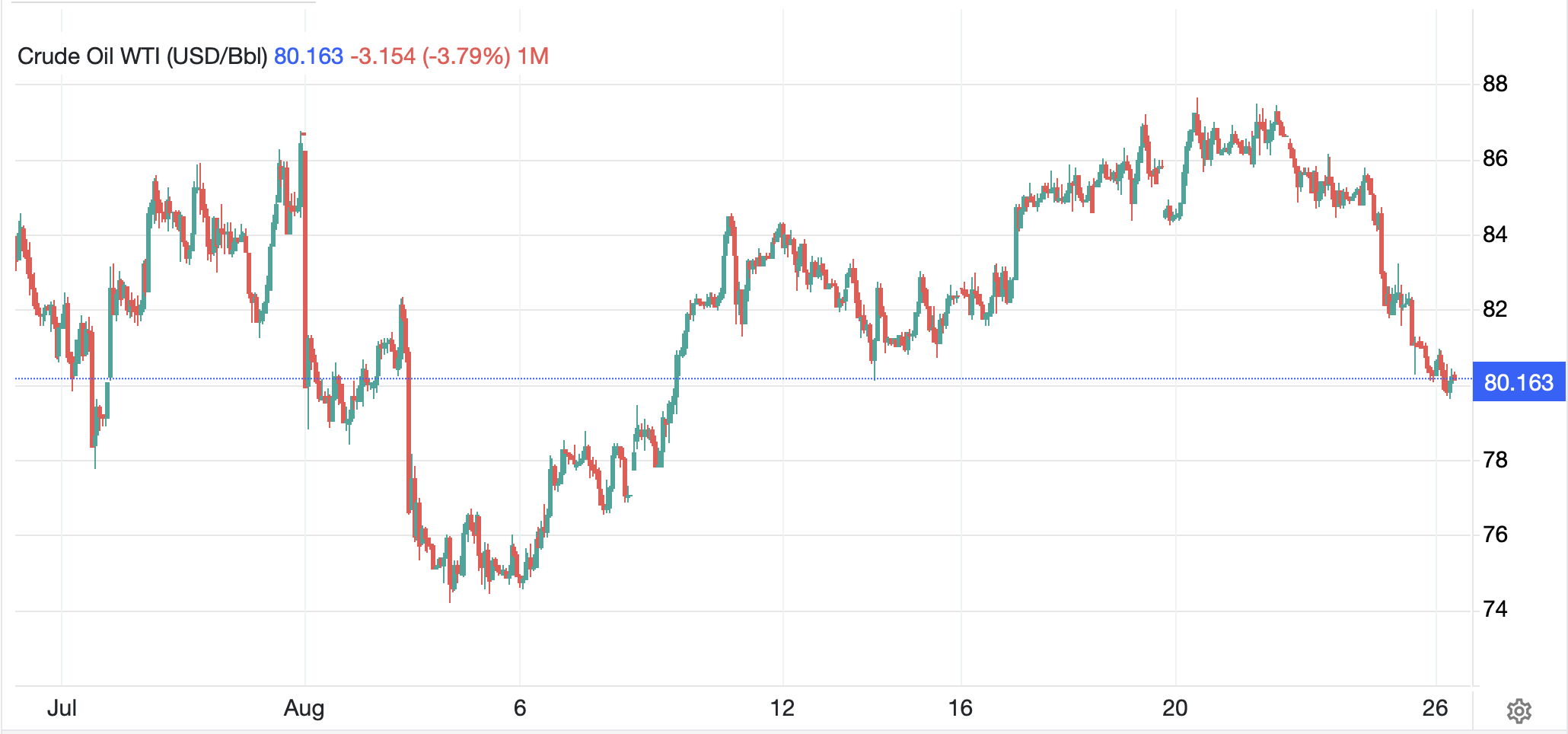
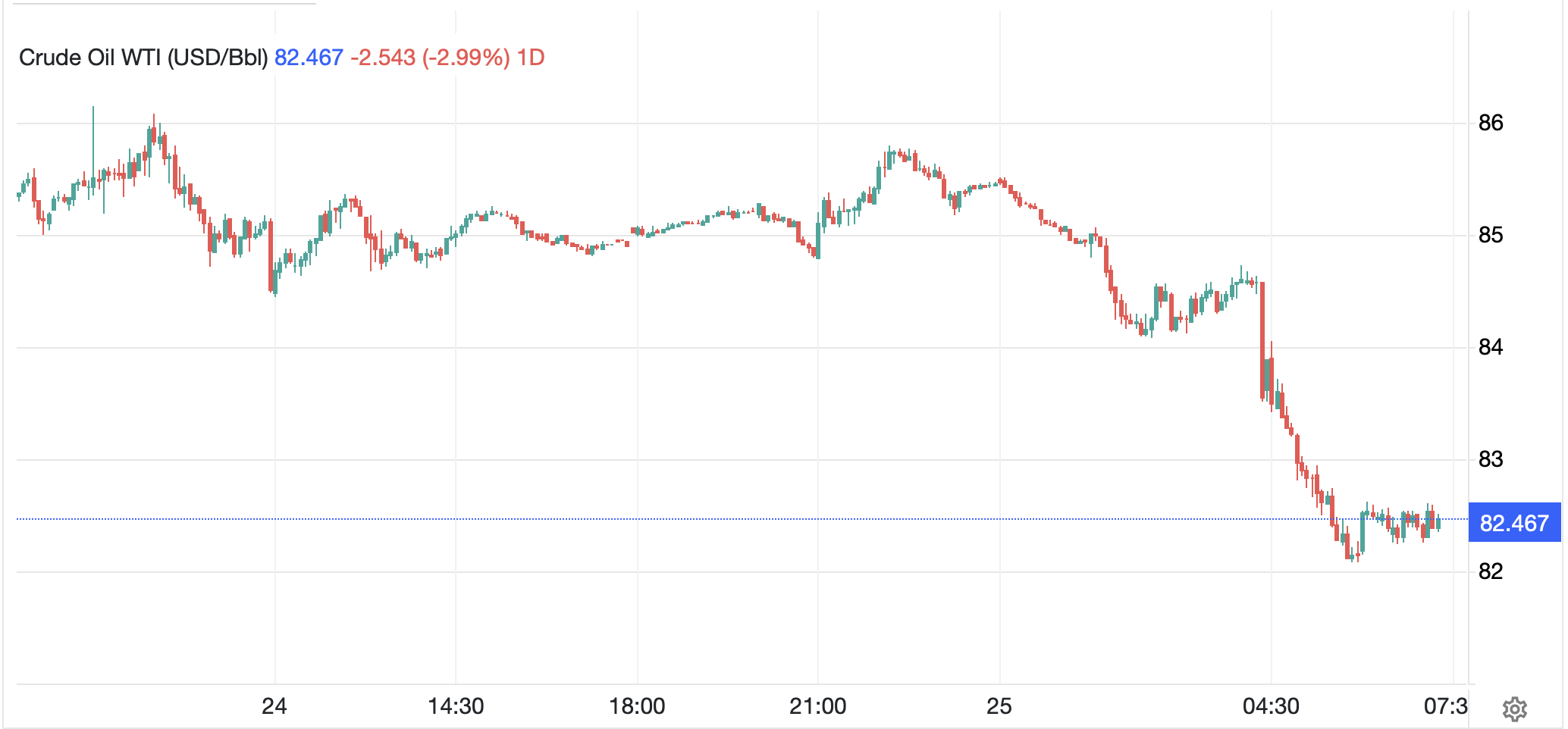
The crude price continues to fall
But one thing that has us in thrall
Is narrative doom
Where pundits all fume
God dammit, we’ll soon hit the wall

But under the headlines we learn
It’s really not quite the concern
The major details
Of SPR sales
Are by next year all will return

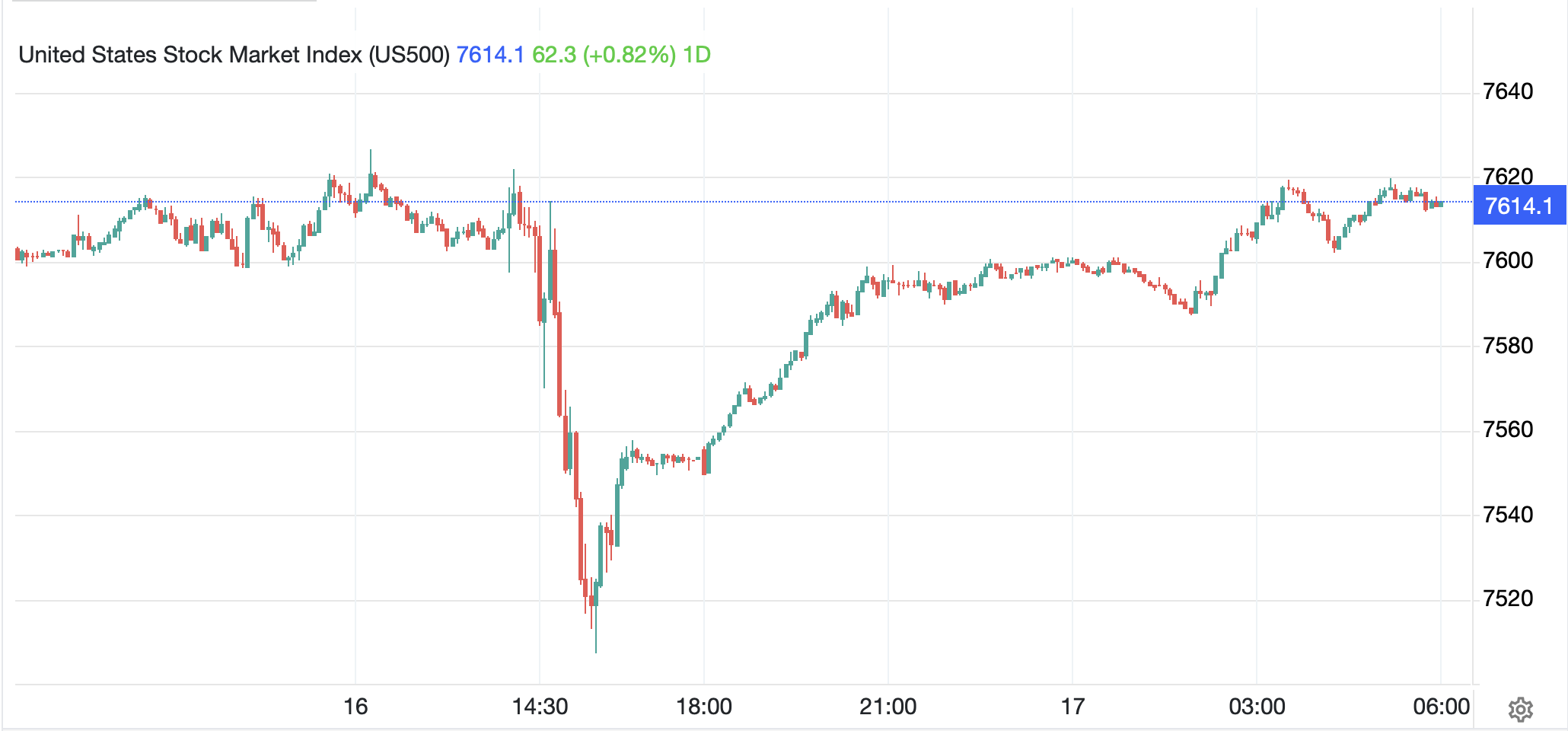
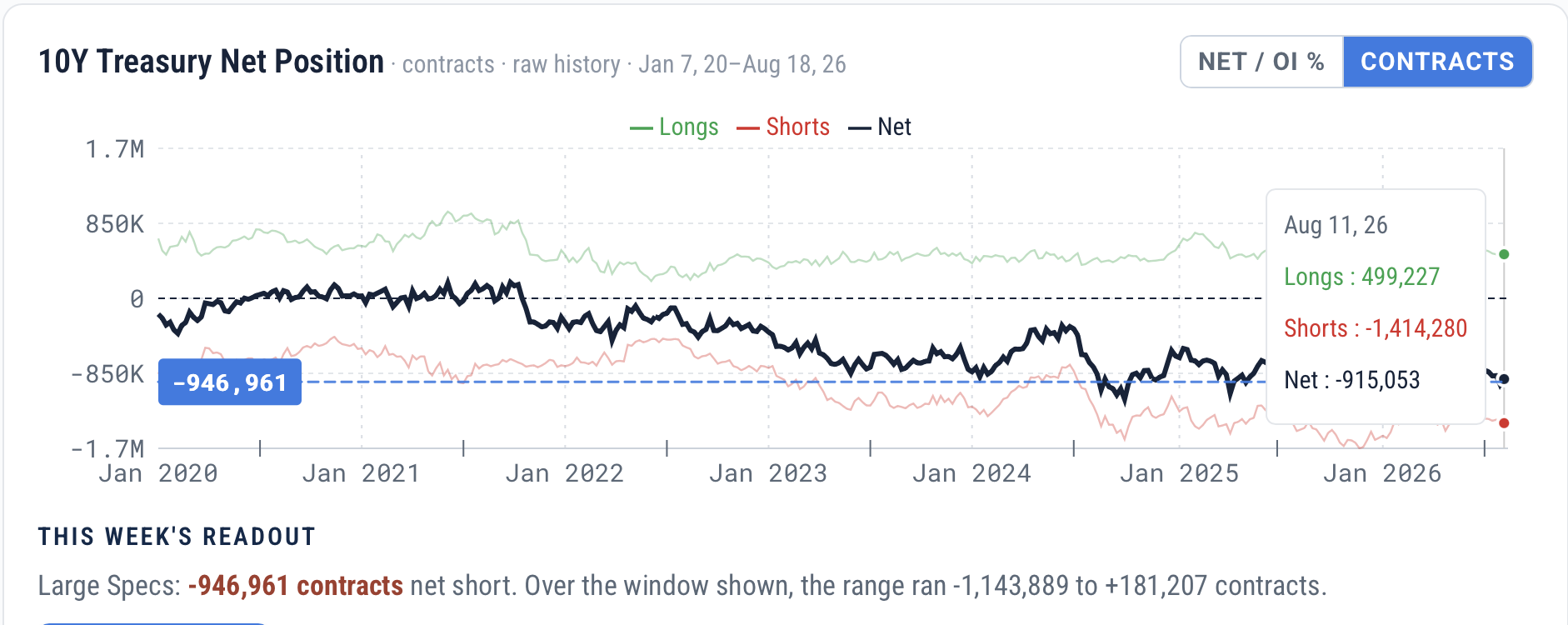
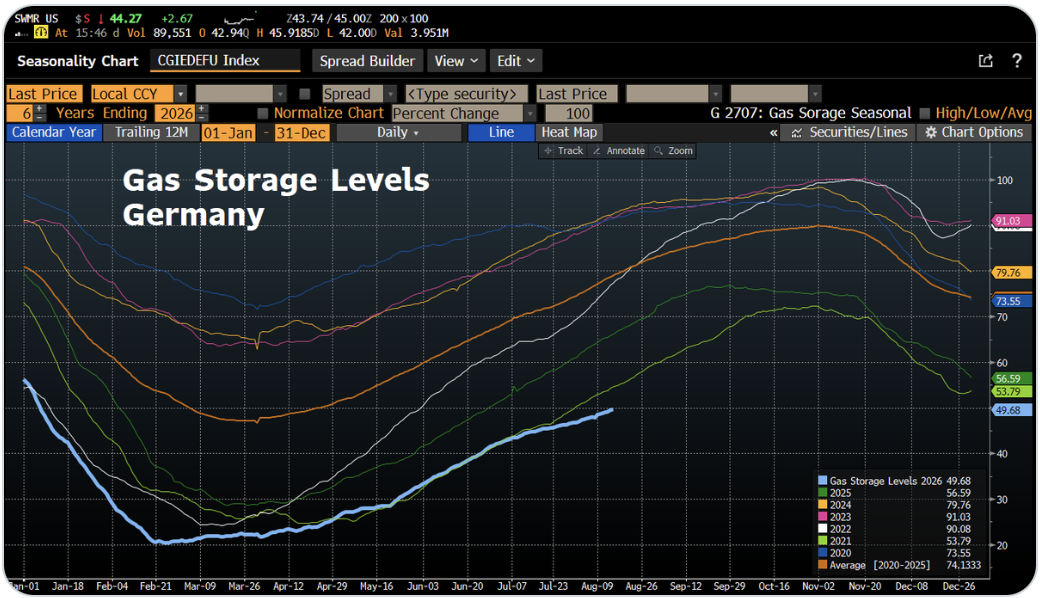
Oil puked yesterday, down nearly -6% despite the news that the EIA inventories fell dramatically as well.  The total draw was just under 18 million barrels, which on the surface is a new record draw.  Charts like the below were all over the place as the narrative writers were busy calling for the end of American Exceptionalism er.. the dollar, er.. US energy dominance.

However, I am not convinced that is the case.  The first clue is that oil prices collapsed and if the doom porn was accurate, I don’t believe that would be happening.  Instead, there is a far better explanation which I am lifting in its entirety from my friend JJ who writes market vibes and has been trading oil for as long as I have been trading FX.  If you care about oil markets, you really need to be reading what he says.

The DOE is releasing 172 million barrels of SPR oil with swaps rather than outright sales. Companies borrow SPR crude now and they pay it back plus a premium in more barrels later which based on the curve could be as much as 25% more barrels. This is explicitly designed to grow the reserve by at least 200 million barrels “at no cost to the taxpayer” and it will.

These are not “draws.” They are loans. The swaps are repaid ratably from November 2026 through September 2028. Earlier return structures have lower premiums.

In other words, the administration is taking advantage of the major backwardation in the oil futures curve and selling prompt and buying forward, taking oil instead of cash at a discounted basis.  If we understand this, it helps us understand why there is no panic in the oil markets, at least not in the US WTI market.

And, whether or not the IRGC is negotiating or getting ready to annihilate us all, my sense is this is a much bigger part of the picture than anyone is considering, except actual oil traders.  But it is not nearly as sexy a narrative, especially if you hate President Trump and can try to tar him with yet another problem.

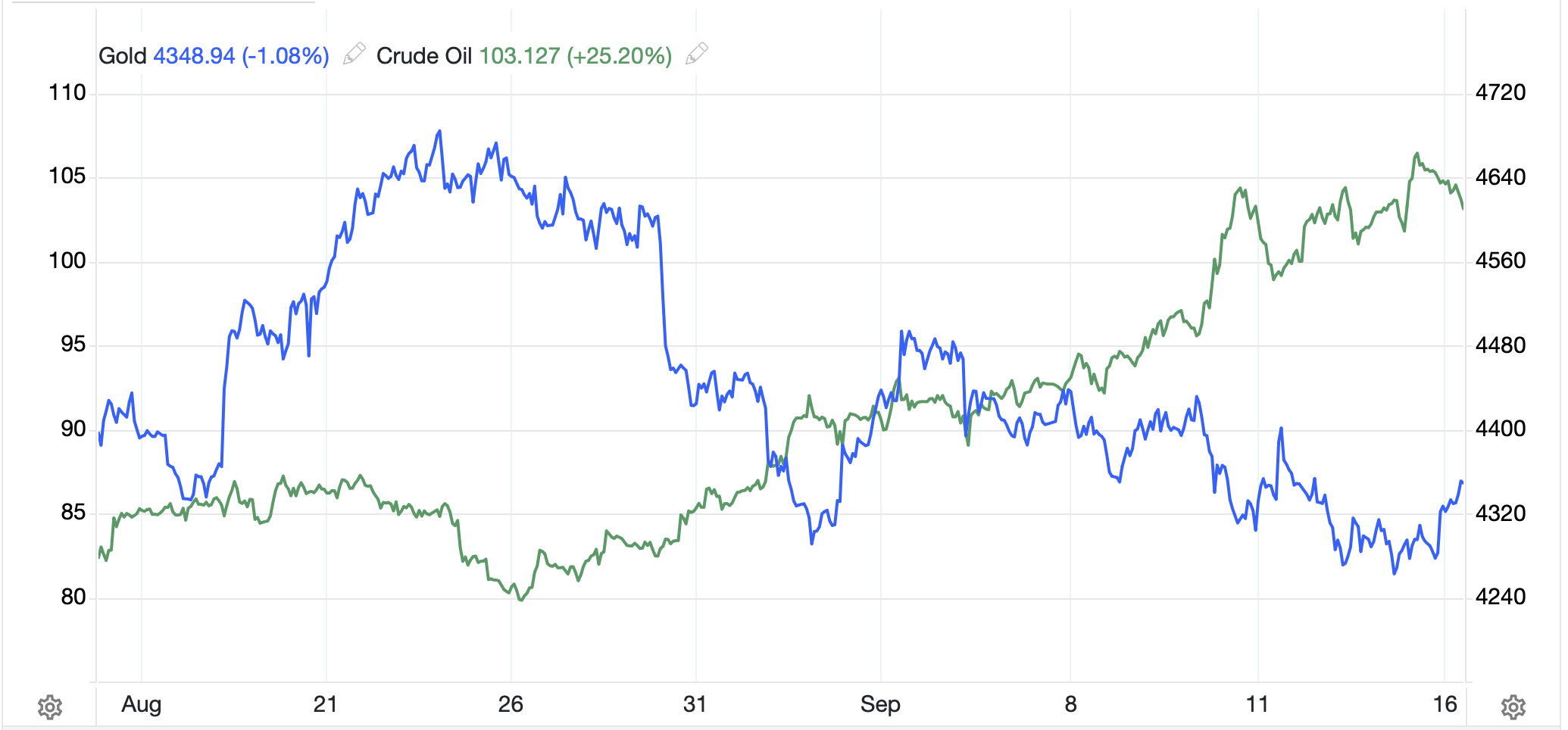
And as we have learned lately, as goes oil, so goes the entire market.  So, it should be no surprise that equities and precious metals rallied as oil fell alongside Treasury yields and the dollar.  Pretty ordinary actually.

For Jay in his last time as Chair
Where soon, Kevin Warsh we’ll compare
The Minutes revealed
That rises in yield
Would soon change to common from rare

“A majority of participants highlighted…that some policy firming would likely become appropriate if inflation were to continue to run persistently above 2%.”  This statement from the FOMC Minutes of the last meeting at the end of April is actually quite galling.  Even though the FOMC has settled on the inflation reading that has historically run lower than all others, Core PCE, a metric, by the way, that doesn’t even try to represent a consumer’s experience, they have singularly failed to achieve their 2.0% target for more than five years running now.  In the chart below from tradingeconomics.com, the leftmost bar is at 2.2% from March 2021, right as the Covid monetary insanity started to accelerate.  This chart should be Jay Powell’s epitaph, a singular failure in the seat.  After all, as awful as I thought Janet Yellen was in the role, her track record was not this bad!

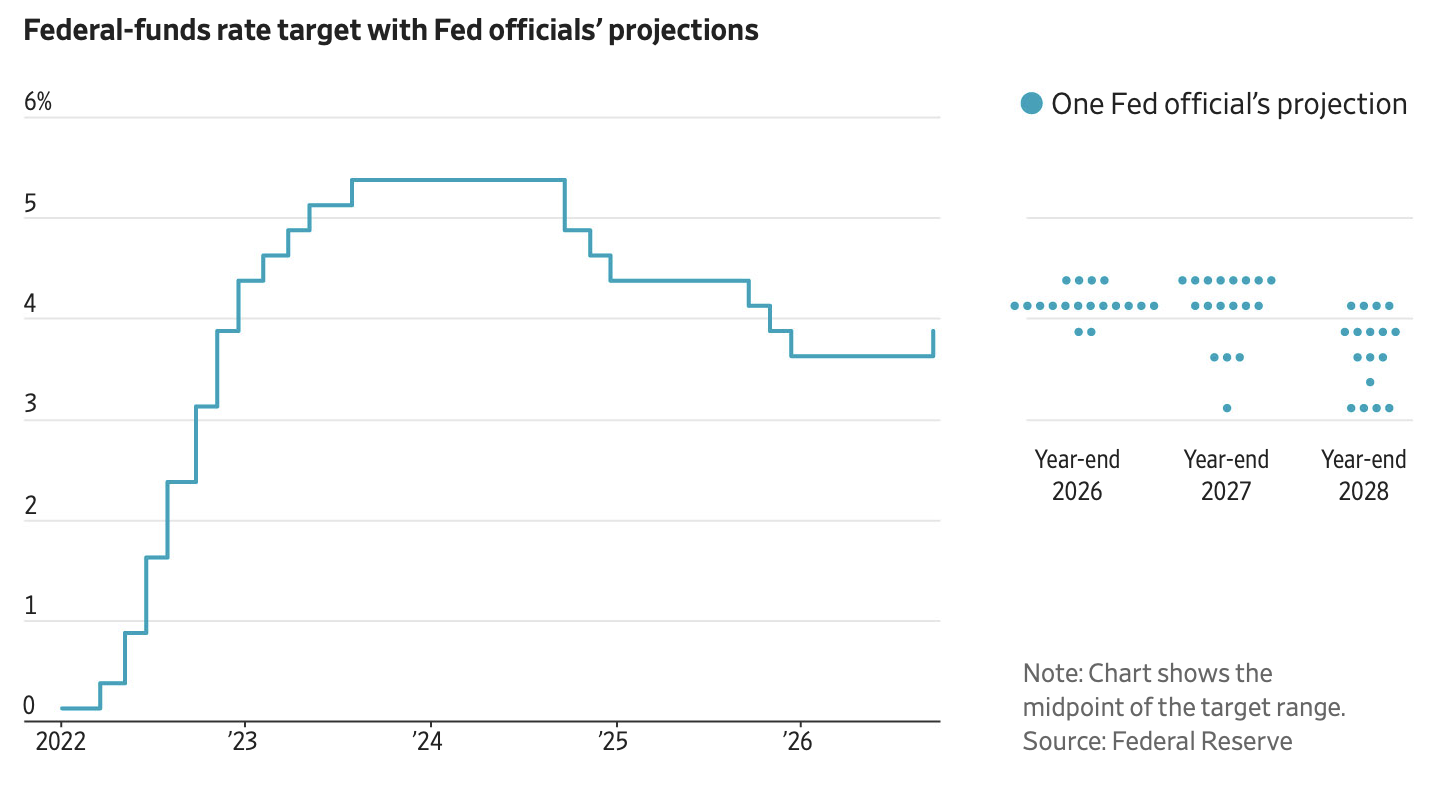
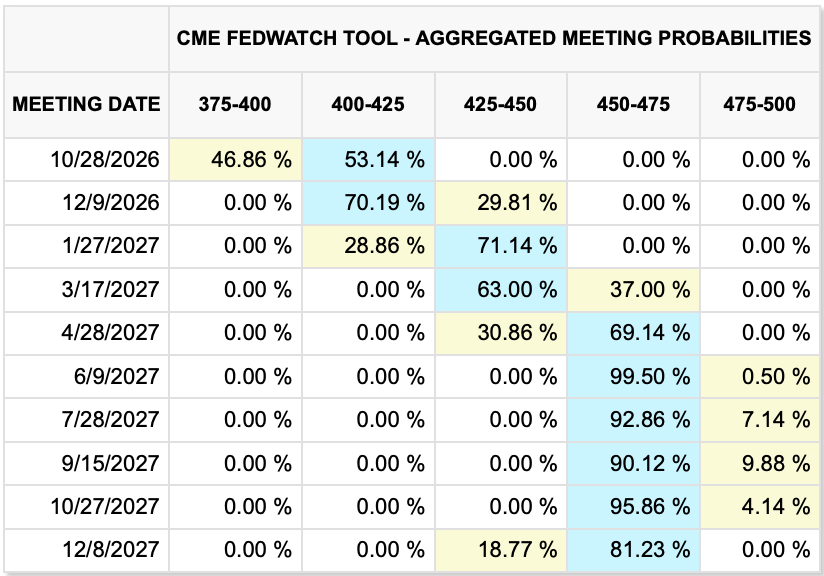
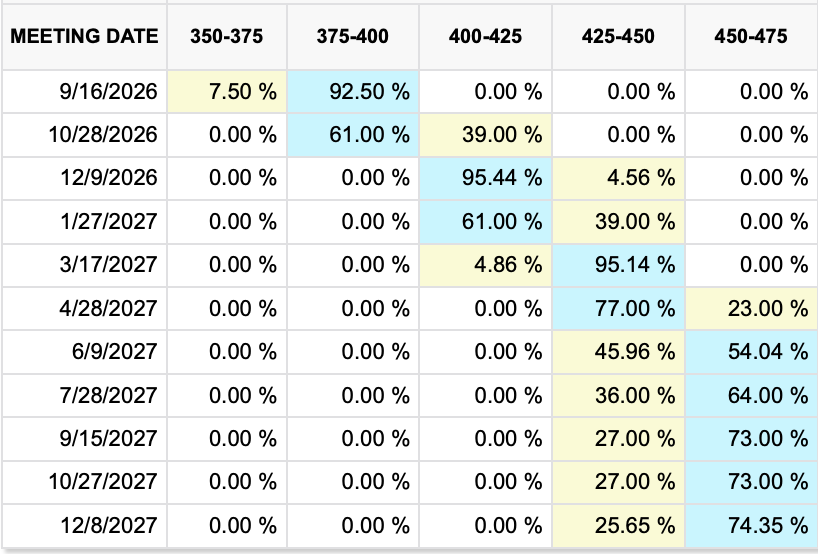
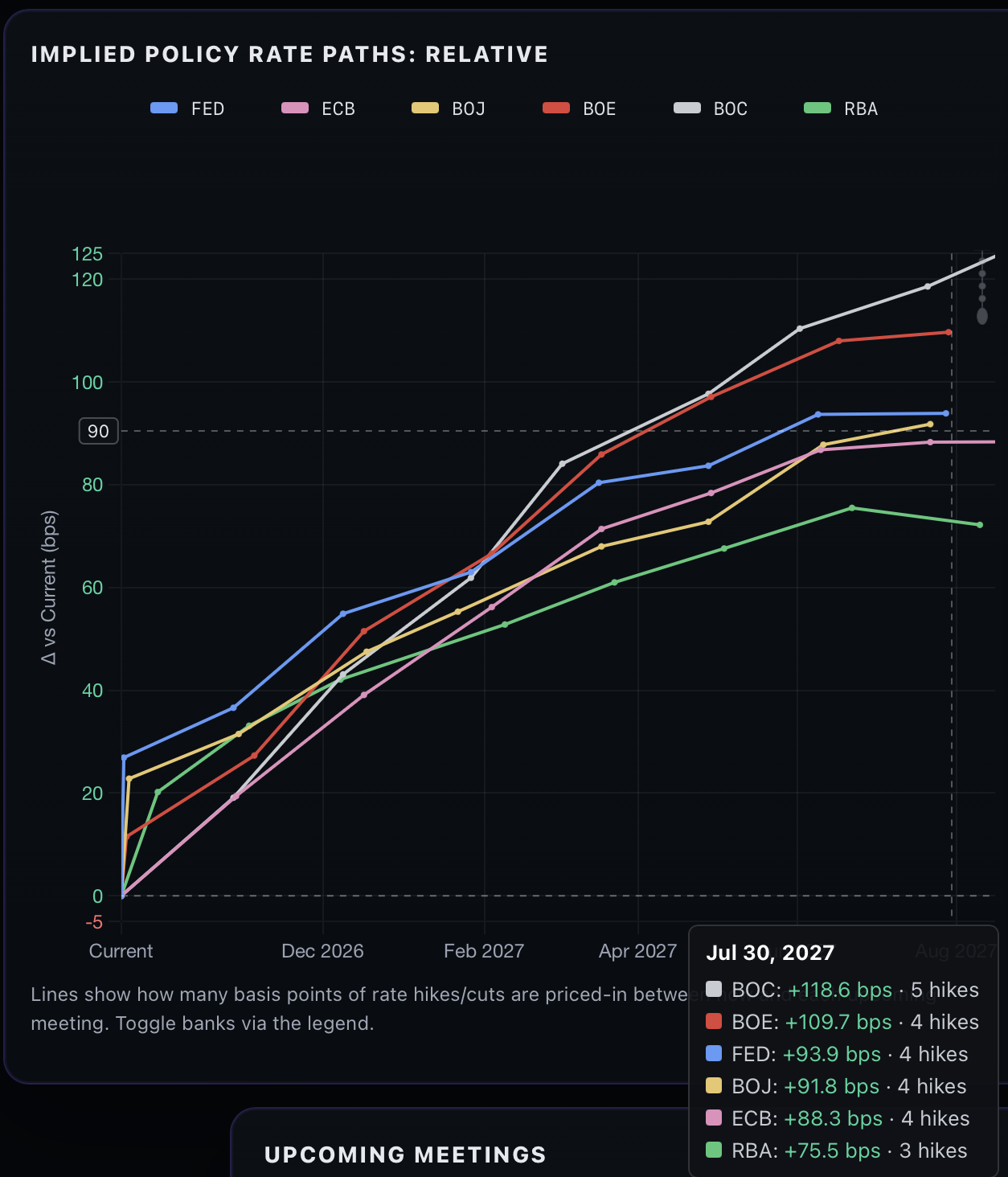
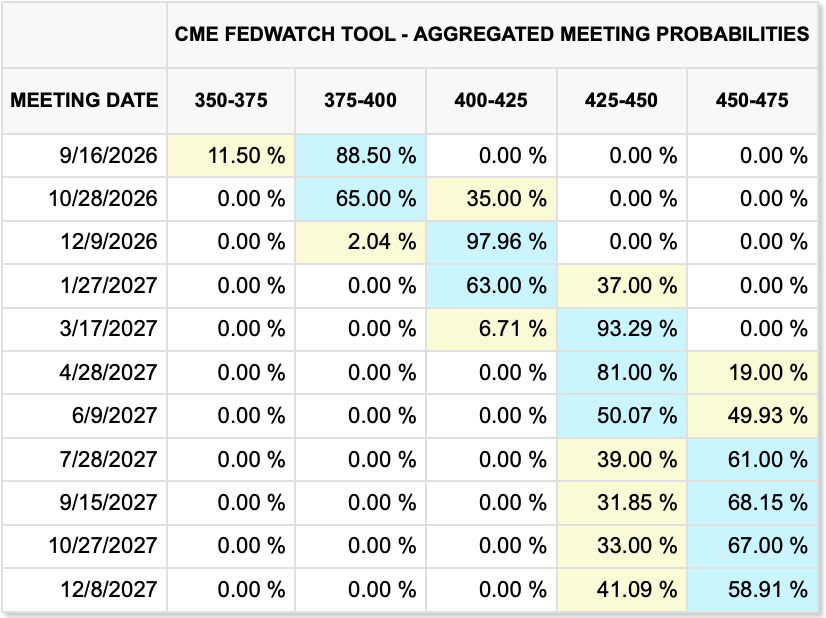
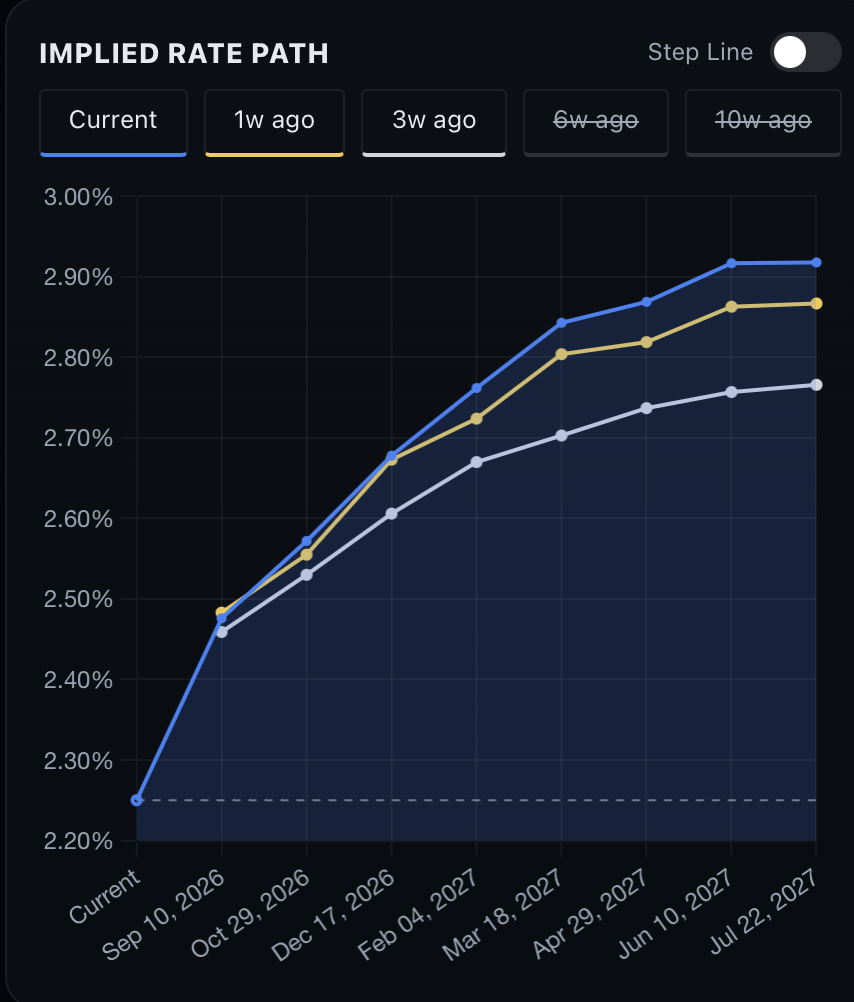
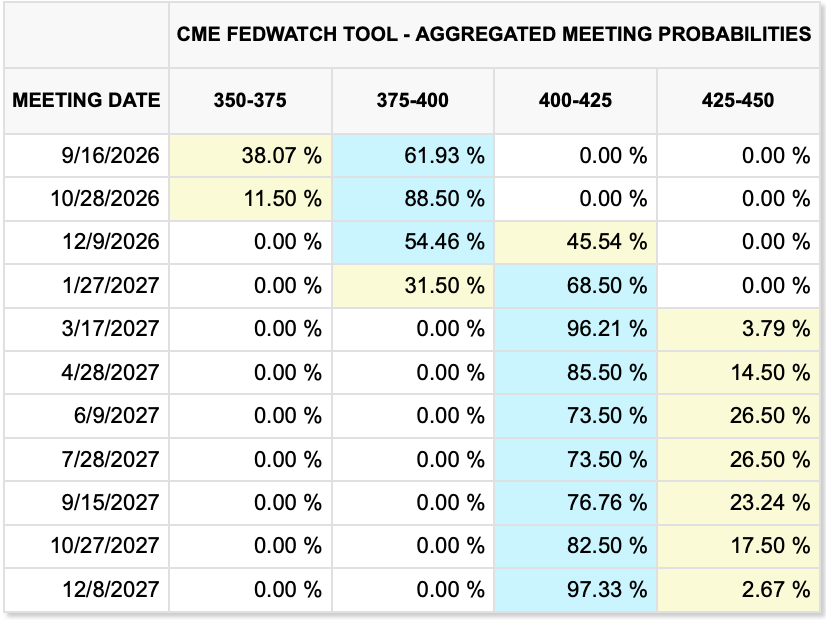
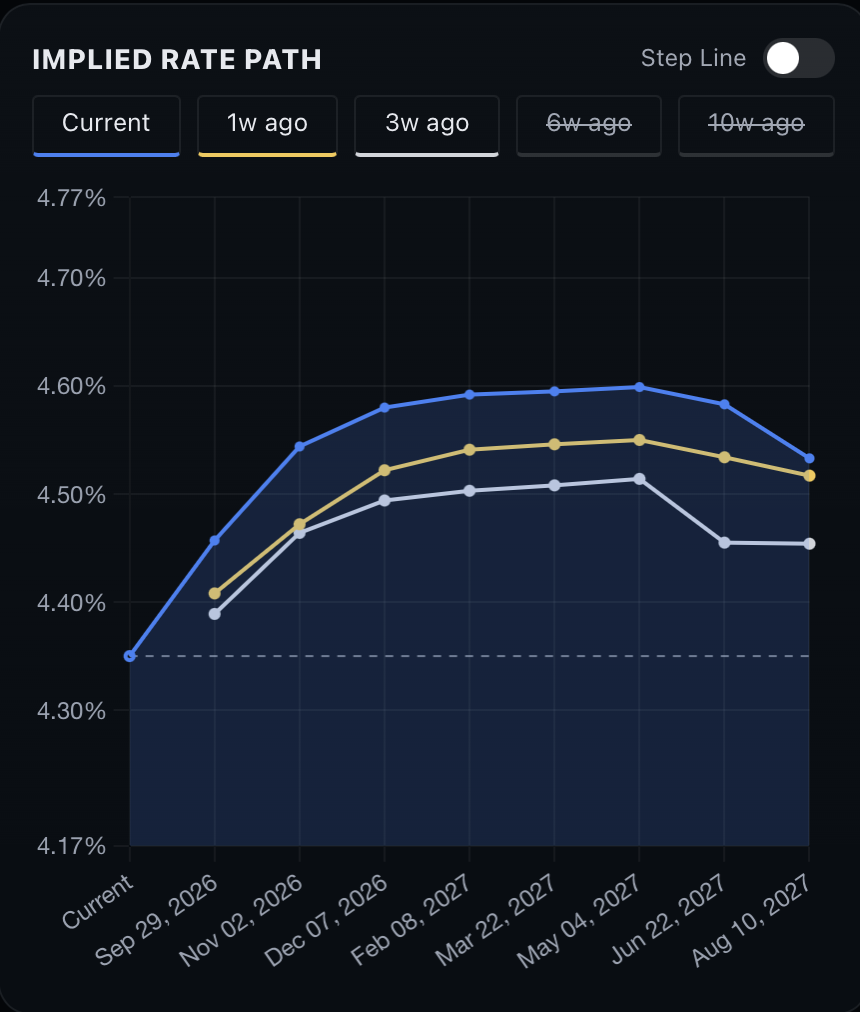
Of course, now that Mr Warsh is due to be sworn in tomorrow, you can be certain that the punditry will lay the entirety of blame on the fact that inflation is running hot on him directly because, well, President Trump appointed him and they generally hate President Trump.  Of course, I would contend this was not really a newsworthy release as we all already knew that the FOMC had turned more hawkish, and we have seen Fed funds futures begin to price in the probability of a rate hike by the end of the year.  

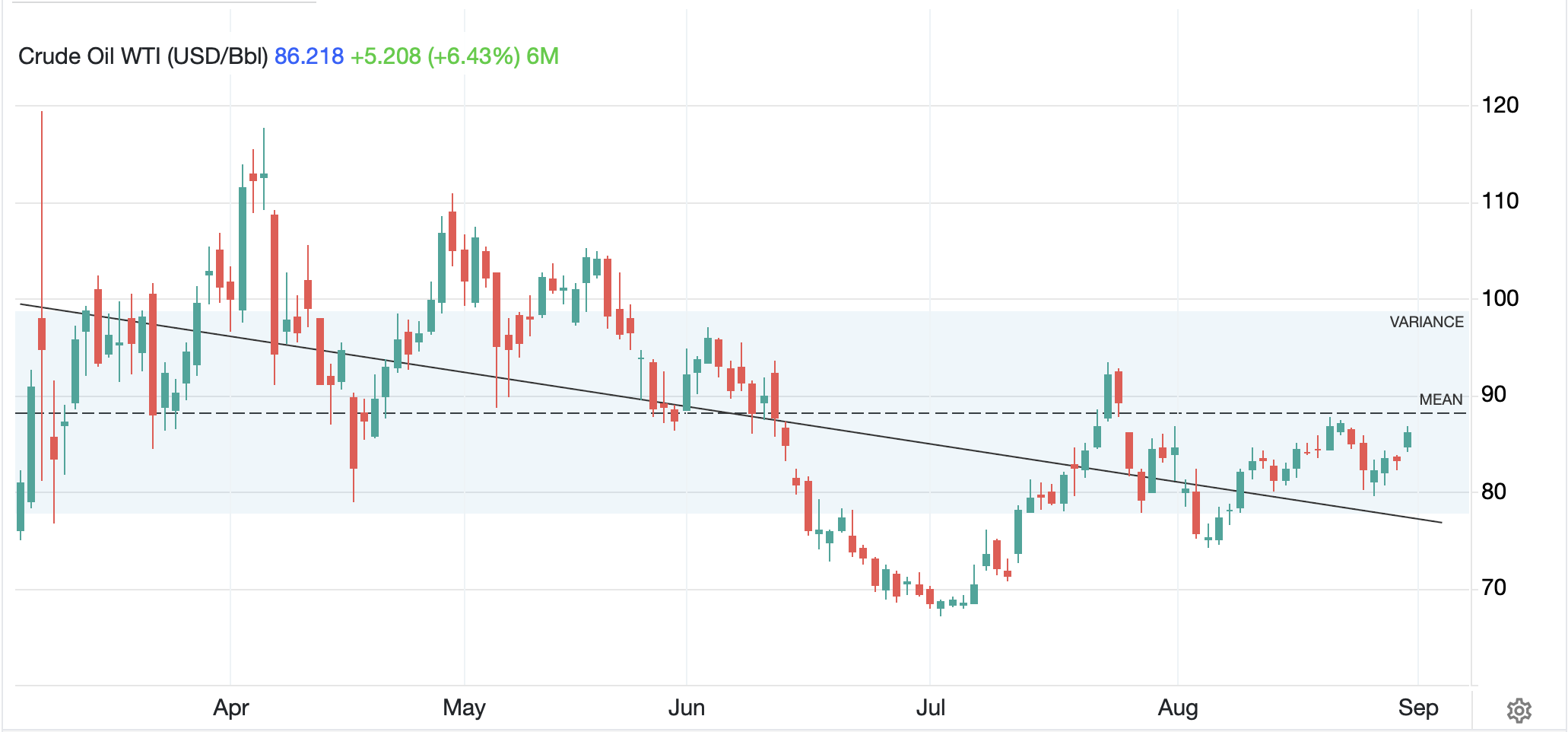
In the end, though, the oil price remains the key driver of all market activity for the foreseeable future.  So, let’s see how the rest of the markets behaved after yesterday’s sharp decline and given that the black, sticky stuff is sliding a little further this morning, currently down -0.75% at 6:00am.  Remember, too, that Monday afternoon, WTI was more than $10/bbl higher than it is right now.

Source: tradingeconomics.com

Finishing the commodity space, the metals, which all rallied yesterday, have slipped a bit despite oil’s slide this morning with gold (-0.3%), silver (-1.0%) and copper (-1.0%) all under modest pressure.  I must admit that the price action in both gold and silver is starting to make me question the long-term case, let alone the short-term case, to hold them.  Copper, however, seems like it will be in such demand as the electrification of everything increases, that any price declines should be snapped up.

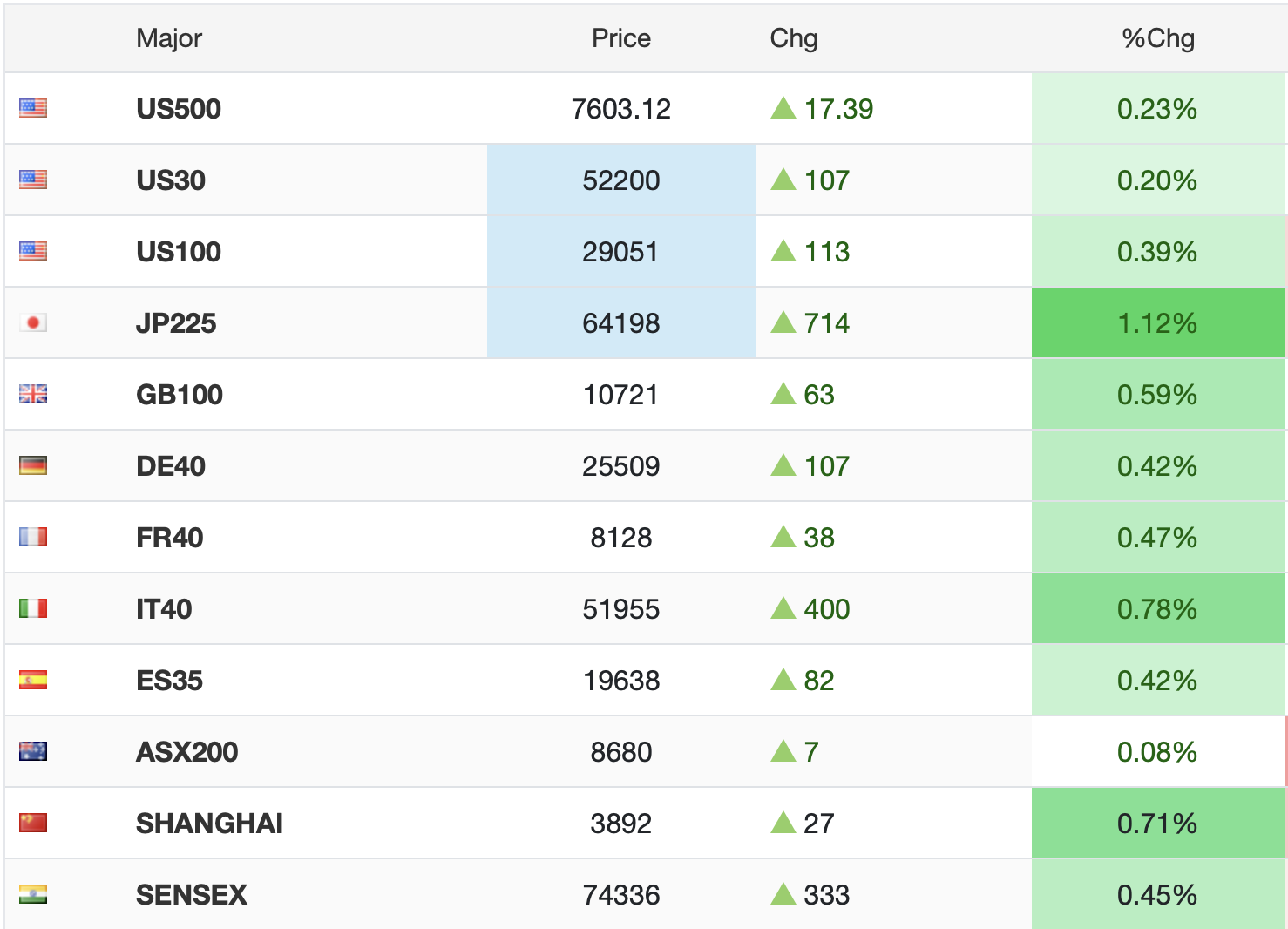
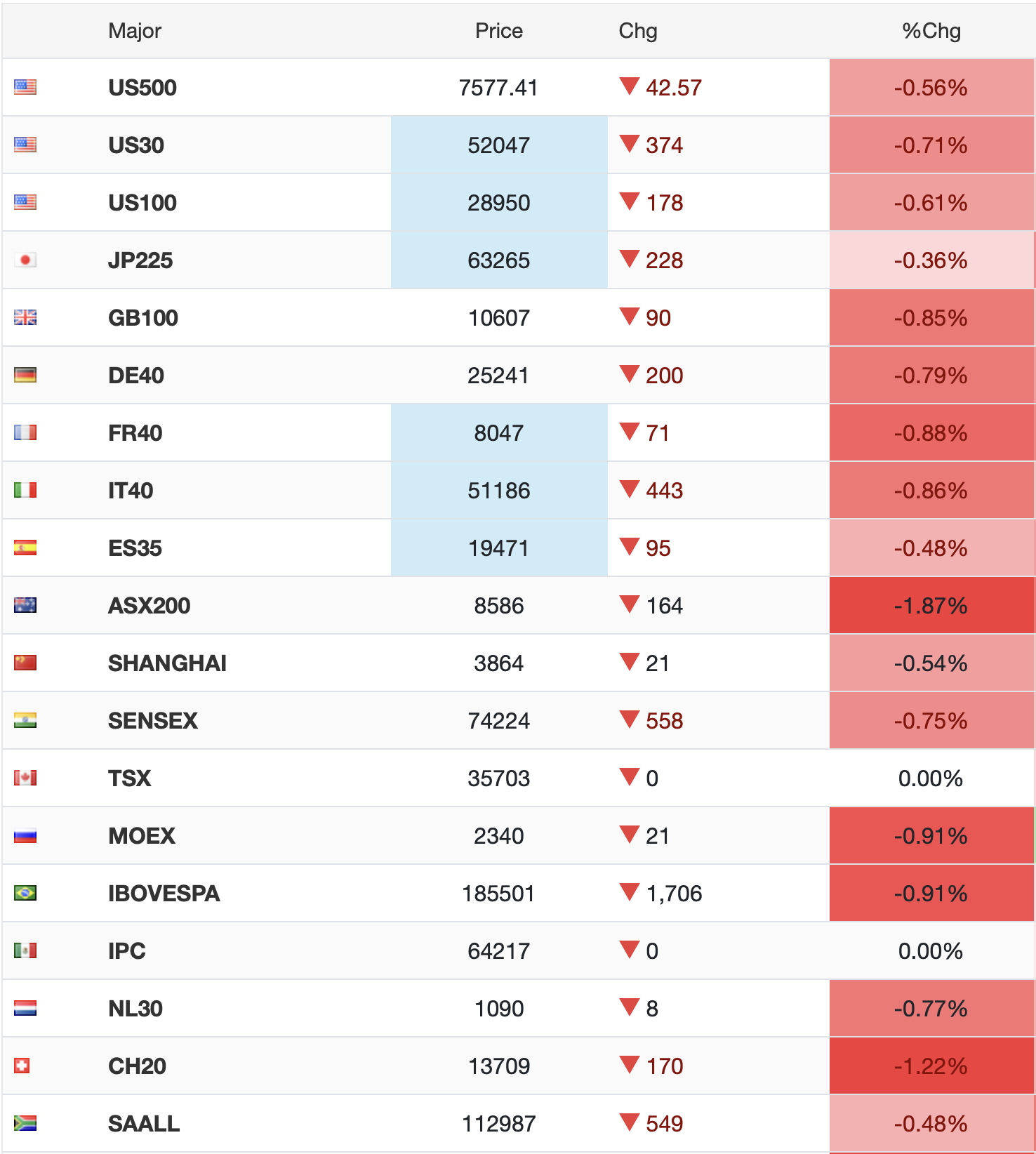
In the equity markets, as mentioned above, yesterday saw gains in the US which were then followed up by what seemed to be a strong earnings report from Nvidia, although I read that there were those who were disappointed they didn’t guide things even higher.  The follow through in Asia was mixed with Tokyo (+3.1%), Taiwan (+3.4%) and Korea (+8.4%) following the tech lead from the US.  Interestingly, both China (-1.4%) and HK (-1.0%) did not follow along, but sold off, ostensibly on profit taking after their recent rallies.  The other big laggard in this time zone was Indonesia (-3.5%) which reacted negatively to government export restrictions on key commodities like palm oil and metals as still-high oil prices take their toll on the economy.

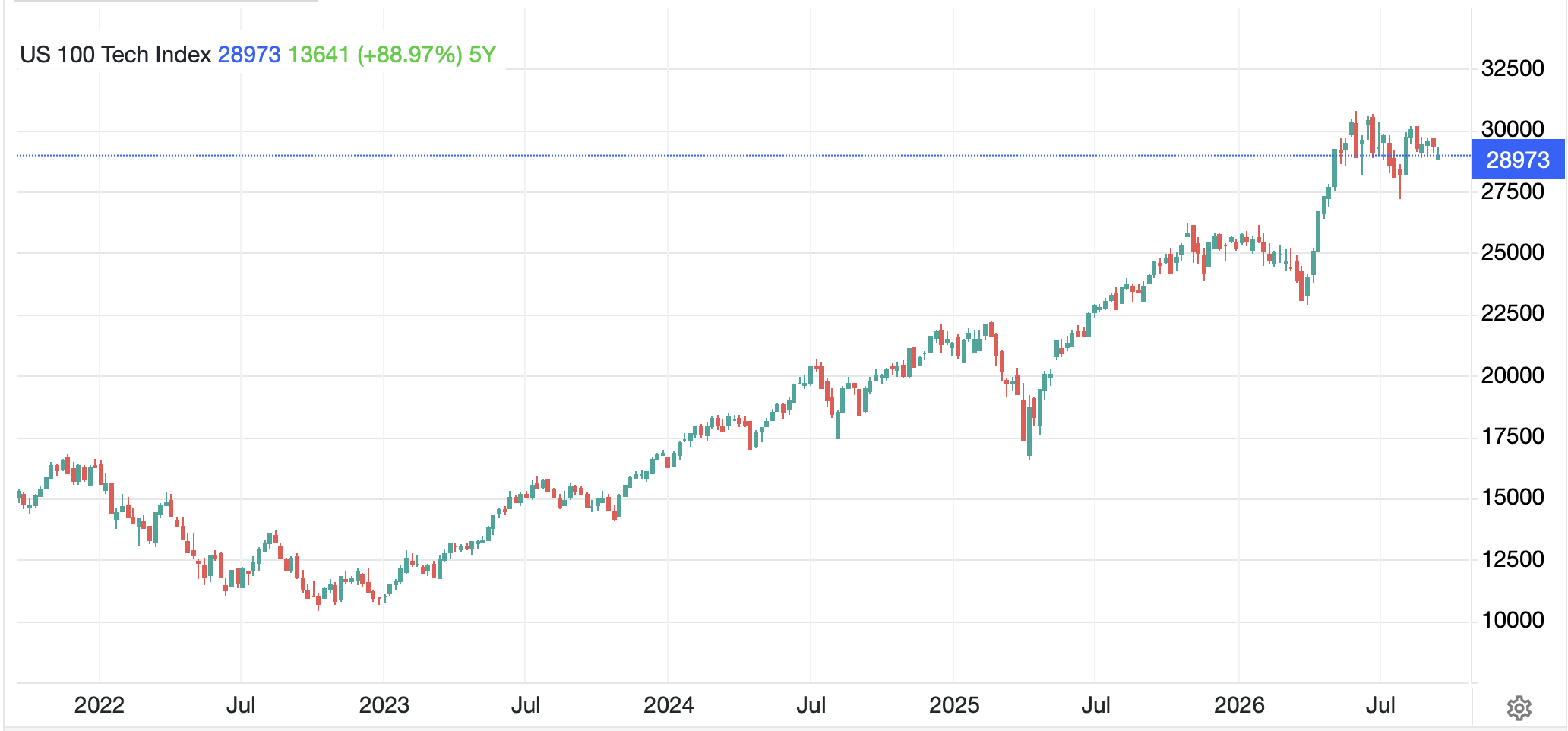
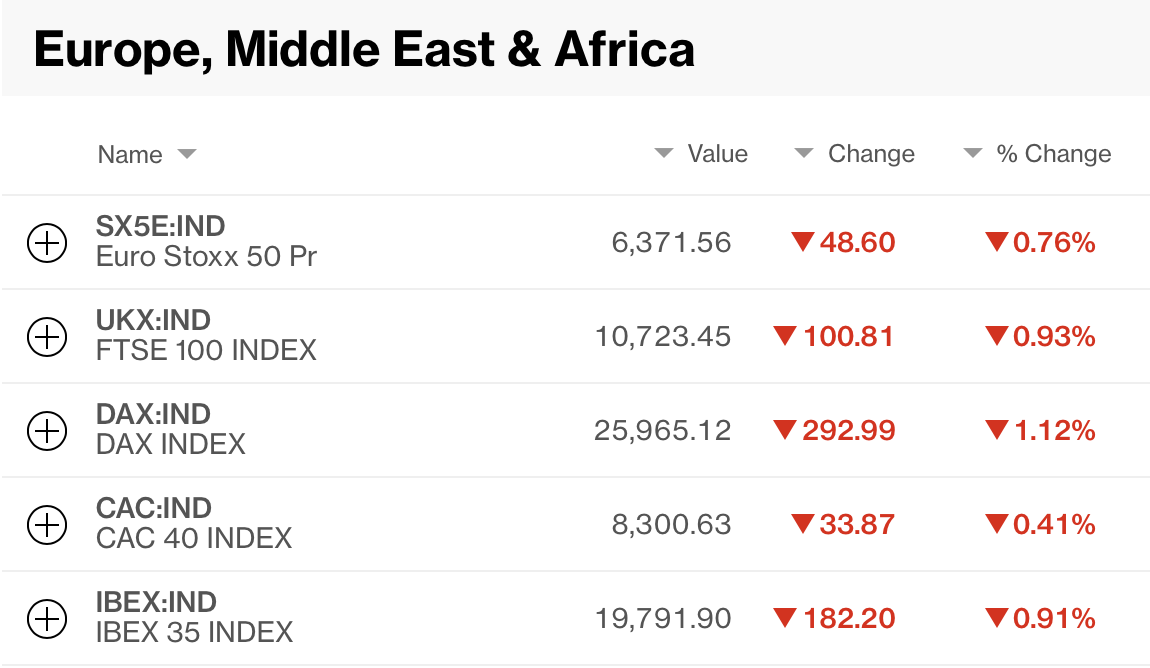
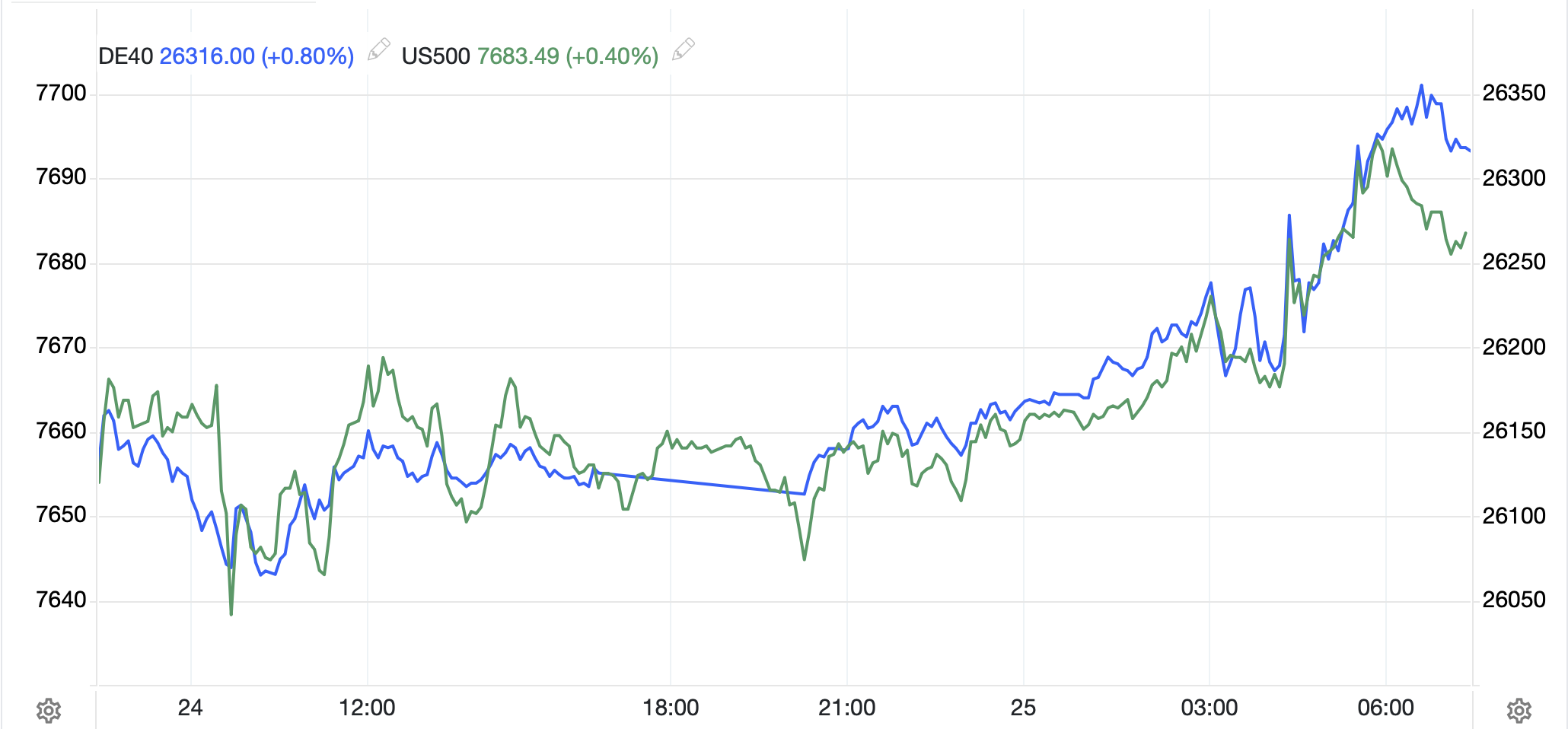
As to Europe this morning, there is not much of which to speak with the major indices all +/- 0.2% or less after Flash PMI data showed weakening activity, notably in Services, although the market is still pricing two rate hikes this year by the ECB.  US futures at this hour (6:35) are pointing slightly lower, with the NASDAQ (-0.6%) leading the way.

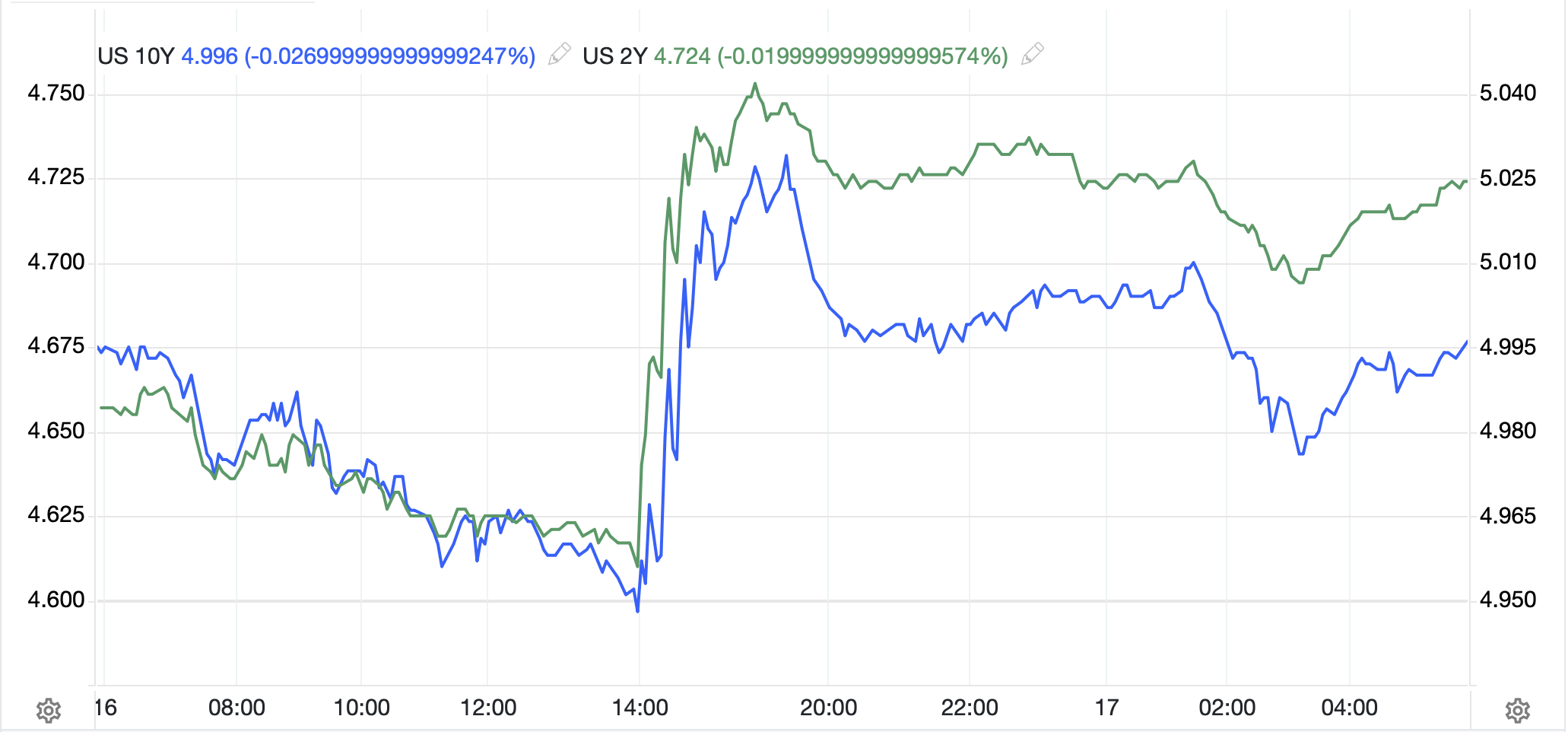
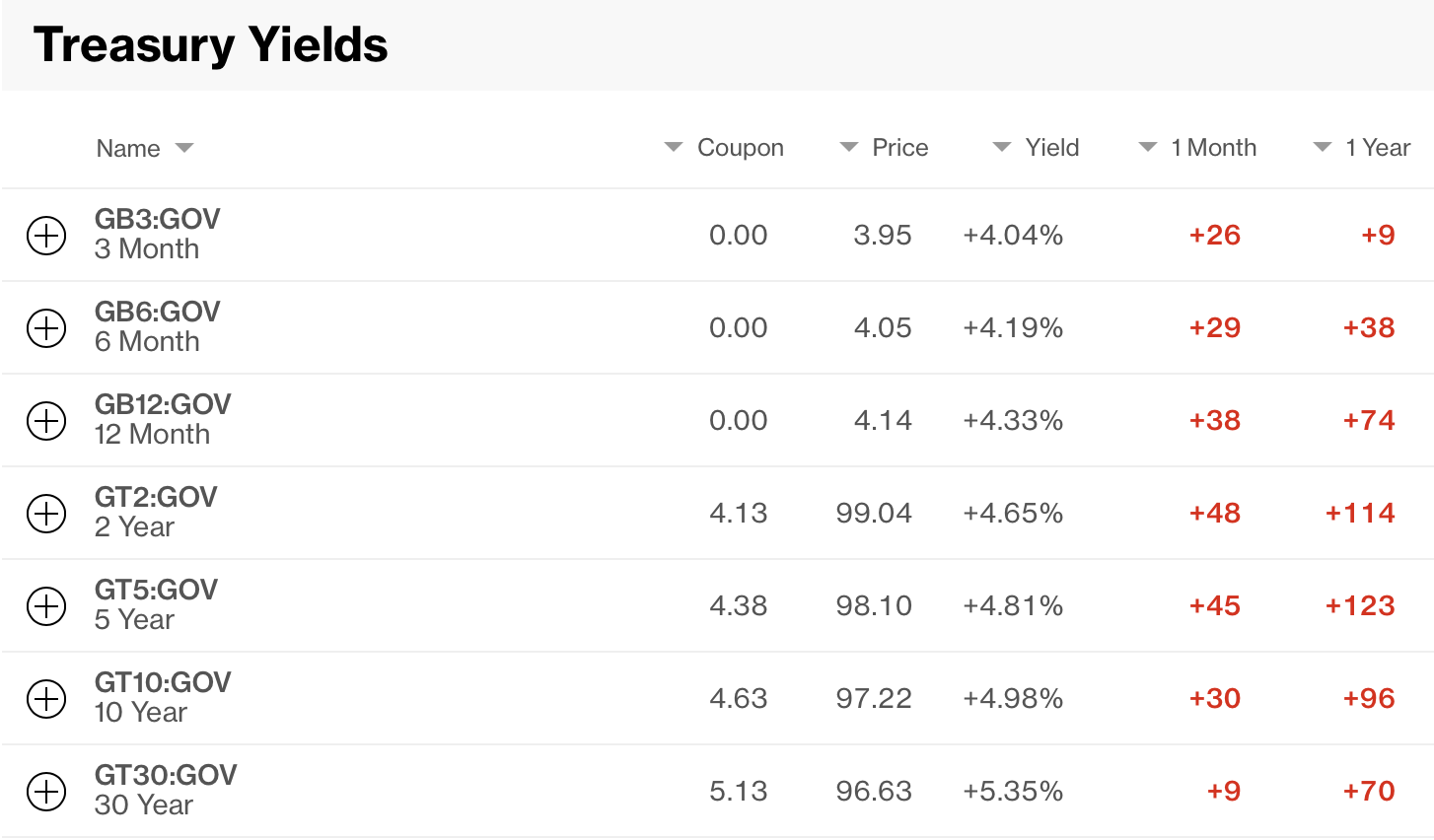
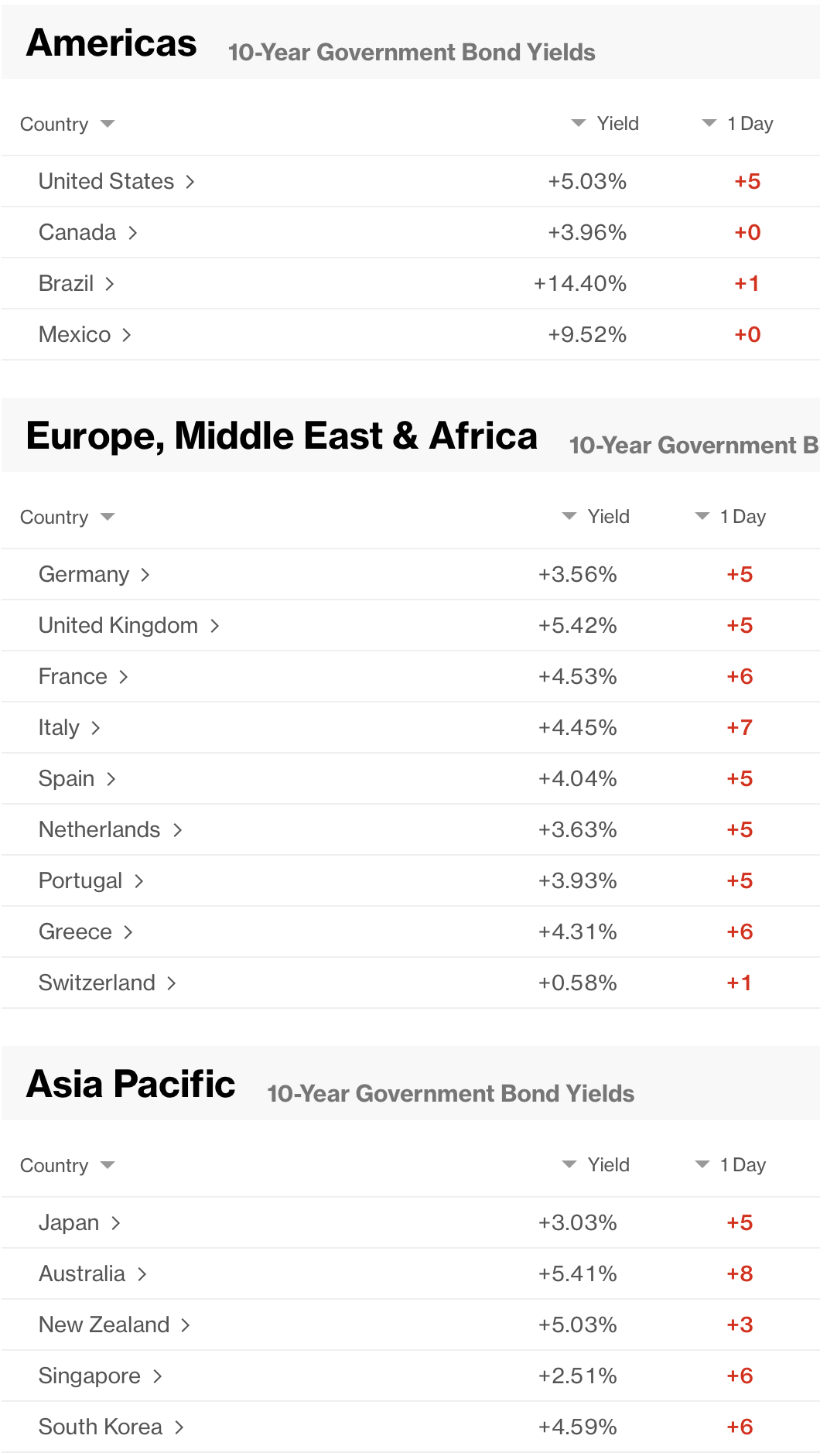
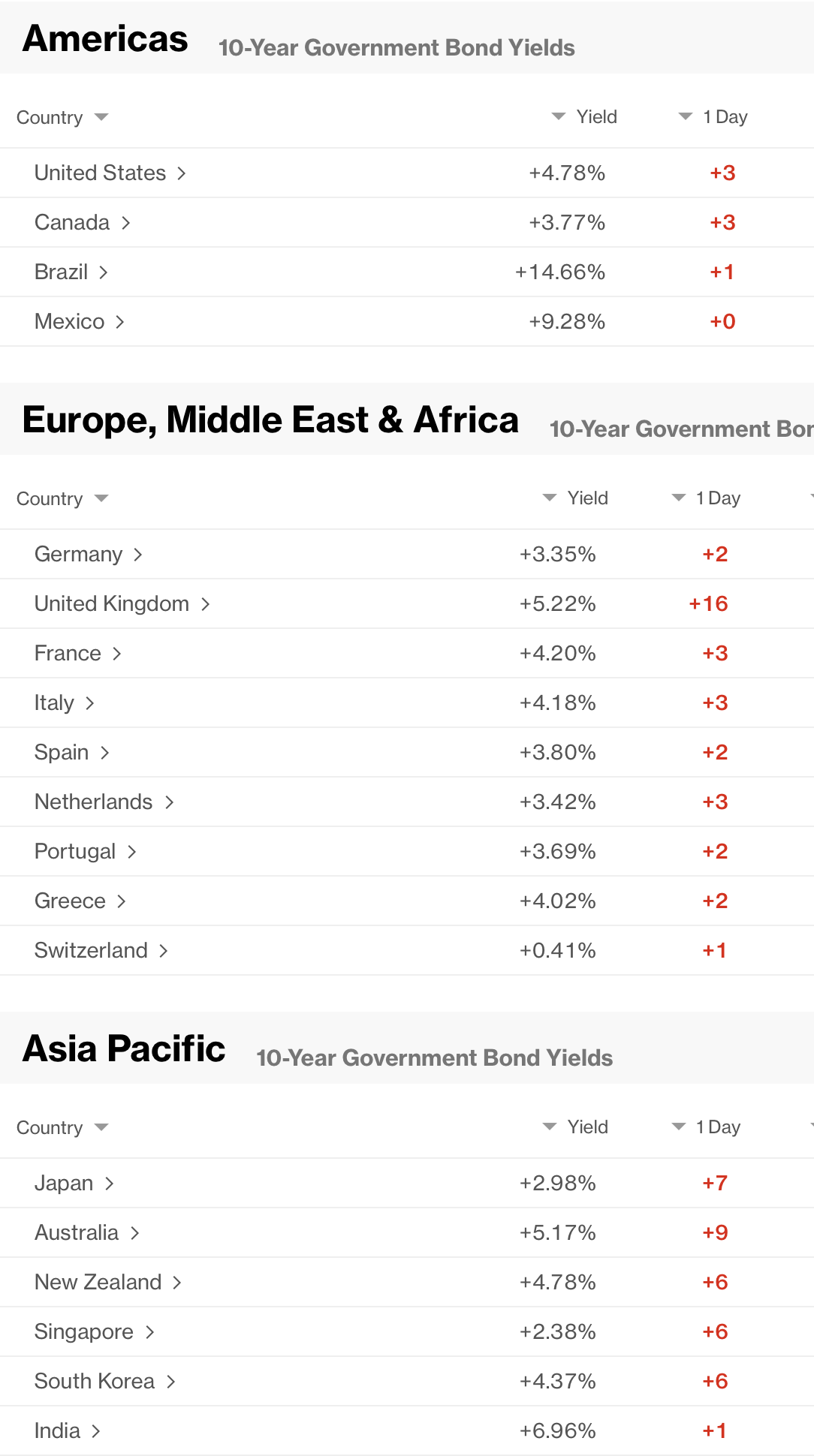
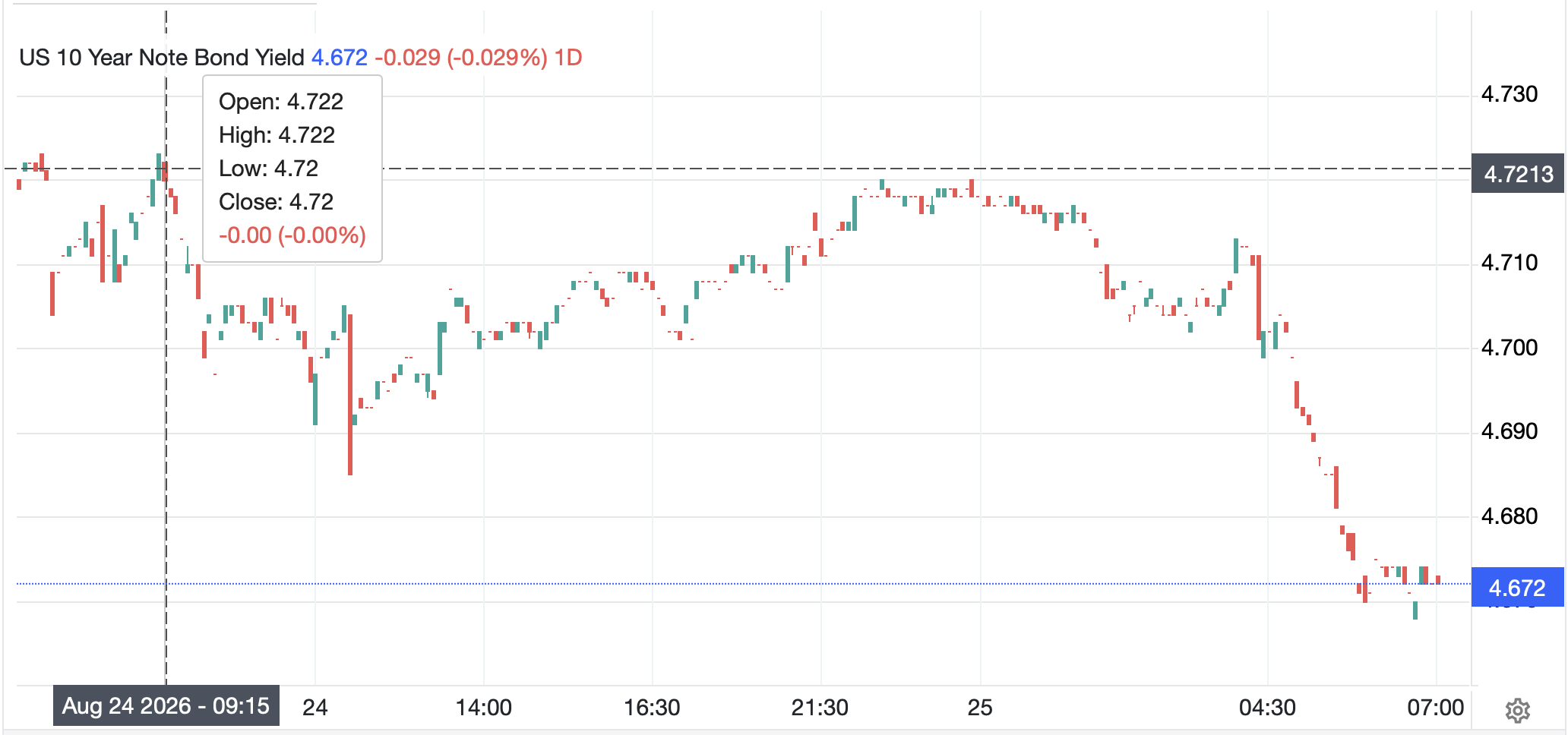
In the bond market, Treasury yields have backed up 3bps this morning after tumbling -8bps yesterday.  Right now, they sit right at 4.60%.  As it happens, yields fell everywhere yesterday alongside oil’s price decline, so it is no surprise that modest gains are the order of the day with German bunds (+1bp) outperforming the rest of the continent where yields are higher by 3bps to 4bps across the board.

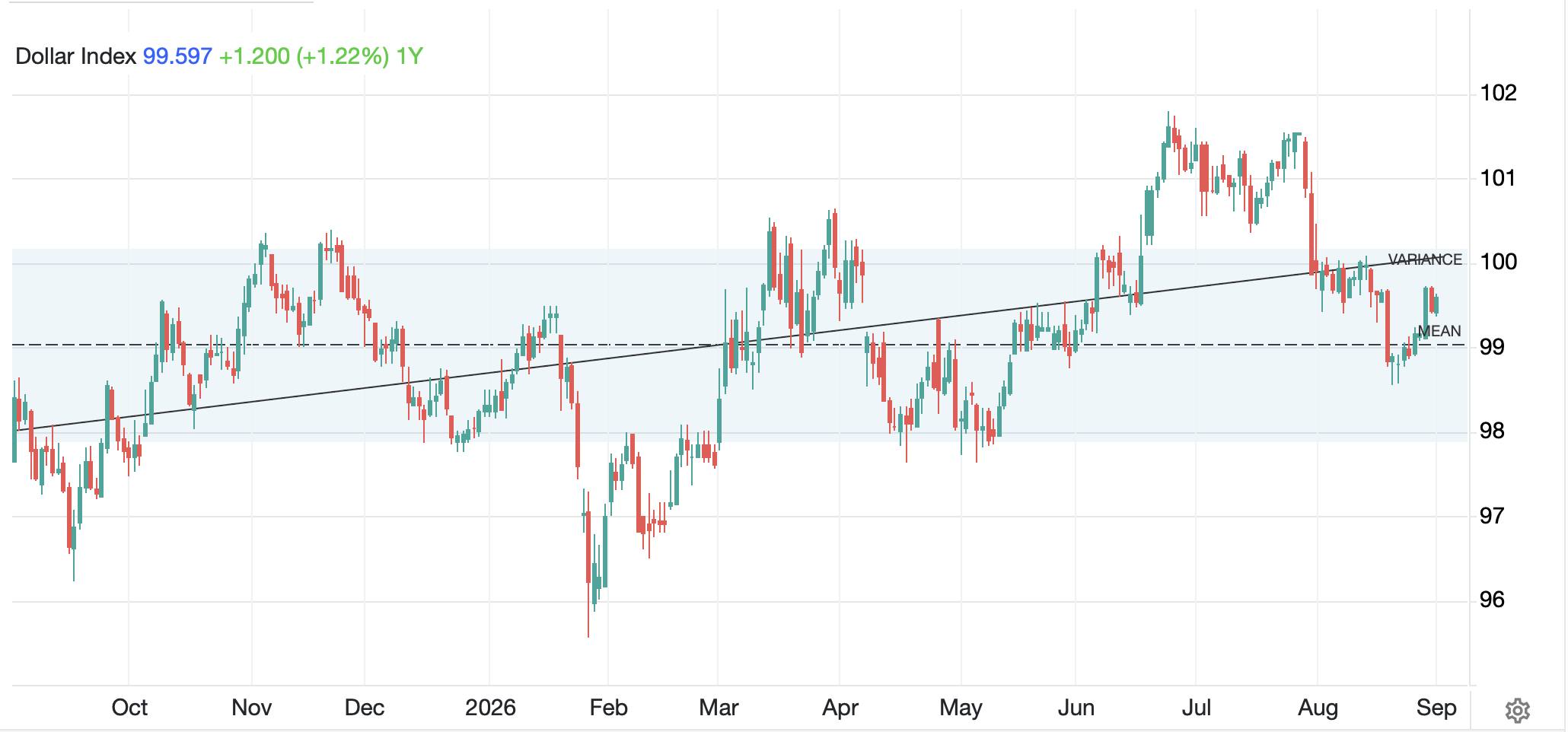
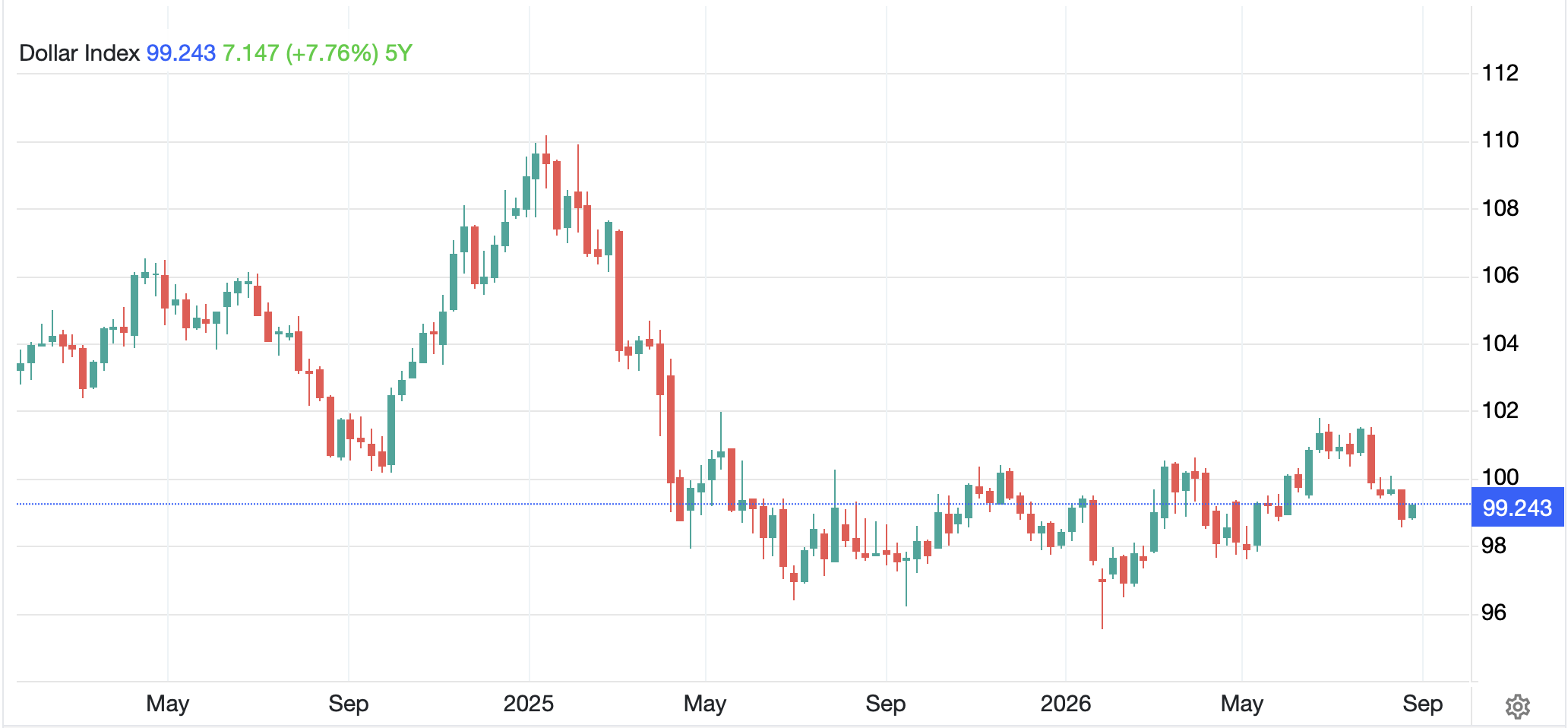
Finally, the dollar, which had been very quiet all evening, virtually unchanged when I sat down at my desk a 90 minutes ago, is starting to rally a bit here, which explains all the movements.  Apparently, there was just an announcement by Iran regarding uranium, which not surprisingly, has changed the tone of the market.

This explains the dollar’s sudden revival, higher by 0.25% across the board, oil’s sudden rebound, it is now higher by 2.5% at 6:45, and the decline in metals prices.  It also neatly matches bond yields higher.  So, if negotiations are struggling, we should expect to see further risk-off behavior.

On the data front, this morning brings Initial (exp 210K) and Continuing (1790K) Claims, Housing Starts (1.41M), Building Permits (1.39M), Philly Fed (+18.0) and then a little later the Flash PMI readings (Mfg 53.8, Services 51.1).  But as we have just seen in the past 45 minutes, everything is still attached to oil, so that is the key to watch.  All the market correlations remain intact for now, and I suspect they will continue to do so until this conflict is well and truly over.  In fact, it is situations like this, where news changes market pricing so dramatically in short order, that demands hedging programs to be maintained for everyone.  Let’s face it, nobody is going to get it right all the time.

Good luck

Adf

Hot, Hot, Hot

So, prices were all Hot, Hot, Hot
Resulting from Trump’s Iran shot
But do not forget
The government’s debt
And spending, with what that has wrought

Meanwhile, Trump, to Beijing, has flown
As both sides seek a temperate zone
Where it is agreed
To what both sides need
And neither, the outcome, bemoan

For a change, Iran is not the lead story today in markets.  Instead, there is much angst over yesterday’s CPI reading, which was hotter than forecast, and much pontificating as to what will come from the summit between Presidents Trump and Xi that starts tonight in Beijing.  Let’s take inflation first.

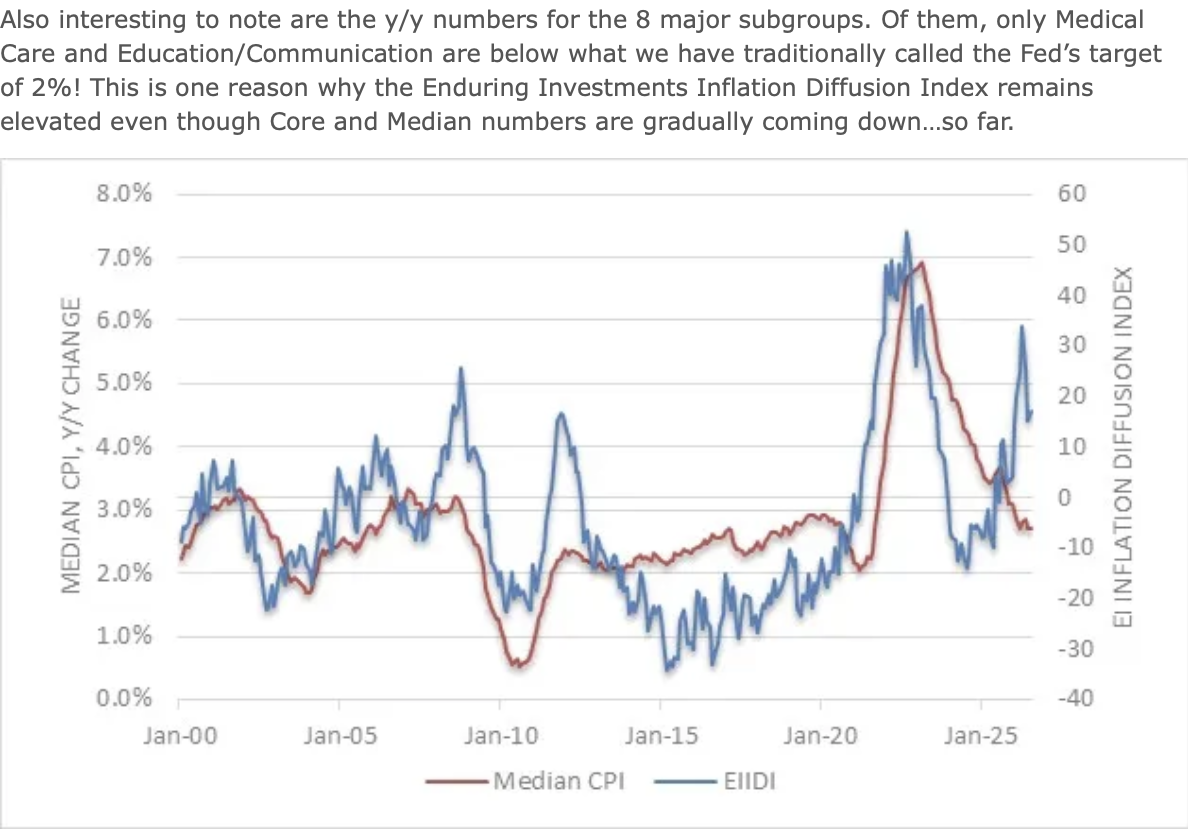
The results showed the month-on-month readings for headline (0.6%) and core (0.4%) which translated into annual readings of 3.8% and 2.8% respectively.  I always turn to The Inflation Guy™, Mike Ashton, when trying to understand CPI readings and have linked here his description of the report and things driving it, which you should all read.  However, I will offer his conclusion here:

Wrapping this up, the read is actually pretty easy. Inflation is not just in energy, but right now is fairly wide as the diffusion index shows. Some of that is related to energy…the price of diesel fuel affects trucking costs, which affects other goods prices…and some of it is related to the fact that wage growth is no longer slowing. Any way you look at it, as I said the read is pretty easy: the Fed obviously isn’t going to be tightening into an oil shock. But there is nothing here that gives them cover to ease into an oil shock either. Warsh inherits a pickle.”

I know the Fed targets Core PCE, not Core CPI, but I include the below chart of the latter to remind us all of just how far from their target the Fed has been for the past 5+ years.  Powell may have bitched about political pressure, but he received none during the Biden administration and he failed dismally then too.  Just sayin’.

Source: tradingeconomics.com

(One last thing I will note is that USDi, which I mentioned yesterday, will return 10.2% annualized during the month of June, on top of this month’s 12.6% return.  Folks, you really should own some.  You can mint it at www.usdicoin.com ).

We cannot be surprised that yields rose yesterday on the back of the CPI result with the 10-year rising a further 3bps right after the number and 4bps on the day.  This takes us to a 10bp rise in the past three sessions including this morning as per the below.

Source: tradingeconomics.com

It also is the highest yield since last summer and clearly is not moving in the direction the administration would like to see.  The thing is, now that we are several months into the Iran war and oil prices have been elevated since the beginning of March, we are going to see more pass through of price increases due to energy costs, at least until demand starts being destroyed.  That is always the market tension, rising prices force behavioral adjustment unless the central bank accommodates those prices by increasing money supply.  It is, of course, that action which helps drive generalized inflation as opposed to specific price increases.  Mr Warsh, who was confirmed as a Fed governor by the Senate yesterday and faces another vote today to become Fed Chair, although I expect that will be without fireworks either, will have has work cut out for him.

Moving on to the Beijing summit, the key to remember is that summits are where things are signed amid a ceremony, they are not events to negotiate details.  Secretary Bessent has been in Asia all week and he has met with Chinese Premier Le Hifeng, clearly discussing terms of what can be agreed.  One would expect that the focus will be on Iran and having China press Iran to come to an agreement, trade between the nations, especially in AI related technology and rare earth elements, and Taiwan.  I have no way of knowing what will be announced, but I’m confident Mr Trump wouldn’t be going if there wasn’t a deal of some sort already agreed.

So, let’s see how markets have behaved overnight.  Yesterday’s US session, which started out looking pretty awful, moderated throughout the day to wind up with fairly benign outcomes.  Weirdly, this led to some dramatic differences in Asia with some strong gainers (Korea +2.6%, Japan +0.85%, China +1.0%, Singapore +1.2%) and some serious laggards (Indonesia -2.0%, Taiwan -1.25%) with some lesser weakness (Australia, New Zealand, Malaysia and HK).  I might argue that most investors were excited about the potential results of the summit, but if so, perhaps it implies a change in the US position regarding Taiwan, and that could well be a negative there.

In Europe, the picture is also mixed as Germany (+0.7%) is having a solid session on some solid earnings reports from the pharma sector, although France (-0.4%) is under pressure after the Unemployment Rate there jumped to 8.1%, its highest print in five years.

Source: tradingeconomics.com

Otherwise, the rest of Europe is mixed with little of note.  US futures at this hour (7:30) are also mixed with DJIA (-0.25%) lagging but the other two major indices showing gains of 0.25%.

While we discussed Treasuries above, looking elsewhere around the world, yields this morning in Europe are essentially unchanged, having risen on the back of the US CPI report yesterday.  However, overnight, JGBs saw yields rise 4bps on that inflation fear, and they have made yet another new 19-year high as per the below chart (dates are in European terms).

In the commodity markets this morning, oil is essentially unchanged as it is clear nobody knows how things will play out in Iran.  There have been numerous commentators competing to describe just how much oil has been missing from the market and how soon (June? July? September?) the infrastructure will crash and it will be a global depression.  But they keep having to push their timeline further out as the combination of more production outside the gulf plus the ingenuity of getting production there to other markets via trucks and trains, has mitigated the overall price risk.  Again, here in the US, there is no risk of a shortage of any type as we continue to export our net surplus of products.  I have not read about the blockade lately, but I think that speaks to the fact it must be effective because most articles wanted to describe it as a failure and not doing its job.  If Iranian oil is not getting to market, their financial troubles are growing apace which is the key pressure point.

As to the metals markets, given the lack of movement in oil, it should be no surprise that gold (-0.25%) is little changed as well.  However, something is changing here and that is silver (+1.0%) and copper (+2.0%) are both starting to distance themselves from the gold trade as both remain critical inputs into the electrification story.  A quick look at the chart below of the two elements shows how just in the past two days, silver has broken away from gold.

Source: tradingeconomics.com

Finally, the dollar is firmer again today, continuing to ignore the many calls for its demise.  But as we have seen in most other markets today, the magnitude of the movement is unimpressive.  So, DXY (+0.2%) is an excellent proxy for virtually the entire FX market this morning.

On the data front, today brings PPI (exp 0.5% M/M, 4.9% Y/Y) and core (0.3% M/m, 4.3% Y/Y) although with CPI already released, I doubt it will get much interest.  We also get the EIA oil inventory data which is looking for continued draws of roughly 6 million barrels across crude and products.  there are Fed speakers too, but when was the last time anyone listened to anything they had to say with interest?  Exactly.

It is shaping up to be a quiet session (famous last words) and I suspect all the news of note will come from Beijing tonight.

Good luck

adf

Gamesmanship

Iran has implied they will skip
The coming Islamabad trip
But if they don’t show
The risks of war grow
For them it’s high stakes gamesmanship

Meanwhile markets blithely ignore
The likely resumption of war
But can it be true
That conflict, part two
Will open the next rally’s door?

Ostensibly, a second round of peace talks are due to get underway today in Islamabad, Pakistan, but whether they will remains an open question, at least as of right now at 6:20am in NY.  As always, it is difficult to know what comments are true or were even made by the players involved as propaganda remains Iran’s largest current export.  I have seen comments allegedly from Iranian sources that claim they both will not attend, and that they will attend.  I guess we will know before the day ends as none of the negotiators is named Schrödinger.

As well, President Trump has indicated he is uninterested in extending the cease-fire even one more day if they do not attend.  At this point, it appears that the hardest line members of the IRGC that have survived are the ones in charge over there, and my take is they are not very interested in negotiating as any result would likely end their grip on power.  After all, if they are prevented from having nuclear weapons capability to destroy their sworn enemies of Israel and the US, what exactly is their raison d’etre?  

Thus, my fear is that fairly soon, the second stage of this conflict is going to ignite.  If this is the case, the recent market insouciance over the situation seems likely to change dramatically, at least for a little while.  This implies that oil prices will spike higher again along with the dollar, while equities and gold will slump.  I assume bond yields, too, will rise somewhat.  Looking at a chart of yields, though, the current level is right in line with where they were for much of 2025 and at the beginning of 2026, and I am left to wonder if the move lower in yields in January and February, was the anomaly, not the return to current levels.

Source: tradingeconomics.com

I remain suspect of the thesis that inflation is going to decline dramatically because of AI implementation and have felt that way since far before the war began.  Over a long period of time, as AI utilization increases, I do believe it will improve productivity significantly (I see what it has done for me with just limited uses, none of which involve the wordsmithing this note!), but it is difficult for me to foresee a significant deflationary impulse absent a significant reduction of money in the system, and I don’t see that on the horizon any time soon.  The point is, yields don’t seem to be wrong overall in my eyes.

Now, Kevin’s about to sit down
In front of each Senate assclown
They’ll ask him ‘bout rates
But whate’er he states
The Dems will vote no with a frown

The other noteworthy story is that Fed Chair nominee, Kevin Warsh, is having his hearings at the Senate Finance Committee today.  There is a great deal of discussion in the press regarding whether he will simply be a Trump puppet, or become a Trump whisperer, or be an independent voice.  As well, there has been a recent conversion from Fed chair worship amongst the mainstream media, to encouragement for FOMC dissent to anything he wants to do, simply because he was appointed by Trump, so they seek his failure.  It is really quite tiresome.  Frankly, whatever he says is likely to be irrelevant as we already know that every Senate democrat will vote against because…Trump, and most Senate republicans will vote for and when it comes to the floor, he will be confirmed.  

That said, it is a tough job to take right now, regardless of the president, given the goals he has stated, the current situation with respect to the Fed’s monetary stance, and the potential for dramatic changes in economic outcomes because of the war.  I know I wouldn’t want the job!

Ok, let’s analyze that insouciance from overnight.  While yesterday started off with a negative tone, by the end of the day, US equity markets were little changed with the NASDAQ and S&P slipping just -0.25% while the DJIA was unchanged.  Futures this morning are pointing higher by 0.5% at 7:20am.  Overnight, Asian markets were mostly higher, some by a significant amount (Korea +2.7%, Taiwan +1.75%) which continues to baffle me given the impending energy crisis that is about to hit the region.  The larger markets were also firmer (Tokyo +0.9%, HK +0.5%, China +0.2%) with the rest of the region +/- 0.3% or so.  Fear is not evident here.

As to Europe, there is also no fear with Germany (+0.7%) leading the way higher despite the worst ZEW Expectations result since December 2022.

Source: tradingeconomics.com

But Spain (+0.6%), France (+0.3%) and the UK (+0.15%) are also higher this morning.  Fear is not an option.

In the bond market, yields this morning are basically unchanged across the board and nobody is paying attention to this market right now.  The only remotely interesting news is that Nikkei News reported the BOJ is not going to raise rates at their meeting next week, and they apparently have a 100% accurate track record in this situation.  Nobody cares about this right now.

Oil (-0.2%) is hanging around awaiting the next story from the Persian Gulf and Strait of Hormuz, sitting between the level seen when it was declared the Strait was reopened and the level it touched when that was denied.  As you can see from the chart below, not only has oil been hanging around, but trading volumes (the light grey bars below the price chart) also appear to be sinking.  Everybody is holding their breath for the next thing here.

Source: finance.yahoo.com

Meanwhile, metals are under some pressure this morning (Au -0.7%, Ag -0.9%, Pt -0.2%, Cu 0.0%) but volumes here are also muted.  It’s not just the oil market waiting for the next steps, that’s for sure.

Finally, the dollar is a bit firmer this morning, with DXY (+0.1%) pretty representative of the entire space.  One outlier is NZD (+0.3%) after inflation data released last night was higher than expected and market participants started pricing in another rate hike there.  But otherwise, this market is also bored and boring.  There was a Bloomberg article this morning explaining that hedge funds are starting to layer in bets on a rising euro given how low implied volatility is in the options market, but the very fact that implied volatility is so low, around 6%, tells me that nobody really cares.

On the data front, Retail Sales (exp 1.4%, 1.4% ex-autos, 0.2% control group) is due.  The big jump is because the data measured is nominal terms, so the dramatic jump in gasoline prices will have raised Retail Sales a lot, hence the focus on the control group that doesn’t include gas.  

And that’s really it.  The Warsh hearings will get headlines right up until something happens in either Pakistan from the talks, or Iran because there were no talks.  There are many known unknowns right now, and that explains the lack of trading volume.  But real price movement in every market will rely on unknown unknowns, which by definition are opaque, at best.  Once again, my advice remains, play things close to the vest.

Good luck

Adf

Sanae Lightning

It has been two weeks
Since she rolled the dice. Sunday
It came up hard eight!
 
Leaders round the world
Would sell their soul to obtain
The Sanae lightning

Source: asia.nikkei.com

Japanese PM Takaichi scored a resounding victory yesterday, capturing more than 76% of the seats with her coalition partners, and she now commands a super-majority, enabling her to control the dialog completely, pass any legislation and even change the constitution.  As I said, every other elected leader in the world pines for that type of power and approval, even Xi!  

The immediate market response was a 5.0% rally in the Nikkei as expectations for an aggressive fiscal policy expansion to the economy gets priced in.  Add to this more defense spending and the mooted tax cuts on food, and it is easy to understand the response.  

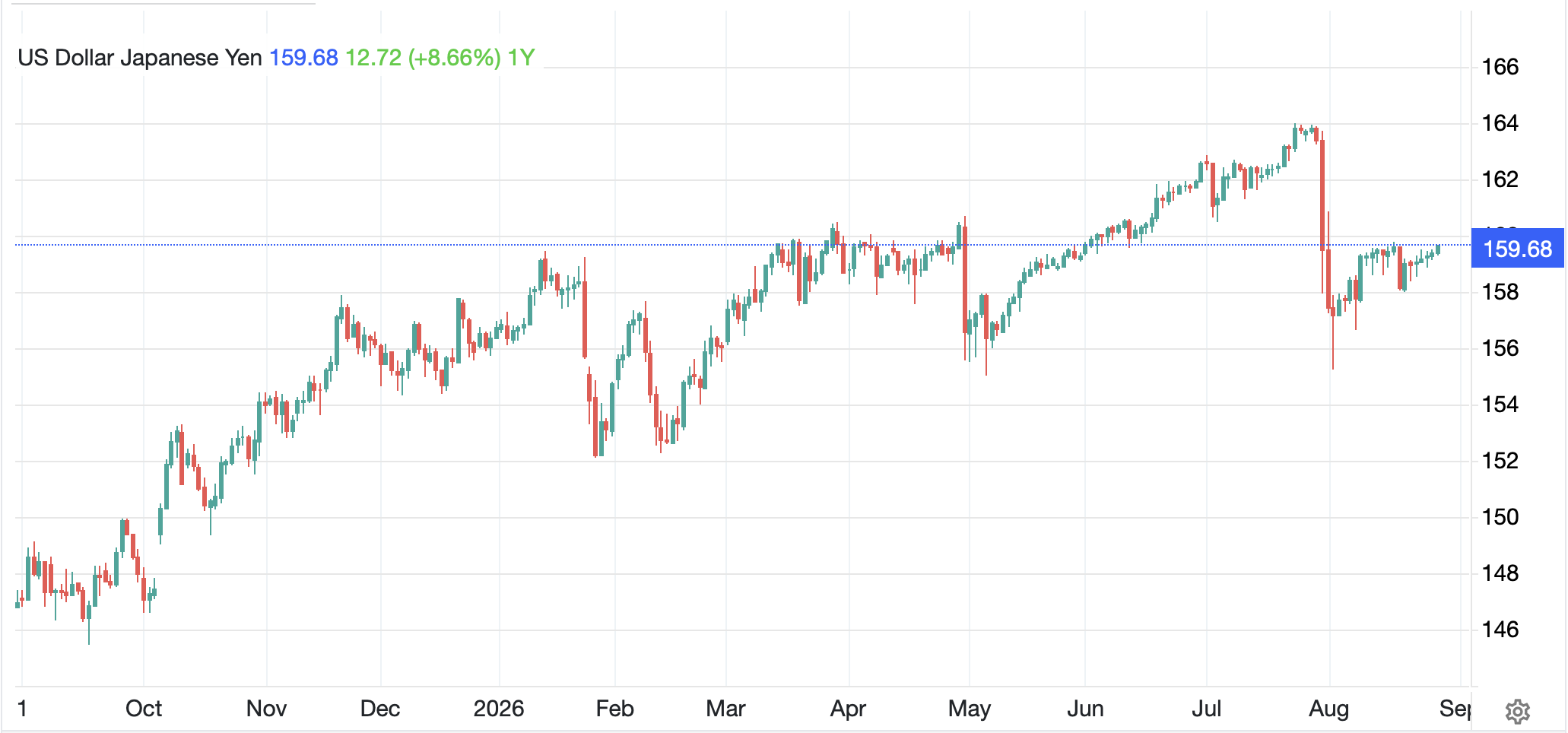
Interestingly, the yen, which had been under pressure from fears of unfunded spending, after declining at first, reversed course and strengthened nearly 1% from its worst levels early in the Tokyo session as per the below chart.  It certainly seems logical that yen weakness would be coming on this basis, but perhaps, what we are going to see is the Japanese use some of their FX reserves, which total about $1.3 trillion, to help fund the ¥5 trillion (~$32 billion) that the tax cuts will cost.  That would mean selling Treasuries to sell USD and buy JPY, helping to support the yen while allowing the BOJ to leave rates on hold.  In truth, it makes a lot of sense.  We shall have to see how things progress from here.

Source: tradingeconomics.com

Some pundits, when looking ahead
Are worried that Warsh at the Fed
With Bessent, will try,
To Treasury, tie
Their efforts, some assets to shed

The other big story this morning is a growing concern about a potential accord between the Fed and the Treasury once Kevin Warsh is confirmed and takes his seat as Fed chair.  Bloomberg has a big article on the subject, but it is around all over.  When combined with another article on China recommending its banks to reduce their Treasury holdings, it has helped create a narrative that the US is going to have major fiscal problems going forward which will result in massive money printing and much higher inflation.

Of course, the thing about this that I don’t understand is that Warsh is on record, repeatedly, for saying he wants the Fed’s balance sheet to shrink, and that its expansion has been one of the major economic issues in the US since QE2 back in 2012.  I also find it interesting that Warsh’s apparent desire to see the Fed’s balance sheet hold almost exclusively short-dated Treasuries, 3-years and under, is seen as a concern given that has been the Fed’s stated goal since they started shrinking the balance sheet back in April 2022.

Recall, Chairman Powell explained that in order to maintain the ample reserves framework they are currently using, the balance sheet needs to grow alongside the economy.  However, this is completely at odds with Warsh’s stated beliefs that the ample reserves framework is no longer effective and needs to be replaced eventually.  Of course, if I look at 10-year Treasury yields (+2bps today) over the past 5 years, as per the below chart, it is hard to get overly excited that things have changed much since the end of the Covid adjustments.  

Source: tradingeconomics.com

Perhaps Chinese selling will drive yields higher, or perhaps others will sell because they are concerned that the Fed and Treasury working together is inherently bad for the economy and will lead to higher inflation but so far, that is not the case.  As to inflation, while CPI and PCE remain higher than the Fed’s target, it does not appear to be galloping away at this stage.  In fact, there is much discussion on X that Truflation is now running at 0.68% and that the Fed will soon need to cut rates aggressively!  Of course, if inflation is running at 0.68%, can someone please explain the ‘affordability’ crisis that has gotten so much press?  PS, I don’t see Truflation as being an accurate representation of the world, but it sure is good for narrative writers sometimes!

And that is how we have started the week.  The Super Bowl was pretty dull overall, with defensive excellence, but nothing spectacular.  Someone made the point that this was the AI Super Bowl for advertising and the last two times we saw something dominate the advertising (dot.com in 2000 and crypto in 2022), within a year, both sectors had been decimated in the equity markets.  In the meantime, a quick tour of the overnight session shows the following:

Stocks – Asia was strong across the board with Japan (+3.9%) giving back some of the early gains but still rocketing to new highs.  The rest of the region was similarly strong, especially Korea (+4.1%) but gains of between 1.5% and 2.0% were the norm.  I guess everybody is positive on Takaichi-san!  Europe, however, has not been as robust although there are mostly gains there led by Spain (+0.6%) and Germany (+0.3%).  The laggard here is the UK (-0.1%) which is struggling as PM Starmer appears to be coming to the end of his disastrous term.  His appointment of Ambassador to the US looks to be the final straw as Peter Mandelson is widely mentioned in the Epstein files and now Starmer has lost his chief of staff because of that.  The UK will be better off, I believe, if Starmer is pushed out, although if they put in Ed Miliband, it could actually get worse given his personal insanity regarding energy.  But I would buy a Starmer removal.  As to US futures, at this hour (7:20), they are modestly lower, -0.15% or so.

Bonds – European sovereign yields are edging higher this morning, around 1bp across the board as there has been no data to change opinions and the bond markets, worldwide (Japan excepted) remain the dullest of places to play.  Japan (+6bps) did see a response to the Takaichi victory, which is what one would have expected.  We will have to watch this yield closely as if it truly does start to break out, there will be ramifications worldwide.  However, if we look at the chart below of 10-year and 30-year JGBs, they remain below the peak seen several weeks ago and, surprisingly, the overnight move was more pronounced in the 10-year than the 30-year.  Watch this space.

Source: tradingeconomics.com

Commodities – oil (+0.3%) has been chopping around either side of unchanged all evening as questions about Iran remain unanswered.  There was a story in the WSJ about the US holding back on any military action because Iran has so many medium range ballistic missiles and any reprisal could be devastating to the Middle East overall.  But if I have learned anything from observing President Trump and his negotiating style, it is impossible to know what the next move will be.  I would not rule out either a successful deal or a military strike at this point, with the former resulting in lower oil prices while the latter would see a sharp rally.  In the metals, gold (+0.9%) and silver (+2.7%) are both continuing their volatile rebound from last week’s sharp selloff, while copper is unchanged this morning.  As I have said, nothing has changed this supply demand balance in physical metals, although the paper, futures market, can still do many remarkable things that don’t necessarily make sense.

FX – the dollar is softer across the board this morning, slipping against both G10 (EUR +0.5%, GBP +0.3%, JPY +0.4%, CHF +0.7%) and EMG (MXN and BRL +0.25%, PLN +0.65%, ZAR +0.25%, CNY +0.15%) with little in the way of data as a driver anywhere.  While I have not specifically seen a reboot of the dollar is collapsing narrative, I presume the concerns over a potential Fed-Treasury accord are an underlying thesis today.

On the data front, we see both NFP and CPI this week as they come a few days late due to the short government shutdown.

TuesdayNFIB Small Biz Optimism99.9
 Retail Sales0.4%
 -ex autos0.3%
 Employment Cost Index0.8%
WednesdayNonfarm Payrolls70K
 Private Payrolls70K
 Manufacturing Payrolls-5K
 Unemployment Rate4.4%
 Average Hourly Earnings0.3% (3.6% Y/Y)
 Average Weekly Hours34.2
 Participation Rate62.3%
ThursdayInitial Claims218K
 Continuing Claims1850K
 Existing Home Sales4.15M
FridayCPI0.3% (2.5% Y/Y)
 Ex food & energy0.3% (2.5% Y/Y)

Source: tradingeconomics.com

In addition, we hear from seven more Fed speakers, with Governor Miran making three appearances as he seeks to make his case for cutting rates.

Nothing has changed my view that Warsh and Bessent are the two most important voices now, with the rest of the Fed relegated to biding their time until Warsh shows up.  As to the data, the Citi surprise index continues to show that data is better than most forecasts which speaks well of the economic situation.

Source: cbonds.com

I am not a proponent of the world ending, the Treasury market collapsing or the dollar dying despite a lot of doom porn that this is the near future.  I would contend the dollar remains rangebound for now, and we need a definitive policy adjustment to see that situation change.  Until then…choppy is the way.

Good luck

Adf

Bane and Hellfire

Though not getting near as much press
A shutdown, once more’s, added stress
To labor releases
And so, we’ll miss pieces
Of data.  For Wall Street, a mess
 
But once again, I need inquire
Are shutdowns a bane and hellfire?
Or are they instead
A way to spearhead
More funding cuts we should desire?

It seems that once again, the government shut down, at least partially, on Saturday night because the Senate refuses to pass the required funding legislation.  At this point, 6 of the 12 funding bills are already signed into law, so the shutdown is not as extensive.  But more interestingly, it is not garnering nearly the headlines that this situation did last autumn.  

In fact, I only mention it because the most direct impact we are likely to see is that, once again, the BLS will not be releasing data on time, notably today’s JOLTS Job Openings report and Friday’s NFP data.  So, while Ken Griffin will miss more opportunities to make money via his HFT algorithms front running retail traders, the rest of us probably don’t care all that much.

Which brings me to the question of the size of the federal government.  Stick with me here.  Along these lines, I want to highlight a very interesting piece written by Michael Nicoletos which is well worth reading on the subject of naming Kevin Warsh as the next Fed chair.  Prior to reading this article, I had come to the view that while Warsh would not technically be joining the Cabinet (Fed independence and all that), he is going to be working shoulder to shoulder with Treasury Secretary Bessent (they have worked together before and are close friends apparently) to achieve their goal of restructuring the way the US economy functions.  

Much has been made of how it will be impossible for Warsh to cut rates (as Trump desires) while reducing the Fed’s balance sheet, which is something for which Warsh has repeatedly called.  The missing piece of the puzzle, which I have rarely seen mentioned other than in this article, is regulations, specifically bank regulations.  If the Fed reduces the need for banks to hold Treasuries for safety/liquidity reasons, it allows them to lend more money to the real economy which will support actual economic activity.  The result can be that instead of Fed primed monetary stimulus, the nation could see business investment (consider the amount of promised inward investment to the US on the back of the trade deals) which can result in sustainable growth with less monetary support.  This is a completely different framework than we have seen since, arguably, Paul Volcker, as it was Alan Greenspan who first created the Fed put.  Frankly, it is the most bullish prospect I have seen in a long time.  Read the article!

One other thing Warsh is keen to do is near and dear to my heart, reduce the size of the Fed and the Fed’s transparency of thought.  Less press conferences, less interviews, ending forward guidance, and less Fedspeak overall would be a blessing for us all!

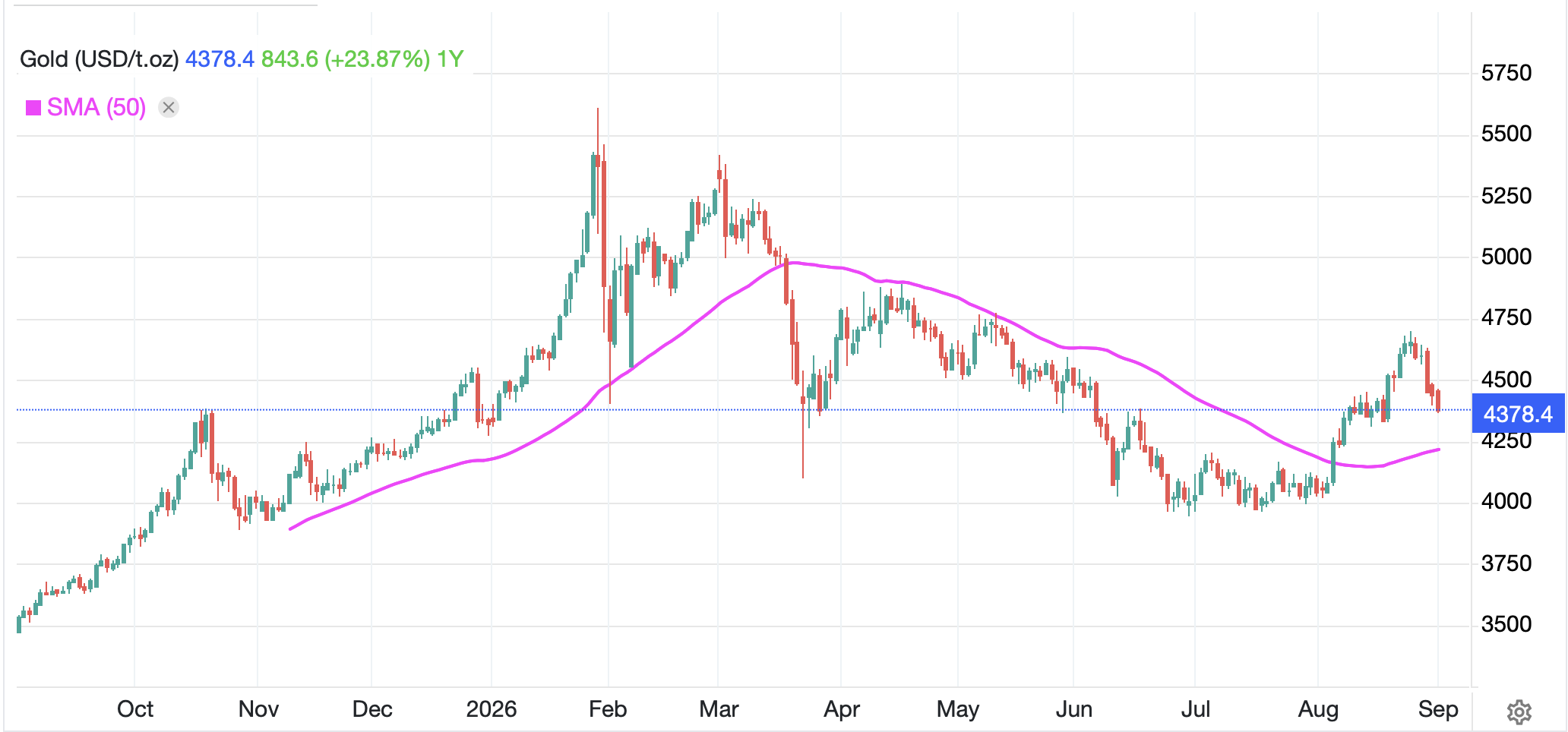
Ok, on to markets.  Precious metals continue to be the major mover and shaker across all markets with the last several days declines being sharply reversed this morning.  I think gold (+5.3%) and silver (+8.3%) deserve their own charts (from tradingeconomics.com) given the extraordinary nature of the recent price action.  While the volatility here has been extreme, as I have repeatedly said throughout this move, the fundamentals have not changed, so demand for metals, especially silver into a deficient market, remains the ultimate driver.

Obviously, both metals remain far below their recent peaks, seen just last Thursday, but recall, parabolic tops always see retracements of this nature.  My expectation going forward is that both these metals, and copper (+3.2%) and platinum (+6.2%) will be heading higher again, albeit not quite as quickly as we saw during January.  One other thing adding to the bullishness is the announcement of Project Vault, a US stockpile of strategic minerals including copper and silver as well as a long list of rare earth elements.  Remember what happens when a price insensitive buyer enters the market.  You want to be long!

As to energy markets, oil (+0.35%) and NatGas (-1.2%) are both a bit less active this morning as the latter, which tumbled 25% yesterday on the end of the cold wave, is finding a new home while oil continues to soften based on the upcoming talks between the US and Iran which has reduced concerns of a military intervention there.

Compared to the commodities space, the rest of the markets are quite dull, indeed.  Turning to the stock market, yesterday saw solid gains in the US after much stronger than expected ISM Manufacturing data (52.6 vs expected 48.5) which was the strongest reading since August 2022.  As you can see from the below chart of this statistic, the US manufacturing sector has suffered greatly for more than 3 years, and that is true in the employment statistics there as well.  Is this the beginning of the great reshoring?  It is too early to tell, but if we see this for the next several months, you can be sure the narrative is going to change.

Source: tradingecommics.com

In Asia, Tokyo (+3.9% and a new all-time high) rallied on the stronger US market, the ISM data and the weaker yen supporting profitability of Japanese exporters.  Korea (+6.8%) saw a huge move on the back of semiconductor makers Samsung and SK Hynix, while the government there seeks to get investors to bring money home to support the currency. India (+2.5%) rallied on the news of a trade deal with the US that reduces tariffs to 18% and gets them to stop purchasing Russian oil, buying from the US instead and generally, there were gains everywhere in the region, even Australia despite the RBA hiking their base rate (as expected) but sounding more hawkish than traders assumed.

In Europe, the picture is more mixed and far less impressive with gains and losses on the order of +/-0.2% across the board.  While earnings data has been solid generally, there is ongoing concern about the outcome of Russia/Ukraine talks and a mix of data with French inflation falling to 0.3% Y/Y and Spanish Unemployment rising although the ECB, which meets Thursday is not expected to adjust policy.  As to US futures, at this hour (7:10) they are higher by 0.25% or so.

In the bond market, the strong ISM data saw 10-year yields back up 4bps yesterday, and they have edged a further 1bp higher this morning.  European sovereign yields are higher by 2bps across the board, as are JGB yields.  It seems we may be seeing the initial pricing of stronger economic activity.  However, if we take a longer-term perspective of bond yields, as per the below chart, it shows us that, frankly, while there have certainly been some ups and downs, yields are little changed overall in the past 2 ½ to 3 years on a net basis.  

Source: tradingeconomics.com

As I wrote in the beginning, there are changes afoot in policy making circles, certainly in the US which drives the entire global financial markets, so it remains to be seen how this all plays out.  While I think there is scope for a period of higher rates in the short term, if the administration is successful in their playbook, that would likely indicate lower yields over time.

Finally, the dollar continues to defy every call for its demise.  This morning, the DXY is unchanged and back toward the middle of its trading range.  The big mover overnight was AUD (+0.8%) which dragged NZD (+0.6%) along for the ride.  As well, LATAM currencies (MXN +0.4%, BRL +0.4%, CLP +1.0%) continue to perform well, as they have over the past year.  Of course, real interest rates in Mexico (+3.3%) and Brazil (+10.75%) are far higher than in the US and that has been drawing in a great deal of investment while CLP continues to track copper prices.  Again, I am confident that President Trump is unconcerned that the dollar is declining vs. Mexico and Brazil as it helps US export competitiveness.  As to the euro, remember that when it pressed 1.20, the first thing we heard was how the ECB may need to respond if the euro becomes too strong.  My money is still on the next ECB move being a cut.

And that’s all there is today.  Data has gone missing and I cannot believe that anybody cares what Richmond Fed president Barkin has to say at this stage of the game.  That means we are back to headline bingo to drive movement.  Through all this, nothing has changed my view that the dollar is still the cleanest dirty shirt in the laundry.  And if Bessent and Warsh can get things done as they perceive, it will simply be the only clean shirt around.

Good luck

Adf

Memory-Holed

Since Thursday, the world has adjusted
Its views about what can be trusted
The safety of gold
Is memory-holed
As retail becomes more disgusted
 
Perhaps we should not be surprised
That China has now advertised
A latent desire
The yuan should move higher
As status, reserve’s, emphasized
 
And one last thing, can it be true
That markets have taken their cue
From Fed Chair-select
I am circumspect
I guess, though, that’s what traders do

Wow!  It has been a remarkable couple of trading sessions, that’s for sure.  As we start this morning, precious metals remain the story, with both gold (-2.25%) and silver (-1.25%) still sliding, although both have rebounded from their worst levels of the overnight session as you can see in the chart below.

Source: tradingeconomics.com

Certainly, the debasement trade had gotten awfully crowded, but ask yourself, do you believe that people suddenly decided fiat currencies are great again?  Me neither.  As we have learned many times in the past, markets overshoot in both directions when something changes sentiment.  Which brings me to my second question, is this really all about Kevin Warsh?  If so, what a harsh introduction to his new role.  I understand the idea that Warsh’s perceived hawkish bias runs contra to how the narrative had evolved, but my experience is that it is rarely a single catalyst that causes a market adjustment of the type we have just seen.  The one time that comes to mind was the Plaza Accord, but at that time, the G7 nations all came out and declared they were adjusting monetary policy toward a particular goal.  Assuming a new Fed chair is going to make changes of that nature seems aggressive.

Nonetheless, this is where we are.  Thursday’s narratives have all been destroyed and new ones have yet to be written.  So, for now, I anticipate choppy trading, although nothing has changed the underlying fundamentals for metals, the dollar or the economy, at least not yet.

Which brings me to another interesting development over the weekend.  Apparently, back in 2024, Chinese President Xi Jinping made a speech to a group of provincial officials, that had heretofore not been publicized, where he declared his ambition to have the yuan become a reserve currency.  This is an interesting idea, but one that I believe will be very difficult for him to achieve, at least given his apparent desire to control every aspect of the Chinese economy.  After all, for other nations to hold a currency as part of their reserves, they will want complete, unfettered access to convert it at any time they desire.  Otherwise, as a reserve manager, why would you even consider holding it as part of your national wealth.  

One thesis is that China is going to back the CNY with gold, but I challenge that thesis.  Let’s do a little thought experiment here.  

  1. China claims CNY is gold backed, so it is safer than USD which is backed only by the full faith and credit of the US government.
  2. Saudi Arabia sells China lots of oil and gets paid in CNY
  3. Since the Saudis can’t really do anything with their CNY, they go to the PBOC and say, here’s your CNY, give me gold.
  4. China says
    1. no problem, or
    1. no way

Which do you think is more likely, a) or b)?

China claiming that CNY is backed by gold because they have bought a bunch lately is no different than the US claiming the USD is backed by gold because we hold a bigger bunch in Ft Knox.  It is meaningless unless those who hold bank notes, or their digital form, can convert it.  Even at the government level, and I find it difficult to believe that China will ever permit that type of transaction.  But it sure makes for good headlines to offset the debasement trade debacle that just played out!

As we have observed over the past months, things do change quickly these days, so who knows what tomorrow will bring.  But for now, let’s look at how the rest of the markets behaved overnight.

I’m going to start with bonds because they are the easiest.  Virtually nothing has happened for weeks.  Treasury yields (-1bp) have slipped slightly, as have JGB yields (-1bp) while European sovereign yields have edged higher by 1bp across the board.  I would think if risk views had really changed, there would be more activity here.  Perhaps the biggest surprise is JGB’s where the most recent poll for the election coming Sunday has her LDP coalition winning a landslide 300 seats.  If that is the case, based on the earlier concerns of her apparent willingness to increase unfunded spending, I would have thought JGB’s would suffer.  But not today.

Turning to stocks, while Friday’s US performance was lackluster, it was a virtual star relative to the metals space.  As to Asia last night, it was ugly with Japan (-1.25%), China (-2.1%), HK (-2.2%) and Australia (-1.0%) all under pressure as it appears a combination of fears over changing global dynamics mixed with weakness in mining company shares after the metals rout.  Korea (-5.3%) meanwhile, really took it on the chin with a sharp reversal of recent gains that had outpaced almost all other major markets.  Indonesia (-4.9%) also got crushed, but then they have had problems since the threat of reduced status.  India (+1.2%) was the only market gainer of note.

Europe, though, has neither tech nor mining companies of note and so is higher across the board this morning, led by Spain (+0.8%) and Germany (+0.6%) after very slightly better than expected PMI data this morning. As to US futures, at this hour (7:30) they are slightly softer with the NASDAQ (-0.5%) the laggard.

Oil (-4.75%) is backing off significantly this morning as there appears to have been a reduction in the rhetoric between President Trump and Iran, with negotiations mooted for some time this week or next, ostensibly in Turkey.  Nat Gas (-17.1%) is giving back some of its recent gains as US temperatures exit the polar vortex and come back to more normal winter temps.

Finally, the dollar is doing little this morning.  Friday saw a solid rebound across the board, about 1%, but today, the biggest movers are ZAR (+0.8%) which is shocking given the move in gold, MXN (+0.5%), where traders believe the Banco de Mexico is likely to be a bit more hawkish than previously thought and CNY (+0.25%) I guess on the reserve currency story.  But the G10 are all little changed and the one other thing of note is that Secretary Bessent ruled out US intervention in the yen, although it remains little changed on the session near 155.00.

On the data front, as it is the first week of the month, we finish off with NFP.  Here’s what else is coming:

TodayISM Manufacturing48.5
 ISM Prices Paid60.5
TuesdayJOLYs Job Openings7.1M
 Economic Optimism Index47.9
WednesdayADP Employment40K
 ISM Services53.5
ThursdayInitial Claims210K
 Continuing Claims1825K
FridayNonfarm Payrolls70K
 Private Payrolls60K
 Manufacturing Payrolls-10K
 Unemployment Rate4.4%
 Average Hourly Earnings0.3% (3.6% Y/Y)
 Average Weekly Hours34..2
 Participation Rate62.3%
 Michigan Sentiment55.8

Source: tradingeconomics.com

In addition, we hear from 5 more Fed speakers, but quite frankly, I expect that the only Fed voice that is going to matter for a while is Warsh, and he is not on the slate that I can see.  

We have seen a dramatic change in market mindset since Thursday, but we have not seen any change at all in policy or economics.  At this point, it is clear the market was overdone (remember, trees don’t grow to the sky), but that doesn’t mean the underlying thesis was wrong.  I still think that the need for commodities is substantial, and we will see prices go higher.  As to the dollar, there is no indication it is about to collapse, nor would I expect it.  Until such time as other nations are clamoring to own CNY, the dollar remains the only game in town.  Big picture, I still like it vs. other fiat currencies.

Good luck

Adf
Kurtosis

Get ready to hear ‘bout kurtosis
An idea what very few knows is
In this case they’ll say
Fat tails did hold sway
Be careful, though, ere there’s psychosis

This definition from slideserve.com is probably the most comprehensible one that I have seen around, so thought it would be useful to understand.  And below, is a chart that shows the shape of distributions of outcomes.  Markets live on the blue line below.

The reason this is important was made evident on Friday given the extraordinary movement seen in markets.  It is important to understand that both commodity and financial markets have always demonstrated leptokurtosis in their behavior.  This means that the tails are fatter than a normal distribution’s tails.  In other words, there are far more large movement events than a normal probability distribution would expect or predict.  So, while I have read that Friday’s decline in gold and silver prices were anywhere between a 5SD and 12SD move (it doesn’t really matter for our purposes, just suffice it to say it was quite large), there is nothing to say it cannot happen again tomorrow.  You will undoubtedly read from some that this movement shouldn’t have occurred during the life of the universe it was so statistically improbable, but that is based on a normal distribution.

Understand, too, that market makers, especially in options markets which rely on the basic math of the normal distribution, are well aware that tails are fat.  It is why volatility curves in all markets have smiles or smirks, as these are an effort to take account of those fat tails.  It turns out the math for fat tail distributions is incredibly complex, so traders are happy with the smile approximations.

Which brings us to the question of what really happened and why did it happen on Friday?  The answer is, nobody really knows.  I have seen several writeups that certainly make sense, and are likely to have been part of the process, but in markets, given the millions of variables that are part of the market process (consider how many individuals trade the stuff in addition to things like economic variables and supply/demand information for commodities), it is difficult to pinpoint an exact catalyst. 

Many are pointing to the naming of Kevin Warsh as Fed Chair, on the surface a more hawkish pick than had been expected earlier in the week, although on Thursday, his Kalshi odds were already above 90%, so would seem to have been priced.

What we do know is that leverage was high and that prices were massively extended on technical indicators.  Parabolic moves tend to crash in the same way they rise.  Certainly, once things got going, margin calls were rampant and there was a great deal of forced selling.  The chart below shows just how extensive the move was, and I highlighted the opening of the NY session.

Source: tradingeconomics.com

The great thing about moves like this are the conspiracy theories that arise as an explanation.  Here’s the thing about conspiracy theories, once there are more than two people involved, it tends towards a leak. 

So, what do we know?  Comex futures prices when Asia opens tonight are going to be a lot lower than when they went home on Friday.  But…Chinese licensing restrictions remain in place; no new silver mines have been discovered let alone gone into production; both individuals and central banks in Asia continue to buy the stuff; and the premium for physical metal in Shanghai remains steep.  The fundamentals have not changed with regard to the metals themselves.

How about the financing questions?  Is Warsh a hawk?  My take is he is going to work hand in glove with Scott Bessent to address the economic issues in the nation.  So, I would look for support (i.e. QE) for issuance, although it is entirely realistic that when (if) Warsh sits down in the chair, there will be fewer Fed fund rate cuts than might have been seen with another choice.  Warsh is going to essentially join the Cabinet, as they work to implement their vision of how to overcome the debt and deficit issues.

Is this, more hawkish view, the rationale behind the moves on Friday?  It probably played a role, but it is difficult to ascribe movement of that nature, especially given its self-generated response to positioning, to a single data point.

One other thing to note was that the dollar, which was set to collapse according to so many, rebounded sharply alongside the precious metals’ declines, albeit not quite as far.

Source: tradingeconomics.com

I never looked at the screens on Friday because I know that when moves like that happen, it’s easy to regret the trades you make.  But the underlying thesis remains unchanged.  I was not counting on the dollar’s decline to drive precious metals’ prices higher, and that relationship has broken down to a large extent anyway.  It is not clear to me that having a perfect understanding of the drivers of Friday’s markets is critical.  If I hearken back to Black Monday in October 1987, when the S&P 500 fell 22%, Ace Greenberg, then chairman at Bear Stearns, said it best when asked about what happened.  His reply was, “Markets move, next question.”

Remember that, markets move.

Good luck

Adf
Leverage Thumbscrews

The President said that today
He’d let us know who’ll replace Jay
The favorite is Warsh
But that could be harsh
For markets, or so people say
 
But really, this morning, the news
Is silver and gold have the blues
It turns out their prices
Were causing a crisis
For players with leverage thumbscrews

The big news this morning, is that President Trump is ostensibly going to announce former Fed governor Kevin Warsh as his selection for the next Fed Chair.  His history has been as someone who has disagreed with many Fed decisions, and he skews to the hawkish side of the spectrum, which seems odd for Trump who everyone expected would nominate a dove. He is clearly quite capable of doing the job and brings a significant amount of intellectual firepower to the role.  It remains to be seen, if he is nominated, how the confirmation process will proceed, as well as what Jay Powell will do when his Chairmanship is up (his term runs until 2028).
The interesting connection for me is the number of stories that have linked this rumor to major market moves overnight, especially in the precious metals space.  So, let’s jump in and look at a few charts to offer some perspective on things.  

As we all live in the moment, it is often difficult to consider history in its fullness.  Look at the three charts of gold (from tradingecomomics.com) that follow, each over a different timespan, 1week, 1year and 5 years.

1 week:

1 year:

5 years:

What do you notice:  there is no question that gold (-4.7% or $250/oz) has fallen sharply overnight.  that is evident in the first two charts.  However, a look at the first chart shows you that despite a decline of that magnitude, the barbarous relic is still higher THIS WEEK!  While gold has been exploding higher, it only crossed above $5000/oz for the first time on Sunday night in Asian trading.  Now, I expect the bulk of the discussion will center around the 1-year chart which shows the dramatic decline as that is the newsworthy story, the ‘collapse’ in the price.  But if we zoom out further, to the 5-year perspective, which has weekly candles, the last down week was in December.  Market technicians will point to the shape of the most recent weekly candle, which is typically referred to as a hammer candle, and explain it signals a reversal in trend.  And maybe it does.  But the fact is volumes on the way up were much higher than those overnight, which does not portend panic selling.  Trees don’t grow to the sky, and a reversal was always expected.  Here we are.

The price action in silver overnight was almost identical, albeit more violent as has been the case with the rally as well.  Platinum too.  A couple of other things to consider about this:

  • Today is month end, a time when positions are typically adjusted and rebalanced, so given the tremendous rally seen this month in the metals, selling is what rebalances things.
  • China has not changed its policy regarding gold purchases nor its policy on license restrictions for the export of silver, so to the extent that those were driving forces in the rally, they still exist
  • There is no evidence the world is a safer place this morning than it was yesterday morning.  There’s no peace in Ukraine; the Ayatollah has not relinquished power; Cuba and Venezuela remain in the status quo, and Europe continues to try to figure out how to power themselves without relying on the two largest energy exporters in the world, the US and Russia.

It beggar’s belief that this is entirely a reaction to the rumored naming of Kevin Warsh as the next Fed chair.  As I type early this morning, the prices of precious metals are already bouncing nicely off their lows.  I do not know what drove this move specifically, but I do not believe that the big picture story has changed.

This segues nicely into another key narrative this week, the dollar’s massive break lower.  Earlier this week I had written about how the DXY was approaching a double bottom on the charts and many in the market were convinced that if we traded below that level, and more importantly, closed below the level, which was 96.22, that it opened the door for a much more significant leg lower.  I addressed this, pointed out that the dollar was still in the broad middle of its long-term trading range, but acknowledged that a move lower was quite realistic.  Well, as of yet, we have not closed below the key level, and this move is shaping up as a potential bounce back into the range.  As you can see in the chart below, the baseline is still holding on.

Source: tradingeconomics.com

Now, the dollar is stronger across the board this morning (EUR -0.2%, GBP -0.2%, JPY -0.5%, CHF -0.4%, ZAR -1.1%, CLP -0.6%) although these declines are abating in a similar fashion to the precious metals price action this morning.   Here, too, portfolio rebalancing would indicate that traders would be buying dollars given its decline this month.  Has anything really changed in the FX markets overnight?  All the recent policy decisions were exactly as expected.  Data overnight showed that European GDP continues to muddle along at just 1.3%, hardly a rationale to invest aggressively on the continent.  Is this dollar rebound just a response to the Warsh story and his presumed hawkishness?  Or is it the normal ebb and flow of markets.  I am not yet willing to concede the dollar is breaking lower, I need more proof for that, but I certainly cannot rule out that outcome, regardless of who the new Fed chair is.  

How about other markets?  Equities in the US yesterday were hampered by Microsoft’s earnings release Wednesday, with its decline dragging down the NASDAQ, although the DJIA managed to recoup all its early losses and finish in the green (barely).  But Asian bourses had a more difficult time.  While Japan (-0.1%) was little changed, both China (-1.0%) and HK (-2.1%) fell sharply, and I don’t believe those markets were responding to the Warsh rumor.  It appears that HK, especially, was the victim of month end profit taking and rebalancing as it has had quite a good run this month.  The other key laggard in the region was Taiwan (-1.45%) while the rest of the markets in the time zone were +/-0.5% or so, or less.  

European shares, though, are all firmer this morning led by Spain (+1.6%) after GDP data there was a tick better than expected at 2.6%.  But gains are universal (DAX +0.85%, CAC +0.7%, FTSE 100 +0.4%) as earnings results were enough to offset the generally lackluster data.  Perhaps the idea of another ECB rate cut is entering the collective consciousness, although according to the ECB’s own forecast tool, there is a 10% probability of a 25bp rate HIKE.  I’ll believe that when I see it.  As to US futures, they are softer this morning as I type (7:10), with declines on the order of -0.3% across the board, which is also a rebound from levels earlier this morning.

Bonds:  nobody seems to care.  Yields have edged higher by 1bp virtually across the board this morning and still remain within the recent trading ranges.  It is quite interesting how little financial markets are focusing on this key source of information.  

And before I leave, oil (-0.5%) has backed off its recent top, although remains higher by 6.5% this week as concerns over a possible US action in Iran continue to haunt traders.

On the data front, this morning brings PPI (exp 0.2%, 2.7% Y/Y) for headline and (0.2%, 2.9% Y/Y) for core as well as Chicago PMI (44.0).  Too, we get the first Fed speaker, Governor Bowman, but the only Fed news that is going to matter today is the mooted announcement about the next Chair.

What have we learned this week?  Volatility is alive and well in the commodity space, and, although not quite to the same extent, in the equity space.  Bonds are boring and the dollar continues to refuse to stick to the narrative that its days in the sun are over.  Regarding the dollar, remember that despite all the talk of the dollar’s collapse, the only thing we have heard from ECB members is that if the euro rises too much (i.e. the dollar falls sharply) that is a problem and they will need to respond.  It’s been an eventful month in the markets.  I suspect that this may be a map for at least the first half of the year.

Good luck and good weekend

Adf