What They Most Fear

For many, it seems very clear
That war is not what they most fear
But rather, for them
They need to condemn
Each Trumpian outcome and sneer

So last night, ere clocks all struck eight
The president said he would wait
Another two weeks
As peace that he seeks
Seemed closer than it had to date

As I’m just a poet in a room in New Jersey, I don’t have any intel on the situation in Iran, but boy oh boy, the number of takes out there is remarkable.  On one side are the naysayers claiming Trump chickened out again, that Iran won this war and the US is forever seen as a loser.  On the other side is Trump played it brilliantly, raising the stakes to a level where even the IRGC leadership decided that the destruction of their nation wasn’t worth the battle.

My observation is that whatever the actual rationale, the world is better off with the fighting stopped.  With that in mind, it is hard to look at the results of the war, where Iran saw both its Navy and Air Force obliterated, its senior leadership decimated and a large proportion of its missile launchers destroyed and feel like they won.  I think this would be called a Pyrrhic Victory.

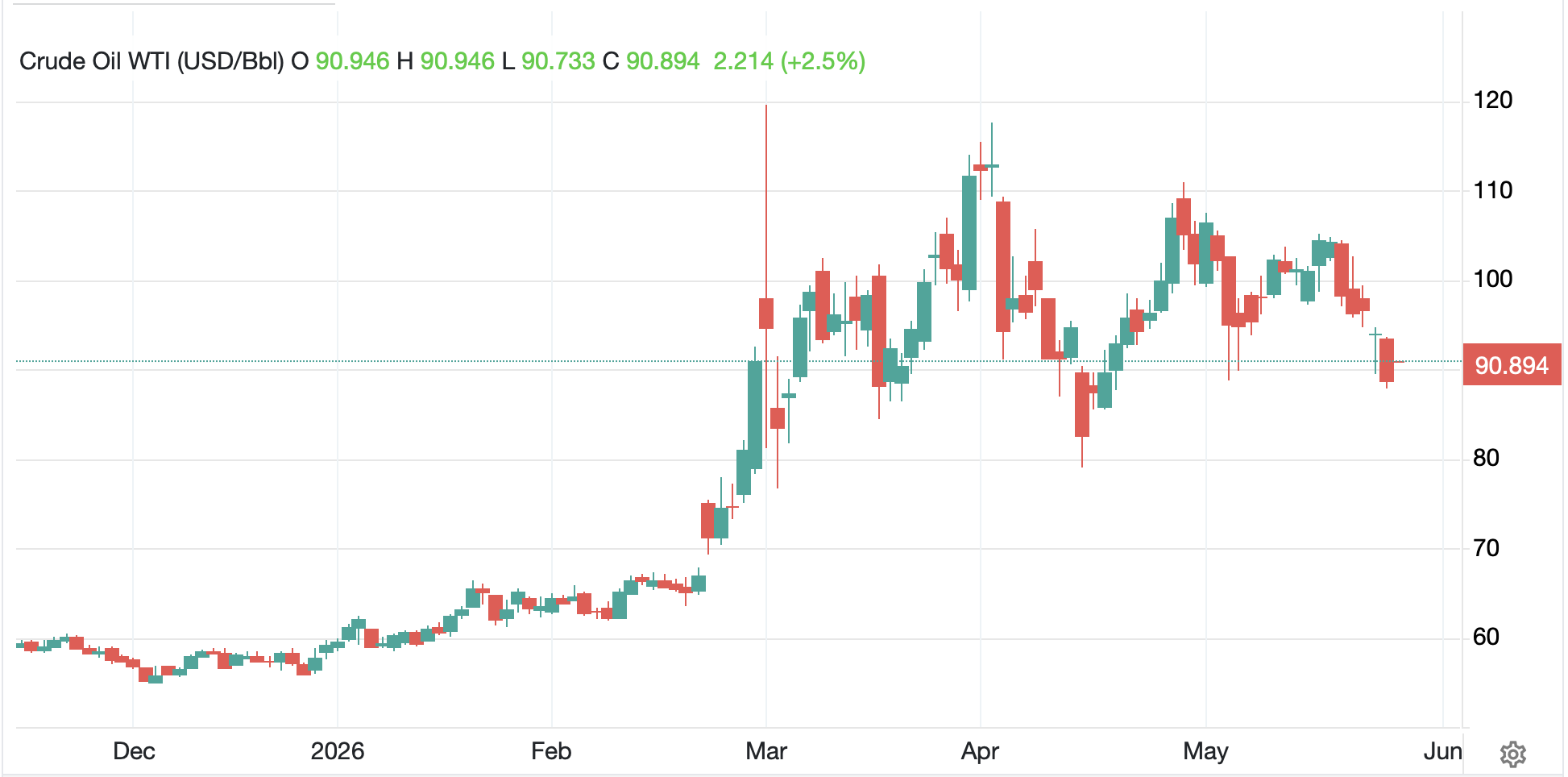
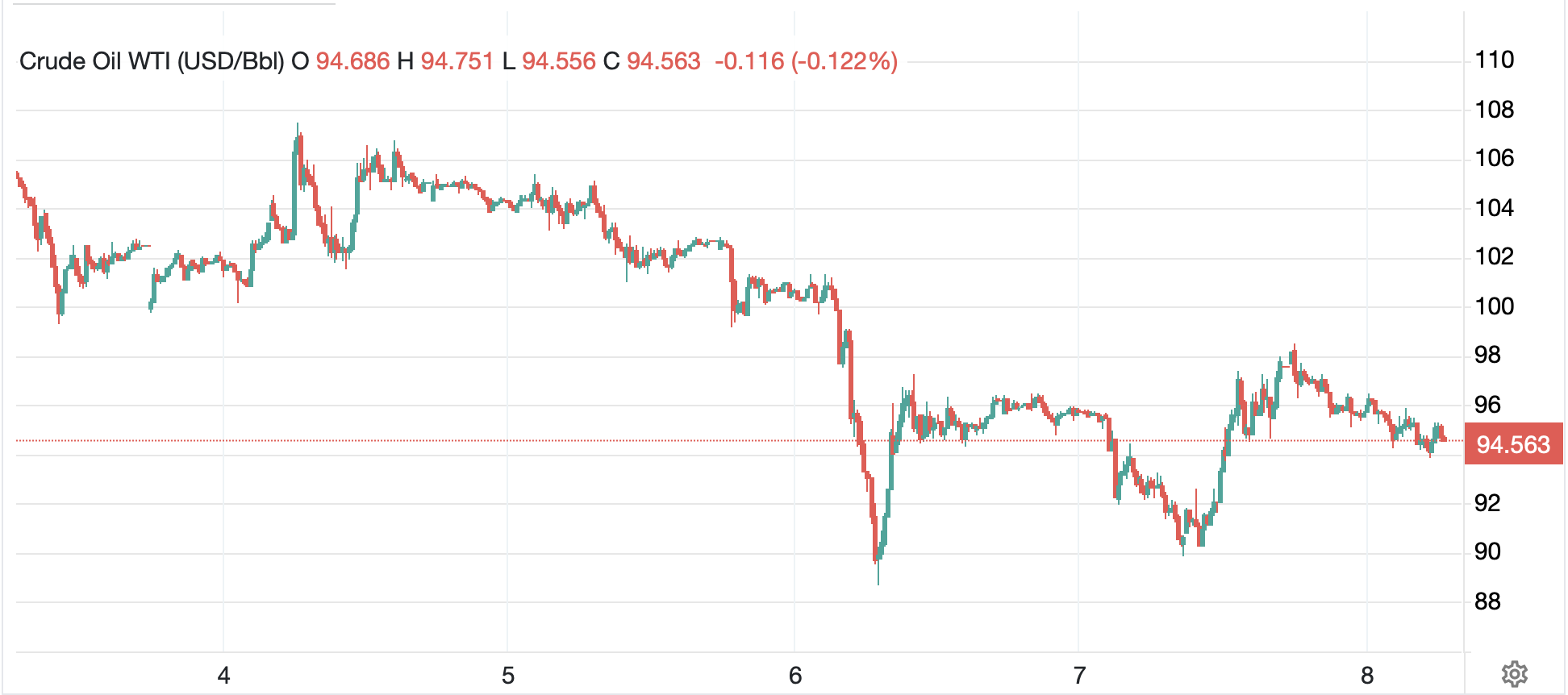
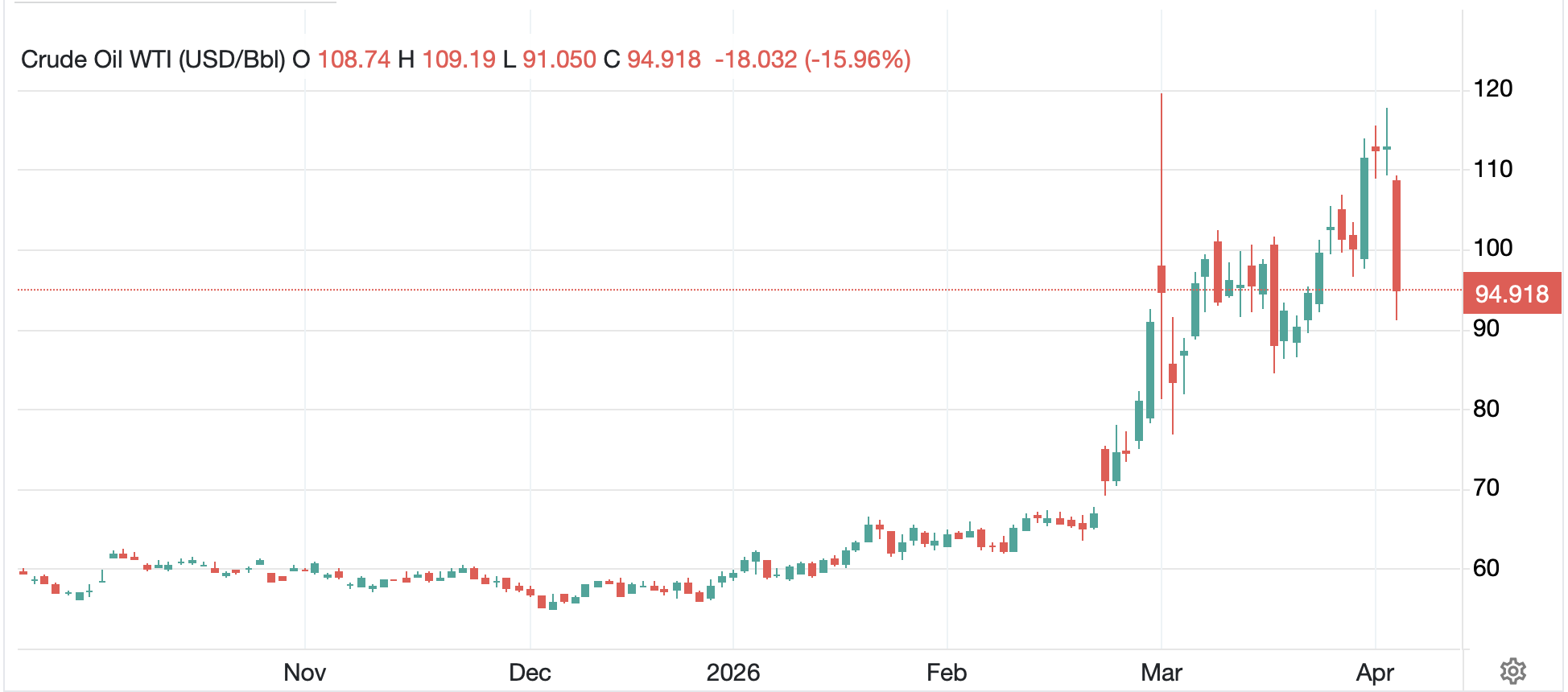
But from our perspective here, the questions of note are how did markets respond?  You will not be surprised that much of the trauma that markets have felt over the past month has already been reversed.  Let’s start with oil, as that has been the keystone for all markets.  As per the below chart, it has plunged -16% overnight, back well below $100/bbl.

Source: tradingeconomics.com

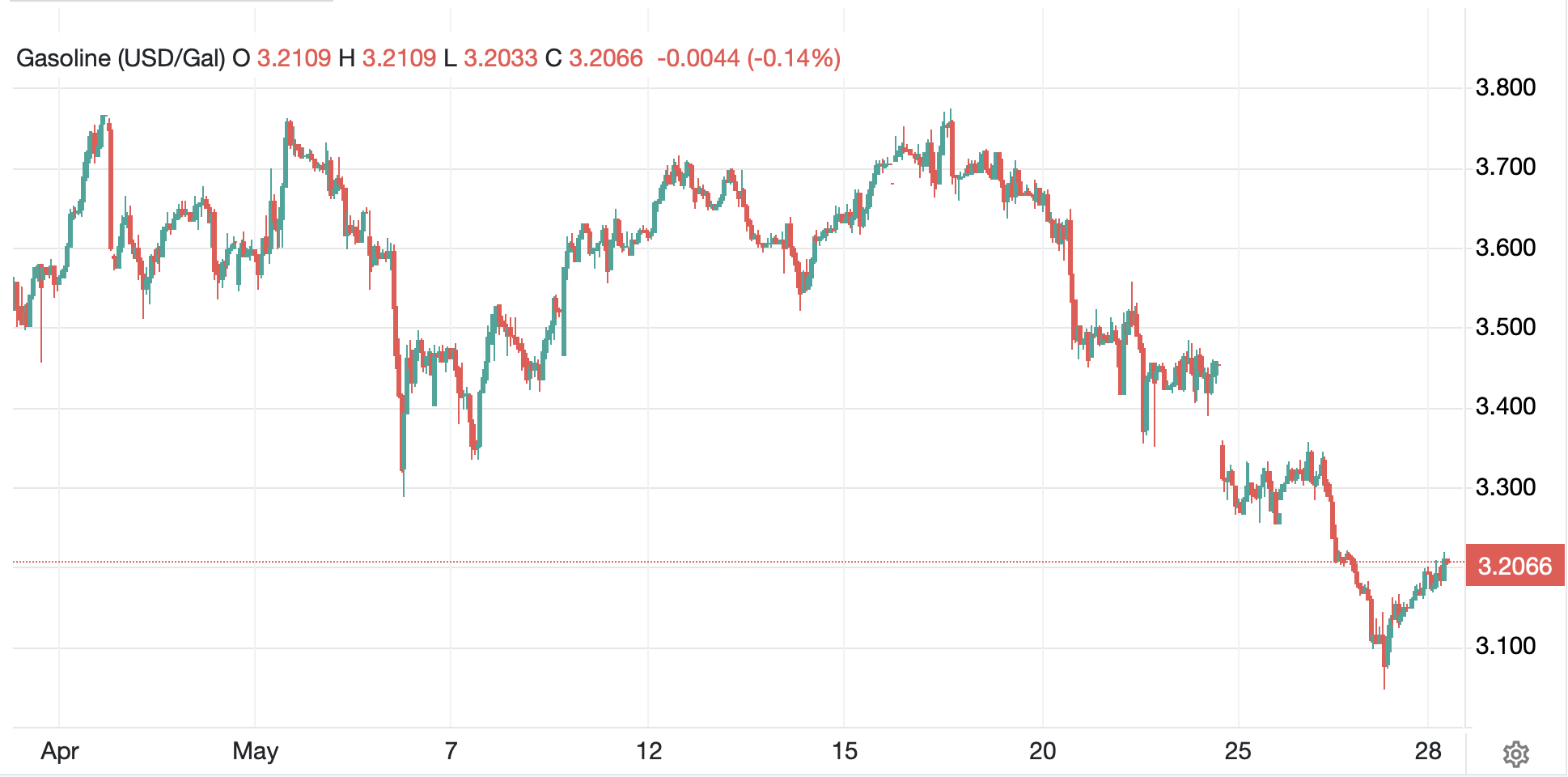
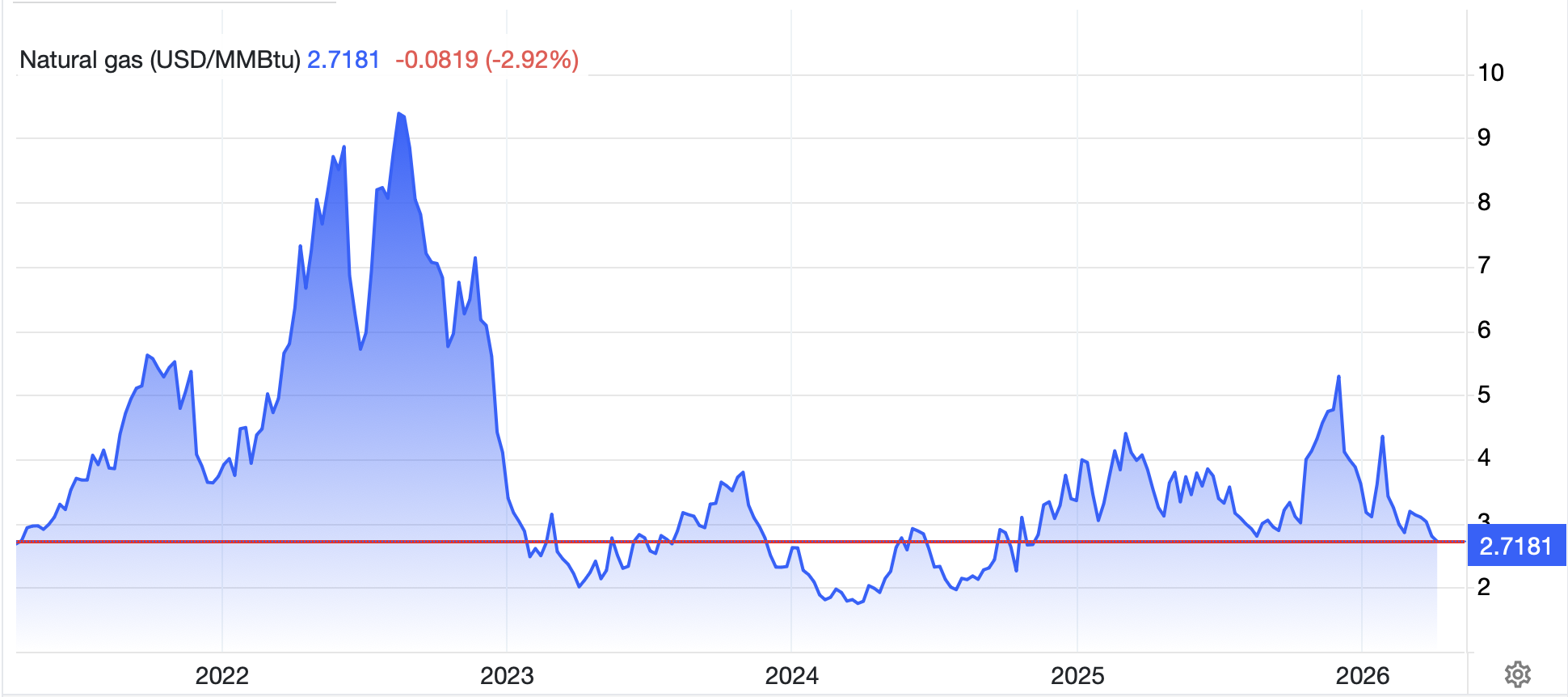
While this is a picture of WTI, Brent (-14%) also tumbled as did the markets in gasoline (-10.0%) and all other products.  NatGas (-5.3%) fell to its lowest level since October 2024, as per the below chart.

Source: tradingeconomics.com

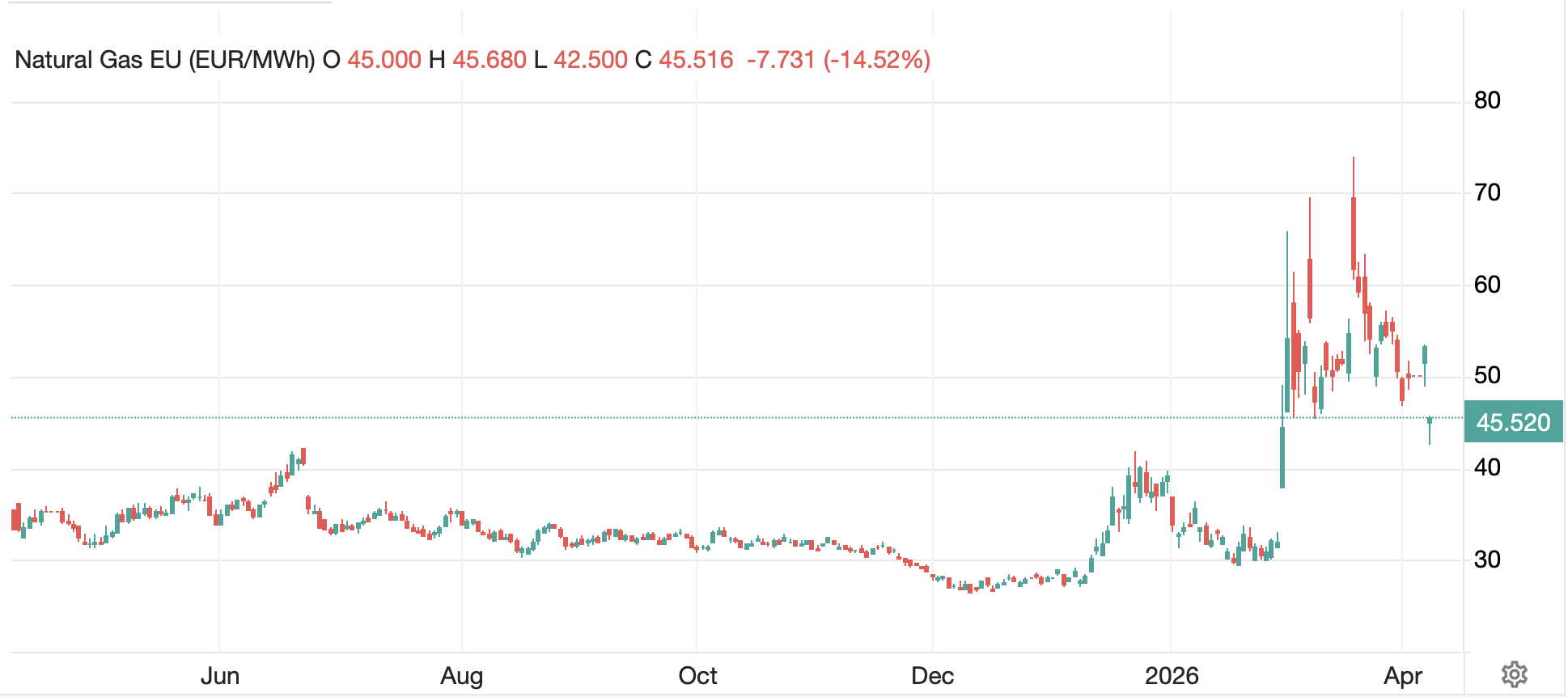
In Europe, TTF Gas (-14.7%) also tumbled but it remains far above its prewar levels as per the below.

Source: tradingeconomics.com

All told, as would be expected, energy prices have fallen sharply.  Of course, questions have rightly been raised as to whether this will remain the case because, remember, the cease fire is slated for only 2 weeks.  What happens if there is no agreement and the US resumes their attacks?  As well, the status of the Strait of Hormuz remains somewhat cloudy with mixed information about safe passage.  It appears that many ships in there may be able to exit, but will any go back in with the risk of getting stuck again?  My point is this may not be over, but for now, everybody is giddy.

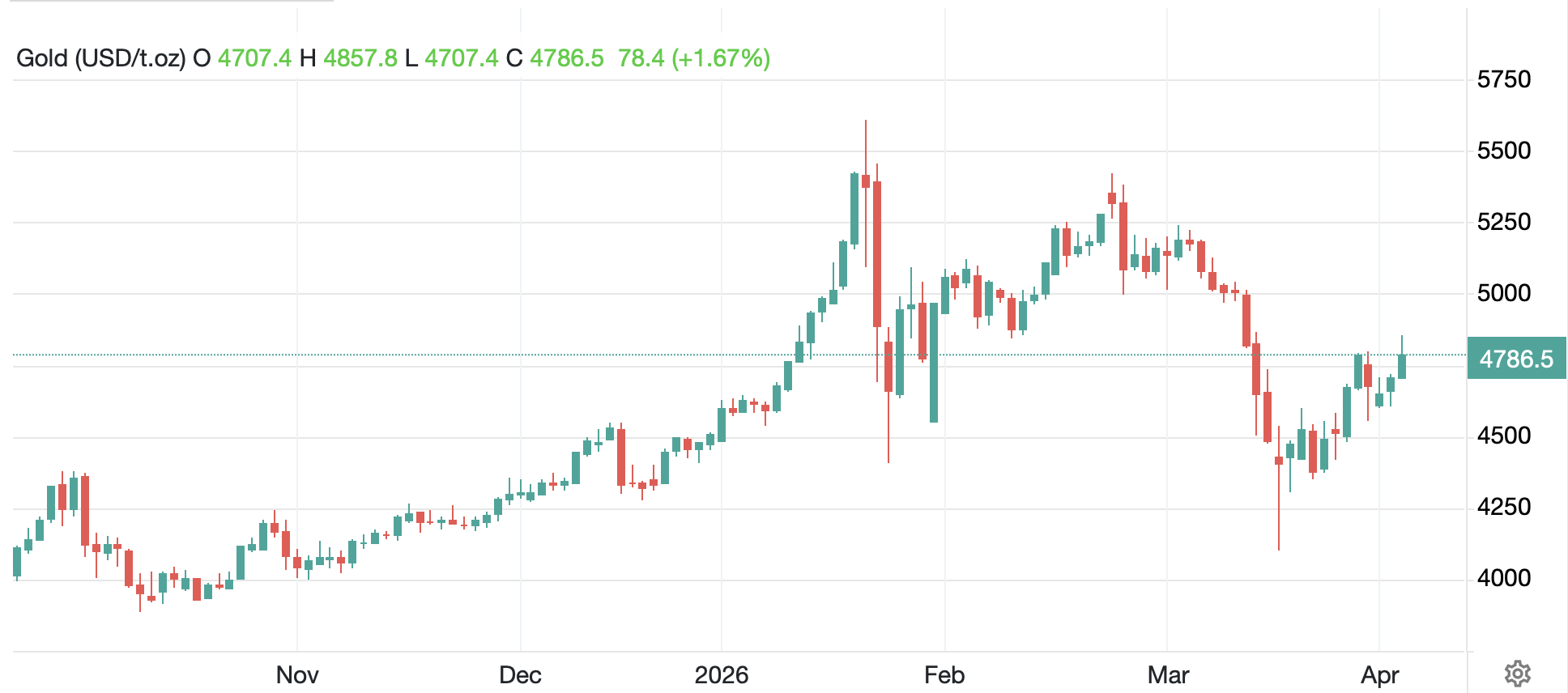
In the metals markets, the rally has been similarly impressive with both gold (+1.6%) and silver (+5.4%) continuing their rebound from the March 23rd spike lows as per the chart below of gold.

Source: tradingeconomics.com

In fact, gold has retraced 16% from that low print and silver 26%.  But here, too, it will all depend on how the Iran situation evolves going forward.  Arguably, if the fighting starts again and oil rises, precious metals will head lower while if a long-lasting peace is secured, I would look for metals to head higher again.

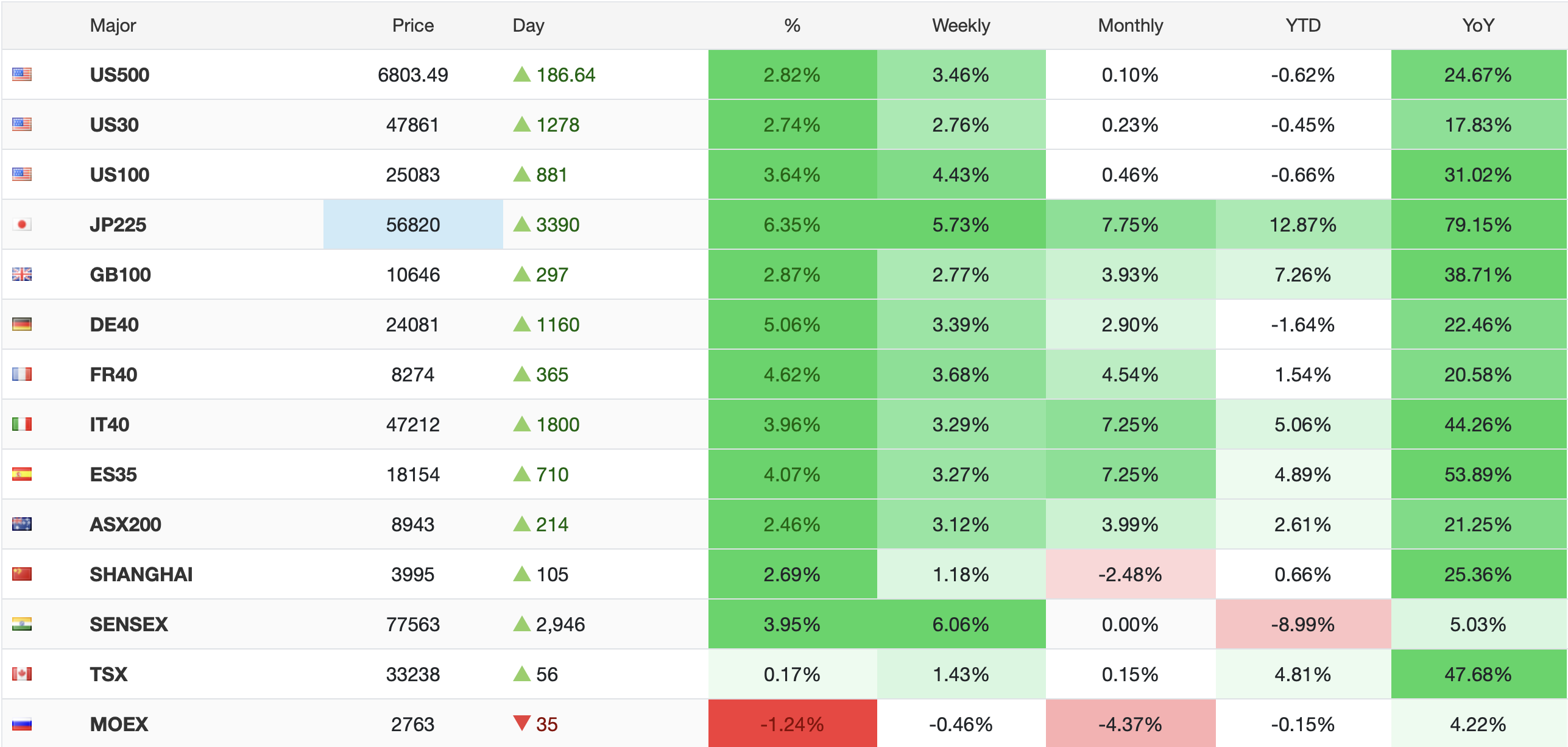
In the equity markets, the all-clear has been sounded, as you would have expected.  The screenshot below from tradingeconomcs.com of futures markets shows that the only perceived loser from this deal is Russia.  Otherwise, every market is substantially higher (Toronto’s TSX is closed in the overnight session) or was so last night in Asia.

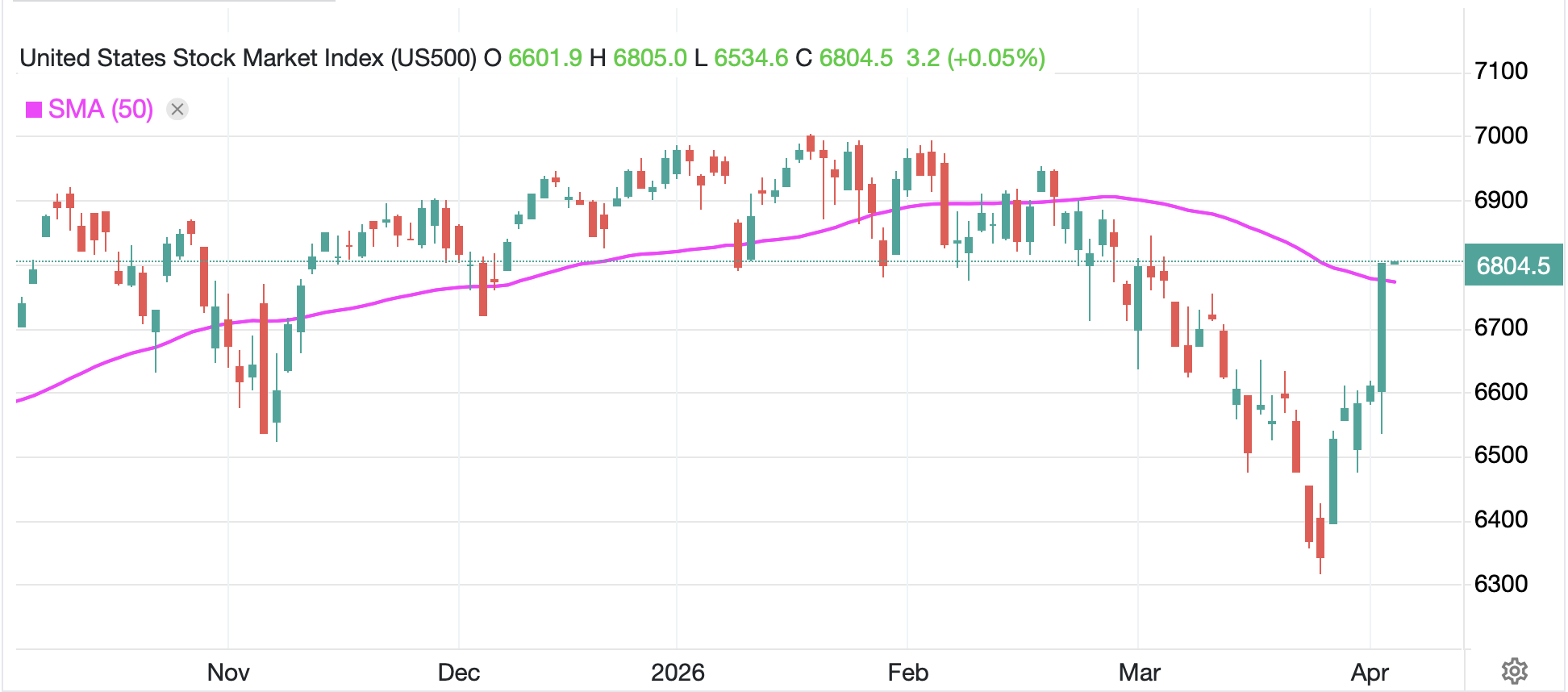
The thing we are likely to hear about a lot today is that the S&P 500 has traded back above its 50-day moving average, as per the below chart.  For the technicians, this will be seen as a key outcome and expect to hear much more about a test, and potential break, of the all-time highs of 7000 made back in January.

Source: tradingeconmomics.com

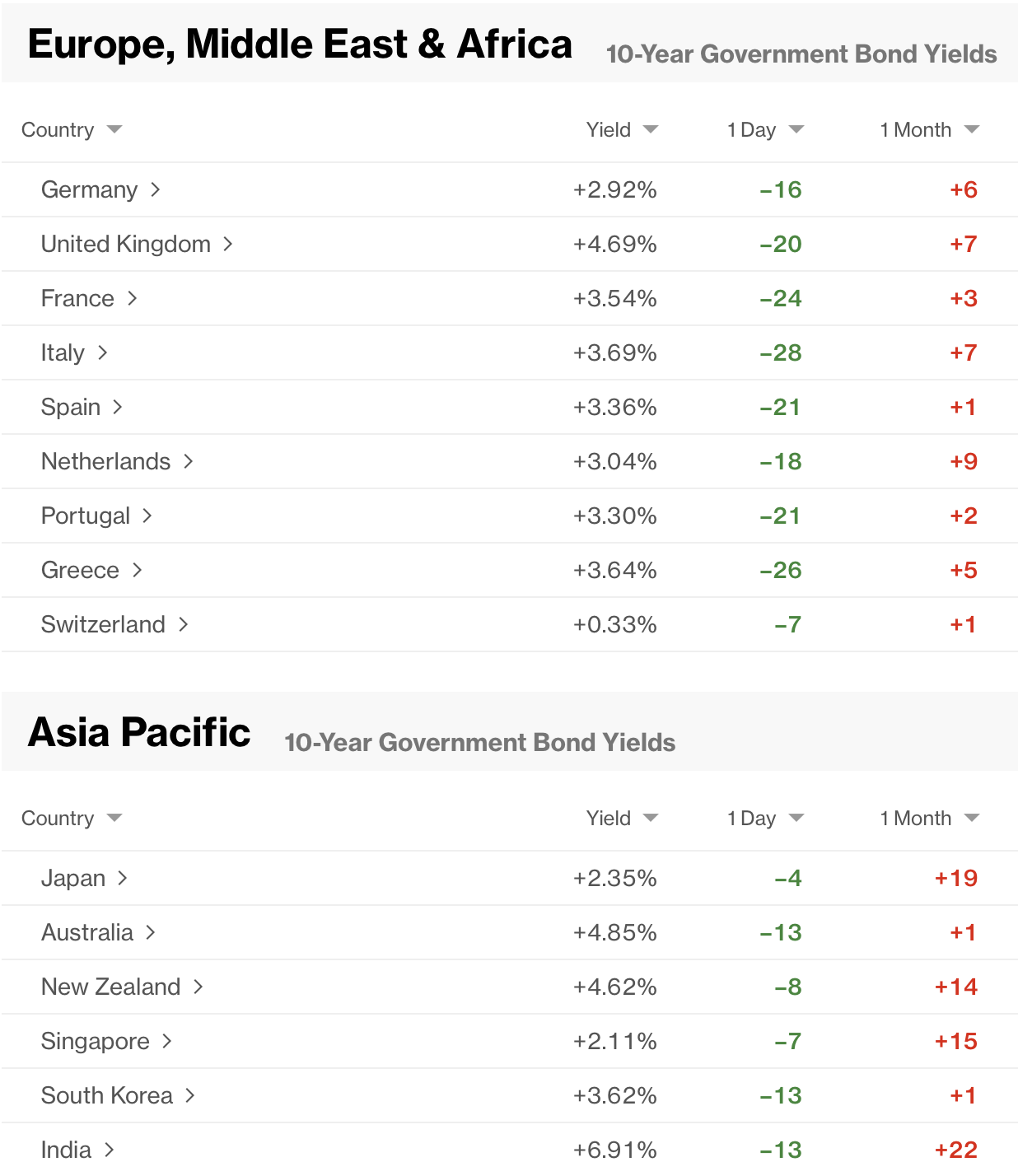
Moving on to bonds, Treasury yields are the big disappointment here, having only declined -5bps heading into the NY open, but as the Bloomberg screenshot shows, European sovereign yields have virtually collapsed, as have yields throughout Asia, although remain higher than a month ago.

It appears that all the fears about rising inflation have been virtually extinguished overnight!

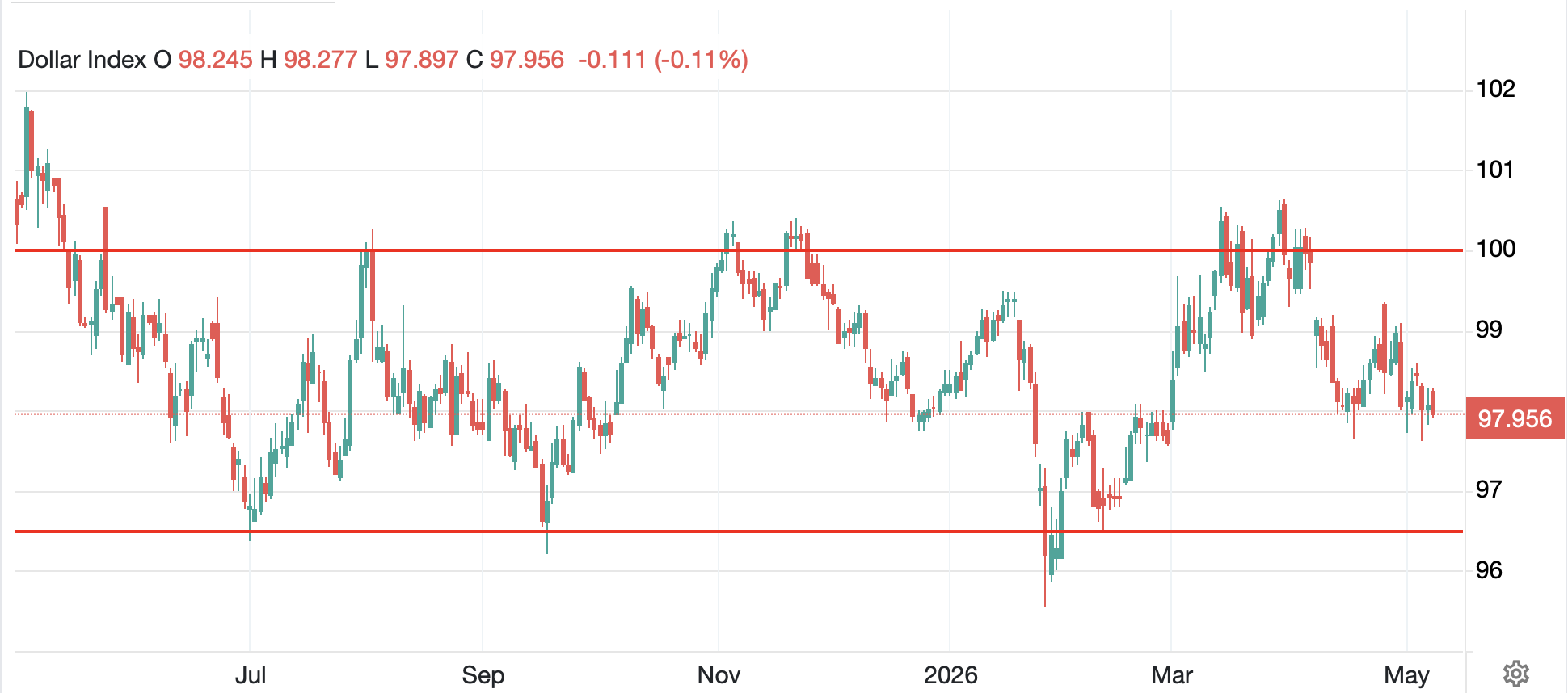
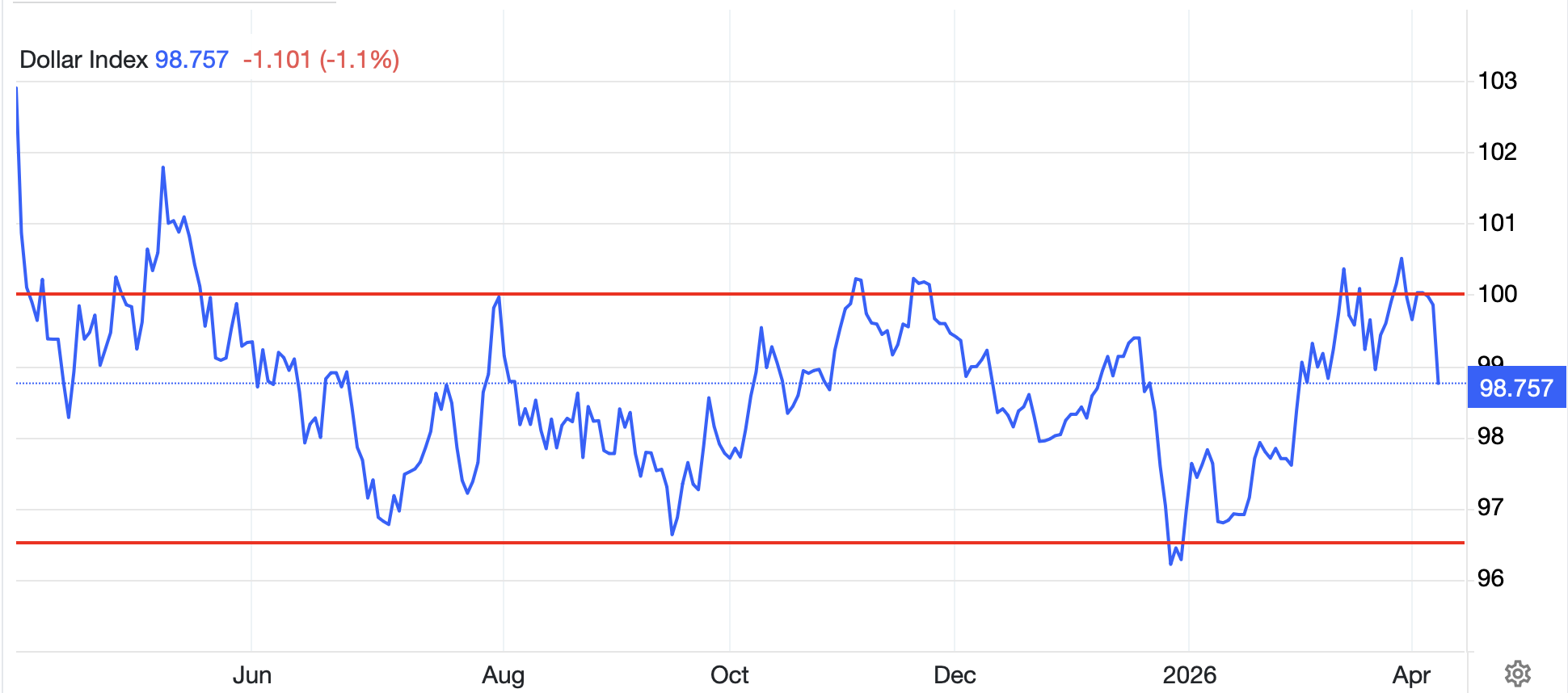
Finally, the dollar has also reversed its recent gains, falling sharply across the board.  Using the DXY (-1.1%) as a proxy, it does seem to measure the average movement, but there have been some real outliers.  For example, ZAR (+2.3%) has benefitted from the combination of much higher precious metals prices and much lower energy prices as South Africa is a net energy importer.  SEK (+2.2%) has also exploded higher, although that looks more like a reversal of yesterday’s sharp decline, than any other news.  But, broadly speaking, currency gains on the order of 1% or more are the norm this morning.  However, as we have seen across almost all markets, this movement merely returns us to the middle of the previous trading range, it is not a signal for the dollar’s collapse.  Just look at the chart below of the DXY.

Source: tradingeconomics.com

So, across all markets, we have witnessed a major reversal of the war induced trauma.  It is not completely unwound nor are we confident it will exist in two weeks if no deal is reached.  But that’s the scoop for now.

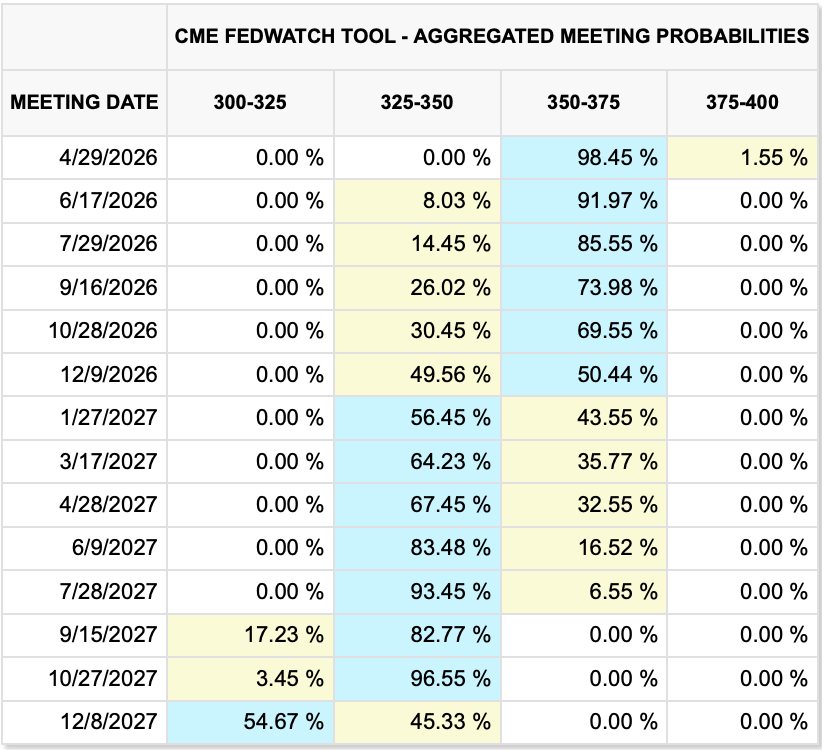
While it certainly won’t have an impact today, it is worth looking at the Fed funds futures market to see how it has behaved.  While expectations for the meeting on April 29th remain for no change, as you can see from the aggregate probability table created by the CME, cuts are back in the thought process, although not until the end of this year.

On the data front, we receive EIA oil inventory data this morning and then the FOMC Minutes are released at 2:00 this afternoon, but I cannot imagine anyone paying close attention to those given the changing situation in the Middle East and its impact on markets, especially oil and the prospects for future inflation.

To recap, we all ought to be happy that the Iran war has stopped for now with prospects for a longer peace.  You can love Trump or you can hate Trump, but if he succeeds in eliminating the terror networks that Iran has long sponsored, that is a gigantic net benefit for the entire world.  Nobody has any idea how things will ultimately resolve, but certainly, as we wake up this morning, prospects for the future look better than they did twenty-four hours ago.  Of course, my advice had been to play it close to the vest because of unexpected outcomes like this.  Nobody has any edge trading markets like this, not even the algos.  Perhaps the one thing that will change is trading volumes will start to pick up and increase overall liquidity, and that would be a net positive.

Good luck

Adf

Analyst Glory

On Friday, the Payrolls release
Described a much greater increase
Than pundits had thought
Thus, stocks were all bought
As well there was new hope for peace

This morning the story of note
Is ‘bout a cease fire anecdote
As well, there’s a story
‘Bout analyst glory
And how he learned much in a boat

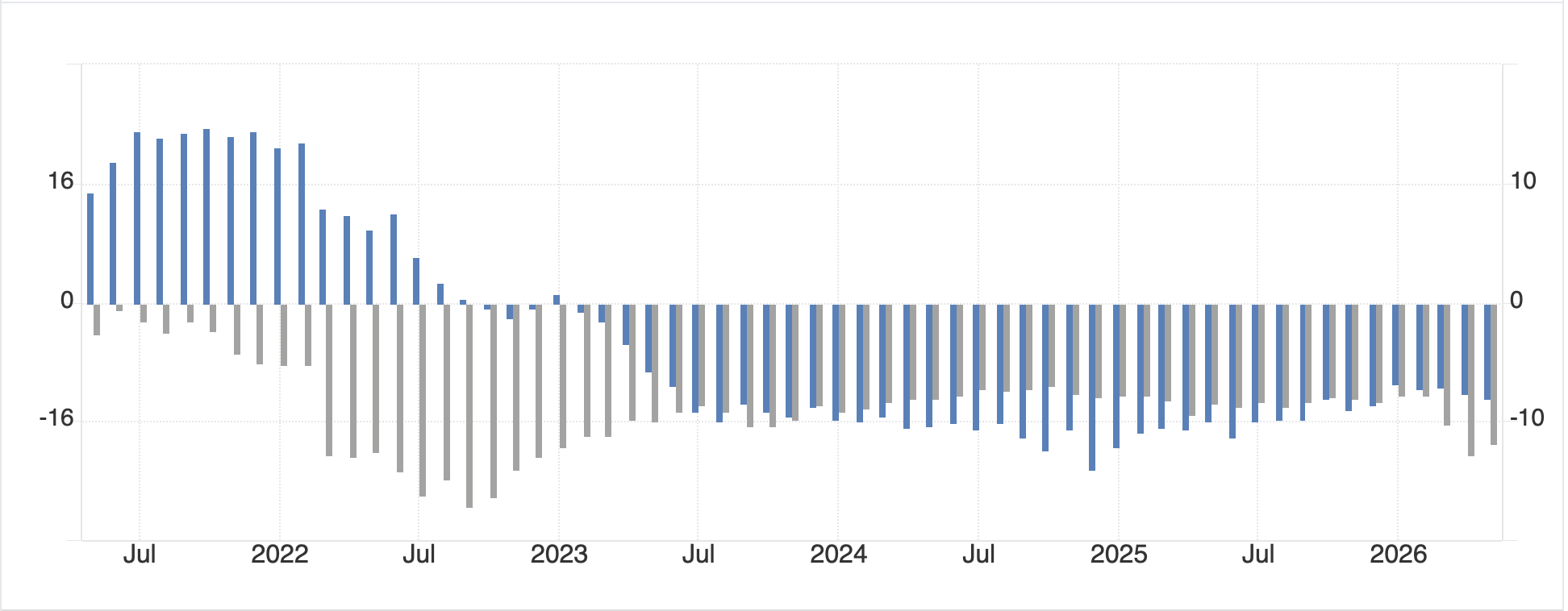
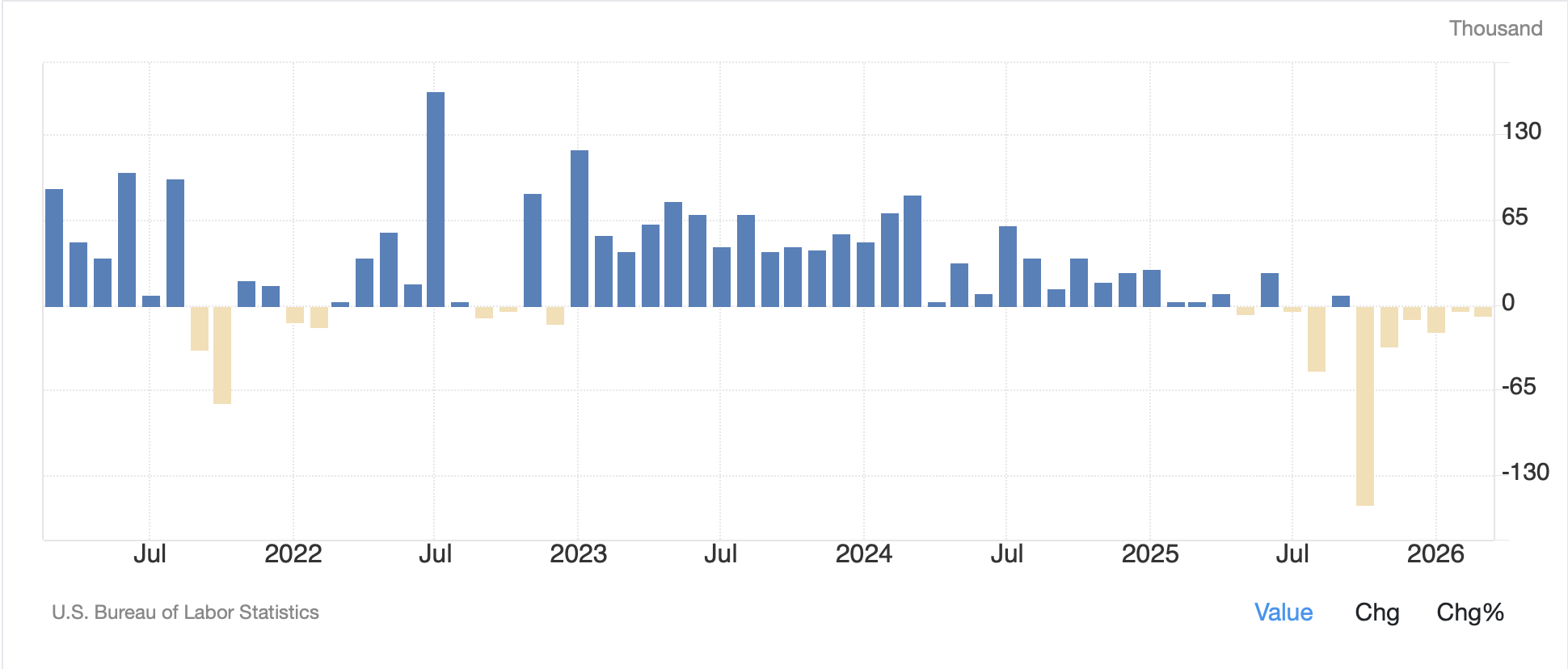
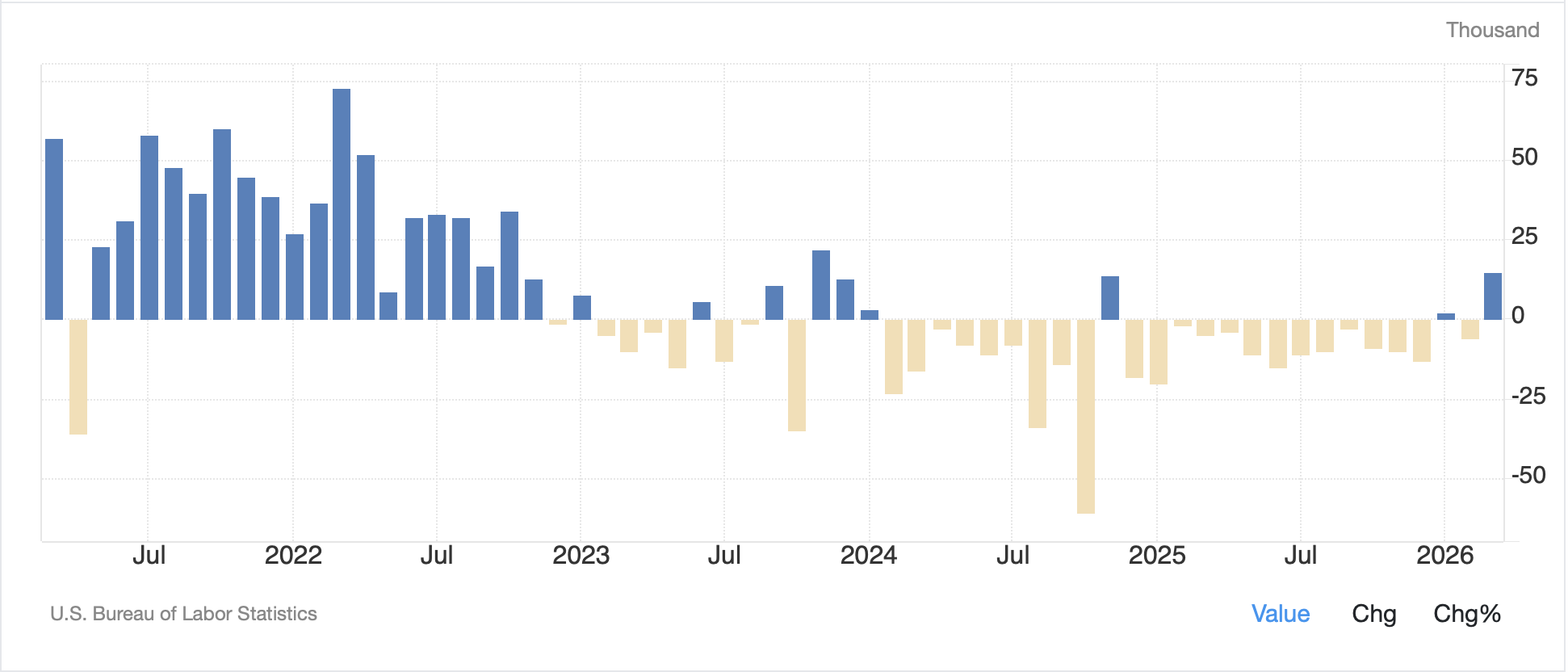
Quickly, let’s recap Friday’s NFP report which showed payrolls jumped 178K, far greater than the 60K expected, although, as has been the case for a while, there was a revision lower to last month’s data.  Net, however, given the labor market dynamics discussed on Friday, where zero net job growth appears to equate to a stable, relatively low, unemployment rate, the data was indicative of solid economic activity.  Manufacturing Payrolls rose 15K, showing, as per the below chart from tradingeconomics.com, their strongest growth since November 2023 and hopefully the beginning of a trend back toward the levels seen in the wake of the Covid restart.  Perhaps President Trump’s reshoring efforts are beginning to pay off.

The Unemployment Rate also ticked lower, to 4.3%, although earnings data was on the soft side, 3.5% annual growth. (My favorite part was government employment fell again, taking the federal, non-military, workforce to its smallest level since the mid 1960’s, a healthy trend I believe.)

The upshot is that Friday saw equity markets rebound from weaker opening levels, Treasury yields rise and oil prices jump along with the dollar while gold prices slid.  Of course, in today’s world, that news is completely out of date.

As I type Monday morning, with all of Europe closed for Easter Monday, and most of Asia having been closed as well, the two stories around are 1) talks about a 45-day cease-fire in the war, and 2) an analyst report from Citrini Research describing the traffic through the Strait of Hormuz being much greater than previously believed based on the tracking of ship transponders.

Regarding the first, it is always difficult to understand exactly what is happening with this administration during its conduct of the Iran war.  I don’t say that pejoratively, rather I believe it is entirely part of the plan of strategic ambiguity based on President Trump’s overall style.  Much of the weekend focused on the remarkable and successful rescue of the 2nd fighter pilot that was shot down late last week, and deservedly so.  But there are stories about the US, Iran and regional mediators (Pakistan? Egypt?) trying to get to a 45-day cease-fire that could lead to the end of the war.  Of course, we also had President Trump threaten to destroy all of Iran’s infrastructure if they don’t reopen the Strait of Hormuz.  As of now, the war continues apace with the latest key news being the killing of the IRGC’s spy chief in an Israeli attack.  

But it is the second story that has more punch, and that is that Citrini Research, recently noted for its late February report that described a fictional scenario in 2028 regarding major negative outcomes from the ongoing AI adoption and its impact on employment, the economy writ large, and markets, published a note where they had sent an analyst to the Strait of Hormuz who recorded what was happening there.  The upshot is that the activity through the Strait is far greater than had been reported as a number of ships have turned off their transponders and are transiting near the Omani coast.  

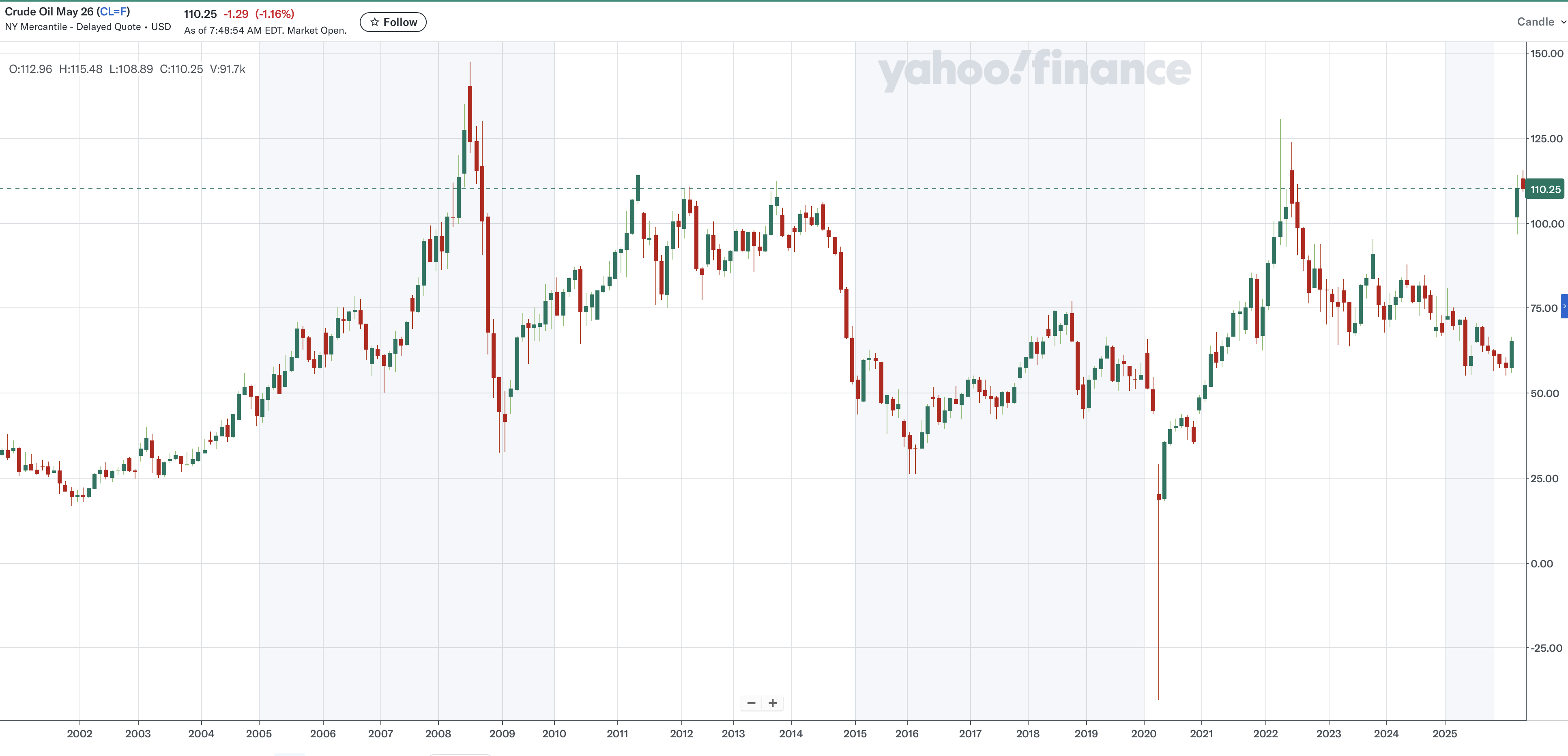
If one ever doubted the wisdom of the markets, this may be the best indication that markets really are an amazing source of information.  Consider the fact that despite the Strait of Hormuz being ostensibly closed, the waterway where ~20% of the world’s oil and LNG transits, the price for both products has been remarkably calm.  I am not denying oil (WTI -1.1% this morning) has risen significantly from pre-war levels, just that the fact it has not reached the levels of the Russian invasion spike, let alone the pre-GFC spike, even on a nominal basis, is incredible.  

Source: finance.yahoo.com

Russia did not interrupt 20% of the global oil flow.  At the margin, if 20% of global oil was not flowing, and given the inelasticity of demand for oil in the short run (estimated at just -0.05 to -0.3 according to Grok), prices above $150/bbl would seem to be more likely.  But here we are this morning at $110/bbl.  That tells me that the Strait is not shut, although the flow has slowed significantly.  But, if 20% of the regular traffic gets through, which seems to be what the Citrini report implies, and both the Saudis and Emiratis have the ability to pipe oil as well, to the tune of an extra 5mm-6mm/bpd, that means the shortage is half the initial fears.  (20% of 20mm/bpd + 5mm to 6mm piped).  It turns out the world, as a whole, is more resilient than many thought.  Certainly, there are nations that are going to suffer because they cannot compete with energy prices this high, but overall, my sense is that the global impact is going to be less than initially feared.

I am not trying to downplay the seriousness of the situation, but from a markets perspective, we need to recognize that perhaps the world is not about to end.  This is not to say that things cannot get worse, just that the starting point is probably better than we thought.

Ok, let’s tour the few markets that were open overnight before we’re done.  In equity markets, Tokyo (+0.6%) had a pretty good session all things considered as did Korea (+1.4%) and India (+1.1%), which were the major markets open.  The picture amongst the other regional exchanges was mixed, although probably a little more red than green.  Of course, Asia is the area most negatively impacted by the oil situation.  With Europe closed, a quick look at US futures shows that at this hour (8:10) they are modestly firmer.

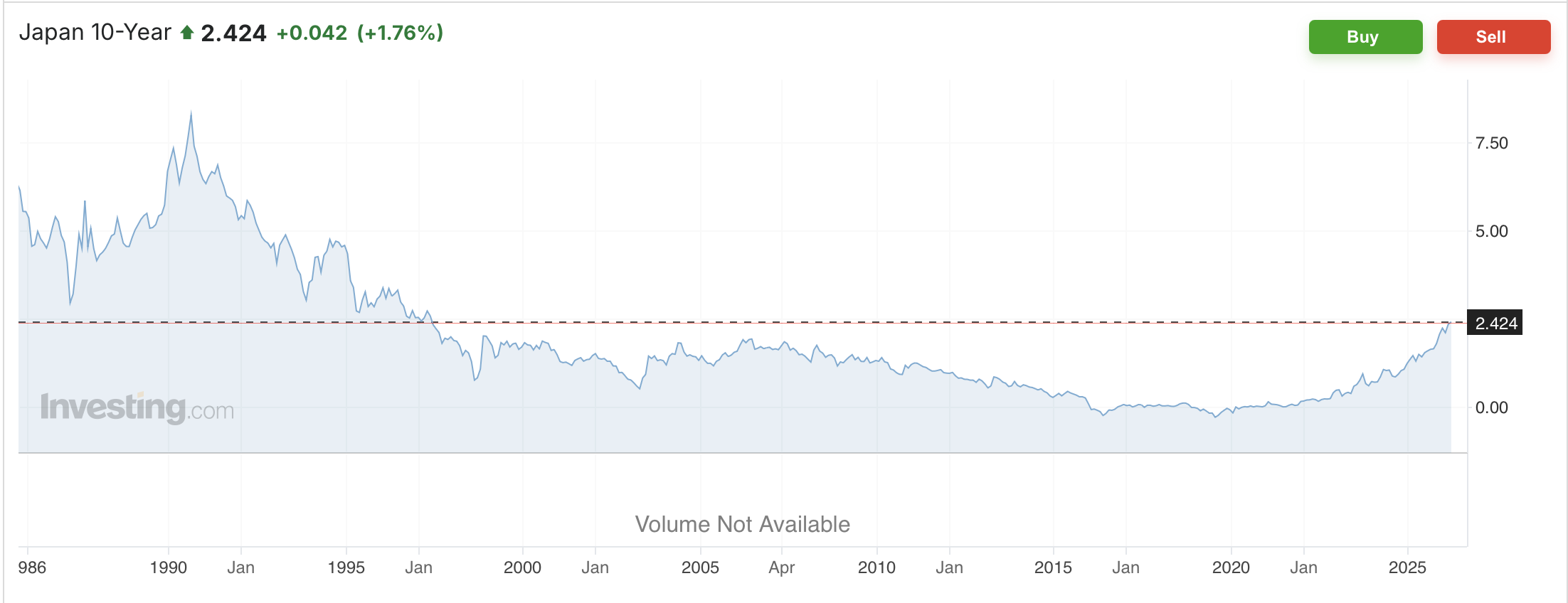
In the bond market, Treasury yields have backed up another 2bps after climbing 4bps on Friday.  The only other market open was Japan, with JGB yields rising 3bps and trading at a new high for this move, thus the highest since January 1997 as per the below from Investing.com

We’ve already discussed oil prices with the real interest, to me, the fact that WTI is higher than Brent Crude, an indication that there is increased demand given its availability to any place in the world.  As to the metals markets, gold (-0.1%) and silver (+0.2%) are not really telling us much today.  There certainly doesn’t seem to be any new information to drive these markets right now.

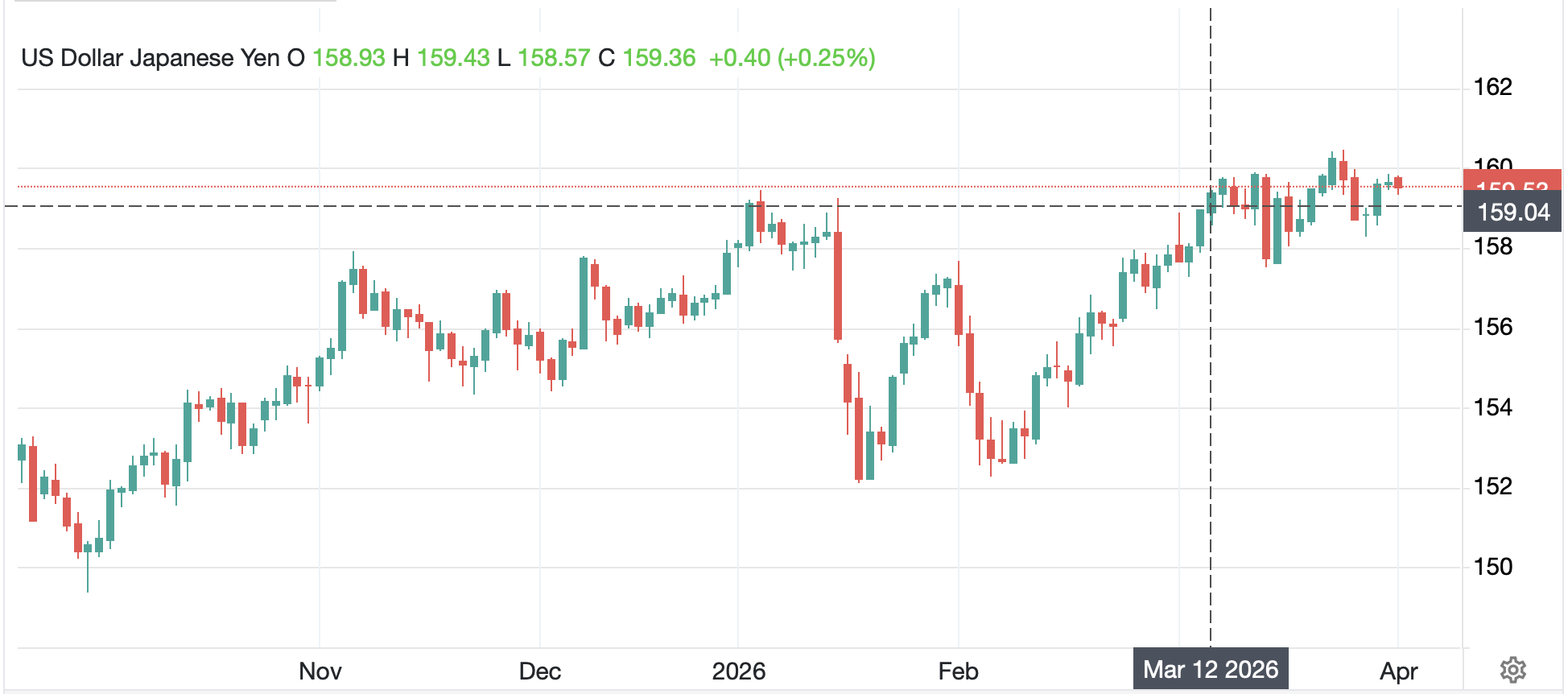
Finally, the dollar is softer this morning in thin trading, which given the moves in oil and stocks, is not that surprising.  But the DXY remains basically right at 100.00 and the yen has been hovering just below the 160 “line in the sand” for the past three weeks as per the below chart from tradingeconomics.com

But with most European centers closed, as well as Canada, I expect that there will be little movement from current levels with very narrow liquidity.  Don’t try to do something large today.

Which takes us to the data this week, as follows:

TodayISM Service 550
TuesdayDurable Goods-0.5%
 -ex Transport0.5%
WednesdayFOMC Minutes 
ThursdayInitial Claims209K
 Continuing Claims1832K
 Q4 GDP (final)0.7%
 Personal Income (Feb)0.3%
 Personal Spending (Feb)0.5%
 PCE (Feb)0.4% (2.8% Y/Y)
 Core PCE (Feb)0.4% (3.0% Y/Y)
 Real Consumer Spending (Q4)2.9%
FridayCPI0.9% (3.3% Y/Y)
 Ex food & energy0.3% (2.7% Y/Y)
 Michigan Sentiment52.0
 Factory Orders0.0%

Source: tradingeconomics.com

Mercifully, there are only two Fed speakers this week, but again, who is listening to anything they say these days?  Certainly, other than Chair Powell, I don’t think they matter at all.  PCE and CPI are the big numbers this week, at least from the perspective of how markets are going to anticipate future outcomes, whether monetary policy or fiscal policy.  But still, the war is the thing that matters.  A cease fire ought to be quite bullish in the short term, for stocks, bonds and gold, while oil and the dollar fall.  But it’s anybody’s guess if something like that is going to happen.  I wish I had something better to say than play it close to the vest.  We are still in a hugely volatile environment with many potential exogenous factors.

Good luck

Adf
Dine and Dash

The president left in a flash
Completing a quick dine and dash
But so far, no word
On what, this move, spurred
Though I’ve no doubt he’ll make a splash
 
Then last night the BOJ passed
On hiking, though none was forecast
And Germany’s ZEW
Implied there’s a view
That growth there will soon be amassed


I have to admit that when I awoke this morning, I expected there to have been significantly more news regarding the Iran/Israel conflict based on President Trump’s early departure from the G-7 meeting.  But, from what I see so far, while markets have reversed some of yesterday’s hope that a ceasefire was coming soon, my read is we are back to overall uncertainty in the situation.  Of course, the concept of the fog of war is well known, and I expect that we will not find out very much until those in control of the information, whether the IDF or the US military, or Iranian sources, choose to publicize things.  The one thing we know is that everything we learn will be biased toward the informants’ view, so needs to be parsed carefully.  I do think that Trump’s comments to the press when he was leaving the G-7 about seeking “an end. A real end. Not a ceasefire, an end,” to the ongoing activities is telling.  It appears the Israelis planned on a 2-week campaign and that is what they are going to complete.

From a market perspective, as we have already seen in the price of oil, and generally all asset classes, absent a significant escalation, something like a tactical nuclear strike by the Israelis to destroy the Iranian nuclear bomb-making capabilities, I expect choppiness on headlines, but no trend changes.  At some point, the fighting will end, and markets will return their focus to economic and fiscal concerns and perhaps central banks will become relevant again.

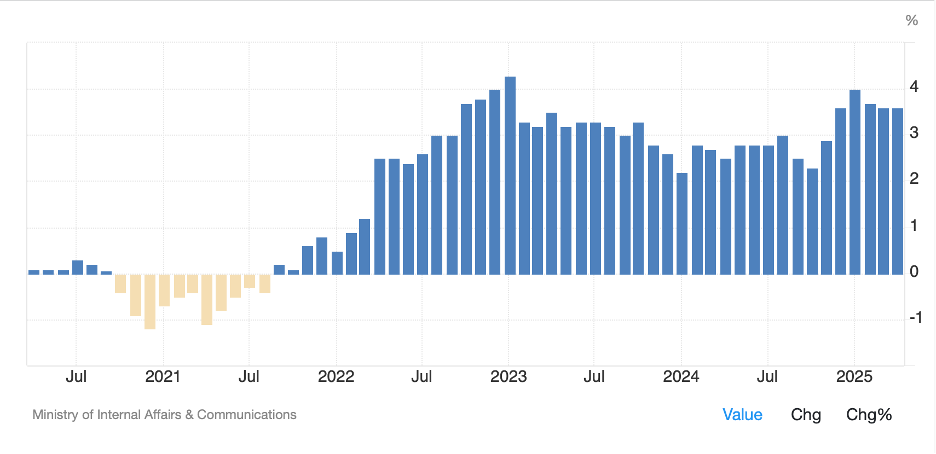
So, let’s turn to that type of news which leads with the BOJ leaving policy rates on hold, although they did reduce the amount of QE to ¥200 billion per month, STARTING IN APRIL 2026!  You read that correctly.  The BOJ, which has been buying ¥400 billion per month of JGBs while they raised interest rates in their alleged policy tightening, has decided that ten months from now it will be appropriate to slow the pace of QE.  Yes, inflation has been running above their 2.0% target for more than three years (April 2022 to be exact) as you can see in the below chart, but despite a whole lot of talk, action has been slow to materialize.

Source: tradingeconomics.com

You may recall about a month ago when Japanese long-end yields, the 30-year and 40-year bonds, jumped substantially, to new all-time highs and there was much discussion about how there had been a sea change in the situation in Japan.  Expectations grew that we would start to see Japanese institutions reduce their holdings of Treasuries and bring their funds home to invest in JGBs, leading to a collapse in the dollar.  The carry trade was going to end, and this was another chink in the primacy of the dollar’s hegemony.  Well, if that is the case, it is going to take longer than the punditry anticipated, at the very least, assuming it happens at all.  As you can see from the charts below of both USDJPY and the 40-year JGB, all that angst has at the very least, been set aside for now.

Source: tradingeconomics.com

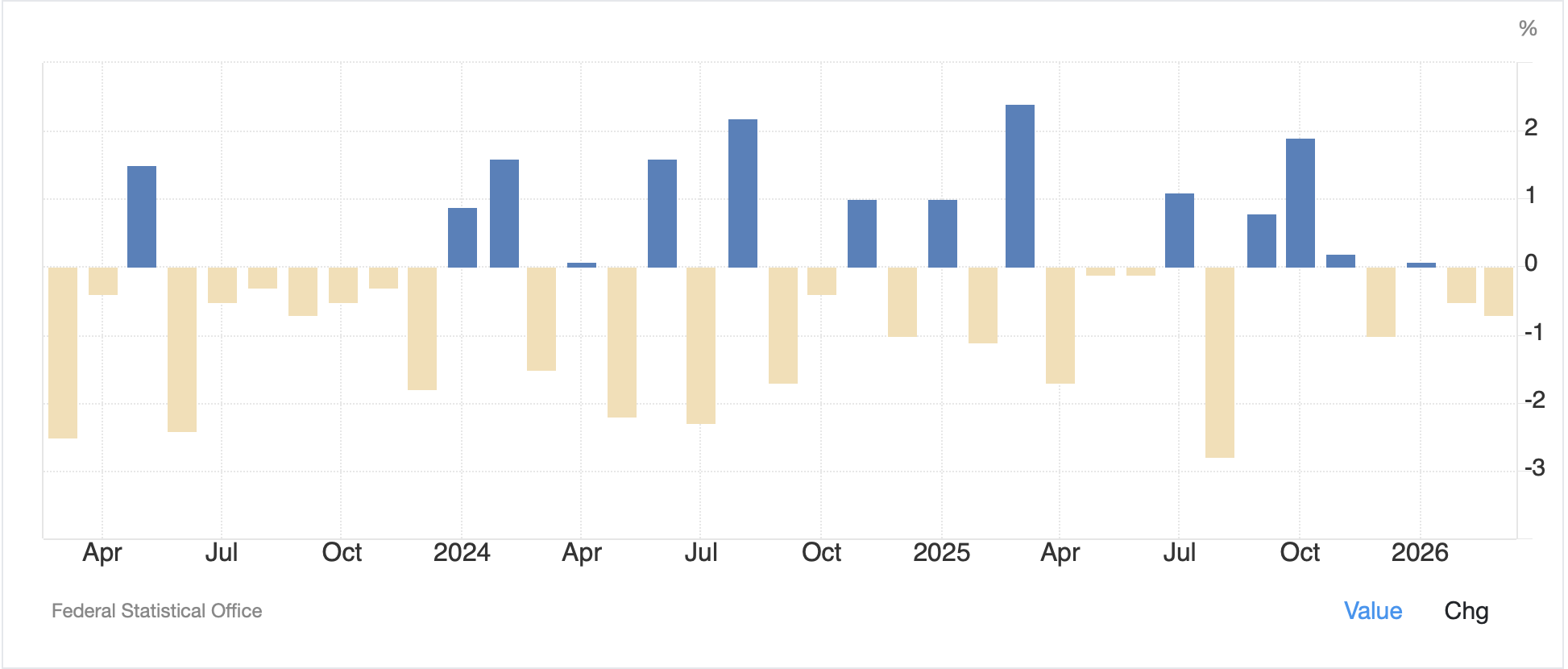
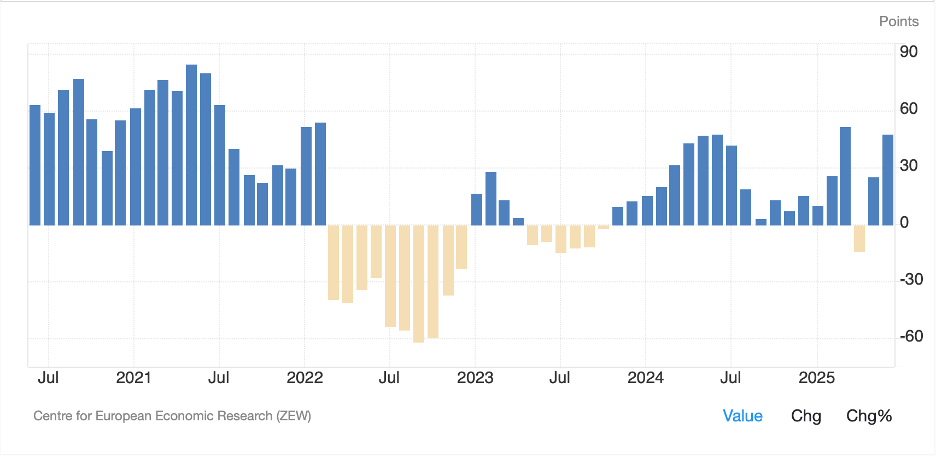
Elsewhere, the German ZEW data released this morning was substantially stronger than both last month and the forecasts for an improvement.  As you can see from the chart below, it is back at levels that are consistent with actual economic growth, something Germany has been lacking for several years.  It appears that a combination of the continued tariff truce, the promises of massive borrowing and spending by Germany to rearm itself and the ECB’s easy policy have German business quite a bit more optimistic that just a few months ago.

Source: tradingeconomics.com

Ok, while we await the next shoe to drop in Iran or Israel, let’s see how markets have behaved overnight. Yesterday’s nice rally in the US was followed by a mixed picture in Asia with the Nikkei (+0.6%) gaining after the BOJ showed that tighter policy is not coming that soon.  Elsewhere in the region, China, HK and India were all down at the margin, less than 0.4% while Korea and Taiwan managed some gains with Taiwan’s 0.7% rise the biggest mover overall.  In Europe, though, the excitement about a truce in Iran is gone with bourses across the continent lower (DAX -1.25%, CAC -1.05%, IBEX -1.5%, FTSE 100 -0.5%).  Apparently, there is fading hope of trade deals between the US and Europe and concerns are starting to grow as to how that will impact European activity.  I guess the ZEW data didn’t do that much to help.  US futures at this hour (7:00) are all pointing lower by about -0.5%, largely unwinding yesterday’s gains.

In the bond market, Treasury yields, which backed up yesterday, are lower by -3bps this morning, essentially unwinding that move.  However, European sovereign yields have all edged higher between 1bp and 2bps with Italy’s BTPs the outlier at +3bps.  Quite frankly, it is hard to have an opinion as to why bond yields move such modest amounts, so I’m not going to try to explain things.

In the commodity space, fear is back in play as oil (+1.7%) is rallying as is gold (+0.4%) which is taking the rest of the metals complex (Ag +2.3%, Cu +0.3%, Pt +3.0%) with it.  These are the markets that are most directly responding to the ongoing ebbs and flows of the Iran/Israel situation, and I expect that will continue.  In the end, I continue to believe the long-term trend for oil is toward lower prices while for gold and metals it is toward higher prices, but on any given day, who knows.

Finally, the dollar doesn’t know which way to turn with modest gains and losses vs. different currencies in both G10 and EMG blocs.  The euro, pound and yen are all within 0.1% of yesterday’s closing levels while we have seen KRW (-0.4%) and INR (-0.3%) suffer and NOK (+0.4%) and SEK (+0.4%) both gain on the day.  However, those are the largest movers across the board, so it is difficult to make a case that anything of substance is ongoing.

On the data front, yesterday’s Empire State Manufacturing index was quite weak at -16, not a good look.  This morning, we see Retail Sales (exp -0.7%, +0.1% ex-autos), IP (0.1%), and Capacity Utilization (77.7%).  As well, the FOMC begins their meeting this morning with policy announcements and Powell’s press conference scheduled for tomorrow.  Helpfully, the Fed whisperer, Nick Timiraos, published an article this morning in the WSJ to explain why the Fed was going to do nothing as they consider inflation expectations despite the lack of empirical evidence that those have anything to do with future inflation.  But it is a really good sounding theory.

For now, the heat of the Iran/Israel situation will hold most trader’s attention, but I suspect that this will get tiresome sooner rather than later.  The biggest risk to markets, I think, is that the Iranian regime collapses and a secular regime arises, dramatically reducing risks in the Middle East and reducing the fear premium in oil substantially.  If that were to be the case, I expect the dollar would suffer as abundant, and cheap, oil would help other nations more than the US on a relative basis given the US already has its own supply.  But a major change of that nature would have many unpredictable outcomes.  In the meantime…

Good luck

Adf

Somewhat Sedate

Nvidia’s earnings were great
The Minutes were somewhat sedate
At OpenAI
They got back their guy
And traders, for closing, can’t wait

In Europe, they’re still quite concerned
Inflation’s not been overturned
But positive news
Twixt Arabs and jews
A truce for four days has been earned

As we head into the holiday weekend, the truth is the macroeconomic story is quite dull.  Not only has there been a dearth of Fedspeak (which is a good thing I think) but the data has been second-tier, at best, and sparse overall.  The fact that Existing Home Sales fell further given the current mortgage market situation cannot be surprising.  After all, folks are quite reluctant to give up the 3% mortgage on their current house to buy a new house and pay 7.5%.  As to the Minutes of the last FOMC meeting on November 1st, they were deemed hawkish by some, although they are so out of date, it is not clear why any attention is paid to them.  

Arguably, of much more interest to most every market participant were the earnings results from Nvidia, which beat lofty expectations as the AI phenomenon continues to grow.  In that same vein, the OpenAI saga, where Sam Altman, one of the founders, was ostensibly fired, set to go to work at Microsoft and bring his entire team with him, but now is back at OpenAI has been garnering the lion’s share of market bandwidth.  But I ask, does that really have a macro impact?  I would argue not at all.  

In fact, I would say that the market is quite ready for the Thanksgiving holiday, as most participants are far more concerned about the travel conditions than the market conditions.  Yes, the ECB keeps trying to threaten that they are not done hiking interest rates, although given growth there is fading fast, this feels much more like brave talk than a precursor to action.  And thankfully, it appears there is going to be a four-day cease fire agreement in Gaza with a release of some of the hostages, so that is clearly a good thing.  

But really, it is very difficult to get too excited about too much at all today.  There is some data due this morning, with Initial (exp 225K) and Continuing (1875K) Claims, Durable Goods (-3.1%, +0.1% ex Transports) and Michigan Sentiment (60.5).  But none of it seems very enticing as a rationale to change any opinions or positions.

Reviewing markets, after yesterday’s very modest pullback in the US equity markets, Asia saw mixed price action with Tokyo a bit firmer while China was under pressure.  In Europe this morning, other than the UK (-0.2%) there are modest gains despite a lack of new data.  The UK story seems a reaction to a much weaker than expected CBI Industrial Trends report, indicating much slower growth ahead.  As to US futures, they are a bit firmer at this hour (8:00), arguably benefitting from those Nvidia earnings.

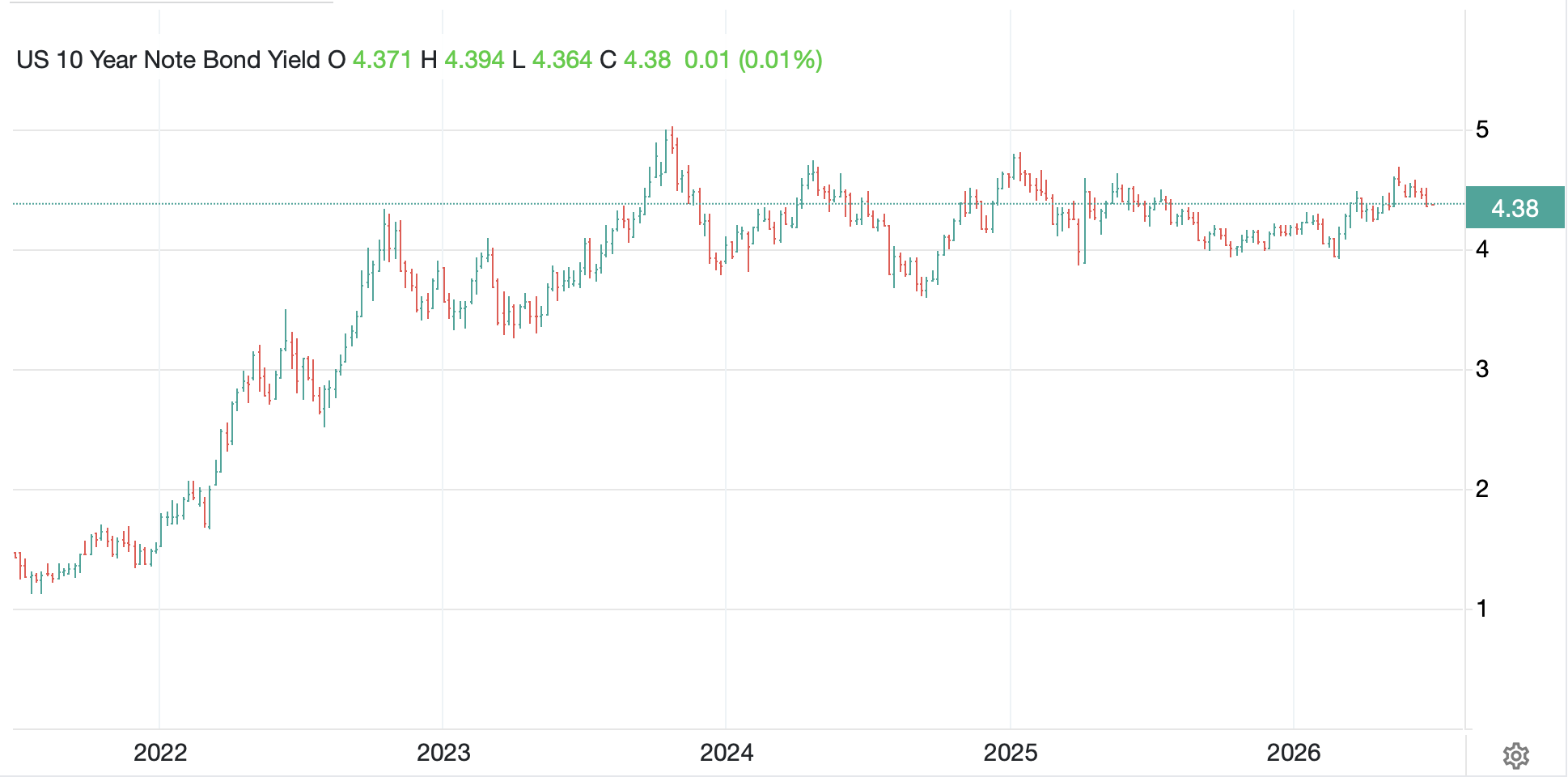
In the bond market, Treasury yields continue to drift lower, down 3bps this morning and currently at 4.36%, just above that first key support level.  European sovereigns are also rallying with yields down by between 3bps and 5bps across the board.  The outlier here was Japan overnight, where yields rebounded 3bps after what had been a very quick decline given all the discussion about how the BOJ was set to tighten policy.  For now, there is a great deal of enthusiasm over the soft-landing scenario which I believe is a key driver of the bond market rally.  However, the future here will be highly dependent on the Fed’s actions going forward, and I, for one, continue to believe in the higher for longer story.  Unless growth really drops quickly, or unemployment skyrockets, I don’t see a rate cut anytime soon.

In the commodity markets, oil (-2.0%) seems to be falling on the back of the de-escalation in the Middle East, as well as word that Russia is exporting diesel fuel again.  Gold prices captured the $2000/oz level yesterday and are still hanging on, although copper and aluminum are both under pressure this morning, down about -0.5% each.  Broadly, I would say that the commodity sector has been the one area most actively considering a recession is coming with the overnight price action merely a reflection of this.

Finally, the dollar is a touch firmer this morning, halting its recent declines with both USDJPY and USDCNY higher by about 0.2% this morning.  Given the lack of news, this seems much more like a trading event, with traders closing positions ahead of the long holiday weekend.  I maintain my view that if the Fed is actually done and beginning to lean toward easier monetary policy, the dollar will decline a bit further.  But that is a big if in my mind.  It is very difficult to get excited about the prospects of most other currencies given the inherent weakness in economies around the world.  However, a change in Fed policy will definitely have an impact on the buck.

And that’s really all for today.  There will be no poetry until Monday as I, too, will be taking a break from the action.

Good luck and have a wonderful holiday

Adf