Blow-By-Blow

It wasn’t all that long ago
That if people wanted to know
The news, they would turn
To TV to learn
The latest events blow-by-blow

But now TV news when it airs
Has reached the point nobody cares
‘Cause it’s been on X
Without any checks
For networks, the stuff of nightmares

Which brings us to info this morning
That claims, Tehran, talks have been scorning
But also, we hear
A framework is near
For risk takers, this is a warning

I wonder if all of you face the same situation I do, which is answering the question, what is real?  The fog of war is truly a descriptive term for the inconsistencies in the information that comes out of the Trump administration, the mainstream media that covers it with their own spin, the Iranians (who seem to be fighting aggressively among themselves) and then looking at prices in financial markets as well as economic data, much of which seems to be inconsistent.  How exactly are we to gain an understanding of the big picture, let alone the intricacies of particular markets, given the overwhelming volume of noise we absorb every day.

The below table shows the prices of key markets when I last wrote compared to this morning:

MarketApril 14April 20
Oil$97.35$88.50
Gold$4778$4796
10-year yields4.295%4.267%
S&P 500 futures69067090
DXY98.0498.24

Source: tradingeconomics.com

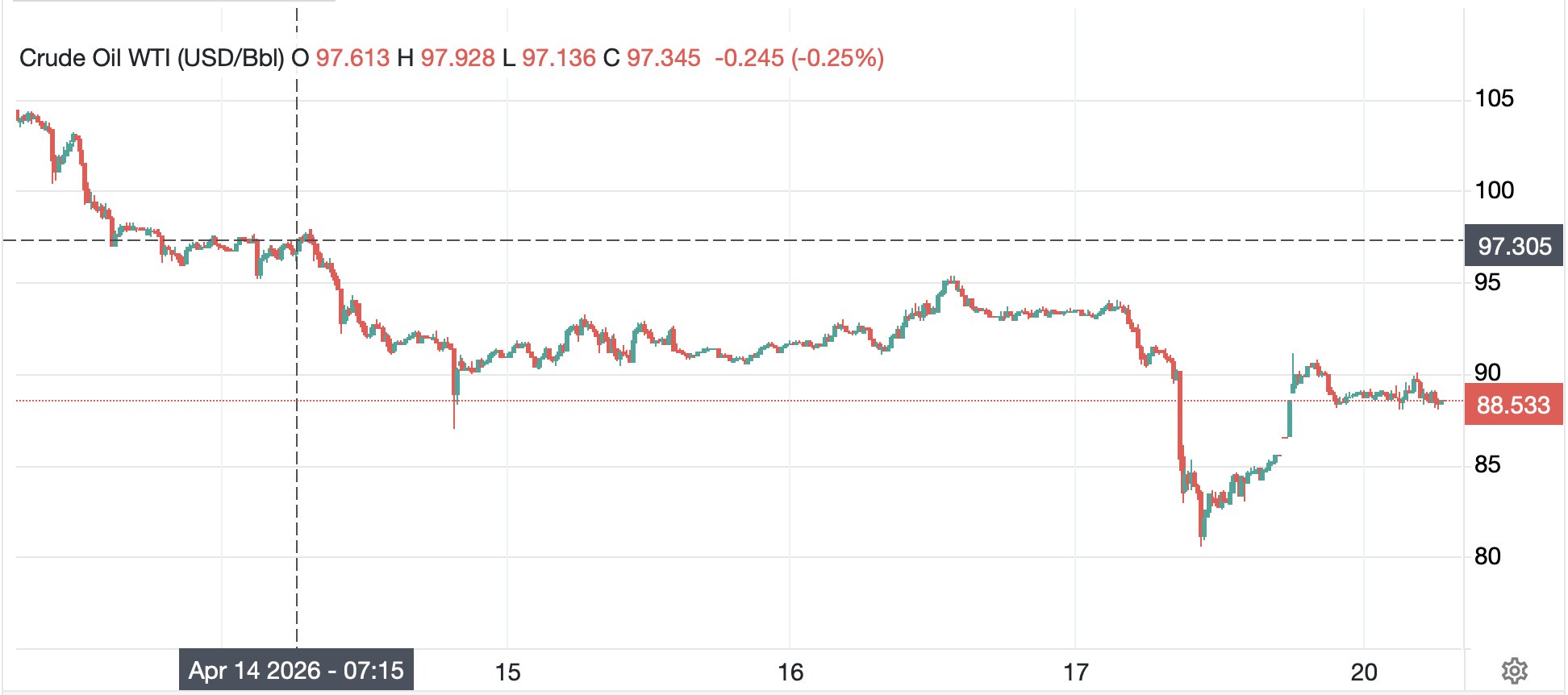
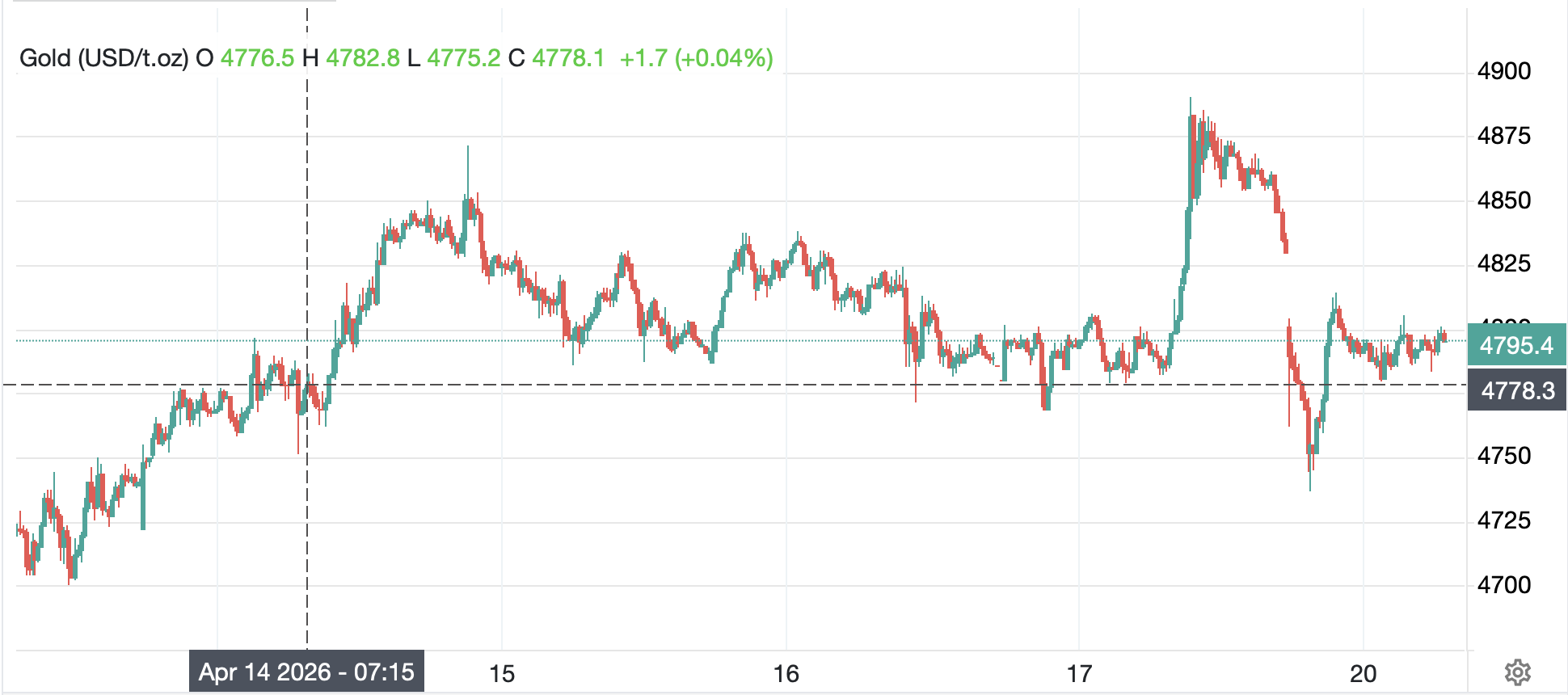
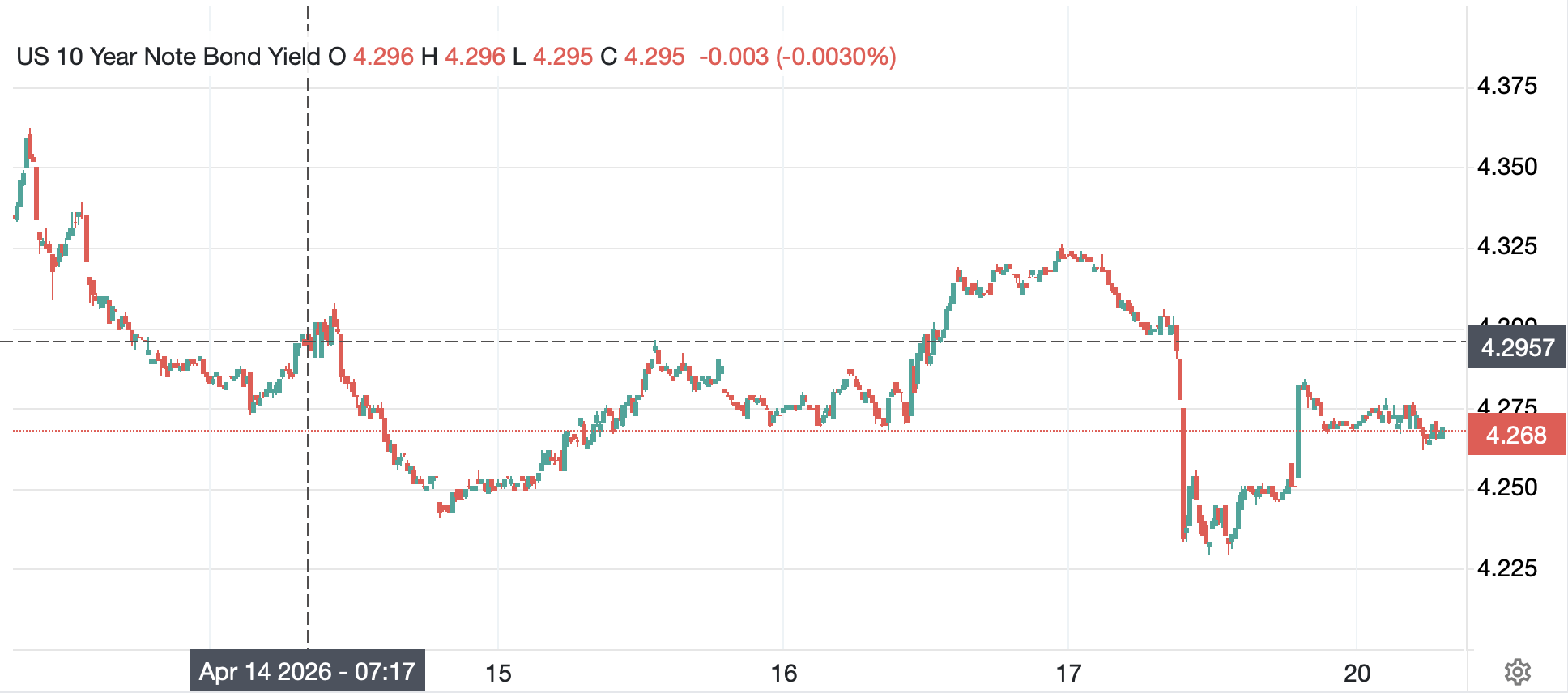
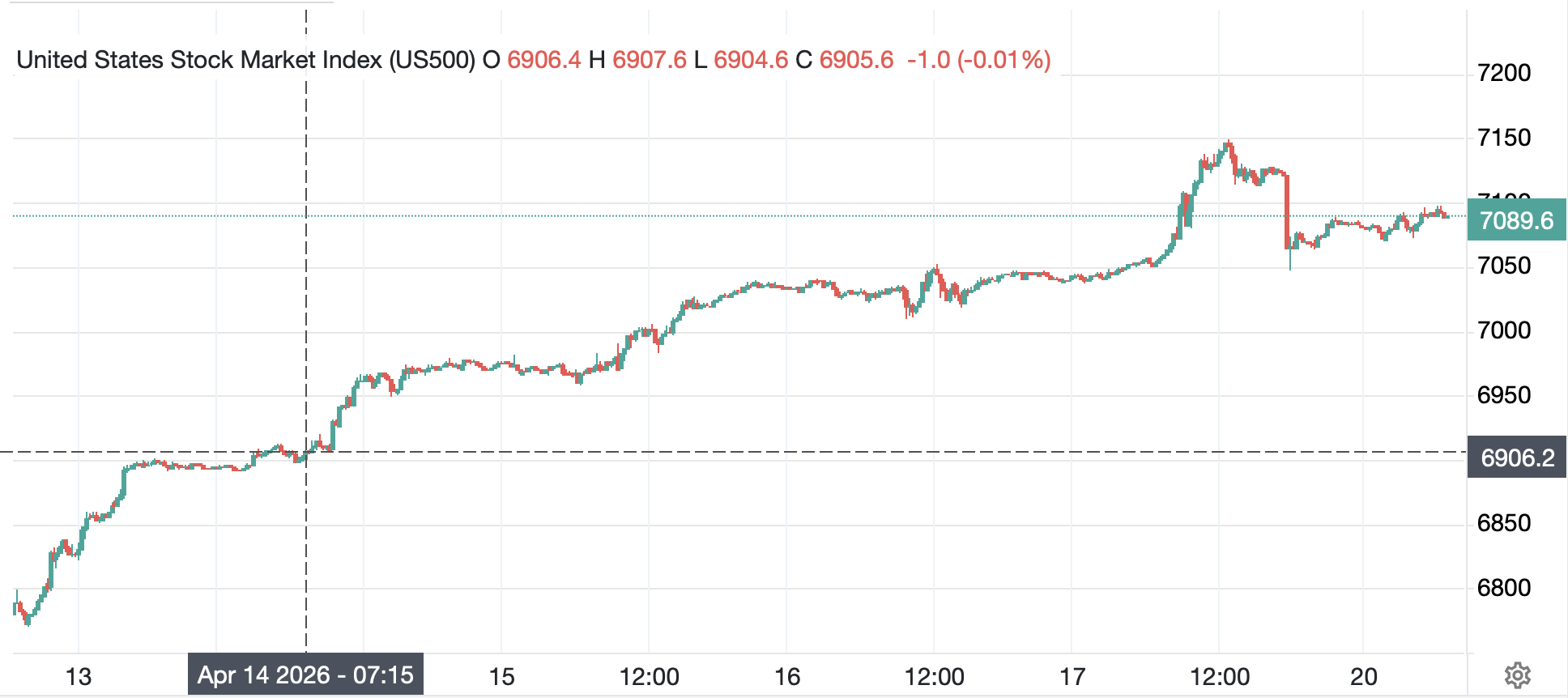
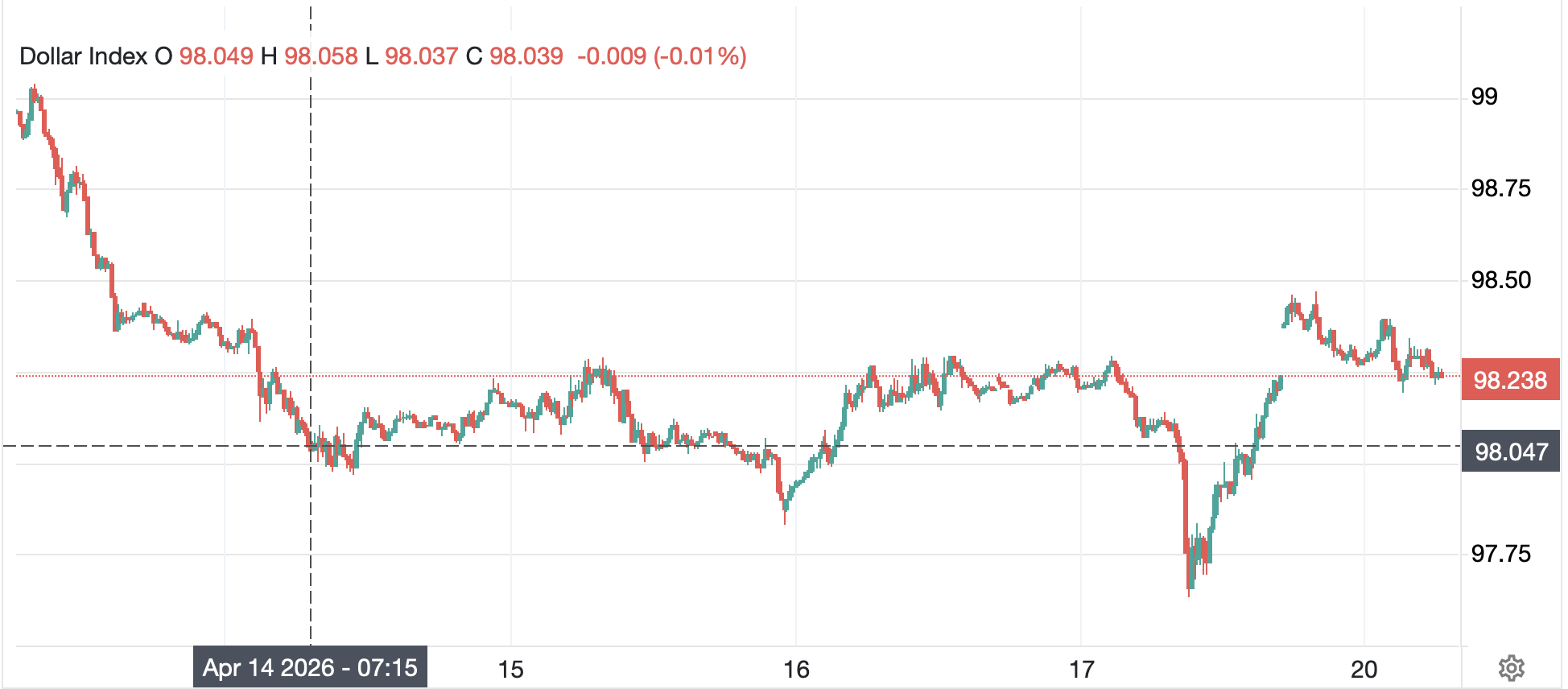
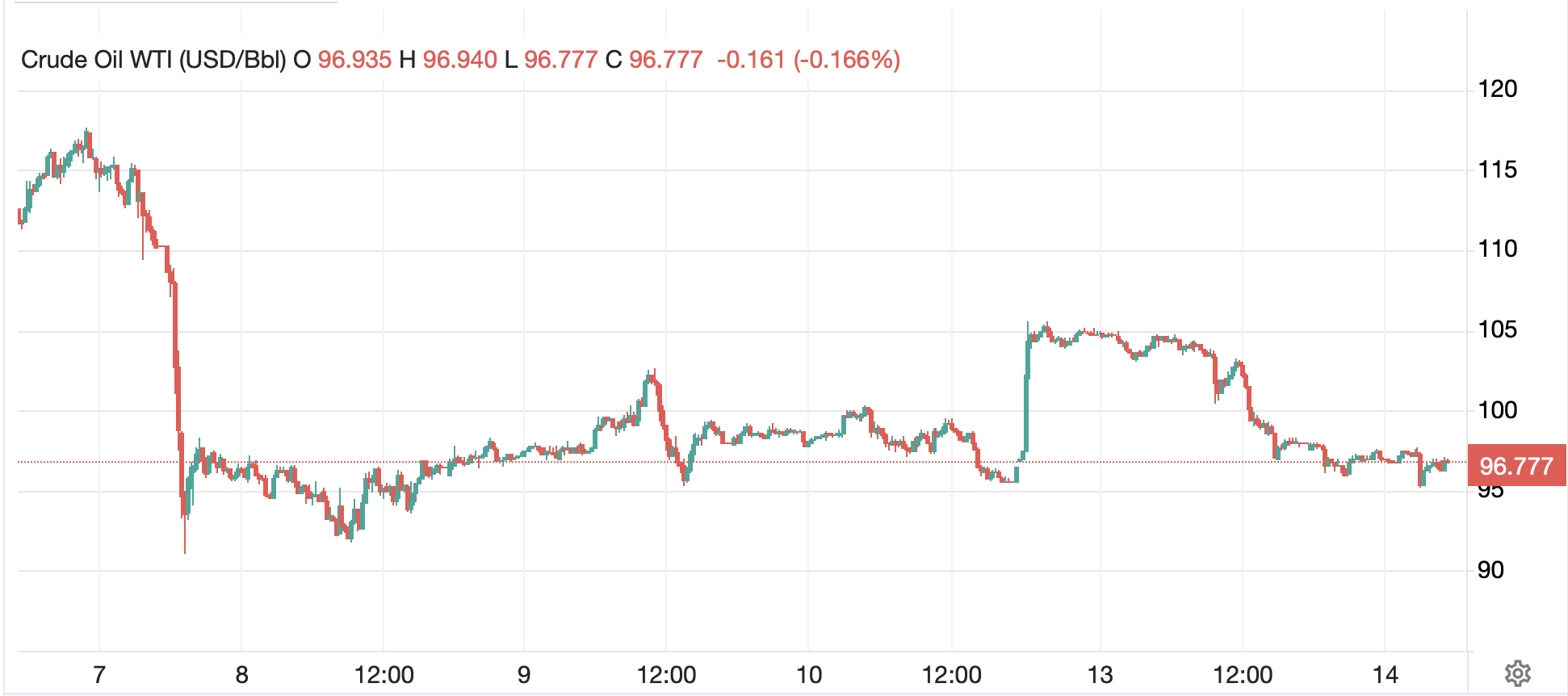
I know this is an incomplete listing of things, but I just wanted to touch on the basics.  A quick look shows that oil has had, by far, the largest move, nearly a 10% decline, but after that, very little net activity.  Sure, there has been some volatility in the interim as you can see in the following charts from tradingeconomics.com, but markets always have a certain amount of inherent volatility, it is the nature of the beast.

In the same order as above:

Oil 
Gold
10-year Treasury
S&P 500 Futures
DXY
Of course, much of the movement came after Friday’s announcement by President Trump that the Strait of Hormuz was now open, and the overnight reversals have been a response to the Iranians contradicting that statement and firing on several ships.

It appears that as of now, the Strait is not yet open for free navigation, although apparently there are going to be a second round of talks tomorrow in Islamabad.  An interesting story I read indicated that the internal divisions between the IRGC and the secular government in Iran are huge, which is one reason we seem to be hearing multiple things regarding negotiations and goals.  We also must remember that all sides in a conflict like this issue propaganda for their own populations that may have nothing to do with their stance in the negotiating room.

The net of all this is, reading about things, no matter how well-read you are, doesn’t really capture the reality on the ground in my view.  However, someone else made the point that focusing on the actions, not the words, may be a better tell of the situation, and the action of note is that US troops continue to move into the region, not out of it.  I fear there is much more to come here, and the general lack of market volatility is not a sign of calm, but a sign of ignorance on the part of market participants, i.e. nobody really knows what to do!

With that in mind, let’s see how markets have behaved in the wake of the Iranian rejection of the statement the Strait was open.  Starting in equities, apparently, Asian investors didn’t care as we have seen gains in Tokyo (+0.6%), China (+0.6%), HK (+0.7%) and Korea (+0.4%).  In fact, if I look across the entire region, the only notable decline was in Indonesia, and that was only -0.5%.  Otherwise, generally speaking, equity investors in the region are sanguine about the current situation.  This seems a bit odd to me as Asia is the region that is most negatively impacted by everything going on, but then, I’m just an FX guy.

In Europe, though, things are not as happy with all major indices lower this morning.  Germany (-1.4%), Italy (-1.4%), Spain (-1.4%) and France (-1.2%) have set the tone while the UK (-0.8%) is not quite as negatively impacted.  I continue to read a great deal about the European rearmament efforts, but net, it doesn’t appear investors are flocking to the continent right now.  Uncertainty as to energy availability remains a key impediment, at least in my mind, with respect to a strong investment thesis here.  As to US futures, despite the Iranian denial regarding the Strait, the major indices are only lower by -0.6% across the board.

In the bond market, Treasury yields have edged higher by 2bps since Friday, but as you saw above, remain essentially unchanged from last week.  European sovereign yields are higher by between 3bps (Germany) and 6bps (Italy) as concerns continue apace regarding the future for European inflation as well as economic activity.  JGB yields slipped -2bps overnight amid news that the BOJ is reportedly not considering a rate hike at their meeting next week.  In addition, I must note a strong earthquake, measuring 7.4 on the Richter Scale, occurred a few hours ago, so we shall watch closely for how things evolve.  Recall it was Fukushima that set off the European madness to end their nuclear power efforts.  Hopefully, regardless of the outcome, nothing so incredibly stupid will come of this.

In the commodity space, oil (+5.9%) is obviously higher, but not even back to $90/bbl.  There are many conflicting narratives regarding the availability of oil, how much is in storage, how much inventory is around and whether we are going to see production increases outside the Middle East.  No market is more directly impacted by the Strait than oil, and since we have no idea how that will evolve, it is hard to see into the near future.  Ultimately, I remain of the view that there is loads of oil around and over time, it will come to market keeping prices in check.  But it is going to be a bumpy ride.  Turning to metals, as has been the case lately, oil and gold (-0.9%) have maintained their negative correlation with the barbarous relic taking silver (-1.7%) and copper (-1.5%) along for the ride.

Finally, the dollar remains an afterthought to traders right now, barely moving against most of its counterparts as the opportunities elsewhere for outsized gains remain far larger.  Looking across the major currencies, they are all within 0.2% of Friday’s close, although the direction is uniform with a modest dollar rally.  

On the data front this week, perhaps the most interesting thing will be Fed Chair nominee, Kevin Warsh, and his senate confirmation hearings.  But here is what the data looks like.

TuesdayRetail Sales1.4%
 -ex autos1.4%
 Control group (ex-gasoline)0.2%
 Business Inventories0.3%
ThursdayInitial Claims212K
 Continuing Claims1820K
 Flash Manufacturing PMI52.5
 Flash Services PMI50.0
FridayMichigan Sentiment47.6

Source: tradingeconomics.com

Much has been made lately about the dichotomy between the Michigan sentiment survey printing its lowest level in the 84-year history of the index while the S&P 500 is making new, all-time highs.  As I mentioned at the top, what should we believe?

If pressed, my own view is that the US is going to increase the military activity, but that oil prices are already anticipating that action.  Much will depend on the success of that situation which remains unknown although I remain positive regarding our military’s capabilities to complete their mission.  That will define risk appetite, which I anticipate would be reduced initially, although any signs of success would see that reverse.  But again, I’m just an FX guy, so take it for what it’s worth.

Good luck

Adf

PS, this is where I have been the past several days which prevented (?) me from writing, if you care.

Completely Reversed

The market response was, at first
That things moved from bad to now worst
But by session’s end
The short-term downtrend
Was over, completely reversed

The narrative now making rounds
Is by starting naval lockdowns
Trump’s turned Iran’s table
And thus, may be able
To finish the goal he expounds

The irony, to me, of the entire Iranian situation is that, generically, the US shouldn’t need to care about Iran anymore.  Back in 1979, when the US imported a majority of its oil, everything in the Middle East was critical for the economy as a whole, and therefore politically.  But that is no longer the case, and if the Iranian leadership had simply wanted to repress its own people and espouse its Muslim fundamentalism, without sponsoring terrorism around the world, Iran would have faded from the view of the US establishment.  While there would have undoubtedly been some who would say it was a terrible humanitarian crisis, and the US should do something about it, unfortunately those situations are rampant around the world.  

Don’t get me wrong, I think the Iranian regime has been one of the cruelest and most repressive on the planet, I’m simply highlighting that to the US, it was an oil source throughout history.  Now that it’s no longer a key oil source for the US, it has no political constituency in the US.  And yet, here we are with 3 aircraft carrier groups in the vicinity doing incalculable damage to the nation because that leadership was not satisfied to simply repress its own people but felt it was their mission to destroy other nations, notably Israel and the US.  That’s all I will say about the rationale for the current events.

But speaking of current events, it seems that President Trump’s decision to blockade the Strait of Hormuz has shown early signs of being quite effective.  Two stories have made that point, first that the Chinese have suddenly made their first comments about the war, explaining that free navigation through the Strait is an imperative and second, that the Iranians appear to be quite interested in a second set of discussions after the ones last weekend fell apart.

The interesting thing about markets is their ability to anticipate the way things work out, as despite the early panic over the weekend regarding the talks failing and the blockade being enforced, price action yesterday was entirely positive, reversing all the Sunday night fears.  Once again, the oil chart for the past week shows the continued ups and downs, with the latest leg back down.  This morning, WTI is lower by a further -2.3% and back well below $100/bbl.

Source: tradingeconomics.com

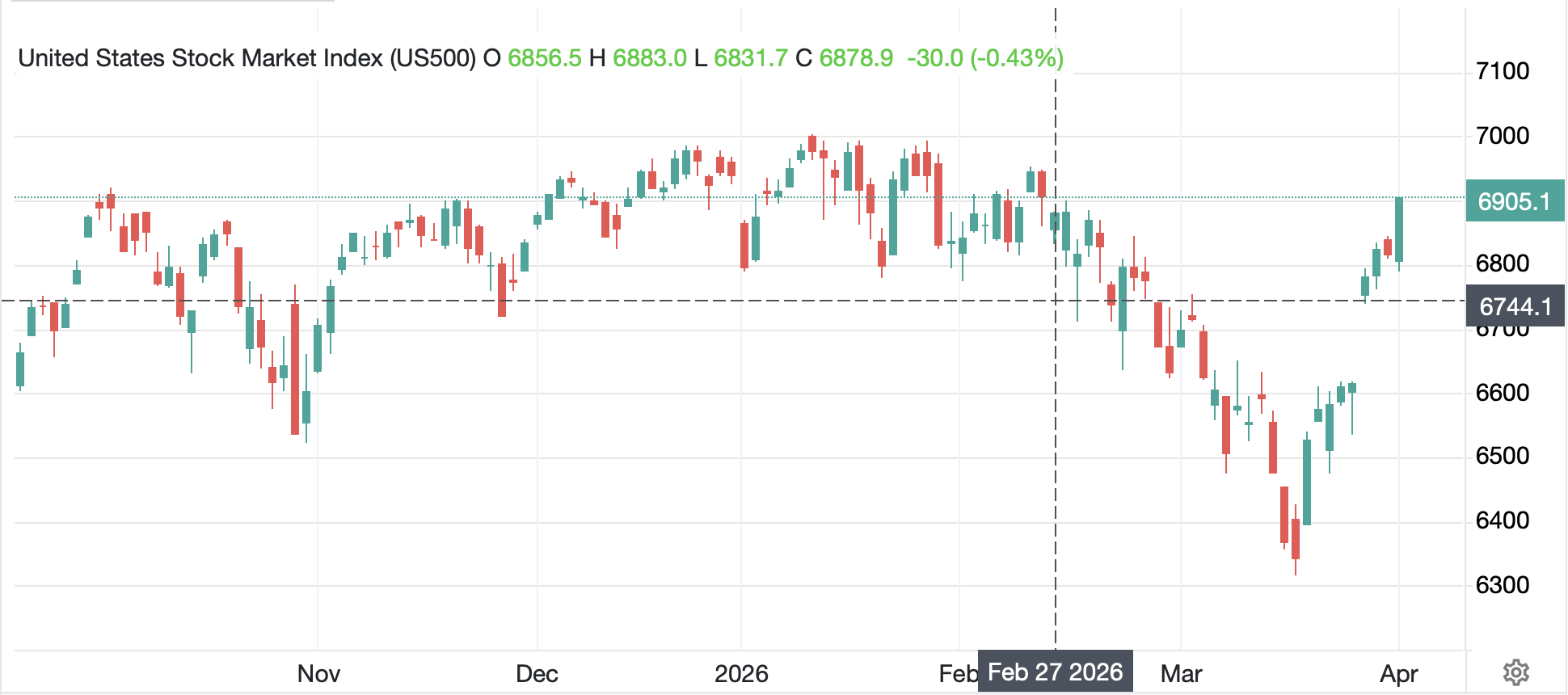
In truth, we cannot be surprised at either of these stories as the Iranian leadership knows it cannot live without its oil exports, nor the Chinese without its access to that oil.  While it is still unclear how things will evolve from here, a successful conclusion of the war, with Iran giving up its enriched uranium and pledging to stop trying to go nuclear is seemingly closer to fruition than before all this started.  Certainly, the market believes that is the case given the S&P 500 has traded back above its pre-war level and is now within 100 points of its all-time high just above 7000.

Source: tradingeconomics.com

And here’s the thing about the oil market.  As we know, every shortage is followed by a glut.  Every non-Gulf producer has been going full bore since this began and oil prices spiked, and this was alongside the massive releases from strategic petroleum reserves around the world.  If you add up the amount of oil that is sitting in tankers in the Persian Gulf, along with the amount that is in storage there, and the amount of both Russian and Iranian oil that had been in transit and unsanctioned, the numbers are staggeringly high.  The math I saw from Alyosha (Market Vibes) is somewhere around 600 million barrels are going to come flooding into the market in fairly short order once the Strait is reopened, and it will be reopened, of that I am certain.  At the same time, the war has reduced revenues of the gulf nations for the past 6 weeks, and they will want to be pumping as much as possible, at any price (remember, in Saudi Arabia, the cost per barrel to pump oil is estimated to be between $3 and $6, so $30/bbl oil is still profitable.). While this is not an investment discussion nor advice of any type, I have exited all my oil focused positions at this point.

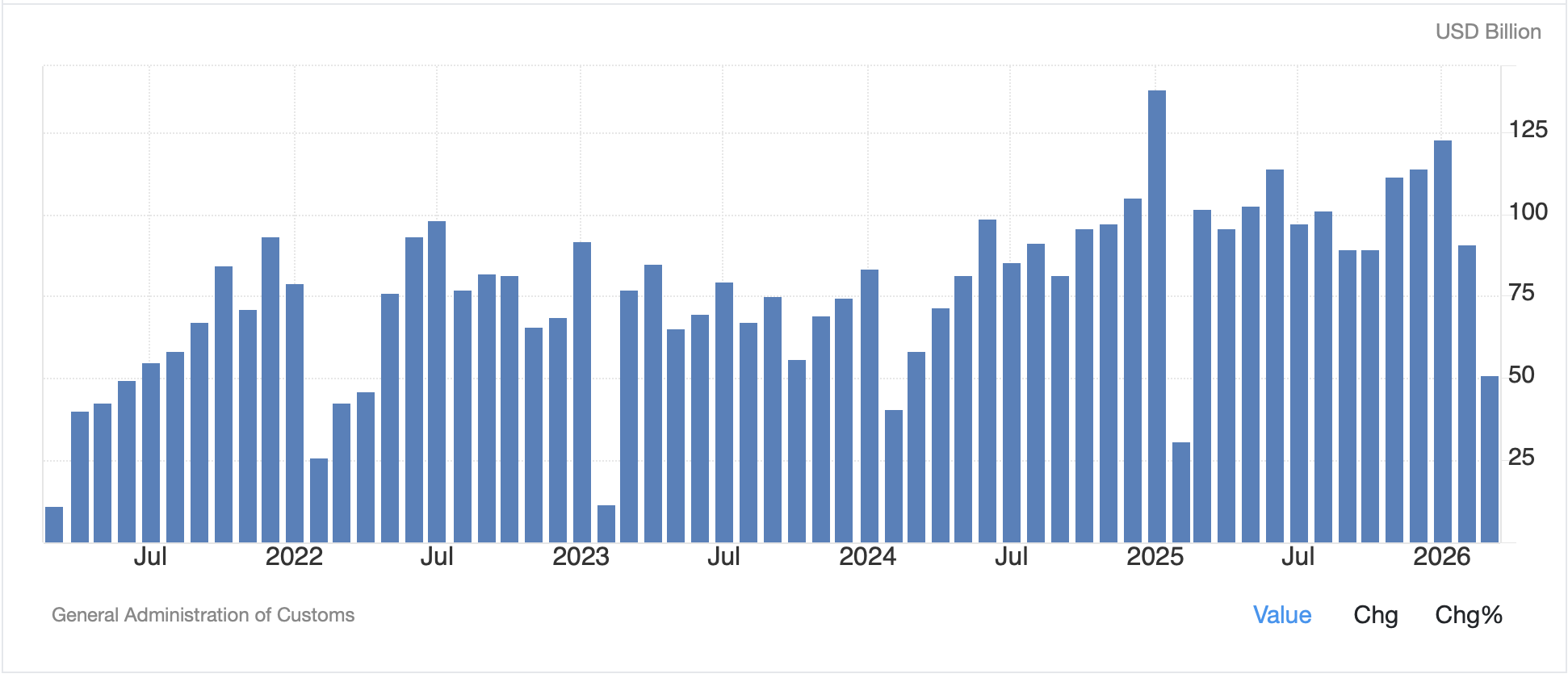
There is another related story here as well, this about the Chinese economy.  Last night they released their trade data, and it was substantially worse than expected.  As you can see from the chart below, the surplus barely topped $50 billion, compared to a consensus estimate of $112 billion with not only a massive increase in imports, 27.8% and likely highly energy related, but a significant decline in exports, just a 2.5% rise there.  Again, if you wonder why suddenly President Xi is interested in reopening the Strait of Hormuz, the fact that it seems to be having a direct impact on the Chinese economy is one of the reasons.

Source: tradingeconomics.com

(A note about the data above shows that each February, the export numbers decline as a result of the Chinese New Year celebrations but always rebound strongly in March.  And this was March data released that fell so sharply, a far more concerning outcome for Xi.)

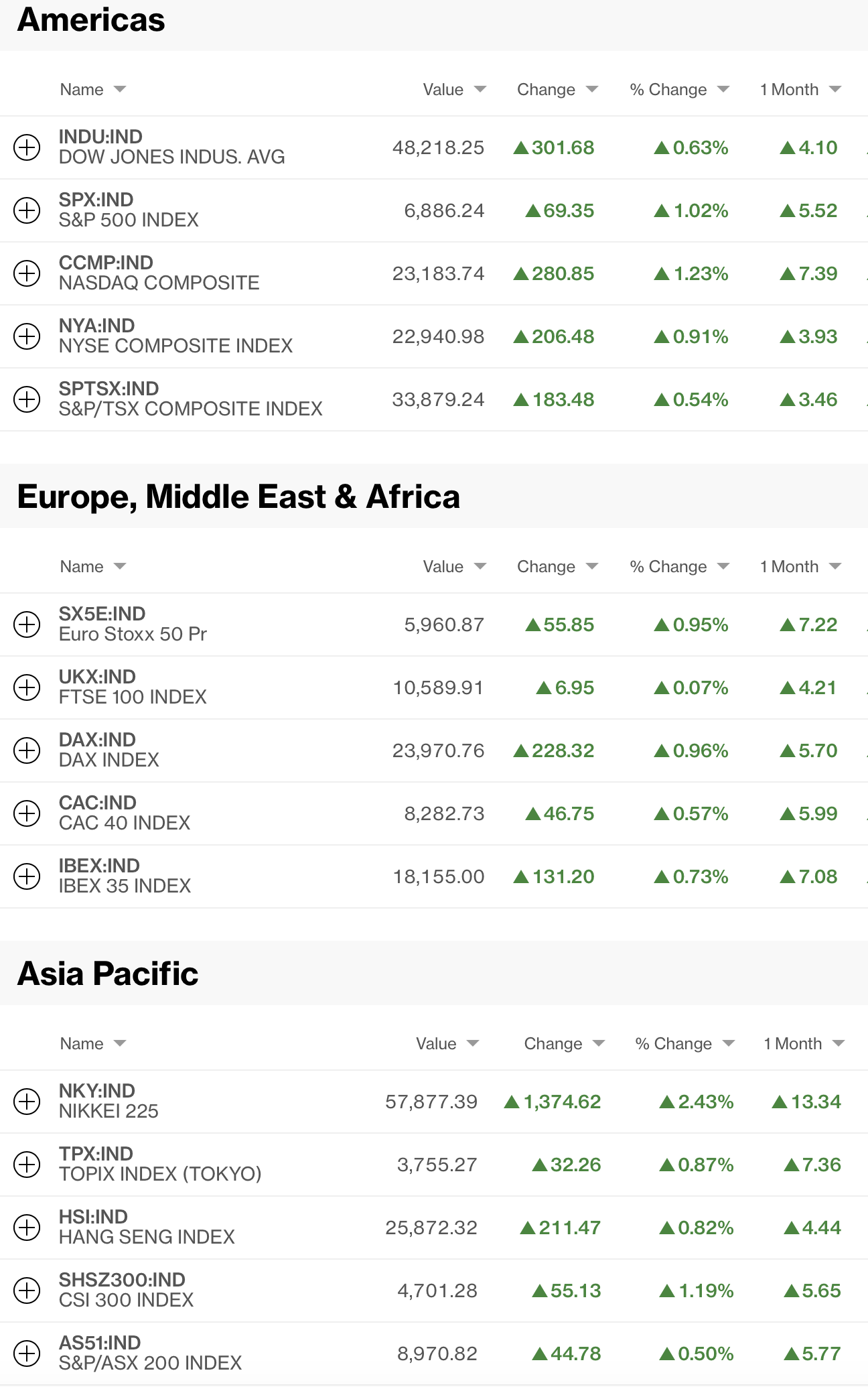
So, with all this in mind, how have other markets fared?  Well, equity investors around the world are over the moon as you can see from the Bloomberg screen shot below.  ‘Nuff said.

Bond yields have also fallen across the board as the decline in the price of oil, plus the idea that the war may end sooner than some had expected, thus reducing the inflationary pressures greatly, has bond investors grabbing for yield.  Yesterday saw Treasury yields slip -2.5bps though this morning they are unchanged.  In Europe, sovereign yields are all lower by between -3bps and -6bps while JGB yields fell -4bps overnight with even larger declines in the rest of Asia.  Fear is clearly not a factor this morning.

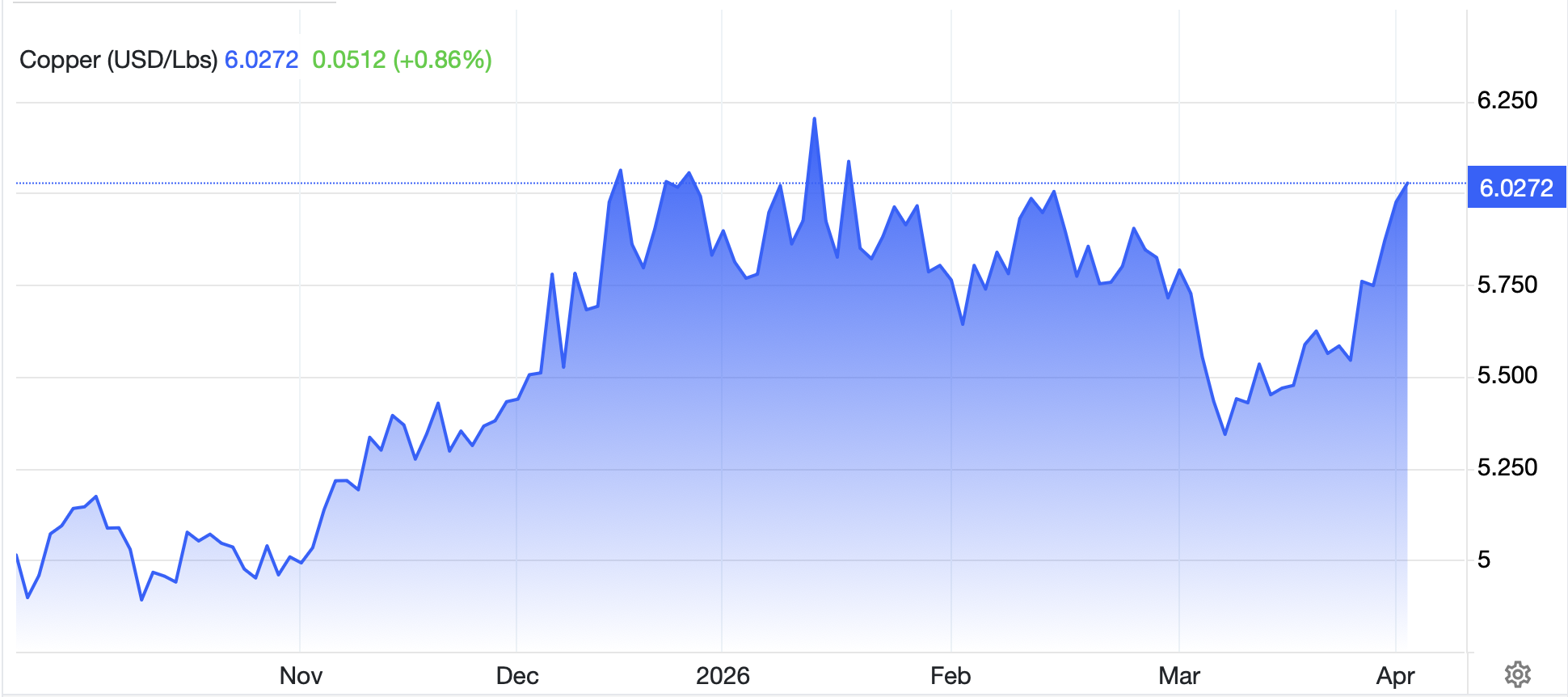
It should not be surprising that precious metals prices have rallied as well, between lower yields and a growing belief that forced sales have stopped.  So, gold (+0.5%), silver (+2.5%) and platinum (+0.5%) are all having a good day.  But so are the base metals with copper (+0.8%) not only recouping its war-related losses, but actually back within spitting distance of its all-time highs set in January above $6.00/lb.

Source: tradingeconomics.com

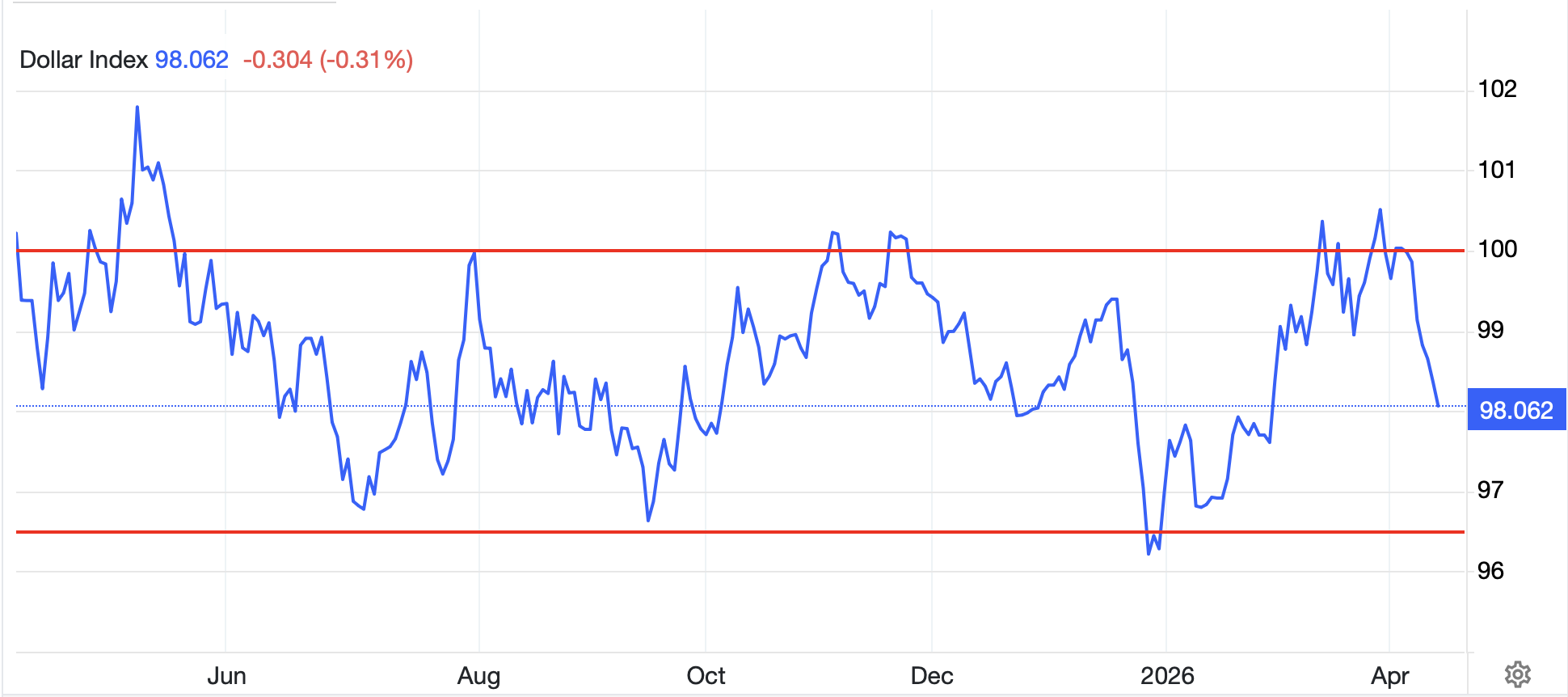
Finally, the dollar is giving back more of its war-related gains and lower across the board this morning, with G10 currencies gaining on the order of 0.3% to 0.4% across the board, while EMG currencies show similar gains with one major outlier, INR (+1.4%) easily explained by the fact that India has been the hardest hit economy from the war, and so the prospects it is ending have had a very beneficial impact on the rupee.  But to be clear regarding the dollar, all we have seen is that it has moved back to the middle of its yearlong trading range between 96.50 and 100.00 based on the DXY as per the below.

Source: tradingeconomics.com

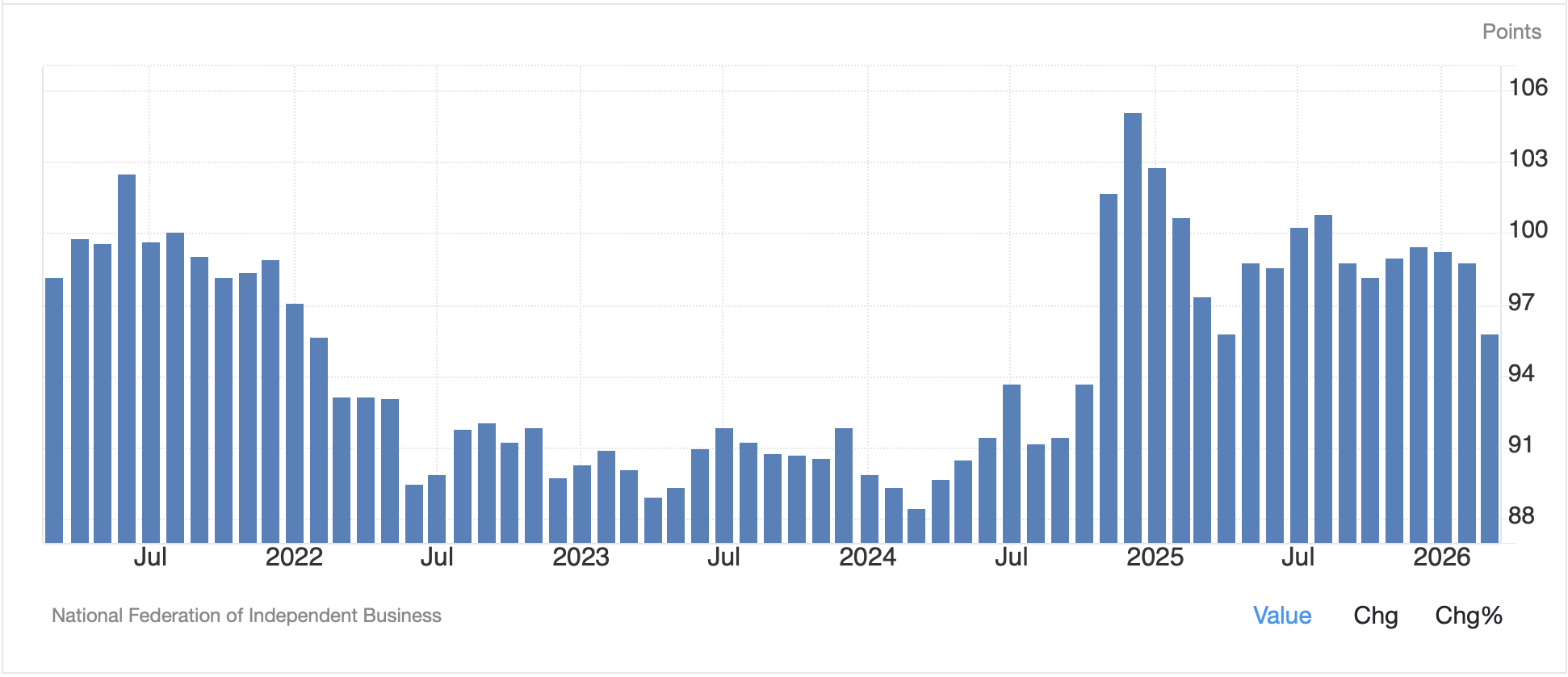
On the data front, yesterday’s Existing Home Sales numbers were weaker than forecast and many pundits have been claiming that as a signal of much greater economic weakness.  We shall see.  This morning we have already seen the NFIB Business Optimism Index released at a weaker than forecast 95.8, not a great sign, but as you can see below, still well above levels of a few years ago.

Source: tradingeconomics.com

We also get PPI (exp 1.1% M/M, 4.6% Y/Y headline, 0.5% M/M, 4.1% Y/Y core) and a few more Fed speakers.  With CPI already having been released, PPI loses much of its luster, although it helps economists estimate PCE a bit better.  One cannot be surprised that Governor Miran explained he expected to see inflation back to target by this time next year, but I am not holding my breath for that outcome.

Summing it all up this morning, risk is back baby!!!  If ever you were curious about whether markets anticipate events, today is exhibit A.  I certainly hope the market is correct and we are about to wind down the Iran war but be wary as it ain’t over til it’s over.  If it has ended, look for previous narratives to be resurrected regarding markets, notably the dollar’s demise, but I am not holding my breath over that either.

Good luck

Adf

How Long Can This Stand?

The weekend saw fighting expand
And so, it’s supply, not demand
That’s driving up prices
In this oil crisis
The question, how long can this stand?

As such the G7 has mooted
An idea that, if executed
Could help reduce nerves
By drawing reserves
Thus, price pressures could be diluted

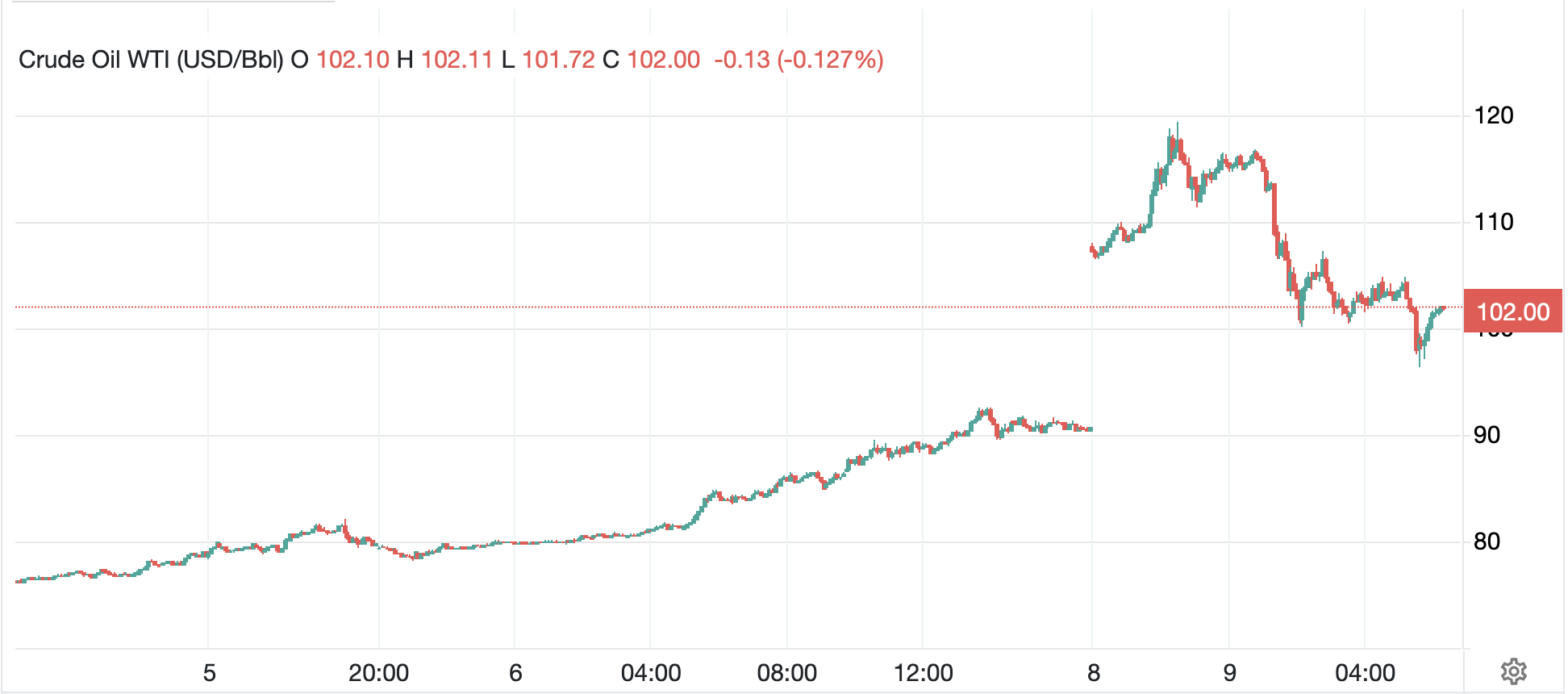
Oil gapped higher last night when futures markets opened as the war in Iran widened its scope.  There were more attacks on refineries in Iran, and there has still been limited transit through the Strait of Hormuz (although I read of a ship that turned off its locator beacon and made it through safely).  As you can see from the chart below, though, the initial panic has subsided somewhat.

Source: tradingeconomics.com

It seems that the key decline came after French President Macron, the current head of the G7, suggested a joint release of oil reserves across the group in an effort to stabilize prices.  It seems to me that while the G7 may have difficulty reaching some decisions, this one is pretty easy, and I expect that we will hear of this joint release shortly.

At the same time, Iran announced that the former Ayatollah’s son, Mojtaba, has been named the new Supreme Leader, and many assume this means they are hunkering down for a long fight. 

I am no military strategist, so take this for what it’s worth, but from what I have gleaned across numerous commentators, the Iranian strategy is to outlast the US and Israeli munitions which many have said are limited.  As well, they believe that by closing the Strait of Hormuz, they can inflict so much economic pain that the US will have to stop the fight.  Funnily enough, I have seen no commentary on the fact that by closing the Strait, Iran has essentially cut off all its own revenues as >90% of its oil sales transit the Strait.  The one thing we know is that the US will not run out of money.

The other thing at which I marvel is the incredibly low number of casualties on both sides of this war.  While there has been significant destruction of physical assets, even the Iranian propaganda has only claimed 1000-1500 dead, and in the US and Israel, the number is 20 total, I believe.

This feels to me like it is going to be pushed as hard as it can for a while longer and then one side is going to completely capitulate.  Whether that is the new Iranian regime crumbling or the US stopping the bombardment, I have no idea.  

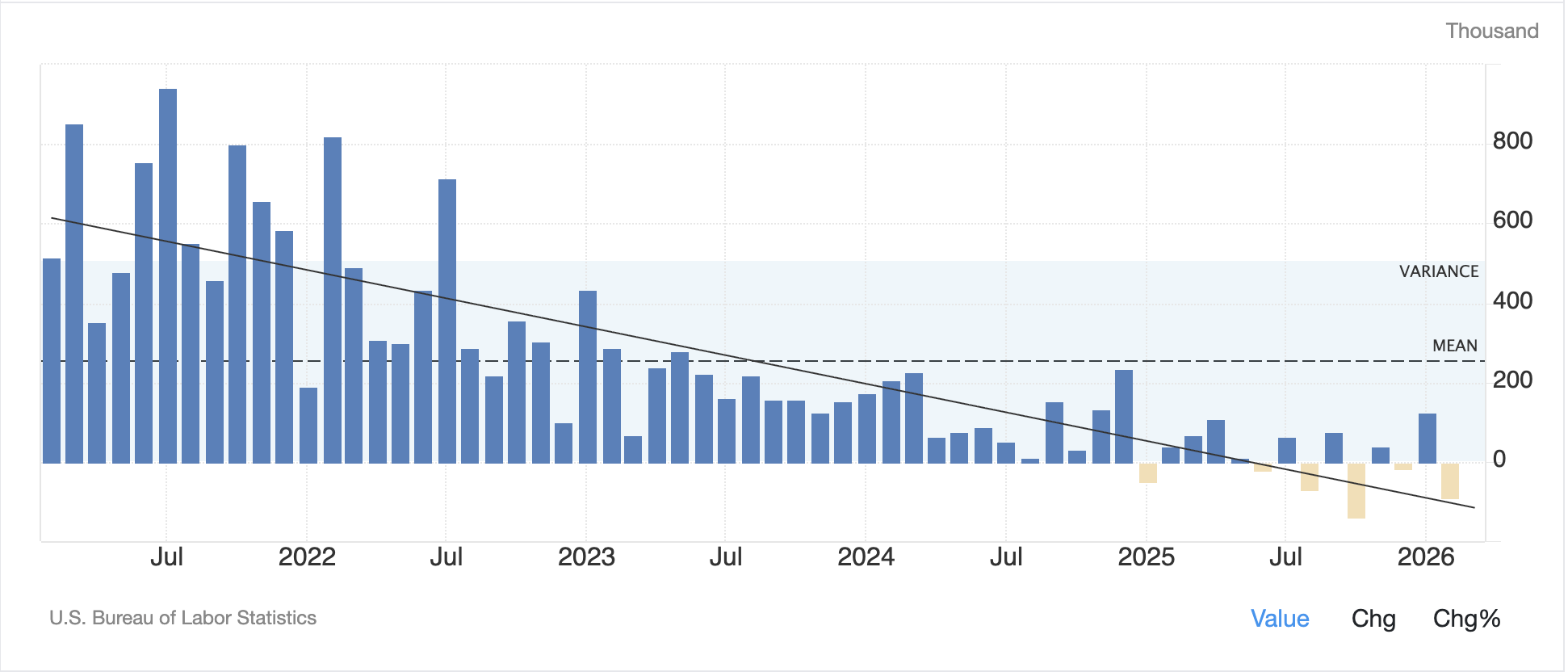
In the meantime, let’s briefly discuss Friday’s payroll report, which was pretty awful, and then see how markets are behaving this morning.  By now, I am sure you have either heard or read about the NFP report which showed a headline loss of -92K, the largely offsetting January’s surprising gains.  As you can see from the chart below, no matter the details of any particular report, the trend over the past five years has been clear.

Source: tradingeconomics.com

If memory serves, the previous job losses shown here are the result of revisions to the original release and it has been more than six years (covid) since the headline number was negative in its own right.  Obviously, this is not the type of outcome the administration wants to see, but it is also important to remember the two significant changes we have seen over the past year: net outmigration along with deportations and a significant reduction in Federal government jobs.  Certainly, the latter is a net benefit in my eyes.  As to the former, it is exactly what President Trump promised in his campaign, so it cannot be a surprise.  Regarding its impact on the economy, I guess we will need to compare per capita outcomes to the total gross numbers to determine if the population is comfortable with the new reality.

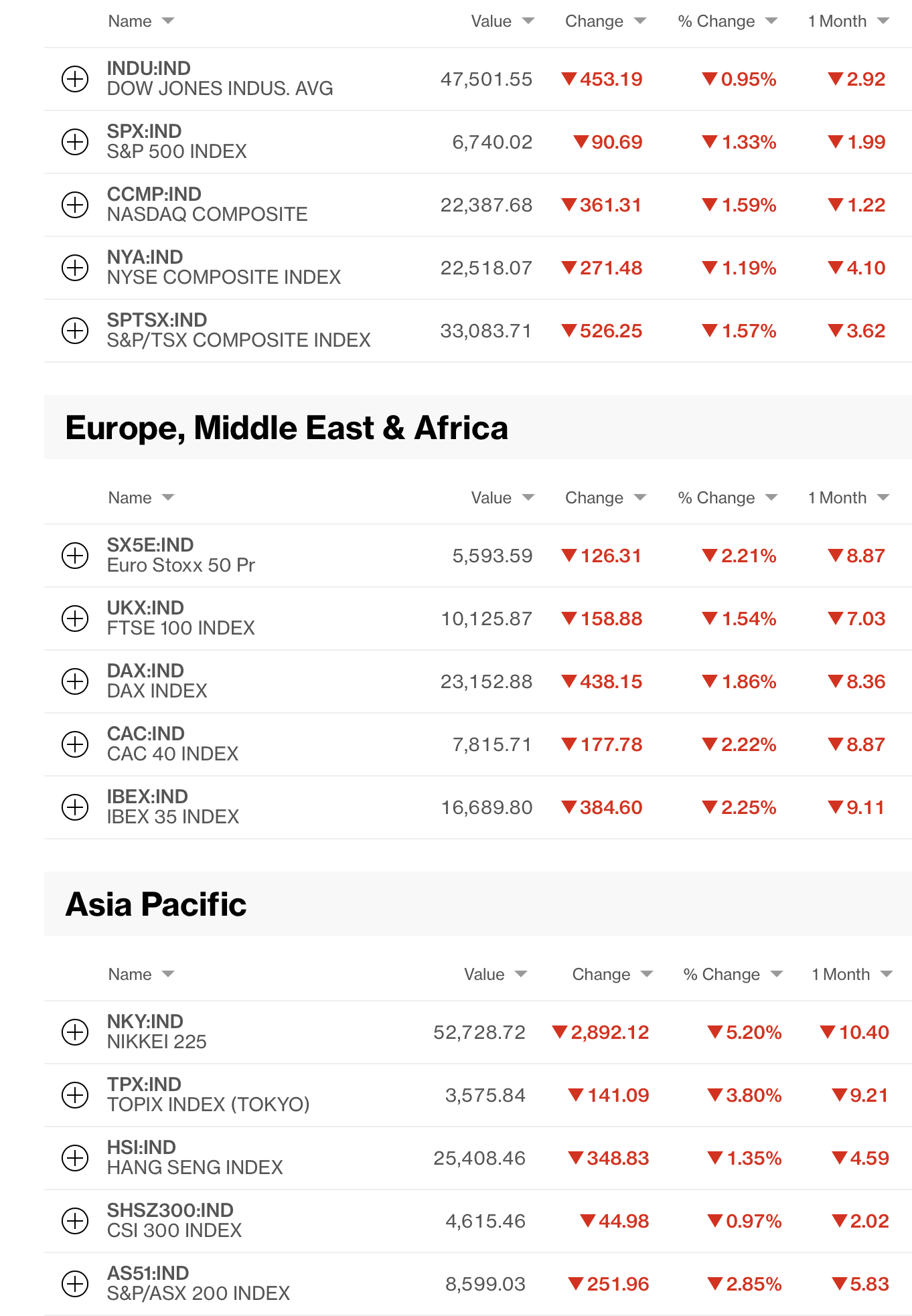
But ultimately, financial markets did not like the data Friday, as we also saw fairly weak Retail Sales data.  Adding weak data to the war situation and rising oil prices led to weak equity markets in the US, and then the escalation over the weekend, saw equity markets around the world under pressure.  Once again, I believe a screen shot of things this morning is self-explanatory.  Those US prices are Friday’s closes.

Source: Bloomberg.com

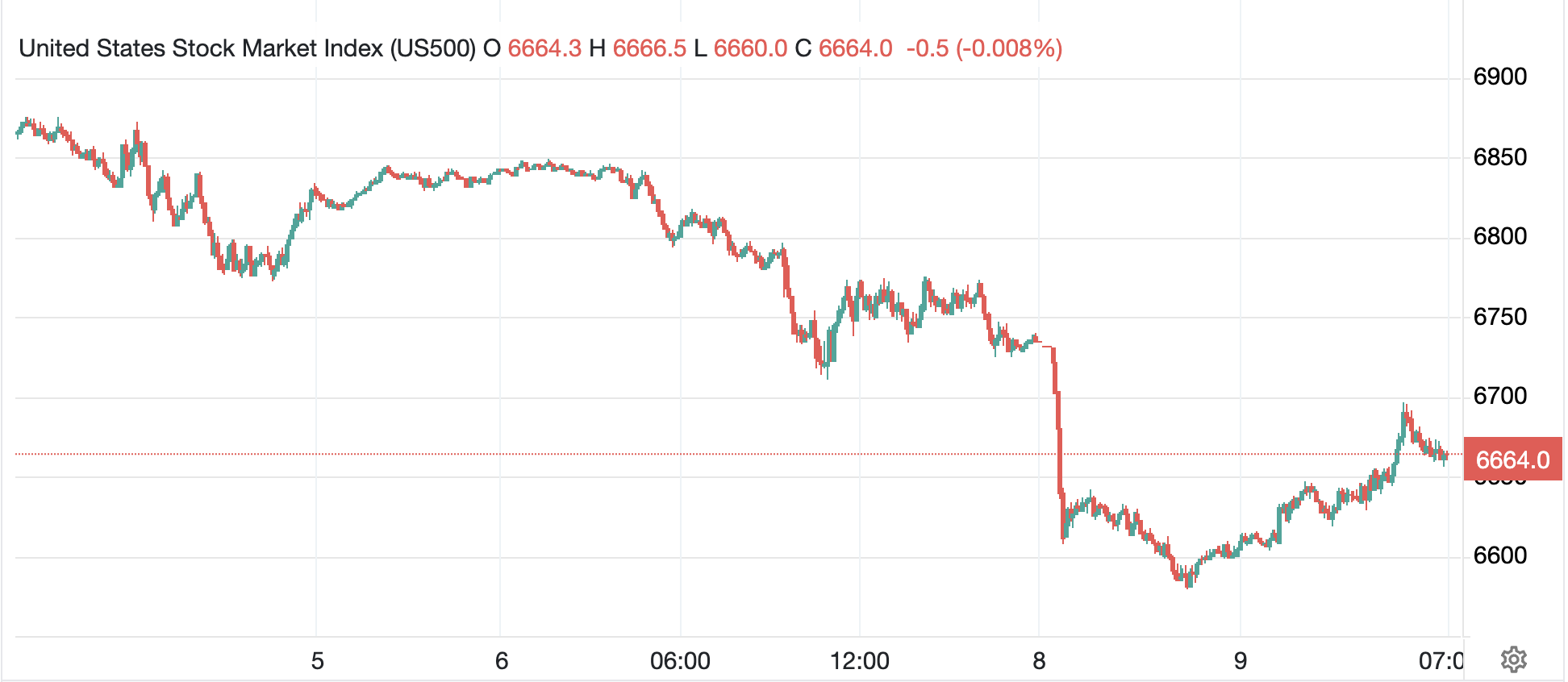
As to US futures, at this hour (7:00), they are all lower by -1.25% or so, but as you can see from the chart below of the S&P 500 futures, they are well off the worst levels of the evening, essentially showing the same response to the G7 story as oil.

Source: tradingeconomics.com

While those Asian markets showed just Japan, China and Australia, the smaller regional exchanges had a very rough time, with declines between -2.0% (India) and -6.0% (Korea) and everywhere in between.

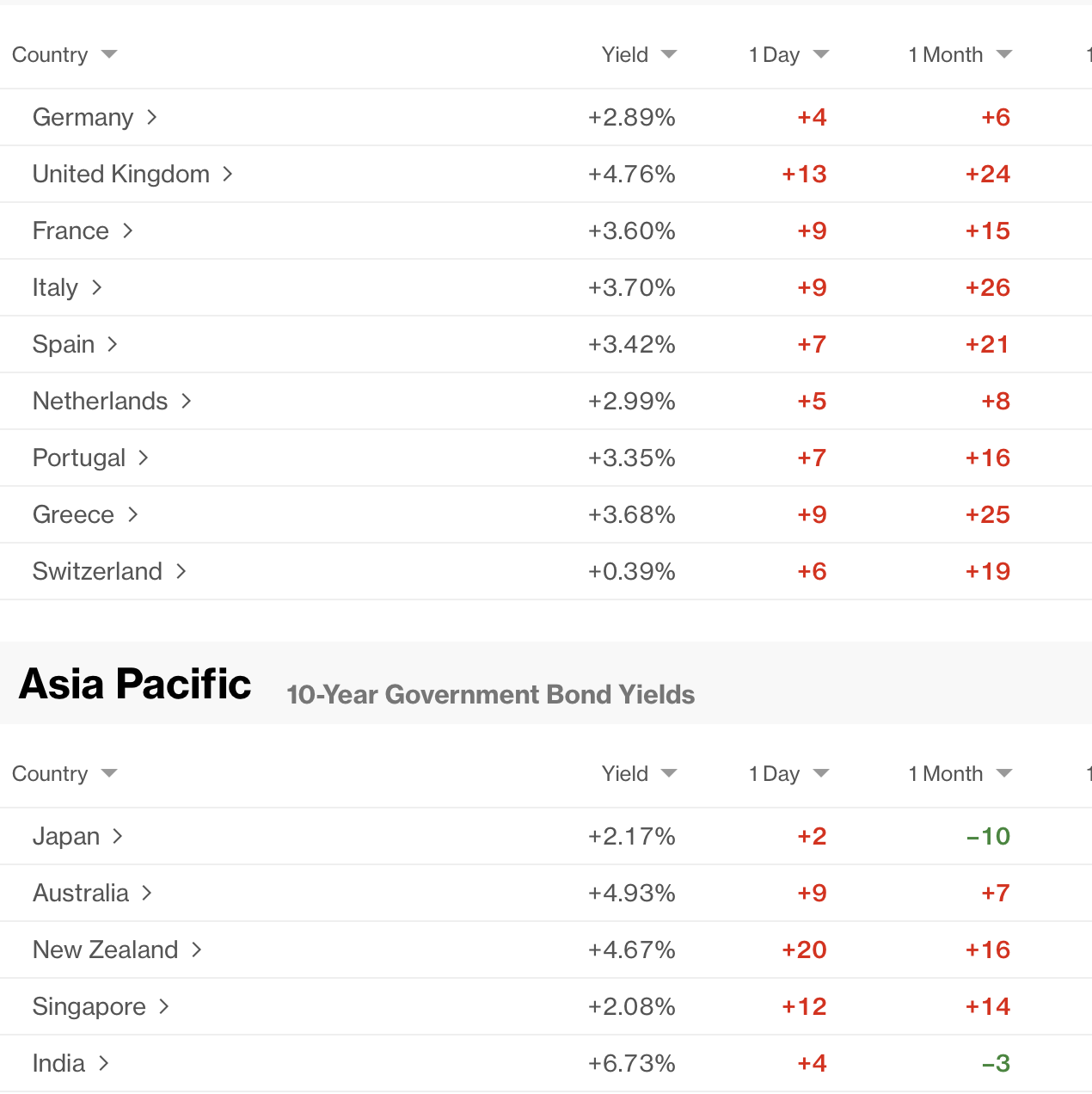
In the bond market, the oil price move has inflation back on everybody’s mind and that can be seen as yields around the world are higher across the board.  While Treasury yields are higher by 4bps this morning, you can see much worse outcomes elsewhere in the world in the Bloomberg screenshot below:

I think this is directly related to Natural Gas prices as while they are higher in the US this morning, by 5.75%, that is nothing compared to the gains in Europe (+17.5%) and the UK (+16.75%), which has simply widened the gap between US and European prices further.  In addition, the US remains an exporter of LNG, so there will be no supply questions at all, while Europe, with the Strait of Hormuz shut down and Qatar offline, has real problems sourcing gas, especially because they are trying to end supplies from Russia.  Good thing they shut down their nuclear plants as well, that will certainly help their energy situation!

Meanwhile, the metals markets are under some pressure this morning (Au -1.25%, Ag -0.95%, Cu -0.7%), with the former continuing to underperform in a risk-off scenario as I believe that margin calls are resulting in sales of the one thing that investors had with gains.  Copper, though, is probably starting to feel some strain regarding future economic activity as if oil prices do remain at these levels, global economic growth is going to be sharply impacted.  We will need to watch this carefully.

Finally, the dollar remains king.  CAD (+0.2%) is the only currency that is showing any support and that is, naturally, because they are a major oil exporter.  Interestingly, NOK (-0.7%) is under pressure this morning despite oil’s massive jump.  As to the rest of the G10, EUR (-0.5%) and GBP (-0.4%) are suffering as are JPY (-0.35%) and CHF (-0.3%) the erstwhile havens.  I imagine both of those are suffering given their entire reliance on imported energy.  In the EMG bloc, ZAR (-1.2%) and HUF (-1.3%) are the laggards, although CLP (-1.0%) is falling on copper’s decline as well.  ZAR clearly suffering from gold’s underperformance while HUF seems to be feeling some extra strain from expectations of central bank policy ease.  Remember, Hungary gets about 80% of its energy, both oil and gas, from Russia, which has been a key political issue in the EU.  Elsewhere, both APAC (KRW -0.5%, INR -0.6%, CNY -0.2%) and LATAM (BRL -0.65%, MXN -0.4%) currencies are suffering along with the rest of the world.  However, I would have thought both those last two should do better as both are oil producers and far from the action.  But right now, emerging markets are persona non grata to investors, so I expect that is the driver.

On the data front, there is nothing today, but we do get a few things this week:

TuesdayNFIB Small Business Optimism99.7
 Existing Home Sales3.90M
WednesdayCPI0.3% (2.4% Y/Y)
 -ex food & energy0.2% (2.5% Y/Y)
ThursdayInitial Claims215K
 Continuing Claims1850K
 Housing Starts1.35M
 Building Permits1.41M
 Trade Balance-$68.0B
FridayPersonal Income0.4%
 Personal Spending0.3%
 PCE0.3% (2.8%)
 -ex food & energy 0.4% (3.0%)
 Q4 GDP (2nd est)1.4%
 Durable Goods0.8%
 -ex Transport0.5%
 JOLTs Job Openings6.70M
 Michigan Confidence55.0

Source: tradingeconomics.com

In a very rare outcome, we get both CPI and PCE in the same week as the hangover from the government shutdown continues to wreak havoc with the schedule.  It remains an open question as to whether the data will matter as the war continues to hog the headlines.  But if nothing changes there, then watch the inflation data.  After the weak employment report, if we see calm inflation data, tongues will start to wag about a Fed cut, although if oil is still above $100/bbl, that will be tough optics.

Net, things are still quite confusing.  My take is that there were many underlying aspects of the economy that were under pressure before the war and they may become more evident with oil putting pressure on everything, well, everything except the dollar, which probably will continue to track higher for now.

Good luck

Adf

Dine and Dash

The president left in a flash
Completing a quick dine and dash
But so far, no word
On what, this move, spurred
Though I’ve no doubt he’ll make a splash
 
Then last night the BOJ passed
On hiking, though none was forecast
And Germany’s ZEW
Implied there’s a view
That growth there will soon be amassed


I have to admit that when I awoke this morning, I expected there to have been significantly more news regarding the Iran/Israel conflict based on President Trump’s early departure from the G-7 meeting.  But, from what I see so far, while markets have reversed some of yesterday’s hope that a ceasefire was coming soon, my read is we are back to overall uncertainty in the situation.  Of course, the concept of the fog of war is well known, and I expect that we will not find out very much until those in control of the information, whether the IDF or the US military, or Iranian sources, choose to publicize things.  The one thing we know is that everything we learn will be biased toward the informants’ view, so needs to be parsed carefully.  I do think that Trump’s comments to the press when he was leaving the G-7 about seeking “an end. A real end. Not a ceasefire, an end,” to the ongoing activities is telling.  It appears the Israelis planned on a 2-week campaign and that is what they are going to complete.

From a market perspective, as we have already seen in the price of oil, and generally all asset classes, absent a significant escalation, something like a tactical nuclear strike by the Israelis to destroy the Iranian nuclear bomb-making capabilities, I expect choppiness on headlines, but no trend changes.  At some point, the fighting will end, and markets will return their focus to economic and fiscal concerns and perhaps central banks will become relevant again.

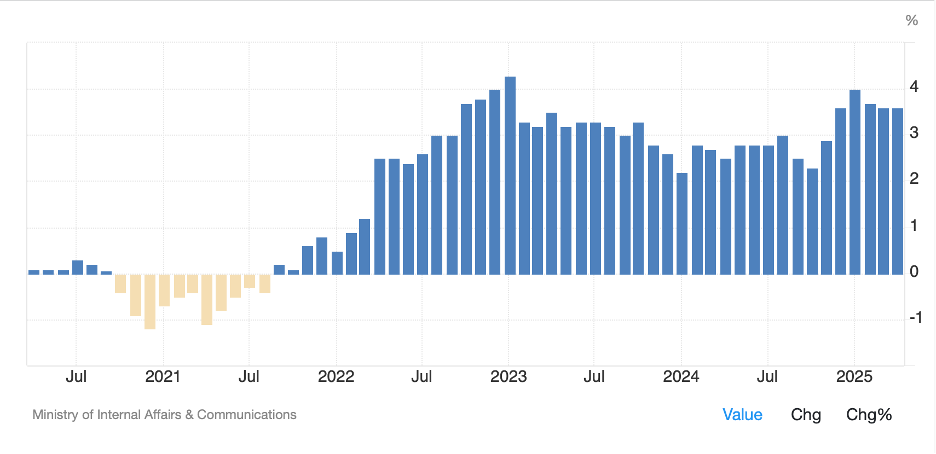
So, let’s turn to that type of news which leads with the BOJ leaving policy rates on hold, although they did reduce the amount of QE to ¥200 billion per month, STARTING IN APRIL 2026!  You read that correctly.  The BOJ, which has been buying ¥400 billion per month of JGBs while they raised interest rates in their alleged policy tightening, has decided that ten months from now it will be appropriate to slow the pace of QE.  Yes, inflation has been running above their 2.0% target for more than three years (April 2022 to be exact) as you can see in the below chart, but despite a whole lot of talk, action has been slow to materialize.

Source: tradingeconomics.com

You may recall about a month ago when Japanese long-end yields, the 30-year and 40-year bonds, jumped substantially, to new all-time highs and there was much discussion about how there had been a sea change in the situation in Japan.  Expectations grew that we would start to see Japanese institutions reduce their holdings of Treasuries and bring their funds home to invest in JGBs, leading to a collapse in the dollar.  The carry trade was going to end, and this was another chink in the primacy of the dollar’s hegemony.  Well, if that is the case, it is going to take longer than the punditry anticipated, at the very least, assuming it happens at all.  As you can see from the charts below of both USDJPY and the 40-year JGB, all that angst has at the very least, been set aside for now.

Source: tradingeconomics.com

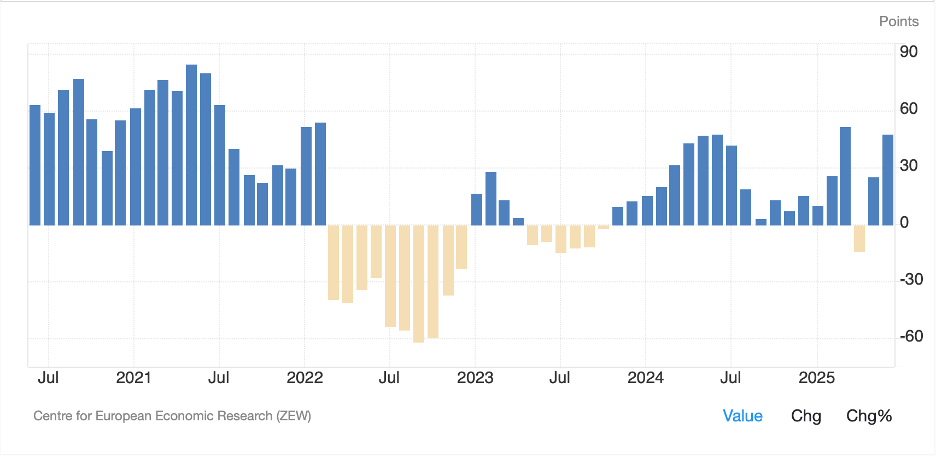
Elsewhere, the German ZEW data released this morning was substantially stronger than both last month and the forecasts for an improvement.  As you can see from the chart below, it is back at levels that are consistent with actual economic growth, something Germany has been lacking for several years.  It appears that a combination of the continued tariff truce, the promises of massive borrowing and spending by Germany to rearm itself and the ECB’s easy policy have German business quite a bit more optimistic that just a few months ago.

Source: tradingeconomics.com

Ok, while we await the next shoe to drop in Iran or Israel, let’s see how markets have behaved overnight. Yesterday’s nice rally in the US was followed by a mixed picture in Asia with the Nikkei (+0.6%) gaining after the BOJ showed that tighter policy is not coming that soon.  Elsewhere in the region, China, HK and India were all down at the margin, less than 0.4% while Korea and Taiwan managed some gains with Taiwan’s 0.7% rise the biggest mover overall.  In Europe, though, the excitement about a truce in Iran is gone with bourses across the continent lower (DAX -1.25%, CAC -1.05%, IBEX -1.5%, FTSE 100 -0.5%).  Apparently, there is fading hope of trade deals between the US and Europe and concerns are starting to grow as to how that will impact European activity.  I guess the ZEW data didn’t do that much to help.  US futures at this hour (7:00) are all pointing lower by about -0.5%, largely unwinding yesterday’s gains.

In the bond market, Treasury yields, which backed up yesterday, are lower by -3bps this morning, essentially unwinding that move.  However, European sovereign yields have all edged higher between 1bp and 2bps with Italy’s BTPs the outlier at +3bps.  Quite frankly, it is hard to have an opinion as to why bond yields move such modest amounts, so I’m not going to try to explain things.

In the commodity space, fear is back in play as oil (+1.7%) is rallying as is gold (+0.4%) which is taking the rest of the metals complex (Ag +2.3%, Cu +0.3%, Pt +3.0%) with it.  These are the markets that are most directly responding to the ongoing ebbs and flows of the Iran/Israel situation, and I expect that will continue.  In the end, I continue to believe the long-term trend for oil is toward lower prices while for gold and metals it is toward higher prices, but on any given day, who knows.

Finally, the dollar doesn’t know which way to turn with modest gains and losses vs. different currencies in both G10 and EMG blocs.  The euro, pound and yen are all within 0.1% of yesterday’s closing levels while we have seen KRW (-0.4%) and INR (-0.3%) suffer and NOK (+0.4%) and SEK (+0.4%) both gain on the day.  However, those are the largest movers across the board, so it is difficult to make a case that anything of substance is ongoing.

On the data front, yesterday’s Empire State Manufacturing index was quite weak at -16, not a good look.  This morning, we see Retail Sales (exp -0.7%, +0.1% ex-autos), IP (0.1%), and Capacity Utilization (77.7%).  As well, the FOMC begins their meeting this morning with policy announcements and Powell’s press conference scheduled for tomorrow.  Helpfully, the Fed whisperer, Nick Timiraos, published an article this morning in the WSJ to explain why the Fed was going to do nothing as they consider inflation expectations despite the lack of empirical evidence that those have anything to do with future inflation.  But it is a really good sounding theory.

For now, the heat of the Iran/Israel situation will hold most trader’s attention, but I suspect that this will get tiresome sooner rather than later.  The biggest risk to markets, I think, is that the Iranian regime collapses and a secular regime arises, dramatically reducing risks in the Middle East and reducing the fear premium in oil substantially.  If that were to be the case, I expect the dollar would suffer as abundant, and cheap, oil would help other nations more than the US on a relative basis given the US already has its own supply.  But a major change of that nature would have many unpredictable outcomes.  In the meantime…

Good luck

Adf