Blow-By-Blow

It wasn’t all that long ago
That if people wanted to know
The news, they would turn
To TV to learn
The latest events blow-by-blow

But now TV news when it airs
Has reached the point nobody cares
‘Cause it’s been on X
Without any checks
For networks, the stuff of nightmares

Which brings us to info this morning
That claims, Tehran, talks have been scorning
But also, we hear
A framework is near
For risk takers, this is a warning

I wonder if all of you face the same situation I do, which is answering the question, what is real?  The fog of war is truly a descriptive term for the inconsistencies in the information that comes out of the Trump administration, the mainstream media that covers it with their own spin, the Iranians (who seem to be fighting aggressively among themselves) and then looking at prices in financial markets as well as economic data, much of which seems to be inconsistent.  How exactly are we to gain an understanding of the big picture, let alone the intricacies of particular markets, given the overwhelming volume of noise we absorb every day.

The below table shows the prices of key markets when I last wrote compared to this morning:

MarketApril 14April 20
Oil$97.35$88.50
Gold$4778$4796
10-year yields4.295%4.267%
S&P 500 futures69067090
DXY98.0498.24

Source: tradingeconomics.com

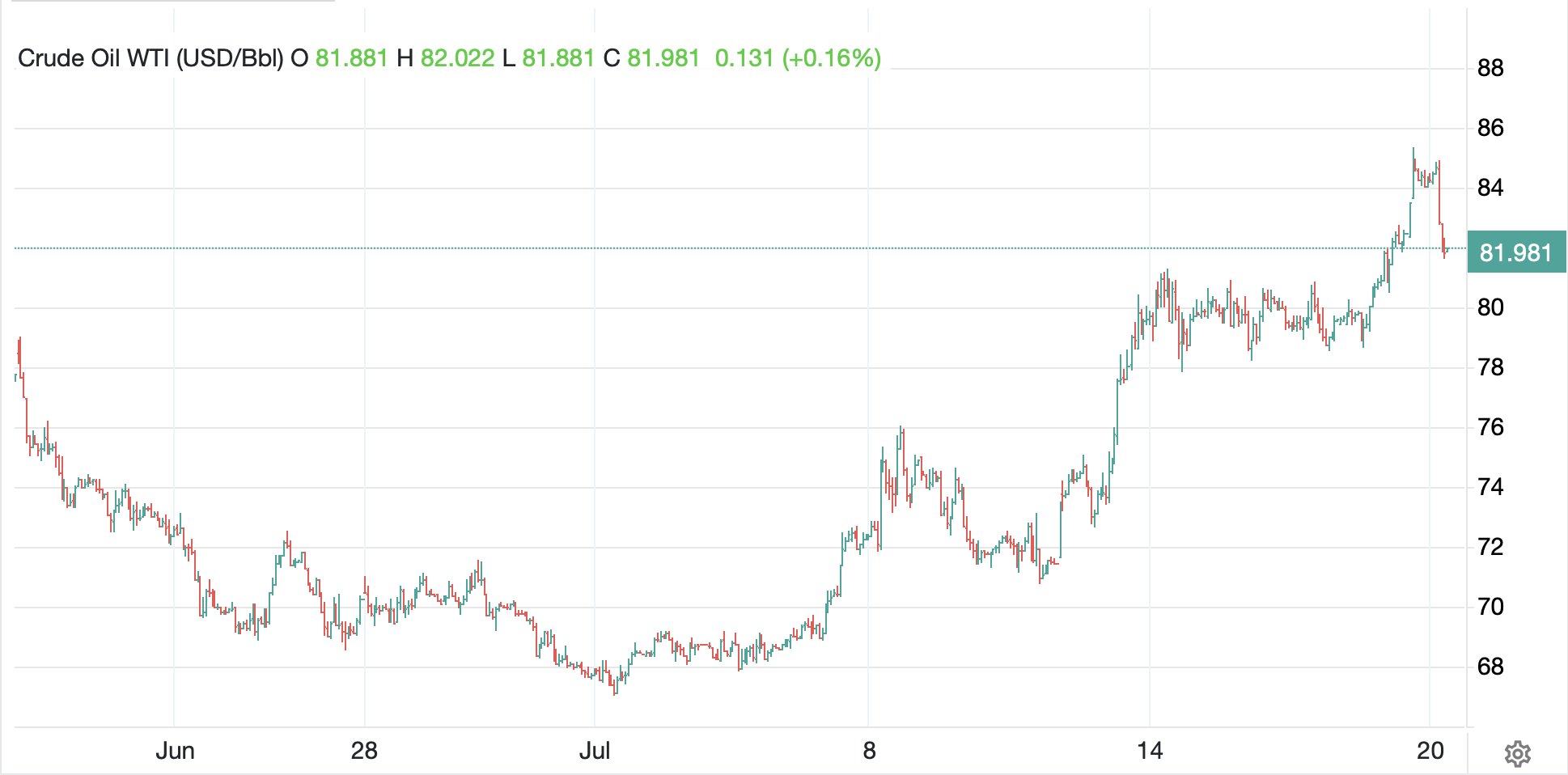
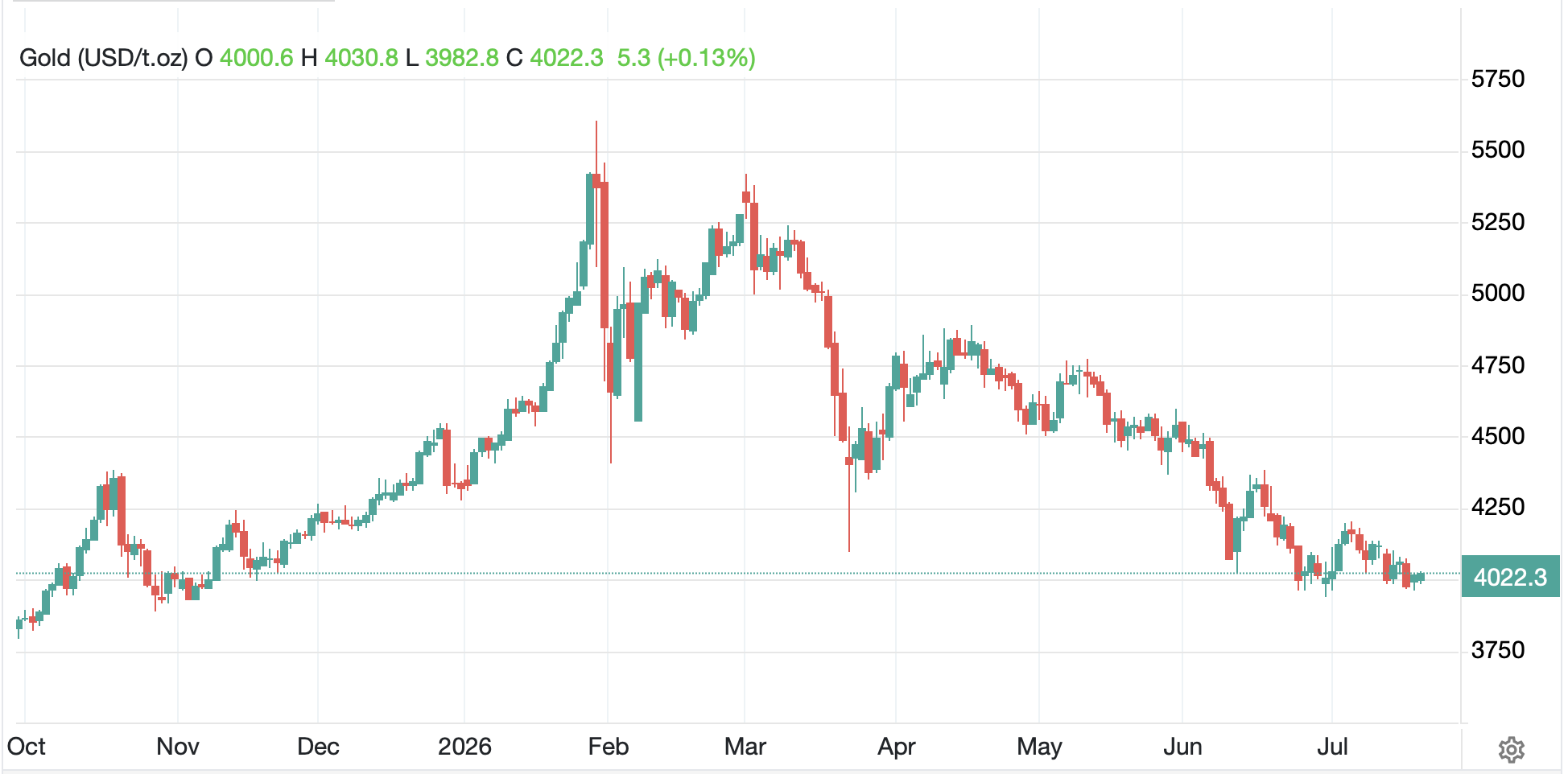
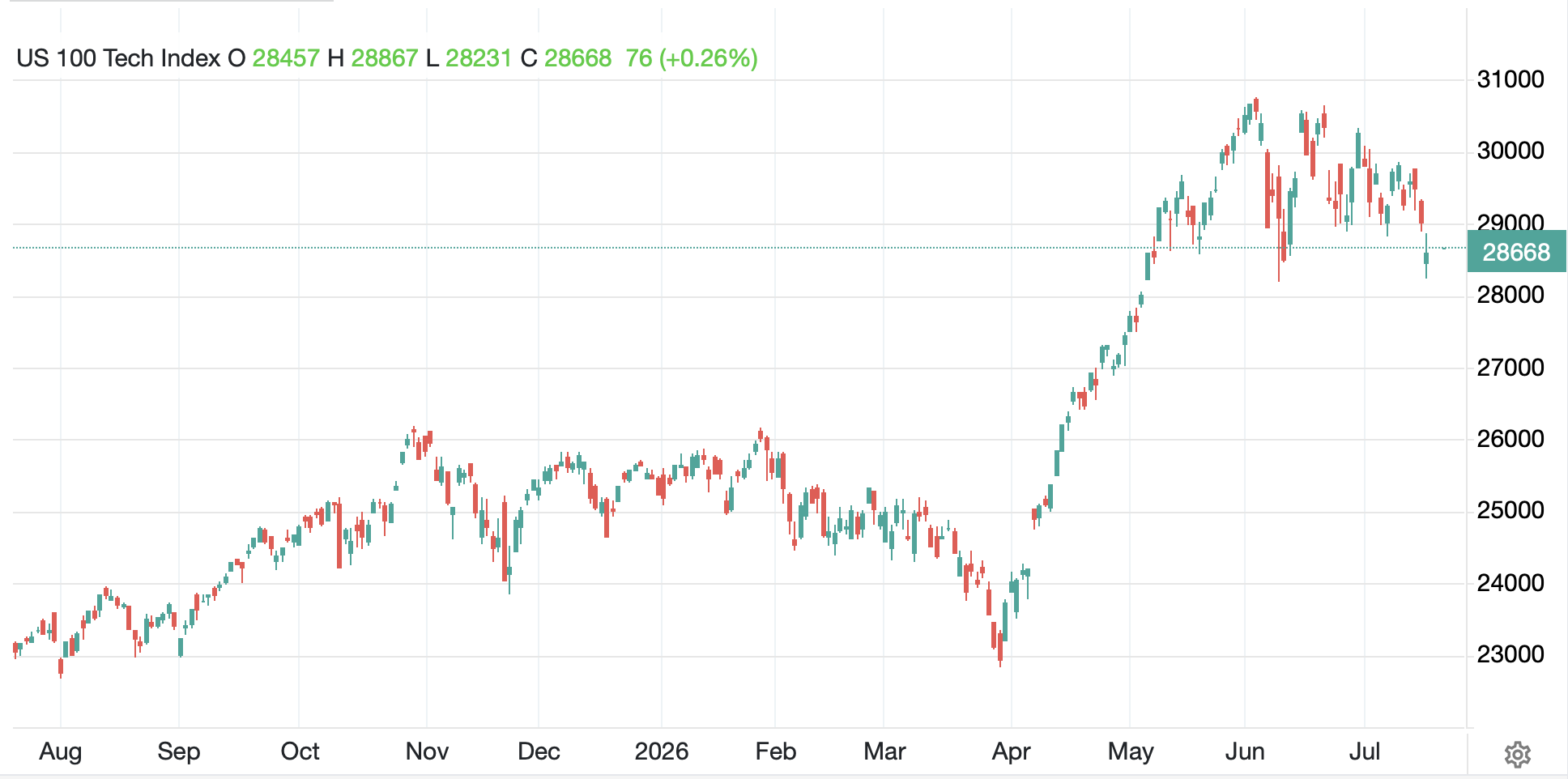
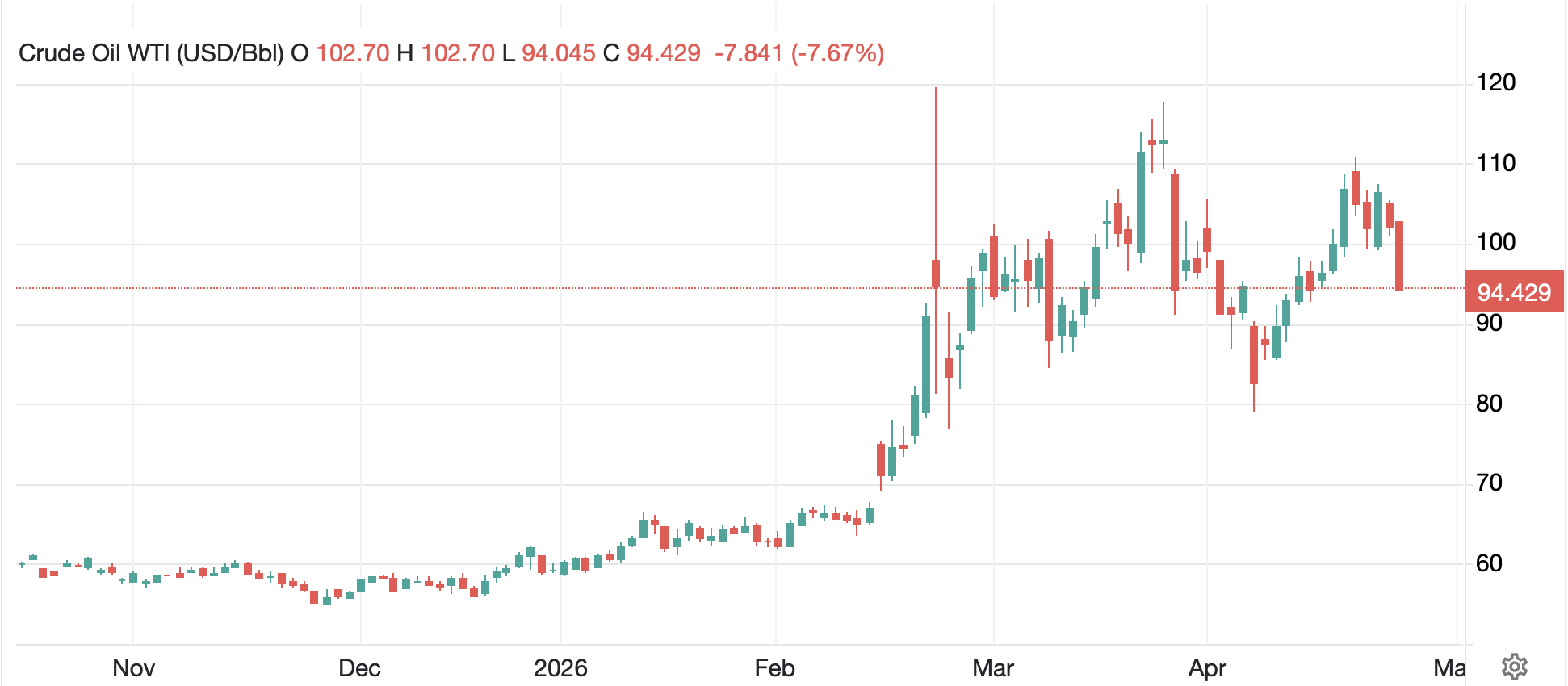
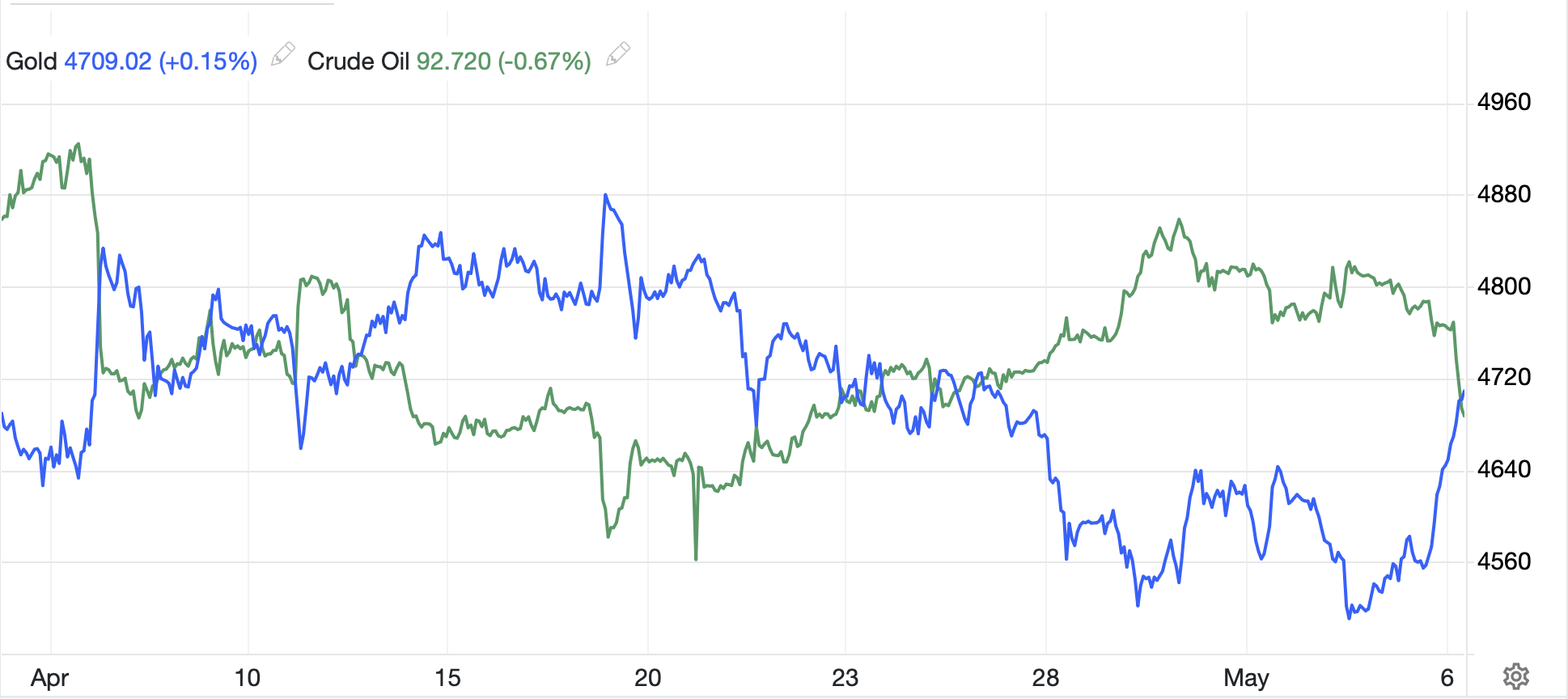
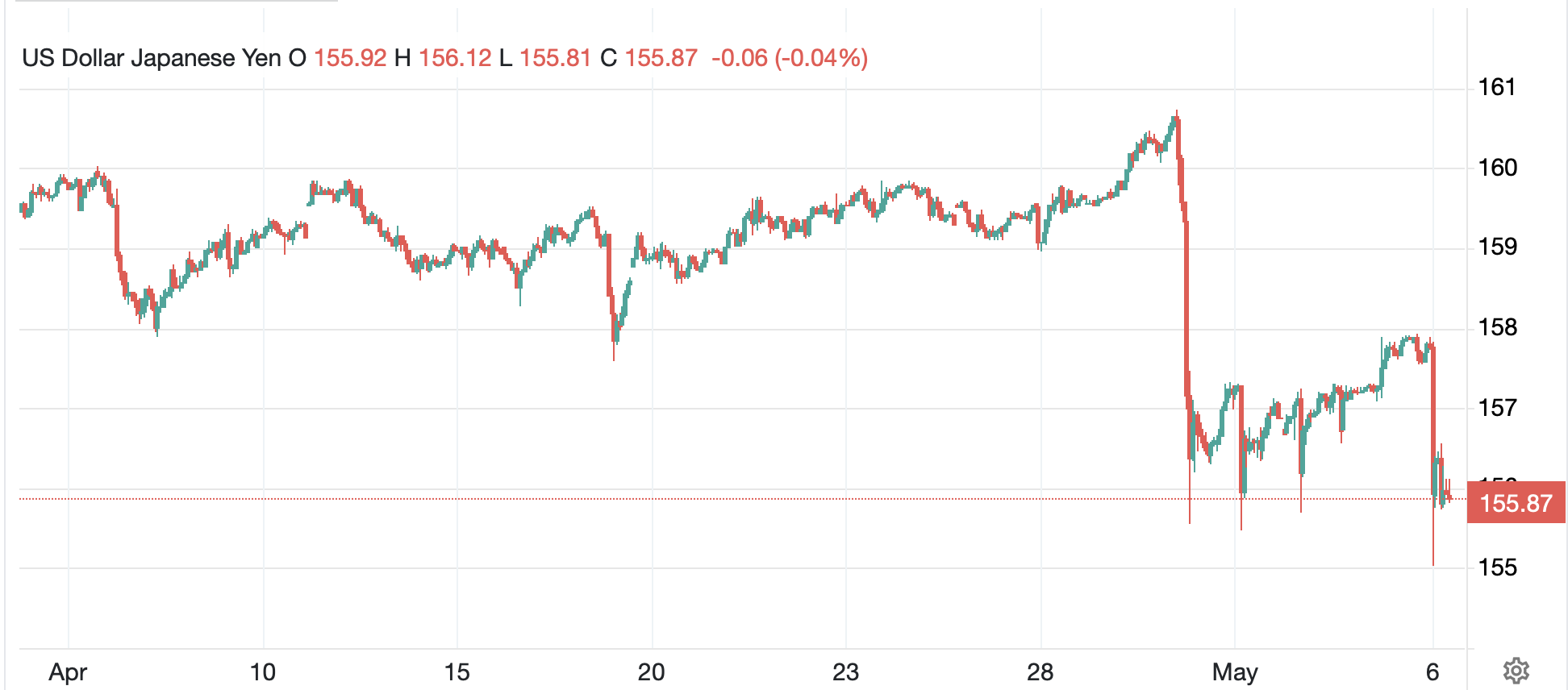
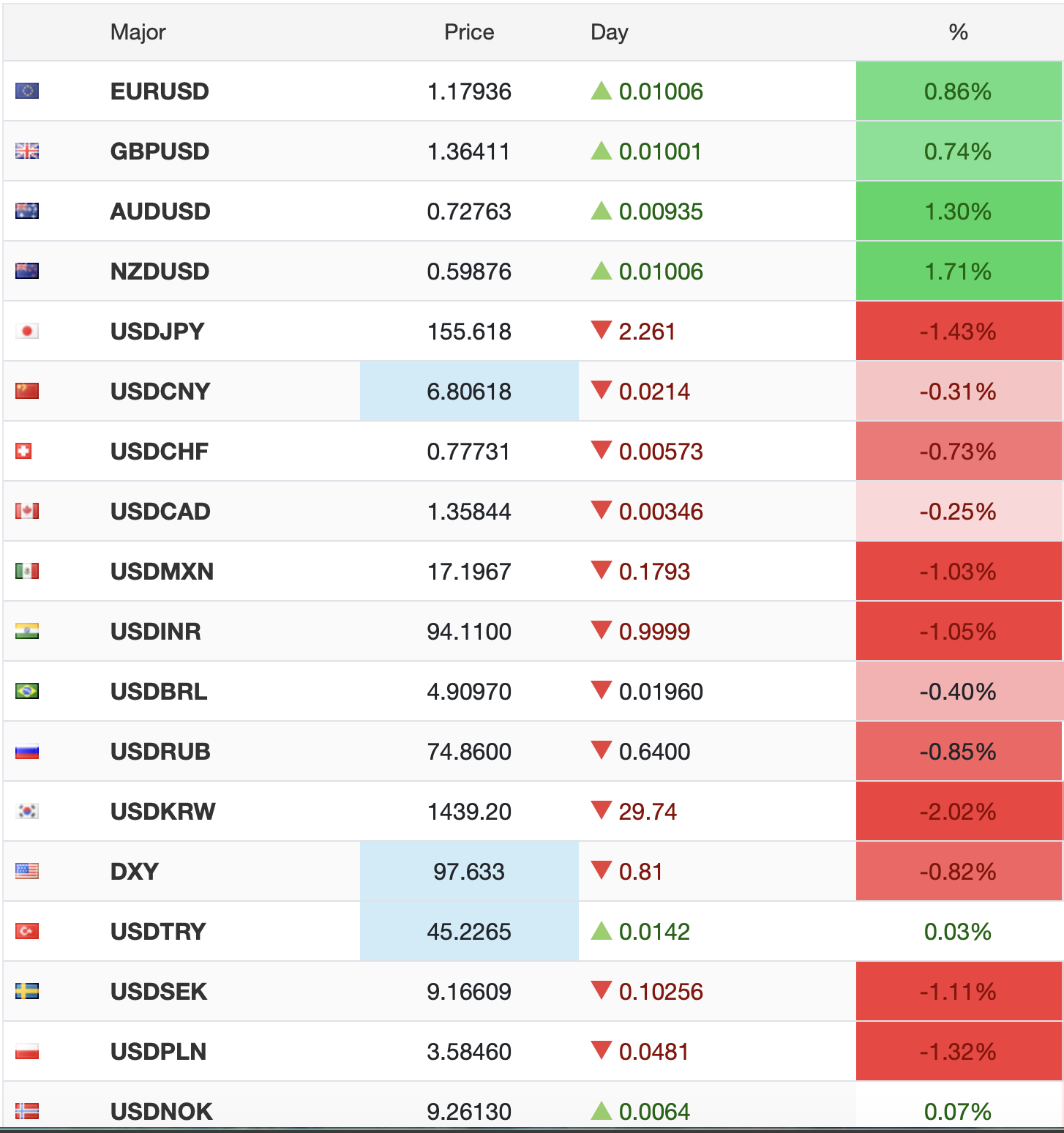
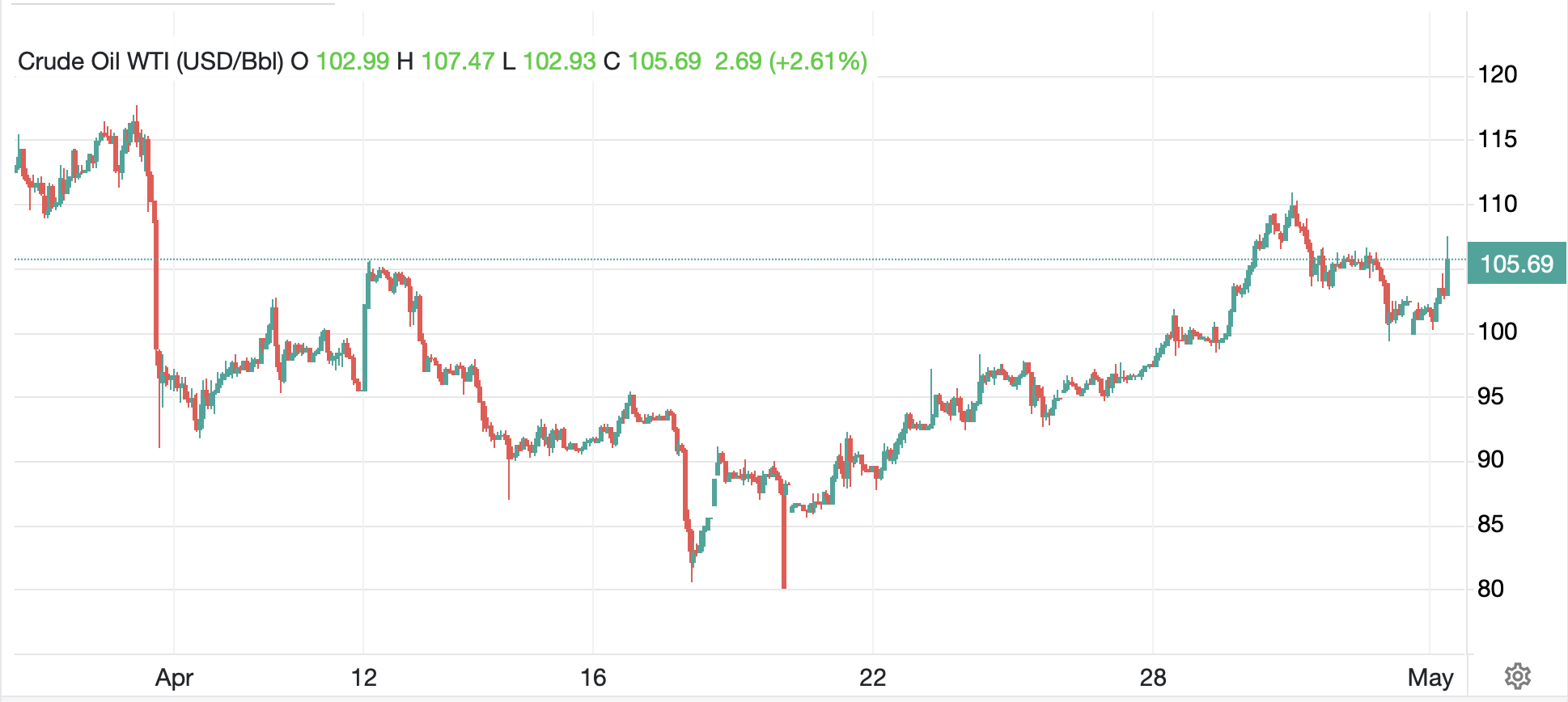
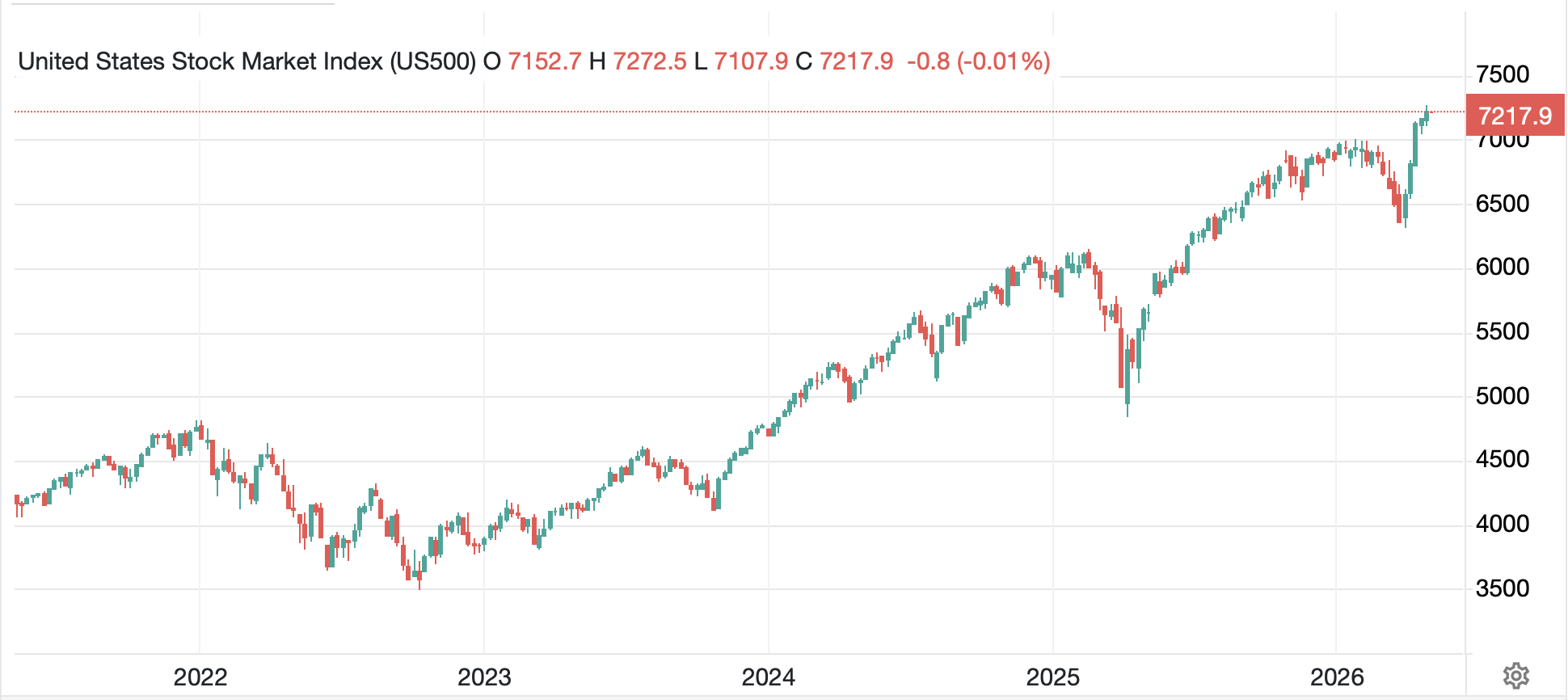
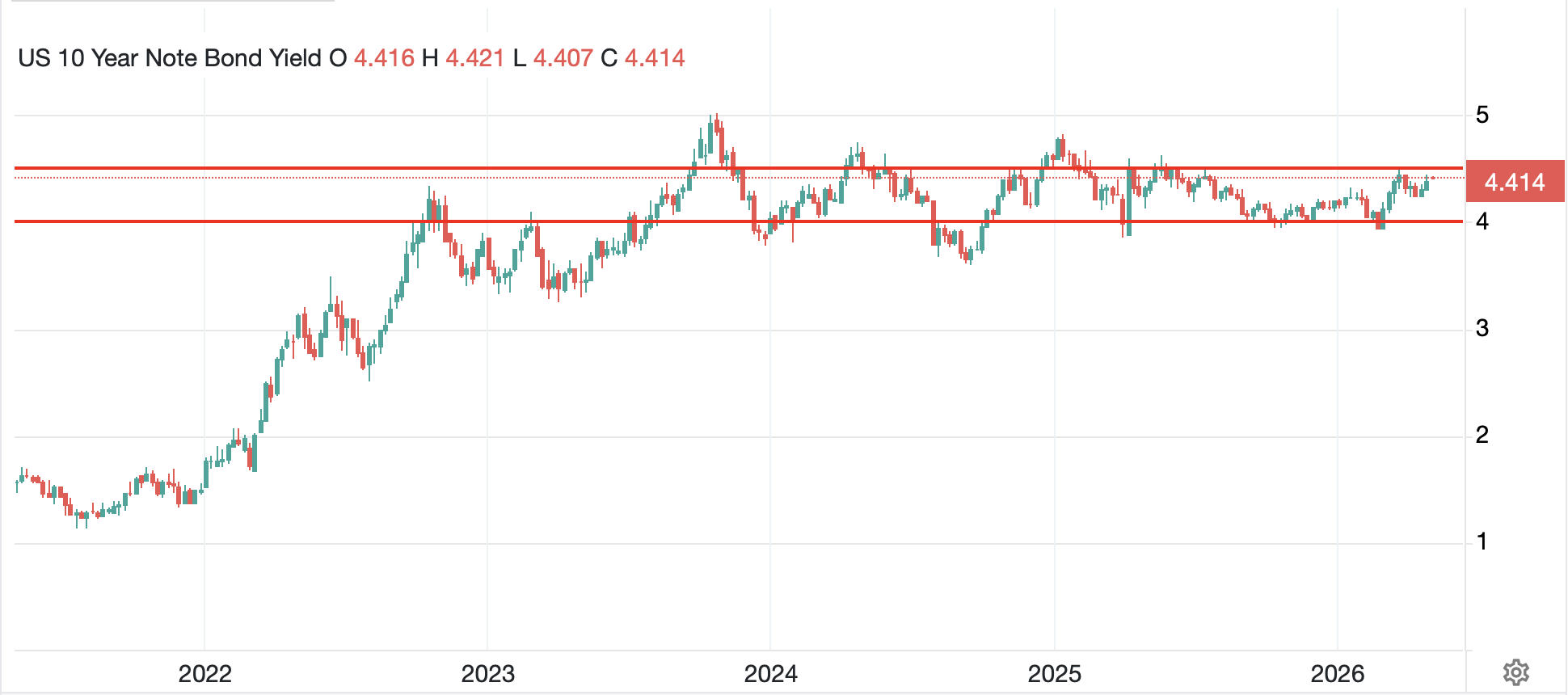
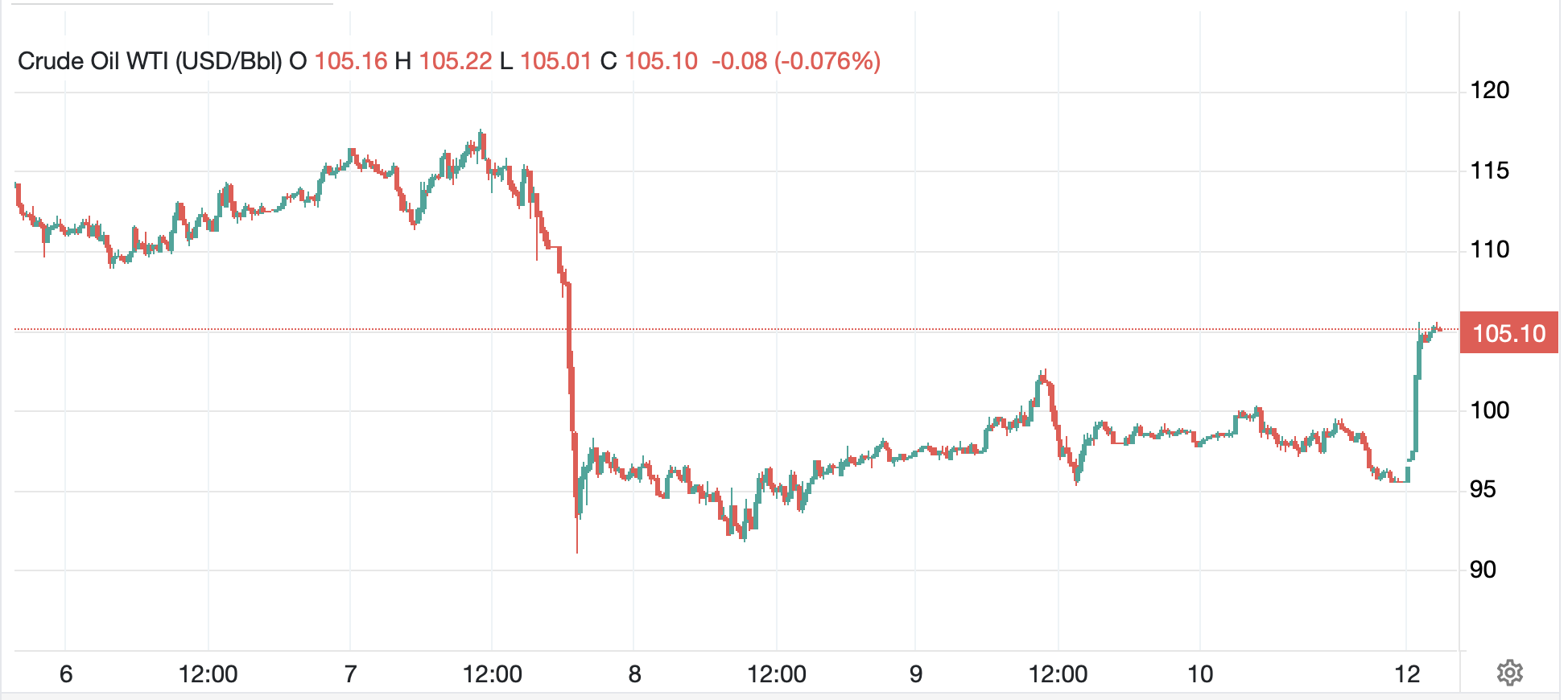
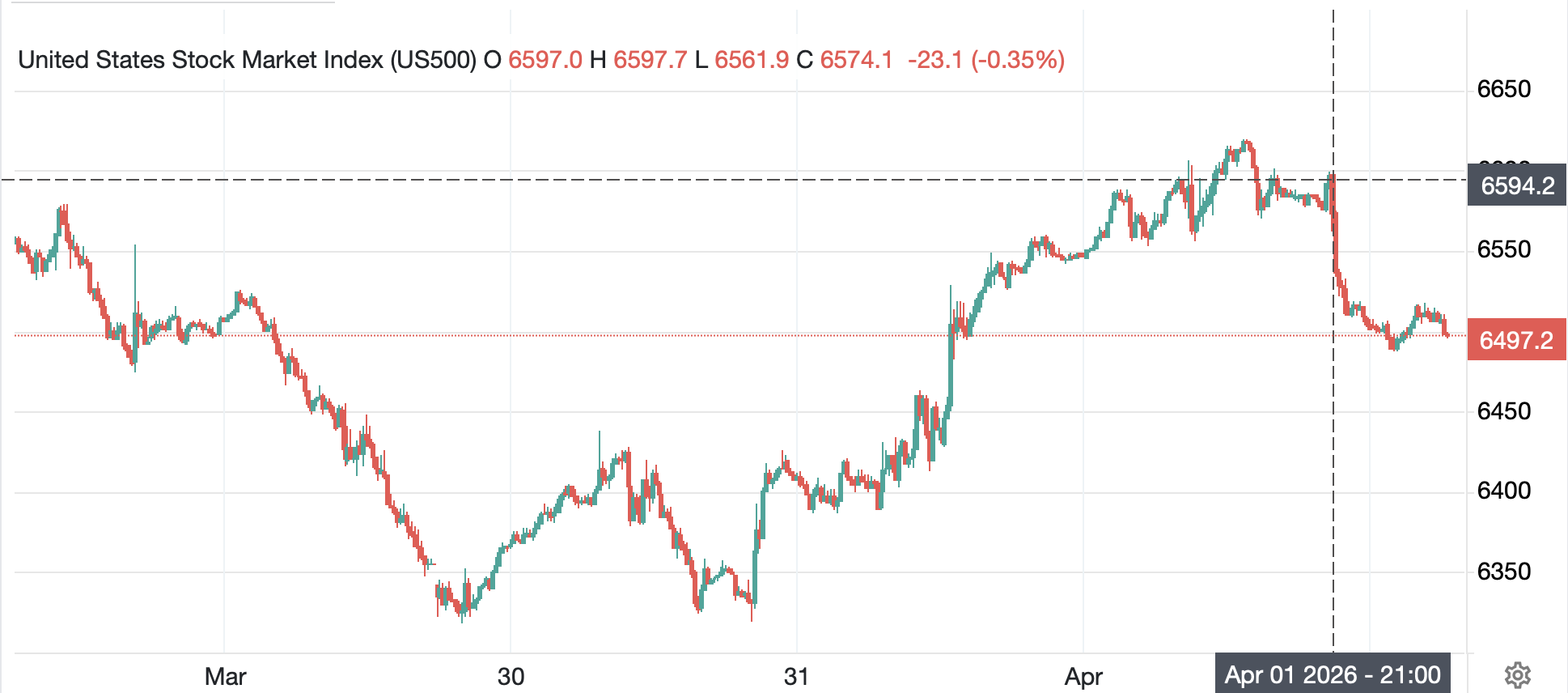
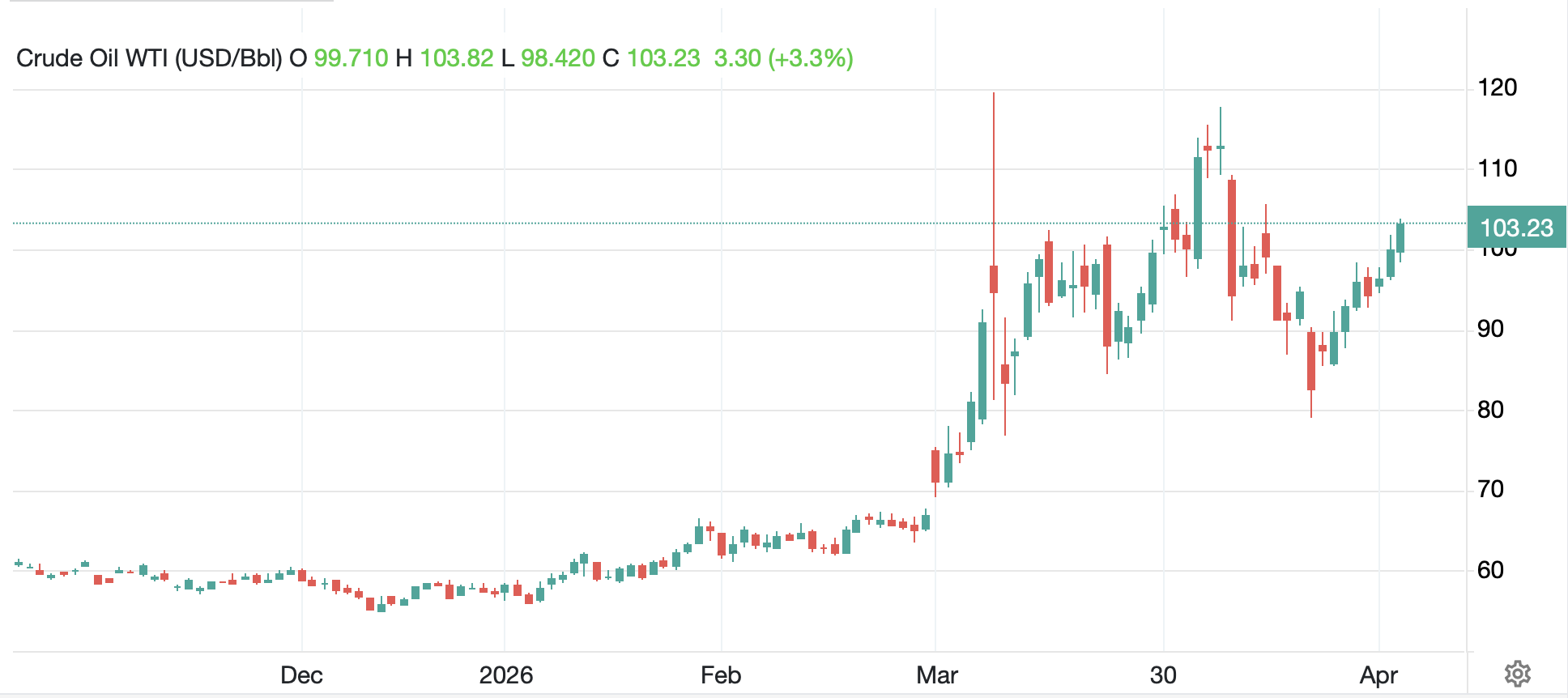
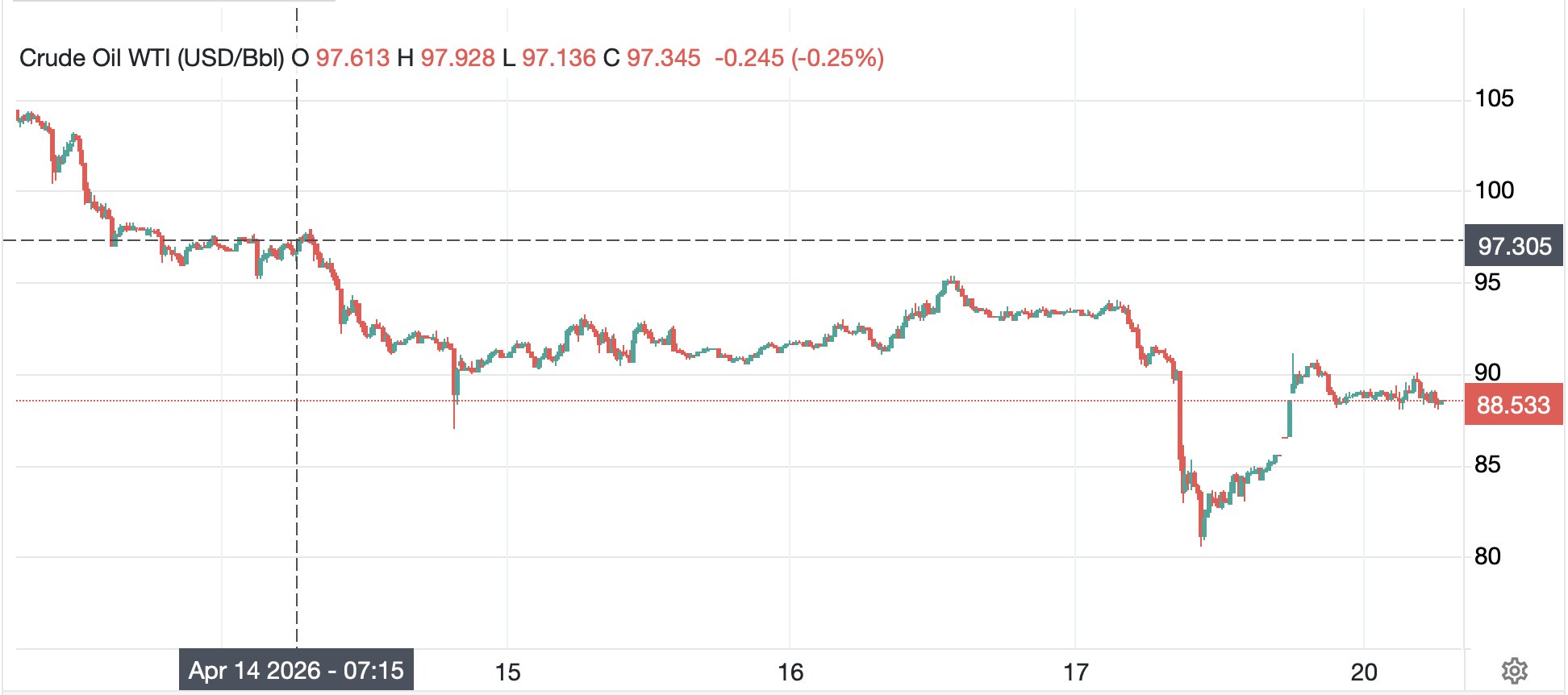
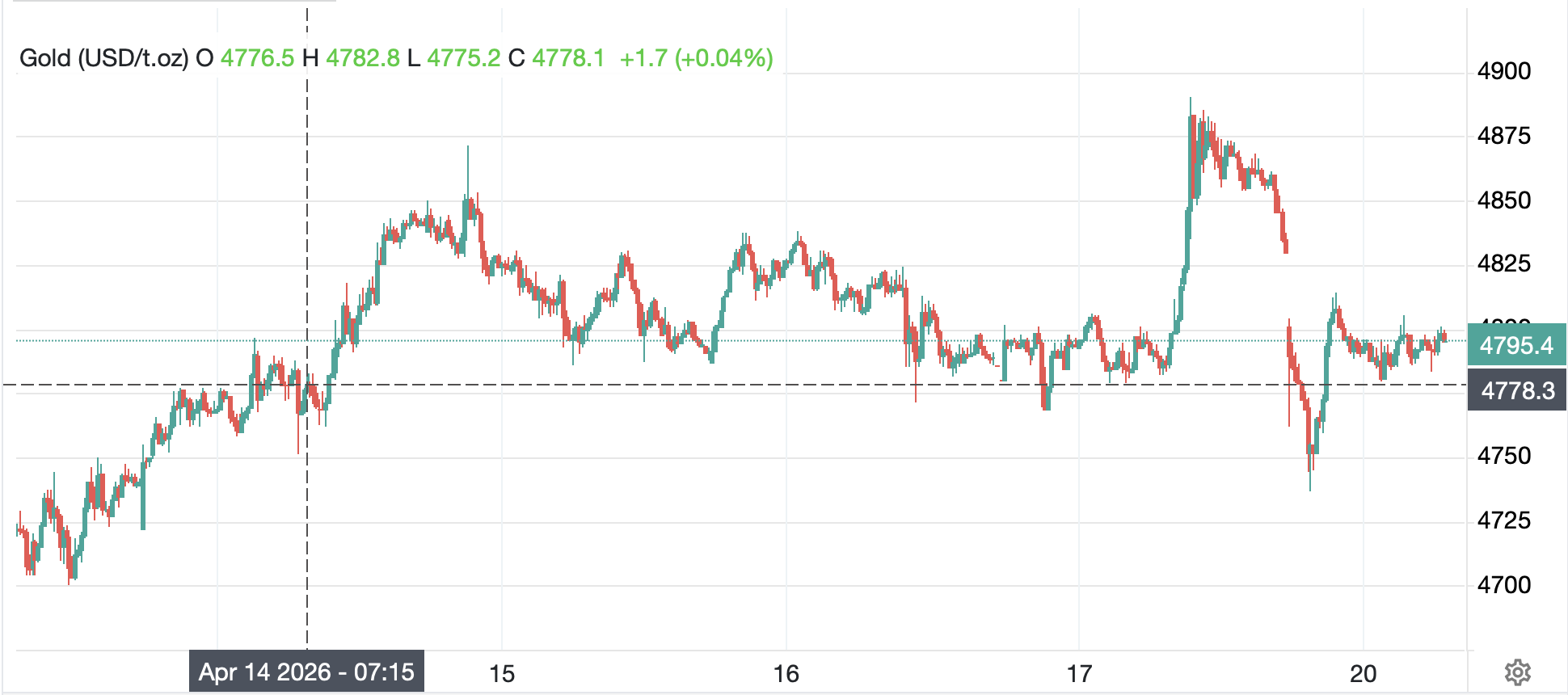
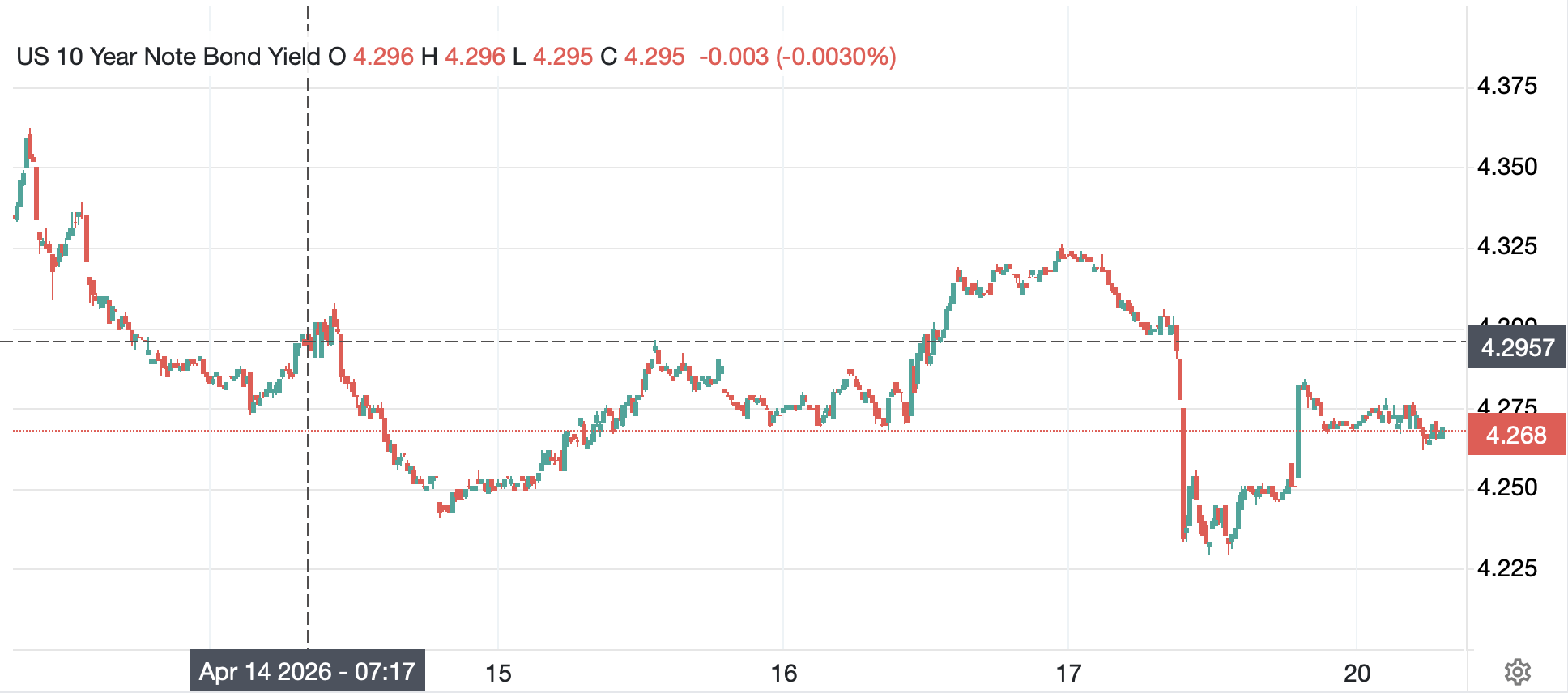
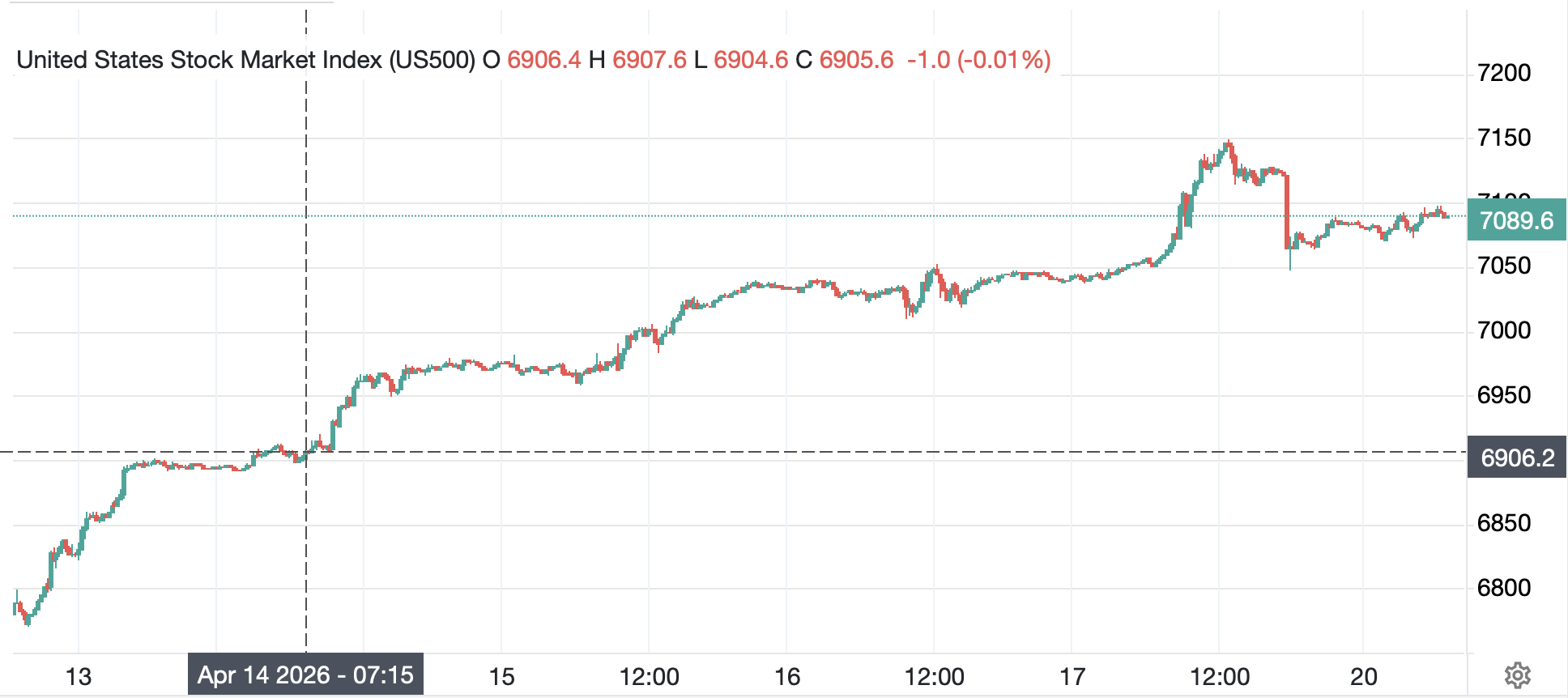
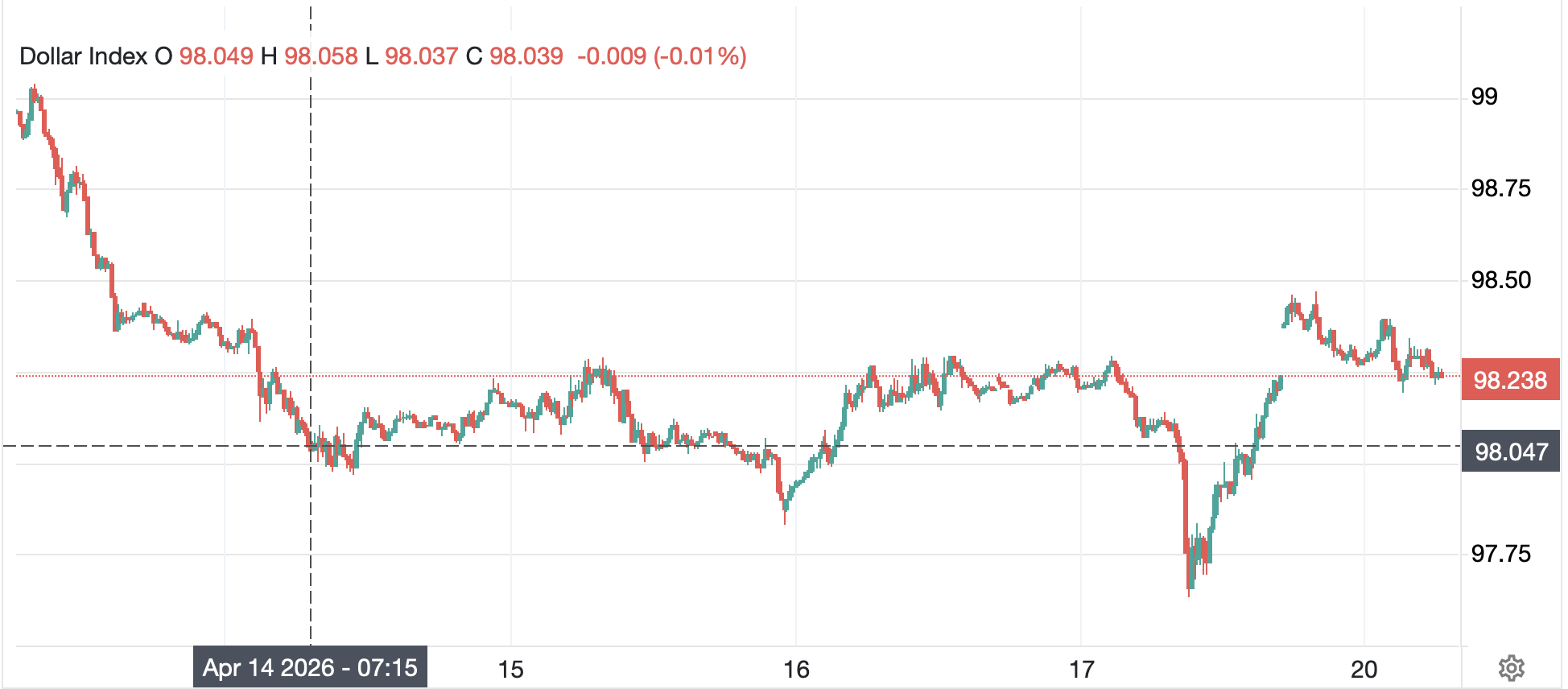
I know this is an incomplete listing of things, but I just wanted to touch on the basics.  A quick look shows that oil has had, by far, the largest move, nearly a 10% decline, but after that, very little net activity.  Sure, there has been some volatility in the interim as you can see in the following charts from tradingeconomics.com, but markets always have a certain amount of inherent volatility, it is the nature of the beast.

In the same order as above:

Oil 

Gold

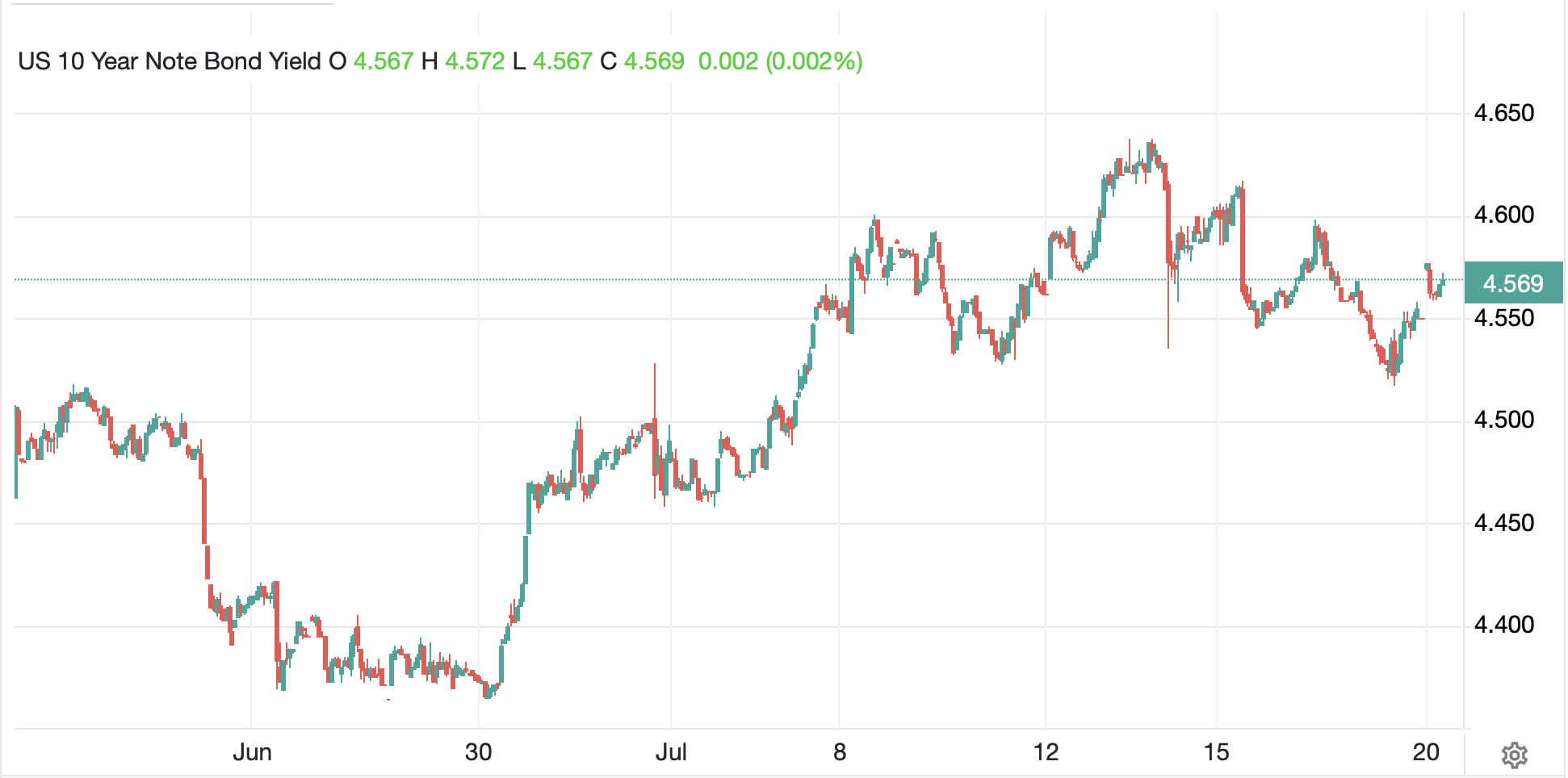
10-year Treasury

S&P 500 Futures

DXY

Of course, much of the movement came after Friday’s announcement by President Trump that the Strait of Hormuz was now open, and the overnight reversals have been a response to the Iranians contradicting that statement and firing on several ships.

It appears that as of now, the Strait is not yet open for free navigation, although apparently there are going to be a second round of talks tomorrow in Islamabad.  An interesting story I read indicated that the internal divisions between the IRGC and the secular government in Iran are huge, which is one reason we seem to be hearing multiple things regarding negotiations and goals.  We also must remember that all sides in a conflict like this issue propaganda for their own populations that may have nothing to do with their stance in the negotiating room.

The net of all this is, reading about things, no matter how well-read you are, doesn’t really capture the reality on the ground in my view.  However, someone else made the point that focusing on the actions, not the words, may be a better tell of the situation, and the action of note is that US troops continue to move into the region, not out of it.  I fear there is much more to come here, and the general lack of market volatility is not a sign of calm, but a sign of ignorance on the part of market participants, i.e. nobody really knows what to do!

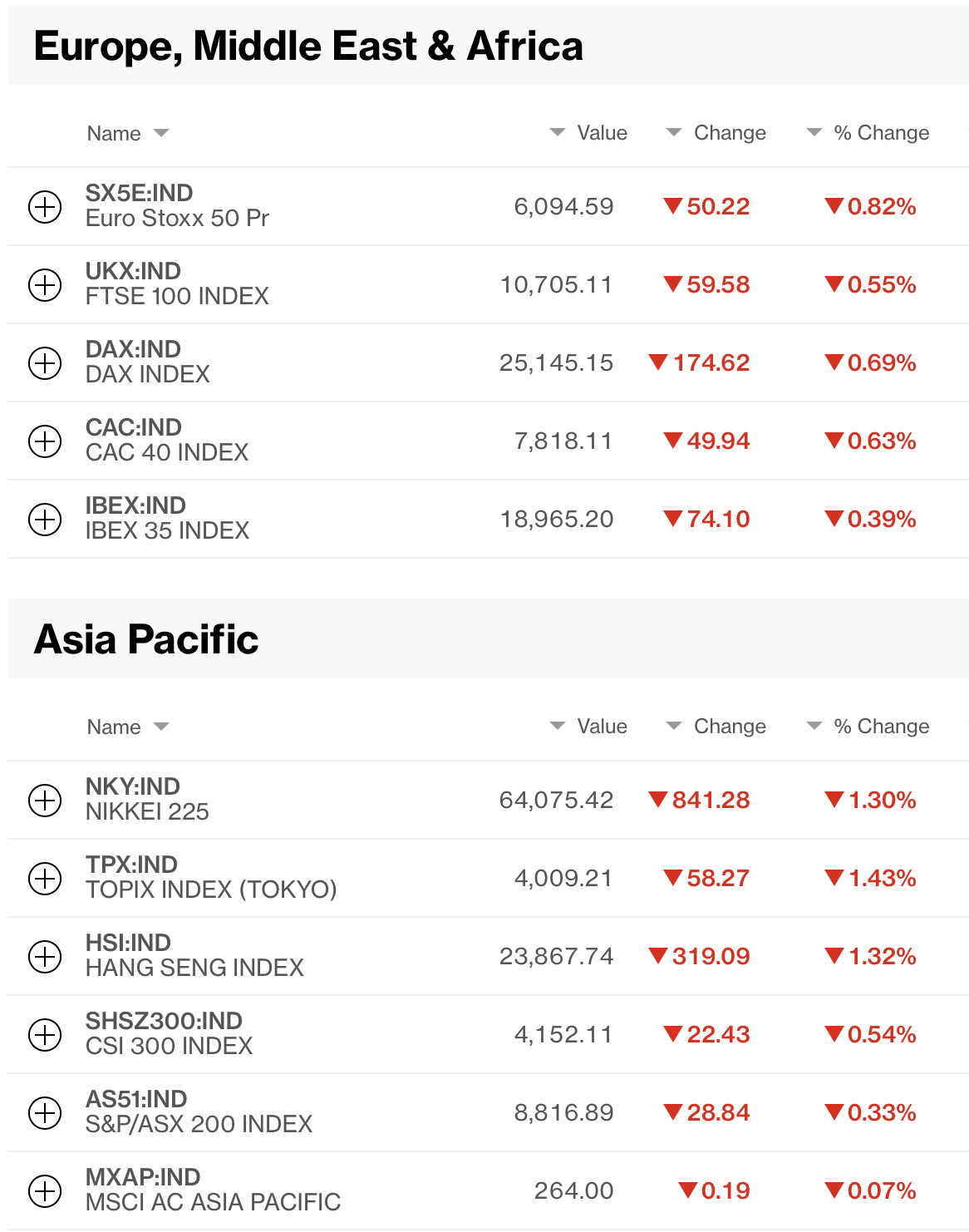
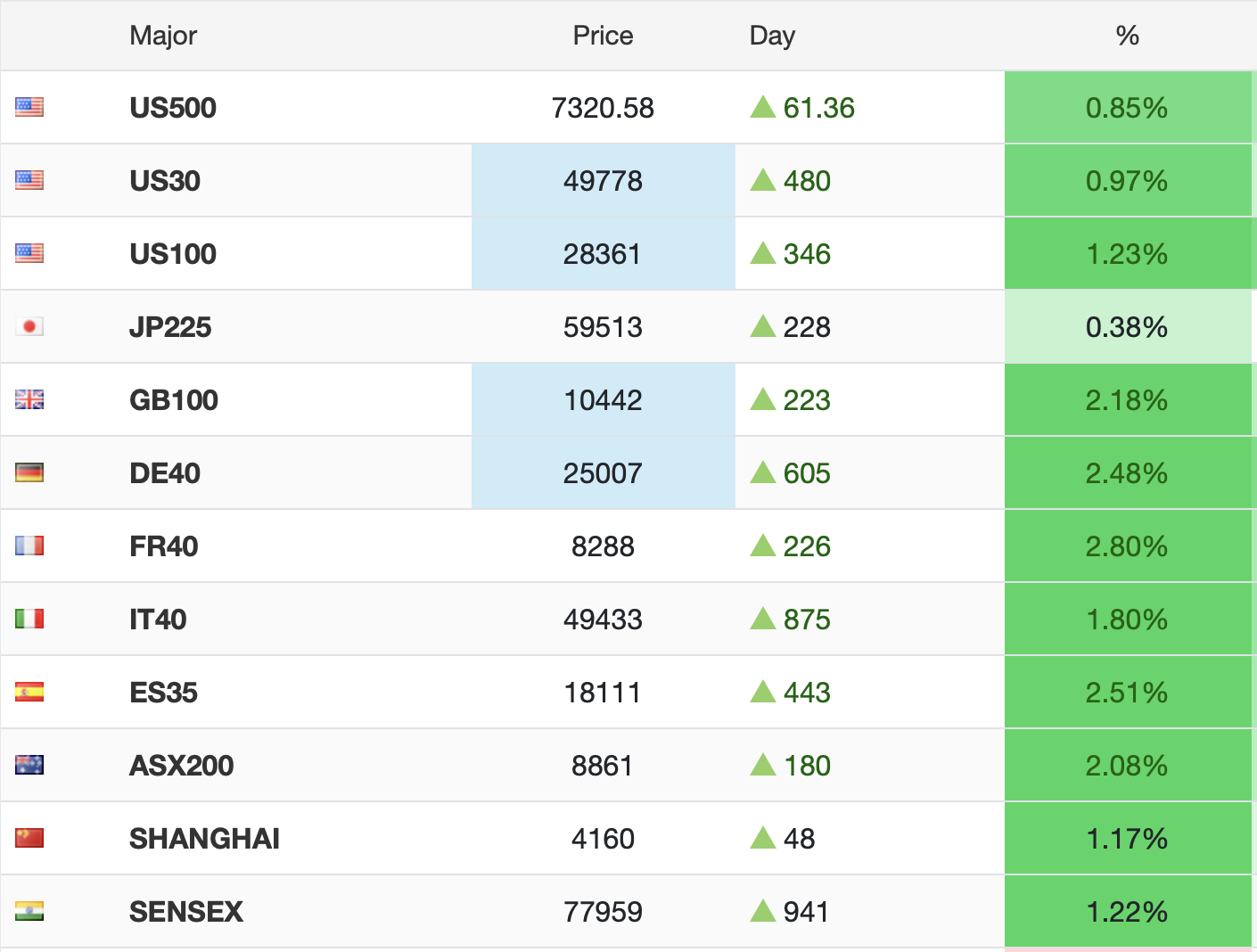
With that in mind, let’s see how markets have behaved in the wake of the Iranian rejection of the statement the Strait was open.  Starting in equities, apparently, Asian investors didn’t care as we have seen gains in Tokyo (+0.6%), China (+0.6%), HK (+0.7%) and Korea (+0.4%).  In fact, if I look across the entire region, the only notable decline was in Indonesia, and that was only -0.5%.  Otherwise, generally speaking, equity investors in the region are sanguine about the current situation.  This seems a bit odd to me as Asia is the region that is most negatively impacted by everything going on, but then, I’m just an FX guy.

In Europe, though, things are not as happy with all major indices lower this morning.  Germany (-1.4%), Italy (-1.4%), Spain (-1.4%) and France (-1.2%) have set the tone while the UK (-0.8%) is not quite as negatively impacted.  I continue to read a great deal about the European rearmament efforts, but net, it doesn’t appear investors are flocking to the continent right now.  Uncertainty as to energy availability remains a key impediment, at least in my mind, with respect to a strong investment thesis here.  As to US futures, despite the Iranian denial regarding the Strait, the major indices are only lower by -0.6% across the board.

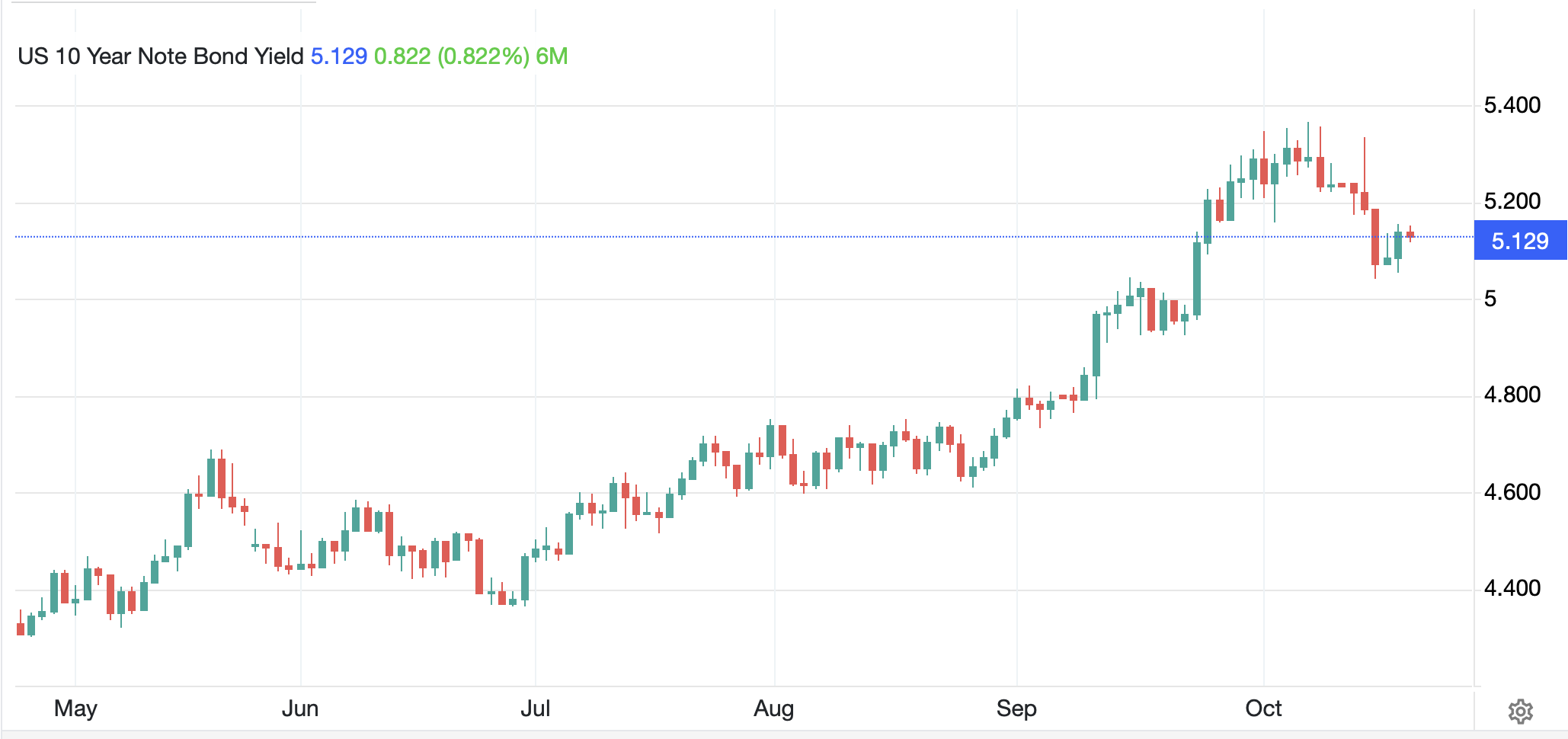
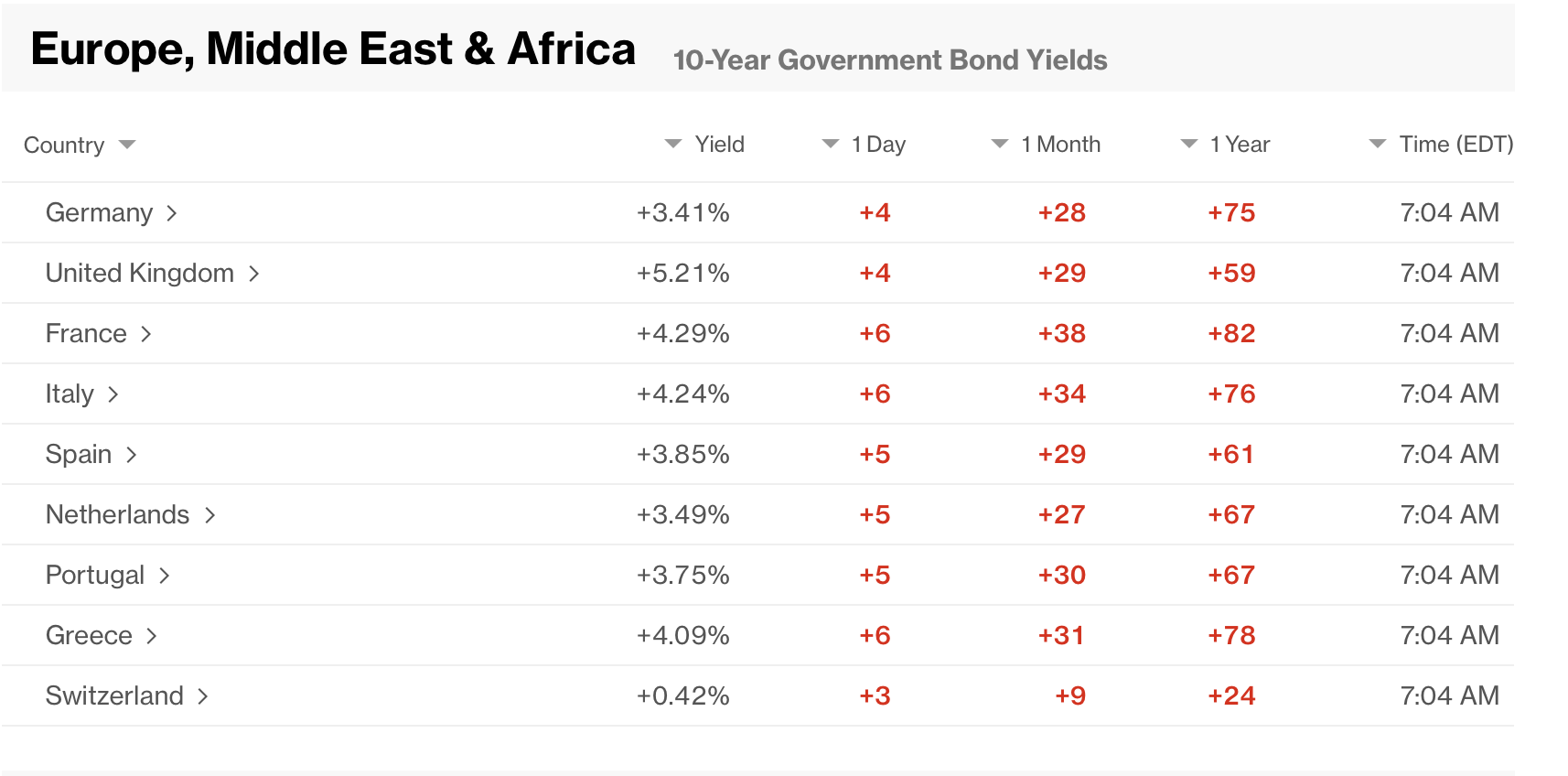
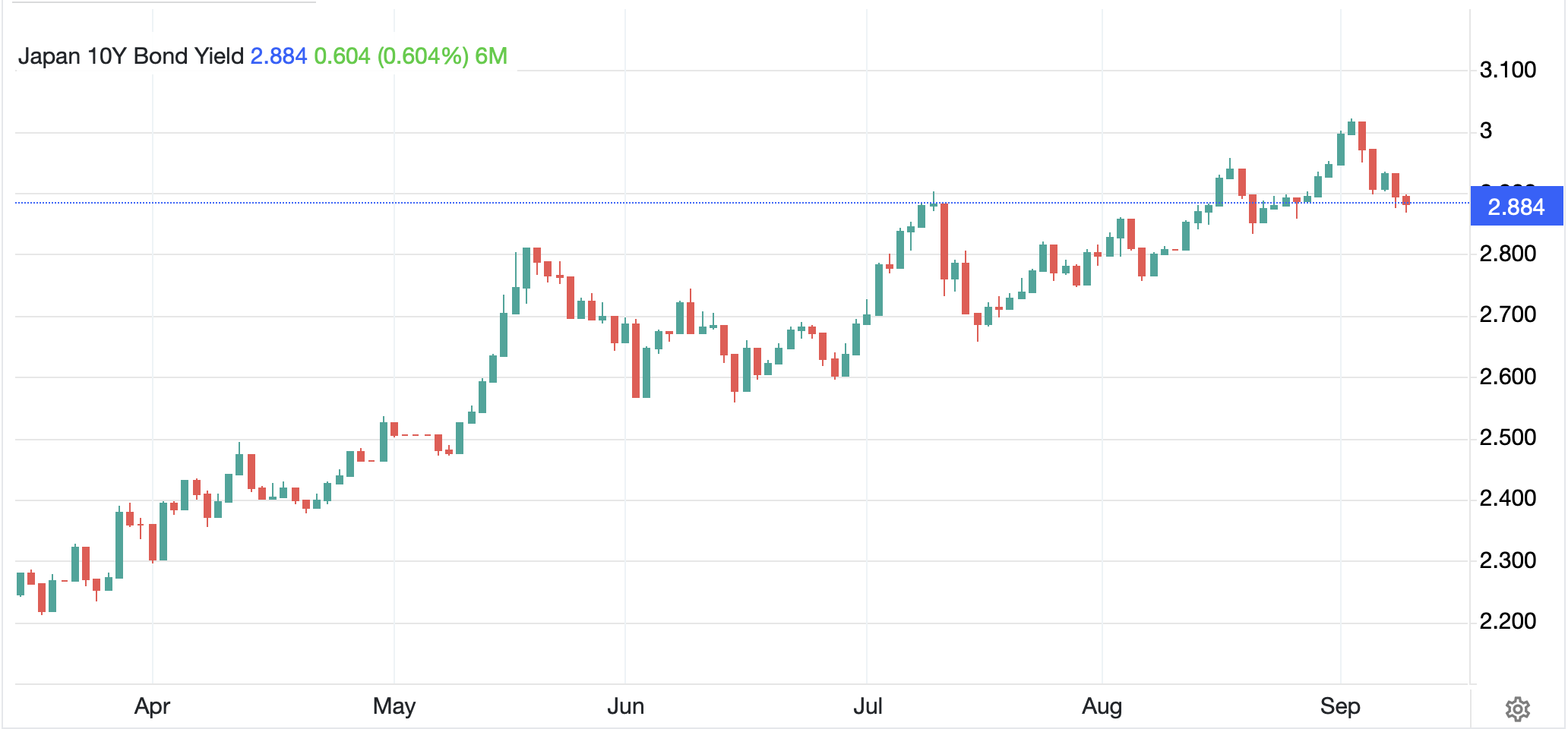
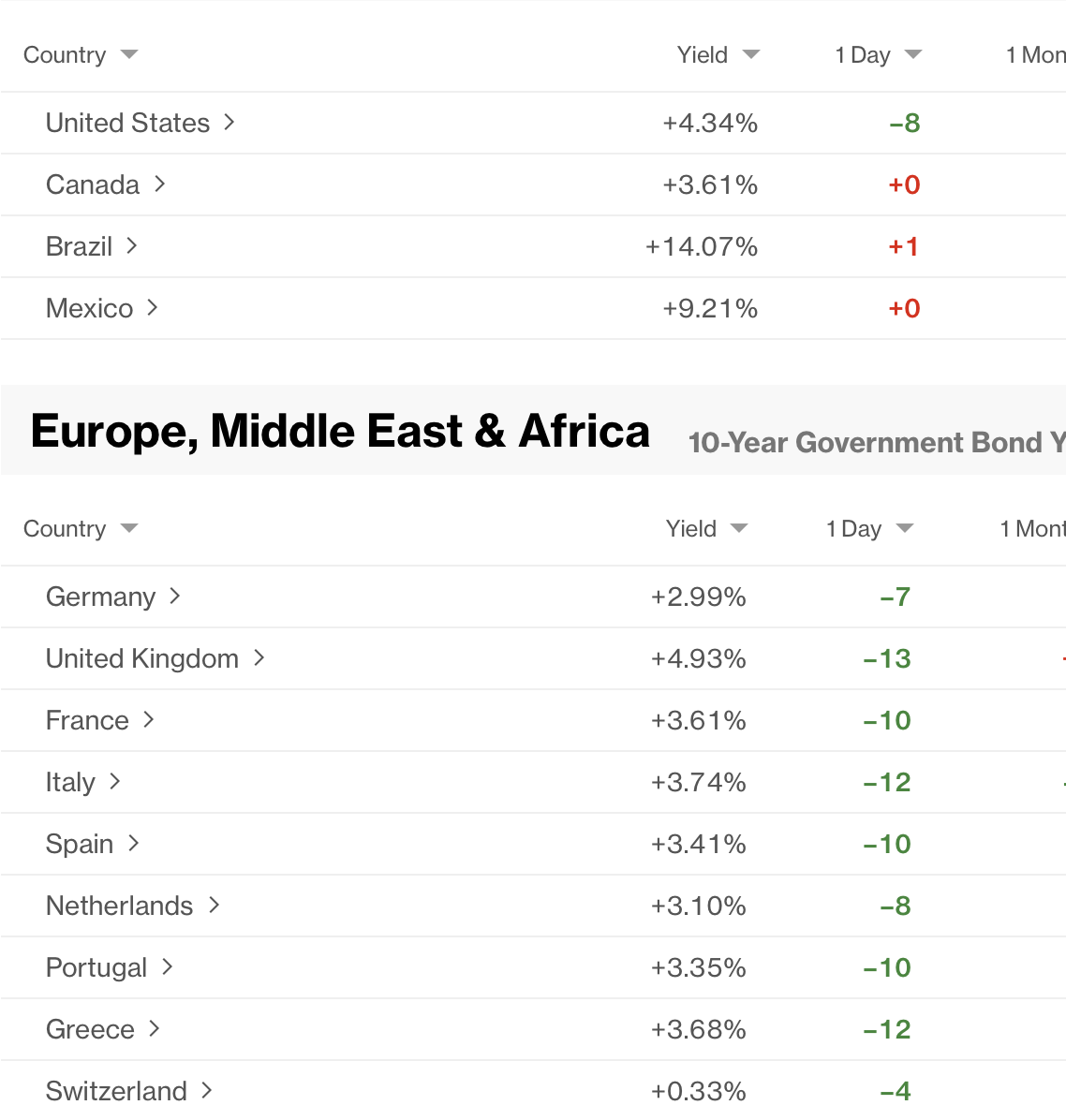
In the bond market, Treasury yields have edged higher by 2bps since Friday, but as you saw above, remain essentially unchanged from last week.  European sovereign yields are higher by between 3bps (Germany) and 6bps (Italy) as concerns continue apace regarding the future for European inflation as well as economic activity.  JGB yields slipped -2bps overnight amid news that the BOJ is reportedly not considering a rate hike at their meeting next week.  In addition, I must note a strong earthquake, measuring 7.4 on the Richter Scale, occurred a few hours ago, so we shall watch closely for how things evolve.  Recall it was Fukushima that set off the European madness to end their nuclear power efforts.  Hopefully, regardless of the outcome, nothing so incredibly stupid will come of this.

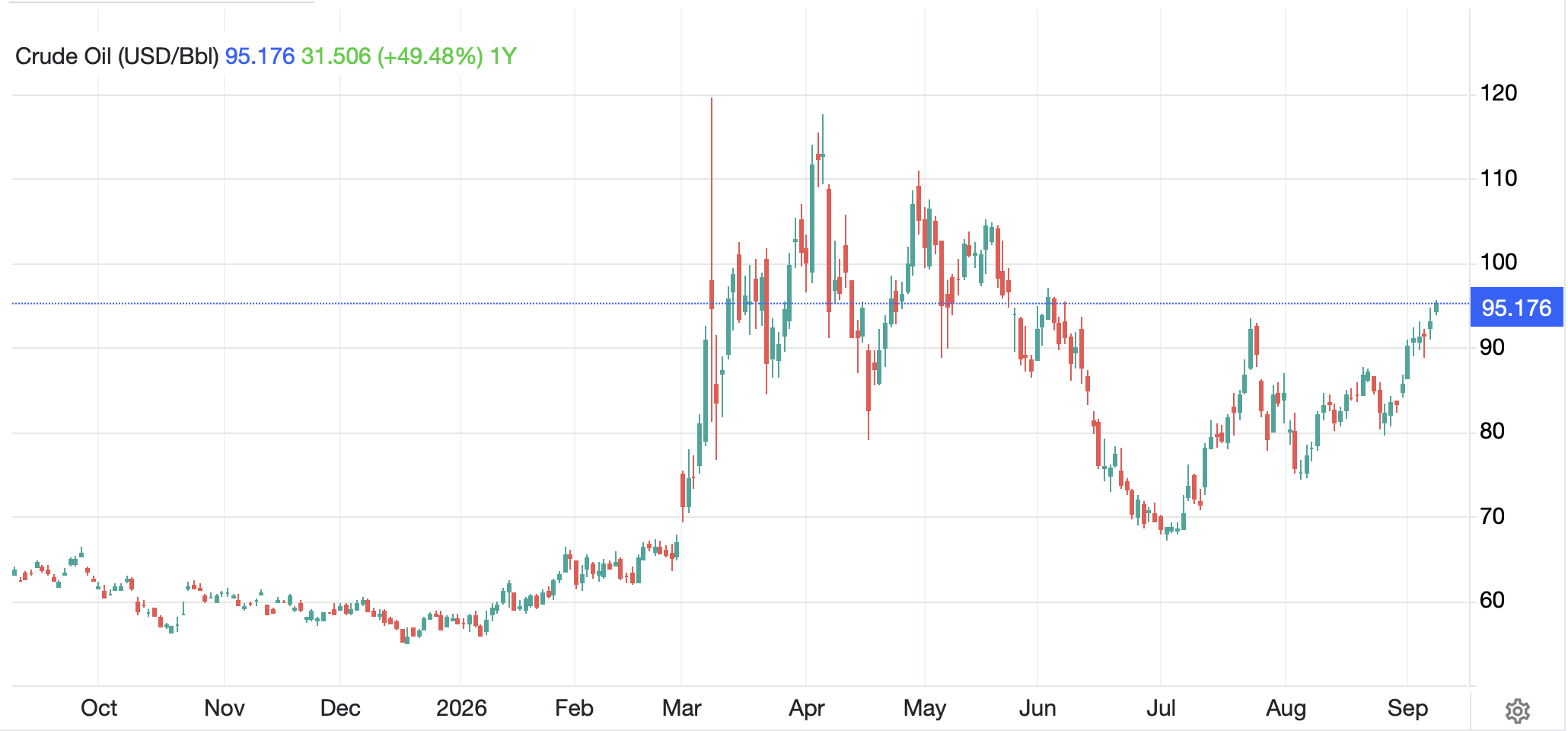
In the commodity space, oil (+5.9%) is obviously higher, but not even back to $90/bbl.  There are many conflicting narratives regarding the availability of oil, how much is in storage, how much inventory is around and whether we are going to see production increases outside the Middle East.  No market is more directly impacted by the Strait than oil, and since we have no idea how that will evolve, it is hard to see into the near future.  Ultimately, I remain of the view that there is loads of oil around and over time, it will come to market keeping prices in check.  But it is going to be a bumpy ride.  Turning to metals, as has been the case lately, oil and gold (-0.9%) have maintained their negative correlation with the barbarous relic taking silver (-1.7%) and copper (-1.5%) along for the ride.

Finally, the dollar remains an afterthought to traders right now, barely moving against most of its counterparts as the opportunities elsewhere for outsized gains remain far larger.  Looking across the major currencies, they are all within 0.2% of Friday’s close, although the direction is uniform with a modest dollar rally.  

On the data front this week, perhaps the most interesting thing will be Fed Chair nominee, Kevin Warsh, and his senate confirmation hearings.  But here is what the data looks like.

TuesdayRetail Sales1.4%
 -ex autos1.4%
 Control group (ex-gasoline)0.2%
 Business Inventories0.3%
ThursdayInitial Claims212K
 Continuing Claims1820K
 Flash Manufacturing PMI52.5
 Flash Services PMI50.0
FridayMichigan Sentiment47.6

Source: tradingeconomics.com

Much has been made lately about the dichotomy between the Michigan sentiment survey printing its lowest level in the 84-year history of the index while the S&P 500 is making new, all-time highs.  As I mentioned at the top, what should we believe?

If pressed, my own view is that the US is going to increase the military activity, but that oil prices are already anticipating that action.  Much will depend on the success of that situation which remains unknown although I remain positive regarding our military’s capabilities to complete their mission.  That will define risk appetite, which I anticipate would be reduced initially, although any signs of success would see that reverse.  But again, I’m just an FX guy, so take it for what it’s worth.

Good luck

Adf
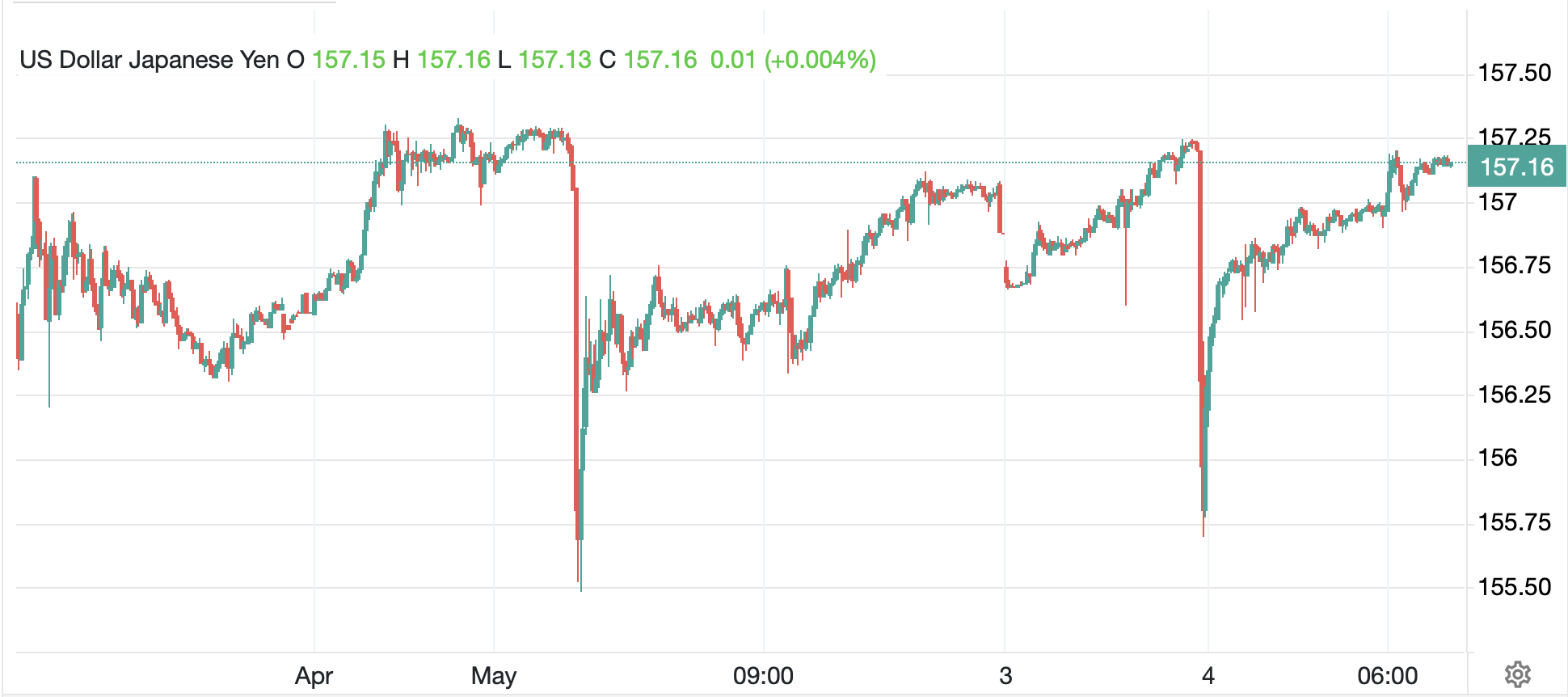
PS, this is where I have been the past several days which prevented (?) me from writing, if you care.

Checkmate

The talks twixt the States and Iran
Collapsed like a climate straw man
Now there’s a blockade
In Hormuz, arrayed
As Trump pivots to a new plan

The first move in oil was higher
But I would beware as a buyer
If Trump rules the Strait
That could be checkmate
And force a much longer cease fire

As of 8:00pm last night, after the peace talks fell apart in Islamabad and President Trump announced the US would be blockading the Strait of Hormuz so no ships carrying oil, especially Iranian oil, would be able to pass the blockade, the price of oil spiked immediately as the futures markets opened.  You can see the last week’s roller coaster in the below chart from tradingeconomics.com

The question that needs to be answered at this point is, is there a substantive difference between the US blocking traffic in the Strait and Iran doing so?  I would contend there is a huge difference, especially if you are China.  But also, if you are Iran.  After all, you just lost your trump card (pun intended) and not only that, if Iranian oil is not able to be sold, then Iran runs out of money pretty quickly.  Remember, oil revenues represent approximately 90% of Iranian total revenues.  How long can the IRGC last with no money to pay their soldiers?

In the meantime, the Saudis are pumping 7 mm bpd across the East-West pipeline now, and the UAE is pumping 1.5 mm bpd to Fujairah, taking a decent sized bite out of the missing barrels.  I read this morning that upwards of 7mm bpd are now exiting the gulf via pipeline reducing the overall reduction in oil flow.  Granted, it is still a huge disruption but shrinking.  On top of that, if this continues, the Strait loses its strategic importance, which cements Iran’s loss of power.  In the short-run, oil prices can go in either direction in my view, but this has the opportunity to completely emasculate Iran’s ability to have an impact on the global oil markets in the future.  

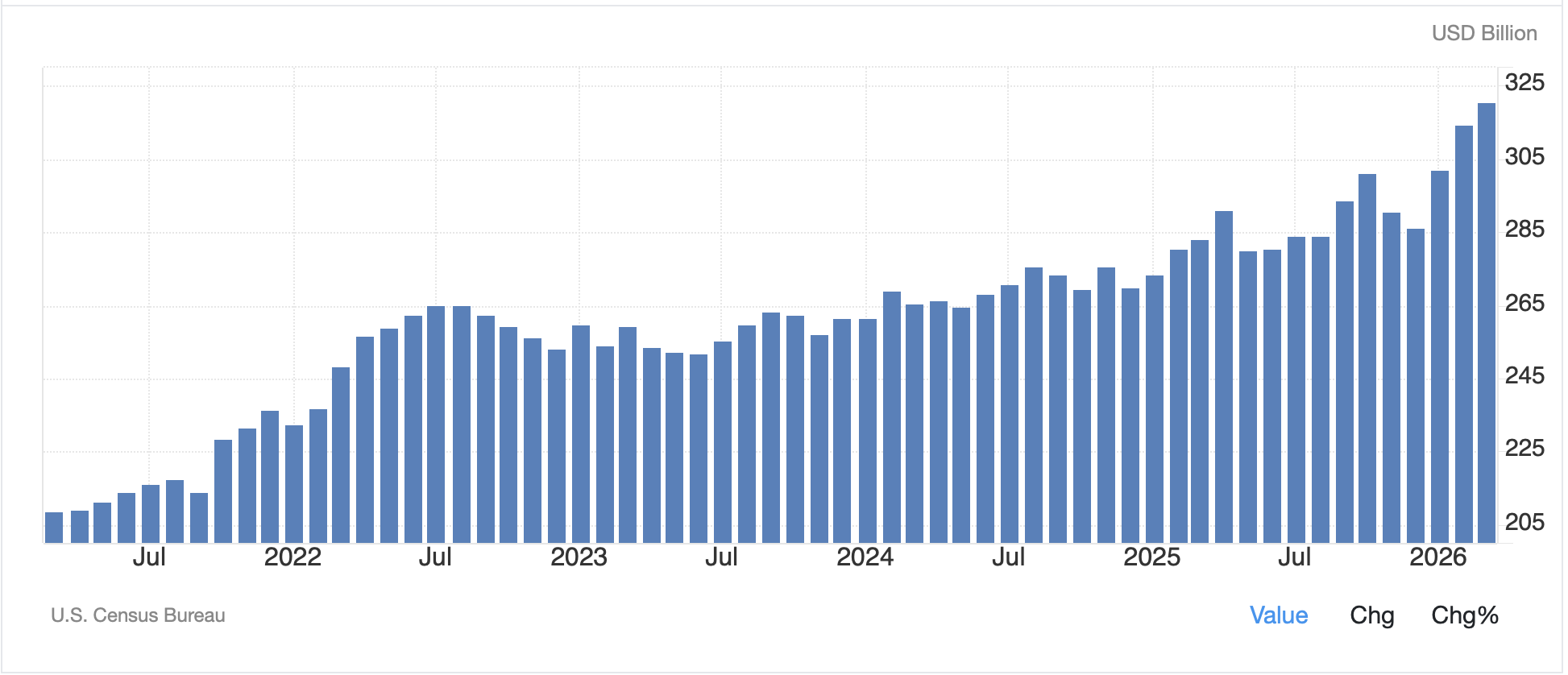
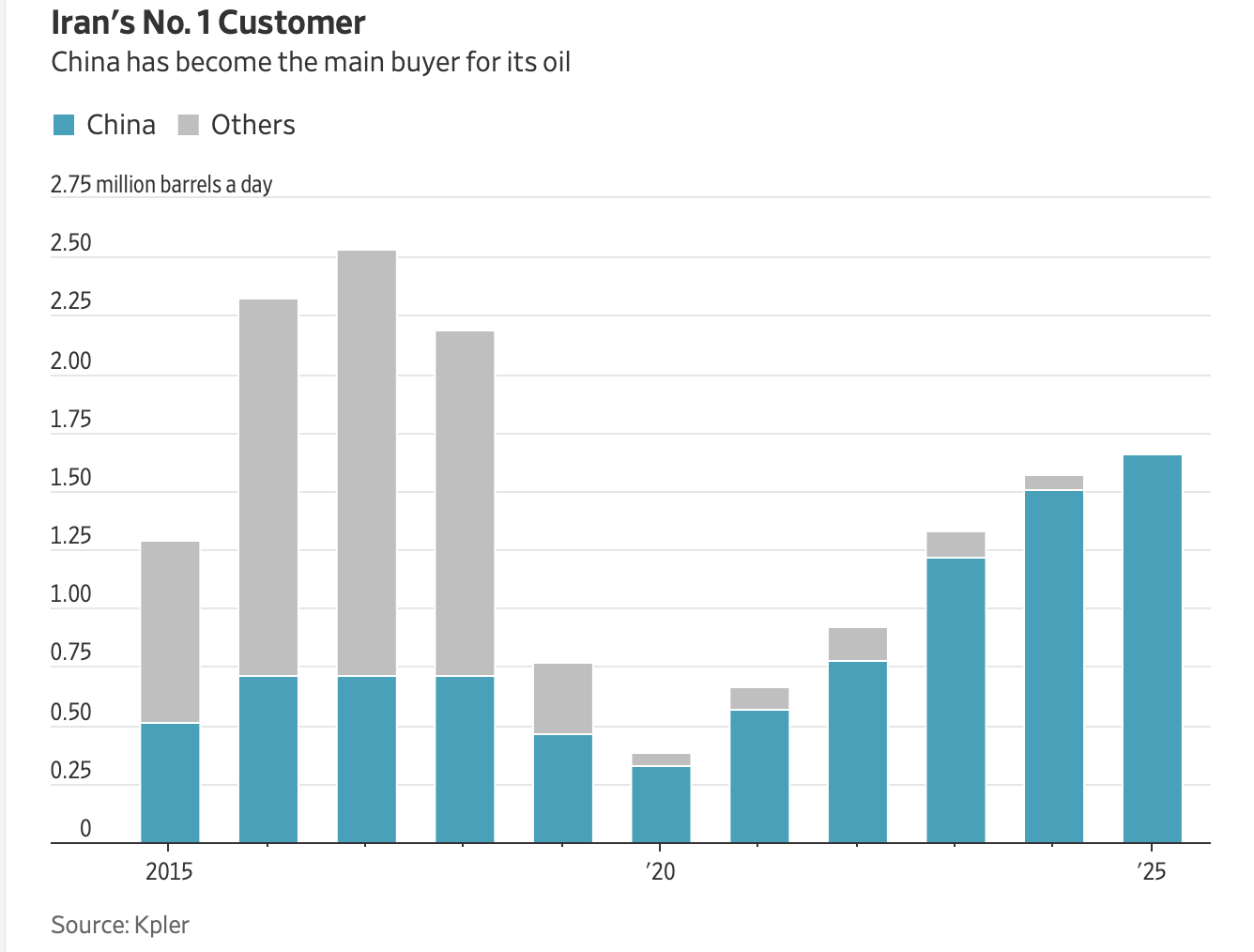
And I would not be surprised if President Xi is burning up the lines to Washington because he just lost a key source of cheap oil, and oil he paid for in CNY.  (see WSJ chart below.)

There are many twists and turns here, and I’m sure there will be more.  But as of Sunday night, from what I have read, Iran is in a much worse position than they were on Friday.  Of course, things could all go pear-shaped from here, and this could turn out to be a complete failure.  Our goal here is to try to track how markets will evolve.

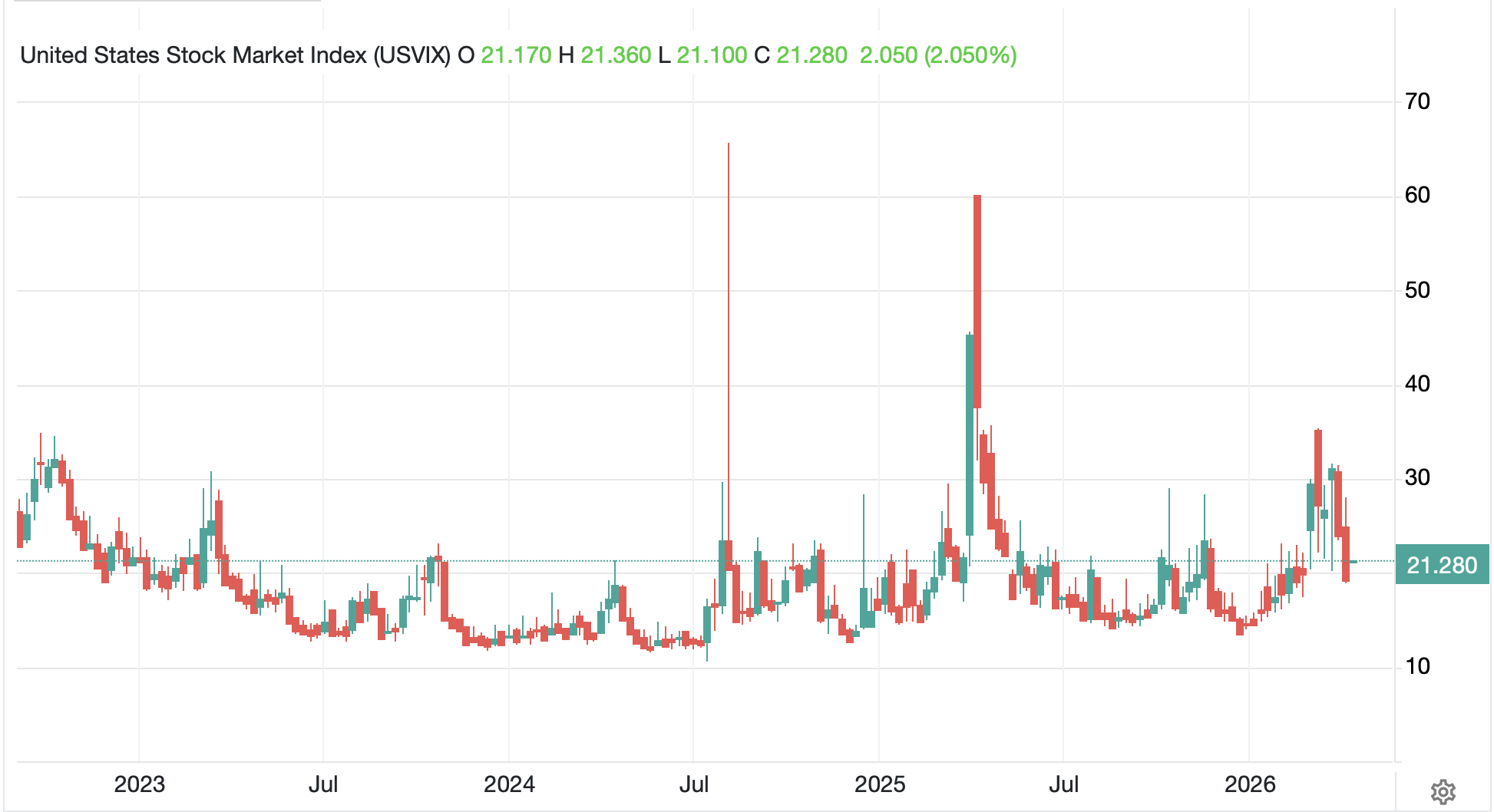
The remarkable thing, still, to me is that equity markets remain so blithe about the entire situation.  I make this claim based on the VIX Index, which remains relatively docile despite everything that is happening in Iran and the likely eventual knock-on effects.  But look at the chart of the VIX below which shows that markets are nowhere near as stressed as they have been in the past and are actually much nearer their long-term average. (The two spikes are the JPY intervention in August 2024, which lasted for just a few hours, and then the Liberation Day tariffs in April 2025 which quickly reversed as well.  

Source: tradingeconomics.com

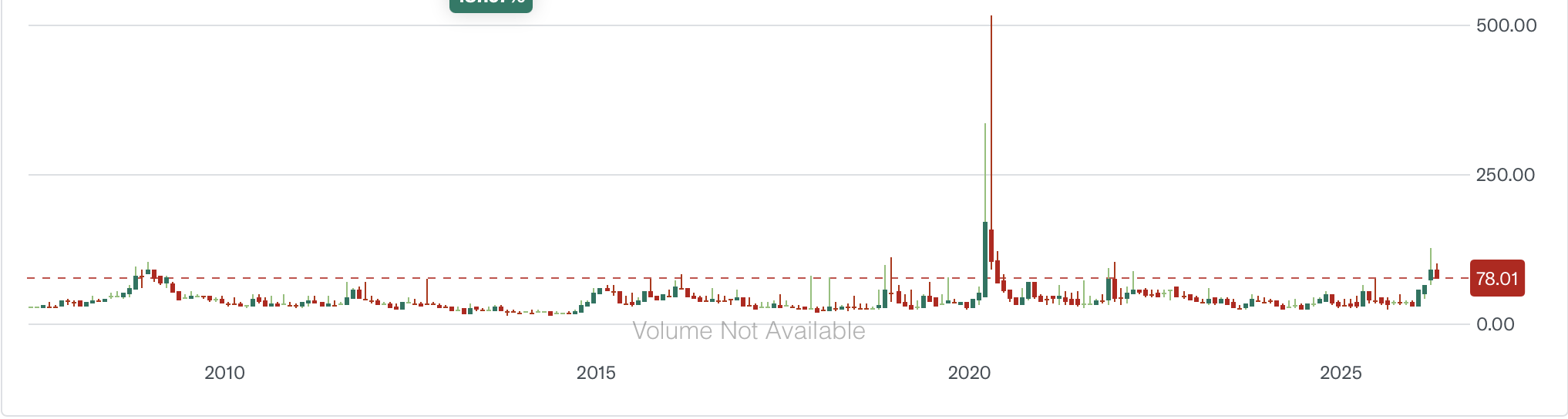
It is worth noting that even the oil VIX, is off its highs and, while somewhat elevated, not running away.

Source: finace.yahoo.com

The thing about the VIX indices to remember, though, is that options decay and holding them is a losing proposition if the underlying market is not moving.  So, to maintain a high VIX, we need to see significant intraday as well as day-to-day price movement.

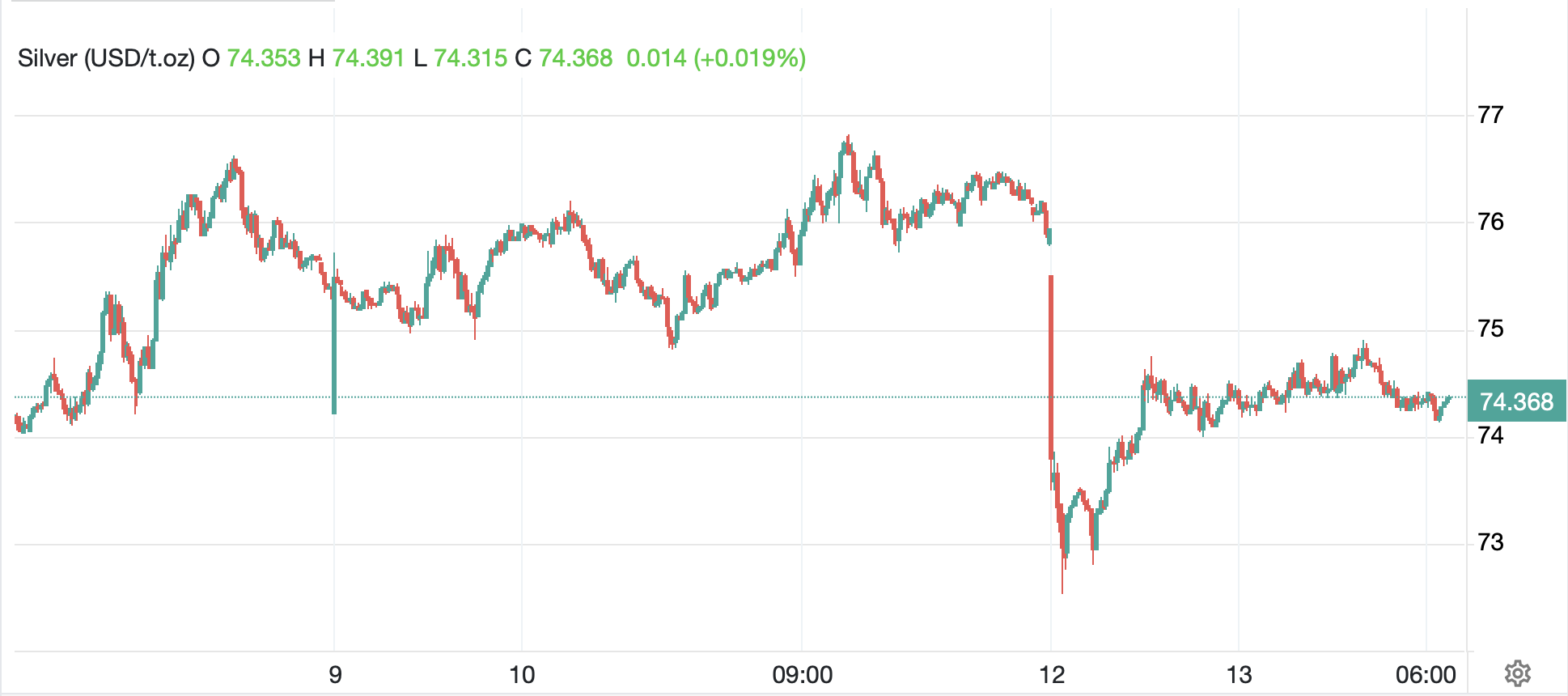
As Iran remains the major storyline for markets, let’s take a look at how things are behaving this morning.  Oil (+8.2%) has maintained its initial gains but not moved since last night.  NatGas (+1.7% in US, +9.0% in Europe) has also been impacted as there is no movement of LNG tankers through the Strait either.  Interestingly, both gold (-0.6%) and silver (-1.7%) while lower are well off the lows seen in the early overnight session as per the below chart of silver.

Source: tradingeconomics.com

I reiterate that the market perception of the current situation has not nearly matched the hysteria evident in much of the commentary.  I’m not sure whether to attribute that to market insight or market ignorance at this point, although I lean toward the former.  The problem with commentary these days is that hysterical takes generate clicks, and that is the goal of many commentators.

Turning to equity markets, Asian markets were generally, though not universally, lower.  Tokyo (-0.7%), HK (-0.9%), Korea (-0.9%) and India (-0.9%) all suffered on the breakdown in talks and the new blockade news.  New Zealand (-1.2%) was the worst performer, largely because their energy situation is deteriorating more quickly than anyone else’s.  But China (+0.2%), Taiwan (+0.1%) and Indonesia (+0.6%) all managed some gains despite the news.  Again, markets appear to be pricing a fairly benign outcome here.  Either the news is going to get better soon, or there is going to be a massive rerating of equity markets.  Something’s gotta give.

In Europe, things are a bit worse overall with Spain (-1.4%) leading the way lower although Germany (-1.0%), France (-0.9%) and Italy (-0.8%) are all under real pressure as well.  There has been a lot more press lately about how Spain’s PM Sanchez is cozying up to China as he seems to be pulling Spain away from the EU in several areas.  Of course, he is an avowed socialist, so perhaps this should not be that surprising.  However, this is further proof that NATO is surely going to die soon.

One market that has outperformed, though is Hungary (+2.8%) which is rallying sharply on the weekend’s election results that sent President Victor Orban into retirement.  Certainly, most others in Europe are thrilled as Orban had been a thorn in the side of the EU with respect to their Russia stance, but the economy there has been underperforming so new leadership is widely lauded, for now.  The forint (+1.9%) also benefitted from the election outcome.  

As to US futures, as I type at 7:00, the major indices are lower by -0.3% or so, well off the initial levels seen last night that were as much as -1.4% below Friday’s closing levels.  Again, markets remain sanguine over the weekend changes to the story.

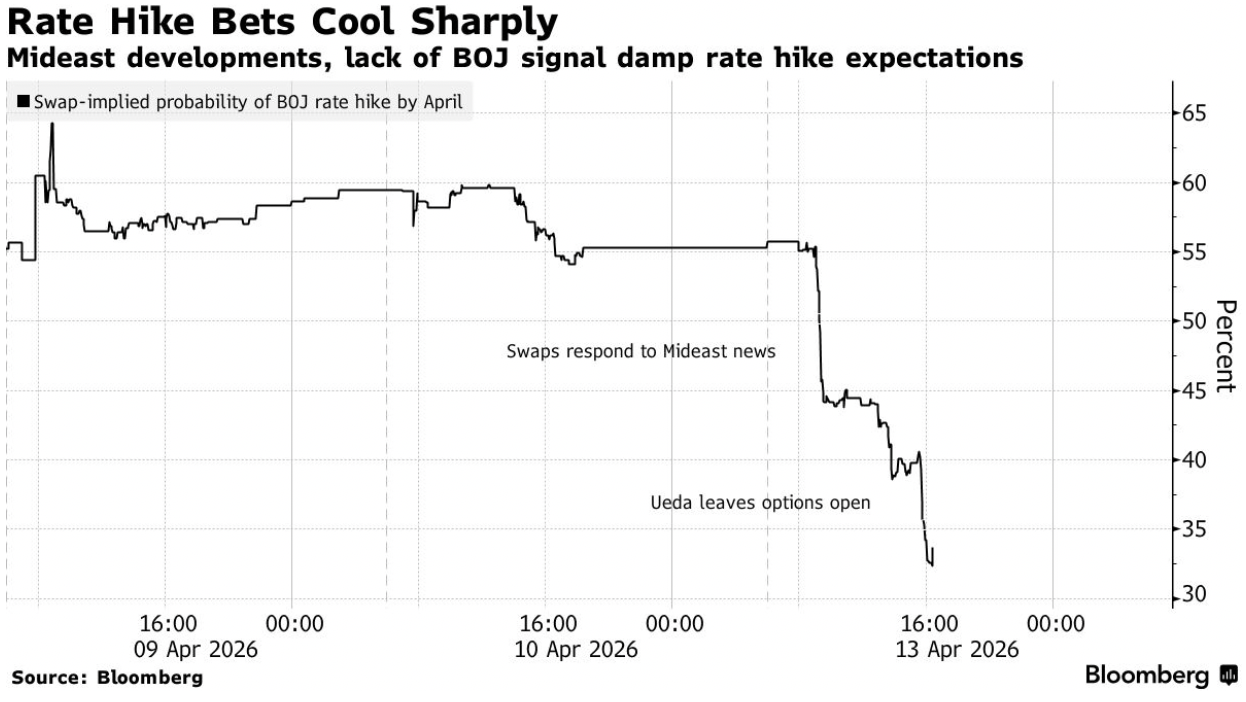
In the bond market, Treasury yields have edged higher by 1bp and in Europe, we are seeing rises of between 1bp and 3bps across the board.  Here, too, it is hard to find panic in the streets.  JGB yields (+2bps) have made a new high for the move and continue to edge higher as concerns over the path of inflation rise given the oil price rise.  Last night, BOJ Governor Ueda gave a speech (actually his deputy did because he is in Washington for the IMF/World Bank meetings) and tried to quash the view that the BOJ was definitely going to hike rates at the end of this month, an outcome that had been priced at a 65% probability prior to his speech as you can see from the Bloomberg chart below.

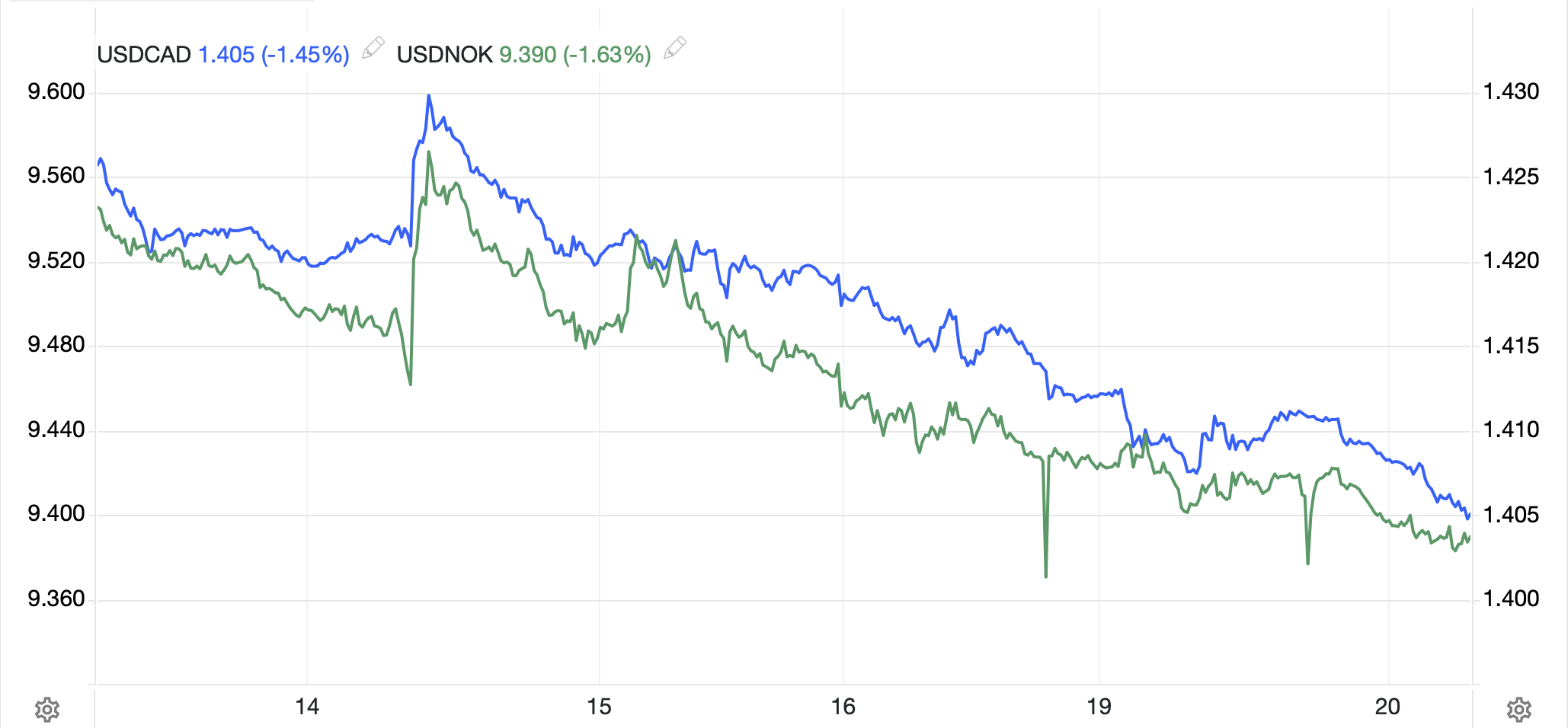
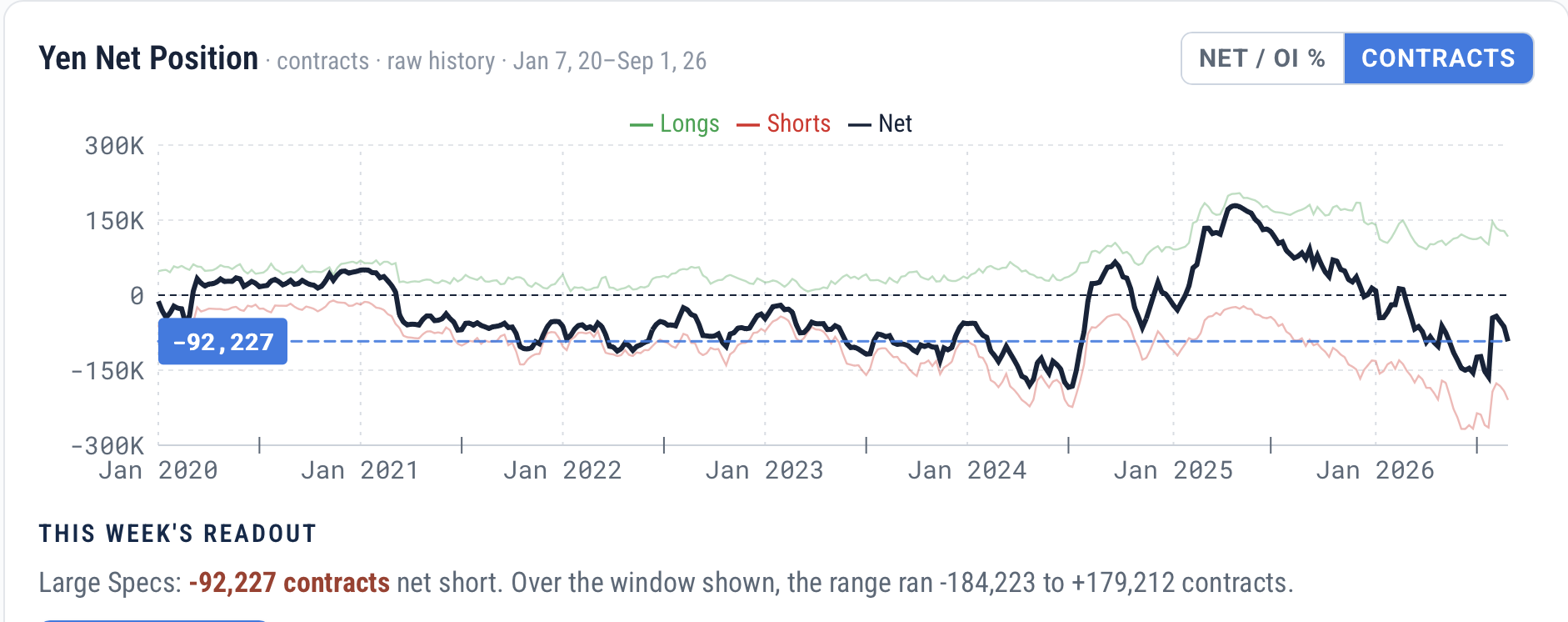
Finally, in the FX market, other than HUF as described above, and NOK (+0.6%) responding to the oil move the dollar is firmer across the board.  However, the movement is not too large, generally on the order of 0.2% or so across the G10 and perhaps a bit more in the EMG bloc.  The worst performer today is ZAR (-0.8%) which is suffering the dual problems of a lower gold and higher oil price.  The other noteworthy thing is JPY (-0.3%) is creeping back toward the 160 level, which remains the default setting for the market belief as an intervention level.

On the data front, Friday’s CPI was hot, but not quite as hot as forecast, although you can be sure that next month will remain hot.  This week brings the following mostly secondary stuff.

TodayExisting Home Sales4.06M
TuesdayNFIB Business Optimism98.6
 PPI1.2% (4.6% Y/Y)
 -ex food & energy0.6% (4.2% Y/Y)
WednesdayEmpire State Manufacturing-2.0
 Fed’s Beige Book 
ThursdayInitial Claims215K
 Continuing Claims1840K
 Philly Fed9.0
 IP0.1%
 Capacity Utilization76.3%

Source: tradingeconomics.com

As well, we hear from eight different Fed speakers over 10 venues.  An interesting aspect of the commentariat lately is that individual FOMC members are going to be far more important as there is a growing diversity of opinion.  So, the monolithic Fed Chair running things and encouraging a vote in a particular way may evolve into an actual election, where the voters vote their hearts, not the Chairman’s views just to get along.  If this is the case, and I think it would be far better than what we currently have, we will need to listen more closely to the individual speakers and start a scorecard to see who seems hawkish or dovish at any given time.  The problem is, I fear it will encourage all of them to speak more frequently, which is a worse outcome, although any given voice will likely be given far less weight.  We shall see if that is the case.

As to the broad scheme of things. My head tells me that the market is underpricing the risks out there, but my eyes explain that this is the current consensus.  I hope they are right and I am wrong about things.

Good luck

Adf
Feeling the Blues

Last night we saw two things of note
The first was exciting, not rote
The Artemis II
Launched higher and flew
Just like Jackie Gleason would quote

The other was Trump’s broad address
Regarding the Middle East mess
He said that the war
Was closing the door
So, Mullahs have no nuke access

For markets, though, this latter news
Was clearly at odds with their views
So, rallies we’ve seen
Have all been wiped clean
And bulls are now feeling the blues

I will start with the highlight of the evening, the successful Artemis II space launch, where NASA’s latest mission to send four astronauts to orbit the moon and come home began.  As a child of the Sixties, I well remember being at Camp Mah-Kee-Nac, in Lenox Mass, with the entire camp gathered around a small black and white TV to watch Neil Armstrong step on the moon.  A remarkable time and achievement that portends a great future.

The other story, though, was less optimistic, at least for markets in the short term.  The President’s address did not signal an end was near, at least not to the market’s collective ear.  Instead, Mr Trump made a series of statements and claims, many of which we have heard before, but here they were all gathered in one place.

  • *TRUMP: IRAN’S NAVY IS GONE, AIR FORCE IN RUINS
  • *TRUMP: MOST OF IRAN’S LEADERS ARE DEAD
  • *TRUMP: IRAN’S ABILITY TO LAUNCH MISSILES AND DRONES CURTAILED
  • *TRUMP: DON’T NEED OIL FROM MIDDLE EAST
  • *TRUMP: WILL NEVER LET IRAN HAVE NUCLEAR WEAPON
  • *TRUMP: CORE STRATEGIC OBJECTIVES IN IRAN NEARING COMPLETION
  • *TRUMP: THESE STRATEGIC OBJECTIVES NEARING COMPLETION
  • *TRUMP: MUST COMPLETE MISSION IN IRAN
  • *TRUMP: WE WILL FINISH THE JOB VERY FAST
  • *TRUMP: GETTING VERY CLOSE TO FINISHING JOB IN IRAN
  • *TRUMP: WE ARE ON TRACK TO COMPLETE ALL MILITARY OBJECTIVES
  • *TRUMP: WE WILL NOT LET MID EAST ALLIES GET HURT OR FAIL
  • *TRUMP: WILL HIT IRAN EXTREMELY HARD OVER NEXT 2-3 WEEKS
  • *TRUMP: WILL BRING IRAN BACK TO STONE AGE WHERE THEY BELONG
  • *TRUMP: NEW LEADERS IN IRAN LESS RADICAL, MORE REASONABLE
  • *TRUMP: IF THERE IS NO DEAL, WILL HIT IRAN’S ELECTRIC PLANTS
  • *TRUMP: WE HAVE NOT HIT THEIR OIL EVEN THOUGH EASIEST TARGET
  • *TRUMP: WILL HIT IRAN WITH MISSILES IF WE SEE THEM MAKE A MOVE
  • *TRUMP: WE HAVE ALL THE CARDS THEY HAVE NONE
  • *TRUMP: ON THE CUSP OF ENDING IRAN’S THREAT TO AMERICA

He also explained that the rising gasoline prices were a result of Iranian attacks on tankers but that the US was well supplied and would weather any storm in the short run with no problems.  However, this is not what markets were looking for, that is very clear.  So, the past two days of rainbows and unicorns are a distant memory this morning.  A look at the chart of the S&P 500 below shows the end of last week’s concerns grew into optimism right up until 9:00pm EDT last night when Mr Trump took to the podium.

Source: tradingeconomics.com

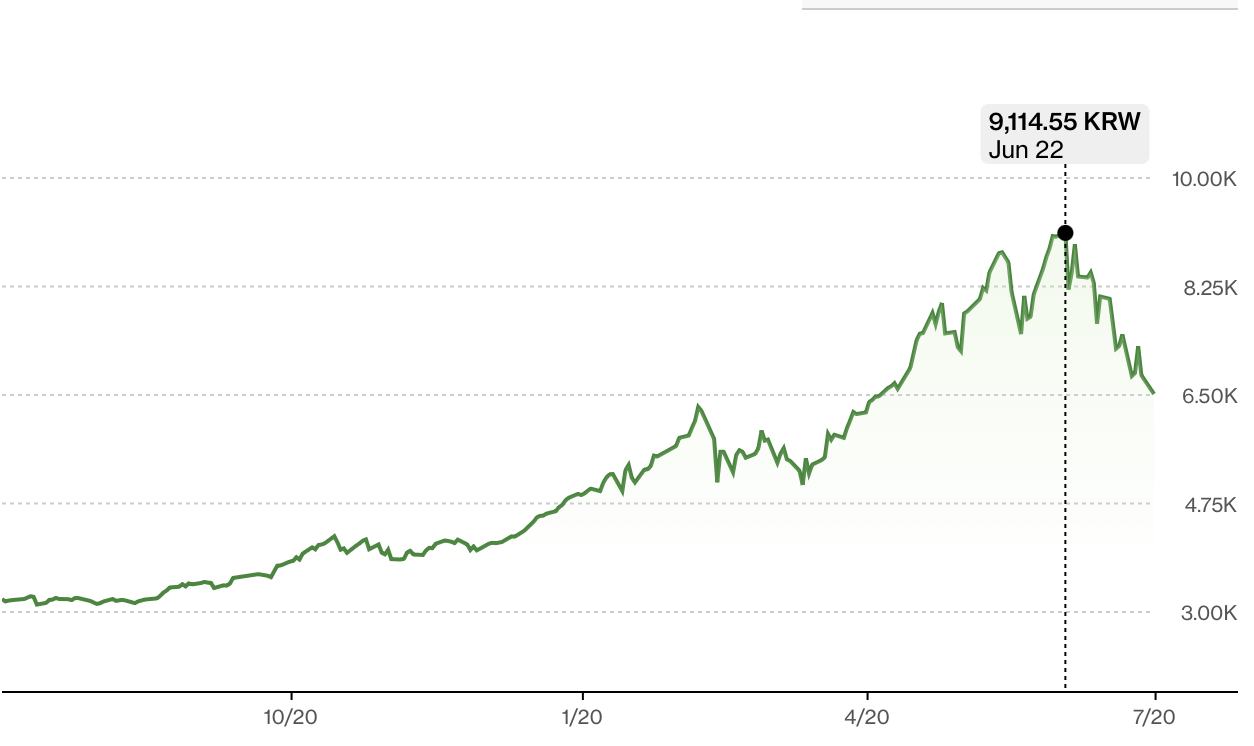
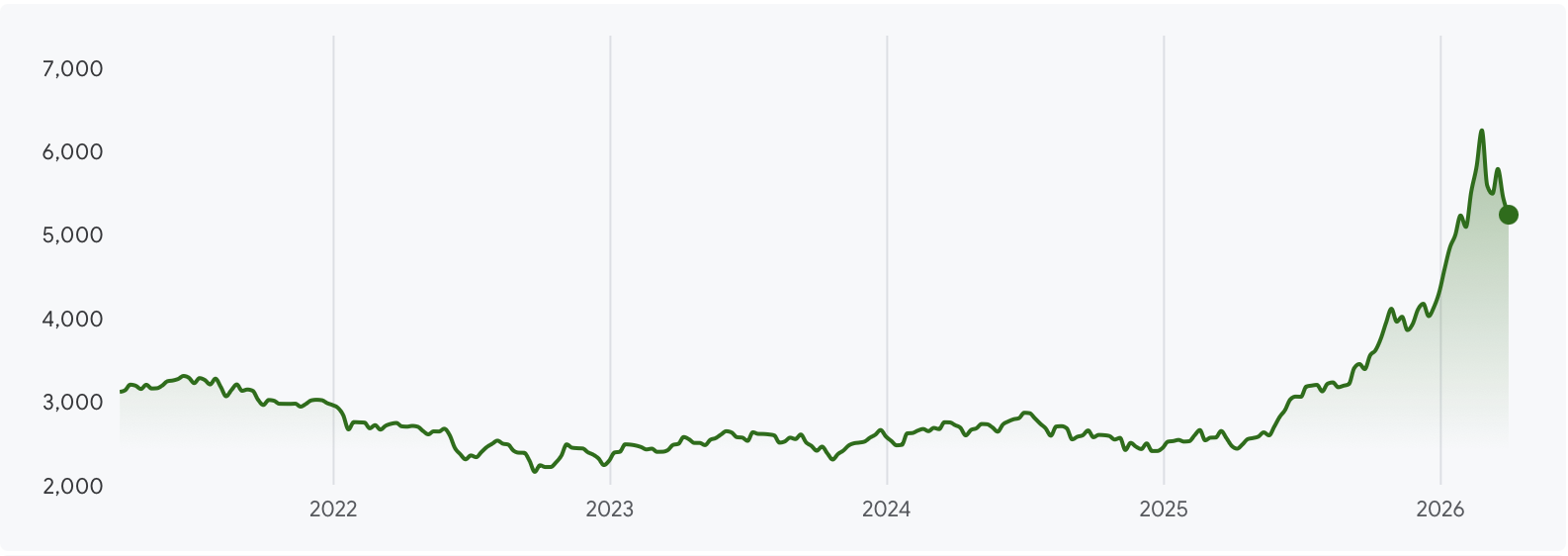
While futures are only lower by -1.0% at this hour (6:30), the response in both Asia and Europe was quite negative overall.  For instance, in Asia, Tokyo (-2.4%) led the way lower although weakness was virtually universal (China -1.0%, HK -0.7%, Australia -1.1%, Taiwan -1.8%) while the biggest loser was Korea (-4.5%) which has been in the process of unwinding what appears to have been a massive bubble there as per the below chart.

Source: google.com

European bourses are also lower across the board with the UK (-0.1%) the clear winner (least bad?), while the continental exchanges (Germany -1.85%, Spain -1.3%, Italy -1.2% and France -0.9%) are all faring poorly this morning.  It is very clear that the idea the war would be ending soon has been pushed back.  I have to say, that given the ongoing buildup in military assets in the Gulf region by the US, that always struck me as an odd belief.  I guess we will need to wait a few more days/weeks to see.

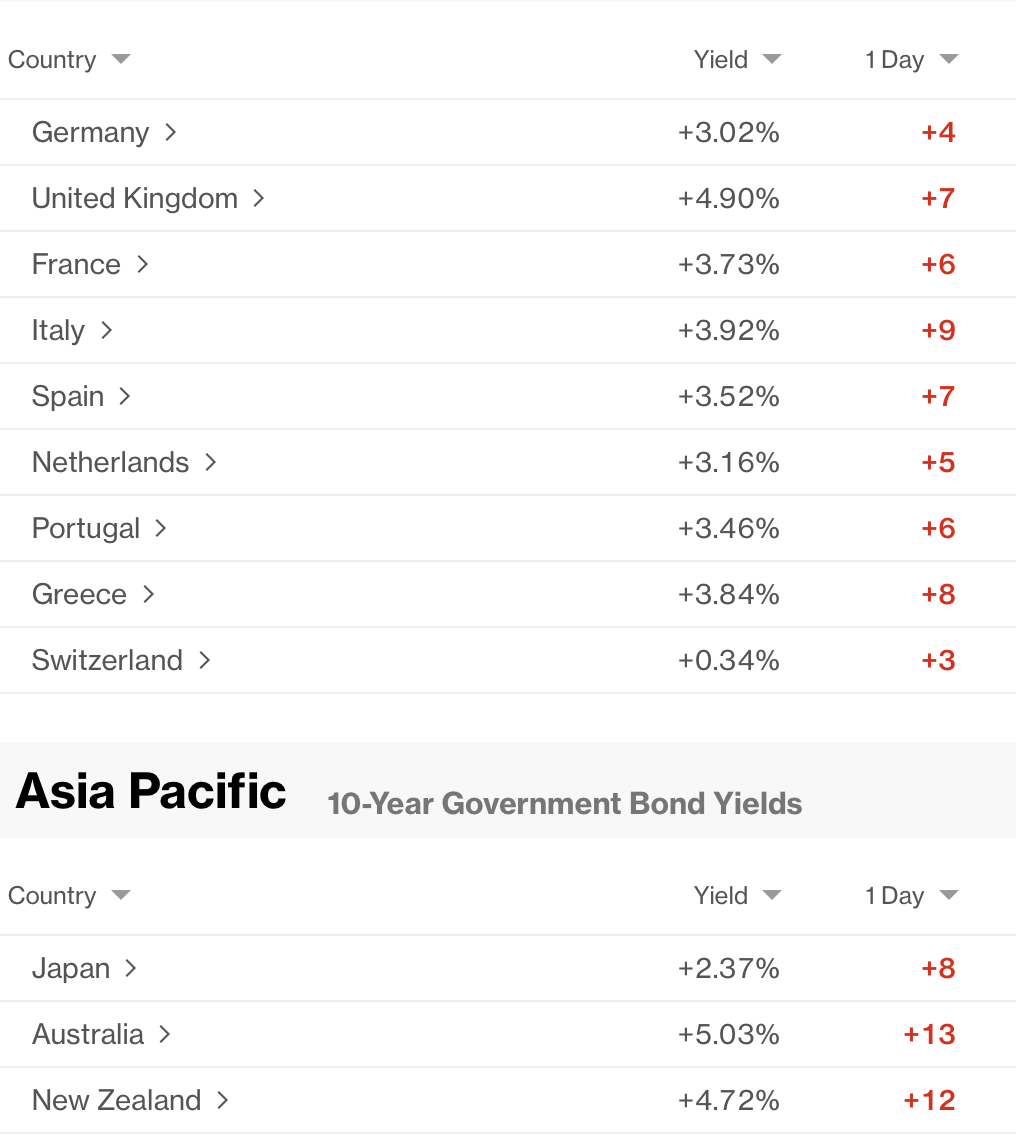
In the bond market, too, price action from the beginning of the week has reversed.  Treasury yields have rebounded 5bps this morning, although remain well below the recent peak of late last week, and you can see how Europe and Asia behaved in the Bloomberg screen shot below.

I expect that we will continue to unwind the price action from the early part of this week as the situation appears far closer to the market beliefs of last Friday than yesterday.

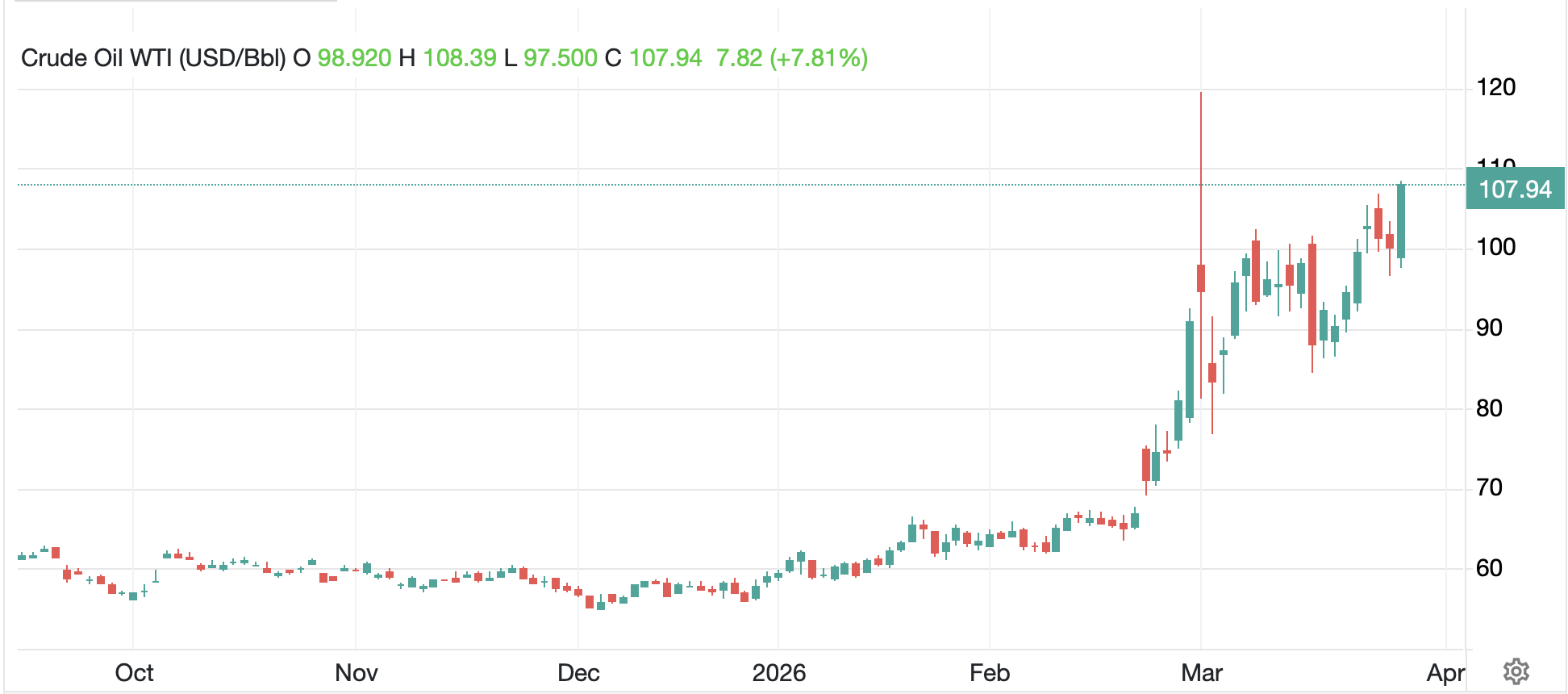
Turning to commodities, oil (+7.8%) has rebounded sharply as you can see in the below chart, actually trading now at its highest level since the initial spike move the evening the attacks began.

Source: tradingeconomics.com

Brent crude rose a similar amount and interestingly, the spread between Brent and WTI has collapsed to just $0.52, it’s narrowest level since May 2022.  That leads me to believe the market is pricing in a great deal more interest in US exports as oil supply will be curtailed for a while going forward.  In keeping with the unwinding theme, precious metals were sold off aggressively with gold (-3.4%) and silver (-5.5%) retracing much of their recent gains.  Both are still well above the spike lows seen two weeks ago, but I imagine that there is further to decline based on the current vibe.

Finally, the dollar has rebounded sharply against all comers this morning with the DXY (+0.6%) back above the 100 level as the euro (-0.7%) probes 1.15 again and the yen (-0.5%) trades back toward 160.00.  Nothing in the G10 has been spared, although CAD (-0.4%) and NOK (-0.4%) are the best performers as clearly oil’s rise is helping them both.  In the EMG bloc, it should be no surprise that ZAR (-1.1%) is the laggard given the move in gold and platinum (-3.4%).  But even CNY (-0.4%) has seen substantial selling while INR (-0.5%) and KRW (-0.2%) also continue to slide.  The CE4 are all weaker by -0.7% and CLP (-0.9%) is feeling the weight of copper’s decline.  The only outlier really, today, is Brazil (0.0%) which is unchanged as remember, they are a major oil producer and far away from the current problems.

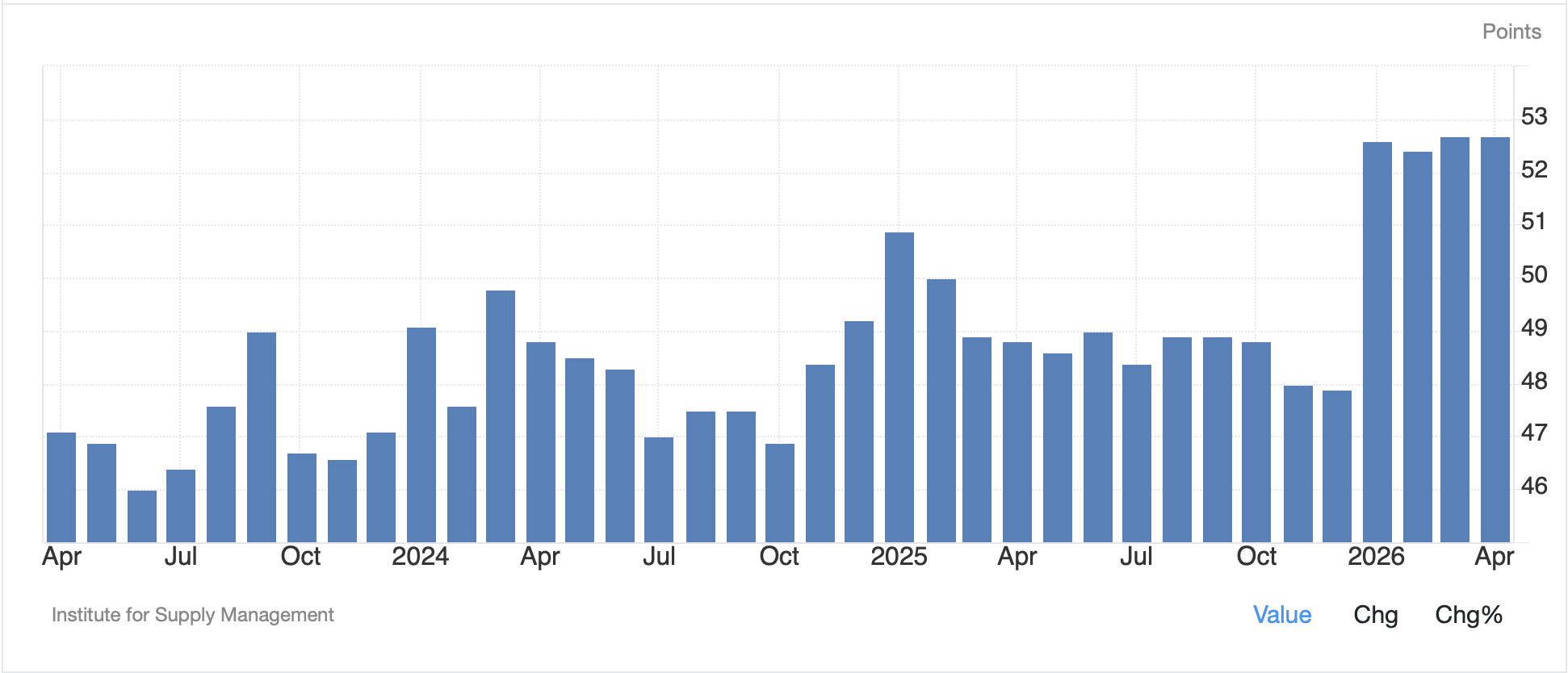
On the data front, this morning brings Initial (exp 212K) and Continuing (1840K) Claims as well as the Trade Balance (-$59.2B), none of which seem likely to matter to markets.  Yesterday saw generally stronger than expected data with ISM Manufacturing ticking up to 52.7 while Retail Sales surprised a tick higher as well at 0.6%, 0.5% ex autos.  ADP Employment was also modestly better than expected.  As such, it continues to be difficult to call for a significantly weaker US economy, at least based on the data we continue to see.  However, the Atlanta Fed’s GDPNow reading was revised to 1.9% for Q1 yesterday, down a tick from the previous estimate.  Still, that is not a collapse.

Pulling it all together, the war in Iran is going to continue for at least 2-3 more weeks and there is no clarity on whether the US is going to attempt to take Kharg Island.  It still seems to be part of the discussion, but as I wrote yesterday, strategic ambiguity is a key part of President Trump’s method.  In the meantime, my take is we are much more likely to behave like the end of last week going forward, than the beginning of this week.  That means risk will be reduced and the dollar will benefit.

Good luck

Adf
First Black Swan

‘Ought Twenty-Six barely got started
And Trump has already departed
From previous norms
Of post-Cold War forms
Now socialists are broken-hearted
 
Their man in Caracas is gone
With outrage from Beijing to Bonn
But folks on the street
Believe it’s a treat
Please welcome this year’s first black swan


I certainly didn’t have the exfiltration of Venezuelan strongman Nicholas Maduro from his palace in the middle of the night on my bingo card, did you?  But that is what we all woke up to Saturday morning.  In a way, we cannot be surprised as President Trump indicated several weeks ago that he spoke with Maduro, told him if he left, he could have safe passage, and be left alone, but ostensibly Maduro turned him down.  I’m guessing old Nick is questioning that decision right now.

As this all took place Saturday morning, no financial markets, other than cryptocurrencies, are open and based on Bitcoin’s movement of 0.1% as I type, it appears the issue is not seen as a major concern.  There is much discussion regarding what will happen to the price of oil, as unquestionably, Venezuelan oil was part of the decision equation.  But the Venezuelans have been producing less than 1 million bpd, far below their pre-socialist levels, and given they sit on the largest known oil reserves on the planet, far below what their ultimate capabilities can be.  If you’re Chevron’s CEO, you must be thrilled this morning, as they are already operating in country there.

Too, remember that Venezuelan crude is heavy and sour, which is what most Gulf Coast refineries are tuned to utilise to distill diesel, gasoline and other products.  It is too early to know what will happen to oil prices in the short run, but I would suggest that the longer-term view has to be lower prices going forward.  Consider that the US already is the largest producer of oil and oil equivalents (about 20mm bpd) in the world.  I would expect that Venezuela will be exiting OPEC under a new administration there, and with US oil expertise, will be seeking to expand that sector as rapidly as possible.  In fact, achieving 10mm bpd within a few years does not seem unrealistic. 

Now consider that by the end of the decade, the Western hemisphere could well be producing half the world’s oil supply, as already, despite degradation of capabilities in both Venezuela and Mexico, it produces more than one-third of the oil pumped.  That would certainly put a crimp in Russia’s war machine as the price seems far more likely to head toward $50/bbl than $80/bbl or higher, and by all accounts, that would be hard on Russia’s budget.

Too, consider the geopolitical ramifications if China were suddenly paying full price rather than whatever discounts they currently get for sanctioned oil purchases.  As well, what does a lower price do to the Iranian regime’s finances?  Probably not very helpful.

It is way too early to know how things will evolve, but between growth in production in Guyana and Argentina, and the prospects for significant growth in Venezuela going forward, it should become cheaper to fill up your tank going forward.

We will see how markets open Sunday night, and I would not be surprised to see oil rally at the start, but I would contend the politics points to lower prices not higher ones.  

Source: visualcapitalist.com

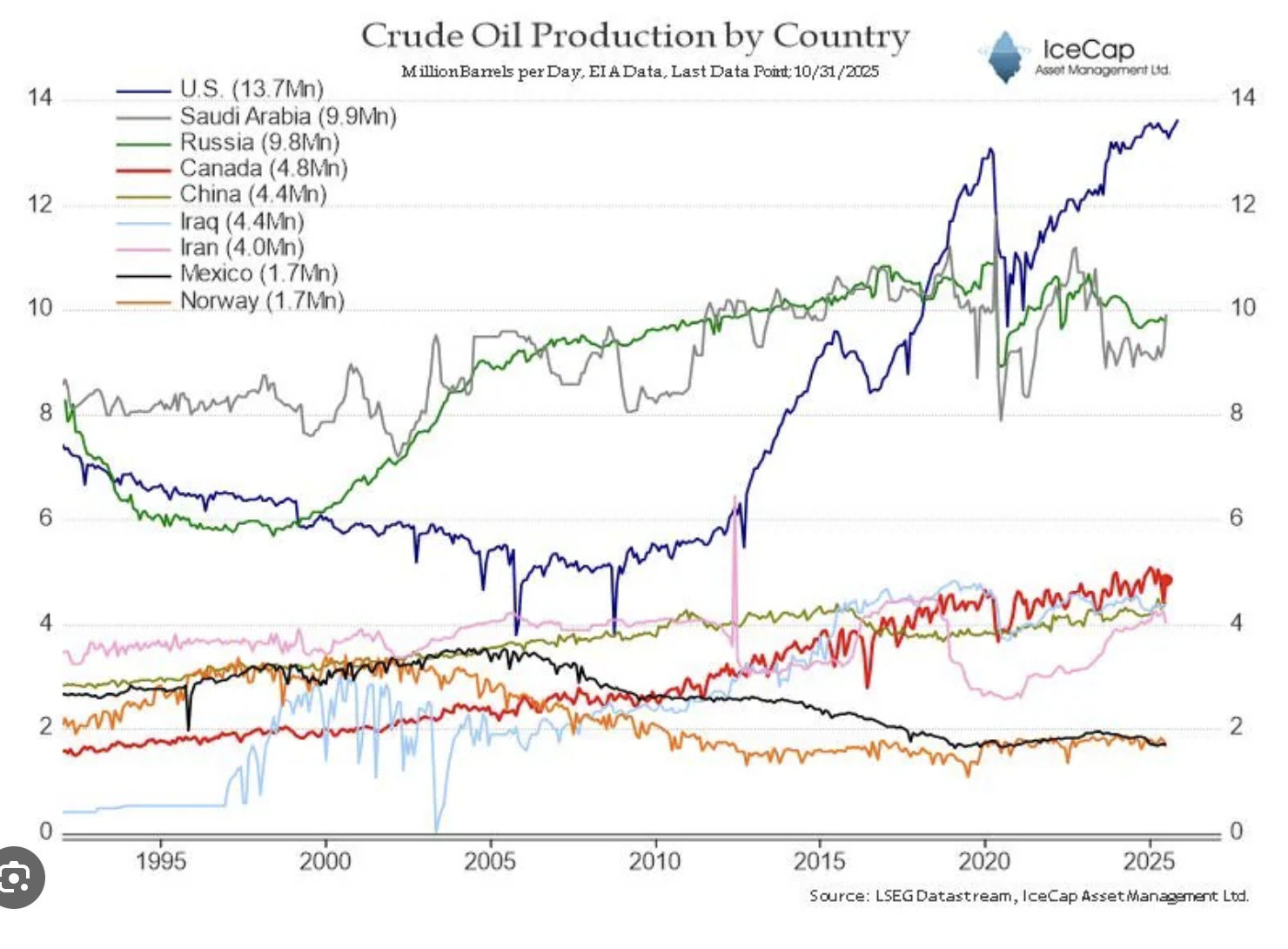
Note that neither Venezuela nor Argentina make this list individually.   I would wager that by 2027, both will be prominent producers, along with Guyana.

Welcome to 2026!  It is going to be an interesting year.

Good luck

Adf
He Axed Her

The NFP data was weak
And President Trump did critique
The BLS head
But unlike the Fed
He axed her as pundits did freak


However, it is a fair question to ask if she was incompetent or politically motivated in her daily activities.  After all, it is abundantly clear there are many government workers who are ostensibly non-partisan who are, in fact, highly partisan.  As such, I took a look at the seasonally adjusted NFP data (the non-seasonally adjusted data is wildly volatile) to see if we could discern a pattern.  I created the chart below from BLS data on revisions with May 2025, the latest month with the normal two revisions, on the left and January 2007, prior to the GFC, all the way on the right.

If you look on the left side of the chart, you can see a great many negative revisions.  In fact, 21 of the last 29 months were revised lower from the original print.  If we assume that the BLS models are unbiased, then one would expect a roughly equal distribution of both positive and negative revisions over time.  It turns out, under the unbiased assumption, the probability of 21 out of 29 negative revisions is a very tiny 0.80%.

What conclusions can we draw from this?  My first thought is that the BLS models are not very effective at modeling reality.  I have raised this point many times in the past, the idea that the models that worked in the past, certainly pre-Covid, have been having trouble.  This begs the question as to why an economist of Ms McEntarfer’s long experience didn’t seek to develop a more accurate model.  As it is, there is no evidence that she did so.  I imagine as a government employee, the idea that one should change something that exists within the government framework is quite alien.  Thus, her competence could certainly be called into question, I think.

If we consider the alternative, that her actions were politically motivated, that will be more difficult to discern.  However, given the predominance of Democrat voting members of the federal government and given the fact she was appointed to this position by President Biden, it is fair to assume she is not in favor of the current administration, at the very least.  Now, during Mr Biden’s term, the initial NFP data was consistently better than expected, thus giving the impression that the economy was stronger than it may have otherwise been.  After all, stories about revised data are usually on page 12 of the paper, not headline news.  It is, therefore, possible that she was putting her proverbial thumb on the scale to flatter Biden’s economic performance.  As to her likely distaste of Mr Trump, I expect that to the extent she had the ability to do so, weaker headlines and large negative revisions would be exactly her contribution.

However, the political issue is largely speculation on my part, although I would argue it is plausible.  On the other hand, there is nothing in her background to suggest she is an especially thoughtful or creative economist and there is no indication that she examined the models she oversaw for flaws.  In the end, I come down on incompetence driving a political motive.  But I doubt we will ever know.  

Now, it is not a very good look for a leader to proverbially kill the messenger, which is essentially what Trump did.  Not surprisingly, much hair is on fire in the press and punditry, not because they though McEntarfer was particularly good at her job (I’m sure nobody had ever heard of her before) but because, as we have observed time and again, President Trump doesn’t follow their rules, and they don’t know what to do about it. 

Will this matter in the end?  This is merely the latest tempest in a teapot in my opinion and will do nothing to change the economy.  However, there is one interesting feature of the employment situation that can be directly attributed to the immigration situation.  As you can see in the FRED chart below, since March, the number of foreign-born workers has declined by 1.46 million while the number of US born workers has increased by more than 1.8 million.  I would say that as long as American citizens are finding jobs, President Trump is likely to remain quite popular across the nation despite all the negative press.

The weak NFP report altered the narrative on Friday, with bond yields, equity markets and the dollar all tumbling and the probability of a September rate cut jumping to 80%.  Perhaps President Trump is correct, and it is time to cut rates.

That’s all for this special Sunday night edition.

Good luck

Adf
The Perfect Riposte

Attention right now’s being paid
To Congress on taxes and trade
The One BBB
Is seen as the key
To growth in the coming decade
 
Meanwhile, Sintra right now’s the host
To Powell, Lagarde and almost
All central bankers
Each one of whom hankers
To nurture the perfect riposte


The headlines this morning highlight that Congress put in an all-nighter last night as they try to get the BBB over the line and on the president’s desk by Friday.  My take is they were seeking sympathy for all the hard work they must do and trying to make it seem like they are slaving away on their constituents’ behalf.  Yet it appears that since the president’s inauguration on January 20, 161 days ago, Congress has been in session for somewhere between 40 and 50 days (according to Grok), about one-quarter of the time.  I have seen these estimates elsewhere as well, and quite frankly, it doesn’t speak well of Congressional leadership.  

In the end, though, I continue to expect the BBB to get passed by both houses and sent to the president.  I’m certain there are still a lot of things in the bill that many fiscal conservatives will not like, but I’m also confident that the fact that not a single Democratic representative or senator is going to vote for the bill is likely a sign that it does more good than harm.  I am completely aware of the debt and deficit issues and questions of their long-term sustainability, and I am not ignoring that.  But politics is the art of the possible, not the perfect, and my take is this is possible.  Consider for a moment the Orwellian-named Inflation Reduction Act from 2022, which passed the Senate on a tiebreaker vote by VP Harris.  That was a much more harmful piece of legislation from a fiscal perspective than this.  In fact, I would say this is the very definition of politics.

Through a market lens, if (when) this is passed, while there may be an initial ‘sell the news’ move, I suspect that the stimulus it entails will be a net benefit for risk assets overall.  And the only reason there would be a sell the news event is that the market is already pricing in a great future as evidenced by yesterday’s quarterly close at new all-time highs for the S&P 500, above 6200.

Turning to the other noteworthy news, the ECB is holding their faux Jackson Hole event this week in Sintra, Portugal where all the heads of major central banks are currently gathered along with academics and journalists who are there to spread the good word.  Chairman Powell speaks today, but this is the Powell story of the day.  Apparently, President Trump had this hand-written note delivered to the Fed Chair.  Are we not entertained?

But ignoring for a moment the president’s desires, let us consider the dollar and its potential future direction.  The predominant current thinking is that it has further to slide as the trend is clearly lower and the rising anticipation of a recession in the US forcing the Fed to cut rates further will undermine the greenback.  Let’s break that down for a moment.  There is no question the dollar is currently in a downtrend as evidenced by the chart below.  A look at the red line on the right shows the slope of the decline thus far this year, which totals about 11%.

Source: tradingeconomics.com

In fact, much has been made of the decline thus far this year as to its speed and how it is a harbinger of both a recession and the end of the dollar’s hegemony.  Yet, we don’t have to go very far back in time, late 2022-early 2023 to see a virtually identical decline in the dollar over a slightly shorter period, hence the steeper slope of the line in the center of the chart, and I cannot find a single descrying of the end of the dollar at that time. Too, I remember being certain a recession was on the way then, when it never arrived.  According to JPMorgan, it seems the recession probability for 2025 is now 40%.  I have seen estimates ranging from 25% to 80% over the past few months which mostly tells me nobody has any idea.

We also don’t have to go very far back in time to see when the dollar was substantially weaker than its current levels.  I’m not sure why this time the dollar’s recent trend means the world is ending when that was not the case back in 2023 or any of the myriad times we have seen movement like this in the past.

But one other thing to consider regarding the dollar is that the BBB is going to provide significant stimulus to the economy.  Combining this with President Trump’s trade policies which are designed to draw investment into the US, and seemingly are working, and I think that despite his desire for lower interest rates, the Fed will have little reason to cut amid stronger growth in the economy.  I do not believe you can rule out a turn in the dollar higher once the legislation is passed as it is going to matter a great deal.  While spending priorities are going to change, it appears that investment is going to rise and that will help the buck.  Be wary of the dollar is dying thesis.

Ok, yesterday’s market activity, while reaching record highs in the equity markets, was actually incredibly slow with volumes shrinking.  My sense is folks are on holiday this week and those who aren’t are waiting for Thursday’s NFP data, so they can then run out of the office and go for their long weekend.  But the rest of the world doesn’t have the holiday Friday and are all trying to solve their trade situation with the US.  That led the Nikkei (-1.25%) lower yesterday as there appears to be a timing mismatch from a political perspective.  Ishiba doesn’t want to agree to open Japan’s market to US rice ahead of the election on July 20th as that will be a major political problem, but July 9th is approaching quickly, and Trump has said that is the date.  But aside from Japan and Hong Kong (-0.9%) the rest of the region had a pretty solid session led by Thailand (+2.1%) and Taiwan (+1.3%).  In Europe, though, PMI data was less than stellar, and bourses are modestly softer (DAX -0.5%, CAC -0.4%, FTSE 100 -0.3%) although Spain’s IBEX (+0.2%) has managed a gain as they had the best PMI outcome of the lot.  

In the bond market, yields continue to slide everywhere with Treasuries (-4bps) actually lagging the Eurozone which has seen declines of -6bps virtually across the board.  Madame Lagarde, in her Sintra opening speech, explained that the ECB would be altering their communication strategy to try to take account of the uncertainty in their forecasts, so not promise as much, but I have a feeling the movement is more a result of the softer PMI data as well as the Eurozone inflation release at 2.0% which has ECB members explaining things are under control.  Japan is a bit more confusing as JGB yields (-4bps) slipped despite what I would consider a strong Tankan report and a rise in their PMI data.  However, the newest BOJ board member did explain there was no reason to raise rates anytime soon, so perhaps that is the driver.

In the commodity markets, oil (+0.8%) continues to creep higher, perhaps a harbinger of stronger future economic activity around the world, or perhaps more short covering.  Gold (+1.4%) has completely erased the dip at the end of last week and is back at its recent pivot point of $3350 or so.  This has brought silver (+1.1%) and copper (+0.7%) along for the ride.

Finally, the dollar is clearly softer this morning with JPY (+0.6%) the leader in the G10 while ZAR (+0.9%) is the leading gainer in the EMG bloc as it follows precious metals prices higher.  Net, I would suggest that the average move here is about 0.25% strength in currencies.

On the data front, we get ISM Manufacturing (exp 48.8) and Prices Paid (69.0) and we get the JOLTs Job openings (7.3M) this morning.  Too, at 9:30, Chairman Powell speaks so it will be interesting to see if there is any change in his tune.

I see no reason for the dollar to turn higher right now but watch for the BBB.  Its passage could well change the dollar’s direction.

Good luck

Adf
Too Much Debt

In Spain, electricity failed
In Canada, Carney prevailed
But markets don’t care
As movement’s quite spare
It seems many traders have bailed
 
But problems, worldwide, still abound
Though right now, they’re in the background
There’s far too much debt
And still a real threat
That no true solutions are found


The two biggest stories of the past twenty-four hours were clearly the national scale blackout in Spain and Portugal yesterday, and the slim victory for Mark Carney in Canada, where the Liberal Party appears to have a plurality, but not a majority, and will oversee a minority government.

Touching on the second story first, in truth there is not much to discuss.  Much has been made of the vote being an anti-Trump statement with the idea that Carney is better placed to defend Canada from President Trump’s (imagined) predations.  However, given the lack of a majority government, it is not clear how effective this line of reasoning will prove.  As there is no futures market for the TSX, we really don’t have a sense yet of how the Canadian equity market will greet the news.  Yesterday’s modest gains of 0.35% amid a general atmosphere of modest gains doesn’t really tell much of a tale.  As to CAD (-0.1% today), a quick look at the past week shows it has done nothing even in the wake of the news. (see below).  My take is this is a nothingburger event, a perfect description for Mark Carney, a nothingburger of a politician.

Source: tradingeconomics.com

As to the story about Spain’s electricity, I think it may be more instructive on two levels.  The first is as a warning to the risks inherent of powering your electric grid with more than 25% – 30% intermittent, renewable energy sources like wind and solar.  It is somewhat ironic that just twelve days prior to the blackout, Spain’s entire electricity requirement was met by solar, wind and hydro power, the Green dream.  Alas, here we are now and while no answers have yet been forthcoming, and I assume the media will downplay any blame on too much renewable power, virtually every engineering study has shown that once a grid has more than that 25% renewables, it tends towards instability.  This issue will be argued by both sides for a while, although as always, physics will be the final arbiter.  

But I have to wonder if the sudden failure of the electric grid is an omen of sorts, for what may be happening in global markets.  If we analogize global supply chains to the electrical grid, over the course of the past 50 years, we have seen the world create a massively complex web of trade with raw materials, intermediate goods and final products all crisscrossing the world.  There have been myriad benefits to all involved with real per capita economic benefits abounding, and for everybody reading this note, the ability to essentially buy whatever you want/need with limited interference and trouble.  Certainly, the availability of everyday necessities like food and clothing is widespread.

However, underpinning that bounty were two networks.  The first being the obvious one, the supply chains which since Covid have been much discussed by the punditry.  But the second, which gets far less notice is the network of debt that is issued around the world by governments and companies, as well as taken on by individuals, and that has grown to be more than 3x the entire global economic output.  While we most often read about the US government debt which is quickly approaching $37 trillion, total global debt is much greater than that.  In fact, at this point, the debt market is not about issuing new debt to fund new investment, rather it is almost entirely a refinancing mechanism.  

It is this latter issue that should concern us all.  What happens if, one day, the ability to refinance some of that debt, whether US Treasuries, German bunds or Chinese government bonds, has a hiccup of some sort?  A failed US Treasury auction, where the Fed is required to purchase bonds, or a power outage in a key financial center that prevents trades from being confirmed/settled and moneys not moving as expected, or some other force majeure type event that disrupts the current smooth functioning of global debt markets.  

Frankly, the combination of the changes being wrought by President Trump to the global economy, where globalization is giving way to mercantilism, and the significant weight of global debt that hangs over the global economy and is given very little thought seems a potentially volatile mix.

Ironically, as much as I have lately been describing how the Fed’s role seems to have diminished, in the event that something upsets this apple cart, the Fed will be the only game in town.  While this is not a today event, it is something we must not forget.

I apologize for my little diatribe, but with so little ongoing in markets, and the parallel to the Spanish electrical grid, it seemed timely.  Let’s look at markets.  Asian equity markets were mixed with the main markets very quiet but a couple of 1% gainers (Australia, Taiwan and Korea) although the rest of the region was +/- 0.3% or less.  Too, volumes were quite lethargic.  In Europe, it should be no surprise that Spain (-0.8%) is the laggard today as the first economists’ to opine on the impact of the blackout said it could be a hit of as much as 0.5% of GDP.  Germany (+0.6%) is the other side of the coin after the GfK Consumer Confidence reading came out at a better than expected -20.6.  Now, maybe it’s just me, but if I look at the past 5 years’ worth of this index, it is difficult to get excited about German economic prospects.

Source: tradingeconomics.com

Yes, this was a better reading, but either the people of Germany are manic depressive, or the index is indicative of major structural problems in the country.  Maybe a bit of both.  As to US futures, at this hour (7:10) they are basically unchanged after being basically unchanged yesterday.

In the bond market, Treasury yields have bounced 2bps this morning after touching their lowest level in 3 weeks yesterday.  European sovereign yields, though, are all softer by 1bp to 2bps this morning as comments from ECB members seem to highlight more rate cuts as Europe achieves their inflation target and are now getting concerned they will fall below the 2.0% rate.

In the commodity markets, oil (-1.7%) is under pressure this morning ostensibly on a combination of concerns over slowing growth and little movement in the US-China trade talks as well as a report that Kazakhstan is pushing up output and other OPEC+ members are talking about increasing production further when they meet next week.  Meanwhile, gold (-0.75%), which rallied back to unchanged in NY yesterday is once again finding sellers at its recent trading pivot of $3340ish (H/T Alyosha).  However, gold’s slide has not impacted either silver (+0.4%) or copper (+0.9%) at least so far in the session.

Finally, the dollar is firmer, largely across the board, this morning.  The euro (-0.3%), pound (-0.4%), JPY (-0.4%) and CHF (-0.6%) are all under some pressure, perhaps profit taking.  But in truth, other than INR (+0.15%) the rest of the major currencies, both G10 and EMG, are all softer vs. the greenback.  I guess the dollar’s demise will need to wait at least one more day.

On the data front, the Goods Trade Balance (exp -$146B), Case Shiller Home Prices (4.7%) and JOLTs Job Openings (7.48M) are the main numbers, although we also see Consumer Confidence (87.5).  But with no Fed discussions much more crucial data on Thursday (GDP, PCE) and Friday (NFP) it seems that today is setting up for not much excitement.

In fact, lack of excitement seems the best description of markets right now.  I don’t know what the next catalyst will be to change things, but absent peace in one of the wars, kinetic or trade, or another force majeure event, it feels like range trading is the order of the day for a while.  My big picture view of a slowly declining dollar is still intact, but day-to-day, it’s hard to see much right now.

Good luck

Adf
Not in a Hurry

Said Powell, we’re not in a hurry
To cut after last year’s late flurry
Instead, wait and see
Is likely to be
The future lest ‘flation hawks worry


The opening paragraph of the FOMC Statement was concise as they acknowledge that things aren’t too bad right now.  “Recent indicators suggest that economic activity has continued to expand at a solid pace. The unemployment rate has stabilized at a low level in recent months, and labor market conditions remain solid. Inflation remains somewhat elevated.”  

Of course, that didn’t stop Chairman Powell from still describing rates as restrictive or “meaningfully above” the neutral rate, although in fairness, he did explain “We do not need to be in a hurry to adjust our policy stance.”  When asked about the impact of President Trump’s mooted policies regarding tariffs and trade, he explained, “The committee is very much in the mode of waiting to see what policies are enacted. We need to let those policies be articulated before we can even begin to make a plausible assessment of what their implications for the economy will be.”

In the end, I don’t believe very much changed with respect to expectations for the Fed with the futures market still pricing in a total of 46 basis points of cuts for the rest of the year with just an 18% probability of a cut in March.  Certainly, nothing we heard or saw today changed my view of rates remaining here and potentially going higher before the end of 2025.  But for now, I don’t think there is much else to say on the subject.

In Europe, the data was bleak
As growth there remains awful weak
Today they’ll cut rates
And on future dates
A base rate much lower they’ll seek

As we await the ECB’s meeting announcement later this morning, where Madame Lagarde is virtually certain to cut their interest rate structure by 25bps, we were entertained by GDP data from the Eurozone as well as several of its members.  The numbers were disappointing even compared to weak forecasts.  For instance, in Q4, France (-0.1%) and Germany (-0.2%) both saw declining activity while Italy (0.0%) managed to not fall.  Not surprisingly, the Eurozone, as a whole, also saw a result of 0.0% GDP growth in Q4.  In every case, the annual number is below 1.0%.  Of course, if just looking at this data, it would be easy to say the ECB needs to cut rates further.  However, inflation remains uncomfortably higher than target and as evidenced by Spanish data this morning, showing it rose to 3.0% Y/Y in January, Madame Lagarde cannot ignore the sole ECB mandate of stable prices at 2.0%.

Under the rubric a picture is worth a thousand words, I think the chart below of quarterly GDP activity in Germany and the Eurozone speak volumes of how things are progressing on the continent. 

Source: tradingeconomics.com

The current policy mix in Europe is clearly not getting the job done, assuming the job is to grow the economy in a non-inflationary manner.  While the ECB can continue to cut rates in their effort to support growth, the problems on the continent have far more to do with energy policy than anything else.  The focus on ending the use of fossil fuels has resulted in the highest energy costs of any region which has led to the steady deindustrialization of the continent.  It doesn’t really matter where interest rates are if companies cannot power their operations and that is the crux of the ECB’s problems.  No matter what Lagarde and her friends do, it cannot reverse this decline.  If you were wondering why so many, including this poet, are negative on the euro’s prospects going forward, this is it in a nutshell.

Ok, let’s turn to the overnight market activity.  First, a moment’s thought for the tragedy that took place in Washington DC last night where a commuter jet collided with a military helicopter near Reagan National Airport.  As I write, it is not known how many fatalities occurred, but the word is there were 60 passengers plus crew on board the plane and 4 on the helicopter.

Yesterday’s US session was less positive than many had hoped with the specter of DeepSeek still haunting many investors but the situation in Asia was a bit more upbeat with the Nikkei (+0.25%) and Australia (+0.55%) both showing gains.  I read an entire X post as to why the next Chinese stimulus package was really going to change things and support the economy there although I continue to remain skeptical. (As an aside, it is Chinese New Year, the year of the snake, so markets in China and Hong Kong are closed for a few days.). Meanwhile, in Europe, all markets are higher as traders anticipate not only today’s ECB rate cut, but clearly more in the future as economic activity continues to wane.  So, gains across the board of between 0.35% (DAX) and 0.7% (IBEX).  US futures, too, are higher this morning, up by 0.4% at this hour (6:50).

In the bond market, yields are sliding as Treasuries (-3bps) are sitting right on 4.50% after Chairman Powell seemed to indicate they actually do care about inflation.  Meanwhile, European sovereign yields are all lower by between -6bps and -7bps ahead of the ECB announcement and responding to the weak GDP data.  Clearly, investors on the continent are convinced there are more rate cuts coming.  On the other side of that rate coin, JGB’s saw yields climb 2bps as Deputy BOJ Governor Himino indicated that further rate hikes would be appropriate given Japanese real interest rates remain negative.  Not only did that support JGB yields, but the yen (+0.5%) was also a beneficiary.  Finally, I would be remiss to ignore the Brazilian central bank, which hiked rates 100bps last night, taking their SELIC rate to 13.25%!  (And equity investors in the US complain rates are too high!)

In the commodity space, oil (-0.1%) is little changed this morning although remains near the bottom of its recent trading range.  There is so much discussion regarding what will happen here, whether Trump will be able to encourage more drilling in the US, how OPEC is going to respond to both Trump and the market, and what is going to happen in the Russia/Ukraine war, that it is very difficult to get a good handle on things.  Nothing has changed my long-term view that there is plenty of oil around and it is a political decision, not a technical nor geological one, that will determine the price.  As to metals markets, gold (+0.65%) continues to perform well and edges closer to the all-time high levels reached back in late October.  There is much discussion about the arbitrage between COMEX and LME gold with many deliveries apparently due in NY and not enough 100toz bars available.  This may be driving prices higher as those with short positions scramble to either roll their positions are get ready for delivery.  As to silver (+0.4%) and copper (+0.2%), they are both along for the ride.

Finally, the dollar is mixed this morning as while it is modestly stronger vs. some G10 counterparts (EUR -0.2%, SEK -0.2%), the yen’s strength is moderating the overall movement.  Versus its EMG counterparts, BRL (-0.8%) is the most notable mover as traders take profit after the BCB’s rate hike last night.  It was widely assumed to occur and real rates in Brazil are now nearly 9%, a very attractive level that has helped the currency appreciate more than 6% in the past month.  However, elsewhere, the movement is basically random.

On the data front, aside from the ECB rate decision, we see the weekly Initial (exp 220K) and Continuing (1890K) Claims data and the first look at Q4 GDP (exp 2.6%). Yesterday’s Goods Trade Balance was a record deficit of -$122.1 Billion as it appears many companies were ordering stuff to get ahead of the threatened tariffs.  Also, yesterday the BOC cut rates by 25bps, as widely expected, but nobody really noticed.  With the Fed sidelined for now, I suspect that we will continue to follow the equity stories more closely than the macro ones, although we do see PCE tomorrow, so a big surprise there could certainly impact the narrative.  But for now, it remains difficult to be too bearish the dollar.

Good luck

Adf
Chaos is Spreading

Around the world, chaos is spreading
As government norms get a shredding
Korea’s the latest
But not near the greatest
Seems to the Fourth Turning we’re heading

While Russia/Ukraine knows no end
And Israel seeks to defend
The French are about
To toss Michel out
And all this ere Trump does ascend


If you view markets through a macro lens, the current environment can only be described as insane.  Niel Howe and William Strauss wrote a book back in 1997 called The Fourth Turning (which I cannot recommend highly enough) that described a generational cycle structure that has played out for hundreds of years.  If you have ever heard the saying 

  • Hard times make strong men (1st Turning)
  • Strong men make good times (2nd Turning)
  • Good times make soft men (3rd Turning)
  • Soft men make hard times (4th Turning)

Or anything in the same vein, this book basically describes the process and how it evolves.  The essence is that about every 20-25 years, a new generation, raised by its parents whose formative years were in the previous Turning, falls into one of these scenarios.  Howe and Strauss explained that at the time they wrote the book, we were in the middle of the 3rd Turning, and that the 4th Turning would be upon us through the 2020’s.  One of the features they highlighted was that every 4th Turning was highlighted by major conflict (WWII, Civil War, Revolutionary War, etc.) with the implication that we could well be heading toward one now.

Of course, we already have a few minor wars with Russia/Ukraine (although that seems to have the potential to be more problematic) and Israel/Hezbollah/Hamas, with Iran hanging around the edges there.  In a funny way, we have to hope this is the worst we get, but there are still more than 5 years left in the decade for things to deteriorate, so we are not nearly out of the woods yet.  

But turmoil comes in many forms and political turmoil is also rampant these days.  This is evident by the number of sitting governments that have been ejected in the most recent elections as well as the increasingly strident blaming of others for a nation’s current problems.  In this vein, the latest situation will happen shortly when the French parliament votes on a no-confidence motion against the current PM, Michel Barnier.  As it is, he is merely a caretaker PM put in place by President Macron after Macron’s election gamble in June failed miserably.  Adding to France’s problems, and one way this comes back to the markets, is that the French fiscal situation is dire, with a current budget deficit exceeding 6% of GDP and no good way to shrink it.  In fact, Barnier’s efforts to do so are what led to the current vote.  I have already discussed French yields rising relative to their European peers and the underperformance of the CAC as well. 

On the one hand, today’s vote, which is tipped to eject Barnier, may well be the peak (or nadir) of the situation and things will only improve from the current worst case.  However, it strikes me this is not likely to be the case.  Rather, there are such a multitude of problems regarding immigration, culture, economic activity and government responsiveness, that we have not nearly found the end.  My fear is we will need to see things deteriorate far more than they have before populations come together and agree that ending the mess is the most important outcome.  Right now, there are two sides dug in on most issues and the split feels pretty even.  As such, neither side is going to give up what they believe for the greater good, at least not yet.

And before I move on to the markets, I cannot ignore the remarkable events in South Korea yesterday, where President Yoon Suk Yeol declared martial law in the early hours on the basis of the opposition’s efforts to paralyze the government (I guess that means they didn’t agree with him).  In the end, the Korean Parliament voted to rescind the order, and the military has since stood down with all eyes on the next steps including likely impeachment hearings for the President.  Not surprisingly, Korean assets suffered during this situation with the won tumbling briefly, more than 2.6%, before retracing the bulk of those losses once the order was rescinded.  

Source: tradingeconomics.com

Too, the KOSPI (-1.5%) suffered although that was off the worst levels of the day after things settled down.  The point to keep in mind here is that markets are subsidiaries of economies.  They may give indications of expectations for the future, or sentiments of the current situation, but if we continue to see geopolitical flare ups, markets are going to respond as investors seek havens.  In this case, the dollar, despite all its flaws, remains the safest choice in many investors’ eyes, so should remain well bid overall.

Ok, let’s look at how markets have been behaving through this current turmoil.  In Asia, given the events in Korea, it ought not be surprising that equities had little traction.  Japanese shares were unchanged as were Hong Kong although mainland Chinese (-0.5%) and Australian (-0.4%) shares were under some pressure.  That said, Australia suffered on weaker than forecast GDP data which puts more pressure on the RBA to cut rates despite inflation remaining sticky.  Australia dragged down New Zealand (-1.5%) shares as well with really the only notable winner overnight being Taiwan (+1.0%).  In Europe, investors seem to be betting on a more aggressive ECB as somewhat weaker than expected PMI Services data has led to gains on the continent (DAX +0.85%, CAC +0.5%, IBEX +0.7%) although UK shares (-0.2%) are not enjoying the same boost.  I guess the French market has already priced in the lack of a working government, hence the market’s underperformance all year.  US futures, at this hour (8:00) are pointing higher by between 0.3% and 0.6%.

In the bond market, yields are rising, with Treasuries (+4bps) leading the way although most of Europe are higher by between 3bps and 4bps.  It has the feel that bond markets are starting to decouple from central banks as they see inflationary pressures building and central banks still in active cutting mode.  I fear this will get messier as time goes on.

In the commodity markets, oil is unchanged this morning, right at $70/bbl, having continued its rally for the week on news that OPEC+ will maintain its production cuts through March 2025.  NatGas (-2.0%) has been sliding since the spike seen 2 weeks ago ahead of the current cold spell as warmer weather is forecast for next week.  In the metals market, gold (-0.2%) seems stuck in the mud right now while silver (-1.3%) and copper (-0.6%) appear to be victims of the dollar’s strength.

Turning to the dollar, it is stronger across the board with AUD (-1.3%) the laggard after that GDP data and it dragged NZD (-1.0%) down with it.  JPY (-1.1%) is also under pressure as hopes for that BOJ rate hike dissipate.  Away from those, the euro (-0.2%) and pound (-0.1%) are softer, but much less so.  In the EMG bloc, ZAR (-0.5%) is feeling the weight of the weaker metals prices and we are seeing BRL (-0.3%) and CLP (-0.1%) also sliding slightly although both are stabilizing after more pronounced weakness earlier in the week.

On the data front, this morning brings ADP Employment. (exp 150K) along with ISM Services (55.5) and then the Fed’s Beige Book.  Perhaps of more importance, at 12:45, Chairman Powell will be speaking and taking questions, so all eyes will be there looking for clues as to how the Fed will be viewing things going forward.  Fed funds futures have been increasing the probability of that rate cut, now up to 74%, which implies we are going to see one, regardless of the inflation story.

Central banks around the world are in a bind as inflation refuses to fall like they want but many nations are seeing slowing economic activity.  In the end, I expect that the rate cutting cycle has not ended, but the dollar is likely to remain well bid given both its haven status and the fact that the US economy is outperforming everywhere else.

Good luck

Adf
Missiles are Flying

Apparently, nerves are on edge
Though pundits, no worries, allege
But missiles are flying
So, traders are buying
Safe havens as they start to hedge
 
So, it cannot be that surprising
The dollar and gold keep on rising
While sales are quite brisk
For assets with risk
Like stocks with investors downsizing


While some of you may be concerned over the news that Russia has launched an intercontinental ballistic missile in an its latest attack on Ukraine (as an aside, since both Russia and Ukraine are in Europe, was it really intercontinental?), by focusing on mundane aspects of life and death, you may have missed the truly important news release from yesterday afternoon, Nvidia’s guidance was disappointing and its stock price declined!  It is for situations like this that I write this morning missive, to make sure you focus on the important stuff.
All kidding aside, the knock-on effects of the escalation of the fight in Ukraine are likely to be more impactful over time, especially for Europe.  Consider the fact that most of Europe has recently been blanketed by a major winter storm with much colder than normal temperatures, and another one is forecast for the coming days.  As well, part of this weather pattern is weaker than normal wind speeds, so much of the continent is suffering a dunkelflaute again.  The energy implications are significant as both wind and solar power are virtually non-existent which means they are hugely reliant on NatGas to both keep the lights on and keep warm.  

However, Europeans continue their energy suicide and have recently closed one of the only domestic sources of NatGas to satisfy their Green tendencies.  This means they will be buying more LNG and competing more aggressively with Asia for cargoes.  While NatGas prices in the US have risen sharply in the past month, ~46%, they remain far below prices in Europe, less than one-quarter as expensive.  It is exactly this reason that an increasing number of companies in Europe are looking to relocate to areas with less expensive energy, like the US, and why investment in the US continues to outpace investment elsewhere.  Look no further than this to understand a key ingredient of the dollar’s ongoing strength.

Of course, there is another story that is dominating the press, the ongoing Trump cabinet picks and all the prognostications as to what they all mean for the future of US policies.  You literally cannot read a story without someone elsewhere in the world quoted as explaining they are awaiting the inauguration to see how things evolve and so they are postponing any new actions.  This is true for both governments and private companies (although obviously, the Biden administration is taking the opposite tack of trying to do as much as possible before the inauguration, like starting WWIII it seems).  

And that is the world this morning, anxiety over the escalation in Ukraine, disappointment that Nvidia didn’t beat the most optimistic forecast expectations and uncertainty over what President-elect Trump is going to do once he is in office.  It is with this in mind that we look at markets and see that the best performances are coming from havens and necessities.  On days like this, risk does not seem as appetizing.

Let’s start in the commodity markets this morning, where oil (+2.0%) is responding to both the Russia/Ukraine escalation and the US veto of a UN ceasefire resolution in Gaza with both of these prompting increased concerns of a short-term supply disruption.  While yesterday’s US inventory data showed some builds, for now, fear is the greater factor.  Meanwhile, NatGas (+6.3%) is skyrocketing amid forecasts for colder weather as a polar blast hits both Europe and the West Coast.  While the longer-term implications of a Trump presidency are for energy prices to stabilize or decline on the back of increased supply, that is not yet the case.  Meanwhile, gold (+0.5%) continues its rebound from its recent correction as havens are clearly in demand.  Remember, too, that almost every central bank remains in easing mode as they all convince themselves they have beaten inflation.

However, a look at equity markets shows a less resilient picture, at least from Asia where we saw the Nikkei (-0.85%) slip after that Nvidia result and the Hang Seng (-0.5%) also feel that pain.  Remember, these indices are very tech focused and Nvidia remains the tech bellwether.  While mainland Chinese shares were little changed, there was weakness in India, Taiwan, Malaysia and Indonesia, as a taste of how things behaved overnight.  Europe, though, is managing to shake off some of its concerns and most markets have edged higher, between 0.2% and 0.4% although the CAC (-0.15%) is lagging.  The latter is somewhat ironic given that French Business Confidence rose more than expected to 97, although that is merely back toward the long-term average of that series.  Arguably, the European move is on the back of US futures, which had been lower all evening but at this hour (7:30) are now all in the green by at least 0.2%.

However, under the heading havens are in demand, bond yields are backing off a bit with Treasury yields lower by -2bps and most European sovereigns lower by between -1bp and -3bps.  The tension in this market remains between recent declines in some inflation readings and growing concerns over the potential inflationary policies that President Trump will enact when he gets into office.  Nothing has changed my view that inflation is not dead and that a grind higher in yields seems the most likely outcome.

Finally, the dollar continues to find support versus almost all its counterparts, although this morning the yen (+0.5%) is demonstrating its own haven characteristics.  But broadly, the DXY is higher by 0.1% with the euro creeping ever closer to 1.0500 and the pound to 1.2600.  As well, NOK (+0.3%) is benefitting from the oil’s rise. This latter relationship, which makes perfect economic sense given the importance of oil to Norway’s economy, has been quite strong for a long time as can be seen in the chart below.  While daily wiggles may be different, the only true disruption was the start of the Ukraine war where oil jumped massively, and NOK did not follow along given its proximity to the war.  But otherwise, it’s pretty clear.

Source: tradingeconomics.com (NOKUSD is the inverse of what you typically see)

As to the emerging markets, we are seeing weakness in LATAM (BRL -0.8%, MXN -0.5%) as well as EEMEA (PLN -0.3%, CZK -0.5%, HUF -0.5%) although ZAR (+0.2%) seems to be benefitting from the ongoing rise in gold.  Asian currencies were much less impacted overnight and have not moved much at all.

On the data front, this morning brings the weekly Initial (exp 220K) and Continuing (1870K) Claims data as well as Philly Fed (8.0) and then at 10:00 Existing Home Sales (3.93M) and Leading Indicators (-0.3%).  Chicago Fed president Goolsbee speaks this afternoon, but again, it would be quite a surprise if he veers away from Powell’s comments last week.  This morning, the Fed funds futures are pricing a 55.7% probability of that December rate cut, and today’s data seems unlikely to change that.  Next week’s PCE data will be far more important.

It is interesting to see the equity market rebound but there is a huge amount of belief that Mr Trump is going to fix everything.  While I hope his policies improve the situation, and there is much to improve, it will take time before we see any truly positive impacts I believe.  I understand that markets are forward looking, but clarity remains elusive at this time.  The one thing that remains clear to me, though, is the demand for dollars is likely to continue for a while yet.

Good luck

Adf