An Eye Blink

Last night it appeared a reprieve
Was offered, though I don’t believe
That Trump will delay
Much more than a day
Ere US Marines, wins, achieve

But as of last night, markets think
That peace will come in an eye blink
Thus, futures have rallied
While bond prices dallied
And oil has started to sink

This is the Tuesday night look, which is subject to significant change by the time I wake up tomorrow morning.  But here are the futures prices at 9:30pm:

Source: tradingeconomics.com

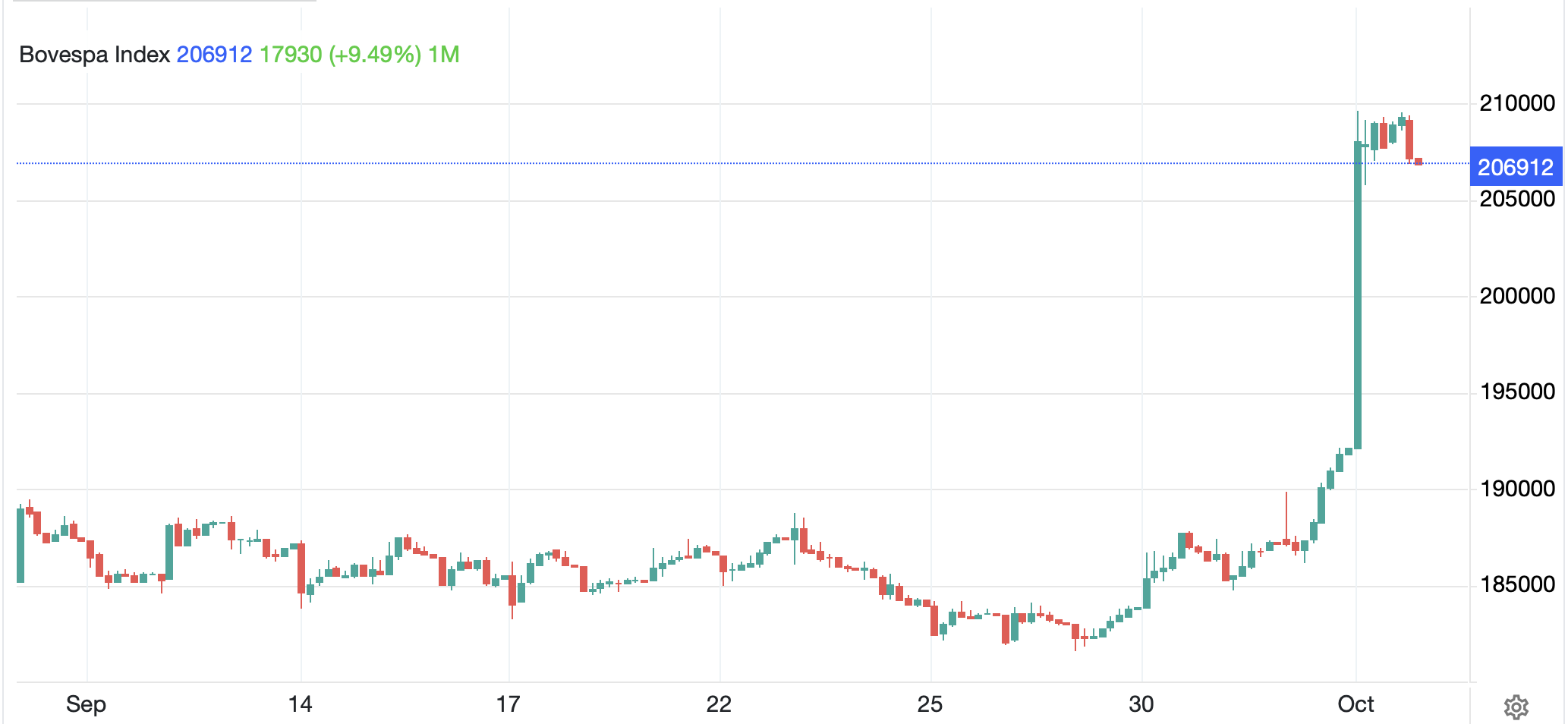
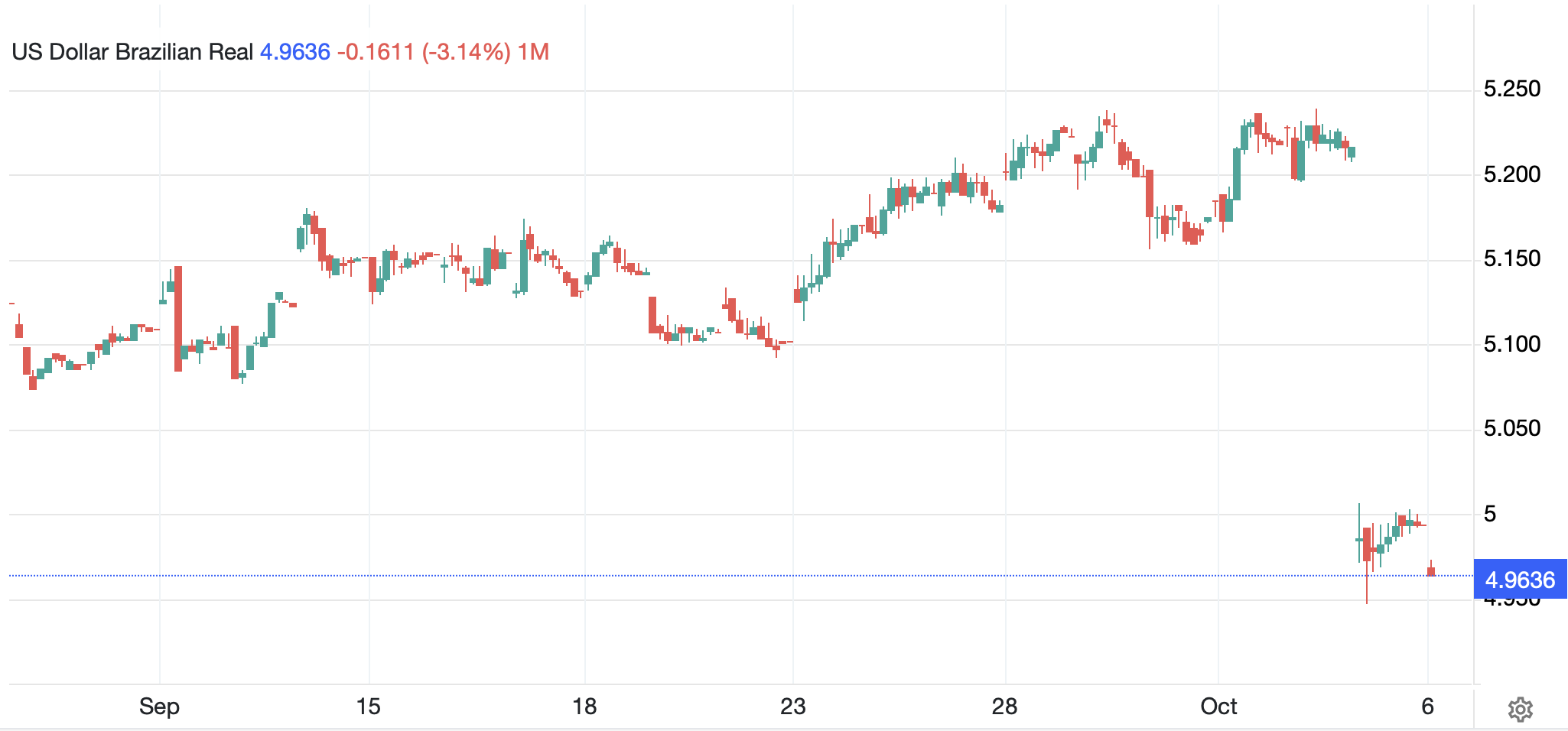
As you can see, US futures are higher and the Nikkei 225 is also modestly higher with no indication that there is concern over the US landing on Kharg Island and other Iranian key strongholds.  All this comes after news has filtered out that Ahmad Vahidi, who appears to be the senior most IRGC leader left, has arrested the civilian government members who were scheduled to meet with the US and hammer out a deal.  To my eyes, and from what I have read from what I believe is an excellent source, marines will be on Kharg Island before the week is out.  It strikes me if that is the case, the current equity rally, which has been impressive, will get challenged.

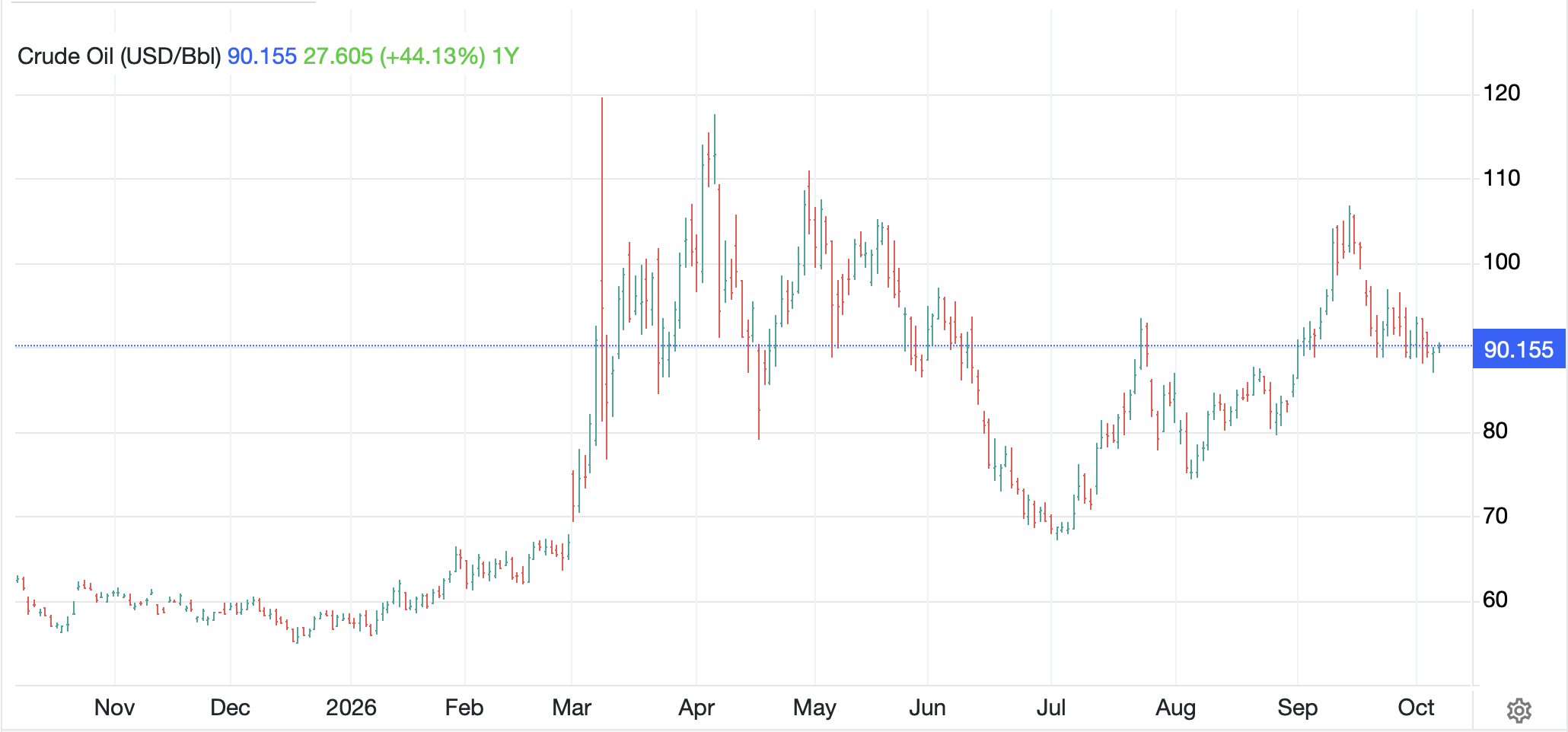
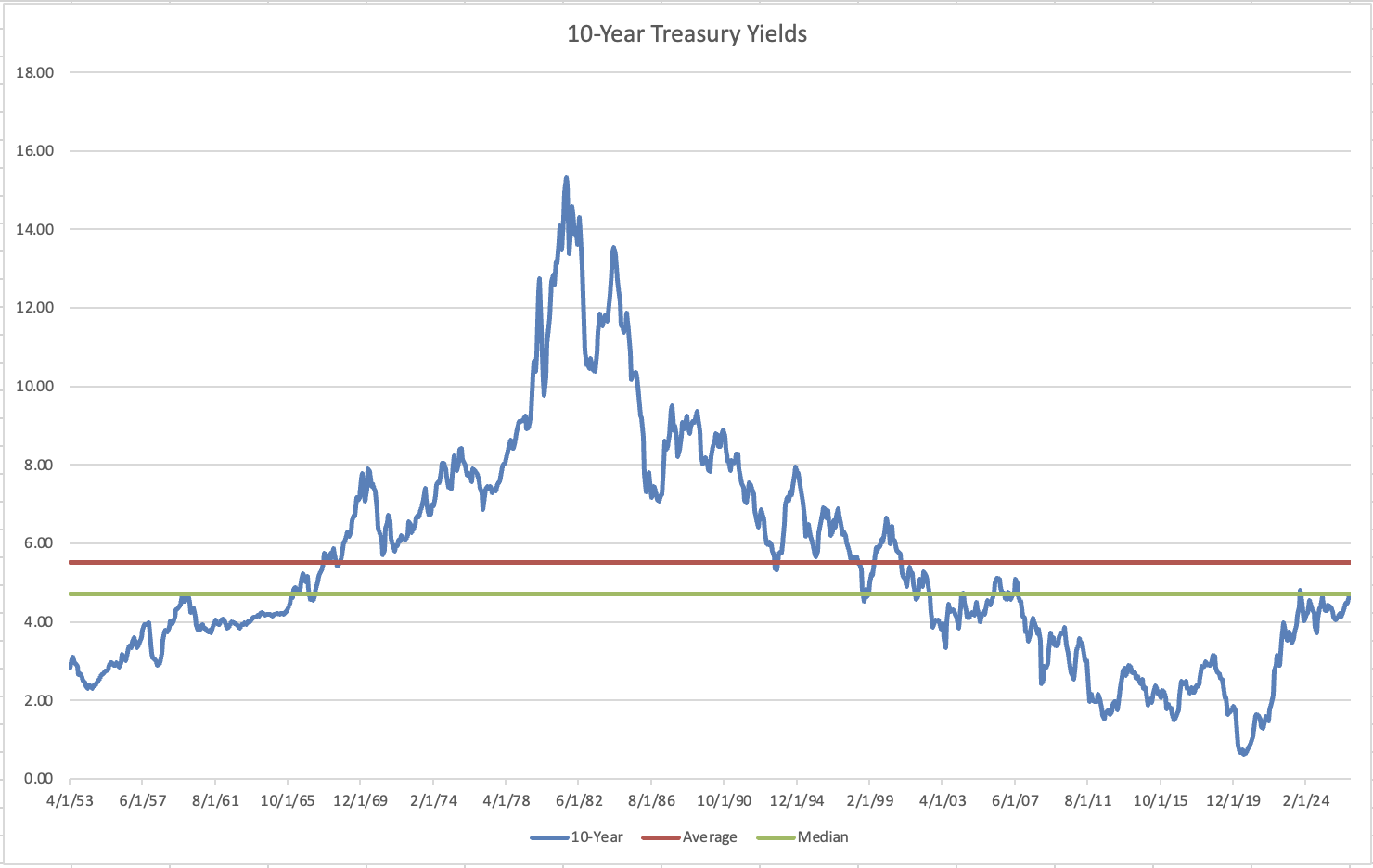
As to bonds, last night they were essentially unchanged with 10-year yields at 4.29%.  Again, this is not the stuff of major concern.  And oil?  Modestly lower and back below $90/bbl.

The early results are confusing
With recent attacks Iran’s choosing
But elsewhere there’s hope
That peace is in scope
Despite lots of, others, accusing

As of 6:20 this morning, although there have been several ships fired upon by Iranian gunboats, the US has not escalated, and the President has indicated he is waiting for news today on the situation.  One of the takes is that the Iranians are going to come to the table and seek a deal, although it is difficult for me to believe that Vahidi is ready to cede power.  But like virtually everybody else, nobody really knows what is happening.

However, markets appear to have made up their mind that the worst is over and there is no reason to panic any further.  In fact, it appears they are getting excited about the opportunities that will come about because of all the post-war reconstruction that will be necessary and will certainly be profitable for those companies engaged.

The other story from yesterday was the confirmation hearings for Fed Chair nominee Kevin Warsh.  I imagine it went about as largely expected with every Democrat despising him and every Republican liking him, but until the DOJ case against Powell regarding the reconstruction of the Eccles Building is finished, Senator Thom Tillis has said he will not allow a floor vote.  Warsh did consistently explain that the Fed has lost its way and has not achieved its goals so it is time to start thinking of new approaches.  And it is certainly true, as the below chart shows, that the Fed has been a failure with respect to its inflation target of Core PCE at or below 2.0%, a number last seen in February 2022 (the left=most bar on the chart).

Source: tradingeconomics.com

And with that in mind, let’s turn to markets this morning and see how things played out overnight and are evolving right now at 7:00.  US futures are virtually in the same place they were last night as per the below screenshot from tradingeconomics.com

Asian markets were mixed overall with Tokyo (+0.4%), China (+0.7%) and Taiwan (+0.7%) all having a decent day while HK (-1.2%) and Australia (-1.2%) led the way lower for those regional exchanges that were under pressure.  But in truth, it was about 50:50 with respect to gainers and losers.  Certainly, there was no strong theme.  Meanwhile, in Europe, markets have drifted a bit lower, but the CAC (-0.3%) and Spain’s IBEX (-0.3%) seem to be the worst of it.  Net, it is hard to get too excited about anything in the equity space right now.

Similarly, bond markets are somnolent with Treasury yields edging lower by -1bp and similar price action in European sovereigns with the entire continent, and the UK, showing small yield declines of between 0bps and -2bps.  Overnight, JGB yields were unchanged as well.  While we continue to get inflation reads that include the war and the sharp rise in energy prices, there is no indication prices are running away yet.  For example, the UK (3.3% headline, 3.1% core) released CPI this morning as did South Africa (3.1% headline, 3.2% core).  Frankly, if you look at the chart below showing headline CPI for both nations (South Africa in blue, UK in grey), you would be hard-pressed to attribute any price pressure to the war given what has been going on in both places for the past three years.

Source: tradingeconomics.com

Turning to the commodity markets, oil (+0.8%) has rebounded from last night’s levels, but not that much, although WTI is back above $90/bbl, barely.  NatGas (+1.15%) remains the absolute bargain in the energy world with US prices at $2.72/MMBtu, vastly cheaper than oil on a per unit basis of energy.  Interestingly, in the metals markets, the recent negative correlation between gold and oil has broken down this morning with the shiny stuff rallying and taking all its friends along for the ride (Au +0.8%, Ag 2.0%, Pt +2.5%, Cu +0.7%).

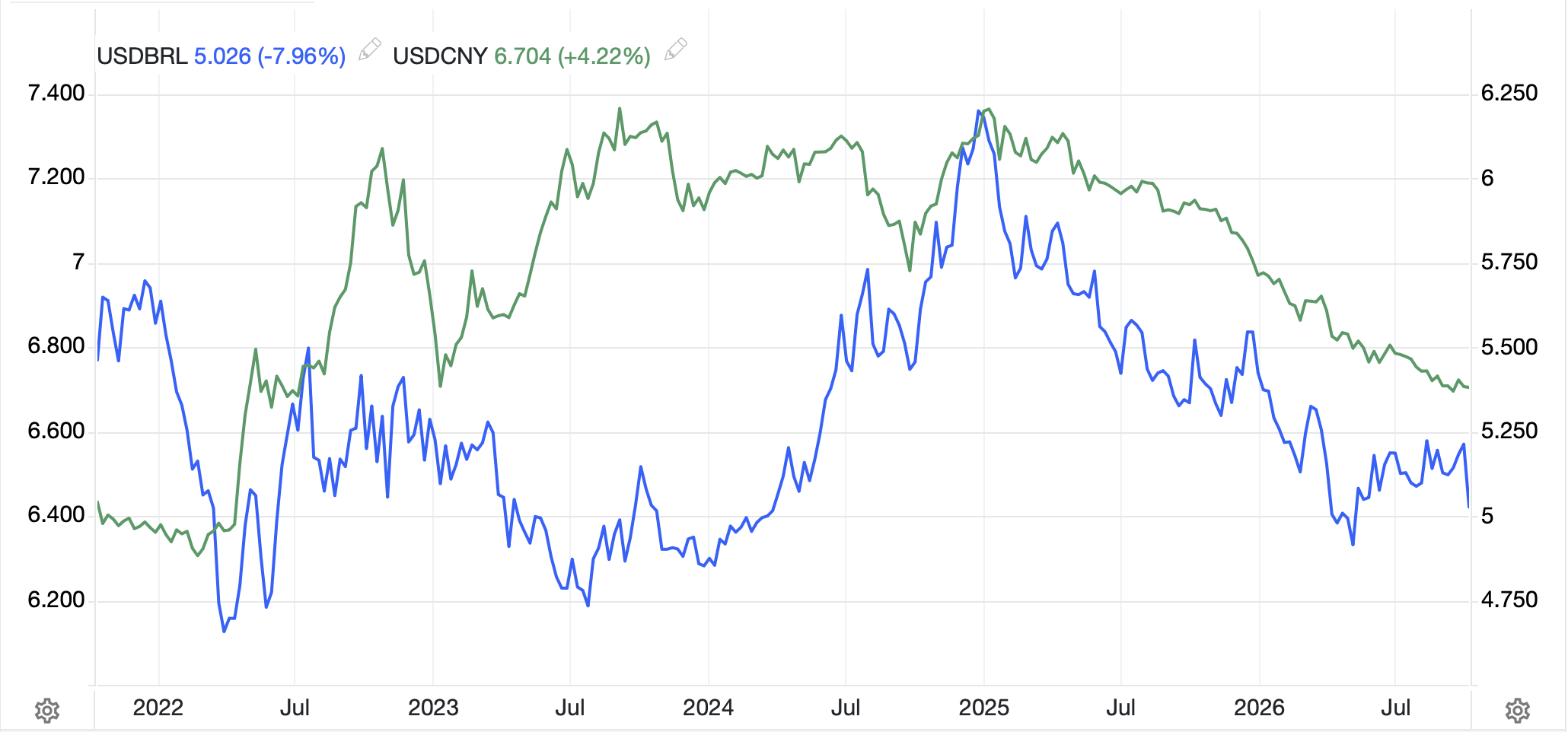
Finally, the dollar doesn’t really care about anything right now, virtually unchanged against most of its counterparts this morning.  There are a few outliers, notably NOK (+0.9%) which continues to benefit from the oil story, CLP (+0.3%) which is higher on copper’s rally and NZD (+0.3%) which continues to gain on rising expectations of higher rates there.  One other amusing thing was a story in Bloomberg this morning about CNY and how its recent strength, it has gained more than 6% over the past year as the below chart highlights, is causing problems for Chinese exporters.

Source: tradingeconomics.com

Of course, this has been a US (and global) complaint for a long time, that the renminbi has been manipulated to remain excessively weak to provide a competitive advantage for Chinese exporters.  In fact, according to the OECD, the CNY’s PPP value is approximately 3.303 vs. its current level of 6.82, meaning it is trading in markets at half its appropriate value.  

Source: ceicdata.com

My sense is that TEMU would not be able to sell all that sh*t so cheaply if that was the exchange rate, just saying.  In fact, this is something President Trump has been bashing the Chinese on for years.  But Bloomberg managed to offer a sympathetic tone for those “poor” Chinese companies who have seen the CNY gain 6% in a year.

Off the soap box and on to data where the only releases are the EIA oil inventories with a modest expected crude oil draw.  This comes after the API indicated a 4.1-million-barrel draw last week.  There are no Fed speakers on the docket with the FOMC meeting coming up next week, so my take is today will be all about the ongoing earnings releases, which thus far have been quite positive, and waiting for President Trump, who ostensibly will be speaking at 3:00pm this afternoon.  It is hard to have a strong opinion in this market, that’s for sure.  Unchanged seems to be the best bet absent a major headline announcement.

Good luck

Adf
Checkmate

The talks twixt the States and Iran
Collapsed like a climate straw man
Now there’s a blockade
In Hormuz, arrayed
As Trump pivots to a new plan

The first move in oil was higher
But I would beware as a buyer
If Trump rules the Strait
That could be checkmate
And force a much longer cease fire

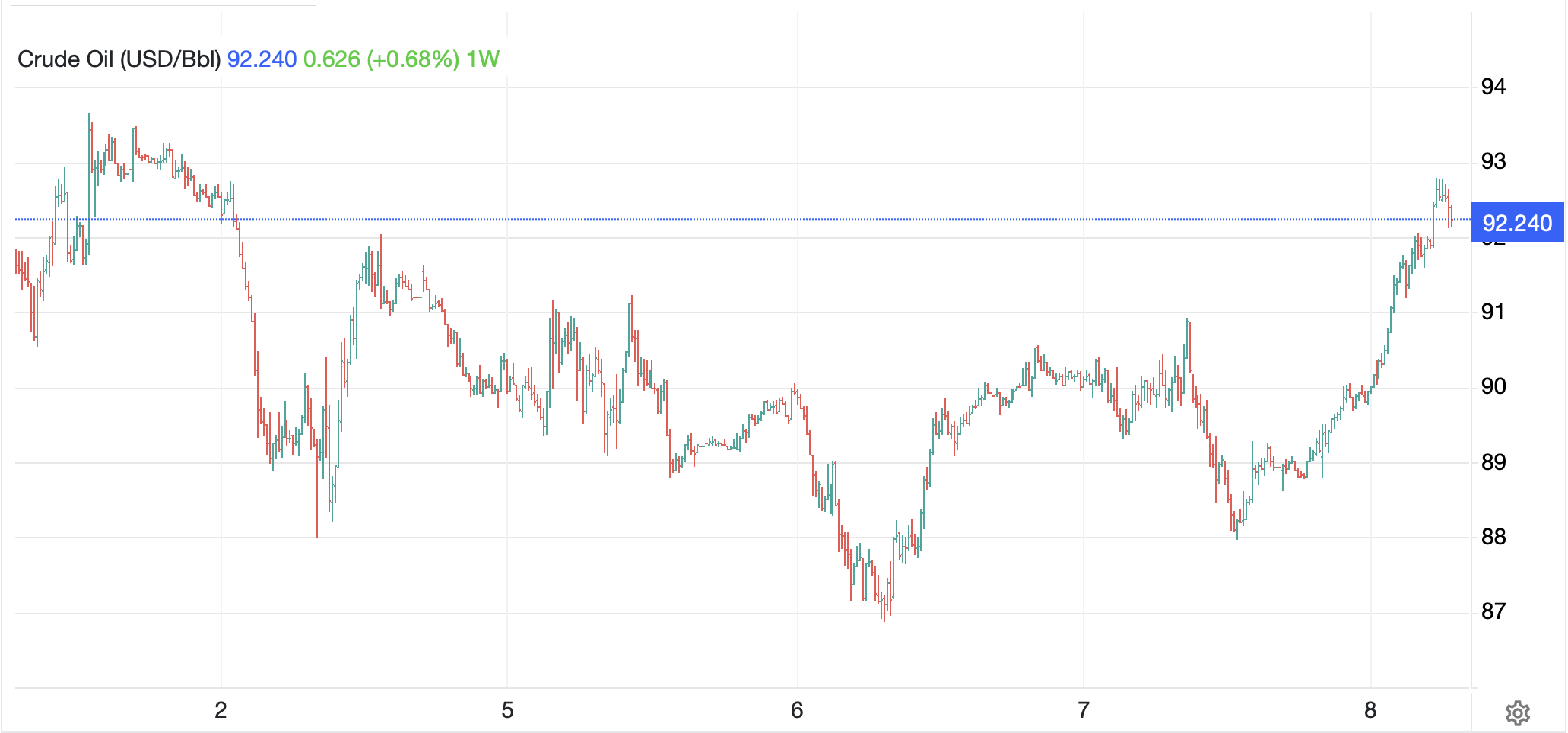
As of 8:00pm last night, after the peace talks fell apart in Islamabad and President Trump announced the US would be blockading the Strait of Hormuz so no ships carrying oil, especially Iranian oil, would be able to pass the blockade, the price of oil spiked immediately as the futures markets opened.  You can see the last week’s roller coaster in the below chart from tradingeconomics.com

The question that needs to be answered at this point is, is there a substantive difference between the US blocking traffic in the Strait and Iran doing so?  I would contend there is a huge difference, especially if you are China.  But also, if you are Iran.  After all, you just lost your trump card (pun intended) and not only that, if Iranian oil is not able to be sold, then Iran runs out of money pretty quickly.  Remember, oil revenues represent approximately 90% of Iranian total revenues.  How long can the IRGC last with no money to pay their soldiers?

In the meantime, the Saudis are pumping 7 mm bpd across the East-West pipeline now, and the UAE is pumping 1.5 mm bpd to Fujairah, taking a decent sized bite out of the missing barrels.  I read this morning that upwards of 7mm bpd are now exiting the gulf via pipeline reducing the overall reduction in oil flow.  Granted, it is still a huge disruption but shrinking.  On top of that, if this continues, the Strait loses its strategic importance, which cements Iran’s loss of power.  In the short-run, oil prices can go in either direction in my view, but this has the opportunity to completely emasculate Iran’s ability to have an impact on the global oil markets in the future.  

And I would not be surprised if President Xi is burning up the lines to Washington because he just lost a key source of cheap oil, and oil he paid for in CNY.  (see WSJ chart below.)

There are many twists and turns here, and I’m sure there will be more.  But as of Sunday night, from what I have read, Iran is in a much worse position than they were on Friday.  Of course, things could all go pear-shaped from here, and this could turn out to be a complete failure.  Our goal here is to try to track how markets will evolve.

The remarkable thing, still, to me is that equity markets remain so blithe about the entire situation.  I make this claim based on the VIX Index, which remains relatively docile despite everything that is happening in Iran and the likely eventual knock-on effects.  But look at the chart of the VIX below which shows that markets are nowhere near as stressed as they have been in the past and are actually much nearer their long-term average. (The two spikes are the JPY intervention in August 2024, which lasted for just a few hours, and then the Liberation Day tariffs in April 2025 which quickly reversed as well.  

Source: tradingeconomics.com

It is worth noting that even the oil VIX, is off its highs and, while somewhat elevated, not running away.

Source: finace.yahoo.com

The thing about the VIX indices to remember, though, is that options decay and holding them is a losing proposition if the underlying market is not moving.  So, to maintain a high VIX, we need to see significant intraday as well as day-to-day price movement.

As Iran remains the major storyline for markets, let’s take a look at how things are behaving this morning.  Oil (+8.2%) has maintained its initial gains but not moved since last night.  NatGas (+1.7% in US, +9.0% in Europe) has also been impacted as there is no movement of LNG tankers through the Strait either.  Interestingly, both gold (-0.6%) and silver (-1.7%) while lower are well off the lows seen in the early overnight session as per the below chart of silver.

Source: tradingeconomics.com

I reiterate that the market perception of the current situation has not nearly matched the hysteria evident in much of the commentary.  I’m not sure whether to attribute that to market insight or market ignorance at this point, although I lean toward the former.  The problem with commentary these days is that hysterical takes generate clicks, and that is the goal of many commentators.

Turning to equity markets, Asian markets were generally, though not universally, lower.  Tokyo (-0.7%), HK (-0.9%), Korea (-0.9%) and India (-0.9%) all suffered on the breakdown in talks and the new blockade news.  New Zealand (-1.2%) was the worst performer, largely because their energy situation is deteriorating more quickly than anyone else’s.  But China (+0.2%), Taiwan (+0.1%) and Indonesia (+0.6%) all managed some gains despite the news.  Again, markets appear to be pricing a fairly benign outcome here.  Either the news is going to get better soon, or there is going to be a massive rerating of equity markets.  Something’s gotta give.

In Europe, things are a bit worse overall with Spain (-1.4%) leading the way lower although Germany (-1.0%), France (-0.9%) and Italy (-0.8%) are all under real pressure as well.  There has been a lot more press lately about how Spain’s PM Sanchez is cozying up to China as he seems to be pulling Spain away from the EU in several areas.  Of course, he is an avowed socialist, so perhaps this should not be that surprising.  However, this is further proof that NATO is surely going to die soon.

One market that has outperformed, though is Hungary (+2.8%) which is rallying sharply on the weekend’s election results that sent President Victor Orban into retirement.  Certainly, most others in Europe are thrilled as Orban had been a thorn in the side of the EU with respect to their Russia stance, but the economy there has been underperforming so new leadership is widely lauded, for now.  The forint (+1.9%) also benefitted from the election outcome.  

As to US futures, as I type at 7:00, the major indices are lower by -0.3% or so, well off the initial levels seen last night that were as much as -1.4% below Friday’s closing levels.  Again, markets remain sanguine over the weekend changes to the story.

In the bond market, Treasury yields have edged higher by 1bp and in Europe, we are seeing rises of between 1bp and 3bps across the board.  Here, too, it is hard to find panic in the streets.  JGB yields (+2bps) have made a new high for the move and continue to edge higher as concerns over the path of inflation rise given the oil price rise.  Last night, BOJ Governor Ueda gave a speech (actually his deputy did because he is in Washington for the IMF/World Bank meetings) and tried to quash the view that the BOJ was definitely going to hike rates at the end of this month, an outcome that had been priced at a 65% probability prior to his speech as you can see from the Bloomberg chart below.

Finally, in the FX market, other than HUF as described above, and NOK (+0.6%) responding to the oil move the dollar is firmer across the board.  However, the movement is not too large, generally on the order of 0.2% or so across the G10 and perhaps a bit more in the EMG bloc.  The worst performer today is ZAR (-0.8%) which is suffering the dual problems of a lower gold and higher oil price.  The other noteworthy thing is JPY (-0.3%) is creeping back toward the 160 level, which remains the default setting for the market belief as an intervention level.

On the data front, Friday’s CPI was hot, but not quite as hot as forecast, although you can be sure that next month will remain hot.  This week brings the following mostly secondary stuff.

TodayExisting Home Sales4.06M
TuesdayNFIB Business Optimism98.6
 PPI1.2% (4.6% Y/Y)
 -ex food & energy0.6% (4.2% Y/Y)
WednesdayEmpire State Manufacturing-2.0
 Fed’s Beige Book 
ThursdayInitial Claims215K
 Continuing Claims1840K
 Philly Fed9.0
 IP0.1%
 Capacity Utilization76.3%

Source: tradingeconomics.com

As well, we hear from eight different Fed speakers over 10 venues.  An interesting aspect of the commentariat lately is that individual FOMC members are going to be far more important as there is a growing diversity of opinion.  So, the monolithic Fed Chair running things and encouraging a vote in a particular way may evolve into an actual election, where the voters vote their hearts, not the Chairman’s views just to get along.  If this is the case, and I think it would be far better than what we currently have, we will need to listen more closely to the individual speakers and start a scorecard to see who seems hawkish or dovish at any given time.  The problem is, I fear it will encourage all of them to speak more frequently, which is a worse outcome, although any given voice will likely be given far less weight.  We shall see if that is the case.

As to the broad scheme of things. My head tells me that the market is underpricing the risks out there, but my eyes explain that this is the current consensus.  I hope they are right and I am wrong about things.

Good luck

Adf
Humbling

The ceasefire seemed to be crumbling
And stocks all around started tumbling
Then late in the morning
Trump issued a warning
To Bibi that clearly was humbling

So, Lebanese fighting decreased
Though, so far, it has not yet ceased
The door’s now ajar
For peace near Qatar
Thus, risk appetite rose like yeast

Which takes us to data today
With March CPI on the way
It surely will show
That prices did grow
But how long will increases stay?

As you can see from the below chart showing oil (inverted) and the S&P 500, about 11:00 yesterday morning, the news hit that Israel was going to stop its ongoing fighting against Hezbollah in Lebanon, which the Iranians claimed was a violation of the ceasefire and had undermined general, and market, belief that the ceasefire would hold at all.  The impact was instant with a substantial rally in the S&P, 1% within an hour, while oil prices tumbled about 6% in the same span (given oil’s volatility is so much higher, that discrepancy is not surprising at all.)

Source: tradingeconomics.com

This is the lead-in to the first face-to-face talks between the US and Iran that are due to occur today in Karachi, Pakistan.  Hopefully, they will lead to a lasting peace with the upshot that Iran will no longer be a sponsor of terrorism, but I must admit, I’m not holding my breath for that outcome.  The overnight market reaction was pretty much exactly what you would have expected with a generally positive view of risk almost everywhere in the world.  Obviously, if the talks lead to a peace and a reopening of the Strait of Hormuz, the strong belief is that things will eventually revert to the prewar stance, at least from an energy and economic perspective.  We shall see.

Which takes us to the other piece of news that markets are going to need to absorb this morning, the March CPI data.  Yesterday we saw the February PCE data and while it was released at expected levels, those levels (2.8% Headline, 3.0% Core) are already far above the Fed’s 2.0% target.  In fact, as you can see from the chart below, it has been a full five years since Core PCE was at or below their target.

Source: tradingeconomics.com

And now, we get March CPI this morning which will include a substantial rise in oil prices as the average in February was $64.51/bbl vs. March’s $93.58/bbl.  Obviously, that is going to have a major impact on headline CPI, but the question is just how much of an impact will it have on core?  Expectations are for Headline to rise 0.9% M/M and 3.3% Y/Y, while the Core rises just 0.3% M/M and 2.7% Y/Y.  Now, we are coming halfway through April and oil prices have not retreated yet, so we are likely going to see continued upward pressure on core prices going forward as those high oil prices feed their way into other things.  But that is for the future.  For today, all eyes are on the data to see if it will be enough to concern central bankers.

In fact, next week is World Bank / IMF week in Washington DC and Kristalina Georgieva, the IMF’s Managing Director, expressed concern that the global economy is going to slow down because of the impact of higher oil prices, but implored central bankers around the world to be patient and not hike rates right away, while asking governments not to subsidize fuels and increase demand.  It is, of course, much easier for her to make these comments as she doesn’t face an electorate that is angry about rising prices.

At any rate, other than the virtually infinite number of takes on the Iran war and the CPI data, there’s not much else to discuss, so let’s see how markets have responded to the latest and where they sit ahead of the data.

Yesterday’s early declines in the US were reversed, as per the chart at the top with all three major indices rallying more than 0.6%.  in Asia, weirdly just Australia (-0.15%) and New Zealand (-0.7%) were the outliers on the downside with the rest of the region all in the green, some substantially so.  Tokyo (+1.8%), China (+1.5%), Korea (+1.4%), Taiwan (+1.6%) and India (+1.2%) all had very strong sessions.  Arguably, the weakness Down Under may be a reflection of their energy policies heading into the Iran war as neither nation has a substantial reserve (fossil fuels were deemed bad so their governments didn’t want to buy them) and both economies could suffer far worse than anyone else because of those decisions.  

In Europe, markets are higher across the board although the gains are far more muted with France (+0.5%) the leader followed by Germany (+0.4%) and Italy (+0.4%) then the UK (+0.2%).  While, certainly better than losses, they are hardly inspirational.  As to US futures, at this hour (7:15), they are also pointing slightly higher, about 0.2% or so.

In the bond market, yields are backing up this morning with Treasuries (+2bps) the least impacted while European sovereign yields are higher between 5bps (Germany) and 8bps (Italy) with the rest of the continent somewhere in between.  It is difficult to ascribe a particular story here other than rising concerns about general inflation being higher due to elevated energy costs.  The market is pricing about 59bps of rate hikes by the ECB this year, perhaps a sign that investors don’t believe energy prices in Europe are going to decline as much as they will elsewhere.  Given the continent-wide energy policies they have in place, I believe they are correct.

Turning to commodities, oil (0.0%) is unchanged this morning after sliding on the Lebanon news yesterday morning.  The truly interesting thing is to watch NatGas (-0.6%) which continues to slide. Back toward its multi-year lows as it continues to be produced as an associated product alongside all the oil drilling that is ongoing.  

Source: tradingeconomics.com

I cannot look at the above chart and reconcile the massive energy advantage the US has with basically the rest of the world and conclude that the US economy is going to be at any disadvantage with other economies going forward, and hence the dollar seems very likely to remain in good stead going forward.  Meanwhile, metals, too, are little changed this morning (gold 0.0%, silver +0.4%, copper +1.3%) with the latter a bit of a surprise after Argentina just passed legislation that will allow for more drilling in the Andes where Chile’s major copper deposits lie.  That is a long-term prospect though, I must admit.

Finally, the dollar is mixed this morning, with very few significant movers in either direction.  In the G10, +/-0.2% is the name of the game with the most noteworthy thing, I think, the yen (-0.25%) which is back above 159 this morning, although not yet threatening the perceived line in the sand of 160.  In the EMG bloc, KRW (-0.6%) and ZAR (-0.4%) are the laggards although it is hard to ascribe specific news to either move.  Rather, looking at the recent trading action, where both currencies have been rebounding sharply, these moves look like position squaring ahead of the weekend.

In addition to CPI, we also see Michigan Sentiment (exp 52.0) and Factory Orders (-0.2%) at 10:00.  There are no Fed speakers so today is shaping up to be data dependent unless we hear something from the talks in Pakistan.  However, it seems far too early for anything of substance there.  I imagine if core CPI is firm, that could be an equity negative as that would encourage more thought of the Fed hiking, but I have a feeling that despite the broader importance of the number, markets are not going to do much today.

Good luck

Adf
What They Most Fear

For many, it seems very clear
That war is not what they most fear
But rather, for them
They need to condemn
Each Trumpian outcome and sneer

So last night, ere clocks all struck eight
The president said he would wait
Another two weeks
As peace that he seeks
Seemed closer than it had to date

As I’m just a poet in a room in New Jersey, I don’t have any intel on the situation in Iran, but boy oh boy, the number of takes out there is remarkable.  On one side are the naysayers claiming Trump chickened out again, that Iran won this war and the US is forever seen as a loser.  On the other side is Trump played it brilliantly, raising the stakes to a level where even the IRGC leadership decided that the destruction of their nation wasn’t worth the battle.

My observation is that whatever the actual rationale, the world is better off with the fighting stopped.  With that in mind, it is hard to look at the results of the war, where Iran saw both its Navy and Air Force obliterated, its senior leadership decimated and a large proportion of its missile launchers destroyed and feel like they won.  I think this would be called a Pyrrhic Victory.

But from our perspective here, the questions of note are how did markets respond?  You will not be surprised that much of the trauma that markets have felt over the past month has already been reversed.  Let’s start with oil, as that has been the keystone for all markets.  As per the below chart, it has plunged -16% overnight, back well below $100/bbl.

Source: tradingeconomics.com

While this is a picture of WTI, Brent (-14%) also tumbled as did the markets in gasoline (-10.0%) and all other products.  NatGas (-5.3%) fell to its lowest level since October 2024, as per the below chart.

Source: tradingeconomics.com

In Europe, TTF Gas (-14.7%) also tumbled but it remains far above its prewar levels as per the below.

Source: tradingeconomics.com

All told, as would be expected, energy prices have fallen sharply.  Of course, questions have rightly been raised as to whether this will remain the case because, remember, the cease fire is slated for only 2 weeks.  What happens if there is no agreement and the US resumes their attacks?  As well, the status of the Strait of Hormuz remains somewhat cloudy with mixed information about safe passage.  It appears that many ships in there may be able to exit, but will any go back in with the risk of getting stuck again?  My point is this may not be over, but for now, everybody is giddy.

In the metals markets, the rally has been similarly impressive with both gold (+1.6%) and silver (+5.4%) continuing their rebound from the March 23rd spike lows as per the chart below of gold.

Source: tradingeconomics.com

In fact, gold has retraced 16% from that low print and silver 26%.  But here, too, it will all depend on how the Iran situation evolves going forward.  Arguably, if the fighting starts again and oil rises, precious metals will head lower while if a long-lasting peace is secured, I would look for metals to head higher again.

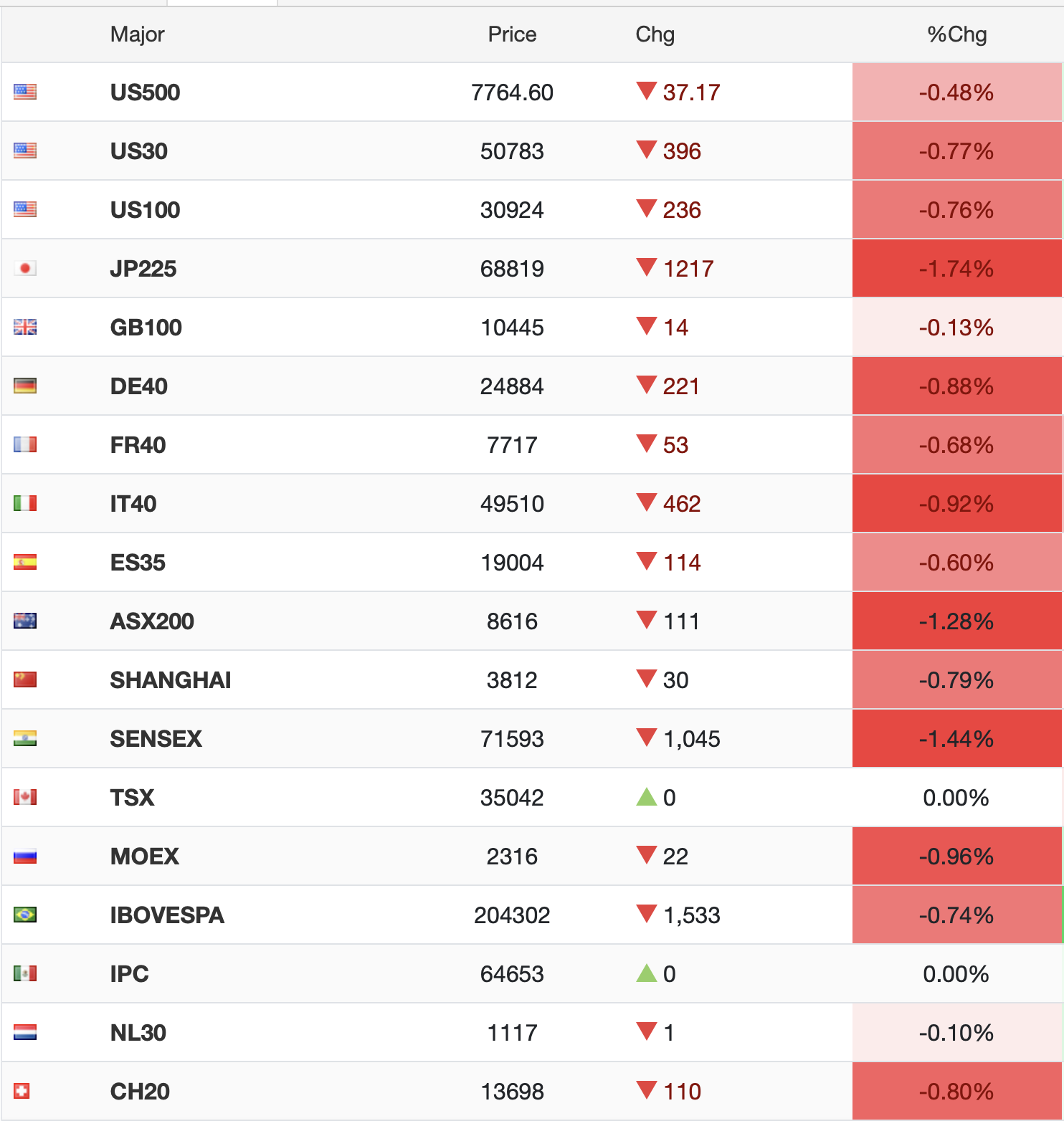
In the equity markets, the all-clear has been sounded, as you would have expected.  The screenshot below from tradingeconomcs.com of futures markets shows that the only perceived loser from this deal is Russia.  Otherwise, every market is substantially higher (Toronto’s TSX is closed in the overnight session) or was so last night in Asia.

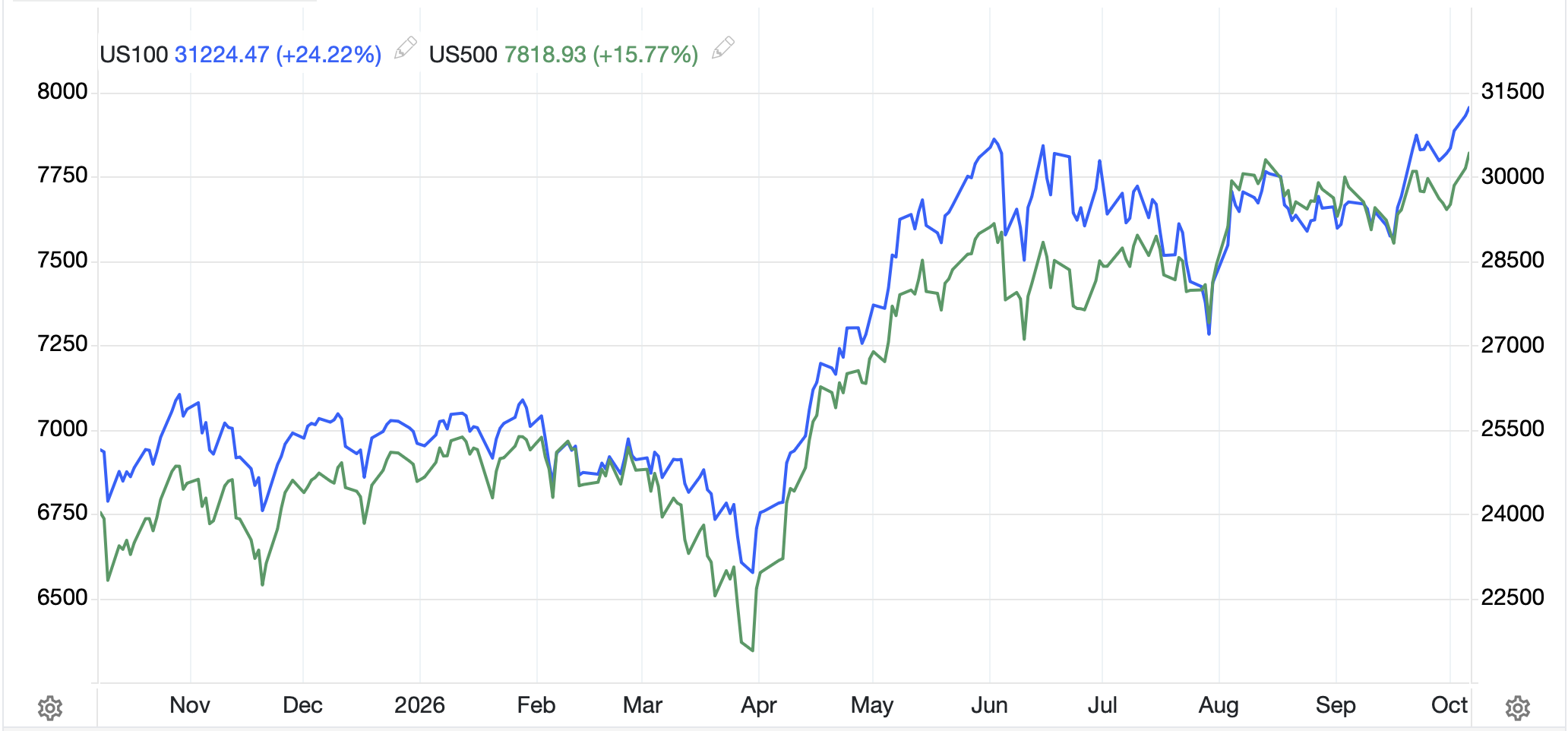
The thing we are likely to hear about a lot today is that the S&P 500 has traded back above its 50-day moving average, as per the below chart.  For the technicians, this will be seen as a key outcome and expect to hear much more about a test, and potential break, of the all-time highs of 7000 made back in January.

Source: tradingeconmomics.com

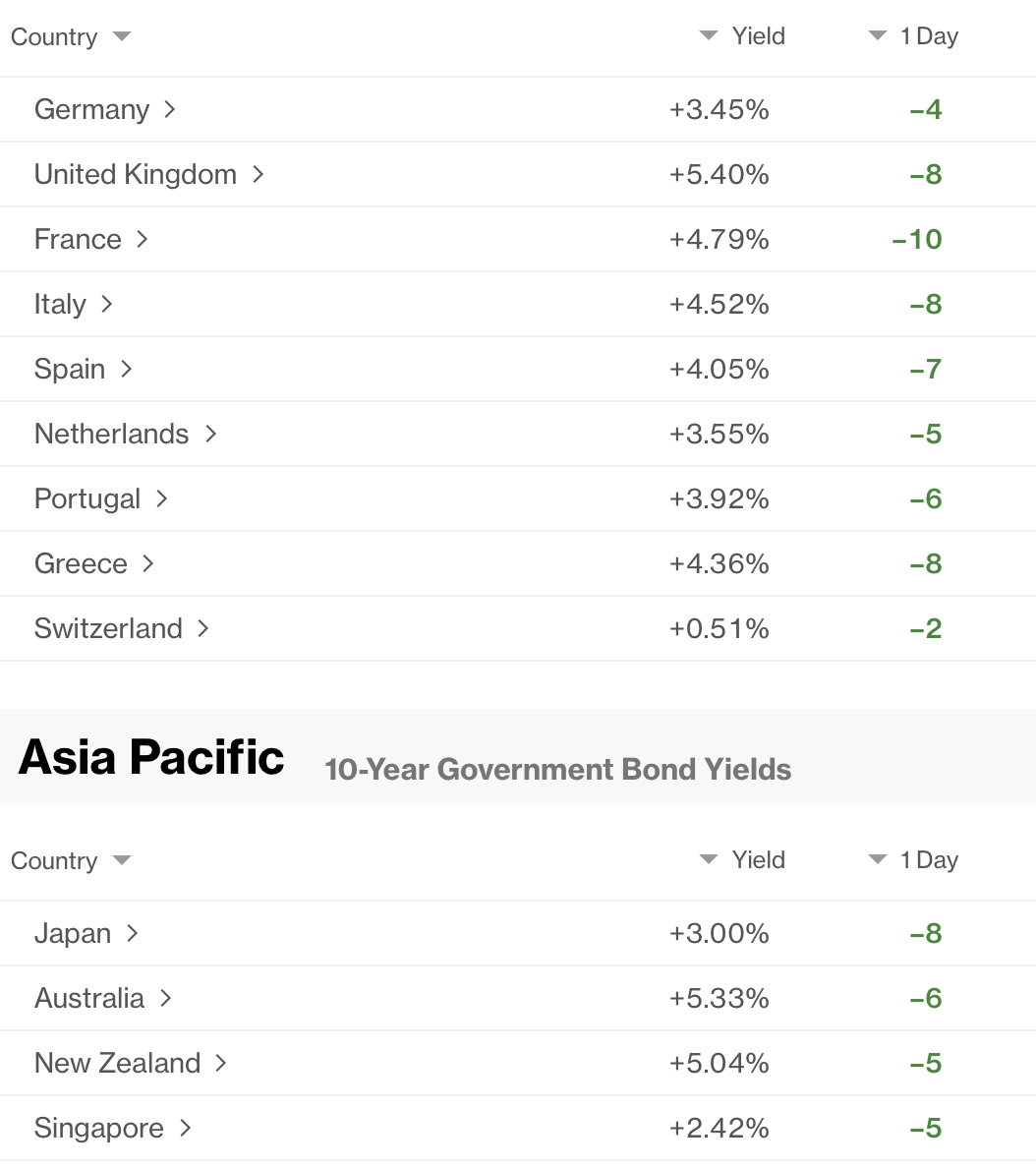
Moving on to bonds, Treasury yields are the big disappointment here, having only declined -5bps heading into the NY open, but as the Bloomberg screenshot shows, European sovereign yields have virtually collapsed, as have yields throughout Asia, although remain higher than a month ago.

It appears that all the fears about rising inflation have been virtually extinguished overnight!

Finally, the dollar has also reversed its recent gains, falling sharply across the board.  Using the DXY (-1.1%) as a proxy, it does seem to measure the average movement, but there have been some real outliers.  For example, ZAR (+2.3%) has benefitted from the combination of much higher precious metals prices and much lower energy prices as South Africa is a net energy importer.  SEK (+2.2%) has also exploded higher, although that looks more like a reversal of yesterday’s sharp decline, than any other news.  But, broadly speaking, currency gains on the order of 1% or more are the norm this morning.  However, as we have seen across almost all markets, this movement merely returns us to the middle of the previous trading range, it is not a signal for the dollar’s collapse.  Just look at the chart below of the DXY.

Source: tradingeconomics.com

So, across all markets, we have witnessed a major reversal of the war induced trauma.  It is not completely unwound nor are we confident it will exist in two weeks if no deal is reached.  But that’s the scoop for now.

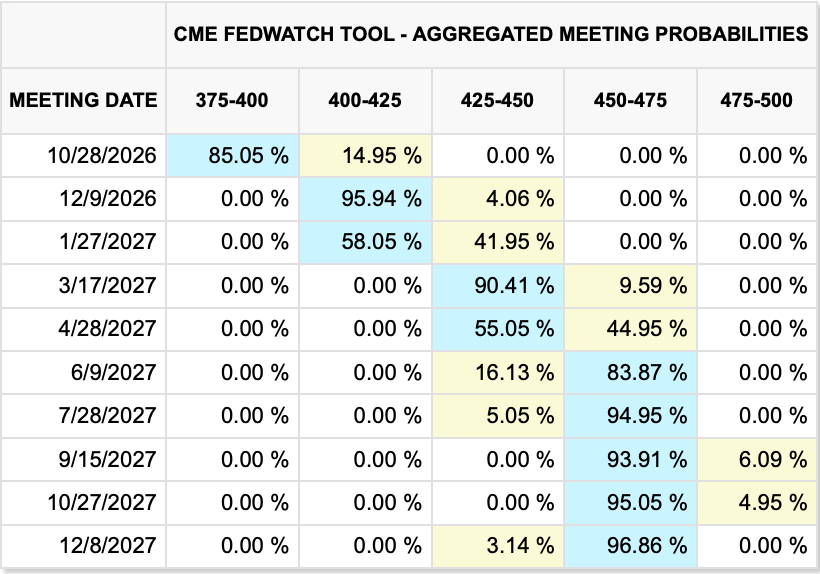
While it certainly won’t have an impact today, it is worth looking at the Fed funds futures market to see how it has behaved.  While expectations for the meeting on April 29th remain for no change, as you can see from the aggregate probability table created by the CME, cuts are back in the thought process, although not until the end of this year.

On the data front, we receive EIA oil inventory data this morning and then the FOMC Minutes are released at 2:00 this afternoon, but I cannot imagine anyone paying close attention to those given the changing situation in the Middle East and its impact on markets, especially oil and the prospects for future inflation.

To recap, we all ought to be happy that the Iran war has stopped for now with prospects for a longer peace.  You can love Trump or you can hate Trump, but if he succeeds in eliminating the terror networks that Iran has long sponsored, that is a gigantic net benefit for the entire world.  Nobody has any idea how things will ultimately resolve, but certainly, as we wake up this morning, prospects for the future look better than they did twenty-four hours ago.  Of course, my advice had been to play it close to the vest because of unexpected outcomes like this.  Nobody has any edge trading markets like this, not even the algos.  Perhaps the one thing that will change is trading volumes will start to pick up and increase overall liquidity, and that would be a net positive.

Good luck

Adf
Quite Severe

The current conclusion to draw
Which could be a huge, fatal flaw
Is war’s not deciding
For traders in guiding
Positions, as few hem and haw

But right now, a deadline draws near
Which ought, by all rights, instill fear
The war’s escalation
Will lead to stagflation
With outcomes in stocks quite severe

As I type some 14 hours from the latest Trumpian deadline for Iran to reopen the Strait of Hormuz or have their electricity and transportation infrastructure destroyed, investors appear to be quite sanguine about the entire process.  It seems very clear to me that market participants are quite certain the President will back away from this threat and extend the deadline or announce some other outcome.  That is the only conclusion I can draw from the fact that equity markets around the world are consistently higher this morning.  Investors clearly perceive this as an empty threat, which tells me that the pain trade is a sharp decline in equity markets if the US and Israel do destroy Iranian infrastructure.  I guess we shall all learn more sometime this evening in NY.

But that is the backdrop for markets this morning.  As I freely admit I do not know what the outcome will be, there is little point in hashing out the issue here.  However, I cannot help but laugh at this clip as a description of the President’s negotiating style.

Moving on, in brighter news, the 4 astronauts have circled the far side of the moon, setting the record for the furthest any humans have been from Earth, and are now starting their return trip after having sent some remarkable imagery of the moon.  

In truth, though, there’s little else to discuss so let’s look at markets.  Yesterday’s session in the US continued the rebound in share prices from the recent nadir on March 30th.  Since then, it has been four consecutive up days although futures this morning are little changed to very slightly lower.  But the US move has been mirrored around the world with essentially all of Asia and Europe back at it today.  

In Asia, while both Japan and China were essentially flat, Korea (+0.8%), India (+0.7%), Taiwan (+2.0%, catching up because it had been closed longer) and Australia (+1.7%) all had strong sessions.  Hong Kong (-0.7%) did slip, as did several of the other smaller regional exchanges, but the mood was pretty bright.  

In Europe, I’ll let the following Bloomberg screenshot do the talking, but you can clearly see that fear is not on the menu right now.  

In the bond market, Treasury yields are higher by 1bp this morning after a flat session yesterday while European sovereign yields have all risen about 3bps as they catch up from their long weekend with no trading.  JGB yields are unchanged this morning as their long, slow climb takes a day of rest.

In the commodity space, I first must correct an error I have made regarding the relative prices of WTI and Brent.  My go to source for oil pricing has been tradingeconomics.com.  Their methodology shows the front month of the futures contract, but they don’t list the month in question.  Due to the nature of the two different markets, currently, WTI’s front month is May while Brent’s front month is June.  Given the steep backwardation in the oil markets, that difference is enough to explain the anomaly that I had seen.  Below I have screen shots from barchart.com of the front contracts of both WTI and Brent and you can see the difference yourself.

If you look at the corresponding month in both contracts, you can see that Brent is consistently higher than WTI. (h/t Victor Adair, thank you Victor).

With that in mind, you can see that oil prices are a touch higher this morning, although they remain below the spike high seen at the beginning of the war.  The chart below of WTI is certainly ominous with respect to the strength of the trend higher, and I must believe that if the US does take out Iranian infrastructure, we will breech the spike high on the chart and go higher still.

Source: tradingeconomics.com

Turning to the metals markets, this is perhaps the least surprising headline one can imagine from Bloomberg:

China Ramps Up Gold Buying as Middle East War Dents Prices

With gold prices having fallen nearly 18% from their peak back in late January, and China continuing to diversify reserves out of USD directly, they saw this as a great buying opportunity.  This morning, the barbarous relic is little changed, although continues to trade lightly well above its spike lows.  Silver (-0.9%) is also doing little and it appears that commodity traders are a bit more uncertain how to move forward with the Trump ultimatum hanging over the Iranian’s heads.

Finally, as we might expect given the willingness for investors and traders to add to equity positions, the dollar is slipping a bit this morning, although as I type at 7:00, it has recouped most of its overnight declines.  Thus, the DXY is trading right at 100.00, the euro and pound have edged higher by just 0.1% and USDJPY continues to hover just below the 160 level, having touched it once on March 30, but not since.  The biggest mover today has been SEK (-0.8
%) which has fallen on the back of softer than expected inflation data which has encouraged traders to believe the Riksbank will be able to cut rates ahead of other central banks in the event economic activity slows sharply.  There is also a lot of discussion regarding INR (-0.3%) as the RBI has instituted policies restricting the size of short rupee positions local banks are allowed to maintain and forcing a lot of rupee buying to close those positions.  Thus, the rupee remains caught between the forced position closures and concerns about oil prices depending on how things evolve in Iran.

Source: tradingeconomics.com

The one other currency move of note has been KRW (+0.6%) which continues to rebound from its worst levels seen on March 30th, as it is trading far more in line with the equity markets than the oil markets.  If things escalate in Iran, I suspect the won is going to suffer greatly.

On the data front, this morning brings only Durable Goods orders (exp -0.5%, +0.5% -ex Transport) and speeches from two Fed members, Governor Jefferson and Chicago Fed president Goolsbee.  Services PMI data was released throughout Europe this morning and it was broadly weaker than forecast (Italy, Germany, UK) although both France and Spain managed slightly better outcomes.  

While I remain cautious and hedged personally, apparently my views are out of vogue.  However, it strikes me that today will see little in the way of large movement ahead of the deadline, unless, of course, the president changes something before then.  

Good luck

Adf
Analyst Glory

On Friday, the Payrolls release
Described a much greater increase
Than pundits had thought
Thus, stocks were all bought
As well there was new hope for peace

This morning the story of note
Is ‘bout a cease fire anecdote
As well, there’s a story
‘Bout analyst glory
And how he learned much in a boat

Quickly, let’s recap Friday’s NFP report which showed payrolls jumped 178K, far greater than the 60K expected, although, as has been the case for a while, there was a revision lower to last month’s data.  Net, however, given the labor market dynamics discussed on Friday, where zero net job growth appears to equate to a stable, relatively low, unemployment rate, the data was indicative of solid economic activity.  Manufacturing Payrolls rose 15K, showing, as per the below chart from tradingeconomics.com, their strongest growth since November 2023 and hopefully the beginning of a trend back toward the levels seen in the wake of the Covid restart.  Perhaps President Trump’s reshoring efforts are beginning to pay off.

The Unemployment Rate also ticked lower, to 4.3%, although earnings data was on the soft side, 3.5% annual growth. (My favorite part was government employment fell again, taking the federal, non-military, workforce to its smallest level since the mid 1960’s, a healthy trend I believe.)

The upshot is that Friday saw equity markets rebound from weaker opening levels, Treasury yields rise and oil prices jump along with the dollar while gold prices slid.  Of course, in today’s world, that news is completely out of date.

As I type Monday morning, with all of Europe closed for Easter Monday, and most of Asia having been closed as well, the two stories around are 1) talks about a 45-day cease-fire in the war, and 2) an analyst report from Citrini Research describing the traffic through the Strait of Hormuz being much greater than previously believed based on the tracking of ship transponders.

Regarding the first, it is always difficult to understand exactly what is happening with this administration during its conduct of the Iran war.  I don’t say that pejoratively, rather I believe it is entirely part of the plan of strategic ambiguity based on President Trump’s overall style.  Much of the weekend focused on the remarkable and successful rescue of the 2nd fighter pilot that was shot down late last week, and deservedly so.  But there are stories about the US, Iran and regional mediators (Pakistan? Egypt?) trying to get to a 45-day cease-fire that could lead to the end of the war.  Of course, we also had President Trump threaten to destroy all of Iran’s infrastructure if they don’t reopen the Strait of Hormuz.  As of now, the war continues apace with the latest key news being the killing of the IRGC’s spy chief in an Israeli attack.  

But it is the second story that has more punch, and that is that Citrini Research, recently noted for its late February report that described a fictional scenario in 2028 regarding major negative outcomes from the ongoing AI adoption and its impact on employment, the economy writ large, and markets, published a note where they had sent an analyst to the Strait of Hormuz who recorded what was happening there.  The upshot is that the activity through the Strait is far greater than had been reported as a number of ships have turned off their transponders and are transiting near the Omani coast.  

If one ever doubted the wisdom of the markets, this may be the best indication that markets really are an amazing source of information.  Consider the fact that despite the Strait of Hormuz being ostensibly closed, the waterway where ~20% of the world’s oil and LNG transits, the price for both products has been remarkably calm.  I am not denying oil (WTI -1.1% this morning) has risen significantly from pre-war levels, just that the fact it has not reached the levels of the Russian invasion spike, let alone the pre-GFC spike, even on a nominal basis, is incredible.  

Source: finance.yahoo.com

Russia did not interrupt 20% of the global oil flow.  At the margin, if 20% of global oil was not flowing, and given the inelasticity of demand for oil in the short run (estimated at just -0.05 to -0.3 according to Grok), prices above $150/bbl would seem to be more likely.  But here we are this morning at $110/bbl.  That tells me that the Strait is not shut, although the flow has slowed significantly.  But, if 20% of the regular traffic gets through, which seems to be what the Citrini report implies, and both the Saudis and Emiratis have the ability to pipe oil as well, to the tune of an extra 5mm-6mm/bpd, that means the shortage is half the initial fears.  (20% of 20mm/bpd + 5mm to 6mm piped).  It turns out the world, as a whole, is more resilient than many thought.  Certainly, there are nations that are going to suffer because they cannot compete with energy prices this high, but overall, my sense is that the global impact is going to be less than initially feared.

I am not trying to downplay the seriousness of the situation, but from a markets perspective, we need to recognize that perhaps the world is not about to end.  This is not to say that things cannot get worse, just that the starting point is probably better than we thought.

Ok, let’s tour the few markets that were open overnight before we’re done.  In equity markets, Tokyo (+0.6%) had a pretty good session all things considered as did Korea (+1.4%) and India (+1.1%), which were the major markets open.  The picture amongst the other regional exchanges was mixed, although probably a little more red than green.  Of course, Asia is the area most negatively impacted by the oil situation.  With Europe closed, a quick look at US futures shows that at this hour (8:10) they are modestly firmer.

In the bond market, Treasury yields have backed up another 2bps after climbing 4bps on Friday.  The only other market open was Japan, with JGB yields rising 3bps and trading at a new high for this move, thus the highest since January 1997 as per the below from Investing.com

We’ve already discussed oil prices with the real interest, to me, the fact that WTI is higher than Brent Crude, an indication that there is increased demand given its availability to any place in the world.  As to the metals markets, gold (-0.1%) and silver (+0.2%) are not really telling us much today.  There certainly doesn’t seem to be any new information to drive these markets right now.

Finally, the dollar is softer this morning in thin trading, which given the moves in oil and stocks, is not that surprising.  But the DXY remains basically right at 100.00 and the yen has been hovering just below the 160 “line in the sand” for the past three weeks as per the below chart from tradingeconomics.com

But with most European centers closed, as well as Canada, I expect that there will be little movement from current levels with very narrow liquidity.  Don’t try to do something large today.

Which takes us to the data this week, as follows:

TodayISM Service 550
TuesdayDurable Goods-0.5%
 -ex Transport0.5%
WednesdayFOMC Minutes 
ThursdayInitial Claims209K
 Continuing Claims1832K
 Q4 GDP (final)0.7%
 Personal Income (Feb)0.3%
 Personal Spending (Feb)0.5%
 PCE (Feb)0.4% (2.8% Y/Y)
 Core PCE (Feb)0.4% (3.0% Y/Y)
 Real Consumer Spending (Q4)2.9%
FridayCPI0.9% (3.3% Y/Y)
 Ex food & energy0.3% (2.7% Y/Y)
 Michigan Sentiment52.0
 Factory Orders0.0%

Source: tradingeconomics.com

Mercifully, there are only two Fed speakers this week, but again, who is listening to anything they say these days?  Certainly, other than Chair Powell, I don’t think they matter at all.  PCE and CPI are the big numbers this week, at least from the perspective of how markets are going to anticipate future outcomes, whether monetary policy or fiscal policy.  But still, the war is the thing that matters.  A cease fire ought to be quite bullish in the short term, for stocks, bonds and gold, while oil and the dollar fall.  But it’s anybody’s guess if something like that is going to happen.  I wish I had something better to say than play it close to the vest.  We are still in a hugely volatile environment with many potential exogenous factors.

Good luck

Adf
Not Right

This Friday is labeled as Good
And markets worldwide understood
That trading’s not right
So closed with no fight
If only the government could!

Instead, they’ll release NFP
Though traders won’t be there to see
And Monday, as well
There will be no bell
Let’s hope war’s not raised a degree

Philosophers ask, if a tree falls in the forest and nobody is there, does it make a sound?  Today, investors will ask, if the NFP report is released and there are no markets to respond, does the data matter?

In a highly unusual circumstance, this morning’s NFP report is going to be released on Good Friday, the one day of the year when equity markets are closed but banks are open, as is the US government.  As well, given the holiday, many international markets were closed overnight and essentially all of Europe is closed right now.  Too, Monday is a holiday in many nations around the world, Easter Monday, so equity markets throughout Europe and all old Commonwealth nations will be closed for a very long weekend.

Which begs the question, does today’s data really matter?  After all, we have a long weekend ahead of us and the possibility of an escalation of fighting in Iran, which if that occurs will make any data today moot.  FWIW, here are the expectations for this morning:

Nonfarm Payrolls60K
Private Payrolls70K
Manufacturing Payrolls-5K
Unemployment Rate4.4%
Average Hourly Earnings 0.3% (3.7% Y/Y)
Average Weekly Hours34.3
Participation Rate62.3%

Source: tradingeconomics.com

Remember, too, ADP Employment was a touch better than expected.  As well, there is increasing evidence that the data with which we had become familiar regarding the number of new jobs necessary to maintain a stable employment market has fallen sharply.  For the longest time, econometric estimates were that somewhere between 150K and 200K new jobs were needed each month to prevent the Unemployment Rate from rising.  But the Dallas Fed just released a research report suggesting that is no longer the case.  In fact, they estimate the number is basically zero.

Obviously, the big changes have come from immigration policy in the US, with the closing of the border, the deportation of between 350K and 650K (depending on your source) of illegal immigrants by the government as well as the self-deportation of somewhere on the order of 2 million more people.  These actions have dramatically reduced the available work force and with that, the number of new jobs required to reach an employment equilibrium.

Despite these changes, arguably the data ought still to matter as it represents a key part of the FOMC mandate.  But given the war has drowned out basically all economic data, it is not clear these numbers are going to be meaningful for a while yet.  All those who trade via algorithm are the ones who are most impacted as payroll day was always a huge winner for them.  And while US futures markets are open (currently -0.2% across the board at 7:25), there will be no arbitrage opportunities as the underlying markets won’t open until Monday in the US and Tuesday in Europe.

Which takes us to the other story, will there be an escalation of fighting in Iran over the long weekend?  Every story I have read in the MSM has written, almost glowingly, about how the Iranians are completely prepared for any US invasion and will inflict serious damage and casualties on the Americans if one comes.  Again, I am not a defense analyst, but to my understanding, the US does not yet have all its assets in theater which will preclude any opening salvos.  The other thing I would say is historically, I wouldn’t bet against the USMC achieving their objective.  

And that’s where we stand this morning, awaiting data to be released into a void with no opportunity to respond, really, until Monday, at least in the equity markets.

In fact, other than cryptocurrencies, which are always open, the only market of note that is open today is the FX market, and that is suffering from diminished liquidity because European centers are closed for the holiday, although US banks will be active.  Or perhaps active is the wrong term, they will be open.  With that in mind, it should not be surprising that the dollar is, overall, little changed from yesterday’s closing levels.  In fact, every G10 currency is within 0.1% of yesterday’s close although we have seen a touch of weakness in ZAR (-0.6%) which is still suffering from gold’s -2.25% performance yesterday.  

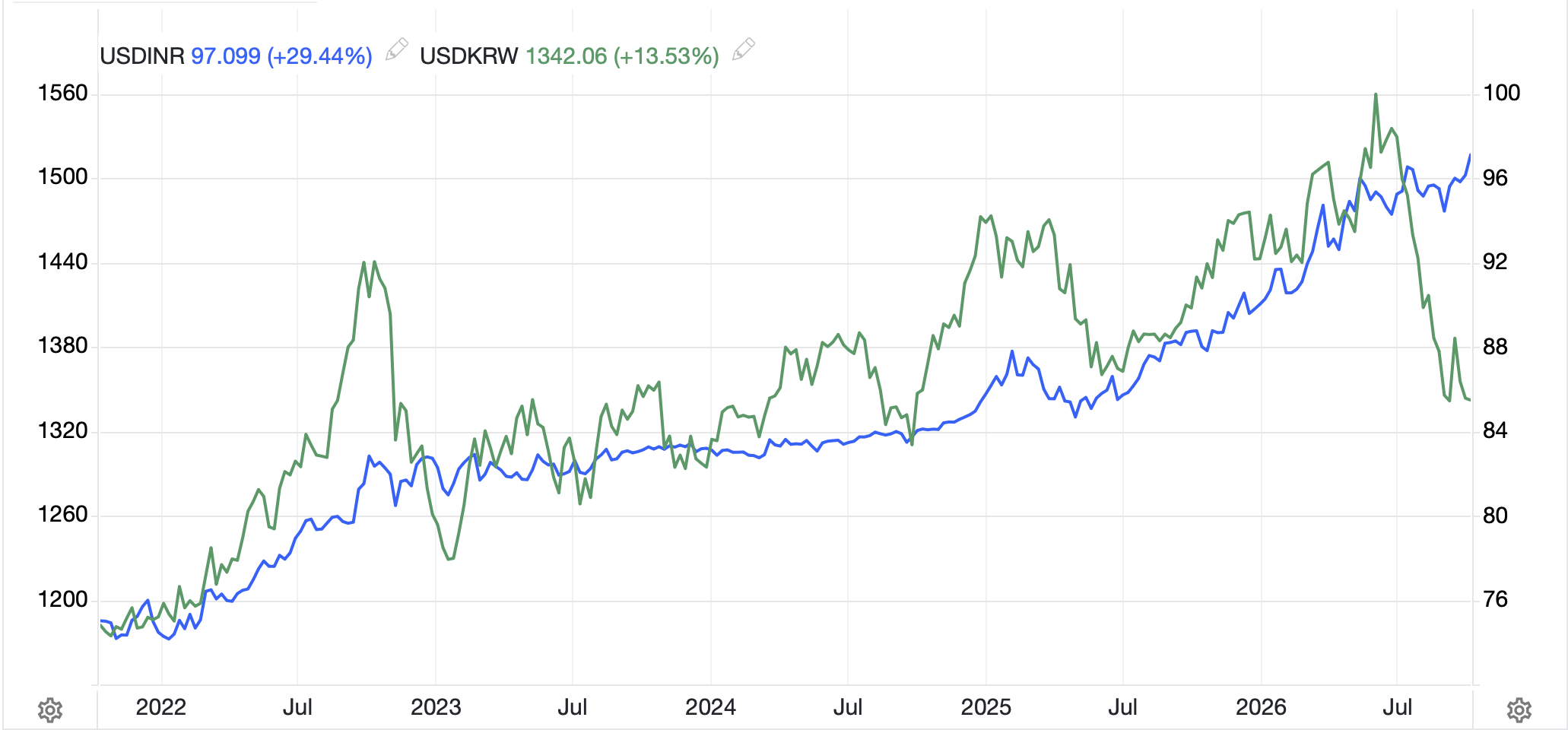
The only other currency that moved more than 10 basis points was INR (+0.3%) which continues to benefit from RBI efforts to prevent its complete collapse.  You can see the performance of the rupee over the past five years and that spike near 100 was seen as a near-death experience by the RBI and drove them to respond.  Alas, the war is not helping their cause at all and there are scant few reasons to buy the rupee for most traders these days.  

Source: tradingeconomics.com

Otherwise, all I can offer is for you all to have a wonderful Easter/Passover weekend and we will pick up again Monday, but really it will take until Tuesday before we get a better sense of how the news will be absorbed, whatever it may be.

Good luck and good weekend

Adf

Beware

While news from Iran shows the war
Continues apace, like before
On Wall Street it seems
It’s over, with dreams
Of stock market rallies galore

Now, I realize stocks look ahead
And discount the future instead
But wars tend to last
They don’t end so fast
Beware in which markets you tread

As March and Q1 ended, it appears that there have been some changes in opinions in the investment community.  At least that is what I glean from the following Bloomberg screenshot of major global equity markets including yesterday’s US session and the overnight activity.

As far as I can tell, missiles are still flying in the Middle East, the US and Israel continue to attack specific targets with B-52’s dropping significant amounts of precision guided bombs, the Strait of Hormuz continues to have extremely restricted movement and the UAE, according to the WSJ, is now ready to join the war directly.  None of that seems like de-escalation of fighting, but then I am not a military strategist, so perhaps I don’t understand the concept of de-escalation well.

One take I saw this morning was that equity markets are pricing in the increased likelihood that the US will be leaving the conflict.  On the surface, I liked that idea, and that would certainly explain some of the US rally yesterday, but that doesn’t explain why Asia soared and Europe has rallied as well, given they would have to deal with the rest of the process.  This evening at 9:00 President Trump will be addressing the nation, so I presume we will have a better understanding of things after that.  

One other thing to remember is that the president uses his Truth Social posts to add to the fog of war and create strategic uncertainty for all parties involved.  I read this morning that the administration has been speaking (not directly) with some Iranians and creating a plan for the future, but it is not clear if those people have sufficient power to unite the country there yet.  All in all, while anything is possible, it strikes this poet that things in Iran have not ended, nor will they until the Strait of Hormuz is back to full operational capacity regardless of the President expressing the view that the US (and Israel) have done the hard part and Europe and Asia can deal with the Strait themselves.

But that is where we stand this morning, with risk back in vogue across the board as oil (-1.5% and back below $100/bbl) slipping while gold (+1.5%) continues its rebound.  Bonds (-3bps this morning and down by 20bps from their peak on Friday) continue to rally and have taken European sovereigns along for the ride with most of Europe seeing yields slide between -7bps and -9bps although German bunds, which have held up the best, are only lower by -4bps.  Happy Days are here again!

With all that good news, let’s consider what else is going on, away from Iran, that may impact markets.  At this point, we know the Fed is on hold this month, and likely through the autumn, at least, given the short-term inflation impacts of the oil situation.  

Source: cmegroup.com

As an aside, there have been a number of analysts who are calling for a significant rise in food inflation but be careful on that front.  As @inflation_guy, Mike Ashton points out, [emphasis added]

“…secondary knock-on effects that will be felt eventually in CPI. One that has gotten a lot of press recently is that less oil means less fertilizer and less fertilizer means less crop production and less crop production means higher prices for food. I actually think that’s probably overblown in terms of what the consumer will see, because most of the cost of consumer food items is in the packaging and delivery and not the raw goods, and so as raw food commodity prices go up it will likely be partially offset by transportation prices declining.” 

In fact, I expect that most central banks are terrified of the current situation as they understand, intellectually, that the oil price shock will be temporary, but will feel significant pressure when inflation starts to rise to “do something about it”.  Australia already hiked rates, but that was assumed prior to the onset of the war.  The calculation they are all trying to make is will the negative impacts on growth outweigh the rising pressure on inflation and what will the timeline be like.  In the end, my take is very few will hike in response to this event, especially if the military activity ends before the end of April.  And that is why they get paid the big bucks, to get those decisions right.  Alas, their collective track record is not great.

And beyond that, I don’t see much news directly driving the narrative.  It is still the war, and all the individual takes there, and a much lesser role to the Fed and other central banks.  Economic data is decidedly not part of the current discussion in any meaningful way and given the impact the war is going to have on data for a while going forward, it will be very difficult to suss out underlying trends from headline numbers.  

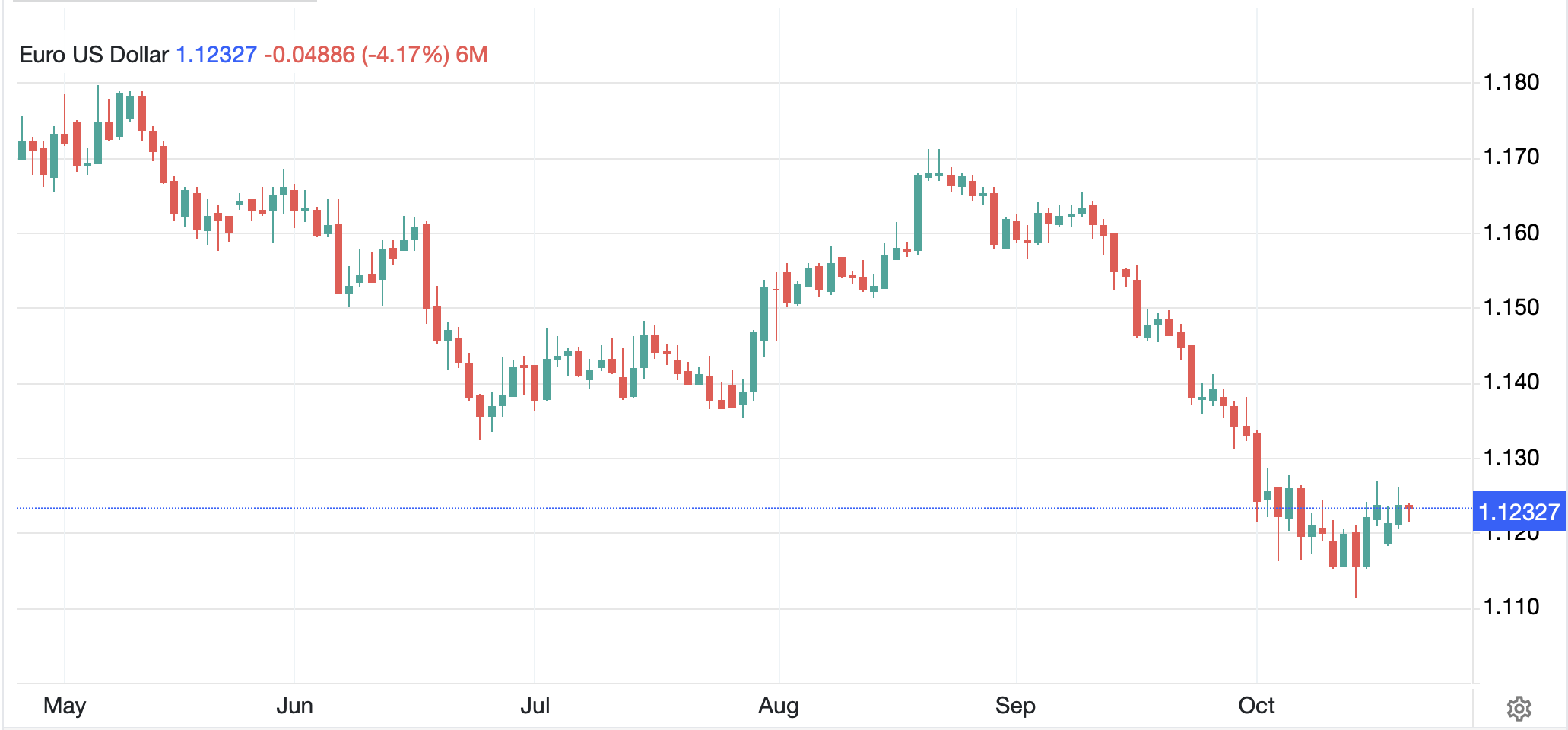
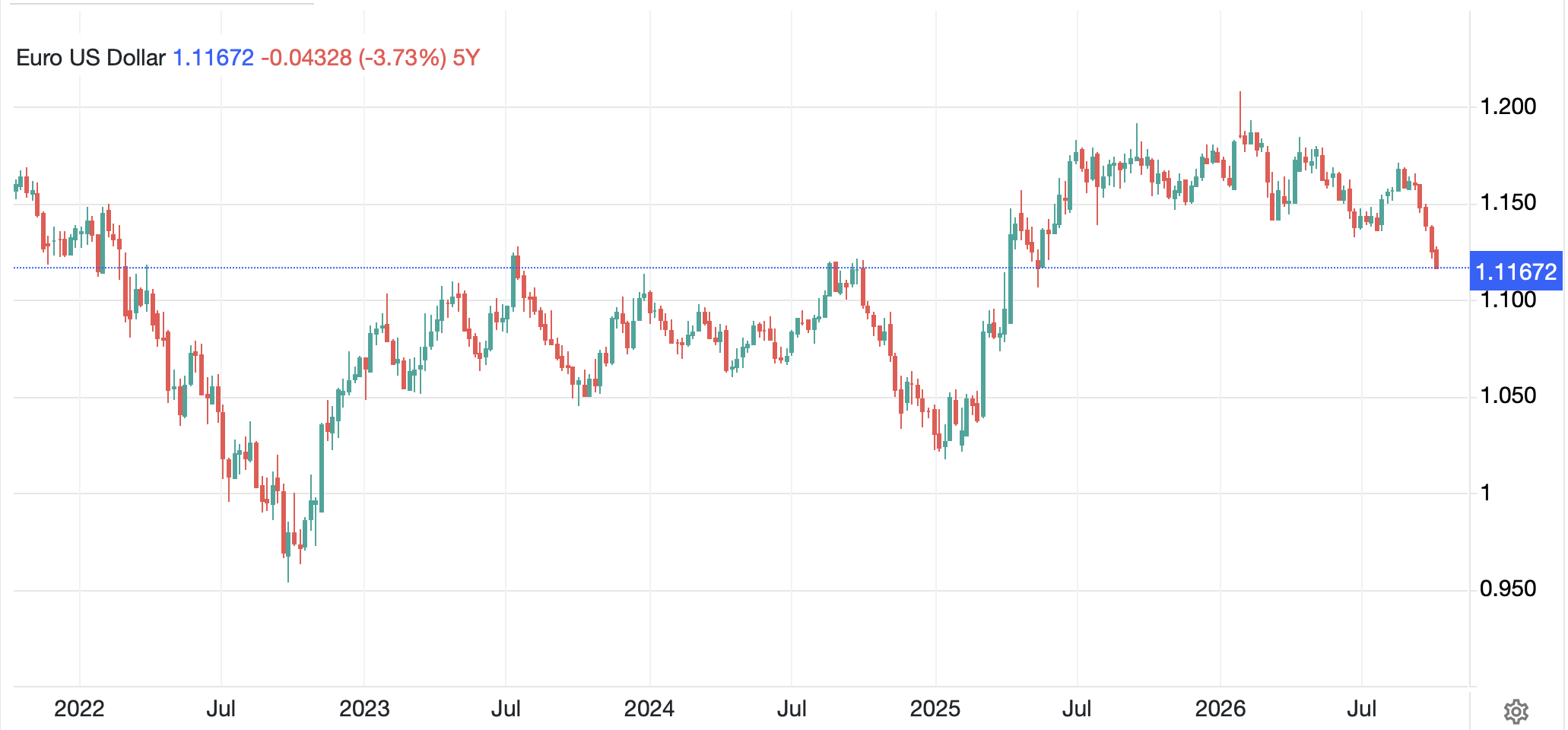
I’ve already discussed most market segments, leaving just currencies untouched at this point.  Given the reversal in views, we cannot be surprised that the dollar, which has been a major beneficiary of the war, has reversed its recent price action as well.  In fact, using the euro as our proxy, we can see in the below chart that the reversal started at 7:00am yesterday morning and the single currency has rebounded by 1.25% since then.

Source: tradingeconomics.com

And while the euro (+0.5% today) has rallied this morning, it mostly lags other currencies with the pound (+0.7%), AUD (+0.8%), CHF (+1.0%) and SEK (+1.0%) all having very strong sessions.  As well, the yen (+0.2%) has backed away from the 160 level and even CAD (+0.2%) and NOK (+0.5%) are stronger despite the decline in oil prices.  It should be no surprise that the EMG bloc is also showing strength with CLP (+1.1%) leading the way followed by HUF (+1.0%) and ZAR (+0.9%). One disappointment is KRW (+0.2%) which has been one of the worst performers for the past month (-4.0%) and is barely rebounding.  Chile is intricately bound to the price of copper, which has rallied slightly (+1.0%) in the past week, but continues to lag the precious metals.  However, there is a story about the major copper company there, Codelco, which is supporting the currency this morning.  Net, the dollar is giving back some of its recent gains today and will likely continue to do so if risk appetite remains robust.

While data hasn’t had much impact, this morning we see ADP Employment (exp 40K) as well as Retail Sales (+0.5%, +0.3% ex autos) and then ISM Manufacturing (52.5) and Prices Paid (73.0).  Yesterday’s data was in line with expectations and did nothing to alter any perceptions about the economy or path of interest rates.

And that’s all we have.  US futures are rising this morning (+1.0% across the board at 8:00) and for now, risk is the way.  I guess we will have to hear what the President says this evening to consider changing views.

Good luck

Adf
Simply No Need

Said Powell, there’s simply no need
To hike rates, we all have agreed
But likewise, no case
To cut, lest we face
An outcome where, jobs, we impede

Said Trump ‘bout the Strait of Hormuz
Be careful and do not confuse
Our aims in this war
As more than before
Which has been, Iran, to defuse

Just like every other day, this morning shows we really have no idea what to believe regarding the war anymore.  The headline in the WSJ is that President Trump may consider the job finished even if the Strait of Hormuz remains closed.  That has certainly gotten the Europeans up in arms as they are the ones relying on its reopening to source much of their oil and LNG.  But consider it from the US perspective, where we source only about 2.5% of our oil related products from nations on the wrong side of the Strait, which means virtually none of our overall import roster (source Grok). 

Now, the one thing I will say about President Trump is that strategic ambiguity is one of his strengths, as he continues to make so many seemingly contradictory statements, nobody knows what he is working to achieve.  Based on the framework that Secretary Rubio laid out again yesterday:

  1. Destruction of Iran’s Navy
  2. Destruction of Iran’s Air Force
  3. Severe diminishment of their missile launching capability
  4. Destruction of their armaments factories

It is not hard to believe the US and Israel are close to their goals.  However, none of this discusses Iran’s nuclear weapons program, which has clearly been a goal, nor the 440Kg of 60% enriched U308 that they retain.  

Again, I wouldn’t dare claim to have any idea when this will end, but the political calculus indicates it is unlikely to go on for very much longer.  However, it is not just the political calculus that implies that, but also market pricing of certain things.  For instance, one of the things that initially surprised me was that Brent crude (+0.6% today) did not initially rise more rapidly than WTI (+2.0% today).  After all, zero WTI transits the Strait and it is not a pricing benchmark for anything that happens over there, while Brent is the basis for all Middle Eastern oil.  As the Strait of Hormuz has been effectively closed since March 4th, a look at the below chart shows that Brent did not separate itself from WTI until 2 weeks later.  But last night, that spread collapsed back to its current $3/bbl, similar to the levels that preceded the onset of the war.

Source: tradingeconomics.com

One interpretation of that price action is that there is a growing belief that the Strait will reopen for transit soon.  Of course, it could simply be that neither Brent nor WTI are representative of the oil grades that are impacted, and thus the large premium no longer makes sense, but given the totality of the news, I’m inclined to lean toward the former idea.  Of course, both benchmarks are currently solidly above $100/bbl so still causing great pain.

However, on this topic, as most of us live and think in a nominal world, we consider $100/bbl as extremely expensive.  But if we take a moment to consider the real (inflation adjusted) price of oil, we can see in the chart below that energy remains pretty cheap, and well below levels seen ahead of the GFC or even in the wake of the Russian invasion of Ukraine.

Source: data FRED, calculations and chart, @fx_poet

My point is that over time, energy has become less of a cost in the economy, and even with the current situation, my take is the US, and frankly global, economy is quite resilient and will get through this.  I’m not suggesting there won’t be some pain, just that this is not going to lead to economic Armageddon.

The other interesting story from yesterday came from Chairman Powell, who in a speech at Harvard explained there was a great deal of uncertainty currently, while admitting that the tariffs were likely a one-off modest inflation pressure.  He indicated rate cuts were likely over, although hikes were possible, and then the man who printed $5 trillion to pay for every one of President Biden’s Covid and ESG bills, explained that debt is growing too fast and could be a problem going forward.   And you wonder why there are those who are skeptical of his concerns over politicization of the Fed.

Ok, let’s turn to markets.  Yesterday’s morning positivity faded all day and both the NASDAQ and S&P 500 closed lower on the session.  That mostly followed in Asia with Tokyo (-1.6%), China (-0.9%), Korea (-4.3%) and Taiwan (-2.5%) all under real pressure, although HK (+0.2%) and Australia (+0.25%) managed some gains.  Other regional exchanges were mixed as investors around the world are trying to figure out the next steps.  At this hour (7:00), US futures are pointing solidly higher, +0.8% or so.  Turnaround Tuesday?  Certainly, that is the case in Europe where despite widely expected higher Flash inflation data for March, green is today’s color with gains ranging from 0.2% (CAC) to 0.5% (FTSE 100) with others somewhere in between.

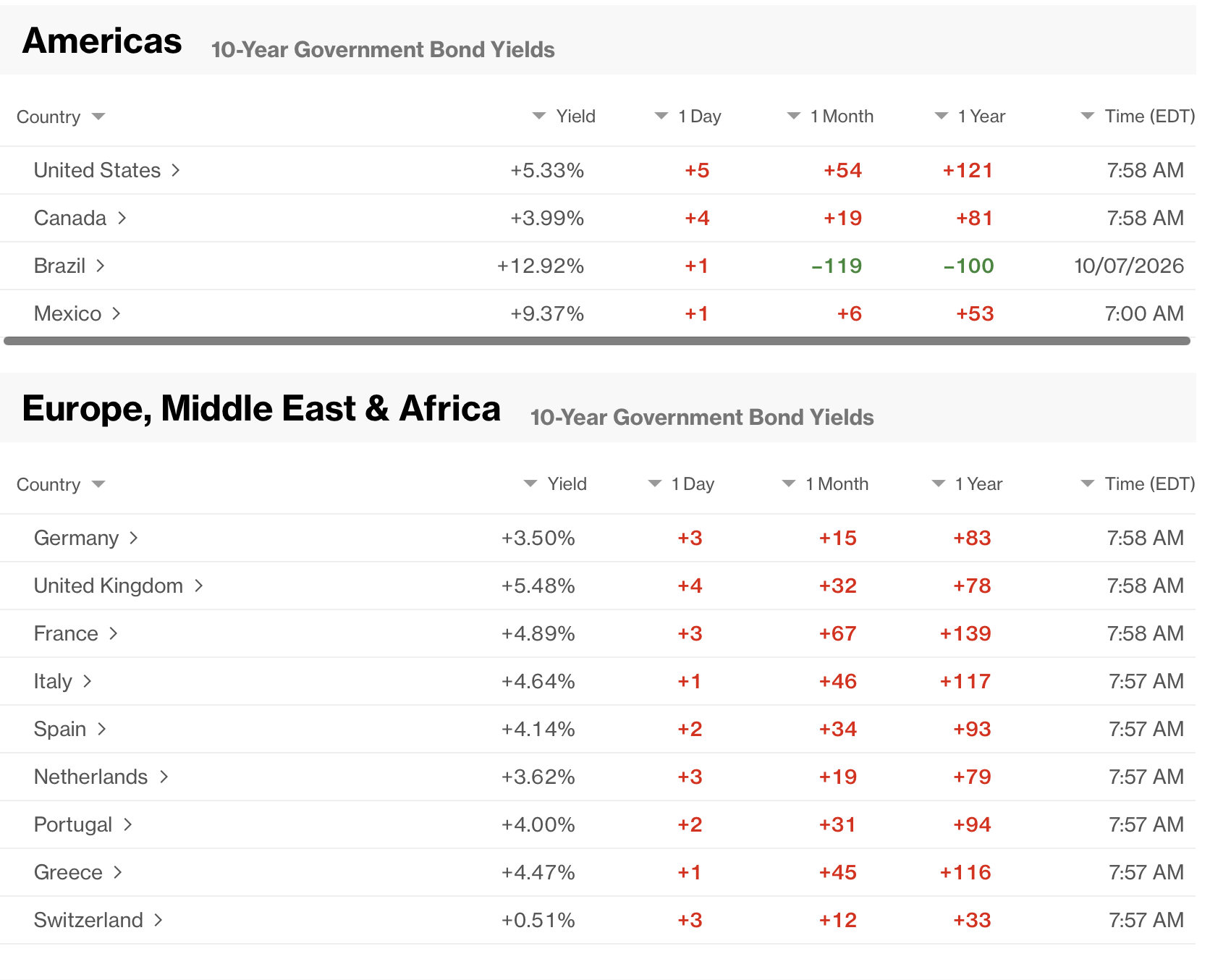
Bond investors have seemingly turned their views from inflation concerns to growth concerns, at least based on the fact that yields around the world are lower this morning than yesterday.  In fact, since Friday morning, 10-year Treasury yields have fallen -14bps, including -2bps this morning.  in Europe, yields did slide somewhat yesterday, about half that in the US, and this morning they are little changed throughout the continent.  But we did see JGB yields slip -2bps overnight as well.

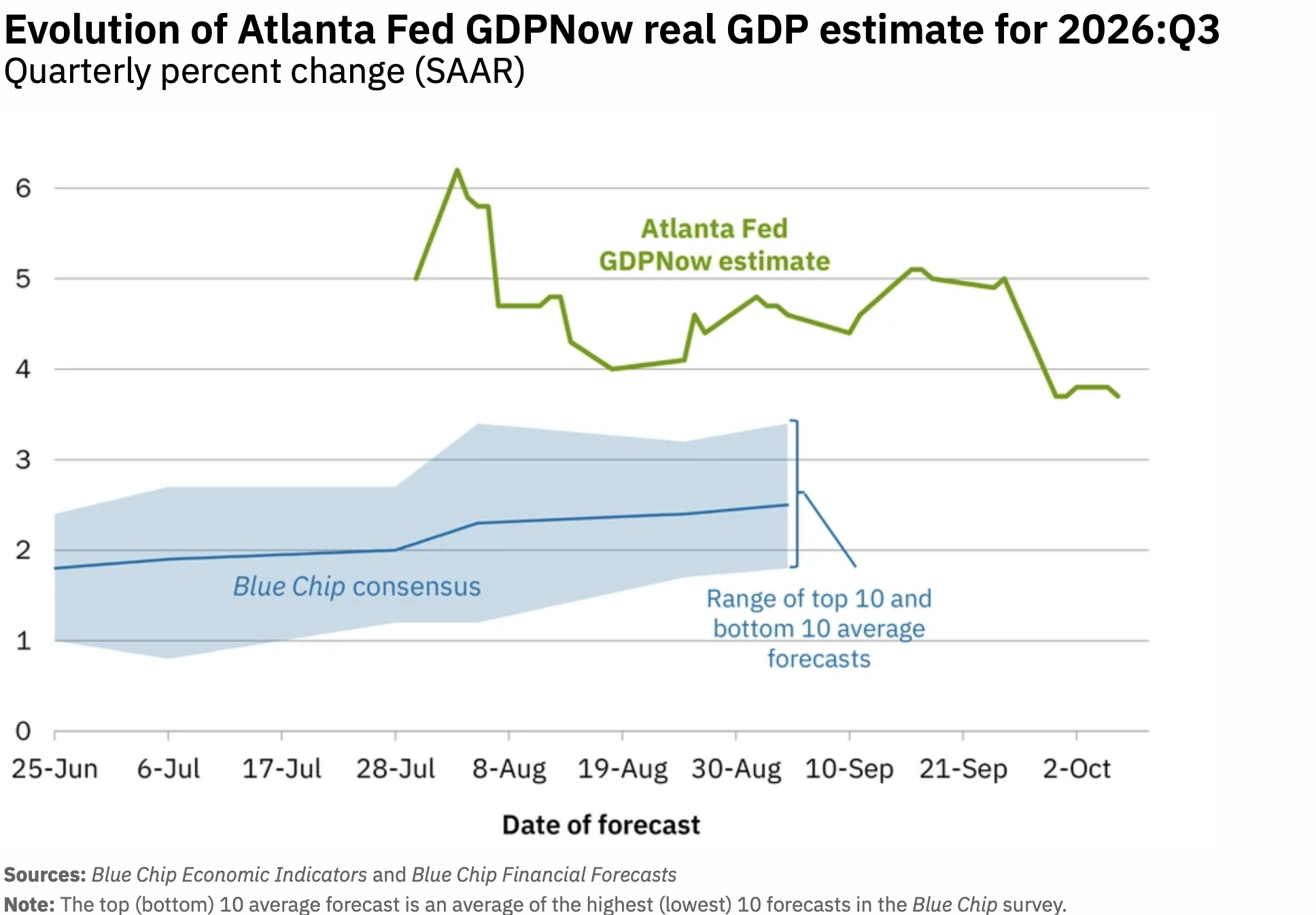
On the growth side, the Atlanta Fed’s GDPNow is running at 2.0% for Q1, well below its first readings from before the Iran activity, although still in decent shape.  The next update comes tomorrow, so will be interesting to see.  And, of course, the payroll report on Friday will be critical for that reading.  It is, though, still well above the Blue Chip Consensus readings.

We’ve discussed oil, but a quick peek at precious metals shows they are regaining their luster, with gold (+0.8%) and silver (+3.6%) both nicely higher this morning.  As this price action continues, with the current price more than 10% above the spike low from March 23rd, I believe whatever was driving things during the first part of the war, may now have passed.

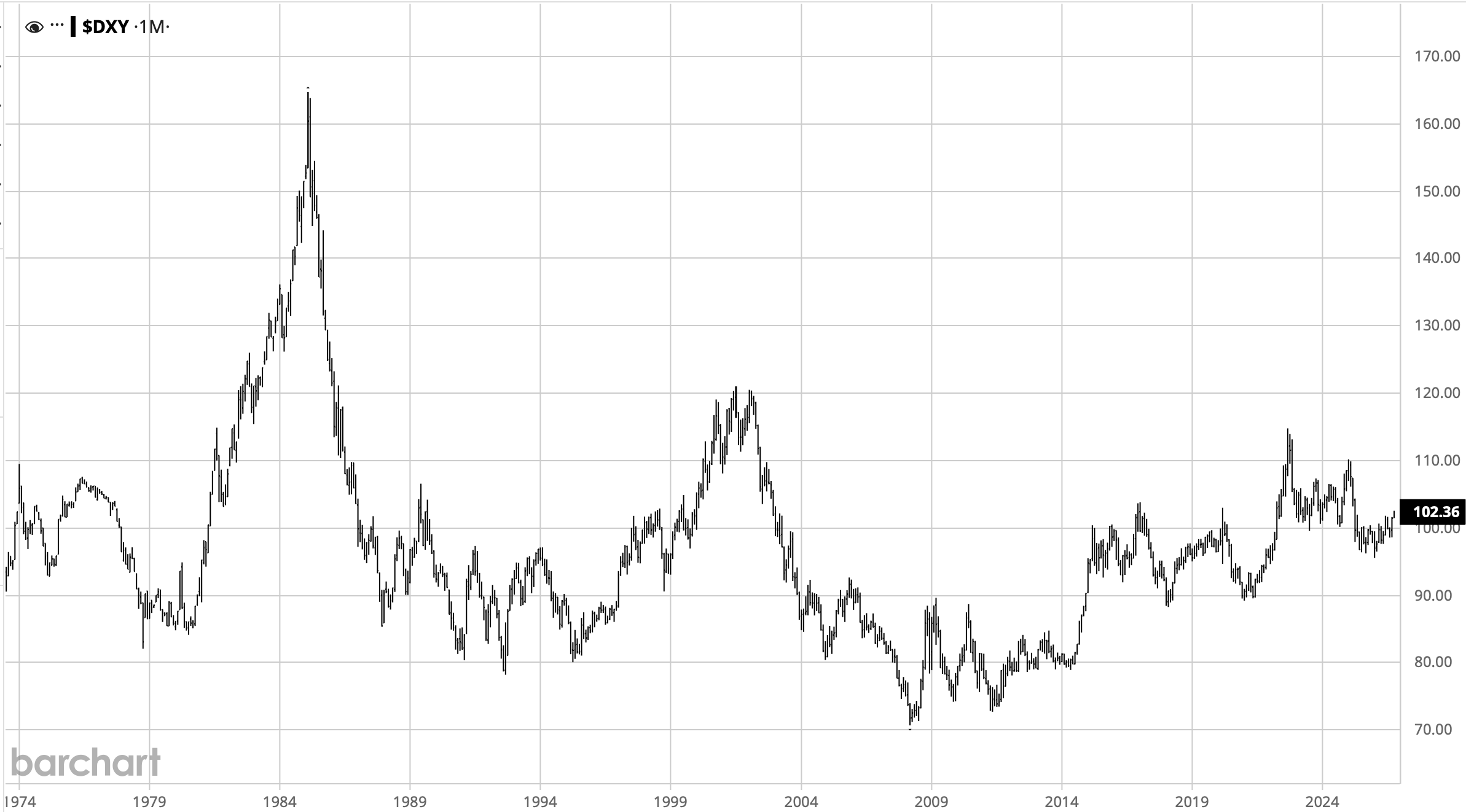
Finally, the dollar is little changed this morning, but sitting on its recent highs with the DXY at 100.53 as I type.  Here’s the thing about the current level.  As you can see from the long-term chart below, while during the first 4 months of 2025, the dollar did decline sharply, about 10%, the longer history shows that the current level has acted as support for a very long time.  As well, if you take the really long view, we are within spitting distance of the DXY’s average since the 1970’s.

Source: tradingeconomics.com

All I’m saying is the dollar is neither strong nor weak right now, it just is.  It is, though, worth looking at the yen (0.0%) which pushed back to just below 160 during yesterday’s session and got more jawboning from Mimura-san, the Vice Finance Minister for International Affairs (aka Mr Yen) who explained they are ready to take “decisive action” against speculative moves.  But otherwise, this morning’s session is unremarkable with only KRW (-0.6%) continuing to suffer from the energy issues there.

On the data front, we get Case Shiller Home Prices (exp +1.3%) and then Chicago PMI (55.0) and perhaps most importantly, the JOLTs Job Openings (6.92M) report at 10:00.  There are two more Fed speakers, Goolsbee and Barr, but with Powell just having confirmed no moves are coming soon, what can they possibly add to the story?

The war and its headlines remain the key drivers and I don’t see anything changing that dynamic for now.  I wonder if markets are prepared for an announcement that it is ending and Iran has come to terms.  I’m not suggesting that is the likely outcome, just that it would be the biggest surprise, I believe.  In the meantime, there are precious few reasons to sell the dollar outright, that’s for sure.

Good luck

Adf

No Longer Benign

The war in the Gulf shows no sign
Of ending by any deadline
Some victims now bleeding
Are bonds, with yields speeding
To levels no longer benign

Already we’ve seen, efforts, great
By nations, impacts, to abate
So, price caps on gas
Worldwide came to pass
But will central banks raise their rate(s)?

Nothing of note has changed in the Iran war as the US continues to refrain from further attacks while negotiations to end the conflict ostensibly continue.  Both sides have made their demands, but from what I have read about them, neither side can accept the others wishes.  If pressed, my take is the ongoing US pause is simply allowing the Marines and 82ndAirborne to get into place for their attempt to take over and control Kharg Island and the other small islands in the Strait.  Frankly, I would not bet against their tactical success in that endeavor.  However, it is not clear how Iran will respond in that situation.  After all, if the US does control Kharg Island, that means Iran no longer controls their own revenue stream, and that is truly existential for the regime.  However, I could be completely wrong about this, which is why I am not a military strategist.

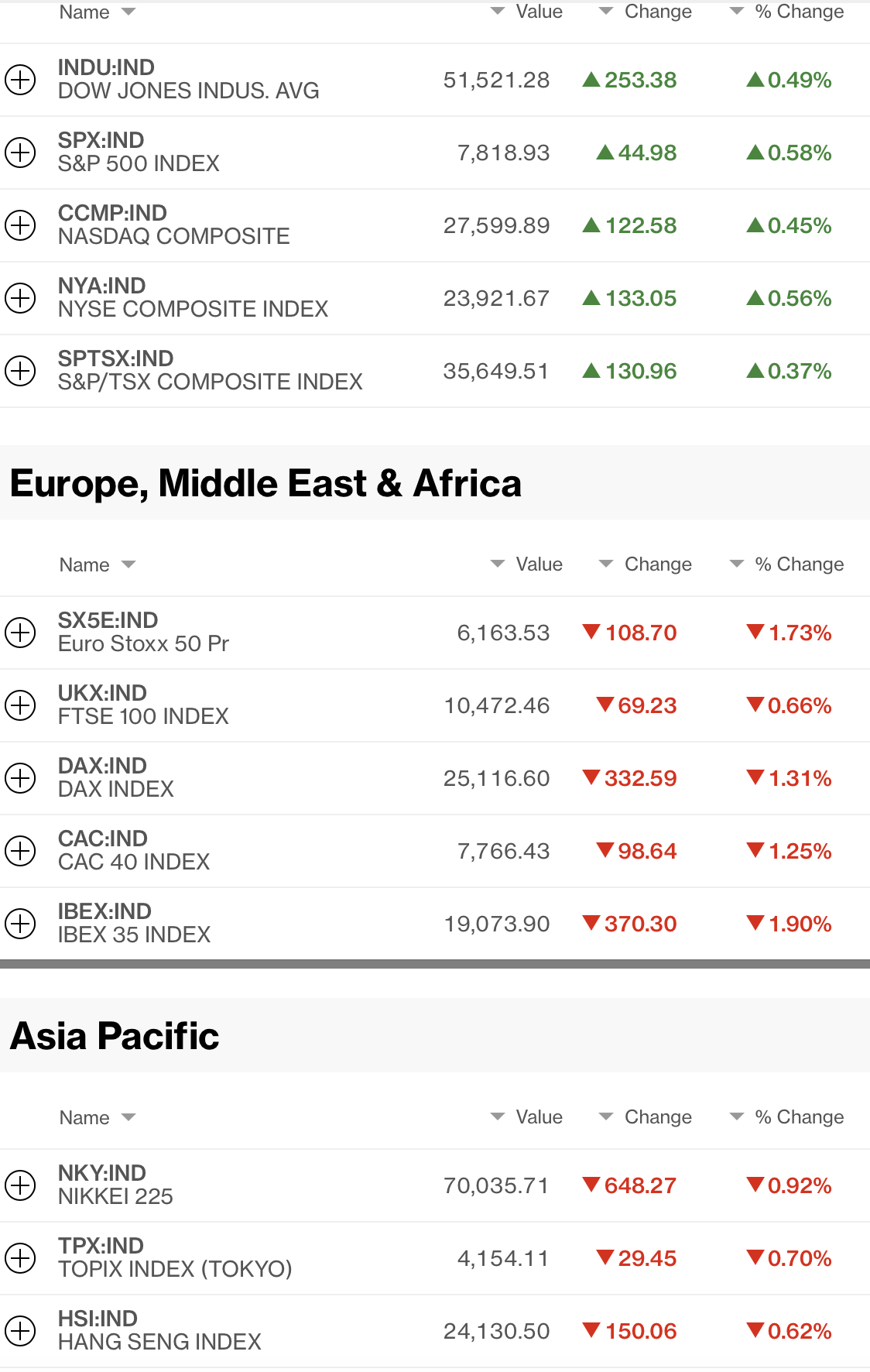
But I think it is worthwhile taking a peek at the bond market this morning.  For the first few weeks of the war, while yields edged higher, there was no indication that investors were getting terribly nervous about the longer-term impacts of the war.  However, that no longer seems to be the case.  I have several charts below showing US, UK and German 10-year yields over the past six months, and then a longer-term perspective showing those same yields over the past 20 years. 

Six months of yields

Source: tradingeconomics.com

Long-term charts (source marketwatch.com)

UK Gilts

German bunds

US Treasuries

As you can see from the first chart, yields across all three of these nations have risen sharply now in the past month.  In fact, the numbers are US (+52bps), UK (+83bps) and Germany (+47bps).  It is very clear that fixed income investors are getting worried, and reasonably so given the idea that inflation readings, at least in the short-term, are going to be much higher.  As to the longer-term view, though there is certainly a similarity amongst the movement of yields of all three nations, UK yields are currently at their highest level since the GFC, July 2008; German yields are at their highest level since the Eurozone bond crisis in 2011, but Treasury yields were higher at the beginning of this year, and 25bps higher in late 2023.  

This is not to dismiss the potential problems that may arise if government bond yields continue to rise, especially given the already extraordinarily high debt/GDP ratios that exist throughout the G10.  However, I am not prepared to concede that the US is going to collapse because 10-year yields are back at 4.50%.

What we have seen, though, almost everywhere in the world, is government attempts to cap prices on energy, whether gasoline, diesel or even electricity, to help moderate some of the obvious pain that higher energy prices are inflicting on their populations.  We have also heard a great deal from central bankers about needing to tighten monetary policy to combat the rising inflation, despite the fact that inflation is coming from a supply shock in energy rather than either excess demand or money supply.  I fear that will not work out that well if they do so, but as is often the case, central banks (and governments in general) feel they must “do something” when an exogenous event, out of their control, occurs.  Ultimately, history has shown that is when policy mistakes are made.  Here’s hoping the hostilities end quickly enough so nations don’t make those mistakes.

Away from bonds, with yields higher this morning across the board (US +5bps, Germany +5bps, UK +11bps, Japan +11bps) and the rest of the European sovereigns somewhere in between, if we turn to oil (+2.7%), WTI is pushing back up to $100/bbl this morning, which I take as an indication market participants are getting nervous things will last longer than they thought a few days ago.  You can see the chart below that oil has rallied steadily all week since the Tweet that things were going to be ending soon back on Monday.

Source: tradingeconomics.com

The more interesting price action to me, this morning, is that gold (+0.7%) is also higher this morning, which may be the first session since the first day of the attacks, where both have risen in sync.  There is a story around that Turkey sold 58 tons of gold right when things began, but even at $5000/oz, that is only about $9 billion of gold compared to average daily trading volumes of between $200 billon and $300 billion (according to Grok).  My point is that would not be enough to move markets like we have seen in gold, but it could well be a harbinger of what other nations did as well.  Again, there is no sense that the long history of gold’s role is changing here.

As to equity markets, yesterday’s weakness in the US has been followed across Europe (DAX -1.6%, CAC -1.1%, FTSE 100 -0.75%, IBEX -1.4%) but the picture in Asia was more nuanced.  While the Nikkei (-0.4%) slipped a bit, both China (+0.6%) and HK (+0.4%) managed to rally as did Malaysia, Singapore and Thailand albeit not very much.  On the downside, though, India (-2.2%) made up for the fact it was closed on Thursday, while Korea (-0.4%) and Taiwan (-0.7%) both slipped and the rest of the region edged lower by lesser amounts.  As to US futures, at this hour (7:30) they are lower by about -0.35%.

Finally, the dollar continues to be a major beneficiary of the war as the DXY is back above 100 this morning with several EMG currencies coming under greater pressure today.  We see CLP (-1.1%) feeling the pain of copper’s inability to rally at all, as well as INR (-0.6%) and MXN (-0.5%) suffering this morning.  NOK (+0.2%) continues to benefit from oil’s recent strength, and CAD (+0.1%) is holding its own on the same basis, but both the euro (-0.15%) and pound (-0.2%) are struggling as the energy problem there is a major detriment to their economies.

The only US data this morning is Michigan Sentiment (exp 54.0) while yesterday’s Jobs data continues to show that layoffs are not increasing in any meaningful way, which I believe is a result of the dramatic change in immigration policy as well as deportations.  Like so much of what is ongoing these days, old models regarding the labor market are no longer representative of the new reality on the ground.  I suspect this is true across large segments of the economy which just means that relying on econometric models will be a fraught exercise going forward.  Here is a reason to pity the central bank community as they are truly flying blind now.

And that’s all there is today.  To me, we are biding our time until the Marines land on Kharg Island and then we will see a new phase of the war.  It is a high risk, high reward venture as success would certainly reopen the Strait of Hormuz and oil prices would plummet quickly.  Failure, however, would leave Iran with greater control over that key chokepoint and potentially cause greater difficulties elsewhere in the world, not least because it would call into question the US ability to project power.  War is not only hell, but also incredibly risky.

Good luck and good weekend

Adf