Massive Divides

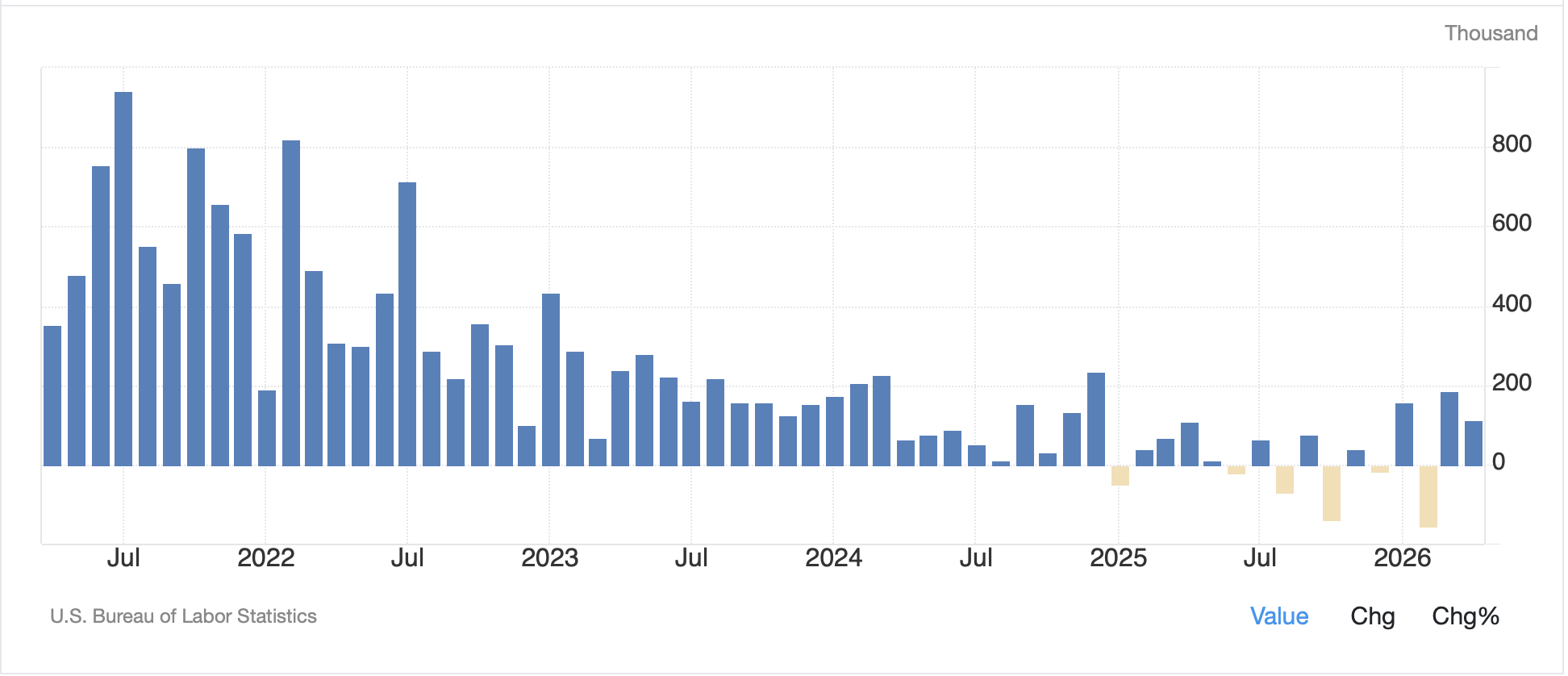
On Friday, the Payrolls were strong
So, pessimists mostly were wrong
This week it’s inflation
That might change narration
Of how things are coming along

As well, this week Trump and Xi meet
And pundits, for good takes, compete
One side says Trump’s hand
Is nought but grandstand
The other cites Xi’s self-deceit

And last, but not least, all the talk
Of some kind of deal on the block
Was trashed by both sides
With massive divides
Twixt what each will offer…or walk

Last week ended on a very positive note in markets.  The payroll report, at least to my eyes, was solid with NFP higher than forecast, although Manufacturing payrolls shrank slightly, and overall, things seemed pretty solid.  Certainly, the equity markets were comforted as all three major indices closed higher with new record highs for both the S&P 500 and the NASDAQ.  Oil prices slipped on Friday, along with bond yields and the dollar while gold and silver finished the day higher.  The Iran narrative was that there were proposals going back and forth and folks were generally in a good mood.

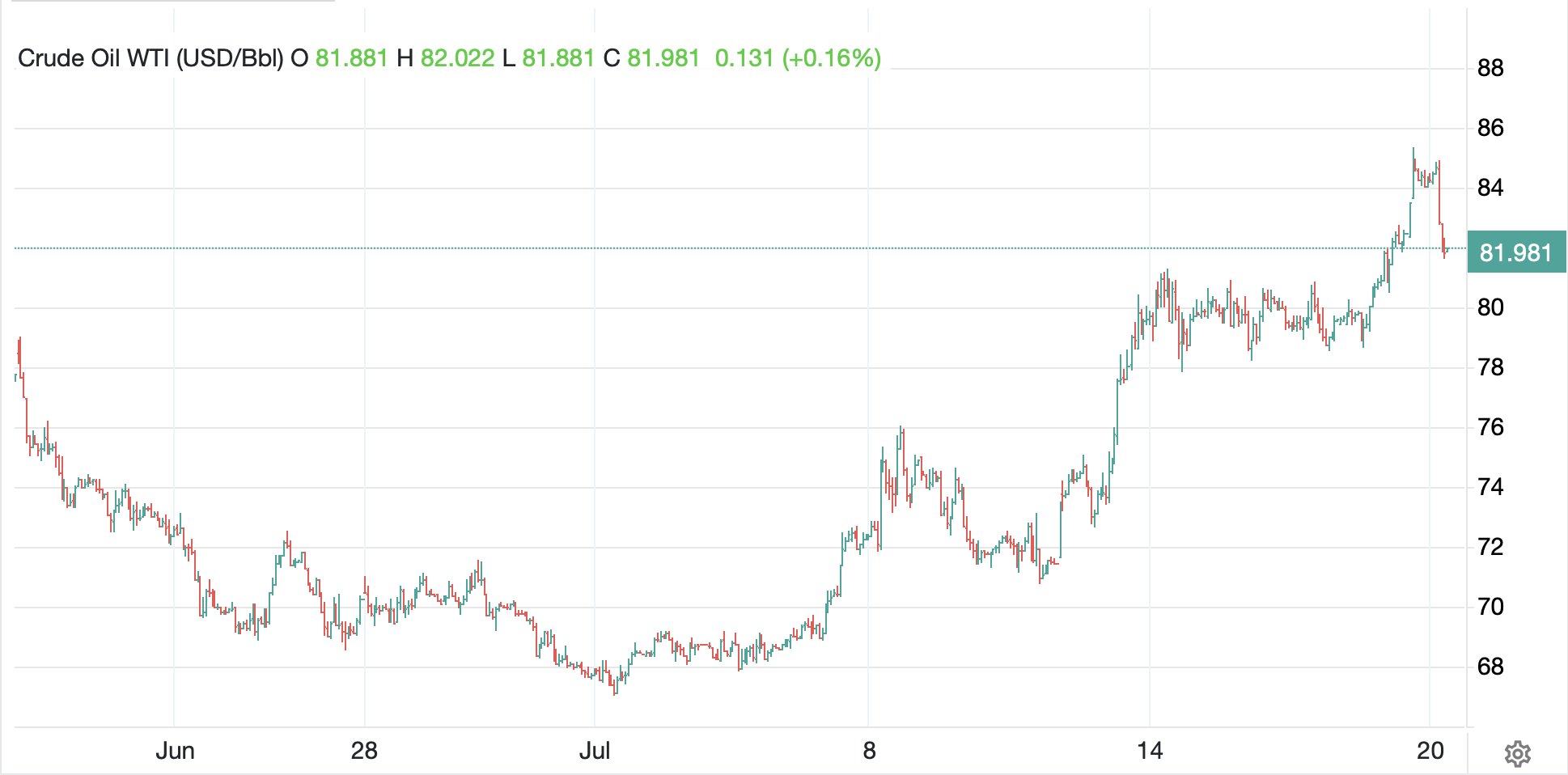
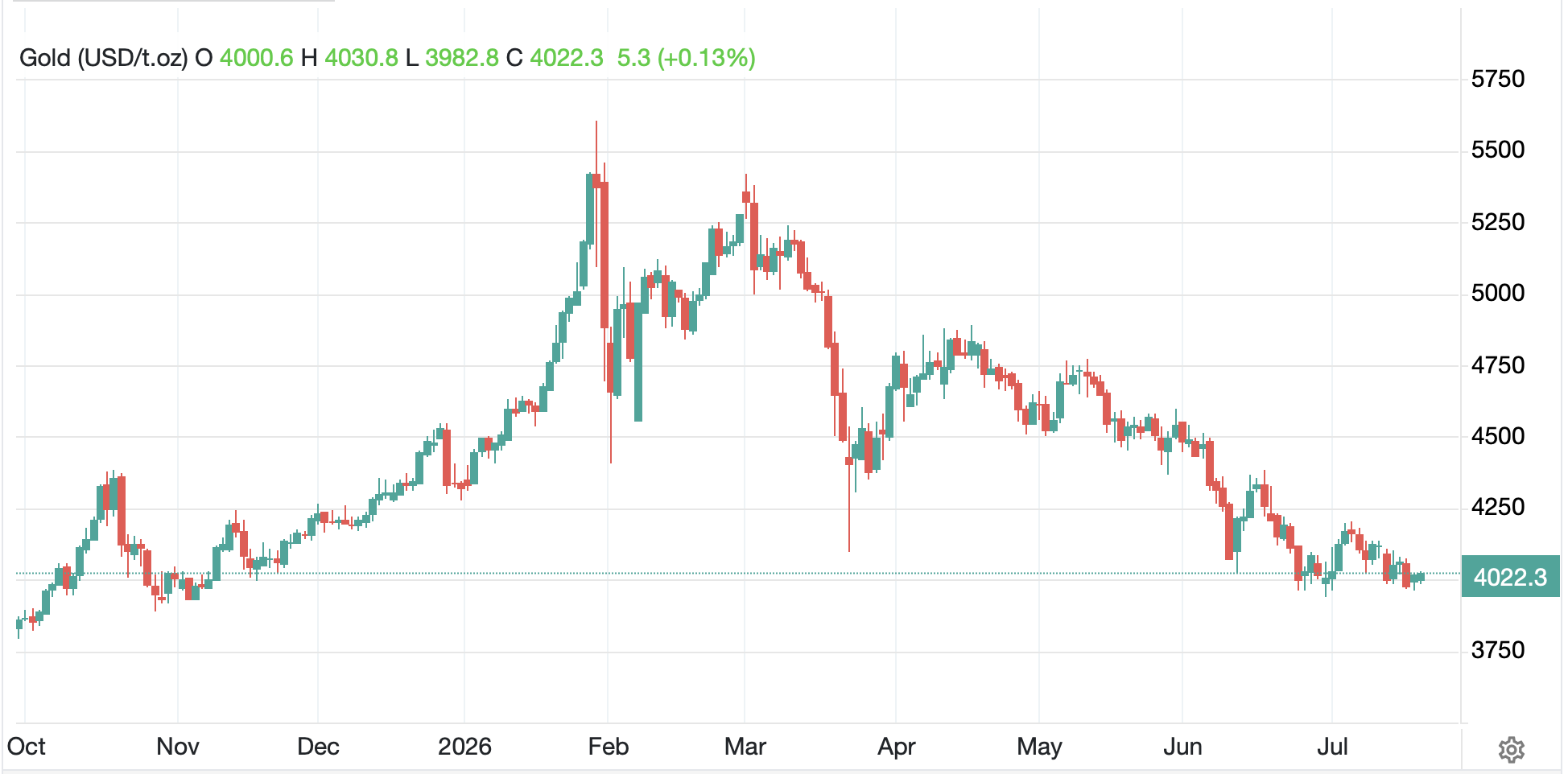
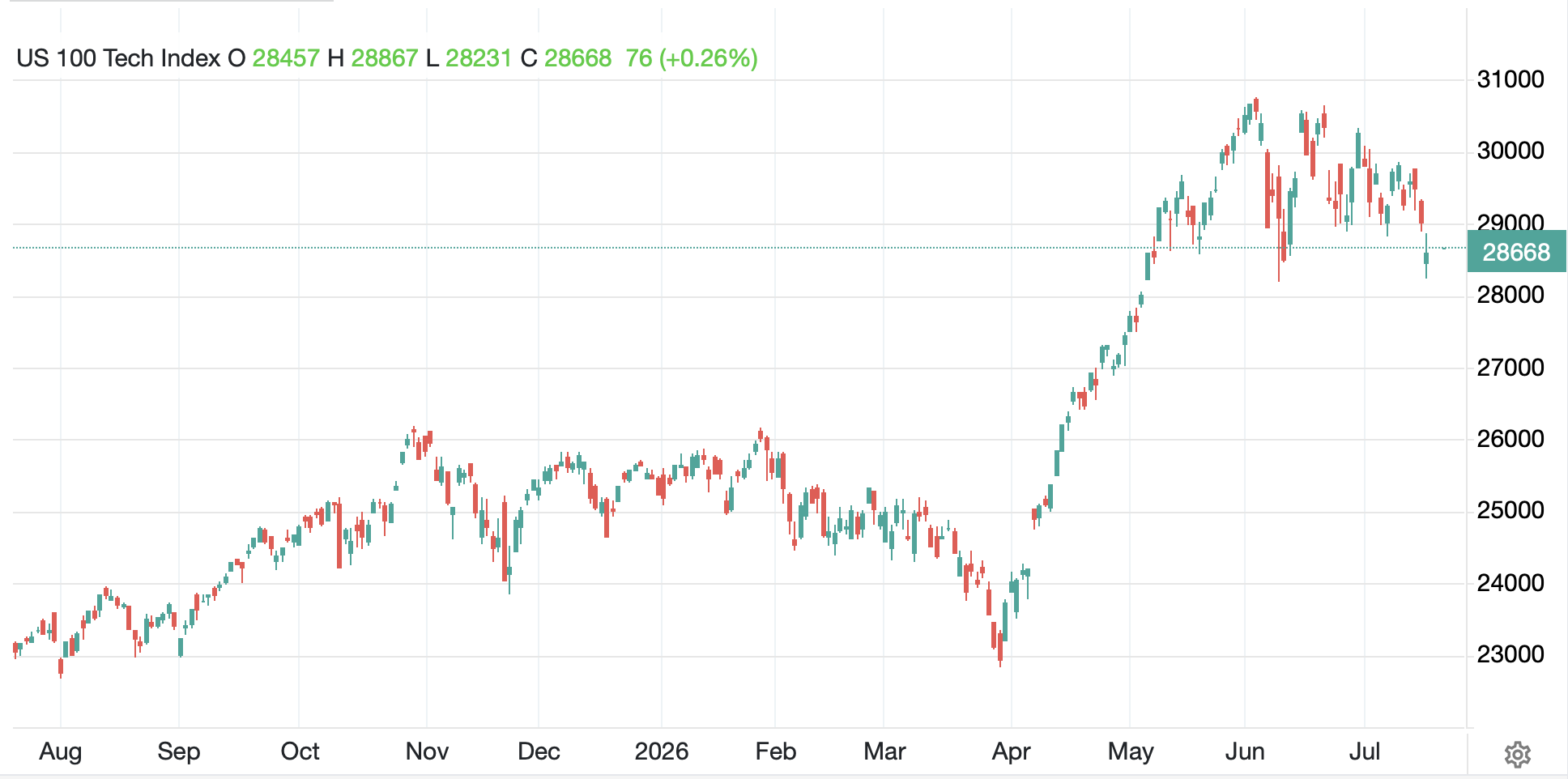
Ahhh, the good old days.  While thus far, this morning is no disaster, there has clearly been a change in tone as hopes for a peace deal collapsed after President Trump declared that the Iranian response was “TOTALLY UNACEPTABLE!”  Not surprisingly, the first move in markets was oil (+2.5%) rising along with the dollar (DXY +0.1%) and Treasury yields (+3bps) while stocks (S&P -0.15%, NASDAQ -0.3%) and gold (-1.1%) fell.  This is all of a piece with recent correlations and relationships.

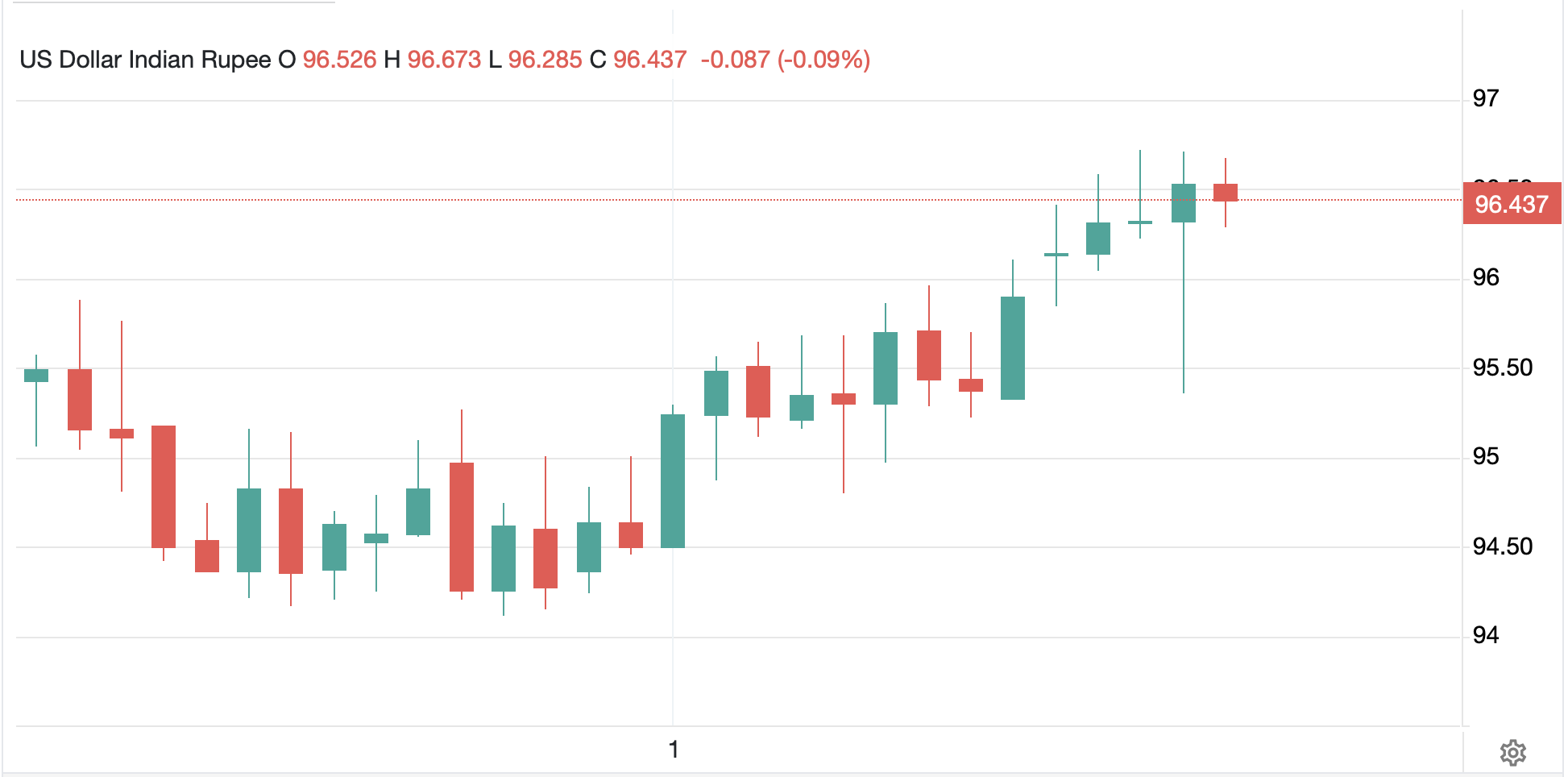
So, what are we to make of the current situation?  On the ground, at least in the US, things have not changed very much.  While energy prices remain higher than before the war, there are no shortages of any type for consumers, although that is not the case in many other nations.  India has gotten a lot of press this morning after PM Modi suggested that more people there work from home and that they stop buying gold as that exacerbates the shrinking FX reserve situation while the rupee continues to slide. 

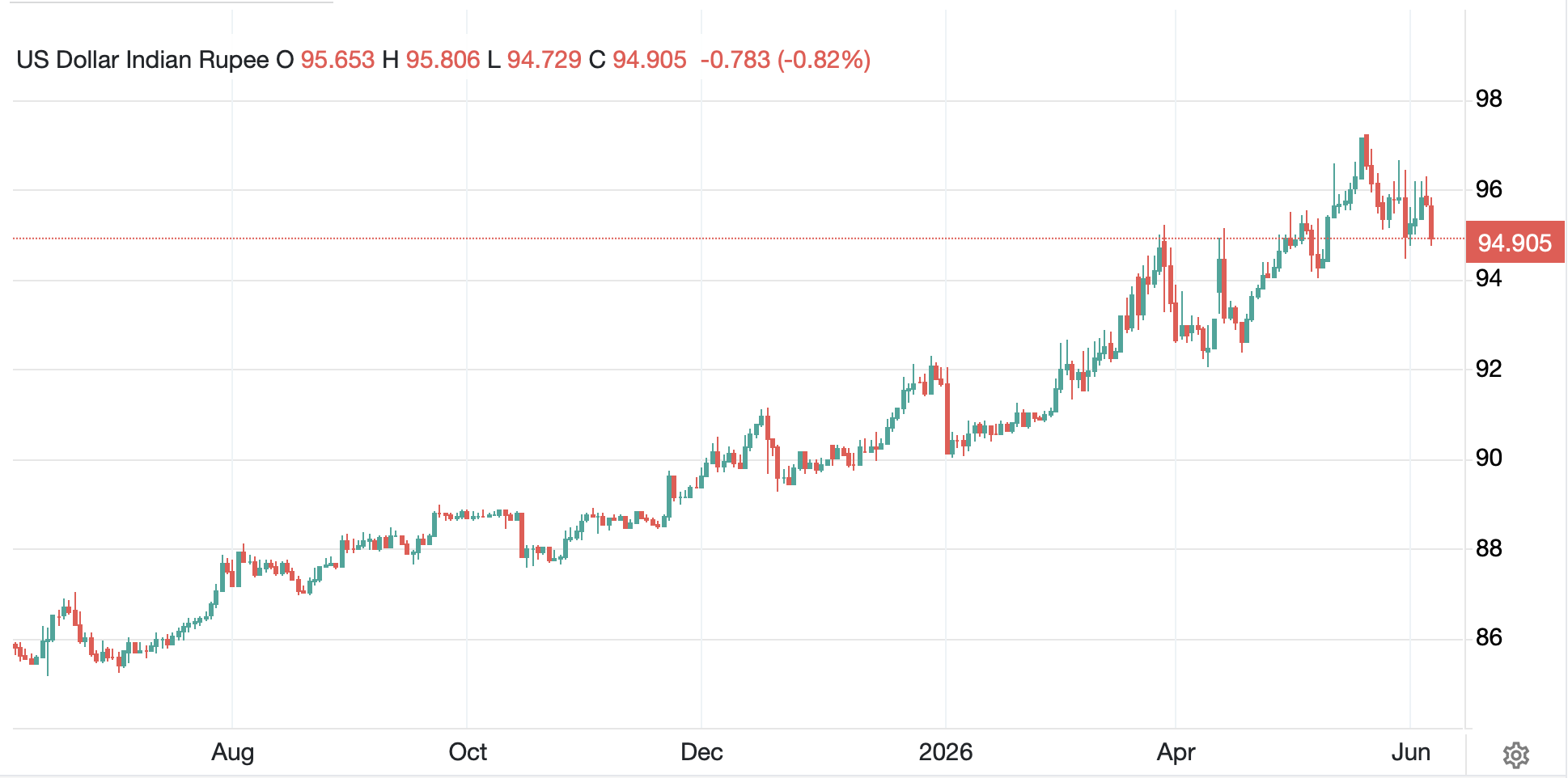
Now, the thing about the rupee is that it has been sliding for a very long time.  Since 2003, as you can see in the below chart from Yahoo finance, the currency has more than halved in value vs. the dollar.  Perhaps the trajectory has steepened a little lately, but my take is this is more about the big round number of 100 rupee/dollar than the fact that the currency is weakening.

Of course, the issue for them becomes a weakening rupee amid rising commodity prices results in rising inflation, and that never helps an elected government.

I raise the point because it is a lead article in the WSJ and I have seen discussions on Substack blogs as well this morning, so it has a little oomph.  But look at that chart and ask has anything really changed?  The more important fact is that India is merely the avatar of what is happening around the world, especially in developing nations as they try to cope with the current situation.

Which begs the next question, when might this change?  Here the answer is far more difficult.  Clearly, there needs to be a cessation of hostilities in Iran for things to begin to return to normal and while I am encouraged that, at least, the US and Iran are swapping proposals, no matter how far apart the terms, it implies that there is a goal to end the situation.  One other thing that I continue to read is that the world hasn’t really felt the full impact of the war as the buffers of products that flow through Hormuz were significant and haven’t been run down yet, but there are many analysts explaining its just a matter of days/weeks/months before a total collapse occurs.  And maybe they are correct, but so far it has just not been the case.

Which takes us to the key event this week, the Trump-Xi meeting and what may result.  China is one of Iran’s few allies and likely has real pressure points there to help (force?) them to come to the table.  And, of course, there is a great deal of economic and trade stress between the two nations.  However, it is clearly in both nations’ best interest to come to an accord of some nature and de-escalate.  I am far more hopeful of a positive outcome on that front than on Iran, but we shall see.

In the meantime, let’s look at how markets have behaved overnight as we await, prior to the Trump-Xi summit, CPI tomorrow.

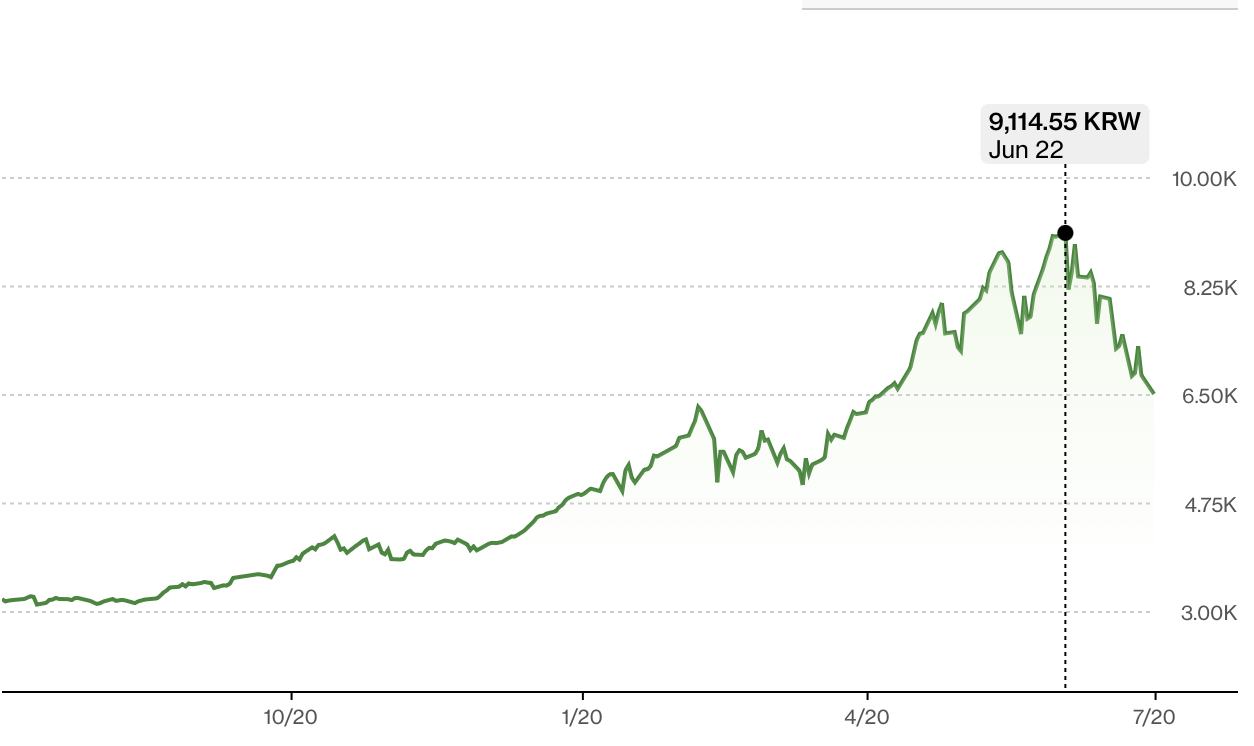
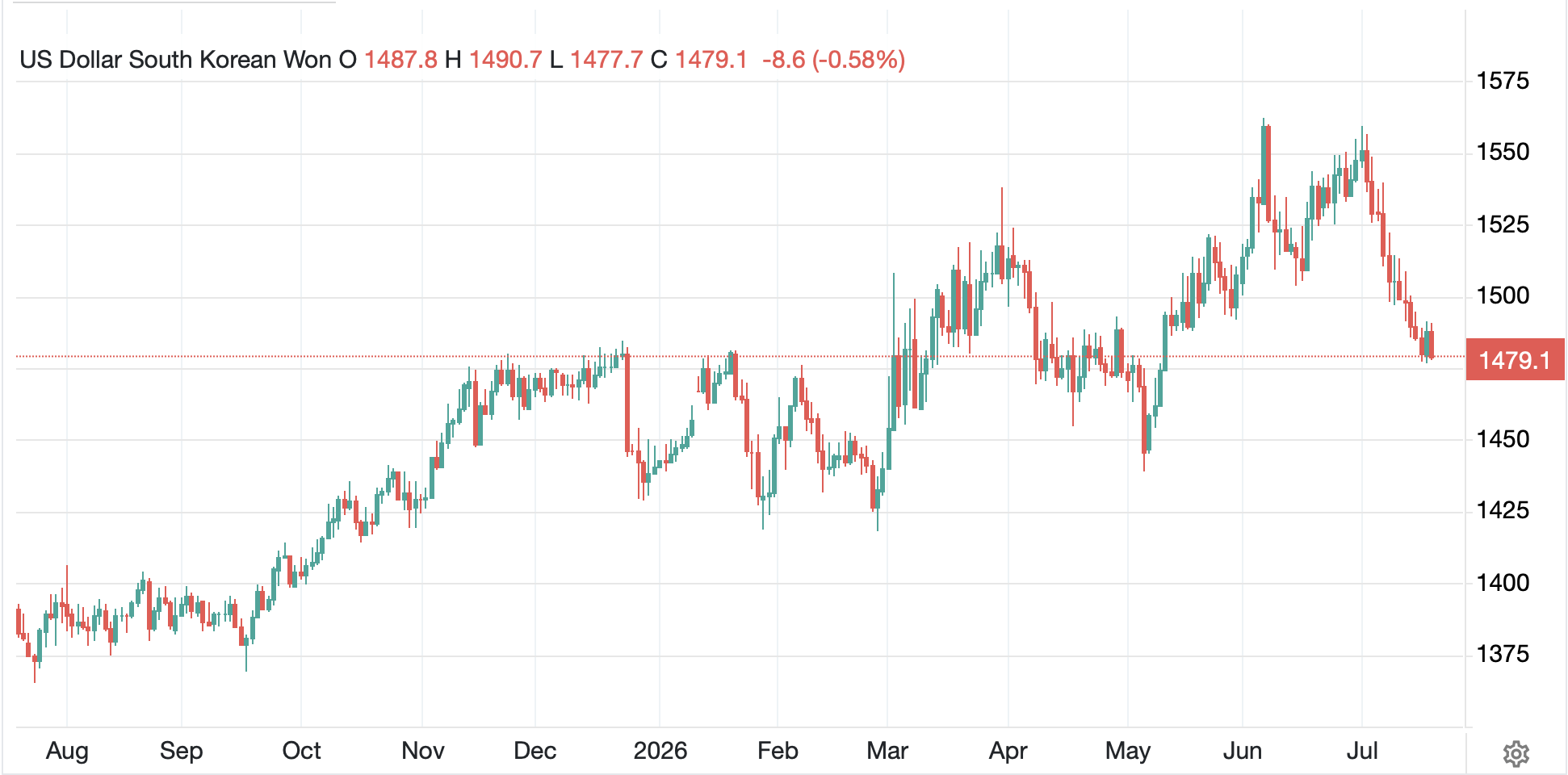
In the equity markets, overall, Tokyo was mixed although the Nikkei (-0.5%) finished the day lower.  Other laggards of note were, not surprisingly, India (-1.7%) along with Australia (-0.5%), Indonesia (-0.9%) and Thailand (-0.6%).  However, on the flip side, Korea (+4.3%) continues to be the biggest beneficiary of the semiconductor craze and setting yet another closing record.  As you can see from the chart below from Bloomberg.com, the market is going parabolic right now.  For those who are long, this is great, but history has shown that these moves will revert to the mean over time, and likely pretty quickly when it happens (remember gold and silver in late January?).  Beware here.  Meanwhile China (+1.6%) was amongst the other half of markets there with gains, although no others had substantial movement. 

In Europe, there is broad weakness on the continent, but only France (-1.0%) has shown any movement of note. Otherwise, major bourses here are +/- 0.25% or less.

In the bond markets, yields are higher across the board, with European sovereigns following Treasury yields and all higher by between 2bps and 4bps.  The UK (+6bps) is the outlier here after BOE member, Greene, in an interview explained that all the inflation risks were to the upside in the UK.  Right now, I suspect that is the case around the world.

In the commodity markets, perhaps the surprising feature today is not that gold is lower amid higher oil prices, but that silver (+0.25%) and copper (+1.4%) are both firmer.  In fact, copper is pushing back to its all-time trading highs set in a spike in late January.  But as you can see from the chart below from tradingeconomics.com, this move is gaining some strength.

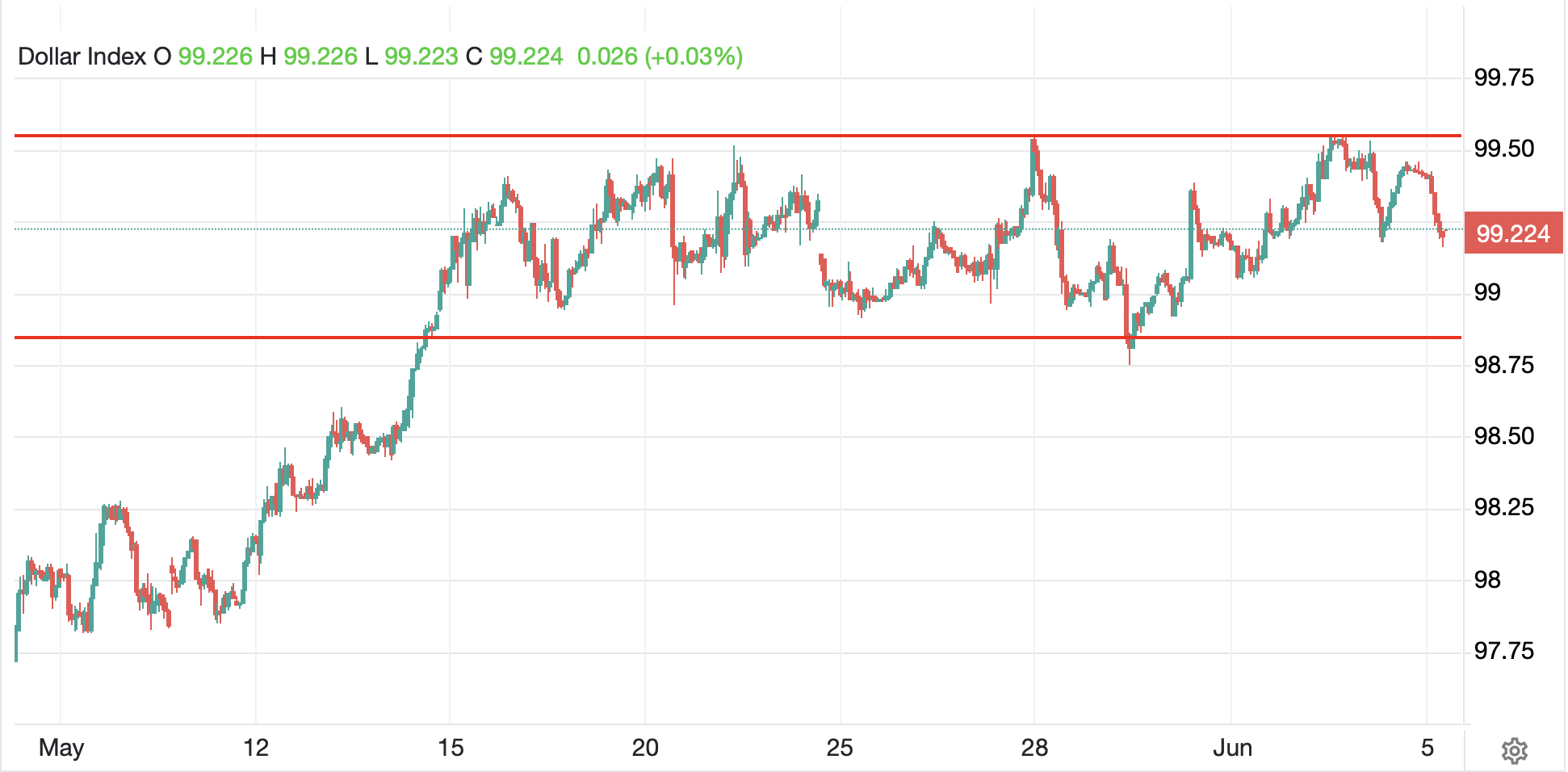
Finally, the dollar is a bit stronger this morning, although hardly running away.  Other than the rupee discussed above and KRW (-0.65%) which is odd given the equity performance there, the bulk of the movement has been dollar strength on the order of 0.1% to 0.2% against both G10 and EMG currencies.  The dollar is not driving the market bus right now.  For those who follow the DXY, it is right at 98.00, again in the middle of its year long range.

On the data front, it is inflation week around the world with China reporting last night higher than forecast numbers of 1.2% Y/Y and PPI of 2.8% Y/Y with the latter, as you can see in the chart below, the highest number since July 2022.  Perhaps China’s long deflationary slog is over.

Source: tradingeconomics.com

Here are this week’s offerings:

TodayExisting Home Sales4.05M
TuesdayNFIB Small Biz Optimism96.1
 CPI0.6% (3.7% Y/Y)
 -ex food & energy0.4% (2.7% Y/Y)
WednesdayPPI0.5% (4.9% Y/Y)
 -ex food & energy0.3% (4.3% Y/Y)
ThursdayInitial Claims205K
 Continuing Claims1775K
 Retail Sales0.5%
 -ex autos0.6%
FridayEmpire State Manufacturing7.8
 IP0.3%
 Capacity Utilization75.9%

Source: tradingeconomics.com

As well, we get inflation readings from Germany, India, Brazil, France, Spain and Italy this week.  There are several Fed speakers, five in total, but they just don’t seem to matter that much right now.

And that’s what we have, everybody is waiting on the next Iran conflict news with hope for a resolution seeming to ebb slightly.  Frankly, until there is more clarity there, it is difficult to determine what comes next.

Good luck

Adf

Not Right

This Friday is labeled as Good
And markets worldwide understood
That trading’s not right
So closed with no fight
If only the government could!

Instead, they’ll release NFP
Though traders won’t be there to see
And Monday, as well
There will be no bell
Let’s hope war’s not raised a degree

Philosophers ask, if a tree falls in the forest and nobody is there, does it make a sound?  Today, investors will ask, if the NFP report is released and there are no markets to respond, does the data matter?

In a highly unusual circumstance, this morning’s NFP report is going to be released on Good Friday, the one day of the year when equity markets are closed but banks are open, as is the US government.  As well, given the holiday, many international markets were closed overnight and essentially all of Europe is closed right now.  Too, Monday is a holiday in many nations around the world, Easter Monday, so equity markets throughout Europe and all old Commonwealth nations will be closed for a very long weekend.

Which begs the question, does today’s data really matter?  After all, we have a long weekend ahead of us and the possibility of an escalation of fighting in Iran, which if that occurs will make any data today moot.  FWIW, here are the expectations for this morning:

Nonfarm Payrolls60K
Private Payrolls70K
Manufacturing Payrolls-5K
Unemployment Rate4.4%
Average Hourly Earnings 0.3% (3.7% Y/Y)
Average Weekly Hours34.3
Participation Rate62.3%

Source: tradingeconomics.com

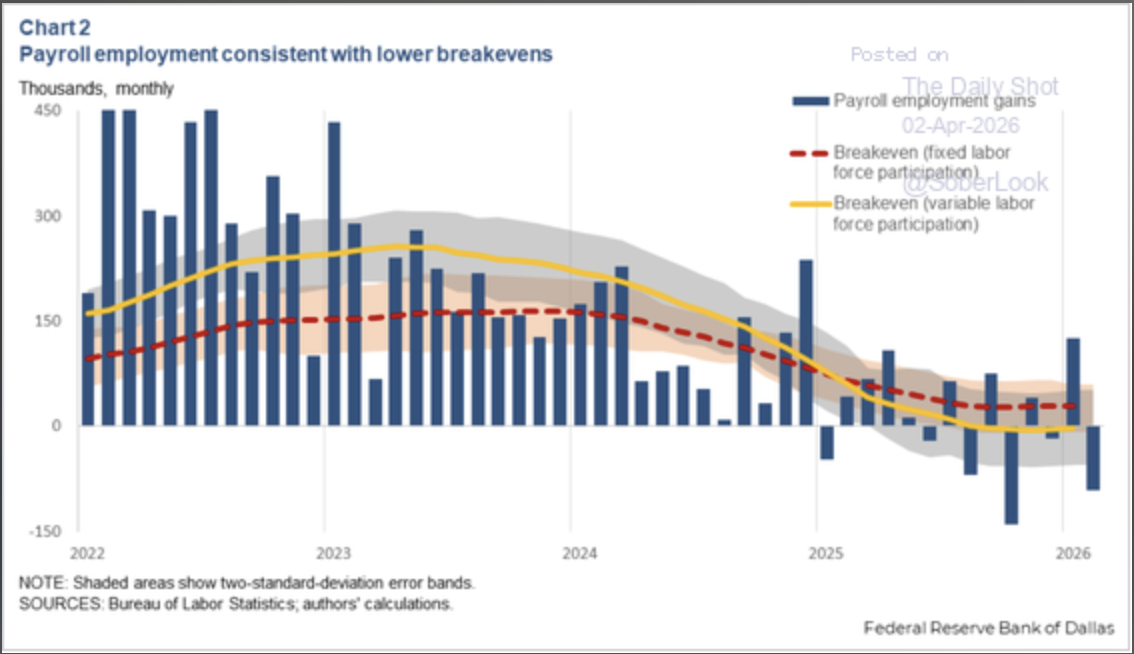
Remember, too, ADP Employment was a touch better than expected.  As well, there is increasing evidence that the data with which we had become familiar regarding the number of new jobs necessary to maintain a stable employment market has fallen sharply.  For the longest time, econometric estimates were that somewhere between 150K and 200K new jobs were needed each month to prevent the Unemployment Rate from rising.  But the Dallas Fed just released a research report suggesting that is no longer the case.  In fact, they estimate the number is basically zero.

Obviously, the big changes have come from immigration policy in the US, with the closing of the border, the deportation of between 350K and 650K (depending on your source) of illegal immigrants by the government as well as the self-deportation of somewhere on the order of 2 million more people.  These actions have dramatically reduced the available work force and with that, the number of new jobs required to reach an employment equilibrium.

Despite these changes, arguably the data ought still to matter as it represents a key part of the FOMC mandate.  But given the war has drowned out basically all economic data, it is not clear these numbers are going to be meaningful for a while yet.  All those who trade via algorithm are the ones who are most impacted as payroll day was always a huge winner for them.  And while US futures markets are open (currently -0.2% across the board at 7:25), there will be no arbitrage opportunities as the underlying markets won’t open until Monday in the US and Tuesday in Europe.

Which takes us to the other story, will there be an escalation of fighting in Iran over the long weekend?  Every story I have read in the MSM has written, almost glowingly, about how the Iranians are completely prepared for any US invasion and will inflict serious damage and casualties on the Americans if one comes.  Again, I am not a defense analyst, but to my understanding, the US does not yet have all its assets in theater which will preclude any opening salvos.  The other thing I would say is historically, I wouldn’t bet against the USMC achieving their objective.  

And that’s where we stand this morning, awaiting data to be released into a void with no opportunity to respond, really, until Monday, at least in the equity markets.

In fact, other than cryptocurrencies, which are always open, the only market of note that is open today is the FX market, and that is suffering from diminished liquidity because European centers are closed for the holiday, although US banks will be active.  Or perhaps active is the wrong term, they will be open.  With that in mind, it should not be surprising that the dollar is, overall, little changed from yesterday’s closing levels.  In fact, every G10 currency is within 0.1% of yesterday’s close although we have seen a touch of weakness in ZAR (-0.6%) which is still suffering from gold’s -2.25% performance yesterday.  

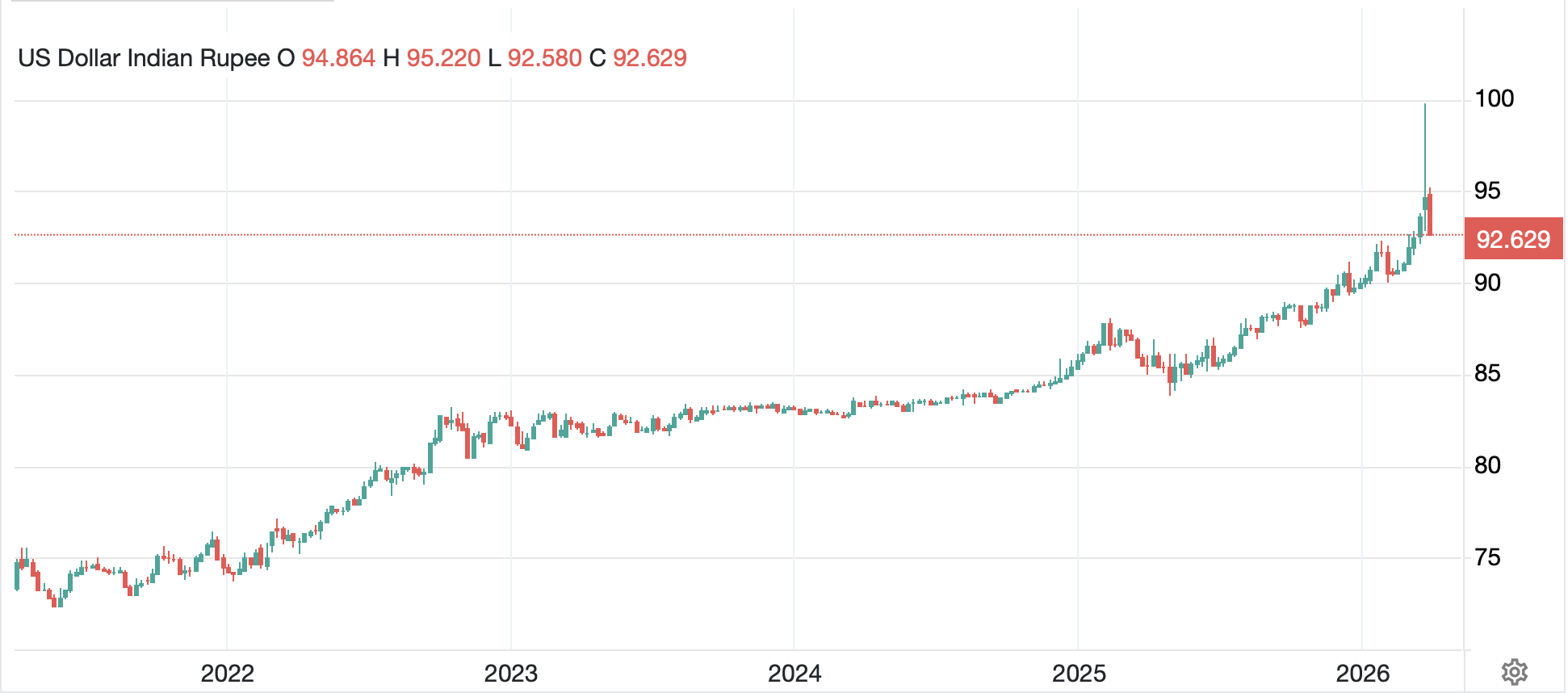
The only other currency that moved more than 10 basis points was INR (+0.3%) which continues to benefit from RBI efforts to prevent its complete collapse.  You can see the performance of the rupee over the past five years and that spike near 100 was seen as a near-death experience by the RBI and drove them to respond.  Alas, the war is not helping their cause at all and there are scant few reasons to buy the rupee for most traders these days.  

Source: tradingeconomics.com

Otherwise, all I can offer is for you all to have a wonderful Easter/Passover weekend and we will pick up again Monday, but really it will take until Tuesday before we get a better sense of how the news will be absorbed, whatever it may be.

Good luck and good weekend

Adf

The American Dream

To aid the American Dream
The most recent Trumpian scheme
Is new Trump Accounts
In proper amounts
To help stocks become more mainstream
 
One likely effect of this act
Is stocks will be forcefully backed
Though problems extant
May come back to haunt
For now, bearish plays will get whacked


Financial market news remains mostly uninspiring these days as the Fed story has largely gone back to a cut is coming next week (89.2% probability) thus the hawkish phase has passed.  AI is still the magical future, while precious metals continue to garner support overall as concerns rise about the ongoing debasement of fiat currencies.  Elsewhere, the war in Ukraine rages on as peace talks in Moscow were described as ‘constructive’ but have yet to resolve the issues.

The other piece of the Fed story, regarding the next Chair, has taken a modest turn as a series of interviews by the finalists in the process (allegedly Hassett, Warsh and Waller) with VP Vance, were suddenly canceled for no apparent reason.  As well, the president continues to hint that Mr Hassett is going to be the one.

But one of President Trump’s strengths is his ability to keep his ideas in the news, and nothing exemplifies that better than the new Trump Accounts.  This is the idea that the government should start investing in the next generation by way of establishing investment accounts in the name of children at birth with $1000 of seed money from the government.  If these accounts are invested in the S&P 500, for instance, with a historically average return of roughly 10%, by the time the child turns 18, the initial investment will have grown more than 5-fold.  As well, these accounts are eligible for additional contributions each year, up to $5000, so can really build some value in that circumstance.  

In addition, the news that Michael and Susan Dell will be donating $6.25 billion to add $250 to those accounts, tax free to the recipient, is another boon.  Estimates are that the total could rise to $4 billion/year of outlays, all of which will be required to go into the stock market.  It’s almost as though President Trump wants the government to support the stock market, but I’m sure that is a secondary consideration!

But away from that, the news has been sparse, so let’s look at market activity overnight.  yesterday’s US session played out like the opening, modest gains, and futures at this hour (7:15) indicate more of the same is on the way today.  In Asia overnight, while Tokyo (+1.1%) had a solid session, China (-0.5%) and HK (-1.3%) were far less fortunate.  Chinese PMI data continues to be soft but perhaps of more import is the fact that the yuan (+0.15%) continues to gradually strengthen, as it has been for the past year (see chart below).

Source: tradingeconomics.com

In fact, the yuan has reached its strongest level since September 2024.  The thing about a strong CNY is that it has definitive negative impacts on Chinese exporters.  While there has been very little discussion of the yuan regarding the trade talks between the US and China, the steady appreciation of the currency will certainly hurt Chinese company earnings, and by extension stock prices there.  One thing to note is that despite its recent strength, the yuan remains undervalued vs. the dollar based on a Real Effective Exchange Rate calculation by the World Bank as per the below chart, with the current USD value at 130.6 while the CNY sits at 113.1.  That is a substantial undervaluation that, if corrected, would likely have a significant impact on the respective economies of each nation as well as, maybe, the political rhetoric.

Elsewhere in the region, India was little changed even though the rupee (-0.4%) traded through 90.00 for the first time as the RBI has decided not to waste more reserves on supporting the currency.  It appears that capital outflows are driving the rupee, but that does not bode well for stocks there.  The rest of the region was mixed with more gainers (Korea, Taiwan, Australia, New Zealand) than laggards (Philippines, Thailand, Malaysia).

In Europe, both Spain (+1.5%) and Italy (+0.7%) are having solid sessions although much of the rest of the continent is less robust.  The story is that European defense companies have benefitted today based on the absence of a peace agreement, although Eurozone inflation readings coming in a tick hotter than forecast have put paid to any idea of an ECB cut anytime soon.

Moving on to bonds, Treasury yields (-3bps) have backed off a touch from highs yesterday and that has dragged European sovereigns down with them, with the entire continent seeing yields decline -1bp or so.  Overnight, JGB yields ticked up another 3bps, to further new highs for the move, as there is no indication that government spending is going to slow down while expectations of a BOJ hike remain in full force.

Commodity markets continue to show the most volatility with both oil (+1.3%) and NatGas (+2.3%) rising this morning, the former on the lack of peace talks, the latter on the expanding polar vortex which is driving cold weather in the Northeast.  Too, I would be remiss if I didn’t mention that European demand for US LNG is running at record rates as they try to wean themselves from Russian gas supplies.  FYI, NatGas is back to its highest level since late 2022, where it skyrocketed in the wake of the initial Russian invasion.  In the metals markets, after a bit of profit taking in yesterday’s session, both gold and silver have edged higher by 0.1% this morning as both continue to be accumulated by Asian central banks and Asian investors although Western investors don’t seem to believe in the idea.  Something to note is that silver has risen 102% so far in 2025, that’s a pretty big move!  Copper (+1.45%) has jumped on the back of news that Chinese smelters have reduced activity and inventories at the LME are limited.  Add to that the underlying electrification story, and demand seems likely to be pretty robust for a while yet.

Finally, the dollar is under pressure this morning with the DXY, though still in its range, trading below 99.00 for the first time in 3 weeks.  But looking at actual currencies, the euro (+0.4%), pound (+0.7%), NOK (+0.6%), SEK (+0.5%) and CHF (+0.4%) are all nicely higher this morning.  The rest of the G10 are in a similar state, albeit with slightly smaller gains.  In the EMG bloc, CLP (+0.5%) is climbing on the back of copper’s rise, while the CE3 are all following the euro higher rising in step.  ZAR (+0.1%), BRL (+0.1%) and MXN (+0.2%) are underperforming this morning, likely because the metals markets, other than copper, are underperforming.

Turning to the data, this morning brings ADP Employment (exp 10K), IP (0.0%), Capacity Utilization (77.3%) and then ISM Services (52.1) at 10:00.  Given the IP data is old, I expect ADP to be the number with the most possible influence.  But, given the market is already assuming a cut next week, it would have to be a dramatic negative number to change any views.

The big picture remains the same, run it hot, fiat currency debasement and the dollar should be the best of a bad lot, but on any given day, much can happen that doesn’t fit that story.  Today is one of those days.

Good luck

Adf

Heartburned

There’s no one surprised that the Fed
Did nothing, and here’s what Jay said
We’re not in a hurry
To cut, but don’t worry
If things change, we can cut ahead
 
The narrative now has returned
To Trump, which has many concerned
That in the short run
The things that he’s done
Will leave many traders heartburned


As universally expected, the Fed left policy unchanged yesterday.  Everything we had heard from FOMC members prior to the quiet period indicated they had to be patient to see how things played out regarding the impact of tariffs.  Apparently, Chairman Powell used the term “wait” or some version of that idea 22 times in the press conference.  Tomorrow, the Fed speakers hit the circuit again, but absent some change in data, which will take at least another month or two, I don’t see that the Fed is relevant again for a while.  

I will note that the market is currently pricing only about a 17% chance of a cut at the June 18 meeting though they are still pricing in 3 cuts for the year.  It appears that the idea of a H2 recession is gaining ground amongst both the punditry and the futures market.

However, contra to that message, the bigger news of the day is that President Trump will be announcing, at 10am, the first trade deal in the new era, this one with the UK.  It strikes me that this should be the easiest of trade deals to negotiate since both economies produce the same types of things.  Neither has a labor cost advantage, and there is great commonality between them with respect to the overall culture.  Arguably, the biggest advantage the US has is its energy sector has not been destroyed by the government, something PM Starmer is working hard to accomplish on his end.  Realistically, the trade deal here is going to be more about services than goods I suspect, given that’s what drives both economies.  I guess we will learn later today.

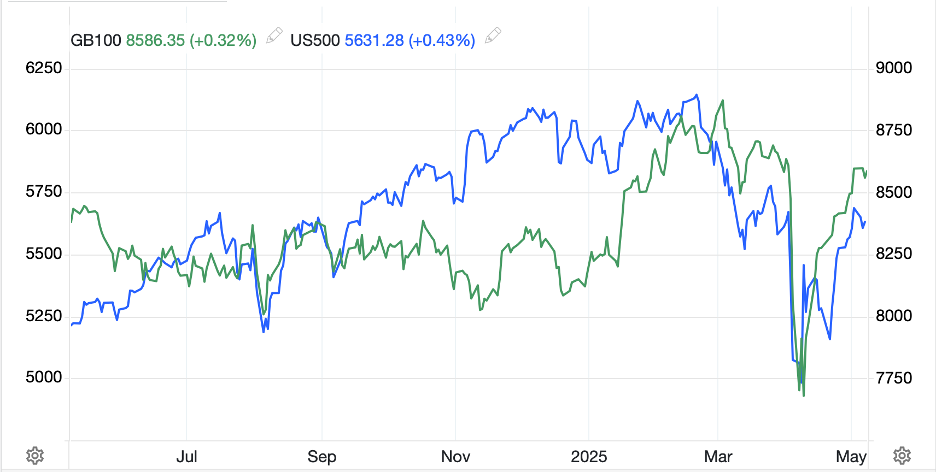
In a modest surprise, UK equities (FTSE 100 +0.4%) do not seem to see the benefits of such a deal, as they lag most of the rest of Europe.  Too, the BOE is expected to cut its base rate by 25bps this morning, which in isolation would ordinarily be seen as a positive for stock markets.  Perhaps, this is why the UK is the first to say yes, things there may be worse than meet the eye.  After all, the stock market there is higher by just 2% in the past year, hardly a breathtaking performance.  In fact, as you can see below, the FTSE 100 and S&P 500 have had very similar performances this year, tracking each other closely, although despite all the angst about recent volatility in US markets, the S&P is still 8% higher in the past year, decently outperforming the UK.

Source: tradingeconomics.com

Stepping back for a moment from individual markets, my take is the following: President Trump is keen to sign a number of key trade deals in this 90-day window.  If they agree deals with the UK, Japan, South Korea, Taiwan, Canada and Mexico, all of which seem quite possible, it will reduce the uncertainty and accompanying stress in markets.  If, as well, Congress can get the ‘big, beautiful budget bill’ passed, thoughts of recession will quickly dissipate.  Obviously, the China trade talks will still be outstanding, but both sides need to find a solution here.  While the punditry in the US will continue to harp on how those tariffs are going to kill the US economy, China has already shown they are having problems and need to come to an agreement.  It is quite possible that Mr Trump can be successful in his aims to reorder the nature of world trade such that the US reduces its deficits without destroying the world.  I think I am going to take the over on this question.

In the meantime, let’s see how markets have behaved overnight.  Yesterday saw US equity markets rally modestly after the Fed and that followed through in Asia, with modest gains being the best description.  The Nikkei (+0.4%), Hang Seng (+0.4%) and CSI 300 (+0.5%) all seemed to benefit from the US and hopes for a reduction in trade anxiety.  Of note in Asia was India (-0.5%) and perhaps more tellingly Pakistan (-6.0%) as the escalation in military conflict between those two nations has grown even hotter.  I expect that market impact will remain more isolated as neither market is a key destination of foreign capital, at least if the actual military conflict doesn’t spread into other areas.

Turning to Europe, both Germany (+1.1%) and France (+1.0%) are having very good days with both markets ostensibly responding to the news of the impending UK trade deal and perhaps some hopes there will be one with the EU.  As well, German IP data was released at a much better level than expected (3.0% vs. 0.8% expected), an indication that companies there are gearing up for all that mooted military spending.  As to US futures, at this hour (7:00) they are all higher by at least 1.0% with the NASDAQ higher by 1.6%.  

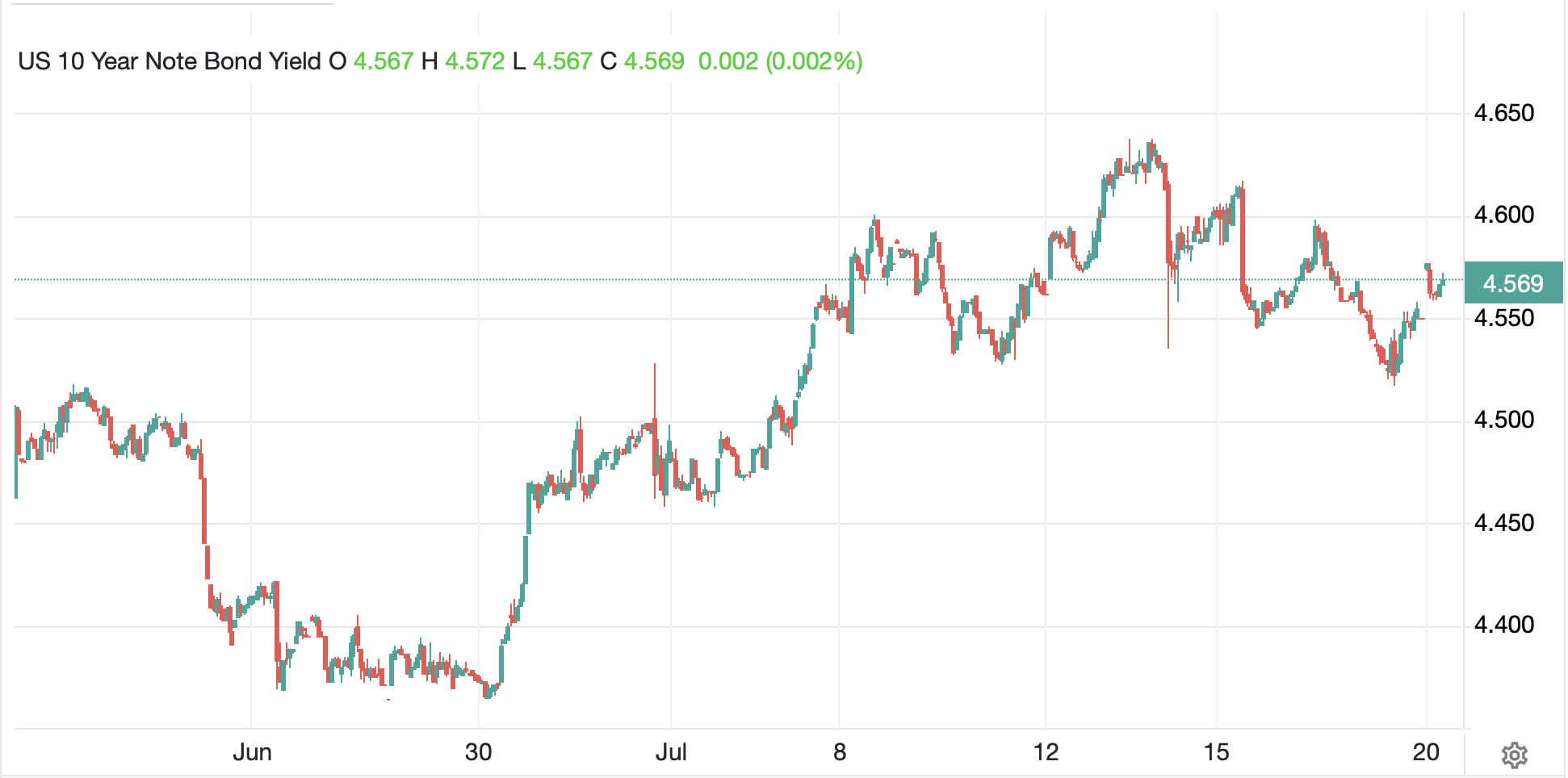
In the bond market, Treasury yields are higher by 4bps this morning, having recouped the declines yesterday.  But still, the 10-year hovers either side of 4.30% and has done for the past month as you can see in the chart below.  If anything, it appears that the trend remains toward modestly lower rates.

Source: tradingeconomics.com

In Europe, sovereign yields are also climbing slightly, higher by between 2bps and 3bps this morning and we saw similar movement in JGB markets overnight.  Frankly, bond markets have not been very exciting lately.

In the commodity markets, oil (+1.6%) is continuing its recent bounce from the lows seen Sunday night, but WTI remains below $60/bbl.  There is growing talk that at current prices, capex is going to decline and supply along with that, but you cannot look at what is happening in Guyana, for instance, as they seek to exploit the massive new oilfield discovered in their coastal waters last year and think that oil supply is going to shrink.  As well, OPEC+ looks set to produce all out.  I do not see a good case for higher oil prices in the near term.  Meanwhile, gold (-1.0%) is giving back some of its recent rebound gains, but nothing about the recent price action indicates to me that the bigger picture trend higher is over.  However, today, it is weighing on both silver (-0.2%) and copper (-0.8%).  

As aside about copper.  The red metal has been nicknamed Dr Copper given its importance in industrial activity.  Hence, when demand is strong, it foretells strong economic activity and vice-versa.  With that in mind, what does the below chart of copper tell you about economic activity?

Source: tradingeconomics.com

What it tells me is that this, too, is a former economic signal that had been reliable in the old world view but has lost its way as a signpost of future activity in the new world view.

Finally, the dollar is modestly stronger this morning, most notably vs. the yen (-0.6%) and INR (-0.8%). The latter is clearly suffering on the impacts of some negative military news, having lost several fighter jets and drones, while the former seems to be responding to the story that Mr Trump will not lower tariffs with China ahead of the first meetings that are upcoming this weekend, and that had been demanded requested by the Chinese to start talking.  Too, NZD (-0.6%) is softer but elsewhere, there is far less of interest overall with the euro unchanged and the pound edging higher by 0.25% after the BOE cut rates 25bps, as expected, but the vote was 7-2, with two MPC members voting for no change, a slightly more hawkish outcome than expected.

On the data front, this morning brings the weekly Initial (exp 230K) and Continuing (1890K) Claims data as well as Nonfarm Productivity (-0.7%) and Unit Labor Costs (5.1%).  Yesterday’s EIA oil inventory data showed modest draws, as expected and didn’t seem to matter much to the market.  It is difficult to get too excited about much these days as the landscape remains highly uncertain.  If, and it’s a big if, President Trump can come to agreement on trade deals with a number of countries, I suspect that we will see uncertainty wane and markets continue higher.  But the Fed won’t be cutting rates in that scenario.  Ultimately, though, I do believe that a lower dollar will be part of many of these deals, and for now, a lower dollar still seems the most likely outcome.

Good luck

Adf

Maybe Once More

Said Powell, by patient I mean
We won’t rush to raise in ‘Nineteen
Unless prices soar
Then maybe once more
Though not ‘til past next Halloween

To nobody’s surprise, Chairman Powell explained that while the economy in the US is in good shape, given all the other things happening around the world (Brexit, trade situation, slowing Chinese and European growth) it was prudent for the Fed to watch the data carefully before acting to change policy again. Arguably, the market heard this as a confirmation of the now growing dovish bias and so the dollar came under a bit of further pressure. Interestingly, the equity market did not hear the same cooing of doves as it struggled all day ending slightly softer.

When discussing the balance sheet, he indicated that it was a hot topic at the FOMC, and that they were carefully studying the timing of the eventual end of the current policy of QT. But by far, the single most gratifying thing he said was, “It is widely agreed that federal government debt is on an unsustainable path.” He later added, “The idea that deficits don’t matter for countries that can borrow in their own currencies is just wrong.” (my emphasis). This was a none too subtle rebuttal to any thoughts that MMT has any validity. The Senators did not really ask many interesting questions, but today he heads to the House, where a certain freshman representative from the Bronx, NY, is grasping at the idea that as long as the US borrows in dollars, we can always pay them back by printing whatever we need with no consequence. You can be certain that she will spend her entire allotment of time on that particular issue, although I suspect she will not come off looking like she either understands the issues nor will have convinced the Chairman.

At any rate, while the questions are likely to be more entertaining, they will almost certainly not be any more meaningful as today Representatives will get their moments of preening on camera. Certainly nothing has happened between yesterday and today that will have changed the Chairman’s views.

In Parliament there’s a new view
Postponement’s the right thing to do
Three months or one year?
No answer is clear
As both sides, the other, eschew

Turning to the other key market story, Brexit, the only thing that is clear is that it remains extremely confusing. As of this morning, it appears that PM May has changed her tune regarding a delay and is now willing to accept a short one of three months. Her problem is that she has lost so much influence from the continuing morass it is no longer clear she will get what she wants. There now appears to be a growing movement for a longer delay, on the order of nine months, which would give the Bremainers the chance to organize a new referendum. That, of course, is the last thing the hard-liners want, another vote, as it could reverse the outcome. At the same time, all of this is contingent upon the EU agreeing to a delay. Now, they have said they will do so if there is a clear path outlined for what the UK is trying to accomplish, but as is obvious from this discussion, that is not the case.

The market, however, is in the process of reinterpreting the outcome. It appears that the new worst case is seen as acceptance of the already negotiated deal with a small possibility of no Brexit at all. It seems the idea of a hard Brexit is receding from view. We can tell because the pound continues to rally this morning, up another 0.45% today which takes the move to +2.5% since Friday when this chain of events took form. This is the highest the pound has traded since last July, when it was on its way down from the previous bout of optimism. One telling sign of the potential outcome is that the hardest of hard-liners, Jacob Rees-Mogg, has backed down on his adamant demands of the removal of the Irish backstop, instead saying an annex addressing the situation could be acceptable. To me this indicates the hard-liners have lost. While I am no insider, it looks very much to me like there will be a three-month delay and acceptance of the current deal. As to the pound in that case, it will depend if Governor Carney can keep his word regarding concerns over inflation. My view there is that slowing global growth will prevent any further policy tightening, and the pound will quickly run out of Brexit steam.

Elsewhere, data from the Eurozone shows that the economy continues to slow, albeit at a less intimidating rate. A series of Eurozone sentiment and confidence indicators all printed lower than last month, but not quite as low as had been feared expected. But the euro has been the beneficiary of the current focus on Fed dovishness and has been trading higher for the past two weeks. Of course, the extent of that move has been just 1.2%, with the single currency unchanged this morning. So, while the headlines are accurate to say the dollar has been slumping, the reality is that the movement has been quite limited.

Away from those stories, the FX market has seen relatively few events of note. INR is softer this morning by 0.5% after Pakistan’s air force allegedly shot down two Indian fighter jets in an escalation of tensions in the Kashmir region. That may well be weighing on global risk sentiment as well, but not in too great a manner. President Trump’s meeting with Kim Jong-Un has not seemed to impact the KRW, although a positive outcome there would almost certainly help the won significantly. And past that, nada.

On the data front this morning we see Factory Orders (exp 0.5%) and then Chairman Powell sits down in front of the House. The current trend remains for the dollar to soften as the market’s focus continues to be on the Fed turning dovish. As time passes, we will see every central bank turn dovish, and at that time, the dollar is likely to find more support. But for now, a slowly ebbing dollar remains the most likely outcome.

Good luck
Adf