Dire Straits

Said Jay, I will not be ignored
And so, I ain’t leaving the board
When my time as Chair
Is up, and I swear
I will see the president gored

So first off, we ain’t cutting rates
‘Cause here in the United States
Inflation’s a worry
And I’m in no hurry
To help Trump escape dire straits

I guess we cannot be surprised that Chairman Powell was combative during his press conference yesterday after the Fed left rates on hold, as expected.  There was only one dissent this month, Governor Miran, still looking to cut rates.  However, while standing pat given the high level of uncertainty that exists from the war situation makes sense, compare the dot plot from this meeting to the December meeting below it.  The dispersion of views on the committee has really tightened up a lot.  While the median for 2026 continues to point to one cut, it appears that the Fed now believes we are near r*, although they didn’t say that exactly.

March 2026 dot plot

December 2025 dot plot

The other noteworthy comment from the Chair was when he explained he had “no intention of leaving” the Fed until the Justice Department investigation is completed.  And, if Kevin Warsh is not confirmed by the Senate by the end of Powell’s term as Chair on May 15th, he will remain as Chairman pro tempore, the same situation as his previous nomination when the Senate delayed his confirmation.  

The market response to both the combative tone and the hawkish rhetoric overall was a further 1% decline in the S&P 500 from an already weak place as per the below chart where I highlighted the time of the Statement release.  You can see how things behaved thereafter.

Source: tradingeconomics.com

But that wasn’t all that happened yesterday, PPI came out MUCH hotter than forecast with headline at 0.7% (3.4% Y/Y) and core at 0.5% (3.9% Y/Y) as inflation concerns rose to the fore.  If you look at the PPI chart below showing both headline (blue bars) and core (gray bars), it is very difficult to discern a pattern of declining producer prices.

Source: tradingeconomics.com

In fact, it is hard to look at this data and reconcile it with the Fed’s SEP forecasts describing the view that inflation, even their measure of core PCE, is going to smoothly return to their 2% target over any particular timeline.  

One last event of note was the Iranian response to an attack on its main Natural Gas field, South Pars, where they inflicted serious damage to the Ras Laffan LNG facility in Qatar, which happens to be the largest in the world and is on the wrong side of the Strait of Hormuz to boot.  The result has been a significant rise in the price of European (and UK) natural gas, with both soaring more than 20% this morning while, Brent crude has jumped 7.2% as opposed to WTI’s unchanged status today.  This has taken European NatGas to ~$22.MMBtu compared with the US price of $3.15.  Ask yourself how long Europe can afford to pay 7x US prices for NatGas and maintain any competitive ability to manufacture anything.  (As an aside, this remains a key reason that I see long-term prospects for the euro so dimly.)  But if we look at the longer-term chart of European NatGas, despite the dramatic increase since the Iran conflict began, it is nothing compared to what we saw in the wake of Russia’s invasion of Ukraine.

Source: tradingeconomics.com

Summarizing yesterday’s session in one word, I would say, Aaaaaaggggghhhhhh!

I assume I have depressed you enough with yesterday’s activities, but I will run through market responses overnight.  You won’t be surprised to learn they have not been positive.

In fact, I guess I will start with bonds this morning, which I didn’t discuss above, but not surprisingly given the high PPI readings and the sharp rise in oil and gas prices, have suffered a lot.  Yesterday, Treasury yields reversed their early declines and closed higher on the day by 6bps.  They have edged up another 1bp this morning and are back above that 4.20% range I have focused on.  Meanwhile, European sovereign markets were all closed when the FOMC meeting concluded, which added to the pressure on bond yields which started with the US PPI data.  Net, yesterday, German bunds rose 4bps and this morning they are higher by a further 3bps.  But as you can see from the below Bloomberg screenshot, they are the champs in Europe today.

JGB yields also rose sharply, up 6bps and we saw similar rises throughout Asian bonds.  Right now, it is very clear that inflation is a bondholder’s concern, not recession.

As to equity markets, you will not be surprised to know that every market in Asia declined, most by more than -1.0% with the Nikkei (-3.4%) the worst performer followed closely by India’s Sensex (-3.1%), but there was no place to hide in Asia.  In Europe, the damage is equally broad, although there is one outlier, Norway (+0.5%) which is obviously benefitting from the sharp rise in oil prices.  But otherwise, -1.5% to -2.5% is today’s story across the board there.  Interestingly, at this hour (6:45) US futures are little changed to slightly lower, just -0.1%.  Perhaps this is a sign that all is not lost.  Or maybe the algorithms just haven’t started their day yet.  One noteworthy decline is South African shares (-4.0%) which is suffering from gold getting sold off yet again yesterday and today.

Since we already touched on energy, a quick trip through metals markets sees a major rout ongoing with gold (-2.75%) and silver (-5.2%) both suffering greatly, as is copper (-2.5%) and platinum (-6.1%).  I continue to believe that gold is being liquidated to pay for other losses as the primary attraction of the barbarous relic remains.  One thesis is that Middle Eastern central banks are liquidating their holdings as, given the dramatic decline in their oil revenues, they need money for continuing operations, and arguably, that’s what the gold is for.  Essentially, gold is the rainy-day fund.  As to the other three metals, those hint more at slowing economic activity rather than forced liquidation.  After all, there was a lot of euphoria on the way up, so if the narrative is changing, as that dissipates, so will demand.

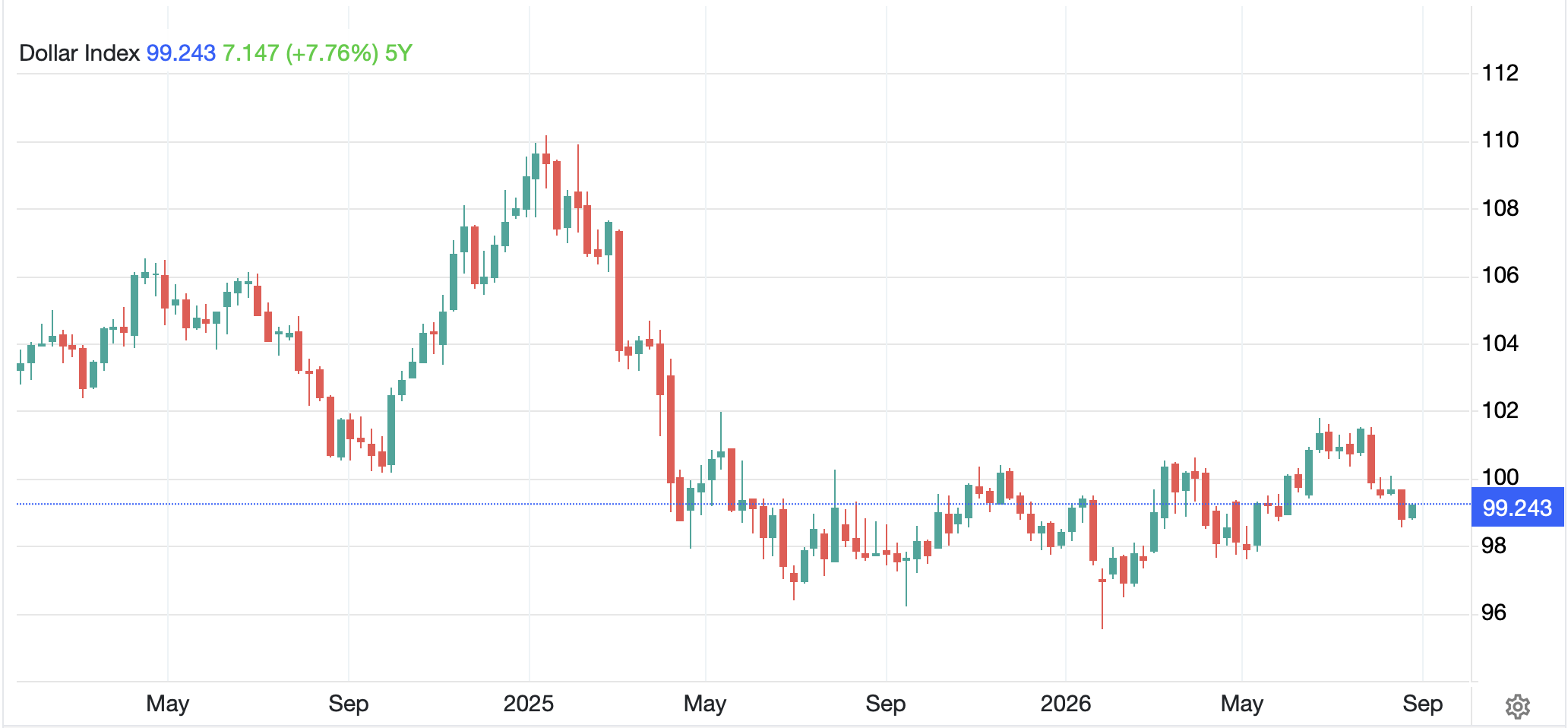
Finally, the dollar has given back a small portion of yesterday’s solid gains but remains at the top of its 96.00 / 100.00 trading range as defined by the DXY and shown in the chart below.

Source: tradingeconomics.com

Again, considering energy policies and availability around the world, the US, which is the largest energy producer in the world and a net exporter of energy products, seems better positioned than any of its competitors to weather the current economic gyrations.  However, if we look across specific currency pairs this morning, we see relative strength elsewhere on the order of 0.2% to 0.3%.  Frankly, it is a bit surprising to see ZAR (+0.4%) rally given what is happening in both gold and the South African equity market, but stepping back slightly, given the rand’s weakness since the end of January, I guess we cannot be that surprised that there is consolidation.  Certainly, there is nothing about the chart for the last month that indicates the rand is about to reverse course and strengthen dramatically.

Source: tradingeconomics.com

The big picture here remains, in my view, that the US has more pluses than minuses vs almost all its counterparts.

On the data front, I didn’t even mention last night’s BOJ meeting, where they left policy on hold, as it didn’t seem to have a major impact.  Perhaps, Ueda’s mildly hawkish comments have helped the yen a bit this morning.  As well, the Swedish Riksbank left policy on hold and in a short while we expect both the BOE and ECB to leave policy rates on hold.  The one which might move is the UK, where last time they voted 7/2 to leave policy unchanged but analysts think 4 members could vote for a cut.  However, my sense is that cutting rates at this time, before there is evidence that the economy is truly suffering from the war, would be a surprise.  Otherwise, we get the weekly Initial (exp 215K) and Continuing (1850K) Claims as well as the Philly Fed (10.0) and then at 10:00 we see New Home Sales (720K).  One other thing to note is that yesterday’s EIA data showed a substantial build in crude inventories, but a large draw in gasoline and distillates.  It is this activity that helps explain the rise in crack spreads, and why the refiners should be having a very good quarter.

And that’s it for today.  Quite frankly, that’s enough for me.  As it happens, there will be no poetry tomorrow, so I will get to recap today and tomorrow on Monday and see what has changed in the Persian Gulf as well as any other new news.

Good luck and good weekend

Adf

Doesn’t Make Sense

There’s something that doesn’t make sense
As stock market rallies commence
While word from the Strait
Just doesn’t look great
And politics worldwide is tense

Can every investor ignore
The risk of a much longer war?
Or will, sometime soon
They sing a new tune
And sell stocks whose risks they abhor?

One must be impressed with the way markets, in general, have handled the disruption caused by the ongoing conflict in Iran and the Persian Gulf.  The insouciance with which it appears most investors are treating the situation is remarkable.  There seem to be endless ways in which this can result in much greater damage to the global economy, mostly related to the impact on energy and food production going forward.  You’ve all heard the numbers, I’m sure, about the 20% of daily oil and LNG that traversed the Strait of Hormuz prior to the war.  Less well known was the amount of sulfur (~44% according to Grok) and nitrogen fertilizer (~30%-35% according to Grok) that regularly transited the Strait and has now been stopped.

The latter two matter greatly for global food production, but also for mining as sulfuric acid is a key part of almost all metals mining operations.  Too, one-third of global helium supplies went through the Strait, and that is critical in semiconductor manufacturing.

The point is, if the conflict continues for too much longer, it is quite possible, if not probable, that parts of the global economy could be impaired for a much longer term with real negative consequences for economic activity.  And while this may be a tail risk, the fact that the potential impact could be so large leads me to believe the market is underpricing potential damage from the war, at least economically.  Last night, Alyosha posted a very interesting piece regarding potential consequences for the Gulf region as a whole as well as oil markets.  His conclusion was that if things don’t end soon, there may be irreversible damage to the Gulf oil industry as well as the Gulf nations themselves as their cashflows are being completely starved for now.

I know that doomsaying is a losing proposition with equity markets over the long run, as the century long trend shows human innovation continues to advance economic prospects and outcomes.  But in the shorter term, interruptions of that trend are common and can be quite painful for those investing when they occur.  Recall how you felt when Covid shutdowns resulted in a 30% decline in two months in early 2020, as per the below chart.  How about the similar drawdown, along with the selloff in bonds, during 2022’s inflation led declines?

Source: finance.yahoo.com

All I’m saying is that markets can ignore things for a long time before suddenly repricing an outcome and I have a feeling that is what we are witnessing right now.  So, as we head into today’s FOMC meeting, which seems unlikely to have any impact whatsoever, I would play things close to the vest and am doing just that myself.

Ok, let’s tour the euphoria in markets, which remains puzzling to me.  You have to search far and wide to find an equity index that fell in the past twenty-four hours and here is a Bloomberg snapshot of major indices at 7:10 this morning,

Literally, every market in Asia rallied, some excessively so, Korea (+5.0%) and I could only find two markets in Europe that are down this morning, Denmark and South Africa, both of which have slipped about -0.3%.  Otherwise, it’s all green as prospects are, apparently, great. US futures are also higher as I type, up about +0.6% or so.  Certainly, there is little concern about potential long-term consequences of this war.

In the bond market, yields everywhere are slipping again with Treasuries (-2bps) falling back into that longer term range, while European sovereign yields are lower between -2bps and -3bps and JGB yields fell -5bps.  As per the below chart from tradingeconomics.com, we spent 5 days above the top of the trading range.  

Perhaps the market is starting to price in a recession and much weaker growth, although with oil prices firmly above $95/bbl, inflation is coming, at least in the near future.  Of course, the Fed response is going to be critical here, and while they will almost certainly make no policy changes today, all eyes will be on their forecasts via the dot plot and SEP.  We shall find out at 2:00pm.

Speaking of oil (-1.7%), perhaps its new home is $95/bbl, not $100/bbl like I mentioned yesterday, but for now, there doesn’t seem to be urgency in either direction.  The futures market remains in steep backwardation although in the US, there are ample supplies.  So, while gasoline prices at the pump are up substantially, there is no rationing here in the US, nor I suspect, will there be given we are pretty self-sufficient on that front.  But demand destruction can be real, as even though the short-term elasticity of demand for oil is limited, over time, substitutes will be found.  In fact, this is the biggest risk for the Gulf nations, the idea that substitutes can be found and their key resource loses value.  I don’t believe that is going to happen on any visible timeline, but stranger things have happened.  

In the metals markets, gold (-0.9%) is slipping this morning, but remains right near that $5000/oz level and silver is unchanged, just below $80/oz.  The price action in both precious metals and oil is remarkably similar, if offset by one month as metals spiked and dropped first, then found a new home in the middle of those extremes, and oil has done the same thing.  You can see the similarities in the two following charts:

Source: tradingeconomics.com

Source: tradingeconomics.com

Finally, whatever people are doing in financial markets, FX is not part of today’s equation.  The dollar is virtually unchanged vs. the euro, pound, yen, CAD or CHF.  In the EMG bloc, +/- 0.2% pretty much defines the range of movement.  There’s really no story here right now.

On the data front, we see PPI (exp 0.3%, 2.9% Y/Y headline and 0.3%, 3.7% Y/Y core) as well as Factory Orders (0.1%). The Bank of Canada will leave rates on hold this morning, and of course the Fed will do the same this afternoon.  We also see the EIA oil inventory data with a small draw expected in gasoline and distillates but a crude oil build.  Yesterday’s API oil data showed a 6.6-million-barrel build.  As I said above, there is no shortage of the stuff in the US.

The uncertainties of war remain the market drivers, but as we frequently see, markets have relatively short attention spans.  Absent a significant increase negative news from the Gulf (e.g. more Iranian destruction of other gulf assets) I’m not sure what will change this sentiment.  And if something happens that reduces the conflict, the initial view will be extremely bullish I believe.

Good luck

Adf

Keep Up the Fighting

The Strait of Hormuz remains closed
And right now, both sides seem disposed
To keep up the fighting
While pundits keep writing
That Trump will soon find himself hosed

Meanwhile, this week central banks meet
And none are expected to treat
The oil price spike
With any rate hike
Though keep eyes on each balance sheet

Nothing seems to have changed dramatically in Iran with US bombing attacks continuing and Iranian missile and drone attacks continuing.  It remains a daunting challenge to discern reality on the ground there as every news source spins any information to their political viewpoint, and I, for one, have been unable to pull much signal from the noise.  This is truly the fog of war.

With that in mind, it does appear that different markets are taking very different cues from the situation, with some (oil and the dollar) continuing to hew to a strong risk-off viewpoint while others, equities and bonds, remain unconvinced that the world is about to end.

As such, perhaps we should take a few moments to consider the fact that this week, we are going to see interest rate decisions from every major Western central bank in the following order: RBA, BoC, FOMC, ECB, BOE, BOJ, SNB, starting tonight and concluding on Thursday.

Of all these banks, only the RBA is expected to move, raising its base rate by 25bps to 4.10%, although that was baked in prior to the events in Iran beginning.  I would contend this is not a response to the oil price.  In fact, one must assume that central bankers are aware of the history of responses to exogenous price shocks, like an oil spike, and that any attempt to offset the inflationary consequences in the past has led to major economic pain.  It is not hard to understand that a sharp rise in oil prices, and the concurrent rise in gasoline and diesel, acts as a “tax” on the economy which tends to reduce economic activity.  Hiking rates into that scenario would very likely result, and historically has resulted, in a recession in short order.

Remember, the reason central banks, in general, look to core inflation, is because they know they cannot impact the prices of food or energy via interest rate policy.  While the ultimate impact of this oil price spike will only be known many months from now, if the conflict ends in the next several weeks, it is likely that any structural price issues will be avoided.  Of course, we have no idea how long things will last right now, so as investors and hedgers, reduced exposure to financial markets is likely the best advice for almost everyone.

Which means, it’s time to look at the markets and see what they are telling us.  After Friday’s soft close in the US, Asia saw a mix of outcomes.  Tokyo (-0.1%) did little overall, and we saw some weakness in Australia (-0.4%), New Zealand (-0.3%) and the Philippines (-0.9%) with Indonesia (-1.6%) the regional laggard.  However, there were numerous markets who ignored the oil price and rallied including Hong Kong (+1.5%), Korea (+1.1%), India (+1.3%) and Singapore (+0.6%) with mainland China essentially unchanged in the session.  China released a raft of data showing that the economy there continues to have property troubles (House Prices -3.2%), but the rest of things were largely in line with their reduced GDP expectations excepting Unemployment, which rose to 5.3%.  

Europe, too, is seeing a mixed picture this morning with some gainers (Germany, UK) and some laggards (Spain, France, Italy) although none of the movement is very significant, < 0.3% in every case.  US futures at this hour (7:10) are all pointing nicely higher, in fact, by 0.5% to 0.8%.

My point is that despite fears of the death of the equity rally, as I type this morning, the S&P 500 is just 4.5% from its all-time high made at the end of January.  I am no technician, but the chart below shows both the long-term direction and the 52-week moving average, and the current price is well above both of these indicators.  This is not to say the market cannot decline from here, just that the broader trend remains higher.  It does not feel very apocalyptic to me at this point.

Source: tradingeconomics.com

Turning to the bond market, yields are lower across the board this morning with Treasuries (-3bps) backing off the highest levels seen last week, and currently at 4.25%.  While that rate is clearly above the lows, it hardly smacks of panic nor of a bond-buying strike.  Of course, historically, when uncertainty rises, Treasuries have been a primary safe haven, and that has not been the case this time either.  It appears to me that investors are caught between fears of rising inflation and fears of economic contraction so don’t know whether they want to hold their bonds or sell them.  As to European sovereigns, all are in fine fettle this morning with yields slipping between -2bps (Germany) and -6bps (UK).  Again, this does not smack of inflation fears today.

Which takes us to the key driver of almost everything, oil.  Right now, WTI is trading lower by -1.5% and is back below the $100/bbl level.  While, of course, the recent trend is higher, that is entirely on the back of the Iran situation.  If/when that is resolved, I expect the price to retreat sharply right away, although probably not to its prewar levels for another few months.  But if it traded back to $70/bbl, that would remove virtually all the inflation talk and investors would need to look elsewhere for cues.

Source: tradingeconomics.com

In the metals markets, gold (0.0%) is trading just above $5000/oz and silver (-1.6%) just below $80/oz, and neither has responded as would have been expected prior to the Iran conflict.  Recall, both peaked at the end of January, just before the Kevin Warsh as Fed chair announcement, and as you can see below, both have largely gone nowhere, albeit with a lot of daily volatility attached to that lack of movement.

Source: tradingeconomics.com

It makes no sense to me that after a 5000-year history as the ultimate monetary safe haven, gold has suddenly lost its allure in that capacity.  As such, I continue to believe that the lack of follow-through higher during this war is a result of leveraged investors needing to raise cash to cover margin calls and given the gains that were available in their gold positions, and the liquidity in the market, gold was the most convenient way to manage positions.  Remember, leverage has been a key part of the story of recent market moves, with margin debt at all-time highs, > $1.1 trillion, although it represents just 1.9% of outstanding market capitalization, less than the all-time high percentages seen ahead of the financial crisis.

Source: investing.com

Nothing has changed my take on the underlying demand for precious metals at this point.

Finally, the dollar is a bit softer this morning but has retained most of its gains from this move.  However, as a descriptor of today’s lack of fear, the dollar’s pull back is as clear a signal as any.  So, the euro (+0.5%) is rebounding away from the 1.1400 level seen Friday, while the yen (+0.4%) is backing away from the 160 level.    AUD (+1.0%) seems like it is preparing for this evenings’ RBA rate hike, but the dollar is lower across the board after a solid run ever since the Warsh announcement.  Looking at the DXY (-0.35%) below, you can see that today’s move is modest in the scheme of things, and we will need to see a lot more dollar selling before this trend changes.

Source: tradingeconomics.com

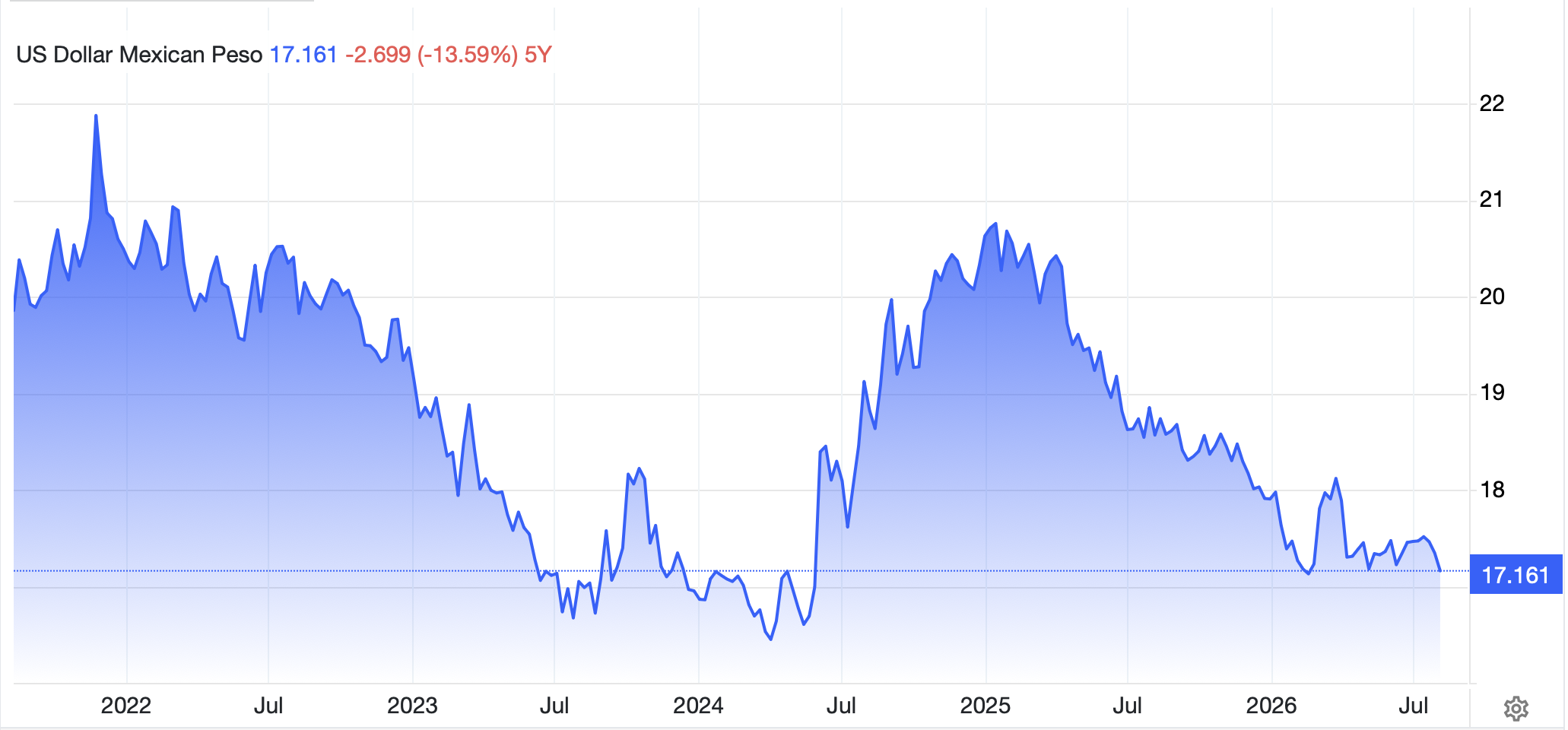
EMG currencies are having a very strong day, almost like the war is over.  CZK (+1.8%), HUF (+1.7%), PLN (+1.1%), ZAR (+1.0%), MXN (+0.9%) and KRW (+0.9%) are representative of today’s price action.  I’m wondering if I missed the news that the war ended!

On to the data this week, which in addition to all those central bank meetings includes a large array of generally secondary data, although PPI is part of the mix.

TodayEmpire State Manufacturing3.2
 IP0.1%
 Capacity Utilization76.2%
WednesdayPPI0.3% (2.9% Y/Y)
 -ex Food & Energy0.3% (3.7% Y/Y)
 Factory Orders0.2%
 FOMC Rate DecisionUnchanged
ThursdayInitial Claims215K
 Continuing Claims1855K
 Philly Fed9.0
 New Home Sales720K

Source: tradingeconomics.com

I imagine that folks will look at the PPI data to see if they can glean anything about inflation going forward, but it, too, is a February number, so will not have anything from the war.  It will also be interesting to see what Chairman Powell says in his press conference, but I can’t imagine much new information will flow there either.  After all, with the war, they are kind of stuck for now.

So, it continues to come down to market interpretations of commentary regarding the war.  As I said, this morning, investors don’t seem that worried things will get worse.  The Greed and Fear index is at 22, not great, but we have seen worse just recently.  Again, lighter positions are the way to go in my view.

Good luck

Adf
Bonds are a Flop

The war has now widened in scope
And though all of us truly hope
It won’t last too long
We could, there, be wrong
As such we must all learn to cope
 
So, oil, right now, knows no top
While havens like bonds are a flop
There’s no place to hide
Thus, you must decide
If trading makes sense or should stop

Carl von Clausewitz, the 19th century Prussian military strategist, is credited with describing the fog of war in his 1832 book, On War.  “…three quarters of the factors on which action in war is based are wrapped in a fog of greater or lesser uncertainty.”  This is quite an apt description of things, even now with cameras literally everywhere in the world.  Context remains difficult to understand, and, of course, there is an enormous amount of propaganda from both sides of any conflict as the protagonists attempt to sway both their own populations and those of their opponents.

I highlight this because I continue to be amazed at the certitude with which some analysts proclaim to “know” how things will turn out.  As I have written elsewhere, nobody knows nuthin right now.  With that in mind, I would highlight the IMF’s statement yesterday which added exactly zero to the conversation, “It is too early to assess the economic impact on the region and the global economy. That impact will depend on the extent and duration of the conflict.”  Now, don’t you feel educated after that pronouncement?

At any rate, with more than a full day’s trading in financial markets, perhaps we can try to assess how things are going.  The first thing to note is that many alleged haven assets are not performing up to snuff, notably Treasury bonds, Japanese yen, Swiss francs and gold.  In fact, as of this morning, the only traditional haven that is performing as expected is the dollar.

It was just over a month ago when the cognoscenti were explaining that the euro above 1.20 was indicative of the dollar’s long decline into the depths of history.  I recall someone in my LinkedIn feed asking how soon the euro would trade through 1.25 and beyond.  I would argue that timeline has been extended somewhat, if you still believe that is likely to be the case.  Rather, as you can see in the below chart, the single currency (-0.8%) is now back below 1.1600.

Source: tradingeconomics.com

There are several things weighing on the euro right now.  First is the fact that they are energy price takers for every form of energy, so not only are higher oil prices hurting the continent, but NatGas there has exploded higher as per the below chart, rising 37% today and nearly 95% since the weekend.

Source: tradingeconomics.com

Recall, Europe has been trying to wean themselves off Russian gas, have been huge buyers of US LNG but also huge buyers of Qatari LNG, and with the Strait of Hormuz effectively closed (shipowners cannot get insurance so nobody transits the Strait), this is a problem.  Adding to the European problem is the fact that their storage levels of NatGas are extremely low for this time of year, about 30%, when typical levels in early March are near 50%.  We cannot be surprised at this price action.  So, while US NatGas (+6.3% this morning, 10% this week) has risen, it is currently trading at $3.14/MMBtu.  The comparable Eurozone price is $20.28/MMBtu.  Perhaps a weaker euro is not that surprising after all.  (As an aside, one of the reasons I find it difficult to accept the weak dollar story is that the US controls its own energy destiny and given energy is life and the economy, we are fundamentally in better position to perform going forward.)

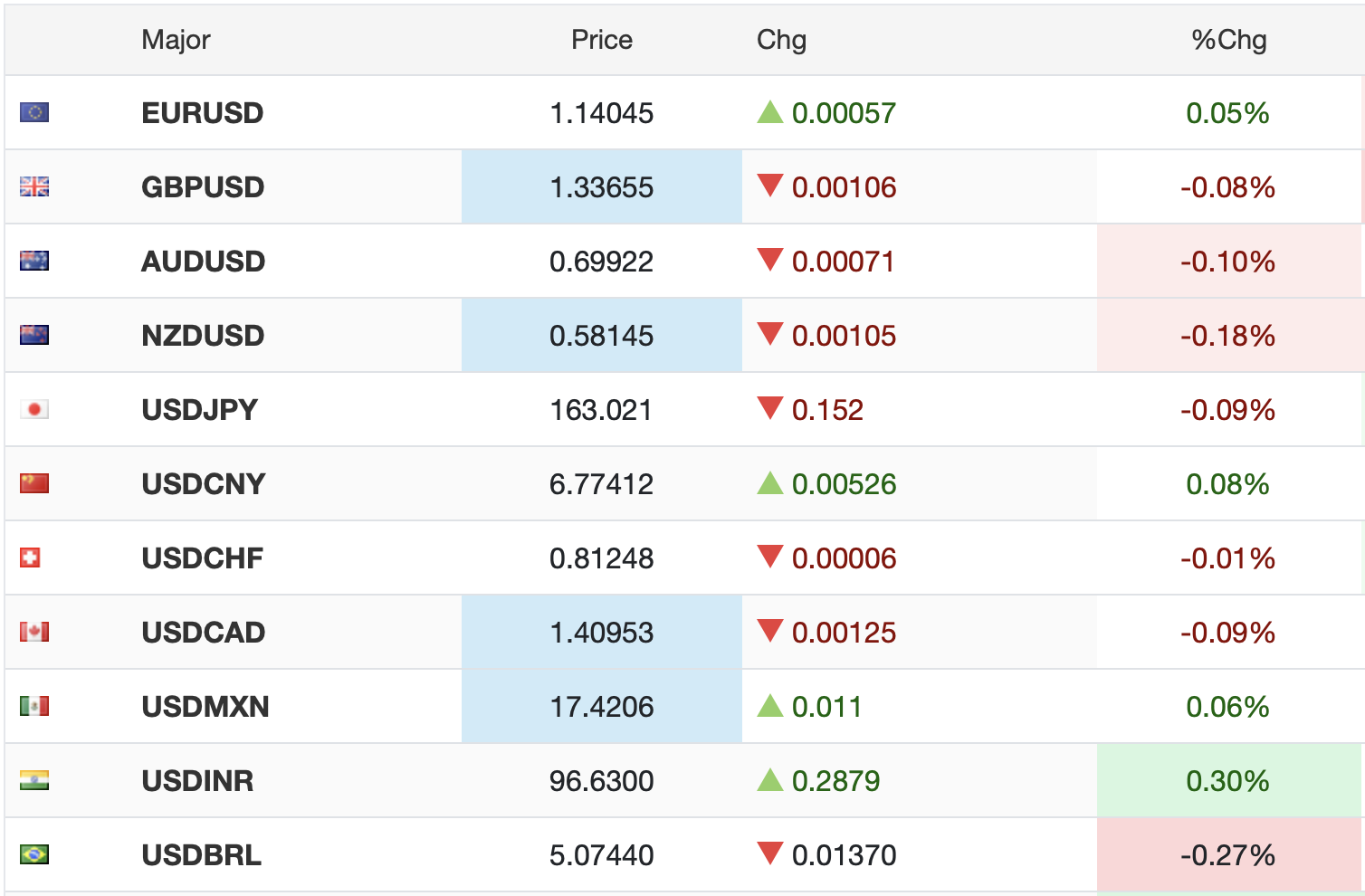
But the dollar is strong against all comers again today as per the below table from 7:10 this morning.  Will this continue?  While nobody knows, my take is there is still ample room for further strength in the buck, probably another 3%-5% before it starts to impact other things significantly.

Source: tradingeconomics.com

I think the biggest surprise for most of us is the incredibly poor performance of the bond market, which has always been seen as a safe haven.  However, this morning, that is not the case at all as you can see from the Bloomberg table below.

My take is that there is only one thing we truly know about war, it is inflationary.  While the early signs are for energy prices to rise, war is a major consumer of resources that will never be recycled and therefore will require new baseline production.  As well, governments don’t fight war on an austerity budget, so you can be sure that there will be plenty of money around.  All that leads to higher prices and that is why bond markets are feeling pain around the world this morning.  If, as President Trump has indicated, this war ends in the next 4 weeks or so, we will be able to re-evaluate the inflationary and other impacts, but while I had thought bonds were going to perform well, clearly that is not the case right now.

Turning to commodities, oil (+6.75%) continues to rise and I expect will remain well bid until the fighting stops.  The prospects for higher prices from here remain dependent on whether Iran tries to destroy other Middle East production facilities and if they are successful.  Meanwhile, in the Western hemisphere, the US, Canada, and all of Latin America are going to be pumping at full strength for now.  So, while prices may tick higher, it is unlikely we will see any supply issues here.

Metals are another surprising trade this morning with gold (-2.65), silver (-7.8%) and copper (-2.3%) all sharply lower.  Given the sharp decline in equity prices I will discuss below and given the amount of leverage that is rampant in the equity markets, I think gold is a victim of ‘sell what you can, not what you want to.’  Arguably, there is some of that with bonds as well.  In a way, though, I am more surprised about silver and copper given their criticality in fighting the war.  Both are being consumed rapidly via weapons being deployed so this is more baffling to me.  However, I do not believe the longer-term thesis in either of these metals has changed, there is a supply shortage relative to industrial usage for both with no new supply on the horizon.  As such, I do see prices here rallying over time.

Finally, the equity markets are sharply lower almost everywhere.  The below Bloomberg table shows how major markets in Asia performed overnight and how Europe stacks up at 7:30 this morning.

What it doesn’t show is that the KOSPI in Korea fell -7.25%, nor that there were sharp declines in India (-1.3%), Taiwan (-2.2%) and Thailand (-4.0%).  You will also not be surprised that US futures are pointing much lower this morning, -1.5% across the board.  Yesterday’s performance was quite the surprise, I think, but today is much more in line with what we expected.

And that’s where things stand this morning.  obviously, the war is the only story that matters, so data releases are going to be secondary for now, even Friday’s payroll report.  At some point, I expect that traditional havens will play their role, but as leveraged positions continue to get unwound, it may take a few more sessions before we see that.  If you’re trading, smaller sizes make sense.  If you’re hedging, stick to longer term fundamentals I think.

Good luck

Adf
No Longer the Same

The world is no longer the same
So, now everyone must reframe
Their views on positions
And whether conditions
Allow them to still play the game
 
Most markets have priced fatter tails
With stock markets seeing net sales
But oil and gold
Seem likely to hold
Their gains across longer timescales

Here we are on Monday morning in a very different world than we left on Friday evening.  While there was much talk about whether a peace would be reached then, obviously that never happened.  Of course, at this point, there is no other story than the ongoing military action in Iran and the Middle East.  As this is not a news commentary, but a financial markets one, that is all I will discuss here.

Not surprisingly, we have seen some large moves across markets, and largely in the direction one would have expected regarding risk.  So, oil prices (+7.5%) have exploded higher as shipping through the Strait of Hormuz has ceased for now and there is no timeline for it to reopen.  Given ~20% of the daily global consumption of oil flows through that waterway, there should be no surprise here.  You can see from the chart below that as concerns grew regarding military action, oil’s price climbed and then, of course, gapped on the opening last night.

Source: tradingeconomics.com

Perhaps a bit more surprising to me is that Brent Crude (+7.5%) has moved virtually the exact same amount as WTI.  I only say that because Brent is the price basis for global oil outside the US which is obviously going to be more impacted than the US markets.  But the Brent chart is virtually identical to the WTI above.  As to the future, clearly, no market is more dependent on the Middle East conflict than this one, but at this point, there is no indication it is going to end very soon, so I expect prices to remain at least at current levels for now, and if the conflict starts to target oil production facilities, we could go quite a bit higher.

While we are looking at commodities, it should also be no surprise that gold (+2.1%) is higher this morning as it performs its historical role as a safe haven.  While not quite as extreme as the oil chart, the similarities between the two, as you can see below, are significant.  Of course, it was a bit more than a month ago when we had that dramatic sell-off in the precious metals, so this has all been a recovery from there.  But a grind higher punctuated with a gap last night is the gold story as well.

Source: tradingeconomics.com

Arguably, gold will have more staying power than oil as when the conflict ends, and my initial take is it will not be a forever war, oil will once again flow more freely.  Gold, however, remains a haven in an uncertain world and nothing seems likely to reduce uncertainty anytime soon.

The other two traditional haven assets are the dollar and Treasury bonds so let’s look at them next.  Starting with the dollar, it has done what it regularly does in an uncertain situation, it has rallied sharply.  As you can see from the below table, shot at 6:39 this morning, the dollar is firmer against every single major currency this morning.

Source: tradingeconomics.com

Too, using the euro as our proxy for the dollar writ large, you can see that the chart below looks almost identical to that of both gold and oil above.  (I have inverted the Y-axis to highlight the similarities.)

Source: tradingeconomics.com

It appears that markets began pricing in this event back in the middle of February, although the real move required the onset of the military action.

As to the last haven asset, US Treasuries, they are not really doing the job today.  Yields there have edged higher by 2bps this morning and we are seeing similar price action across the entire European sovereign space.  The two exceptions today are UK Gilts (+8bps), which seem to be trading on concerns the BOE is less likely to cut rates as higher oil prices will prevent inflation from continuing lower and JGBs (-4bps) which are serving their haven role well, arguably given the distance from the action and the fact that with yields above 2%, investors seeking safety feel they have some cushion.

Source: tradingeconomics.com

The treasury move was interesting as the initial trade, at last night’s opening, was for lower yields as per the chart above, but that has since reversed.  It could be investors are concerned over additional defense spending blowing out the deficit further but there is no clear signal or commentary I have seen yet on the subject.

Finally, it should not be surprising that equity markets around the world are mostly lower this morning as investors pull in their wings and await more clarity on the outcome and how long this will continue.  The exception to this was mainland China (+0.4%) which managed to edge higher, but otherwise, all of Asia and Europe are down on the day, some pretty substantially.  Below you can see a screenshot of futures markets at 7:00 with the type of movements ongoing.

Source: tradingeconomics.com

The MOEX is Russia’s stock market, so it is not clear what value that adds to the conversation and the TSX, Toronto, does not have a futures market, so the price represents Friday’s close.  But as you can see, all of Europe and all of Asia ex-China have fallen sharply.

And that’s where we sit this morning.  Ironically, there is going to be a significant amount of data released this week, including the NFP report on Friday, but it is not clear market participants will be paying close attention.  For good orders’ sake, I will list the data releases anyway.

TodayISM Manufacturing51.8
 ISM Manufacturing Prices59.5
WednesdayADP Employment45K
 ISM Services54.0
ThursdayInitial Claims216K
 Continuing Claims1840K
 Nonfarm Productivity Q44.8%
 Unit Labor Costs Q40.2%
FridayNonfarm Payrolls60K
 Private Payrolls65K
 Manufacturing Payrolls0K
 Unemployment Rate4.3%
 Average Hourly Earnings0.3% (3.6% Y/Y)
 Average Weekly Hours34.3
 Participation Rate62.5%
 Retail Sales-0.2%
 -ex autos0.1%
 Consumer Credit$11.8B

Source: tradingeconomics.com

To me, market dynamics now are entirely restricted to the ongoing Middle East conflagration.  Ultimately, war is inflationary, and for many firms it is quite profitable.  But right now, investors are mostly hiding under their desks, waiting for the smoke to clear.  Institutional investors are typically unwilling to buck a key narrative trend, and I see no reason to believe this time will be different.

While much of this price movement will likely reverse when the bombing stops, until then, be prepared for more volatility, not less.

Good luck

Adf
No Desire

Some days markets have no desire
To move, lacking seller or buyer
But don’t be concerned
The one thing we’ve learned
Is narratives always point higher

While it is clearly not summer as I look out my window and see a snow-covered yard, the doldrums seem to be the best description of markets right now.  A dearth of data, and in truth, a lack of commentary by all the usual players, at least new commentary, has both investors and traders looking elsewhere for signals.

Now, this is not to claim that there is nothing happening in the world, but right now, it all seems to be on hold.  With the SOTU behind us, we have had nothing new from the White House regarding virtually anything, tariffs, taxes, Iran, you name it.  Nvidia earnings last night beat expectations, but apparently not by enough to get people excited.  And virtually every other story is a warmed-over version of things we already know.

I think the most interesting market related news that I saw this morning was that the most hawkish member of the BOJ, Hajime Takata, said the BOJ needed to raise rates to fight Japan’s “heated” inflation.  This seemed a response to Takaichi-san appointing two doves to the board there.  However, the market response was essentially nil, as it should be, with the yen (+0.2%) edging higher while JGB yields (+2bps) also edged higher.  

Other than that, seriously, I cannot find a single thing that seems to matter to markets.  And it’s not like we have that much to look forward to today in the US, with Initial Claims the only data, so there is no reason to go on too long.

Here is a recap of the overnight session.  As I touched on JGB’s above, I will start with the rest of the government bond markets. What we see is that yields are literally unchanged this morning from yesterday’s closing levels.  All of them!  I am hard-pressed to describe a less exciting market than this.

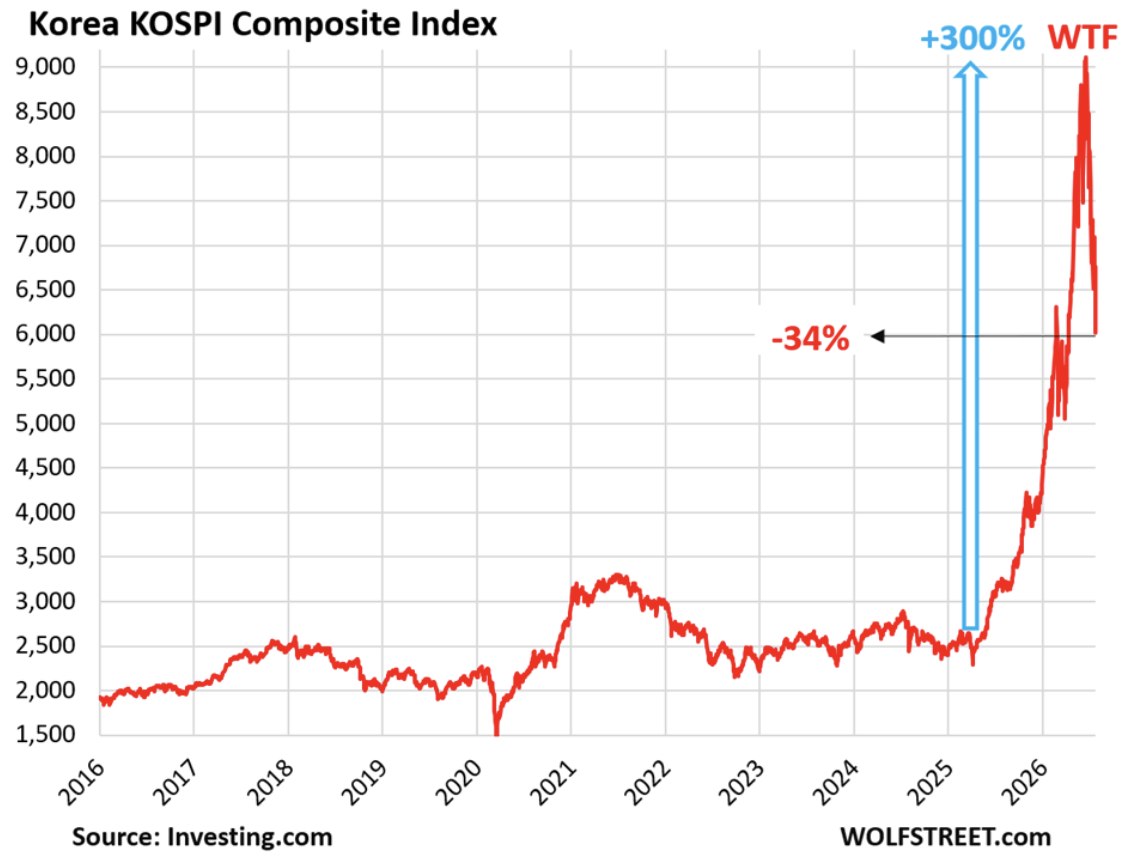
Turning to equities, yesterday’s solid US performance was followed by mixed outcomes in Asia (Tokyo +0.3%, HK -1.4%, China -0.2%) in the major markets while most other regional bourses saw modest gains or losses with no driving stories.  The exception to this was Korea (+3.7%) which has been on an amazing tear lately, as the two largest market cap stocks there, Samsung and SK Hynix, continue to explode higher on demand for memory chips.  In fact, I think it is worthwhile to visualize this move as it is rare for equity markets to go parabolic like this.

Source: finance.yahoo.com

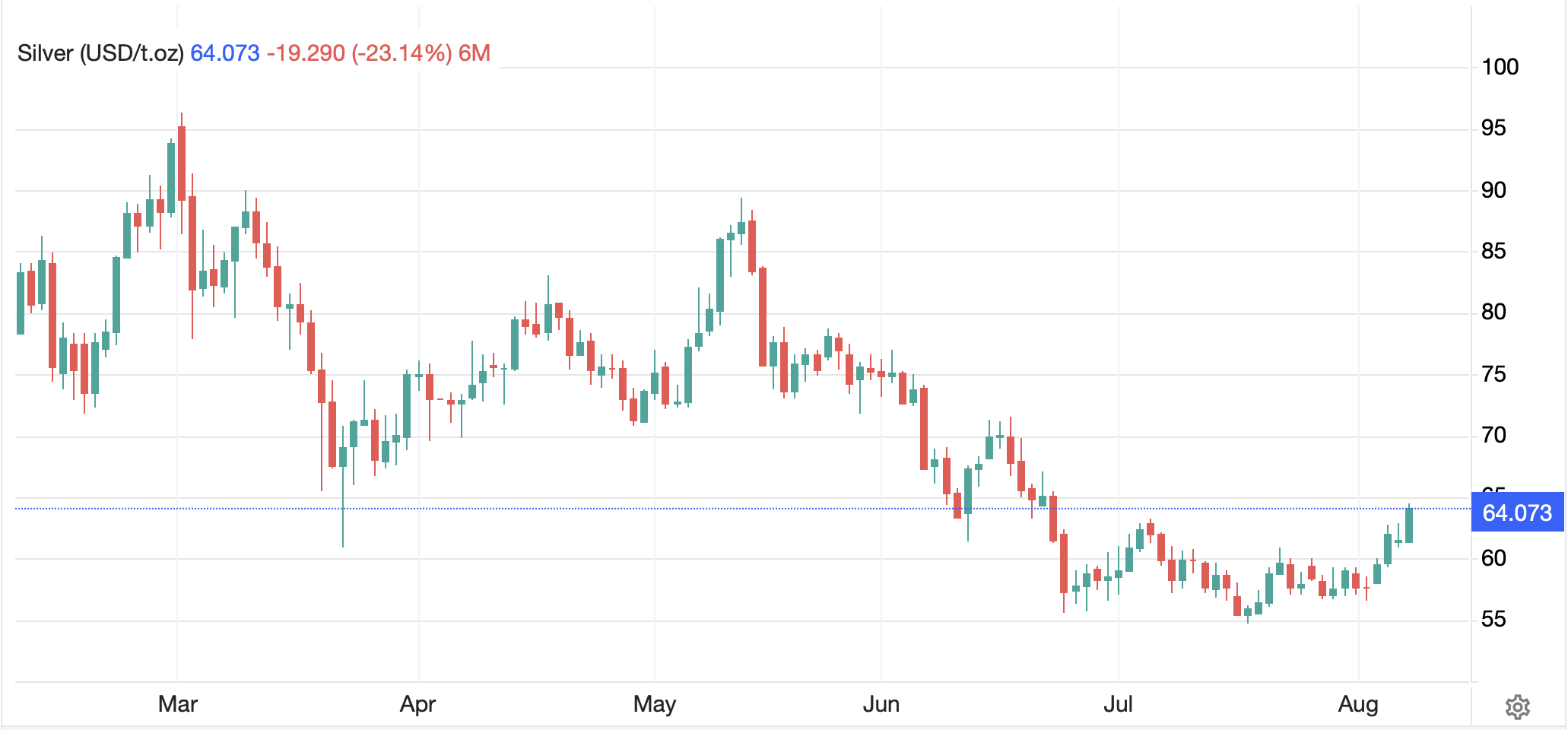
Of course, remember what happens to parabolic markets.  We just saw that in silver one month ago as per the below, so traders beware!

Source: tradingeconomics.com

Turning to Europe, France (+0.9%) is rallying on some earnings data from key companies, but the rest of the continent, and the UK, are doing little (Germany +0.4%, Spain -0.2%, UK +0.1%).  Fittingly, US futures are also unchanged at this hour (7:00).

In the commodity space, oil (-1.7%) has softened substantially this morning as the absence of a war in Iran weighs on long positions, but more importantly, I believe, yesterday’s EIA data showed a massive build of inventories of 16mm barrels, far higher than expected and the largest build since February 2023.  Back then, it appeared to be the residual response to the Russian invasion of Ukraine as there was a scramble for barrels.  Perhaps this is a signal that in the event of a war, there is supply around.  If you look at the inventory chart below, we have certainly seen a net build over the past three years.  Again, it is hard for me to look at things like this and see significantly higher prices in the future.

Source: tradingeconomics.com

In the metals markets, gold is unchanged this morning, though trading well above the $5000/oz level and seems like it is consolidating before moving higher.  Silver (-2.5%) is sliding as there continues to be a discussion regarding deliveries into COMEX contracts with the first notice day for the March contracts tomorrow.  There are many pundits who claim there is insufficient silver available to handle the likely deliveries which, if true, would likely cause a significant short squeeze.  However, I have no insight into how this will play out.  My longer-term view remains that there is a structural shortage of the stuff for industrial applications and the price trend will continue higher, but we have learned how volatile it can be.

Finally, the dollar is modestly stronger this morning with the yen’s rise the exception in the G10 space (EUR -0.1%, GBP -0.2%, AUD -0.2%, CHF -0.3%, NOK -0.3%).  In the EMG bloc, we are seeing similar modest weakness across the board (PLN -0.2%, ZAR -0.3%, MXN -0.2%) with the outlier here being CNY (+0.2%).  Regarding the renminbi, the Chinese have been marching it slowly higher for the past year, as per the below chart.  My take is President Xi is very focused on convincing others the CNY is a viable reserve currency candidate despite all the capital flow restrictions.  I’m not sure how that would work, but that is the best I can come up with.

Source: tradingeconomics.com

And that’s all we have in markets this morning.  On the data front, Initial (exp 215K) and Continuing (1860K) Claims are the only releases and we hear from Fed governor Bowman, although to the best of my knowledge, nobody is listening to Fedspeak right now.  The market continues to price just one 25bp cut for 2026 at this point, although that seems likely to change once we get a better idea as to what Mr Warsh would like to do when he gets the Chair.

My guess is that if there is going to be an attack on Iran, it will happen this weekend, so until then, given the absence of data, I think we drift in all markets and wait for Monday.  Today, and tomorrow, ought to be quiet.

Good luck

Adf
To Excess

The State of the Union Address
Was, as is Trump’s wont, to excess
He touted his claims
And handed out blames
While focusing on his success
 
The market responded, it seems
Like Trump answered all of its dreams
Stocks round the world rose
Which shows, I suppose
The world does approve of his schemes

As I look at my screen this morning, literally every major equity market is higher, as per the below screenshot, as are US futures.

Source: tradingeconomics.com

In fact, if you ignore Russia, which hasn’t really been relevant since the Ukraine invasion-imposed sanctions, every market is higher over the last year, and US markets are the true laggards as seen by their monthly performance.  But you cannot look at this picture and determine that anything President Trump said last night was negative for the global economy.  I guess it’s full speed ahead now.

In true Trumpian fashion, the president remains incredibly optimistic about the future for the US and the Western world and perhaps that is what is reflected here this morning.  However, there were precious few new initiatives announced so it is unclear to me that this is going to be a topic of discussion in the financial markets going forward, although you can be sure that the political narrative is going to be very active.

So, let’s move on to things that matter for markets.

Is she hawk or dove?
Takaichi hates China,
Not easy money

As you can see in the above table, Japan’s Nikkei 225 rose sharply, nearly 4%, but that had nothing to do with the SOTU.  Rather, her administration named two new BOJ governors (it was simply time to rotate some) and both were seen as quite dovish.  In fact, one, Toichiro Asada, is known for his belief in the benefits of MMT (you remember the magical money tree idea that governments that print their own currency don’t need to worry about overborrowing).  The upshot is that while Japanese stocks raced to yet more new highs, as per the below chart, JGB yields reversed their recent declines and rose (10yr +5bps, 30yr +10bps) and the yen (-0.6%) continued its recent slide, although remains well above (dollar below) the 160.00 level, which many see as the BOJ’s line in the sand regarding intervention.

Source: tradingeconomics.com

But other than this story, it is much harder to find things that have been market drivers.  To my eye, we continue to see market participants laying back in most places as they are still recuperating from the raucous first six weeks of the year.

So, let’s go to the tape.  We’ve already seen the equity performance around the world, with the narratives forming that the US tariff situation is now a reduced stress on global trade as they have been reduced to 10% globally.  As well, there have been an increasing number of rebuttals to the AI piece I mentioned on Monday, with this one, I think, the most succinct takedown of the idea that AI is going to eat the world and drive us into a recession with no jobs left for people.  As such, Monday’s narrative of all stocks being worthless has changed.  Elsewhere, the tariff story and tech rally have been the key discussion points across markets.

In the bond market, yields are a touch higher with Treasuries (+2bps) edging up on what seems like ordinary trading.  The short-term trend here is lower yields, as per the chart below, but we know that nothing moves in a straight line.

Source: tradingeconomics.com

As to European sovereign yields, they, too, are mostly a few ticks higher this morning although, this also appears to be simple trading activity rather than a new narrative.  It is interesting that there are more stories today about ECB President Lagarde stepping down early, which is diametrically opposed to what she said when asked the question recently.  As I said before, I think she steps down and is going to run for President of France.

The commodity markets continue to be the place with the most price action and this morning is a continuation of that recent trend.  Gold (+0.9%), silver (+3.7%) and platinum (+5.5%) are all continuing their rebound from the extreme declines seen back on January 29th.

Source: tradingeconomics.com

I do not have any inside track as to the driver of those moves, but I continue to read and hear about significant intervention designed to burst those bubbles (and they were clearly bubbles) and allow key institutions to cover short positions at better prices.  The problem with these stories is that we have heard for years about the manipulation of the prices of both gold and silver by large banks, and the purveyors of those stories have neither great reputations nor track records, so it is always a tough sell in my mind.  There is no question that when markets go parabolic, as the precious metals did through January, the reversals have always been dramatic.  However, I cannot speculate on the driver as often times, there doesn’t need to be one.  This cartoon from Kaltoons demonstrates it perfectly.

Turning to oil (+0.8%), Iran remains a key narrative and continues to support the front month pricing.  However, it appears that several futures spreads are falling sharply, indicating a potential glut in physical supplies has developed, at least for now.  As I look at the front contracts in the futures curve, we are still in backwardation, which implies a shortage, although I suppose that is the Iran effect.  

Source: barchart.com

I understand the short-term concerns here regarding potential military escalation there, but nothing has changed my view that the long-term energy situation is one of abundance and maintaining much higher oil prices will be very difficult for the long-term.  After all, look at Venezuela, which has already increased production back above 1mm barrels per day with contracts being signed for more activity.  Too, Argentina’s Vaca Muerta shale production is at new record levels, also ~1 mmm bpd and we continue to see growth offshore Brazil and Guyana.  Longer term, there is plenty around, I think.

Finally, the dollar is mixed this morning as the yen’s weakness is being offset by modest strength in the euro (+0.1%) and pound (+0.2%).  However, the big movers today are KRW (+0.9%) which has benefitted from inward equity flows and hopes for tariff relief, as well as ZAR (+0.5%) on the back of the precious metals rally and CLP (+0.4%) on copper’s strength.  Remember, the US is not overly concerned about USD weakness in the FX markets as it suits the administration’s goals of reducing the trade deficit and encouraging onshoring of production.  But even with that, looking at the DXY, it is just below 98.00 and remains right in the middle of its trading range for the past 9 months.

Source: tradingeconomics.com

There is no major data out this morning with only the EIA oil inventories where a very modest build is anticipated.  

Big picture, I don’t think anything has changed.  Fiat currencies continue to lose value relative to ‘stuff’.  Equity markets continue to benefit from the global ‘run it hot’ policy and there is no clarity regarding the outbreak of a war in Iran.  With this in mind, it is hard to see a large move in the dollar in the near future.

Good luck

Adf
Not All in Sync

The story that’s tripping off lips
Is whether the buildup in ships
And aircraft we’ve seen
Is likely to mean
A war with Iran’s in the scripts
 
But markets are not all in sync
As equities clearly don’t think
That war would be trouble
While bond traders’ double
Their bets war will drive stocks to drink

Economic data is clearly not a key driver of market movement these days, arguably because we continue to get mixed outcomes, with some things looking good (Initial Claims, Philly Fed) while others are less positive (Trade Balance, Leading Indicators), although granted, it is not clear to me what the Leading Indicators purpose is anymore.  My point, though, is that we have not seen unambiguous strength or weakness across the data set for several months.  This allows every pundit to frame the economic situation through their own personal lens, whether bullish or bearish.  A perfect example is the dichotomy between the strength of US corporate balance sheets, as per Torsten Slok and seen below, 

and the rise in corporate bankruptcies as per this X post from The Kobeissi Letter (a great follow on X) which shows the following chart.

So, which is it? Are things good or bad?  My understanding is that strong balance sheets and a high number of bankruptcies are not typically correlated, but I could be wrong.  

Given the lack of direction, markets have turned their focus to other things, with most headlines currently garnered by the ongoing buildup of US military power in the Middle East as President Trump tries to pressure Iran into ceding its nuclear and missile programs.  (Of course, the announcement that all information on UAP’s (fka UFO’s) has many excited, and of course, the Epstein files continue to garner attention, as does the SAVE Act, but none of those are even remotely related to financial markets.)

But even here, we are seeing very different responses by the financial markets.  For instance, equity markets continue to perform pretty well, even though Tokyo and Australia sank a bit last night.  Look at the monthly and YTD returns in Europe, Japan and Australia below:

                                           Daily   Weekly   Monthly   YTD

Source: tradingeconomics.com

It strikes me that if war was a major concern, investors wouldn’t be stocking up on risk assets.  Rather, havens would be in more demand, which we are also seeing with gold (+0.4%) and silver (+3.3%) rising overnight as despite extreme volatility in the precious metals space, there is clearly underlying demand for these havens.

Bond yields over the past month have declined, indicating that despite ongoing deficit spending, investors are seeking their perceived safety whether in Treasuries, Bunds or JGBs as per the below chart of all three.

Source: tradingeconomics.com

Finally, the dollar, despite frequent calls for its death, has been edging higher in a classic risk-off response as no matter how much some may hate the dollar philosophically, when bad things happen, its massive legal and liquidity advantages outweigh virtually everything else.  Once again, the DXY has moved back to the middle of its trading range, just below 98.00 this morning, and to my eyes, shows no signs of an imminent collapse.  Rather, if hostilities do break out in Iran, I expect the greenback to rally to at least the top of this trading range at 100, and depending on the situation, it could easily go higher.

Source: tradingeconomics.com

All this is to point out that nobody knows nothing.  Narrative writers continue to try to keep up with the action, and it is increasingly difficult to do so as things change on the ground so rapidly.  Let me be clear when I say I have zero inside information regarding any of this, I am merely an observer.  However, my observations are that there will be some type of military action in Iran as to build up this much fire power in a concentrated area and not use it would be remarkable and I can see no way in which the Ayatollah can accept the terms being offered as it would end his leadership if he does.  I guess we will find out soon enough as President Trump has put a 10-day timeline on things.

Arguably, the only market I didn’t mention here was oil (-0.5%) which is consolidating after a 20% rise in the past two months.  Remember, if military activity is directed at oil production or transport, we could see a sharp spike here and that will not help equities or economic data, although both gold and the dollar are likely to benefit.

Source: tradingeconomics.com

I don’t think there is anything else to discuss market wise so let’s turn to the data.  This morning brings a bunch of important stuff as follows:

Personal Income0.3%
Personal Spending0.4%
PCE0.3% (2.8% Y/Y)
-ex food & energy0.3% (2.9% Y/Y)
Q4 GDP3.0%
Flash Manufacturing PMI52.6
Flash Services PMI53.0
Michigan Sentiment57.3
New Home Sales730K

Source: tradingecomomics.com

We also hear from two more Fed speakers, but at this point, they are all singing from the same hymnal explaining policy is in a good place and unless there are major changes in the data, there is no reason to change.

Arguably, the PCE data is the key for markets here as if it continues to run hotter than target, hopes for further rate cuts will continue to dissipate.  In fact, the next cut is now priced in for July with a second for October.  

Source: cmegroup.com

Remember, too, at that point it will be Kevin Warsh’s Fed, not Jay Powell’s, and Warsh has a very different idea about the way things need to be done.  Interestingly, as this 4th Turning proceeds and old institutions come under increasing pressure, their efforts to fight back and maintain the status quo is no longer behind the scenes as evidenced by this Bloomberg article this morning.

As I have written before, President Trump is the avatar of the 4th Turning and the institutions that are going to change are desperate to maintain the status quo.  This is, truly, the big fight that will continue through the end of the decade in my view.  Every institution that has been overseeing the global situation, whether politically, financially or militarily, is coming under pressure as income and wealth inequality have driven an ever wider disparity of outcomes.  As much power as the rich have, there are a lot more people who are not rich.  Ask Louis XVI how much being rich helped him.

On a lighter note, I watched the gold medal skating performance of Alysa Liu and it was truly magical.  A much better thought for the weekend!

Good luck and good weekend

Adf

Chock Full of Crises

Their mandate includes stable prices
And that they should use all devices
To work to achieve
That goal lest they leave
A legacy chock full of crises

Most participants, however, cautioned that progress toward the Committee’s 2 percent objective might be slower and more uneven than generally expected and judged that the risk

of inflation running persistently above the Committee’s objective was meaningful.”

These words [emphasis added] are from the FOMC Minutes released yesterday afternoon.  To set the stage, the Fed left rates on hold then, although there were two votes for another cut.  However, a full reading of the Minutes shows there were those who would have considered a hike as well.   Now, I am just a guy in a room who observes market behavior through the lens of too many years involved on a daily basis, and my resources are virtually nil, especially compared to the Federal Reserve.  I don’t have a PhD in economics (although I believe that is a benefit in this context, if not every context).  However, the bolded part of the comment seems a tad disingenuous to me based on the below chart which shows the history of their inflation metric, Core PCE prices.

Source: tradingeconomics.com

It has been exactly 5 years since their metric was at or below their 2% target by which they defined stable prices.  The idea that they are claiming the risk of inflation running hot was a meaningful risk is perhaps the worst gaslighting comments they have made.  It is very difficult to believe that the Fed, in its current incarnation, is going to ever address the inflation issue appropriately.  Perhaps a Chairman Warsh, if he is successful at reconfiguring their operating procedures will be able to drive positive changes.  I am hopeful but not confident.  The one thing we know is that changing government institutions requires a mammoth effort.  And let’s face it, he will only have two plus years of leeway for sure depending on whoever becomes president in 2028.

I continue to believe that the market is going to increasingly focus only on Warsh’s comments going forward as the direction he has expressed is very different than the current FOMC membership mindset.  We shall see how this all evolves.  In the meantime, I expect that Fed funds are not going anywhere before Warsh is confirmed.  As to bond yields, that is a very different question and will depend on both the macroeconomic outcomes and the risk perception of investors around the world.  For now, that trading range of 4.00%. – 4.20% seems likely to hold absent a major economic data miss in one direction or the other.  But as long as we continue to get mixed data, this market will remain on the backburner.

The fear that is growing each day
Trump’s policy might go astray
Regarding Iran
Although not Japan
Thus, oil’s up, up and away

Texas tea (+1.5%) is following yesterday’s 4.6% rise with another strong session and as you can see in the chart below, is showing a very clear trend higher since December.

Source: tradingeconomics.com

This movement is very clearly a response to the ongoing buildup of US military assets in proximity to Iran, with two aircraft carriers, and somewhere above 200 military aircraft as well as the carrier group tenders with Tomahawk missiles in tow.  While negotiations are ostensibly ongoing, the one thing that seems clear is that absent a complete capitulation by the Iranian government, something big is going to happen here.  Of course, the question is, how much, and for how long, will it impact oil supplies?

Obviously, nobody knows the answer to that question, but the recent history has shown that every time there was an event in the Middle East, whether the 12-day war several months ago, the killing of Suleimani, the attacks on Saudi oil infrastructure, or others, prices retraced pretty quickly as per the below.  

Even the Ukraine invasion in February 2022 saw prices retrace 50% within a few months.  Other issues lasted less time than that.  This recent history implies that fading the rally is the right trade, but boy, that is hard to do.  And of course, in the event that the Iranian government falls, the chaos could result in a significant degradation of Iranian oil production.  Given they pump about 5 mm bpd, ~5% of global supply, that would matter a lot at the margin.  Certainly, the oil glut narrative would disappear in a hurry.  This is a very large risk to both markets and the economy, and one which needs to be hedged, if possible.  This will certainly be the focus of markets for the next few weeks, at least, so be prepared.  Personally, I do own some stuff here, but I like the drillers generally, as they are going to be employed no matter what!

Ok, let’s see what else is happening.  After a solid US session yesterday, Asia saw some major positive price action with Korea (+3.1%) the leader although Tokyo (+1.1%) also had a solid session, as did Taiwan, New Zealand, Singapore and Australia.  The exception to this rule was India (-1.5%) which suffered after a three-day positive run as traders and investors fled worrying about oil, the Fed, and the future of India’s relationship with Russia after the seizure of more ‘dark fleet’ oil tankers trying to avoid sanctions on Russian oil.  Europe, meanwhile, is uniformly lower this morning, with all the major indices slipping -0.8% or so.  The narrative is pointing to the escalation in Iran as the cause du jour.  US futures are also slipping at this hour (7:20), -0.25% or so across the board.

I touched on bonds briefly above, but today’s price action shows yields edging higher by 1bp in Treasury markets and between 1bp and 2bps across European sovereign markets.  There has been no data of note to alter views, and the only ECB news is that Spain has thrown their hat into the ring to have the next ECB president.

In the metals markets, yesterday’s gains are being followed by a mixed picture with gold (+0.2%) and silver (+0.3%) edging higher while copper (-1.6%) and platinum (-1.8%) cede those gains.  However, as I highlighted yesterday, this all still feels like consolidation.  FYI, there is much talk in the markets about silver and how there is not enough physical silver in the COMEX vaults to cover open interest, and how that could result in a major squeeze, but my take is most of it will roll forward as the fundamental supply/demand equation does not appeared to have changed.

Finally, the dollar had a strong session yesterday, rising 0.6% as measured by the DXY, and making gains vs. almost all currencies.  This morning, those trends are continuing with SEK (-0.4%) and GBP (-0.2%) leading the way lower in the G10 space while ZAR (-0.85%), INR (-0.4%) and KRW (-0.4%) are dragging down the EMG bloc.  Again, data has been scarce, so I see this as a more traditional risk-off sentiment than some new macro story.

Data yesterday was generally stronger than forecast, notably IP and Capacity Utilization, which showed solid outcomes that were ascribed to AI infrastructure building as well utilities activity.  It strikes me this is exactly what the Trump administration is trying to achieve with their reshoring goals.  I guess the question is how productive this investment will be and how will it impact inflation readings.  This morning, we see the weekly Initial (exp 225K) and Continuing (1860K) claims, as well as the Trade Balance (-$55.5B), Philly Fed (8.5) and Leading Indicators (0.0%).  The interesting thing about the Leading Indicators number is that a flat result would be the highest in 4 years.  A look at the Conference Board’s chart below shows an interesting thing about this number, and to me, anyway, calls its value into question.  Leading Indicators have been declining for four years while coincident indicators (and economic growth) have been moving along just fine.  I’m trying to figure out what these indicators lead.

And that’s really it for today.  We do see oil inventories as well, with a slight build expected and we will hear from Minneapolis Fed president Kashkari, but I cannot remember the last time he said anything interesting.  To me, the concern today, and tomorrow and next week, is that we see an escalation in rhetoric regarding Iran, at the very least, if not an actual military strike.  That feels like it would be bad for stocks, good for bonds, the dollar and gold.  Hopefully I am wrong there.

Good luck

Adf
Gone Astray

Though Friday will lack NFP
We still will have something to see
The States and Iran
Will meet in Oman
To talk about nuke strategy
 
But til they, in fact, do sit down
Be careful as crude moves around
And what if talks fail
To find holy grail
Beware oil shorts and their frowns
 
With that as the background today
The narrative has gone astray
’Cause all kinds of tech
Resemble a wreck
While metals are fading away

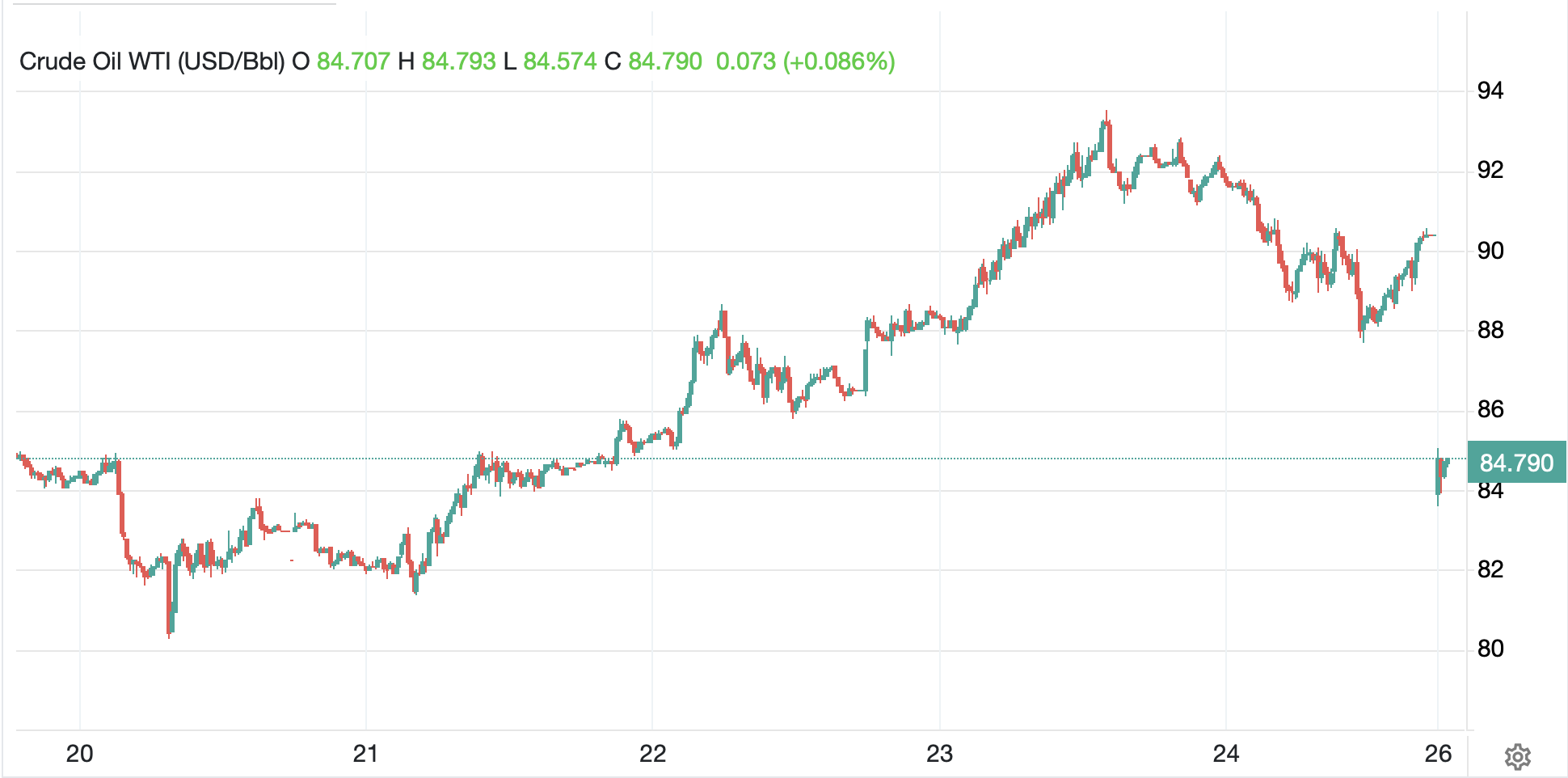
Sometimes it’s hard to determine which stories are really driving markets as there are so many that have potential conflicts between them.  With that in mind, I will start with oil this morning, which has seen a bit of choppiness during the past week on the back of on-again, off-again, on-again talks due to be held between the US and Iran.  See if you can guess where the worries about a US military strike gained ground, were quashed by news of potential talks, saw a military skirmish in the Strait of Hormuz and then when talks were reconfirmed.

Source: tradingeconomics.com

Net, there is still an underlying concern about the situation, which is why, I believe, the price of crude (-1.1%) is still above $64/bbl.  Remember, it was not that long ago when it had seemed to find a comfort zone below $60/bbl.  It strikes me that if some type of accommodation is reached at these talks, where Iran gives up its nuclear weapon dreams and stops funding terrorism (I believe these are the administration’s goals) then there is plenty of room for oil prices to slide back below $60/bbl and continue what had been a longer term down trend as per the below chart.  

Source: tradingeconomics.com

After all, given the fact that Venezuelan oil is going to be returning to the market, the continued expansion of production in Guyana, Brazil and Argentina, and now the idea of welcoming Iran back into the good graces of nations, that is a lot of potential supply that is currently not available.  My concern is if Iran agrees to those terms, it may be an existential threat to the theocracy, so I guess they need to weigh that risk vs. the risk that the US does escalate militarily, which could also be an existential risk to the theocracy.  Net, choppiness seems to be the likely road ahead.

Finishing commodities, precious metals have reversed the reversal and are down sharply this morning (Au -1.7%, Ag -11.0%, Pt -4.4%).  Volatility remains extremely high and given the competing narratives of a) it was a bubble, and b) the fundamentals remain in place, I expect we will continue to see price action like this for a while yet.  Although remember my strong belief that markets can only maintain volatility of this nature for a few weeks as at some point, all the participants simply become too tired to trade.  There was a very interesting chart I saw on X this morning that showed the price action in gold during the German hyperinflation of the Weimar Republic a bit over 100 years ago.  

I’m not implying we are heading to a hyperinflation, just that gold (and silver and platinum) prices can move very far in short order, as we’ve seen.  In the end, nothing has changed the fundamentals with demand for gold still price insensitive, demand for silver still greater than mining supply with the same true for platinum.  But it will be a rough ride for a little while yet.

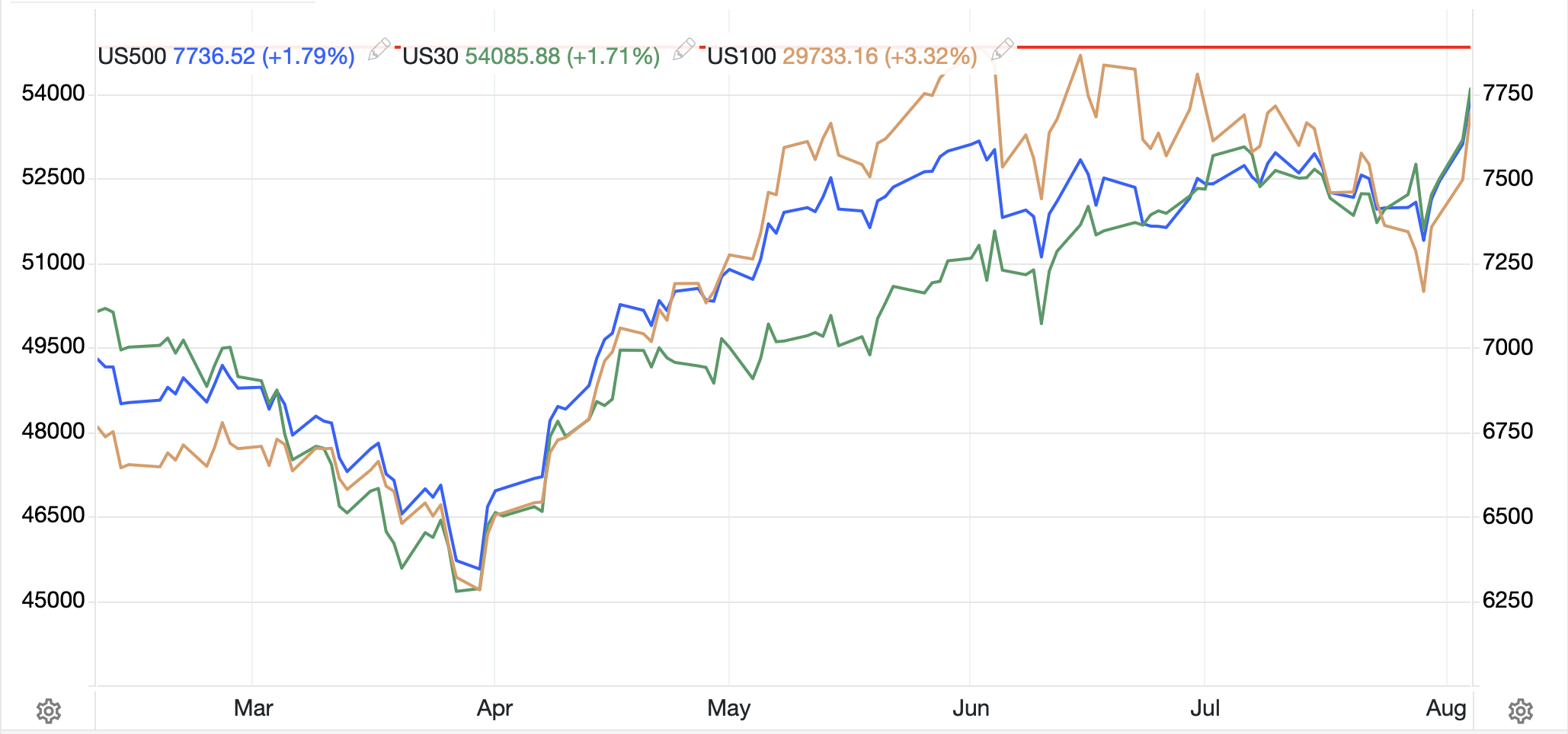
So, let’s turn to the equity markets, where there are far more plugged-in analysts than me, but I want to take a higher-level look.  While yesterday’s price action was mixed (NASDAQ and S&P lower, DJIA higher) it seems to indicate that there is an ongoing rotation out of tech stocks into other areas, amongst them consumer staples, energy and defensives.  What I find so interesting about this, though, is that if I look at a chart of the three major US indices, they are all the same chart.

Source: tradingeconomics.com

Granted, the NASDAQ had the highest high back in November, but, in reality, they all move very much in sync.  This begs the question, what can we expect going forward?  At the end of the day, I still believe that stocks represent the value created in the economy.  As such, if the Trump administration’s plans to reduce regulations and encourage banks to lend more to the real economy, rather than purchase financial assets, can be implemented effectively, that is a very real positive for equity markets over time.  However, that probably means a much less steady climb, especially if the Fed is not explicitly supporting assets as the new Chair, Warsh, tries to shrink the balance sheet.  It is going to be messy and there are going to be a lot of cross narratives and claims, so at any given time, the only reality will be increased volatility.  But at least there’s a plan.

As to the rest of the world’s equity markets, it does appear as the bifurcation between those nations that are willing to work closely with the US and those working closely with China is likely to continue.  It remains to be seen which bloc will outperform, although I like the US odds given the legal structure and the demographics.  

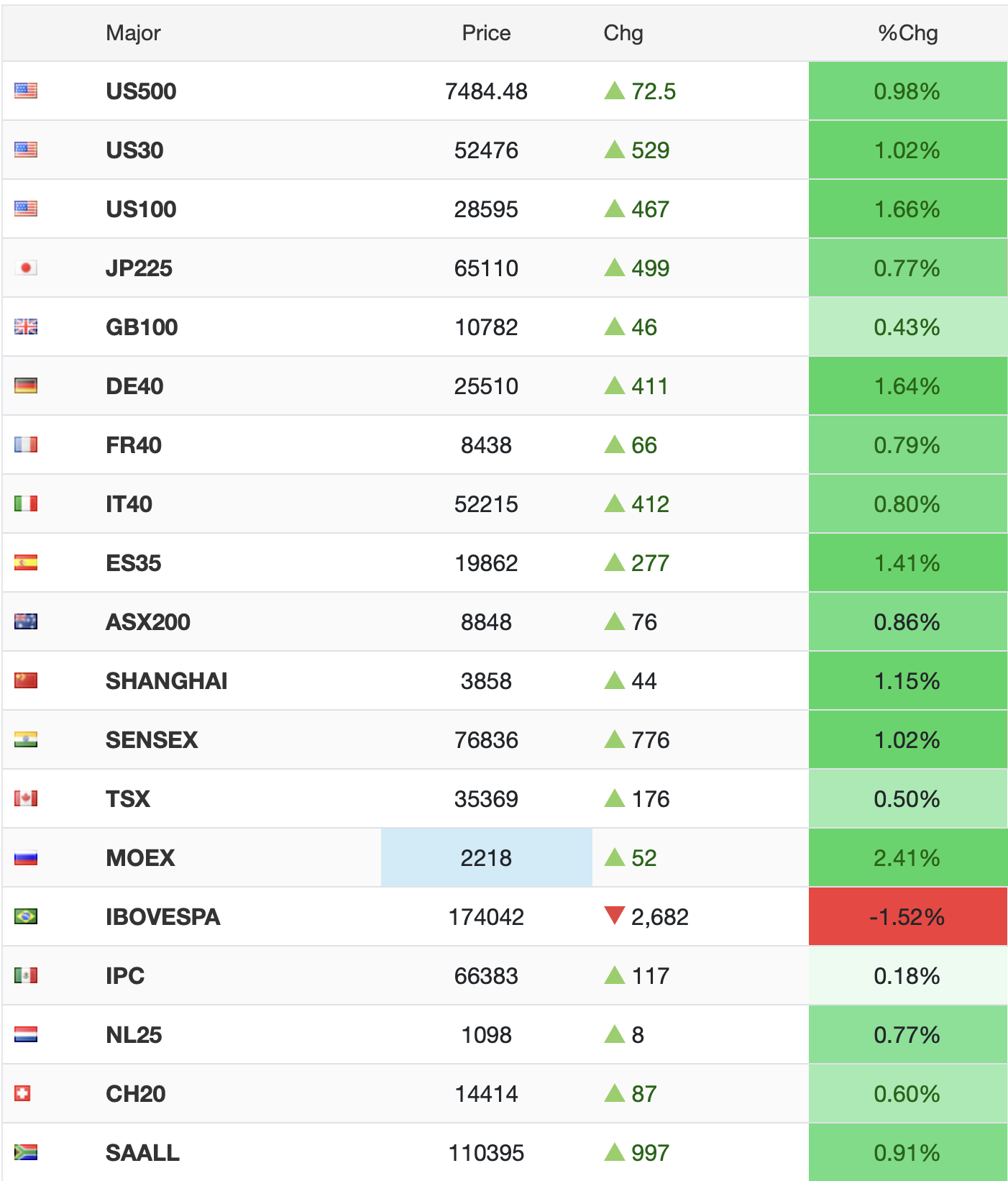
With all that in mind, let’s look at the overnight price action.  Asia had a tough go of it given the high proportion of tech names there.  While Tokyo (-0.9%) slipped along with China (-0.6%) the real laggards were Korea (-3.9%) and Taiwan (-1.5%) and there were far more laggards (India, Australia, Malaysia, Indonesia) than gainers (Singapore, HK).  This is the tech story writ large.  In Europe, even though they largely lack tech, weakness is the norm (Spain -1.1%, Germany -0.2%, UK -0.3%) although the French (+0.3%) have managed to buck the trend.  It is not clear why Spain is lagging so badly, although perhaps PM Sanchez’s efforts to import 500K new people while unemployment remains at 10%, the highest in the EU, has some concerned.  As to US futures, at this hour (7:15), they are pointing higher by about 0.2%.

In the bond market, once again there is nothing going on.  Treasury yields are almost exactly unchanged since early Friday morning, although we did see a dip and rebound after the Warsh announcement.

Source: tradingeconomics.com

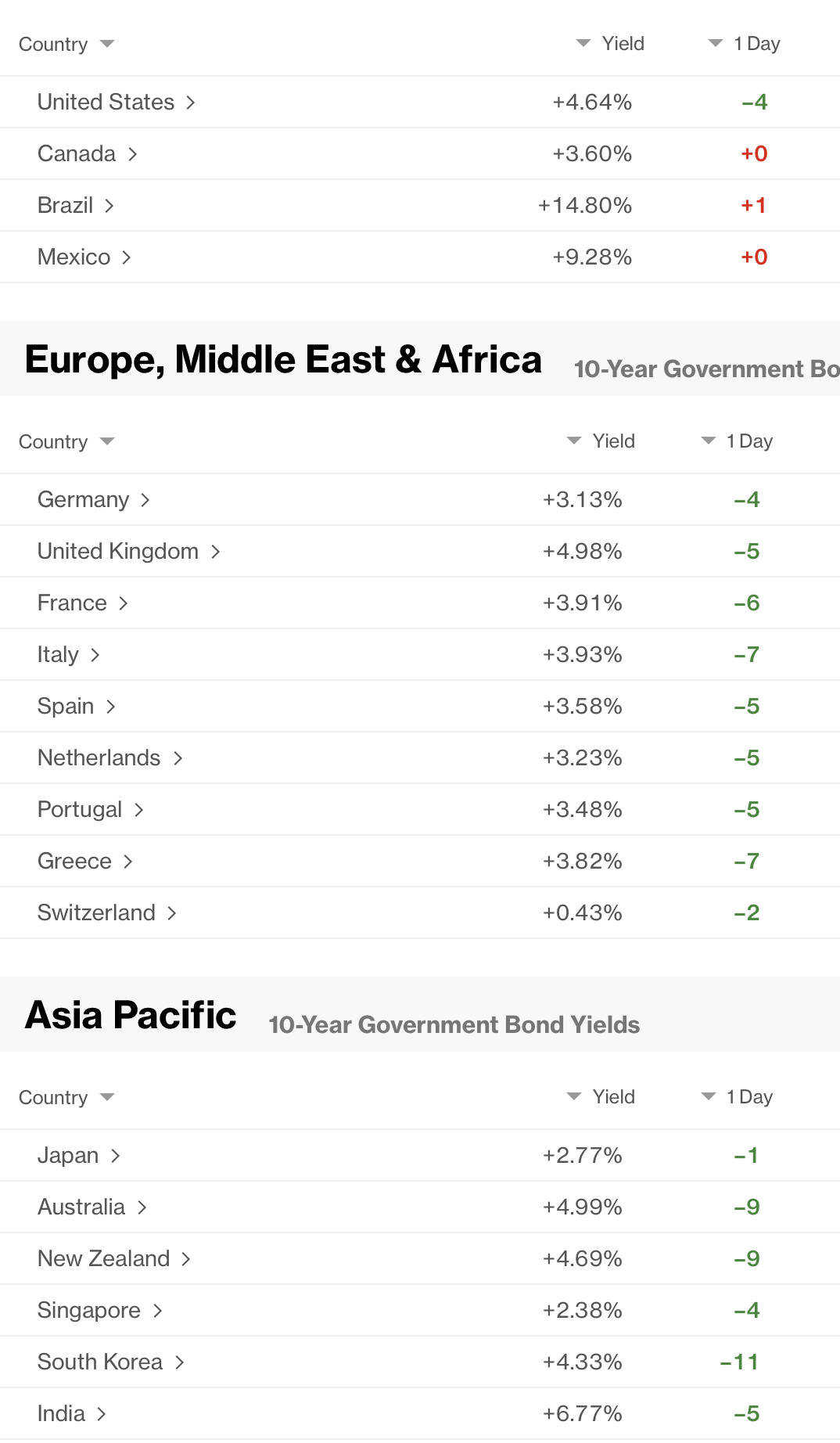
The US yield curve is steepening as 30-year yields edge higher although those remain below 5.0%, a level that many are watching closely as a signal of a bondmageddon.  On the continent, European sovereign yields have edged higher by 1bp to 2bps, but activity is muted ahead of the ECB meeting announcement (exp no change) scheduled later this morning.  UK yields have edged lower by -1bp after the BOE left rates on hold, as expected, with a 5/4 vote, the 4 looking for a cut.  I continue to believe that the odds are for the ECB to cut rates again far sooner than the market is pricing.  And JGB yields slipped -2bps overnight as market participants await Sunday’s election results.  Given PM Takaichi is forecast to win with an increased majority, it is hard for me to believe that if she does, JGB’s will sell off sharply on the idea she has promised more unfunded spending, they already know that.

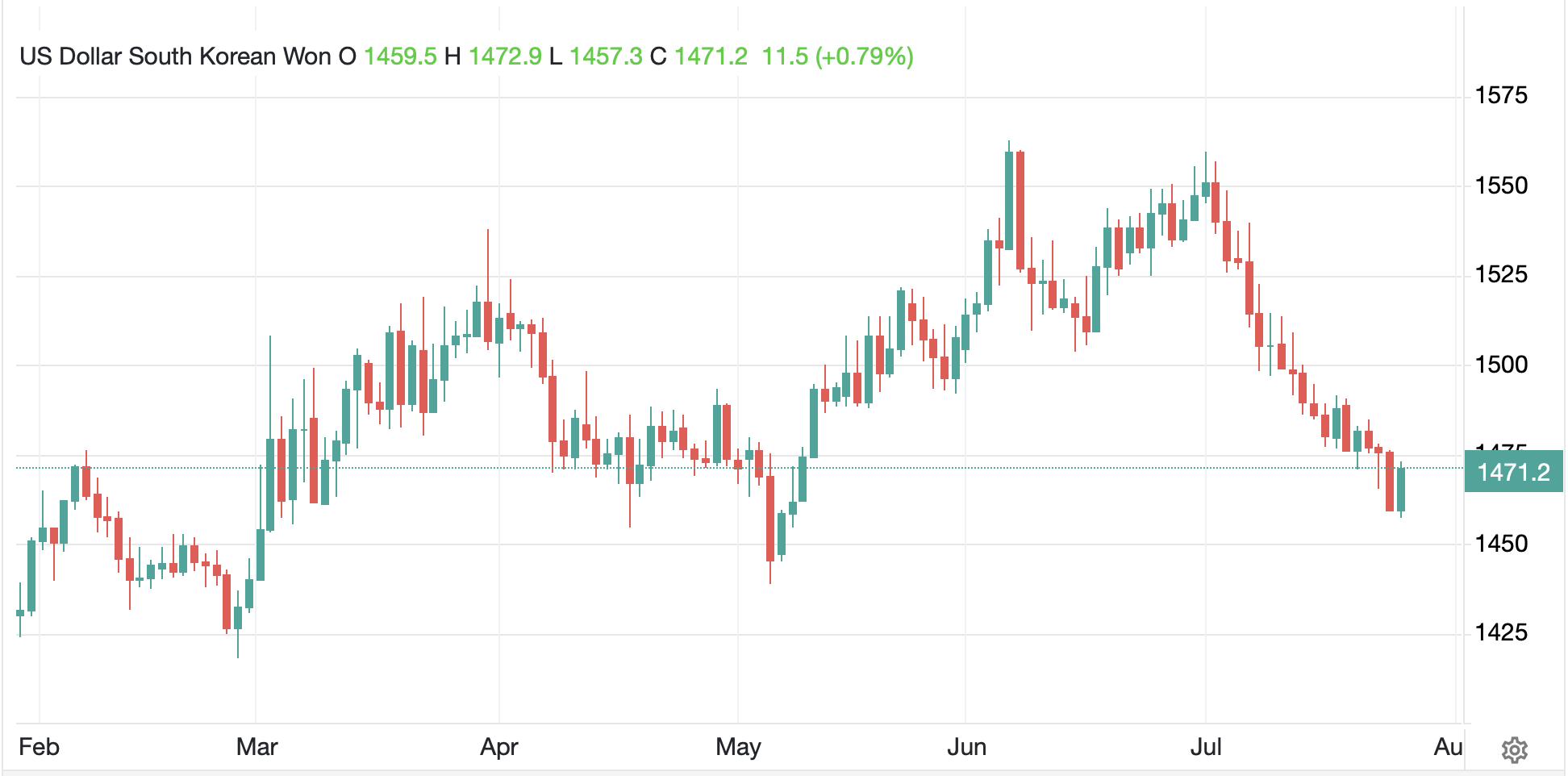
Lastly, the dollar is firmer this morning, continuing to defy all the calls for its demise.  The pound (-0.8%) is the laggard after the BOE sounded a bit more dovish than expected, but we are seeing losses across the entire G10 bloc.  As to the EMG bloc, ZAR (-0.7%) is the laggard, but given the dramatic reversal in precious metals, that is no surprise.  Otherwise, losses on the order of -0.3% or so are the norm.

On the data front, Initial (exp 212K) and Continuing (1850K) Claims lead the way and later we see the JOLTs Job Openings Report (7.2M).  The word is that the NFP report will be released next Wednesday with CPI next Friday.  Atlanta Fed president Bostic speaks later this morning, but I continue to believe that until we hear from Mr Warsh, the Fed’s words have very little impact.  Arguably, the neutering of the Fed is why the bond market remains so quiet.  Traders have lost their cues.

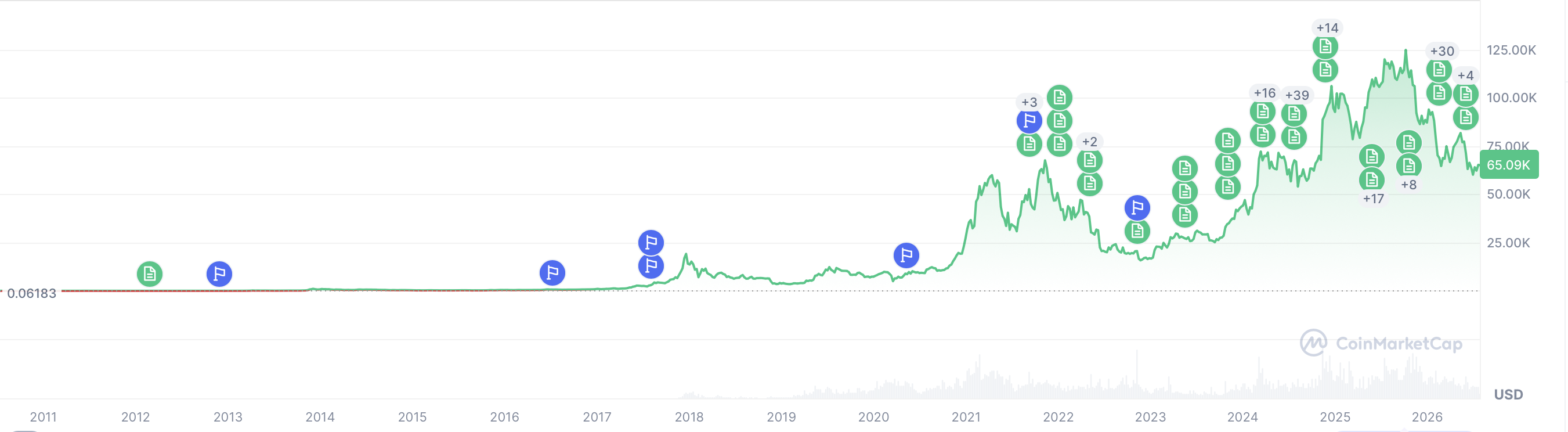
Risk attitudes are getting revisited around the world as the seeming permanence of increased risk appetite is starting to be called into question.  There is no better signal of this than Bitcoin, which has broken back below $70K this morning to its lowest level since October 2024.  

Source: tradingeconomics.com

It was January 2024 when the ETF, IBIT, started trading and BTC was about $43K at that time.  As BTC is a pure risk asset/vehicle, it’s recent decline may well be the biggest signal that risk-off is coming.  That could well impede the Trump efforts to rebuild the US manufacturing base, but perhaps, it could also encourage it, as business risks are easier to understand than market risks.  The volatility is not over.

Good luck

Adf