Dissension

It seems that there’s still quite some tension
As metals and stocks show dissension
Though Friday both puked
Of late, metals juked
Much higher, to stocks contravention
 
So, what can we learn from this split?
That tech stocks all now trade like sh*t
While silver and gold
Are what folks will hold
And bonds? No one just gives a whit

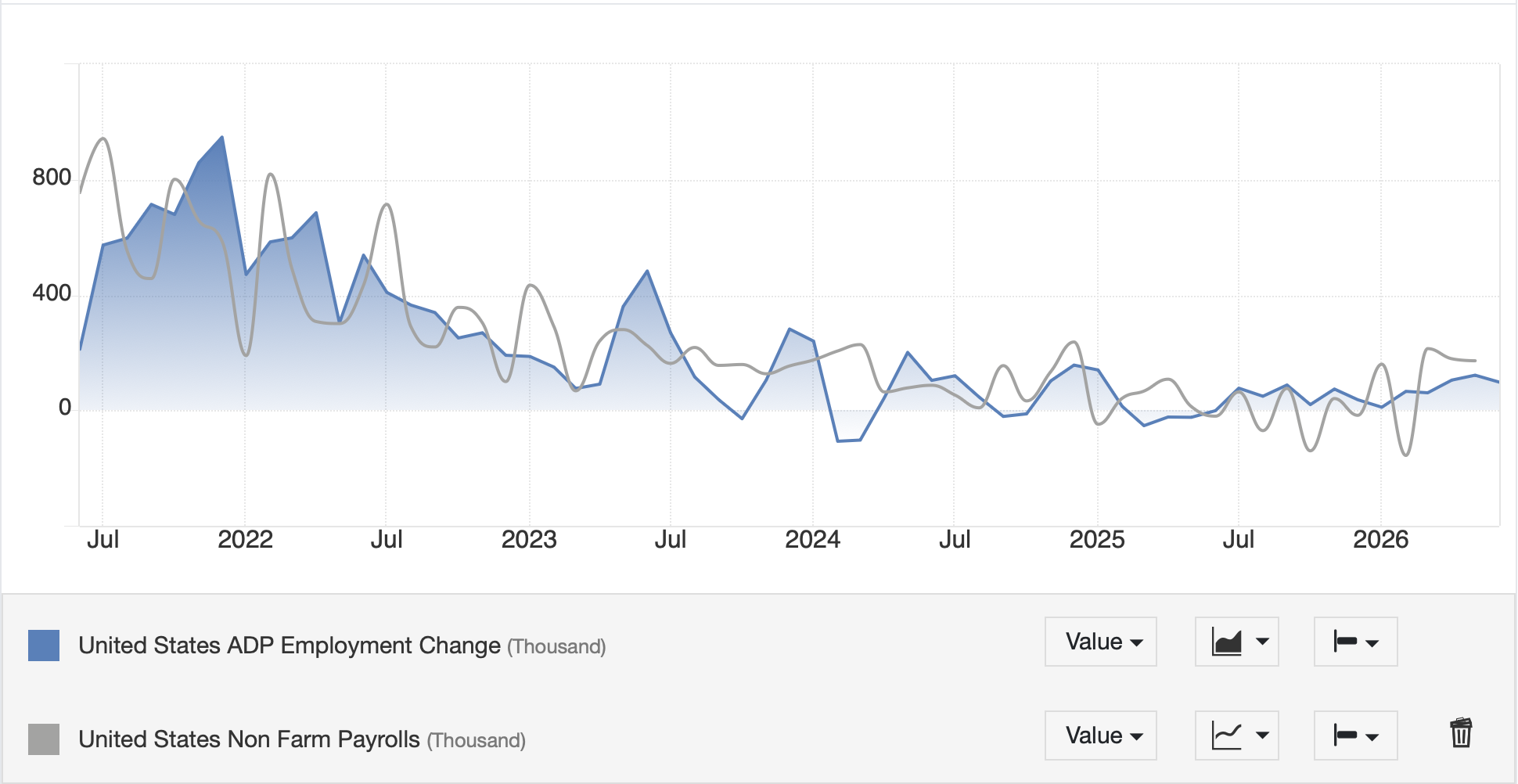
It seems the government shutdown has ended, just as quickly as it began and the only people impacted are traders who were looking forward to the NFP data on Friday.  Given the shutdown was only for a few days, and that apparently, all the data was already collected, it was the compilation that was being delayed, I presume we will get the numbers next week.  Of course, this is a government bureaucracy, so it may take a bit longer.  Nonetheless, this morning we see the ADP Employment number (exp 48K) and analysts will have to work from that, plus the reports like the ISM hiring data, to give their views of the economy.  It really all does seem like theater, I must admit.

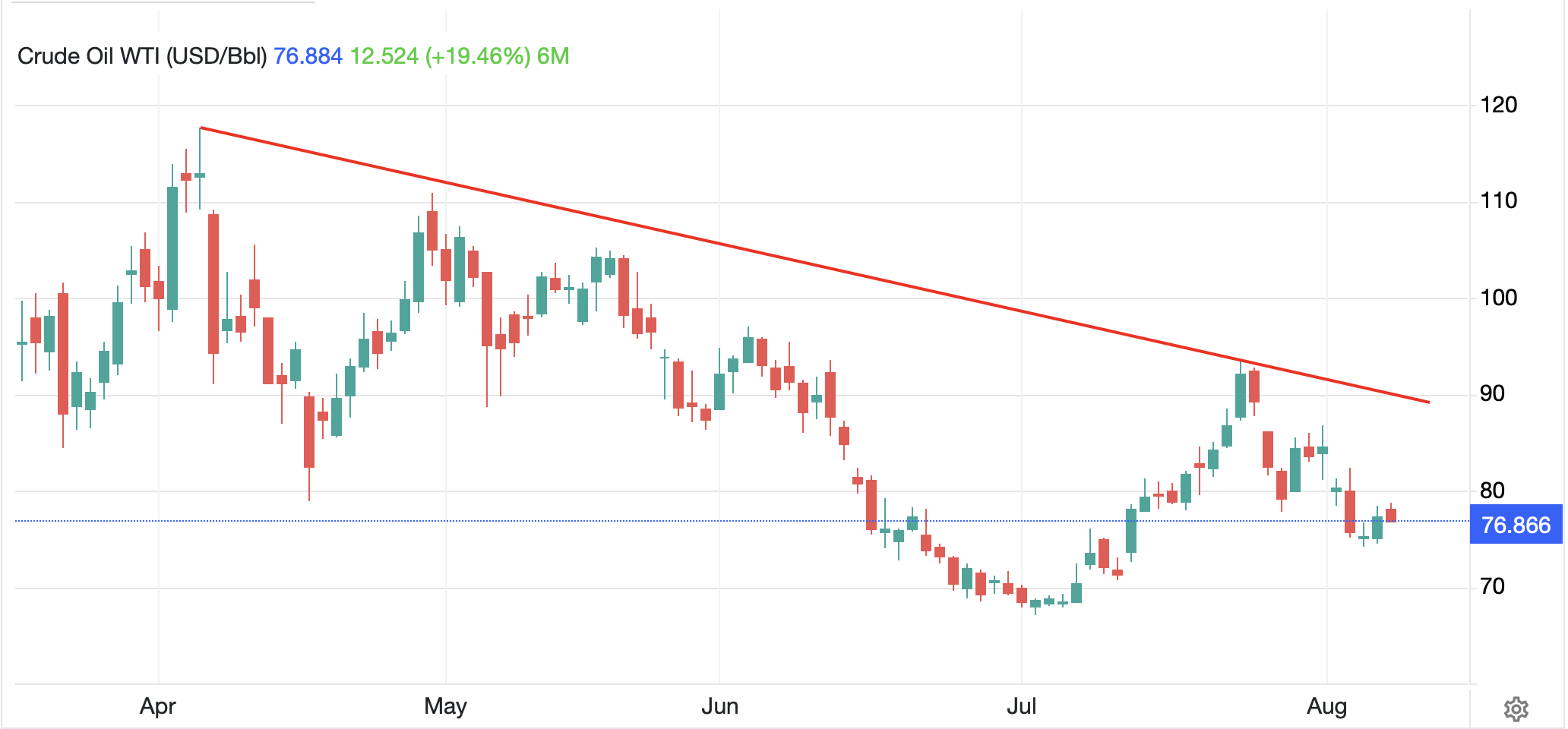
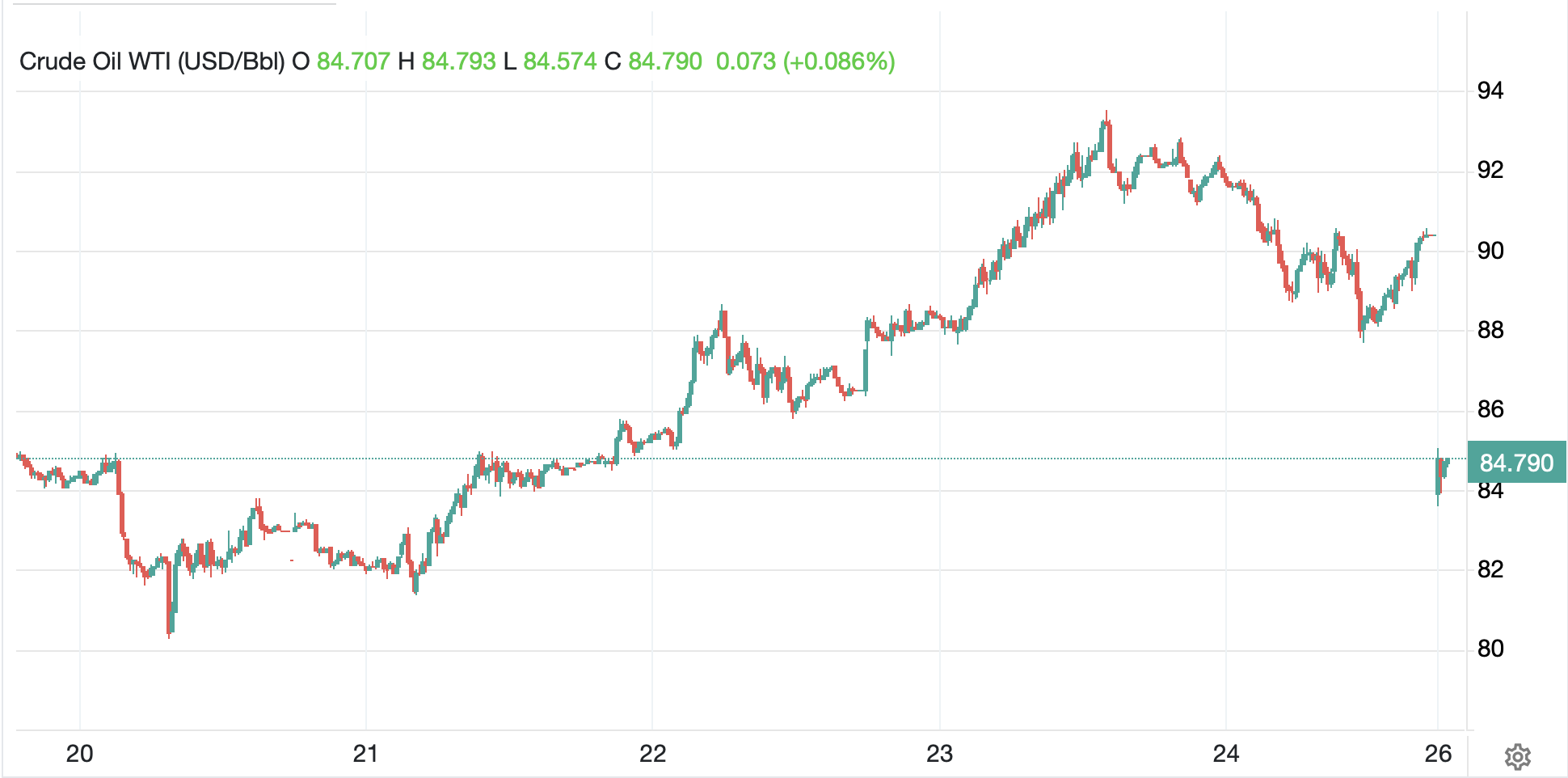
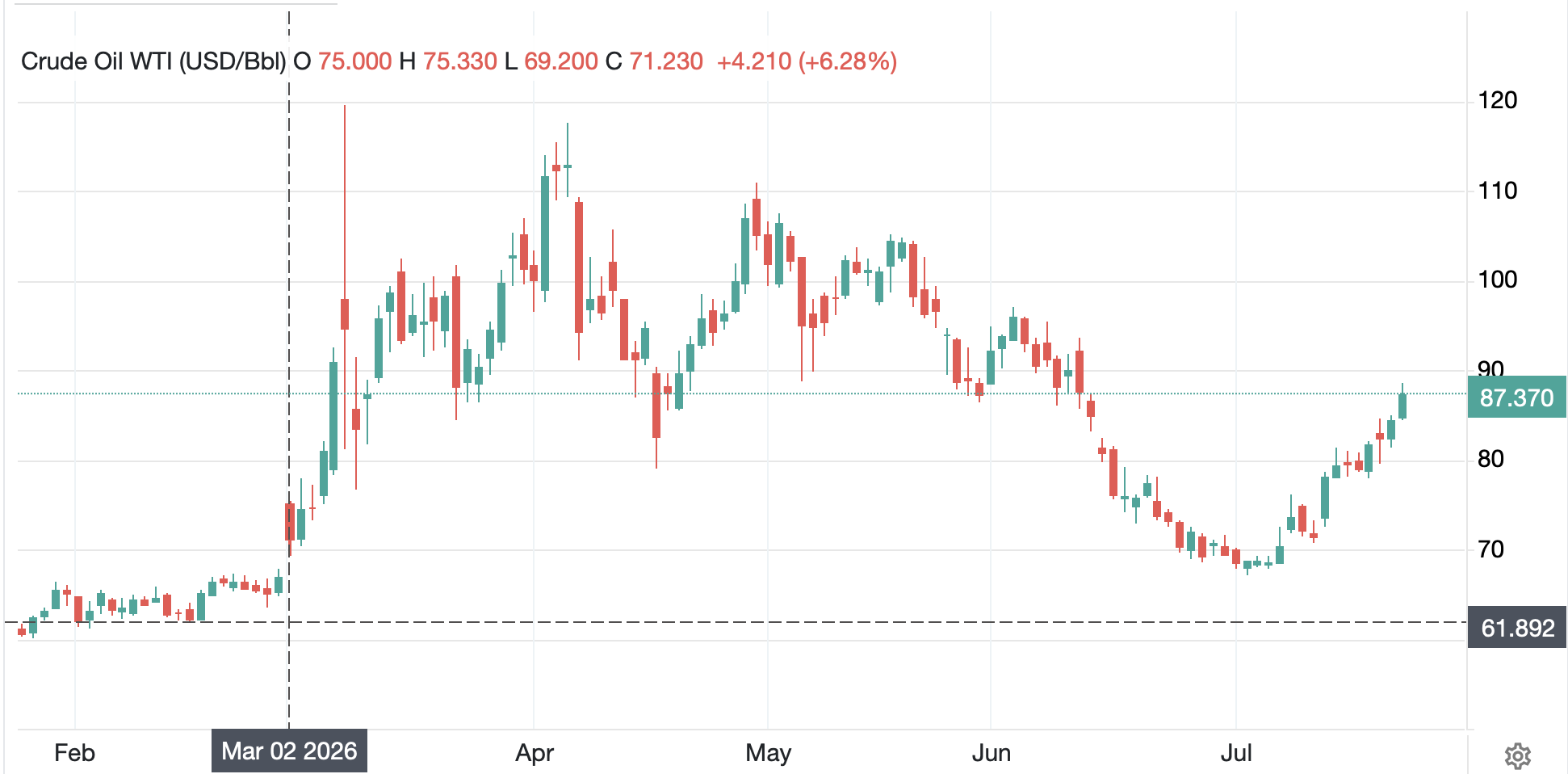
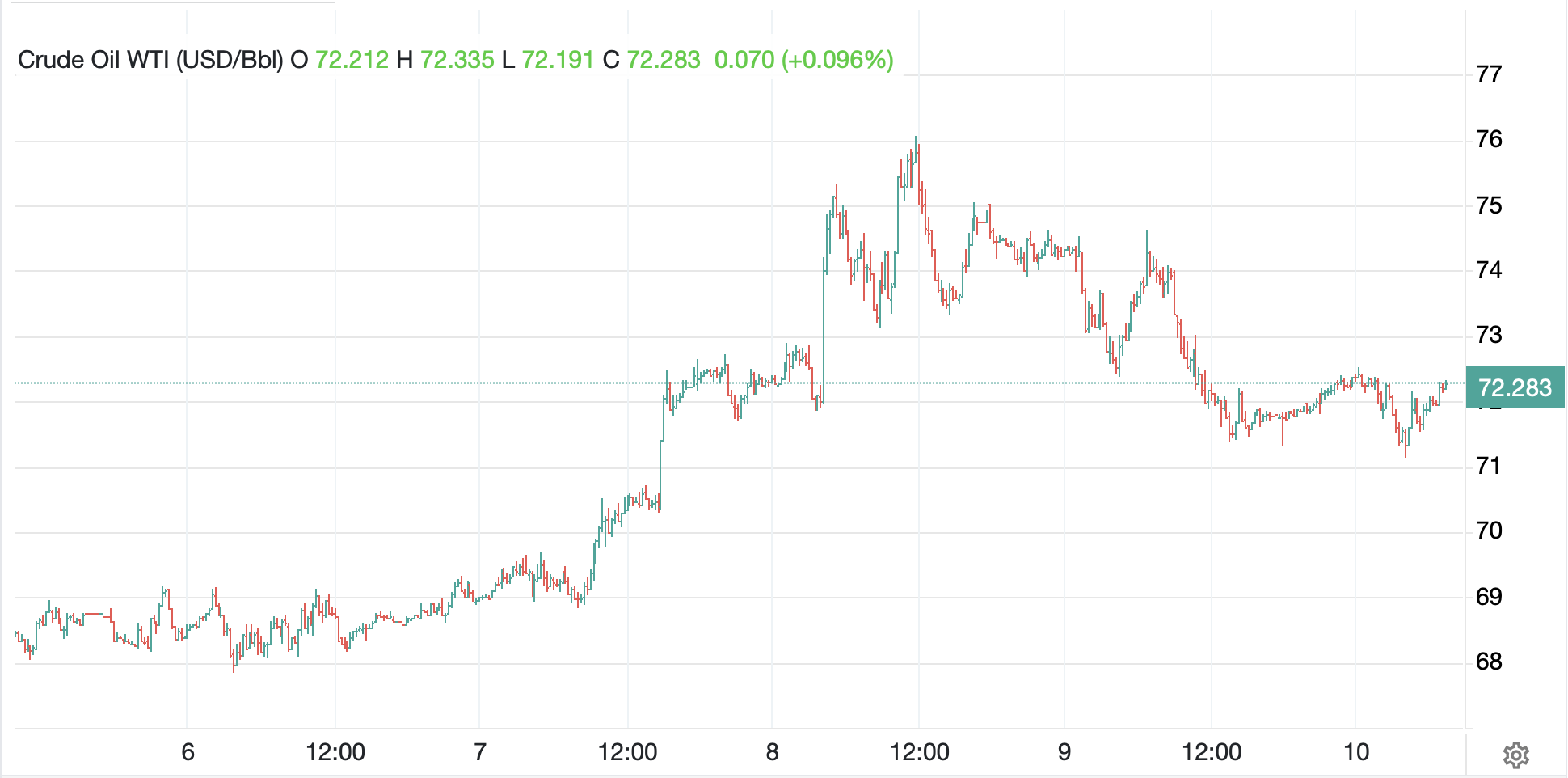
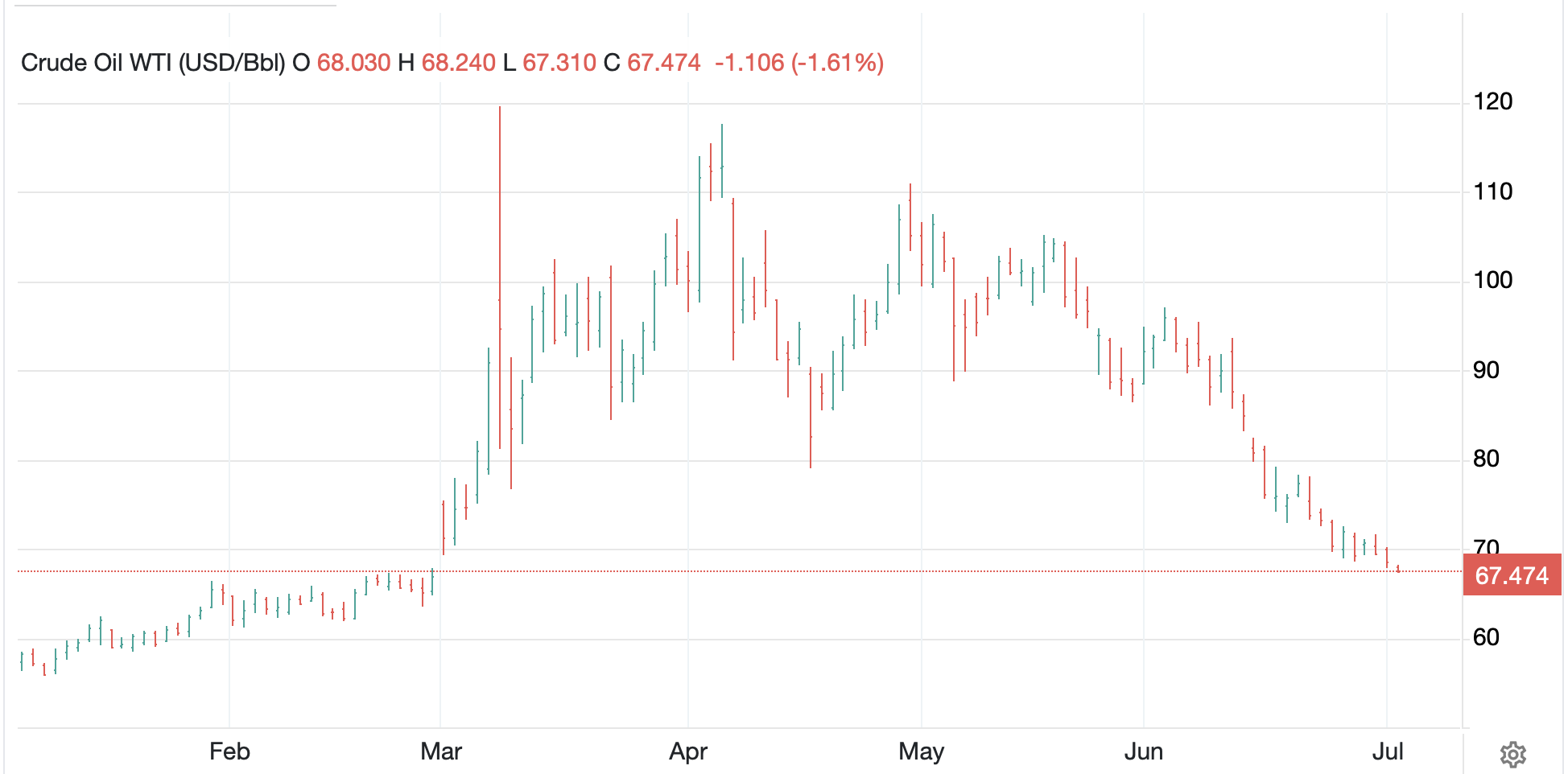
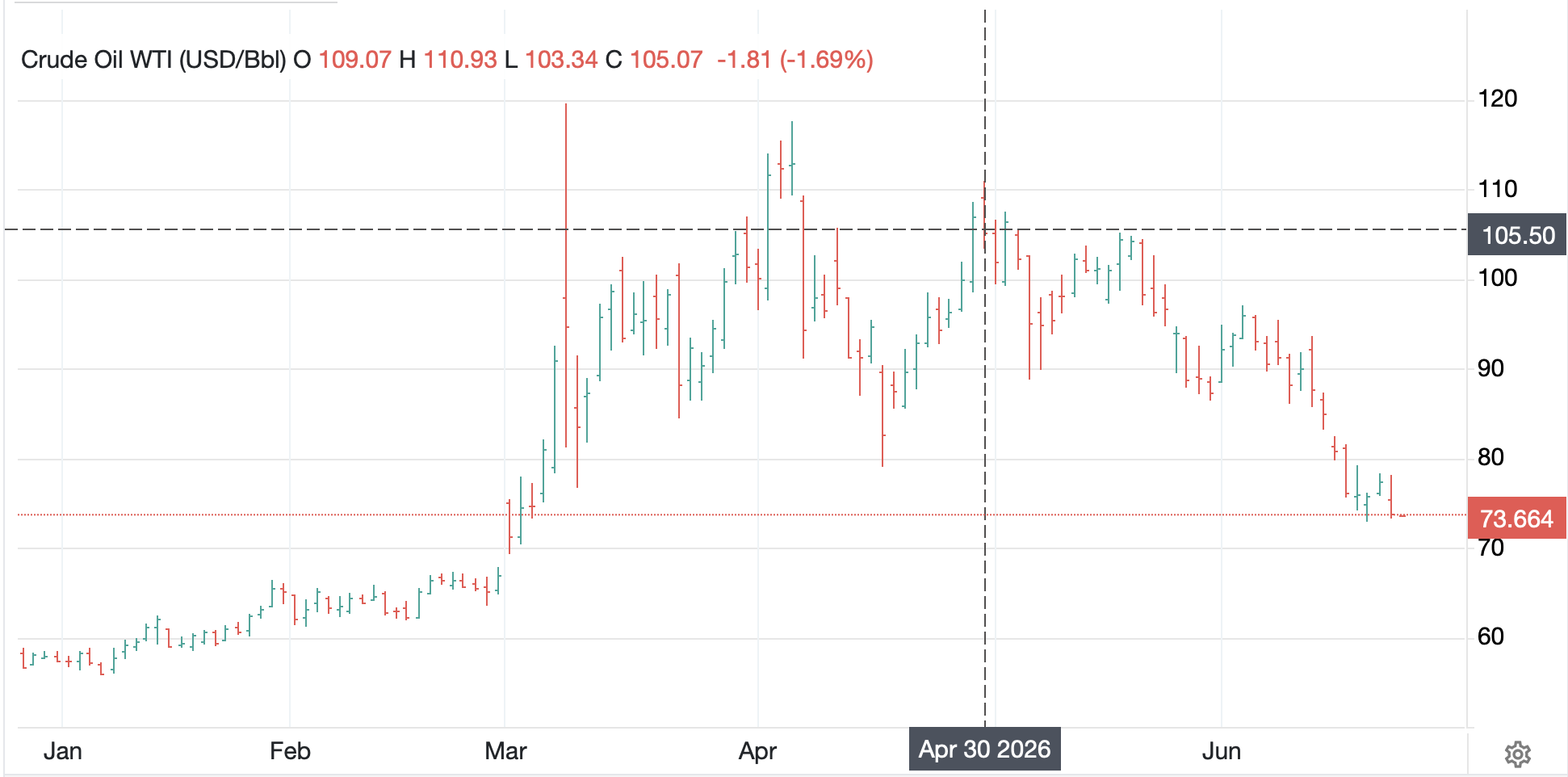
Anyway, away from that, the only other news of note that is impacting markets has been an increase in tensions in Iran after the US shot down an Iranian drone heading toward the US aircraft carrier, Abraham Lincoln.  However, it appears that talks are still scheduled for Friday, so oil (+0.2% today, +1.4% since yesterday morning) is creeping back higher, although remains well below the levels seen last week when concerns over a US attack there were mounting.

Source: tradingeconomics.com

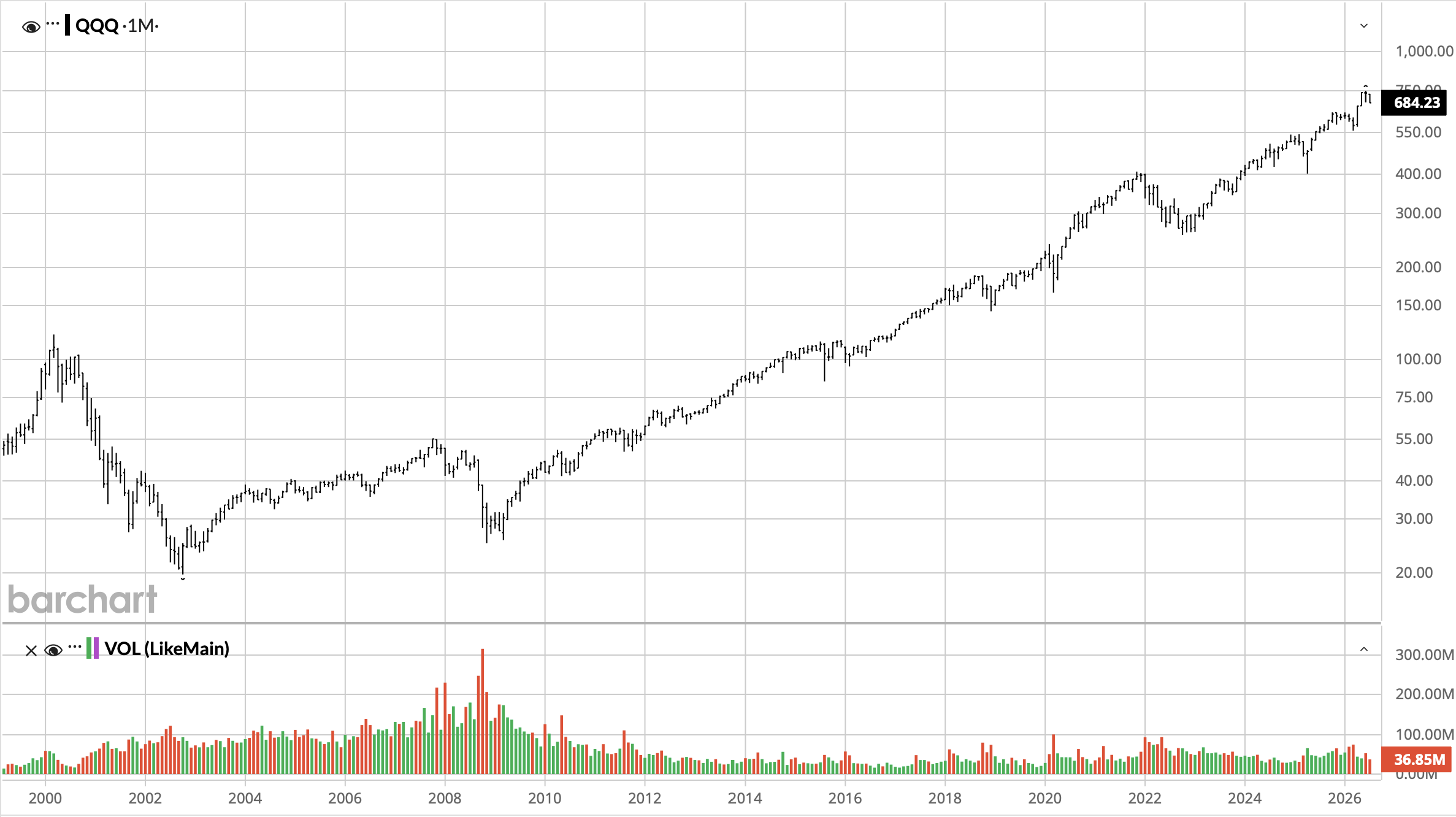
Which takes us to markets and what appear to be the key internal drivers.  Starting today with stocks, the narrative revolves around concern that AI is going to destroy software companies and SaaS models since their user base will no longer need those companies.  As well, there are the lingering concerns about the AI investment bubble and the circular dealing between Nvidia and its customers being an indication of the end of the era.  This is akin to what happened during the tech bubble in 2000-01 and has been highlighted by numerous analysts for several months, although is gaining more traction of late.  Finally, the Business Development Companies (BDC’s) and PE firms are under increasing pressure as their portfolio of loans and positions, many of which are being hurt by AI, are starting to hemorrhage cash.  This trifecta has been weighing on the NASDAQ, preventing any significant strength, although other sectors, notably energy and materials, have been doing pretty well.

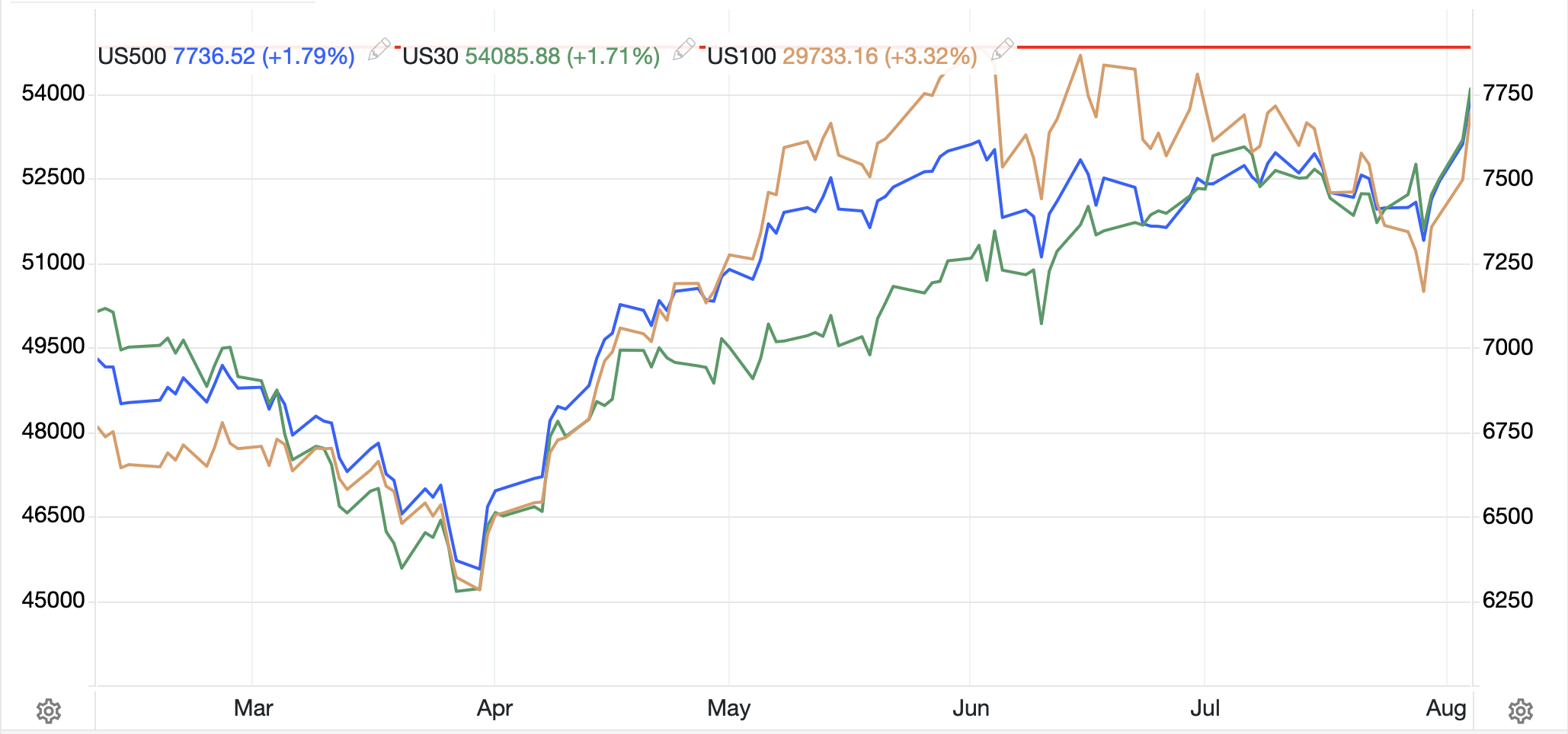
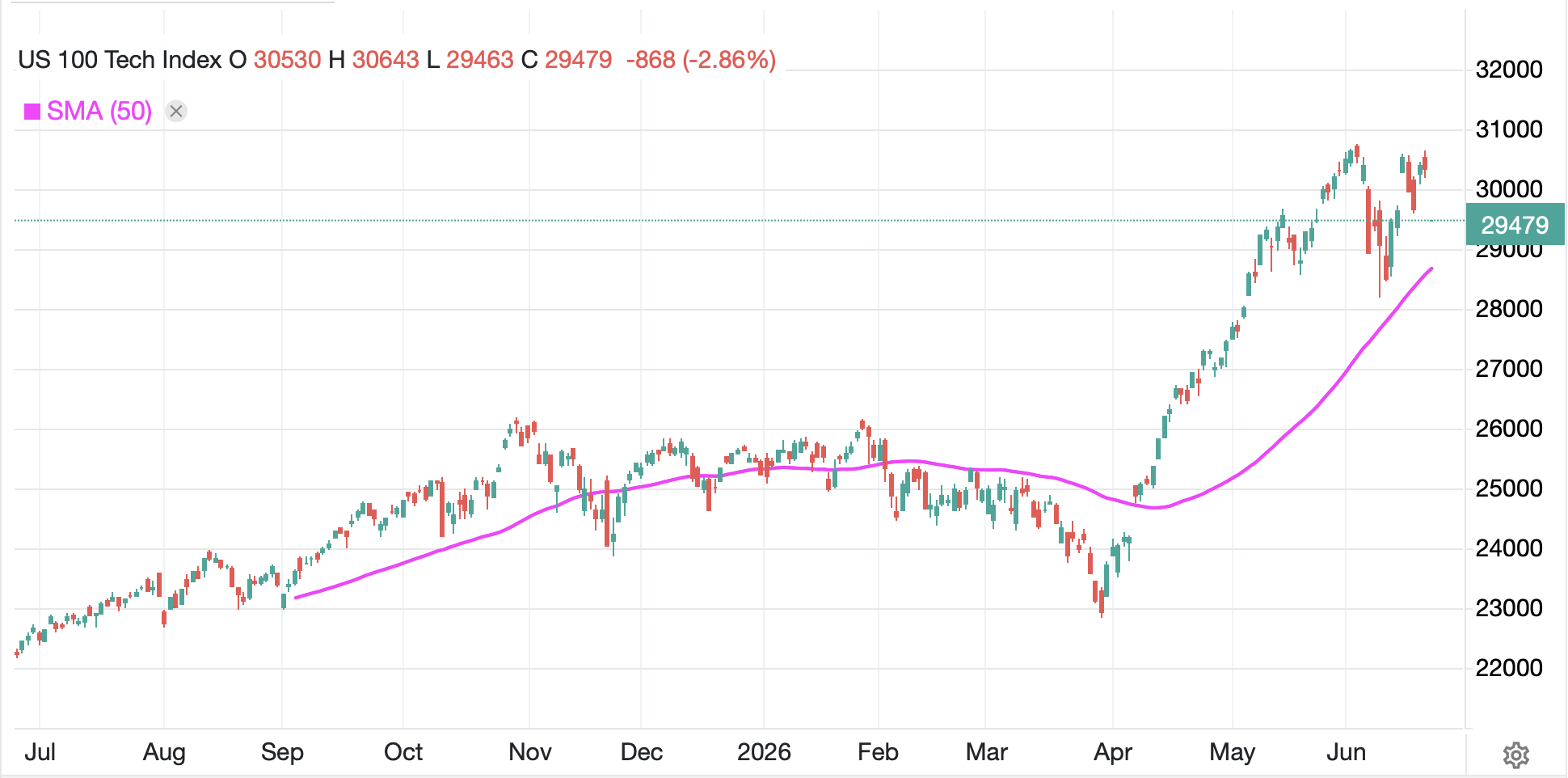
The funny thing is, while the NASDAQ (-1.4%) fell yesterday amid widespread US equity weakness, if I look at the chart (below from tradingeconomics.com) it doesn’t seem that negative, rather it seems to be consolidating ahead of another leg higher.  But then, I am no technician, so don’t pay attention to me.

However, the narrative is strong here that the world is about to end because Nvidia hasn’t made a new high in the past three months.  I am no tech stock expert, but my take from the cheap seats is that future equity market outcomes are going to continue to be reliant on the success of the Trump administration’s plans regarding reshoring and changing the nature of trade.  It is likely to be bumpy, especially if the Fed does not cut rates to support equity markets, especially since that has been the MO for the past 40 years.  But I remain positive overall.

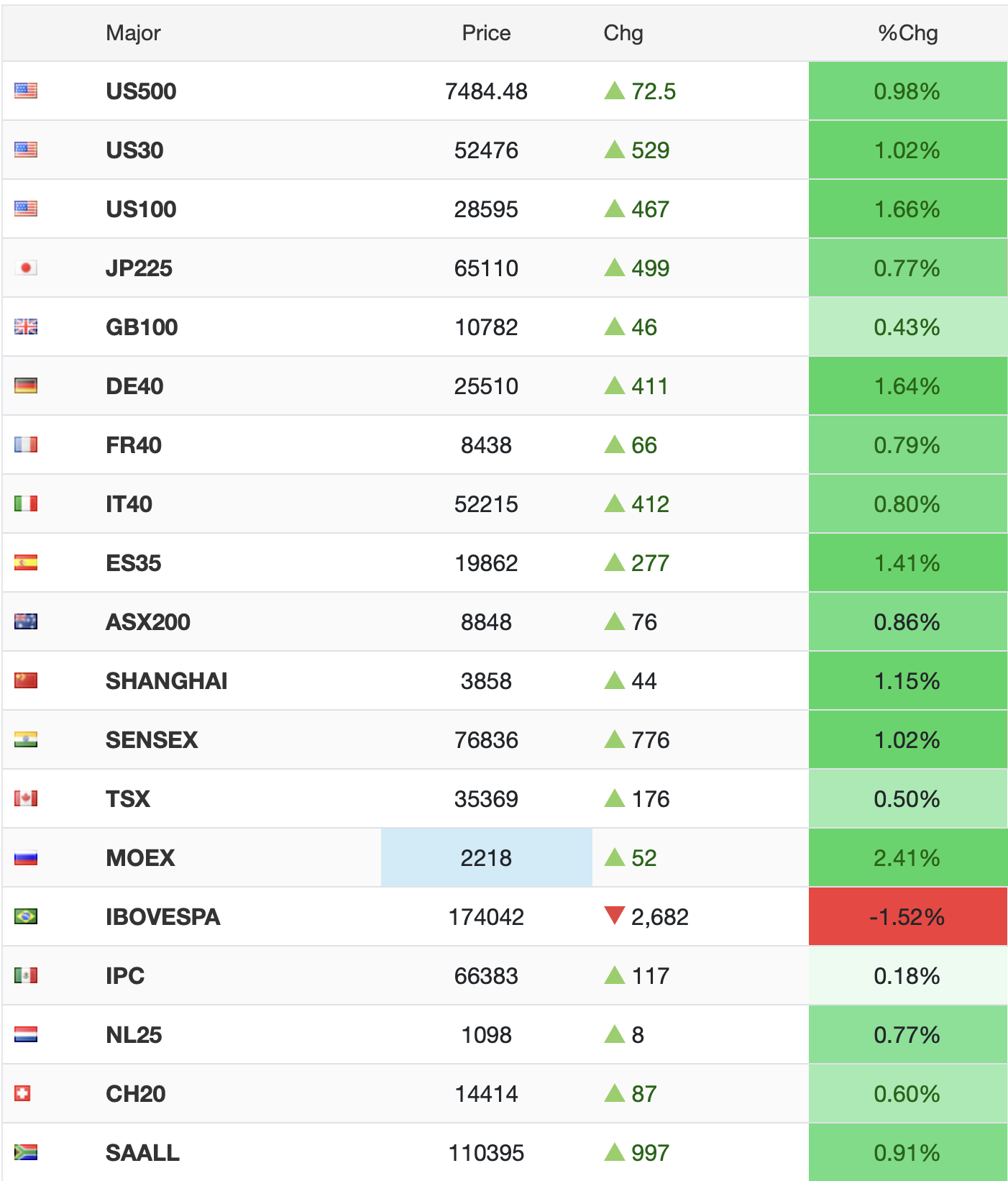
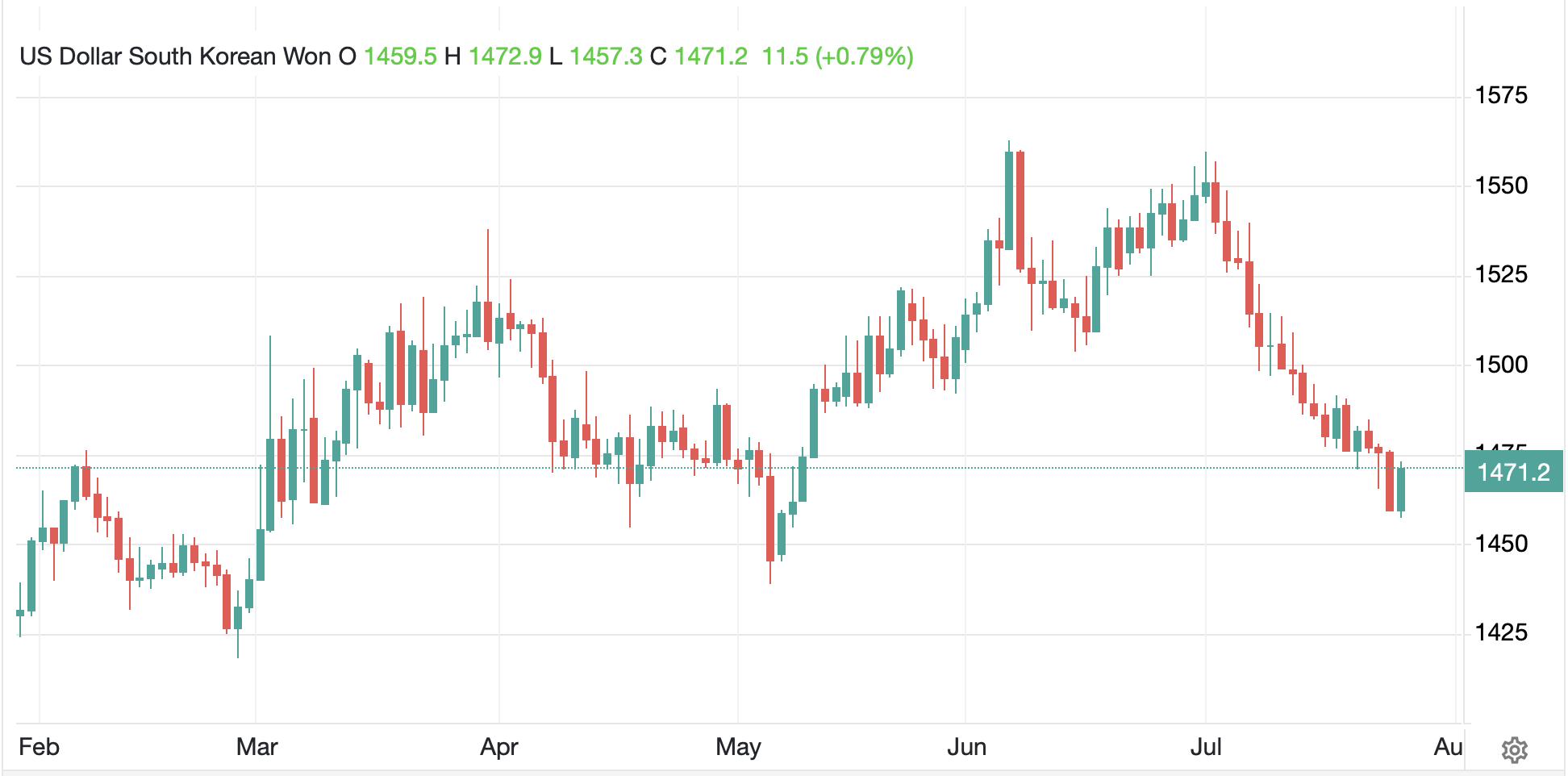
Looking around the rest of the world, last night saw a mixed picture, although definitely more green than red.  While Tokyo (-0.8%) slid along with Malaysia and the Philippines, the rest of the region had a nice session led by Korea (+1.6%), China (+0.8%) and Australia (+0.8%).  It appears the tech fears were less concerning there, either that or PE and BDC companies aren’t yet so prevalent.  In Europe, meanwhile, despite mixed PMI Services data, there are more gainers than laggards led by the UK (+1.0%), which does have miners, benefitting from the rebound in metals prices.  But France (+0.9%) and Spain (+0.15%) are also higher although Germany (-0.2%) is lagging after a modest miss in the PMI data. As to US futures, at this hour (7:15), they are pointing higher by about 0.25%.

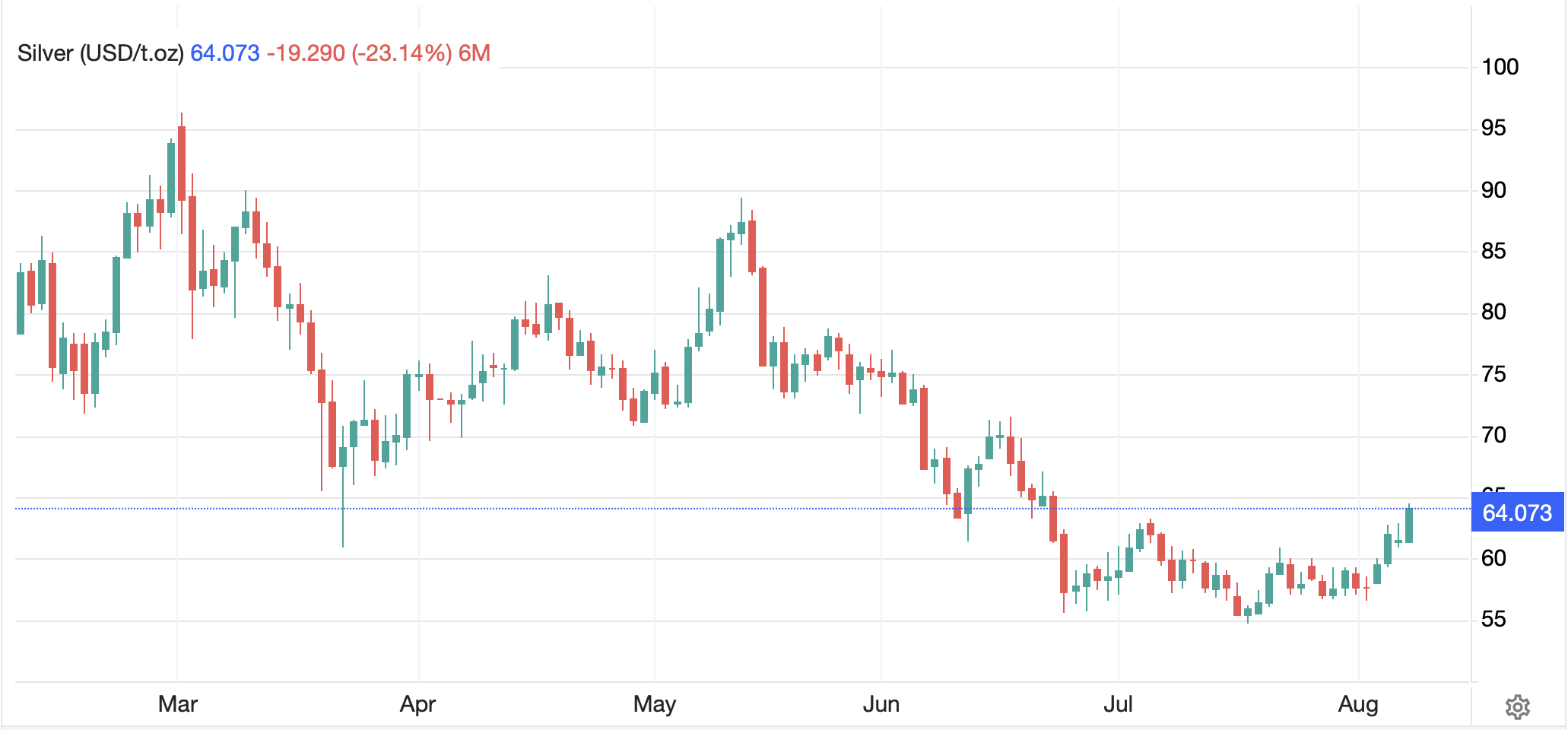
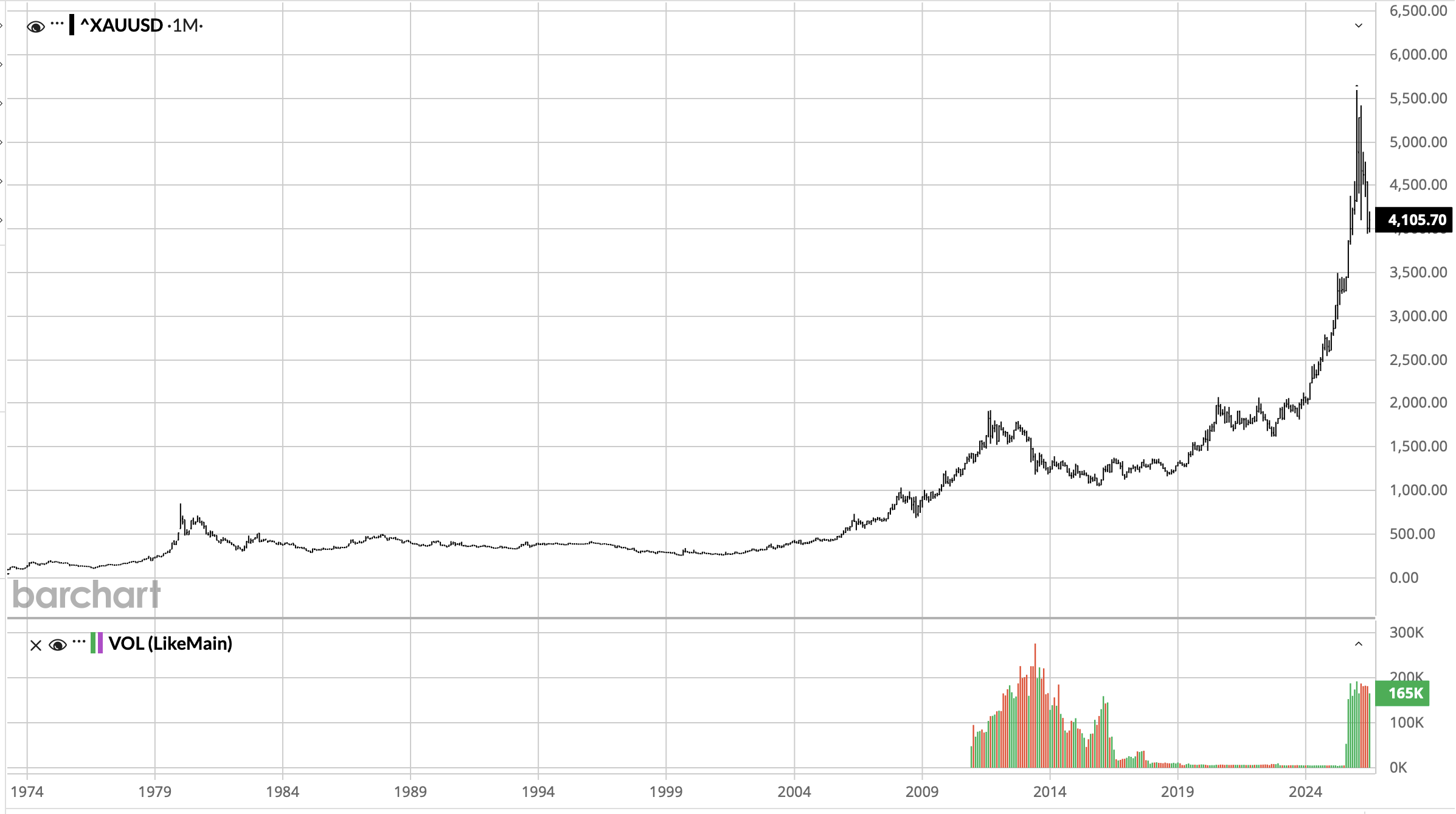
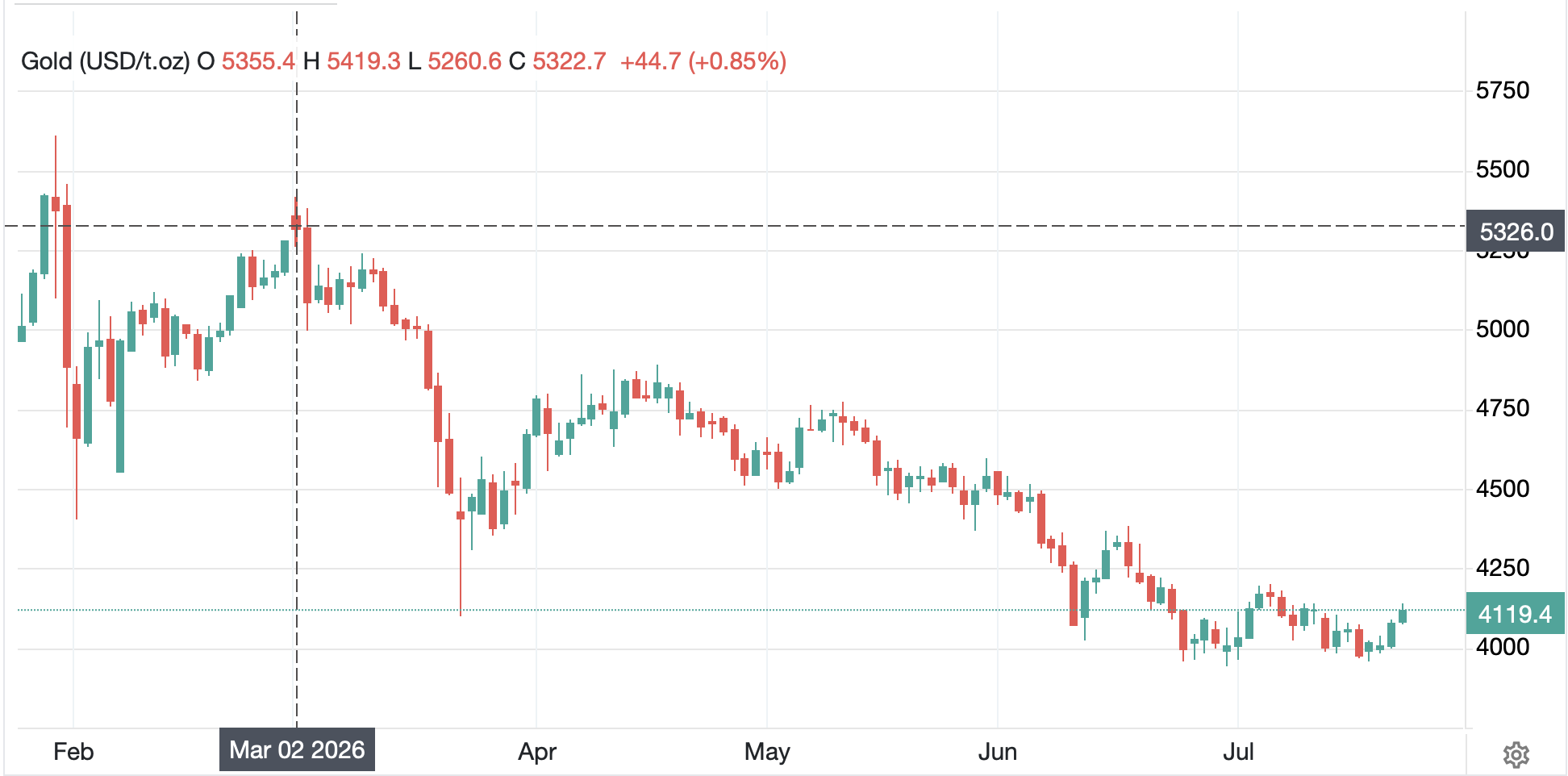
Back to metals, which continue to be THE story these days, gold (+2.0%) has reclaimed the $5000/oz level and while it is lower in the past week, remains nearly 17% higher YTD.  Silver (+6.0%) is also rebounding nicely along with platinum (+3.8%) as more and more discussions have ascribed last Friday’s rout to month end delivery and position issues amongst a few very large players who were able to prevent some major damage to their own balance sheets.  However, as I have maintained all along, the fundamentals are unchanged; there is a shortage of silver for industrial use and has been for several years.  As to gold, there is no indication that central banks have stopped buying.  These continue to be long-term plays and will likely drag the entire metals sector along for the ride.

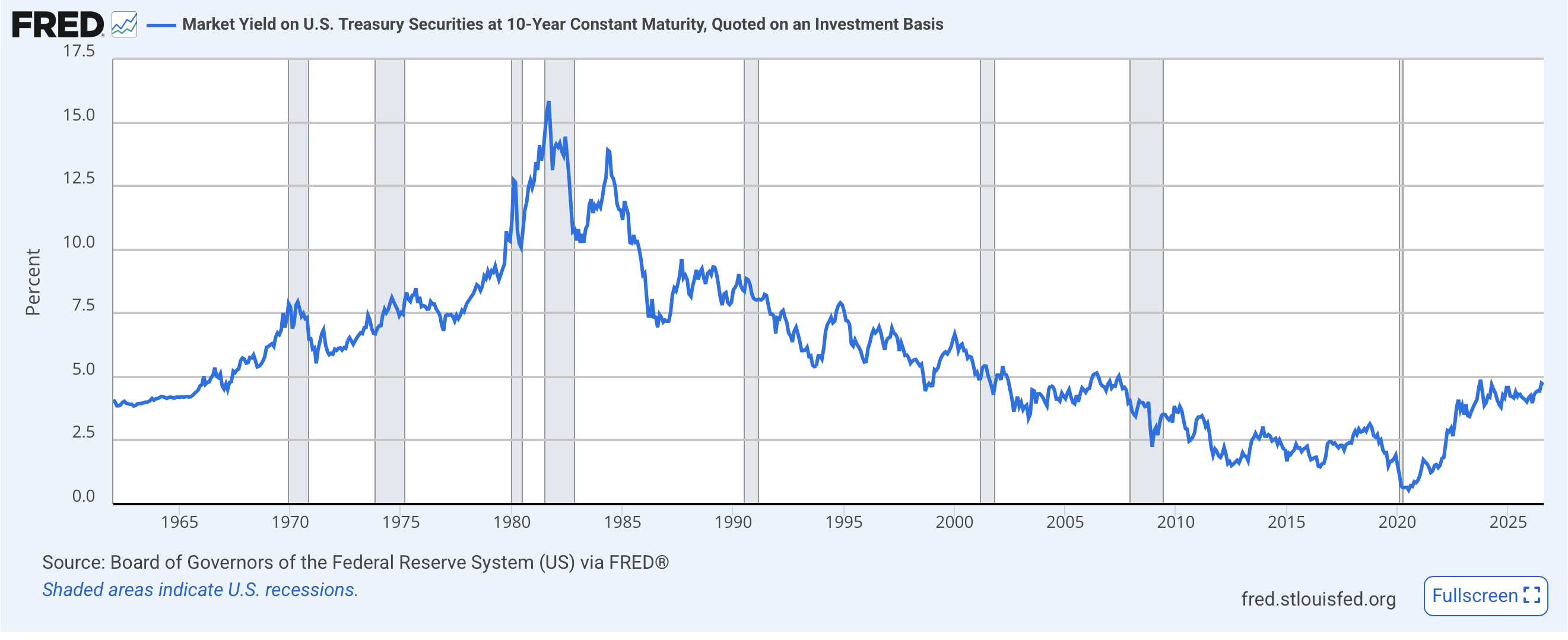
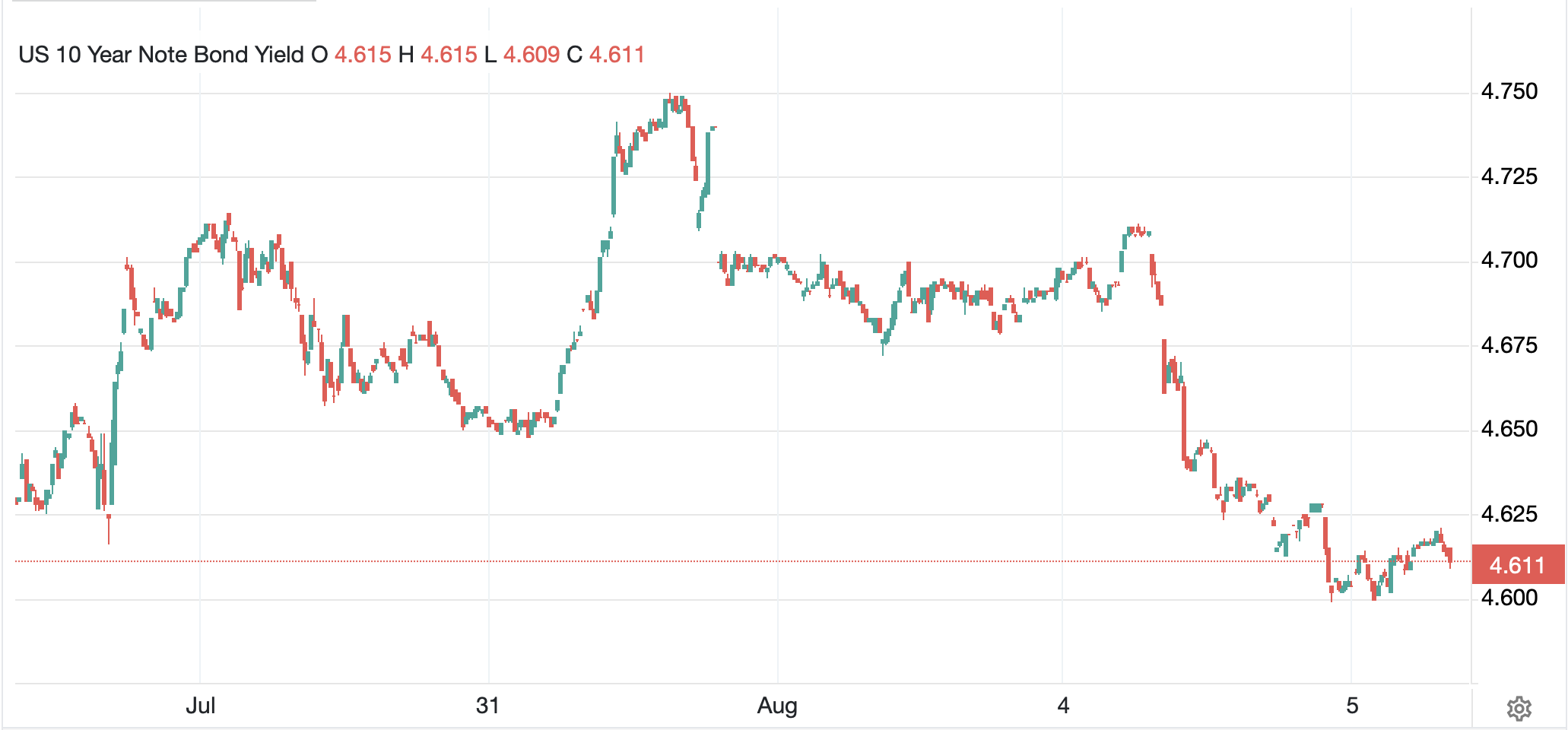
What about bonds, you may ask?  Well actually, nobody is asking about bonds!  They remain mired in a tight range with dueling narratives about the long-term view.  On the one hand, there are those who continue to look at the US debt load, and the expectation of fiscal deficits as far as the eye (or the CBO) can see, and expect supply issues to dominate, forcing the government to seek inflation to create the soft default necessary to pay back the debt.  They will point to the long-term trend, which saw yields decline for 40 years and then reverse back in 2020 (see chart below from finance.yahoo.com) as evidence that yields are going to trend higher for the next decades.

On the other side, you have those who believe the future is deflationary, with AI driving massive increases in productivity and driving down prices, while focusing on Truflation’s recent readings of 1.0% and claiming that is the way.  Personally, I have more sympathy for the former view than the latter, as it is increasingly difficult for me to understand the view that AI will be able to achieve all its currently stated desires without sufficient energy and materials, whose increasing prices are going to limit any downside in inflation.  As well, while a Warsh Fed chairmanship may strive to change the current central bank model of QE whenever needed, there is zero evidence any other central banks are going to follow suit.  

In the meantime, the tension between those two views has kept yields in a very tight range for a while, and we need an exogenous catalyst to break that range.  Peace in Ukraine?  War in Iran?  I’m not sure.

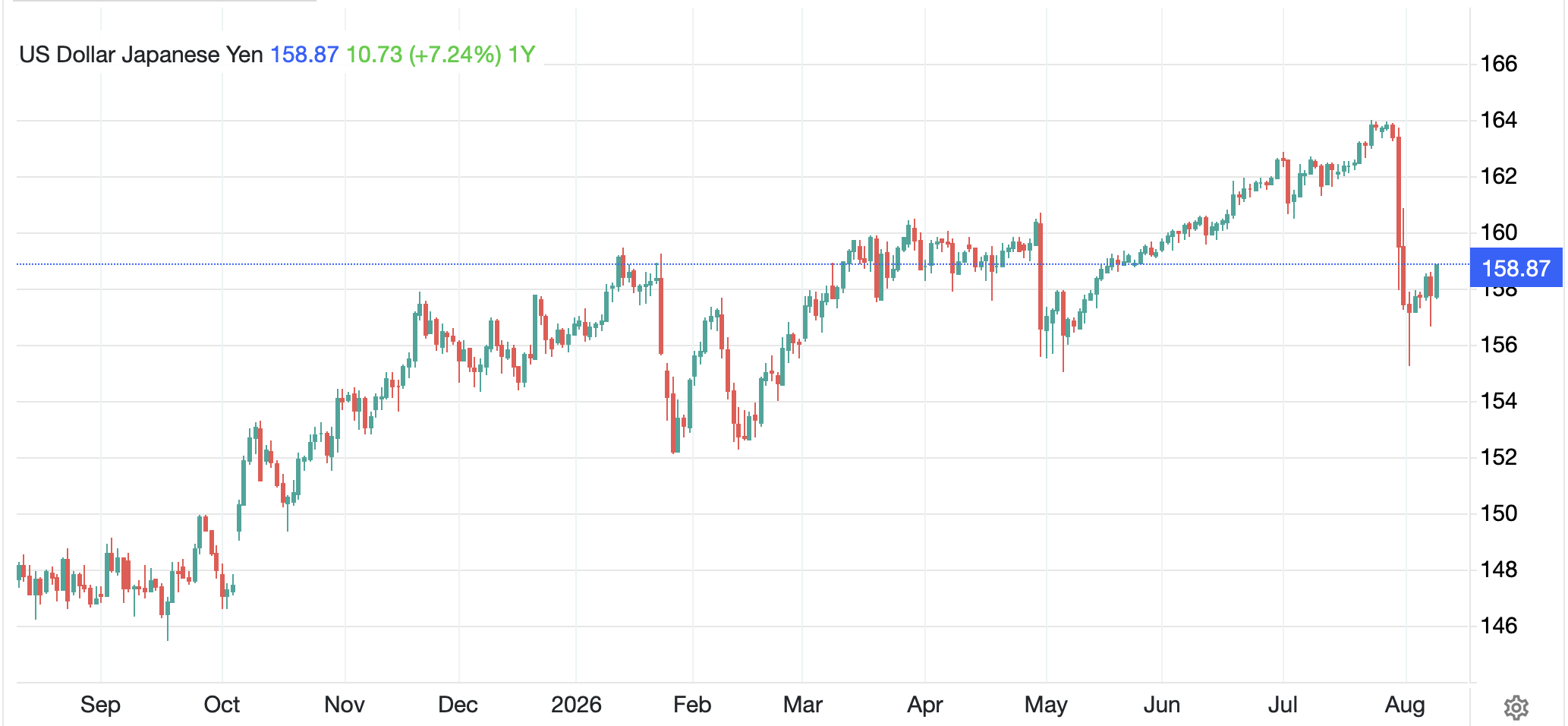
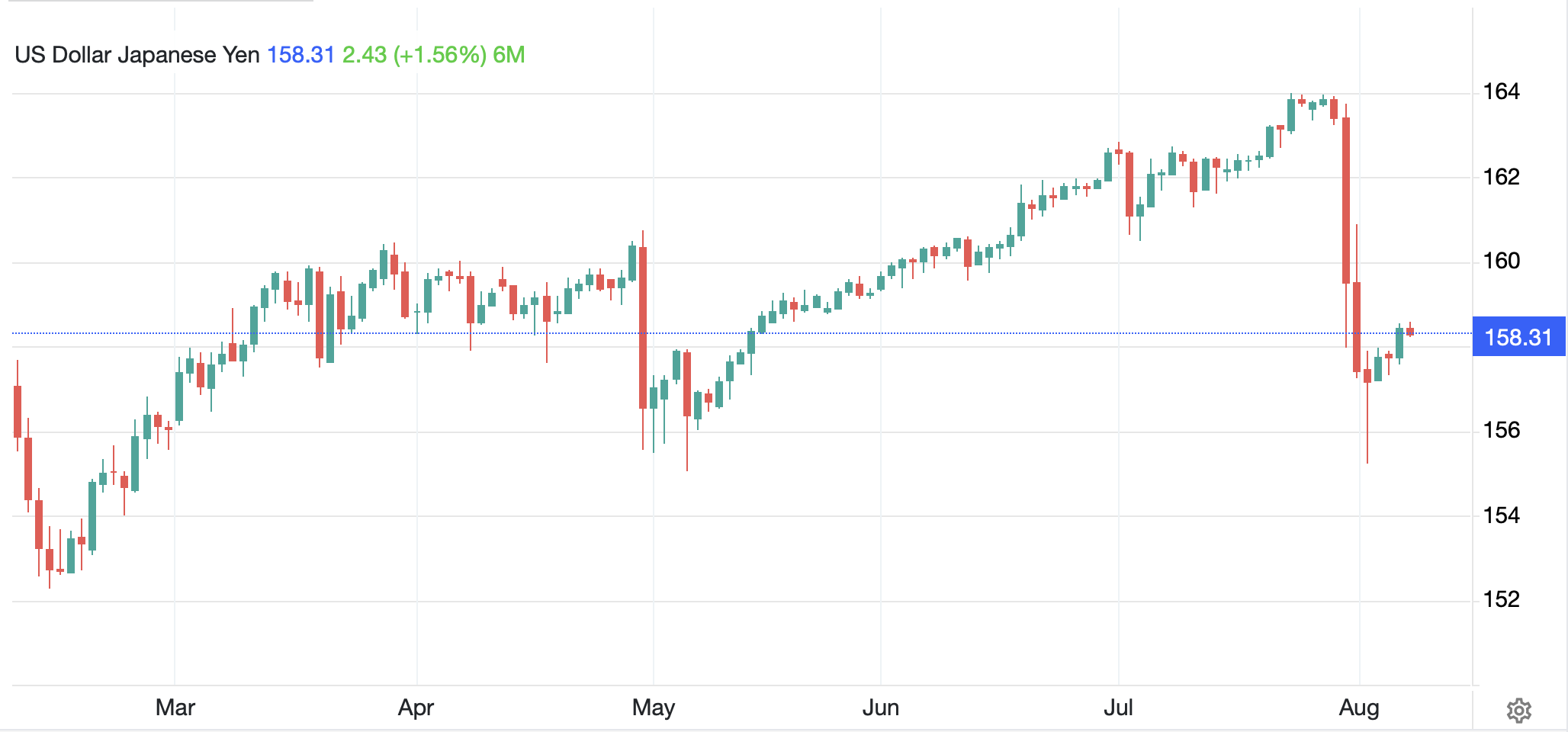
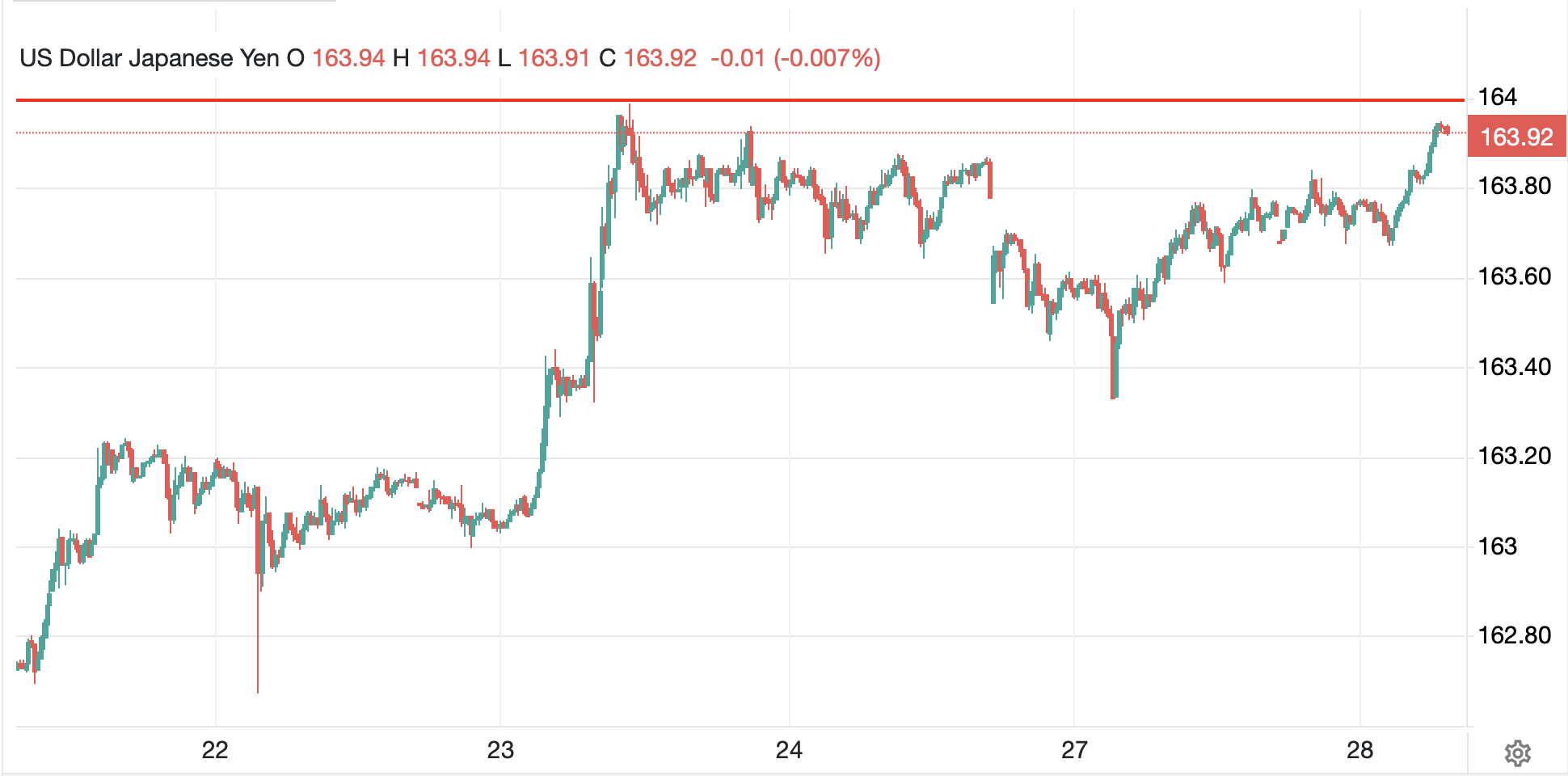
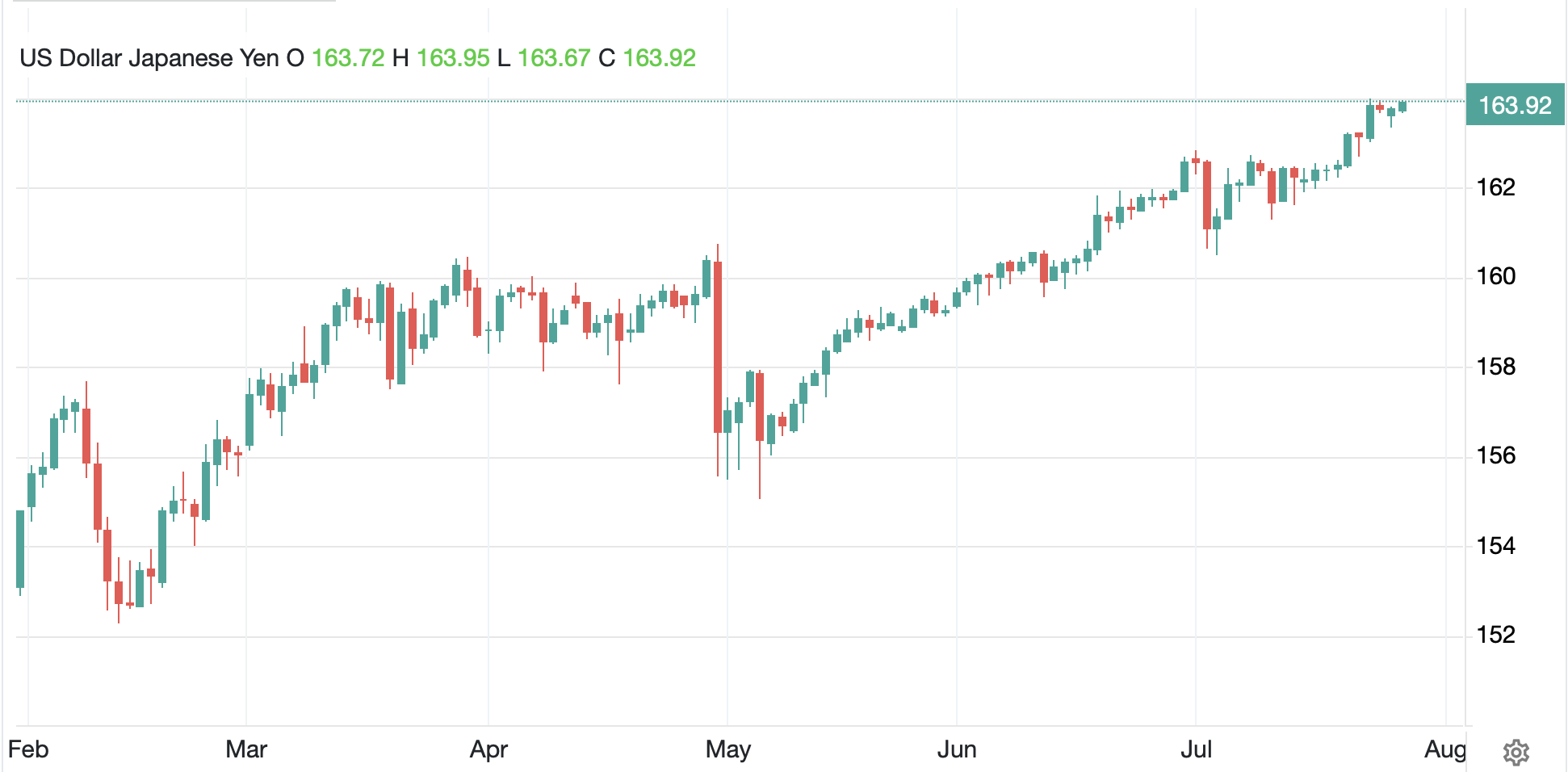
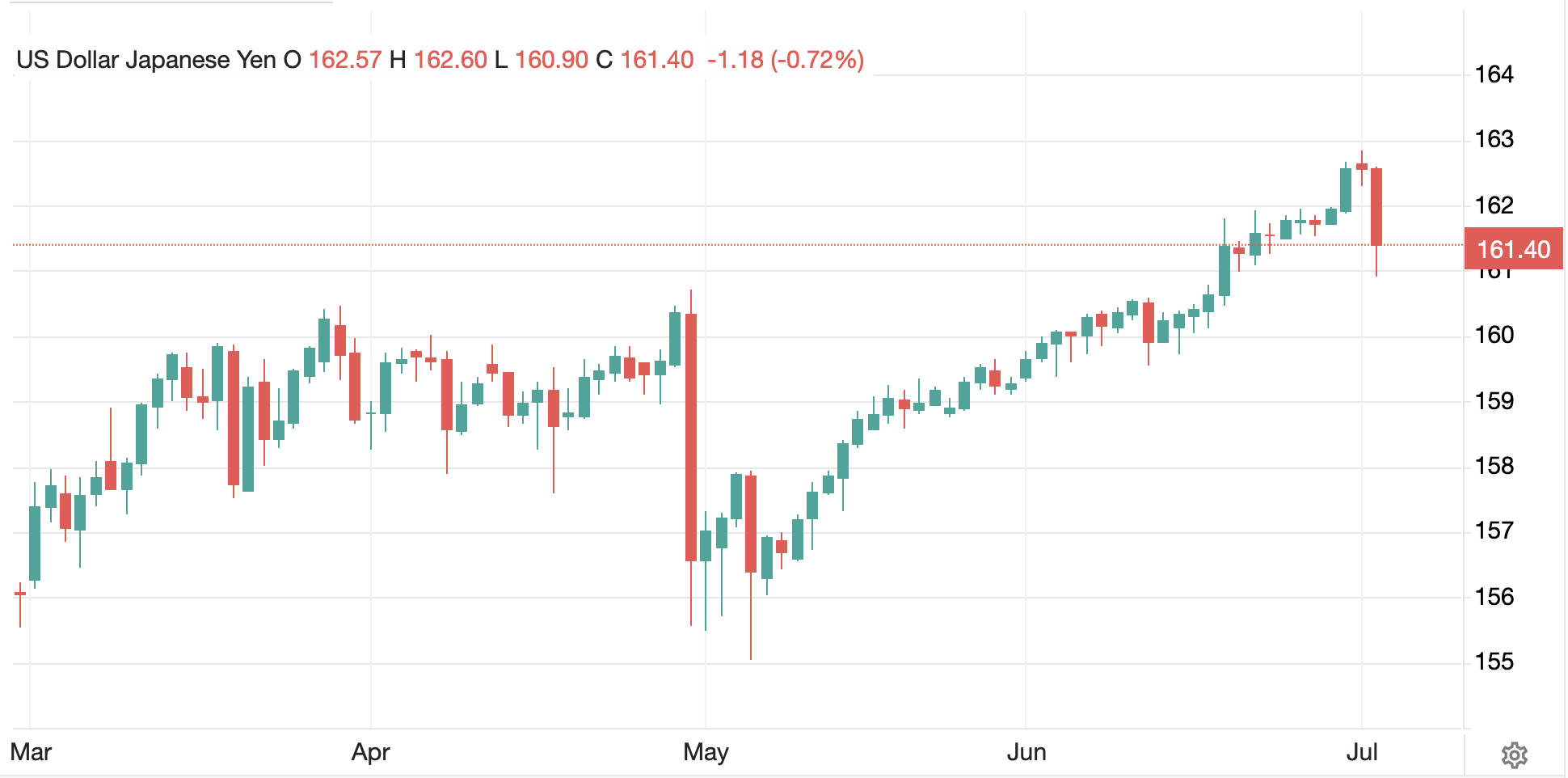
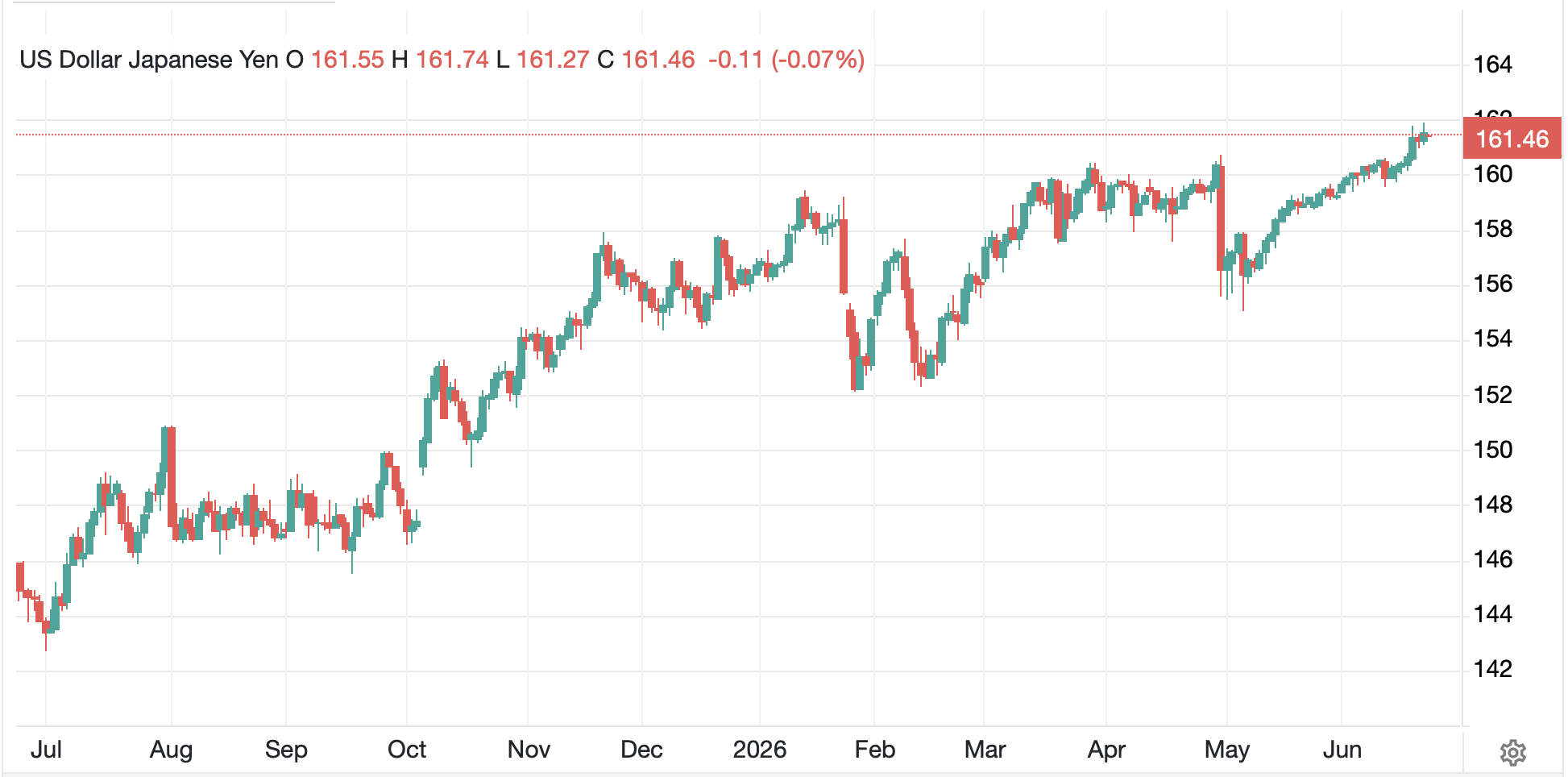
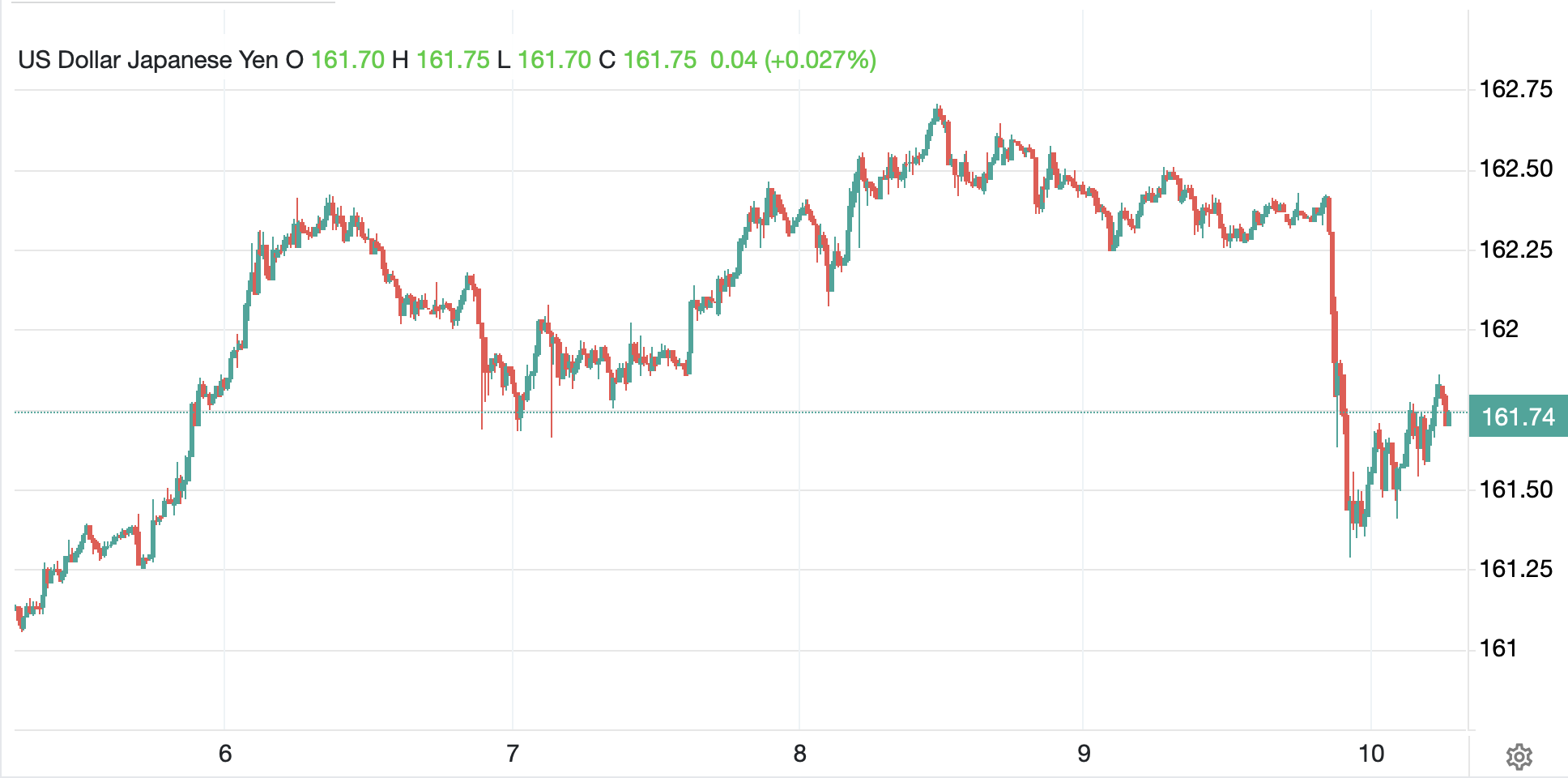
Finally, the dollar is a touch firmer this morning, notably against the yen (-0.6%), which continues to give back its gains from two Friday’s ago when the Fed ‘checked rates’ in the NY session as seen in the chart below.

Source: tradingeconomics.com

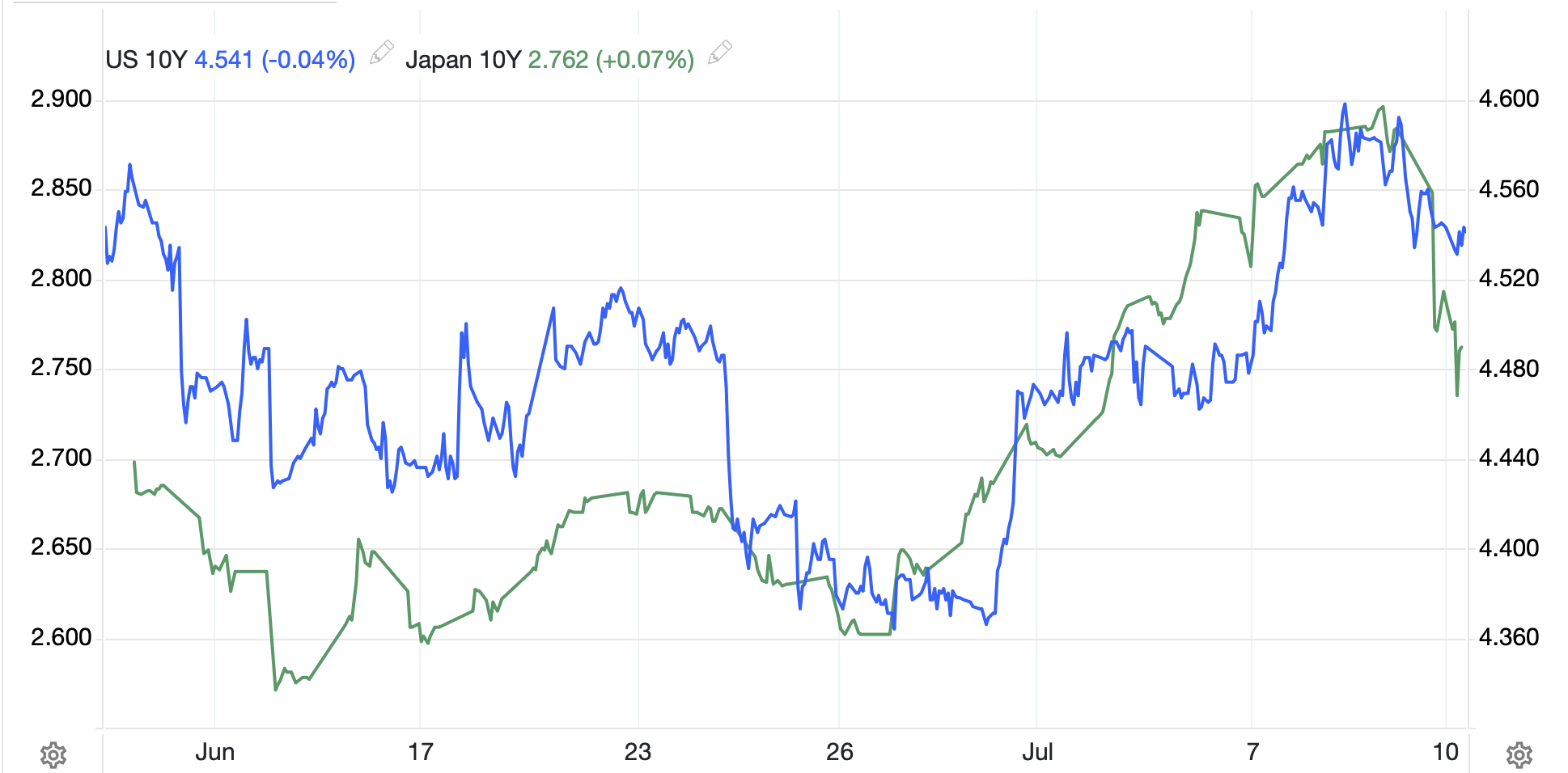
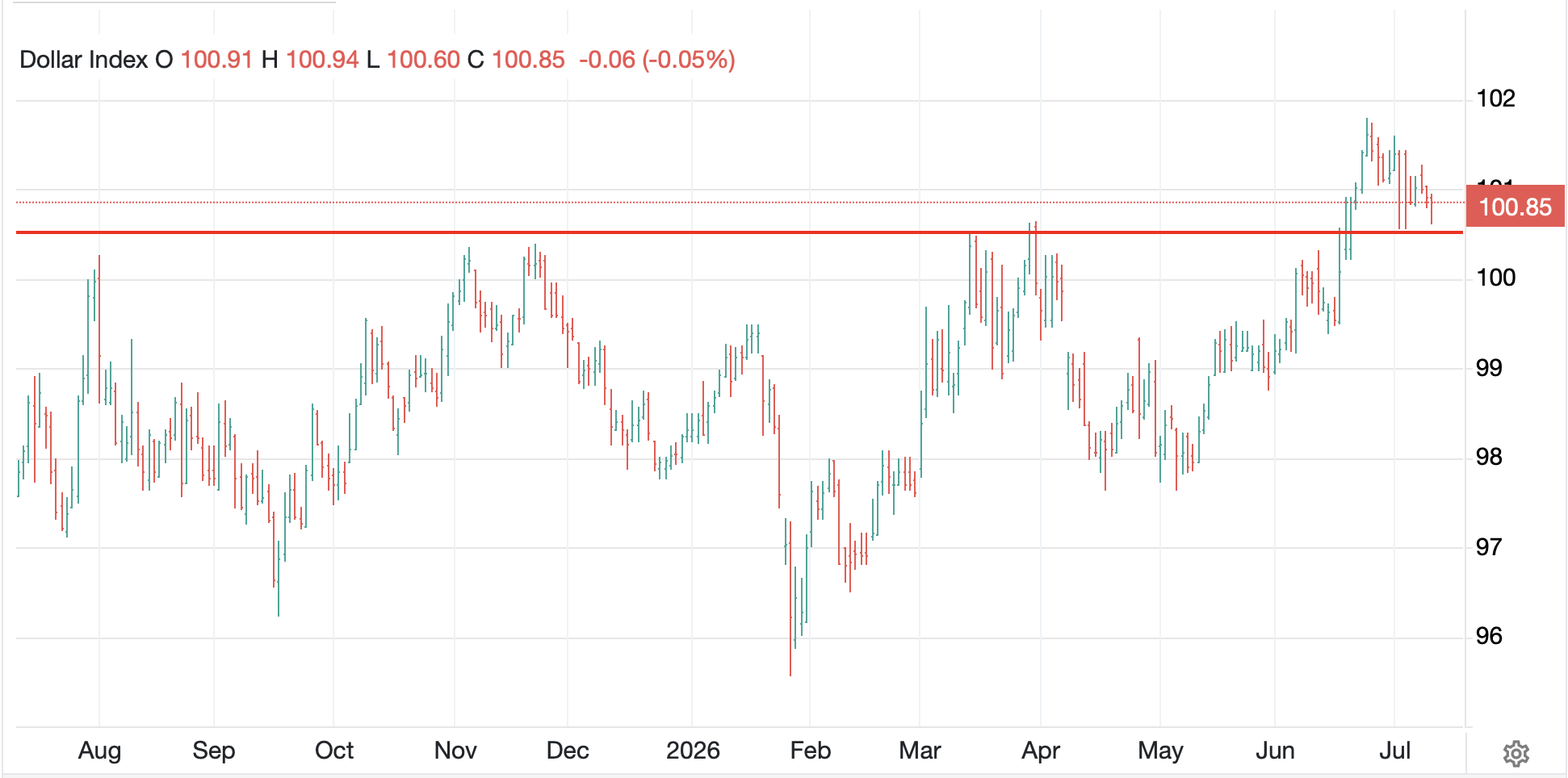
However, the point was made this morning, and it is a good one, that while Japanese 10-year yields are at 2.24%, 10-year yields, 10-years forward are about 4.10%, which would be a devastating yield for the Japanese government given its debt/GDP ratio remains above 230%.  It is difficult to get excited about owning the yen with that backdrop, especially given the demographic implosion of population that is ongoing there.  As to the rest of the currency market, Zzzzz.  Aside from the narrative of the dollar is dead, which gets recycled by somebody every day, it is very hard to look at recent price action and think something remarkable is going to happen.  We will need major monetary and fiscal policy changes, which while they may arrive, are going to take quite some time to get here.

And that’s really it this morning.  Aside from ADP, we get the ISM Services (exp 53.5) and we get the Quarterly Treasury refunding announcement, which will garner a great deal of attention only if Secretary Bessent explains he is going to issue more bonds and less bills, which seems unlikely.  Monday’s ISM data was quite strong.  Strength today could well portend that the US economy has a bright future ahead, in the near term, and that should support stocks and the dollar, while commodities will benefit from the increased demand.  Bonds?  Well, we’ll see which side of that argument is correct.  And what happens if the deficits are smaller than expected?  That is the question nobody is asking because the ‘smart’ folks don’t believe it is possible.  Remember, the dollar is still king.

Good luck

Adf
Bane and Hellfire

Though not getting near as much press
A shutdown, once more’s, added stress
To labor releases
And so, we’ll miss pieces
Of data.  For Wall Street, a mess
 
But once again, I need inquire
Are shutdowns a bane and hellfire?
Or are they instead
A way to spearhead
More funding cuts we should desire?

It seems that once again, the government shut down, at least partially, on Saturday night because the Senate refuses to pass the required funding legislation.  At this point, 6 of the 12 funding bills are already signed into law, so the shutdown is not as extensive.  But more interestingly, it is not garnering nearly the headlines that this situation did last autumn.  

In fact, I only mention it because the most direct impact we are likely to see is that, once again, the BLS will not be releasing data on time, notably today’s JOLTS Job Openings report and Friday’s NFP data.  So, while Ken Griffin will miss more opportunities to make money via his HFT algorithms front running retail traders, the rest of us probably don’t care all that much.

Which brings me to the question of the size of the federal government.  Stick with me here.  Along these lines, I want to highlight a very interesting piece written by Michael Nicoletos which is well worth reading on the subject of naming Kevin Warsh as the next Fed chair.  Prior to reading this article, I had come to the view that while Warsh would not technically be joining the Cabinet (Fed independence and all that), he is going to be working shoulder to shoulder with Treasury Secretary Bessent (they have worked together before and are close friends apparently) to achieve their goal of restructuring the way the US economy functions.  

Much has been made of how it will be impossible for Warsh to cut rates (as Trump desires) while reducing the Fed’s balance sheet, which is something for which Warsh has repeatedly called.  The missing piece of the puzzle, which I have rarely seen mentioned other than in this article, is regulations, specifically bank regulations.  If the Fed reduces the need for banks to hold Treasuries for safety/liquidity reasons, it allows them to lend more money to the real economy which will support actual economic activity.  The result can be that instead of Fed primed monetary stimulus, the nation could see business investment (consider the amount of promised inward investment to the US on the back of the trade deals) which can result in sustainable growth with less monetary support.  This is a completely different framework than we have seen since, arguably, Paul Volcker, as it was Alan Greenspan who first created the Fed put.  Frankly, it is the most bullish prospect I have seen in a long time.  Read the article!

One other thing Warsh is keen to do is near and dear to my heart, reduce the size of the Fed and the Fed’s transparency of thought.  Less press conferences, less interviews, ending forward guidance, and less Fedspeak overall would be a blessing for us all!

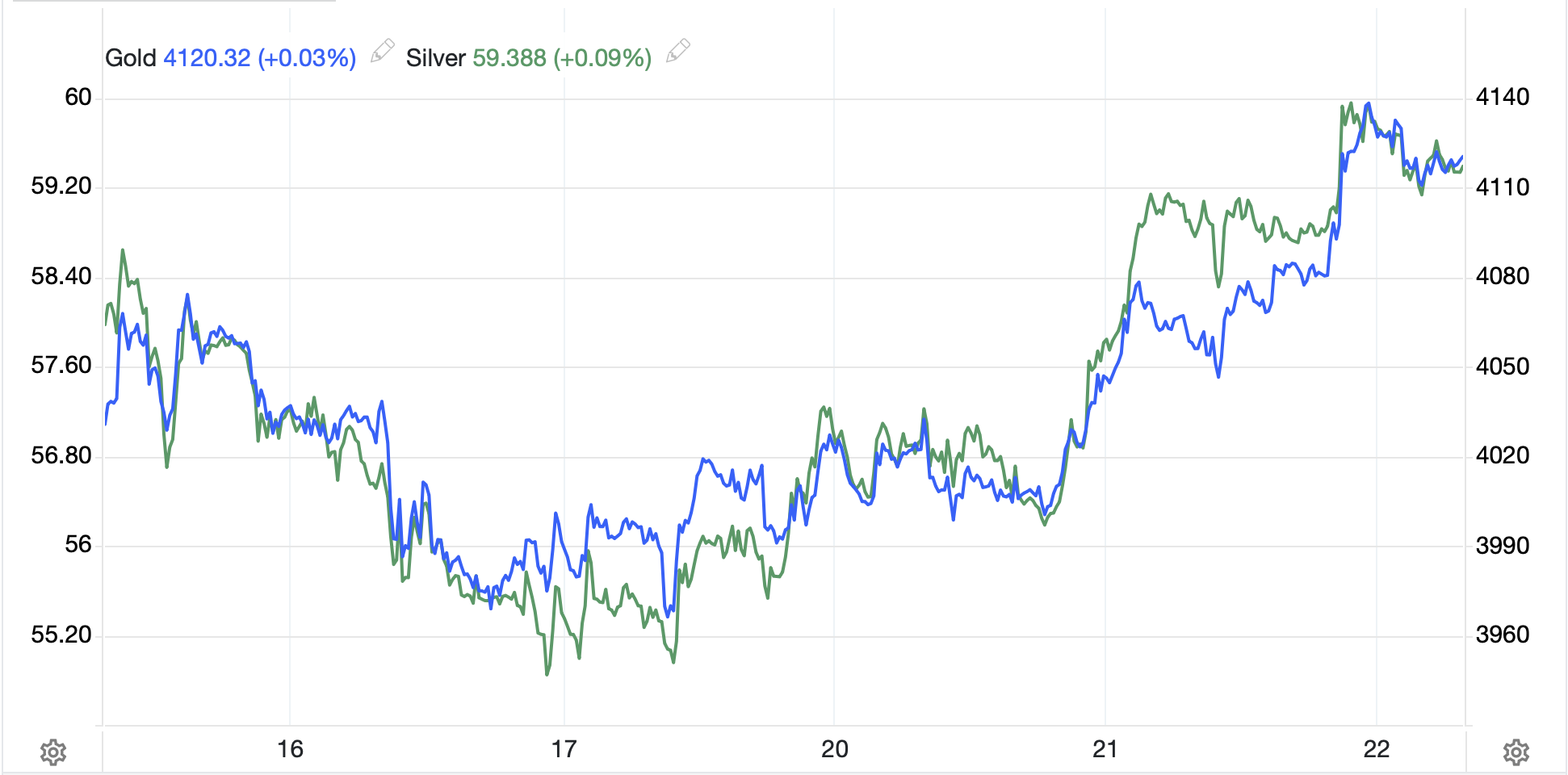
Ok, on to markets.  Precious metals continue to be the major mover and shaker across all markets with the last several days declines being sharply reversed this morning.  I think gold (+5.3%) and silver (+8.3%) deserve their own charts (from tradingeconomics.com) given the extraordinary nature of the recent price action.  While the volatility here has been extreme, as I have repeatedly said throughout this move, the fundamentals have not changed, so demand for metals, especially silver into a deficient market, remains the ultimate driver.

Obviously, both metals remain far below their recent peaks, seen just last Thursday, but recall, parabolic tops always see retracements of this nature.  My expectation going forward is that both these metals, and copper (+3.2%) and platinum (+6.2%) will be heading higher again, albeit not quite as quickly as we saw during January.  One other thing adding to the bullishness is the announcement of Project Vault, a US stockpile of strategic minerals including copper and silver as well as a long list of rare earth elements.  Remember what happens when a price insensitive buyer enters the market.  You want to be long!

As to energy markets, oil (+0.35%) and NatGas (-1.2%) are both a bit less active this morning as the latter, which tumbled 25% yesterday on the end of the cold wave, is finding a new home while oil continues to soften based on the upcoming talks between the US and Iran which has reduced concerns of a military intervention there.

Compared to the commodities space, the rest of the markets are quite dull, indeed.  Turning to the stock market, yesterday saw solid gains in the US after much stronger than expected ISM Manufacturing data (52.6 vs expected 48.5) which was the strongest reading since August 2022.  As you can see from the below chart of this statistic, the US manufacturing sector has suffered greatly for more than 3 years, and that is true in the employment statistics there as well.  Is this the beginning of the great reshoring?  It is too early to tell, but if we see this for the next several months, you can be sure the narrative is going to change.

Source: tradingecommics.com

In Asia, Tokyo (+3.9% and a new all-time high) rallied on the stronger US market, the ISM data and the weaker yen supporting profitability of Japanese exporters.  Korea (+6.8%) saw a huge move on the back of semiconductor makers Samsung and SK Hynix, while the government there seeks to get investors to bring money home to support the currency. India (+2.5%) rallied on the news of a trade deal with the US that reduces tariffs to 18% and gets them to stop purchasing Russian oil, buying from the US instead and generally, there were gains everywhere in the region, even Australia despite the RBA hiking their base rate (as expected) but sounding more hawkish than traders assumed.

In Europe, the picture is more mixed and far less impressive with gains and losses on the order of +/-0.2% across the board.  While earnings data has been solid generally, there is ongoing concern about the outcome of Russia/Ukraine talks and a mix of data with French inflation falling to 0.3% Y/Y and Spanish Unemployment rising although the ECB, which meets Thursday is not expected to adjust policy.  As to US futures, at this hour (7:10) they are higher by 0.25% or so.

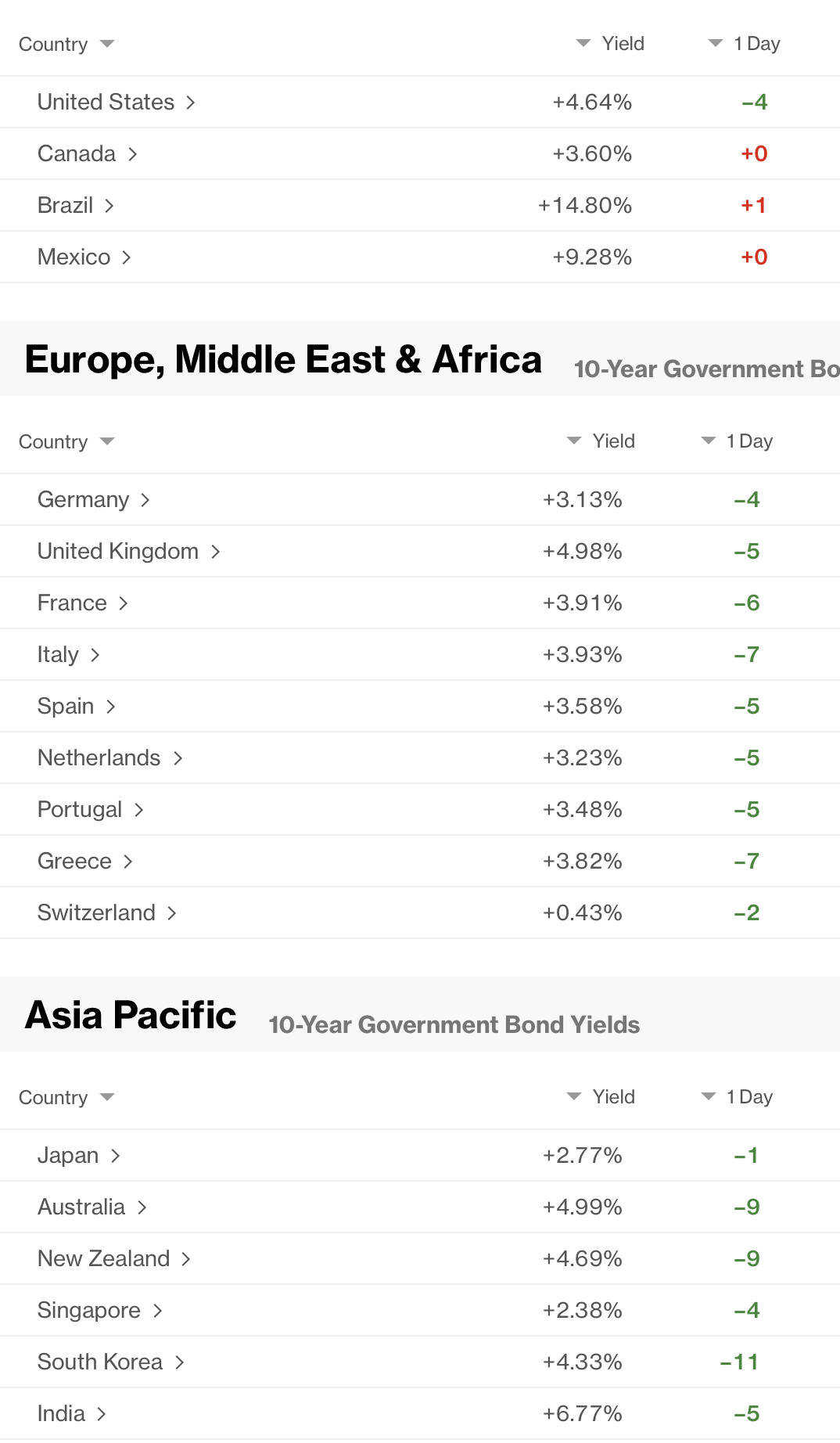
In the bond market, the strong ISM data saw 10-year yields back up 4bps yesterday, and they have edged a further 1bp higher this morning.  European sovereign yields are higher by 2bps across the board, as are JGB yields.  It seems we may be seeing the initial pricing of stronger economic activity.  However, if we take a longer-term perspective of bond yields, as per the below chart, it shows us that, frankly, while there have certainly been some ups and downs, yields are little changed overall in the past 2 ½ to 3 years on a net basis.  

Source: tradingeconomics.com

As I wrote in the beginning, there are changes afoot in policy making circles, certainly in the US which drives the entire global financial markets, so it remains to be seen how this all plays out.  While I think there is scope for a period of higher rates in the short term, if the administration is successful in their playbook, that would likely indicate lower yields over time.

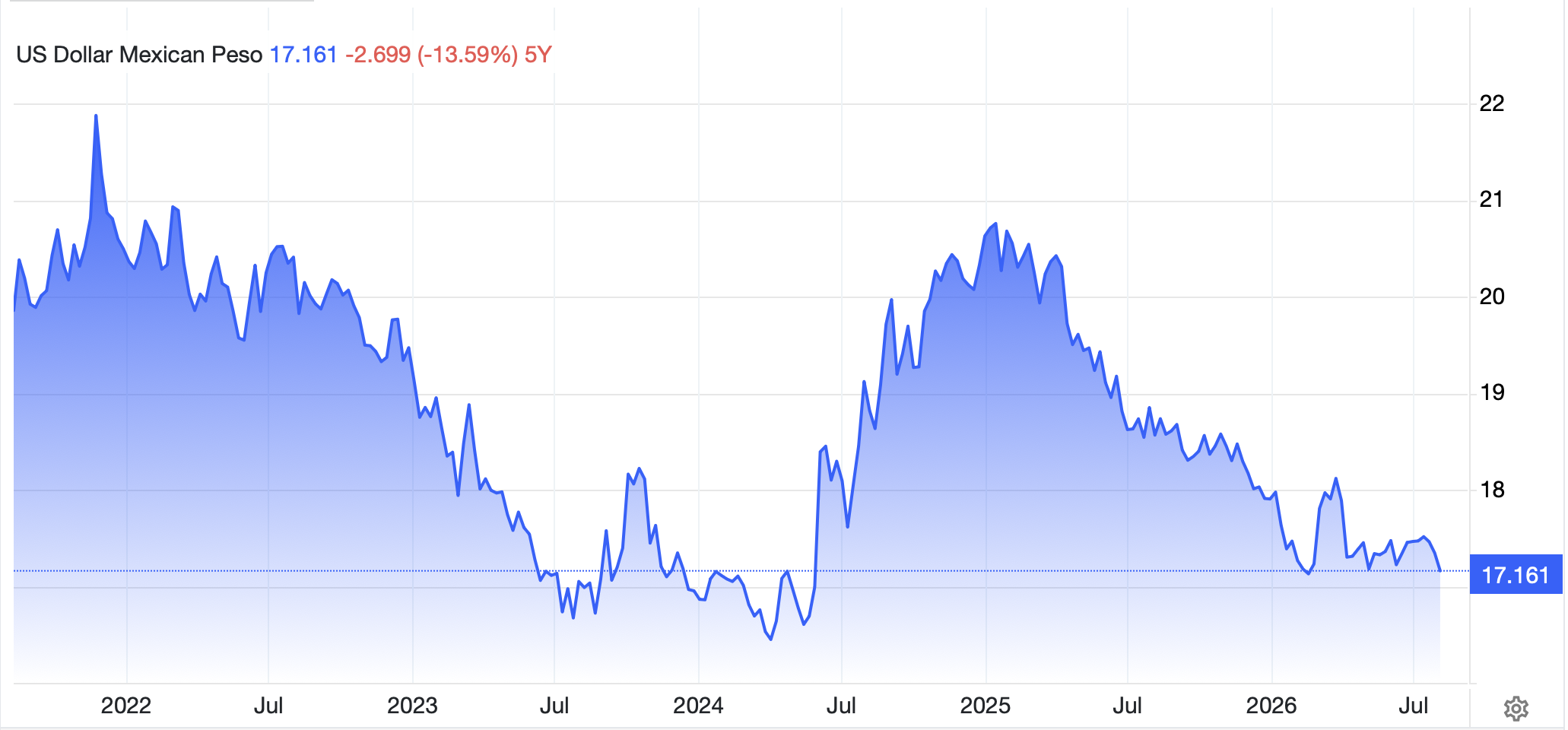
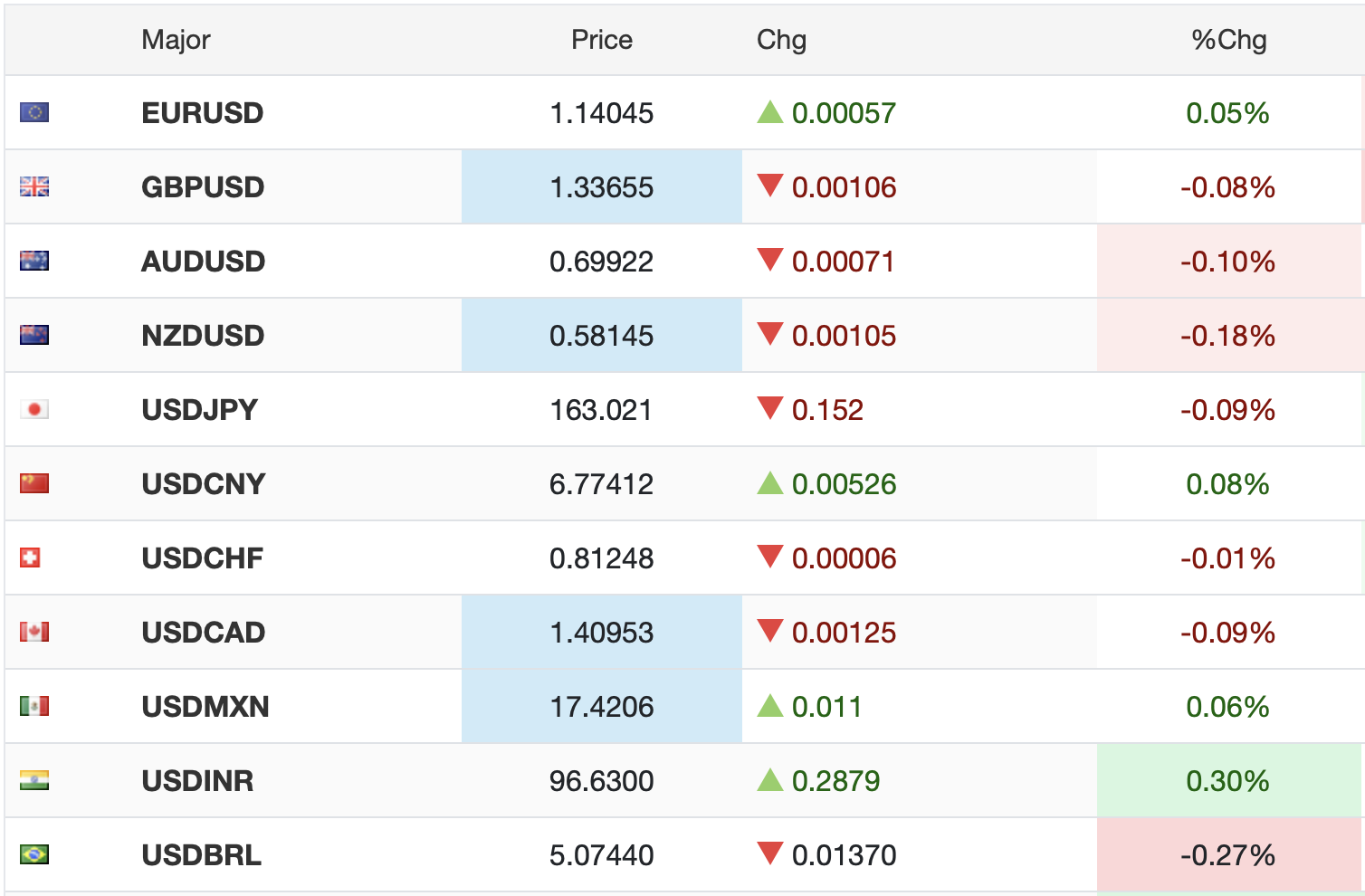
Finally, the dollar continues to defy every call for its demise.  This morning, the DXY is unchanged and back toward the middle of its trading range.  The big mover overnight was AUD (+0.8%) which dragged NZD (+0.6%) along for the ride.  As well, LATAM currencies (MXN +0.4%, BRL +0.4%, CLP +1.0%) continue to perform well, as they have over the past year.  Of course, real interest rates in Mexico (+3.3%) and Brazil (+10.75%) are far higher than in the US and that has been drawing in a great deal of investment while CLP continues to track copper prices.  Again, I am confident that President Trump is unconcerned that the dollar is declining vs. Mexico and Brazil as it helps US export competitiveness.  As to the euro, remember that when it pressed 1.20, the first thing we heard was how the ECB may need to respond if the euro becomes too strong.  My money is still on the next ECB move being a cut.

And that’s all there is today.  Data has gone missing and I cannot believe that anybody cares what Richmond Fed president Barkin has to say at this stage of the game.  That means we are back to headline bingo to drive movement.  Through all this, nothing has changed my view that the dollar is still the cleanest dirty shirt in the laundry.  And if Bessent and Warsh can get things done as they perceive, it will simply be the only clean shirt around.

Good luck

Adf
Kurtosis

Get ready to hear ‘bout kurtosis
An idea what very few knows is
In this case they’ll say
Fat tails did hold sway
Be careful, though, ere there’s psychosis

This definition from slideserve.com is probably the most comprehensible one that I have seen around, so thought it would be useful to understand.  And below, is a chart that shows the shape of distributions of outcomes.  Markets live on the blue line below.

The reason this is important was made evident on Friday given the extraordinary movement seen in markets.  It is important to understand that both commodity and financial markets have always demonstrated leptokurtosis in their behavior.  This means that the tails are fatter than a normal distribution’s tails.  In other words, there are far more large movement events than a normal probability distribution would expect or predict.  So, while I have read that Friday’s decline in gold and silver prices were anywhere between a 5SD and 12SD move (it doesn’t really matter for our purposes, just suffice it to say it was quite large), there is nothing to say it cannot happen again tomorrow.  You will undoubtedly read from some that this movement shouldn’t have occurred during the life of the universe it was so statistically improbable, but that is based on a normal distribution.

Understand, too, that market makers, especially in options markets which rely on the basic math of the normal distribution, are well aware that tails are fat.  It is why volatility curves in all markets have smiles or smirks, as these are an effort to take account of those fat tails.  It turns out the math for fat tail distributions is incredibly complex, so traders are happy with the smile approximations.

Which brings us to the question of what really happened and why did it happen on Friday?  The answer is, nobody really knows.  I have seen several writeups that certainly make sense, and are likely to have been part of the process, but in markets, given the millions of variables that are part of the market process (consider how many individuals trade the stuff in addition to things like economic variables and supply/demand information for commodities), it is difficult to pinpoint an exact catalyst. 

Many are pointing to the naming of Kevin Warsh as Fed Chair, on the surface a more hawkish pick than had been expected earlier in the week, although on Thursday, his Kalshi odds were already above 90%, so would seem to have been priced.

What we do know is that leverage was high and that prices were massively extended on technical indicators.  Parabolic moves tend to crash in the same way they rise.  Certainly, once things got going, margin calls were rampant and there was a great deal of forced selling.  The chart below shows just how extensive the move was, and I highlighted the opening of the NY session.

Source: tradingeconomics.com

The great thing about moves like this are the conspiracy theories that arise as an explanation.  Here’s the thing about conspiracy theories, once there are more than two people involved, it tends towards a leak. 

So, what do we know?  Comex futures prices when Asia opens tonight are going to be a lot lower than when they went home on Friday.  But…Chinese licensing restrictions remain in place; no new silver mines have been discovered let alone gone into production; both individuals and central banks in Asia continue to buy the stuff; and the premium for physical metal in Shanghai remains steep.  The fundamentals have not changed with regard to the metals themselves.

How about the financing questions?  Is Warsh a hawk?  My take is he is going to work hand in glove with Scott Bessent to address the economic issues in the nation.  So, I would look for support (i.e. QE) for issuance, although it is entirely realistic that when (if) Warsh sits down in the chair, there will be fewer Fed fund rate cuts than might have been seen with another choice.  Warsh is going to essentially join the Cabinet, as they work to implement their vision of how to overcome the debt and deficit issues.

Is this, more hawkish view, the rationale behind the moves on Friday?  It probably played a role, but it is difficult to ascribe movement of that nature, especially given its self-generated response to positioning, to a single data point.

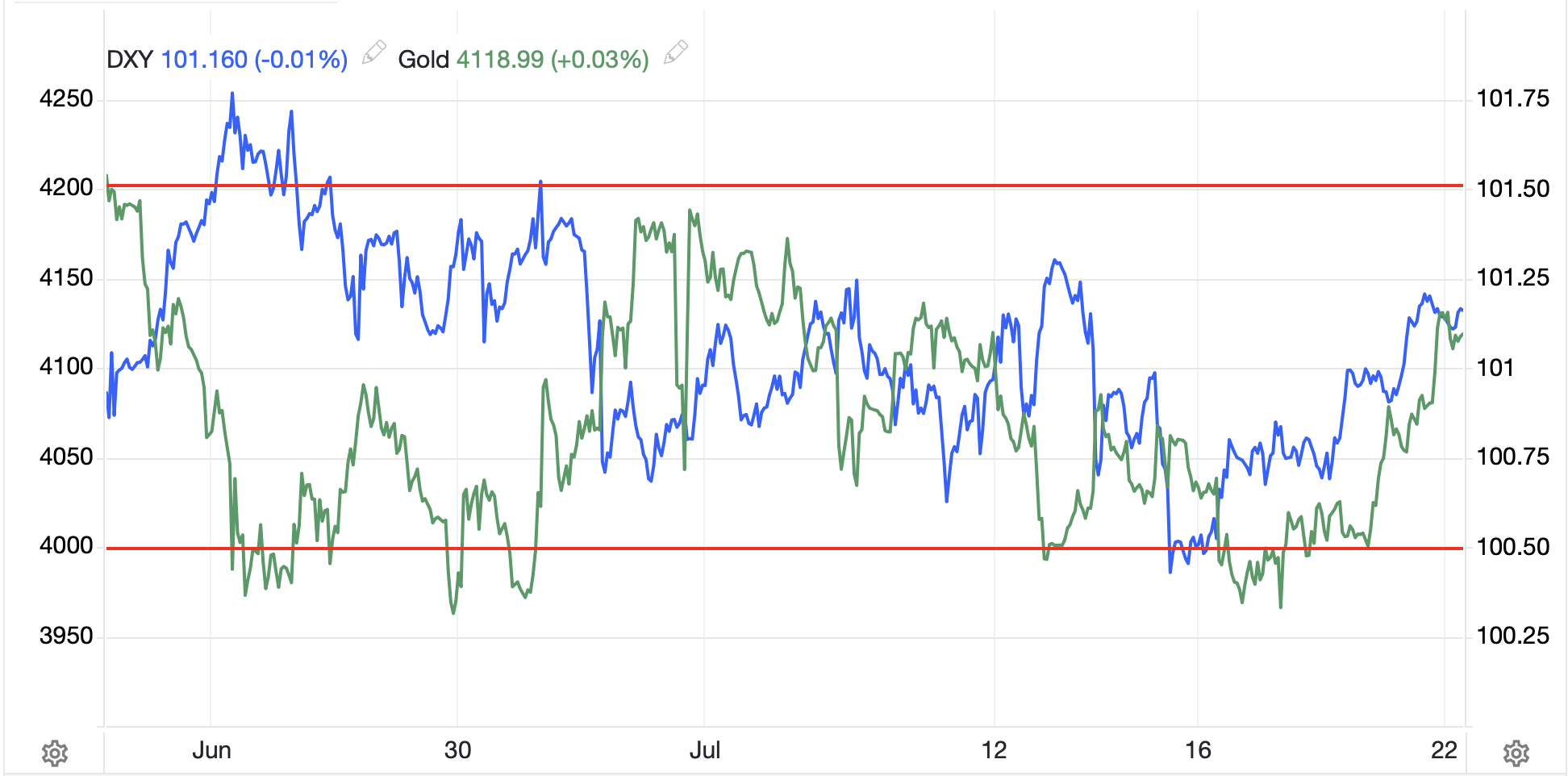
One other thing to note was that the dollar, which was set to collapse according to so many, rebounded sharply alongside the precious metals’ declines, albeit not quite as far.

Source: tradingeconomics.com

I never looked at the screens on Friday because I know that when moves like that happen, it’s easy to regret the trades you make.  But the underlying thesis remains unchanged.  I was not counting on the dollar’s decline to drive precious metals’ prices higher, and that relationship has broken down to a large extent anyway.  It is not clear to me that having a perfect understanding of the drivers of Friday’s markets is critical.  If I hearken back to Black Monday in October 1987, when the S&P 500 fell 22%, Ace Greenberg, then chairman at Bear Stearns, said it best when asked about what happened.  His reply was, “Markets move, next question.”

Remember that, markets move.

Good luck

Adf
Totally Wrecked

The chaos is starting to spread
As traders, when they look ahead
Have come to the view
More debt will accrue
And fear that the dollar is dead
 
So, gold and its ilk rise unchecked
While fiat is totally wrecked
Most bonds have a pox
But hope lives for stocks
And crypto? They’re still circumspect

I cannot possibly cover all the things ongoing in the markets right now as it would take a 5000 word note to do so adequately.  As such, I will try to give a high level take in far fewer words.

Headlines – 

  • Minneapolis continues to consume most of the domestic press, but is only tangentially, if at all, related to markets.  Perhaps it questions President Trump’s authority and that is a negative for US assets and the dollar.  
  • Xi Jinping purges his most senior military leader, accused of spying and selling state nuclear secrets to the US. Xi has removed virtually his entire military leadership, probably reducing near term risk of a Taiwan invasion, but ignores economic issues

Currencies – 

  • JPY (+1.2%) remains the top story as speculation remains rife that the BOJ stepped into markets on Friday (I don’t think so) and questions arise as to how soon they will do so. 

Source: tradingeconomics.com

 There is a great deal of talk of joint intervention with the US, but I remain skeptical there.  It is critical to understand exactly what joint intervention is and what it represents.  Joint intervention means that the US Treasury is selling its own dollars alongside those of Japan.  That is very different than the Fed, acting on behalf of the Treasury-MOF-BOJ connection executing sales for the MOF.  The former implies a US effort to change the dollar; the latter is simply assisting an ally in our time zone.  I can only think of two times the US intervened, 1985 and 1998.  In the second chart, I highlighted the shape of the move from 1998, which was obviously far sharper than anything we have seen so far. 

Source: finance.yahoo.com

  • DXY (-0.5%) is falling as well, obviously dragged lower by the dollar’s decline vs. the yen, but the dollar’s weakness is universal today.  As you can see from the chart, the DXY has fallen through the bottom of the trading range at 98.00 and the bears are celebrating the end of the dollar.  But just looking at the chart below, we need to see a more substantial extension, in my view, before concluding the dollar is dead.

Source: tradingeconomics.com

Precious Metals – 

MetalPriceDay%WeeklyMonthlyYTDYoY
Gold5090.47101.85+2.0%8.9%17.6%17.95%85.85%
Silver110.347.38+7.2%16.7%53.15%55.05%266.2%
Copper5.99420.048+0.8%1.6%8.4%5.45%42.2%
Platinum2867.20128.8+4.65%21.75%35.2%39.7%205.3%

Source: tradingeconomics.com

I think this table tells the entire story eloquently.  The combination of supply shortages in trading venues, as well as for industrial users, and fears over the collapse of fiat currencies as every government in the world runs it hot and issues massive amounts of debt, has an increasing number of both individuals and institutions looking for someplace to maintain their purchasing power.  Precious metals earned their name and reputation for this very reason.  If anything, the fear is that the speed of the move has been so extraordinary that it must slow down at some point, but so far, that has not been the case.  As you can see in the chart below, the moves in all three have become parabolic, or certainly in silver and platinum.  Historically, prices like this do not continue in this vein, but that doesn’t mean they cannot continue to rise further for a while yet.

Source: tradingeconomics.com

As to energy, oil (-0.2%) is trading above $60/bbl, but doesn’t show a great deal of interest in breaking in either direction right now.  I imagine a US action in Iran would push prices higher, but do not discount a breakthrough on the Russia/Ukraine war that could have the opposite effect.  However, NatGas (+14.6%) continues to be in massive demand as the 15° temperature outside my window this morning is indicative of what is happening across most of the country.  As well, it seems Germany, which is now hugely reliant on US LNG exports, has run their storage down to a dangerously low 40% or so, far below normal for this time of year.  Until this cold-snap ends, demand will remain exceedingly high.

Stocks – the biggest mover overnight was Tokyo (-1.8%) as the much stronger yen weighed heavily on Japanese exporters like Toyota.  Too, both South Korea (-0.8%) and India (-0.9%) slipped with the former showing concern that there would be intervention in the KRW market and negatively impact Korean exporters while the latter continues to see international capital outflows, with another $3 billion coming out so far this month (which has undermined the INR as well).  But otherwise, not much price action in China, HK or elsewhere in the region.  In Europe, most major bourses are little changed, although there have been modest gains in Spain (+0.5%) and Italy (+0.4%).  The only data of note was German Ifo Business Climate (87.6) which remained unchanged, falling below expectations for a modest gain.   And at this hour (7:45), US futures are virtually unchanged.

Bonds – yields have slipped modestly this morning with Treasuries (-1bps) not really showing signs of serious degradation.  European sovereign yields have fallen further between -3bps (Germany) and -5bps (France) with the latter benefitting from the idea that France would actually pass a budget soon.  JGB yields (-2bps) also slipped as polls show Takaichi-san’s approval ratings are slipping and some are assuming she won’t be able to run it quite as hot if she wins the election in two weeks.

Data this week is dominated by the Fed meeting on Wednesday, although as I have said from the beginning of the year, I think the Fed’s importance has waned relative to the market overall.

TodayDurable Goods3.7%
 -ex Transport0.3%
TuesdayCase Shiller Home Prices1.2%
 Consumer Confidence90.9
WednesdayFOMC Rate Decision3.75% (unchanged)
ThursdayInitial Claims205K
 Continuing Claims1860K
 Trade Balance-$42.1B
 Nonfarm Productivity4.9%
 Unit Labor Costs-1.9%
 Factory Orders1.7%
 -ex Transport0.3%
FridayDec PPI0.2% (2.8% Y/Y)
 -ex food & energy0.3% (2.9% Y/Y)
 Chicago PMI43.8

Source: tradingeconomics.com

And that’s pretty much what we have right now.  Clearly, the biggest signal comes from the precious metals space and indicates, to me at least, that there is huge concern over the way of the world right now.  I guess this is what the 4thTurning looks like.  As I said, if the Treasury is actually going to intervene of their own accord, working alongside the Japanese, that is a distinct negative for the dollar against all currencies and needs to be carefully assessed.  However, if the Fed sells dollars on the BOJ’s behalf, that is likely to have just a temporary impact on the FX markets.  Keep that in mind as we go forward.

Good luck (we all need that right now!)

Adf

What We’ve Learned

It wasn’t but three weeks ago
That pundits who felt in the know
Were sure the attack
On Vene would crack
The world, and more chaos bestow
 
But that news, so quickly, has faded
While Greenland fears have been upgraded
The pundits were sure
That war was the cure
And Europe would soon be invaded
 
Now as it turns out, what we’ve learned
Is NATO, which had been concerned
Has ‘greed to a deal
Which stopped Denmark’s squeal
As Trump, to the US, returned


It is certainly difficult to keep up with current events these days, especially for the punditry who feel it is critical they demonstrate expertise on every issue, given the speed with which the issues change.  All that effort to understand the geopolitics behind ousting Nicholas Maduro has been forgotten in less than 2 weeks as they needed to pontificate on Greenland and its importance.  If, as the president’s TruthSocial post below is the current lay of the land, by Monday, Greenland will return to its historic obscurity as President Trump will move on to the next issue of his choosing.  In fact, this morning, the WSJ is claiming Cuba is next on the list, which, while it wouldn’t be that surprising, has to date only been mentioned in passing by Mr Trump.

Here’s the thing about all the pontification regarding President Trump, nearly, if not all of it, is simply that, pontification by outsiders who have no idea about what is really happening.  These folks are not sitting in the Oval Office when the President is meeting with his advisors discussing strategy and are generally wishcasting their views and creating a narrative around that.  As I am also an outsider, all I can do is observe and try to ascertain how things might impact markets, but if you are not hearing it from the president or Secretary Rubio or someone like that, it is all speculation.  However, one must admit, it is entertaining!

As I don’t know what the next ‘global crisis’ is going to be ahead of time, let’s turn our attention to markets and how they responded to the president’s speech in Davos as well as the news of the deal framework.

Equities were quite happy.  After the sharp decline seen Sunday night, when the tariff threats were made, the S&P 500 has recouped nearly all of the losses as per the below chart.  Yesterday saw US market gains of 1.2% across the board and futures, this morning, continue to rally, up about 0.5% across the board.

Source: tradingeconomics.com

It should be no surprise that things were bright in Asia as well, with Tokyo (+1.75%) leading the way as almost every exchange in the region was higher by a decent amount (Korea +0.9%, India +0.5%, Taiwan +1.6%, Australia +0.75%) but interestingly, China (0.0%) and HK (+0.2%) were the laggards.  Perhaps good news for the West is not seen that positively there, although the story of regulators in China cracking down on possible stock manipulation by social media influencers has raised some concerns.  After all, one of the biggest issues with investing in China by outsiders is the capriciousness of President Xi and the CCP as they decide what they don’t like that particular day.  

As to Europe, it should be no surprise that there has been a collective sigh of relief from investors there given the removal of the threat of more tariffs and the promises of more defense spending by European nations.  So, gains across the board with the DAX (+1.2%) leading the way although the CAC (+1.1%) is right there as well with most of the rest of the nations seeing gains on the order of 0.5% to 0.75%.

In the bond markets, apparently the end of the world has also been postponed.  Yields declined yesterday and this morning, Treasury yields are unchanged at 4.24%.  In Europe, yields have slipped -2bps to -4bps on the continent although UK gilts (+2bps) are bucking the trend, which appears to be an ongoing impact from yesterday’s higher than expected inflation data which continues to point toward stagflation in the UK.  Interestingly, JGB yields (-4bps) have also fallen again, although they certainly remain near recent highs.  PM Takaichi is going to formally dissolve the Diet tonight and the election is slated for February 8th (wouldn’t it be wonderful if US election campaigns were just 2 weeks long!).  While nothing has changed in her fiscal planning, it seems that investors are awaiting the BOJ announcement tonight (no change expected) and have been modestly appeased by a substantial increase in exports although the trade surplus declined slightly.  

I think it is worth looking at the trade balance relative to the yen (-0.2%) as per the below chart.  Recall, historically, Japan ran major trade surpluses, which was always one of the tensions between the US and Japan dating back to President Reagan.  But as you can see below, the blue bars are the monthly trade numbers and since Covid, that situation changed dramatically.

Source: tradingeconomics.com

However, once the yen started to weaken substantially, the lagged effect showed up in trade data as can readily be seen above.  In fact, this is the real tension in Japan, I believe, that the weak yen helps exports significantly, but has become an inflation problem and the government is caught between the two issues.  This is why I believe we will see a weaker yen over time, especially if Takaichi-san comes out of the election with a solid majority.

As I’m on currencies, if we look elsewhere, the dollar, although we have been constantly assured it was collapsing, remains in its trading range.  This morning, the DXY (-0.1%) has edged lower after yesterday’s rebound.  As it happens, yen weakness has been offset by modest euro strength, but the real strength is in the commodity space with NOK (+0.8%), SEK (+0.36%), AUD (+0.6%) and NZD (+0.6%) all having solid sessions.  Now, my take is that the first two are more likely responses to the Greenland issue’s apparent resolution as NOK is rallying despite oil’s (-1.7%) sharp decline.  Remember, both those nations were in the crosshairs of Trump’s mooted tariffs.  On the other hand, last night, the employment situation in Australia perked up nicely which has helped raise market pricing for a rate hike by the RBA and given the strength in commodity prices and the apparent end of another global crisis, has helped support the currency.  Ironically, as I scan the EMG space, movements there have been much smaller overall.

Finally, turning to the rest of the commodity space, for the first time in a week, gold is not higher this morning, but rather essentially unchanged.  Silver (+0.25%) has bounced a tiny bit after selling off somewhat yesterday in NY.  I have maintained that trees don’t grow to the sky, and frankly, the price action here appears tired regarding ever larger gains.  I believe the fundamental story remains in place, but that doesn’t mean silver won’t chop around for a few weeks or months before starting higher again.   Copper (-0.6%) is also under modest pressure this morning and has retreated much further, about -6.3%, from its recent highs at $6.10/lb than the precious metals.  However, the red metal remains much in demand given the underlying electrification story. 

And lastly, a quick look at NatGas (+12%) shows what happens to commodity markets when there is the perception of insufficient supply for the current demand.  This is higher by 75% this week!  And while today in NJ, the temperature is a relatively balmy 34°, the forecast for the coming weekend is much colder and a huge snowfall.  It’s not often you see a movement of this magnitude so here is the chart for the past month.

Source: tradingeconomics.com

On the data front, today brings the final look at Q3 GDP (exp 4.3%) as well as Initial (212K) and Continuing (1880K) Claims.  Too, we get Personal Income (0.4%) and Spending (0.5%) for November and PCE (0.2%, 2.8% Y/Y) for both headline and core.  The EIA releases its weekly oil inventory data today, a day later than usual because of the holiday Monday, with a modest build expected.

Market participants in all markets appear to have found a comfort zone and are taking risk positions again, at least for now.  All the apocalyptic stories about the world rejecting the dollar and the rise of the BRICS will have to wait for another day.  While I don’t know what the next situation is going to be, I am highly confident we are going to have another geopolitical scenario that is going to result in more screaming, teeth gnashing and pearl clutching by those who continue to believe the rules-based order is the way things should be.  Alas for them, economic power and statecraft is the new world order, and my take is ultimately, the dollar benefits from this pivot.

Good luck

Adf
Tired

Though recently there’s been a ton
Of news, which has led to much fun
The markets today
Have little to say
Though recent trends ain’t been undone
 
Sometimes traders simply get tired
And find, in a rut, they’ve been mired
But you needn’t worry
‘Cause soon they will scurry
To come back with ideas inspired


As much activity and new news that has been part of the process over the past several weeks, today is one of those days when it appears we may be able to step back and catch our collective breath.  One thing I have observed throughout my career on trading desks is that no matter the underlying news, narrative or data, traders, even algorithms, can only remain in a frenzy for so long.  Consider it has been nearly two weeks of nonstop news since the US exfiltration of former Venezuelan president Maduro, yet some markets have exploded.  Silver is probably the poster child for this price action and as you can see below, since markets reopened after that news, gold’s little brother has risen nearly 25%, including today’s modest -2.3% retracement.

Source: tradingeconomics.com

But all the precious metals, and base metals as well, have had massive runs and the narrative regarding supply constraints and increased strategic purchases by China along with the US labeling many as critical national defense requirements, has been enough to bring retail into the mix.  But a 25% move in less than two weeks is really exhausting for the folks who are in those markets every day.  

At the same time, the amount of energy that has been consumed regarding Greenland, Iran and Minneapolis (which even though it is not a market related issue, is so widespread in its reporting takes up space in one’s brain) seems to have reached a peak yesterday, at least a local maximum.  I don’t, for a minute, believe that these trends have ended.  But a few sessions of modest net movement as positions are adjusted is a normal response to dramatic movement.  We should welcome the rest!

Reading through as much as I could find this morning, there really is no new story on which to hang your hat, so without further ado, I will review overnight market activity and perhaps ponder how things may evolve going forward.

A key sign of the slower activity was yesterday’s US equity markets where modest declines were the order of the day.  That was followed by a mixed session in Asia with some gainers (China +0.2%, Australia +0.5%, Korea +1.6%) and some laggards (Tokyo -0.4%, HK -0.3%, Taiwan -0.4%, India -0.3%).  Other than Korea’s strong session, which was inspired by central bank and government efforts to get investment to come back home to support the won, it appears traders are now biding their time ahead of the next major event.

European bourses are also mixed (Germany -0.1%, France -0.3%, Spain -0.1%, UK +0.4%) with the UK benefitting from a stronger than expected GDP report where growth jumped to 0.3% on the month, well above expectations of a 0.1% increase.  But a look at the chart below indicates one ought not get too excited about the economic growth in the UK with 14 negative months in the past 3 years.

Source: tradingeconomics.com

As to US futures, at this hour (7:10) they are pointing higher, currently almost exactly offsetting yesterday’s declines.

In the bond market…ZZZZZZ is the story of the day week month past four months as evidenced by the chart below.

Source: tradingeconomics.com

There are a number of conflicting narratives here with one story that the economy is going into a tailspin as a look beneath the headline data shows weakness everywhere (housing, employment, manufacturing) and the result is rates will fall along with inflation because of the coming recession.  Another narrative is that the ongoing debt expansion to fund unending budget deficits in the US is going to lead to the collapse of the dollar and much higher long-term rates as investors require far more payment to hold this much riskier than previously assumed asset.

Right now, neither of these seem to be living up to their promises.  Yesterday’s Retail Sales print was much stronger than expected at +0.6%, which hardly portends a recession.  Now, the CPI data has been polluted by the missing October numbers and is biased downward based on the BLS methodology, but you can be confident that it will recoup those losses in a few months’ time.  Meanwhile, there is no indication the Fed is going to do anything in two weeks, and my take is there is significant uncertainty over the future direction of the economy, with both positive and negative pieces.  Until we get indications that growth is either truly cratering along with rises in unemployment, or that things are exploding higher, remaining in the range seems the most likely outcome.  Remember, too, the OBBB is going to goose economic activity right away and running it hot remains the mantra.  

As to European sovereign yields, they have edged higher by 1bp this morning with one outlier, Portugal (+13bps) which seems to be reacting to the prospect of a runoff in the presidential election this Sunday, in the race between a populist outsider and a Socialist party insider, with the populist seen a slight favorite.  As to JGB yields, they have slipped back -2bps as the market becomes accustomed to the idea of the snap election.

In the commodity space, oil (-3.6%) has ceded most of its recent gains after President Trump indicated that there would be no bombing by the US, and the Mullahs ostensibly promised no executions of protestors.  Added to that was a massive build in inventories reported yesterday and supply concerns have abated.  In the metals markets, we are seeing that breather across the board (Au -0.25%, Ag -2.3%, Cu -0.8%, Pt -0.6%) which is very clearly profit taking after we saw record highs in all metals yesterday.  Nothing has changed the fundamentals here, so higher is still the way, IMO, but a few days of chop ought not be surprising.

Finally, the dollar appears to have found a comfortable home at 99.00 in the DXY.  There has been limited movement across the board with even JPY unchanged on the day as traders wait before trying to push the currency lower again.  KRW (-0.3%) is the worst performer today as it has been weakening steadily for a year.  Adding to the discussion above, the Korean government is trying to internationalize the won to some extent in their effort to get Korea taken out of the emerging market bucket for markets.  This relaxing of restrictions has seen capital outflow, but my take is this will be temporary as the country remains in very good fiscal and economic condition and will attract investment in my view.  Otherwise, there is nothing of note.

On the data front today, we get the weekly Initial (exp 215K) and Continuing (1890K) Claims as well as Empire State Manufacturing (1.0) and Philly Fed (-2.0) all at 8:30.  We hear from 3 more Fed speakers and it seems the hymnal now contains a single talking point, Fed independence is crucial and the subpoenas to Powell are lawfare and inappropriate.  Only Steven Miran is not singing that tune, but given he is Trump’s appointee, that is no surprise.

As commodities, and really metals, have driven the entire narrative lately, if they are going to have a quiet day, look for quiet all over.  Longer term, nothing has changed, but nothing goes up in a straight line, and that is what we are witnessing today.

Good luck

Adf
Step Five?

It takes seven steps
Ere intervention arrives
Was last night step five?


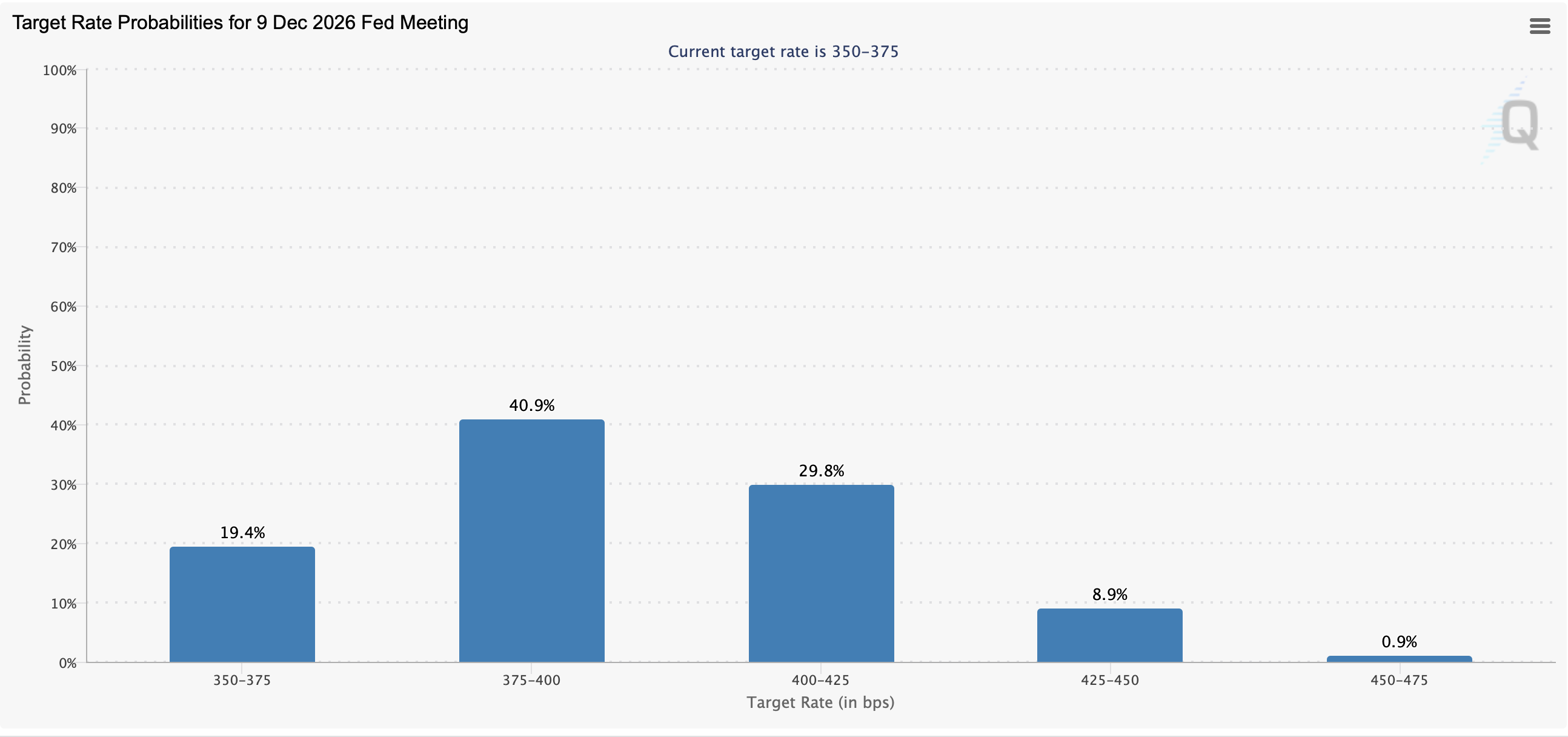
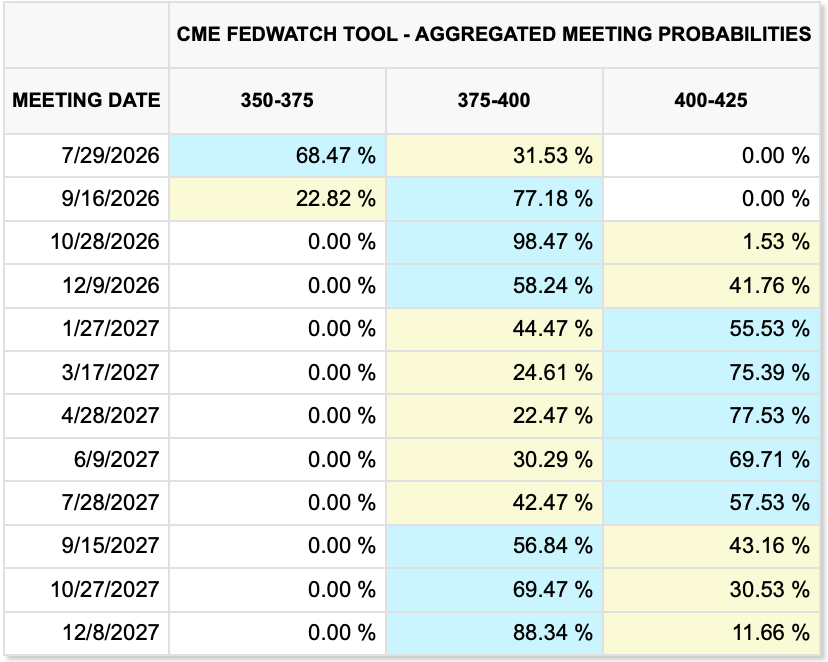
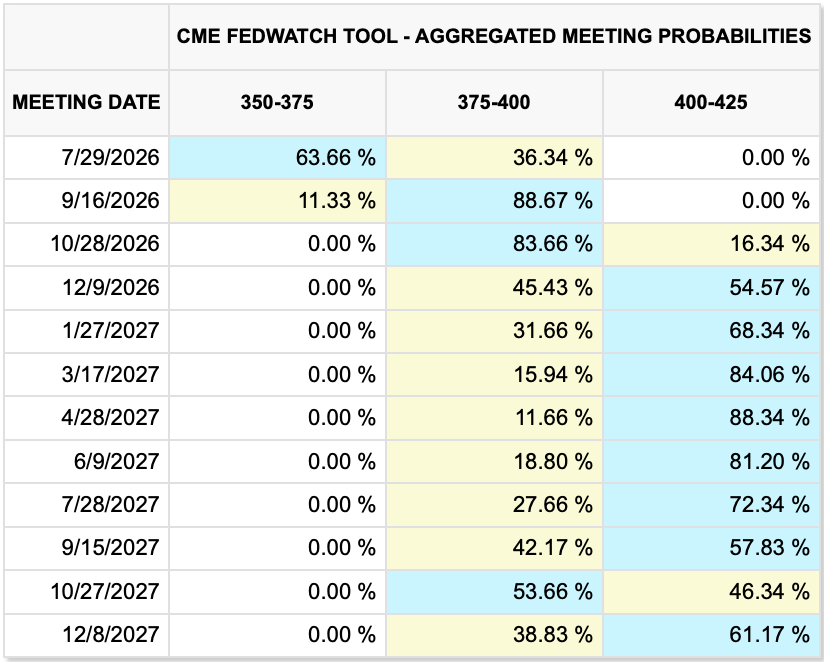
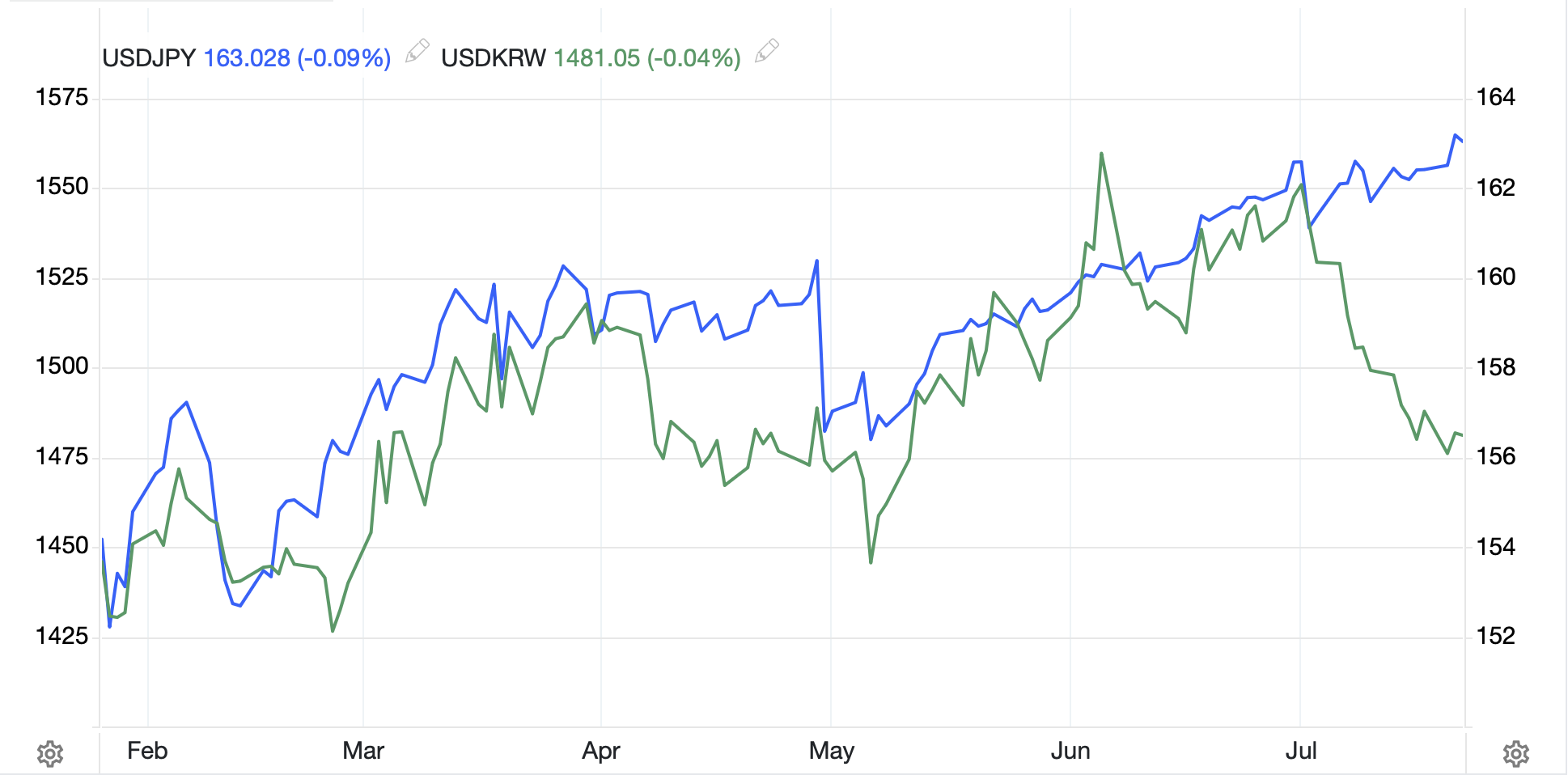
The yen continues to be in the crosshairs of traders as further weakness is anticipated based on several things I believe.  First, there had long been an assumption that the Fed was going to cut rates further, especially with President Trump haranguing Chairman Powell constantly on the subject.  In addition to that, there continues to be an underlying thesis amongst many pundits that the US economy is weakening dramatically to drive that rate decision.  Yet recent data belies those facts, notably the Atlanta Fed’s remarkable GDPNow jump, but also relative stability in other data, including employment.  The upshot is the futures market is now pricing a mere 3% probability of a cut at the end of this month and not pricing the next rate cut until June, after Chairman Powell is gone.  One key leg of the yen strength argument is weakened.

Source: cmegroup.com

Second, there continues to be a belief that the BOJ will continue to hike interest rates, and perhaps they will, but it appears that the pace of those hikes will be far slower than previously anticipated.  Currently, the market is pricing just 50bps of hikes for all of 2026.  At the same time, Takaichi-san is set to “run it hot” in Japan just like in the US, pumping up fiscal stimulus and forcing the BOJ to come along for the ride.  The implication here, which is what we are seeing in the markets right now, is that a larger fiscal deficit will lead to strength in equities but a weaker currency.  The second leg of the yen strength argument is failing here as well.

Which brings us to last night’s commentary from Satsuki Katayama, Japan’s FinMin, who explained, [emphasis added] “We won’t rule out any means and will respond appropriately to moves that are excessive, including those that are speculative. We’ve mentioned this to the prime minister today as well.”  The kind of sudden moves we saw on Jan. 9 have nothing to do with fundamentals, and are deeply concerning,” she added. Her message was soon backed up by Atsushi Mimura, the ministry’s top official in charge of the yen, who reiterated that no options were being ruled out.

The bolded words are all part of the Japanese seven-step plan toward intervention.  At this point, I feel like we have reached number five.  The market responded predictably, with the yen strengthening vs. the dollar (and all its counterparts), albeit not all that much.  Last night saw the yen trade at 159.45, its highest since July 2024 (the last time the BOJ intervened), before the comments helped bring it back a bit.

Source: tradingeconomics.com

But one other area which the MOF/BOJ follow closely is not just the USDJPY exchange rate, but also the yen’s rate vs. other major currencies.  If, for instance, the yen is only weakening vs. the dollar, that is one thing.  However, a look at the chart below showing USDJPY, EURJPY and GBPJPY shows us that the yen is weakening against all those currencies pretty much in sync.  In fact, this argues that the yen’s current weakness is a yen specific fundamental, not a speculative move, which should argue against intervention, as that will only be a temporary sop.  However, my take is when we get to 160 or 162, which I believe is coming, we will see the BOJ selling aggressively.

Source: tradingeconomics.com

Ironically, the one currency against which the yen has been weakening steadily that I’m sure delights the BOJ/MOF is the Chinese yuan.  Since Liberation Day in the US, the yen has fallen more than 17% and continues to slide vs. the yuan as it has been doing for the past five years.  It is not hard to believe there are voices in the Japanese government that see that move and recognize how much it helps the Japanese export sector and caution against trying to arrest the yen’s weakness too aggressively.

Source: tradingeconomics.com

I look forward to much more dialog on this subject and expect that soon, we will be hearing about the end of the carry trade, yet again.  To my eyes, until Japanese fundamentals change, or at least appear to be moving in the right direction, the yen will struggle.  So, let me know when the fiscal deficit shrinks, or GDP jumps to 4% or inflation slides back to 1%.  Until then, they yen is damaged goods.

As to the rest of the market, precious metals continue to be the shining stars with the whole sector higher this morning (Au +1.0%, Ag +4.2%, Pt +2.0%) and that move taking copper (+0.4%) along for the ride.  Last night the CME raised its margining requirement and changed its nature by requiring a percentage of the value, rather than a numeric amount per contract.  My friend JJ, who writes the Market Vibes substack wrote a brilliant piece last night explaining how the flows are evolving in the silver market.  To sum it up, at this point, there appears no end in sight for the demand as short positions are covered by new shorts.  Metal for delivery remains scarce and despite the extraordinary shape of the move, it appears to have more steam to drive it forward.  Markets like this are extremely difficult to trade, and history shows that movements in the shape seen below reverse very sharply.  But as Keynes explained 100 years ago, markets can remain wrong longer than you can remain solvent.  I am happy I have been long silver for quite a while but am having a hard time figuring out what to do now!

Source: tradingeconomics.com

Meanwhile, oil (+1.4%) continues to rally on concerns that the Iran situation will lead to one of two outcomes, either a substantial decline in production as the regime collapses, or an effort by the regime to close the Strait of Hormuz which will impede shipping and reduce supply as they try to inflict pain on the US and the rest of the world who are rooting for the uprising.

Heading back to paper markets, yesterday’s weakness in the US was followed by a more mixed picture in Asia with Japan (+1.5%) rallying on continuing hope for more fiscal stimulus.  HK (+0.6%) benefitted from news that China’s trade surplus hit a new record high of $1.2 trillion (remember when they were going to grow domestic demand?) but Chinese shares suffered (-0.4%) after the regulators there raised margin requirements to 100%.  As to the rest of the region, it was far more green than red, although India continues to be a laggard overall.  In Europe, mixed is also the best description with the DAX (-0.35%) lagging while we have seen modest gains in the UK (+0.3%) and France (+0.2%).  Otherwise, it is hard to get excited about activity here today.  There continue to be existential questions about the EU and which nations will enact EU directives given that Poland, Hungary, Italy and the Czech Republic seem to be ignoring the latest issues like the Digital Asset Tax.  As to US futures, at this hour (7:00) they are softer by about -0.25% across the board.

Bond markets (except Japanese ones) remain completely uninteresting.  Treasury yields have slipped -3bps this morning and European sovereign yields are lower by -1bp.  Despite all the sound and fury about specific issues in markets, fixed income investors remain nonplussed by everything for now.  If/when that changes, we will need to watch things carefully.

Finally, aside from the yen (+0.3%) there is little to discuss overall. The DXY is still trading right around 99 and there has been very little movement of note.  Relationships that we would expect (ZAR and Au, NOK and oil) remain intact, but despite the metals dramatic movement, the rand is just gradually appreciating.

On the data front, yesterday’s CPI printed slightly softer than market expectations, but it is hard to get excited that inflation is heading back to target anytime soon.  @inflation_guy, Mike Ashton, had an excellent write-up here explaining what is going on and why much lower inflation is unlikely.  Ultimately, despite a lot of discussion regarding rental rates, those figures are not representative of the rental market as a whole and shelter costs continue to climb.  Absent a serious decline in goods inflation, it will be virtually impossible to get back to 2.0% on any sustainable basis.

As to today, it is a hodge podge of current and old data with Existing Home Sales (exp 4.21M) the only December number.  We see November Retail Sales (0.4%, 0.4% ex-autos) and PPI for both October and November which seem unlikely to impact markets greatly.  We also see EIA oil inventory data where a small draw is expected for crude but a build for gasoline.  Last week saw a massive build in products which likely helped weigh on the price last week.  But this week, things are different.  

We also hear from five more Fed speakers including Steven Miran, who will undoubtedly make his case for aggressive rate cuts again.  Then at 2:00 we get the Fed’s Beige Book.

Drinking from a firehose seems an apt metaphor for market analysts trying to make sense of the current situation.  Stepping back, I have never understood the market pricing for more rate cuts given the economy’s resilience.  The twin stories, in my estimation, are a growing level of fear regarding the debasement of fiat currencies, hence the move in metals, and the fact that the US remains the cleanest dirty shirt in the laundry, hence my preference for the dollar vs. other fiat currencies.  But on any given day, be careful!

Good luck

Adf
Spinning More Heads

The speed of the change underway
In global relations today
Is spinning more heads
And tearing more threads
Than ever before, one might say
 
For markets, the question of note
Is how will investors all vote
Are bulls still in charge
Or bears now at large
Who seek, excess profits, to smote


It is becoming increasingly difficult to focus only on market activity given the extraordinary breadth of important, non-market activities that are ongoing.  When I think back to previous periods of significant market volatility and uncertainty, it was almost always driven by something endogenous to finance and the economy.  Going back to Black Monday in 1987, or the Thai baht crisis in 1997 or the Russia Default in 1998, the dot-com crash in 2000, and the GFC in the wake of the housing bubble (blown by the Fed) in 2008-09, all these periods of significant market volatility were inward looking.

But not today.  Trump 47 has become the most significant presidency since Ronald Reagan with respect to changing both domestic and international realities.  The key difference is that Mr Reagan worked within the then consensus view of international relations, merely pushing them to the limit while Mr Trump sees those views as constrictions needing to be removed.

In fairness, the world was a very different place in the 1980’s, notably for the fact that China was not a major player in any sphere of economic activity and was essentially ignored.  That is no longer the situation, and the entry of another power player has complicated things.  Arguably, this is why the president sees the old rules as obsolete, they were built for a different time with a different cast of characters.  Regardless, for those of us paying attention to markets, it is imperative to widen our view to include international relations as well as international finance.

With that as preamble, a look at today’s headlines reminds us that keeping up with the news is not for the faint of heart.  Starting with Venezuela and the impact on oil (+1.6%), news sources are littered with articles explaining why the US acted as we did and the potential implications for energy markets and energy producing countries.  From what I can tell, Venezuela recognizes that they are completely beholden to US demands at this point with respect to their oil industry (mining as well I presume although that gets less press).  And you can be sure that means they will be expected to pump more, with US corporate help, and direct their sales to the US, as opposed to Cuba, China and Iran.

Despite today’s rally, it remains my strong opinion that the price of oil has further to decline.  The trend continues to be sharply lower, as per the below chart, and the domestic political demand of reducing gasoline prices is going to keep this particular trend intact, I believe.

Source: tradingeconomics.com

News overnight indicated that two more shadow fleet tankers have been apprehended which is simply all part of the same plan, bring Venezuela back online legitimately with a focus to sell to the US.  The other global issue that is going to weigh on the price of oil are the ongoing protests in Iran which if ultimately successful at overthrowing the Ayatollah’s theocracy, will almost certainly bring Iran back into the brotherhood of nations, and see the end of sanctions on Iranian oil.  While that is bad news for China (and India) who buy a lot of cheap sanctioned oil, it will increase production and weigh on market prices.

The other sector of the commodity markets, metals, have been their own roller coaster of late, with far more volatility than any other product, cryptocurrencies included.  It cannot be a surprise that we are seeing prices retrace after the extraordinary price action over the past several months.  The silver (-4.4%) chart below is the very definition of a parabolic move and history has shown that moves of this nature tend to see, at the very least, short-term sharp reversals, even if the ultimate trend is going to continue.  

Source: tradingeconomics.com

The underlying features in these markets remain supply shortages, meaning that there is more industrial demand for utilization than there is new supply that comes to market each year.  In silver, the number apparently is ~100 million ounces, and deliveries of physical metal remain the norm these days.  That is a telling feature of the market as historically, cash settlement was sufficient.  Given the recent run, it is no surprise that gold (-0.8%) and platinum (-6.5%) are also declining sharply, but nothing has changed my view that these will trend higher this year.  One last thing about silver (h/t Alyosha), the Bloomberg commodity index (BCOM) is rebalancing next week and given the huge moves in precious metals, along with the lack of change in percentage allocation, there will be significant selling over the course of the next week, upwards of 70 million ounces of silver, which will go a long way to satisfying the shortage this year.  It will be interesting to see if demand remains intact. 

If we turn to the dollar, rumors of its death remain exaggerated.  Certainly, the price action thus far this year, and even over the past six months, points to gradual strength (see chart below from tradingeconomics.com).

Again, I have a hard time understanding the argument that the dollar will decline this year based on the fact that the US economy continues to outperform the rest of the G10, there are substantial inward investment promises that are beginning to be seen (shipbuilding, semiconductors, steel) and the US interest rate structure remains higher than the rest of the G10.  While I understand markets look forward, it is becoming increasingly difficult for me to see the benefits of European monetary policy as a driver for owning the euro, and given their industrial/energy policies are disastrous, I don’t see the rationale.  The same can be said for the pound, I believe.

In today’s session, while the movement is mostly marginal (EUR 0.0%, GBP -0.1%, SEK -0.3%, AUD -0.4%), the trend remains intact and the movement is broad with almost all G10 and EMG currencies slipping a bit further.  Money goes where it is best treated, and I am hard pressed to find other nations that treat money better.  Although…

The equity markets are a bit shakier this morning after two presidential tweets yesterday regarding institutional ownership of housing (he wants to end that for single family homes) and defense company spending priorities (he wants defense companies to end stock buybacks and dividends and invest in R&D and production).  It is not clear to me whether he can successfully force these actions, but his bully pulpit is significant.  These resulted in sharp declines in directly impacted companies, but regarding defense, he also came out of a meeting with Congressional leaders and said he wants to budget there to grow to $1.5 trillion.  

The upshot is confusion here which was evidenced by more weakness than strength in the US session and similarly, declines in Asia (Japan -1.6%, China -0.8%, HK -1.2%).  Elsewhere in the region, India (-0.9%) continues to be the laggard, but there was more red than green overall.  In Europe, red is also today’s color, albeit not as bright as in Asia.  The DAX (-0.2%), CAC (-0.25%) and FTSE 100 (-0.3%) are emblematic of the situation as investors dismissed better than expected German Factory Order data (+5.6%) although the rest of the data released was mostly at expectations.  I guess the question is does Europe treat money better than the US?  I would argue not, but that’s just my view.  Meanwhile, at this hour (7:55), US futures are down slightly, about -0.1% across the board.

Finally, the bond market remains an afterthought almost everywhere.  Perhaps the most amazing thing President Trump has accomplished is to remove the focus on the latest tick in the 10-year bond as a key metric for the economy.  So, this morning, its 1bp rise just leaves it right in that 4.0% – 4.2% range that has existed for months.  Most European sovereign yields edged higher by about 3bps with Germany (+7bps) the outlier here after that strong Factory Orders data.  Also worth noting is that JGB yields slipped -5bps overnight as the market prepares for the first 30-year JGB auction of the year.  Recent 10-year auctions have been received quite well, hence the anticipation of something good here.

On the data front, Initial (exp 210K) and Continuing (1900K) Claims lead the way along with the Trade Balance (-$58.9B) and then Consumer Credit ($10.0B) this afternoon.  Yesterday’s ADP data was a touch softer than expected but the JOLTS data was much worse, showing a decline in job openings of 300K and falling well short of expectations of 7.6M.  At this point, though, to the extent that people are paying attention to the data, tomorrow’s NFP is of far more import I believe.  

The hardest thing about these markets is the White House bingo card and its surprises that can change working assumptions.  Absent something new there, I see the dollar drifting higher helped by both its recent trend and the short-term pullback in metals.  

Good luck

Adf

Talk of the Town

Two things have been talk of the town
First, silver ne’er seems to go down
But also, of late
The Dow’s in a state
Where it wears the daily stock crown
 
But if we dig deeper, we find
Industrials, as they’re defined
Don’t build many things
Instead, they pull strings
As finance and tech are combined


Before I start, this will be the last poetry of 2025.  I want to thank all my readers for continuing to read and I certainly hope I both amused you and highlighted one view of what is driving the zeitgeist in markets these days.  FX poetry will return on January 5th with my annual long-form poetic prognostications.  Merry Christmas, Happy Chanukkah and Happy New Year to you all.

So, I was reading my friend JJ’s evening wrap up from yesterday and he highlighted the fact that the DJIA (+1.3%) made a new all-time high in trading and it was led by…Goldman Sachs.  

Source: tradingeconomics.com

Now, I have nothing against Goldman Sachs, per se, but it struck me as odd that Goldman Sachs, an investment bank, was a member of the Dow Jones Industrial Average.  It’s not that I wasn’t aware of the fact, but for some reason, this mention stuck out.  So, I thought I might look at the current membership of the Dow and see just how industrial it is.

While you will likely not be surprised that it has several non-industrial, service-based companies in the index, you might be surprised by just how many.  For instance, aside from Goldman, JPMorgan, American Express and Visa are in there as well as United Health and Travelers from the insurance space.  There are major retailers like Walmart, Home Depot, Amazon and McDonalds, along with tech and telecom/media names like Microsoft, Salesforce, Disney and Verizon.  

This is not to say that these are misplaced with respect to their relative importance in the US economy, clearly all are major corporations with long histories of profitability.  But it seems odd to list them as industrial.  I would contend that nothing explains the financialization of the US economy better than the fact that 14 out of the 30 members of the DJIA are service companies rather than producers of stuff.  Maybe they should rename it the Dow Jones Major Corporate Index.

To conclude the equity portion of our discussion, yesterday saw the NASDAQ (-0.25%) decline in the face of a broad overall equity rally as there appears to be a rotation of investors from AI into other things like financials (as hopes of another Fed rate cut spring eternal) and power producers as the power needs of AI keep getting estimated ever higher.  This rally was followed pretty much everywhere around the world as regardless of one’s religion, it appears investors are all counting on Santa to deliver higher prices.  In Asia, Tokyo (+1.4%). HK (+1.75%), China (+0.6%), Australia (+1.2%), Korea (+1.4%) and virtually every other market rallied.  The only data of note here was Japanese IP which came in a tick higher than its preliminary forecast, but to counter that, Nikkei reported that the BOJ, when they meet next week, are definitely going to raise the base rate by 25bps to 0.75%, the highest level since 1994.  That doesn’t seem that bullish, but then, I’m not Japanese.

In Europe, the gains are also universal, albeit less impressive with Spain (+0.5%) and France (+0.5%) leading the way and Germany and the UK both only marginally higher.  The most interesting news here is about the EU’s efforts to confiscatethe Russian assets that have been frozen since they invaded Ukraine, but which are being blocked by Belgium where they reside under SWIFT.  And as I type (7:45) US futures are mixed with the Dow (+0.2%) still in favor while NASDAQ (-0.5%) continues to lag.

But the other story that is getting press, and arguably more press, is precious metals.  Silver (+0.9% today, +10% this week, +122% this year) is the leader and is now trading above $64/oz.  This is the very definition of a parabolic move, which is obvious when you look at the silver chart for the past 5 years.

Source: tradingeconomics.com

Referring back to JJ’s note, it is important to understand he is a commodity trader of long standing (remarkably even longer than my time in FX) and he discussed silver from an insider’s perspective.  The essence of the issue here is that there are quite a few paper short positions that have existed for a long time.  The rumor has long been that JPMorgan has been preventing silver from rising by playing in futures markets.  But now, real demand, between industrial users (solar panels and electronics) and Asian retail demand from both India and China is far higher than new supply or recovery from scrap, to the tune of 120 million oz/year, and those shorts cannot find the metal to deliver.  The last time there was a squeeze, when the Hunt’s tried to corner the market in 1980, people lined up at stores to sell their silver tea services, bringing metal to the market.  But those are all gone.  I’m not sure what will change this in the short run, but it cannot go up forever.  With that in mind, though, I think precious metals have much further to run as the ongoing debasement of fiat currencies simply adds further to demand.  

Silver managed to drag gold (+1.1% today, +3.0% this week, +65% this year) and platinum (+3.6% today, +7.2% this week, +98% this year) along for the ride and I expect this will continue across the board.  Meanwhile oil (0.0%) is unchanged this morning but has fallen -4.0% this week.  The news that the US boarded a Venezuelan oil tanker and took control in an effort to pressure Maduro didn’t seem to concern anyone in the market.  This trend remains clear.  

As to the bond market, this morning yields are higher by 2bps, pretty much across the board of Treasuries and all European sovereigns.  But with that in mind, the 10-year Treasury is still yielding 4.18%, below its worst level immediately following the FOMC meeting, and as I mentioned above, there appears to be a growing belief that Powell’s concern about the labor market will result in more cuts sooner rather than later.  While that is not really playing out in the futures market yet, as you can see below with the next cut priced for April with a 76% probability, that is the narrative that is being promulgated in FinX.  

Source: cmegroup.com

Next week we will get the November NFP report (exp 35K) and all the data we missed in October.  I can assure you if that comes in weak, the idea of a rate cut will explode onto the scene once again.  Too, on Wednesday evening, the WSJpublished an article indicating that Chairman Powell is concerned the employment data is overstating things because of the flaws in the birth/death model.  The point is he may be far more inclined to cut if next Tuesday’s report is weak.

Finally, the dollar is…still here.  It sold off after the Fed, and as I showed yesterday, has fallen back to the middle of its trading range of the past 6 months.  I keep reading how the dollar is the key, but quite frankly, I’m not certain what that key will unlock.  We need out of consensus activities to change the current situation.  After all, the underlying demand for dollars because of the trillions of dollars of debt outstanding outside of the US makes it difficult to get too bearish without a major reason.  If the Fed cut 50bps intermeeting, that would do it, but I’m not holding my breath.

And that’s really it my friends.  There is no data today although we do hear from three Fed speakers.  Given the dissent on the FOMC, I expect that we are going to be need to keep score as to views for a while when these folks speak. 

In the meantime, as I said above, have a wonderful holiday all

Adf
Crazier Still

There once was a time when the Fed
When meeting, and looking ahead
All seemed to agree
The future they’d see
And wrote banal statements, when read
 
But this time is different, it’s true
Though those words most folks should eschew
‘Cause nobody knows
Which way the wind blows
As true data’s hard to construe
 
So, rather than voting as one
Three members, the Chairman, did shun
But crazier still
The dot plot did kill
The idea much more can be done


I think it is appropriate to start this morning’s discussion with the dot plot, which as I, and many others, expected showed virtually no consensus as to what the future holds with respect to Federal Reserve monetary policy.  For 2026, the range of estimates by the 19 FOMC members is 175 basis points, the widest range I have ever seen.  Three members see a 25bp hike in 2026 and one member (likely Governor Miran) sees 150bps of cuts.  They can’t all be right!  But even if we look out to the longer run, the range of estimates is 125bps wide.
Personally, I am thrilled at this outcome as it indicates that instead of the Chairman browbeating everyone into agreeing with his/her view, which had been the history for the past 40 years, FOMC members have demonstrated they are willing to express a personal view.

Now, generally markets hate uncertainty of this nature, and one might have thought that equity markets, especially, would be negatively impacted by this outcome.  But, since the unwritten mandate of the Fed is to ensure that stock markets never decline, they were able to paper over the lack of consensus by explaining they will be buying $40 billion/month of T-bills to make sure that bank reserves are “ample”.  QT has ended, and while they will continue to go out of their way to explain this is not QE, and perhaps technically it is not, they are still promising to pump nearly $500 billion /year into the economy by expanding their balance sheet.  One cannot be surprised that initially, much of that money is going to head into financial markets, hence today’s rally.

However, if you want to see just how out of touch the Fed is with reality, a quick look at their economic projections helps disabuse you of the notion that there is really much independent thought in the Marriner Eccles Building.  As you can see below, they continue to believe that inflation will gradually head back to their target, that growth will slow, unemployment will slip and that Fed funds have room to decline from here.

I have frequently railed against the Fed and their models, highlighting time and again that their models are not fit for purpose.  It is abundantly clear that every member has a neo-Keynesian model that was calibrated in the wake of the Dot com bubble bursting when interest rates in the US first were pushed down to 0.0% while consumer inflation remained quiescent as all the funds went into financial assets.  One would think that the experience of 2022-23, when inflation soared forcing them to hike rates in the most aggressive manner in history, would have resulted in some second thoughts.  But I cannot look at the table above and draw that conclusion.  Perhaps this will help you understand the growth in the meme, end the fed.

To sum it all up, FOMC members have no consensus on how to behave going forward but they decided that expanding the balance sheet was the right thing to do.  Perhaps they do have an idea, but given inflation is showing no signs of heading back to their target, they decided that the esoterica of the balance sheet will hide their activities more effectively than interest rate announcements.

One of the key talking points this morning revolves around the dollar in the FX markets and how now that the Fed has cut rates again, while the ECB is set to leave them on hold, and the BOJ looks likely to raise them next week, that the greenback will fall further.  Much continues to be made of the fact that the dollar fell about 12% during the first 6 months of 2025, although a decline of that magnitude during a 6-month time span is hardly unique, it was the first such decline that happened during the first 6 months of the year, in 50 years or so.  In other words, much ado about nothing.  

The latest spin, though, is look for the dollar to decline sharply after the rate cut.  I have a hard time with this concept for a few reasons.  First, given the obvious uncertainty of future Fed activity, as per the dot plot, it is unclear the Fed is going to aggressively cut rates from this level anytime soon.  And second, a look at the history of the dollar in relation to Fed activity doesn’t really paint that picture.  The below chart of the euro over the past five years shows that the single currency fell during the initial stages of the Fed’s panic rate hikes in 2022 then rallied back sharply as they continued.  Meanwhile, during the latter half of 2024, the dollar rallied as the Fed cut rates and then declined as they remained on hold.   My point is, the recent history is ambiguous at best regarding the dollar’s response to a given Fed move.

Source: tradingeconomics.com

I have maintained that if the Fed cuts aggressively, it will undermine the dollar.  However, nothing about yesterday’s FOMC meeting tells me they are about to embark on an aggressive rate cutting binge.

The other noteworthy story this morning is the outcome from China’s Central Economic Work Conference (CEWC).  I have described several times that the President Xi’s government claims they are keen to help support domestic consumption and the housing market despite neither of those things having occurred during the past several years.  Well, Bloomberg was nice enough to create a table highlighting the CEWC’s statements this year and compare them to the past two years.  I have attached it below.

In a testament to the fact that bureaucrats speak the same language, no matter their native tongue, a look at the changes in Fiscal Policy or Top Priority Task, or even Real Estate shows that nothing has changed but the order of the words.  The very fact that they need to keep repeating themselves can readily be explained by the fact that the previous year’s efforts failed.  Why will this time be different?

Ok, a quick tour of markets.   Apparently, Asia was not enamored of the FOMC outcome with Tokyo (-0.9%) and China (-0.9%) both sliding although HK managed to stay put.  Elsewhere in the region, both Korea (-0.6%) and Taiwan (-1.3%) were also under pressure as most markets here were in the red.  The exceptions were India, Malaysia and the Philippines, all of which managed gains of 0.5% or so.  

In Europe, things are a little brighter with modest gains the order of the day led by Spain (+0.5%) and France (+0.4%) although both Germany and the UK are barely higher at this hour.  There was no data released in Europe this morning although the SNB did meet and leave rates on hold at 0.0% as universally expected.  There has been a little bit of ECB speak, with several members highlighting that ECB policy is independent of Fed policy but that if Fed cuts force the dollar lower, they may feel the need to respond as a higher euro would reduce inflation.  Alas for the stock market bulls in the US, futures this morning are pointing lower led by the NASDAQ (-0.7%) although that is on the back of weaker than expected Oracle earnings results last night.  Perhaps promising to spend $5 trillion on AI is beginning to be seen as unrealistic, although I doubt that is the case 🤔.

Turning to the bond market, Treasury yields have slipped -2bps overnight after falling -5bps yesterday.  Similar price action has been seen elsewhere with European sovereign yields slipping slightly and even JGB yields down -2bps overnight.  Personally, I am a bit confused by this as I have been assured that the Fed cutting rates in this economy would result in a steeper yield curve with long-dated rates rising even though the front end falls.  Perhaps I am reading the data wrong.

In the commodity markets, the one truth is that there are no sellers in the silver market.  It is higher by another 0.5% this morning and above $62/oz as whatever games had been played in the past to cap its price seem to have fallen apart.  Physical demand for the stuff outstrips new supply by about 120 million oz /year, and new mines are scarce on the ground.  This feels like there is further room to run.

Source: tradingeconomics.com

As to the rest of the space, gold (-0.2%) which had a nice day yesterday is consolidating, as is copper.  Turning to oil (-1.1%) it continues to drift lower, dragging gasoline along for the ride, something that must make the president quite happy.  You know my views here.

As to the dollar writ large, while it sold off a bit yesterday, as you can see from the below DXY (-0.3%) chart, it is hardly making new ground, rather it is back to the middle of its 6-month range.  

Source: tradingeconomics.com

This morning more currencies are a bit stronger but in the G10, CHF (+0.45%) is the leader with everything else far less impactful.  And on the flip side, INR (-0.7%) has traded to yet another historic low (USD high) as the new RBI governor has decided not to waste too much money on intervention.  Oh yeah, JPY (+0.2%) has gotten some tongues wagging as now that the Fed cut and the BOJ is ostensibly getting set to hike, there is more concern about the unwind of the carry trade.  My view is, don’t worry unless the BOJ hikes 50bps and promises a lot more on the way.  After all, if the Fed has finished cutting, something that cannot be ruled out, this entire thesis will be destroyed.

On the data front, Initial (exp 220K) and Continuing (1950K) Claims are coming as well as the Trade Balance (-$63.3B).  There are no Fed speakers on the docket, but I imagine we will hear from some anyway, as they cannot seem to shut up.  

It would not surprise me to see the dollar head toward the bottom of this trading range, but I think we need a much stronger catalyst than uncertainty from the Fed to break the range.

Good luck

Adf