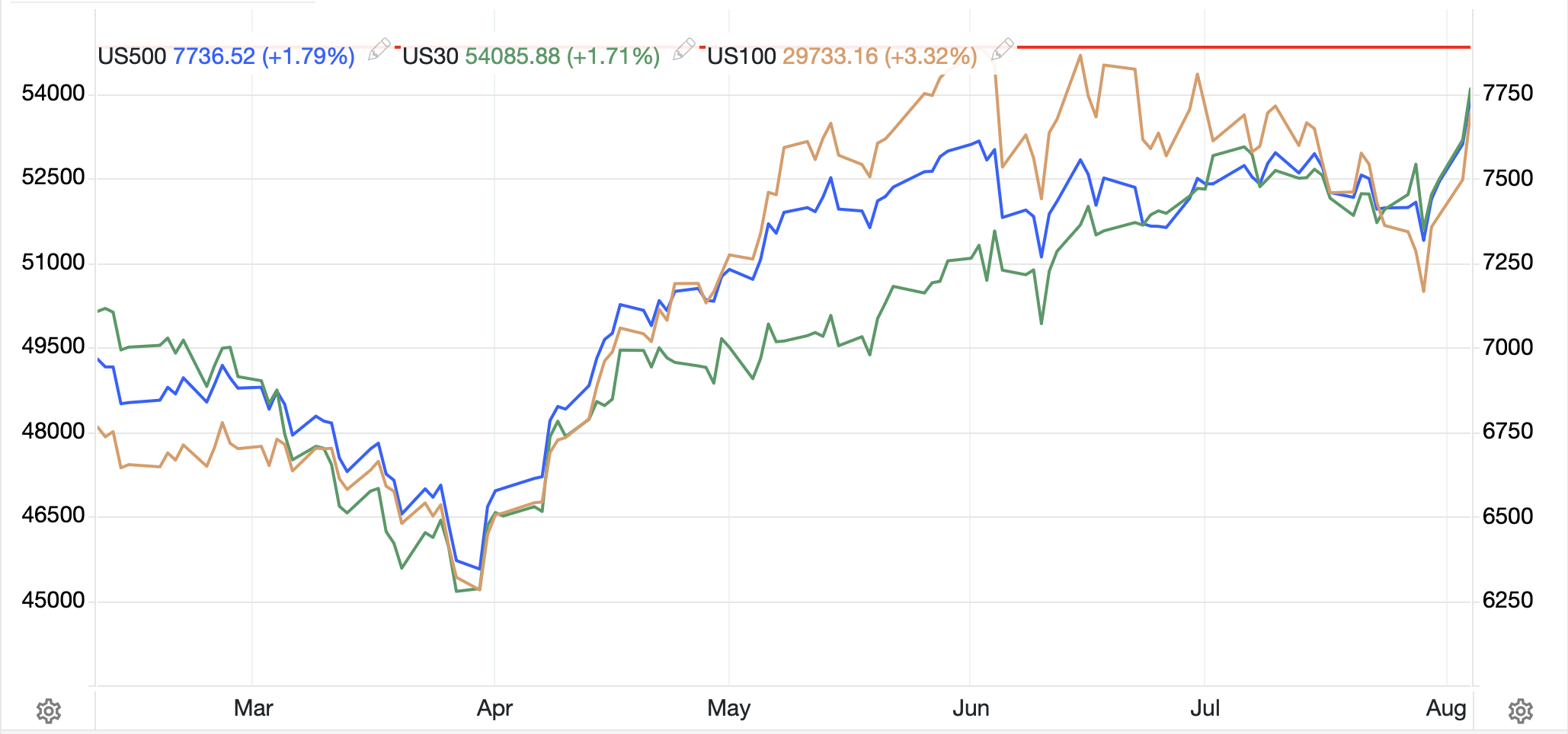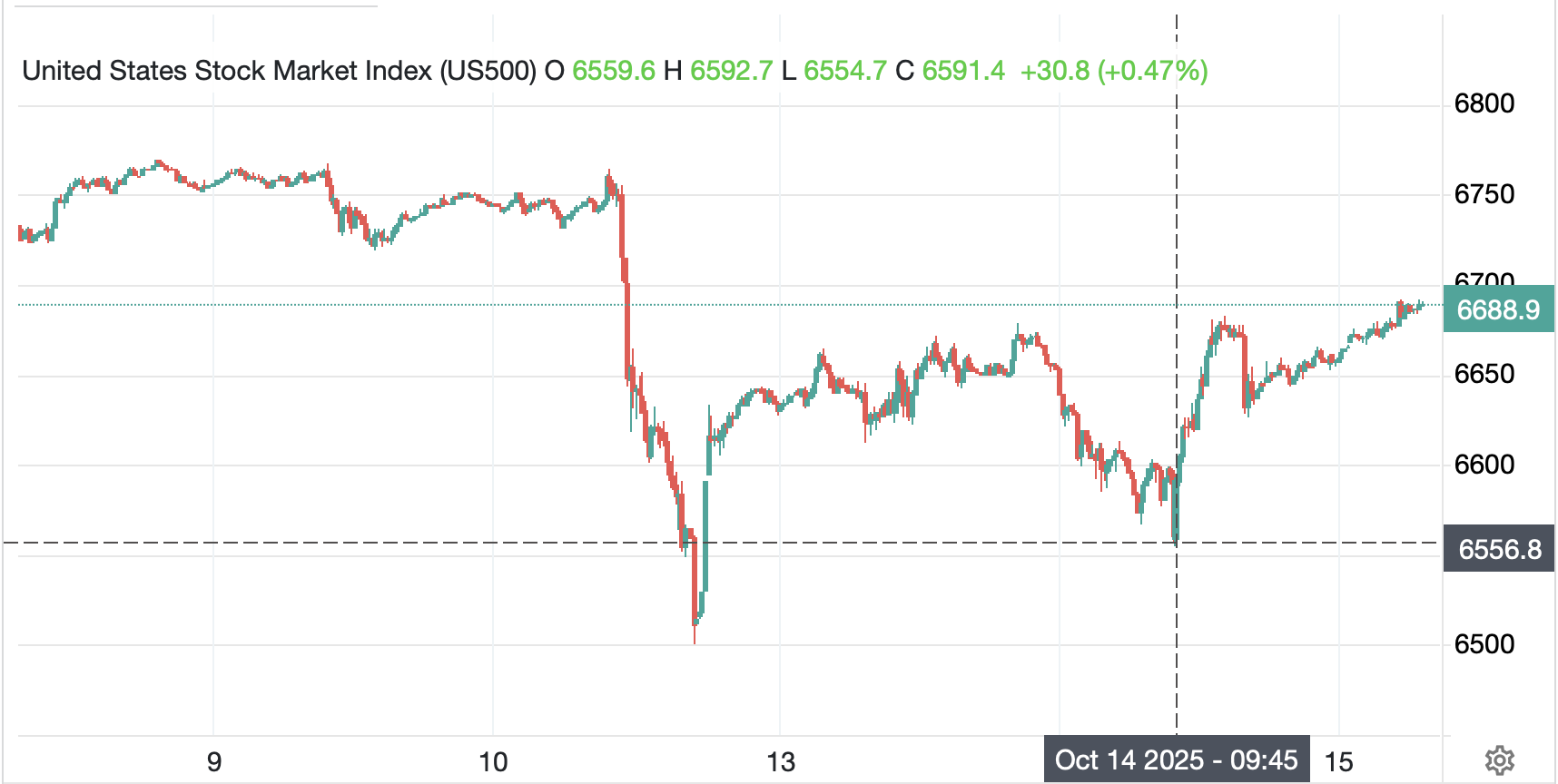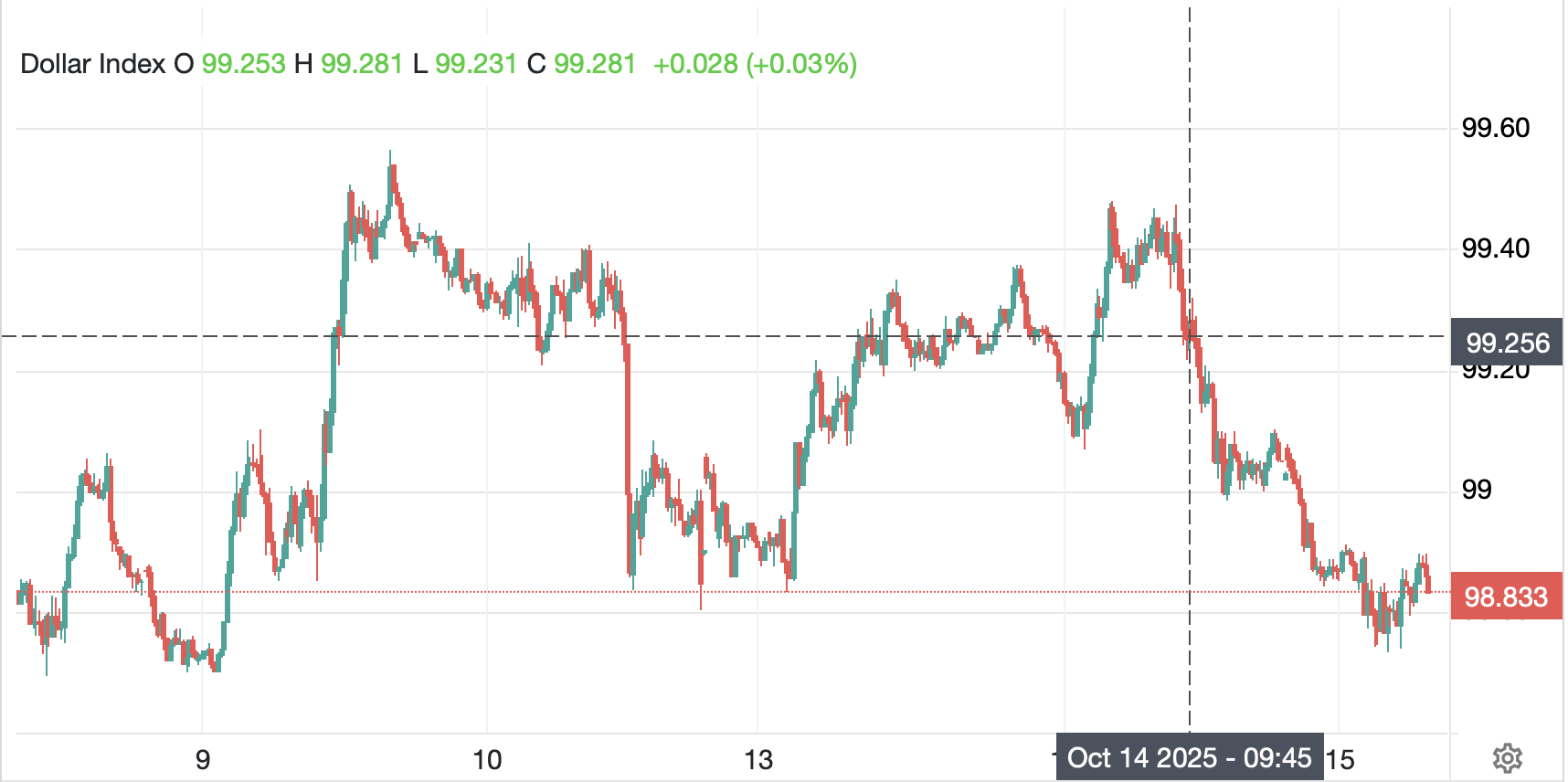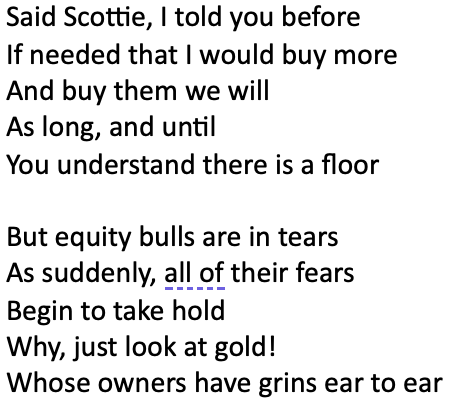
In Tears

As I wrote yesterday, “at least” did a lot of work in the Treasury announcement as it opened the door for significantly larger purchases of longer dated bonds, enough to truly have a market impact.  Most of the initial analysis on the announcement focused on the extra $2 billion to be purchased in each operation.  But what if, instead of $2 billion, they purchase $50 billion each time?  Suddenly, that is a significant reduction in long bonds outstanding, and the program will have a much greater price impact.  Which leads to this Bloomberg headline and story, Bessent Says He’s Ready to Expand Treasury Buybacks.  I believe it would be a mistake to dismiss the Treasury’s ability to achieve their goals as, after all, they do make the rules.

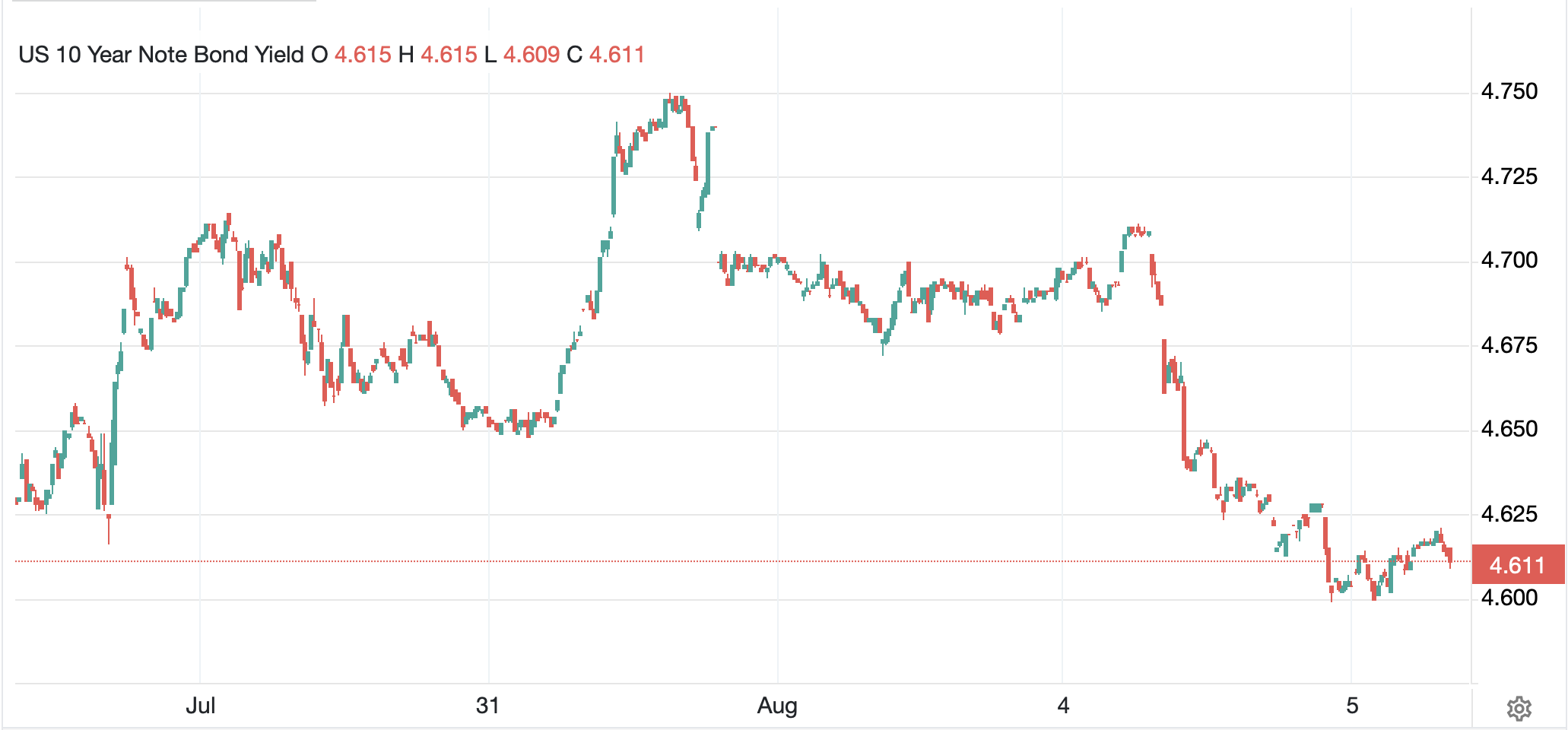
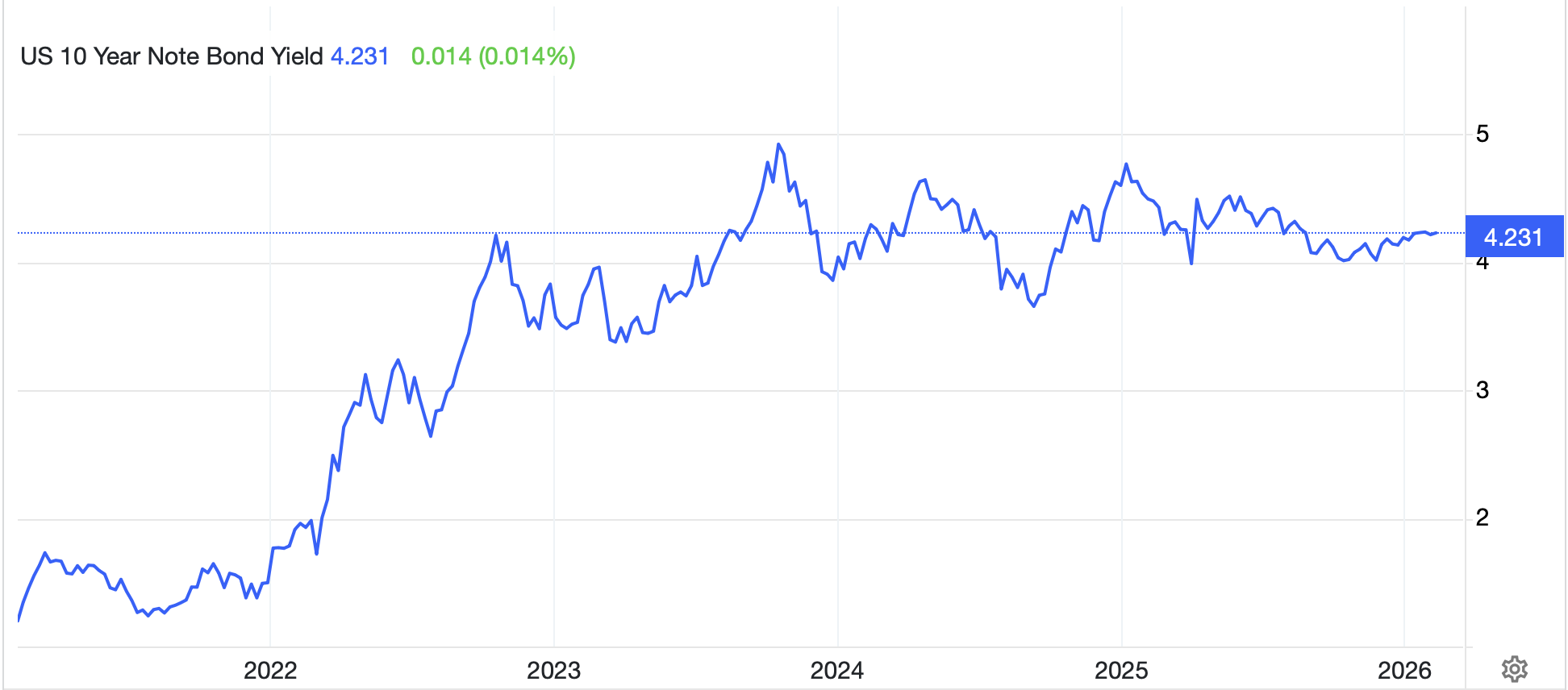
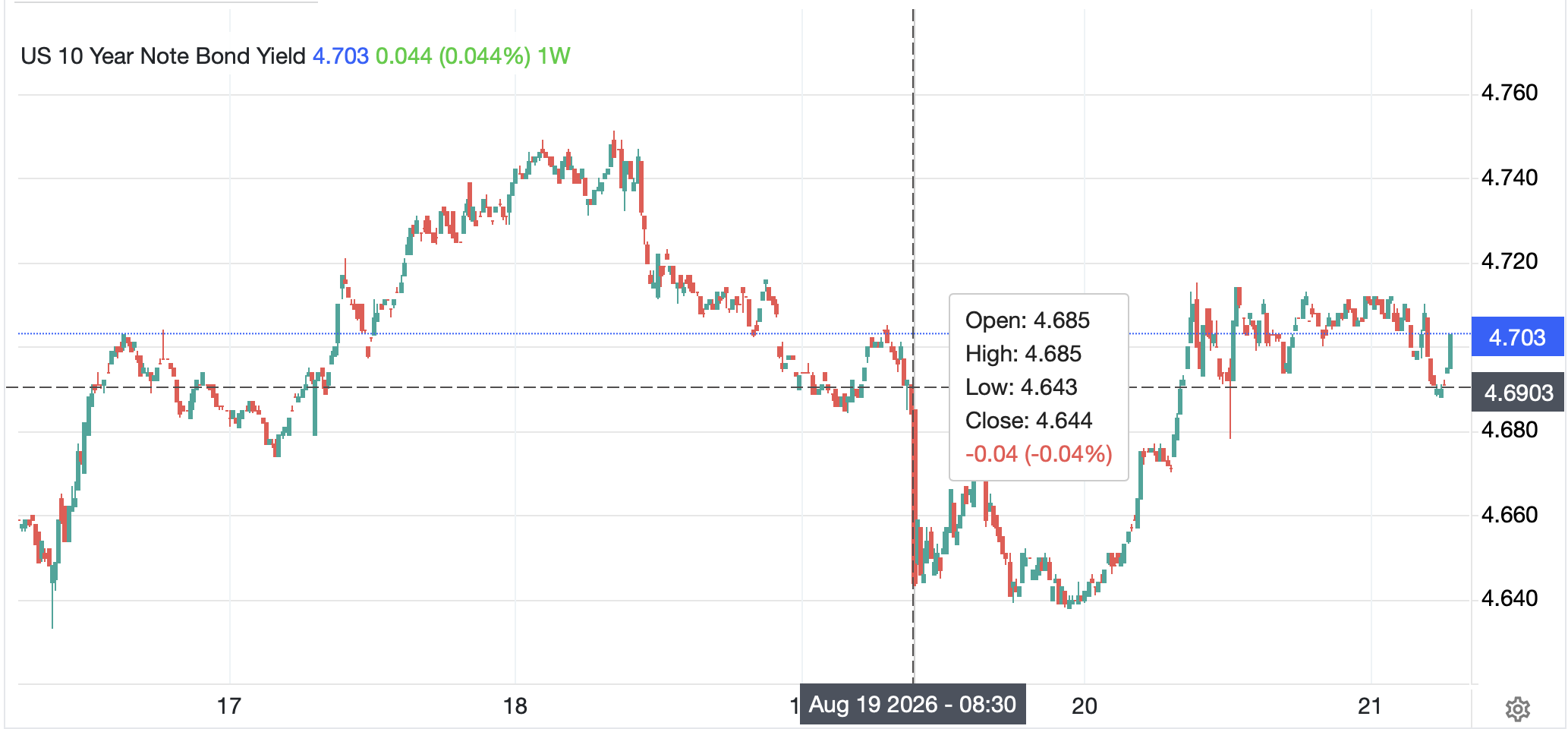
The upshot is that after a one-day rally in bonds, yields retraced those early declines (see chart below) and stocks fell sharply yesterday, clearly not the desired outcome.  
Source: tradingeconomics.com

Much hay has been made regarding the total US debt surpassing $40 trillion the other day, although I see that as merely a reaction to a big round number, not dissimilar to a trading situation in, for example USDJPY, where the market is focused on 160.00 and a break is seen as significant from a trading perspective, but less so from a policy perspective.  I am not seeking to downplay the problems that exist in the US regarding fiscal policy.  I am, after all, a hard money guy (it’s why I am working on USDi, the only inflation tracking cryptocurrency) and a proponent of a much smaller government with much reduced spending.  And that is what is necessary to address the problems at the root.  But that takes Congress and, alas, seems highly unlikely anytime soon.  Personally, I will not bet against Bessent, but that seems to be a popular idea right now.  It is certainly a popular thesis on X.

This saga is only beginning, and I expect that it will be a key topic of conversation for a while, at least until we see a substantial move in yields from the current level.  It is interesting to note, however, the difference in attitude from Chairman Warsh, who explained the market was doing the Fed’s job for them by pushing up yields thus tightening policy, and Secretary Bessent who continues to say that yields don’t represent fundamentals.  Of course, both sides are talking their respective books, so say what they need to say.  Part of me thinks they have dinner together and laugh over how they are confusing markets.

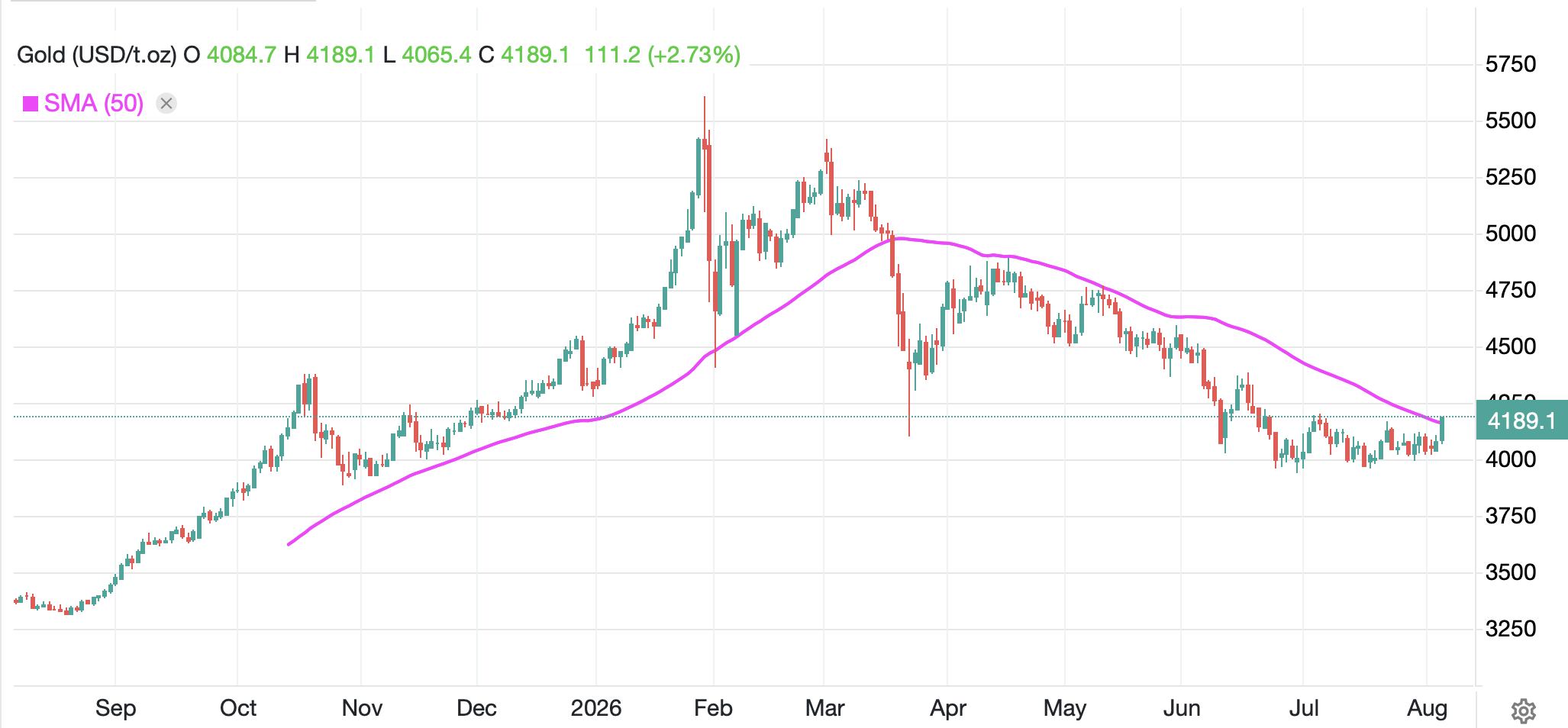
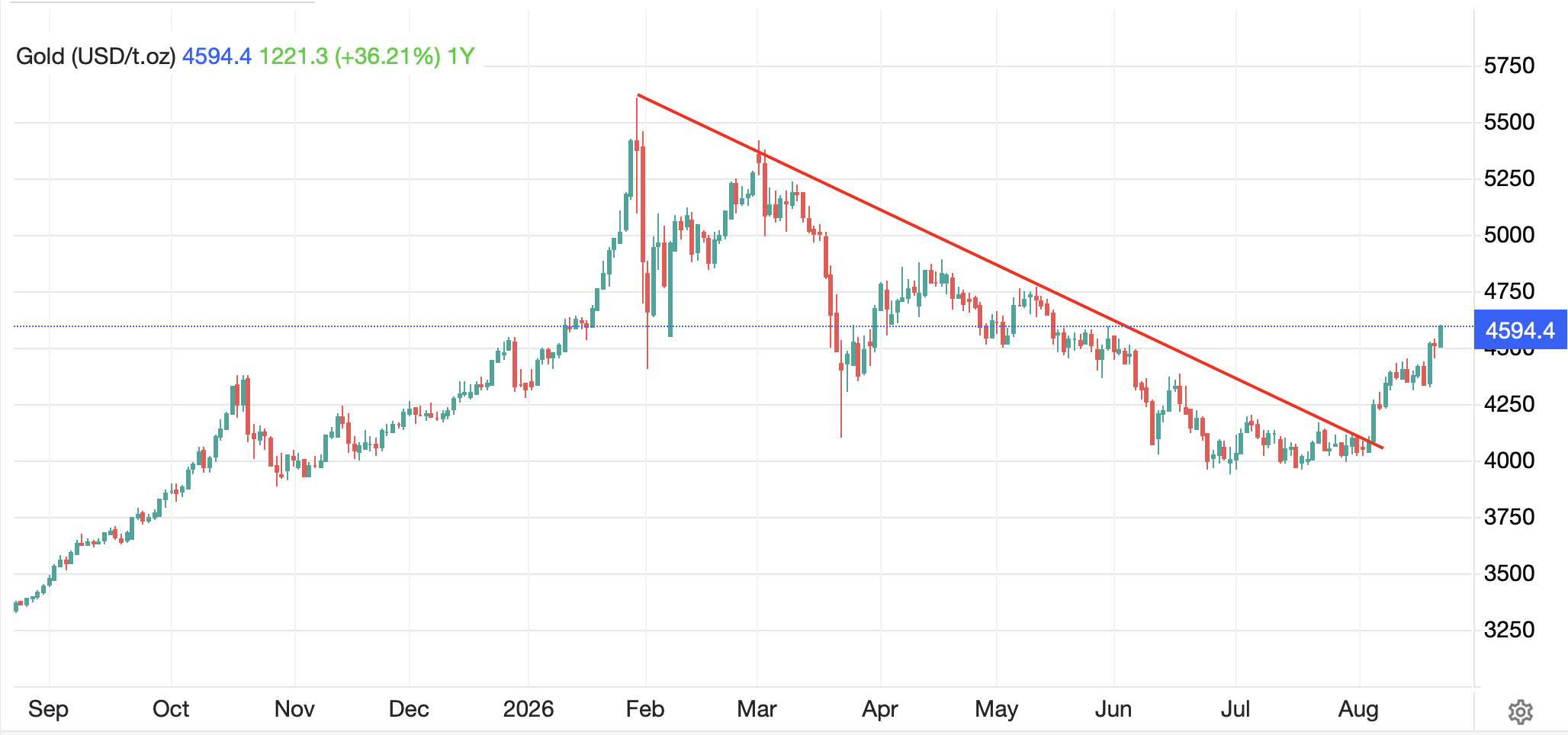
Let’s start our market descriptions with gold (+1.7%) this morning as it is extending its rally of the past two weeks.  A look at the chart below shows the trend line lower from the peak in late January (the date Kevin Warsh was named Fed Chair) was broken on August 6th and has been driving higher since, up 8% since that day and more than 15% since the low print on June 30th.
Source: tradingeconomics.com

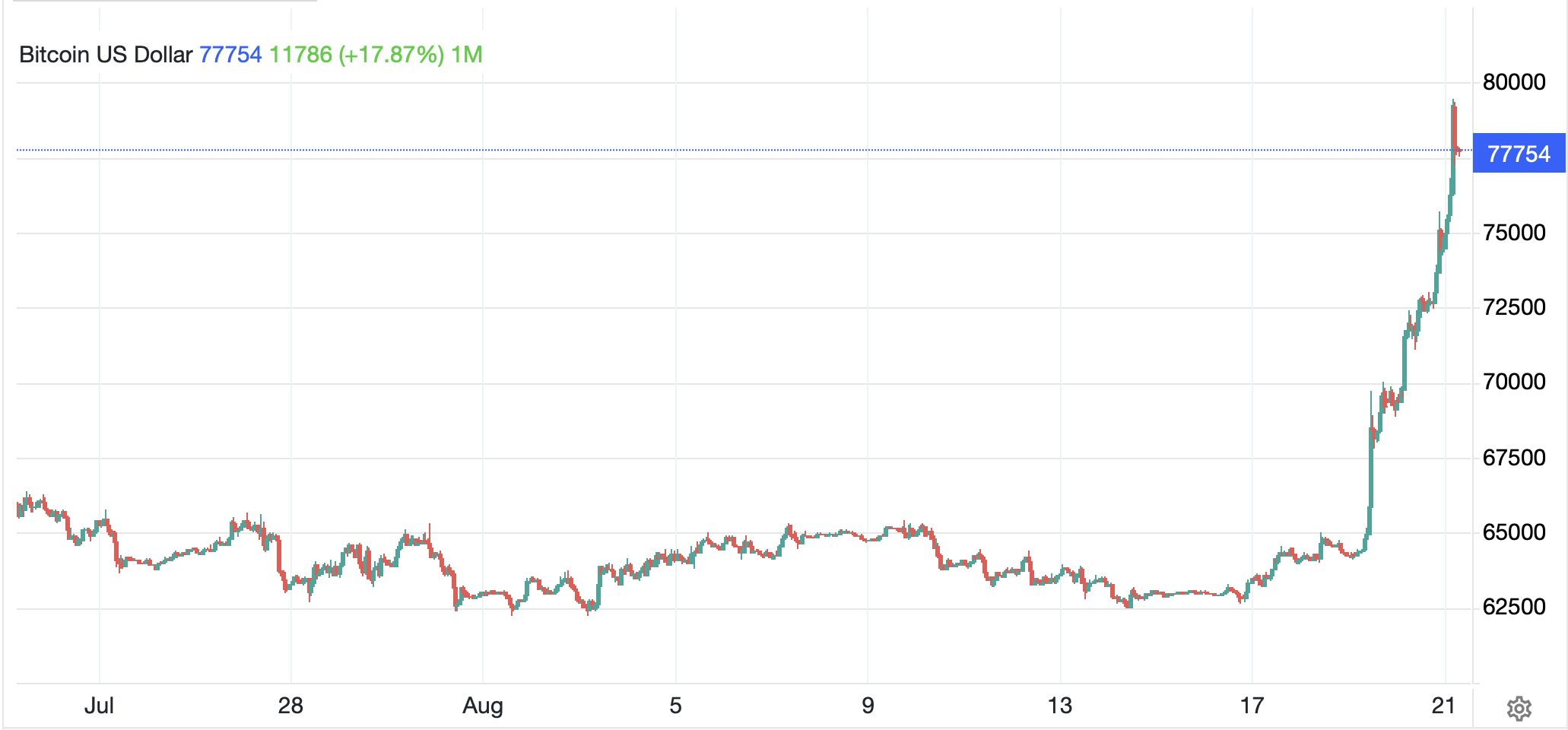
Silver (+2.3%) and copper (+2.1%) are also rallying here as there is a growing skepticism about financial assets and it appears investors are looking for things that are not reliant on government promises to retain value.  While I rarely discuss Bitcoin, that has rallied nearly 25% this week on largely the same story, although it has also benefitted from additional Treasury regulations being promulgated as part of the GENIUS Act and hopes for the CLARITY Act to pass soon as well.  Interestingly, BTC bottomed on June 30th as well.
Source: tradingeconomics.com

As to oil prices (+0.35%) they are creeping higher this morning as the ongoing Iran situation remains unresolved with no end in sight.  A key piece of news, that hasn’t gotten that much attention, is that the UAE has completely shut off all trade with Iran after two of its ships were attacked in the Gulf.  This matters hugely for Iran as the UAE was a significant trade conduit in things like machinery and equipment, as well as food and other necessities.  This will help the US sanctions regime significantly.  In fact, yesterday, Iranian Minister Ghalibaf, in a meeting in Baghdad explained that if the economy suffers further, that will be a major problem for the military and the nation.  Maybe this is going to end sooner than later after all.

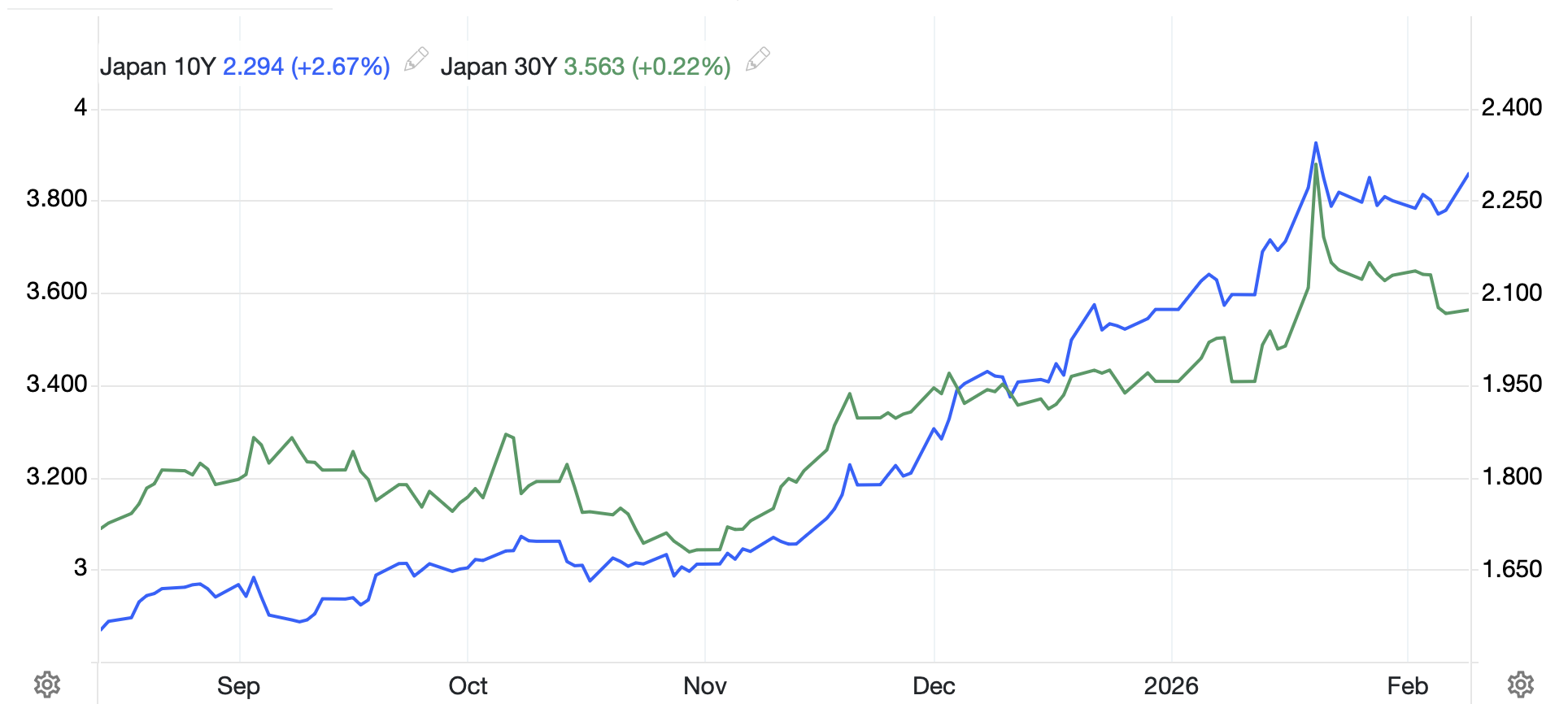
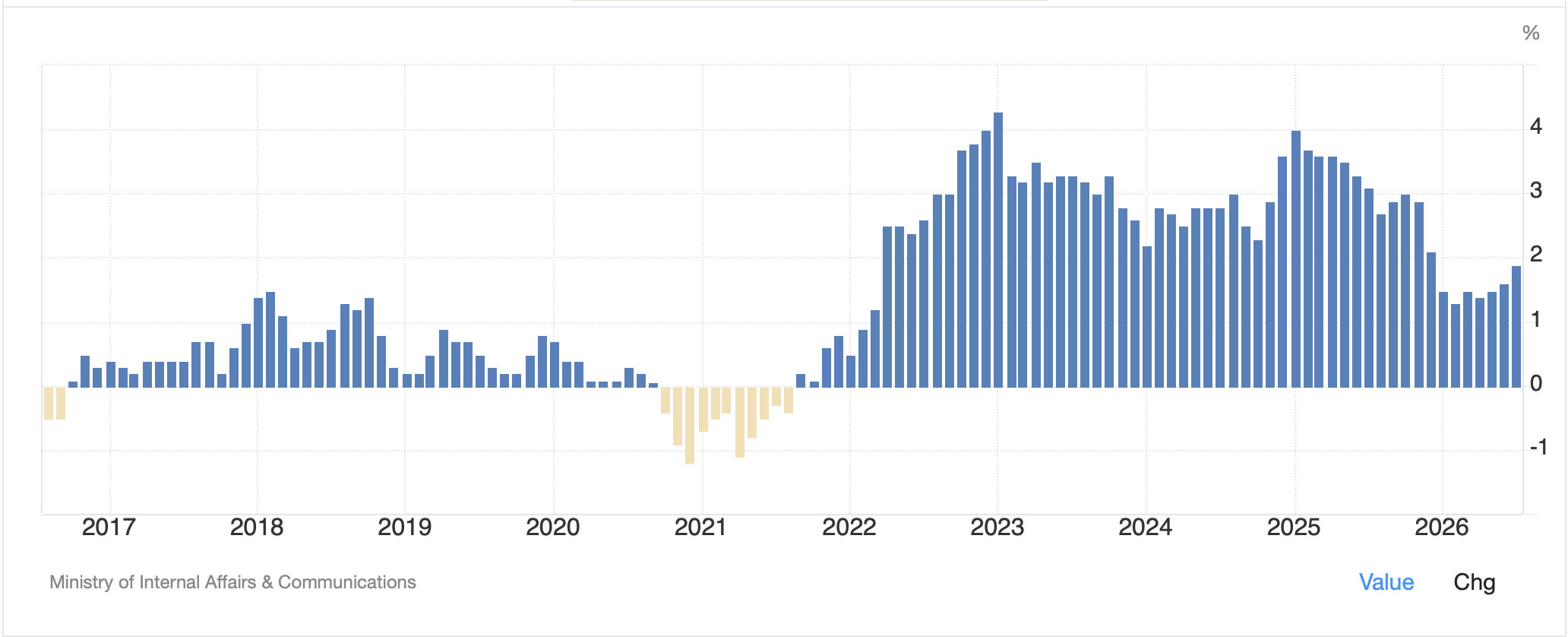
If we turn to the bond market, while Wednesday saw a sharp decline in yields, yesterday saw that reverse, as per the chart at the top of the note and this morning, yields are unchanged from yesterday’s close.  That is true in the US and across every European market.  It feels like investors are waiting for the next piece of information.  The exception here is JGBs (+4bps) where yields rose after inflation data was released at 1.9% (1.8% core) as expected, but trending higher again as government efforts to mitigate the impact of higher energy prices are starting to falter.  As you can see in the chart below, though, the inflation regime in Japan has changed dramatically from the previous decades.
Source: tradingeconomics.com

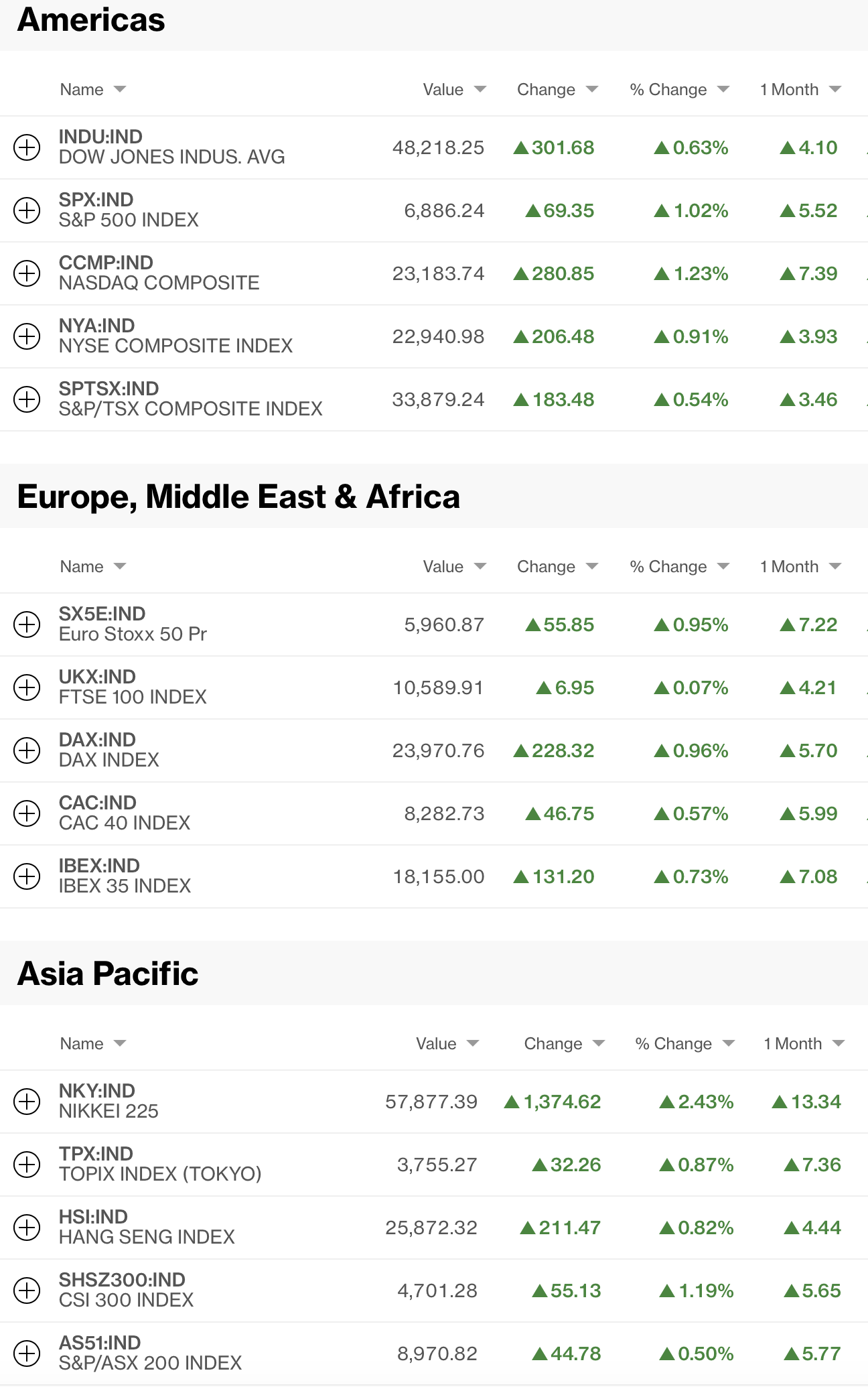
In the stock markets, yesterday’s US performance was pretty crummy (a technical term), with declines on the order of -1% across all major indices.  But that did not follow through so much in Asia (China +0.6%, HK +1.2%, Korea +0.9%, Taiwan +0.65%) although the Nikkei (-0.3%) did lag.  Nor did it have an impact in Europe, although other than Spain (+0.7%), the other major markets are higher by about 0.1% only.  And US futures this morning are in the green, +0.5% across the board, at this hour (7:30).  A key part of yesterday’s US declines was a disappointing earnings report for Walmart, where although they beat earnings, their forecasts going forward were softer.

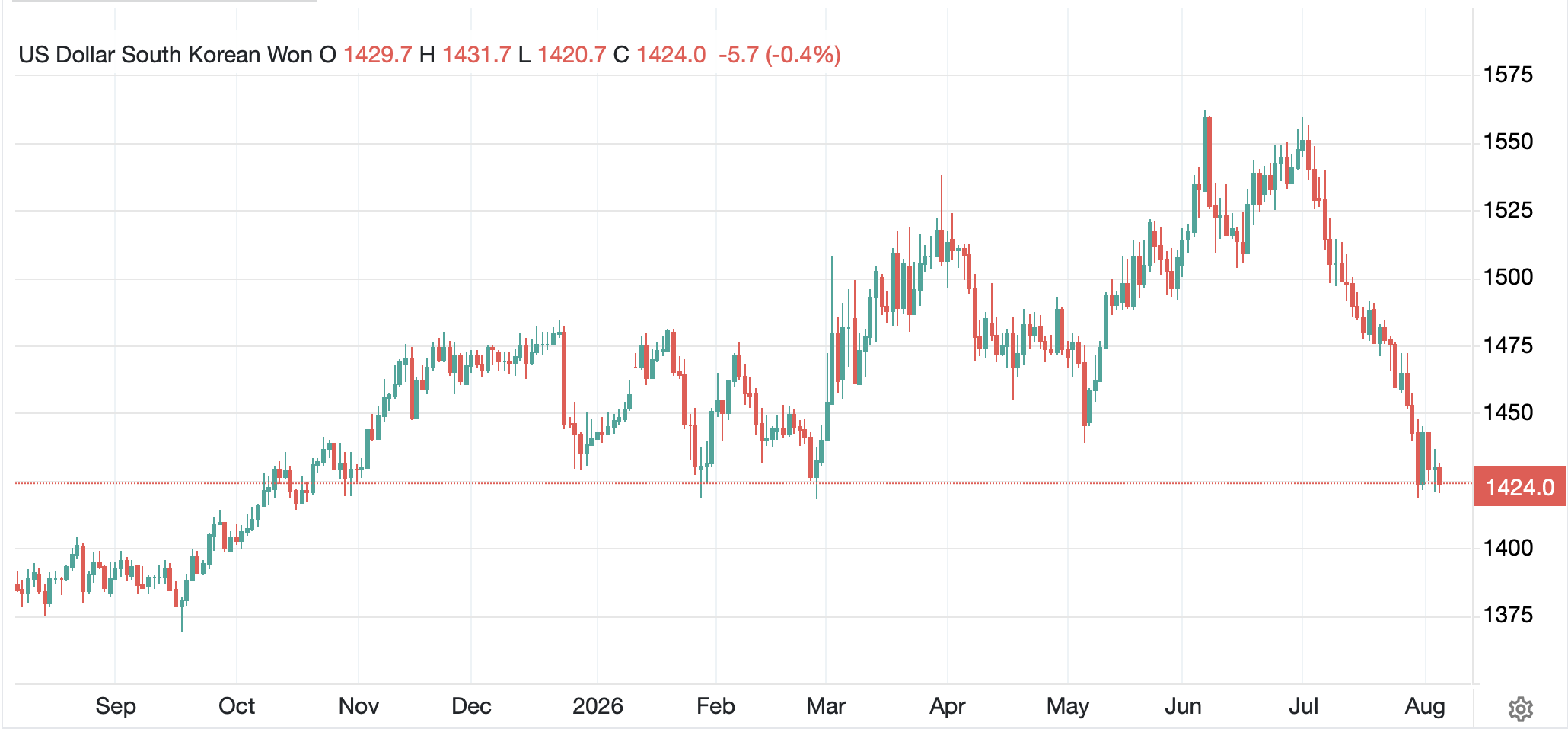
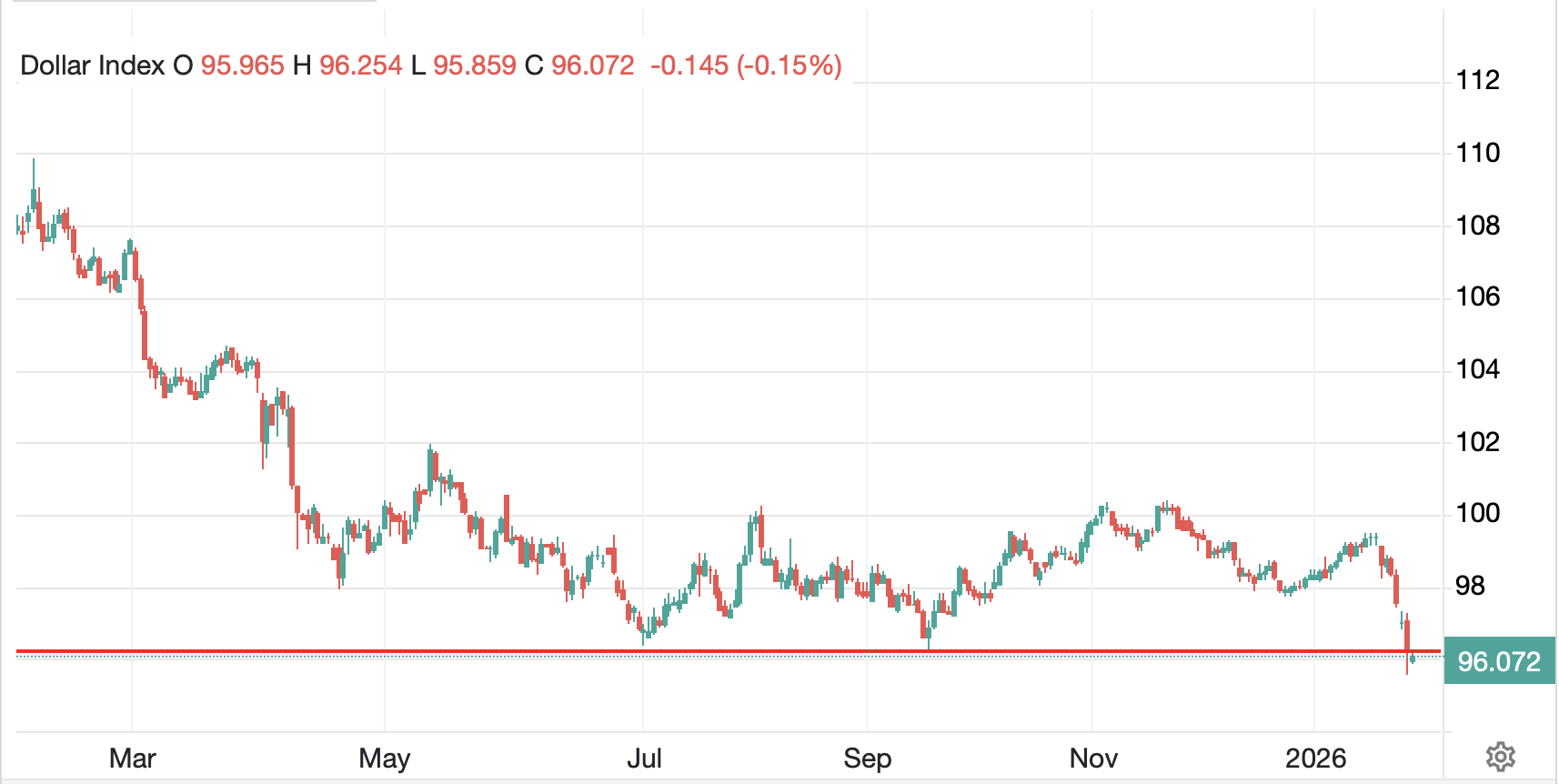
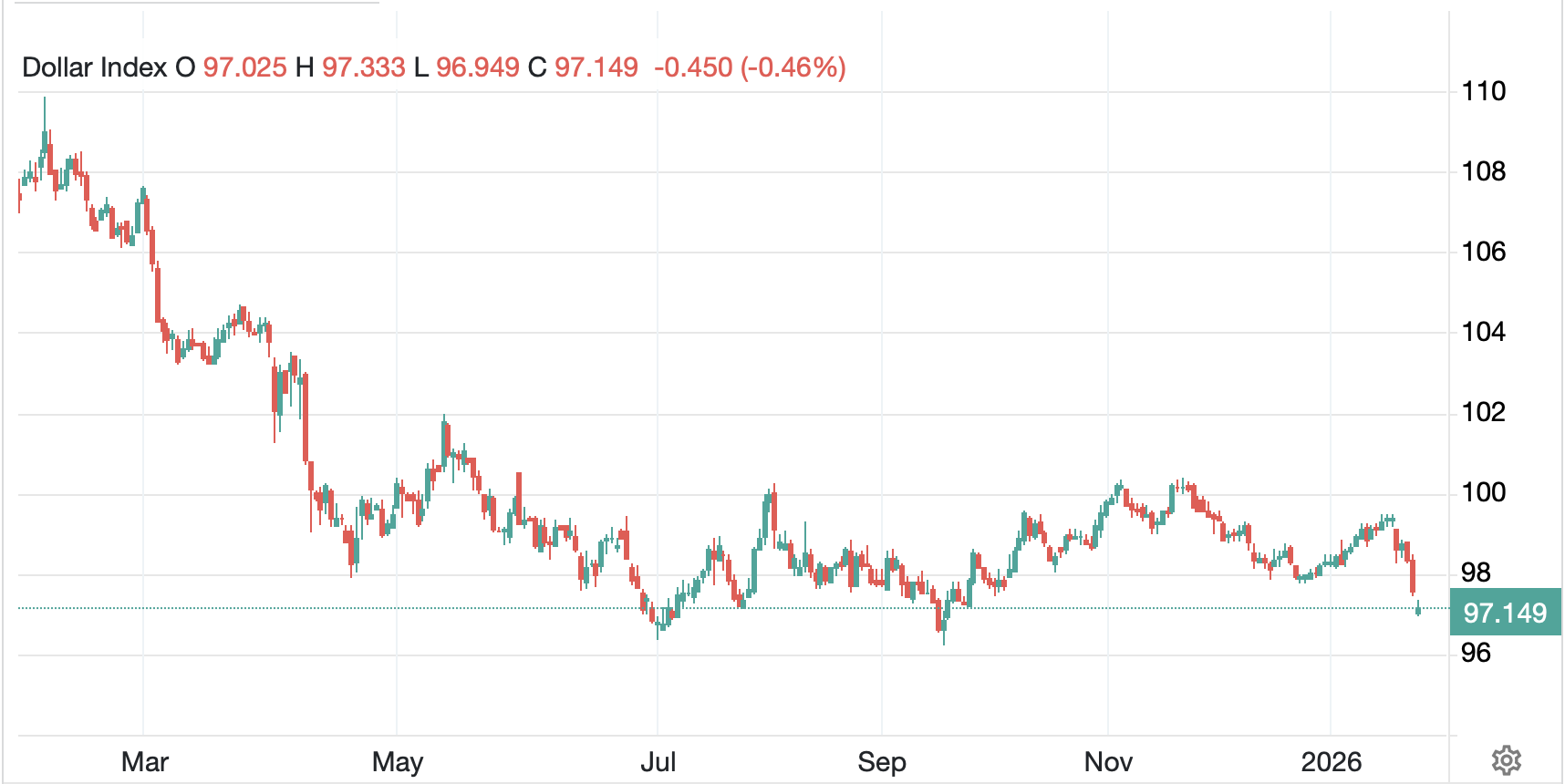
Finally, the dollar is under further pressure this morning, falling against almost every major counterpart with some substantial declines.  For instance, commodity currencies (AUD, NZD, NOK, ZAR) are all firmer by about +0.7% this morning following their local commodity strengths higher, although CLP (-0.1%) is an outlier here.  But we are also seeing strength in the EUR (+0.25%), GBP (+0.2%), JPY (+0.3%) and CAD (+0.35%) from the G10 bloc and similar gains from EMG currencies (MXN +0.3%, PLN (+0.4%), HUF (+0.6%) and the biggest gainer, KRW (+0.7%) which continues to benefit from capital inflows as well as repatriation by SK Hynix after the US IPO.  If we use the DXY (-0.25%) as our proxy the recent downtrend also started at the end of June as per the below chart.

Source: tradingeconomics.com

Two things here.  First, despite this decline, the dollar remains right in the middle of its longer-term range and until we break below 96.50 on the DXY, I do not believe the day-to-day movement indicates much.  Second, though, and more importantly, the FX markets are typically the release valve for pressures in a given economy, as no government can control capital flows, the exchange rate and monetary policy simultaneously, as pointed out by Robert Mundell in 1960 and 1963 (the so-called impossible trinity).  In this case, if the US continues to struggle with the debt situation, or else decides to head down the YCC road for real (meaning the Fed caps yields and buys whatever bonds necessary to do so), the dollar will suffer dramatically and likely boost inflation.  But we are a long way from that situation I believe, and it will take time to get there, if that is the direction.

On the data front, I would be remiss if I didn’t mention the Philly Fed’s blowout number of 47.4 yesterday with the manufacturing sector the biggest beneficiary.  This morning all we see is Flash PMI data (exp 53.9 Mfg, 54.0 Services) although with both the Philly and Empire State readings so strong, I wouldn’t be surprised to see a much stronger read here as well.

And that’s it for the week.  Certainly, it was more exciting than anticipated given the Treasury/Bessent announcement, but until we see just how many bonds they buy in a few weeks, we really don’t know how things will play out.  In the meantime, earnings have continued to be strong generally, and I see no reason for risk assets to decline for now.  The dollar, however, is starting to look a little shaky, and if we see a bit more of a fall, I might get concerned.

Good luck and good weekend

adf
Held At Bay

The doldrums have finally arrived
As interest in markets nosedived
While stocks still creep higher
The marginal buyer
Is sleeping and must be revived

But it seems unlikely today
Is going to show us the way
I think, til Warsh speaks,
And that’s in two weeks,
Excitement will be held at bay

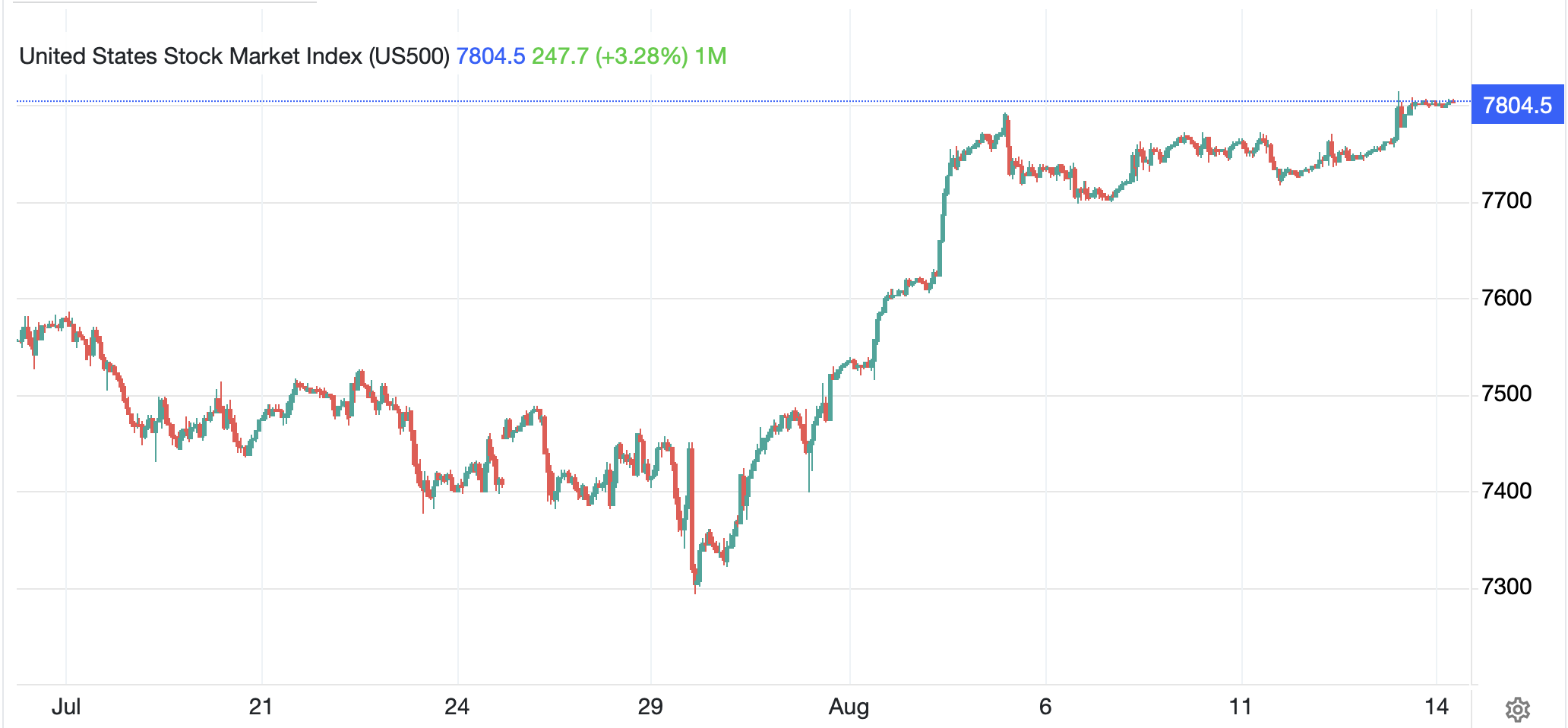
While not every market is completely stagnating, for the past seven sessions, despite NFP, CPI and many stories about oil and war, market price action has been extremely dull.  Whether we look at stocks:

Source: tradingeconomics.com

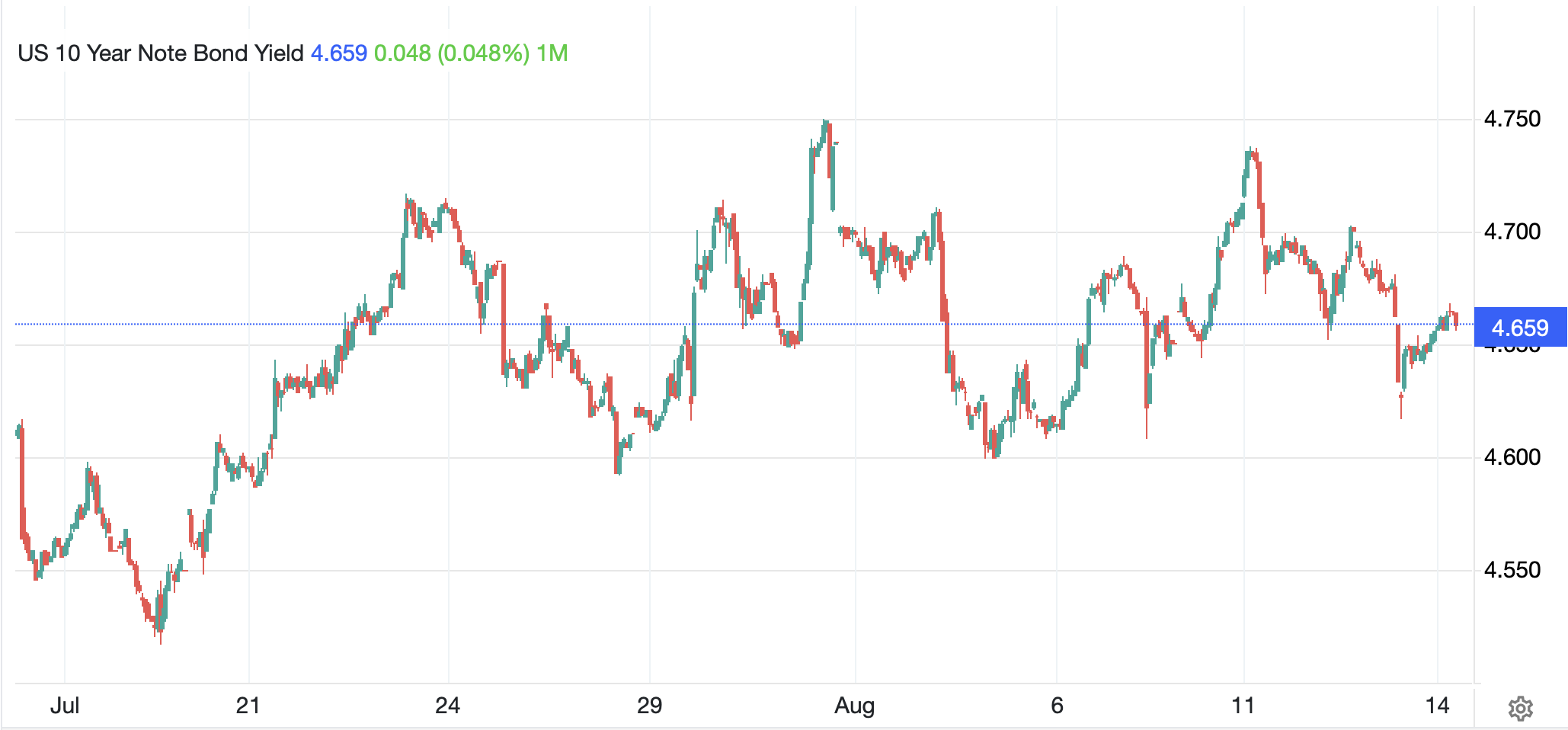
Or bonds, which in fairness have been a little choppier but still gone nowhere:

Source: tradingeconomics.com

The dollar:

Source: tradingeconomics.com

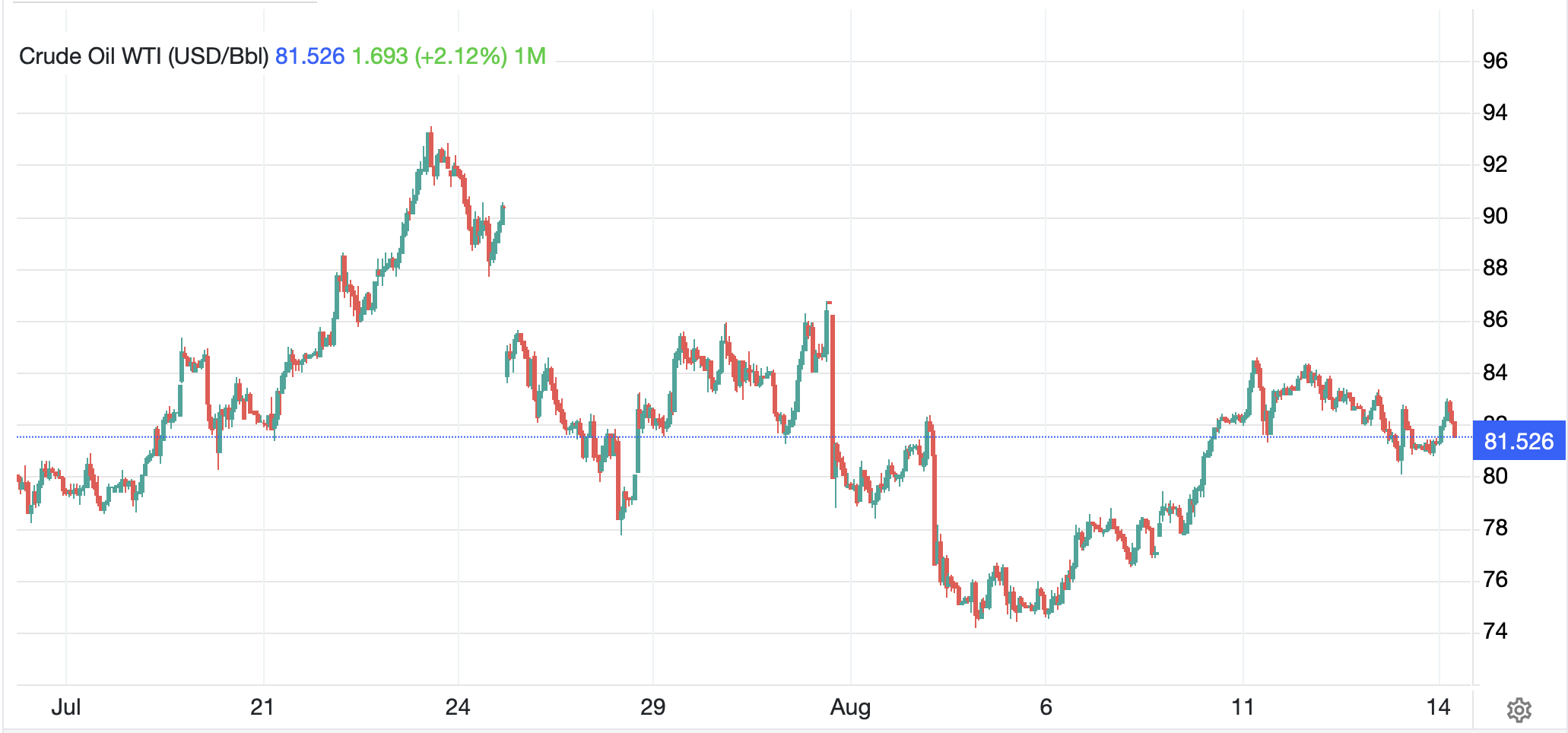
Or even oil, which in the past week has barely moved on net:

Source: tradingeconomics.com

We are very clearly in the summer doldrums.  I think even the narrative writers have gone on summer holiday as there is precious little to discuss.  Yes, we’ve seen a soft NFP report and softer than expected CPI and PPI data, but that has not generated much excitement.  While the Iran situation can always find something for people to discuss, certainly based on the recent EIA oil inventory data, the ‘running out of oil’ story has been put to bed.

Frankly, there is very little to discuss, and I have a feeling it is going to stay that way until we hear from Chairman Warsh at the Jackson Hole summer confab in exactly two weeks.  As it’s August, we already knew that Europe was on vacation, but other than some primary elections in the US, where the effort to generate excitement ahead of the midterms in November has not yet gained traction, what is really new?  Arguably, the most interesting story is Enes Kanter Freedom, the ex-NBA player declaring for the WNBA draft as the WNBA cannot seem to figure out how to define a woman.

So, to keep things brief, I will give a quick rundown now and send you on your way.  Yesterday’s modest gains in US equities were followed by a mixed session in Asia with Tokyo (+0.6%), Korea (+2.4%, which these days is a modest movement here) and Indonesia (+1.6%) all gaining while China was flat and HK (-1.1%), Australia (-0.8%) and Taiwan (-0.5%) all slipped a little.  It is hard to tell a story about this outcome.  

In Europe, only Germany (+0.7%) is showing any life, reaching another record high on the back of some more strong earnings reports, mostly from German defense manufacturers.  But the rest of the continent is little changed, +/- 0.1%.  And at this hour (7:10), US futures are also +/-0.1%, in other words flat.

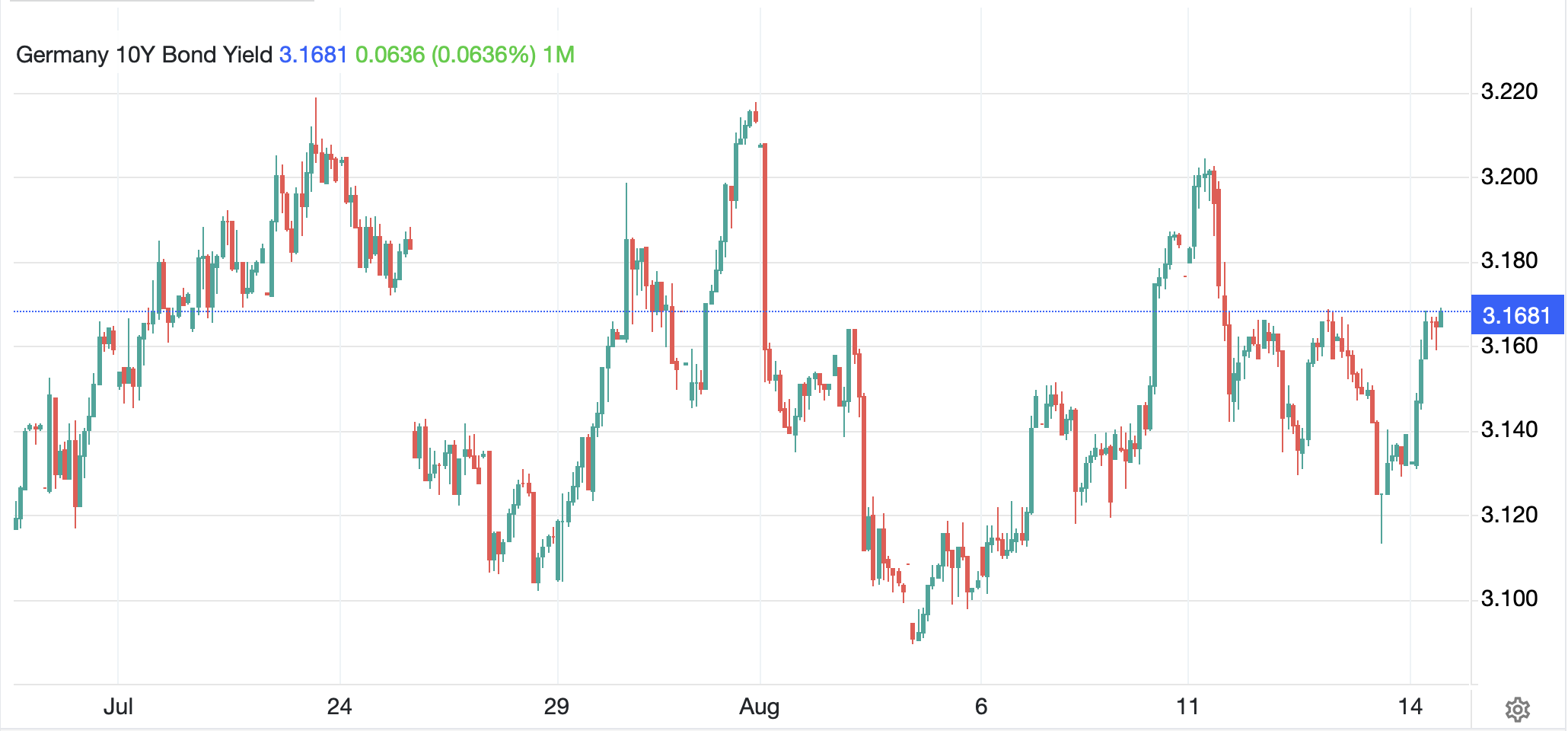
In the bond market, Treasury yields, which slipped -5bps yesterday as both PPI and oil prices were softer, have edged higher by 1bp.  However, European sovereign yields are all higher by between 3bps and 4bps this morning, although it is not clear what is driving this movement.  In truth, if I use bunds as my example, while like Treasuries, the price action has been choppy, as you can see in the below chart from tradingeconomics.com, we haven’t gone anywhere in weeks.

As to JGB yields, this morning they are unchanged, hanging on just below the recently achieved multi-decade highs.  

But speaking of Japan, while the yen (+0.2%) is slightly stronger this morning, as you can see in the chart below, the post intervention pattern remains in force.  In fact, Bloomberg had an article about how speculators used the intervention to reload on short JPY positions.  But the more interesting thing I saw this morning was the following Tweet:

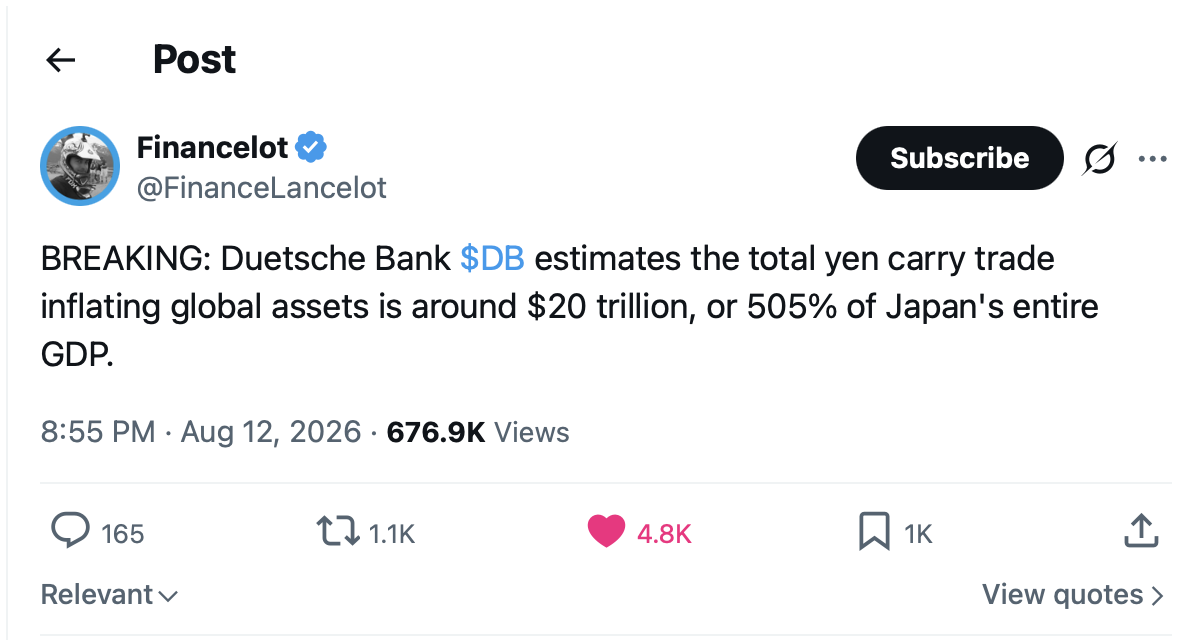
Now, I don’t know how they arrived at that number, and while I always thought the trade was in excess of $3 trillion, $20 trillion is much larger than I expected, but if this is true, it certainly adds a certain stress level to the global economy.  I have maintained that outward Japanese investment in financial products, so purchases of non-Japanese bonds and stocks buy Japanese institutions is a part of this process and adds to the number.  I assume that is part of the calculation Deutsche has made, but I could be wrong, I have not seen the actual report.  But along those lines, in the most recent week, Japanese investors purchased >¥1.6 trillion (~$10 billion) in foreign bonds, keeping up the flow.

If we look at just the G-SIB banks, the major players in international finance, according to Grok, their total combined balance sheets summed to about $78.4 trillion at the end of 2025.  Of course, assuming the carry trade makes heavy use of derivatives for financing, much of that alleged $20 trillion may not show up on their balance sheets, but perhaps it represents as much as 15% of bank assets.  This is quite a concern, especially as, again according to Grok, those same banks have only ~$4.7 trillion in Tier 1 capital.  

So, if these numbers are even in the ballpark, it tells a tale of a highly leveraged banking system that is subject to major convulsions if a certain series of events unfold, notably, the carry trade loses its luster.  (if you ever wondered why goldbugs are goldbugs, this is exhibit A).  The thing to remember is it has taken decades for this trade to accumulate, and it will not decumulate in weeks, or even months, but will take years to do so.  As well, if things start to turn, you can be certain that central banks will do their best to prevent a runaway train, and they have enormous power, specifically the power to print money, to slow things down.  But that doesn’t mean things won’t get ugly if this is the future.  I hark back to my comments regarding the end of forward guidance and how that will enhance markets’ collective anti-fragility.  It feels like the global financial system, if this is true, is seriously fragile!

Ok, let’s wrap up.  In FX, the dollar is softer this morning across the board, with the DXY (-0.4%) quite representative of the movement across both G10 and EMG currencies.  However, the thing to remember here is that we are still rangebound overall for the past year in G10 currencies, although we have seen broad based strength in a number of EMG currencies like MXN, BRL and ZAR , all of which have much higher real rates than the US.

Lastly, oil (+0.3%) is a touch higher, while metals prices (Au +0.3%, Ag +0.8%) are also firming up on the softer dollar.  But there is little to discuss here.  News that the US is sending another aircraft carrier to the Persian Gulf area got oil to rise earlier, but that is fading already.

On the data front, this morning brings Retails Sales (+0.1%, +0.2% -ex autos) and then Michigan Sentiment (54.5) at 10:00.  There is one Fed speaker, an Atlanta Fed VP and acting President as they seek a new President.  However, given her acting status and the fact Atlanta is not a voter, I don’t think anybody will even listen!

So, absent a seriously strong Retail Sales report, the die is cast for another slow day in my view. 

Good luck and good weekend

Adf

Why People Screech

Investors enamored with risk
Are active, some might e’en say brisk
In buying up stocks
In very large blocks
And feeling, right now, very frisk-y

But this simply highlights the breach
Twixt markets and why people screech
The ‘conomy’s ailing
And policy’s failing
To help, so for more, they beseech

If you ever wanted to see the definition of the K-shaped economy, there is no more accurate representation than the fact that equity markets are making all-time highs at the same time Socialists are winning elections.  Now, I don’t know many voters in Michigan, but I’m pretty sure the ones who have an equity portfolio are not voting for the candidate who wants to abolish the Senate, the Supreme court and the Presidency as well as the police and the Department of War.  But here we are, with both the DJIA and the S&P 500 trading to another new all-time high yesterday, although as you can see in the chart below, the NASDAQ is still a few percentage points away from its recent highs and the DSA candidate poised to win the Democratic primary election for US Senator in Michigan.  Strange times indeed.

Source: tradingeconomics.com

While there is no doubt that earnings continue to be quite strong, and that is the proximate cause for the equity market rally, earnings are a function of economic activity, so it is highly unlikely they would be so strong without underlying economic strength.  The upshot is that we continue to ‘reap’ the benefits of the original Portfolio Balance channel defined by then Fed Chair Ben Bernanke as he began the process of inflating the Fed’s balance sheet and all that liquidity spilled into financial markets rather than the real economy.  At this point, we have seen money moving back toward production (I saw that a new steel mill was being built in California, the first new mill there in over 50 years) but it remains the case that more money flows to markets than to production. And that, I would argue, is the crux of the dichotomy that we are currently observing, fabulous wealth being created but an extremely uneven distribution.

Can it, or will it change?  It took a long time to create the problem, and I fear it will take a long time to unwind it, although I believe that politicians on both sides of the aisle recognize the problem.  And this is the classic case where they have very different solutions.  Arguably, the fate of the nation rests on which solutions are implemented, reshoring American industrial capacity, or a state takeover of the means of production and redistribution.  You know which side I’m hoping wins out.

But in the meantime, equity markets here are strong as is economic activity, at least as measured by the government, and that has been sufficient to drive market behavior.  And that, my friends, is why Wall Street is happy.  Well, that and the following headline:

Wall Street bankers’ bonuses set for significant rise

With that in mind, let’s see how markets are behaving.  That US strength was followed almost universally in Asia with every major market rallying except Singapore (-0.55%) and Thailand (-0.5%).  Otherwise, the gains ranged from +3.7% (Tokyo and Korea) down to +0.25% (HK) with more strong gains above 1.0% than below that level.  Tech stocks remain the story and that has been helped along by the latest Hormuz story that indicates a deal is coming soon.  Frankly, writing about Hormuz at this point seems absurd given the numerous claims and counterclaims with very little ability for most of us to discern truth from propaganda.

The interesting thing about a tech-led rally is how completely it ignores European bourses with France, Germany and the UK all unchanged on the day, although Spain has managed a modest gain of 0.4%.  But I think that gain is a function of the better-than-expected PMI Services number from Spain, 58.3, which is its highest reading in more than 3 years while the rest of Europe managed to basically meet expectations at lower levels.  As to US futures, as we await the ISM Services data today (exp 54.5) you will not be surprised that they are higher at this hour (7:45).

Perhaps the bigger story has been bond yields as they have slipped -13bps in the past two sessions and are down -1bp this morning as per the chart below.  European sovereign yields have also backed off a bit although this morning they are basically unchanged while JGB yields (-3bps) continue to trade near their recent multi-decade highs.  So far, the US-Japanese joint yen intervention has not been enough to change that story.

Source: tradingeconomics.com

In the commodity space, it is the metals markets that are the most interesting this morning with gold (+2.7%) and silver (+4.1%) leading the way as hopes for the Hormuz reopening and the end of the Iran conflict percolate.  Either that or people have begun to realize that the demand for metals remains impervious to other stories.  Now, I am not a market technician, but frankly, the fact that the gold price is breaking above its 50-day moving average as per the below chart, and the general price action is telling me that we have put in a bottom and seem poised to break higher.

Source: tradingeconomics.com

Copper (+0.4%) continues to trade near its all-time highs and I suspect a move higher in gold and silver will take it along for the ride.  As to oil (+0.4%), the fact remains it is lower by -10.0% this week, which has been a key driver of sentiment in markets overall.

Finally, the dollar is a bit softer this morning, but not too much.  The euro and pound are both firmer by 0.2% while the yen is little changed along with CHF, CAD and AUD.  NZD (-0.4%) is an outlier after weaker than expected jobs data undermined the idea of another rate hike by the RBNZ.  In the EMG bloc, most currencies are a bit stronger as well, 0.1% to 0.3% or so with KRW (+0.4%) and CLP (+0.8%) the outliers, with the former continuing its recent trend as you can see from the chart below, while the latter is benefitting from the overall strength of copper.

Source: tradingeconomics.com

And that’s really it for the day.  In addition to the ISM data, we do see EIA oil inventories later this morning and we get the Treasury Refunding Announcement at 8:30, although there is no expectation for a massive change in the current issuance schedule.  Late this afternoon, the central bank of Brazil is expected to cut the SELIC rate by 25bps to 14.0%, which is arguably why BRL has been such a strong performer all year, very high real interest rates.

As to the dollar writ large, it is on its heels right now and I don’t think Secretary Bessent minds that very much.  Using the DXY as the proxy, do not be surprised to see it trade to 97 by the end of summer.

Good luck

Adf

Completely Reversed

The market response was, at first
That things moved from bad to now worst
But by session’s end
The short-term downtrend
Was over, completely reversed

The narrative now making rounds
Is by starting naval lockdowns
Trump’s turned Iran’s table
And thus, may be able
To finish the goal he expounds

The irony, to me, of the entire Iranian situation is that, generically, the US shouldn’t need to care about Iran anymore.  Back in 1979, when the US imported a majority of its oil, everything in the Middle East was critical for the economy as a whole, and therefore politically.  But that is no longer the case, and if the Iranian leadership had simply wanted to repress its own people and espouse its Muslim fundamentalism, without sponsoring terrorism around the world, Iran would have faded from the view of the US establishment.  While there would have undoubtedly been some who would say it was a terrible humanitarian crisis, and the US should do something about it, unfortunately those situations are rampant around the world.  

Don’t get me wrong, I think the Iranian regime has been one of the cruelest and most repressive on the planet, I’m simply highlighting that to the US, it was an oil source throughout history.  Now that it’s no longer a key oil source for the US, it has no political constituency in the US.  And yet, here we are with 3 aircraft carrier groups in the vicinity doing incalculable damage to the nation because that leadership was not satisfied to simply repress its own people but felt it was their mission to destroy other nations, notably Israel and the US.  That’s all I will say about the rationale for the current events.

But speaking of current events, it seems that President Trump’s decision to blockade the Strait of Hormuz has shown early signs of being quite effective.  Two stories have made that point, first that the Chinese have suddenly made their first comments about the war, explaining that free navigation through the Strait is an imperative and second, that the Iranians appear to be quite interested in a second set of discussions after the ones last weekend fell apart.

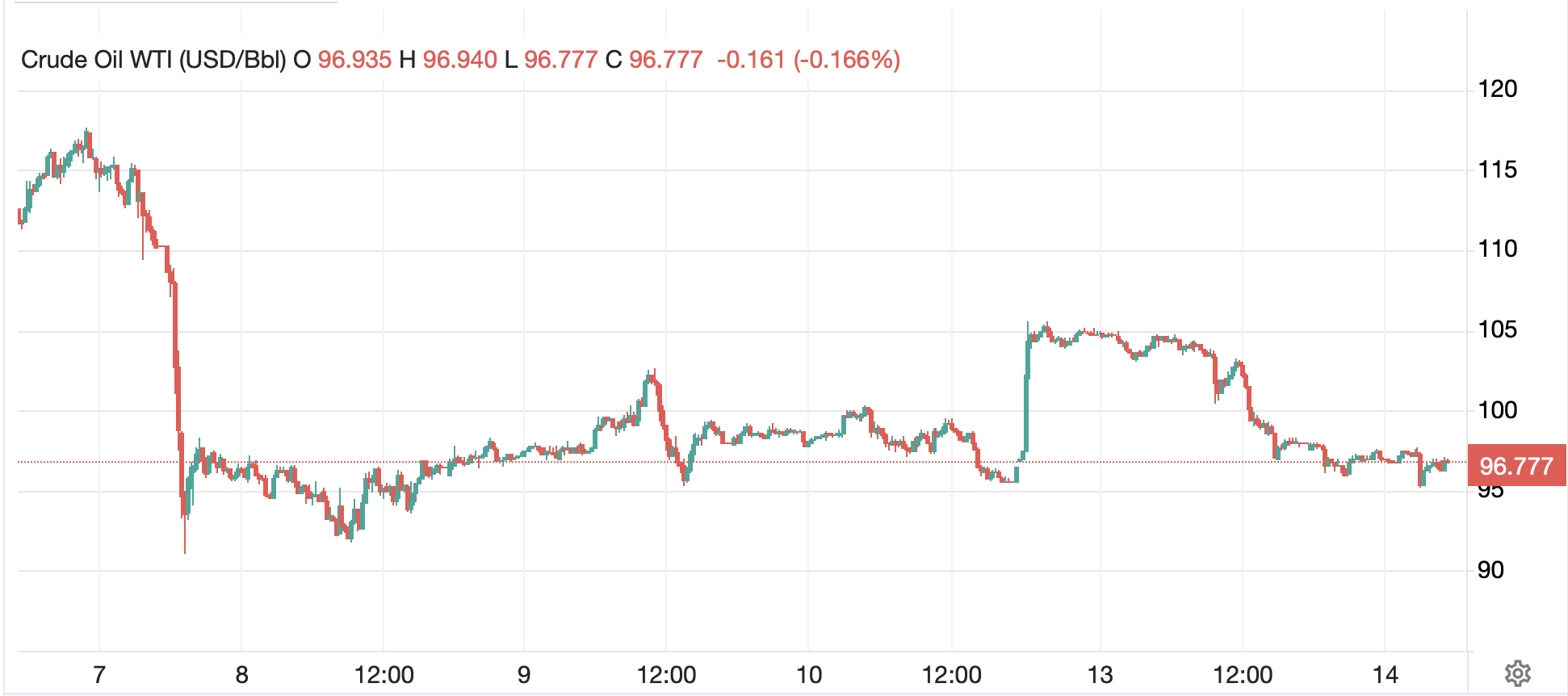
The interesting thing about markets is their ability to anticipate the way things work out, as despite the early panic over the weekend regarding the talks failing and the blockade being enforced, price action yesterday was entirely positive, reversing all the Sunday night fears.  Once again, the oil chart for the past week shows the continued ups and downs, with the latest leg back down.  This morning, WTI is lower by a further -2.3% and back well below $100/bbl.

Source: tradingeconomics.com

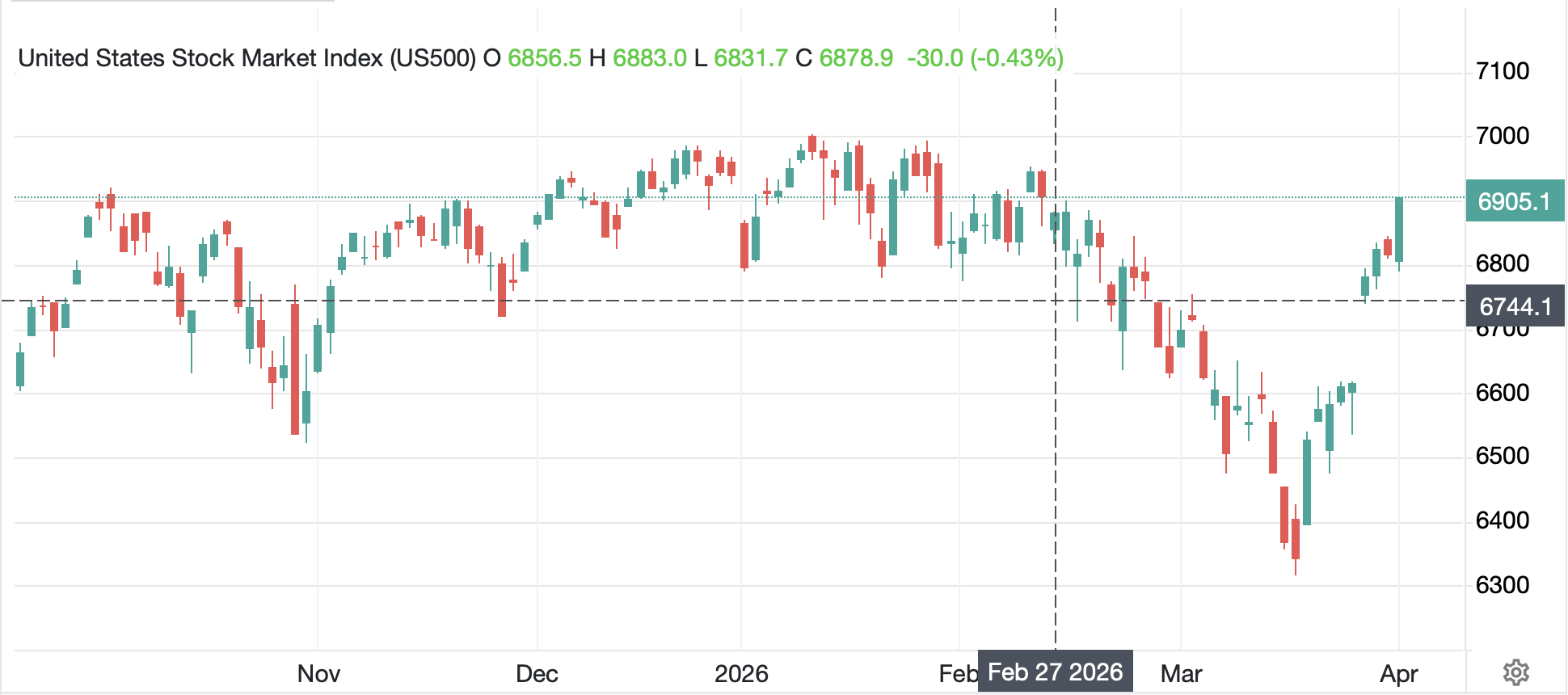
In truth, we cannot be surprised at either of these stories as the Iranian leadership knows it cannot live without its oil exports, nor the Chinese without its access to that oil.  While it is still unclear how things will evolve from here, a successful conclusion of the war, with Iran giving up its enriched uranium and pledging to stop trying to go nuclear is seemingly closer to fruition than before all this started.  Certainly, the market believes that is the case given the S&P 500 has traded back above its pre-war level and is now within 100 points of its all-time high just above 7000.

Source: tradingeconomics.com

And here’s the thing about the oil market.  As we know, every shortage is followed by a glut.  Every non-Gulf producer has been going full bore since this began and oil prices spiked, and this was alongside the massive releases from strategic petroleum reserves around the world.  If you add up the amount of oil that is sitting in tankers in the Persian Gulf, along with the amount that is in storage there, and the amount of both Russian and Iranian oil that had been in transit and unsanctioned, the numbers are staggeringly high.  The math I saw from Alyosha (Market Vibes) is somewhere around 600 million barrels are going to come flooding into the market in fairly short order once the Strait is reopened, and it will be reopened, of that I am certain.  At the same time, the war has reduced revenues of the gulf nations for the past 6 weeks, and they will want to be pumping as much as possible, at any price (remember, in Saudi Arabia, the cost per barrel to pump oil is estimated to be between $3 and $6, so $30/bbl oil is still profitable.). While this is not an investment discussion nor advice of any type, I have exited all my oil focused positions at this point.

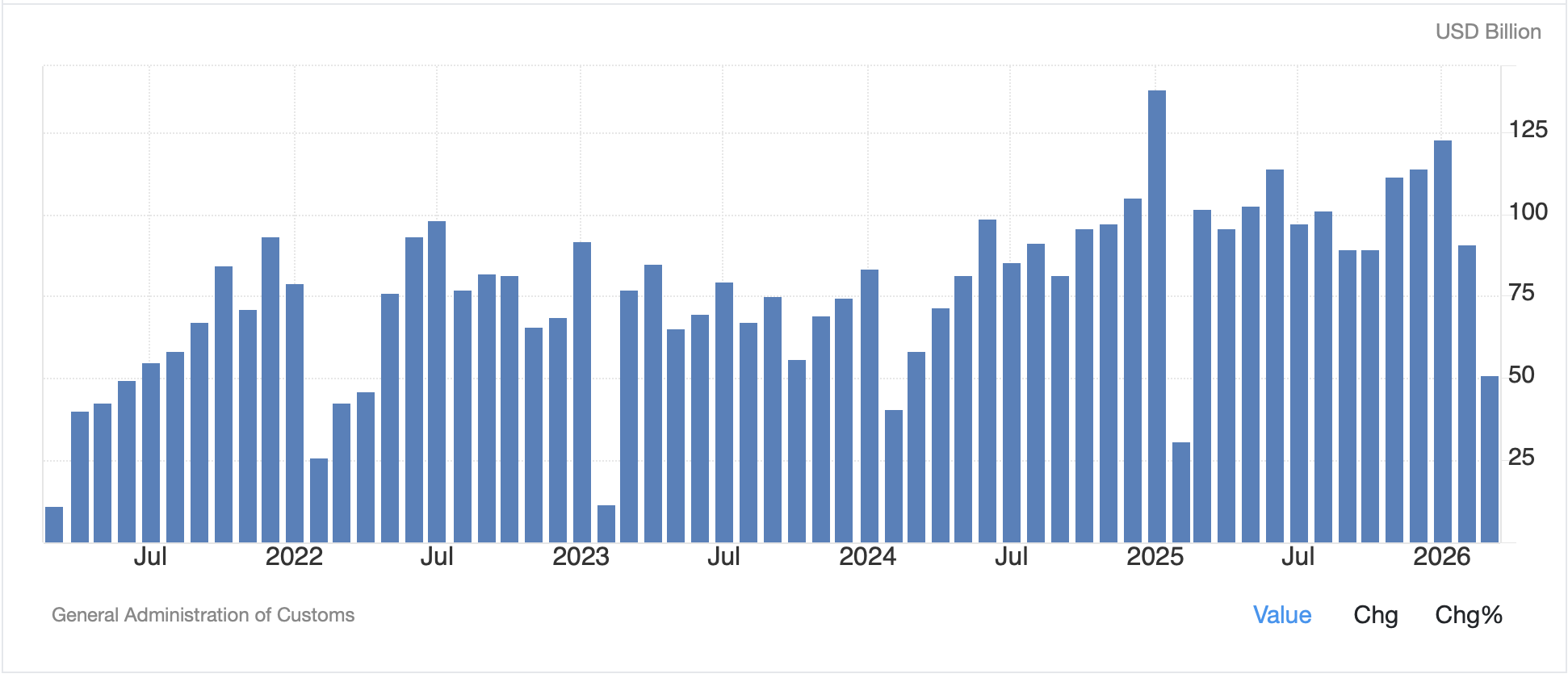
There is another related story here as well, this about the Chinese economy.  Last night they released their trade data, and it was substantially worse than expected.  As you can see from the chart below, the surplus barely topped $50 billion, compared to a consensus estimate of $112 billion with not only a massive increase in imports, 27.8% and likely highly energy related, but a significant decline in exports, just a 2.5% rise there.  Again, if you wonder why suddenly President Xi is interested in reopening the Strait of Hormuz, the fact that it seems to be having a direct impact on the Chinese economy is one of the reasons.

Source: tradingeconomics.com

(A note about the data above shows that each February, the export numbers decline as a result of the Chinese New Year celebrations but always rebound strongly in March.  And this was March data released that fell so sharply, a far more concerning outcome for Xi.)

So, with all this in mind, how have other markets fared?  Well, equity investors around the world are over the moon as you can see from the Bloomberg screen shot below.  ‘Nuff said.

Bond yields have also fallen across the board as the decline in the price of oil, plus the idea that the war may end sooner than some had expected, thus reducing the inflationary pressures greatly, has bond investors grabbing for yield.  Yesterday saw Treasury yields slip -2.5bps though this morning they are unchanged.  In Europe, sovereign yields are all lower by between -3bps and -6bps while JGB yields fell -4bps overnight with even larger declines in the rest of Asia.  Fear is clearly not a factor this morning.

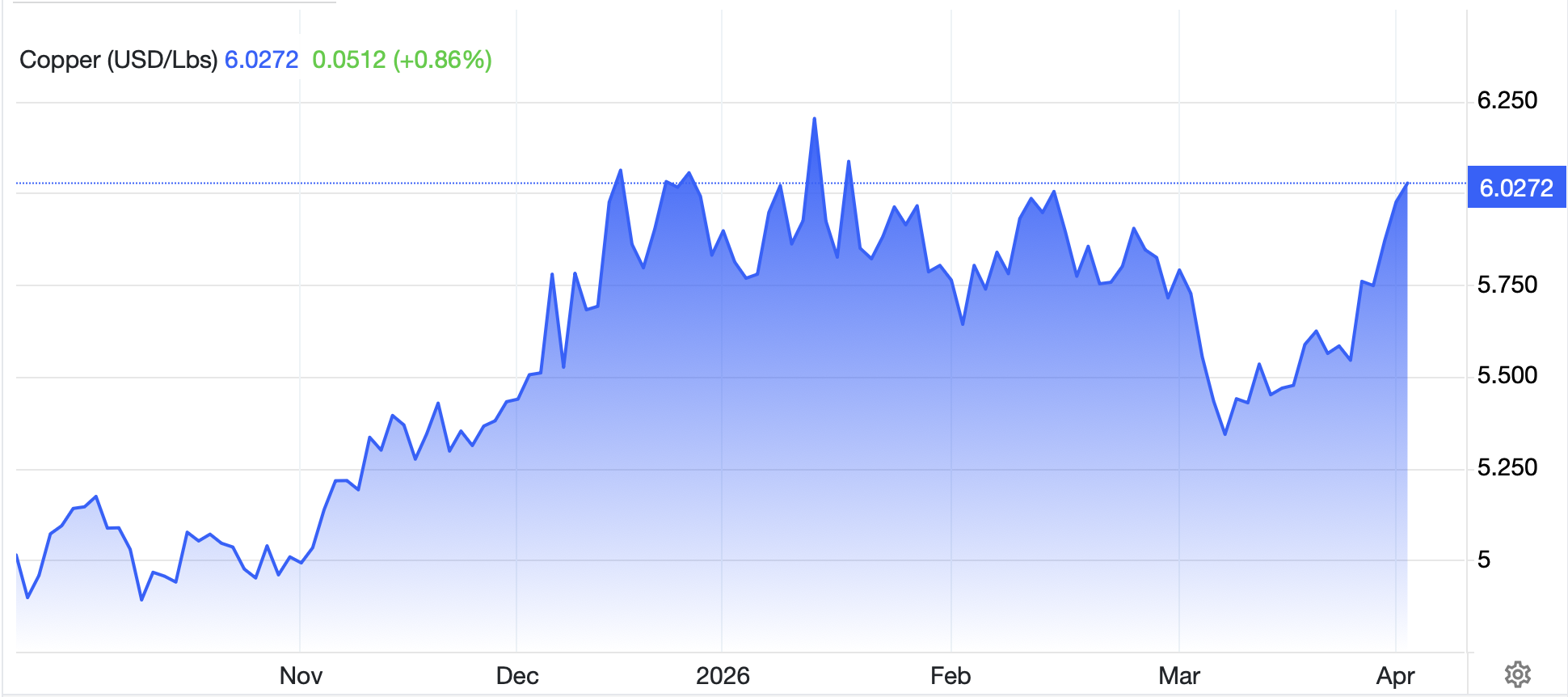
It should not be surprising that precious metals prices have rallied as well, between lower yields and a growing belief that forced sales have stopped.  So, gold (+0.5%), silver (+2.5%) and platinum (+0.5%) are all having a good day.  But so are the base metals with copper (+0.8%) not only recouping its war-related losses, but actually back within spitting distance of its all-time highs set in January above $6.00/lb.

Source: tradingeconomics.com

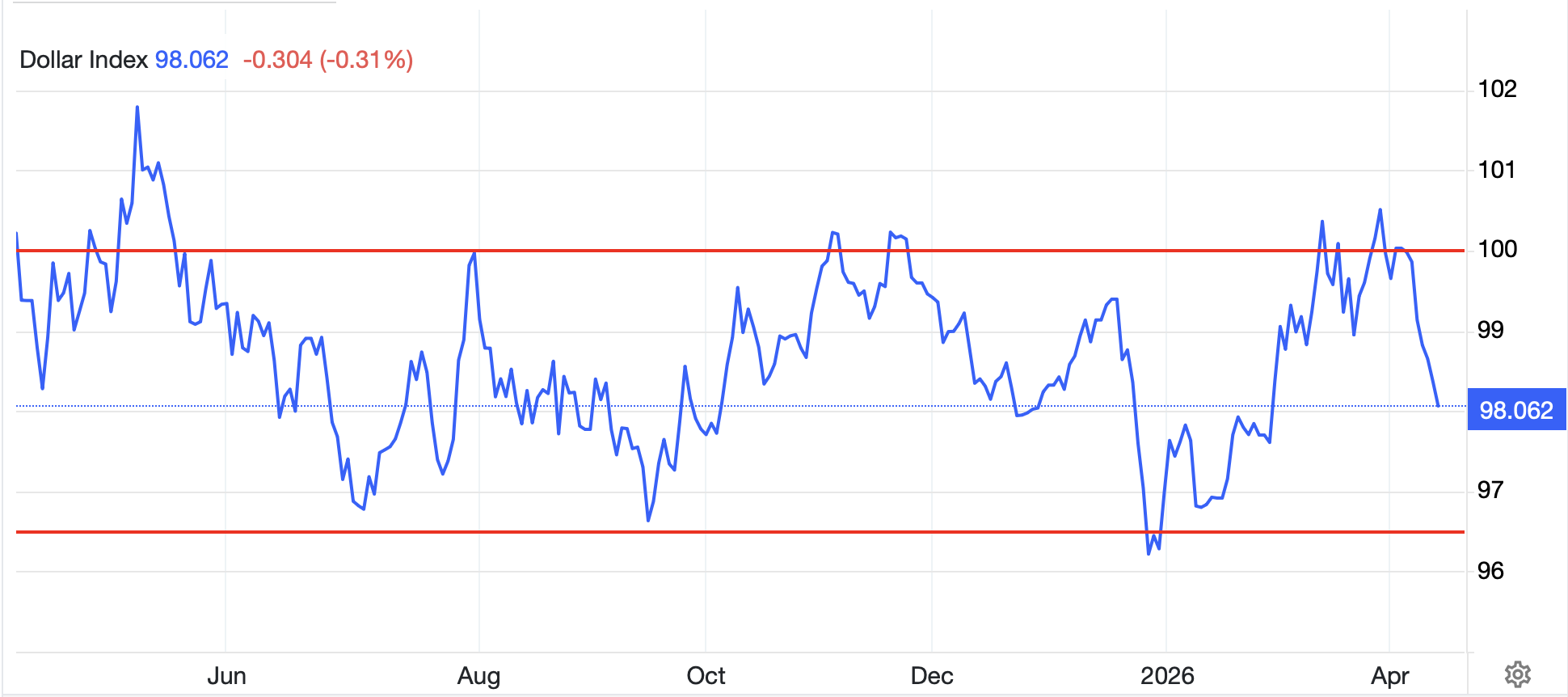
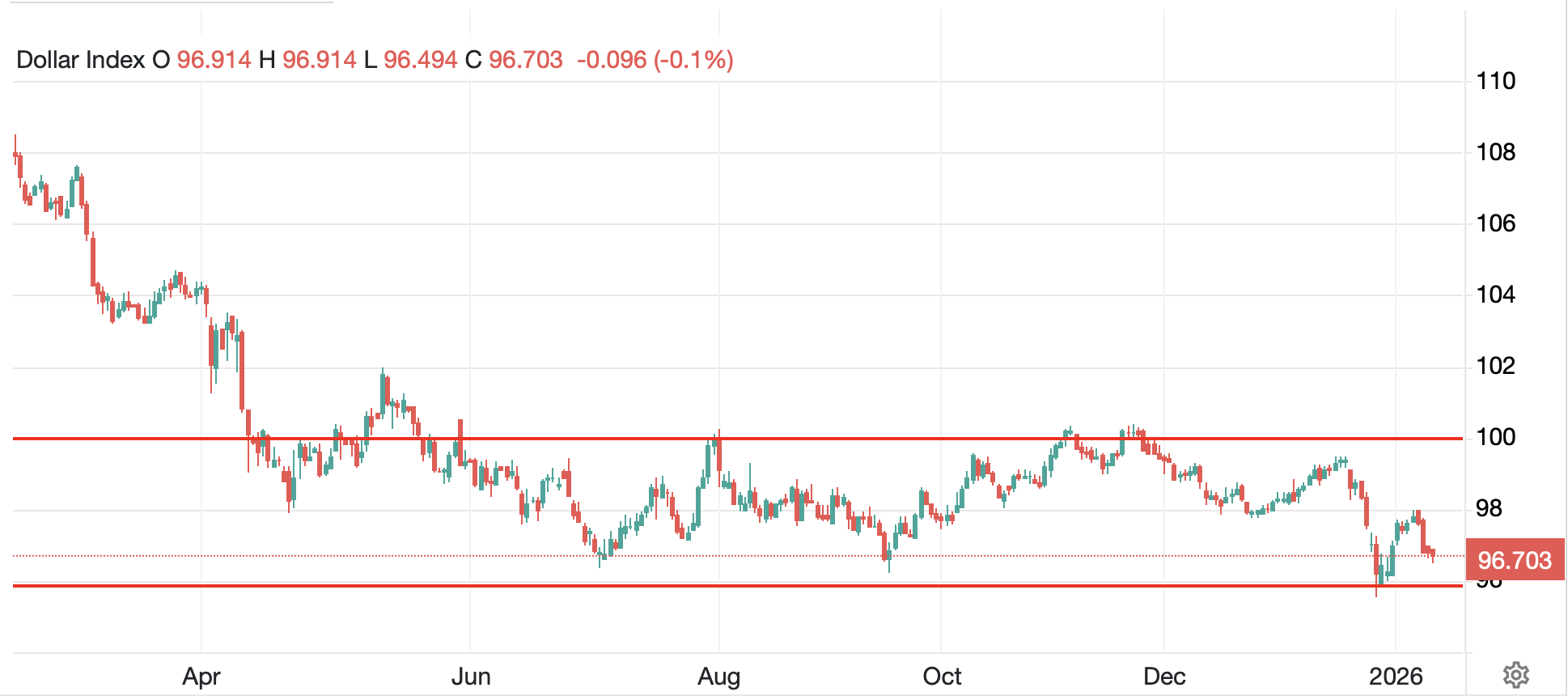
Finally, the dollar is giving back more of its war-related gains and lower across the board this morning, with G10 currencies gaining on the order of 0.3% to 0.4% across the board, while EMG currencies show similar gains with one major outlier, INR (+1.4%) easily explained by the fact that India has been the hardest hit economy from the war, and so the prospects it is ending have had a very beneficial impact on the rupee.  But to be clear regarding the dollar, all we have seen is that it has moved back to the middle of its yearlong trading range between 96.50 and 100.00 based on the DXY as per the below.

Source: tradingeconomics.com

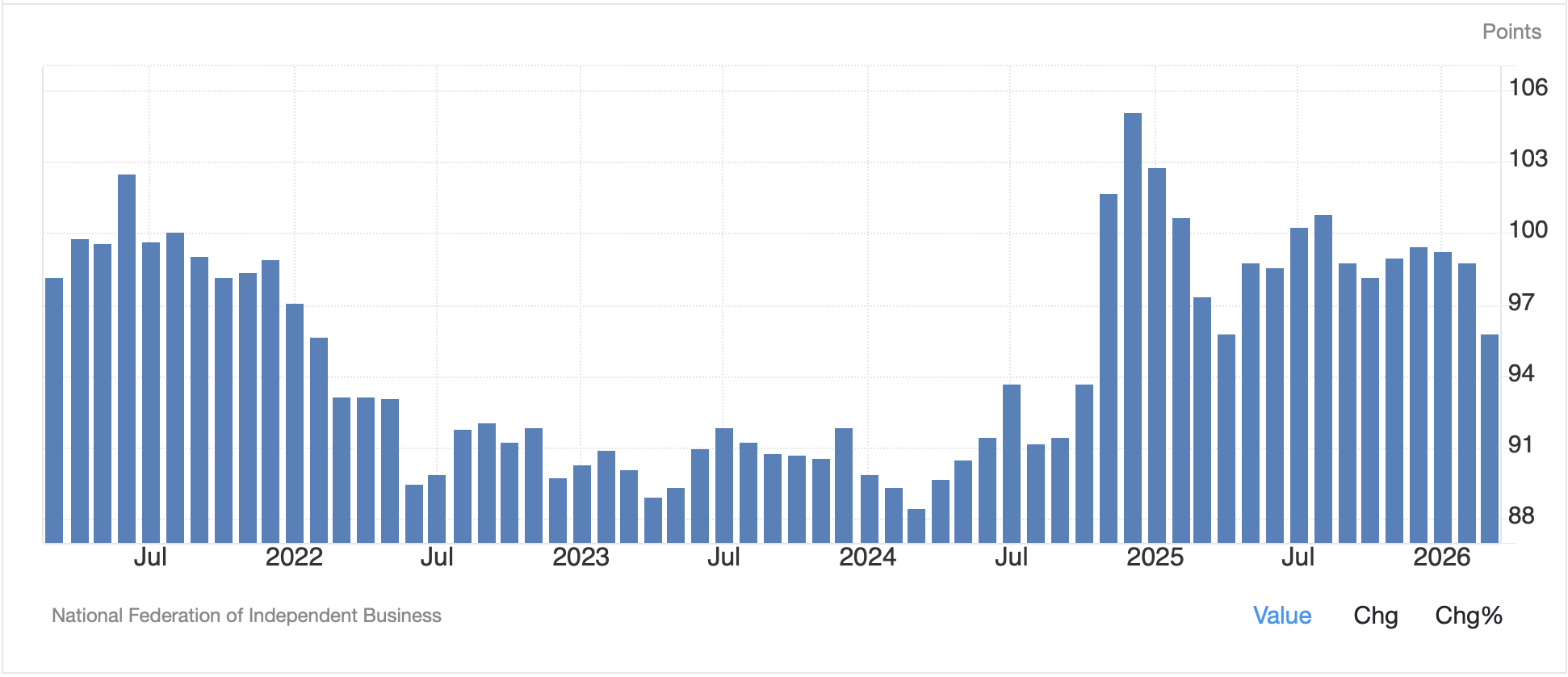
On the data front, yesterday’s Existing Home Sales numbers were weaker than forecast and many pundits have been claiming that as a signal of much greater economic weakness.  We shall see.  This morning we have already seen the NFIB Business Optimism Index released at a weaker than forecast 95.8, not a great sign, but as you can see below, still well above levels of a few years ago.

Source: tradingeconomics.com

We also get PPI (exp 1.1% M/M, 4.6% Y/Y headline, 0.5% M/M, 4.1% Y/Y core) and a few more Fed speakers.  With CPI already having been released, PPI loses much of its luster, although it helps economists estimate PCE a bit better.  One cannot be surprised that Governor Miran explained he expected to see inflation back to target by this time next year, but I am not holding my breath for that outcome.

Summing it all up this morning, risk is back baby!!!  If ever you were curious about whether markets anticipate events, today is exhibit A.  I certainly hope the market is correct and we are about to wind down the Iran war but be wary as it ain’t over til it’s over.  If it has ended, look for previous narratives to be resurrected regarding markets, notably the dollar’s demise, but I am not holding my breath over that either.

Good luck

Adf

Havoc He’s Wreaking

The focus has turned to the data
And whether it’s good or it’s bad-a
We all want to see
Today’s NFP
Then listen to punditry chat-a
 
It’s funny, cause generally speaking
Most pundits are strongly critiquing
The numbers released
Declaring they’re greased
To help Trump and havoc he’s wreaking

It’s NFP day today, which given it is Wednesday is a bit odd, but that’s what happens when the government shuts down for a few days.  At any rate, this is the biggest data week we’ve had in a while as not only did we see Retail Sales yesterday, which disappointed at 0.0% despite showing the largest actual jump, $80 billion, ever between November and December, although that was completely removed by the largest seasonal adjustment ever, (Read about it here at WolfStreet.com) we also get CPI on Friday.  For good order’s sake, here are the current consensus forecasts for NFP:

Nonfarm Payrolls70K
Private Payrolls70K
Manufacturing Payrolls-5K
Unemployment Rate4.4%
Average Hourly Earnings0.3% (3.6% Y/Y)
Average Weekly Hours34.2
Participation Rate62.3%

Source: tradingeconmomics.com

As the market continues to adjust to the recent gyrations, there is hope that the data will lead to unequivocal conclusions about the economy, which could drive Fed decisions and then coalesce around a clear direction of travel.  I’m not holding my breath.  

The first thing to remember is that the data is revised virtually every month, and when the economy is at an inflection point, or even when it is showing more pronounced activity in one sector than another, those revisions can tell a very different story than the original print.  But even beyond that, while the algorithms are clearly programmed to respond to the data, longer term investors have a much tougher time discerning what is happening.  All that is a long way of saying, nobody still has any idea where things are headed!

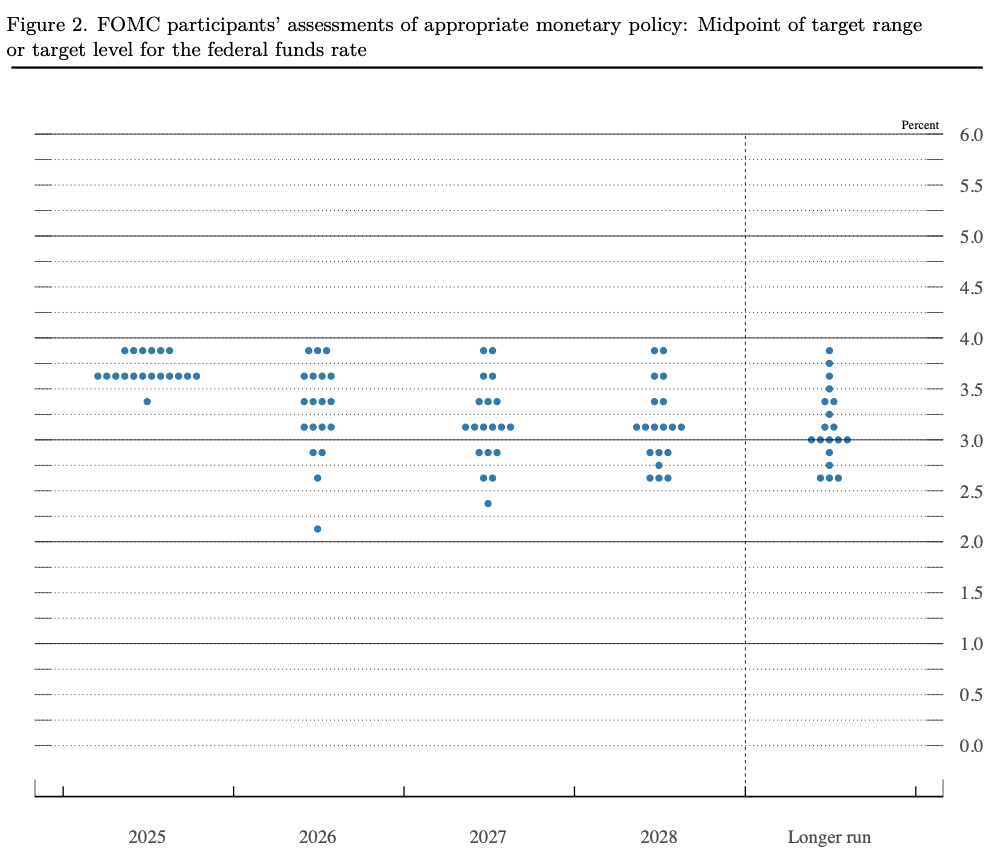
While I dismiss the FOMC speaking circuit, yesterday’s two speakers, Logan and Hammack, who are both voting members this year, said that they felt the current rate is at neutral.  Remember, right now Fed funds are 3.75%, which is a far cry from the Longer run neutral rate they have been feeding us in the Dot Plot!

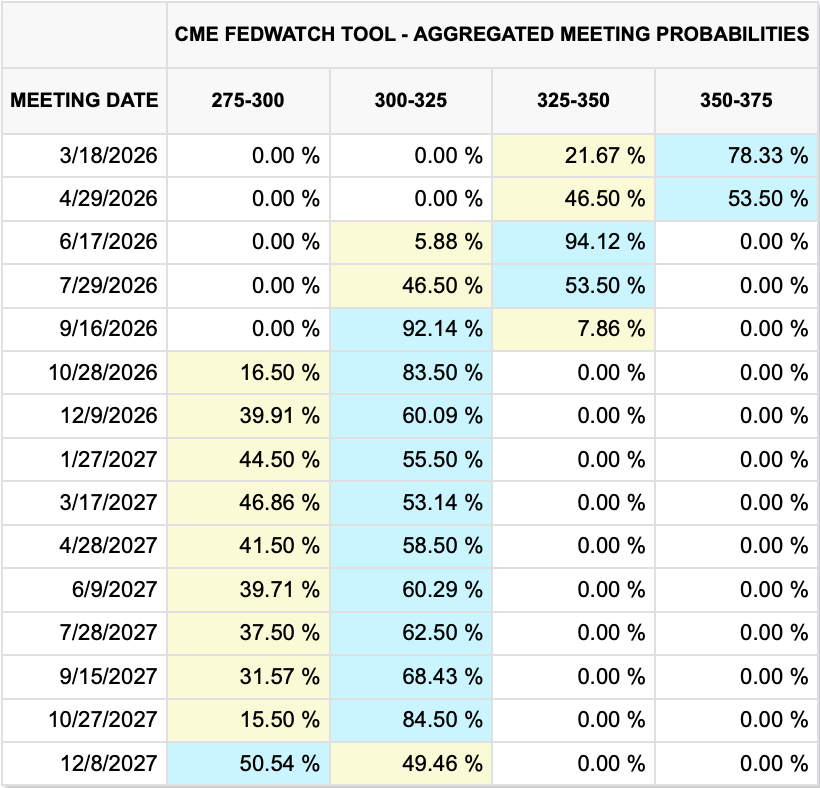
In fact, their median expectation is 3.0%, so the fact that two voting members think 3.75% is neutral is somewhat confusing especially as both indicated they expected inflation to continue to decline and exhibited concern over the employment situation.  My views of where things are headed don’t matter nearly as much as theirs do, but there seems to be a little inconsistency involved here.  As it happens, the current Fed funds futures market pricing shows that there is a 22% probability of a rate cut in March and then it’s 50:50 in April as per the below chart fromcmegroup.com.

At this point, I suspect we will need to see negative NFP numbers along with continuing declines in CPI/PCE for the Fed to cut as I think Chairman Powell is so miffed at President Trump, he doesn’t want to do anything that Trump wants.  It would also not surprise me if that attitude has suffused the bulk of the FOMC.  The irony remains that Governors Cook and Jefferson are raging doves but would rather keep policy tight to stymy Trump rather than act as they otherwise would.  At least that’s my take.

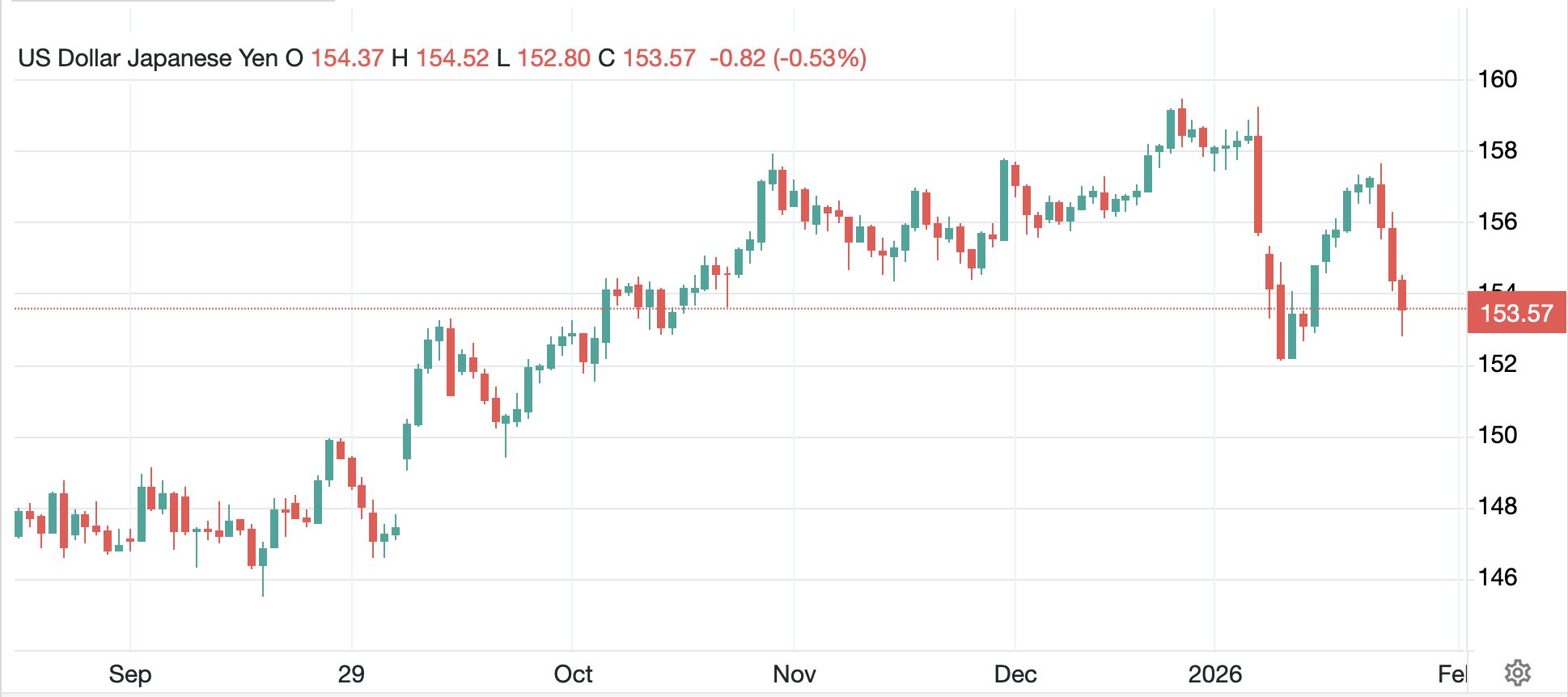
Anyway, that’s what we have to look forward to this morning.  So, how have things behaved overnight?  Let’s look.  Tokyo (+2.3%) continues to be the star of the show, continuing to rally on excitement and optimism that PM Takaichi is going to solve Japan’s problems.  Maybe she will, but they have a lot of them, so it will take time.  But the tech story is strong there and it appears that foreign buying is picking up, which has been one of the drivers of the JPY (+0.5%) lately.  In fact, this week, the yen is leading all currencies having gained more than 2.3% so far.

Source: tradingeconomics.com

As to the rest of Asia, China (-0.2%) and HK (+0.3%) did little although the tech-based Korean (+1.0%) and Taiwanese (+1.6%) exchanges did well, as did Australia (+1.6%) on the back of stronger metals prices.  One other interesting note is Indonesia (+2.0%) where the government just restricted mining of Nickel (+1.7%) in order to raise the price of their largest export!

Europe is a lot less interesting with the continent under some pressure (France -0.2%, Spain -0.3%, Germany -0.2%) although the UK (+0.7%) is performing well on the back of strength in mining and natural resource shares.  US futures at this hour (7:35) are pointing slightly higher, about 0.15%.

In the bond market, things have gone back to sleep with 10-year yields lower by -1bp pretty much throughout the US and Europe.  JGB yields also did nothing last night, and it appears that despite the massive debt that continues to grow around the world, bond investors are comfortable right now.  Perhaps they see deflation in our future, but that doesn’t feel right to me.

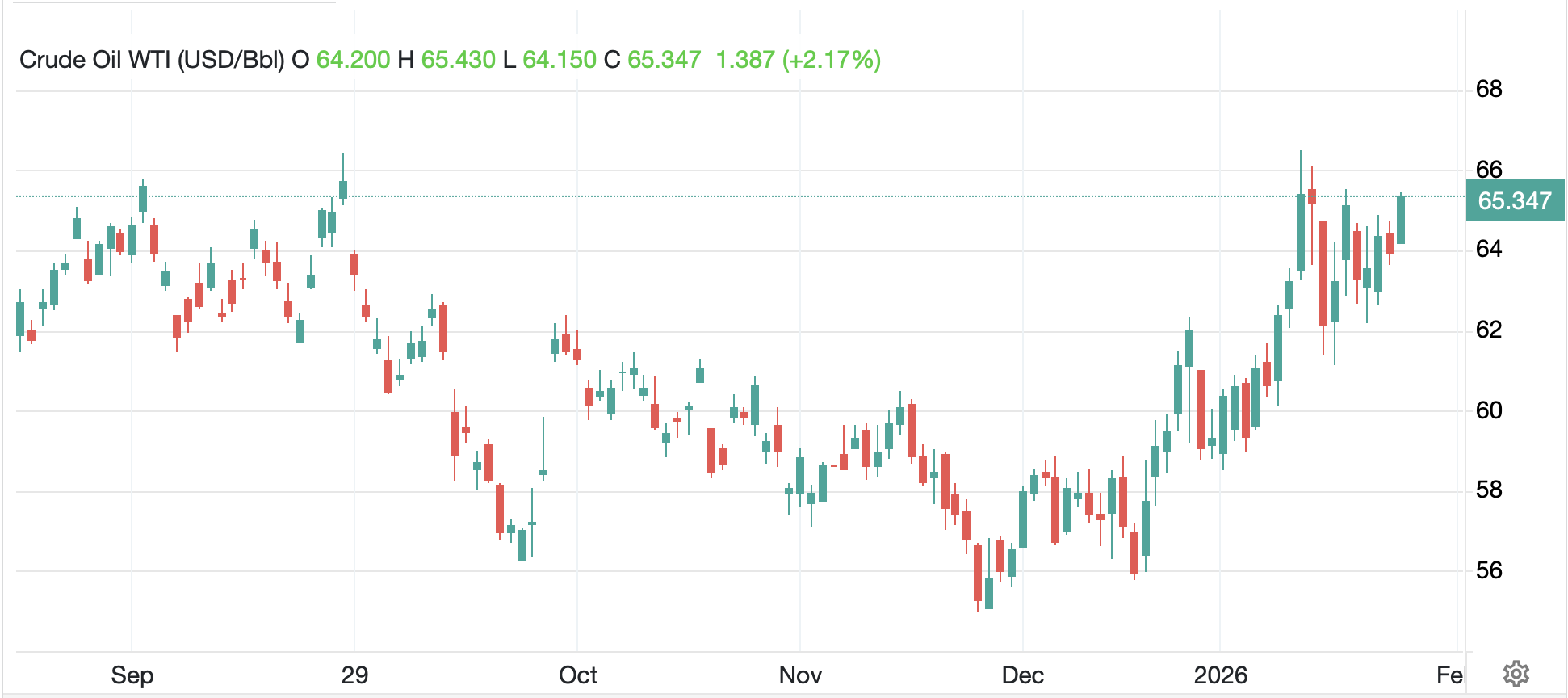
Turning to the markets that continue to show the most volatility, commodities, let’s start with oil (+2.1%) which is demonstrating concern over re-escalating tensions regarding Iran, the negotiations and the potential for military activity there.  There are reports that the US may intercept Iranian tankers and if you look at the chart below, a pretty good uptrend has developed over the past two months.  You won’t be surprised that NOK (+0.6%) has benefitted from today’s move either.

Source: tradingeconomics.com

As to the precious metals, after yesterday’s modest decline, we are back on the rise with gold (+0.85%), silver (+5.5%), copper (+2.1%) and platinum (+3.3%) all nicely higher.  The silver story is about declining inventories in Shanghai, which was the last place that can afford it since both the COMEX and London are already light on available ounces.  While we saw a dramatic decline nearly two weeks ago, I have to say things appear to be shaping up to recoup all those losses and then some!

Finally, the dollar is back under pressure this morning across the board.  I’ve already mentioned the two biggest movers and AUD (+0.5%) joins the list on the back of commodity strength.  Otherwise, the movements are not terribly large here, with the euro (+0.1%), pound (+0.3%), KRW (+0.3%), and ZAR (+0.2%) indicative of the situation.  I expect that the dollar will be responsive to today’s NFP data with a strong print helping the dollar and a weak one pushing it down a bit further.  However, remember that it remains within its trading range, albeit nearer the bottom than the top of that range as per the below.

Source: tradingeconomics.com

And that’s really it for today.  The NFP should drive the first movement and after that, there is still White House bingo for fun and surprises.  While the dollar is soft, I don’t see a collapse coming, and in the end, the more I read about EU energy policy, I can only expect that any collapse will be that of the euro, not the dollar.  But that is a ways into the future I think.

Good luck

Adf

Sanae Lightning

It has been two weeks
Since she rolled the dice. Sunday
It came up hard eight!
 
Leaders round the world
Would sell their soul to obtain
The Sanae lightning

Source: asia.nikkei.com

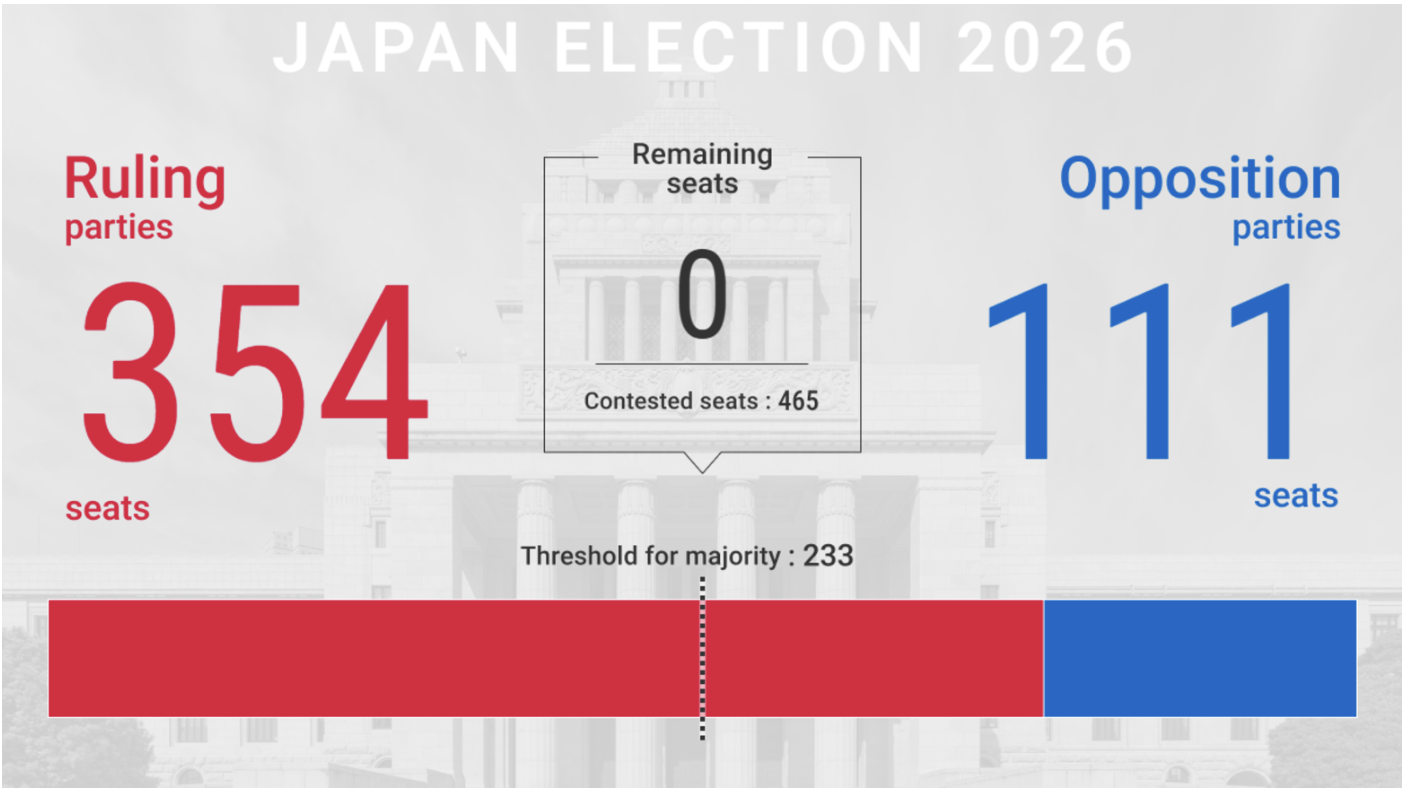
Japanese PM Takaichi scored a resounding victory yesterday, capturing more than 76% of the seats with her coalition partners, and she now commands a super-majority, enabling her to control the dialog completely, pass any legislation and even change the constitution.  As I said, every other elected leader in the world pines for that type of power and approval, even Xi!  

The immediate market response was a 5.0% rally in the Nikkei as expectations for an aggressive fiscal policy expansion to the economy gets priced in.  Add to this more defense spending and the mooted tax cuts on food, and it is easy to understand the response.  

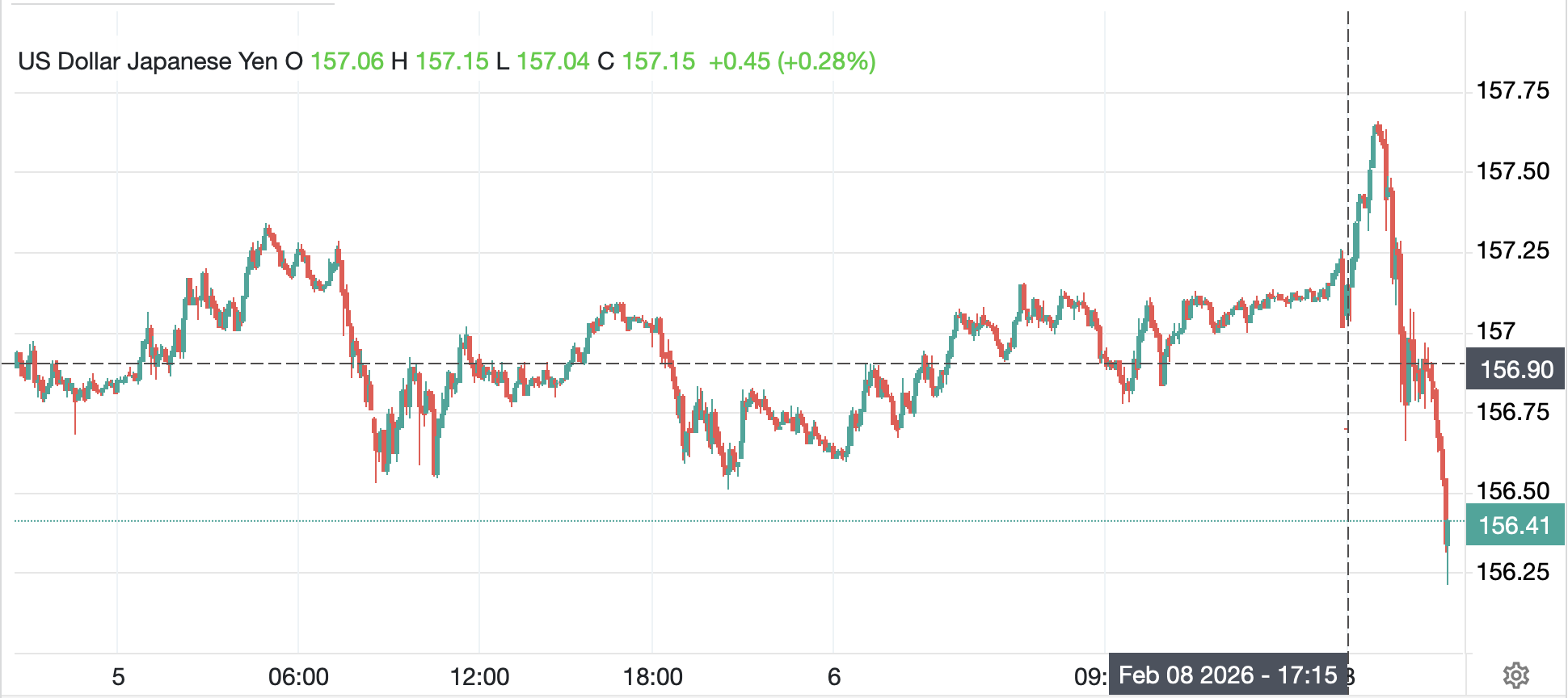
Interestingly, the yen, which had been under pressure from fears of unfunded spending, after declining at first, reversed course and strengthened nearly 1% from its worst levels early in the Tokyo session as per the below chart.  It certainly seems logical that yen weakness would be coming on this basis, but perhaps, what we are going to see is the Japanese use some of their FX reserves, which total about $1.3 trillion, to help fund the ¥5 trillion (~$32 billion) that the tax cuts will cost.  That would mean selling Treasuries to sell USD and buy JPY, helping to support the yen while allowing the BOJ to leave rates on hold.  In truth, it makes a lot of sense.  We shall have to see how things progress from here.

Source: tradingeconomics.com

Some pundits, when looking ahead
Are worried that Warsh at the Fed
With Bessent, will try,
To Treasury, tie
Their efforts, some assets to shed

The other big story this morning is a growing concern about a potential accord between the Fed and the Treasury once Kevin Warsh is confirmed and takes his seat as Fed chair.  Bloomberg has a big article on the subject, but it is around all over.  When combined with another article on China recommending its banks to reduce their Treasury holdings, it has helped create a narrative that the US is going to have major fiscal problems going forward which will result in massive money printing and much higher inflation.

Of course, the thing about this that I don’t understand is that Warsh is on record, repeatedly, for saying he wants the Fed’s balance sheet to shrink, and that its expansion has been one of the major economic issues in the US since QE2 back in 2012.  I also find it interesting that Warsh’s apparent desire to see the Fed’s balance sheet hold almost exclusively short-dated Treasuries, 3-years and under, is seen as a concern given that has been the Fed’s stated goal since they started shrinking the balance sheet back in April 2022.

Recall, Chairman Powell explained that in order to maintain the ample reserves framework they are currently using, the balance sheet needs to grow alongside the economy.  However, this is completely at odds with Warsh’s stated beliefs that the ample reserves framework is no longer effective and needs to be replaced eventually.  Of course, if I look at 10-year Treasury yields (+2bps today) over the past 5 years, as per the below chart, it is hard to get overly excited that things have changed much since the end of the Covid adjustments.  

Source: tradingeconomics.com

Perhaps Chinese selling will drive yields higher, or perhaps others will sell because they are concerned that the Fed and Treasury working together is inherently bad for the economy and will lead to higher inflation but so far, that is not the case.  As to inflation, while CPI and PCE remain higher than the Fed’s target, it does not appear to be galloping away at this stage.  In fact, there is much discussion on X that Truflation is now running at 0.68% and that the Fed will soon need to cut rates aggressively!  Of course, if inflation is running at 0.68%, can someone please explain the ‘affordability’ crisis that has gotten so much press?  PS, I don’t see Truflation as being an accurate representation of the world, but it sure is good for narrative writers sometimes!

And that is how we have started the week.  The Super Bowl was pretty dull overall, with defensive excellence, but nothing spectacular.  Someone made the point that this was the AI Super Bowl for advertising and the last two times we saw something dominate the advertising (dot.com in 2000 and crypto in 2022), within a year, both sectors had been decimated in the equity markets.  In the meantime, a quick tour of the overnight session shows the following:

Stocks – Asia was strong across the board with Japan (+3.9%) giving back some of the early gains but still rocketing to new highs.  The rest of the region was similarly strong, especially Korea (+4.1%) but gains of between 1.5% and 2.0% were the norm.  I guess everybody is positive on Takaichi-san!  Europe, however, has not been as robust although there are mostly gains there led by Spain (+0.6%) and Germany (+0.3%).  The laggard here is the UK (-0.1%) which is struggling as PM Starmer appears to be coming to the end of his disastrous term.  His appointment of Ambassador to the US looks to be the final straw as Peter Mandelson is widely mentioned in the Epstein files and now Starmer has lost his chief of staff because of that.  The UK will be better off, I believe, if Starmer is pushed out, although if they put in Ed Miliband, it could actually get worse given his personal insanity regarding energy.  But I would buy a Starmer removal.  As to US futures, at this hour (7:20), they are modestly lower, -0.15% or so.

Bonds – European sovereign yields are edging higher this morning, around 1bp across the board as there has been no data to change opinions and the bond markets, worldwide (Japan excepted) remain the dullest of places to play.  Japan (+6bps) did see a response to the Takaichi victory, which is what one would have expected.  We will have to watch this yield closely as if it truly does start to break out, there will be ramifications worldwide.  However, if we look at the chart below of 10-year and 30-year JGBs, they remain below the peak seen several weeks ago and, surprisingly, the overnight move was more pronounced in the 10-year than the 30-year.  Watch this space.

Source: tradingeconomics.com

Commodities – oil (+0.3%) has been chopping around either side of unchanged all evening as questions about Iran remain unanswered.  There was a story in the WSJ about the US holding back on any military action because Iran has so many medium range ballistic missiles and any reprisal could be devastating to the Middle East overall.  But if I have learned anything from observing President Trump and his negotiating style, it is impossible to know what the next move will be.  I would not rule out either a successful deal or a military strike at this point, with the former resulting in lower oil prices while the latter would see a sharp rally.  In the metals, gold (+0.9%) and silver (+2.7%) are both continuing their volatile rebound from last week’s sharp selloff, while copper is unchanged this morning.  As I have said, nothing has changed this supply demand balance in physical metals, although the paper, futures market, can still do many remarkable things that don’t necessarily make sense.

FX – the dollar is softer across the board this morning, slipping against both G10 (EUR +0.5%, GBP +0.3%, JPY +0.4%, CHF +0.7%) and EMG (MXN and BRL +0.25%, PLN +0.65%, ZAR +0.25%, CNY +0.15%) with little in the way of data as a driver anywhere.  While I have not specifically seen a reboot of the dollar is collapsing narrative, I presume the concerns over a potential Fed-Treasury accord are an underlying thesis today.

On the data front, we see both NFP and CPI this week as they come a few days late due to the short government shutdown.

TuesdayNFIB Small Biz Optimism99.9
 Retail Sales0.4%
 -ex autos0.3%
 Employment Cost Index0.8%
WednesdayNonfarm Payrolls70K
 Private Payrolls70K
 Manufacturing Payrolls-5K
 Unemployment Rate4.4%
 Average Hourly Earnings0.3% (3.6% Y/Y)
 Average Weekly Hours34.2
 Participation Rate62.3%
ThursdayInitial Claims218K
 Continuing Claims1850K
 Existing Home Sales4.15M
FridayCPI0.3% (2.5% Y/Y)
 Ex food & energy0.3% (2.5% Y/Y)

Source: tradingeconomics.com

In addition, we hear from seven more Fed speakers, with Governor Miran making three appearances as he seeks to make his case for cutting rates.

Nothing has changed my view that Warsh and Bessent are the two most important voices now, with the rest of the Fed relegated to biding their time until Warsh shows up.  As to the data, the Citi surprise index continues to show that data is better than most forecasts which speaks well of the economic situation.

Source: cbonds.com

I am not a proponent of the world ending, the Treasury market collapsing or the dollar dying despite a lot of doom porn that this is the near future.  I would contend the dollar remains rangebound for now, and we need a definitive policy adjustment to see that situation change.  Until then…choppy is the way.

Good luck

Adf

Quite Gory

While yesterday, there was one story
‘Bout silver and gold and their glory
By end of the session
The dollar’s depression
Was headlining comments quite gory
 
The narrative now speaks of trends
Which lead to a dollar that ends
The problem they’ve got
Is history’s taught
That cycles and dollars are friends

The dollar is clearly under pressure lately as discussed here yesterday morning.  Using the DXY as our proxy, it has traded and closed through the recent double bottom (see chart below), and the doomsayers are licking their chops that their views of the demise of the dollar are finally coming to fruition. 

Source: tradingeconomics.com

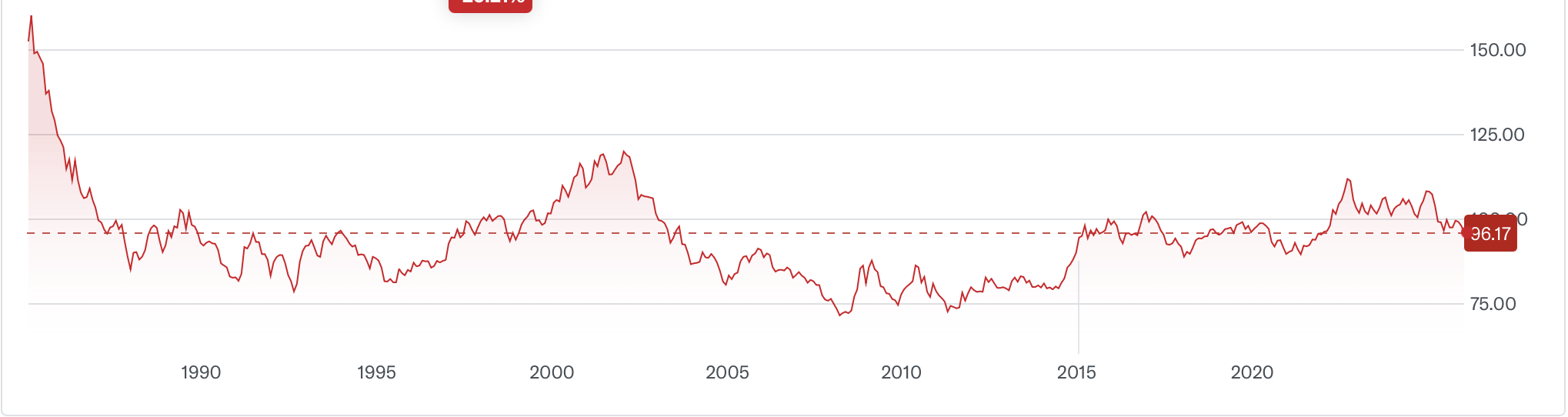
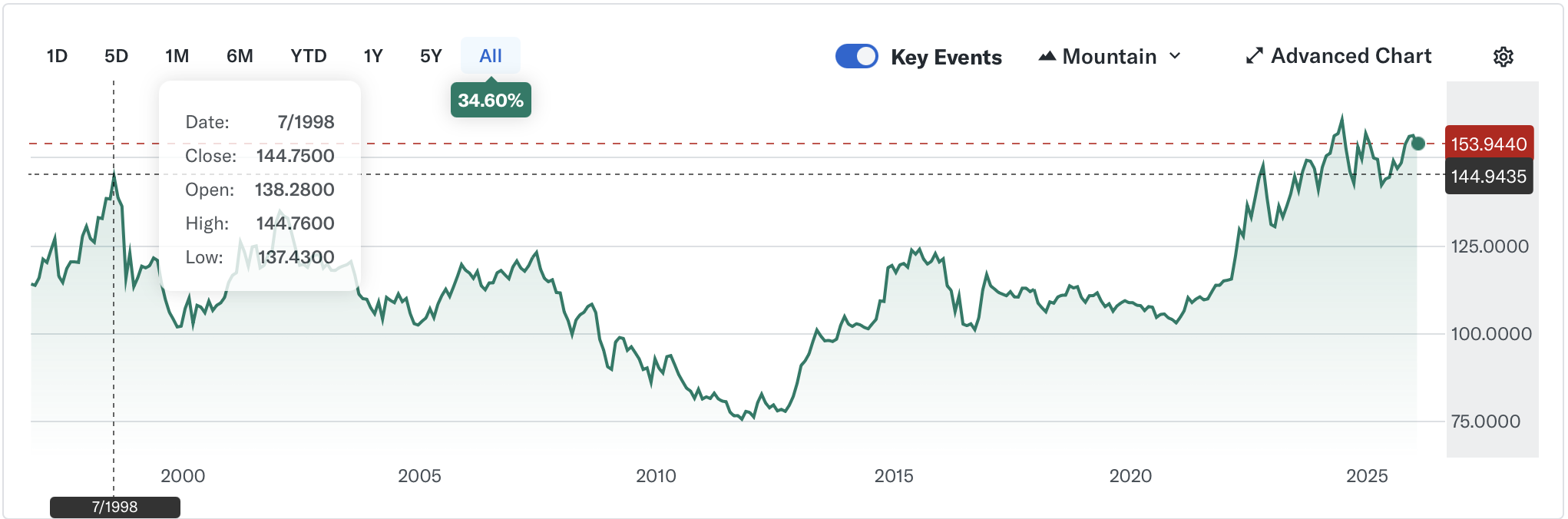
And I am not here to say the dollar is about to reverse course higher.  While I remain medium and long-term bullish on the buck, it doesn’t feel like the time to get long.  However, look at the chart below, to get a longer-term perspective on the dollar’s history.  This chart starts back in 1985, which is just before the Plaza Accord where it was agreed the dollar was too strong and central banks around the world intervened and altered policy to change it.  But here we are at 96ish in a market that has spent no little time below 80 with several drops below 75.  My point is, the dollar tends towards long cycles.  It is entirely possible that we peaked in late 2022 for this cycle and are now heading lower from there.  But I remain highly confident that it will reverse course and rebound. Not tomorrow, but this is not the end.  Just remember that when you read the eulogies for the buck.

Source: finance.yahoo.com

One other thing that seems to be getting headlines is that the president was asked his views on the dollar’s recent weakness and was (rightly) nonplussed over the issue as described here.  After all, this is a man who constantly rails against the artificial weakness of the yen and the yuan, and who is seeking to rebalance the trade account.  All that points to a weaker dollar, so it beggar’s belief that this is a surprise to the market.

One last thing while I’m on my high horse.  I couldn’t help but notice this article about Banque de France chief Villeroy explaining that the weakening dollar may impact ECB policy-making with a throwaway line about diminishing confidence in the dollar stemming from the unpredictability of US economic policy.  First off, US policy is very clear, run it hot!  And second, it is remarkable that when the euro was tumbling, we never saw this same introspection about Eurozone/EU economic policy and their self-destructive energy policies.  My point is, nothing we are currently witnessing is new in any way at all, but rather part of the longer-term cycle of FX markets.

OK, how has this dollar move impacted other markets?  Well, yesterday’s US equity session was marked by a rotation back to tech as the NASDAQ (+0.9%) had a fine day while the DJIA (-0.8%) fell hard.  This led to a mixed session in Asia with the Nikkei little changed (although other indices there were under steady pressure), while HK (+2.6%) exploded higher on news that China has licensed its first Nvidia H200 chips to Alibaba and someone threw money at China Vanke, one of the collapsing Chinese real estate firms.  The mainland was modestly higher (+0.25%) but there was strength in Korea (+1.7%), Taiwan (+1.5%) and India (+0.6%).  On the downside, Indonesia (-7.3%) tumbled after MSCI indicated they may downgrade the market there to frontier status due to lack of liquidity.

In Europe, red is today’s color led by Spain (-1.1%) and France (-1.0%) with the latter seeing weakness in luxury stocks while the former appears to be unwinding some of its recent strength with no particular catalyst, merely a negative view overall in Europe.  Germany (-0.2%) and the UK (-0.4%) are also softer without anything specific.  As to US futures, at this hour (6:40) they are pointing higher with NASDAQ (+1.1%) leading the way again.  As an aside, the S&P 500 futures are above 7000 now, and the cash market looks set to break that big round number this morning.

In the bond market, as we await the FOMC policy decision (no change expected) and the subsequent press conference, Treasury yields are unchanged this morning after having edged higher by 2bps yesterday.  European sovereign yields are all basically softer by -2bps, perhaps on the back of the euro’s strength.  After all, Villeroy hinted that if the euro remains strong, they may need to cut rates again.  Interestingly, JGB yields (-5bps) fell after BOJ Minutes from the December meeting (remember, they already met again last week) indicated that some members were concerned over the weaker yen driving inflation higher.  Talk about stale news.  My sense here is this is much more about the election and JGB’s will track Takaichi-san’s support level with lower yields coincident with weakening support, potentially preventing her Liz Truss moment.

In the commodity space, oil (0.0%) is unchanged this morning but has rallied more than 7% in the past month after a solid session yesterday.  Looking at the chart, the trend clearly remains lower, but the short-term reversal is also quite clear.

Source: tradingeconomics.com

The dollar’s recent weakness is supporting all commodities (given they are generally priced in USD, other nations can afford more with the dollar’s slide), but the bigger picture remains that there is an extraordinarily large amount of the stuff around and much of the angst over its recovery is political (look at Europe) rather than geologic.  Nat Gas (-4.5%) is backing off its extended levels as temperatures are forecast to rebound early next week (cannot happen soon enough for me, where’s global warming when you need it?), but the long-term story here remains positive as it continues to be the energy source of choice for timely access with the least environmental impact.

Turning to metals, gold (+1.6%) continues to trade to new highs on the ‘all of the above’ thesis (weak dollar, debasement trade, geopolitical risk, central bank buying) and shows no signs of slowing down.  Silver (-0.1%), however, has been so incredibly volatile it is starting to become a concern for all involved.  It is not normal for 10%-12% daily moves in any product, let alone one with so much involvement from both retail and institutional players.

Source: tradingeconomics.com

The silver market has gone into backwardation which means that there is significant demand for the actual metal.  And prices in Shanghai trade at a significant premium to the COMEX.  Shanghai is a delivery market.  We will need to watch deliveries at futures expirations closely going forward.

Finally, the dollar today is bouncing off yesterday’s session lows but remain under pressure overall.  After trading through 1.20 yesterday, the euro (-0.6%) has backed off a bit and we have seen similar moves through much of the rest of the G10 (GBP -0.6%, SEK -0.7%, NOK -0.7%, CHF -0.9%).  The yen (-0.3%) continues to be caught between potential intervention fears and fears of unfunded spending.  In the EMG bloc, we have seen CE4 currencies all suffer on the order of -0.7% or so, although APAC currencies are little changed this morning.  The one currency bucking the trend is CLP (+0.2%) which remains closely connected to copper (+1.0%).

On the data front, yesterday’s Consumer Confidence Index fell sharply, a further indication that there is a split between most of the economic numbers and people’s beliefs.  Today, aside from the Fed, we hear from the BOC (no change expected) and we get EIA oil inventories with a small draw forecast after several weeks of large builds.  Too, later in the day the Banco do Brazil will announce their policy (no change expected).

The thing that makes me happy is the Fed is an afterthought today.  While the cacophony of noise that comes from media is extremely difficult to parse given the biases underlying almost all one reads or hears, to me, the question will be whether people start to believe things are getting better, and that is more political than economic in my view.  In the meantime, the dollar appears to be set for a bit of further weakness, but do not mistake this for the end of the dollar or the dollar’s role in the global economy.

Good luck

Adf

Totally Wrecked

The chaos is starting to spread
As traders, when they look ahead
Have come to the view
More debt will accrue
And fear that the dollar is dead
 
So, gold and its ilk rise unchecked
While fiat is totally wrecked
Most bonds have a pox
But hope lives for stocks
And crypto? They’re still circumspect

I cannot possibly cover all the things ongoing in the markets right now as it would take a 5000 word note to do so adequately.  As such, I will try to give a high level take in far fewer words.

Headlines – 

  • Minneapolis continues to consume most of the domestic press, but is only tangentially, if at all, related to markets.  Perhaps it questions President Trump’s authority and that is a negative for US assets and the dollar.  
  • Xi Jinping purges his most senior military leader, accused of spying and selling state nuclear secrets to the US. Xi has removed virtually his entire military leadership, probably reducing near term risk of a Taiwan invasion, but ignores economic issues

Currencies – 

  • JPY (+1.2%) remains the top story as speculation remains rife that the BOJ stepped into markets on Friday (I don’t think so) and questions arise as to how soon they will do so. 

Source: tradingeconomics.com

 There is a great deal of talk of joint intervention with the US, but I remain skeptical there.  It is critical to understand exactly what joint intervention is and what it represents.  Joint intervention means that the US Treasury is selling its own dollars alongside those of Japan.  That is very different than the Fed, acting on behalf of the Treasury-MOF-BOJ connection executing sales for the MOF.  The former implies a US effort to change the dollar; the latter is simply assisting an ally in our time zone.  I can only think of two times the US intervened, 1985 and 1998.  In the second chart, I highlighted the shape of the move from 1998, which was obviously far sharper than anything we have seen so far. 

Source: finance.yahoo.com

  • DXY (-0.5%) is falling as well, obviously dragged lower by the dollar’s decline vs. the yen, but the dollar’s weakness is universal today.  As you can see from the chart, the DXY has fallen through the bottom of the trading range at 98.00 and the bears are celebrating the end of the dollar.  But just looking at the chart below, we need to see a more substantial extension, in my view, before concluding the dollar is dead.

Source: tradingeconomics.com

Precious Metals – 

MetalPriceDay%WeeklyMonthlyYTDYoY
Gold5090.47101.85+2.0%8.9%17.6%17.95%85.85%
Silver110.347.38+7.2%16.7%53.15%55.05%266.2%
Copper5.99420.048+0.8%1.6%8.4%5.45%42.2%
Platinum2867.20128.8+4.65%21.75%35.2%39.7%205.3%

Source: tradingeconomics.com

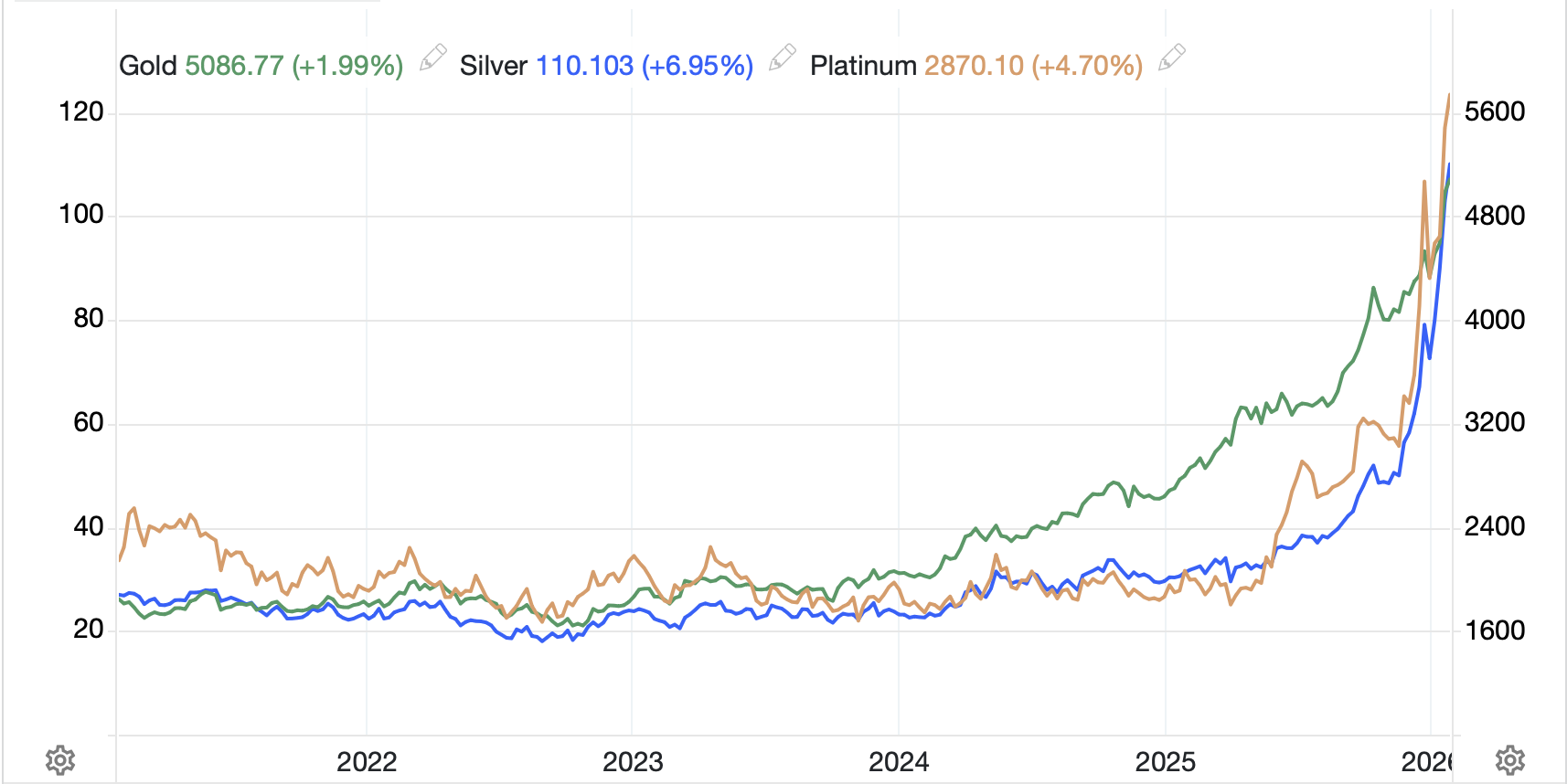
I think this table tells the entire story eloquently.  The combination of supply shortages in trading venues, as well as for industrial users, and fears over the collapse of fiat currencies as every government in the world runs it hot and issues massive amounts of debt, has an increasing number of both individuals and institutions looking for someplace to maintain their purchasing power.  Precious metals earned their name and reputation for this very reason.  If anything, the fear is that the speed of the move has been so extraordinary that it must slow down at some point, but so far, that has not been the case.  As you can see in the chart below, the moves in all three have become parabolic, or certainly in silver and platinum.  Historically, prices like this do not continue in this vein, but that doesn’t mean they cannot continue to rise further for a while yet.

Source: tradingeconomics.com

As to energy, oil (-0.2%) is trading above $60/bbl, but doesn’t show a great deal of interest in breaking in either direction right now.  I imagine a US action in Iran would push prices higher, but do not discount a breakthrough on the Russia/Ukraine war that could have the opposite effect.  However, NatGas (+14.6%) continues to be in massive demand as the 15° temperature outside my window this morning is indicative of what is happening across most of the country.  As well, it seems Germany, which is now hugely reliant on US LNG exports, has run their storage down to a dangerously low 40% or so, far below normal for this time of year.  Until this cold-snap ends, demand will remain exceedingly high.

Stocks – the biggest mover overnight was Tokyo (-1.8%) as the much stronger yen weighed heavily on Japanese exporters like Toyota.  Too, both South Korea (-0.8%) and India (-0.9%) slipped with the former showing concern that there would be intervention in the KRW market and negatively impact Korean exporters while the latter continues to see international capital outflows, with another $3 billion coming out so far this month (which has undermined the INR as well).  But otherwise, not much price action in China, HK or elsewhere in the region.  In Europe, most major bourses are little changed, although there have been modest gains in Spain (+0.5%) and Italy (+0.4%).  The only data of note was German Ifo Business Climate (87.6) which remained unchanged, falling below expectations for a modest gain.   And at this hour (7:45), US futures are virtually unchanged.

Bonds – yields have slipped modestly this morning with Treasuries (-1bps) not really showing signs of serious degradation.  European sovereign yields have fallen further between -3bps (Germany) and -5bps (France) with the latter benefitting from the idea that France would actually pass a budget soon.  JGB yields (-2bps) also slipped as polls show Takaichi-san’s approval ratings are slipping and some are assuming she won’t be able to run it quite as hot if she wins the election in two weeks.

Data this week is dominated by the Fed meeting on Wednesday, although as I have said from the beginning of the year, I think the Fed’s importance has waned relative to the market overall.

TodayDurable Goods3.7%
 -ex Transport0.3%
TuesdayCase Shiller Home Prices1.2%
 Consumer Confidence90.9
WednesdayFOMC Rate Decision3.75% (unchanged)
ThursdayInitial Claims205K
 Continuing Claims1860K
 Trade Balance-$42.1B
 Nonfarm Productivity4.9%
 Unit Labor Costs-1.9%
 Factory Orders1.7%
 -ex Transport0.3%
FridayDec PPI0.2% (2.8% Y/Y)
 -ex food & energy0.3% (2.9% Y/Y)
 Chicago PMI43.8

Source: tradingeconomics.com

And that’s pretty much what we have right now.  Clearly, the biggest signal comes from the precious metals space and indicates, to me at least, that there is huge concern over the way of the world right now.  I guess this is what the 4thTurning looks like.  As I said, if the Treasury is actually going to intervene of their own accord, working alongside the Japanese, that is a distinct negative for the dollar against all currencies and needs to be carefully assessed.  However, if the Fed sells dollars on the BOJ’s behalf, that is likely to have just a temporary impact on the FX markets.  Keep that in mind as we go forward.

Good luck (we all need that right now!)

Adf

Crazier Still

There once was a time when the Fed
When meeting, and looking ahead
All seemed to agree
The future they’d see
And wrote banal statements, when read
 
But this time is different, it’s true
Though those words most folks should eschew
‘Cause nobody knows
Which way the wind blows
As true data’s hard to construe
 
So, rather than voting as one
Three members, the Chairman, did shun
But crazier still
The dot plot did kill
The idea much more can be done


I think it is appropriate to start this morning’s discussion with the dot plot, which as I, and many others, expected showed virtually no consensus as to what the future holds with respect to Federal Reserve monetary policy.  For 2026, the range of estimates by the 19 FOMC members is 175 basis points, the widest range I have ever seen.  Three members see a 25bp hike in 2026 and one member (likely Governor Miran) sees 150bps of cuts.  They can’t all be right!  But even if we look out to the longer run, the range of estimates is 125bps wide.

Personally, I am thrilled at this outcome as it indicates that instead of the Chairman browbeating everyone into agreeing with his/her view, which had been the history for the past 40 years, FOMC members have demonstrated they are willing to express a personal view.

Now, generally markets hate uncertainty of this nature, and one might have thought that equity markets, especially, would be negatively impacted by this outcome.  But, since the unwritten mandate of the Fed is to ensure that stock markets never decline, they were able to paper over the lack of consensus by explaining they will be buying $40 billion/month of T-bills to make sure that bank reserves are “ample”.  QT has ended, and while they will continue to go out of their way to explain this is not QE, and perhaps technically it is not, they are still promising to pump nearly $500 billion /year into the economy by expanding their balance sheet.  One cannot be surprised that initially, much of that money is going to head into financial markets, hence today’s rally.

However, if you want to see just how out of touch the Fed is with reality, a quick look at their economic projections helps disabuse you of the notion that there is really much independent thought in the Marriner Eccles Building.  As you can see below, they continue to believe that inflation will gradually head back to their target, that growth will slow, unemployment will slip and that Fed funds have room to decline from here.

I have frequently railed against the Fed and their models, highlighting time and again that their models are not fit for purpose.  It is abundantly clear that every member has a neo-Keynesian model that was calibrated in the wake of the Dot com bubble bursting when interest rates in the US first were pushed down to 0.0% while consumer inflation remained quiescent as all the funds went into financial assets.  One would think that the experience of 2022-23, when inflation soared forcing them to hike rates in the most aggressive manner in history, would have resulted in some second thoughts.  But I cannot look at the table above and draw that conclusion.  Perhaps this will help you understand the growth in the meme, end the fed.

To sum it all up, FOMC members have no consensus on how to behave going forward but they decided that expanding the balance sheet was the right thing to do.  Perhaps they do have an idea, but given inflation is showing no signs of heading back to their target, they decided that the esoterica of the balance sheet will hide their activities more effectively than interest rate announcements.

One of the key talking points this morning revolves around the dollar in the FX markets and how now that the Fed has cut rates again, while the ECB is set to leave them on hold, and the BOJ looks likely to raise them next week, that the greenback will fall further.  Much continues to be made of the fact that the dollar fell about 12% during the first 6 months of 2025, although a decline of that magnitude during a 6-month time span is hardly unique, it was the first such decline that happened during the first 6 months of the year, in 50 years or so.  In other words, much ado about nothing.  

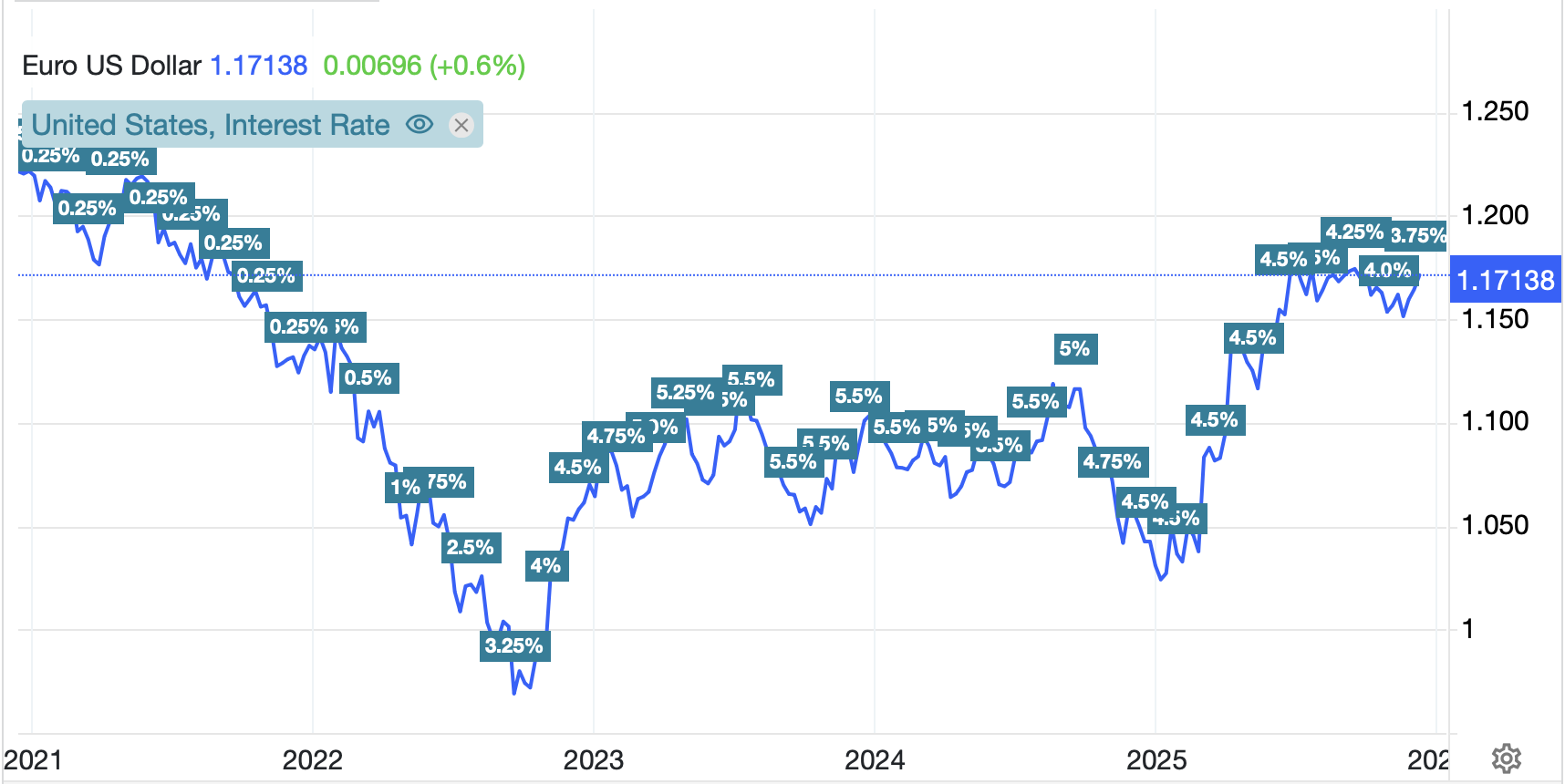
The latest spin, though, is look for the dollar to decline sharply after the rate cut.  I have a hard time with this concept for a few reasons.  First, given the obvious uncertainty of future Fed activity, as per the dot plot, it is unclear the Fed is going to aggressively cut rates from this level anytime soon.  And second, a look at the history of the dollar in relation to Fed activity doesn’t really paint that picture.  The below chart of the euro over the past five years shows that the single currency fell during the initial stages of the Fed’s panic rate hikes in 2022 then rallied back sharply as they continued.  Meanwhile, during the latter half of 2024, the dollar rallied as the Fed cut rates and then declined as they remained on hold.   My point is, the recent history is ambiguous at best regarding the dollar’s response to a given Fed move.

Source: tradingeconomics.com

I have maintained that if the Fed cuts aggressively, it will undermine the dollar.  However, nothing about yesterday’s FOMC meeting tells me they are about to embark on an aggressive rate cutting binge.

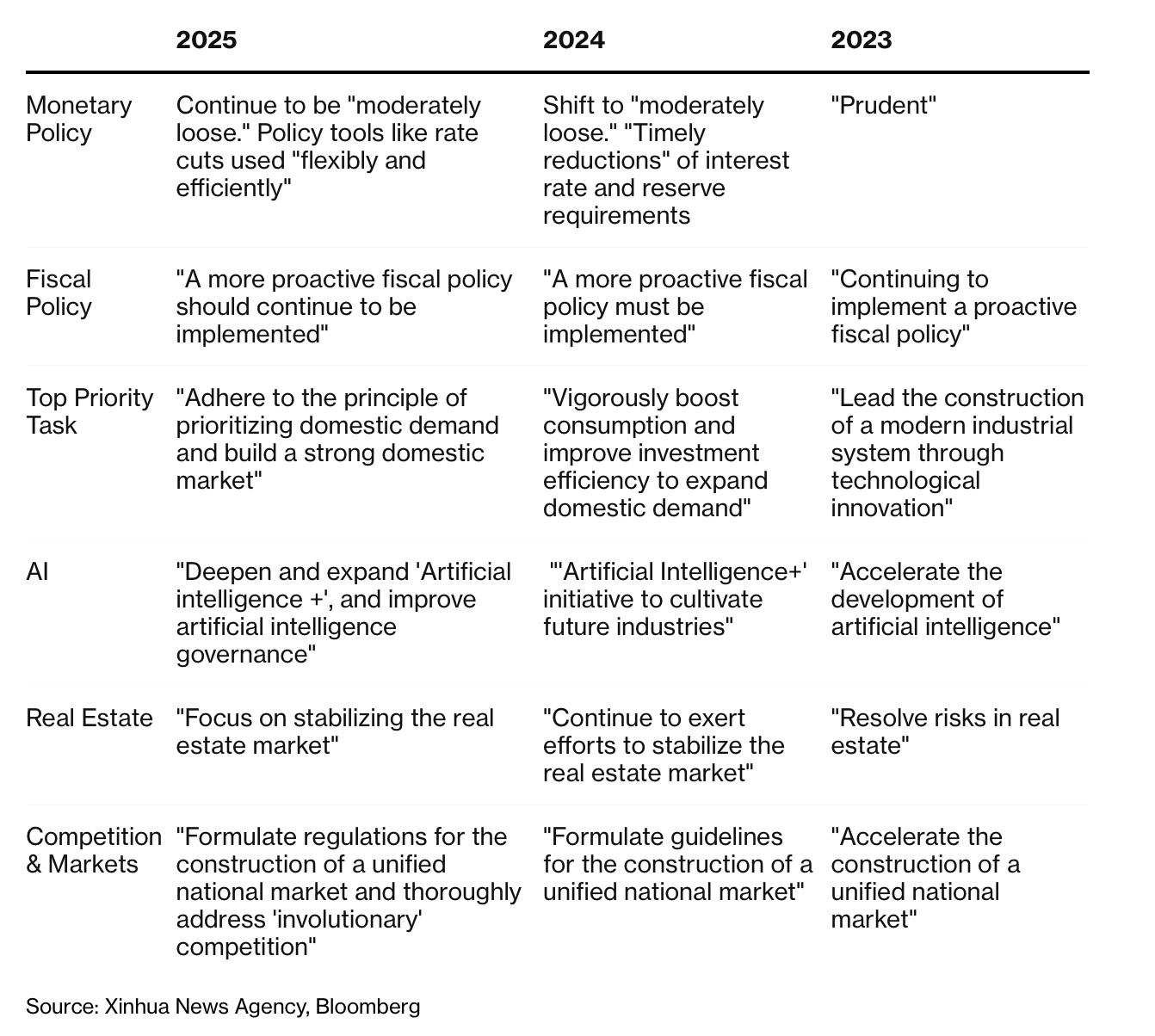
The other noteworthy story this morning is the outcome from China’s Central Economic Work Conference (CEWC).  I have described several times that the President Xi’s government claims they are keen to help support domestic consumption and the housing market despite neither of those things having occurred during the past several years.  Well, Bloomberg was nice enough to create a table highlighting the CEWC’s statements this year and compare them to the past two years.  I have attached it below.

In a testament to the fact that bureaucrats speak the same language, no matter their native tongue, a look at the changes in Fiscal Policy or Top Priority Task, or even Real Estate shows that nothing has changed but the order of the words.  The very fact that they need to keep repeating themselves can readily be explained by the fact that the previous year’s efforts failed.  Why will this time be different?

Ok, a quick tour of markets.   Apparently, Asia was not enamored of the FOMC outcome with Tokyo (-0.9%) and China (-0.9%) both sliding although HK managed to stay put.  Elsewhere in the region, both Korea (-0.6%) and Taiwan (-1.3%) were also under pressure as most markets here were in the red.  The exceptions were India, Malaysia and the Philippines, all of which managed gains of 0.5% or so.  

In Europe, things are a little brighter with modest gains the order of the day led by Spain (+0.5%) and France (+0.4%) although both Germany and the UK are barely higher at this hour.  There was no data released in Europe this morning although the SNB did meet and leave rates on hold at 0.0% as universally expected.  There has been a little bit of ECB speak, with several members highlighting that ECB policy is independent of Fed policy but that if Fed cuts force the dollar lower, they may feel the need to respond as a higher euro would reduce inflation.  Alas for the stock market bulls in the US, futures this morning are pointing lower led by the NASDAQ (-0.7%) although that is on the back of weaker than expected Oracle earnings results last night.  Perhaps promising to spend $5 trillion on AI is beginning to be seen as unrealistic, although I doubt that is the case 🤔.

Turning to the bond market, Treasury yields have slipped -2bps overnight after falling -5bps yesterday.  Similar price action has been seen elsewhere with European sovereign yields slipping slightly and even JGB yields down -2bps overnight.  Personally, I am a bit confused by this as I have been assured that the Fed cutting rates in this economy would result in a steeper yield curve with long-dated rates rising even though the front end falls.  Perhaps I am reading the data wrong.

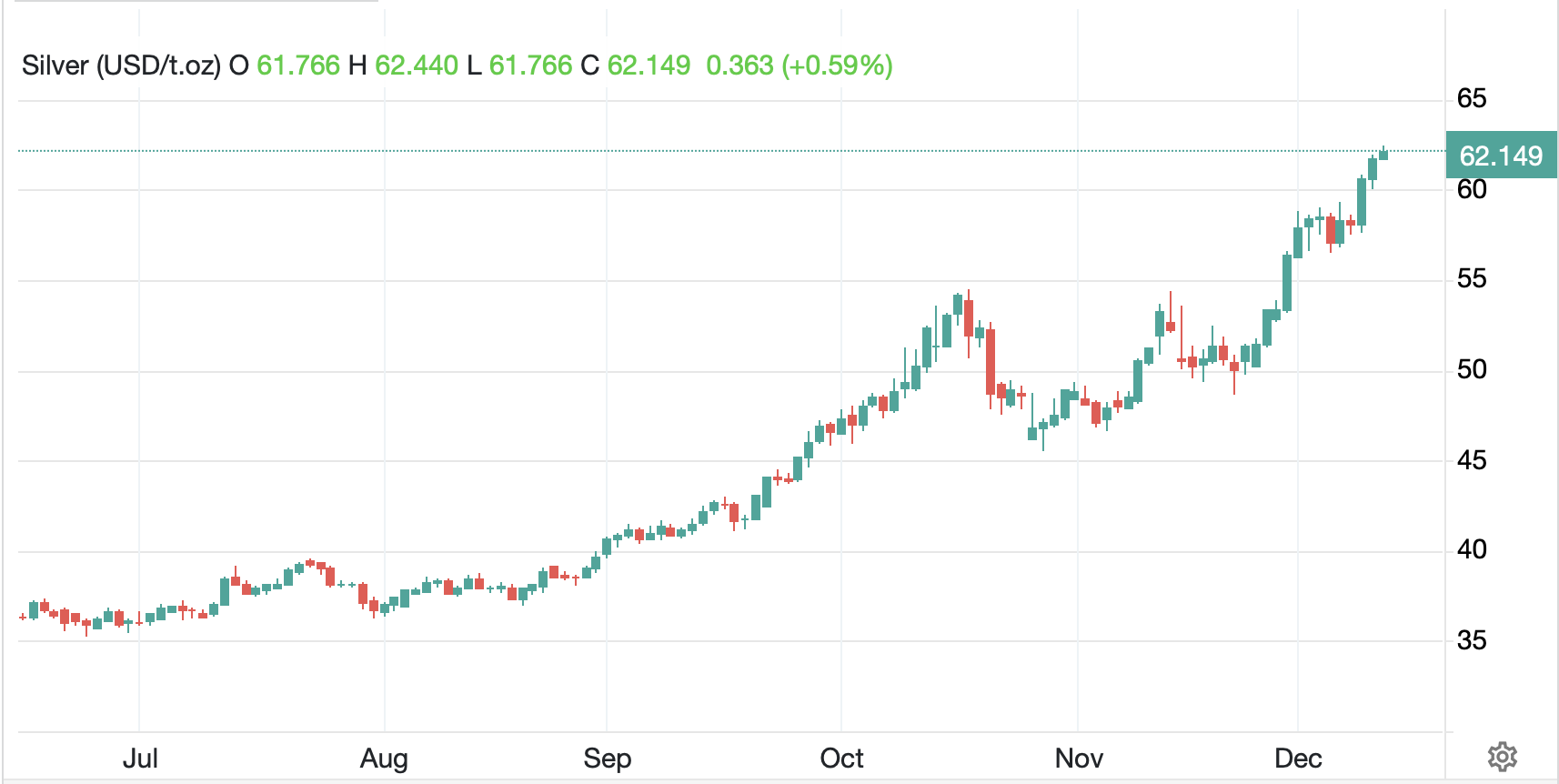
In the commodity markets, the one truth is that there are no sellers in the silver market.  It is higher by another 0.5% this morning and above $62/oz as whatever games had been played in the past to cap its price seem to have fallen apart.  Physical demand for the stuff outstrips new supply by about 120 million oz /year, and new mines are scarce on the ground.  This feels like there is further room to run.

Source: tradingeconomics.com

As to the rest of the space, gold (-0.2%) which had a nice day yesterday is consolidating, as is copper.  Turning to oil (-1.1%) it continues to drift lower, dragging gasoline along for the ride, something that must make the president quite happy.  You know my views here.

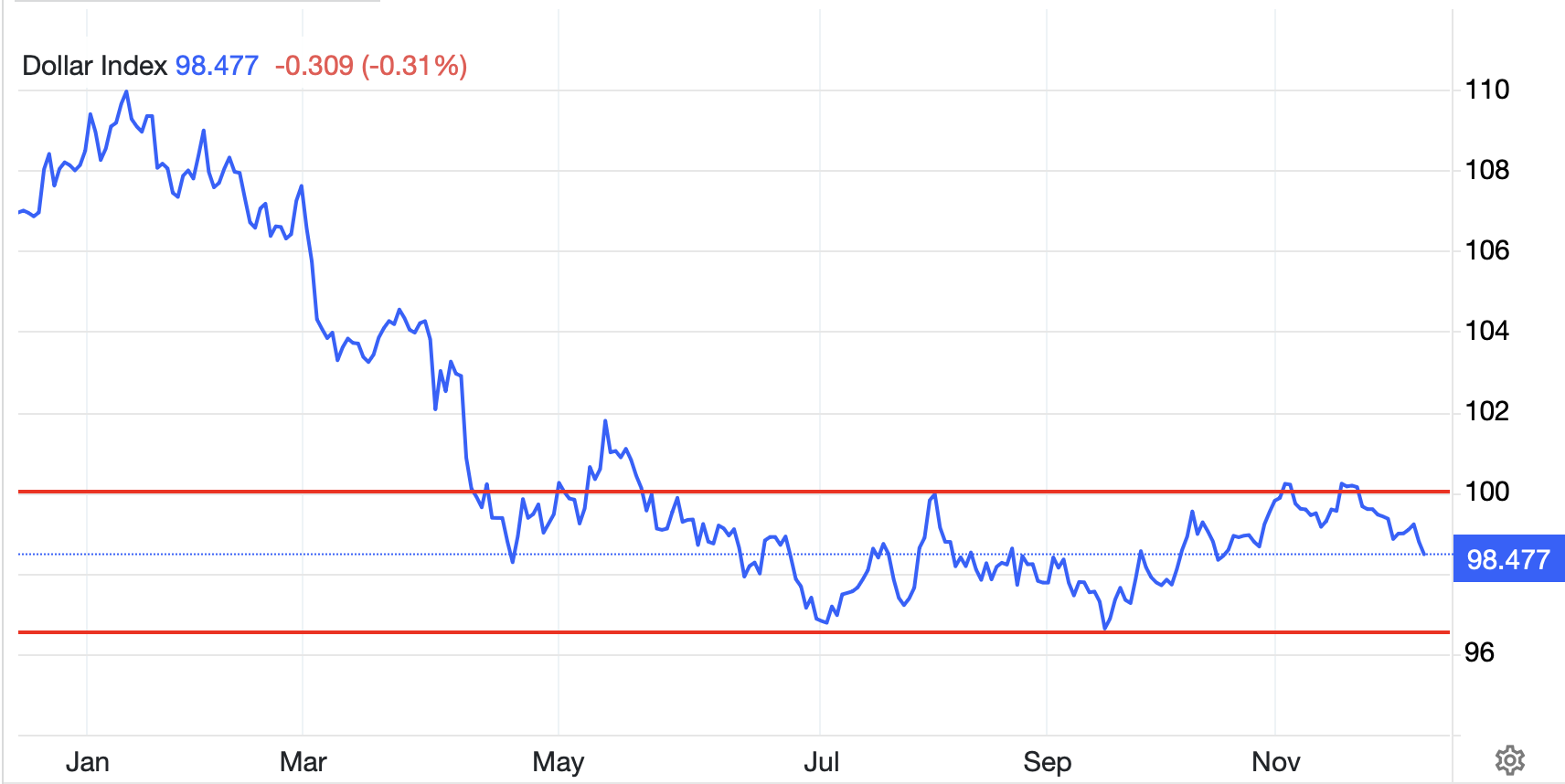
As to the dollar writ large, while it sold off a bit yesterday, as you can see from the below DXY (-0.3%) chart, it is hardly making new ground, rather it is back to the middle of its 6-month range.  

Source: tradingeconomics.com

This morning more currencies are a bit stronger but in the G10, CHF (+0.45%) is the leader with everything else far less impactful.  And on the flip side, INR (-0.7%) has traded to yet another historic low (USD high) as the new RBI governor has decided not to waste too much money on intervention.  Oh yeah, JPY (+0.2%) has gotten some tongues wagging as now that the Fed cut and the BOJ is ostensibly getting set to hike, there is more concern about the unwind of the carry trade.  My view is, don’t worry unless the BOJ hikes 50bps and promises a lot more on the way.  After all, if the Fed has finished cutting, something that cannot be ruled out, this entire thesis will be destroyed.

On the data front, Initial (exp 220K) and Continuing (1950K) Claims are coming as well as the Trade Balance (-$63.3B).  There are no Fed speakers on the docket, but I imagine we will hear from some anyway, as they cannot seem to shut up.  

It would not surprise me to see the dollar head toward the bottom of this trading range, but I think we need a much stronger catalyst than uncertainty from the Fed to break the range.

Good luck

Adf

Printing Up Gobs

The balance sheet, so said Chair Jay
Is really the very best way
For policy ease
And so, if you please,
QT is soon going away
 
Rate cuts are now back on the table
As we work quite hard to enable
Those folks lacking jobs
By printing up gobs
Of cash, just as fast as we’re able


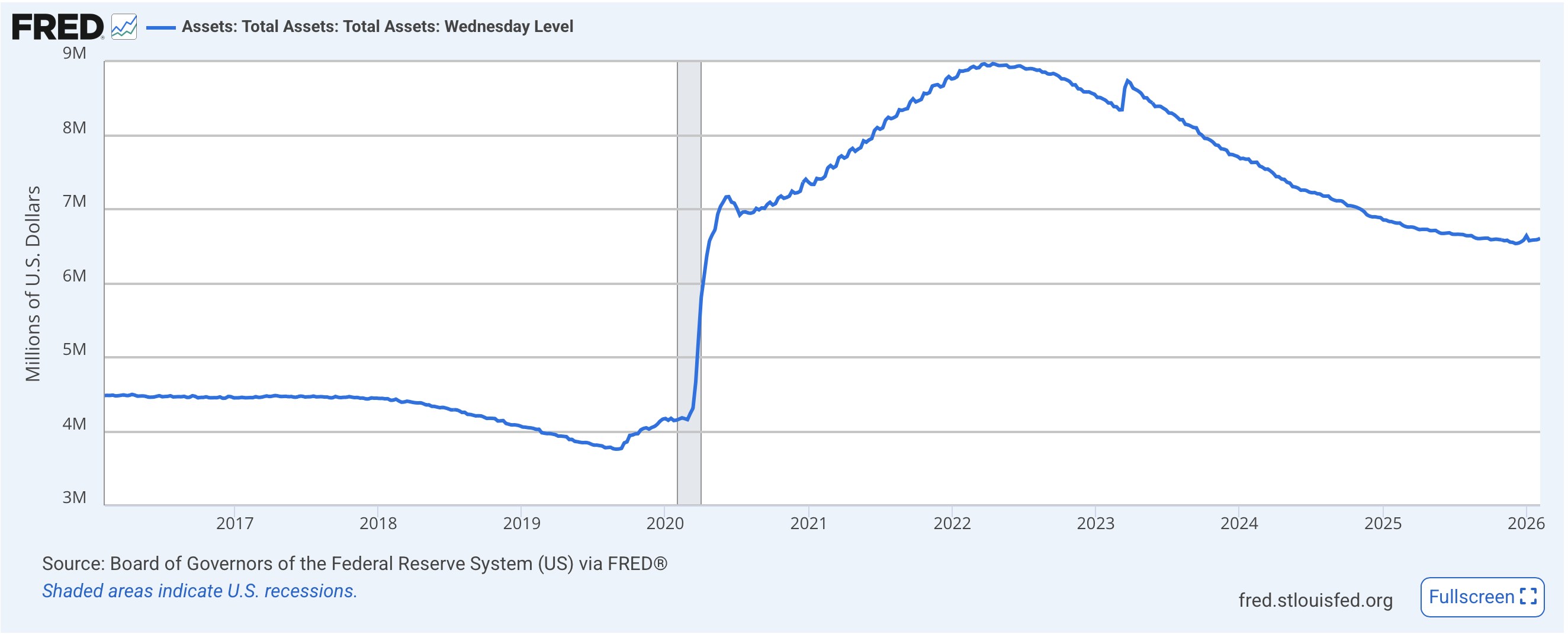
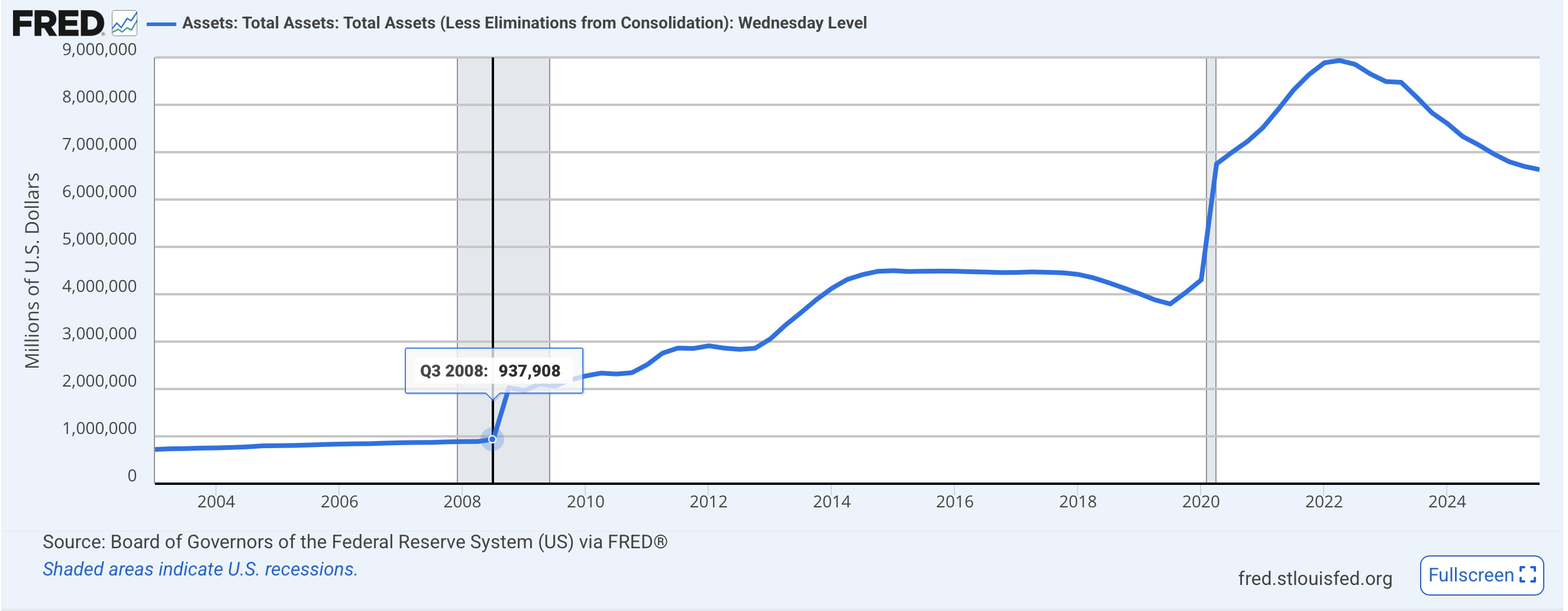
Chairman Powell spoke yesterday morning in Philadelphia at the NABE meeting and the TL; DR is that QT, the process of shrinking the Fed’s balance sheet, is coming to an end.  Below is a chart showing the Fed’s balance sheet assets over the past 20+ years.  I have highlighted the first foray into QE, during the financial crisis, and you can see how that balance sheet has grown and evolved since then.

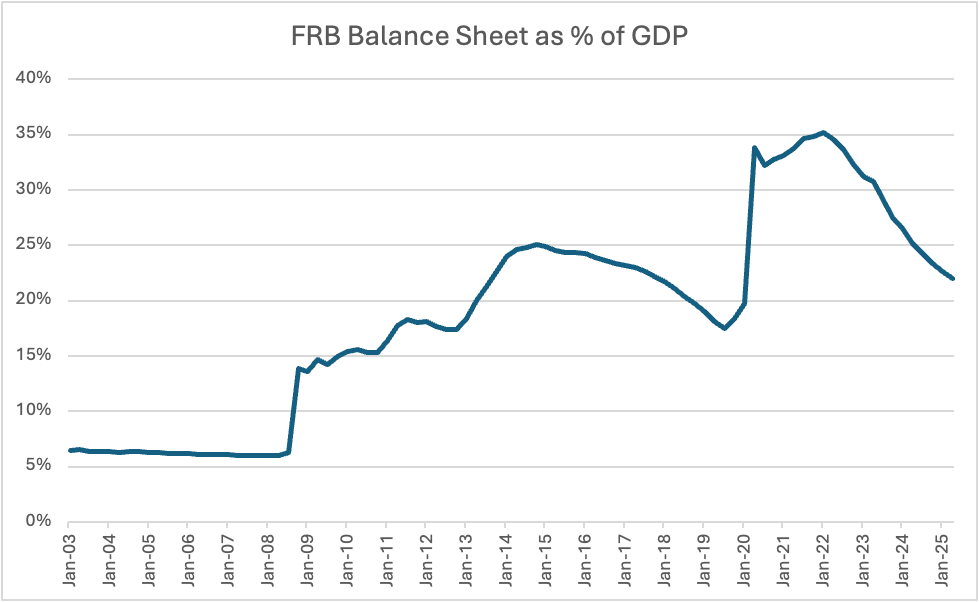
And the below chart is one I created from FRED data showing the Fed’s balance sheet as a percentage of the nation’s GDP.

Pretty similar looking, right?  The history shows that the GFC qualitatively changed the way the Fed managed monetary policy, and by extension their efforts at managing the economy.  As is frequently the case, QE was envisioned as an emergency policy to address the unfolding financial crisis in 2008, but as Milton Friedman warned us in 1984, “Nothing is so permanent as a temporary government program.”  QE is now one of the key tools in the Fed’s toolkit as they try to achieve their mandates.

There has been a great deal of discussion regarding the issue of the size of the Fed’s balance sheet, paying interest on reserves, something that started back in 2008 as well, and what the proper role for the Fed should be.  But I assure you, this is not the venue to determine those answers. 

However, of more importance than the speech, per se, was that during the Q&A that followed, Mr Powell explained that the Fed was soon reaching the point where they were going to end QT, and that they were going to seek to change the tenor of the balance sheet to own more short-term assets, T-bills, than the current allocation of holding more long-term assets including T-bonds and MBS.  And this was what the market wanted to hear.  While both the NASDAQ and S&P 500 both closed slightly lower on the day, as you can see from the chart below, the response to Powell’s speech was immediate and impressive.

Source: tradingeconomics.com

Too, other markets also responded to the news in a similar manner, with gold, as per the below chart accelerating its move higher.

Source: tradingeconomics.com

While the dollar, as per the DXY, responded in an equally forceful manner, falling sharply at the same time.

Source: tradingeconomics.com

Summing up, Chairman Powell basically just told us that inflation was no longer a fight they were willing to have and support of the economy and employment is Job #1.  Of course, this may not work out that well for long-term bond yields, which when if inflation rises are likely to rise as well, I think Powell knows that he will be gone by the time that becomes a problem, so maybe doesn’t care as much.

But here’s something to consider; there has been a great deal of talk about the animus between the Fed and the Treasury, or perhaps between Powell and Trump, but Treasury Secretary Bessent has already made clear they will be issuing more T-bills and less T-bonds going forward, which is a perfect fit for the Fed’s proposition to hold more T-bills and less T-bonds going forward.  This is not a coincidence.

Now, while that was the subject that got most tongues wagging in the market, the other story of note was the ongoing trade spat between the US and China.  It is hard to keep up with all the changes although it appears that soy oil imports from China are now on the menu of items to be tariffed, and the WSJ this morning explained that China is going to try to pressure President Trump by doing things to undermine the stock market as they see that as a vulnerability.  Funnily enough, I think Trump cares less about the stock market this time around than last time, as he is far more focused on issues like reindustrialization and jobs here and elevating labor relative to capital, which by its very nature implies stock market underperformance.

But that’s where things stand now. So, let’s take a turn around markets overnight.  Despite a mixed picture in the US, Asian equity markets had a fine time with Tokyo (+1.8%), China (+1.5%) and HK (+1.8%) all rallying sharply on the prospect of further Fed ease.  Regarding trade, given the meeting between Presidents Trump and Xi is still on the schedule, I think that many are watching the public back and forth and assuming it is posturing.  As well, Chinese inflation data was released showing deflation accelerating, -0.3% Y/Y, and that led to thoughts of further Chinese stimulus to support the economy there.  Of course, their stimulus so far has been underwhelming, at best.  Elsewhere in the region, green was also the theme with Korea (+2.7%), India (+0.7%), Taiwan (+1.8%) and Australia (+1.0%) all having strong sessions.  One other thing about India is the central bank there intervened aggressively in the FX market with the rupee (+0.9%) retracing to its strongest level in a month as the RBI starts to get more concerned over the inflationary impacts of a constantly weakening currency.

In Europe, the CAC (+2.4%) is leading the way higher after LVMH reported better than expected earnings (Isn’t it funny that the US market is dependent on NVDA while the French market is dependent on LVMH?  Talk about differences in the economy!), and while that has given a positive flavor to other markets, they have not seen the same type of movement with the DAX (+0.1%) and IBEX (+0.7%) holding up well while the FTSE 100 (-0.6%) continues to suffer from UK policies.  As to US futures, at this hour (7:40) they are all firmer by 0.5% to 0.9%.

In the bond market, yields continue to edge lower with Treasuries (-2bps) actually lagging the European sovereign market where yields have declined between -3bps and -4bps across the board.  In fact, UK gilts (-5bps) are doing best as investors are growing more comfortable with the idea the BOE is going to cut rates again after some dovish comments from Governor Bailey yesterday.

In the commodity space, oil (+0.2%) is consolidating after it fell again yesterday and is now lower by nearly -6% in the past week.  However, the story continues to be metals with gold (+1.3%), silver (+2.8%), copper (+0.5%) and platinum (+1.7%) all seeing continued demand as the theme of owning stuff that hurts if you drop it on your foot remains a driving force in the markets.  And as long as central banks are hinting that they are going to debase fiat currencies further, this trend will continue.

Finally, the dollar, as discussed above, is softer, down about -0.25% vs. most of its G10 counterparts this morning although NOK (+0.8%) is the leader in what appears to be some profit taking after an exaggerated decline on the back of oil’s decline.  In the EMG bloc, we have already discussed INR, and after that, quite frankly, it has not been all that impressive with the dollar broadly slipping about -0.2% against virtually the rest of the bloc.

On the data front, we see Empire State Manufacturing (exp -1.0) and get the Fed’s Beige Book at 2:00 this afternoon.  Four more Fed speakers are on the docket, with two, Miran and Waller, certainly on board for rate cuts, with the other two, Schmid and Bostic, likely to have a more moderated view.  Earlier this morning Eurozone IP (-1.2%) showed that Europe is hardly moving along that well.  Meanwhile, despite the excitement about Powell’s comments, the Fed funds futures market is essentially unchanged at 98% for an October cut and 95% for another in December.  I understand why the dollar slipped yesterday, but until those numbers start to move more aggressively, I suspect the dollar’s decline will be muted.

One other thing, rumor is that the BLS will be reporting the CPI data a week from Friday at 8:30am as they need it to calculate the COLA for Social Security for 2026.  If that is hot, and I understand that expectations are for 0.35% M/M, Chairman Powell and his crew may find they have a really tough choice to make the following week.

Good luck

Adf