In Tears

As I wrote yesterday, “at least” did a lot of work in the Treasury announcement as it opened the door for significantly larger purchases of longer dated bonds, enough to truly have a market impact.  Most of the initial analysis on the announcement focused on the extra $2 billion to be purchased in each operation.  But what if, instead of $2 billion, they purchase $50 billion each time?  Suddenly, that is a significant reduction in long bonds outstanding, and the program will have a much greater price impact.  Which leads to this Bloomberg headline and story, Bessent Says He’s Ready to Expand Treasury Buybacks.  I believe it would be a mistake to dismiss the Treasury’s ability to achieve their goals as, after all, they do make the rules.

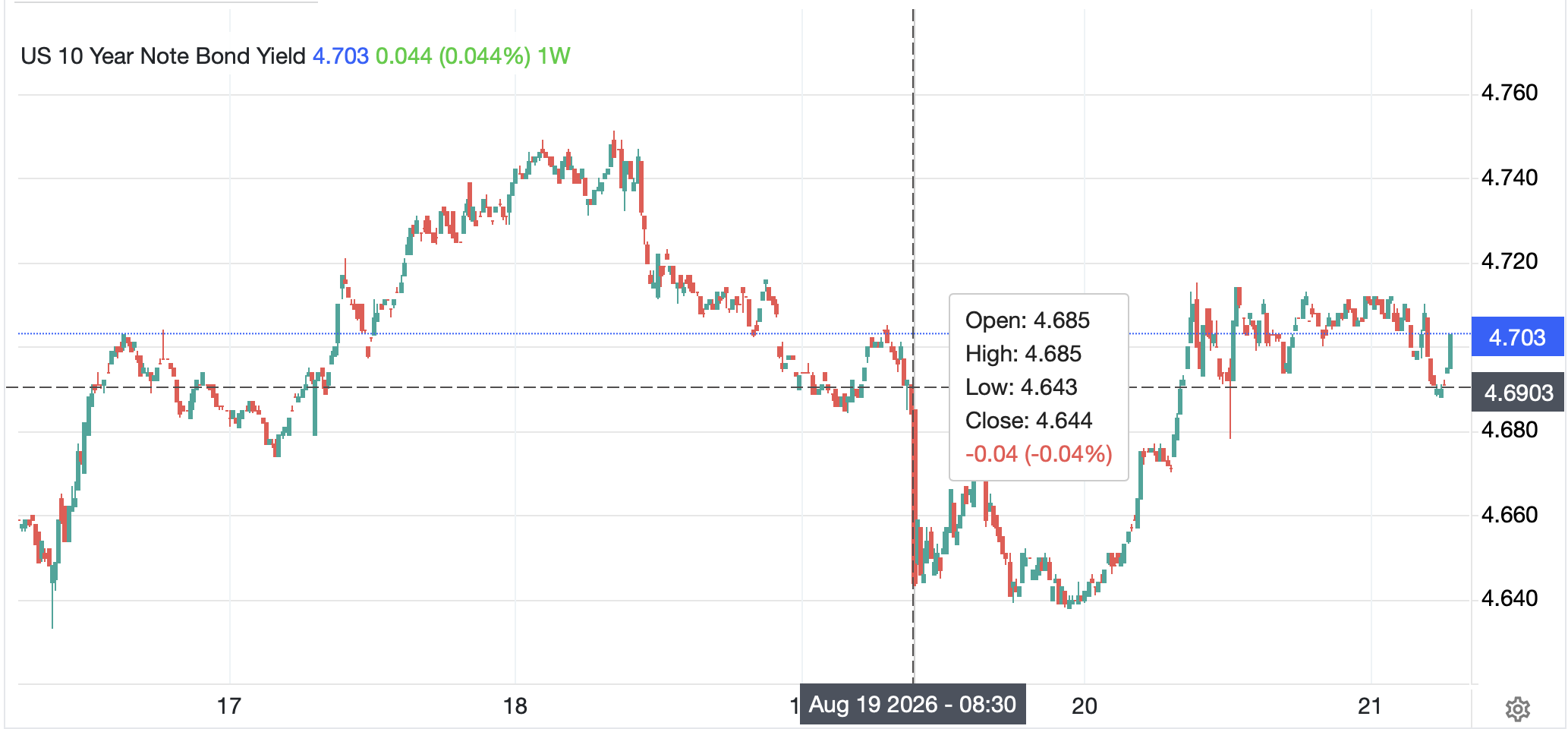
The upshot is that after a one-day rally in bonds, yields retraced those early declines (see chart below) and stocks fell sharply yesterday, clearly not the desired outcome.  

Source: tradingeconomics.com

Much hay has been made regarding the total US debt surpassing $40 trillion the other day, although I see that as merely a reaction to a big round number, not dissimilar to a trading situation in, for example USDJPY, where the market is focused on 160.00 and a break is seen as significant from a trading perspective, but less so from a policy perspective.  I am not seeking to downplay the problems that exist in the US regarding fiscal policy.  I am, after all, a hard money guy (it’s why I am working on USDi, the only inflation tracking cryptocurrency) and a proponent of a much smaller government with much reduced spending.  And that is what is necessary to address the problems at the root.  But that takes Congress and, alas, seems highly unlikely anytime soon.  Personally, I will not bet against Bessent, but that seems to be a popular idea right now.  It is certainly a popular thesis on X.

This saga is only beginning, and I expect that it will be a key topic of conversation for a while, at least until we see a substantial move in yields from the current level.  It is interesting to note, however, the difference in attitude from Chairman Warsh, who explained the market was doing the Fed’s job for them by pushing up yields thus tightening policy, and Secretary Bessent who continues to say that yields don’t represent fundamentals.  Of course, both sides are talking their respective books, so say what they need to say.  Part of me thinks they have dinner together and laugh over how they are confusing markets.

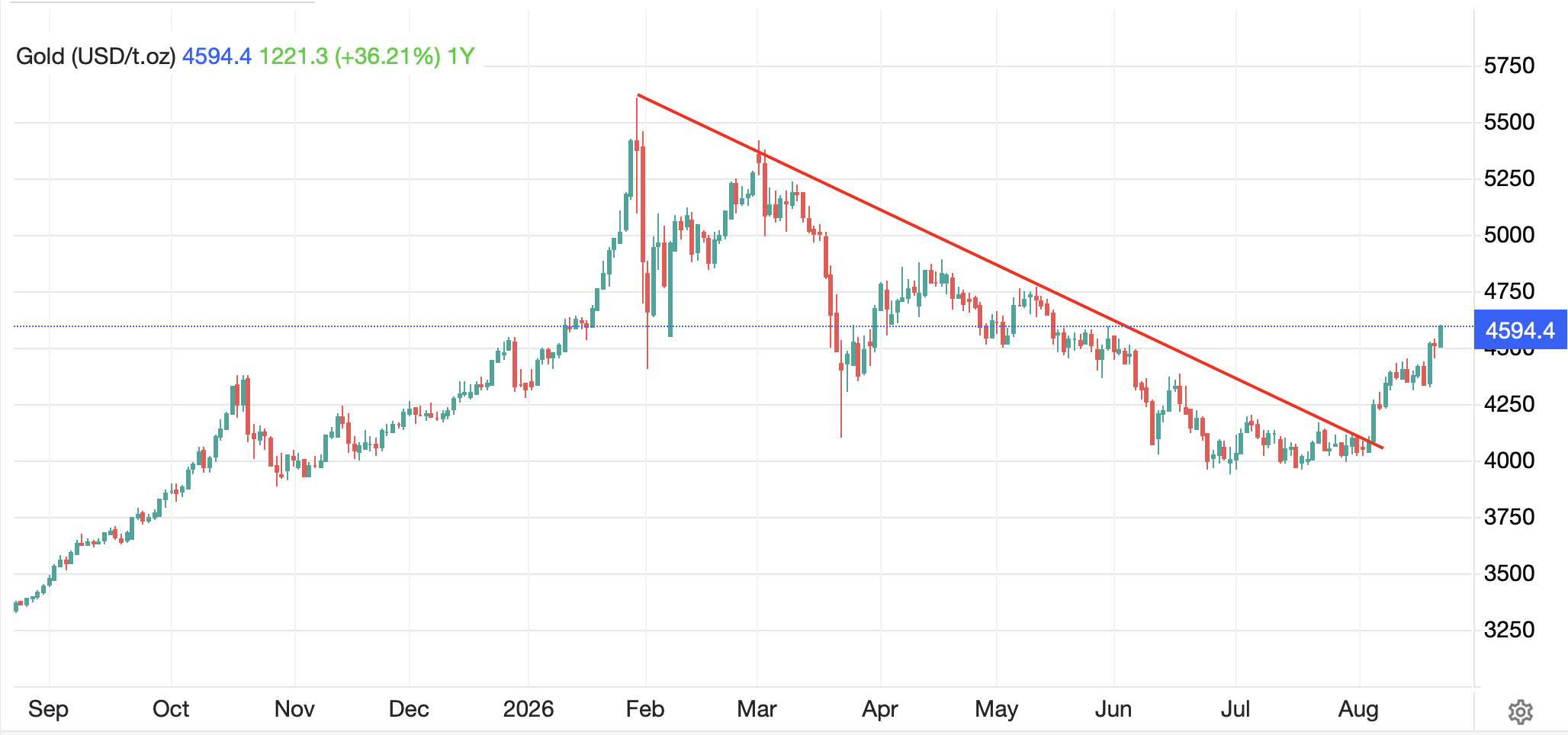
Let’s start our market descriptions with gold (+1.7%) this morning as it is extending its rally of the past two weeks.  A look at the chart below shows the trend line lower from the peak in late January (the date Kevin Warsh was named Fed Chair) was broken on August 6th and has been driving higher since, up 8% since that day and more than 15% since the low print on June 30th.

Source: tradingeconomics.com

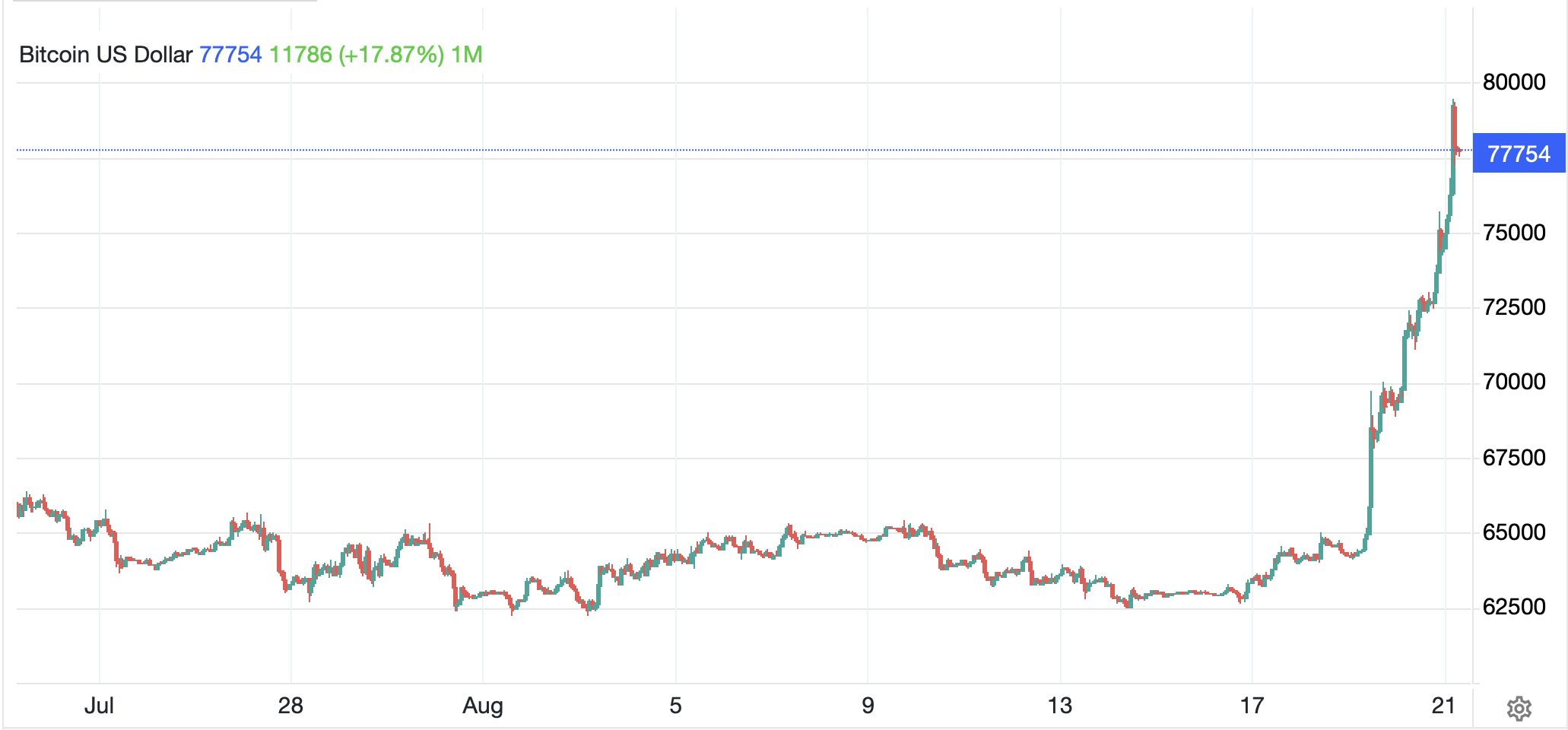
Silver (+2.3%) and copper (+2.1%) are also rallying here as there is a growing skepticism about financial assets and it appears investors are looking for things that are not reliant on government promises to retain value.  While I rarely discuss Bitcoin, that has rallied nearly 25% this week on largely the same story, although it has also benefitted from additional Treasury regulations being promulgated as part of the GENIUS Act and hopes for the CLARITY Act to pass soon as well.  Interestingly, BTC bottomed on June 30th as well.

Source: tradingeconomics.com

As to oil prices (+0.35%) they are creeping higher this morning as the ongoing Iran situation remains unresolved with no end in sight.  A key piece of news, that hasn’t gotten that much attention, is that the UAE has completely shut off all trade with Iran after two of its ships were attacked in the Gulf.  This matters hugely for Iran as the UAE was a significant trade conduit in things like machinery and equipment, as well as food and other necessities.  This will help the US sanctions regime significantly.  In fact, yesterday, Iranian Minister Ghalibaf, in a meeting in Baghdad explained that if the economy suffers further, that will be a major problem for the military and the nation.  Maybe this is going to end sooner than later after all.

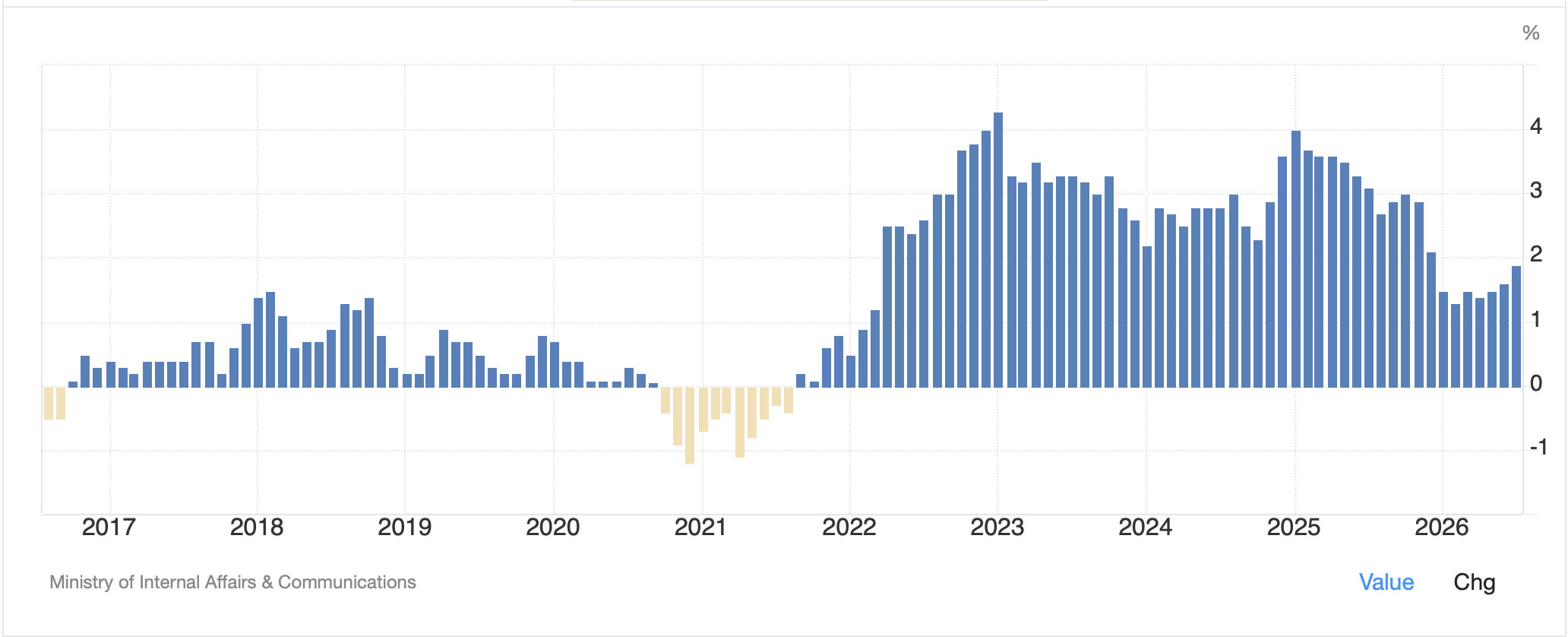
If we turn to the bond market, while Wednesday saw a sharp decline in yields, yesterday saw that reverse, as per the chart at the top of the note and this morning, yields are unchanged from yesterday’s close.  That is true in the US and across every European market.  It feels like investors are waiting for the next piece of information.  The exception here is JGBs (+4bps) where yields rose after inflation data was released at 1.9% (1.8% core) as expected, but trending higher again as government efforts to mitigate the impact of higher energy prices are starting to falter.  As you can see in the chart below, though, the inflation regime in Japan has changed dramatically from the previous decades.

Source: tradingeconomics.com

In the stock markets, yesterday’s US performance was pretty crummy (a technical term), with declines on the order of -1% across all major indices.  But that did not follow through so much in Asia (China +0.6%, HK +1.2%, Korea +0.9%, Taiwan +0.65%) although the Nikkei (-0.3%) did lag.  Nor did it have an impact in Europe, although other than Spain (+0.7%), the other major markets are higher by about 0.1% only.  And US futures this morning are in the green, +0.5% across the board, at this hour (7:30).  A key part of yesterday’s US declines was a disappointing earnings report for Walmart, where although they beat earnings, their forecasts going forward were softer.

Finally, the dollar is under further pressure this morning, falling against almost every major counterpart with some substantial declines.  For instance, commodity currencies (AUD, NZD, NOK, ZAR) are all firmer by about +0.7% this morning following their local commodity strengths higher, although CLP (-0.1%) is an outlier here.  But we are also seeing strength in the EUR (+0.25%), GBP (+0.2%), JPY (+0.3%) and CAD (+0.35%) from the G10 bloc and similar gains from EMG currencies (MXN +0.3%, PLN (+0.4%), HUF (+0.6%) and the biggest gainer, KRW (+0.7%) which continues to benefit from capital inflows as well as repatriation by SK Hynix after the US IPO.  If we use the DXY (-0.25%) as our proxy the recent downtrend also started at the end of June as per the below chart.

Source: tradingeconomics.com

Two things here.  First, despite this decline, the dollar remains right in the middle of its longer-term range and until we break below 96.50 on the DXY, I do not believe the day-to-day movement indicates much.  Second, though, and more importantly, the FX markets are typically the release valve for pressures in a given economy, as no government can control capital flows, the exchange rate and monetary policy simultaneously, as pointed out by Robert Mundell in 1960 and 1963 (the so-called impossible trinity).  In this case, if the US continues to struggle with the debt situation, or else decides to head down the YCC road for real (meaning the Fed caps yields and buys whatever bonds necessary to do so), the dollar will suffer dramatically and likely boost inflation.  But we are a long way from that situation I believe, and it will take time to get there, if that is the direction.

On the data front, I would be remiss if I didn’t mention the Philly Fed’s blowout number of 47.4 yesterday with the manufacturing sector the biggest beneficiary.  This morning all we see is Flash PMI data (exp 53.9 Mfg, 54.0 Services) although with both the Philly and Empire State readings so strong, I wouldn’t be surprised to see a much stronger read here as well.

And that’s it for the week.  Certainly, it was more exciting than anticipated given the Treasury/Bessent announcement, but until we see just how many bonds they buy in a few weeks, we really don’t know how things will play out.  In the meantime, earnings have continued to be strong generally, and I see no reason for risk assets to decline for now.  The dollar, however, is starting to look a little shaky, and if we see a bit more of a fall, I might get concerned.

Good luck and good weekend

adf

Some Despair

The story of late is the Bond
Where holders are now all despond
As governments spend
On infinite end
And traders are now far less fond

One question is, what will they buy?
With funds that, to bonds, don’t apply
Are stocks on their list?
With gold, will they tryst?
Or keep it in cash til they die?

As well, one must ask if the Chair
Is comfy or has some despair
Perhaps in his speech
Next Friday he’ll preach
He’ll offer more than laissez-faire

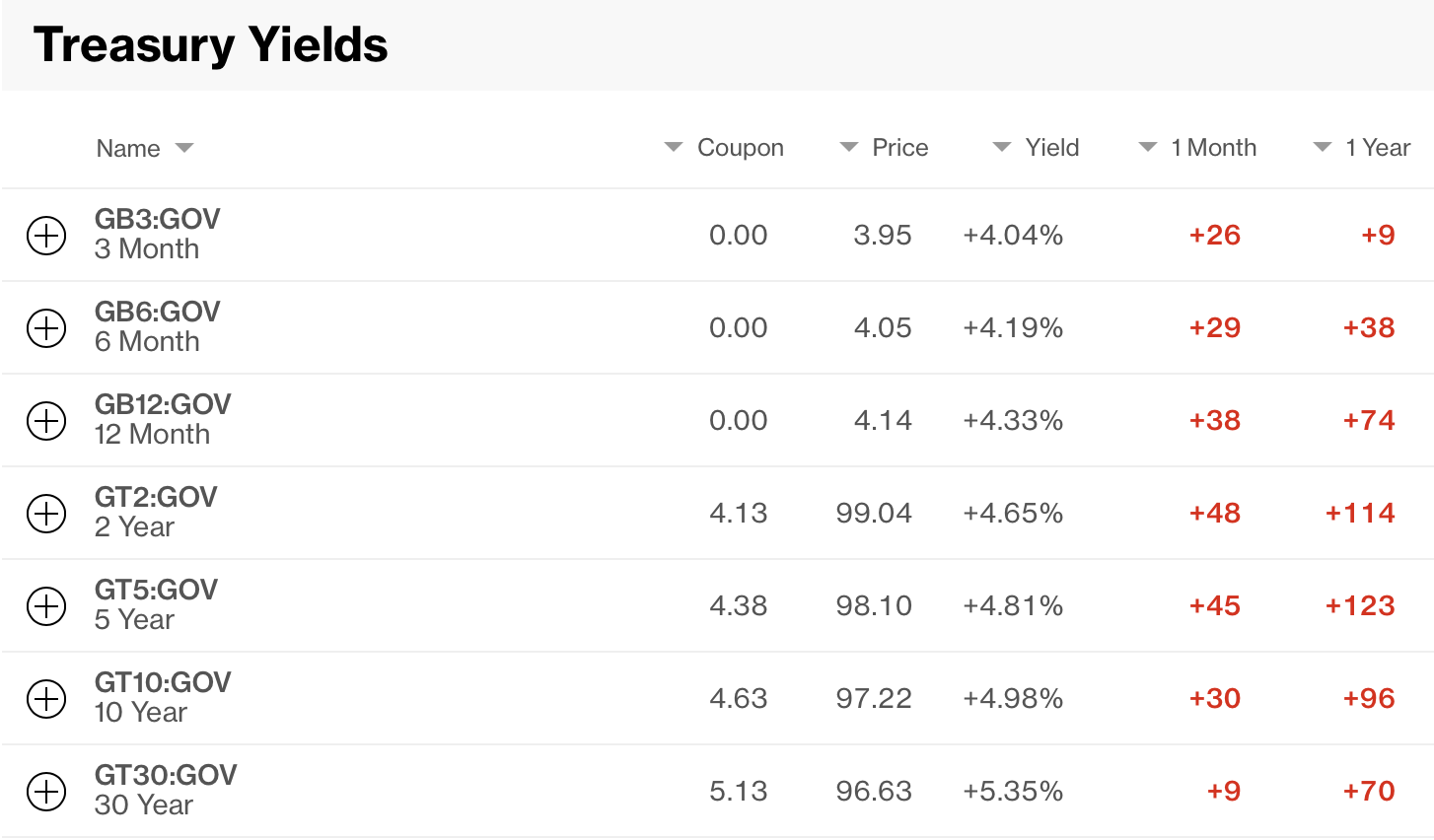
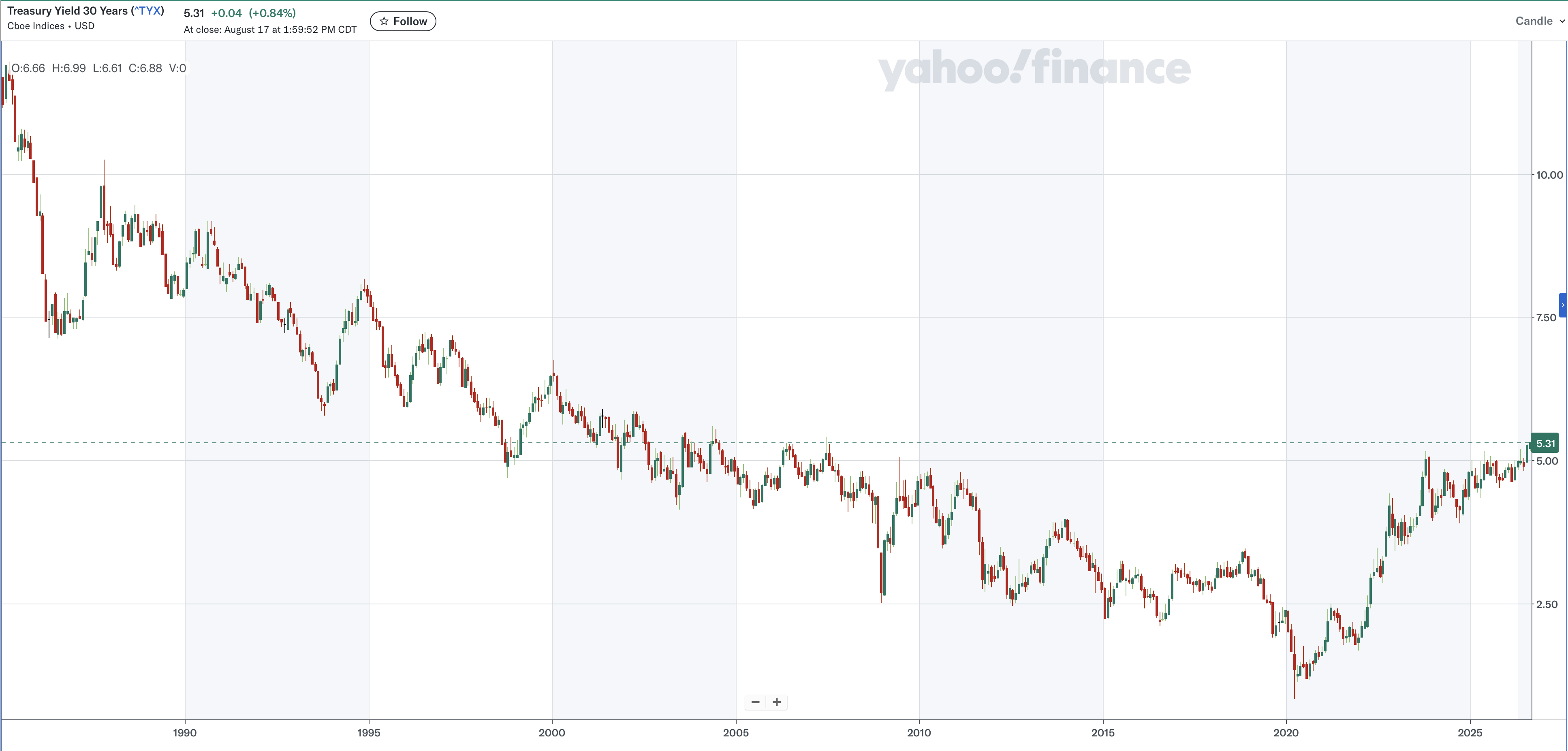
The bond market is where the narrative has turned as yields have broken above multi-year highs and apocalyptic scenarios are a dime a dozen.  As you can see from the chart below from Yahoo Finance, the last time the 30-year yield touched its current yield of 5.31% was June 2007 and the last time it closed at this level or higher was June 2004.  That’s a pretty long time.

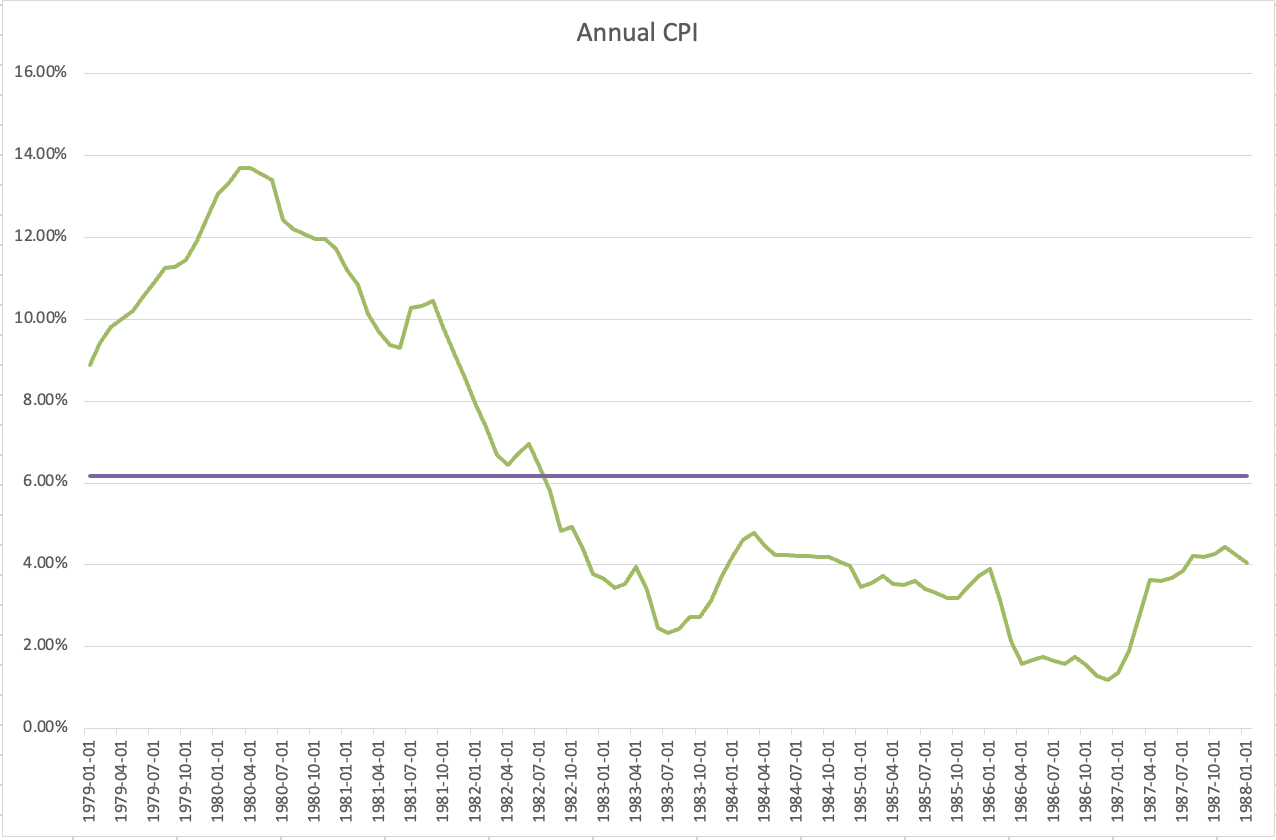
So, is this the aberration or is this the norm?  I guess the answer to that question is; how do you define the norm?  If you look at the very left edge of the chart above, in February 1985, the 30-year yield reached 11.9%, and in truth, was higher than that before then.   This was the legacy of Paul Volcker’s attack on the rampant inflation he inherited when he sat down in the Fed Chair.  While many of you will not remember, I’m sure you have all heard of his willingness to drive interest rates higher (which he did by withdrawing bank reserves from the market, not unilaterally raising interest rates like the Fed does today) until such time as inflation cracked.  This resulted in the twin recessions early in the 1980’s and made life very difficult for small businesses around the country.  But it was effective.  As you can see in the chart below I constructed from FRED data, the average CPI during Volcker’s term was 6.17%, and although it did briefly dip below 2%, it finished right around 4%.  

But what his actions did was create the prerequisite for a 40-year bond market rally, where prices rose and yields declined.  That bottomed in 2020 during Covid and has since reversed course.  Now, I think it is fair to say that the Covid year was an aberration as the Fed executed QE on steroids, pumping up their balance sheet by about $4 trillion.  Of course, in the wake of the GFC, the Fed quadrupled their balance sheet from ~$1 trillion to ~$4 trillion prior to Covid as you can see in the below chart from FRED.

During the pre-Covid period, measured inflation never rose very high at all, in fact many Fed members, including Chairs Bernanke, Yellen and Powell, all expressed concern about “too low” inflation!  The answer to this seeming conundrum was that all that money flowed into financial markets thus inflating asset prices, not consumable prices.  But when the government handed out stimulus checks, three times, during Covid and the aftermath, as well as PPP loans and increased jobless benefits, the more recent $4 trillion of QE came rushing into the real economy and we experienced too much money chasing too few goods and services, which drove the dramatic rise in CPI in 2021-2022, something which we all still experience.

But the question remains, are 4% bond yields the norm?  5%? 6%?  A rule of thumb from my early days in the markets, which was back in the mid 1980’s, was that the 10-year yield should approximate the nominal GDP growth rate, which given a ‘normal’ yield curve, would imply that the 30-year yield should be somewhere between 50bps and 100bps above that level.  In the current ‘run it hot’ paradigm, where virtually every Western country is borrowing and spending money aggressively, and where nominal GDP just printed at 7.9% in Q2 (it was 5.8% in Q1), it is not hard to make the case that the 30-year bond yield remains ‘cheap’.

Of course, it has been a long time since that heuristic was widely known, and almost all market participants today have never lived in that world.  In fact, most traders on major bank and fund desks, started their careers after the GFC so have no experience with the previous monetary regime.  

Let’s cut to the chase.  Is this the end of the world?  Absolutely not, as I have shown, it’s not even an unusual place for yields.  Are financial markets going to benefit from this?  Probably not too much, at least not universally.  There will be sectors that do well and others that suffer under a higher rate regime.  Will the economy suffer?  So far, it has shown impressive resilience, but that is a consequence of the ‘run it hot’ thesis.  If that stops or even slows down if Congress reduces its spending (as if!), then I imagine we will see equity markets suffer pretty significantly alongside bonds.  The current situation remains fragile, and while Chairman Warsh is trying to instill some antifragility to the market by forcing traders and investors to think for themselves, thus reducing their risk profiles, it is likely to get pretty bumpy if he succeeds.

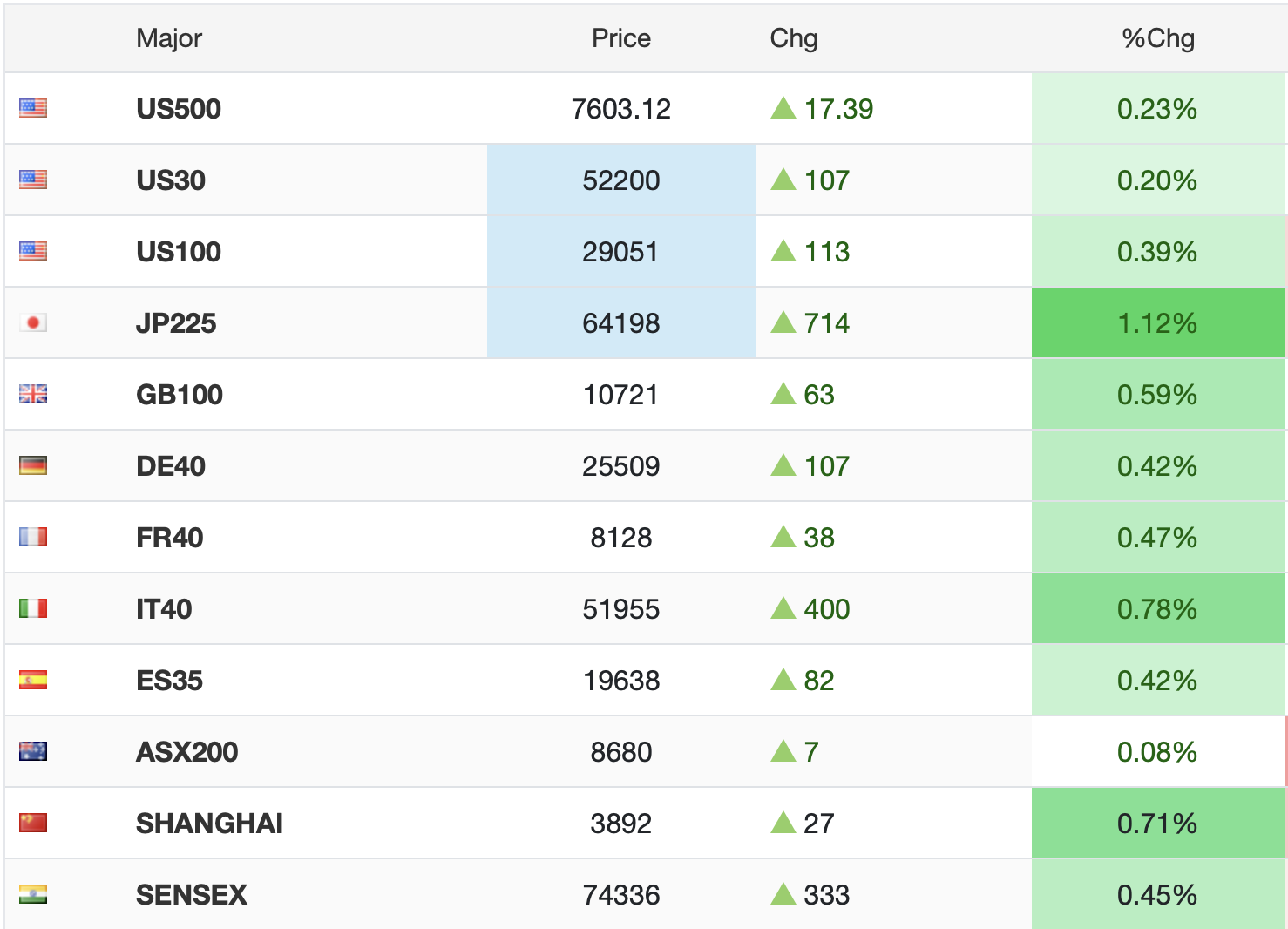
So, how is this impacting markets around the world?  Let’s take a tour.  Yesterday’s modest weakness in the US was followed by a generally weak session in Asia (Tokyo -2.5%, China -0.3%, Korea -1.5%, India -0.6%, Taiwan -1.2%) with Tech obviously under pressure, although HK managed to stay unchanged and New Zealand (+1.0%) saw fit to rally on stronger commodity prices.  In Europe this morning, bourses are lackluster with Germany, France and Italy all lower while Spain has edged higher and the UK is little changed after GDP data  met expectations.  US futures, though, are under pressure this morning led by the NASDAQ (-1.3%) at this hour (7:55).

In the bond market, yields are higher around the world with Treasuries (+2bps) performing slightly better than European sovereigns (+4bps across the board) although Gilts and JGBs are also only higher by 2bps.  It does appear that bond investors are starting to get antsy about things, but history tells us things will need to get MUCH worse on the spending/deficit side before governments are forced to change their ways.  Certainly, given the concerns over a Democratic sweep in Congress in November, there is no reason to believe that spending will slow.

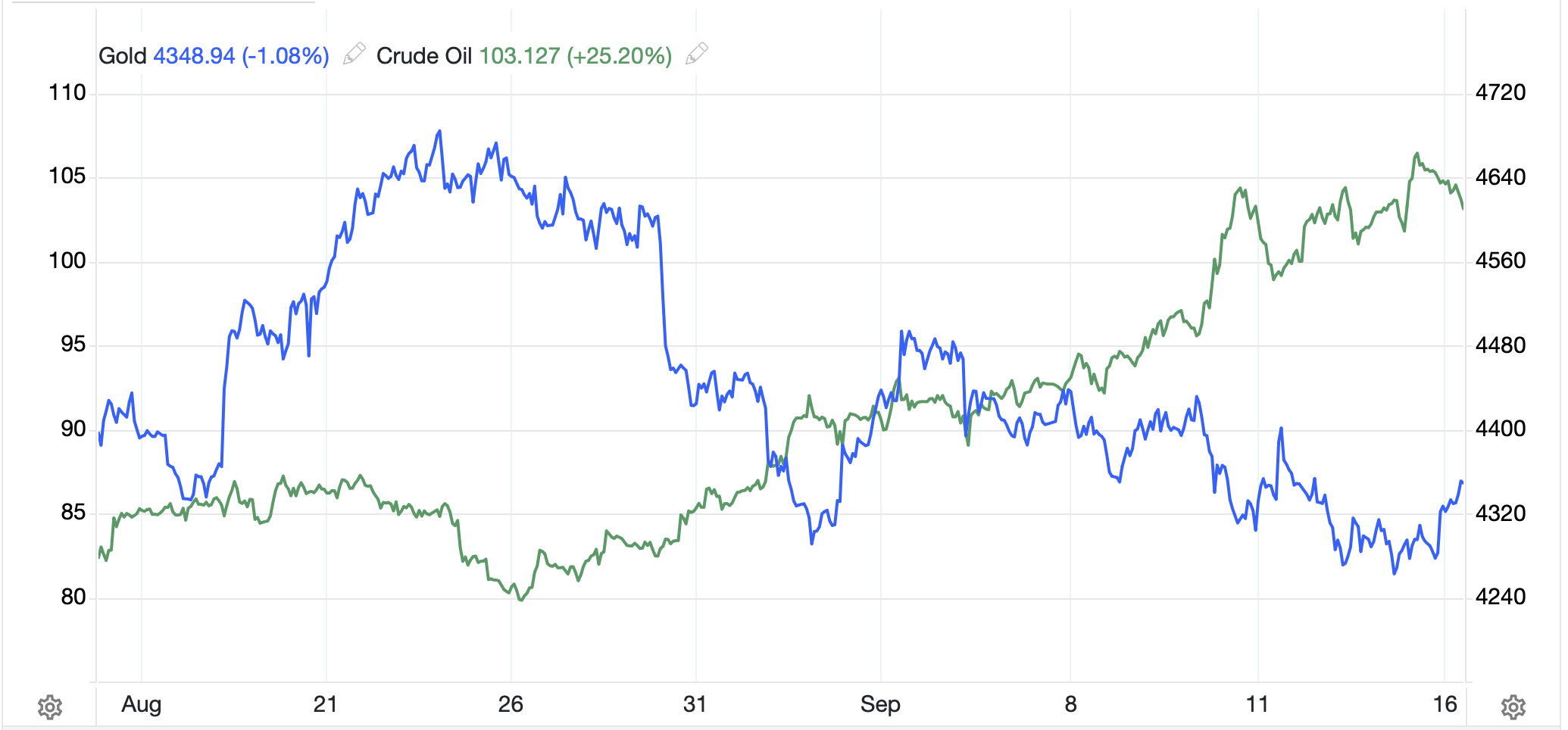
In the commodity space, oil (+0.6%) is following on yesterday’s gains as uncertainty over the Hormuz situation and increased concern over Ukraine’s attacks on Russian oil infrastructure continue to drive fear in markets.  I cannot opine on these things as despite the fact there are voluminous reports, it is nearly impossible to tell signal from noise.  As to the metals markets, after a pretty solid session yesterday, they are softer this morning (au -0.5%, Ag -1.0%, Cu -1.0%) although trends continue to develop higher here.

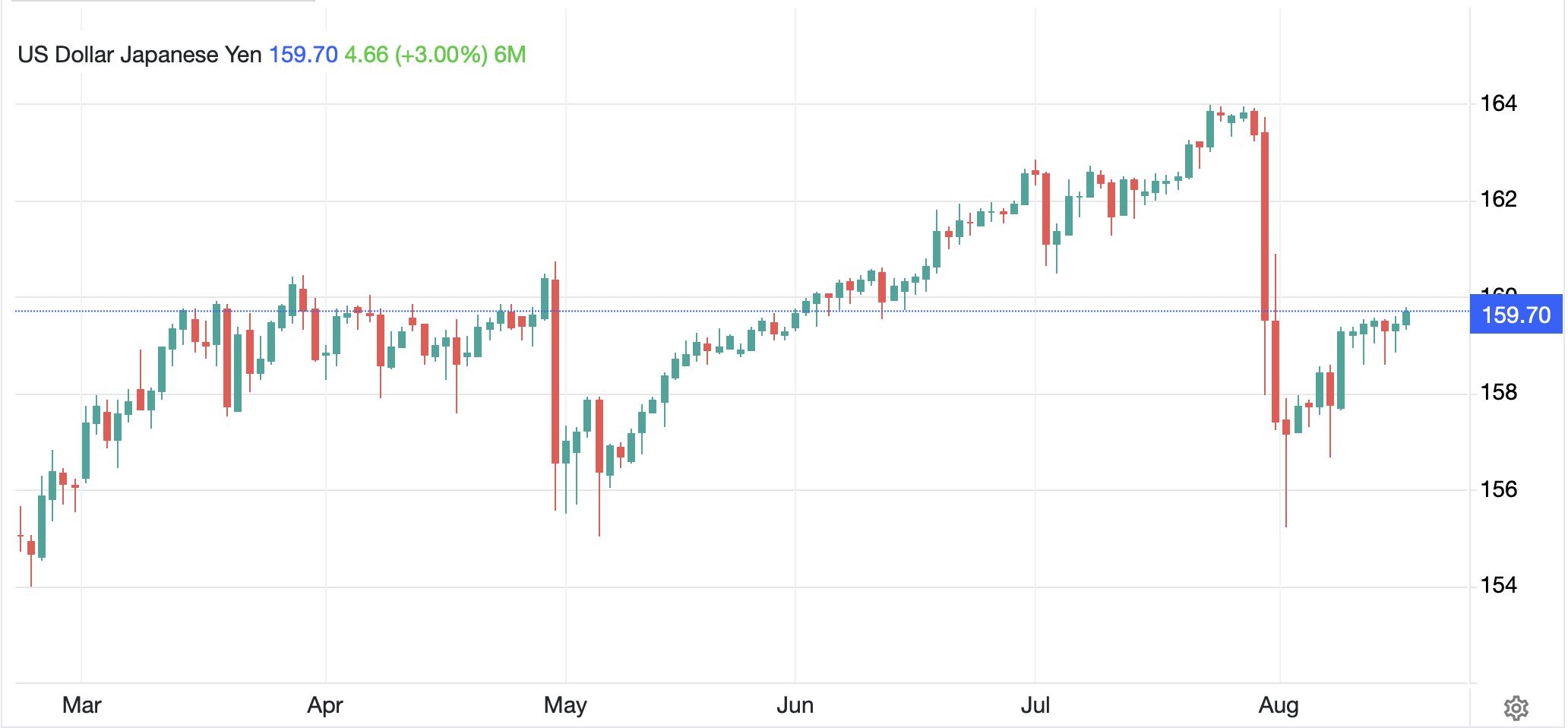
Finally, the dollar continues to be a sleeper overall, with the DXY unchanged on the day and most major currencies doing very little.  One aberration is KRW (+0.4%) which has seen some significant investment inflow from real money accounts, part of the reason it has performed so well lately.  But spare a moment for the yen (-0.2%) which refuses to strengthen no matter how hard Ueda, Takaichi or Bessent wish it to be so.  As you can see from the chart below, the aftermath of the most recent intervention is remarkably similar to the previous bout, (and every bout before that).

Source: tradingeconomics.com

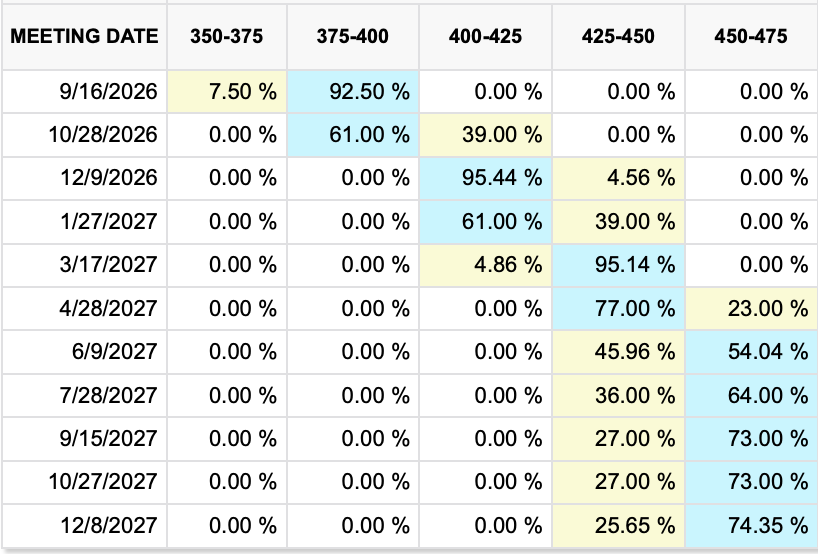
My take is we will continue to see a gradual depreciation in the yen until the BOJ acts decisively (don’t hold your breath for that) or the Fed reverses course and starts cutting.  As of this morning, the probability of a September hike in the US is 34% and in Japan it is 79%.  We shall see.

On the data front, we get Housing Starts (exp 1.35M), Building Permits (1.37M), IP (0.3%) and Capacity Utilization (76.3%), none of which I expect to move markets.  Despite the growing concerns in the bond market, the movement has been quite contained and amid lighter than normal staffing through the summer, I still don’t anticipate a lot of movement.  I still think we are waiting for Warsh next Friday before anything big happens.

Good luck

Adf