A Great Deal of Sorrow

With Warsh set to speak on the morrow
The rate at which we all can borrow
Has been creeping higher
Which for some is dire
And causing a great deal of sorrow

The question is what will he say
Inflation'ry fears, to allay
Seems most want to hear
That during this year
Fed funds will rise without delay

Arguably, the biggest story this morning is that Nvidia’s earnings beat handily and Jensen’s forecasts were even more bullish.  The upshot is NASDAQ futures are rallying (+0.7%) and we saw strength in the tech sectors in equity markets overnight (Korea +1.5%, Taiwan +0.3%, China +0.9%), although it was not as euphoric as might have been expected.  I read this morning that price targets for Nvidia have been raised dramatically now, so there doesn’t seem to be any slowing of that thought process.

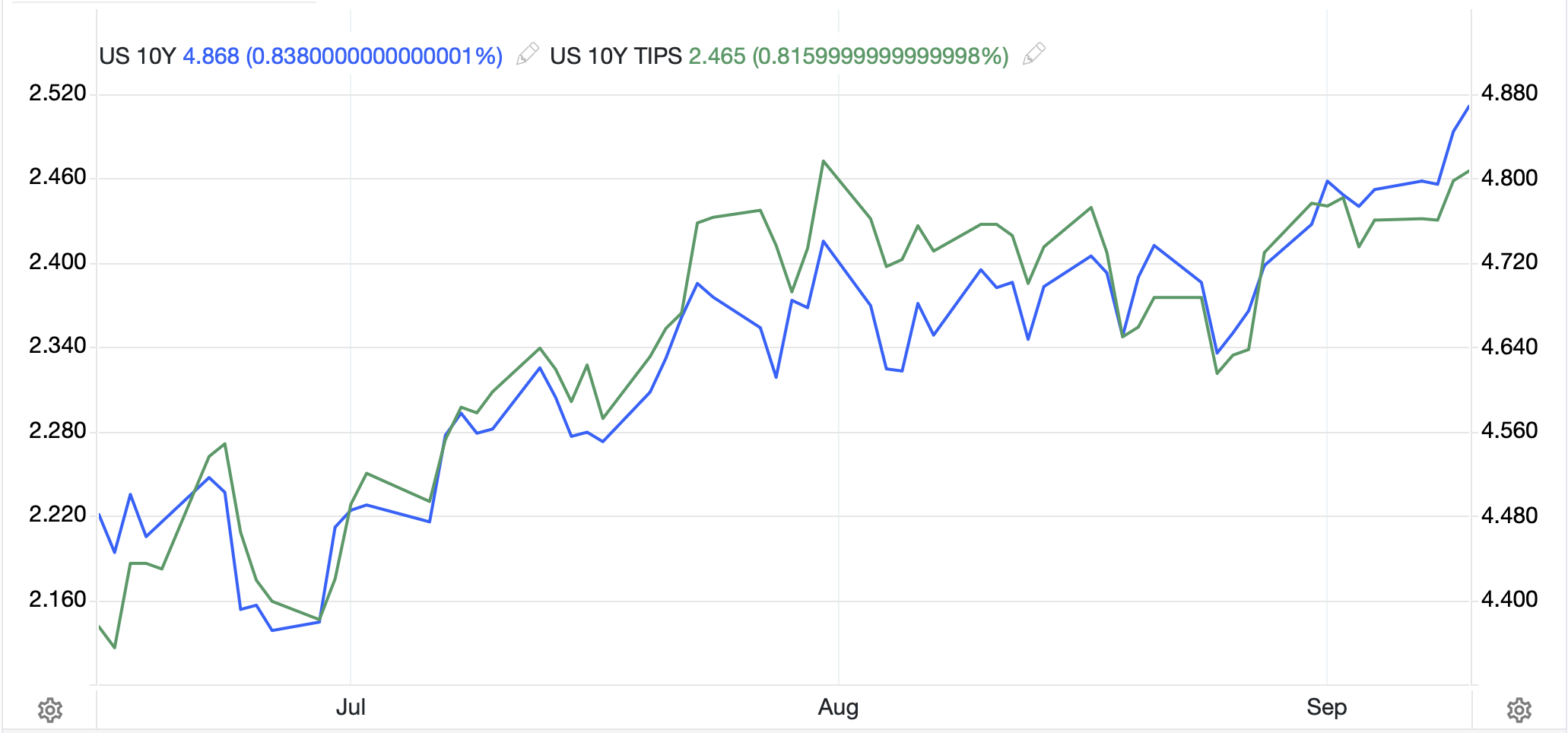
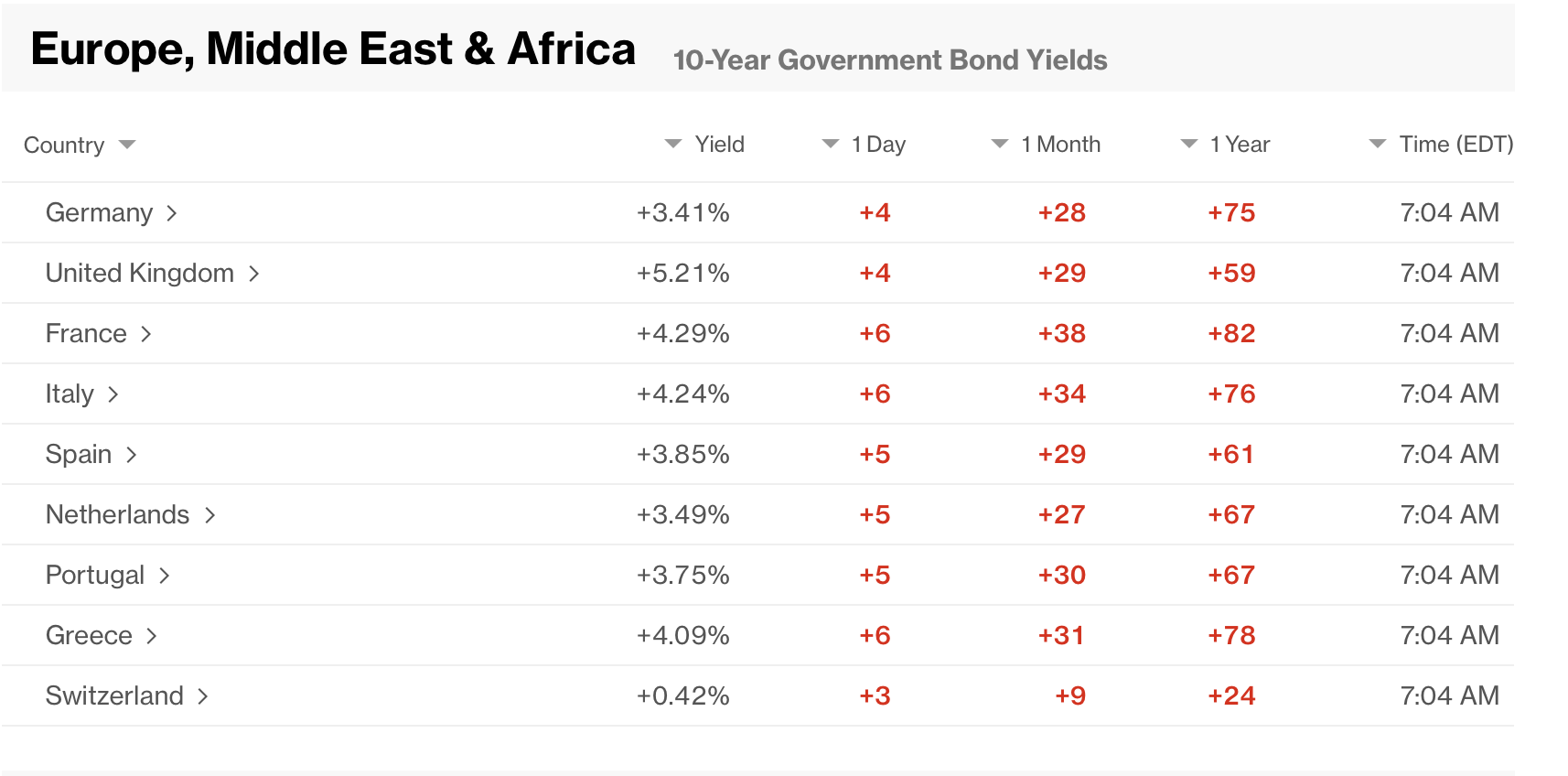
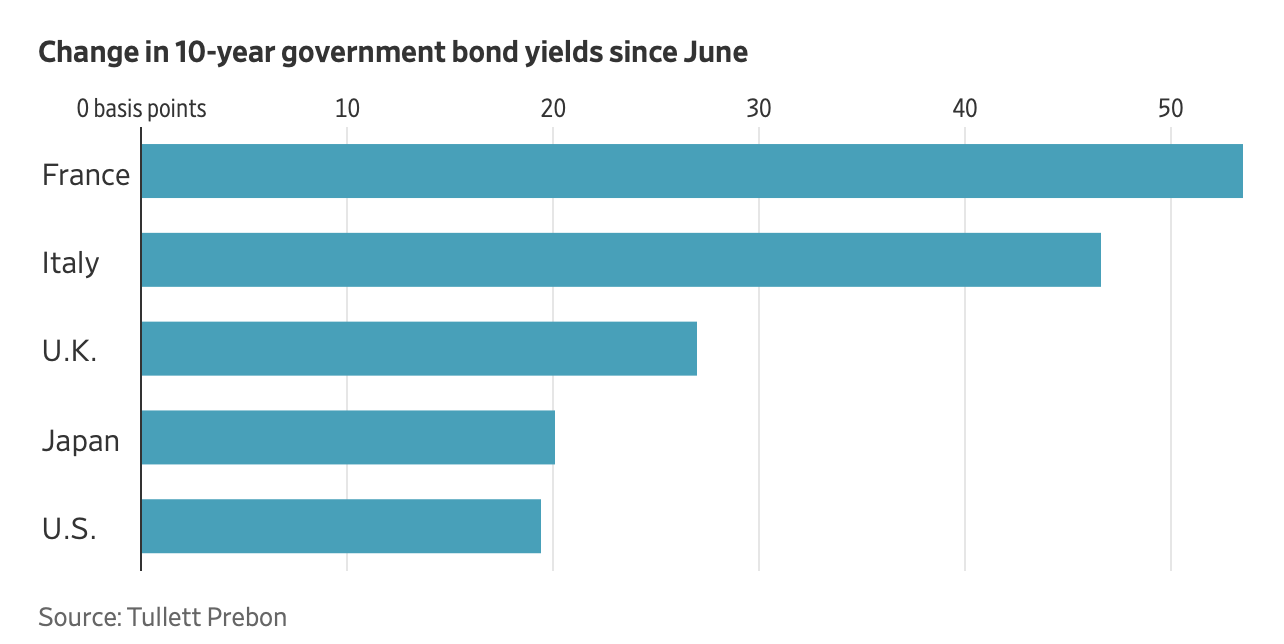
But otherwise, bond markets remain the focus as the combination of Secretary Bessent’s efforts to hold down long-term yields and anticipation of Fed Chair Warsh’s speech tomorrow are the main topics of conversation.  Interestingly, as much as the punditry loves to hate the US for its fiscal profligacy and the story of US yields rising has been top of mind, this morning the WSJ reminded its readers that the story in the US is not quite as bad as that in other major nations like France, Italy, the UK and Japan.  The below chart leads the story on the subject and is worth seeing.

The point is that virtually every Western nation is in the same boat and is likely to stay there for the foreseeable future.  The global regime that had been in place for upwards of 40 years; globalization leading to outsourcing manufacturing and financialization of major corporations is changing before our eyes.  Covid awakened many to the fact that the G10 had become dangerously reliant on China as a supplier for too many critical inputs which led to serious strategic concerns and weakness.  As that perceived weakness is being addressed by nations around the world, it turns out it costs a lot of money to do so, and nations are struggling to figure out how to pay for it.  Promises made when those nations could apply all their tax revenue to social causes are hard to keep when those resources are now being called upon to address strategic and security needs.  Hence the massive borrowing we have seen throughout the G10 and the corresponding rise in government bond yields.

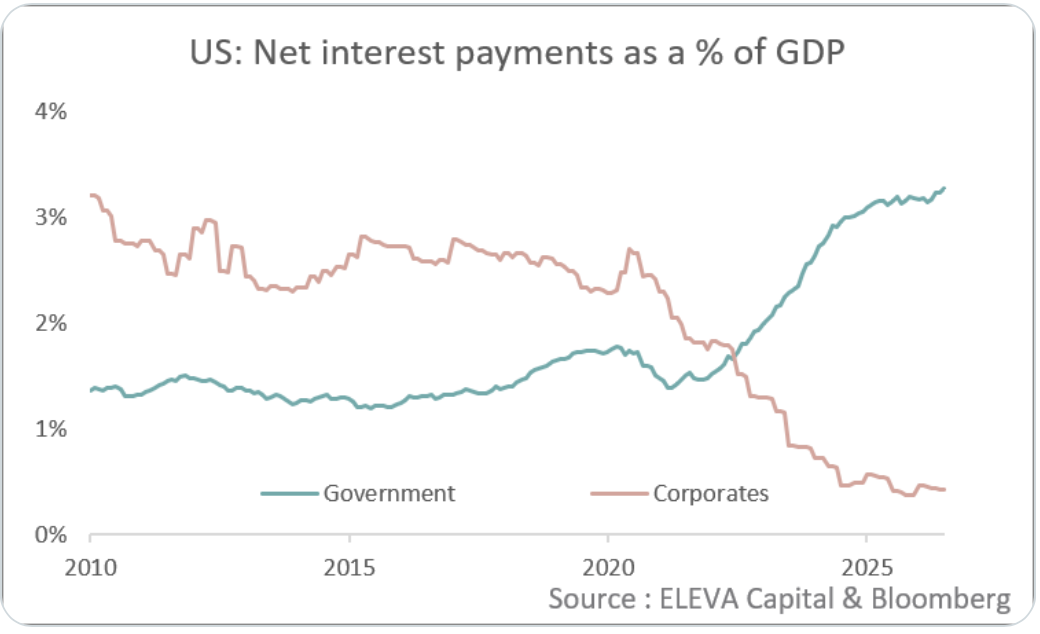
But one of the interesting things about this process is that despite government yields rising, corporate bond yields have been quite well behaved, with credit spreads remaining near their tightest levels ever.  I saw this chart this morning which helps explain that seeming anomaly and it helped clarify my thinking.

Basically, it is explaining that US corporates during Covid refinanced their debt at the rock-bottom levels of the time and reduced their interest expense dramatically.  Meanwhile, due to arguably the single greatest fiscal policy error of all time by then Secretary Janet Yellen, the US didn’t term out its debt, instead going the other way, issuing more T-bills when yields were low, thus government interest payments, as we hear on a daily basis, have climbed dramatically. I’m still waiting for some news organization to ask her about this boneheaded decision, but I won’t hold my breath.

At any rate, the bond market story is the one currently with legs and I assume that will be true at least until Chairman Warsh speaks tomorrow.  While speeches of this nature are often quite dry, I am truly looking forward to hearing what he has to say.

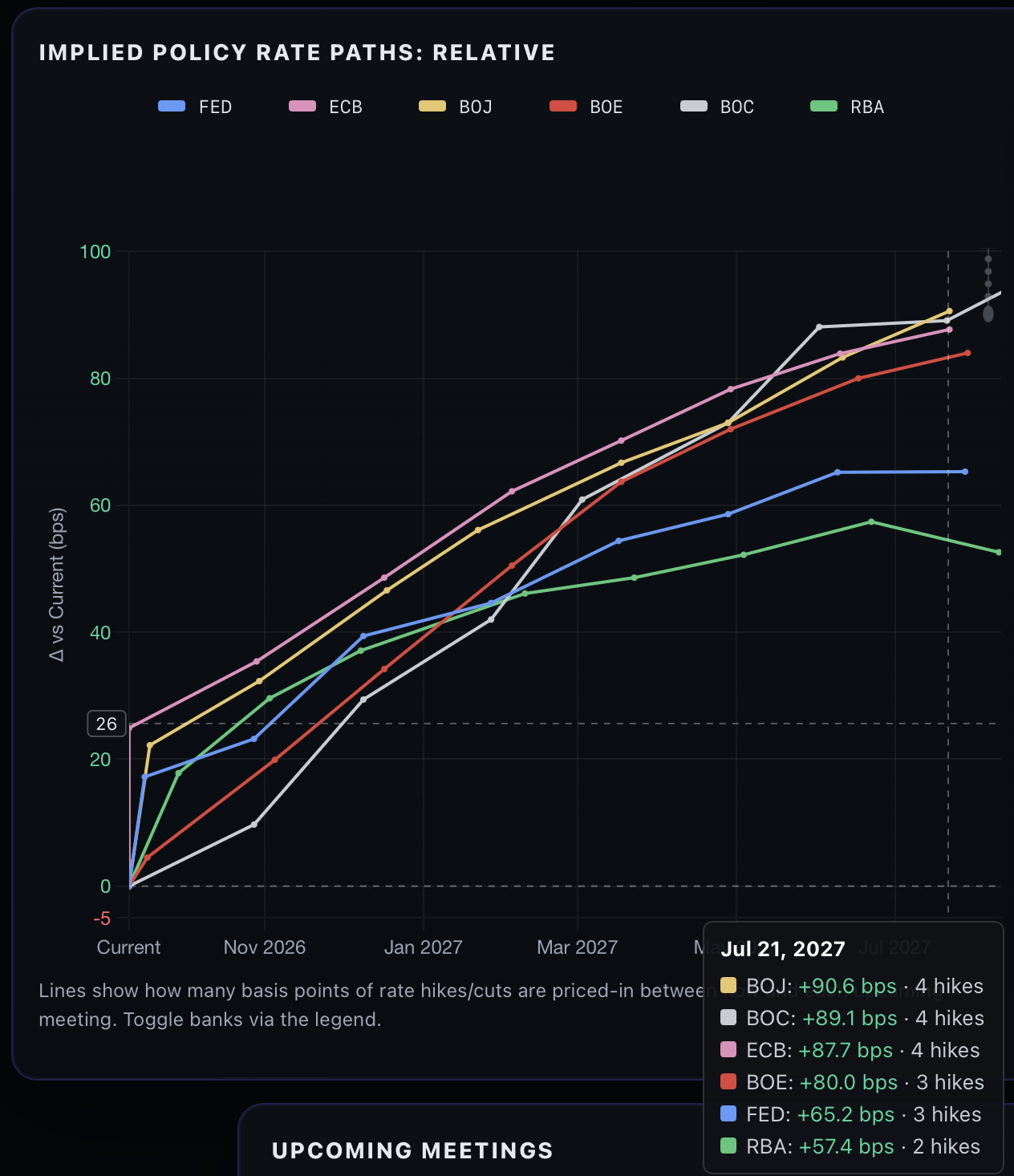
In the meantime, let’s see how other markets are behaving this morning.  After yesterday’s very modest declines in the US, the rest of Asia was mixed as Tokyo (-0.25%) slid alongside HK (-0.3%), neither being a major concern.  Australia (-1.0%) was the worst performer out there after stronger Household spending data bolstered the case for an RBA hike next month raising the probability to 54%.

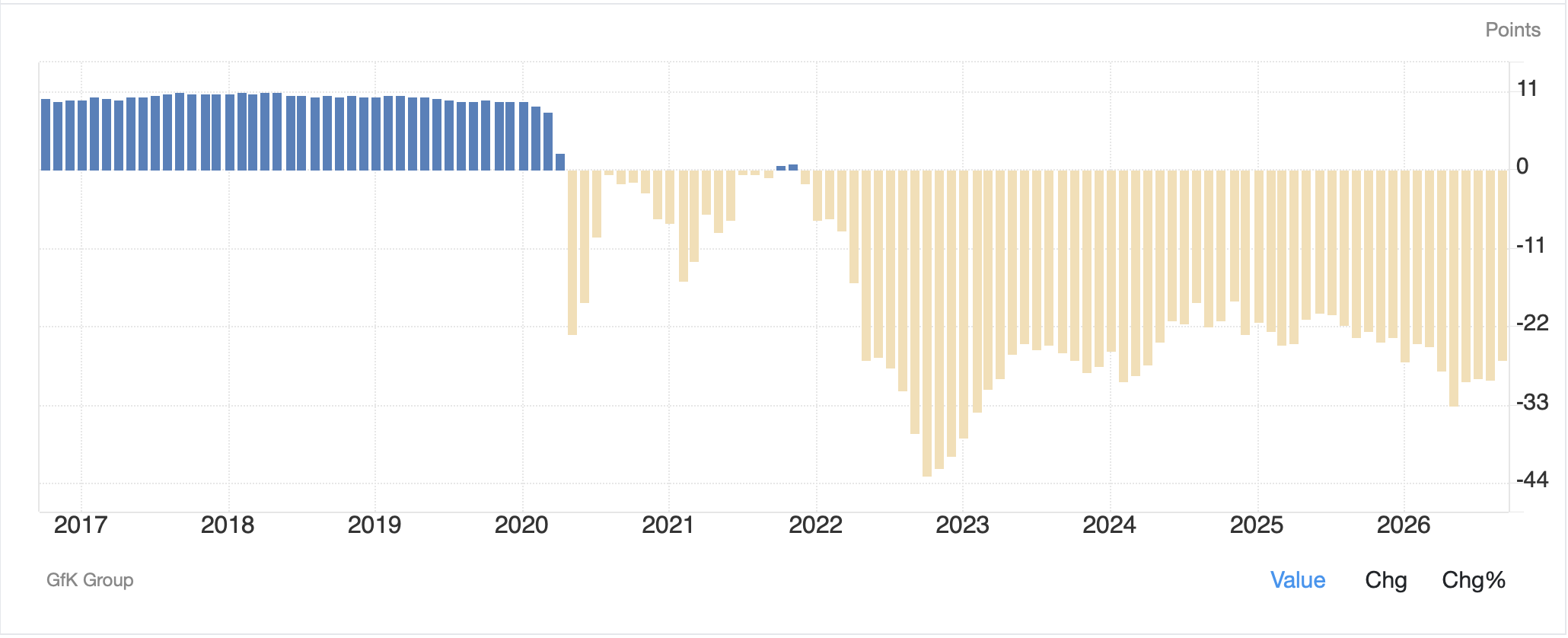
Europe, however, is having a tougher time this morning led by Paris (-1.1%) where concerns are rising based on both a Fitch credit review of the country (last year they were downgraded one notch to A+) as well as growing uncertainty over the presidential election next year as the main candidates describe their policies to business leaders in a debate format.  But both Spain (-0.5%) and the UK (-0.5%) are also under pressure with only Germany (+0.2%) bucking the trend after a slightly better than expected GfK Consumer Confidence reading of -26.6.  I think it is worthwhile, though, to get a better idea of the situation in Germany, and by extension all of Europe, to look at that confidence measure’s history below.

Source: tradingeconomics.com

Sure, the reading was better, but how awful must confidence be in Germany.  I guess this is the way people respond to their suicidal energy policies.

While I discussed bonds in general above, I didn’t mention the overnight movement which has seen yields continue to edge back higher led by Treasuries (+2bps) with European sovereigns right there, rising between 1bp and 2bps.

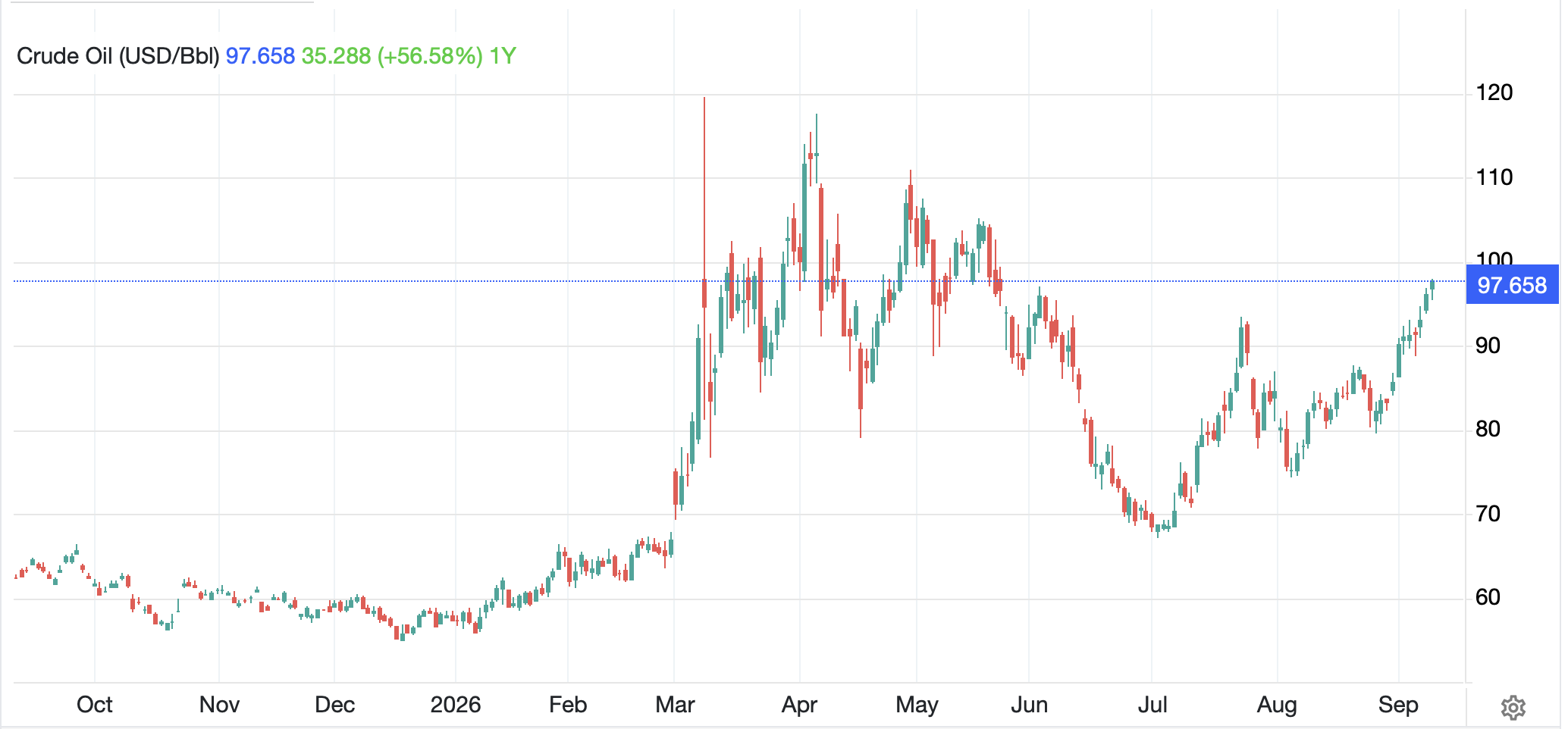
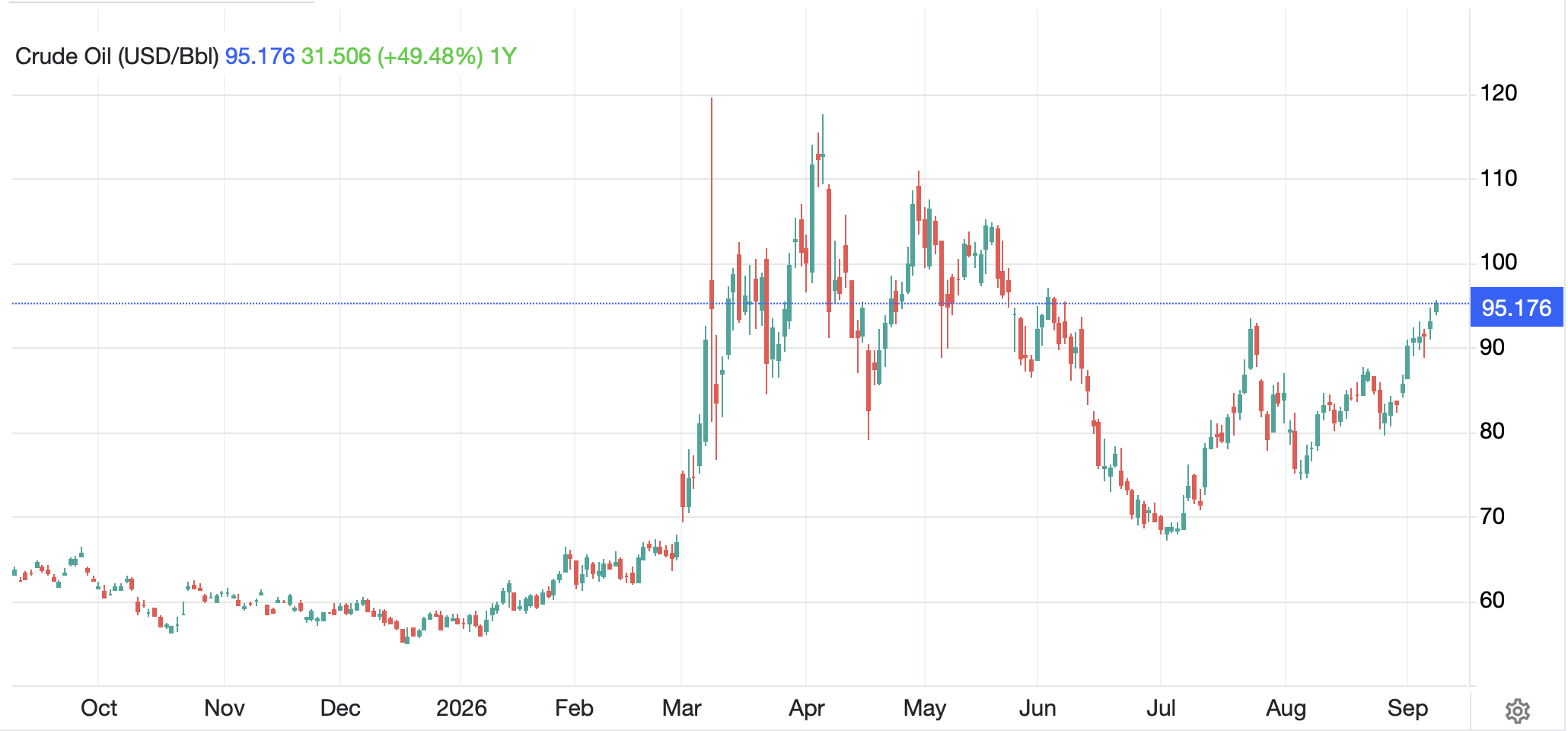
In the commodity markets, oil (+0.3%) has been trading around unchanged all night as it was slightly lower when I first sat down.  We continue to hear conflicting stories about the situation in Iran and the Gulf and whether tankers are transiting the Strait, but we have still not seen any blowout in prices.  EIA inventories yesterday showed a small net draw in gasoline and distillates, but crude remains available and Cushing inventories are being rebuilt.  As to metals, gold is flat this morning with silver (+0.6%) edging higher.  There continues to be real support for the precious metals as both grind slowly higher.

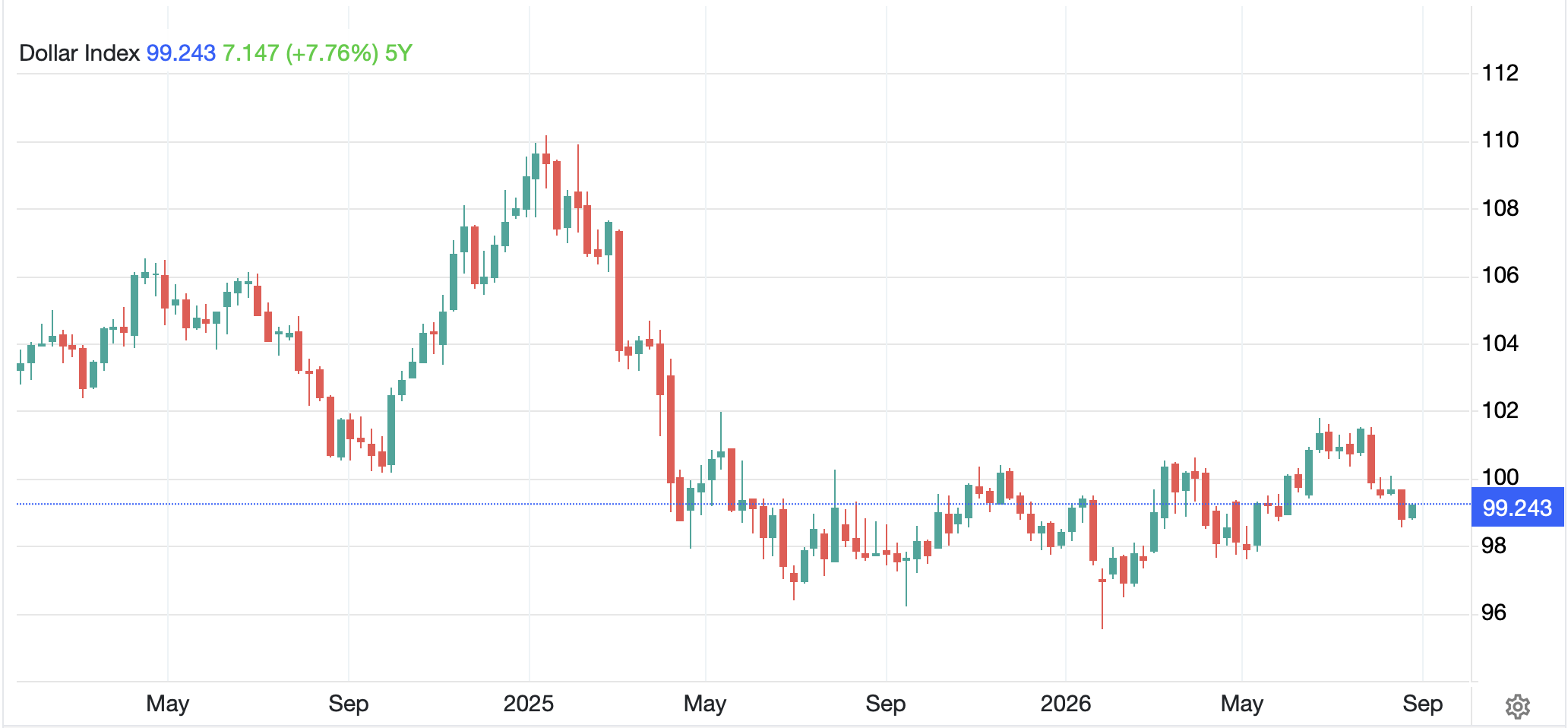
Finally, the dollar continues to languish, doing very little overall.  Despite much excitement several weeks ago about the dollar breaking out higher, the fact remains that the DXY is basically in exactly the same place it was in April 2025 as you can see below.  As I have repeatedly explained, at some point the dollar will matter again to markets, but I’m not sure what will drive that change.

Source: tradingeconomics.com

As it is Thursday, we see the weekly Initial (exp 208K) and Continuing (1790K) Claims data.  We also see the Goods Trade Balance (-$99.0B) and then some tertiary data.  Today has all the hallmarks of a sleeper as we await Chairman Warsh tomorrow.   

Good luck

Adf

Run-Of-The-Mill

The funniest thing that I read
Was Bloomberg, in which someone said
That Bessent's bond buys
Have seen prices rise
So maybe, he's not a blockhead

Meanwhile, today brings PCE
Which pundits are anxious to see
If it comes out hot
They'll claim Warsh has wrought
Disaster and sip their Chablis

But if PCE remains chill
The pundits, when ink meets their quill,
Will pivot to stories
In new categories
And claim it was run-of-the-mill

As we await this morning’s PCE data (exp 0.1%, 3.6% Headline; 0.2%, 3.3% Core), as well as a bunch of other stuff like Personal Income (0.2%), Personal Spending (0.1%) and GDP (1.5%), many in the market continue to discuss the pros and cons of Treasury Secretary Bessent’s efforts to push down longer dated Treasury yields.  Before this morning, it was widely reported, or perhaps loudly reported is more accurate, that this was a desperate act and demonstrated that he didn’t know what he was doing and was simply a Trump puppet.  But the top story in Bloomberg this morning is titled “Bessent Bounce Starts to Emerge in Long Bond Market Metrics”.  In the story, they describe that despite all the controversy and certainty it would fail, it seems to be working for now.

Certainly, based on yesterday’s bond market price action, where 10-year yields slid -6bps, that may be the case.  And remember, the increased buybacks aren’t going to take place for another two weeks, so we still don’t know how much the Treasury is going to buy.  Personally, I like the idea of Treasury buying bond futures, where there is a massive speculative short position, and squeezing them all badly.  Remember, he was a hedge fund manager and knows exactly how that process works.  (As an aside, I have a feeling that Druckenmiller’s op/ed was him talking his book because he is short futures as well.)

At any rate, now that complaining about Bessent is not in tune with today’s market, the punditocracy has pivoted back to Chairman Warsh trying to anticipate what he is going to say Friday morning.  As Warsh remains tight-lipped about everything, it is much easier for the pundits to make claims without being proven instantly wrong.  And whatever Warsh says, you can be sure the pundits will claim they knew it all along!

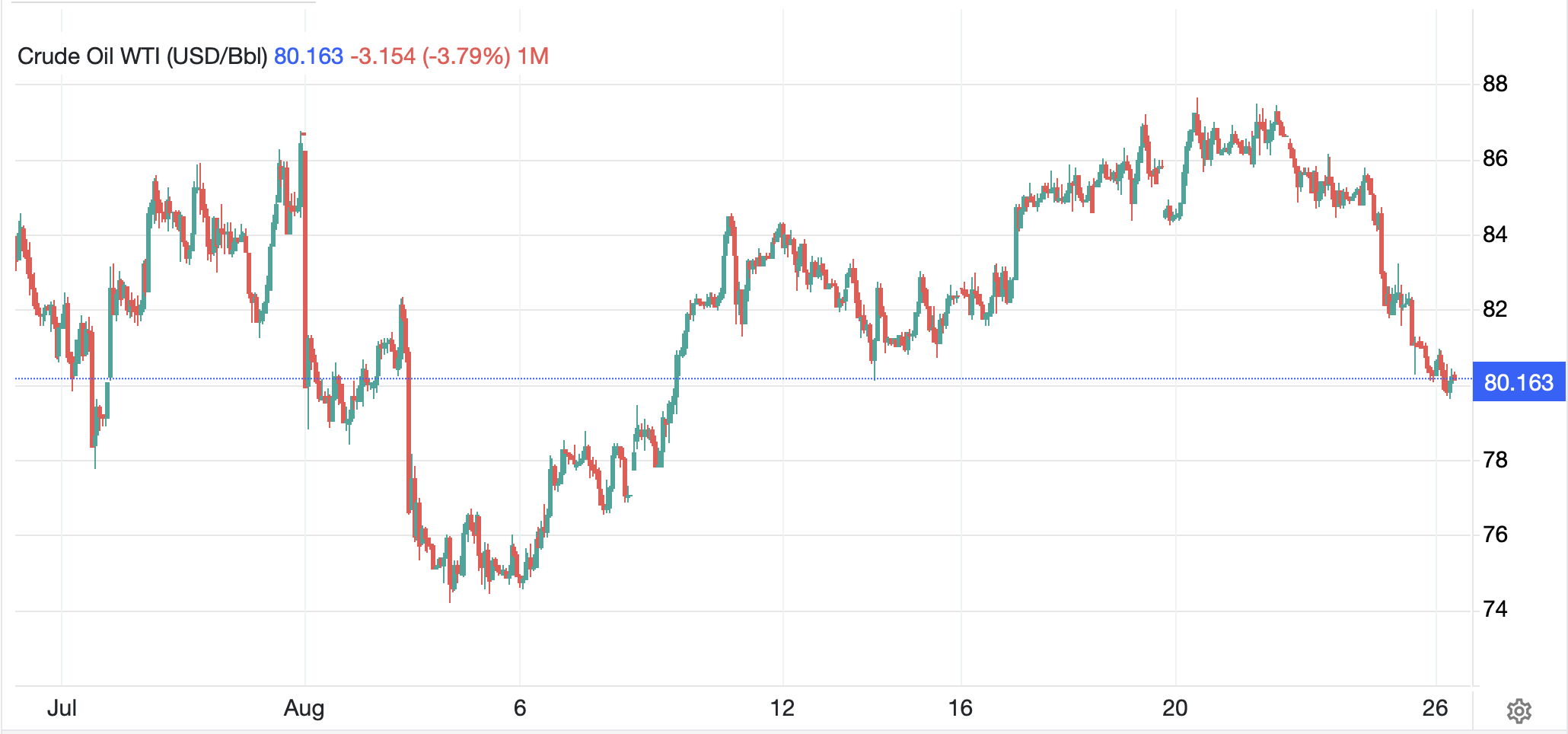
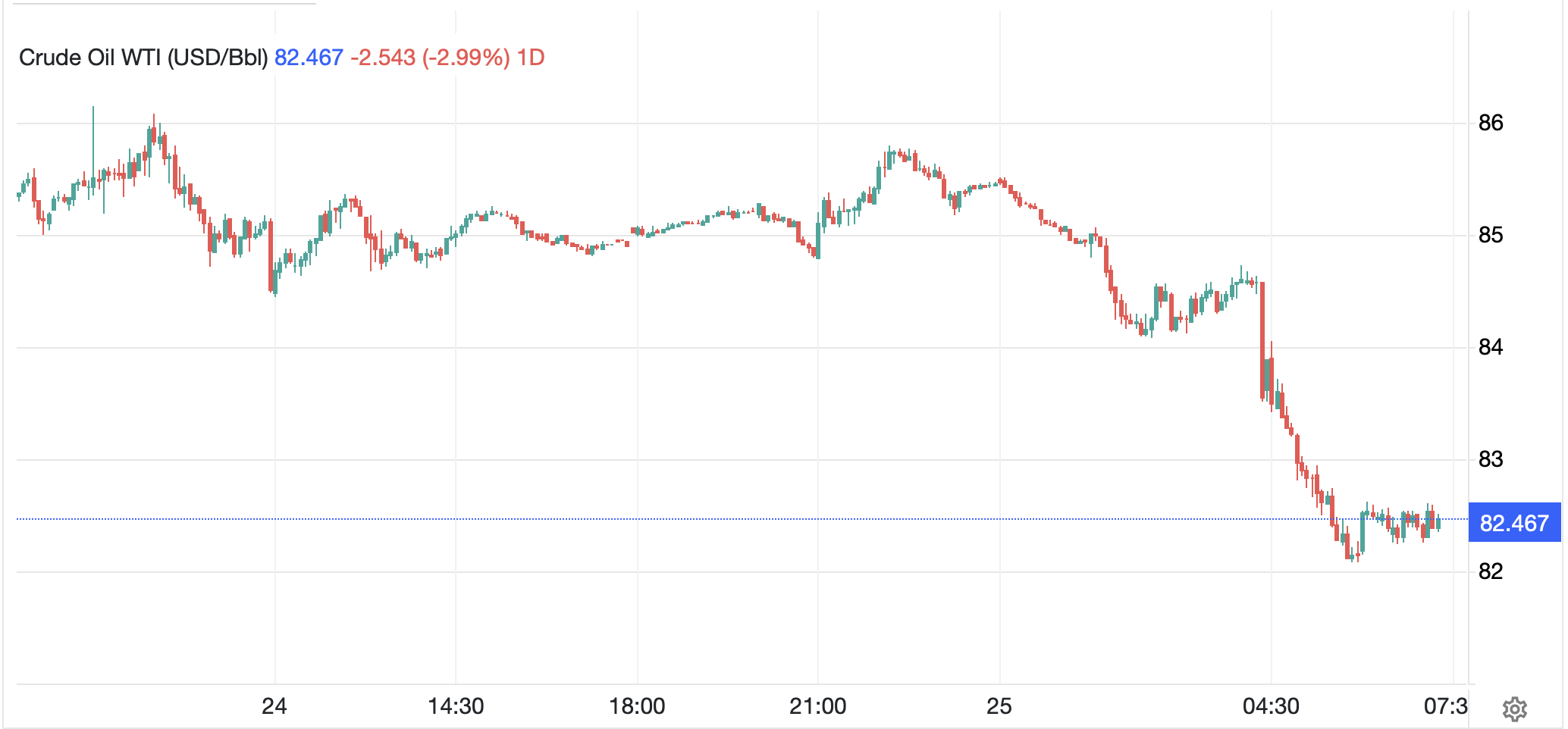
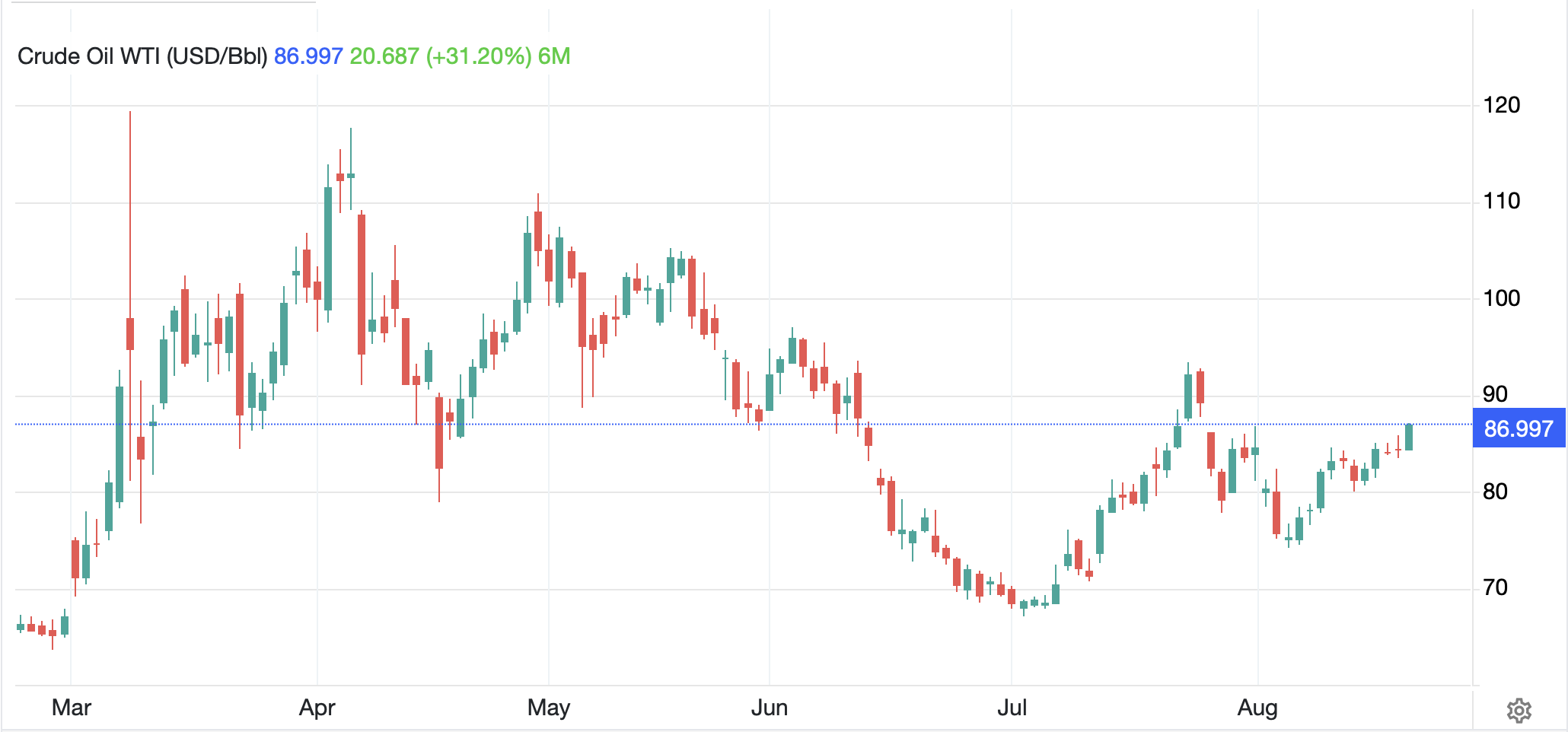
Meanwhile, in the markets, I believe oil (-2.6% today, -5.0% in the past week) continues to slide and is back at levels seen earlier this month around $80/bbl as per the below chart. 

Source: tradingeconomics.com

I am continually amazed at the commentary regarding oil and Iran and potential peace talks as the response to virtually every statement by the Trump administration about the situation, whether about the ability to traverse the Strait, or the status of talks with Iran, is to dismiss it out of hand by many commenters on X, but when Iranian propaganda media makes claims, it is taken as gospel.  Yesterday I recall Iran claiming economic sanctions won’t matter, they are prepared, and yet today there are stories of how Iran and Oman are furiously trying to come to some type of agreement.  I do not know the situation on the ground there but after 6 months of bombardment and embargos on their oil exports, my sense is the IRGC is feeling a lot of pressure.  I guess we shall see, but in the meantime, oil inventories remain robust with no shortages seen.

As to other markets, let’s tour around to see what’s happening.  Completing the commodity group, metals are consolidating weekly gains with gold (-0.8%) and silver (-0.2%) slipping a bit although both remain higher by more than 2% this week and about 15% in the past month.  Copper is little changed.

In the bond market, after yesterday’s sharp decline in yields, where European sovereigns followed Treasuries, albeit not quite as far, this morning has seen yields back up 1bp across both the treasury and European markets.  As I have been saying, I believe this market is waiting for Chairman Warsh to speak before deciding its next move.

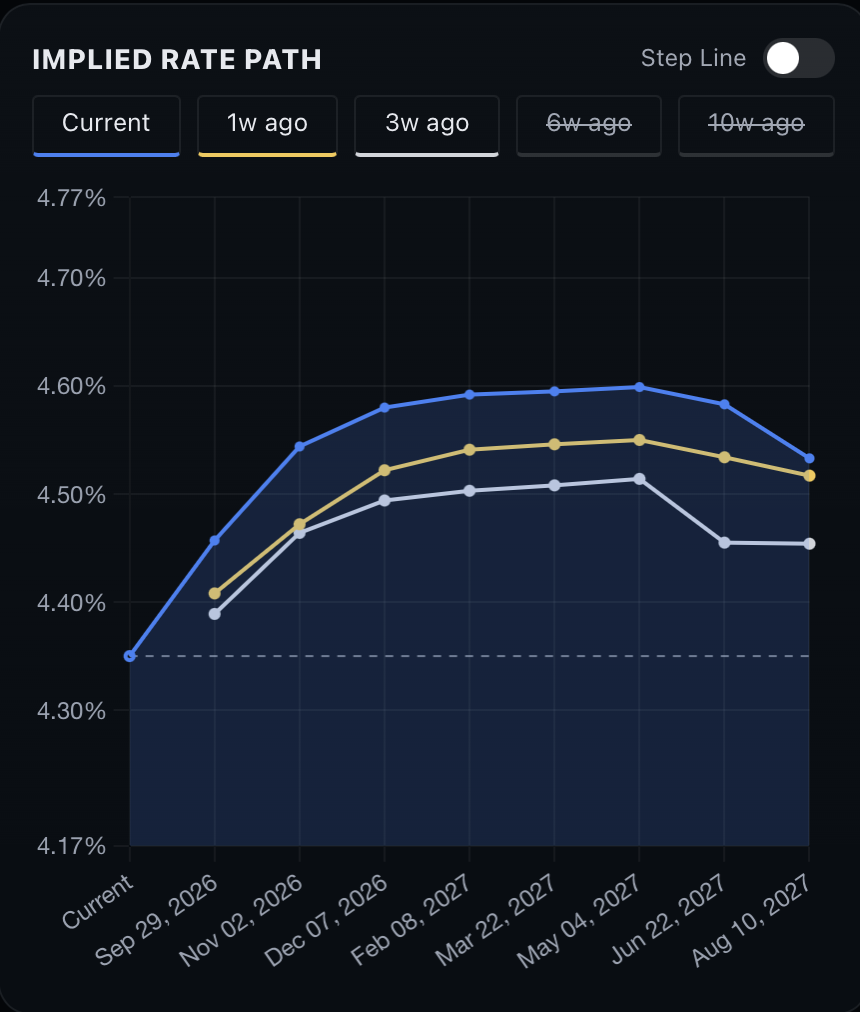
In the equity markets, US markets all rallied yesterday afternoon and closed near their highs with that price action following across most of Asia.  Tokyo (+0.6%), HK (+0.6%) and China (+0.85%) all had good sessions as did Korea (+1.0%) and Taiwan (+1.5%) as all those tech related markets await Nvidia’s earnings to be reported after today’s US close.  The exception here was Australia (-0.4%) which slipped after higher than forecast inflation readings were released and markets have increased the probability of a rate hike by the RBA at their September meeting to 45% from about 25% prior to the release as you can see in the chart below from rateprobability.com.

In Europe, equity markets are fairly quiet overall with modest gains of 0.2% to 0.4% everywhere except the UK which has seen a decline of -0.2%.  Ironically, despite the problems the UK is having with energy prices, two key members of the FTSE 100, Shell and BP are lower on the lower oil price and that is dragging down the index.  As to US futures, at this hour (7:40), NASDAQ (-0.5%) futures are softer, but the other major indices are little changed.

Finally, the dollar is slightly firmer this morning but continues to be an afterthought in markets.  The DXY is exactly where it was yesterday when I wrote and the only true outlier today is AUD (+0.25%) which is benefitting from higher interest rate expectations.  Otherwise, the dollar is modestly firmer against most every counterparty of note.  At some point, the dollar will get interesting again, I just don’t know when that will be.

And that is really it today.  Perhaps there will be a deal from Iran although I doubt it.  

Instead, a tribute to one of the true superstars of our time, and by all accounts one of the finest human beings ever, Ms Dolly Parton.

Good luck

Adf
A Desperate Act

A key market story yesterday was that the Treasury buyback operations, you know the ones that would be “at least” doubled to $4 billion per event, could grow much larger as secretary Bessent would tap the Treasury General Account (TGA) for this purpose.  Now the TGA is the federal government’s checking account.  It is where your taxes get paid into, along with the receipts from bond sales and tariffs.  It is also the account that pays all the federal government’s obligations like salaries and purchases of defense and other equipment.  The current balance (a/o Aug 21st) is about $936 billion according to the Treasury website.  Obviously, that is a huge amount of money, but then the federal government has a huge amount of payment obligations.  I bet it is a hard checking account to balance!

Now, technically, I presume that all their operations are paid by the TGA.  The mechanics would work that Treasury would issue T-bills, receive the cash in the TGA and use that cash to buy back bonds.  But the implication was that he would just spend the money that was already there.  Personally, I doubt that will be the outcome, and frankly, it almost sounded more like a threat than a future course of action.  But it did get tongues wagging.  

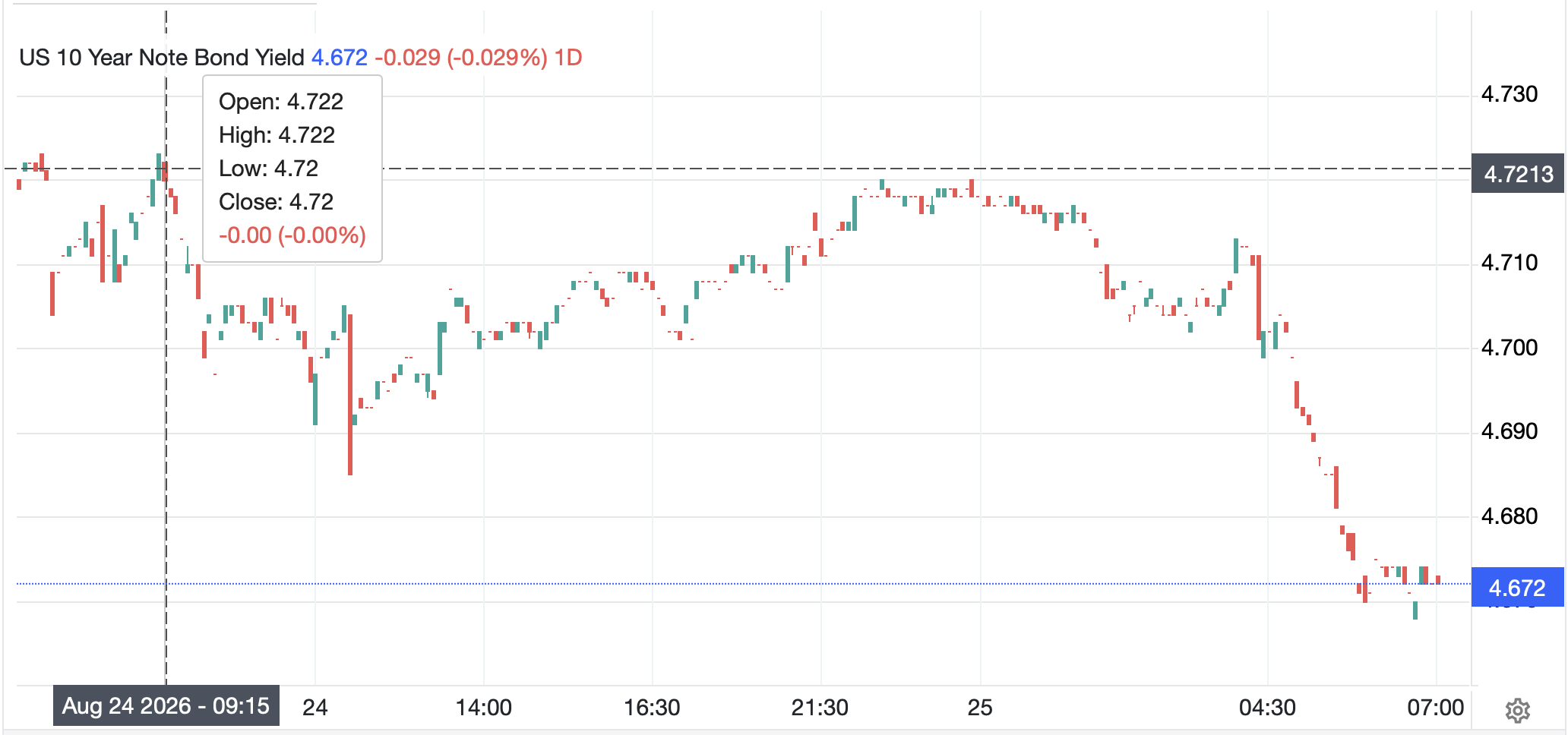
According to Grok, these comments came in an interview on CNBC at a bit after 9:00 yesterday morning.  The chart below shows the bond market price action from that point onward, which tells me that while there was a modest initial response, it completely disappeared until another catalyst (lower oil prices I believe) helped push yields down early this morning.

Source: tradingeconomics.com

But this clearly struck a nerve as in this morning’s WSJ, Stan Druckenmiller, Bessent’s mentor at the old Soros hedge fund, wrote an op/ed decrying the move.  As I survey all that I have learned thus far, it seems clear that Bessent is looking to remove duration from the market in an effort to drive longer dated yields lower.  But his tools are limited compared to the Fed’s abilities and, at least right now, it does not appear the Fed is going to cooperate.  The first operations aren’t scheduled until September 7th, so until then, it is all just speculation, and I’m not even going to try.

The other thing that Secretary Bessent did yesterday, that may have a larger impact on things, was announce sweeping new sanctions on Iran and countries that do any residual business with Iran in an effort to add further pressure on the regime.  It is possible, but not clear to me, that this is part of the rationale for this morning’s decline in the price of oil (-3.0%).  However, if you look at the chart of oil for the past 24 hours, it is remarkably similar to that of the 10-year Treasury above.

Source: tradingeconomics.com

Ostensibly, the news here, which of course would impact bond yields, is that the Pakistani army chief was intermediating between the US and Iran in an effort to find a solution and reduce tensions in the Gulf.  That would certainly be a welcome outcome for all, but I’m not holding my breath.  However, this price action has set the tone for risk markets this morning, so let’s take a look.

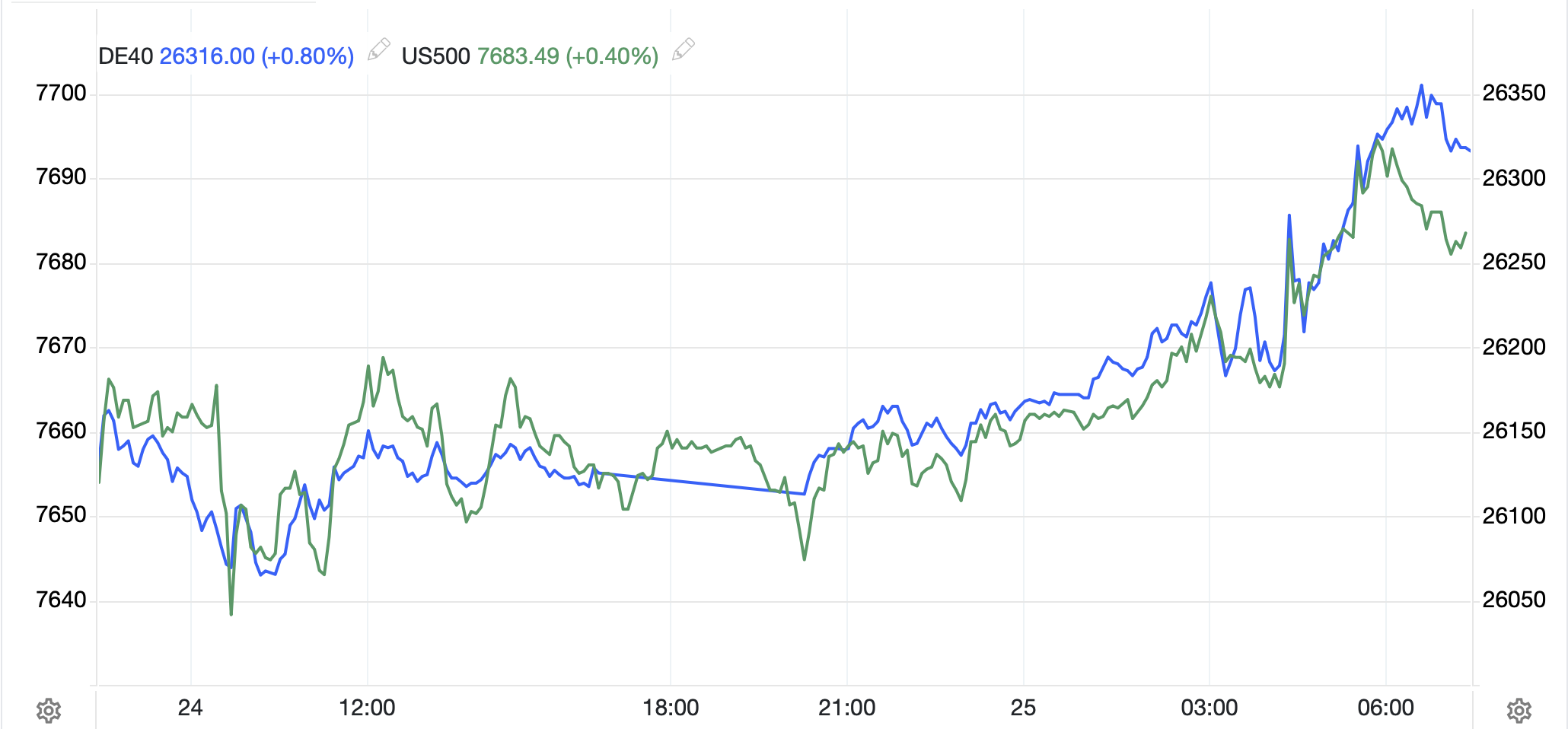
While Asia was mixed overnight (Tokyo +0.5%, China -0.3%, HK 0.0%) following the mixed US session, with pressure still evident on the tech sector, Europe is firmer this morning across the board (Germany +0.8%, Spain +0.4%, France +0.4%, UK +0.25%) with all those rallies timed almost exactly alongside the oil and bond moves.  As you can see in the chart below, the same is true in the US where futures at this hour (7:25) are also higher and moved right alongside other equity markets.  As to specific stories here, I think there is a great deal of breath holding for the Nvidia earnings report tomorrow after the close.

Source: tradingeconomics.com

In the bond market, as mentioned above, yields are lower across both Treasuries (-3bps) and all European sovereigns with the entire bloc seeing yields decline by between -3bps and -4bps.  It appears this all revolves on the same story driving oil and equities.

In the metals markets, gold (-0.2%) is edging lower but basically consolidating another strong day yesterday.  It is reasonable to conclude that market participants are growing cautious regarding US debt given there is no indication of spending restraint.  But the reality is that markets are growing cautious of all G10 debt given that statement regarding spending restraint is universally true in that bloc.  I continue to believe we are going to see governments around the world try to ‘run it hot’ with nominal GDP growth rising faster than government spending, thus reducing the real burden.  However, running it hot generally means higher inflation, and that is something that is a political problem.  As to the other metals, silver (-1.2%) is under pressure, although still far higher over the past week and month, while copper (+0.5%) is a bit firmer this morning.

Finally, the dollar is still sleeping this morning, virtually unchanged on the DXY at 99.00 and virtually unchanged vs. almost every major counterpart.  The biggest mover is INR (+0.35%) a major beneficiary of lower oil prices and not surprisingly, NOK (-0.2%) is suffering on the same catalyst.  But otherwise, everything is +/- 0.1% from yesterday’s close.

On the data front, there is not a ton this week, although PCE comes tomorrow, but really all eyes remain on Chairman Warsh’s speech Friday morning.

TodayCase-Shiller Home Prices1.7%
 New Home Sales620K
 Consumer Confidence90.2
WednesdayPCE0.1% (3.7% Y/Y)
 Core PCE0.2% )3.3% Y/Y)
 Q2 GDP1.5%
 Durable Goods0.7%
 -ex Transport0.5%
 Personal Income0.3%
 Personal Spending0.2%
ThursdayGoods Trade Balance-$99.0B
 Initial Claims208K
 Continuing Claims1811K
FridayChicago PMI57.0
 Warsh Speech 
 Michigan Sentiment51.0

Source: tradingeconomics.com

In addition, the EIA oil inventories are expected to see another build as there remains ample supply, at least so it seems.  While PCE is important, I think it will be less so given the pending Warsh comments.  To me, tomorrow’s Nvidia earnings and then Warsh are the keys for the rest of the week, absent a major change in Iran, and alas, I don’t see that.

The bond brouhaha is much ado about nothing I believe as it will not change the trajectory of Federal spending, and that is what is necessary to have a long-term impact.  Unfortunately, that usually takes a crisis, and those are unpleasant.  They also take a VERY long time to develop, after all Argentina imploded for nearly 100 years before electing Javier Milei who promised to do something about it.  It has only been 25 years here since we last ran a budget surplus.  I fear it could be much longer before things really change.

Good luck

Adf
Things Are Bleak

The one thing on which you can rely is that there is a large segment of the punditry who will complain about every action taken by financial authorities, often offering ad hominem comments to make their case while demonstrating their own ignorance.  The benefit you have here is that I know there are many things I don’t know and don’t pretend otherwise.

Of course, I am referring to the Treasury Secretary’s recent announcement to ‘at least’ double the activity in their bond purchase program.  Once again, let me remind everyone that Secretary Bessent did not unilaterally pass laws to enact spending, that was Congress’s doing and the dramatic increase in spending has been ongoing for at least 25 years.  Just like every treasurer in every company, Bessent’s primary job is to ensure there is sufficient funding, and that is what he is doing.  Machinations as to the tenor of the debt are left to his discretion and fortunately, he is a man with an extraordinarily broad and deep understanding of financial markets.

The claims that he is panicking now are ridiculous, although I’m sure he isn’t thrilled with the situation.  But he inherited the situation, he didn’t create it.  For every doomster out there explaining the bond market is going to collapse, or the government is going to be forced to change their ways, my response is, don’t hold your breath.  

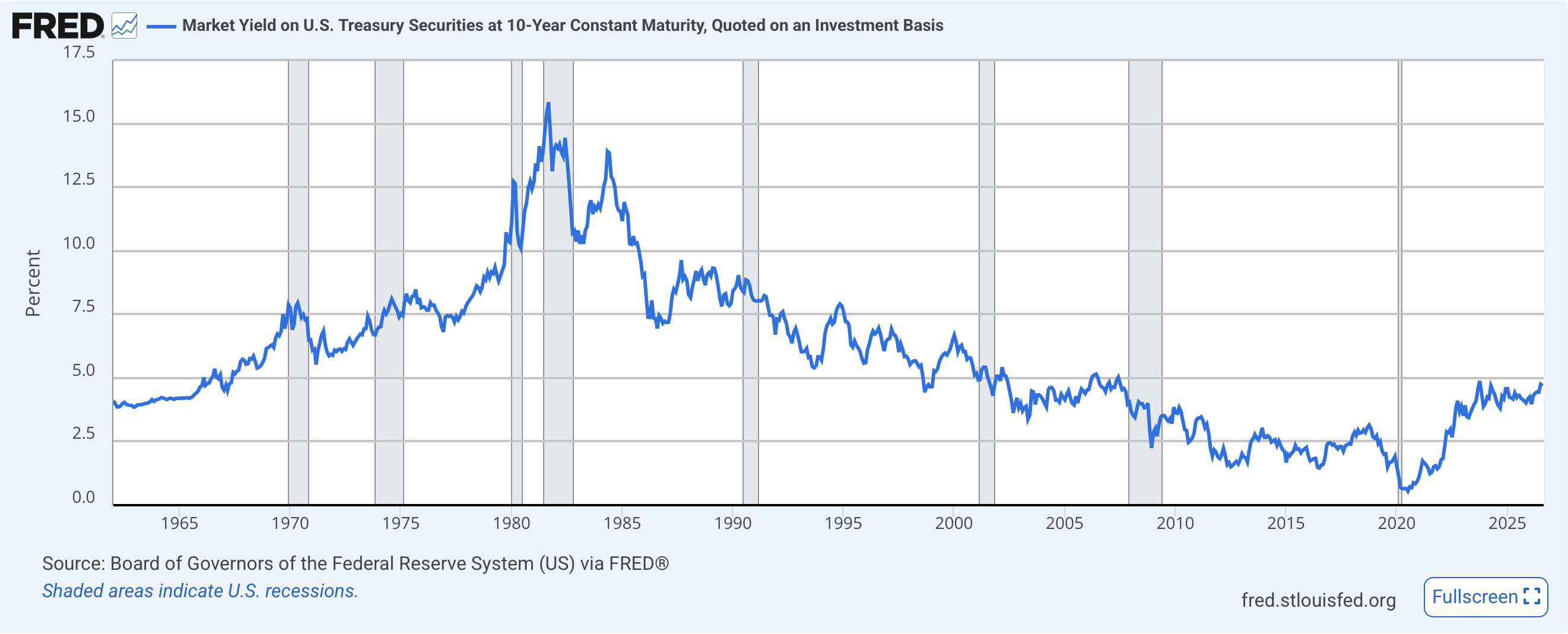
While yields have certainly risen over the past several years, that was from the extremes of Covid policy.  If you take a longer look, as per the chart below from FRED, the current level of 10-year yields is hardly dramatic, and actually, as I have written before, remains well below the long-term average.

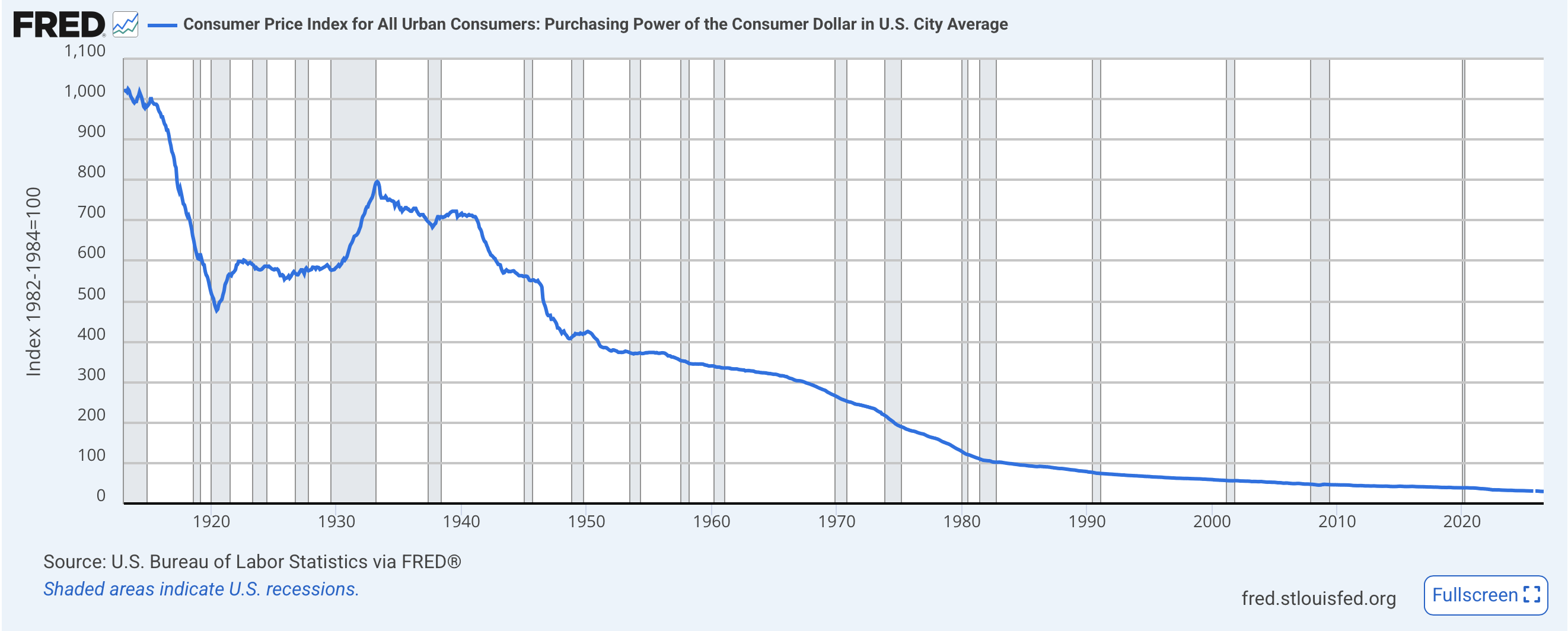
Now, I understand that the amount of debt outstanding is much larger, on both an absolute and relative to GDP basis, but I also know that there is literally a 0.0% probability that the US will not repay that debt.  The question is what the real value of the dollars you receive will be when they are returned, and there, the picture is less bright.  Of course, as you can see from the below chart, also from FRED, this is hardly a new concept either.  In fact, ever since the Federal Reserve was created in 1913, the value of the dollar has declined by about 97%.  This is not a new phenomenon.

Which brings us to Chairman Warsh.  I find it interesting that the punditry believes that Bessent’s activities were completely independent of Warsh.  The two are BFF’s for god’s sake, and speak every week, if not every day.  Each has a job to do, and each is working to achieve it.  Inherently, Warsh’s job is made more difficult because of the US fiscal situation, not because Bessent is tweaking the Treasury’s maturity ladder.

And here’s the thing, both men are working to make institutional changes in hidebound institutions that are fighting things tooth and nail.  Frankly, I sincerely hope both are successful.  Back to Warsh.  Friday, he will speak at the KC Fed’s annual Jackson Hole Symposium, this year titled “Financial Innovation: Implications for Payments and Policy.”  Now, that is a bit afield from the details of monetary policy, as I suspect the policy part of the title refers more to the stablecoin question rather than the size of the Fed’s balance sheet.  But I am confident he will discuss current monetary policy in some manner.  I am also confident he will not offer suggestions as to the next rate move.  

The current narrative has morphed into, the problem for markets/analysts is not the lack of forward guidance, it is those people don’t understand the Fed’s reaction function.  This, too, is disingenuous in my mind as Chairman Warsh has made clear, his function is to reduce inflation to the 2% target, and he has clear ideas how to do that.  The problem is his ideas are different than the neo-Keynesian views that dominate the Fed (and every other central bank), and so are making people uncomfortable.  He has made very clear he is happy to allow the bond market to do the Fed’s work, tightening policy.  He is also very politically astute and clearly understands Bessent’s actions.  I would contend that of all the dysfunction in the government, the least concern should be afforded to the Fed/Treasury nexus.

And finally, it appears that the latest trade talks with Canada have broken down and both sides will be imposing tariffs on the other side.  My personal view is this is a mistake, only because there is no predatory relationship between the two nations, but politics is politics and PM Carney has called on national pride as his rationale.  The thing for the US is, it isn’t going to matter that much. According to Grok, Canadian imports represent ~10% of total US imports and ~1.5% of GDP, so higher tariffs on that relatively small amount is not going to change much.  For Canada, though, exports to the US represent ~20% of GDP, so interruption there is going to hurt a lot more.  Something tells me we will get a deal here pretty soon though as both sides will benefit.

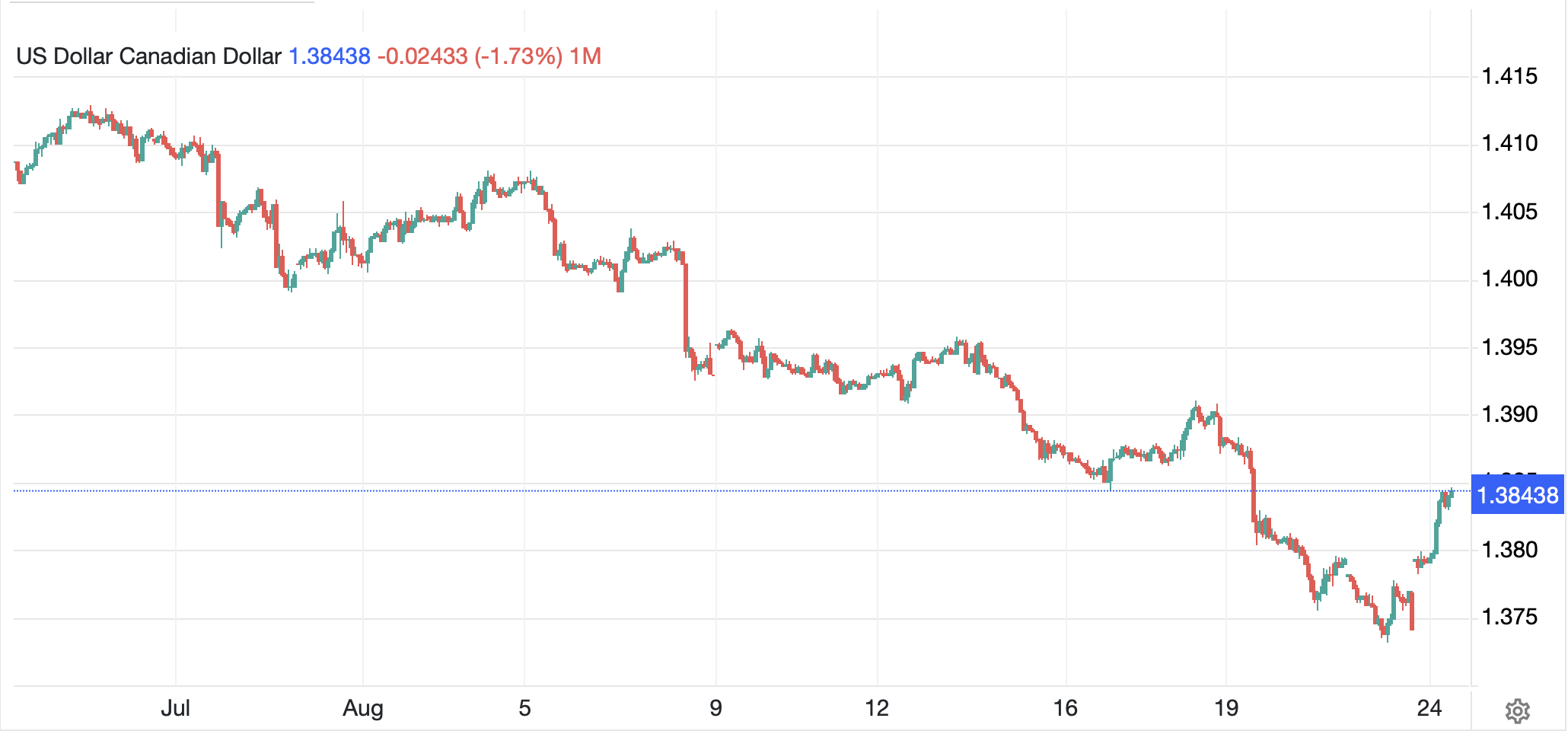
The market’s initial reaction in USDCAD was a slight hit to the Loonie (-0.6%) as you can see in the chart below.  But the CAD has been appreciating over the past month like every other currency vs. the dollar, and this move is hardly breathtaking.  My take is USDCAD remains far more beholden to the broad dollar story with this simply a blip.

Source: tradingeconomics.com

Sticking with the currency theme, the dollar more broadly is a touch higher this morning, with the DXY up 0.2% and modest gains vs. most of its G10 and EMG counterparts.  With the dollar back in the middle of its broader long-term range, it is hard to get excited in either direction at this point.  Certainly, a case can be made that we will see a significant decline going forward if the worst-case scenarios play out, but that is not my base case.  Rather, I have a sense that we are going to remain somnolent in the dollar for a while to come, at least until policies are clearer and that is anybody’s guess as to the timing.

Looking at commodity markets, oil (-2.2%) which spent most of last week rising on increased concerns over Iran and the situation there, has reversed course this morning on two stories.  First, it appears that flows through the Strait of Hormuz have been picking up again as per this article, although it remains very uncertain as to the full amounts.  However, oil is moving.  The second story is the latest set of sanctions that the US is set to impose on Iran and secondary nations that trade with Iran as a means to effectively starve the regime there.  Regardless, lower oil prices are certainly better than higher from a global perspective.

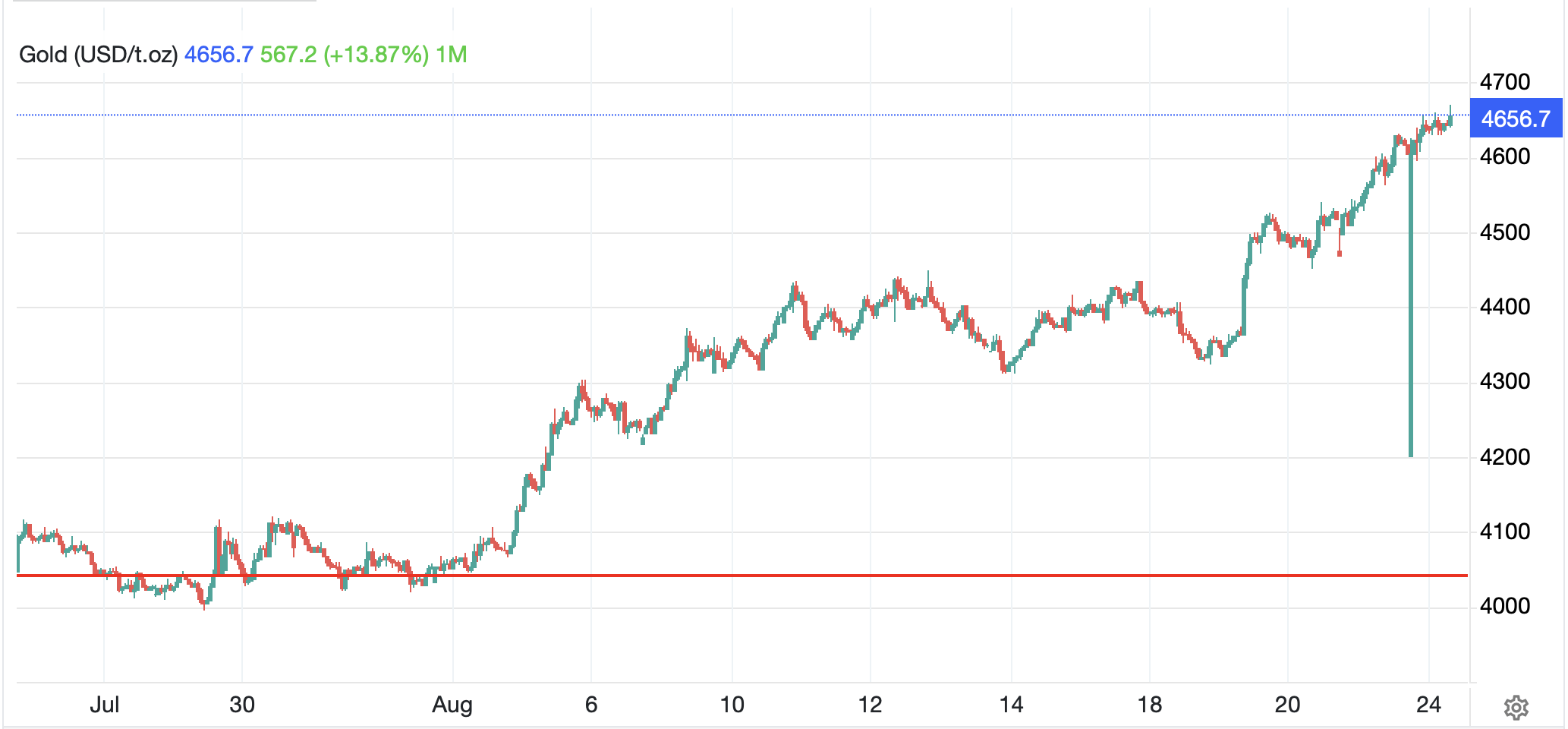
Meanwhile, despite the dollar’s modest strength this morning, the barbarous relic (+1.1%) is higher by 15% since the beginning of August and really appears to be building strength in the move.  Is this related to concerns over fiat currency debasement in the US and elsewhere?  Probably as that 5000-year history of holding value in all times is starting to seem quite attractive.  Not surprisingly, this has helped silver (+0.5%) and copper (+0.1%).

Source: tradingeconomics.com (that green bar on the right appears to be a misprint)

In the bond market, yields are edging lower this morning with Treasuries (-3bps) leading the way and most European sovereigns, as well as JGBs seeing -1bp declines.  Nothing has changed the big picture here with too much government debt being issued around the world, but I have a feeling everyone is waiting for Chairman Warsh on Friday before taking their next steps.

Finally, equity markets which had a decent session in the US on Friday, are more mixed.  In Asia, the big markets all fell (Tokyo (-0.75%, HK -1.9%, China -1.2%, Korea -3.1%, Taiwan -1.0%) with only Australia (+0.5%) bucking the trend on stronger commodity prices.  In Europe, it has been a very quiet session, no surprise at the end of August, with bourses there within 0.2% of Friday’s close.  US futures, though, are being dragged down by tech and the NASDAQ (-0.8%) at this hour (8:05) although the other indices are only marginally softer.

As I’ve run on too long as it is, I will cover data this week tomorrow given there is nothing to be released today.  The oil story and anecdotes about tech are the keys for now absent a major White House surprise, something you can never rule out.

Good luck

Adf
In Tears

As I wrote yesterday, “at least” did a lot of work in the Treasury announcement as it opened the door for significantly larger purchases of longer dated bonds, enough to truly have a market impact.  Most of the initial analysis on the announcement focused on the extra $2 billion to be purchased in each operation.  But what if, instead of $2 billion, they purchase $50 billion each time?  Suddenly, that is a significant reduction in long bonds outstanding, and the program will have a much greater price impact.  Which leads to this Bloomberg headline and story, Bessent Says He’s Ready to Expand Treasury Buybacks.  I believe it would be a mistake to dismiss the Treasury’s ability to achieve their goals as, after all, they do make the rules.

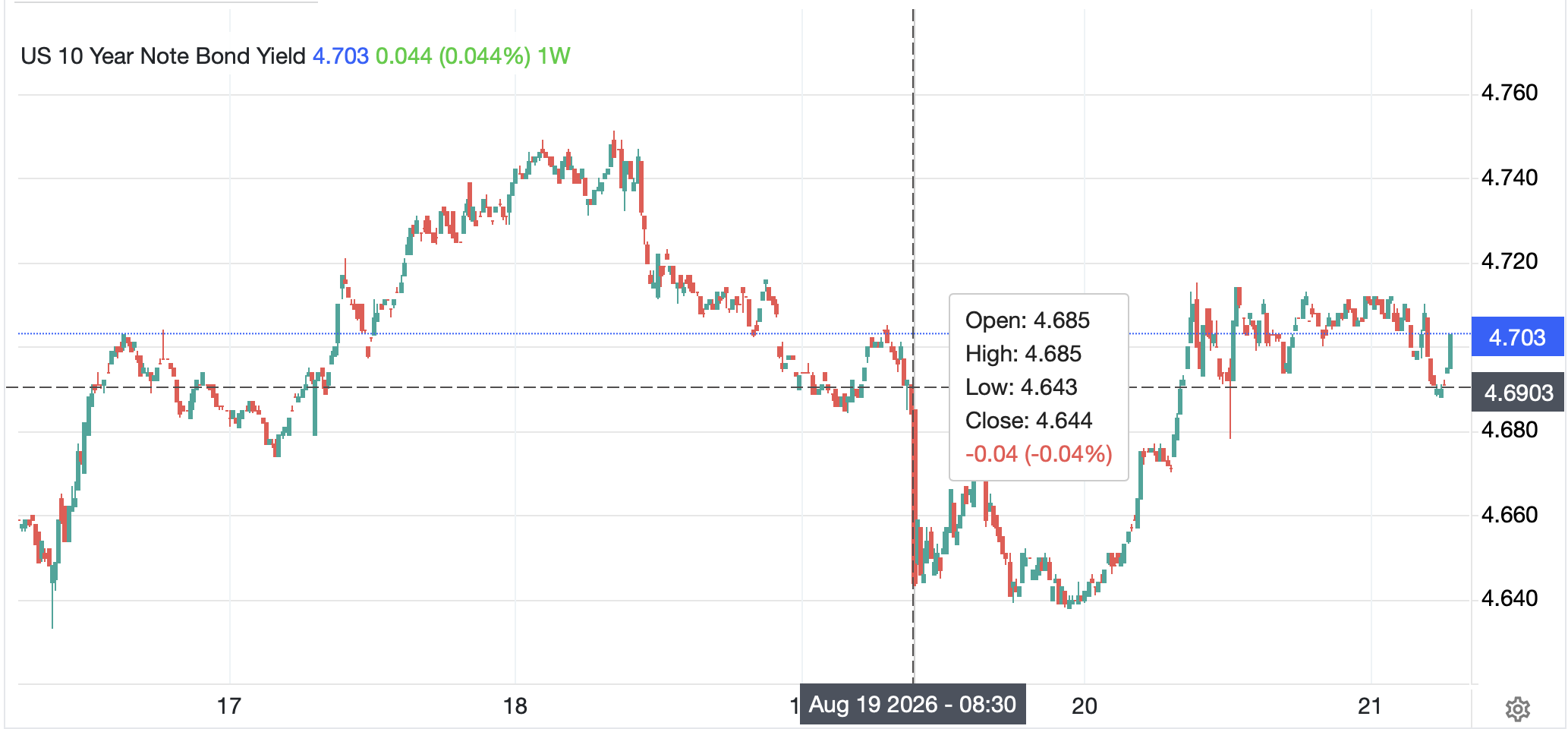
The upshot is that after a one-day rally in bonds, yields retraced those early declines (see chart below) and stocks fell sharply yesterday, clearly not the desired outcome.  

Source: tradingeconomics.com

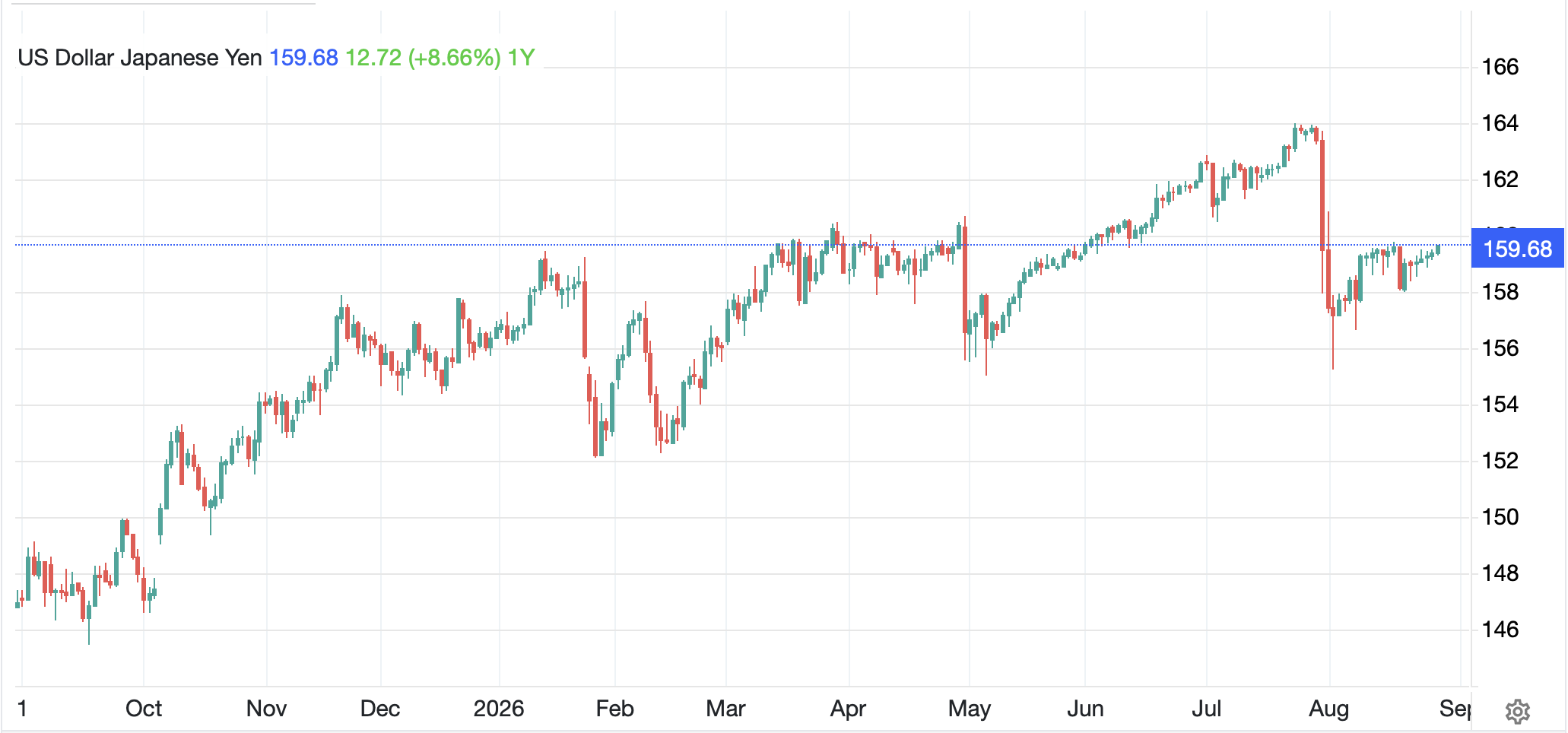
Much hay has been made regarding the total US debt surpassing $40 trillion the other day, although I see that as merely a reaction to a big round number, not dissimilar to a trading situation in, for example USDJPY, where the market is focused on 160.00 and a break is seen as significant from a trading perspective, but less so from a policy perspective.  I am not seeking to downplay the problems that exist in the US regarding fiscal policy.  I am, after all, a hard money guy (it’s why I am working on USDi, the only inflation tracking cryptocurrency) and a proponent of a much smaller government with much reduced spending.  And that is what is necessary to address the problems at the root.  But that takes Congress and, alas, seems highly unlikely anytime soon.  Personally, I will not bet against Bessent, but that seems to be a popular idea right now.  It is certainly a popular thesis on X.

This saga is only beginning, and I expect that it will be a key topic of conversation for a while, at least until we see a substantial move in yields from the current level.  It is interesting to note, however, the difference in attitude from Chairman Warsh, who explained the market was doing the Fed’s job for them by pushing up yields thus tightening policy, and Secretary Bessent who continues to say that yields don’t represent fundamentals.  Of course, both sides are talking their respective books, so say what they need to say.  Part of me thinks they have dinner together and laugh over how they are confusing markets.

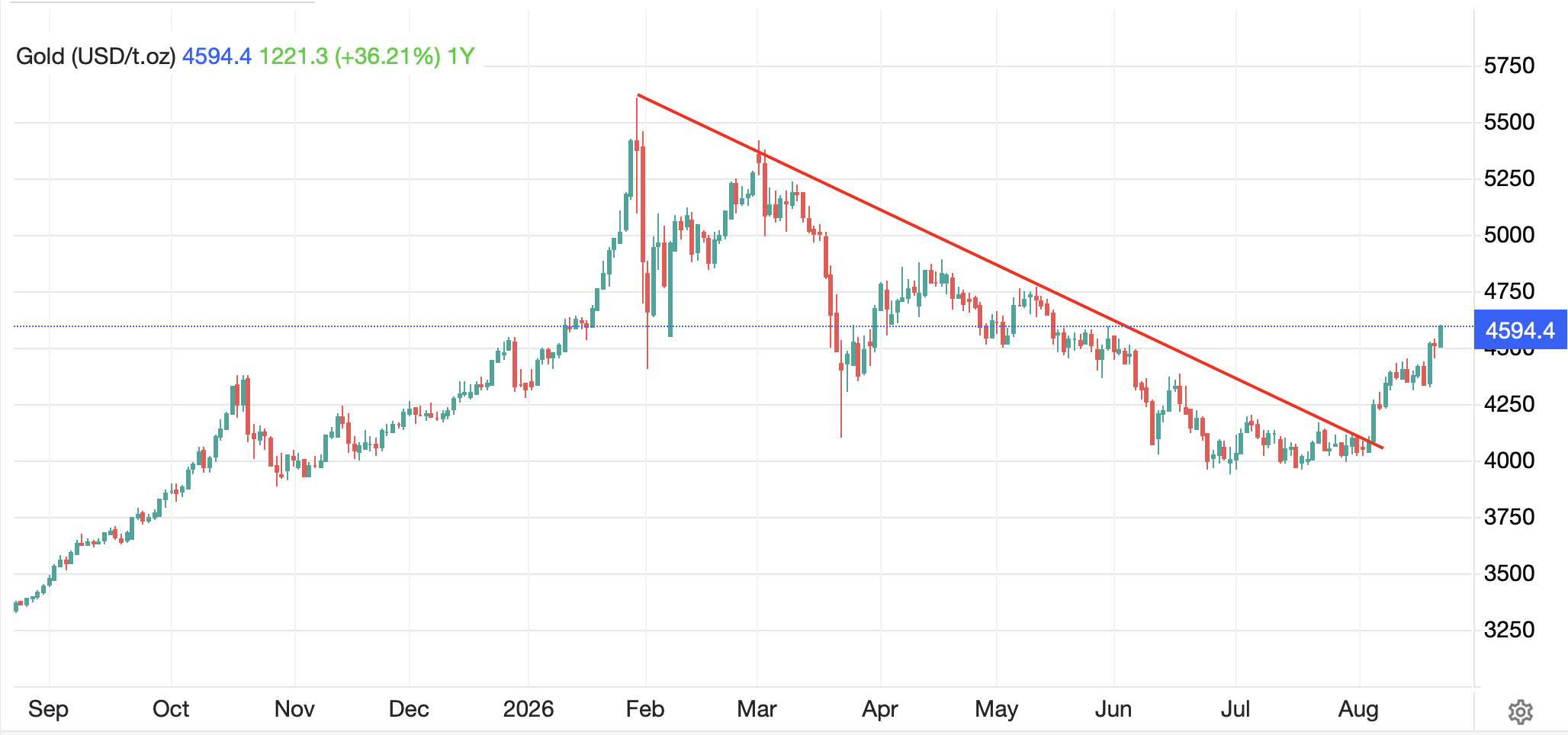
Let’s start our market descriptions with gold (+1.7%) this morning as it is extending its rally of the past two weeks.  A look at the chart below shows the trend line lower from the peak in late January (the date Kevin Warsh was named Fed Chair) was broken on August 6th and has been driving higher since, up 8% since that day and more than 15% since the low print on June 30th.

Source: tradingeconomics.com

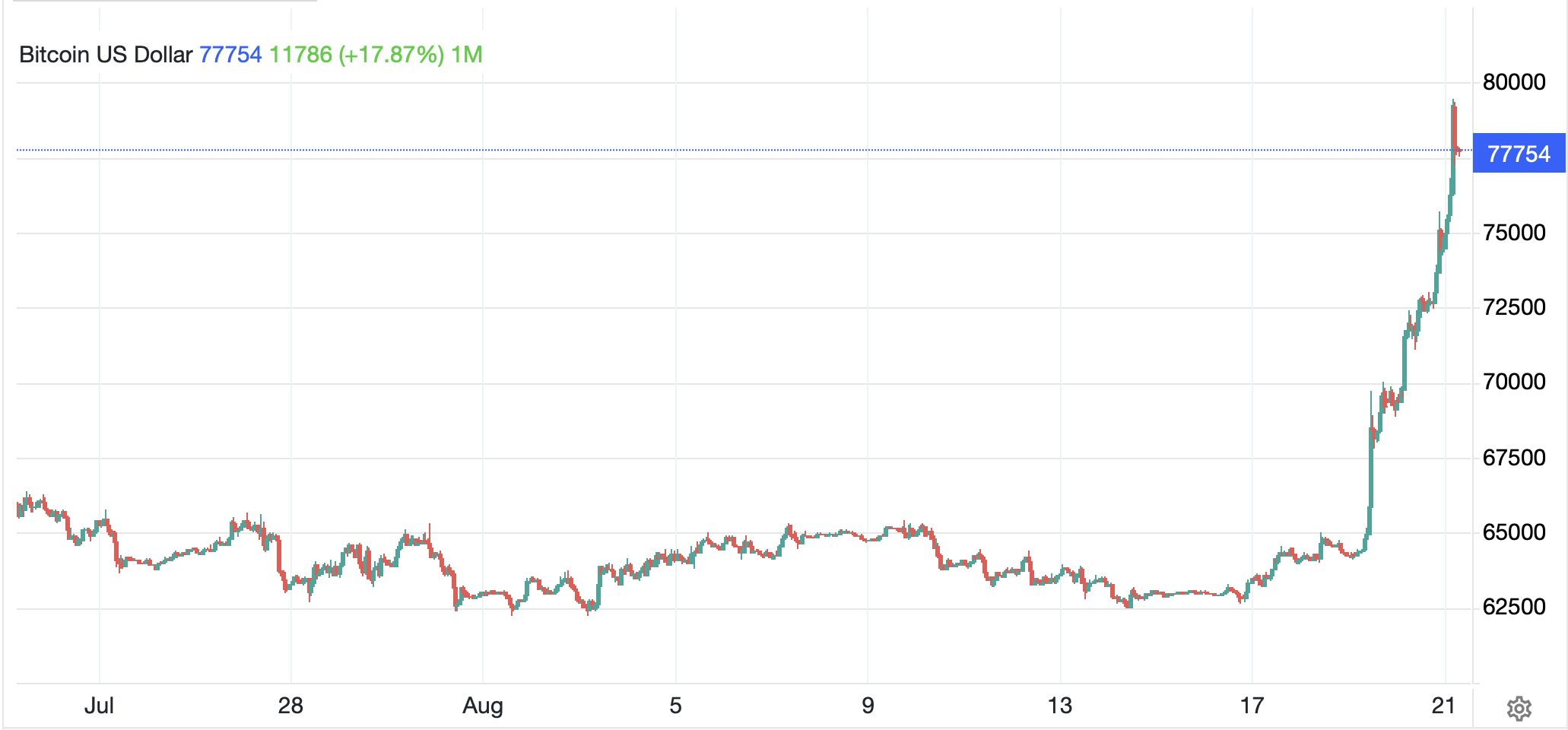
Silver (+2.3%) and copper (+2.1%) are also rallying here as there is a growing skepticism about financial assets and it appears investors are looking for things that are not reliant on government promises to retain value.  While I rarely discuss Bitcoin, that has rallied nearly 25% this week on largely the same story, although it has also benefitted from additional Treasury regulations being promulgated as part of the GENIUS Act and hopes for the CLARITY Act to pass soon as well.  Interestingly, BTC bottomed on June 30th as well.

Source: tradingeconomics.com

As to oil prices (+0.35%) they are creeping higher this morning as the ongoing Iran situation remains unresolved with no end in sight.  A key piece of news, that hasn’t gotten that much attention, is that the UAE has completely shut off all trade with Iran after two of its ships were attacked in the Gulf.  This matters hugely for Iran as the UAE was a significant trade conduit in things like machinery and equipment, as well as food and other necessities.  This will help the US sanctions regime significantly.  In fact, yesterday, Iranian Minister Ghalibaf, in a meeting in Baghdad explained that if the economy suffers further, that will be a major problem for the military and the nation.  Maybe this is going to end sooner than later after all.

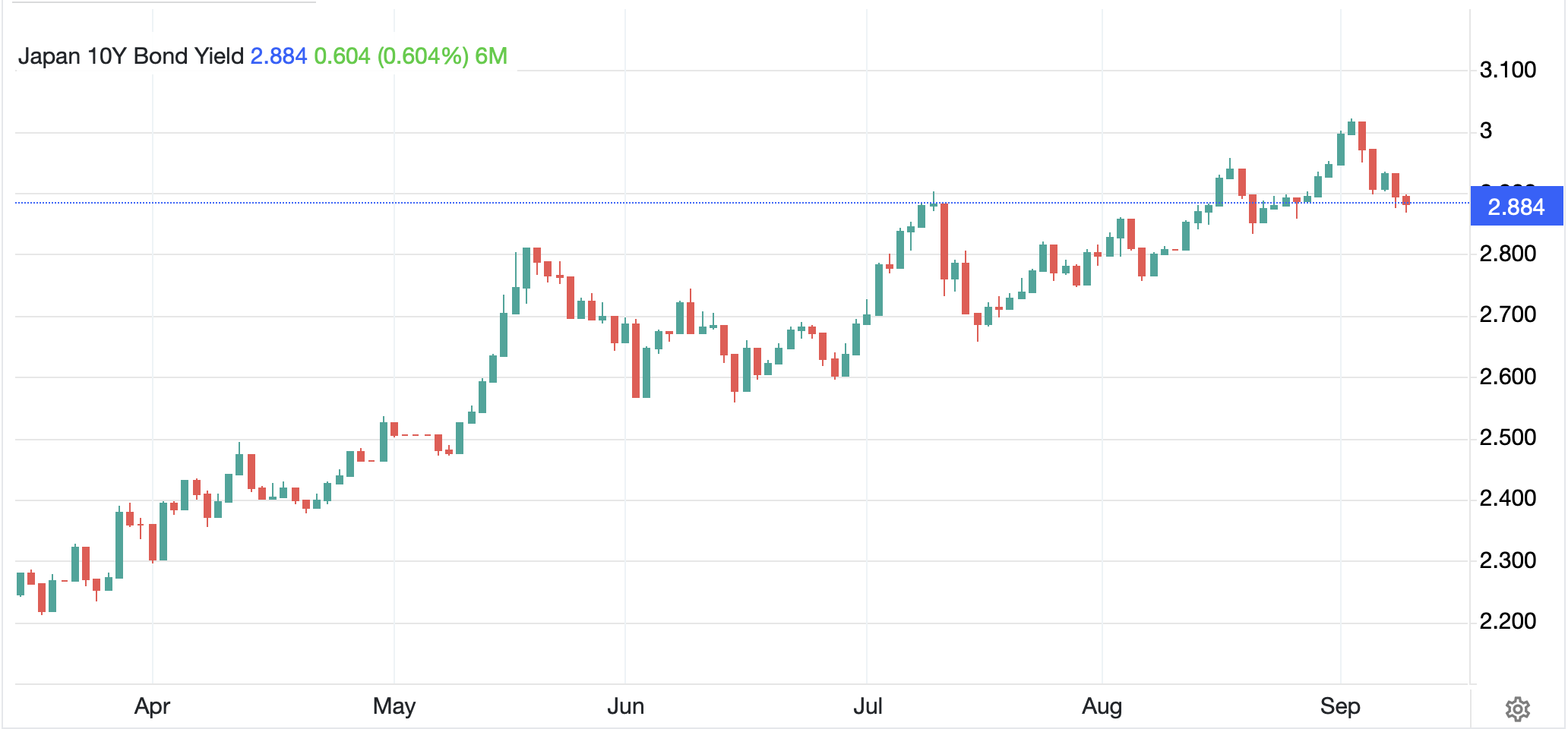
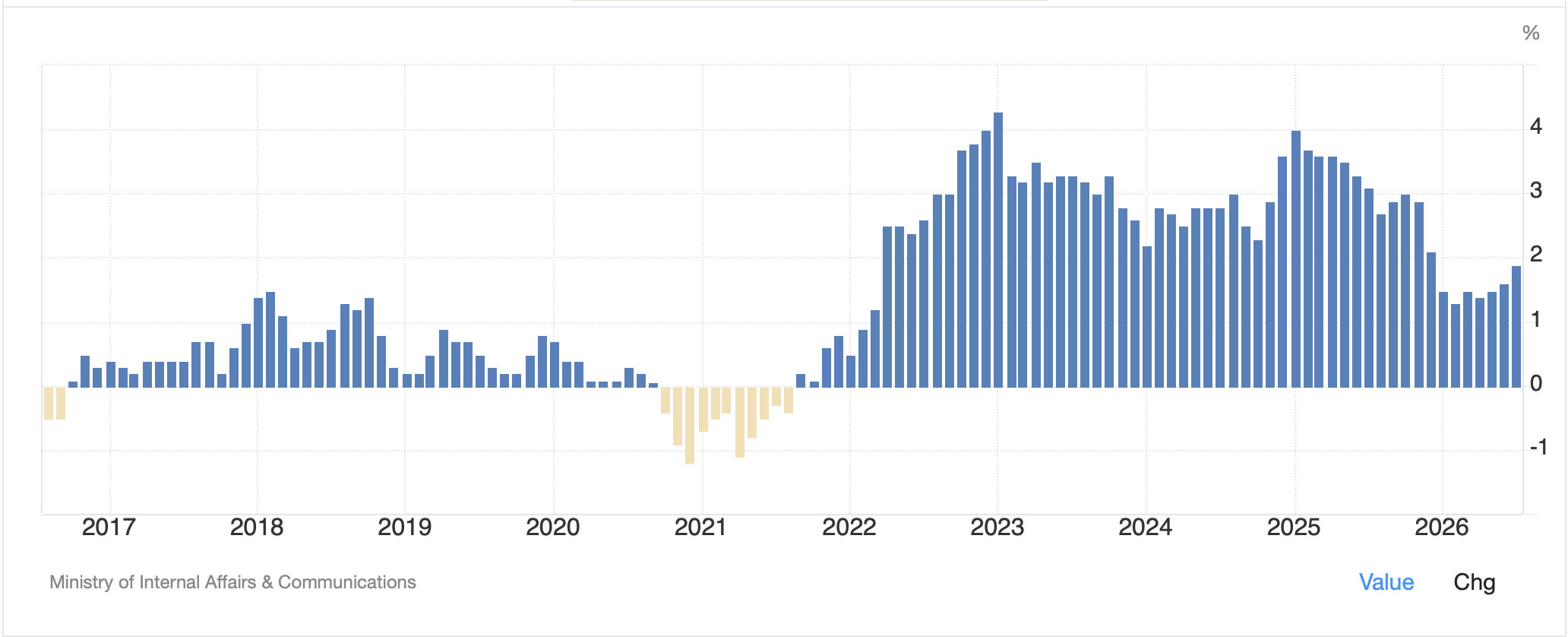
If we turn to the bond market, while Wednesday saw a sharp decline in yields, yesterday saw that reverse, as per the chart at the top of the note and this morning, yields are unchanged from yesterday’s close.  That is true in the US and across every European market.  It feels like investors are waiting for the next piece of information.  The exception here is JGBs (+4bps) where yields rose after inflation data was released at 1.9% (1.8% core) as expected, but trending higher again as government efforts to mitigate the impact of higher energy prices are starting to falter.  As you can see in the chart below, though, the inflation regime in Japan has changed dramatically from the previous decades.

Source: tradingeconomics.com

In the stock markets, yesterday’s US performance was pretty crummy (a technical term), with declines on the order of -1% across all major indices.  But that did not follow through so much in Asia (China +0.6%, HK +1.2%, Korea +0.9%, Taiwan +0.65%) although the Nikkei (-0.3%) did lag.  Nor did it have an impact in Europe, although other than Spain (+0.7%), the other major markets are higher by about 0.1% only.  And US futures this morning are in the green, +0.5% across the board, at this hour (7:30).  A key part of yesterday’s US declines was a disappointing earnings report for Walmart, where although they beat earnings, their forecasts going forward were softer.

Finally, the dollar is under further pressure this morning, falling against almost every major counterpart with some substantial declines.  For instance, commodity currencies (AUD, NZD, NOK, ZAR) are all firmer by about +0.7% this morning following their local commodity strengths higher, although CLP (-0.1%) is an outlier here.  But we are also seeing strength in the EUR (+0.25%), GBP (+0.2%), JPY (+0.3%) and CAD (+0.35%) from the G10 bloc and similar gains from EMG currencies (MXN +0.3%, PLN (+0.4%), HUF (+0.6%) and the biggest gainer, KRW (+0.7%) which continues to benefit from capital inflows as well as repatriation by SK Hynix after the US IPO.  If we use the DXY (-0.25%) as our proxy the recent downtrend also started at the end of June as per the below chart.

Source: tradingeconomics.com

Two things here.  First, despite this decline, the dollar remains right in the middle of its longer-term range and until we break below 96.50 on the DXY, I do not believe the day-to-day movement indicates much.  Second, though, and more importantly, the FX markets are typically the release valve for pressures in a given economy, as no government can control capital flows, the exchange rate and monetary policy simultaneously, as pointed out by Robert Mundell in 1960 and 1963 (the so-called impossible trinity).  In this case, if the US continues to struggle with the debt situation, or else decides to head down the YCC road for real (meaning the Fed caps yields and buys whatever bonds necessary to do so), the dollar will suffer dramatically and likely boost inflation.  But we are a long way from that situation I believe, and it will take time to get there, if that is the direction.

On the data front, I would be remiss if I didn’t mention the Philly Fed’s blowout number of 47.4 yesterday with the manufacturing sector the biggest beneficiary.  This morning all we see is Flash PMI data (exp 53.9 Mfg, 54.0 Services) although with both the Philly and Empire State readings so strong, I wouldn’t be surprised to see a much stronger read here as well.

And that’s it for the week.  Certainly, it was more exciting than anticipated given the Treasury/Bessent announcement, but until we see just how many bonds they buy in a few weeks, we really don’t know how things will play out.  In the meantime, earnings have continued to be strong generally, and I see no reason for risk assets to decline for now.  The dollar, however, is starting to look a little shaky, and if we see a bit more of a fall, I might get concerned.

Good luck and good weekend

adf

Just a Ruse

Said Scottie, since Congress keeps spending
And frankly, it seems never-ending
We’re going to buy
More bonds as we try
To stop yields from keeping ascending

The market response to this news
Was instant, as it did infuse
A bid to all risk
With movement quite brisk
Though skeptics claim it’s just a ruse

Boy, I leave you alone for one day and look what happens!

At 8:33 yesterday morning, the following announcement hit the US Treasury website [emphasis added]:

Treasury Announces Increased Sizes of Nominal Long-End Liquidity Support Buybacks Beginning September 9

WASHINGTON, D.C. —The U.S. Department of the Treasury is increasing, by at least double, the size of liquidity support buyback operations for longer-dated nominal coupon securities (the 10-year to 20-year sector and the 20-year to 30-year sector).  The current maximum size of $2 billion per operation will be at least $4 billion per operation. 

This change is effective September 9, 2026 and will be in effect for the remainder of this refunding quarter (through November 4, 2026).  Treasury will provide more information about future buyback sizes at the next Quarterly Refunding, scheduled for November 4, 2026. 

This increase in buyback operation sizes reflects Treasury’s desire to provide greater liquidity support in longer-dated nominal sectors where there is consistent strong sponsorship from market participants, as evidenced by the significant volume of high-quality offers Treasury routinely receives in longer-dated buyback operations.

An updated tentative Treasury buyback schedule will be released at a later date.

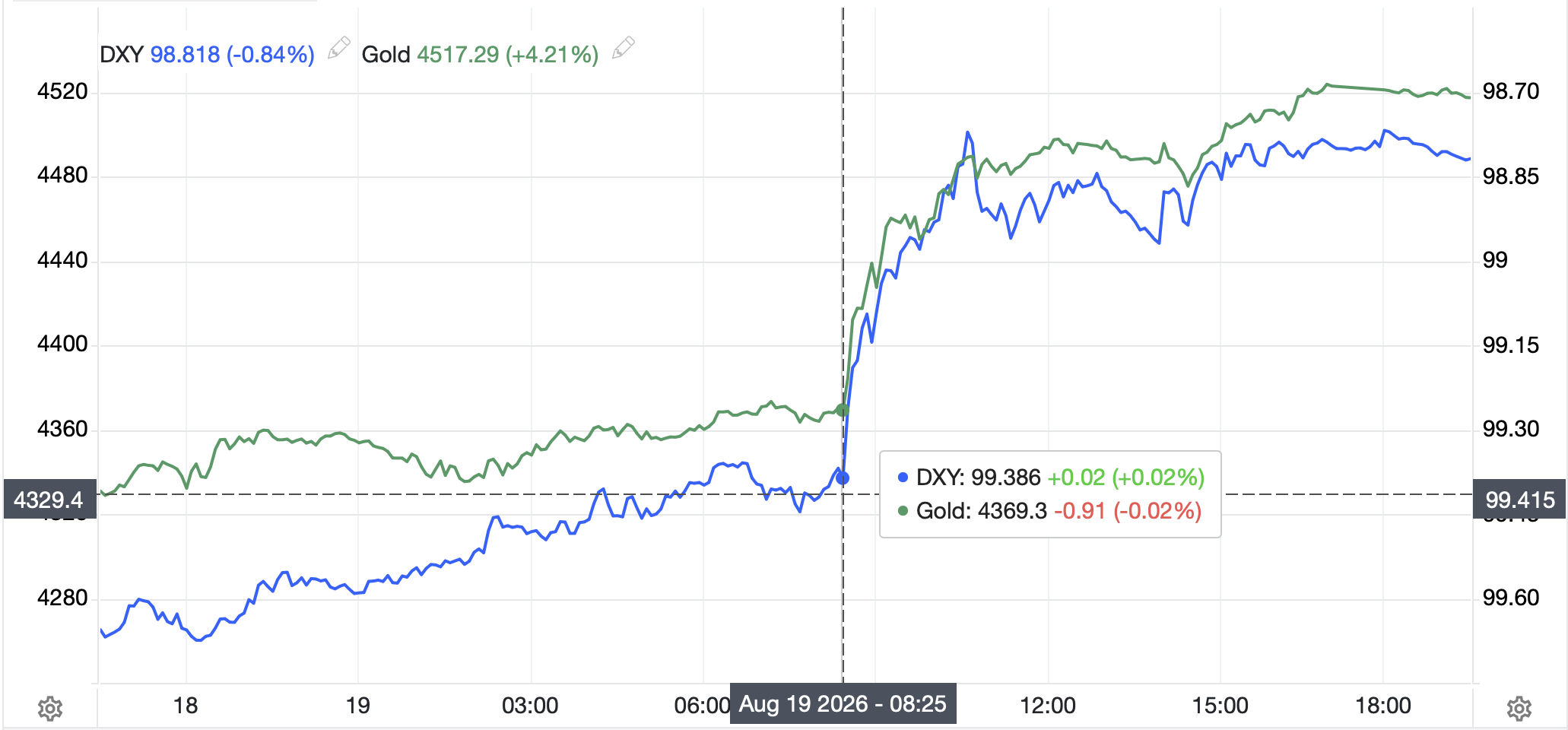
First, here is a picture of the market reaction in the DXY and gold, the two things that responded most aggressively.  (I inverted the scale for the DXY, so it fell on the news.)

Source: tradingeconomics.com

And here is the bond market response with that gap occurring between 8:30 and 8:35.

Source: tradingeconomics.com

Obviously, this was a big deal, right?  Well, that’s a good question and one worth discussing.  As a baseline, the size of the current program that they are doubling is a maximum of $2 billion per operation, which means that the new limit is at least $4 billion per operation.  Now, while an extra $2 billion of demand is nothing to sneeze at, we must consider how much of that debt is currently outstanding.  According to Claude, which took the data from the Treasury website, there is about $3.7 trillion of debt that currently has between 10 and 30 years left to maturity, held by private investors.  When adding the intragovernmental holdings and the Fed, that number appears to be about $5.4 trillion.  

There are seven more of these operations planned before the November deadline, so they will be purchasing an additional $14 billion of notional value, probably paying about $8 billion in cash given it all has much lower coupons so trades at a steep discount to par (and funding it by issuing T-bills).  And if we do the math, that means they will have absorbed (assuming the smaller outstanding of privately held debt) 0.38% of the notional.  

The caveat here is the ‘at least’.  Arguably they could buy any amount and stay within the confines of the announcement and that would certainly have a much larger impact.  But everything I have read is focused on the extra $2 billion.

With that in mind, and while I’m just an FX poet, my long experience in markets tells me that removing 38 basis points worth of some security or asset from a market is unlikely to have a major long-term impact on the supply/demand balance given there is real elasticity here.

So, while yesterday’s moves were certainly impressive (gold +4.3%! as an example) I might contend that the movement was based on the narrative rather than the actual market impact.  But the one thing we have learned of late is that the narrative matters.

Many in the market have immediately claimed that this is an act of desperation as Secretary Bessent seeks to drive longer end yields lower.  Others have claimed that this is the beginning of Yield Curve Control (YCC), although the fact they are issuing more T-bills to buy the bonds makes it a lot more like Operation Twist, when the Fed did the same thing, sold the front of the curve to buy the back, thus maintaining the same size balance sheet but removing duration from the market.  If this were YCC, they would need to print more money to buy those bonds, and the Treasury cannot do that, only the Fed can and they are not part of the process.

Here’s what I know, Scott Bessent is a very smart guy, and somebody who understands markets better than any Treasury Secretary since Bob Rubin and maybe better, certainly better than you or I.  I also know he has been dealt a very bad hand; 2,3,5,7,8, off-suit in poker terms, so doesn’t have many good options.  And I know that he has zero control over spending amounts which falls to Congress and the President, with him merely implementing the spending, not deciding how much to spend.  I don’t know if this will be effective beyond yesterday’s market movement, but if he is able to get the narrative moving in the right direction, (i.e. there is a reduction in duration available to the market so prices there should rise and yields concomitantly fall), it may offer some more breathing room.  The fact that he is using the tools available to manage the government’s balance sheet is a huge positive.  I can only say, good luck Scott.

While there are probably other stories of some import, this was the one that got the most engagement, and I think the one with the potential longest-term impacts on things.  So, let’s see how other markets responded.  It was interesting to me that the equity markets did not wholly embrace this action, although there was an initial rally, much of it faded by the end of the session with very modest gains at the end of the day.  Asian markets, however, fared very well with Tokyo (+1.4%), China (+0.1%), HK (+0.8%) and Korea (+5.9%!) all rallying and taking almost the entire region higher.  I think it is worth showing a chart of Korea’s KOSPI to demonstrate the increase in volatility we have seen on a regular basis there since the Iran war began.  Just look at the expansion of the daily ranges, especially since May, compared to the size of those bars for the prior six months.  This is another indication that the way things were is no longer the way they are.

Source: finance.yahoo.com

In Europe, though, equity price action is desultory this morning, with modest declines of about -0.4% or so across all major markets with Spain (-0.1%) the outlier.  As to US futures, at this hour (7:15), they are edging lower led by the NASDAQ (-0.5).

In the bond market this morning, yesterday’s euphoria is being tempered with Treasury yields backing up 3bps.  European sovereigns, though, are little changed to +1bp, although they didn’t respond to the Treasury market in any real sense yesterday.  That makes sense since Bessent’s announcement was highly US specific.  As to JGB yields, they did slip -4bps overnight, and there are many who draw a direct link to Treasuries and USDJPY, with official efforts by the US to cap both of those things.

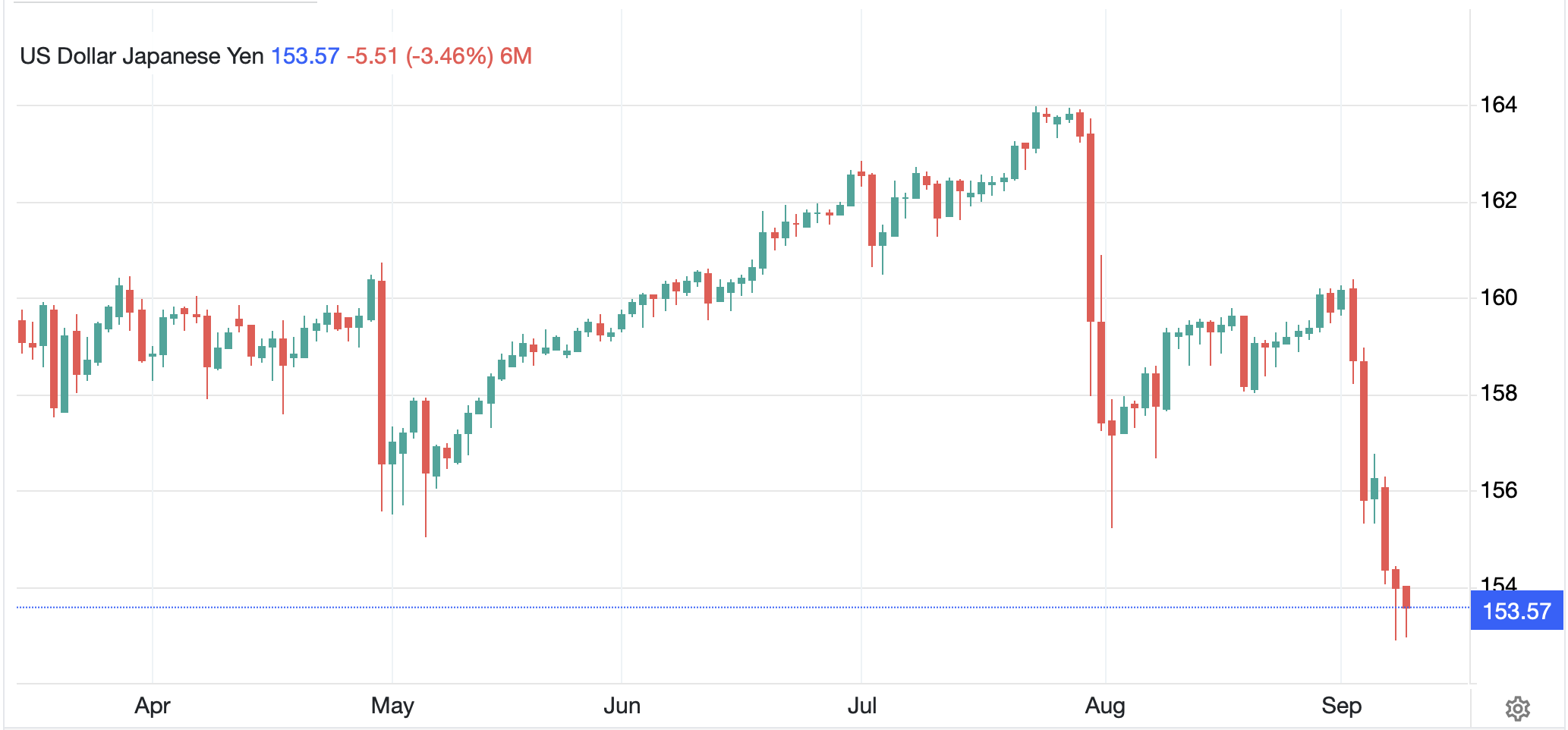
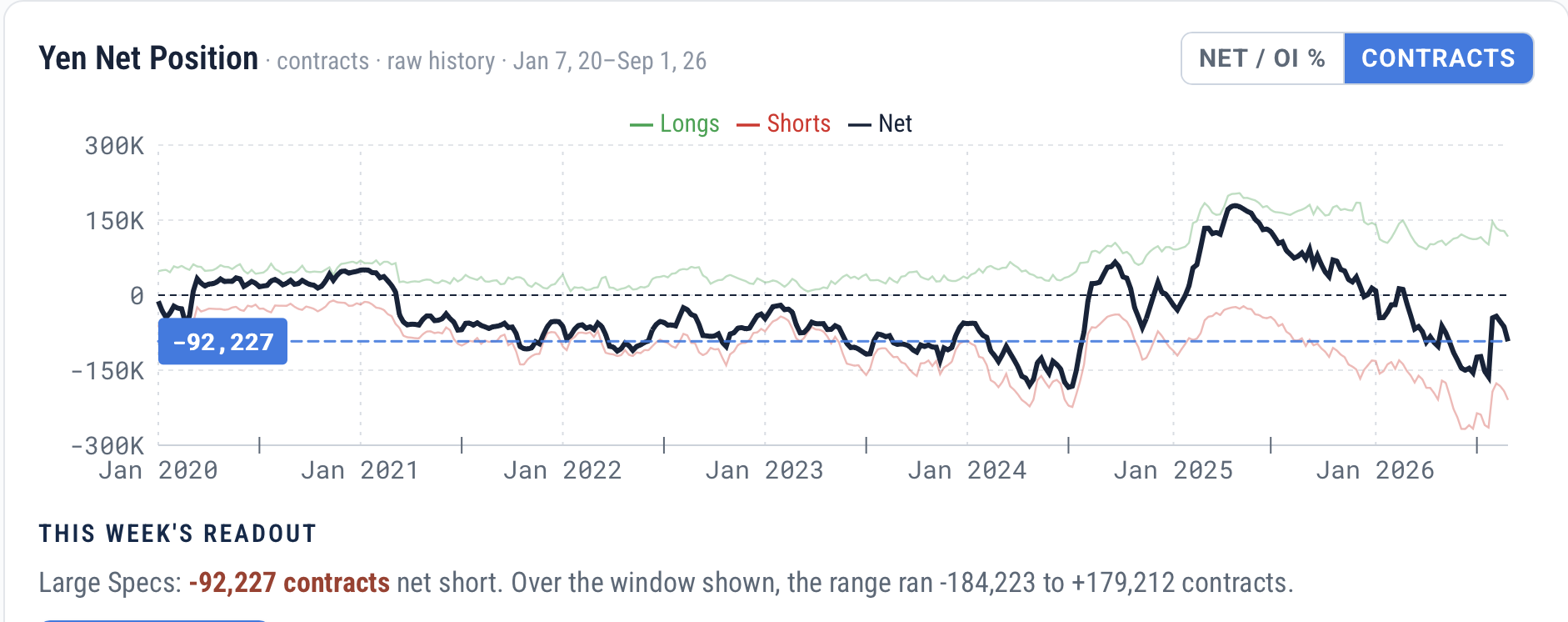
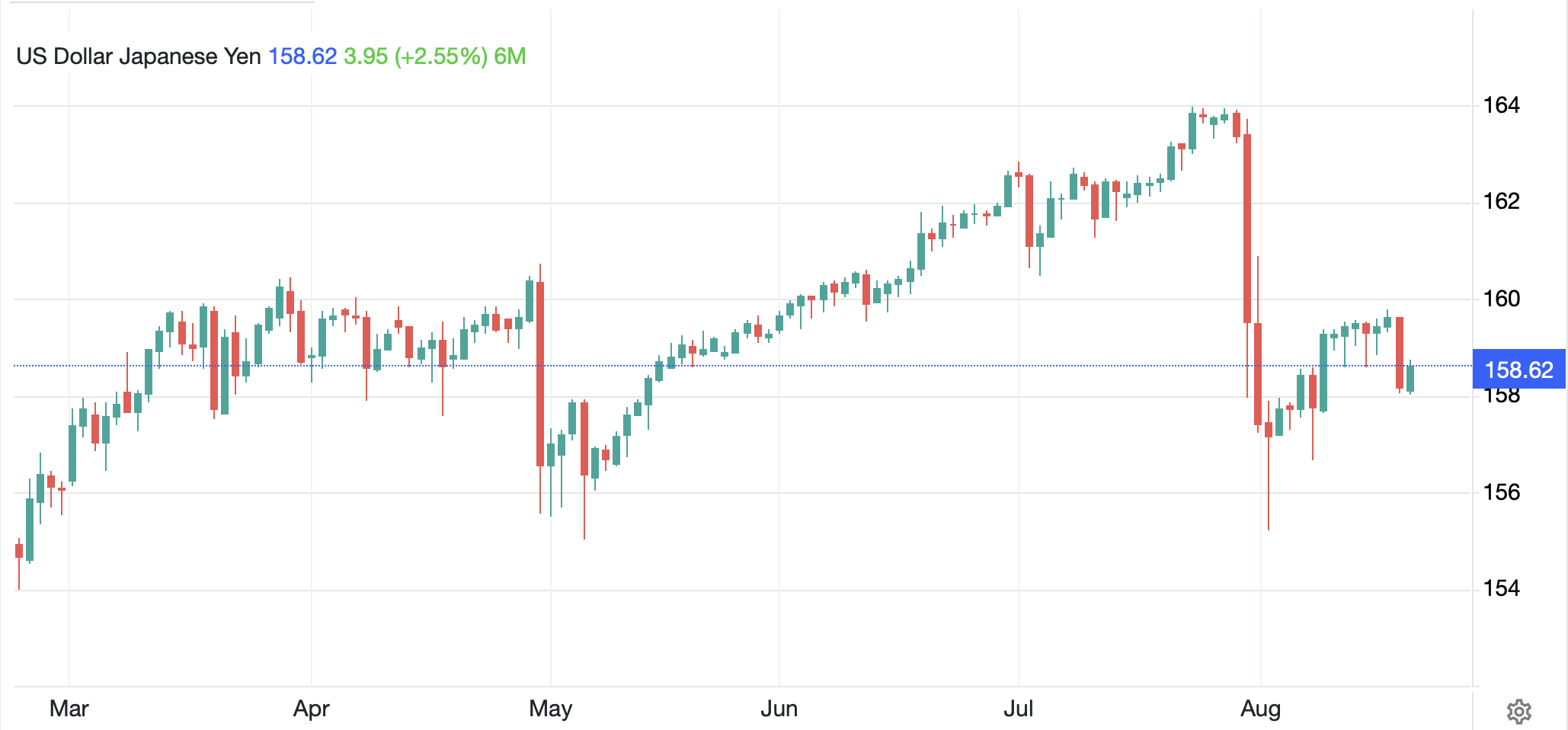
Speaking of the yen (-0.3%), it was one of the largest beneficiaries of the announcement, rallying nearly 1% as you can see in the chart below.  However, this morning it is slipping a bit, and frankly, the post-intervention pattern has not been altered by yesterday’s move.

Source: tradingeconomics.com

In fact, most currencies rallied yesterday on the news but this morning, the picture is more mixed as we see both gainers (GBP +0.2%, EUR +0.15%, NOK +0.15%) and laggards (INR -0.25%, SEK -0.3%, ZAR -0.35%).  In essence, while yesterday’s moves were large and broadly dollar lower, this morning there is more nuance.  As it happens, the DXY (-0.1%) is edging lower today, but remains directly in the middle of that long-erm 96.50 / 100.50 range at 98.71.

Source: tradingeconomics.com

Finally, commodity prices show oil (+3.1%) continuing its recent rebound and back to its highest level in about a month.  But if I look at the chart below, it remains in the middle of its much wider range as well, if anything somewhat closer to the bottom than the top.  At this point, it is impossible to know what is happening in the Gulf war and frankly, I think market participants who don’t trade oil directly, have moved on to other drivers.  

Source: tradingeconomics.com

As to the metals markets, after yesterday’s remarkable rallies, it ought not be that surprising that they are consolidating this morning (Au -0.7%, Ag -0.3%. Cu -1.1%).  There are some analysts who believe that copper is getting set to roll over and decline in price as the narrative about shortages of supply for ever increasing data center and power production demand grow long in the tooth and may already be priced in.

On the data front, yesterday’s Minutes showed that there were non-voters who also would have been inclined to raise interest rates back in July, but we know that we have seen softer data since that meeting, so it is unclear if that is still the case.  As well, EIA oil inventories rose again, >4 million barrels, so tank bottoms are still covered!  This morning we get the weekly Initial (exp 210K) and Continuing (1790K) Claims as well as Philly Fed (25.0) and Leading Indicators (+0.1%).  There are still no Fed speakers, and I continue to believe that Chairman Warsh’s speech next week is the most important thing on the horizon.

Until then, I imagine yesterday’s surprise announcement is the biggest news we will get for a while and that we are likely to see markets return to their somnolence.  But there is a new narrative forming, the US is going to ignore inflation and push rates lower, which if it is followed implies higher commodity and equity prices and a falling dollar.

Good luck

Adf
A Future, Dystopic

On Monday, an analyst wrote
His thoughts how AI might promote
A future, dystopic
Though somewhat myopic
And offering no antidote
 
Although prior views had explained
That once AI’s suitably trained
Most labor would suffer
And lacking a buffer
Folks’ politics would be quite strained

This is the research report that got tongues wagging on Wall Street yesterday and the fear it allegedly engendered was impressive.  In essence, it said that by 2028, AI would replace vast swaths of the labor force, notably white-collar workers, and that it would lead to a massive recession, and more importantly to the Street, a significant decline in stock prices.  The back and forth on X was amusing all day as there were those who hyperventilated over the coming tragedy, and those who fought back.

It is important to understand this was not a prediction, per se, but one of the scenarios they came up with, although clearly the most dramatic one.  It certainly gained a lot of clicks and notoriety, and let’s face it, isn’t that the idea these days?

Given that the tariff story has now become too complex for anyone to truly understand, and while we all await the denouement in Iran, this appeared to be the best thing to occupy time amongst the trading community.  Personally, I spent the entire morning shoveling snow, but then, I’m no longer a trader.

The upshot is that the major indices all fell more than 1% while gold and silver rallied and bond yields fell.  Fear was palpable.  But will it last?

Last month’s yen rate checks
Came not from Ueda-san
But Bessent, himself

The other story of note was almost an aside, although it helps outline recent movement in USDJPY.  We all remember last month when the yen rallied very sharply during a Friday session in NY as word got out the Fed was “checking rates”.  As a reminder, this is when the Fed calls out to bank FX desks and asks for prices, although doesn’t actually deal.  However, the signal is strong as all the banks recognize the opportunity for intervention, and the news quickly spreads through the market with the effect you can see in the chart below.  During the next three sessions, the yen rallied 4.5%.

Source: tradingeconomics.com

During my career, I had never heard of this activity driven by anyone other than the BOJ, as they were always the most concerned with the yen’s value.  Certainly, they may have been responding to US pressure, but it was always their call.  Now the news comes out that Treasury Secretary Bessent did this on his own last month, a clear indication that the administration is not happy with an over weak yen.  This sets an interesting precedent regarding who controls any given currency.  Now, I doubt we will see this type of thing frequently, but we need to keep it in the back of our mind.  Meanwhile…

Seems Takaichi
Told Ueda, higher rates
Are not helping her

Last night, in a surprise to many in the market, news of a meeting between PM Takaichi and BOJ Governor Ueda resulted in Takaichi-san imploring Ueda-san to leave rates alone, rather than continue raising them.  Higher rates are not helping her growth agenda, and I imagine her belief set is that if the yen weakens too far, she can always intervene, and now that we know about Bessent’s actions, she can count on the US to help.  But I cannot observe this and think anything other than the market is going to test 160 and do so before long.  One poet’s opinion.

Ok, let’s see how markets traded overnight.  First off, last night was the first that all of Asia was back at work so overall liquidity was improved.  However, the results were mixed with Tokyo (+0.9%) ignoring the AI driven US rout while the Hang Seng (-1.8%) fell right alongside the US.  China (+1.0%) rallied in its first day back but consider that simply offset the decline of their last session and, like most other markets, it remains relatively unchanged over the period.  Meanwhile, the tech sense was strong with Korea (+2.1%) and Taiwan (+2.75%) both up nicely while India (-1.3%) suffered under the AI fear umbrella.  Elsewhere in the region, there was no pattern of note with both gainers and losers.

In Europe, the largest markets (UK, Germany and France) are basically unchanged this morning while both Spain (-0.7%) and Italy (-0.4%) are under some pressure.  There is talk of tariff issues, but I’m not sure why only those two markets are taking the heat.  As to the US, at this hour (7:00), all three major indices are higher by about 0.2%.

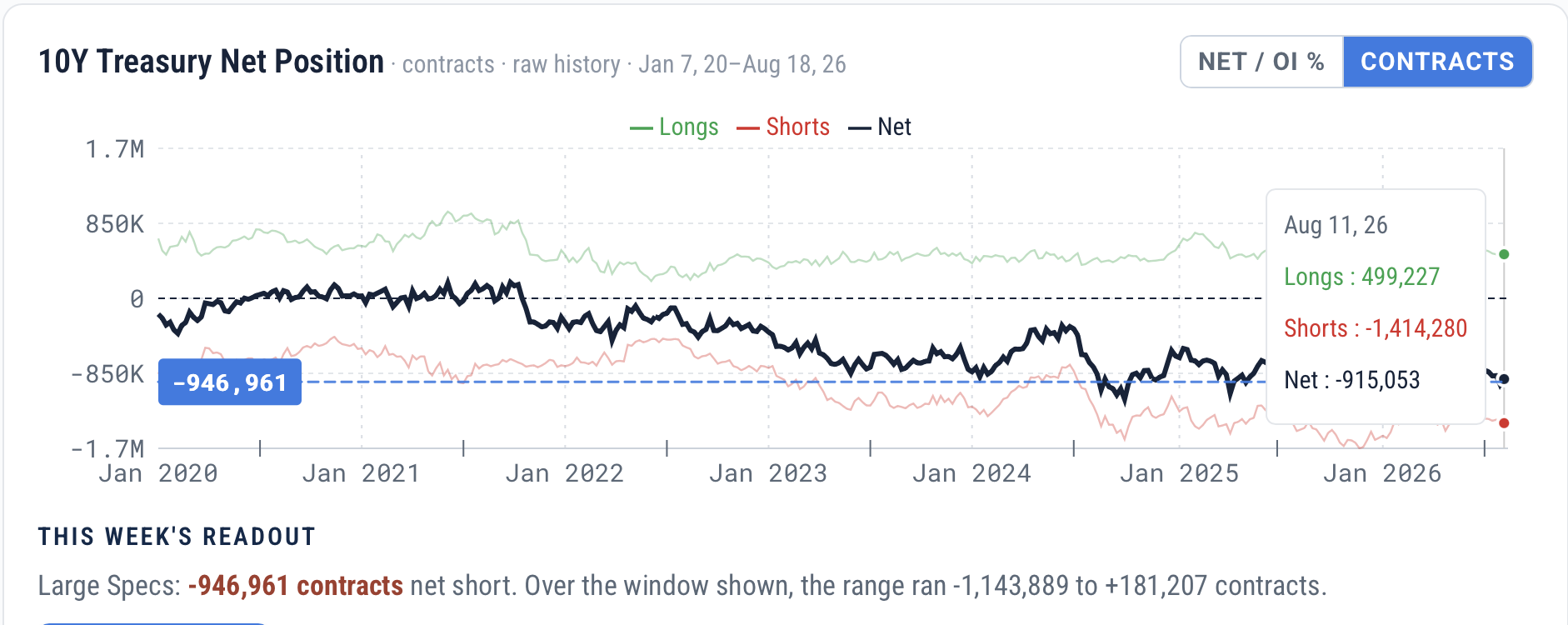
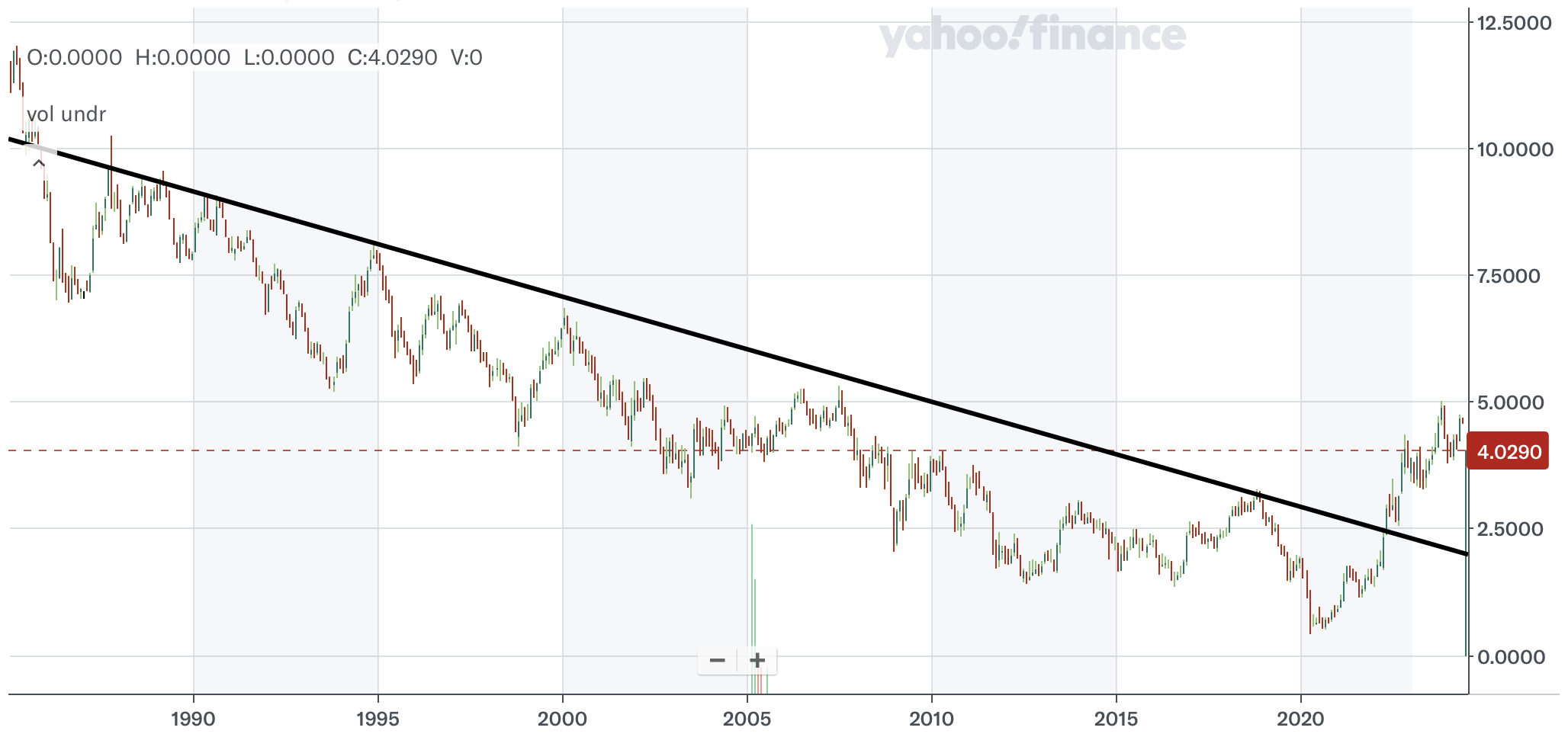
In the bond market, after a -4bp decline in Treasury yields yesterday they are unchanged this morning while European sovereigns are seeing yields slip -1bp across the board.  Too, JGB yields (-2bps) have continued their slow descent as it appears investors have acclimatized to the risks of Takaichi-nomics.  I think we will have to see inflation figures there to get a better sense.  Regarding Treasury yields, I’m not sure I can explain why I feel this way, but given how bearish sentiment is for bonds, (leveraged players are short >1 million futures contracts), it feels to me like we could see a short-term continuation of the recent rally with yields heading back to test the 3.8% level at least.  I understand both the fiscal argument and the technical argument (see long-term chart below) but neither rules out a short-term rally to inflict pain.  After all, that is what markets do best!  (full transparency, I bought some June TLT call spreads yesterday, so I am talking my book!)

Source: finance.yahoo.com

In the commodity markets, oil (+0.3%) continues to hold its recent Iran inspired gains as the world awaits the outcome of Friday’s meetings between the US and Iran.  I have no insight as to the potential outcome here other than what I read, but it does seem like there will be some type of military action as I do not see Iran ceding anything.  As to the precious metals, gold (-1.0%) is giving back yesterday’s gains but remains in its recent uptrend after the end-January crash, although it has yet to regain the old highs.  I imagine this will take more time, but it also seems quite likely to happen. This is still a quite bullish chart in my view.

Source: tradingeconomics.com

Interestingly, silver is little changed this morning as there continues to be much talk of delivery questions at the COMEX given the apparent lack of available ounces relative to outstanding contracts.  My take is things will get rolled as they usually do, but if not, beware a major spike higher on Friday!

Finally, the dollar continues to be the least interesting space there is with today’s JPY (-0.8%) move the exception that proves the rule.  Having already touched on that situation, there is literally nothing else to describe in either G10 or EMG currencies as +/-0.15% describes the entire session.

As to data this week, here’s what we have coming:

TodayCase Shiller Home Prices1.4%
 Consumer Confidence87.0
ThursdayInitial Claims216K
 Continuing Claims1872K
FridayPPI0.3% (2.6% Y/Y)
 -ex food & energy0.3% (3.0% Y/Y)
 Chicago PMI52.5

Source: tradingeconomics.com

In addition to this bit, we hear from seven more Fed speakers across nine venues, but I still don’t think anybody cares.  The market has priced out any rate cuts before Powell leaves, although there is still one cut priced for the year, expected in October.  

Frankly, it is not surprising that markets have calmed down so much given how much activity we saw in January.  As I wrote then, markets have a great deal of difficulty maintaining high volatility as traders and investors simply get tired and tune out.  We will need a new catalyst to get things going, either an attack on Iran or some new China news in my view.  Tariffs are no longer interesting, and frankly I think Iran and AI have both lost some pizzazz.  Maybe the UFO releases will get things going again!

Good luck

Adf
Sanae Lightning

It has been two weeks
Since she rolled the dice. Sunday
It came up hard eight!
 
Leaders round the world
Would sell their soul to obtain
The Sanae lightning

Source: asia.nikkei.com

Japanese PM Takaichi scored a resounding victory yesterday, capturing more than 76% of the seats with her coalition partners, and she now commands a super-majority, enabling her to control the dialog completely, pass any legislation and even change the constitution.  As I said, every other elected leader in the world pines for that type of power and approval, even Xi!  

The immediate market response was a 5.0% rally in the Nikkei as expectations for an aggressive fiscal policy expansion to the economy gets priced in.  Add to this more defense spending and the mooted tax cuts on food, and it is easy to understand the response.  

Interestingly, the yen, which had been under pressure from fears of unfunded spending, after declining at first, reversed course and strengthened nearly 1% from its worst levels early in the Tokyo session as per the below chart.  It certainly seems logical that yen weakness would be coming on this basis, but perhaps, what we are going to see is the Japanese use some of their FX reserves, which total about $1.3 trillion, to help fund the ¥5 trillion (~$32 billion) that the tax cuts will cost.  That would mean selling Treasuries to sell USD and buy JPY, helping to support the yen while allowing the BOJ to leave rates on hold.  In truth, it makes a lot of sense.  We shall have to see how things progress from here.

Source: tradingeconomics.com

Some pundits, when looking ahead
Are worried that Warsh at the Fed
With Bessent, will try,
To Treasury, tie
Their efforts, some assets to shed

The other big story this morning is a growing concern about a potential accord between the Fed and the Treasury once Kevin Warsh is confirmed and takes his seat as Fed chair.  Bloomberg has a big article on the subject, but it is around all over.  When combined with another article on China recommending its banks to reduce their Treasury holdings, it has helped create a narrative that the US is going to have major fiscal problems going forward which will result in massive money printing and much higher inflation.

Of course, the thing about this that I don’t understand is that Warsh is on record, repeatedly, for saying he wants the Fed’s balance sheet to shrink, and that its expansion has been one of the major economic issues in the US since QE2 back in 2012.  I also find it interesting that Warsh’s apparent desire to see the Fed’s balance sheet hold almost exclusively short-dated Treasuries, 3-years and under, is seen as a concern given that has been the Fed’s stated goal since they started shrinking the balance sheet back in April 2022.

Recall, Chairman Powell explained that in order to maintain the ample reserves framework they are currently using, the balance sheet needs to grow alongside the economy.  However, this is completely at odds with Warsh’s stated beliefs that the ample reserves framework is no longer effective and needs to be replaced eventually.  Of course, if I look at 10-year Treasury yields (+2bps today) over the past 5 years, as per the below chart, it is hard to get overly excited that things have changed much since the end of the Covid adjustments.  

Source: tradingeconomics.com

Perhaps Chinese selling will drive yields higher, or perhaps others will sell because they are concerned that the Fed and Treasury working together is inherently bad for the economy and will lead to higher inflation but so far, that is not the case.  As to inflation, while CPI and PCE remain higher than the Fed’s target, it does not appear to be galloping away at this stage.  In fact, there is much discussion on X that Truflation is now running at 0.68% and that the Fed will soon need to cut rates aggressively!  Of course, if inflation is running at 0.68%, can someone please explain the ‘affordability’ crisis that has gotten so much press?  PS, I don’t see Truflation as being an accurate representation of the world, but it sure is good for narrative writers sometimes!

And that is how we have started the week.  The Super Bowl was pretty dull overall, with defensive excellence, but nothing spectacular.  Someone made the point that this was the AI Super Bowl for advertising and the last two times we saw something dominate the advertising (dot.com in 2000 and crypto in 2022), within a year, both sectors had been decimated in the equity markets.  In the meantime, a quick tour of the overnight session shows the following:

Stocks – Asia was strong across the board with Japan (+3.9%) giving back some of the early gains but still rocketing to new highs.  The rest of the region was similarly strong, especially Korea (+4.1%) but gains of between 1.5% and 2.0% were the norm.  I guess everybody is positive on Takaichi-san!  Europe, however, has not been as robust although there are mostly gains there led by Spain (+0.6%) and Germany (+0.3%).  The laggard here is the UK (-0.1%) which is struggling as PM Starmer appears to be coming to the end of his disastrous term.  His appointment of Ambassador to the US looks to be the final straw as Peter Mandelson is widely mentioned in the Epstein files and now Starmer has lost his chief of staff because of that.  The UK will be better off, I believe, if Starmer is pushed out, although if they put in Ed Miliband, it could actually get worse given his personal insanity regarding energy.  But I would buy a Starmer removal.  As to US futures, at this hour (7:20), they are modestly lower, -0.15% or so.

Bonds – European sovereign yields are edging higher this morning, around 1bp across the board as there has been no data to change opinions and the bond markets, worldwide (Japan excepted) remain the dullest of places to play.  Japan (+6bps) did see a response to the Takaichi victory, which is what one would have expected.  We will have to watch this yield closely as if it truly does start to break out, there will be ramifications worldwide.  However, if we look at the chart below of 10-year and 30-year JGBs, they remain below the peak seen several weeks ago and, surprisingly, the overnight move was more pronounced in the 10-year than the 30-year.  Watch this space.

Source: tradingeconomics.com

Commodities – oil (+0.3%) has been chopping around either side of unchanged all evening as questions about Iran remain unanswered.  There was a story in the WSJ about the US holding back on any military action because Iran has so many medium range ballistic missiles and any reprisal could be devastating to the Middle East overall.  But if I have learned anything from observing President Trump and his negotiating style, it is impossible to know what the next move will be.  I would not rule out either a successful deal or a military strike at this point, with the former resulting in lower oil prices while the latter would see a sharp rally.  In the metals, gold (+0.9%) and silver (+2.7%) are both continuing their volatile rebound from last week’s sharp selloff, while copper is unchanged this morning.  As I have said, nothing has changed this supply demand balance in physical metals, although the paper, futures market, can still do many remarkable things that don’t necessarily make sense.

FX – the dollar is softer across the board this morning, slipping against both G10 (EUR +0.5%, GBP +0.3%, JPY +0.4%, CHF +0.7%) and EMG (MXN and BRL +0.25%, PLN +0.65%, ZAR +0.25%, CNY +0.15%) with little in the way of data as a driver anywhere.  While I have not specifically seen a reboot of the dollar is collapsing narrative, I presume the concerns over a potential Fed-Treasury accord are an underlying thesis today.

On the data front, we see both NFP and CPI this week as they come a few days late due to the short government shutdown.

TuesdayNFIB Small Biz Optimism99.9
 Retail Sales0.4%
 -ex autos0.3%
 Employment Cost Index0.8%
WednesdayNonfarm Payrolls70K
 Private Payrolls70K
 Manufacturing Payrolls-5K
 Unemployment Rate4.4%
 Average Hourly Earnings0.3% (3.6% Y/Y)
 Average Weekly Hours34.2
 Participation Rate62.3%
ThursdayInitial Claims218K
 Continuing Claims1850K
 Existing Home Sales4.15M
FridayCPI0.3% (2.5% Y/Y)
 Ex food & energy0.3% (2.5% Y/Y)

Source: tradingeconomics.com

In addition, we hear from seven more Fed speakers, with Governor Miran making three appearances as he seeks to make his case for cutting rates.

Nothing has changed my view that Warsh and Bessent are the two most important voices now, with the rest of the Fed relegated to biding their time until Warsh shows up.  As to the data, the Citi surprise index continues to show that data is better than most forecasts which speaks well of the economic situation.

Source: cbonds.com

I am not a proponent of the world ending, the Treasury market collapsing or the dollar dying despite a lot of doom porn that this is the near future.  I would contend the dollar remains rangebound for now, and we need a definitive policy adjustment to see that situation change.  Until then…choppy is the way.

Good luck

Adf
Yen Reprobates

On Friday we questioned what stage
The BOJ reached for to gauge
If yen intervention
Would soon get a mention
And could Katayama assuage
 
The markets, without spending dough
Since Friday, we’re now in the know
That Bessent checked rates
With yen reprobates
Now anxious to deal a deathblow

On Friday, I asked the question whether the movement seen in Tokyo after the BOJ meeting was finished consisted of step six, rate checks, or step seven, intervention.  Of course, my comments preceded the NY session and then in the afternoon, as you can see from the below chart, something much more substantial occurred.

Source: tradingeconomics.com

At this point on Sunday evening, it appears that about 11:00 Friday morning in NY, as Europe was heading home for the weekend, the Fed rang into major dealers around the Street and asked for prices where they could buy yen / sell dollars.  This is the very definition of ‘rate checks’ and the market response was exactly what you would expect.  The sequence of events was almost certainly that the Japanese MOF reached out to the Treasury department who then rang up the Fed and asked them to act. (Remember, currency policy is a Treasury function, not a Fed one). As you can see from the chart above, the initial move when Asia opened was a continuation of the yen’s strength, and in truth dollar weakness against most currencies, but we have already seen the initial bounce (the green bars to the right.)

Here’s the thing about rate checks, and in truth, every monetary policy, the law of diminishing returns is in effect here, so the next time they try it, and I would not be surprised to see something again tonight or tomorrow in NY, it will have a smaller impact.  Now, perhaps they are comfortable at 155 instead of pressing 160 and if USDJPY stabilizes here, things will go on much as before.  But I doubt that without further efforts, including direct intervention, things are going to change.  And even then, as history has shown time and again, intervention’s impact typically wears off after a few months.  The only way to truly change this trajectory is to change policy in Japan, and by all accounts, as the country heads into an election where PM Takichi’s platform is ‘run it hot’ that seems unlikely.  

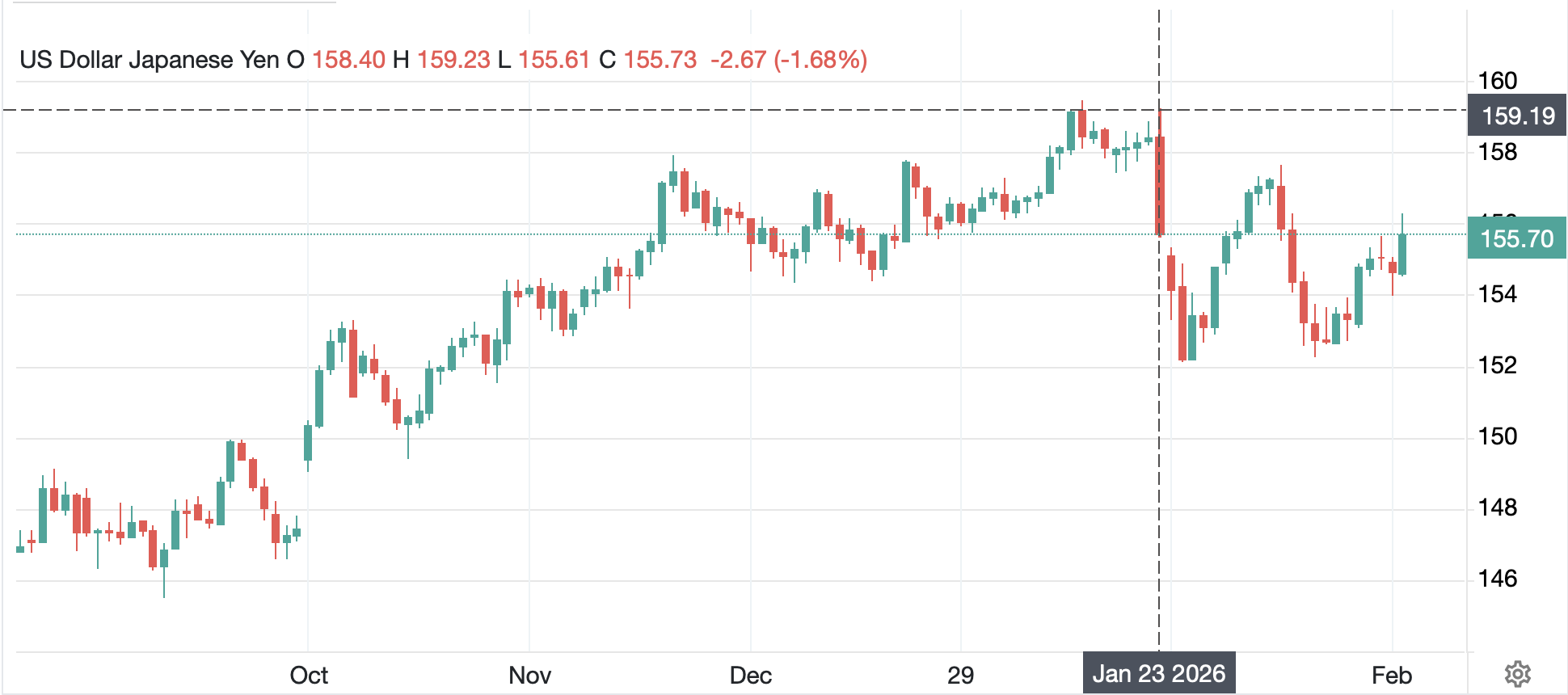
It may not be a fade today, but at 150 or so, I expect that the risk/reward of selling yen is going to be extremely attractive again.

Have a good evening

Adf
Clearly Explained

The warmups in Davos for Trump
With Howard and Scott on the stump
Quite clearly explained,
While WEFers complained,
The US was, no more, the chump
 
The globalist world that existed
Is no longer to be assisted
Instead, US goals
Align with Trump’s polls
No matter the words WEF has twisted


As we await President Trump’s address in Davos this morning, it is worth recapping the highlights from yesterday’s US speakers, Commerce Secretary Howard Lutnick and Treasury Secretary Scott Bessent.   Starting with Lutnick, he explained the White House view as follows; “The Trump Administration and I are here to make a very clear point—globalization has failed the West and the United States of America. It’s a failed policy… and it has left America behind.”  The video is linked above in his name.  It is hard to misunderstand what he is saying, and that is very clearly US policy.
Turning to Secretary Bessent, he explained that the US has spent $22 trillion more than the rest of NATO since 1980 on defense while Europe and Canada created their welfare states.  “The Europeans have been spending the money on social welfare, on roads, on education, and it’s time for them to pay more, which they’ve agreed to do.”  The video clip is linked to his name in the first stanza.  The below graph is telling:

At the same time, Europe continues to buy Russian oil, funding Russia’s war against Europe.

Needless to say, Europeans were unhappy with the commentary as they appeared to be coming under attack from the US.  The market narrative quickly framed around President Trump going too far and how it was going to destroy the US as nobody will want to invest in the US. That is the explanation for yesterday’s decline in US equities (although they fell around the world), the dollar and Treasury bonds (although bonds, too, fell everywhere, notably in Japan).  

Yesterday I sought to disabuse you of the notion that Europe is going to sell all their Treasuries to hurt the US as the results would likely be either irrelevant or horrific for Europe.  So, the narrative pivoted to Trump is bad and destroying the US.  

And yet, remarkably, the world did not end either yesterday or last night, despite what many have explained is inevitable.  This morning markets are somewhat less catastrophic.  It makes sense that markets are going to remain volatile as the underlying theses for international relations adjust to the new reality of power politics and economic statecraft from the previous “Rules Based Order”.  And at this stage, there is no way to know which outcomes are most likely.  The only thing of which I am confident is that we have not seen the end of this play out.  

I must admit, that while I don’t think President Trump cares much about France and President Macron’s comments seeking more Chinese investment in that nation, I suspect that PM Carney’s efforts to cozy up to President Xi will be less welcome based on the Donroe Doctrine of US dominance in the Western Hemisphere.  But I also believe that the power structure between the US and Canada is such that it will ultimately bend to the US’s will.

So, let’s review market activity overnight as we await President Trump’s comments, which I understand have been delayed until 11:30 EST this morning.  Yesterday’s sharp declines around the world have been followed by less dramatic activity last night and so far today.  In Asia, Tokyo (-0.4%) slipped a bit further, but hardly dramatically, as FinMin Katayama focused on the JGB market in comments made in Davos.  “Since last October, our fiscal policy has consistently been responsible and sustainable, not expansionary, and the numbers clearly demonstrate that.  I’d like everyone in the market to calm down.”  I’m sure she would.  And it worked with JGB yields slipping -8bps and 30yr yields falling -17bps.  Elsewhere in Asia, China was flat, HK (+0.4%) rallied a bit along with Korea (+0.5%) while Taiwan (-1.6%) led the way lower across numerous other regional markets.  

In Europe, red is today’s color led by Germany (-0.7%) and Spain (-0.5%) although France and the UK have both only ceded -0.1% so far during the session.  The discussion here continues to revolve around President Trump, the trade deal, and potential new tariffs on nations that try to prevent the US from its Greenland desires.  As to US futures markets, at this hour (6:45) they are slightly firmer, +0.1%, so not yet, at least, indicating the end of the American investment thesis.

As to the rest of the bond market, away from Japan, yields are basically -1bp lower across Treasuries and European sovereigns as investors await Mr Trump’s comments.  Again, the mooted collapse in the US bond market has yet to appear.  However, there is a popular meme about the Danish pension fund, Akademikerpension, which has announced that it will sell all its US Treasuries by the end of the month, a total of $100 million, due to its perception of increased credit risk.  This has been fodder, though, for those who continue to believe that Europe is going to ditch their Treasuries, and many are calling it a signal.  While certainly a trendy decision, I see it as noise, not signal.

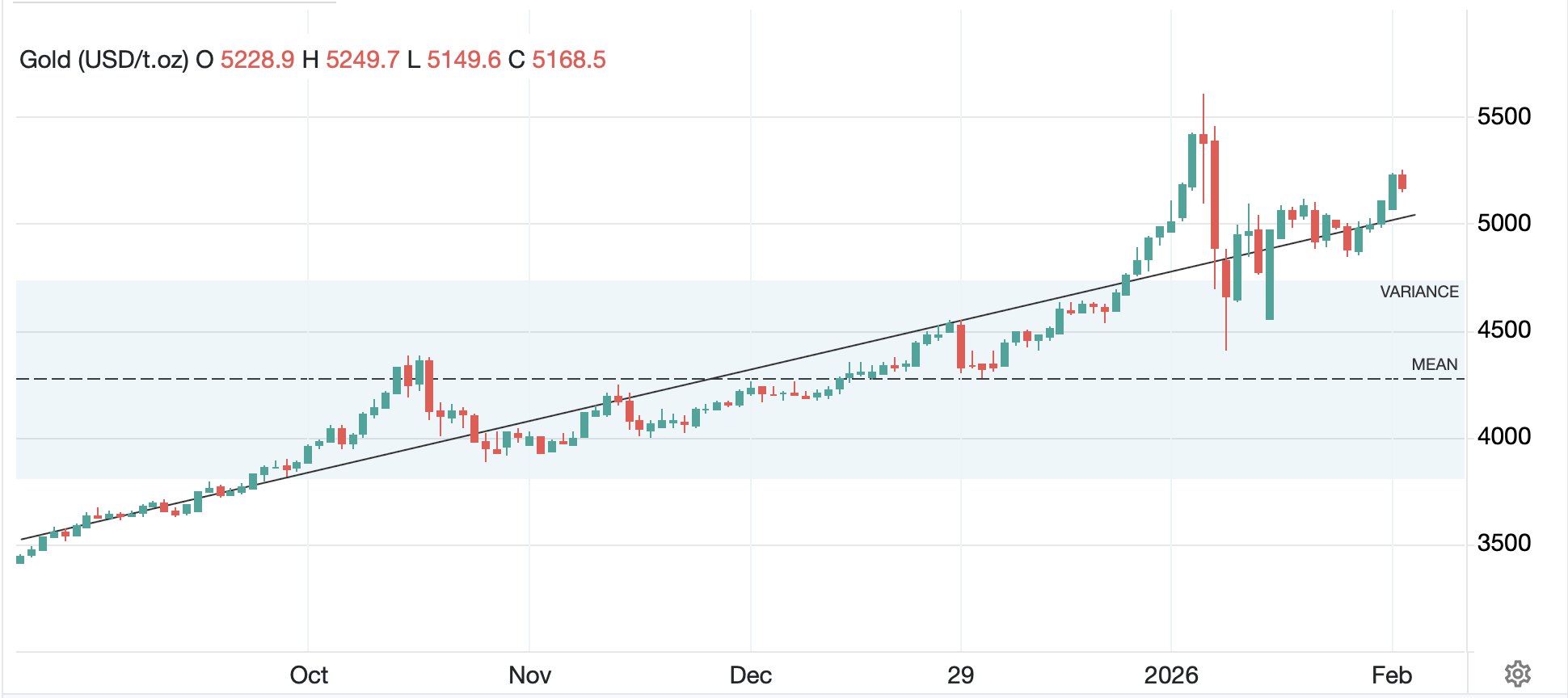
Turning to commodities, one cannot be but impressed with gold’s consistency of late.  It has risen another 2.1% this morning and is now nearing $4900/oz.  I guess $5000/oz is right around the corner.  Looking at the long-term chart below, we have seen a monster rally for the past two years.  

Source: tradingeconomics.com

FWIW, which may not be much, I continue to see this as a commentary on all fiat currencies, not the dollar per se as evidenced by the table I created from data on goldbroker.com.  While you can see that the dollar has definitely underperformed during the past year (which we already knew given the early year 10% decline vs. the euro and pound, over time, it is hard to make the case that other currencies are any better.  In fact, I find it particularly surprising that the rand has performed so poorly given its seeming benefits when gold rallies.  And of course, it is no surprise that the yen which has been having a really tough time, is the worst of the lot.

 Historical Returns of Gold 
Currency1 Month1Year5 Year10 Year
EUR9.54%54.22%164.28%300.85%
JPY10.02%76.45%288.91%481.02%
USD9.62%73.45%154.49%331.44%
GBP9.13%59.31%160.26%357.37%
MXN7.04%47.93%127.14%305.03%
ZAR7.35%53.89%179.88%327.69%

As to the other metals, silver (0.0%) seems to be getting tired after its move and has done little over the past several sessions.  Platinum (+1.0%) seems to still have life as does copper (+0.75%).  Turning to energy markets, oil (+0.3%) is trying to figure out whether the geopolitics is going to blow up or fade away and remains right around $60/bbl.  But given the temperature here in New Jersey is 1° this morning, we cannot be surprised that NatGas (+21.5%) has exploded (no pun intended) higher.

Finally, the dollar is a touch softer this morning, but not very much.  The euro is unchanged, and the pound, after some lousy inflation data, has fallen -0.2%.  But JPY (+0.2%) is offsetting that, arguably responding to FinMin Katayama’s comments, although elsewhere, KRW (+1.1%) rebounded after comments from President Lee Jae Myung sought to sooth investors and explain that the government would continue to work to boost economic growth with new policies.   But once again, my recent favorite chart of the DXY shows that this is not a USD story.

Source: tradingeconomics.com

On the data front, aside from the President’s speech today, nothing but tomorrow brings the real data.

ThursdayQ3 GDP4.3%
 Q3 Price Index3.7%
 Initial Claims212K
 Continuing Claims1880K
 Personal Spending (Nov)0.5%
 Personal Income (Nov)0.4%
 PCE (Nov)0.2% (2.8% Y/Y)
 Core PCE (Nov)0.2% (2.8% Y/Y)
FridayFlash PMI Manufacturing52.1
 Flash PMI Services52.8
 Michigan Sentiment54.0

Source: tradingeconomics.com

Don’t forget that next week the FOMC meets, but on the Fed story, today Governor Cook’s case about dismissal will be heard at the Supreme Court, which is, potentially, a much bigger deal.  If the Fed is not protected from Presidential authority, that will certainly change many views on the future, and likely initially, see the dollar and bond markets decline while stocks rally.  But that decision won’t come for months, and remember, we are still awaiting the tariff decision.

There is much we don’t know and volatility remains the most likely outcome.  Be careful out there.

Good luck

Adf