
AI is Grokking

The ‘conomy grew a bit faster
Than ‘spected by every forecaster
Consumers are rocking
While AI is Grokking
Though prices could be a disaster
 
The question this data incites
Is why cut rates from current heights?
With stocks on a tear
And ‘flation still there
The risk is the long bond ignites


Yesterday’s GDP data indicated that both consumer spending and AI investment were larger than expected with the result being GDP activity increased more than economists had forecast.  Most would consider this good news, and the equity markets clearly saw the benefits as they continue their slow march higher.  Surprisingly, despite the positive economic data, the Fed funds futures market did not reduce the probability of a rate cut next month.  Arguably that was because Governor Waller, one of the two who voted for a cut in July, spoke yesterday and reiterated his views that a cut was appropriate to prevent a worse outcome in the employment situation.  Frighteningly, he said, “I am back on Team Transitory.”  I fear that the transitory phenomenon is going to be the reduction in inflation we have experienced over the past two years, not the initial peak seen in 2022. (As an aside, if inflation is your concern, USDi is one way to maintain the purchasing power of your funds as it mechanically tracks CPI, rising in step with the index.)

Perhaps the futures market is starting to expect that Governor Lisa Cook’s days are truly numbered with a third instance of potential mortgage fraud surfacing yesterday, a situation that has a bad look for a Fed governor.  If she is forced out soon, that would be yet another Fed governor that President Trump will get to appoint, and the tension in the Marriner Eccles building will certainly grow at that September meeting.  After all, if Trump seats two more governors, and has 4 votes for a rate cut on the board, the question will not be should they cut, but how much they should cut with 50 basis points on the table regardless of the economics.

But all that is still three weeks away and based on the fact that if I look at almost every market, price action has been consolidating for the entire summer, it is hard to get excited in the short-term.  In fact, I think it is worthwhile to look at some charts so you can get a sense of just how little is going on.

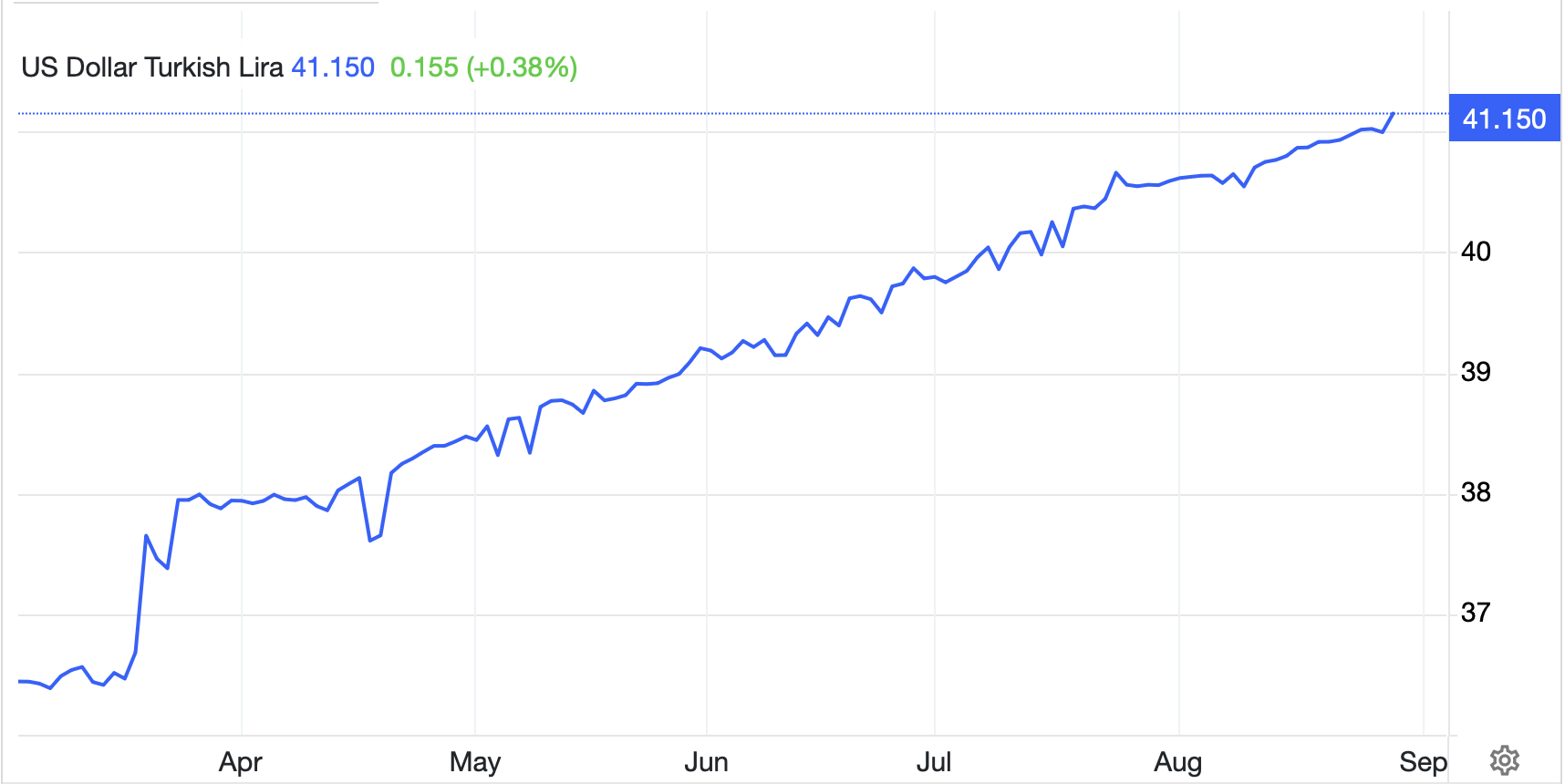
All these charts are from tradingeconomics.com and I have drawn in some recent ranges to show that over the past 6 months, only one asset class has shown any trend of note.  See if you can guess which that is.  I’ll start with the EURUSD since, after all, I am an FX guy, but go to bonds, oil, gold and equities.

Since late April, the euro has chopped back and forth despite many stories of the dollar’s incipient demise and the euro’s upcoming rally as investors flock to European equity markets.  Maybe not.
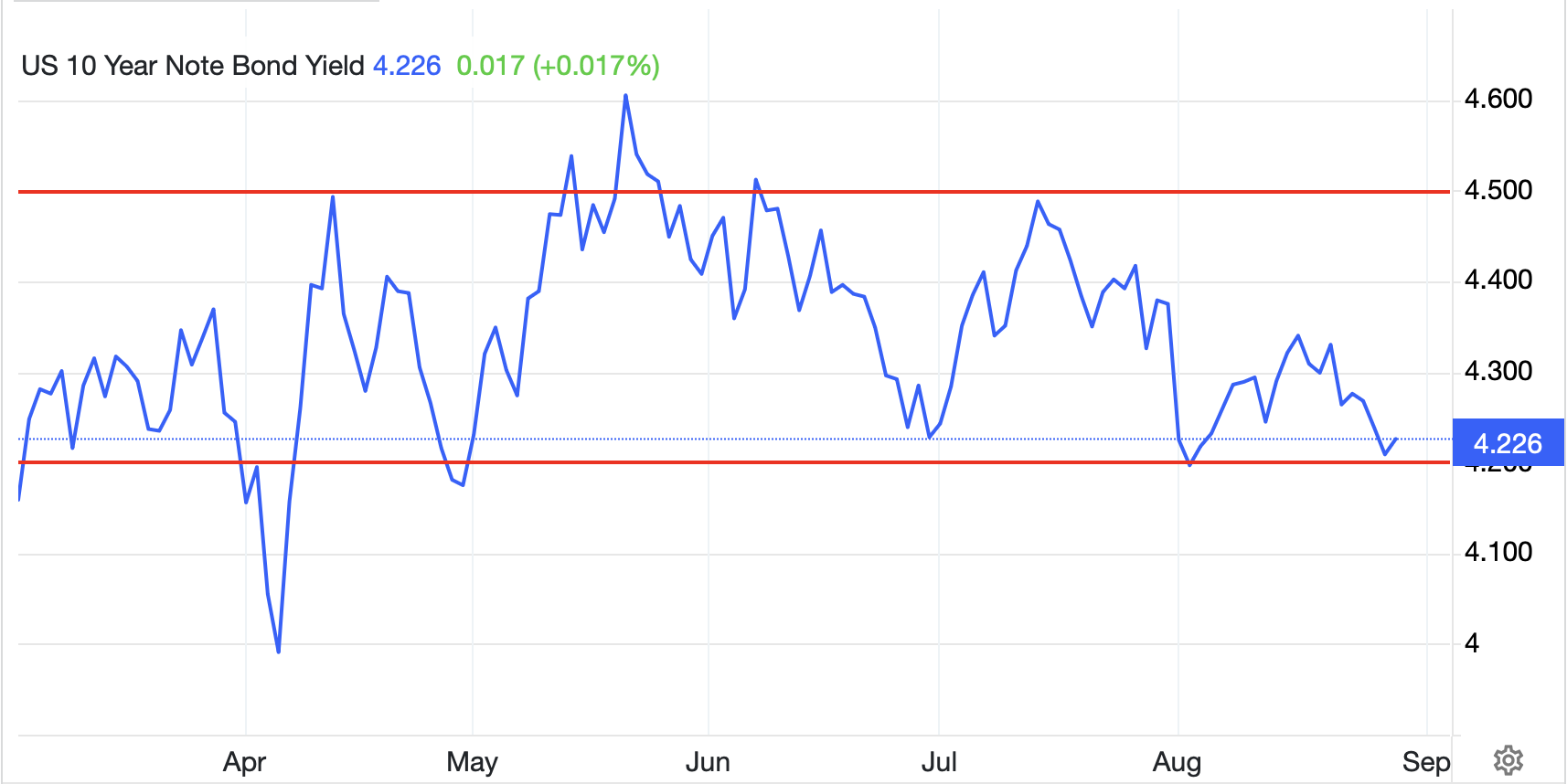
Treasury yields have also been largely range bound, and if anything, look like they are heading lower despite fears being flamed regarding massive amounts of issuance having trouble finding buyers as foreigners pull out of the market.  Maybe not.
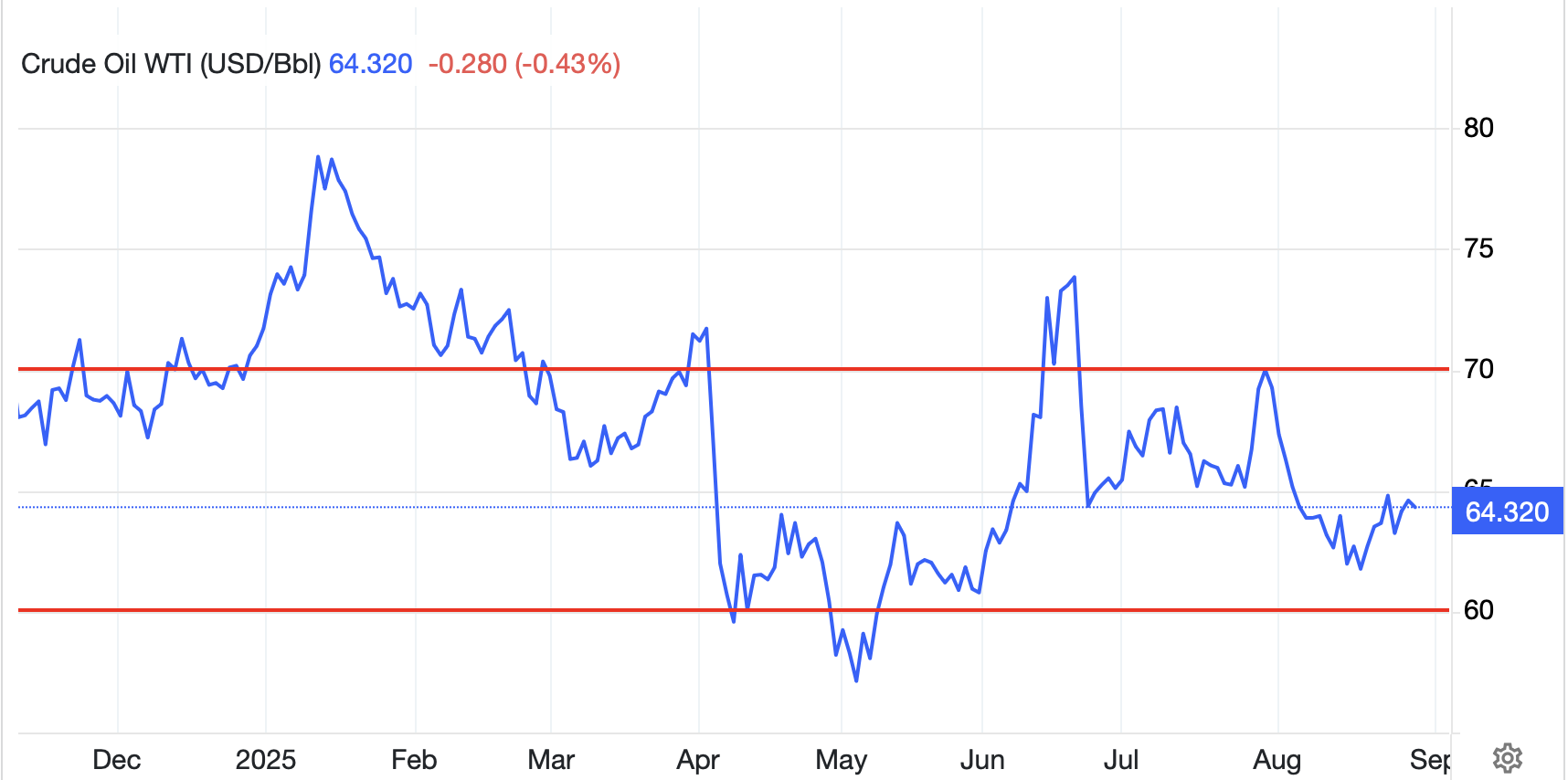
Crude has been the choppiest, and of course we did have the bombing of Iran’s nuclear facilities which inspired some fears of the beginning of a new Middle East war.  But Russia keeps pumping, OPEC put 2.2 million barrels per day of production back into the market and it appears, that for now, the market has found a balance.  I still see oil sliding over time, but for now, the range is king.

The barbarous relic has just started to pick up and broke above the $3400 range cap just two days ago but has not yet shown signs of a major breakout.  However, if the Fed cuts, especially if they go 50bps for some reason, I would look for this to change and gold (and all precious metals) to rally sharply as inflation re-enters the conversation.
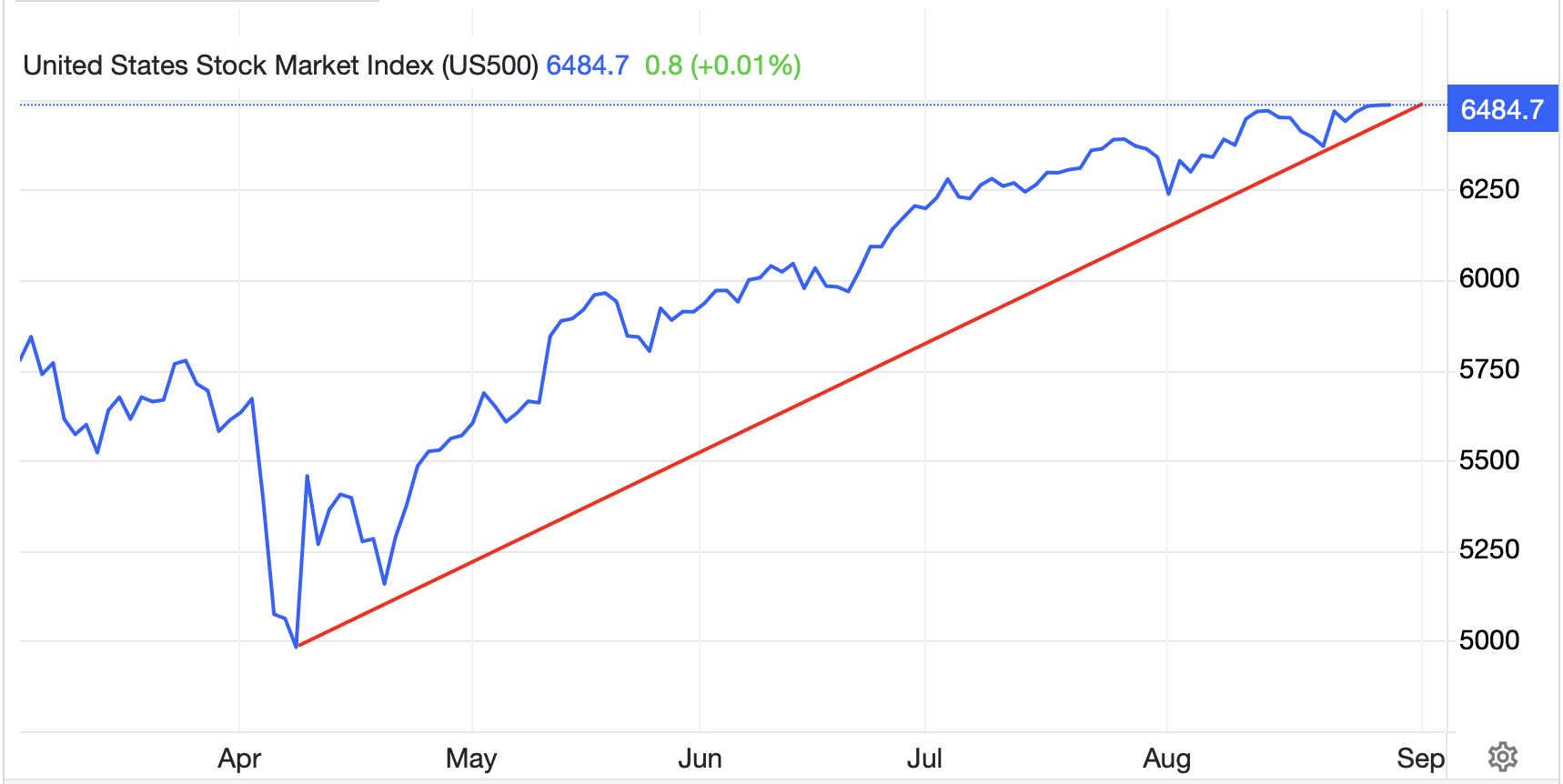
However, if we look at the US equity market, the picture is very different.  The only other market moving like this is USDTRY as the Turkish Lira steadily depreciates amid massive monetary expansion there with inflation rising sharply.  In fact, this is what many foresee for the dollar going forward, but even if the Fed cuts, it seems a bit of an exaggeration.
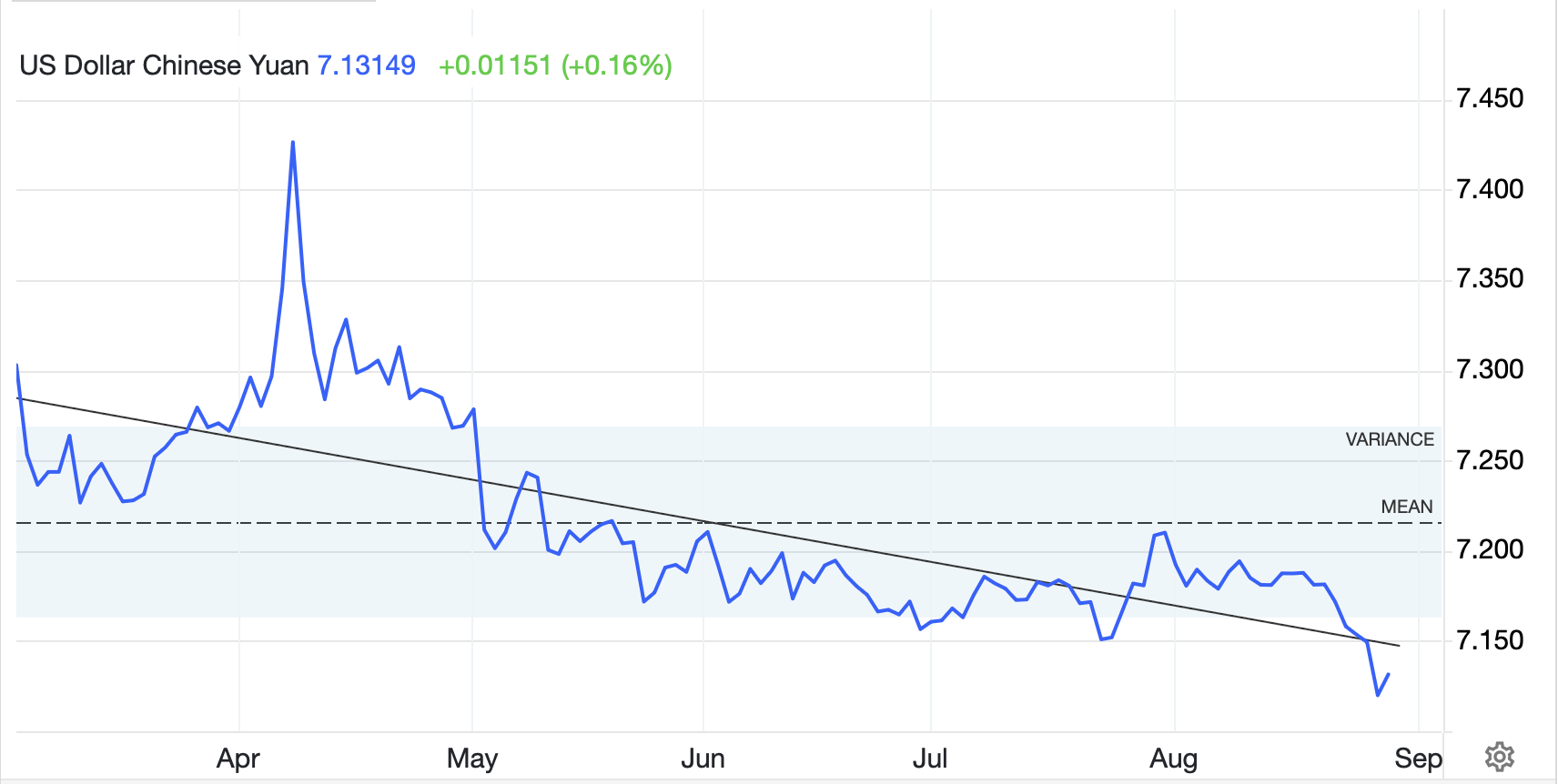
At this point I should note that there is one currency that is outperforming the dollar right now, the Chinese renminbi.  It appears that as trade negotiations are ongoing, the Chinese (and the Koreans amongst others) have gotten the message that they need to adjust their currency’s value if an agreement is going to be reached.  
To conclude, ranges remain the situation in most markets other than equities which continue to rally based on hopes and prayers that central bank spigots are never turned off.  With Labor Day on Monday, perhaps we will begin to see more real activity reenter the market as traders and investors come back from summer vacation.  But we will need a real catalyst to break those ranges, whether that is a shocking NFP number, a reescalation of Middle East conflict or something else (China laying siege to Taiwan?).  While I don’t know what that catalyst will be, history tells us something will come along, that’s for sure.

As we look to the NY opening, we do get more important data as follows: Personal Income (exp 0.4%); Personal Spending (0.5%); PCE (0.2%, 2.6% Y/Y); Core PCE (0.3%, 2.9% Y/Y); Goods Trade Balance (-$89.5B); Chicago PMI (46.0); and Michigan Sentiment (58.6).  There are no Fed speakers on the docket, but you can be sure that the Lisa Cook story will remain front and center, especially as I read that the judge initially selected to oversee the case was Ms Cook’s sorority sister, potentially a disqualifying factor that would cause her recusal and a new appointment. In fact, I suspect that story will have more traction than whatever the data says today.

As to the dollar, it is hard to get excited at this point.  If PCE data is softer than forecast, though, I would look for the dollar to sell off and the probability of that Fed funds rate cut to rise from its current 85%.

Good luck and have a good holiday weekend

Adf

A Fad that is Passing

Said central banks, stop your harassing
Inflation’s a fad that is passing
By next year we see
(Or by ‘Twenty-three)
More bonds you will all be amassing

But lately some central bank hawks
Explained that the recent price shocks
Could well last much longer
With wage growth much stronger
And that might not be good for stocks

As we walk in on this Columbus Day holiday, where US banks and the Federal Reserve are closed, although equity markets remain open, the most notable price movement has been in oil where WTI (+2.8%) has rallied to its highest price since October 2014 and now sits well above the $80/bbl level.  Fortunately, we’ve been constantly reassured that this is a temporary transitory phenomenon by numerous central bankers around the world, most frequently by Chairman Powell and ECB President Lagarde.  The claim continues to be that the only reason prices keep rising is as a result of constricted supply chains amid a massive recovery (due to their actions) from the Covid pandemic economy-wide shutdowns.  Soon enough, they also exhort, these supply chain snafus will have been corrected and then shortages of stuff will be a distant memory as we revert to the steady growth and low inflation economies we have all come to know and love.  It’s such a nice, neat story and I’m confident that they both tell themselves constantly that it is true.

Alas, reality has a nasty way of intruding upon a good storyline and recent energy price action is pretty clearly pointing to a different story than the one being peddled by Powell and Lagarde.  In fact, some of their own colleagues, as well as brethren from other key central banks like the BOE, are singing a different tune, one much more in line with reality.  For instance, last night, Klaas Knot, the Dutch Central bank president and ECB member warned investors not to underestimate inflation risks, “This risky behavior [excessive leverage] is only sustainable at low inflation and interest rates.  From the perspective of healthy risk management, it is also important to take other scenarios into consideration.”  I wonder what other scenarios he is considering.  Refreshingly, he followed that comment with this, “There is more in the inflation process we don’t understand than we do understand,” as humble a comment as one can ever expect from a central banker!

However, given Knot’s constant hawkish rhetoric, markets did not really react to his comments, as they were not terribly new.  Of more interest were comments from two separate BOE members, Governor Andrew Bailey and Michael Saunders, the most hawkish member of the MPC.  In both cases, they commented that the market was quite right to begin pricing in higher interest rates as inflation was becoming more problematic and could be “very damaging” if policymakers don’t act.  Traders did not need much prompting beyond this to reprice interest rate futures such that a first hike of 15 basis points (to 0.25%) is now expected by December, while by the end of 2022, the market is pricing a base rate of 0.75%, so two more hikes after that.  Given that UK CPI is forecast to hit 4.0% in Q4 this year, that still seems awfully far behind the curve, but then compared to the US, where inflation is already well above 4%, even on the PCE measure, and Fed Funds remained pegged at 0.00%-0.25%, that counts as tight policy.  When the comments were first published, the pound did jump as much as 0.45%, however, that has already largely faded and as I type, the pound is only 0.1% higher on the day.

Perhaps these are the first real signs that the central bank community is recognizing inflation may not be as transitory as their models (and political needs) had indicated was likely (and necessary) respectively.  Instead, its persistence is becoming more evident, even to them, and calls for tighter monetary policy to address inflation are likely to grow.  Of course, given the extraordinary levels of leverage in the global monetary system, higher rates are going to be very difficult to achieve without an ensuing dramatic decline in asset prices.  This is the corner into which the Fed (and the ECB) have painted themselves.  (As I’ve said before, if I were Chairman Powell, I would be happy to step down allowing my successor to deal with the mess that is surely coming.)  Even if the Fed does begin to taper QE purchases, they will remain behind the curve for a very long time, and those vaunted ‘tools’, which they keep describing as available, will likely not be used to full effect.  Not only is inflation going to continue to rise, but central banks are going to continue to remain behind the curve for a long time to come.  Be prepared.

Ok, with that in mind, let’s look at markets overnight.  Equities in Asia had a pretty good session, with the Nikkei (+1.6%) and the Hang Seng (+2.0%) both performing well, although Shanghai was unchanged on the day.  Europe (DAX -0.5%, CAC -0.4%), on the other hand, is a little less optimistic.  The outlier here is the UK (FTSE 100 +0.15%) where it seems investors are happy to hear of a central bank willing to address incipient inflation.  US futures are all pointing lower, however, led by the NASDAQ (-0.7%) but -0.4% losses elsewhere.

The Treasury bond market is closed in the US today, but in Europe, the trend is clear, higher yields across the board, which is exactly what we saw in Asia as well.  So, Bunds (+3.5bps), OATs (+3.0bps) and Gilts (+5.0bps) are all selling off sharply with similar movement seen across the continent.  Asia, too saw sharp declines in bond prices with Australia (+8.0bps) leading the way but even China (+6.0bps) falling sharply despite ordinary efforts to prevent volatility in that market.

In the commodity space, while oil is leading the way, pretty much everything except gold is higher with NatGas (+3.8%), copper (+1.4%) aluminum (+2.3%) and the agricultural products all firmer on the day.  Remember this, the longer food and energy prices continue to climb, the more likely those price rises bleed into “core” inflation and drive that higher as well.

Turning to the dollar, the biggest loser today is JPY (-0.6%) as the widening yield differential in favor of the dollar has reached a point where Japanese investors have started to move money more actively into USD investments on an unhedged basis.  At this point, there doesn’t seem to be much reason for JPY to rally, so a test of 115 seems to be far more likely in the near term.  After that, we shall see.  On the plus side, AUD (+0.5%) has been the biggest beneficiary of the commodity rally while surprisingly, neither NOK nor CAD, both unchanged on the day, have seen a boost from the much higher oil prices.

In the EMG bloc, INR (-0.5%) and PHP (-0.4%) are the laggards of note with RUB (+0.3%) the only notable gainer.  Oil is obviously supporting the ruble while the rupee and peso both suffer on the same story, as both India and the Philippines are major oil importers.

On the data front, nothing is released today due to the holiday, but we get some important things this week:

Tuesday NFIB Small Biz Optimism 99.5
JOLTS Job Openings 10.934M
Wednesday CPI 0.3% (5.3% Y/Y)
-ex food & energy 0.2% (4.1% Y/Y)
FOMC Minutes
Thursday Initial Claims 320K
Continuing Claims 2686K
PPI 0.6% (8.7% Y/Y)
-ex food & energy 0.5% (7.1% Y/Y)
Friday Empire Manufacturing 25.0
Retail Sales -0.2%
-ex autos 0.5%
Business Inventories 0.6%
Michigan Sentiment 73.5

Source: Bloomberg

Aside from critical CPI and Retail Sales data, we hear from ten different Fed speakers across more than a dozen events this week, including Governor Brainerd on Wednesday, someone we should be listening to very closely given the rising probability she is named the new Chair.

Right now, the dollar is consolidating its recent gains, but showing no signs of giving any of them back.  I expect that we will see another leg higher in the near future as there is no evidence that either inflation or US yields are going to decline soon.  And right now, I think those are the drivers.  At some point, inflation may become detrimental to the dollar, but for now, buy dollars on dips.

Good luck and stay safe
Adf

More Price Inflation

The story of civilization
Is growth due to carbonization
But fears about warming
Have started transforming
Some policies ‘cross most each nation

Alas, despite recent fixation
On policy coordination
Alternatives to
Nat Gas are too few
Resulting in more price inflation

Perhaps there is no greater irony (at least currently) than the fact that governments around the world must secretly be praying for a very warm winter as their policies designed to forestall global warming have resulted in a growing shortage of fuels for heating and transportation.  Evergrande has become a passé discussion point as the overwhelming consensus is that the Chinese government will not allow things to get out of hand.  (I hope they’re right!)  This has allowed the market to turn its attention to other issues with the new number one concern the rapidly rising price of natural gas.  One of the top stories over the weekend has been the shuttering of petrol stations in the UK as they simply ran out of gasoline to pump.  Meanwhile, Nat Gas prices have been climbing steadily and are now $5.35/mmBTU in the US, up 4.2% today and 110% YTD.  As to the Europeans, they would kill for gas that cheap as it is currently running 3x that, above $16.00/mmBTU.

Apparently, policies designed to reduce the production of fossil fuels have effectively reduced fossil fuel production.  At the same time, greater reliance on less stable energy sources, like wind and solar power, have resulted in insufficient overall energy production.  While during the initial stages of Covid shutdowns, when economic activity cratered, this didn’t pose any problems, now that economies around the world are reopening with substantial pent-up demand for various goods and services, it has become increasingly clear that well-intentioned policies have resulted in dramatically bad outcomes.  While Europe appears to be the epicenter of this problem, it is being felt worldwide and the result is that real economic activity will decline across the board.  Hand-in-hand with that outcome will be even more price pressures higher throughout the world.  Policymakers, especially central bankers, will have an increasingly difficult time addressing these issues with their available toolkits.  After all, central banks cannot print natural gas, only more money to chase after the limited amount available.

The important question for market observers is, how will rising energy prices impact financial markets?  It appears that the first impacts are being felt in the bond markets, where in the wake of the FOMC meeting last week, yields have been climbing steadily around the world.  In the first instance, the belief is that starting in November, the Fed will begin reducing its QE purchases, which will lead to higher yields from the belly to the back of the curve.  But as we continue to see yields climb (Treasuries +3.3bps today), you can be sure the rationale will include rising inflation.  After all, our textbooks all taught us that higher inflation expectations lead to higher yields.

The problem for every government around the world, given pretty much all of them are massively overindebted, is that higher yields are unaffordable.  Consider that, as of the end of 2020, the global government debt / GDP ratio was 105%, while the total debt /GDP ratio was 356% (according to Axios).  That is not an environment into which central banks can blithely raise interest rates to address inflation in the manner then Fed Chair Volcker did in the late 1970’s. In fact, it is far more likely they will do what they can to prevent interest rates from rising too high.  This is the reason I continue to believe that while the Fed may begin to taper at some point, tapering will not last very long.  They simply cannot afford it.  So, while bond markets around the world are under pressure today (Bunds +1.8bps, OATs +2.8bps, Gilts +2.9bps), and by rights should have significant room to decline, this movement will almost certainly be capped.

Equity markets, on the other hand, have room to run somewhat further, as despite both significant overvaluation by virtually every traditional metric, as well as record high margin debt, in an inflationary environment, a claim on real assets is better than a claim on ‘paper’ assets like bonds.  While Asian markets (Nikkei 0.0%, Hang Seng +0.1%, Shanghai -0.8%) have not been amused by the rise in energy prices, European bourses are behaving far better (DAX +0.6%, CAC +0.4%, FTSE 100 +0.2%).  As an aside, part of the German story is clearly the election, where the Social Democrats appear to have won a small plurality of seats, but where there is no obvious coalition to be formed to run the country.  It appears Germany’s role on the global stage will be interrupted as the nation tries to determine what it wants to do domestically over the next few weeks/months.  In the meantime, early session strength in the US futures markets has faded away with NASDAQ futures (-0.4%) now leading the way lower.

Turning to the key driver of markets today, commodity prices, we see oil (WTI +1.25%) continuing its recent rally, and pushing back to $75/bbl.  We’ve already discussed Nat Gas and generally all energy prices are higher.  But this is not a broad-based commodity rally, as we are seeing weakness throughout the metals complex (Au -0.1%, Cu -0.3%, Al -0.2% and Sn -4.8%).  Agricultural prices are slightly softer as well.  It seems that the idea energy will cost more is having a negative impact everywhere.

Finally, the dollar is a beneficiary of this price action on the basis of a few threads.  First, given energy is priced in dollars, they remain in demand given higher prices.  Second, the energy situation in the US is far less problematic than elsewhere in the world, thus on a relative basis, this is a more attractive place to hold assets.  So, in the G10 we see SEK (-0.5%) as the laggard, followed by the traditional havens (CHF -0.25%, JPY -0.2%), as the dollar seems to be showing off its haven bona fides today. In the EMG bloc, THB (-0.8%) leads the way lower followed by ZAR (-0.7%) and PHP (-0.7%), with other currencies mostly softer and only TRY (+0.5%) showing any strength on the day.  The baht has suffered on traditional macro issues with concerns continuing to grow regarding its current account status, with the Philippines seeing the same issues.  Rand appears to have reacted to the metals complex.  As to TRY, part of this is clearly a rebound from an extremely weak run last week, and part may be attributed to news of a Nat Gas find in the Black Sea which is forecast to be able to provide up to one-third of Turkey’s requirements in a few years.

As it is the last week of the month, we do get some interesting data, although payrolls are not released until October 8th.

Today Durable Goods 0.6%
-ex Transportation 0.5%
Tuesday Case Shiller Home Prices 20.0%
Consumer Confidence 115.0
Thursday Initial Claims 330K
Continuing Claims 2805K
GDP Q2 6.6%
Chicago PMI 65.0
Friday Personal Income 0.2%
Personal Spending 0.6%
Core PCE 0.2% (3.5% Y/Y)
Michigan Sentiment 71.0
ISM Manufacturing 59.5
ISM Prices Paid 77.5

Source: Bloomberg

Naturally, all eyes will be on Friday’s PCE data as the Fed will want to be able to show that price pressures are moderating, hence their transitory story is correct (it’s not.) But I cannot help but see the House Price index looking at a 20.0% rise in the past twelve months and think about how the Fed’s inflation measures just don’t seem to capture reality.

Rising yields in the US seem to be beginning to attract international investors, specifically Japanese investors as USDJPY has been moving steadily higher over the past two weeks.  The YTD high has been 111.66, not far from current levels.  Watch that for a potential breakout and perhaps, the beginning of a sharp move higher in the dollar.

Good luck and stay safe
Adf