
It's not just the 'economy's heat
Why we're at the edge of our seat
But also, Iran
Where this all began
That's left traders feeling downbeat

Thus, crude oil's back in the game
As being the center of blame
How high can crude rise
Til bonds paralyze
Activity, snuffing that flame
Bond yields remain topic A this morning as they continue to climb around the world. There are many opinions as to why that is happening but I think it boils down to either 1) increasing deficit spending by governments around the world resulting in significant increases in supply thus driving yields higher, or 2) rising oil prices after the US-Iran conflict has seen an increase in military action on both sides thus driving the inflation narrative further. Arguably, it is a combination of both these things.
Much has been written that these are the highest yields since 2011 or 2008 (or 1996 in Japan’s case) and how that makes them, somehow, more dangerous. Or at least that is the implication. When it comes to bond yields though, I always like to maintain perspective by looking at the long-term history of 10-year yields. If you look at the chart below from FRED, I think it fair to ask the question, what is the aberration, current yields at 4.8% or yields at 2.5% or lower seen post the GFC?
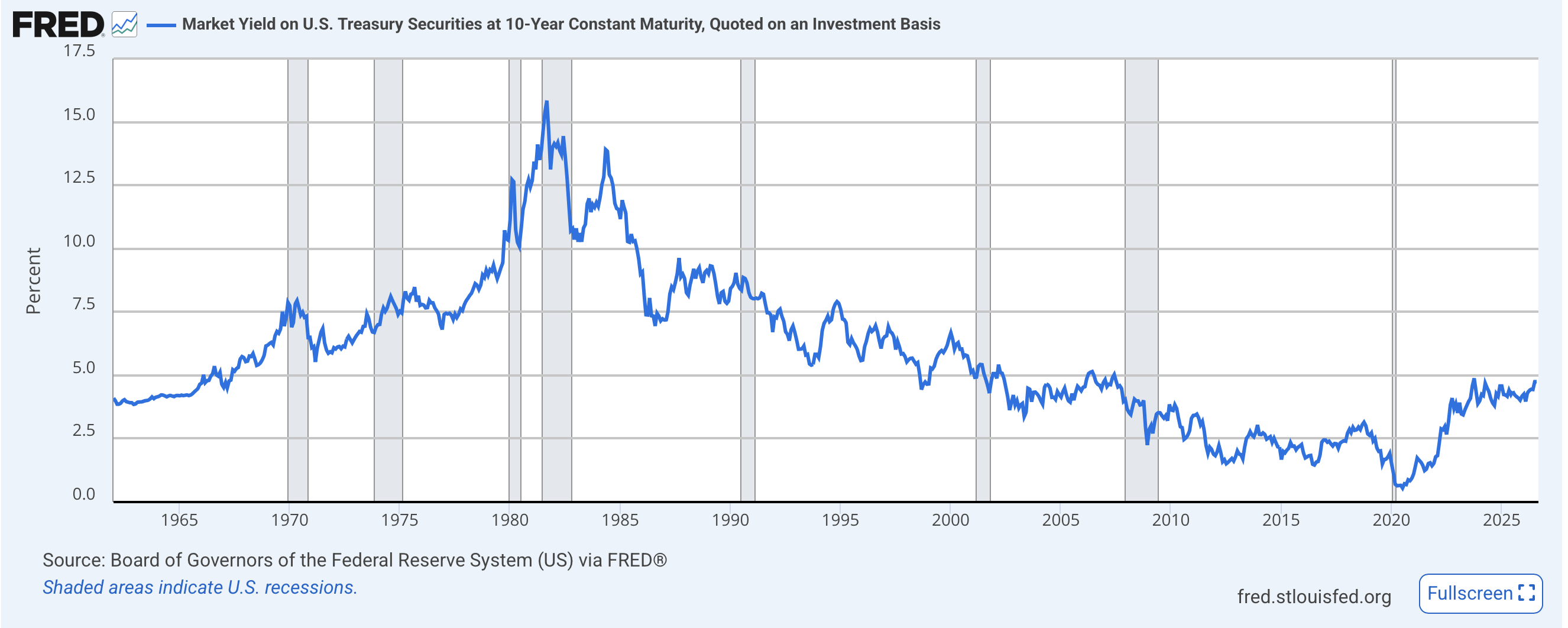
As I have written before, the average 10-year yield over the past 60 years is 5.81%, still 100bps higher than current levels. I understand that debt outstanding has grown dramatically over the years, but it’s not like it wasn’t growing during Covid. In fact, it was exploding higher then too. Ultimately, the original sin is excess government spending relative to the economy’s overall size and, unfortunately, the underlying thesis of RIH is that is not going to change. To me the question becomes, how does one prepare for the impacts of this policy. And remember, this is not a US only policy, it is now the default policy of every government in the world, save perhaps Switzerland.
How can it get fixed? That is the $64 trillion question and there is no easy answer. If governments around the world reduced their spending, especially on things that add no true economic value (subsidies for green energy are huge and immediately come to mind), it would help but not solve the problem. Entitlement spending is the major expense everywhere in the G10 and as those nations age demographically, that will only get worse.
I haven’t discussed the 4th Turning in a while, but this is all of a piece with that scenario, massive institutional changes as old institutions, be they corporations, central banks, government structures or educational organizations, will be redesigned for the new age. Perhaps that is the promise of AI, a “voice” that can analyze history and help guide future decisions. Alas, mankind is mankind, and I don’t foresee that changing so whatever comes out on the other side, it, too, will only have four generations of life!
Was it hint or threat?
Could Ueda hike fifty?
No breath holding, please
The other story of note this morning was that BOJ Board Member Takata, a known hawk, gave a speech and indicated that the BOJ could surprise with a 50bp hike this month, or perhaps hike two months in a row rather than their current once every six months cadence. Bloomberg’s article was succinct. This story did have a modest impact on the yen (+0.25%) as you can see in the chart below.
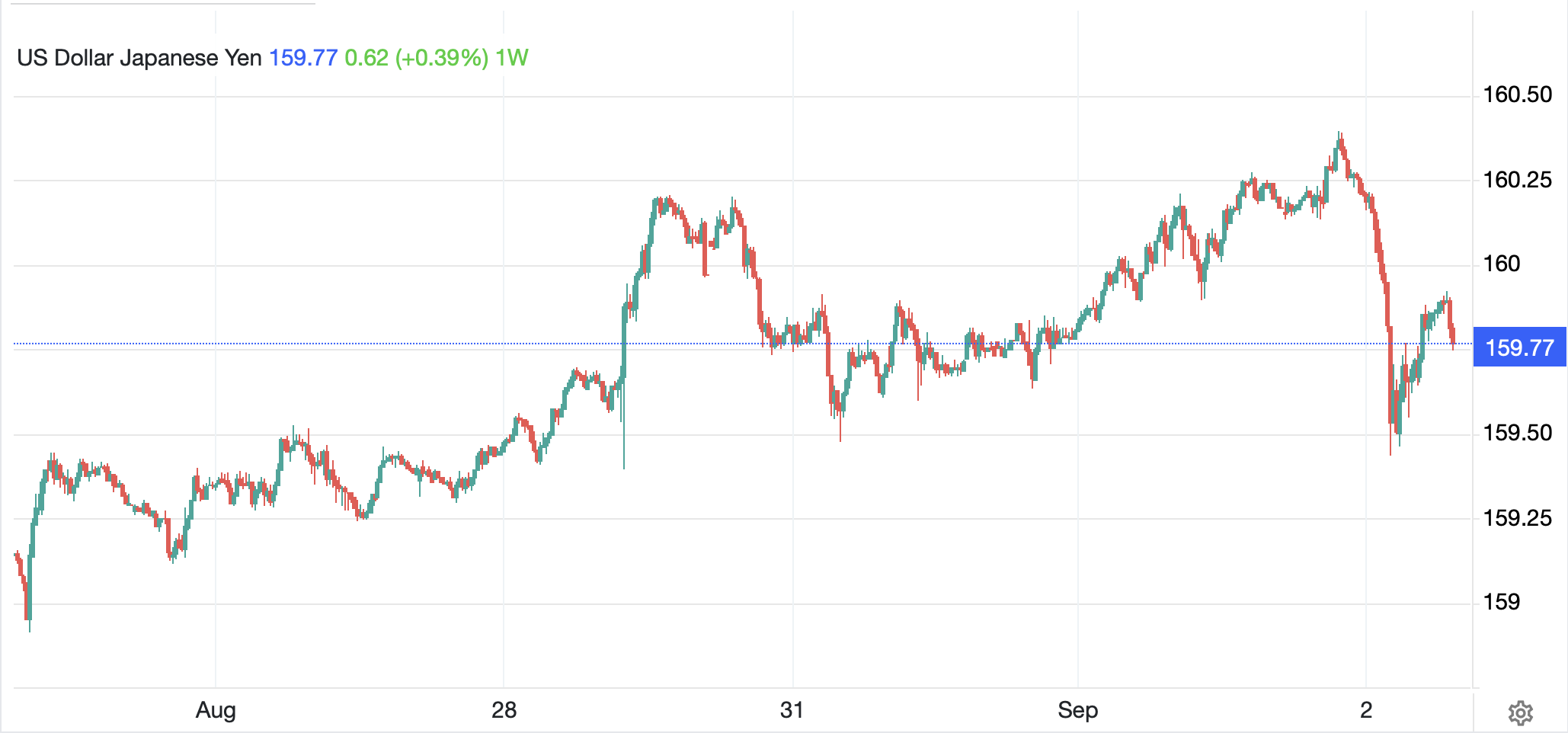
Source: tradingeconomics.com
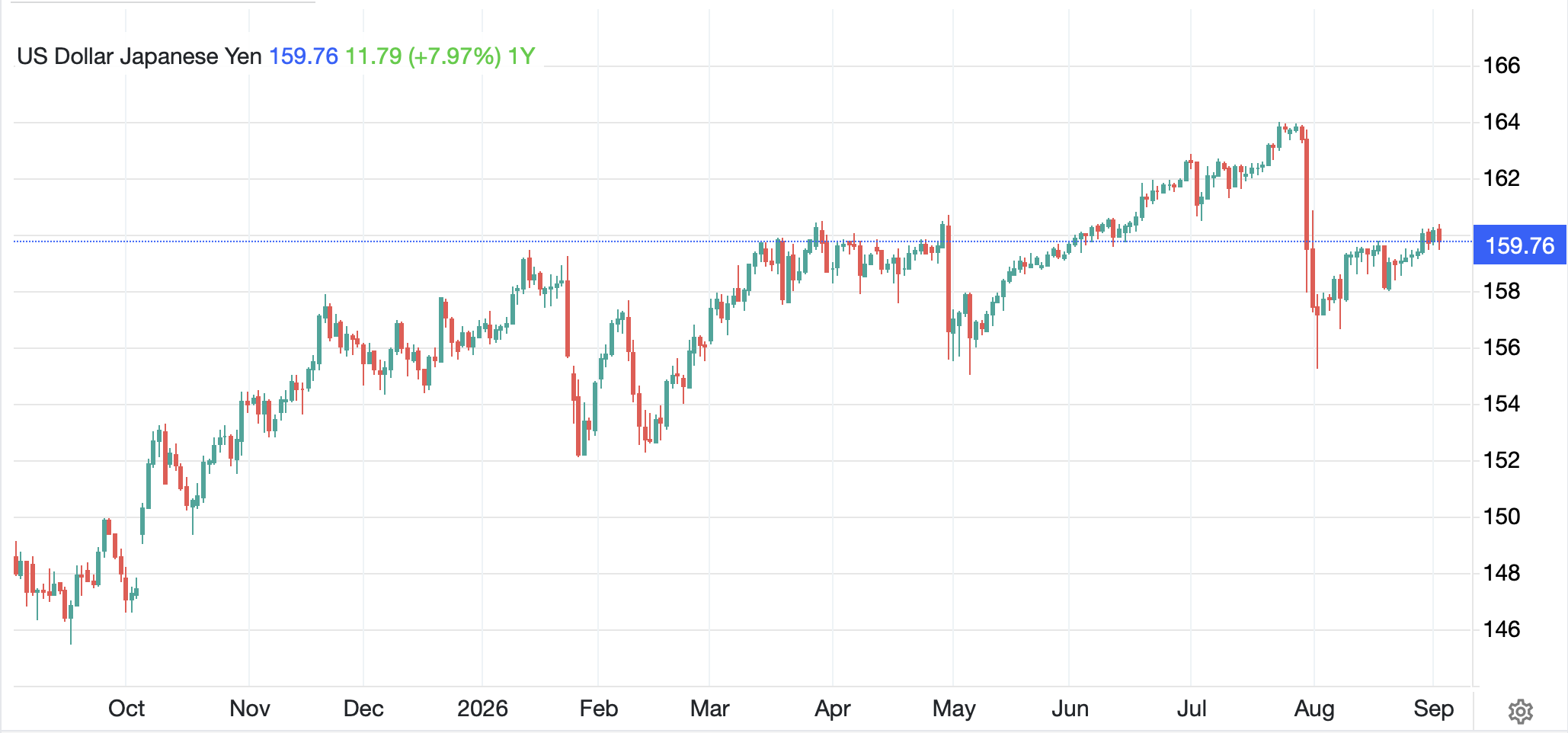
But if we step back from the 1-week view above to the movement over the past year, as per the below chart, it doesn’t appear to have had a significant impact.
Source: tradingeconomics.com
The post-intervention pattern remains perfectly intact. However, it did help increase the probability of further rate hikes by the BOJ as you can see in the rateprobability.com chart below. The blue line is the current market compared to previous readings, with the market now expecting a total of 100bps of hikes during the next year.
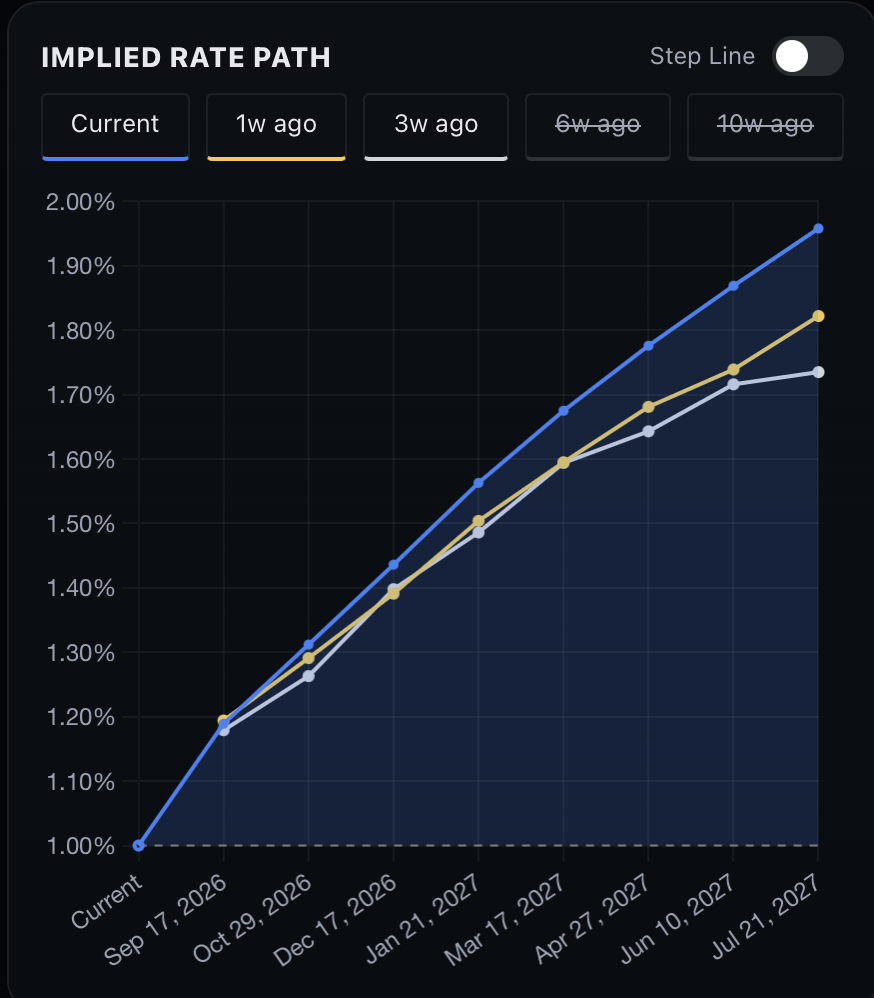
Alas, that did not help the JGB market, where yields remain at the 3.0% level, although they did not rise further last night. Speaking of bonds, Treasury yields, which climbed 3bps yesterday, are unchanged this morning but European sovereign yields are all higher by between 3bps and 5bps, with France the worst case.
Looking at equity markets, red is the color of the day as every major market either declined last night or is in the process of doing so as I type as per the below Bloomberg screenshot.
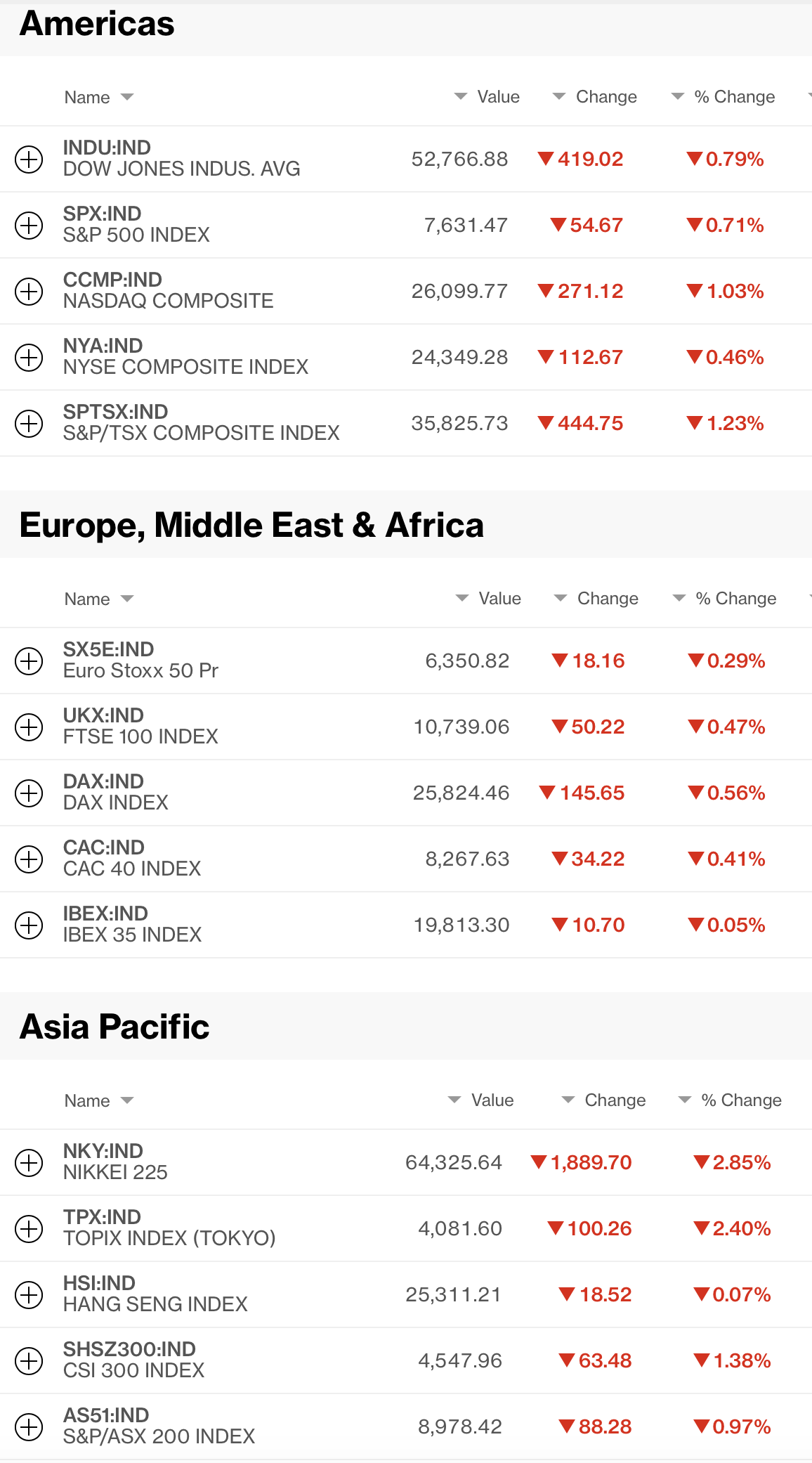
Certainly, there is a great deal of angst in equity markets right now, but when I looked at the S&P 500, it is still just 2.5% off its all-time highs from the middle of August. And this morning, while the NASDAQ futures are lower by -0.7%, the other two indices are unchanged as we await this morning’s ADP data (exp 47K) and this afternoon’s Beige Book. Higher yields are always a struggle for equity markets, but there is no collapse yet, that’s for sure.
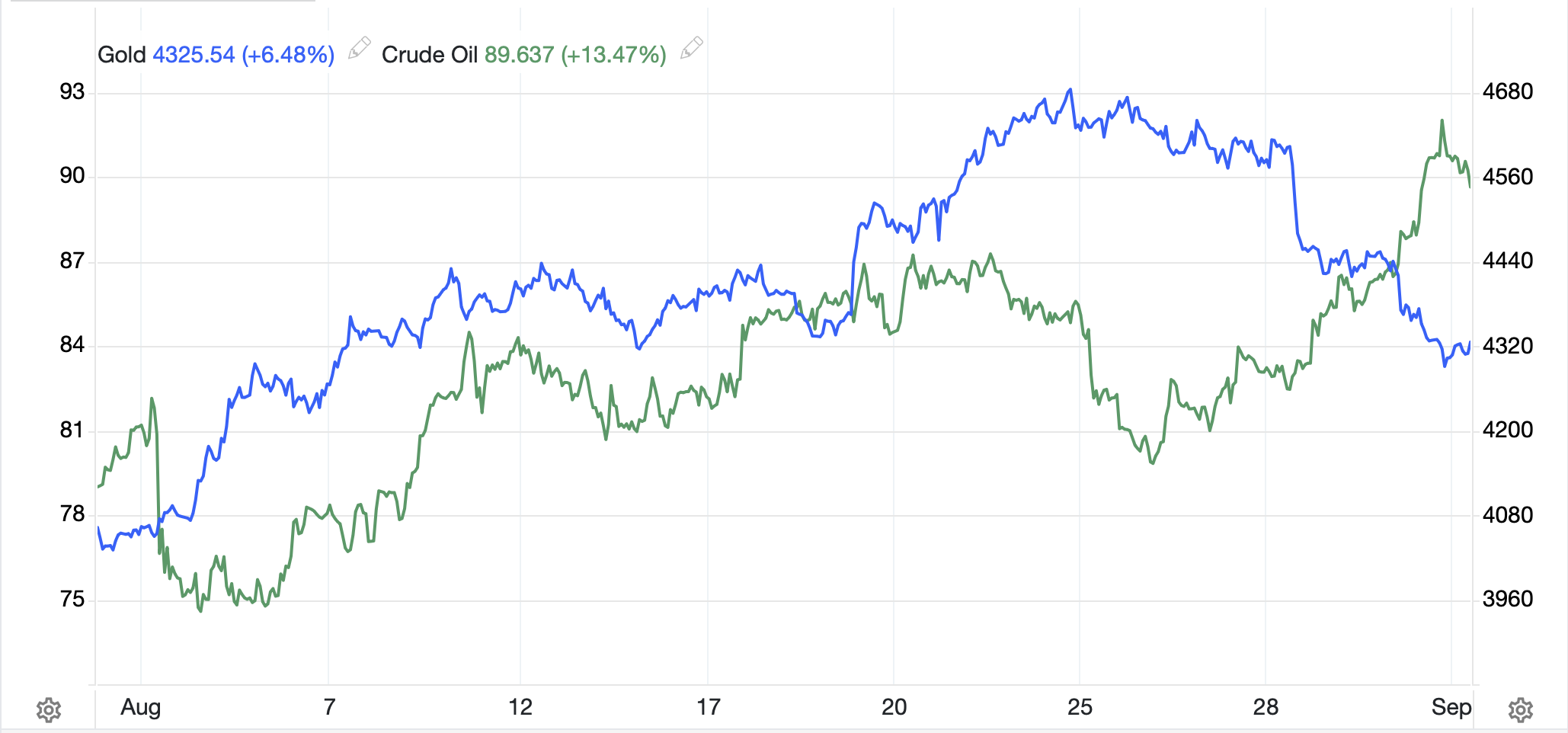
In the commodity markets, oil (-0.7%) has backed off the highs from yesterday and has traded back below $90/bbl, although that remains far higher than just a few weeks ago. The escalation of fighting has certainly got traders nervous. As to the metals markets, while they have been getting crushed the last few days, this morning they are essentially unchanged, perhaps consolidating after that rough ride. You may remember there had been a strong negative correlation between oil and gold for a while which seemed to dissipate during the summer when things in the Gulf settled down. Well, as you can see in the chart below, that negative correlation is back in spades for the past two weeks. We will have to see how long that lasts, as historically, the two traded together more often than not.
Source: tradingeconomics.com
Finally, the dollar is creeping higher again this morning with the DXY (+0.1%) a pretty good proxy of the entire market with just a few exceptions. We already noted the yen but NZD (-1.2%) fell sharply after the RBNZ raised rates by 25bps, as expected, but sounded more dovish in their comments afterwards. As it happens, that helped the NZ stock market buck the negative trend as well. The other outlier was KRW (+0.8%) which continues to rally strongly on positive inflows and positive economic news. Last night, inflation data was better than expected, which helped the currency, rather than set it up for a rate hike.
And that’s really it today. We also get Factory Orders (0.6%, 0.2% ex Transport) and the EIA oil inventories. ADP could be interesting, but all eyes remain on Friday’s NFP on the data front. And of course, who knows what will happen in the Gulf.
There will be no poetry tomorrow as we show GCH Nubia’s Take Your Breath Away on the road to the Nationals next month.

Good luck
Adf
 fxpoetry