
No matter the nation you view
Its bondholders now see to rue
Their previous buys
And under that guise
Won't buy and bonds that are new

So, yields have been rising with haste
Though currencies have not debased
But markets this hated
Have often created
Reversals, which many then chased
Global Bond Yields Surge as Oil Prices Fuel Inflation Worries
The above article in the WSJ this morning captures the current zeitgeist in markets and seeks to explain why everything has turned bad. Certainly, the rebound in oil prices (+2.5%) is putting pressure on economies around the world, but so, too, are the unrestricted spending plans seen throughout the G10, and frankly across most of the planet. My take is that ‘run it hot’ (RIH) has become the economic strategy around the world. Perhaps the only outlier here is China, but even that is not really true, they are just running it hot differently. While most governments are responsive to their peoplevoters, Xi Jinping has demonstrated time and again he doesn’t really care about that. Rather he has his strategic goals of global domination and is pushing his economy to achieve that.
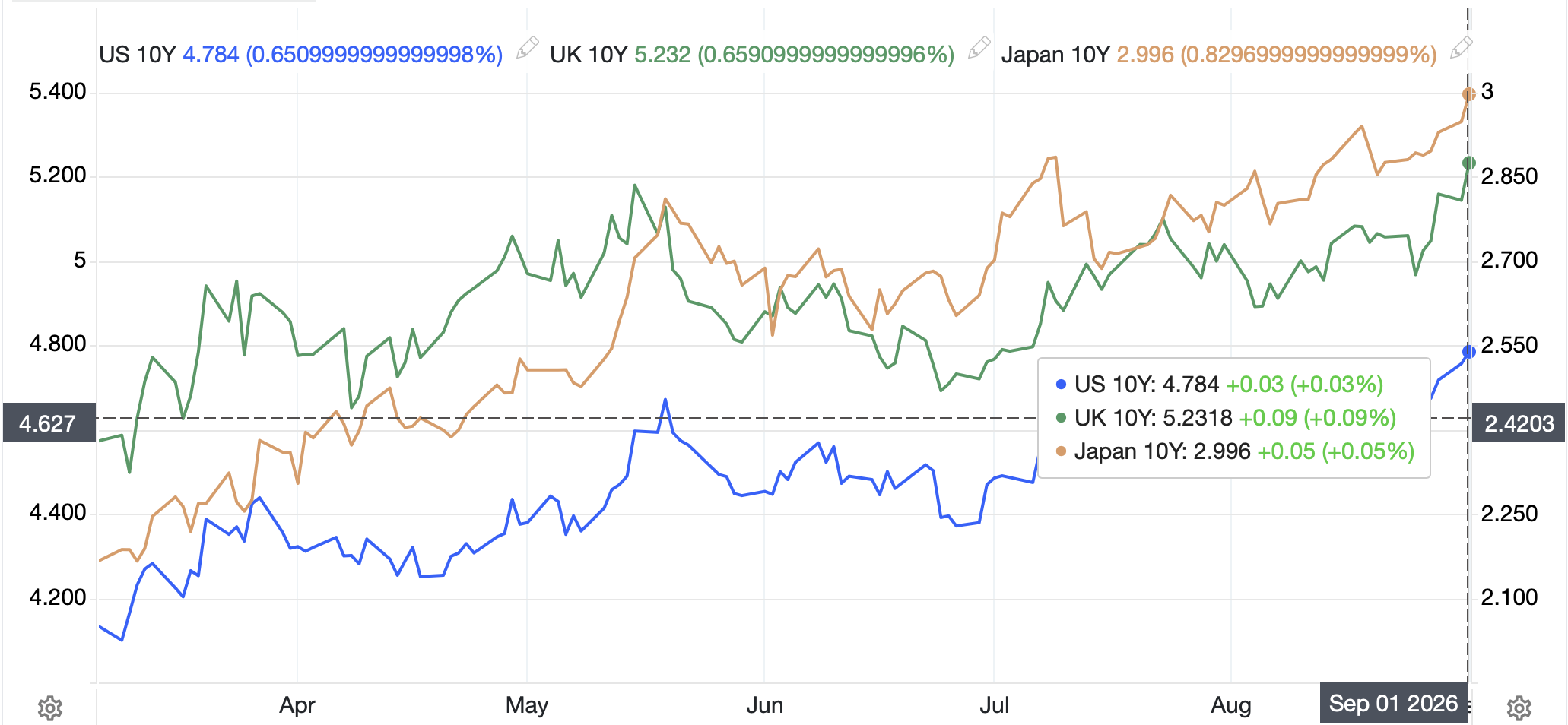
The upshot is that bond yields are rising and as you can see in the chart below, it is uniform, this is not just a US phenomenon. In fact, much ink has spilled that 10-year JGB yields have traded to 3.0%, their highest level in 30 years.
Source: tradingeconomics.com
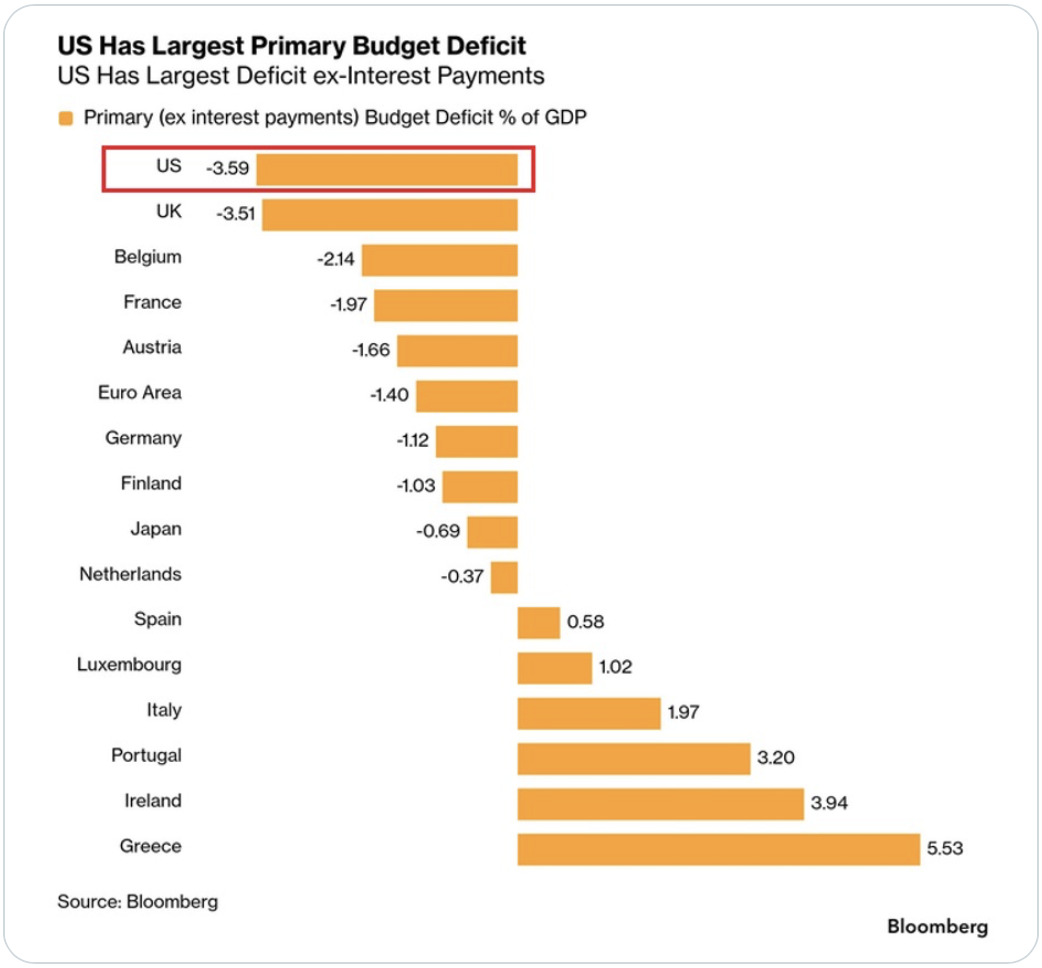
Now, as I said at the top, oil prices are clearly one of the pressure points as there are fears it will feed into higher inflation, thus investors are demanding higher yields. And the other big story, which in my view is more concerning, is that governments are running increasingly larger budget deficits as the guns AND butter approach has become de rigueur in polite circles, or at least political ones. In fact, the concern is that governments are increasingly running primary budget deficits (spending less interest payments) which is why debt loads are growing so rapidly.
Source: @KobeissiLetter
And this leads to the RIH theory. If a country can grow its nominal GDP fast enough, then the denominator in the debt/GDP ratio will rise more quickly than the numerator thus reducing that ratio and implying a healthier fiscal outlook. Now, nominal GDP is the sum of real GDP, the number that is reported, plus inflation and that sum can be any combination. For instance, a nominal GDP growth of 7% could easily be 2% real GDP and 5% inflation, or vice versa. In the RIH scenario the typical outcome is that wages rise, corporate earnings rise, stock market values rise…and prices rise. The last point being the key political question.
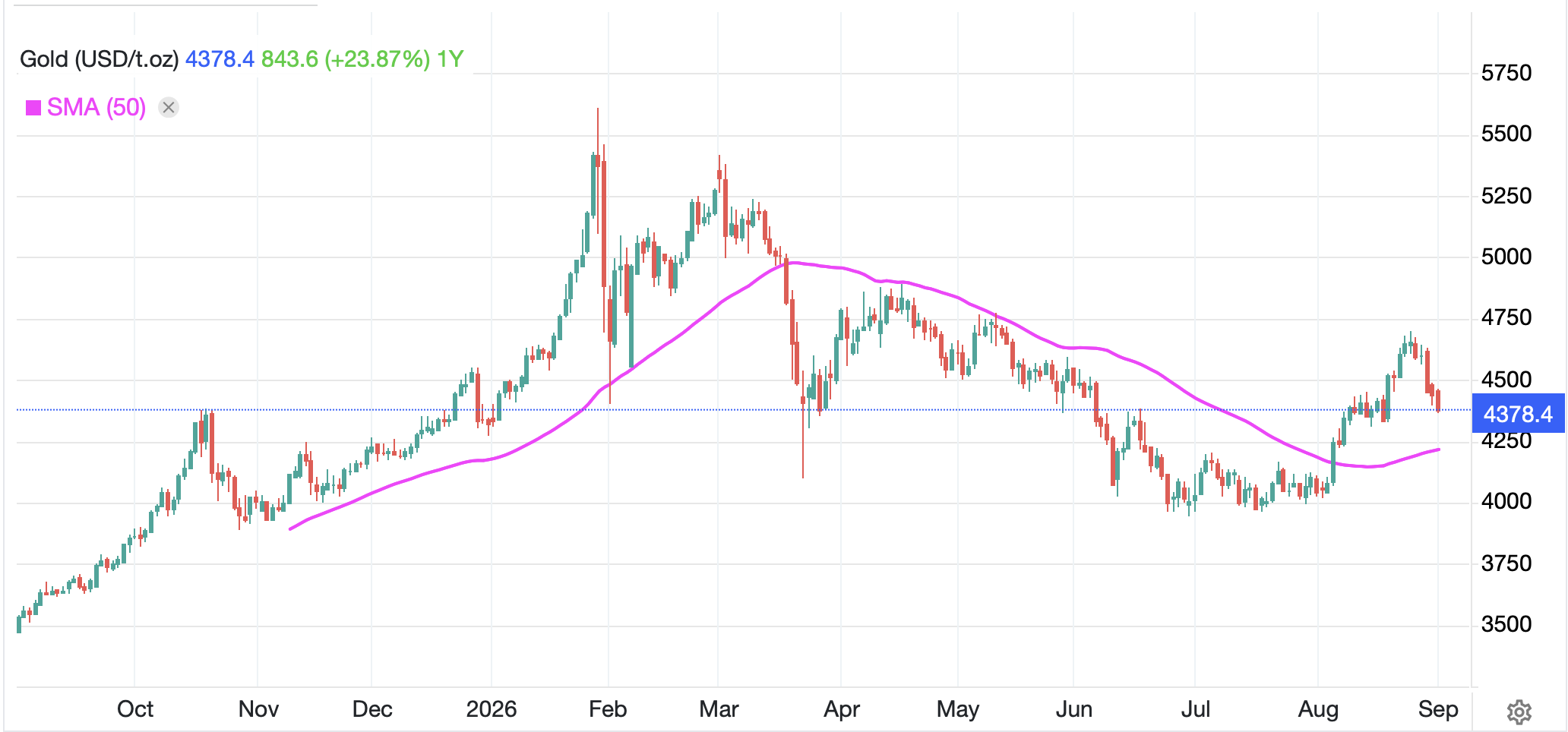
Which takes us back to the bond market and a few questions I have. First an observation. In the old days (Greenspan era) a rule of thumb in the bond market was the 10-year yield should approximate nominal GDP growth as a stable base. I mention that because I am confused by the bond market reaction given the near universal view of Chairman Warsh’s speech on Friday was that he was hawkish and that rate hikes were coming. But if that is the case, and the Fed is going to more aggressively address inflation, then why are bonds selling off? Second, regarding the debasement trade, if bonds are selling off because of concerns over massive debt issuance and the assumed result that the dollar, and all currencies, are going to lose purchasing power, why is gold (-1.4%) selling off so aggressively? It strikes me that gold should be flying higher on the view that inflation is going to rise, but then, I’m just a poet. I guess one could make the technical argument that it is merely correcting its recent strong rally and it remains far above its 50-day moving average as per the below chart.
Source: tradingeconomics.com
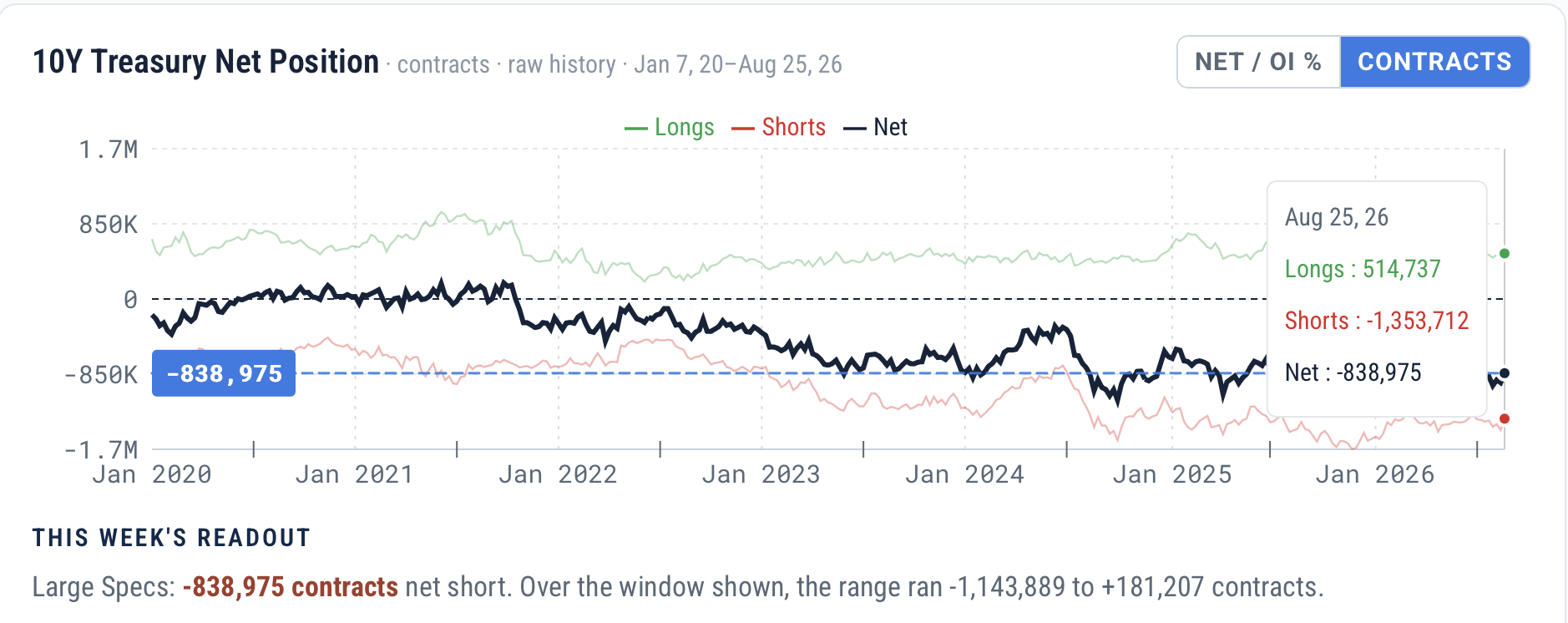
I wish I had the answers here, but I don’t. However, something is amiss. If the Fed was so hawkish, the bond market would not be aggressively selling off. If the Fed was not hawkish, then the sell-off makes sense, but 90% of the punditry was wrong in their analysis of Warsh’s speech. (My guess is they see that as a bigger problem.) One thing I do know, though, is that the bond market is quite bearish right now with nary a positive word to be found. There is still a huge net short position in the bond futures market, as per the below chart.
Source: cotsignal.com
Here’s the thing about markets, at least in my experience. Markets tend to seek out the ‘pain’ trade, the trade that will hurt the most participants most significantly. As well, bull markets begin when all investors express uniform hatred of a product, like bonds right now. Combining those two things leads me to believe that we could well be setting up for a significant bond market rally. Just beware.
In the meantime, a quick tour of markets overnight shows negativity everywhere. After yesterday’s declines in the US session, Asia saw mostly red numbers (Tokyo -0.15%, China -0.3%, HK -0.9%, Malaysia -1.5%, Singapore -0.8%) although Taiwan (+1.8%) and Korea (+0.25%) bucked the trend on some tech support which is also why the NASDAQ fell the least yesterday. As to Europe, as you can see in the below screenshot from Bloomberg, it is universally red.
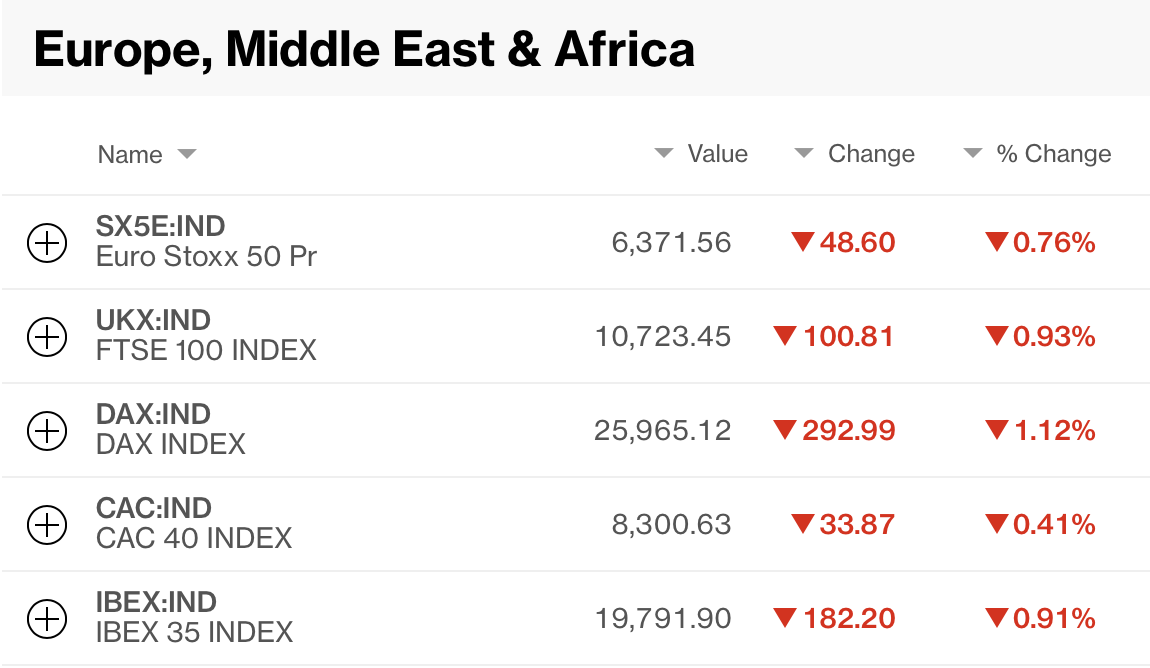
Lastly, US futures are under the gun this morning, down -0.5% except for the NASDAQ which is reversing yesterday’s outperformance and lower by -1.3% at this hour (7:20)
We’ve already discussed bonds, but this Bloomberg screenshot is worthwhile, I think.
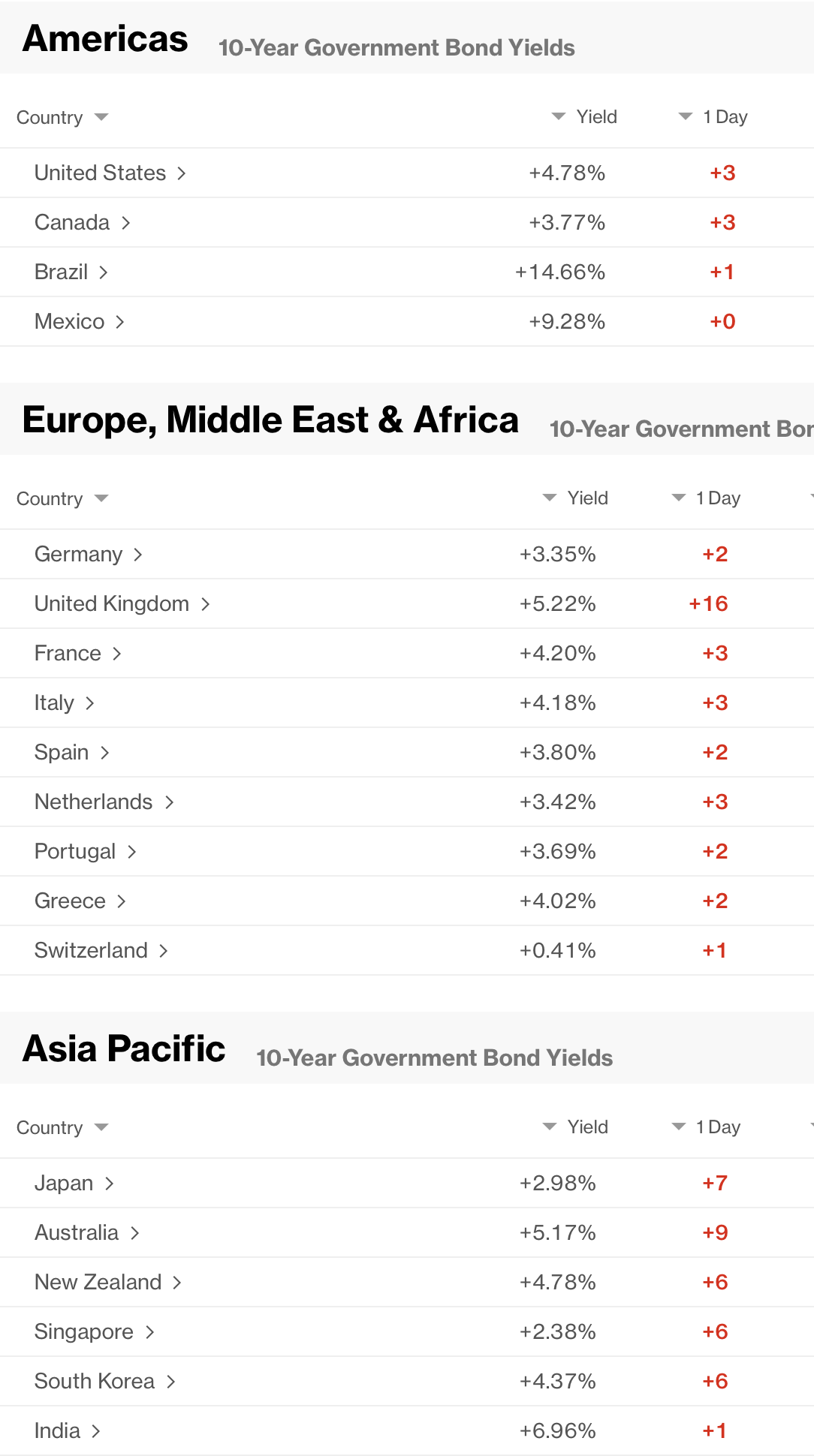
Of course, the outlier here is the UK, which was closed yesterday so had a lot of catching up (down?) to do.
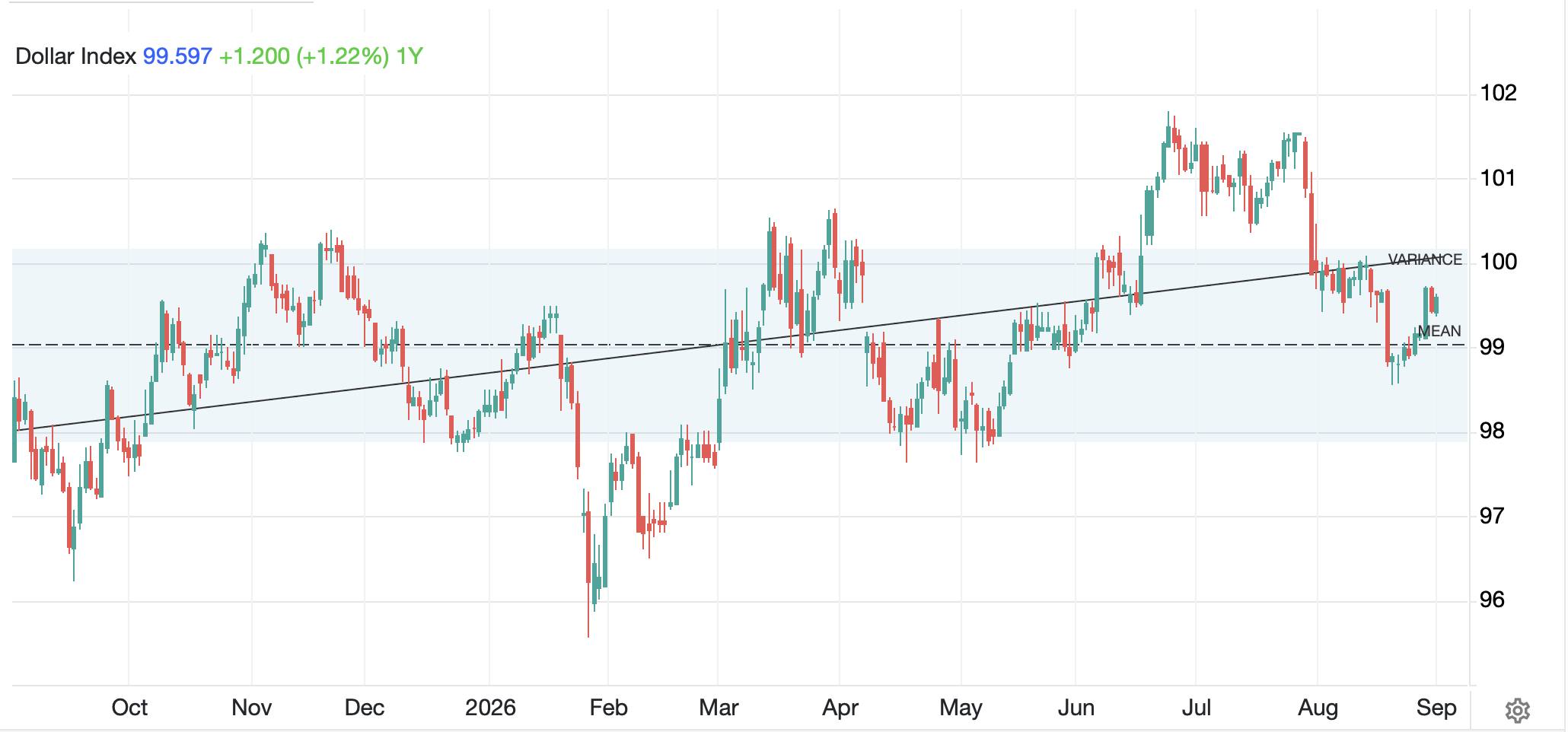
We’ve already discussed commodities which brings us to the dollar, which is rising despite yields rising everywhere. Now, the DXY is at 99.60, hardly new territory although the trend over the past year is marginally higher as per the below chart.
Source: tradingeconomics.com
If we look at individual currencies, JPY (-0.2%) has seen the dollar rise back above 160 as the post intervention price action remains consistent with every previous effort. Perhaps the most surprising outcome today is ZAR (-0.1%) which is holding up quite well despite much higher oil prices and much weaker gold prices, the two key issues in that economy. But net, as much as people worry about the debasement of the dollar, it appears they are more worried about the debasement of other currencies more rapidly.
On the data front, this morning brings ISM Manufacturing (exp 55.2) and Prices Paid (72.0) as well as the JOLTs Job Openings report (7.3M). Fed Governor Barr speaks before the data at 9:00 this morning so I wonder if he will reaffirm the hawkish vibe, and if he does, shouldn’t that help the bond market? I am still focused on Friday’s NFP as the next truly important piece of news, but there is an awful lot that can happen between now and then, especially with this President.
Good luck
Adf
 fxpoetry