
This poet was totally wrong
Expecting a ‘publican throng
At polls yesterday
But one can’t downplay
The message delivered was strong

The question we now must address
Is, is this a plus or a mess?
The early returns
Show few new concerns
And nothing approaching distress
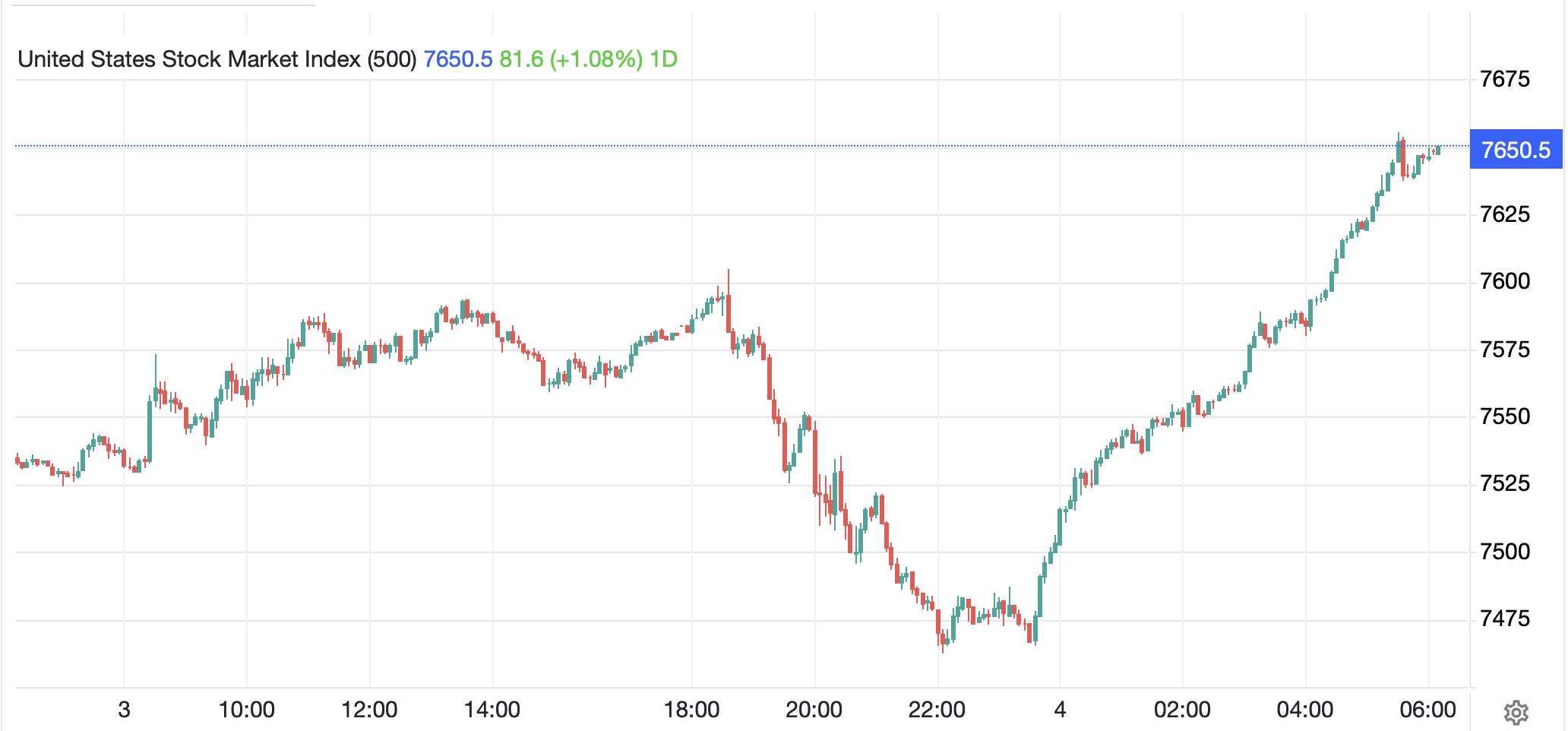
The election results are very clear and now we move on to the more difficult stage, governing. Certainly, this was a rejection of President Trump’s agenda, or at least some of his actions, with the Iran war resulting in much higher energy costs a significant issue for the electorate. However, in many ways, this is the best possible outcome for markets as political gridlock has historically been a net positive for the economy. If Congress cannot pass new laws, that is generally a good thing. And this was made clear last night as you can see in the chart below of the S&P 500, which saw losses early in the evening and then a complete reversal to where futures are now higher by 1.1% as of 6:10 this morning.
Source: tradingeconomics.com
The other statistic I keep reading is that in the year following a midterm election, equities have been higher for the past 18 midterms. Of course, the breakdown of which industries and market sectors improve is unclear, and the past is not prolog, but it has certainly been a highlight amongst the early commentators.
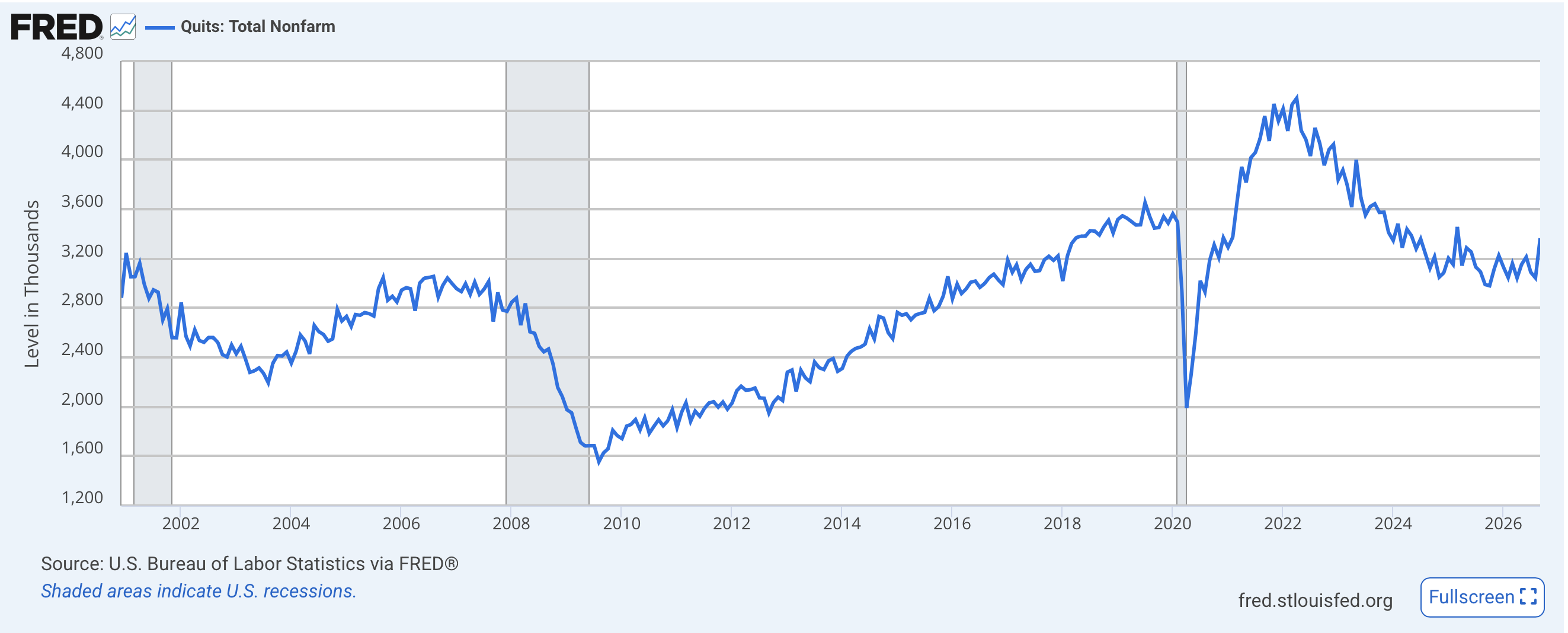
At any rate, as this is not a political discussion, let’s turn our focus to things economic and financial. On the economy, the US data continues to be solid as per yesterday’s JOLTs data which showed more job openings, but perhaps just as importantly, more Quits, which implies that there is a greater willingness for people to leave their job as they believe their prospects of finding a new, better one are improving. That has historically been a sign of a strong labor market. If we look at the below chart from FRED of the Quits data this century, it is not hard to make the case that we have bottomed after the Covid induced market disruptions and beginning to trend back higher. Given the slowing population growth and the ongoing illegal immigration crackdown, it is easy to believe that job prospects are improving for those in the workforce.
This morning we get the ADP Employment number (exp 69K) and, of course, Friday brings the latest NFP data. Again, the US data continues to demonstrate an economy that is growing in many areas. When I compare this with the economic data elsewhere in the world, I continue to have difficulty seeing the appeal elsewhere. With that in mind, though, it will be interesting to see just how much of the inward investment promised over the past two years will pan out given the changes in Washington.
So, let’s see how the rest of the world responded to the US elections, assuming that was the driver. In equity markets, Europe is virtually giddy over the outcome with all the major bourses much higher led by Spain (+2.8%) but with large gains across the board (France +1.5%, Germany +1.5%, UK +1.25%). And US futures, as mentioned above are stronger with both the NASDAQ (+0.9%) and DJIA (+1.5%) also doing well. Asia, though, saw things a little less positively. Japan (-1.4%) slipped along with Taiwan (-0.8%) and Australia (-0.6%) although there were positives as well. For instance, the Chinese plunge protection team was active last night increasing both loans and direct support as the CSI 300 rose 2.3% dragging the Hang Seng (+1.7%) along for the ride. Too, Korea (+0.6%) benefitted from yesterday’s relief in the tech space. But overall, equity markets are nonplussed this morning, if not genuinely happy.
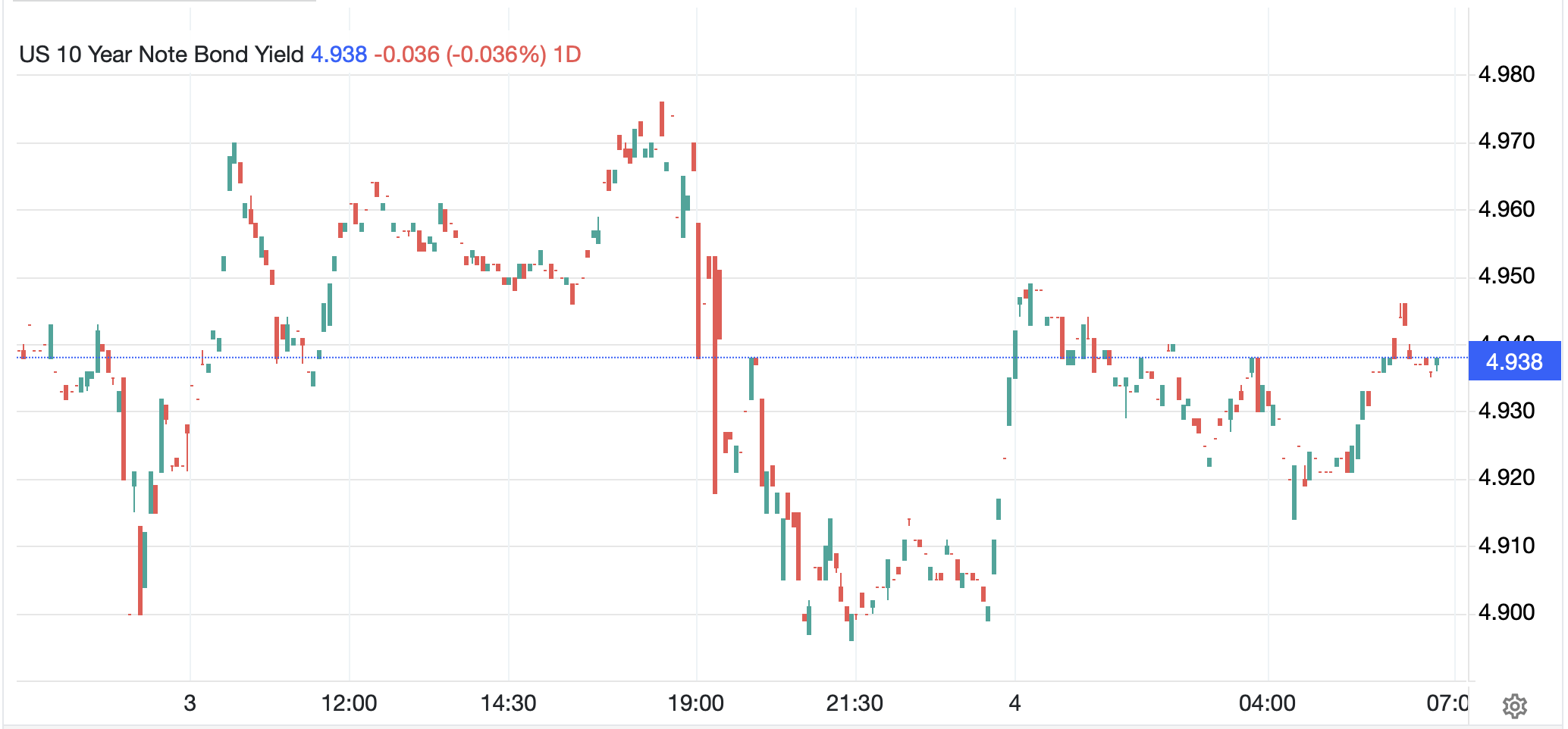
In the bond market, yields are lower this morning and I must admit, I don’t understand the logic. Now, if you look at the chart below of the past 24 hours, you can see that this has not been a straight-line process, but here we are with 10-year yields lower by -3bps as I write.
Source: tradingeconomics.com
I read one blurb explaining the market was anticipating lower deficits going forward but I fail to understand how that will work. There is zero evidence that a Democrat led congress will pass an austerity budget, and I expect that President Trump would veto any bills that raise taxes, so I am at a loss as to the source of that deficit reduction, at least on the surface. Perhaps the ongoing crackdown on fraud will be sufficient to reduce the deficit, but that seems a stretch. And if everything becomes a continuing resolution, that is not going to reduce expenditures. However, yields around the world are largely lower with Europe benefitting from the Treasury market’s lead as the weaker European credits (France, Italy, Spain, UK, Greece) all enjoy bond rallies with yields slipping -4bps or so across the board. As it happens, German bund yields are unchanged this morning.
In the commodity space, oil (-1.0%) continues to slide although I have seen nothing indicating that a deal to end the war in Iran was imminent. In fact, the WSJ this morning had an article about how Iran was desperately trying to stop the flow of oil and using guerilla tactics but having limited success doing so. Iran’s bigger problem is now that the election is past, President Trump has a pretty free hand in doing what he wants there, and the evidence continues to show that the blockade is really hurting the Iranians. As I said yesterday, my sense is this is going to end before long.
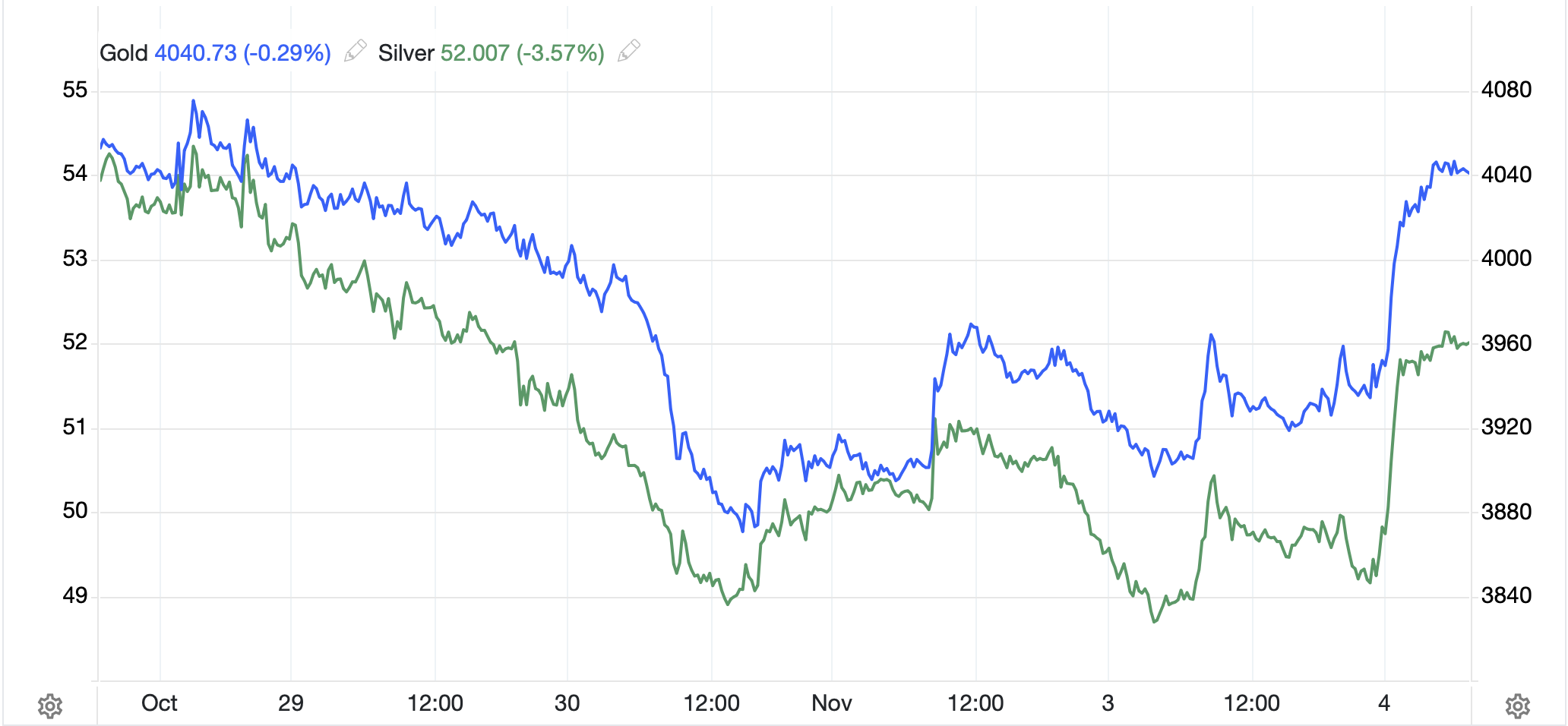
With oil continuing its recent decline, and yields lower, it should be no surprise that metals markets have benefitted, but the magnitude is surprising. Gold (+2.8%) and silver (+4.4%) have recouped all of their declines of the past week, as per the below chart.
Source: tradingeconomics.com
Will this rally hold going forward? Much depends on the dollar’s performance, which today is much lower, and how the interest rate structure evolves. If lower yields are on the horizon, perhaps this is just the beginning.
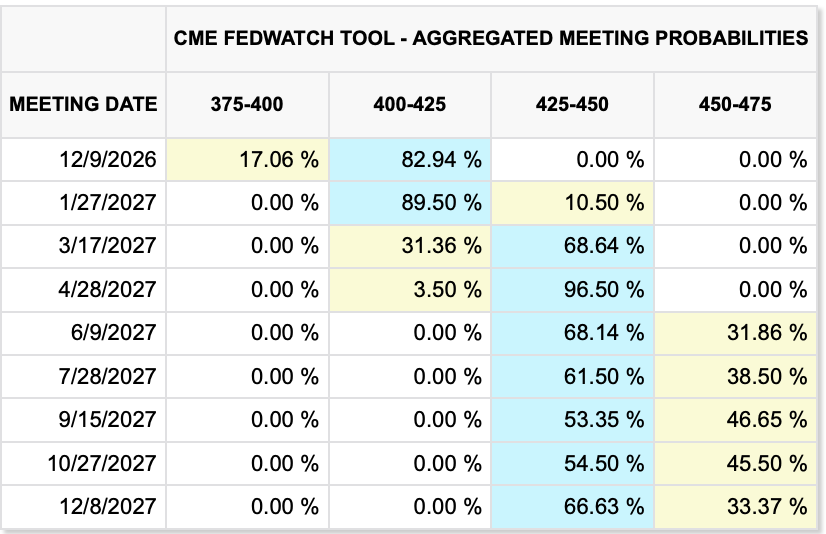
And yet, if we look at the CME Fed funds futures market, the probability of a hike in December rose in the wake of the election, which seems at odds with that narrative.
So, let’s look at the dollar this morning. It is lower across the board, and by a decent amount virtually everywhere. if you look at the table below from tradingeconomics.com, you can see that the only exceptions are RUB, which isn’t really a tradable currency, CNY, which didn’t move and BRL, which despite the dollar weakness can find no strength as investors continue to exit the economy there. Otherwise, it’s pretty unanimous, nobody wants dollars today.
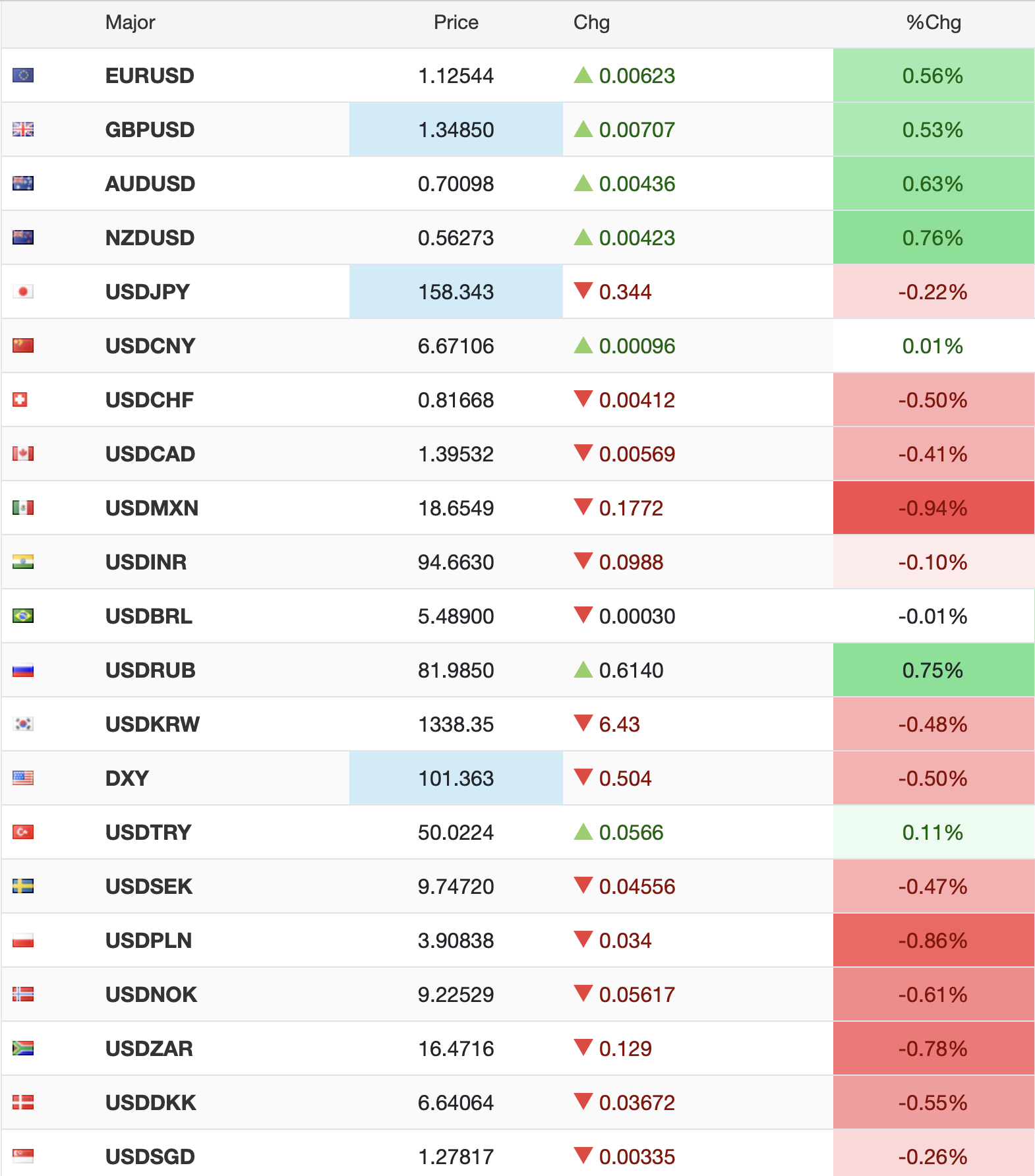
Will this continue? Positioning in the dollar heading into the election was net long, so I expect much of this movement is simply the beginnings of unwinding those positions. But as I frequently highlight, the dollar is merely in the middle of its long-term range, neither especially rich nor cheap here, so its future will depend on the fundamentals. Perhaps today’s Eurozone inflation data, which printed at 4.0%, has traders looking for a more hawkish ECB but there is no evidence of that based on implied probabilities from futures and swaps markets as you can see below in the chart from rateprobability.com.
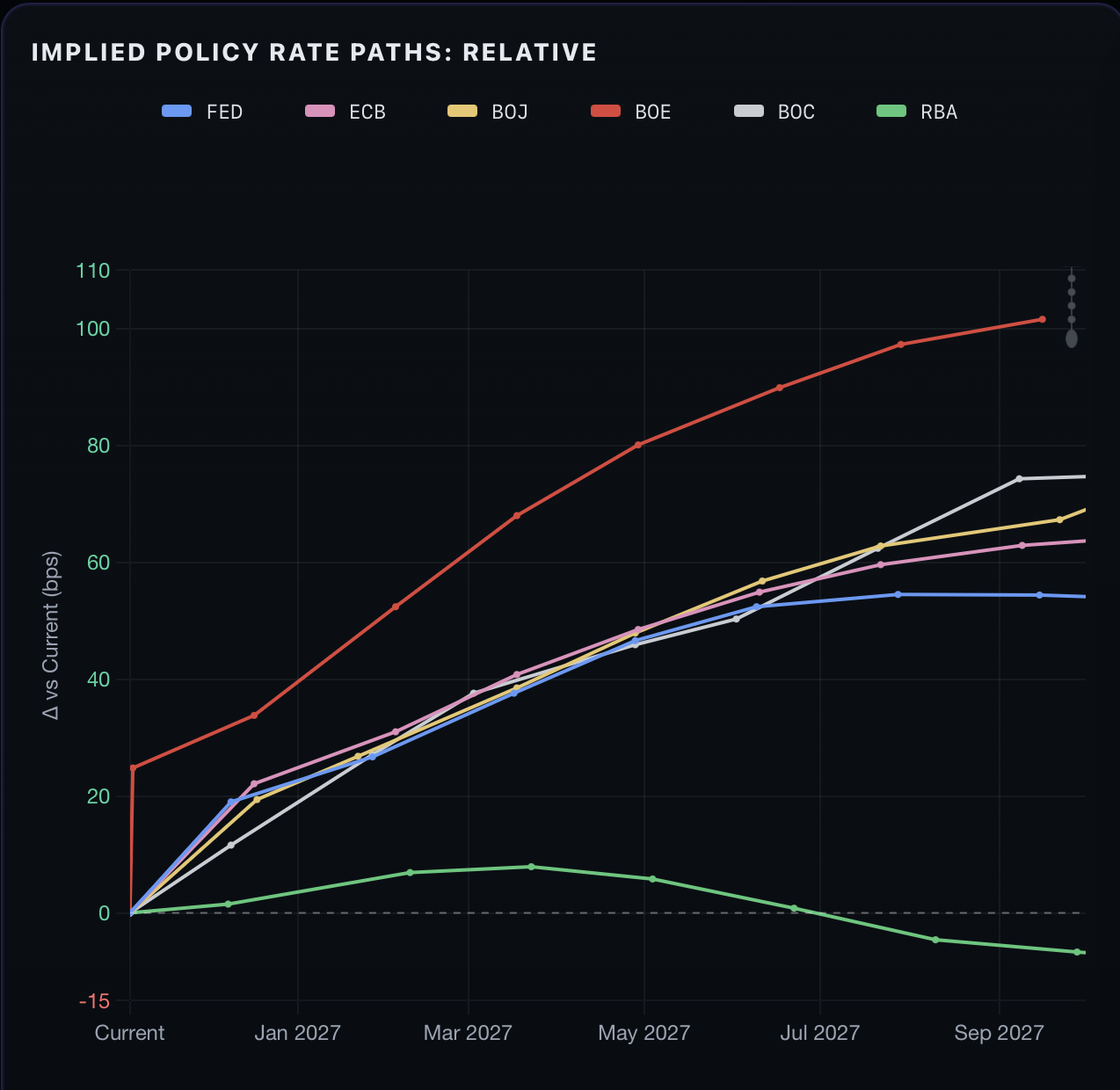
While the BOE is set to hike rates tomorrow, other than the RBA, which looks like it is done, the trajectory of future rate hikes appears pretty similar across the board.
I see no reason for the dollar to collapse, although it is possible that inward investment will diminish, which will slow any significant rise in the greenback.
On the data front, along with ADP Employment mentioned above, we see the Trade Balance (exp -$108B) and ISM Services (54.8) as well as the EIA oil inventories with a small build expected. I expect that we are setting up for more range trading in the dollar with the chance of a strong trend in either direction vanishingly small right now.
Good luck
Adf

