A Mishap

When most of us think of an APP
It’s something on phones that we tap
But Madame Christine,
The ECB queen,
Fears PEPP’s end would be a mishap

So, word is next week when they meet
Expansion of APP they’ll complete
Thus, PEPP they’ll retire
But still, heading higher
Are PIGS debt on their balance sheet

Over the next seven days we will hear from the FOMC, ECB and BOE with respect to their policies as each meets next week.  Expectations are for the Fed to increase the speed at which they are tapering their QE purchases, with most pundits looking for that to double, thus reducing QE by $30 billion/month until it is over.  Rate hikes are assumed to follow shortly thereafter.  However, if they sound quite hawkish, do not be surprised if the equity market sells off and all of our recent experience shows that the Fed will not allow too large a decline in stock prices before blinking.  Do not be envious of Chairman Powell’s job at this point, it will be uncomfortable regardless of what the Fed does.

As to the ECB, recent commentary has been mixed with some members indicating they believe continued support for the economy is necessary once the PEPP expires in March, and that despite internal rules prohibiting the ECB from buying non IG debt, they should continue to support Greece via the Asset Purchase Program.  The APP is their original QE tool, and has been running alongside the PEPP throughout the crisis.  Both the doves on the ECB and the punditry believe that any unused capacity from the PEPP will simply be transferred to the APP so there is more buying power, and by extension more support for the PIGS.  However, we are hearing more from the hawks recently about the fact that QE has been inflating asset prices and inflation, and perhaps it needs to be reined in.  When considering ECB activity, though, one has to look at who is running the show, just like with the Fed.  And Madame Christine Lagarde has never given any indication that she is considering reducing the amount of support the ECB is providing to the Eurozone economy.  Rather, just last week she explained that inflation’s path is likely to be a “hump” which will fall back down to, and below, their 2.0% target in the near future, so there is no need to be concerned over recent data.

Finally, the BOE finds itself in a sticky situation because of the relatively larger impact of the omicron variant in the UK versus elsewhere.  While Governor Bailey had indicated back in October that higher rates were on the way, the BOE’s failure to act last month was a shock to the markets and futures traders are now far less certain that UK interest rates will be rising in order to fight rapidly rising prices there.  Instead, there is increased discussion of the negative impact of omicron and the fact that the Johnson government appears to be setting up for yet another nationwide lockdown, something that will clearly reduce demand pressure.  So, there is now only a 20% probability priced into the BOE raising rates to 0.25% next week from the current 0.10% level.  This is not helping the pound’s performance at all.

And lastly, the PBOC
Adjusted a rare policy
FX RRR
Was raised to a bar
Two points o’er its prior degree

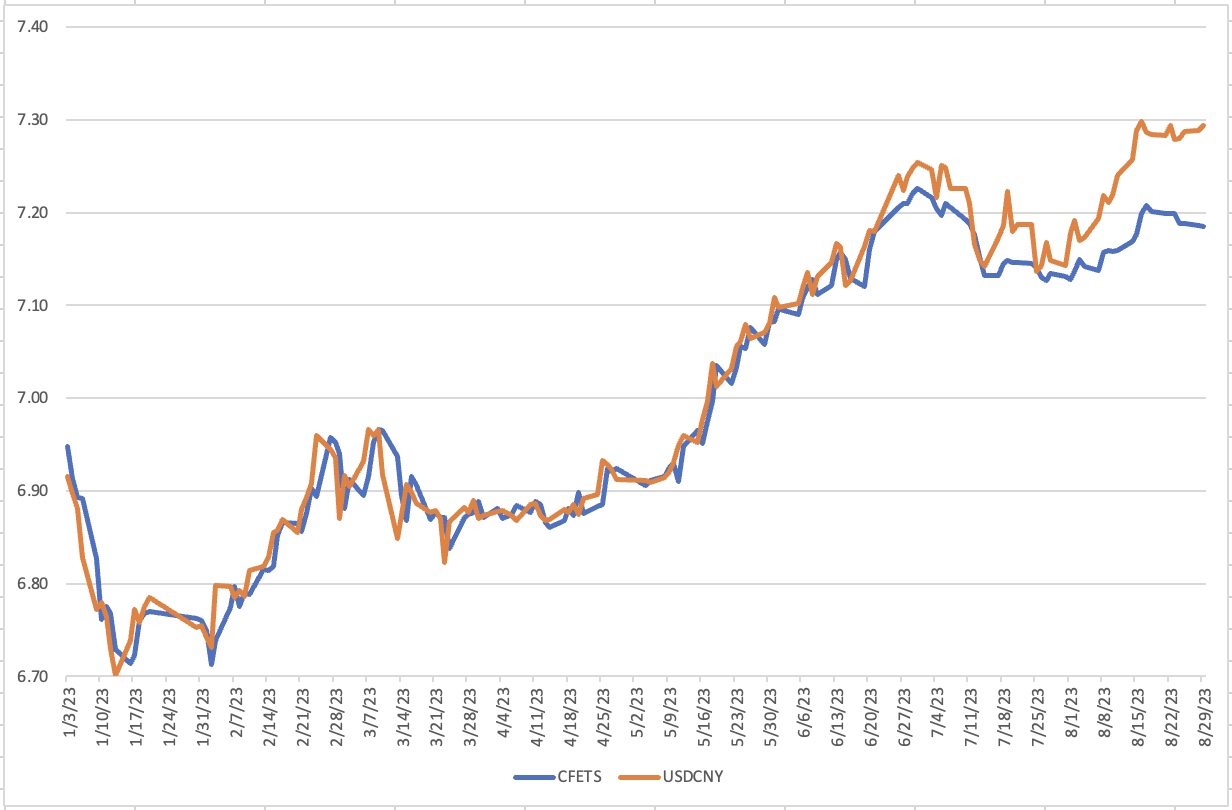
One last piece of news this morning was the PBOC announcement that they were raising the FX Reserve Ratio Requirement from 7% to 9% effective the same day the RRR for bank capital is being cut.  This little-known ratio is designed to help the PBOC in its currency management efforts by forcing banks to increase their FX liquidity.  This is accomplished by local banks buying dollars and selling renminbi.  It is a clear sign that the PBOC was getting uncomfortable with the renminbi’s recent strength.  Today is the second time they have raised the FX RRR this year with the first occurring at the end of May.  Prior to that, this tool had not been used since 2007!  Also, if you look at the chart, following this move in May, USDCNH rose 2.25% in the ensuing three weeks.  Since the announcement at 6:10 this morning, USDCNH is higher by 0.5% already.  It can be no surprise that the Chinese are fighting the strength of the yuan as it remains a key outlet valve for economic pressures.  And while Evergrande is officially in default, as well as several other Chinese property developers, the PBOC maintains that is not a problem.  But it is a problem and they are trying to figure out how to resolve it without flooding the economy with additional liquidity and without losing face.

With all that in mind, let’s see how markets have behaved.  Yesterday’s ongoing rebound in US equity markets only partially carried over to Asia with the Nikkei (-0.5%) failing to be inspired although the Hang Seng (+1.1%) and Shanghai (+1.0%) both benefitted from PBOC comments regarding the resolution of Evergrande.  European bourses are in the red, but generally not by that much (DAX -0.35%, CAC -0.2%, FTSE 100 -0.2%).  There was little in the way of data released in the Eurozone or UK, but Schnabel’s comments about PEPP purchases inflating assets have put a damper on things.  US futures, too, are sliding this morning with all three major indices lower by about -0.4% or so.

One cannot be surprised that bonds are rallying a bit, between the large declines seen yesterday and the growing risk-off sentiment, so Treasuries (-2.2bps) are actually lagging the move in Europe (Bunds -3.6bps, OATs -3.8bps, Gilts -4.7bps) and even PIGS bond yields have slipped.  Clearly bonds feel like a better investment this morning.

After a 1-week rally of real significance, oil (-0.7%) is consolidating some of those gains and a bit softer on the day.  NatGas (-0.7%) is also lower and we are seeing weakness in metals prices, both precious (Au -0.2%. Ag -0.7%) and industrial (Cu -1.4%).  Foodstuffs are also under pressure this morning, but at this time of year that is far more weather related than anything else.

As to the dollar, it is broadly stronger this morning with the only G10 currency to gain being the yen (+0.1%) and the rest of the bloc under pressure led by NOK (-1.0%) and AUD (-0.45%) feeling the heat of weaker commodity prices.  I must mention the euro (-0.3%) which seems to be adjusting based on the slight change in tone of the relative views of FOMC and ECB policies, with the ECB dovishness back to the fore.

EMG currencies are also mostly softer although there are a few outliers the other way.  The laggards are ZAR (-1.0%) on the back of softer commodity prices and TRY (-0.9%) which continues to suffer from its current monetary policy stance and should continue to do so until that changes.  We’ve already discussed CNY/CNH and see HUF (-0.5%) also under pressure as the 0.2% rise in the deposit rate was not seen as sufficient by the market to fight ongoing inflation pressures.  On the plus side, the noteworthy gainer is CLP (+0.5%) which seems to be responding to the latest polls showing strength in the conservative candidate’s showing.  Also, I would be remiss if I did not highlight BRL’s 1.5% gain since yesterday as the BCB raised rates by the expected 1.50% and hawkish commentary indicating another 1.50% rate rise in February.

On the data front, Initial (exp 220K) and Continuing (1910K) Claims are really all we see this morning, neither of which seem likely to have an FX impact.  Tomorrow’s CPI data, on the other hand, will be closely watched.

The current narrative remains the Fed is quickening the pace of tapering QE in order to give themselves the flexibility to raise rates sooner given inflation’s intractable rise.  As long as that remains the story, the dollar should remain well supported, and I think that can be the case right up until the equity markets respond negatively.  Any sharp decline will be met with a dovish Fed response and the dollar will suffer at that point.  Be prepared.

Good luck and stay safe
Adf

Not the Plan

It turns out the internet can
Stop working, though that’s not the plan
Thus, to be succinct
The people who linked
Their lives to it found nothing ran

Under the heading, ‘It’s amusing today but could be much worse’, it seems there is a downside to all the conveniences we were promised if we just linked all the mundane features of life to the internet so the IoT could work its magic.  When the IoT stops working, so do all those mundane features, like door locks using Ring, and Roomba® vacuums and smart refrigerators and washing machines.  And so, yesterday, when Amazon Web Services crashed for upwards of 9 hours along the East Coast, many people and businesses learned just how reliant they were on a single private company (albeit a big one) for maintaining the status quo of their lives.  Do not be surprised if the question arises as to whether the ‘cloud’ has become too important for the private sector to manage by itself and needs to be regulated as a utility going forward.

With omicron somewhat less feared
The bulls feel the way has been cleared
To add to positions
Which led to conditions
Where price rises were engineered

Markets, however, were completely unconcerned with any hiccups regarding the cloud and bulled ahead with spectacular gains yesterday as the NASDAQ led the way rising more than 3.0%.  While this author’s view is risk appetite is more closely correlated to views on / concerns over the tapering of QE and tighter Fed policy, the narrative has been very focused on omicron and the news that it seems to be more widespread but far less virulent and therefore will have a lesser impact on the recovering economy.  At least, that’s what the punditry is saying this morning as an explanation for yesterday’s massive risk-on rally.

And perhaps, that is an accurate viewpoint.  Perhaps last week’s selloff was entirely due to the uncertainty over just how impactful omicron would be on the global economy.  The problem is that doesn’t pass the smell test.  Consider that if omicron was really going to result in another wave of economic closures, the central bank response would likely be adding still more liquidity to the global system, much of which would find its way into equities.  In contrast, tighter monetary policy that reduces overall liquidity would have the opposite effect.  As such, it seems to me that sharp declines are more likely on fear of less liquidity than fear of the latest virus variant.  So, while markets are still pricing rate hikes for next year, they have clearly come to grips with the current expected pace of those hikes.  Now, if inflation continues to rip higher, and we see the latest CPI print on Friday, the sanguinity over the pace of rate hikes could well disappear.  Remember that there are many ‘fingers of instability’ weaving throughout the market construct, among them massive leverage and extremely high equity valuations.  Risk is a funny thing, it often isn’t a concern until, suddenly, it is the only concern.  Risk asset markets, while continuing to ascend, are also doing so on less and less breadth.  Again, I would contend that hedging remains a critical activity for the corporate set.

Looking around markets today, yesterday’s euphoria, while evident in Asia overnight, has not made its way to Europe.  Japan’s Nikkei (+1.4%) led the way in Asia despite GDP data printing at a much lower than expected -3.6% in Q3.  It seems to me any idea that the BOJ will consider reducing its support for the economy is misplaced.  If anything, I would anticipate increased support as the nation tries to dig itself out of its latest economic hole.  As to the rest of Asia, the Hang Seng (+0.1%) lagged as its tech sector continues to be undermined by Xi’s ongoing crackdown on Chinese tech behemoths, but Shanghai (+1.1%) with far less tech exposure, did fine.

Europe, on the other hand, is under a bit of pressure this morning with the DAX (-0.6%) leading things lower followed by the CAC (-0.3%) while the FTSE 100 is little changed on the day.  The big news in Germany is that Angela Merkel is officially out as Chancellor and Olaf Scholz was sworn in as the new leader of the nation.  I don’t envy his situation as energy prices are rising sharply and Germany is entirely reliant on Russia and Vladimir Putin for the natural gas necessary to stay warm this winter, while their export-led economy is so tightly tied to China’s performance, that the ongoing slowdown there will soften growth prospects.  But then again, as a Social Democrat, maybe that is exactly the position Scholz relishes.

Finally, US markets remain in euphoria mode with futures all pointing higher by another 0.4% at this hour with the S&P 500 less than 1% from its all-time high.

The bond market, this morning, is showing no clarity whatsoever.  Treasury yields, after backing up 5bps yesterday, are actually lower by 0.8bps despite the positive look from equities.  Bunds and OATs are little changed while Gilts (-1.4bps) are showing the most strength.  Perhaps of more interest are the PIGS, where yields are rising sharply (Italy +3.2bps, Greece +4.9bps) after comments from Latvian ECB member, Martin Kazaks, that there was little reason to continue with additional QE once PEPP expires in March.  I suspect the Greeks and Italians would have a different opinion!

Last week, commodity prices were under huge pressure, led by oil, which cratered in the wake of the Thanksgiving holiday.  This morning, WTI (+0.75%) and Brent (+1.0%) are continuing their strong rebound with both grades more than 12% off their recent lows.  NatGas (+3.9%), too, is rebounding but has much further to go to reach the peaks seen in October.  Metals market, on the other hand, are having a less interesting day with gold (+0.1%) and copper (+0.1%) just edging up a bit.

Turning to the dollar, it is broadly, but not universally weaker this morning with NOK (+0.6%) leading the way on the back of oil’s rebound, although the rest of the G10 gainers are far less impressive (AUD +0.2%, CAD +0.1%).  There are some laggards as well with GBP (-0.35%) falling after news that PM Johnson is about to impose new travel restrictions in the country.  Now, if the UK combines tightening monetary policy, at which the BOE has hinted, with omicron inspired restrictions, that is clearly a recipe for slowing growth, and a weaker pound and FTSE.  In fact, the pound has fallen to its lowest level in almost exactly 12 months this morning.  In the EMG space, only TRY (-1.3%) is really falling and that story is consistent.  On the plus side, though is THB (+0.6%), RUB (+0.4%) and ZAR and MXN (both +0.35%) as the commodity sector continues to perform well while Thailand powered ahead on reduced omicron fears.  So, the UK is reacting one way while the Thai government is going in the opposite direction!

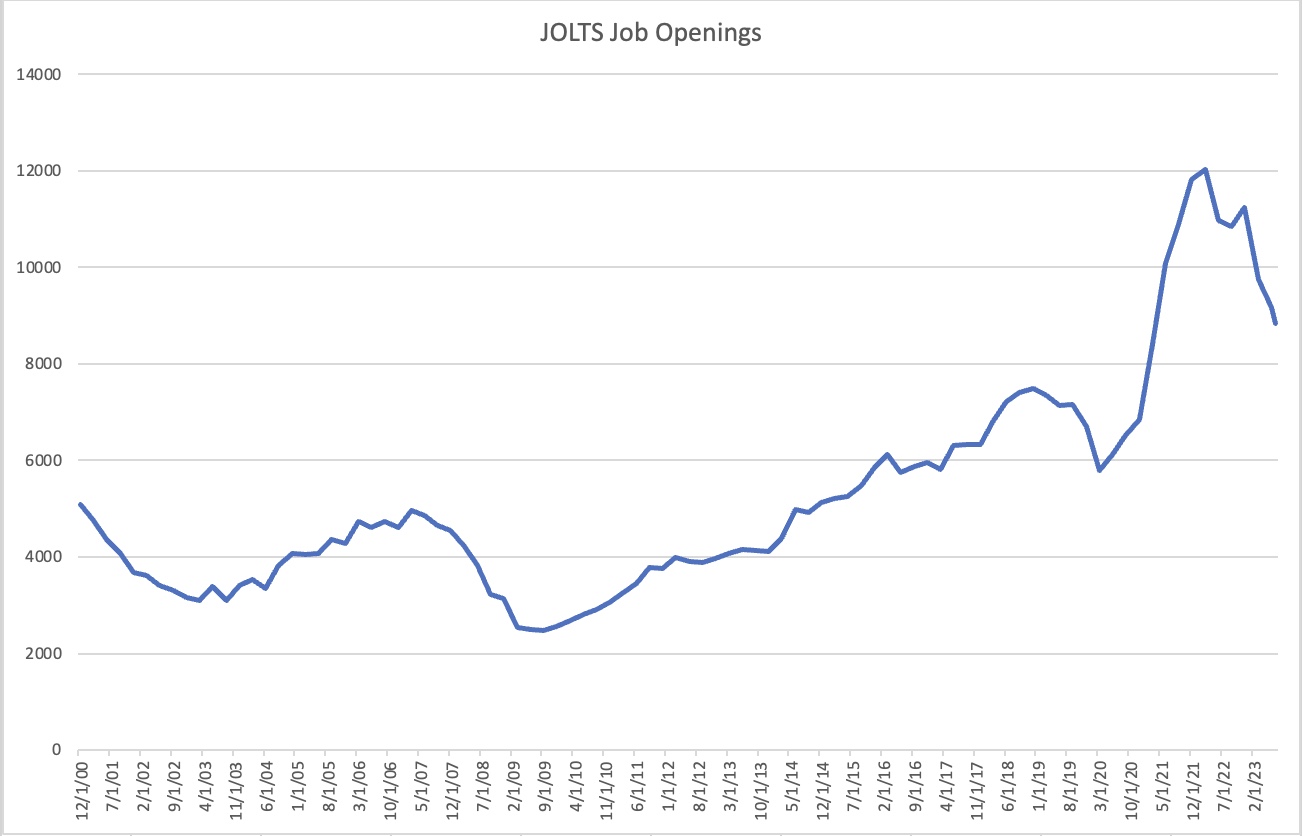
On the data front, yesterday’s productivity and labor cost data were even more awful than forecast and Consumer Credit rose far less than anticipated and barely 56% as quickly as September.  This morning brings only the JOLTs report (exp 10469K) which means that with the lack of Fed speakers, the FX market will look elsewhere for drivers. As long as risk remains in vogue, I expect the dollar to remain under some pressure, but if the European equity impulse comes here, look for the dollar to recoup its losses before the day is over.

Good luck and stay safe
Adf

No Longer Taboo

The omicron variant seems
No longer to haunt people’s dreams
Thus, stocks are advancing
And markets financing
The craziest, wildest schemes

So, risk is no longer taboo
As narrative changes ensue
Chair Powell’s regained
Control, and contained
The fallout from his last miscue

Risk appetite is remarkably resilient these days as evidenced not only by yesterday’s US equity rally, but by the follow-on price action in Asia last night as well as Europe this morning.  In fact, it seems the rare market that has not rallied at least 2% this morning.  Naturally, this raises the question as to what is driving this sudden return to bullishness?  Is it a widening view that the omicron variant is not going to result in more draconian government lockdowns?  Well, based on the news that NYC has imposed new restrictions on people, requiring vaccinations for everyone aged 5 and older to enter any public building, that may not be the case.  Perhaps the news that Austria has established fines of €600 for the first time someone is found not to be vaccinated with an increasing scale and jail time in that person’s future if they do not correct the situation, is what is easing concern.

At this point, arguably, it is too early to truly understand the nature of the omicron variant and its level of virulence, although it is clearly highly transmissible.  Early indications are that it is not as deadly but also that none of the currently approved vaccines does much with respect to preventing either infection or transmission of this variant.  However, global equity investors have clearly spoken and decided that any potential issues are either likely to be extremely short-term or extremely mild.

Perhaps this renewed risk appetite has been whetted by the idea that the Fed’s tapering will be a net positive for the market.  On the surface, of course, that doesn’t seem to accord with the idea that it has been the Fed’s (and ECB’s) largesse of adding constant liquidity to the system that has been the major support for the equity rally.  I’m sure you all have seen the graph that shows the growth in the Fed’s balance sheet overlain on the price action in the S&P 500, where the two lines are essentially the same.  So, if more central bank liquidity has been the key driver of higher stock prices, how can reduced liquidity and threats(?) or indications of higher interest rates coming sooner help support stocks.  That seems to run contra to both that thesis as well as the idea that inflation is good for stocks, with the second idea suffering from the concept that tighter monetary policy is designed to fight inflation.

But maybe, that is the key.  For the cognitive dissonant equity bull, loose policy and high inflation are good for equity markets because loose policy will keep the economy growing faster than inflation can reduce real returns.  On the other hand, tighter policy will fight inflation thus allowing lower nominal returns to remain competitive on a real basis.  Or something like that.  Frankly, it has become extremely difficult to understand the ever-changing rationales of equity bulls.  But that doesn’t mean they haven’t been right for a long time now, despite changes in underlying macroeconomic trends.

From its peak on November 22, to its bottom Friday, the S&P 500 fell about 5.25%, not even a correction, as defined in the current vernacular.  That requires a 10% pullback.  So, for all intents and purposes, this bull market has done nothing more than pause for a few days and is apparently trying to regain all its lost ground as quickly as possible.  Remember this, though, trees do not grow to the sky, nor do markets rally forever.  There continue to be numerous red flags as to the performance of equities; notably potentially tighter monetary policy, extremely high valuations, narrowing breadth of index performance and questions over future earnings growth amongst others.  And any of these, as well as the many potential issues that are not even currently considered, can be a catalyst for a more significant risk-off event.  In fact, the situation in the Treasury market, the curve is flattening quite rapidly, seems to be one clear warning that the future may not be as rosy as currently priced by the stock market.  Do not take for granted that risk appetite will remain this robust indefinitely and plan accordingly.

But today that is not a concern!  Risk is ON and in a big way.  After yesterday’s US rally, we saw all green in Asia (Nikkei +1.9%, Hang Seng +2.7%, Shanghai +0.2%) and Europe (DAX +2.1%, CAC +2.2%, FTSE 100 +1.2%) with US futures all higher between 1.0% (DOW) and 1.8% (NASDAQ).  In other words, all is right with the world!  Interestingly, one of the stories making the rounds today is about yesterday’s Chinese reduction in the RRR, but that was literally yesterday’s news, well known throughout the entire session.  I feel like there is something else driving things.

As to the bond market, while prices have fallen slightly, the movement is a lot less than would be expected given the strength of the equity rally.  Treasury yields are higher by just 0.2bps while Bunds (+1.5bps), OATs (+0.9bps) and Gilts (+2.4bps) are all responding a little more in line with what would normally be expected.  Data from Europe was slightly better than forecast with German IP (2.8%) and ZEW Expectations (29.9) both showing the economy there holding up better despite the ongoing lockdowns.  Asian bonds also saw yields climb a bit making the process nearly universal.

Commodity prices are following the risk narrative with oil (+2.8%) rallying sharply for the second consecutive day and now trading nearly 15% off the lows seen Thursday!  NatGas (+2.2%) is rebounding but still well below its highs seen in early October, while metals prices are all higher as well led by Cu (+0.7%) and Al (+1.2%) although both gold (+0.25%) and silver (+0.3%) are a bit firmer as well.

It will come as no surprise that the dollar is somewhat softer this morning given the environment as we see AUD (+0.7%), CAD (+0.5%) and NOK (+0.4%) all benefit from firmer commodity prices while the euro (-0.25%) is actually the laggard on the day, despite the rally in equities there.  Perhaps the single currency is gaining some haven characteristics.  In the emerging markets, TRY (+0.7%) is the leading gainer followed by THB (+0.6%) and BRL (+0.5%).  One can simply recognize the extreme volatility in the lira given the ongoing policy missteps, so a periodic rally should be no surprise.  As to the baht, it seems buyers are looking for China’s RRR cut to support the Chinese economy and by extension the Thai economy as well.  Brazil is a more straightforward commodity story I believe.  On the downside, CZK (-0.4%) and HUF (-0.3%) are the laggards as traders express mild concern that the central banks there may not keep up with rising inflation when they meet this week and next.

On the US data front, Nonfarm Productivity (exp -4.9%) and Unit Labor Costs (+8.3%) lead along with the Trade Balance (-$66.8B) at 8:30.  One cannot help but look at the productivity and labor cost data and wonder how equity markets can continue to rally.  Those seem to point to the worst of all worlds.  As to the Fed, they are in their quiet period ahead of next Wednesday’s meeting, so nothing to report there.

While I may not agree with its underpinnings, risk is clearly in vogue this morning and I don’t see any reason for that to change today.  In general, I would look for the dollar to continue to soften slightly, but also see limited scope for a large move.  All eyes have turned to the Fed next week and will be anxiously awaiting Chair Powell’s explanations for whatever moves they make.

Good luck and stay safe
Adf

Slower than Planned

There once was a firm, Evergrande
Whose ethos was just to expand
But its wanderlust
Led it to go bust
When China grew slower than planned

The aftermath now seems to be
Impacting the PBOC
They cut RRR
And could well do more
Inverse to Fed ending QE

As we begin a new week, and arguably the second to last where market liquidity will be close to its ordinary levels, the news of the day centers on the PBOC reducing its Reserve Ratio Requirement (RRR), as foreshadowed by Premier Li Keqiang last week.  While the official comments are focused on the government’s efforts to insure stable growth amid concerns over the omicron variant’s spread, it appears the reality may reach a little deeper.  Of more importance to market participants than the virus is the status of China Evergrande and the entire property sector in China.  It now appears that there is going to be an total restructuring of that company’s debt as it defaults on its remaining obligations.  Recall, Evergrande is was the largest property developer in China, and the most highly leveraged having total debts in excess of $300 billion as it expanded its business from purely property development to interests as far flung as theme parks, a soccer club and electric vehicles.  As of last night, it has notified creditors that a restructuring is on its way and that clearly has the PBOC a little concerned.

Property is the largest sector of the Chinese economy, representing more than 30%, and a key revenue source for most provinces and cities as they sell land to fund operations.  Evergrande was one of the largest purchasers, and so its slow-motion demise is being felt throughout the nation.  It is for this reason that the PBOC finds itself in a situation where it feels the need to add more liquidity to the economy, hence the RRR cut.  Interestingly, the problems here have not stopped the Chinese government’s crackdown on its tech sector, at least on the personal tech sector, as Didi Chuxing is being forced to delist from the NYSE and looks to reestablish its shares in Hong Kong.

From a vantage point some 7000 miles away, it appears that President Xi Jinping is moving quite rapidly in his efforts to completely control all aspects of the Chinese economy.  Do not be surprised to see every Chinese company listed outside Shanghai or Hong Kong to wind up moving that listing, nor to see further declines in those equity markets.  Capitalism with Chinese characteristics turns out to be socialism/communism after all, at least from the definitional perspective of the state controlling the means of production.  Whether this results in faster growth, or whether the rest of the world will even be able to determine that remains to be seen.  However, classical economics would suggest that the more internalization and the stricter the business regulations, the slower will be future growth.

Why, you may ask, is this important?  Well, first off it is reasonable to expect that ongoing liquidity injections in the Chinese economy are likely to eventually weaken the renminbi.  Second, if the growth trajectory of the Chinese economy is flattening, one of the few things the Chinese will be able to do to address that is weaken the currency to make its exporters more competitive.  The point is, while recent PBOC policy has been to maintain a strong and stable currency, and we have seen the renminbi appreciate more than 11% since it bottomed post-pandemic, the case for that trend to end and a weakening trend to develop appears to be growing.  For asset and receivables hedgers, careful consideration must be given to managing that risk.

With that in mind, let us turn to this morning’s activity.  Friday’s NFP report was mixed, with a weaker than expected headline number for jobs growth, but a much better than expected outcome in the Unemployment Rate as it appears more and more people are leaving large organizations and striking out on their own.  The upshot is labor market tightness is still with us and unlikely to ease in the short run.  Investors decided that was an equity market negative as it would encourage the Fed to taper policy even more quickly hence Friday’s equity sell-off.  At the same time, concerns over tighter policy slowing growth seem to have bond traders flattening the curve rapidly as they fear a Fed policy mistake of raising rates into slowing growth.  In other words, it’s all a mess!

Ok, overnight saw weakness in Asia (Nikkei -0.4%, Hang Seng -1.8%, Shanghai -0.5%) following the US Friday narrative, while Europe has decided things are far better this morning with rallies across the board (DAX +0.3%, CAC +0.7%, FTSE 100 +0.9%).  On a relative basis these moves make sense given the terrible Factory Orders data from Germany (-6.9% in October) while UK Construction PMI surprisingly rose to 55.5.  Meanwhile, US futures are a bit schizophrenic this morning with the DOW (+0.6%) looking to rebound from Friday while the NASDAQ (-0.4%) seems set to continue to slide.

The bond market, which rallied sharply Friday (Treasury yields falling 10bps) is giving back some of those price gains with the 10-year yield higher by 5.2bps this morning.  European yields are also a higher, but by much less (Bunds +0.9bps, OATs +0.7bps, Gilts +1.2bps), which are also consolidative moves, just not quite as dramatic.

On the commodity front, oil continues to whipsaw with a sharp rebound today (+3.25%) although NatGas (-7.9%) is getting crushed on a combination of forecasts for warmer weather in the Northeast as well as lower LNG prices in Europe.  In the metals markets, gold (-0.2%) continues to trade just below $1800/oz, neither rallying alongside inflation nor collapsing.  Copper (+0.8%) seems to be following oil, but aluminum (-0.85%) and tin (-1.9%) both seem to be in a more fearful mode.

Turning to the FX markets, mixed is the best description as we have both substantial gainers and losers vs. the dollar.  In the G10, AUD (+0.5%), SEK (+0.5%) and NOK (+0.5%) are leading the way higher on the back of the better commodity sentiment.  Meanwhile, CHF (-0.5%) and JPY (-0.3%) are both under pressure on the same story plus the European risk appetite.  In the EMG bloc, ZAR (+0.7%) leads the way with CLP (+0.3%) next as the commodity story seems to be driving thing here too.  On the downside, TRY (-0.45%) continues its volatile trading while the other laggards are from both APAC and EEMEA but have not seen significant declines.

On the data front, it is inflation week with CPI on Friday the biggest number to watch.  Leading up to that is the following:

Tuesday Q3 Nonfarm Productivity -4.9%
Q3 Unit Labor Costs 8.3%
Trade Balance -$66.9B
Wednesday JOLTS Job Openings 10500K
Thursday Initial Claims 225K
Continuing Claims 1910K
Friday CPI 0.7% (6.7% Y/Y)
-ex food & energy 0.5% (4.9% Y/Y)
Michigan Sentiment 68.0

Source: Bloomberg

In addition to this data, we hear from the Bank of Canada on Wednesday, where expectations are for no rate movement although they have been amongst the most hawkish of the G10 central banks of late.  As to CPI, while it is not the Fed’s preferred gauge, Chairman Powell clearly feels the pressure and so next week we can expect to see just how much faster they are going to reduce QE purchases…at least for now.

There are so many cross-currents driving markets right now, it is very difficult to find a specific underlying theme in the short-term.  Longer term, nothing has changed my view that the Fed will halt their tapering/tightening script as soon as equity markets begin to decline a little more substantially.  At that point, I feel like the dollar may come under pressure, although during the decline, it should probably rally further.  Payables hedgers should be taking advantage of this relatively strong dollar as I don’t think it will last that long.

Good luck and stay safe
Adf

Doves in Retreat

It seems the transition’s complete
As every Fed dove’s in retreat
From Powell to Daly,
And like Andrew Bailey,
They want to end QE tout de suite

Regarding the Fed’s hawks, Mester, George, Bostic and Bullard, we already knew they were ready to end QE.  They have been saying so since much earlier this year, before two of their kettle were forced to resign in disgrace (you remember Rosengren and Kaplan).  Just yesterday, Cleveland’s Loretta Mester reiterated she was “very open” to quickening the tapering process in order to give the Fed the option to raise rates early next year if they deem it necessary.  But of more interest has been the transition of the erstwhile dovish contingent with Mary Daly’s apparent desire to quicken the taper amongst the most surprising given her consistently dovish leanings.  In fact, the only holdout that I can determine is Neel Kashkari from Minneapolis, who has yet to agree inflation is a problem.  However, no one is more important than Chairman Powell, who over the past two days, in testimony to Congress, made it clear that come the FOMC meeting on December 15th, the pace of tapering will be increased.

At least, that is the view to which the market is turning.  Equity market weakness, a flattening yield curve and rising volatility all demonstrate that investors and traders are beginning to adjust the strategies they have been following since QE1 in the wake of the GFC.  This helps explain how the stock market could decline more than 1% two days in a row (!) and why it has fallen, already, nearly 5% from its all-time-high set back on November 22.  While I am being somewhat facetious with respect to dramatizing the recent declines, there are many in the market who seem to believe these are unprecedented moves.

And it is this last issue which is likely to become a major concern for the Fed going forward.  More than a decade of Fed easy money has taught people to buy every dip in asset prices.  Post Covid Fed policy has encouraged people to lever up when they buy those dips and so margin debt has reached historic highs on both a nominal ($581 billion) and percentage of GDP (2.5%) basis.  The problem here arises if when stock prices decline, and margin calls are made. Just like the Fed is a price insensitive buyer of Treasuries, and index funds are price insensitive buyers of equities, margin calls result in price insensitive selling of equities.  When this happens, equity prices can decline VERY quickly.  Know, too, that exchanges can raise margin requirements intra-day, so if a decline starts at the open, they can raise margin requirements by lunchtime to protect their members.  All this matters because the sudden hawkish tilt by the Fed could cause a very severe reaction in the financial markets.  And if there is one thing about which we should all be sure, it is that a very sharp decline, anything over 10% in a short period, will be met with a change in behavior by those very same Fed hawks.  Talk is cheap.  Sticking to their guns because they are trying to address rampant inflation will make them all very unpopular, something which the current denizens of the Marriner Eccles building seem unlikely to be able to handle very well.

Is this the beginning of the end?  I don’t believe so, especially as nothing has actually changed yet.  However, when it comes to sentiment shifts, they can occur in a heartbeat, so do not rule anything out.  Of more importance, though, is what we can expect if the shift comes.

In a classic risk-off scenario, where margin selling is rampant and equity prices are falling sharply, there is very likely to be contagion, so equities worldwide will decline.  We are very likely to see Treasuries, Bunds and Gilts in demand, with yields there declining sharply.  However, I would expect that the sovereign debt of the PIGS nations will more likely follow the equity market than Bunds, so spreads will widen.  Commodity prices will come under severe pressure as this will be seen as a precursor to a recession. And the dollar will rise sharply vs. its EMG counterparts as well as the commodity bloc of the G10.  JPY and CHF are both likely to do very well while the enigma is the euro, although my sense is the single currency would decline, just not as aggressively as, say, SEK.  We are not at that point but be aware that the current market setup is such that the opportunity for a move of that nature is quite real.  If you read Mark Buchanan’s terrific book, Ubiquity, you will recognize the “fingers of instability” described there as being present in every market.  It just seems that those fingers are more prevalent currently. (If you haven’t read the book, I cannot recommend it highly enough.)

Ok, let’s take a tour of markets today.  Yesterday’s late day US equity decline saw a continuation in Tokyo (Nikkei -0.65%) although the Hang Seng (+0.55%) managed to rally while Shanghai (-0.1%) was roughly flat.  I believe HK benefitted from the word that China was going to force the tech companies listed in the US to delist likely driving them to the HK market.  Europe, too, has been following that late day sell-off with the DAX (-1.3%) leading the major exchanges lower, followed by the CAC (-1.0%) and FTSE 100 (-0.8%).  However, US futures are all pointing higher led by the DOW (+0.9%) as it seems two down days in a row are enough.

Perhaps not surprisingly, the bond market is behaving in a split fashion as well, with Treasury yields (+3.4bps) rising while European sovereigns (Bunds -1.2bps, OATs -2.0bps, Gilts -1.4bps) all slipping as risk is shed on the Continent.

The rebound thesis is alive and well in oil markets with WTI (+0.4%) edging higher, although it is off its early session highs.  NatGas (+0.15%) is a touch firmer while precious metals are mixed (Au -0.3%, Ag +0.4%).  Mixed also defines the industrial space with copper (+0.5%) doing well while aluminum (-0.6%) is under a bit of pressure.  One thing that is universal today, though is the ags, all of which are higher by between 0.5% and 1.5%.

Finally, mixed describes the dollar as well, with half the G10 rising and the other half falling on the session.  NOK (-0.35%) is the laggard, while GBP (+0.3%) is the leader.  However, given the relatively modest movement, and the lack of news or data, there can be many things leading to these movements.  In the EMG bloc, ZAR (+1.1%) is the leader despite (because of?) the omicron variant spreading so rapidly there.  Information on the issue of omicron’s impact remains very difficult to come by, but the market appears to be taking the stance that it will not be a very big deal as the rand has rallied 3.5% from its lows seen last week when the news first hit.  Away from that, RUB (+0.7%) and MXN (+0.7%) are the next best performers although both are outperforming their key export, oil.  On the downside, TRY (-1.2%) continues to fall with no end in sight.  Yesterday, President Erdogan sacked his FinMin and replaced him with a new, more pliant deputy, in order to be certain the central bank will continue cutting interest rates in the face of quickly rising inflation.  This currency has much further to fall.  Away from this, the decliners have been far less impressive led by THB (-0.4%) as local traders see concerns over the impact of the omicron variant.

On the data front, Initial (exp 240K) and Continuing (2003K) Claims are on the docket as all eyes turn to tomorrow’s NFP report.  Yesterday’s ADP data was right on expectations which will give comfort to those looking for 545K in the NFP tomorrow.

Bostic, Quarles, Daly and Barkin take the stage today on behalf of the Fed and I would expect to hear more about a faster taper from all of them as this is clearly the new message.  Looking at the dollar with all this in mind, it still appears to be following the 10-year trade more than the 2-year trade.  As such, if the curve continues to flatten, I would look for the dollar to continue to consolidate its recent gains.

One last thing, I will be out tomorrow so there will be no poetry.  However, my take is the NFP data is likely to be in line with expectations so not have much impact overall.

Good luck, good weekend and stay safe
Adf

Transitory is Dead

Said Jay, transitory is dead
And now when we’re looking ahead
To our consternation
It seems that inflation
Has climbed up to levels we dread

The market heard this and was stunned
Thus, equities quickly were shunned
The dollar was bought
And everyone thought
They’re better off buying the Bund

Finally!  It only took Chairman Powell 9 months to accept the reality on the ground that inflation is not likely to disappear anytime soon.  He officially ‘retired’ the word transitory as a description and confessed that inflation has been more persistent than he and the Fed had forecast.  The question that was not addressed is why the Fed thought that the supply chain bottlenecks were going to be short-lived to begin with.  After all, the primary use of ultra-cheap funding by the corporate community has been capital structure rebalancing (i.e. share repurchases) as that was the most efficient way to improve company valuations.  At least their stock market valuations.  Thus, there was never any evidence that investment was flowing toward areas that were bottle(necke)d up.

Ironically, this was partly Powell’s fault as his continued confidence that inflation was transitory, and bottlenecks would ease discouraged any company from making the investments to ease those very same bottlenecks.  Consider this, why would a company spend money to increase capacity if the benefits to be gained would be so short-lived?  And so, investments were not made, capacity remained the same and the bottlenecks persisted.

But now the Fed has acknowledged that inflation is a problem and Mr Powell has indicated that the pace of tapering QE ought to be increased.  The market read this as a doubling of the pace and so QE is now set to end in March, at least according to the punditry.  We will find out more precisely come the FOMC meeting in two weeks’ time.

Ultimately, the problem for Powell and the Fed is that a more aggressive timeline to tighten policy could potentially have a fairly negative impact on both stock and bond markets.  If that is the case, and there is no reason to believe it won’t be, Mr Powell may find himself in a similar situation as Q4 2018, when comments regarding the fact that the Fed was “nowhere near neutral” interest rates, which implied further tightening, resulted in a 20% decline in the S&P 500 Index and led to the infamous Powell Pivot on Boxing Day, when the Fed stopped tightening and began to ease policy.  Can Powell withstand a 20% decline in the S&P 500 today?  I doubt it.  10%?  Even that will be tough.  In essence, Powell now finds himself caught between President Biden’s growing concerns over inflation and the market’s likely concerns over tighter policy.  If nothing else, we should finally learn the Fed’s true master as this plays out.

So, with that in mind, let’s take a look at how markets have responded overnight.  While yesterday saw an immediate rejection of risk assets, the first bargain hunters have returned and equity markets were largely in the green overnight and on into this morning.  The Nikkei (+0.4%), Hang Seng (+0.8%) and Shanghai (+0.35%) all managed to rally amid mixed data (Japan’s PMI rising to 54.5, China’s Caixin PMI falling to 49.9) and despite ongoing concerns the omicron variant would lead to further lockdowns.

European bourses (DAX +1.4%. CAC +1.3%, FTSE 100 +1.3%) are all much firmer after the PMI data there was generally better than expected.  This is despite the fact that the OECD released its latest forecasts, slightly downgrading global growth for 2021 although maintaining its 2022 global growth forecast of 4.5%.  Pointed comments about the risks of the omicron variant accompanied the release as all the work was done before that variant became known.  Perhaps investors are looking at omicron and assuming it will delay tightening further, thus support equity values.  Finally, US futures are all pointing sharply higher this morning, at least 1.0% with NASDAQ futures +1.5% at this hour.

It should be no surprise, given risk is back in vogue, that bonds are selling off again.  The one thing that has been evident is that volatility in markets has increased and shows no signs of abating until there is a more coherent story and clarity on ultimate central bank policy.  This morning, Treasury yields (+3.6bps) have jumped as have Bunds (+2.7bps), OATs (+3.1bps) and Gilts (+5.6bps).  Perhaps more surprising is that Italian BTPs (+6.5bps) have been the worst performer on the continent as during a risk-on session, these bonds tend to outperform.  Asian bond markets performed in a similar manner as yields rallied everywhere there.

Commodity prices are at least making sense today as we are seeing strength virtually across the board.  Oil (+4.5%) is leading the energy space higher, although NatGas (-3.4%) remains disconnected and is the sole outlier.  Metals are firmer as both precious (Au +0.7%, Ag +0.2%) and industrial (Cu +0.45%, Al +0.7%, Sn +0.3%) see buying interest and agricultural prices are firmer as well.

The dollar, though, has less direction today with the G10 seeing commodity currencies stronger (NZD +0.35%, AUD +0.3%, CAD +0.25%) while financials are under modest pressure (CHF -0.2%, JPY -0.15%, EUR -0.15%).  Now, in fairness, none of these moves are that large and most likely they represent position adjustment more than anything else.  In the emerging markets, TRY (+1.8%) remains the most volatile, rising sharply (more than 8.5% at its peak) after the central bank announced they were intervening due to “unhealthy price formations” in the market.  It seems those price formations have been the result of President Erdogan continuing his campaign to lower interest rates in the face of soaring inflation.  But there were other gainers of note including MXN (+0.9%) backed by oil’s rebound, KRW (+0.8%) on the strength of stronger than forecast output data and CLP (+0.7%) on the rise in copper prices.

Data this morning brings ADP Employment (exp 525K), ISM Manufacturing (61.2) and Prices Paid (85.5) and at 2:00 this afternoon, the Fed releases the Beige Book.  Chairman Powell and Secretary Yellen testify to the House Financial Services Committee starting at 10:00, and remember, that was when the fireworks started yesterday.  I doubt we will see the same type of movement but be alert.

The dollar story has lost its conviction as previously, the thought of a more aggressive Fed would have led to a much firmer dollar.  However, we are not witnessing that type of price action here.  While I still believe that will impact the currency’s near-term movement, right now it appears that many currencies are trading on their own idiosyncratic issues without the benefit of the big picture.  If the Fed does taper more quickly and begin to raise rates, I do expect the dollar will benefit and we can see 1.10 or lower in the euro as there is absolutely no indication the ECB is going to follow suit.  However, I suspect that equity market pain will become too much for the Fed to tolerate, and that any dollar strength will be somewhat short-lived.  Payables hedgers should take advantage over the next few weeks/months, but if you are a receivables hedger, I think patience may be a virtue here.

Good luck and stay safe
Adf

Before Omicron

There once was a narrative told
Explaining the Fed still controlled
The market’s reaction
Preventing contraction
Thus, making sure stocks ne’er got sold

But that was before Omicron
Evolved and put more pressure on
The future success
Of Fed’ral largesse
With no real conclusion foregone

So, later this morning we’ll hear,
When Janet and Jay both appear,
In front of the Senate
If they’ve still the tenet
That all will be well by next year

Perhaps all is not right with the world.  At least that would be a conclusion easily drawn based on market activity this morning.  Once again, risk is being shed rapidly and across the board.  Not only that, but the market is completely rethinking the idea of tighter monetary policy by the Fed with the growing conclusion that it is just not going to happen, at least not on the timeline that had been assumed a few short days ago.

It seems that the Omicron variant of Covid is proving to be a bigger deal in investor’s eyes than had been originally assumed.  When this variant was first identified by South African scientists, the initial belief was it was more virulent but not as acute as the Delta variant.  So, while it was spreading quite rapidly, those who were infected displayed milder symptoms than previous variants.  (If you think about the biology of this, that makes perfect sense.  After all, every organism’s biologic goal is to continue to reproduce as much as possible.  If a virus is so severe that its host dies, then it cannot reproduce very effectively.  Thus, a more virulent, less severe strain is far more likely to remain in the world than a less virulent, more deadly strain, which by killing its hosts will die off as well.)

In the meantime, financial markets have been trying to determine just what type of impact this new strain is going to have on economies and whether it will induce another series of lockdowns slowing economic activity, or if it will be handled in a different manner.  And so far, there is no clear conclusion as evidenced by the fact that we saw a massive sell-off in risk assets Friday, a major rebound yesterday and another sell-off this morning.  If pressed, I would expect lockdowns to come back into vogue as despite questions over their overall efficacy, their imposition allows government officials to highlight they are ‘doing something’ to prevent the spread.  Additional bad news came from the CEO of Moderna, one of the vaccine manufacturers, when he indicated that the nature of this variant would likely evade the vaccines’ defense.

So, story number one today is Omicron and how this new Covid variant is going to impact the global economy.  Ironically, central bankers around the world must be secretly thrilled by this situation as the focus there takes the spotlight off their problem, rapidly rising inflation.

For instance, after yesterday’s higher than expected CPI prints in Spain and Germany, one cannot be surprised that the Eurozone’s CPI printed this morning at 4.9%, the highest level since the Eurozone was born in 1997, and far higher than any of the 40 economist forecasts published.  Madame Lagarde wasted no time explaining that this was all temporary and that by the middle of next year inflation would be back to its pre-pandemic levels, but it seems fewer and fewer people are willing to believe that story.  Do not mistake the run to the relative safety of sovereign bonds as a vote of confidence in the central bank community.  Rather that is simply seen as a less risky place to park funds than the equity market, which by virtually every measure, remains significantly overvalued.

This leads to the third major story of the day, the upcoming testimony by Chairman Powell and Treasury Secretary Yellen in front of the Senate Banking Committee.  The pre-released opening comments focus on Omicron and how it can be a risk for both growth and inflation thus once again trying to divert attention from Fed policies as a problem by blaming exogenous events beyond their control.  Of course, this story will resolve itself starting at 10:00, so we will all listen in then.

Ok, with all that as prelude, a quick tour of markets shows just how much risk is in disfavor this morning.  Overnight in Asia we saw broad weakness (Nikkei -1.6%, Hang Seng -1.6%) although once again Shanghai was flat.  Europe is completely in the red (DAX -1.45%, CAC -1.25%, FTSE 100 -1.0%) and US futures are also pointing lower (DOW -1.2%, SPX -1.0%, NASDAQ -0.5%).

Meanwhile, bond markets are ripping higher with Treasuries (-5.1bps) leading the way as yields fall back to levels last seen in early September.  In Europe, Bunds (-2.1bps), OATs (-2.2bps) and Gilts (-4.0bps) are all seeing demand pick up with the rest of the Continent all looking at lower yields despite rising inflation.  Fear is clearly a powerful motivator.  Even in Asia we saw JGB’s (-1.9bps) rally as did Australian and New Zealand paper.

Commodity markets are having quite a day with some really mixed outcomes.  Oil (-2.5%) is back in the red after yesterday’s early morning rebound faded during the day, and although oil did close higher, it was well of the early highs.  NatGas (-5.0%) is falling sharply, which at this time of year is typically weather related.  On the other hand, gold (+0.5%) is bouncing from yesterday and industrial metals (Cu +1.4%, Al +1.6%, Sn +2.7%) are in clear demand.  It seems odd that on a risk-off day, these metals would rally, but there you have it.

Finally, the dollar can only be described as mixed this morning, with commodity currencies under pressure (NOK -0.4%, CAD -0.25%) while financial currencies (EUR +0.5%, CHF +0.5%, JPY +0
4%) are benefitting on receding expectations for a tighter Fed.  PS, I’m sure the risk off scenario is not hurting the yen or Swiss franc either.

Emerging market currencies are demonstrating a broader based strength with TRY (-1.6%) really the only major loser as further turmoil engulfs the central bank there and expectations for lower interest rates and higher inflation drive locals to get rid of as much lira as possible.  Otherwise, PLN (+0.8%) is leading the way higher as expectations for the central bank to raise rates grow with talk now the rate hike will be greater than 50 basis points.  But MYR (+0.8%) and CZK (+0.75%) are also showing strength with the ringgit simply rebounding after a 10-day down move as bargain hunters stepped in, while the koruna has benefitted from hawkish comments from the central bank governor.  It appears that most EMG central banks are taking the inflation situation quite seriously and I would look for further rate hikes throughout the space.

Aside from the Powell/Yellen testimony, this morning brings Case Shiller House Prices (exp 19.3%), Chicago PMI (67.0) and Consumer Confidence (111.0).  As well, two other Fed speakers, Williams and Clarida, will be on the tape, but it is hard to believe they will get much notice with Powell front and center.

The dollar appears to be back following the interest rate story, which means that if expectations of Fed tightening dissipate, the dollar will likely fade as well, at least versus the financial currencies.  Commodities have a life of their own and will continue to dominate those currencies beholden to them.  The tension between potential slower growth and rising inflation has not been solved, and while my view is the Fed will allow inflation to burn still hotter, keep in mind that if they do act to tighten policy, the dollar should find immediate support.

Good luck and stay safe
Adf

Future Pratfalls

In Germany, and too, in Spain
The people are feeling the pain
Of prices exploding
And therefore corroding
Their standards of living again

Meanwhile from the ECB’s halls
The comments from those know-it-alls
Show lack of concern
As each of them spurn
The idea of future pratfalls

In trading, ‘the trend is your friend’ is a very common sentiment and an idea backed with strong evidence.  One can think of this as analogous to Newton’s first law, i.e. a body in motion stays in motion.  So, when the price action in some market has been heading in one direction over time, it tends to continue in that direction.  This is the genesis of the moving average as a trading tool as the moving average is what defines the trend.  I highlight this because the concept is not restricted to trading but is also evident in many other price series, notably inflation.  When one looks at the history of inflation, it tends to trend in one direction for quite some time with major reversals relatively infrequent.  That is not to say a reversal cannot occur, but if one does, it tends to be the result of a long period of adjustment, not a quick flip of direction.

And yet, when listening to both Fed and ECB speakers lately, they would have you believe that the currently entrenched trend higher for prices is the aberration and that in a matter of months they will be back to their old concerns about deflation being the biggest problem for the economy.  One has to wonder at what evidence they are looking to come to that determination as certainly the recent data does not point in that direction.  Just this morning Spanish CPI (5.6%) printed at the highest level since 1992 while Italian PPI (25.3%) printed at the highest level in its history.  From Germany, we have seen CPI prints from several of its states (Hesse 5.3%, Baden Wuerttemberg 4.9%, Bavaria 5.3%, Saxony 5.0%) with the national number (exp 5.5%) due at 8:00 this morning.

Still, none of this seems to be having an impact on the thoughts of ECB members with Lagarde, Schnabel, Villeroy and de Cos all out explaining that this is a temporary phenomenon and that by the middle of next year CPI will be back at their 2.0% target or lower.  Maybe it will be so, but as Damon Runyon so aptly explained, “The race is not always to the swift, nor the battle to the strong; but that is the way to bet.”  In other words, looking at the current trends, it seems far more likely that inflation remains high than suddenly turns around lower.  The biggest problem the central banks have now is that it has become common knowledge that inflation is rising, which means that individual behaviors are adjusting to a new price regime.  And if you listen to the central bank thesis that inflation expectations are a critical input, then they are really in trouble as inflation expectations are clearly rising.

At least the Fed has begun to discuss the idea of removing accommodation, although the Omicron variant of Covid may given them pause, but in Europe, it is not even on the table.  A discussion point that has been raised numerous times lately is the idea of a central bank policy error, either raising rates prematurely to battle phantom inflation or waiting too long to tighten policy and allowing inflation to become more entrenched.  While my money is on the latter, it is very clear that the ECB, at least, and still many Fed members, are far more concerned with the former.  Perhaps they are correct, and all these rising prices will quickly dissipate, and that would be great.  However, I am not counting on that outcome, nor should anyone else at this point until there is ANY proof the Fed or ECB are correct.

Meanwhile, Friday’s dramatic events seem to have been erased from memory as while there are still headlines regarding the Omicron variant, the collective market view appears to be that it is not going to result in another wave of lockdowns and therefore the economic impact will be relatively minor.  As such, we are seeing a reversal of fortune across most markets from their Friday price action.  It should be no surprise that the biggest change comes from oil (+4.75%) which has recouped about one-third of its losses and seems set to continue rebounding.  After all, if the consensus is that Omicron is not going to have much of an impact, then the supply/demand story hasn’t changed and that bodes well for oil prices moving higher.  Elsewhere in the commodity space NatGas (+7.4%) is rising sharply on the back of colder than normal weather, while metals prices (Au +0.1%, Ag +0.5%, Cu +1.7%, Al +1.2%) are all rebounding as well.

In the equity markets, Asia never got a chance to sell off like Europe and the US on Friday so caught up (down?) with the Nikkei (-1.6%) leading the way although the Hang Seng (-1.0%) also suffered.  Shanghai traded flat for the day.  Europe, however, which sold off sharply on Friday, with many markets down more than 4%, has rebounded somewhat this morning (DAX +0.7%, CAC +1.1%, FTSE 100 +1.2%) although these markets are obviously well lower than Thursday’s closing levels.  Finally, US equities sold off sharply in Friday’s abbreviated session, with all three indices down about 2.3% but this morning futures are all rebounding as well, up between 0.6% and 0.8%.

Bonds saw the most dramatic move on Friday, with Treasury yields tumbling 16 basis points while European yields all fell as well, albeit less dramatically.  This morning, with risk back in vogue, bonds are back under pressure with Treasuries (+6.8bps) leading the way but all of Europe (Bunds +2.7bps, OATs +1.5bps, Gilts +3.9bps) also seeing higher yields.

It should come as no surprise that the dollar is also reversing some of Friday’s price action with the commodity bloc doing well (SEK +0.4%, CAD +0.3%, AUD +0.3%) while the financials are under modest pressure (EUR -0.2%).  This movement is nothing more than a reaction to the Friday movement.  EMG currencies are seeing similar price action with the best performers the commodity bloc here (RUB +0.9%, ZAR +0.7%) while weakness has been seen in TRY (-3.45%) and CLP (-0.7%).  The former continues to suffer from President Erdogan’s comments about never raising interest rates to fight inflation while the peso is reacting to early polls showing the leftist, Gabriel Boric, leading ahead of the runoff presidential election in 3 weeks.

It is a week full of data culminating in Friday’s payroll report although it starts out slowly.

Tuesday Case Shiller Home Prices 19.35%
Chicago PMI 67.0
Consumer Confidence 110.7
Wednesday ADP Employment 525K
Construction Spending 0.4%
ISM Manufacturing 61.1
ISM Prices Paid 85.8
Fed Beige Book
Thursday Initial Claims 250K
Continuing Claims 2000K
Friday Nonfarm Payrolls 535K
Private Payrolls 525K
Manufacturing Payrolls 45K
Unemployment Rate 4.5%
Average Hourly Earnings 0.4% (5.0% Y/Y)
Average Weekly Hours 34.7
Participation Rate 61.7%
ISM Services 65.0
Factory Orders 0.5%

Source: Bloomberg

In addition to all that data, we hear from Chairman Powell (and Secretary Yellen) in front of the Senate and House on Tuesday and Wednesday as well as eight more Fed speakers during the week.  If I were a betting man, I would expect that the broad message will continue to be that while inflation is not a long-term problem, it is appropriate to continue to normalize monetary policy now.  And that will be the message right up until markets force them to make a choice by either selling off sharply and forcing an end to policy tightening or running to new highs dragging inflation expectations, as well as inflation, along with them.

Meanwhile, the dollar remains beholden to the latest whims.  If tightening is back on the table, then look for the dollar to resume its uptrend.  However, if Omicron, or something else, causes a change in the message, the dollar seems likely to pull back smartly.

Good luck and stay safe
Adf

The Kicker

Whatever we all used to think
‘Bout how growth might rapidly shrink
If Covid spread quicker
Prepare for the kicker
A new strain that spreads in a blink

While the plan was to let you all digest your Thanksgiving meals in peace, unfortunately, the news cycle is not prepared to cooperate.  Risk is waaaayyyyy off this morning as news of a new strain of Covid, B.1.1.529, has been identified in South Africa, but also in Botswana and Israel, albeit only a literal handful of cases so far, but whose attributes may be that it is not going to be able to be addressed by vaccines.  So the market reaction has been to sell any risk asset they hold, which has resulted in a serious risk-off session with equity markets around the world much lower (Nikkei -2.5%, Hang Seng -2.7%, Shanghai -0.6%, DAX -3.0%, CAC -3.75% and the FTSE 100 -2.9%), bond markets ripping higher with yields tumbling (Treasuries -9.6bps, Bunds -5.5bps, OATs -5.1bps, Gilts -10.5bps and even JGBs -1.5bps) and oil getting trashed (-5.3%).  Aside from bonds, the only other things higher this morning are gold (+1.0%) and the yen (+1.1%).  That’s not strictly true, the euro has performed better than you might have expected, rallying 0.7%, although most EMG currencies are under real pressure, as are the commodity linked G10 currencies like CAD (-0.9%), AUD (-0.55%) and NOK (-0.4%).

US futures are also pointing sharply lower (DOW -2.0%, SPX -1.6%, NASDAQ -1.0%), so be prepared for some red on the screens here as well.  The emerging consensus is that lockdowns are coming back, with Belgium imposing some overnight already, and travel bans are back with Israel and the UK already banning flights from South Africa.

Aside from the obvious health concerns that we will all be reevaluating; the point of this note is to discuss the impact on markets.  Well, the idea that the Fed is going to be raising rates more rapidly has been tossed aside, with talk that tapering is not only not going to accelerate, but potentially stop.  So, they will have reduced purchases by $15 billion/month and that will be it.  Recall, just Wednesday there were two 25 basis point rate hikes priced into Fed funds futures curves by the end of 2022, with a third due for February 2023.  Already one of those rate hikes has been priced out and if the news doesn’t improve soon, I would look for the others to go away as well.  If we are entering a new phase of Covid restrictions, the question will be how much more money governments around the world are going to throw at the problem, not when they are going to start removing accommodation.

So, the quick analysis is that inflation will quickly fall to the wayside as a concern around the world as governments everywhere react to this latest medical risk.  Of course, at this point, it no longer matters why prices are rising, it is simply the fact they are rising and that expectations for them to continue get further entrenched that is the problem.  Reading through comments from various companies in their recent earnings calls shows that most of them are anticipating raising prices to cover costs as frequently as quarterly.  Once again, this implies that holding ‘stuff’ rather than paper assets is going to be the best protection one can have for a while yet.

It is still too early to estimate how this new Covid strain will ultimately impact economies which is entirely dependent on government responses.  But if recent history is any guide, I would expect that the playbook remains; more fiscal spending, more monetizing of debt and higher inflation amidst platitudes of just how much those governments care about you, their citizens.

Also, do not be surprised if all those best laid plans of companies returning to offices get waylaid once again.

In the end, the reason companies hedge their FX exposure is to help reduce the variance in earnings, whether by moderating cash flow swings or balance sheet revaluation.  It is because markets respond to news of this nature in such extreme measures that hedging makes sense and that is not about to change.

But also, B.1.1.529 is yet another nail in the coffin of just-in-time manufacturing processes.  Just-in-case is going to become the new normal, with higher inventories in order that manufacturers and retailers can satisfy client demand, and that is a permanent change in pricing.  Any thoughts that inflation is going to go back down to sub 2% for an extended period are going to run headlong into reality over the next year, and it won’t be pretty.

To sum it up; risk is worthless today, hold havens.  As to all the tomorrows, prices will tend higher for a much longer time regardless of what bond markets seem to indicate.  Those markets no longer offer signals as in the past due to central bank interference.

And with those cheery thoughts, enjoy Black Friday and a full edition will be out on Monday.

Good luck, good weekend and stay safe
Adf

Unchecked

In Europe, the maximum nation
Is facing the scourge of inflation
And so, they are calling,
To help it start falling,
For less money accommodation

But others in Europe reject
The idea inflation’s unchecked
T’would be premature
To tighten, they’re sure
As QE they want to protect

It appears there is a growing rift in the ECB as we are beginning to hear more opposing views regarding the nature of inflation and correspondingly as to the prescription to address the issue.  On the one hand, the hawks have been sharpening their talons with Germany’s Schnabel, Slovenia’s Vasle and Spain’s de Guindos having all warned of inflation’s surprising persistence and explaining that the risk is to the upside for higher inflation still.  Meanwhile, this morning we had an erstwhile Hawk, Austria’s Holzmann, and an uber-dove, Italy’s Panetta pushing back on that view and insisting that the inflation that has been afflicting Europe is being driven by “purely temporary factors” and that premature withdrawal of stimulus would be a mistake.

The surprising feature of this discussion is that the Spanish voice is hawkish while the Austrian is dovish.  Perhaps what that tells us is that, just like in the US, inflation has become a bigger political problem in Spain and the Socialist PM, Pedro Sanchez, is feeling the heat from the population there.  This would not be surprising given inflation is running at 5.4%, the highest level since the introduction of the euro in 1999.  Arguably, the fact that Robert Holzmann seems to be siding with the transitory camp is also quite the surprise, but as they say, politics makes strange bedfellows.  In the end, as long as Madame Lagarde remains at the helm, the doves remain in control.  As such, these comments sound very much like posturing for particular audiences.

Turning to other news, Germany is at the center of the most interesting stories today as local politics (the formation of a new government…finally) as well as data (IFO Expectations fell to 94.2) seem to be driving the euro bus, and with the euro, the rest of the markets.  A brief look at the proposed government shows a coalition of the Social Democrats (SPD), the Greens and the Free Democratic Party (FDP) which is a pro-growth, free markets group.  This unprecedented grouping of 3 parties remains tenuous, at best, if only because the underlying belief sets are very different.  It remains unclear how a party whose focus is on less government (FDP) is going to work effectively with a party whose focus is on bigger government (SPD).  Olaf Scholz will be the new PM, a man with long experience in politics and a widely respected name.  As I said before, politics makes strange bedfellows!

On the economic side, this morning’s IFO data was quite disappointing, with Expectations falling back to levels seen in the beginning of the year and reaching a point that foretells of a recession coming.  Adding this to the imminent lockdown scenario (Germany’s Covid caseload jumped by 54K yesterday, with a significant surge ongoing), leaves quite the negative impression for the German economy.  In fact, given this news, it becomes harder for the hawks to make their case as the central bank model continues to believe that slowing growth will slow inflation.  (And while that would be true for demand-pull inflation, the whole cost-push framework is different.)  At any rate, the result is a day where risk is being shed and havens sought.  This is especially so in Germany, where the DAX (-0.6%) is the weakest performer in Europe, while Bunds (-1.7bps) have rallied despite a terrible auction outcome as investors adjust asset mixes.  And the euro?  Down a further 0.3%, trading just above 1.1200, although it appears that there is further to run.

What about the rest of markets?  Well, the Nikkei (-1.6%) fell sharply as investors in Japan expressed concern that the Fed would begin to tighten, and it would have negative impacts throughout the world.  At least that is what they claim.  China, on the other hand saw much less movement with the Hang Seng (+0.1%) and Shanghai (+0.1%) seeing a mix of gainers and losers internally thus offsetting for the index as a whole.  The rest of Europe is generally softer (CAC -0.2%, Spain’s IBEX -0.3%), although the FTSE 100 is basically unchanged on the day.  And after a mixed day yesterday, US futures are pointing modestly lower, -0.2% or so across the board.

As to the rest of the bond market, Treasuries (-2.4bps) are finally rallying after seeing a dramatic 12 basis point rise in the past three sessions.  We have also seen OATs (-0.7bps) rally slightly and Dutch bonds (-1.6bps) all the havens.  It should not, however, be surprising that Italian BTPs (+1.2bps) and Greek bonds (+3.9bps) are being sold as they remain risk assets in full.

On the commodity front, oil, which has been suffering from the SPR release story, seems to have absorbed that risk and after rebounding yesterday is flat this morning.  While still below $80/bbl, my sense is this has further to run higher.  NatGas (-0.25%) is a touch lower in the US as is gold (-0.1%).  However, the industrial metals are performing far better (Cu +0.7%, Al +0.7%, Sn +0.4%).

Lastly, the dollar is generally having a good day again, as risk appetite wanes.  NZD (-0.6%) is the weakest G10 currency after the market was disappointed in their actions last night, only raising the base rate by 0.25% while the whisper number was 0.5%. SEK (-0.4%) is the next laggard, with the krona continuing to suffer on the view that the Riksbank will remain reluctant to tighten policy at all in the face of actions by the Fed and potentially the BOE.  The rest of the bloc is generally softer with only the haven, JPY (+0.1%), showing any strength.

In the EMG space, we need to look away from TRY (+5.6%) which is retracing some of yesterday’s remarkable decline, as it is destined for extreme volatility in the near future.  But elsewhere, there is actually a mixed result with BRL (+0.6%) and PHP (+0.5%) leading the gainers while THB (-0.7%) and RUB (-0.3%) lag the space.  The real is benefitting from the central bank announcement it will be auctioning off 14K contracts in the FX markets, part of their intervention process, while the Philippine peso has benefitted from further investment inflows to the local stock market.  On the flipside, the baht seems to be suffering from concerns that the lockdowns in Europe will reduce tourism there during the high season, while the ruble continues to suffer from concerns over potential military activity and the further negative impacts of sanctions that could follow.

Given tomorrow’s Thanksgiving holiday, all the rest of the week’s data will be released today:

Initial Claims 260K
Continuing Claims 2033K
GDP Q2 2.2.%
Durable Goods 0.2%
-ex Transport 0.5%
Personal Income 0.2%
Personal Spending 1.0%
Core PCE 0.4% (4.1% Y/Y)
Michigan Sentiment 67.0
New Home Sales 800K
FOMC Minutes

Source: Bloomberg

As the GDP data is a revision, it will not garner much attention.  Rather, all eyes will be focused on Core PCE, as if recent form holds, it will print higher than expectations, further forcing the Fed debate.  And of course, the Minutes will be parsed intently as traders try to divine just how quickly things may change next month, especially since Chairman Powell and Governor Brainerd have both been clear that inflation is their primary concern now.

At this point, there is nothing to stand in the way of the dollar and I expect that it will continue to grind higher for a while.  The hallmark of the move so far this month, where the single currency has fallen 3.0%, is that it has been remarkably steady with a majority of sessions showing modest declines.  That pattern seems likely to continue for now unless there is a change from either the Fed or the ECB, neither of which seems likely.  Hedge accordingly.

Have a wonderful Thanksgiving holiday and poetry will return on Monday November 29th.

Good luck, good weekend and stay safe
Adf