On Monday, we heard the first five Fed speakers, as all of them strive To make a clear case As why there’s no place For cuts, lest they see a crash-dive
Amazingly, later today We’ll hear seven others soothsay Inflation’s still falling Although it was stalling Last quarter, much to our dismay
As Queen Gertrude noted in Shakespeare’s Hamlet, “The lady doth protest too much, methinks.” This is the first thing that comes to mind as we face yet another seven Fed speakers today (at eight venues, Mr Bostic will speak twice) in their effort to effectively communicate their current strategy, whatever that may be. The very fact that we will have heard from a dozen of the nineteen FOMC members in the first two days of the week implies to me that the FOMC has absolutely no confidence that market participants are on the same page as they are.
My first observation is they really don’t have any idea what to do to achieve their goals. Whatever their models are telling them, it is not aligned with the reality on the ground around the nation. This is the most benign explanation I can see for their actions. History has shown that the Fed PhD’s all believe very strongly in their models and when the models don’t accurately describe the economy, their first instinct is that the economy is wrong and that the people who make up the economy are not behaving properly because they don’t understand the beauty of the models and why the model should be correct. This is akin to the government complaining that things are great and those who say otherwise just don’t understand things well enough. Not surprisingly, this leads to overcommunication as the in-house view is the messaging is the problem, not the reality.
A less benign view is that they are politicking quite hard to ensure that the current administration is re-elected because they have a significant fear of a change of control at the White House. As such, they believe that a constant drumbeat of ‘things are going to get better, and we are doing a great job’ will allay any fears that the current administration’s policies have resulted in the inflation that has been the main feature of the nation’s very clear unhappiness.
Perhaps the thing I understand less, though, is why any market participants even care about what Fed speakers say right now. After all, yesterday’s comments were so closely aligned that a single speech would have sufficed. I am quite certain that today’s messages will be similarly aligned both amongst themselves and with yesterday’s message. The one thing that is very clear is that Chairman Powell has them all singing from the same hymnal.
And for those of you who have not been paying close attention, the message, in a nutshell, is that Q1 inflation was disappointingly high and so while April’s data was a bit better, they still do not have confidence that inflation is going to quickly head back to their 2% target so will maintain the current, restrictive, policy for as long as necessary. It strikes me as unnecessary to have a dozen FOMC members repeat this message in a short period of time.
At any rate, given the remarkable lack of new information, other than the Fedspeak, which as I explain above is hardly new, let’s look at the markets overnight. Yesterday’s US equity markets mixed performance was followed by weakness throughout Asia with Japan (-0.3%) slightly lower and Hong Kong (-2.1%) sharply lower and a lot more red than green throughout the region. Of course, given the recent rally we have seen, it is not that surprising to see some consolidation. European bourses are all lower this morning with losses ranging from Spain (-0.25%) to France (-1.0%) and everything in between. There has been precious little new information here either, so again, given most of these indices are near record highs, some consolidation is inevitable. Finally, US futures are little changed at this hour (7:30) as the market awaits idiosyncratic news for individual stocks as well as Nvidia earnings later this week.
In the bond market, quiet is the name of the game with Treasury yields edging lower by 2bps this morning, but really, just back to where they were yesterday morning. Across Europe, the sovereign market is mixed with Switzerland (+3bps) the worst performer and the UK (-2bps) the best but most markets unchanged on the day. Unchanged also describes the Asian session as JGB yields didn’t budge.
In the commodity markets, oil (-1.5%) is under pressure this morning, following yesterday’s modest declines as clearly there are no concerns over the situation in Iran regarding the death of the president there yesterday. As to the metals markets, which in fairness have been FAR more exciting, more record highs yesterday are seeing a bit of consolidation this morning, although the declines in precious, (both Au and Ag -0.25%) are modest. However, copper (+0.7%) knows no top as it continues to rally on the growing understanding that there is a long-term supply/demand mismatch, and it will be a sellers’ market going forward.
Finally, the dollar is basically unchanged this morning as while it has fallen from the recent highs at the beginning of the month (DXY at 106.40), there is very little follow through selling of the dollar now that US yields have stopped declining. Recall, Treasury yields are lower by about 25bps in the same period but have stopped their decline as well. The largest movers overnight have been KRW (-0.3%), which suffered after a weaker than expected Consumer Confidence reading and NOK (+0.3%) which is odd given oil’s recent weakness but absent any other related news. Sometimes, markets simply move.
And that’s all there is today. The Fedspeak starts at 9:00 with Richmond’s Thomas Barkin and Governor Chris Waller at separate venues, and last all day into the evening when Bostic, Collins and Mester speak at 7:00pm. My money is on the idea that there will be nothing new learned from any of them.
As such, we remain in a holding pattern, I think. US rates are finding a home around 4.4% and the dollar index at 104.50 seems pretty comfortable as well. While later in the week we start to see some new information, I fear that until next week’s PCE data, we could well be stuck in a pretty narrow range.
The PPI data revealed
Inflation has clearly not healed
Will Jay and the Fed,
When looking ahead
Now tell us one cut’s been repealed?
So, now here we are at the Ides
Of March, as opinion divides
Some still say a cut
Will come in June, but
Some others think, no that’s offsides
Once again, the inflation data did nothing to help the case for a rate cut anytime soon in the US. This time the PPI data showed that prices rose far more than expected in February, 0.6% at the headline level and 0.3% at the core level. The rises, when broken down, were across the spectrum of goods and services. The point is despite what appears to be an overriding desire to cut rates by June, the data is not cooperating for Jay and his friends. Will this be enough to dissuade them? We still have 3 more months before the critical time and the market, despite itself, is now putting all its eggs in the June basket, having reduced the May probability to just 7%. Clearly, it remains highly dependent on how the data progresses, and not just the inflation data, but also the employment data, but for now, I find it hard to make the case that the Fed should be cutting rates anytime soon.
Of course, there remains a large contingent of analysts, economists and pundits who believe that the Fed should cut next week, or May at the latest, as they are already doing grave damage to the economy. You may recall the immediate response by the Nick Timiraos article to the hotter than expected CPI data. Well, this morning, we have Bloomberg with an article that claims a solid majority of the forty-nine economists they surveyed continue to look for the first cut in June and three cuts this year. It certainly appears there is a great effort to convince us that those rate cuts are coming, although as I have maintained, if the Fed is truly data dependent, the data is not pointing to cutting rates as the appropriate move at this time. This argument discussion will continue for the foreseeable future, that is the only certainty.
Wages have blossomed
Will Ueda-san enjoy
The view, and end NIRP?
The preliminary indication from the Shunto wage negotiations shows that the average wage increases in Japan this year will be 5.28%, the largest rise in decades. Apparently, Toyota accepted the union’s demands fully and didn’t even offer a counter! When comparing this outcome to the most recent CPI readings in Japan, which showed a headline rate of 2.2% and a Core of 2.0%, it certainly appears that there could be some wage driven price increases upcoming. As has been mentioned repeatedly, this was seen as a key issue for the BOJ ahead of their meeting this coming Monday night (Tuesday in Japan) in terms of being a sufficient catalyst for the BOJ to finally raise their overnight interest rate from its current -0.10%.
Now, while Ueda-san’s own words have seemed more circumspect, the growing consensus amongst the analyst community in Tokyo is that the move will happen next week with no need to wait until the April meeting. But a funny thing has been ongoing in markets while this consensus has been building, the yen has been falling. While there was essentially no movement overnight, since Monday, when the discussion began to heat up, the yen has declined more than 1.5% in value, almost as though the market is selling the news ahead of the news. Perhaps of more interest is the fact that 2-year JGB yields have fallen this week by 2bps, which while not a great deal overall, represents a reversal of the gradual increase that has ostensibly been driven by the upcoming BOJ policy tightening. I have a funny feeling that while NIRP may well turn into ZIRP next week, as the market looks ahead, there is much less tightening perceived in the future. I have maintained that a move beyond +0.2% would be highly unlikely this year, and possibly next year. As such, when considering the FX rate, USDJPY remains far more beholden to the Fed and US interest rates than to whatever the BOJ does at the margins. Let’s face it, if the BOJ hikes rates to 0.2% by December, but Fed funds remains at 5.5%, it is still a very difficult case to buy yen.
And those have been the key stories driving things since I last wrote. A look at the overnight session shows that Asian equity markets were mixed with the Nikkei sliding a bit, while the Hang Seng fell sharply (-1.4%), perhaps on fears of increased tech stress between China and the US. However, the CSI 300 managed a small gain despite weak Loan data and the rest of the bloc saw a lot of red on the screen, following the US session losses yesterday. In Europe this morning, it is the opposite reaction with green across the screen led by Spain (+1.1%) but modest strength everywhere as inflation data from Italy and France seemed to show more moderation. Meanwhile, at this hour (7:30), US futures are edging higher by 0.3%, essentially unwinding yesterday’s losses.
In the bond market, yesterday’s PPI data saw bonds sell off aggressively in the US with yields across the entire curve rising 10bps. This morning, Treasury yields have backed off 2bps, but remain at 4.27%, above what is perceived to be a trading pivot level of 4.20%. European yields also rose yesterday, albeit not quite as aggressively as US yields, and this morning they are essentially unchanged.
In the commodity markets, oil (-0.5%) is giving back a bit of its recent gains but WTI remains above $80/bbl and Brent crude above $85/bbl. Apparently, the IEA has revised its global oil demand figures higher by more than 1 million bbl/day and despite the fact that there is ample spare capacity in OPEC, the market is tightening right now. Gold, which sold off yesterday on the rising rates / higher dollar situation, is rebounding a bit this morning, +0.3%. Interestingly, copper (+1.3%) did not sell off on the interest rate or dollar story and is now back at its highest levels in nearly a year and firmly above $4.00/Lb. Something is going on here which seems to be a positive hint for growth.
Finally, the dollar, which rocked yesterday, rising almost 0.65% across the board with some significant gains vs. specific currencies, is essentially unchanged overall this morning, holding onto those gains. In fact, there are a few currencies that are still feeling pressure like KRW (-0.5%) and NZD (-0.5%) but there has been a modest bounce in ZAR (+0.4%) on the back of the strong metals complex. Net, the DXY is unchanged on the day, back above the 103 level.
We finish the week with some more secondary data as follows: Empire State Manufacturing (exp -7.0), IP (0.0%), Capacity Utilization (78.5%) and Michigan Sentiment (76.9). Now, we have seen secondary data have an impact recently, and given the quiet period prevents any Fedspeak, market participants are looking for any clues they can find. It will be very interesting to see if today’s data indicates that the economy is continuing at its above trend growth rate or implies things are fading. My observation is manufacturing continues to struggle overall, and sentiment on the economy isn’t great, so I would look for weakness rather than strength. In that case, perhaps bonds rally further, and the dollar unwinds some of yesterday’s gains.
While many still seek goldilocks The problem is we’ve seen some shocks Inflation won’t fall And oil’s in thrall To US and UK war hawks
But if we adhere to the data It’s really not looking that great-a For those who think Jay Will soon lead the way By cutting the Fed’s funding rate-a
We are back to being inundated with new information from both economic data and global events, both of which are driving markets for now. Interestingly, depending on the asset class, it seems that some are studiously ignoring what this new information means, at least what it has historically meant.
Let’s start with yesterday’s CPI data, which printed higher than forecast on both the headline (3.4%) and core (3.9%) measures. One needn’t be a market technician to look at the chart below of annualized CPI over the past five years and consider the possibility that the downtrend has ended, and we are reversing higher.
Source: tradingeconomics.com
To the extent that financial data has trends, and I think that is a very realistic estimate of how things work, the Fed may have a much tougher time squeezing the last 1.0% – 1.5% out of the inflationary process than many seem to believe. At least many in the bond market seem to believe that as despite the hotter than expected CPI data, bond yields actually declined yesterday. As well, there is no indication from the Fed funds futures market that they have changed their view on the number of rate cuts coming in 2024 with an even higher probability of a March cut, > 70% this morning, and still 6 cuts priced in for the entire year.
Regarding this seeming dichotomy, it is almost as if the market is trying to force the Fed’s hand. Historically, the Fed has tried not to ‘surprise’ markets when it comes to decisions, keeping a close eye on market pricing on the day of each meeting. As such, if the market is pricing in a cut or a hike, the Fed has been highly likely to follow through in the past. When there have been disagreements, the Fed will typically roll out lots of speakers to get their view across before the meeting in order to prevent that surprise on meeting day. As well, it is very clear that there is virtually no expectation of a rate adjustment at the FOMC meeting on January 31st, so perhaps the Fed doesn’t feel it is warranted to be that concerned yet. And of course, the data may turn in the direction of much softer inflation and even modestly worse employment so a cut will become the de facto norm. But my point is, the March 20th meeting is just 67 days away. For an economy whose trends move very slowly, it seems like the market may be a bit ahead of itself in this case.
We did hear from three Fed speakers yesterday, Mester, Barkin and Goolsbee, all of whom indicated that while the broad direction of things seemed pretty good, a rate cut in March is very premature. In fact, that has been the consistent theme from every Fed speaker and the market just doesn’t seem to care. We will see two PCE reports, two more CPI reports and two more NFP reports before the March FOMC meeting. And they will all be part of Q1 data, not Q4 data, so will at least have more relevance to the current situation. Maybe the market is correct, and inflation is going to turn back lower, and the first signs of economic weakness will convince Powell and friends it’s time to preemptively cut rates. However, even if that turns out to be the case, it is hard for me to see that as a > 70% probable outcome. Of course, I am just an FX poet, so maybe I just don’t get it.
The other topic that is making an impact is the Middle East. You may recall that oil prices had been on the soft side as the market saw weakening demand due to an impending recession with massive supply gains coming from better and better producer efficiency. In fact, I wrote about the latter this past Sunday in Oil’s Price is not Rising. However, all that efficiency is unimportant when compared to the escalation that we saw last evening in the Middle East, where US and UK forces attacked Houthi positions in Yemen in retaliation for the Houthi attacks on shipping in the Red Sea. This morning, oil is higher by 3.5% and since Monday, the rise has been 6.6%.
This poses several problems overall. First, of course, is the widening of the Middle East conflict being a problem in and of itself. The US military is already straining with its mission given the number of different places US troops are in harm’s way throughout the Middle East and Asia. The one thing we have learned throughout history is that war is inflationary. So, escalations in fighting will ultimately lead to escalations in prices of many things. Oil is merely the first casualty.
If you are Jay Powell whose current mission is to reduce inflationary pressures, a widening military conflict is not going to help the situation. In fact, it is likely that he will be called upon to support the military by ensuring the Treasury can issue as much debt as necessary at reasonable prices. This means the end of QT and a restarting of QE. If that were to be the case, and that is a big if, inflation would start another strong leg higher, and markets will be greatly impacted. Commodity prices will rise, the dollar will likely weaken, a bear steepening for bond yields would be in the cards and equity markets would rally, at least initially. But it would throw out any ideas of low inflation. I am not saying this is the current expectation, just that it is something that needs to be considered as events unfold going forward.
A quick look at the impact on markets today shows that equity markets are non-plussed by the escalation as yesterday’s benign US performance was followed by another rally in Japan although Chinese shares continue to lag after a big data dump showed economic activity there remains export oriented into a slowing global growth situation. Inflation remains moribund there, the Trade Surplus grew, and domestic funding continues to grow at a slower and slower pace. In Europe, though, there does not seem to be much concern as equity indices are all higher by about 0.5% although US futures are suffering a bit, -0.35%, at this hour (7:45).
In the bond market, Treasury yields are 3bps higher this morning than yesterday’s close, although they remain right at 4.00%, so are not really moving very much right now. Meanwhile, European sovereign yields, which closed before the US yields declined late, are all down about 3bps this morning, helped by confirmation that final inflation readings in Europe remained at recent lows. In the UK, the net data dump showed slightly weaker than forecast IP and GDP data which has helped drive the bid in Gilts. A quick JGB look, where yields fell 2bps, revolves around a story that the BOJ is going to reduce its end of year inflation forecast thus reducing the probability of any policy change anytime soon. This is one of the things helping the Nikkei and also a key driver of USDJPY higher.
Aside from oil prices rising, we are seeing gold (+1.0%) on the move today on the back of the Middle East escalation although the base metals are mixed. One other commodity note is uranium, a market which has been getting a lot more love lately given the recent acceptance by a portion of the eco community that its ability to generate electricity without producing CO2 is a net benefit. 40 nations have promised to increase their nuclear power use and demand for uranium has been rising amid a market where there is very limited supply and annual production does not meet current annual demand, let alone projected future demand. I simply wanted to highlight that there are price movements all over the place and while uranium may not be a major contribution to inflation, the fact that its price is rising so rapidly (100% in the past year) is not going to push inflation lower.
Finally, the dollar is firming up this morning as risk assets come under pressure. This is a typical war footing, where investors flee to the dollar in times of stress, just like they flee to gold. While the movement thus far has not been substantial, just 0.3% on average, it definitely has room to move further if things deteriorate in the Red Sea.
On the data front, we see PPI this morning, expected 0.9% headline, 2.0% ex food & energy, although given CPI was released yesterday, I doubt it will matter very much. As well, we hear from Minneapolis Fed president Kashkari, so it will be interesting to see if he has a different take than March is too soon, but things seem to be going well.
As we head into the weekend, the Middle East is the wild card. If things heat up, look for oil prices to continue to rise and risk to be discarded. That will probably help the bond market for now, and the dollar, but stocks will suffer.
Recession has yet to appear And Janet has signaled, ‘all clear’ But many still worry She’s in quite a hurry To help Biden’s prospects this year
One key to this outcome, surprising Has been oil’s price is not rising Now, why would that be If strong ESG Intentions force drilling downsizing?
This note is a departure from my daily missive as I wanted to address a bigger picture concern regarding the evolution of the US, and global, economy. I would contend that one of the underlying theses that has been part of the market narrative for quite a while is that there is a finite supply of oil and hydrocarbons available beneath the surface and that since all the easy stuff has already been found, the cost of extraction is going to rise and push the oil price higher along with those costs. I’m confident that if you have paid any attention to the discussion, you will have heard about peak oil being forecast (the IEA just claimed it will occur in 2030, although that was pushed back from 2028 in last year’s report) and a theory known as Hubbard’s peak theory, which explains that once an oil field has produced half its reserves, its ability to continue to produce at previous levels is dramatically reduced, thus reducing output.
In fact, this was a cornerstone of my mental model regarding inflation and the economy for the past several years. Forgetting for a moment that oil prices are quite volatile as can be seen in the below long-term chart from tradingeconomics.com, one can argue that the broader trend has been for higher oil prices.
As such, if oil prices, and the concurrent price for all types of energy, was going to continue to rise, it seems difficult to believe that inflation would stabilize. After all, energy is an input into virtually every part of the economy and if oil was rising, stable inflation would require deflation in other areas. Now, during the past twenty odd years, with China’s entry into the WTO and the broader global economy, their rapid expansion clearly weighed on the price of manufactured goods. But I believe it is a fair assessment to say that factor is currently dissipating and will continue to do so going forward as evidenced by the significant rise in populist politics around the world. After all, a key part of populism is the inward-looking aspect, supporting domestic activity and shunning imports in an effort to keep jobs in the home country.
With this as a baseline thesis, the question at hand is what can change this view? Well, I recently read a terrific article and listened to a very interesting podcast with an analyst who goes by the name of Doomberg. Doomberg made some really great points about some little-known features of the oil and gas markets which tend to be ignored or glossed over, but which are ultimately very important. Arguably, the most important was to recall that technology improvements are not simply made by Apple and Microsoft, but by energy firms as well, and they have been improving their efficiency in extracting oil and oil products dramatically. Perhaps the number that will really blow your mind is that the US, by itself, is currently producing ~20 million barrels/day of oil and oil-type products (usually described as Natural Gas liquids or NGLs) which makes the US by far the largest producer of energy on the planet, dwarfing Saudi Arabia and Russia. And despite all the efforts by those who are desperate to end oil production completely, these numbers are almost certainly going to continue to grow as cheap energy is the most critical feature to develop a growing economy and improve living standards.
The fact that the US economy continues to plug along and avoid recession, and the fact that despite very real concerns over an escalation of the fighting in the middle east and what that might do to the short-term supply of oil, the price of oil is trading far closer to recent lows than highs, indicates to me that there is a great deal of truth in this view. In fact, I have become persuaded that I need to adjust my world view accordingly. You know what they say about new information and changing your mind.
So, I am going to rough out a new mental model with this new information on the key input to economic activity, the price of energy, and see how I think things may evolve over time.
The first thing to note is that global growth, writ large, is likely to outperform current estimates going forward. After all, if cheap energy becomes more widely available, then the billions of people who live in Africa, Asia and Latin America who subsist on minuscule amounts of energy each day are going to see substantial improvements in their lives. (Of course, I cannot account for the political machinations which may prevent this, but I believe that no matter how inept or corrupt these governments are, some portion will get through to the population.) The upshot of this is emerging market economies are likely to grow at a more rapid clip which will require more resources and feed through to more economic activity around the world. While there will be constraints on this growth eventually, for the next several years at least, and probably for a decade or more, I expect that the story will be a large net positive.
But perhaps more importantly for a more current economic outlook, the availability of relatively cheap energy is going to be a huge boon for the developed world. For instance, the below graph explains a great deal about the current situation in Germany with respect to the fact that it is experiencing a recession and the fact that the populist, right-wing AfD political party is making huge gains in the polls.
Energy intensive industry that had been built on the back of cheap natural gas imported from Russia has been fleeing the country with major companies building facilities in the US to take advantage of the fact that natural gas prices in the US are <$3.00/mmBTU while in Europe they remain above $9.00/mmBTU although they have fallen from their highest levels last year. Consider, though, what will happen if the abundance of cheap energy about which I am hypothesizing becomes reality. Suddenly, many more countries, even those without their own natural supplies of energy, will be able to take advantage of the benefit of cheap energy. If we know one thing it is that all the energy produced will be consumed in some manner, and the cheaper the cost of production, the more widely spread will be its availability.
I highlight Germany as an illustration of what will almost certainly occur worldwide. In other words, reducing the cost of the key input into virtually all economic activity, namely energy, is going to support a very real increase in that activity.
As to the inflation story, here too, much of the blame falls on political efforts to control certain sectors of an economy or to show favor to others, which impedes appropriate price discovery. And that will never change, I fear. However, it becomes much easier to believe that if we eliminate a key plank of the long-term inflation narrative, namely resource constraints driving prices higher, that general price inflation will have far less staying power.
Putting this together leads to a very different, and much more positive, outcome than I had envisioned previously, and than I believe, many had envisioned. For a given level of nominal GDP growth, more will be real growth and less will be price adjustments, a truly beneficial outcome.
The next question then is how might this impact financial markets going forward? This is always a treacherous question given nobody really knows. But, looking at the four main market segments; interest rates, equities, commodities and FX, here are my first thoughts.
Interest Rates – The first thing to consider is that there is an enormous amount of debt currently outstanding around the world, something on the order of $300 trillion to $350 trillion. The two macroeconomic ways to pay back debt are to inflate it away or to generate sufficient economic activity to outstrip the accumulation of that debt. As my contention is inflation will be lower alongside higher productivity, this is a sea change in thinking. While I had always expected inflation to be the likely course, this opens the possibility for growth to do the work. While debtors typically like inflation, especially governments, this new paradigm is likely to be even more effective. Net, I expect that the general level of interest rates will decline somewhat everywhere as higher productivity should help creditworthiness as well as governments. Faster real economic activity should generate more tax revenues and reduce issuance from that perspective thus easing the oversupply problem.
Equity markets – This outcome should be a net long-term benefit for equity markets as the underlying aspect is that economic growth should accelerate. However, while companies may perform well at the bottom line, equity markets are a function of the underlying company and the value multiple that investors place on those companies. Right now, valuations remain far higher than long term historical values. For instance, the current Shiller Cyclically Adjusted PE Ratio (CAPE) is at 31.78. This compares to a mean of 17.07 and median of 15.96 over the past 150 years. While improved productivity on the back of cheaper energy is likely to raise the appropriate level for this statistic, it still appears quite richly valued. For instance, if 20.00 is a more appropriate price multiple in this new world, which would be a 25% increase on the median, the market is still massively overvalued. As such, equity prices might still decline despite this good economic outcome. However, I would say that given emerging market, and even European market pricing is much less robust, cheaper and more abundant energy should help those markets dramatically.
Commodities – Here, the tale will be told by the political machinations going forward. By rights, commodity prices everywhere should decline, at least initially, if energy prices decline, if for no other reason than the cost of producing them will decline. However, the ESG mindset remains widespread and there remain a disturbingly large number of people who want to stop all commodity production activity, oil & gas, metals, and even foodstuffs. If this group is able to maintain political power, they can prevent all the possible benefits. But even if we assume they lose power as people decide that improved living standards are more valuable to them than concerns over global warming, the fact that there may be an extraordinary amount of cheaply available energy does not mean there is an extraordinary amount of copper, nickel or aluminum available. At some point, we could see physical constraints manifest themselves, but at least initially, I expect that other commodity prices will follow energy prices lower.
FX – Since FX is a relative game, this outcome is all about the relative adoption of this new paradigm. The first nations to embrace this view and see improved economic activity are likely to see their currencies strengthen as investment flows in. The fact that they will be able to keep interest rates lower will not necessarily hurt these currencies’ value as investors will be flocking to their equity markets and real investments, not looking for currency arbitrage. Of course, at this time, there is no way to know who will embrace this idea and lead the pack, but the US certainly has a head start given it is the source of much of the cheap energy and the concomitant technology driving it. But you can bet that China will get on this bus quickly, once they recognize its existence, and after that, widespread adoption will drive things. In fact, my biggest concern is that the politics will hold back Europe as they remain enthralled by their climate virtue signaling and it may take far longer to change that view. Either that, or a really cold winter with people running out of energy. So initially, I think this is quite dollar supportive, but over time, we will need to see the evolution of the process.
This is the essence of my evolving view, better real economic activity and increased productivity alongside lower inflation on the back of abundant, and therefore, relatively cheap energy is a growing probability in my mind. If this scenario plays out, it will have very real impacts on financial markets, but more importantly on our everyday lives, and for the latter, I expect quite positive impacts. However, given the current state of politics, this transition will likely take much longer in some parts of the world than others. Keep that in mind as you consider these issues. And remember, these are my first takes. I could well be wrong about the market impacts and welcome comments offering different views.
I apologize for the length of this note, but that is why I put it out on a Sunday rather than a weekday!
Said Jay, though we’re strongly committed
To make sure no ‘flation’s permitted
Quite frankly we’re lost
And ‘fraid of the cost
If we screw up cause we’re dim-witted

So, we’ll watch the data releases
And act if inflation increases
But if it should fall
Then it will forestall
More hiking lest we step in feces
As expected, the Powell comments were yesterday’s highlights as he once again explained that the goal of 2% inflation remains their primary effort. Not surprisingly, given what we have heard from the onslaught of Fed speakers over the past two weeks, he made clear that there will be no rate hike at the November meeting, but December is still in play. When asked about the rise in long-term yields, he did indicate it could be doing some of the Fed’s work for them, just like we heard earlier this week from Lorrie Logan and others. Somewhat surprisingly, he mentioned the rising budget deficits, describing them as on an “unsustainable” path. Now, we all know this is true, but Powell has been extremely careful not to discuss government funding throughout his tenure as Chair. I suspect his next testimony to Congress could be a little spicier!
Of course, the other six speakers added exactly nothing to the conversation as they merely reiterated in their own words the same message. Perhaps of more interest was that despite effective confirmation that there was no hike upcoming and that the bar for a December rate hike was quite high, bonds continued to sell off with the 10yr yield closing at 5.0% while stocks took it on the chin again. Methinks there is more than a little concern starting to grow amongst asset managers that the concept of the Fed put may finally be gone.
The other really interesting outcome yesterday was the fact that gold rallied another 1.3% despite the ongoing rise in interest rates. As there was no new news out of the Middle East of any real note, one possible explanation is that investors are simply getting quite scared overall.
One thing is quite certain and that is if the situation changes such that Powell and company become concerned that the economy is reversing course and they have, in fact, overtightened monetary policy, any reversal of the current message is likely to lead to some very big moves. In that case I would expect a much weaker dollar, a huge rally in gold and other commodities, an initial rally in equities and, remarkably, not much movement in bonds. I remain of the strong belief that the supply issue is the key bond market driver, so that will only increase in the event of an economic slowdown and that cannot help the bond market, even if the Fed starts to buy them again. But that is all hypothetical.
Turning to the overnight session, while risk continues to be shed in Asia and Europe, we did see Japanese inflation data where the headline rate declined to 3.0% and the core to 2.8% although their super core reading is still at 4.2%. Certainly, Ueda-san must be pleased that the numbers are beginning to edge a bit lower although they remain far above the 2% target. Of course, the very fact that they are edging lower implies that any end to QQE is even further in the future. Recall, Ueda-san has been clear that he does not believe 2% inflation is yet sustainable in the economy and is concerned it is going to slip back below that level in the medium term. With that attitude, he has exactly zero incentive to end YCC or QQE and seems far more likely to continue with them.
The implication of this outcome is that the yen seems likely to weaken further. Currently, USDJPY is trading at 149.95 and although it hasn’t touched the 150 level since that first brush on October 3rd, it has been grinding ever so slowly back there again. This price action has all the earmarks of stealth intervention, something that may be carried out by the three Japanese mega banks at the BOJ’s behest. However, given the ongoing trajectory in US interest rates, it seems only a matter of time before we once again breech 150. It will be quite interesting to see the MOF/BOJ reaction at that time, although I suspect they will, at the very least, “check rates.” For hedgers, be careful here.
And really, that’s all we’ve got to talk about today. As mentioned above, equity markets fell in Asia overnight, with losses on the order of -0.5% or so and European bourses are all down about -1.0% this morning heading into the US open. As to US futures, at this hour (7:00) they are off about -0.4% as we head into an option expiration session. Thus far, earnings season has not been sufficient to excite investors and fear seems to be the driver of note.
Turning to the bond market, while we have backed off from yesterday’s closing highs of 5.0% by 5bps, we remain at multi-year highs and there is no reason to believe that we have seen the top in yields. In fact, this move appears to be driven by rising real yields, not inflation concerns. While real yields have already risen substantially over the past 6 months, rising from ~1.0% to the current 2.45%, history has shown that real yields can easily rise to 4% or more in the right circumstances, and these may just be those circumstance. Again, there is no evidence that Treasury yields have topped. As to European sovereigns this morning, they are edging lower by about -1bp after a large rally yesterday as well. US Treasury price action continues to be the global driver for now.
Oil prices (+1.5%) continue to trade higher as concerns over a widening of the Israeli-Palestinian conflict keep traders on edge. Combine this with the weaker production numbers from the US and the drawdown in inventories and you have the ingredients for a further price rally. News that a US Missile Cruiser in the Red Sea shot down several drones and missiles launched from Yemen cannot have helped sentiment. Meanwhile, gold (+0.4%, +2.6% this week) continues to play the role of safe haven. Either that or there is a lot of short-covering ongoing. The price is approaching $2000/oz, one of those big round numbers on which markets tend to focus so I would look for a test there if nothing else. However, base metals are softer this morning as the price action today is not economically related.
Finally, the dollar continues to tread water this morning with most of the major currencies within +/- 0.2% of yesterday’s closing levels while EMG currencies seem to be edging a bit lower, down on the order of -0.3%. The renminbi is little changed this morning despite (because of?) the PBOC injecting CNY733 billions of fresh liquidity into the market/economy there overnight. Again, just like the yen, the diametrically opposed monetary policy of China and the US should lead to further currency weakness here over time. Now, the PBOC doesn’t like to see sharp movement and will continue to prevent a blowout move, but the spot rate is currently trading right at its 2% band vs. the CFETS fixing, so something has got to give soon. In the end, the dollar trend remains intact, but I must admit I am surprised it is not a bit stronger given the underlying fear in the market.
On the data front, there are no statistics released and we hear from two more Fed speakers, Harker and Mester, to finish things off before the quiet period begins. It seems hard to believe that anything they say will be seen as more important than Powell’s comments yesterday. As such, looking at today’s market activity, while there will be tape-watching regarding the Middle East and any escalation in hostilities, I suspect the equity market will have the most influence on things. At this point, further weakness seems the most likely outcome, especially as traders will be reluctant to be overly long risk heading into the weekend.
The data continues to show
Economies still want to grow
Here in the US
The Retail success
Came ere China's growth dynamo

The upshot is all of the talk
That bonds are where people should flock
Turns out to be wrong
Then those who went long
Are likely to soon be in shock
Wow! That’s all you can say about the data from yesterday where Retail Sales were hot and beat on every measure (headline 0.7%, ex-autos 0.6%, control group 0.6%) while IP (0.3%) and Capacity Utilization (79.7%) also indicated that economic activity remains quite robust in the US. On the data front, this was followed by last night’s Chinese data dump where every one of their monthly indicators; GDP (4.9%), IP (4.5%), Retail Sales (5.5%), Fixed Asset Investment (3.1%), Capacity Utilization (75.6%) and Unemployment (5.0%), was better than expected.
Perhaps the idea that a recession is right around the corner needs to be reconsidered. And remember, I have been in that camp as well, but the data is the data and needs to inform our opinions. The immediate reaction to yesterday’s US data was a sharp decline in both stocks and bonds, while oil rallied, gold edged higher and the dollar tread water. Of this movement, I was most surprised at the dollar’s lack of dynamism given the rate situation. Unremarkably, given the ongoing belief in the Fed pivot, by the end of the day, US equities were tantamount to unchanged. But the bond market remains under severe pressure with yields having risen another 12bps in the 10-year and having now reversed the entire safe haven move on the back of the Israeli-Hamas war situation.
I continue to believe that yields have much further to rise and stronger data will only add to the case. My view had been based on the combination of stickier inflation than the punditry describes along with massive amounts of new issuance requiring a lower price (higher yield) to clear markets. But if we are going to continue to see strong economic growth, then there is an added catalyst for yields to rise.
One of the problems about which we hear constantly these days is the fact that there are no more natural buyers of US Treasury debt, at least not at current yield levels. Many point to the decline in ownership by both Japan and China, the two largest foreign holders of Treasuries, and claim they are both selling their holdings. However, I have a quibble with that thesis and would contend that perhaps, they are merely suffering the same mark-to-market losses that the banks are. For instance, according to the US Treasury Department, holdings by these two nations from July 2022 through July 2023 declined by -9.6% (Japan) and -12.5% (China) respectively as can be seen in the chart below. (data source US Treasury)
But ask yourself what has happened to interest rates over the past year? They have risen dramatically (10yr yields +85bps) and that means the price of bonds has declined. As a proxy, in the past 12 months, TLT (the long bond ETF) has declined by more than 13% in price. So, if you have the exact same amount of bonds and their prices declined by 13%, it is not hard to understand how when you measure the value of your portfolio it has shrunk by upwards of 13%. I have no idea what the maturity ladders for Japan and China look like, and it is likely they own a mix of short and long-dated bonds, but it is not at all clear to me they have actually been selling Treasuries. Likely, they are simply holding tight, and I would not be surprised, given the dramatic rise in yields here, if they roll maturities into new bonds. All I’m saying here is that the narrative about everybody fleeing bonds may not be correct. In fact, regarding the TLT, which is a pretty good proxy for bond demand of the retail investor, there is a case to be made that demand is quite high. My understanding is that calls on the TLT are amongst the most active contracts in the options market, and people don’t buy calls if they are bearish!
With that in mind, though, the underlying point is US yields continue to rise and that is going to be the driver for all markets. In global bond markets, the US unambiguously leads the way and we have seen European sovereigns show similar movement to the US with large moves higher in yields yesterday, on the order of 10bps – 15bps depending on the nation, and consolidation today with virtually no movement, the same as Treasuries. Last night, JGB yields managed to rally 3bps as well, another indication that as goes the US, so goes the world.
But the more interesting thing to me is the ability of the equity market to hold onto its gains. The fact that US markets rallied back nearly one full percent from the immediate post-data lows was quite impressive. Consider that the leadership of the US stock market has been the so-called magnificent 7 tech stocks (Apple, Microsoft, Google, Amazon, Nvidia, Meta (nee Facebook), and Tesla) most of which are essentially long duration assets with their extreme values based on a belief that they will continue to grow at incredible rates. But with yields rising, the present value of those anticipated earnings continues to decline which should generally be a negative for their price. So far, they have held up reasonably well, but cracks are definitely starting to show. I suspect that at some point in the not-too-distant future if yields continue on their current trajectory, that equity market comeuppance will arrive and these stocks will feel the brunt of it. But not yet apparently. Interestingly, despite the positive Chinese data, equities in Hong Kong and the mainland both declined about -0.5%. And looking at Europe, weakness is the theme with all the major bourses lower by -0.5%. As to US futures, -0.25% covers the situation at this hour (8:00).
Meanwhile, the escalation in Israel and concerns about a wider Mideast war have joined with the stronger economic data, especially from China, to push oil prices higher again this morning, up 1.8%. And that war theme has gold rocking as well, up 1.3% to new highs for the move with both copper and aluminum rising on the better economic data. High nominal growth and high inflation (so low real growth) is going to be a powerful support for commodity prices.
Finally, turning to the dollar, this is where I lose my train of thought. Given the higher yields and seeming increased worries about a wider Mideast war, I would have expected the dollar to continue to rally. But that has not been the case. Instead, it has been stable, stuck in a tight range against most of its major and emerging market counterparts. Perhaps this market is waiting to hear from Chairman Powell tomorrow before traders take a view, but I need to keep looking for a reason to sell the dollar as the evidence to buy it seems strong, higher yields and safety.
Today’s data brings Housing Starts (exp 1.38M) and Building Permits (1.45M) as well as the EIA oil inventory data. We also hear from a bunch more Fed speakers; Waller, Williams, Bowman Harker and Cook, so it will be interesting to see if there are more definitive views on a pause, especially after the recent hot data. I have not changed my view that the dollar has further to rise, but its recent relative weakness is a potential warning that something else is driving things. I will continue to investigate, but for now, higher still seems the better bet.
Inflation is not quite yet dead
And that has some thinking the Fed
May now have concern
That there’ll be no turn
And possibly more hikes instead

Last week, though, more Fedspeak, we heard
And three speakers’ comments sent word
That higher long rates
Have altered the fates
Now they think hikes could be deferred
Before I touch on the markets, I must acknowledge the heinous acts that occurred last weekend in Israel. It is abundantly clear that this will not be ending soon, and it seems likely that it may ultimately have an impact on financial markets. However, this commentary revolves around how global markets move, what new catalysts are driving things and how we might consider all the information when trying to determine the best way to hedge outstanding FX exposures.
So, before we talk about the overnight session, let’s quickly recap my week away. Inflation, in both the guise of PPI and CPI, was a bit hotter than expected which has put a crimp in the Paul Krugman ‘inflation battle is won’ narrative. I am constantly amazed at the disingenuity of analysts explaining that if you ignore food, energy, rent, used cars and any other thing that rose, then inflation is back at the Fed’s target. It is not clear to me if they don’t eat, use energy, or pay for living expenses, but that is simply ridiculous. The consumer confidence data makes clear that folks are extremely unhappy with the current economic situation and too high inflation remains the primary cause. Regardless of the data points, people are feeling it when they buy gas and groceries, or if they go out for dinner, let alone buying other stuff.
I have maintained this is not going to end soon and that 3.5% – 4.0% is going to be the new normal inflation rate. While Daly, Logan and Jefferson all explained that the steepening of the yield curve with long end rates rising more rapidly than short end rates was helping the Fed’s cause, not one of them indicated they were even thinking about thinking about cutting rates. In fact, my money is on at least one more hike, probably in December at this point, and I cannot rule out further hikes in 2024. And folks, higher rates are going to wind up breaking more things. Do not believe the soft-landing narrative, things are going to get worse, almost certainly. Arguably, that sums up last week.
Turning to the overnight session, there was limited new news in the way of data or commentary. Market participants continue to focus on central banks and any potential adjustments in their policies, economic data and clues as to whether the long-anticipated recession is finally coming, and the trajectory of inflation and whether the price of oil is going to have a longer-term impact on that trajectory.
Regarding the first of these issues, in addition to the above-mentioned Fedspeak, the market is anxiously awaiting Chairman Powell’s comments to be made Thursday afternoon just before the Fed’s quiet period begins. While we will hear from ten other Fed speakers over sixteen different venues (!), the reality is that Powell’s words are the most important. However, given the seeming unanimity in the new message about the long end of the curve helping the Fed, I suspect that Powell will touch on that subject as well. To my mind, this is not an indication they are unhappy with the bond market selloff, rather that they are quite comfortable and will not do anything to stop it. That could well give the bond market vigilantes a signal to sell even more aggressively so be prepared.
Last night we did hear from Kanda-san of the MOF who explained that rate hikes are one option when excessive forex moves are seen. Now, that seems a bit of a surprise in that the BOJ is ostensibly the one controlling interest rates, but this shows that the concept of central bank independence is quite tenuous in Japan, and probably in most places. You may recall a few weeks ago when USDJPY touched 150 and immediately reversed and fell 2% in mysterious fashion as no intervention was confirmed. Do not be surprised if we see similar price action at various levels higher in the dollar, although helpfully, there was a comment that the fundamentals (meaning interest rate differentials) were responsible for much of the movement in FX. Nothing has changed my view that USDJPY has higher to go.
On the economic data front, obviously last week’s inflation data had an impact with Treasury yields shaking off their safe-haven bid due to the Israeli-Palastinian conflict and rising again this morning. While they are not yet back at the highest levels seen two weeks ago, I expect we will get back there and move higher still going forward. This week’s Retail Sales data (exp 0.3%, 0.2% ex autos) is the big print and recall, it has been running hotter than expected for a while now. Understand that Retail Sales counts the dollars spent, not the items bought, so rising inflation will drive this number higher even if things aren’t improving. But for now, there is scant evidence that the economy is slowing rapidly, at least based on the headline data we have been seeing for the past months.
Finally, the inflation story is part and parcel of all the discussions. Oil’s rise on the back of the Israeli-Palestinian conflict has been pronounced and this morning it remains some 7% higher than before things started there. There is a growing concern that if the conflict widens, OPEC could consider an embargo of some sort, just like in 1973 in the wake of the Yom Kippur War, which would likely drive oil prices much higher, at least to $150/bbl. Obviously, that would have a dramatic impact on financial markets as well as on our everyday lives. It would also have a dramatic impact on inflationary readings. But the other concern is that despite some of the more Pollyanna-ish narratives about the Fed has already achieved its goals, the reality appears to be that core inflation is simply not falling any further and ultimately, this is going to weigh on equity multiples and earnings as well as further on bond prices. I would contend that inflation remains the primary issue for the foreseeable future.
With all this in mind, a quick look at the overnight session shows that after a mixed session in the US on Friday, Asian equity markets were all lower by at least -1.0%. European bourses, however, have managed to eke out very modest gains, on the order of 0.2% and US futures are currently (7:30) higher by about 0.25%.
Meanwhile, Treasury yields are higher by 9bps this morning and we are seeing yields on European sovereigns all higher by between 4bps and 5bps. Clearly inflation concerns are rampant, as are concerns over continuing increases in supply as every major nation runs a growing budget deficit. Of course, the exception to this rule is Japan, where yields are unchanged on the day and currently sitting at 0.75%, their high point for the past decade, although still well below the current YCC cap of 1.00%.
Turning to commodities, with oil quiet this morning focus is turning to the metals markets where gold (-0.8%) is retracing some of last week’s 5.0% rally as the combination of rising inflation and fear seems to have underpinned the barbarous relic. As to base metals, they are mixed this morning with copper a touch higher and aluminum a touch lower, a perfect metaphor for the confusion on the economic situation.
Finally, the dollar is clearly not dead yet. While this morning it is consolidating last week’s gains and has edged lower about 0.15%, last week saw gains in excess of 1% vs. most major counterparts. The dollar, despite all the problems in the US, continues to be the haven of choice for most investors.
On the data front, aside from Retail Sales and the remarkable amount of Fedspeak, we see the following:
Today
Empire Manufacturing
-7
Tuesday
Retail Sales
0.3%
-ex autos
0.2%
IP
0.0%
Capacity Utilization
79.6%
Wednesday
Housing Starts
1.38M
Building Permits
1.455M
Thursday
Initial Claims
213K
Continuing Claims
1707K
Philly Fed
11.1
Existing Home Sales
3.89M
Source: TradingEconomics.com
For my money, barring something surprising from the Middle East, like an OPEC move, I expect that the market will be entirely focused on Powell’s speech Thursday at noon. We are also at the beginning of earnings season, so we could get some surprises there. However, the big picture remains sticky inflation, massive new supply of Treasuries and higher yields along with a higher dollar overall.
On Tuesday the market was JOLTed
And buyers of assets revolted
But then ADP
Said, no, look at me
And bulls, toward risk assets, all bolted

Now those numbers offer a foretaste
Of how market prices are two-faced
But really the key
Is Sep’s NFP
Ahead of which, traders will stay chaste
Remember all the carnage on Tuesday? Never mind! In truth, it is remarkable that the market response to the Tuesday JOLTS data was so strong, given the number has historically not been a key market driver. At the same time, yesterday’s weaker than expected ADP Employment data, just 89K new jobs, had the exact opposite impact on the market. So, bonds rallied, and yields declined sharply, with 10-yr Treasury yields lower by 14bps from the highs seen yesterday pre-data, while stocks rallied nicely, led by the NASDAQ’s 1.4% gains although the other two indices lagged that badly.
My first thought was to determine what type of relationship both numbers have with the NFP data which is set for release tomorrow morning. I ran some simple regressions for the past year and as it happens, the R2 between NFP and ADP is 0.5 while between NFP and JOLTS it is 0.65. I do find it interesting that the JOLTS data, which has a bigger lag built in, has the stronger relationship, but I also remember that ADP changed its model and formulation and since they have done that, the fit to NFP is far less impressive.
It is anyone’s guess as to what tomorrow’s data is actually going to be like, but it is clearly instructive that the market was so keen to react to both of these data points so dramatically ahead of the release. Ostensibly, the market has come around to my view that NFP is the data point on which the Fed is relying to continue their higher for longer mantra. As such, a weak number (something like 100K or lower) seems very likely to soften the tone of Fedspeak and result in an immediate rip-roaring rally in the stock market. Correspondingly, a strong number (200K or higher) seems more likely to bring out the hawkishness that remains widely evident on the FOMC. The consensus view appears to be 160K, but then consensus for ADP was 150K and that missed badly.
The point is, for now, the market is hyper focused on the NFP number, and I suspect that between now and then, we are unlikely to see too much movement. As an aside, one of the best indicators of the employment situation is Initial Claims, which is more frequent and thus timelier, and that number, which is expected at 210K this morning, has clearly been trending lower, a sign of a strong jobs market. I believe we will need to see a lot of convincing evidence for the Fed to alter their current stance, but tomorrow’s NFP will certainly be important.
Away from that, right now other fundamentals just don’t seem to matter very much. The dysfunction in Washington is a big issue in Washington, but not in financial markets, at least not yet. I guess if we wind up in a situation where there is a government shutdown it may wind up mattering, but we know there is six weeks before that will come up again. Next week is the Treasury refunding auction with $102 billion of notes and bonds coming to market. I believe a key part of the bond market’s recent downward trend is the concern over the massive supply that is coming to market. Next week’s realization, plus the fact that there is no end in sight should continue to weigh on bond prices and support yields. And as long as US yields are forced higher, so too will be European sovereign, and truthfully, global yields.
On the oil front, the OPEC+ meeting came and went without incident as the production cuts that the Saudis initiated back in June are to remain in place through December, at least, with the group set to revisit the issue later in the year. While oil (-2.0%) has been slumping badly during the past week, falling $10/bbl in that short time frame, I would contend the trend remains higher. Remember, oil is a highly volatile commodity, both in reality and from a market price perspective. We have heard nothing to alter my long-term conclusion that oil demand is going to continue to grow and oil supply remains constricted. In truth, if I were a hedger, I would be looking to take advantage of the current price action, especially since the market is in backwardation (future prices are lower than current spot prices) so hedging is quite cost effective. It’s kind of like earning the points in FX.
At the same time, metals prices remain under pressure with gold suffering from the combination of still high US yields and a strong dollar, while industrial metals like copper and aluminum are both pointing to weaker economic activity. I continue to believe this is a short-term fluctuation in a broader long-term move higher in commodities in general, but again, if I were a hedger, current prices would be interesting.
A look at equity markets overnight showed that the Nikkei (+1.8%) approved of the US price action and that dragged much of the rest of Asia along for the ride although, recall, mainland China remains closed for their Golden Week holidays. In Europe, today has been far less impressive with very modest gains across the continent averaging about 0.2% while US futures are little changed at this hour (7:30). As I said before, I anticipate a slow day ahead of tomorrow’s NFP report.
Turning to the dollar, it, too, is little changed this morning after a bit of a sell-off yesterday. For instance, the euro, which has rebounded from its recent lows, is still just barely above 1.05 and higher by just 0.1% this morning. And those gains are similar across all the major currencies. Now, if we look at the EMG bloc, despite the dollar’s pullback against some G10 counterparts, we see MXN (-1.0%) and ZAR (-1.25%) leading the way lower as both of those nations have large commodity sectors and the decline in prices there is more than sufficient to offset any benefit of a little bit of dollar weakness broadly. Here, too, I see no reason to change my view on the dollar following yields higher, and the fact that yields have backed off for a day does not change the underlying reality.
In addition to the Initial Claims data, we see the Trade data (exp -$62.3B) and we hear from three more Fed speakers, Mester, Daly and Barr. ADP did not change the world. We will need to see more data demonstrating that growth, at least as defined by the Fed, is slowing before they are going to change their tune. Today is shaping up as quite dull, but tomorrow, at least immediately after the 8:30 data print, could be interesting. Remember, too, that Monday is Columbus Day, so markets will have less liquidity and be susceptible to larger movements.
Watanabe-san,
A previous Mr Yen,
“No intervention”
As USD/JPY approaches the psychological level of 150.00, there is a growing belief in the market that the BOJ is soon going to intervene. Recall, last week we heard about the urgency with which the MOF is watching the exchange rate. Historically, the next step would be for the BOJ to ‘check rates’. This is when they call around to the big Tokyo bank FX trading desks and ask for levels. The implication is they are ready to sell dollars and defend the yen.
However, unlike the previous decline in the yen almost exactly a year ago, the recent movement has been somewhat more gradual as can be seen in the chart below (source tradingeconomics.com)
This was highlighted last night by Hiroshi Watanabe, the deputy FinMin in charge of currency policy from 2004 through 2007. He explained that after seeing the dollar remain in a 145-150 range for much of the past year, “I don’t think authorities are worried about the outlook as much as they were last year. There’s no sense of imminence because the dollar/yen level hasn’t changed much from a year ago, and it doesn’t seem like the yen will start to plunge even if it breaches the 150 mark.”
As is often the case when it comes to concerns about a currency’s value, the pace of its decline is far more important than the actual level. Most countries, or at least most finance ministries, feel they can handle slow and steady. It is the abrupt collapses that scare them. This move has been quite steady, and as long as both the Fed and BOJ maintain their current monetary policies, a continuation seems likely. Hedgers, keep that in mind.
Now, turning to yesterday’s trade
A message was clearly conveyed
As interest rates rise
Risk appetite dies
And people are much more afraid
The most pressing story in markets continues to be the US Treasury market where sellers outnumber buyers on a daily basis. Yields on the 10-year rose 10bps yesterday, touching 4.70% and are continuing higher by another 2bps so far this morning. The bear steepener continues to be the story with the 2yr-10yr spread falling to -40bps and looking for all the world like it is going to go positive before the end of the year, if not the end of the month. And it makes sense. There is still substantial demand for short-term paper yielding more than 5% (yesterday’s 3mo T-Bill auction cleared at 5.35%). Meanwhile, we are seeing money flee those assets with long duration over fears that inflation has not yet been quelled and that the structural issues (ongoing massive supply meeting limited demand) has investors pulling back quickly. Not only are Treasury bonds being sold aggressively driving yields higher, but yesterday saw utility stocks, often seen as a duration proxy given the high amount of debt on their balance sheets, fall nearly 5%.
This activity is having the knock-on effects that one would expect as well. Yields around the world continue to get dragged higher by Treasuries, the dollar continues to benefit, and commodity prices are suffering. In fact, yesterday saw a sharp decline in the price of oil and it has now retraced more than 6% from the peak last week. I had written about the simultaneous rise in yields, the dollar and oil as being a HUGE problem for global markets. Well, it seems that oil is starting to feel the pain of higher yields and a stronger dollar. As well, tomorrow OPEC meets in Vienna and there is some talk that the Saudis may increase their production, unwinding those unilateral cuts made back in June and continued since then.
But make no mistake, ongoing rises in Treasury yields will continue to underpin the dollar and that will be enough of a problem for economies elsewhere even if oil prices slide some more. And right now, there is no indication things are going to change. Yesterday we heard from two Fed speakers, Governor Bowman and Cleveland Fed President Mester with both maintaining the hawkish views. In fact, Bowman expressed the need for several more rate hikes in order to get inflation under control and both were clear that higher for longer was crucial. As long as that remains the Fed attitude, until we see a substantial change in the data stream, yields are going to continue to rise.
Now, this week brings the all-important NFP report on Friday, which has been a key driver of Fed policy. With inflation readings continuing far above the Fed’s target, as long as NFP remains positive and the Unemployment Rate remains either side of 4%, the Fed will have no reason to reconsider the current policy mix. In their minds, they have not yet broken anything, at least not so badly that it couldn’t be fixed. I’m sure they are straining their arms as they pat themselves on the back for the effectiveness of the Bank Term Funding Program (BTFP) which was created after the bank failures in March. In fairness, it seems to be working for now. However, I will warn that cans can only be kicked down the road for so long, and I fear the end of that road is nearing.
As to the rest of the session today, risk is decidedly on the back foot. Those equity markets in Asia that were open all fell pretty sharply with the Nikkei (-1.6%) and Hang Seng (-2.7%) leading the way lower. The story is similar in Europe with the major indices all lower by about -0.75% or so as they respond to the ongoing increase in interest rates around the world. Finally, US futures are lower by -0.45% at this hour (7:30) with concerns growing that yields will not stop rising.
Looking at European sovereign bonds, yields there are rising alongside Treasury yields with most of them higher by 3bps-4bps and Italy higher by 9bps. That Bund-BTP spread, currently at 193bps, is something we need to watch as 200bps is likely to be the first place the ECB really shows concern and if it heads higher than that, expect more direct actions. As to JGB yields, they remain static at 0.76%.
We already discussed oil prices and we are seeing serious weakness across the entire metals complex lately, although today’s declines are relatively muted, on the order of -0.2%, as the moves have already been pretty large. The lesson from the recent price activity is that yields continue to drive the market.
Finally, the dollar remains king with the euro below 1.05, USDJPY just below 150 and the pound making a run at 1.20. Last night, the RBA met and left rates on hold, as widely expected, but the tone of new governor Michele Bullock’s first meeting was seen as somewhat dovish leading to a nearly 1% decline in the Aussie. At the same time, the EMG bloc of currencies is also coming under pressure with declines today on the order of -0.5% across all three regions. There is a term, the dollar wrecking ball, which is quite apt. As it continues to rise it puts intense pressure on countries around the world as they scramble to get dollars to service the trillions upon trillions of dollars of debt outstanding. Nothing has changed my view that this has further to run.
On the data front today, the only release is JOLTS Job Openings (exp 8.8M) a number that remains significantly larger than the number of unemployed. We also hear from Atlanta Fed president Bostic this morning so it will be interesting if he is willing to push back against the ongoing hawkishness.
I see no catalysts to change the current trend in the dollar, so for all you receivables hedgers out there, keep that in mind.
Said Goolsbee, I’m, processing, still
Why bond yields keep moving uphill
Perhaps he should look
At Yellen’s full book
Of issuance, three extra trill

So, with the third quarter now ending
And core PCE, today, pending
The hope and the dream
Is next quarter’s theme
Will be ‘bout risk assets ascending
In a speech yesterday at the Peterson Institute for International Economics, Chicago Fed President Austan Goolsbee laid out his current views on the US economic situation, which he thought was generally in good shape, and warned about overtightening. He also noted the Fed has a rare opportunity to achieve a soft landing. All that is ordinary enough. The odd comment came when he mentioned that he was “still processing’ why bond yields were rising so much recently. It is always disconcerting to me when the so-called best and brightest who lead our key institutions expose themselves as being clueless in their main role.
As I have discussed in the past, it is not very difficult to determine why long-term yields are rising in the US, it is a combination of two absolutes and one likelihood. The absolutes are the amount of supply hitting the market and the reduced demand. Treasury Secretary Yellen has indicated in Q4 there will be new issuance of ~$852 billion on top of current refinancing of >$1.3 trillion, hitting the market. At the same time, the Fed continues its QT program reducing demand by $180 billion in Q4 and both China and Japan, the two largest holders of Treasuries have been slowly reducing their positions. The point is excess supply and reduced demand will drive prices lower. The likelihood is that the private sector that will be required to purchase these bonds is wary of inflation rebounding on the back of higher energy prices and increasing wage costs (between the UAW strike and the latest law in California that mandates a $20/hour minimum wage for fast food workers, wages seem set to rise further still), and so are demanding to be paid more to buy the paper. It is not really that complex.
Yesterday, after printing at 4.68%, a new high for the move, the 10-year yield fell back a bit, which is much more about market technicals and an oversold condition rather than a change in the underlying issues discussed above. This morning, that yield is lower still, but just by 2bps and currently trading at 4.55%. Of equal interest is the fact that the yield curve continues to bear steepen with the 2yr-10yr curve inversion now down to -50bps. While we are likely to see a little trading bounce, this trend remains clear, and the fundamentals support higher yields. I expect the 10-year yield to reach 5% by the end of 2023 and somewhere between 5.5% and 6.0% by the election next year.
If we look elsewhere in the world, we are seeing yields rise right alongside Treasury yields. Perhaps the only place that is lagging is Japan, where the BOJ executed an unscheduled JGB buying operation last night of¥300 billion to help moderate recent movement. This was interesting given the data out of Japan last night, notably weaker Retail Sales and a lower-than-expected Tokyo CPI at 2.8% (2.5% core) implies that the BOJ is not likely to feel much pressure to tighten. With the Fed still all-in on higher for longer and the BOJ able to point to softening inflation as a reason to continue QE and loose policy, USDJPY will continue to be the outlet valve in the economy, and it should rise (yen weaken) still further.
Meanwhile, the most important spread in Europe, the bund-BTP spread in the 10-year space is back to 200bps. This is the level at which the ECB has demonstrated concern in the past and I am confident that there is much discussion ongoing today. We did hear from one of the ECB hawks overnight, Nagel, who was clear that another rate hike might be appropriate, but I assure you, if that spread widens much further, rate hikes are not going to be the ECB’s approach. All in all, we are likely to see much future stress in bond markets. And to think, none of this even touches on the potential government shutdown tomorrow!
And yet, equity markets bounced yesterday into month/quarter end and European bourses and US futures are all in the green today as the bulls are now telling us that things are oversold, and a rip-roaring rally is imminent. Clearly, we have seen some pretty weak behavior in the risk asset space lately and a technical bounce is not surprising. However, it remains very difficult for me to see the upside for stocks as long as bond yields are rising along with oil and inflation remains sticky. Too, the dollar, while it also reversed course yesterday after a remarkable run higher over the past two plus months, is still quite firm overall, and as long as US yields rise, I look for the dollar to follow.
On the lighter side, the best non-sequitur correlation I have seen is that Top Gun was released in May 1986 and Black Monday, which saw the largest equity market selloff in history occurred in October 1987. Well, Top Gun II was released in May 2022. Should we be looking for a massive market decline in the next two weeks? The starting conditions are not actually that different with an overvalued stock market, rising rates, rising oil prices and a rising dollar. Just sayin!
As we look to the calendar today, the Core PCE data is set to be released at 8:30 and expected at 0.2% M/M, 3.9% Y/Y. Many analysts continue to use the concept of annualizing last month’s data and pointing to the Fed achieving its target, or excluding the rise in prices of certain segments beyond food and energy and claiming not only is inflation falling, but deflation is coming. Clearly, if you exclude the prices that are rising in the index, then the index will demonstrate falling prices, however it is not clear to me what that tells us. We also get the Goods Trade Balance (exp -$95.0B), that excludes services, and we see Chicago PMI (47.6) and Michigan Sentiment (67.7). Yesterday’s GDP data was a touch softer than expected at 2.1% with the most concerning part that Real Consumer Spending rose only 0.8% Q/Q, half the level of forecasts and down from 3.8% in Q1. On the flipside, Initial Claims fell to 204K, back to levels seen in January, and certainly no indication of economic weakness.
And that’s how we are heading into the weekend. While yesterday saw trading reversals of the recent trends, there is no indication that those trends have ended. The reversal and consolidation may last through today’s quarter end trading and into early next week but look for the longer term trends of a higher dollar, higher bond yields, higher oil prices and lower risk asset prices to resume before too long.

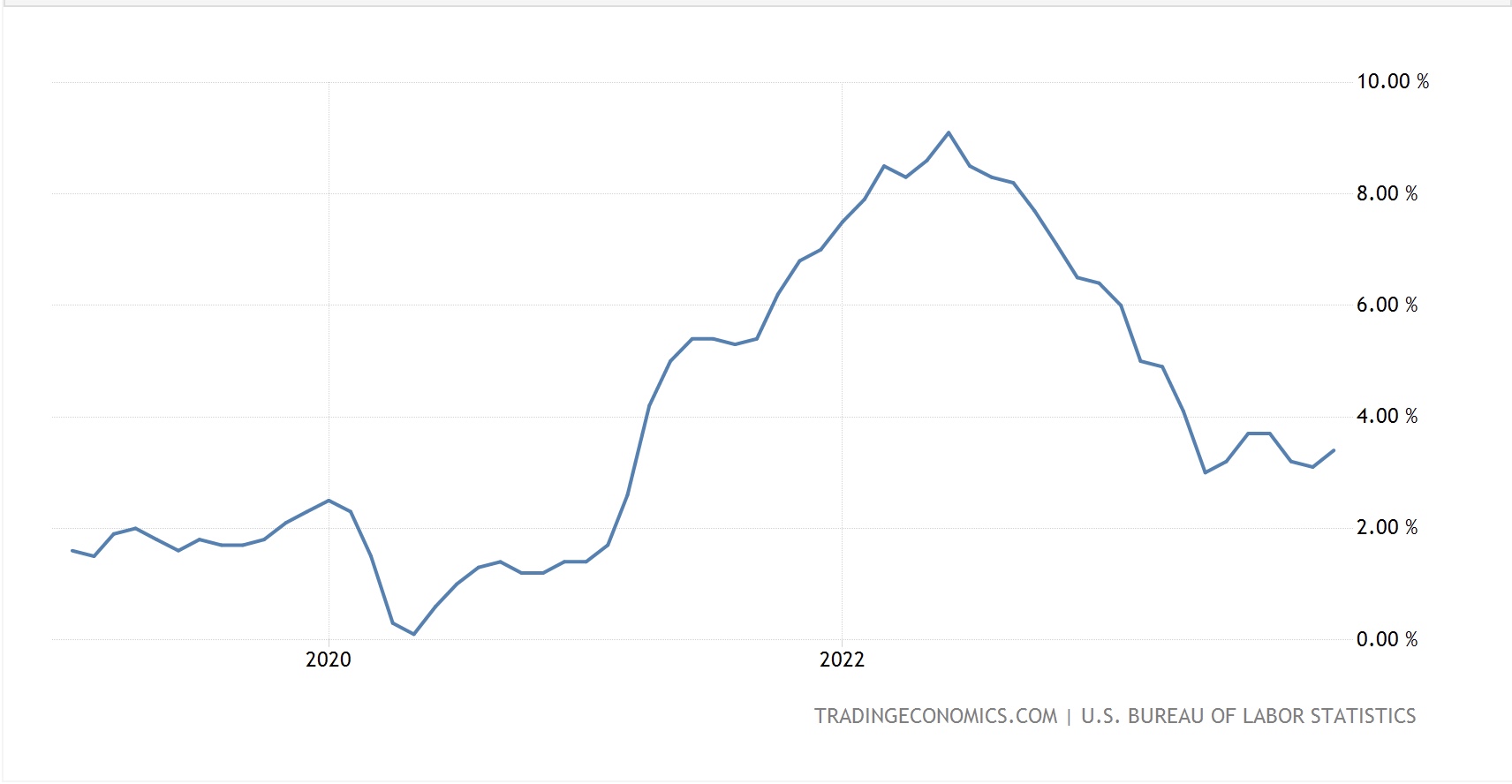
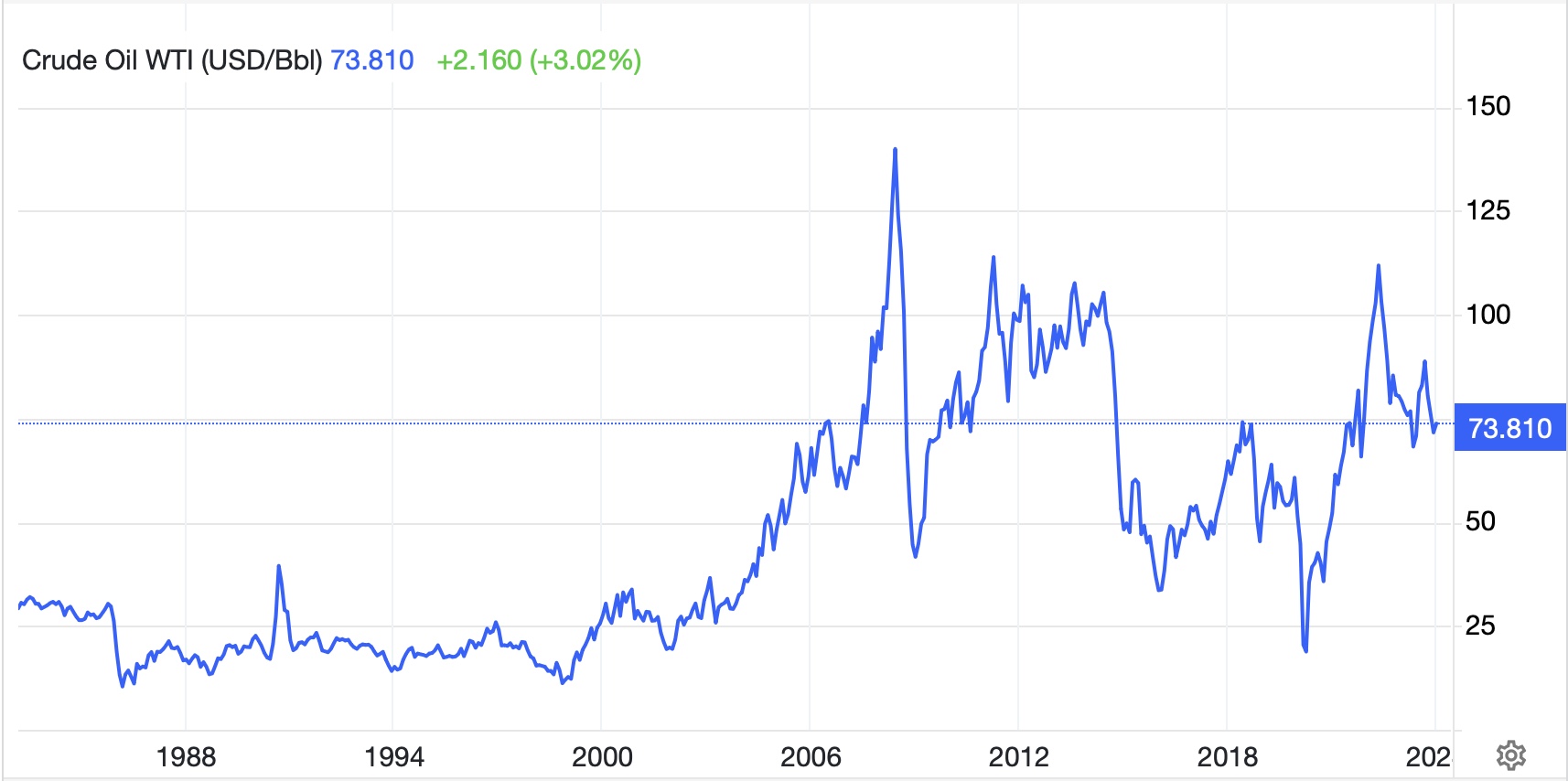


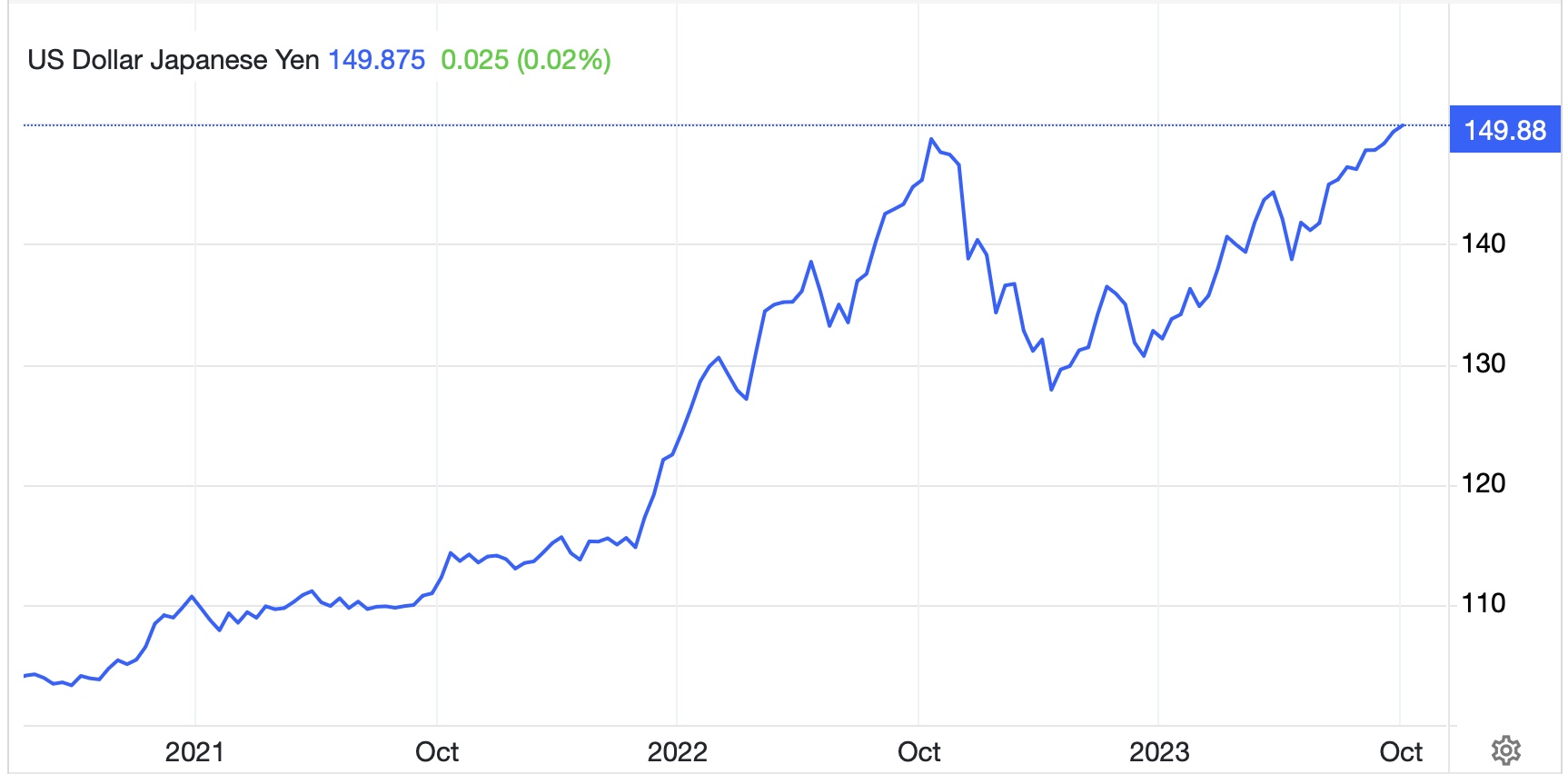
 fxpoetry