There’ll Be Chagrin

Since April, the story has been
The stock market’s yang with no yin
But yesterday’s fall
Reminds one and all
Be wary or there’ll be chagrin

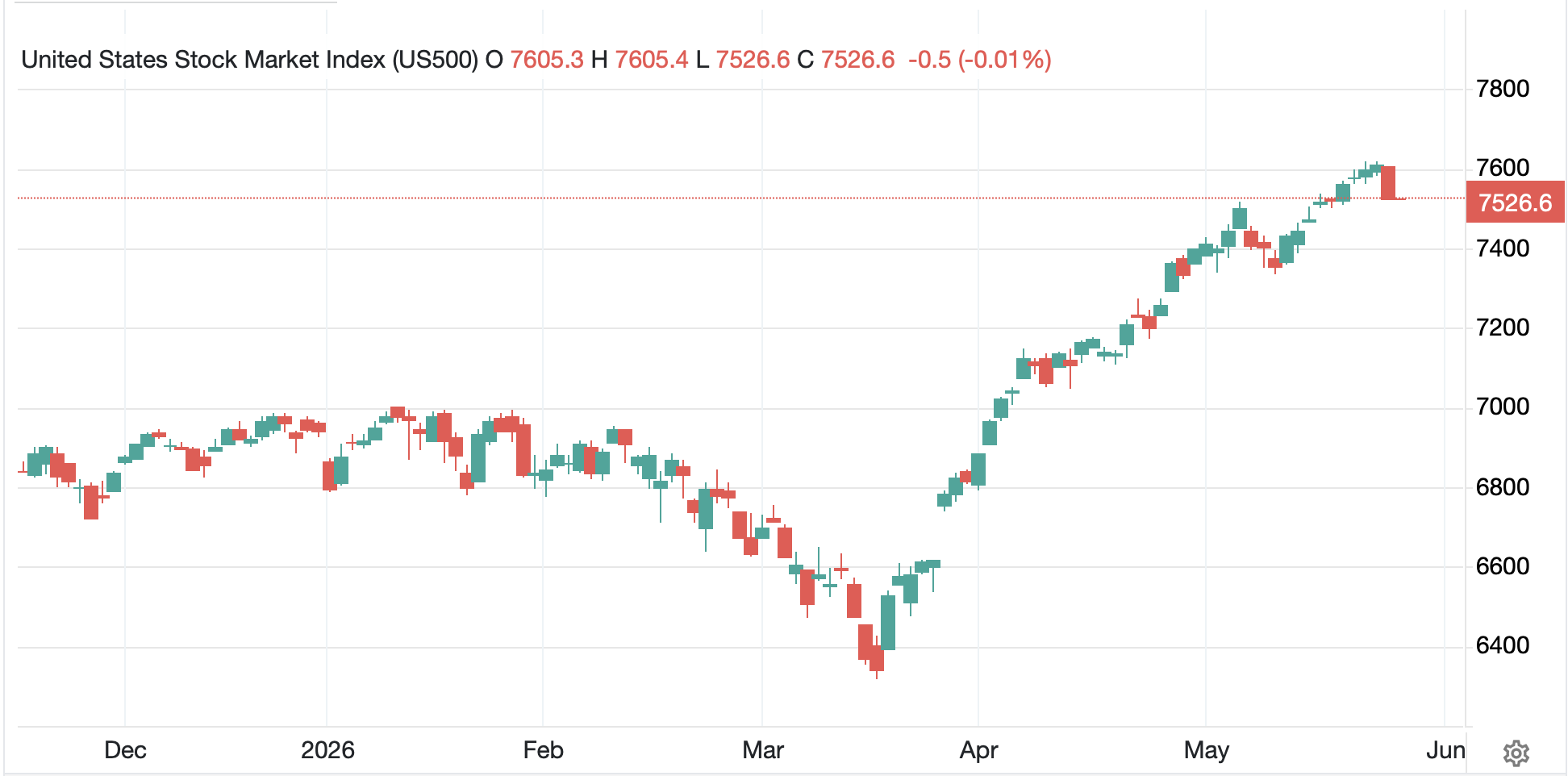
Since the beginning of April, as you can see in the below chart of the S&P 500, stocks have risen sharply (~18%) as up days outnumbered down days 33 to 12, including yesterday’s drop.  That’s a pretty good definition of a raging bull market.

Source: tradingeconomics.com

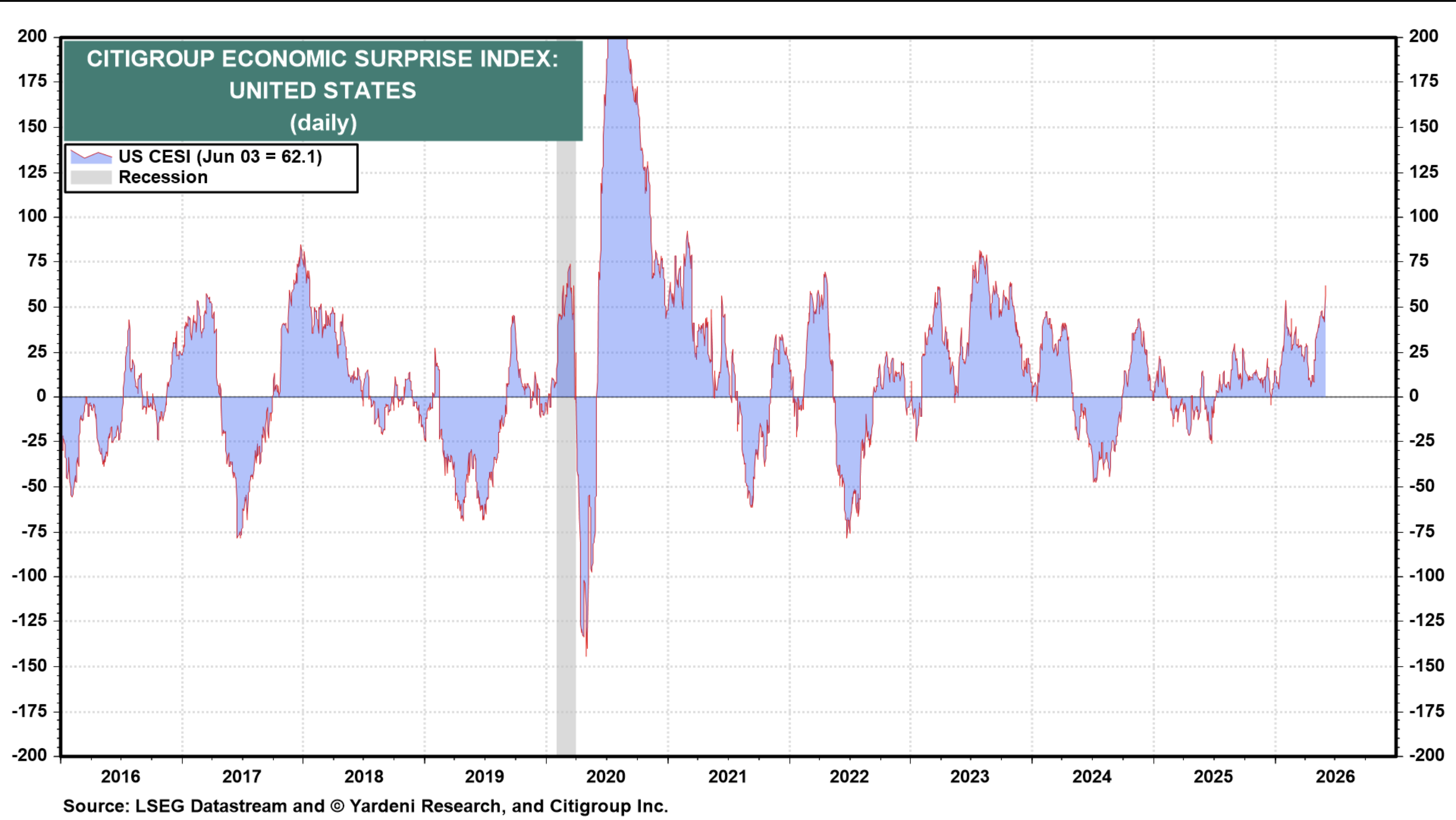
Here’s the thing; nothing really changed yesterday.  Certainly, there has been no change in the status with the Iran conflict, and therefore no change in the prospects for oil prices going forward.  If anything, the data we have been getting has been demonstrating that the US economy is performing better than expected with yesterday’s ISM and Factory Orders data stronger than forecast as was the ADP Employment Report.  If you add that to the JOLTs data from Tuesday, it appears that the overall jobs situation in the US is diverging from the narrative that AI is going to take all the jobs and there is nothing left for people to do.  In fact, a look at the Citi Surprise Index, designed to show the difference between actual economic releases and the forecasts ahead of those releases shows it has risen to its highest level since mid-2023 as per the below chart.

This is a strong signal that the economy, despite a lot of negative talk, is doing pretty well.  Of course, by now we have all learned that the stock market and the economy are very different things.  While historically, the relationship between equity markets and the economy was clearer, with equity markets a reasonable estimator of future economic activities, with somewhere between a 6 month and 1 year lag, ever since the GFC and the financialization of the economy, that relationship has lost much of its luster.  Rather, akin to my discussion of the yen being dependent on capital flows, not economic activity, that is also the story of stocks right now.

This brings us to the story that really seems to be percolating around the market, and that is the imminent IPO’s of SpaceX, Anthropic and OpenAI, as well as Google’s $80 billion share sale.  For the last 30ish years, between share repurchases by companies and the growth of Private Equity which gobbled up public companies, the number of publicly listed company equities has been shrinking, with the number falling roughly in half during that period.  According to Grok, at the end of 2025 there were just 3,657 domestic companies listed on US exchanges, not even enough to fill out the Russell 5000!  With that in mind, and remembering the laws of supply and demand, it ought not be a surprise that prices rose while supply fell.

But is that getting set to change?  While headline companies like SpaceX will get all the press, it seems likely that PE firms are going to be looking to IPO many of their holdings given current overall valuations.  Remember, many of these companies were bought during the era of ZIRP, so debt financing made lots of sense, but once the Fed tightened policy, it has been a problem.  Retail investors have been hoovering up equities for a while now, and I suspect we are going to see a lot more equities come available to meet that demand.  In fact, this is the best story I have heard about what can halt the rally.

But this can also highlight the difference between the economy and the stock market.  Consider the ramifications of the mega names issuing stock and using the funding to continue to build out the AI infrastructure including data centers, power production, turbines, semiconductor fabs, etc., that is all going to result in significant economic activity as people get hired to do the work and all the benefits that accrue from investment lead to real growth in GDP.  We could easily see equity markets stall, or stumble while the economy powers ahead.  Something to consider for the medium-term view here.

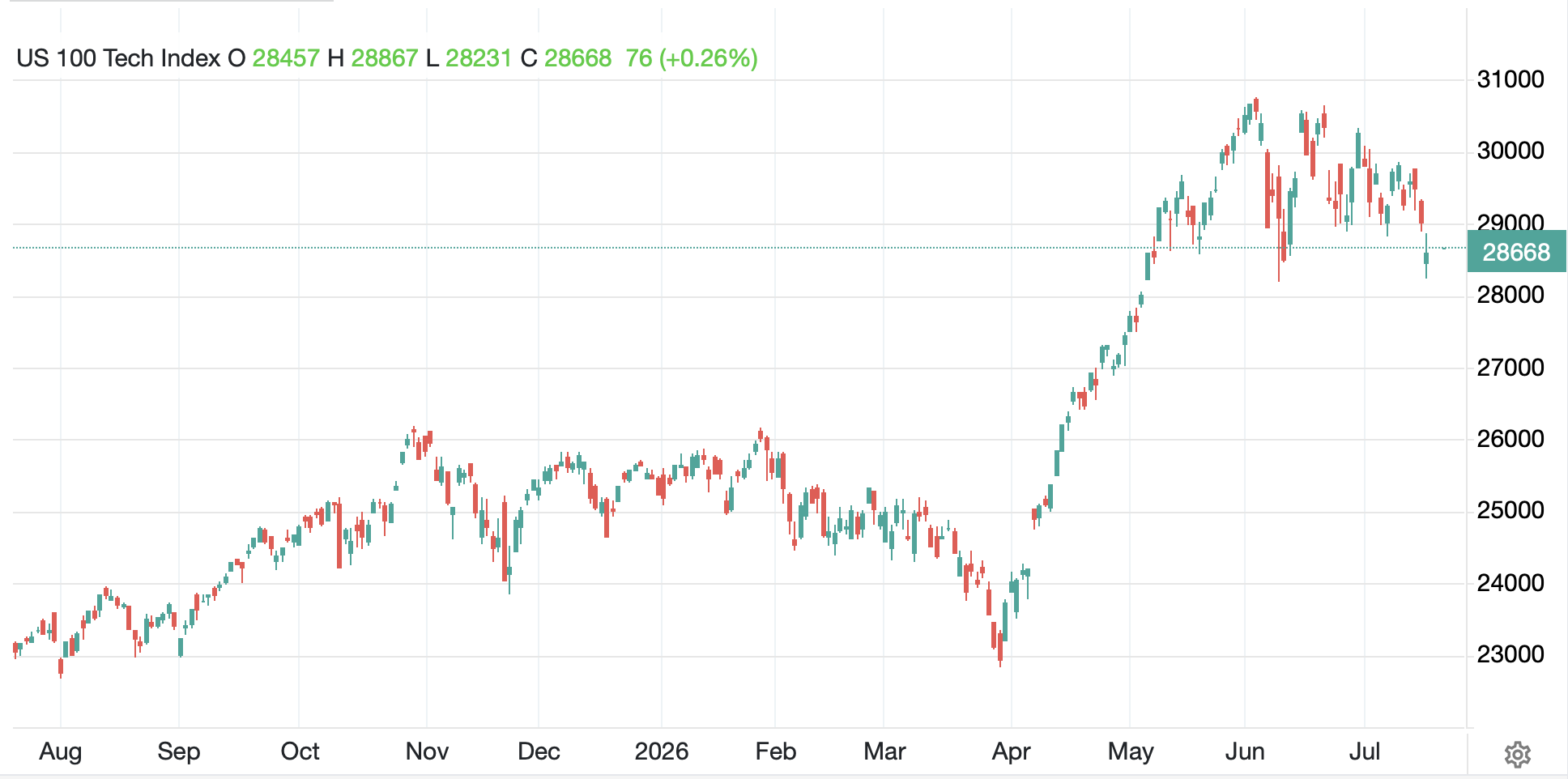
But in the short-term, let’s turn to markets and see how yesterday’s US declines played out overnight.  Asia had a generally miserable session with every major and most other regional exchanges sliding.  This included Tokyo (-1.4%), HK (-1.5%), China (-0.7%), Korea (1.8%), Taiwan (-1.7%) and Australia (-1.1%).  And the smaller markets were no better as India (0.0%) was the top performer.  In Europe, though, the picture is not so dire as only the UK (-0.9%) is under real pressure with the continent (France +0.6%, Germany +0.35% and Spain +0.25%) all managing small gains.  Perhaps the driver here has been inflation data which showed that it has not risen as fast as feared and therefore there is a bit less concern about more aggressive ECB tightening.  As to US futures, they are mixed this morning with NASDAQ (-1.35%) falling sharply on poor Broadcomm earnings although the DJIA (+0.7%) are rebounding from yesterday’s losses as investors rotate a bit from tech to industrials while oil prices have slipped aiding things.

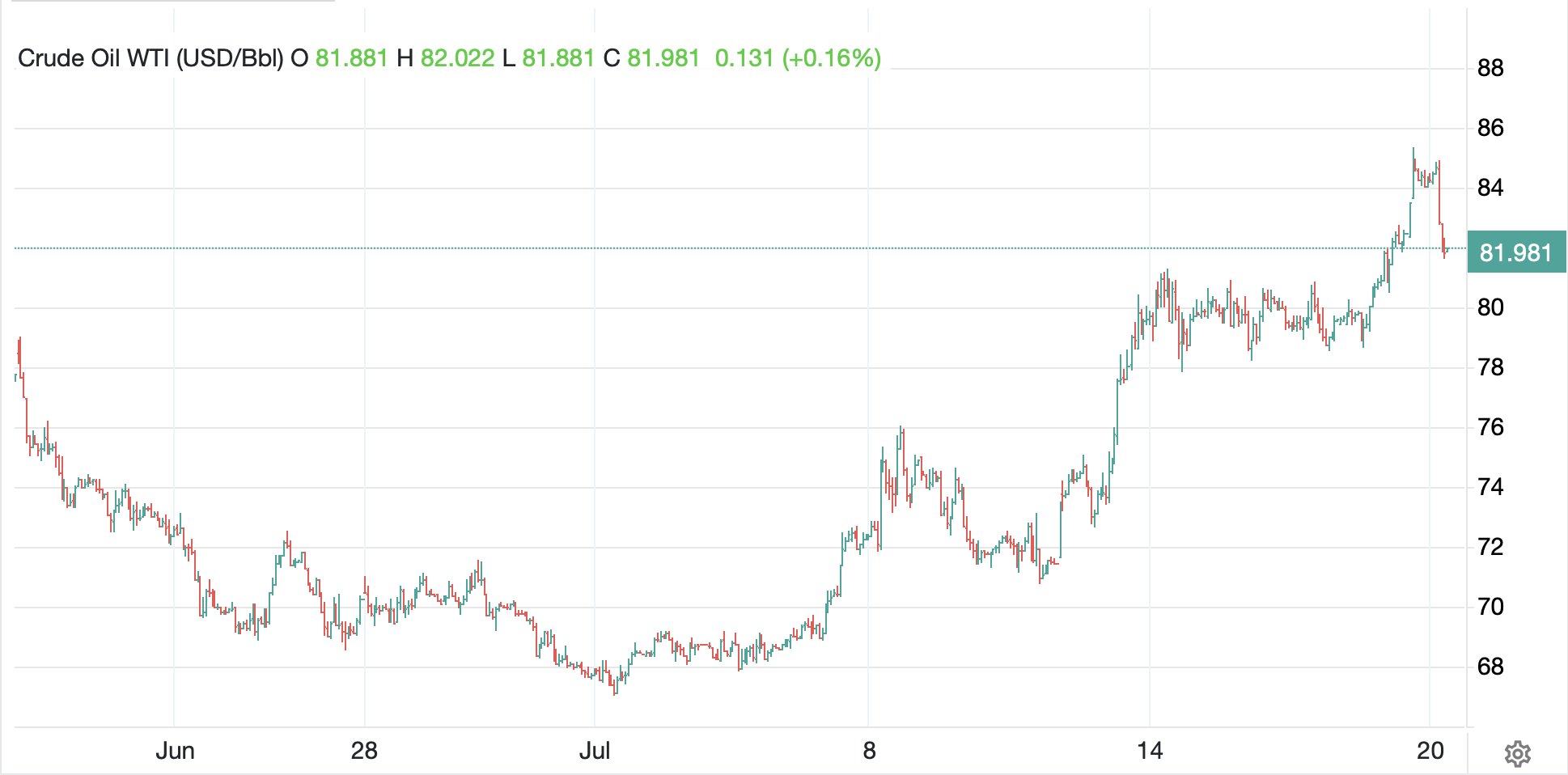
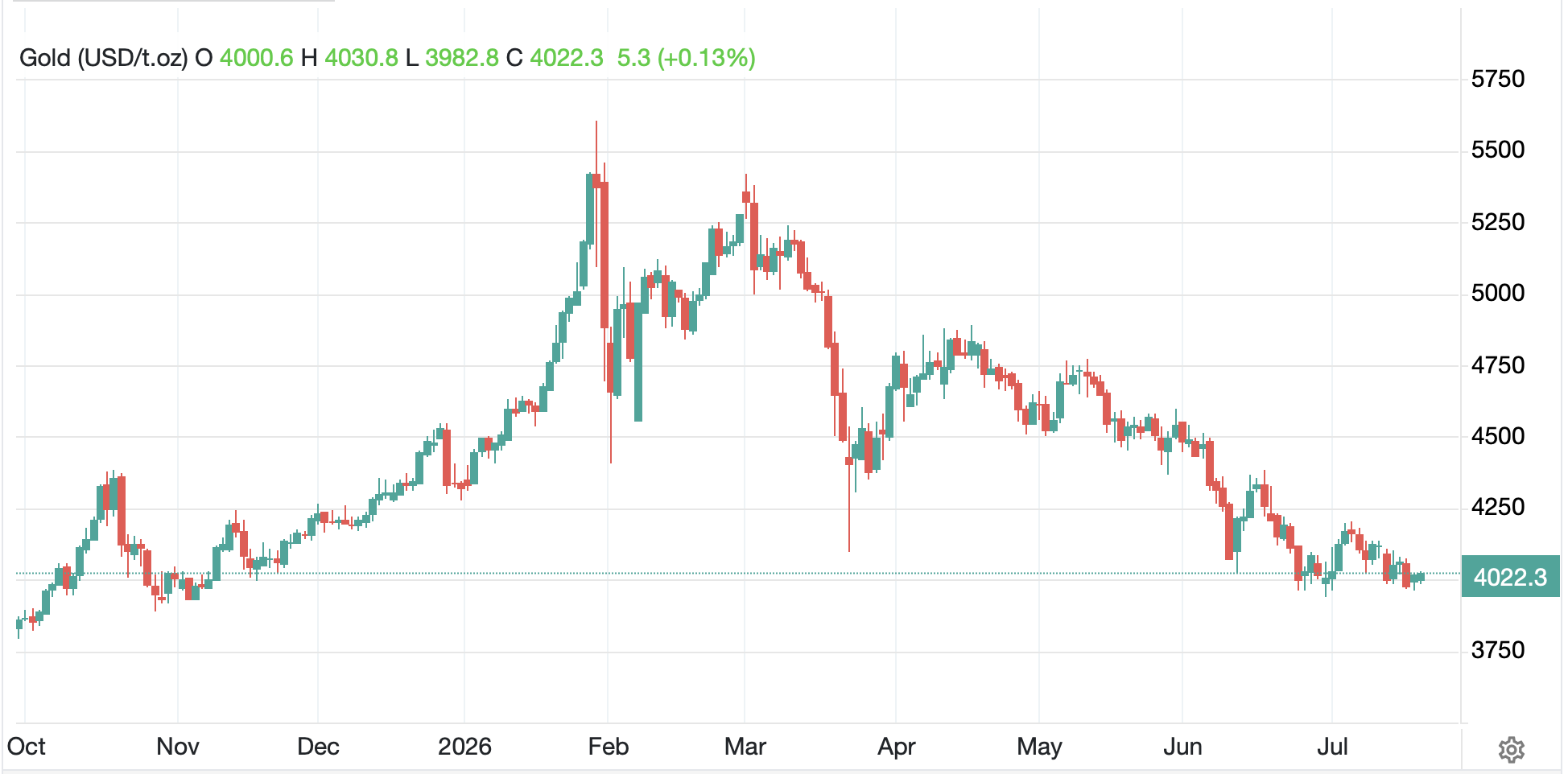
Speaking of oil (-2.3%), it appears to be responding to comments that the US will not resume an all-out war absent the death of US troops.  At least that’s one rationale, although the idea of the price heading back to its recent average is viable as well.  However, this has helped metals markets (Au +1.25%, Ag +1.8%, Cu +0.5%) as that relationship remains quite solid.

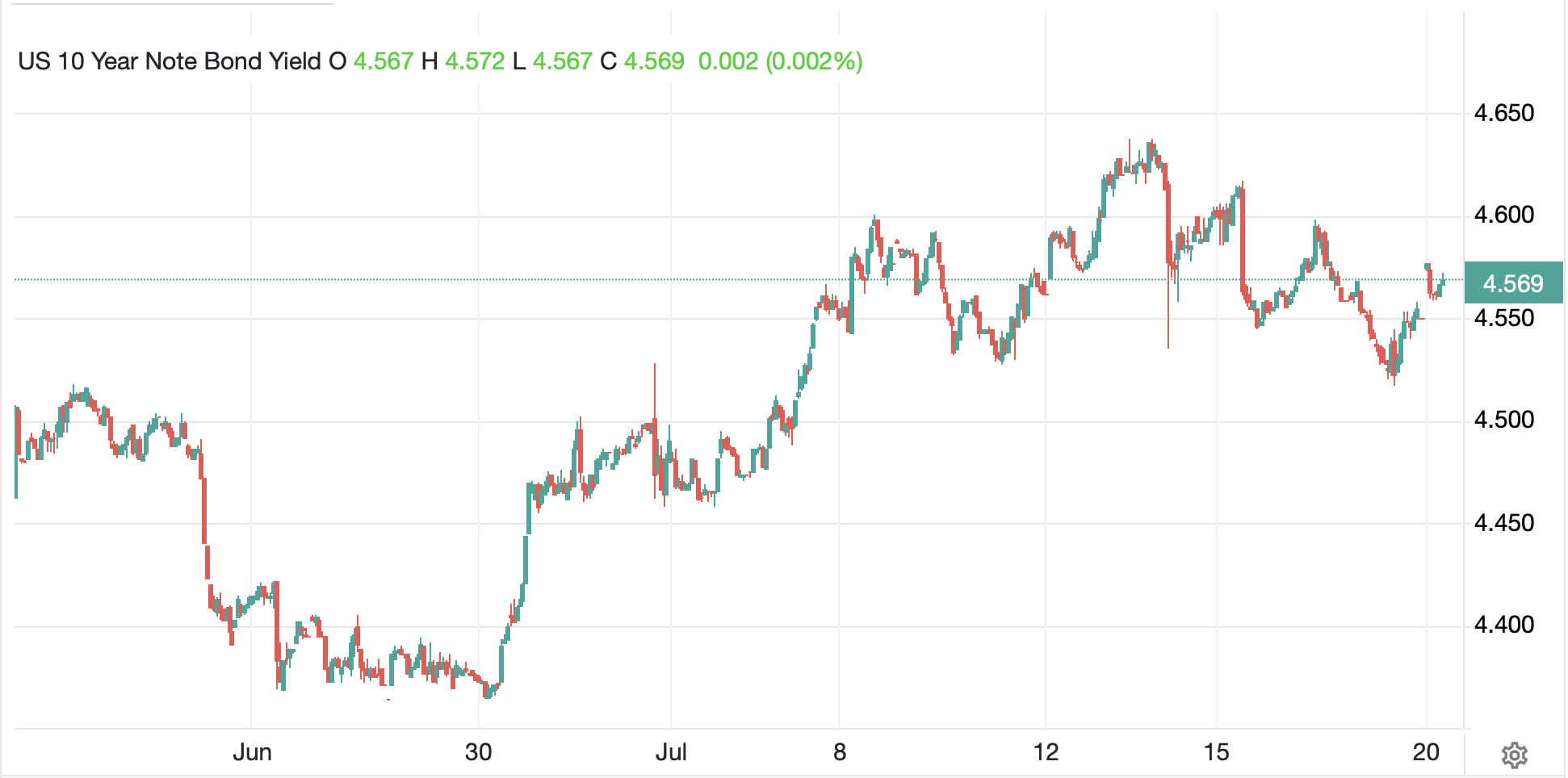
In the bond market, yields are also responding as would be expected with Treasuries (-3bps) leading the way as European sovereign yields all slip between -1bp and -2bps.

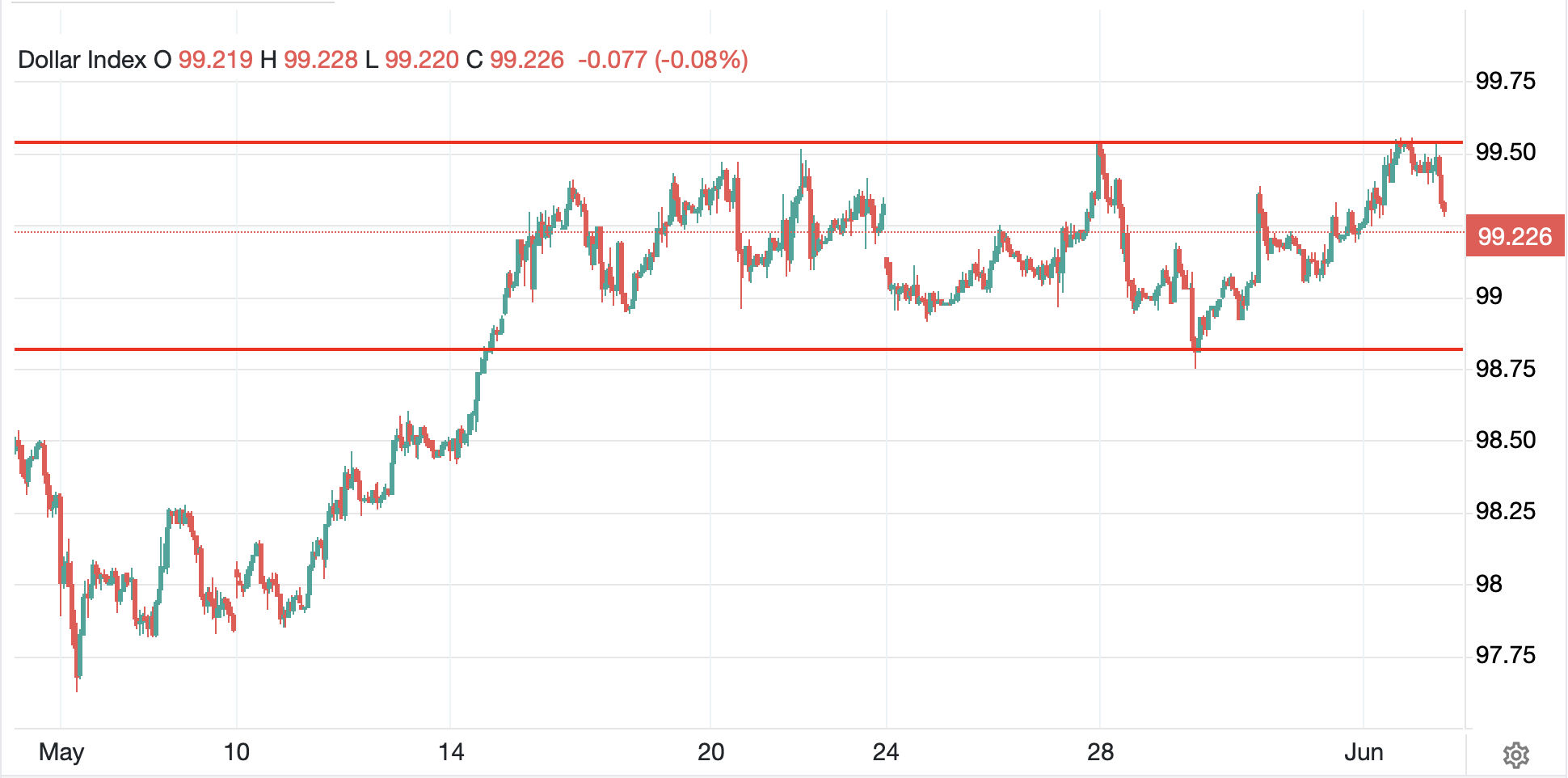
Finally, the dollar is giving up some of its recent gains but as you can see in the chart below for the DXY, during the past 3 weeks, the index has traded between 98.85 and 99.55, a very tight range and indicative of the general lack of movement in the dollar.

Source: tradingeconomics.com

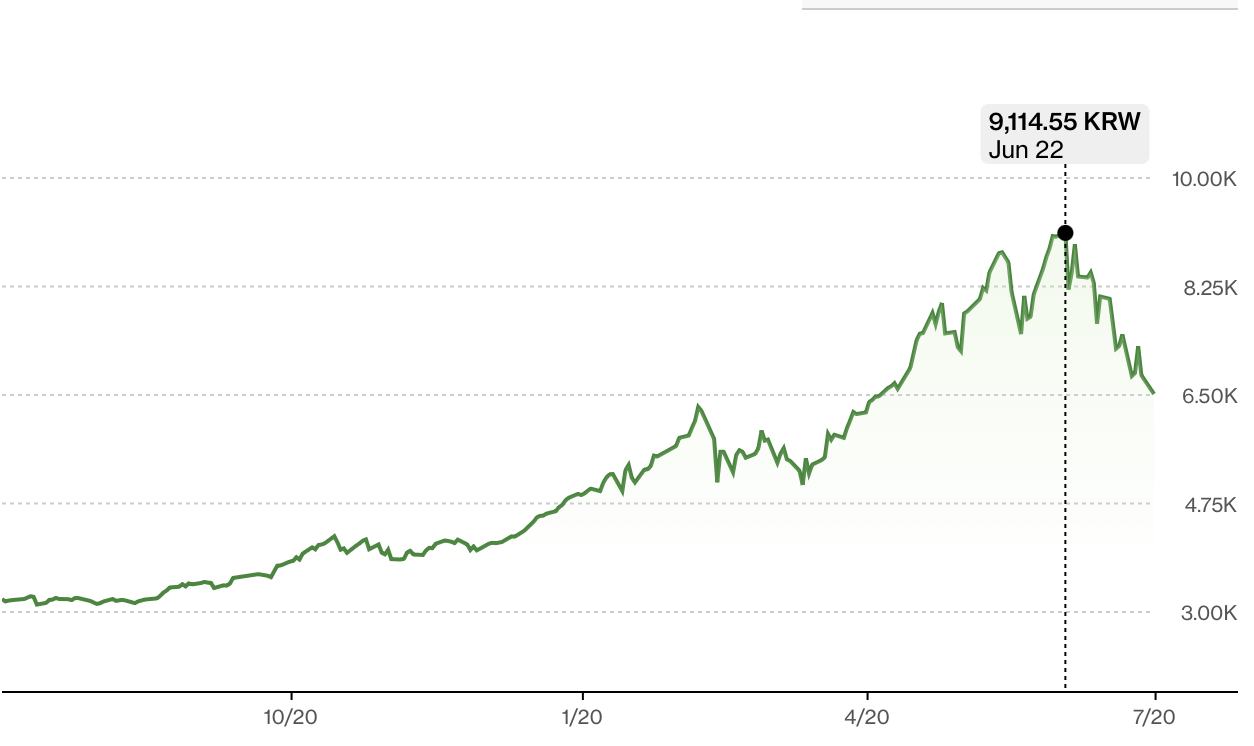
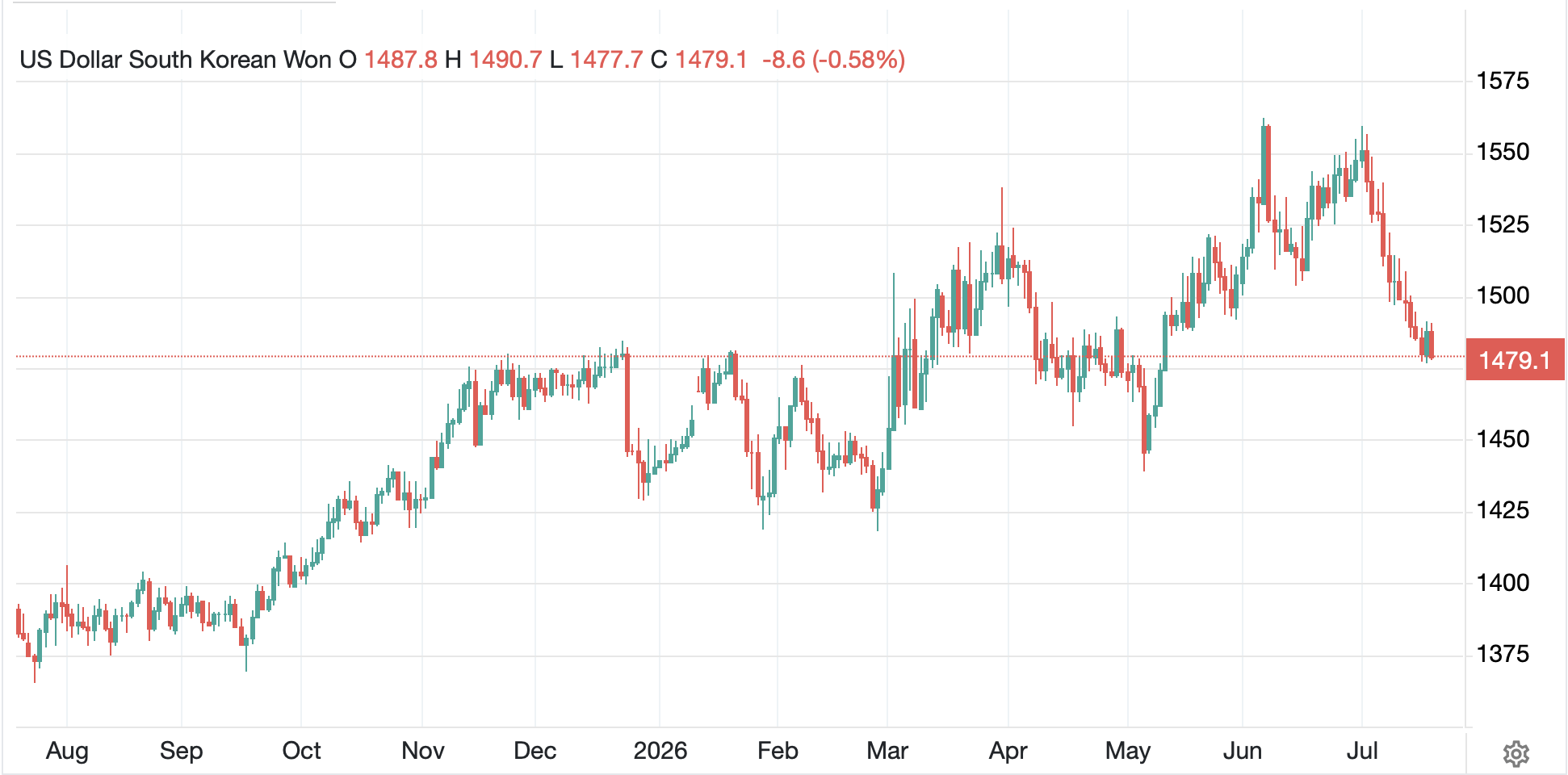
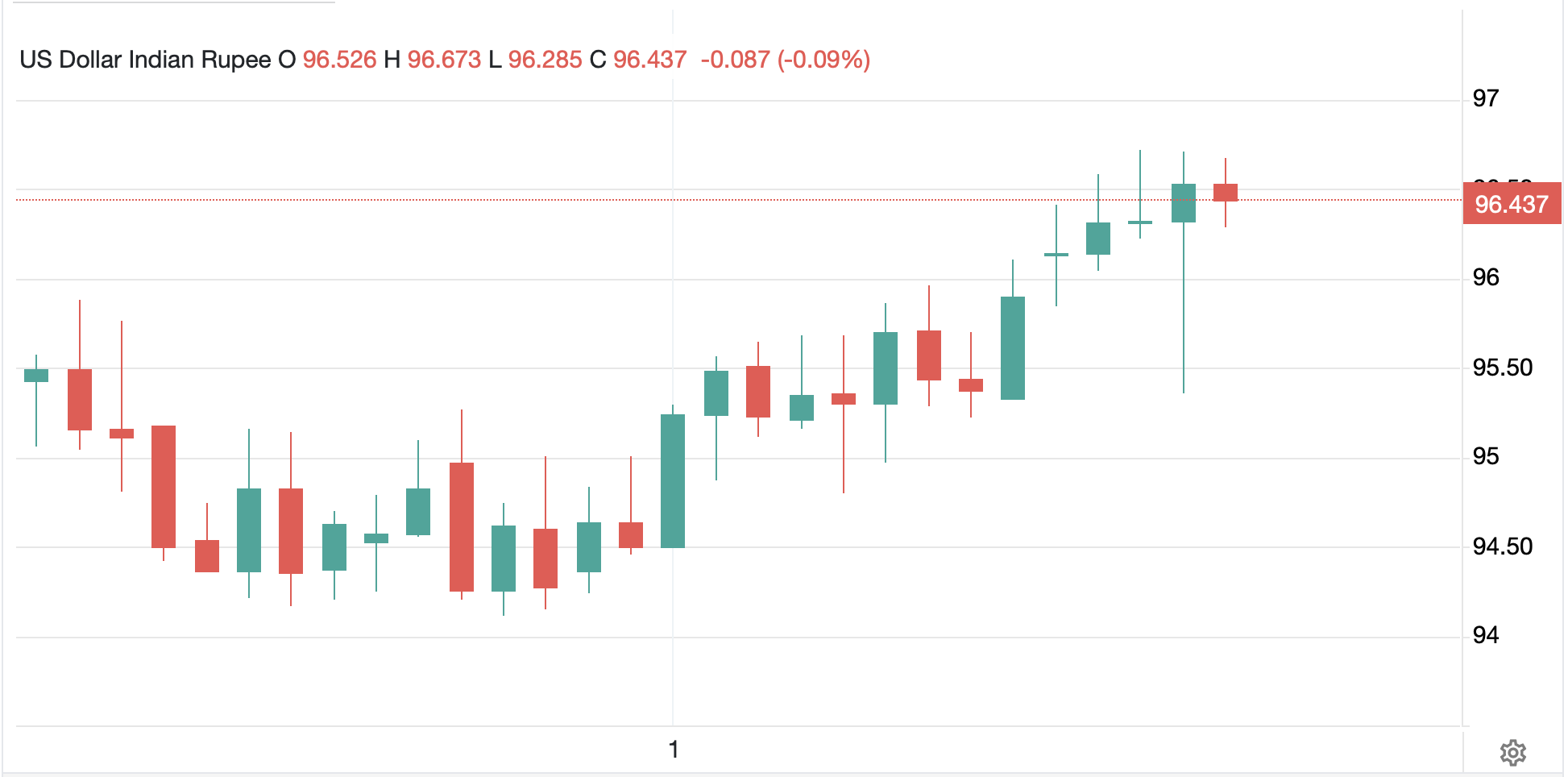
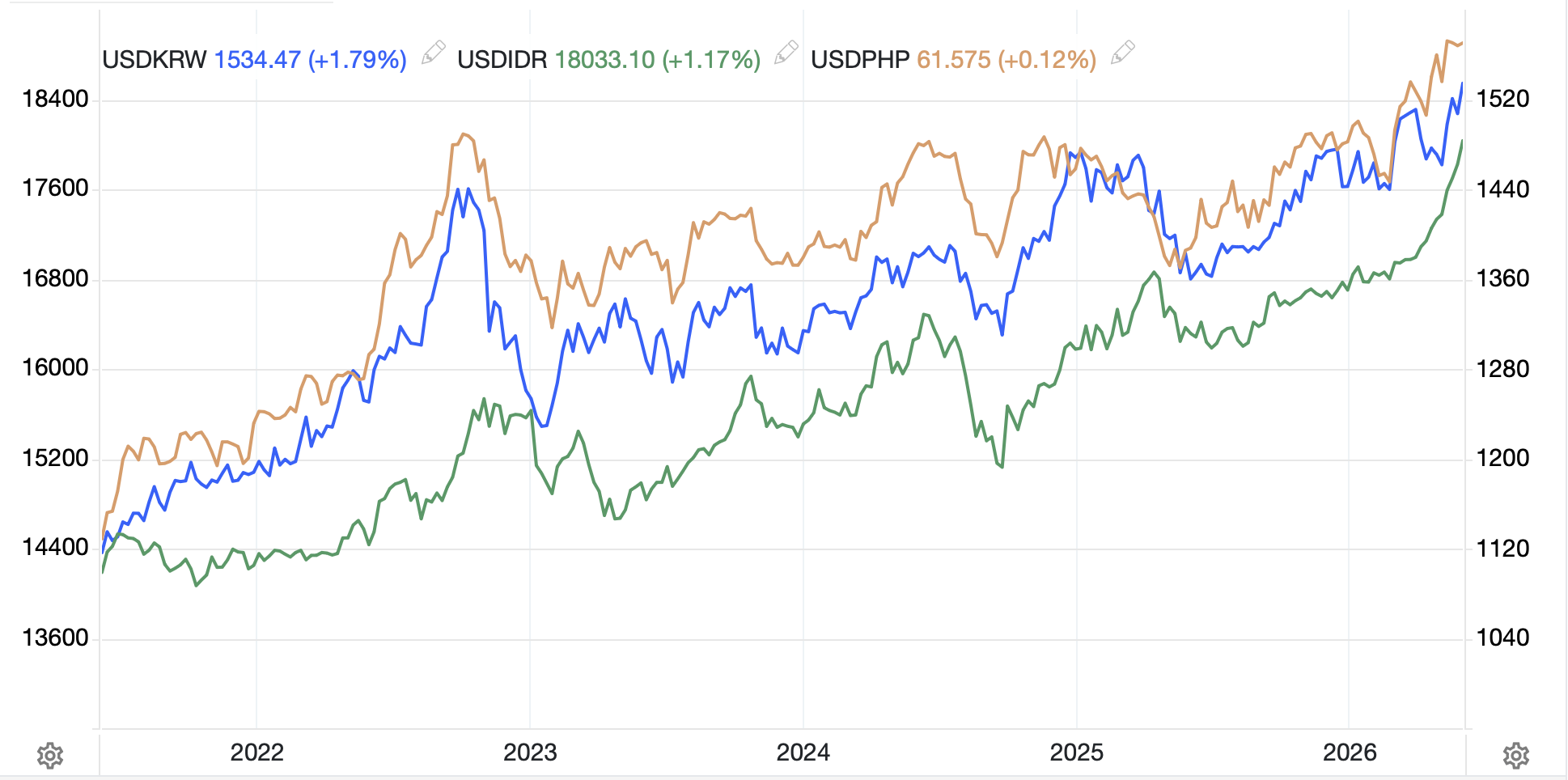
However, that is the dollar writ large vs. major currencies.  Against several Asian currencies, the story is not the same.  The below chart shows the Korean won, Indonesian rupiah and Philippine peso, all of which are trading at their lowest levels since the GFC as the pressure from higher oil prices and reduced supplies has really impacted their economies and currencies by extension.

Source: tradingeconomics.com

As to the JPY, it managed to trade through 160.00 yesterday, but only just, and this morning sits just below that level with no sign of the BOJ/MOF.  The Japan story remains the same, but the changes required there will be politically fraught.  However, for the smaller Asian nations, much is out of their hands, and my sense is that while they will all seek to mitigate the pace of decline, there is very little they can do to stop it on their own.  That will require the Iran situation to end and oil prices to head back lower with supplies rebuilding.

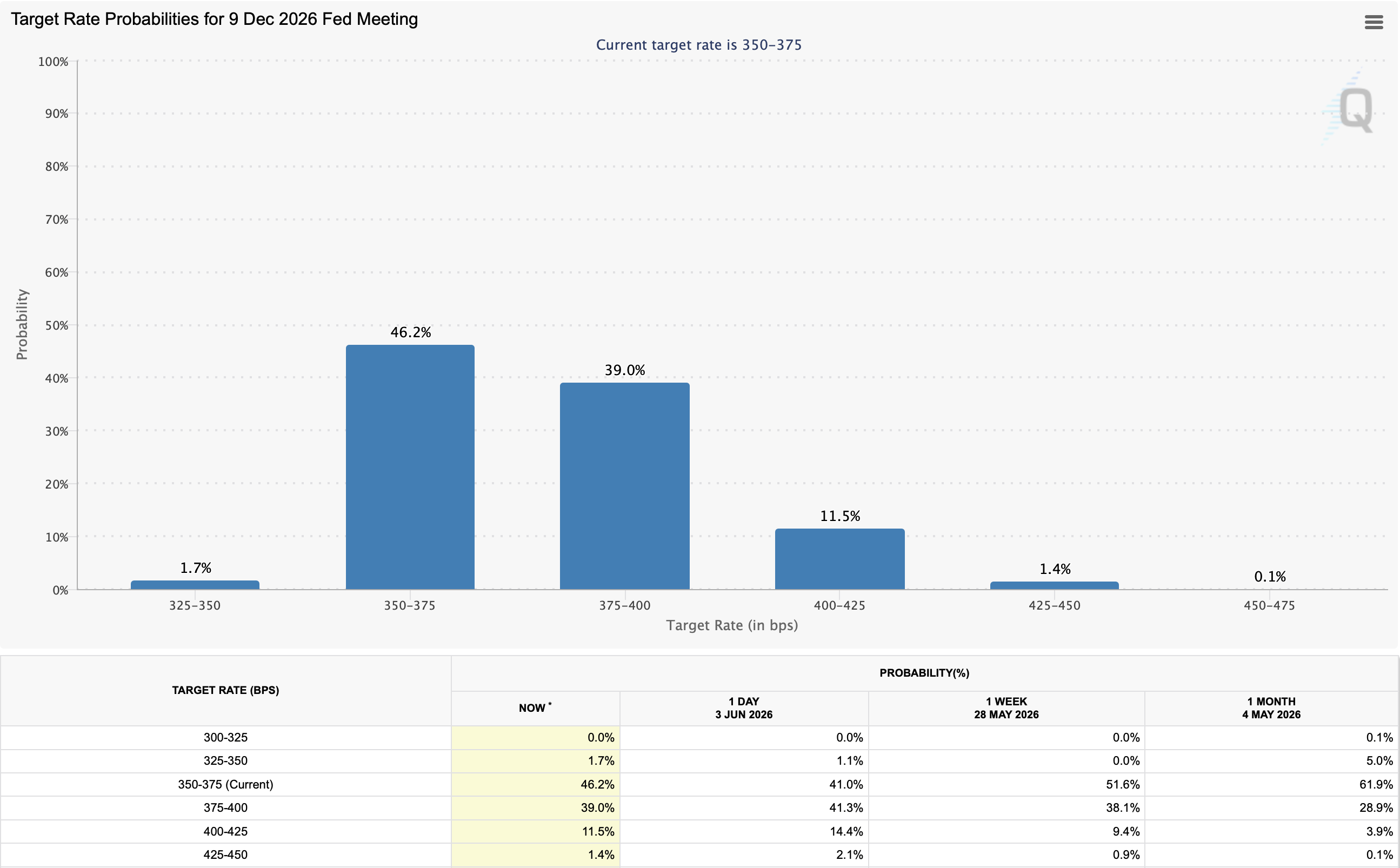
On the data front, this morning brings the weekly Initial (exp 213K) and Continuing (1780K) Claims data as well as Nonfarm Productivity (0.5%) and Unit Labor Costs (2.5%.  Too, we hear from several more Fed speakers but given all the other things that are ongoing, their words don’t seem to move markets.  For instance, yesterday Dallas Fed president Logan said she thought inflation pressures indicated rates may need to rise.  But she is a known hawk, one of the hawkish dissents at the last meeting, and thus this is not new news.  Below is the CME’s futures probability page for the December meeting which shows a slightly more than 50% chance of a hike by then.  However, if you look at the table at the bottom, you can see that the probability has been creeping higher in the past month, although that is just as likely on the back of the better data than any Fedspeak.  Certainly, next week’s first Warsh chaired meeting will get a great deal of attention.

And that’s really it for the day.  In the FX market, as well as bonds frankly, I don’t expect anything of note.  Oil looks to be drifting lower while metals drift higher and the real wild card is equities, which have been showing inordinate strength.  My thoughts above reflect my views for potential later in the year, not today.

Good luck

Adf

Watching With Rigor

Though Draghi said data of late
May not have appeared all that great
We’re watching with rigor
Inflation that’s vigor-
Ously rising at a high rate

After a multi week decline, the dollar is showing further signs of stabilizing this morning. And that includes its response to yesterday’s surprising comments by ECB President Mario Draghi, who indicated that despite the ECB lowering its forecasts for growth this year and next, and that despite the fact that recent data has been falling short of expectations, he still described the underlying inflation impulse as “relatively vigorous” and reconfirmed that QE would be ending in December with rates rising next year. In fact, several of his top lieutenants, including Peter Praet and Ewald Nowotny, indicated that rates ought to rise even sooner than that. Draghi, however, has remained consistent in his views that gradual removal of the current policy accommodation is the best way forward. But as soon as the words “relatively vigorous” hit the tape, the euro jumped more than 0.5% and touched an intraday high of 1.1815, its richest point since June. The thing is, that since that time yesterday morning, it has been a one-way trip lower, with the euro ultimately rising only slightly yesterday and actually drifting lower this morning.

But away from the excitement there, the dollar has continued to consolidate Friday’s gains, and is actually edging higher on a broad basis. It should be no surprise that the pound remains beholden to the Brexit story, and in truth I am surprised it is not lower this morning after news that the Labour party would definitively not support a Brexit deal based on the current discussions. This means that PM May will need to convince everyone in her tenuous majority coalition to vote her way, assuming they actually get a deal agreed. And while one should never underestimate the ability of politicians to paint nothing as something, it does seem as though the UK is going to be leaving the EU with no exit deal in place. While the pound is only down 0.15% this morning, I continue to see a very real probability of a much sharper decline over the next few months as it becomes increasingly clear that no deal will appear.

There was one big winner overnight, though, the Korean won, which rallied 4.2% on two bits of news. Arguably the biggest positive was the word that the US and Korea had agreed a new trade deal, the first of the Trump era, which was widely hailed by both sides. But let us not forget the news that there would be a second round of talks between President Trump and Kim Jong-Un to further the denuclearization discussion. This news is also a significant positive for the won.

The trade situation remains fascinating in that while Mr Trump continues to lambaste the Chinese regarding trade, he is aggressively pursuing deals elsewhere. In fact, it seems that one of the reasons yesterday’s imposition of the newest round of tariffs on Chinese goods had so little market impact is that there is no indication that the president is seeking isolationism, but rather simply new terms of trade. For all the bluster that is included in the process, he does have a very real success to hang his hat on now that South Korea is on board. Signing a new NAFTA deal might just cause a re-evaluation of his tactics in a more positive light. We shall see. But in the end, the China situation does not appear any closer to resolution, and that will almost certainly outweigh all the other deals, especially if the final threatened round of $267 billion of goods sees tariffs. The punditry has come around to the view that this is all election posturing and that there will be active negotiations after the mid-term elections are concluded in November. Personally, I am not so sanguine about the process and see a real chance that the trade war situation will extend much longer.

If the tariffs remain in place for an extended period of time, look for inflation prints to start to pick up much faster and for the Fed to start to lean more hawkishly than they have been to date. The one thing that is clear about tariffs is that they are inflationary. With the FOMC starting their meeting this morning, all eyes will be on the statement tomorrow afternoon, and then, of course, all will be tuned in to Chairman Powell’s press conference. At this point, there seems to be a large market contingent (although not a majority) that is looking for a more dovish slant in the statement. Powell must be happy that the dollar has given back some of its recent gains, and will want to see that continue. But in the end, there is not yet any evidence that the Fed is going to slow down the tightening process. In fact, the recent rebound in oil prices will only serve to put further upward pressure on inflation, and most likely keep the doves cooped up.

With that in mind, the two data points to be released today are unlikely to have much market impact with Case-Shiller Home Prices (exp 6.2%) at 9:00am and Consumer Confidence (132.0) due at 10:00. So barring any new comments from other central bankers, I expect the dollar to remain range bound ahead of tomorrow’s FOMC action.

Good luck
Adf


Percent Twenty-Five

The story, once more’s about trade
As Trump, a new threat, has conveyed
Percent twenty-five
This fall may arrive
Lest progress in trade talks is made

President Trump shook things up yesterday by threatening 25% tariffs on $200 billion of Chinese imports unless a trade deal can be reached. This is up from the initial discussion of a 10% tariff on those goods, and would almost certainly have a larger negative impact on GDP growth while pushing inflation higher in both the US and China, and by extension the rest of the world. It appears that the combination of strong US growth and already weakening Chinese growth, has led the President to believe he is in a stronger position to obtain a better deal. Not surprisingly the Chinese weren’t amused, loudly claiming they would not be blackmailed. In the background, it appears that efforts to restart trade talks between the two nations have thus far been unsuccessful, although those efforts continue.

Clearly, this is not good news for the global economy, nor is it good news for financial markets, which have no way to determine just how big an impact trade ructions are going to have on equities, currencies, commodities and interest rates. In other words, things are likely more uncertain now than in more ‘normal’ times. And that means that market volatility across markets is likely to increase. After all, not only is there the potential for greater surprises, but the uncertainty prevailing has reduced liquidity overall as many investors and traders hew to the sidelines until they have a better idea of what to do. And, of course, it is August 1st, a period where summer vacations leave trading desks with reduced staffing levels and so liquidity is generally less robust in any event.

Moving past trade brings us straight to the central bank story, where the relative hawkishness or dovishnes of yesterday’s BOJ announcement continues to be debated. There are those who believe it was a stealth tightening, allowing higher 10-year yields (JGB yields rose 8bps last night to their highest level in more than 18 months) and cutting in half the amount of reserves subject to earning -0.10%. And there are those who believe the increased flexibility and addition of forward guidance are signals that the BOJ is keen to ease further. Yesterday’s price action in USDJPY clearly favored the doves, as the yen fell a solid 0.8% in the session. But there has been no follow-through this morning.

As to the other G10 currencies, the dollar is modestly firmer against most of them this morning in the wake of PMI data from around the world showing that the overall growth picture remains mixed, but more troubling, the trend appears to be continuing toward slower growth.

The emerging market picture is similar, with the dollar performing reasonably well this morning, although, here too, there are few outliers. The most notable is KRW, which has fallen 0.75% overnight despite strong trade data as inflation unexpectedly fell and views of an additional rate hike by the BOK dimmed. However, beyond that, modest dollar strength was the general rule.

At this point in the session, the focus will turn to some US data including; ADP Employment (exp 185K), ISM Manufacturing (59.5) and its Prices Paid indicator (75.8), before the 2:00pm release of the FOMC statement as the Fed concludes its two day meeting. As there is no press conference, and the Fed has not made any changes to policy without a press conference following the meeting in years, I think it is safe to say there is a vanishingly small probability that anything new will come from the meeting. The statement will be heavily parsed, but given that we heard from Chairman Powell just two weeks ago, and the biggest data point, Q2 GDP, was released right on expectations, it seems unlikely that they will make any substantive changes.

It feels far more likely that this meeting will have been focused on technical questions about how future Fed policies will be enacted. Consider that QE has completely warped the old framework, where the Fed would actually adjust reserves in order to drive interest rates. Now, however, given the trillions of dollars of excess reserves, they can no longer use that strategy. The question that has been raised is will they try to go back to the old way, or is the new, much larger balance sheet going to remain with us forever. For hard money advocates, I fear the answer will not be to their liking, as it appears increasingly likely that QE is with us to stay. Of course, since this is a global phenomenon, I expect the impact on the relative value of any one currency is likely to be muted. After all, if everybody has changed the way they manage their economy in the same manner, then relative values are unlikely to change.

Flash, ADP Employment prints at a better than expected 219K, but the initial dollar impact is limited. Friday’s NFP report is of far more interest, but for today, all eyes will wait for the Fed. I expect very limited movement in the dollar ahead of then, and afterwards to be truthful.

Good luck
Adf