Much Hotter

Remember when riots were seen
Across every TV’s flat screen?
Well, that’s in the past
As news of a blast
In Tehran, just one thing, can mean
 
The Middle East just got much hotter
And now every armchair war plotter
Will offer their views
Of which side will lose
So, traders, keep watch o’er your blotter


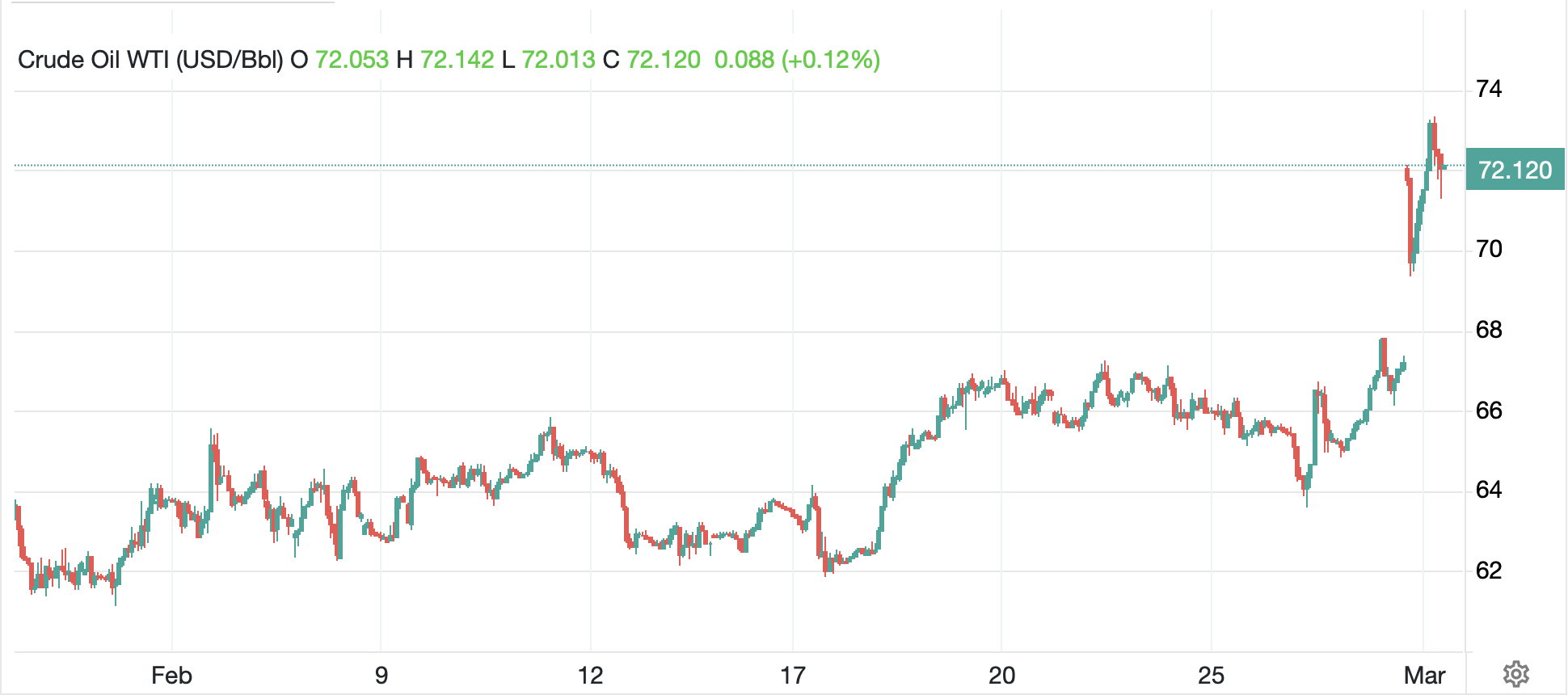
Is it a coincidence that Israel’s attack on Iran’s nuclear sites occurred on Friday the 13th, or was it meant as a message that luck, both good and bad, can be manufactured? Whatever the driver, the market reaction has been instantaneous.  Here is a look at the five-minute chart in oil with the black sticky stuff jumping more than 8% on the news.

Source: tradingeconomics.com

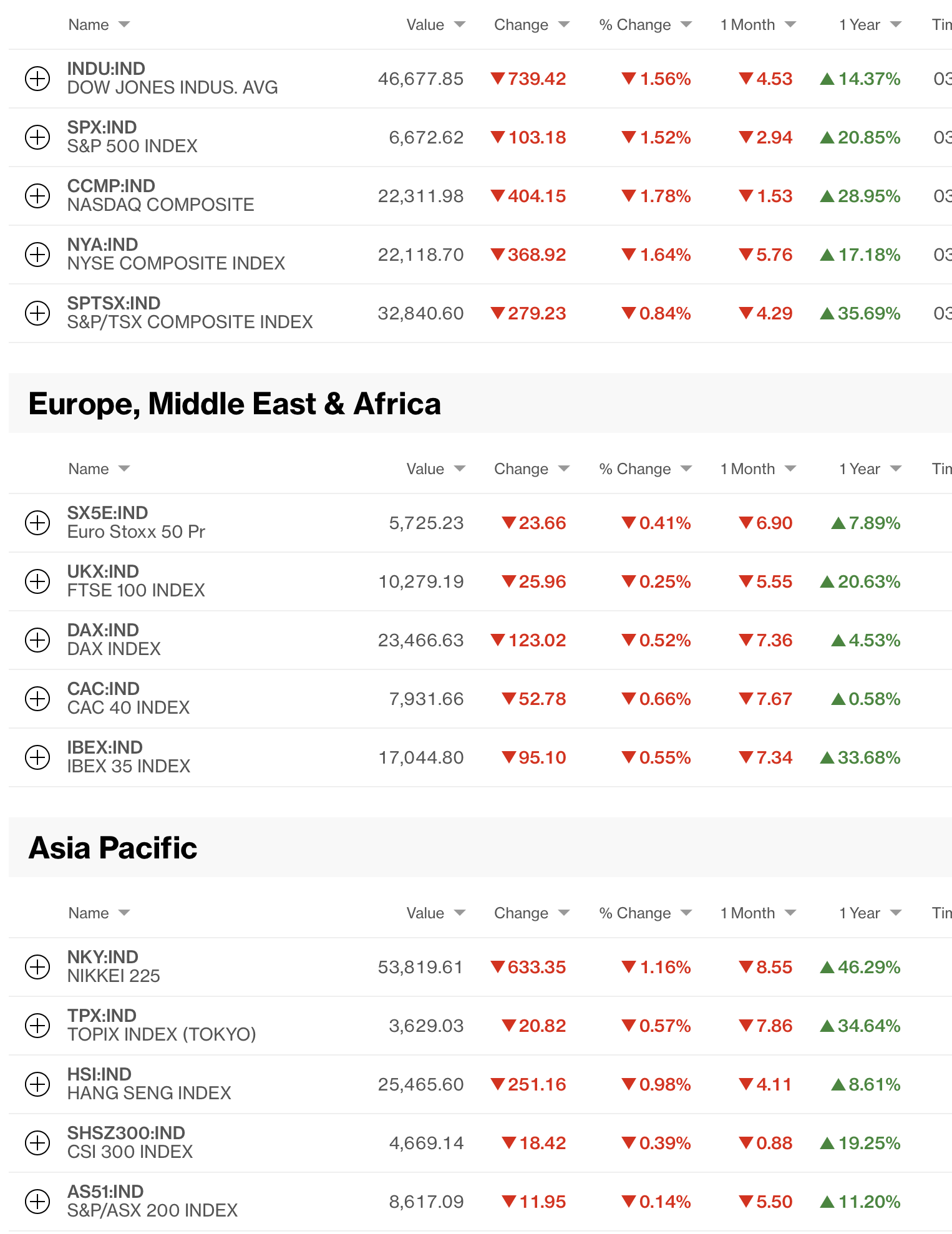
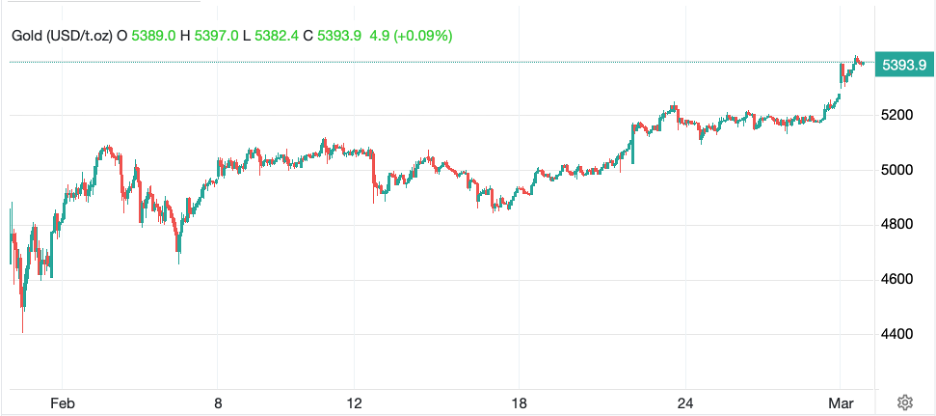
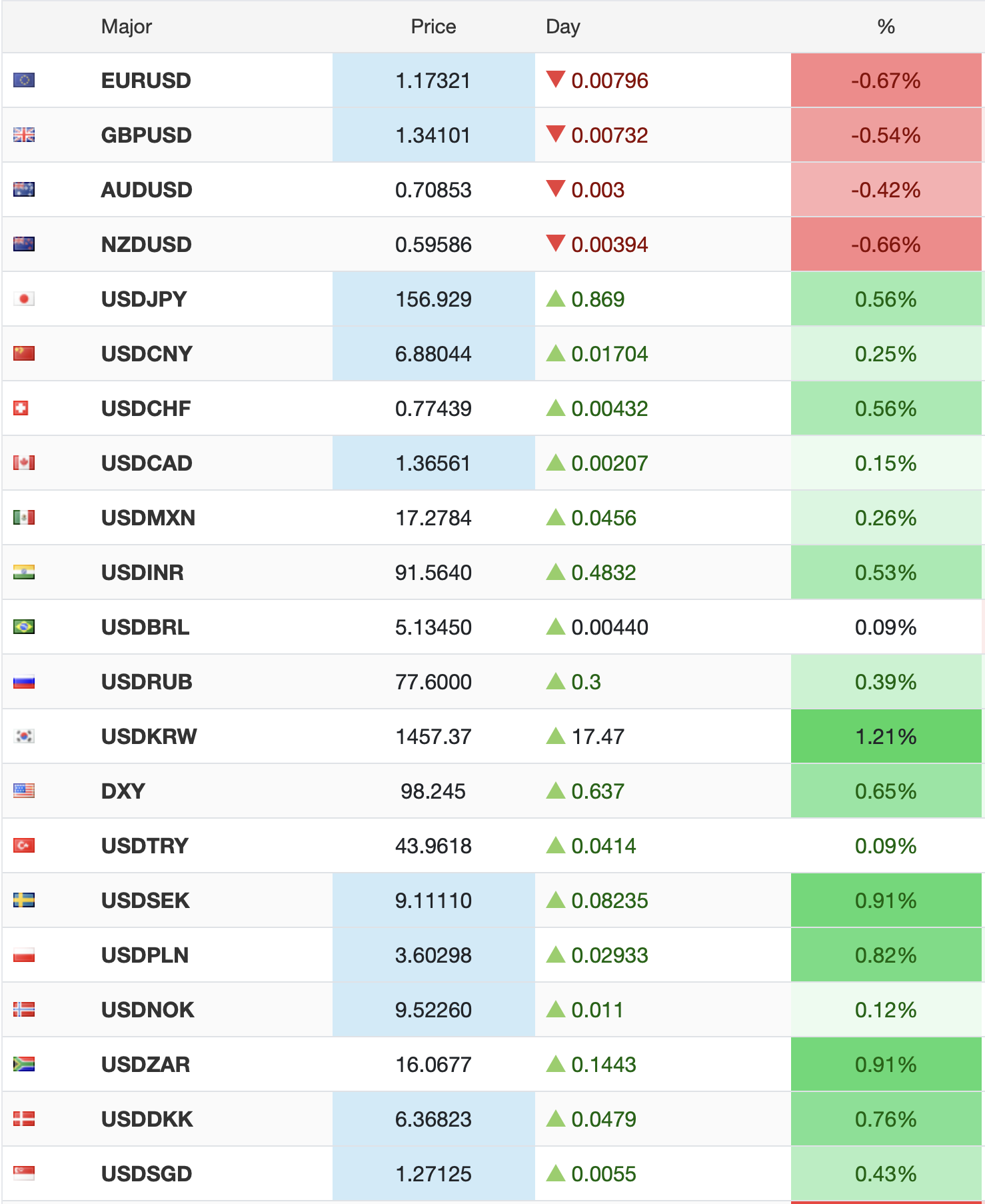
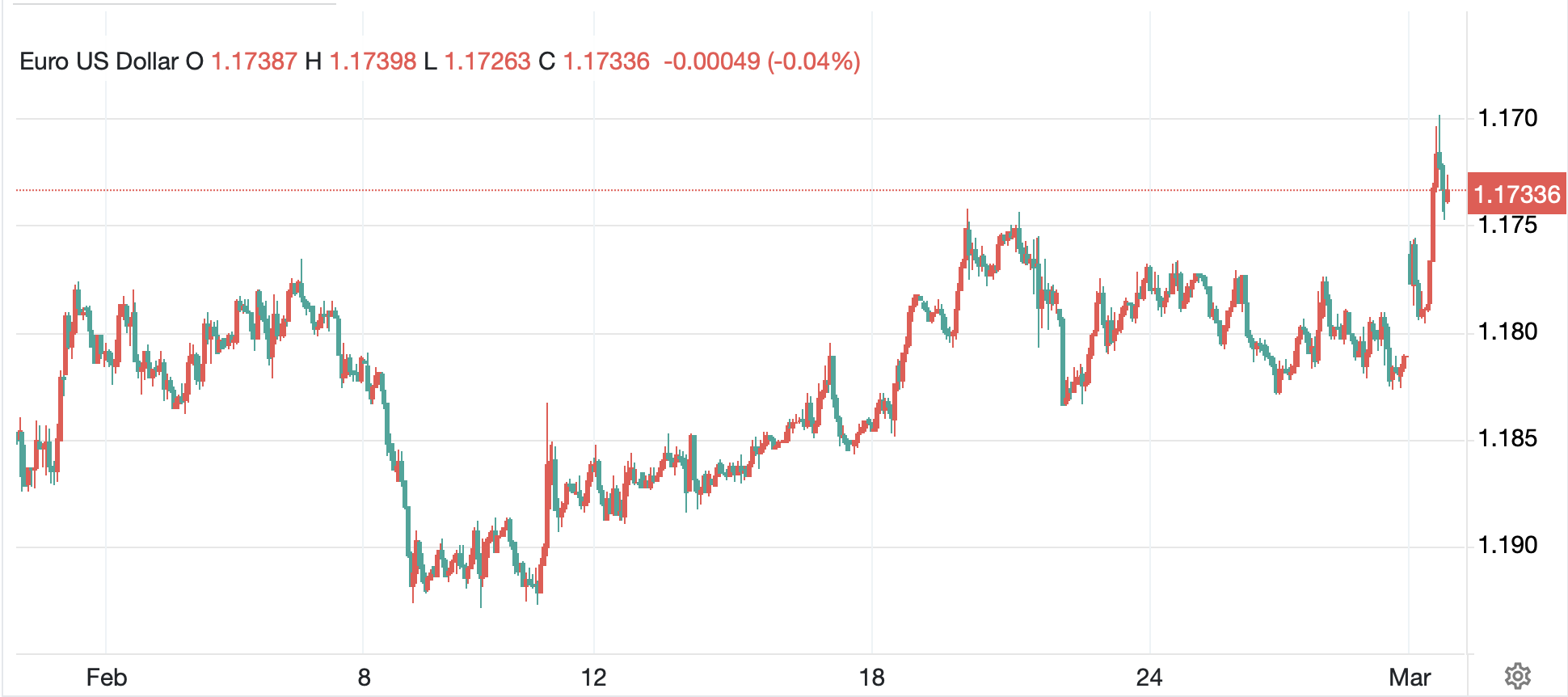
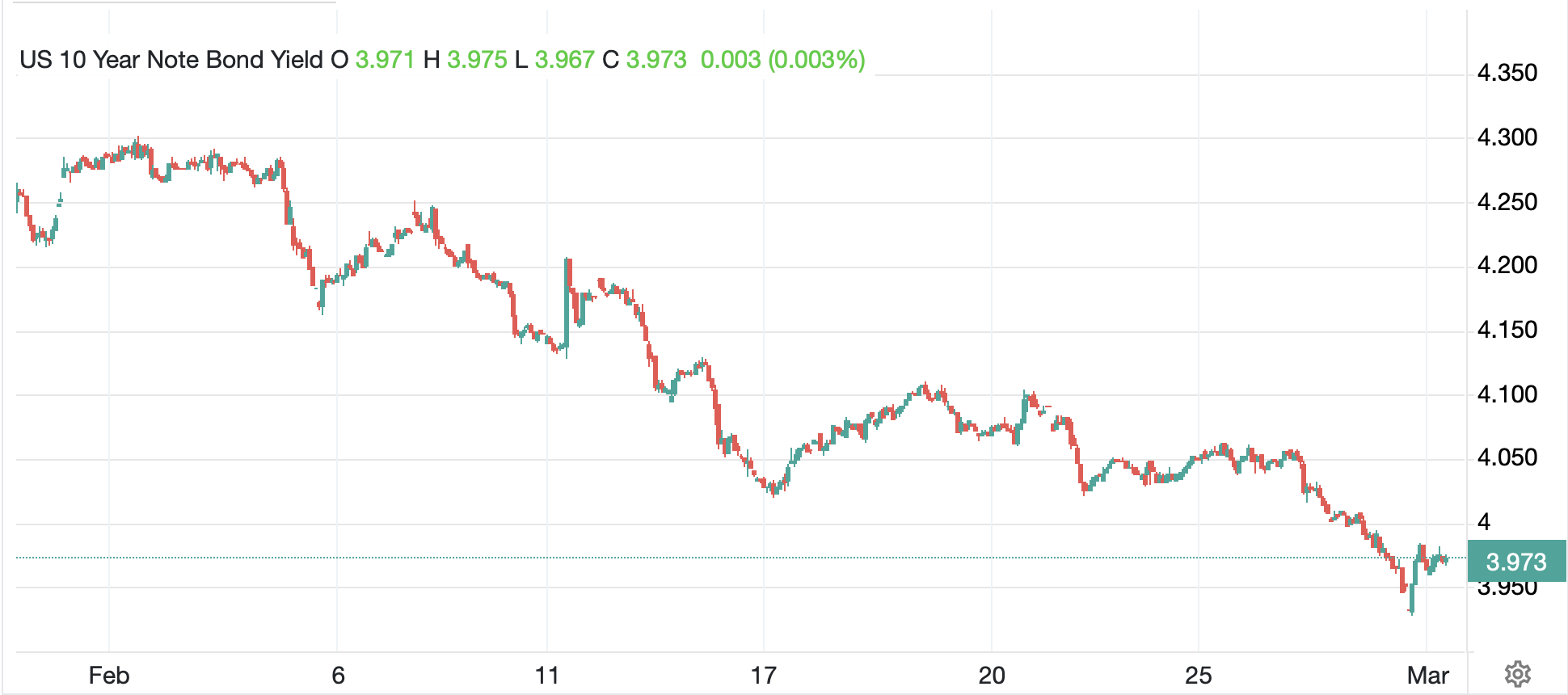
Too, gold jumped (+1.2%) as did the dollar (EUR -0.4%, AUD -1.0%) although both JPY (+0.3%) and CHF (+0.4%) showed their haven characteristics.  Treasury bonds rallied with yields slipping an additional -3bps in the evening session on top of the -5bp decline during the day, and stock futures are under pressure around the world (S&P500 -1.6%, Nikkei -1.5%, DAX -1.5%).  This was the early price action.

Those were last night’s initial moves and thus far, things have moderated a bit.  For instance, oil has fallen back about 1%, though remains higher by 7.3% and that big gap down on the charts from April has been filled.  

Source: tradingeconomics.com

Of course, there is now a new gap below the markets to fill, but that is a story for another day.  Equity markets are also finding their footing, bouncing off their lows as the 20-day moving average has held and dip buyers see this as an opportunity.  However, the dollar is little changed from its initial moves as is gold, and overall, not surprisingly, risk-off defines the overnight session and likely will be today’s focus.

Now, there is nothing funny about this situation with more death and destruction occurring and likely in our immediate future.  However, I could not help but chuckle at the Russian statement that Israel’s actions were “unprovoked” and “a violation of UN principles and international law.”  Of course, I guess President Putin would know all about unprovoked attacks and violating UN principles and international law given his ongoing efforts in Ukraine.

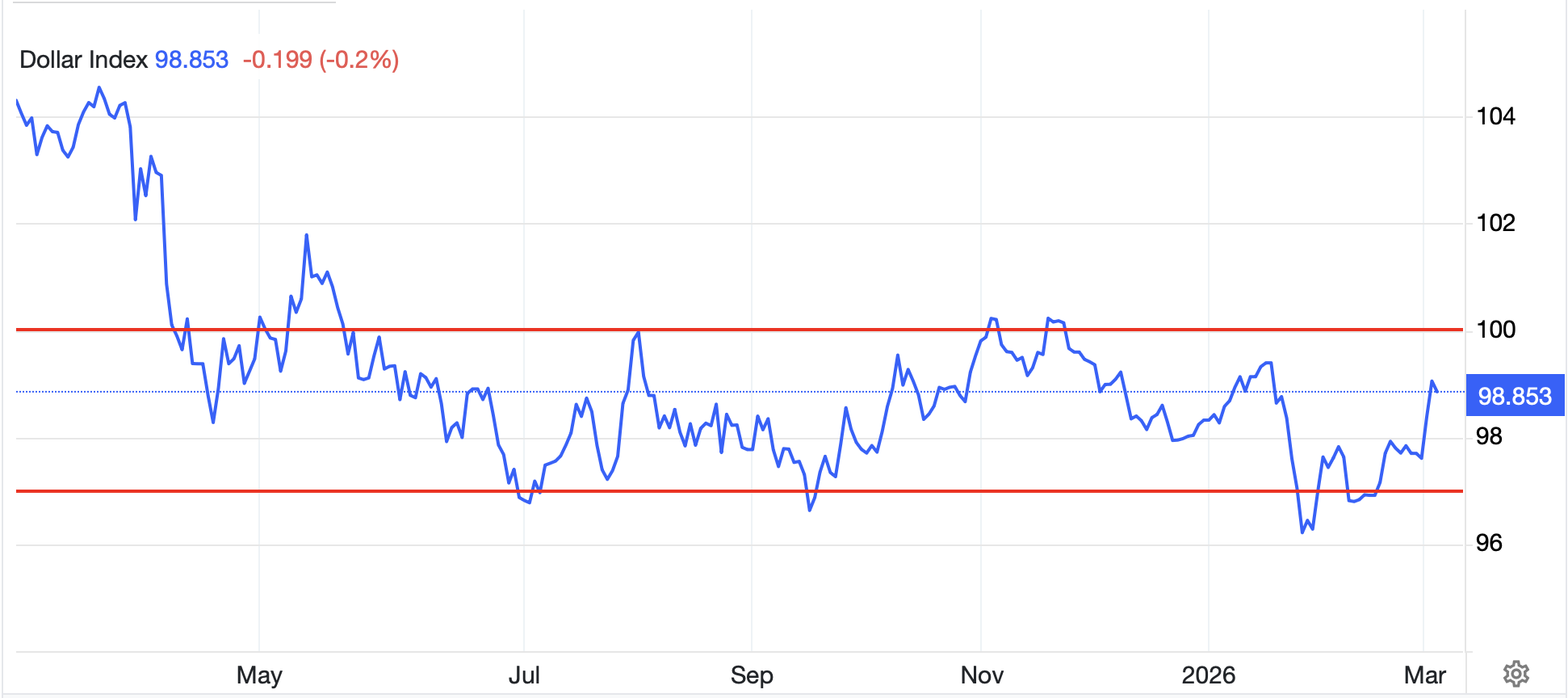
Ok, I am not a war plotter, nor a war monger, so let’s see how this and any other things are developing in the markets.  While the war discussion will dominate the headlines, there are other things ongoing that are worth considering.  For instance, though the dollar is performing as its historical safe haven this morning, SocGen analysts highlighted a very interesting relationship that has developed in the dollar with respect to inflation surprises over the past four months.  As you can see in the chart below, it appears that as we have seen a series of lower-than-expected inflation readings, the dollar has fallen in step.  Now, correlation is not causality but one could make the case that reduced inflation will lead to a more aggressive easing policy by the Fed and that could be the mechanism by which this relationship operates.

Along the same lines, there have been more stories regarding the softening in the US labor market and at what point the Fed is going to need to focus on that, rather than inflation, as they consider their policy objectives.  As well, the large contingent of analysts who expect the US to enter a recession soon have pointed to the labor market and the fact that much of the underlying data appears to show a less robust situation than the headlines have thus far revealed.  

I have two anecdotes to recount here, neither of which indicates the labor market is softening.  First, the local pizza parlor is at wits’ end trying to hire people to work there, a common high school summer or after school job but there are no takers.  Second, my daughter works for a TMT consulting firm in HR, and they are seeking to hire several new analysts and junior consultants, jobs that pay six figures out of college, and they, too, are having difficulty filling the roles.

I know that anecdata is not definitive, but two very disparate service industries are facing the same issue, and it is not a question as to whether to reduce headcount.  Consider the idea that the recent declines in inflation readings are a short-term outcome and that underlying inflation remains in the 3.5%-4.0% range.  Given median CPI is still running at 3.5%, that is entirely feasible.  If, as we go forward, we start to see high side surprises in inflation, and this relationship has meaning, that could well imply we are looking at a short-term dip in the dollar and that as the year progresses, this will reverse.  My take is that the Fed will only consider cutting rates, at least as long as Powell is Chair, if inflation remains quiescent and unemployment starts to rise.  But if inflation rebounds, I believe they will be reluctant to go there.

Now, as the morning progresses, the dollar is picking up steam with the euro (-0.8%), pound (-.6%) and JPY (-0.6%) all falling, even the havens yen and CHF (-0.5%).  In fact, looking across the board, every major currency is weaker vs. the dollar at this point in the morning (7:15).  As the US has awakened, it seems that the haven status of the dollar is reasserting itself.

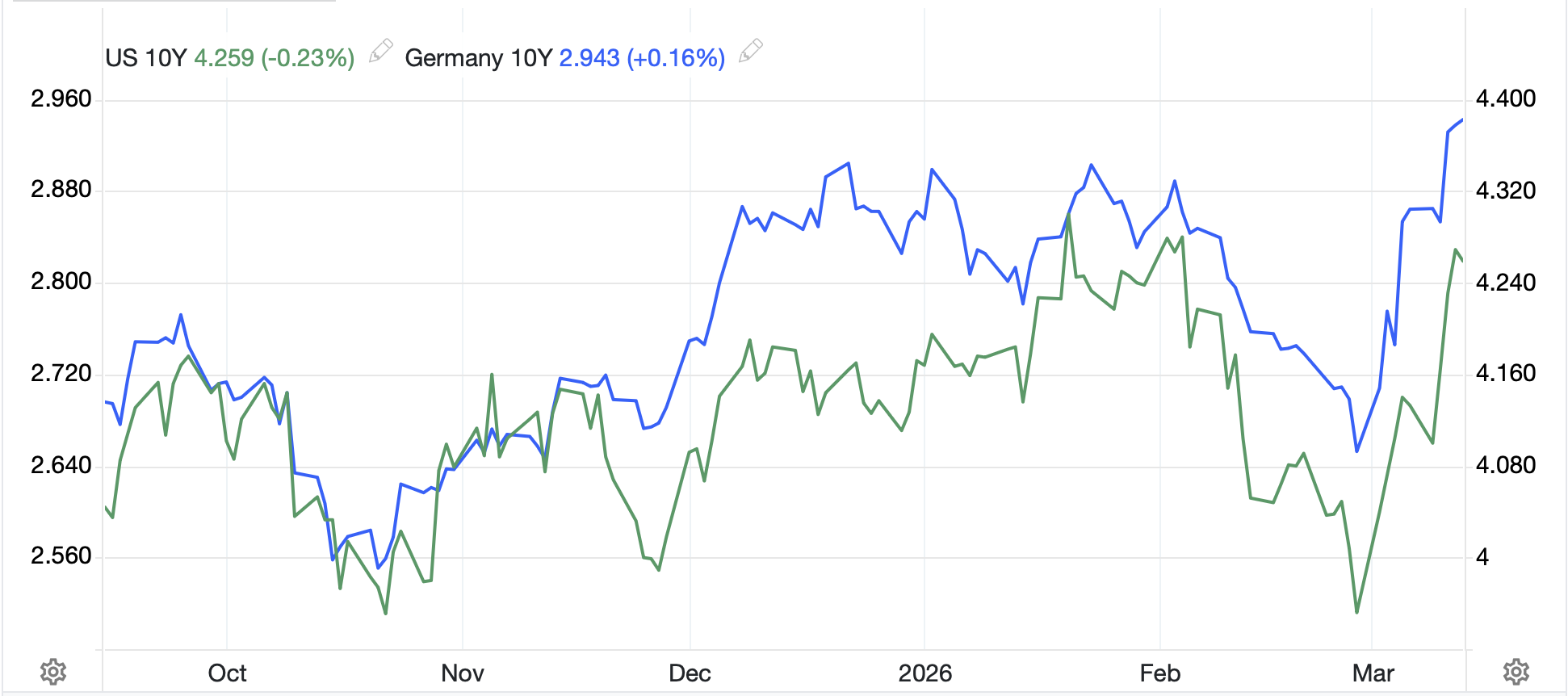
Perhaps more surprisingly, Treasury yields have turned around and are now higher by 2bps, which has dragged all European sovereigns along for the ride.  In fact, the weakest nations (Italy +4bps, Spain +5bps) are faring even worse, as is the UK (Gilts +5bps).  Apparently, the recent ideas of the BOE getting more aggressive in its rate cutting is no longer the idea du jour.

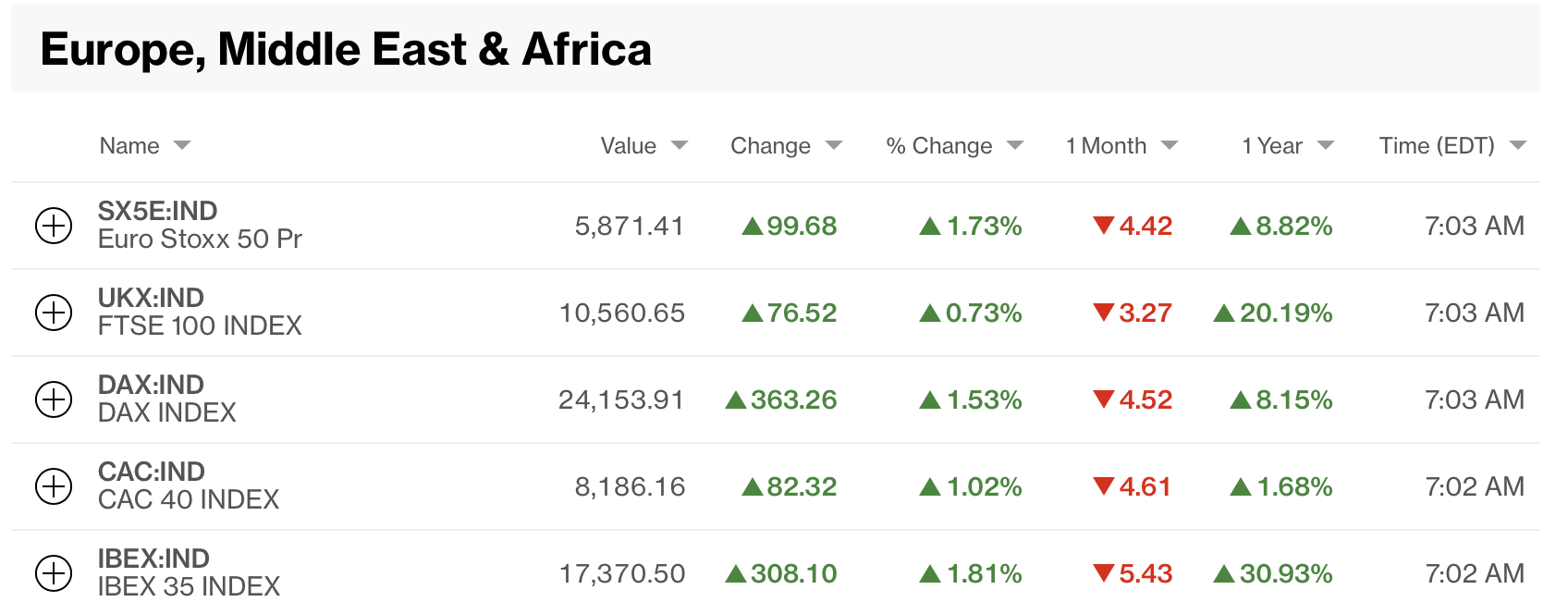
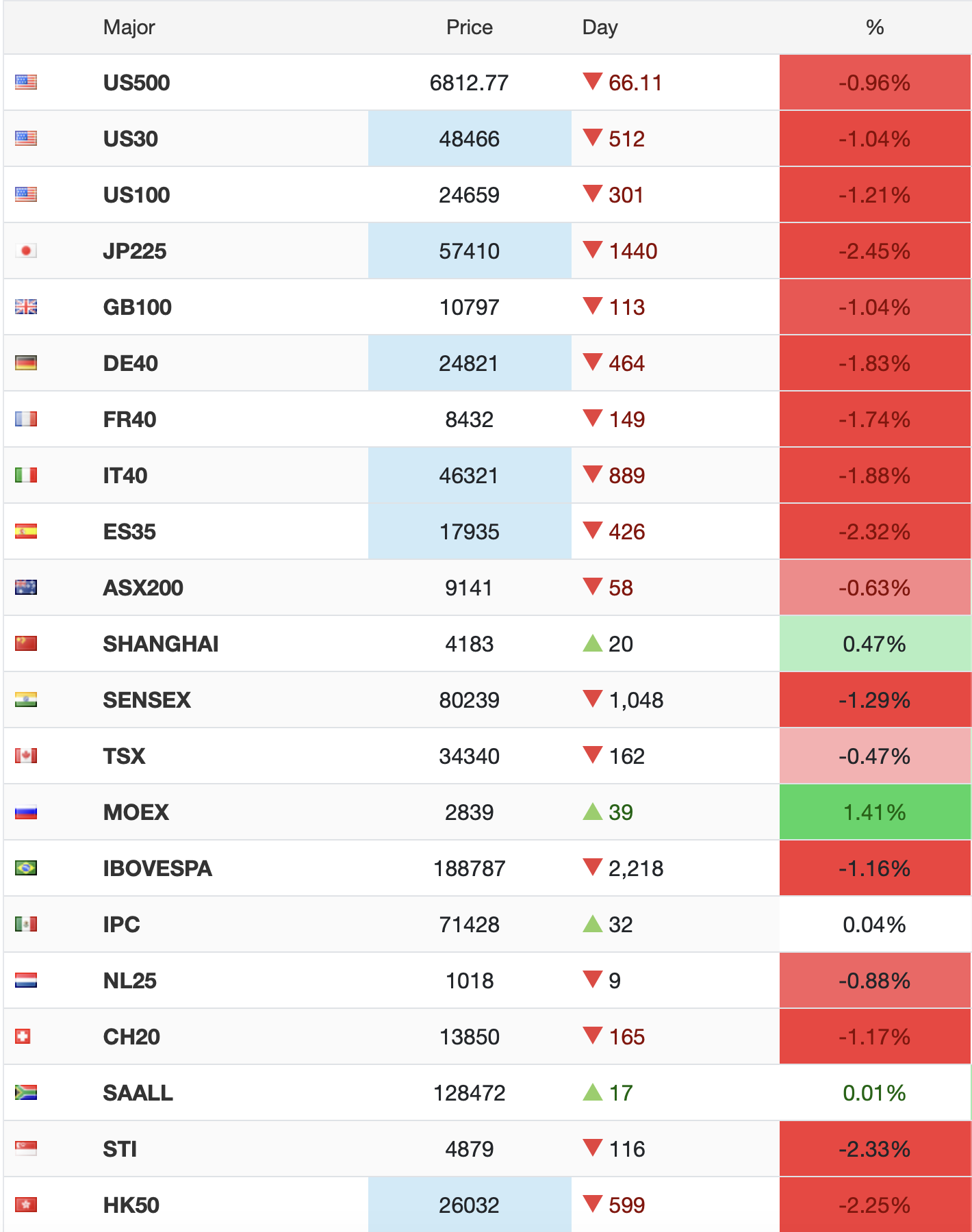
In the equity markets, red remains the only color on the screen with Asian markets (Nikkei -0.9%, Hang Seng -0.6%, CSI 300 -0.7%) all rebounding from their early worst levels, but slipping on the day, nonetheless.  I guess there are dip buyers in every market 😃.  In Europe, continental bourses are all sharply lower (DAX -1.4%, CAC -1.1%, IBEX -1.6%) although the FTSE 100 (-0.4%) is holding up better.  As to US futures, they have rebounded slightly from their earliest lows and are now down about -1.0% at 7:20.  Wouldn’t it be something if they closed the day higher?  I don’t think we can rule that out!

Finally, commodities continue to show oil much higher, no retracement there, and gold also holding its gains although copper (-2.5%) is under pressure.  This is a bit odd to me as I would have thought war would bring more copper demand to a market that is physically undersupplied, but then the LME price of copper and the COMEX price of copper seem unrelated to the industrial flows of late.  At this time, everyone is waiting for the Iranian response, although apparently, the first response, a wave of drone attacks on Israel, was completely thwarted.  Not only did Israel destroy some key nuclear sites, but they were able to eliminate almost the entire leadership of the Iranian army and special forces, so any response is likely to take a little time to be created. No oil facilities were targeted, although the Strait of Hormuz is a key chokepoint in the oil market and Iran is likely able to disrupt the flow of tankers through there for now.  What we know is that everyone who was short oil as a trade has likely been stopped out.  It will likely take a little time before new shorts come back to play, so I expect a few days of prices at these levels.  However, the longer-term trend remains lower, so absent a destruction of oil producing fields, I expect that prices will retreat ahead.

On the data front, this morning brings only Michigan Consumer Sentiment (exp 53.5) and with it the inflation expectations piece, although that has been shown to be a political statement, not an economic one.  I cannot shake the feeling that by the time we head to the weekend, equities will have recovered their early losses, and the dollar will cede some of its gains.

Good luck and good weekend

Adf

Inundated

Investors have been inundated
By news that has been unabated
There’s tariffs and war
Plus rate cuts and more
With stocks and bonds depreciated
 
Now looking ahead to today
The payroll report’s on its way
As well, later on
With nothing foregone
We’ll hear from our own Chairman Jay


It has certainly been an interesting week in both markets and the world writ large.  So much has happened and yet so much is still unclear as to how things may evolve going forward.  Through it all, volatility is the only constant.  To me, what has become abundantly clear is the post WWII order is being dismantled, and every nation is trying to determine its place in the future.  This is a grave threat to those who benefitted from flowery words and limited action, which covers a wide swath of government leaders around the world.  I’m not sure if this is the 4th Turning, or if this is merely the prelude, with the impacts of all these changes what brings the 4thTurning about.  Regardless, history is clearly in the making.

I do not have the bandwidth to continuously follow the tariff story, although yesterday’s news was there will be more delays for both Canada and Mexico.  China received no such relief and at their National People’s Congress they seemed resolute in their pushback and highlighted their own achievements.  The data from China, though, tells me that their goals for more domestic consumption remain far in the distance.  Last night they reported their Trade Balance for the January/February period (they always combine because of the Lunar New year disruptions) and it jumped to $170.5B, far greater than anticipated.  While exports underperformed slightly, growing only 2.3% compared to a 5% estimate, it was the imports that really tells the story.  Imports fell -8.4%, a significant shortfall from both last year and consensus estimates, and an indication that the Chinese consumer is not yet the type of force that President Xi would like to see.  

In fact, a look at the chart below showing imports for the past 10 years demonstrates that very little has changed on this front.  As I wrote yesterday, converting a mercantilist economy into a consumer-focused one is a huge lift, and one that the CCP has not yet figured out.  It is not clear that they ever will.  Meanwhile, the obvious explanation for the huge jump in the trade balance was companies pre-ordering things to get ahead of the tariffs.

Source: tradingeconomics.com

Moving on to the Ukraine situation, while yesterday’s news was of the “whatever it takes” moment for defending Europe, this morning it seems there are some caveats attached.  Of course, the first caveat is the changing of the German constitution to allow them to spend all that money.  The second seems to be that not every European nation is on board for the massive spending increase and continuation of the war.  There are many political and financial hurdles to overcome in this story in Europe, and this morning’s European equity markets are indicative of the idea that this is not a straight-line higher.  In fact, every equity market in Europe is lower this morning, led by the DAX (-1.5%) although with solid declines elsewhere as well (CAC -1.0%, FTSE 100 -0.5%).  This, too, is a story with no clear end in sight.  One unconfirmed story I saw was that the group convened by the UK last weekend has not been able to agree terms for additional support.

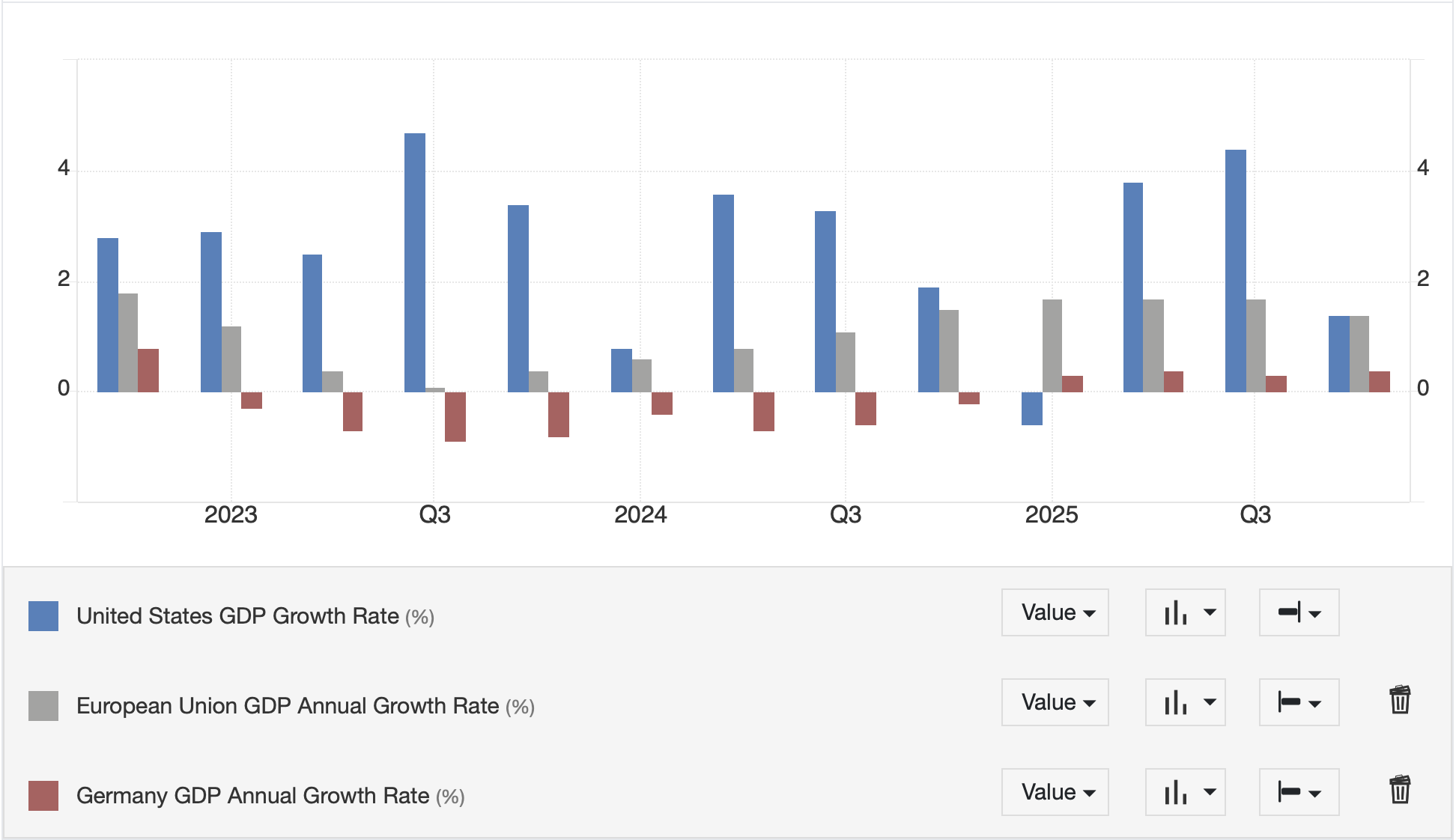
Meanwhile, yesterday the ECB cut their short-term rates by 25bps, as widely expected, with the Deposit Rate now down to 2.50%.  The funny thing is nobody really noticed.  This is of a piece with my observation that central bankers just don’t have that much sway on market activity these days, it is all about politics and statecraft, not monetary policy.  This morning, Eurozone GDP for Q4 was released at 0.2%, a tick higher than forecast but still lower than Q3’s 0.4%.  There is no doubt the financial mandarins of Europe are keen to get this defense spending going, because otherwise they will continue to preside over a stagnant economy.  

But here’s an interesting thing to consider.  Germany has made a big deal about this new willingness to spend €500 billion outside the bounds of their budget framework on defense.  However, they continue with their Energiewende policy which has been the Achilles Heel of the German economy and will prevent them from actually producing armaments if they seek to continuously reduce fossil fuel powered energy for renewables.  It is almost as if this is theater, rather than policy, but that may just be my cynicism speaking.

Moving on to the US, this morning brings the Payroll Report with the following current median estimates:

Nonfarm Payrolls160K
Private Payrolls111K
Manufacturing Payrolls5K
Unemployment Rate4.0%
Average Hourly Earnings0.3% (4.1% Y/Y)
Average Weekly Hours34.2
Participation Rate62.6%

Source: tradingeconomics.com          

As well, we hear from Chairman Powell at 12:30pm, along with Bowman, Williams and Kugler in the hours leading up to that.  But again, I ask, do they matter to the markets right now?  Certainly, there is much discussion that the US economic data is starting to show more weakness, and there are many who are saying that long-anticipated recession is going to become evident.  If that is the case, we could certainly see the Fed cut rates, but again, my take is markets are far more attuned to 10-year yields than Fed funds.  And remember, while 10-year yields are clearly quite inflation sensitive, what we also know that questions over budget deficits and supply are critical to their pricing as well.  This was made evident yesterday in Germany.

I have glossed over market activity overnight so will give a really short update here.  Yesterday’s weakness in the US was followed by broad weakness throughout Asia, with most markets there lower on the day, notably Japan (-2.2%), but declines almost everywhere.  We have already discussed European bourses and at this hour (7:30) US futures are basically unchanged ahead of the data.

In the bond market, Treasury yields are slipping back -3bps this morning and we are seeing similar price action across most of Europe although Spain (+1bp) is bucking the trend on some domestic issues.  It is easy to believe that the Germany story was a bit overblown, and remember, if they cannot change the constitution, I expect a rally in Bunds (lower yields) along with a selloff in the DAX and the euro.

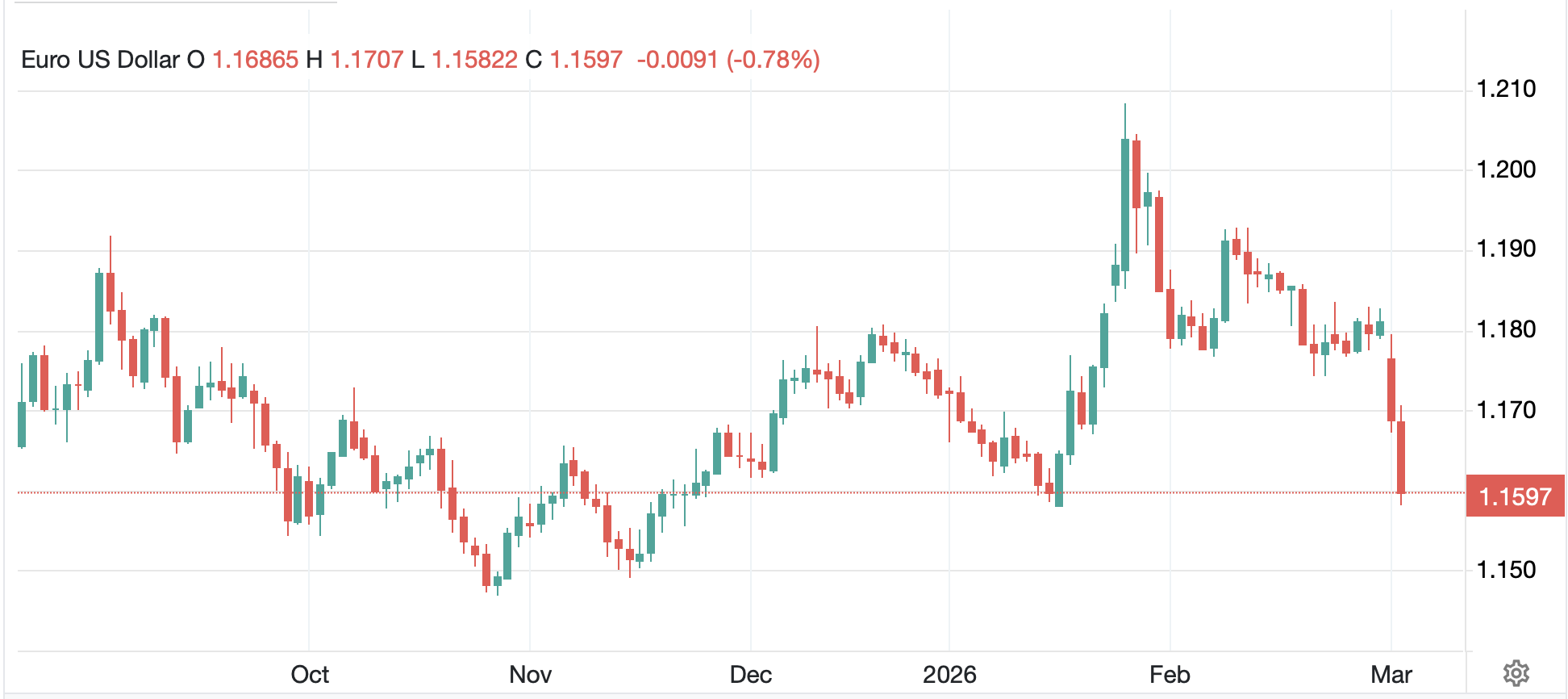
Speaking of the euro, it is continuing its sharp ascent, up another 0.6% this morning.  however, something to keep in mind regarding all the huffing and puffing about the euro is that with this sharp move higher in the past week, it is merely back to the middle of its 3-year trading range.  So, is this as big a deal as some are saying?

Source: tradingeconomics.com

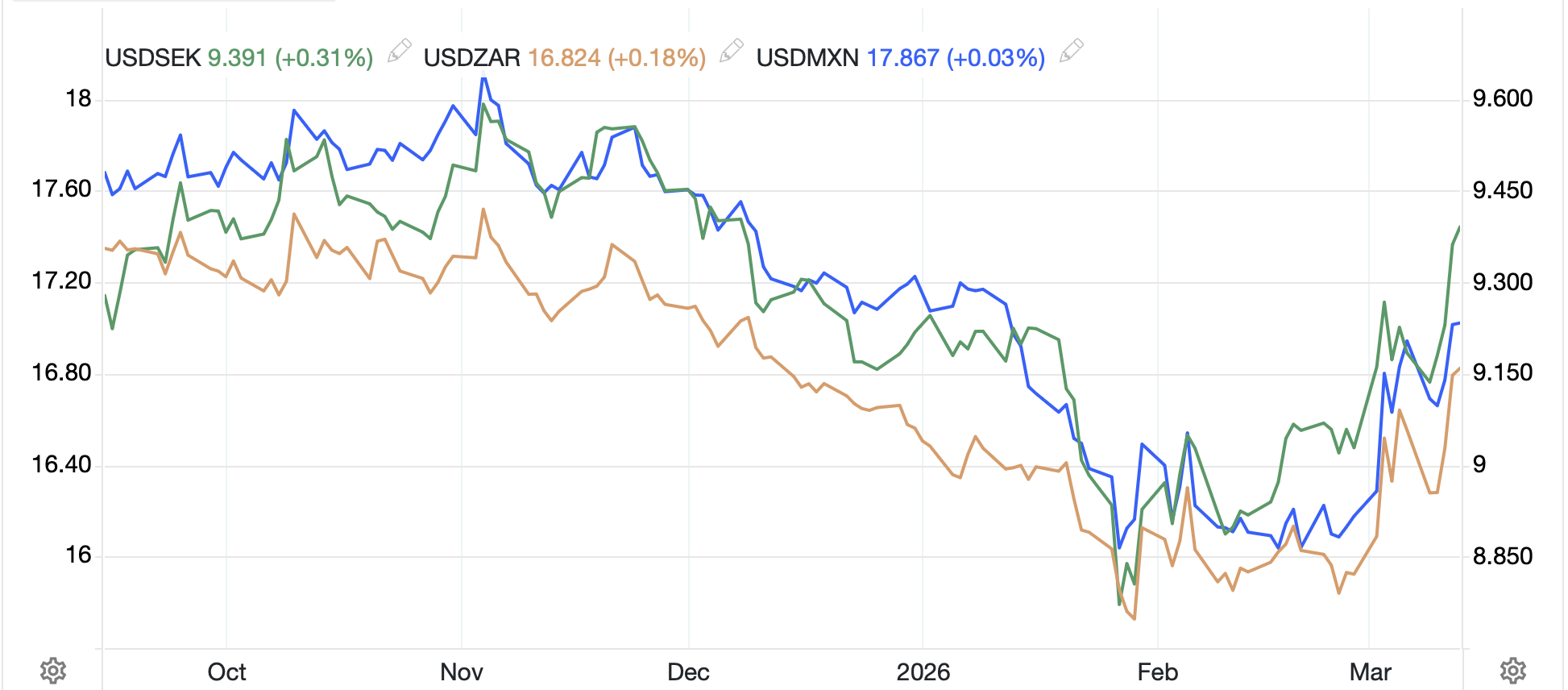
But the overall currency picture is more mixed with both AUD (-0.6%) and NZD (-0.5%) lower along with CAD (-0.2%).  There are other gainers (GBP +0.2%, SEK +0.7%) and other laggards (ZAR -0.2%) although I would say the broad direction is still for dollar weakness.  

Finally, oil (+1.5%) is bouncing this morning, although this could well be a trading bounce as I have seen no new news on the subject.  I guess the delay on Canadian tariffs probably played a role as well.  Gold (+0.4%) is also firmer although both silver (-0.4%) and copper (-1.2%) are lagging.  In fairness, the latter two have had significant up weeks so are likely seeing some profit taking.

Once again, I will remark that for those who have real flows and exposures, the current market situation is why hedging is critical to maintain financial performance.  Nobody really knows where anything is going to go, but right now, it feels like the one thing we know is prices will not remain where they currently are for very long.

Good luck and good weekendAdf

Balling Their Fists

The world is no longer the same
Since Trump put Zelenskiy to shame
Now Europe insists
They’re balling their fists
And this time it isn’t a game
 
But markets just don’t seem to care
That, anymore, war’s in the air
Instead, what’s decisive
Is that the new price of
All cryptos has answered their prayer


Last Friday’s remarkable live TV meeting between Presidents Trump and Zelenskiy in the Oval Office has rocked the entire world, or certainly the entire Western World.  The unwillingness of Zelenskiy to consider a ceasefire and Trump’s dismissal of him from the White House, even before lunch, has clearly changed a lot of views of how things are going to evolve from here.

The most noteworthy result is the sudden realization by the EU and NATO that the US is committed to ending the war and is not interested in spending much, if any, more money on the subject.  The response by the EU, an emergency meeting in London yesterday where every nation committed to a strong defense of Ukraine, including boots on the ground, is remarkable.  My fear is that if they proceed along these lines, and French or British soldiers are attacked/shot during the conflict, NATO will seek to invoke Article 5 and drag the US into the conflict.  Certainly, that appears to be Zelenskiy’s goal, to get the US to fight Russia on their behalf.  (Although, there are those who might say the Biden administration was using Ukraine to fight Russia on their behalf, so this is justified not surprising.). In the end, I believe this path is terrifying as that would result in two nuclear powers meeting on the battlefield, perhaps a cogent definition of WWIII.

However, there is little evidence that market participants are terribly concerned about this situation.  Perhaps they are confident that this is all bluster and ultimately President Trump’s plan of increasing US economic interests in Ukraine will be enacted and a sufficient deterrent to prevent that outcome.  Or perhaps this is a YOLO moment, where the belief is, if nuclear war destroys the world, I can’t stop it, so I better make as much money as possible now.  I recognize geopolitical risk is tough to price, but I would have expected a lot more flight to safety than so far seen.

In fact, in markets, the true story of the weekend was the announcement of a cryptocurrency reserve to be created by the US although no specific size was revealed.  While I don’t typically write on the topic, that is because the crypto space has not yet, in my view, become enough of an influence on the macro world to matter.  However, this could change that.  

Source: tradingeconomics.com

One cannot be surprised that crypto currency prices have rallied dramatically on the back of the announcement, which almost seemed timed to arrest what had been a very sharp decline in those prices recently.  It is too early to really determine if this will draw cryptocurrencies closer to mainstream economic and financial discussion, but I would argue it is closer now than it has ever been before.

In Europe, the scoop on inflation
Does not seem ripe for celebration
While CPI slipped
Most forecasts, it pipped
So, slower but not near cessation

Eurozone CPI data was released this morning and the response to the outcome is quite interesting.  The data showed that headline fell from 2.5% to 2.4%, while core fell from 2.7% to 2.6%.  Obviously, that is a step in the right direction.  Alas, analysts’ forecasts were looking for a 0.2% decline in both readings, so while the data was good, it was worse than expectations.  In a perfect encapsulation of how narrative writing is so critical, both the WSJ and Bloomberg wrote articles explaining how the declines had set the table for the ECB to cut rates at their meeting this Thursday with neither one discussing market forecasts.

Now, a look at the market response shows that European sovereign yields have all risen between 6bps and 9bps, hardly the response one would expect in a lower inflation world.  As well, with Treasury yields higher only by 5bps this morning, as they bounce from their recent declines, the euro (+0.7%) has rallied sharply on the day.  

Much has been made of the European’s new commitments to increase defense spending, especially in the wake of yesterday’s meeting discussed above, and the requisite increases in defense spending that would accompany this new stance.  However, increased European defense spending has been a story for the past many weeks as President Trump has been railing against European members of NATO for not holding up their end of the bargain.  I guess the meeting added a greater sense of urgency, but remember, not an additional dime has been spent yet, nor even legislated.  Talk is cheap!

But there you have it.  Despite what appears to be a giant step closer to a major global conflagration, the market response has been a more classic risk-on result, with bond yields rising, the dollar falling and most equity indices doing fine.  Some days, things don’t make much sense.

Time for a quick recap of overnight markets then.  Friday’s strong US equity rally was followed by strength in Tokyo (+1.7%) and Australia (+0.9%) although both Hong Kong and China were little changed in the session. It appears Chinese traders are awaiting the news from Wednesday’s NPC meeting where the government will define their economic growth targets for the current year and how they might achieve them.  In Europe, Spain (-0.1%) is the laggard with the rest of the continent doing well, led by Germany (+1.1%).  It seems there are more defense companies there to benefit from all this mooted spending than elsewhere, hence the rally. Lastly, US futures are higher by 0.35% or so at this hour (7:00).

We have already discussed bonds, where yields are higher everywhere, including Japan (+4bps) as all the war talk has investors convinced there will be a lot more government borrowing everywhere in the world going forward.

In the commodity markets, oil (+0.25%) has been trading either side of unchanged in the overnight session but seems to be consolidating after last week’s declines.  I continue to believe that if the Ukraine war does end (and I believe that will be the outcome regardless of Europe’s hawkish turn), oil prices are likely to slide further as one of the likely outcomes will be the end of sanctions against Russian oil and Russian oil transports.  Meanwhile, gold (+0.6%) which had a rough week last week, is bouncing and dragging the entire metals complex higher with it.  If war is truly in the air, gold and silver seem likely to rally further.

Finally, the dollar is under great pressure this morning across the board.  Not only is the euro higher, but only JPY (-0.4%) is weaker vs. the dollar in the G10 as this seems a very risk-on initiative.  SEK (+1.3%) is the leader, perhaps because it is on the front lines of the potential war?  Seriously, I have no explanation there.  But EMG currencies are also rallying with HUF (+2.1%) the big winner, although the entire CE4 is stronger.  Again, this makes little sense to me if the politics is pushing toward war as all those nations are on the front lines.  Meanwhile, MXN (+0.4%) is managing to rally despite the ongoing threat of tariffs to be imposed tonight at midnight.  I continue to read numerous stories on the potential impacts of tariffs with dramatically different takes.  In the end, it appears that at least some things will go up in price, although fears of widespread massive price rises seem a bit overdone.

On the data front, along with Thursday’s ECB meeting, Friday brings the payroll report and there is plenty of stuff between now and then.

TodayISM Manufacturing50.5
 ISM Prices Paid56.2
WednesdayADP Employment 140K
 ISM Services52.9
 Factory Orders1.6%
 -ex Transport0.3%
 Fed’s Beige Book 
ThursdayECB Rate Decision2.75% (current 3.00%)
 Trade Balance-$93.1B
 Initial Claims340K
 Continuing Claims1870K
 Nonfarm Productivity1.2%
 Unit Labor Costs3.0%
FridayNonfarm Payrolls153K
 Private Payrolls138K
 Manufacturing Payrolls5K
 Unemployment Rate4.0%
 Average Hourly Earnings0.3% (4.1% Y/Y)
 Average Weekly Hours34.2
 Participation Rate62.6%
 Consumer Credit$15.5B

Source: tradingeconomics.com

In addition to this, we hear from 7 more Fed speakers at 9 venues including Chairman Powell Friday afternoon at 12:30.  Now, I have made a big deal about the fact that the Fed has lost much of its sway in the market to President Trump.  I believe that Powell’s speech will tell us much about whether they are unhappy about this, or whether they will be quite comfortable sinking into the background.  Given Powell’s previous antagonistic relationship with President Trump, I would think it would be the latter.  But every central banker seems drawn to the limelight like moths to a flame, so I would not be surprised to see something more dramatic.

As things currently stand, I see the ongoing efforts to cut government spending as a critical piece of the US fiscal puzzle.  The more success that DOGE and the administration has in this process, the better the potential outcomes for the US, tariffs or not.  This could increase private sector activity and reduce the deficit, thus slowing the debt issuance, and perhaps, weighing on inflation.  However, this is a longer-term process, not something that will happen in weeks, but over quarters.  In the meantime, I cannot get past the Ukraine situation as the biggest potential risk factors around, and if escalation is in the cards, I would expect Treasury yields to decline amid growing demand while the dollar rallies along with the yen as a haven.  Hopefully not but be prepared.

Good luck

Adf

Obliteration

The chance of a much wider war
Is something we need to plan for
Thus, havens ought be
A key thing we’ll see
Demanded, as prices will soar
 
The thing is that war and inflation
Have partnered through history’s duration
While prices may rise
Most nations surmise
That’s better than obliteration


The weekend just passed saw what could be the next step to a wider war in the Middle East after Iran launched a massive air assault on Israel.  While it seems to have been fully repelled, with limited damage and injury, the world is waiting on tenterhooks to see if there will be a counterattack by the Israelis.  In a different time, with a different set of leaders around the world, perhaps the next steps would be talks and negotiations designed to stop the madness.  But in the current world, with the current global leadership, there is no sign that anyone is capable of driving that particular outcome.

With this in mind, I think it is important to remember one very real truism, war is inflationary.  It always has been, and it always will be.  Consider that every nation at war will spend as much as they can to produce and procure the weaponry they need to combat that war.  And they will borrow the money as that is the fastest way to move that process forward.  Second, scarcities will develop across an economy as inputs that would otherwise have gone toward ordinary consumer goods will be repurposed and commandeered toward the war effort.  The upshot is that demand will rise while supply will dimmish, a perfect recipe for inflation.

If we take that set of generalities and apply it to today’s situation, the starting point is already sticky high inflation with a massive debt load, at least in the US.  Elsewhere in the world, inflation appears to be starting to ebb, although the numbers remain well above the near-universal 2.0% target.  On the debt question, pretty much everybody has too much of that!  Of course, the situation in the US is the most important because it is the nation that is likely going to be financing a large proportion of any increase in hostilities despite the recent comments that the US will not take part in any Israeli retaliation.

Ultimately, though, even if we see a de-escalation of this situation, nations everywhere are going to be building up their war making capabilities given the overall level of uncertainty in the current world.  While Russia/Ukraine continues apace, and Israel is still fighting in Gaza, those are simply the issues that make the headlines.  Fighting continues throughout Africa (Nigeria, South Sudan Mali, Somalia, Congo) as well as in Iraq, Syria, Yemen and Pakistan.  This may be one of the least reported and most consistent drivers of global inflation that exists.  All I’m saying is that the combination of the current geopolitical situation and the still lingering effects from pandemic era policies has virtually ensured that inflation is not going to fall, at least not very far.  That means that haven assets and hard assets, often the same assets, remain high on the list of investments that are likely to perform well going forward.  Keep that in mind as you establish both your planning and your hedging.

With those cheery thoughts in mind, let’s see how markets have handled the next step up this escalator. Friday’s US equity market declines, which some have attributed to tax selling (today is Tax Day after all) was followed by weakness throughout most of Asia.  The exception was mainland China, which saw the CSI 300 rise 2.1%.  But elsewhere in the time zone, red was the color of the day, with Japan (-0.75%), HK (-0.75%), Australia (-0.5%), South Korea (-0.5%) and virtually every other regional equity market declining.  It seems that investors there are not so sanguine about a war in the Middle East.  

In Europe, though, as there is rising hope that things won’t get worse in the Middle East, equity markets are rebounding with most major indices higher by between 0.5% and 1.0%.  While that may be an optimistic reading of the situation, it is spreading as we have also seen early some gains in commodity prices back off.  The one exception here is the UK (-0.5%), but there is no obvious catalyst that is different for the outcome.  As I always say, sometimes markets are simply perverse.  Lastly, US futures markets are pointing higher as well, about 0.4% across the board at this hour (7:00).

Turning to the bond markets, it appears that inflation fears are greater than haven demand this morning. Treasury yields are higher by 5bps after a modest decline on Friday, while European sovereigns are seeing similar gains in yield, between 5bps and 7bps across the board.  While I understand the Treasury reaction given rising inflation expectations according to the Michigan Survey data released Friday, the European one is more confusing.  Even uber-hawk Robert Holtzmann agreed that a cut in June is likely, although future moves will be data dependent, and he is the most hawkish member of the ECB.  While inflation data throughout Europe has been declining, perhaps the bond markets are telling us they don’t believe that will continue.  Something doesn’t jibe with the recent comments and price action, and in that case, I always assume the pricing is correct.

In the commodity markets, oil (-0.8%) is lagging today as the ebbing fears of a wider Middle East conflict weigh on the black sticky stuff.  With that in mind, remember that oil prices are higher by nearly 4% over the past month, so this bull run does not appear dead yet.  However, metals remain in demand as we are seeing gains across gold (+0.7%), silver (+2.1%), copper (+1.2%) and aluminum (+2.1%).  I believe this story remains a combination of supply concerns as well as stories about excess demand from China, where copper stockpiles have been growing rapidly.  While it is not clear why they are buying copper, it is just one of several metals, notably gold, that China has been acquiring aggressively over the past months.  I maintain that this space has much further to run higher.

Finally, the dollar is under pressure this morning, although not universally so.  While the bulk of the G10 is modestly firmer, on the order of 0.2%, JPY (-0.5%) continues to suffer and is now pushing toward 154.00.  The last time USDJPY traded at this level was June 1990.  However, as long as the monetary policies between the US and Japan remain on divergent paths, the only thing that will stop this is concerted intervention, and the US seems unlikely to take part in such a move.  In the EMG bloc, the dollar is also on its back foot with MXN (+0.5%) the leading gainer and most of the rest of these currencies higher by much smaller amounts.  I would note CNY has rallied a touch after the PBOC withdrew CNY70 billion of liquidity as part of their money market operations today.  The Chinese are caught between the need for more stimulus to support the economy and the fear that more stimulus will lead to lower rates and capital flight, something which they have worked very hard to prevent.

On the data front, as exciting as last week was, this week should have some pretty good follow-ups.

TodayEmpire state Mfg Index-9.0
 Retail Sales0.3%
 -ex autos0.4%
 Business Inventories0.3%
TuesdayHousing Starts1.48M
 Building Permits1.514M
 IP0.4%
 Capacity Utilization78.5%
WednesdayFed’s Beige Book 
ThursdayInitial Claims214K
 Continuing Claims1820K
 Philly Fed0.8
 Existing Home Sales4.2M
 Leading Indicators-0.%

Source: tradingeconomics.com

As well as this, we hear from eleven more Fed speakers, including Chairman Powell tomorrow afternoon at the IMF spring meetings.  It will be quite interesting to hear how he handles the three consecutive hotter than expected CPI prints and whether there is going to be a subtle change in tone.  If he were to ignore it, I think that will be quite negative for bonds as it becomes a clearer indication that the 2% target is dead.

The thing about the 2% target is if the Fed abandons it, you can be sure that every other central bank will do the same.  That means that more rate cuts will be coming more quickly.  That, my friends, is a recipe for higher inflation, higher commodity prices and a much weaker bond market.  As to the dollar in that scenario, my take is it will still be the proverbial ‘cleanest shirt in the dirty laundry’ and will hold its own.

Good luck

Adf