
Alas, nothing’s changed in Iran
And feces is hitting the fan
So, pundits feel strongly,
Although I think wrongly
A rate hike is part of the plan

In fairness, the bond market, too
Is on board, that ere July’s through
The Fed will have raised
Won’t they be amazed
If Warsh won’t commit seppuku?
Yesterday’s dominant theme was the fact that oil prices had risen so aggressively with WTI above $90/bbl and Brent touching $100/bbl. Interestingly, both are lower this morning, WTI (-2.5%) and Brent (-2.7%) and both are back below those big psychological levels despite no seeming changes on the ground in Iran. The Houthis are still causing trouble in the Bab al Mandeb, the US is still attacking sites along the Persian Gulf and there are no peace discussions ongoing. A headline in the WSJ this morning explained, Trump Is Losing Patience Over an Iran War With No Clear End in Sight.
But really, the bigger discussion has been about US yields (and correspondingly global yields) as they continue to head higher. Below is a screenshot from Bloomberg showing the yield curve and how yields have changed in the past month and year.
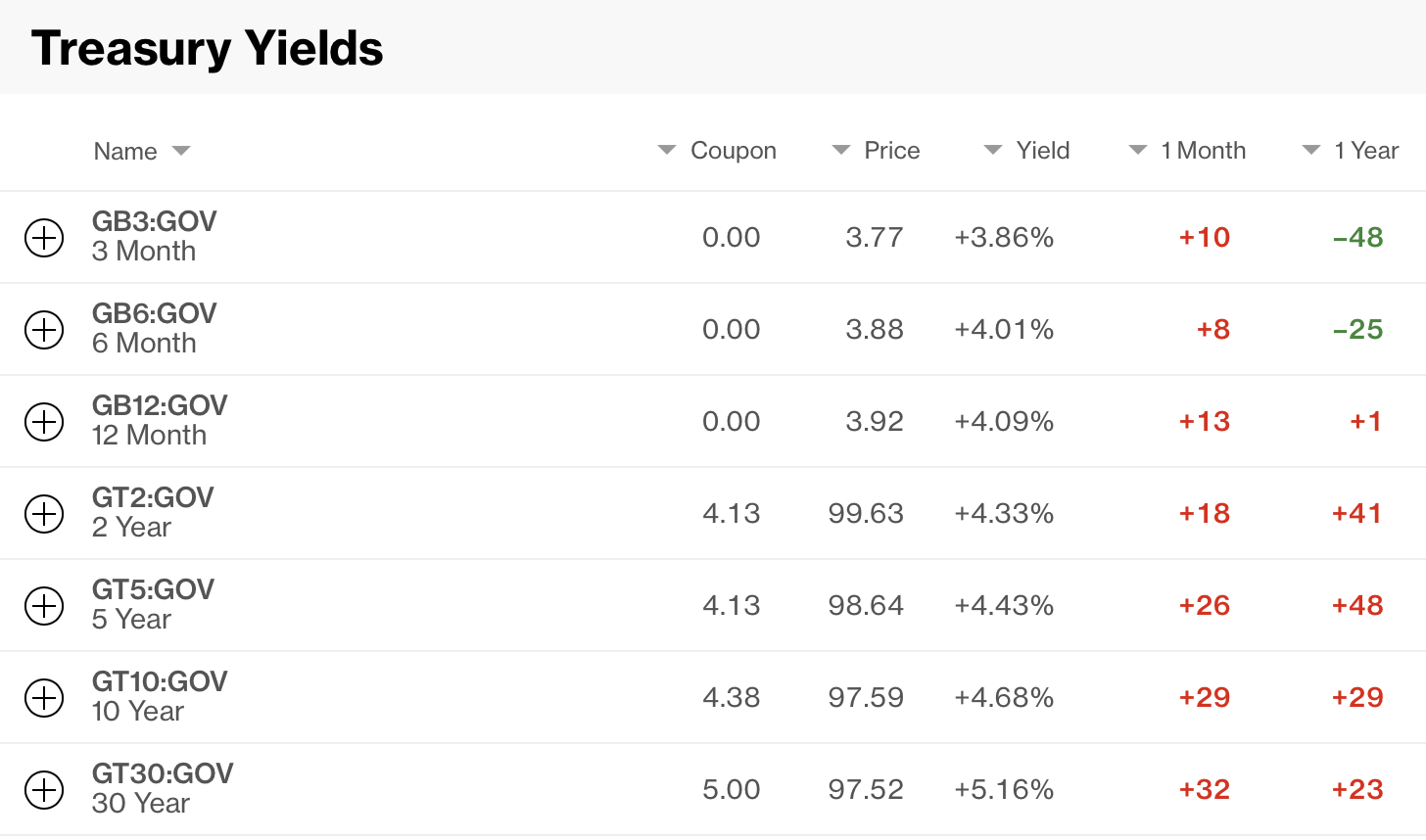
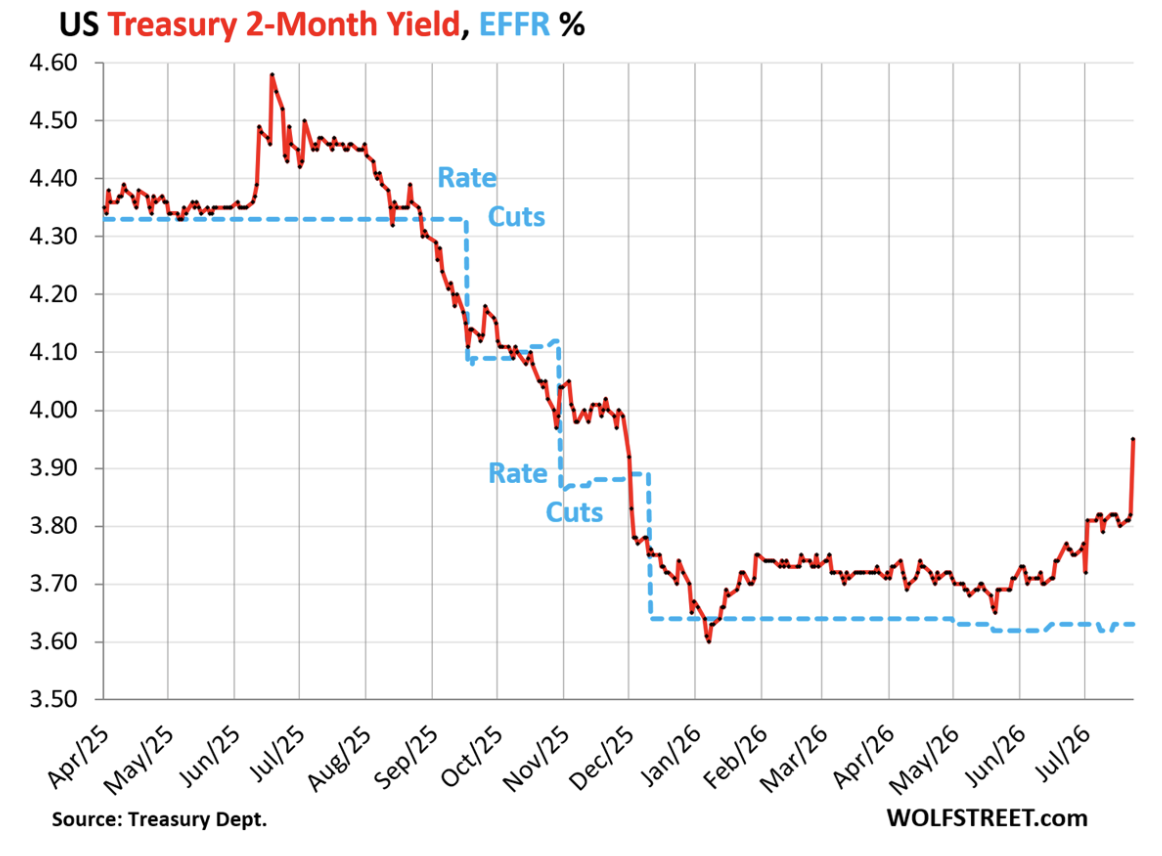
There has been quite a bit of digital ink spilled over the concept that short-dated T-bills have now priced in a rate hike next week, as per Wolfstreet.com,
“The 2-month Treasury yield spiked by 13 basis points today and by 15 basis points during the week to close at 3.95%, according to Treasury Department’s yield calculation. This is at the upper end of the Fed’s target range after it hikes by 25 basis points, which would bring its target range to 3.75%-4.0%. And it is 32 basis points above the Effective Federal Funds Rate (EFFR, blue), which the Fed targets with its policy rates. This is a stunning move, pricing in a “surprise” rate hike at the FOMC meeting next week.”
And here is his accompanying chart.
Of course, what makes all this so juicy is that Chairman Warsh has gone out of his way to end forward guidance so market participants are now left to their own devices to determine what the Fed may do, something most of them have either forgotten, or never knew, how to do.
Let’s consider, for a moment, some potential outcomes and the rationales behind them. First, it is critical to remember that Warsh needs a majority of the voters, so at least 7, to get to a result.
- No change (poet’s estimated probability 90%) – the most recent inflation data, both CPI and PPI were much cooler than expected thus offering significant cover to leave policy on hold. Add to that the fact that the task forces will not have completed their work and report on anything. This means Warsh can reasonably say, before we do anything, let’s make sure we are looking at things that are fit for purpose. One last thing to recall is that if energy prices are the driver, raising interest rates will not produce more energy, so it is the wrong action to solve the problem.
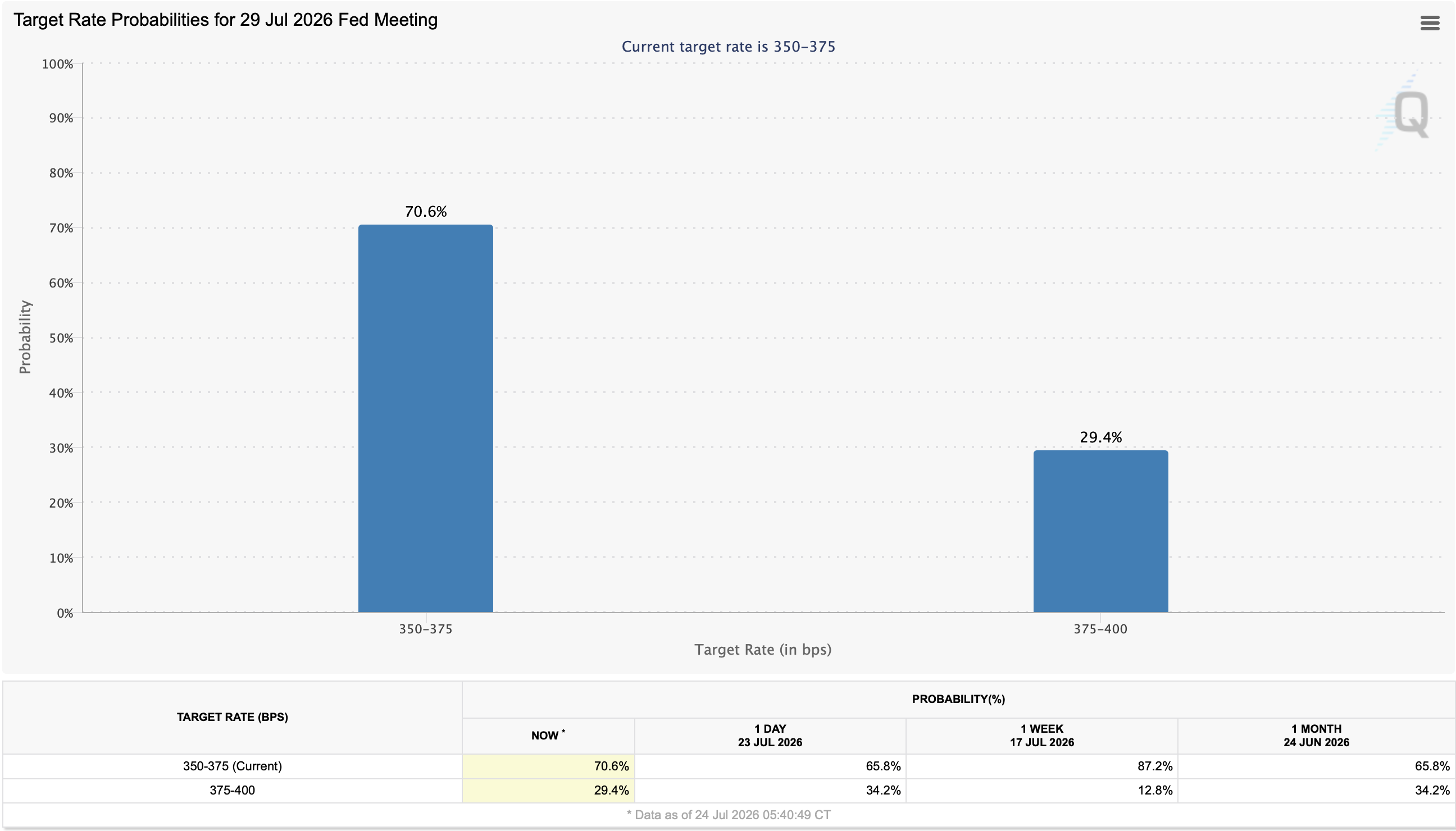
- 25bp hike (10% probability) – while there have been several FOMC members who discussed the needs for hiking rates as inflation was becoming uncomfortably high, I don’t believe that contingent is large enough to make up a majority, especially of voters. In addition, the history of central bank rate hikes into energy price spikes is replete with disasters across the board. After all, the same pundits who are calling for a hike explain that rising energy prices are like a tax and weaken economic activity. Certainly, the Treasury market price action indicates there are many who believe a hike is coming and if we look at Fed funds futures markets, the probability is higher than mine at about 30% as per the below chart from cmegroup.com, but look at how much that has changed over the past month. My point is that there is no consistency of view.
- 50bp hike (NO CHANCE) – there is a group in the analyst community who are calling for a shock maneuver of a 50bp hike. The rationale seems to be that this would burnish Warsh’s hawkish credentials, and the bond market would rally on the news. But even if he wanted to do this, and I don’t think that is the case at all, it would require him to get six others to go along. There is no way that type of viewpoint exists on the committee, I am convinced. This is clickbait in my view, analysts making outlandish calls so people will read their stuff.
In the meantime, though, yields do continue to rise around the world. While this morning, they have backed off from yesterday’s recent highs (UST -1bp, bunds -2bps, gilts -4bps, OATs -3bps, BTPs -3bps), they remain just below levels not seen in several years. One interesting thing about the European sovereign market is the fact that yields in Greece (3.90%) are lower than in either France (3.99%) or Italy (4.01%). It wasn’t that long ago that Greece was the poster child for fiscal profligacy and lived through a depression. But give them credit, they learned and now run a primary surplus in their fiscal account, something not seen in many other nations these days, certainly not the US, France or Germany.
But rising rates are wreaking havoc with equity markets, and that has become another fiscal problem since tax receipts from capital gains is such a significant part of the tax base these days, at least in the US. So, yesterday’s desultory performance in the US, led lower by the NASDAQ’s -2.15% decline, was followed with a similarly negative feeling in Asia (Tokyo -2.7%, China -1.7%, HK -1.0%, Korea -5.7%, Taiwan -2.7%) with the similarity that they are all tech focused. But weakness in the region was virtually universal, albeit not as dramatic.
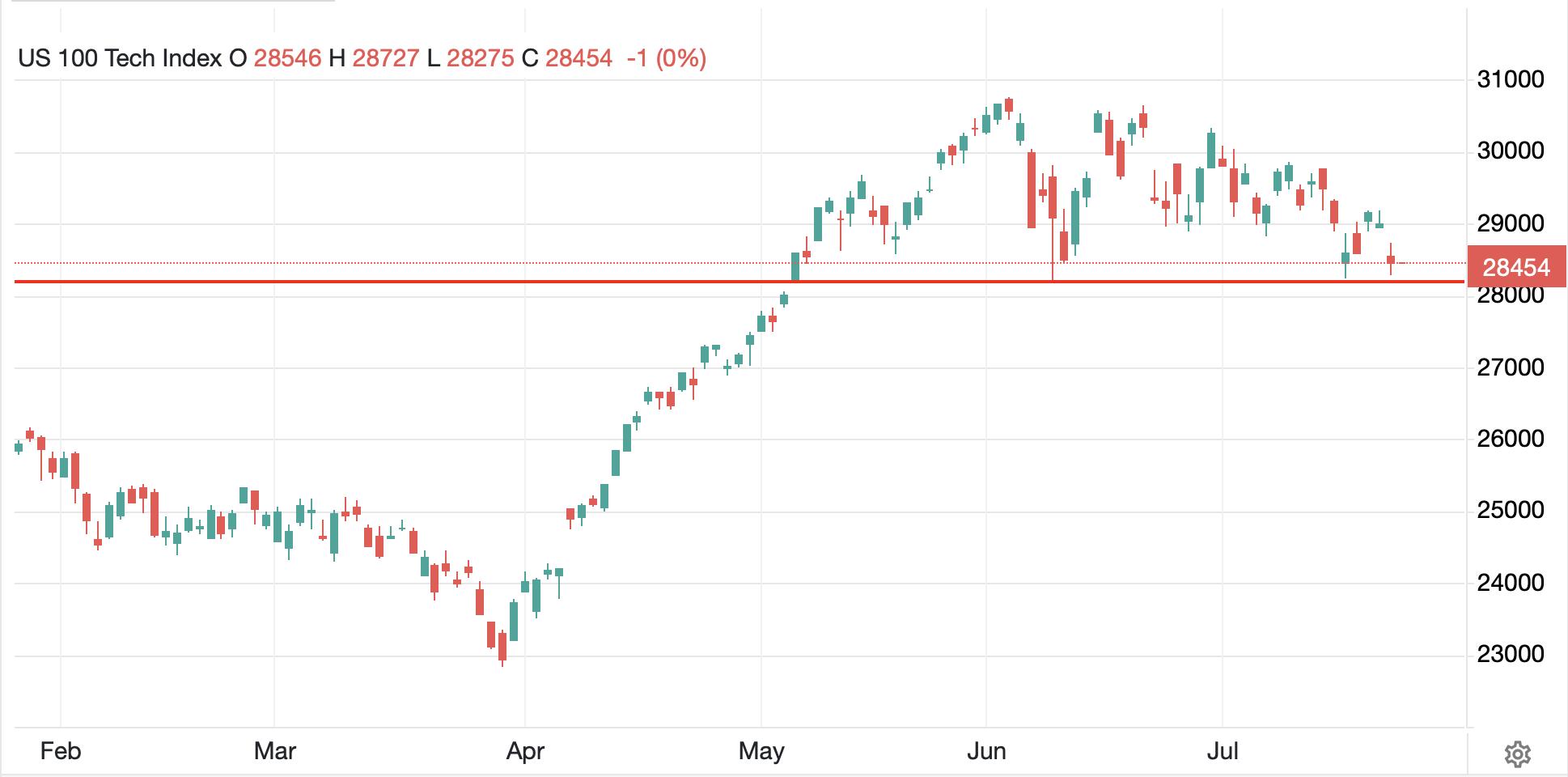
In Europe, though, things are looking better after very solid Flash PMI data across the board. So, Germany (+0.7%) is leading the way higher along with Spain (+0.8%) although France (+0.3%) and the UK (+0.1%) are also in the green, with the latter despite the fact that new PM Burnham is already discussing raising property taxes. As to US futures, at this hour (7:30) they are marginally higher. Despite yesterday’s angst, the NASDAQ has not been able to breach the key support level I am watching, as per the below chart. (If it does, I will be looking to buy QQQ puts, but we shall see if that happens.)
Source: tradingeconomics.com
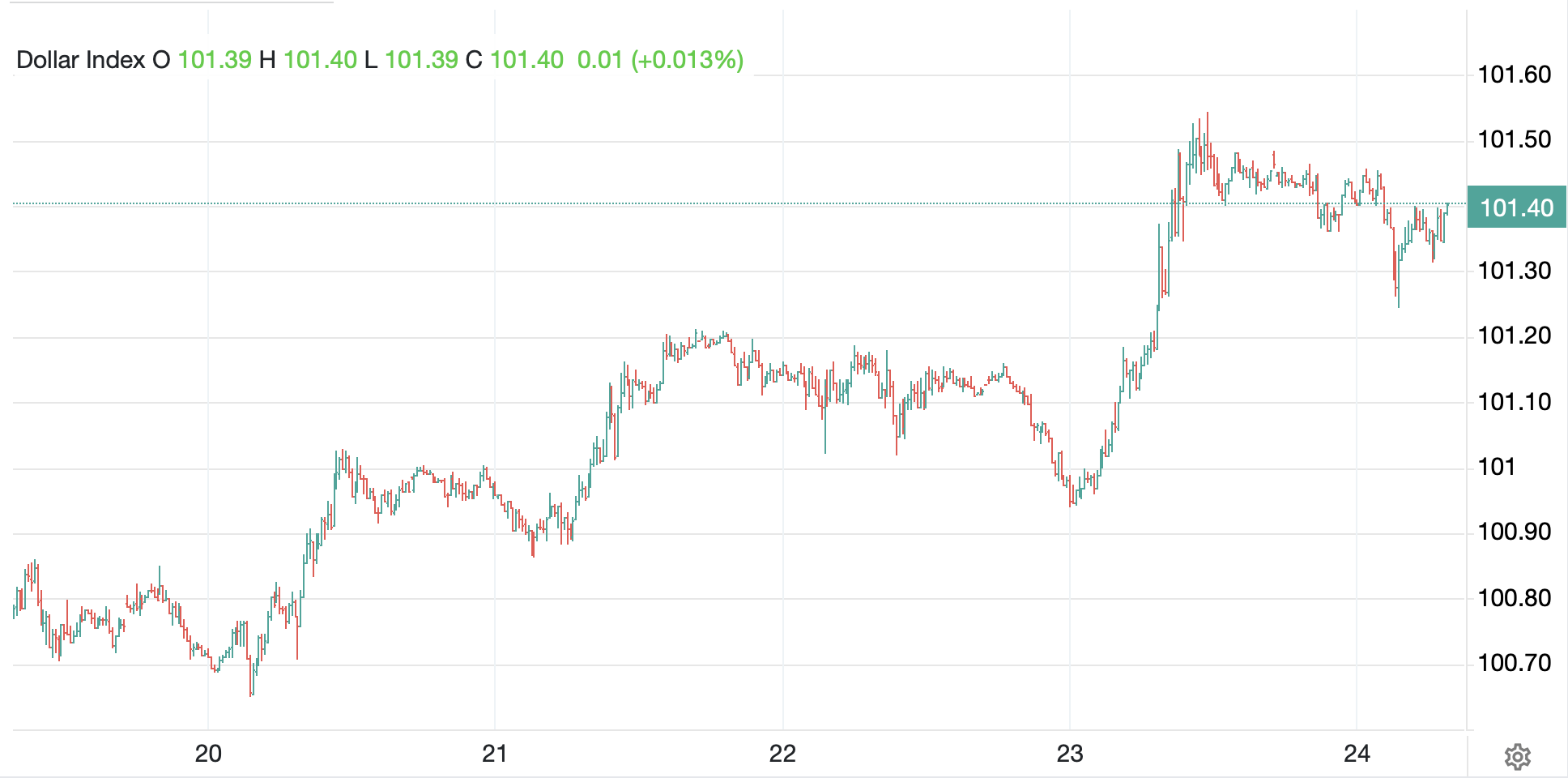
Finally, the dollar is little changed this morning, perhaps slightly softer. But it has rallied over the past week alongside yields as per the below chart of the DXY.
Source: tradingeconomics.com
The major outlier today is KRW (+0.9%) although that is simply an ongoing extension of the central bank’s efforts to add liquidity and internationalize the currency. Thus far, it has been pretty successful, at least their discussions of the process. Since things don’t really change until January 2027, I guess we will need to wait until later to find out if it holds up.
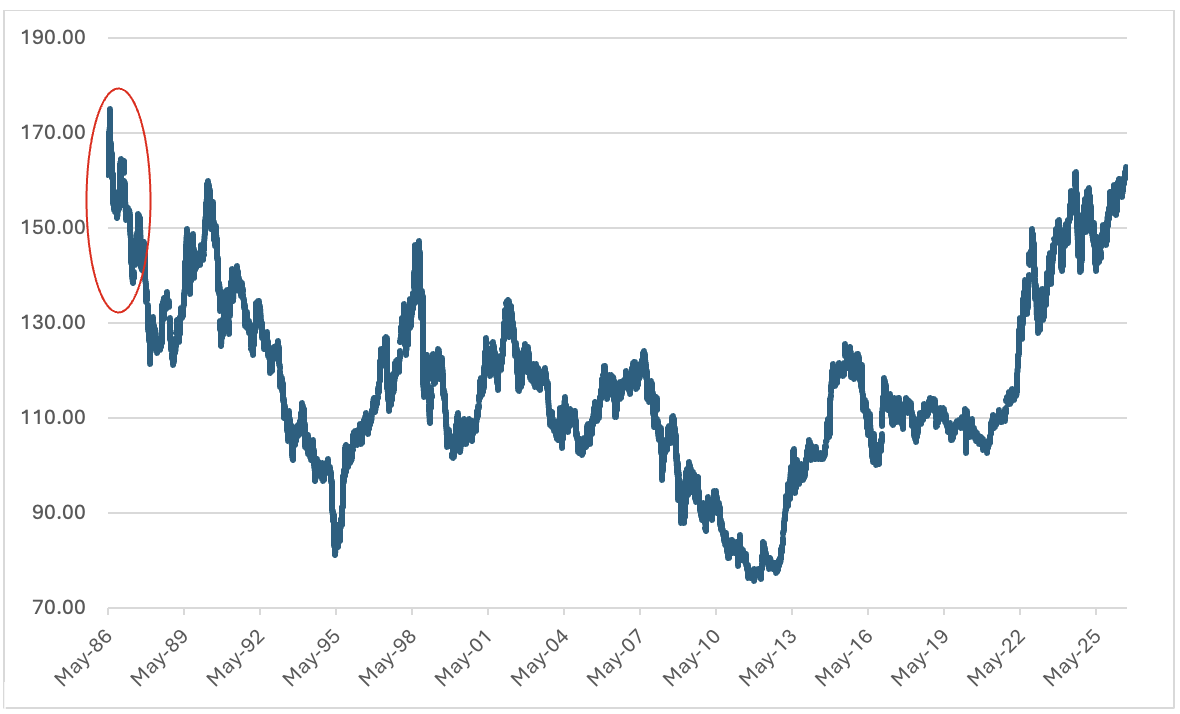
But I also wanted to mention the yen (0.0%) which yesterday touched yet another new 40-year low (dollar high). I have created a chart of USDJPY from FRED data so you can get a sense of how quickly the yen appreciated back then in the wake of the Plaza Accord. The red circled area down leg took place almost entirely in June 1986.
And that’s pretty much it. On the data front we get Flash PMIs (exp Manfacutring 54.3, Services 51.5) and New Home Sales (610K). Once again, we are at a summer weekend so I expect that by noon, things will really slow down. I don’t believe today’s data will have an impact, and I expect a pretty dull day overall. Arguably, until the FOMC, absent a major turn in the Gulf, things should remain fairly stagnant as there is no data of note to change opinions.
Good luck and good weekend
Adf

