
While passing time ere comes the Fed
And after predictions misled
Most traders are waiting
For Warsh advocating
Some view as they all look ahead

But that seems unlikely, at best
As Kevin, each time he’s been pressed
Refuses to say,
Lest his words might sway,
His views in his Quixotic quest
With the midterm elections now less than a week away, and after the bruising that many traders and investors absorbed from the Brazilian election results, it is not surprising that markets are fairly quiet. After all, it is very hard to explain to your manager why you not only got crushed once, but twice, on unexpected election results.
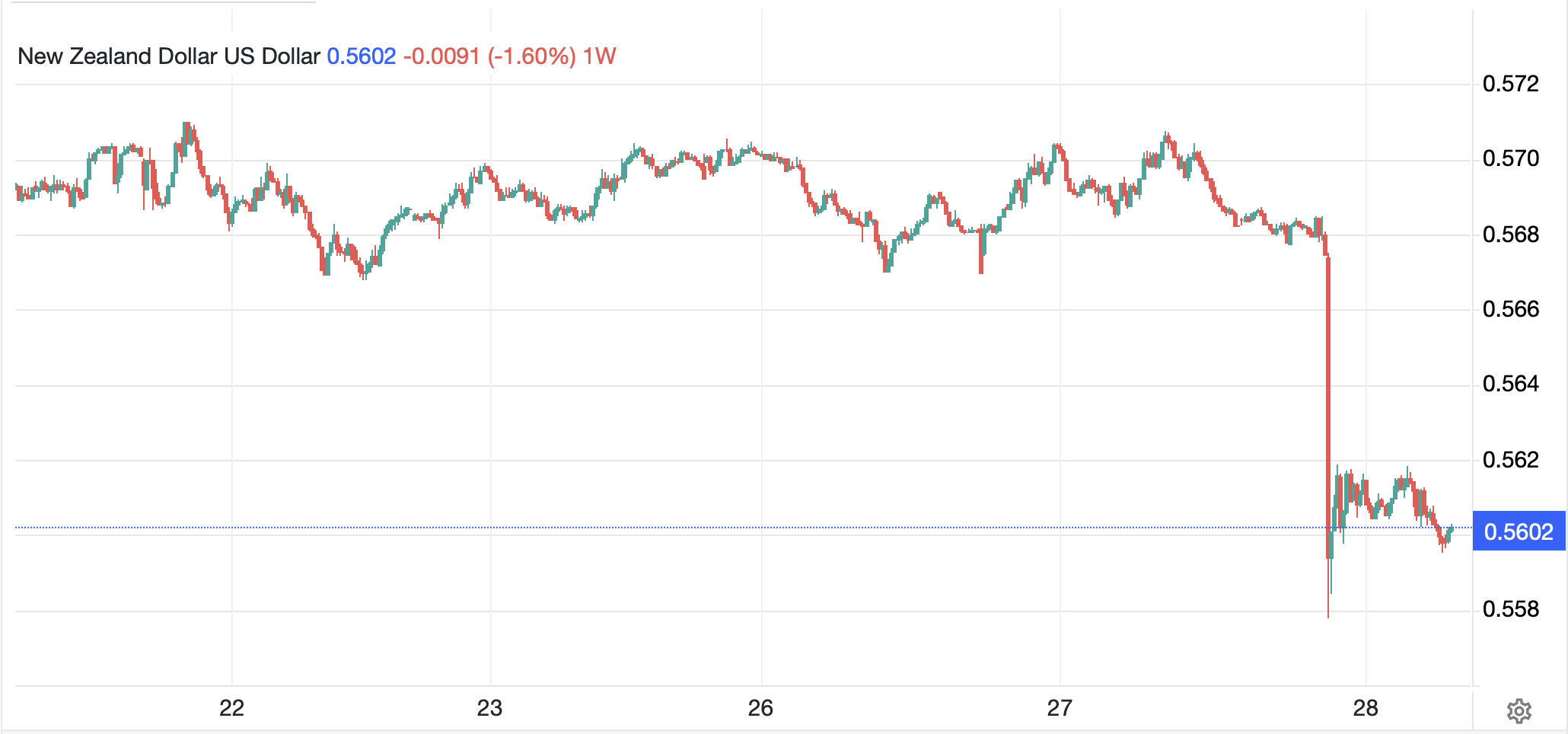
As such, I feel like most markets have put broad themes on hold and are, instead, looking at more specific potential catalysts for movement. Of course, the FOMC meeting falls into that category, as does every central bank meeting along with corporate earnings. So, let’s turn out attention to the central banks. As an example of how things can behave, last night, the RBNZ left rates on hold at 2.75%, surprising the market which was nearly fully priced for a 25bp rate hike. You can see the market response in the chart below.
Source: tradingeconomics.com
Now, according to the BIS data, average daily volume in NZD is about $118 billion, of which $43 billion is in the spot market. While that may sound like a lot, keep in mind the total FX market trades something on the order of $9.5 trillion per day, of which ~$3 trillion is spot, so NZD represents a bit over 1.2% of the market, hardly a harbinger of the future. However, it is instructive as to what can happen when outcomes surprise markets. We just saw what happened in Brazil, which was arguably a much larger surprise than a potential 25bp rate hike. (This goes back to why I have protection for my portfolio expiring after the election next week.)
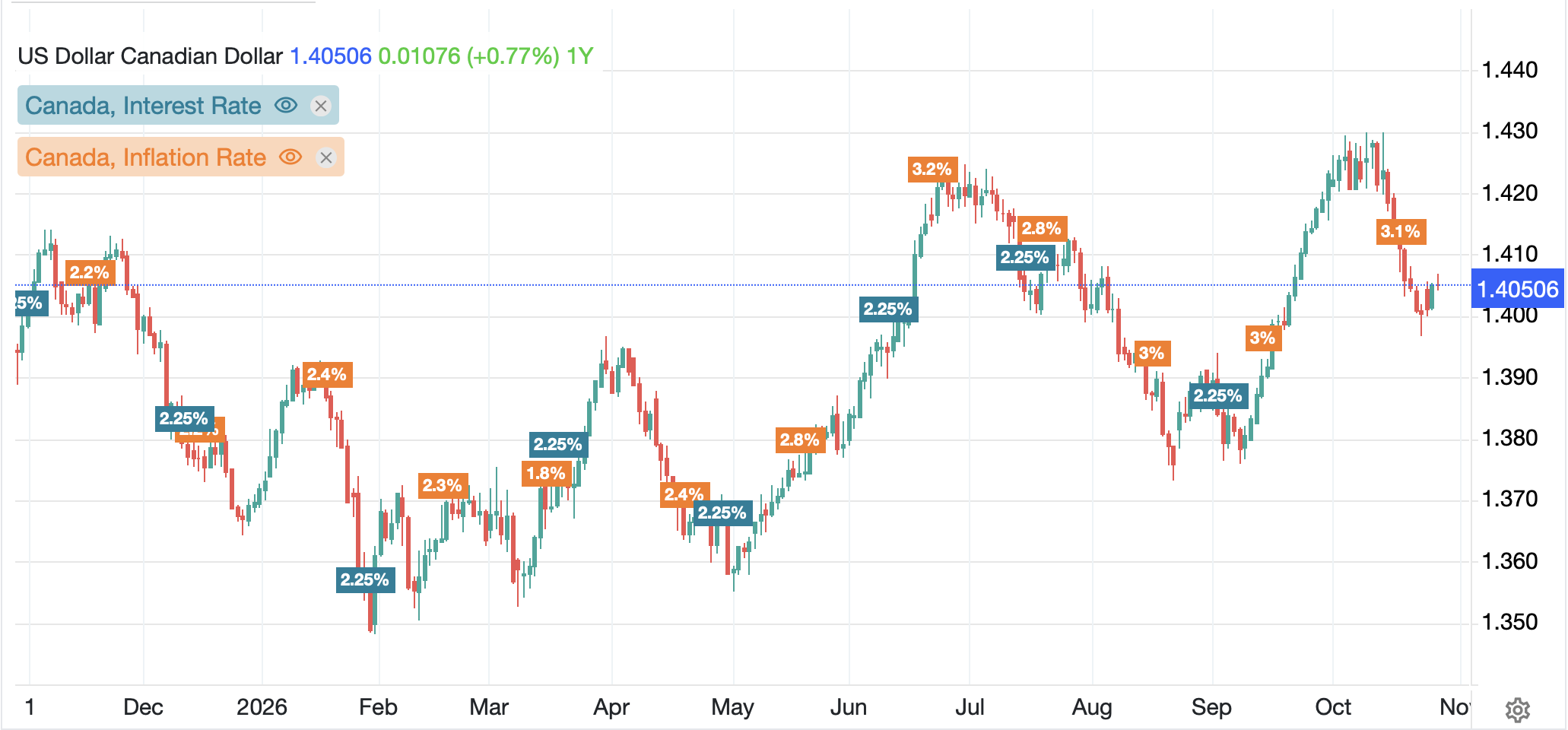
But let’s focus on today’s meetings where first, the BOC is forecast to hike their base rate by 25bps, to 2.50%. Now, if we look at the history of USDCAD over the past year and add interest rate decisions and GDP reports, there is no obvious relationship between those data points and the currency’s movement as per the below.
Source: tradingeconomics.com
First off, their base rate has been on hold for quite a while. Secondly, GDP has generally risen over the period, although the currency has weakened as well. In fact, it is hard to discern any strong pattern. Now, if the BOC stands pat, I suspect that the Loonie will fall initially, but I don’t believe it would head back to its lows (USD highs) more than 2% away. There is just not enough interest to drive that in my view. And, with the Fed still on deck at that time, with the futures market pricing just a 10% probability of a hike, and Kalshi a 5% probability, a surprise there would be of much greater magnitude.
So, is there a possibility that the Fed hikes? Of course, there is always a possibility but based on the last comments from other Fed speakers and the fact that the data since they have been in their quiet period has not shown dramatic changes from when they were still speaking, I agree with the odds. The combination of the political questions of the Fed acting immediately ahead of an election, and the lack of compelling data that things have changed argues for no movement. (The fact that raising interest rates is not obviously going to do anything about inflation anyway is not even part of their discussion, although is something we should all understand. As The Inflation Guy highlighted yesterday, Keynesians see higher rates as impacting the demand side of the economy, which they clearly do, but never discuss the supply side of the economy, which is also directly impacted. Which one matters more is the question.)
What I will say is, if they do hike, it will have a dramatic impact on all markets with equities likely to suffer significantly, the dollar likely to rally and long-dated bonds likely to rally (yields decline) as investors would take that as a sign that the Fed is more serious about inflation. But I just don’t see it. In the meantime, let’s look at how other markets are behaving.
Yesterday’s tech led US rally in stocks was followed by a more mixed session in Asia, with the obvious winners (Korea +6.6% after SK Hynix earnings were phenomenal and Taiwan +2.0%) along with Tokyo (+1.1%) and China (+0.9%) as official support showed up again. But elsewhere in the region, things were far less interesting except that in New Zealand, despite the surprise rate move, equities could not rally. In Europe, red is today’s tale with Spain (-1.3%) the laggard after Santander’s earnings, though strong, disappointed and its stock dragged the whole index lower. As to the rest of the continent and the UK, indices are softer by between -0.1% and -0.3%, representing indifference ahead of the Fed. And US futures? At this hour (7:30) they are mixed, with DJIA a touch lower while both the S&P and NASDAQ are higher by a bit.
In the bond markets, yields are largely unchanged this morning across Treasuries and most European sovereigns with only Italian BTPs (+4bps) showing any movement of note. While two smaller agencies reaffirmed Italy’s BBB+ rating, the broad trend in rates and concerns over the Meloni government’s ability to rein in spending have some investors nervous. As well, the ECB meets tomorrow, and while no change is expected, everything I have heard from ECB speakers has leaned toward hawkishness, so while markets are pricing just a 3% probability of a hike, I guess we cannot rule it out. (see Brazil elections!)
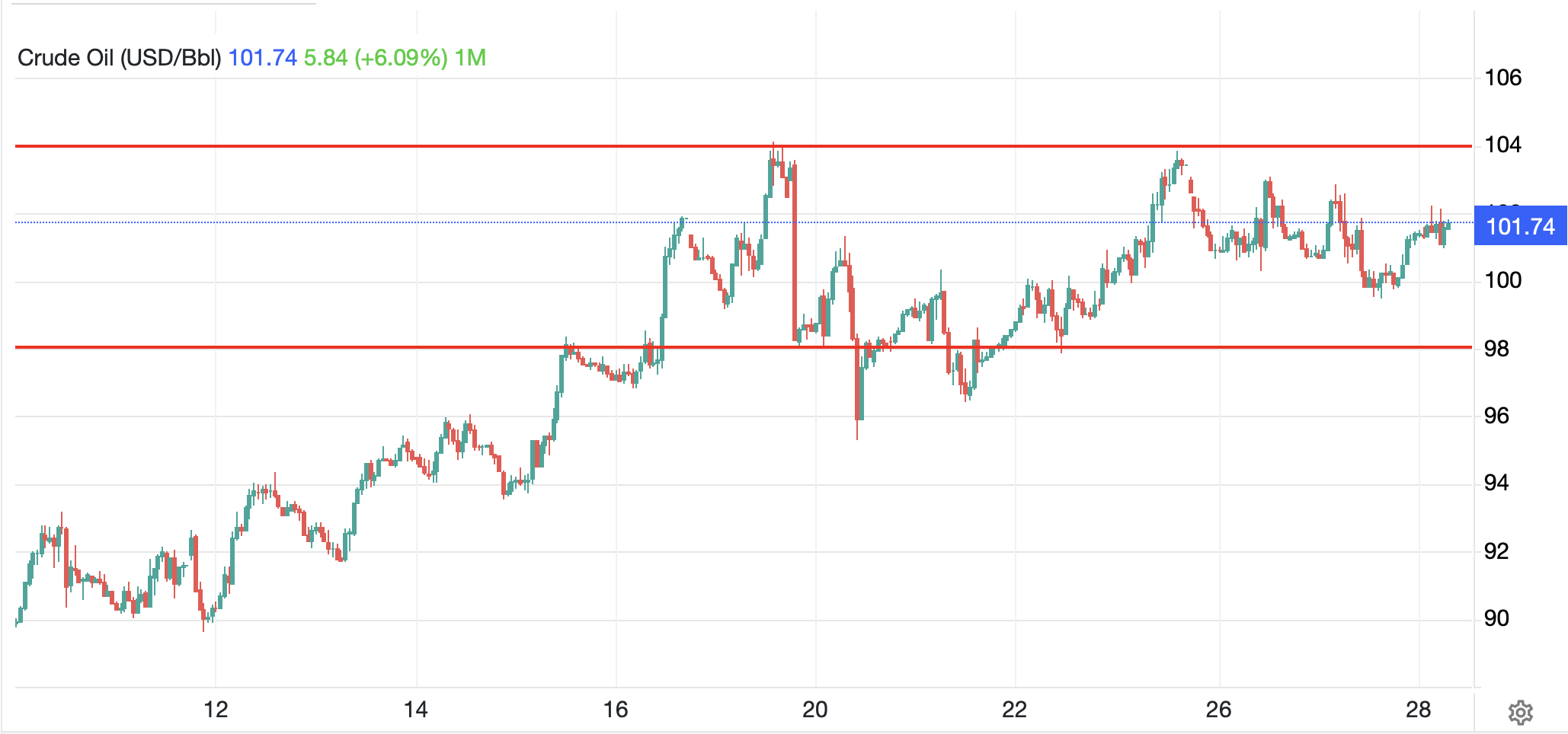
In the commodity markets, oil (+1.7%) is bouncing again although as you can see in the below chart, has remained in a $98/$104 range for the past several weeks. Now, while that is pretty wide, given oil’s volatility this year, I might argue it’s actually pretty narrow.
Source: tradingeconomics.com
Here, too, the election is everything as more and more analysts and commentators are expecting an increase in hostilities when the election is past, something I discussed several weeks ago. But we cannot ignore that there are ongoing efforts to negotiate a settlement between the US and Iran, although I have a hard time seeing that outcome in the near term.
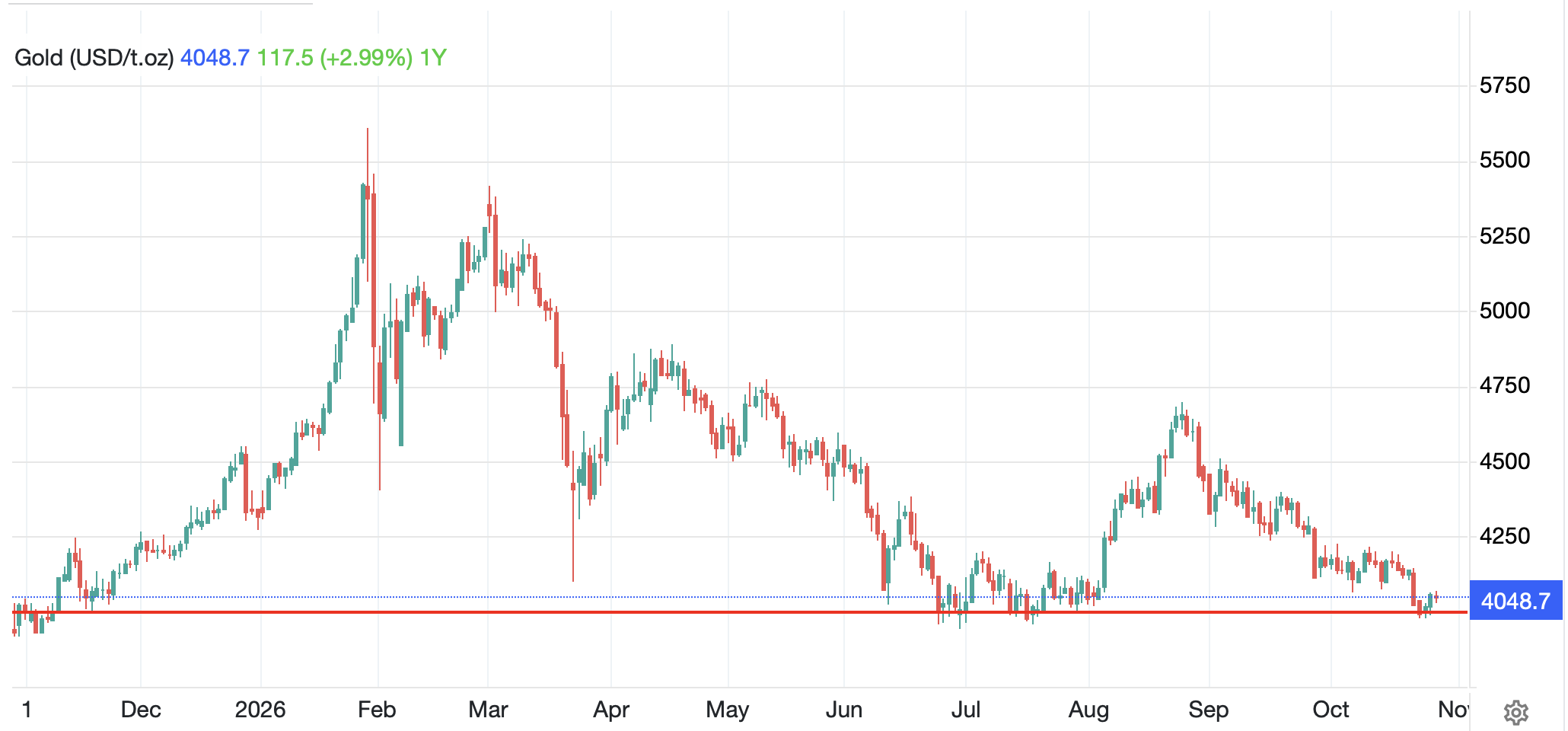
Meanwhile, the metals markets have largely maintained their negative correlation with oil and both gold (-0.3%) and silver (-1.0%) are softer this morning. However, it is worthwhile noting that the barbarous relic continues to find support at the $4000/oz level and has since it first broke through there last November. Remember, central banks around the world continue to buy gold, although it has lost its speculative shine.
Source: tradingeconomics.com
Finally, the dollar is little changed today but is consolidating its recent marginal strength. The DXY is back above 102, although has not yet reached its spike high from two weeks ago near 103 as you can see below.
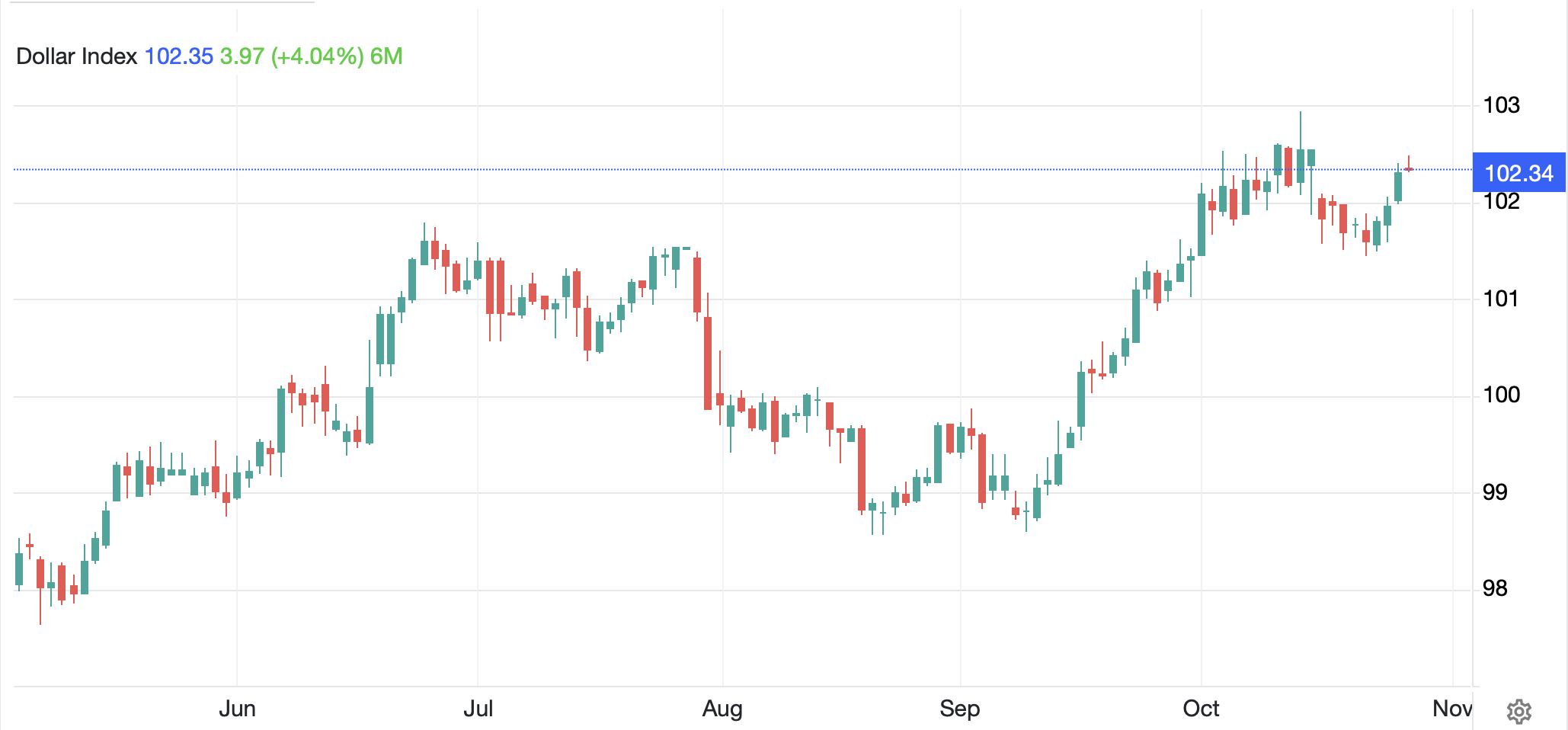
Source: tradingeconomics.com
One thing I would highlight is that yesterday’s Consumer Confidence number was MUCH stronger than forecast, printing at 91.7 more than 10 points above expectations. However, the long-term downtrend there remains intact. I imagine this cannot have hurt the dollar. The one true outlier this morning is CLP (+0.8%) which seems to be benefitting from the central bank’s recent affirmation that inflation risks remain too high and future hikes are still on the table.
And that’s really it. The only other news today is EIA oil inventory data with no net change expected and then the FOMC. Microsoft reports earnings after the bell, but the world can be a very different place by then depending on what Chairman Warsh does, or doesn’t, say at the press conference.
Close to the vest with protection seems the best way to be positioned right now.
Good luck
Adf

