Money More Dear

Next week, though it’s certainly clear
The Fed will price money more dear
The dollar’s incurred
Some selling and spurred
More weakness than seen since last year

The dollar remains under pressure this morning with a number of stories having a separate, but a cumulative impact on the buck. For example, overnight we learned that New Zealand’s GDP grew 1.0% in Q2, higher than the expected 0.7% outcome, and sufficient to get investors and traders to consider that the RBNZ, which just last month promised to maintain record low interest rates until at least 2020, may wind up raising rates sooner than that. A surprise of this nature usually leads to currency strength and so it is this morning with NZD higher by 0.8%.

Or consider the UK, where Retail Sales data surprised one and all by rising 0.3% in August (3.3% Y/Y), a much better performance than expected. This was enough to overcome the ongoing Brexit malaise and drive the pound higher by 0.7% and back to its highest level in two months. In truth, this is somewhat surprising given the quite disappointing outcome from the EU meeting Wednesday night in Brussels. Rather than more positive remarks about the viability of a deal being completed, we heard more of the hard-core negativity from the French and Irish, basically saying if the UK doesn’t cave, then there will be no deal. This is certainly not a welcome outcome, especially since there are only 190 days until Brexit will occur, deal or no. Meanwhile, PM May continues to fight a rearguard action against the avid pro-Brexiters in her party in order to retain her position.

Logically, I look at the situation and believe there is no real chance of a satisfactory deal being agreed on time. Frankly, the Irish border issue is intractable in my view. But given that this is entirely about politics, and the Europeans and British are both famous for kicking the can down the road, I suspect that something along the lines of a pure fudge, with neither side agreeing anything, will be achieved in order to prevent a complete disaster. However, there is a very real probability that the UK will simply leave the EU with no deal of any sort, and if that is the case, the initial market reaction will be for a sharp sell-off in the pound.

Interestingly, despite the fact that the little Eurozone data released was on the soft side, the euro has managed to continue its recent rally and is higher by 0.4% as I type. This seems more of a piece with the general dollar weakness that we have witnessed the past two sessions than anything else.

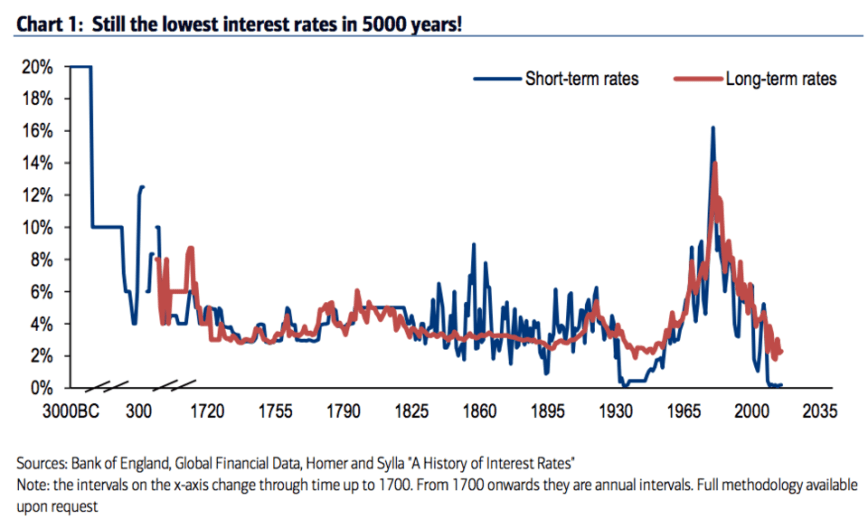
Another potential conundrum is US interest rates, where 10-year Treasury yields jumped to 3.08% yesterday, their highest level since early May, and now gathering momentum for the breakout that many pundits have been expecting for a while. Remember, short Treasury futures are one of the largest positions in the market. This thought process has been led by two concurrent features; the Fed continues to raise short term rates while the Treasury, due to increased fiscal policy stimulus and a growing budget deficit, will be forced to increase the amount of debt issued. When this is wrapped up with the fact that the Fed is reducing the size of its balance sheet, thus removing the one true price-insensitive bid from the market, it seemed a recipe for much higher 10-year yields. The fact that we remain at 3.08% nine months into the year is quite surprising, at least to me. But it is entirely possible that we see a much more aggressive sell-off in Treasuries going forward, especially if the Fed tweaks their message next week to one that is more hawkish.

In this context, let me give a concrete example of just how important the central bank message really is. This morning, Norgesbank raised interest rates in Norway by 25bps, as was universally expected. This was the first time in 7 years they raised rates, and are doing so because the economy there is expanding rapidly while inflation moves closer to their target. But in their policy discussion, they reduced the forecast pace of future interest rate hikes, surprising everyone, and the result was a sharp decline in NOK. Versus the euro it fell more than 1%, which translated into a 0.7% decline vs. the dollar. The point is the market is highly focused on the policy statements as well as the actual moves.

This is equally true, if not more so, with regard to the Fed. Current expectations are that the Fed will raise rates 25bps next week and another 25bps in December. Where things get cloudier is what next year will look like, and how fast they will continue to tighten policy. It is for this reason that next week’s meeting is so widely anticipated, because the Fed will release its updated dot plot, the effective forecasts of each Fed member as to where Fed funds will be at various points in the future. If the dot plot implies higher rates than the last iteration in June, you can expect the dollar to benefit from the outcome. Any implication of a slower pace of rate hikes will certainly undermine the dollar.

In the end, the mixture of new information has been sufficient to push the dollar lower by 0.3% when looking at the broad dollar index. Interestingly, despite its recent weakness, it remains within the trading range that has defined its movement since it stopped appreciating in April. Frankly, I expect this range trading to continue unless the Fed significantly changes its tune.

This morning brings a bit more data with Initial Claims (exp 210K) and Philly Fed (17.0) due at 8:30 while Existing Home Sales (5.35M) are released at 10:00. Yesterday’s housing data was mixed with New Home Sales rising more than expected, but Building Permits plunging. And remember that both of those data points tend to have a great deal of volatility. With that in mind, looking at the longer term trend shows that while Housing Starts seem to be rebounding from a bad spot, the trend in Permits is clearly downward, which doesn’t speak well for the housing market in the medium term.

In the end, as I wrote yesterday, continued modest dollar weakness seems the most likely outcome for now, but I suspect that we are coming to the end of this soft patch, and that the dollar will find its legs soon. I remain confused as to why there is so much bullishness attached to the Eurozone economy given the data continues to underperform. And there is no indication that the ECB is going to suddenly turn truly hawkish. Current levels strike me as attractive for dollar buyers.

Good luck
Adf


Rate Hikes to Condone

Today’s UK data has shown
The pace of price rises has grown
Surprising most folks
And likely to coax
Mark Carney, rate hikes to condone

The British pound is outperforming today, currently up 0.35%, as the market responds to a higher than expected inflation reading released this morning. CPI printed at 2.7%, well above the 2.4% consensus view and perhaps signaling that UK inflation, after a summer reprieve, is set to return to its post-Brexit peak of 3.1%. This has traders increasing their estimates of rate activity by the BOE, starting to price in tighter policy despite the ongoing uncertainty created by Brexit. As such, it should not be too surprising that the pound is firmer.

But the pound is by no means alone in its performance characteristics this morning, with the dollar weaker against virtually all comers. In fact, only two of the G10 bloc has suffered today, CHF (-0.45%) and JPY (-0.1%), the two haven currencies. The implication is that risk-taking is back. Certainly equity markets have been holding up their end of that bargain, with US markets strong performance yesterday feeding into strength throughout most of APAC last night led by Shanghai’s 1.1% gains and the Nikkei’s 1.0% rally. European shares, however, have seen a less positive reaction, as they are up at the margin, but only a few basis points, with some markets, notably Italy, actually suffering. (Italy, however, is feeling the effects of the imminent budget deadline with no cogent plan in place and significant differences between the government’s election promises and the fiscal restraint imposed by the EU.) But the other haven asset of note, US Treasuries, has also sold off, with the 10-year yield now trading at 3.05%, its highest level since late May. All told, despite the ongoing trade tensions, it seems that market participants are increasingly comfortable adding to their risk profiles.

More proof of this concept comes from the huge leveraged debt financing completed yesterday by Blackstone Group, where they borrowed $13.5 billion to purchase 55% of a Thompson-Reuters data company called Refinitiv (who comes up with these names?) At any rate, despite ratings of B- by S&P and Caa2 by Moody’s, and a leverage ratio of between 7x and 8x of EBITDA, the deal was massively oversubscribed with yields printing at, for example, 8.25% for 8-year unsecured notes, down from an initial expectation of 9.00%. High leverage, covenant lite debt is all the rage again. What could possibly go wrong?

But I digress. Back in the currency world, the dollar’s weakness has manifested itself in the EMG bloc as well as G10. For example, despite a softer than expected inflation reading from South Africa, where the headline fell to 4.9% while core fell to 4.2%, the rand is firmer by 1.8% this morning. The story here is confusing as some pundits believe that the central bank may be forced to raise rates in order to help protect the rand, which despite today’s rally is still lower by 10% this year. We have seen this type of behavior from Russia, India and Indonesia, three nations where domestic concerns have been outweighed by their currency’s weakness. However, there is a large contingent that believe the SARB will stay on the sidelines as they seek to encourage growth ahead of the presidential elections scheduled for the middle of next year.

It is not just the rand, however, that is showing strength today, but a broad spectrum of EMG currencies. These include MXN (+0.35%), INR (+0.45%), TRY (+1.5%), RUB (+0.5%) and HUF (+0.25%); as wide a cross-section as we are likely to see. In other words, this has much more to do with broad trends than specific data or stories. And with that in mind, it is hard to fight the tape.

It has become increasingly clear that most markets have made peace with the idea that the trade situation is not going to improve in the short run. Next week the US will impose 10% tariffs on $200 billion of Chinese imports and the administration is already preparing its list for an additional $267 billion of goods to be taxed. No economist believes that this will enhance the pace of growth; rather the universal assumption is that global growth will slow amid this process. And yet investors and traders have simply decided to ignore this outcome, with a large contingent explicitly declaring that they believe these are simply negotiating tactics and that there will be no long-term impact. While I hope they are correct, I fear this is not the case, and that instead, we are going to see this process carry on for an extended period of time, driving up prices and inflation and forcing the Fed to tighten policy more than currently priced by markets. If I am correct, then the likelihood of a significant repricing of risk is quite large. But again, that is only if I am correct.

As to today’s session, we see our first real data of the week with Housing Starts (exp 1.23M) and Building Permits (1.31M) as well as the reading on the Current Account (-$103.5B). But with risk-on today’s theme, these data would have to be drastically weak, sub 1.0M, to have an impact. Instead, it appears that the dollar will remain under pressure today, and perhaps through the rest of the week into next as the market awaits the Fed rate hike next week, and more importantly the statement describing their future views. Until then, this seems to be the theme.

Good luck
Adf


Little Fear

Much to all Free Traders’ chagrin
More tariffs are set to begin
But markets appear
To have little fear
This madness will cause a tailspin

As NY walks in this morning, there has been very limited movement in the dollar overall. While yesterday saw a modicum of dollar weakness, at least against the G10 currencies, we remain range bound with no immediate prospects for a breakout. It does appear that US data is turning more mixed than clearly bullish, as evidenced by yesterday’s Empire Manufacturing Survey data, which printed at 19, still solid but down from last month’s reading of 25.6 as well as below expectations of 23.0. A quick look at the recent history of this indicator shows that it appears to be rolling over from its recent high levels, perhaps signaling that peak growth is behind us.

At this point, it is fair to question what is causing this change in tone. During the summer, US data was unambiguously strong, with most releases beating expectations, but lately that dynamic has changed. The most obvious catalyst is the ongoing trade situation, which if anything worsened yesterday when President Trump announced that the US would be imposing 10% tariffs on an additional $200 billion of Chinese imports. In addition, these are set to rise to 25% in January if there is no further progress in the trade negotiations. As well, Trump threatened to impose tariffs on an additional $267 billion of goods, meaning that everything imported from China would be impacted. As we have heard from several Fed speakers, this process has grown to be the largest source of uncertainty for the US economy, and by extension for financial markets.

Yet financial markets seem to be quite complacent with regard to the potential damage that the trade war can inflict on the economy and growth. As evidence I point to the modest declines in US equities yesterday, but more importantly, to the rally in Asian equities overnight. While it is fair to say that the impact of this tariff war will not be directly felt in earnings results for at least another quarter or two, it is still surprising that the market is not pricing the potential negative consequences more severely. This implies one of two things; either the market has already priced in this scenario and the risks are seen as minimal, or that the rise in passive investing, which has exploded to nearly 45% of equity market activity, has reduced the stock market’s historic role as a leading indicator of economic activity. If it is the former, my concern is that actual results will underperform current expectations and drive market declines later. However, I fear the latter situation is closer to the truth, which implies that one of the long-time functions of the equity market, anticipating and discounting future economic activity, is changing. The risk here is that policymakers will lose an important signal as to expectations, weakening their collective hands further. And let’s face it, they need all the help they can get!

Turning back to the dollar, not only has the G10 has been dull, but EMG currencies are generally benign as well. In fact, the only substantive movement has come from everybody’s favorite whipping boy, TRY. This morning it is back under pressure, down 1.3% and has now erased all the gains it made in the wake of last week’s surprising 625bp rate hike. But in truth, beyond that, I can’t find an important emerging market currency that has moved more than 20bps. There are two key central bank meetings this week, Brazil tomorrow and South Africa on Thursday. Right now, expectations are for both to stand pat, leaving interest rates in both nations at 6.50%. However, the whisper campaign is brewing that South Africa may raise rates, which has undoubtedly helped the rand over the past two weeks as it has rallied some 4.5% during that time. We will know more by Thursday.

This overall lack of activity implies that traders are waiting the next important catalyst for movement, which may well be next Wednesday’s FOMC meeting! That is a very long time in the market for treading water, however, given the US data the rest of this week is second tier, and the trade situation is widely understood at this time, it is a challenge to see what else will matter until we hear from the Fed. And remember, the market has already priced in a 100% probability that they will raise rates by 25bps, so this is really all about updated forecasts, the dot plot and the press conference. But until then, my sense is that we are in for a decided lack of movement in the FX world.

Good luck
Adf


Things Went Awry

A decade has passed since the day
That Lehman collapsed all the way
It sank several banks
And brought us Dodd-Frank
In effort to curb foul play

And during those ten years gone by
A number of things went awry
Some xenophobes won
And they’ve overrun
Attempts, good ideas, to apply

The upshot is markets worldwide
Have started to feel the downside
Of higher Fed rates
While there are debates
If euros or dollars will slide

Despite a number of ongoing stories that may ultimately impact markets, notably the US-China trade situation, Italian budget discussions and Brexit negotiations, movement overnight in the FX market has been benign. This morning, the broad dollar index is lower by about 0.25%, with most G10 currencies having strengthened by similar amounts, but the EMG bloc remains under pressure with TRY (-1.5%), INR (-0.75%), KRW (-0.5%) and ZAR (-0.5%) all leaning in the other direction. However, when stepping back to get perspective, the situation can fairly be summed up by saying EMG currencies have been weakening pretty consistently for the past six plus months, while the G10 has barely moved at all since the end of May when the dollar’s sharp rise came to a halt.

Given the relatively uninteresting state of markets this morning, and the fact that there is virtually no data of note until Wednesday this week, I thought I might take a short retrospective look at how things have changed since the financial crisis ten years ago.

Remarkably, last Friday was the tenth anniversary of Lehman Brothers bankruptcy filing. The ensuing ten years has brought about significant changes in the way markets behave, regulators oversee things and investors approach the process. Arguably, the bigger question is what will the next ten years look like. And while there is no way to be sure, there do seem to be several trends that have further to run.

The hardest thing to understand is how a debt fueled crisis resulted in policies designed to increase debt further. While during the immediacy of the extremely deep recession in 2009 there were few complaints about central bank policy trends, which were seen as emergency measures, the first eyebrows were raised when interest rates went negative in Sweden, and then followed throughout Europe and then finally in Japan. But even that would likely have been seen as generally reasonable if the interest rate cycle had been of a more normal duration. Instead, central bankers around the world collectively decided that expanding global money supply inexorably for ten years was the prudent thing to do. Consider that despite global growth chugging along at about 3.5%, global money supply has risen more than 100% since 2008, which means it has grown at nearly an 8% annual clip. As evidenced by the large gap between economic and monetary growth, it is clear that some great portion of that new money found a home outside the ‘real’ economy.

In fact, it is this situation that has defined market activity since 2008, while simultaneously confusing half the economic community. That money has found a home in global debt and equity markets, causing massive inflation there, while only trickling into the real economy and thus allowing measured price inflation, like CPI or PCE, to remain subdued. Most market analysts understood this concept within months of the process beginning, but mainstream economists and policymakers claimed to be puzzled by the lack of inflation, and so were willing to maintain ‘emergency’ policy for ten years, despite rebounding global growth. Now, clearly through this period there were areas in the world that had slowdowns (notably Europe in 2011 and China in 2015), but the idea that flooding the market with funds and then leaving them in place for nigh on ten years was economically prudent seems hard to swallow.

And of course, there were real consequences to these actions, not simply numeric arguments. Income and wealth inequality exploded, as those already rich were the main beneficiaries of the global stock and bond market rallies. At the same time, lower skilled labor found themselves under enormous pressure from a combination of technological improvements in production, reducing the demand for labor and globalization increasing the supply of labor. In hindsight, it should be no surprise at all that we have seen a significant increase in the number of nationalists being elected around the world, especially in the G10. After all, it is much easier to demonize foreign workers than industrial robots, especially since they don’t vote.

The thing is that while the Fed has, at least, made some strides to finally reduce the money supply, both raising rates and allowing their balance sheet to actually shrink, they remain the only central bank doing so. And even though the ECB is slowing its QE purchases, they are still adding funds, while both China and Japan continue to add money to the system indefinitely. Current forecasts show that global money supply will not start to shrink until the end of next year at the earliest based on current policy trajectories and expectations. However, that makes the heroic assumption that when money supply starts to shrink, financial markets will be unaffected. And that seems highly unlikely given how crucial those excess funds have been to financial market performance for the past decade.

Summing up, the Lehman bankruptcy triggered a global crisis that was built on excessive leverage, notably in the US housing market. The crisis response was to cut short-term interest rates dramatically while flooding the markets with cash in order to drive down long-term interest rates. The consequences of this policy, which was repeated around the world once the Fed led the way, was a massive rally in both equity and fixed income markets, and a modest rebound in economic growth. Financial engineering became the norm (issue cheap debt to repurchase shares and drive up EPS and stock prices while increasing balance sheet leverage), whereas R&D and Capex shrank in comparison. The dollar, meanwhile, initially rallied sharply as a safe haven, and despite periodic bouts of weakness, it has continued its long-term uptrend, thus pressuring export industries to move production offshore. And the result of all that economic and financial change has been the rise of nationalist political parties around the world as well as significant pressure on the global free trade movement amongst nations.

There is a great irony in the fact that for many years after the crisis, central bankers were terrified of global deflation, and sought aggressively to push inflation higher. Well, now they have done so in spades, and it will be quite interesting to see how they respond to this more traditional monetary phenomenon. As the Fed continues on its current policy path, we are seeing an increasing number of EMG central banks forced to raise rates as well, despite suspect economic growth, as inflation is breaking out all over the bloc. Friday saw Russia raise rates in a surprise, and all eyes are on Brazil and South Africa this week. My fear is that ten years of emergency monetary accommodation has left the world in a precarious position, one where the future will see even bigger problems than the crisis ten years ago. Ask yourself this, how will global markets respond to a debt “jubilee”, where debt is simply erased from the books and investors are left in the lurch? Don’t think it can’t happen.

And with that as a backdrop, let’s quickly look ahead to a very limited week of data as follows:

Today Empire Manufacturing 23.0
Tuesday TIC Flows $65.1B
Wednesday Housing Starts 1.23M
  Building Permits 1.31M
Thursday Initial Claims 210K
  Philly Fed 16.5
  Existing Home Sales 5.36M

With the FOMC meeting next week, all eyes are going to turn in that direction. While expectations are universal for a 25bp rate hike, the question is how hawkish or dovish will they sound. The interesting thing is that recent comments by Fed speakers have been far more focused on the potential of the ongoing trade issues to negatively impact the economy. (Secretly I believe that they are actually quite happy with this as if things turn south they will be able to blame someone else and the market will accept that explanation.) At any rate, the data of late has been mixed, with the wage data showing stronger than expected growth, while CPI was actually soft. Given the dearth of important data this week, I expect that the dollar will continue its recent wishy-washy performance, with some days of modest rallies and some days of modest declines, but no new trend evolving.

Good luck
Adf

Inspired

It seems that inflation here’s not
Exploding, nor running too hot
That news has inspired
Stocks getting acquired
The dollar, meanwhile, went to pot

Yesterday’s CPI reading was surprisingly mild, with the headline rate rising 2.7% and the core just 2.2%. Both those readings were 0.1% below expectations and the market reaction was swift. Equity futures rallied immediately, with those gains maintained, and actually increased, throughout the session. At the same time the euro jumped 0.6%, as the CPI data moderated expectations of an ever more aggressive Fed. In other words, Goldilocks is still alive and well.

The employment situation in the US remains remarkably robust (Initial Claims were just 204K, the lowest level since December 1969!), while inflation seems to be under control. If you recall Chairman Powell’s comments from Jackson Hole, he remains data dependent, and clearly does not feel beholden to any particular economic model that defines where interest rates ought to be based on historical constructs. Rather, he seems willing to be patient if patience is required. Certainly the market understands that to be his view, as this data has helped flatten the trajectory of rate hikes further out the curve. While there is no doubt that the Fed will move later this month, and the probability of a December move remains high, next year suddenly looks much less certain, at least right now. Given this new information, it is no surprise that the dollar remains under modest pressure. And if the data starts to point to a slowdown in US growth and continued moderation in inflation, then the dollar ought to continue to suffer. But one data point does not make a trend, so let’s be careful about extrapolating this too far.

Beyond the CPI data, we also heard from Signor Draghi at the ECB press conference. He was remarkably consistent despite the reduction in GDP growth forecasts made by his staff economists. QE will wind down as advertised, with €30 billion of purchases this month and then €15 billion for the rest of the year, ending in December. And rates will remain where they are “through summer” which has widely been interpreted to mean until September 2019. Consider that one year from now, US interest rates are very likely to be at least 75bps higher than the current 2.00% and possibly as much as 150bps higher, which means that the spread will be at least 315bps in favor of the dollar. I understand that markets are forward looking, but boy, that is a very wide spread to ignore, and I expect that the dollar will continue to benefit accordingly.

Last night we also saw important data from China, where Fixed Asset Investment rose at its slowest pace (5.3%) since the data series began in 1996. This is somewhat surprising given Beijing’s recent instructions to regional governments to increase infrastructure investment as President Xi attempts to address a slowing economy. From the Chinese perspective, this is also an unwelcome outcome for the ongoing trade dispute with the US as it may give the appearance that China is more motivated for a deal and encourage President Trump to press harder. But for our purposes, the risk is that a slowing Chinese economy results in a weaker renminbi and there is clearly concern in Beijing that if USDCNY trades to 7.00, it could well encourage a more significant capital flight from the country, something that the PBOC wants to avoid at all costs. Now, last night it fell just 0.2% on the news and has actually recouped those losses since then, but that fear remains a driving force in Chinese policy.

The other stories that continue are in Turkey, where it should be no surprise that President Erdogan was extremely disappointed in the central bank for its surprisingly large rate hike yesterday morning. While the lira has held on to the bulk of its early gains, given Erdogan’s unpredictability, it is easy to contemplate further changes in the central bank governance that would be seen as quite negative for TRY. In Italy, the budget battles continue with no outcome yet, but this morning’s spin being somewhat less positive than yesterday’s, with concerns FinMin Tria will not be able to prevent a breech of the EU’s 3.0% budget deficit limit. And finally, BOE Governor Carney, in a closed door briefing with the PM and her cabinet, indicated that one possible scenario if there is no Brexit deal would be for crashing house prices but rising interest rates, a true double whammy. And on that subject, there has been no indication that a deal is any closer at this time. But all of these have been secondary to the CPI story, which seemed to change the tone of the markets.

This morning brings a raft of US data as follows: Retail Sales (exp 0.4%, 0.5% ex autos); IP (0.3%); Capacity Utilization (78.3%); Business Inventories (0.6%); and Michigan Consumer Sentiment (96.7). Arguably, the Retail Sales data will be the most closely watched as investors try to get a better understanding of just how the US economy is performing, but quite frankly, that number would need to be quite strong to alter the impressions from yesterday. Finally, we hear from Chicago Fed President Charles Evans, which could be interesting based on the CPI data’s change to impressions. In the end, though, I expect a relatively quiet session. It’s Friday and traders will want to reduce exposures.

Good luck and good weekend
Adf


A Charade

The news there was movement on trade
Twixt China and us helped persuade
Investors to buy
Though prices are high
And it could well be a charade

We also learned wholesale inflation
Was lower across the whole nation
Thus fears that the Fed
Might still move ahead
Aggressively lost their foundation

The dollar is little changed overall this morning, although there are a few outlier moves to note. However, the big picture is that we remain range bound as traders and investors try to determine what the path forward is going to look like. Yesterday’s clues were twofold. First was the story that Treasury Secretary Mnuchin has reached out to his Chinese counterpart, Liu He, and requested a ministerial level meeting in the coming weeks to discuss the trade situation more actively ahead of the potential imposition of tariffs on $200 billion of Chinese imports. This apparent thawing in the trade story was extremely well received by markets, pushing most equity prices higher around the world as well as sapping a portion of dollar strength in the FX markets. Remember, the cycle of higher tariffs leading to higher inflation and therefore higher US interest rates has been one of the factors underpinning the dollar’s broad strength.

But the other piece of news that seemed to impact the dollar was a bit more surprising, PPI. Generally, this is not a data point that FX traders care about, but given the overall focus on inflation and the fact that it printed lower than expected (-0.1%, 2.8% Y/Y for the headline number and -0.1%, 2.3% Y/Y for the core number) it encouraged traders to believe that this morning’s CPI data would be softer than expected and therefore reduce some of the Fed’s hawkishness. However, it is important to understand that PPI and CPI measure very different things in somewhat different manners and are actually not that tightly correlated. In fact, the BLS has an entire discussion about the differences on their website (https://www.bls.gov/ppi/ppicpippi.htm). The point is that PPI’s surprising decline is unlikely to be mirrored by CPI today. Nonetheless, upon the release, the dollar softened across the board.

This morning, however, the dollar has edged slightly higher, essentially unwinding yesterday’s weakness. As the market awaits news from three key central banks, ECB, BOE and Bank of Turkey, traders have played things pretty close to the vest. Expectations are that neither the BOE or the ECB will change policy in any manner, and in fact, the BOE doesn’t even have a press conference scheduled so there is likely to be very little there. As to Draghi’s presser at 8:30, assuming there is no new guidance as expected, questions will almost certainly focus on the fact that the ECB staff economists have reduced their GDP growth forecasts and how that is likely to impact policy going forward. It will be very interesting to hear Draghi dance around the idea that softer growth still requires tighter policy.

But certainly the most interesting meeting will be from Istanbul, where current economist forecasts are for a 325bp rate rise to 22.0% in order to stem the decline of the lira as well as try to address rampant inflation. The problem is that President Erdogan was out this morning lambasting higher interest rates as he was implementing new domestic rules on FX. In the past, many transactions in Turkey were denominated in either USD or EUR (things like building leases) as the financing was in those currencies, and so landlords were pushing the FX risk onto the tenants. But Erdogan decreed that transactions like that are now illegal, everything must be priced in lira, and that existing contracts need to be converted within 30 days at an agreed upon rate. All this means is that if the currency continues to weaken, the landlords will go bust, not the tenants. But it will still be a problem.

Elsewhere, momentum for a Brexit fudge deal seems to be building, although there is also talk of a rebellion in the Tory party amongst Brexit hardliners and an incipient vote of no confidence for PM May to be held next month. Certainly, if she is ousted it would throw the negotiations into turmoil and likely drive the pound significantly lower. But that is all speculation as of now, and the market is ascribing a relatively low probability to that outcome.

FLASH! In the meantime, the BOE left rates on hold, in, as expected, a unanimous vote, and the Bank of Turkey surprised one and all, raising rates 525bps to 24.0%, apparently willing to suffer the wrath of Erdogan. And TRY has rallied more than 5% on the news, and is now trading just around 6.00, its strongest level since late August. While it is early days, perhaps this will be enough to help stabilize the lira. However, history points to this as likely being a short reprieve unless other policies are enacted that will help stabilize the economy. And that seems a much more daunting task with Erdogan at the helm.

Elsewhere in the EMG bloc we have seen both RUB and ZAR continue their recent hot streaks with the former clearly rising on the back of rising oil prices while the latter is responding to a report from Moody’s that they are unlikely to cut South Africa to a junk rating, thus averting the prospect of wholesale debt liquidation by foreign investors.

As mentioned before, this morning brings us CPI (exp 0.3%, 2.8% Y/Y for headline, 0.2%, 2.4% Y/Y for core). Certainly, anything on the high side is likely to have a strong impact on markets, unwinding yesterday’s mild dollar weakness as well as equity market strength. This morning we hear from Fed governor Randy Quarles, but he is likely to focus on regulation not policy. Meanwhile, yesterday we heard from Lael Brainerd and she was quite clear that the Fed was on the correct path and that two more rate hikes this year were appropriate, as well as at least two more next year with the possibility of more than that. So Brainerd, who had been one of the most dovish members for a long time, has turned hawkish.

All in all, traders will be focused on two things at 8:30, CPI and Draghi, with both of them important enough to move markets if they surprise. However, the big picture remains one where the Fed is the central bank with the highest probability of tightening faster than anticipated, while the ECB, given the slowing data from Europe, seems like the one most likely to falter. All that adds up to continued dollar strength over time.

Good luck
Adf


Opted To Stay

The BOE banker named Mark
Whose bite pales compared to his bark
Has opted to stay
To help PM May
Get through a time sure to be stark

It has been a relatively docile FX market in the overnight session with traders awaiting new information on which to take positions. With that in mind, arguably the most interesting news has been that BOE Governor, Mark Carney, has agreed to extend his term in office for a second time, establishing a new exit date of January 2020. This is a relief to Chancellor Phillip Hammond, who really didn’t want to have a new Governor during what could turn out to be a very turbulent time immediately in the wake of the actuality of Brexit, which occurs on March 31, 2019. This is actually Carney’s second extension of his term, as he agreed to extend it originally by one year in the immediate wake of the Brexit vote in 2016. The market response was positive, with the pound bouncing about 0.5% upon the news, but just around 7:00am, it has started to cede those gains and is now actually down 0.3% on the session.

Away from the Carney news, there is precious little new to discuss. Eurozone data was generally softer than expected with IP there falling a worse than expected -0.8% in July. This resulted in the Y/Y figure actually turning negative as well, indicating that growth on the Continent is starting to suffer. In fact, there is another story that explains the ECB economists (not the governing council) have lowered their growth forecasts for the Eurozone during the next three years on the basis of increased trade frictions, emerging market malaise and higher US interest rates driving the global cycle. It will be interesting to see how Signor Draghi handles this news, and whether it will force the council to rethink their current plan to reduce QE starting next month and ending it in December. We will get to find out his thoughts tomorrow morning at the 8:30am press conference following their meeting. If pressed, I would expect that Draghi will be reluctant to change policy, but the increasing dangers to the economy, especially those posed by the escalating trade tensions between the US and China, will be front and center in the discussion. In the end, the euro has fallen slightly on the day, down 0.2%.

Otherwise, it is hard to get overly excited about the market this morning. Emerging market currencies are having a mixed session with INR rebounding, finally, after indications that the RBI is going to address the ongoing rupee weakness with tighter policy and perhaps increased market intervention. TRY is firmer by about 0.9% this morning as the market awaits tomorrow’s central bank news. Current market expectations are for a 300bp rate hike to address both the weakening currency and sharply rising inflation. However, we cannot forget President Erdogan’s distaste for higher interest rates as well as his control over the economy. In fact, this morning he fired the entire governing board of the Turkish sovereign wealth fund and installed himself as Chairman. I am skeptical that the Bank of Turkey raises rates anywhere near as much as the market anticipates. Meanwhile, yesterday saw the Brazilian real fall 1.6% as the presidential election polls show that the left wing candidates are gaining ground on Jair Bolsonaro, the market favorite. Given the virtual certainty there will be a second round vote, and the fact that Bolsonaro, who leads the polls right now, is shown by every poll to lose in the second round, it seems the market is coming to grips with the idea that the politics in Brazil are going to move away from investor friendliness into a more populist scenario. I fear the real may have quite a bit further to fall over time. 5.00 anyone?

Beyond these stories, nothing else is really noteworthy. Looking ahead to today’s US data shows that PPI will be released at 8:30 with the headline number expected at +0.2%, 3.2% Y/Y, and the core +0.2%, 2.7% Y/Y. We hear from two Fed speakers, uberdove Bullard and dovish leaning Brainerd, and then at 2:00pm comes the Fed’s Beige Book.

In the end, the dollar remains strongly linked to Fed policy, and there is no evidence that Fed policy is going to change from its current trajectory. In fact, if anything, it seems more likely that policy tightening quickens rather than slows. Consider the fact that the mooted tariffs of $200 billion of Chinese goods will impact a significant portion of consumer products, and if tariffs on an additional $267 billion are in play, then virtually everything that comes from China will be higher in price. I assure you that inflation will be higher in that event, and that the Fed will be forced to raise rates even more aggressively if that is the case. My point is that the dollar is still going to be the big beneficiary of this process, and my view that it will continue to strengthen remains intact.

Good luck
Adf

Soared Like a Jet

On Friday the jobs report showed
More money, to more people flowed
Earnings per hour
Has gained firepower
So interest rate hikes won’t be slowed

The market response, though, was bleak
With equity prices quite weak
However the buck
Had much better luck
And soared like a jet, so to speak

As the week begins, we have seen the dollar cede some of the gains it made in Friday’s session. That move was a direct result of the payroll data, where not only did NFP beat expectations at 201K, but the Average Hourly Earnings number printed at 0.4% for the month and 2.9% annualized. That result was the fastest pace of wage growth since 2009 and significantly higher than the market anticipated. It should be no surprise that the market response was higher interest rates and a concurrently stronger dollar. Overall, the dollar was higher by a solid 0.5% and 10-year Treasury yields jumped 5bps on the day.

Wage growth has been the key missing ingredient from the economic data for the past several years as economists continue to try to figure out why record low unemployment has not been able to drive wages higher. The Fed reaction function has always been predicated on the idea that once unemployment declines past NAIRU (Non-accelerating inflation rate of unemployment), more frequently known as the natural rate of unemployment, that wages will rise based on increased demand for a shrinking supply of workers. Yet the Fed’s models have been unable to explain the situation this cycle, where unemployment has fallen to 50 year lows without the expected wage inflation. And of course, the one thing every politician wants (and Fed members are clearly politicians regardless of what they say) is for the population to make more money. So, if Friday’s data is an indication that wage growth is finally starting to pick up, it will encourage Powell and friends to continue hiking rates.

This was made clear on Friday by Boston Fed President Eric Rosengren, who had been a reliable dovish voice for a long time, when he explained to the WSJ that the Fed’s current pace of quarterly rate hikes was clearly appropriate and that there need to be at least four more before they start to consider any policy changes. There was no discussion of inverting the yield curve, nor did he speak about the trade situation. It should not be surprising that the Fed Funds futures market responded by bidding up the probability of a December rate hike to 81% with the September hike already a virtual certainty.

But that was then and this is now. This morning has seen a much less exciting session with the dollar edging slightly lower overall, although still showing strength against its emerging market counterparts. Looking at the G10, the picture is mixed, with the euro and pound both firmer by 0.15% or so. The former looks to be a trading response to Friday’s decline, while the latter is benefitting, ever so slightly, from better than expected GDP data with July’s print at 0.3% and the 3-month rate at 0.6%. We’ve also seen AUD rally 0.25%, as firmer commodity prices seem to be underpinning the currency today. However, both CHF and JPY are softer this morning, with the Swiss franc the weakest of the bunch, down 0.65%.

In the EMG space, however, the picture is quite different, with INR making yet another new historic low as the market continues to respond to Friday’s worse than expected current account deficit. The rupee has fallen a further 0.85% on the day. We’ve also seen weakness in CNY (-0.25%), RUB (-0.45%) and MXN (-0.2%). But some of the biggest decliners of recent vintage, TRY and ZAR, have rebounded from their worst levels, although they are still off significantly this year.

Looking ahead to this week, the data is fairly light with just CPI and Retail Sales in the back half of the week, although we also get the Fed’s Beige Book on Wednesday.

Tuesday NFIB Business Optimism 108.2
  JOLT’s Job Openings 6.68M
Wednesday PPI 0.2% (3.2% Y/Y)
  -ex food & energy 0.2% (2.8% Y/Y)
  Beige Book  
Thursday Initial Claims 210K
  CPI 0.3% (2.8% (Y/Y)
  -ex food & energy 0.2% (2.4% Y/Y)
Friday Retail Sales 0.4%
  -ex autos 0.5%
  IP 0.3%
  Capacity Utilization 78.4%
  Michigan Sentiment 96.9

There are also a number of Fed speakers this week, but I have to say that it seems increasingly unlikely that there will be any new views coming from them. The doves have already made their case, and the hawks continue to be in the ascendancy.

Net, I see no reason to believe that anything in the market has really changed for now. Rate expectations remain for higher US rates, and growth elsewhere continues to be okay but not great. Ultimately, things still point to a higher dollar in my view. Not forever, but for now.

Good luck
Adf

Mostly At Peace

Ahead of the payroll release
The market is mostly at peace
But there is no sign
The recent decline
In values is set to decrease

While I apologize for the double negative, this morning’s price action is a story of consolidation of recent losses across emerging market currencies and their respective equity markets. In fact, the biggest gainers in the FX markets today are some of the currencies that have been suffering the most recently. For example, the South African rand is higher by 1.4% on the day, but still down nearly 3.0% this week. Meanwhile in Brazil, in the wake of the assassination attempt on Brazilian presidential candidate Jair Bolsonaro, the real has rebounded 1.75%, essentially recouping the week’s losses, although is still down almost 8.0% this month. The story here is that Bolsonaro, who was leading in the polls and is favored by markets due to his free-market leanings, is expected to receive a sympathy vote along with more press coverage, and has increased his odds of winning the election next month. And of course, everyone’s favorite pair of losers, TRY and ARS, are both firmer this morning as well, by 3.5% and 2.75% respectively, but both remain down substantially in the past month. And there is no sign that policy is going to change sufficiently to have any positive impact in the short term. In other words, while many EMG currencies have performed well overnight, there is little reason to believe that the unfolding crisis in the space has ended.

Turning to the biggest news of the day, the payroll report is due with the following expectations:

Nonfarm Payrolls 191K
Private Payrolls 190K
Manufacturing Payrolls 24K
Unemployment Rate 3.8%
Average Hourly Earnings 0.2% (2.7% Y/Y)
Average Weekly Hours 34.5

If forecasts are on the mark, it will simply represent a continuation of the current US expansion and cement the case for two more rate hikes by the Fed this year. In fact, we would need to see substantially weaker numbers to derail that process on a domestic basis. And given yesterday’s Initial Claims data of 203K, the lowest print since 1969, it seems highly unlikely that this data will be weak.

A second factor reinforcing the view that the Fed will remain on their current rate-raising path was a comment by NY Fed President John Williams. Yesterday, after a speech in Buffalo, he said that he would not be deterred from raising rates simply because it might drive the yield curve into an inversion. This is quite a turn of events for Williams who had historically leaned more dovish when he was at the San Francisco Fed. In addition, it is exactly the opposite from what we have recently heard from two separate Fed presidents, Atlanta’s Bostic and St Louis’ Bullard, both of who were explicit in saying they would not vote for a rate hike if that would cause an inversion. Of course, neither of them is a voter right now while Williams is, so his voice is even more important.

While it is not clear whether Chairman Powell is of a like mind on this subject, there is certainly no evidence that Powell is going to be deterred from his current belief set that further gradual rate hikes are necessary and appropriate. The one thing that is very clear is that the current Fed is focused almost entirely on the US economy, to the exclusion of much of the rest of the world. And this focus reduces the chance that Powell will respond to further emerging market instability unless it reaches a point where the US economy is likely to be impacted. As far as I can tell, the Fed’s focus remains on the impact of the recent increase in fiscal stimulus and how that might impact the inflation situation.

There is one other thing to keep in mind today, and going forward, and that is that yesterday was the last day of comment period on President Trump’s mooted tariff increase on a further $200 Billion of Chinese imports. If he does follow through by implementing these tariffs, look for significant market impact with the dollar resuming its climb and a much bigger negative impact on equity markets as investors try to determine the impact on company results. Also look for commodity prices to decline on the news.

But that is really it for the day. Ahead of the data there is little reason for much of a move. However, even after the data, assuming the forecasts are reasonably accurate, I would expect the dollar’s consolidation to continue. In the end, though, all signs still point to a stronger dollar over time.

Good luck
Adf

Their Canard

At last both the Germans and Brits
Realized, nations both, would take hits
If Brexit was hard
So now their canard
Is claiming, details, they’ll omit

The tone of the market changed early yesterday afternoon when a story hit the tape about Brexit indicating that both sides had moved closer to finding an agreement. While some might say this is simply a muddle-through effort (and I would be one of those) the facts seem to be that both sides are willing to move forward with far less specificity than had previously been demanded. In a nutshell, the prior stance had called for a Brexit agreement that was explicit as to the solutions for things like the Irish border issue when the UK leaves the EU. In essence, while both sides agree a transition period is necessary, the EU especially, was demanding to know the details of how things would eventually fall out. Of course, the UK couldn’t discuss those given the amount of internal dissention amongst the May government on the issue. But now, the Germans have said that those details could wait until after the March 2019 exit, and that the future trade agreement can be negotiated in more detail then. This opens the door for a more wishy-washy Brexit agreement, which is likely the only type that can be approved by both the UK Parliament and the EU’s 28 other members.

The market impact was immediate with the pound gapping higher by 1% when the story was released, and although it has given back a portion of those gains, it remains higher overall today. The euro, too, jumped at the same time, albeit not quite as far, with an immediate bump of 0.5%, most of which it has retained. The real question, though, seems to be; is this a temporary situation, or has there been a fundamental change in the FX market?

Certainly there is a valid argument that a positive turn in the Brexit negotiations should lead to further pound strength. After all, while the dollar has appreciated a solid 6% against a basket of currencies since April, the pound has fallen more than 10% over that time. It is not unreasonable to assume that the difference is attributable to the steadily deteriorating views on a positive Brexit outcome. If the Brexit situation becomes less fraught, then a rebound in the pound would be a natural outcome. While one day does not make a trend, we will watch this closely going forward.

But aside from the news on Brexit, the main theme in the markets continues to be the ongoing meltdown in EMG currency and equity markets. Yesterday saw some of the worst behavior we have witnessed in this move, and the term contagion was bandied about in many analyses. This morning, things have settled down a bit, and actually we are seeing several of the worst hit currencies claw back a small portion of recent losses. For example, ZAR, which had fallen nearly 6.0% yesterday, is higher by 0.75% this morning. MXN, which lost 2.5% yesterday at its worst, has since regained about half of that with 0.5% coming this morning. Meanwhile, both TRY and ARS, the leaders of the pack when it comes to collapsing currencies, are both higher by a bit over 1% this morning. Of course, relative to their 20+% declines in the past month, this is small beer. However, the point is that the market feels far more stable this morning than yesterday’s situation.

Despite this morning’s stability, though, the broader issues remain. I assure you that neither Turkey nor Argentina have solved their macroeconomic problems. Inflation remains rampant in both nations and will continue to do so for a while. India, Brazil and Indonesia still have large C/A deficits and the Fed has not yet changed its tune. They will raise rates by 25bps later this month, and the odds are still quite high they will do so again in December. This tells me that today’s price action is a breather as traders and investors prepare themselves for tomorrow’s payroll report. Remember, one of the things we learned from Powell’s Jackson Hole speech was that the Fed is closely watching the data and has concerns about an overheating economy. If tomorrow’s data shows higher than expected hourly earnings, or a dip to 3.7% Unemployment, those could well be the signals that add urgency to their tightening process.

Meanwhile, looking ahead to the rest of the US session, we get quite a bit of data as follows:

ADP Employment 190K
Initial Claims 214K
Nonfarm Productivity 3.0%
Unit Labor Costs -0.9%
Factory Orders -0.6%
ISM Non-Manufacturing 56.8

This week’s ISM data was very strong, and the Trade Deficit has blown out as US growth outpaces that of pretty much every other developed nation. So as far as the data story goes, there is no reason to believe that the Fed is going to pause in the near term, despite concerns over the shape of the yield curve. And given that stance, I remain a firm believer in the dollar’s potential. Until the Fed changes its tune, I see no reason to change mine.

Good luck
Adf