Much More Desirous

The world that we knew ere the virus
Was different, and much more desirous
‘Cause we got to ease
Whenever we’d please
And ‘flation was rare as papyrus


A few disparate thoughts this morning as there doesn’t seem to be a real theme in markets.  

Starting with Chairman Powell’s comments yesterday regarding the Fed’s policy framework and how they were reviewing the current framework established in 2020, to see if it was still appropriate.  It was during that policy discussion that the Fed came up with the idea of average inflation targeting, rather than maintaining a stable rate.  However, Chairman Powell was candid yesterday when he explained, “The idea of an intentional, moderate overshoot proved irrelevant to our policy discussions and has remained so through today.”  Ya think?

Of course, being the consummate central banker, he made sure to explain that their future failures would not be their fault.  As explained in the WSJ by the Fed whisperer himself, Nick Timiraos, Powell explained that higher real interest rates might “reflect the possibility that inflation could be more volatile going forward than in the intercrisis period of the 2010sWe may be entering a period of more frequent, and potentially more persistent, supply shocks—a difficult challenge for the economy and for central banks.” 

However, unlike the pre-Trump era, it’s not clear the market paid much attention to Mr Powell.  Going forward, I do expect the Fed to have more market sway again, but it may be a little while before that is the case.  But I think it is worthwhile for us to understand how they are thinking.

While pundits expressed they were certain
The US is who would be hurtin’
From tariffs and Trump
It turns out the slump
Is elsewhere, as he’d been assertin’

One of the themes following President Trump’s “Liberation Day” tariff announcements amongst much of the punditry was that the US was shooting itself in the foot and the US economy would be the loser in the end.  My thesis had been that the US, as the consumer of last resort, was far more important to other nations’ economic growth than vice versa.  Now, we know that the first look at Q1 GDP in the US was a negative number, but we also know that was entirely the result of the uptick in imports that came ahead of the tariffs.  Meanwhile, private economic activity in the US grew and government activity shrank, both distinct economic positives.

Well, it turns out that the rest of the world is finding that when the US market is not as welcoming of their exports as previously seen, those economies find themselves under pressure.  Yesterday we saw weaker Eurozone GDP and last night Japanese GDP declined much more than expected, -0.2% in Q1 leading to a -0.7% Y/Y result.  The change in trade relations and weaker exports were the driver.  Now, this is just one quarter, and not necessarily a trend, especially if trade negotiations conclude on a timely basis.  But Japanese inflation remains sticky on the high side while growth is ebbing.  The BOJ is unlikely to change policy anytime soon as they, like most central banks, try to figure out the underlying trends. 

My take is this is going to be the scenario through the summer, and likely into the early autumn as trade deals get concluded but their impacts will take time to feel.  I suspect that central banks will be reluctant to be too aggressive in either direction given the propensity of President Trump to upset the applecart of policy decisions.  Ultimately, I see this as the backdrop that will result in more market volatility in both directions in response to the currently unknown policy announcements that are sure to come.  If you are a hedger, maintain those hedge ratios, even if they are a little pricey, the alternative could be far worse.  If you are a speculator, keep your positions smaller than you might think.  Wrong is only a Trump tweet away.

And finally, let’s talk of peace
Which most folks would like to increase
Could we really see
A Trump policy
That gets global fighting to cease?

I’m going to don my tinfoil hat for a paragraph or two here, but I think we must consider the possibilities that Mr Trump has far larger plans for a geopolitical realignment than most are aware.  I discussed the remarkable Iranian proposal to re-enter the brotherhood of nations yesterday.  The recent history of war shows that it is a) hugely profitable for a select number of companies and b) generally inflationary.  Mr Trump’s overtures throughout the Middle East this week, as he seems to be cementing relationships with the leadership there could well have a motive beyond lower oil prices.  I read a remarkable piece from Dr Pippa Malmgrenyesterday that pulled together many threads as to potential motivations for Trump’s activities and they were framed as the enemy is not necessarily Russia or China or Iran, but rather the deep-state in the US (I told you it was tinfoil hat territory).  There is a group in government who profits immensely from the ongoing war footing and who are not interested in seeing peace break out all over.  

I have no idea if Mr Trump can be successful in this endeavor, but if he is, the implications for markets will be significant.  Oil prices will be far lower, as will commodity prices generally given the result could easily see more access granted for mining/drilling/growing.  Inflation will remain under control which would reduce interest rates, and by extension remove some pressure from the US budget situation.  As well, reduced defense requirements would also help the budget.  The dollar would maintain its status as the global reserve currency and focus would return to economic growth rather than geopolitical mischief.  And this feels like a pretty good state for equities, at least those that are not defense focused.  Maybe crazy…but maybe not.

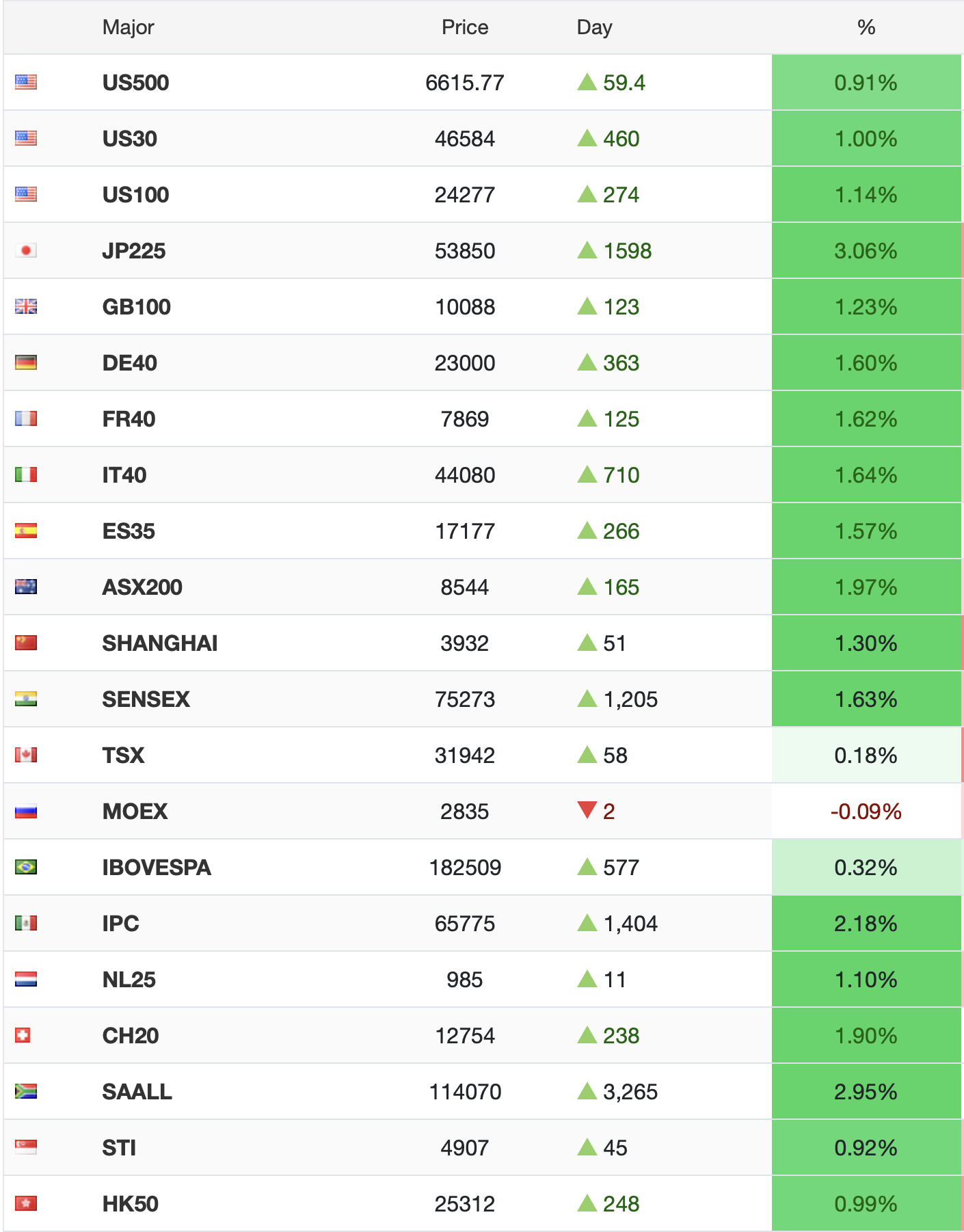
Ok, really quick around the world.  In equities, mixed is the best description of the US yesterday and Asia overnight with no real outstanding movers in either direction.  Europe is all green this morning, with gains on the order of 0.6%, but I think that is based on the idea the ECB is going to continue to cut rates going forward given inflation there remains low and growth is declining.  US futures, at this hour (7:15) are pointing slightly higher, 0.25%.

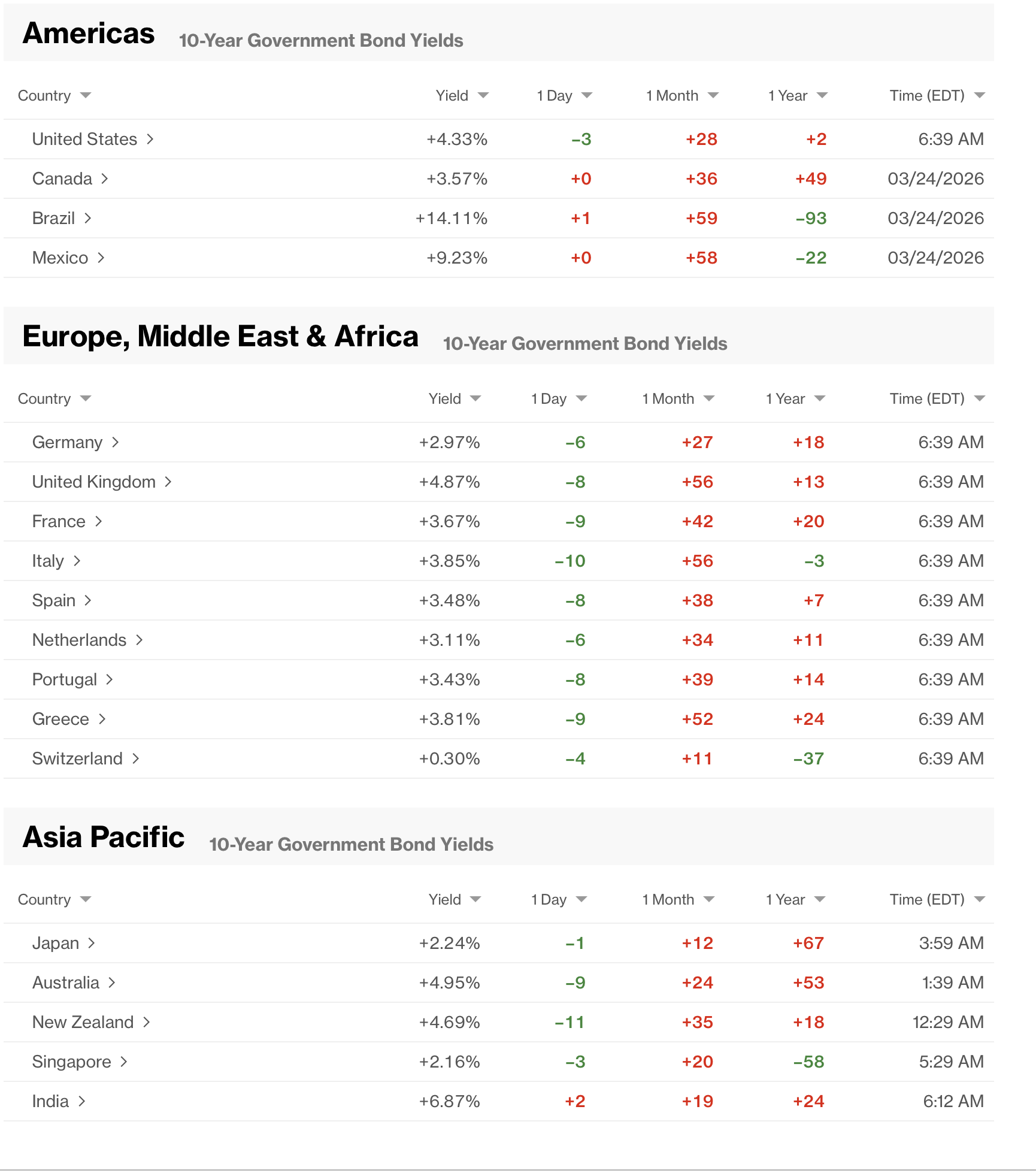
Bond markets rallied yesterday with Treasury yields sliding 10bps and falling another -3bps this morning.  European sovereign yields tracked Treasuries yesterday and are actually leading the way today with yield declines on the order of -4bps to -6bps across the entire continent and the UK.  Even JGB yields fell -2bps overnight.

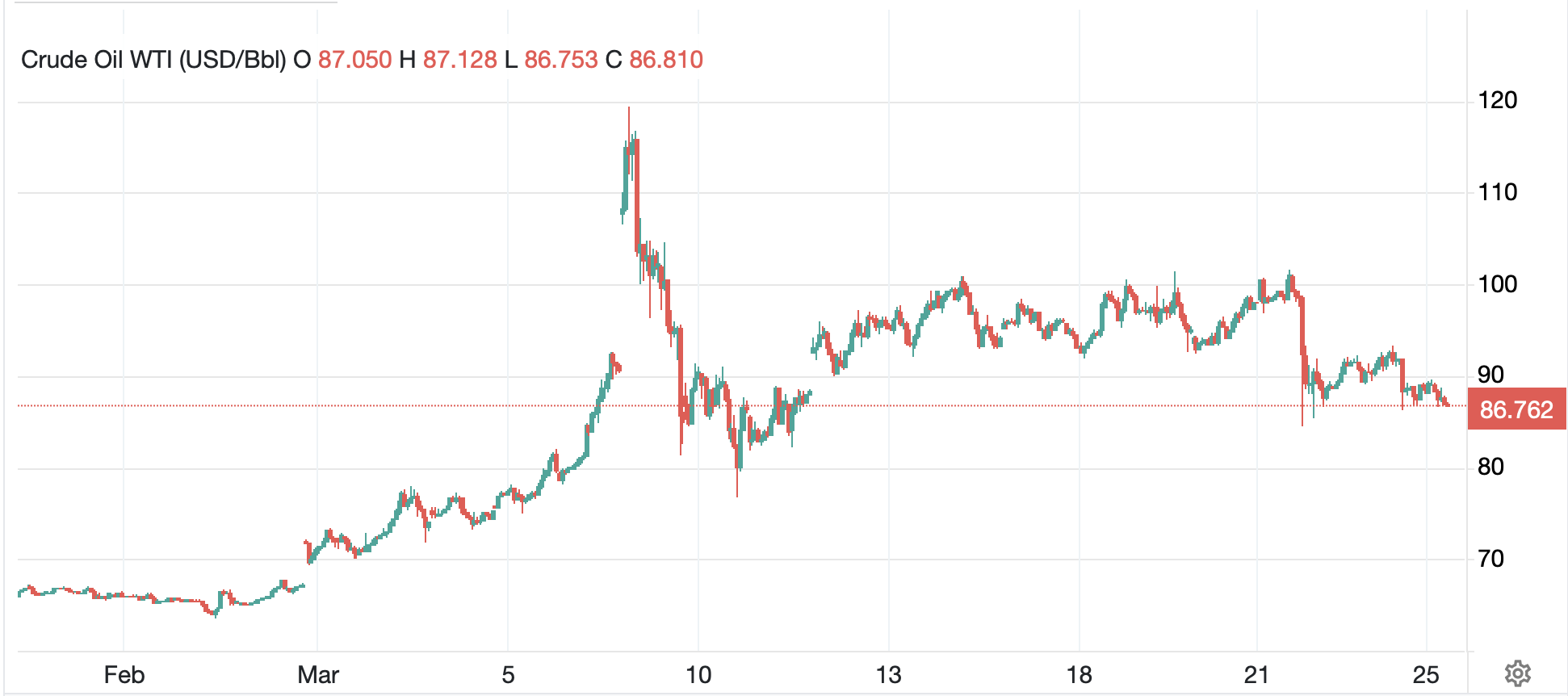
In the commodity space, oil (+0.25%) bounced from its worst levels of the morning during the session yesterday but has created a new gap above the price to add to the really big gap from the beginning of April.

Source: tradingeconomics.com

My take is the market sees the possibility of lower oil prices going forward as supply is set to increase further.  There has been some discussion about how low oil prices will reduce capex in the space, and that is probably true, but what are oil companies going to do if they don’t drill for oil?  My view is they will still drill.  Meanwhile, gold is under pressure again as fear seems to be abating around the world.  This morning the barbarous relic is lower by -2.0% and that is taking both copper and silver along with similar declines.

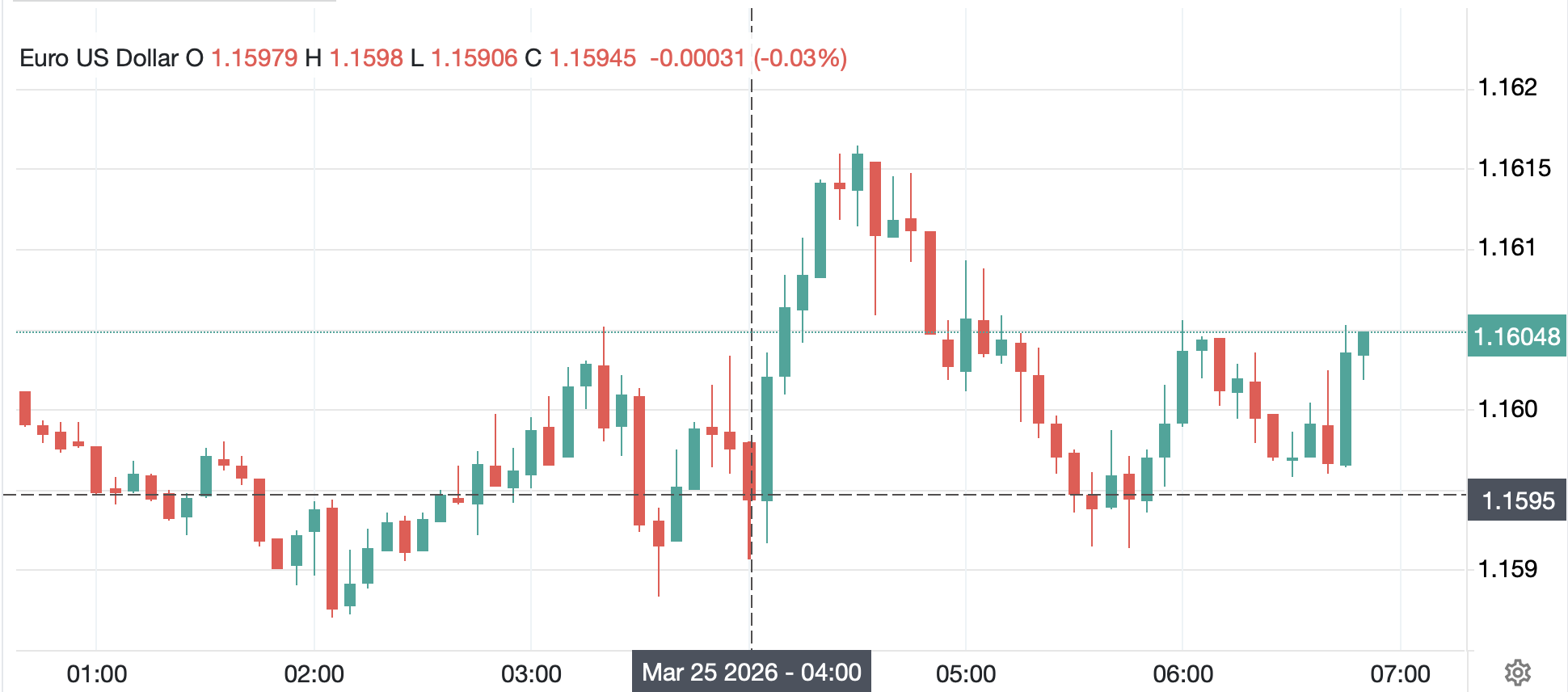
Finally, the dollar is a bit softer this morning, with NZD (+0.5%) the biggest mover in either the G10 or EMG blocs.  JPY, EUR, MXN, ZAR are all just basis points different this morning than yesterday with a few gainers and a few laggards but no real trend to note here.  I think it is very clear Mr Trump would like to see the dollar’s value decline in the FX markets for competitiveness reasons, but right now, uncertainty is the driving force.

On the data front, yesterday’s big surprise in PPI (-0.5%) seemed to be the driving force behind the bond market rally.  But there was also a huge surprise in the Philly Fed New Orders sub-index, which jumped 41.7 points, a 4.3SD move and the largest in the history of the series.  Perhaps things aren’t as negative as some would have us believe.  As to this morning, we get Housing Starts (exp 1.37M) and Building Permits (1.45M) at 8:30 followed by Michigan Consumer Sentiment (53.4) at 10:00.  

It is very difficult to determine if the recent equity rally is just a bear market rally, or if things are going to be fine.  Given the still uncertain policy outcomes both domestically and globally, there are still many possible paths forward.  I wonder if gold, which had been a harbinger of concerns about the future is now telling us that the worst has passed.  Certainly, a movement toward peace in the Middle East is going to be a net positive for risk appetite, which when I translate that back to the dollar, implies my view of weakness going forward remains intact.

Good luck and good weekend

Adf

Having a Fit

Seems Europe is having a fit
‘Cause Putin and Trump may submit
A plan for the peace
Where there’s an increase
In spending the Euros commit
 
Remarkably, though peace would seem
The basis of many a dream
Seems many despise
The fact that these guys
Don’t care Europe can’t stand this scheme


Here’s the thing about President Trump, you never know what he is going to do and how it is going to impact market behavior.  A case in point is the growing momentum for further peace negotiations between the US and Russia, with Ukraine basically going to be told how things are going to wind up.  On the one hand, you can understand Ukraine’s discomfort as they don’t feel like they are getting much say in the matter.  On the other hand, it seemed increasingly clear that the end game, if there is no US intervention of this nature, would be for Russia to bleed Ukraine of its fighting age population while systematically destroying its infrastructure.

The thing I find most remarkable is the number of pundits who hate this outcome despite the end result of the cessation of the fighting and destruction.  After three years of conflict, and with other nations willing to allow Ukrainians to die on the front lines while they preened about saving democracy, there was no serious push to find a solution.  I have no strong opinion on the terms that have been floated thus far, and I don’t believe rewarding a nation for aggressive action is the best outcome, but Russia has proven throughout history that they are willing to sacrifice millions of their own citizens in warfare, and the case for a Ukrainian victory seemed remote at best.  As experienced traders well understand, sometimes you have to cut your position so you can focus on something else.  Seems like a good time to cut the positions here.

Speaking of positions, let us consider what peace in Europe may mean for financial markets.  Yesterday I discussed how European NatGas prices have more than doubled since the war began.  If they return to their pre-war levels, that dramatically enhances Europe’s economic prospects, despite their ongoing climate policies.  Clearly, the FX market got that memo as the euro has rallied back to its highest level since December 2024 save for a one-day spike just after Trump’s inauguration.  In fact, it is not hard to look at the chart below and see a bottom forming in the single currency.  While the moving average I have included is only a short-term, 5-day version, you have to start somewhere.  While the fundamentals still seem to point to further downside in the single currency, between the Fed’s pause and more hawkish stance opposite the ECB’s ongoing policy ease, the medium-term picture could be far better for the Europeans.  If the war truly does end, it would likely see a significant uptick in investment and economic activity as they seek to rebuild Ukraine, and we could see substantial capital flows into the European economies.

Source: tradingeconomics.com

As well, oil prices, continue to trade near the bottom of their recent trading range as the working assumption seems to be that with a peace treaty, Russian oil would no longer be sanctioned, enhancing global supplies.  A look at the trend line in the chart below seems to indicate that is the direction of the future.

Source: tradingeconomics.com

The other remarkable thing is the decline in yields, where yesterday, despite a very hot PPI number, which followed Wednesday’s hot CPI number, Treasury yields fell back 7bps.  While there are likely some other aspects to this move, notably the ongoing story regarding DOGE and the attack on waste and fraud in the US, yesterday’s move was not indicative of fear, rather I read it as a positive sign that investors are betting on a chance that President Trump can be successful with respect to reducing the massive overspending by the government.  Clearly, this is early days regarding President Trump’s ability to get a handle on spending, and it could all blow up as legislative compromises may significantly water down any benefits, but I contend the market is showing hope right now, not fear.

And that, I would contend, is the big underlying driver of markets right now.  The prospects for peace and the potential impacts are the focus.  While tariffs are still a big deal, and yesterday’s talk about reciprocal tariffs is simply the latest in a long line of these discussions and pronouncements, the market seems to be getting tired of that conversation.  If we recap the current situation, central bank activities have lost their importance amid a huge uptick in governmental actions, both fiscal and geopolitical.  In many ways, I think this is great, the less central bank, the better.

Ok, let’s see how markets continue to absorb these daily haymakers from President Trump and the responses from other governments.  Clearly, the US equity market remains far more fixated on Trump’s actions than on higher inflation potentially forcing the Fed to raise rates.  In fact, despite the hot PPI print, the futures market has actually increased its expectation for rate cuts this year to 35bps.  That doesn’t make sense to me, but I’m just an FX poet. 

If we turn to Asian markets, Hong Kong (+3.7%) was the big winner overnight as a combination of growing expectations for more Chinese government stimulus to be announced soon, along with the ongoing tech positivity in the wake of the DeepSeek announcement got investors excited.  On the mainland, shares (CSI 300 +0.9%) were also higher, but not as frothy.  Meanwhile, the weaker dollar hindered the Nikkei (-0.8%) as the yen has gained 1.3% since the CPI data on Wednesday.  In Europe, the picture is mixed with the CAC (+0.4%) the best performer and the DAX (-0.4%) the worst performer.  Eurozone GDP surprised on the upside in Q4, growing…0.1%!! Talk about an explosive economy.  However, that was better than forecast and helped avoid a recession.  The interesting thing about European equity markets, though, is that despite a dismal economic backdrop, most major markets are trading at or near all-time highs.  Further proof that the market is not the economy.  As to US futures, ahead of this morning’s Retail Sales data, they are flat.

After several days of substantial movement in the bond market, it seems that traders have taken a long weekend given the virtual absence of movement here.  Treasury yields are unchanged on the day and European sovereign yields are higher by 1bp.  

In the commodity markets, on the day, oil prices are unchanged, although as per the above chart, it appears the trend is lower.  US NatGas (+1.8%) is rallying on forecasts for another cold spell, but European NatGas (-4.85%) continues to fall as prospects for peace indicate new supplies, or perhaps, renewed supplies.  In the metals markets, gold (+0.15%) is continuing its positive momentum but the big mover today is silver (+2.7%) which seems to be responding to some large option expirations in the SLV ETF (h/t Alyosha) which seem set to drive substantial demand for delivery.  

Finally, the dollar remains under pressure overall, although the movement has generally not been that large today.  The big outlier in the G10 is NZD (+0.9%) which has responded to the delay in the reciprocal tariff implementation until April.  Elsewhere in this bloc, gains are universal, but modest with movement between just 0.1% and 0.2%.  In the EMG bloc, the dollar is also under pressure with ZAR (+0.65%) a major gainer as precious metals continue to be in demand.  CLP (+1.15%) is also continuing to benefit from copper’s ongoing rally.  The exception to this movement has been Asia where most regional currencies are modestly softer this morning, KRW, TWD, INR, as the tariff talks still seem to be the driving force in these markets.

On the data front, we finish the week with Retail Sales (exp -0.1%, +0.3% ex autos), then IP (0.3%) and Capacity Utilization (77.7%).  Yesterday’s PPI data was several ticks hotter than forecast and seems to put paid to the idea that inflation is heading back to the Fed’s target.  This afternoon we hear from Dallas Fed president Lorrie Logan, but again, it is hard to make the case that the Fed is the driver of anything right now.

Fundamentals still point to dollar strength, I would argue, but the market is not paying attention. Rather peace and the peace dividend are now the driver in the FX markets and to me, that implies we are set to see the dollar give back some of its gains from the past 6 months.

Good luck and good weekend

Adf

Shattered His Dreams

The data was hot yesterday
And that put the pressure on Jay
It shattered his dreams
‘Bout all of his schemes
To help keep inflation at bay


By now, I am sure you are aware that the CPI data was higher than forecast, and certainly higher than would have made Chairman Powell comfortable.  The outcome, showing Headline rising to 3.0% and core rising to 3.3% with correspondingly higher monthly rises was sufficient to alter the narrative at least a little bit.  Chair Powell even mentioned it in his House testimony, noting, “We are close, but not there on inflation…. So, we want to keep policy restrictive for now.”  Essentially, the data makes clear that the Fed is not going to be cutting the Fed funds rate anytime soon.  The futures market got the message as it is now pricing just 29bps of cuts this year, with December the likely date.

It will be no surprise that the stock market’s initial response was to sell off substantially, but as per the chart below, it spent the rest of the day clawing back the losses and wound up little changed on the day.  This morning, it remains basically unchanged as well.

Source: tradingeconomics.com

Treasury bonds, though, had a less fruitful session, falling (yields rising) sharply on the print, but never really regaining their footing with yields jumping almost 15bps at one point although finishing the day about 10bps higher and have given back 2bps more this morning.

Source: tradingeconomics.com

Now, we all know that the Fed doesn’t target CPI, but rather PCE.  However, after this morning’s PPI data release, most economists (although not poets) will be able to reasonably accurately estimate that data point for later this month, as will the Fed.  And that number is not going to be moving closer to their 2.0% target.  What seems very clear at this point is that every Fed speaker for the time being is going to be harping on the caution with which they are going to move forward.

If we look at this from a political perspective, something which is unavoidable these days, it is important to remember that Treasury Secretary Bessent has made clear that he and the president are far more focused on the 10-year yield than on the Fed funds rate.  To that end and given the fact that all this data was from a time preceding President Trump’s inauguration, I don’t think they are too worried.  I would look for the President to continue his drive to reduce waste and fraud in the government and attack that deficit.  Certainly, the news to date is there is a great deal of both waste and fraud to reduce, and if the president is successful, I believe that will play out in significantly lower 10-year yields, if for no other reason than the deficit is reduced or closed.  This story is just beginning to be written.

Now, Putin and Trump had a call
As Trump tries to end Russia’s brawl
They’re slated to meet
So, they can complete
A treaty with Europe awol

Under any interpretation, I believe the news that Presidents Trump and Putin are going to meet in an effort to hammer out an end to the Russia/Ukraine war is good news.  Beyond the simple fact that less war is an unadulterated good, I think it is very clear that this particular war has had significant market impacts, hence our interest here.  Obviously, energy prices have been impacted, as both oil and NatGas prices are higher than they would otherwise be given the removal of some portion of Russia’s exports from the global markets and economy.  As such, the end of this conflict, with one likely consequence being Western Europe reopening themselves to Russian energy imports, is likely to see prices decline.  

This matters for more reasons than the fact it will be cheaper to fill up your tank at the gas (petrol) station, it is very likely to have a very positive impact on inflation writ large.  As you can see from the chart below, there is a very strong correlation between the price of oil and US inflation expectations.  Declining oil prices are very likely to help people perceive a less inflationary future and will reduce the rate of inflation by definition.  

Source: ISABELNET

Inflation is an insidious process, and once entrenched is very hard to reduce, just ask Chairman Powell.  I also know that there has been much scoffing at President Trump’s claims he will reduce inflation, especially with his imposition of tariffs all over the place. (It is important to understand that tariffs are not necessarily inflationary by themselves as well explained by my friend the Inflation guy in this article.). However, between his strong start on reducing government expenditures and the potential for an end to the Russia/Ukraine war leading to lower energy prices, these are longer term effects that may do just that.

Ok, let’s move on to the market activities in the wake of yesterday’s CPI and ahead of this morning’s PPI data.  As discussed above, yesterday’s US markets rebounded from their worst levels of the morning and closed modestly lower with the NASDAQ actually unchanged.  In Asia, Japanese shares (+1.3%) had a solid day as the weak yen helped things along although Chinese shares (HK -0.2%, CSI 300 -0.4%) did not fare as well on the day with tariffs still top of mind.  Elsewhere in the region, other than Korea (+1.4%) movement was mixed and modest.  In Europe, the possibility of peace breaking out in Ukraine has clearly got investors excited as both Germany (+1.5%) and France (+1.2%) are seeing strong inflows. The UK (-0.7%) however, continues to suffer from economic underperformance with no discernible benefits shown from the governments weak efforts to right the ship.  GDP was released this morning and while they avoided recession, it’s very hard to get excited over 0.1% Q/Q growth.  As to the US futures market, at this hour (7:20), they are essentially unchanged.

In the bond market, we’ve already discussed Treasury yields, but another benefit of the prospects for a Ukrainian peace is that sovereign yields have fallen substantially, between -5bps and -8bps, throughout the continent.  Once again, the impact of that phone call between Trump and Putin has been quite significant.  Consider that not only are energy prices likely to slide, but the required government spending to prosecute the war is likely to diminish as well.

In the commodity markets, it should be no surprise that oil (-1.3%) prices are sliding as are NatGas prices in Europe (TTF -7.5%) as the opportunity for cheap Russian gas to flow to Europe is once again in view.  To highlight the impact that this has had on Europe, prior to the Ukraine war and the halting of gas flows, the TTF contract hovered between €5 and €25 per MWh.  Since the war broke out, even after the initial shock, it has been between €25 and €55 per MWh.  This is all you need to know about why Europe, and Germany especially, is deindustrializing.  As to the metals markets, after a few days of consolidation, gold (+0.4%) is on the move again although it has not yet recaptured the highs seen early Tuesday morning.  Give it time.  Copper (+0.6%), too, is back on the move and indicating that economic activity is set to continue to grow.

Finally, the dollar is mixed this morning, although arguably a touch softer overall, as the Russia news has traders looking for less negativity in Europe.  So modest gains in the euro and pound, about 0.15% each is offsetting larger losses in AUD (-0.3%) and NZD (-0.6%), although given the much smaller market size of the latter two, they matter much less.  JPY (+0.4%) is rebounding after yesterday’s sharp decline on the back of the jump in Treasury yields, and it is noteworthy that CHF (+0.65%) is gaining after its CPI data showed a decline in prices last month.  In the EMG bloc, CLP (+0.7%) is stronger on that copper rally, while ZAR (+0.1%) seems to be edging higher as gold continues to perform well. MXN (-0.4%) though is still struggling with the potential negative impact of tariffs and otherwise, there is not much to report.

This morning brings PPI (exp 0.3%. 3.3% Y/Y headline; 0.3%, 3.5% Y/Y core) as well as the weekly Initial (215K) and Continuing (1880K) Claims data.  There are no Fed speakers on the docket, but at this point, I expect the Fed will be fading into the background since they are clearly on hold and President Trump commands the spotlight.  Unless the data starts to veer dramatically away from what we have seen, it appears that the market is going to continue to respond to Trumpian headlines, which of course are impossible to predict.  But remember, most of the rest of the world is still in cutting mode so the dollar should continue to hold its own.

Good luck

Adf