
For nine days and nights the US
Has sought, Iran’s bases, to stress
So, ships through the Strait
Will now have to wait
Until Trump has made more progress

The upshot is prices for crude
Have risen a fifth and are skewed
Right now, to go higher
As three key suppliers
All find their production subdued
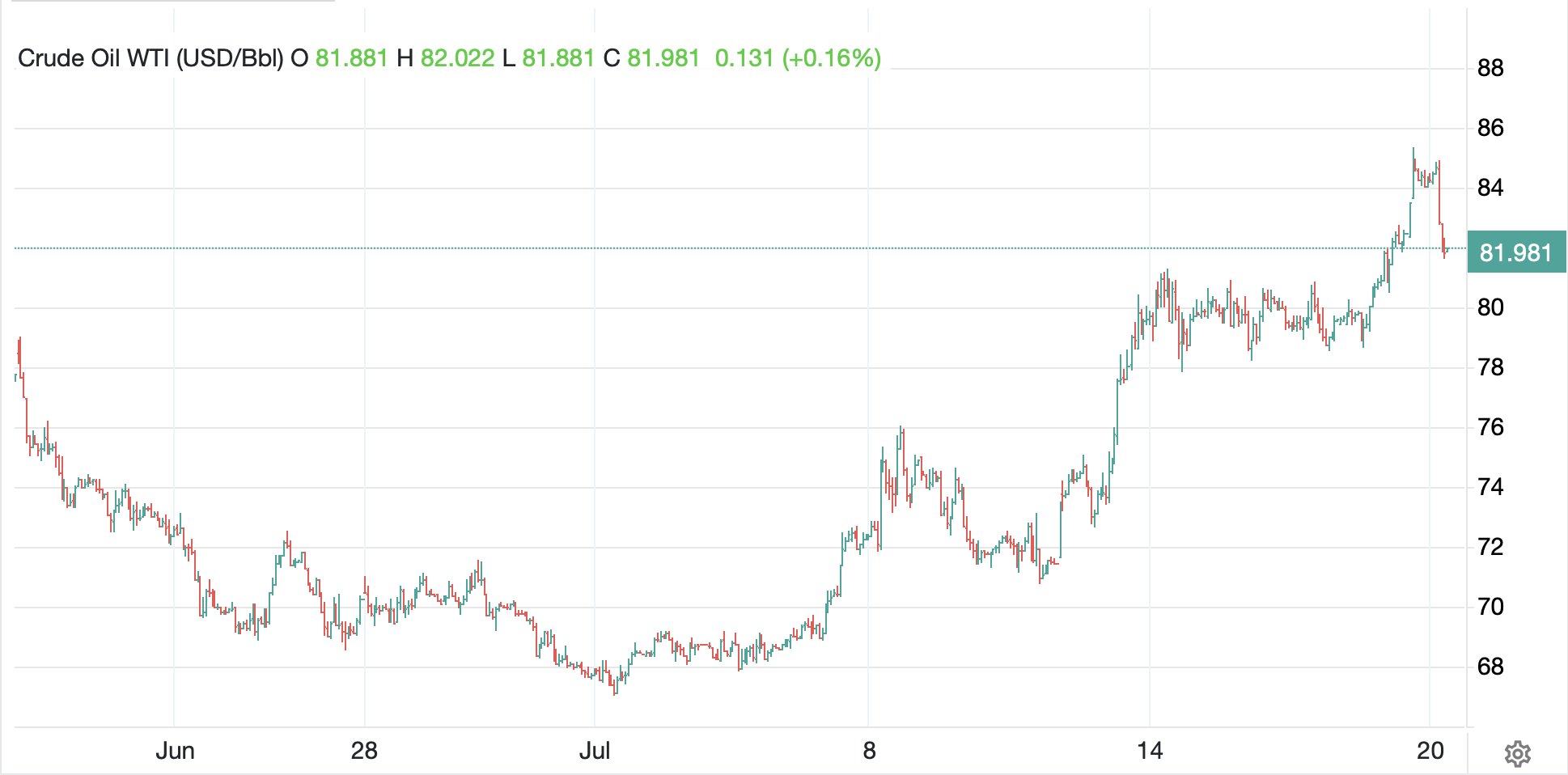
Oil (-0.7%) started the overnight session more than 2% higher after nine consecutive days of US military strikes on Iranian ports and missile sites amid more threatening rhetoric on both sides. It certainly seemed like things were rapidly deteriorating. Iran struck targets in Jordan as well as Kuwait, Qatar and Bahrain as the conflict escalates. As such, we cannot be surprised that there has been a steady rise in the price of oil during this period. Since the increase in fighting, WTI prices have risen about 20%. However, a quick look at the chart below shows that things reversed overnight.
Source: tradingeconomics.com
The proximate cause for this reversal was commentary from Secretary Rubio that Iran has signaled an interest in resuming negotiations. Additionally, there is another story about other Gulf intermediaries, although unnamed, who are trying to bring proposals toward the same end. Now, the one thing I know is that both sides in this conflict (and any conflict really) put out reams of propaganda, especially about the conflict. With that in mind, we have no way of knowing whether negotiations are going to restart or not. However, it appears market participants are willing to believe that is the case.
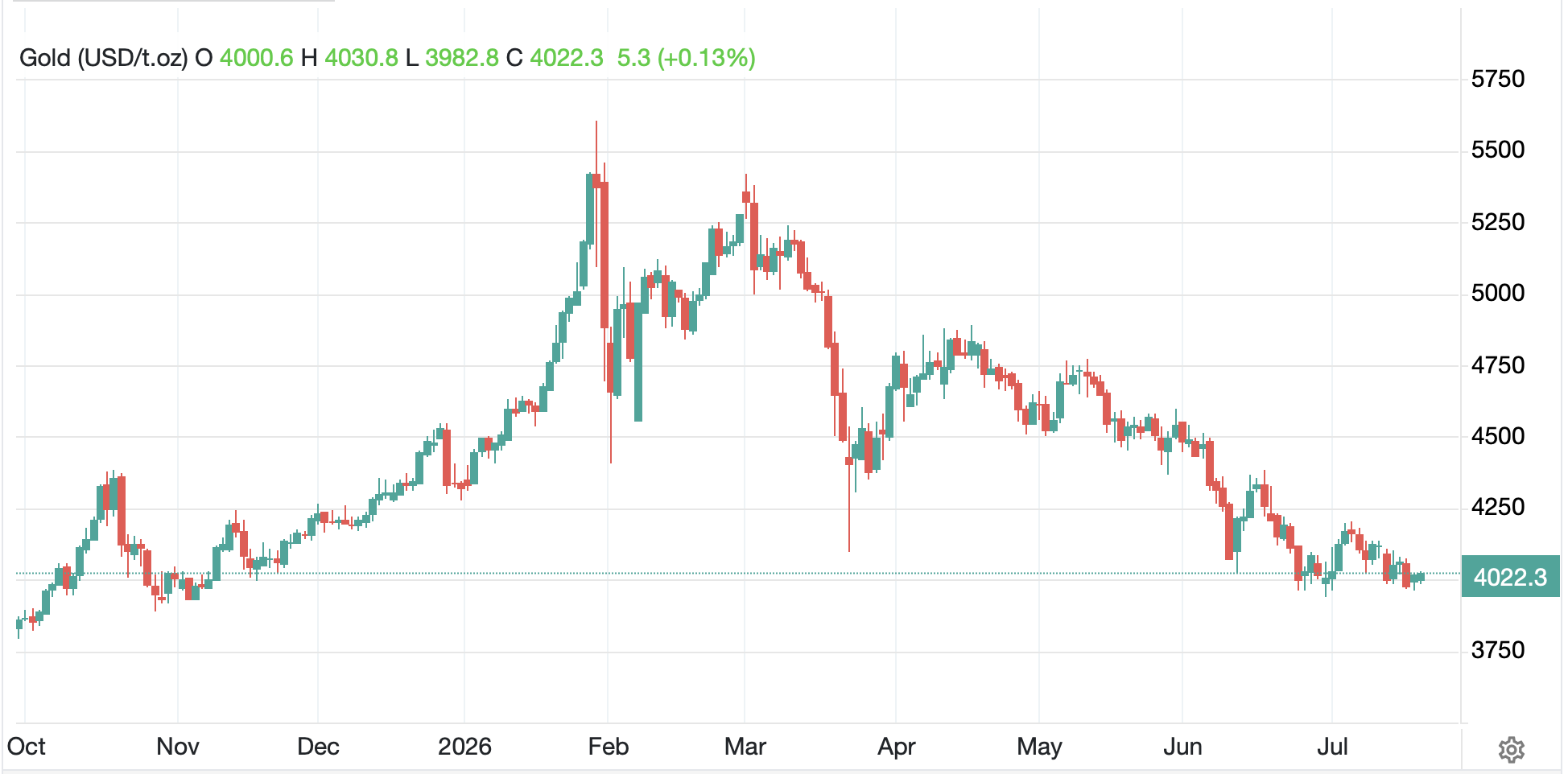
What does this mean for markets? If we have learned nothing else throughout this conflict, it is that many old relationships are no longer operating the way they had in the past. Consider gold for a moment. Prior to this conflict it was considered the ultimate safe haven, the thing you wanted to own if things got really bad and there was an escalating war. And yet, here we are with gold having fallen some 25% since the US first bombed Iran as you can see below.
Source: tradingeconomics.com
Now, two things about this are that first, that followed a remarkable rally for the previous twelve months, so a correction wasn’t crazy and second, it seems that one of the key drivers in the price decline was selling of gold by sovereigns that needed the money including Russia and Turkey. After all, that is why those reserves exist, for a rainy day, and it was certainly raining hard. Nonetheless, that narrative theme, owning gold in case of war, has not played out at all as expected.
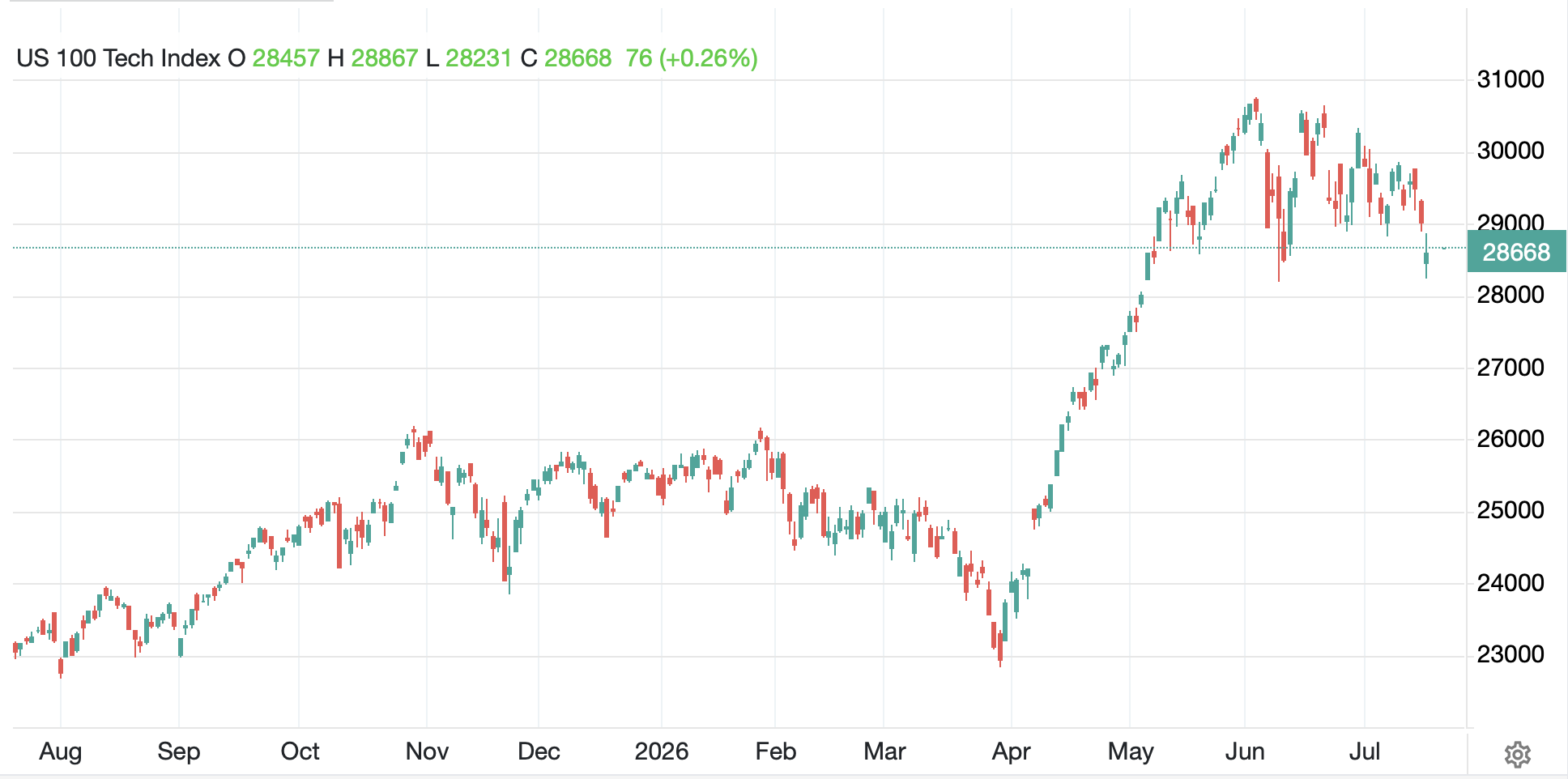
Or we can look at the equity markets, especially tech stocks. It is hard to look at the chart of the NASDAQ below and conclude that the Iran conflict was anything but beneficial for them. This, too, runs counter to the general narrative prior to the war that risk assets would suffer during a war.
Source: tradingeconomics.com
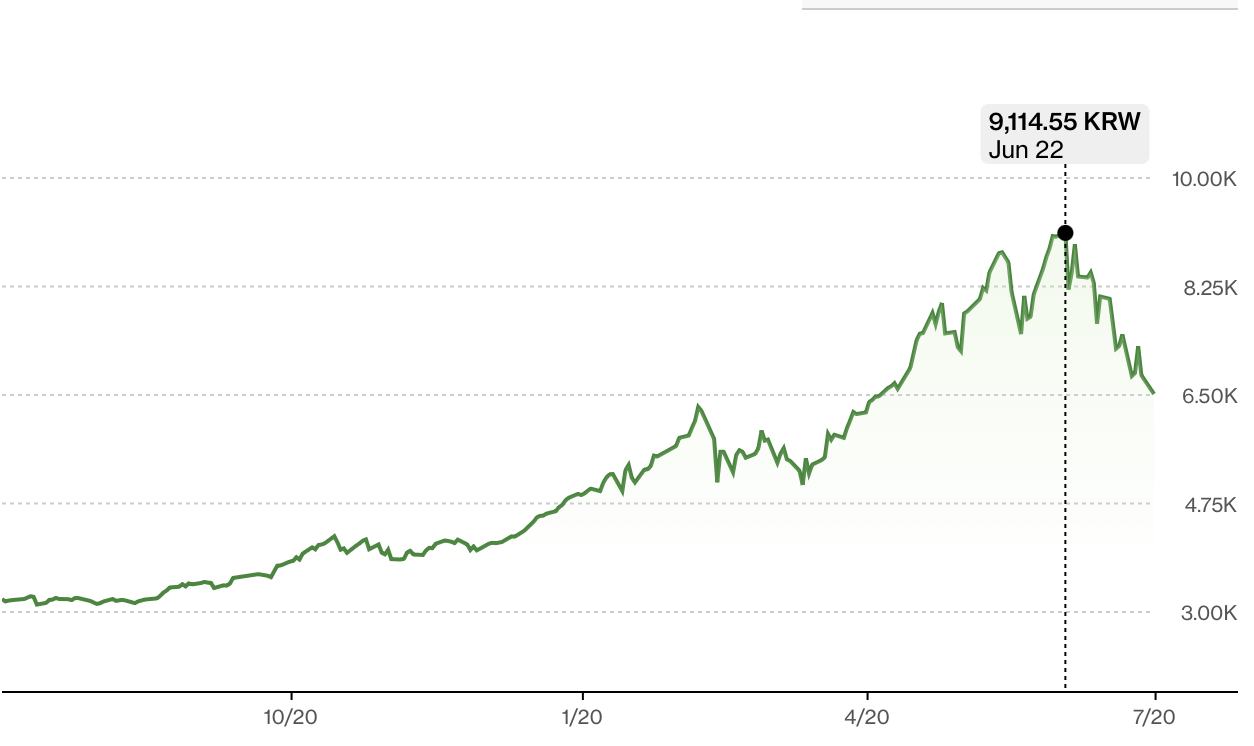
Now, if we widen our lens a bit to include other nations’ equity markets, Korea in this case, the story is not so sanguine. As you can see from the below chart of the KOSPI, it has fallen 29% since it peaked about one month ago.
Source: Bloomberg.com
But is that war related? Or is that the air coming out of what appears to have been a massive bubble in semiconductor stocks. Recall, about 40% of the value of the KOSPI is made up of just two companies, SK Hynix and Samsung, and both have mooned because they build semiconductors that are in huge demand due to the AI race around the world.
Now, one of the few truisms in markets is that every shortage is followed by a glut as the high prices from the shortage lead to massive overinvestment in whatever is lacking. So, consider this comment from someone I believe is quite reliable.
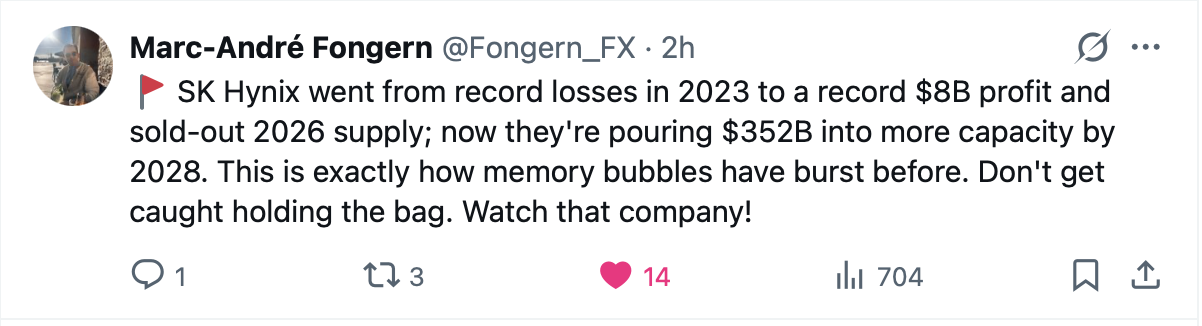
There will be a comeuppance in tech sector shares, I believe, although I would not dare to guess when. Semiconductors are historically a cyclical industry, and I don’t think anything has changed about that, except perhaps the amplitude of this cycle. But there will be a downwave and likely one that wipes out many of the gains seen.
And how has the escalation/de-escalation played out elsewhere? Well, Chinese shares rallied (+1.5%, HK +2.3%) although that was because the Chinese plunge protection team was in the market buying shares, and they told us so. Tokyo was closed for Marine Day and otherwise, Friday’s weak US performance was followed by general declines, although far less than Korea’s -4.5%. As to Europe, there is very little ongoing this morning with virtually no data, no commentary and limited market movement. Arguably, the only story of note was the official resignation of Kier Starmer as PM and the installation of Andy Burnham, although that has resulted in the FTSE 100 selling off -0.5%, the laggard in Europe. And given his history, including a lack of experience and stated preferences for far-left policies, I think there could be more to come there. As to US futures, at this hour (7:30) they are slightly higher across the board, +0.3% or so.
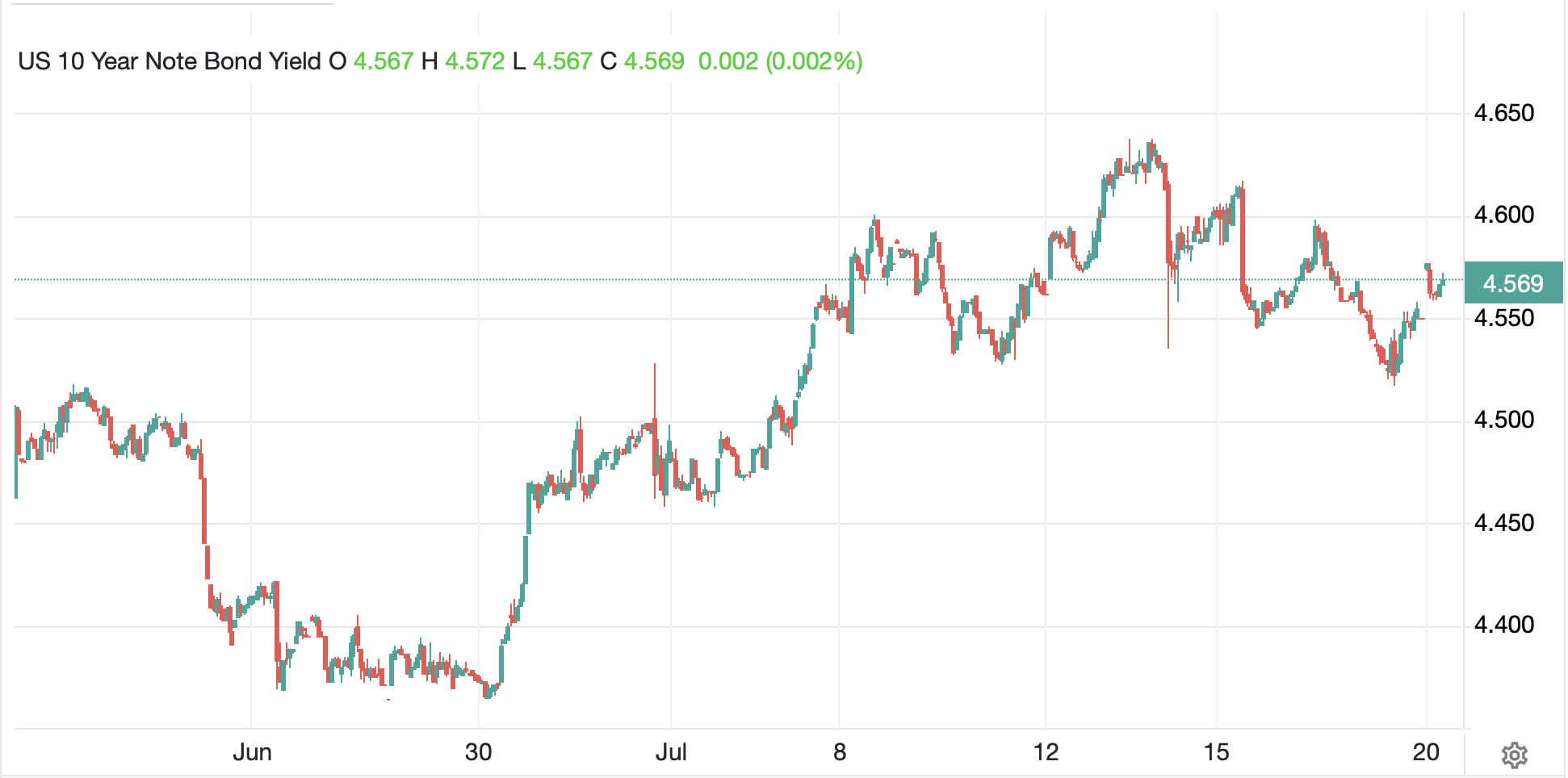
Treasury yields have edged higher by 2bps, and European sovereign yields are higher by 1bp across the board with only UK gilts (+3bps) doing worse. But it remains difficult to look at 10-year yields and get overly excited about anything. I grant that there has been some choppiness, but in the big scheme of things, a 20bp range on a 4.5% handle over the course of the past month is not all that shocking, especially given the backdrop of a war and extremely volatile oil prices.
Source: tradingeconomics.com
With oil retreating, the three major metals, gold (+0.4%), silver (+2.4%) and copper (+1.2%) are all firmer this morning. That relationship has been quite consistent, I will admit.
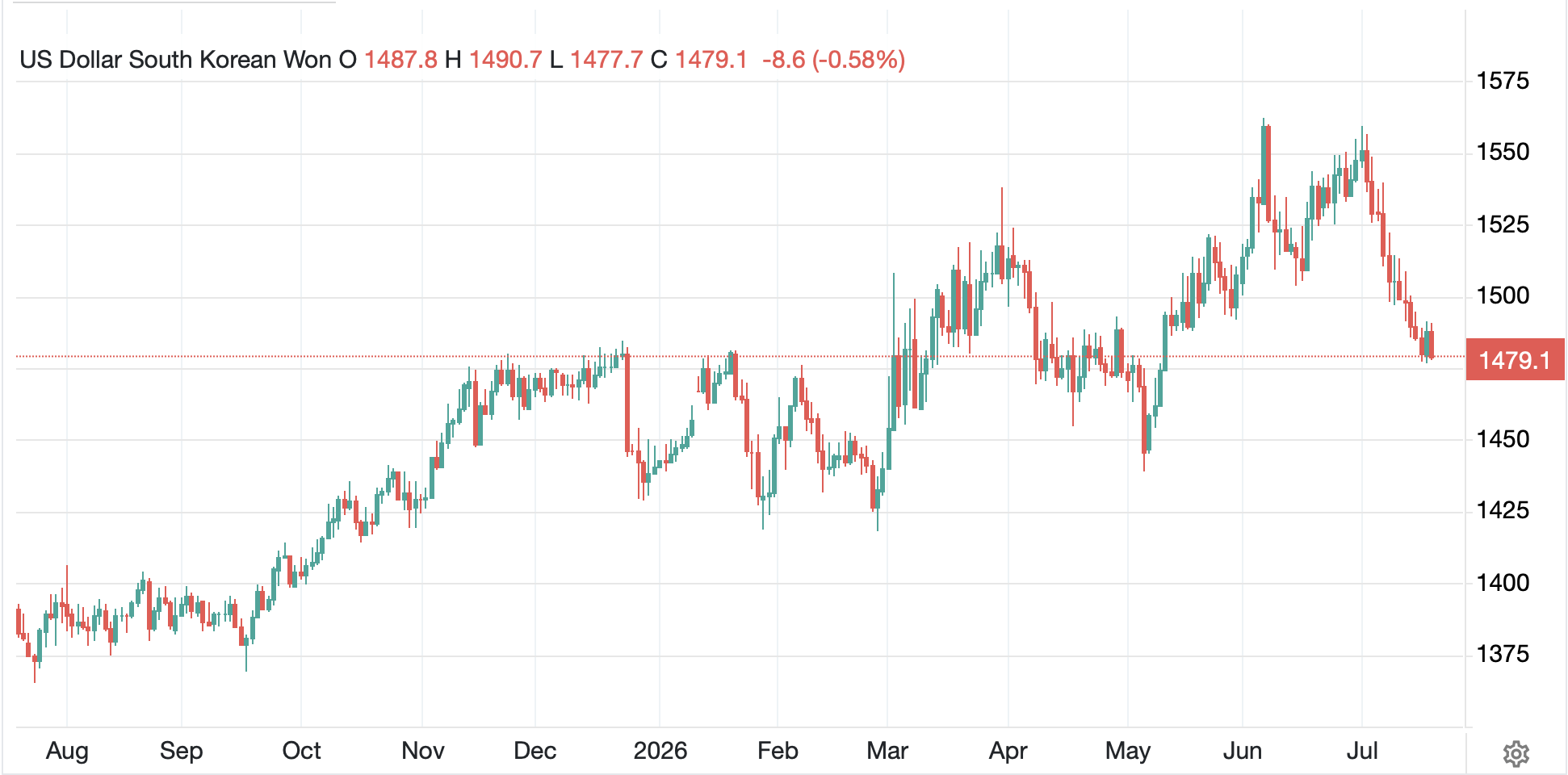
Finally, the dollar remains uninteresting overall with the DXY little changed although there have been two stories of note. First, KRW (+0.6%) has rallied more than 5% over the past several weeks as the BOK works to change its status from a restricted currency to one that is freely convertible. They have just announced plans for that to become the reality starting in January 2027 and I expect that it will help the won going forward.
Source: tradingeconomics.com
While the downside of convertibility is a potential increase in volatility, one need only look at the chart above to see it was already reasonably volatile. But the positive is that KRW can become a viable asset for international utilization, opening up investment to a much wider community and that is inherently strengthening.
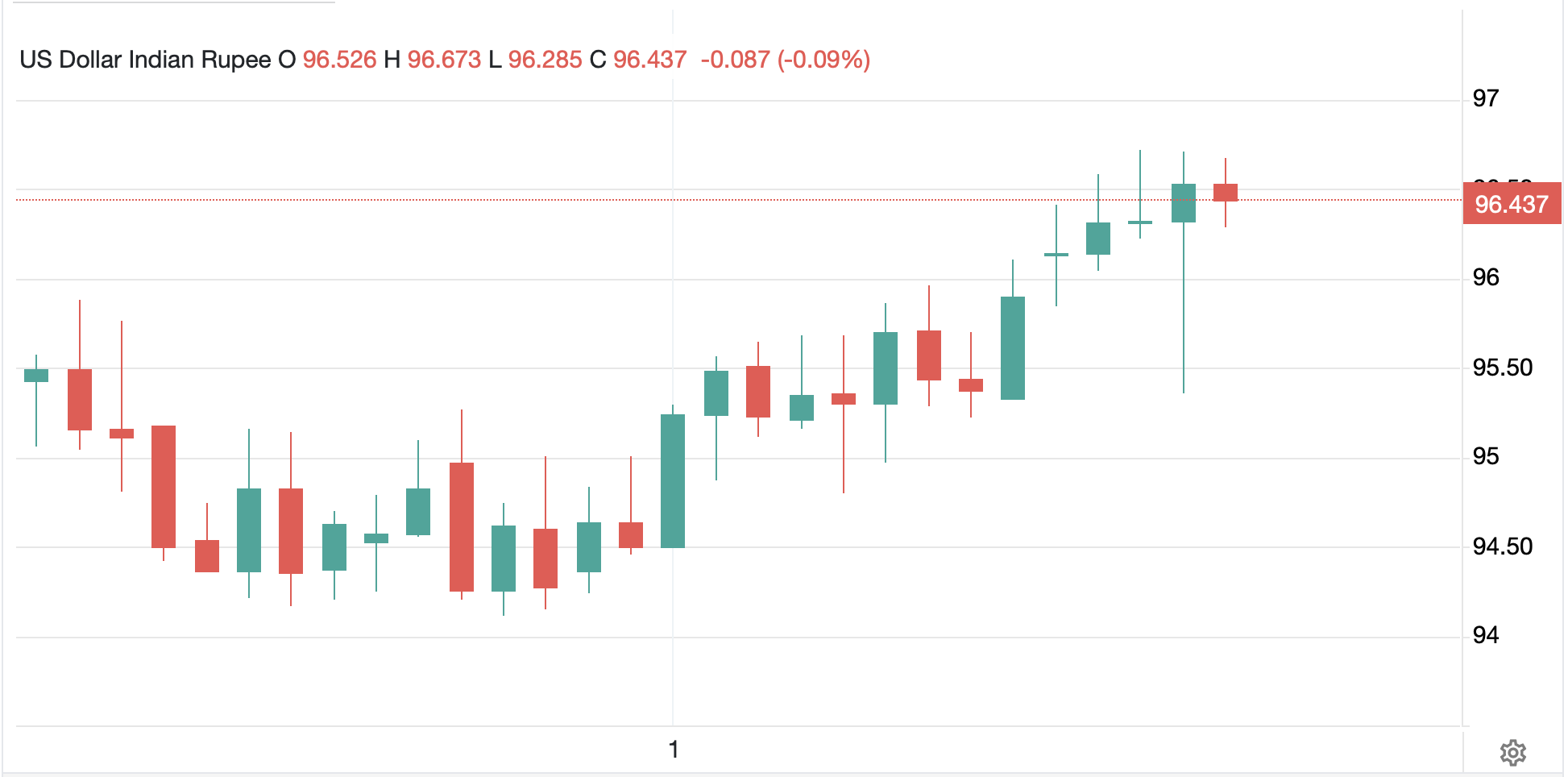
The other story is INR (0.0%) which while little changed this morning, saw another bout of central bank intervention on Friday as you can see on the chart below (the long green spike downward on the second candle from the right).
Source: tradingeconomics.com
Alas, the 1.4% gain was very short-lived and merely wasted some more of the RBI’s reserves. The rupee is likely to remain under pressure until the Iran conflict ends as higher oil prices are a severe impediment to the Indian economy. I cannot help but think that we are going to test 100.00 at some point before the end of 2026, although I also imagine we will see some more substantial changes from India going forward to help mitigate the impact. But other currencies are doing little overall.
On the data front, it is an extremely quiet week with the ECB meeting (no change expected) arguably the highlight on Thursday.
| Today | Leading Indicators | -0.1% |
| Thursday | ECB Rate Decision | 2.25% (unchanged) |
| Chicago Fed Index | 0.14 | |
| Initial Claims | 212K | |
| Continuing Claims | 1809K | |
| Friday | New Home Sales | 610K |
| Flash PMI Manufacturing | 54.5 | |
| Flash PMI Services | 51.5 |
Source: tradingeconomics.com
As we are in the quiet period, there will be no Fedspeak until, at least, the FOMC meeting next week. So, the war remains the story to watch, and who knows how that will go this week.
Good luck
Adf

