
Like a fledgling bird
Rates in Japan edged higher
Will they really fly?
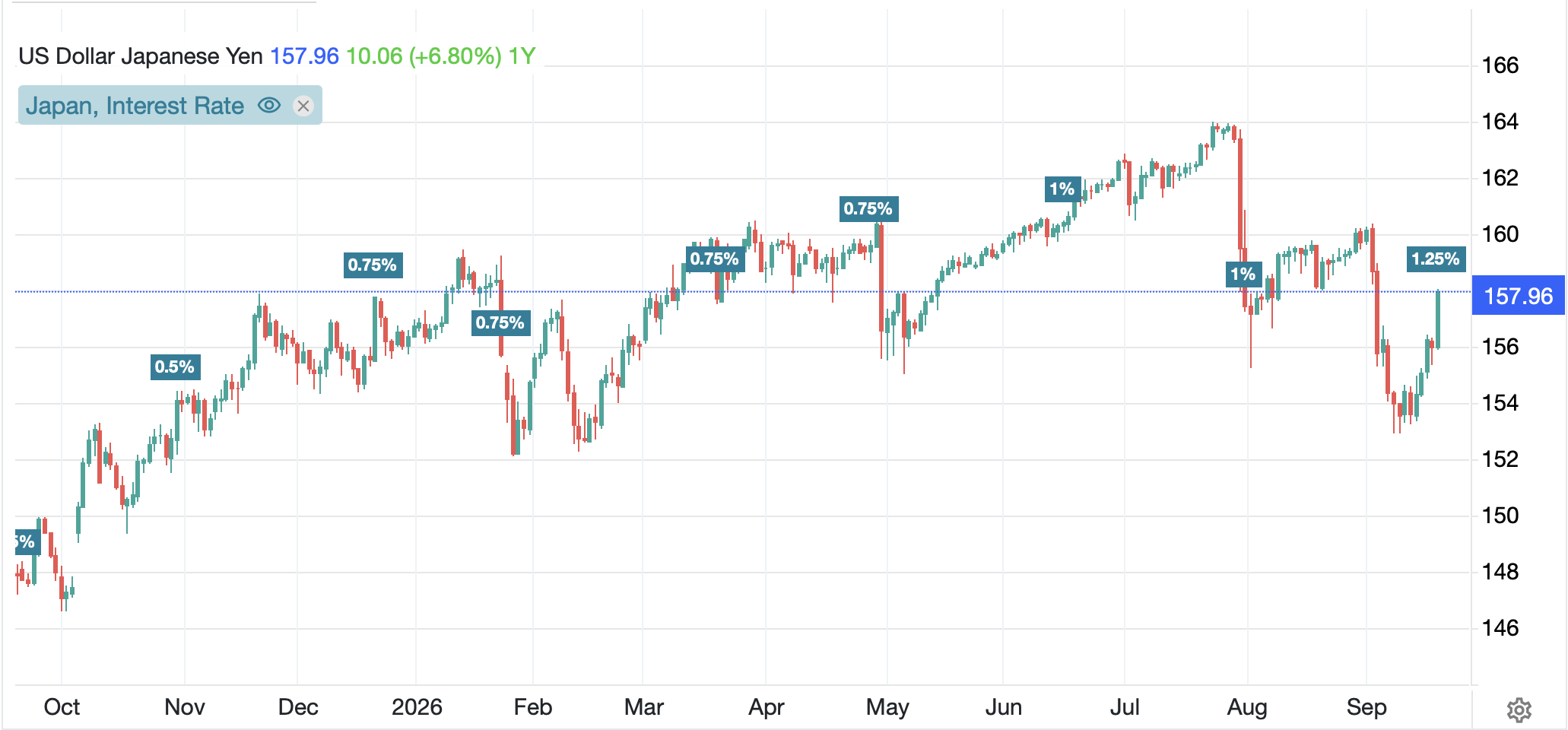
As universally expected, the BOJ raise their base rate last night by 25 basis points to 1.25%. Much has been written about how this is the highest rate since 1995 which only tells me that Japan has had major problems for more than 30 years. If you simply consider the idea that the interest rate represents the demand for money, either Japanese companies and people didn’t need any, or had a surplus of the stuff. My money is on the latter. At any rate, as you can see from the below chart, the rate hike did nothing to help support the still-beleaguered yen.
Source: tradingeconomics.com
On the chart, it shows all the interest rate moves of the last year and while the last two hikes coincided with MOF intervention and saw yen strength, I think the combination of the lack of intervention, the ostensible hawkishness from Fed Chair Warsh (I still don’t see that but I am in a minority) and the fact that the vote was 7-2 with two BOJ doves, Sato and Asada, voting to leave rates on hold seem to have undermined any chance for the hike to support the currency. So, JPY (-1.1%) is the worst performer on the board today. Now, we are still basically at the levels seen in the wake of the joint intervention at the end of July, but the recent trend cannot be comforting for Ueda-san, Takaichi-san or Secretary Bessent.
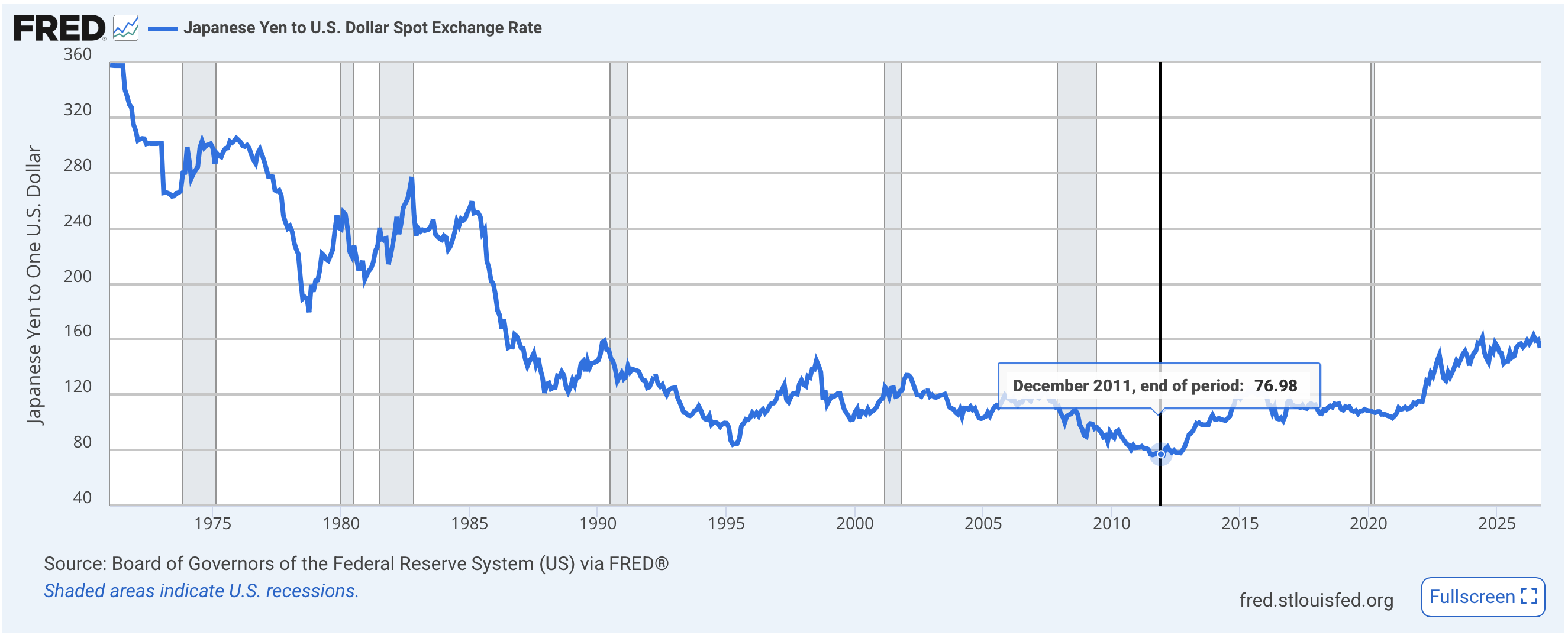
For now, the carry traders are back in fine fettle, especially those who added to their positions (and I’m sure many did) after the GPIF JPY purchases. Here’s the thing about currencies: they tend to trend for long periods of time. While many markets e.g., (interest rates, volatility) show reversion to the mean as an underlying property, that is not the case in FX (or equities!) So, if we step out to a longer view of USDJPY, as you can see from the FRED chart below, after a 40-year trend of a stronger yen which peaked (dollar bottomed) in 2011, for the past 15 years, the yen has largely weakened. Back in the beginning of the year, I forecast 180 as a year-end level, and while that may be aggressive, absent massive fiscal policy changes in Japan (i.e. austerity) or in the US, I fear we will be closer than further three months hence.
But meantime, while stocks here are rising
The narrative still is advising
To shackle AI
Before we all die
When there is a robot uprising
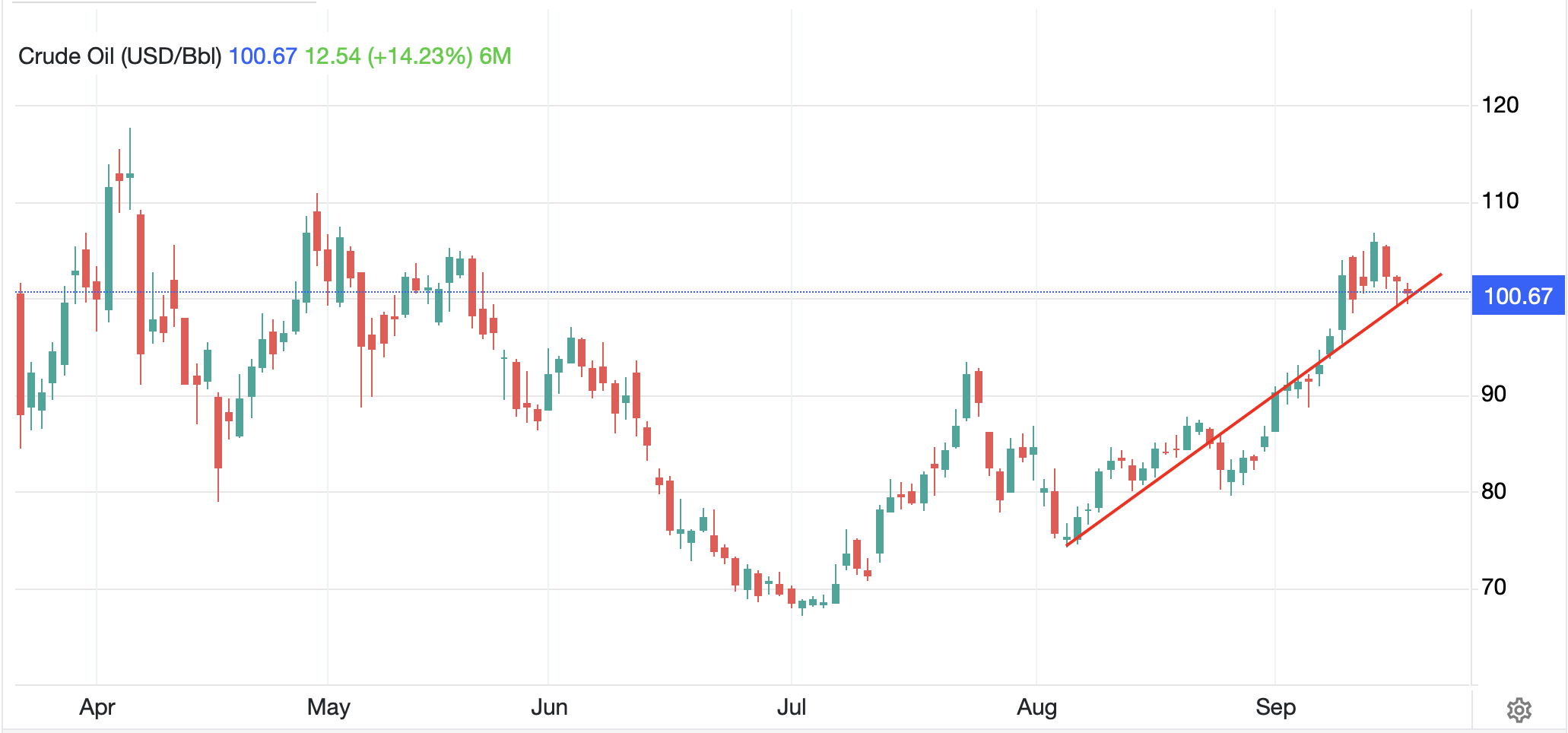
So, here’s the thing. It’s not that I want to ignore what is happening in the Middle East, obviously, it is very important with respect to energy prices and supplies and by extension the evolution of economic activity around the world. But it is hard to make much sense out of the recent price action in oil, which, while lower today by -1.2%, and by -4.8% in the past three sessions is still very clearly trending higher and has been since early August as per the below chart from tradingeconomics.com.
I read the same news you do, about the Houthis taking over much of the Red Sea, although the Yemenis apparently did them some material damage this morning, and who really knows what is going on in Iran since everything about it is propaganda from both sides. One truth is Ukraine continues to destroy Russian refineries and that is having the biggest impact, I think, as products are not being produced and while I doubt we will see shortages in the US, prices here for gasoline and diesel can certainly head higher. But I wonder, if global diesel prices rise, is the US really at a relative disadvantage economically? After all, we are amongst the most energy efficient economies in the world. Nonetheless, it will be painful on the pocketbook.
Which takes me back to the ongoing AI discussion/argument and what is happening there. Let me start by saying, there are exactly zero companies that are altruistic. With that as background, the idea that Anthropic and OpenAI are begging for regulation because they are afraid what they are doing will end mankind is, truthfully, pathetic. AI is a remarkable tool, and one that is clearly improving at lightning speeds, but unfortunately for those who are trying to make the case that it is the most dangerous thing ever built, the story of the boy who cried wolf has too many similarities. This can be seen from the politicians who are now pushing this story with the demise of their climate change narrative, and their covid narrative and every other narrative they have foisted on us over the past 50 years. But it is regularly the same people. And we all know that doom sells hence the amount of doomporn that sells itself as financial analysis or geopolitical analysis. This is the best clip I have seen from a serious individual describing the situation at these companies. I think it is worth the one minute plus to listen to Steve Eisman here.
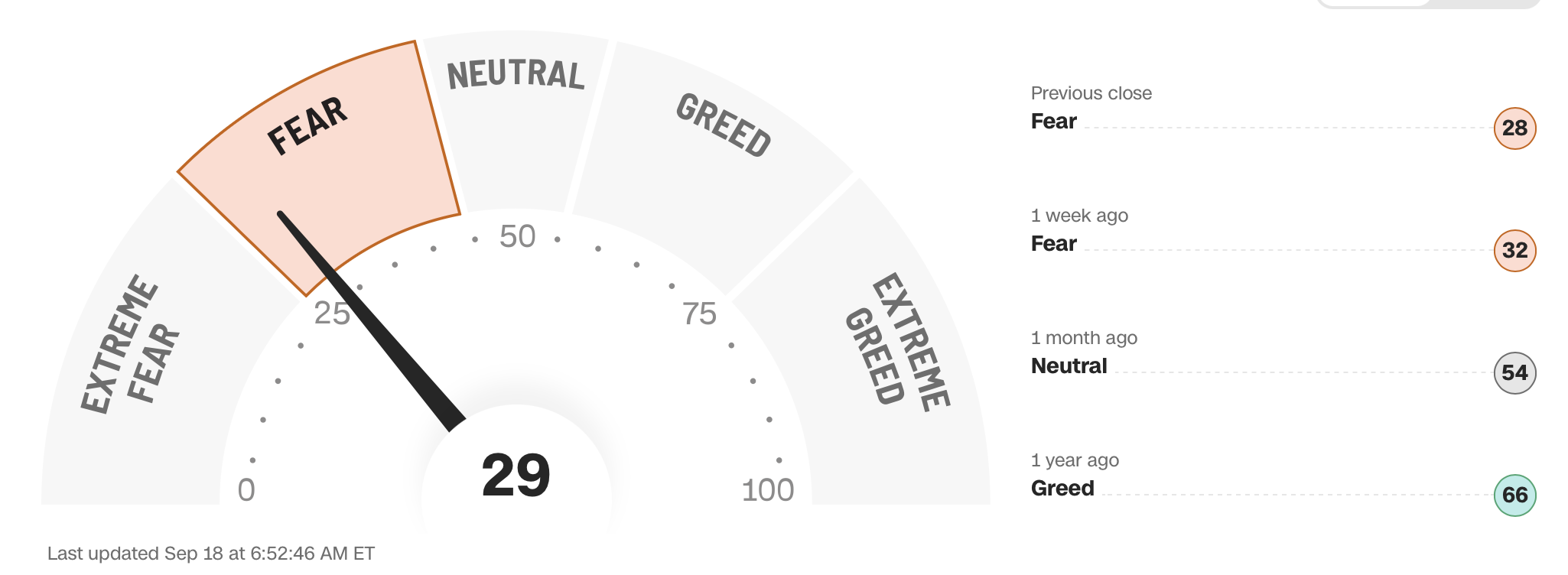
As to the rest of the markets, equities had a nice day yesterday with oil’s decline, as US markets, and basically every major Asian market overnight all showed material strength. Alas for Europe, this morning has seen declines of -0.7% to -0.9% across the board. There don’t appear to be any specific catalysts to drive this movement with most attributing it to some profit taking after several positive sessions in a row. If we look at the Fear and Greed Index, it is heading lower as per the below chart, so perhaps that is some of the driver, although that wouldn’t explain Asia or the fact that US futures are all pointing higher this morning by +0.2% or so.
Turning to the bond market, yields, which had slipped a bit yesterday are higher by 2bps in Treasuries and European sovereign yields are all higher by between 2bps (Germany) and 6bps (France). It seems the fact that Europe appears to be preparing to enter the Russia/Ukraine war and need to borrow yet more money to arm themselves, is not helping things. As to JGB yields, after the BOJ move last night, they slid -1bp.
With oil prices slipping this morning, we are seeing metals behave quite well (Au +1.0%, Ag +2.9%) although copper is unchanged on the day. That negative correlation remains firmly intact.
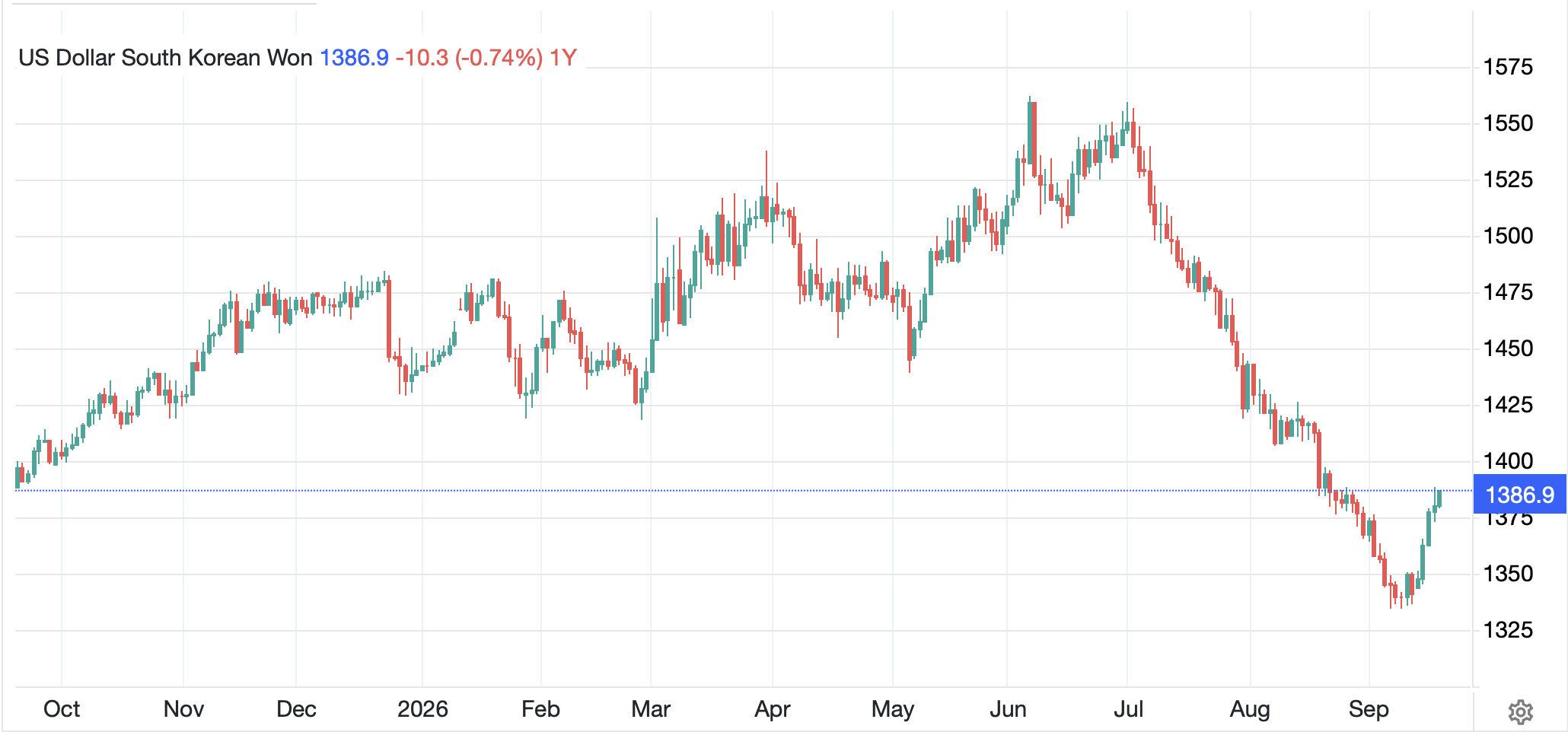
Finally, the dollar continues to hold its recent gains. Away from the yen, most currencies are softer by between -0.1% and -0.3% in both G10 and EMG spaces, but I must admit, most of the discussion remains dollar focused rather than currency specific focused. One thing worth mentioning is KRW (-0.45%) which after a remarkable rally since early July increased the value of the won by nearly 17%, it has reversed course over the past two weeks and given back nearly 5% of that move. In truth, it wouldn’t be surprising if this was just a trading reaction, but the consistency of movement in both directions has me wondering if there is something else going on, although at this point, I am not sure what it is.
Source: tradingeconomics.com
On the data front, this morning brings IP (exp 0.3%) and Capacity Utilization (76.4%) at 8:30 and then Leading Indicators (0.1%) at 10:00, with Governor Bowman speaking at 9:30. It will be interesting to hear if she is hawkish or not, but I wonder, will the narrative call her that regardless? Certainly, it appears that there are a lot of folks who really want the Fed to continue to hike rates. Personally, I am not in that group.
As to today, absent some new news from the Middle East, I suspect that we are going to finish the week the way it has been going, firmer stocks, lower oil and a dollar stuck in the middle.
Good luck and good weekend
Adf

