Desperate Straits

Ahead of today’s CPI
Jobs data from England showed why
Inflation remains
The greatest of pains
That central banks can’t wave good-bye

Despite all their hiking of rates
In seeking to reach their mandates
The job market’s growing 
Which seems to be showing 
Their models are in desperate straits

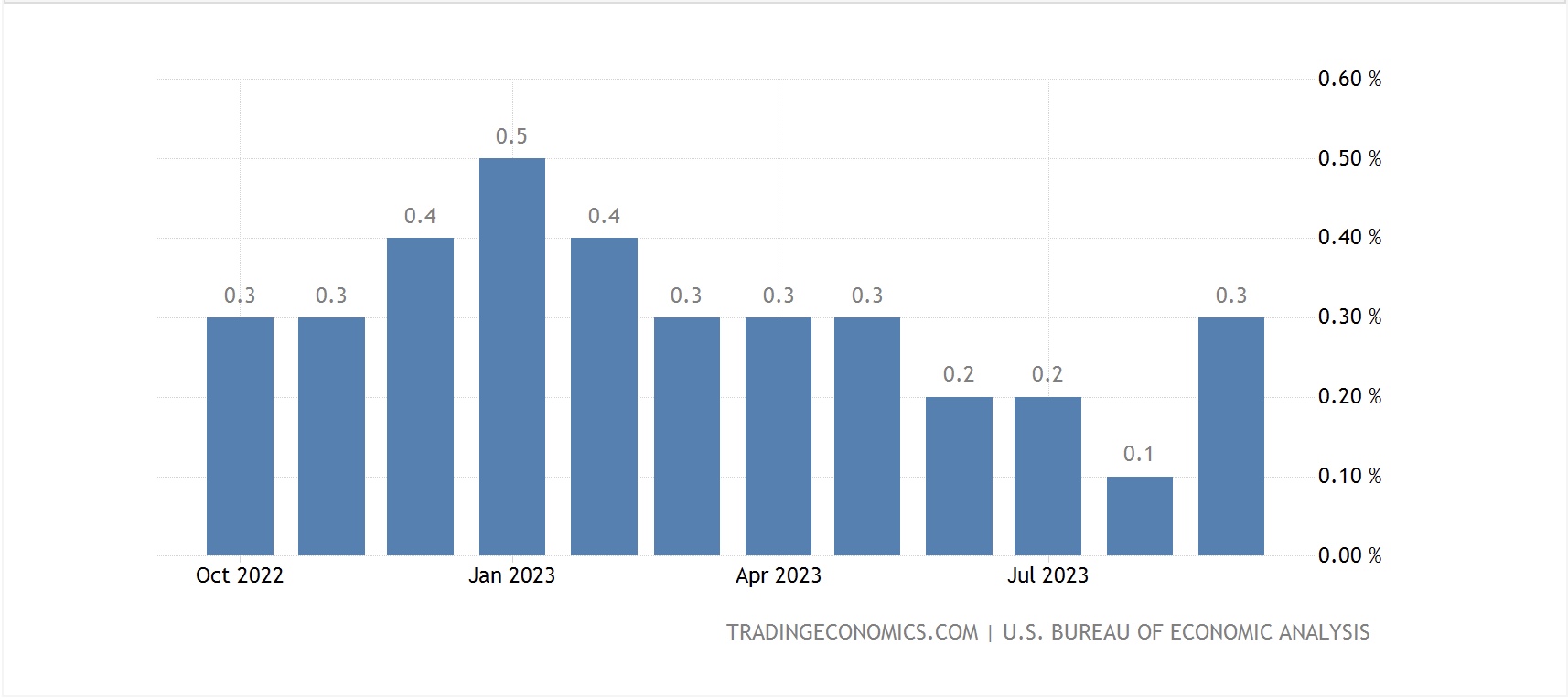
Today’s key feature is the monthly CPI report from the US where expectations are for a 4.1% headline reading and 5.2% core reading, with both still far higher than the Fed’s 2.0% target.  While the headline number is certainly good news, the Fed’s problem is that the core reading continues to bump along pretty steadily above 5.0% and is not showing any indication of a sharp move lower.  While an exceptionally weak headline reading will almost certainly result in a further rally in risk assets on the premise that the Fed’s pause skip is now baked in, the greater question is how long can the Fed tolerate such a high core CPI reading before resuming their rate hikes?  As we head into the data, the Fed funds futures market is currently pricing just under a 25% chance of a hike tomorrow but nearly an 87% chance of at least one hike by July.  However, that is the peak with a cut then assumed by December.


Of course, the thing that is not getting any attention at this point is what happens if the reading is hot?  I have literally not read a single analysis that anticipates a higher outcome showing inflation has become even more intractable than it had seemed for the past several months.  My take is a higher-than-expected reading, especially in the core print, could see the market substantially increase their pricing for a rate hike tomorrow as well as another one or two before the year is over, and that may not be a positive for risk assets.


And that’s where the UK’s employment data comes into the discussion, as it is showing the same characteristics as the US employment data, surprising strength.  Briefly, instead of a rising Unemployment Rate, it fell to 3.8% with wages rising by 6.5% Y/Y, well above last month’s and well above forecasts.  There was a reduction in the number of jobless claims and a significant growth in employment of 250K on a quarterly basis, also far above forecasts.  In other words, despite a lot of doom and gloom regarding the UK economy and the irreparable damage that Brexit has done to the nation, it seems that there is continued economic activity at a decent pace and businesses are still hiring and paying up to do so.  I have to say that sounds suspiciously like the commentary regarding the US economy, where despite an ongoing belief that Unemployment is set to rise, each monthly data point has been surprising on the high side, often by a significant amount.  As I have written before, perhaps it is time for the central banking community to review the efficacy of their models as they no longer seem to represent any sense of reality.


The other noteworthy news overnight was that the PBOC reduced their 7-day Reverse Repo rate by 10bps to 1.90% in a surprising move.  Tomorrow night the PBOC has their monthly meeting and expectations are for a 10bp reduction in their medium-term lending facilities as the Chinese government struggles with a much slower than expected rebound from their latest Covid reopening.  In fairness, it is not just the Chinese government that is surprised as one of the main themes we have seen for the past several months was the expectation that China’s rebound would result in a significant increase in demand for commodities and that has just not occurred.  However, the fact remains that China is easing policy, both fiscal and monetary, while the G7 remains in a tightening phase.  The natural outcome here is that the renminbi has continued to slide.  While the onshore market closed little changed, with CNY -0.1%, the initial reaction upon the announcement of the rate cut was a little more substantial.  Net, though, the renminbi has been weakening steadily all year long and given recent very low inflation data, it is abundantly clear that the PBOC is not concerned at current levels.  I expect that USDCNY and USDCNH have much further to climb as the summer progresses, especially if CPI continues to run hot here in the US.


And those are really the key stories as we await that CPI print shortly.  Asian equity markets followed the US higher last night with the Nikkei continuing its sharp rally, rising 1.8%, and the rest of the markets trailing along behind. Europe, though, is having a less formidable session with minimal movement as the major indices are +/-0.1% from yesterday’s closing levels.  As to US futures, only NASDAQ futures are showing any movement, gaining 0.3% at this hour (7:30).


Bond markets are similarly dull, save the Gilt market which has seen 10yr yields rise 5.7bps, as both Treasuries and the rest of the European sovereign market are within 1bp of yesterday’s prices.  The Fed continues to be active in the Treasury market, taking down a significant portion of the issuance yesterday, albeit not directly as they bought off-the-run bonds instead of the issuances.  However, today’s data could easily have a significant impact as traders try to reassess the Fed’s response to a data surprise.


Oil prices have stopped falling and have bounce 1.8% from yesterday’s lowest levels of just below $67/bbl, although the trend continues to be lower.  As I have repeatedly written, this is the one market that is all-in on the recession call. Gold (+0.4%) has been pretty uninteresting lately as it stopped falling but has basically flat-lined for the past month just below $2000/oz.  Meanwhile, copper has rallied 2% this morning but is still well below highs seen earlier this year.  However, I think a large part of these movements are the fact that the dollar is generally softer this morning.


Versus its G10 counterparts, the dollar is softer across the board with GBP (+0.5%) the leading gainer but decent strength everywhere.  Versus the EMG bloc, there is a bit more variety with KRW (+1.3%) by far the leading gainer on a combination of reported corporate repatriation of overseas cash flows as well as hopes that China’s rate cut will support further growth in Korean exports.  However, after that, the bloc is basically split between gainers and laggards with the biggest moves just 0.3% either way, not enough to get excited about.


And that’s really it for today.  It is all about CPI this morning and depending on the data, we have the opportunity to get a better sense of how the Fed might behave tomorrow.


Good luck

Adf

Views Will Be Tested

When looking ahead to this week
With data and central bank speak
Some views will be tested
And some have suggested
The market is reaching its peak

But there is a growing belief
The future (that’s AI in brief)
Is shiny and bright
And stocks will take flight
Beware though, it could lead to grief

First a correction to Friday’s note regarding the blip lower in oil prices.  It was not inventory data but a story on a relatively obscure website, Middle East Eye, (h/t @inflation_guy) that discussed a seeming breakthrough in US-Iran talks that would allow Iran to export up to 1 million bbl/day in exchange for an agreement to slow their Uranium processing.  However, the story was vehemently denied by both the Iranians and the US and has been consistently denied since then by both sides repeatedly.  Now, I am of two minds on this story as denials of this extremity tend to point to some reality underlying the situation, but politically it would seem very difficult for the Biden administration to be seen to be negotiating with Iran heading into an election.  Regardless of the driver though, oil (-2.2%) is falling sharply again today with WTI below $69/bbl now.  This continues to point to the dichotomy of commodity markets sensing significant global slowing in growth while the equity markets see the world growing gangbusters.  Both sides cannot be correct, so at least one set of markets will need to adjust going forward.


Meanwhile, after an extremely lackluster week regarding new information, this week is exactly the opposite with critical data points like CPI as well as three major central bank meetings, Fed, ECB and BOJ.


Tuesday

NFIB Small Biz Optimism

88.4


CPI

0.2% (4.1% Y/Y)


-ex food & energy

0.4% (5.2% Y/Y)

Wednesday

PPI

-0.1% (1.5% Y/Y)


-ex food & energy

0.2% (2.9% Y/Y)


FOMC Rate Decision

5.25% (unchanged)

Thursday

ECB Rate Decision

3.50% (0.25% increase)


Initial Claims

250K


Continuing Claims

1787K


Retail Sales

-0.1%


-ex autos

0.1%


Empire Manufacturing

-15.1


Philly Fed

-13.0


IP

0.1%


Capacity Utilization

79.7%


Business Inventories

0.2%

Friday

BOJ Rate Decision

-0.1% (unchanged)


Michigan Sentiment

60.1

Source: Bloomberg


So, clearly, we have a lot to absorb this week although today is lacking in new news.  A quick look at the PPI data shows why there is a growing cadre of people who are in the ‘inflation is over’ camp, as the Y/Y data is collapsing back to levels with which we are more familiar over the past decades.  However, I would highlight that core CPI remains well above the Fed target with only a very slow decline ongoing.  I remain in the sticky inflation camp on the basis of both personal experience and the fact that a critical part of the statistic, housing, is not actually showing any real declines.  Here is a link to an excellent article that helps explain the fact that rents are not declining very much at all, in reality, and if housing costs continue to climb, so will CPI.


I think the real question is what will happen if the CPI number is hot, say 5.5% core and showing no indication that the much hoped for slowing is ongoing?  How will the Fed respond the following day?  Remember, the market is largely priced for a pause skip with a 27% probability of a rate hike currently in the futures market, although an 80% chance of one by next month.  However, we all thought Australia was done and they hiked last week.  We all thought Canada was done and they hiked last week.  Will the Fed be willing to ‘surprise’ the market if the data points to continuing inflation pressures? 


This is especially timely as this morning there was a story in Bloomberg explaining that the idea that wage pressures are driving inflation is losing credence with a far less certain outlook on that prospect.  Essentially, a Fed paper was published explaining that while wages and inflation are correlated, the direction of causality, if there is one, is not clear.  That seems like a way for the Fed to be able to pivot their views to a different underlying cause and given housing’s huge importance to the total CPI number, ongoing rises in rentals would certainly be a concern.  One thing we do know is that if the CPI data come out soft, the equity market will rocket higher, at least initially, as the working assumption will be that the Fed is done.  Like I said, lots to anticipate this week.


As to today, the bulls remain in control as Friday’s very modest US rally saw Asia follow higher and Europe currently showing gains on the order of 0.5% – 0.6%.  US futures are following suit, with NASDAQ futures up 0.5% at this hour (7:45) and leading the way.


Treasury yields are little changed this morning with the yield up just 1bp although European sovereign yields are all lower, especially Italy (-5.6bps) after the news that former Italian PM, Silvio Berlusconi, passed away overnight.  As he was still quite active in Italian politics and a key force in the Forza Italia party, the story is that his passing will have removed some anxiety from markets and allow the Bund – BTP spread to narrow further still.  Perhaps of more interest is the increasing inversion in the 2yr-10yr portion of the curve, now back to -86bps, and a direct result of the massive amount of Treasury issuance that has been happening since the debt ceiling was removed.  In fact, today there are auctions for 3m, 6m and 1y bills and 3y and 10y notes to the tune of $278 billion, a huge amount of supply.  Do not be surprised if the curve inversion continues further.


Finally, looking at the dollar, it is generally, though not universally softer.  Given oil’s decline, it is no surprise that NOK (-0.35%) is the G10 laggard, but there is also a bit of weakness in the CHF (-0.25%) on the back of a slight decline in Sight Deposits there.  Meanwhile, the rest of the bloc is modestly firmer with no outsized gainers.  In the EMG bloc, ZAR (+1.1%) continues its recent strength, having rallied 7% this month on continued belief that the electricity situation in the country is getting better.  But away from that, and the fact that TRY (-0.7%) continues to slide, the rest of the bloc appears to be awaiting the upcoming onslaught of news this week.


I have a sense that by the end of this week, we may have new marching orders from the markets.  I would not be surprised to see a hot CPI print get the Fed to hike instead of skipping and if we see something like that, I would look for the dollar to test its recent resistance levels and potentially break through.  Correspondingly, if CPI is soft, I imagine the market will assume the Fed is done, and we will see equities rally with the dollar falling, at least for the first leg of the move.  We shall see starting tomorrow.


Good luck

Adf

No Ceiling

The narrative’s taken a turn
As traders, for lower rates, yearn
Initial Claims jumped
And that, in turn, pumped
The idea that rate hikes, Jay’d spurn
To add to the positive feeling
Inflation in China is reeling
Now bulls are all in
And to bears’ chagrin
It seems that for stocks there’s no ceiling

Well, it seems that Initial Claims can have an impact after all!  Yesterday the data series printed at 261K, the highest level since October 2021 and significantly higher than all the economists’ forecasts.  The market impact was clear as it appears there is an evolution from the narrative preceding the data release to a newer version.  For clarity’s sake, I would argue the prevailing narrative went something like this:

  • Prices were falling sharply, and inflation would soon be back at or near the Fed’s 2% target.
  • Unemployment remains low because of a significant mismatch between job openings and potential employees so consumption would remain robust
  • This economic strength will overcome further Fed tightening…so
  • Buy stocks!


Arguably the newer narrative is something like this:

  • Initial Claims data shows that the employment situation may be deteriorating
  • Not only will the Fed skip hiking at next week’s meeting, but at any meeting going forward
  • Rising Unemployment will force the Fed to finally pivot and cut rates…so
  • Buy stocks!


Granted these may be somewhat simplistic descriptions, but I would argue that they are representative of the current zeitgeist.  If nothing else, I would argue that the algorithms that implement so much trading these days are written in this manner. 


At any rate, the impact was far more significant than would ordinarily be expected from an Initial Claims release.  Rate hike expectations by the Fed have begun to fade, not only for next week, but for the July meeting as well.  Treasury yields fell 8bps yesterday, although they have rebounded slightly this morning by 3bps along with European government bonds.  And, of course, equity markets all rallied further yesterday with the S&P 500 ticking up to a level 20% above the October lows so now “officially” in a bull market.  In fact, that equity rally continued through into Asia as all markets there were higher led by the Nikkei (+2.0%).  Life is good!


Is this sustainable?  I guess so, the market for risk assets has been willing to look through every potential problem and continue to rally.  Are there flaws in the argument?  I would argue there are, but as John Maynard Keynes explained to us all, the market can remain irrational far longer than you can remain solvent.


One other noteworthy data point was released overnight, Chinese CPI and PPI, both of which remain quite low.  CPI rose only 0.2% in the past year while PPI fell -4.6%.  These results have market participants looking for the Chinese to ease monetary policy still further to support the economy, continuing to widen the policy differential between China and the G10 nations which, at least for now, remain in tightening mode.  As such, it should not be that surprising that the renminbi (-0.3%) fell further last night.  Given the distinct lack of inflationary pressures currently evident in China, I suspect the PBOC will be quite comfortable watching CNY weaken further still, with another 3%-5% quite realistic as the year progresses.  After all, China remains a mercantilist economy highly reliant on exports and a weaker yuan will only help their cause.


Now, keep in mind that everything is not positive.  We continue to see weak economic activity throughout the Eurozone with this morning’s Italian IP data (-1.9% M/M, -7.2% Y/Y) showing there are still many problems on the continent.  It is no wonder that Italian PM Meloni is so unhappy with the ECB as the Italian economy continues to stumble while the ECB continues to tighten policy.  But it certainly appears that Madame Lagarde is unconcerned about Italy at least for the time being.  However, while the ECB will almost certainly raise rates next week, if the Fed truly has finished their rate hike cycle, the ECB will not be far behind.


So, as we head into the weekend, the equity markets that are actually trading at this hour (7:30) are in the red with all of Europe down on the order of -0.2% to -0.4% and US futures also slightly softer.  Meanwhile, oil prices (+0.25%) are edging higher this morning, although that was after a sharp afternoon decline yesterday on inventory data.  Meanwhile, gold, which rallied sharply yesterday amid a weak dollar session, is consolidating its gains and the base metals are mixed.


Finally, the dollar is mixed this morning with about a 50/50 split in the G10 led by NOK (+1.1%) after CPI printed at a higher than expected 6.7% in May and the market is now pricing in further policy tightening by the Norgesbank.  This seems to fly in the face of the inflation is collapsing narrative which should make next week’s US CPI data on Tuesday that much more interesting.  After that, the rest of the commodity bloc of currencies is slightly firmer vs. the greenback while the European currencies as well as the yen are all under a bit of pressure.  However, on the week, the dollar has definitely backed off its recent strength.


In the EMG bloc, the pattern is similar with KRW (+1.0%) the leading gainer on the view that more Chinese policy support will help the Korean economy substantially, while we continue to see ZAR (+0.5%) rally on the commodity price gains.  On the downside, TRY (-1.25%) continues to lag despite (because of?) the appointment of a new central bank chief, Hafize Gaye Erkan, within the new government.  Perhaps her background as co-CEO of First Republic Bank did not inspire confidence given its recent demise.  But regardless, TRY has fallen more than 10% this week alone and shows no signs of stopping the slide anytime soon.


And that, my friends, is all there is heading into the weekend.  There is neither data nor Fedspeak to look for so the FX market will almost certainly be taking its cues from the US equity markets for the day.  As such, if equity markets decline, I would look for the dollar to gain a bit and vice versa, but until we get at least through next Tuesday’s CPI, and more likely the FOMC on Wednesday, I see more range trading overall.


Good luck and good weekend

Adf

Canada’s Burning

In Europe, the data today
Showed growth’s in a negative way
Recession is here
Though not too severe
While pundits are filled with dismay

Meanwhile in the States there’s a haze
Of smoke for the last several days
That Canada’s burning
Is somewhat concerning
As forests there still are ablaze

Arguably, the story that is getting the most press is the ongoing wildfires in Canada which has led to significant smoke issues throughout the Midwest and East Coast of the US.  In fact, at one point yesterday, the FAA closed LaGuardia Airport in New York because the smoke was so thick.  The latest that I have seen indicates these fires are likely to continue to burn for a number of days yet as they are nowhere near under control in Canada.  I guess we will need to get used to an orange sun rather than a yellow one for the time being.  While there is no evidence yet of any true behavioral changes, be alert for government edicts to prevent people from traveling or going outside and a short-term reduction in economic activity, at least in June while this is ongoing.  I fear that the willingness of government officials to declare states of emergency and take on dictatorial powers has grown since Covid, so it will be interesting to see how this plays out.  A headline across the tape just now (7:00) shows that LaGuardia is shut down for inbound flights again due to reduced visibility.  In the end, be careful as inhaling too much smoke will not be good for you.


But after that, which is truly wagging every tongue in NY, the other story of note is that the Eurozone has fallen into a technical recession, with the final revision of Q1 GDP falling to -0.1%, and Q4’s numbers being revised lower as well, to -0.1%, after much weaker than previously assumed data from both Germany and Ireland was incorporated into the statistics.  You may recall the argument in the beginning of 2022 when the US suffered through two consecutive quarters of negative real GDP growth, but there was a great effort to claim that was not a recession.  And officially it was not as in the US a recession is not official until the NBER declares it so in hindsight.  But Europe does not have an NBER and there is no argument at this point that the Eurozone went through quite a weak patch recently. 


Arguably, though, of more importance is whether this weakness will continue or whether we have just witnessed the much-anticipated recession.  This matters a great deal because next week, the ECB meets and is widely expected to raise its interest rate scheme by a further 25bps with the market pricing in an additional hike there by summer.  If the Eurozone is in recession, especially if it starts to deepen a bit more aggressively than the recent -0.1% quarterly data, will the ECB have the resolve to continue to fight inflation and keep raising rates?  Granted, their mandate is purely inflation focused, unlike the Fed’s dual mandate of inflation and employment, so they would be well within their rights to do so.  But…continuing to raise interest rates into a clear recession is a very difficult decision as it can easily be seen as a policy error.  At this point, my take is they will indeed hike next week, but I am far more skeptical about future hikes especially as the Fed is pausing skipping this meeting and may well be done.  The idea that the ECB will continue to tighten policy aggressively while the Fed is not seems pretty far-fetched based on its history.


Speaking of rate hikes, Canada is in the news there as well after the BOC surprised the market and unpaused (?) by hiking 25bps yesterday.  Essentially, they have concluded that economic activity is too strong to allow inflation to return to their 2% goal, the same reasoning we heard from the RBA last week when they surprised markets and raised their base rate.  While the FX market response was not quite as aggressive as in Australia (CAD rose 0.5% on the news and has basically tread water since then), the move has certainly forced rethinking the assumption that the Fed is actually going to skip this meeting.  Arguably, much will depend on next Tuesday’s CPI data with current estimates there for 4.2% headline and 5.2% core.  Any number that prints hot will get tongues wagging about the Fed continuing to raise rates with corresponding market impacts.  For now though, we can merely guess.


And that is the background for today’s session.  Yesterday saw a bit of a pullback in risk assets in the US with most of Asia following lower, although Chinese stocks held up.  Eurozone bourses are all marginally higher this morning, as it seems the growth data was less concerning and hopes that the ECB would be forced to stop hikes sooner have been a driving force.  As to US futures, they are all essentially unchanged this morning as everybody continues to wait for the Fed next week.


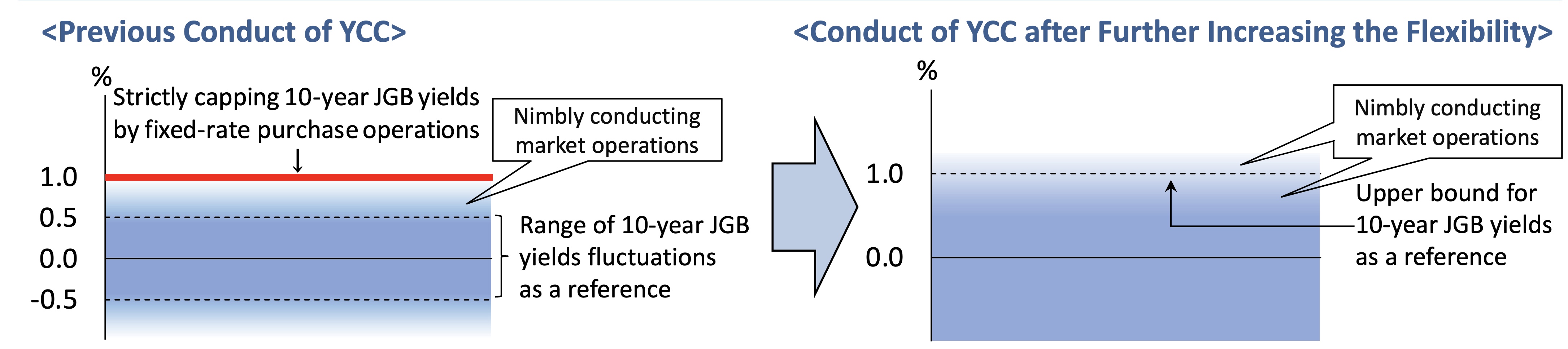
Bond markets, though, were a bit shaken by the BOC move with yields climbing in the US yesterday and a further 1bp rise this morning back to 3.80%.  In addition, 2yr yields are back up to 4.55%, and with the Treasury now having no debt ceiling at all, I expect we will see significant issuance driving yields higher still.  In Europe, the picture is more mixed with yields either side of unchanged as there is confusion on how to play this market.  And one final thing is in Japan, where JGB yields have edged higher by 2bps overnight and are now at 0.434%, slowing approaching the YCC cap.  That is a potential issue for the not-too-distant future so we will keep on top of it.


Oil prices continue their slow rebound, up 0.9% this morning and actually up 4.3% in the past week.  Perhaps the Saudi production cuts are finally being priced, or perhaps the idea that Canada has indicated stronger growth is seen as a harbinger of a better economic situation and less demand destruction.  As to metals prices, gold, which fell sharply yesterday, is rebounding slightly and the base metals are mixed.  As long as we get conflicting economic signals (weakness in Europe, strength in North America) I think these metals will have a difficult time choosing a direction.


Finally, the dollar is generally softer this morning, which given the higher yields in the US is a bit surprising.  But NOK (+0.7%) leads the way on oil strength, and we continue to see strength throughout the commodity bloc.  Even the euro has rallied this morning, although that feels far more like position adjustments than fundamentally driven movement.  As to the EMG bloc, ZAR (+0.7%) is once again at the head of the list, entirely on commodity movement but most of EMEA is stronger while Asian currencies were generally under a bit of pressure overnight.  At this point, I continue to believe most markets are awaiting the FOMC meeting as the next potential catalyst and so expect limited directional trading until then.


On the data front, Initial (exp 235K) and Continuing (1802K) Claims are on tap this morning, neither of which seem likely to move the needle.  Yesterday’s Trade data was modestly better than expected while Consumer Credit grew a bit more than expected.  In the end, though, it is still all about the Fed.  As such, I expect more back and forth but no secular movement until we hear from the FOMC.


Good luck

Adf

Somewhat Decreased

The OECD has released
Its forecasts for West and for East
Alas what they’ve said
Is looking ahead
The growth story’s somewhat decreased

It’s another extremely dull day in markets as the passing of the debt ceiling crisis has left traders and investors looking for anything new at all to help catalyze trading ideas.  Granted, all market participants are anxiously awaiting next Wednesday’s FOMC meeting, but there is a lot of time between now and then to fill.  As there was a dearth of new data of importance overnight, the talk of the market is the OECD’s release of their June 2023 Report on global GDP growth as per the below:

In truth, it does not make for great reading as the estimates point to continued subdued growth, well below the pre-pandemic average of 3.4% globally.  As well, they highlight that this slower growth trajectory will be matched with higher inflation (exp 6.6% in 2023 and 4.3% in 2024), a truly unenviable situation.  Of course, just like every forecast, these must be taken with a grain of salt as the one thing we know about forecasting is…it’s really hard, especially about the future.  It is not clear that anybody altered their views on anything after the release of the report, but it has been the talk of the town.


Aside from that, I must follow up on a comment from yesterday’s note regarding the interest rate adjustments made in China, as it seems there is even more nuance involved.  The big 4 Chinese banks have reduced their onshore deposit rates for USD by about 30bps to try to discourage dollar hoarding and incremental additions to the carry trade.  With US rates now above 5%, the carry opportunity to hold dollars relative to renminbi has been quite significant and has been a key driver of the renminbi’s weakness this year.  In fact, from the renminbi’s high point this year in mid-January, it has weakened nearly 6.6%, which is quite far for a currency that traditionally runs with about a 4% annualized volatility.


One other thing to consider here is that the fact that Chinese banks had to lower their USD deposit rates in order to discourage the owning of dollars seems at odds with the idea that the Chinese are getting out of their dollar holdings.  Rather, it might be a signal that the Chinese people, regardless of what their government may want, seem pretty comfortable holding the greenback. 


And, my goodness, there is virtually nothing else marketwise to discuss from the overnight session.  Equity markets have been generally quiet overall, with modest gains or losses following yesterday’s very modest US rally.  Major European bourses are +/- 0.1% on the day although we did see the Nikkei fall -1.8% overnight, arguably on the back of the latest Policy proposal by PM Kishida which calls for more spending and debt.


Bond markets are also quite subdued with yields edging slightly higher in most places, but just on the order of 1bp-2bps, hardly a worry.  The one noteworthy thing here is now that the debt ceiling has been suspended, the Treasury issued just under $400 billion in T-bills yesterday and is likely to continue on that pace for the rest of the month as they refill the TGA.  The market impact is that the curve’s inversion is increasing with 2yr-10yr now back to -83bps and seemingly heading far lower again.  A test of -100bps seems entirely likely here.  Meanwhile, the 3m-10yr spread is -163bps, which is far below the levels seen even in the 1970’s and 1980’s during Volcker’s time in office.  Given the amount of issuance likely still forthcoming, I suspect this can fall further still.  It is not clear to me that this is a positive for the market.


Turning to commodities, oil (+1.1%) is rebounding slightly as it retraces yesterday’s losses while metals markets are a bit more positive today with copper (+0.5%) and aluminum (+0.75%) both rebounding although gold is little changed on the day.  I sense that part of this is related to the dollar softening a bit, as the growth story just does not seem that positive.


Speaking of the dollar, other than vs. the Turkish lira, which has collapsed nearly 7% this morning after President Erdogan’s new government took office, it is generally a bit softer on the day.  With oil’s rebound, NOK (+0.8%) is leading the G10 higher followed by SEK (+0.6%) and AUD (+0.4%) on broader commodity strength, but the whole bloc is firmer.  In the EMG bloc, ZAR (+1.0%) is the leader, also on better commodity pricing as well as an increasingly positive outlook on the power situation there, followed by the rest of the bloc (save TRY) edging up between 0.1% and 0.3%.  There really aren’t any other good stories there.


And that’s all she wrote.  This morning we see the Trade Balance (exp -$75.8B) and this afternoon, Consumer Credit ($22.0B), but these days, neither of those is likely to matter to the trading community.  I expect another dull day, and potentially a whole week of dull until the CPI data next Tuesday and then the FOMC meeting on Wednesday.  At this stage, the medium-term trend is for modest dollar strength, but on a given day, there doesn’t seem to be much directional impetus in either direction.


Good luck

Adf

Quite a Surprise

Down Under, in quite a surprise

The RBA did analyze

Inflation of late

And then couldn’t wait

To raise rates to multi-year highs


Explaining inflation’s been hot

The Governor and his team thought

If we don’t act now

We may well endow

The idea, our goal, we forgot


You know it is a dull day when the biggest news in the market is that the RBA surprised markets and raised their base rates by 25bps last night, taking the level to 4.10% and implying in their accompanying statement that more hikes were still on the table.  The money line from Governor Lowe was as follows, “The board remains alert to the risk that expectations of ongoing high inflation contribute to larger increases in both prices and wages, especially given the limited spare capacity in the economy and the still very low rate or unemployment.”   That does not sound like a central bank that has finished their hiking efforts and the market is now pricing a 50% probability of another rate hike by August.   It should be no surprise that the Aussie dollar (+0.6%) is the leading performer in the FX markets today, especially given that the dollar remains well bid overall.


In China, the PBOC

Has lately begun to agree

That growth’s in a slump

So, it’s time to pump

It up with a rate cut or three


The other interesting news overnight was that the PBOC has asked Chinese commercial banks, notably the big five banks, to cut deposit rates to their clients by 5bps in order to help encourage more spending, and correspondingly more growth.  Clearly, all is not well in the Middle Kingdom with respect to the economic situation although it is very interesting that the PBOC is not adjusting rates themselves.  Now, the big five state-owned banks are a critical part of Chinese monetary policy transmission, so a PBOC rate cut would feed through those institutions anyway, but I believe this is more theater in an effort to separate the government’s actions from direct support for the economy.  In the end, it’s all the same, as the Chinese rebound is very clearly under pressure.  One of the key drags remains the property sector and it is just not clear how the Chinese are going to solve that problem.  As of yet, like every government, they have simply kicked the can down the road a bit.  As to the renminbi, it continues to trade on the soft side, with the dollar above 7.10, although it is certainly not collapsing. 


However, after these two stories, there has been a dearth of news to drive things with just some desultory Factory Orders data from Germany (-0.4% M/M, -9.9% Y/Y) helping to remind everyone that the German economy, and by extension the Eurozone, has many issues yet to overcome after the loss of their cheap Russian energy.  So, let’s take a quick tour of markets and call it a day.


Yesterday’s big announcement from Apple regarding their new headset was less than scintillating to the trading community and we saw US equity indices slip a bit.  Overnight, while the Nikkei (+0.9%) managed a rally, the rest of the space generally fell and Europe, this morning is all in the red as well, albeit only on the order of -0.2%.  In fact, that -0.2% describes the US futures markets at this hour (7:30) too.


Bond yields have edged a bit lower on this modest risk off session with Treasuries (-1.1bps) consolidating their recent losses (yield gains) while European sovereigns have seen more demand with yields there lower by about -4bps across the board.  We haven’t touched on JGBs lately because there has been absolutely nothing happening in that market with the 10yr trading at 0.42%, still well below the YCC cap, and showing no pressure higher of note.


The one place where we have seen real movement this morning is commodity prices with oil (-2.2%) giving up almost all its post Saudi production cut gains.  The commodity market continues to be the leading proponent of a recession as can be seen in the base metals as well with both copper and aluminum under pressure today.  Meanwhile, gold (+0.1%) continues to hold its own despite pretty consistent dollar strength, definitely an unusual outcome and perhaps a commentary on general risk attitudes being heightened.


As to the dollar, it should be no surprise that NOK (-0.6%) is the G10 laggard given oil’s declines, but other than that and AUD’s gains, the rest of the G10 is split with modest gains and losses, although the euro (-0.2%) seems to be feeling a little heat from those lousy German numbers.  In the EMG space, though, there is a lot more dollar buying evident with both APAC and EMEA currencies under pressure.   Part of this movement seems to be related to some softer CPI prints encouraging the belief that interest rate rises are less likely, and part of this seems to be a bit of risk-off sentiment.


And that’s all there is today.  There is no US data to be released and, of course, the Fed is in their quiet period ahead of next week’s FOMC meeting.  As such, when it comes to the dollar, I expect that its recent underlying strength will remain barring a complete reversal in risk sentiment.


Good luck

Adf


The Issuance Tap

The Saudis thought oil was cheap

So, figured that they’d rather keep

More stuff in the ground

And in a profound

Move, cut back production quite steep


Meanwhile now the debt ceiling’s gone

The Treasury’s set to turn on

The issuance tap

To refill the gap

In finance that started to yawn


The biggest story over the weekend was the Saudi’s decision to cut oil production by 1 million barrels per day as they are concerned the pending recession is going to further destroy demand and so are aiming to keep prices supported.  No other OPEC+ members joined with the Saudis as it seems they all want the money.  And who can blame them?  Not surprisingly, oil prices are firmer this morning, up nearly 2%, but remain far below levels seen prior to the last OPEC+ production cut when WTI was pushing $80/bbl.   However, if we look back to pre-covid times, oil was trading a full $10/bbl lower than the current level of ~$73/bbl.  In the interim, we have seen significant structural changes in the oil market, and I continue to expect these changes to force prices higher over time.


First, the election of President Joe Biden led to an immediate change in US energy policy with a destruction in production capabilities in the name of global warming.  Second, the Russian invasion of Ukraine and the ensuing sanctions on Russian oil (and NatGas) exports have helped reduce the amount of energy molecules available to be used worldwide.  Add to this the longer-term lack of energy infrastructure investment given the ESG push for the past decade, and the supply side of the equation does not look robust. 


On the demand side, however, things are likely to continue to trend higher for the foreseeable future.  Despite trillions of dollars of investment in alternative sources of energy, namely wind and solar, fossil fuels continue to represent more than 80% of total energy usage worldwide.  As well, every advancement in civilization throughout history has been driven by access to cheaper energy, and all those nations that we currently call emerging markets are quite keen to continue to advance their economies to the benefit of their populations.  They are far less concerned about global warming than they are about better living standards.  According to the IEA’s most recent forecasts, 2023 will set yet another record for oil demand regardless of the recession calls and the war in Ukraine.  Ultimately, this supply/demand imbalance is going to resolve toward higher prices still.  Mark my words.


As to the other discussion making the rounds in markets this morning, the upcoming deluge of Treasury security issuance, there are many claiming that this may have a significant impact on risk asset pricing, notably equities.  The idea is that as the Treasury refills its TGA (checking account) with up to $500 billion to get it back to its more normal balance, it will draw liquidity from potential equity investors who decide that earning a risk-free 5+% on their money is quite attractive, thus reducing demand for stocks.  However, this is a more nuanced discussion as there are other features in the money markets that will be impacted as well, and that are likely to offset a significant portion of that impact.


On the surface, that argument has validity, but digging a bit deeper is worthwhile to get a better understanding here.  The Fed runs a Reverse Repo program (RRP), where they essentially pay a small subset of investors to hold their securities at the Fed funds rate.  This program currently has about $2.2 trillion in it and is widely used by Money Market funds as an investment.  And that money in the RRP program is stuck at the Fed and not available for other investment.  However, T-bills have been yielding higher than Fed funds, and it is expected that those same Money Market funds will be snapping up the newly issued T-bills while running down their RRP balances, thus absorbing a great deal of the new issuance.  If this is the case, it will reduce the amount of available risk-free assets to which the equity investors described above will have access.  In other words, the feared demand drain is likely to be far smaller than the $1 trillion that has been bandied about lately.  Do not count on this as a rationale for equity weakness, although that doesn’t mean there are no problems ahead.


And, as we begin another week, those are really the noteworthy stories around.  After Friday’s blowout NFP number of 339K new jobs with a revision higher in the previous months, US equities took off and had a big day.  That has mostly been followed by Asia, which saw strength almost everywhere (mainland China being the most prominent exception) although Europe has had a less robust session today.  Arguably, that is because the Services PMI data in Europe released this morning was softer than expected across the board, and they had already reacted to the US payroll data on Friday as those markets were open during the release.  Meanwhile, US futures are either side of unchanged this morning, clearly not feeling any additional love from the payroll story.


Of more interest is the fact that bond yields are higher around the world this morning, with Treasuries (+5.4bps) seeing selling pressure along with all of Europe (Bunds +7.2bps, OATs +7.0bps, Gilts +5.8bps, BTPs +8.1bps) as it seems the flood of issuance due from the US is being felt everywhere.  After all, given the dollar’s recent trend higher, which is very evident today, for non-USD investors, higher yielding Treasury securities are likely to be very attractive. As to domestic investors, selling ahead of significant issuance is a time-honored tradition.


Aside from oil, metals markets are under very modest pressure this morning, which has more to do with the rising dollar than anything specific to those markets.


And speaking of the dollar, it is on top of the world yet again this morning, rising against all its G10 counterparts and almost all its EMG counterparts.  SEK (-1.1%) is the worst G10 performer, after its PMI data was substantially worse than forecast with the Composite index tumbling to 47.6, a level only ever achieved during Covid, the GFC and the Eurozone banking/bond crisis.  In other words, things don’t look too good there.  But even NOK (-0.55%) is under pressure despite the strong rally in oil.  This is unadulterated USD strength.  Similarly, EMG currencies are all under pressure save ZAR (+0.6%), which seems to have responded positively to news that there would be reduced blackouts going forward. 


On the data front, there is not very much this week, so activity is likely to be driven by other markets given the FOMC is in their quiet period.


Today

Factory Orders

0.8%


-ex Transport

0.2%


ISM Services

52.4

Wednesday

Trade Balance

-$75.5B

Thursday

Initial Claims

237K


Continuing Claims

1802K

Source: Bloomberg


And that’s really all we’ve got for today.  To me, the biggest risk to markets is the fact that US equity performance is entirely reliant on 7 companies, all of which are very good companies, but whose performance has been extraordinarily outsized and does not seem representative of the economy or market as a whole.  At some point, those stocks are likely to come back to earth and that will result in a very large adjustment to views about the Fed, the economy, and the stock market.  But for now, it is hard to fight the trend, and that includes the dollar higher trend.


Good luck

Adf


Worries Now Past

With debt default worries now past

And jobs data set for broadcast

Risk preference has grown

As folks want to own

The highest of flyers, and fast


Meanwhile, the idea that the Fed

Will raise rates this month is now dead

Inflation is sliding

And pundits are chiding

Those who think price gains are widespread


In what can only be surprising to those who traffic in fear porn, the Senate passed the debt ceiling bill, and it heads to President Biden’s desk today for his signature and enactment.  This outcome was always going to be the case, especially once the House passed its debt ceiling increase bill.  All the histrionics about the president’s unwillingness to negotiate were simply part of the theater that goes with the current form of politics.  However, there were enough people who bought into the drama and created hedges so that this outcome has had a market impact.  You may recall that there were fears of a US debt default and if that were to occur, equity markets would sell off sharply.  And that is likely very true, if the US were to default on its debt, that is what would happen.  However, as I wrote from the beginning, that was a highly unlikely outcome.  Nonetheless, yesterday did see a rally in equity markets in the US with the rest of the world following suit overnight.  Risk is back baby!


Meanwhile, we got further confirmation that the Fed is going to pause skip a rate hike this meeting and the Fed funds futures market has now fallen to a 25% probability of any movement.  One of the interesting things about this ongoing repricing is that the data is not showing any signs of a slowdown that would help reduce inflationary pressures.  For instance, yesterday’s ADP Employment data was a much stronger than expected 278K, beating forecasts by more than 100K, while Initial Claims data continue to slide from their recent peak in March.  In other words, as we await today’s NFP data, the latest data points show continued strength in the US labor market.  Helping that story was the employment sub index of the ISM report, which while the headline remains weak at 46.9, saw the employment index rise to 51.4.  In other words, companies, at least manufacturing companies, are still looking for employees.


So, what is on the cards for today?  Here are the latest median forecasts according to Bloomberg:


Nonfarm Payrolls

195K

Private Payrolls

165K

Manufacturing Payrolls

5K

Unemployment Rate

3.5%

Average Hourly Earnings

0.3% (4.4% Y/Y)

Average Weekly Hours

34.4

Participation Rate

62.6%


Certainly, none of this data is vaguely representative of a recession, at least in the traditional definition, where growth turns negative, and Unemployment rises sharply.  While Powell and company may skip a hike this meeting, looking at this data, as well as at the fact that the inflation data, whether CPI or PCE, continues to run well above their target, even if that target is an average, certainly does not indicate the Fed is done hiking.  And remember, while we had all gotten quite used to the idea that interest rates at 0% or 1% were the norm, that is not the long-term reality.  Going back to 1970 (all the data I have), the average Fed funds rate has been 4.92%, essentially where we are today, with a peak of 20.0% in March 1980 and of course a floor of 0.0%, which was the level until the recent hiking cycle for the bulk of the previous 13 years. 


My point is that anticipation of the Fed stopping because Fed funds are so much higher than they were for the last decade is a serious mistake.  Rates can go much higher, and at this point, as long as the Unemployment rate remains at or near its current level, all the evidence of this Fed points to higher rates in the future.  In fact, it has been this thesis that drives my dollar expectations for continued strength because I believe the US economy is far better placed to handle higher rates than are most others, and these high rates will continue to support the greenback.  Once again, this is why I continue to believe the NFP data is far more important than CPI, as NFP will be the trigger for a policy change, not CPI (or PCE).


As we await the data, the market is clearly in a good mood.  As mentioned above, equity markets worldwide have rallied nicely with every virtually every major market higher by 1% or more (the Hang Seng jumped 4% last night on rumors of further Chinese government support for its still faltering economy.)  Naturally, US futures are also pointing higher this morning as well, with all three major indices up at least 0.5%.


Meanwhile, bond yields have edged higher this morning with Treasury yields up less than 1bp while European sovereigns are seeing yields creep up 2bp-3bps.  This has all the feel of a risk-on move with investors moving from fixed income to equity investments at the margin.  After all, no US default combined with a Fed pause skip is as good as it gets!


In a reversal of recent moves, commodity prices are feeling quite frisky this morning with oil (+1.5%) and copper (+1.5%) both benefitting from the same story that helped the Hang Seng, further Chinese stimulus on the way.  Meanwhile, gold (+0.1%) is holding onto yesterday’s sharp gains as the dollar is under pressure this morning.


Speaking of the dollar, despite my medium-term view of pending strength, it is definitely on its back foot this morning. The bulk of the G10 is firmer, with the highest beta currencies leading the way (SEK +0.85%, AUD +0.75%, NOK +0.6%) as commodity strength feeds through the market.  In addition, there is a growing belief that the RBA may have one more hike in them if data continues to show strength.  In the emerging markets, the story has largely been the same with almost the entire bloc firmer vs. the dollar led by KRW (+1.25%) and ZAR (+1.0%).  The rand story is clearly a commodity one, while the won story is in sync with the Chinese stimulus idea given how dependent South Korea is on Chinese growth.  I should note the renminbi has also rallied about 0.5% this morning on that very same story.


And that’s really it.  At this point, all we can do is wait for the labor market data to be released.  Until then, don’t look for any movement of note.  If we see another strong NFP print, something like last month’s 253K, I expect that the dollar should benefit and reverse some of its overnight losses, although equities may very well remain supported on the soft landing scenario that continues to reappear.  FWIW, this poet sees continued NFP strength for now, but we shall see shortly.


Good luck and good weekend

Adf


This Time They’ll Skip

Twas clearly much more than a quip

When several Fed speakers did flip

The narrative’s tune

‘Bout rate hikes in June

Implying that this time they’ll skip


However, don’t think that they’re done

As they know that in the long run

Inflation’s not dead

And Jay Powell’s said

They’ll not stop til this battle’s won


We learned some important new things yesterday regarding the economy and the Fed’s current reaction function, namely that the Labor market continues to be pretty hot and, more importantly, that despite that fact, the Fed is almost certainly going to forego a rate hike this month.  Regarding the Labor market, yesterday’s JOLTs Job Openings data printed back above 10 million openings after a dip below that level in the previous two months indicated that there was less labor demand.  This is crucial because the Fed clearly watches this number closely as part of their employment situation dashboard, and more openings implies more wage pressure higher, the key thing Powell and friends are trying to ameliorate.  After the release, stocks, which had opened lower already, fell a further 0.5% as expectations for a 25bp rate hike in two weeks rose further.


But never fear, when it comes to supporting financial markets, the Fed is always there to help and yesterday was no different than normal.  While, as noted yesterday, non-voter and uber-hawk Loretta Mester was clear she saw no reason to pause, we subsequently heard from two other Fed speakers, Philadelphia’s Patrick Harker and Governor (and vice-chairman select) Phillip Jefferson, that now would be a good time to pause skip a meeting and look around at how the already 500 basis points of rates hikes are impacting the economy. 


I am in the camp increasingly coming into this meeting thinking that we really should skip, not pause, but skip an increase.  A pause would mean the Fed is going to hold its policy interest rate steady for a while.  It is too soon to make that call,” explained Harker at the OMFIF* Economic and Monetary Policy Institute. [emphasis added]


Meanwhile, Philip Jefferson explained, “a decision to hold our policy rate constant at a coming meeting should not be interpreted to mean that we have reached the peak rate for this cycle.  Indeed, skipping a rate hike at a coming meeting would allow the Committee to see more data before making decisions about the extent of additional policy firming.” [emphasis added]


Rounding out the guidance was an article from the Fed Whisperer, the WSJ’s Nick Timiraos, highlighting these two speeches and clearing any doubt that a rate hike on June 14th is a dead issue.  So, summing things up, the Fed is going to hold fire in two weeks but fully well expects to tighten policy further starting in July unless something really significant occurs.  It should be no surprise that the Fed funds futures market has adjusted its pricing to a 30% probability of a hike in June (down from ~65% yesterday morning) and an additional 45% probability of one by July.  I am confident, that barring a remarkably strong NFP number on Friday, that we will see that June probability shrink even further, likely to around 20%.


How will this impact markets?  Well, yesterday saw the first equity weakness in a while, although US markets only fell about -0.6% on the day.  However, we are already seeing a rebound as Asian markets were broadly higher, albeit not dramatically so, and we are seeing real strength in Europe this morning with the DAX higher by more than 1.1% and leading the way.  The interesting thing about Europe is that early this morning we saw the PMI Manufacturing data releases and it was not a pretty picture.  Germany (43.2) was the laggard, but the Eurozone as a whole (44.8) was hardly something to write home about.  In fact, these PMI readings have been sub-50 since last July, a pretty strong indication of a recession.  Adding to the dysfunction was German April Retail Sales, falling -8.6% Y/Y, back to Covid levels, and before that, last seen in 1980!  Arguably, this ongoing weakness in economic data is going to stay Madame Lagarde’s hand when it comes to the ECB’s policy tightening.  The combination of lower headline CPI data and clearly weaker economic activity will make any more rate hikes, especially in the face of a Fed that is not hiking this month, much more difficult.


As to bond yields, this morning they have stabilized after their recent sharp declines.  Right now, we are looking at slightly higher yields, on the order of 1bp to 2bps, which seems to be merely a trading reaction to the previous week’s decline of 18bps.  With the House having passed the debt ceiling bill last night (it now moves to the Senate), that market drama seems to have ended so I expect we will get back to talking about the economy and the Fed again, as well as, of course, inflation.


Oil prices (-0.4%) are continuing their downward slide as regardless of any supply questions, this market sees demand as cratering as we head into a recession.  It is, of course, this price action, that has the deflationistas back crowing again about the inevitable collapse of CPI and how the Fed will need to reverse course quickly.  I am not in that camp, but only time will tell.  Meanwhile, gold (+0.25%) and copper (+2.3%) are telling a different story, especially copper.  It is hard to make sense of a rising copper price, the metal most closely associated with economic activity, and a simultaneous decline in oil.  But hey, nobody ever said markets made sense.  This will resolve itself at some point, but clearly not today.


Finally, the dollar is a non-event today, with about half the G10 and EMG blocs rising and the other half sliding, none more than about 0.3%.  Movement like this is hard to define as anything more than position adjustments and trading activity with no real catalysts seen.


On the data front, we get a bunch of releases today as follows:


  • ADP Employment 170K
  • Nonfarm Productivity -2.4%   
  • Unit Labor Costs 0%    
  • Initial Claims 235K   
  • Continuing Claims 1800K
  • ISM Manufacturing 0
  • ISM Prices Paid 3


The ADP number is a day late due to the Memorial Day holiday on Monday, but I cannot help but look at the productivity and ULC data and consider how negative that is for the economy writ large.  As well, we hear again from Patrick Harker, the last scheduled speaker before the FOMC meeting on the 14th.  Of course, we heard his views yesterday so I doubt there will be anything new.


A skip is not a pause, and I believe that the Fed will not be deterred from their mission at this stage.  This means that the market will continue to price in tighter Fed policy and the dollar is likely to benefit accordingly.


Good luck

Adf


*OMFIF is the Official Monetary and Financial Institutions Forum, a think tank devoted to banking and central banking.  I, too, have never heard of this before.

Far From a Floor

As energy prices decline

Inflation, at least the headline,

Continues to shrink

As central banks think

Their actions have been quite benign


The problem is that at its core

Inflation is far from a floor

So, Christine and Jay

Ain’t ready to say

They’re done and won’t hike anymore


European inflation readings continue to fall alongside the ongoing decline in energy prices.  Headline numbers in France, Italy and Germany, as well as Spain and most of the Eurozone, have fallen sharply in the past month and seem likely to continue to do so.  Core inflation readings, however, for those countries that measure such things, and for the Eurozone as a whole, are demonstrating the same stickiness that we have seen here in the US.  Ultimately, the problem is that an inflationary mindset has begun to take hold in many people’s view.  While there is a great deal of complaining about rising prices, people continue to pay them, and the hangover of fiscal stimulus that was seen everywhere and continues to be pumped into economies around the world has allowed companies to raise prices while maintaining sales. 


There continues to be a strong disagreement within the analyst community regarding the future of inflation as there are many who have watched the trajectory of energy price declines and anticipate a return to 0%-2% inflation by the end of the year.  At the same time, there is another camp, in which the Fxpoet falls, that expects inflation to remain sticky in the 4% range for the foreseeable future.  Arguably, until such time as the massive amount of liquidity that was injected into the economy in response to Covid (and the GFC) is removed, I fear prices will err on the side of rising faster than we had become used to for so long.


Taking this one step further, the central bank playbook on inflation, as written by Paul Volcker in the 1980’s, was to tighten monetary policy enough to cause a severe recession and break demand.  We all know that Chairman Powell has read that book and is following it as best he can these days.  And, he has most of his team on board with that view.  Just this morning, Cleveland Fed President, and known hawk, Loretta Mester explained to the FT, “I don’t really see a compelling reason to pause – meaning wait until you get more evidence to decide what to do.  I would see more of a compelling case for bringing rates up…and then holding for a while until you get less uncertain about where the economy is going.”  These are not the words of someone who is concerned that rising interest rates are going to derail the US economy.  It is sentiment like this that has the Fed funds futures market pricing in a 64% probability of a rate hike in two weeks’ time.  It is also sentiment like this that is supporting the dollar, which has traded to its highest level in more than two months and is crushing the large, vocal contingent of dollar short positions around.


But, heading back to the recession argument, the data that we continue to receive shows no clear signs in either direction, rather it shows lots of conflict.  Yesterday I mentioned the decline in GDI, a seeming harbinger of weaker growth.  Meanwhile, yesterday’s data releases perfectly encapsulated the issue, with Consumer Confidence printing at a higher than expected 102.3, while the Dallas Fed Manufacturing Index fell to a wretched -29.1, far worse than expected and a level only reached during recessions in the past.  And there’s more to this story as last night China’s PMI data was all released at worse than expected levels (Manufacturing 48.8, Non-manufacturing 54.5, Composite 52.9) with all 3 readings slowing compared to April and an indication that the Chinese reopening story seems well and truly dead. 


This poses a sticky problem for President Xi as the clearly slowing Chinese economy seems likely to require further stimulus, whether fiscal, monetary, or both, with the ‘smart money ‘betting on monetary easing.  However, the renminbi (-0.4%) fell again last night and has been sliding pretty steadily since January.  Now, firmly above 7.10, it is fast approaching levels that the PBOC has previously indicated are inappropriate.  The question is, what will they do?  Easing monetary policy opens the door to rising prices, a potentially severe problem in China, while standing pat will likely result in further economic decline, not exactly what Xi is seeking.  My money is on easier policy and if necessary, price controls, something at which the Chinese government excels.


One cannot be surprised that with news like this, risk is taking a breather today, despite the ongoing euphoria over NVDA and AI.  Yesterday’s mixed performance in the US led to substantial weakness overnight in Asia, with all main indices falling by at least -1.0%.  Meanwhile, Europe this morning is also largely in the red, albeit only to the tune of -0.5%, and at this hour (8:00) US futures are pointing lower by -0.3% across the board. 


At the same time, the combination of falling inflation rates in Europe and the fact that a debt ceiling deal appears to be coming together has yields continuing to slide with Treasuries (-4.4bps) actually underperforming European sovereign yields which are all lower by between 7bps and 8bps.  The other thing to note here is that the yield curve inversion in the US, currently back to -78bps, is showing no signs of righting itself soon.  It has been nearly one year since the curve inverted, and recession alarms have been ringing everywhere, although one has not yet been sighted.  I expect continued volatility in this market as the debt ceiling bill will allow for a significant uptick in issuance right away and the question is, who will buy all this debt? 


Oil prices (-2.8%) continue to point to slowing economic activity and that is confirmed by weakness in the base metals as well.  While the Fed sees no signs of a recession, it seems pretty clear that some markets disagree.  Do not be surprised to see another production cut by OPEC+ as the summer progresses.


Finally, the dollar is king again, rising against virtually all its G10 and EMG counterparts, with the G10, sans JPY, all falling between -0.4% and -0.6%.  This is a broadscale risk-off move and one which is likely to continue as long as we see the combination of tough talk from the Fed and slowing economic data.


Speaking of economic data, today brings Chicago PMI (exp 47.2), JOLTS Job Openings (9.4M) and the Fed’s Beige Book this afternoon.  It is pretty clear that manufacturing activity remains in the doldrums here but pay close attention to the JOLTS data as the Fed is watching it closely for clues as to labor market tightness.  A weak number there is likely to have a bigger market impact than anything else today.


Net, I see no reason to dispute the dollar’s strength at the current time.  Talk to me when the Fed changes its tune, and we can see a dollar reversal.  Until then, higher for longer is both the interest rate and USD mantra.


Good luck

Adf