Changing Fast

At this point most traders are thrilled
It’s Friday, ‘cause throughout that guild
Exhaustion is rife
From bulls’ and bears’ strife
O’er whether their dreams be fulfilled
 
As well, all the narrative writers
Are stuck pulling college all-nighters
With facts changing fast
Their latest forecasts
Do naught but encourage backbiters

It has certainly been an interesting week in financial markets, at least most of them, with significant moves throughout the commodity, equity and cryptocurrency spaces.  We even saw a jump in bond prices yesterday after a really lousy JOLTS Jobs number (6.54M compared to 7.2M expected) and a higher-than-expected Initial Claims number of 231K.  Suddenly, questions about the labor market are front of mind, and prospects for a March Fed Funds cut rose to 23% for a time, although have slipped back to 17% as of this morning.  But one need only look at a few charts (all from tradingeconomics.com) showing the daily movement in some popular trading vehicles to understand why traders are thankful the week is ending.  For instance, 

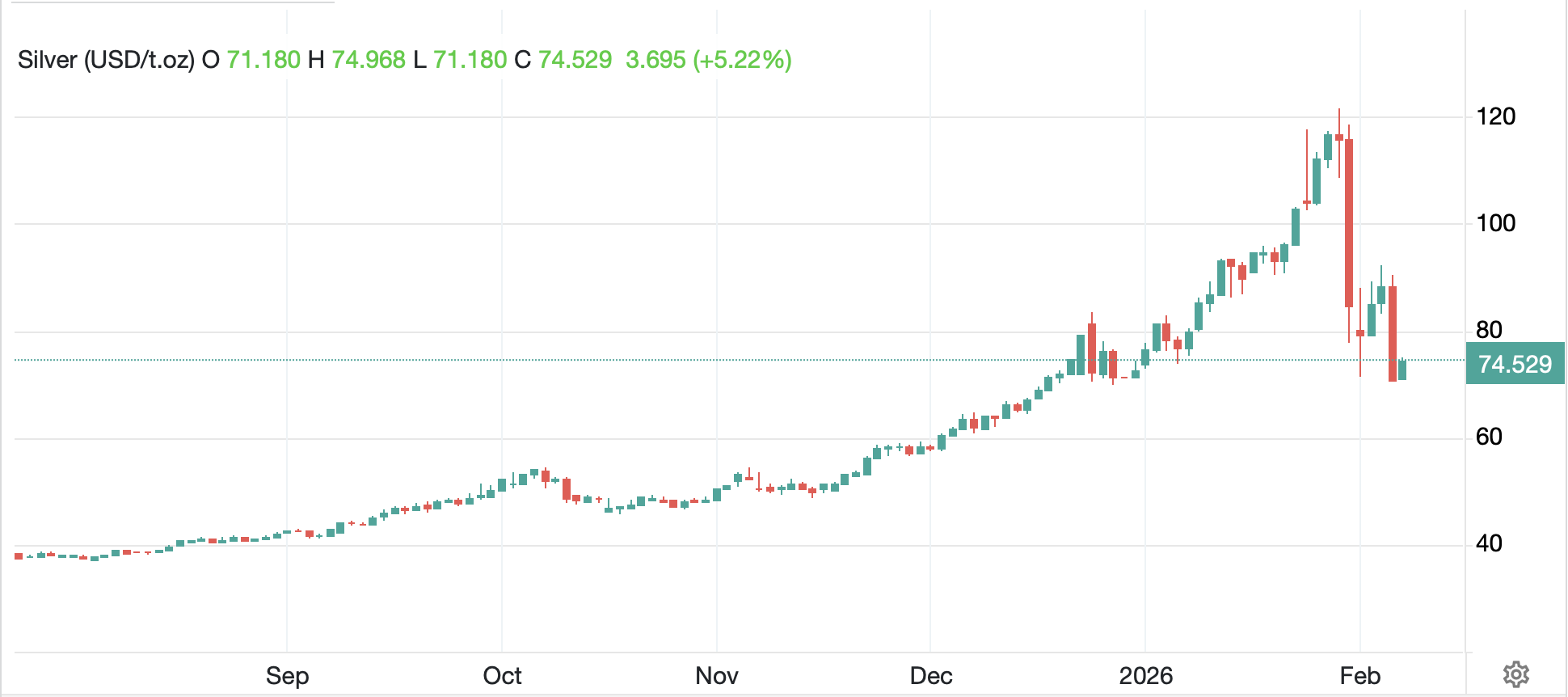
Silver (+4.75%), which had a 34% range last Friday and has fallen 39% since its high 8 days ago:
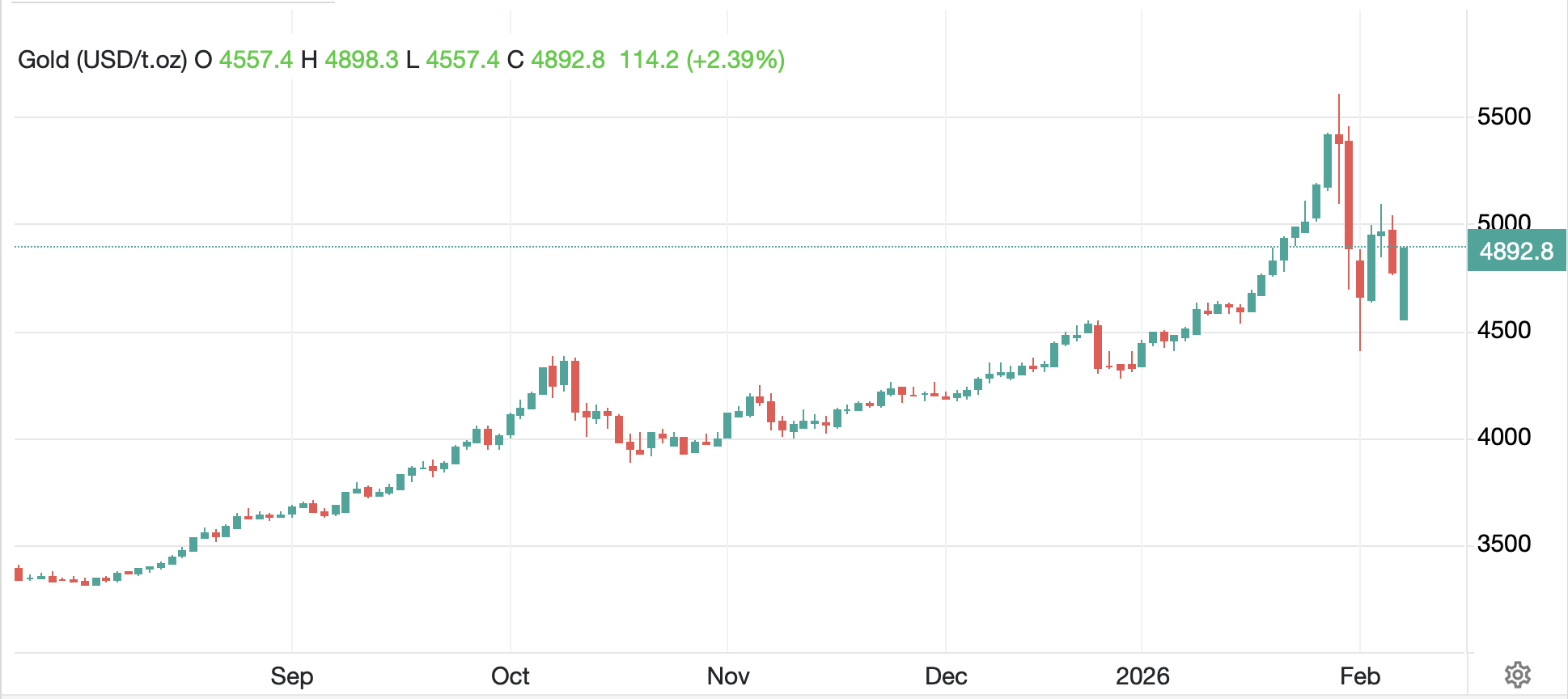
Gold (+2.1%), which showed the same pattern, albeit not quite as dramatically:
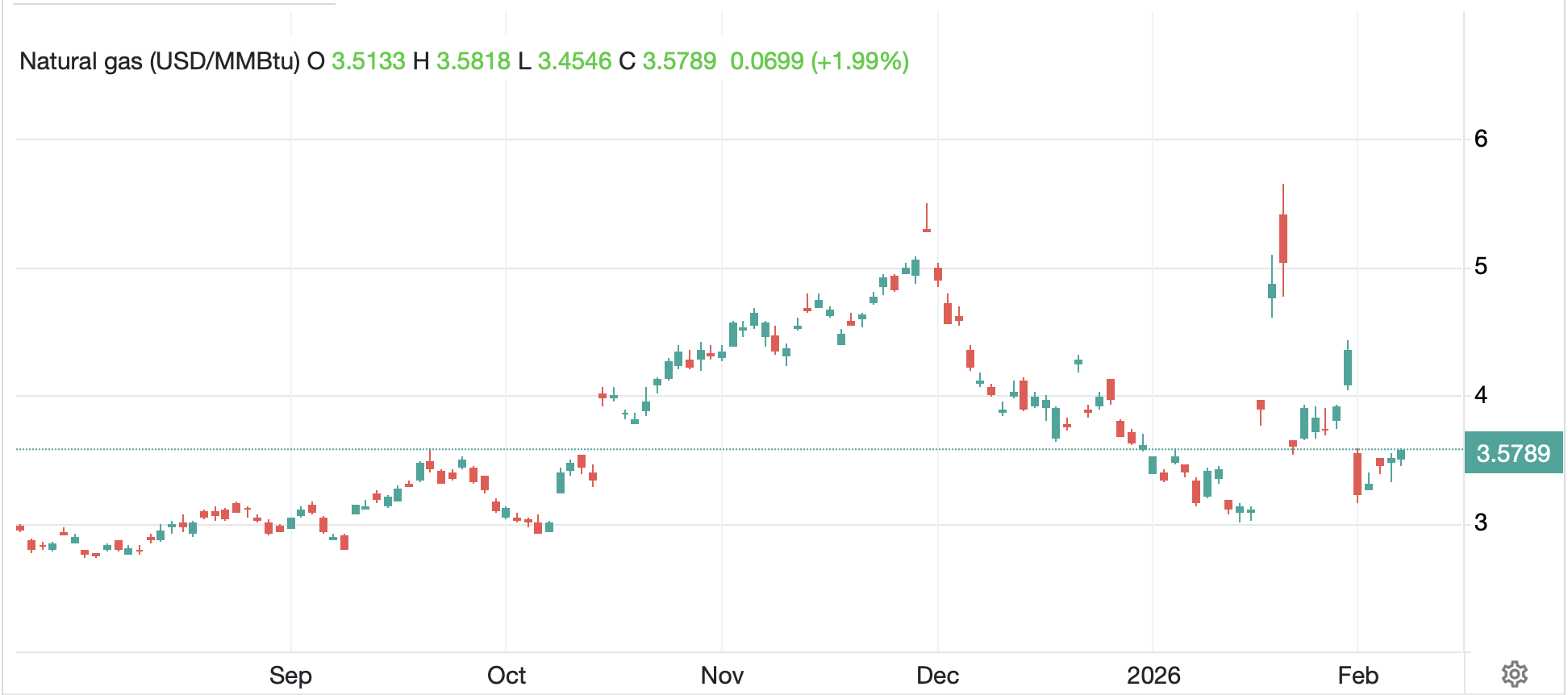
Natural Gas (+3.4%), which rose $2.65 and reversed $2.00 on a $3.00 base over the past two weeks:
And Bitcoin (+5.8%), which has fallen nearly 50% since its highs in early October and 22% in the past week:
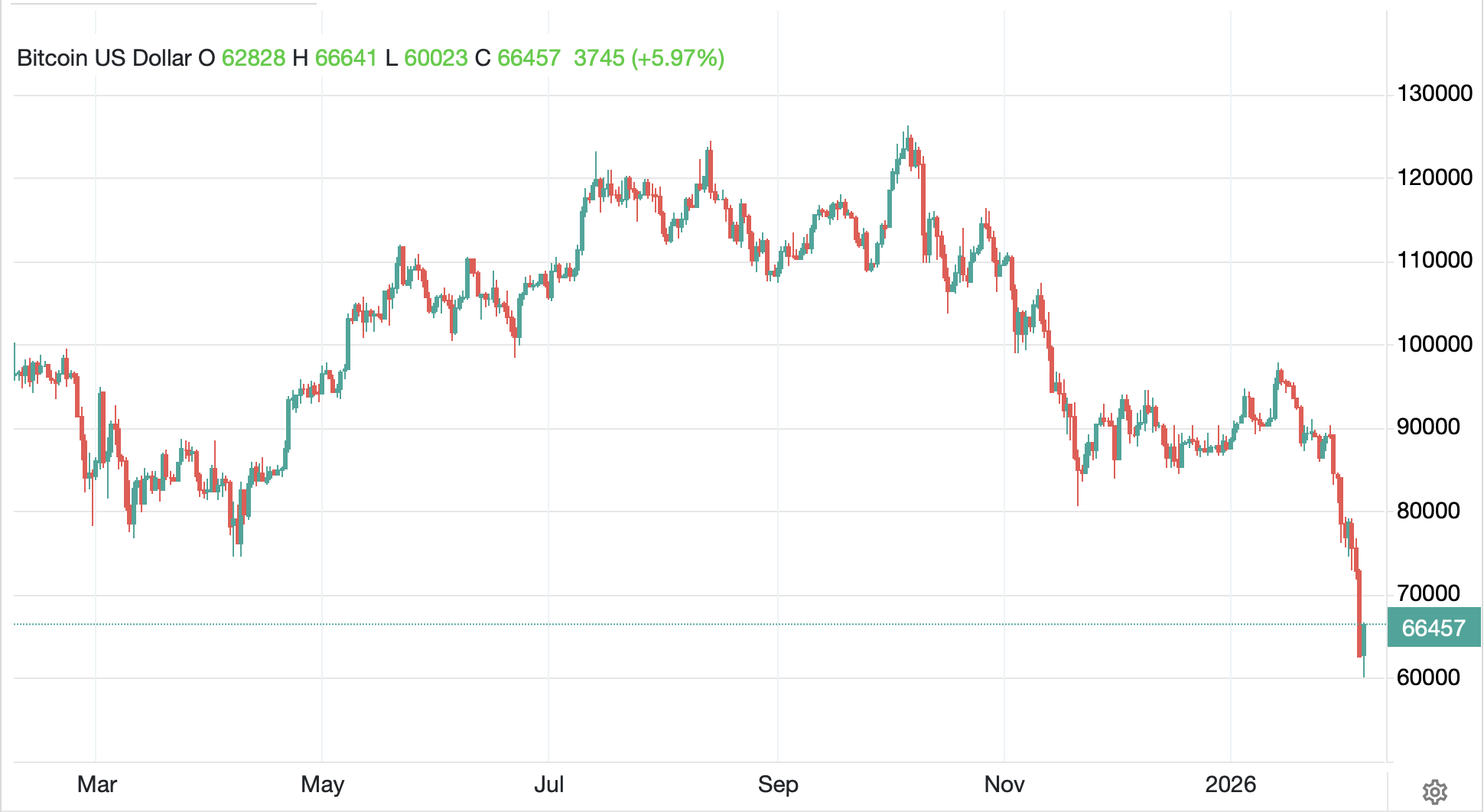
Now, it must be remembered that Bitcoin has a long history of massive drawdowns, with a 50% drawdown in spring of 2021 and a 75% drawdown from November 2021 through October 2022. We shouldn’t be surprised as Bitcoin is essentially a pure risk asset, so is completely narrative driven.  And as the narrative writers try to keep up with the facts on the ground, they are trying to figure out how to sell the story that Bitcoin, which was ostensibly designed to be an alternative to the fiat currency system, has become so tightly linked to the fiat financial system.

In the end, though, the commodity markets are beholden to the marginal demand/supply of the last molecule available.  I have not seen anything change with respect to demand for power to drive the economy, the demand for silver to build out electronics or the demand for gold by central banks.  To me, while prices for these commodities can whipsaw aggressively as the global regime changes, ultimately, I remain confident demand will continue to be the story.  (Bitcoin is an entirely different beast and one I will not discuss in depth other than to highlight its volatility along with the rest of these markets.)

Anyway, you can understand why traders are exhausted.  In fact, my forecast for next week is that we are highly unlikely to see the same size movements, although choppiness will still be the rule.

You may have noticed I missed oil (-0.4%) which has also seen some volatility as per the below chart, but not quite at the same level as the others.  Part of that is the oil market is much larger and more liquid and part of that is that the whole Iran/US discussions question has provided fodder for both bulls and bears in short intervals resulting in no net movement over the past week.
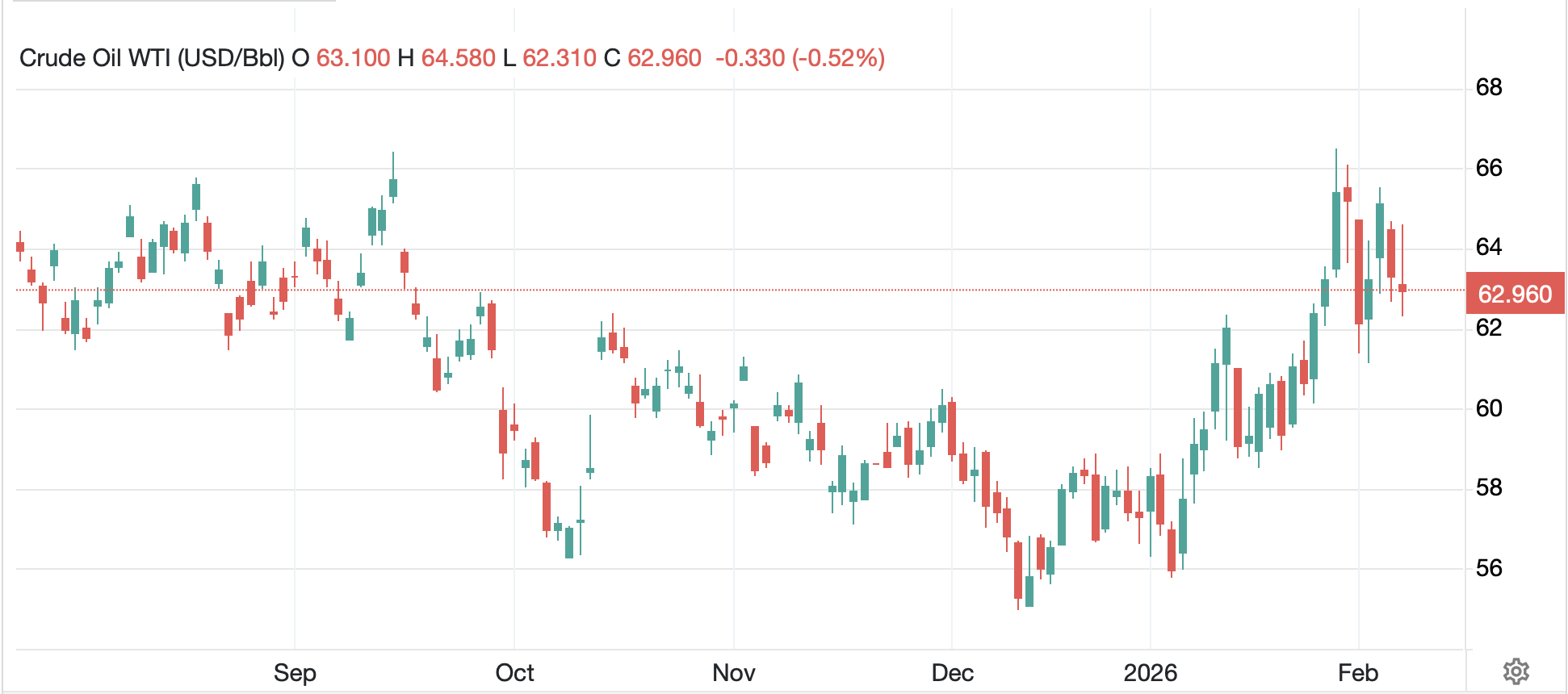
From what I can piece together, the situation in Iran is coming to a head regarding the regime there.  The talks today are ongoing, but there is other information that appears to indicate preparations are being made for a transitional government, and the State Department just warned all US citizens to leave Iran.  Something is up which will certainly drive more oil volatility.

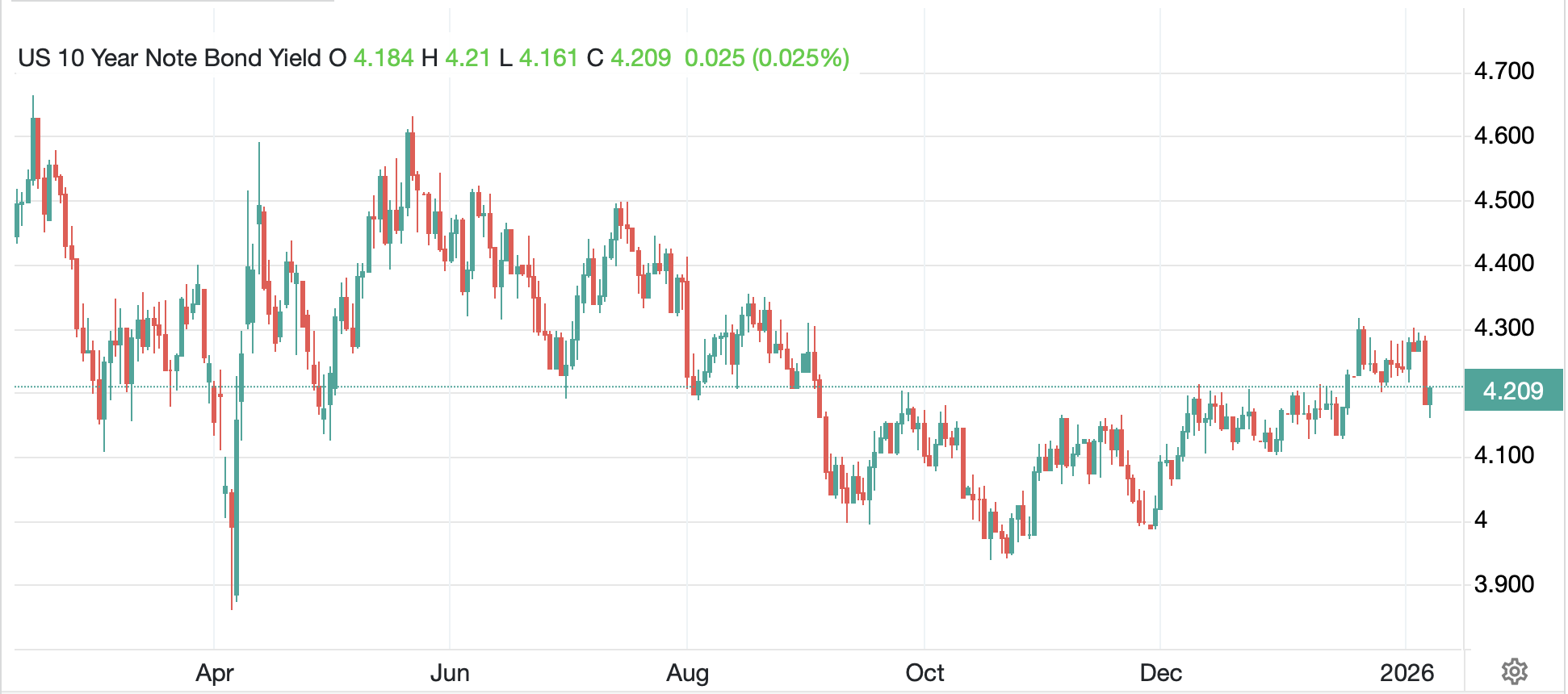
If we look at bonds, Treasury yields fell -8bps yesterday and have rebounded by 2bps this morning.  That was the largest single day move we’ve seen since October, and basically took the market right back to that 4.20% level that had been home for weeks.
There continues to be a lot of confusing data and information regarding the economy as yesterday’s weak jobs data conflict with the broader idea that the hyperscalers are spending 2% of GDP on capex this year and forecasts for the budget deficit continue to run around 2%.  It seems like it will be difficult for a recession to come about with that much new spending in the economy, but as we have seen over the past decades, the beneficiaries of that spending are not necessarily the population cohort that is currently upset.  I guess the question is, is economic growth real if the population doesn’t feel it?  That will certainly be the political question come November.

As to European yields, they all followed Treasuries lower, especially after the BOE 5-4 vote to leave rates on hold offered a much more dovish signal than anticipated, and the ECB harped on the strength of the euro and how that could bring down their inflation forecasts, hinting at lower rates going forward.

In the equity markets, yesterday saw a tough day in the US as the tech/AI story continues to get beaten up right now, and that was more than enough to offset strength in things like defensives and staples.  But this morning, US futures are higher by about 0.5% as I type (8:00).  In Asia, Japan (+0.8%) bucked the US trend on the back of excitement about the upcoming election where Takaichi-san is expected to gain a mandate.  However, China (-0.6%), HK (-1.2%), Korea (-1.4%) and Australia (-2.0%) all had the same fate as the US.  Given the weight of technology companies in Asian indices, I suspect we are going to see more volatility here as different narratives come about on AI and investment and the social/political impacts.  As to Europe, modest gains are the story with the DAX (+0.5%) and IBEX (+0.9%) leading the way higher with the former benefitting from yesterday’s surge in Factory orders as well as a better-than-expected trade balance today.  As to Spain, it has been trending higher and nothing has come out to change that view for now.

Finally, the dollar is giving back some of yesterday’s gains but remains within that longer term trading range.  Using the dollar index (DXY) as our proxy, you can see just how little things have changed.  All the talk last week of the breakdown in the dollar has been forgotten for now, although I continue to read about China building a digital currency backed by gold.  I discussed that earlier this week and why I continue to believe that is unrealistic at this time.
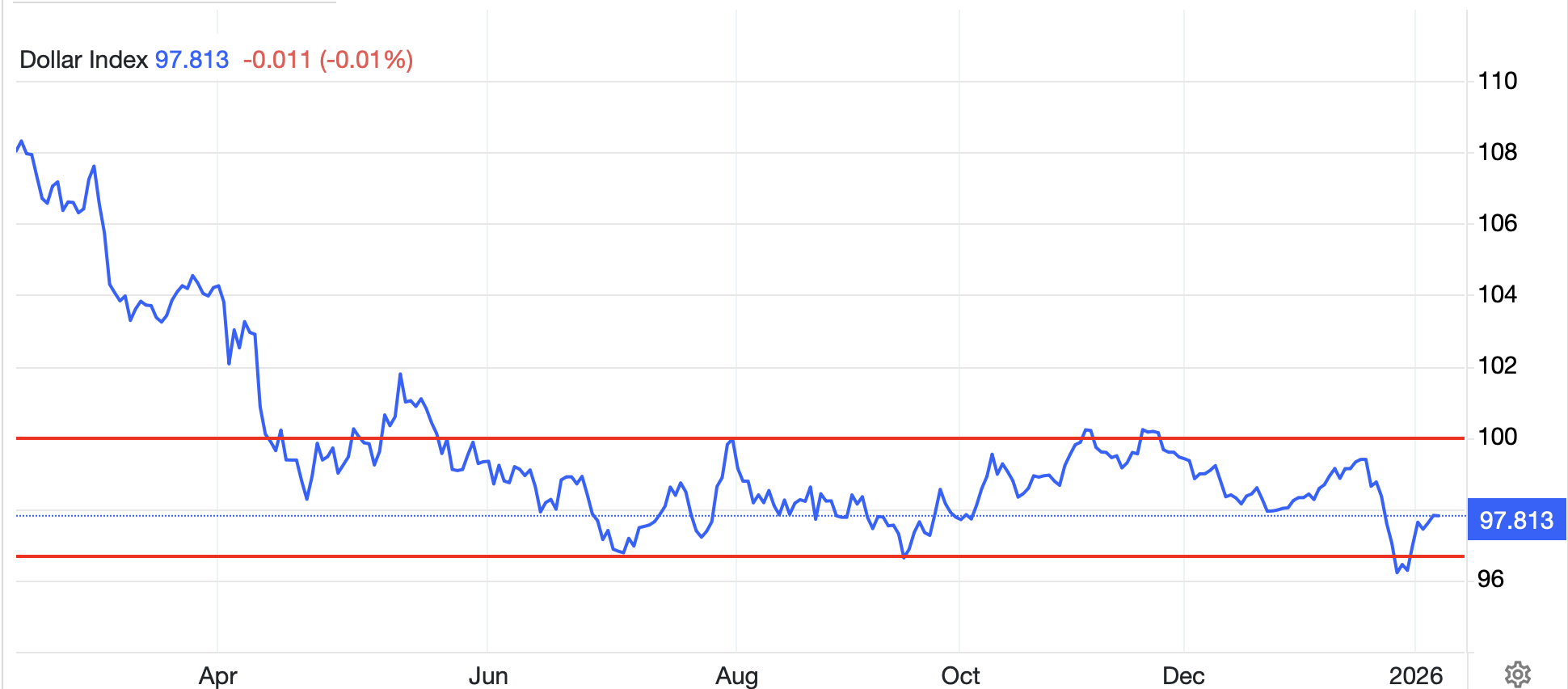
But the weird thing about the DXY is it doesn’t seem to reflect what is happening in individual currencies.  For instance, AUD (+0.85%), GBP (+0.45%) and NOK (+0.9%) are all much stronger although the euro (+0.15%) and JPY (0.0%) not so much.  In the EMG bloc, MXN (+0.8%), ZAR (+1.1%), HUF (+0.8%) and KRW (+0.3%) are all having a very good session despite no specific news that would seem to drive that.  Historically, I never paid attention to the DXY because nobody who actually trades FX pays it any mind.  However, as a trading vehicle, it has gained many adherents which is why I mention it.  So, as we look across the currency universe, the dollar is having a tough day.

On the data front, we only see Michigan Sentiment (exp 55.0) and Consumer Credit ($8.0B).  We also hear from Governor Jefferson, but nobody seems to be listening to any Fed speakers right now, Secretary Bessent is a far more important voice for the markets.

We have seen massive moves across many markets lately, with excessive moves correcting, but I remain stubbornly of the view that while things got ahead of themselves, the underlying trends are still in place, at least in commodities.  As to the dollar, it’s not dead yet, but its future will depend on the administration’s ability to achieve their goals regarding the economic adjustments and inward investment.  

Good luck and good weekend

Adf
The Specter

On the horizon
The specter of BOJ
Intervention climbs


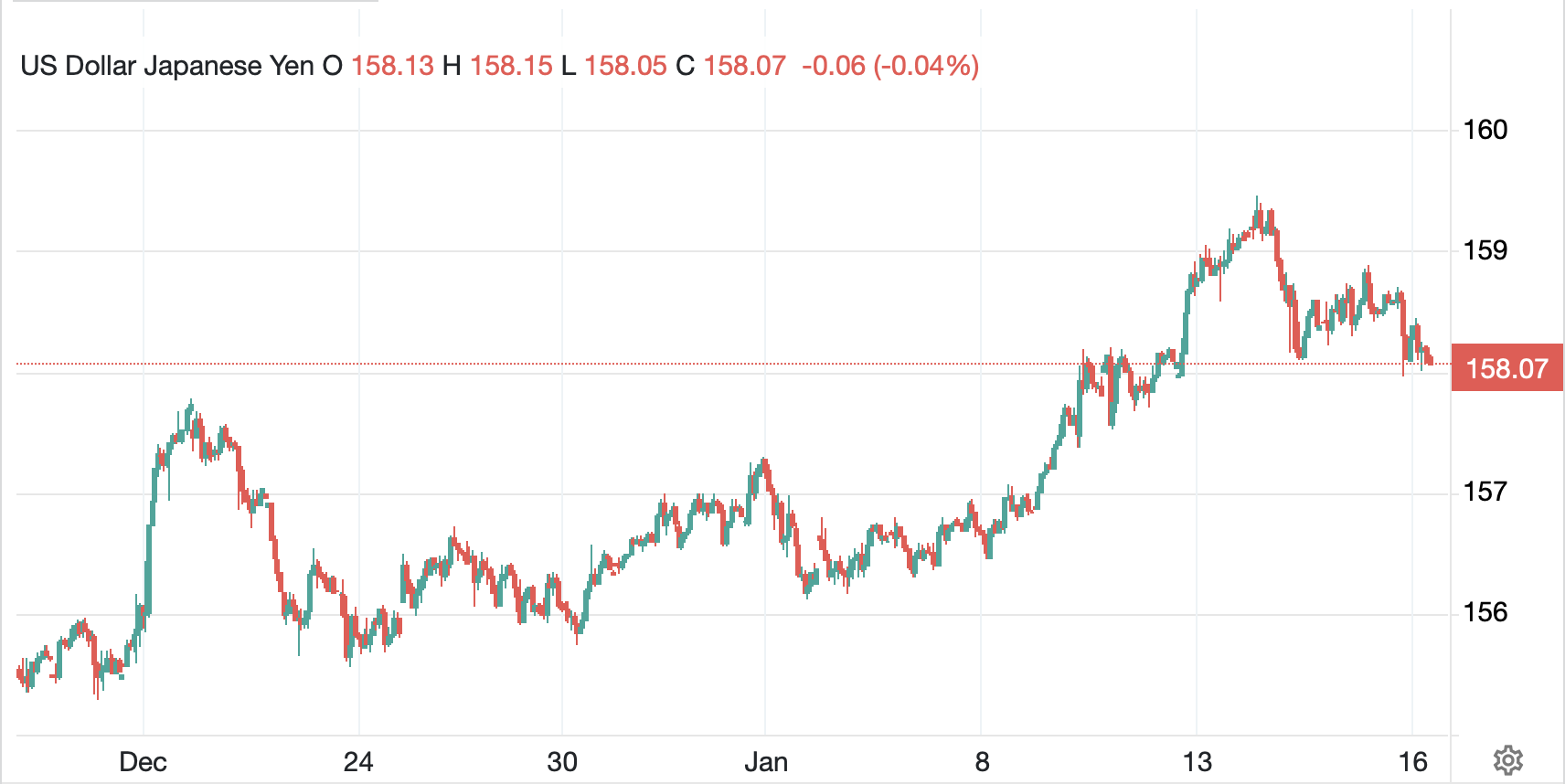
For those of you who don’t know, the genesis of this note was a daily update during my time covering US corporates for their FX hedging needs.  The poetry was episodic… until it wasn’t.  At any rate, this is the reason I sometimes harp on particular currencies rather than markets more generally.  And right now, while the dollar, writ large, is not that interesting, as I have been explaining for months, the yen (+0.3%) is becoming interesting in its own right as its recent spate of weakness has opened the door to intervention.  Last night, I would say we took a half-step forward on this journey as, while the BOJ did not check rates, FinMin Katayama was more explicit in her discussion about the yen’s weakness, even discussing the fact that the ‘agreement’ that her predecessor made with Treasury Secretary Bessent has no restrictions on intervention if deemed appropriate.

Following are her remarks from last evening, “We can take decisive measures against sudden movements that do not reflect fundamentals. This refers to intervention, and there are no constraints or restrictions on this.  I have repeatedly stated that we will take bold action including all the different measures available.  We shared the view that recent moves have been excessive and do not reflect fundamentals.” Then, she followed that up by referring back to her discussions with Bessent in Washington on Monday. “For many years before I took office, the Treasury secretary has held the personal view that monetary policy has been behind the curve.”

The chart below shows that for now, jawboning is the preferred measure to prevent further yen weakness, but as jawboning is only ever a temporary solution, it seems clear to me that there will be intervention at some point.  In fact, given Monday is a bank holiday in the US, implying less liquidity as banks run skeleton staffs, that may be an ideal time to get the most bang for their buck.

Source: tradingeconomics.com

But remember, even if/when they intervene, the impact will only be temporary.  Perhaps keeping a floor underneath the currency for a month or two.  Ultimately, though, it will follow the fundamentals, and if those are such that the US continues to grow rapidly and receive investment flows, unless the BOJ raises rates dramatically to moderate those flows, the yen will ultimately weaken further.   Now, ask yourself if you think the BOJ can raise rates aggressively given the combination of Japan’s 250% debt/GDP ratio and the fact that Takaichi-san’s policy mix is to borrow more and run things as hot as possible.

Away from the mess in Japan
A story of note is Iran
But tensions have waned
And thus, it’s explained
The oil complex can, down, stand

Looking elsewhere for news of note, there continues to be an enormous amount of energy focused on Minneapolis, which has no market impact.  Remarkably, Venezuela has become an afterthought to the markets as the new narrative is their natural resources are not economically retrievable at current prices.  Iran remains a hot topic in the oil market, but the concerns registered by traders early in the week have ebbed overall, although this morning, Texas tea is higher by 1.5% and back over $60/bbl. 

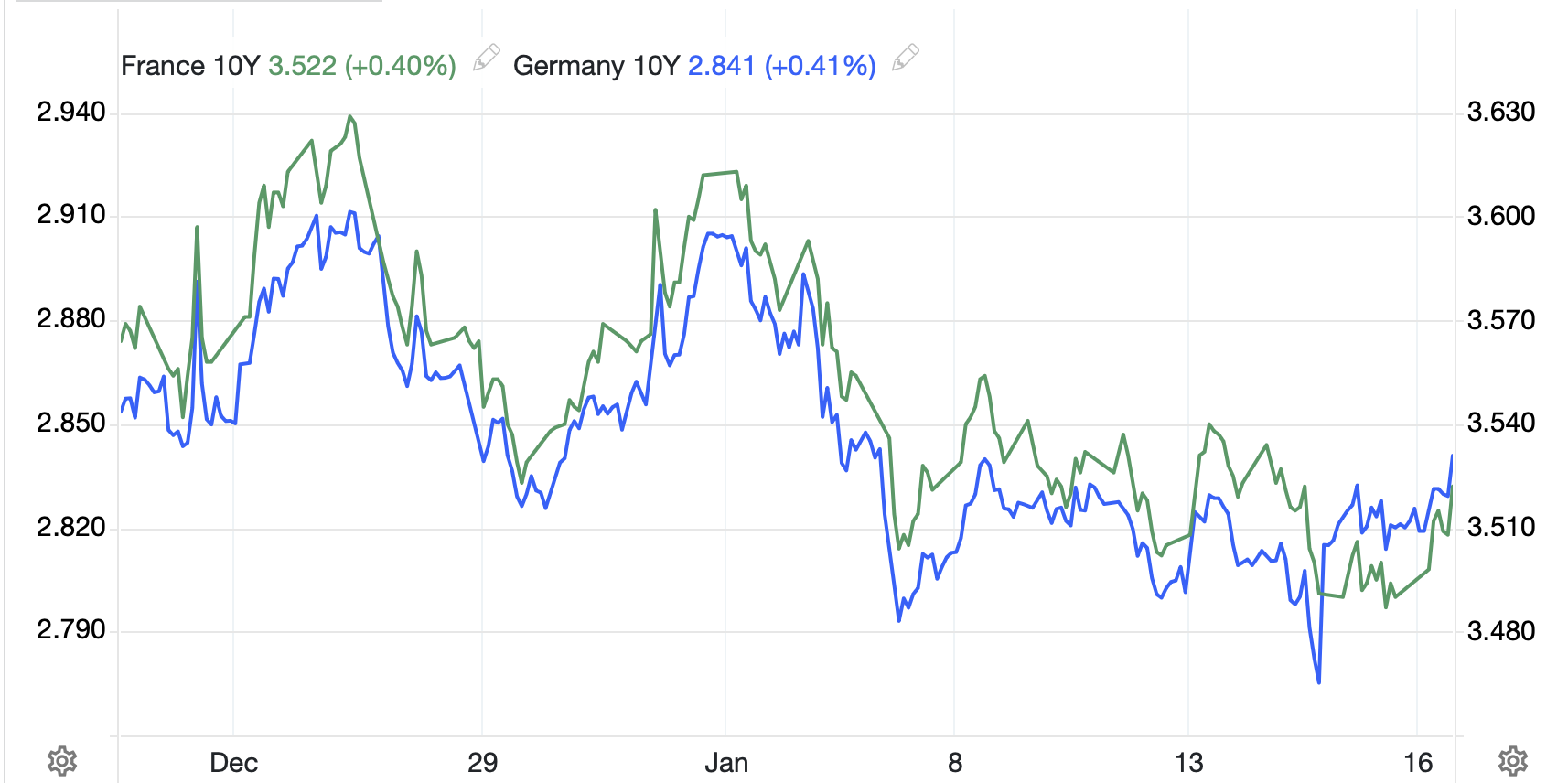
Looking at other markets, bonds remain somnolent, with yields up 1bp this morning, reversing yesterday’s decline of -1bp but still firmly within the 4.00% – 4.20% range.  European sovereign yields have edged higher by 2bps this morning and overnight JGB yields rose 3bps.  However, it remains difficult to see any significant pattern over the past month as evidenced by the chart below of French and German 10-year yields.  Net movement has been a handful of basis points overall.

Source: tradingeconomics.com

Even the metals markets, which have been THE story for the past months, have calmed down a bit as they consolidate their recent remarkable gains.  This morning, gold (-0.25%), silver (-2.1%), copper (-1.5%) and platinum (-3.2%) are all softer, but all remain higher on the week and over the past month, with silver having gained 37% since this time in December, and sitting above $90/oz.

Equity markets in the US rebounded yesterday, seemingly on some decent earnings data, but overnight, there was little love with Japan (-0.3%), China (-0.4%) and HK (-0.3%) all slipping from recent highs.  Elsewhere in the region, though, there was much more positivity as Korea (+0.9%), India (+0.25%), and Taiwan (+1.9%) all rallied with the latter benefitting from the agreement of a trade deal with the US that cut tariffs on Taiwanese exports in exchange for a $250 billion commitment of investment into the US.

In Europe, France (-0.8%) is the laggard du jour as ongoing budget negotiations in the government are no closer to completion and showing signs of breaking down.  As to the rest of the continent, modest declines are the order of the day while the UK is unchanged.  US futures at this hour (7:40) are pointing higher, however, led by the NASDAQ at +0.7%.

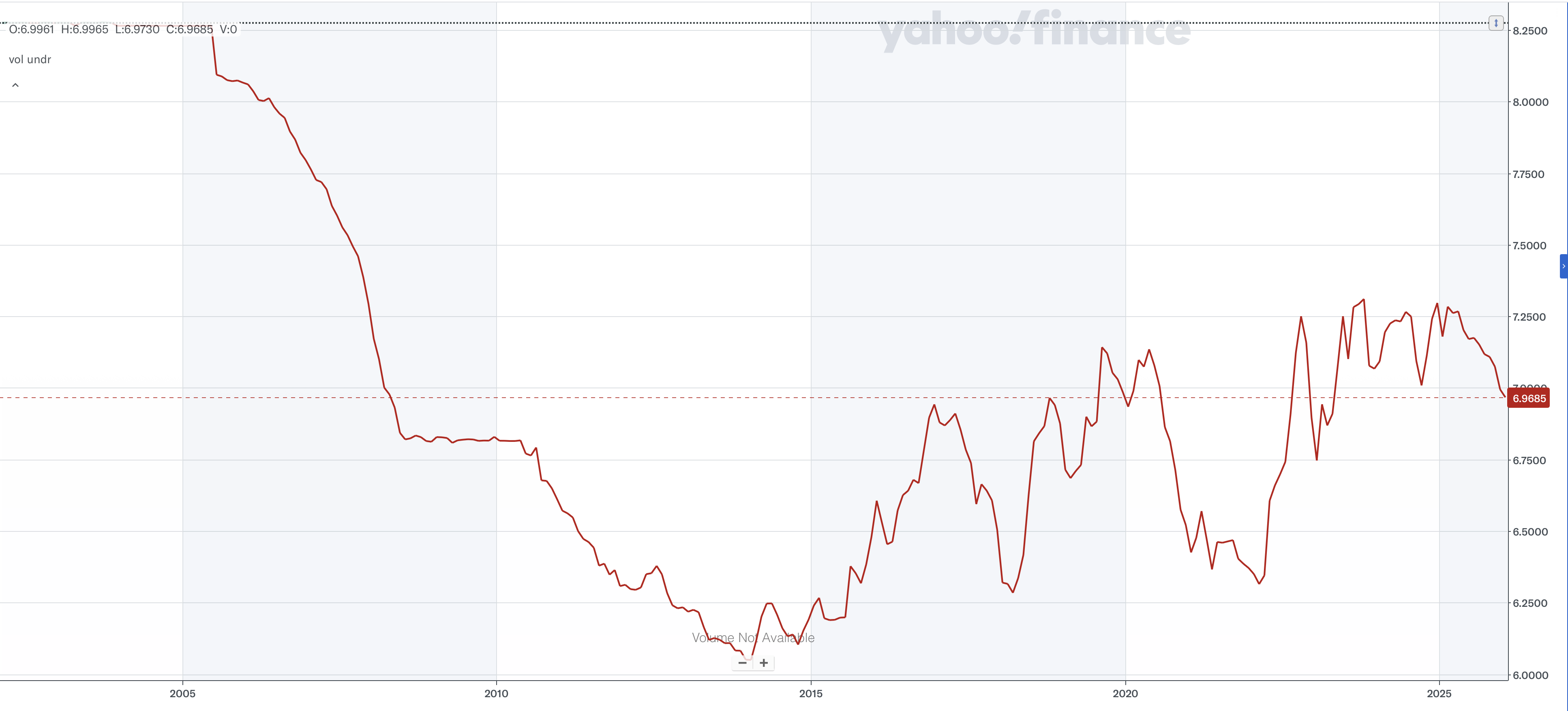
While overall, the dollar remains dull, an underreported story is the CNY (0.0% today) which has been appreciating steadily for the past year and is now at its strongest level since May 2023.  In the beginning of the year my view was if Xi actually got Chinese consumers to raise their spending and back away from the mercantilism that has been the driver of the Chinese economy since the beginning, we would see CNY strength, calling for 6.50 by the end of the year.  Well, a look at the chart below helps keep things in perspective as while CNY has appreciated about 5% in the past year, it remains far below (dollar higher) levels seen post pandemic.  However, I need to see the data indicate Chinese domestic demand is growing before I become a true believer!  Note, too, that the pace of this move is hardly remarkable.

Source: finance.yahoo.com

And that’s all I got today.  Today’s data brings IP (exp 0.2%) and Capacity Utilization (76.0%) with a few more Fed speakers as well.  Remarkably, despite the Fed trotting out virtually every member this week, nothing of note has been said given the current focus on defending Chairman Powell regarding the renovations at the Eccles Building.  

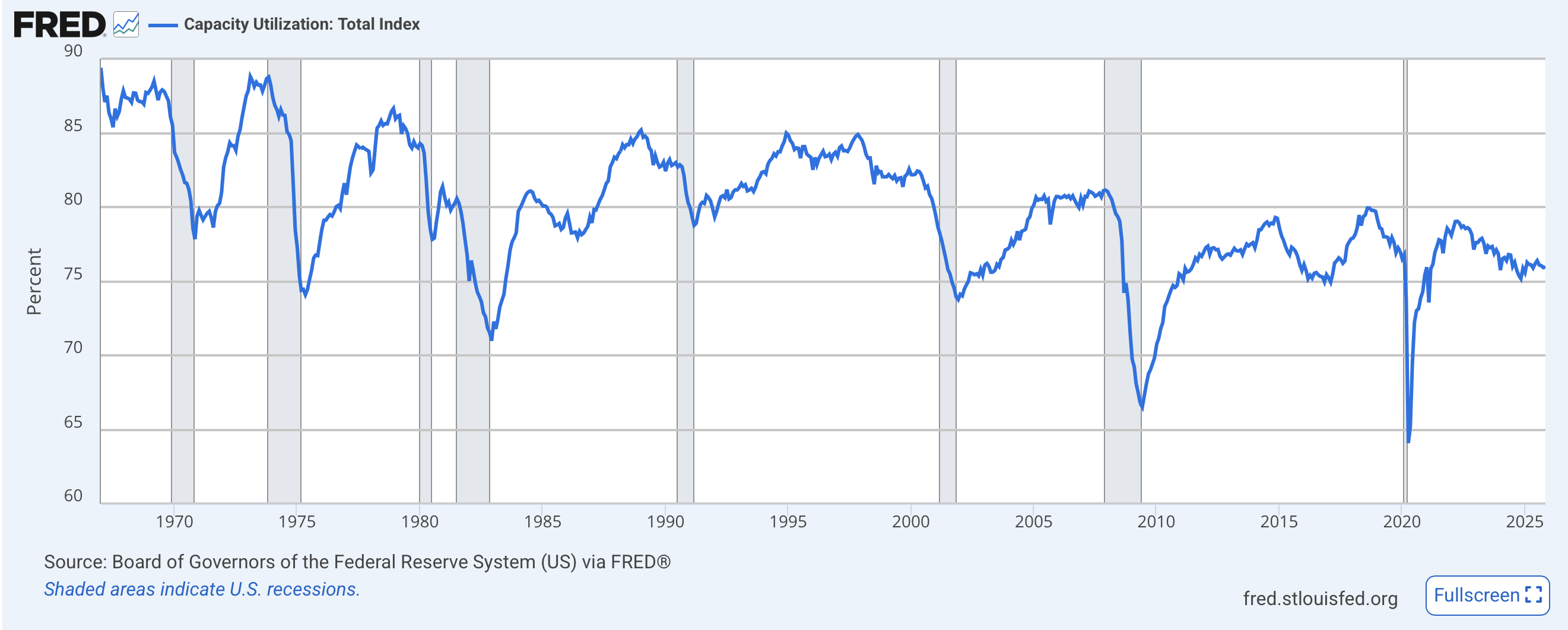
One other thing I have been wondering, and this has been for a long time, is the meaning of the Capacity Utilization reading.  On its surface, it tells us that only three-quarters of the US currently available manufacturing, mining and drilling capacity is being utilized.  But that seems like a low count based on the economy and the narrative.  I wonder, how much of what is considered available capacity is actually obsolete?  Undoubtedly, as you can see from the chart below from the FRED database, the trend is falling.  

But do companies really build so much capacity they don’t use and it sits idle?  Seems a tough way to make a living in a highly competitive world.  I understand that globalization undermined US manufacturing ever since China entered the WTO in 2001.  And maybe that is all this reflects.  But given the dramatic buildout in AI infrastructure, as well as growth in LNG and power production of late, if nothing else, I have to believe this trend is set to reverse in the near future.  After all, isn’t that Trump’s goal?

Meanwhile, I feel like we are all awaiting the next headline to determine the next move.  The underlying trend in commodities remains in place, and mostly, bonds and the dollar have no reason to go anywhere.

Good luck and good long weekend

Adf

Woes and Scraps

The PMI data is in
And so far, it’s not really been
A sign of great strength
When viewed from arm’s length
No matter the punditry’s spin
 
That said, we are not near collapse
Despite many trade woes and scraps
And stocks keep on rising
So, t’will be surprising
For all when we see downside gaps


It was a quieter weekend than we have seen recently in the global arena with no new wars, no mega protests and no progress made on any of the major issues outstanding around the world.  Thus, the US government remains shut down, the war in Ukraine remains apace and the AI buzz continues to suck up most of the oxygen when discussing markets.

With this as background, arguably the most interesting market related news has been the manufacturing PMI data released last night and this morning.  starting in Asia, the story was some weakness as Chinese, Korean and Australian data all fell compared to last month, although India and Indonesia continued along well.  Meanwhile, in Europe, the data improved compared to last month, but the problem is it remains at or below 50 virtually across the board, so hardly indicative of strong economic activity.

                                                                                                      Current         Previous               Forecast

Source: tradingeconomics.com

I don’t know about you, but when I look at the releases this morning, I don’t see a European revival quite yet, not even if I squint.

I guess the other thing that has tongues wagging is Election Day tomorrow with three races garnering the focus, gubernatorial contests in New Jersey and Virginia and the mayoral race in New York City.  The first two are often described as harbingers of a president’s first year in office and I think this time will be no different.  But will they impact market behavior?  This I doubt.

So, let’s get right into markets this morning.  Friday’s further new record highs in the US were followed by strength through much of Asia (Tokyo was closed for Culture Day) with China (+0.3%), HK (+1.0%), Korea (+2.8%) and Taiwan (+0.4%) leading the way with only the Philippines (-1.7%) bucking the regional trend as earnings growth in the country continues to disappoint relative to its peers around the region.  Europe, too, has seen broad based gains with the DAX (+1.2%) leading the way higher and gains in the IBEX (+0.45%) and CAC (+0.3%) as well.  I guess the PMI data was sufficient to excite folks and despite Europe’s status as a global afterthought, at least in terms of geopolitical issues, their equity markets have been rising alongside the rest of the world’s all year.  And you needn’t worry, US futures are all higher at this hour (6:50), with the NASDAQ (+0.7%) leading the way.

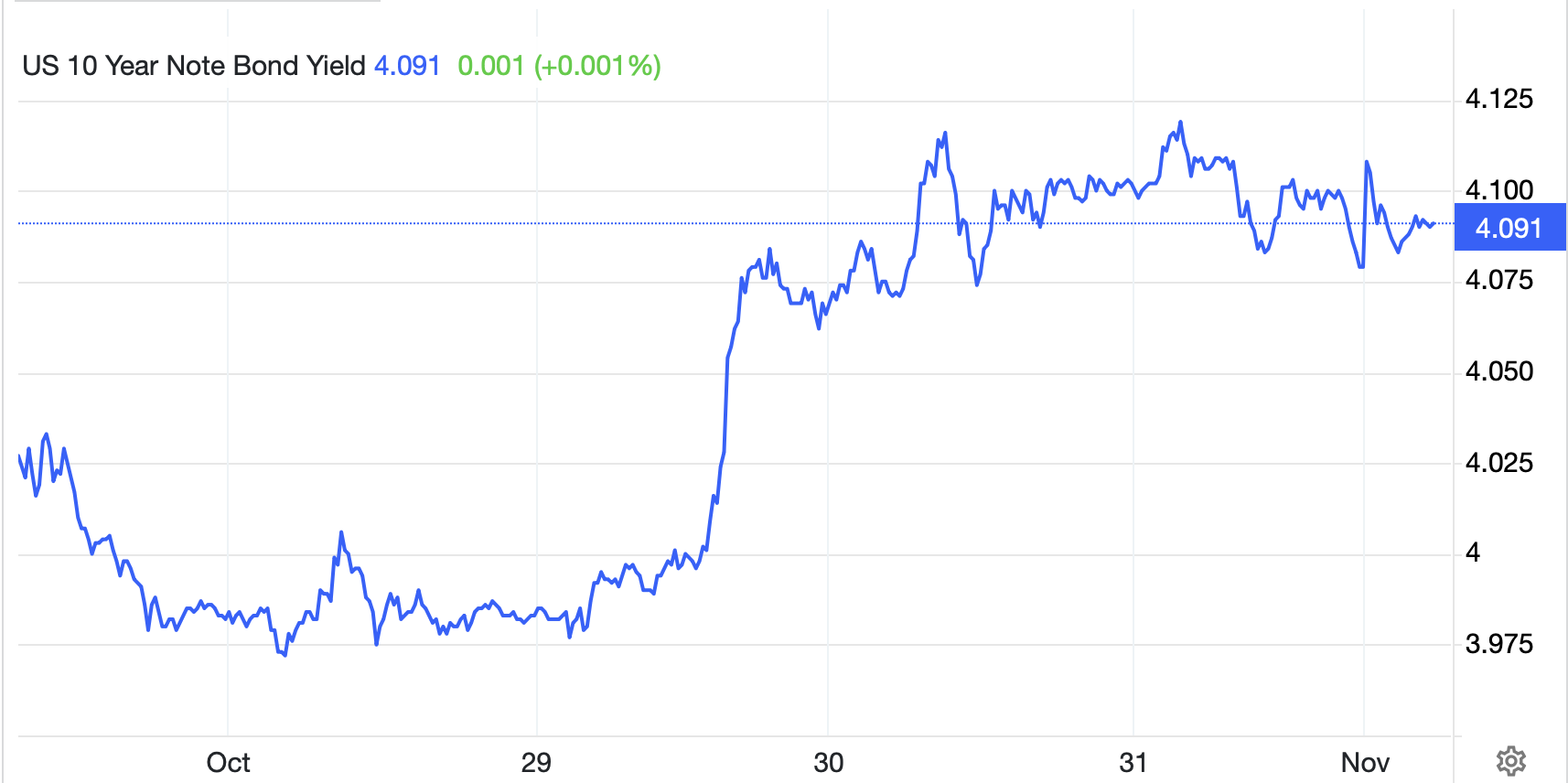
Perhaps more interesting than equities though is the fact that government bond markets are doing so little.  Treasury yields jumped ~10bps in the wake of the FOMC meeting and, more accurately, Chairman Powell’s ostensible hawkishness.  However, as you can see in the below tradingeconomics.com chart, since then, nothing has happened. 

Recall, the probability of a December rate cut by the FOMC also fell from virtual certainty to 69% now.  In fact, if you think about it, that 30% probability decline translates into about 7.5bps, approximately the same amount as 10-year yield’s rose.  It appears that the market is consistent in its pricing at this point, and when (if?) data starts coming back into the picture, we will see both these interest rates rise and fall in sync.  As to European sovereigns, they continue to track the movement in the US and this morning, this morning, the entire bloc has seen yields edge higher by 1bp, exactly like the US.

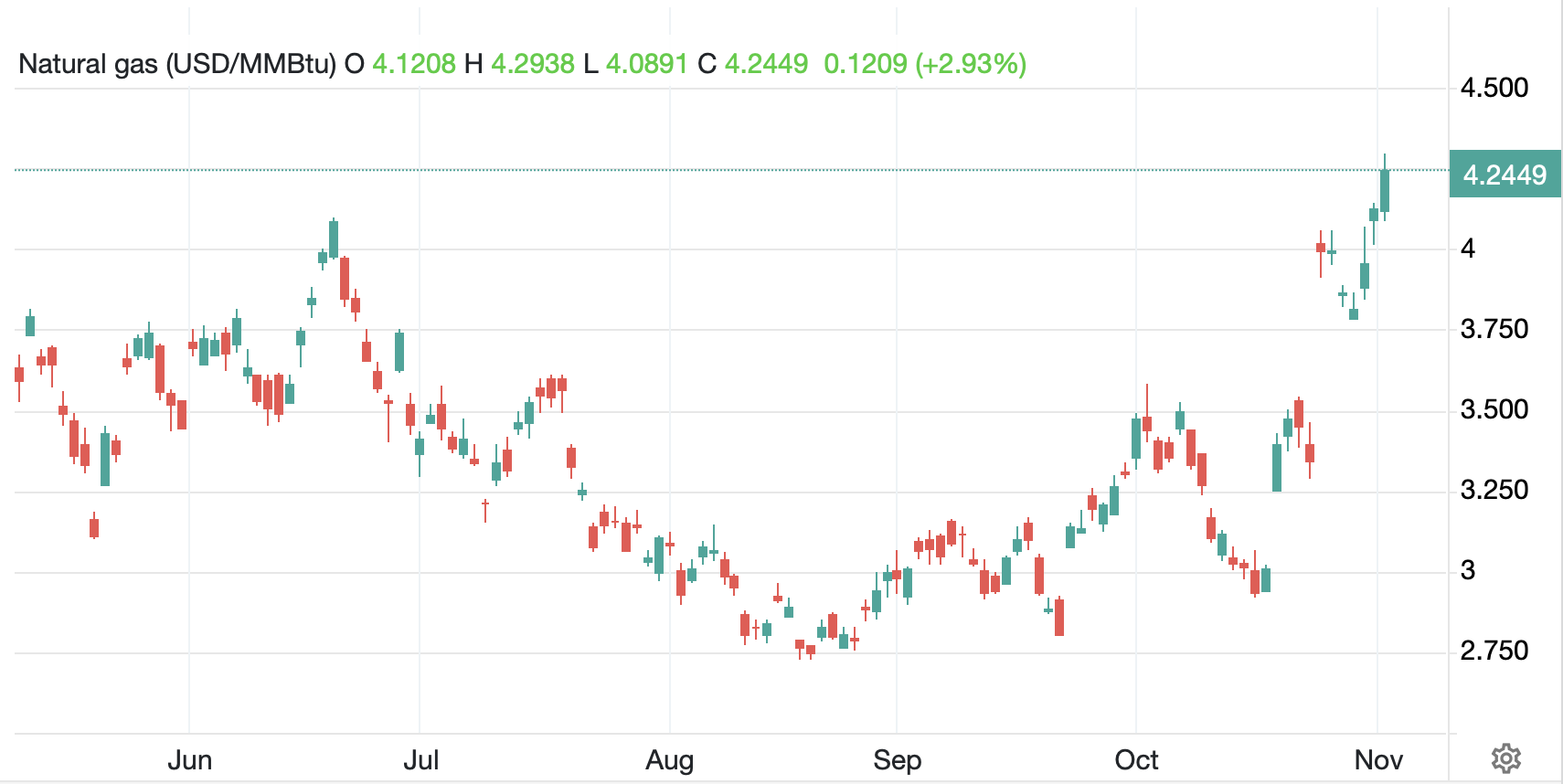
Commodities remain the most interesting place, although the dollar is starting to perk up a bit.  Oil (-0.3%) slipped overnight after OPEC+ indicated they were increasing production by another 137K bbl/day, although there would be no more increases for at least three months given the seasonality of reduced oil demand at this point on the calendar.  Something I have not touched on lately is NatGas, which traded through $4.00/MMBtu late last Thursday, and is now up to $4.25.  in fact, in the past month it has risen nearly 27%, which given it is massively underpriced compared to oil (on a per unit of energy basis) should not be that surprising.  Nonetheless, sharp movements are always noteworthy, and this is no different.

Source: tradingeconomics.com

Certainly, part of this is the fact that winter is coming and seasonal demand is rising in the US. 

Combine that with the European needs for LNG, of which the US is the largest provider, and you have the makings of a rally.  (I wonder though, did the fact that Bill Gates changed his tune on global warming no longer being an existential threat signal it is now OK to burn more fossil fuels?)

Turning to the metals markets, the ongoing fight between the gold bugs and the powers that be continues as early in the overnight session, gold was lower by nearly -1% but as I type, just past 7:00am, it is slightly higher (+0.1%) compared to Friday’s closing levels.  Silver (+0.1%) has seen similar price action although copper (-0.5%) appears more focused on the economic story than the inflation story.  

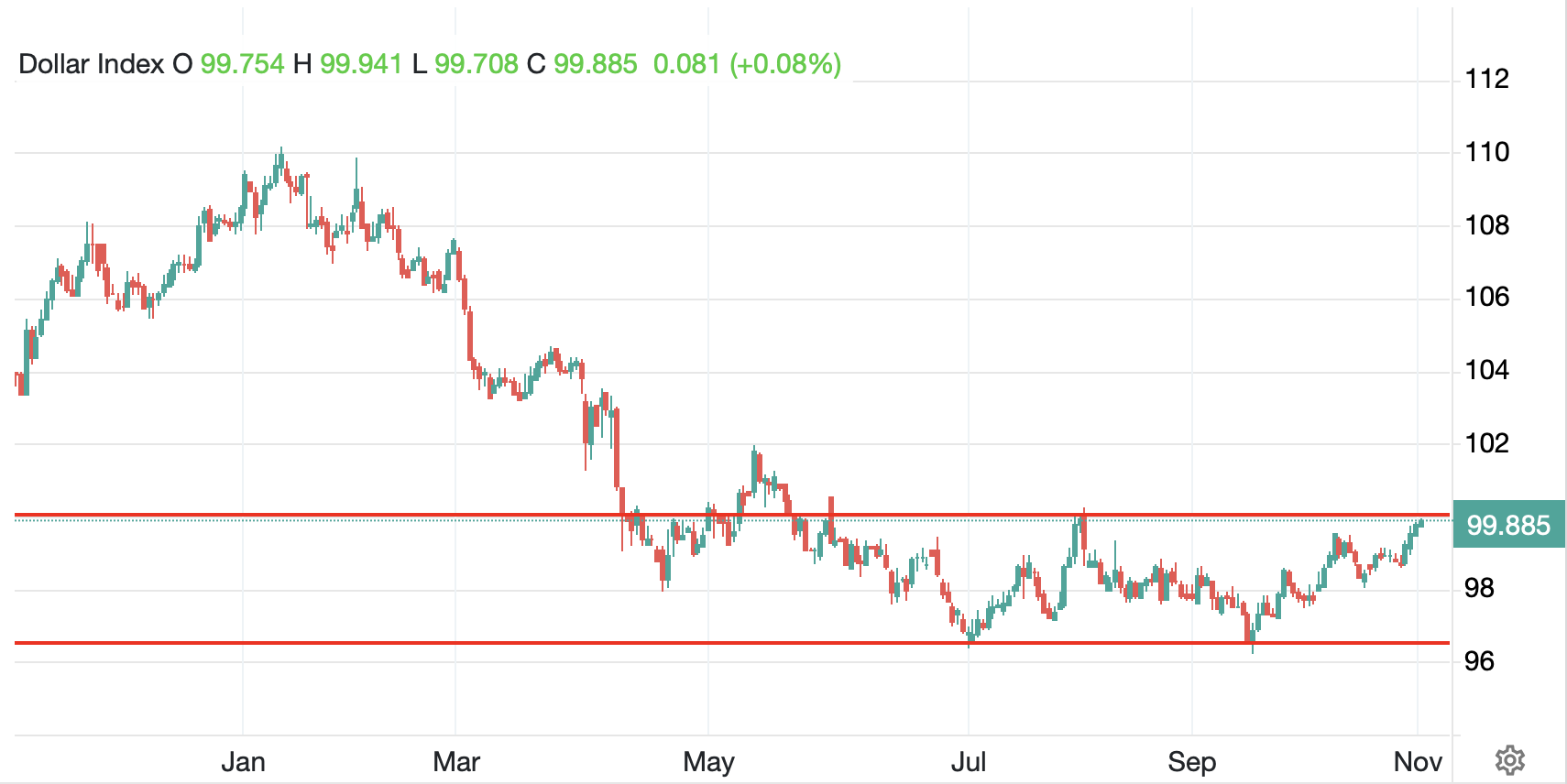
Which takes us to the dollar and its continued rally. Using the DXY (+0.1%) as our proxy, it is higher again this morning and pushing back to the psychological 100.00 level.  Now, I have made the case several times that the dollar has done essentially nothing for the past six months, and the chart below, I believe, bears that out.  We have basically traded between 96.5 and 100 since May.

Source: tradingeconomics.com

You will also recall that there is a narrative around about the end of the dollar’s hegemony and how nations around the world are trying to exit the USD financial system that has been in place since Bretton Woods, or at least since the fiat currency world took off when President Nixon closed the gold window.  And there is no doubt that China is seeking to become the global hegemon and thus wants a renminbi-based system to use to their advantage.  However, let’s run a little thought experiment. 

The Trump administration has embraced the cryptocurrency space, and especially the use of stablecoins.  Legislation has been passed (GENIUS Act) to help clarify the legal framework and the SEC has been solicitous in its willingness to ensure that these creations are not securities, thus placing them outside the SEC’s oversight.  When looking at the world of stablecoins, their current total value is approximately $311 billion (according to Grok) of which only ~$1.2 billion are non-USD.  

Now, if stablecoins represent the payment rails of the future, an idea that is readily believable, and the stablecoin market is virtually entirely USD, with massive first mover advantage, is it not possible that economies around the world are going to find it much easier to dollarize than to maintain their own native currency?  While there are calls for Argentina to dollarize, what would the world look like if the EU fell apart (an entirely possible outcome given the inconsistencies in their current energy and immigration policies and the stress within the bloc) and the euro with it?  Would smaller nations opt for their own currency, or would they see the value of having a dollarized economy given the many efficiencies it would present, especially for their export industries?

While I have no doubt that China will never accept that outcome for themselves, is the future a world where there are two currency blocs, USD and CNY, and everything else simply disappears?  Remember, we are merely spit balling here, but if that is the outcome, demand for dollars will continue to rise, and the value of other currencies will continue to decline until such time as they succumb.

Again, this is a thought experiment, but one that offers intriguing possibilities for the future.  And one where the foreign exchange market may ultimately meet its demise.  After all, if there are only two currencies, that doesn’t make much of a market.

One other thing I must note, in the stablecoin realm, there is a remarkable product, USDi (usdicoin.com), which tracks US CPI exactly, yet can fit within those same payment rails.  If you are looking into this space, USDI is worth a peek.

Ok, back to the markets, looking across the FX space, +/-0.2% is today’s theme virtually across the board, with the more important currencies slipping against the dollar (EUR, GBP, JPY, CHF, CAD) than rising vs the greenback (MXN, CLP, NOK, CZK), although the magnitudes are similar.

With the government still closed, there is no official data, but we do get ISM Manufacturing (exp 49.5) with the Prices Paid subindex (61.7) released at the same time.  There are two Fed speakers today, Daly and Cook, and then 9 more speeches throughout the week.  We also get the ADP Employment data on Wednesday (exp 24K), but I imagine that will get more press after the election results are learned Tuesday evening.

It is hard to get excited about things today, but nothing points to a weaker dollar right now.

Good luck

Adf

A Year So Dreary

(With apologies to Edgar Allen Poe)

‘Eighteen was a year so dreary, traders studied hara-kiri
As they pondered every theory, algorithm and z-score.
Interest rates were slowly rising, growth no longer synchronizing,
Brexit’s failures mesmerizing, plus we got a real trade war
Italy, meanwhile explained that budget limits were a bore
Europe looked aghast and swore.

Thus instead of markets booming, (which most pundits were assuming)
What we got was all consuming angst too great to just ignore
Equities reduced to rubble, high-yield bonds saw their spreads double
As the Fed inspired bubble sprung a leak through the back door
Balance sheet adjustment proved to be more harsh than heretofore
Stock investors cussed and swore.

But the New Year’s now commencing, with the markets’, trouble, sensing
Thus predictions I’m dispensing might not be what you wished for
Life’s not likely to get better, ‘specially for the leveraged debtor
Who ought write an open letter to Chair Powell and implore
Him to stop his raising rates so assets grow just like before
Would that he would raise no more.

Pundits far and wide all wonder if Chair Powell’s made a blunder
Or if he will knuckle under to entreaties from offshore
Sadly for mainstream investors, lest our growth decays and festers
Powell will ignore protestors though they’ll raise a great uproar
Thus far he has made it clear that neutral’s what he’s shooting for
Jay, I fear, sees two hikes more.

At the same time Signor Draghi, who’s EU is weak and groggy
Using words in no way foggy, told us QE’s dead, he swore!
Plus he strongly recommended that when summer, this year, ended
Raising rates would be just splendid for those nations at the core
Even though the PIGS keep struggling, this he’s willing to ignore
Higher rates might be in store.

Lately, though, are growing rumors, that six billion world consumers
Are no longer in good humors, thus are buying less, not more
This result should be concerning for those bankers who are yearning
Rates to tighten, overturning years when rates were on the floor
Could it be what we will see is QE4 as an encore?
Maybe low rates are called for.

What about the budget shortfall, in the States that’s sure to snowball
If our growth rate has a pratfall like it’s done ten times before?
While this would be problematic, growth elsewhere would crash to static
Thus it would be quite pragmatic to assume the buck will soar
Don’t believe those euro bulls that think rate hikes there are in store
Christmas next we’re One-Oh-Four.

Now to Britain where the story of its Brexit’s been so gory
Leaving Labour and the Tories in an all out civic war
Though the deal that’s on the table, has its flaws, it would help cable
But when PM May’s unable to find votes here’s what’s in store
Look for cable to go tumbling well below its lows of yore
Next December, One-One-Four.

Time to focus on the East, where China’s growth just might have ceased
Or slowed quite sharply at the least, from damage due to Trump’s trade war
Xi, however’s not fainthearted, and more ease he has imparted
Trying to get growth restarted, which is really quite a chore
But with leverage so extended, how much more can they pay for?
Not as much as days of yore.

With growth there now clearly slowing, public cash is freely flowing,
Banks are told, be easygoing, toward the Chinese firms onshore
But the outcome’s not conclusive, and the only thing conducive
To success for Xi is use of weakness in the yuan offshore
I expect a steady drift much lower to Seven point Four
Only this and nothing more.

Now it’s time for analyzing, ten-year yields, so tantalizing
With inflation hawks advising that those yields will jump once more
But inflation doves are banking that commodities keep tanking
Helping bonds and Bunds when ranking outcomes, if you’re keeping score
Here the doves have better guidance and the price of bonds will soar
At what yields will they sell for?

Slowing growth and growing fear will help them both throughout the year
And so it’s not too cavalier to look for lower yields in store
Treasuries will keep on rising, and for now what I’m surmising
Is a yield of Two point Five is likely come Aught Twenty’s door
Bunds will see their yields retreat to Zero, that’s right, to the floor
Lower ten-year yields, look for.

In a world where growth is slowing, earnings data won’t be glowing
Red ink will, for sure, be flowing which investors can’t ignore
P/E ratios will suffer, and most firms will lack a buffer
Which means things will just get tougher for investors than before
What of central banks? Won’t they be able, prices, to restore?
Not this time, not like before.

In the States what I foresee is that the large cap S&P
Can fall to Seventeen Fifty by year end next, if not before
Europe’s like to see the same, the Stoxx 600 getting maimed
Two Fifty is where I proclaim that index will next year explore
Large percentage falls in both are what investors all abhor
But its what I see in store.

Oil’s price of late’s been tumbling, which for drillers has been humbling
OPEC meanwhile keeps on fumbling, each chance to, its strength, restore
But with global growth now slowing, storage tanks are overflowing
Meanwhile tankers, oceangoing, keep on pumping ship to shore
And more drilling in the States means lower prices are in store
Forty bucks I now call for.

One more thing I ought consider, Bitcoin, which had folks on Twitter
Posting many Tweets quite bitter as it tumbled ever more
Does this coin have true potential? Will it become influential?
In debates quite consequential ‘bout where assets you may store?
While the blockchain is important, Hodlers better learn the score
Bitcoin… folks won’t pay much for

So instead come winter next, Bitcoin Hodlers will be vexed
As it suffers from effects of slowing growth they can’t ignore
While it might be worth Two Grand, the end result is that demand
For Bitcoin will not soon expand, instead its like to shrink some more
Don’t be fooled in thinking you’ll soon use it at the grocery store
Bitcoin… folks won’t pay much for

Fin’lly here’s an admonition, if these views do reach fruition
Every single politician will blame someone else for sure
I’m not hoping for this outcome, I just fear the depths we might plumb
Will result in falling income and recession we’ll explore
So if risk you’re managing, more hedging now is what’s called for
Fear and risk are what will soar!

For you folks who’ve reached the end, please know I seek not to offend
But rather try to comprehend the state of markets and some more
If you read my thoughts last year, I tried to make it very clear
That economic trouble’s near, and so that caution is called for
Mostly though I hope the time invested has not made you sore
For you, my readers, I adore!

Have a very happy, healthy and prosperous New Year
Adf