A Vision For ‘Twenty-Six

(With apologies to Clement Clarke Moore)

Tis the first day of trading in Ought Twenty-Six
With too much attention on raw politics
At home, eyes have turned to the mid-term elections
To see if results will force mid-course corrections
In Europe, they’re going all-in on Ukraine
With more billions promised, though that seems insane
Meanwhile, Mr Xi is convinced he can fix
The problems at home with his policy mix
And this, my friends, just skims the surface of things
As pols everywhere suffer arrows and slings
Remember, though, markets are what I’m about
And while I could err, I am never in doubt.

Let’s start at the top with Growth here in the States
Which likely will show more than marginal rates
In fact, Four percent seems a viable goal
As inward investment and tax cuts take hold
Remember, for Trump, if there’s one thing he’s not
It’s timid, and so he’ll demand, “Run it hot!”
Thus, growth will expand, though inflation might gain
And for the elections, that could be a pain
The problem is Jay, and whoever comes next
Have come to believe two percent’s just subtext
The greatest unknown is on government spending
And whether it grows or, at last, starts descending

The punditry’s certain the government fisc
Is going to increase inflation’ry risk
If true, CPI of near Four percent’s apt
If not, then Inflation ‘neath Three, could be capped

And what about elsewhere, in Europe? Japan?
In markets, emerging, do they have a plan?
Will they grow their ‘conomies, drawing investment?
Or will we soon witness a large reassessment?

In Europe, they claim they’ll be building more guns
To help them defend all their daughters and sons
As well, they’re committed to helping Ukraine
Continue to fight, despite so many slain
They’re planning to borrow a cool 90 Bill
But energy costs, these grand plans could well kill
Meanwhile, M Lagarde claims that rates are just right
And given growth there’s One Percent, I won’t fight
So, weak growth and low rates and energy blues
Lead me to believe that come year-end, the news
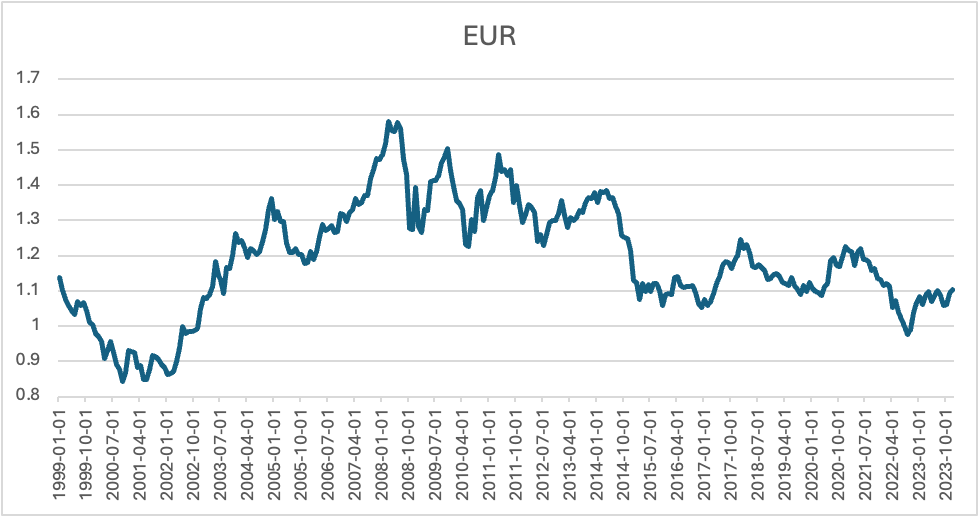
Will be that the Euro is failing to thrive
Do not be surprised when it hits One oh-Five

In England and Scotland and all the UK
Just like in the EU, they can’t make much hay
The budget’s a wreck yet they want to raise taxes
Though history shows growth will wane ere it waxes
As well, they continue their crack down on speech
While crimping their energy industry’s reach
So, power is costly, and billionaires flee
From here, ‘cross the pond, this is what I foresee
A ‘conomy heading right into stagflation
As long as Kier Starmer is leading the nation
For markets, the Pound will lose all its allure
With One-Ten the Boxing Day screen price du jour

A turn to the East where the Sun Also Rises
Will teach us that, really, there are no surprises
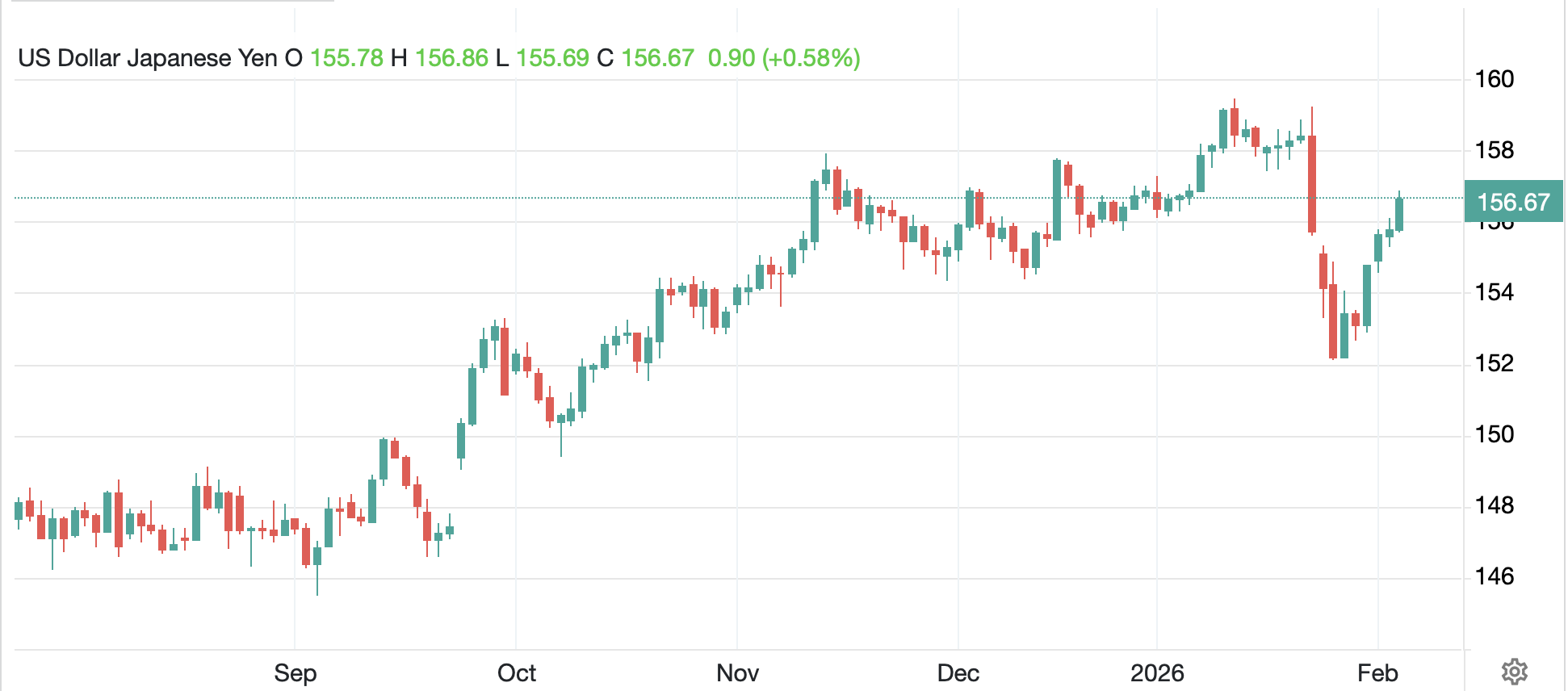
To date you’ve heard much ‘bout the rise in yen rates
With pundits opining the Carry Trades’ fates
This year, so they say, look for much stronger yen
As local investors buy yen bonds again
Thus, all the hedge funds who’ve been funding their trades
By borrowing yen, and they’ve done so in spades,
Will need to buy back all that Japanese Money
The outcome, for yen shorts, will not be so sunny
But what if this idea of yen heading home
Is wrong?  This implies quite a different syndrome

At this point there’s no sign the government there
Is ready, more spending and debt, to forswear
Instead, what seems likely is more of the same
More government spending in all but its name
So, debt will continue to rise without end
And up to One-Eighty the buck will ascend

As well as Japan, in the continent vast
Of Asia, it’s China we come to at last
“Poor” President Xi has a problem at home
Consumption is not in the Chinese genome
For decades, the model’s been, build and export
Which helps explain why local usage falls short
But lately the rest of the world’s of a mind
That Chinese imports are a troublesome kind
So, Xi needs his people to learn how to spend
Else all that production may come to an end
But if they consume, what will that do to growth?
Its rate will decline, something for which Xi’s loath

Thus, GDP 5 means a weaker yuan
Well above Seven you can depend on
But if, against odds, Xi gets Chinese to spend
Six-Fifty is where yuan will be at year end.

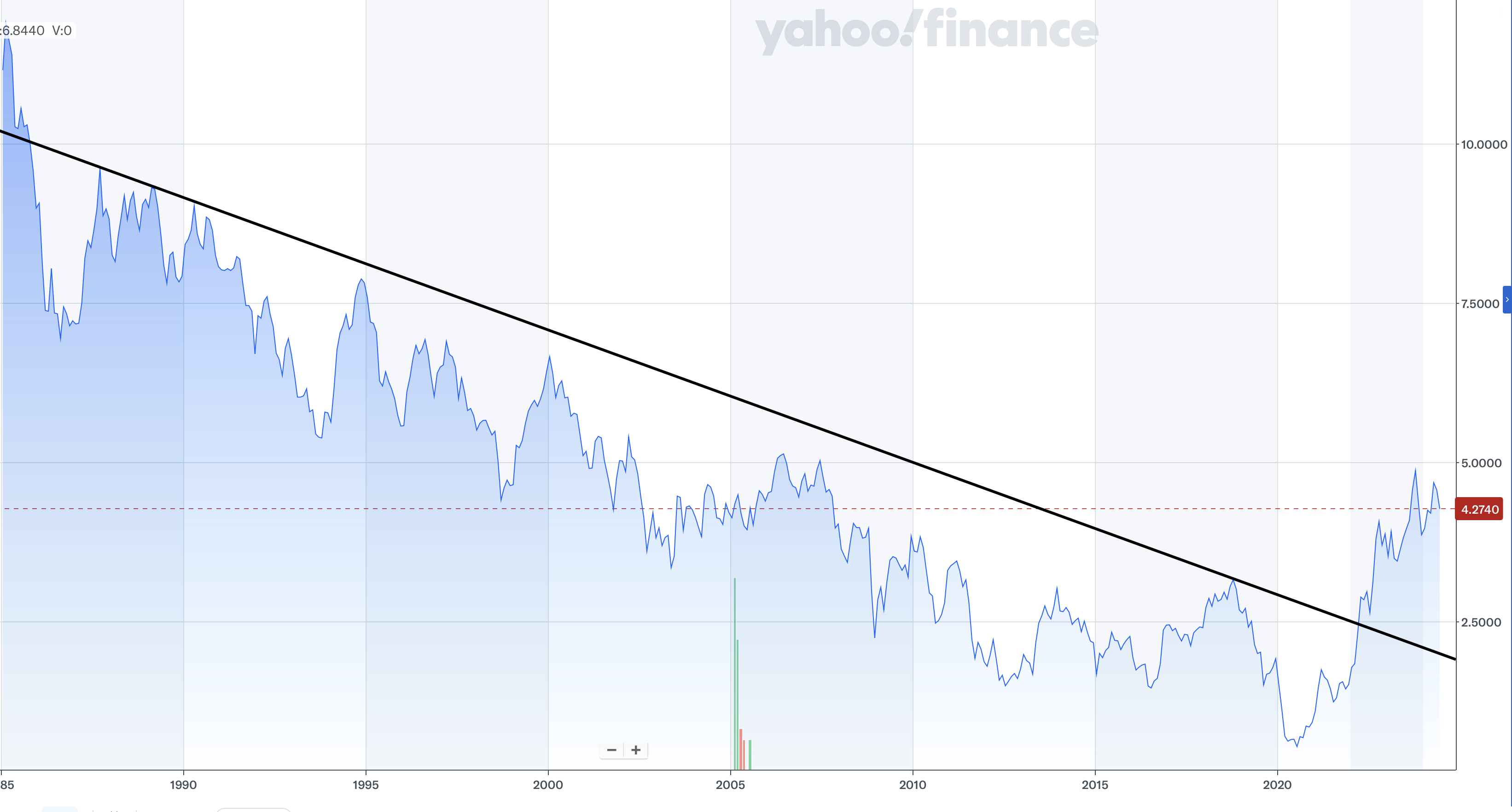
Let’s shift our perspective to Treasury debt
A market of critical import, and yet
A market that’s been in a range for a while
So, what must occur for a change in profile?
The popular view is that deficit spending
Will drive an outcome of, high yields, never-ending
But Trump and his team are, quite hard, pushing back
Explaining that policy’s on the right track
Twixt tariffs and growth, tax receipts have been flying
While RIFs in the government are underlying
The idea that deficits soon will be shrinking
In truth, this is not what the punditry’s thinking
But one thing is clear that will keep yields from climbing
QE, which is back, is designed for pump-priming
So, Jay and his heir will keep buying and buying
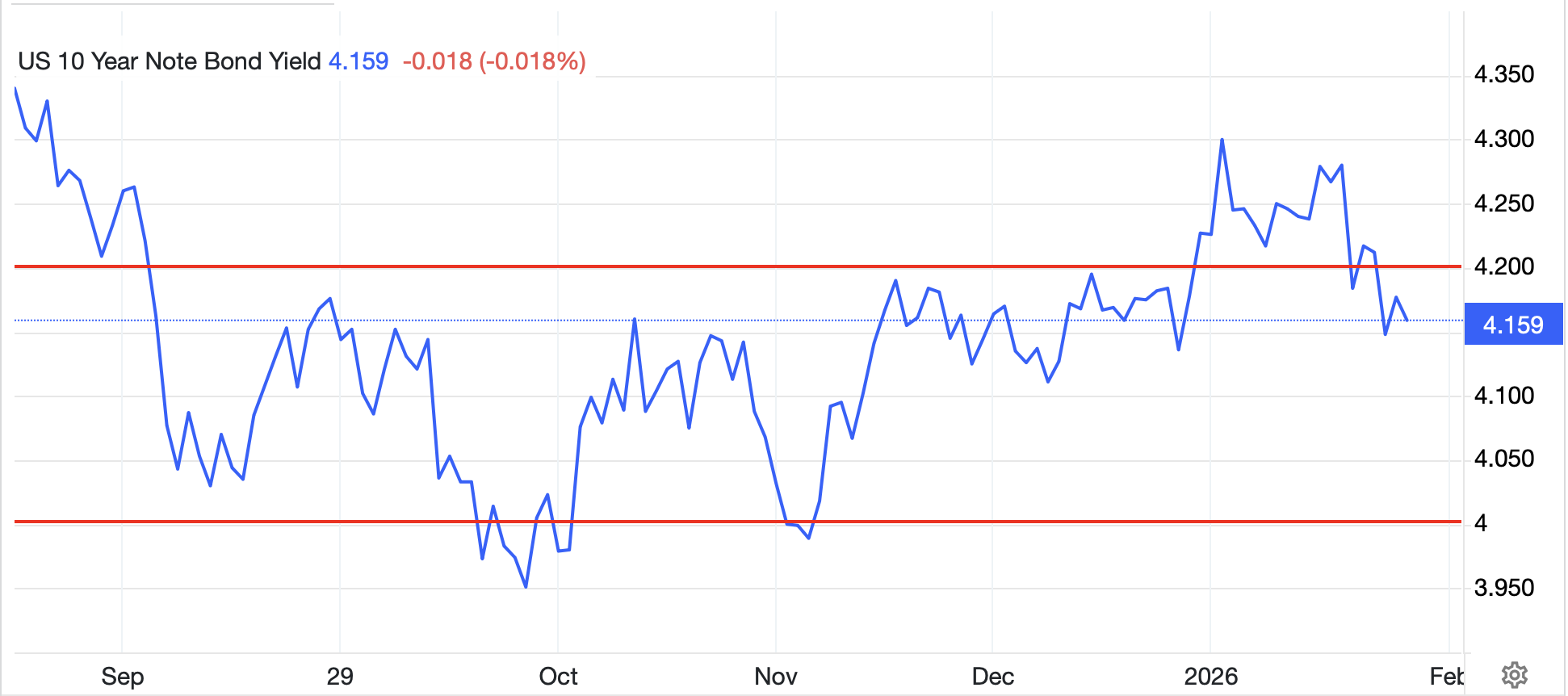
And 10-Years at Four Percent seems satisfying

It’s not just the government, though, that’s in debt
Those corporates who borrowed at ZIRP, have not yet
Refinanced the trillions they owe, to this day
And now they’re competing with Bessent and Jay
While Scott will find buyers, if not least the Fed
For corporates that path may be flashing bright red
If credit spreads widen will companies fail?
And will that unravel the stock markets’ tale?
Right now, spreads for IG sit near one percent
And Junk’s above eight with investors content
However, the biggest risk this year could be
The absence of corporate debt liquidity
If IG spreads widen 200 bps more
The outcome could be a GFC encore

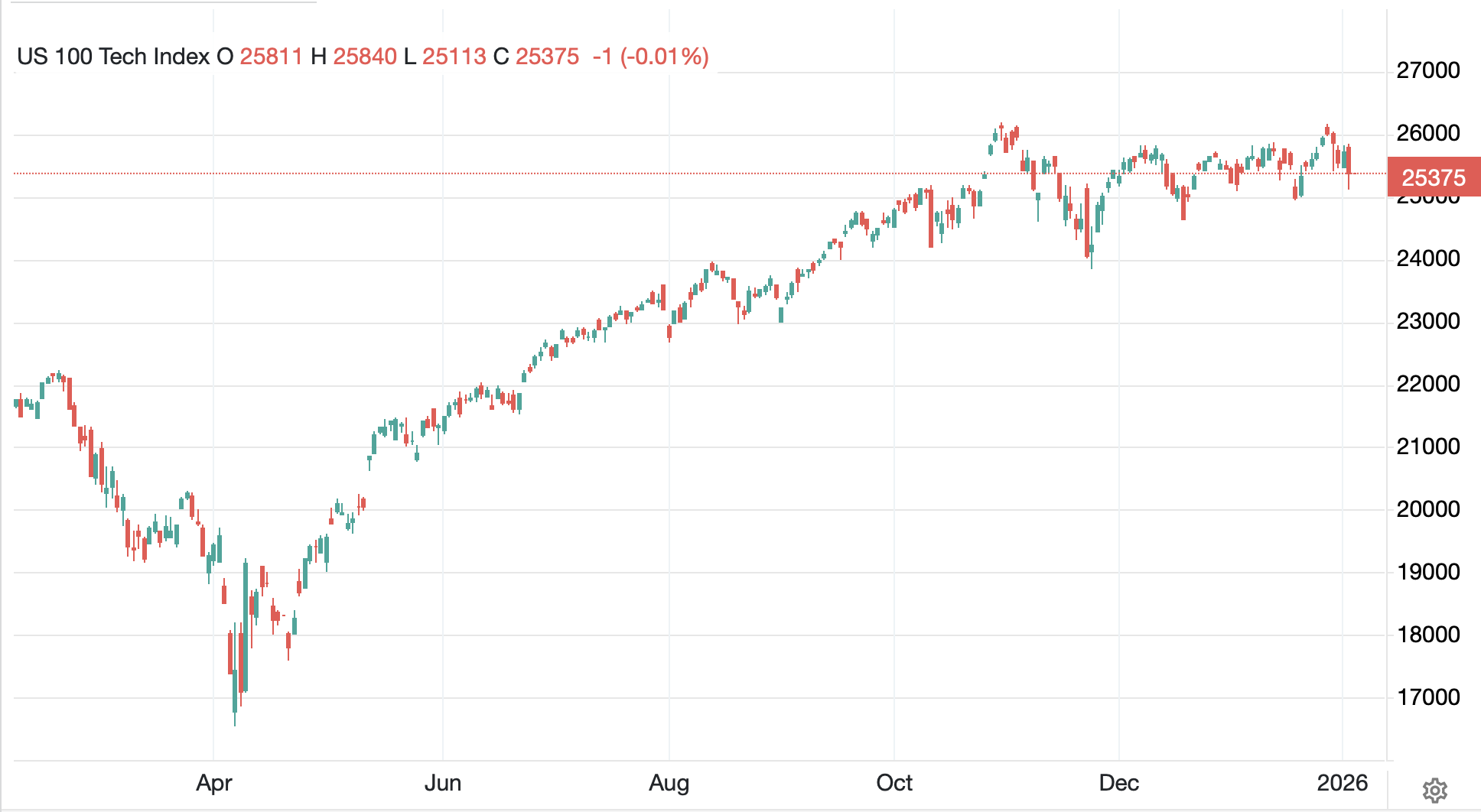
This takes us to stocks, both at home and abroad
Which last year saw rallies we all did applaud
But will this year bring us some more of the same?
Or have things been altered?  Is there a new game?
If my crystal ball is in any way clear
The outcome could well be a frightening year
Remember, the driver of last year’s returns
Was government spending which lacked all concerns
Thus, Cantillon nailed it with where cash would go
And stocks were the winner, of that much we know
But this year the mountain of debt coming due
Could well force decisions of what will ensue
And too, don’t forget if the deficit shrinks
It’s likely to be a great stock market jinx
So, don’t be surprised if December this year
A 10% fall ‘cross all stocks does appear

And what of that black, sticky stuff that they drill
Which powers the global economy still
When its price increases, it causes much pain
For most everyone, it can be quite the bane
Consumers, instead, like those prices to sink
But drillers, in that case, cause output to shrink
So, which will it be, will Trump’s mantra come true
Or will, new production, most drillers eschew
I think what is missed is technology’s traction
And how costs per barrel will tend toward contraction
As well, nations worldwide, at last understand
That Carbon Dioxide just cannot be banned
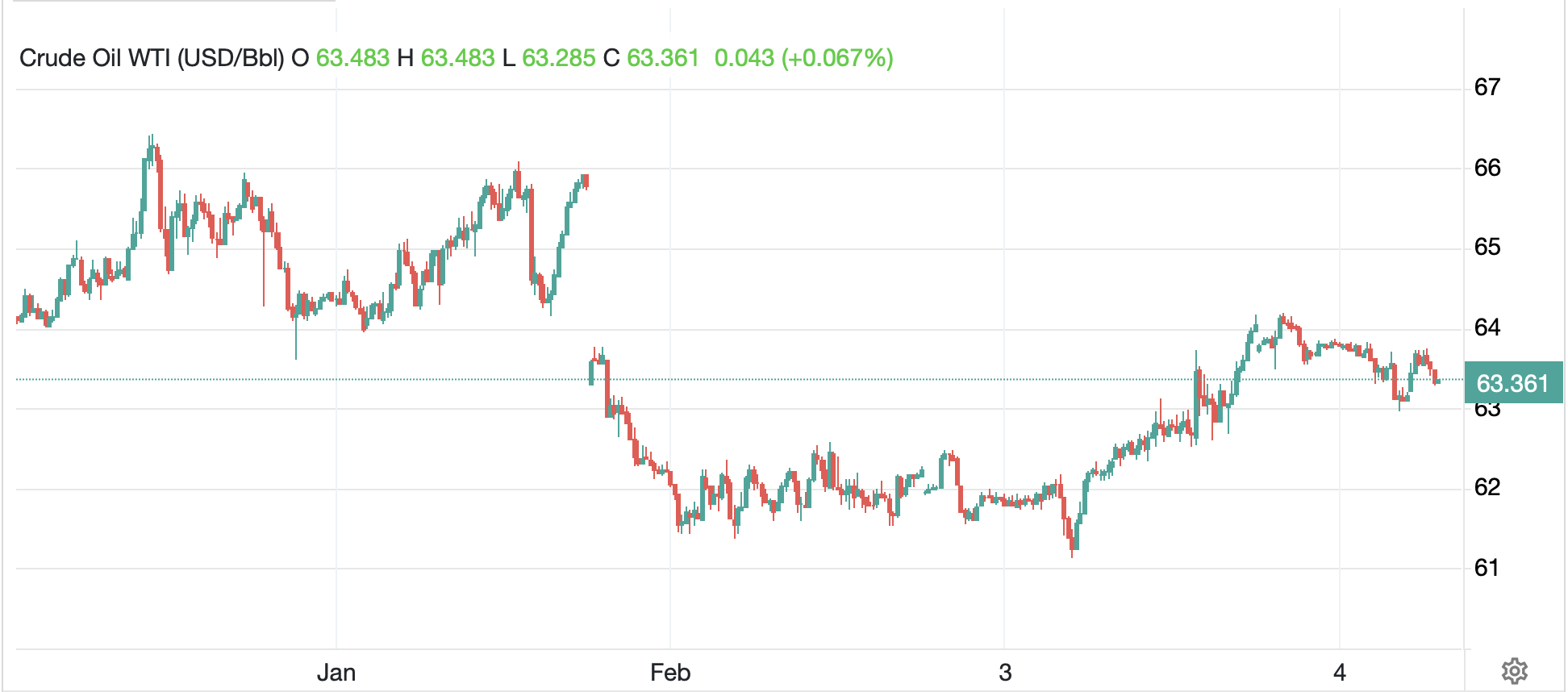
Come Christmas, next, we will see growth in supply
With Fifty per barrel the price we’ll espy

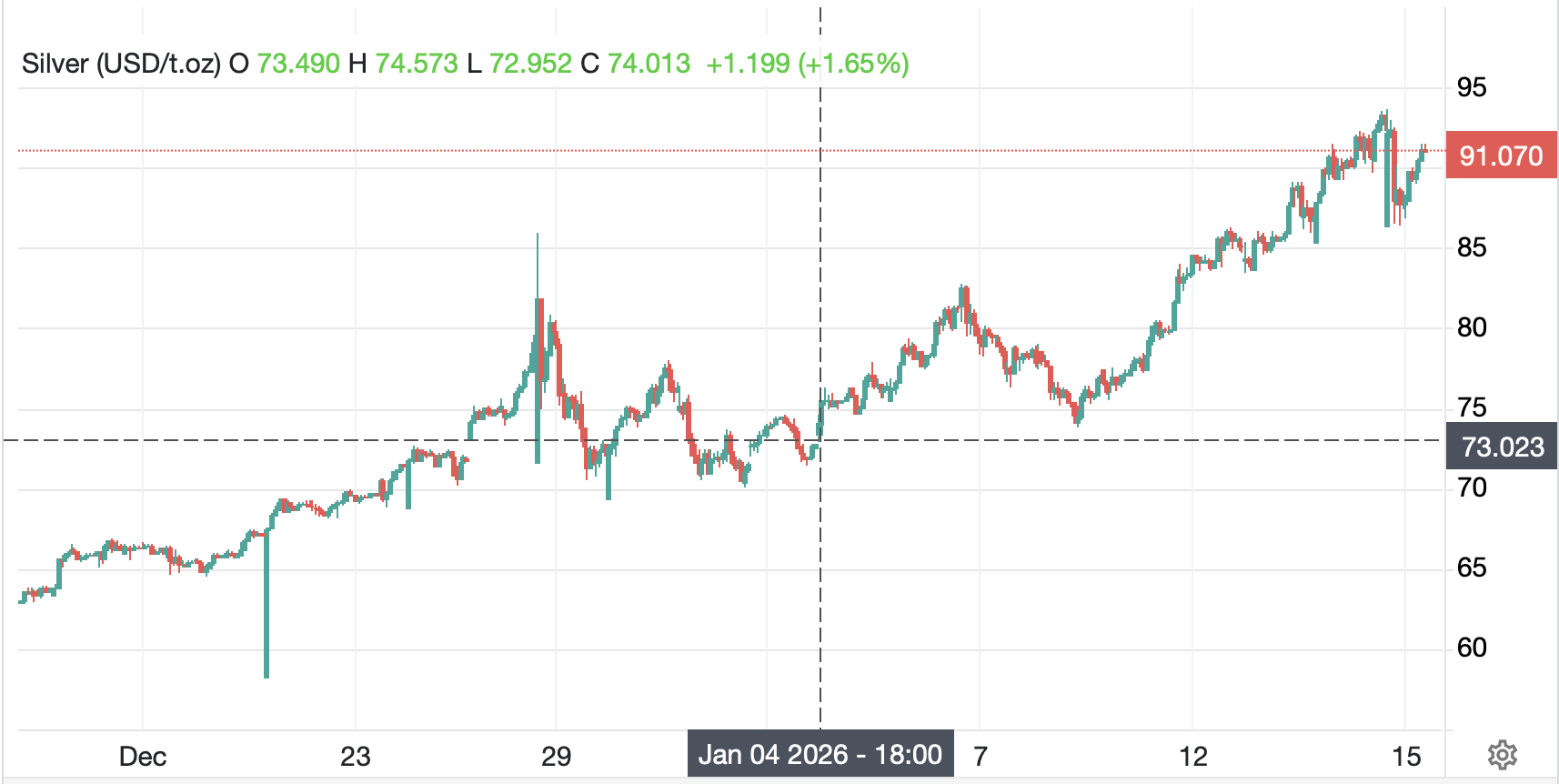
The last place to look is at bright things that shine
Which saw prices move in a vertical line
While gold was the starter, by year end t’was clear
That silver and platinum said, wait, hold my beer
The latter two rising thrice fifty percent
With neither responding to any event
Which brings us to this year, can these trends maintain?
Or are we now set up for infinite pain?
It seems to me that til the summer at least
All three will continue to rise, as with yeast
But when we reach solstice do not be surprised
If views on their future become bastardized
In other words, look for corrections in price
With early year gains given back in a trice
But still, by the end of the year I believe
Five Thousand in Gold is what we will perceive
For Silver, One Hundred could well be the spot
And Platinum, Three Grand, would not be too hot.

To all of my readers and friends, please forgive
My musings if they got too ruminative
This year will see change across many degrees
And some will be painful, while others will please

In sum, I think President Trump can succeed
In changing behavior, though not corporate greed
Reducing the number of government staff
As well as with regs, he can cut those in half
Inward investment will focus on stuff
Instead of on stocks, for the markets that’s rough
Dollars will still be in greater demand
While Treasury yields will be stuck in the sand
IG and Junk are unlikely to win
As rising expenses cut margins quite thin
And still, through it all, precious metals will gain
Though G7 central banks all will abstain
Come Christmas next, nothing will look quite the same
And maybe my views can help you build a frame.

Thank you all for tolerating my punditry and I hope that you all have a wonderful, healthy and successful year ahead.

Adf

Under Real Threat

The PCE data was warm
And still well above Powell’s norm
The problem for Jay
Despite what folks say
Is tariffs ain’t causing the storm
 
Instead, service prices keep rising
With wages not yet stabilizing
And so, long-date debt
Is under real threat
As traders, those bonds, are despising


Under the rubric, economic synchronization remains MIA, I think it is worth looking at the performance of 30-year bond yields across all major nations as per the below chart.  While the actual rates may be different, the inescapable conclusion is that yields across the board continue to rise to their highest levels in more than five years and the trend remains strongly in that direction.  Regardless of central bank actions, or perhaps more accurately because of their attempts to keep rates low, it is increasingly clear that confidence in government debt, the erstwhile safest assets around, continues to slide.  

Arguably, this is a direct response to the fact that despite their vaunted independence, central banks around the world have very clearly abandoned their inflation targets and are now doing all they can to support their respective economies with relatively easy money.  Friday’s PCE data is merely the latest in a long line of data points showing that although most of these banks are allegedly targeting 2.0% Y/Y inflation, the outcomes have been higher than target, yet excuses to cut rates are rife.  If you are wondering why gold continues to rally, look no further than this.

Source: tradingeconomics.com

In fact, this morning’s Eurozone CPI reading of 2.1%, 2.3% core, is merely another chink in the armor as it was a tick higher than expected.  One of the problems, I believe, is that there remains a very strong belief that the key driver of inflation is economic growth, not money supply growth, despite all evidence to the contrary.  But it is a Keynesian fundamental belief, and every central bank around the world is convinced that slowing economic activity will result in declining inflation rates.  Alas, as long as central banks continue to support their domestic government bond markets, inflation will remain.  

This is where the synchronicity, or lack thereof, of the economy is having its biggest impact.  The fact that certain parts of the economy, notably AI investment, continues to run at record pace and continues to support excess demand for certain things offsets weakness in other parts of the economy, for instance, commercial property, which is looking at a significant deterioration in its finances.  A look (see chart below) at Commercial Mortgage-Backed Securities (CMBS) for office buildings shows that the delinquency rate has reached an all-time high, higher even than the GFC, as the changes in the US working population and the increase in work-from-home have devastated the value of many office buildings.

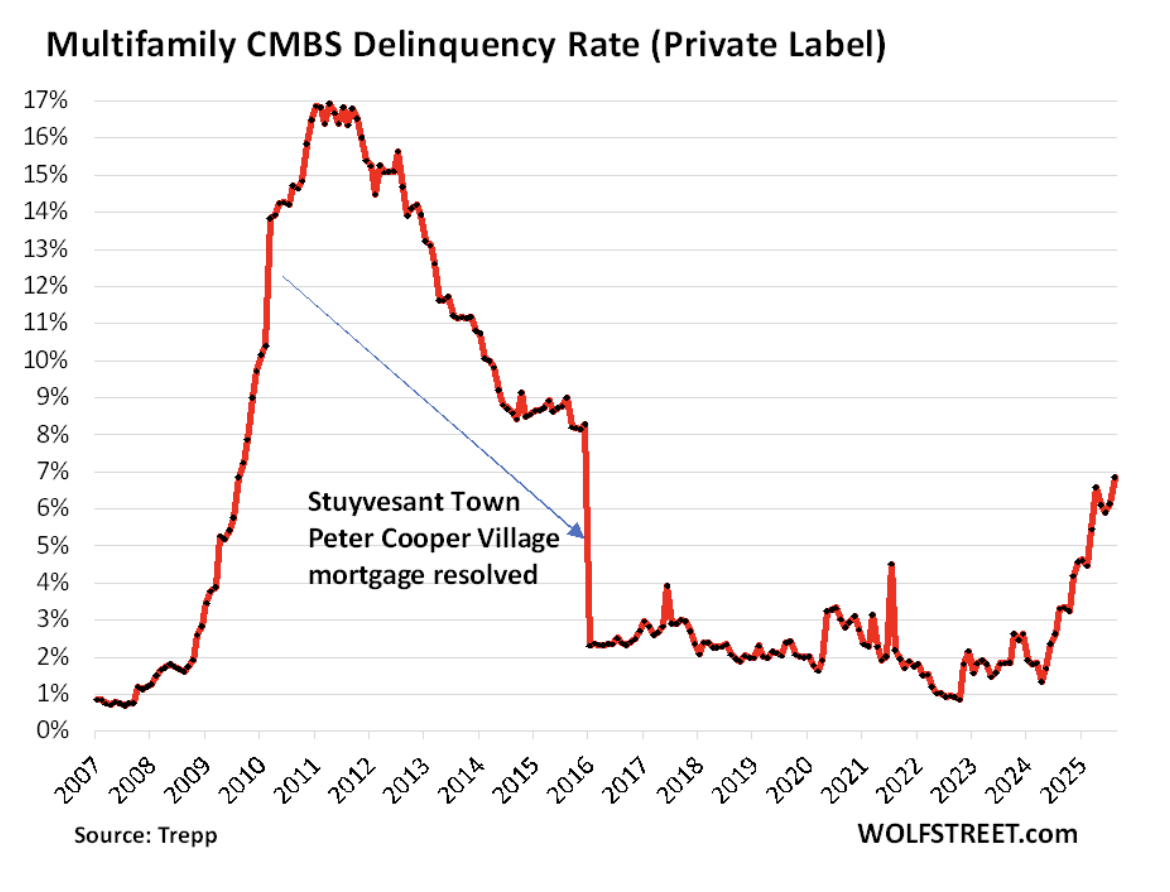
Perhaps more interesting is the fact that multifamily CMBS (financing for apartment buildings) is also suffering despite a housing shortage and rising rents.  While delinquency rates have not reached GFC levels, as you can see, they are rising rapidly as well.

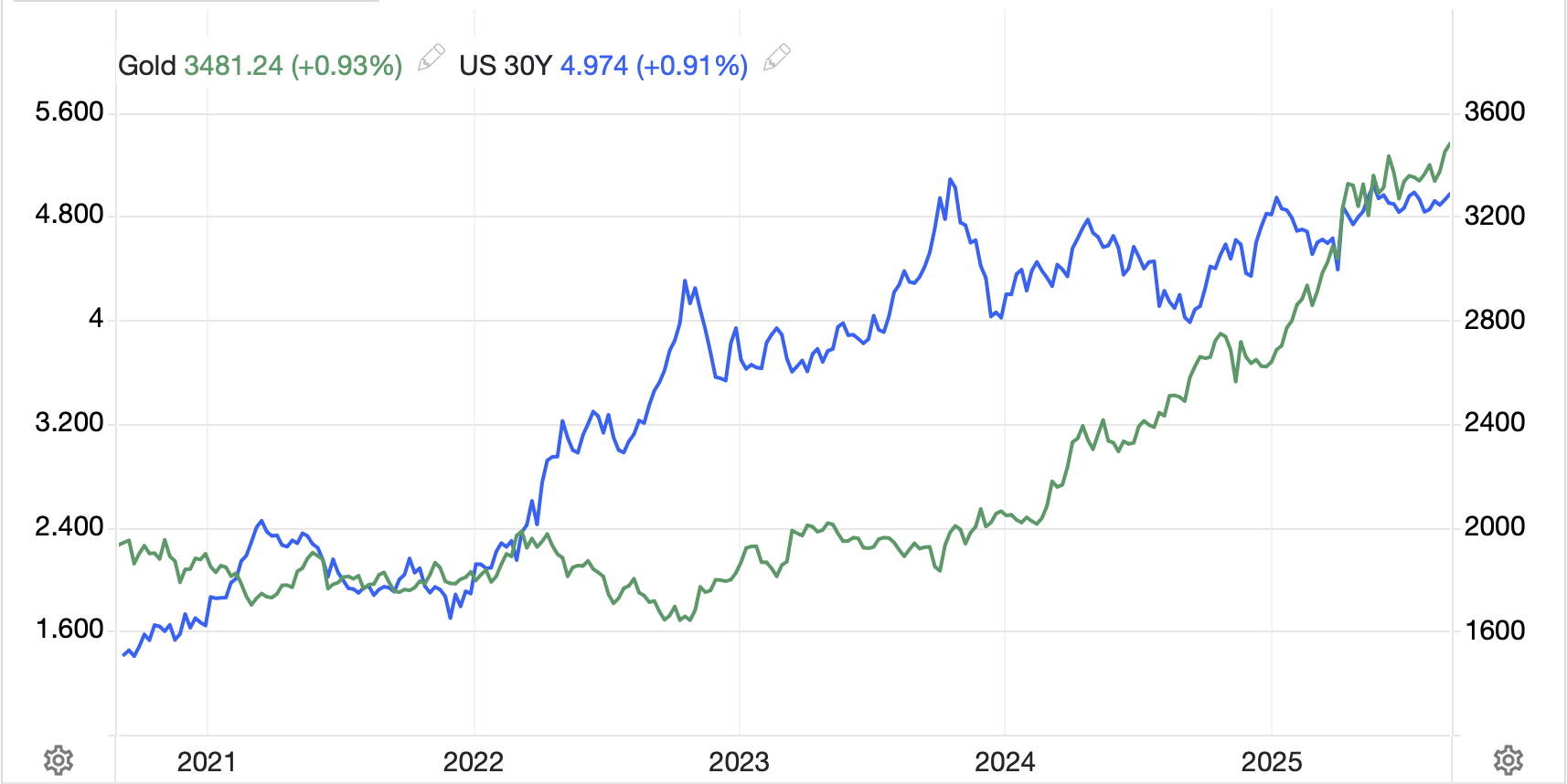
So, which is it?  Are yields rising because growth is driving inflation higher (the Keynesian view of the world)?  How does that accord with rising delinquencies if growth is the driver?  In the end, there is no single, simple answer to explain the dynamics of an extraordinarily complex system like the economy.  I do not envy policymakers’ current situation as there are no correct answers, merely tradeoffs (just like all economics).  But it is increasingly clear that investors are losing their interest in holding onto government debt as they seemingly lose faith in governments’ ability to manage their respective finances.  Which brings us to one more chart, the barbarous relic (which for those of you who don’t know, was Keynes’ term of derision for gold).  I thought it might be instructive to see how gold and 30-year Treasury yields seem to have the same trajectory as the shiny metal regains its all-time highs this morning.

Source: tradingeconomics.com

With that cheery thought after a beautiful Labor Day weekend, let’s see how markets are behaving now that September is upon us.  Friday’s selloff in the US (a disappointing way to end the month) was followed by a mixed session in Asia with the Nikkei (+0.3%) managing to rally although China (-0.75%) and Hong Kong (-0.5%) followed the US lower despite a slightly better than expected RatingDog (formerly Caixin) PMI of 50.5 released Sunday night.  Elsewhere in the region, Korea (+0.95%) was the big winner with modest losses almost everywhere else in the region.  As to Europe, the DAX (-1.25%) is the worst performer, although Spain’s IBEX (-0.95%) is giving it a run for its money as the higher Eurozone inflation squashed hopes that the ECB may cut rates again soon.  Interestingly, French shares are unchanged this morning, significantly outperforming the rest of the continent despite continued concerns over the status of the French government which seems likely to collapse next week after the confidence vote on Monday.  Perhaps the idea that the government will not be able to do anything is seen as a benefit!  As to US futures, negative is the vibe this morning, with all the major indices pointing lower by at least -0.6%.

In the bond market, based on my commentary above, you won’t be surprised that Treasury yields are higher by 6bps this morning and European sovereign yields are all higher by between 4bps and 6bps.  The big story here is that French yields are rising to Italian levels as the former’s finances are crumbling while Italy has stabilized things for the time being.  Of course, all this pales compared to UK yields (+4bps) where 30-year yields have climbed to their highest level since 1998 and the 10-year yields are now nearly 200 basis points higher than during the ‘Liz Truss’ moment of 2022 as per the below.  It is not clear to me if the UK or France will collapse first, but I suspect that both may be begging at the IMF soon!

Source: tradingeconomics.com

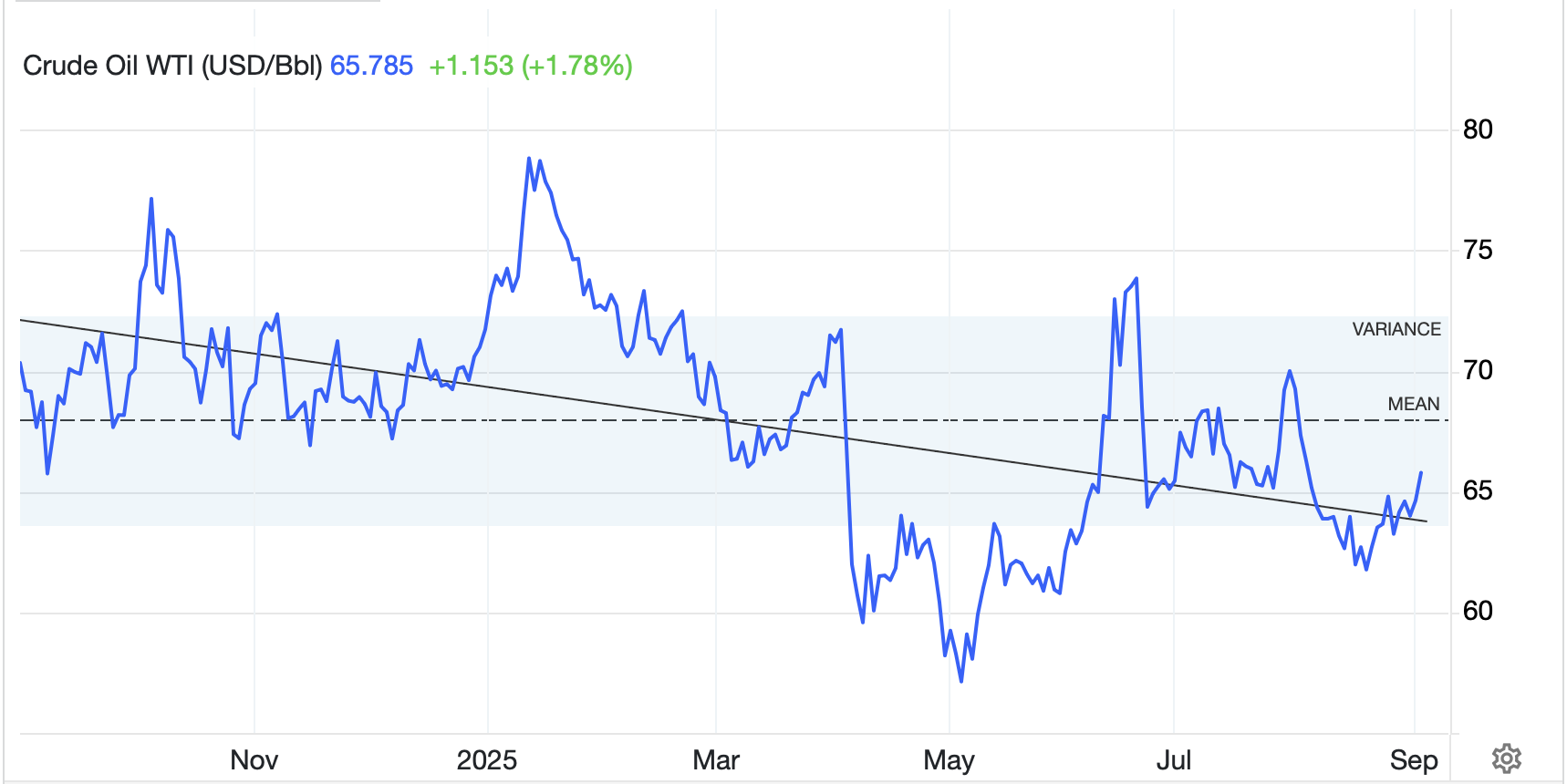
Oil prices (+1.8%) continue to rise as Russia and Ukraine intensify their fighting with Ukraine attacking Russian refining capacity, apparently shutting down up to 17% of their output.  However, while we have seen oil rebound over the past several weeks, the longer-term trend remains lower.

Source: tradingeconomics.com

As to metals, this morning gold (+0.2%) continues to set new highs while silver (-0.4%) is backing off of its recent multi-year highs, although remains well above $40/oz.  Precious metals are in demand and likely to stay that way for a long time to come in my view.

Finally, the dollar is much firmer this morning with the pound (-1.25%) the laggard across both G10 and EMG currencies as investors flee from the ongoing policy insanity there (between the zeal with which they are trying to reduce CO2 and the crackdown on free speech, it seems the government is trying to alienate the entire native population.). But the euro (-0.7%), Aussie (-0.7%), yen (-1.0%) and SEK (-0.75%) are all under pressure in the G10 bloc.  The UK is merely the worst of the lot.  As to the EMG bloc, MXN (-0.7%), ZAR (-0.7%) and PLN (-0.9%) are also sharply lower although Asian currencies (KRW -0.2%, INR -0.2%, CNY -0.15%) are faring a bit better overall.

On the data front this week, we have a bunch culminating in payrolls on Friday.

TodayISM Manufacturing49.0
 ISM Prices Paid 65.3
WednesdayJOLTS Job Openings7.4M
 Factory Orders-1.4%
 Fed’s Beige Book 
ThursdayInitial Claims230K
 Continuing Claims1960K
 Trade Balance-$75.3B
 Nonfarm Productivity2.7%
 Unit Labor Costs1.2%
 ISM Services51.0
FridayNonfarm Payrolls75K
 Private Payrolls75K
 Manufacturing Payrolls-5K
 Unemployment Rate4.3%
 Average Hourly Earnings0.3% (3.7% Y/Y)
 Average Weekly Hours34.3
 Participation Rate62.1%

Source: tradingeconomics.com

In addition, we hear from four Fed speakers with NY Fed president Williams likely the most impactful.  The current probability for a Fed funds cut according to CME futures is 92%.  A weak print on Friday will juice that and get people talking about 50bps to start.  A strong number will stop that talk in its tracks.  But until then, it is difficult to look at the messes everywhere else in the world and feel like you would rather own other currencies than the dollar (maybe the CHF).

Good luck

Adf

Quite Frail

While everyone’s waiting to see
How high or low payrolls might be
The news from elsewhere
Is starting to wear
Quite thin, look at China’s Zhongzhi
 
This bankruptcy sounds the alarm
That others there might come to harm
The soft-landing tale
Which still is quite frail
Has started to lose its quaint charm

Before we start on the payroll report, I think it is important to mention a significant issue that was revealed last night in China, where Zhongzhi, one of the largest non-bank financial and investment companies on the mainland, filed for bankruptcy and liquidation.  It has been missing both interest and principal payments for the past several months and it simply became too great a problem to ignore any longer.  The data released indicates that the company had ~$31 billion more in liabilities than assets and has become one of the largest bankruptcies in China’s history.  

The company was a major player in the property market there, although its main business was high yielding investment products, essentially structured notes, where much of the property backed collateral has fallen dramatically in value and where cash flows that had underpinned the notes have now ceased amid the property collapse.  This is hardly an advertisement for the Chinese economy and another sign that things there remain in a downtrend.  While the renminbi is marginally firmer this morning, up 0.2%, that is a consequence of the PBOC establishing the CFETS fixing at a much stronger than expected level in their effort to prevent substantial weakness in the currency.  

The upshot is that the Chinese economy remains in difficult straits, and the government’s reluctance to increase fiscal support is being felt everywhere.  (On the other hand, the PBOC has added $600 billion in liquidity to the economy in the past week.)  Ongoing weakness in Europe is another problem for Chinese exporters and the ongoing disagreements and tariff wars with the US simply add additional pressure to President Xi.  Next Saturday the first big election of 2024 will be held, in Taiwan, and if the incumbent party retains control, currently the betting favorite, Xi may find himself with quite a few problems to address this year.  A weak economy, rising geopolitical tensions globally and a rejection of his entreaties to the people of Taiwan is a bad look for a megalomaniacal dictator like Xi.  Just sayin’.

OK, let’s turn to this morning’s big story, the NFP report.  Here are the analyst consensus estimates according to tradingeconomics.com:

Nonfarm Payrolls170K
Private Payrolls130K
Manufacturing Payrolls5K
Unemployment Rate3.8%
Average Hourly Earnings0.3% (3.9% Y/Y)
Average Weekly Hours34.4
Participation Rate62.7%
ISM Services 52.6
Factory Orders2.1%

Now, yesterday we saw two other pieces of employment data, the ADP (164K and much higher than expected) and Initial Claims (202K and much lower than expected).  These numbers have many in the market looking for a strong print although the correlation between ADP and NFP has been underwhelming for quite a while.  While we can discuss the merits of the estimates and the overall strength of the economy, I think we are better served, this morning, to focus on the potential impacts of a given number and how that has been evolving so far this week/year.

This morning, the 10-year yield is up to 4.04%, some 25bps above the lows touched post-Christmas, and starting to indicate that some people are having second thoughts on the idea of the Fed aggressively cutting rates this year.  As an example, while I never believed there to be a chance of a rate cut at the end of January, the market was pricing a 17.5% chance of that just a week ago.  This morning the probability is down to 4.7%.  As well, just last week the market was pricing in 6 rate cuts in 2024.  That is now down to 5 cuts and fading. One of the big stories around this morning is that someone has put on a very large option position expiring later today that the 10-year yield will be above 4.15%.  To profit, this trade will require one of the largest yield moves seen in months.

The point is that the nirvana belief set that had been driving markets since the beginning of November is clearly under a significant amount of pressure here.  After all, the NASDAQ has had 5 consecutive negative closes, bond yields, as mentioned, have rallied sharply and are breaking through short-term technical resistance, the dollar is rallying, and the bulls are feeling quite unloved.

Is this the end of the bull story?  Frankly I don’t believe that is the case.  However, risk assets got a bit overexuberant during November and December and have come a long way in a short time.  It is not surprising to see a retracement of prices to help unwind some of the froth.  Ultimately, I believe the question that matters in the medium and long term is the state of the economy and whether the recent growth trajectory will continue, or if we have peaked for now.

One of the things that has me concerned in the medium term is the fact that the government continues to run a massive fiscal deficit despite what appears to be a reasonably strong economy.  Recall, Keynes instructed governments to spend during recession, but tighten their belts during good times.  However, the new mantra is far more in line with Modern Monetary Theory, which is spend as much as you can at all times.  

A quick thought experiment regarding the underlying economy might look like this: GDP = $27 trillion, Federal spending = $10 trillion, Federal deficit = $1.7 trillion.  What if the government didn’t run a deficit, but was neutral?  Removing that much stimulus from the economy would have a significant negative impact on the US economy’s growth trajectory, which is the reason no politician wants to do that.  But the question at hand is how healthy is the economy on its own?  And are growth prospects there really that substantial?  One of the keys to the recent employment picture is that government jobs continue to grow rapidly (look at the gap between NFP and private payrolls).  As long as the US government can continue to borrow money cheaply to fund its profligate ways, it is completely realistic to expect the economy to continue to grow.  However, the reason the bond market story is so important is that the bond market is the place where it will become clear if this is possible.  If Treasury yields continue their recent climb, the pressure on the economy will increase, and the pressure from the government on the Fed to support the bond market will increase.  Forget ending QT.  If the Fed were to find itself in a place where they needed to restart QE to support the bond market, that would be an incredibly important signal that inflation was going to accelerate again, and likely commodity prices would follow.  That would also be a very negative sign for the dollar.  So, lower bonds, lower dollar, higher commodities and likely a nominal rise in equities, at least initially.  My point is there is much about which we need be concerned and wary.

In the quickest of recaps possible, equities around the world have mostly been under pressure with only Japan managing to rally but weakness in China and across all of Europe.  The same is true with US futures, all in the red this morning by about -0.3%.

Bond yields are also rising around the world (except in Japan) with gains on the order of 6bps-8bps across the continent, similar to what we saw in Australia overnight. 

Oil prices are rebounding this morning, up 1.3%, despite much larger than expected inventory builds shown in yesterday’s IEA data, but the metals markets are continuing under pressure for now with the base metals weak and gold edging lower.

And finally, the dollar is continuing its rebound led by USDJPY, where the yen is down a further 0.4% and back above 145 for the first time since early December.  In the G10 space, I would say the movement has been about -0.3% overall, but in the EMG space, things are a bit more active with average declines here of about -0.7% across the three main geographic blocs.

That’s really it.  Now we just wait for the payroll report and later this morning the ISM Services number, and then we get to hear from Tom Barkin again, but it would be shocking if his view changed from just two days ago.  For some reason, I have a feeling the payroll data will fall short this morning, but that’s just a feeling.

Good luck and good weekend

Adf