Lest Things Implode

The central banks all through the West
Are trying to figure how best
To, policy, tighten
But not scare or frighten
Investors and so they are stressed

Meanwhile from Beijing data showed
That Chinese growth actually slowed
With prospects now dimmed
The central bank trimmed
Two interest rates, lest things implode

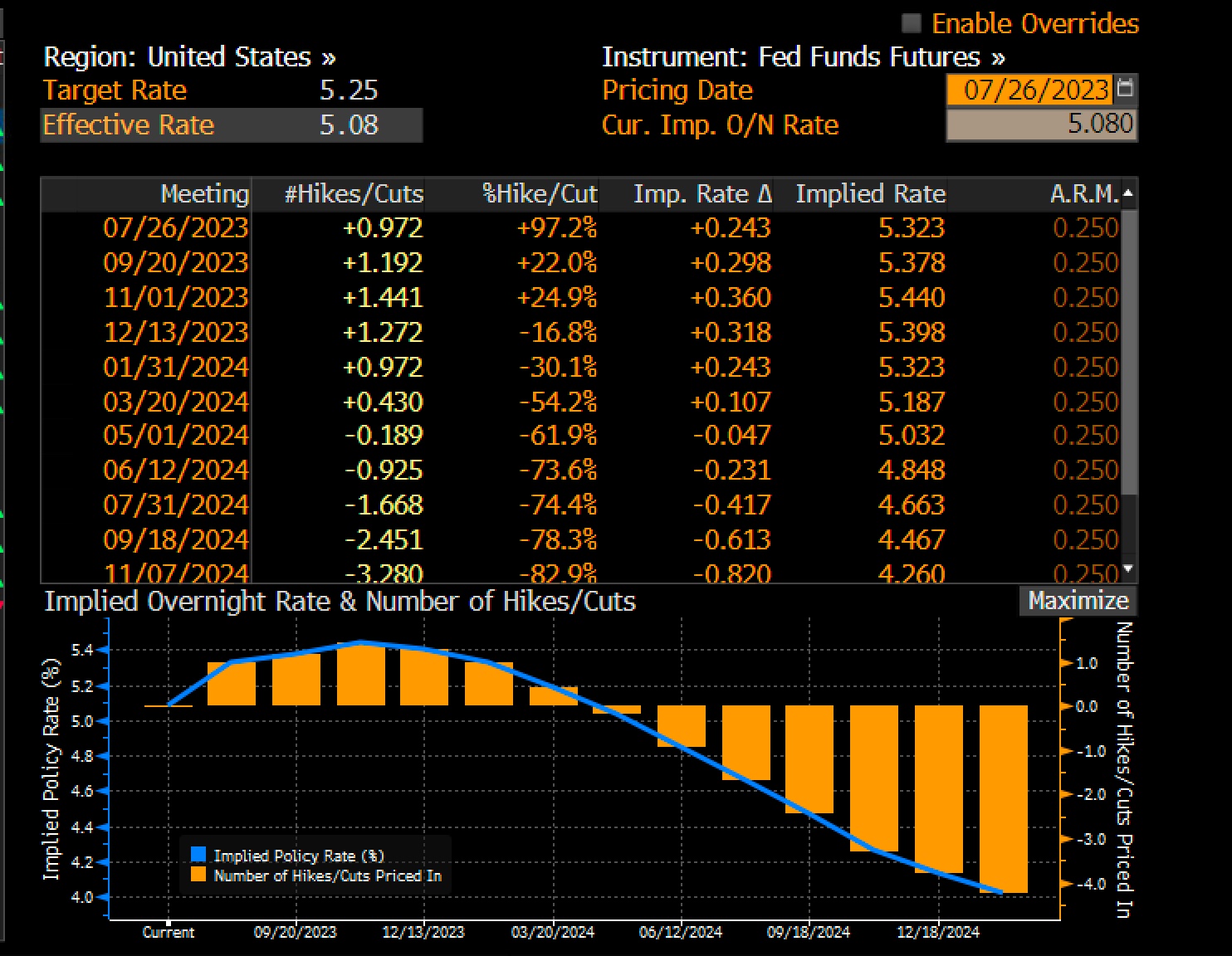
There is a new contest amongst the punditry to see who can call for the most shocking rate policy by the Fed this year.  With the FOMC in their quiet period, they cannot respond to comments by the likes of JPM Chair Jamie Dimon (the Fed could raise rates 7 times this year!) or hedge fund manager and noted short seller Bill Ackman (the Fed should raise rates by 50 basis points in March to shock the market), and so those comments get to filter through the market discussion and creep into the narrative.  A quick look at Fed funds futures shows that the market is now pricing in not only a 25bp rate hike, but a probability of slightly more at the March meeting.

Now, don’t get me wrong, I think the Fed is hugely behind the curve, as evidenced by the fact they are still purchasing assets despite raging inflation, and think an immediate end to asset purchases would be appropriate policy, as well as raising rates in 0.5% increments or more until they start to make a dent in the depth of negative real yields, but I also know that is not going to happen.  Time and again they have effectively explained to us all that while inflation is certainly not a good thing, the worst possible outcome would be a decline in the stock market.  Their deference to investors rather than to Main Street has become a glaring issue, and one that does not reflect well on their reputation.  And yet, Chairman Powell has never given us a reason to believe that he will simply focus on inflation, which is currently by far the biggest problem in the economy.

However, with the market having already priced in a 0.25% rate hike for March, it is entirely realistic they will raise rates at that meeting.  The key question, though, is will they be able to continue to tighten policy when equity markets start to respond more negatively?  For the past 35 years (since Black Monday in 1987) the answer has been a resounding NO.  Why does anybody think this time is different?

Interestingly, at the same time virtually every Western central bank is trying to figure out the best way to fight the rapidly rising inflation seen throughout the world, the Middle Kingdom has their own, unique, issues, namely disappointing economic growth and expanding omicron growth leading up to the Winter Olympics.  Of course, the last thing that President Xi can allow is any inkling that things in China are not running smoothly, and so after the release of weaker than expected IP, Fixed Asset, Retail Sales and GDP data for Q4, the PBOC cut both its Medium-Term Lending and 7-day Reverse Repo rates by 0.10% last night.  In addition to the weaker data came the news that yet another property developer, Logan Group, may have made guarantees that do not appear on their balance sheet to the tune of $812 million.  I have lost count of the number of property developers in China that are now under growing pressure ever since the initial stories about China Evergrande.  But that is the point, the entire property sector is under huge pressure of imploding and property development has been somewhere between 25%-30% of the Chinese GDP growth.  This does not bode well for Chinese GDP growth going forward, which does not bode well for global growth.  PS, one last thing to mention here is the Chinese birth rate fell to its lowest level since 1950!  Only 10.62 million babies were born in 2021, despite significant efforts by the government to encourage family growth.  As demographics is destiny, unless the Chinese change their immigration policies, the nation is going to find itself in some very difficult straits as the population there ages rapidly and the working population shrinks.  Just sayin’.

Ok, with that out of the way, a look around today’s holiday markets shows that risk is on!  Aside from the Hang Seng (-0.7%) overnight, which is where so many property firms are listed, every other major market is in the green.  The Nikkei (+0.75%) and Shanghai (+0.6%) were both solid performers as that PBOC rate cut was seen as encouraging.  In Europe, the DAX (+0.4%), CAC (+0.6%) and FTSE 100 (+0.6%) are all firmer as are the peripheral markets.  Even US futures (+0.1% across the board) are firmer although there is no trading here today due to the MLK holiday.

Bond markets, on the other hand, are under pressure everywhere as Treasury futures are down 13 ticks or about 3 basis points higher, while European sovereigns (Bunds +1.7bps, OATs +2.0bps, Gilts +2.8bps) are all seeing higher yields as well.  In fact, 10-year Bunds are approaching 0.0% for the first time since May 2019.  Asia was no different with only China (-0.8bps) seeing a yield decline and sharp rises in Australia (+6.7bps) and South Korea (+9.7bps).

In the commodity markets, WTI (0.0%) is flat although Brent (-0.3%) is edging down from its multi-year highs.  NatGas (-0.6%) is also edging lower and European gas prices are falling even more significantly as a combination of LNG cargoes and warmer weather eases some pressure on that market.  Gold (+0.2%) is firmer, despite what appears to be a risk-on day, although copper (-0.7%) is under a bit of pressure.  In other words, the noise is overwhelming the signal here.

As to the dollar this morning, mixed is the best description as there are gainers and losers in both G10 and EMG blocs.  Interestingly, despite oil’s lackluster trading, both NOK (+0.3%) and CAD (+0.2%) are the leading gainers in the G10 while JPY (-0.25%) is following its risk history, selling off as equities gain.  In the emerging markets, RUB (-0.55%) is the worst performer as there seems to be growing concern over the imposition of tighter sanctions in the event Russia does invade the Ukraine.  KRW (-0.45%) is next in line after North Korea launched yet two more ballistic missiles, raising tension on the peninsula.  On the plus side, THB (+0.4%) has been continuing its recent gains as the nation opens up more completely from Covid lockdowns.

It is a relatively light data week with Housing the main focus, and with the Fed in their quiet period, we won’t be getting help there either.

Tuesday Empire Manufacturing 25.0
Wednesday Housing Starts 1650K
Building Permits 1700K
Thursday Initial Claims 220K
Continuing Claims 1521K
Philly Fed 19.8
Existing Home Sales 6.41M
Friday Leading Indicators 0.8%

Source: Bloomberg

In truth, it is shaping up to be a quiet week.  Next week brings the central bank onslaught with the Fed, BOJ and BOC, but until then, we will need to take our cues from equities and geopolitical tensions to see if anything occurs that may inspire the jettisoning of risk assets in a hurry.  My gut tells me we will not be seeing anything of that nature, and so a range bound week for the dollar seems in store.

Good luck and stay safe
Adf

Somewhat Bizarre

Apparently, no one expected
The Fed, when they last met, detected
Their actions thus far
Were somewhat bizarre
And so, a new stance was erected

Not only would they halt QE
But also, a shrinkage they see
In balance sheet sizing
So, it’s not surprising
The bond market filled bears with glee

“…it may become warranted to increase the federal funds rate sooner or at a faster pace than participants had earlier anticipated.”
“… participants judged that the appropriate timing of balance sheet runoff would likely be closer to that of policy rate liftoff than in the Committee’s previous experience.”
“Many participants judged that the appropriate pace of balance sheet runoff would likely be faster than it was during the previous normalization episode.”

These were the words from the FOMC Minutes of the December meeting that roiled markets yesterday afternoon.  Arguably there were more as well, but these give the gist of the issue.  Suddenly, the Fed sounds so much more serious about their willingness to not only taper QE quickly, and not only begin to raise the Fed Funds rate, but also to actually shrink their balance sheet.  If the Fed does follow through on this, and finishes QE by March, starts raising the Fed Funds rate and also begins to reduce the size of the balance sheet, then you can expect that the global risk appetite is going to be pretty significantly reduced.  In fact, I would contend it is the last of these steps that is going to undermine risk assets, as balance sheet reduction will likely result in higher long-term bond yields and less liquidity available to flow into risky assets.  As I have highlighted in the past, in 2018, the last time the Fed was both raising interest rates and shrinking the balance sheet, the resulting 20% equity market decline proved too much to withstand.  Are they made of sterner stuff this time?

One other thing to note was that while omicron was mentioned in the Minutes, it was clearly not seen as a major impediment to economic growth in the economy.   The fact that, at least in the US, there doesn’t appear to be any appetite/willingness for complete lockdowns implies that the nation is beginning to move beyond the pandemic fear to a more relaxed attitude on the issue.  Granted there are still several city and state governments that are unwilling to live and let live, but for the nation writ large, that does not seem to be the case.  From an economic perspective, this means less demand interruptions but also, likely, less supply interruptions.  The inflationary impact on this change in attitude remains uncertain, but the underlying inflationary trends remain quite strong, especially housing.  Do not be surprised to see CPI and PCE peak in Q1, but also do not be looking for a return to 2.0% levels anytime soon, that is just not in the cards.

And really, that was the driving force in yesterday’s market activity and is likely to be the key feature going forward for a while.  We will certainly need to pay close attention to Fed comments to try to gauge just how quickly these changes will be coming, and we will need to pay attention to the data to insure that nothing has changed in the collective view of a strong employment situation, but in the US, at least, this is the story.

The question now is how did other markets respond to the Minutes and what might we expect there?  Looking at equities, the picture was not pretty.  Following the release, US equity markets sold off sharply with the NASDAQ falling 3.3% on the day and both the Dow (-1.1%) and S&P500 (-1.9%) also suffering.  Activity in Asia was also broadly weaker with the Nikkei (-2.9%) and Australia’s ASX (-2.75%) both sharply lower although Chinese stocks were less impacted (Hang Seng +0.7%, Shanghai -0.25%).  The story there continues to revolve around the property sector and tech crackdowns, but recall, both of those markets had been massively underperforming prior to this Fed news.  As to Europe this morning, red is the color of the day (DAX -1.0%, CAC -1.2%, FTSE 100 -0.5%) as the data mix showed continued high inflation in Germany with every Lander having reported thus far printing above 5.1%.  As to US futures, they are not buying the bounce just yet in the NASDAQ (-0.5%), but the other two indices are faring a bit better, essentially unchanged on the day.

It can be no surprise that the bond market is under further pressure this morning as the Fed has clearly indicated they are biased to not only stop new purchases but allow old ones to mature and not be replaced.  (There is no indication they are considering actually selling bonds from the portfolio.  That would be truly groundbreaking!)  At any rate, after the Minutes, yields jumped an additional 3bps and have risen another 2.8bps this morning.  This takes the move in 10-year yields to 23 basis points since the beginning of the week/year.  Technically, we are pushing very significant resistance levels in yields as these were the highs from last March.  If we do break higher, there is some room to run.  As well, the rise in Treasury yields is driving markets worldwide with European sovereigns all selling off (Bunds +3.5bps, OATs +4.2bps, Gilts +5.5bps) and similar price action in Asia, where even JGB’s (+2.0bps) saw yields rise. Real yields have risen here, although as we have not seen an inflation print in the US since last month, that is subject to change soon.

On the commodity front, the picture is mixed today with oil (+1.2%) higher while NatGas (-1.2%) continues to slide on milder weather.  Uranium (+3.9%) has responded to the fact that Kazakhastan is the largest producer and given the growing unrest in the country, concerns have grown about its ability to deliver on contracts.  With yields higher, gold (-0.6%) and silver (-2.2%) are both softer as are copper (-1.4%) and aluminum (-0.5%).  Clearly there are growing concerns that higher interest rates are going to undermine economic growth.

Finally, in the FX markets, the broader risk-off tone is manifesting itself as a generally stronger dollar (AUD -0.7%, NZD -0.6%, NOK -0.35%) with only the yen (+0.25%) showing strength in the G10.  In the EMG bloc, the picture is a bit more mixed with laggards (THB -0.9%, CLP -0.7%, MYR -0.5%) and some gainers (ZAR +0.8%, RUB +0.7%, HUF +0.5%).  Rand is the confusing one here as the ruble is clearly benefitting from oil’s rise and the forint from bets on even more aggressive monetary policy.  However, I can find no clear rationale for the rand’s strength though I will keep looking.  On the downside, THB is suffering from an increase in the lockdown levels while MYR appears to be entirely dollar driven (higher US rates driving dollar demand) while the peso seems to be suffering from concerns over fiscal changes regarding the pension system.

On the data front, this morning brings Initial Claims (exp 195K), Continuing Claims (1680K) and the Trade Balance (-$81.0B) at 8:30 then ISM Services (67.0) and Factory Orders (1.5%, 1.1% ex transport) at 10:00.  But tomorrow’s payroll report is likely to have far more impact.  And the Fed calendar starts to fill out again with Daly and Bullard both on the slate for today and seven more speakers over the next week plus the Brainerd vice-chair hearings.

I’m a bit surprised the dollar isn’t stronger in the wake of the new Fed attitude, but perhaps that is a testimony to the fact there are many who still don’t believe they will follow through.  However, for now, I expect the dollar will continue to benefit from this thesis, albeit more gradually than previously believed, but if we do see risk appetite diminish sharply, look for a little less tightening enthusiasm from Mr Powell and friends, and that will change sentiment again.

Good luck and stay safe
Adf

Til ‘flation Responds

Apparently, Powell has learned
Why everyone’s been so concerned
With prices exploding
The sense of foreboding
‘Bout ‘flation seemed very well earned

So, Jay and his friends at the Fed
Said by March, that they would stop dead
The buying of bonds
Til ‘flation responds
(Or til stocks fall deep in the red)

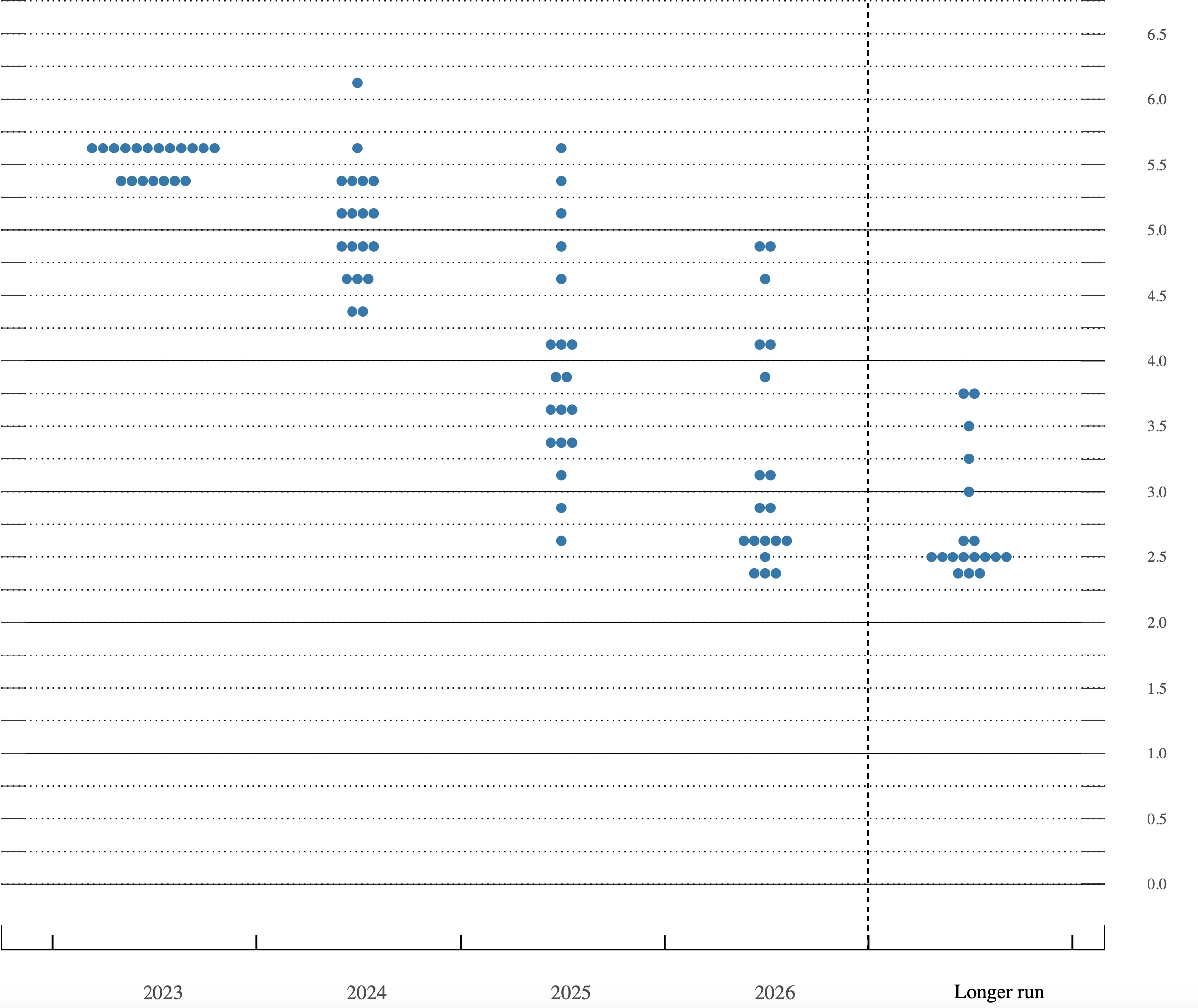
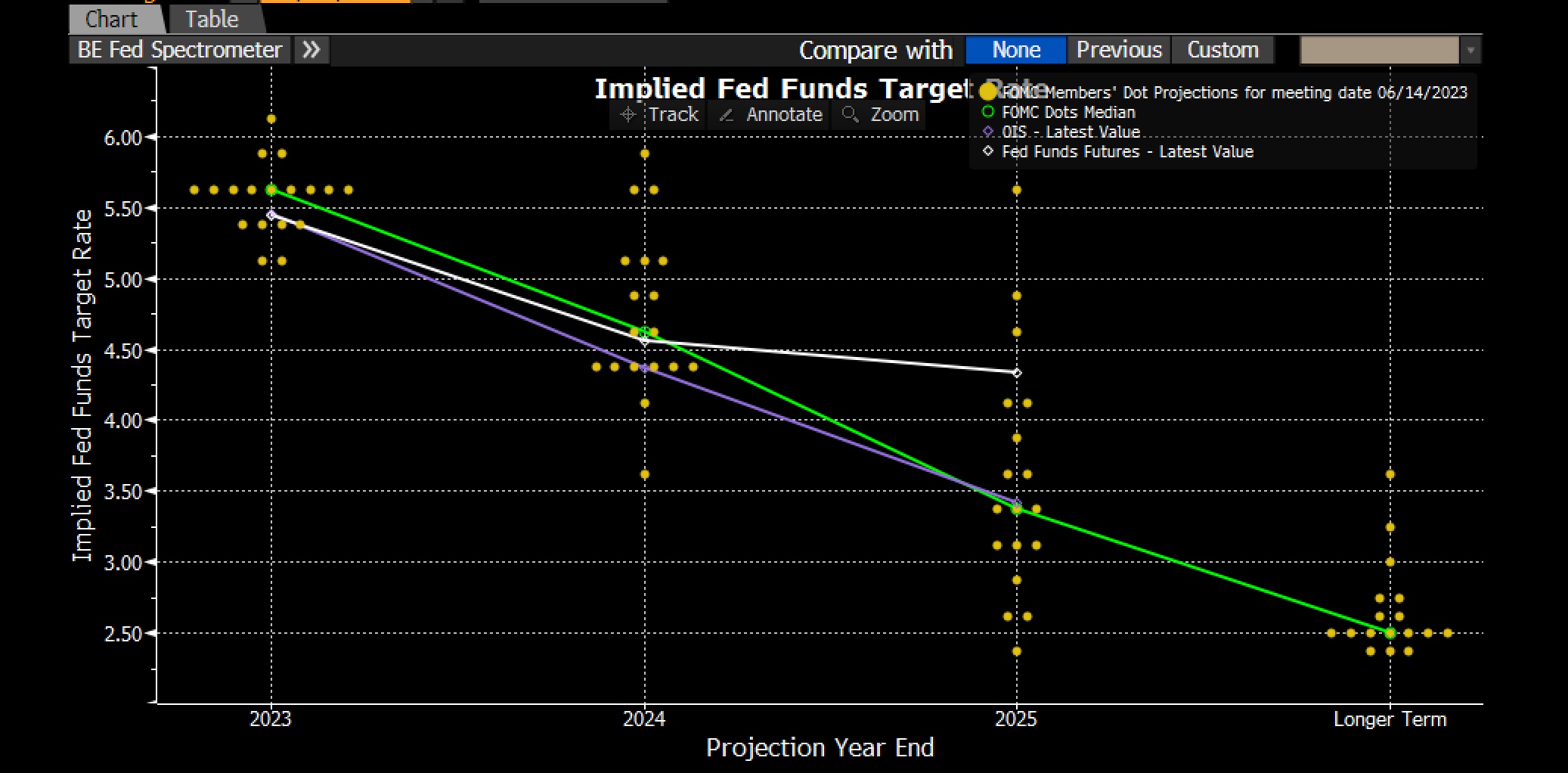
By now you are all aware that the FOMC will be reducing QE twice as rapidly as their earlier pace, meaning that by March 2022, QE should have ended.  Chairman Powell was clear that inflation has not only been more persistent than they had reason to believe last year but has also moved much higher than they thought possible, and so they are now forced to respond.  Interestingly, when asked during the press conference why they will take even as long as they are to taper policy rather than simply stop buying more assets now if that is the appropriate policy, Powell let slip what I, and many others, have been saying all along; by reducing QE gradually, it will have a lesser impact on markets.  In other words, the Fed is more concerned with Wall Street (i.e. the stock market) than it is with Main Street.  Arguably, despite a more hawkish dot plot than had been anticipated, with the median expectation of 3 rate hikes in 2022 and 3 more in 2023, the stock market rallied sharply in the wake of the press conference.  If one is seeking an explanation, I would offer that Chairman Powell has just confirmed that the Fed put remains alive and well and is likely struck far closer to the market than had previously been imagined, maybe just 10% away.

One other thing of note was that Powell referred to the speed with which this economic cycle has been unfolding, much more rapidly than the post-GFC cycle, and also hinted that the Fed would consider reducing the size of its balance sheet as well going forward.  Recall, however, what happened last time, when the Fed was both raising the Fed funds rate and allowing the balance sheet to run off by $50 billion/month back in 2018; stocks fell 20% in Q4 and the Powell Pivot was born.  FWIW my sense is that the Fed will not be able to raise rates as much as the dot plot forecasts.  Rather, the terminal rate will be, at most, 2.00% (last time it was 2.50%), and that any shrinkage of the balance sheet will be minimal.  The last decade of monetary policy has permanently changed the role of central banks and defined their behavior in a new manner.  While not described as such by those “independent” central banks, debt monetization (buying government bonds) is now a critical role required to keep most economies functioning as debt/GDP ratios continue to climb.  In other words, MMT is the reality and it will require a much more dramatic, and long-lasting, negative shock for that to change.

One last thing on this; the bond market has heard what Powell said and immediately rallied.  The charitable explanation is that bond investors are now comforted by the Fed’s recognition that inflation is a problem and will be addressed.  Powell’s explanation about foreign demand seems unlikely, at least according to the statistics showing foreign net sales of bonds.  Of more concern would be the explanation that bond investors are concerned about a policy mistake here, where the Fed is tightening too late and will drive the economy into a recession, as they always have done when they tighten policy.

With Jay and the Fed finally past
The market will get to contrast
The Fed’s hawkish sounds
With Europe’s shutdowns
And watch Christine hold rates steadfast

But beyond the Fed, this has been central bank policy week with so many other central bank decisions today.  Last night the Philippines left policy on hold at 1.50%, as did Indonesia at 3.50%, both as expected.  Then, this morning the Swiss National Bank (-0.75%) left rates on hold and explained the franc remains “highly valued”.  Hungary raised their Deposit rate by 0.30% as expected and Norges Bank raised by 0.25%, also as expected, while promising another 0.25% in March.  Taiwan left rates unchanged at 1.125%, as expected and Turkey continue their unique inflation fighting policy by cutting the one-week repo rate by 1.00%, down to 14.00% although did indicate they may be done cutting for now.  As to the Turkish lira, if you were wondering, it has fallen another 3.8% as I type and is now well through 15.00 to the dollar.  YTD, TRY has fallen more than 51% vs. the dollar and quite frankly, given the more hawkish turn at the Fed, seems like it has further to go!

Which of course, brings us to the final two meetings today, the ECB and the BOE.  Madame Lagarde and most of her minions have been very clear that they are not about to change policy, meaning they will continue both the PEPP and APP and are right now simply considering how they are going to manage policy once the PEPP expires in March.  That is another way of saying they are trying to figure out how to continue to buy as many bonds as they are now, while losing one of their programs.  I’m not worried about them finding a way to continue QE ad infinitum, but the form that takes is the question at hand.  While European inflation pressures have certainly lagged those in the US, they are still well above their 2.0% target, and currently show no signs of abating.  If anything, the fact that electricity prices on the continent continue to skyrocket, I would expect overall prices to only go higher.  But Madame Lagarde is all-in on MMT and will drag the few monetary hawks in the Eurozone down with her.  Do not be surprised if the ECB sounds dovish today and the euro suffers accordingly.

As to the BOE, that is much tougher to discern as inflation pressures there are far more prevalent and members of the MPC have been more vocal with respect to discussing how they need to respond by beginning to raise the base rate.  But with the UK flipping out over the omicron variant and set to cancel Christmas impose more lockdowns, it is not clear the BOE will feel comfortable starting their tightening cycle into slower economic activity.  Ahead of the meeting, the futures market is pricing in just a 25% probability of a 0.15% rate hike.  My money is on nothing happening, but we shall see shortly.

Oh yeah, tonight we hear from the BOJ, but that is so anticlimactic it is remarkable.  There will be no policy shifts there and the yen will remain hostage to everything else that is ongoing.  Quite frankly, given the yen has been sliding lately, I expect Kuroda-san must be quite happy with the way things are.

And that’s really the story today.  Powell managed to pull off a hawkish turn and get markets to embrace risk, truly an impressive feat.  However, over time, I expect that equity markets will decide that tighter monetary policy, especially if central bank balance sheets begin to shrink, is not really a benefit and will start to buckle.  But right now, all screens are green and FOMO is the dominant driver.

In the near term, I think the dollar has further to run higher, but over time, especially when equity markets reverse course, I expect the dollar will fall victim to the impossible trilemma, where the Fed can only prop up stocks and bonds simultaneously, while the dollar’s decline will be the outlet valve required for the economy.  But that is many months away.  For now, buy dollars and buy stocks, I guess.

Good luck and stay safe
Adf

Not Quite Right

The data from China last night
Could, President Xi, give a fright
While IP was fine
Consumption’s decline
Show’s everything there’s not quite right

Now, turning our focus back home
The question that’s facing Jerome
Is should he increase
The speed that they cease
QE?  Or just leave it alone?

Clearly, the big news today is the FOMC meeting with the statement to be released at 2:00 and Chair Powell to face the press 30 minutes later.  As has been discussed ad nauseum since Powell’s Congressional testimony two weeks ago, expectations are for the Fed to reduce QE purchases more quickly than the previously outlined $15 billion/month with many looking for that pace to double.  If that does occur, QE will have concluded by the end of March.  This timing is important because the Fed has consistently maintained that they would not raise the Fed funds rate while QE was ongoing.  Hence, doubling the pace of reduction opens the door for the first interest rate hike as soon as April.

And let’s face it, the Fed has fallen a long way behind the curve with the latest evidence yesterday’s PPI data (9.6%, 7.7% core) printing much higher than expected and at its highest level since the series was renamed the PPI from its previous Wholesale Price Index in 2010.  Prior to that, it was in the 1970’s that last saw prices rising at this rate.  So, ahead of the meeting results, investors are trying to analyze just how quickly US monetary policy will be changing.  Recall, yesterday I made a case for a slower reduction than currently assumed, but as of now, nobody really knows.

What we do know, however, is that the economic situation in China is not playing out in the manner President Xi would like.  Last night China released its monthly growth data which showed Retail Sales (3.9% Y/Y) Fixed Asset Investment (5.2% Y/Y) and Property Investment (6.0% Y/Y) all rising more slowly than forecast and more slowly than last month. Only IP (3.8% Y/Y) managed to grow.  As well, Measured Unemployment rose to 5.0%, higher than expected and clearly not the goal.  For the past several years China has been ostensibly attempting to evolve its economy from the current mercantilist state, where production for export drives growth, to a more domestically focused consumer-led economy like the West.  Alas, they have been unable to make the progress they would have liked and now have to deal with not only Covid, but the ongoing meltdown in the property sector which will only serve to hold the consumer back further.  Interestingly, the PBOC did not adjust the Medium-term Lending Rate as some pundits had expected, keeping it at 2.95%, and so, it should not be that surprising that the renminbi has maintained its strength, although has appeared to stop rising.  A 2.95% coupon in today’s world remains quite attractive, at least for now, and continues to draw international investment.

Aside from these stories, the other headline of note was UK inflation printing at 5.1%, its highest level since 2011 and clearly well above the BOE’s 2.0% target.  Remember, the BOE (and ECB) meet tomorrow and there remains a great deal of uncertainty surrounding their actions given the imminent lockdown in the UK as the omicron variant spreads rapidly.  Can the BOE really tighten into a situation where growth will clearly be impaired?  It is this uncertainty that has pushed the timing of the first interest rate hike by the BOE back to February, at least according to futures markets.  But as you can see, the BOE is in the same position as the Fed, inflation is roaring but there are other concerns that prevent it from acting to stem the problem.  In sum, the betting right now is the Fed doubles the pace of taper and the BOE holds off on raising rates until February, but either, or both, of those remain far less than certain.  Expect some more market volatility across all asset classes today and tomorrow.

With all that in mind, here’s a quick look at markets overnight.  Equities in Asia (Nikkei +0.1%, Hang Seng -0.9%, Shanghai -0.4%) mostly followed the US declines of yesterday, although Japan did manage to eke out a small gain and stop its recent trend lower.  Europe, on the other hand, is having a better go of it with the DAX (+0.3%) and CAC (+0.6%) both performing well as inflation data there was largely in line with expectations, albeit far higher than targets, and there is little concern the ECB is going to do anything tomorrow to rock the boat.  In the UK, however, that higher inflation print is weighing on equities with the FTSE 100 (-0.2%) underperforming the rest of Europe.  Ahead of the open, and the FOMC, US futures are little changed in general, although NASDAQ futures continue to slide, down (-0.25%) as I type.

The rally in European stocks has encouraged a risk-on attitude and so bond markets are selling off a bit with yields edging higher.  Well, edging except in the UK, where Gilts (+3.7bps) are clearly showing their concern over the inflation print.  But in the US (Treasuries +0.3bps), Germany (Bunds +1.2bps) and France (OATs +0.9bps) things are far less dramatic.  Given the imminent rate decisions, I expect that there is a chance for more movement later and most traders are simply biding their time for now.

The commodity picture is a little gloomier this morning with oil (-1.2%) leading the way lower and weakness in metals (Cu -1.5%, Ag -0.5%, Al -1.4%) widespread.  Gold is little changed on the day and only NatGas (+2.1%) is showing any life.  These markets are looking for a sign to help define the next big trend and so are also awaiting the FOMC outcome today.

Finally, the dollar continues to consolidate its recent gains but has been range trading for the past month.  The trend remains higher, but we will need confirmation from the FOMC today to really help it break out I believe.  In the G10, the biggest gainer has been AUD (+0.4%), but that appears to be positional, as Aussie has been sliding for the past week and seems to be taking a breather.  Otherwise, in this bloc there are an equal number of gainers and laggards with none moving more than 0.2%, so essentially trendless.

In the emerging markets, TRY (-2.1%) continues its decline toward oblivion with no end in sight.  Elsewhere, ZAR (-0.6%) has suffered on continue high inflation and the SARB’s unwillingness to fight it more aggressively.  INR (-0.5%) suffered on the back of a record high trade deficit and concerns that if the Fed does tighten, funding their C/A gap will get that much more expensive.  Beyond those, though, there has been far less movement and far less interest overall.

We do have some important data this morning led by Empire Mfg (exp 25.0) and Retail Sales (0.8%, 0.9% ex autos) at 8:30 and then Business Inventories (1.1%) at 10:00 before the FOMC at 2:00.  The inventory data bears watching as an indication of whether companies are beginning to stockpile more and more product given the supply chain issues that remain front and center across most industries.

And that’s really what we have at this point in time.  A truly hawkish Fed should help support the dollar further, while anything else is likely to see the dollar back up as hawkish is the default setting right now.

Good luck and stay safe
Adf

Somewhat Concerned

Investors seem somewhat concerned
That risk, in all forms, has returned
Thus, stocks are backsliding
While Jay is deciding
If QE should soon be adjourned

With the FOMC beginning its two-day meeting this morning, and PPI data due at 8:30am, it is clear that investors are taking a more precautionary view of the world today.  Certainly, yesterday’s US equity market price action, where the major indices all closed on their session lows, has not helped sentiment, nor has the current market narrative of imminently tighter policy from the Fed.  As such, it should be no great surprise that risk assets across the board are under pressure while more traditional havens have found some support.

But let us ask ourselves, is this current market (not Fed) narrative realistic?  Again, I would contend the market expectations for tomorrow are that the Fed will double the pace of its QE tapering come January, which will have them finish QE by the end of March.  And it is easy to see the merits of the argument given the persistence and magnitude of price gains seen over the past twelve to fifteen months.  This is especially so given there is no obvious reason to believe prices will decline other than the economists’ mantra that supply will be created to fill the demand.  (While this is certainly true in the long run, as Keynes pointed out back in 1923, in the long run we are all dead, so timing matters here.)

However, there are counterarguments also being made that will carry weight, especially with the political bent of the current administration.  Specifically, the maximum employment piece of the Fed mandate, which Mr Powell highlighted last year when announcing the Fed’s new policy initiatives, remains an open question.  It appears that the current Fed view is that NAIRU (full employment) is reached when the Unemployment Rate reaches 3.8%.  The November NFP report showed Unemployment has declined to 4.2%, as measured, and recall that pre-pandemic, the Unemployment Rate had fallen to 3.5%, its lowest point in half a century.  Thus, the new view is that full employment will only be reached at near historic lows.  Yet, is that maximum employment in the current vernacular?

The Fed’s policy review used the terms “broad-based and inclusive” to describe maximum employment, by which they were considering not merely the statistical headline, but the makeup of the data when broken down by various subcategories, notably race.  That November report indicated that the Unemployment rate for minorities was 6.7%, considerably higher than for the white cohort which saw Unemployment of just 3.7%.  That disparity is at the heart of the question as to whether the Fed believes its employment mandate has been fulfilled.

You will not be surprised to know that there is vocal advocacy by some that the ratio that currently exists reflects bias and the Fed must do more to alleviate the problem, even at the expense of higher inflation.  Nor would you be surprised that others make the case that rising inflation is a greater burden on the lower and middle classes, so seeking those last few jobs results in a significantly worse outcome for all, especially those for whom the policies are intended to help.

The point is it is not a slam-dunk that the Fed is going to be as aggressively hawkish as the current market narrative claims.  While Chairman Powell clearly indicated that the pace of tapering would increase, do not be surprised if it rises from $15B/month to $20B or $25B/month rather than the baseline market assumption of $30B/month.  If that is the case, then another repricing in markets will be coming, with risk assets getting a reprieve while the dollar is likely to suffer.  While this is not my base case, I would ascribe at least a 30% probability to the idea that tomorrow’s FOMC is less hawkish than currently priced.  Stay on your toes.

In the meantime, here is what has been happening since you all went home last evening.  As mentioned, risk is under pressure with Asian equity markets (Nikkei -0.7%, Hang Seng -1.3%, Shanghai -0.5%) all following the US markets lower while European markets opened in a similar vein.  However, it appears that recent omicron news regarding the efficacy of current vaccinations with respect to moderating illness has begun to turn sentiment around and we now see both the DAX and CAC flat on the day while the FTSE 100 (+0.4%) has risen, embracing the new omicron news along with better than expected employment data from the UK (Unemployment fell to 4.2% with Weekly Earnings rising 4.9%).  Alas, US futures remain lower despite that Covid news, led by the NASDAQ (-0.6%).

Bond markets, which had earlier been modestly firmer (yields lower) have reversed course on the omicron news and we now see Treasury yields (+1.9bps) rising alongside the European sovereign market (Bunds +1.5bps, OATs +1.2bps, Gilts +2.3bps).  It seems market participants continue to be whipsawed between concerns over tighter policy and positive omicron news.

Commodity prices, too, have begun to reverse course as early session declines have now been erased with oil (0.0%) back to flat on the day from a nearly 1% decline a few hours ago.  While NatGas (-2.6%) in the US remains stable and under $4/mmBTU, the situation in Europe remains dire with prices rising another 3.6% as ongoing concerns over Nordstream 2 pressure the situation.  In the metals’ markets, there is mostly red with precious (Au -0.1%) softer and base (Cu -0.1%, Al -0.7%) also under pressure.  Agricultural products are falling as well today.

The dollar is on its back foot this morning as positivity permeates the markets with only NOK (-0.15%) softer in the G10, still feeling the lingering pain of oil while we see CHF (+0.35%) and EUR (+0.3%) lead the way higher.  Much of this movement, I believe, is position related as there has been little data or commentary to drive things, and the broader dollar gains that we have seen over the past months are seeing some profit-taking ahead of the FOMC and ECB meetings in the event that my case above for a more dovish outcome occurs.  Remember, too, given the market’s long dollar positioning, even a hawkish Fed could see a ‘sell the news’ result.

EMG currencies are showing similar trends with TRY (-3.3%) the true outlier as the lira quickly melts on ongoing policy concerns.  But elsewhere, HUF (+0.8%) has gained as the central bank reduced its QE purchases and expectations of further rate hikes are rampant.  CZK (+0.5%) is also benefitting from hawkish central bank news as the head there explained he saw rates closer to 4.0% than 3.0% next year (current 2.75%).  After those stories, there is much less movement overall.

Data this morning showed the NFIB Small Business Optimism Index edge slightly higher to 98.4 while PPI (exp 9.2%, 7.2% ex food & energy) is due at 8:30.  If the market takes hold of the latest omicron news, I would expect the equity market to turn around, but also the dollar as less Covid worries allows the Fed to be more hawkish.  But really, all eyes are on tomorrow afternoon, so don’t look for too much movement in either direction today.

Good luck and stay safe
Adf

A Mishap

When most of us think of an APP
It’s something on phones that we tap
But Madame Christine,
The ECB queen,
Fears PEPP’s end would be a mishap

So, word is next week when they meet
Expansion of APP they’ll complete
Thus, PEPP they’ll retire
But still, heading higher
Are PIGS debt on their balance sheet

Over the next seven days we will hear from the FOMC, ECB and BOE with respect to their policies as each meets next week.  Expectations are for the Fed to increase the speed at which they are tapering their QE purchases, with most pundits looking for that to double, thus reducing QE by $30 billion/month until it is over.  Rate hikes are assumed to follow shortly thereafter.  However, if they sound quite hawkish, do not be surprised if the equity market sells off and all of our recent experience shows that the Fed will not allow too large a decline in stock prices before blinking.  Do not be envious of Chairman Powell’s job at this point, it will be uncomfortable regardless of what the Fed does.

As to the ECB, recent commentary has been mixed with some members indicating they believe continued support for the economy is necessary once the PEPP expires in March, and that despite internal rules prohibiting the ECB from buying non IG debt, they should continue to support Greece via the Asset Purchase Program.  The APP is their original QE tool, and has been running alongside the PEPP throughout the crisis.  Both the doves on the ECB and the punditry believe that any unused capacity from the PEPP will simply be transferred to the APP so there is more buying power, and by extension more support for the PIGS.  However, we are hearing more from the hawks recently about the fact that QE has been inflating asset prices and inflation, and perhaps it needs to be reined in.  When considering ECB activity, though, one has to look at who is running the show, just like with the Fed.  And Madame Christine Lagarde has never given any indication that she is considering reducing the amount of support the ECB is providing to the Eurozone economy.  Rather, just last week she explained that inflation’s path is likely to be a “hump” which will fall back down to, and below, their 2.0% target in the near future, so there is no need to be concerned over recent data.

Finally, the BOE finds itself in a sticky situation because of the relatively larger impact of the omicron variant in the UK versus elsewhere.  While Governor Bailey had indicated back in October that higher rates were on the way, the BOE’s failure to act last month was a shock to the markets and futures traders are now far less certain that UK interest rates will be rising in order to fight rapidly rising prices there.  Instead, there is increased discussion of the negative impact of omicron and the fact that the Johnson government appears to be setting up for yet another nationwide lockdown, something that will clearly reduce demand pressure.  So, there is now only a 20% probability priced into the BOE raising rates to 0.25% next week from the current 0.10% level.  This is not helping the pound’s performance at all.

And lastly, the PBOC
Adjusted a rare policy
FX RRR
Was raised to a bar
Two points o’er its prior degree

One last piece of news this morning was the PBOC announcement that they were raising the FX Reserve Ratio Requirement from 7% to 9% effective the same day the RRR for bank capital is being cut.  This little-known ratio is designed to help the PBOC in its currency management efforts by forcing banks to increase their FX liquidity.  This is accomplished by local banks buying dollars and selling renminbi.  It is a clear sign that the PBOC was getting uncomfortable with the renminbi’s recent strength.  Today is the second time they have raised the FX RRR this year with the first occurring at the end of May.  Prior to that, this tool had not been used since 2007!  Also, if you look at the chart, following this move in May, USDCNH rose 2.25% in the ensuing three weeks.  Since the announcement at 6:10 this morning, USDCNH is higher by 0.5% already.  It can be no surprise that the Chinese are fighting the strength of the yuan as it remains a key outlet valve for economic pressures.  And while Evergrande is officially in default, as well as several other Chinese property developers, the PBOC maintains that is not a problem.  But it is a problem and they are trying to figure out how to resolve it without flooding the economy with additional liquidity and without losing face.

With all that in mind, let’s see how markets have behaved.  Yesterday’s ongoing rebound in US equity markets only partially carried over to Asia with the Nikkei (-0.5%) failing to be inspired although the Hang Seng (+1.1%) and Shanghai (+1.0%) both benefitted from PBOC comments regarding the resolution of Evergrande.  European bourses are in the red, but generally not by that much (DAX -0.35%, CAC -0.2%, FTSE 100 -0.2%).  There was little in the way of data released in the Eurozone or UK, but Schnabel’s comments about PEPP purchases inflating assets have put a damper on things.  US futures, too, are sliding this morning with all three major indices lower by about -0.4% or so.

One cannot be surprised that bonds are rallying a bit, between the large declines seen yesterday and the growing risk-off sentiment, so Treasuries (-2.2bps) are actually lagging the move in Europe (Bunds -3.6bps, OATs -3.8bps, Gilts -4.7bps) and even PIGS bond yields have slipped.  Clearly bonds feel like a better investment this morning.

After a 1-week rally of real significance, oil (-0.7%) is consolidating some of those gains and a bit softer on the day.  NatGas (-0.7%) is also lower and we are seeing weakness in metals prices, both precious (Au -0.2%. Ag -0.7%) and industrial (Cu -1.4%).  Foodstuffs are also under pressure this morning, but at this time of year that is far more weather related than anything else.

As to the dollar, it is broadly stronger this morning with the only G10 currency to gain being the yen (+0.1%) and the rest of the bloc under pressure led by NOK (-1.0%) and AUD (-0.45%) feeling the heat of weaker commodity prices.  I must mention the euro (-0.3%) which seems to be adjusting based on the slight change in tone of the relative views of FOMC and ECB policies, with the ECB dovishness back to the fore.

EMG currencies are also mostly softer although there are a few outliers the other way.  The laggards are ZAR (-1.0%) on the back of softer commodity prices and TRY (-0.9%) which continues to suffer from its current monetary policy stance and should continue to do so until that changes.  We’ve already discussed CNY/CNH and see HUF (-0.5%) also under pressure as the 0.2% rise in the deposit rate was not seen as sufficient by the market to fight ongoing inflation pressures.  On the plus side, the noteworthy gainer is CLP (+0.5%) which seems to be responding to the latest polls showing strength in the conservative candidate’s showing.  Also, I would be remiss if I did not highlight BRL’s 1.5% gain since yesterday as the BCB raised rates by the expected 1.50% and hawkish commentary indicating another 1.50% rate rise in February.

On the data front, Initial (exp 220K) and Continuing (1910K) Claims are really all we see this morning, neither of which seem likely to have an FX impact.  Tomorrow’s CPI data, on the other hand, will be closely watched.

The current narrative remains the Fed is quickening the pace of tapering QE in order to give themselves the flexibility to raise rates sooner given inflation’s intractable rise.  As long as that remains the story, the dollar should remain well supported, and I think that can be the case right up until the equity markets respond negatively.  Any sharp decline will be met with a dovish Fed response and the dollar will suffer at that point.  Be prepared.

Good luck and stay safe
Adf

Feathered and Tarred

The talk of the town is that Jay
Will outline the taper today
Inflation’s been mulish
And he has been foolish
-ly saying t’would soon go away

This outcome means Madame Lagarde
Remains as the final blowhard
Who claims that inflation
Is our ‘magination
Which might get her feathered and tarred

It’s Fed day today and the market discussion continues apace as to just what Chairman Powell and his FOMC acolytes are going to do this afternoon.  The overwhelming majority view amongst the economics set is the Fed will outline its plans to taper QE purchases starting immediately.  Expectations are for a reduction in purchases by $10 billion/month of Treasuries and $5 billion/month of Mortgage Backed Securities.  Many analysts also believe the statement will leave wiggle room for the FOMC to adjust the pace as necessary depending on the unfolding economic conditions.  Powell has been taking great pains in trying to separate the timing of reducing QE with the timing of raising interest rates, and I expect that will continue to be part of the discussion.  Of course, the market is currently pricing in two 25bp rate hikes in 2022, essentially saying the Fed will finish the taper next June and hike rates immediately.  This is clearly not Powell’s desired path, but the wisdom of crowds may just have it right.  We shall see.

In addition to that part of the announcement, we are going to hear the Fed’s view on how inflation will evolve going forward, although at this point, I think even they have realized they cannot use the word transitory in their communications.  Talk about devaluing the meaning of a word!  What remains remarkable to me is the unwavering belief, at least the expressed unwavering belief, that while inflation may print high for a little while longer, it is due to settle back down to the 2% level going forward.  I continue to ask myself, why is that the central bank view?  And not just in the US, but in almost every developed nation.  For instance, just moments ago Madame Lagarde was quoted as saying, “Medium-term inflation outlook remains subdued,” and “conditions for rate hike unlikely to be met next year.”

To date, there has certainly been no indication that global supply chains are working more smoothly than they were during the summer, and every indication things will get worse before they get better.  The number of ships anchored off major ports continues to grow, the number of truck drivers continues to shrink and demand, courtesy of literally countless trillions of dollars of fiscal stimulus shows no sign of abating.  Add to that the current environmental zeitgeist, which demonizes fossil fuels and seeks to prevent any investment in their production thus reducing supply into accelerating demand and it is easy to make the case that prices are likely to rise going forward, not fall.

There is a saying in economics that, ‘the cure for high prices is high prices.’  The idea is that higher prices will encourage increased supply thus driving prices back down.  And historically, this has been true, especially in commodity markets.  However, the unspoken adjunct to that saying is that policies do not exist to prevent increased supply and that the incentive of higher revenues is sufficient to encourage that new supply to be created.  Alas, the world in which we find ourselves today is rife with policies that may have political support but are not economically sound.  The current US energy policy mix preventing oil drilling in ANWR and offshore, as well as the cancellation of the Keystone Pipeline served only to reduce the potential supply of oil with no replacement strategy.  If policy prevents new production, then no price is high enough to solve that problem, and therefore the ceiling on prices is much higher.

I focus on energy because it is a built-in component of everything that is produced and consumed, and while the Fed may ignore its price movement, manufacturers and service providers do not and will raise prices to cover those increased costs.  The upshot here is that instead of high prices encouraging new supply, it appears increasingly likely that prices will have to rise high enough to destroy new, and existing, demand before markets can once again return to a semblance of balance.  Given the fact that fiscal largesse has been extraordinary and household savings has exploded to unprecedented heights during the pandemic and remains well above pre-pandemic levels, it seems that demand is not going to diminish anytime soon.  I fear that rising prices is a new feature of our lives, across all segments, and something we must learn to address going forward.  While there is no reason to believe we are heading to a Weimar-style hyperinflation, do not be surprised if the “new normal” CPI is 3.5%-4.5% going forward.  At the current time, there is simply nothing to indicate this problem will be addressed by the Fed although we are likely to see smaller, open economy central banks raise interest rates far more aggressively.  As that process plays out, the dollar will almost certainly weaken, but we are still months away from that situation.

So, ahead of the FOMC statement and Powell presser this afternoon, here’s what’s been happening in markets.  Despite record high closes in the US markets yesterday, Asia (Nikkei -0.4%, Hang Seng -0.3%, Shanghai -0.2%) did not follow through at all.  Europe, too, sees no joy although only the FTSE 100 (-0.2%) has even moved on the day with other major markets essentially unchanged.  US futures are also little changed at this time with everyone waiting for Jay.

Bond markets, on the other hand are continuing their recent rally with Treasury yields lower by 1.4bps and Europe (Bunds -1.5bps, OATs -2.0bps, Gilts -0.3bps) all rallying as well.  Peripheral markets are doing even better as it seems the European view is turning toward the idea that the ECB will be outlining their new QE program in December with no capital key involved.

Commodity prices continue to give mixed signals with oil (WTI -2.4%) falling sharply, ostensibly on comments from President Biden admonishing OPEC+ to pump more oil.  Will that really get them to do so?  NatGas (-0.7%) is also a bit softer, but the metals complex is actually firmer with copper (+1.05%, aluminum +1.45%, and tin +1.8%) all showing strong gains.  This as opposed to precious metals which are essentially unchanged on the day.

As to the dollar, it is hard to describe today.  While versus the G10, it is generally weaker (CHF +0.4%, NZD +0.4%, SEK +0.3%) it has performed far better against EMG currencies (TRY -0.8%, RUB -0.7%, KRW -0.6%) although PLN (+0.4%) is having a good day.  Unpacking all this the Swiss story seems to be premised on the idea that the market is testing the SNB to see if they can force more intervention while the kiwi story is a response to stronger jobs data overnight.  Sweden seems to be benefitting from the emerging view of tighter policy from the Riksbank as they reduce QE.  On the EMG side, Turkey’s inflation rate continues to be breathtakingly high (CPI 19.89%, PPI 46.31%!) and yet there is no indication the central bank will respond by tightening policy as that is against the view of President Erdogan.  Oil’s decline is obviously driving the ruble lower, surprisingly not NOK, and KRW saw an increase in foreign equity sales and outflows thus weakening the won.

Ahead of the FOMC we see ADP Employment (exp 400K), ISM Services (62.0) and Factory Orders (0.1%), but while ADP will enter the conversation tomorrow, once we are past the Fed, I expect the morning session to be extremely quiet ahead of 2:00pm.  From there, all bets are off, although my take is the level of hawkishness on the FOMC is edging higher.  Perhaps there is some dollar strength to be seen post-Powell.

Good luck and stay safe
Adf

Extinct

Down Under the RBA blinked
Regarding their policy linked
To Yield Curve Control
Which seemed, on the whole
To crumble and now is extinct

The question’s now how will the Fed
Address what’s become more widespread?
As prices keep rising
The market’s surmising
That rate hikes will soon go ahead

Here’s the thing, how is it that the Fed, and virtually every central bank in the developed world, have all been so incredibly wrong regarding inflation’s persistence while virtually every private economist (and markets) have been spot on regarding this issue?  Are the economists at the Fed and the other central banks really bad at their jobs?  Are the models they use that flawed?  Or, perhaps, have the central banks been knowingly trying to mislead both markets and citizens as they recognize they have no good options left regarding policy?

It is a sad situation that my fervent desire is they are simply incompetent.  Alas, I fear that central bank policy has evolved from trying to prevent excessive economic outcomes to trying to drive them.  After all, how else could one describe the goal of maximum employment other than as an extreme?  At any rate, as the saying goes, these chickens are finally coming home to roost.  The latest central bank to concede that their previous forecasts were misguided and their policy settings inappropriate was the RBA which last night ended its 20-month efforts at yield curve control while explaining,

Given that other market interest rates have moved in response to the increased likelihood of higher inflation and lower unemployment, the effectiveness of the yield target in holding down the general structure of interest rates in Australia has diminished.”

And that is how a central bank cries ‘uncle!’

Recall, the RBA targeted the April 2024 AGB to keep it at a yield of, first 0.25%, and then after more lockdowns and concerns over the impact on the economy, they lowered that level to 0.10%.  Initially, it had success in that effort as after the announcement, the yield declined from 0.55% to 0.285% in the first days and hovered either side of 0.25% until they adjusted things lower.  In fact, just this past September, the yield was right near 0.0%.  But then, reality intervened and inflation data around the world started demonstrating its persistence.  On October 25, the yield was 0.125%, still behaving as the RBA desired.  By October 29, the end of last week, the yield had skyrocketed to 0.775%!  In truth, last night’s RBA decision was made by the market, not by the RBA.  This is key to remember, however much control you may believe central banks have, the market is still bigger and will force the central bank’s hand when necessary.

Which of course, brings us to the FOMC meeting that starts this morning and whose results will be announced tomorrow afternoon at 2:00pm.  Has the market done enough to force the Fed’s hand into adjusting (read tightening) policy even faster than they have expressed?  Will the Fed find themselves forced to raise rates immediately upon completing the taper or will they be able to wait an extended length of time before acting?  The latter has been their claim all along.  Thus far, bond traders and investors have driven yields in the front end higher by 25bps in the 2-year and 35bps in the 3-year over the past 6 weeks.  Clearly, the belief is the Fed will be raising rates much sooner than had previously been considered.

The problem for the Fed is that the economic data is not showing the robust growth that they so fervently desire in order to raise interest rates.  While inflation is burning, growth seems to be slowing.  Raising rates into that environment could easily lead to even slower growth while having only a minimal impact on prices, the worst of all worlds for the Fed.  If this is the outcome, it also seems likely that risk assets may suffer, especially given their extremely extended valuations.  One must be very careful in managing portfolio risk into this situation as things could easily get out of hand quickly.  As the RBA demonstrated last night, their control over interest rates was illusory and the Fed’s may well be the same.

With those cheery thoughts in our heads, a look at markets this morning shows that risk is generally being shed, which cannot be that surprising.  In Asia, equity markets were all in the red (Nikkei -0.4%, Hang Seng -0.2%, Shanghai -1.1%) as the euphoria over the LDP election in Japan was short-lived and the market took fright at the closure of 18 schools in China over the increased spread of Covid.  In Europe, equity markets are mixed with the DAX (+0.5%) and CAC (+0.4%) both firmer on confirmation of solid PMI Manufacturing data, but the FTSE 100 (-0.5%) is suffering a bit as investors grow concerned the BOE will actually raise the base rate tomorrow.

Speaking of interest rates, given the risk-off tendencies seen today, it should be no surprise that bond yields are lower.  While Treasury yields are unchanged as traders await the FOMC, in Europe, yields are tumbling.  Bunds (-3.5bps) and OATs (-5.6bps) may be the largest markets but Italian BTPs (-10.7bps) are the biggest mover as investors seem to believe that the ECB will remain as dovish as possible after last week’s ECB confab.  Only Gilts (-0.4bps) are not joining the party, but then the BOE seems set to crash it with a rate hike, so there is no surprise there.

Once again, commodity prices are mixed this morning, with strong gains in the agricultural space (wheat >$8.00/bushel for the first time since 2008) and NatGas also firmer (+3.0%), but oil (-0.35%). Gold (-0.1%), copper (-0.5%) and the rest of the base metals softer.  In other words, there is no theme here.

Finally, the dollar is having a pretty good day, at least in the G10 as risk-off is the attitude.  AUD (-0.85%) is the worst performing currency as positions get unwound after the RBA’s actions last night.  This has dragged kiwi (-0.7%) down with it.  But NOK (-0.6%) on lower oil prices and CAD (-0.3%) on the same are also under pressure.  In fact, only JPY (+0.35%) has managed to rally as a traditional haven asset.  In emerging markets, the outlier was THB (+0.6%) which has rallied on a sharp decline in Covid cases leading to equity inflows, while the other currency gainers have all seen only marginal strength.  On the downside, RUB (-0.5%) is feeling the oil heat while ZAR (-0.2%) and MXN (-0.2%) both suffer from the metals’ markets malaise.

There is absolutely no data today, nor Fed speakers as all eyes now turn toward ADP Employment tomorrow morning and the FOMC statement and following press conference tomorrow afternoon.  At this point, my sense remains that the market perception is the Fed will be the most hawkish of all central banks in the transition from QE infinity to the end of QE.  That should generally help support the dollar for now.  however, over time, the evolution of inflation and policy remains less clear, and if, as I suspect, the Fed decides that higher inflation is better than weakening growth, the dollar could well come under much greater pressure.  I just don’t think that is on the cards for at least another six months.

Good luck and stay safe
Adf

Qui Vive!

“Inflation, inflation, inflation”
Lagarde explained might have duration
That’s somewhat extended
Before it has ended
But truly tis an aberration

Yet traders have come to believe
That Madame Lagarde is naïve
Though she’s been dogmatic
That rates will stay static
Investors are shouting qui vive!

It appears that, if anything, the gathering storm of interest rate hikes has done nothing but strengthen in my absence.  Inflation continues to be THE hot topic in markets, and central banks are finding themselves in uncomfortable positions accordingly.  Some, like the RBA, BOC and BOE, have either given up the ghost on the transitory idea and are moving or preparing to do so in order to address what has clearly become a much bigger problem.  Others, notably the ECB, remain ostrich-like and refuse to accept the idea that their policy responses to the pandemic induced government shutdowns and fiscal policy boosts have actually been quite inflationary.  In the face of the ever-increasing inflation numbers around the world, investors are flattening yield curves aggressively, with 2-year yields skyrocketing while 10-year and beyond yields drift lower.  At this point, yield curve inversion remains only a distant possibility, but one that is far more likely than had been the case just two weeks ago.  Ultimately, the market’s collective concern is that despite a slowing growth impulse, central banks will be forced to respond to the inflation data thus crimping future growth.  The major risk is they will ultimately slow growth with only a limited impact on prices thus exacerbating the situation.  Right now, it is not that much fun to be a central banker.

A quick recap shows that last week, Madame Lagarde pooh-poohed the idea that the market knew what it was doing by driving rates higher.  She whined that traders were not listening to the ECB’s forward guidance, which she claims shows rates are in no danger of being raised anytime soon.  However, futures traders in Europe are pricing in a 10bp rate hike by next summer, shortly after the PEPP expires.  Meanwhile, 10-year Bund yields, which have been negative since May 2019, have rallied to -0.10% and seem on the verge of returning to positive territory.  Of course, 2-year Bund yields have risen 30bps in the past 3 months as that curve flattens as well.  (As an aside, the FX market had a little hiccup here as well, with the euro rallying sharply after the Lagarde comments, only to give all that back and then some on Friday in the wake of higher than forecast PCE data from the US which has traders betting on more than 50bps of Fed Funds hikes in 2022 and another 100 basis points in 2023.

With that as backdrop, we have two major and one lesser central bank meetings this week, the RBA tonight, the FOMC on Wednesday and the BOE on Thursday.  While we will discuss the latter two at further length over the next several days, the current thinking is that the Fed will announce the timing of the tapering of QE while the market has the BOE as a 50-50 proposition to actually raise the base rate by 0.15%, returning it to 0.25%.

Beyond the central bank drama, we continue to see troubling economic statistics with US GDP growth slowing to 2.0% in Q3, a far cry from its 6.7% Q2 rate, while Chinese Manufacturing PMI fell to 49.2 and German Retail Sales fell -2.5% in September.  On the whole, the stagflation story continues to be the hottest ticket around both anecdotally and based on Google Trends.

As you can see, there is much to be discussed as the week progresses, but for now, let’s take a look at today’s markets.  Despite all the concerns over stagflation, which should theoretically be awful for equities, the US stock market knows no top and that continues to pull most other markets along for the ride.  In fact, last night, the only real issues were in China where the Hang Seng (-0.9%) and Shanghai (-0.1%) suffered as yet another Chinese real estate development company (Yango Group) is on the verge of defaulting on its debts.  However, the Nikkei (+2.6%) rallied strongly on the back of the LDP’s surprising retention of a majority (albeit reduced) of the Diet in weekend elections.  In Europe, though, there is nothing holding back equity investors with all markets in the green (DAX +0.85%, CAC +1.0%, FTSE 100 +0.5%) as bad data is ignored.  While Q3 earnings have been solid, it does seem that prospects going forward are more limited, however investors seem unconcerned for now.  And don’t worry, US futures are all firmly in the green, higher by around 0.4% at this point in the morning.

Given the risk on attitude that we have seen this morning, it is no surprise that bonds are selling off with yields backing up a bit.  Treasury yields (+2.3bps) are a bit higher but still well off the highs seen two weeks’ ago.  Across Europe, sovereign yields (Bunds +1.4bps, OATs +1.7bps and Gilts (+3.0bps) are also firmer in sync with the risk attitude as we see the entire continent’s bonds come under pressure.  One other noteworthy mover were Australian bonds (-18.3bps) which retraced 2/3 of the yield spike from last week as the market prepares for the RBA meeting tonight. You may recall that the RBA had been implementing YCC in the 3yr, seeking to hold that yield at 0.10%.  However, as inflation rose, so did that yield, finally spiking last week as market participants decided the RBA would change tactics, and the RBA did not push back.  Governor Lowe has his work cut out for him this tonight in explaining what the RBA will be doing next.

Turning to commodities, oil prices (+0.5%) are rising this morning and seem to be getting set to break the recent highs and start a new leg toward, dare I say it, $100/bbl.  Overall, however, the commodity complex is directionless today with NatGas (-1.4%) lower, gold (+0.2%) higher, copper (-0.1%) lower, the ags mixed as well as the other non-ferrous metals.  In other words, today seems to be far more noise than signal.

Finally, the dollar, too, seems confused today, with both gainers and losers abounding in both the G10 and EMG spaces.  In the G10, NOK (+0.25%) is the leader as it responds to oil’s rally, while JPY (-0.3%) is the laggard, I assume responding to the election results and the broader positive risk sentiment.  The rest of the bloc is well within those bounds and other than the data mentioned, doesn’t seem to have much short-term direction.

EMG currencies have shown a bit more movement, with TRY (+0.7%) the leader followed by CZK (+0.45%).  The Turkish story seems confused as the two data points showed PMI falling compared to last month and Inflation rising, neither of which would seem to benefit the lira, but there you go!  Meanwhile, the Czech budget deficit is expected to shrink somewhat as traders push the currency higher.  On the downside, there are a few more from which to choose as THB (-0.8%) is the worst performer followed by KRW (-0.7%) and ZAR (-0.6%).  The baht suffered as international investors sold stocks and bonds locally and repatriated currency.  Korea’s won seemed to suffer on broader based dollar strength despite decent export data, but talk is the future looks dimmer as growth around the world slows.  Meanwhile, the rand fell over ongoing concerns that the SARB, when it meets later this month, will disappoint on the rate rise front.

It is, of course, a big data week between the Fed and Friday’s NFP report:

Today ISM Manufacturing 60.5
IS Prices Paid 82.0
Wednesday ADP Employment 400K
ISM Services 62.0
Factory Orders 0.0%
FOMC Rate decision 0.00%-0.25%
Thursday Initial Claims 275K
Continuing Claims 2136K
Nonfarm Productivity -3.2%
Unit Labor Costs 6.9%
Trade Balance -$79.9B
Friday Nonfarm Payrolls 450K
Private Payrolls 400K
Manufacturing Payrolls 28K
Unemployment Rate 4.7%
Average Hourly Earnings 0.4% (4.9% Y/Y)
Average Weekly Hours 34.8
Participation Rate 61.8%

Source: Bloomberg

Obviously, the FOMC on Wednesday is the primary focus closely followed by Friday’s payroll report.  Before then, tonight’s RBA meeting will have the market’s attention and we cannot forget the BOE on Thursday.  All in all, it could be quite an eventful week.  As to the dollar, for now, especially against the euro, it feels like there is further room for appreciation as the market continues to see the Fed as far more hawkish than the ECB.  Quite frankly, I think both sides of that discussion will be comfortable with the outcome as a stronger dollar should help check inflation while a weaker euro can help rekindle the export engine.  Look for it to continue.

Good luck and stay safe
Adf

Somewhat Misleading

The latest inflation’ry reading
Showed price rises kept on proceeding
But bond markets jumped
While dollars were dumped
This movement seems somewhat misleading

The two market drivers yesterday were exactly as expected, the CPI report and the FOMC Minutes.  The funny thing is it appears the market’s response to the information was contrary to what would have been expected heading into the session.

Starting with CPI, by now you are all aware that it continues to run at a much hotter pace than the Fed’s average 2.0% target.  Yesterday’s results showed the M/M headline number was a tick higher than forecast at 0.4%, as was the 5.4% Y/Y number.  Ex food & energy, the results were right on expectations at 4.0%, but that is cold comfort.  Here’s a bit of bad news though, going forward for the next 5 months, the monthly comps are extremely low, so the base effects (you remember those from last year, right?) are telling us that CPI is going to go up from here.  Headline CPI is almost certain to remain above 5.0% through at least Q1 22 and I fear beyond, especially if energy prices continue to rise.  The Social Security Administration announced that benefits would be increased by 5.9% next year, the largest increase in 20 years, but so too will FICA taxes increase accordingly.

The initial market movement on the release was perfectly logical with the dollar bouncing off its lows while Treasury yields backed up.  Given the current correlation between those two, things made sense.  However, that price action was relatively short-lived and as the morning progressed into the afternoon, the dollar started to slip along with yields.  Thus, leading up to the Minutes’ release, the situation had already turned in an unusual direction.

The Minutes explained, come November,
Or possibly late as December
The time will have come
Where QE’s full sum
Ought fade like a lingering ember

The Minutes then confirmed what many in the market had expected which was that the taper is on, and that starting in either mid-November or mid-December the Fed would be reducing its monthly asset purchases by $15 billion ($10 billion less Treasuries, $5 billion less mortgages).  This timeline will end their QE program in the middle of next year and would then open the way for the Fed to begin to raise rates if they deemed it necessary.

Oddly enough, the bond rally really took on legs after the Minutes and the dollar extended its losses.  So, while the correlation remains intact, the direction is confusing, at least to this author.  Losing the only price insensitive bond buyer while the government has so much debt to issue did not seem a recipe for higher bond prices and lower yields.  Yet here we are.  The best explanation I can offer is that investors have assessed that less QE will result in slowing growth and reduced inflationary pressures, so much so that there is the beginning of talk about a recession in the US early next year.  Alas, while I definitely understand the case for slowing growth, and have been highlighting the Atlanta Fed’s GDPNow trajectory lower, there is nothing about the situation that I believe will result in lower inflation, at least not for quite a while yet.  Thus, a bond market rally continues to seem at odds with the likely future outcome.

Of course, there is one other possible explanation for this behavior.  What if, and humor me here for a moment, the Fed doesn’t actually follow through with a full tapering because equity prices start to fall sharply?  After all, I am not the only one to have noticed that the Fed’s reaction function seems to be entirely based on the level of the S&P 500.  Simply look back to the last time the Fed was trying to remove policy accommodation in 2018.  You may recall the gradual reduction in the size of their balance sheet as they allowed bonds to mature without replacing them while simultaneously, they were gradually raising the Fed funds rate.  However, by Christmas 2018, when the equity market had fallen 20% from its highs, Chairman Powell pivoted from tightening to easing policy thus driving a reversal higher in stocks.  Do you honestly believe that a man with a >$100 million portfolio is going to implement and maintain a policy that will make him poorer?  I don’t!  Hence, I remain of the belief that if they actually do start to taper, still not a given in my mind, it won’t last very long.  But for now, the bond market approves.

Thus, with visions of inflation dancing in our heads, let’s look at this morning’s market activity.  Equity markets are clearly of the opinion that everything is under control, except perhaps in China, as we saw the Nikkei (+1.5%) put in a strong performance and strength throughout most of Asia.  However, the Hang Seng (-1.4%) and Shanghai (-0.1%) were a bit less frothy.  Europe, though, is all in on good news with the DAX (+0.8%), CAC (+0.9%) and FTSE 100 (+0.7%) having very positive sessions.  This has carried over into the US futures market where all three major indices are higher by at least 0.6% this morning.

Bonds, meanwhile, are having a good day as well, with Treasury yields sliding 0.7bps after a nearly 5bp decline yesterday.  In Europe, given those markets were closed during much of the US bond rally, we are seeing a catch-up of sorts with Bunds (-3.7bps), OATs (-3.1bps) and Gilts (-1.6bps) all trading well as are the rest of Europe’s sovereign markets.

On the commodity front, pretty much everything is higher as oil (+1.25%), NatGas (+2.1%) and Uranium (+21.7%!) lead the energy space higher.  Metals, too, are climbing with gold (+0.4%), copper (+0.7%) and aluminum (+3.4%) all quite firm this morning.  Not to worry, your food is going up in price as well as all the major agricultural products are seeing price rises.

As to the dollar, it is almost universally lower this morning with only two currencies down on the day, TRY (-0.9%) and JPY (-0.15%).  The former is suffering as President Erdogan fired three more central bankers who refuse to cut interest rates as inflation soars in the country and the market concern grows that Turkey will soon be Argentina.  The yen, on the other hand, seems to be feeling the pressure from ongoing sales by Japanese investors as they seek to buy Treasury bonds with much higher yields than JGBs.  However, away from those two, the dollar is under solid pressure against G10 (SEK +0.9%, NOK +0.8%, CAD +0.55%) and EMG (THB +0.7%, IDR +0.7%, KRW +0.6%).  Broadly speaking, the story is much more about the dollar than about any of these particular currencies although commodity strength is obviously driving some of the movement as is positive news in Asia on the Covid front where some nations (Thailand, Indonesia) are easing restrictions on travel.

On the data front, this morning brings the weekly Initial (exp 320K) and Continuing (2.67M) Claims numbers as well as PPI (8.7%, 7.1% ex food & energy).  PPI tends to have less impact when it is released after CPI, so it seems unlikely, unless it is a big miss, to matter that much.  However, it is worth noting that Chinese PPI (10.7%) printed at its highest level since records began in 1995 while Korean import and export prices both rose to levels not seen since the Asian financial crisis in 1998.  The point is there is upward price pressure everywhere in the world and more of it is coming to a store near you.

We hear from six more Fed speakers today, but it would be quite surprising to have any change in message at this point.  To recap the message, inflation is proving a bit stickier than they originally thought but will still fade next year, they will never allow stock prices to fall, inflation expectations remain anchored and tapering will begin shortly.

While I still see more reasons for the dollar to rally than decline, I believe it will remain linked to Treasury yields, so if those decline, look for the dollar to follow and vice versa.

Good luck and stay safe
Adf