If Doves Seduced

The British inflation release
Showed prices did not quite increase
As much as expected
Though still they’re projected
To stay at a level, obese

But truly, all eyes have now turned
To Jay, when past two, we’ll have learned
If hawks rule the roost
Or if doves seduced
The Chairman with more rate hikes spurned

As New York walks into the office this morning, all thoughts are on how the FOMC meeting will play out.  The current expectation is for no rate movement today and still about a 50% chance of one more hike either in November or December.  More remarkably, as I wrote yesterday, is the belief that there will be 100 basis points of cuts next year despite the growing belief of either a soft landing or no landing.  Again, I ask, why would the Fed cut rates if the economy continues to grow with the current monetary policy?  However, at this point, all we can do is wait.

FWIW, which may not be much, I continue to see the outcome as follows; no movement today, 25bps in November and then a reassessment in December based on how the data continues to flow.  Nothing Powell has said indicates that he is comfortable that the Fed has vanquished inflation, and similar to the idea that every politician only cares about one thing, his reelection, I believe Powell is completely focused on just one thing, killing inflation.  He has made it abundantly clear in the past that he expected some economic pain would be necessary in order to achieve that outcome, and he is not going to be deterred at this stage.  It would not surprise me if Fed funds remained at the year-end 2023 rate, whether that is 5.50% of 5.75%, for all of 2024.  In fact, absent a very significant recession, that is what I believe will occur.  One man’s view.

Anyway, turning to the only other data of note today, UK CPI surprisingly fell to 6.7%, down from last month’s 6.8% reading and forecasts for a 7.0% outcome today based on rising energy and food prices.  Even better for Governor Bailey, the core rate fell to 6.2%, well below last month’s level of 6.9% and forecasts of 6.8%.  The pound dipped on the news, but only by -0.2%, as the entire FX complex remains in thrall to the FOMC outcome later this afternoon.  However, this inflation result has pundits asking whether Governor Bailey will be able to skip tomorrow’s rate hike, just like the Fed, and wait until November if they deem it still necessary.  My view here is that will not be the case.  Given the overall weakness in the UK economy, Bailey is clearly running out of room to hike rates, and tomorrow is likely to be his last chance to raise rates before the evidence of sustained weakness becomes clear.  Just like the rest of Europe, I expect the BOE will hike tomorrow and be done.

Once again, I will point out that the basis of my dollar views remains that the US is going to be the most hawkish of all the major economies, maintaining tighter monetary policy far longer than other nations, and that the dollar will naturally see investment flows continue.  After all, the combination of higher yields and potentially better growth prospects will be far too much for international investors to ignore.

For now, though, we wait for 2:00pm and the FOMC statement along with their new Summary of Economic Projections, and then for Chairman Powell’s presser at 2:30.  As such, until then I expect a pretty dull day.

Overnight, Asian equity markets were under pressure with losses in both Japanese and Chinese shares, as well as generally throughout the region.  The only noteworthy news was that the PBOC left rates on hold, which was widely expected, although there were those who thought they might cut again to support the weakening Chinese economy.  European bourses, though, are having a much better day, with all markets higher by at least 0.5% and several southern European nations seeing gains greater than 1%.  Meanwhile, at this hour (7:30), US futures are edging higher by 0.2% or so after modest declines yesterday.

In the bond market, yesterday’s closing level for 10yr Treasuries was the highest, at 4.36%, since October 2007, and although the yield is lower today by about 2bps, this trend remains intact.  The big mover today, though, is UK Gilts which have seen yields drop 8bps after that CPI report.  This has helped drag European sovereign yields lower by about 2bps as traders want to believe that the rate hikes are over everywhere in Europe, and cuts are the next step.  While that’s not my view, it is gaining traction.

In the commodity markets, oil (-1.0%) has finally had a pullback of substance after a rumor yesterday that the Biden administration was going to completely empty the SPR.  There has been no source for that story and no corroboration but given the move that oil has seen over the past 3 months, up more than 35%, a pullback is no surprise.  While there is likely to be a further short-term retreat here, the long-term prospects for oil remain significantly positive in my view.  As to the metals markets, industrials are a bit firmer this morning, perhaps on the idea that the rate hiking cycle in Europe is ending, while gold is unchanged.

Finally, the dollar is a bit softer this morning, but not very much.  The euro remains either side of 1.07 while USDJPY is pushing the 148 level, very close to the key 150 point where many participants believe the BOJ will step back into the market.  As to CNY, its home has been the 7.30 level despite all the effort that the PBOC has expended to strengthen the yuan.  The biggest winners today have been the Antipodeans, with both AUD and NZD firmer by 0.5% after the Minutes of the RBA meeting indicated that they were considering another rate hike at the last meeting although decided to hold off.  The implication is another hike could be in the cards.

On the data front, really the FOMC meeting is today’s only activity of note, although we will see the EIA oil inventories as well.  Until the meeting ends, I expect very little to occur.  Once the announcement is out, and even more importantly, once Powell starts to speak, be prepared for more volatility.

Good luck

Adf

What He’s Sought

On Monday, the market did naught
As traders were giving much thought
To how Jay explains
The work that remains
For him to achieve what he’s sought

And so, while no change is expected
In rates, look at what is projected
The June dot plot showed
The Fed’s preferred road
Was four cuts will soon be effected

Once again, the overnight activity remains fairly dull as traders and investors around the world await the results of tomorrow’s FOMC meeting.  At this point, it seems quite clear the Fed will remain on hold tomorrow leaving Fed funds in a 5.25%-5.50% range while continuing their QT program.  With this in mind, all the excitement will come from the new Summary of Economic Projections (SEP) which includes the dot plot.  The dot plot is the graphical representation of the FOMC members’ expectations for the path of Fed funds going forward.  Below is the most recent release from the June meeting (chart from Bloomberg).

The chart shows each of the FOMC members’ forecasts for where Fed funds will be at the end of 2023, 2024, 2025 and over the long term.  The green line shows the median forecast which in June indicated a belief there will be one more rate hike in 2023 and then four rate cuts in 2024 with another five cuts in 2025 before eventually seeing Fed funds move back to the perceived ‘neutral’ rate of 2.5%.

However, let us consider how some alternative scenarios might evolve.  For instance, I continue to wonder why the Fed will be cutting rates by 100bps in 2024 if they no longer forecast a recession in the US.  After all, if the economy continues to chug along with rates at 5.5%, what purpose would be served by cutting rates?  And if the economy does enter a recession next year, something which seems realistic, then the Fed will be cutting far more than 100bps.  It’s funny, if you look at the dispersion of expectations for 2024, there is one member who feels certain a recession is coming, with an expected rate of 3.625%, and another one who sees higher for longer as lasting the entire year.  At least those two members are making some sense.  However, the idea that the Fed will cut just because, without a more severe economic shock, seems quite unlikely.  After all, Chairman Powell has invoked the ghost of Paul Volcker numerous times and explained they will not be fooled by a temporary decline in inflation.  Rather, they are in this for the long haul and will win the battle.

There are those who would argue that the Fed will cut rates, regardless of the economic situation, because the US cannot afford to continue to pay interest at the current level on their >$32 trillion in debt.  As such, Powell will feel enormous pressure from the administration to reduce rates to help the government.  Now, that is the exact opposite of central bank independence, but certainly not an impossible outcome.  But absent that type of situation, it strikes me that we remain a very long way from the Fed achieving their target inflation rate of 2.0%.  At this point, the one thing Powell has made abundantly clear is that he will not stop until they achieve that goal.  

Another fly in the rate cutting ointment is the price of oil.  Again, this morning it is higher, +0.8%, and now above $92/bbl and seemingly approaching the magical $100/bbl level.  In the wake of the Russian invasion of Ukraine, the Biden administration released some 300 million barrels from the US’s Strategic Petroleum Reserve (SPR) which helped moderate price increases at the time.  However, the ability to repeat that exercise does not exist as currently, the SPR only holds about 350 million barrels and there are actual physical constraints regarding the integrity of the salt domes in which the SPR is kept.  If too much is released, the domes could cave in.  When considering this alongside the ongoing production cuts from OPEC+ as well as the administration’s effective war on domestic oil production, it is reasonable to conclude that oil prices have higher to climb.  Working our way back to the Fed, the problem is that high energy prices ultimately become embedded in all prices, as even services require energy to be accomplished.  This underlying cost pressure is going to prevent any significant decline in the rate of inflation and, in turn, support the Fed’s higher for longer narrative for even longer.

Wrapping up the discussion, I would contend that absent a sharp recession, the Fed is not going to be pressured into cutting the Fed funds rate anytime soon.  Instead, I expect that we will continue to see longer end rates rise slowly as the combination of massive new issuance of Treasury debt and lingering inflation will require higher yields to find buyers.  Currently, the two largest non-Fed holders of Treasury securities are China and Japan, and both of them have been slowly liquidating their portfolios as they need dollars to sell in the FX markets in order to support their own currencies.  When push comes to shove, I expect that we will see US rates retain their advantage over other G10 currencies and that it will continue for a while to come.  As such, I continue to expect the dollar to outperform, at least until something really breaks.  However, what that something is remains open to debate.

Turning to the overnight session, which was quite uninteresting as mentioned above, we saw mixed to weaker performance in Asian equities, with only the Hang Seng managing to eke out any gains at all, while European bourses are mixed with the major exchanges all within 0.2% of yesterday’s closing levels.  Yesterday’s US performance was as close to unchanged as it could get while being open, and this morning’s futures market is showing tiny gains (<0.1%) at this hour (8:00).

Bond markets are somewhat mixed on the day, with Treasury yields backing up 2bps, while UK gilt yields are lower by 4bps and everything else is in between.  Eurozone final CPI for August was released with the headline ticking down 0.1% to 5.2%, but core unchanged at 5.3%, with both, obviously, still well above the ECB target.  Madame Lagarde must be praying quite hard for inflation to fall further as she made it clear she does not want to raise rates again.  In the end, the Eurozone has myriad problems with sticky high prices and slowing growth, an unenviable position.

Aside from oil’s gains, gold has been performing relatively well lately, which given the dollar’s resilience and higher interest rates seems somewhat odd.  One possible explanation is that there continues to be significant demand in Asia, where, for example, the Shanghai Gold exchange price is currently some $30/oz higher than on the COMEX, and this spread has been growing.  We have heard much about the record amount of gold buying by central banks this year, and this seems of a piece with that outcome.  However, looking at industrial metals, both copper and aluminum are softer this morning as the prospects for Chinese growth diminish and with them so do prospects for demand for those metals.

Finally, the dollar is a bit softer this morning vs. most of its G10 counterparts with NOK (+0.75%) leading the way higher on the back of oil’s continuing rally.  In fact, the entire commodity bloc is at the top of the charts today.  However, in the EMG bloc, we are seeing more of a mixed picture with an equal number of gainers and laggards and none showing exuberance in either direction.

On the data front today, we see Housing Starts (exp 1439K) and Building Permits (1440K) as well as Canadian CPI (3.8% headline, 3.7% core), with both measures rising and keeping pressure on the BOC.  There are still no speakers, so my take is that things will be dull until tomorrow’s FOMC announcement at 2:00pm.

Good luck

Adf

Some Dismay

While everyone’s certain that Jay
Will leave rates alone come Wednesday
The curve’s longer end
Is starting to trend
Toward rates that might cause some dismay

The problem remains his frustration
That he can do naught ‘bout inflation
As oil keeps rising
It’s demoralizing
For Jay and his rate formulation

The overnight session was quite dull overall with virtually no new data or information on the macroeconomic front and a limited amount of commentary from the central banking and financial poohbahs of the world.  Friday’s desultory US equity market performance was followed by a mixed session in Asia while European bourses are all in the red after the Bundesbank indicated that Germany would have negative growth in Q3.  As well, after last week’s ECB rate hike, we did hear from one of the more hawkish members that further hikes are possible, although listening to Madame Lagarde’s comments, that seems quite a high bar at this time.

So, given the limited amount of new information, it seems that it is time for central bank prognostications.  The first thing to note is that while the Fed is certainly the main act this week, there are no less than a dozen other major interest rate decisions due this week including the BOE, BOJ, PBOC, Swedish Riksbank, Norgesbank, SNB and Banco Central do Brazil.  

While much has been written about the FOMC on Wednesday, with the current market pricing just less than a 1% probability of a hike, the European banks that are meeting are all expected to follow the ECB and hike by 25bps.  Meanwhile, the PBOC remains caught between a rock (slowing economic growth) and a hard place (a weakening currency) and seems highly likely to follow the Fed’s lead and leave rates on hold.  

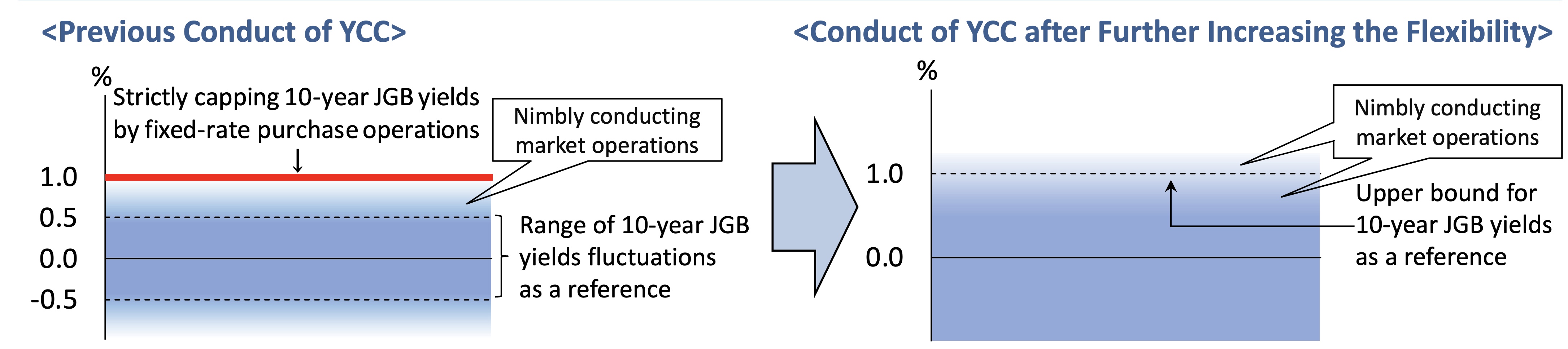
The BOJ is also very likely to leave their rate structure on hold, but questions keep arising regarding any other potential tweaks to the YCC framework.  However, given the relatively strong denials of anything like that from Ueda-san at the end of last week, I am inclined to believe they are comfortable where they are.  

Finally, a look down south shows that Brazil is forecast to cut the SELIC rate (their Fed funds equivalent) by 50bps to 12.75% with a handful of analysts calling for a 75bp cut.  Of course, inflation in Brazil has fallen from effectively 12% last summer to 4.65% now, so real rates are still remarkably high there which is the key reason the real has been such a great performer over the past twelve months, having risen ~8%.

The only market that is really showing much movement is oil, which is higher yet again this morning, by another 0.5% and now above $91/bbl.  It is becoming very clear that the OPEC+ production cuts are having the impact that MBS desired, with tightening supply meeting ongoing demand growth, despite slowing economic activity.  The one thing that should remain abundantly clear to all is that no amount of effort by Western governments to reduce demand for fossil fuels is going to have the desired impact as developing nations will not be denied their opportunities to improve their own economic situation and that generally takes access to energy.  To date, fossil fuels continue to prove to be the most cost-effective and efficient sources, so that demand will just not abate.  Oil prices are going to continue to head higher, mark my words.

And truthfully, on this rainy Monday morning in NY, that is pretty much all the excitement that we have ongoing.  The data this week is focused on Housing and expectations are as follows:

TuesdayHousing Starts1437K
 Building Permits1440K
WednesdayFOMC Rate Decision5.50% (current 5.50%)
ThursdayInitial Claims225K
 Continuing Claims1695K
 Philly Fed-1.0
 Existing Home Sales4.10M
 Leading Indicators-0.5%
FridayFlash PMI Manufacturing48.2
 Flash PMI Services50.6

Source: Bloomberg

A side note regarding the data is that the Leading Indicators Index is forecast to decline again, which will be the 17th consecutive decline, a very strong indication that future economic activity seems likely to suffer.  Of course, this is just one of the numerous signals of an impending recession (inverted yield curve, ISM/PMI sub 50.0, etc.) that have yet to play out as they have done historically.  Perhaps the UAW strikes will be enough to tip things over, especially if they widen in scope, but that seems premature. 

In addition, we are beginning to hear more about a potential government shutdown as the House has not yet completed its funding bills but my take here is that while the rhetoric may heat up, the reality is that a continuing resolution will be passed and that this is just another tempest in a teapot in Washington, SOP really.

When looking a little further ahead, I continue to see a far better chance that the Fed remains the most hawkish of the major central banks, and that higher for longer really means just that.  Economic activity elsewhere, notably in Europe and China, is suffering far more acutely than in the US, at least statistically, and that implies that this week’s rate hikes across the UK and the continent are very likely the end of the cycle.  I am not convinced that the Fed is done.  That combination leads me to continue to look for relative dollar strength over time.  For asset/receivables hedgers, keep that in mind.

Good luck

Adf

Resolutely

Said Jay to the world through the Press
We’ve certainly had some success
But patience is key
As resolutely
We stop any signs of regress

Does this mean that next time we meet
Our actions will be a repeat?
The answer is no
We’re not certain, though
We could if inflation shows heat

And what about Madame Lagarde
Have she and her minions been scarred
By Europe’s recession
Or will their suppression
Of growth lead to outcomes ill-starred

By this time, you are all almost certainly aware that the Fed raised the Fed funds rate by 25bps as widely expected.  You may not be aware that the FOMC statement was virtually identical, with only a change in the description of economic growth from ‘modest’ to ‘moderate’, apparently a slight upgrade.  This was made clear when Chair Powell, at the press conference, explained the Fed staff was no longer forecasting a recession in the US.  Perhaps the following Powell quote best exemplified the outcome of the meeting, “We can afford to be a little patient, as well as resolute, as we let this unfold,” he said. “We think we’re going to need to hold, certainly, policy at restrictive levels for some time, and we’d be prepared to raise further if we think that’s appropriate.”  

So, what have we learned?  I think we can sum it up by saying nothing has changed the Fed’s mindset right now.  They continue to focus on the fact that inflation remains above their target and will continue to implement policies that they believe will address that situation. 

The thing that makes this so interesting is everybody seems to have a different interpretation of what that implies.  The two broad camps are 1) this was the last hike as inflation continues to fall and they are already hugely restrictive compared to their historical activities; and 2) given the upgrade in economic forecast, and the fact that inflation seems set to remain higher than target for a long time yet, there are more hikes to come.Given the math that goes into the CPI data, it is quite easy to forecast Y/Y CPI if you assume a particular M/M figure for the next period of time.  BofA put out a very good chart showing the potential evolution of headline CPI going forward.

The implication here is that unless the M/M data falls to zero or negative, CPI is going to start climbing again.  The Fed clearly knows this as does the market.  The only disconnect is the question of how the Fed will respond in the various cases.  Remember, too, that oil and gasoline prices have risen 13.7% and 11.2% respectively in the past month.  The idea that the energy component of CPI will do anything but rise sharply this month seems absurd.  As such, I expect that the Fed will continue to lean toward another hike going forward.

The problem they have had is that the pass-through from Fed rate hikes to the economy has been greatly diminished by their previous policy of excessive ZIRP.  It is estimated that roughly 80% of US home mortgages have fixed rates below 4%, with half at 3% or less.  At the same time, the average duration of corporate debt has lengthened to 6.4 years as the refinancing activity that occurred during the ZIRP period saw extension of tenors widespread.  As such, other than the Federal government, who managed to shorten the duration of their outstanding debt during the period of ZIRP, most borrowers are in pretty good shape and not impacted by the Fed’s policies.  In fact, they are earning much more on their cash balances.  The point is, there is a case to be made that the Fed can maintain ‘higher for longer’ for quite a while without having a significantly deleterious impact on the economy.  Perhaps the soft landing is possible after all.

Now, if they continue to hike rates, and there are a number of analysts who believe we are heading to 6% or beyond, things may change.  We are already seeing a significant diminution of demand for bank loans, which while that may not bother large corporates, implies that the SME sector is going to break first.  Does the Fed care about them?  They will only care when the Unemployment Rate rises substantially.  This comes back to why I believe that NFP is still the most important data point, regardless of the inflation discussion.  Summing it up, the Fed will see two more CPI, PCE and NFP reports before they next meet on September 20th.  It is impossible, at this time, to estimate their actions with this much more data still to be digested.  However, if my inflation view is correct, that it will remain stickily higher, I see a very good chance of at least one more Fed funds rate hike.

A quick look across the pond shows that the ECB will be making their latest rate decision this morning with the market expecting a 25bp hike.  Unlike in the US, the OIS market is pricing in one further hike after today’s and then that will be the end of the cycle.  But…can Madame Lagarde continue to tighten policy if Europe is actually in a recession?  We already know that Germany is in a recession, and forecasts for Q2 GDP in Europe, to be released next week, are at 0.3%.  The Citi Economic Surprise Index remains mired at -136.7, a level only seen during Covid and the GFC, hardly the comparisons desired.  I believe it will be much tougher for an additional rate hike by the ECB unless the data story turns around quickly, and I just don’t see that happening.  Overall, it is this dichotomy in economic activity that underlies my bullish thesis on the dollar.

At any rate, the market response to the FOMC has been one of sheer joy.  Well, that and the fact that there are still some pretty good earnings results getting released, at least relative to recent expectations, if not on a sequential basis.  But it is the former that matters as that is what gets priced into the market.  So, equity markets, after yesterday’s breather in the US where they didn’t rise sharply, are mostly higher around the world.  Both the Hang Seng and Nikkei rallied nicely, and European bourses are quite robust this morning, with many exchanges higher by > 1%.  US futures, too, are in the green, with the NASDAQ showing great signs of strength.

Meanwhile, bond yields have edge a touch lower virtually everywhere with most of Europe seeing declines between 1bp and 2bps, although Treasury yields are less than 1bp lower this morning.  There appears to be little concern that Madame Lagarde is going to spoil the party and sound uber hawkish.  Even JGB’s are a touch softer, -0.4bps, as the market prepares for tonight’s BOJ announcement.  However, there is absolutely nothing expected out of that meeting.

In the commodity space, oil (+1.1%) is higher again this morning as are gold (+0.25%) and the base metals (CU +0.1%, Al +0.6%).  The soft(no) landing scenario seems to be gaining some traction here.  Either that, or the dollar’s weakness today, which is widespread, is simply being reflected as such.

Speaking of the dollar, it is definitely on its back foot as the market is essentially saying the Fed is done.  It is softer vs. the entire G10 bloc, with NOK (+1.05%) leading the way on the back of oil, but SEK (+0.9%) and NZD (+0.7%) also rising nicely alongside the commodity space.  Even the euro, which has no commodity benefit whatsoever, is firmer this morning by 0.5% as the market awaits Madame Lagarde.

In the emerging markets, the picture is similar with almost every currency firmer vs. the buck led by HUF (+1.1%) and ZAR (+0.8%).  The rand is clearly a commodity beneficiary, while the forint has gained after a story about the ECB being willing to consider Hungarian legislation that will avoid the need to recapitalize the central bank despite its recent losses.  Meanwhile, the laggard is KRW (-0.25%) which seems to have responded to the widening interest rate differential between the US and South Korea.

On the data front, we see Q2 GDP (exp 1.8%, down from 2.0% initially reported), Durable Goods (1.3%, 0.1% ex Transport), Initial Claims (235K) and Continuing Claims (1750K) along with several other tertiary figures.  There are no Fed speakers on the docket for the next week and I suppose that given the relative calm following yesterday’s meeting, there is not a great deal of near-term concern they need to change any views.  I suspect that if tomorrow’s PCE data surprises, we could start to hear more soon.

Today, the mood is risk on and sell dollars.  Barring a remarkable surprise from Lagarde, I would not fade the move.

Good luck

Adf

Baked in the Cake

A quarter is baked in the cake
Ere next time, when Jay takes a break
At least that’s the view
Of so many who
Get paid for, such statements, to make

The question, of course, is why Jay
Would wait, lest inflation’s at bay
The narrative, though,
Is all-in that low
Inflation is now here to stay

Well, it’s Fed Day so all focus will be there until this afternoon at 2:00 when the Statement is released and then, probably more importantly, at 2:30 when Chairman Powell begins his press conference.  Under the guise of a picture is worth a thousand words, I believe the next two charts, both unadulterated from Bloomberg are very effective at describing the current market expectations.  The first is a tabular and graphic depiction of the Fed funds futures market over the next year, which shows that today’s hike is fully priced in, and then there is a just under 50% probability of a hike either September or November.  After that, though, the market is convinced that Fed funds are going to fall, with more than 100 basis points of decline priced in through 2024.

Now, compare that to the second chart, the Dot Plot from the June FOMC meeting:

In truth, the two curves look pretty similar with perhaps the biggest difference the Fed’s current belief that they will absolutely hike twice before the end of 2023 rather than simply a 50% probability of such.  So, can we just assume this is the way things are going to be?  After all, if markets and the Fed agree on the same outcome, it seems likely to be realized, no?

Alas, this is where the narrative is based on crystal balls, not on data.  Whether it is the punditry or the Fed (or the FX Poet), nobody knows how things are actually going to play out.  One of the things that seems to be a throwaway line by every Fed speaker but is actually the most important part of the commentary is that their views are based on, ‘if the economy evolves as we expect it to.’  The problem is that the history of Fed prognostications is awful. 

Obviously, the most recent glaring error was the ‘inflation is transitory’ narrative that they peddled for a year while inflation was rising sharply for many very clear reasons.  Why we should think that their modelling prowess has improved since then is beyond me.  I have often opined that the problem for the Fed is that every one of their models is broken since they don’t accurately reflect the economy, not even a little bit.  Add to that the underlying premise which is that inflation is naturally at 2% and will head back there on its own, something with exactly zero empirical or theoretical support, and you have a recipe for policy errors.  

The latest policy error was the transitory delay, but perhaps the bigger problem for the Fed is the potential for a relatively unprecedented set of economic variables with higher than target inflation combined with slow economic activity yet low unemployment (due to the shrinkage of the labor force.). I don’t think their playbook has a play to address that problem and I fear that the politics of the outcome will have a disproportionate impact on any policies they implement.  If there is one thing of which we can be sure, it is that political solutions to economic problems are the worst kind with the longest-term negative impacts.  

It is for this reason that Powell’s press conference is so widely anticipated as that is where we will learn any new information.  But until then, I expect that markets will remain relatively benign.

A quick tour of the overnight session shows that there was no follow through to Monday night’s Chinese equity performance with the main exchanges in China and Japan all modestly lower.  Europe, however, is having a much tougher time this morning with the CAC (-2.0%) leading the way lower as concerns seem to be growing over the ongoing central bank tightening policies continuing into a recession.  There was vanishingly little data and no commentary of note, but we have seen some weaker than expected earnings numbers out of the continent, a sign that not all is well.  As to US futures, they are essentially unchanged at this hour (8:00) as investors await this afternoon’s Fed meeting.  I would be remiss, though, not to point out that there were several worse than expected earnings numbers, notably from Microsoft, which is a chink in the armor of the idea of infinite growth for AI.

Meanwhile, bond markets are under pressure in Europe with yields higher across the board there, on the order of 2.5bps to 3.5bps.  This appears to be a move based on expectations of continuing higher interest rates from the ECB.  Treasury yields, though, are unchanged on the day, and at 3.88%, currently sit right in the middle of the trading range we have seen for 2023.  As to JGB yields, they slipped 2bps last night with limited concern that Ueda-san is going to rock the boat tomorrow night.

Oil prices (-1.0%) are a bit softer, but this looks like a trading correction after a strong run higher rather than a fundamentally based story.  Base metals are also softer this morning as the Chinese inspired euphoria seems to have dissipated quickly while gold (+0.4%) is creeping higher despite rising yields and a modestly firmer dollar.  It appears to me there is an underlying bid to the yellow metal that will not go away regardless of the macro situation.

Finally, the dollar is slightly firmer this morning as risk aversion seems to be supporting the greenback.  JPY (+0.35%) is the G10 outlier on the plus side with the commodity bloc under the most pressure (AUD -0.7%, NOK -0.7%, SEK -0.5%).  In the emerging markets, THB (+0.7%) has been the best performer after a surprisingly positive Trade Balance with a large negative one anticipated.  However, the rest of the EMG space is mixed with some very weak currencies (HUF -1.0%, ZAR -0.9%) and some other modestly strong ones (BRL +0.4%, MYR +0.3%).  The forint story continues to revolve around central bank activity, with concerns they will ease policy with inflation still high, while the rand is simply suffering from its commodity basis.  Meanwhile, the real jumped after Fitch upgraded the country’s debt rating BB (stable) from BB-.

Ahead of the FOMC decision, we see New Home Sales (exp 725K) but that will be a nonevent given the afternoon’s agenda.  It is a fool’s errand to try to anticipate exactly how Powell will respond to the questions he receives, or even exactly how they will phrase their current views.  As such, today is one to watch and wait, then evaluate afterwards.

Good luck

Adf

Firmly On Hold

For now the Fed’s firmly on hold
While Powell made statements quite bold
It’s time to assess
How great is the mess
Created by stories we’ve told

This morning then, Christine is live
With certainty that twenty-five
Is how much she’ll hike
As she tries to spike
Inflation while growth she’ll still drive

To virtually nobody’s surprise, the Fed left policy rates on hold yesterday after what has been characterized by many as a hawkish pause.  This seems a fair assessment given the effort by Chairman Powell to stress that inflation remains too high and has not been falling as rapidly as they would like to see.  For instance, comments like the following during the press conference were quite clear:


“If you look at core PCE inflation over the last six months, you’re not seeing a lot of progress. It’s running at a level over 4.5%, far above our target and not really moving down. We want to see it moving down decisively, that’s all.”

“We’re two-and-a-quarter years into this, and forecasters, including Fed forecasters, have consistently thought inflation was about to turn down and typically forecasted that it would, and been wrong.”

“What we’d like to see is credible evidence that inflation is topping out and then getting it to come down.”


These were just some of the comments but give a flavor for what the mindset appears to be in the Eccles Building.  Looking at the dot plot, the median expectation is for two more rate hikes in 2023 and there were zero expectations of a rate cut.  The point is that higher for longer, which is what they have been preaching for upwards of a year, remains the mantra and given how robust the employment situation remains, they do not seem likely to change that view in the near term.  A quick look at the Fed funds futures market shows a market probability of 71% for a rate hike in July where things peak, and then pricing for a cut in January.  However, as I have maintained, I see inflation remaining quite sticky and the probability of a rate cut as far lower than that.


The market response was perfectly sensible in the bond market, where yields continue to climb, and the yield curve inversion increased to -91bps.  2-Year yields are now back to 4.73% as traders and investors price in a much higher probability that even if rates don’t rise much further, they are unlikely to fall back.  In fact, 10-Year yields around the world have all risen further as the global tightening cycle seems set to continue.  Recall, we saw Canada, Australia and now the Fed come out hawkishly and this morning the ECB is set to follow suit with a 25bp rate hike.  At this stage, there are no G10 central banks that believe they have solved the inflation problem…and they are right.


A quick look at European sovereign yields ahead of the ECB announcement shows they have risen between 5bps and 10bps this morning as there is clearly an expectation that after the extremely hawkish commentary from Powell yesterday, Madame Lagarde will be forced to follow suit.  In truth, that seems a reasonable expectation and when looking at the OIS market in Europe, expectations appear to be for another one or two hikes after today’s move.  Given that inflation remains sticky there too, that doesn’t seem far-fetched.


On last thing regarding central bank hikes is the Bank of England next week, where a 25bp hike is fully priced, but more impressively, an additional 4 hikes are priced in by the end of the year.  Inflation in the UK has clearly been even more problematic than in the Eurozone or the US, while the Old Lady has been lagging lately so this does make sense as well.


There are, though several places where tighter policy is not on the cards, namely China and Japan.  Starting with Japan first, YCC remains the current policy framework and there is no indication they are going to change things anytime soon.  10-year yields there remain well below the YCC cap and there is much more discussion regarding the potential for a snap election in Japan than about monetary policy.  The yen (-0.8%) is weakening further today as the more hawkish Fed combined with the continued dovishness of the BOJ weigh on the currency.  We’ve seen this movie before when the dollar ran up above 150 in October, and while that is still a long way from today’s price, the trend since March has been very clear.  Absent a major policy change from either the Fed or the BOJ, look for a weaker yen over time.


As to China, they did cut their Medium-Term Lending Facility rate by 10bps last night as widely expected although the currency did not really move as it was fully priced already.  However, the Chinese government is clearly flailing about for ways to support the economy without increasing the leverage that already exists.  The problem is that the PBOC toolkit, as well as the CCP toolkit, relies on centralized direction not market activity, and it appears that the limits of those policies are starting to be reached.  There is little reason to believe the renminbi is going to rebound in the short-term as a weaker currency is the only outlet valve they have.  Given measured inflation in China has been so low, I expect we can see a continued grind lower (dollar higher) in the second half of the year.  Think 7.50 by Christmas.


With all that news, US equity markets had a mixed picture yesterday with the NASDAQ continuing its run higher with a small (0.4%) gain, but the rest of the market under more pressure.  Chinese equities responded quite positively to the rate cut there with substantial gains, but the Nikkei was simply flat on the day.  And now, European bourses are in the red by about -0.7% with US futures also pointing lower.


Oil prices (+0.75%) are edging higher but that is after a reversal yesterday brought them back below $70/bbl.  There remains a great deal of controversy over just how badly demand is going to be hit given the lackluster Chinese economy and the huge split on views regarding the US and Europe with a recession call still quite popular although there are those who are now calling for a successful soft landing by the Fed.  Precious metals are a little less precious this morning as are base metals which are indicative of dollar strength I believe.  However, net, I would say the commodity space is more in the recession camp than not.


Finally, the dollar is stronger vs virtually all its EMG counterparts with HUF (-1.25%) the laggard as market participants take profits in anticipation of a rate cut from Hungary vs. the Fed’s tough talk.  But the bulk of the bloc is weaker across all three regions.  In the G10, while the yen is worst off, we are seeing weakness almost everywhere except NOK (+0.3%) which is clearly benefitting from oil’s modest rally.  Given the Fed’s unambiguous hawkishness, I suspect the dollar will remain better bid than not for a while yet.


On the data front, there is a lot coming today as follows:  Retail Sales (exp -0.2%, +0.1% ex autos); Initial Claims (245K); Continuing Claims (1768K); Empire Manufacturing (-15.1); Philly Fed (-14.0); IP (0.1%); and Capacity Utilization (79.7%).  At this point, the Retail Sales data is likely the most important as the discussion regarding a recession will hinge on whether or not economic activity is still improving.  Remember, though, this data is nominal, not inflation adjusted.  On a real basis, Retail Sales have been falling for 6 months straight, not a good sign.  As to the Fed speaking slate, nobody is on the calendar today, but we will hear from three (Bullard, Waller and Barkin) tomorrow, with all likely to be focused on reiterating the hawkish message.


A hawkish Fed bodes well for the dollar going forward, so unless (until?) something in the US economy breaks, my money is on higher rates and a stronger dollar.


Good luck

Adf

Which One Means More?

The question is, which one means more?
The headline inflation? Or core?
The former declined
But please bear in mind 
The latter rose more than before

Which brings us today to the Fed
Where skipping a rate hike is said
To be what they’ll try
Then come late July
Will hike ere more water they tread

By now you are all aware that CPI’s release yesterday was a bit of a mixed bag with the headline number falling slightly more than expected to 4.0% while the core (ex food & energy) fell slightly less than expected to 5.3%.  As always, my go-to source on inflation is @inflation_guy, who in yesterdays’ post clearly laid out that there is very limited evidence that core inflation is going to decline sharply from these levels anytime soon.  In a nutshell, the key issue is that the housing portion of the index remains robust and that represents slightly more than one-third of the entire reading. 


Ask yourself the following question; why would a landlord reduce his asking rents if his costs are rising (taxes and maintenance) and his potential customers are all seeing wages rise healthily, at least as per measured by the BLS and the Fed?  Of course, the answer is that landlord is unlikely to reduce rents, but rather raise them, and that is not going to feed into lower inflation.  One other thing to note is the price of energy, which was the key driver of the decline in headline CPI, has the earmarks of a bottom here.  Not only have we seen production cuts from OPEC+, but it appears the Biden administration is beginning the process of finally refilling the SPR which means they have likely mapped the bottom of oil prices which have rebounded more than 5% from the lows seen Monday after the news broke.


As expected, the equity market took this news as a huge positive and continued its recent rally as it is almost certain that the Fed will be holding rates unchanged when they announce their policy update this afternoon.  The Fed funds futures market has reduced its pricing for a rate hike to just 9% this morning although the implied probability of a hike in July has risen to 71% now.  As an aside, the futures market is still pricing in the first rate cut by December or January 2024, although I suspect we will need to see a more significant decline in economic activity with much higher Unemployment for that to come to fruition.


This afternoon’s FOMC statement, and more importantly Chairman Powell’s press conference are the next critical features for the market.  There is much talk of this being a ‘hawkish pause’ where they will not change rates but really play up the still hot core inflation data to make sure that everyone knows they are not going soft on inflation.  As I have repeatedly explained, I continue to look at NFP as the most critical data point these days because as long as that number keeps printing solidly and beating expectations, the Fed will not be overly concerned a recession is coming and will feel comfortable tightening further if inflation starts to tick higher again.  And so, at this time, all we can do is wait for the outcome at 2pm.


Ahead of that, here’s what’s been happening:  risk has largely been in favor as yesterday’s US equity rally was followed by strength in Japan (+1.5%) and Australia (+0.3%) although many other APAC markets, notably China and South Korea, fell.  The China situation is quite interesting as there is news that the Chinese government has convened several meetings with business leaders to get ideas as to how to improve the economy there.  Not surprisingly, according to a Bloomberg story, the discussions focused on more market-oriented actions and less state planning as well as better coordinated fiscal and monetary policy stimulus.  My guess is that President Xi is not keen to let the market do the work as he will not control that, so it will be interesting to see how things there progress.  Meanwhile, European bourses are all much stronger this morning, even the FTSE 100 (+0.6%) despite a modestly weaker than expected set of GDP and IP data being released.  And of course, US futures continue to edge higher, at least NASDAQ futures do, although it would be quite surprising to see any large movement ahead of the FOMC this afternoon.


Of much greater interest to me is that bond yields rose so sharply yesterday with 10yr Treasuries rising 7 bps yesterday and another 1.5bps this morning, despite (because of?) the CPI data being soft.  The curve inversion remained essentially unchanged at -85bps, so I guess the story I saw that might have been the driver was when Treasury secretary Yellen was asked in Congressional testimony about the Fed and Treasury being prepared if China were to liquidate their entire portfolio of Treasuries, which is ~$875 billion.  That seems highly unlikely to me, but I guess anything is possible.  European sovereign yields are also rising after gains yesterday, which seems at odds with the equity markets that clearly believe in lower inflation.  Things are quite confusing these days.  As well, there will be much attention paid to China tonight to see if the PBOC follows through with a 10bp rate cut in the 1yr lending facility, or perhaps, if they are concerned about economic weakness, opts for more.


As mentioned, oil prices continue to rebound, pushing back to $70/bbl while gold got crushed yesterday seemingly in response to the rise in Treasury yields.  This morning the barbarous relic is ever so slightly firmer but in a bigger picture view, remains relatively unchanged over the past month.  Copper has continued its recent countertrend rally, but I expect that we will need to see real signs of an economic rebound for the red metal to get back to levels seen earlier this year above $4.00/pound.


Finally, the dollar remains under modest pressure overall, sliding about 0.25% against most of its G10 counterparts and a bit further against several EMG currencies.  Notably, ZAR (+1.0%) is the best performer today, after a solid Retail Sales print this morning.  As well, we see PLN (+0.7%) rising on rising zloty yields after the government increased the budget deficit on increased spending.  On the downside, KRW (-0.55%) is the laggard, falling after several days of a sharp rally has led to profit-taking.


Ahead of the Fed, we see PPI this morning (exp 1.5%, 2.9% ex food & energy) although that seems anti-climactic after yesterday’s CPI.  Add to that the Fed is coming and I cannot believe it will have any impact at all.


So, it is all about the Fed and how they sound since it seems pretty clear that they will not be adjusting rates today.  Look carefully at the dot plot as well, for clues to their forward-looking beliefs.  As to the dollar’s response, nothing has changed my big picture view that higher rates here will continue to support the greenback.


Good luck

Adf

Views Will Be Tested

When looking ahead to this week
With data and central bank speak
Some views will be tested
And some have suggested
The market is reaching its peak

But there is a growing belief
The future (that’s AI in brief)
Is shiny and bright
And stocks will take flight
Beware though, it could lead to grief

First a correction to Friday’s note regarding the blip lower in oil prices.  It was not inventory data but a story on a relatively obscure website, Middle East Eye, (h/t @inflation_guy) that discussed a seeming breakthrough in US-Iran talks that would allow Iran to export up to 1 million bbl/day in exchange for an agreement to slow their Uranium processing.  However, the story was vehemently denied by both the Iranians and the US and has been consistently denied since then by both sides repeatedly.  Now, I am of two minds on this story as denials of this extremity tend to point to some reality underlying the situation, but politically it would seem very difficult for the Biden administration to be seen to be negotiating with Iran heading into an election.  Regardless of the driver though, oil (-2.2%) is falling sharply again today with WTI below $69/bbl now.  This continues to point to the dichotomy of commodity markets sensing significant global slowing in growth while the equity markets see the world growing gangbusters.  Both sides cannot be correct, so at least one set of markets will need to adjust going forward.


Meanwhile, after an extremely lackluster week regarding new information, this week is exactly the opposite with critical data points like CPI as well as three major central bank meetings, Fed, ECB and BOJ.


Tuesday

NFIB Small Biz Optimism

88.4


CPI

0.2% (4.1% Y/Y)


-ex food & energy

0.4% (5.2% Y/Y)

Wednesday

PPI

-0.1% (1.5% Y/Y)


-ex food & energy

0.2% (2.9% Y/Y)


FOMC Rate Decision

5.25% (unchanged)

Thursday

ECB Rate Decision

3.50% (0.25% increase)


Initial Claims

250K


Continuing Claims

1787K


Retail Sales

-0.1%


-ex autos

0.1%


Empire Manufacturing

-15.1


Philly Fed

-13.0


IP

0.1%


Capacity Utilization

79.7%


Business Inventories

0.2%

Friday

BOJ Rate Decision

-0.1% (unchanged)


Michigan Sentiment

60.1

Source: Bloomberg


So, clearly, we have a lot to absorb this week although today is lacking in new news.  A quick look at the PPI data shows why there is a growing cadre of people who are in the ‘inflation is over’ camp, as the Y/Y data is collapsing back to levels with which we are more familiar over the past decades.  However, I would highlight that core CPI remains well above the Fed target with only a very slow decline ongoing.  I remain in the sticky inflation camp on the basis of both personal experience and the fact that a critical part of the statistic, housing, is not actually showing any real declines.  Here is a link to an excellent article that helps explain the fact that rents are not declining very much at all, in reality, and if housing costs continue to climb, so will CPI.


I think the real question is what will happen if the CPI number is hot, say 5.5% core and showing no indication that the much hoped for slowing is ongoing?  How will the Fed respond the following day?  Remember, the market is largely priced for a pause skip with a 27% probability of a rate hike currently in the futures market, although an 80% chance of one by next month.  However, we all thought Australia was done and they hiked last week.  We all thought Canada was done and they hiked last week.  Will the Fed be willing to ‘surprise’ the market if the data points to continuing inflation pressures? 


This is especially timely as this morning there was a story in Bloomberg explaining that the idea that wage pressures are driving inflation is losing credence with a far less certain outlook on that prospect.  Essentially, a Fed paper was published explaining that while wages and inflation are correlated, the direction of causality, if there is one, is not clear.  That seems like a way for the Fed to be able to pivot their views to a different underlying cause and given housing’s huge importance to the total CPI number, ongoing rises in rentals would certainly be a concern.  One thing we do know is that if the CPI data come out soft, the equity market will rocket higher, at least initially, as the working assumption will be that the Fed is done.  Like I said, lots to anticipate this week.


As to today, the bulls remain in control as Friday’s very modest US rally saw Asia follow higher and Europe currently showing gains on the order of 0.5% – 0.6%.  US futures are following suit, with NASDAQ futures up 0.5% at this hour (7:45) and leading the way.


Treasury yields are little changed this morning with the yield up just 1bp although European sovereign yields are all lower, especially Italy (-5.6bps) after the news that former Italian PM, Silvio Berlusconi, passed away overnight.  As he was still quite active in Italian politics and a key force in the Forza Italia party, the story is that his passing will have removed some anxiety from markets and allow the Bund – BTP spread to narrow further still.  Perhaps of more interest is the increasing inversion in the 2yr-10yr portion of the curve, now back to -86bps, and a direct result of the massive amount of Treasury issuance that has been happening since the debt ceiling was removed.  In fact, today there are auctions for 3m, 6m and 1y bills and 3y and 10y notes to the tune of $278 billion, a huge amount of supply.  Do not be surprised if the curve inversion continues further.


Finally, looking at the dollar, it is generally, though not universally softer.  Given oil’s decline, it is no surprise that NOK (-0.35%) is the G10 laggard, but there is also a bit of weakness in the CHF (-0.25%) on the back of a slight decline in Sight Deposits there.  Meanwhile, the rest of the bloc is modestly firmer with no outsized gainers.  In the EMG bloc, ZAR (+1.1%) continues its recent strength, having rallied 7% this month on continued belief that the electricity situation in the country is getting better.  But away from that, and the fact that TRY (-0.7%) continues to slide, the rest of the bloc appears to be awaiting the upcoming onslaught of news this week.


I have a sense that by the end of this week, we may have new marching orders from the markets.  I would not be surprised to see a hot CPI print get the Fed to hike instead of skipping and if we see something like that, I would look for the dollar to test its recent resistance levels and potentially break through.  Correspondingly, if CPI is soft, I imagine the market will assume the Fed is done, and we will see equities rally with the dollar falling, at least for the first leg of the move.  We shall see starting tomorrow.


Good luck

Adf

Ready to Pop

Investors are having some trouble
Determining if the stock bubble
Is ready to pop
Or if Jay will prop
It up, ere it all turns to rubble

So, volatile markets are here
Most likely the rest of this year
Then, add to this fact
A Russian attack
On Ukraine.  I’d forecast more fear

One has to be impressed with yesterday’s equity markets in the US, where the morning appeared to be Armageddon, while the afternoon evolved into euphoria.  Did anything actually change with respect to information during the day?  I would argue, no, there was nothing new of note.  The proximate cause of the stock market’s decline appeared to be fear over escalating tensions in the Ukraine.  Certainly, that has not changed.  Russia continues to mass troops on its border and is proceeding with live fire drills off the coast of Ireland.  The Pentagon issued an order for troops to be ready for rapid deployment, which Russia claimed was fanning the flames of this issue.  While the key protagonists continue to talk, as of yet, there has been no indication that a negotiated solution is imminent.  With that in mind, though, today’s market reactions indicate somewhat less concern over a kinetic war.  European equity markets are all nicely higher (DAX +0.6%, CAC +0.8%, FTSE 100 +0.75%) and NatGas in Europe (-2.4%) has retraced a bit of yesterday’s surge.  Granted, these reversals are only a fraction of yesterday’s movement, but at least markets are calmer this morning.

However, one day of calm is not nearly enough to claim that the worst is behind us.  And, of course, none of this even considers the FOMC meeting which begins this morning and from which we will learn the Fed’s latest views tomorrow afternoon.  The punditry is virtually unanimous in their view that the first Fed funds hike will come in March and there will be one each quarter thereafter.  In fact, if there are any outliers, they expect a faster pace of rate hikes with five or more this year as the Fed makes a more concerted effort to temper rising prices.

Now, we have not heard from a Fed speaker since January 13th, nearly two weeks ago, although at that time there was a growing consensus that tighter policy needed to come sooner and via both rate hikes and balance sheet reduction.  But let’s take a look at the data we have seen since then.  Retail Sales were awful, -1.9%; IP -0.1% and Capacity Utilization (76.5%) both disappointed as did the Michigan Sentiment indicator at 68.8, its lowest print since 2011.  While the housing market continues to perform well, Claims data was much higher than anticipated and the Chicago Fed Activity Index fell sharply to -0.15, where any negative reading is seen as a harbinger of future economic weakness.  Finally, the Atlanta Fed’s GDPNow indicator has fallen to 5.14%, down from nearly 10% in December.  The point is, the data story is not one of unadulterated growth, but rather of an economy that is struggling somewhat.  It is this issue that informs my decision that the Fed is likely to sound far more dovish than market expectations tomorrow,  The policy error that has been discussed by the punditry is the Fed tightening policy into an economic slowdown and exacerbating the situation.  I think they are keenly aware of this and will move far more slowly to tackle inflation, especially given their underlying view that inflation is going to return to its previous trend on its own once supply chains are rebuilt.

For now, barring live fire in Ukraine, it seems the market is quite likely to remain rangebound until we hear from Mr Powell tomorrow afternoon.  As such, it is reasonable to expect a bit less market volatility than we saw yesterday.  But, do not discount the fact that markets remain highly leveraged in all spaces and that the reduction of high leverage has been a key driver of every market correction in history.  Add that to the fact that a Fed that is tightening policy may push rates to a point where levered accounts are forced to respond, and you have the makings of increased market volatility going forward.  While greed remains a powerful emotion, nothing trumps fear as a driver of market activity.  Yesterday was just an inkling of how things may play out.  Keep that in mind as we go forward.

Touring the markets this morning, while Europe is bouncing from yesterday’s movement as mentioned above, Asia saw no respite with sharp declines across the board (Nikkei -1.7%, Hang Seng -1.7%, Shanghai -2.6%).  US futures, too, are under pressure at this hour with NASDAQ (-1.7%) leading the way, but the other main indices much lower as well.

Looking at bond markets, European sovereigns are all softer with yields backing up as risk is re-embraced (Bunds +2.1bps, OATs +1.4bps, Gilts +4.4bps) as are Treasury markets (+0.7bps), despite the weakness in equity futures.  Bond investors are having a hard time determining if they should respond to ongoing high inflation prints or risk reduction metrics.  In the end, I continue to believe the latter will be the driving force and yields will not rise very high despite rising inflation.  The Fed, and most central banks, are willing to live with rising prices if it means they can stabilize bond yields at relatively low levels.

In the commodity markets, oil (+0.1%), after falling sharply from its recent highs yesterday has rebounded slightly.  NatGas (-1.4%) in the US is also dipping although remains right around $4/mmBTU in the US and $30/mmBTU in Europe.  Gold (-0.25%) and Copper (-0.3%) continue to consolidate as prospects for weaker growth hamper gains of the latter while uncertainty over inflation continue to bedevil the former.

As to the dollar, it is stronger for a second day in a row today, with substantial gains against both G10 (NOK -0.7%, CHF -0.7%, SEK -0.6%) and EMG (PLN -0.75%, RON -0.5%, MXN -0.45%) currencies.  Clearly, the Ukraine situation remains a problem for those countries in proximity to the geography, while Mexico responds to slightly disappointing GDP growth data just released.  But in the end, the dollar remains the haven of choice during this crisis and is likely to remain well bid for now.  However, if, as I suspect, the Fed comes across as less hawkish tomorrow, look for the greenback to give up some of its recent gains.

This morning brings only second tier data; Case Shiller Home Prices (exp 18.0%) and Consumer Confidence (111.1).  So, odds are that the FX market will continue to take its cues from equities, and if the sell-off resumes in stocks, I would expect the dollar to remain firm.  For payables hedgers, consider taking advantage of this strong dollar as I foresee weakness in its future as the year progresses.

Good luck and stay safe
Adf

Selling Aggression

There once was a time when the dip
Was what people bought ere the rip
As equity prices
Would brush off all crises
And FAANGs showed incredible zip
 
But this year there is a new theme
That’s more like a nightmare than dream
The end of each session
Sees selling aggression
As bearishness moves to mainstream
 
There has been an evolution in the market narrative recently that is growing in strength.  After a very long period where BTFD (buy the f***ing dip) was the mantra of algorithms and day traders alike, backed up with don’t fight the Fed, it seems that market price action has turned around to sell every rally you see.  While there is not yet an acronym in place (and I’m sure there will be one soon, perhaps AS for Abandon Ship), what has become abundantly clear is that the sentiment that inflated the broad asset bubble in which we have been living is starting to change.
 
Arguably, the Fed is the cause of this change, which is to be expected as it was their monetary policies that inflated the everything bubble in the first place.  Consider that since the GFC, the Fed has increased the size of its balance sheet by $8 trillion, and the US economy has expanded by another $7.3 trillion (already a problem that the balance sheet grew faster than the economy), while the S&P500 has grown by $28.2 trillion, nearly twice as fast again.  It is certainly difficult to continue to justify the valuation premiums attributed to the equity market if there are any concerns about future growth rates.  And there are plenty of concerns about future growth rates, especially if the Fed is true to its word and actually tightens monetary policy.   
 
The upshot is that investors have been paying an increasing premium for the same dollar of earnings during the past 14 years and we appear to be reaching the breaking point.  The key thing to remember about markets is that their behavior in a rally and in a decline tend to be very different.  Rallies are made of steady, albeit sometimes sharp, moves higher with much buying at the end of each session to insure that asset allocators have their proper proportions in various sectors.  Declines are characterized by mayhem, where sellers often seek to sell anything that is liquid and as quickly as possible.  So, in the vernacular, stocks ride the escalator up and fall down the elevator shaft.  And quite frankly, having witnessed some of the biggest market declines in history (Oct 1987 anyone?) price action recently has started to take on those negative characteristics. 
 
Just think, too, this is happening before the Fed has actually even begun to tighten.  In fact, this week, their balance sheet rose to a new record high!  How will things perform when they actually raise rates, let alone start to allow the balance sheet to shrink.  For those of you who disagree with my thesis that any Fed tightening will be small and short-lived, this market reaction function is exactly how I have arrived at my conclusions.
 
Earlier this week I explained that I believe we are at peak Fed hawkishness, where market expectations have moved to the first (of four) rate(s) hike in March (some calling for 50bps) while balance sheet reduction (QT) will start this summer and proceed to the tune of $40-$60 billion per month thereafter.  Arguably, QT will be much more damaging to the equity markets than a 50-basis point rise in Fed funds, but neither will help.  Many analysts believe that next week’s FOMC meeting will result in a clear timetable for the Fed’s future actions, but I disagree.  Between the recent equity decline and the softening data, the Fed will not want to lock itself into a tightening schedule.  As I wrote earlier, look for Wednesday’s meeting to appear dovish compared to current expectations.  However, that is unlikely to help change risk attitudes that much.
 
Risk is off and has further to go.  Yesterday’s US price action was abysmal as equity markets were higher all day until the last hour and then turned around and fell between 1.5%-2.0% to close with sharp losses.  Asia generally followed that line of reasoning with both the Nikkei (-0.9%) and Shanghai (-0.9%) falling although the Hang Seng was unchanged on the day.  In fact, the Hang Seng was the only bright spot around.  Europe is much softer (DAX -1.6%, CAC -1.4%, FTSE 100 -0.9%) with the only data being weaker than expected Retail Sales in the UK (-3.7%, exp -0.6%).  It can be no surprise that US futures are also under pressure, with the NASDAQ (-0.7%) leading the way at this hour, but all in the red.
 
Remember when the bond bears were certain that the 10-year was getting set to trade through 2.0%?  Yeah, me too. Except, that is not what is going on as this morning, the 10-year Treasury has seen yields decline by another 1.6bps, taking it more than 10bps from its recent high yield.  European bonds are rallying as well with Bunds (-3.0bps), OATs (-2.2bps) and Gilts (-2.4bps) all behaving as havens this morning, and even the PIGS’ bonds performing well.  It is abundantly clear that heading into the weekend, the marginal investor does not want to own risky assets.
 
Today’s risk-off theme is alive and well in commodities too with oil (-1.9%) leading the way lower but weakness in precious metals (Au -0.3%, Ag -0.4%) and industrials (Cu -1.8%, Al -0.8%).  The only outlier is NatGas (+2.8%) which based on the 13-degree temperature at my house this morning seems driven by the weather and not risk.
 
Finally, looking at the dollar this morning it is difficult to discern a strong theme.  In the G10, gainers and losers are split 5:5 with the commodity currencies (AUD -0.4%, NZD -0.4%) leading the way lower while the financials (CHF (+0.4%, SEK +0.35%) are rising.  Given commodity price weakness, this should not be that surprising.  As to the financial side, with Treasury yields declining, those suddenly seem more attractive.
 
However, that same thesis does not appear to be valid for the EMG bloc where the leading gainers (ZAR +0.5%, CLP +0.4%, MXN +0.3%) are all commodity focused while the laggards, aside from TRY which has its own meshugas (look it up), are all commodity importers (TWD -0.25%, THB -0.25%, HUF -0.2%).  In other words, it is difficult to tell a coherent story about the FX markets right now although the one thing that is very clear is that volatility across virtually all currencies has been moving higher.  Old correlations seem to be breaking down, which is leading to the increased volatility we are observing.
 
On the data front, only Leading Indicators (exp +0.8%) are due this morning at 10:00.  Yesterday’s US data was kind of awful with Initial and Continuing Claims both printing far higher than forecast (although attributed to omicron’s impacts) while Existing Home Sales also fell far more than expected which was attributed to a lack of inventory.  However, I would contend that the US growth trajectory is definitely pointing lower as evidenced by the Atlanta Fed’s GDPNow Forecast which is currently at 5.14%, down from 9.7% just one month ago. 
 
As we all await next week’s FOMC meeting, the dollar’s cues are likely to continue to come from the equity markets, and given how poor they currently look, if nothing else, I expect the haven currencies to continue to perform reasonably well.
 
Good luck, good weekend and stay safe
Adf