
We’re back to the Strait of Hormuz
As driver to all traders’ views
Both Trump and Iran
Have proffered a plan
But really, they mostly confuse

The, otherwise, story of note
Is coming as CPI’s quote
If hot, Chairman Warsh
Will field comments, harsh
If cool, he’ll be able to gloat
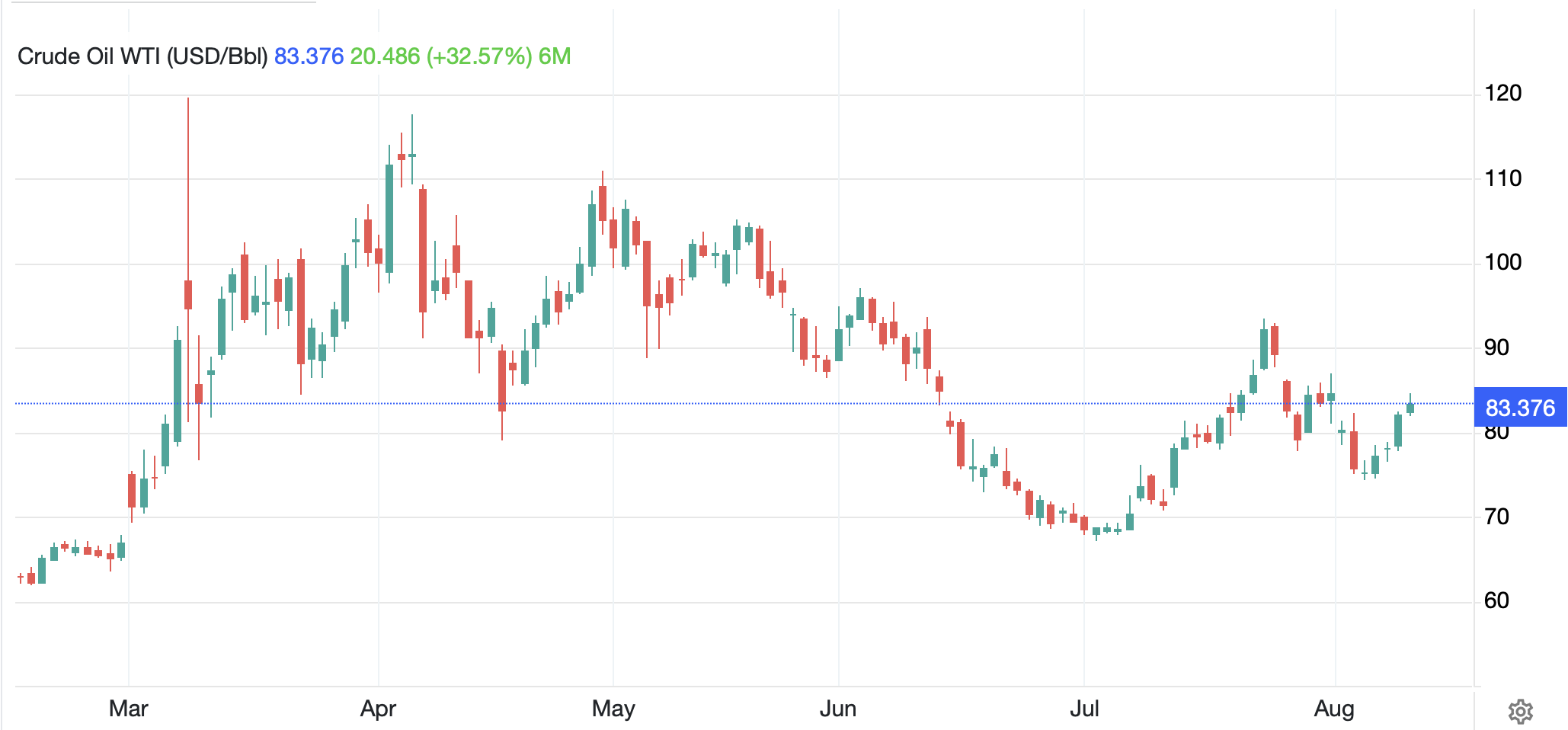
Oil prices (+1.5%) are higher again this morning and have now been up five consecutive sessions, rising 10% in that run as you can see in the chart below.
Source: tradingeconomics.com
There is a theory that the rhetoric in Iran increases when they have oil to sell so need higher prices, but once those cargoes have been sold, they talk peace again. I don’t think you can rule out that hypothesis although I certainly have no corroborating evidence it’s true. The one thing I did note yesterday is an Iranian comment that as long as sanctions remain, diplomacy cannot happen which tells me that economic sanctions are biting harder. Whatever, the situation on the ground (or water) is over there, I have no insight per se.
Much has been made over the fact that the SPR is at its lowest level since 1983 and has fallen below 300 million barrels with all the attendant pearl clutching while simply ignoring the fact that the SPR releases have been oil swaps with the back ends starting to come back in the next several months in greater amounts than have been released. Maybe the end is nigh regarding oil, and the doomsters will get their $200/bbl outcome, but I would still take the under there.
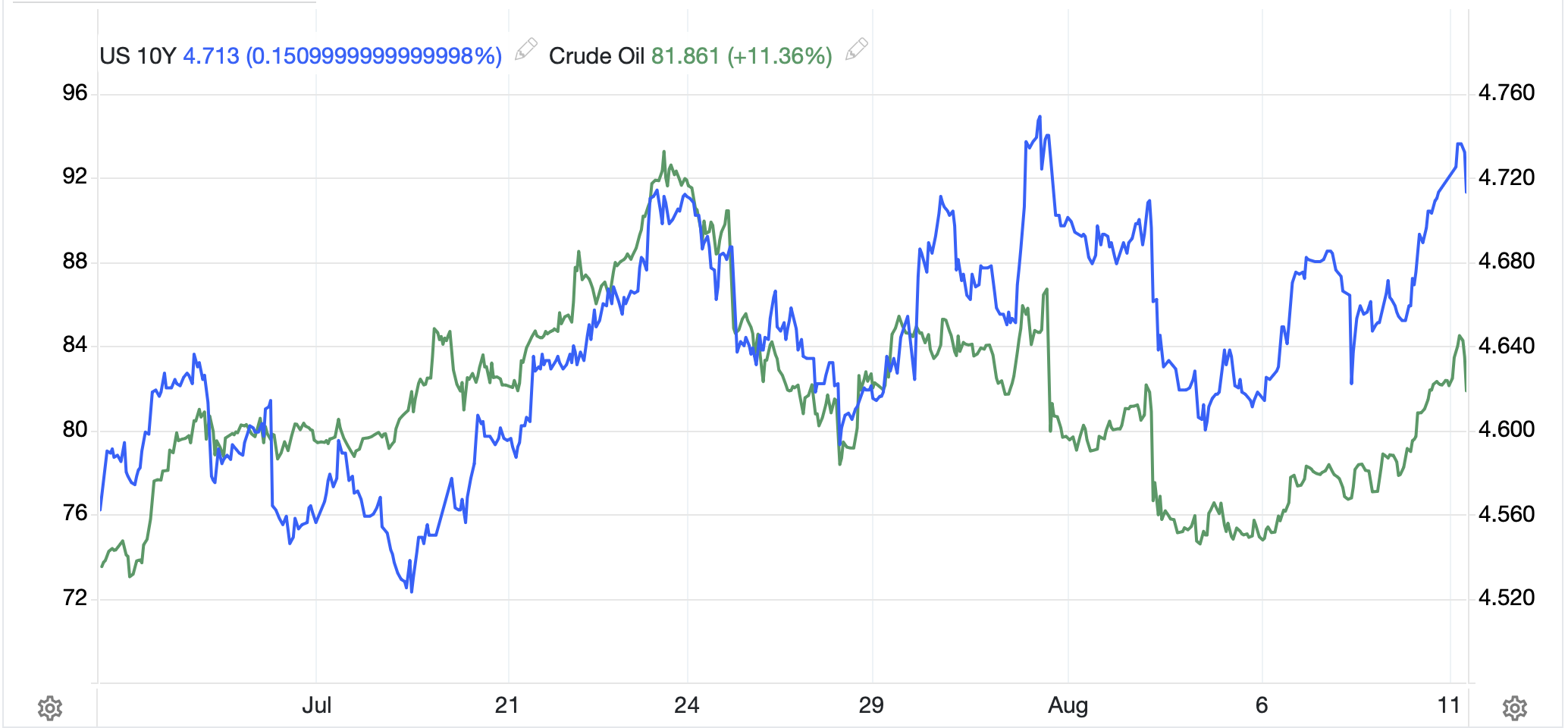
In sync with the oil price rise we have seen yields rise, as well (see chart below), around the world. But here, it appears that Chairman Warsh is the favored scapegoat for all the world’s inflation problems. To hear his critics explain, if only he would give us forward guidance, everything would be fantastic. Hedge funds could load up on leverage and increase their profits, real money investors would be comfortable that future real returns would be acceptable and, most importantly, the punditry would be able to explain all this to us plebes and burnish their beliefs in their own brilliance.
Source: tradingeconomics.com
But I wonder if there is not another explanation for rising yields that has nothing to do with the Fed, the idea that debt issuance, from both government and private sources, is growing dramatically and all that supply is weighing on prices, hence driving up yields. We already know that governments around the world continue to issue debt willy-nilly, so there is nothing to discuss there. But now the AI hyper scalers are issuing massive amounts of debt to pay for all the GPUs and data centers and power as the race to “win” in AI continues at an increasing pace.
It is, of course, this last issue which has many pundits explaining that QE will soon reemerge as the only viable way for all that debt to get bought. If central banks buy government debt that will leave funds for private investors to buy AI related debt. And maybe that is the way it will work out although Chairman Warsh has thus far only discussed shrinking the balance sheet, not expanding it.
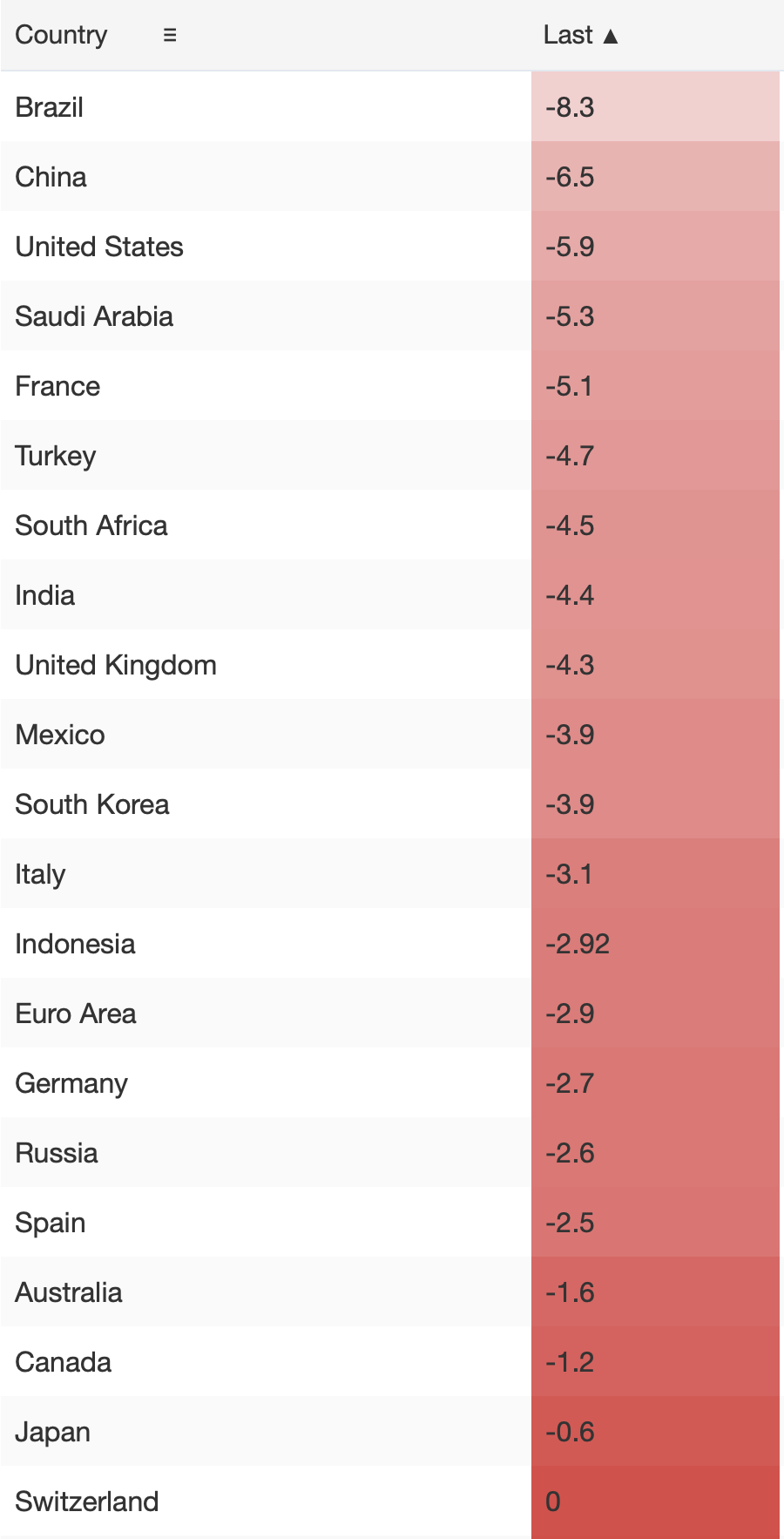
Please understand I am not ignoring the many serious problems that exist within the current fiscal and monetary frameworks around the world. Government spending remains excessive as evidenced by the fact that virtually every nation in the world is running significant budget deficits as per the below table from tradingeconmics.com (notice China, a country that seems to get a pass on this score from the punditry).
All I am saying is that the idea that all of this is going to fall apart quickly is highly improbable. As much as purists would like for there to be consequences for bad policy decisions, governments everywhere have an enormous number of tools to delay the pain, and they use them all the time. Whether that is subsidies or tax cuts or regulations prohibiting competition, all these things substitute short-term gains for long-term problems. But they will still be used regularly.
So, to recap, increasingly hawkish rhetoric on the Iran situation has driven oil prices higher which is increasing inflation concerns. Adding to that is the ongoing fiscal profligacy of virtually every major government which is also weighing on bond prices and driving yields higher in sync. And basically, the punditry has decided it’s all Kevin Warsh’s fault. Too much will be made of tomorrow’s CPI report, whether it is hot or cool, that is the one things of which I am certain.
Ok, yesterday’s lackluster US session with all three major indices slipping a bit was followed by weakness in China (-0.8%) and HK (-1.1%) but elsewhere in Asia, things were mixed with Korea (+0.7%) gaining and the other regional bourses generally +/-0.5% or so. Tokyo was closed for Mountain Day and the only other news of note from the region was the RBA left rates on hold at 4.35%, as expected, but expressed concerns about both slowing growth and future inflation. Interestingly, Australian stocks were slightly higher despite that news, +0.2%.
In Europe, Spanish stocks (+0.5%) are the leader on the strength of Banco Santander’s share repurchase announcement while the rest of the continent and the UK are little changed. As to US futures, at this hour (7:35) they are little changed.
While we have broadly discussed bond yields rising, and yesterday they were higher by 4bps-5bps in the US and Europe, this morning they are unchanged across the board. Now, they were higher again this morning when I started to write, but it seems there was just a comment from Pakistan that the US and Iran are close to an agreement which has turned things around. Oil prices, too have slipped back to unchanged on the day from an hour ago.
In the metals markets, gold (-0.2%) and silver (-0.9%) are backing off solid sessions yesterday and copper (+0.8%) continues to march higher.
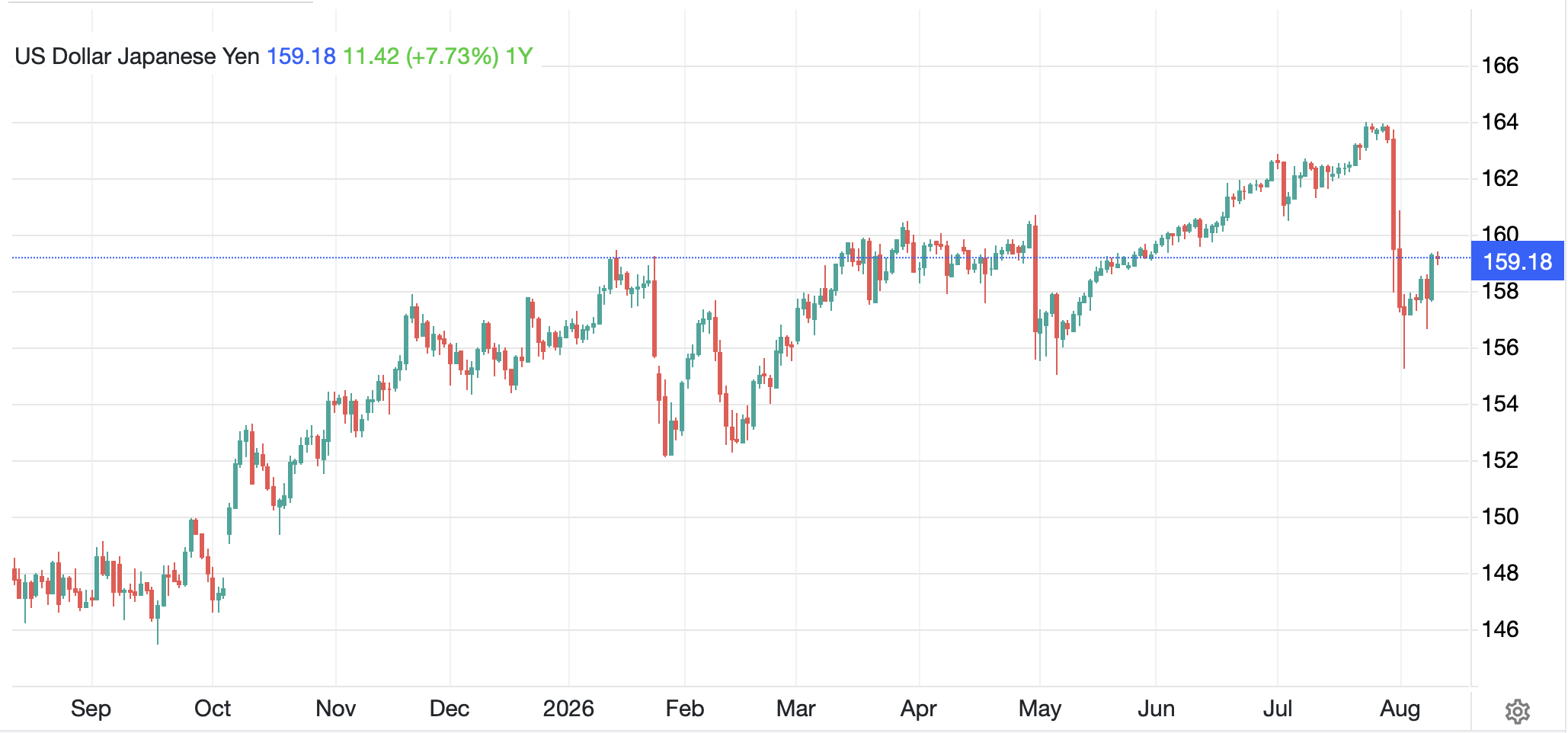
Finally, the dollar is, net, little changed this morning, although we cannot ignore the fact that the yen fell -1.0% during yesterday’s session. In fact, a look at the yen chart continues to show the market response to intervention, an immediate rally and a gradual decline resuming.
Source: tradingeconomics.com
As to the rest of the space, KRW (+0.3%) is the actual largest mover today, and that is not enough of a move to spin any story. The DXY remains just below 100 and firmly within its yearlong trading range and some pundits are saying the fact that it is not rallying during the current conditions, with yields rising and fear all about, is an indication that the dollar is losing its status. However, I am confident if you offered those same pundits payment in dollars, they would grab them as greedily as possible!
On the data front, this is inflation week plus a few more things as follows:
| Today | Existing Home Sales | 4.05M |
| Wednesday | CPI | 0.1% (3.4% Y/Y) |
| Ex food & energy | 0.2% (2.5% y/Y) | |
| Thursday | Initial Claims | 202K |
| Continuing Claims | 1800K | |
| PPI | 0.2% (4.9% Y/Y) | |
| Ex food & energy | 0.3% (4.2% Y/Y) | |
| Friday | Retail Sales | 0.1% |
| -ex autos | 0.2% | |
| Michigan Sentiment | 54.5 |
Source: tradingeconomics.com
Obviously, all eyes will be on CPI tomorrow as investors and analysts look for clues as to how the Fed may behave going forward. Speaking of the Fed, Cleveland Fed president Hammack said in an interview yesterday that she thought the Fed needed to raise rates more than 25bps to get inflation under control. But as I think about the Fed and its dual mandate, of maximum employment and stable prices, I cannot help but wonder what they consider maximum employment. While they have defined stable prices (incorrectly in my view) as Core PCE rising 2.0% per annum, they have never tied themselves to a number on employment. So, here’s a thought. Look at the Labor Force participation rate, which as per the data last Friday fell to 61.4%, that is the lowest level since 1975 (excepting Covid) as per the below chart from FRED.
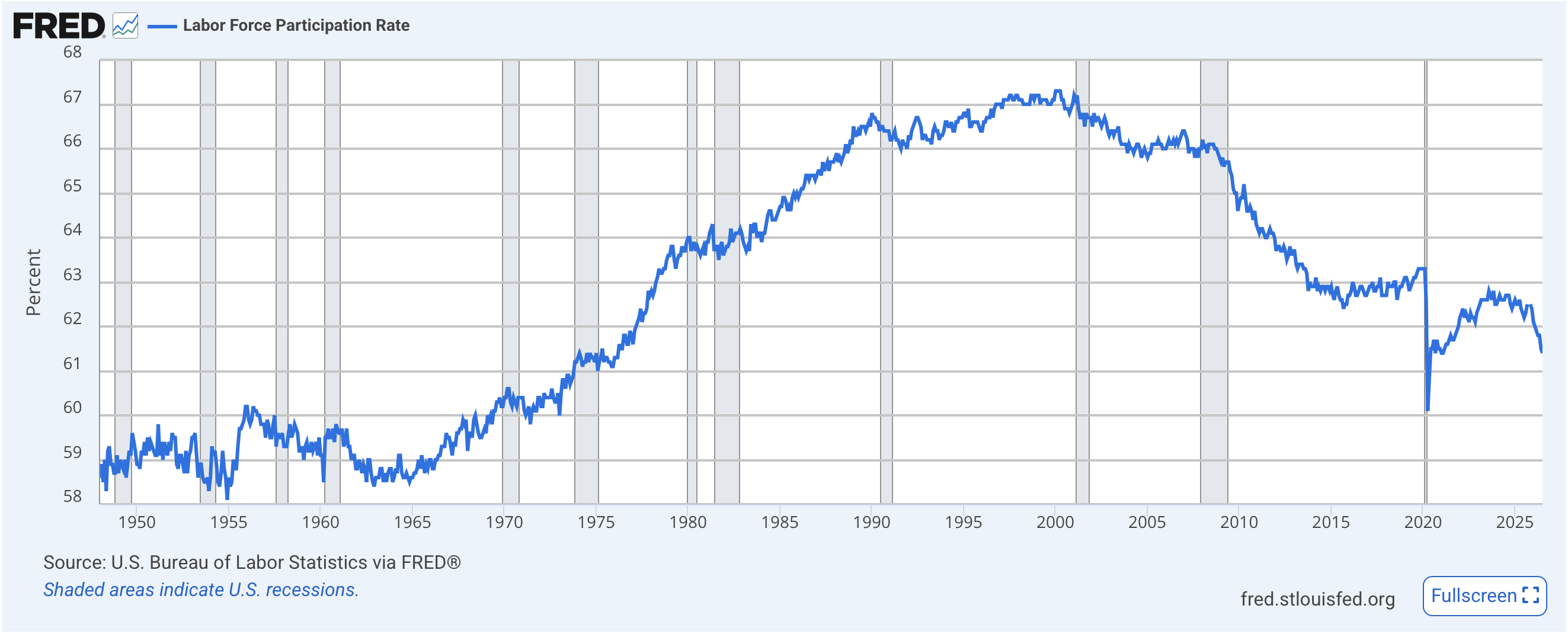
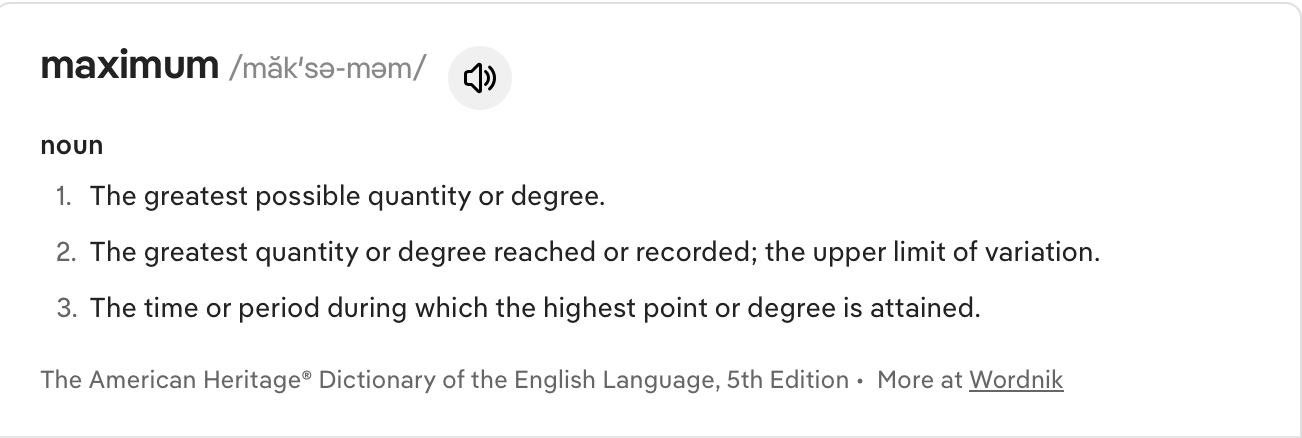
That hardly seems maximal, but then, I’m just an FX guy, not a Fed PhD. After all, if we take the plain meaning of the word maximum, as per the American Heritage Dictionary, I cannot look at the chart above and conclude they have achieved that part of their mandate either.
But that’s just me. Anyway, if there is going to be movement on the Iran story, that will drive the immediate market movements, but you can be sure that in the current environment, it will all come back to the Fed and whatever they may do going forward.
Good luck
Adf
 fxpoetry