Harshly Depressed

The Payrolls report was a test
That Rorschach would clearly have blessed
The bears saw the data
As proof that the rate-a
Of growth would be harshly depressed
 
The bulls, though saw only the best
Of times and, their narrative, pressed
In their point of view
The Fed will come through
And stick the soft landing unstressed


With the Fed now in its quiet period, the market is trying to come to grips with what to expect going forward.  But before we look there, a quick recap of Friday’s NFP report, dubbed ‘the most important of all time’ by some hysterics, is in order.  By now you almost certainly know that the headline number was modestly weaker than expected, but that the revisions lower in the previous two months weighed on the report.  However, the Unemployment Rate ticked lower to 4.2% and wage growth edged higher by 0.1%.  Perhaps one of the worst pieces of the report was that the Manufacturing payrolls declined by -24K, the second worst outcome in the past 3 years, and hardly a sign of a strong economy.

The point is that depending on one’s underlying predispositions, it would be easy to come away with either a hopeful or dreary perspective after that report.  And, in fact, I would argue that the report changed exactly zero minds as to how the future is going to evolve, at least in the analyst community.  The biggest sentiment change came in the Fed funds futures markets where the probability of a 50bp cut next week fell to just 25%.  You may recall that particular probability has ranged from one-third up to one-half and now down to one-quarter just over the past week.  I think that is an excellent metaphor regarding both the uncertainty and the confidence in the economy’s growth and the Fed’s likely moves.  In other words, nobody has a clue (this poet included.)

One other observation is that reading headlines from various financial writers and publications shows that the world is still virtually split 50:50 on whether we are going to see a recession (with some calling for stagflation) or the Fed is going to stick the soft landing.  FWIW, which is probably not that much, my personal view is the recession is still going to arrive, but given how aggressively the government continues to spend money, we may need to redefine the concept of recession.  Consider if we look at only the private-sector and whether it is in recession and if that is enough to drag the overall economy, including the government spending, down with it.  In fact, given the 6+% deficits that the government is running, it may be realistic to consider this is exactly what is ongoing right now, although not to the extent that the totality of the economy is sinking.

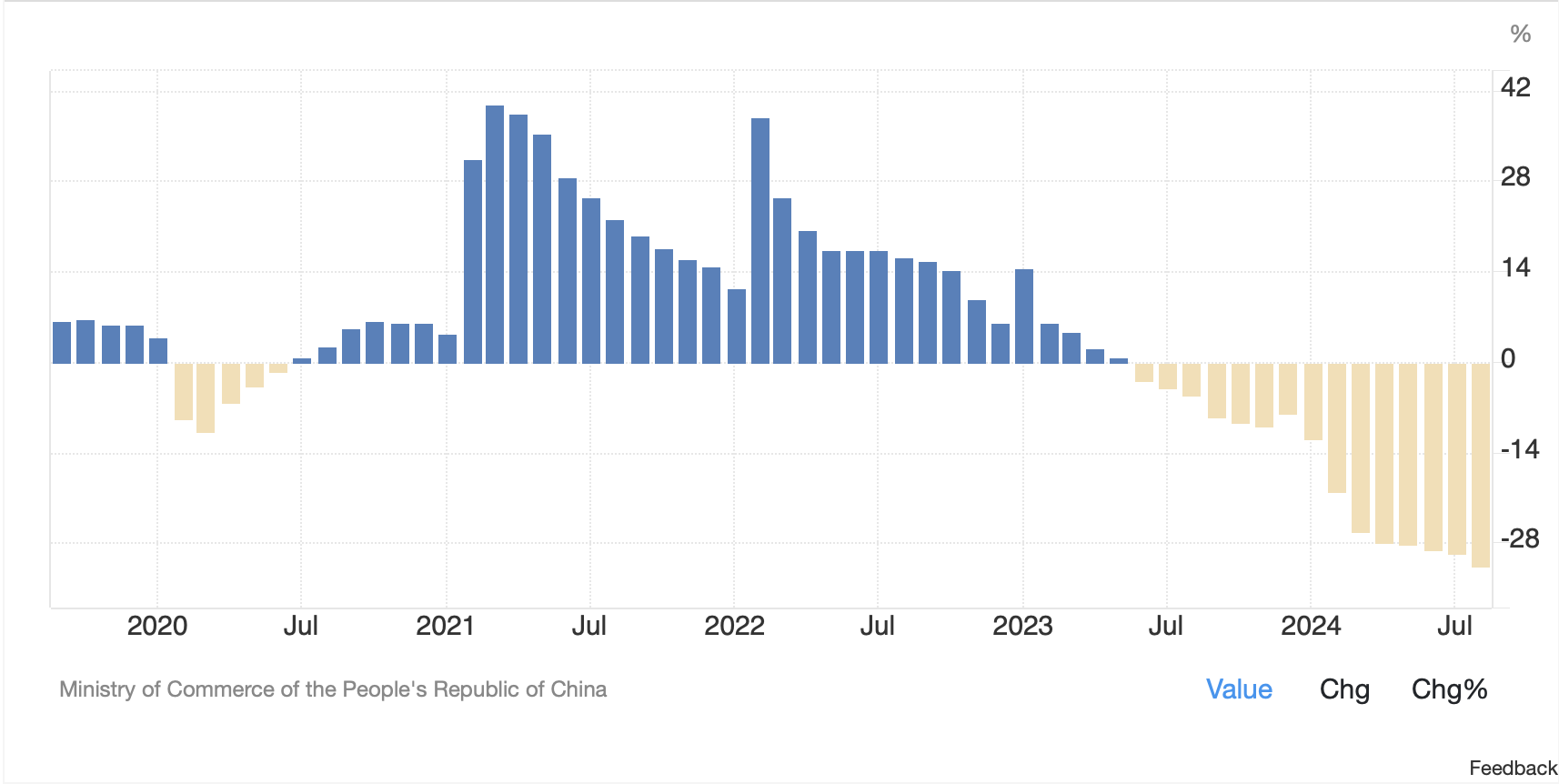
Now that I’ve cleared that up 🤣, let’s look at how markets have been processing the NFP report and what we might expect going forward.  I’m sure you all know how poorly equity markets behaved on Friday, with US markets falling sharply led by the NASDAQ.  That negativity flowed into the Asian session with the Nikkei (-0.5%), Hang Seng (-1.4%) and CSI 300 (-1.2%) all under pressure.  While the Chinese data overnight, showing inflation rising slightly less than expected at 0.6% Y/Y while PPI there fell more than expected at -1.8%, continues to show that the Chinese economy is faltering and there is still no fiscal stimulus on the way, the Japanese data was generally solid with GDP growing 0.7% Q/Q, much higher than Q1 although a tick lower than the initial estimate.  The upshot is there is further slowing in China while Japan is rebounding.  I guess the question is why would both nations’ equity markets decline.  Arguably, the Chinese story is one of lost hope that the economy will be able to rebound in any timely fashion from an investor’s perspective while the Japanese story is that given the rebound in growth, the BOJ is far more likely to continue on the policy tightening path, thus undermining Japanese corporate earnings.

There once was a banker from Rome
Whose tenure preceded Jerome
“Whatever it takes”
Prevented the breaks
In Europe that would have hit home
 
But now he’s an eminence grise
Who answered the Eurozone’s pleas
To write a report
And help to exhort
Investment to beat the Chinese

But that was the Asian story.  In Europe, the story is far more optimistic with gains across the board on the order of 0.6% – 0.8% on all the major bourses.  The big news here is that Mario Draghi, he of “whatever it takes” fame from his time as President of the ECB and his famous comments that save the Eurozone and the euro back in 2012, was asked to evaluate the Eurozone and help come up with a plan to shake the economy from its current lethargy.  As a true technocrat, his view was that more government investment in key areas was critical.  On the positive side, he did suggest a reduction in regulations, although that really goes against the grain in Europe.  However, it appears that equity investors viewed the report positively as there has been no data or other commentary that might have catalyzed a rally there.  As to US futures, they are bouncing this morning after a rough week last week, with all three major indices higher by at least 0.6% at this hour (6:45).

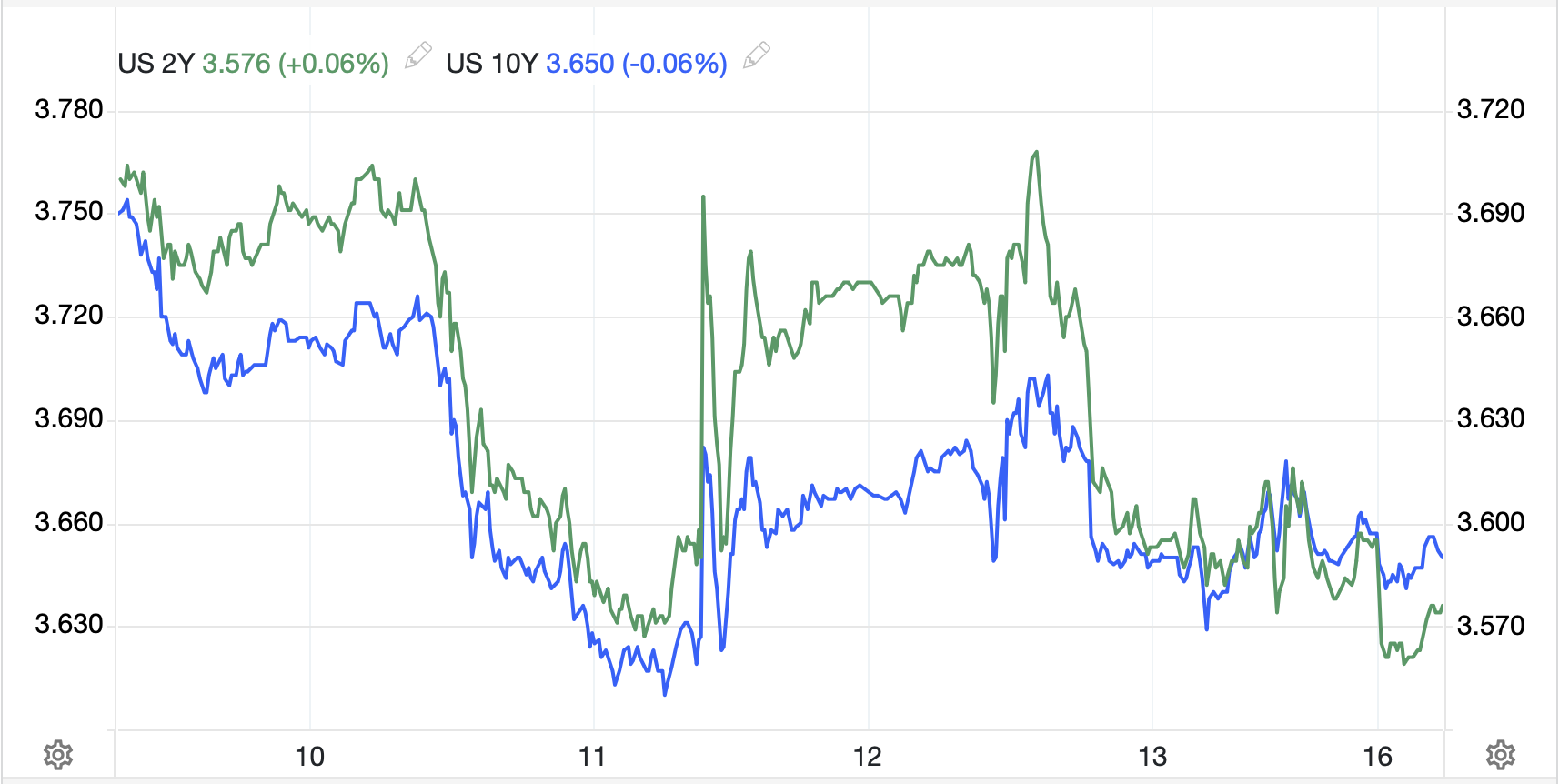
In the bond market, after a week when yields fell around the world, we are seeing a bounce this morning everywhere.  Treasury yields (+4bps) are actually the laggard with European sovereigns all rising between 6pbs and 7bps and even JGB yields jumping 5bps overnight.  Of course, the Japan story is the solid growth numbers encouraging the belief that Ueda-san will raise rates again by December, while the European story is a combination of expectations of more European debt issuance (Draghi called for more European debt, rather than individual national debt) as well as the influence of Treasury yields.

In the commodity markets, oil (+0.8%) is bouncing this morning but remains well below $70/bbl and this looks far more like a trading bounce than a change in perspective.  The weak Chinese economic data continues to weigh on this market and if OPEC changes its stance and decides to restart production again later this year, it does appear that we could have a move much lower still.  As to the metals markets, they are firmer this morning although that is a bit surprising given the generally weak economic sentiment and the fact that the dollar is following yields higher.  Perhaps the biggest surprise is copper (+1.9%) which based on everything else, should be falling today.  Once again, markets are not mechanical and things occur, about which very few know, but have big consequences.

Finally, the dollar is much stronger this morning with the DXY (+0.5%) rejecting the push lower, at least for now.  This strength is broad-based with NOK (-1.1%) and JPY (-1.0%) the worst performers in the G10 despite the higher oil price and growing confidence that the BOJ will raise rates again.  But every G10 currency is weaker as are virtually every EMG currency with only MXN (+0.4%) bucking the trend, although that seems more of a trading response to the fact that the peso fell through 20.00 (dollar rose) for the first time in nearly two years on Friday.

As to the data this week, CPI is the biggest US number although we also hear from the ECB on Thursday.

WednesdayCPI0.2% M/M (2.6% Y/Y)
 -ex food & energy0.2% M/M (3.2% Y/Y)
ThursdayECB rate decision4.0% (current 4.25%)
 Initial Claims230K
 Continuing Claims1850K
 PPI0.1% (1.8% y/Y)
 -ex food & energy0.2% M/M (2.5% Y/Y)
FridayMichigan Sentiment68.0

Source: tradingeconomics.com

I guess the question is, does the CPI matter any more?  Given the Fed has essentially declared victory and turned its focus to employment, Wednesday’s number would have to be MUCH higher to matter.  With that in mind, I suspect that this week in FX will be far more focused on the equity market than on the macro situation.  If the equity rebound continues, I expect that the dollar will start to cede this morning’s gains, but if yields reverse their past two weeks’ sharp decline and the dollar continues this morning’s strength, then equity investors will feel some more pain.

Good luck

Adf

Wasn’t Whizzbang

There once was a time in the past
When earnings reports were forecast
If companies beat
It was quite a treat
If not, CEOs were harassed
 
But that was before Jensen Huang
Described the AI bell he rang
Nvidia now
Is what defines tao
Alas, last night wasn’t whizzbang


In what cannot be that great a surprise, given the remarkable hype that continues to surround Nvidia, their earnings were great, but not great enough to exceed the outsized expectations that have become commonplace.  And while revenues and earnings more than doubled, and their profit margins are above 50%, it wasn’t enough to satisfy the underlying belief that exists.  What is that belief?  The best I can tell is that the true believers are certain Nvidia will be the only company left on earth when AI takes over, and so it’s value will equate to global economic activity, currently approximately $105 trillion, so it has much further to climb.  Perhaps the oddest result was that there were actual ‘watch parties’ for the earnings release.  It is not clear to me if that is more hype than a Jensen Huang fan asking him to sign her breast or not, but it is certainly a lot of hype.
 
And yet, the world continues to turn this morning despite the disappointment and US stock futures are actually higher after a lackluster day yesterday where all three main indices declined. As is always the case, in hindsight, the hype is revealed for just what it was, but usually the rest of our lives feel no impact.  That said, it was clearly the market driver yesterday and will almost certainly continue to have an outsized impact on things for a while yet.  But let’s move on.
 
Said Bostic, I need to see more
Results on inflation before
I’m banging the drum
For that cut to come
‘Cause I don’t know what more’s in store

Back in the macro world, we heard from Atlanta Fed president Bostic last night and he was far more circumspect of a rate cutting cycle than the market currently believes was signaled by Chairman Powell last week in Jackson Hole.  As of this morning, the market continues to price a one-third probability of a 50bp cut in September, a total of 100bps of cuts in the rest of 2024 and a total of 225bps of cuts by the end of 2025.  Meanwhile, Mr Bostic explained, “I don’t want us to be in a situation where we cut and then we have to raise rates again.  So, if I’m going to err on one side, it’s going to be waiting longer just to make sure that we don’t have that up and down.”

Now, I know I’m not a Fed funds trader, or even a fixed income trader (I’m just an FX guy) but these comments didn’t sound like he was ready to start slashing rates anytime soon.  Bostic is a voter this year, and while I’m pretty sure the Fed is going to cut next month, I remain in the 25bp camp, and I might suggest that there are still several FOMC members who see no reason to cut rates quickly.  After all, absent a serious downturn in the labor market, and given the economy continues to perform reasonably well, at least according to the data they watch, what is the rationale for a cut?  And remember, if the Fed is cutting rates quickly it means they are responding to economic difficulties.  That doesn’t seem like an outcome we want to see.

Beyond those two stories, though, once again, there is a dearth of new information on which to make decisions.  China continues to struggle and there are now more bank analysts (UBS being the latest) who are lowering their forecasts for GDP growth there to the 4.5% range, well below President Xi’s 5.0% target.  The ongoing implosion of the Chinese property market continues to weigh heavily on the economy there and, as the chart below shows, the Chinese stock market.

A graph with blue lines and numbers

Description automatically generated

Source: Bloomberg.com

Aside from the irony of a strictly communist country even having the very essence of capitalism, an equity market, I believe the incredibly poor performance in Chinese shares is an ongoing signal that not all is well in China, regardless of what official statistical data they present.  President Xi has many problems to address, and I expect he will spend far more of his time trying to smooth international trade relations than anything else for the time being.  After all, the blank paper protests that led to the end of Covid restrictions in China are evidence that Xi is still subject to some popular sentiment.  If the economy were to crater, it would become a major problem for his power, and potentially his health.

Ok, let’s run through the overnight price action.  Asian markets were a mixed bag overnight with Japan essentially unchanged while China (-0.3%) continues to lag virtually all other markets.  The Hang Seng (+0.5%) managed a rally alongside India and Singapore, but there were more laggards including Australia, Korea, Indonesia and New Zealand.  But that is not the story in Europe this morning with all markets in the green led by the CAC (+0.7%) and DAX (+0.6%) on the back of somewhat softer German state inflation data (the national number is released at 8:00am) and what appears to be modestly better than expected Eurozone sentiment indices regarding services and industry, although consumers are still a bit unhappy.

In the bond market, everyone is asleep it seems as there has been no movement of more than 1 basis point in any major market.  Given the lack of new economic inputs, this should not be a great surprise.  I suspect that this morning’s US data, and especially tomorrow’s PCE data may shake things up if there are any unusual outcomes.

In the commodity markets, oil (+0.3%) has stopped falling for now as yesterday’s EIA inventory data showed a total draw of more than 4 million barrels, the 9th drawdown in the past 10 weeks and an indication that supply is falling to meet the alleged weakening demand.  Gold (+0.6%), which started off under pressure yesterday rebounded in the afternoon and continues this morning dragging silver along for the ride.  Copper (-1.9%) however, remains under pressure on both the softening demand story and a technical trading move.

Finally, the dollar, at least the DXY, is continuing to rebound from its Tuesday lows although there is a lot of mixed activity here with some gainers (AUD +0.55%, NZD +0.5%, ZAR +0.85%, CNY +0.6%) and some laggards (EUR -0.25%) along with the CE4 showing weakness.  The big outlier is CNY, which is showing one of its largest single day gains in the past year.  This seems a bit odd given the ongoing lackluster equity market performance and the data showing that foreign investment into China has reversed course and is now divestment.  None of that speaks to a currency’s strength, but as yet, I have not found a good rationale for the renminbi’s strength.  I will keep looking.

On the data front, we finally see some things this morning starting with Initial (exp 232K) and Continuing (1870K) Claims, the second look at Q2 GDP (2.8%) and all the attendant data that comes with that release (Real Consumer Spending +2.3%, PCE +2.6%, 2.9% core).  As well, Mr Bostic as back at it this afternoon at 3:30.  

My take is given the elevated importance of the employment report, today’s data that really matters will be the Claims numbers with any substantial miss (>15k different than forecast) leading to some price action and potential concerns.  But otherwise, Bostic certainly won’ change his tune in less than 24 hours, and the current market zeitgeist appears to be that the dollar, while headed lower, is going to chop to get there.  If we do see a high Claims number, above 245K, look for the dollar to fall more sharply, retracing its overnight bounce.

Good luck

Adf

Numb

It seems that nobody is willing
To trade, ere Nvidia’s spilling
The beans on their income
So, markets remain numb
Awaiting an outcome, fulfilling


Some days it is extremely difficult to find a noteworthy story at all, and today is one of those days.  The combination of a lack of new economic data on which to build theories and models, along with most of the central banking community taking their summer vacations has left the trading and investment communities without any new catalysts for action.  Arguably, the story that will soon drive things is this afternoon’s Nvidia earnings report, but that is far outside this poet’s lane of travel.  With this in mind, it should be no surprise that market movement overnight has been quite limited.

Perhaps the most interesting story was a speech given by BOJ Deputy Governor Ryozo Himino (the Japanese don’t typically take off all of August) describing that the BOJ would continue to “normalize” policy, albeit at an indeterminate rate.  Speaking in Yamanashi prefecture, west of Tokyo, he said [emphasis added], “The bank’s basic stance on the future conduct of monetary policy is that it will examine the impact of market developments and the July rate hike and that, if it has growing confidence that its outlook for economic activity and prices will be realized, it will adjust the degree of monetary accommodation.”  You will not be surprised after a ‘powerful’ statement like that, the Nikkei managed a 0.2% rally while JGB yields edged higher by 2bps.  Perhaps the latter qualifies as a large move although the 10yr yield there remains well below 1.00%.

Otherwise, passing comments by two different ECB bankers, one a hawk (Knot saying he wants more data before deciding on a September cut) and one a dove (Centeno saying it is clear another cut is due) were the best that we had.  Perhaps that was enough to generate some excitement as the dollar has managed to rebound from the lows seen yesterday, although that is just as likely a trading bounce as a change in sentiment.

So, with this very limited amount of new information in mind, and prospects for a quiet day ahead, let’s look at what happened overnight.  While US markets did edge slightly higher yesterday, the movement was tiny, less than 0.2%.  And that type of movement was the rule of thumb in Asian markets as well with one exception, both China (-0.6%) and Hong Kong (-1.0%) continue to lag global markets as ongoing concerns over the pace of growth in the Chinese economy weigh on markets there.  I believe one of the new concerns is that Western nations (Canada being the latest) are coming together as one with respect to tariffs on Chinese goods in an effort to prevent a massive onslaught that damages their own companies.

In fairness, European shares have seen some more positive performance, notably the DAX (+0.8%), although that is due to some slightly better than expected corporate earnings releases rather than any broader macro story.  Looking across the rest of the continent, and the UK, there is a mix of gainers and laggards with nothing more than 0.2% in either direction.  Again, not much excitement here.  As to the US, futures are essentially unchanged at this hour (7:10) as all eyes are on the tape after the close when Nvidia releases its earnings.

In the bond market, yields, which backed up a few basis points yesterday, are ceding those gains this morning.  10-year Treasuries are lower by 1bp while European sovereigns are down by as much as 4bps to 5bps.  However, that is tracking what Treasuries did yesterday afternoon after the European close.  In the end, fixed income markets in the G10 remain rangebound in yield as investors continue to try to determine the timing of the widely anticipated rate cuts.  Yields have clearly declined from levels seen in the spring, but I believe for much further movement will need to see a far more aggressive rate cutting stance by central banks.

In the commodity markets, oil (-2.0%) is giving back its recent gains as supply disruption fears that were piqued by the shutdown of part of Libya’s production seem to have dissipated, or at least have been overwhelmed by the weak demand story on slowing growth in China and Europe.  At this point, it is very difficult for me to get too bullish on oil as there appears to be ample spare production capacity in OPEC to prevent disruptions and the global economic outlook is clearly fading.  Arguably of more interest is the metals markets which are under pressure this morning with gold (-0.8%) giving back some of its recent gains, although remaining above $2500/oz, while both silver (-1.8%) and copper (-3.6%) feel far more pressure on the weak economic story.  

One other potential drag on the metals markets is the dollar, which has bounced nicely from its lows yesterday.  For instance, the euro (-0.5%) is the G10 laggard although that is after testing the round number of 1.12 again yesterday.  It seems that Klaas Knot is not seen as a viable spokesman for the ECB with visions of rate cuts coming.  But we are seeing weakness in the pound (-0.25%), yen (-0.3%) and even Swiss franc (-0.2%).  In other words, it is pretty broad-based dollar strength.  In the EMG bloc, the CE4 are all substantially weaker, more than -0.5%, while KRW (-0.6%) led most APAC currencies down.  The one exception this morning is MXN (+1.0%) which is rallying nicely on the back of Banxico comments that they will maintain restrictive monetary policy for the time being.  

The data calendar has only the EIA oil inventories coming at 10:30, with more drawdowns expected, and then much later this evening, Atlanta Fed president Bostic speaks.  As trading desks remain lightly staffed given the Labor Day holiday approaching next week and given that there is important data coming after the close as well as tomorrow (Initial Claims) and Friday (PCE), today has all the hallmarks of a sleeper.

Good luck

Adf

Waiting for Jay

While everyone’s waiting for Jay
And hope he’s got good things to say
No stories of note
Have lately been wrote
And bulls keep on getting their way
 
The only place that’s not been true
Is China, where, policies, new
Allow new home prices
To make sacrifices
And slide hoping sales follow through


Although there has been a dearth of new information to drive activity, at least with respect to hard data, equity markets are mostly trading higher as the rebound from the early August correction continues.  In the US this week, the big news won’t be out until Friday, when Chairman Powell speaks at the Jackson Hole symposium.  Elsewhere, while we do see things like both Japanese and Canadian inflation as well as the flash PMI data, so much importance has been attributed to the Powell speech, it is hard for traders to get excited about very much.  For instance, early this morning the Swedish Riksbank cut their policy rate by 25bps, as expected, and indicated that there could be another 3 cuts during 2024, but nobody really cared.  In fact, the Swedish stock market is lower on the day, simply proving that rate cuts are not a stock market panacea.

However, not every nation is using the same playbook right now, and while Japan may be the biggest outlier, attempting to tighten monetary policy, albeit not as successfully as they had hoped, China is taking a different approach to fiscal and economic policy.  As I have mentioned before and has been widely reported for the past several years, the property market in China has been under severe stress.  What has become a bit clearer in that time is that much of the Chinese growth miracle was the result of massive overinvestment in housing.  The stories about ghost cities, that were built but where nobody lived, which had made the rounds for a while turned out to be true. 

In essence, a key driver of the Chinese economy was the property market.  Cities and states would sell land to property developers, using the funds to help themselves develop infrastructure.  Meanwhile, property developers had a ready market for their homes (mostly condos in high rises) as the Chinese people felt more comfortable with property as a savings vehicle than banks or the stock market.  Looking at the performance of the Shanghai Composite below, it is no wonder that people gravitated toward property.  After a peak in the summer of 2015, the PBOC devalued the renminbi 2%, stocks fell nearly 50% in the ensuing six months, and have remained at that lower level ever since.

A graph with numbers and lines

Description automatically generated

Source: tradingeconomics.com

But for the past four years, since China Evergrande, a major property developer, started to crumble, the desire of the Chinese people to own property has greatly diminished.  This has had a major impact on Chinese local government finances as the demand for property they were selling to fund themselves collapsed.  At this point, there is a glut of unfinished homes around as developers ran out of funding, so the country is in a bad spot.  Not surprisingly, one of the problems is regulatory, as Chinese city and state governments have had restrictions on new home prices, trying to prevent them from declining thus keeping the cycle of new homes funding the cities ongoing.  But recently, some major cities and states have relaxed those restrictions and suddenly, new home prices have fallen to make them competitive with resales.  Remarkably, sales volumes are picking up.  Who would have thunk?  

It is ironic that Communist China is defaulting to market pricing activity to help markets clear while in the ostensibly capitalist US, we have a major party seeking to intervene in housing markets to achieve a social goal of home ownership, regardless of the fact it will push prices higher.  At any rate, the upshot is that property prices in China continue to decline which is weighing on the share prices of those developers that have not already gone bust.  And that is dragging down the entire Chinese stock market and adding to that underperformance we see above.

But you can tell it is a slow day if that is the most interesting story I can discuss!  So, without further ado, let’s take a look at the overnight activity as we await the NY open.  While the CSI 300 (-0.7%) and Hang Seng (-0.3%) were both in the red, the rest of Asia followed the US higher with Japan (+1.8%) and Korea (+0.8%) leading the way higher.  As to European bourses, it is much less exciting as continental exchanges are all +/- 0.1% from yesterday’s close although the FTSE 100 (-0.6%) is under a bit of pressure with the energy sector weighing on the index amid the decline in oil prices.  As to US futures, they are essentially unchanged at this hour (7:20).

In the bond market, the doldrums also describe the price action with Treasury yields unchanged on the day and the same virtually true across all of Europe and Asia.  This is a situation where it is very clear that both traders and investors are waiting anxiously for Godot Powell.

While oil prices have stopped their slide this morning, they have fallen -6.0% in the past week as the slowing growth/recession story is on the minds of traders everywhere.  Concerns over supply on the back of either Ukraine/Russia or Israel/Iran are clearly no longer part of the discussion.  It feels to me like that is somewhat short-sighted, but I am not an oil trader.  In the metals markets, the barbarous relic (+0.85%) continues to pull all metals higher as it is trading at yet another new all-time high this morning ($2525/0z) and dragging silver (+1.3%) and copper (+0.2%) along for the ride.  While the silver movement makes some sense given it has precious characteristics, copper is wholly an industrial metal, so it is giving opposite signals to the oil market.  They both cannot be right.

Finally, the dollar remains under pressure, with the euro (-0.1% today, +0.75% this week) pushing toward its end 2023 highs.  Remember, back then, markets were pricing 6-7 Fed rate cuts this year, something which is clearly not going to happen.  As well, we are seeing the strength in CHF (+0.3%), SEK (+0.3% despite the rate cut and threats of more) and JPY (+0.2%). Interestingly, in the EMG space, ZAR (-0.6%) and MXN (-0.6%) are both under pressure this morning despite the rally in metals markets.  As well, I guess given the general malaise in China, it can be no surprise that the renminbi (-0.2%) has fallen.  Perhaps a more interesting thing to consider is the fact that the renminbi fixing has been right around current market levels, an indication that pressure on the PBOC to devalue has faded, and a sign that the dollar is losing some fans.  In fact, I suspect that this is a key feature of the dollar’s recent softness, and if the Fed does get aggressive, do not be surprised if the market pushes USDCNY to the other side of the +/- 2% trading band around the fix.

On the data front, there is no US data today at all, with the most interesting thing to be released being the Canadian inflation report (exp 2.5%).  We do hear from two Fed speakers this afternoon, Atlanta Fed president Raphael Bostic and Governor Michael Barr, but with Powell on the horizon, it would be hard for them to get much traction in my view.  As an aside, the Atlanta Fed’s GDPNow has fallen to 2.0% as of last Friday, down nearly 1% last week.  This, of course, is another brick in the recession story.

Net, today seems like it will be a quiet one, with markets biding their time until Friday.  Of course, given that these days, biding their time means equities will keep rallying and the dollar keep sliding, I think that seems like the best bet for now.

Good luck

Adf

A Joyous Occasion

For those of a certain persuasion
Wednesday was a joyous occasion
Though CPI rose
The doves did propose
That rate cuts complete their equation
 
They claim that the speed of its rise
Is slowing, so Jay should surmise
It’s time to cut rates
Cause everyone hates
When stocks don’t make further new highs


Yesterday’s CPI reading was, on the surface, slightly softer than markets had been expecting.  The headline reading of 2.9% was the slowest increase Y/Y since March 2022.  Of course, back then we were repeatedly told inflation was transitory.  However, looking at the chart below, created by wolfstreet.com, it seems pretty clear that the main driver of the recent decline in the CPI readings has been Durable Goods.

A graph of a number of lines

Description automatically generated with medium confidence

I guess it’s possible that durable goods prices continue to deflate going forward, but that seems unlikely, at least based on the historical record.  While the auto industry, a key segment of the durable goods data, has obviously struggled lately, with significant unsold inventories of EV’s building up and dealer incentives to sell them driving prices down, if you’ve looked for a new washer/dryer or refrigerator lately, I haven’t seen the same price action for those goods.  As to the largest driver of the CPI readings, the shelter component, those numbers were higher than last month and more in line with the overall trend we have seen there for the past several years.  Owners Equivalent Rent, the biggest piece of this puzzle, rose 0.4% in July, just what it has been doing for the previous two plus years prior to the June reading.

In the end, while it was nice to see a headline print below 3.0%, it is not clear to me that inflation is defeated.  Other than the fact that Powell essentially promised he would be cutting rates next month, the data released since the last meeting is not screaming out for more support.  Certainly, the employment report was softer than the forecasts, but it was not indicative that we are in a recession.  And the CPI report, while ever so slightly softer than forecast, is also not a clear signal that things are collapsing in the economy.  I’m pretty confident that Powell will cut next month, but absent some really awful August data, released in early September ahead of the next FOMC meeting, it seems like 25bps is all we should expect.  Even the Fed funds futures market is slowly turning toward that view with the probability of a 50bp cut falling to 37.5% this morning.

The other news of note last night was the monthly Chinese data dump which was, on the whole, not very inspiring.  The best news was that Retail Sales there rose 2.7% Y/Y in July, slightly more than expected.  However, IP and Fixed Asset Investment were both weaker than forecast and weaker than last month although higher than Retail Sales.  Meanwhile, Housing prices continue to decline, -4.9% Y/Y, and the Unemployment Rate ticked up to 5.2%.  As yet, there has been no significant commentary from the government, but the ongoing weakness has encouraged some traders and investors to expect that President Xi will authorize some much larger stimulus in the near future.  At least that’s the story behind the rally in the CSI 300 (+1.0%) last night, because there are few other highlights from the Middle Kingdom.

With this in mind, and as we await this morning’s US data releases, let’s tour the markets to see how things played out after the modest US equity rally yesterday.  Aside from China, in Asia Japanese stocks did well (Nikkei +0.8%) although Hong Kong did not go along with the Chinese story.  Australian employment data was released, arguably a touch better than expected but that good news reduced the chances for a rate cut so equities there only edged higher by 0.2%.  As to the rest of the region, there were some gainers (Korea, New Zealand, Singapore) and some laggards (Taiwan, Indonesia).  

In Europe this morning, the story is one of a seeming lack of interest with no major market having moved more than 0.2%, whether higher or lower, on the session.  On the data front there, the UK GDP data was just a touch softer than the forecast, and the Y/Y output of 0.7% shows that problems remain in the economy.  It will be interesting to see if the new government there can adopt policies that help rejuvenate the nation.  As to the FTSE 100, it is basically unchanged on the day, arguably tension between weaker growth prospects clashing with hopes for rate cuts to support things.  Meanwhile, on the continent there was nothing of note and no major movement.  And lastly, US futures, at this hour (7:00), are little changed awaiting the US data.

In the bond market, Treasury yields, after a little early gyration following the CPI release, basically closed the day unchanged and remain at those levels this morning.  the yield curve remains mildly inverted, just -11bps this morning, but it seems it will require the Fed to actually cut rates, or much worse economic data, to get that process complete and normalize the curve.  In Europe, sovereign yields are largely unchanged, or perhaps higher by 1bp this morning amid very little activity.  Also, a quick look at JGBs shows that while the yield edged up 1bp overnight, the level is still just 0.82%.  I would contend that any ideas of a quick normalization of interest rates in Japan are fading away.

In the commodity space, oil (+0.85%) is rebounding after data showed net draws across all products yesterday.  Obviously, the Iran/Israel situation remains live, but it feels like markets are losing interest in that story.  As to the metals, gold (0.4%) is recouping yesterday’s losses and both silver and copper are firmer this morning, not so much on the demand story, but more on the supply story with potential strikes at key mines in Chile and Peru.

As to the dollar, it is little changed, net, on the day, although it is no surprise to see the commodity bloc performing well (AUD +0.5%, ZAR +0.5%, NOK +0.4%).  But away from those currencies, the euro is unchanged, though the pound (+0.3%) seems to be benefitting from the GDP data.  The yen, too, is unchanged on the day while CNY (-0.2%) is under pressure from the weak data there.  Again, I will note that CNY’s volatility has definitely increased over the course of the past several months.  Partly this is because all currency volatility has moved higher, but I believe there is some real China specific aspect to this change.  Beware as this could continue going forward.

On the data front, this morning brings a bunch here at home:

Initial Claims235K
Continuing Claims1880K
Retail Sales0.3%
-ex autos0.1%
Empire State Manufacturing-6.0
Philly Fed7.0
IP-0.3%
Capacity Utilization78.5%

Source: tradingeconomics.com

You may recall that last week’s Initial Claims number was seen as a savior when it printed a bit lower than forecasts.  However, if the Unemployment Rate is truly heading higher, it would seem that we should see this number resume its climb.  Right now, it is not clear to me if good news is good or bad and vice versa. Generically, the narrative still wants to push for as many rate cuts as quickly as possible, I think, but if the data starts to collapse, that will not be a positive either.  I suspect that Retail Sales is today’s key release.  A strong number there will further reduce the probability of a 50bp cut in September and may weigh on equity markets.  

We also hear from St Louis Fed President Alberto Musalem this morning, one of the newer members of the FOMC who has not spoken much.  However, he appears to be more on the hawkish side thus far.  In my view, markets are looking for reasons to continue to push equities higher but are not getting all the love they need.  The problem is that it is not clear what the right medicine for that is right now.  Strong data may support the economy but reduces the probability of rate cuts, or at least the amount of rate cutting that will come.  As to the dollar, it has been under some pressure of late and I think it will be very clear that weak data will encourage dollar selling and vice versa.

Good luck

Adf

No Quid

We have now a President Joe
Whose allies had asked him to go
Reject them, he did
For there was no quid
To pay him if he gave the quo
 
But Sunday, the news was revealed
That his campaign, he would now yield
It’s, therefore, not clear
Who’s running this year
‘Gainst Trump, it’s a wide-open field


Of course, you are all aware by now that President Biden has decided to abandon his re-election campaign and “to focus solely on fulfilling my duties as president for the remainder of my term.”  While he has endorsed Vice-president Kamala Harris, and since the announcment, there have been more endorsements for the VP, nothing is clear yet.  If nothing else, there has been no clarity whatsoever regrading who VP Harris would select as her running mate should she be the presidential nominee.

In the end, this adds uncertainty to the political situation and is likely to add some volatility to financial markets as well.  However, remember that political impact on financial markets tends to be relatively rare and if it is going to be significant, must be a genuine surprise.  Given the drumbeat from an increasing number of Democrat politicians and donors, this cannot be considered a real surprise.  I suspect that recent volatility will continue, but it is unlikely to increase substantially because of this.  However, if, say, the Fed were to cut rates next week, that would be a genuine surprise with a major market reaction.  (That is a hypothetical, I am not forecasting that.)  All told, the circus that is the US presidential campaign seems likely to simply continue for the next four months.

In China, the Plenum has ended
And rate cuts last night were extended
But is that enough
To help Xi rebuff
The weakness with which he’s contended

In the meantime, while all eyes around the world remain on the US as both allies and enemies try to determine what is happening, and likely to happen going forward, in the US regarding its presidential politics, China’s Third Plenum has ended, and the decisions have been made public.  Reuters has given an excellent, and succinct, description of what this meeting represents and why it is seen as so important.  The link above is a worthwhile, and quick read, but the money lines are [emphasis added]: “China’s ruling Communist Party commenced its so-called third plenum on Monday, a major meeting held roughly once every five years to map out the general direction of the country’s long-term social and economic policies,” and “This week’s third plenum, described by Chinese state media as “epoch-making”, is expected to deliver major initiatives to address the risks and obstacles related to China’s long-term social and economic progress.”  

So, in essence, this is the annual meeting where Xi and his fellow senior policymakers focus on the economy for the next decade.  This is quite timely given the economy in China has been consistently disappointing over the past several years with the most recent data releases showing that GDP growth declined to 4.7%, far below expectations as well as Xi’s target, in the second quarter.  Now, the law of large numbers would indicate it will be increasingly difficult for China, a $17 trillion economy, to continue to grow at previous rates, especially since its population is shrinking.  But that will not stop Xi from trying, or at least from having the government publish numbers that indicate he is succeeding.  

Ultimately, the problem in China remains that domestic consumer demand remains lackluster, largely because of the sharp decline in the Chinese property market.  In China, property had been a key store of personal wealth as there were limited vehicles in which citizens could invest.  But with that bubble having burst, and continuing to deflate, ordinary people do not feel the confidence to continue previous consumption patterns.  This is the underlying reason why China continues to focus on industry, and the genesis of the international angst over China’s manufacturing exports.  It is also the genesis of why tariffs are so prominent in discussions around Western policy circles.  The perception that China is dumping product offshore at a loss, undermining Western companies, and therefore Western job markets, is a powerful political motive to find some way to restrict said exports.  Tariffs are the most obvious first solution.

But China knows there are problems internally and that led to last night’s surprise cuts in the Loan Prime Rates for both 1-year and 5-year, with each being cut by 10 basis points.  I would look for further rate cuts shortly after the Fed starts to cut rates here (assuming they do so) whether that is next week or in September. Ultimately, I continue to believe that the PBOC will need to allow the renminbi to weaken, but it will be a long, drawn-out process as Xi remains steadfast in his view that the currency must be seen as a stable store of value.  Ironically, I believe we are entering a timeline when pretty much every nation will seek to weaken their currency to gain a trading advantage, but of course, if that is the case, then the only thing that will change is inflation will rise.  Oh well, policymakers around the world all have the same blind spots.

And those are really the only stories of note, although naturally, the first one is massive and will be the talk of the world for at least the next month until the Democratic convention produces a presidential ticket.  So, with all that in mind, let’s look at the market responses overnight.

Friday’s continued weakness in the US equity markets was mostly followed in Asia with the Nikkei (-1.2%) continuing its recent retracement from the highs made a week and a half ago.  And that red ink was seen throughout the region with one exception, the Hang Seng (+1.25%) as it responded to the PBOC’s rate cuts.  Interestingly, the onshore markets (CSI 300 -0.7%) did not.  However, in Europe, this morning, equities are having a great day with strong gains across the board.  While part of this is certainly simply a rebound from last week’s declines, it seems that there is a thesis brewing regarding Europeans now gaining confidence that Mr Trump will not be re-elected and so attracting some bullish views.  I don’t necessarily agree with that, but that seems to be the take.  As to US futures, they are firmer this morning as well, although given the sharp declines at the end of last week, this seems a reflexive bounce

In the bond markets, Treasury yields, which backed up despite the equity market declines on Friday, are softening a bit this morning, down 2bps, while European sovereign yields are mostly little changed from Friday’s levels, down about 1bp in most nations.  Right now, there is very little excitement in this space.

In the commodity space, oil prices are continuing their decline from last week with WTI back below $80/bbl as this market seems to believe that Mr Trump will win in November and that he is very serious about ‘drill baby, drill’.  Certainly, I would anticipate a Trump administration will be quite focused on increasing energy output and that should undermine prices.  As to the metals markets, gold (+0.5%) continues to find buyers although it did sell off sharply on Friday, but the rest of the space is under pressure, notably copper (-1.25%) as that Third Plenum did not encourage anyone that China would be subsidizing further economic activity and driving up demand for the red metal.

Finally, in the FX markets, the dollar is under modest pressure overall, although not universally so.  JPY (+0.4%) is the leading gainer in the G10 space as hopes for a Fed cut continue to impact views on the carry trade here.  However, the euro (+0.1%) and pound (+0.25%) are also edging higher, albeit on much less information.  Perhaps, the idea that Trump has been vocally calling for a weaker dollar is part of this movement, but that seems awfully early in the process.  On the flip side, AUD (-0.3%) is being weighed down by the decline in commodity prices.  In the EMG bloc, MXN (+0.35%) is the biggest gainer on the day although the CE4 currencies are all demonstrating their high beta with the euro as they have gained about 0.25% across the board.  Lacking new information, it appears that the peso is acting as a broad EMG proxy for traders wanting to short the dollar.

On the data front, the important stuff all comes at the end of the week with GDP on Thursday and PCE on Friday.

TodayChicago Fed National Activity0.3
TuesdayExisting Home Sales3.99M
WednesdayGoods Trade Balance-$98.0B
 Flash Mfg PMI51.7
 Flash Services PMI54.4
 New Home Sales640K
ThursdayInitial Claims239K
 Continuing Claims1869K
 GDP Q21.9%
 Durable Goods0.4%
 -ex Transport0.2%
FridayPersonal Income0.4%
 Personal Spending0.3%
 PCE0.1% (2.4% Y/Y)
 Core PCE0.1% (2.5% y/Y)
 Michigan Sentiment66.5
Source: tradingeconomics.com

Mercifully, there will be no Fedspeak at all this week as they remain in the quiet period.  The expected declines in PCE inflation will continue to support the September rate cut expectation which remains at a virtual 100% probability according to the CME Fed funds futures pricing.  That would be in concert with everything we heard from Fed speakers in the past several weeks, although the stronger than expected Retail Sales data has some claiming the Fed will remain on hold.  My read is there are fewer people discussing an impending recession, although that may be more about the cacophony of political discussion drowning things out, than a real change in sentiment.  Alas, I find myself far more concerned about an economic slowdown, although not necessarily with a corresponding decline in inflation.  Meanwhile, the dollar, while under some modest pressure, remains pretty solid and I wouldn’t look for a significant change, at least not until Friday’s data.

Good luck

Adf

Fight!

When fired upon, his response
Was jumping back up at the nonce
His cry was to “Fight!”
And some on the right
Now claim he’s a man, renaissance!


As John Lennon told us in 1977:

Nobody told me there’d be days like these
Strange days indeed

While this poet tries to keep politics largely out of the discussion, during these strange days, it is THE story of note.  Of course, by now you all not only have heard of the assassination attempt on former President Trump’s life on Saturday at a political rally in Butler, PA, but you all almost certainly have your own opinions about all the different theories, conspiracy and otherwise, so I will not go down that road.  I will simply note that it speaks poorly of the current political zeitgeist.  And while cooler heads are calling for a step away from the abyss, I have not yet seen the public take that step backwards.  Maybe soon.

In the meantime, my efforts are designed to help make sense of how both the political and economic storylines may impact the markets, and correspondingly, try to help those of you who need to hedge financial exposures, with a little understanding.  But history shows, when politics leads the news, the degree of difficulty goes up significantly.

The first thing to note is that sometimes, when momentous things occur in the real world, any financial implications take some time to manifest themselves.  With that in mind, I thought I would take a 30,000 foot view of the macroeconomic situation as we head into the new week.

The data of late calls into question
If we are now in a recession
With joblessness rising
And prices downsizing
Perhaps growth is seeing regression
 
And it’s not just here in the States
Where growth appears in dire straits
In China, as well,
Things have gone to h*ll
As data of late demonstrates

The question that is being asked more frequently is, are we currently in a recession?  While the data that has been released of late has been slowing, in the US it has not generally reached levels consistent with inflation, although there are some outliers that do point in that direction.  For instance, Friday’s Michigan Sentiment reading was pretty lousy at 66.0, well below expectations, and as can be seen in the below chart from the FRED data base, seemingly heading toward, if not already at, levels consistent with recessions (gray shaded areas).

Source: FRED Data base

As well, a look at the Citibank Economic Surprise Index, an index that tracks the difference between the actual data releases and the consensus forecasts ahead of time, shows that data is consistently failing to meet expectations.

Source: Yardeni.com

Here, too, the data does not appear to have quite reached levels seen in the previous two recessions, but recall that those two recessions were not garden-variety, with the GFC the deepest recession since the global depression in 1929, and the Covid recession remarkably short and sharp in the wake of the unprecedented government shutdowns that occurred in early 2020.  But going back in time, it is generally true that if data released consistently underperform expectations, it is a signal of overall economic weakness.

There are many other data points that are showing similar tendencies like the Unemployment Rate, which I have discussed lately, and is gaining momentum in its move higher.  As well, a look at almost all production factors or Retail Sales, which are reported in nominal terms, shows that when they are deflated by the inflation data of the past several years, real activity has been minimal or even declining.  A look at the below chart shows Retail Sales in both nominal and real terms with the latter actually declining since 2021 despite the rising nominal figures.  In other words, people are simply paying more for the same amount or less of stuff.

Source: brownstone.org

And this is not just a US situation.  As is typically the case, if the US is slowing, the rest of the world is going to suffer given its place as both the largest economy overall, and the largest mass consumer of everybody else’s stuff.  So, last night when China released its latest data, it showed the Q2 GDP disappointed, printing 4.7% while Retail Sales rose only 2.0%, far below Industrial Production, which grew 5.3%.  

Source: Bloomberg.com

In fact, this chart is the graphic representation of why nations around the world are calling for more tariffs on Chinese goods.  The combination of a still-collapsing property market there with the absence of significant government stimulus and a massive debt overhang has led President Xi to seek to increase industrial output and exports (remember the trade data from last week where exports soared, and imports actually declined) thus flooding other markets with goods and harming local manufacturing in other nations.  This is merely one more issue that policymakers must navigate amid a growing global concern over both political and economic unrest.

Summing it all up, I believe the case for there being a recession is growing strongly, and while nominal GDP is likely to remain positive, especially in the US given the government’s nonstop spending spree, real economic activity is suffering.  This has major implications for markets, especially as they appeared to still be priced for that perfect 10-point landing.  As I have written consistently, if (when) things turn more sharply, the Fed will respond quickly and cut rates and the impact on markets will be significant, especially for the dollar which will almost certainly decline sharply.  Just be nimble here.

I am sorry for the extended opening, but obviously, there is much ongoing.  So, let’s take a look at how things are behaving this morning.  At the opening of trading on Sunday evening, arguably the market that was showing the most impact was FX, where the dollar, which had fallen sharply at the end of last week in the wake of that CPI data, had rebounded a bit.  The narrative seems to be that the assassination attempt will secure President Trump’s reelection and the dollar will benefit from the economic policies that are believed to come with that.  As well, at this hour, (6:30) we are seeing US equity futures rallying, up 0.4% across the board.  That’s quite the contrast with the overnight session where the Nikkei (-2.5%) came under severe pressure as investors grow concerned over potential JPY strength.  Too, the Hang Seng (-1.5%) fell sharply although mainland shares have behaved better, little changed overnight, as investors look toward the Third Plenum with hopes that President Xi will unveil something to help the Chinese economy.

In Europe, though, this morning sees red across the screens, albeit not dramatically so.  The CAC (-0.4%) in Paris and the IBEX (-0.5%) in Madrid are the laggards, unwinding some of last week’s rebound, but every major market is under pressure this morning.  The lone piece of data released was Eurozone IP (-0.6%) which fell back into negative territory for the 6th time in the past twelve months.  Certainly, this is not pointing to a robust economy in Europe.

In the bond market, Treasury yields have backed up 4bps, also on the “Trump” trade, as investors believe that a Trump victory will result in more aggressive growth policies and higher US yields.  However, in the Eurozone, and in Asia, government bond yields are essentially unchanged from Friday’s levels as I don’t think foreign investors know what to think now about the US and how it may impact other nations going forward.  After all, if the US does grow more quickly in response to a Trump victory, will that mean more or fewer opportunities for tariffs and other mechanisms to affect foreign nations?

In the commodity markets, things are quiet with oil essentially unchanged this morning, as it consolidates at its recent highs.  Market technicians are looking for a break above $85.00/bbl, but I think that will require some substantially better economic data, which as explained above, does not seem to be in our immediate future.  In the metals markets, precious metals are little changed with gold consolidating above the $2400/oz level near its recent all-time highs, although copper (-0.9%) and aluminum (-0.8%) are both under pressure on the weaker economic picture.

Finally, the dollar is little changed overall this morning from Friday’s levels.  The early dollar strength seen last night has ebbed a bit although we still are seeing some strength against peripheral currencies like ZAR (-1.2%), NOK (-0.5%) and SEK (-0.5%).  The rand story seems to be more about local politics and the inability to get the new government up and running, while deeper investigation into the Skandies shows that this is a phantom move based on an unusual close on Friday.  My sense is there has really been no net movement here, as we have seen in the euro and the pound, both of which are mere pips from Friday’s closing levels.

On the data front this week, there is some important news as well as a series of Fed speeches starting with Chairman Powell this afternoon at 12:30.

TodayEmpire State Manufacturing-6.0
TuesdayRetail Sales0.0%
 -ex autos0.1%
 Business Inventories0.3%
WednesdayHousing Starts1.31M
 Building Permits1.39M
 IP0.3%
 Capacity Utilization78.6%
ThursdayECB Rate Decision4.25% (unchanged)
 Initial Claims235K
 Continuing Claims1855K
 Philly Fed2.9
 Leading Indicators-0.3%
Source: tradingeconomics.com

While there is not as much information due as we saw last week, I think the Retail Sales data will be instructive as another indicator of whether the economy is starting to roll over.  As well, watch for revisions from previous data releases as history shows that revisions to weaker numbers are another signal of a recession.  It will be quite interesting to see if Powell hints at a cut at the end of the month.  Certainly, the Fed funds futures market is not looking for that with <5% probability currently priced in although the September meeting is now a near-lock at 94%.  Remember, too, that after Friday’s speeches conclude this week’s group of 10 Fed comments, they will enter their quiet period and we won’t hear anything else until the FOMC meeting on July 31st.

While there is much to digest, my take is that we have rolled over in the economy.  The real question is about inflation and its ability to continue to decline.  Friday’s PPI data was the opposite of the CPI data on Thursday, showing hot prints for both headline and core, and indicative of resurging price issues.  Alas, I don’t rule out more stagflationary outcomes.  Funnily, I think that will ultimately help the dollar after an initial dip.

Good luck

Adf

Unfair-ish

Well, Jay and the doves got their wish
As CPI data went squish
In fact, it’s not clear
Why cuts aren’t here
Already, it’s just unfair-ish
 
But something surprising occurred
‘Cause rallies in stocks weren’t spurred
But yields and the buck
Got hit by a truck
While gold was both shaken and stirred
 
Chairman Powell must be doing his happy dance this morning as the CPI data was the softest seen since May 2020 during the height of the Covid shutdowns.  Now, after four years of steadily rising prices, the Fed is undoubtedly feeling better.  One look at the chart below, though, shows that the inflation rate since the end of Covid was clearly much higher than that to which the population became accustomed prior to Covid.


Source: tradingeconomics.com

While the annualized data for both core and headline readings remains above 3.0%, there was certainly good news in that shelter and rental costs rose more slowly than they have in nearly three years.  However, for market participants, they are far less concerned over the whys of the soft reading than in the fact that the reading was soft and so they can now anticipate a rate cut even sooner than before.  As of this morning, the Fed funds futures market is now pricing a 92.5% probability that the Fed cuts in September and a total of 61bpsof cuts by the end of the year.  

In truth, I was only partially joking at my surprise they didn’t call an emergency meeting and cut yesterday. While the market is only pricing a 6% chance of a cut at the end of this month, I think that is a pretty good bet. Speaking of bets, the trader(s) who established that big SOFR options position earlier in the week is set to have a really good weekend!

To recap, we’ve had the softest inflation reading in 4 years and the market is anticipating the end of higher for longer.  As I have written consistently, my take is when the Fed starts cutting, the dollar will fall, commodity prices will rise, yields will start to decline, but if (when?) inflation reasserts itself, those yields will head higher.  And finally, stocks are likely to see support, but a very good point was made today that if prices stop rising, then so to do profit margins at companies and profits in concert.  Perhaps, slowing inflation is not so good for the stock market, even if it means that rates can be lowered.  Ultimately, there is still a lot to learn, and this was just one number, but boy, is everyone excited!

Did the BOJ
Take advantage of the news
And sell more dollars?

In the FX markets, the biggest mover, by far, was the yen, which at its high point of the session (dollar’s lows) had risen 4 full yen, or 2.5%.  The move was virtually instantaneous as can be seen in the chart below, and it is for that reason that I do not believe the BOJ/MOF was involved in the market.

Source: tradingeconomics.com

While I understand that the BOJ is pretty good at their jobs, it seems highly unlikely that the MOF made a decision in seconds and was able to convey that decision to Ueda-san’s team to sell dollars.  Rather, my sense is that since the short yen trade is so incredibly widespread as the yen has served as a funding currency for virtually every asset on the planet, the fact that the story about higher for longer may be ending led to instant algorithmic selling by hedge funds everywhere and a massive rally in the yen.  When the MOF was asked about intervention, Kanda-san, the current Mr Yen, gave no hint they were in and said only that people will find out when they release their accounts at the end of the month, by which time this episode will have been forgotten.  Remember, too, the yen has fallen, even after today’s rally, nearly 13% thus far in 2024.  It needs to rally a great deal further before it has any macroeconomic impact on Japan’s economy.  For my money, this was just a market that was caught long dollars and weak hands got stopped out, although Bloomberg is out with an article this morning claiming data showing it was intervention.  One thing in favor of the intervention story, though, is that this morning, USDJPY is higher by 0.6% and pushing 160.00 again.

And lastly, the story in China
Continues to give Xi angina
Domestic demand
Is stuck in quicksand
So, trade is his only lifeline-a
 
The other story that is on market minds this morning is about the Chinese data that was released last night.  The Trade Balance there expanded to $99B, much larger than last month and forecast.  A deeper look also shows that not only did exports grow more than expected but imports actually declined.  Declining imports are a sign of weak domestic demand, a harbinger of weak economic growth.  Later, they released their monetary data showing that loan growth, along with M2 growth, continue to slide as Chinese companies are reluctant to take on debt to expand.  While Xi’s government is pushing some money into the system, it is apparent that the collapsing property market remains a major obstacle to any sense of balanced economic activity in China.
 
Of course, this is a problem because of the international relation problems it continues to raise, notably with respect to charges of Chinese dumping of manufactured goods, and the proposed responses from both the US and EU on the subject.  While my crystal ball is somewhat cloudy, when viewing potential future outcomes of this situation it seems increasingly likely that both the US, regardless of the election outcomes in November, and the EU are going to impose tariffs and other restrictions on Chinese goods, if not outright bans.  Neither of these two can afford the social disruption that comes with domestic companies being forced out of business by subsidized Chinese competition.  While inflation looks better this morning than it did last month, its future is far less certain given this growing political attitude.
 
Ok, let’s see how markets have behaved in the wake of all the new information.  Arguably, the biggest surprise is that the US equity markets did not really have a good day with the NASDAQ tumbling -2.0% although the DJIA eked out a 0.1% gain.  Given the yen’s strength, it is no surprise that the Nikkei (-2.5%) fell sharply, and given the Chinese trade data, it is no surprise that the Hang Seng (+2.6%) rallied sharply.  But mainland shares were lackluster, and the rest of APAC was mixed with some gainers (Australia, India, New Zealand) and some laggards (South Korea, Taiwan, Malaysia).  European bourses, though, are all in the green as traders and investors there look to the increased odds of the US finally cutting rates, therefore allowing the ECB and other central banks to do the same, as distinct positives.  As to US futures, at this hour (7:00), they are unchanged to slightly higher.
 
In the bond market, after US yields fell sharply yesterday, with 10yr yields closing lower by 8bps, although they traded as low as 4.17%, a 12bp decline from the pre-data level, this morning, we are seeing a modest rebound with yields 1bp higher.  European sovereign yields are all firmer this morning as well as markets there closed before the US yields started to creep back up.  So, this morning’s 4bp-5bp moves are simply catching up to the US activity.  Lastly, JGB yields dipped 2bps last night as traders sought comfort in the decline in US yields.
 
In the commodity markets, yesterday saw a sharp rally immediately after the CPI print with gold jumping nearly $40/oz and back above $2400/oz, while oil had a more gradual rise, although is higher by nearly $1/bbl since the release.  This is all perfectly in line with the idea that the Fed is going to start to cut rates soon.  However, gold (-0.4%) is giving back some of those gains today.
 
Finally, the dollar, which fell sharply against all currencies after the CPI print, notably against the yen, but also against the rest of the G10 and most EMG currencies, is slightly softer overall this morning with both the euro (+0.15%) and pound (+0.3%) doing well and offsetting the yen’s weakness this morning.  Elsewhere throughout the G10 and EMG blocs the picture is far less consistent with CE4 currencies all following the euro higher although ZAR is unchanged as it suffers on gold’s weakness this morning. 
 
On the data front, this morning brings PPI (exp 0.1% M/M, 2.3% Y/Y) and its core (0.2% M/M, 2.5% Y/Y) although given yesterday’s surprisingly low CPI data and the ensuing market movements, it doesn’t feel like this number has the potential for much surprise.  After all, a soft reading would already be accounted for by the CPI and a strong one would be ignored.  We also see Michigan Sentiment (exp 68.5) at 10:00, but that, too, seems unlikely to shake things up.  There are no Fed speakers scheduled and really, the big thing today is likely to be the Q2 earnings releases from the big banks.
 
It has been an eventful week with Powell’s testimony being overshadowed by yesterday’s CPI data.  While the market is almost fully priced for a September cut, I think the best risk reward is to expect the Fed to act at the end of July.  Next week we hear from 10 Fed speakers, including Chairman Powell on Monday afternoon.  I would not be surprised to hear them start to guide markets to a July cut which would bring dollar weakness alongside commodity price strength.  As to bonds and equities, the former should do well to start, but as yesterday showed, and history has shown, equities tend to underperform when the Fed starts cutting rates.
 
Good luck and good weekend
Adf
 

Ne’er Have Nightmares

Said Harker, it’s likely one cut
Is all that we’ll need this year, but
Depending on data
My current schemata
Might wind up by changing somewhat
 
However, in truth no one cares
‘Bout Harker and views that he shares
As long as, stocks, tech
Don’t suddenly wreck
Investors will ne’er have nightmares


“If all of it happens to be as forecasted, I think one rate cut would be appropriate by year’s end.  Indeed, I see two cuts, or none, for this year as quite possible if the data break one way or another.  So, again, we will remain data dependent.”  These sage words from Philadelphia Fed president Patrick Harker are exactly in line with the message from Chairman Powell last week, as well as the dot plot release.  In other words, there was nothing new disclosed.  Now, today, we will hear from six more Fed speakers (Barkin, Collins, Kugler, Logan, Musalem, and Goolsbee) and I will wager that none of them will offer a substantially different take.  

At this point, market participants seem to feel quite confident they understand the Fed’s current reaction function and so will respond to data that they believe will drive different Fed actions than those defined by Harker above.  But if the trend of data remains stable, the Fed will not be the driving force in the market going forward.

In fact, there appears to be just one thing (or maybe two) that matters to every market, the share prices of Nvidia and Apple.  As long as they continue to rise, everything will be alright.  At least that’s what a growing share of investors and analysts have come to believe.  Alas, this poet has been in the market far too long to accept this gospel as truth.  I assure you there are other issues extant; they are simply hidden by the current Nvidia-led zeitgeist.

For example, Europe remains on tenterhooks for several reasons, only one of which is likely to be settled very quickly, the upcoming French election.  But remember, there is still a war in Ukraine and NATO and European nations have just upped the ante by allowing their weapons to be used to attack into Russia in addition to supplying F-14 fighter jets as part of the package.  In an almost unbelievable outcome so far, while Russian piped natural gas to Europe has fallen to essentially nil, Russia has become Europe’s largest supplier of LNG, surpassing cargoes from both the US and UAE.  I’m not sure I understand the idea behind sanctioning Russian oil and buying their gas, but then I am not a European politician, so perhaps there are nuances that escape me.  But the point is that Russia can cut that off as well, and once again disrupt the already weak Eurozone economy.

At the same time, Germany, still the largest economy in Europe, remains in economic purgatory as evidenced by today’s ZEW data (Sentiment 47.5, exp 50.0; Current Conditions -73.8, exp -65) as well as the fact that Germany’s largest union, IG Metall, is now demanding a 7% wage increase for this year, far above the inflation rate and exactly the sort of thing that, if agreed, will delay further rate cuts by the ECB.  Productivity growth throughout Europe remains lackluster and combining that with the structurally high cost of energy due to European energy policies like Germany’s Energiewend, is certain to keep the continent and its finances under pressure.  Right now, equity markets in Europe are following US markets higher, but they lack a champion like Nvidia or Apple, and are likely to be subject to a few hiccups going forward.

Or perhaps we can gaze eastward to China, where economic activity remains lackluster, at best as evidenced by the slowdown in Fixed Asset Investment and IP, as well as by the fact that the PBOC continues to try to create support for the still declining property sector without cutting rates further and inflating a bubble elsewhere.  The onshore renminbi continues to trade at the limit of the 2% band as the PBOC adjusts the currencies level weaker by, literally, one pip a day, and the offshore version is trading 0.25% through the band and has been there for the past month.  The economic pressure for the Chinese to weaken their currency is great, but obviously, the political goal is to maintain stability, hence the incremental movements.

My point is that Nvidia is not the only thing in the world and while its stock price performance has been extraordinary, I would contend it is not emblematic of the current global situation.  Rather, it is an extreme outlier.  Not only that, but when other things break, they will have deleterious impacts on many financial markets, probably including the NASDAQ.  Just sayin’!

However, despite my warnings that things will not always be so bright, so far in this session, they have been.  Overnight, Japanese stocks (+1.0%) followed the US higher as did Australia (+1.0%) and much of Asia other than Hong Kong (-0.1%) which slipped a bit.  Meanwhile, as all sides in the French election try to pivot toward the center to gather votes, European bourses are all in the green as well, somewhere between 0.25% and 0.5%.  As to US futures, at this hour (7:30), they are little changed.

Bond yields have continued to rebound from the lows seen Friday, with Treasury yields edging up another basis point this morning.  However, European sovereigns have seen demand with yields slipping a few bps, perhaps on the idea that growth remains lackluster as evidenced by the ZEW report, or perhaps on the idea that the French election may not be as terrible as first discussed.  Meanwhile, JGB yields edged up 1bp but remain below the 1.00% level despite Ueda-san explaining that a rate hike was on the table for July and that QT and rate hikes were different processes and independent decisions.

In the commodity markets, oil is unchanged this morning but that is after a strong rally yesterday in NY with WTI closing above $80/bbl for the first time since the end of April, as suddenly, the story is oil demand is improving while supply will remain tight on the back of OPEC+ measures.  I’m not sure how that jives with the IEA’s recent comments that there would be a “massive”oil supply glut going forward, (which I find ridiculous), and perhaps market participants have turned to my view.  Metals, though, remain in the doghouse falling yet again across the board.  Something else I don’t understand is how the demand story for metals can be weak while the demand story for oil can be improving given both are critical to economic activity.  

Finally, the dollar continues to find support, despite its oft-expected demise, as it gains vs. virtually all of its counterparts both G10 and EMG.  The biggest laggards this morning are NZD (-0.6%) and NOK (-0.4%) in the G10 while we have seen weakness in the CE4 (HUF -0.5%, CZK -0.55%, PLN -0.5%) as well as most Asian currencies.  The outliers here are ZAR (+0.5%) which continues to benefit from the re-election of President Ramaphosa and his coalition with centrist parties, and MXN (+0.4%) which seems to be finding a floor after its extraordinary decline in the wake of the election there two weeks ago.

On the data front, this morning we see Retail Sales (exp 0.2%, 0.2% ex autos), IP (0.3%) and Capacity Utilization (78.6%) in addition to all those Fed speakers.  While Retail Sales can be impactful, it would need to be extraordinary, in my view, to alter the current Fed viewpoint of wait for lots more data.  

My take is it will be a quiet session today, and likely for the rest of the week, as the next important data point is not until PCE on June 28th.  Til then, trading ranges seem the most likely outcome, although if I had to choose a side, I would be looking for the dollar to continue to grind higher.

Good luck

Adf

Naught to be Gained

It now seems inflation has stalled
Which has bond investors enthralled
But Fedspeak explained
There’s naught to be gained
By cutting ere its, further, falled

Meanwhile, data China released
Showed Retail Sales nearly deceased
But factories still
Produce stuff at will
Thus, exports have widely increased

It has been quite a week with respect to the data that has been released as well as regards the ongoing commentary onslaught from central bank speakers around the world.  A quick recap shows that market participants have decided they know what is going to happen in the future (the Fed is going to start cutting rates and continue doing so) while every member of the Fed who has spoken has claimed just the opposite, that there is no reason for the Fed to adjust policy at this time given the still too high inflation readings and the seeming appearance of ongoing economic strength.  I continue to marvel at the ‘narrative’ which for 15 years warned, ‘don’t fight the Fed’ which was in its historic process of driving rates to and maintaining them at essentially 0.00%.  And yet now, those very same pundits listen to every Fed speaker with bated breath and conclude that despite their insistence that rate cuts are not coming anytime soon, rate cuts are just around the corner so ignore the Fed and buy risk assets.

My observations on this conundrum are that first, the market is much bigger than the Fed or any central bank or even all the central banks put together.  So, if the market is of the mind to continue to add risk to their portfolios for whatever reason, risky assets will increase in price.  However, the central banks are not irrelevant to the process as they do control short-term interest rates (aka funding costs) directly and can have great sway on long-term interest rates through both commentary and the ability to intervene in those markets a la QE or QT.  In other words, the battle has been joined and while I expect the market will ultimately go wherever it wants to, the central banks will have something to say about the path taken to get there.  So, do not be surprised if there are some downdrafts along the way to higher prices.

Remember, too, that central banks have a great deal to do with creating inflation, not merely fighting it, and if they continue to add money and liquidity to both the economy and markets, the real value of assets will not climb nearly so far and could well decline.  While this is an age-old battle, arguably having been ongoing since the first central banks were created in the 1700’s, it does have the feeling as though we are coming to a point in time where things could get out of hand in the near future.  Perhaps not Weimar Republic out of hand, but certainly 1970’s stagflation out of hand.

Turning to the only real news overnight, Chinese data was released and the dichotomy in the Chinese economy continues to be evident to one and all.  While IP printed at a better than expected 6.7%, highlighting that Chinese factories are humming, Retail Sales fell to a 2.3% Y/Y reading, far below both last month and expectations.  In other words, while China continues to build lots of stuff, it is all for export as the domestic population is not in the mood to buy.  This has led to two consequences of note.  The first is that as the Chinese trade balance continues to expand, we have seen, and will likely see more, tariffs imposed by destination markets like Europe and the US thus straining economic ties further.  Too, this is in direct opposition to the idea of reshoring of manufacturing which continues to be the political goal throughout the West.

The second impact is that President Xi has clearly recognized that a major impediment to further Chinese economic growth is the ongoing disaster otherwise known as the Chinese property market.  This is the driving force behind the recent efforts to support things via government purchase of unfinished and unsold homes with the goal of those being converted into public housing. 

Alas, there are a few problems with this plan which may hinder a smooth application of the idea.  The first problem is that the reason these homes are unfinished or unsold is that the developers have run out of money or cannot sell them at a profit.  In other words, somebody needs to take some big losses and absent a directive from Beijing I assure you none of the developers will willingly do so.  The proposed fixes of reducing the minimum mortgage rate and size of the down payment necessary to purchase a home may help at the margin but will not solve the problem.  The problem is that the losses likely approach $1 trillion, a large amount for even the national government, and so finding those who can afford to absorb those losses is a difficult task.  Certainly, some of the state-owned banks will be in the spotlight here, but they are already insolvent (if one takes a realistic look at their non-performing loans) so don’t have that much capacity to do more. 

The critical feature here is that more time is needed for companies and banks to grow via their other businesses such that they can eventually absorb those losses.  But time is not on Xi’s side here.  All told, the underlying situation in China remains fraught, in my view, and so must be viewed with care.  While the PBOC is clearly willing to prevent the renminbi from collapsing, such an unbalanced economy is going to display a great deal of volatility going forward.

Ok, did markets do anything interesting overnight?  In truth, not really.  After yesterday’s modest declines in the US equity markets, Asian markets were mixed with Japan, Australia, Korea and Taiwan all under pressure while Chinese and Hong Kong shares rallied sharply on the back of the property proposals.  This morning, European bourses are mostly a bit softer as it seems that while a June rate cut is baked in, there has been significant push-back against a following cut in July, a story which had gained great credence lately.  Meanwhile, at this hour (6;45) US futures are ever so slightly lower, -0.1% across the board.

In the bond markets, after the post CPI yield decline in the US on Wednesday, yields have been backing up since their nadir and are now nearly 8bps higher from the bottom with 2bps this morning’s contribution.  European yields have shown similar price action, falling through Wednesday evening and bouncing since then.  As to the JGB market, yields there have backed up a bit as well, now trading at 0.95%, but have not yet been able to touch the big 1.00% level.  The irony is that USDJPY has been trading in sync with JGB yields, so as they climb, so does the dollar!  That is not what the narrative had in mind; I assure you!

In the commodity space, oil is little changed this morning but that is after rallying $1 during yesterday’s session as the market absorbed the larger than expected draw in inventories described on Wednesday.  As well, the idea that the Fed is soon going to cut rates and stimulate economic activity has pushed bullishness on the demand side.  As to the metals markets, they are edging higher again this morning with copper seeming to consolidate after its rocket higher and collapse earlier this week.  Adding to the copper story is that Goldman Sachs commodity analyst, Jeff Currie, said he was more bullish on copper than anything else during his career!  Based on my view that debasement of currencies remains a key feature of the current monetary regime globally, I expect metals to continue to rise as well.

Finally, the dollar continues to rebound from its lows seen Wednesday night late with the DXY having regained 0.8% since the bottom and the greenback higher versus nearly every one of its counterparts this morning.  I believe the dollar story remains closely tied to the Fed for now, and as long as the Fed maintains that rate cuts are a distant prospect, at best, it will retain its value.

The only data release this morning is Leading Indicators (exp -0.3%) which has been in negative territory for nearly two years and still no recession.  We also hear from Governor Waller, but all four Fed speakers yesterday were consistent that they do not yet have confidence inflation is falling to target and so higher for longer remains the base case.

It has been a volatile week and I expect that today will see far less activity as the lack of critical data and the fact that traders are tired from all the activity so far this week will lead to many leaving for an early weekend.  But the big trends remain intact, a higher for longer Fed will help support the dollar while the narrative will not be dissuaded and continue to buy risk assets.

Good luck and good weekend

Adf