Bulls’ Fondest Dreams

While everyone focused on Jay
The earlier news of the day
Showed Janet would not
The long bond, allot,
Too much, thus yields faded away

Combining that news with the Fed
And all of the things that Jay said
It certainly seems
The bulls’ fondest dreams
Are likely to still be ahead

While most of the headlines yesterday afternoon and this morning revolve around the FOMC meeting and, more importantly, Powell’s press conference, I would argue that as I discussed yesterday, the biggest story was the QRA early in the morning.  Historically, the Treasury has tried to keep T-Bill issuance between 15% and 20% of total Treasury issuance.  However, a look at the current mix shows that Secretary Yellen already has that ratio up to 22.6%.  One of the big questions was how that would play out going forward.

Recall, one of the narratives that has been invoked for the Treasury bond sell-off with corresponding rising yields, has been the supply story.  You know, the US is running massive budget deficits and needs to issue more debt to fund it, so there is a lot more supply coming.  A key assumption in this story was that the mix of debt, which already favored T-Bills, would not change much so the new debt would be forced into the back end of the curve.  Well, that’s not how things worked.  The QRA indicated that the Treasury was going to issue a lot more T-Bills, a total of $1.1 trillion over the next two quarters, raising the proportion of T-Bills to 23.2%, even further above the old ceiling.  Of course, the result is much less issuance in the 5yr and longer space, thus undercutting the excess supply argument.

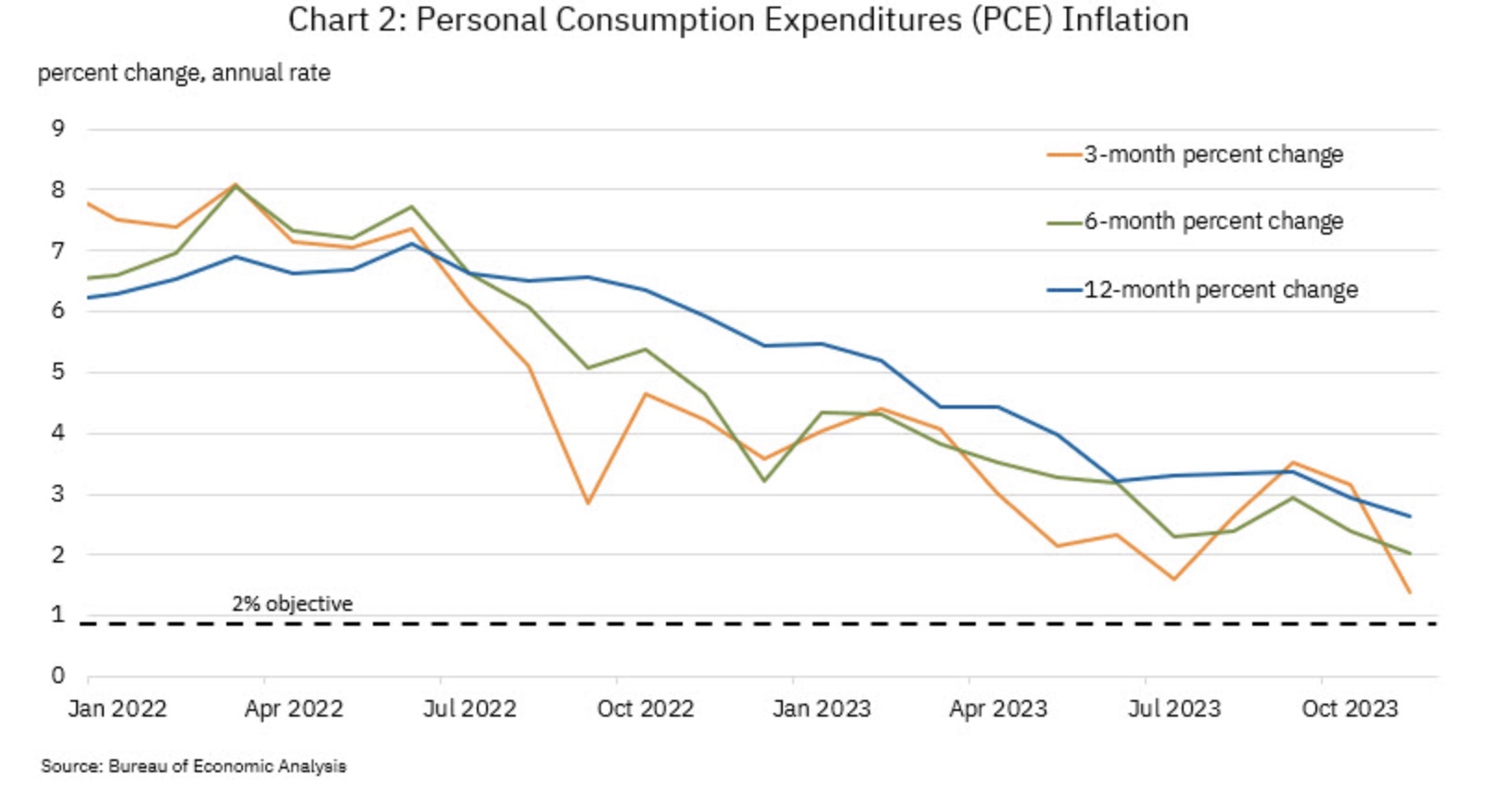
The results cannot be surprising as even before Powell started speaking, 10-year yields had fallen 11bps although they continued to decline afterwards as well, finishing the day lower by 16bps or so.  All in all, an impressive bond rally.  But let’s consider for a moment a different consequence of yesterday’s announcements, the shape of the yield curve.  Prior to the QRA and the Fed, the yield curve, as measured by the 2yr-10yr spread had fallen from a low of -108bps to just -15bps and it seemed almost certain that it would normalize soon.  However, now that the QRA has shown there will be more issuance out to 2yrs and less beyond, the immediate impact is the curve is going to go back to inverting further, (it is already back to -22bps) at least until such time as the Fed actually does cut rates.  I have a feeling that we are going to hear a lot more about recession again even though Powell explicitly said the Fed was not expecting one.  In fact, Powell and the Fed may be the only people not expecting a recession at this point!

A quick look at the Fed funds futures market shows that for the December FOMC meeting, the market is currently pricing a 20% probability of a 25bp rate hike.  That is slightly lower than before the FOMC meeting yesterday, but within the margin of error.  However, at this point, the market has a 43% probability of a rate cut in May, with that probability growing as you head out further in time.  One of the things Powell reiterated yesterday is that the committee is not even discussing the idea of a rate cut.  Of course, he also said that they don’t believe a recession is coming so it is not surprising the market has a different rate view than the Fed.

In the end, I think this is a seminal shift in policy with the combination of Treasury and Fed actions indicative of a much easier policy stance going forward.  I have built my views based on the Fed maintaining its higher for longer stance and continuing to stress the system which remains massively leveraged.  However, if he is no longer going to follow that path, and I think we learned yesterday that the inflection point is here, then we need to rethink the future.  One consequence of this policy change, though, is that inflation, which I have maintained is going to remain far stickier than many anticipate, is going to become an even bigger problem down the road.  I just don’t know how far down the road that will be.  But for now, I think we are going to continue to see equities rebound into year end, bond yields fall, the dollar fall, and commodity prices rebound.  This is going to be a classic risk-on scenario through the end of the year in my view.

And despite, or perhaps because of, continued weaker data, that is what we are seeing in markets around the world.  Yesterday’s ISM Manufacturing data was quite soft at 46.7, and this morning the PMI data from the rest of the world was generally awful with all European readings between 40 and 45.  Yesterday’s ADP Employment data was soft, at 113K which just added fuel to the policy easing fire and though the JOLTS Job Openings data was still strong, the net perception is slower times are ahead, and with them, lower interest rates.

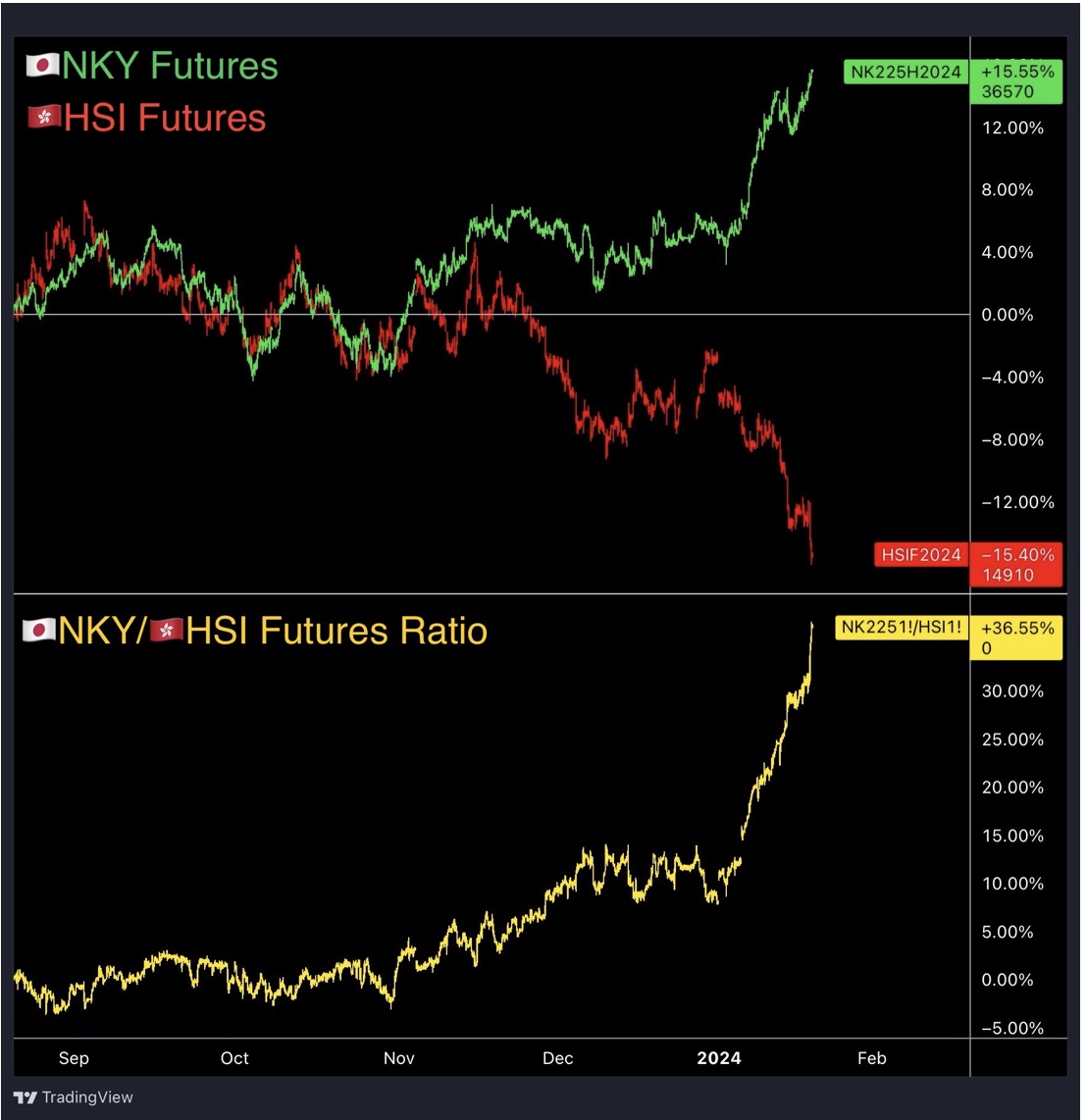
A look around markets shows that after yesterday’s US rally, with the NASDAQ leading the way higher by 1.6%, Asian shares rallied (Nikkei +1.1%, Hang Seng +0.75%) and we are seeing strength across the board in Europe with all major indices higher by at least 1.25%.  And don’t worry, US futures are pushing higher again, up about 0.5% at this hour (7:15).

It is, of course, no surprise that bond yields around the world are lower with European sovereigns declining by between 7bps and 12bps after both Australia and New Zealand saw yields tumble 16pbs and 25bps respectively.  Even JGB yields are softer by 3bps.  In fact, Dutch central bank president Klaas Knot, one of the most hawkish ECB members, is on the tape this morning with the following quote, “We should be a little patient and not raise rates too much.”  That may be the most dovish thing he has ever said.  The point here is that until such time as inflation really comes roaring back (and I fear that day will come), the direction of travel in interest rates is lower.

Oil prices, which remained under some pressure in the past week, have bounced 1.4% this morning with the movement seeming to be a response to the policy changes while gold (+0.3%) is also climbing, although a bit slower than I might have expected.  But we are seeing strength throughout the commodity complex on the lower rate story with copper (+0.5%) rallying despite the prospects of a recession.

Finally, the dollar is under pressure across the board with the DXY down -0.7% led by the euro (+0.6%), AUD (+0.7%) and NZD (+0.95%).  The yen (+0.4%) is a bit of a laggard today, though remains above the 150 level, but I suspect that we are going to see dollar weakness continue going forward.  Against EMG currencies, we are also looking at a weaker greenback with KRW (+1.0%) leading the way, but strength through APAC and EEMEA and MXN (+0.6%) firmer as the only representative of LATAM that is trading at this hour.  Yesterday Banco Central do Brazil cut their SELIC rate by 50bps to 12.25% as widely expected and BRL rallied 2% on the day.  Again, the theme is now a weaker dollar going forward.

To show how big a deal yesterday was, the BOE meets this morning, and nobody is even discussing it.  Expectations are for no policy change, although perhaps given the sudden dovishness breaking out worldwide, they will consider a cut!  We also see a bunch of US data as follows: Initial Claims (exp 210K), Continuing Claims (1800K), Nonfarm Productivity (4.1%), Unit Labor Costs (0.7%) and Factory Orders (2.4%).   There are no Fed speakers on the schedule today, but they get started again tomorrow.  Remember, tomorrow we also see NFP, so still some fireworks potentially.

For now, though, the new trend is risk on, dollar down.  

Good luck

Adf

Three Extra Trill

Said Goolsbee, I’m, processing, still
Why bond yields keep moving uphill
Perhaps he should look
At Yellen’s full book
Of issuance, three extra trill

So, with the third quarter now ending
And core PCE, today, pending
The hope and the dream
Is next quarter’s theme
Will be ‘bout risk assets ascending

In a speech yesterday at the Peterson Institute for International Economics, Chicago Fed President Austan Goolsbee laid out his current views on the US economic situation, which he thought was generally in good shape, and warned about overtightening.  He also noted the Fed has a rare opportunity to achieve a soft landing.  All that is ordinary enough.  The odd comment came when he mentioned that he was “still processing’ why bond yields were rising so much recently.  It is always disconcerting to me when the so-called best and brightest who lead our key institutions expose themselves as being clueless in their main role.  

As I have discussed in the past, it is not very difficult to determine why long-term yields are rising in the US, it is a combination of two absolutes and one likelihood.  The absolutes are the amount of supply hitting the market and the reduced demand.  Treasury Secretary Yellen has indicated in Q4 there will be new issuance of ~$852 billion on top of current refinancing of >$1.3 trillion, hitting the market.  At the same time, the Fed continues its QT program reducing demand by $180 billion in Q4 and both China and Japan, the two largest holders of Treasuries have been slowly reducing their positions.  The point is excess supply and reduced demand will drive prices lower.  The likelihood is that the private sector that will be required to purchase these bonds is wary of inflation rebounding on the back of higher energy prices and increasing wage costs (between the UAW strike and the latest law in California that mandates a $20/hour minimum wage for fast food workers, wages seem set to rise further still), and so are demanding to be paid more to buy the paper.  It is not really that complex.

Yesterday, after printing at 4.68%, a new high for the move, the 10-year yield fell back a bit, which is much more about market technicals and an oversold condition rather than a change in the underlying issues discussed above.  This morning, that yield is lower still, but just by 2bps and currently trading at 4.55%.  Of equal interest is the fact that the yield curve continues to bear steepen with the 2yr-10yr curve inversion now down to -50bps.  While we are likely to see a little trading bounce, this trend remains clear, and the fundamentals support higher yields.  I expect the 10-year yield to reach 5% by the end of 2023 and somewhere between 5.5% and 6.0% by the election next year.

If we look elsewhere in the world, we are seeing yields rise right alongside Treasury yields.  Perhaps the only place that is lagging is Japan, where the BOJ executed an unscheduled JGB buying operation last night of¥300 billion to help moderate recent movement.  This was interesting given the data out of Japan last night, notably weaker Retail Sales and a lower-than-expected Tokyo CPI at 2.8% (2.5% core) implies that the BOJ is not likely to feel much pressure to tighten.  With the Fed still all-in on higher for longer and the BOJ able to point to softening inflation as a reason to continue QE and loose policy, USDJPY will continue to be the outlet valve in the economy, and it should rise (yen weaken) still further.

Meanwhile, the most important spread in Europe, the bund-BTP spread in the 10-year space is back to 200bps.  This is the level at which the ECB has demonstrated concern in the past and I am confident that there is much discussion ongoing today.  We did hear from one of the ECB hawks overnight, Nagel, who was clear that another rate hike might be appropriate, but I assure you, if that spread widens much further, rate hikes are not going to be the ECB’s approach.  All in all, we are likely to see much future stress in bond markets.  And to think, none of this even touches on the potential government shutdown tomorrow!

And yet, equity markets bounced yesterday into month/quarter end and European bourses and US futures are all in the green today as the bulls are now telling us that things are oversold, and a rip-roaring rally is imminent.  Clearly, we have seen some pretty weak behavior in the risk asset space lately and a technical bounce is not surprising.  However, it remains very difficult for me to see the upside for stocks as long as bond yields are rising along with oil and inflation remains sticky.  Too, the dollar, while it also reversed course yesterday after a remarkable run higher over the past two plus months, is still quite firm overall, and as long as US yields rise, I look for the dollar to follow.

On the lighter side, the best non-sequitur correlation I have seen is that Top Gun was released in May 1986 and Black Monday, which saw the largest equity market selloff in history occurred in October 1987.  Well, Top Gun II was released in May 2022.  Should we be looking for a massive market decline in the next two weeks?  The starting conditions are not actually that different with an overvalued stock market, rising rates, rising oil prices and a rising dollar.  Just sayin!

As we look to the calendar today, the Core PCE data is set to be released at 8:30 and expected at 0.2% M/M, 3.9% Y/Y.  Many analysts continue to use the concept of annualizing last month’s data and pointing to the Fed achieving its target, or excluding the rise in prices of certain segments beyond food and energy and claiming not only is inflation falling, but deflation is coming.  Clearly, if you exclude the prices that are rising in the index, then the index will demonstrate falling prices, however it is not clear to me what that tells us.  We also get the Goods Trade Balance (exp -$95.0B), that excludes services, and we see Chicago PMI (47.6) and Michigan Sentiment (67.7).  Yesterday’s GDP data was a touch softer than expected at 2.1% with the most concerning part that Real Consumer Spending rose only 0.8% Q/Q, half the level of forecasts and down from 3.8% in Q1. On the flipside, Initial Claims fell to 204K, back to levels seen in January, and certainly no indication of economic weakness.

And that’s how we are heading into the weekend.  While yesterday saw trading reversals of the recent trends, there is no indication that those trends have ended.  The reversal and consolidation may last through today’s quarter end trading and into early next week but look for the longer term trends of a higher dollar, higher bond yields, higher oil prices and lower risk asset prices to resume before too long.

Good luck and good weekend

Adf

Goldilocks Dream

It seems many thought the word ‘could’
Was feeble when posed against ‘would’
The fact Chairman Jay
Had phrased things that way
Last month, for the bulls, is all good

And so, the new narrative theme
Is Jay is convincing his team
No more hikes are needed
And they have succeeded
In reaching the Goldilocks dream

The following quote from a weekend WSJ article by Fed whisperer Nick Timiraos is almost laughable in my mind.  

            This is apparent from how Fed Chair Jerome Powell recently described the risk that firmer-than-expected economic activity would slow recent progress on inflation. Last month, he twice used the word “could” instead of the more muscular “would” to describe whether the Fed would tighten again.Evidence of stronger growth “could put further progress at risk and could warrant further tightening of monetary policy,” he said in Jackson Hole, Wyo.

Talk about parsing language to the nth degree!  I bolded the line that I found the most ridiculous, but as we all know, my view does not drive the markets nor policy.  However, as I had written last week, we have definitely seen a shift amongst some of the FOMC members with respect to the idea of another rate hike this year.  Timiraos is widely believed to have the inside track to Chairman Powell, and now that the FOMC is in their quiet period ahead of the September 20th meeting, this will be the mode of communication.  

I guess the big risk of going all in on the Fed is done is we are still awaiting CPI Wednesday morning and with energy prices continuing to climb, I fear the opportunity for a high surprise is very real.  Literally every story that is written in the mainstream media these days tries to talk up the prospects of the economy and, correspondingly, for further equity market gains.  To me, there is a lot of whistling past the graveyard here, but so far, equities have held in despite some weaker data.  The one thing I would highlight is the market feels quite complacent with implied volatility across numerous markets, stocks, bonds, commodities and FX, all quite low.  Hedge protection is cheap here, if you need to hedge something, don’t wait for the move.

Ueda explained
We may soon understand if
Inflation is back

If we judge that Japan can achieve its inflation target even after ending negative rates, we’ll do so,” said Ueda.  This was the key sentence in a weekend interview published last night.  The market response was immediate with the yen jumping more than 1% in the early hours of Asian trading before ceding a large portion of those gains when Europe walked in the door.  However, regardless of today’s price action, there is a longer-term signal here that is important to understand.  It has become clear that the BOJ is becoming somewhat uncomfortable with the speed of the yen’s decline.  Prior to last night’s session, the yen had fallen 7.75% from July’s levels, which is a pretty big move for less than 2 months.  There is no secret to why the yen continues to decline, the vast policy differences between the US and Japan are sufficient reason.  While Ueda-san made no promises, this was very clearly a signal that a change is coming soon.  In the near-term, hedgers need to be very careful and those who are hedging JPY assets or revenues should really consider buying JPY puts outright or via collars as there is every reason to believe that further yen strength is coming by the end of the year.

Meanwhile, on the western edge of the Yellow Sea, the PBOC was quite vocal last night as well.  On the back of Chinese monetary data that showed a larger rebound than forecast in New Loan data as well as Aggregate Financing data, the PBOC issued the following statement, “Participants of the foreign exchange market should voluntarily maintain a stable market.  They should resolutely avoid behaviors that disturb market orders such as conducting speculative trades.”  That is very clear language that the PBOC is unhappy with the recent CNY performance.  In addition, the PBOC issued new regulations regarding large purchases of dollars telling banks that any corporate client that wants to purchase more than $50 million will need to get approval to do so, and that approval will take quite some time to be forthcoming.

It should be no surprise that the renminbi is stronger this morning, having rallied 0.65% and thus closing the gap with the CFETS fix for the first time in months.  Of course, given the double whammy of Japanese and Chinese policy implications, it should be no surprise that the dollar is softer overall.  Especially when considering the WSJ article explaining that the Fed may be finished hiking rates.  So, we have seen the dollar fall against all its counterparts in the G10 and most in the EMG blocs.  Aside from the yen (+0.65%), we have seen the most strength in AUD (+0.8%) which has benefitted from the overall Chinese story, both the currency issues and the better data, as well as the rise in commodity prices.  Kiwi (+0.55%) and SEK (+0.45%) are next on the list as there is broad-based dollar weakness today after an eight-week run higher.

In the emerging markets, ZAR (+1.1%) is actually the best performer on the commodity story as well as the general dollar weakness, but after that and CNY, HUF (+0.6%) is the only other currency in the bloc with substantial gains.  The story here is what appears to be a shift from zloty to forint as the market continues to punish PLN (-0.35%) after the surprisingly large rate cut last week by the central bank there.  Net, however, the dollar is clearly under pressure this morning.

If we turn to other markets, though, things don’t seem to make as much sense.  For instance, oil prices (-0.4%) are a bit softer while metals prices (AU +0.4%, CU +1.7%, AL +1.0%) are all firmer.  Now, the metals seem to be behaving well on the back of the dollar’s weakness, but oil’s decline is not consistent with that view.

In the equity markets, last night saw a mixed picture in Asia with the Nikkei (-0.4%) and Hang Seng (-0.6%) both under pressure while the CSI 300 (+0.75%) and ASX 200 (+0.5%) both responded well to the news.  For the Nikkei, the combination of prospects of higher rates and a stronger yen are both negative for Japanese stocks, while much of the rest of APAC benefitted from the Chinese story.  In Europe, the bourses are all green, averaging about +0.5% as investors continue to believe the ECB is done hiking rates with the market now pricing less than a 40% probability of a hike this week and not even one full hike priced into the curve over time.  US futures are also green as investors embrace the WSJ article’s hints that the Fed is done.

Finally, the big conundrum is the bond market, which is selling off across the board.  Or perhaps it is not such a conundrum.  If both the Fed and ECB are done hiking despite inflation continuing at a pace far above target, then the attractiveness of holding duration wanes dramatically.  Add to that the gargantuan amount of debt yet to be issued and the fact that the biggest buyers of the past decades, China and Japan, seem to be backing away from the market, and it will require much higher yields for these issues to clear.  Of course, one could also look at this as a risk-on session with stocks higher and bonds getting sold along with the dollar, so perhaps that is today’s explanation.  Just beware the movement here.  10-Year Treasury yields (+3bps) are back to 4.30%, and if the story is no more Fed tightening thus higher inflation, that is unlikely to be a long-term positive for equities.  At least that’s what history has shown.

On the data front, the back half of the week brings the interesting stuff.

TuesdayNFIB Small Biz Optimism91.5
WednesdayCPI0.6% (3.6% Y/Y)
 -ex food & energy0.2% (4.3% Y/Y)
ThursdayECB Rate Decision3.75% (current 3.75%)
 Initial Claims227K
 Continuing Claims1695K
 Retail Sales0.1%
 -ex autos0.4%
 PPI0.4% (1.3% Y/Y)
 -ex food & energy0.2% (2.2% Y/Y)
FridayEmpire Manufacturing-10.0
 IP0.1%
 Capacity Utilization79.3%
 Michigan Sentiment69.2

Source: Bloomberg

As we are in the Fed quiet period, there will be no Fedspeak, so it is all about the data this week.  Beware a hot CPI print as that will pressure the narrative of the soft landing.  This poet’s view is no soft landing is coming, rather a much harder one is in our future, but at this point, probably not until early next year.  Until then, and despite today’s news cycle, I still think the dollar is best placed to rally not fall.

Good luck

Adf

Singing the Blues

For Jay and his friends at the Fed
What they’ve overwhelmingly said
Is weakened employment
Will give them enjoyment
While helping inflation get dead

So, yesterday’s JOLTS data news
Which fell more than ‘conomists’ views
Was warmly received,
Though bears were aggrieved,
By bulls who’d been singing the blues

In fairness, Chairman Powell never actually said he would revel in a weaker employment picture, but he did discuss it regularly as a critical part of the Fed’s effort to drive inflation back to their 2% target.  And, in this case, more importantly, he had specifically mentioned the JOLTS data as a key indicator as an indication of the still very tight labor market.  With this in mind, it should be no surprise that when yesterday’s number came in much lower than expected, at ~8.8 million, down from a revised 9.2 million (the original print last month had been ~9.6 million), risk assets embraced the news as evidence that the Fed is, in fact, done raising rates.  Now, tomorrow and Friday’s data releases are still critical with both PCE and NFP on the calendar, so there is still plenty of opportunity for changes in opinions.  However, there is no question that the risk bulls have made up their minds and decided the Fed is done.

There is, however, a seeming inconsistency in this bullish thesis.  If the US economy is set to weaken, or perhaps is already weakening, with the jobs data starting to roll over, exactly what is there to be bullish about?  After all, China is clearly in the dumps, as is most of Europe.  While short-term interest rates are certainly likely to fall amid a recession, so too are earnings.  And if earnings are falling, explain to me again why one needs to be bullish on stocks.  I assume that the goldilocks scenario of the soft landing is the current driving force in markets, but that still remains a very low probability in my mind.  

History has shown that since they started compiling this particular labor market indicator in December 2000, peak-to-trough decline, has occurred leading directly to a recession.  This was true in 2001-02 (39% decline), 2008-09 (49% decline), 2020 (23% decline) as can be seen in the chart below, and now we are at the next sharp decline.  Thus far, the decline from the peak in March 2022 has been 27%, so there is ample room for it to fall further.  I merely suggest that if that is the case, things are probably not that great in the US economy, and therefore, are likely to have a negative impact on risk assets.  Keep that in mind as you consider potential future outcomes.

Source data: Bloomberg

The other data yesterday, Case Shiller House Prices and Consumer Confidence did little to enhance a bullish view.  Confidence fell sharply, by nearly 11 points and is not showing any trend higher.  Meanwhile, house prices fell less than expected, only about -1.2%, which has implications for the inflation picture.  After all, housing remains more than one-third of the CPI calculation, and if the widely assumed decline in house prices has ended, that doesn’t bode well for the idea inflation is going to fall further.  

Remember, Chairman Powell was quite clear that one data point would not be enough to change the Fed’s views, and while he is no doubt relieved that some of the job market pressure seems to be receding, he was also quite clear in his belief that rates needed to remain at least at current levels for quite some time to ensure success in their goal to reduce inflation.  The futures markets have reduced the probability of a September rate hike to 13% this morning, from nearly 25% before the data.  There is about a 50% chance of a hike at the November meeting.  It seems premature to determine that inflation is dead, and the Fed is getting set to cut soon, at least to my eyes.  Beware the hype.

As to the overnight session, after a strong US equity day, which saw the NASDAQ rally nearly 2% and the Dow nearly 1%, Asia had trouble following through. At least China had trouble, with virtually no movement there.  Australia rallied nicely, 1.2%, but otherwise, not much action in APAC.  In Europe this morning, there are far more losers than gainers, but the losses are on the order of -0.2%, so not substantial, but certainly not bullish.  The data out of Europe today showed inflation in Germany remains higher than desired, and confidence across the continent, whether consumer, economic or industrial, is sliding.  Not exactly bullish news.  As to US futures, they are ever so slightly softer this morning, down about -0.1% across the board.

In the bond market, it should be no surprise that bonds rallied and yields fell yesterday after the JOLTS data, with the 10yr yield falling 8bps.  However, this morning, it has bounced 3bps and European sovereign yields are higher by between 6bps and 7bps on the back of that higher than expected German inflation data.  The market is still pricing about a 50% probability of an ECB hike in September, but whether it happens in September or October, it is seen as the last one coming.

In the commodity space, oil (+0.5%) continues to hold its own, perhaps seeing support after OPEC member Gabon saw a coup yesterday, potentially reducing supply.  At the same time, we have seen several large drawdowns in inventories as well, so there seem to be some fundamentals at play.  Now, a recession is likely to dampen demand, but right now, the technicals seem to be winning out.  As to the metals markets, gold had a big rally yesterday on the back of declining real interest rates and is retaining those gains this morning.  The base metals are mixed this morning, but essentially unchanged over the past two sessions as the questions about growth vs. supply continue to be probed.

Finally, the dollar is modestly stronger this morning, but that is after a sharp decline yesterday.  With yields falling in the US it was no surprise to see the dollar under pressure.  With yields backing up, so is the dollar.  USDJPY is back above 146 again, having fallen below yesterday, but today’s movements are far more muted than yesterday’s.  As to the EMG bloc, the picture today is mixed with some gainers and some laggards, but aside from TRY and RUB, which are hyper volatile and illiquid, the gains and losses have been smaller.  One exception is ZAR (-0.5%), which fell after news the government ran a record budget deficit in July was released.

ADP Employment (exp 195K) headlines the data today, although we also see a revision of Q2 GDP (2.4%, unchanged) and the Advanced Goods Trade Balance (-$90.0B).  There are no Fed speakers on the calendar, so that ADP data will likely be the key for the day.  A weak print there will reinvigorate the Fed has finished debate, while a stronger than expected print may well see much of yesterday’s movement reversed.  With that in mind, remember that the past two months have seen very strong ADP numbers that were not matched by the NFP data, so this is likely to be taken with a little dash of salt.

We are clearly in a data dependent market right now as all eyes focus on this week’s news.  I need to see consistently weak data to alter my view that the Fed is going to step off the brakes, and it just has not yet appeared.  Until then, I still like the dollar.  

***Flash, ADP just released at 177K, with revision higher to last month’s number.  Initial move in equity futures is +0.2%, but there is a long time between now and the close.

Good luck

Adf

No Certitude

The efforts from Xi haven’t yet
For locals, their appetites whet
So, more were announced
And equities bounced
But still there is just too much debt

Meanwhile, elsewhere things are subdued
As traders have no certitude
‘Bout data this week
And if it will wreak
More havoc on everyone’s mood

As the week progresses, we will get a raft of data culminating in Friday’s payroll report.  But for now, the market is looking elsewhere for its catalysts and China continues to provide fodder for the trading community.  Last night, the news hit that Chinese banks were going to be reducing their mortgage rates for mortgages on first homes by up to 60 basis points in order to help support domestic consumption.  At the same time, they are also likely to reduce deposit rates by between 5bps and 20bps as they try to maintain their lending margins, but net, it appears the move should free up some cash for the Chinese consumer.

This should certainly be a positive for the nation’s economy and the equity market in China responded accordingly, with the CSI 300 rallying 1.0% while the Hang Seng jumped nearly 2.0%.  However, Xi’s actions continue to be small beer, tweaking policies at the margin, while he apparently remains adamantly opposed to any broad fiscal stimulus.  Now, in the long-term, this is probably a pretty sensible move for China as they already have a massive amount of debt outstanding, especially in the property market, and if national debt were piled on top, it could lead to much worse long-term outcomes.  However, in the short run, a 50bp cut in mortgage rates is unlikely to change consumption patterns by very much, and more domestic consumption is what they need.  This is especially true given the ongoing economic weakness in Europe, which has become their largest trading partner.

While Xi continues to fiddle with minor policy adjustments, the PBOC is desperately trying to prevent more severe weakness in the renminbi.  Last night, for instance, they fixed USDCNY at 7.1851, far below the market’s calculated expectations and 1.65% lower than the market is actually trading.  Remember, the onshore rules are that spot can only trade within a +/- 2.0% band compared to that CFETS fix, and it has been pushing that boundary for a while now as can be seen in the chart below (source Bloomberg):

The spread between the blue and orange lines continues to increase, but more importantly, the trends are moving in opposite directions.  Given how close the spread already is to the 2% limit, it appears that there is the potential for some fireworks in the future.  At this point, I cannot see how the PBOC will not ultimately allow a weaker CNY.  This is especially true if (when?) the Fed raises the Fed funds rate again.  Nothing has changed my view of 7.50 and beyond.

But, away from the ongoing recalibrations in the Chinese financial systems, there is precious little else on which to focus.  Generally, markets seem to have absorbed the idea that the Fed may continue to tighten further and remain resolutely bullish on risk.  It seems that the no-landing scenario is the current market fave.  And so, last night aside from the Chinese share gains, we saw green everywhere else as well, just not nearly as excited with rises on the order of 0.2% to 0.5%.  In Europe, it is also a positive morning with most gains relatively modest, of the 0.3% variety, with only the FTSE 100 (+1.45%) showing more substantial gains as the UK catches up with yesterday’s rally after their bank holiday.  Alas, US futures are actually leaning slightly negative this morning, but only just, as traders await the first pieces of data this week.  I would contend that the JOLTS data (exp 9.5M) is the most important as a key jobs indicator frequently mentioned by Powell, but we also see Case Shiller Home Prices (-1.60%) and Consumer Confidence (116.0).  Things pick up a bit tomorrow with ADP and then GDP on Thursday ahead of NFP on Friday.

In the bond market, lackluster describes things quite well with Treasury yields higher by 1 basis point and even lesser moves across the European sovereign space.  JGB’s, meanwhile are starting to drive a bit lower, but continue to hang around near 0.6%.  Traders and investors are awaiting this week’s data now that they have absorbed the Fed commentary.  If we see a surprisingly strong NFP print, do not be surprised to see yields back up toward their recent highs of 4.35% as many will assume at least one more hike is coming soon.  Correspondingly, a soft print will likely see a test of 4.00%, at least initially.

Oil prices continue to hold their own, perhaps getting a boost from the China story as any stimulus there is welcome and seen as a fillip for demand.  Metals prices, which had been a touch firmer earlier in the session, have given up those modest gains and at this hour (8:00), are basically flat on the day.

Finally, the dollar is mixed to slightly stronger this morning, but overall movement has been muted, like all the other markets.  While NOK (+0.15%) is managing some gains on oil’s strength, the rest of the G10 bloc is a touch softer, although other than JPY (-0.3%), which has managed to trade above 147 this morning, the movement is tiny.  In the EMG bloc, there is a more mixed view, but none of the movement is very large in either direction, with the biggest gainers and losers at +/- 0.3% on the day, effectively nothing in this space. Here, too, all eyes are on the data this week.

The only Fed speaker today is Michael Barr, and he is talking about banking services, with no policy discussions expected. Adding it all up leads to a conclusion of a pretty quiet session overall unless today’s data is dramatically surprising.  Remember, though, quiet sessions are good days to hedge.

Good luck

Adf

No Mean Feat

Nvidia managed to beat
The whispers, which was no mean feat
But PMI data
Revealed that the beta
For growth going forward’s dead meat

The upshot is pundits believe
The market will get a reprieve
Tomorrow, Chair Jay
Could possibly say
That higher for longer’s naïve

Markets have been choppy, if nothing else, for the past 24 hours as we have seen substantial moves in Treasury (and other sovereign) yields, a major rally in gold, and the dollar fall sharply and then regain almost all of its losses.  Oh yeah, equity markets continue to rally as the Nvidia story was even better than hoped by the biggest bulls out there.  Briefly, the chipmaker exceeded earnings forecasts by a large margin and guided Q3 numbers even higher as the CEO explained that things were just getting started in the AI boom.  While he is certainly correct that there will be a lot of investment in the space going forward, it remains an open question as to whether AI will actually change the course of human history.  After all, cold fusion was recently “shown” to work amidst a great deal of hype, and that hasn’t worked out quite like the bulls expected.  

More importantly, there is a long time between now and when AI is going to result in all these great leaps forward, and we need to address the here and now.  And that is where things look a little less wonderful than they did before the week began. 

Typically, the PMI data doesn’t get as much play in the US as it does in Europe and Asia since the US has their own survey, ISM, which is reported at the beginning of each month.  But after a series of weak numbers from Europe yesterday, the US PMI data was much weaker than expected with all three indicators, Manufacturing (47.0), Services (51.0) and Composite (50.4) coming in at least a point lower than estimates and indicating that while perhaps not in a recession, the US growth picture is quite subdued.  

Again, the survey data has been pointing, for some time, to economic weakness that has not yet appeared in many of the hard numbers like NFP or Retail Sales, but the market, at least the bond market, is quickly becoming of the opinion that recession is around the corner.  One need only look at 10yr yields to see the trend.  Yesterday saw 10-yr Treasury yields slide 13bps after touching a new cycle high on Tuesday.  This morning they are largely unchanged, but the day is still young.  But the picture in Europe and the UK is much more substantial, with yields, which had been rising alongside Treasuries have fallen far more sharply.  Since Tuesday’s close, German bund yields are down 19bps, Italian BTP yields have fallen 23bps and UK gilt yields are lower by 13 bps.  The market continues to reduce the terminal rate for the ECB, now below 3.80% and for the BOE, now 5.80%, as economic weakness is clearly the key concern.

Tomorrow, we will hear from Chairman Powell, but also from Madame Lagarde and then Saturday, BOE deputy governor Broadbent will make a speech.  In other words, at this point, markets are quite keen to hear if there is any change in the G3 central bank mindset.  Based on the large retracement in yields, markets are clearly expecting a dovish outcome.  While that is certainly possible, I think there is ample room for the Chairman to maintain the current view of higher for longer absent weakness in real data.

Speaking of real data, yesterday’s NFP revisions were a bit less than the whispers, with 306K jobs removed from the record.  I expect that data was also part of the bond market rally as changes there mean more than the PMI data, at least they have so far.  In the end, the dichotomy between the bond market which is beginning to believe the recession story, and the stock market, which sees no landing at all, is widening.  Commodity markets have been leaning recession, and the dollar has been strong, which would arguably be more in tune with growth than weakness.  In other words, there is no consistency here so we will need to continue to focus on the information as it comes out.

As mentioned, stocks are on fire this morning after the Nvidia earnings with yesterday’s anticipatory US rally matched by Asian gains, especially in HK which jumped >2%, and Europe is all green, but not nearly as aggressively with gains on the order of 0.3% across the board.  As to US futures, on the back of Nvidia, NASDAQ futures are higher by 1.3%, which is dragging the SPX up as well, however the Dow is little changed this morning.  It seems the Dow’s members lack that high tech sense about them.

Turning to commodities, oil (+0.3%) is bouncing off its recent lows although remains under pressure overall on the economic weakness story.  Gold (+0.2%) which exploded higher yesterday by more than 1%, remains in demand, perhaps on the back of the BRICS meeting and some discussion there, while base metals are softer, also on the recession theme.

As to the dollar, it is stronger across the board vs. its G10 counterparts on the day, but if you look at the move over the past two sessions, it is a more mixed picture.  Yesterday morning’s USD strength was reversed in the wake of the PMI and NFP revision data and the dollar fell sharply on the day against virtually all its G10 and EMG counterparts.  This morning, it is back on the way up, against both groupings, leaving an overall mixed picture.

Perhaps this would be a good time to touch on the BRICS meeting.  For those who believe in the end of the dollar, this had to be quite a disappointment given there was virtually no discussion of a new currency.  However, they did invite 5 countries to join, Saudi Arabia, Argentina, Iran, Egypt and Ethiopia, so expansion is real. (I wonder if they are going to change the name!). However, if you are Brazil, India, South Africa, Argentina or Egypt, all democracies with elected leadership, it seems a question that needs to be asked is do they really want to get into bed with a murderous thug like Putin, who coincidentally, had a key rival murdered yesterday.  That is not a very good look.  At any rate, anything that is going on in the BRICS group remains a distant question, at least from a current risk management perspective.  

Meanwhile, the dollar’s fluctuations are going to remain beholden to the perception of the US economy and the Fed.  Yesterday’s weakness was a clear response to declining yields on the weak data.  In the same vein, look for any strong data to help boost the dollar back up.

Speaking of data, today brings a good amount with Initial (exp 240K) and Continuing (1705K) Claims, Chicago Fed National Activity Index (-0.22) and Durable Goods (-4.0%, 0.2% ex transport).  Yesterday’s other data was New Home Sales, which was slightly higher than expected, but after a downward revision to the previous month, so no real net change.

Right now, stocks are the driver, tech stocks in particular, but watch the bond market.  If today’s data hints at weakness, I suspect that yields will fall further as will the dollar.  Of course, that means stocks will probably rally on the lower yield story.  

Good luck

Adf

Alternate Ways

In Joburg a gath’ring of nations
Is trying to firm up foundations
For alternate ways
That each of them pays
The other with no complications

Meanwhile, we are starting to hear
A story that we should all fear
The calls have come forth
Inflation that’s north
Of two percent’s where Jay should steer

The BRICS nations are meeting in Johannesburg starting today with, ostensibly, a mission to exit the dollar financial system.  While Russia has already done so involuntarily, the biggest proponent of the move is China, although the other nations are certainly willing to listen.  In addition to this goal, they will hear from many other developing nations as to whether these other nations merit inclusion in the BRICS club.

Ultimately, the problem that this disparate group of nations has is that none of them really trust any of the others.  Certainly, the historical conflict between China and India is well-known and long-lasting.  It was not that long ago that their soldiers were shooting at each other in the Himalayas.  At the same time, both Brazil and South Africa are extremely remote from the other nations and have completely different economic and political systems.  In other words, the common ground of wanting to do something about the US and its dollar, while certainly a goal, is unlikely to be enough for any of them to risk potential negative consequences of a failed concept.  

Much will be made of this meeting in the press, but we have already heard from South Africa’s FinMin, Enoch Godongwana, that it is premature for South Africa to stop using the USD and SWIFT system.  Ultimately, my strong belief is this is much ado about nothing, at least for the foreseeable future.  Perhaps in 25 years, after the 4th Turning is complete, the global currency system will be different, but not anytime soon.

Which brings us to the other story which has me far more concerned about the dollar and the US economy, the substantial increase in calls by mainstream economists to raise the Fed’s inflation target.  Understand that I have never been a fan of the target to begin with, recognizing its arbitrary nature.  However, the world in which we live has been predicated on the idea that the Fed is focused on that target and its policies are designed to maintain a relatively low rate of inflation.  Raising that target, with 3% the new favored call, is just as arbitrary as the initial level, but it changes the dynamic in the economy as well as markets.

It seems these calls are coming from the hyper-Keynesians who lean toward MMT and believe that the risk of any economic growth slowdown should be addressed ahead of all other concerns.  (It could be argued that the current administration is quite concerned that a recession next year, heading into the presidential election, would not favor President Biden’s reelection.). Now, nobody is happy when the economy slows down as it makes life difficult for us all, but one of the reasons the nation is in its current situation, with unsustainable levels of debt outstanding, is because the willingness of any politician to allow markets to actually clear (meaning asset prices fall sufficiently to hurt the 1% club) is essentially nil.  This has been the underlying driver of constant spending programs and ultimately, the cause of the ballooning budget deficits and Federal debt.  

The unspoken piece of this concept is that permanently higher inflation will reduce the real value of the outstanding debt that much more quickly, hence allowing for even more deficit spending going forward.  The fact that higher inflation is an effective tax on the bottom 99% of the income brackets, with the pain increasing more rapidly the further down that scale you look, is of no concern it seems.

Thus far, Chairman Powell has been adamant that there is no change to the goal on the table.  But I assure you that the longer it takes for inflation to retreat to its former levels, the more we will hear about this idea.  When I combine this concept with my belief that inflation is going to remain sticky in the 3%-4% range going forward for quite a while, it does not paint a promising picture.  The Fed already has credibility issues; moving the goalposts in the middle of their inflation fight would really destroy any remaining credibility they have, and that would be a real problem for monetary policy activities going forward.

But these problems are far too forward looking for today’s markets.  Instead, the future is…Nvidia!  At least, that seems to be the case right now.  As investors await their Q2 earnings release tomorrow afternoon, the working thesis seems to be that they will beat the currently inflated analyst expectations and drive the next leg of the equity bull market higher.  Now, remember, they currently trade at a 228 P/E ratio, which seems pretty high in the scheme of things, regardless of the promise of AI going forward.  (You can tell AI didn’t write this as I call into question its value here).  There has been much talk of a big ‘beat’ in earnings and that has been the catalyst for today’s equity rally.  Well, that and the fact that the Chinese seem to have instructed their ‘plunge protection team’ to get back to buying Chinese stocks as well as the yuan.  Regardless of the rationale, though, risk is definitely in favor today.

Asian equity markets were higher across the board, with the big ones all higher by just under 1%.  European bourses are similarly situated, all higher by about 1% while US futures, at this hour (7:30) are lagging a bit, only up by about 0.5%, although that was after a pretty solid performance yesterday.  Woe betide the equity markets if Nvidia misses its numbers!

At the same time, bond yields are generally lower this morning with 10yr Treasuries down 2bps from yesterday’s new closing high near 4.35%.  European sovereign bonds have also seen demand with yields sliding between 4bps (Germany) and 7bps (Italy) as a combination of mildly positive UK Public Sector Finance news and a very large Eurozone Current Account surplus seem to have bond investors quite excited.  Asia, however, did not share this excitement with JGB yields rising 2bps and getting to their highest level (0.663%) since the change of policy last month.  

On the commodity front, oil (-0.2%) has edged back below $80/bbl, representing a sharp decline yesterday afternoon after signs of increased supply started to show up in the market.  The metals markets, however, are in much better shape this morning with gold (+0.4%) back above $1900/oz and the base metals both firmer as well.  It seems that mildly lower yields and a weaker dollar are having quite a positive effect.

Speaking of the dollar, it is under broader pressure this morning vs. most of its G10 and EMG counterparts.  In the G10, NZD, AUD and SEK have all gained about 0.5% with NOK +0.4% as commodity prices find some support, and the China renewal story helps the overall global growth story this morning.    While the euro is little changed on the day, the rest of the bloc has edged higher as well.  Meanwhile, in the EMG bloc, ZAR (+1.1%) is the biggest gainer on the day, perhaps getting a little boost from positive BRICS vibes, but more likely from positive commodity vibes.  As to the rest of the bloc, APAC currencies have benefitted from the China story and THB (+0.65%) has benefitted from the resolution of the political crisis with a new PM finally being named.

On the data front, we see Existing Home Sales (exp 4.15M) and Richmond Fed Manufacturing (-10) and we hear from several Fed speakers.  However, with Powell on the calendar for Friday morning, I don’t think a great deal of attention will be paid to any other Fed speaker until he’s done.  There is a strong belief he is going to lay out the policy framework going forward, but I have a suspicion that he is happy with the current ‘guidance’ of higher for longer and may not say much at all.

Right now, risk is to the fore, and as such, the dollar is likely to remain under pressure until that changes.  It may be this way all week, or if Nvidia misses its numbers, don’t be surprised to see the dollar reverse course higher after that.

Good luck

Adf

Simply a Bummer

As tiresome as it may be
To talk about China and Xi
The doldrums of summer
Are simply a bummer
With nothing else worthy to see

However, come Friday we’ll turn
To Jackson Hole where we should learn
If Jay and the Fed,
When looking ahead,
Decide rate hikes soon can adjourn

The biggest news overnight was that the PBOC cut interest rates again, but this time somewhat less than expected.  You may recall that last week, they cut the 1-yr Lending Facility rate by 15bps in a surprising move.  In fact, this is what started the entire chain of events last week that resulted in China dominating the macroeconomic news.  Well, last night they cut the 1yr Loan Prime rate by a less than expected 10bps with the market looking for a 15bp cut.  And they left the 5yr Loan Prime rate, the rate at which most mortgages in China are priced, unchanged at 4.20% rather than implementing the 15bp cut that the market had anticipated.  The result is that so far, Chinese support for their economy remains tepid at best.

At the same time, there continues to be a grave concern in Beijing regarding the exchange rate as, once again, the daily fixing was far below the market rate, and once again, the renminbi fell anyway.  It has become abundantly clear that the PBOC is quite concerned over a ‘too weak’ renminbi, hence the maintenance of the 5yr interest rate.  As well, it was widely reported that Chinese state-owned banks were actively selling USDCNY in the market to prevent further weakness in their currency.  

Perhaps this is a good time to briefly discuss the concept of the end of the dollar again, a topic that continues to make headlines.  One of the key pillars of this thesis is that the PBOC has reduced the number of dollars on its balance sheet substantially over the past several years which is seen as an indication that they are preparing to support some new reserve asset.  However, as last night’s price action indicated, it is quite possible, if not likely, that the only change has been one of location, rather than amount.  As the PBOC reduced the dollars on its balance sheet, the big state-owned banks all increased the amount on their balance sheets.  So now, the PBOC can direct those banks to intervene on their behalf whenever they want to do something.  At the same time, the PBOC has the appearance of decoupling, something they are clearly trying to demonstrate.  

This week is the big BRICS meeting where the stories are that they are going to unveil a new BRICS currency, allegedly to be gold-backed, as these nations try to undermine US power as well as offer an alternative to non-aligned nations.  The thing to remember about this group of widely disparate nations is that it has never been a cohesive bloc, it was simply an acronym created by a Goldman Sachs analyst in 2001 to describe a group of fast-growing emerging markets.  However, other than China and Russia, which have become closer since Russia’s invasion of Ukraine, they really have very little in common.  They are geographically widely diverse, have very different governing structures as well as very different financial and monetary policies.  In other words, there is nothing to suggest they can act as a cohesive group for any major decision.  While I am certain there will be some announcement of some sort at the end of the conference, an alternative to the dollar will not be coming anytime soon.

As to Jackson Hole, since Powell’s speech isn’t until Friday morning, we have plenty of time to touch on that topic later in the week.  In the meantime, risk is arguably in modest demand this morning.  While Chinese shares suffered significantly overnight on the disappointing rate news, European bourses are all nicely higher, generally between 0.75% and 1.00%.  Too, US futures are firmer this morning by about 0.5% after a late day rally Friday brought the major indices back near unchanged on the day from earlier lows in the session.

At the same time, bond yields continue to rally with 10-year Treasury yields back at 4.30%, up 4bps this morning, while European sovereign yields are all higher by between 4bps and 5bps.  It seems the bond market is not completely on board with the soft-landing narrative even though an increasing number of analysts are coming around to that view.  I think what we have learned thus far is that the US economy is not nearly as interest rate sensitive as it used to be.  The post-Covid period of QE and ZIRP saw a massive refinancing of debt, both mortgage and corporate, into longer-dated, low fixed rates.  With yields higher, there is much less need for refinancing, at least not yet, and so many of the problems that have been widely expected just have not happened yet.  At some point, when debt needs to be refinanced, if rates are still at current levels, it is likely to prove problematic for the companies and the economy writ large.  But that could still be some time from now.  In the meantime, I continue believe the yield curve inversion, which is now down to -67bps, could disappear completely by 10yr yields continuing to rise.  That is clearly not the consensus view.

Turning to commodities, they are generally looking good today led by oil (+1.2%) which has rebounded over the past several sessions and is back above $82/bbl.  The metals, too, are looking good with gold up at the margin, although hovering just below $1900/oz, while copper also has a bit of support today, up 0.3%.  For the industrial metals, China remains a key question mark.  If the Chinese economy continues to slow, then demand for these commodities is likely to be disappointing and prices seem likely to come under short-term pressure.  But remember, the long-term story remains one where many of these are essential for the mooted energy transition, and there simply is not enough of the stuff to satisfy the demand.  Longer term, prices still have room to rise.

Finally, the dollar is starting to slide as I type.  An earlier mixed picture has seen buyers of NOK (+0.75%) as oil continues to rebound, but also in essentially all of the G10 with only the yen (-0.3%) lagging.  In fairness, this is classic risk-on price action.  Turning to emerging market currencies, Asian currencies were mostly under pressure last night after the China rate news, but this morning EEMEA currencies are looking much better as they follow the euro (+0.3%) higher.  It appears that fear is taking a day off today.

On the data front, there is not much of real interest this week:

TuesdayExisting Home Sales4.15M
WednesdayFlash Manufacturing PMI49.0
 Flash Services PMI52.0
 New Home Sales704K
ThursdayInitial Claims240K
 Continuing Claims1700K
 Chicago Fed Nat’l Index-0.20
 Durable Goods-4.0%
 -ex transports0.2%
FridayMichigan Sentiment71.2
 Powell Speech 

Source: Bloomberg

Given the number of market participants on summer holiday, I suspect that there will be very little activity this week until we hear from Chairman Powell.  I would look for a little bit of choppiness, but no real directional moves until we know the Fed’s latest views.  And there is a real chance that he doesn’t tell us anything new, which means that we would then be waiting for NFP a week from Friday.  Net, until the Fed’s hawkishness breaks, I still like the dollar best.

Good luck

Adf

Not Preordained

The first cracks have started to show
In Jay’s, up til now, status quo
When Harker explained,
Though not preordained,
That rate cuts, next year, they’d bestow

While he is the first of the Fed
To claim that rate cuts are ahead
Do not be surprised
When views are revised
By others now this road’s been tread

While things looked dire yesterday morning with respect to risk assets, along around lunchtime there was a reversal of attitudes and while equity markets did finish in the red, they were all well off their lows by the close. So, the question is, what could have caused that reversal?  Interestingly, an argument can be made that Philadelphia Fed President Patrick Harker’s comments may well have been the catalyst.  

After explaining, “I think there is a path to an economic soft landing,” Harker went on to the money quote, “Sometime, probably next year, we’ll start cutting rates.”  While the first comment was a nice sentiment, the second comment was the first time we have heard any Fed speaker consider that rate cuts would be appropriate in 2024.  Remember, the entire mantra has been, ‘higher for longer’ with no indication that the FOMC was even close to considering rate cuts.  Importantly, Mr Harker is a current voting member, so his views carry a touch more weight than the non-voters.

Of course, the Fed funds futures market has been pricing in that exact scenario for months, with the current expectation that by the end of 2024, Fed funds will be back to 4.0%.  The conundrum here, though, is that if the economy comes in for a soft landing, meaning we do not have a recession while inflation falls back to their target, why would they adjust rates at all?  It would seem under that scenario that interest rates could be termed ‘appropriate’, neither too high nor too low.  I get why equity investors want lower rates, but then seemingly, rate cuts could well bring on another bout of inflation as an already growing economy overheats with extra monetary stimulus.

Yesterday’s other Fed speaker, Richmond’s Thomas Barkin (a non-voter this year) had a less dovish message.  He was unwilling to ‘predeclare’ where rates are going, explaining they have time before the next FOMC meeting to monitor the data.  He also explained that there are competing outlooks for the economy, “one where inflation will glide down to 2%, another where it remains persistent.”  But that message is far more in line with what we have been hearing.  It was the Harker comments that got things rolling.

And so, as we walk in this morning, there is a lot of green on the screen in the equity markets as risk is once again in favor.  Not surprisingly, this has pushed commodity prices higher, especially oil, which while higher by 1.3% this morning, and back over $83/bbl, is more than 5% above the lows seen yesterday morning.  That is a big reversal!  Metals markets, too, are firmer this morning with gold, copper and aluminum all benefitting from this change in sentiment.

In the equity space, Asian markets were more mixed with the Nikkei (-0.5%) which had been holding its own giving back a bit, but the Hang Seng managed to reverse a small portion of yesterday’s losses.  The real story, though, is in Europe, where all the markets are higher, mostly by 1% or more, notably Italy’s FTSE MIB (+1.75%) which has benefitted from both the overall risk sentiment as well as a change in plans by the Italian government regarding the bank windfall profit tax mooted yesterday.  It seems that they got a little nervous over the market’s reaction, which wiped out more than €10 billion in market cap from the banking sector, and so reversed course a bit.  As to US futures, they are modestly firmer (+0.3%) at this hour (7:45).

In the bond market, after sharp declines in yields yesterday, we are seeing a bit of a reversal with 10yr Treasury yields up 1bp this morning.  While early yesterday that yield had fallen below 4.0%, it was a short-lived move, and we are back above that key level today.  The easy part of the quarterly refunding was well received yesterday with the 3yr note clearing at 4.398% and a 2.90 bid/cover ratio.  In other words, there were plenty of buyers for that $42 billion tranche.  Today could be a bit trickier as the Treasury seeks to sell $38 billion of 10yr notes.  We shall see where bonds trade as the auctions progress.  And tomorrow comes the 30yr, with $23 billion set to be auctioned, so there is still plenty of new supply coming.  Meanwhile, European sovereign bonds are all seeing yields higher as well this morning, mostly on the order of 1bp to 2.5 bps, after yesterday’s sharp yield declines.

Finally, the dollar is under a bit of pressure this morning, as would be expected given the change in risk attitude.  NOK (+0.5%) leads the way in the G10 on the back of oil’s performance, but in truth, the rest of this bloc has not moved very far at all, although I would argue that gainers mean more than laggards.  In the EMG space, the situation is similar with quite a few more currencies gaining ground, albeit not too much, while only a few are under pressure.  ZAR (-0.5%) is the laggard although there is no obvious catalyst for the movement, especially given the commodity rebound.

There is no data of note today and no Fed speakers are on the docket either.  With this in mind, and as we all await tomorrow’s CPI data, I suspect that risk will remain in favor today.  That means that commodities should continue to perform well along with equities, while the dollar remains under pressure.

Good luck

Adf

Resolutely

Said Jay to the world through the Press
We’ve certainly had some success
But patience is key
As resolutely
We stop any signs of regress

Does this mean that next time we meet
Our actions will be a repeat?
The answer is no
We’re not certain, though
We could if inflation shows heat

And what about Madame Lagarde
Have she and her minions been scarred
By Europe’s recession
Or will their suppression
Of growth lead to outcomes ill-starred

By this time, you are all almost certainly aware that the Fed raised the Fed funds rate by 25bps as widely expected.  You may not be aware that the FOMC statement was virtually identical, with only a change in the description of economic growth from ‘modest’ to ‘moderate’, apparently a slight upgrade.  This was made clear when Chair Powell, at the press conference, explained the Fed staff was no longer forecasting a recession in the US.  Perhaps the following Powell quote best exemplified the outcome of the meeting, “We can afford to be a little patient, as well as resolute, as we let this unfold,” he said. “We think we’re going to need to hold, certainly, policy at restrictive levels for some time, and we’d be prepared to raise further if we think that’s appropriate.”  

So, what have we learned?  I think we can sum it up by saying nothing has changed the Fed’s mindset right now.  They continue to focus on the fact that inflation remains above their target and will continue to implement policies that they believe will address that situation. 

The thing that makes this so interesting is everybody seems to have a different interpretation of what that implies.  The two broad camps are 1) this was the last hike as inflation continues to fall and they are already hugely restrictive compared to their historical activities; and 2) given the upgrade in economic forecast, and the fact that inflation seems set to remain higher than target for a long time yet, there are more hikes to come.Given the math that goes into the CPI data, it is quite easy to forecast Y/Y CPI if you assume a particular M/M figure for the next period of time.  BofA put out a very good chart showing the potential evolution of headline CPI going forward.

The implication here is that unless the M/M data falls to zero or negative, CPI is going to start climbing again.  The Fed clearly knows this as does the market.  The only disconnect is the question of how the Fed will respond in the various cases.  Remember, too, that oil and gasoline prices have risen 13.7% and 11.2% respectively in the past month.  The idea that the energy component of CPI will do anything but rise sharply this month seems absurd.  As such, I expect that the Fed will continue to lean toward another hike going forward.

The problem they have had is that the pass-through from Fed rate hikes to the economy has been greatly diminished by their previous policy of excessive ZIRP.  It is estimated that roughly 80% of US home mortgages have fixed rates below 4%, with half at 3% or less.  At the same time, the average duration of corporate debt has lengthened to 6.4 years as the refinancing activity that occurred during the ZIRP period saw extension of tenors widespread.  As such, other than the Federal government, who managed to shorten the duration of their outstanding debt during the period of ZIRP, most borrowers are in pretty good shape and not impacted by the Fed’s policies.  In fact, they are earning much more on their cash balances.  The point is, there is a case to be made that the Fed can maintain ‘higher for longer’ for quite a while without having a significantly deleterious impact on the economy.  Perhaps the soft landing is possible after all.

Now, if they continue to hike rates, and there are a number of analysts who believe we are heading to 6% or beyond, things may change.  We are already seeing a significant diminution of demand for bank loans, which while that may not bother large corporates, implies that the SME sector is going to break first.  Does the Fed care about them?  They will only care when the Unemployment Rate rises substantially.  This comes back to why I believe that NFP is still the most important data point, regardless of the inflation discussion.  Summing it up, the Fed will see two more CPI, PCE and NFP reports before they next meet on September 20th.  It is impossible, at this time, to estimate their actions with this much more data still to be digested.  However, if my inflation view is correct, that it will remain stickily higher, I see a very good chance of at least one more Fed funds rate hike.

A quick look across the pond shows that the ECB will be making their latest rate decision this morning with the market expecting a 25bp hike.  Unlike in the US, the OIS market is pricing in one further hike after today’s and then that will be the end of the cycle.  But…can Madame Lagarde continue to tighten policy if Europe is actually in a recession?  We already know that Germany is in a recession, and forecasts for Q2 GDP in Europe, to be released next week, are at 0.3%.  The Citi Economic Surprise Index remains mired at -136.7, a level only seen during Covid and the GFC, hardly the comparisons desired.  I believe it will be much tougher for an additional rate hike by the ECB unless the data story turns around quickly, and I just don’t see that happening.  Overall, it is this dichotomy in economic activity that underlies my bullish thesis on the dollar.

At any rate, the market response to the FOMC has been one of sheer joy.  Well, that and the fact that there are still some pretty good earnings results getting released, at least relative to recent expectations, if not on a sequential basis.  But it is the former that matters as that is what gets priced into the market.  So, equity markets, after yesterday’s breather in the US where they didn’t rise sharply, are mostly higher around the world.  Both the Hang Seng and Nikkei rallied nicely, and European bourses are quite robust this morning, with many exchanges higher by > 1%.  US futures, too, are in the green, with the NASDAQ showing great signs of strength.

Meanwhile, bond yields have edge a touch lower virtually everywhere with most of Europe seeing declines between 1bp and 2bps, although Treasury yields are less than 1bp lower this morning.  There appears to be little concern that Madame Lagarde is going to spoil the party and sound uber hawkish.  Even JGB’s are a touch softer, -0.4bps, as the market prepares for tonight’s BOJ announcement.  However, there is absolutely nothing expected out of that meeting.

In the commodity space, oil (+1.1%) is higher again this morning as are gold (+0.25%) and the base metals (CU +0.1%, Al +0.6%).  The soft(no) landing scenario seems to be gaining some traction here.  Either that, or the dollar’s weakness today, which is widespread, is simply being reflected as such.

Speaking of the dollar, it is definitely on its back foot as the market is essentially saying the Fed is done.  It is softer vs. the entire G10 bloc, with NOK (+1.05%) leading the way on the back of oil, but SEK (+0.9%) and NZD (+0.7%) also rising nicely alongside the commodity space.  Even the euro, which has no commodity benefit whatsoever, is firmer this morning by 0.5% as the market awaits Madame Lagarde.

In the emerging markets, the picture is similar with almost every currency firmer vs. the buck led by HUF (+1.1%) and ZAR (+0.8%).  The rand is clearly a commodity beneficiary, while the forint has gained after a story about the ECB being willing to consider Hungarian legislation that will avoid the need to recapitalize the central bank despite its recent losses.  Meanwhile, the laggard is KRW (-0.25%) which seems to have responded to the widening interest rate differential between the US and South Korea.

On the data front, we see Q2 GDP (exp 1.8%, down from 2.0% initially reported), Durable Goods (1.3%, 0.1% ex Transport), Initial Claims (235K) and Continuing Claims (1750K) along with several other tertiary figures.  There are no Fed speakers on the docket for the next week and I suppose that given the relative calm following yesterday’s meeting, there is not a great deal of near-term concern they need to change any views.  I suspect that if tomorrow’s PCE data surprises, we could start to hear more soon.

Today, the mood is risk on and sell dollars.  Barring a remarkable surprise from Lagarde, I would not fade the move.

Good luck

Adf