Markets Ain’t Scared

So, NFP data was wrong
Which many have said all along
Perhaps it was proper
For Trump to just drop her
Creating McTarfer’s swan song
 
Remarkably, though, no one cared
And equity markets ain’t scared
While Treasury yields
Edged higher, it feels
That 50bps is now prepared


Like a dog with a bone, I cannot give up the NFP story even though the market clearly didn’t care about the adjustment or had fully priced it in before the release.  In fact, it seems investors, or algos at least, welcomed the fact that the number was so large as it seems to make the case for a 50 basis point cut next week that much stronger.  Certainly, Chairman Powell will have difficult saying that starting a cut cycle with 50bps would be inappropriate given his more politically driven efforts a year ago.

But one final word on this subject is worthwhile I believe, and that is; why does the market pay so much attention to this particular data point?  Consider the following:  according to the BLS, current total employment in the US is approximately 159,540,000.  In fact, that number has been above 150 million since January 2019, although Covid managed to impact that for a few months before it was quickly regained.  

Now, NFP has averaged ~125K since they started keeping records in 1939 with a median reading of 160K.  To modernize the data, since 2000 it has averaged ~93K with a median of 154K.  Consider what that means with respect to the total labor force.  Ostensibly, the most important economic data point of each month represents, on average, 0.06% of the working population.  Additionally, that number is subject to massive revisions both on a monthly basis, and then, as we saw yesterday, there is another annual revision.  I don’t know if Ms. McEntarfer was good at her job or not, but it is not unreasonable to consider that the payrolls data, as currently calculated, does not really represent anything other than statistical noise.   I prepared the below chart to help you visualize how close to zero the NFP number is relative to the working population.  Absent the Covid spike, I would argue that the information that this datapoint delivers, especially in the past 25 years, also approaches zero.

Data FRED database, calculations @fx_poet

You may recall the angst with which the firing of Ms McEntarfer was met, and given President Trump’s penchant for overstating certain things, it certainly had a bad look about it.  But the evidence seems to point to the fact that the data is not only suspect, given its revision history, but essentially inconsequential relative to the economy.  The fact that the Fed is making policy decisions based on changes in the economy that represent less than 0.1% of the working population, and half that amount of the general population, may be the much larger scandal here.  

Remember, a 4th Turning is all about tearing down old institutions because they no longer are fit for purpose and building new ones to gain trust.  Perhaps NFP as THE monthly number is an institution whose time has passed, and investors (and the Fed) need to find other data to help them evaluate the current economic situation.  Of course, the algos love a single number to which they can be programmed and respond instantaneously, so if NFP loses its cachet, and algos lose some of their power, it would be better for us all, except maybe Ken Griffin and Larry Fink!

Otherwise, the overnight market offered very little new information.  Chinese inflation data continues to show an economy in deflation with the Y/Y result of -0.4% being worse than expected and the 5th negative outcome in the past seven months.  Looking at the chart below, it is becoming clearer that President Xi, despite flowery words about consumption, has no idea how to stimulate domestic activity other than the mercantilist model to which China subscribes.  Now, they overproduce stuff and since the imposition of higher tariffs by the US on Chinese goods, it seems more of that stuff is hanging around at home and driving prices down.  Alas, it seems not enough Chinese want the things they manufacture, hence steadily declining prices.  While it is a different problem than in the US, it is a problem nonetheless for President Xi.

Source: tradingeconomics.com

And with that, let’s head to the market activity.  Yesterday’s US rally was followed by strength all around the world as it appears everybody is excited about the prospects of the FOMC cutting rates by 50bps next week. While the Fed funds futures market has barely moved, currently pricing just an 8.2% probability of that move, I am hard pressed to conclude that the rest of the economic and earnings data is so good that equities should be rallying for any other reason.

Anyway, Japan (+0.9%), China (+0.2%), HK (+1.0%), Korea (+1.7%), India (+0.4%) and Taiwan (+1.4%) are pretty definitive proof that everybody is all-in on a 50bp cut by the Fed.  In fact, the worst performer in Asia, Thailand (0.0%) was merely flat on the day.  Turning to Europe, here, too, green is today’s color with Spain (+1.3%), France (+0.6%), Germany (+0.2%) and the UK (+0.5%) all rising nicely.  Domestic issues, which abound throughout Europe, are inconsequential this morning.  and don’t worry, US futures are higher by 0.35% this morning as well.

In the bond market, while yields edged up yesterday a few basis points, this morning they are essentially unchanged across the board in the US, Europe and Japan.  Worries about excessive deficits have been set aside.  A major protest in France today is not impacting markets at all.  Word that the BOJ will consider tightening policy (as if!) despite the political uncertainty has had no impact.  Perhaps we have achieved that long sought equilibrium in rates! 🤣

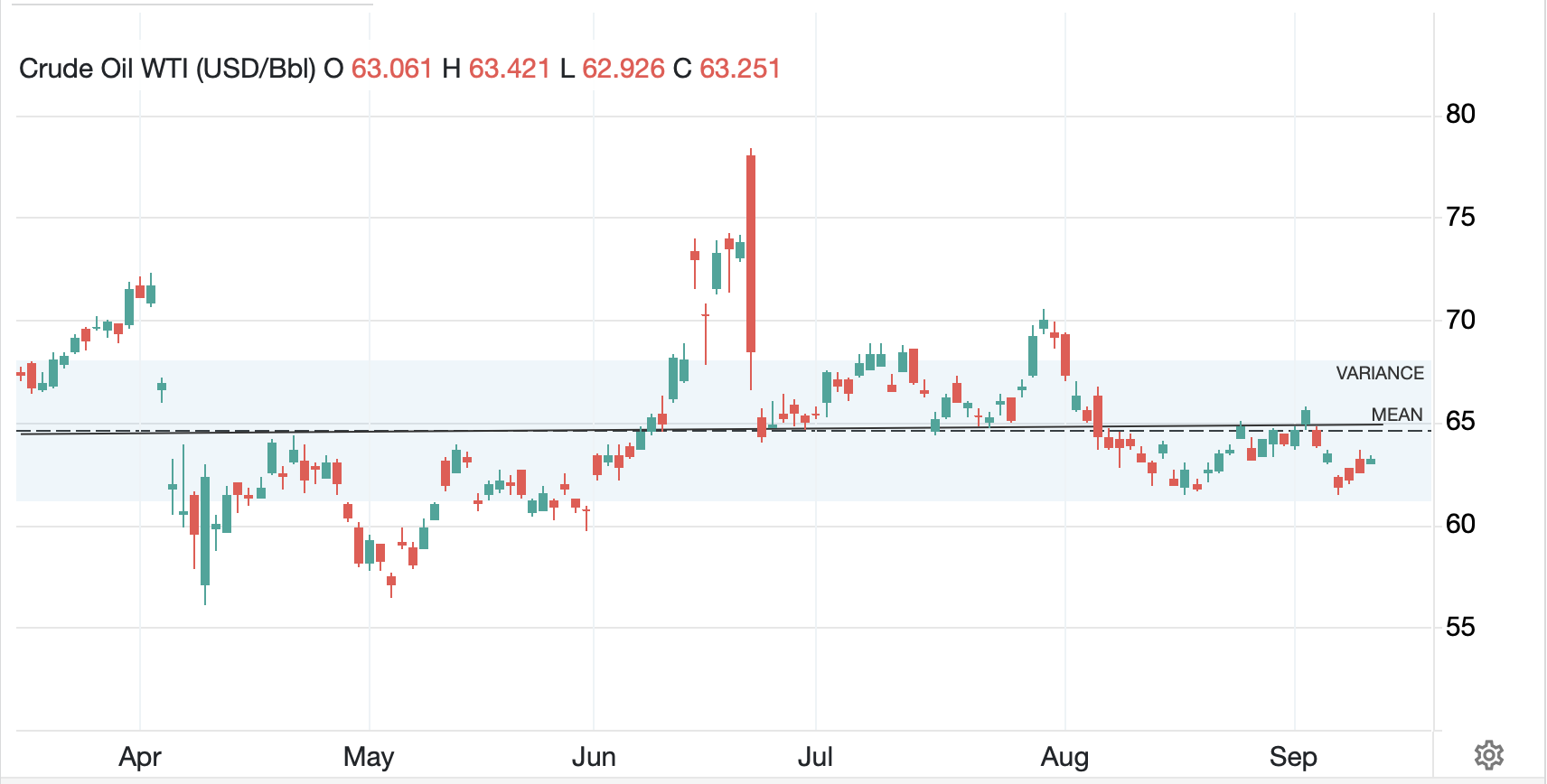
In the commodity space, oil (+1.1%) rallied after the Israeli attempt to eliminate Hamas leadership in Qatar yesterday ruffled many feathers and was seen as a potential escalation in Middle East conflicts.  But, at $63.30/bbl, WTI remains firmly in the middle of its recent trading range as per the below chart.

Source: tradingeconomics.com

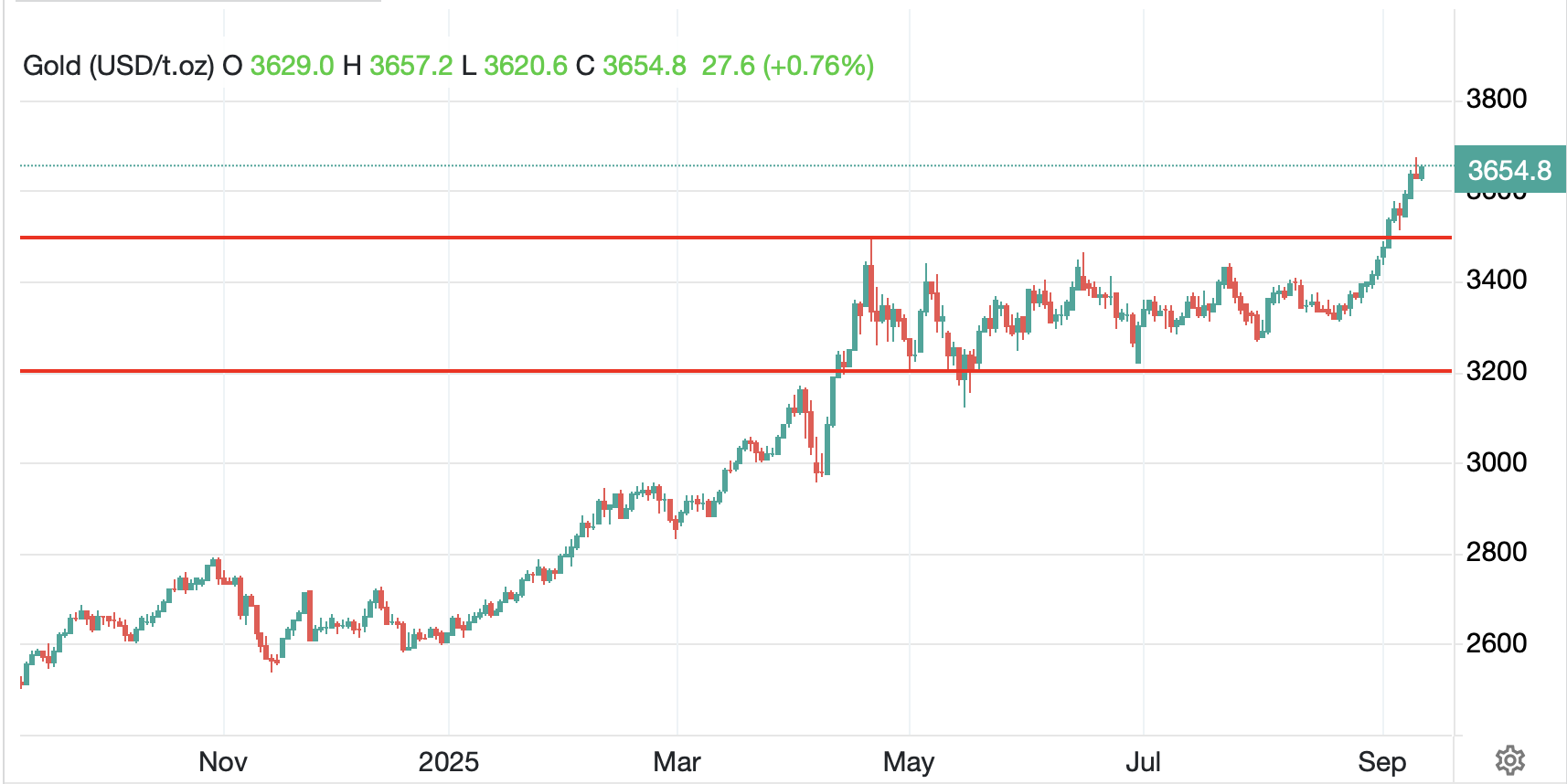
But you know what is not in the middle of its trading range, in fact the only thing with a real trend right now?  That’s right, gold.  A quick look at the below chart from tradingeconomics.com helps you understand why so many market pundits, if not investors, are excited about continued gains here.  Calls for $4000/oz and more by early next year are increasing.  As to the other metals, silver and platinum are following gold higher this morning although copper is unchanged.

Finally, the dollar is little changed vs. most major currencies with the euro and pound having moved 0.1% or less than the close and the same with JPY, CAD, CHF and MXN.  In fact, the biggest mover this morning is NOK (+0.5%) which on top of oil’s rally has benefitted from still firm inflation encouraging the idea that the Norges Bank is going to raise rates when they meet next Thursday.  If they hike after the Fed cuts 50bps, the krone will likely see further strength, at least in the short run.

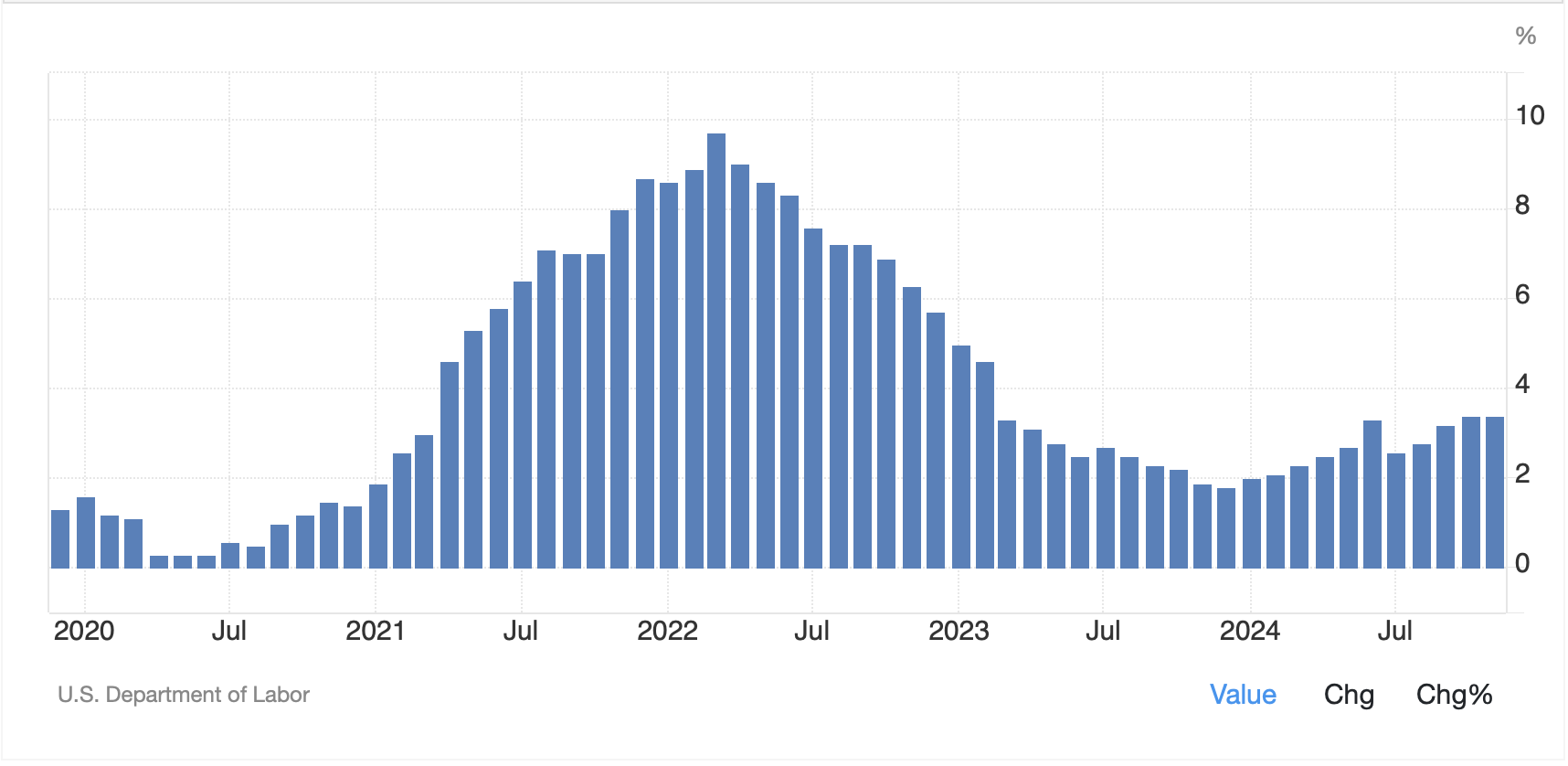
On the data front this morning, PPI (exp 0.3%, 3.3% Y/Y; 0.3%, 3.5% Y/Y core) is the key release and then the EIA oil inventory data is released at 10:30 with a modest draw expected.  As we remain in the quiet period, no Fed speakers are slated, so the algos will have to live with the PPI data or any other stories they can find.

If the inflation data this week stays quiescent, I think 50bps is likely next week as the employment situation, despite my comments above, will still be seen in a negative light and I think Powell will feel forced to move.  Plus, if Stephen Miran is added to the board this week, there will be increased pressure for just such an outcome.  However, while a Fed aggressively cutting rates should be a dollar negative, I feel like that is becoming the default view, so maybe not so much movement from here.  We need another catalyst.

Good luck

Adf

Seek the Abyss

As so often has been the case
The market is in Trump’s embrace
Will he make a deal
And sell it with zeal
Or will Putin spit in his face
 
Because of the focus on this
Though PPI data did miss
Most markets held tight
With highs still in sight
As naysayers seek the abyss


Based on the fact that equity markets in the US were all essentially unchanged yesterday, I think it is reasonable to assume that investors are waiting to see the outcome of today’s Trump-Putin meeting in Alaska.  I have no opinion on how things will work out, although I am certainly rooting for a result that includes a ceasefire and the next steps toward a lasting peace.  From a direct market perspective, arguably oil (-0.75% this morning) is the one place where the outcome will have an impact.  Any type of deal that results in the promised end to sanctions on Russian oil seem likely to push prices lower.  In this vein, we continue to see the IEA and EIA reduce their demand forecasts (although some of this is because they keep expecting BEVs to replace ICE engines and that is not happening at the pace they would like to see). However, away from oil, I expect that this will be much more important to overall sentiment than anything else.

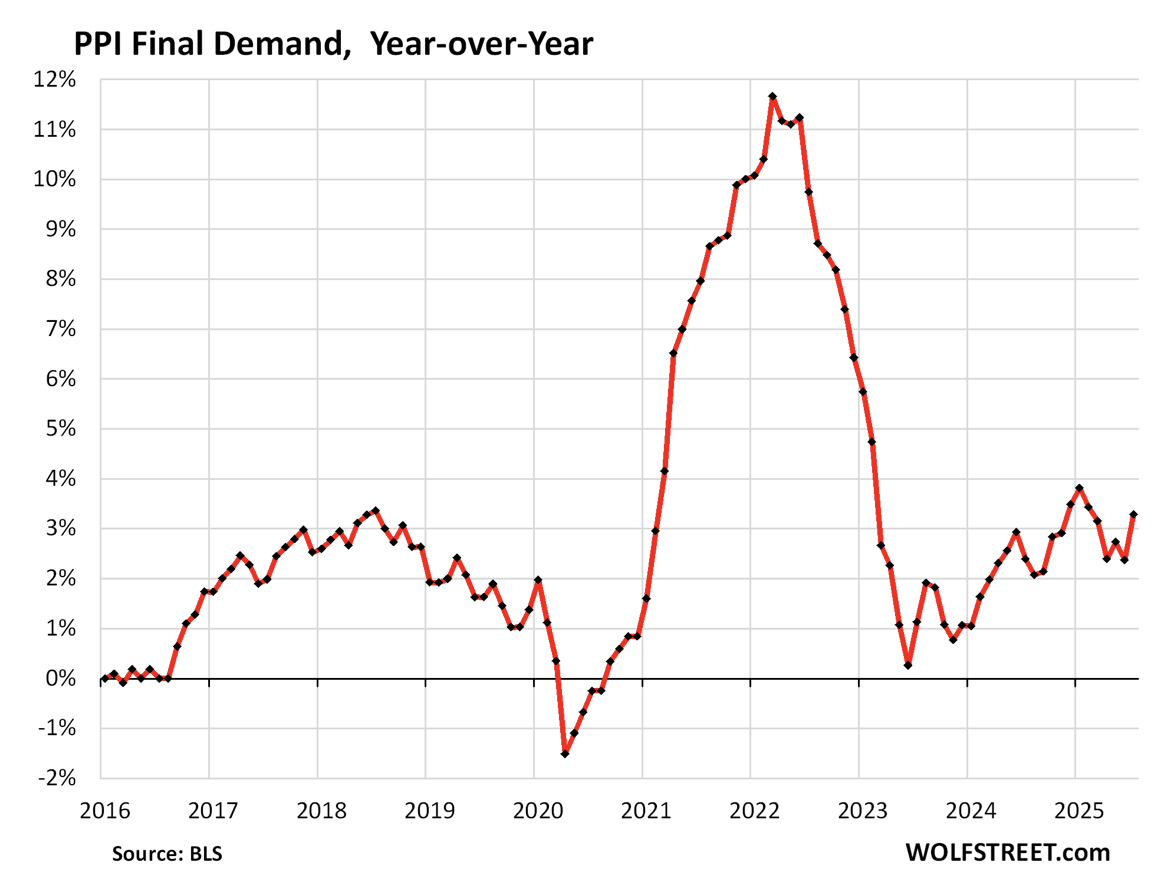
But sentiment matters a lot.  As does the attention span of traders, which as we already know, approximates the life of a fruit fly.  For instance, yesterday’s PPI data was unambiguously hotter than expected, with both headline and core monthly jumps of 0.9%.  Surprisingly for many economists, it was not goods prices that rose so much, but rather the price of services.  For the narrative, it is much harder to blame service price hikes on tariffs, than goods price hikes, but not to worry, economists are working hard to make that case.  As well, the near universal claim is that CPI is going to rise much more quickly going forward as evidenced by this rise in PPI.  A quick look at the chart below of annualized PPI shows that we are starting to rise above levels last seen in 2018, but if you recall, CPI then was very low, sub 2.0%. The relationship between the two, CPI and PPI, is not as strong as you might expect.

The contra argument here is that corporations, which were able to raise prices rapidly during the pandemic response are finding it more difficult to do so now.  We have discussed several times how corporate profit margins remain extremely high relative to history and what we may be seeing is the beginnings of those margins starting to compress as companies absorb more of the costs, be they tariffs or labor.  I also couldn’t help but notice the article in the WSJ this morning working to explain why tariffs haven’t boosted inflation as much as many economists expected.  Their answer at least according to this research, is that the many exemptions have resulted in tariffs being collected on only about half of imports, which despite all the headlines touting tariffs are now, on average, somewhere near 18%, makes the effective rate below 10%, higher than in the past, but not devastatingly so.  And remember, imports represent about 14% of GDP.  Let’s do that math.  If half of imports are excluded and the average tariff is more like 9%, we’re looking at 60 basis points of price increases, of which corporates are absorbing a great deal.  

One other thing in the article was how it highlighted the exact result that President Trump is seeking when explaining that more companies are searching for alternative sources of goods in the US.

The tariffs, are however, impacting other nations with China last night reporting a much weaker batch of data as per the below:

                                                                                                              Actual          Previous            Forecast

The property market there continues to drag on the economy, but government efforts to prop up consumption seem to be failing and clearly tariffs are impacting IP as less orders from the US result in less production.  Arguably, though, President Xi’s greatest worry is the rise in Unemployment as the one thing he REALLY doesn’t want is a lot of unemployed young males as that is what foments a revolution.  The interesting thing about the market response here is that while the Hang Seng (-1.0%) fell sharply, the CSI 300 (+0.7%) rallied, seemingly on hopes of additional stimulus being necessary and implemented.  One other thing to note about Chinese markets is that yesterday, 40-year Chinese government yields fell below 30-year Japanese yields for the first time ever, a sign that expectations of future Chinese activity are waning.  With this in mind, even though the renminbi has been gradually appreciating this year (even if we ignore the April Liberation Day spike), the Chinese playbook remains mercantilist at its heart.  I would look for a weaker CNY going forward, although the overnight move was just -0.1%.

Source: tradingeconomics.com

Ok, let’s look at the rest of markets ahead of the Alaska summit and today’s data.  Tokyo (+1.7%) had a strong session as GDP data from Japan was stronger than expected allaying worries that the tariffs would crush the economy there and bringing rate hikes back onto the table.  Australia (+0.7%), too, had a good session on solid corporate and bank earnings but the rest of the region was pretty nondescript with marginal moves in both directions.  In Europe, gains are the order of the day on the continent (DAX +0.3%, CAC 0.65%, IBEX +0.35%, FTSE MIB +1.1%) as hopes for a formalized trade deal being finalized grow.  However, UK stocks are unchanged on the session as investors here seem to be biding their time ahead of the Trump-Putin summit.  US futures are higher led by DJIA (+0.7%) although that appears to be on news that Berkshire Hathaway has taken a stake in United Health after the stock’s recent beatdown.

In the bond markets, Treasury yields are unchanged this morning although they reversed course yesterday, closing higher by 5bps rather than the -3bp opening, pre-PPI, levels.  But that rebound in yields has been seen throughout Europe where sovereigns on the continent are higher by between 3bps and 4bps and JGB yields (+2bps) rose overnight after the stronger than expected GDP data.

Away from oil, metals markets are doing very little this morning as it appears much of the activity has to do with option expirations in the ETFs SLV and GLD, so price action is likely to be choppy, but not instructive.

Finally, the dollar is softer this morning despite the higher Treasury yields.  One of the interesting things is that despite the hotter PPI data, the probability for a September cut, while falling from a chance of 50bps, to a 92.6% probability of a 25bp cut, is still pricing in an almost certain cut.  Remember, we are still a month away from that meeting and we have Jackson Hole in between as well as another NFP and CPI report so lots of potential drivers to change views.  And there is still a lot of talk of a 50bp cut, although for the life of me, I don’t understand the economic rationale there.  But softer the dollar is, falling against all its G10 brethren, on the order of 0.25% or so, and most EMG counterparts, with many having gained 0.4% or so.  But this is a dollar story today.

On the data front, ahead of the summit, which I believe starts at 2:30pm Eastern time, we see Retail Sales (exp 0.5%, 0.3% -ex autos, 0.4% Control Group) and Empire State Mfg (0.0) at 8:30, as well as IP (0.0%), Capacity Utilization (77.5%) at 9:15 and then Michigan Sentiment (62.0) at 10:00.  Retail Sales should matter most as a strong number there will encourage the equity bulls while a weak number will surely bring out the naysayers.  I still have a bad feeling about markets here, but that is my gut, not based on the data right now.  As to the dollar, there are still huge short positions out there and if rate cuts become further priced in, it can certainly decline further.

Good luck and good weekend

Adf

Shattered His Dreams

The data was hot yesterday
And that put the pressure on Jay
It shattered his dreams
‘Bout all of his schemes
To help keep inflation at bay


By now, I am sure you are aware that the CPI data was higher than forecast, and certainly higher than would have made Chairman Powell comfortable.  The outcome, showing Headline rising to 3.0% and core rising to 3.3% with correspondingly higher monthly rises was sufficient to alter the narrative at least a little bit.  Chair Powell even mentioned it in his House testimony, noting, “We are close, but not there on inflation…. So, we want to keep policy restrictive for now.”  Essentially, the data makes clear that the Fed is not going to be cutting the Fed funds rate anytime soon.  The futures market got the message as it is now pricing just 29bps of cuts this year, with December the likely date.

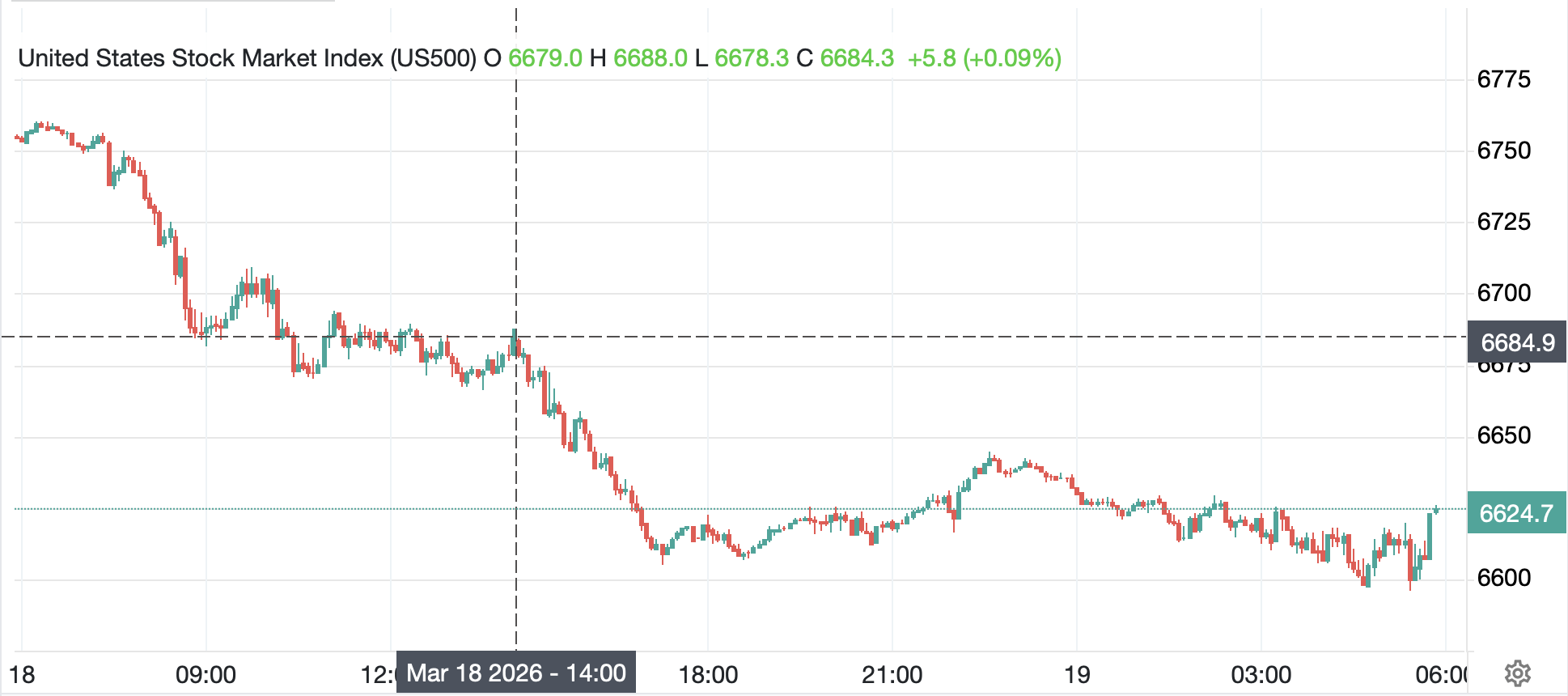
It will be no surprise that the stock market’s initial response was to sell off substantially, but as per the chart below, it spent the rest of the day clawing back the losses and wound up little changed on the day.  This morning, it remains basically unchanged as well.

Source: tradingeconomics.com

Treasury bonds, though, had a less fruitful session, falling (yields rising) sharply on the print, but never really regaining their footing with yields jumping almost 15bps at one point although finishing the day about 10bps higher and have given back 2bps more this morning.

Source: tradingeconomics.com

Now, we all know that the Fed doesn’t target CPI, but rather PCE.  However, after this morning’s PPI data release, most economists (although not poets) will be able to reasonably accurately estimate that data point for later this month, as will the Fed.  And that number is not going to be moving closer to their 2.0% target.  What seems very clear at this point is that every Fed speaker for the time being is going to be harping on the caution with which they are going to move forward.

If we look at this from a political perspective, something which is unavoidable these days, it is important to remember that Treasury Secretary Bessent has made clear that he and the president are far more focused on the 10-year yield than on the Fed funds rate.  To that end and given the fact that all this data was from a time preceding President Trump’s inauguration, I don’t think they are too worried.  I would look for the President to continue his drive to reduce waste and fraud in the government and attack that deficit.  Certainly, the news to date is there is a great deal of both waste and fraud to reduce, and if the president is successful, I believe that will play out in significantly lower 10-year yields, if for no other reason than the deficit is reduced or closed.  This story is just beginning to be written.

Now, Putin and Trump had a call
As Trump tries to end Russia’s brawl
They’re slated to meet
So, they can complete
A treaty with Europe awol

Under any interpretation, I believe the news that Presidents Trump and Putin are going to meet in an effort to hammer out an end to the Russia/Ukraine war is good news.  Beyond the simple fact that less war is an unadulterated good, I think it is very clear that this particular war has had significant market impacts, hence our interest here.  Obviously, energy prices have been impacted, as both oil and NatGas prices are higher than they would otherwise be given the removal of some portion of Russia’s exports from the global markets and economy.  As such, the end of this conflict, with one likely consequence being Western Europe reopening themselves to Russian energy imports, is likely to see prices decline.  

This matters for more reasons than the fact it will be cheaper to fill up your tank at the gas (petrol) station, it is very likely to have a very positive impact on inflation writ large.  As you can see from the chart below, there is a very strong correlation between the price of oil and US inflation expectations.  Declining oil prices are very likely to help people perceive a less inflationary future and will reduce the rate of inflation by definition.  

Source: ISABELNET

Inflation is an insidious process, and once entrenched is very hard to reduce, just ask Chairman Powell.  I also know that there has been much scoffing at President Trump’s claims he will reduce inflation, especially with his imposition of tariffs all over the place. (It is important to understand that tariffs are not necessarily inflationary by themselves as well explained by my friend the Inflation guy in this article.). However, between his strong start on reducing government expenditures and the potential for an end to the Russia/Ukraine war leading to lower energy prices, these are longer term effects that may do just that.

Ok, let’s move on to the market activities in the wake of yesterday’s CPI and ahead of this morning’s PPI data.  As discussed above, yesterday’s US markets rebounded from their worst levels of the morning and closed modestly lower with the NASDAQ actually unchanged.  In Asia, Japanese shares (+1.3%) had a solid day as the weak yen helped things along although Chinese shares (HK -0.2%, CSI 300 -0.4%) did not fare as well on the day with tariffs still top of mind.  Elsewhere in the region, other than Korea (+1.4%) movement was mixed and modest.  In Europe, the possibility of peace breaking out in Ukraine has clearly got investors excited as both Germany (+1.5%) and France (+1.2%) are seeing strong inflows. The UK (-0.7%) however, continues to suffer from economic underperformance with no discernible benefits shown from the governments weak efforts to right the ship.  GDP was released this morning and while they avoided recession, it’s very hard to get excited over 0.1% Q/Q growth.  As to the US futures market, at this hour (7:20), they are essentially unchanged.

In the bond market, we’ve already discussed Treasury yields, but another benefit of the prospects for a Ukrainian peace is that sovereign yields have fallen substantially, between -5bps and -8bps, throughout the continent.  Once again, the impact of that phone call between Trump and Putin has been quite significant.  Consider that not only are energy prices likely to slide, but the required government spending to prosecute the war is likely to diminish as well.

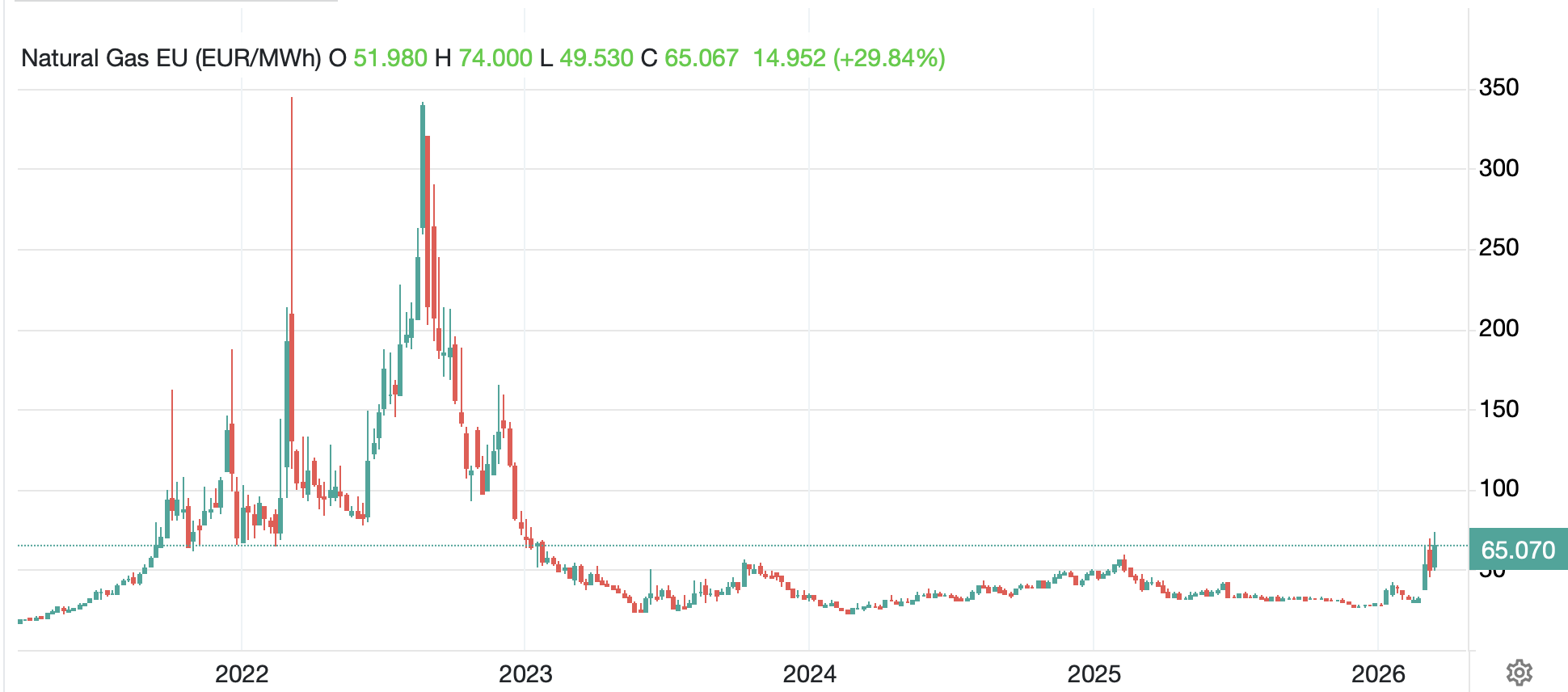
In the commodity markets, it should be no surprise that oil (-1.3%) prices are sliding as are NatGas prices in Europe (TTF -7.5%) as the opportunity for cheap Russian gas to flow to Europe is once again in view.  To highlight the impact that this has had on Europe, prior to the Ukraine war and the halting of gas flows, the TTF contract hovered between €5 and €25 per MWh.  Since the war broke out, even after the initial shock, it has been between €25 and €55 per MWh.  This is all you need to know about why Europe, and Germany especially, is deindustrializing.  As to the metals markets, after a few days of consolidation, gold (+0.4%) is on the move again although it has not yet recaptured the highs seen early Tuesday morning.  Give it time.  Copper (+0.6%), too, is back on the move and indicating that economic activity is set to continue to grow.

Finally, the dollar is mixed this morning, although arguably a touch softer overall, as the Russia news has traders looking for less negativity in Europe.  So modest gains in the euro and pound, about 0.15% each is offsetting larger losses in AUD (-0.3%) and NZD (-0.6%), although given the much smaller market size of the latter two, they matter much less.  JPY (+0.4%) is rebounding after yesterday’s sharp decline on the back of the jump in Treasury yields, and it is noteworthy that CHF (+0.65%) is gaining after its CPI data showed a decline in prices last month.  In the EMG bloc, CLP (+0.7%) is stronger on that copper rally, while ZAR (+0.1%) seems to be edging higher as gold continues to perform well. MXN (-0.4%) though is still struggling with the potential negative impact of tariffs and otherwise, there is not much to report.

This morning brings PPI (exp 0.3%. 3.3% Y/Y headline; 0.3%, 3.5% Y/Y core) as well as the weekly Initial (215K) and Continuing (1880K) Claims data.  There are no Fed speakers on the docket, but at this point, I expect the Fed will be fading into the background since they are clearly on hold and President Trump commands the spotlight.  Unless the data starts to veer dramatically away from what we have seen, it appears that the market is going to continue to respond to Trumpian headlines, which of course are impossible to predict.  But remember, most of the rest of the world is still in cutting mode so the dollar should continue to hold its own.

Good luck

Adf

In the “Know”

According to those in the “know”
It’s certain that tariffs will grow
But now some are saying
The timing is straying
From instant to something more slow


In what has been a generally quiet evening in the markets, the story that President-elect Trump is considering imposing all those tariffs on a gradual basis, rather than instantaneously when he is inaugurated, was taken as a bullish sign by investors.  This seems to have been the driving force behind yesterday afternoon’s modest rebound in equity markets as the current market narrative is tariffs = bad, no tariffs = good.  From what I can determine, these are anonymous comments not directly attributed to Trump or his incoming economics team and, in fact, Trump denied that possibility.

But the market impact was real as not only did equity markets rebound a bit, but the dollar, which had soared yesterday, has given back some of those gains and is modestly lower this morning.  If we learned nothing else from President Trump’s first term, it should be clear that there is frequently a great deal of bombast emanating from the White House and responding to each and every comment is a recipe for exhaustion and disaster. While this cannot be ruled out, if one were to ascribe a Trumpian gospel it would be that tariffs are beautiful so slow-rolling them doesn’t really accord with that view.  I guess we will all find out more next week.

Now, turning to data releases
This week its inflation showpieces
Today’s PPI
Is tipped to be high
While Wednesday the core rate increases

Away from that story, though, there has been little else of note overnight.  As such, let’s focus on the PPI data this morning and CPI tomorrow as they ought to help inform our views on the Fed’s actions going forward. Expectations are for headline to rise to 3.4% Y/Y while core jumps to 3.8% Y/Y.  It is difficult to look at a chart of these readings and not conclude that the bottom is in and the trend is higher.

Source: tradingeconomics.com

This is not to say that we are going to see price rises like we did back in 2022 as the waves of Covid spending washed through the economy, but the Fed’s mantra that inflation is going to head back to 2.0% over time is not obvious either.  In fact, if I were a betting man, I would estimate that we are likely to continue to see inflation run between 3.5% and 4.5% for the foreseeable future.  There is just nothing around to prevent that in the short run.  Now, if we do see significant productivity enhancements, those numbers will decline, but my take is the best opportunity for that, more effective and widespread use of AI, is still several years away.

Remember, too, that the government writ large, whether headed by R’s or D’s is all-in on inflation as it is the only opportunity they have to reduce the real value of the outstanding government debt.  Perhaps the Trump administration will take a different tack, but it is not clear they will be able to do so.  The only time inflation is a concern is when it becomes a political liability.  For the two decades leading up to Covid, it was not a daily concern of the population and central banks around the world were terrified of deflation!  In fact, there are so many comments by folks like Yellen, Bernanke and other Fed governors and presidents decrying the fact that their key regret was not getting inflation high enough, it is difficult to count them.  But as evidenced by the chart below of CPI, we no longer live in that world.

Source: tradingeconomics.com

Summing up, the current situation is that inflation has likely bottomed, the government continues to run massive fiscal deficits and given the $36 trillion in debt outstanding, the government needs to reduce the interest rate they pay on their debt.  If pressed, I would expect that we will see synthetic yield curve control (YCC) enabled by regulatory changes requiring banks and insurance companies to own a greater percentage of Treasury notes and bonds in their portfolios to ensure there is sufficient demand for issuance.  That can have the effect of turning long-term real yields negative, exactly the outcome the government wants. Remember, from 1944-1951, the Fed enacted YCC directly and it worked wonders in reducing the debt/GDP ratio.  They know this tool and will not be afraid to use it.

Ok, let’s take a look at what little action there was overnight.  After yesterday’s late rebound resulted in a mixed close with the NASDAQ still lower but the other two indices closing in the green, Asian equity markets also had a mixed picture.  The Nikkei (-1.8%) was the laggard, seemingly following last week’s US market movement after reopening from a holiday weekend.  However, Chinese shares (Hang Seng +1.8%, CSI 300 +2.6%) rallied sharply on the latest news that more Chinese stimulus was coming soon.  This time the Ministry of Commerce claimed they would be looking to boost consumption this year, but neglected to mention how they will do so.  Regardless, investors liked the story and when added to the gradual tariff story, it was all green.

European bourses are also in fine fettle this morning with gains across the board (CAC +1.2%, DAX +0.8%, IBEX +0.6%) and even the FTSE 100 (+0.1%) has managed to rally a bit.  This price movement, and that of the rest of Asia where gains were seen, seems all to be a piece with the slower tariff story discussed above.  As to US futures markets, at this hour (6:40), they are pointing modestly higher, 0.45%.

In the bond market, the only place where yields have moved significantly today is in Japan, where JGB yields have jumped 5bps and are now at their highest point since February 2011.  This followed comments from Deputy Governor Himino that the board was likely to debate a rate hike at their meeting next week and market pricing has a 60% probability priced in for the move.  There is much talk of wage increases in Japan, and Himino-san also raised questions about what the Trump administration will do and how it will impact yields.  Interestingly, despite the more hawkish rhetoric, the yen (-0.25%) actually declined today, not necessarily what you would expect.  As to the rest of the bond market, everything is within 1bp of Monday’s closing levels.

In the commodity markets, oil (-0.3%), which has been rocking lately on the increased Russia sanctions, is consolidating this morning although remains higher by nearly 6% this week and 12% in the past month. (As an aside, I don’t understand the Biden theory that sanctions driving up prices is going to be a detriment to Putin as he will make up for the loss of volume with higher prices, but then, I’m not a politician.). Meanwhile, NatGas (-3.2%) has backed off its recent highs as storage concerns ebb, although the ongoing cold weather appears to have the opportunity to push prices higher again.  As well, the latest dunkelflaute throughout Europe is driving demand for LNG.  In the metals markets, yesterday’s declines have been arrested, and we are basically unchanged this morning.

Finally, the dollar is mixed this morning, edging higher against some G10 counterparts (GBP -0.3%, JPY -0.4%) but sliding against others (NZD +0.6%).  Versus the EMG bloc, again the picture is mixed today with gainers (ZAR +0.4%, KRW +0.3%) and laggards (CZK -0.2%) although overall, I would argue the dollar is a touch softer on the back of the gradual tariff story.

On the data front, this morning’s PPI data (exp 0.3% M/M, 3.4% Y/Y) headline and (0.3% M/M, 3.8% Y/Y) core is the extent of what is to come.  Interestingly, the NFIB Index jumped to 105.1, the highest print since October 2018, as small businesses are clearly excited about the prospects of a Trump administration and the promised regulatory cuts.

Right now, both the dollar and Treasury yields are pushing to levels that have caused market problems in the past.  If these trends continue, be prepared for some more significant price action.  That could manifest as a sharp decline in equity markets, or some surprising Fed activity as they try to address any potential market structural problems that may arise.  But there is nothing due to stop the trends right now.

Good luck

Adf

Caution and Fear

For Jay and the FOMC
There’s nothing that’s likely to be
Enough to adjust
The often discussed
Reduction in rates, all agree
 
But as we look off to next year
The sitch has become much less clear
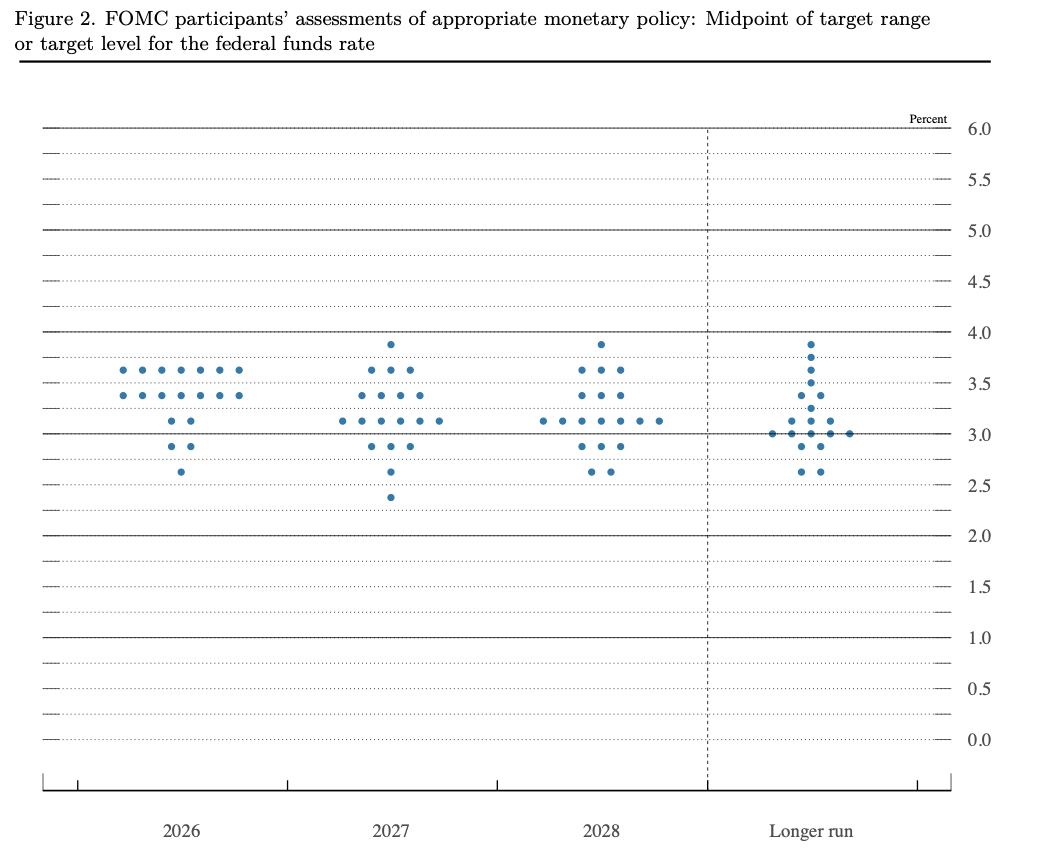
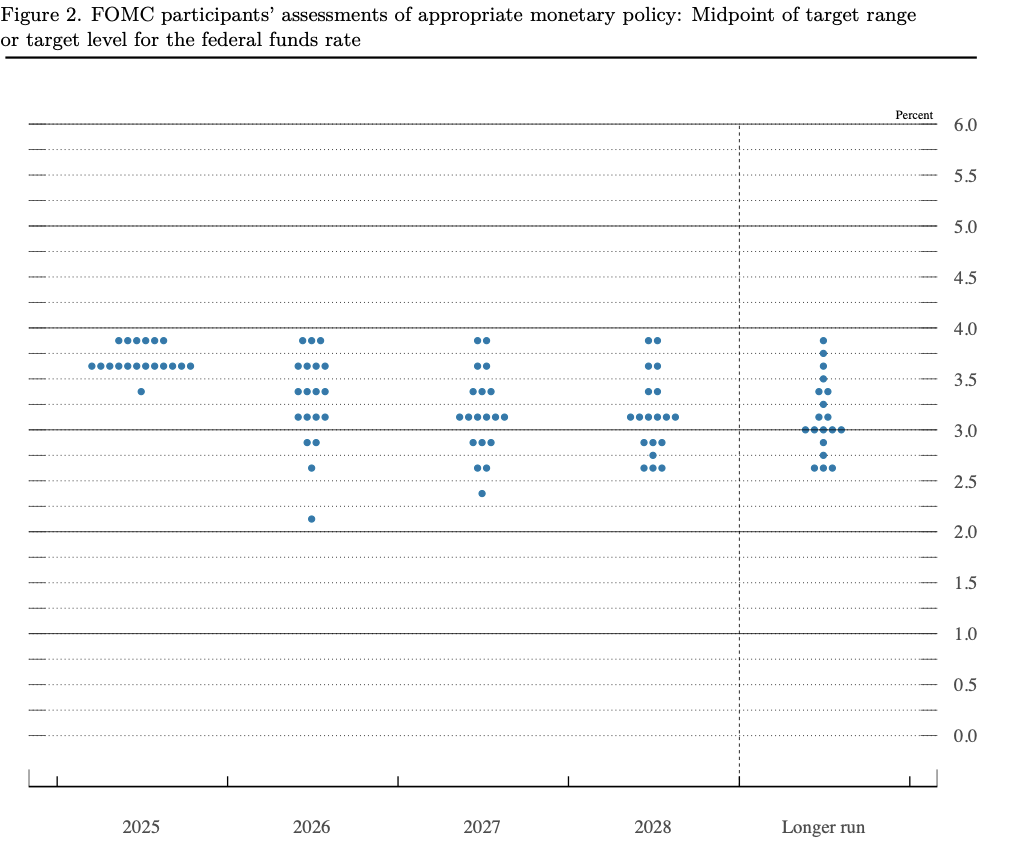
The dot plot and SEP
Could very well prep
Investors for caution and fear


*Let me begin by explaining this will be the last poetry for 2024 as I take some time to reflect on the past year as well as my views for 2025.  Come January 2nd, I will offer those views, as I always do, in a long-form poem.  For all of you who have come along for the ride, thank you very much, I sense next year may be even more interesting than the one ending in a few weeks*.

Now, back to our regularly scheduled programming.  To my eye, the ongoing coordinated policy easing by central banks around the world (US, Europe, UK, Canada, China, Switzerland, etc.) feels at odds to the ongoing inflation data that seems to show a reluctance for price rises to slow back to the preferred pace of those same central banks.  Certainly, in the US, as evidenced by both the CPI data Wednesday, and even more so by yesterday’s PPI data, the null hypothesis that the rate of inflation is slowing toward 2% feels as though it is no longer valid.  One needn’t dig too far under the surface to see core and median inflation readings with 3% and 4% handles and given this is almost entirely in the services sector, the sector that encompasses more than two-thirds of the economy, it seems increasingly hard to make the case that inflation is going to decline much further.  This is not to imply we are heading for hyperinflation, just that the slow pace of price increases that existed since the GFC seems to have ended.

At least in the US, the economic growth story appears to be a bit more positive than elsewhere around most of the world, and so the opportunity exists for wages to keep up with prices.  Alas, elsewhere in the world, that is not necessarily the case.  Yesterday, Madame Lagarde and the ECB cut rates by a further 25bps, as universally expected, and the market is looking for another 25bp cut in January.  However, despite what is a clearly slowing growth impulse on the continent, even Lagarde felt it necessary to caution about the sticky services prices in Europe and how they must be careful in their policy decisions to prevent a reemergence of inflation.  Remember, too, the ECB’s sole mandate is price stability, so theoretically, even if Europe falls into recession, it is not the ECB’s task to rescue the economy there.

Perhaps the one place where policy ease is appropriate is China, where the pace of activity in the economy is very clearly slowing.  President Xi and his minions have not yet been able to arrest the decline in the property market there, which given such a large proportion of Chinese GDP growth over the past decade was contingent upon an ever-growing property sector and consistently rising prices, is a problem.  An interesting feature of their recent announcements is that they seem ready to have the central bank lend directly to the government (monetizing debt) to finance activity rather than have the central bank buy bonds from the Chinese banking community (otherwise known as QE).  In fact, arguably the biggest problem in China is that the banking system there is dangerously overleveraged and undercapitalized when taking a true account of bad loans outstanding.  It seems that Xi and friends have figured out it would simply be cheaper to print money and directly give it to the government rather than pass it through a creaking banking system that no longer works.  While this almost certainly is smart policy given the circumstances, it doesn’t speak well of the overall situation there.

(As an aside, can we really be surprised that the Chinese banking system, which is basically an arm of the government’s finance ministry which directed lending to favored companies/industries without any real analysis, is having problems?)

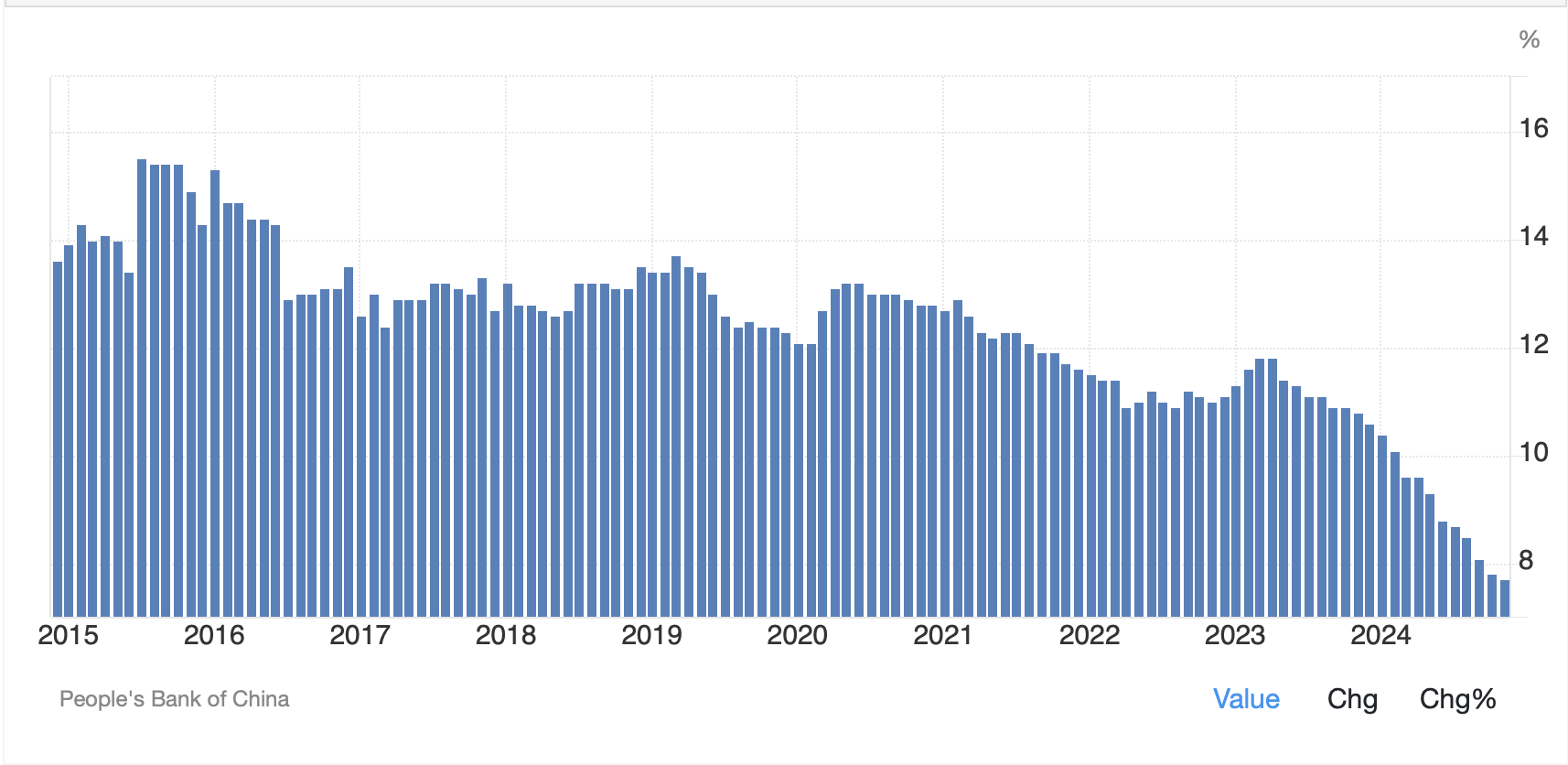
Under the guise, a picture is worth 1000 words, a quick look at the below chart from tradingeconomics.com which shows the trajectory of outstanding Yuan Loan Growth over the past 10 years is pretty descriptive.  Banks in China have lost their ability to help the government implement monetary policy so the government is going to simply do it themselves.  The “moderately loose” policy the Politburo announced seems likely to go beyond moderate as 2025 progresses, at least in this poet’s eyes.

In the end, there are many problems extant in the global economy.  As well, there has been an uptick in overall uncertainty with the election of Donald Trump as US president given his history of sudden, unpredictable pronouncements.  I would contend that the one constant in 2025 and beyond is that volatility is far more likely to increase than decrease across markets everywhere.

Ok, let’s take a quick tour of the overnight activity before my short-term hiatus.  Once again, US equity markets were under modest pressure yesterday as I continue to see more and more pundits calling for a short-term pullback before the next leg higher.  That weakness was followed by Asian markets selling off with China (-2.4%) and Hong Kong (-2.1%) both suffering from ongoing disappointment that the modest loosening wasn’t dramatic loosening!  Interestingly, despite the JPY (-0.55%) weakening further (its 5th consecutive down day) the Nikkei (-1.0%) couldn’t gain any traction, perhaps undercut by concerns over the tech story and rising US rates.  However, both Korea and India put in solid positive sessions.  Clearly Asia is not a monolithic market.  

In Europe this morning, the screens are green, but it is a pale green, with gains on the order of 0.1% to 0.3% only as investors seem to have taken some heart by the ECB’s cut and modest dovish follow up.  Meanwhile, US futures are slightly firmer at this hour (8:00).

In the bond market, yields continue to climb in the US (Treasuries +2bps) and Europe (Bunds +4bps, OATs +3bps Gilts +2bps) as bond investors are far more circumspect of the ECB cutting rates while inflation lurks in the background.  Chinese yields continue to fall, with the 10-year there hitting a new low of 1.78% and talk now that by the end of 2025, Chinese yields may fall below those in Japan!  Now that would be something, and I suspect the FX markets would see a lot of volatility if that happens.

Oil prices (+0.5%) continue to hold the $70/bbl level with very little impetus after the rally early in the week.  Metals prices, though, are under modest pressure this morning, perhaps on the idea that Chinese demand is going to falter.  After all, if Chinese shares can’t hold up, why would traders believe they will be buying up copper, silver and gold?  All three are lower by about -0.2% this morning.

Finally, the dollar is mixed this morning, having rallied vs. some counterparts like JPY, BRL (-0.75%) and ZAR (-0.55%) while declining vs. the euro (+0.45%), NOK (+0.75%) and the CE4 currencies.  My take is the euro’s rebound, and that of the CE4, is more position related after a sell-off yesterday and given today is Friday, rather than anything fundamental.

There really is no data today and while we do see Retail Sales next Tuesday (exp 0.5%, 0.4% ex autos), I think it’s really all about the Fed next Wednesday.  The market is still pricing 97% probability of a cut, and I don’t see anything changing that.  Rather, the Fed’s dot plot will be the story for markets as the narrative starts to account for higher inflation and therefore, a higher long-term outcome for the neutral rate.

Again, none of this portends a weaker dollar as we head to the end of 2024.  For 2025, you will need to wait for January 2nd to see my views then.

Good luck, good weekend and have a wonderful holiday season

Adf

The Mantra Repeated

Inflation has now been defeated
At least that’s the mantra repeated
By equity bulls
Who’re buying bagfuls
Of stocks which last week had depleted
 
But what if the data today
Does not show inflation’s at bay?
Will pundits still call
For Fed funds to fall
Or will cooler heads get their way?


As last week fades into the mists of memory, the narrative writers have been hard at work reimposing the soft-landing thesis and how the Fed is going to ride to the rescue of what seems to be slackening data across most aspects of the economy. The latest piece of information was yesterday’s PPI numbers that indicated, at the producer level, price pressures were ebbing further.  In fact, the core PPI reading for July was 0.0%, a huge victory for the Fed as it continues to add to the story that their timely behavior and strength of will have been having the desired effects.  And maybe they have been doing just that, although there is reason to believe that other things are happening.

Regardless, with the much more important CPI data set to be released this morning, if those PPI numbers are “confirmed” with lower than forecast CPI numbers, there will be no stopping the equity rebound/rally and expectations for a 50bp cut at the September meeting will run rampant.  The current median forecasts, according to tradingeconomics.com are: 

  • Headline (0.2%, 3.0% Y/Y); and 
  • Core (0.2% (3.2% Y/Y).  

Almost by definition, at least half of the punditry is looking for a headline print with a 2 handle, substantially closer to the Fed’s target than we have seen since March 2021.  The basis of this view is that shelter costs are going to continue to trend lower and there is a growing expectation that used car prices are also destined to head lower.  Given the way that shelter costs are implemented in the CPI calculations, I have no opinion on how recent activity will impact the overall results.  However, the anecdata that comes from my neighborhood shows that homes continue to sell over asking prices in short order and that there is no sign of prices declining yet.  I know that what happens here is not necessarily occurring elsewhere in the country, but it is unlikely to be entirely unique.  I guess we’ll all see the answer at 8:30.

In the meantime, the market story has been twofold, equity bulls are basking in the glow of the rebound from last week’s dramatic declines and the interest rate doves are completely willing to ignore actual Fed commentary and are increasing their bets that the Fed starts this cutting cycle with a 50bp reduction.  

As can be seen in the graphic below from the cmegroup.com website, the 50bp cut story is slightly more than a coin flip at the moment.  

A screenshot of a computer

Description automatically generated

But the interesting thing is to see how this pricing has evolved over the past month.  Looking at the table at the bottom of the graphic shows that last week, in the wake of the Japanese market selloff, the belief was much stronger that a 50bp cut was on the way (in fact, on July 5th, that probability was >90%), but a month ago, it was a very low probability event.  Back then, it was only the true believers in an upcoming recession that were looking for 50bps.  But now, it is mainstream thinking, at least among the punditry.  Yesterday, Atlanta Fed president Raphael Bostic explained, “we want to be absolutely sure.  It would be really bad if we started cutting rates and then had to turn around and raise them again.”  However, he did acknowledge that he is likely to be ready to cut “by the end of the year.”  While I have never met Mr Bostic, this does not sound like a man who is desperate to cut interest rates soon, narrative be damned.

Ok, away from all the huffing and puffing on US CPI, we did get some other important news overnight.  The first thing was the RBNZ surprised many folks by cutting their Official Cash Rate by 25bps.  Apparently, they are concerned with slowing growth and gratified that inflation appears to be slowing.  The upshot was that the NZD (-1.0%) fell sharply and the local stock market rallied more than 2%.

Elsewhere, UK inflation was released at a lower than expected 2.2% for July.  While that was an uptick from the June level of 2.0%, the fact that it was lower than both the BOE and Street expectations, and that services inflation rose “only” 5.2%, down from the 5.7% reading in June, has traders increasing their bets for a rate cut in September.  The pound (-0.2%) did slip slightly on the report but remains modestly higher on the year.  As to the FTSE 100, its 0.3% gain pales in comparison to the type of movements we have been seeing in equity markets elsewhere.

The zephyrs of change
Are blowing throughout Japan
Kishida’s leaving

One last piece of news is that Japanese PM, Fumio Kishida, has announced that he will not be running for LDP party leadership, the critical post to become (or in his case remain) Prime Minister.  A series of fundraising scandals has dogged his entire administration, and his approval rating remains below 30%.  The market take is that his leaving will enable the BOJ to act more aggressively, at least according to some local analysts and all depending on who wins the election.  While several of the mooted candidates are on record as calling for more monetary policy normalization (i.e. rate hikes), they are not the leading candidates at this time.  It seems early to make that case in my mind.  In the meantime, while the BOJ may want to raise rates, I think they are going to wait for more rate cutting in the rest of the G10, specifically from the Fed, before considering their next move.  Net, the yen’s response to this story has been nil, although we did see Japanese equities rally (Nikkei + 0.6%).

Elsewhere in equity markets, both the Hang Seng (-0.35%) and CSI 300 (-0.75%) continue to languish relative to other markets around the world as the prospects for the Chinese economy, and by extension its companies, remains lackluster, at best.  The absence of any significant Chinese stimulus remains a weight on the economy and the markets there.  However, most other markets in Asia rallied nicely overnight, following the US price action yesterday.  As to European bourses, they are all green, but the movements have been modest, on the order of 0.3% or so, as Eurozone economic data continues to disappoint (IP -0.1% in June, exp +0.5%).  As to US futures, ahead of the CPI data, they are essentially unchanged.

In the bond market, Treasury yields continue to grind lower, falling 7bps after the PPI data yesterday and down another basis point ahead of the CPI today.  European sovereign yields, though, are slightly higher this morning, between 1bp and 2bps, which based on the data makes no sense.  But the moves are small enough to be irrelevant.  One outlier here is UK Gilt yields, which have declined 4bps on the softer inflation print.

Oil (-0.2%) which suffered yesterday has stopped falling for the moment as the market remains on tenterhooks regarding a possible Iranian attack on Israel.  In the meantime, expectations are for a further draw of oil inventories in the US, although the industry continues to pump an extraordinary 13.4 million bpd despite all the efforts of the current administration to stifle it.  As to the metals markets, gold (+0.4%) continues to find support and is pushing toward new highs yet again.  This morning it is taking the rest of the metals complex with it, although that could be a result of the dollar’s modest weakness.

Finally, the dollar is a bit softer overall this morning, but there are several idiosyncratic stories.  We’ve already mentioned NZD, GBP and JPY.  However, the euro (+0.25%) is now at its highest level of 2024 and back above 1.10.  Meanwhile, the commodity currencies are mostly firmer vs. the dollar this morning (ZAR +0.3%, MXN +0.3%, NOK +0.6%, SEK +0.5%) although Aussie (-0.2%) is bucking that trend.  One other noteworthy mover is CNY (+0.2%) which has been showing far more volatility than normal in the past two weeks.  It seems it is still coming to grips with the Japanese story as well.

And that’s really it for the day.  There are no Fed speakers on the calendar, but we must always be aware of some unscheduled interview.  Remember, they love to talk.  Right now, I would say the market is looking for softer inflation data and is pricing accordingly.  As such, if this data is even modestly warm, let alone hot, be ready for some quick reversals, at least early in the session.  So, stocks lower with bonds while the dollar climbs.  But based on the current zeitgeist, I have to believe that any dip will be bought with reckless abandon.

Good luck

Adf

Data Confusion

The ongoing data confusion
Is certainly not an illusion
Some numbers are solid
While others are squalid
And each begs a different conclusion
 
Last night, Chinese data revealed
The ‘conomy there hasn’t healed
And Germany’s ZEW
Showed weakness, beaucoup
More rate cuts will soon be, out, wheeled
 
But here in the US we learned
The NFIB, up, had turned
And yesterday showed
Inflation has slowed
Investors, though, still are concerned


As we await today’s US PPI data, and more importantly, tomorrow’s US CPI data, the one consistency we have observed is that the data remains all over the map.  Or does it?  The below chart (data from NY Fed, chart from @fx_poet) shows the median readings of 1-year ahead and 3-year ahead inflation expectations, based on a survey of 1300 households.  While the 1-year ahead expectations are unchanged at 3.0%, the 3-year ahead expectations fell to 2.3%, the lowest in the series’ history since the NY Fed began the survey in June 2013.

If you’re Jay Powell, that certainly must be good news as the Fed puts great stock into the idea that inflation expectations lead inflation outcomes. While this is not a universally held belief amongst economists and analysts, it is certainly the majority view.  However, given that the Fed is a strong believer in this theory, the fact that inflation expectations, as measured here, are declining will help inform their decisions going forward.  Based on this, it is easy to believe that September will bring a 50 basis point cut.

Of course, one might ask, why are inflation expectations declining?  And that is not part of the data that is collected, or at least not reported.  If the expectation is that the economy is headed into recession, that implies there is still great concern amongst households going forward.  However, if this result is due to a strong belief in the Fed’s policies, then economic optimism should abound.  As such, we need to see other data to help interpret things.

Perhaps the first piece we can observe is this morning’s NFIB Small Business Optimism Index, which printed at 93.7, its highest level since March 2022.  That is certainly encouraging as given the importance of small businesses to the overall economy, if things there are starting to look up, it should translate into stronger growth going forward.  On the flip side, in the anecdata department, earnings calls from Expedia, Marriott, Airbnb and Hilton indicated that there is real weakness in the travel economy.  This WSJ report indicates that perhaps things are not as strong as might be indicated by other data.

Now, if we look overseas, the data is also mixed, but there is more negative than positive.  For instance, Chinese money and lending data was released at substantially lower levels than last month and well below expectations.  As well, the PBOC is becoming very concerned about the Chinese bond market inflating a bubble.  Last week, ostensibly, they told several banks to renege on deals to buy Chinese government bonds because they are trying to prevent the back end of the yield curve from declining too far.  It seems they are worried (and probably rightly so) that regional Chinese banks don’t have the capability to manage interest rate risks effectively.  But slowing loan growth and a weak equity market continue to indicate that the Chinese economy is lagging.

As to Europe, the German ZEW data was released and it was, in a word, putrid.  The Economic Sentiment Index fell from 41.8 to 19.2, far below expectations while the Current Conditions index fell to -77.3.  Granted, these surveys were taken the week after the weak NFP data in the US when people were screaming for an emergency 75bp rate cut, so perhaps they are not reflective of the ongoing situation.  But this highlights the problems with survey data, if you are asked about something on a day when the world seems to be ending, your response is likely to be more negative than not.  In fact, this is a caution for all survey data.

So, what are we to make of all this mixed information?  Well, we are right where we started, with no clearer picture of the current situation, let alone how the future may unfold.  In fact, this is why unfettered markets are so important.  Markets are excellent indicators of both future activity and sentiment, and when they are manipulated for political outcomes, investors lose a great deal of information.

But let’s see what the markets are telling us today.  Yesterday’s US session was mixed with modest gains and losses across the board.  But I’ll tell you what, last night Tokyo took the bull by the horns and continued its strong rebound from the previous week’s collapse with the Nikkei rallying 3.5%.  it seems that not only was this move a continuation after the Monday holiday of last week’s rebound, but a former BOJ official, Makoto Sakurai, explained, “they [the BOJ] won’t be able to hike again, at least for the rest of the year.  it’s a toss-up whether they can do one hike by next March.”  You will not be surprised that traders and algorithms jumped on those comments to buy more stocks.  As to the rest of the major markets in Asia, they mostly edged slightly higher, but only about 0.2% or so.  In Europe, there are more laggards than gainers, with the CAC (-0.3%) the worst of the bunch, but as you can see by the relatively small decline, markets here are also quiet.  Finally, US futures are up 0.4% at this hour (8:15).

In the bond market, yields are edging lower this morning with Treasuries down -1bp while European sovereigns are lower by between -2bps and -3bps.  Given the tenor of the economic data, this should be no surprise.  Interestingly, JGB yields remain unchanged at 0.83%, well below that 1.00% critical level and hardly indicative that the BOJ is going to tighten further.

In the commodity space, oil (-0.5%) after touching $80/bbl for WTI yesterday, is slipping a bit as traders await the apparently imminent Iranian attack on Israel to see if a wider war starts.  Meanwhile, the metals complex is lower across the board with gold (-0.4%) giving back some of yesterday’s gains while copper (-1.0%) is also under pressure, arguably on the weak economic story.

Lastly, the dollar is firmer this morning, notably against the yen (-0.3%) and CHF (-0.4%) although there are exceptions to this rule.  I find it quite interesting that the yen carry trade unwind story has basically ended with several large banks explaining that the alleged $20 trillion that was outstanding has been unwound.  Personally, I think that is ridiculous and that there is plenty left in place.  Remember, this trade has been building since the Fed began raising interest rates in 2022 and there are many investors whose entry points are far, far below the current spot level.   A quick look at USDJPY over the past 5 years shows that while the latest batch of entrants may have left the building, there is likely still a lot of borrowed yen funding other positions.

A graph with a line drawn on it

Description automatically generated

Source: tradingeconomics.com

When the Fed started raising interest rates, USDJPY was about 115.  I assure you the carry trade has not ended.

Turning to the data, this morning brings PPI (exp headline 0.2%, 2.3% Y/Y) and (core 0.2%, 2.7% Y/Y), although I believe the data will need to be very different for traders and investors to change their view that inflation is continuing to decline.  And later this afternoon, Atlanta Fed President Bostic speaks.

I believe the narrative remains that the soft-landing is still in play and that the Fed’s cut in September will be adequately timed to prevent a recession.  As of this morning, the futures market is still pricing in a 50:50 chance of either a 25bp or 50bp cut.  Right now, my money is on 25bps, but there is a lot to learn between now and then.  In the meantime, it is hard to turn too negative on the dollar as everybody else is cutting rates as well, and growth elsewhere seems anemic at best.

Good luck

Adf

Missing in Action

The PPI data was shocking
Though previous months took a knocking
So, what now to think
Will CPI sink?
Or will, rate cuts, it still be blocking?

One of the features of the world these days is that the difference between a conspiracy theory and the truth has shortened to a matter of months.  I raise this issue as yesterday’s PPI data was remarkably surprising in both the released April numbers, with both headline and core printing at MUCH higher than expected 0.5%, while the revisions to the March numbers were suspiciously uniform to -0.1% for both readings.  The result was that despite the seeming hot print, the Y/Y numbers for both core and headline were exactly as forecast!

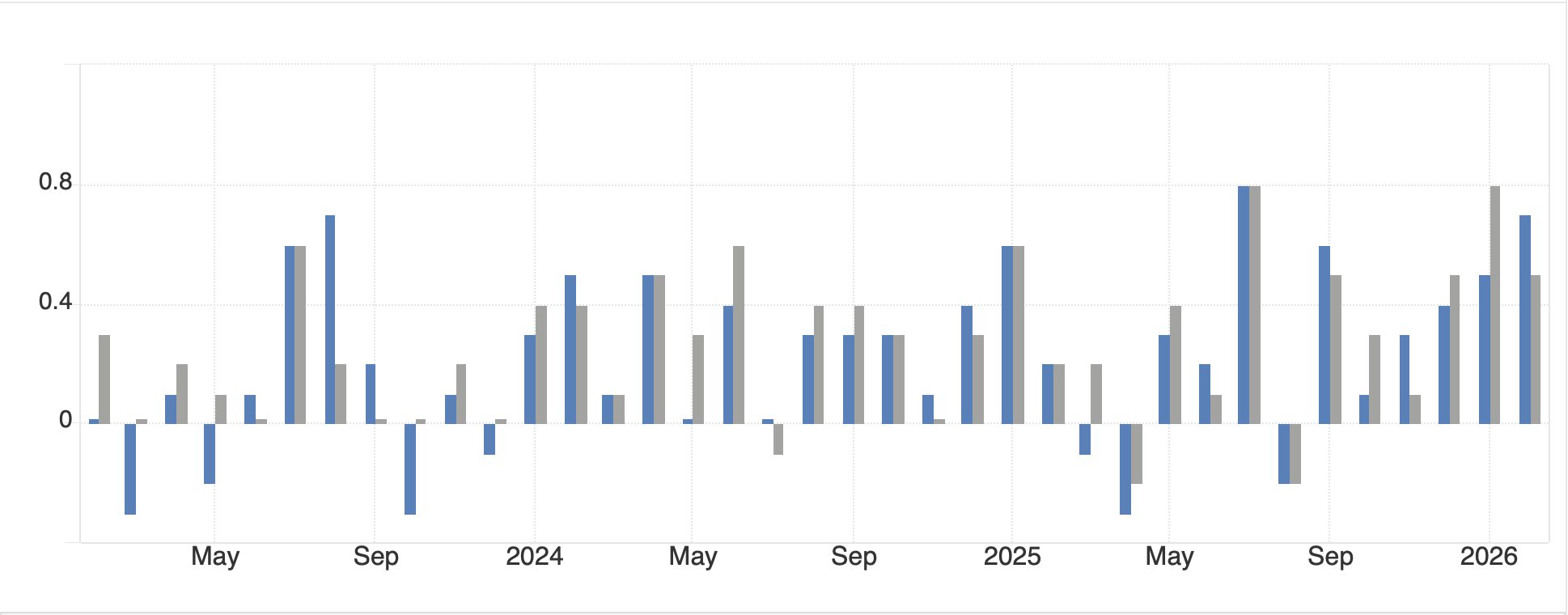
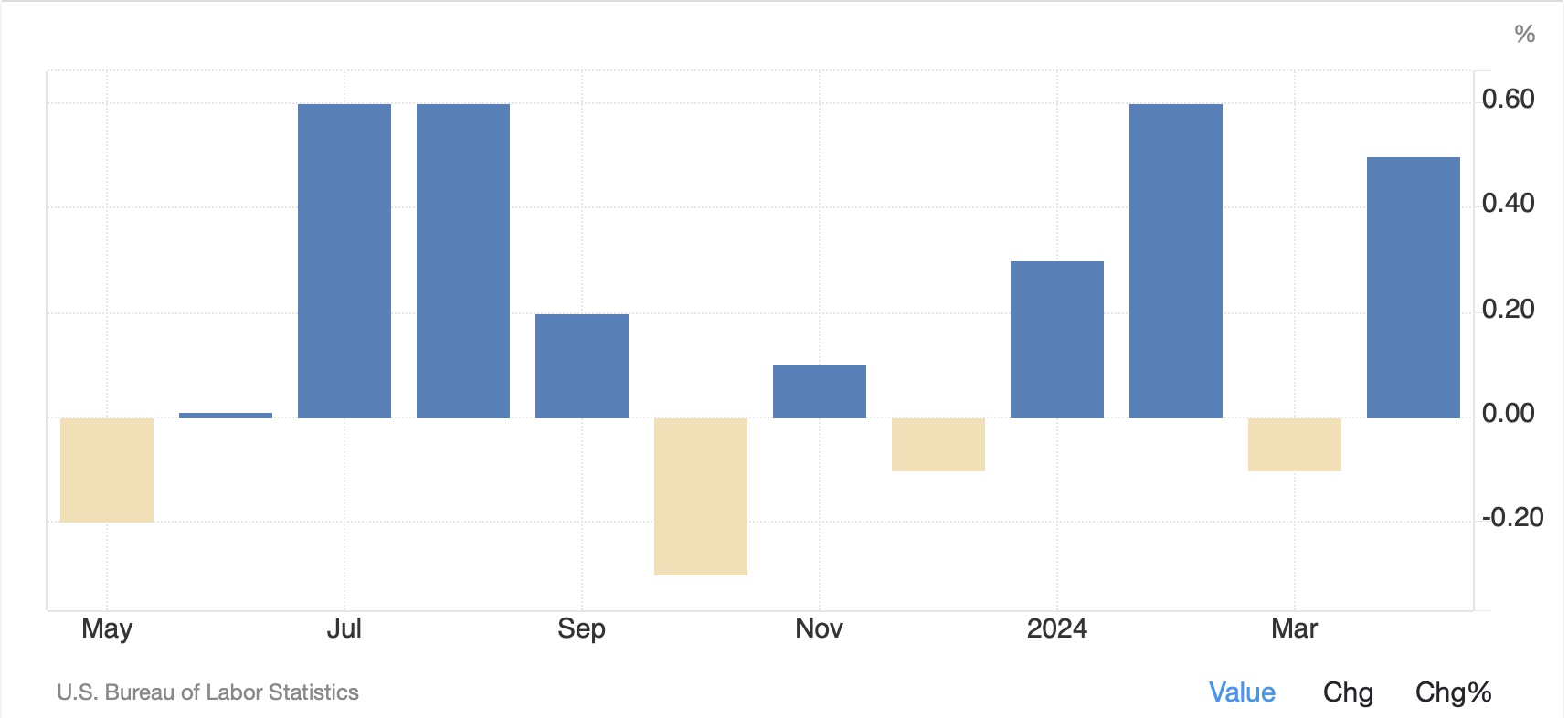
One of the things we know about data like PPI and CPI is that they are calculated from a sampling of data of the overall economy and there are fairly large error bars for any given reading.  In that sense, it cannot be surprising that the data misses forecasts regularly.  As well, given the sampling methodology, the fact that there are revisions is also no surprise.  But…it would not be hard for someone to suggest that the Bureau of Labor Statistics, when it saw the results of the monthly readings, manipulated the data to achieve a more comforting (for the current administration, i.e., their bosses) result.  I am not saying that is what happened, but you can see how a committed conspiracy theorist might get there. Now, in fairness, a look at the headline reading, on a monthly basis, for the past year, as per the below chart, shows that this is the 4th month in 12 that there was a negative reading.

Source: tradingeconomics.com

So, the fact that the revision fell to a negative number cannot be that surprising.  But it certainly got tongues wagging!  FWIW, I continue to believe that the process is where the flaws lie and that the BLS workers are trying to do their job in the best way they can.  In the end, though, much more attention will be paid to this morning’s CPI than to yesterday’s PPI.

For Jay and his friends at the Fed
His confidence ‘flation is dead
Is missing in action
Henceforth the attraction
That higher for longer’s ahead

Which brings us to Chairman Powell and his comments at the Foreign Bankers’ Association in Amsterdam yesterday.  In essence, he didn’t change a single thing regarding his views expressed at the last FOMC meeting, explaining he still lacked confidence that inflation would be reaching their 2.0% target soon.  As such, there is no reason to believe that the Fed is going to cut rates anytime soon.  As of this morning, the Fed funds futures market has a 9% probability of a rate cut priced for June, up from 3% yesterday, and a total of 45bps of cuts priced for the year.  There is obviously still a strong belief that the Fed will be able to act, although I am not sure why that is the case.  Interestingly, on the same panel, Dutch Central Bank president Klaas Knot essentially guaranteed an ECB cut in June.  As well, yesterday morning we heard Huw Pill, the chief economist at the BOE also talk up the probability of a June cut.  From a market response perspective, though, given these cuts are largely assumed, it will take new information to drive any substantive movement in the FX markets.

Here’s one thing to consider for everyone pining for that rate cut.  Given the history of the Fed always being behind the curve when it comes to policy shifts, if they realize they need to cut it is probably an indication that things in the US economy have turned down rather rapidly.  We may not want to see that either.  Just sayin!

In China, a new idea’s floated
Though not yet officially quoted
In thinking, quite bold
All houses, unsold,
Will soon be, for homeless, devoted

Ok, let’s move on from yesterday to the overnight session and then this morning’s CPI and Retail Sales reports.  The first thing to note was the story from Beijing that in an effort to deal with the ongoing property crisis in China, the government, via regional special funding vehicles that borrow more money, is considering buying all the unsold homes from developers, at a steep discount, and then converting them into low-cost affordable housing.  In truth, I think this is an inspired idea on one level, as it would allocate a wasted resource to a better use.  On the other hand, the idea that the government would issue yet more debt seems like a potential future problem will grow larger.  As of now, this is not official policy, but the leak was clearly designed as a trial balloon to gauge the market’s response.  Not surprisingly, the response was that the Shanghai property index rose sharply, but the rest of the Chinese share complex was in the red.  At the same time, the PBOC left rates on hold last night, as expected, but the CNY (+0.3%) managed to rally nicely on the combination of events.

But away from that China story, very little of note happened as all eyes await the CPI later this morning.  After yesterday’s somewhat surprising rally in the US, Asia beyond China had a mixed performance with some gainers (Australia, Taiwan, South Korea) and some laggards (Hong Kong, New Zealand, Singapore) as investors adjusted positions ahead of the big report.  In Europe, too, the picture is mixed although there are far more gainers than laggards.  In the end, none of the movement is that large overall, so also indicative of waiting for the data.  Finally, it will be no surprise that US futures are basically flat at this hour (6:30).

In the bond market, traders decided that the hot April number was to be ignored and instead have accepted the idea that inflation is not really that hot after all.  At least that is what we might glean from the price action yesterday and overnight where yields initially jumped a few basis points before grinding down over the session and closing lower by 4bps.  This morning, that decline has continued with a further 2bp drop in Treasuries.  In Europe this morning, sovereign yields are seeming to catch up to the Treasury price action with declines across the board of between 6bps and 8bps.  Part of that is also a result of changing expectations for Eurozone growth and inflation with a growing belief that inflation is headed lower and the ECB is set to cut and continue to do so going forward. 

In the commodity markets, the big story has been copper (+2.4%), which has rallied parabolically and is currently above $5.00/lb, a new all-time high.  This takes the movement this week to more than 10% and more than 36% in the past year.  The electrification story is gaining traction again, and I guess the fact that nobody is digging new mines may finally be dawning on traders.  Precious metals are coming along for the ride with gold rebounding (+0.4%) on this story as well as the dollar’s recent weakness.  As to the oil market, it is little changed this morning in the middle of its recent trading range.  Perhaps today’s EIA inventory data will drive some movement.

Finally, the dollar is under modest pressure this morning after slipping a bit during yesterday’s session as well.  The combination of the Powell comments being seen as dovish and the interpretation of the PPI data in the same manner (which seems harder for me to understand) weighed on the greenback against virtually all its counterparts.  It should be no surprise that CLP (+0.9%) is the biggest winner given the move in copper.  But JPY (+0.5%) has also performed well with no new obvious catalysts.  In fact, the movement has been quite broad with the worst performers merely remaining unchanged vs. the dollar rather than gaining.  However, this morning’s data is going to be critical to the near-term views, so we need to wait and see.

As to the data, here are the current forecasts: CPI (0.4% M/M, 3.4% Y/Y), core CPI (0.3% M/M, 3.6% Y/Y), Retail Sales (0.4%, 0.2% ex autos) and Empire State Manufacturing (-10.0).  In addition, we hear from two Fed speakers, Minneapolis Fed president Kashkari and Governor Bowman.  However, on the Fed speaker part, especially since Powell just reinforced his post-FOMC press conference message, it seems hard to believe that there will be any changes of note.

And that’s all she wrote (well he).  A hot print will likely be met with an initial risk-off take with both equity and bond markets suffering, but I suspect that it will need to be really, really bad to change the current narrative.  However, a cool print seems likely to result in a major rally in both stocks and bonds and a much sharper sell-off in the dollar.

Good luck

adf

Less Stout

Suzuki-san and
Ueda-san are clearly
Flocking together

Events continue to unfold in Japan that appear to point to a more concerted effort to address the still weakening yen.  The problem, thus far, is that it hasn’t yet really worked, absent the direct intervention we saw at the beginning of the month.  For instance, last night, 10-yr JGB yields rose to their highest level since June 2012, trading up to 0.969% and finally looking like they are going to breech that 1.00% level that had so much focus back in October.  At the same time, the two key players in this drama, FinMin Suzuki and BOJ Governor Ueda are actively speaking to each other as they try to coordinate policy.  The problem for Suzuki-san is that Q1 GDP fell back into negative territory again, thus bringing two of the past three quarters down below zero.  While that is not the technical definition of a recession, it certainly doesn’t look very good.

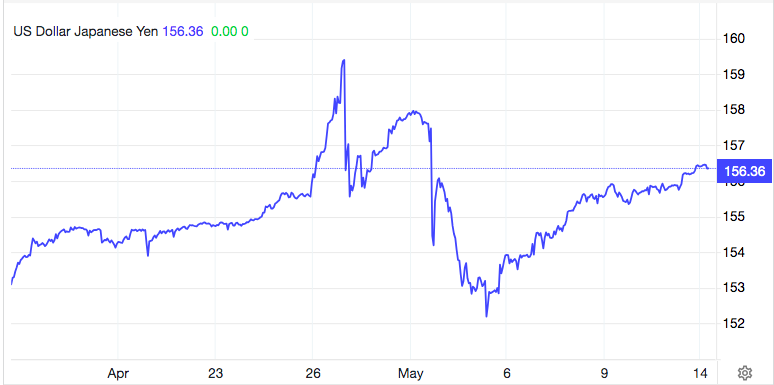
And yet, the yen remains under pressure, slipping another 0.1% last night, and as can be seen from the chart below, continuing its steady decline (dollar rise) from the levels seen immediately in the wake of the intervention.

Source: tradingeconomics.com

Another interesting thing is that our esteemed Treasury Secretary, Janet Yellen, seems to be concerned over any intervention carried out by the Japanese, at least based on comments she recently made in a Bloomberg interview, “It’s possible for countries to intervene.  It doesn’t always work without more fundamental changes in policy, but we believe that it should happen very rarely and be communicated to trade partners if it does.” 

There have been several analysts of late who have made the case that Yellen’s trip to Asia last month included a ‘secret’ Plaza Accord II type arrangement, where there was widespread agreement that the dollar needed to come down in value.  First off, secrets like that are extremely difficult to keep secret, and history shows that doesn’t happen very frequently.  But more importantly, based on the fact that inflation is one of the biggest problems that her boss has leading up to the election, a weaker dollar is the last thing she would want.  I suspect if we continue to see the yen decline, the BOJ/MOF will be back at the intervention game again, but the US will not be helping.  Keep in mind, though, Japanese yields.  If the BOJ is truly going to allow yields to rise in Japan, that would have a significant impact on the yen’s value in the FX markets.  While 1.00% is a big round number, I think we will need to see the BOJ demonstrate a more aggressive stance overall…or we need to see the data turn softer in the US to allow the Fed to get on with their much-desired rate cuts.  We will need to watch this closely going forward.

While everyone’s waiting to see
How high CPI just might be
One cannot rule out
An outcome less stout
Where bond and stock bulls are set free

Which brings us to the inflation story.  By this time, everyone is aware that tomorrow’s CPI data is seen as a critical piece of the puzzle.  I continue to read coherent arguments on both sides of the debate regarding the trend going forward.  (Let’s face it, the error bars are far too wide to be confident in a specific forecast.)  For the inflationistas, they continue to look at things like the housing market, which while frequently expected to see declining price pressures, has maintained an upward trend for the past several years.  As well, things like the dramatic rise in certain commodity prices (coffee comes to mind) and the substantial rise in the price of insurance (something of which I speak from personal experience!), there is ample evidence that prices continue to climb. 

Part of this puzzle may be the result of the fact that companies continue to successfully raise prices, or at least had been doing so for the past two years, as evidenced by the continued strong earnings, and more importantly, still high gross margins they are able to achieve.  So, as input prices have risen, they have passed those costs along to the consumer quite successfully.  Now, the comments from Starbucks and McDonalds at their earnings reports indicating business is slowing down and attributing that slowdown to rising prices may well be a harbinger that companies have lost the ability to keep this up.  But two companies, even large ones, are not nearly the whole economy.  As well, much has been made, lately, of the K-shaped economy, where the haves continue to benefit from the rise in asset prices and are far less impacted by rising prices as they can afford them.  This has led to continued strong demand for luxury goods, which while a smaller sector of the economy, remain highly visible. Meanwhile, the less fortunate lower 90% of the population find themselves struggling to make ends meet as real wages remain stagnant and there continues to be a switch from full-time to part-time employment ongoing as companies adjust their staffing needs.  PS, those part time jobs don’t pay as well and generally don’t have benefits, so any price increases are very tough to swallow.  In the end, it appears that housing, insurance services and food remain in upward price trends.

On the flipside, there are many who see that while Q1’s inflation data was sticky on the high side, things should begin to improve going forward.  They point to things like M2, which has fallen dramatically over the past two years, although has recently inflected higher again.  However, the argument is that the lag between the movement in M2 and inflation is somewhere in the 16-24-month period, and we are now due to see prices decline.  In addition, they point to things like loan impairments and credit card delinquencies rising as signs that companies have lost their pricing power and prices will reflect that by slowing their ascent.

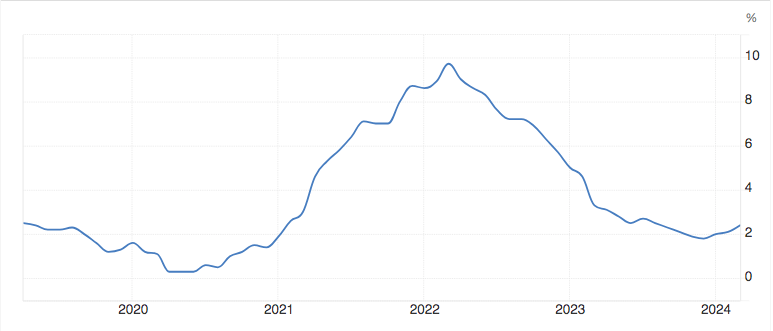
Now, today we see the PPI, which may give clues as to tomorrow’s outcome and the following are the median expectations:  headline 0.3% M/M, 2.2% Y/Y; core 0.2% M/M, 2.4% Y/Y.  Looking at the chart, it certainly appears that this statistic has bottomed out just like CPI.

Source: tradingeconomics.com

But here’s the thing…I have a feeling that regardless of the outcome, the market is going to rally in both stocks and bonds.  Certainly, if it is a softer than forecast number, the rate cut narrative is going to be going gangbusters and stocks will rocket while yields fall.  If it is on the money, my sense is the market is still in the camp that despite what we continue to hear, especially with Powell having removed the possibility of a rate hike, that the view will turn to rate cuts are coming as the Fed’s underlying dovishness will prevail.  But if the numbers are hot, while the initial reaction will almost certainly be a decline in risk asset prices, I have a feeling it will be short-lived.  Positioning is not overly long here, at least according to the fear/greed indicators, and the theme that the administration will do all it can to get re-elected, meaning lots more fiscal support, is going to work in favor of risk assets.  One other thing, if there is some trouble in the bond market, the one thing we know for sure is that Powell will come to the rescue and support the whole structure.

Net, while the timing of each outcome may differ, I sense the end result will be the same.  As to the dollar, I remain in the camp that international investors will continue to buy dollars to buy the S&P.  As well, given it seems very clear that both the ECB and BOE are going to cut rates in June while the Fed remains a much lower probability to do so, that should prevent any sharp dollar decline, although it may not push it any higher.

Overnight, basically nothing happened as everybody is holding their collective breath for tomorrow.  Maybe today will be a harbinger, but I expect a generally slow session overall absent a HUGE surprise in PPI.

Good luck

adf

Offsides

The PPI data revealed
Inflation has clearly not healed
Will Jay and the Fed,
When looking ahead
Now tell us one cut’s been repealed?

So, now here we are at the Ides
Of March, as opinion divides
Some still say a cut
Will come in June, but
Some others think, no that’s offsides

Once again, the inflation data did nothing to help the case for a rate cut anytime soon in the US.  This time the PPI data showed that prices rose far more than expected in February, 0.6% at the headline level and 0.3% at the core level.  The rises, when broken down, were across the spectrum of goods and services.  The point is despite what appears to be an overriding desire to cut rates by June, the data is not cooperating for Jay and his friends.  Will this be enough to dissuade them?  We still have 3 more months before the critical time and the market, despite itself, is now putting all its eggs in the June basket, having reduced the May probability to just 7%.  Clearly, it remains highly dependent on how the data progresses, and not just the inflation data, but also the employment data, but for now, I find it hard to make the case that the Fed should be cutting rates anytime soon.

Of course, there remains a large contingent of analysts, economists and pundits who believe that the Fed should cut next week, or May at the latest, as they are already doing grave damage to the economy.  You may recall the immediate response by the Nick Timiraos article to the hotter than expected CPI data.  Well, this morning, we have Bloomberg with an article that claims a solid majority of the forty-nine economists they surveyed continue to look for the first cut in June and three cuts this year.  It certainly appears there is a great effort to convince us that those rate cuts are coming, although as I have maintained, if the Fed is truly data dependent, the data is not pointing to cutting rates as the appropriate move at this time.  This argument discussion will continue for the foreseeable future, that is the only certainty.

Wages have blossomed
Will Ueda-san enjoy
The view, and end NIRP?

The preliminary indication from the Shunto wage negotiations shows that the average wage increases in Japan this year will be 5.28%, the largest rise in decades.  Apparently, Toyota accepted the union’s demands fully and didn’t even offer a counter!  When comparing this outcome to the most recent CPI readings in Japan, which showed a headline rate of 2.2% and a Core of 2.0%, it certainly appears that there could be some wage driven price increases upcoming.  As has been mentioned repeatedly, this was seen as a key issue for the BOJ ahead of their meeting this coming Monday night (Tuesday in Japan) in terms of being a sufficient catalyst for the BOJ to finally raise their overnight interest rate from its current -0.10%.

Now, while Ueda-san’s own words have seemed more circumspect, the growing consensus amongst the analyst community in Tokyo is that the move will happen next week with no need to wait until the April meeting.  But a funny thing has been ongoing in markets while this consensus has been building, the yen has been falling.  While there was essentially no movement overnight, since Monday, when the discussion began to heat up, the yen has declined more than 1.5% in value, almost as though the market is selling the news ahead of the news.  Perhaps of more interest is the fact that 2-year JGB yields have fallen this week by 2bps, which while not a great deal overall, represents a reversal of the gradual increase that has ostensibly been driven by the upcoming BOJ policy tightening.  I have a funny feeling that while NIRP may well turn into ZIRP next week, as the market looks ahead, there is much less tightening perceived in the future.  I have maintained that a move beyond +0.2% would be highly unlikely this year, and possibly next year.  As such, when considering the FX rate, USDJPY remains far more beholden to the Fed and US interest rates than to whatever the BOJ does at the margins.  Let’s face it, if the BOJ hikes rates to 0.2% by December, but Fed funds remains at 5.5%, it is still a very difficult case to buy yen.

And those have been the key stories driving things since I last wrote.  A look at the overnight session shows that Asian equity markets were mixed with the Nikkei sliding a bit, while the Hang Seng fell sharply (-1.4%), perhaps on fears of increased tech stress between China and the US.  However, the CSI 300 managed a small gain despite weak Loan data and the rest of the bloc saw a lot of red on the screen, following the US session losses yesterday.  In Europe this morning, it is the opposite reaction with green across the screen led by Spain (+1.1%) but modest strength everywhere as inflation data from Italy and France seemed to show more moderation.  Meanwhile, at this hour (7:30), US futures are edging higher by 0.3%, essentially unwinding yesterday’s losses.

In the bond market, yesterday’s PPI data saw bonds sell off aggressively in the US with yields across the entire curve rising 10bps.  This morning, Treasury yields have backed off 2bps, but remain at 4.27%, above what is perceived to be a trading pivot level of 4.20%.   European yields also rose yesterday, albeit not quite as aggressively as US yields, and this morning they are essentially unchanged.

In the commodity markets, oil (-0.5%) is giving back a bit of its recent gains but WTI remains above $80/bbl and Brent crude above $85/bbl.  Apparently, the IEA has revised its global oil demand figures higher by more than 1 million bbl/day and despite the fact that there is ample spare capacity in OPEC, the market is tightening right now.  Gold, which sold off yesterday on the rising rates / higher dollar situation, is rebounding a bit this morning, +0.3%.  Interestingly, copper (+1.3%) did not sell off on the interest rate or dollar story and is now back at its highest levels in nearly a year and firmly above $4.00/Lb.  Something is going on here which seems to be a positive hint for growth.

Finally, the dollar, which rocked yesterday, rising almost 0.65% across the board with some significant gains vs. specific currencies, is essentially unchanged overall this morning, holding onto those gains.  In fact, there are a few currencies that are still feeling pressure like KRW (-0.5%) and NZD (-0.5%) but there has been a modest bounce in ZAR (+0.4%) on the back of the strong metals complex.  Net, the DXY is unchanged on the day, back above the 103 level.

We finish the week with some more secondary data as follows:  Empire State Manufacturing (exp -7.0), IP (0.0%), Capacity Utilization (78.5%) and Michigan Sentiment (76.9).  Now, we have seen secondary data have an impact recently, and given the quiet period prevents any Fedspeak, market participants are looking for any clues they can find.  It will be very interesting to see if today’s data indicates that the economy is continuing at its above trend growth rate or implies things are fading.  My observation is manufacturing continues to struggle overall, and sentiment on the economy isn’t great, so I would look for weakness rather than strength.  In that case, perhaps bonds rally further, and the dollar unwinds some of yesterday’s gains.

Good luck and good weekend
Adf