Gone Astray

The ADP Labor report
On Wednesday, came up a bit short
Investors decided
That they would be guided
By this and bought bonds like a sport
 
As well, there’s a story today
The BLS has gone astray
It seems that their data
Might have the wrong weight-a
So, CPI’s not what they say


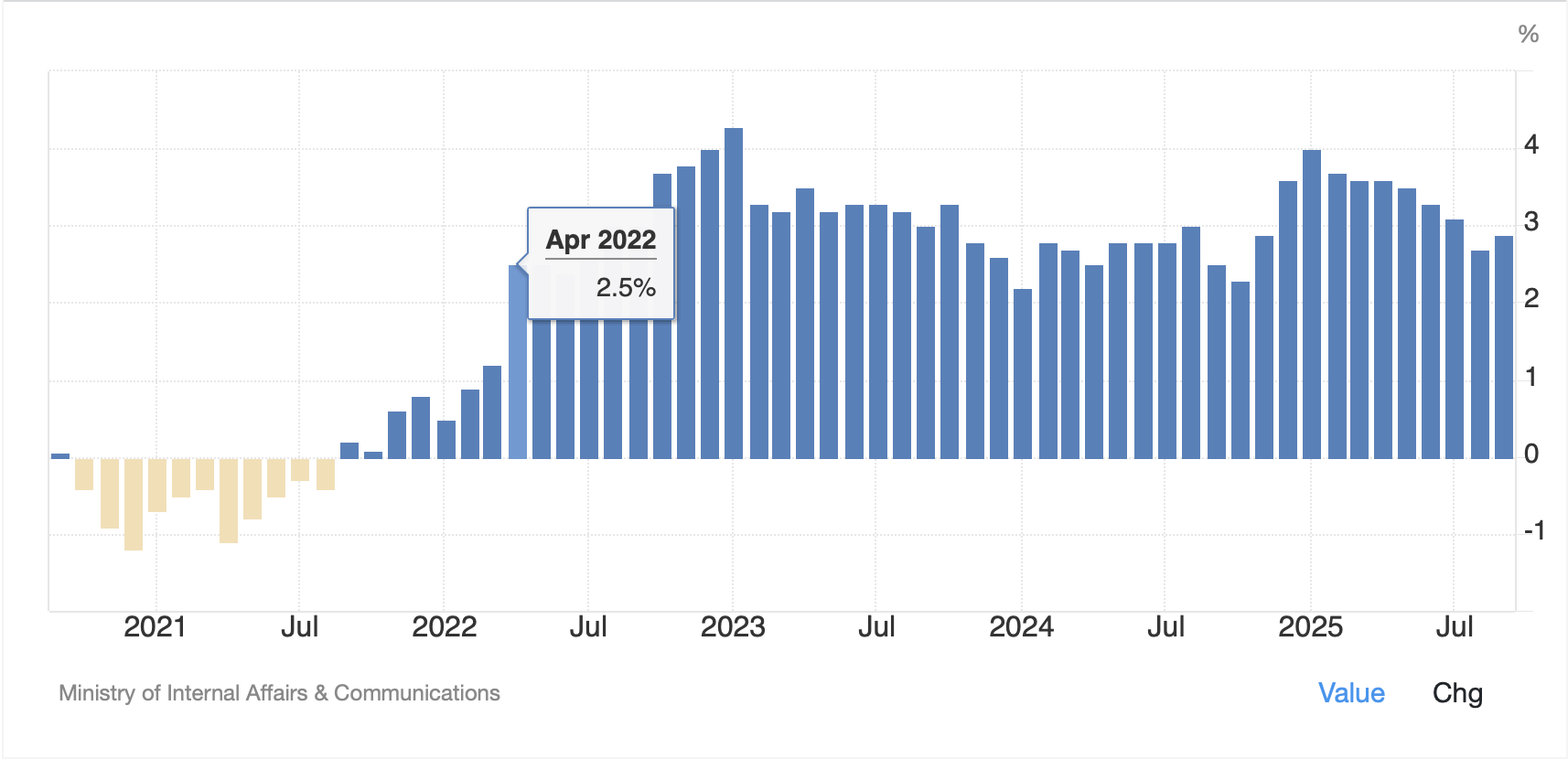
It has been another very dull session in most markets although yesterday did see a strong bond market rally after the ADP Employment Report was released much lower than expected at just 37K jobs created.  Certainly, the trend has been lower for the past three years as you can see in the below chart from tradingeconomics.com, so I guess we cannot be that surprised.

You will also not be surprised that this data brought out the recessionistas as they jumped all over the release to make their case that recession was just around the corner, and quite possibly stagflation.  Adding to their case was the ISM Services data which also disappointed at 49.9 and has also been trending lower for the past three years.  As well, they were almost gleeful in their description of the Prices Paid sub index rising to 68.7, its highest print since November 2022.  Alas, while Pries Paid have been rising for the past year or so, a look at the trendline shows they are continuing to retreat from the highs seen during the Bidenflation of 2022.

Source: tradingeconomics.com

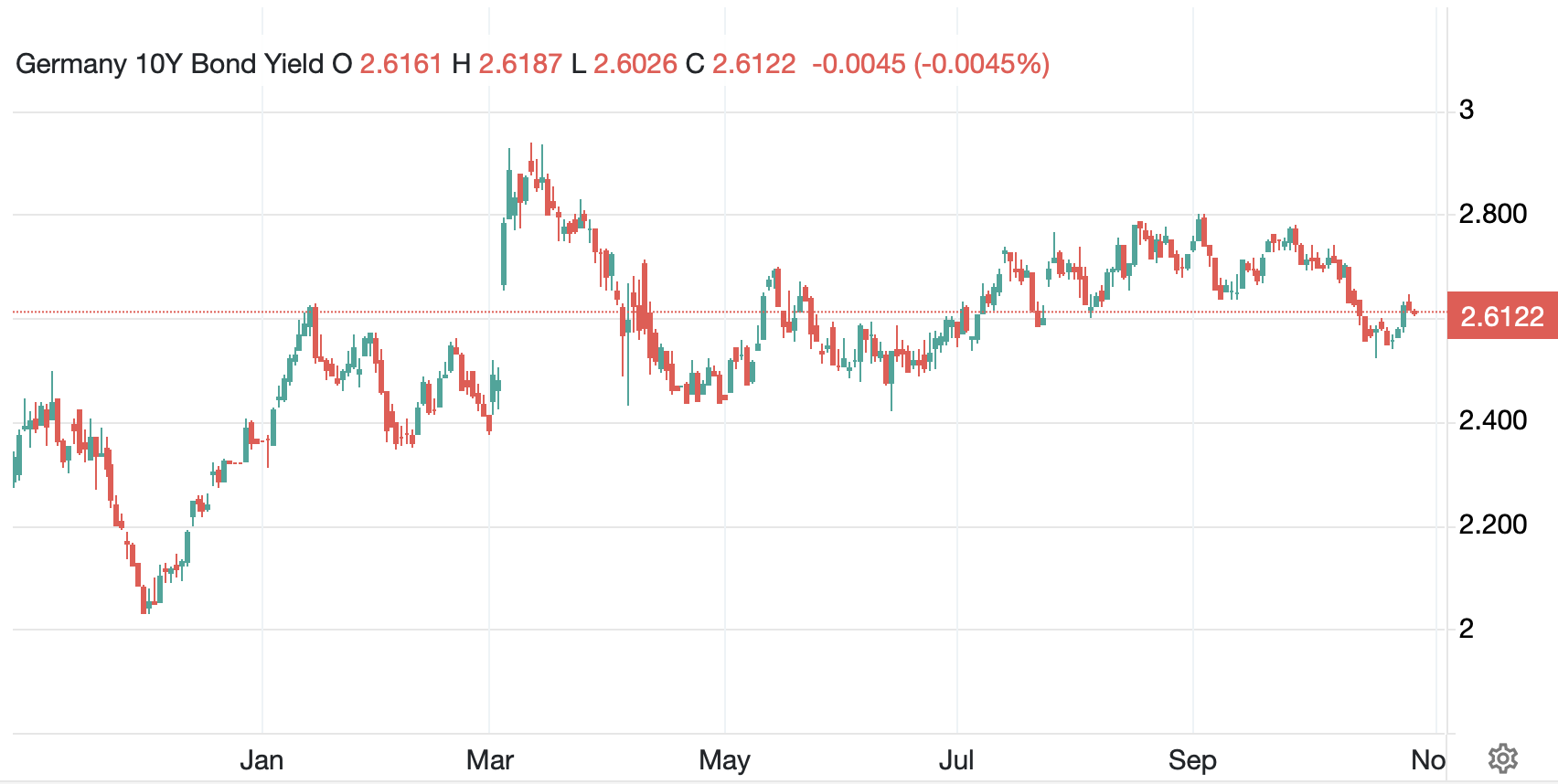
In the end, although this data was unquestionably disappointing, it feels a bit too early, at least to me, to declare the recession has arrived.  But not too early for the bond market where 10-year yields tumbled 11bps on the day and almost all the damage was done in the first hour after the ADP release although the ISM helped things along as well.

Source: tradingeconomics.com

Perhaps we are going into a recession, or even already in one, but overall, the data so far are just showing the beginnings of that.  I imagine opinions will be strengthened one way or another tomorrow when the NFP report is released, but for now, the recessionistas appear to have the upper hand, at least in the bond market.

The other story that is getting a response, at least amongst the Twitterati (X-eratti?) is the WSJ article about how the BLS, due to President Trump’s hiring freeze, is suddenly calling into question the accuracy of their statistical releases, notably the CPI report due next week.  I will let my friend, The Inflation Guy™, Mike Ashton, explain why this is a nothing burger. [emphasis added]

WSJ story about how staff shortages at BLS are affecting how many estimates the staff has to make instead of collecting actual data. It is very hard to make these errors accumulate to as much as 1-2bps on the monthly number.

UNLESS: there is bias in the estimating, or there are very large categories affected, or there are HUGE errors in some categories. Lots of random errors increases the overall error but is unlikely to affect the mean. And be honest. Do you have any idea what the MSE (mean standard error) of the CPI is?

People really should care about the error bars but even most economists almost never do. Unless it’s an opportunity to complain about budget cuts to economists, which is what this is. Nothing to see here.”

Otherwise, folks, another day in paradise with nothing else new, at least on the market front.  At some point, domestic politics, or geopolitics or war or something else is going to catch the fancy of the algos and change trading, but right now, that does not appear to be the case.  Perhaps Friday’s NFP data will be the catalyst to start a serious change in attitudes but I’m not holding my breath.

In the meantime, let’s survey market activity.  Yesterday’s US session was quite dull with limited movement and low volumes. Asia saw a mixed picture with the Nikkei (-0.5%) slipping, ostensibly, on concerns that a weaker US would negatively impact their export sector, tariffs be damned.  Hong Kong (+1.1%) though, rallied on Chinese PMI data holding on to recent levels rather than slipping further.  The rest of the region was far more positive, led by Korea (+1.5%) although the gains were more on the order of +0.5%.  Europe is all green this morning, with the CAC (+0.5%) leading the way, although the DAX (+0.4%) and FTSE 100 (+0.3%) are also holding up well on the back of positive German Factory orders data and solid UK Retail Sales.  Meanwhile, at this hour (7:00), US futures are ever so slightly firmer, +0.15% or so.

In the bond market this morning, after the big rally yesterday discussed above, Treasury yields this morning have edged lower by 1bp and European sovereigns have seen yields slide by between -3bps and -5bps as inflation data on the continent continues to soften encouraging the belief that the ECB, later this morning, may even consider more than the 25bp cut that is priced in.

The one true consistency lately has been gold (+0.8%) which has no shortage of demand, especially in Asia, and certainly feels like it is going to test, and break, the previous high of $3500/oz, which is now just $100 away.  But this has encouraged silver (+4.0%), copper (+2.65%) and now even platinum (+3.8%) has been invited to the party.  Regardless of the macroeconomic statistics, the ongoing global monetary policy of fiat debasement seems set to continue which can only help these metals.  As to oil (+0.3%), it continues to sit near its recent highs with not much activity in either direction.  It feels like we will need a major event/pronouncement of some sort, whether wider war in the Middle East or a change in OPEC policy to move this thing.

Finally, the dollar can best be described, again, as mixed.  While the euro and pound are marginally higher, the yen is marginally weaker.  In the EMG bloc, both KRW (+0.4%) and ZAR (+0.5%) are showing gains this morning, but nothing else of note is moving.  And when looking at the broad DXY, unchanged is where it’s at.  As with most markets right now, metals excepted, doing nothing seems the best choice.

On the data front, this morning brings the weekly Initial (exp 235K) and Continuing (1910K) Claims as well as the Trade Balance (-$94.0B) which if correct will almost certainly bring on a lot of White House crowing but is likely inconsequential with respect to the overall scheme of things.  We also see Nonfarm Productivity (-0.7%) and Unit Labor Costs (+5.7%) a combination of expectations that does speak to stagflation.  The ECB meeting will get some eyeballs, but unless they cut 50bps, a very low probability event based on current market pricing, it is hard to see much impact there either.

We are in a rut for now.  Whatever the catalyst that is required to change views substantially, it is not obvious at this point.  Bigger picture, nothing indicates any government is going to slow their spending or their money printing.  There is too much debt to ever be repaid, so a slow inflationary debasement is very likely our future.  I still think the dollar slides further, but it could be a few months before the current range breaks.

Good luck

Adf

Nobody Knows

The doldrums of summer are here
And just like occurs every year
Most markets compress
As pundits profess
The future, for them’s, crystal clear
 
But truthfully, nobody knows
The things, the next week will disclose
While there is no doubt
Big change is about
T’will likely be months (years?) til it shows


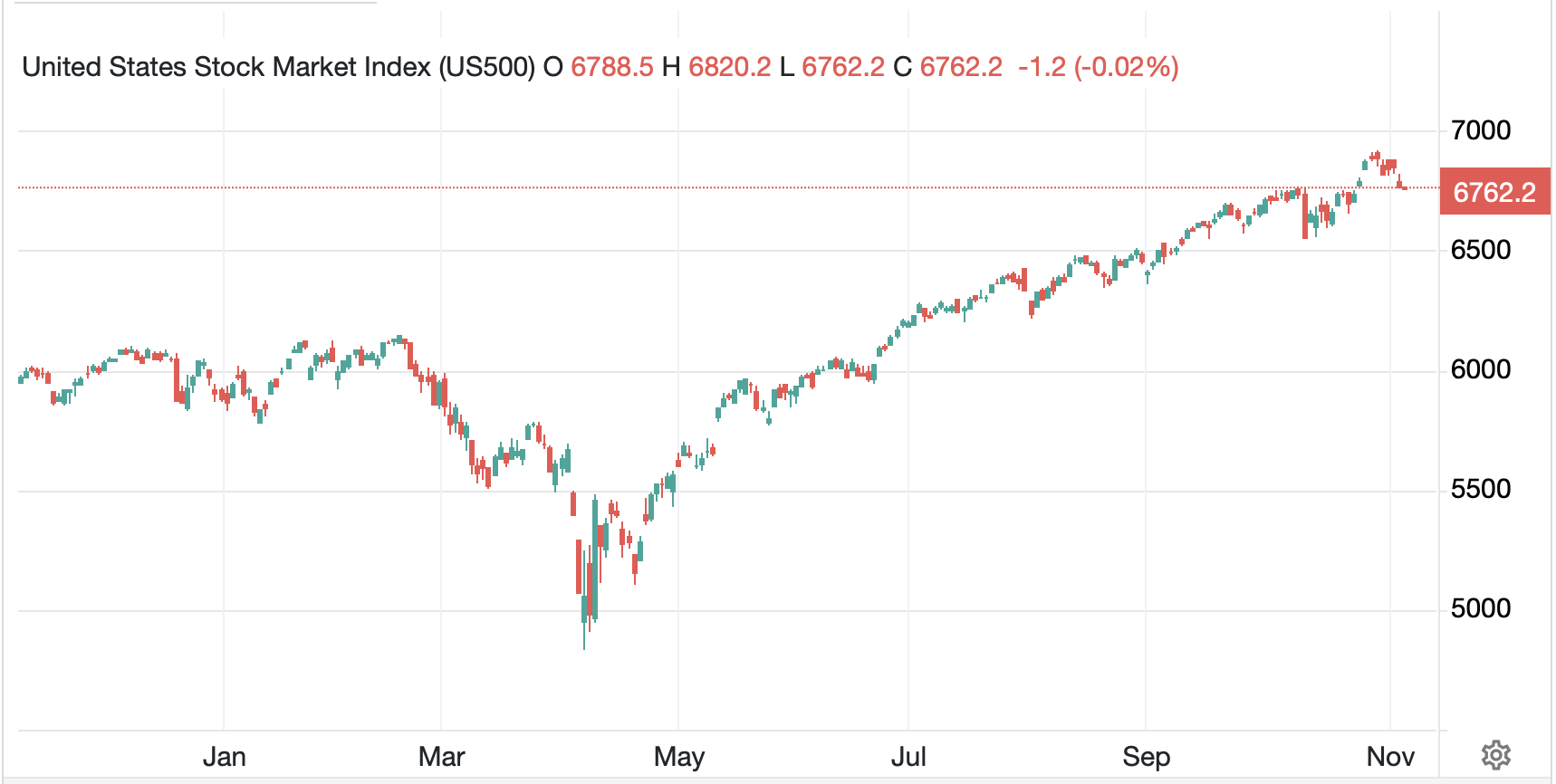
I wish there was something interesting to discuss this morning in any market, but the reality is some days the news feed has nothing of note.  Surveying the headlines shows that despite the tariff uncertainty, equity markets (as per the MSCI All-Country World Index) traded to new all-time highs.

Maybe tariffs are not going to be the end of the world after all.  Adding to this story is the fact that corporate credit spreads continue to compress, a clear signal that concerns over future economic activity are not that significant.  A look at the chart below shows that the current level, below 100bps, is the exception, not the rule when it comes to perceptions of debt risk.  In fact, the current reading of 0.91% is in the 13th percentile, well below the long-term average of 1.49% and median of 1.29%.  My point is, although the political lens through which so much news is presented continues to scream that everything the Trump administration is doing is an existential threat to the global economy, it appears a majority of investors have taken a different view.

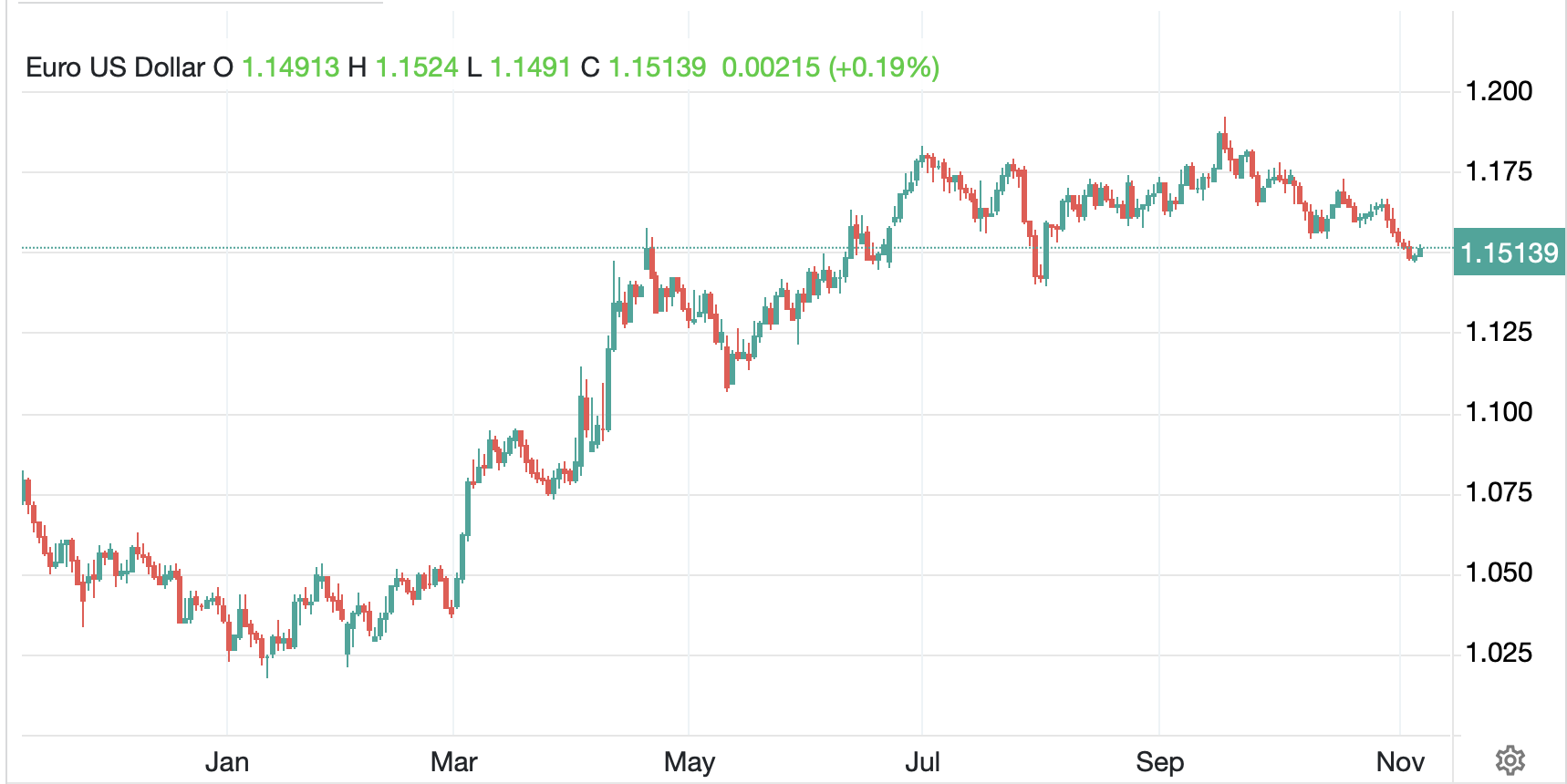
So, I guess it’s good times for all.  In other markets, the dollar’s recent modest weakness continues to be highlighted as the beginning of the end of its reserve currency status and another existential threat to the US.  But again, one cannot look at a long-term chart of the euro and believe that we are on the edge of the precipice.  The EUR/USD exchange rate has been both much higher and much lower during the euro’s lifetime which began back in 1999.

It’s summer, folks, and oftentimes throughout my career, that signaled a significant reduction in market activity, liquidity and overall movement.  This is not to say that something untoward cannot occur before Labor Day, but perhaps this year will see a summer lull.  If pressed, I would say that the key risks to the idea of a true summer of doldrums would be a significant increase in the probability of a global conflagration, where both the Russia/Ukraine and Iran talks go off the rails with more kinetic activity in either or both places.  Certainly, if China were to invade Taiwan, that would change things.  And perhaps, if the Big Beautiful Bill fails to be enacted, prospects for the US economy would decline as tax rates would rise dramatically.  My take is that would not be good for either stocks or bonds, and probably not for the dollar either.

History, however, tells us that assuming little or no change is the best bet for the immediate future, so I don’t see any of those things happening.  In fact, my take is financial markets are becoming inured to most of President Trump’s pronouncements at this stage.  Given the movement we have seen in equities and credit spreads, it appears to me there is already a strong assumption of some trade deals to be announced in the near future.  Maybe that will be a ‘sell the news’ event.  But for now, there is precious little about which to get excited.

So, let’s see how things behaved overnight.  It oughtn’t be surprising that equity markets around the world are higher since the MSCI Index, as mentioned above, is setting records.  So, solid gains in the US yesterday were followed by similar type gains in Asia (Japan +0.8%, HK +0.6%, China +0.4%, Australia +0.9%) with the latter rising despite weaker than expected GDP growth in Q1 of 1.3%.  In Europe, too, gains are the general order of the day with Germany (+0.5%) and France (+0.5%) both in fine fettle although Spain (-0.3%) is today’s aberration as PMI data there was weaker than expected (perhaps the blackout had a negative impact!). I guess we oughtn’t be surprised that US futures are pointing slightly higher at this hour as well.

In the bond market, apparently everybody took Ambien today as yields are within 1bp of yesterday’s closing levels in the US, Europe and Asia.  I will take this as no news is good news.

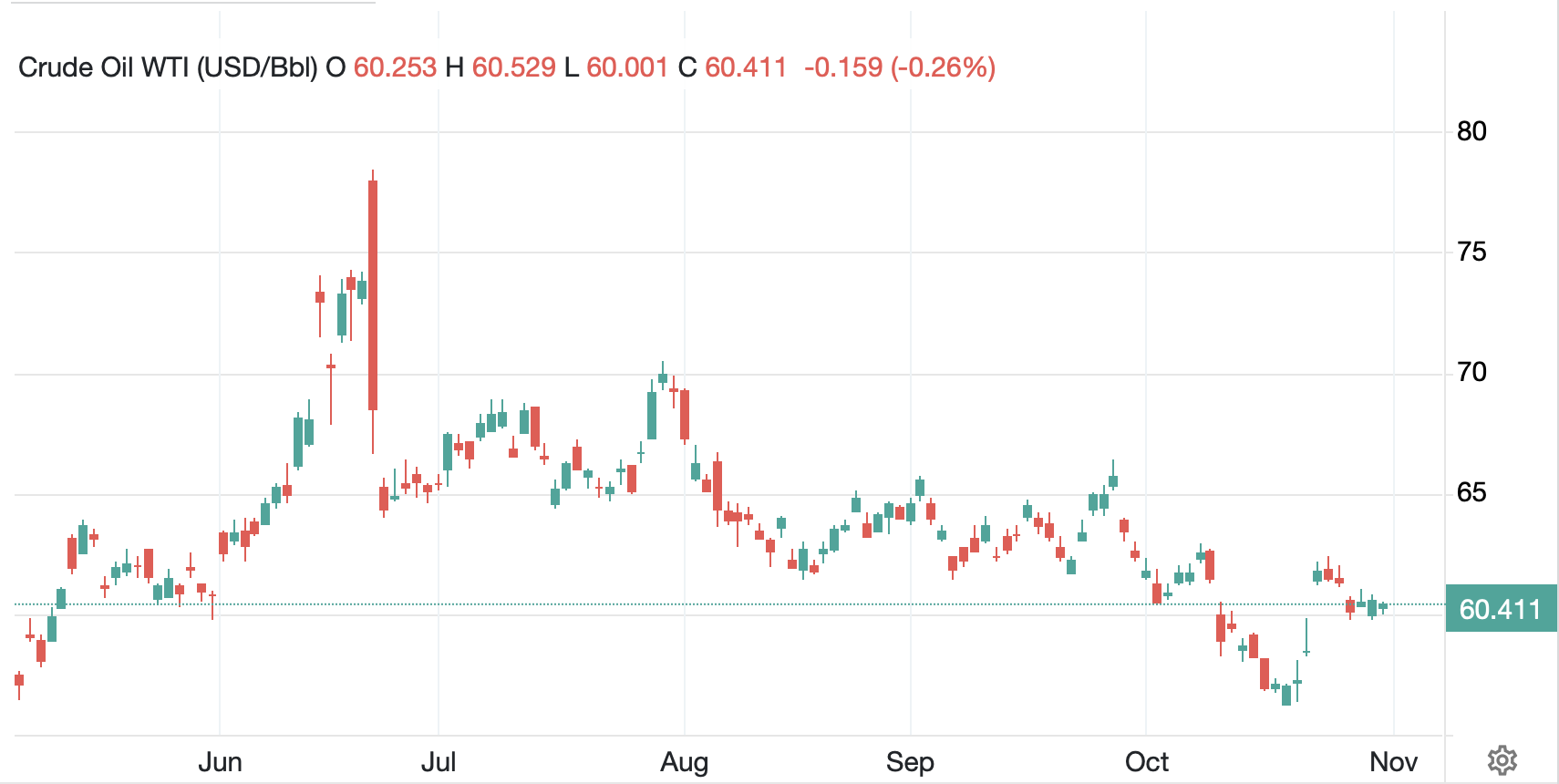
In the commodity complex, oil is stuck near its recent highs and unchanged on the day.  Some might argue this is a triple top as per the chart below, where a break higher would target something on the order of $70/bbl and closing that huge gap from April.  However, given the general lack of activity, there doesn’t seem an obvious catalyst for that type of move.

Source: tradingeconomics.com

As to the metals markets, the extra bond market Ambien was distributed to those traders.

Finally, the dollar is mixed with the overall situation, at least as defined by the DXY, unchanged.  So, AUD (+0.4%) has rallied a bit while JPY (-0.2%) is sliding a bit.  In fact, most currencies are within 0.2% of yesterday’s closing levels although NOK (+0.5%) is today’s big winner as continued support in the oil market helps the krone.  But there is nothing to get excited about here either.

On the data front, ADP Employment (exp 115K) is probably the most interesting number although we also get ISM Services (52.0) and then the EIA oil inventory data with a modest build expected across products.  The BOC meets and nobody expects any policy rate change there and Atlanta Fed president Bostic speaks, but again, who cares at this point?

Quiet is the name of today’s game.  It wouldn’t surprise me if that is the rest of the week’s MO as well, although at some point, we will definitely see a break in one market that is likely to be contagious.  Until then…,

Good luck

adf

Hard to Resolve

The OECD has declared
That growth this year will be impaired
By tariffs, as trade
Continues to fade
And no one worldwide will be spared
 
The funny thing is, the US
This quarter is showing no stress
But how things evolve
Is hard to resolve
‘Cause basically it’s just a guess


The OECD published their latest economic outlook and warned that global economic growth is likely to slow down because of the changes in tariff policies initiated by the Trump administration.  Alas for the OECD, the only people who listen to what they have to say are academics with no policymaking experience or authority.  It is largely a talking shop for the pointy-head set.  Ultimately, their biggest problem is that they continue to utilize econometric models that are based on the last 25-30 years of activity and if we’ve learned nothing else this year, it is that the world today is different than it has been for at least a generation or two.

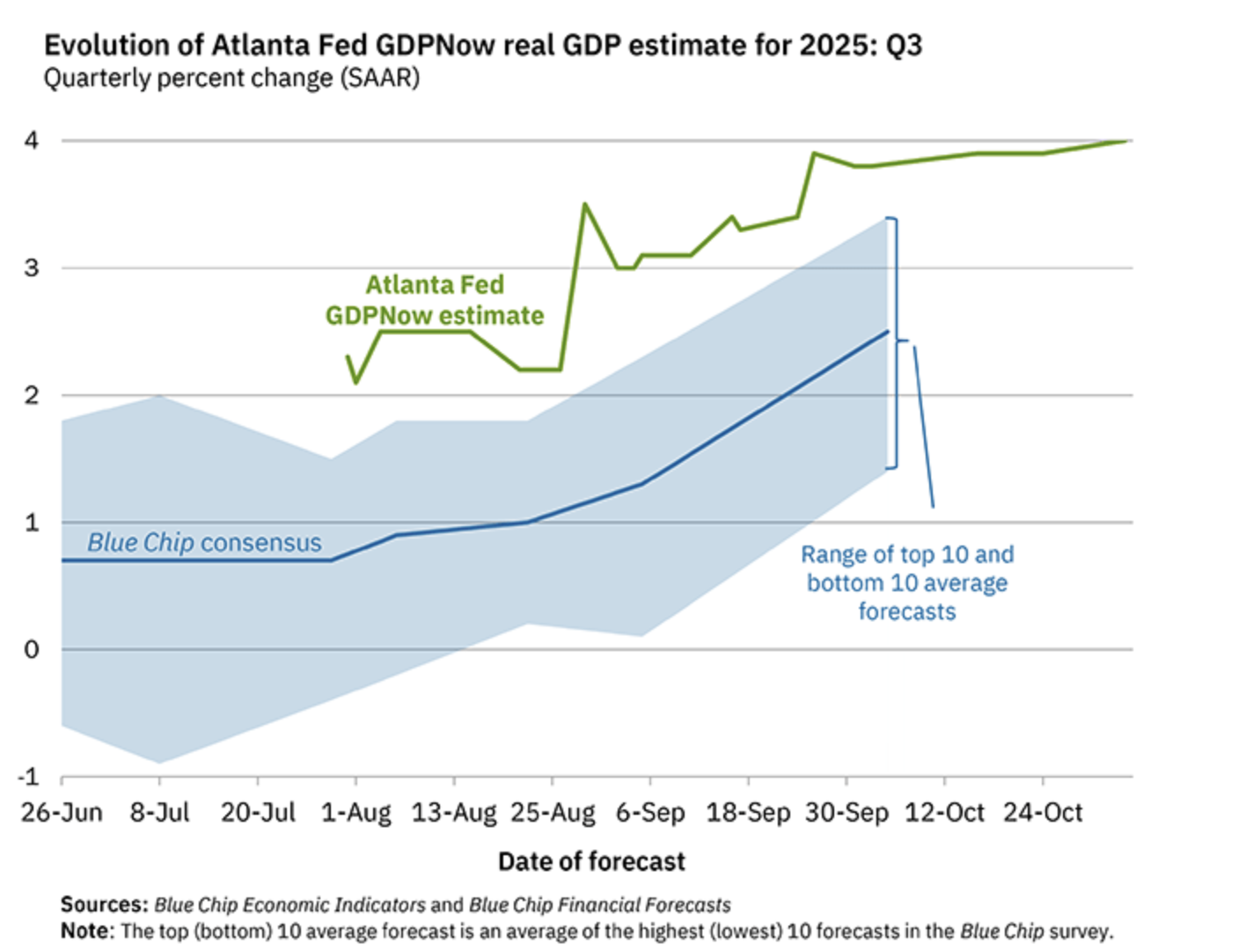
At the same time, a quick look at the Atlanta Fed’s GDPNow forecast for Q2 indicates the US is in the midst of a very strong economic quarter.

Now, while the US does not represent the entire OECD, it remains the largest economy in the world and continues to be the driver of most economic activity elsewhere.  As the consumer of last resort, if another nation loses access to the US market, they will see real impairment in their own economy.  I would argue this has been the underlying thesis of the Trump administration’s tariff negotiations, change your ways or lose access, and that is a powerful message for many nations that rely on selling to the US.

Of course, it can be true that the US performs well while other nations suffer but that is not the OECD call.  Rather, they forecast US GDP growth will fall to 1.6% this year, down from 2.4% last year and previous forecasts of 2.2%.

But perhaps now is a good time to ask about the validity of GDP as a marker for everyone.  You may recall that in Q1, US GDP fell -0.2% (based on the most recent update received last Thursday) and that the media was positively gleeful that President Trump’s policies appeared to be failing.  Now, if Q2 GDP growth is 4.6% (the current reading), do you believe the media will trumpet the success?  Obviously, that is a rhetorical question.  But a better question might be, does the current calculation of GDP measure what we think it means?

If you dust off your old macroeconomics textbook, you will see that GDP is calculated as follows:

Y = C + I + G + (X – M)

Where:

Y = GDP

C = Consumption

I = Investment

G = Government Spending

X = Exports

M = Imports

In the past I have raised the question of the inclusion of G in the calculation, as there could well be a double counting issue there, although I suppose that deficit spending should count.  But the huge disparity between Q1 and Q2 this year is based entirely on Net Exports (X -M) as in Q1, companies rushed to over order imports ahead of the tariffs and in Q2, thus far, imports have fallen dramatically.  But all this begs the question, is Q2 really demonstrating better growth than Q1?  Remember, the GDP calculation was created by John Maynard Keynes back in the 1930’s as a policy tool for England after WWI.  The world today is a far different place than it was nearly 100 years ago, and it seems plausible that different tools might be appropriate to measure how things are done.  

All this is to remind you that while the economic data matters a little, it is not likely to be the key driver of market activity.  Instead, capital flows typically have a much larger impact on market movements which is why central bank policies are so closely watched.  For now, capital continues to flow into the US, although one of the best arguments against President Trump’s policy mix (and goals really) is that they could discourage those flows and that would have a very serious negative impact on financial markets.  Of course, he will trumpet the real investment flows, with current pledges of between $4 trillion and $6 trillion (according to Grok) as offsetting any financial outflows.  And in fairness, I believe the economy will be better served if the “I” term above is real foreign investment rather than portfolio flows into the S&P 500 or NASDAQ.

There is much yet to be written about the way the economy will evolve in 2025.  I remain hopeful but many negative things can still occur to prevent progress.

Ok, let’s take a look at how markets are absorbing the latest data and forecasts.

The barbarous relic and oil
Spent yesterday high on the boil
While bond yields are tame
These rallies may frame
A future where risk may recoil

I’ll start with commodities this morning where we saw massive rallies in both the metals and energy complexes yesterday as gold (-0.8% this morning) rallied nearly 2% during yesterday’s session and both silver (-1.4%) and copper (-1.7%), while also slipping this morning, saw even bigger gains with silver touching its highest level since 2012.  Copper, too, continues to trade near all-time highs as there is an underlying bid for real assets as opposed to fiat currencies.  Meanwhile, oil (+0.3%) rallied nearly 4% yesterday and is still trending higher, although remains in the midst of its trading range.  Given the bearish backdrop of declining growth expectations and OPEC increasing production, something isn’t making much sense.  Lower oil prices have been a key driver of declining inflation readings around the world.  If this reverses, watch out.

Turning to equities, yesterday’s weak US start turned into a modest up day although the follow through elsewhere in the world has been less consistent.  Tokyo was basically flat while Hong Kong (+1.5%) was the leader in Asia on the back of the story that Presidents Trump and Xi will be speaking this week as well as some solid local news.  But elsewhere in Asia, the picture was more mixed with modest gains and losses in various nations.  In Europe, despite a softer than expected inflation reading this morning, with headline falling to 1.9%, equity indices have been unable to gain much traction in either direction.  This basically cements a 25bp cut by the ECB on Thursday, but clearly the trade situation has investors nervous.  Meanwhile, US futures are pointing slightly lower at this hour (7:25), but only on the order of -0.2%.

Bond yields, which backed up yesterday, are sliding this morning with -2bps the standard move in Treasuries, European sovereigns and JGBs overnight.  We did hear from Ueda-san last night and he promised to adjust monetary policy only when necessary, although given base rates there are 0.5% and CPI is running at 3.5%, I’m not sure what he is looking at.  The very big picture remains there is too much debt in the world and the big question is how it will be resolved.  But my take is that won’t happen anytime soon.

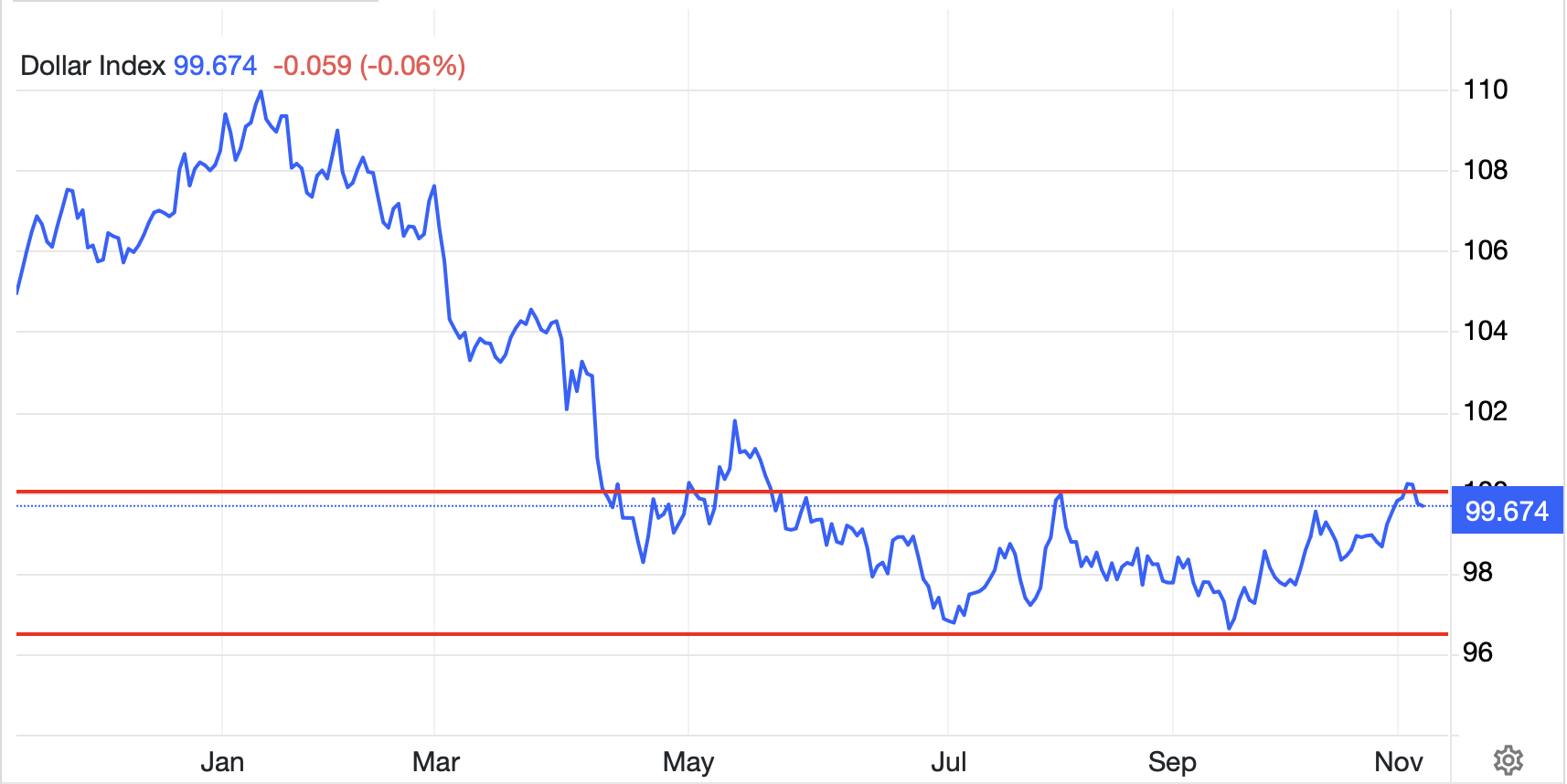
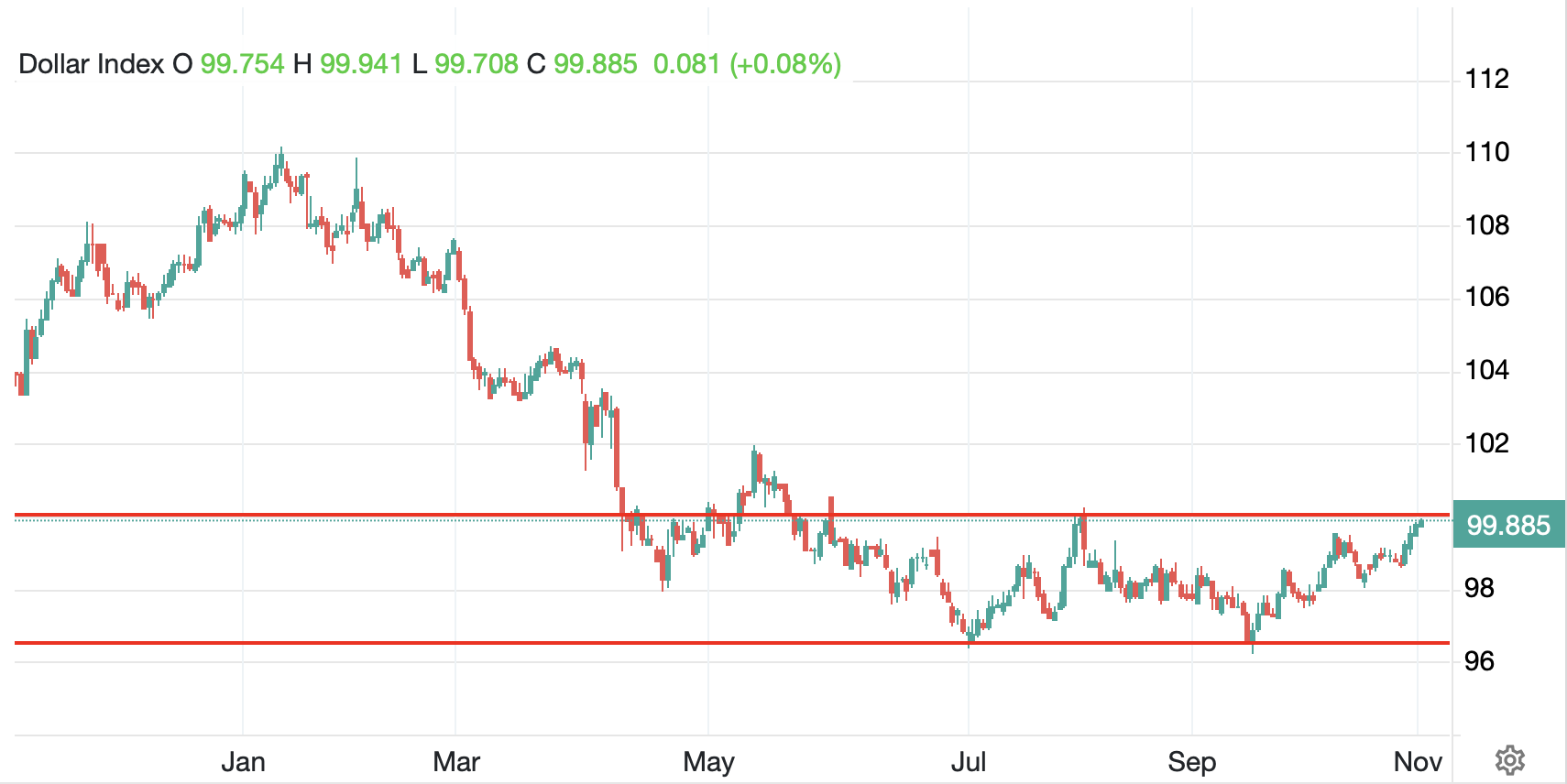
Finally, the dollar, which had been under pressure yesterday has rebounded this morning, regaining much of the losses seen Monday.  The euro (-0.5%) and pound (-0.4%) are good proxies for the magnitude of movement we are seeing although SEK (-0.7%) is having a little tougher time.  In fairness, though, SEK has been the best performing G10 currency so far this year, gaining more than 13%.  In the EMG bloc, PLN (-1.0%) is the laggard, perhaps on the election results with the right-wing candidate winning and now calling into question the current government there and its ability to continue to move closer to the EU policy mix.  It should also be noted that the Dutch government fell this morning as Geert Wilders, the right-wing party leader, and leading vote getter in the last election, pulled out of the government over immigration and asylum issues.  (and you thought that was just a US thing!). In the meantime, I will leave you with the following 5-year chart of the DXY to allay any concerns that the dollar is about to collapse.  While we are at the bottom of the range of the past 3 years, we have traded far below here pretty recently, let alone throughout history.

Source: tradingeconomics.com

On the data front, JOLTs Job Openings (exp 7.1M) and Factory Orders (-3.0%, 0.2% ex Transport) are on the docket and we hear from 3 more Fed speakers.  But again, Fed comments just don’t have the same impact as they did even last year.  In the end, I do like the dollar lower, but don’t be looking for a collapse.

Good luck

Adf
Gnashing and Wailing

The narrative writers are failing
To keep their perspectives prevailing
They want to blame Trump
But if there’s no slump
They’ll find themselves gnashing and wailing
 
Economists have the same trouble
‘Cause most of their models are rubble
The change that’s been wrought
Requires more thought
Than counting on one more Fed bubble


Investors seem to be growing unhappier by the day as so many traditional signals regarding market movement no longer appear to work.  Nothing describes this better, I think, than the fact that forecasts for 10-year Treasury yields by major banks are so widely disparate.  While JPMorgan is calling for 5.00% by the end of the year, Morgan Stanley sees 2.75% by then.  What’s the right position to take advantage of that type of knowledge and foresight?

One of the most confusing things over the past months, has been the growing dichotomy between soft, survey data and hard numbers.  But even here, it is worth calling into question what we are learning.  For instance, this week we will see the NFP data along with the overall employment report.  That data comes from the establishment survey.  It seems that just 10 years ago, more than 60% of companies reported their hiring data.  Now, that is down to ~43%.  Does that number have the same predictive or explanatory power that it once did?  It doesn’t seem so.

Too, if we consider the Michigan Sentiment data, it has become completely corrupted by the political angle, with the current situation being Democrats answering the survey anticipate high inflation and weak growth while Republicans see the opposite.  Is that actually telling us anything useful from an economic perspective let alone a market perspective?  (see charts below from sca.isr.unmich.edu)

But this phenomenon is not merely a survey issue, it is an analysis issue.  At this point, I would contend there are essentially zero analysts of the US economy (poets included) who do not have a political bias built into their analysis and forecasts.  Consider that if you are in a good mood generally, then your own perspective on things tends to be brighter than if you are in a bad mood.  Well, expand that on a political basis to, if you are a Democrat, President Trump has been defined as the essence of evil and therefore your viewpoint will see all potential outcomes as bad.  If you’re a Republican, you will see much better potential.  It is who we are and has always been the case, but it appears a combination of President Trump and social media has pushed this issue to heretofore unseen extremes.

There are two problems with this.  First, for most consumers of financial information, the decision matrix is opaque.  Who should you believe?  But perhaps more concerningly, as evidenced by the decline in the response rate to hard data, for policymakers like the Fed and Treasury, what should they believe?  Are they receiving accurate readings of the economic realities on the ground?  Is the job market as strong (or weak) as currently portrayed?  Is the uncertainty in ISM data a result of political bias?  And if politics is an issue in these situations, who is to say that answers to questions will be fact-based rather than crafted to present a political viewpoint?

I would contend that the reason the narrative is breaking down everywhere is that the willingness of investors, as well as the proverbial man on the street, to listen to pronouncements from on high has diminished greatly.  After all, the mainstream media, which had always been the purveyor of the narrative, or at least its main amplifier, has lost its luster.  Or perhaps, they have lost all their credibility.  Independent media, whether on X, Substack or simply blogs that are posted all over the internet, have demonstrated far more clarity and accuracy of situations than anything coming from the NYT, WSJ, BBG or WaPo, let alone the TV “news” programs.

We are on our own to determine what is actually happening in the world, and that is true of how markets will perform going forward.  I have frequently written that volatility is going to be higher going forward across all markets.  President Trump is the avatar of volatility.  As someone whose formative years in trading were in the mid 80’s, when inflation was high, and Paul Volcker never said a word to anyone about what the Fed was doing (and even better, nobody even knew who the other FOMC members were), the best way to thrive is to maintain modest positions with limited leverage.  The time of ZIRP and NIRP will be seen as the aberration it was.  As it fades, so, too, will the ability to maintain highly levered positions because any large move can be existential.

With that cheery opening, let’s take a look at what has happened overnight.  Friday’s US session was not very noteworthy with mixed data leading to mixed results but no real movement.  Alas, things have taken a turn lower since then.  Asian markets were weaker overnight (Nikkei -1.3%, Hang Seng -0.6%, CSI 300 -0.5%) with most other regional markets having a rough go of things as well.  Concerns over further tariffs by the US (steel tariffs have been raised to 50%) and claims by both sides of the US – China trade debate claiming the other side has already breached the temporary truce have weighed on sentiment overall.  Meanwhile, PMI data from the region was less than inspiring with China, Korea, Japan and Indonesia all showing sub 50 readings for Manufacturing surveys.

In Europe, equity markets are also generally softer (DAX -0.5%, CAC -0.7%) although the FTSE 100 (0.0%) has managed to buck the trend after data this morning showed Housing Prices firmed along side Credit growth.  As investors await the US ISM/PMI data, futures are pointing lower across the board, currently down around -0.4% at 7:15.

In the bond market, yields all around the world are backing up with Treasuries (+3bps) bouncing off the lows seen on Friday, although remaining below 4.50%, while European sovereigns have climbed between 3bps and 4bps across the board.  JGB’s overnight (+2bps) also rose, although the back end of that curve saw yields slip a few bps.  It seems the world isn’t ending quite yet, although there does not seem to be any cure for government spending and debt issuance anywhere in the world.

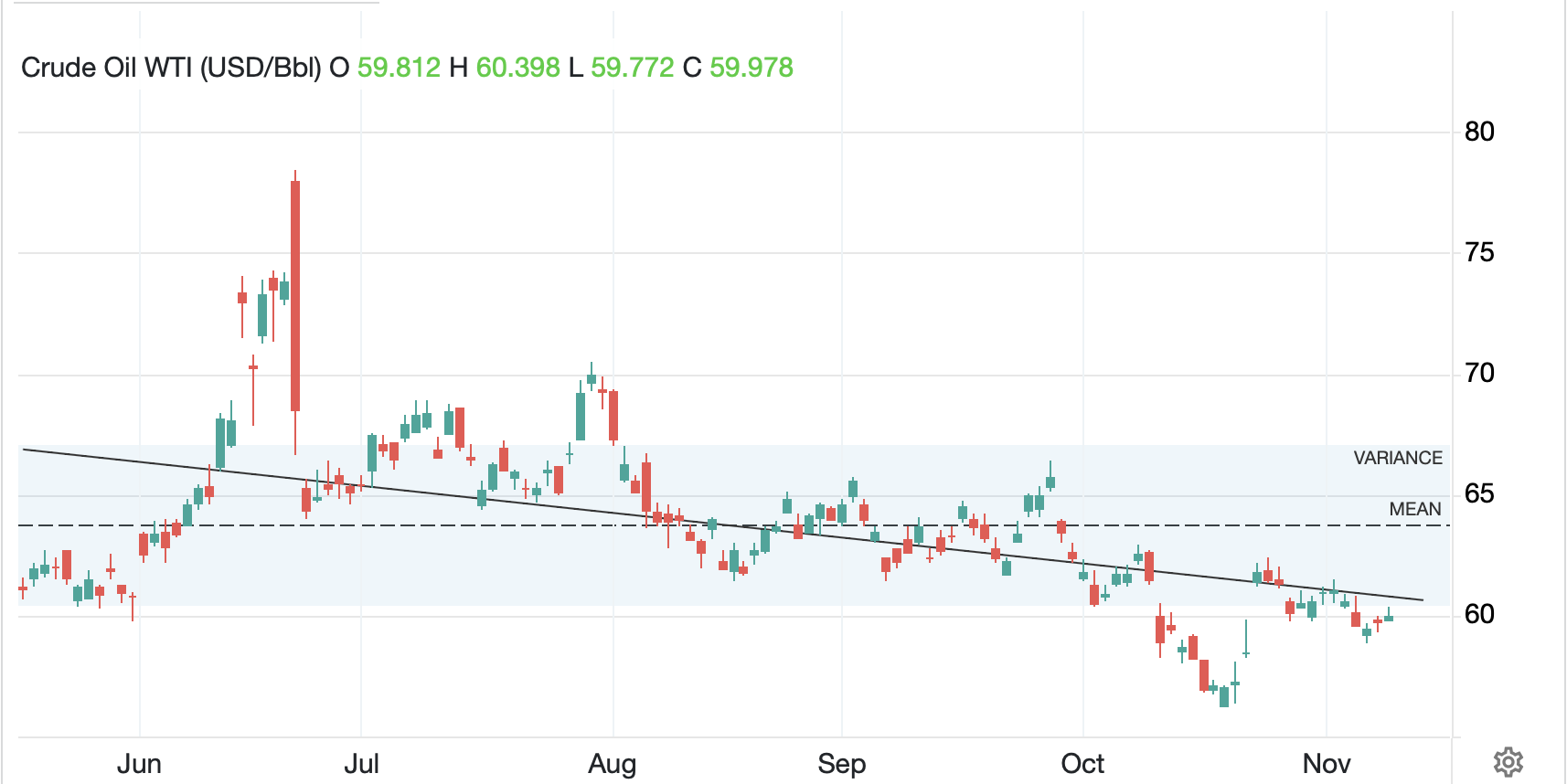
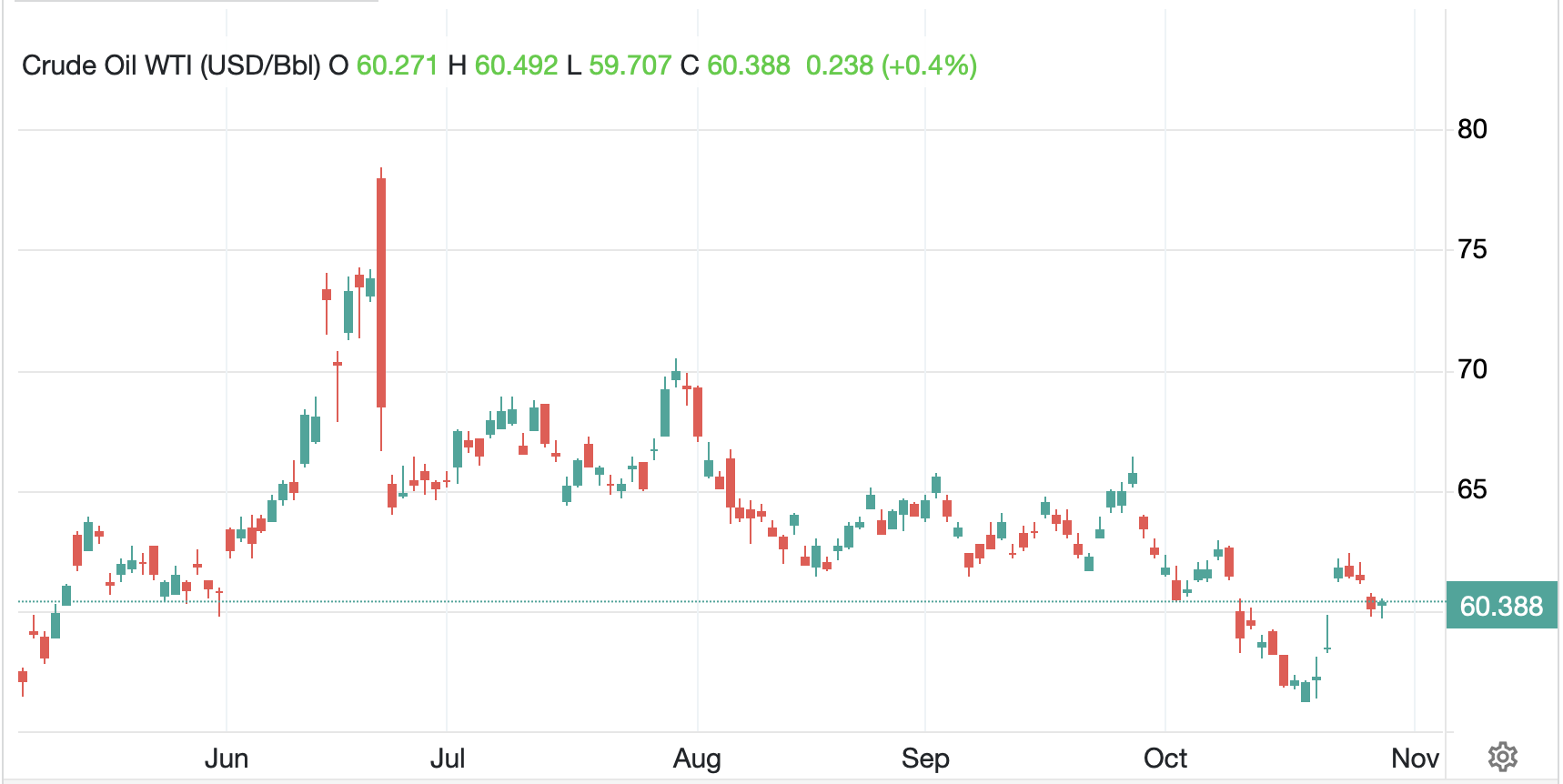
Commodity prices, though, are on the move as it appears investors are interested in acquiring stuff that hurts if you drop it on your foot.  Gold (+1.85%), silver (+0.9%) and copper (+3.6%) are all in demand this morning, the latter ostensibly benefitting from fears that the US will impose more tariffs on other metals thus driving prices higher.  But the real beneficiary overnight has been oil (+4.0%) which rose on the back of an intensification of the Russia – Ukraine war as well as the idea that OPEC+ ‘only’ raised production by 411K barrels/day, less than the whisper numbers of twice that amount.  As I watch the situation in Ukraine, it appears to have the hallmarks of an imminent peace process as both sides are pulling out all the stops to gain whatever advantage they can ahead of the ceasefire and both recognizing that the ceasefire is going to come soon.  But despite the big jump in the price of WTI, you cannot look at the chart below and expect a breakout in either direction.  If I were trading this, I would be more likely to fade the rally than jump on board the rise.

Source: tradingeconomics.com

Finally, the dollar is under the gun this morning, falling against pretty much all its major counterparts.  Both the euro (+0.7%) and pound (+0.6%) are having strong sessions although JPY (+1.0%) and NOK (+1.3%) are leading the way in the G10.  NOK is obviously benefitting from oil’s rally, while there remains an underlying belief that Japanese investors are slowing their international investments and bringing money home.  Now, the ECB meets this week and is widely anticipated to be cutting rates 25bps, but my take is, today is a dollar hatred day, not a euro love day.  As to the EMG bloc, gains are evident across regions with CZK and HUF (both +1.0%) demonstrating their beta to the euro although PLN (+0.5%) is lagging after the presidential election there disappointed the elites with the Right leaning candidate winning the job and likely frustrating Brussels in their attempts to widen the war in Ukraine.  In Asia, CNY (+0.1%) was relatively quiet but KRW (+0.5%), IDR (+0.8%) and THB (+0.9%) all benefitted from that broad dollar weakness.  So, too, did MXN (+0.65%) although BRL has not participated.

There is plenty of data this week culminating in the payroll report on Friday.

TodayISM Manufacturing49.5
 ISM Prices Paid70.2
 Construction Spending0.3%
TuesdayJOLTS Job Openings7.1M
 Factory Orders-3.0%
 -ex Transport0.2%
WednesdayADP Employment115K
 BOC Rate Decision2.75% (current 2.75%)
 ISM Services52.0
 Fed’s Beige Book 
ThursdayECB Rate Decision2.00% (current -2.25%)
 Initial Claims235K
 Continuing Claims1910K
 Trade Balance-$94.0B
 Nonfarm Productivity-0.7%
 Unit Labor Costs5.7%
FridayNonfarm Payrolls130K
 Private Payrolls120K
 Manufacturing Payrolls-1K
 Unemployment Rate4.2%
 Average Hourly Earnings0.3% (3.7% Y/Y)
 Average Weekly Hours34.3
 Participation Rate62.6%
 Consumer Credit$10.85B

Source: tradingeconomics.com

In addition, we hear from four more Fed speakers over five venues.  The thing about this is they continue to discuss patience as the driving force, except for Governor Waller, who explained overnight that he could see rate cuts if inflation stays low almost regardless of the other data.

The trade story remains the topic of most importance in most eyes it seems, although it remains a mystery where things will wind up.  The narrative is lost for all the reasons above, but I will say that it appears risk aversion is today’s theme.  The new part is that the dollar is considered a risk asset.  

Good luck

Adf

A New Paradigm

No matter the asset you trade
For weeks, every move’s been a fade
As headlines decry
Each thing Trump does try
Investors are feeling betrayed
 
They want to go back to the time
When markets did, every day, climb
But that time has passed
And I would forecast
We’ve entered a new paradigm


The following onslaught of charts from tradingeconomics.com are meant to highlight that for the past several weeks, basically nothing has gone on in markets.  Every day is like every other, and the only trend is a horizontal line.

Now, this is not to say that each movement is identical, just that any longer-term trends that may exist are not evident lately.  For traders, this can be terrific because there has been volatility which can be captured.  Of course, since much of the volatility has been headline bingo, that reduces the appeal.  But for longer term investors, it is a more difficult situation as those same headlines can call into question the underlying thesis of any or every trade.

Are the tariffs here to stay?  Or will they be overruled?  Is the “Big Beautiful Bill” going to be a benefit?  Or are there too many things hidden within that will impact the economy, markets and investor behaviors?  Is there going to be a Russia/Ukraine peace?  Is Iran going to sign a deal?  Will the US and China agree a trade deal?  Obviously, there are many very large issues currently outstanding with no clear resolutions in any of them as of now.  When you consider not only that the future is uncertain (which is always true) but the potential outcomes are diametrically opposed, it is easier to realize why markets are stuck in the mud.  But hey, nobody ever said trading was supposed to be easy!

There is, however, one issue I think worth highlighting that has seen an increase in discussion, and that is Section 899 of the reconciliation bill.  It is titled, “Enforcement of Remedies Against Unfair Foreign Taxes” and Bloomberg has a solid description here.  The essence of this clause is it increases taxes on nations, and individuals in those nations, who discriminate against US companies.  The idea is that Europe, especially, is busy enacting “Digital Services Taxes” which are designed to extract revenue from the large US tech companies that dominate particular spaces, like Meta, Google and Microsoft.  But these tax laws have thresholds such that essentially no other companies will be impacted.  This is the US response.  

Much of the discussion thus far has focused on the idea that this will discourage investment in US financial assets, potentially reducing the market for Treasury bonds and adding to the destruction of American exceptionalism in financial markets.  And it may well do that.  However, the thing to consider is that one of the reasons that the US has drawn so much investment is that there are so many investable securities here in the US, and that property rights remain sacrosanct.  Yes, taxation matters, but if you are a sovereign wealth fund with $100 billion in assets or more, where are you going to invest that money if not in the US, at least in some part?  And remember, this is only to be focused on nations with discriminatory taxes vs. US companies.  So, the Saudis, for example, or the Japanese need not worry.  It strikes me that at the margin, this could have a modest impact on prices, perhaps softening the dollar some and reducing future gains, but this is unlikely to end investment into the US.

Ok, let’s quickly run through the lack of overall movement last night.  Yesterday’s early US equity gains (triggered by the tariff ruling) faded all day and markets here closed very modestly higher.  In Asia, gains from yesterday were largely reversed as an appeals court stayed the ruling, so the tariffs remain in place as of now.  Thus Japan (-1.2%), Hong Kong (-1.2%) and China (-0.5%) basically reversed yesterday’s closings.  In Europe, though, things are a bit brighter. With gains across the board as inflation data released showed that it continues to drift lower across the continent.  This has encouraged traders to believe that more ECB rate cuts are coming, which was confirmed by the Bank of Italy’s Fabio Panetta, an ECB Governing Council Member, who exclaimed that inflation is nearly beaten.  Meanwhile, bank economists are now warning that further rate cuts need to come more quickly.  All this, of course, is music to equity investors’ ears.  As such, gains range from +0.3% (France) to 1.0% (Germany) and everywhere in between.  As to US futures, they are unchanged at this hour (7:30).

In the bond market, Treasury yields are unchanged this morning after sliding 8bps yesterday.  Interestingly, European sovereign yields, which also fell yesterday, have rebounded 3bps this morning despite the happy talk of more ECB rate cuts and the imminent death of inflation.  Too, last night saw yields decline in Japan (-3bps) and Australia (-11bps), following in the footsteps of yesterday’s Treasury market.

In the commodity markets, oil (+1.3%) is higher after EIA data yesterday showed modest inventory draws while gold (-0.75%) is giving back yesterday’s gains which came on the back of a weak dollar.  But as mentioned at the beginning of this piece, in the end, trends in both directions are on hold for now.

Finally, the dollar is firmer this morning, unwinding some of yesterday’s declines which grew throughout the day.  Right now, in the G10, the euro (-0.3%) is a pretty good proxy for the entire bloc, although JPY (+0.15%) is sticking out like a sore thumb.  In the EMG bloc, we see declines on the order of -0.5% (KRW, PLN, ZAR) although MXN (+0.2%) is also an aberration this morning.  Alas, I see no particular reason for this move.  However, as mentioned above, the recent trend is flat, although I cannot get over the idea that the dollar has further to decline going forward.

On the data front, this morning brings Personal Income (exp 0.3%), Personal Spending (+0.2%), PCE (0.1%, 2.2% Y/Y), and Core PCE (0.1%, 2.5% Y/Y) as well as the Goods Trade Balance (-$141.5B) all at 8:30.  Then we see Chicago PMI (45.0) and Michigan Consumer Sentiment (51.0) at 10:00.  There is one final Fed speaker this week, Atlanta’s Bostic this afternoon.  However, when it comes to the Fed, again yesterday we heard that patience is the watchword with no hurry to adjust policy right now.  As well, we learned that Chairman Powell had lunch with President Trump yesterday, where Trump asked him to lower rates, and Powell said they are following their long-proscribed tasks of responding to economic outcomes. 

There is nothing that seems likely to excite anyone today, so I look for a quiet session overall.  It seems unlikely that anything of note will be resolved, whether on a political or international relations basis, so look for a quiet session and a relatively early close as traders and investors head out for a summer weekend.

Good luck and good weekend

Adf

Bond Market blues

The story today is the court
And how it was able to thwart
The president’s aim
To alter the frame
Of trade, local firms, to support
 
Investors, though, cheered at the news
As tariffs had caused them to lose
Their faith that the Fed
Would cut rates ahead
Thus, ending the Bond Market Blues


I’m no attorney and so I have no opinion as to the legality of President Trump’s tariff impositions and whether they fit within the International Emergency Economic Power Act.  However, the Court of International Trade ruled that his tariffs were illegal and must be voided.  It was immediately appealed by the administration, so this fight is far from over.  You can be sure it will head to the Supreme Court.

However, within the extraordinary mass of US legislation on the books, there is at least one other way for President Trump to achieve his aims.  Within the still operational Trade Act of 1930, more commonly known as the Smoot-Hawley tariffs, is a key section, 338, with very clear presidential authority.  As per Law360, the below describes the law and the president’s powers accordingly:

Section 338 permits the president to impose “new or additional duties” of countries that have discriminated against commerce of the United States. Section 338 authority is triggered when the president finds that a foreign country has either (1) imposed an “unreasonable charge, exaction, regulation, or limitation” on U.S. products which is “not equally enforced upon the like articles of every foreign country”; or (2) “[d]iscriminate[d] in fact” against U.S. commerce “in respect to customs, tonnage, or port duty, fee, charge, exaction, classification, regulation, condition, restriction or prohibition” so as to “disadvantage” U.S. commerce as compared to the commerce of any foreign country.

Whenever the president finds such discrimination, Section 338 authorizes him to impose additional duties of up to 50 percent of the product’s value. If a country continues to discriminate against U.S. goods, the president may then move to block imports from that country.

It would be a great irony if President Trump’s invocation of old laws that remain on the books, like the Alien Enemies Act of 1798 with respect to deporting illegal aliens, or perhaps Smoot-Hawley as per the above, was the catalyst needed by Congress to address the fact that there is a lot of stale legislation on the books that no longer serves the nation’s current needs.  Of course, that would take a lot of work, and that is not Congress’s strong suit.

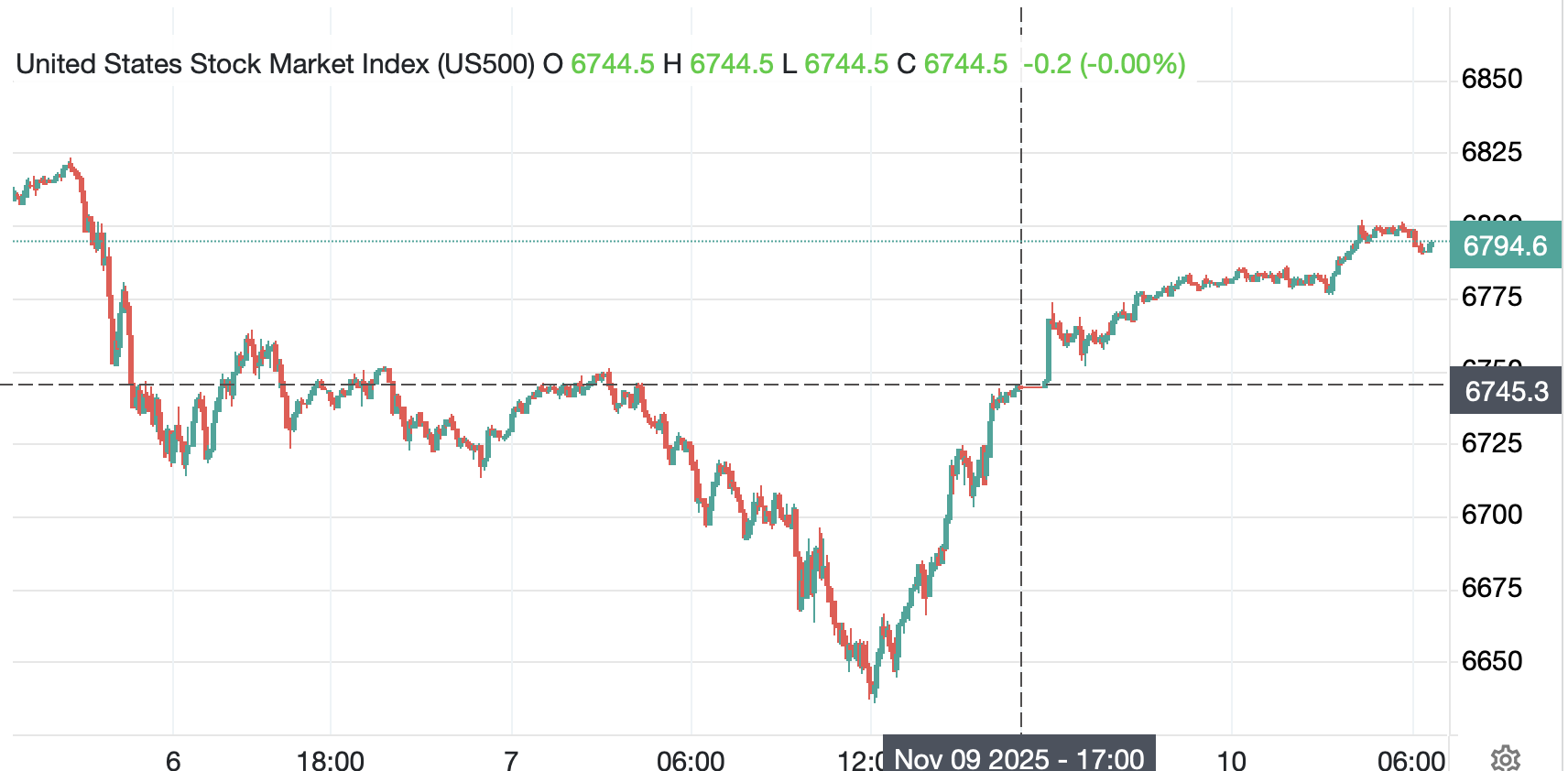
At any rate, for our purposes, the ruling last night had a pretty clear impact on US equity futures as per the below chart from tradingeconomics.com and has helped propel US futures higher by 1% or more across the board.

You won’t be surprised that the response to this ruling throughout Asia was mostly quite positive, (Nikkei +1.95, Hang Seng +1.35%, CSI 300 +0.6%, KOSPI +1.9%, India’s Sensex +0.5%) although there were some laggards in the region.  And, of course, we cannot ignore the fact that Nvidia reported better than expected earnings last night at ~4:45pm (the first move higher on the chart above) and explained that the future remained very bright for the company with ever higher growth expected.  Risk is on, baby!

So, the chattering classes are going to spend the day discussing how they ‘knew’ that Trump’s actions were illegal and that this ruling opens the door for ever higher stock prices and valuations.  But I wonder how this is going to impact other markets, bonds for instance.  This morning, we are seeing yields back up with Treasuries (+5bps) leading the way while European sovereigns are all higher by between 2bps and 3bps.  Too, JGB’s edged higher overnight as there is a growing feeling that absent Trump’s tariff onslaught, global economic activity is going to pick up dramatically.  And maybe that is what will happen.  

Certainly, metals prices are rallying across the board (Au +0.3%, Ag +1.1%, Cu +0.6%), an indication that demand for economically sensitive factors is anticipated to rise.  Oil (+0.3%), too, is rallying modestly although is showing no inclination to break from its recent trading range as per the below:

Source: tradingecomomics.com

There is an OPEC+ Group of 8 meeting this weekend at which they are expected to announce another increase in monthly production of 411K barrels/day.  A number of analysts have explained that these increases are in name only, and that members have been overproducing their quotas, so the quotas are now catching up.  Meanwhile, are we closer to a Ukraine/Russia peace treaty with the possibility of Russian oil sanctions being lifted?  It doesn’t seem that way, but things in that world move in mysterious ways.  However, if you look at the chart above, it strikes me that oil has found a relatively stable equilibrium value for now.

Finally, the dollar’s response to the court ruling on tariffs has been remarkably muted.  On the one hand, this ought not be a surprise.  After all, economists and analysts assured us all before the tariff announcements, that other currencies would decline sufficiently to offset the impact of the tariffs and they were completely wrong.  As well, we continue to hear that the dollar is losing its status as the global reserve currency and that international investors are fleeing Treasuries, and with that fleeing the dollar.  That, too, has been completely off base.

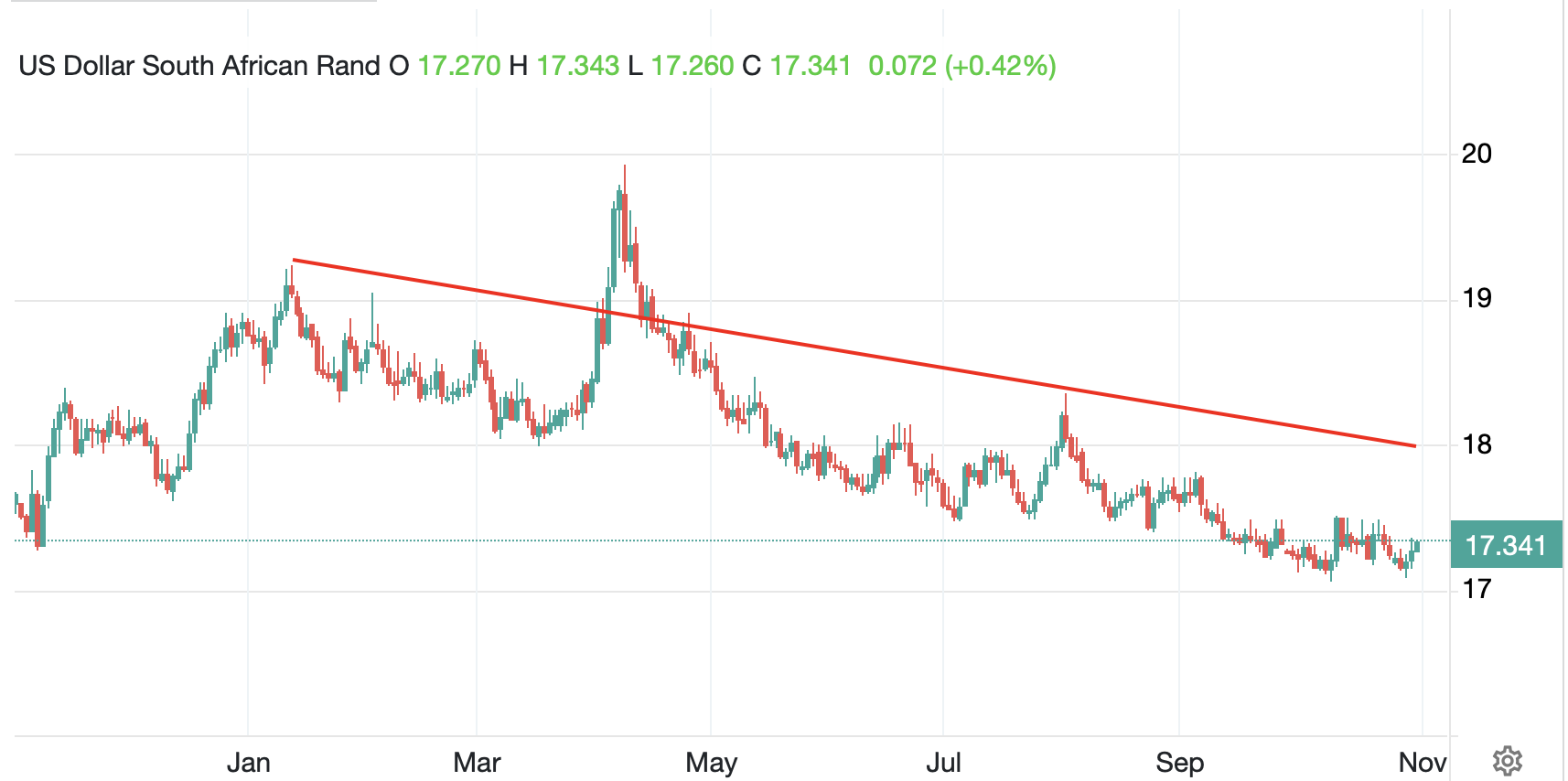
It is interesting that the dollar is little changed given the commodity market price moves, but with US equities leading the global markets higher, perhaps US exceptionalism, at least when it comes to stocks, is not dead yet.  Today’s biggest mover in the currency space is ZAR (+0.4%) which may be attributed to the rally in precious metals although the SARB is meeting today with a policy announcement (a rate cut of 25bps is expected) to come later this morning.  But beyond the rand, virtually every currency is +/- 0.1% or less today.  This is despite South Korea cutting rates last night by 25bps and indicating that future cuts are on the way.  Perhaps oil is not the only thing that has found an equilibrium.

On the data front, this morning brings a raft of data starting with the weekly Initial (exp 230K) and Continuing (1890K) Claims, the second look at Q1 GDP (-0.3%), with its version of PCE (3.7%, core 3.5%) and Real Consumer Spending (1.8%).  As well, because of the Memorial Day holiday, EIA inventory data is released a day late with a small build expected.  We have 4 different Fed speakers, but yesterday’s Minutes explained they were going to remain patient which has been the message since the Powell press conference, and actually before that, as the uncertainties from tariffs have given them no reason to act right now.

The one thing of which I am certain is that we have not heard the last of tariffs at this point.  As mentioned above, there are numerous ways to skin that cat, and you can be sure that President Trump’s legal staff is going to use them all.  As to the market impact, right now, euphoria is the vibe with hopes that tariffs will go away and Nvidia will lead the NASDAQ up another 10,000 points in the coming weeks.  It is hard to see the dollar coming under pressure if foreign investors are going to keep funds flowing in this direction, at least until the next surprising outcome with President Trump’s policies.

Good luck

Adf
Eighty-Sixed

The data remains rather mixed
But traders are still all transfixed
By tariffs and trade
As JGBs fade
And new ideas get eighty-sixed
 
Despite signs that peace in Ukraine
Is further away and hopes wane
It seems all that matters
Is whether Huang flatters
Investors, so stock markets gain


Apparently, at least based on yesterday’s equity market performance, concerns over the eventual outcome of the current global fiscal and monetary regimes remains far down everyone’s list of worries.  Rising inflation?  Bah, doesn’t matter.  Increasing tensions between Presidents Trump and Putin as Russia continues, and arguably increases its aggression?  No big deal.  But you know what has tongues wagging this morning?  Nvidia earnings are to be released after the close, and as we all know, if they are strong (everyone is counting on Jensen Huang, the CEO), then every other concern pales in significance.  After all, a global conflagration is no match in the imagination compared to your stock portfolio increasing in value!

Once upon a time, investors in the stock market sought companies that had good business models and good management who were able to grow their businesses.  These investors were buying a piece of a business in which they believed.  Analysts looked at metrics like P/E ratios and book value to determine if the price paid offered future opportunities as an investment, but the underlying company was the focus.  Of course, that is simply a quaint relic of times long ago, pre GFC.  Today, there is only one metric that matters, ‘NUMBER GO UP’!  While this concept was originally ascribed to Bitcoin and the crypto universe, it has spread across virtually all financial markets.  Nobody cares what a ticker symbol represents, they only care if the number next to the ticker symbol rises, and how rapidly it does so.  Welcome to the future.

I highlight this because it has become increasingly clear that the macroeconomic landscape is an anachronism for analyzing financial markets.  At this point, whether or not a recession is on the horizon, or inflation is rising, or unemployment is rising or falling seems to have only a fleeting impact on market movements.  Rather, the true driver appears to be the flow of all that money that has entered the global financial system since the GFC.  The below chart from streetstats.finance shows the last 10 years of the growth in the global money supply and the corresponding move in the S&P 500.  You may not be surprised at the tight correlation.

My point is that all the news items that draw our attention may not matter at all in the broad scheme of things.  As long as money continues to be printed and injected into the financial system, while some assets will outperform others, the trend remains sharply from the lower left to the upper right.  Going back to my discussion yesterday, since the overriding goal of every global central bank is to ensure that their governments can issue bonds to finance their spending, I see no end to this trend.  While the speed of the increase may ebb and flow slightly, the direction will only change under the most egregious circumstances, something like the aftermath of WWIII.

In a funny way, this highlights that FX markets have the opportunity to be the most interesting trading markets going forward given the relativity of their underlying basis.  Assets, whether debt, equity or commodity, are all priced on demand functions while FX is priced on relative demand for each side of the cross.  Perhaps FX will be the last bastion of macroeconomic analysis.

But not today!  Starting with FX, the dollar is little changed to slightly higher this morning, consolidating yesterday’s gains but things are quiet.  In fact, across the main markets, the largest movement in either direction is NZD (+0.25%) after the RBNZ cut rates as expected by 25bps, but the market reduced the probability of another rate cut in July.  But away from that move, +/-0.1% is the norm today.  Discussion about tariffs continues to be the major talking point, but as of now, it appears nobody has a clue as to how things will evolve, so everybody is just hunkering down.  

Turning to equities, while yesterday saw a very large rally in the US, that sentiment was absent overnight with Asian markets generally drifting slightly lower although New Zealand (-1.7%) was clearly unhappy with the RBNZ mild hawkish view.  But elsewhere, movement was far less than 1.0%.  In Europe, it is a similar tale, very modest declines across the board as data showed German Unemployment rising slightly, Eurozone Consumer Inflation Expectations also rising slightly while French GDP disappointed on the downside, just 0.6% Y/Y.  You can appreciate the lack of enthusiasm there, although the story that Madame Lagarde is considering stepping down from the ECB to take over WEF should put a spring in the step of European investors as perhaps the next ECB president will understand economics and central banking.  As to US futures, they are little changed at this hour (7:35).

In the bond market, after a session where yields slid across the board yesterday, this morning brings a modest reversal with Treasuries (+2bps) right in line with most of Europe (+1bp across the board) although JGB’s (+5bps) suffered after another lousy long-dated auction last night where 40-year JGBs saw pretty weak demand overall.  The Japanese bond market remains a serious issue for many and a potential signal for the timing of next big move.  While risk assets rallied yesterday, nothing changed my description of the problems that exist globally.

Finally, in the commodity markets, oil (+0.7%) is modestly higher this morning but continues to trade within its range and shows no sign of breaking out in the near term.  Metals markets, which sold off aggressively yesterday have stopped falling, but are hardly rebounding, at least as of now.  

Let’s look at the data for the rest of the week though.

TodayFOMC Minutes 
ThursdayInitial Claims230K
 Continuing Claims1900K
 Q1 GDP (2nd estimate)-0.3%
FridayPersonal Income0.3%
 Personal Spending0.2%
 PCE0.1% (2.2% Y/Y)
 Core PCE0.1% (2.5% Y/Y)
 Goods Trade Balance-$141.5B
 Chicago PMI45.0
 Michigan Sentiment51.0

Source: tradingeconomics.com

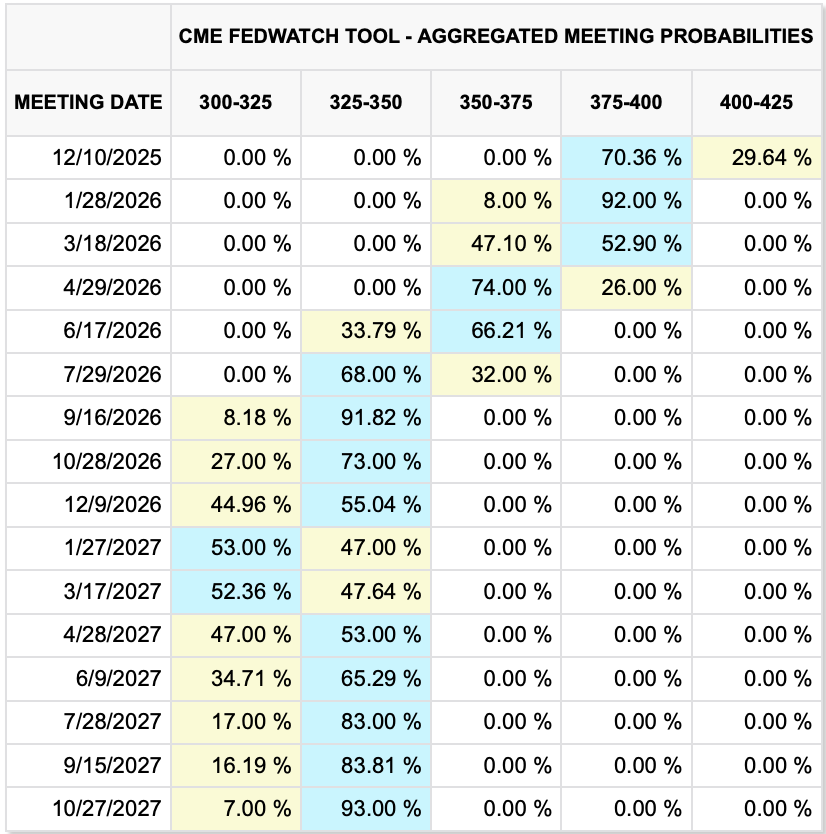
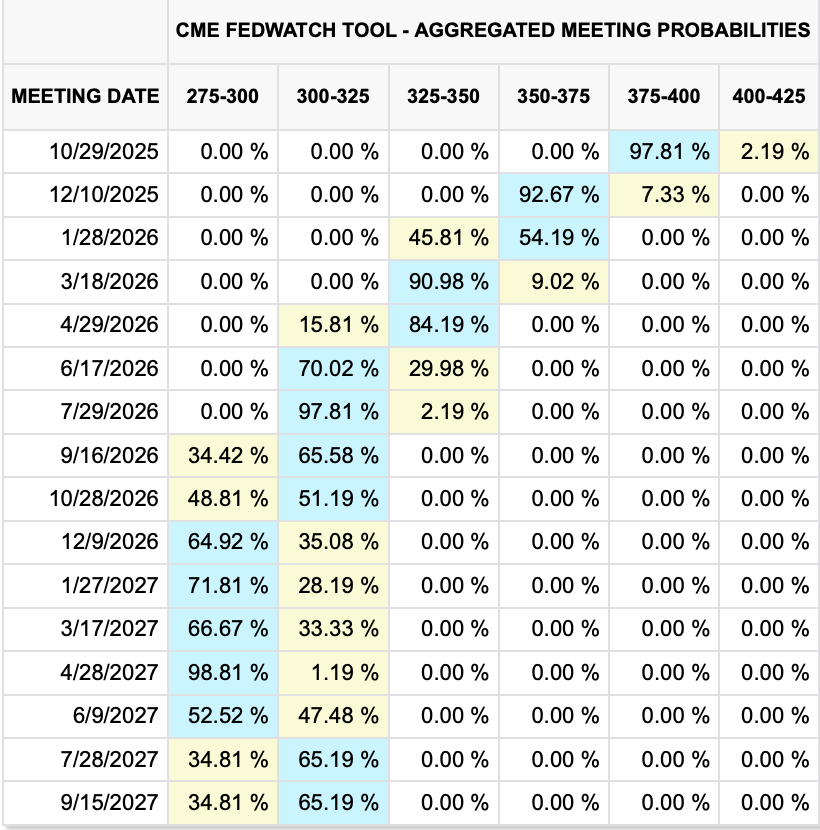
In addition to the data, with all eyes really on Friday’s numbers, we hear from six more Fed speakers, although, again, will they really change their tune about patience in watching what the impact of tariffs are going to be on the economy?  I think not.  In the Fed funds futures market, the probability of a cut in June has fallen to just 2% while the market is now pricing just 47bps of cuts this year, the lowest amount in forever.  Unless the data completely fall off the map, I don’t see why they would cut at all, and that has just not happened yet.

The summer is upon us (although you wouldn’t know by the weather in the Northeast) and that typically leads to a bit less activity overall.  At this point, much depends on Congress and its ability to complete the budget bill to move the legislative process along.  Then the hard part of spending bills will be the next topic and you can expect a lot of screaming then.  In the meantime, though, I expect that we will hear of a number of other trade deals getting completed and a good portion of the trade anxiety ebbing from market views.  Alas, the peace/war equation is far more difficult to handicap as so many in power clearly benefit from war.

The prevailing view in the market is that the dollar has further to decline going forward as I think a majority of players are anticipating a recession in the US and the Fed to respond.  Under that scenario, a softer dollar feels right.  But is that the right scenario?

Good luck

Adf
So Mind-Blowing

On one hand, the chorus is growing
That US debt is so mind-blowing
The ‘conomy will
Slow down, then stand still
As ‘flation continues its slowing
 
But others remind us the data
Does not show a slowing growth rate-a
And their main concerns
Are Powell still yearns
For rate cuts to help market beta


As many of us enjoyed the long weekend, it appears it is time to put our noses back to the proverbial grindstone.  I know that as I age, I find the meaning of the Memorial Day holiday to grow in importance, although I have personally been very fortunate having never lost a loved one in service of the nation.  However, as the ructions in the nation are so evident each day, I remain quite thankful for all those that “…gave the(ir) last full measure of devotion” as President Lincoln so eloquently remarked all those years ago.

But on to less important, but more topical things.  A week ago, an X account I follow, The Kobeissi Letter, posted the following which I think is such an excellent description of why we are all so confused by the current market gyrations.  

Prior to President Trump’s second term, I would contend that the broad narrative had some internal consistency to it, so risk-on days saw equity markets rally along with commodities while bond prices would fall (yields rise) and the dollar would sink as well.  Similarly, risk-off days would see pretty much the opposite.  And it was not hard to understand the logic attached to the process.  

But here we are, some four plus months into President Trump’s term and pretty much every old narrative has broken into pieces.  I think part of that stems from the fact that the mainstream media, who were purveyors of that narrative, have been shown to be less than trustworthy in much of what they reported during the Biden Administration, and so there is a great deal of skepticism now regarding all that they say, whether political or financial.

However, I think a bigger part of the problem is that different markets have seen participants focusing on different idiosyncratic issues rather than on the bigger picture, and so there are many mini narratives that are frequently at odds.  Add to this the fact that there continues to be a significant dichotomy between the soft, survey data and the hard, calculated data, with the former pointing toward recession or stagflation while the latter seems to be pointing to stronger economic activity, and the fact that if you ask twenty market participants about the impact of President Trump’s tariff policies, you will receive twenty-five different explanations for why markets are behaving in a given manner and what those policies will mean for the economy going forward.

It is at times like these, when there are persuasive short-term arguments on both sides that I step back and try to look at bigger picture events.  In this category I place two things, energy and debt.  Energy is life.  Economic activity is simply energy transformed and the more energy a nation has and the cheaper it is, the better off that economy will be.  President Trump has made no bones about his desire to cement the US as the number one energy producer on the planet and to allow affordable energy to power the economy forward.  As that occurs, that is a medium- and long-term bullish backdrop.

On the other hand, we cannot forget the debt situation, which is an undeniable drag on economic activity.  Forgetting the numbers per se, the fact that the US debt/GDP ratio is at wartime levels during peacetime (well, US peacetime) with no obvious end to the spending is a key concern.  But it is not just the US with a growing debt/GDP ratio.  Here is a listing from tradingeconomics.com of the G20’s ratios.  (Russia is the bottom of the list but not relevant for this discussion.)

And remember what has been promised by Germany and the Eurozone with respect to defense spending? More than €1 trillion for Germany and it sounds, if my addition is correct, like upwards of €1.7 trillion across the continent.  And all of that will be borrowed, so that is another 22% in Germany alone.  The point is the global debt/GDP ratio remains above 300% for public and private debt.  As government debt grows above 100%, at some point, we are going to see central banks, in sync, clamp down on longer-term yields.  

However they couch it, and however they do it, whether actual yield curve control, through regulations requiring banks and insurance companies to hold more government bonds on their balance sheets with no capital charges, or through adjustments to tax driven accounts like IRA’s and 401K’s, requiring a certain amount of government debt in the portfolio to maintain the tax deferred status, I expect that is what we are going to see.  And even with oil prices declining, which I think remains the trend, inflation is going to be with us for a long time to come as debt will be monetized.  It is the only solution absent a depression.  And every central bank will be in on the joke.  Which takes us to this morning…

As yields were soaring
The BOJ kept quiet
Until yesterday

Apparently, the bond vigilantes have spent the past decades learning Japanese.  At least that is what I conclude from the price action, and more importantly, the BOJ’s recent response in the JGB market. As you can see in the chart below, there has been a significant reversal in 30-year JGB yields with similar price action in both the 20-year and 40-year varieties.

Source: tradingeconomics.com

You may recall that last week, the Japanese government issued 20-year bonds, and the auction went quite poorly, with yields rising sharply (that was the large green candle six sessions ago). Well, it seems that the BOJ (along with the Ministry of Finance) have figured out that the bond situation in Japan is reaching its limits. After all, in less than two months, 30-year JGB yields rose 100 basis points from a starting point of about 2.2%.  That is an enormous move.  Now, if we look at the table above, we are reminded that Japan’s debt/GDP ratio is the highest in the developed world at well over 200%.  In addition, the BOJ owns more than 53% of all JGBs outstanding.  Quite frankly, it is easy to make the case that the BOJ has been monetizing Japanese debt for years.  

As it happens, last week the BOJ held one of their periodic (actually, the 22nd) “Bond Market Group” meetings in which they discuss with various groups of market participants the situation in the JGB market regarding liquidity and trading capabilities and the general functioning of the market.  The two charts below, taken from the BOJ’s website (H/T Weston Nakamura) demonstrate that there is growing concern in the market as to its ability to continue along its current path.

The concern demonstrated by market participants is a clear signal, at least to me, that we are entering the end game.  For all the angst about the situation in the US, with excessive fiscal expenditures and too much debt, Japan has that on steroids.  And while Japan has the benefit of being a net creditor country, the US has the advantage of having both the strongest military in the world and issuing the world’s reserve currency.  As well, the US neighborhood is far less troublesome than Japan’s in East Asia with two potential protagonists, China and North Korea.  All I’m saying is that after decades of kicking the can down the road, it appears that the road may be ending for Japan and difficult policy decisions regarding spending, deficits and by extension JGB issuance are coming soon.

It’s funny, many economists have, in the past, described the US situation as Japanification, with rising debt and slowing growth.  But perhaps Japanification will really be the road map for how to respond to the first true limits on the issuance of government debt for a major economy.  Last night, JGB yields fell across the board, dragging global yields down with them.  The yen (-0.8%) weakened sharply, reversing its trend of the past two weeks, while the Nikkei (+0.5%) rallied.  Perhaps market participants are feeling comforted by the fact the Japanese government seems finally ready to recognize that things must change.  But this is the beginning of that process, not the end, and there will be many twists and turns along the way.  Stay tuned.

Ok, I really ran on, but I feel it is critical for us all to recognize the debt situation and that there are going to be changes coming.  As to other markets overnight, this is what we’ve seen.  Asia was mixed with gainers (Hong Kong, Australia, Singapore) and laggards (China, Korea, India, Taiwan) but nothing moving more than 0.5% in either direction.  Europe, on the other hand, has been the beneficiary of President Trump delaying the tariffs on the EU until July 9th, with all the major indices higher led by the DAX (+0.8%) which also rallied more than 1% yesterday.  Say what you will about President Trump, he has gotten trade discussions moving FAR faster than ever before in history.  US futures, at this hour (6:15) are also pointing nicely higher, more than 1.3% across the board.

We’ve already discussed bond yields where 10yr Treasury yields have backed off by 5bps this morning although European sovereign yields have not benefitted quite the same way with declines of only 2bps on average.  But the trend in all cases is for lower yields right now.  Hope springs eternal, I guess.

In the commodity space, with the new view on tariffs, risk is abating and gold (-1.5%) is being sold off aggressively.  Not surprisingly, this has taken the whole metals complex with it.  As to oil (+0.1%) it continues to trade in its recent $60 – $65 range and while the trend remains lower, it is a very slow trend.

Source: tradingeconomics.com

Finally, the dollar is perking up this morning, not only against the yen, but across the board.  On the haven front, CHF (-0.6%) is sinking and the commodity currencies (AUD -0.6%, NZD -0.8%, SEK -0.6%) are also under pressure.  But the euro (-0.4%) is lower and taking the CE4 with it.  In fact, every major counterpart currency is lower vs. the dollar this morning.

On the data front, this morning brings Durable Goods (exp -7.8%, -0.1% ex-transport), Case Shiller Home Prices (4.5%), and Consumer Confidence (87.0). We also hear from NY Fed President Williams this evening.  Chairman Powell spoke at the Princeton graduation ceremony but said nothing about policy.  I will review the rest of the week’s data tomorrow.

Bonds are the thing to watch for now, especially if we are going to see more active policy adjustments to address what has long been considered an unsustainable path.  The question is, will there be fiscal adjustments that help?  Or will central banks simply soak up the bonds?  While I hope it is the former, I fear it is the latter.  Be prepared.

Good luck

Adf
Need Some Revising

The punditry fears that the bond
Is starting to move far beyond
A level at which
The US can stitch
Together a plan to respond
 
Meanwhile, though yields broadly are rising
The dollar, it’s somewhat surprising
Continues to sink
Which makes some folks think
Their models now need some revising


Perspective is an important thing to maintain when looking at markets as it is far too easy to get wrapped up in the short-term blips within a trend and accord them more importance than they’re due.  It is with that in mind that I offer the below chart of the 10-year US Treasury yield for the past 40 years.

Source: finance.yahoo.com

Lately, much has been made of the fact that 10-year yields have risen all the way back to where they were on…January 1st of this year.  But the long history of the bond market is that yields at 4.5% or so, which is their current level, is the norm, not the exception.  As you can see, in fact they were far higher for a long time.  Now, I grant that the amount of debt outstanding is an important piece of the puzzle when analyzing the risk in bonds, and the current situation is significant.  After all, even Moody’s finally figured out that the US’s debt metrics were lousy.  And under no circumstances am I suggesting that the fiscal situation in the US is optimal. 

But I also know that, as I wrote yesterday, the Fed is not going to allow the bond market to collapse no matter their view of President Trump.  Neither is the US going to default on its debt (beyond the slow pain of higher inflation) during any of our lifetimes.  I continue to read that the just-passed ‘Big, Beautiful Bill’ is going to result in deficits of 7% or more for the next decade, at least according to the CBO.  Alas, predicting the future is hard, and no one knows that better than the CBO.  Their track record is less than stellar on both sides of the equation, revenues and expenditures.  This is not to blame them, I’m sure they are doing their best, it is just an impossible task to create an accurate forecast of something with so many moving parts that additionally relies on human responses.

My point is that one needs to look at these forecasts with at least a few grains of salt.  While the current narrative is convinced that deficits are going to blow out and the nation’s finances are going to fall over the edge of the abyss, while the trend is in the wrong direction, my take is the end is a long way off.  In fact, the most likely outcome will be debt monetization around the world, as every government has borrowed more than they are capable of repaying without monetizing the debt.  The real question we need to answer is which nations will be able to do the best job of managing the situation on a relative basis.  And that, my friends, despite everything you read and hear about, is still likely to be the US.  This is not to say that US assets will not fall out of favor for a while relative to their recent behaviors, just that in the long run, no other nation has the resources and capabilities to thrive regardless of the future state of the world.

I guess the one caveat here would be that the entire global framework changes as the fourth turning evolves and old institutions die while new ones are formed.  So, the end of the IMF and World Bank, the end of SDR’s and even organizations like the UN cannot be ruled out.  And I have no idea what will replace them.  Regional accords may become the norm, CBDC’s may become the new money, and AI may run large swaths of both governments and the economy.  But in the end, at least nominally, government debt will be repaid in every G10 nation, of that I am confident.

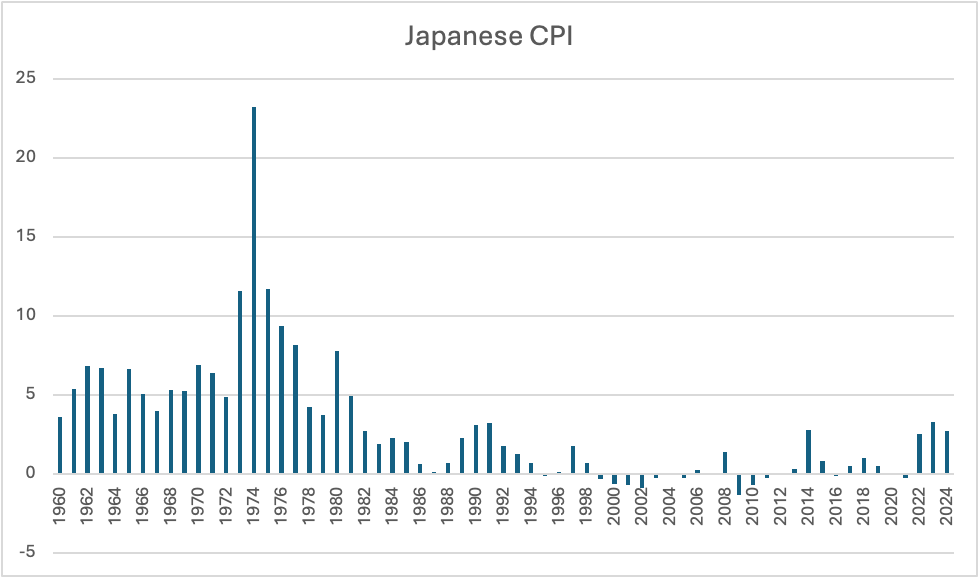
One of the reasons I have waxed philosophical again is that market activity, despite all the chattering of the punditry, remains pretty dull.  For instance, in the bond market, despite all the talk, Treasury yields, after slipping a few bps yesterday, are unchanged today.  The same is true across Europe, with no sovereign bond having seen yields move by more than 1 basis point in either direction.  JGB’s overnight, despite CPI coming in a tick hotter than forecast, saw yields slip -4bps, following the US market from yesterday.  If the end is nigh, the bond market doesn’t see it yet.

In equities, yesterday’s lackluster session in the US was followed by a lackluster session in Asia (Nikkei +0.5%, CSI 300 -0.8%, Hang Seng +0.25%) with no overall direction and this morning in Europe, the movement has been even less interesting (CAC -0.5%, DAX +0.2%, FTSE 100 0.0%). Too, US futures are little changed at this hour (7:00).

In the commodity markets, gold (+0.9%) continues to chop around within a range that it entered back in early April.

Source: tradingeconomics.com

To me, this is the perfect encapsulation of all markets, hovering near recent highs, but unable to find a catalyst to either reject those highs, or leave them behind in a new paradigm.  You won’t be surprised that other metals are also a touch higher this morning (Ag +0.2%, Cu +0.7%), nor that oil (+0.3%) is also edging higher.  It strikes me that today’s commodity profile may be attributed to the dollar’s weakness.

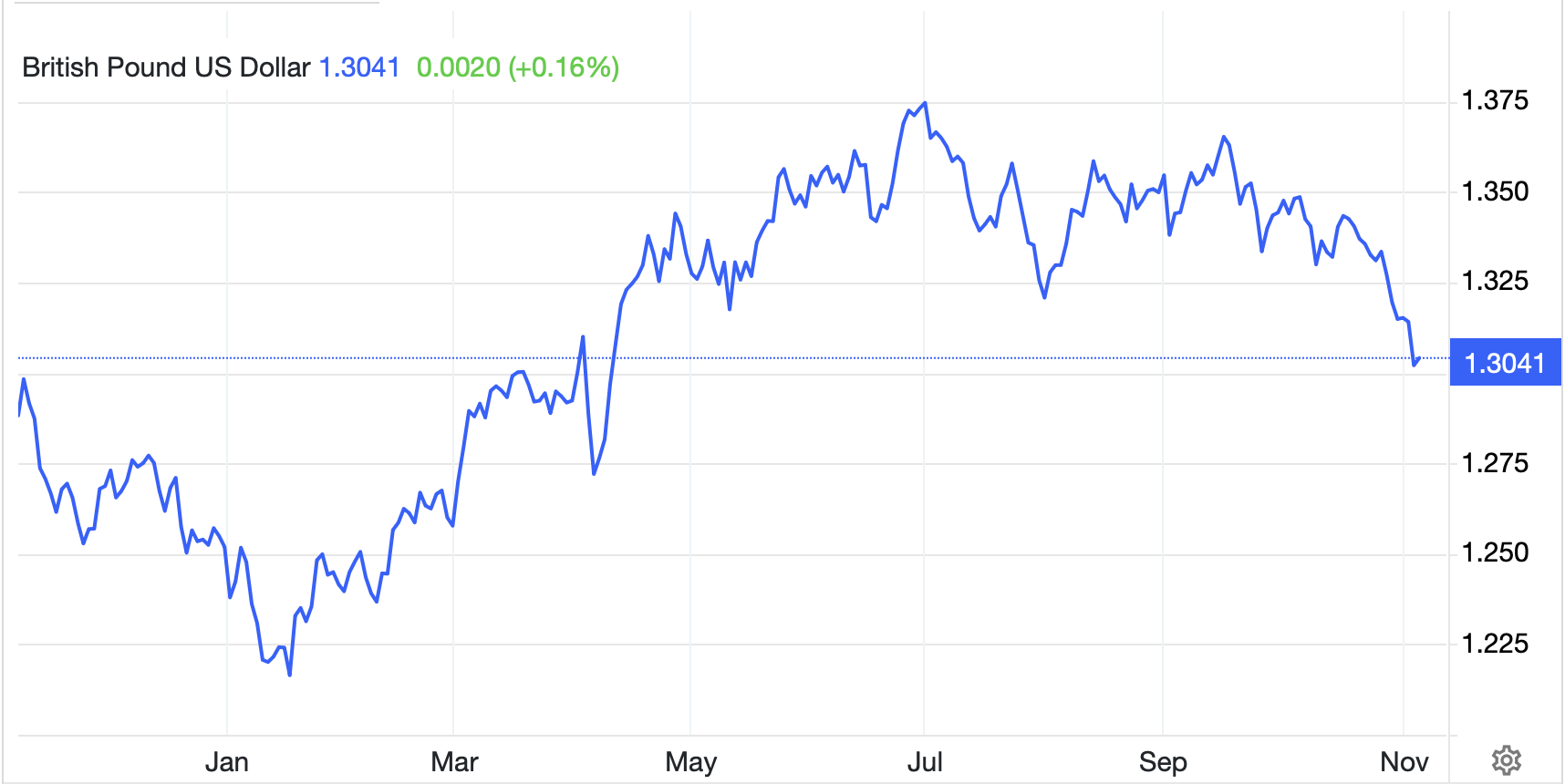
So lastly, turning to the dollar, it is softer against virtually all its major counterparts this morning, with the euro (+0.6%) and pound (+0.6%) both having a good day.  In fact, the pound has touched 1.35 for the first time in three years.  But the dollar’s softness is widespread in both blocks; G10 (AUD +0.85%, NZD +1.0%, SEK +1.0%. NOK +1.0%, JPY +0.5% and even CAD +0.35%), and EMG (ZAR +0.7%, PLN +0.6%, KRW +1.0%, SGD +0.5% and CNY +0.35%).  The fact that SGD moved 0.5% is remarkable given its inherently low volatility.  But I assure you, Secretary Bessent is not upset with this outcome.

The only data this morning is New Home Sales (exp 692K) and we hear from yet another Fed speaker this afternoon, Governor Cook.  Chairman Powell will be speaking on Sunday afternoon, so that may set things up for next week, although with the holiday weekend, whatever he says is likely to be diluted by the time US markets get back to their desks on Tuesday.

In the end, the message is the end is not nigh, markets are adjusting to the changing realities of trade and fiscal policies, and monetary policies remain on a steady state.  The ECB is going to cut again, as will the BOE.  The BOJ is likely to hike again, and the Fed is going to sit on its hands for as long as possible.  The futures market is still pricing in two rate cuts this year, but I still don’t see that happening.  In fact, if the tax bill is enacted, I suspect that it will have a significantly positive impact on the economy, as well as on expectations for the economy, and interest rates are unlikely to fall much at all.  As well, absent a concerted international effort to weaken the dollar (those pesky Mar-a-Lago accords again), while the short-term direction of the dollar is lower, I’m not sure how long that will continue.  

Good luck and have a great holiday weekend

Adf

A True F’ing Cluster

Seems everyone just wants to sell
Their equities and bonds as well
But what will they do
With funds they accrue
If everything’s all gone to hell?
 
I guess it’s why gold still has luster
And Bitcoin’s become a blockbuster
The future’s unclear
And there’s growing fear
That this is a true f’ing cluster


It is difficult to highlight any particular driver of any market movement this morning.  I imagine yesterday’s US equity selloff left a sour taste in the mouths of investors around the world which may help explain why virtually every equity market in Asia (Nikkei -0.85%, Hang Seng -1.2%, Korea -1.2%, India -0.8%) was lower last night or is so (CAC -1.0%, DAX -0.9%, IBEX -0.9%, FTSE 100 -0.65%) this morning.  But bonds are hardly the destination of those funds with yields essentially unchanged this morning after yesterday’s bond sell-off (yield rally).  In fact, in Japan, the long end of the curve, 30-year and 40-year, yields have each traded to new record highs.

Source: tradingeconomics.com

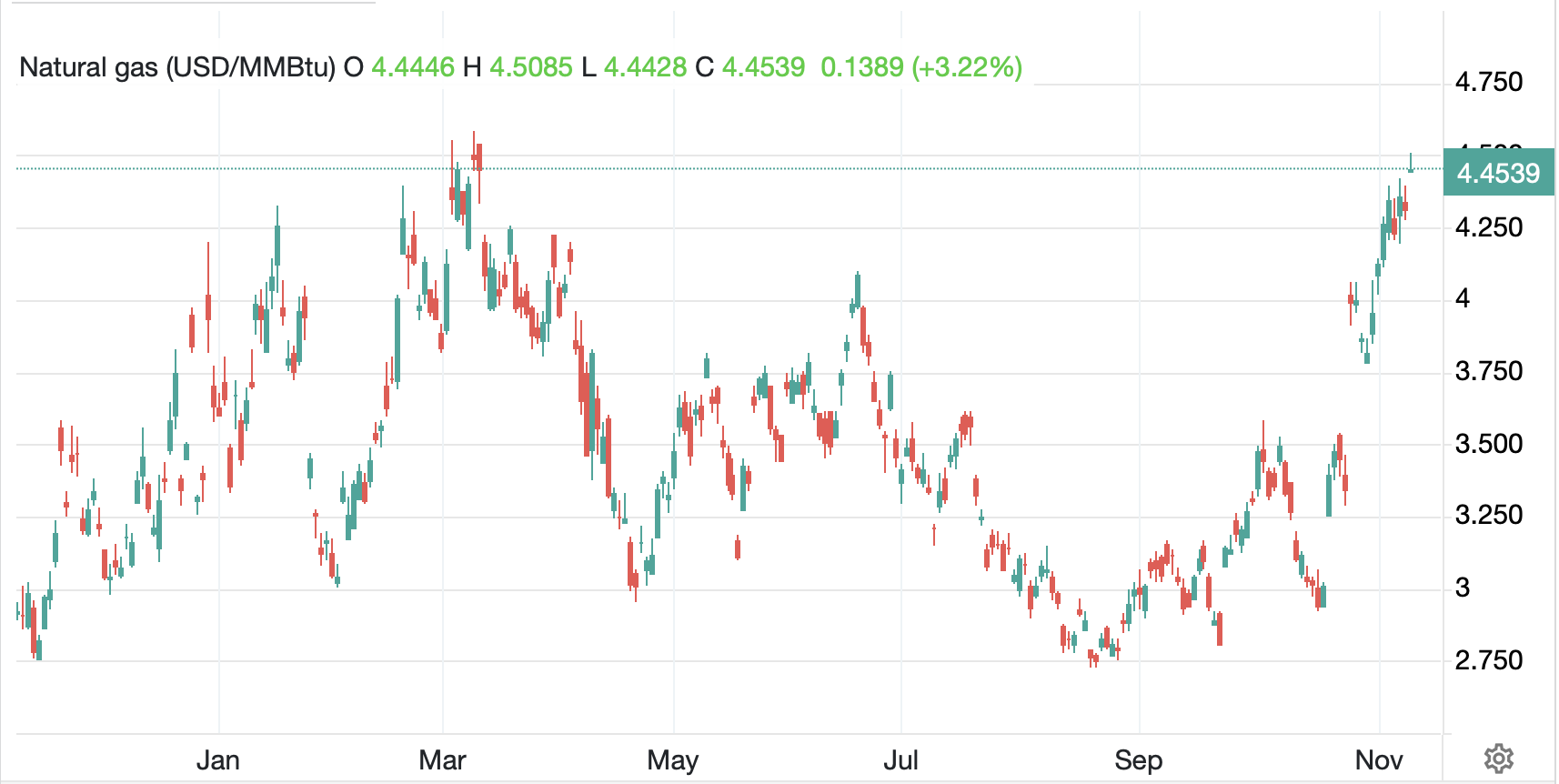
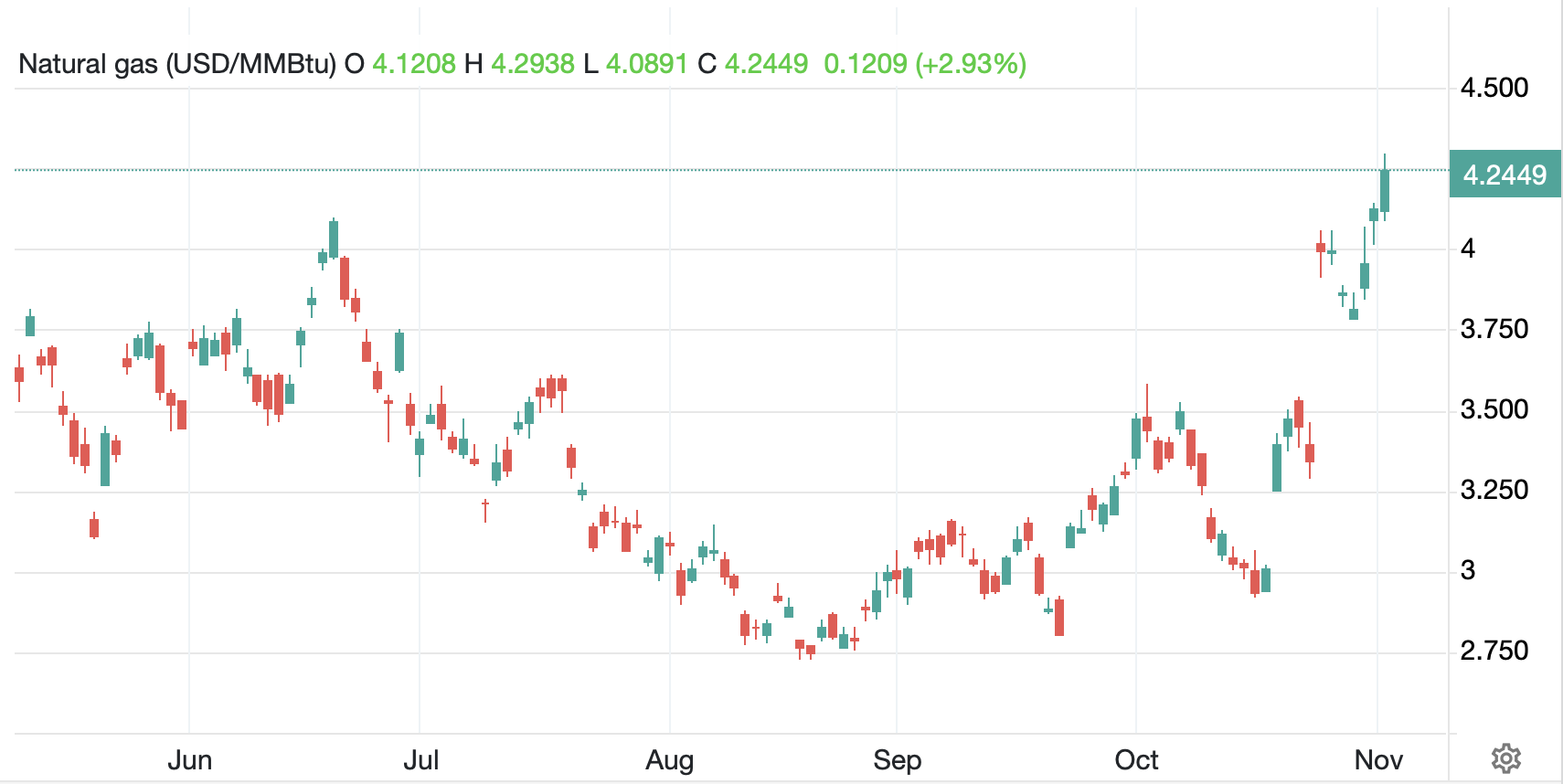
So, if investors are selling stocks and not buying bonds, exactly what are they doing with the funds?  Gold, (-0.5%) which has had a nice run in the past week, is lower this morning, so it doesn’t appear money is heading there.  Too, platinum (-0.3%) is softer this morning after a massive rally this week.  Oil (-1.6%) is lower, NatGas (-1.1%) is lower, and in truth, it is difficult to find anything doing well.  Except perhaps Bitcoin (+1.0%), which has rallied nearly 7% this week and more than 18% in the past month and is trading at new all-time highs.

Source: tradingeconomics.com

It appears that we have reached a point where the market narrative on virtually every asset class (crypto excepted) is that the future is bleak.  There is a bull market in the number of analysts forecasting stagflation because of the US tariff policy and a nascent bull market in the number of analysts calling for much higher US (and by extension other national) yields given the fiscal follies that continue to be evidenced every day.  As much press as the US gets for its massive, peacetime fiscal deficit, in a quieter voice, the IMF just warned France that its fiscal deficits were unsustainable as they, too, are above 7% of GDP.

Our concern should be that central bankers around the world are all going to respond in unison and that response is going to be debt monetization.  Inflation targets are fine as far as they go, but they are not the raison d’etre of central banks.  On a deeper level, central banks, whether independent or not, exist to assure that their respective governments can continue to borrow and fund their expenditures.  Absent a massive fiscal tightening wave around the world, something that seems highly unlikely in our lifetimes, central banks will always be the lender of last resort to their governments.

Now, we already know that fiscal tightening can be accomplished as President Javier Milei in Argentina has accomplished an extraordinary feat down there.  My concern is that it took decades of irresponsible fiscal policy and an almost complete absence of available financing to get the people to vote for change.  Folks, no matter your views about how bad things are in the US or Europe or Japan, we are not even close to the situation there.  So, we know what the future roadmap looks like, Argentina has paved the way, but we are just getting started, I fear.  And in the US, given the advantage of having the global reserve currency, we are much further from a denouement than other Western nations.  

In sum, if you want to know why gold and bitcoin are doing well, I believe they are pointing to the inevitable outcome of global debt monetization, or perhaps debt jubilees.  Owning assets that are a liability of a government that can change the rules if they so desire is not a safe place to be, especially in a fourth turning.  I think this is the message we need to start to understand.  This is not to say things are going to fall apart tomorrow, just that I believe this is the direction of travel.

Well, that was darker than I expected when I started writing this morning, but alas, that is where things lead.  The one thing I haven’t discussed is the dollar and FX markets.  But unlike other markets, FX is a truly relative game, where the dollar’s strength (or weakness) is also manifest as another currency’s weakness (or strength).  A broad-based dollar move, may be a harbinger of other market movements being seen as either better or worse than the US in a macro context, but let’s face it, despite all the angst recently of the dollar’s weakness, the euro is higher by just 4.5% in the past year!  Similarly, the pound (+5.5%) has not moved that far although the yen (+8.5%) has shown more life, albeit from a starting point that was at multi decade lows.  The fact that the dollar is modestly higher this morning, on the order of 0.3%ish across most currencies does not really tell us much.

Let’s take a look at the data we’ve seen so far in the session, with today being Flash PMI day.  In Japan, while Manufacturing edged slightly higher to 49.0, it is still sub-50, and the Services number was weaker taking the Composite below 50.0.  In Europe, France was little changed from last month with all three readings below 50, Germany was much softer than last month with all three readings below 49 and the Eurozone softened, as you would expect, with readings around 49.5.  In fact, as we await US data, India is the only economy showing vibrancy with readings above 60!  (I neglected the UK but alas, they are quickly making themselves irrelevant anyway.  But for good order’s sake, they did manage to tick up from last month, although the Composite is still below 50.)

In the US this morning we get the weekly Initial (exp 230K) and Continuing (1890K) Claims data as well as the Chicago Fed National Activity Index (-0.2) at 8:30.  Then the Flash PMI data (Mfg 50.1, Services 50.8) comes at 9:45 and Existing Home Sales (4.1M) at 10:00.  We also hear from NY Fed President Williams, but is he really going to tell us something new?  I don’t think so.

Sorry to have been so bleak this morning, perhaps the weather has contributed to the mood, but it is hard to find financial positives in the short run.  I was truly excited by the concept of the US cutting spending, but I fear that ship has sailed for now.  If DOGE did nothing else, it opened our eyes to the very specific ways in which government money is being spent on things that had no net benefit for the nation, although obviously the recipients were happy.  Perhaps someday these things will be addressed, but if Argentina is any example, it could still take decades.

Good luck

adf