A True F’ing Cluster

Seems everyone just wants to sell
Their equities and bonds as well
But what will they do
With funds they accrue
If everything’s all gone to hell?
 
I guess it’s why gold still has luster
And Bitcoin’s become a blockbuster
The future’s unclear
And there’s growing fear
That this is a true f’ing cluster


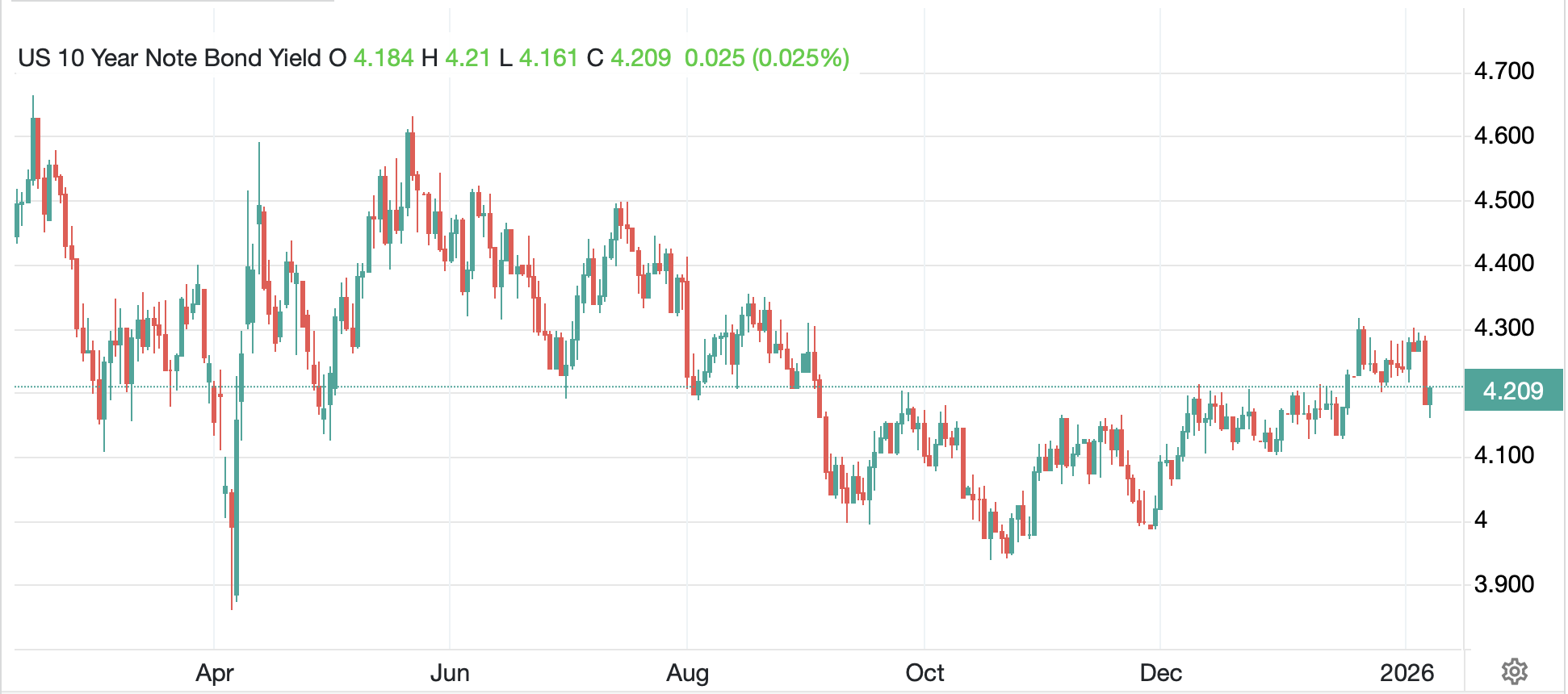
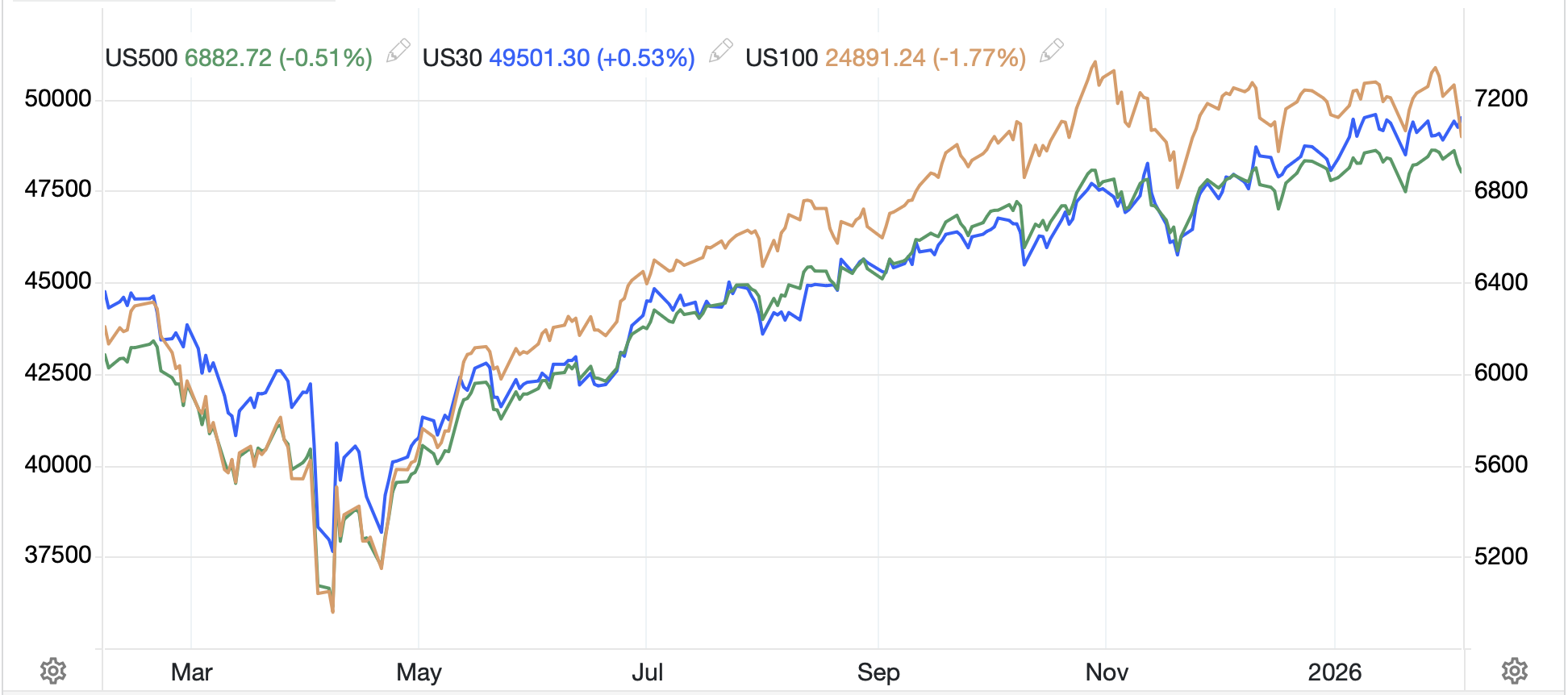
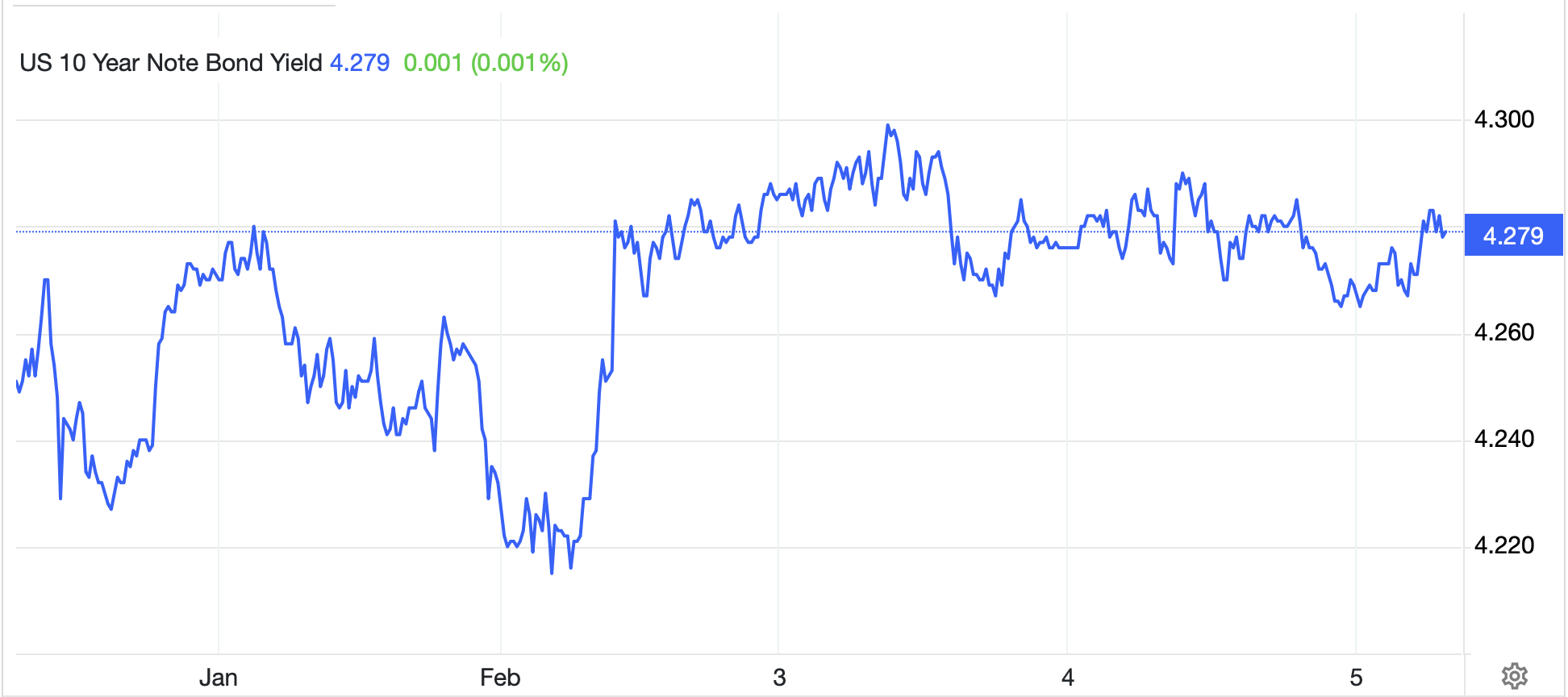
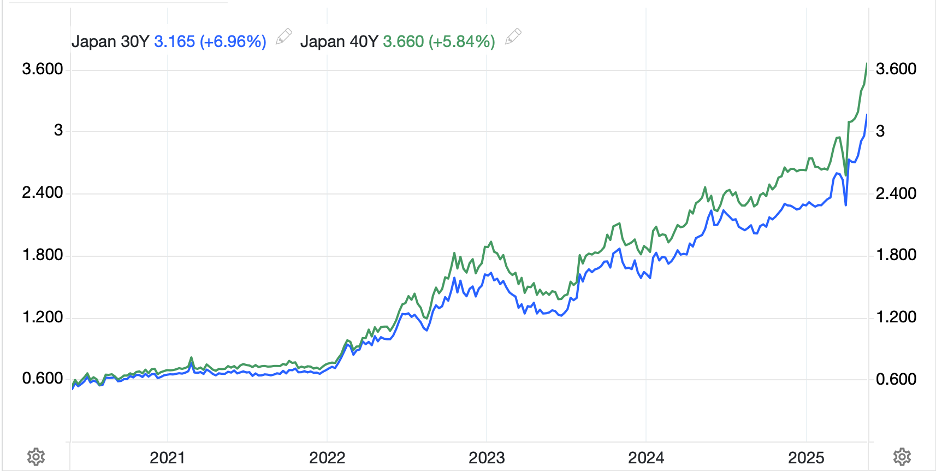
It is difficult to highlight any particular driver of any market movement this morning.  I imagine yesterday’s US equity selloff left a sour taste in the mouths of investors around the world which may help explain why virtually every equity market in Asia (Nikkei -0.85%, Hang Seng -1.2%, Korea -1.2%, India -0.8%) was lower last night or is so (CAC -1.0%, DAX -0.9%, IBEX -0.9%, FTSE 100 -0.65%) this morning.  But bonds are hardly the destination of those funds with yields essentially unchanged this morning after yesterday’s bond sell-off (yield rally).  In fact, in Japan, the long end of the curve, 30-year and 40-year, yields have each traded to new record highs.

Source: tradingeconomics.com

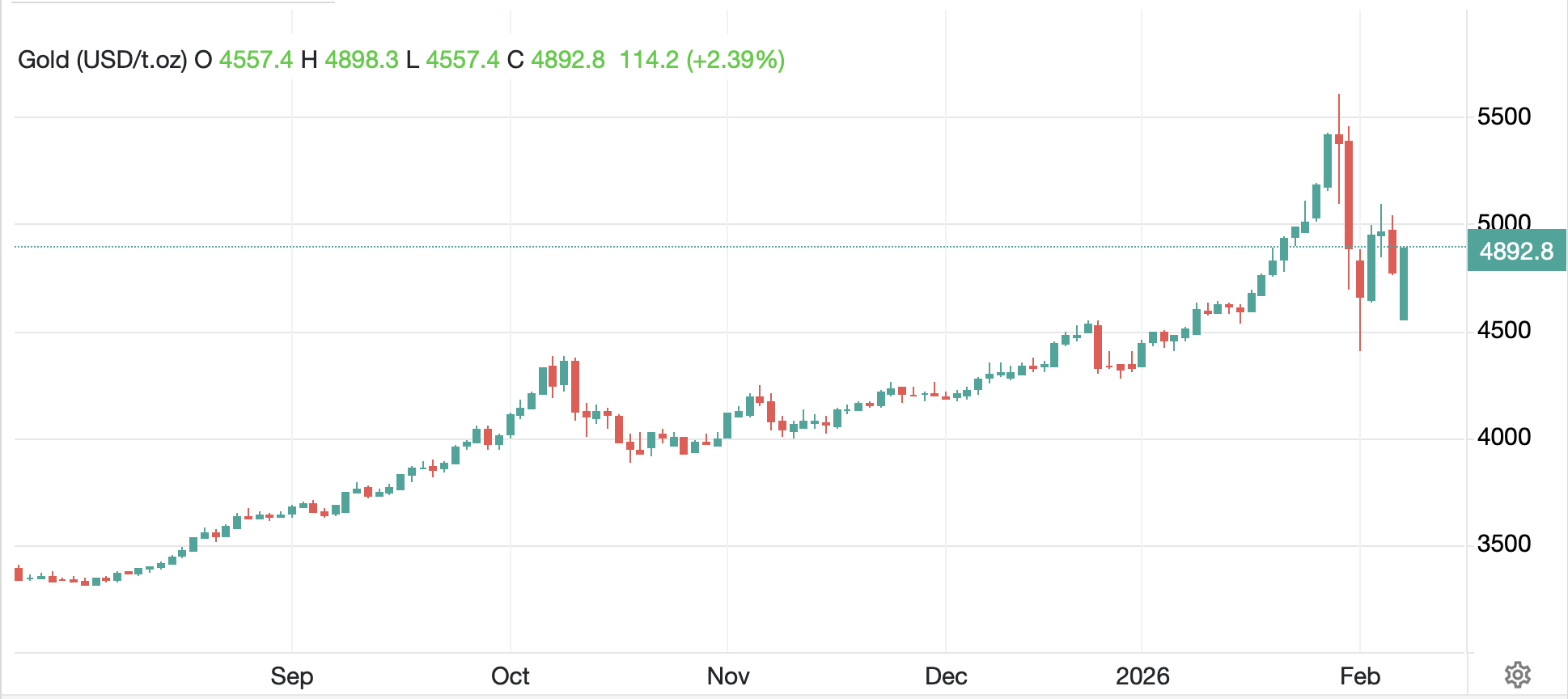
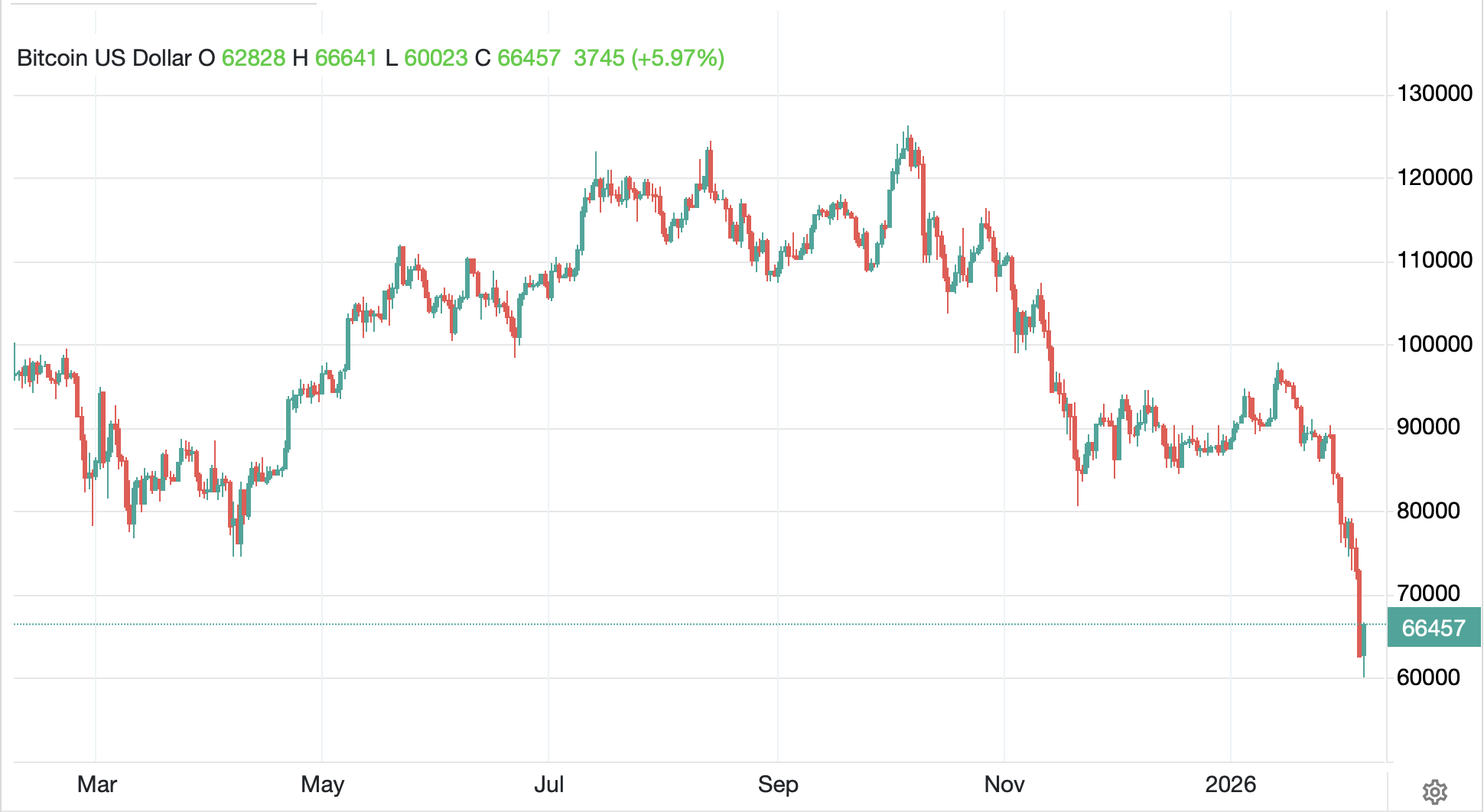
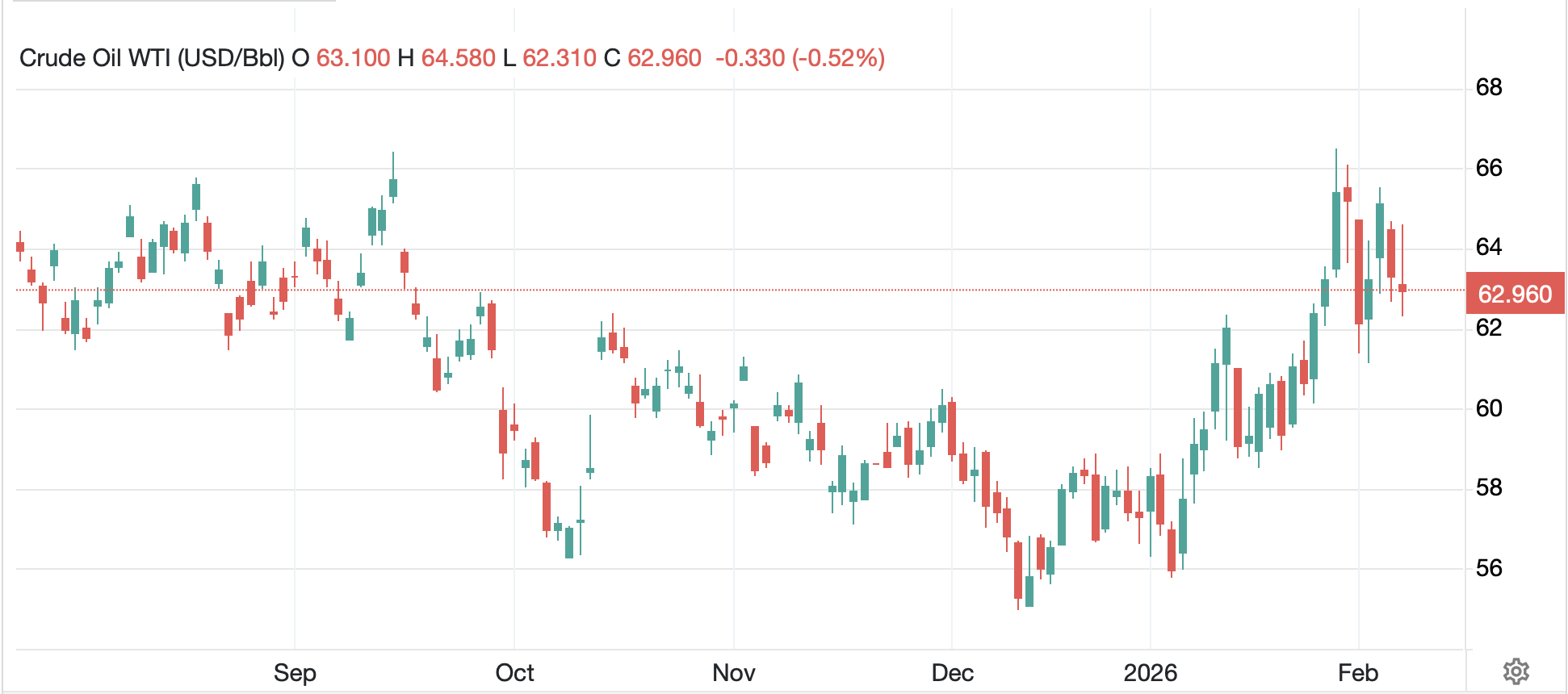
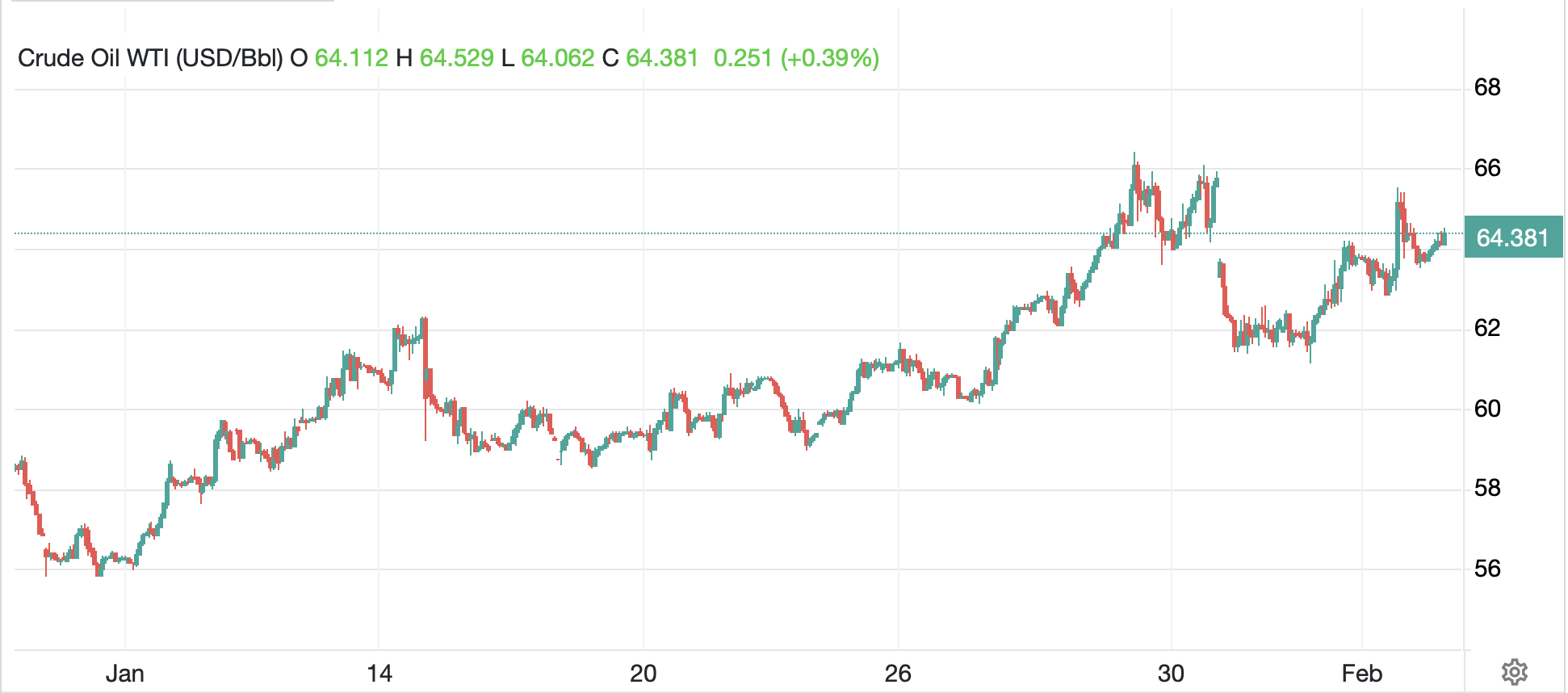
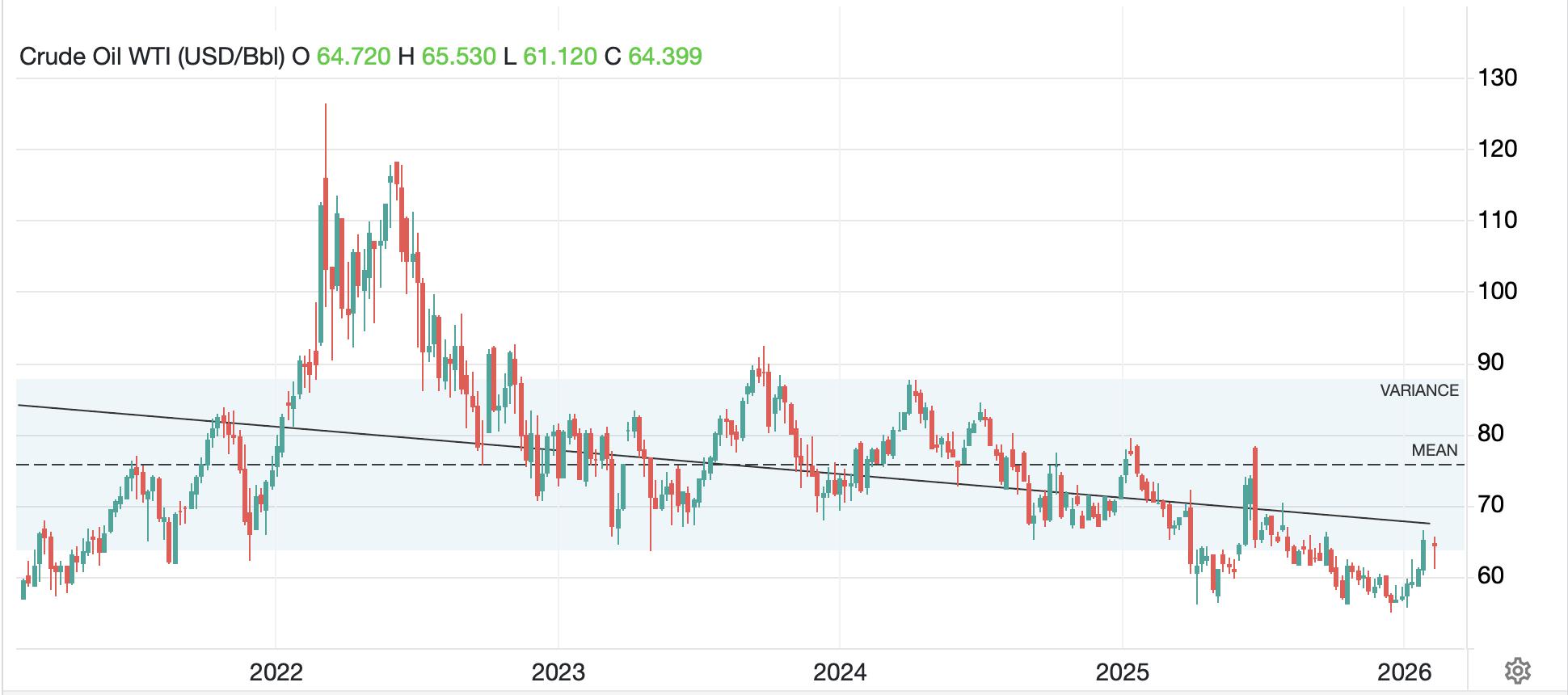
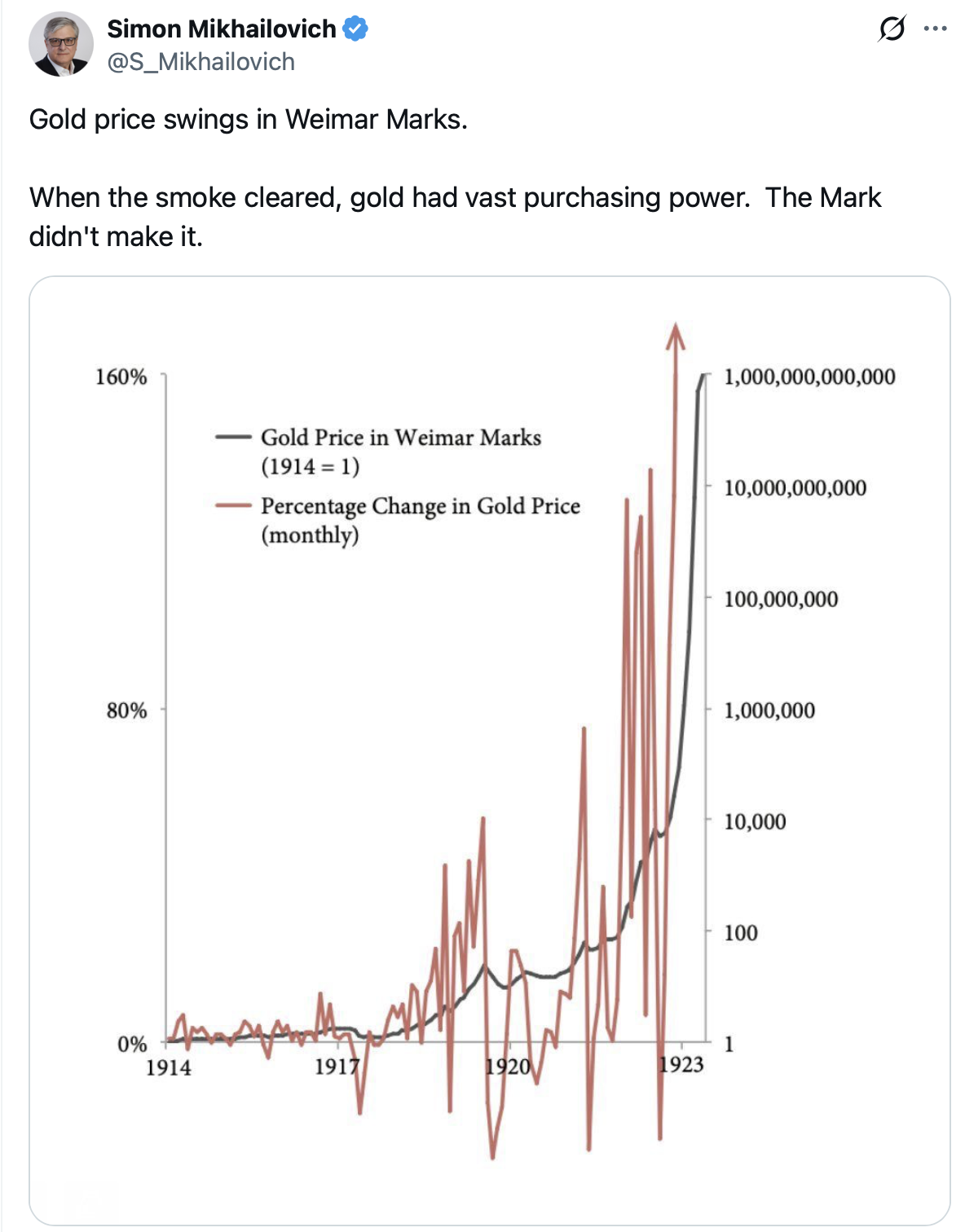
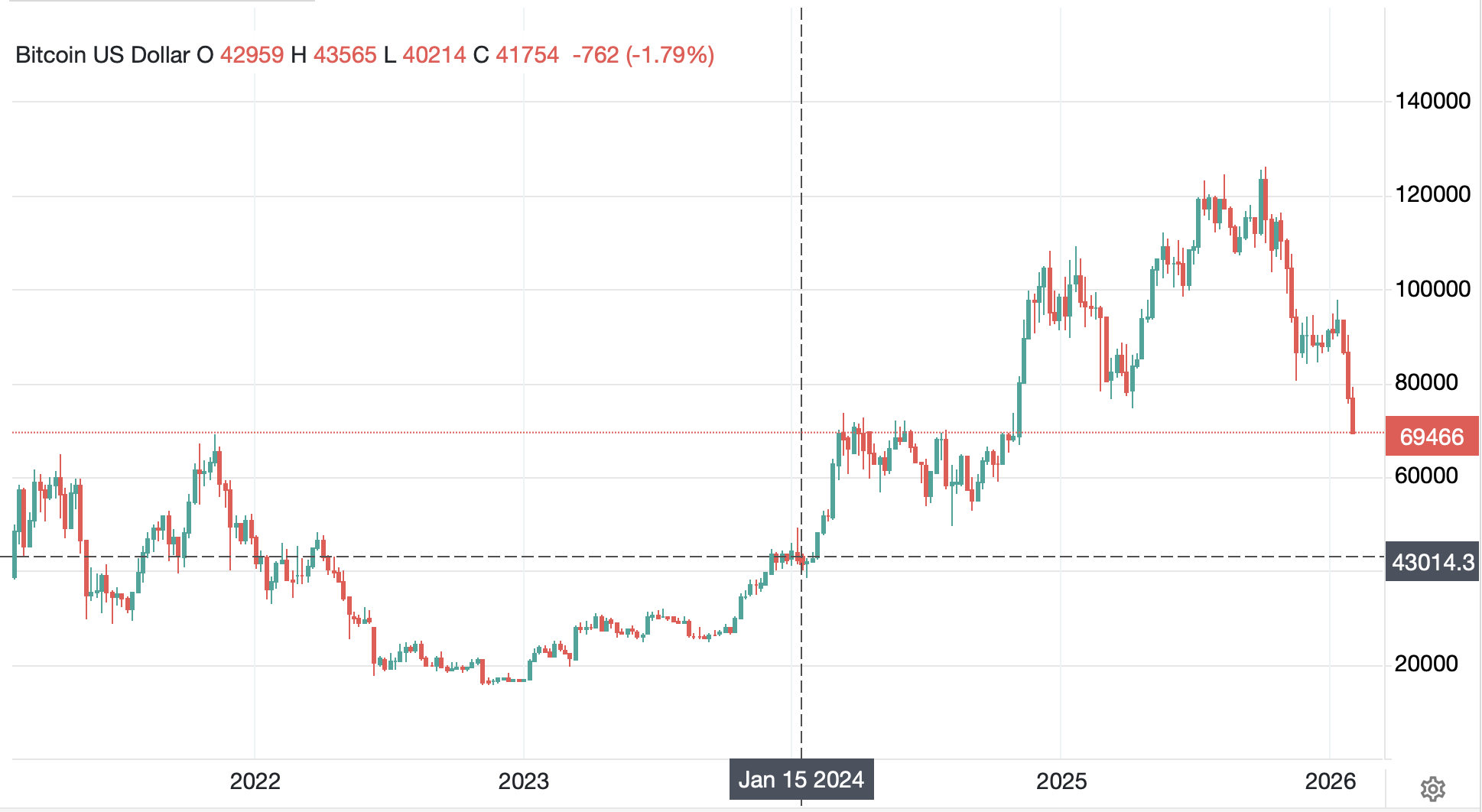
So, if investors are selling stocks and not buying bonds, exactly what are they doing with the funds?  Gold, (-0.5%) which has had a nice run in the past week, is lower this morning, so it doesn’t appear money is heading there.  Too, platinum (-0.3%) is softer this morning after a massive rally this week.  Oil (-1.6%) is lower, NatGas (-1.1%) is lower, and in truth, it is difficult to find anything doing well.  Except perhaps Bitcoin (+1.0%), which has rallied nearly 7% this week and more than 18% in the past month and is trading at new all-time highs.

Source: tradingeconomics.com

It appears that we have reached a point where the market narrative on virtually every asset class (crypto excepted) is that the future is bleak.  There is a bull market in the number of analysts forecasting stagflation because of the US tariff policy and a nascent bull market in the number of analysts calling for much higher US (and by extension other national) yields given the fiscal follies that continue to be evidenced every day.  As much press as the US gets for its massive, peacetime fiscal deficit, in a quieter voice, the IMF just warned France that its fiscal deficits were unsustainable as they, too, are above 7% of GDP.

Our concern should be that central bankers around the world are all going to respond in unison and that response is going to be debt monetization.  Inflation targets are fine as far as they go, but they are not the raison d’etre of central banks.  On a deeper level, central banks, whether independent or not, exist to assure that their respective governments can continue to borrow and fund their expenditures.  Absent a massive fiscal tightening wave around the world, something that seems highly unlikely in our lifetimes, central banks will always be the lender of last resort to their governments.

Now, we already know that fiscal tightening can be accomplished as President Javier Milei in Argentina has accomplished an extraordinary feat down there.  My concern is that it took decades of irresponsible fiscal policy and an almost complete absence of available financing to get the people to vote for change.  Folks, no matter your views about how bad things are in the US or Europe or Japan, we are not even close to the situation there.  So, we know what the future roadmap looks like, Argentina has paved the way, but we are just getting started, I fear.  And in the US, given the advantage of having the global reserve currency, we are much further from a denouement than other Western nations.  

In sum, if you want to know why gold and bitcoin are doing well, I believe they are pointing to the inevitable outcome of global debt monetization, or perhaps debt jubilees.  Owning assets that are a liability of a government that can change the rules if they so desire is not a safe place to be, especially in a fourth turning.  I think this is the message we need to start to understand.  This is not to say things are going to fall apart tomorrow, just that I believe this is the direction of travel.

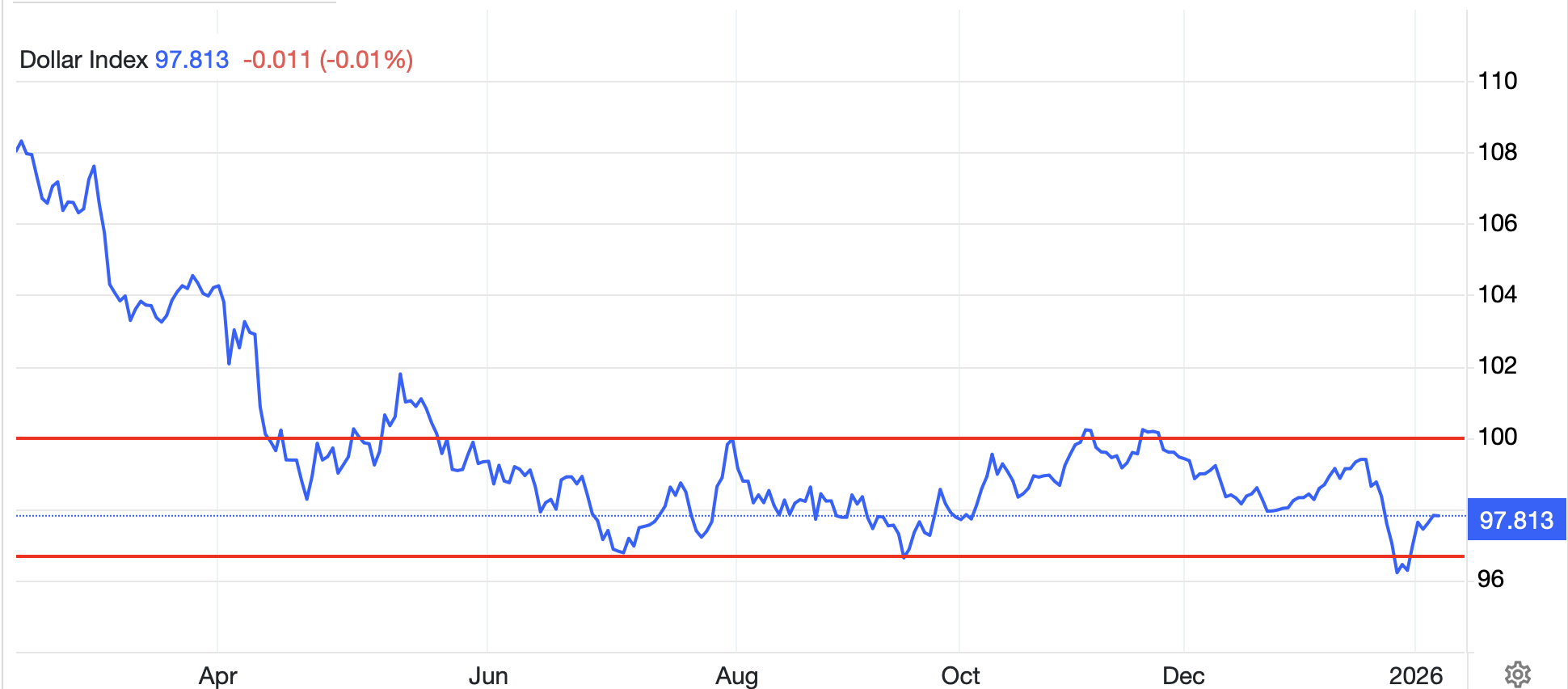
Well, that was darker than I expected when I started writing this morning, but alas, that is where things lead.  The one thing I haven’t discussed is the dollar and FX markets.  But unlike other markets, FX is a truly relative game, where the dollar’s strength (or weakness) is also manifest as another currency’s weakness (or strength).  A broad-based dollar move, may be a harbinger of other market movements being seen as either better or worse than the US in a macro context, but let’s face it, despite all the angst recently of the dollar’s weakness, the euro is higher by just 4.5% in the past year!  Similarly, the pound (+5.5%) has not moved that far although the yen (+8.5%) has shown more life, albeit from a starting point that was at multi decade lows.  The fact that the dollar is modestly higher this morning, on the order of 0.3%ish across most currencies does not really tell us much.

Let’s take a look at the data we’ve seen so far in the session, with today being Flash PMI day.  In Japan, while Manufacturing edged slightly higher to 49.0, it is still sub-50, and the Services number was weaker taking the Composite below 50.0.  In Europe, France was little changed from last month with all three readings below 50, Germany was much softer than last month with all three readings below 49 and the Eurozone softened, as you would expect, with readings around 49.5.  In fact, as we await US data, India is the only economy showing vibrancy with readings above 60!  (I neglected the UK but alas, they are quickly making themselves irrelevant anyway.  But for good order’s sake, they did manage to tick up from last month, although the Composite is still below 50.)

In the US this morning we get the weekly Initial (exp 230K) and Continuing (1890K) Claims data as well as the Chicago Fed National Activity Index (-0.2) at 8:30.  Then the Flash PMI data (Mfg 50.1, Services 50.8) comes at 9:45 and Existing Home Sales (4.1M) at 10:00.  We also hear from NY Fed President Williams, but is he really going to tell us something new?  I don’t think so.

Sorry to have been so bleak this morning, perhaps the weather has contributed to the mood, but it is hard to find financial positives in the short run.  I was truly excited by the concept of the US cutting spending, but I fear that ship has sailed for now.  If DOGE did nothing else, it opened our eyes to the very specific ways in which government money is being spent on things that had no net benefit for the nation, although obviously the recipients were happy.  Perhaps someday these things will be addressed, but if Argentina is any example, it could still take decades.

Good luck

adf

To Further Debase

Said Jay, “The economy’s strong”
But rate cuts before weren’t wrong
We’re in a good place
To further debase
Your dollars and will before long
As we slow the pace
Of policy ease all year long


Chairman Powell regaled the market for the last time before the Fed’s quiet period begins tomorrow evening and here are the three comments that seem to explain his current views. 

  • We wanted to send a strong signal that we were going to support the labor market if it continued to weaken.”
  • The economy is strong, and it’s stronger than we thought it was going to be in September.”
  • The good news is that we can afford to be a little more cautious as we try to find a rate-setting that neither spurs nor slows growth.”

My read is he was trying to make an excuse for the 50bp cut that started the process in September as there is still no justification for that move.  However, he essentially reiterated his last remarks of the Fed not being in a hurry to cut rates further.  As it happens, SF Fed president Mary Daly also explained, “We do not need to be urgent. There’s no sense of urgency, but we do need to continue to carefully calibrate our policy and make sure it’s in line with the economy we have today the one we expect to have going forward.” 

Now, a funny thing happened to me yesterday as I read those comments, and my expectation was that the Fed funds futures market might reduce the probability of a December rate cut.  After all, we just heard from the Chairman that things are good and they can be cautious about further cuts, while another member expressly said there was no urgency to cut.  But in fact, the 74% probability this morning is unchanged from yesterday’s level and the punditry remains very convinced that they are going to cut next week despite their caution.  It seems that my understanding of caution and Powell’s are somewhat different.  However, his understanding is the one that matters, so it appears absent a major upside surprise in both NFP tomorrow and CPI next week, a cut is coming on the 18th.

The French president, M. Macron
May soon find himself overthrown
His PM is out
And there is great doubt
‘Bout any new views he has shown

The other topic of note this morning is the collapse of Monsieur Macron’s minority government in France.  This was the widely expected outcome that markets had priced in, so there has been little in the way of impact there.  However, the bigger picture impact is about the structure of the Eurozone (and EU) and its rules.  After all, if the second largest economy in the group is not merely floundering economically, but essentially leaderless, the concept of a coherent set of plans to oversee the Eurozone seems a bit of a stretch.

Macron’s term is not up until 2027, and he has consistently maintained he will not step down early, but there are increasing calls for him to do just that.  Members of parliament on both the left and right, although not Marine Le Pen, the RN’s leader, have been vocal on the subject and a recent poll by Cluster17 for Le Point magazine showed that 54% of the French public wanted him to step down as well.  Now, you know as well as I that absent a criminal conviction, the odds of an elected official stepping down anywhere in the world approach zero and I expect nothing less from Macron.  At the same time, French law prevents another parliamentary election for 12 months after the last, which means July.  At that time, one will almost certainly be called, and it will be interesting to see how that plays out.  

However, in the meantime, it seems likely that France will be floundering with no ability to address fiscal issues, be they spending or deficit focused.  This cannot be a positive for the single currency, especially if France slips into recession.  Again, despite all the concerns over the dollar and the untenable fiscal deficits, things in Europe appear far worse.  Parity in the euro and below seems a far better bet over the next 6 months than the opposite.  While the euro (+0.2%) has bounced slightly this morning, a look at the chart below indicates, at least to me, that the trend is distinctly lower.

Source: tradingeconomics.com

And with that, let’s look at the overnight session in markets.  Continuing in the FX world, that modest euro gain is descriptive of the market as a whole, with the dollar slightly softer this morning, although few currencies showing any notable strength.  I suspect much of this is based on the idea that the Fed will cut rates soon despite the “strong economy”.  In truth, in the G10, no currency has moved more than 0.2% and even in the EMG space, only ZAR (+0.4%) and HUF (+0.5%) have climbed more.  Those moves, which don’t appear to have any fundamental drivers, seem more likely to be expressions of the fact those markets are more volatile than the G10.

In the equity markets, yesterday’s US rally, to new all-time highs across the board, saw a mixed review in Asia with the Nikkei (+0.3%) edging higher but both Hong Kong (-0.9%) and Shanghai (-0.25%) slipping a bit.  The rest of Asia was also mixed with Korea (-0.9%) still suffering from the bizarre happenings there yesterday but other markets performing well (India +1.0%, Singapore +0.6%).  In Europe, only the UK (-0.1%) is under water this morning although the CAC (+0.2%) is the continental laggard.  Spain’s IBEX (+1.2%) is the leader on the back of stronger IP, and although Eurozone Retail Sales were much weaker than expected, it has not seemed to impact investor views.  As to US futures, they are little changed at this hour (7:30).

In the bond market, Treasury yields have backed up 3bps and I am beginning to sense that there is a negative correlation to the probability of a Fed rate cut and the 10-year yield.  As that probability rises, bonds sell off further, but that is merely an anecdotal observation, I have not done the math.  In Europe, yields are mixed, but within 1bp of yesterday’s closing levels with even French yields slipping 1bp. It will be very interesting to see how the European Commission handles the fact that the French budget deficit is so far above the targeted 3% level and now without a government, there is no way to address the situation.  The original idea when the euro was formed was that governments would be fined if they broke the policy caps on debt and deficits.  Of course, no fine has ever been imposed and I don’t suppose one will be now.  (However, if Marine Le Pen’s RN wins the election next summer, you can be sure they will seek to impose fines on her government!)

Finally, in the commodity markets, it is very quiet this morning.  Oil (+0.3%) is edging higher after a big rise and fall yesterday.  The rise was the result of a steep draw in US inventories, but the decline seemed to be a response to OPEC+ confirming they will be increasing production at some point in 2025.  Meanwhile, metals markets are basically unchanged this morning.

One other thing I have not discussed but is obviously getting a lot of press this morning, is Bitcoin which traded through $100K yesterday after President-elect Trump named Paul Atkins to be his new SEC Chair.  Atkins has a very pro crypto bias, and I expect we will see far more impetus in the crypto space going forward, not just in Bitcoin.

On the data front, yesterday’s ISM data was a bit softer than forecast while the Beige Book explained that economic activity rose slightly in the past month along with employment and prices, but all movements were quite modest.  This morning, we see Initial (exp 215K) and Continuing (1910K) Claims as well as the Trade Balance (-$75.0B) and later we hear from Richmond Fed president Barkin.  

Looking at the overall situation, investors continue to ignore any potential problems and run to risk assets, as evidenced by the rally in Bitcoin and new highs in stock prices.  Unless we see some really surprising data, either crazy strong implying the Fed is going to stop easing, or crazy weak implying we are in a recession, I see no reason for this process to end heading into the new year and President Trump’s inauguration.  Again, in that scenario, I think you have to like the dollar higher.

Good luck

Adf

Jejune

Come Wednesday through Friday this week
It’s payrolls and Powell to speak
Let’s take time today
To hear people say
What’s driving the year-to-date streak
 
The first key is so many think
That Powell and friends need to blink
And cut rates quite soon
Else markets will swoon
And ‘flation will not rise, but sink
 
The other idea that’s around
Is AI and Bitcoin are bound
To fly to the moon
An idea, jejune,
For OG’s, though elsewhere profound


Once again, lackluster was an apt description of the market activity yesterday, although given the plethora of information that is on the horizon, we cannot be surprised by this result.  As such, I thought it might be worthwhile to review the themes that seem to be driving markets these days, as well as how expectations are built into pricing.

Clearly, the biggest story remains the Fed and its potential timeline for the mooted rate cuts necessary to achieve the much-vaunted soft landing.  As of this morning, the probability of a May cut remains near 24% with June the odds-on favorite for the first action.  While there has been some back and forth with respect to the actual probabilities, there has been no major change in that view for several weeks.  My question continues to be, why are so many people of the opinion that the Fed must cut rates?  

So far, at least based on both the GDP and payroll data, the economy is chugging along quite well with the current monetary policy settings while inflation remains well above the Fed’s target.  Arguably, a great deal of that is due to the fiscal impulse that has been ongoing, but there is no sign that is going to end anytime soon.  In fact, it strikes me that easing monetary policy amid a period of fiscal excess may juice the inflation data substantially.  Literally every Fed speaker has made this exact point, that things are going well, inflation seems to be trending lower, but there is more certainty needed before a cut would be appropriate.

Adjacent stories here are related to the election in the US, with many assuming the Fed will cut rates to help support the Biden administration (I think this is extremely unlikely).  The other key story has to do with the other G7 central banks, and their ability/willingness to change policy prior to the Fed.  Considering that Japan, Canada, the UK and Europe are all basically in recession, or right on the cusp, there is a far greater need to ease monetary policy in those places.  However, they have a serious concern that if they cut before the Fed, the dollar will rally sharply and negatively impact both economic activity and market activity, as well as undermine their currencies.  In the end, everybody is waiting for Godot Powell, and it is not clear he is going to come through.

The second key story is the remarkable performance of both Bitcoin and the tech sector.  There have been many stories comparing the current move in the NASDAQ to various times in the late 1990’s and the runup to the Tech bubble then.  We all know that eventually, despite the internet having an amazingly profound impact on all our lives, the tech sector corrected more than 80% from its early 2000 peak and it took 15 years to regain those levels.  I don’t think anybody is willing to say that the current tech leaders are bad companies with problems, but the price one pays for a company’s shares is THE key to long-term investment performance.  AI can be transformative in many ways and that doesn’t mean these shares will not decline and decline sharply.

Speaking of AI’s impact, my good friend the @inflation_guy, Mike Ashton, wrote a terrific piece about the potential impact on the economy overall, comparing it to the internet, the last significantly transformative technological revolution.  This is a must read!  Ultimately, while the impact of the internet was significant, it was not nearly as productivity enhancing as many had forecast at the initial stages of the mania.  Just keep that in mind with respect to AI as well.

As to Bitcoin, it is pushing to new all-time highs as flows into the spot ETF’s are quite substantial and driving the move.  However, it strikes me that the rationale for buying Bitcoin is very different than the rationale for buying NVIDIA.  Bitcoin believers are concerned over the integrity of the entire concept of money and its future.  They look at the dramatic increase in Treasury issuance and ask, is that debt really risk-free?  They are seeking to own alternative assets, outside the current monetary framework.  Meanwhile, buying the AI craze is as mainstream as you can get, counting on the equity values to rise substantially from here and protect your wealth, even if it is denominated in a currency that is subject to inflation and devaluation.  But for now, the two are linked at the proverbial hip.  

I would not look to short either process at this point, but having seen numerous bull markets in my time, the one thing I know is that trees don’t grow to the sky.  At some point, there will be a significant correction in both these asset classes, and we are sure to hear a great deal of screaming about how the Fed needs to come in and stop it.

In China, last night Premier Li
Revealed what their growth ought to be
Though clearly well-meant
To reach five percent
Is certainly no guarantee


One other key story overnight was Premier Li Qiang’s speech in which he declared the GDP growth target for China this year is “around 5%” with inflation to run at 3% and a budget deficit also at 3%.  While this all sounds great, there is reason for some skepticism.  Perhaps the biggest issue is that domestic demand for products is not growing and is unlikely to start doing so until the property crisis is behind them.  However, given President Xi’s unwillingness to face that music, the drawn-out process to address the situation will likely weigh on overall economic activity for a few more years yet.  

There is a potential knock-on effect of this, though, and something that I have not really considered in the past but need to investigate further.  We all know that there is a concerted effort by G10 nations to reshore and friendshore manufacturing capacity, and that has been a key driver of US economic activity.  Recall, that was the entire goal of the Inflation Reduction Act.  It has also been clear that there is currently a boom in factory construction in the US, something else supporting GDP data.  Now, if the US, and much of the G10, is adding to manufacturing capacity while China maintains its own manufacturing capacity, that is a LOT of capacity to build stuff.  It is not unreasonable to expect that the prices of manufactured goods will decline given what could well be significant excess supply.

In the US, regardless of who wins the presidential election, it is very easy to foresee another increase in import tariffs on Chinese goods (Trump has proposed a 60% tariff on all Chinese imports).  We have heard similar rumblings from Europe as well.  The point is that absent a substantial change in trade policy, goods inflation is likely to be well-contained.  Services inflation is a different issue, and given services represents a much larger proportion of the US economy, seems likely to keep price pressures pushing higher.  But rampant price rises are far less likely if we wind up with duplicate production sources for various goods.  Of course, tariffs will feed directly into inflation data, and the Fed cannot address that at all.

My point is that the economy is a highly interconnected and complex system and tracking all the potential outcomes is extremely difficult, if not impossible.  This is just one that I hadn’t considered in the past but may have some legs.  To be continued…

Ok, I have gone on too long so here’s the recap for overnight.  The Hang Seng sold off (-2.6%) but otherwise in Asia and Europe shares are little changed.  Yields are broadly lower (Treasuries -3bps, Europe -5bps on average) while oil prices have slipped a bit.  Gold (+0.5% and new all-time highs) is the commodity outlier.  Finally, the dollar remains little changed and is likely to stay that way until we see the next monetary policy adjustments.

ISM Services (exp 53.0) is the only data release today and only Michael Barr is speaking. I see no reason for things to move very far until tomorrow, when both ADP Employment is released, and Chairman Powell testifies.  Equity futures are pointing a bit lower this morning after a soft session yesterday.  That drift feels like it can continue as we await the rest of the week’s news.

Good luck

Adf

Jay’s Coronation

The word for today is inflation
With many convinced its cessation
Is just round the bend
So, growth will ascend
Alongside Chair Jay’s coronation
 
But what if inflation don’t slow?
And rather, continues to grow
Can bonds stand the pain?
Will stocks feel the strain?
Or will we go on with the show?

The first thing to mention is the Bitcoin ETF was approved by the SEC last evening and the price…is basically unchanged.  As I mentioned yesterday, it seems quite ironic that Bitcoin, a shining symbol of freedom from the government and regulation is now tightly ensconced in government and regulation.  Do not be surprised if it becomes a much less interesting asset having lost one of the key things that makes it different.  Just a thought.

Ok, on to the more important stuff, the economy and today’s CPI report.  Current consensus forecasts are as follows: CPI 0.2% M/M (3.2% Y/Y) and -ex food & energy 0.3% M/M (3.8
% Y/Y).  If realized, these represent a 0.1% rise in the headline and 0.2% decline in the core readings from last month on an annual basis.  Now, in the broad scheme of things, and more importantly, in our day-to-day lives, that 0.1% or 0.2% has absolutely no meaning or impact.  However, the importance allotted to that 0.1% is remarkable.  Entire narratives will be spun about how the Fed has been amazing in their ability to achieve a soft landing, or the Fed is a group of 17 incompetent fools based on an estimated data point that is often revised and does not clearly measure what the words in its name describe.  As such, let’s simply focus on the market reaction function rather than the meaning of the data.

Heading into the release, my take is that given the recent run of softer than forecast inflation readings around the world, whatever the economists and analysts have forecast, the market is leaning toward a soft print.  The fact that oil prices fell about -6% during the month of December, although gasoline prices were nearly unchanged, has tongues wagging.  As well, discussions about slowing growth in China and their negative PPI as a driver of deflation is another key element of the narrative. 

Counter to this is the fact that the Fed refuses to take their victory lap.  Yesterday, John Williams explained, “My base case is that the current restrictive stance of monetary policy will continue to restore balance and bring inflation back to our 2% longer-run goal.  As inflation comes down over time, my expectation is interest rates will also come down over time.”  In other words, things are going well, but we have not reached the finish line.  This certainly didn’t sound like someone who was ready to cut interest rates in two months’ time although the market continues to price a better than 2/3 probability that the Fed will do just that.  Now, if we take him at his word and inflation fell another 0.6% or more by March, maybe that would be enough to get them into a cutting mood.  But I just don’t see that.

One of the things that is often either overlooked or not well understood is the fact that things move REALLY slowly in the economy, especially when it comes to measured moves of economic data points.  Of course, the exception that proves this rule was the Covid recession, but in order to get data to move at the same speed as markets required virtually every government in the world to shut their economies down at the point of a gun!  My take is that will not happen again in our lifetimes, regardless of the threat.  As such, we need to recognize that, to use a well-worn metaphor, the economy is an aircraft carrier and turning it takes time.  

When applying this concept to inflation, and prices more generally, especially wages, they don’t move that quickly.  In fact, they move quite slowly.  People get annual raises, not weekly or monthly ones.  While gasoline prices move up and down on a daily basis, the same is not true for menu prices, items in the supermarket or rent.  Real-time price adjustments are a flaw feature of financial markets, not of real life.  While many will point to the fact that the shelter portion of CPI (and PCE) is a smoothed average of the past twelve months and so not indicative of today’s situation, I would counter that most of the people who pay rent haven’t moved in the past twelve months and their rent remains the same.  It is certainly not declining, and I am still looking for that first story of the landlord who saw the CPI data slipping and cut his tenants rent to keep in line!  

The point is that expectations of a sharp move in a slow-moving data series are misplaced.  Much has been made of the fact that if you annualized the last 3 months or 6 months of CPI monthly data, CPI is already below the Fed’s target of 2.0% and so they should be cutting.  Personally, I find that ridiculous.  But more importantly, the Fed, as evidenced by Williams’ comments above, has no truck with that idea.  Add to this the fact that growth seems to be holding in at trend or better, despite interest rates being “too high” according to the cutting advocates, and it becomes that much harder to believe the Fed is ready to go.

Net, regardless of today’s number, the Fed is not going to change its mind soon.  Markets, however, are a different story.  If the readings are soft, look for a big rally in both stocks and bonds, for the dollar to fall, and for commodity prices to rally nicely.  At least initially.  And the converse should be true as well, a hot number will see red numbers in the stock market, higher yields, a stronger dollar and commodities come under pressure.

Leading up to the number, here’s what we see.  After a nice day in the US yesterday, Asian markets were all in the green led by the Nikkei continuing its rip higher, but this time dragging Chinese shares along for the ride.  In Europe, it appears things are more circumspect as they await the CPI data with most markets +/- 0.2% or less on the day while US futures are currently (7:30) modestly in the green.

Bond yields are definitely in the low inflation reading camp as Treasury yields have fallen 4bps this morning and we are seeing similar movement all across Europe.  The one exception to this story is Japan, where JGB yields edged higher by 2bps despite a couple of soft Leading Economic Index numbers.  However, since the peak, just below 1% in early November, this trend remains clearly lower for yields.

Apparently, the hijacking of an oil tanker in the Persian Gulf has been seen as an escalation of the situation there and oil prices are higher by nearly 2% this morning, although that simply takes the weekly change back to flat.  Gold prices are rallying, 0.5%, and not surprisingly in this environment, so are base metals prices with both copper and aluminum higher by 0.6% this morning.

Finally, on the dollar front, it is lower after a small decline yesterday.  This is of a piece with the inflation expectation story and the idea that the Fed is preparing to cut rates, boost stocks and undermine the dollar.  Even the yen has rallied a bit today, so no currencies are really bucking the trend of a weak dollar, whether G10 or EMG.

Aside from the CPI data, as it’s Thursday we also see Initial (exp 210K) and Continuing (1871K) claims and then early this afternoon we hear from Tom Barkin again.  At this stage, the Fed seems to be of a mind that things are going well, and they are not about to rock the boat in either direction.  Absent a huge surprise in the data this morning, I think this slow grind toward risk on continues.

Good luck

Adf

Markets Are Waiting

The macro event of the day
Is actually micro I’d say
The markets are waiting
For all the debating
‘Bout Bitcoin to end in OK
 
The irony here is too great
As TradFi, the Bitcoin bros, hate
But they’re still a buyer
If number goes higher
‘Cause really, it’s all ‘bout the rate

It is a very slow day in the markets as evidenced by the fact that the biggest story is whether or not the SEC is going to approve a cash Bitcoin ETF.  Today is the deadline for the first application to be approved, or not, and the working belief is that if they are going to approve one, they will approve all 13 that have applied in order to prevent any concerns over favoritism to a particular manager.  Yesterday afternoon, there was a tweet from the SEC that indicated approvals had been made, but then within 10 minutes, the SEC denied that was the case and explained their X (Twitter) account had been hacked.

One of the interesting things of late in this space is that there has been a 20% rally in Bitcoin since the beginning of December, seemingly in anticipation of this event.  This price action has many believing we are looking at a ‘buy the rumor, sell the news’ type story with expectations that a short-term sell-off is coming after the announcement.  However, last night, after the erroneous Tweet, Bitcoin rallied more than 2% before turning back around on the retraction.

With that in mind, the more ironic issue, at least to me, is that there is so much excitement in the Bitcoin community for a traditional finance product like an ETF.  Institutionalizing Bitcoin and creating all the same structure and regulation as any other trading vehicle seems at odds with the entire concept of a new digital transaction medium that does not require a centralized system and is free to one and all.  Arguably, what it highlights is that the entire appeal of Bitcoin is that it is a highly speculative and volatile trading vehicle and is appreciated solely because its number can go up really fast!

In the end, just as the odds of a BRICS currency coming along and usurping the dollar’s throne as top currency in the world (at least when it comes to utilization) are close to zero, the same holds true here.  Bitcoin is never going to replace any fiat currency in the role of money.  Just as with every other asset, its value is entirely dependent on what someone will pay for it.  While an ETF will widen the population that is involved in the space, and perhaps ensure that the government never makes any effort to cut it off from the banking world, it will not change the world in any way, shape or form.

Away from this, the market is turning its focus toward tomorrow’s CPI report in the US as the next critical piece of information for the macro story.  Recent data elsewhere in the world has continued to show a cooling rate of inflation, with Australia’s overnight print at 4.3% a tick lower than expected while Norway’s 5.5% Core rate was also a tick lower than expected.  This follows yesterday’s Tokyo CPI which came in soft and is continuing the theme that the Fed, and central banks around the world, have successfully put the inflation genie back into the bottle.  Personally, I think it is premature to make that claim as I have seen very limited evidence that prices for rent are falling and based on the wage data we saw last week in the NFP report, wage rises, at 4.1%, remain well above the rate necessary to see a stable 2% inflation outcome.  But that is the narrative and it is being pushed hard by Yellen and the mainstream media.

As to today, yesterday’s directionless session in the US led to a mixed performance in Asia where the Nikkei continued its recent rally, up another 2% and back to levels last seen in February 1990 as the Japanese bubble was deflating.  However, Chinese shares remain under pressure with the Hang Seng (-0.6%) continuing its recent slide and mainland shares faring no better.  In Europe, the screens are a pale red, with losses on the order of -0.2% or so across the board and US futures are essentially unchanged at this hour (7:15).

In the bond market, 10-year Treasury yields have edged down 2bps this morning and are trading right on 4.00%.  European sovereign yields are little changed on the day.  After a bond sell-off (yield rally) for the past several weeks, it seems that a bit of dovish commentary from some ECB members, notably de Guindos and Centeno has calmed things down a bit.  And you will not be surprised that JGB yields have slipped another 1bp lower this morning as inflation concerns subside everywhere.

Oil prices are little changed today, holding onto yesterday’s gains but not really responding to a new wave of missile and drone attacks by the Houthis in the Red Sea against some tankers.  Too, gold prices are only edging a bit higher, 0.25%, and essentially have remained in a very narrow range for the past six weeks.  As to the base metals, copper has rallied nicely this morning, up 1% but aluminum is unchanged on the session.

Finally, the dollar is under modest pressure this morning against most currencies, but the yen is the exception, falling -0.4% with the dollar back above 145.00.  I believe you cannot separate the Nikkei rally from the yen decline and the ongoing interest rate story in Japan.  With softer inflation readings leading traders and investors to reduce the likelihood of any monetary policy change by the BOJ, those are exactly the moves that would be expected.  In the meantime, the market is staring to price in a slightly higher probability of a March rate cut by the Fed, up to 67.6% despite no indication from any Fed speaker that is on the table.  However, while this is the narrative, I expect the dollar will have a little trouble going forward against both G10 and EMG currencies.

There is no noteworthy economic data today, but we do hear from NY Fed President Williams at 3:15 this afternoon.  Yesterday’s comments by Michael Barr were interesting in that he was adamant that the BTFP (the lending facility put into place in the wake of last year’s Silicon Valley Bank collapse) was going to be wound down when its term of 1 year comes up in March.  Personally, I am skeptical that will be the case, but at the very least, we can expect it to make a quick appearance as soon as there is any other banking trouble.

And that’s really it for today.  Until tomorrow’s CPI, there is very little about which to get excited.  I don’t believe the Bitcoin story, while mildly interesting, is going to have any impact on other markets for any length of time.  So, we shall be biding our time for another twenty-four hours at least.

Good luck

Adf

Clearly Annoyed

In China they say speculation
And hoarding is now the causation
Of quite an ordeal
As copper and steel
See prices rise bringing inflation

(Or, the second variation on this theme)

The Chinese are clearly annoyed
That price signals have been destroyed
So, meetings were called
And price rises stalled
As punishment threats were employed

Markets are mixed this morning after a relatively quiet weekend, at least in the more mainstream markets.  Cryptocurrencies, on the other hand, continue to prove they are nothing more than speculative assets with Bitcoin declining 20% before rebounding 16% in the past 36 hours.  The proximate cause of that movement was a comment from the Chinese about cracking down on bitcoin mining, again.  Whether or not this particular initiative succeeds, the one thing that is abundantly clear when it comes to the cryptocurrency space is that more and more governments are lining up against them.  Do not underestimate government interest in regulating the crypto space out of existence, or at the very least to significantly marginalize it, as no government can tolerate a competitor for their incredibly lucrative monopoly of creating money.

Speaking of tolerance, the Chinese have also, this weekend, explained that they have “zero tolerance” for certain activities in the commodity markets like hoarding, speculating or disseminating misinformation. At a hastily called meeting of the heads of top metals producers, those words were used along with the explicit threat of severe punishment for violation of not only the letter, but the spirit, of the law.  Remember, China executed the former head of Huarong, a financial firm, for similar types of issues, so the notion of severe punishment must certainly be taken seriously.  It can be no surprise that metals prices fell in the Chinese session, with steel, iron ore, aluminum, zinc and tin all lower, although copper has maintained some of its recent gains.

From a market’s perspective, these were the only remotely noteworthy stories of the weekend.  While the inflation/deflation debate continues to rage, and rightly so given its importance, and speculation over potential central bank policy changes remains rife, as of now, we have no new information on either of these stories and so it will remain entirely opinion, not fact.  Of course, Friday we get the latest release of core PCE, which will certainly be above the 2.0% Fed target, and will certainly generate much tongue-wagging, but will have virtually no impact on the Fed.

A tour of markets this morning shows that movements have been modest and there is no direction or theme in any of them.  Asian equity markets were mixed (Nikkei +0.2%, Hang Seng -0.2%, Shanghai +0.3%) and movements were limited.  Europe has seen a bit more positivity, but only a bit (DAX +0.4%, CAC +0.1%, FTSE 100 +0.2%), hardly the stuff of dreams.  Finally, US futures are the market putting in the best performance, with gains between 0.4% and 0.6% two plus hours ahead of the opening.

Bond markets are showing even less movement than stocks at this hour with Treasury yields lower by 0.5bps while Bunds and OATs are essentially unchanged.  Gilts are the big mover, with the yields declining by 1.1 basis points.  Even peripheral nation yields are essentially unchanged.

On the back of the Chinese comments, commodity prices are mostly lower although oil will have none of it, rising 1.7% this morning.  However, while Cu is unchanged, Fe (-3.9%), Ni (-2.1%) and Zn (-1.1%) have all taken the Chinese to heart.  Precious metals are little changed although ags are a bit softer.

Finally, the dollar can only be described as mixed this morning, with an equal number of gainers and losers in both the G10 and EMG blocs.  And the thing is, those moves have been desultory, at best, with NOK (+0.25%) the leading gainer on the back of oil’s gains, while GBP (-0.15%) is the laggard, on position adjustments.  EMG currencies are seeing similar types of modest movements with nary a story to highlight.

Data this week is also pretty sparse although that core PCE number on Friday will be closely watched.

Tuesday Case Shiller Home Prices +12.55%
New Home Sales 950K
Consumer Confidence 118.9
Thursday Initial Claims 425K
Continuing Claims 3.68M
Durable Goods 0.8%
-ex transport 0.7%
Q1 GDP 6.5%
Friday Personal Income -14.8%
Personal Spending 0.5%
Core PCE 0.6% (2.9% Y/Y)
Chicago PMI 69.0
Michigan Confidence 83.0

Source: Bloomberg

There are several Fed speakers, but we already know what they are going to say, inflation is temporary, I’m sorry, transitory, and they have a significant way to go to achieve their goals.

At this time, given the central banks have all proclaimed themselves data dependent, until we get data that indicates a change in the situation, there is no reason to believe that markets will do more than chop back and forth.  There is, as yet, no clarity in the inflation debate, nor will there be for a number of months to come.  So, for now, the dollar seems likely to continue to chop around until we see a break in interest rates in one direction or the other.  That said, if the inflationist camp is correct, then the first move should be for dollar strength alongside the higher interest rates that will ensue.

Good luck and stay safe
Adf

The Feathers of Hawks

It seems like the feathers of hawks
Turn whiter when each of them talks
On Monday, Loretta
Said policy betta
Stay easy for pumping up stocks

For those of you not familiar with a word ladder, it is a type of puzzle where you start with a word, Hawk, for example, and change one letter in each step, while maintaining the order of the letters, to form another word and keep doing so until you arrive at the desired second word.  The object is to complete this task in as few moves as possible.  In this way, this morning’s task is to use a word ladder to turn hawk into dove (one possible answer below).

Once upon a time, in the economic community, there were two schools of thought as to how monetary policy would best serve a nation.  There were hawks, who believed that Ludwig von Mises and Friedrich Hayek had identified the most effective way for central banks to behave; namely minimalist activity and allowing the markets to work.  The consequences of this policy view were that economic cycles would exist but would be moderated naturally rather than allowing bubbles to inflate and interest rates would be set by the intersection of supply and demand.  On the other side of the debate were the doves, whose hero was John Maynard Keynes (although Stephanie Kelton of MMT fame is quickly rising up the ranks) and who believed that an activist central bank was the most effective.  This meant constant monetary interventions to support demand, alongside fiscal interventions to support more demand.  As to the consequences of this policy, like unsustainable debt loads, or rising inflation, they were seen as ephemeral and unimportant.

But that was soooo long ago, at least a full year.  In the interim, Covid-19 appeared as a deadly and virulent disease. While we have learned that it is particularly dangerous for the elderly and for those with comorbidities, there is also another group which has basically been made extinct, monetary hawks in public policy positions.  For the longest time, the two most hawkish members of the FOMC were Kansas City’s Esther George and Cleveland’s Loretta Mester.  However, at the very least, Ms. Mester has now shown that she coos like a dove as per her comments yesterday about US monetary policy, “We’re going to be accommodative for a very long time because the economy just needs it to get back on its feet.

The global central bank community is all-in on the idea that ZIRP, NIRP and QE are the new normal, and as long as equity markets around the world continue to rally, they are not going to change their views.  In a related note, the BOJ is in the midst of continuing its policy review and the question of how they should describe their ETF purchases has come up.  It seems that while a number of board members would like to pare back the purchases, they are unwilling to explain that for fear the market would misinterpret their adjustments as a policy change and the result would be a sharp equity market sell-off.  And we know that cannot be tolerated!

The point is, no matter which central bank you consider, they have all reached the point where their previous actions have resulted in fragile markets and they appear to have lost the ability to change policy.  In other words, there is no end in sight to easy money, inflation be damned.

Which, of course, is exactly what we saw yesterday in markets, as equities rallied in the US, with all three major indices closing at new all-time highs.  Asian markets mostly followed through with the Nikkei (+0.4%), Hang Seng (+0.5%) and Shanghai (+2.0%) all nicely firmer, although Australia’s ASX (-0.9%) couldn’t find any love.  And perhaps, that is the story in Europe, as well, this morning, with various shades of red painting the screen.  The DAX (-0.5%) is the worst performer, with both the CAC (-0.1%) and FTSE 100 (-0.1%) more pink than red.  As to US futures, they find themselves in the unusual position of being negative at this hour, but only just, with all three indices looking at losses of between 0.1% and 0.2%.

Bond markets are clearly in more of a risk-off mood than a risk-on one, with Treasury yields lower by 2.2bps this morning and more than 4bps lower than the peak seen yesterday.  European markets have seen less movement, with yields in the major markets all down less than one basis point, hardly a strong signal, although notably, Italian 10-year yields, at 0.502%, have traded to a new historic low level.  Excitement over the prospect that Super Mario can fix Italy remains high.

On the commodity front, oil’s early gains have reversed, and it is now essentially flat on the day, although it remains within pennies of the highs set early this morning above $58/bbl.  Gold (+0.7%) is rebounding strongly, from the lows seen last Tuesday, with silver (+1.3%) even stronger.  Of course, all these non-fiat currency plays pale in comparison to Bitcoin (+17%) which exploded higher as the progenitor of one bubble (a certain EV maker in California) explained it bought $1.5 billion worth of Bitcoin for its Treasury reserves.

With this type of price action in commodities, as well as with the ongoing conversion of US monetary hawks into doves, it should not be surprising that the dollar is lower this morning, pretty much across the board.  In the G10 space, CHF and JPY are leading the way higher (+0.6% each) as investors seem to be running for havens not called the dollar.  But the euro (+0.45%) has also gained nicely and any thoughts that January’s price action was anything other than a short-term correction are now quickly fading away.  It will be interesting to see how the market responds to tomorrow’s CPI data, as that has the opportunity, if it prints higher than forecast, to alter views on real interest rates.  I have maintained that declining real yields will undermine the dollar, but I have to admit, I didn’t expect it to happen this early in the year.

EMG currencies are also firm this morning, led by ZAR (+0.6%) and RUB (+0.5%), on the back of commodity price rises, but with a pretty uniform strength throughout the CE4 and LATAM.  The one exception is BRL (-0.3%), the worst performing currency in the world this morning, as a lower than expected CPI print for January has traders shedding the belief that the central bank may be forced to raise rates any time soon.

On the data front, NFIB Small Business Optimism printed lower than last month and worse than expected at 95.0, not a good sign for the economy, but probably a boost for the view that more stimulus is coming.  At 10:00, we see JOLTs Job Openings (exp 6.4M), although that tends to be ignored.

The only Fed speaker today is St Louis’ Bullard, whose tendencies before Covid-19 were dovish, and he certainly hasn’t changed his views.  As such, and given that the market seems to have rejected the notion of a further USD correction higher, it looks like the dollar’s downtrend is getting set to resume.

Good luck and stay safe
Adf

One possible answer:  I would love to see others
Hawk
Hark
Hare
Have
Hove
Dove

The Dollar’s Fate (In the Coming Year)

With apologies to Henry Wadsworth Longfellow

Listen, my children, and you shall hear
Of the dollar’s fate in the coming year
In the wake of a time that’s ne’er been seen
Since the Spanish Flu of Nineteen Eighteen
Perhaps Twenty-One will bring joy, not fear

Recapping Twenty shows that despite
A plague of biblical magnitude
The printing press revealed its might
As governments everywhere, debt, accrued
And flooded the markets with cash untold
(The better their citizens be controlled)
But all of that money was used, not for,
Increased production of goods onshore
Instead, for the purchase of stocks galore

Thus, equity markets at home rose higher
With Asia, too, on proverbial fire
Though Europe lagged, as the ECB
Was late to the party with more QE
Risk was embraced with a multiplier
Government bonds, though falling of late
Had seen yields tumble, year-to date
And lastly, the dollar, is now descending
As traders await this trend extending

Looking ahead, what can we expect?
Has Covid passed? Will ‘normal’ return?
Or are there surprises we’ve yet to learn?
Will stocks continue their flights of fancy?
Will bonds, inflation, at last detect?
Will dollars, everyone, start to spurn?
Will gold and bitcoin still seem chancy?

Regarding the virus, it’s not dead yet
Though hope springs eternal, and at last
The vaccines imply the worst has passed
But life, as we knew it, has been reset
Working from home (or living at work)
Is mainstream now, and not just a quirk
Office demand will certainly slide
And travel for business will lessen worldwide
Normal has changed, for boss and for clerk

Let us now speak of growth and inflation
Will growth improve on last year’s “success”?
Or will it instead fall flat and regress
Lockdown renewals bode ill for salvation
Policymakers constantly flail
As policy efforts constantly fail
Stimulus, fiscal, continues to flow
Interest rates are now forevermore low
Central banks tell us that this combination
Is perfect to counter a fearful stagnation
But in their efforts, good times to hail
The rising of prices will bypass their gaze
Leading to many more difficult days
GDP this year will struggle to One
Inflation, however, at Four, will not stun

How, then, will markets respond to this fate?
Equity prices at first will inflate
By spring, though, ‘twill be clear something’s amiss
Traders, their holdings, will start to truncate
While we shall not tumble into the abyss
Do not be shocked if the market does fall
Some twenty percent, at the least, is my call
What about bonds? How will they react?
Powell will ne’er let their prices contract
Yield Curve Control is the future we’ll see
Alongside the horror of pure MMT
Hence, ten-year bonds when December arrives
Will keep up their value, a cat with nine lives
One percent will be the height they attain
Implying the real yield most certainly dives
And so, the dollar will suffer great pain

Starting in Europe where Madame Lagarde
Is trying to keep up with Fed Chairman Jay
Sadly, what’s clear, at the end of the day
The ECB’s structure will make it too hard
While Fed and the Treasury work hand in hand
Pushing more money throughout all the land
Treaties in Europe have outcomes, unplanned
PEPP’s not enough for a rebound unscarred

Even though growth throughout Europe will sag
Even though prices will still be a drag
Nothing Lagarde can create will impact
The outcome, a euro that’s sure to move higher
Thus, if it’s something you need to acquire
At year-end, One-Thirty, you’ll need, that’s a fact

Tumultuous best describes last year’s UK
Twixt Covid and Brexit, the nation felt pain
Unhappily, this year, to Johnson’s dismay
Could worsen for every old bloke on the street
With growth in the toilet while prices show heat
It doesn’t seem much like Pound Sterling could gain

But real rates keep diving throughout the US
Offsetting those troubles, so if you need quid
Come Christmas, One-Fifty, if I had to guess
Is what they will cost as the dollar’s declined
Looking elsewhere, perhaps north of the border
Canada still seems a bit out of order
Oil’s rebounded but still seems confined
Meanwhile, housing there is quite well bid

However, again, it is Fed Chairman Jay
Who’s promised support for considerable time
Thus, when we get to our next Boxing Day
One-Fifteen for Loonies you’ll see on your screen
Eastward now, let’s turn our gaze as we glean
Whether the yen can continue its climb
Long-term, the dollar, its trend has been clear
Even before the debasement of late
Several percent, like a clock every year
Why would this year, something new, demonstrate?

Frankly, it won’t, as the Fed’s in control
Rather, the yen, will continue to roll
So, Winter Solstice this year will reveal
Dollar-Yen, Ninety-Six, where you can deal
Let us turn now to both future and past
Bitcoin and gold, which have both been amassed
Can both their prices continue to rise?
Certainly, as they’ve restricted supplies

For centuries, gold has defined what’s secure
Its glitter unblemished while paper’s debased
So, don’t be surprised if the relic’s embraced
As buyers pay Three Grand their wealth to insure
But youth has ideas which to many seem odd
And bitcoin is one such that’s been called a fraud
So, is it? Or is Bitcoin digital gold?
An updated version important to hold
As fiat debasement continues apace
This digital token gains further allure
And this year it seems Bitcoin’s making its case
As something that everyone needs to procure

It’s starting this year right around thirty grand
And hodlers believe that ‘tween here and the sky
Unless countries call for Bitcoin to be banned
A doubling or tripling’s the gain they’ll apply
One last thing I’ll highlight in digital space

The DCEP is now leading the race
This digital yuan, the first CBDC
Is coming soon courtesy of Mr Xi
It’s impact initially is quite unclear
But I guarantee that inside of a year
Nations worldwide will each roll out their own
And each will define a DC trading zone

While last year was filled with surprises galore
This year we’re likely to see many more
And finally, thank you, my readers and friends
For listening to all the twists and the bends
Now looking ahead to Twenty Twenty-One
Let’s all keep perspective and try to have fun.

Good luck, stay safe and have a wonderful new year
Adf

DCEP = Digital Currency / Electronic Payment
CBDC = Central Bank Digital Coin