Bonds are a Flop

The war has now widened in scope
And though all of us truly hope
It won’t last too long
We could, there, be wrong
As such we must all learn to cope
 
So, oil, right now, knows no top
While havens like bonds are a flop
There’s no place to hide
Thus, you must decide
If trading makes sense or should stop

Carl von Clausewitz, the 19th century Prussian military strategist, is credited with describing the fog of war in his 1832 book, On War.  “…three quarters of the factors on which action in war is based are wrapped in a fog of greater or lesser uncertainty.”  This is quite an apt description of things, even now with cameras literally everywhere in the world.  Context remains difficult to understand, and, of course, there is an enormous amount of propaganda from both sides of any conflict as the protagonists attempt to sway both their own populations and those of their opponents.

I highlight this because I continue to be amazed at the certitude with which some analysts proclaim to “know” how things will turn out.  As I have written elsewhere, nobody knows nuthin right now.  With that in mind, I would highlight the IMF’s statement yesterday which added exactly zero to the conversation, “It is too early to assess the economic impact on the region and the global economy. That impact will depend on the extent and duration of the conflict.”  Now, don’t you feel educated after that pronouncement?

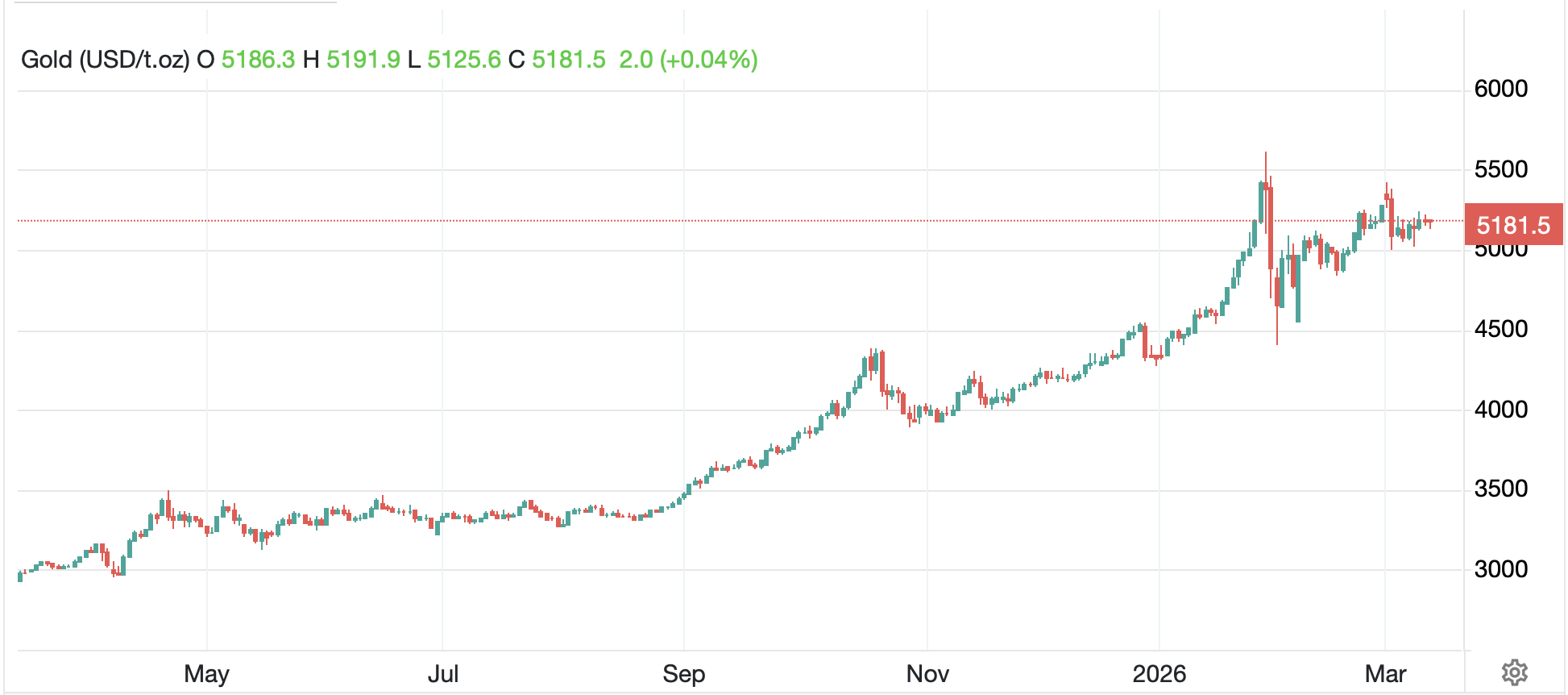
At any rate, with more than a full day’s trading in financial markets, perhaps we can try to assess how things are going.  The first thing to note is that many alleged haven assets are not performing up to snuff, notably Treasury bonds, Japanese yen, Swiss francs and gold.  In fact, as of this morning, the only traditional haven that is performing as expected is the dollar.

It was just over a month ago when the cognoscenti were explaining that the euro above 1.20 was indicative of the dollar’s long decline into the depths of history.  I recall someone in my LinkedIn feed asking how soon the euro would trade through 1.25 and beyond.  I would argue that timeline has been extended somewhat, if you still believe that is likely to be the case.  Rather, as you can see in the below chart, the single currency (-0.8%) is now back below 1.1600.

Source: tradingeconomics.com

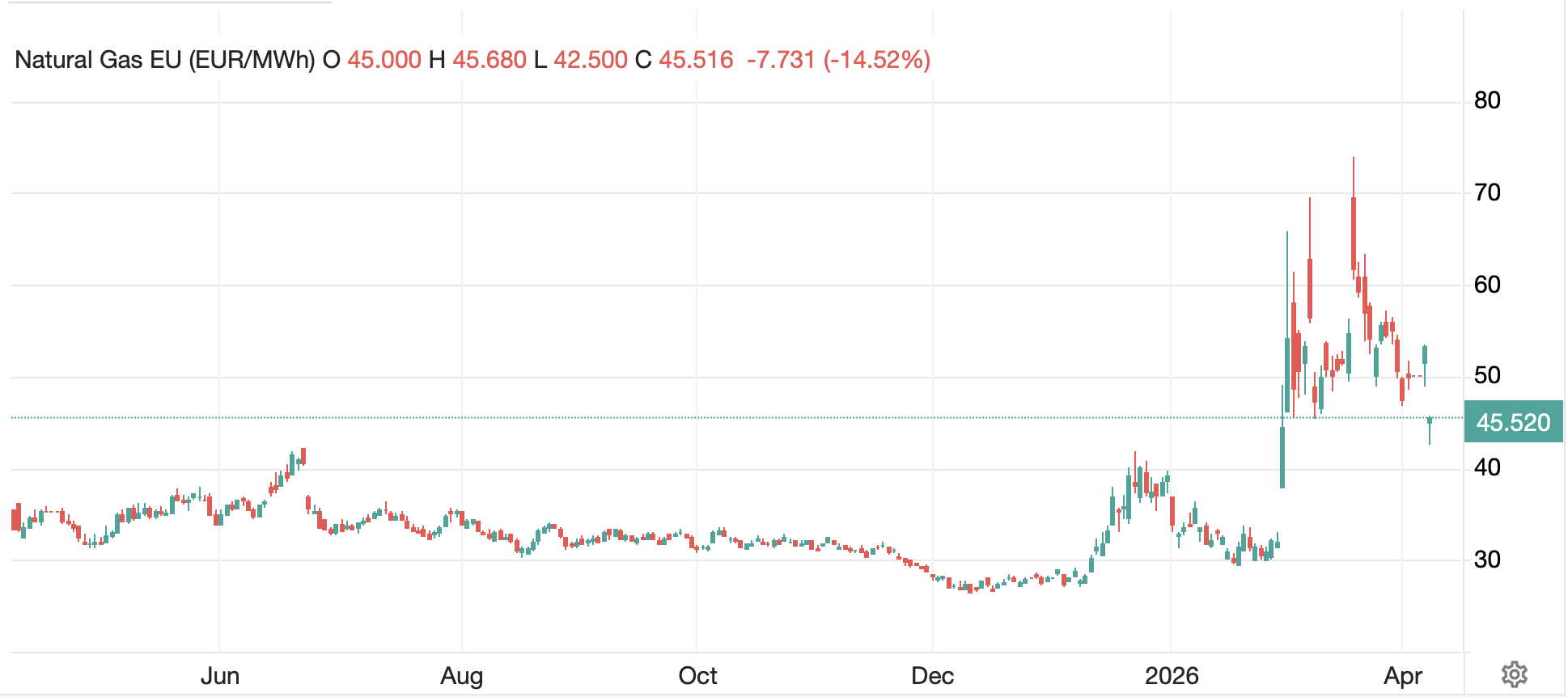
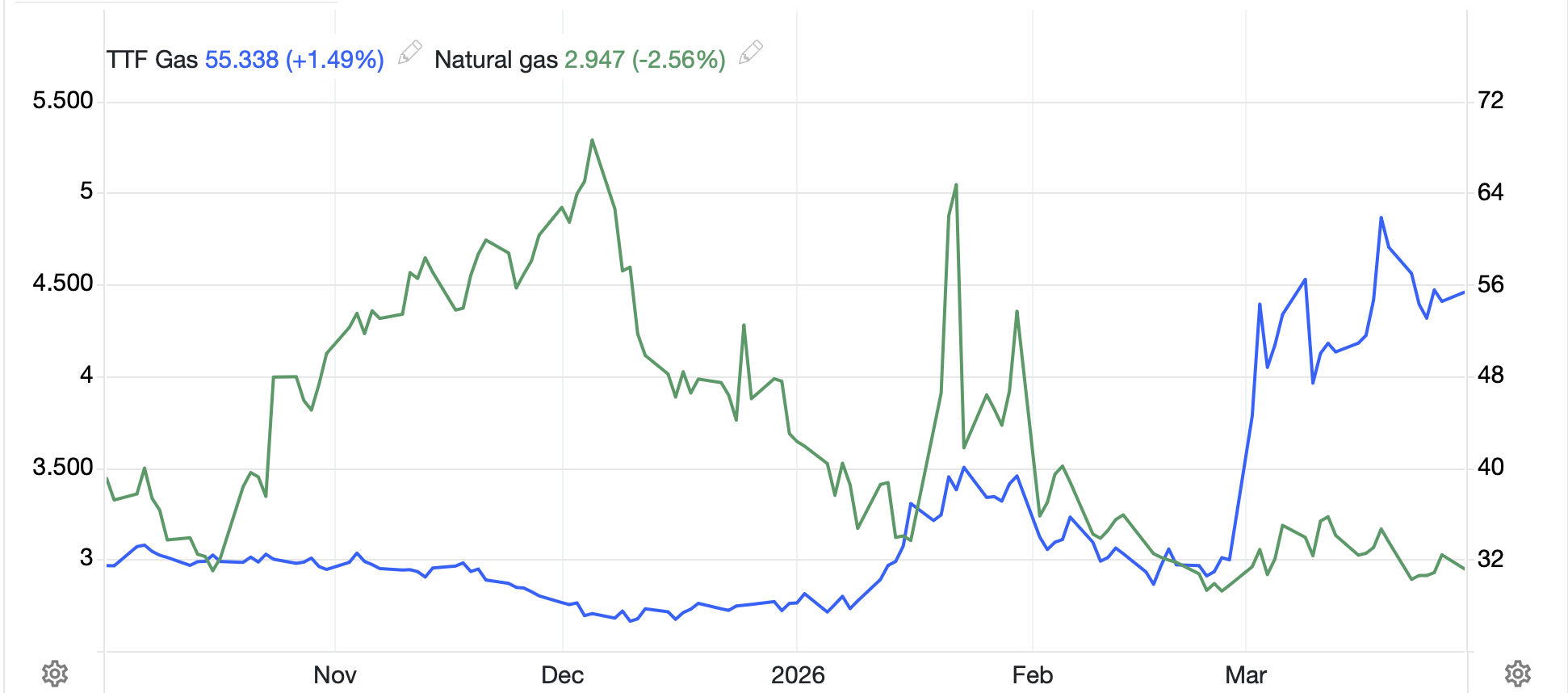
There are several things weighing on the euro right now.  First is the fact that they are energy price takers for every form of energy, so not only are higher oil prices hurting the continent, but NatGas there has exploded higher as per the below chart, rising 37% today and nearly 95% since the weekend.

Source: tradingeconomics.com

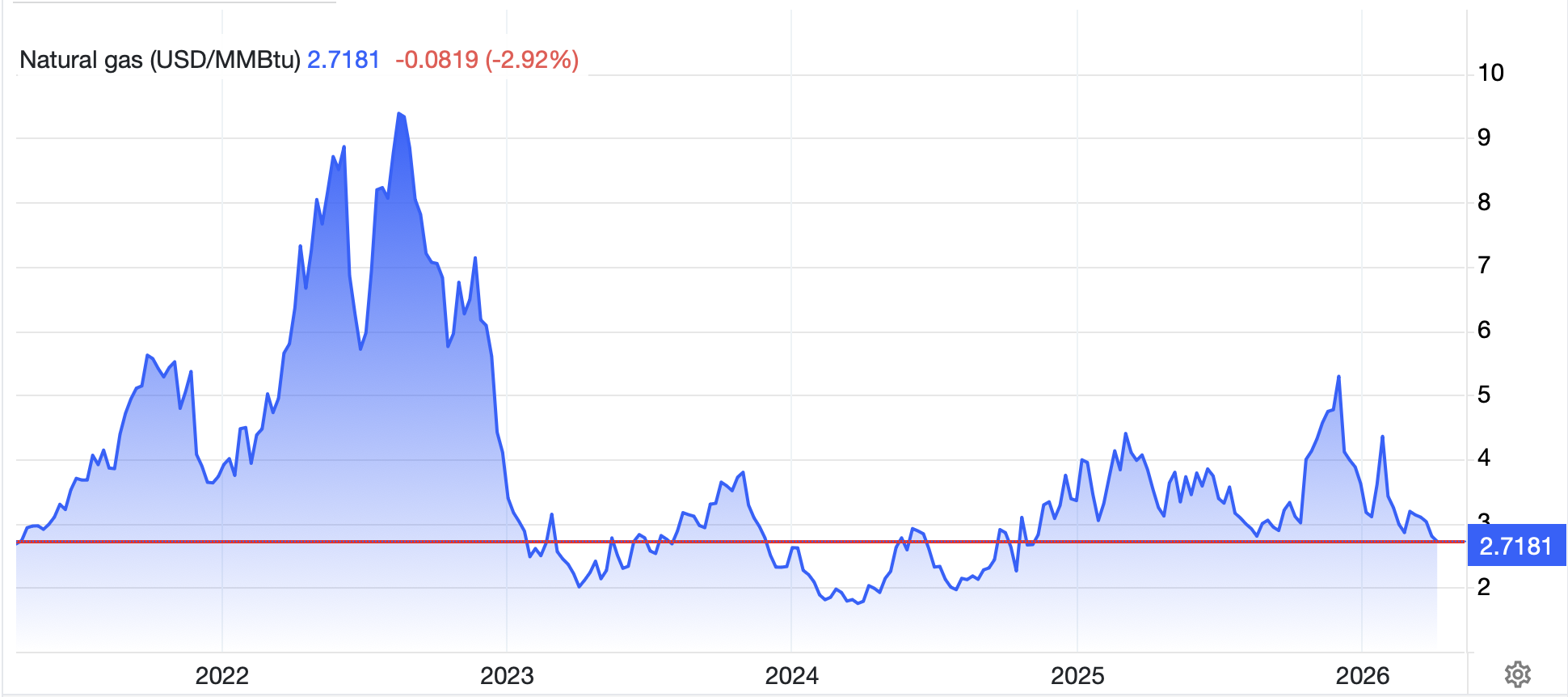
Recall, Europe has been trying to wean themselves off Russian gas, have been huge buyers of US LNG but also huge buyers of Qatari LNG, and with the Strait of Hormuz effectively closed (shipowners cannot get insurance so nobody transits the Strait), this is a problem.  Adding to the European problem is the fact that their storage levels of NatGas are extremely low for this time of year, about 30%, when typical levels in early March are near 50%.  We cannot be surprised at this price action.  So, while US NatGas (+6.3% this morning, 10% this week) has risen, it is currently trading at $3.14/MMBtu.  The comparable Eurozone price is $20.28/MMBtu.  Perhaps a weaker euro is not that surprising after all.  (As an aside, one of the reasons I find it difficult to accept the weak dollar story is that the US controls its own energy destiny and given energy is life and the economy, we are fundamentally in better position to perform going forward.)

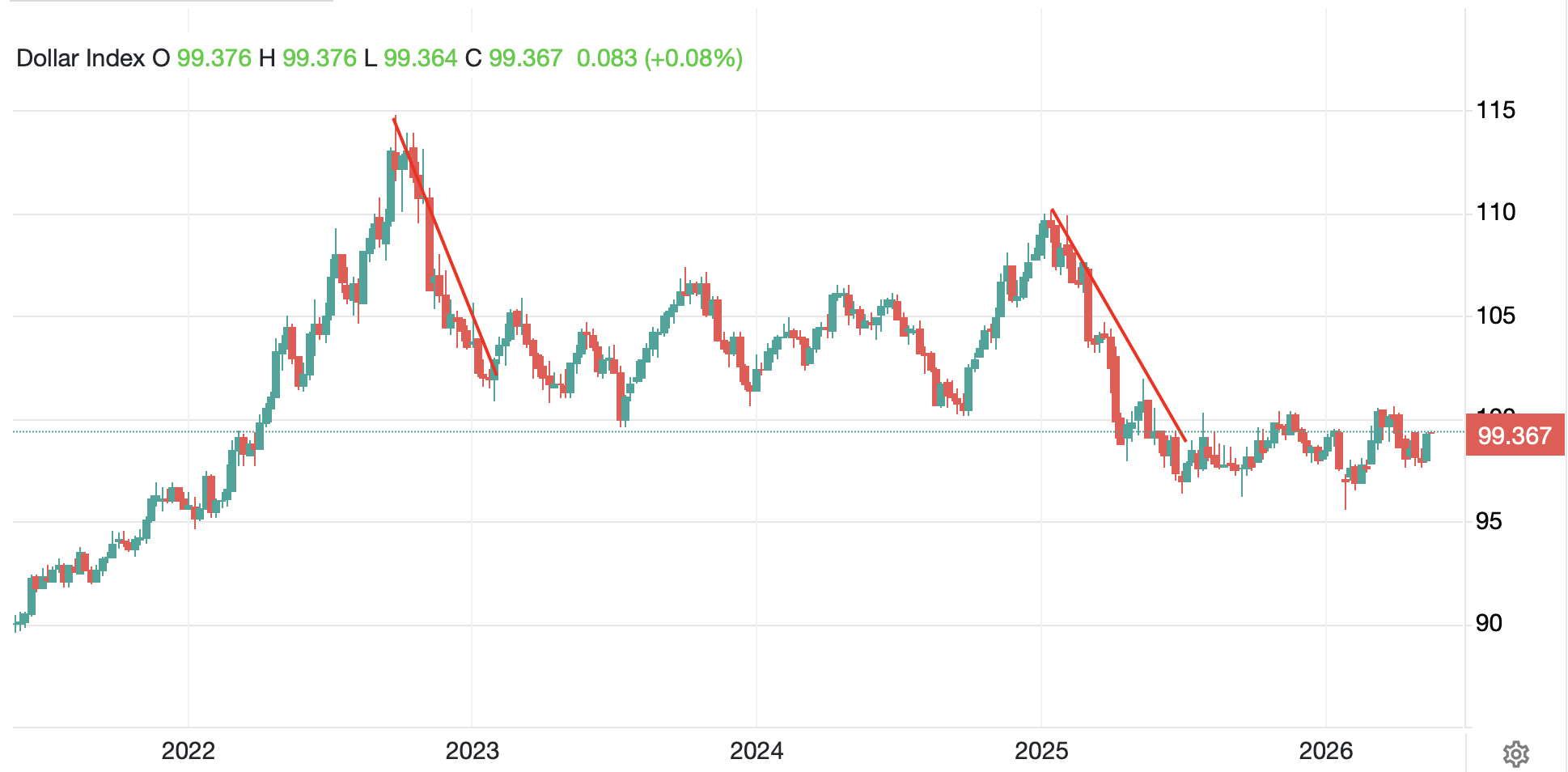
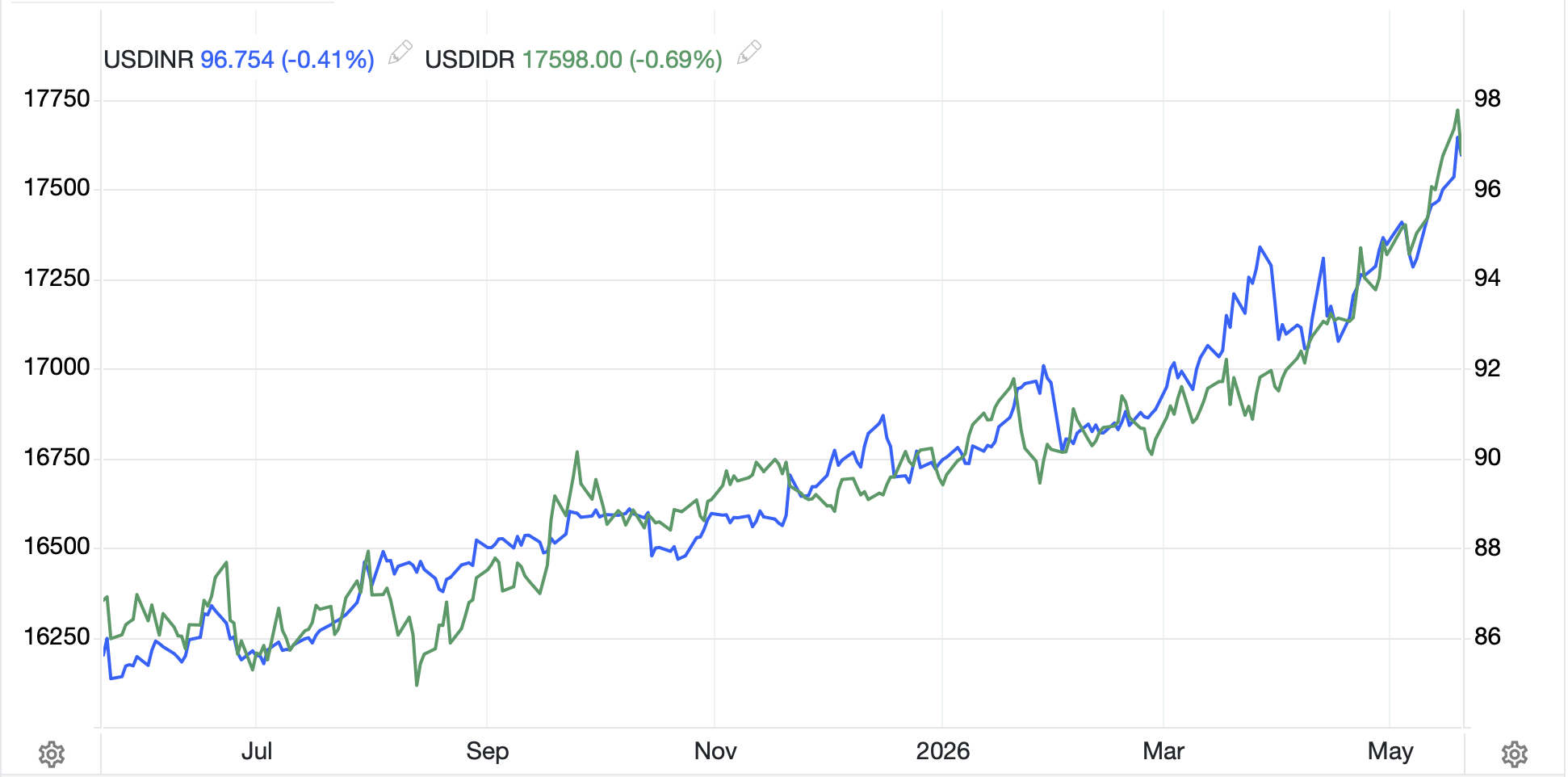
But the dollar is strong against all comers again today as per the below table from 7:10 this morning.  Will this continue?  While nobody knows, my take is there is still ample room for further strength in the buck, probably another 3%-5% before it starts to impact other things significantly.

Source: tradingeconomics.com

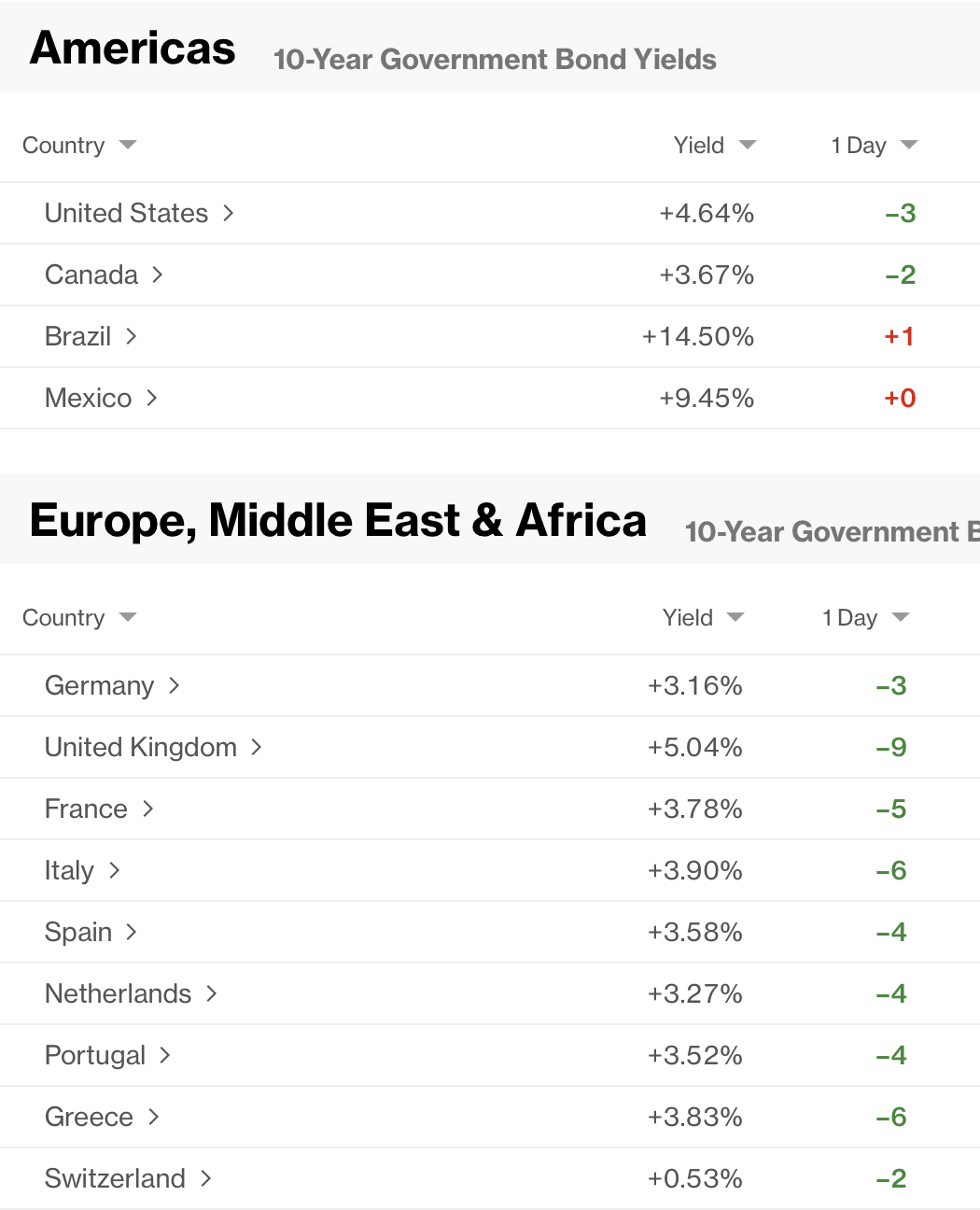
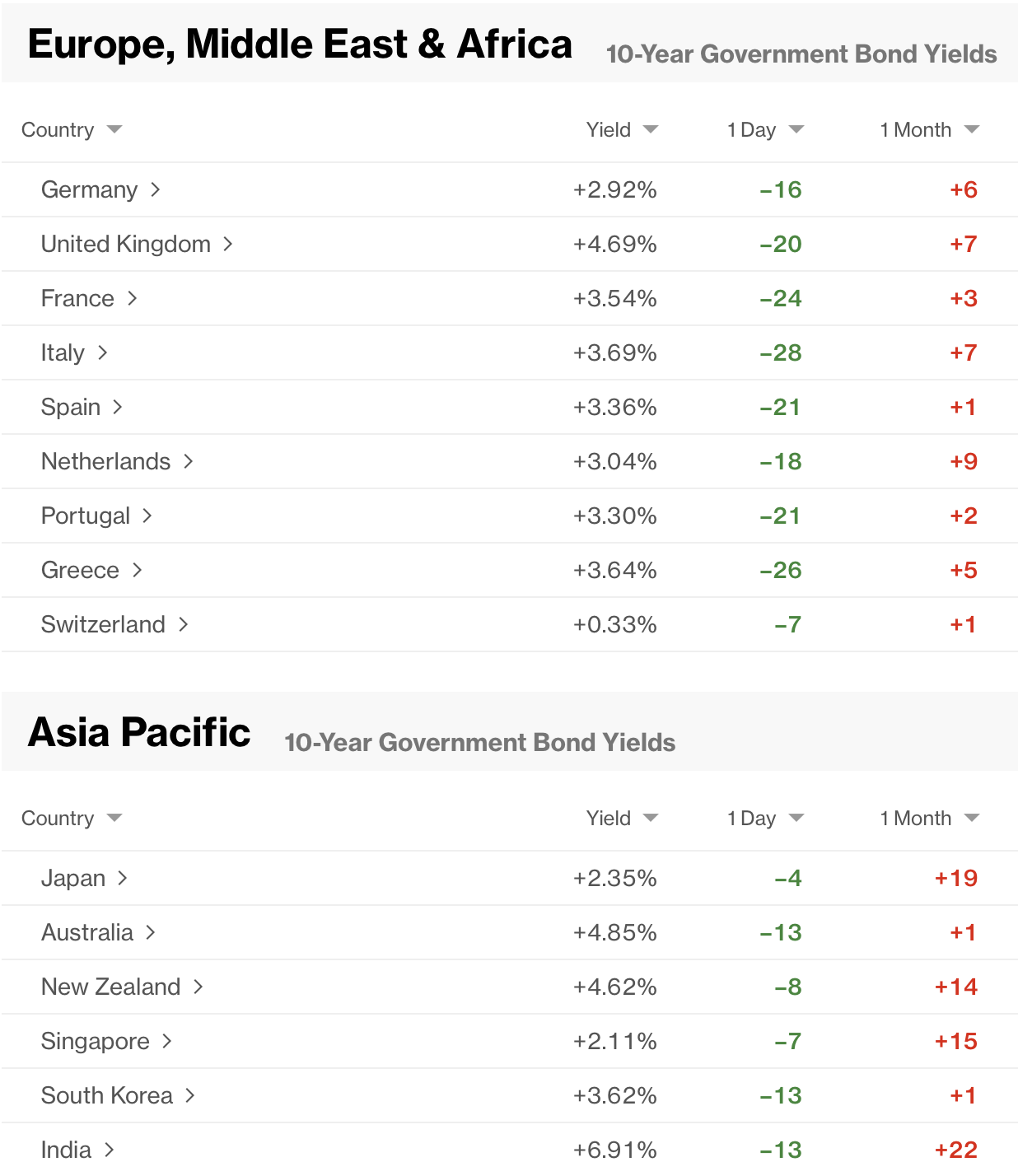
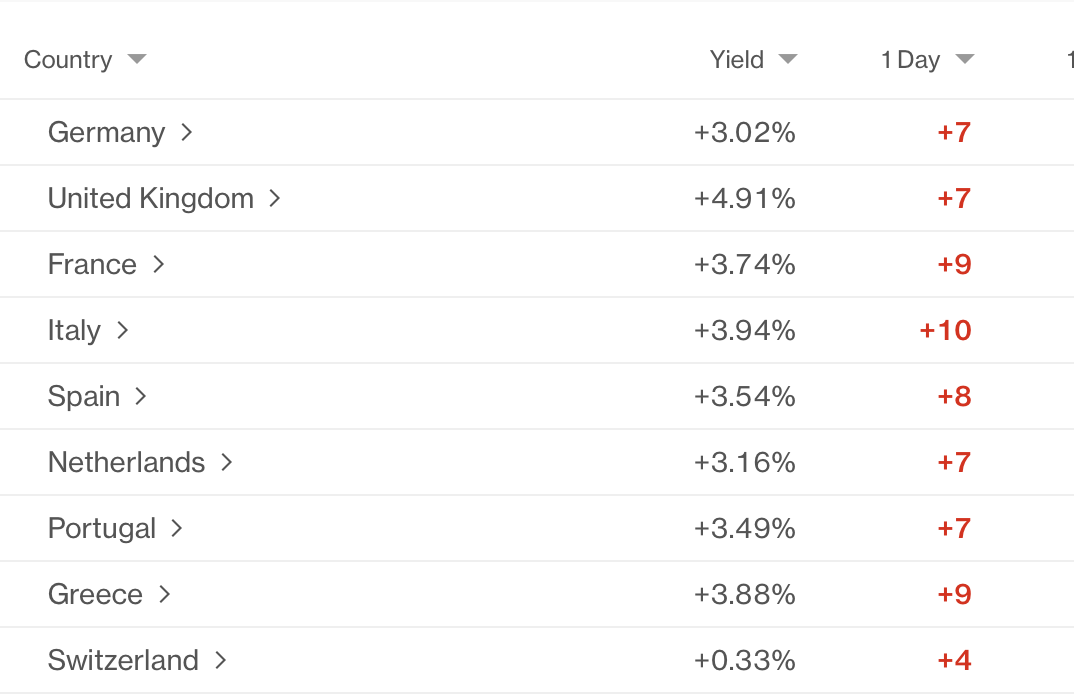
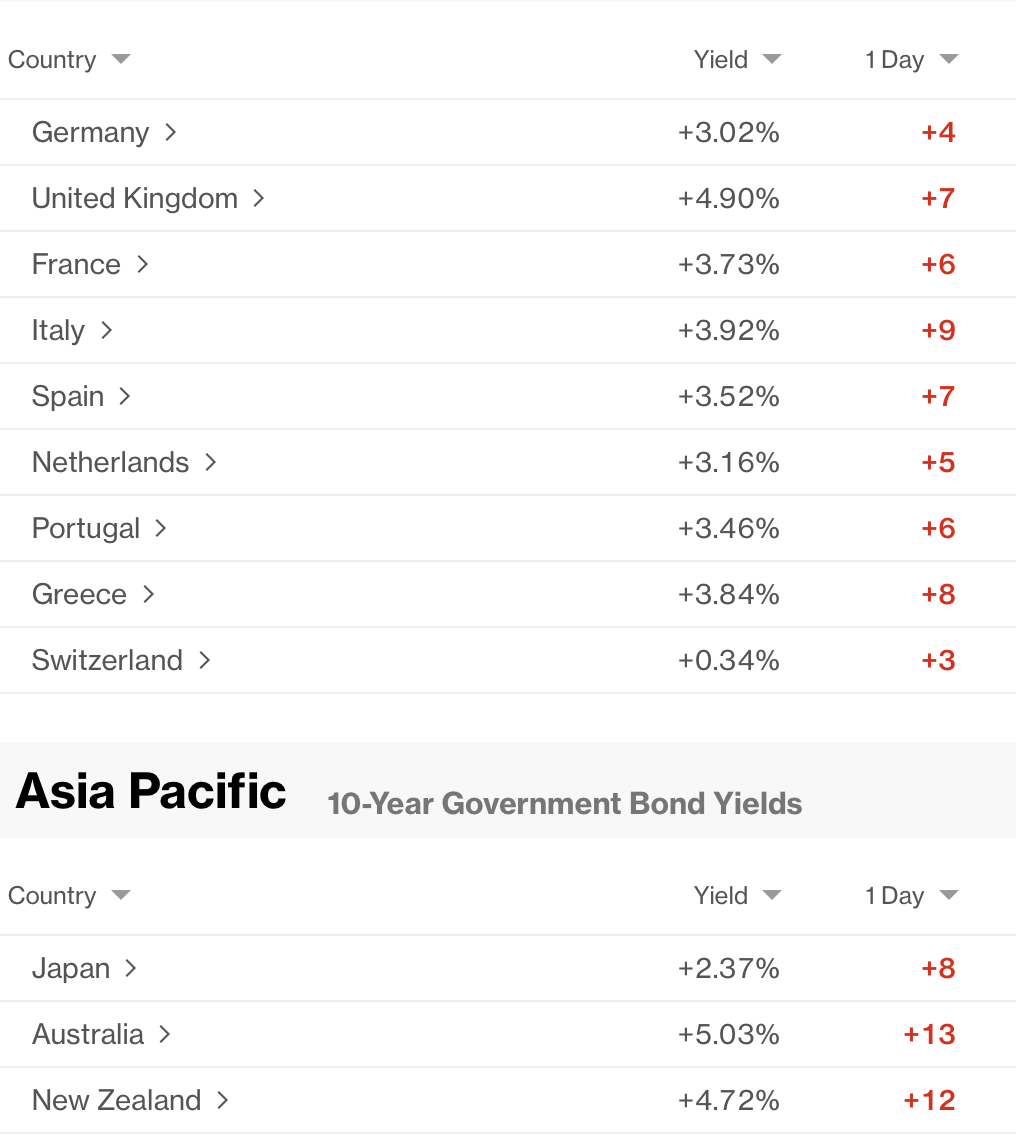
I think the biggest surprise for most of us is the incredibly poor performance of the bond market, which has always been seen as a safe haven.  However, this morning, that is not the case at all as you can see from the Bloomberg table below.

My take is that there is only one thing we truly know about war, it is inflationary.  While the early signs are for energy prices to rise, war is a major consumer of resources that will never be recycled and therefore will require new baseline production.  As well, governments don’t fight war on an austerity budget, so you can be sure that there will be plenty of money around.  All that leads to higher prices and that is why bond markets are feeling pain around the world this morning.  If, as President Trump has indicated, this war ends in the next 4 weeks or so, we will be able to re-evaluate the inflationary and other impacts, but while I had thought bonds were going to perform well, clearly that is not the case right now.

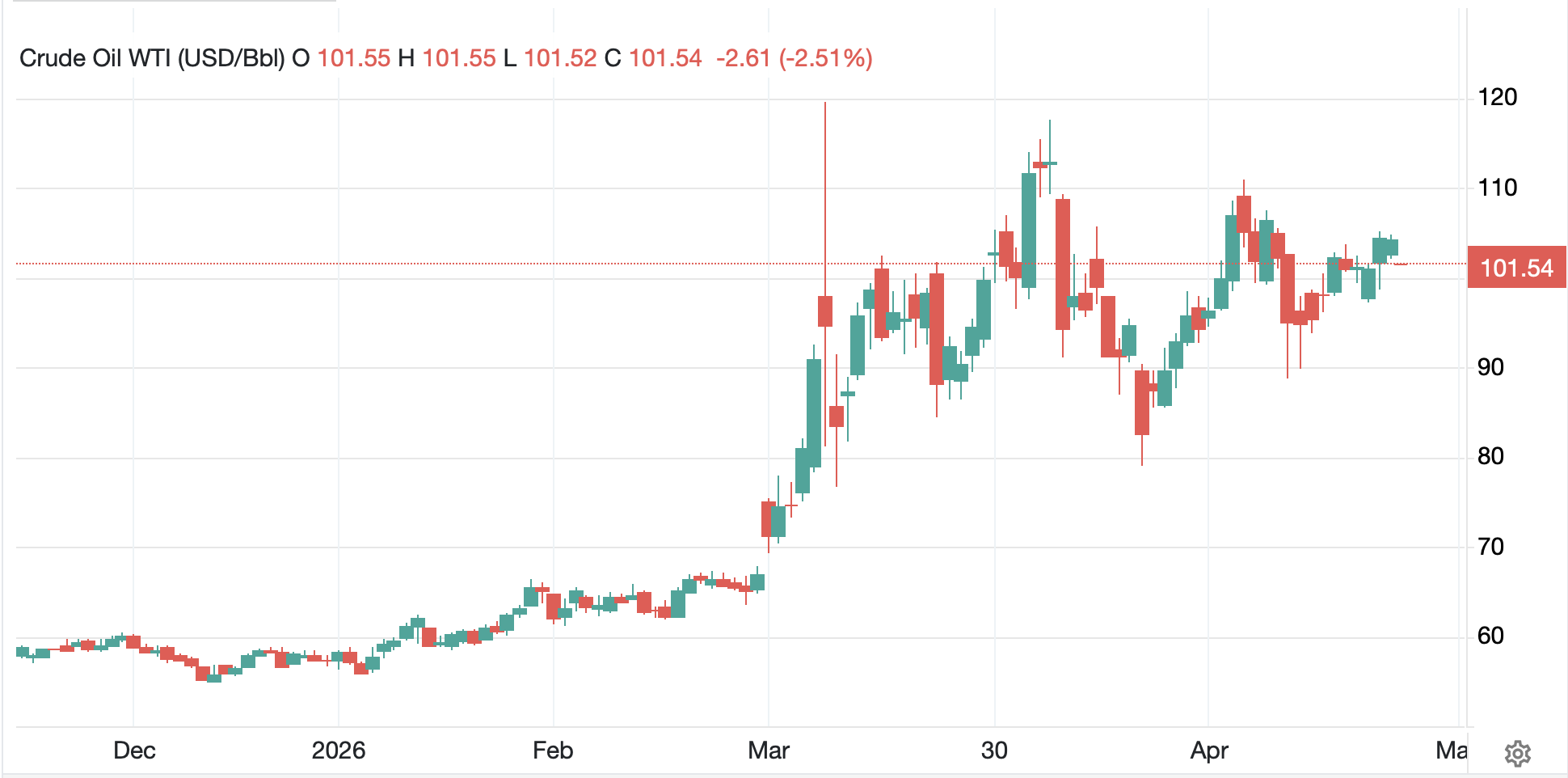
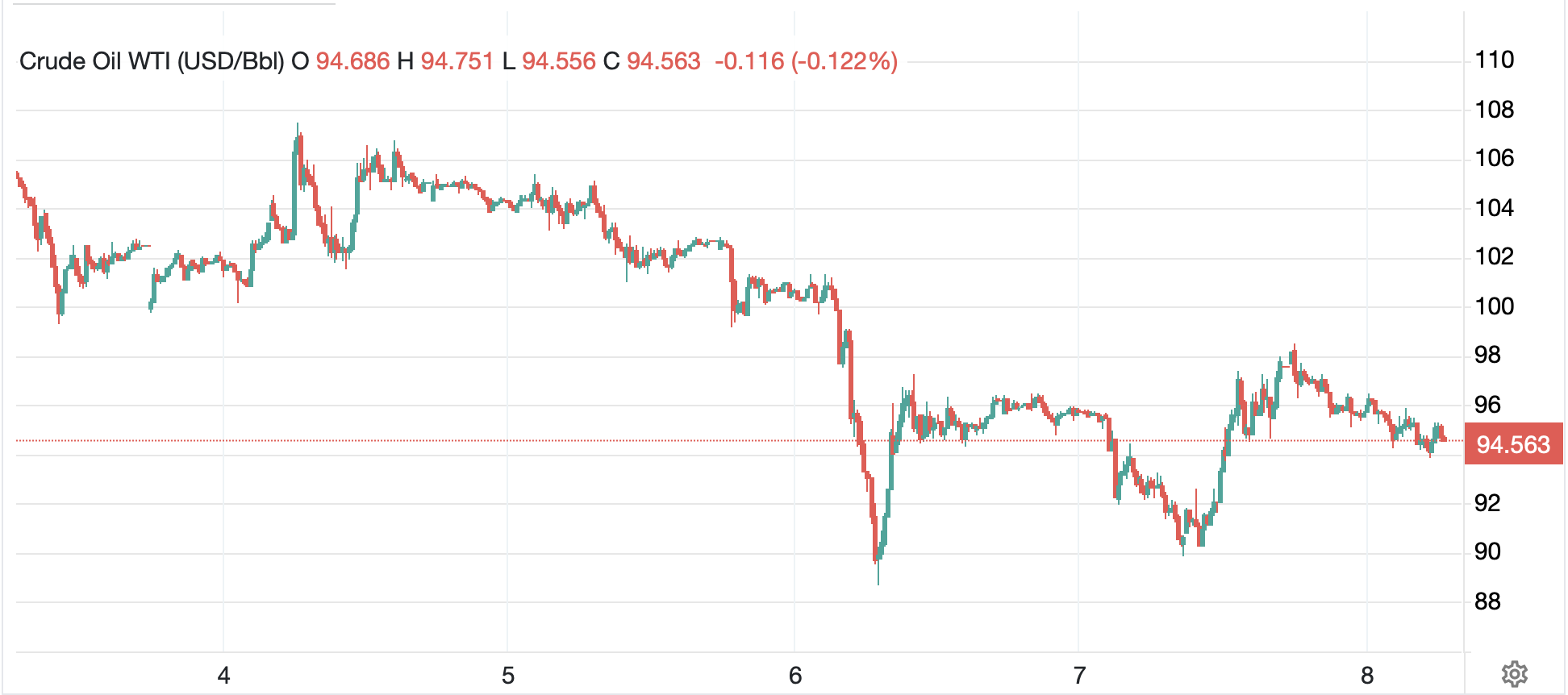
Turning to commodities, oil (+6.75%) continues to rise and I expect will remain well bid until the fighting stops.  The prospects for higher prices from here remain dependent on whether Iran tries to destroy other Middle East production facilities and if they are successful.  Meanwhile, in the Western hemisphere, the US, Canada, and all of Latin America are going to be pumping at full strength for now.  So, while prices may tick higher, it is unlikely we will see any supply issues here.

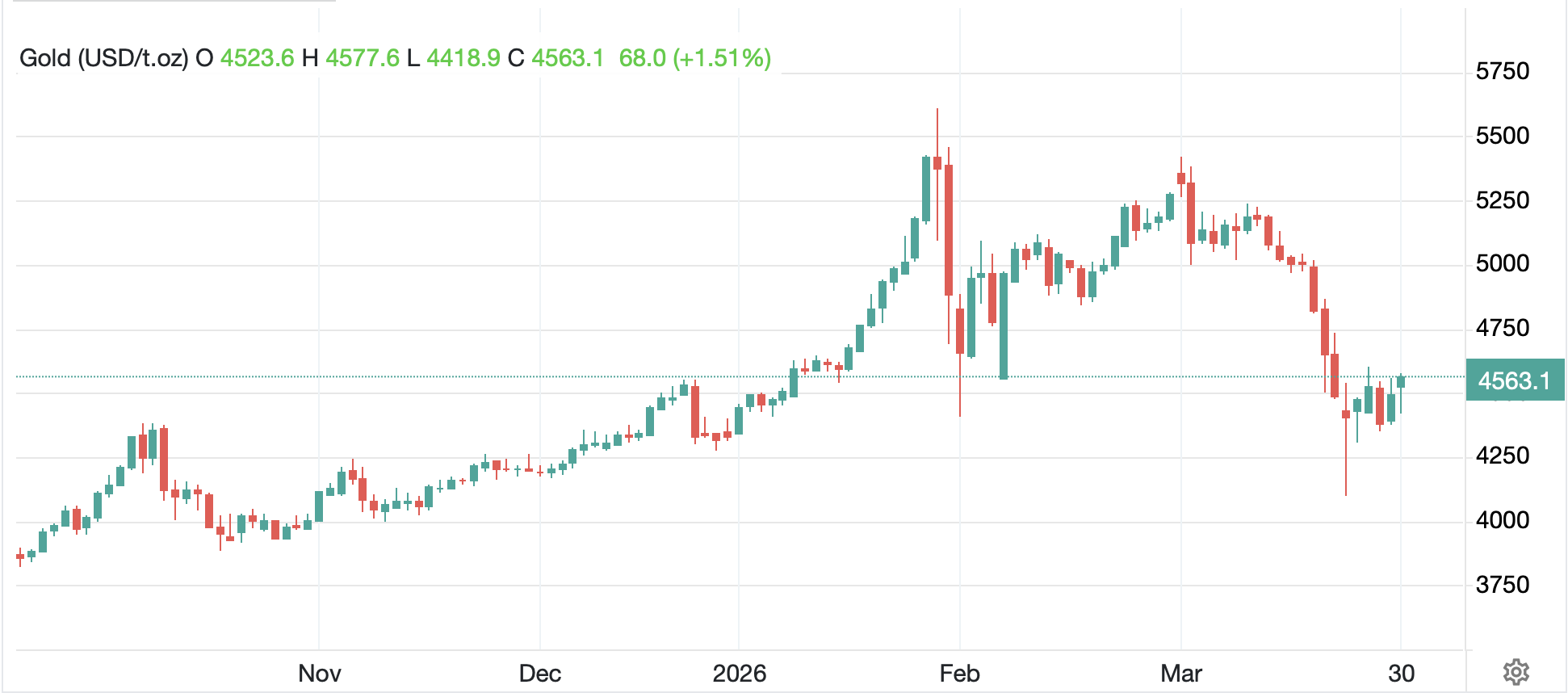
Metals are another surprising trade this morning with gold (-2.65), silver (-7.8%) and copper (-2.3%) all sharply lower.  Given the sharp decline in equity prices I will discuss below and given the amount of leverage that is rampant in the equity markets, I think gold is a victim of ‘sell what you can, not what you want to.’  Arguably, there is some of that with bonds as well.  In a way, though, I am more surprised about silver and copper given their criticality in fighting the war.  Both are being consumed rapidly via weapons being deployed so this is more baffling to me.  However, I do not believe the longer-term thesis in either of these metals has changed, there is a supply shortage relative to industrial usage for both with no new supply on the horizon.  As such, I do see prices here rallying over time.

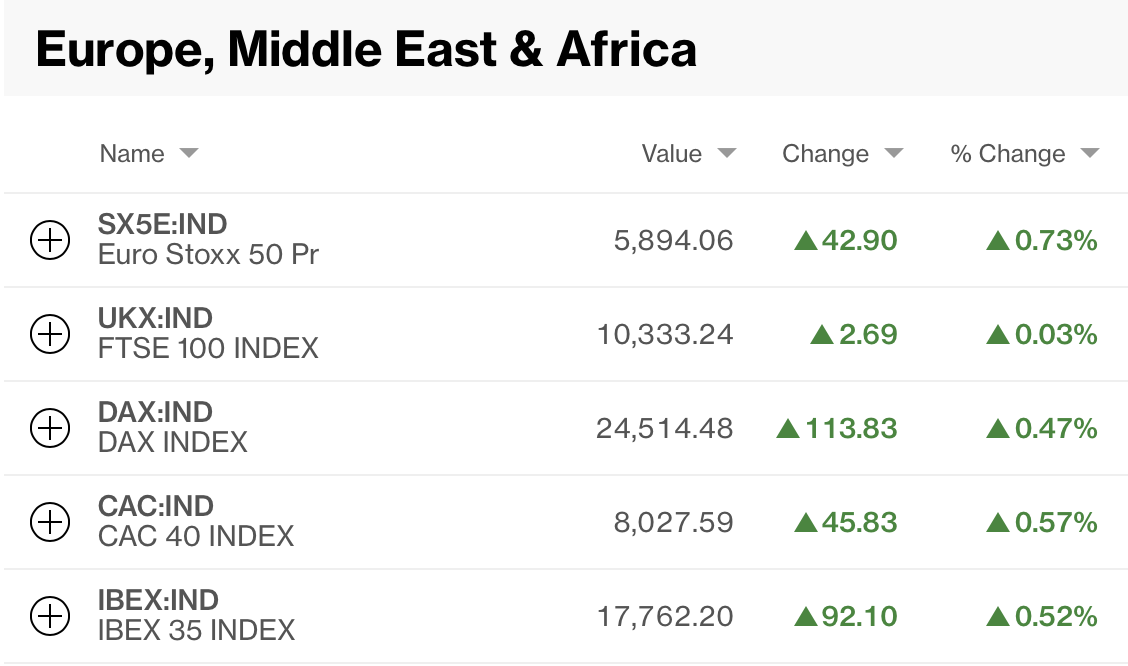
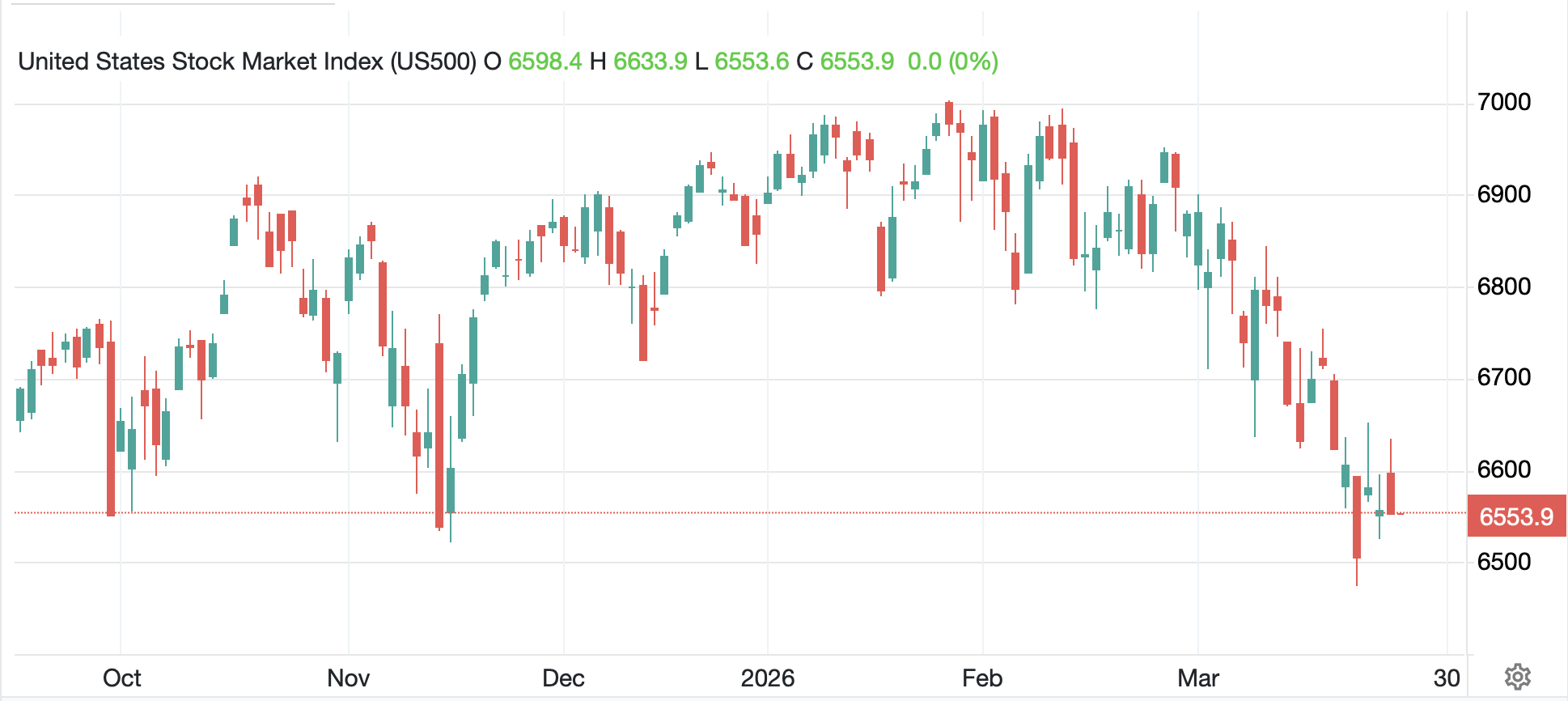
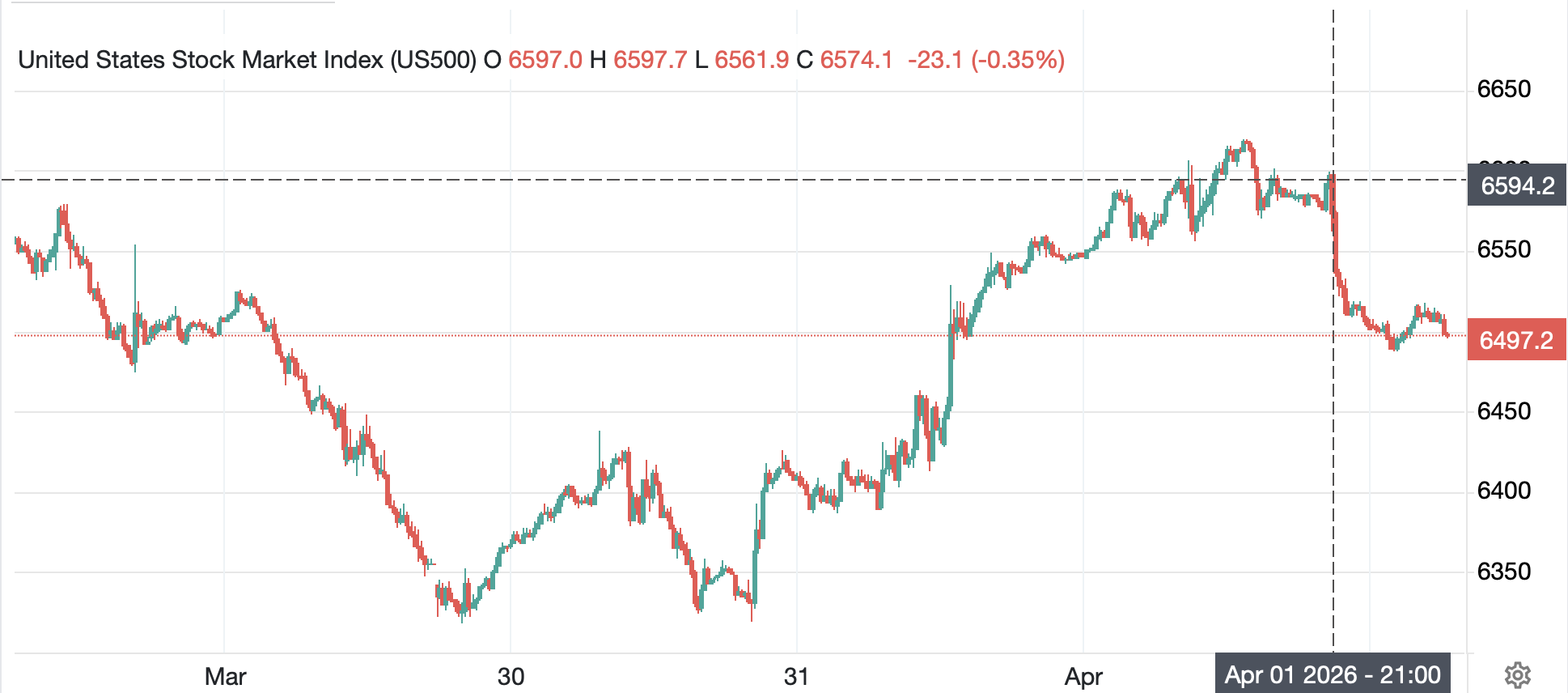
Finally, the equity markets are sharply lower almost everywhere.  The below Bloomberg table shows how major markets in Asia performed overnight and how Europe stacks up at 7:30 this morning.

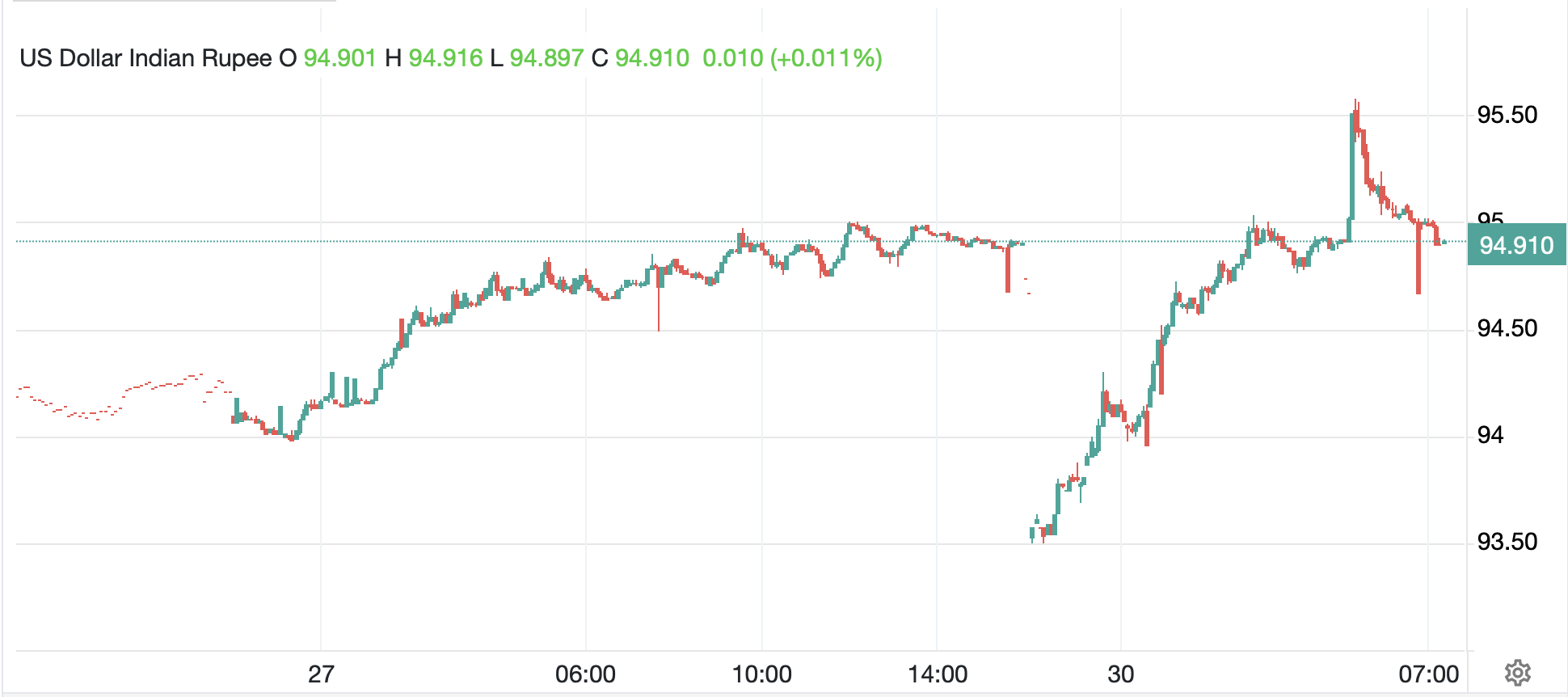
What it doesn’t show is that the KOSPI in Korea fell -7.25%, nor that there were sharp declines in India (-1.3%), Taiwan (-2.2%) and Thailand (-4.0%).  You will also not be surprised that US futures are pointing much lower this morning, -1.5% across the board.  Yesterday’s performance was quite the surprise, I think, but today is much more in line with what we expected.

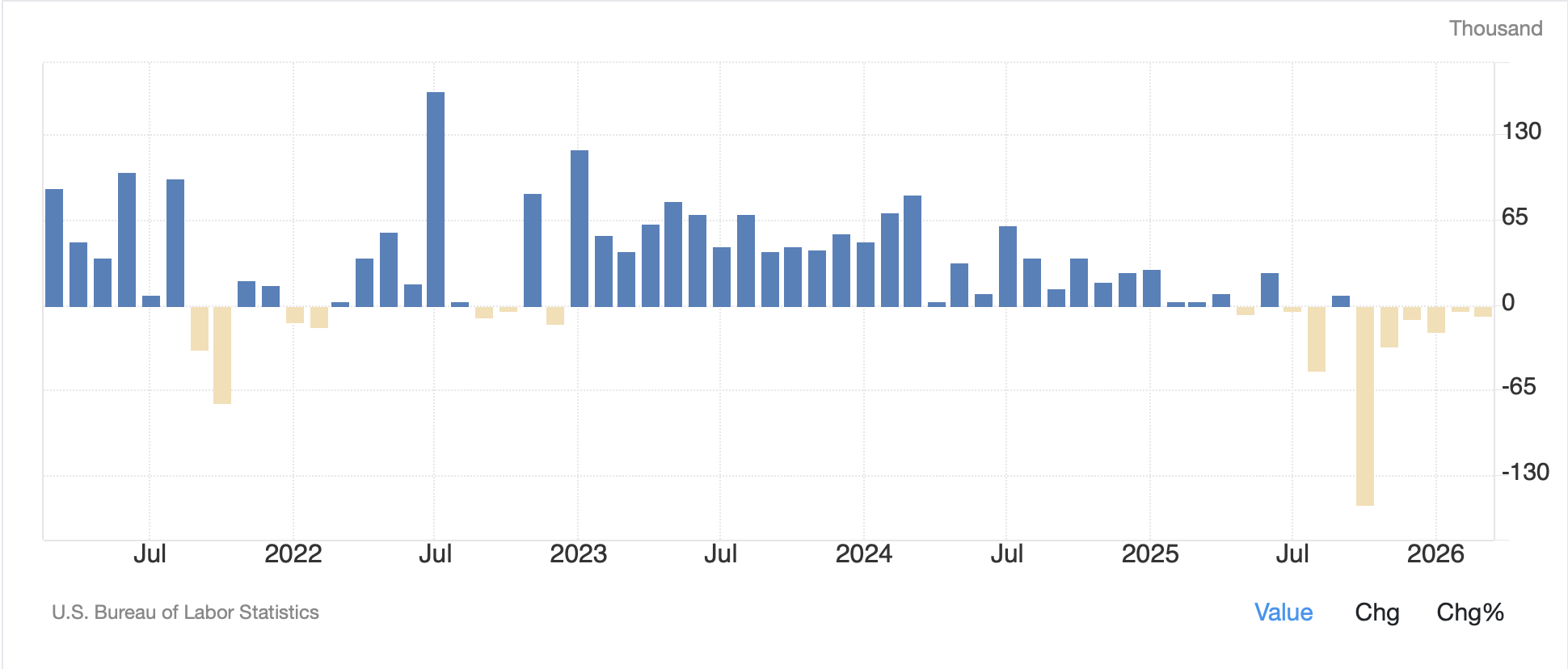
And that’s where things stand this morning.  obviously, the war is the only story that matters, so data releases are going to be secondary for now, even Friday’s payroll report.  At some point, I expect that traditional havens will play their role, but as leveraged positions continue to get unwound, it may take a few more sessions before we see that.  If you’re trading, smaller sizes make sense.  If you’re hedging, stick to longer term fundamentals I think.

Good luck

Adf
No Longer the Same

The world is no longer the same
So, now everyone must reframe
Their views on positions
And whether conditions
Allow them to still play the game
 
Most markets have priced fatter tails
With stock markets seeing net sales
But oil and gold
Seem likely to hold
Their gains across longer timescales

Here we are on Monday morning in a very different world than we left on Friday evening.  While there was much talk about whether a peace would be reached then, obviously that never happened.  Of course, at this point, there is no other story than the ongoing military action in Iran and the Middle East.  As this is not a news commentary, but a financial markets one, that is all I will discuss here.

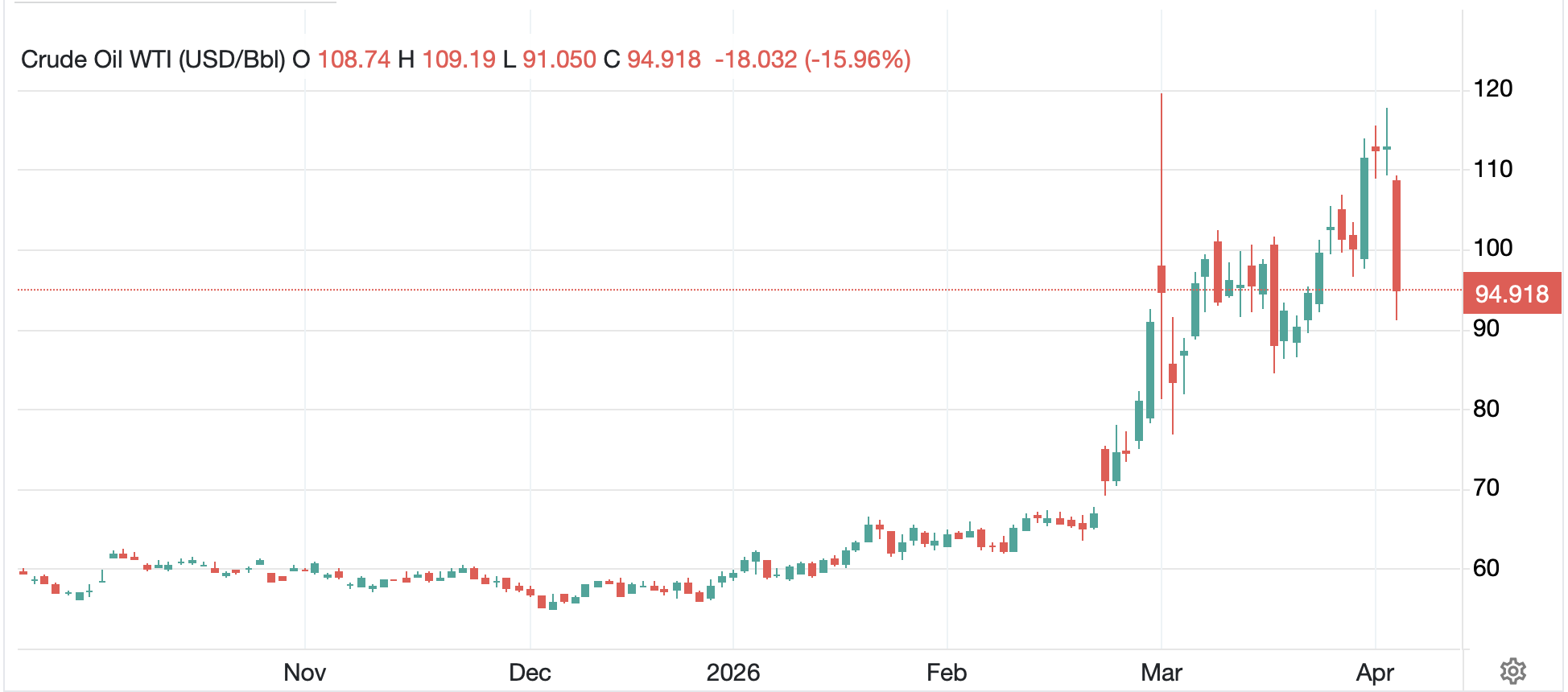
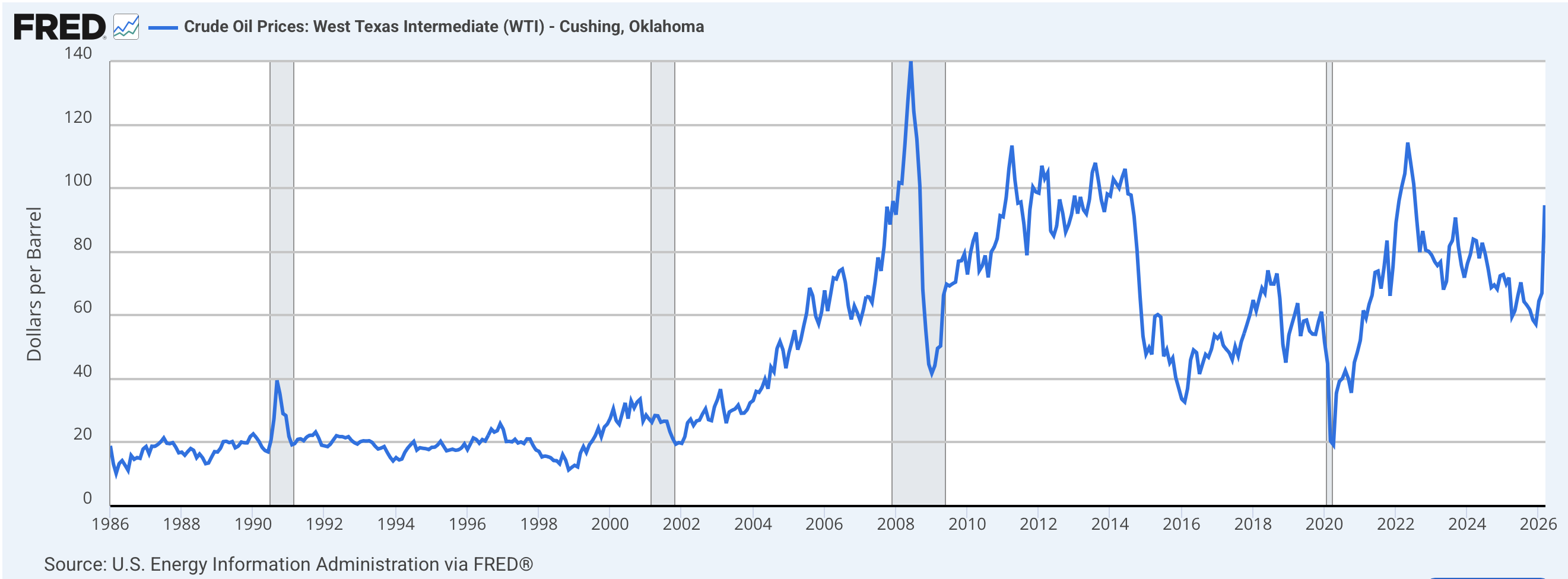
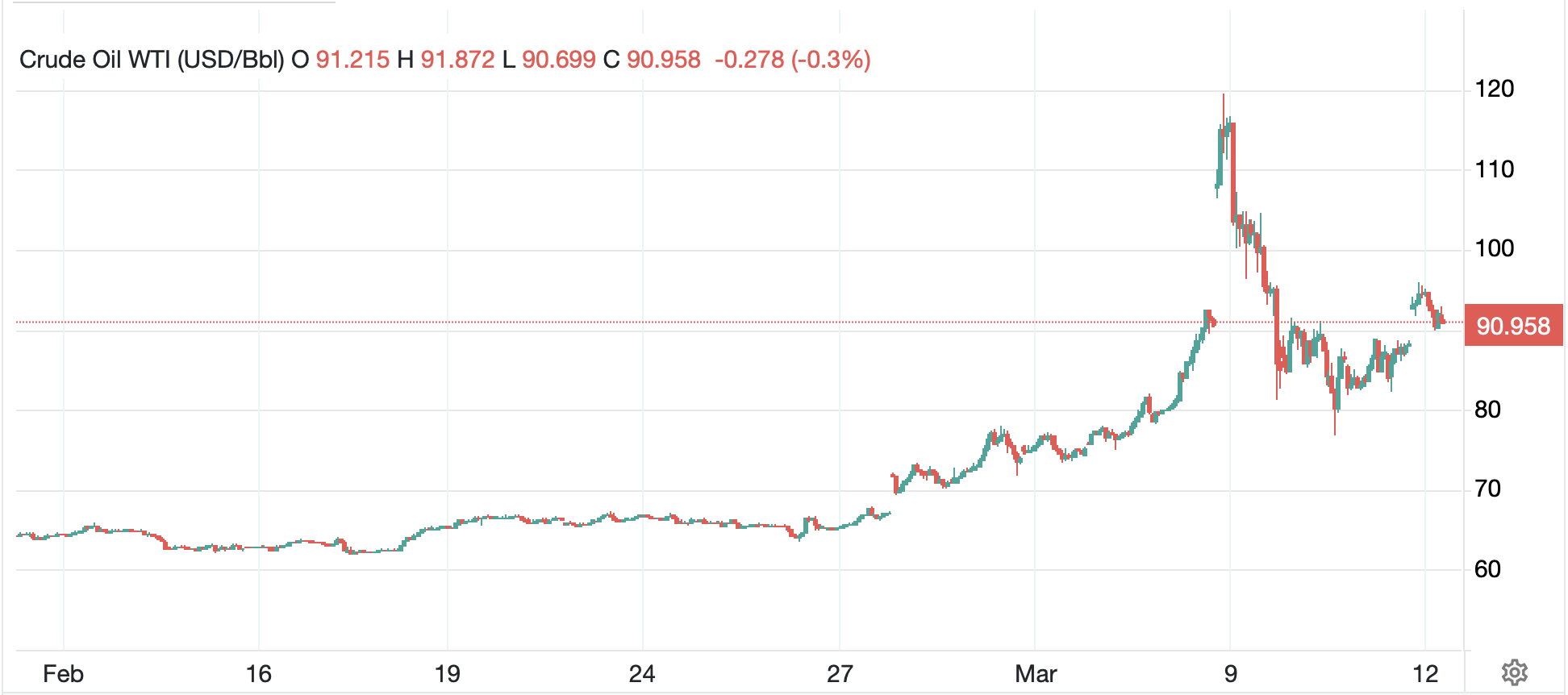
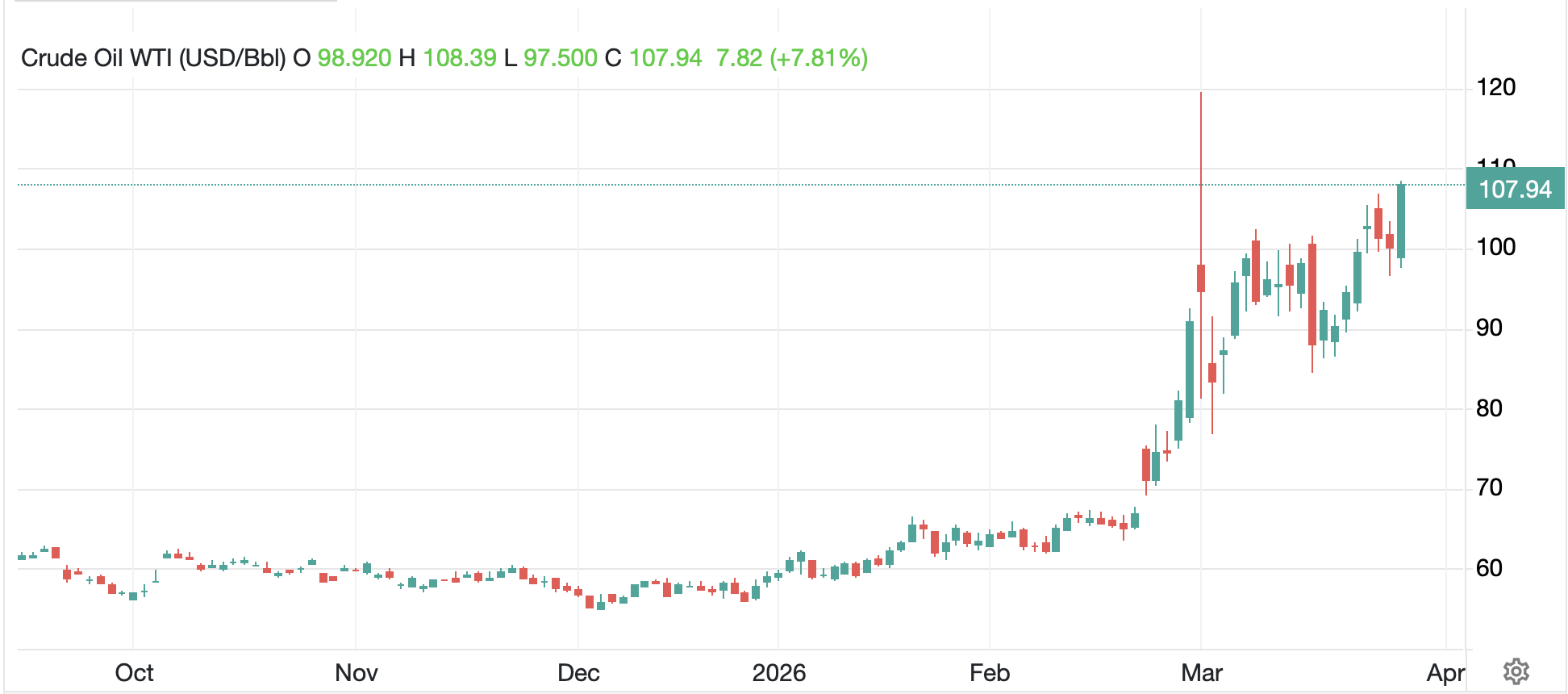
Not surprisingly, we have seen some large moves across markets, and largely in the direction one would have expected regarding risk.  So, oil prices (+7.5%) have exploded higher as shipping through the Strait of Hormuz has ceased for now and there is no timeline for it to reopen.  Given ~20% of the daily global consumption of oil flows through that waterway, there should be no surprise here.  You can see from the chart below that as concerns grew regarding military action, oil’s price climbed and then, of course, gapped on the opening last night.

Source: tradingeconomics.com

Perhaps a bit more surprising to me is that Brent Crude (+7.5%) has moved virtually the exact same amount as WTI.  I only say that because Brent is the price basis for global oil outside the US which is obviously going to be more impacted than the US markets.  But the Brent chart is virtually identical to the WTI above.  As to the future, clearly, no market is more dependent on the Middle East conflict than this one, but at this point, there is no indication it is going to end very soon, so I expect prices to remain at least at current levels for now, and if the conflict starts to target oil production facilities, we could go quite a bit higher.

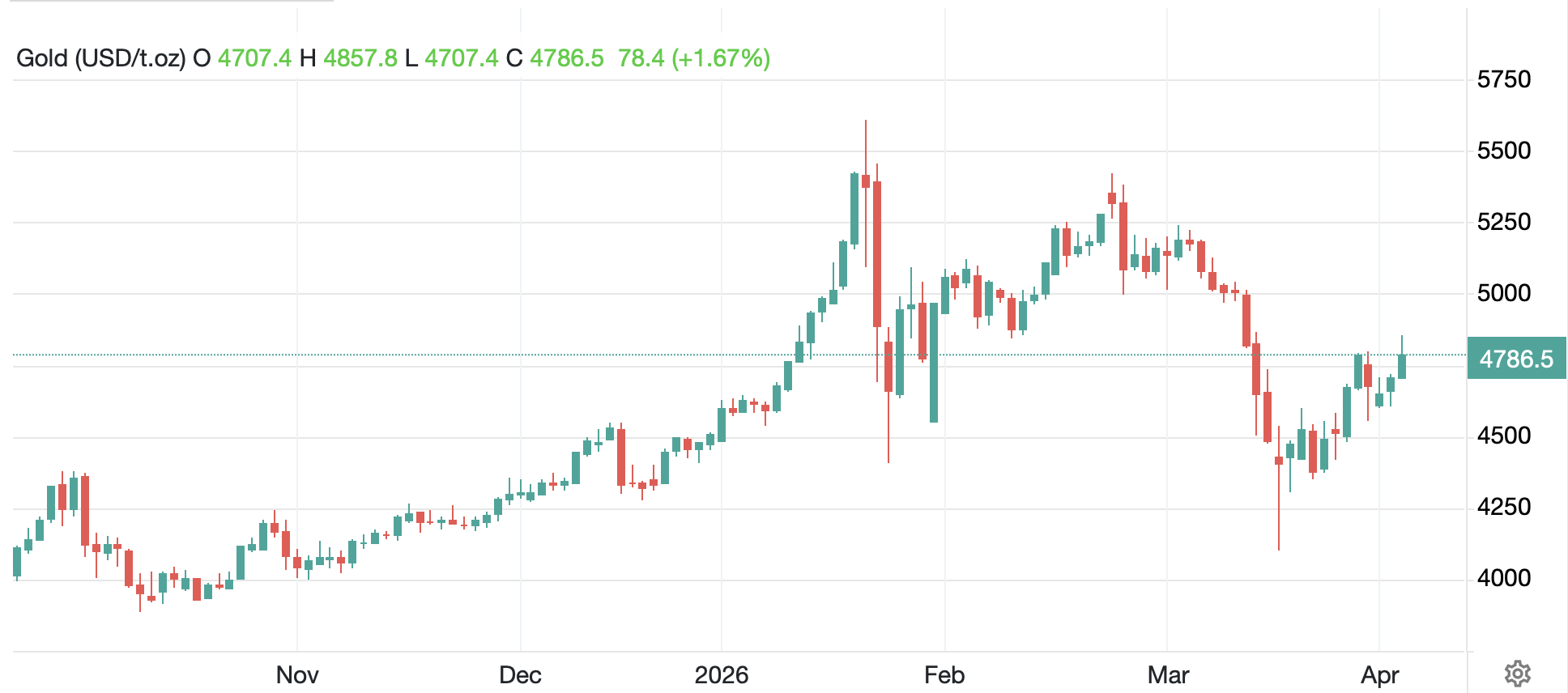
While we are looking at commodities, it should also be no surprise that gold (+2.1%) is higher this morning as it performs its historical role as a safe haven.  While not quite as extreme as the oil chart, the similarities between the two, as you can see below, are significant.  Of course, it was a bit more than a month ago when we had that dramatic sell-off in the precious metals, so this has all been a recovery from there.  But a grind higher punctuated with a gap last night is the gold story as well.

Source: tradingeconomics.com

Arguably, gold will have more staying power than oil as when the conflict ends, and my initial take is it will not be a forever war, oil will once again flow more freely.  Gold, however, remains a haven in an uncertain world and nothing seems likely to reduce uncertainty anytime soon.

The other two traditional haven assets are the dollar and Treasury bonds so let’s look at them next.  Starting with the dollar, it has done what it regularly does in an uncertain situation, it has rallied sharply.  As you can see from the below table, shot at 6:39 this morning, the dollar is firmer against every single major currency this morning.

Source: tradingeconomics.com

Too, using the euro as our proxy for the dollar writ large, you can see that the chart below looks almost identical to that of both gold and oil above.  (I have inverted the Y-axis to highlight the similarities.)

Source: tradingeconomics.com

It appears that markets began pricing in this event back in the middle of February, although the real move required the onset of the military action.

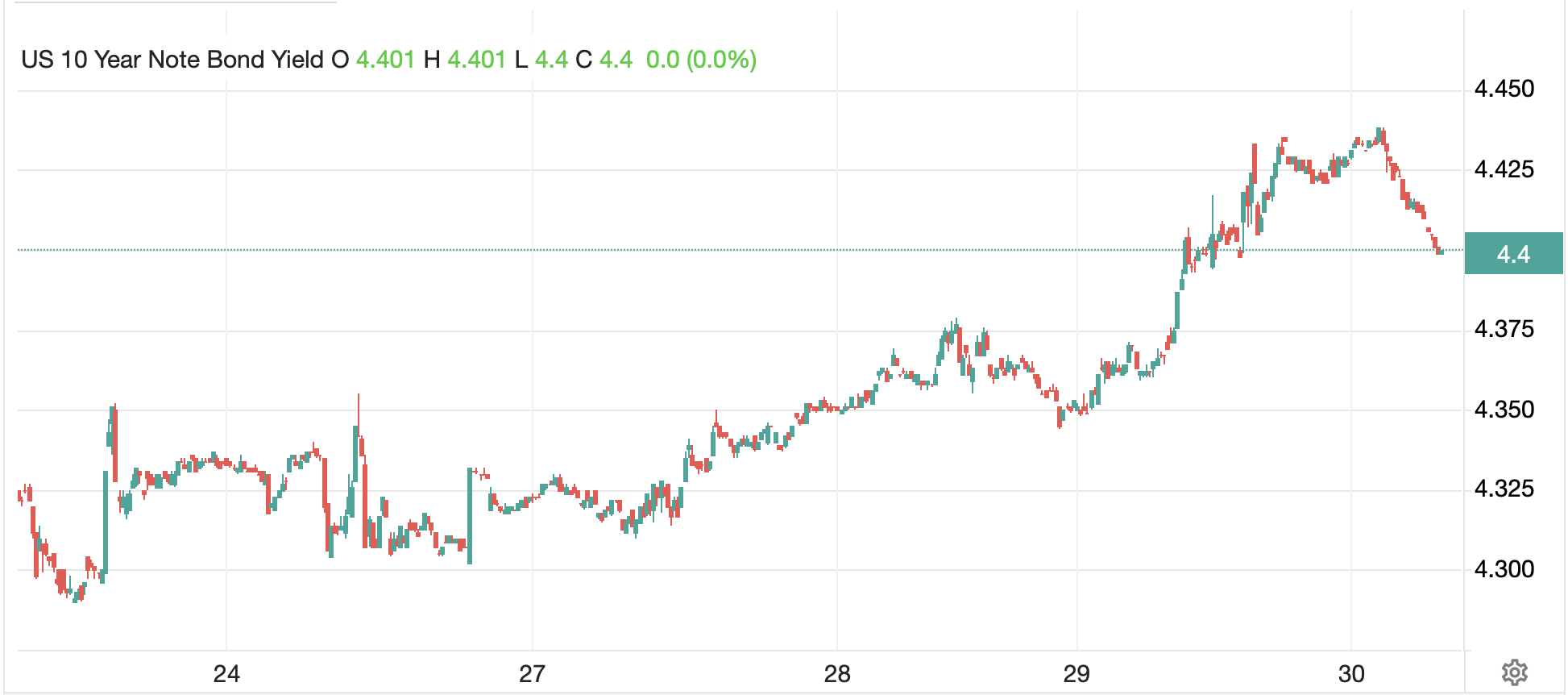
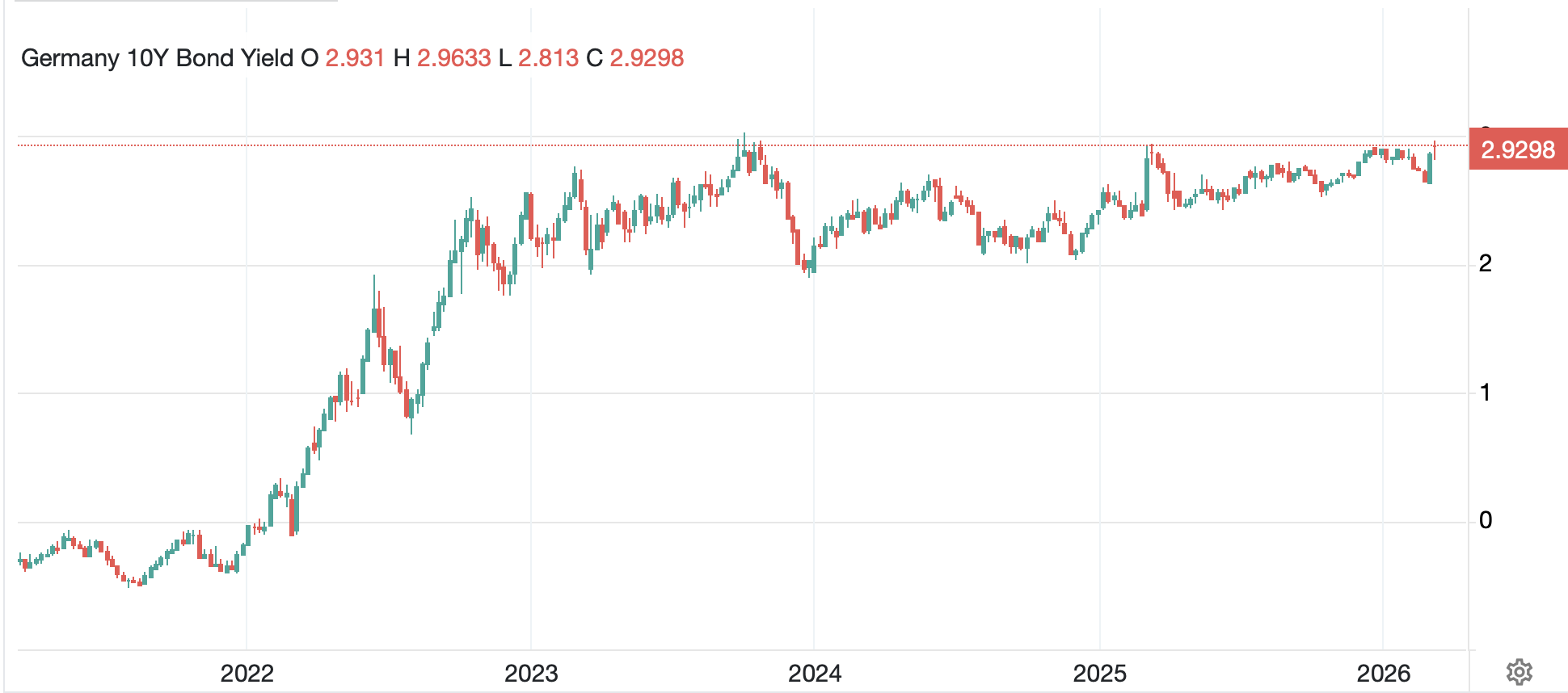
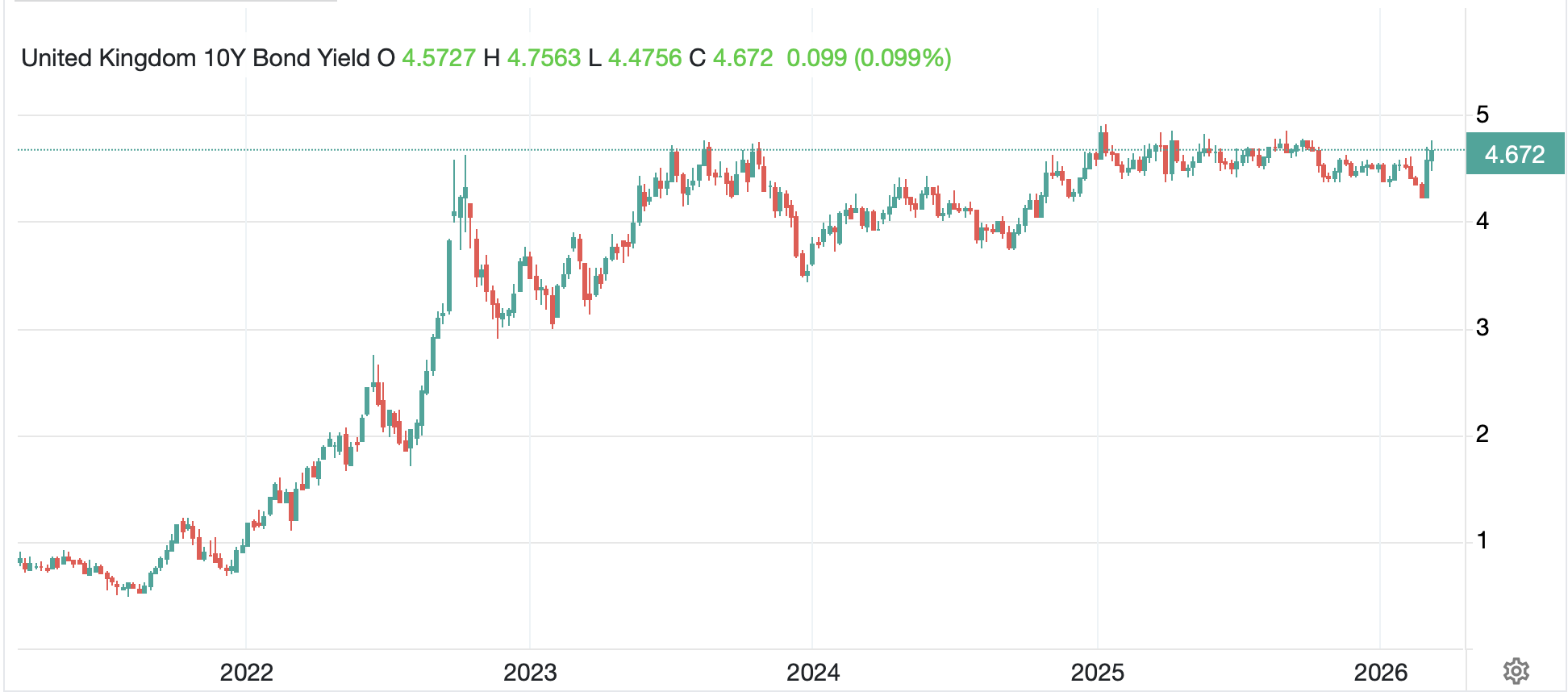
As to the last haven asset, US Treasuries, they are not really doing the job today.  Yields there have edged higher by 2bps this morning and we are seeing similar price action across the entire European sovereign space.  The two exceptions today are UK Gilts (+8bps), which seem to be trading on concerns the BOE is less likely to cut rates as higher oil prices will prevent inflation from continuing lower and JGBs (-4bps) which are serving their haven role well, arguably given the distance from the action and the fact that with yields above 2%, investors seeking safety feel they have some cushion.

Source: tradingeconomics.com

The treasury move was interesting as the initial trade, at last night’s opening, was for lower yields as per the chart above, but that has since reversed.  It could be investors are concerned over additional defense spending blowing out the deficit further but there is no clear signal or commentary I have seen yet on the subject.

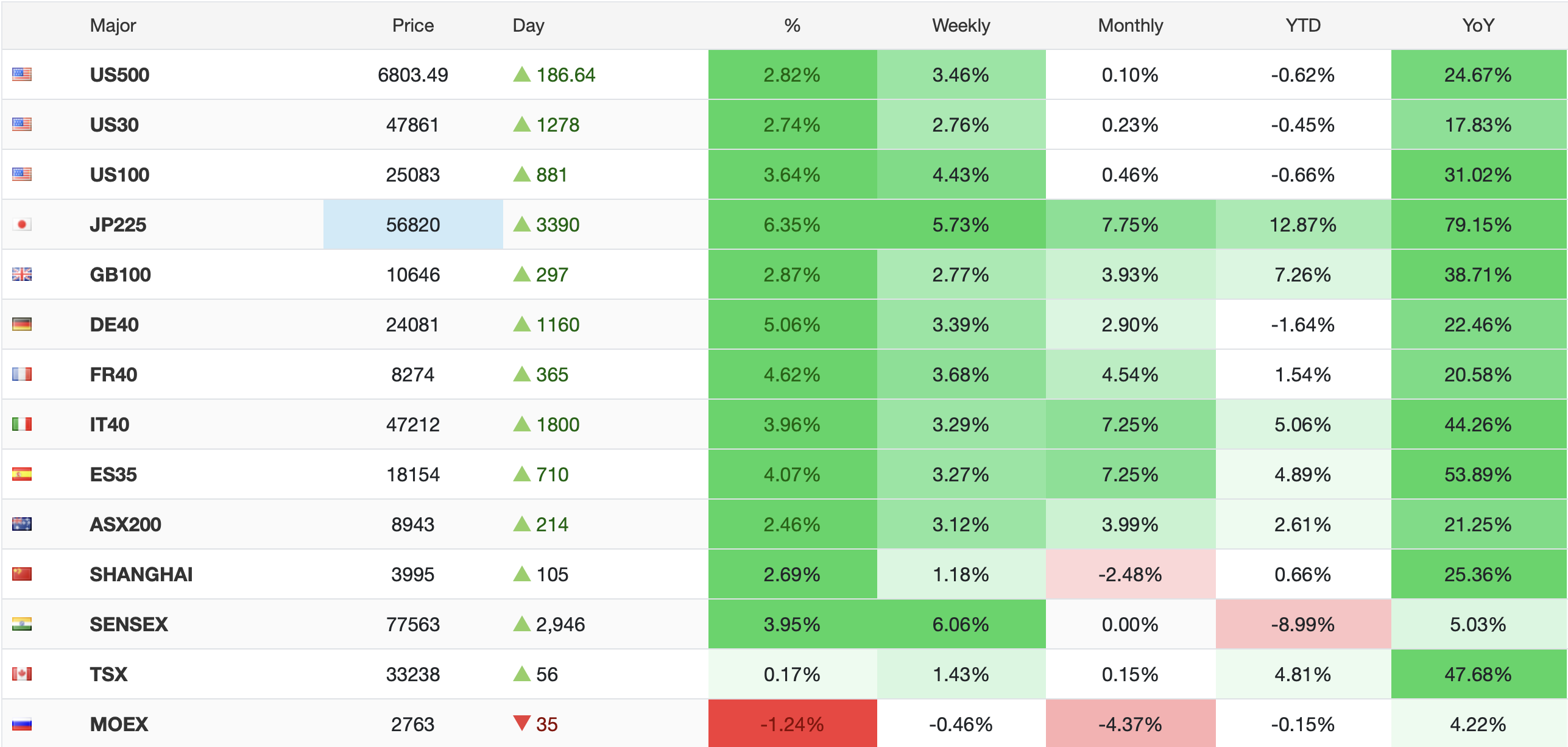
Finally, it should not be surprising that equity markets around the world are mostly lower this morning as investors pull in their wings and await more clarity on the outcome and how long this will continue.  The exception to this was mainland China (+0.4%) which managed to edge higher, but otherwise, all of Asia and Europe are down on the day, some pretty substantially.  Below you can see a screenshot of futures markets at 7:00 with the type of movements ongoing.

Source: tradingeconomics.com

The MOEX is Russia’s stock market, so it is not clear what value that adds to the conversation and the TSX, Toronto, does not have a futures market, so the price represents Friday’s close.  But as you can see, all of Europe and all of Asia ex-China have fallen sharply.

And that’s where we sit this morning.  Ironically, there is going to be a significant amount of data released this week, including the NFP report on Friday, but it is not clear market participants will be paying close attention.  For good orders’ sake, I will list the data releases anyway.

TodayISM Manufacturing51.8
 ISM Manufacturing Prices59.5
WednesdayADP Employment45K
 ISM Services54.0
ThursdayInitial Claims216K
 Continuing Claims1840K
 Nonfarm Productivity Q44.8%
 Unit Labor Costs Q40.2%
FridayNonfarm Payrolls60K
 Private Payrolls65K
 Manufacturing Payrolls0K
 Unemployment Rate4.3%
 Average Hourly Earnings0.3% (3.6% Y/Y)
 Average Weekly Hours34.3
 Participation Rate62.5%
 Retail Sales-0.2%
 -ex autos0.1%
 Consumer Credit$11.8B

Source: tradingeconomics.com

To me, market dynamics now are entirely restricted to the ongoing Middle East conflagration.  Ultimately, war is inflationary, and for many firms it is quite profitable.  But right now, investors are mostly hiding under their desks, waiting for the smoke to clear.  Institutional investors are typically unwilling to buck a key narrative trend, and I see no reason to believe this time will be different.

While much of this price movement will likely reverse when the bombing stops, until then, be prepared for more volatility, not less.

Good luck

Adf
Not All in Sync

The story that’s tripping off lips
Is whether the buildup in ships
And aircraft we’ve seen
Is likely to mean
A war with Iran’s in the scripts
 
But markets are not all in sync
As equities clearly don’t think
That war would be trouble
While bond traders’ double
Their bets war will drive stocks to drink

Economic data is clearly not a key driver of market movement these days, arguably because we continue to get mixed outcomes, with some things looking good (Initial Claims, Philly Fed) while others are less positive (Trade Balance, Leading Indicators), although granted, it is not clear to me what the Leading Indicators purpose is anymore.  My point, though, is that we have not seen unambiguous strength or weakness across the data set for several months.  This allows every pundit to frame the economic situation through their own personal lens, whether bullish or bearish.  A perfect example is the dichotomy between the strength of US corporate balance sheets, as per Torsten Slok and seen below, 

and the rise in corporate bankruptcies as per this X post from The Kobeissi Letter (a great follow on X) which shows the following chart.

So, which is it? Are things good or bad?  My understanding is that strong balance sheets and a high number of bankruptcies are not typically correlated, but I could be wrong.  

Given the lack of direction, markets have turned their focus to other things, with most headlines currently garnered by the ongoing buildup of US military power in the Middle East as President Trump tries to pressure Iran into ceding its nuclear and missile programs.  (Of course, the announcement that all information on UAP’s (fka UFO’s) has many excited, and of course, the Epstein files continue to garner attention, as does the SAVE Act, but none of those are even remotely related to financial markets.)

But even here, we are seeing very different responses by the financial markets.  For instance, equity markets continue to perform pretty well, even though Tokyo and Australia sank a bit last night.  Look at the monthly and YTD returns in Europe, Japan and Australia below:

                                           Daily   Weekly   Monthly   YTD

Source: tradingeconomics.com

It strikes me that if war was a major concern, investors wouldn’t be stocking up on risk assets.  Rather, havens would be in more demand, which we are also seeing with gold (+0.4%) and silver (+3.3%) rising overnight as despite extreme volatility in the precious metals space, there is clearly underlying demand for these havens.

Bond yields over the past month have declined, indicating that despite ongoing deficit spending, investors are seeking their perceived safety whether in Treasuries, Bunds or JGBs as per the below chart of all three.

Source: tradingeconomics.com

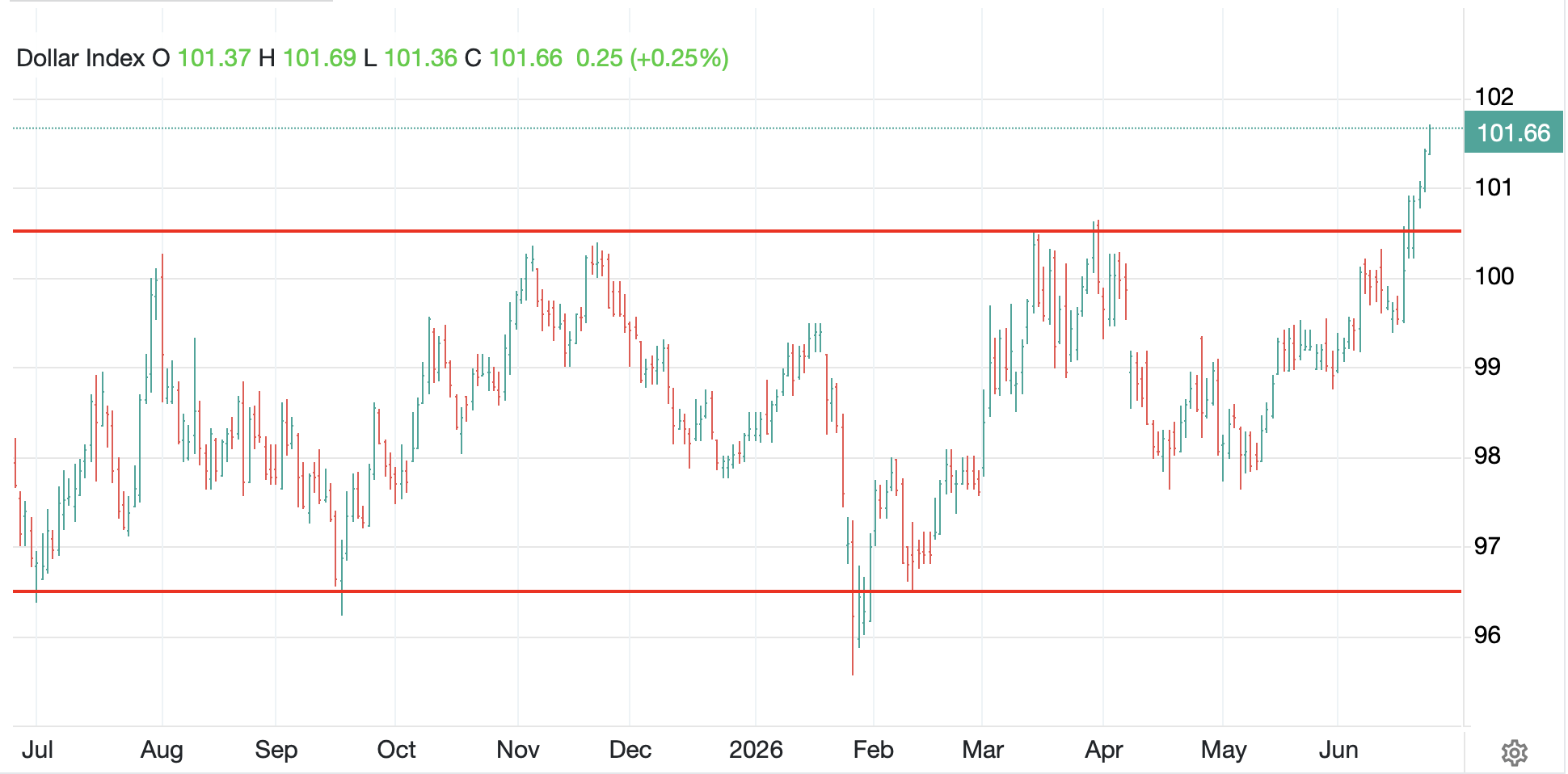
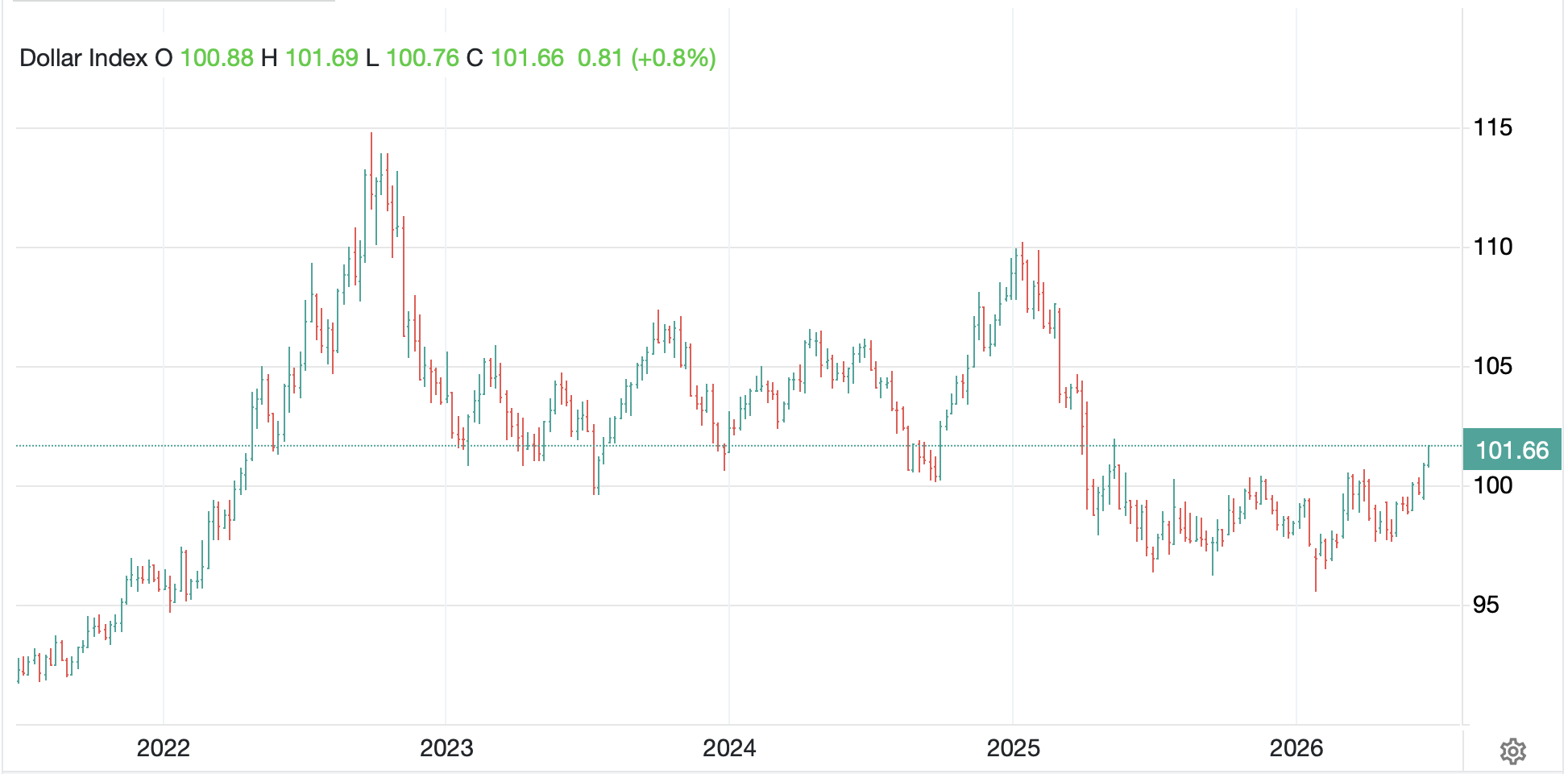
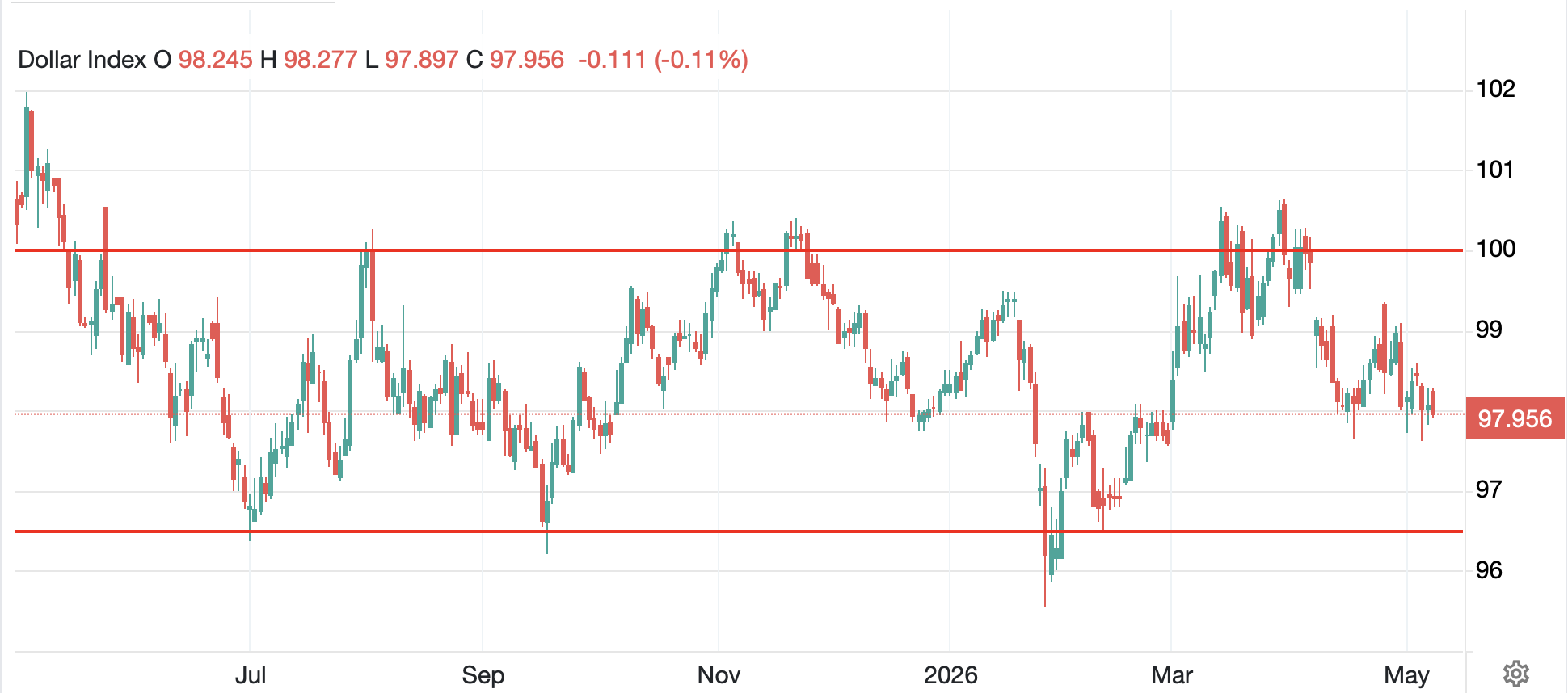
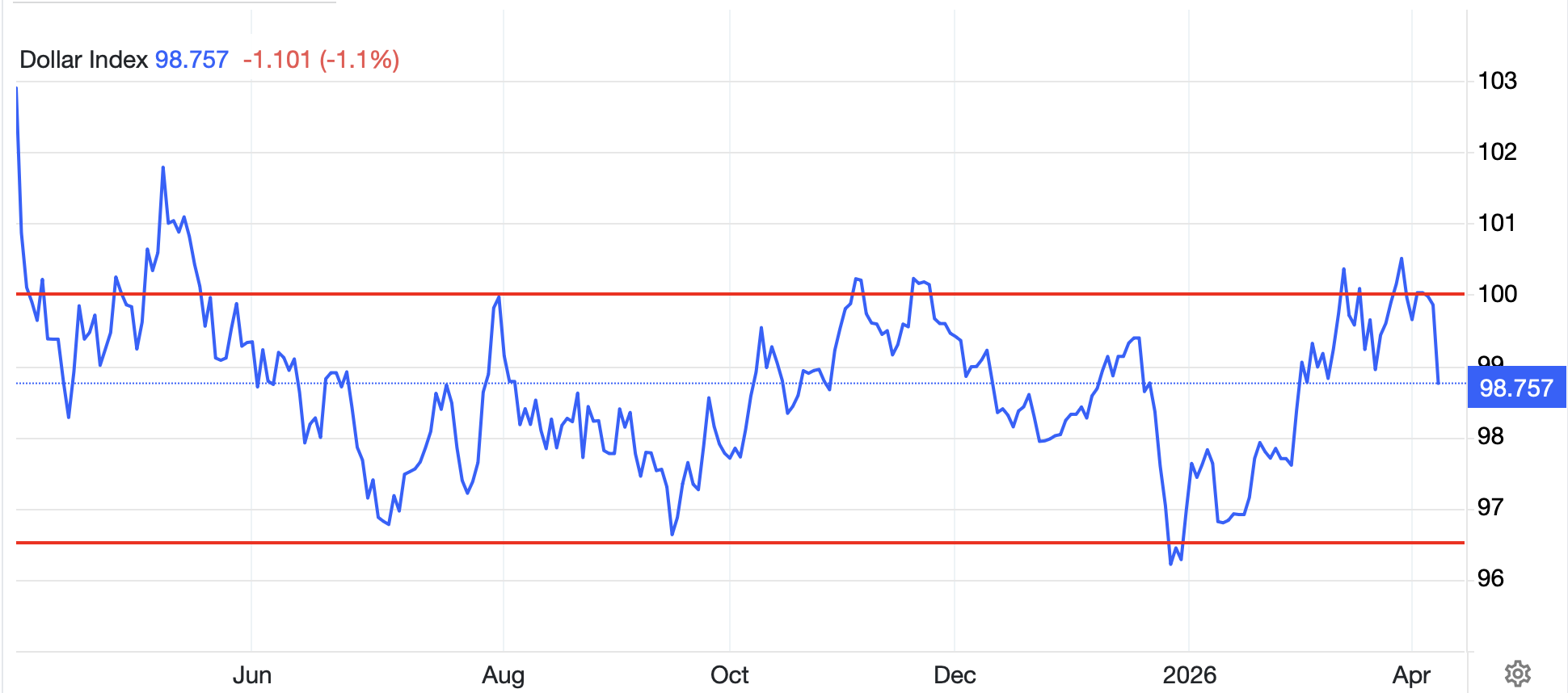
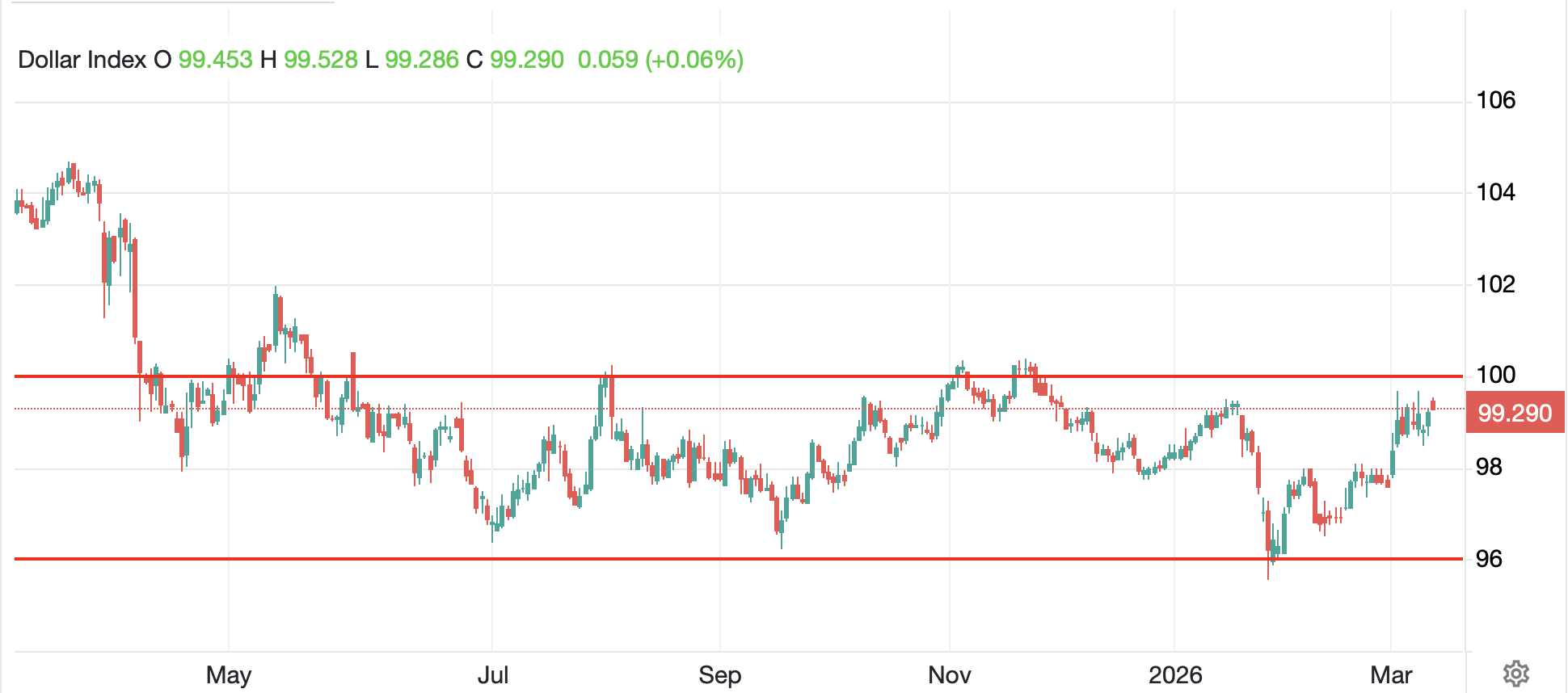
Finally, the dollar, despite frequent calls for its death, has been edging higher in a classic risk-off response as no matter how much some may hate the dollar philosophically, when bad things happen, its massive legal and liquidity advantages outweigh virtually everything else.  Once again, the DXY has moved back to the middle of its trading range, just below 98.00 this morning, and to my eyes, shows no signs of an imminent collapse.  Rather, if hostilities do break out in Iran, I expect the greenback to rally to at least the top of this trading range at 100, and depending on the situation, it could easily go higher.

Source: tradingeconomics.com

All this is to point out that nobody knows nothing.  Narrative writers continue to try to keep up with the action, and it is increasingly difficult to do so as things change on the ground so rapidly.  Let me be clear when I say I have zero inside information regarding any of this, I am merely an observer.  However, my observations are that there will be some type of military action in Iran as to build up this much fire power in a concentrated area and not use it would be remarkable and I can see no way in which the Ayatollah can accept the terms being offered as it would end his leadership if he does.  I guess we will find out soon enough as President Trump has put a 10-day timeline on things.

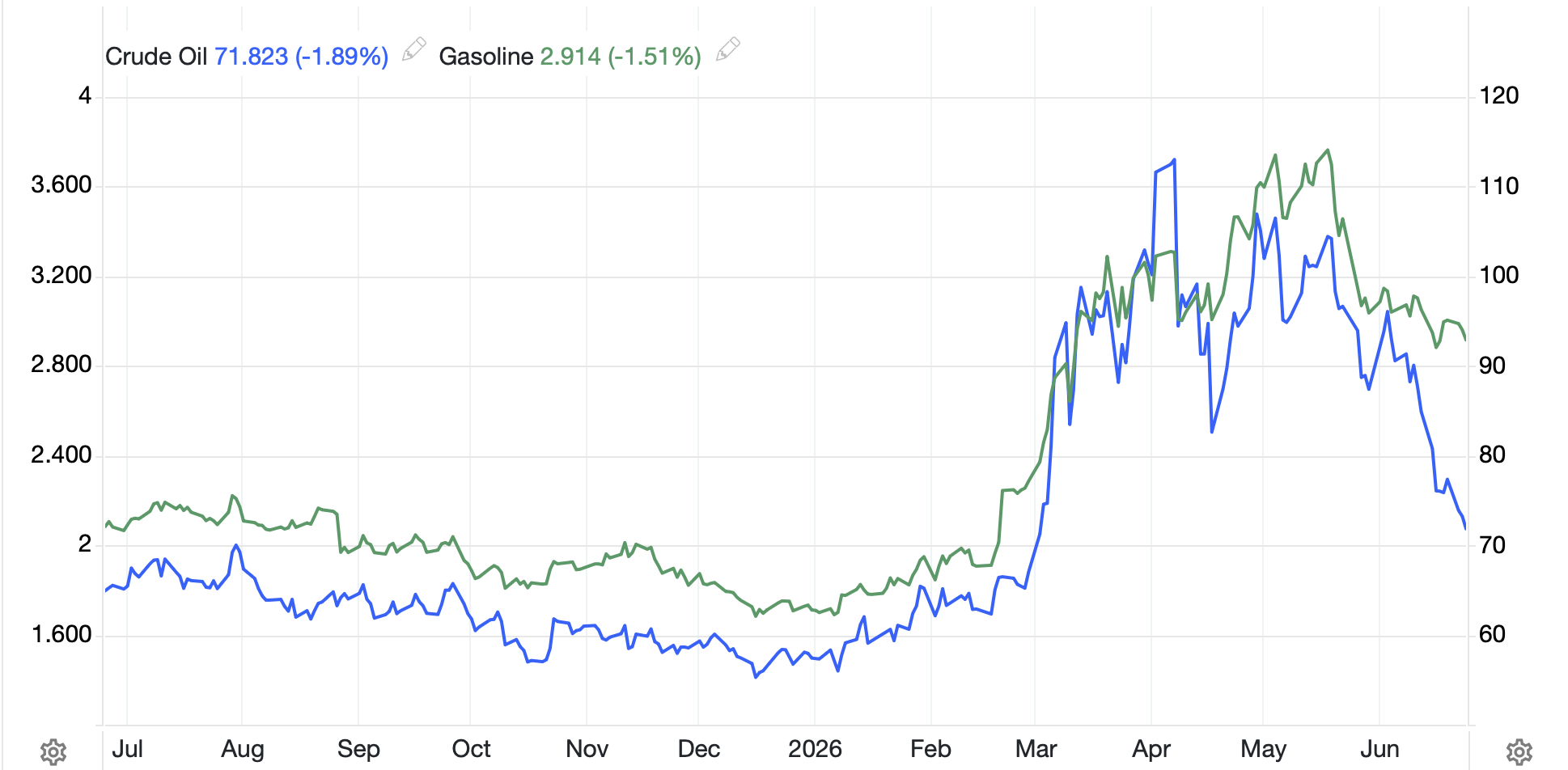
Arguably, the only market I didn’t mention here was oil (-0.5%) which is consolidating after a 20% rise in the past two months.  Remember, if military activity is directed at oil production or transport, we could see a sharp spike here and that will not help equities or economic data, although both gold and the dollar are likely to benefit.

Source: tradingeconomics.com

I don’t think there is anything else to discuss market wise so let’s turn to the data.  This morning brings a bunch of important stuff as follows:

Personal Income0.3%
Personal Spending0.4%
PCE0.3% (2.8% Y/Y)
-ex food & energy0.3% (2.9% Y/Y)
Q4 GDP3.0%
Flash Manufacturing PMI52.6
Flash Services PMI53.0
Michigan Sentiment57.3
New Home Sales730K

Source: tradingecomomics.com

We also hear from two more Fed speakers, but at this point, they are all singing from the same hymnal explaining policy is in a good place and unless there are major changes in the data, there is no reason to change.

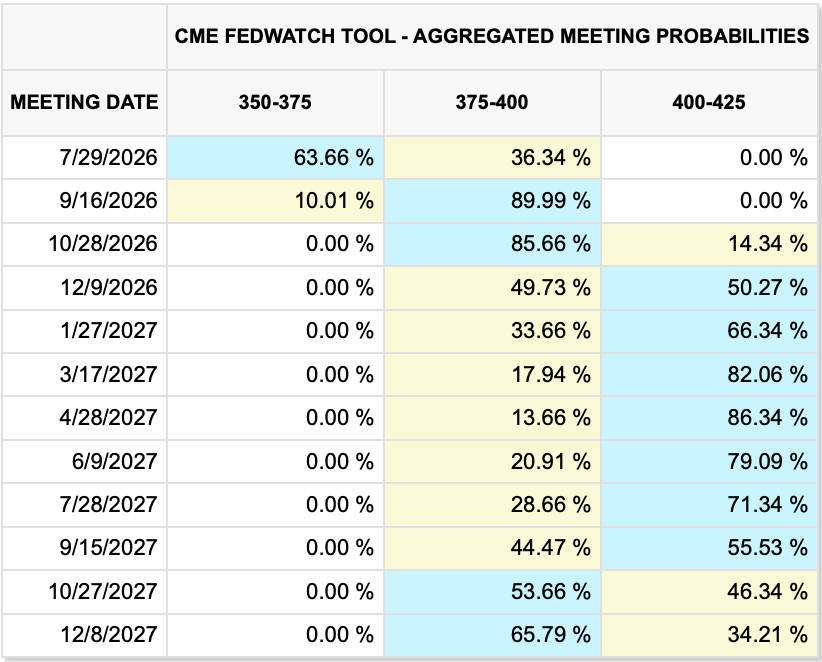
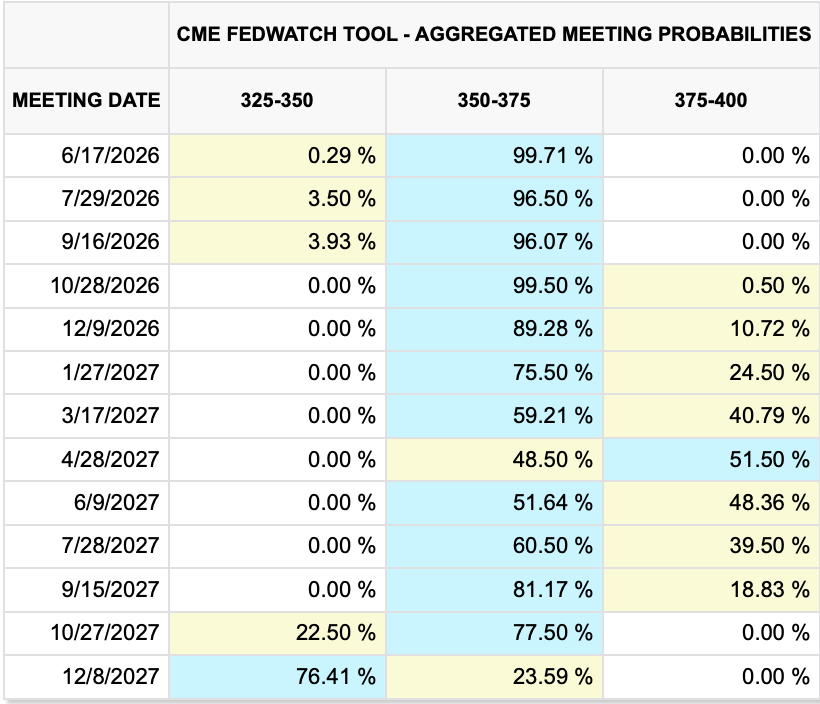
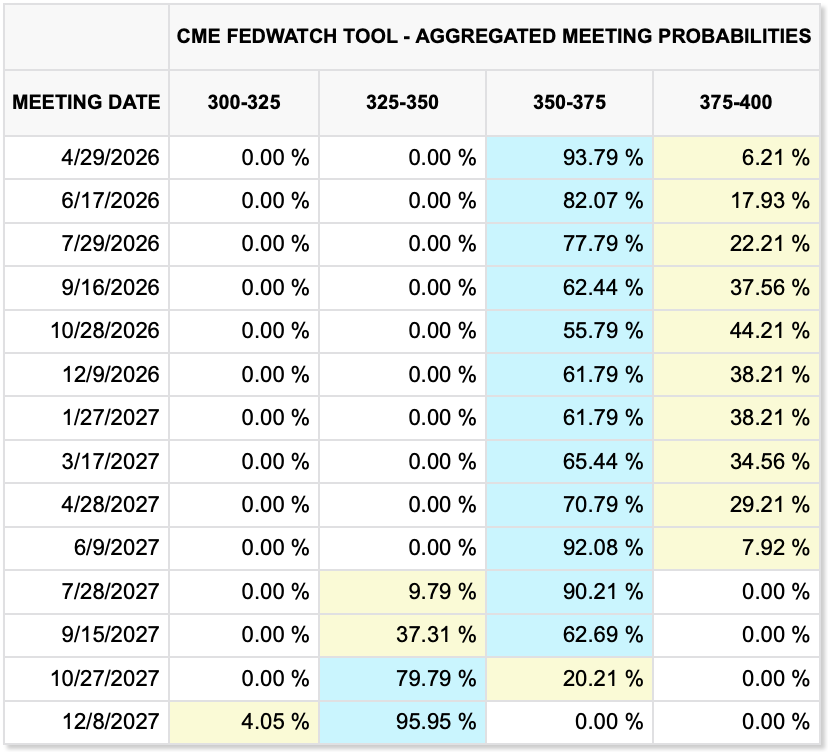
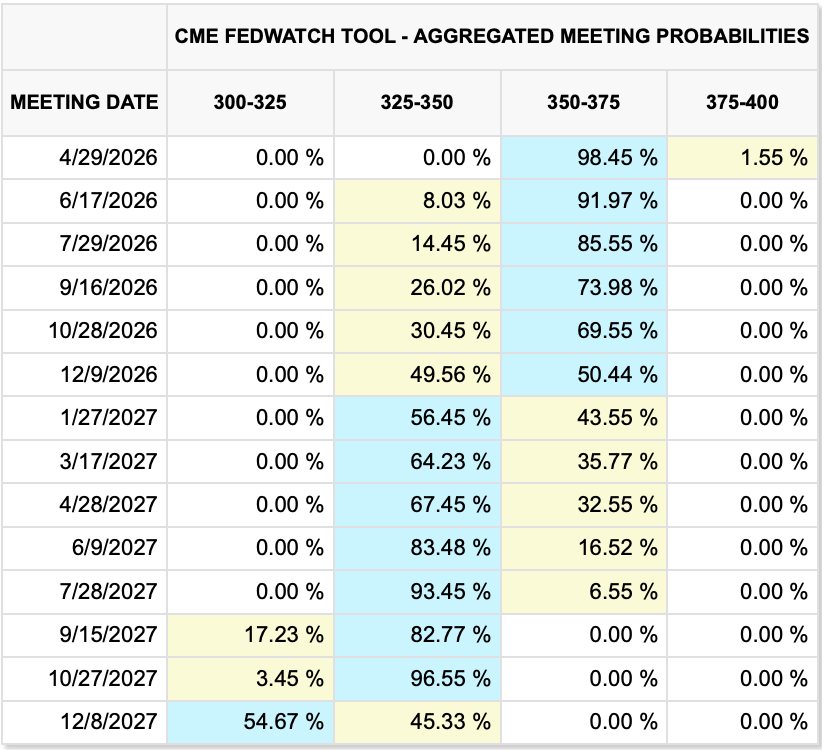
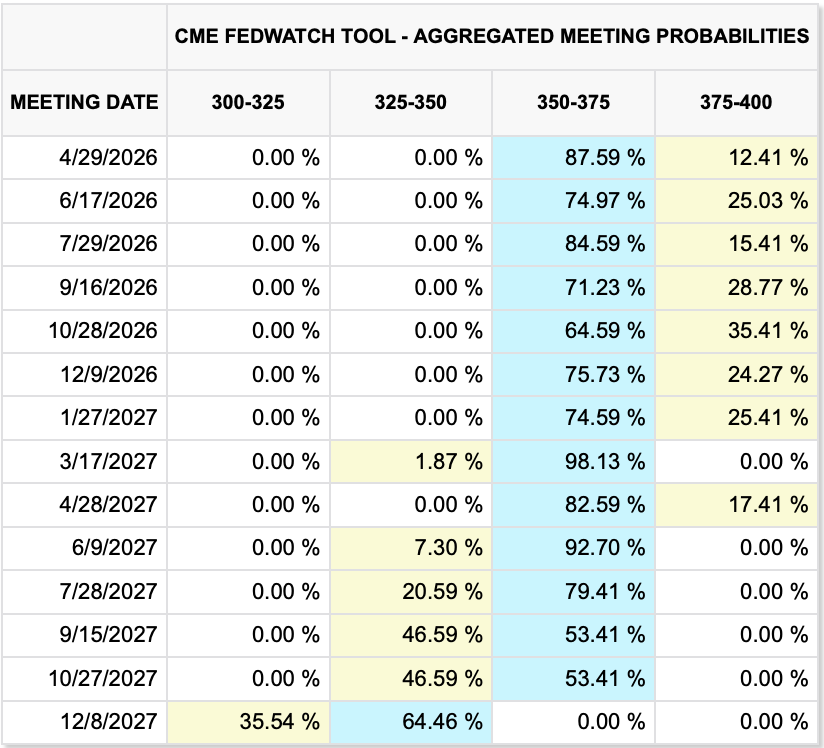
Arguably, the PCE data is the key for markets here as if it continues to run hotter than target, hopes for further rate cuts will continue to dissipate.  In fact, the next cut is now priced in for July with a second for October.  

Source: cmegroup.com

Remember, too, at that point it will be Kevin Warsh’s Fed, not Jay Powell’s, and Warsh has a very different idea about the way things need to be done.  Interestingly, as this 4th Turning proceeds and old institutions come under increasing pressure, their efforts to fight back and maintain the status quo is no longer behind the scenes as evidenced by this Bloomberg article this morning.

As I have written before, President Trump is the avatar of the 4th Turning and the institutions that are going to change are desperate to maintain the status quo.  This is, truly, the big fight that will continue through the end of the decade in my view.  Every institution that has been overseeing the global situation, whether politically, financially or militarily, is coming under pressure as income and wealth inequality have driven an ever wider disparity of outcomes.  As much power as the rich have, there are a lot more people who are not rich.  Ask Louis XVI how much being rich helped him.

On a lighter note, I watched the gold medal skating performance of Alysa Liu and it was truly magical.  A much better thought for the weekend!

Good luck and good weekend

Adf

Yesterday’s Trauma

The story is yesterday’s trauma
As risk assets traded with drama
For stocks, it was news
AI could abuse
More sectors, that triggered the bomb-a
 
For gold and the metals, however,
It seemed an alternative lever
A bear raid, perhaps
Or filling chart gaps
No matter, twas quite the endeavor
 
Which leads to today’s CPI
Where narratives that with AI
Deflation is coming
As all jobs but plumbing
We’ll no longer need to apply

Let’s start with this morning’s CPI data as in some ways, I feel like that is a key part of the overall market discussion regarding yesterday’s dramatic declines.  Expectations are for both Core and Headline prints of 0.3% M/M and 2.5% Y/Y.  If we feed those numbers into the current narrative, the implication might be that the Fed is continuing to see a slowdown here and it would open the door to further rate cuts.  Remember, despite the comments of two Fed speakers earlier this week, Logan and Hammack, the most recent information we have is that the neutral rate is believed to be 3.0%, a full 75bps lower than the current Fed funds rate.  Interestingly, if we look at the Fed funds futures market, it shows that even after yesterday’s abysmal Existing Home Sales data (-8.4%), the probability of 3 cuts doesn’t hit 50% until the end of 2027!

Source: cmegroup.com

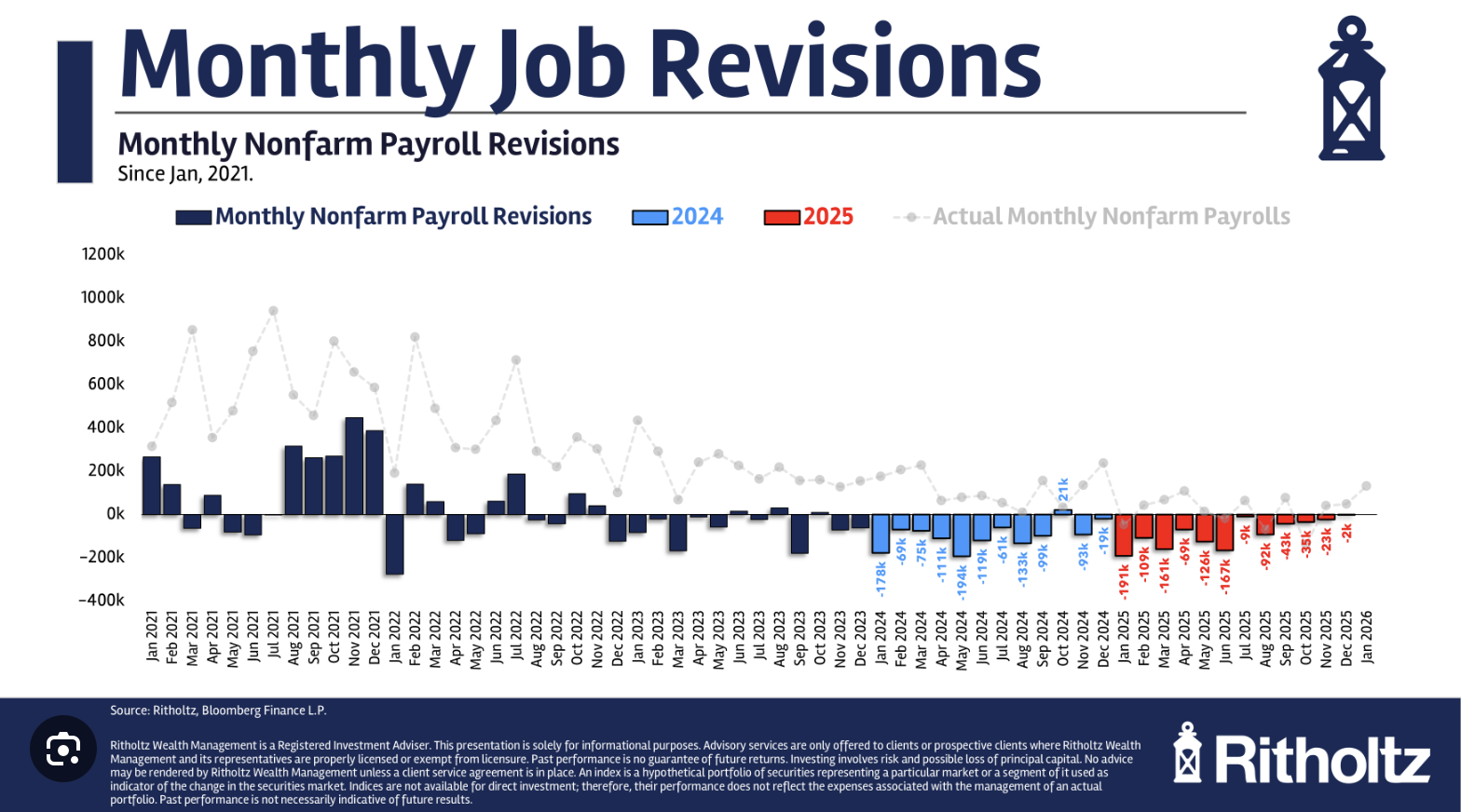
Remember, too, that the payroll report was strong on Wednesday, but that major annual revisions took much of the shine off that.  And of course, we cannot forget that since everything is political these days, certain FOMC members who dislike the President may be against rate cuts simply because the President wants them.  The point here is that the appearance of pretty solid economic activity combined with gradually decreasing inflation could argue for rate cuts but could also argue to leave things as they are since they seem to be working.  And let’s face it, the Fed doesn’t really know anyway, nor do any of us.

Which takes us to the broader narrative about what is driving stock market activity and why we saw such dramatic declines in the US yesterday, and pretty much everywhere else overnight.  It appears the proximate cause is the idea that recent AI announcements have indicated that there are entire service industries that may be destroyed because AI will serve as an effective replacement for their customers.  We have seen it for law firms, accountants and consultants and now logistics and software companies are under the gun.

Adding to the narrative is Elon Musk, who continuously claims that AI and robots will replace virtually all human labor and create enormous wealth for us all while driving prices ever lower.  The flip side of that claim is that throughout history, every major technological advance, while initially destroying jobs in the areas it was used, resulted in more, and better paying, jobs to help advance the overall economic situation.  Of course, historically, these changes took at least a generation, if not several to play out, while things appear to be happening a bit faster this time.

I have not done a deep dive on AI so take this for what it’s worth.  I use Grok as it is convenient for me given I have X open on my computer all the time.  I use it for quick research as it responds to my poorly worded questions with the information I seek and, happily, cites its sources.  But I am looking for data questions (e.g. the GDP of China or the size of European holdings of Treasuries) and I have never even considered using it to write my poetry.  Is it ready to make intuitive leaps in thought?  Maybe, but that seems a stretch.  As with all computers, its advantage over the human brain is its ability to ‘brute force’ a solution by making so many calculations in such a short time that no human can match.  However, my take is breakthroughs have come from intuitive leaps from one topic to another, not from simply doing more math on the same topic.  And it is not clear to me that AI programs, as they currently exist, are intuitive.

Of course, for our purposes, it doesn’t really matter right now if AI is that capable or not, it only matters if investors and traders believe that to be the case and invest accordingly.  That was yesterday’s story, as well as well as the story at the beginning of last week, at least based on the way the NASDAQ traded as per the below chart.

Source: tradingeconomics.com

We had six different significant drawdowns within a given hour since the end of January, and virtually all were described as a consequence of some industry sector being decimated by AI.  The thing is, valuations are pretty high in the tech sector (the area most likely to be hit) and it may simply be that investors have decided to sell the rich stuff and buy cheap stuff instead, like defensives and materials companies.  Just a thought.  But be prepared for a lot more of this narrative about AI eating some other company’s/industry’s lunch as we go forward.

Ok, let’s look at the overnight now.  First, remember, China is going on holiday all next week, and we will see much less activity from Asia accordingly.  But last night, Asia basically followed the US lower with Japan (-1.2%), HK (-1.7%), China (-1.25%) and Australia (-1.4%) headlining.  India (-1.25%) and Singapore (-1.6%) also suffered and you are hard pressed to find any markets that rose there.  As this was very tech focused, it should be no surprise.  (PS India is also suffering on AI as much of the business that had been outsourced to India could well be replaced by AI.)

In Europe, too, red is today’s color, and not simply because they lean more communist every day.  While tech is not a major part of the markets there, watching Italy (-1.5%), Spain (-1.0%), Norway (-1.1%) and Greece (-2.1%) all slide sharply tells the story, I think.  As it happens, France (-0.35%) and Germany (-0.1%) are the continental leaders and the UK (+0.1%) is the only market of note showing gains at all.  As to US futures, ahead of the data at this hour (7:30) they are softer by -0.2% across the board.

In the bond market, yesterday saw Treasury yields slip -4bps after the Housing data and this morning, they have recouped just 1bp.  European sovereign yields are all lower by between -1bp and -2bps as data releases continue to show a ‘muddle-through’ economy rather than one either growing strongly or falling sharply.  We did hear from ECB member Kazaks, telling us that the euro’s strength over the past year could have a negative impact on the economy there, implying the ECB may need to ease further.  Meanwhile, JGB yields (-2bps) continue to demonstrate virtually no concern about PM Takaichi’s plans for unfunded fiscal expansion.

Metals markets were the other noteworthy place yesterday with some very dramatic declines happening simultaneously in both gold and silver just after 11:00am.  (see below) My friend JJ who writes Market Vibes, explained last evening that the timing was impeccable as London had closed and the US is the least liquid metals market around, so if a large speculator was seeking to drive prices lower, that was when to do it.  And somebody did!  

Source: tradingeconomics.com

But that was then, and this is now.  As you can see from the chart, the market is already rebounding with gold (+1.0%) and silver (+3.2%) simply demonstrating that they remain incredibly volatile.  In truth, this was the best take I saw on the subject yesterday.

Turning to oil, President Trump indicated that talks with Iran may go on for weeks, so it is unlikely that things will combust there for a while.  At the same time, the IEA continues to try to convince everyone that peak oil is here and there is a huge glut, but net, Texas Tea slipped -2.8% yesterday and is lower by another -0.35% this morning.

Finally, the dollar…well nothing has changed.  the DXY (+0.1%) is clinging to 97 with no impetus to move in either direction.  JPY (-0.4%) may be softer this morning but is far enough away from 160, the perceived intervention level, that nobody cares.  AUD (-0.6%) slipped on the weak commodities pricing, although remains near its highest levels in three years as the RBA turned hawkish last week.  We are also seeing weakness in the EMG bloc (KRW -0.4%, ZAR -0.5%, CLP -0.6%) with yesterday’s tech and metals sell-offs the proximate drivers.  The narrative remains that the dollar is set to collapse, but I still don’t see it.  Maybe I’m just blind.  I cannot get past the economic growth outperformance and inward investment plans, as well as the need for dollars to continue the global USD debt flywheel as the key demand points.

And that’s really it.  Volatility is with us and likely to stay for a while.  This is a global regime change with respect to economic statecraft rather than the previous rules-based order, and frankly, nobody really knows how it’s going to ultimately play out.  This is why gold remains in demand, because history has shown it has maintained its value on a purchasing power basis for millennia, whatever the terms of the relevant currency may be.  But in the fiat world, I’m waiting for someone to make a better argument for something other than the dollar over time.

Good luck and good weekend

Adf

Up and Down

The only things that really matter
Are stock prices frequently shatter
Their previous high
And rise to the sky
Like too much yeast got in the batter
 
And though prices move up and down
While traders both grin and they frown
The long term has shown
The ‘conomy’s grown
Though lately, tis gold’s worn the crown

As I wrote last week, markets have a difficult time maintaining excessively high levels of volatility for any extended period of time as traders simply get tired and effectively check out.  Now, we have had some impressive volatility lately, whether in stocks, silver or natural gas, to name three and as can be seen in the chart below.

Source: tradingeconomics.com

But a closer look at the chart tells an interesting story, despite a huge amount of movement in the past month, the net movement for the S&P 500, Silver, Natural Gas and the 10-year Treasury, has been essentially zero.  If you dig through this chart, the only net movement has been the dollar’s roughly 2% decline.

That is an interesting tale, I think.  Perhaps Macbeth said it best though, “It is a tale told by an idiot, full of sound and fury, signifying nothing.”  What exactly is the significance of the remarkable volatility we have seen over the past month across numerous markets?

If we review the past month’s activities, the most notable market event was the announcement of Kevin Warsh as the next Fed chair, and the initial assumption that he is much more hawkish than market participants had previously anticipated.  It remains to be seen if that is the case, especially since we are still months away from any confirmation hearings and his eventual swearing in, but that was certainly the initial narrative.  It was blamed for a sharp decline in equities as well as precious metals, although both are essentially unchanged over the past 30 days. 

At least NatGas made sense given the significant cold and winter storms that hit much of the US and northern Europe, but those, too, have passed, and prices are back to where they were prior to the more extreme weather.

Maybe the most interesting thing is that bond yields are basically unchanged despite the Warsh announcement.  It would not have been surprising to see a significant move there given Warsh’s ostensible hawkishness, but that was not the case.

My point is that markets move for many reasons.  Occasionally, there is a clear catalyst (Japan’s Nikkei responding positively to PM Takaichi’s landslide victory comes to mind), but more often than not, the narrative writers seek to explain price action after the fact while covering up their previous forecasting mistakes.  I, too, am guilty of this at times, which is the reason I try to step back and take a broader, longer-term view of market movement to get underlying causes.  As I no longer sit on a trading desk, I am not privy to the day-to-day tick activity, and frankly, even then, unless it was happening at my bank, I would still be in the dark.

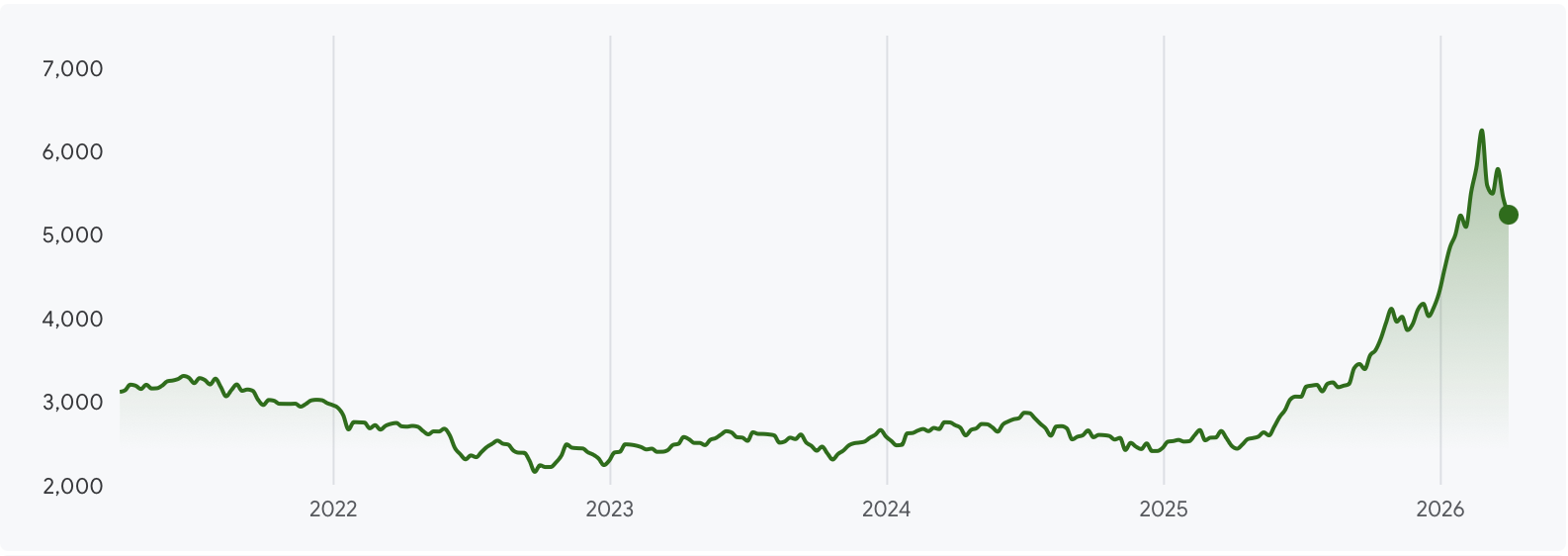
To conclude, the strongest trends, which remain the precious metals, continue, although prices are back closer to the long-term trend than the parabolic heights seen 10 days ago as you can see in the below chart.  In fact, I don’t think we have had any changes in the underlying story, but the extreme market volatility is likely to be done for a while going forward.

Source: tradingeconomics.com

Which takes us to overnight market behavior.  While Tokyo (+2.3%) is still ripping higher on the Takaichi election news, only Taiwan (+2.1%) and the Philippines (+2.0%) are keeping pace with the rest of the region much less impressed, (China +0.1%, HK +0.6%, Australia 0.0%).  To my point, nothing has changed.  In Europe, too, price activity is fairly muted (France +0.4%, Germany +0.1%, Spain +0.2%, UK -0.2%) as there has been no news of note either economically or politically.  The most interesting data point was Norwegian inflation which came in much hotter than expected at 3.6% and has traders thinking the Norgesbank may be set to tighten again.  This has helped NOK (+0.6%) which is the leading gainer in the FX markets this morning.  As to US futures, at this hour (7:20), they are very modestly higher, just 0.15% or so across the board.

In the bond market, yields are backing off everywhere, with Treasury yields lower by -3bps, and European sovereigns lower by -1bp to -2bps across the board.  The exception, of course, is Norway (+8bps).  Perhaps, more interestingly JGB yields (-5bps) are slipping despite (because of?) Takaichi’s landslide victory.  Recall, heading into the election, expectations were for aggressive fiscal expansion and borrowing to pay for it.  However, Katayama-san, the FinMin has been explicit that they were going to be borrowing at the short end of the market, 1yr to 5yrs, so perhaps it is no surprise that the 10yr yield is slipping.  With that in mind, though 5yr JGB yields also fell last night, down -3bps, although shorter dated paper was unchanged.  I have not read of any analysts complaining that Japan is turning into an emerging market because they are funding themselves with short-dated paper, although when the US does it, apparently it is the end of the world.

Turning to commodities, oil (0.0%) continues to get tossed around on the Iran story, with no certainty as to whether a deal will be done or the US will attack.  Apparently, Israeli PM Netanyahu is meeting with President Trump tomorrow to register his opinions on the subject.  The interesting thing in this market is that the ‘peak oil demand’ narrative, which has been pushed by the climate set as occurring in the next year or two, has been pushed back to 2050 by the IEA as they take reality into account.  That may encourage more drilling, but that’s just my guess and as I’m an FX guy, what do I really know?

As to the precious metals, after a couple of days rebounding, this morning, the sector is modestly softer (Au -0.3%, Ag -1.6%, Pt -1.2%) although as per the chart above, the trend remains higher across all these metals.

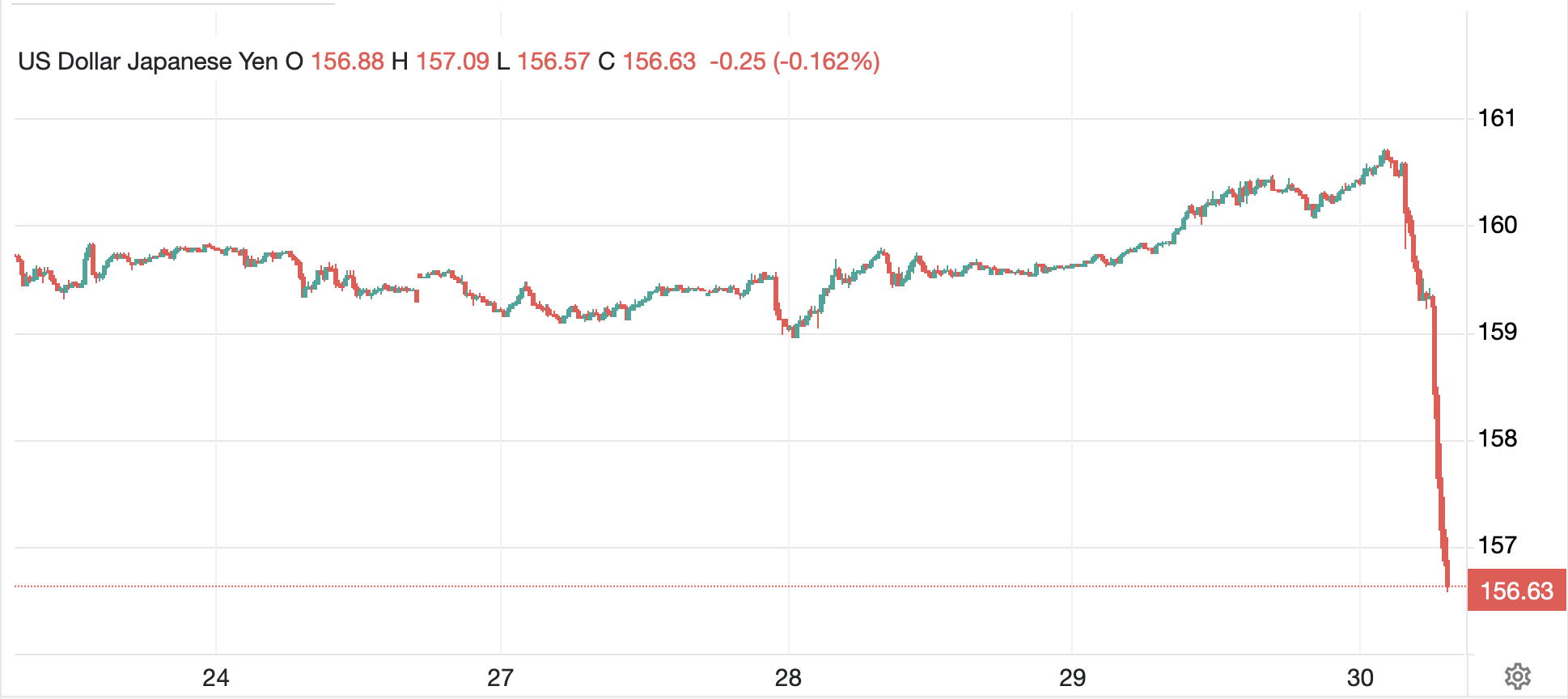
Finally, the dollar, which has fallen the past two days, has stabilized and is mostly higher (save for NOK mentioned above) with most currencies softer by about -0.15 or -0.2%.  The other exception of note here is JPY (+0.5%) as there has been a lot of jawboning by the MOF there to prevent a rash of weakness.  However, it is difficult for me to look at the JPY chart below and discern a major reversal is coming.  I believe that the MOF wants to keep that 160 level as a dollar ceiling without spending any money if they can, but the problem with jawboning is that it loses its efficacy fairly quickly.  However, if they drive yields higher on shorter dated paper, perhaps that will attract more inflows, although given how low they currently are (2yr 1.29%, 5yr 1.69%) I think they have a long way to go before they become attractive to international investors.

Source: tradingeconomics.com

On the data front, NFIB Small Business Optimism fell to 99.3, a bit disappointing, and now we await the following: Retail Sales (exp 0.4%, 0.3% -ex autos) and the Employment Cost Index (0.8%).  We also hear from two more Fed speakers, Logan and Hammack, but I don’t see the Fed, other than Warsh, being that critical right now.  

And that’s really it for today.  My take is we are unlikely to see dramatic movement in any market so hedgers should take advantage of the reduced price volatility.  But otherwise, sometimes, there is just not that much to do.

Good luck

Adf
Changing Fast

At this point most traders are thrilled
It’s Friday, ‘cause throughout that guild
Exhaustion is rife
From bulls’ and bears’ strife
O’er whether their dreams be fulfilled
 
As well, all the narrative writers
Are stuck pulling college all-nighters
With facts changing fast
Their latest forecasts
Do naught but encourage backbiters

It has certainly been an interesting week in financial markets, at least most of them, with significant moves throughout the commodity, equity and cryptocurrency spaces.  We even saw a jump in bond prices yesterday after a really lousy JOLTS Jobs number (6.54M compared to 7.2M expected) and a higher-than-expected Initial Claims number of 231K.  Suddenly, questions about the labor market are front of mind, and prospects for a March Fed Funds cut rose to 23% for a time, although have slipped back to 17% as of this morning.  But one need only look at a few charts (all from tradingeconomics.com) showing the daily movement in some popular trading vehicles to understand why traders are thankful the week is ending.  For instance, 

Silver (+4.75%), which had a 34% range last Friday and has fallen 39% since its high 8 days ago:

Gold (+2.1%), which showed the same pattern, albeit not quite as dramatically:

Natural Gas (+3.4%), which rose $2.65 and reversed $2.00 on a $3.00 base over the past two weeks:

And Bitcoin (+5.8%), which has fallen nearly 50% since its highs in early October and 22% in the past week:

Now, it must be remembered that Bitcoin has a long history of massive drawdowns, with a 50% drawdown in spring of 2021 and a 75% drawdown from November 2021 through October 2022. We shouldn’t be surprised as Bitcoin is essentially a pure risk asset, so is completely narrative driven.  And as the narrative writers try to keep up with the facts on the ground, they are trying to figure out how to sell the story that Bitcoin, which was ostensibly designed to be an alternative to the fiat currency system, has become so tightly linked to the fiat financial system.

In the end, though, the commodity markets are beholden to the marginal demand/supply of the last molecule available.  I have not seen anything change with respect to demand for power to drive the economy, the demand for silver to build out electronics or the demand for gold by central banks.  To me, while prices for these commodities can whipsaw aggressively as the global regime changes, ultimately, I remain confident demand will continue to be the story.  (Bitcoin is an entirely different beast and one I will not discuss in depth other than to highlight its volatility along with the rest of these markets.)

Anyway, you can understand why traders are exhausted.  In fact, my forecast for next week is that we are highly unlikely to see the same size movements, although choppiness will still be the rule.

You may have noticed I missed oil (-0.4%) which has also seen some volatility as per the below chart, but not quite at the same level as the others.  Part of that is the oil market is much larger and more liquid and part of that is that the whole Iran/US discussions question has provided fodder for both bulls and bears in short intervals resulting in no net movement over the past week.

From what I can piece together, the situation in Iran is coming to a head regarding the regime there.  The talks today are ongoing, but there is other information that appears to indicate preparations are being made for a transitional government, and the State Department just warned all US citizens to leave Iran.  Something is up which will certainly drive more oil volatility.

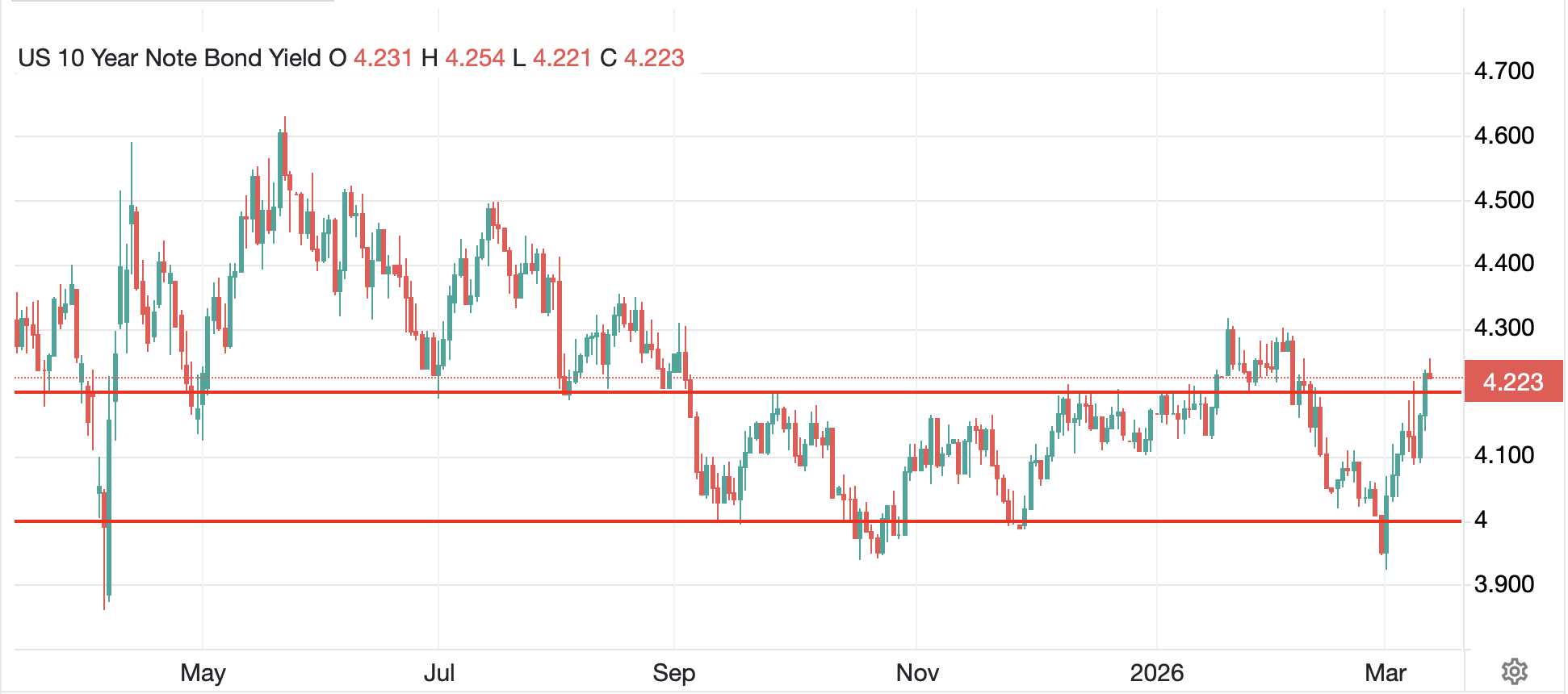
If we look at bonds, Treasury yields fell -8bps yesterday and have rebounded by 2bps this morning.  That was the largest single day move we’ve seen since October, and basically took the market right back to that 4.20% level that had been home for weeks.

There continues to be a lot of confusing data and information regarding the economy as yesterday’s weak jobs data conflict with the broader idea that the hyperscalers are spending 2% of GDP on capex this year and forecasts for the budget deficit continue to run around 2%.  It seems like it will be difficult for a recession to come about with that much new spending in the economy, but as we have seen over the past decades, the beneficiaries of that spending are not necessarily the population cohort that is currently upset.  I guess the question is, is economic growth real if the population doesn’t feel it?  That will certainly be the political question come November.

As to European yields, they all followed Treasuries lower, especially after the BOE 5-4 vote to leave rates on hold offered a much more dovish signal than anticipated, and the ECB harped on the strength of the euro and how that could bring down their inflation forecasts, hinting at lower rates going forward.

In the equity markets, yesterday saw a tough day in the US as the tech/AI story continues to get beaten up right now, and that was more than enough to offset strength in things like defensives and staples.  But this morning, US futures are higher by about 0.5% as I type (8:00).  In Asia, Japan (+0.8%) bucked the US trend on the back of excitement about the upcoming election where Takaichi-san is expected to gain a mandate.  However, China (-0.6%), HK (-1.2%), Korea (-1.4%) and Australia (-2.0%) all had the same fate as the US.  Given the weight of technology companies in Asian indices, I suspect we are going to see more volatility here as different narratives come about on AI and investment and the social/political impacts.  As to Europe, modest gains are the story with the DAX (+0.5%) and IBEX (+0.9%) leading the way higher with the former benefitting from yesterday’s surge in Factory orders as well as a better-than-expected trade balance today.  As to Spain, it has been trending higher and nothing has come out to change that view for now.

Finally, the dollar is giving back some of yesterday’s gains but remains within that longer term trading range.  Using the dollar index (DXY) as our proxy, you can see just how little things have changed.  All the talk last week of the breakdown in the dollar has been forgotten for now, although I continue to read about China building a digital currency backed by gold.  I discussed that earlier this week and why I continue to believe that is unrealistic at this time.

But the weird thing about the DXY is it doesn’t seem to reflect what is happening in individual currencies.  For instance, AUD (+0.85%), GBP (+0.45%) and NOK (+0.9%) are all much stronger although the euro (+0.15%) and JPY (0.0%) not so much.  In the EMG bloc, MXN (+0.8%), ZAR (+1.1%), HUF (+0.8%) and KRW (+0.3%) are all having a very good session despite no specific news that would seem to drive that.  Historically, I never paid attention to the DXY because nobody who actually trades FX pays it any mind.  However, as a trading vehicle, it has gained many adherents which is why I mention it.  So, as we look across the currency universe, the dollar is having a tough day.

On the data front, we only see Michigan Sentiment (exp 55.0) and Consumer Credit ($8.0B).  We also hear from Governor Jefferson, but nobody seems to be listening to any Fed speakers right now, Secretary Bessent is a far more important voice for the markets.

We have seen massive moves across many markets lately, with excessive moves correcting, but I remain stubbornly of the view that while things got ahead of themselves, the underlying trends are still in place, at least in commodities.  As to the dollar, it’s not dead yet, but its future will depend on the administration’s ability to achieve their goals regarding the economic adjustments and inward investment.  

Good luck and good weekend

Adf

Dissension

It seems that there’s still quite some tension
As metals and stocks show dissension
Though Friday both puked
Of late, metals juked
Much higher, to stocks contravention
 
So, what can we learn from this split?
That tech stocks all now trade like sh*t
While silver and gold
Are what folks will hold
And bonds? No one just gives a whit

It seems the government shutdown has ended, just as quickly as it began and the only people impacted are traders who were looking forward to the NFP data on Friday.  Given the shutdown was only for a few days, and that apparently, all the data was already collected, it was the compilation that was being delayed, I presume we will get the numbers next week.  Of course, this is a government bureaucracy, so it may take a bit longer.  Nonetheless, this morning we see the ADP Employment number (exp 48K) and analysts will have to work from that, plus the reports like the ISM hiring data, to give their views of the economy.  It really all does seem like theater, I must admit.

Anyway, away from that, the only other news of note that is impacting markets has been an increase in tensions in Iran after the US shot down an Iranian drone heading toward the US aircraft carrier, Abraham Lincoln.  However, it appears that talks are still scheduled for Friday, so oil (+0.2% today, +1.4% since yesterday morning) is creeping back higher, although remains well below the levels seen last week when concerns over a US attack there were mounting.

Source: tradingeconomics.com

Which takes us to markets and what appear to be the key internal drivers.  Starting today with stocks, the narrative revolves around concern that AI is going to destroy software companies and SaaS models since their user base will no longer need those companies.  As well, there are the lingering concerns about the AI investment bubble and the circular dealing between Nvidia and its customers being an indication of the end of the era.  This is akin to what happened during the tech bubble in 2000-01 and has been highlighted by numerous analysts for several months, although is gaining more traction of late.  Finally, the Business Development Companies (BDC’s) and PE firms are under increasing pressure as their portfolio of loans and positions, many of which are being hurt by AI, are starting to hemorrhage cash.  This trifecta has been weighing on the NASDAQ, preventing any significant strength, although other sectors, notably energy and materials, have been doing pretty well.

The funny thing is, while the NASDAQ (-1.4%) fell yesterday amid widespread US equity weakness, if I look at the chart (below from tradingeconomics.com) it doesn’t seem that negative, rather it seems to be consolidating ahead of another leg higher.  But then, I am no technician, so don’t pay attention to me.

However, the narrative is strong here that the world is about to end because Nvidia hasn’t made a new high in the past three months.  I am no tech stock expert, but my take from the cheap seats is that future equity market outcomes are going to continue to be reliant on the success of the Trump administration’s plans regarding reshoring and changing the nature of trade.  It is likely to be bumpy, especially if the Fed does not cut rates to support equity markets, especially since that has been the MO for the past 40 years.  But I remain positive overall.

Looking around the rest of the world, last night saw a mixed picture, although definitely more green than red.  While Tokyo (-0.8%) slid along with Malaysia and the Philippines, the rest of the region had a nice session led by Korea (+1.6%), China (+0.8%) and Australia (+0.8%).  It appears the tech fears were less concerning there, either that or PE and BDC companies aren’t yet so prevalent.  In Europe, meanwhile, despite mixed PMI Services data, there are more gainers than laggards led by the UK (+1.0%), which does have miners, benefitting from the rebound in metals prices.  But France (+0.9%) and Spain (+0.15%) are also higher although Germany (-0.2%) is lagging after a modest miss in the PMI data. As to US futures, at this hour (7:15), they are pointing higher by about 0.25%.

Back to metals, which continue to be THE story these days, gold (+2.0%) has reclaimed the $5000/oz level and while it is lower in the past week, remains nearly 17% higher YTD.  Silver (+6.0%) is also rebounding nicely along with platinum (+3.8%) as more and more discussions have ascribed last Friday’s rout to month end delivery and position issues amongst a few very large players who were able to prevent some major damage to their own balance sheets.  However, as I have maintained all along, the fundamentals are unchanged; there is a shortage of silver for industrial use and has been for several years.  As to gold, there is no indication that central banks have stopped buying.  These continue to be long-term plays and will likely drag the entire metals sector along for the ride.

What about bonds, you may ask?  Well actually, nobody is asking about bonds!  They remain mired in a tight range with dueling narratives about the long-term view.  On the one hand, there are those who continue to look at the US debt load, and the expectation of fiscal deficits as far as the eye (or the CBO) can see, and expect supply issues to dominate, forcing the government to seek inflation to create the soft default necessary to pay back the debt.  They will point to the long-term trend, which saw yields decline for 40 years and then reverse back in 2020 (see chart below from finance.yahoo.com) as evidence that yields are going to trend higher for the next decades.

On the other side, you have those who believe the future is deflationary, with AI driving massive increases in productivity and driving down prices, while focusing on Truflation’s recent readings of 1.0% and claiming that is the way.  Personally, I have more sympathy for the former view than the latter, as it is increasingly difficult for me to understand the view that AI will be able to achieve all its currently stated desires without sufficient energy and materials, whose increasing prices are going to limit any downside in inflation.  As well, while a Warsh Fed chairmanship may strive to change the current central bank model of QE whenever needed, there is zero evidence any other central banks are going to follow suit.  

In the meantime, the tension between those two views has kept yields in a very tight range for a while, and we need an exogenous catalyst to break that range.  Peace in Ukraine?  War in Iran?  I’m not sure.

Finally, the dollar is a touch firmer this morning, notably against the yen (-0.6%), which continues to give back its gains from two Friday’s ago when the Fed ‘checked rates’ in the NY session as seen in the chart below.

Source: tradingeconomics.com

However, the point was made this morning, and it is a good one, that while Japanese 10-year yields are at 2.24%, 10-year yields, 10-years forward are about 4.10%, which would be a devastating yield for the Japanese government given its debt/GDP ratio remains above 230%.  It is difficult to get excited about owning the yen with that backdrop, especially given the demographic implosion of population that is ongoing there.  As to the rest of the currency market, Zzzzz.  Aside from the narrative of the dollar is dead, which gets recycled by somebody every day, it is very hard to look at recent price action and think something remarkable is going to happen.  We will need major monetary and fiscal policy changes, which while they may arrive, are going to take quite some time to get here.

And that’s really it this morning.  Aside from ADP, we get the ISM Services (exp 53.5) and we get the Quarterly Treasury refunding announcement, which will garner a great deal of attention only if Secretary Bessent explains he is going to issue more bonds and less bills, which seems unlikely.  Monday’s ISM data was quite strong.  Strength today could well portend that the US economy has a bright future ahead, in the near term, and that should support stocks and the dollar, while commodities will benefit from the increased demand.  Bonds?  Well, we’ll see which side of that argument is correct.  And what happens if the deficits are smaller than expected?  That is the question nobody is asking because the ‘smart’ folks don’t believe it is possible.  Remember, the dollar is still king.

Good luck

Adf
Bane and Hellfire

Though not getting near as much press
A shutdown, once more’s, added stress
To labor releases
And so, we’ll miss pieces
Of data.  For Wall Street, a mess
 
But once again, I need inquire
Are shutdowns a bane and hellfire?
Or are they instead
A way to spearhead
More funding cuts we should desire?

It seems that once again, the government shut down, at least partially, on Saturday night because the Senate refuses to pass the required funding legislation.  At this point, 6 of the 12 funding bills are already signed into law, so the shutdown is not as extensive.  But more interestingly, it is not garnering nearly the headlines that this situation did last autumn.  

In fact, I only mention it because the most direct impact we are likely to see is that, once again, the BLS will not be releasing data on time, notably today’s JOLTS Job Openings report and Friday’s NFP data.  So, while Ken Griffin will miss more opportunities to make money via his HFT algorithms front running retail traders, the rest of us probably don’t care all that much.

Which brings me to the question of the size of the federal government.  Stick with me here.  Along these lines, I want to highlight a very interesting piece written by Michael Nicoletos which is well worth reading on the subject of naming Kevin Warsh as the next Fed chair.  Prior to reading this article, I had come to the view that while Warsh would not technically be joining the Cabinet (Fed independence and all that), he is going to be working shoulder to shoulder with Treasury Secretary Bessent (they have worked together before and are close friends apparently) to achieve their goal of restructuring the way the US economy functions.  

Much has been made of how it will be impossible for Warsh to cut rates (as Trump desires) while reducing the Fed’s balance sheet, which is something for which Warsh has repeatedly called.  The missing piece of the puzzle, which I have rarely seen mentioned other than in this article, is regulations, specifically bank regulations.  If the Fed reduces the need for banks to hold Treasuries for safety/liquidity reasons, it allows them to lend more money to the real economy which will support actual economic activity.  The result can be that instead of Fed primed monetary stimulus, the nation could see business investment (consider the amount of promised inward investment to the US on the back of the trade deals) which can result in sustainable growth with less monetary support.  This is a completely different framework than we have seen since, arguably, Paul Volcker, as it was Alan Greenspan who first created the Fed put.  Frankly, it is the most bullish prospect I have seen in a long time.  Read the article!

One other thing Warsh is keen to do is near and dear to my heart, reduce the size of the Fed and the Fed’s transparency of thought.  Less press conferences, less interviews, ending forward guidance, and less Fedspeak overall would be a blessing for us all!

Ok, on to markets.  Precious metals continue to be the major mover and shaker across all markets with the last several days declines being sharply reversed this morning.  I think gold (+5.3%) and silver (+8.3%) deserve their own charts (from tradingeconomics.com) given the extraordinary nature of the recent price action.  While the volatility here has been extreme, as I have repeatedly said throughout this move, the fundamentals have not changed, so demand for metals, especially silver into a deficient market, remains the ultimate driver.

Obviously, both metals remain far below their recent peaks, seen just last Thursday, but recall, parabolic tops always see retracements of this nature.  My expectation going forward is that both these metals, and copper (+3.2%) and platinum (+6.2%) will be heading higher again, albeit not quite as quickly as we saw during January.  One other thing adding to the bullishness is the announcement of Project Vault, a US stockpile of strategic minerals including copper and silver as well as a long list of rare earth elements.  Remember what happens when a price insensitive buyer enters the market.  You want to be long!

As to energy markets, oil (+0.35%) and NatGas (-1.2%) are both a bit less active this morning as the latter, which tumbled 25% yesterday on the end of the cold wave, is finding a new home while oil continues to soften based on the upcoming talks between the US and Iran which has reduced concerns of a military intervention there.

Compared to the commodities space, the rest of the markets are quite dull, indeed.  Turning to the stock market, yesterday saw solid gains in the US after much stronger than expected ISM Manufacturing data (52.6 vs expected 48.5) which was the strongest reading since August 2022.  As you can see from the below chart of this statistic, the US manufacturing sector has suffered greatly for more than 3 years, and that is true in the employment statistics there as well.  Is this the beginning of the great reshoring?  It is too early to tell, but if we see this for the next several months, you can be sure the narrative is going to change.

Source: tradingecommics.com

In Asia, Tokyo (+3.9% and a new all-time high) rallied on the stronger US market, the ISM data and the weaker yen supporting profitability of Japanese exporters.  Korea (+6.8%) saw a huge move on the back of semiconductor makers Samsung and SK Hynix, while the government there seeks to get investors to bring money home to support the currency. India (+2.5%) rallied on the news of a trade deal with the US that reduces tariffs to 18% and gets them to stop purchasing Russian oil, buying from the US instead and generally, there were gains everywhere in the region, even Australia despite the RBA hiking their base rate (as expected) but sounding more hawkish than traders assumed.

In Europe, the picture is more mixed and far less impressive with gains and losses on the order of +/-0.2% across the board.  While earnings data has been solid generally, there is ongoing concern about the outcome of Russia/Ukraine talks and a mix of data with French inflation falling to 0.3% Y/Y and Spanish Unemployment rising although the ECB, which meets Thursday is not expected to adjust policy.  As to US futures, at this hour (7:10) they are higher by 0.25% or so.

In the bond market, the strong ISM data saw 10-year yields back up 4bps yesterday, and they have edged a further 1bp higher this morning.  European sovereign yields are higher by 2bps across the board, as are JGB yields.  It seems we may be seeing the initial pricing of stronger economic activity.  However, if we take a longer-term perspective of bond yields, as per the below chart, it shows us that, frankly, while there have certainly been some ups and downs, yields are little changed overall in the past 2 ½ to 3 years on a net basis.  

Source: tradingeconomics.com

As I wrote in the beginning, there are changes afoot in policy making circles, certainly in the US which drives the entire global financial markets, so it remains to be seen how this all plays out.  While I think there is scope for a period of higher rates in the short term, if the administration is successful in their playbook, that would likely indicate lower yields over time.

Finally, the dollar continues to defy every call for its demise.  This morning, the DXY is unchanged and back toward the middle of its trading range.  The big mover overnight was AUD (+0.8%) which dragged NZD (+0.6%) along for the ride.  As well, LATAM currencies (MXN +0.4%, BRL +0.4%, CLP +1.0%) continue to perform well, as they have over the past year.  Of course, real interest rates in Mexico (+3.3%) and Brazil (+10.75%) are far higher than in the US and that has been drawing in a great deal of investment while CLP continues to track copper prices.  Again, I am confident that President Trump is unconcerned that the dollar is declining vs. Mexico and Brazil as it helps US export competitiveness.  As to the euro, remember that when it pressed 1.20, the first thing we heard was how the ECB may need to respond if the euro becomes too strong.  My money is still on the next ECB move being a cut.

And that’s all there is today.  Data has gone missing and I cannot believe that anybody cares what Richmond Fed president Barkin has to say at this stage of the game.  That means we are back to headline bingo to drive movement.  Through all this, nothing has changed my view that the dollar is still the cleanest dirty shirt in the laundry.  And if Bessent and Warsh can get things done as they perceive, it will simply be the only clean shirt around.

Good luck

Adf
Memory-Holed

Since Thursday, the world has adjusted
Its views about what can be trusted
The safety of gold
Is memory-holed
As retail becomes more disgusted
 
Perhaps we should not be surprised
That China has now advertised
A latent desire
The yuan should move higher
As status, reserve’s, emphasized
 
And one last thing, can it be true
That markets have taken their cue
From Fed Chair-select
I am circumspect
I guess, though, that’s what traders do

Wow!  It has been a remarkable couple of trading sessions, that’s for sure.  As we start this morning, precious metals remain the story, with both gold (-2.25%) and silver (-1.25%) still sliding, although both have rebounded from their worst levels of the overnight session as you can see in the chart below.

Source: tradingeconomics.com

Certainly, the debasement trade had gotten awfully crowded, but ask yourself, do you believe that people suddenly decided fiat currencies are great again?  Me neither.  As we have learned many times in the past, markets overshoot in both directions when something changes sentiment.  Which brings me to my second question, is this really all about Kevin Warsh?  If so, what a harsh introduction to his new role.  I understand the idea that Warsh’s perceived hawkish bias runs contra to how the narrative had evolved, but my experience is that it is rarely a single catalyst that causes a market adjustment of the type we have just seen.  The one time that comes to mind was the Plaza Accord, but at that time, the G7 nations all came out and declared they were adjusting monetary policy toward a particular goal.  Assuming a new Fed chair is going to make changes of that nature seems aggressive.

Nonetheless, this is where we are.  Thursday’s narratives have all been destroyed and new ones have yet to be written.  So, for now, I anticipate choppy trading, although nothing has changed the underlying fundamentals for metals, the dollar or the economy, at least not yet.

Which brings me to another interesting development over the weekend.  Apparently, back in 2024, Chinese President Xi Jinping made a speech to a group of provincial officials, that had heretofore not been publicized, where he declared his ambition to have the yuan become a reserve currency.  This is an interesting idea, but one that I believe will be very difficult for him to achieve, at least given his apparent desire to control every aspect of the Chinese economy.  After all, for other nations to hold a currency as part of their reserves, they will want complete, unfettered access to convert it at any time they desire.  Otherwise, as a reserve manager, why would you even consider holding it as part of your national wealth.  

One thesis is that China is going to back the CNY with gold, but I challenge that thesis.  Let’s do a little thought experiment here.  

  1. China claims CNY is gold backed, so it is safer than USD which is backed only by the full faith and credit of the US government.
  2. Saudi Arabia sells China lots of oil and gets paid in CNY
  3. Since the Saudis can’t really do anything with their CNY, they go to the PBOC and say, here’s your CNY, give me gold.
  4. China says
    1. no problem, or
    1. no way

Which do you think is more likely, a) or b)?

China claiming that CNY is backed by gold because they have bought a bunch lately is no different than the US claiming the USD is backed by gold because we hold a bigger bunch in Ft Knox.  It is meaningless unless those who hold bank notes, or their digital form, can convert it.  Even at the government level, and I find it difficult to believe that China will ever permit that type of transaction.  But it sure makes for good headlines to offset the debasement trade debacle that just played out!

As we have observed over the past months, things do change quickly these days, so who knows what tomorrow will bring.  But for now, let’s look at how the rest of the markets behaved overnight.

I’m going to start with bonds because they are the easiest.  Virtually nothing has happened for weeks.  Treasury yields (-1bp) have slipped slightly, as have JGB yields (-1bp) while European sovereign yields have edged higher by 1bp across the board.  I would think if risk views had really changed, there would be more activity here.  Perhaps the biggest surprise is JGB’s where the most recent poll for the election coming Sunday has her LDP coalition winning a landslide 300 seats.  If that is the case, based on the earlier concerns of her apparent willingness to increase unfunded spending, I would have thought JGB’s would suffer.  But not today.

Turning to stocks, while Friday’s US performance was lackluster, it was a virtual star relative to the metals space.  As to Asia last night, it was ugly with Japan (-1.25%), China (-2.1%), HK (-2.2%) and Australia (-1.0%) all under pressure as it appears a combination of fears over changing global dynamics mixed with weakness in mining company shares after the metals rout.  Korea (-5.3%) meanwhile, really took it on the chin with a sharp reversal of recent gains that had outpaced almost all other major markets.  Indonesia (-4.9%) also got crushed, but then they have had problems since the threat of reduced status.  India (+1.2%) was the only market gainer of note.

Europe, though, has neither tech nor mining companies of note and so is higher across the board this morning, led by Spain (+0.8%) and Germany (+0.6%) after very slightly better than expected PMI data this morning. As to US futures, at this hour (7:30) they are slightly softer with the NASDAQ (-0.5%) the laggard.

Oil (-4.75%) is backing off significantly this morning as there appears to have been a reduction in the rhetoric between President Trump and Iran, with negotiations mooted for some time this week or next, ostensibly in Turkey.  Nat Gas (-17.1%) is giving back some of its recent gains as US temperatures exit the polar vortex and come back to more normal winter temps.

Finally, the dollar is doing little this morning.  Friday saw a solid rebound across the board, about 1%, but today, the biggest movers are ZAR (+0.8%) which is shocking given the move in gold, MXN (+0.5%), where traders believe the Banco de Mexico is likely to be a bit more hawkish than previously thought and CNY (+0.25%) I guess on the reserve currency story.  But the G10 are all little changed and the one other thing of note is that Secretary Bessent ruled out US intervention in the yen, although it remains little changed on the session near 155.00.

On the data front, as it is the first week of the month, we finish off with NFP.  Here’s what else is coming:

TodayISM Manufacturing48.5
 ISM Prices Paid60.5
TuesdayJOLYs Job Openings7.1M
 Economic Optimism Index47.9
WednesdayADP Employment40K
 ISM Services53.5
ThursdayInitial Claims210K
 Continuing Claims1825K
FridayNonfarm Payrolls70K
 Private Payrolls60K
 Manufacturing Payrolls-10K
 Unemployment Rate4.4%
 Average Hourly Earnings0.3% (3.6% Y/Y)
 Average Weekly Hours34..2
 Participation Rate62.3%
 Michigan Sentiment55.8

Source: tradingeconomics.com

In addition, we hear from 5 more Fed speakers, but quite frankly, I expect that the only Fed voice that is going to matter for a while is Warsh, and he is not on the slate that I can see.  

We have seen a dramatic change in market mindset since Thursday, but we have not seen any change at all in policy or economics.  At this point, it is clear the market was overdone (remember, trees don’t grow to the sky), but that doesn’t mean the underlying thesis was wrong.  I still think that the need for commodities is substantial, and we will see prices go higher.  As to the dollar, there is no indication it is about to collapse, nor would I expect it.  Until such time as other nations are clamoring to own CNY, the dollar remains the only game in town.  Big picture, I still like it vs. other fiat currencies.

Good luck

Adf
Kurtosis

Get ready to hear ‘bout kurtosis
An idea what very few knows is
In this case they’ll say
Fat tails did hold sway
Be careful, though, ere there’s psychosis

This definition from slideserve.com is probably the most comprehensible one that I have seen around, so thought it would be useful to understand.  And below, is a chart that shows the shape of distributions of outcomes.  Markets live on the blue line below.
The reason this is important was made evident on Friday given the extraordinary movement seen in markets.  It is important to understand that both commodity and financial markets have always demonstrated leptokurtosis in their behavior.  This means that the tails are fatter than a normal distribution’s tails.  In other words, there are far more large movement events than a normal probability distribution would expect or predict.  So, while I have read that Friday’s decline in gold and silver prices were anywhere between a 5SD and 12SD move (it doesn’t really matter for our purposes, just suffice it to say it was quite large), there is nothing to say it cannot happen again tomorrow.  You will undoubtedly read from some that this movement shouldn’t have occurred during the life of the universe it was so statistically improbable, but that is based on a normal distribution.

Understand, too, that market makers, especially in options markets which rely on the basic math of the normal distribution, are well aware that tails are fat.  It is why volatility curves in all markets have smiles or smirks, as these are an effort to take account of those fat tails.  It turns out the math for fat tail distributions is incredibly complex, so traders are happy with the smile approximations.

Which brings us to the question of what really happened and why did it happen on Friday?  The answer is, nobody really knows.  I have seen several writeups that certainly make sense, and are likely to have been part of the process, but in markets, given the millions of variables that are part of the market process (consider how many individuals trade the stuff in addition to things like economic variables and supply/demand information for commodities), it is difficult to pinpoint an exact catalyst. 

Many are pointing to the naming of Kevin Warsh as Fed Chair, on the surface a more hawkish pick than had been expected earlier in the week, although on Thursday, his Kalshi odds were already above 90%, so would seem to have been priced.

What we do know is that leverage was high and that prices were massively extended on technical indicators.  Parabolic moves tend to crash in the same way they rise.  Certainly, once things got going, margin calls were rampant and there was a great deal of forced selling.  The chart below shows just how extensive the move was, and I highlighted the opening of the NY session.

Source: tradingeconomics.com

The great thing about moves like this are the conspiracy theories that arise as an explanation.  Here’s the thing about conspiracy theories, once there are more than two people involved, it tends towards a leak. 

So, what do we know?  Comex futures prices when Asia opens tonight are going to be a lot lower than when they went home on Friday.  But…Chinese licensing restrictions remain in place; no new silver mines have been discovered let alone gone into production; both individuals and central banks in Asia continue to buy the stuff; and the premium for physical metal in Shanghai remains steep.  The fundamentals have not changed with regard to the metals themselves.

How about the financing questions?  Is Warsh a hawk?  My take is he is going to work hand in glove with Scott Bessent to address the economic issues in the nation.  So, I would look for support (i.e. QE) for issuance, although it is entirely realistic that when (if) Warsh sits down in the chair, there will be fewer Fed fund rate cuts than might have been seen with another choice.  Warsh is going to essentially join the Cabinet, as they work to implement their vision of how to overcome the debt and deficit issues.

Is this, more hawkish view, the rationale behind the moves on Friday?  It probably played a role, but it is difficult to ascribe movement of that nature, especially given its self-generated response to positioning, to a single data point.

One other thing to note was that the dollar, which was set to collapse according to so many, rebounded sharply alongside the precious metals’ declines, albeit not quite as far.

Source: tradingeconomics.com

I never looked at the screens on Friday because I know that when moves like that happen, it’s easy to regret the trades you make.  But the underlying thesis remains unchanged.  I was not counting on the dollar’s decline to drive precious metals’ prices higher, and that relationship has broken down to a large extent anyway.  It is not clear to me that having a perfect understanding of the drivers of Friday’s markets is critical.  If I hearken back to Black Monday in October 1987, when the S&P 500 fell 22%, Ace Greenberg, then chairman at Bear Stearns, said it best when asked about what happened.  His reply was, “Markets move, next question.”

Remember that, markets move.

Good luck

Adf