Markets Ain’t Fair

The pundits, when looking ahead
All fear that their theses are dead
‘Cause bitcoin’s imploding
And that is corroding
The views they have tried to embed
 
The thing is, it’s simply not clear
What caused this excessive new fear
But those with gray hair
Know markets ain’t fair
And force us to all persevere


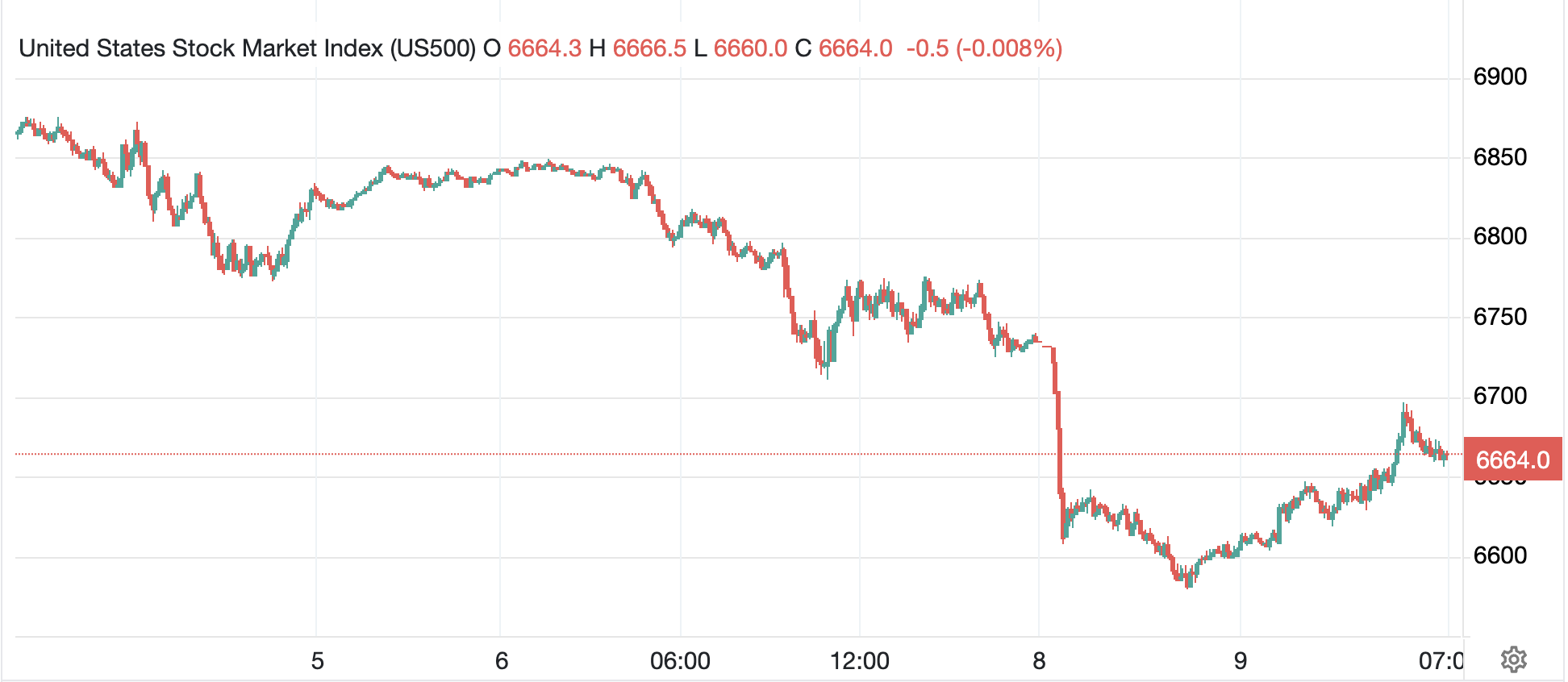
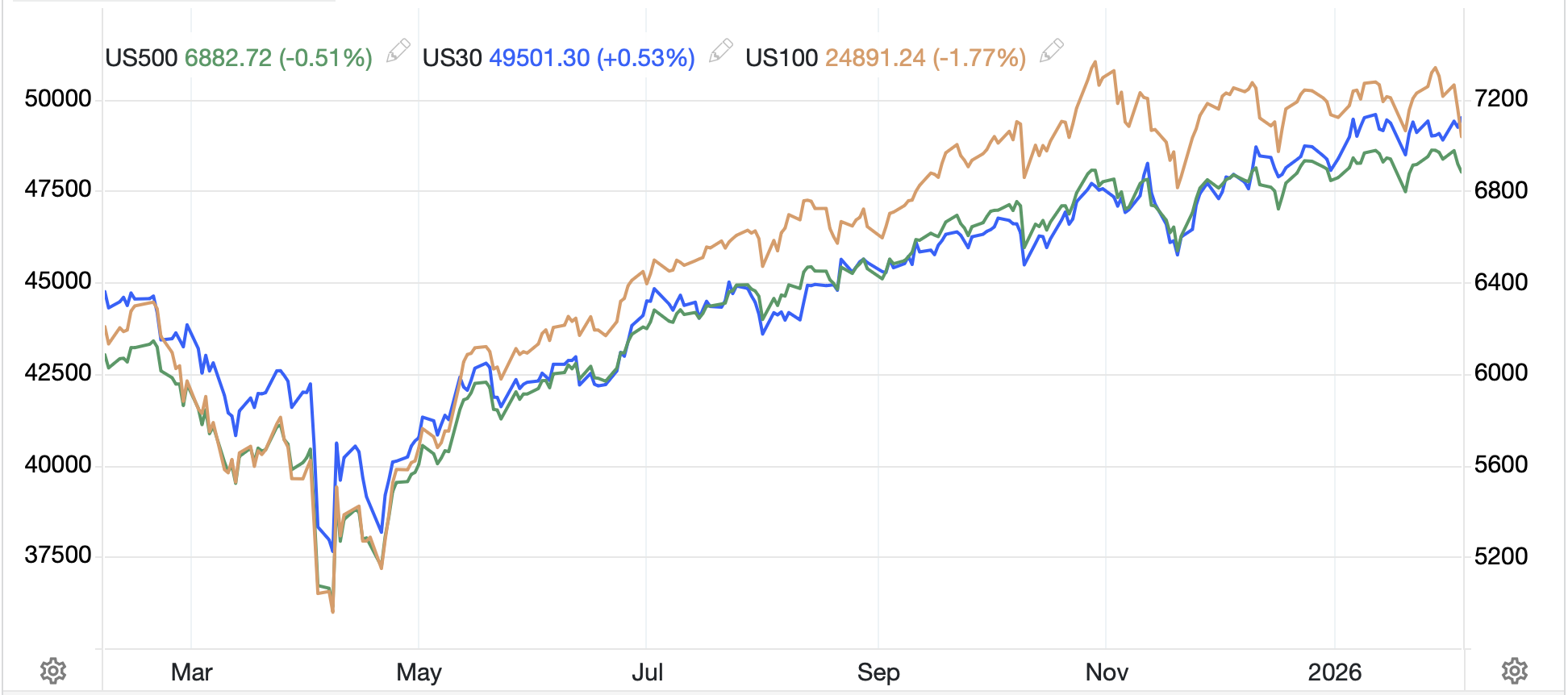
It all came undone yesterday around 10:45 in the morning for no obvious reason.  There was no data released then to drive trader reaction nor any commentary of note.  In fact, most of the punditry was still reveling in the higher Nvidia earnings and planning which Birkin bag they were going to buy for their girlfriends wives.  But as you can see from the NASDAQ chart below, in the ensuing two hours, the index fell by 4% and then slipped another 1% or so from there into the close, the level that is still trading at 6:30 this morning

Source: tradingeconomics.com

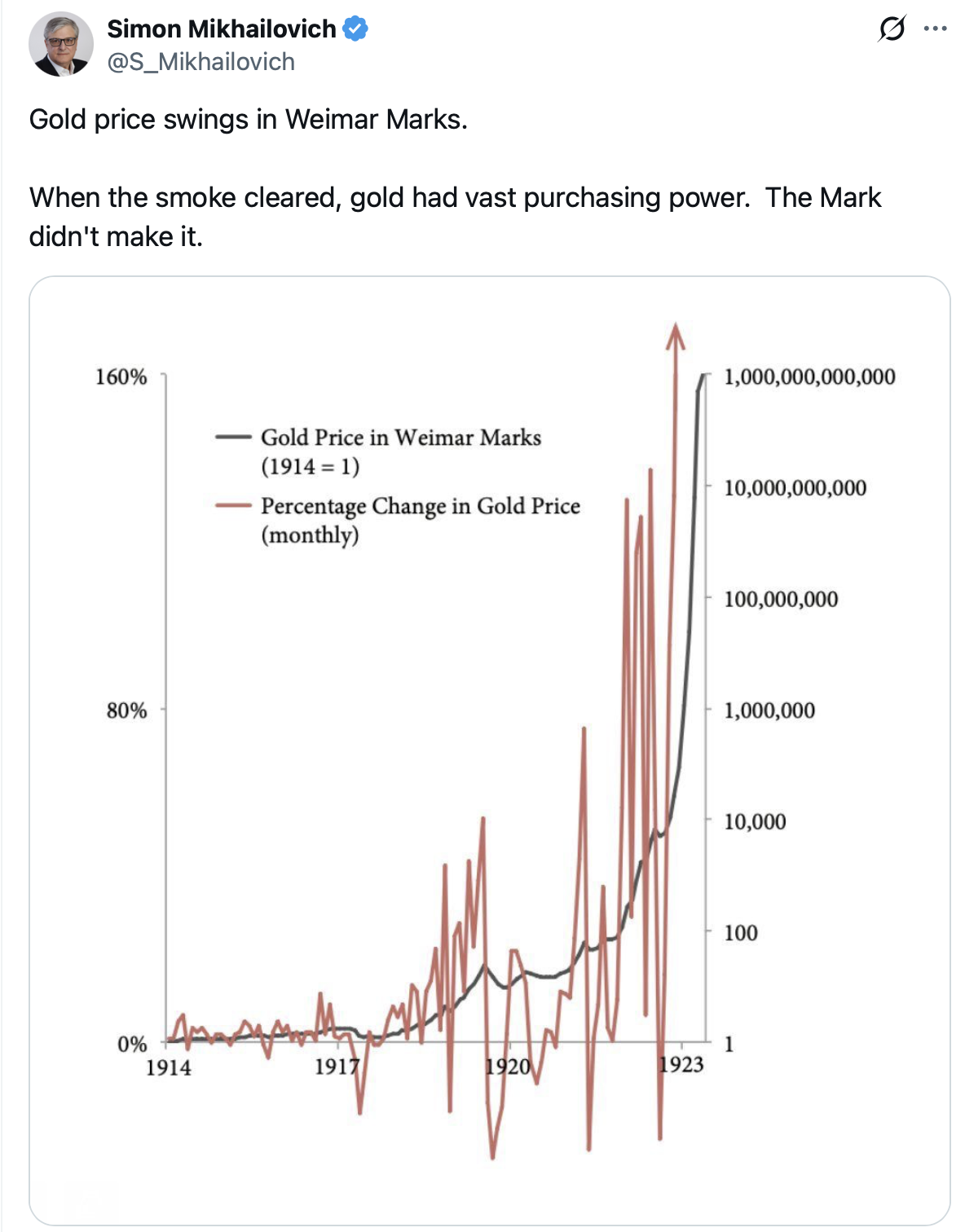
As a member in good standing of the gray hair club, I have seen this movie before, and I have always admired the following image as a perfect example of the way things work in markets.  

And arguably, this is all you need to know about how things work.  Sure, there are times when a specific data release or Fed comment is a very clear driver of market activity, but I would contend that is the exception rather than the rule.  The day following Black Monday in 1987, the WSJ asked noted Wall Street managers what caused the huge decline.  Former Bear Stearns Chairman, Ace Greenberg said it best when he replied, “markets move, next question.”  And that is the reality.  While I believe that macroeconomics offers important information for long-term investing theses, on any given day, anything can happen.  Yesterday is a perfect example of that reality.

But let us consider what we know about the overall financial situation.  The Damoclesian Sword hanging over everything is excessive leverage across the board.  I have often discussed the idea that global debt is more than 3X global GDP, a clear an indication that there will be repayment problems going forward.  And something that seems to have been driving recent equity market gains has been an increase in margin buying of stocks and leverage in general.  After all, the fact that there are ETFs that offer 3X leverage on a particular stock or strategy is remarkable.  But a look at the broad levels of leverage, as shown by the increase in margin debt in the chart below from Wolfstreet.com (a very worthwhile follow for free) tells me, at least, that when things turn, there is going to be an awful lot of selling that has nothing to do with value and everything to do with getting cash for margin calls.

It is this process that drives down the good with the bad and as you can see in the chart, happens regularly.  I’m not saying that we are looking at a major reversal ahead, but as I wrote earlier this week, a correction seems long overdue.  Perhaps yesterday was the first step.

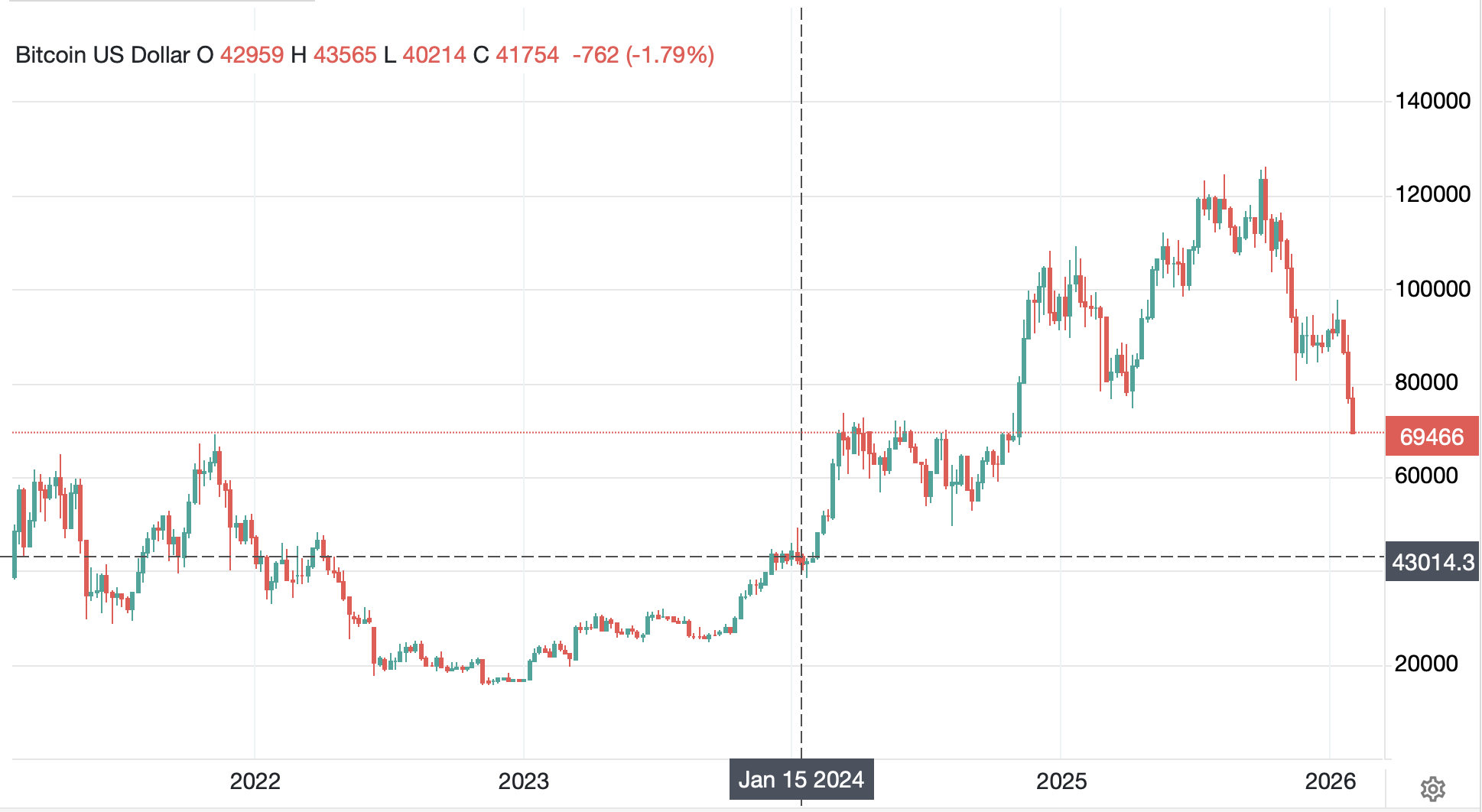
One last thing.  I mentioned Bitcoin at the top and I think it is worthwhile to look at the chart there to get a sense of just how speculative assets behave when times are tough.  Since its peak on October 6th, 46 days ago, it has declined ~45% as of this morning.  That, my friends, is a serious price adjustment!

Source: tradingeconomics.com

Ok, let’s see how other markets are behaving in the wake of this, as well as the recent news.  Remember, yesterday we saw a slew of old US data on employment, but it is all we have, so probably has more importance than it deserves.  After all, it is pre-shutdown and things have clearly changed since then.

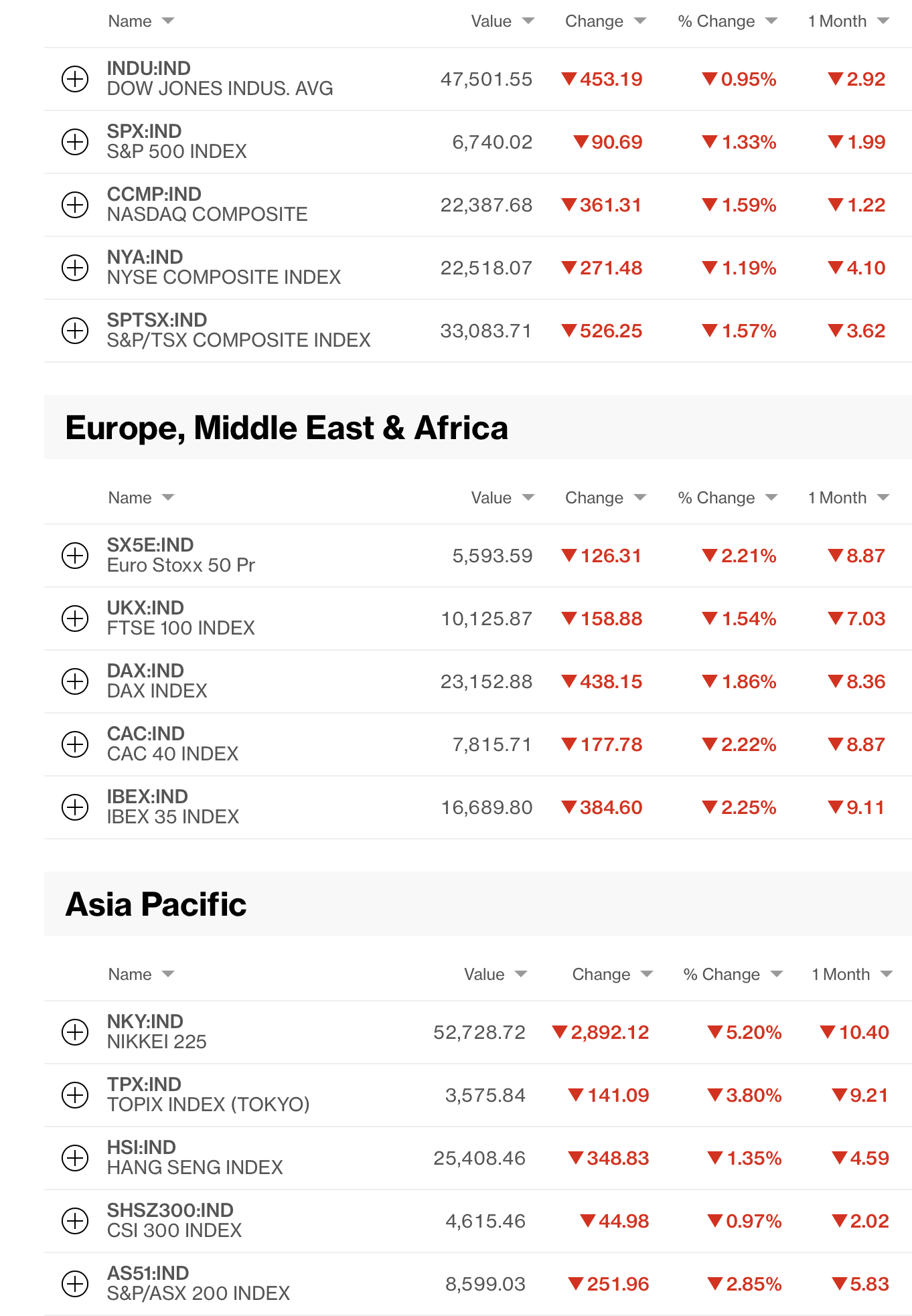
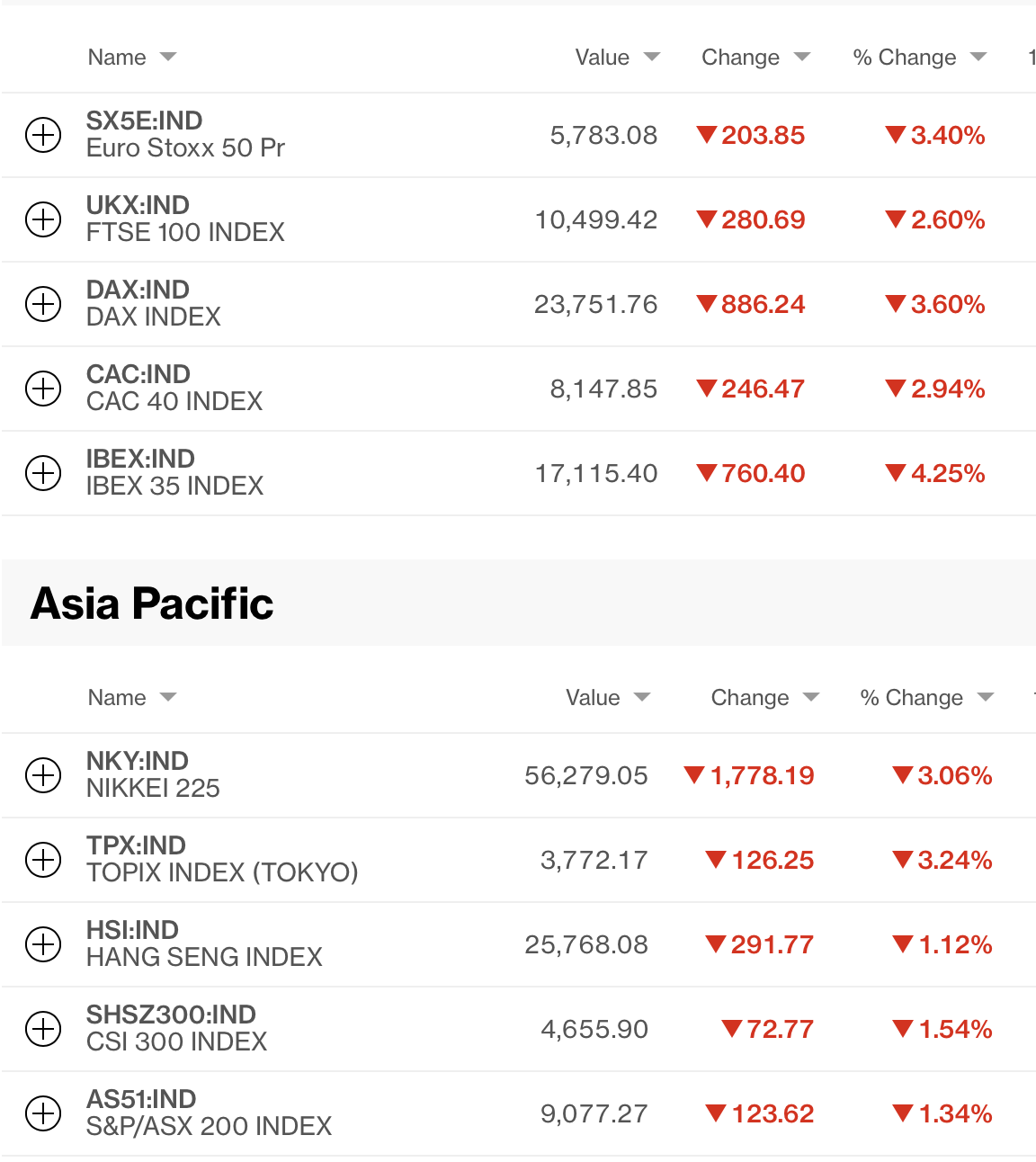
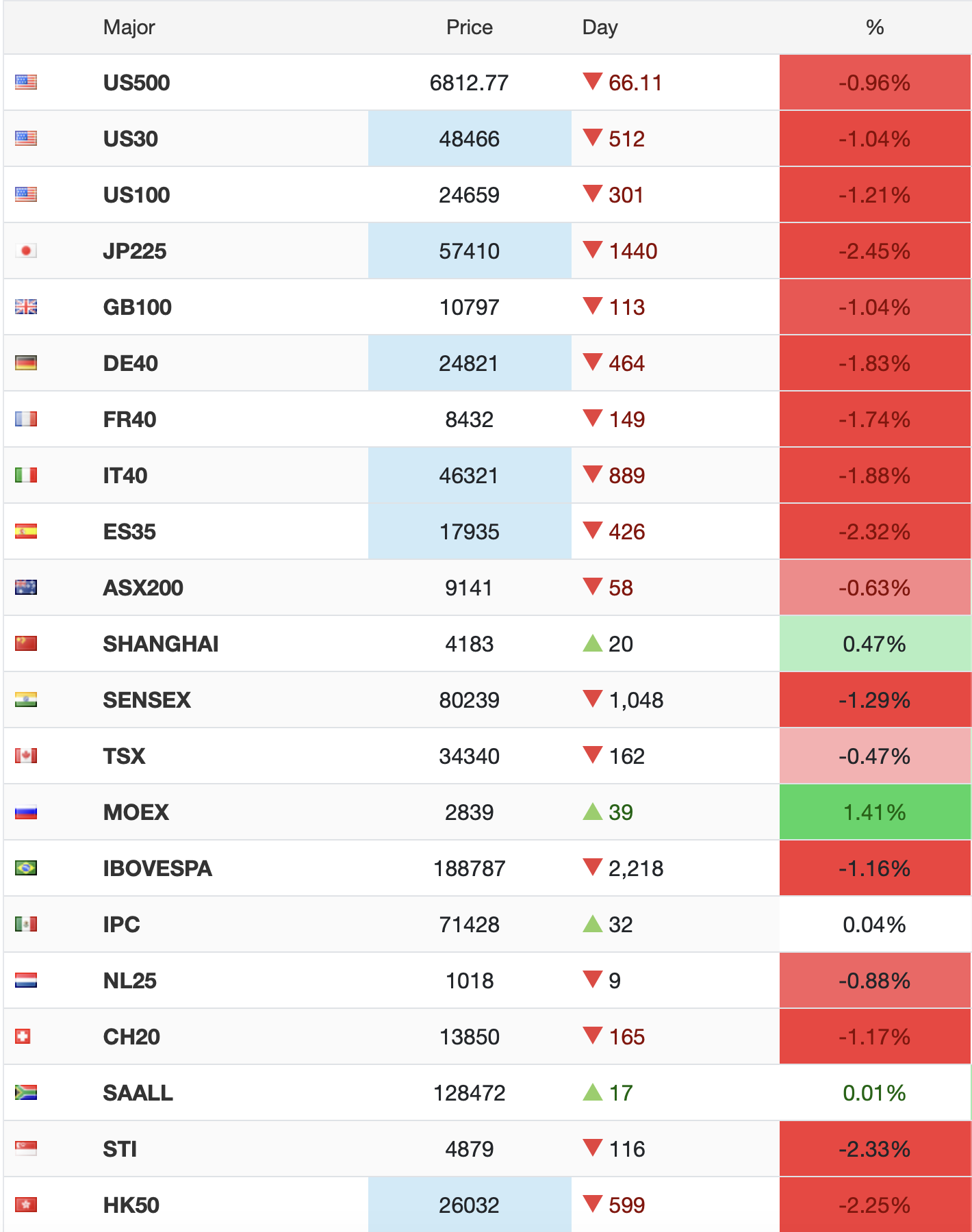
Starting in Asia, it wasn’t pretty with the three main markets (Nikkei, Hang Seng, CSI 300) all declining by -2.40%.  Korea (-3.8%) and Taiwan (-3.6%) fared even worse but the entire region was under pressure.  The narrative that is forming as an explanation is that there is trouble in tech land, despite the Nvidia earnings, and since Asia is all about tech, you can see why it fell.

Meanwhile, the antithesis of tech, aka Europe, is also lower across the board this morning, albeit not as dramatically.  Spain’s IBEX (-1.3%) is leading the way down but weakness is pervasive; DAX (-0.8%), CAC (-0.4%), FTSE 100 (-0.4%), as all these nations also released their Flash PMI data which came in generally softer across the board.  But there is one other thing weighing on Europe and that is the publication of a 28-point peace plan designed to end the Russia/Ukraine war.  The plan comes from the US and essentially ignored Europe’s views as it is patently clear they are not interested in peace.  In fact, it appears peace will be quite the negative for Europe as it will undermine their rearmament drive and likely force governments there to focus on domestic issues, something which, to date, they have proven singularly incompetent to address.  In fact, if the war really ends, I suspect there are going to be several governments to fall in Europe with ensuing uncertainty in their economies and markets.  As to the US futures markets, at this hour (7:30) they are basically unchanged to leaning slightly higher.  Perhaps the worst is past.

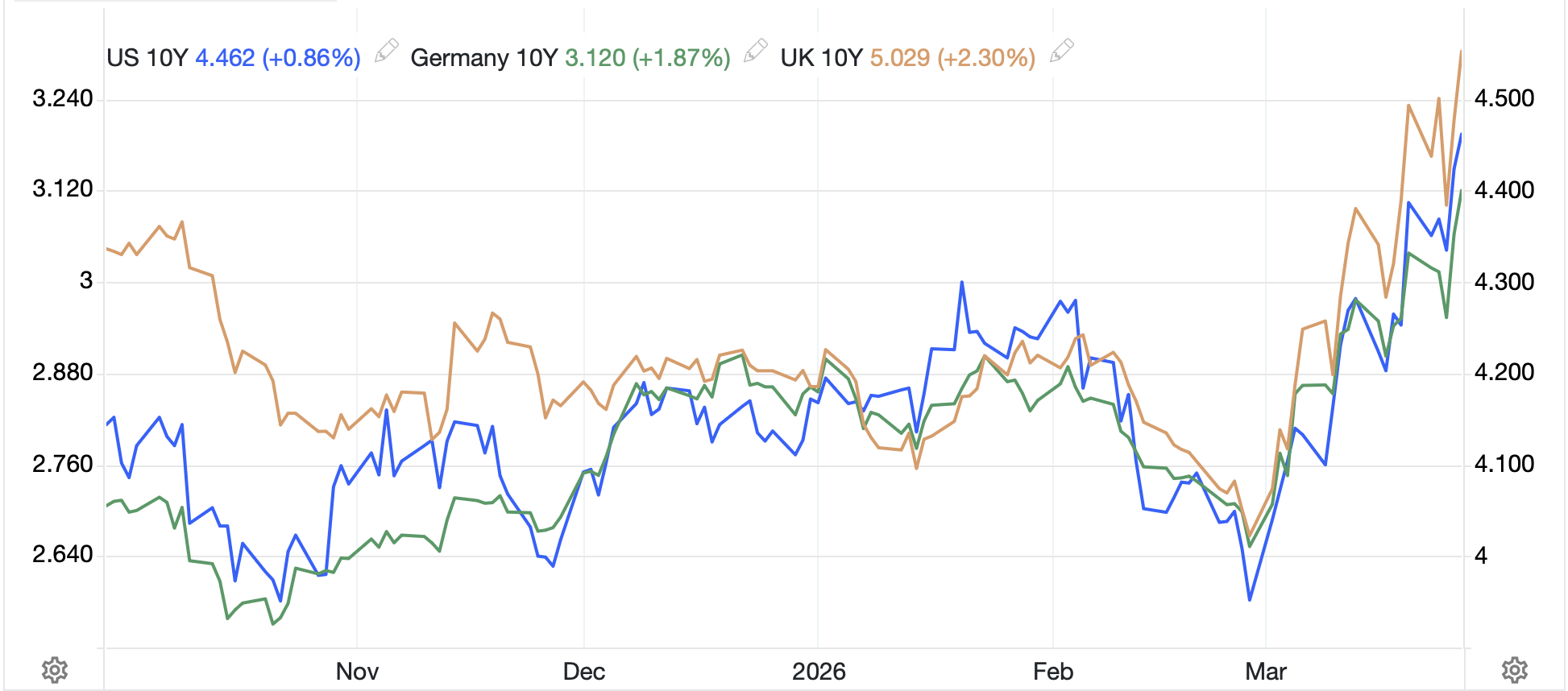
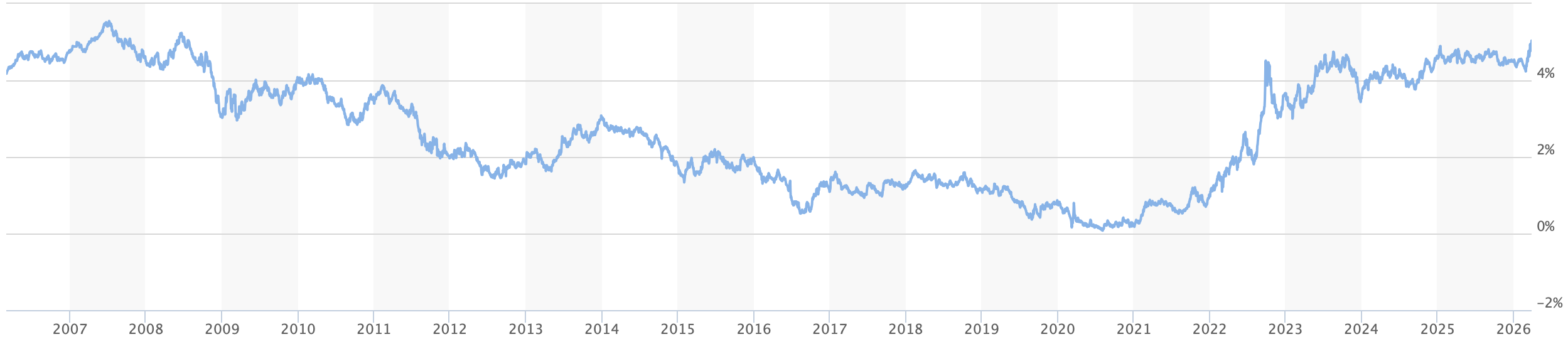
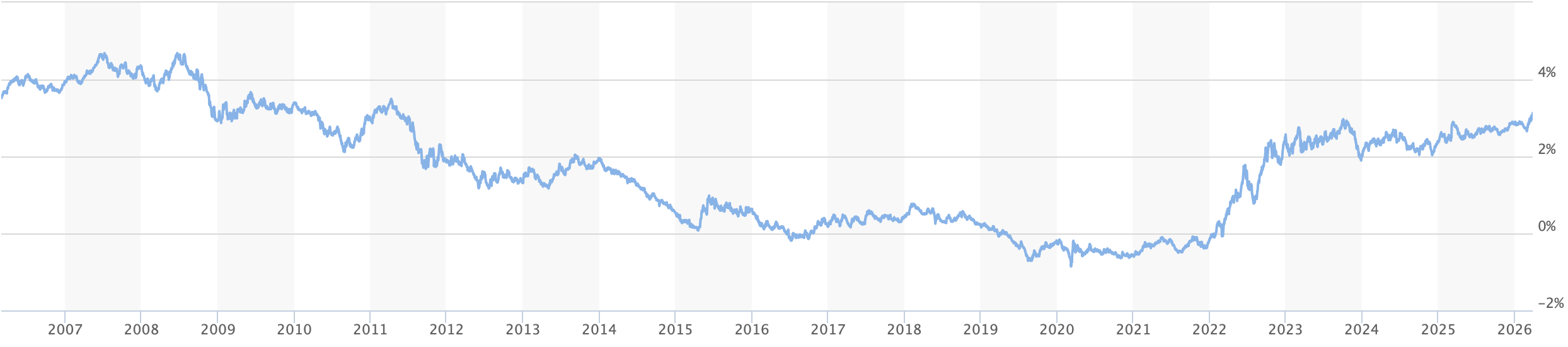
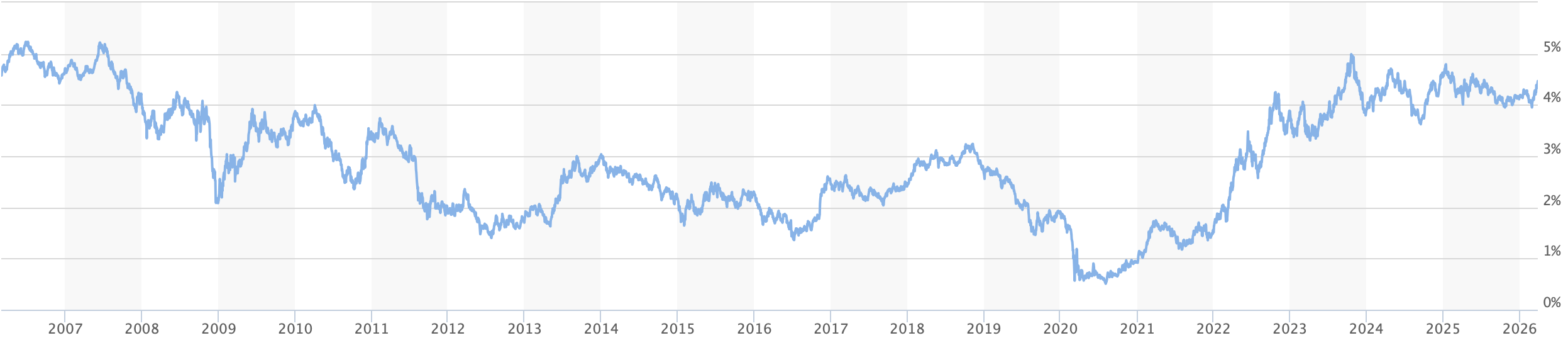
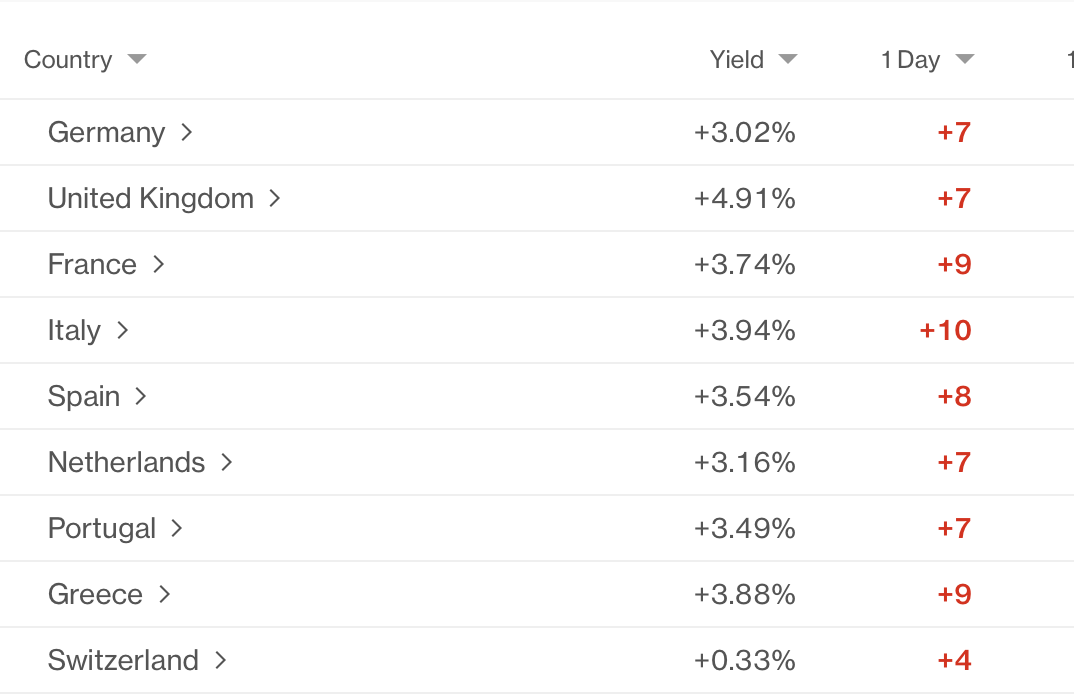
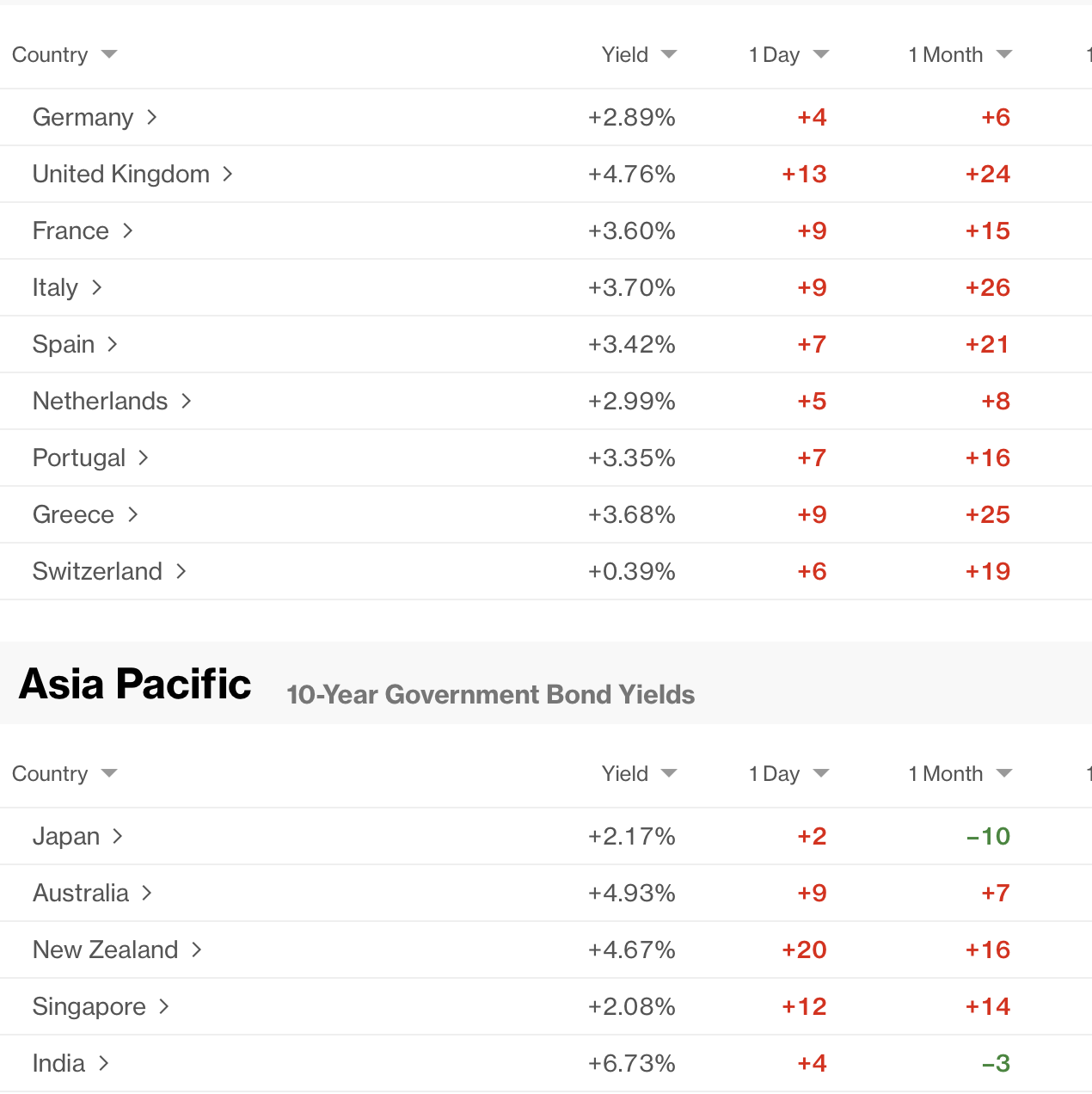
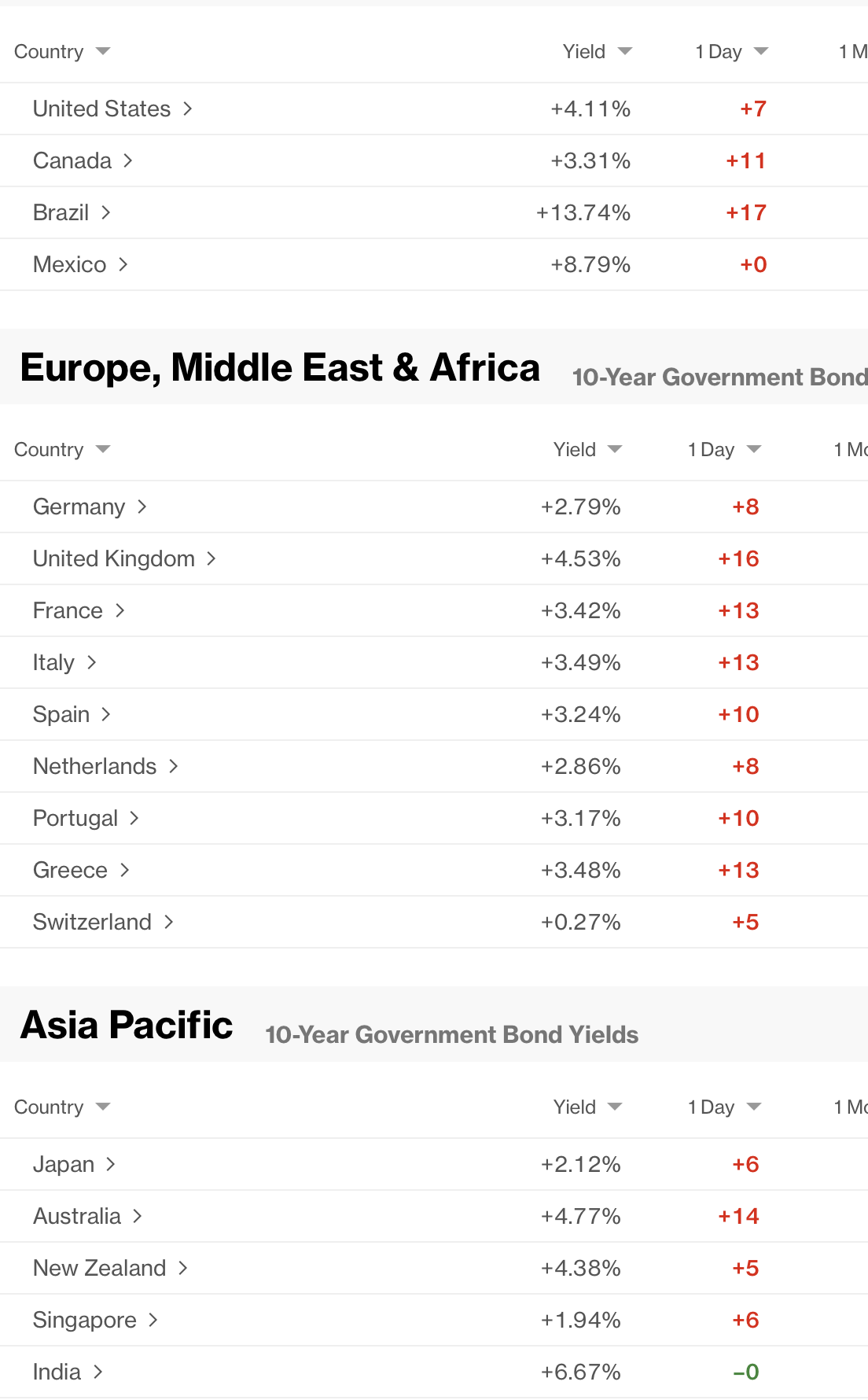
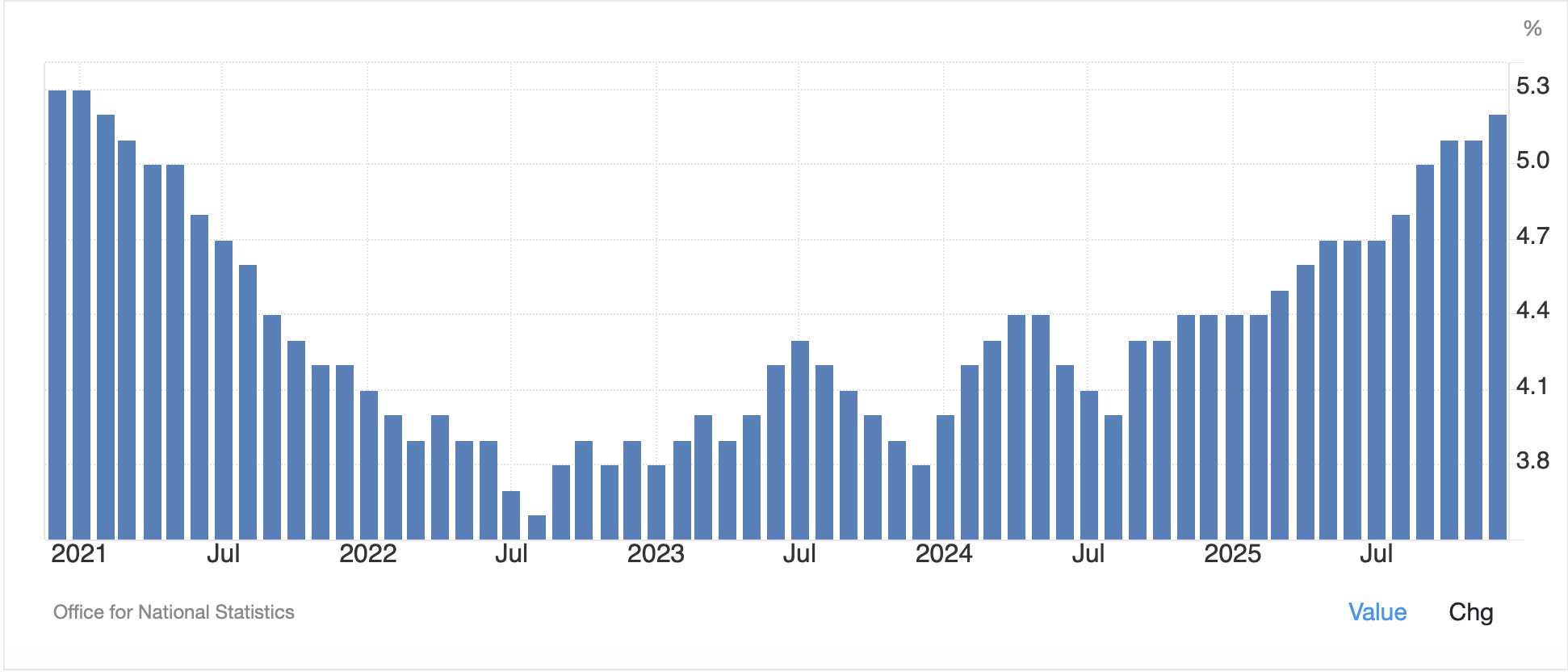
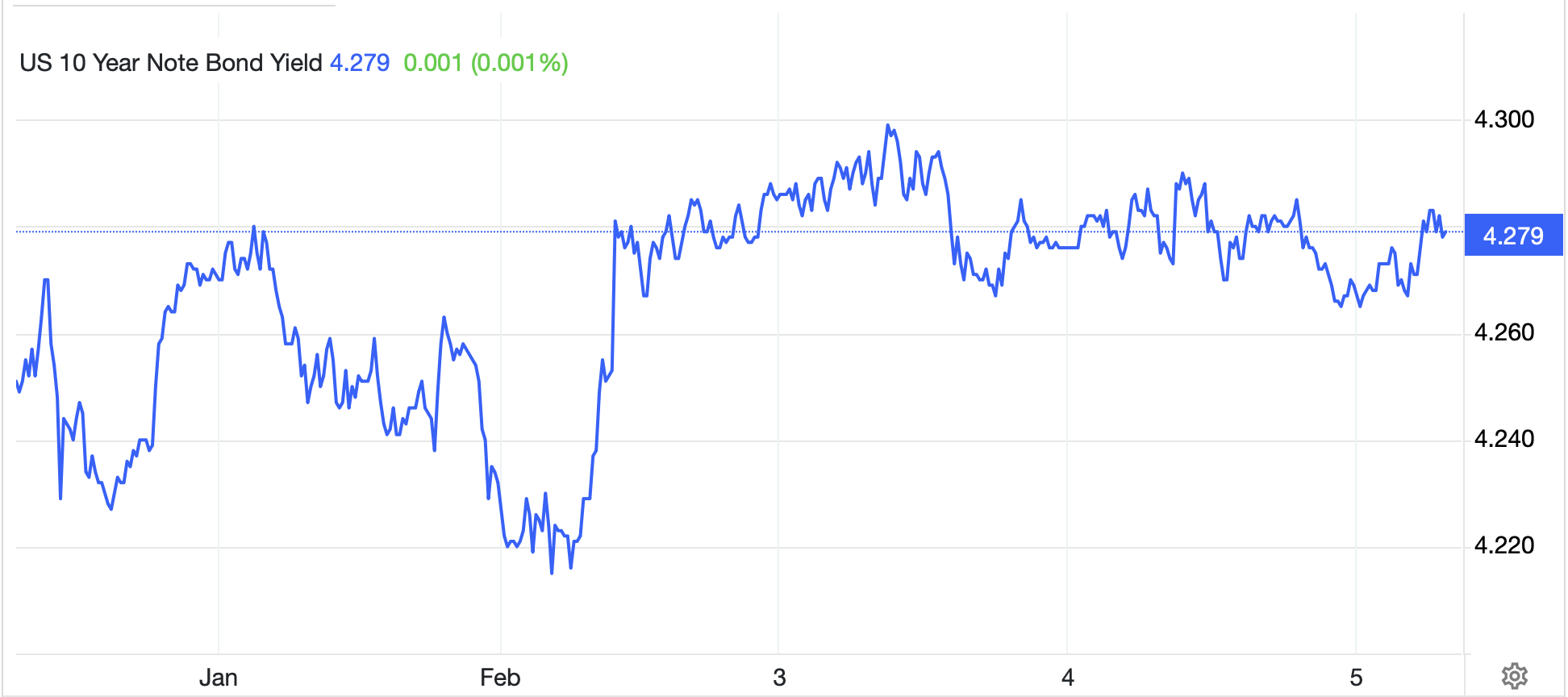
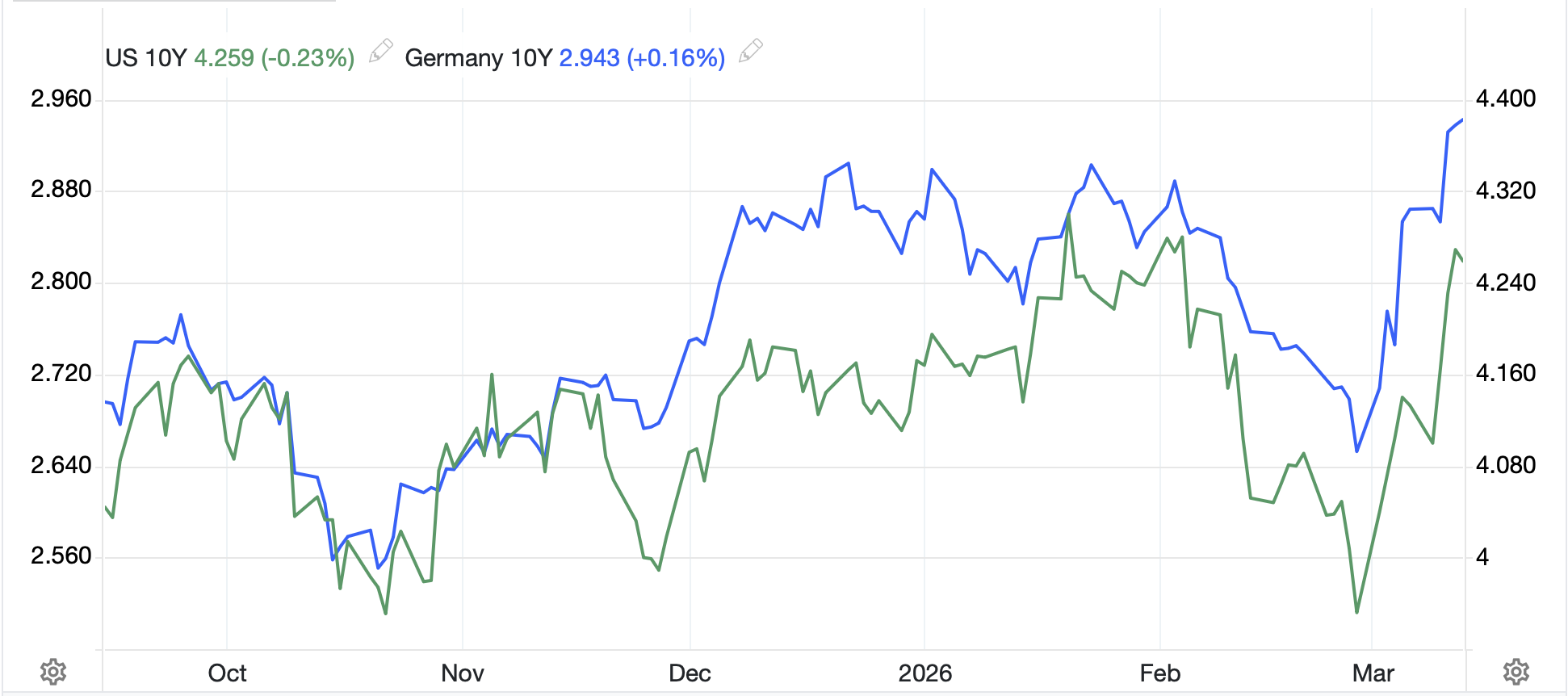
In the bond market, yields are lower across the board led by Treasuries (-4bps) while European sovereign yields have slipped -2bps to -3bps.  Certainly, the European data does not scream inflationary growth, but I have a feeling this is more about tracking Treasuries than anything else.  I say that because JGB yields also fell -4bps despite the passage of an even larger supplementary budget than expected, ¥21.7 trillion, which is still going to be paid for with more borrowing.  That is hardly the news to get investors to buy JGBs and I suspect yields will climb higher again going forward.  I think it is worth looking at the trend in US vs. Japanese 10-year yields to get a fuller picture of just how different things are in the two nations.  Of course, there is one thing that is similar, inflation continues to remain above their respective 2.0% targets and is showing no signs of returning anytime soon.

Source: tradingeconomics.com

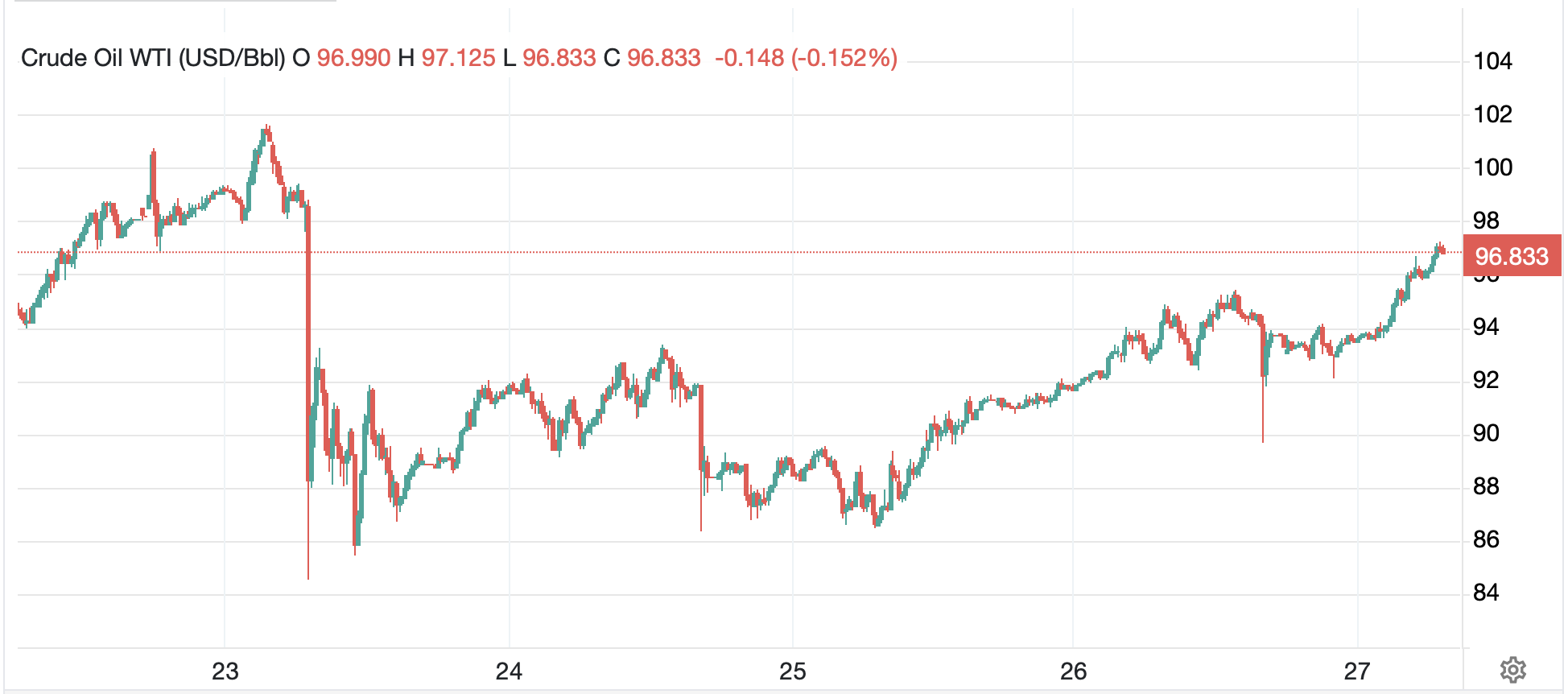
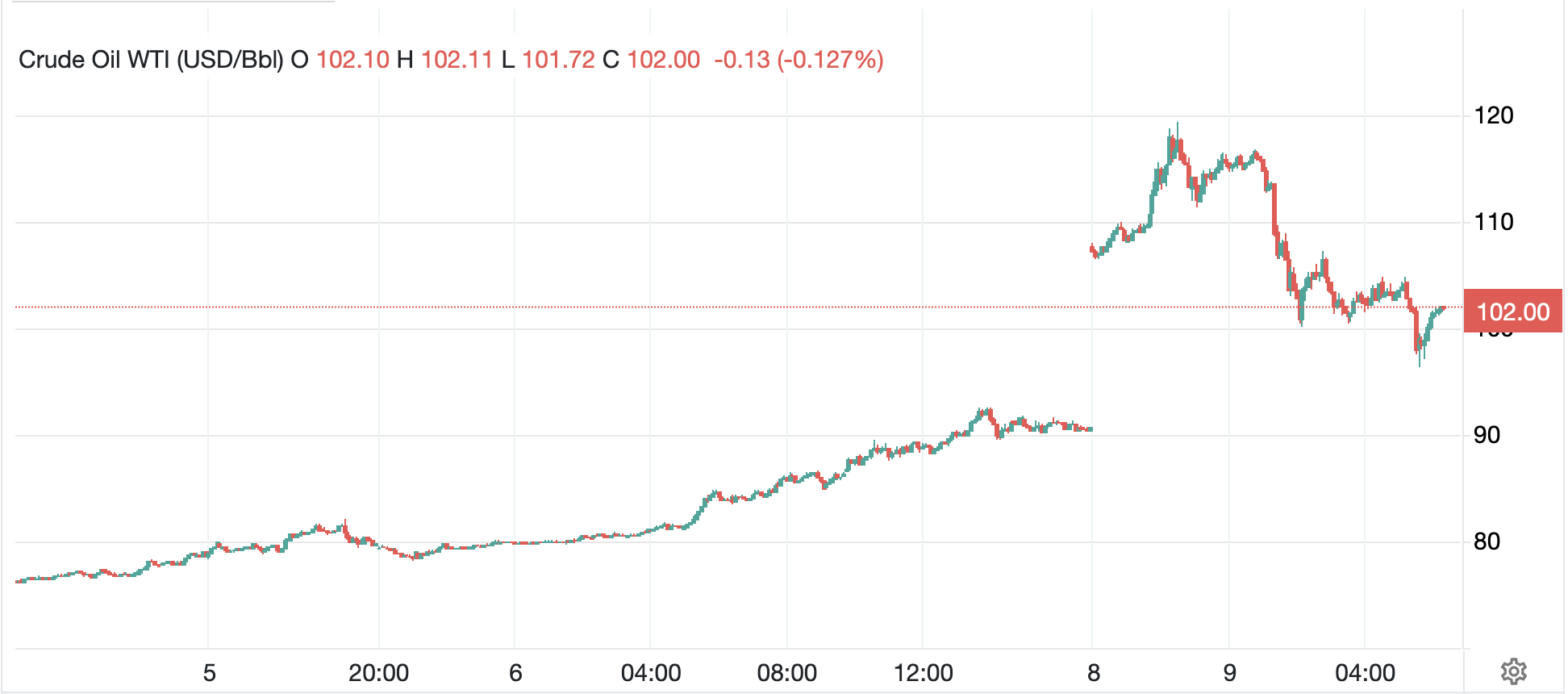
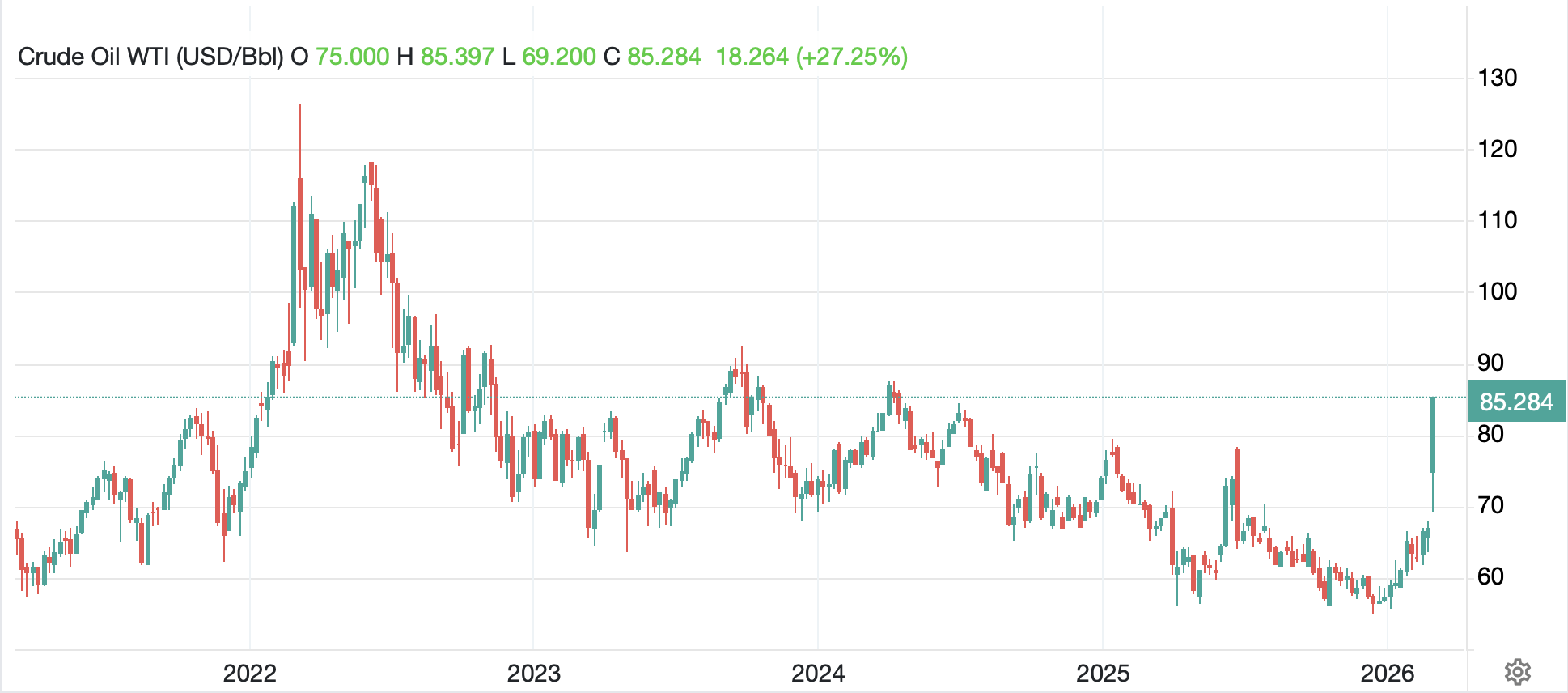
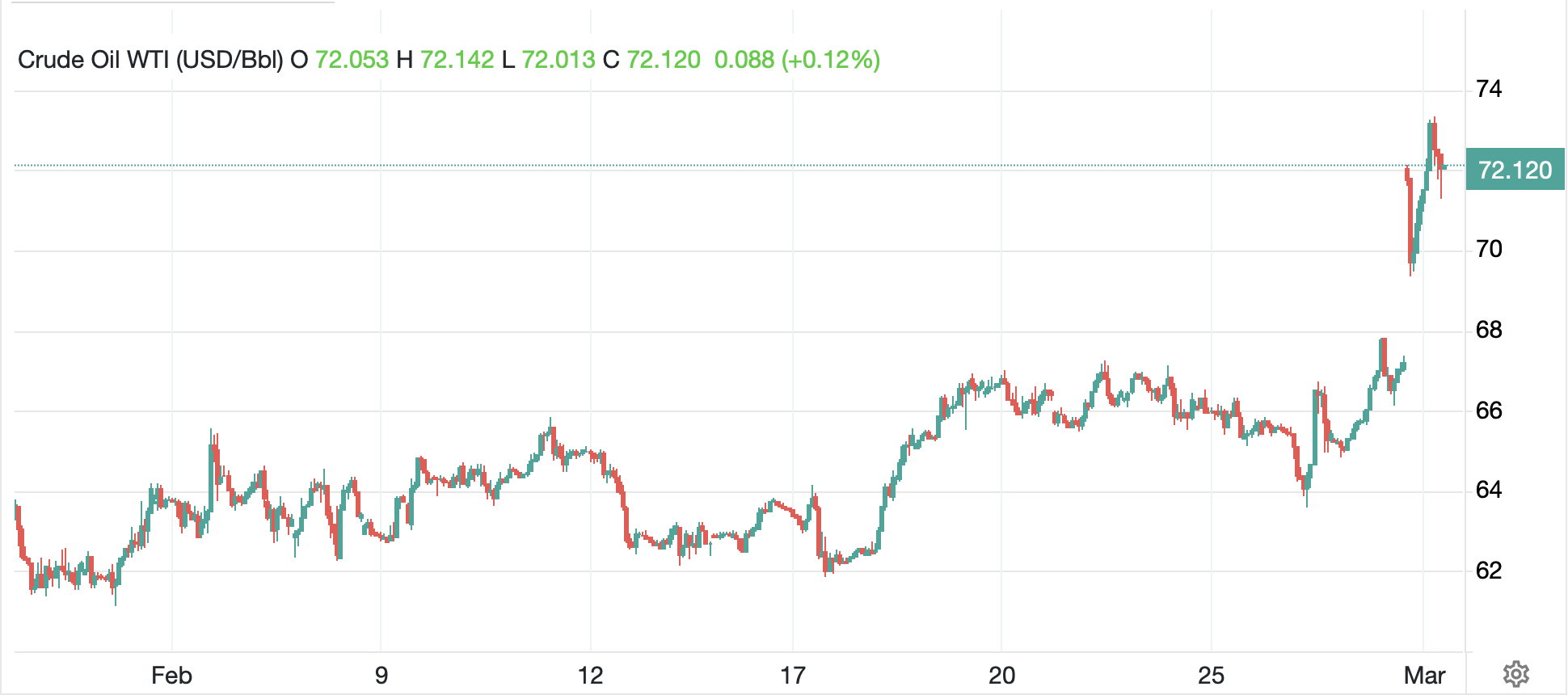
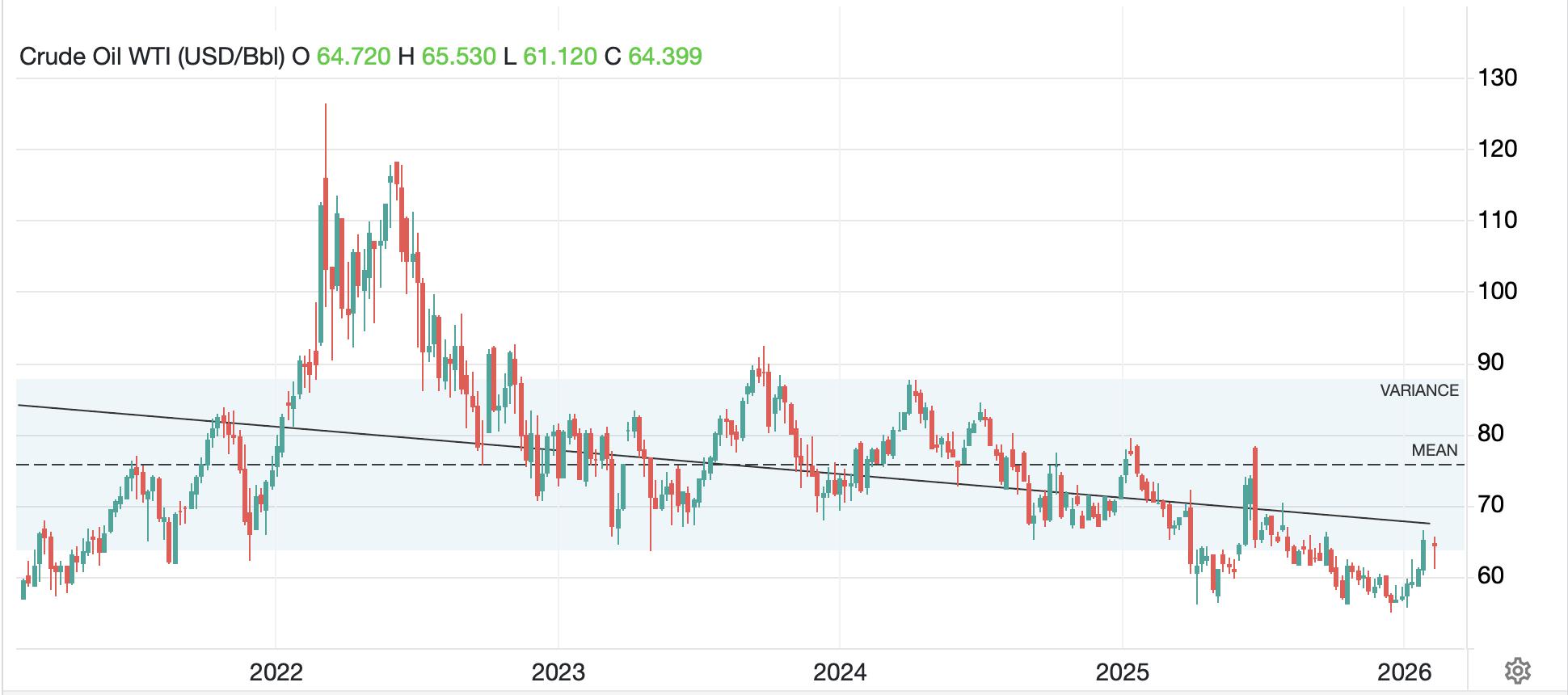
You will not be surprised to know that commodity prices remain extremely volatile.  Oil (-1.0%) had a bad day yesterday and is continuing lower this morning although as you can see from the chart below, it is off its worst levels of the session.  But the one thing that remains true despite the volatility is the trend remains lower.

Source: tradingeconomics.com

Metals markets also suffered yesterday and are under pressure this morning with gold (-0.4%) and silver (-2.5%) sliding.  One thing to remember is that when margin calls come, traders/investors sell what they can, not what they want, and given the liquidity that remains in both gold and silver, they tend to get sold to cover margin calls.  Too, today is the weekly option expiry in the SLV ETF and as my friend JJ (writes at Market Vibes) regularly explains, there is a huge amount of silver activity driven by the maturing positions.

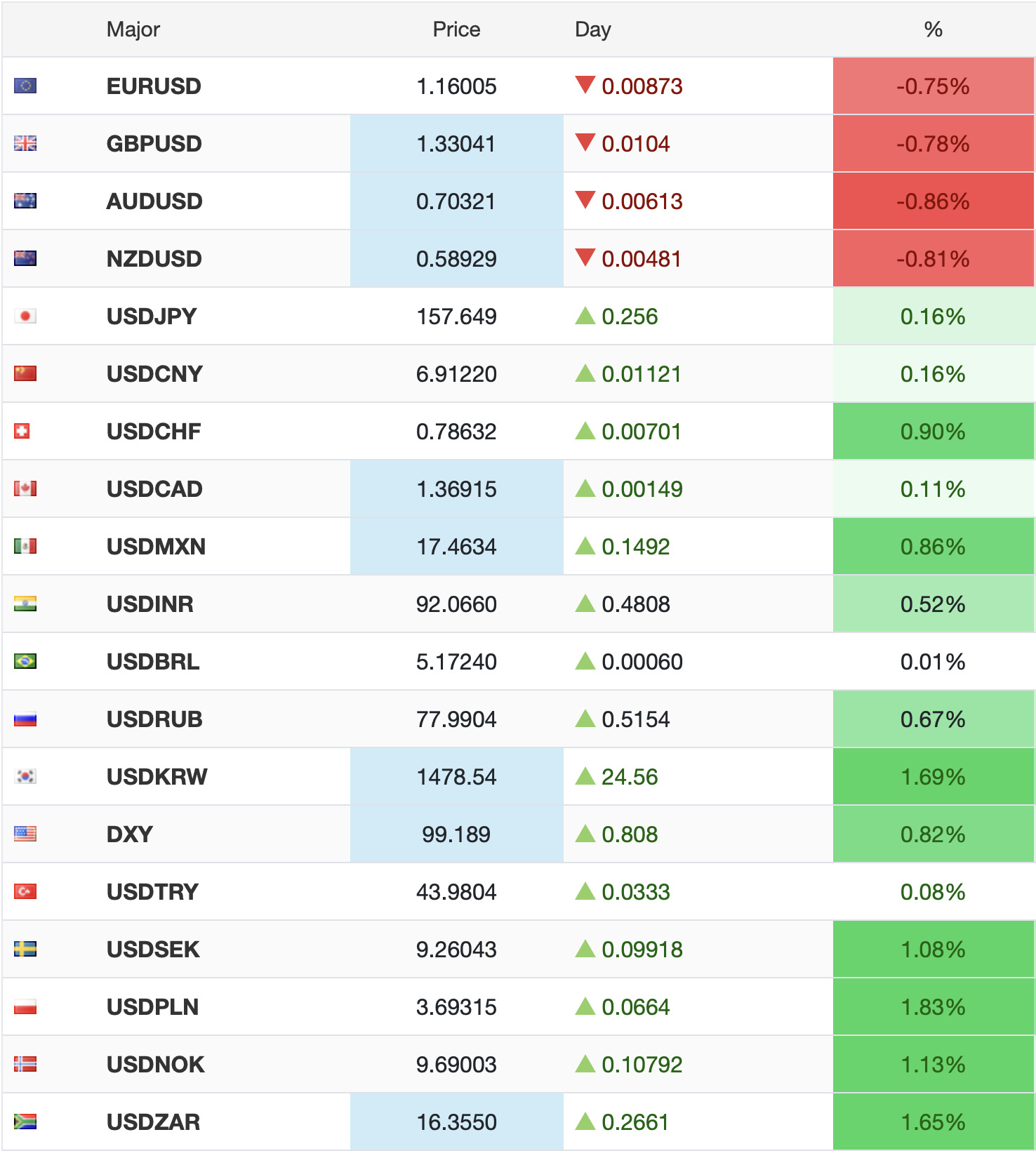
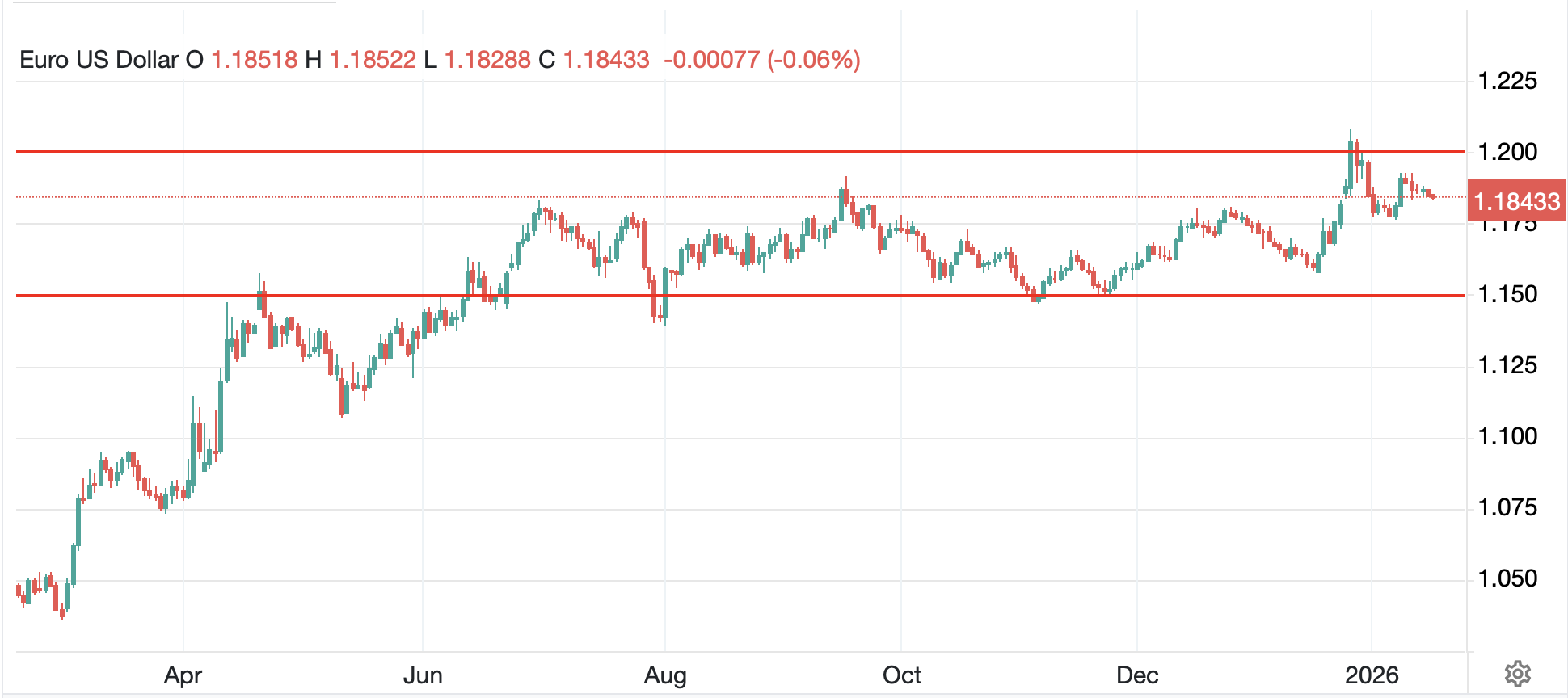
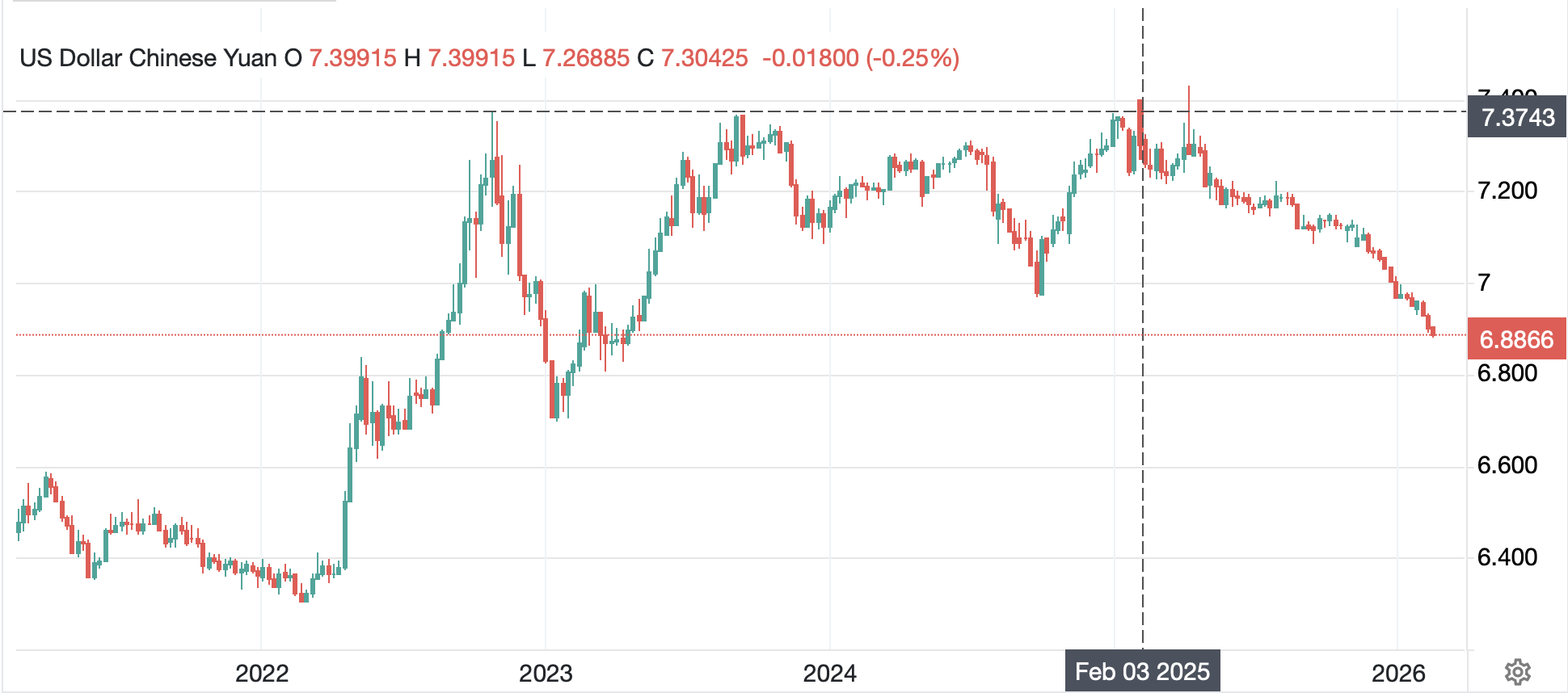
Finally, the dollar continues to remain solidly bid, although is merely consolidating recent gains as it trades just above the key 100 level in the DXY.  Two things of note today are JPY (+0.5%) which responded to comments from not only the FInMin, but also Ueda-san explaining that a weak yen is driving inflation higher and might need to be addressed.  Step 4 of the dance toward intervention?  As to the rest of the G10, movement has been minimal.  But in the EMG bloc, INR (-1.1%) fell to record lows (dollar highs) after the RBI stepped away from its market support.  It sure seems like it is going to break through 90 soon and I imagine 100 is viable.  As well, ZAR (-0.7%) is suffering on the weaker metals prices, along with CLP (-0.5%) while BRL (-0.5%) slipped as talk of a more dovish central bank stance started percolating in markets.

Today’s data brings US Flash PMI (exp 52.0 Manufacturing, 54.6 Services) and Michigan Sentiment (50.5).  We hear from five more Fed speakers, with a mix of hawks and doves.  It will be interesting to see how the doves frame yesterday’s better than expected September NFP report as their entire thesis is softening labor growth is going to be the bigger problem than rising prices.

I, for one, am glad the weekend is upon us.  For today, I am at a loss for risk assets.  The case can be made either way and I have no strong insight.  However, the one thing that I continue to believe is the dollar is going to find support.  Remember, when things get really bad (and they haven’t yet) people still run to T-bills to hide, and that requires buying dollars.

Good luck and good weekend

Adf
Turned to Sh*t

While headlines are all ‘bout elections
And some have discussed stock corrections
The dollar keeps climbing
As some think pump priming
By Jay will find no real objections
 
The punditry, though, remains split
One side claims things have turned to sh*t
The other side, though
Is really gung-ho
And weakness they will not admit


The Democrats had a good election, sweeping the big three races in NYC, NJ and Virginia and many down ticket ones as well.  One spin is this is all a vote against President Trump but given that those three venues are all heavily Democratic to begin with, that may be an exaggeration.  Of the three, my concern turns to NYC as having lived there prior to Mayor Rudy Giuliani’s cleanup of the city, I can tell you, things were not fantastic.  Mayor-elect Mamdani’s stated plans have failed every time they have been tried around the world and I suspect that will be the situation here as well. Alas, that will not prevent him from trying.  Ironically, regarding high rents, it is possible that the increased outmigration from the city by those in the center and on the right will reduce housing demand and arguably housing costs.  We will all watch as it unfolds.

But will that directly impact markets?  Of that I am far less concerned.  I read that JPMorgan already had more employees in Texas than NY prior to the election and given that the concept of a physical exchange has basically disappeared, trading can relocate quickly.  My take is, this will get the talking heads quite excited for a while but will have a minimal impact on markets.

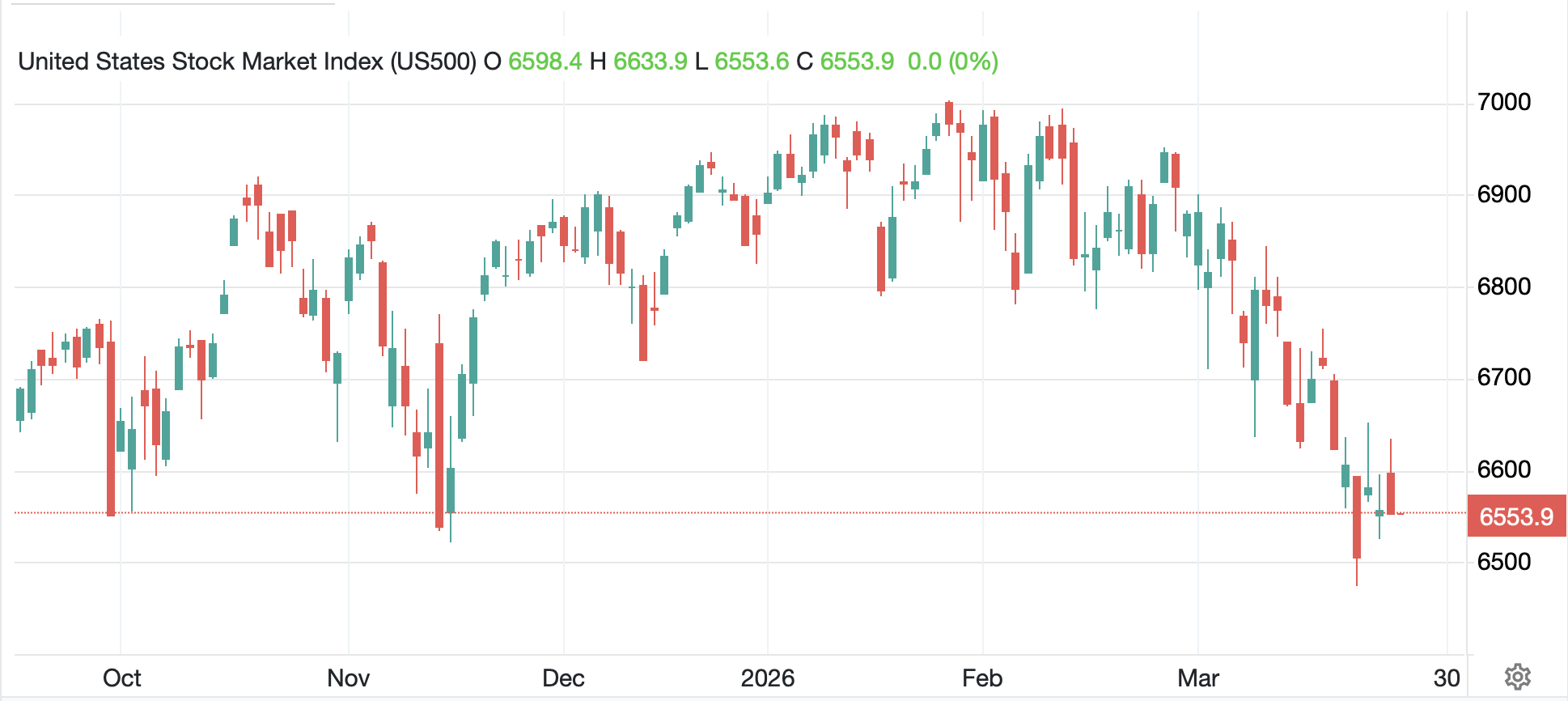
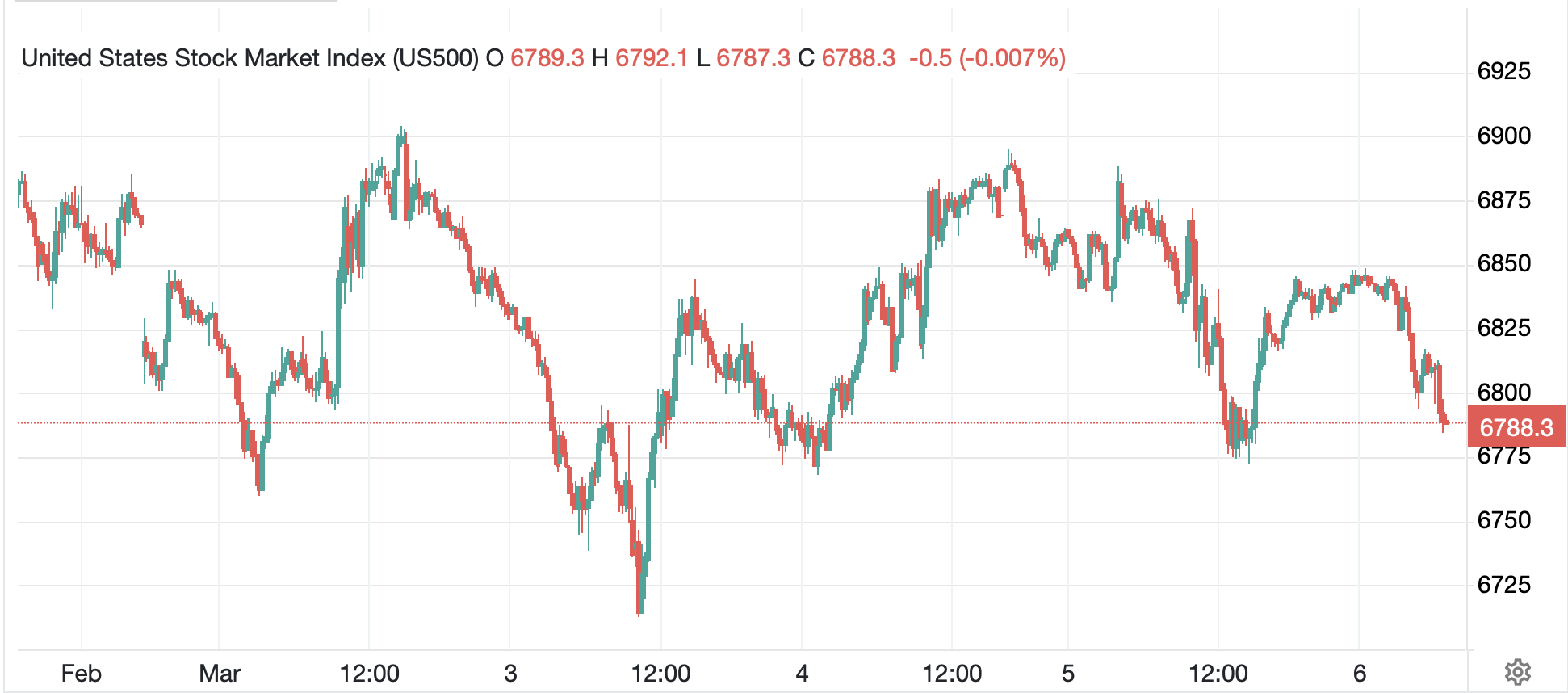
Which takes us to yesterday’s price action and its drivers.  First off, one might have thought that we experienced another Black Monday based on some of the hysteria in commentaries, but in the end, US equity indices only fell between -0.5% (DJIA) and -2.0% (NASDAQ).  In fact, using the S&P 500, a look at the chart shows that the decline over the past several sessions amounts to just -2.3% there, hardly calamitous!

Source: tradingeconomics.com

I continue to read about the K-shaped economy with the massive split between the top 10% of income/wealth representing 87% of spending and enjoying life while the bottom 90% struggle immensely.  This has been made possible by the ongoing support of financial assets by the Fed (and other central banks) which has accrued to asset holders, i.e. the top 10%.  In fact, this is a far more likely rationale for Zoran Mamdani’s victory yesterday, he has promised to help those who are struggling by freezing rents, offering free stuff and taking over the grocery stores to remove the profit motive and lower prices.  And when it comes to elections, the bottom 90% have a lot more votes!

Here is as good an explanation of the forces driving this narrative as any:

While equity and asset prices continue to climb, the working class is finding life increasingly difficult as job opportunities seem to be shrinking.  This latter issue seems only to be exacerbated by the growth in AI spending and the announcements by numerous companies that they will be reducing staffing because of the efficiencies created by AI in their operations.

Arguably, the reason we have seen such a large dichotomy between analyst views is that some are focused on data that represents the bottom leg of the ‘K’ and see a recession around the corner, if not already upon us.  Meanwhile, others see the arm of the ‘K’ and see good times ahead.  Certainly, if we look at the broad-based GDP readings, at least based on the Atlanta Fed’s GDPNow forecast, Q3 was remarkably strong at real GDP growth of 4.0% annualized (see below chart).  Calling for a recession with that as backdrop is a very difficult case to make, in my view, but that won’t stop some analysts from trying.

Net, while nobody likes to see their portfolios’ value shrink, the declines so far have been very modest.  It is entirely reasonable to expect a correction of 10% – 15%, especially if we look at the chart at the top showing a 36% rally with limited drawdowns over the past 6 months.  It feels too early to panic.

And with that in mind, let’s see how markets behaved overnight.  Asian markets followed US ones lower with Tokyo (-2.5%) leading the way, although that was well off the early session lows which touched -4.0%.  Korea (-2.9%) and Taiwan (-1.4%) both suffered as well although the rest of the region was far less impacted.  Both China and HK were little changed and other gains and losses were on the order of +/-0.5% or less.  European bourses are all in the red as well this morning, although the one thing of which we can be sure is it is not related to the tech selloff given Europe has no tech industry of which to speak.  But Spain (-0.9%) and Germany (-0.75%) are both down despite reasonable Services PMI data from both nations and better than expected German Factory Orders (+1.1%).  UK equities are unchanged, and the rest of the continent is somewhere between unchanged and Spain.  Negative sentiment has clearly carried over, but there have been no strong reasons to sell aggressively.

In the bond market, Zzzzzz is today’s message.  Every major government bond is within 1bp of yesterday’s close, and yesterday’s price action was only worth 1bp to 2bps.  In fact, as you can see from the chart below, since the FOMC and Powell’s hawkish press conference, nothing has changed.  This is true from Fed funds futures as well, with a 71% probability still price for a December cut.

Source: tradingeconomics.com

In the commodity space, oil (-0.3%) seems to be lower every morning when I write, but continues to trade in a narrow range around $60/bbl.  Perhaps the most interesting thing I read this morning was Javier Blas’ op-ed in Bloombergregarding the rationale for a US-led regime change in Venezuela given it is the nation with the largest known oil reserves.  If you are President Trump and seeking to get oil prices lower, that could be a very effective source of the stuff.  As to the metals markets, yesterday saw a sharp decline in precious metals and this morning they are rebounding with both gold and silver higher by 0.9%.  Copper (+0.25%), too is rising a bit, although remains well off the highs seen when gold peaked.

Finally, the dollar continues to impress.  While this morning it is little changed against most of its counterparts, it is, apparently, consolidating its recent gains.  The DXY remains above 100.00, which many have seen as a key resistance level.  The pound (+0.2%) while bouncing slightly this morning is hovering just above 1.30, a level last seen on Liberation Day, and certainly appears to be working its way lower from its summer peak.  If I consider the fiscal problems and the energy policy in the UK, it is very difficult to expect a significant amount of demand for the pound.

Source: tradingeconomics.com

Elsewhere, ZAR (+0.4%) is responding to the rise in gold prices and otherwise, +/-0.2% is today’s trading story.  Over time, given the promised investments into the US based on trade deals that have been signed, I expect there will be consistent demand for the greenback.  And as I wrote yesterday, the idea of a two-currency world in the future cannot be dismissed.

We do have data today with ADP Employment (exp 25K), ISM Services (50.8) and then the EIA oil inventory data where limited net change is expected although the API data yesterday showed a large build of 6.5mm barrels.  Remarkably, there are no scheduled Fed speakers, but that story remains caution but a tendency toward cutting.

For all the election hype, I don’t perceive that things have changed very much at all.  Perhaps the Supreme Court hearings on the legality of President Trump’s tariffs are the real story today, but regardless of the hearings, no verdict will be rendered for many weeks.  Which leaves us with a world in which tech is still dominant in equity markets and the US is still dominant in tech.  With the perception of the Fed being somewhat more hawkish, I don’t see a good reason to sell dollars.

Good luck

Adf

Filled With Chagrin

The vibe in the market is fear
As equities get a Bronx cheer
Commodities, too
Most traders eschew
The dollar, though’s, getting in gear
 
So, what has the catalyst been
To drive such a change in the spin
No story stands out
But there is no doubt
Investors are filled with chagrin


Ladies and gentlemen, boys and girls, this morning things just feel bad.  As I peruse the headlines around the major publications, there is no obvious story that is driving today’s weakness in risk assets, but there is no mistaking the vibe.  Certainly, there are several issues outstanding that might be seen as a negative, but none of them are new.  

  • The government has been shut down for 35 days as of today, and it doesn’t sound like the Senate Democrats are ready to vote to reopen it.  Granted, the problems of the shutdown increase with time, but there has been no apparent change in tone for at least the past two weeks, so why is today the day when things look bad?
  • The war in Ukraine continues apace with no obvious timeline to ending, but this has been ongoing for nearly 4 years, so what is it about today that may have changed?
  • Concerns over fraud have increased after the recent bankruptcy filings by First Brands and Tricolor, as well as accusations by banks of other situations, but again, no new story broke overnight.
  • Perhaps it is the fact that today is Election Day in the US, and there is concern that Zoran Mamdani, a self-described Democratic Socialist, could become the next mayor of NYC, which given it is still home to so many financial markets, has those market participants unnerved.

Some days, it’s just not clear why markets move in the direction they do, and there can be far less dramatic drivers.  For instance, we have seen a major rally in equity markets, and risk assets in general, over the past 5 years, with an acceleration over the past 6 months and they are simply taking a breather.  Whatever the driver, the movement is clear.

Source: tradingeconomics.com

So, given the absence of obvious drivers to discuss, let’s simply recap the damage. After yesterday’s mixed session in the US, Asia was under significant pressure led by Tokyo (-1.75%) with HK (-0.8%) and China (-0.75%) slipping as well.  But Australia (-0.9%) fell after the RBA left rates on hold, as expected, although Governor Bullock sounded a touch more hawkish than expected, and the rest of the region saw almost universal weakness with Korea (-2.4%) the worst of the bunch, but declines everywhere (India, Taiwan, Indonesia, Singapore, Thailand) except New Zealand, which managed a small gain, to reach yet another record high, on solid earnings numbers from key companies.

Meanwhile, European bourses are all sharply lower as well (DAX -1.3%, CAC -1.2%, IBEX -1.1%) as the overall market vibe weighs on these markets, all of which recently traded at new all-time highs.  Ironically, the UK (-0.6%) is about the best performer despite a speech from Chancellor of the Exchequer, Rachel Reeves, which explained…well, it is not clear what it explained.  The UK has major budget problems and has discussed raising taxes, but given growth is lagging, there is a lot of pushback, even within the Starmer government, on that subject.  As with virtually every G10 economy, the government is spending far more than they take in and they don’t know how to address the deficit.  Unfortunately for the UK, the pound is not the global reserve currency and so they are subject to market discipline, unlike the US…so far.  But, in this space, US futures are all lower this morning, down -1.0% or so as I type at 7:10am.

Now, your first thought might be that bonds have rallied nicely on all this risk aversion, but while they have, indeed, moved higher (yields lower) I don’t know that nicely would describe the movement.  Rather, barely is a better description as 10-year yields are lower by -2bps in the Treasury market and between -1bp and -2bps in all European sovereign markets.  In fact, despite the weakness in Japanese stocks overnight, JGB yields are unchanged.  The message is, bonds are not that appealing, even if stocks aren’t either.

Turning to commodities, oil (-1.4%) is having a hard time this morning alongside the equity markets, with virtually all energy prices lower across the board.  Given there has been no announcement of a major energy breakthrough, this has the feel of growing concern over economic activity going forward.  With that in mind, though, WTI is still trading right around $60/bbl, which seems to be its “home” lately.

In the metals markets, gold (-0.15%) continues to trade around the $4000/oz level, which seems to be its new “home” as traders await the next catalyst in this space.  Silver (-0.3%) is similarly fixated on its level of $48/oz and seems likely to follow gold’s lead going forward.  However, copper (-2.3%) seems like it is more in sync with oil lately, as the two are both so intimately linked with economic activity and changes thereto.  It’s funny, despite the risk asset weakness, I have not seen anything new on a pending recession in the US, nor globally, although there continues to be a steady stream of analysts who have been explaining we are already in one.

Finally, the dollar is today’s winner, rising against every one of its counterparts except the yen (+.45%) which responded to a second round of verbal intervention from FinMin Katayama, who once again drew from the MOF seven-step playbook with a half-step overnight: “I’m seeing one-sided and rapid moves in the currency market. There’s no change in our stance of assessing developments with a high sense of urgency.”  

But away from the yen, it is merely a question of which currency looks worst.  The pound (-0.65%) has traded down to levels not seen since Liberation Day, as it appears the FX market did not take Chancellor Reeves’ comments that well.

Source: tradingeconomics.com

For those who view the DXY as the key indicator, it has traded above 100 for the first time since August, and I know many technicians are looking for a breakout here.  The fact remains that the Fed’s recent seeming mildly hawkish turn is out of sync with most of the rest of the world and will support the dollar for now.  Of course, the futures market is still pricing a 72% probability of a rate cut in December, so traders are taking the ‘hawkish’ comments by Chair Powell at the press conference last week with a grain or two of salt.  In fact, one of the things weighing on the pound is the idea that the BOE may cut this week despite still high inflation.

But wherever you look in this space, the dollar is sharply higher.  ZAR (-1.0%), NOK (-0.9%), MXN (-0.85%) and SEK (-0.9%) lead the way, but declines of -0.5% are rampant across all three regional blocs.  Today is a straight up dollar story.

And that’s all we have today.  Yesterday’s ISM data was a touch weaker than forecast, and last month, slipping to 48.7 with Prices Paid (58.0) slipping as well.  Weirdly, the S&P PMI was a better than expected 52.5, rising from last month and beating expectations.  It seems a mixed message.  Yesterday’s Fed speakers didn’t tell us anything new, with Governor Cook explaining that December is a “live” meeting.  I’m not sure what that means.  Is the implication they may not cut there?  That would not go down well in either markets or the White House.

Given how far equity prices have come in the past 6 months, it would not be a surprise to see a more substantial pullback.  In fact, it would be healthy for the market to remove some of the excesses that abound.  The fraud stories are concerning as they tend to flourish at the end of bull markets, and while they are not yet flourishing, they are starting to become more common.  In the end, while I expect the Fed will cut in December, and then again in January, I don’t see a reason for the dollar to decline sharply.

Good luck

Adf

Woes and Scraps

The PMI data is in
And so far, it’s not really been
A sign of great strength
When viewed from arm’s length
No matter the punditry’s spin
 
That said, we are not near collapse
Despite many trade woes and scraps
And stocks keep on rising
So, t’will be surprising
For all when we see downside gaps


It was a quieter weekend than we have seen recently in the global arena with no new wars, no mega protests and no progress made on any of the major issues outstanding around the world.  Thus, the US government remains shut down, the war in Ukraine remains apace and the AI buzz continues to suck up most of the oxygen when discussing markets.

With this as background, arguably the most interesting market related news has been the manufacturing PMI data released last night and this morning.  starting in Asia, the story was some weakness as Chinese, Korean and Australian data all fell compared to last month, although India and Indonesia continued along well.  Meanwhile, in Europe, the data improved compared to last month, but the problem is it remains at or below 50 virtually across the board, so hardly indicative of strong economic activity.

                                                                                                      Current         Previous               Forecast

Source: tradingeconomics.com

I don’t know about you, but when I look at the releases this morning, I don’t see a European revival quite yet, not even if I squint.

I guess the other thing that has tongues wagging is Election Day tomorrow with three races garnering the focus, gubernatorial contests in New Jersey and Virginia and the mayoral race in New York City.  The first two are often described as harbingers of a president’s first year in office and I think this time will be no different.  But will they impact market behavior?  This I doubt.

So, let’s get right into markets this morning.  Friday’s further new record highs in the US were followed by strength through much of Asia (Tokyo was closed for Culture Day) with China (+0.3%), HK (+1.0%), Korea (+2.8%) and Taiwan (+0.4%) leading the way with only the Philippines (-1.7%) bucking the regional trend as earnings growth in the country continues to disappoint relative to its peers around the region.  Europe, too, has seen broad based gains with the DAX (+1.2%) leading the way higher and gains in the IBEX (+0.45%) and CAC (+0.3%) as well.  I guess the PMI data was sufficient to excite folks and despite Europe’s status as a global afterthought, at least in terms of geopolitical issues, their equity markets have been rising alongside the rest of the world’s all year.  And you needn’t worry, US futures are all higher at this hour (6:50), with the NASDAQ (+0.7%) leading the way.

Perhaps more interesting than equities though is the fact that government bond markets are doing so little.  Treasury yields jumped ~10bps in the wake of the FOMC meeting and, more accurately, Chairman Powell’s ostensible hawkishness.  However, as you can see in the below tradingeconomics.com chart, since then, nothing has happened. 

Recall, the probability of a December rate cut by the FOMC also fell from virtual certainty to 69% now.  In fact, if you think about it, that 30% probability decline translates into about 7.5bps, approximately the same amount as 10-year yield’s rose.  It appears that the market is consistent in its pricing at this point, and when (if?) data starts coming back into the picture, we will see both these interest rates rise and fall in sync.  As to European sovereigns, they continue to track the movement in the US and this morning, this morning, the entire bloc has seen yields edge higher by 1bp, exactly like the US.

Commodities remain the most interesting place, although the dollar is starting to perk up a bit.  Oil (-0.3%) slipped overnight after OPEC+ indicated they were increasing production by another 137K bbl/day, although there would be no more increases for at least three months given the seasonality of reduced oil demand at this point on the calendar.  Something I have not touched on lately is NatGas, which traded through $4.00/MMBtu late last Thursday, and is now up to $4.25.  in fact, in the past month it has risen nearly 27%, which given it is massively underpriced compared to oil (on a per unit of energy basis) should not be that surprising.  Nonetheless, sharp movements are always noteworthy, and this is no different.

Source: tradingeconomics.com

Certainly, part of this is the fact that winter is coming and seasonal demand is rising in the US. 

Combine that with the European needs for LNG, of which the US is the largest provider, and you have the makings of a rally.  (I wonder though, did the fact that Bill Gates changed his tune on global warming no longer being an existential threat signal it is now OK to burn more fossil fuels?)

Turning to the metals markets, the ongoing fight between the gold bugs and the powers that be continues as early in the overnight session, gold was lower by nearly -1% but as I type, just past 7:00am, it is slightly higher (+0.1%) compared to Friday’s closing levels.  Silver (+0.1%) has seen similar price action although copper (-0.5%) appears more focused on the economic story than the inflation story.  

Which takes us to the dollar and its continued rally. Using the DXY (+0.1%) as our proxy, it is higher again this morning and pushing back to the psychological 100.00 level.  Now, I have made the case several times that the dollar has done essentially nothing for the past six months, and the chart below, I believe, bears that out.  We have basically traded between 96.5 and 100 since May.

Source: tradingeconomics.com

You will also recall that there is a narrative around about the end of the dollar’s hegemony and how nations around the world are trying to exit the USD financial system that has been in place since Bretton Woods, or at least since the fiat currency world took off when President Nixon closed the gold window.  And there is no doubt that China is seeking to become the global hegemon and thus wants a renminbi-based system to use to their advantage.  However, let’s run a little thought experiment. 

The Trump administration has embraced the cryptocurrency space, and especially the use of stablecoins.  Legislation has been passed (GENIUS Act) to help clarify the legal framework and the SEC has been solicitous in its willingness to ensure that these creations are not securities, thus placing them outside the SEC’s oversight.  When looking at the world of stablecoins, their current total value is approximately $311 billion (according to Grok) of which only ~$1.2 billion are non-USD.  

Now, if stablecoins represent the payment rails of the future, an idea that is readily believable, and the stablecoin market is virtually entirely USD, with massive first mover advantage, is it not possible that economies around the world are going to find it much easier to dollarize than to maintain their own native currency?  While there are calls for Argentina to dollarize, what would the world look like if the EU fell apart (an entirely possible outcome given the inconsistencies in their current energy and immigration policies and the stress within the bloc) and the euro with it?  Would smaller nations opt for their own currency, or would they see the value of having a dollarized economy given the many efficiencies it would present, especially for their export industries?

While I have no doubt that China will never accept that outcome for themselves, is the future a world where there are two currency blocs, USD and CNY, and everything else simply disappears?  Remember, we are merely spit balling here, but if that is the outcome, demand for dollars will continue to rise, and the value of other currencies will continue to decline until such time as they succumb.

Again, this is a thought experiment, but one that offers intriguing possibilities for the future.  And one where the foreign exchange market may ultimately meet its demise.  After all, if there are only two currencies, that doesn’t make much of a market.

One other thing I must note, in the stablecoin realm, there is a remarkable product, USDi (usdicoin.com), which tracks US CPI exactly, yet can fit within those same payment rails.  If you are looking into this space, USDI is worth a peek.

Ok, back to the markets, looking across the FX space, +/-0.2% is today’s theme virtually across the board, with the more important currencies slipping against the dollar (EUR, GBP, JPY, CHF, CAD) than rising vs the greenback (MXN, CLP, NOK, CZK), although the magnitudes are similar.

With the government still closed, there is no official data, but we do get ISM Manufacturing (exp 49.5) with the Prices Paid subindex (61.7) released at the same time.  There are two Fed speakers today, Daly and Cook, and then 9 more speeches throughout the week.  We also get the ADP Employment data on Wednesday (exp 24K), but I imagine that will get more press after the election results are learned Tuesday evening.

It is hard to get excited about things today, but nothing points to a weaker dollar right now.

Good luck

Adf

A Strong Sense of Urgency

Katayama said
“A strong sense of urgency”
Informs our views now


Source: tradingeconomics.com

But this is the first step in their typical seven step plan before intervention.  And I get it, the combination of Chairman Powell suddenly sounding hawkish on Wednesday afternoon, telling us a December rate cut was not a foregone conclusion and the BOJ continuing to sit on its hands despite inflation running at 2.9%, the 42nd consecutive month (see below) that it has been above their 2.0% target (sound familiar?), indicates that the current policy stances will likely lead to further dollar strength vs. the yen.  

Source: tradingeconomics.com

There is something of an irony in the current situation in Japan.  Recall that for years, the Japanese economy was in a major funk, with deflation the norm, not inflation, as government after government issued massive amounts of debt to try to spend their way to growth.  In fact, Shinzo Abe was elected in 2012, his second stint as PM, based on his three arrows plan to reinflate the economy because things were perceived so poorly.  If you look at the chart below, which takes a longer-term view of Japanese inflation, prior to 2022, the two positive spikes between 1992 and 2022 were the result of a hike in the Japanese VAT (they call it the Goods and Services Tax) which raised prices.  In fact, during that 30-year period, the average annual CPI was 0.25%.  And the Japanese government was desperate to raise that inflation rate.  Of course, we know what HL Mencken warned us; be careful what you wish for, you just may get it…good and hard.  I have a sense the Japanese government understands that warning now.

Data source: worldbank.org

Net, it is hard to make a case that the yen is going to reverse course soon.  For receivables/asset hedgers, keep that in mind.  At least the points are in your favor!

So, now that a trade deal’s agreed
Can China reverse from stall speed?
The data last night
Sure gave Xi a fright
More stimulus is what they need!

The other noteworthy macro story was Chinese PMI data coming in weaker than expected with the Manufacturing number falling to 49.0, vs 49.8 last month, with all the subcategories (foreign sales, new orders, employment and selling prices) contracting as well.  The Chinese mercantilist model continues to struggle amid widespread efforts by most developed nations to prevent the Chinese from dumping goods into their own economies via tariffs and restrictions.  The result is that Chinese companies are fighting on price, hence the deflationary situation there as too many goods are chasing not enough demand (money).  

There have been many stories lately about how the Chinese have the upper hand in their negotiations with the US, and several news outlets had stories this morning about how the US got the worst of the deal just agreed between Trump and Xi.  As well, this poet has not been to China for a very long time, so my observations are from afar.  However, things in China do not appear to be going swimmingly.  While there continues to be talk, and hope, that the government there is going to stimulate domestic consumer spending, that has been the story for the past 3 or 4 years and it has yet to occur in any effective manner.  The structural imbalances in China remain problematic as so many people relied upon their real estate investments as their nest egg and the real estate bubble continues to deflate 3 years after the initial shock.  Chinese debt remains extremely high and is growing, and while they certainly produce a lot of stuff, if other nations are reluctant to buy that stuff, that production is not very efficient for economic growth.

Many analysts continue to describe the US-China situation as China is playing chess while the US is playing checkers, implying the Chinese are thinking years ahead.  If that is so, please explain the one-child policy and the decimation of their demographics.  Just sayin.

Ok, let’s look at markets overnight.  While yesterday’s US markets were blah, at best, strong earnings from Amazon and Apple has futures rocking this morning with NASDAQ higher by 1.3% at this hour (7:40).  Those earnings, plus the euphoria over the Trade deal with the US sent Japanese shares (+2.1%) to another new all-time high which dragged along Korea (+0.5%) and New Zealand (+0.6%) but that was all.  The rest of Asia was under pressure as the weak Chinese PMI data weighed on both HK (-1.4%) and mainland (-1.5%) indices and that bled to virtually every other market. Meanwhile, European bourses are all somewhat lower as well, albeit not dramatically so, as the tech euphoria doesn’t really apply here.  So, declines between -0.1% (Spain) and -0.4% (UK) are the order of the day.

In the bond markets, yields have essentially been unchanged since the FOMC response with treasury yields edging 1bp higher this morning, now at 4.10%, while European sovereign yields are either unchanged or 1bp higher.  The ECB was a nothingburger, as expected, and going forward, all eyes will be on the data to see if any stances need change.

The commodity markets continue to be the place of most excitement with choppiness the rule.  Oil (-0.25%) is a touch softer this morning but continues to hover around the $60/bbl level.  I’m not sure what will get it moving, but right now, neither war nor peace seems to matter.  Regime change in Venezuela maybe?

Source: tradingeconomics.com

In the metals markets, volatility is still the norm with gold (-0.45%) lower this morning after a nice rebound yesterday and currently trading just above $4000/oz.  Silver and copper are unchanged this morning with platinum (-0.9%) following gold.  However, regardless of the recent market chop, the charts for all these metals remain distinctly bullish and the theme of debased fiat currencies is still alive.  Run it hot is still the US playbook, and that is going to support all commodity prices.

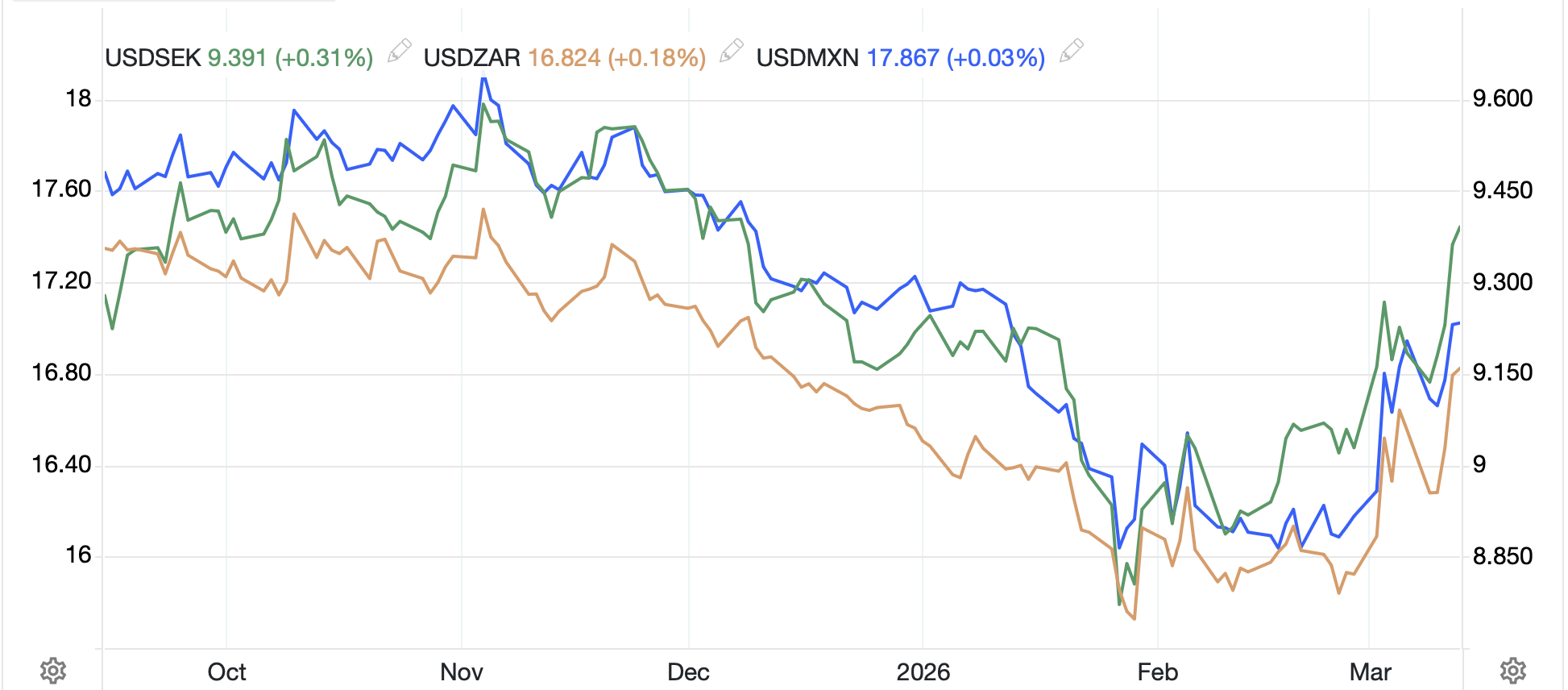
Finally, the dollar, after another step higher yesterday, is little changed this morning.  Both the euro and yen are unchanged and the rest of the G10 has slipped by between -0.1% and -0.2%.  In truth, today’s outlier is ZAR (-0.4%).  Now, let’s look at two ZAR charts, the past year and the long term, which tell very different stories.  In fact, it is important to remember that this is often the case, not merely a rand situation.  First, the past year shows the rand with a strengthening trend as per the below from tradingeconomics.com.  That spike was the response to Liberation Day.

But now, let’s look at a longer-term chart of the rand, showing the past 21 years.

Source: finance.yahoo.com

Like most emerging market currencies, the rand has been steadily depreciating vs. the dollar for decades.  It’s not that we haven’t seen a few periods of modest strength, but always remember that in the big picture, most EMG currency’s slide over time.  This is merely one example, and it is a BRICS currency.  The demise of the dollar remains a long way into the future.

On the data front, Chicago PMI (exp 42.3) is the only release, and we hear from three more Fed speakers.  It appears every FOMC member wants to get their view into the press as quickly as possible since there seem to be so many differing views.  In the end, I continue to think the Fed cuts in December, and nothing has changed.  But for now, there is less certainty as this morning, the probability of a cut is down to 66%.  I guess we’ll see.  But regardless, I still like the dollar for now.

Good luck and good weekend

Adf
Will Not Be Quelled

Both sides in the trade war appear
To want nothing more than to steer
The narrative toward
A place where each scored
Political points, crystal clear
 
But markets, which yesterday felt
The problems would soon, away, melt
Are nervous today
And cannot allay
Their fear losses will not be quelled


It is becoming more difficult to discuss markets writ large as we have seen some historic relationships fall apart over the past 6 months.  For instance, the idea that both gold (and all precious metals) and the dollar would rise simultaneously is hard for old-timers like me to understand.  In ordinary times, the two had a very different relationship as gold was, essentially, just another currency.  If you look at the two charts below from tradingeconomics.com, you can see a longer-term chart that demonstrates, at best, independent behavior, and while the magnitudes of the movements are somewhat different, you can see that as the dollar peaked in late 2022, gold was bottoming and there is a general inverse correlation.

However, over the past month, that story is completely different as evidenced by this chart (which is based on percentage moves):

The other day I mentioned the debasement trade, the idea that investors were scooping up gold and bitcoin because they didn’t want to hold dollars.  However, it is harder to make that case about dollars, although fiat in general may be a different story.

I highlight this because I use the term ‘markets’ all the time as a generic concept, but lately, I need more specificity, I think.  So, Friday, when there appeared to be a sudden escalation in the trade war between China and the US, equity markets fell sharply, precious metals rallied, and bonds rallied while the dollar edged lower.  Yesterday, with the bond market closed, and a concerted effort by both sides to claim nothing had changed and that Presidents Trump and Xi would still be meeting at the ASEAN conference in two weeks, equity markets rebounded sharply, precious metals continued to rally, and the dollar rebounded.  Bringing us up to date now, equity markets are back under pressure (it appears that the trade situation is still an issue), precious metals are still rallying alongside the dollar, and as the bond market reopens, it, too, is rallying with yields slipping -3bps to 4.00%.

Some of this doesn’t make much sense, but I will try to address things, at least broadly speaking.  The constant across these moves has been precious metals rallying and I believe there are two stories working together here.  There is a fundamental story where central banks and, increasingly, individual investors are buying gold as they are seeking safe havens in an increasingly uncertain world.  Silver and platinum both benefit from this, as well as ongoing industrial demand, especially from the technology sphere.  But there is also a serious short squeeze unfolding in both the gold and silver markets as there is a mismatch between inventories held on exchanges and demand for physical metal.  

In the leadup to Liberation Day, you may remember the story of a huge inflow of gold and silver to the COMEX in the US ahead of feared tariffs on precious metals imports, although those tariffs never materialized.  However, all that metal sits in COMEX vaults today and is likely hedged with short futures contracts.  Meanwhile, London has a shortage of available metal and owners of LME contracts are seeking delivery, thus pushing the shorts to buy back at ever higher prices.  My friend JJ (Market Vibes on Substack) made the point there is a big difference between a bubble and a short squeeze, and a squeeze can go on much longer depending on the size of the short relative to the market’s overall size.  I think that’s what we are currently witnessing in both gold and silver.

As to the debasement trade idea, there are two things that call this theory into question, the dollar’s continued rebound and the bond market’s rally driving yields lower.  Arguably, the key concern in debasement is a dramatic increase in inflation, something I also fear.  But if that is the fear, how is it that bond yields, which are entirely reliant on pricing future inflation, are declining.  And that is what they have been doing since the beginning of the year, with 10-year yields falling ~80bps, and in truth, having gone nowhere since late 2022.

Source: tradingeconomics.com

Meanwhile, the dollar, which did decline in the first half of the year, looks very much like it is forming a base here.  It is certainly not in a serious decline as evidenced by the chart below.

Source: tradingeconomics.com

What about equity markets?  Well, they have much that goes on away from macroeconomic issues, such as company earnings and more sector specific events, although the macro can have an impact.  We all know the AI story has been THE driver of the equity rally this year, really the past 2+ years, pushing everything else aside.  However, the trade tiff between China and the US, and growing around the world (the Netherlands just expropriated a Chinese owned chip company!) is highly focused on the AI story, and if trade is severely impacted, especially in chips and technology, that does not bode well for the drivers of the equity rally.  Whether that results in a rotation into other companies or a wholesale liquidation is far less clear.  

This morning, for instance, all European bourses are lower (DAX -1.6%, CAC -1.3%, FTSE 100 -0.6%, IBEX -0.6%) and overnight we saw significant weakness on Japan’s reopening (-2.6%) as well as China (-1.2%) and HK (-1.7%).  Too, US futures are lower across the board at this hour (7:15) by -1.0% or so.  The indication is that a rotation is not the story, rather a reduction of risk.  Of course, we could easily see more comments from both China and the White House (who are meeting at the IMF meetings in Washington right now) that things have de-escalated and turn the whole ship back around.  It should be no surprise that the VIX is rallying.

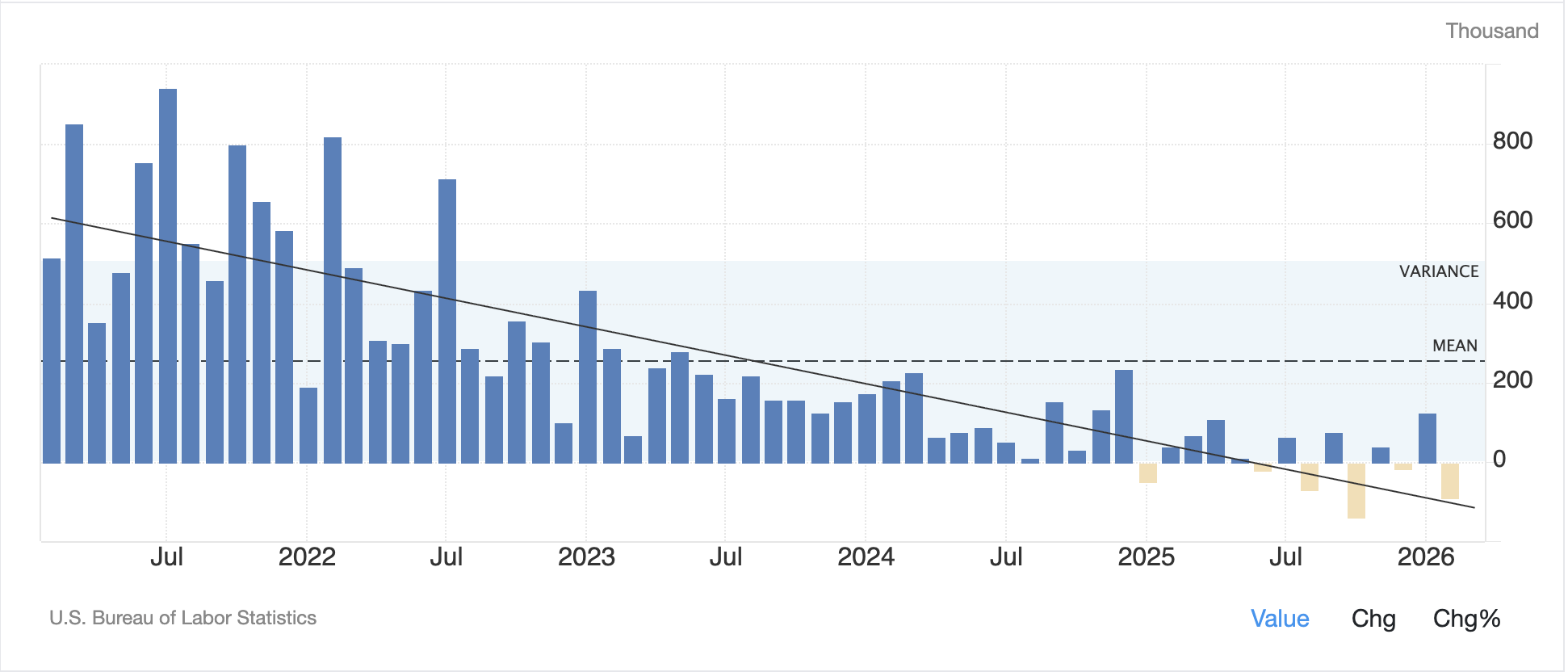
As to bonds, European sovereign yields have fallen by between -3bps and -4bps across the continent while UK gilts (-7bps) have fallen further after employment data there showed the Unemployment Rate ticked up to 4.8% unexpectedly while there were job losses as well.  In fact, looking at the chart below of Payroll Changes over the past three years, the trend seems pretty clear!

Source: tradingeconomics.com

Those UK employment figures also weighed on the pound (-0.45%) which is declining in line with most of the G10 bloc (NOK -1.1%, AUD -0.9%, NZD -0.5%) although the yen (+0.25%) is bucking the trend, perhaps because of its haven status.  NOK is suffering from oil’s (-2.2%) sharp decline after the IEA, once again, said there would be a supply surplus, although their forecasts have been wrong, and consistently overestimating supply and underestimating demand, for the past decade.  

As to the EMG bloc, despite the rally in precious metals, both ZAR (-0.9%) and MXN (-0.8%) are under pressure as is KRW (-0.6%) after the story that China is imposing restrictions on Korean ship builders in the US that are helping America try to reverse the decimation of our shipbuilding industry.  

Trying to recap all that is happening, fear is pervasive across investors of all stripes.  The hunt for havens continues and absent a more lasting trade truce between the US and China, something I think will be very difficult to achieve, volatility is likely to be the dominant feature in all markets.  In the end, though, there is no evidence that the dollar is being ‘dumped’ in any manner and while gold and precious metals may continue to rally, given 2 Fed rate cuts are already priced in for the rest of the year, we will need something completely outside the box to see the dollar fall in any meaningful manner, I believe.  For hedgers, markets like these are why you remain hedged!

Good luck

Adf
Rare Earths No More

Said Xi, we’ll sell rare earths no more
Said Trump, well that means we’re at war
The stock market puked
As traders got spooked
And Trump imposed tariffs galore
 
The question is just why would Xi
Get feisty when things seemed to be
Improved for both sides
With fewer divides
Did Mideast peace kill his esprit?


Let’s talk about markets for a moment.  Sometimes they go down and go down fast when you’re not expecting it.  That is their very nature, so it is important to understand that Friday’s price action, while dramatic relative to what we have seen over the past 6 months, is not that uncommon at all over time.  It appears the proximate cause of the market decline was the word from China that they would stop selling and exporting rare earth minerals. 

It can be no surprise that President Trump immediately responded by threatening an additional 100% tariffs on all Chinese exports and new controls on software, all to be implemented on November 1st.  There is a lot of tit-for-tat in the dueling messages from China and the Trump administration and it is hard to tell what is real and what isn’t.  However, equity markets clearly weren’t prepared for a break in the previous expectations that the US and China were closing in on a more lasting trade stance.

But weekends are a long time for markets as so much can happen while they are closed.  This weekend was a perfect example.  After the carnage on Friday, we cannot be that surprised that both sides of this new tiff modified their responses.

First we saw this on Truth Social:

Then China backed off clarified that what they are really doing is require licensing for all rare earth minerals and products that contain them in exports.  China claims that applications that meet regulations will be approved although the regulations have not yet been defined. Ostensibly this is for national security reasons, and it is unclear exactly who will receive licenses, but this is clearly not the same as ending exports.  

And just like that, many of the fears that were fomented on Friday have been alleviated as evidenced by this morning’s equity market moves in the futures markets.

Source: tradingeconomics.com

But why did Xi make this move in the first place?  I have no idea, nor does anyone but Xi, although here are two completely different thought processes, one very conspiratorial and one rooted in the broader escalation of geopolitical affairs.

As to the first, (Beware, you will need your tinfoil hat here!) consider if the Israel-Gaza peace settlement, (with the hostages returned as of the time I am writing this morning at 5:30) does not serve China’s interest.  First, the one Middle East nation that will be on the outside is their ally, Iran.  Second, the ongoing problems there were always a distraction for the US, something that clearly suits Xi and China.  After all, if the US is focused there, they will have more difficulty paying attention to things Xi cares about like Taiwan and the South China Sea.  If the peace in Israel-Gaza holds, and the Abraham Accords extend to the bulk of the rest of the region, Xi loses a major distraction that cost him virtually nothing.  Plus, this opens the door for tightening sanctions on Iran even further, which could negatively impact China’s oil flows.  

The second is much more esoteric and I read about it this weekend from Dr Pippa Malmgren, someone who has a deep insight into global politics from her time as a presidential advisor as well as from her father, Harold Malmgren, who advised four presidents.  In her most recent Substack post she explained the importance of Helium-3 (3He), a rare isotope of helium that has major energy and military implications and where the largest deposit of the stuff known to man is on the moon.  Her claim is this is the foundation of the recent acceleration in the space race between the US and China and without rare earth minerals, the US ability to achieve its goals and obtain this element would be greatly hampered opening the door for China to get ahead.

Are either of these correct?  It is not clear, but I would contend each contains some logic.  In the end, though, as evidenced by the quick retreat on both sides, I suspect that the trade situation between the US and China will move forward in a positive manner, although there could well be a few more hiccups along the way.  And those hiccups could easily see equity markets decline such that there is a real correction of 15% to 20%.  Just not today.

So, what is happening today?  Let’s look.  First, I would be remiss if I didn’t highlight the following Bloomberg headline: ‘Buy the Dip’ Call Grows Louder as China Selloff Seen Containedas it perfectly encapsulates the ongoing mindset in equity markets.  At least in US equities.  Asia had a much rougher session despite the backtracking with HK (-1.5%) and China (-0.5%) under pressure and weakness virtually universal in the time zone (Korea -0.7%, India -0.2%, Taiwan -1.4%, Australia -0.8%). Tokyo was closed.  It appears there are either still concerns over the trade situation, or perhaps the fact that globally, markets have had long rallies has led to some profit taking amid rising uncertainties.  

European bourses, though are all in the green, with the continent seeing gains of 0.5% or so across the board although the UK is lagging with a miniscule 0.05% gain at this hour (6:30).  As to US futures, as seen above, gains range from 1.0% (DJIA) to 2.0% (NASDAQ).

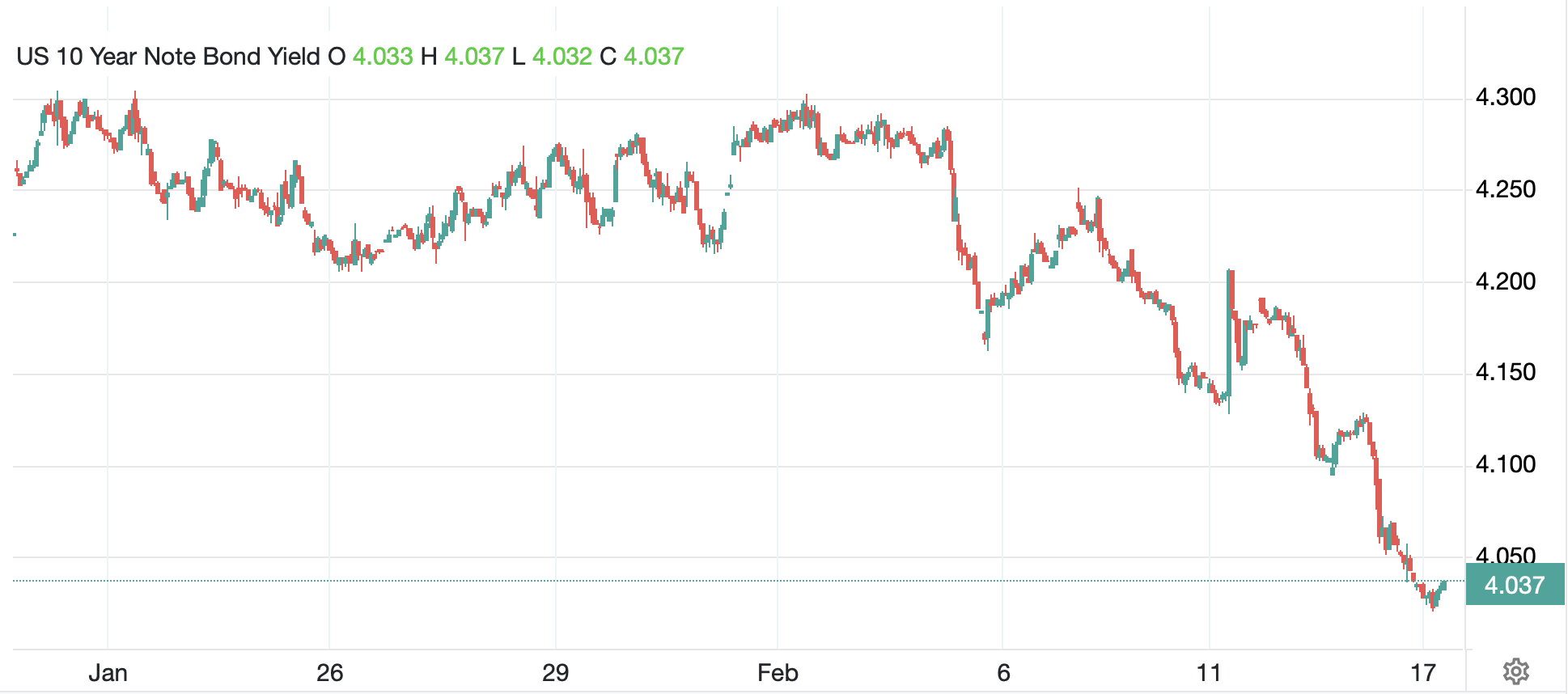
Meanwhile, bond yields also saw a dramatic move on Friday, tumbling -8bps and back to their lowest level seen in a month as per the below chart from tradingeconomics.com

This morning, those yields are unchanged.  European sovereign yields, which followed Treasury yields lower on Friday are also little changed at this hour, down another -1bp as concerns begin to arise that economic growth is going to be impaired by the escalation in trade tension between the US and China.  

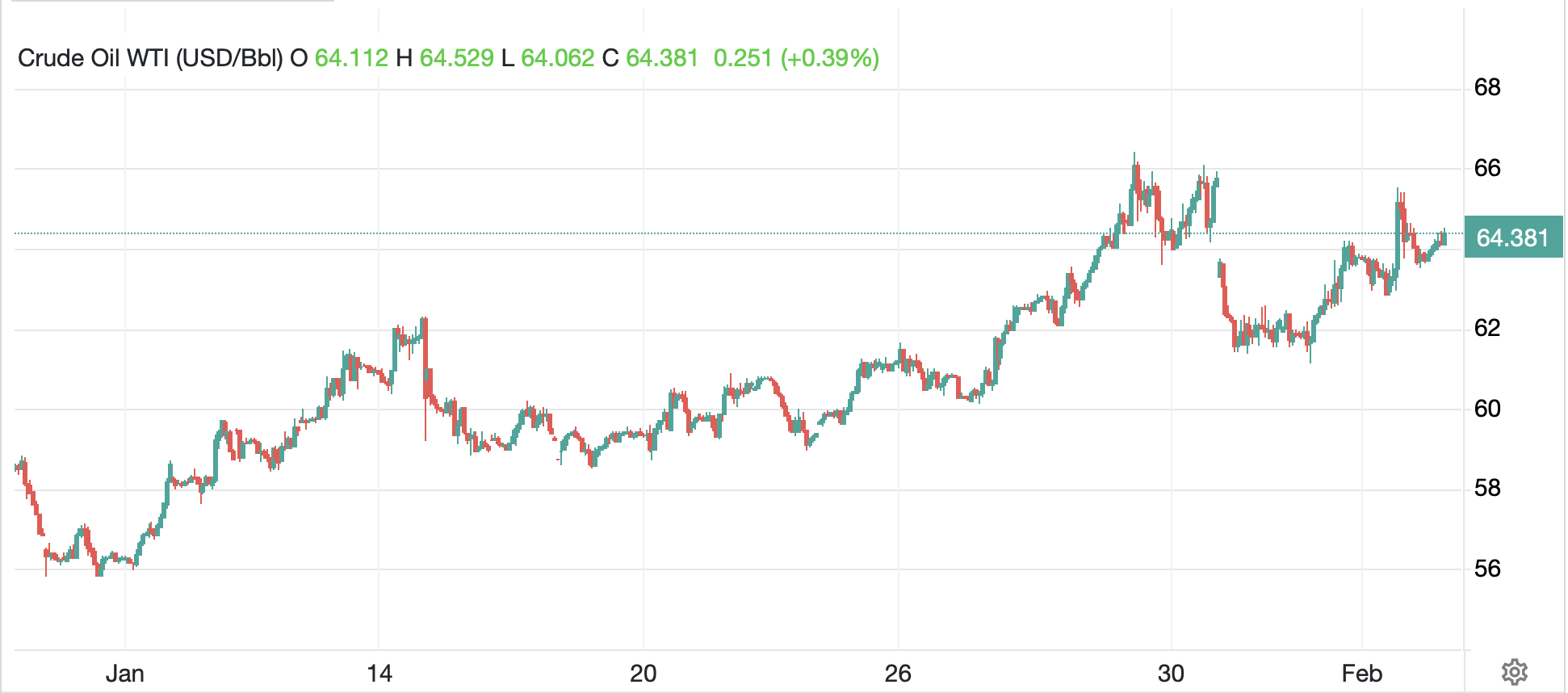
I would argue that commodities are the one area where the back and forth is raising the most concern.  At least that is true in metals markets, with gold, which rallied 1% Friday amid the equity carnage, higher by another 1.6% this morning, to more new highs and we are seeing silver (+1.6%), copper (+4.2%) and Platinum (+3.6%) all in sync.  To me, this is the clearest indicator that there is an underlying fear pervading markets.  Oil (+1.8%) has rebounded from Friday’s rout as the easing of trade tensions appears to have calmed the market somewhat, although WTI remains just below $60/bbl at this point.  

Finally, the dollar is firmer again this morning as, although it softened slightly Friday, it has since regained most of those losses and is back on its recent uptrend as you can see below.

Source: tradingeconomics.com

While Tokyo was closed overnight, we did see further JPY weakness as the yen retraced most of its Friday gains like the rest of the market.  The biggest G10 mover was CHF (-0.9%) followed by AUD (-0.7%) and JPY (-0.7%) with other currencies less impacted and NOK (+0.2%) benefitting from the oil rally.  However, the EMG bloc has seen a much wider dispersion with MXN (+0.5%), ZAR (+1.1%) and CLP (+0.8%) all rallying sharply on the metals rally while PLN (-0.5%) and CZK (-0.4%) lag as they follow the euro lower.

And that’s enough for today.  With the government still on hiatus, no official statistics will be released although we do get a little bit of stuff as follows:

TuesdayNFIB Small Business Index100.5
WednesdayEmpire State Manufacturing-1.8
 Fed’s Beige Book 
ThursdayPhilly Fed Manufacturing9.1

Source: tradingeconomics.com

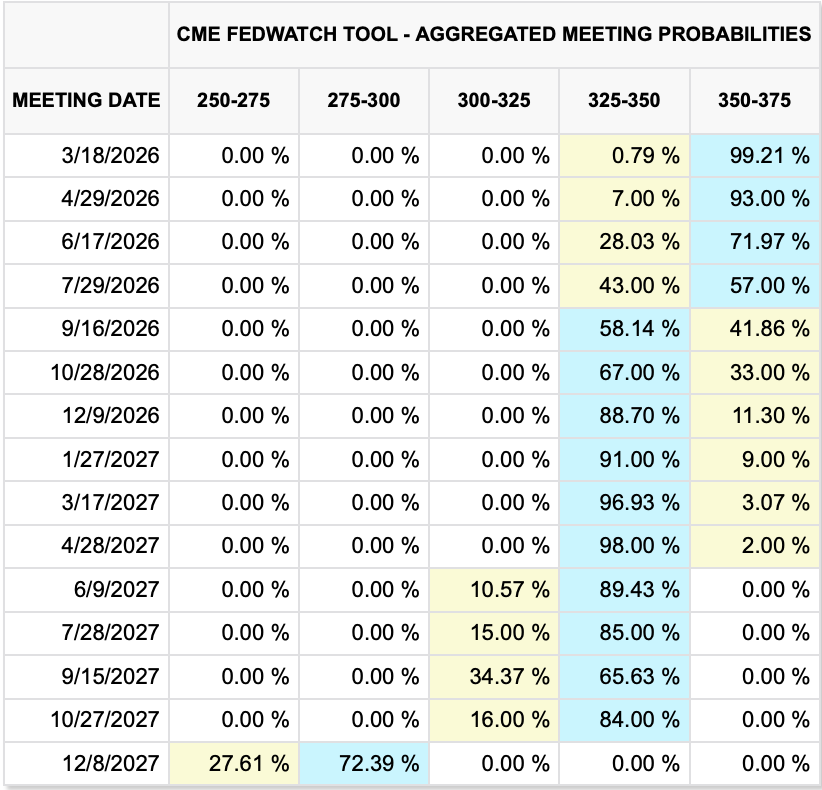
But, with the lack of data, it appears Chairman Powell has instructed his minions to flood the airwaves with a virtual cacophony of speeches this week, I count 18 on the calendar including the big man himself on Tuesday afternoon.  It seems difficult to believe that their opinions on the economy will have changed very much given the lack of new data.  The market is still pricing a 98% chance of a cut at the end of this month and another 91% chance of a cut in December.  With the increased trade tension, there is much more discussion regarding a slower economic course ahead, which would play into further rate cuts.  However, while that would clearly help precious metals as it ends any ideas of an inflation fight, it is not clear it will weaken the dollar very much as everybody else will almost certainly follow along.

Good luck

Adf
Warnings Arise

The headline today is ‘bout peace
In Gaza, and hostage release
Can this program last?
And both sides hold fast?
Or once more will violence increase?
 
Now, turning to markets we see
Risk assets continue their spree
But it’s no surprise
More warnings arise
That markets shun reality


In what can only be described as a monumental breakthrough in the Middle East, a peace plan between Israel and Hamas has been agreed that will see to the release of the remaining hostages and the disarmament of Hamas fighters while the Israeli army pulls back to specified lines near the border.  The idea is that a group of Arab nations will oversee the Gaza strip with funding coming from the Saudis, amongst others, and it appears this may be the best chance for peace in the area in centuries if not millennia.  President Trump has orchestrated this and deserves enormous credit for a truly momentous outcome.  I certainly hope the plans are fulfilled and we can remove one historical warzone from the map.  While this has had no immediate market impact, its importance is such that it cannot be ignored IMHO.

Ok, let’s move to the markets. Stocks, gold and the dollar continue to rally, continuing the conundrum that we have observed for the past several weeks.  However, my take is there has been an increase in the number of warnings that the end is nigh.  For instance, Bloomberg has a headline article about Nassim Taleb, the author of Black Swans, explaining that a debt crisis is looming and you need to hedge against that outcome.  As well, all over my XFin feed, I continue to see comments about how the end is nigh with respect to the equity market rally as the debt situation is going to soon overwhelm everything.

And I understand this concept well (and have been carrying Index put options for a while accordingly) but thus far, the mooted equity market collapse seems to be awaiting the mooted recession that has also yet to arrive.  The government shutdown has had essentially no impact on markets, perhaps improving them given the lack of data that tends to cause significant gyrations.  The Russia/Ukraine war is just background noise to markets at this point and the one thing that remains constant is that money supply continues to grow around the world with the result that both asset prices and high street prices rise.  In other words, governments around the world are ‘running it hot’ and will continue to do so for as long as they can.

The FOMC Minutes were released yesterday, and they explained what we already knew based on the dot plot (shown below), there is a wide dispersion of views on the committee.

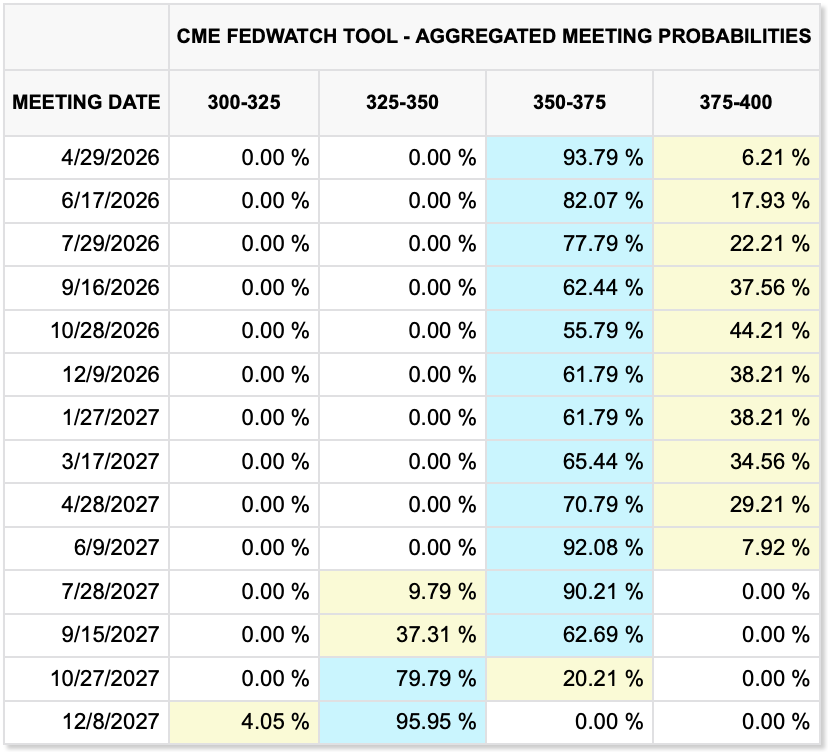
Perhaps the most interesting thing is that despite there being a pretty even split between those expecting two more rate cuts this year and those expecting no more rate cuts this year, the Fed funds futures market is still pricing a 95% probability for a cut at the end of this month and a 79% probability for a second cut in December as per the below CME table.

As well, given the absence of recent data, the Fed speak is not coalescing around a single narrative so that dot plot is still our best estimate of what FOMC members are thinking, i.e. there are 17 independent views right now.

I understand the concerns which range from an incipient debt crisis to the risks that stem from AI and AI investment representing virtually all economic growth right now to the exclusion of almost all other economic sectors.  But markets are going to do what markets are going to do, and right now, the bears are having a tough time making their case.  

Remember, timing is everything in life, and in markets being early is effectively the same as being wrong unless one has significant ability to withstand drawdowns.  There are certainly signs around of the beginning of the unraveling (sudden bankruptcies of large firms like Tricolor and First Brands; SOFR spreads widening; difficult Treasury auctions, etc.).  For now, there is no obvious catalyst to change the recent direction of travel, but markets don’t need a specific catalyst, sometimes it is just time to change.  This is why hedging matters.

Ok, let’s recap how things played out overnight.  After more record closes for the S&P 500 and NASDAQ, Tokyo (+1.8%) exploded higher again on the back of more AI related news.  China (+1.5%) opened higher after its one-week hiatus although HK (-0.3%) lagged.  The news on the mainland appears to be some optimism regarding the upcoming Trump-Xi meeting.  Korea remains closed although India and Taiwan both had positive sessions, which given the tech focus there should not be surprising.  Elsewhere it was mostly modest gains although the Philippines saw a decline despite the central bank cutting rates in a surprise move.

I fully admit I no longer understand the reaction function in European shares as the DAX (+0.3%) continues to rally despite one dire economic report after another.  This morning Germany released trade data showing both exports (-0.5%) and imports (-1.3%) fell far more than expected which given the declines indicates a complete lack of growth, if not shrinkage.  Too, the CAC (+0.2%) is modestly higher as the French are going to try to get another PM to pass a budget, although I am skeptical.  However, the rest of Europe is modestly softer this morning.  As to US futures, at this hour (7:00), they are essentially unchanged.

In the bond market, yields are basically unchanged across the board, with French OATs the best performers (-2bps) on the positive political news.  While we have definitely seen an uptick in commentary about the unsustainable debt story in the US over the past month, market participants don’t seem to be reading those stories.  A quick look at the chart below shows that we have spent the bulk of the time of the last month with 10-year Treasury yields trading between 4.05% and 4.15%, hardly a sign of crisis.

Source: tradingeconomics.com

On the commodity front, oil (-0.5%) continues to trade within the middle of its recent range and is just not very interesting right now.  Metals, however, remain the focus and while gold (0.0%) is unchanged consolidating at its new highs, we see silver (+1.65%, and just 35¢ from $50/oz), copper (+2.3%) and platinum (+1.6%) all continuing their recent rallies.

Finally, the dollar continues to rally as well with the euro (-0.2%) looking a lot like it is going to trade below 1.16 soon.  Remember, it wasn’t that long ago when the “consensus” view was it was going to trade to and through 1.20!  The pound (-0.3%) is slipping and JPY (-0.1%) while not moving much so far today, is just below 153 and shows no signs of stopping its recent decline (dollar rally).  The Scandies are weak, CLP (+0.4%) is benefitting from copper’s rise and overall, the DXY is now above 99.00 and looking like 100.00 is just a matter of days away.

Arguably, the biggest news this morning is Chairman Powell speaking at the Community Bank Conference in Washington, but given the venue, I have a feeling we will not hear very much of note regarding monetary policy.  

The current correlations seem to be holding, so higher stocks and higher metals lead to a higher dollar, although it is not clear that is the causation route.  Perhaps it is demand for those dollar-denominated instruments is driving dollar demand.  But I don’t see a reason for it to change for now.  Risk is still there, and hedging still matters, don’t forget that, but enjoy the ride!

Good luck

Adf
The Chaos Extant

Though yesterday equities fell
The trend that most pundits foretell
Is higher and higher
As AI’s on fire
And it would be crazy to sell
 
And, too, precious metals keep soaring
A sign of investors abhorring
The chaos extant
Which serves as a taunt
To those who prefer markets boring


My friend JJ (Alyosha at Market Vibes on Substack) made a very interesting point about recent markets, which I have felt, but not effectively articulated until he pointed it out; the correlation of pretty much all markets is approaching one, but they are rallying.  Historically, every market has its own drivers and tends to trade somewhat independently of other markets, at least across asset classes.  While it is certainly common to see equity indices rise and fall together, we have all become used to bond markets moving in the opposite direction while commodity and FX markets tend to follow completely different drummers.  After all, while there are certainly big unifying themes, each of these markets, and the components that make them up, all have idiosyncratic drivers of price.

Again, historically, the only time this changes is when there is a crisis, at which point the correlation between markets tends to one (or minus one) as panic selling of risk assets and buying of perceived havens becomes the ONLY trade of interest.

However, what we have observed over the past several weeks is that virtually all risk assets are rising simultaneously, with equities, gold and bitcoin all on a tear as you can see below.

Source: tradingeconomics.com

In other words, their correlations are approaching one.  The odd thing about this is that equity markets tend to reflect expectations for the future of economic activity along the following line of reasoning; strong economic growth leads to strong earnings leads to higher equity prices.  At least that has been the history.  Meanwhile, gold, and more recently bitcoin, have served as the antithesis of that trade, increasing concern over weaker economic outcomes which results in increased demand for haven assets that can buck that trend.  

Of course, historically there has been another asset class seen as protection, bonds, but those are in a tough spot right now as the ongoing massive increases in issuance by countries all over the world has investors somewhat concerned about their safety.  This has been especially true in Japan, where JGB yields last night traded to their highest level since 2008 at 1.70%.

Source: marketwatch.com

But my observation is that investors elsewhere are uncertain how to proceed as yields, though higher than seen several years ago, are not increasing dramatically despite the narrative of fiat debasement, increased inflation and major fiscal problems building around the world.

Source: tradingeconomics.com

The explanation that makes the most sense to me is the concept that governments around the world are going to ‘run it hot’ as they seek faster economic growth at the expense of all else and will only pay lip service to trying to fight inflation.  The result is fiscal spending will continue to prime the pump, whether on purely domestic issues or things like defense, debt issuance will tend toward shorter dates as there is a much greater appetite for T-bills than bonds given the inflation concerns, and so stock markets will benefit, but perceived inflation hedges like gold and bitcoin, will also benefit.  (At this point, I will insert a plug: If you want to protect against inflation, at least against CPI’s rise, while maintaining liquidity, USDi, the only inflation tracking cryptocurrency is a very good idea for some portion of your portfolio.  Check out http://www.USDicoin.com).

The concern about this entire story is that when things change, and they always do at some point, all these assets that are rising in sync will fall in sync, and remember, falling markets tend to move a lot faster than rising ones.  I’m not saying this is imminent, just that the setup feels concerning, at least to my eyes and my gut.

Meanwhile, let’s look at how markets behaved overnight.  Yesterday saw US equity markets slip a bit, although they closed well off their early morning lows and futures this morning are pointing higher by a small amount, 0.2%.  Asian markets saw Japan (-0.5%) and HK (-0.5%) both slide as well, following the US while China remained closed for the holiday but will reopen this evening.  Elsewhere in the region, for those markets that were open (Australia, India, Taiwan were the majors) modest weakness was also the story.  

Europe, though, is a bit of a conundrum as it is having a very positive session (UK +0.9%, Germany +0.7%, France +0.8%, Spain +0.6%) despite the fact that data there continues to disappoint (German IP -4.3%) which as you can see from the below chart continues a three year run of pretty horrible outcomes.

Source: tradingeconomics.com

As well, France has no government, and the UK government is seeing its support erode dramatically.  But looking at the ECB, there is no expectation priced into the market for further rate cuts, so I am baffled as to why European equity markets are performing well.  

Perhaps it is because the dollar is strengthening, which is the recent trend with the euro slipping another -0.25% overnight and trading back to its lowest level in a month.  Too, the pound (-0.2%), CHF (-0.2%) and JPY (-0.6%) have all suffered pushing the DXY up toward 99.00.  Does a strong dollar help foreign markets?  I always thought the story was it hurt them as funding USD debt became more difficult for foreign companies.  Something doesn’t make sense here.  As to EMG markets, they are also seeing their currencies slip, mostly in a similar fashion to the euro, down about -0.2%, although KRW (-0.6%) is the laggard as they have been unsuccessful in getting any tariff relief from President Trump.

Finally, commodity prices continue their remarkable rally, at least metals prices are on a remarkable rally with gold (+1.3% or $50/oz) and silver (+2.5%, now at $49/oz) driving the bus and taking copper (+0.7%) and platinum (+1.8%) along for the ride.  While gold has rallied more than 53% so far this year, it has not been a US investor focus until recently.  I think it has further to run, a lot further.  As to oil (+1.5%), it continues to bounce from last week’s lows but remains well within its recent trading range.  Ukrainian attacks have been successful in reducing Russian output and OPEC+ only raised production by 137K barrels at their last meeting, less than had been rumored.  However, as I observe this market, it needs a large external catalyst to breech the range in my view, and if war doesn’t do the job, I’m not sure what will.

And that’s really it for the day.  Government data remains on hiatus and even though Fed speakers are polluting the airwaves, nobody is listening.  The government has been shut down for a week, and I think that most people just don’t care.  In fact, if the result was less government expenditure for less government service, I think many would make the tradeoff.  The upshot is, the larger trend of equity and commodity rallies remain in place, and the dollar continues to look a lot better than most other fiat currencies.

Good luck

Adf

Never Sold

The news of the day is that gold
Is actively bought, never sold
The Four Thousand level
Led some folks to revel
And drew many more to the fold
 
But weirdly, the dollar keeps rising
Which based on the past is surprising
The problems in France
And Sanae’s stance
Have been, for the buck, energizing


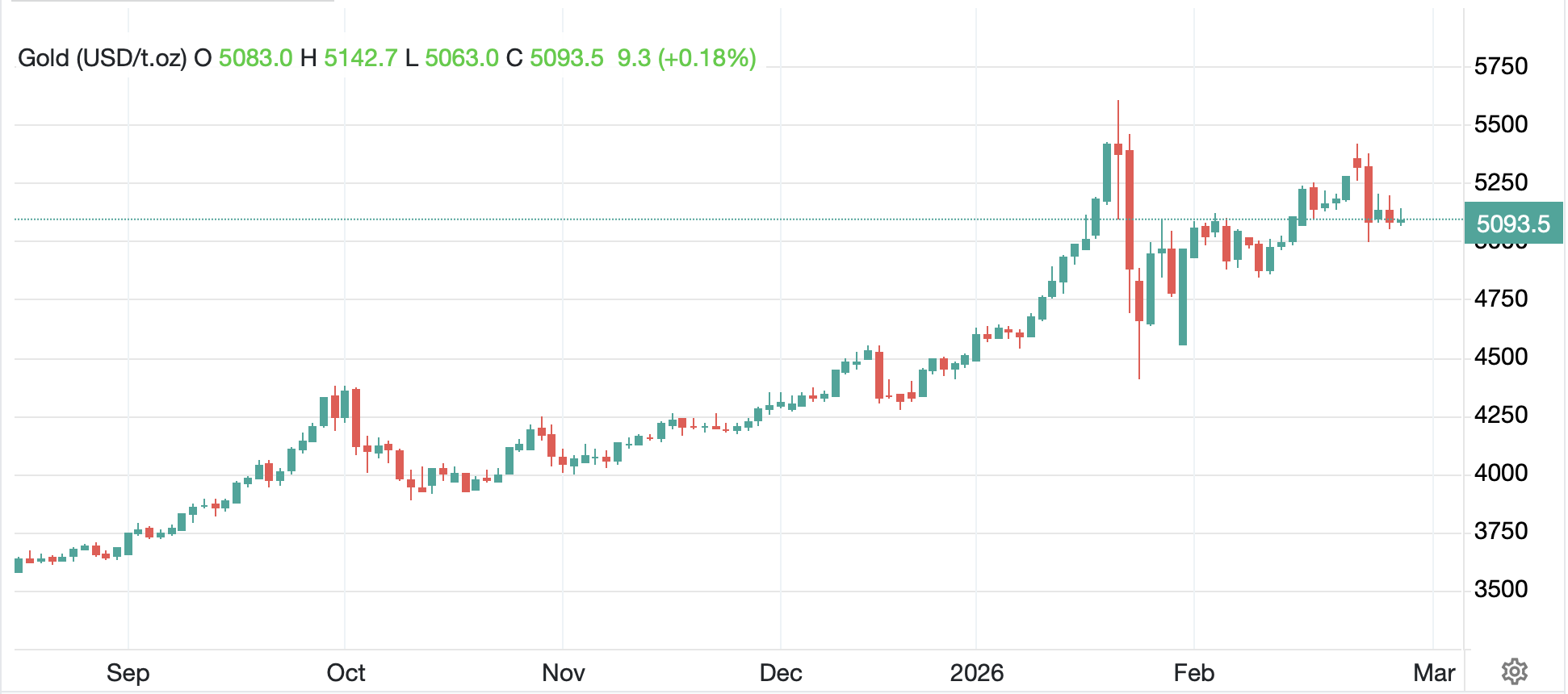
A month ago, many Wall Street analysts came out with forecasts that gold could trade as high as $4000/oz by mid 2026 as they reluctantly jumped on the bandwagon.  But, by many accounts, although my charts don’t show it, the barbarous relic’s futures contract traded a bit more than 120 lots at $4000.10 last night, nine months earlier than those forecasts.

Source: Bloomberg.com

Right now (6:20), the cash market is trading at $3957 (-0.1%) but there is absolutely no indication that the top is in.  Rather, I have been reading about the new GenZ BOLD investment strategy, which is buying a combination of Bitcoin and gold.  Mohammed El-Arian nicknamed this the debasement trade, which is a fair assessment and a number of banks have been jumping on this theme.

Perhaps more interesting than this story, which after all is simply rehashing the fact that gold is seen as a long-term hedge against inflation, is the fact that the dollar is trading higher alongside gold, which is typically not the case.  In fact, for the bulk of my career, gold was effectively just another currency to trade against the dollar, and when the dollar was weak, foreign currencies and gold would rise and vice versa.  But look at these next two charts from tradingeconomics.com, the first a longer term view of the relationship between gold and DXY and the second a much shorter-term view.

The one-year history:

Compared to the one-month history:

I believe it is fair to say that while there is a clear concern about, and flight from, fiat currencies, hence the strength of precious metals as well as bitcoin, in the fiat universe, the dollar remains the best of a bad lot.  Yesterday I described the problems in France and how the second largest nation in the Eurozone was leaderless while trying to cope with a significant spending problem amid broad-based political turmoil.  We have discussed the problems in Germany in the past, and early this morning, the fruits of their insane energy policies were shown by another decline in Factory Orders, this time -0.8%, far less than the 1.7% gain anticipated by economists.  I don’t know about you, but it is difficult for me to look at the below chart of the last three years of Germany’s Factory Orders and see a positive future.  Twenty-two of the thirty-six months were negative, arguably the driving force behind the fact that Germany’s economy has seen zero growth in that period.

Source: tradingeconomics.com

Meanwhile, the yen continues to weaken, pushing toward 151 now and quite frankly, showing limited reason to rebound anytime soon.  Takaichi-san appears to be on board with the “run it hot” thesis, looking for both monetary and fiscal stimulus to help Japan grow itself out of its problems.  The JGB market has sussed out there will be plenty more unfunded spending coming down the pike if she has her way as evidenced by the ongoing rise in the long end of the curve there.  While the 30-year bond did touch slight new highs yesterday, the 40-year is still a few basis points below its worst level (highest yield) seen back in mid-May as you can see in the chart below.  Regardless, the chart of JGB yields looks decidedly like the chart of gold!

Source: tradingeconomics.com

In a nutshell, there is no indication the fiscal/financial problems around the world have been addressed in any meaningful manner and the upshot is that more and more investors are seeking safety in assets that are not the responsibility of governments, but either private companies or have inherent intrinsic value.  This is the story we are going to see play out for a while yet in my view.

Ok, so, let’s look at how markets overall behaved in the overnight session.  China remains on holiday, but it will be interesting to see how things open there on Thursday morning local time.  Japan, was unchanged overnight, holding onto its extraordinary post-election gains.  As to the other bourses there, holidays abound with both Hong Kong and Korea closed last night and the rest of the region net doing very little.  Clearly the holiday spirit has infected all of Asia!  In Europe, though, we are seeing very modest gains across the board despite the weak German data.  The DAX (+0.2%) has managed a gain and we are seeing slightly better performance in France (+0.4%) and Spain (+0.4%) with the UK (+0.1%) lagging slightly.  On the one hand, these are pretty benign moves so probably don’t mean much, but it is surprising there are rallies here given the ongoing lousy data coming from Europe.  As to US futures, at this hour (7:20), they are all pointing higher by just 0.1%.

In the bond market, yields are continuing to edge higher with Treasuries (+2bps) leading the way and European sovereigns following along with yield there higher by between 2bps and 3bps.  There continues to be a disconnect between what appear to be government policies of “run it hot” and bond investors, at least at the 10-year maturity.  Either that or there is some surreptitious yield curve control ongoing to prevent some potentially really bad optics.

In the commodity markets, oil (+0.1%) is still firmly ensconced in its recent range with no signs of a breakout.  I read a remarkably interesting article from Doomberg (if you do not already get this, it is incredibly worthwhile) this morning describing the methods that the Mexican drug cartels have been heavily involved in the oil business in Mexico, siphoning billions of dollars from Pemex and funding themselves, and more importantly, how the US was now addressing this situation.  This is all of a piece with the administration’s view that the Americas are its key allies and its playground, and it will not tolerate the lawlessness that has heretofore been rampant.  It also implies that if successful, much more oil will be coming to market from Mexico, and you know what that means for prices.  As to the metals markets, they are taking a breather this morning with gold (-0.1%) and sliver (-0.3%) consolidating after yesterday’s rally.  We discussed gold above, but silver is about $1.50 from the big round number of $50/oz, something that I am confident will trade sooner rather than later.

Finally, the dollar is rallying again with the euro (-0.5%) and pound (-0.6%) both under pressure and dragging the rest of the G10 with them.  If the DXY is your favorite proxy, as you can see from the chart below, this is the 4th time since the failed breakout in late July that the index is testing 98.50 from below.  It seems there is some underlying demand, and I would not be surprised to see another test of 100 in the coming days.

Source: tradingeconomics.com

It should be no surprise that the CE4 currencies are all under pressure this morning and we have also seen weakness in MXN (-0.3%) and ZAR (-0.3%) although given the holidays in Asia, it is hard to make a claim there other than that INR (-0.1%) continues to steadily weaken and make new historic lows on a regular basis.

With the government shutdown continuing, there is still no official data although there is a story that President Trump is willing to have more talks with the Democrats.  We shall see.  I think the biggest problem for the Democrats in this situation is that according to many polls, nobody really cares about the shutdown, with only 6% registering any concern.  It is a Washington problem, not a national problem.  Of course, FOMC members will continue to speak regardless of the shutdown and today we hear from four more.  Interestingly, nothing any of them said yesterday was worthy of a headline in either the WSJ or Bloomberg which tells me that there is nothing coming from the Fed that matters.

Running it hot means that we will continue to see asset prices rise, bond prices suffer, and the dollar likely maintain its current level if not rally a bit.  We need a policy change somewhere to change that, and I don’t see any nation willing to make the changes necessary.  I have no idea how long this can continue, but as Keynes said, markets can remain irrational longer than you can remain solvent.  Be careful betting against this.

Good luck

Adf