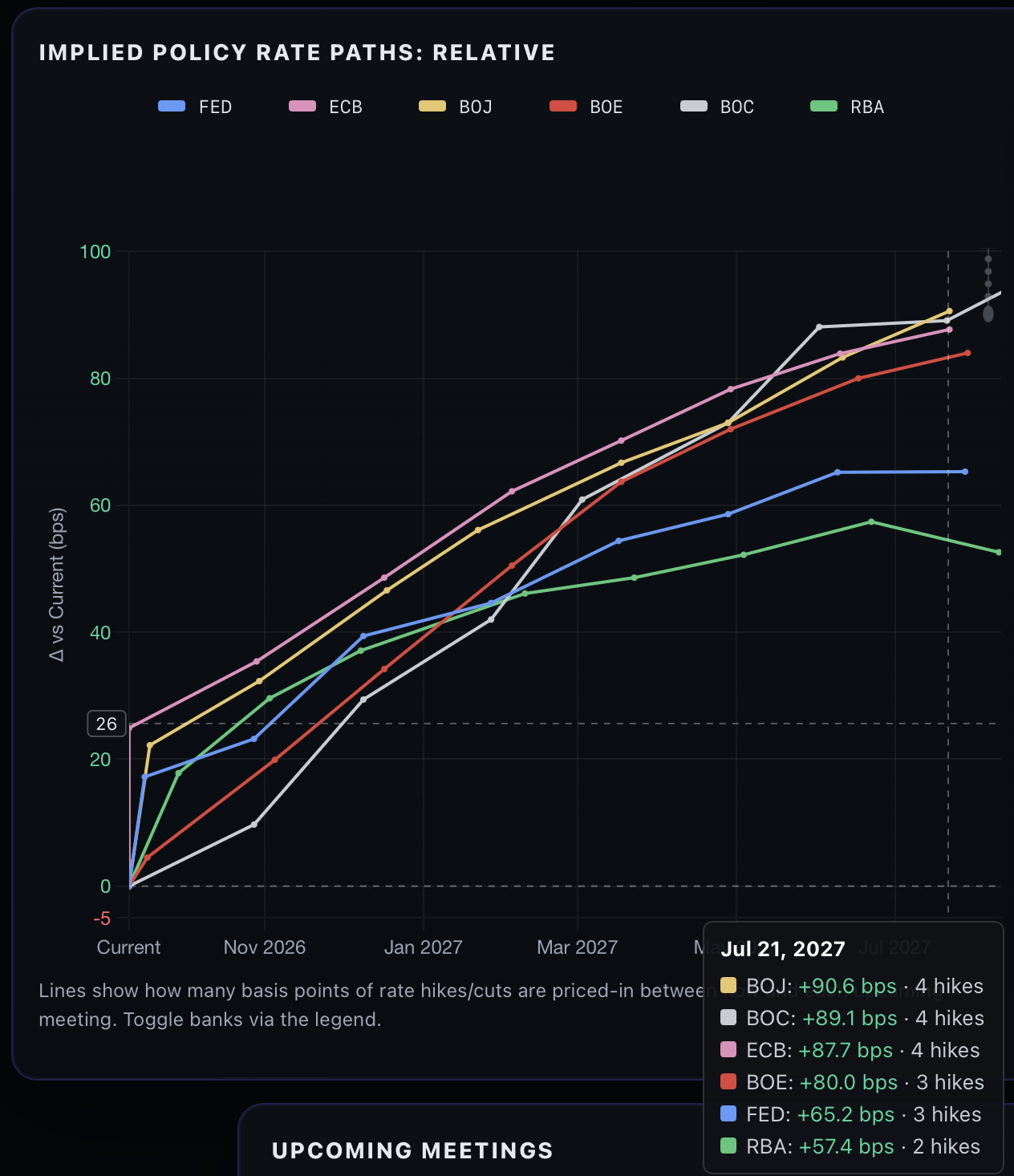
A Different Scapegoat

The war in Iran rages on
But markets are starting to yawn
Initial concern
Led traders to spurn
Risk assets each dusk until dawn

But now, just a few days have passed
And fear mongers all seem downcast
Most stocks have rebounded
And that has confounded
The bears who, gross shorts, had amassed

In fact, today’s story of note
Is China’s decision to float
A lower growth rate
To be their new fate
As Xi seeks a different scapegoat

This morning is the sixth day of the military action in Iran and depending on the source, the US is either kicking ass or setting up for the greatest collapse of all time.  Perhaps the most interesting statistic of this war is the number of casualties reported thus far, which when summed across all the theaters, appears to be somewhere between 1000 and 1200.  It seems to me that given the ferocity of the attacks on both sides, that is a remarkably low number.  I certainly hope it stays low, for everyone’s sake.

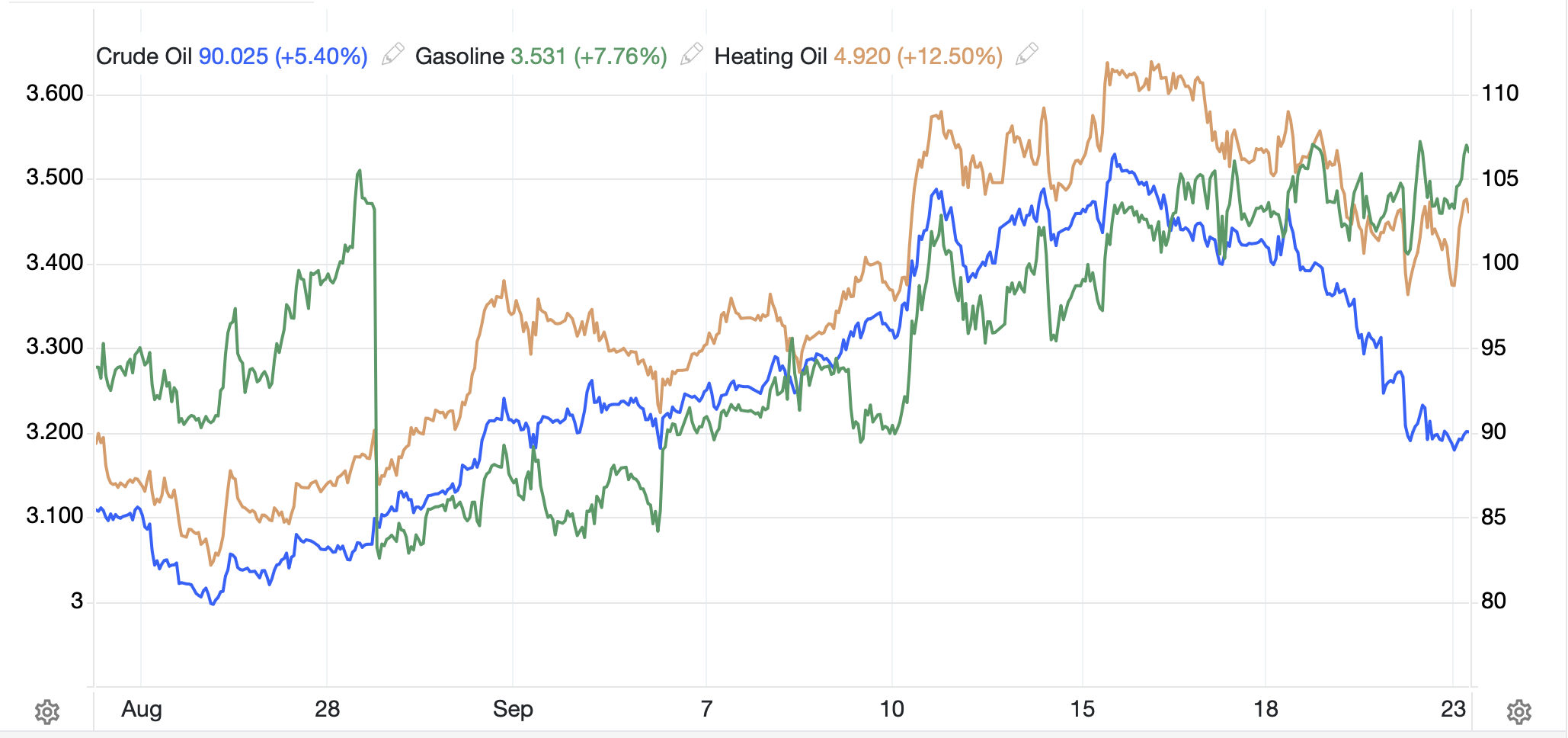
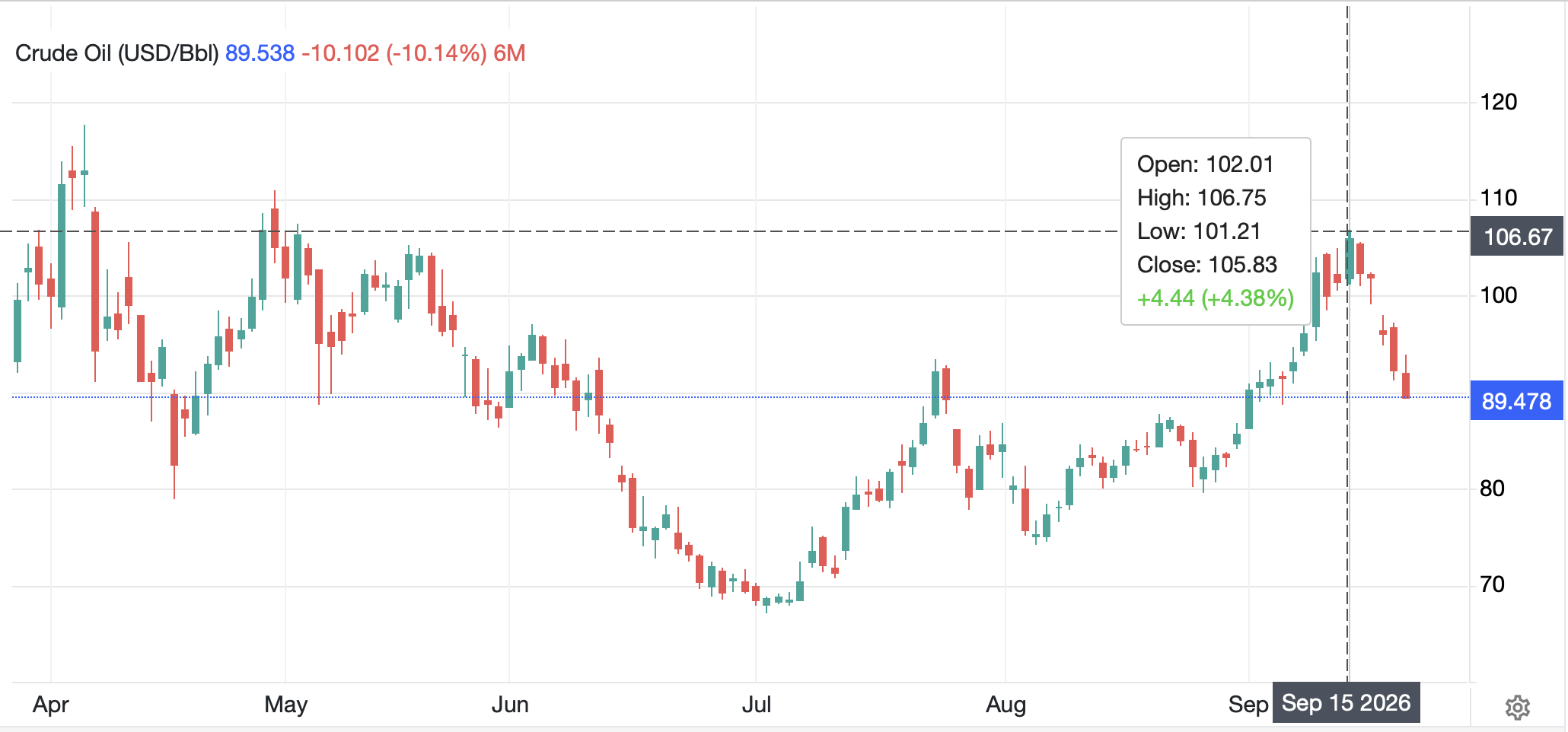
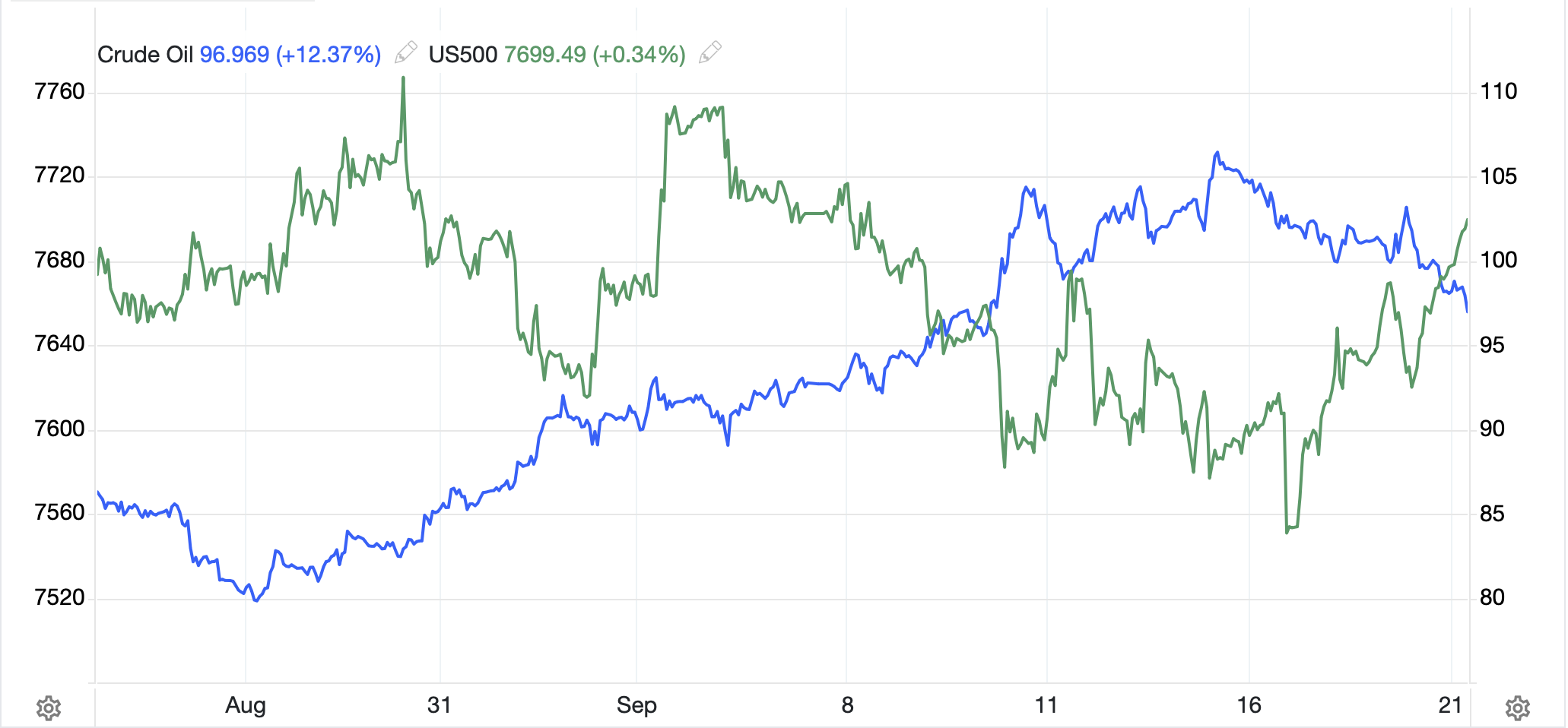
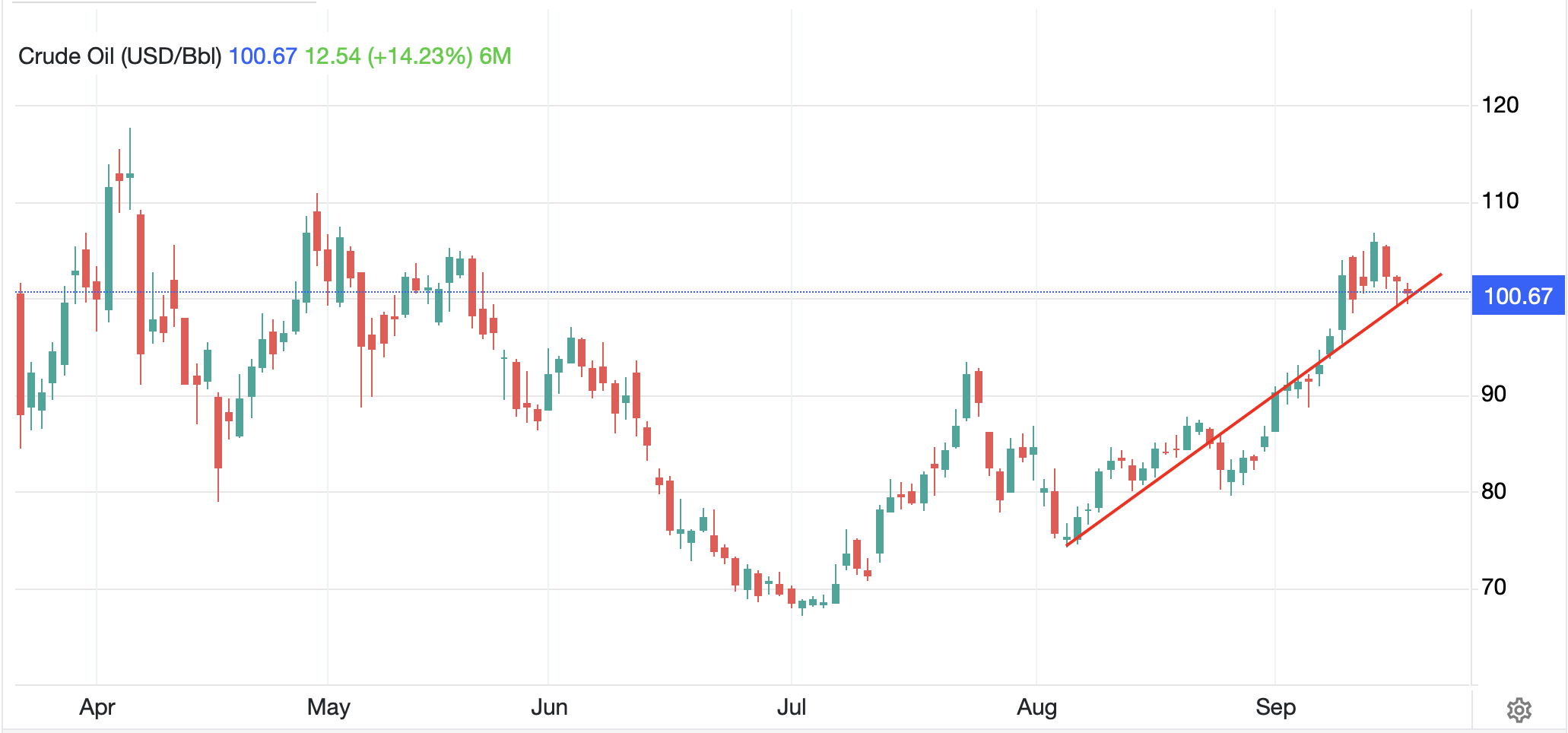
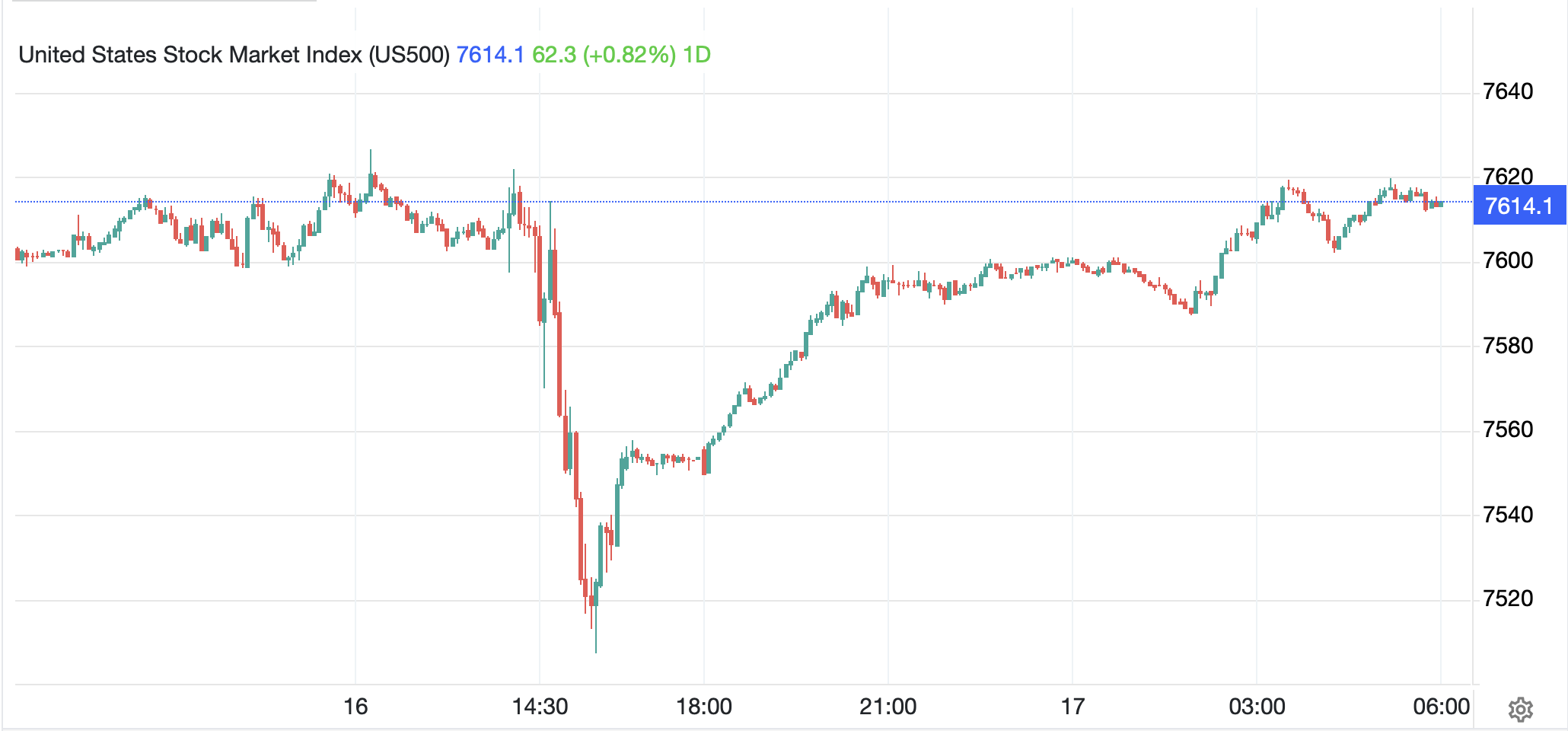
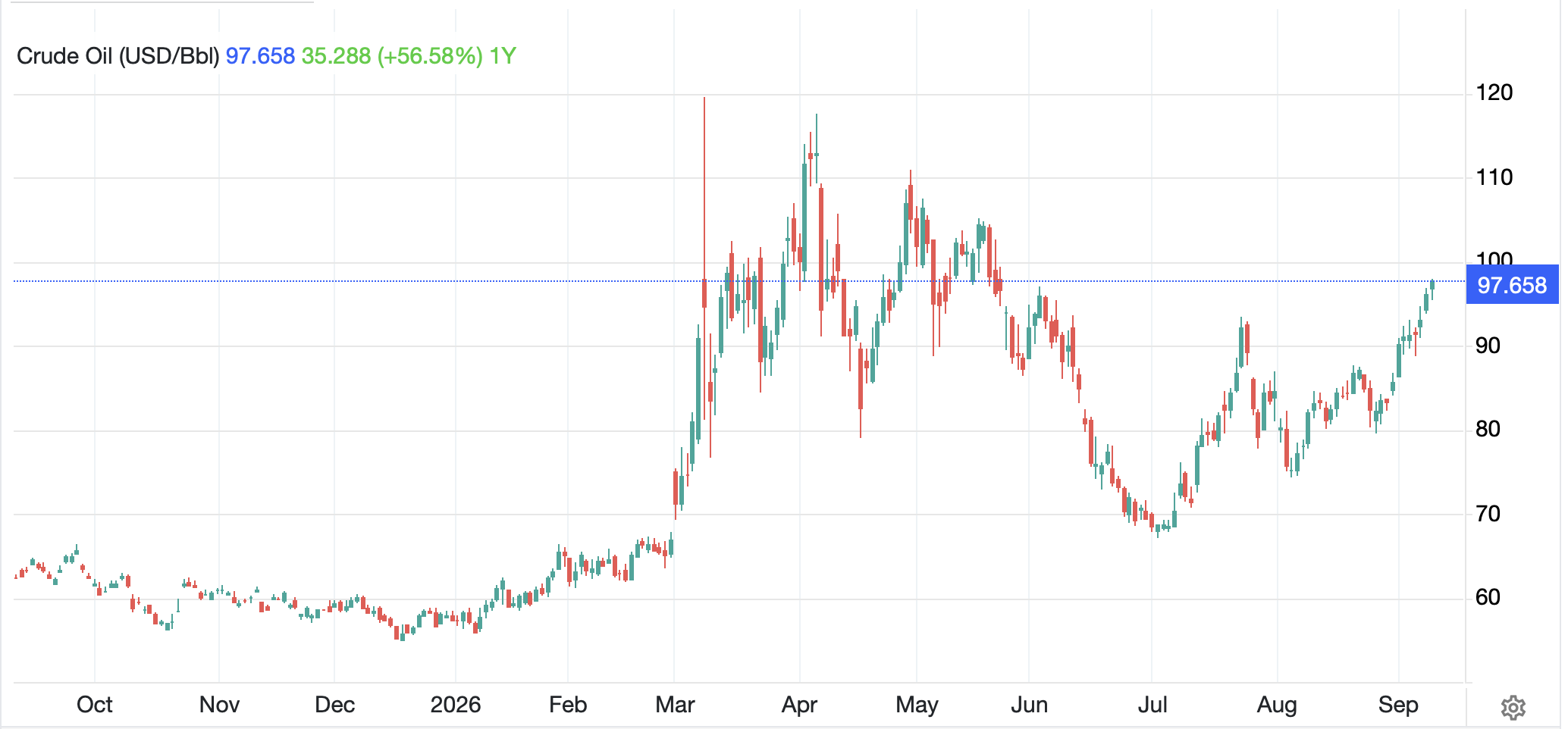
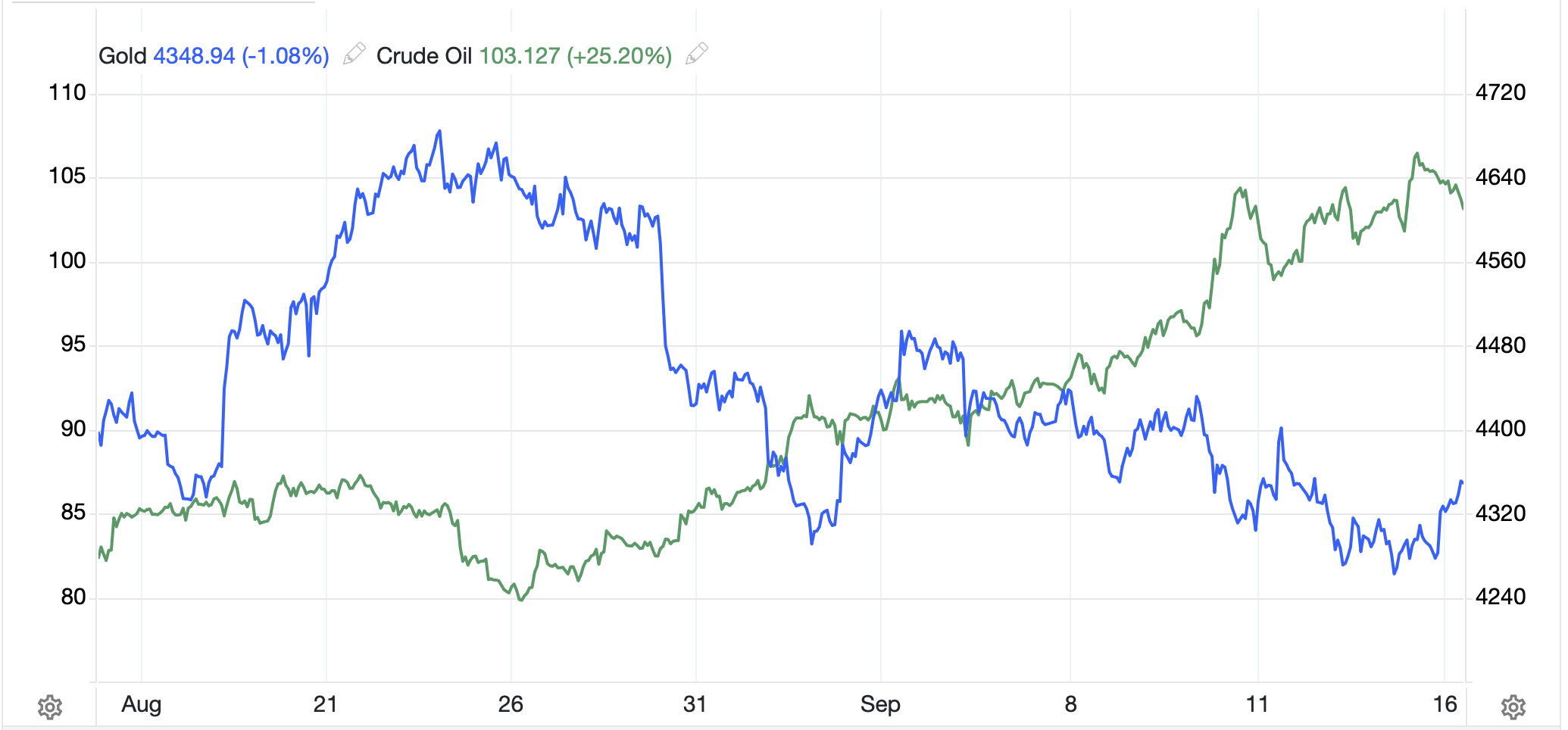
In the meantime, market participants have absorbed the ongoing information and much of the initial FUD has been ameliorated.  I only say this because yesterday and overnight, equity markets are almost universally higher, and in some cases, by substantial amounts.  Arguably, this is a bigger disaster for the Iranians than almost anything else.  If financial markets continue to motor along despite the war, it removes a potential pressure point on President Trump to deescalate.  In fact, the only market that is continuing to demonstrate any price concerns is the oil market, where WTI (+2.6%) and Brent (+2.2%) are both back close to the highest levels seen in the first days.

Source: tradingeconomics.com

The Strait of Hormuz continues to be effectively closed, and that remains a problem for both Europe and Asia, especially China.  In fact, this morning I read that China has ceased exporting refined products amid concerns of how long this war will continue.  

Now, permanently higher oil prices would definitely have severe negative consequences for the global economy if that were to be the outcome.  But I don’t see that as the outcome.  Rather, the world is awash in oil as the US and Canada and Venezuela and Brazil and Argentina continue to pump like crazy.  As well, Saudi Arabia has two major pipelines that ship oil to the Red Sea rather than require transit of the Strait, so I am not hugely concerned about a much higher price.  All of the fears of $100/bbl or higher oil in the event of a closure of the Strait of Hormuz have not come to pass, at least not yet, and I see no reason for that to be the case going forward.

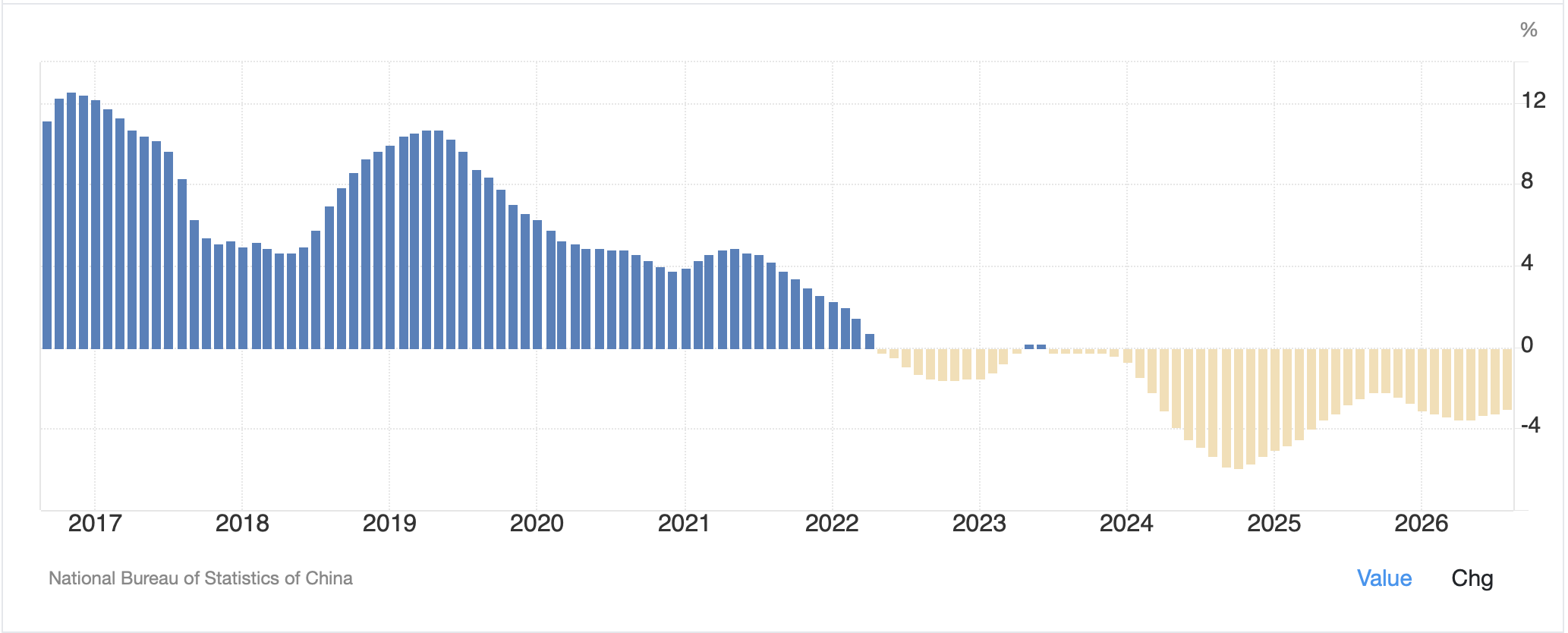
But away from oil, things are remarkably ordinary in markets, so much so that the real story of the day, I believe, is that China has targeted GDP growth of ‘just’ 4.5%. – 5.0% for this year.  The WSJ had a very nice graph of the trajectory of Chinese GDP since 1985 showing a 4.5% outcome would be the lowest (excluding Covid) since 1991.

For a good explanation of things regarding the Chinese economy, it is always worthwhile to turn to @michaelxpettis on X and he didn’t disappoint this morning.  In a nutshell, his point is that while the statement claims they will be focusing more on domestic consumption in their effort to rebalance the economy, that has been the stated aim for at least 5 years, and we know that hasn’t happened.  President Xi’s problem is that if that goal were to be achieved, it would result in GDP growth somewhere on the order of 2%, and that is not acceptable.  For my money, nothing has changed there.  Chinese companies will still over produce, prices in China will still be pressured lower and the Chinese trade surplus will remain well in excess of $1 trillion.

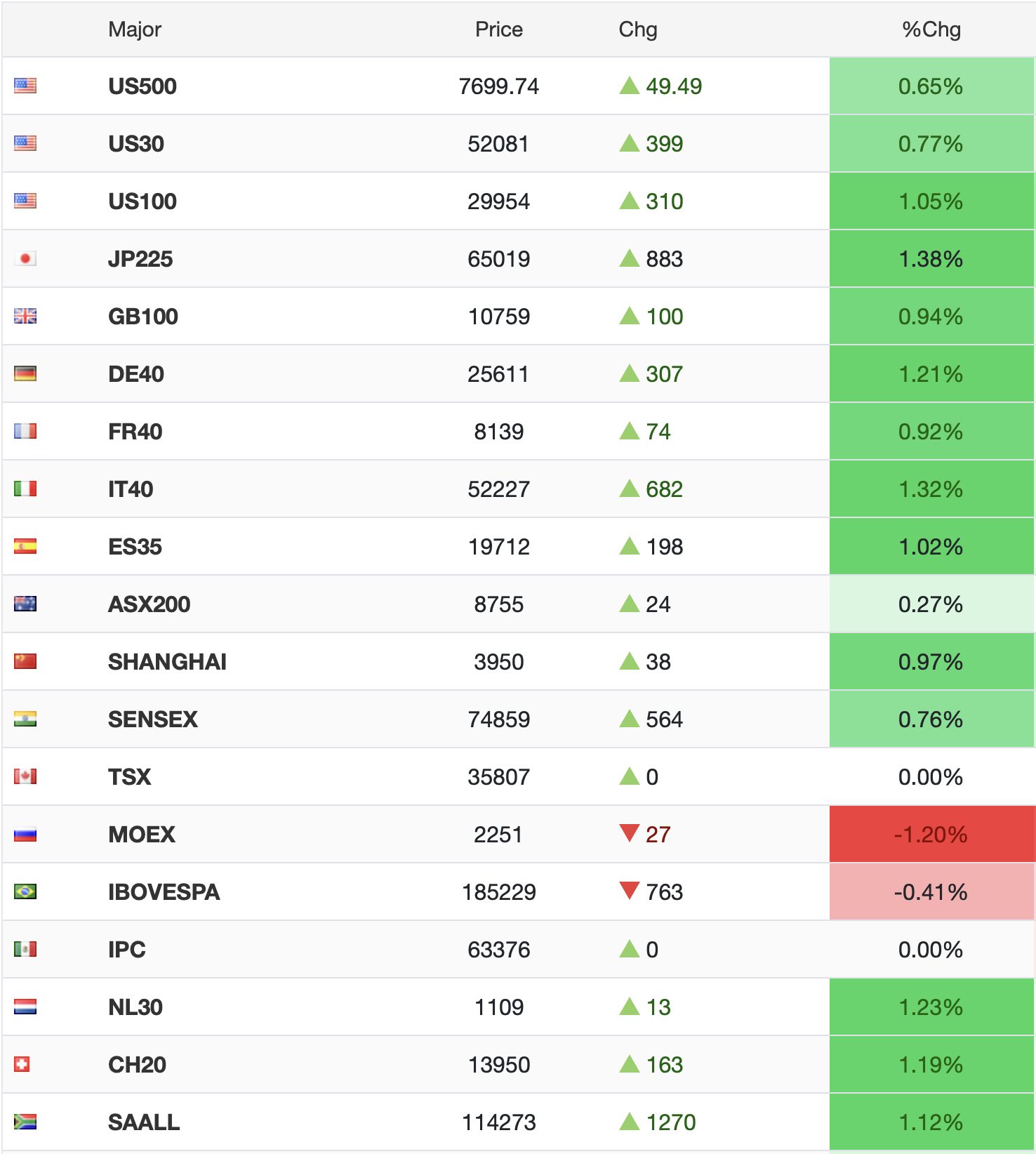
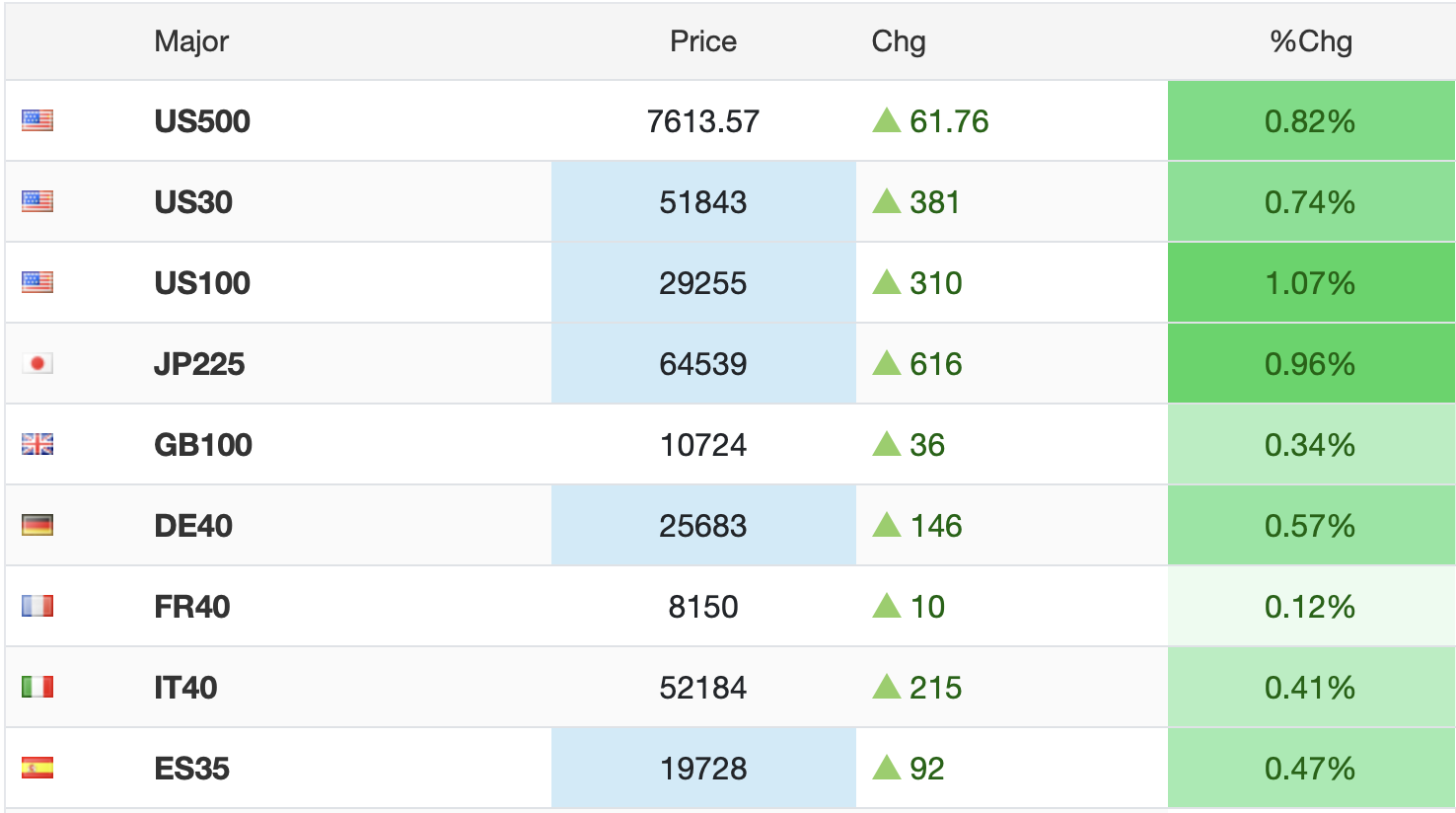
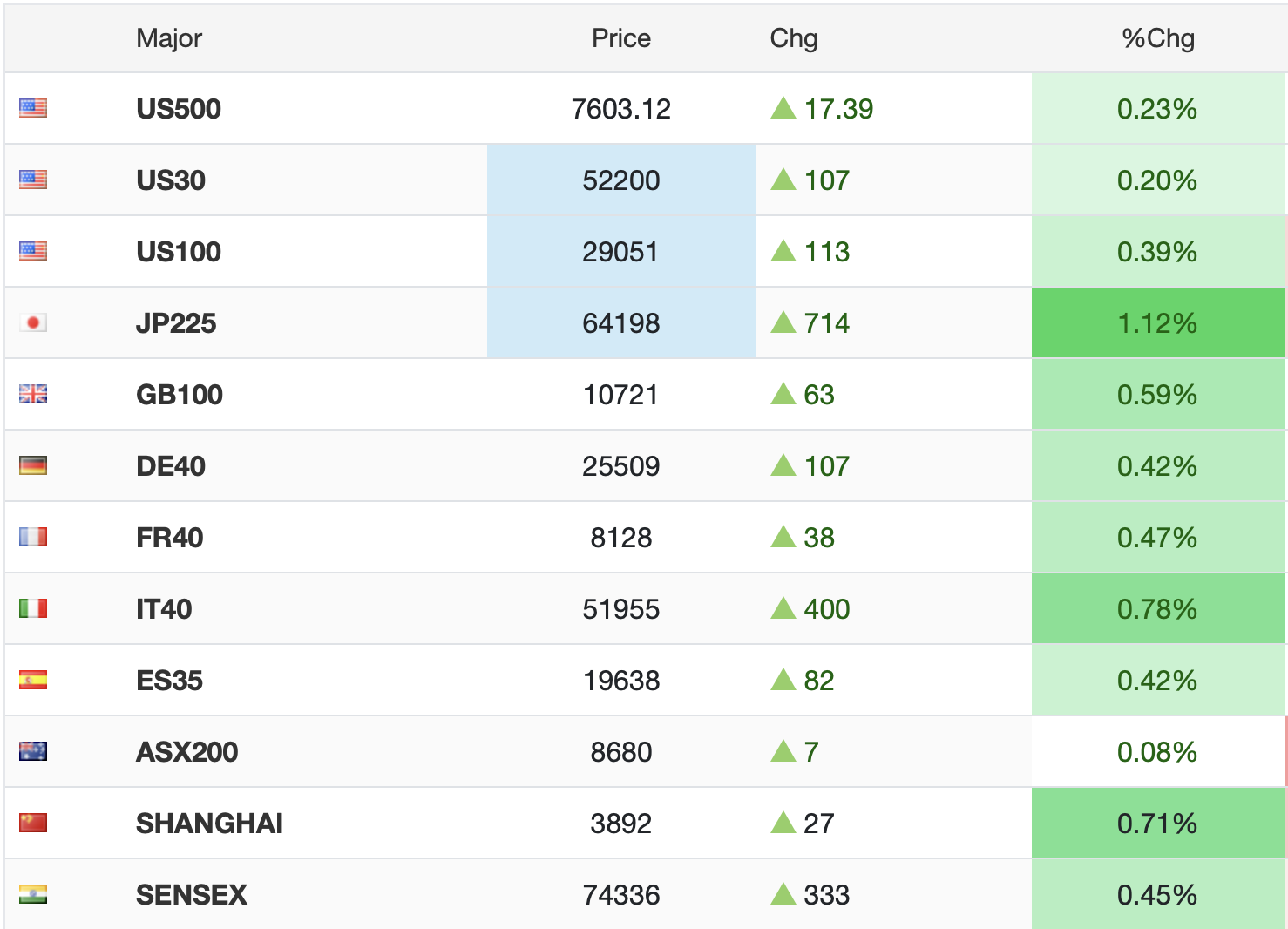
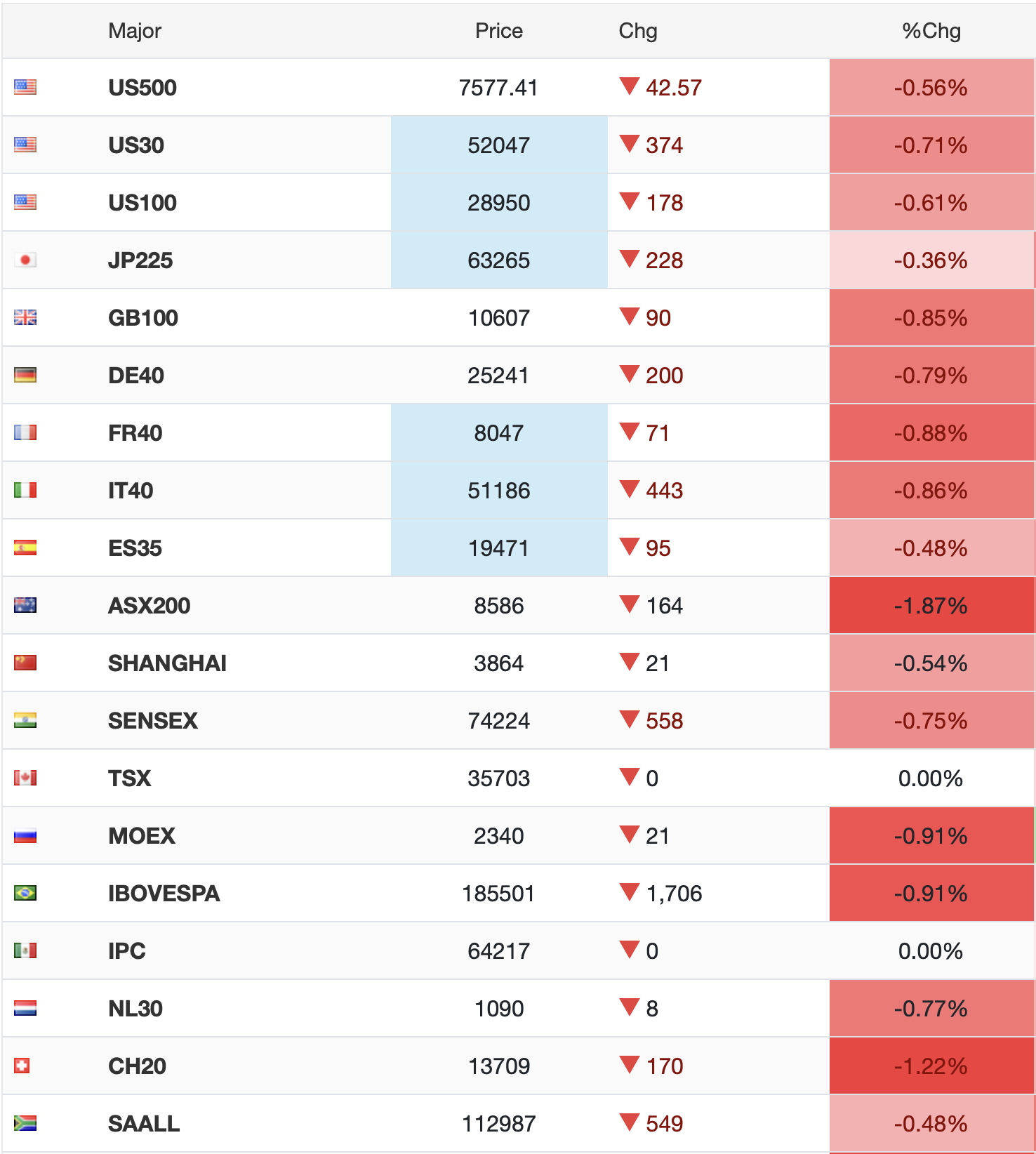
And that’s really what we have today.  I am not a war correspondent, so will not be highlighting anything there.  Rather, let’s turn to the markets and see what happened overnight.  under the guise of a picture is worth 1000 words, I give you major equity market performance in the past 24 hours below from Bloomberg.

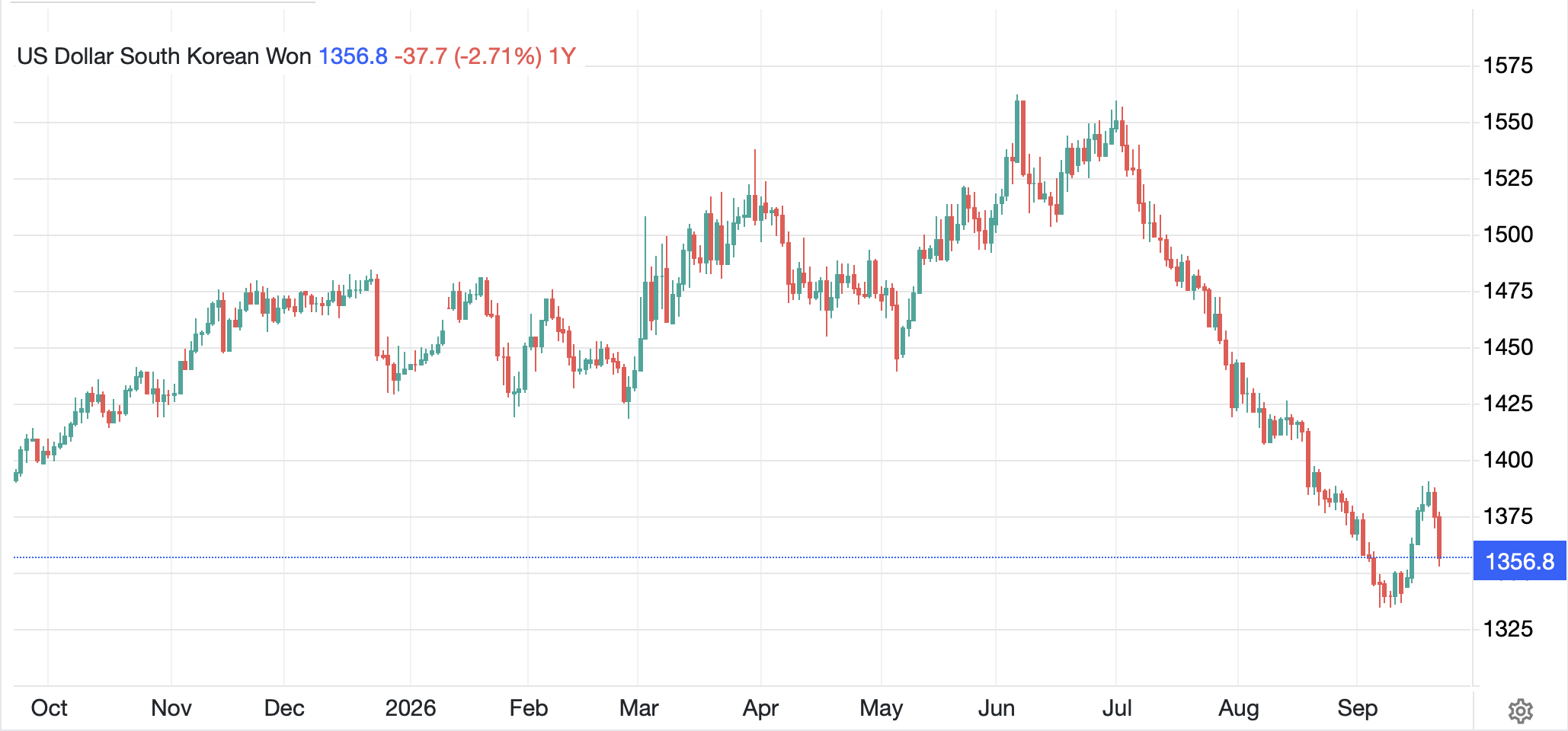
Of course, this doesn’t consider Korea (+9.6%) which was the biggest winner overnight, and recouped most of the previous day’s losses as per the below.

Source: finance.yahoo.com

But virtually every market in Asia rallied overnight with Taiwan, Indonesia and Thailand all higher by 2% or more.  As to Europe, the euphoria is not as high, but still fear is not evident and at this hour (7:10), US futures are flat to -0.15%, so basically unchanged.

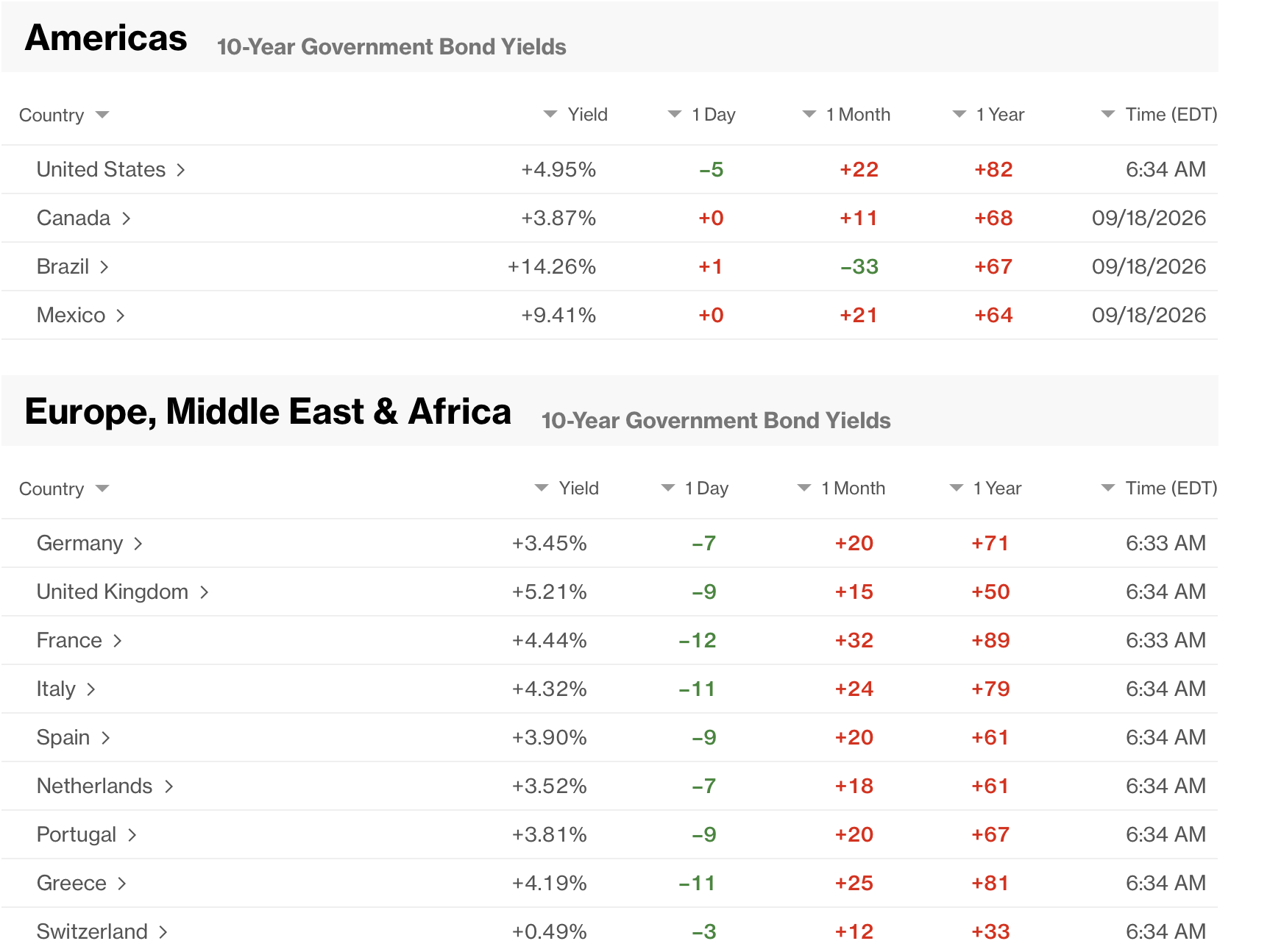
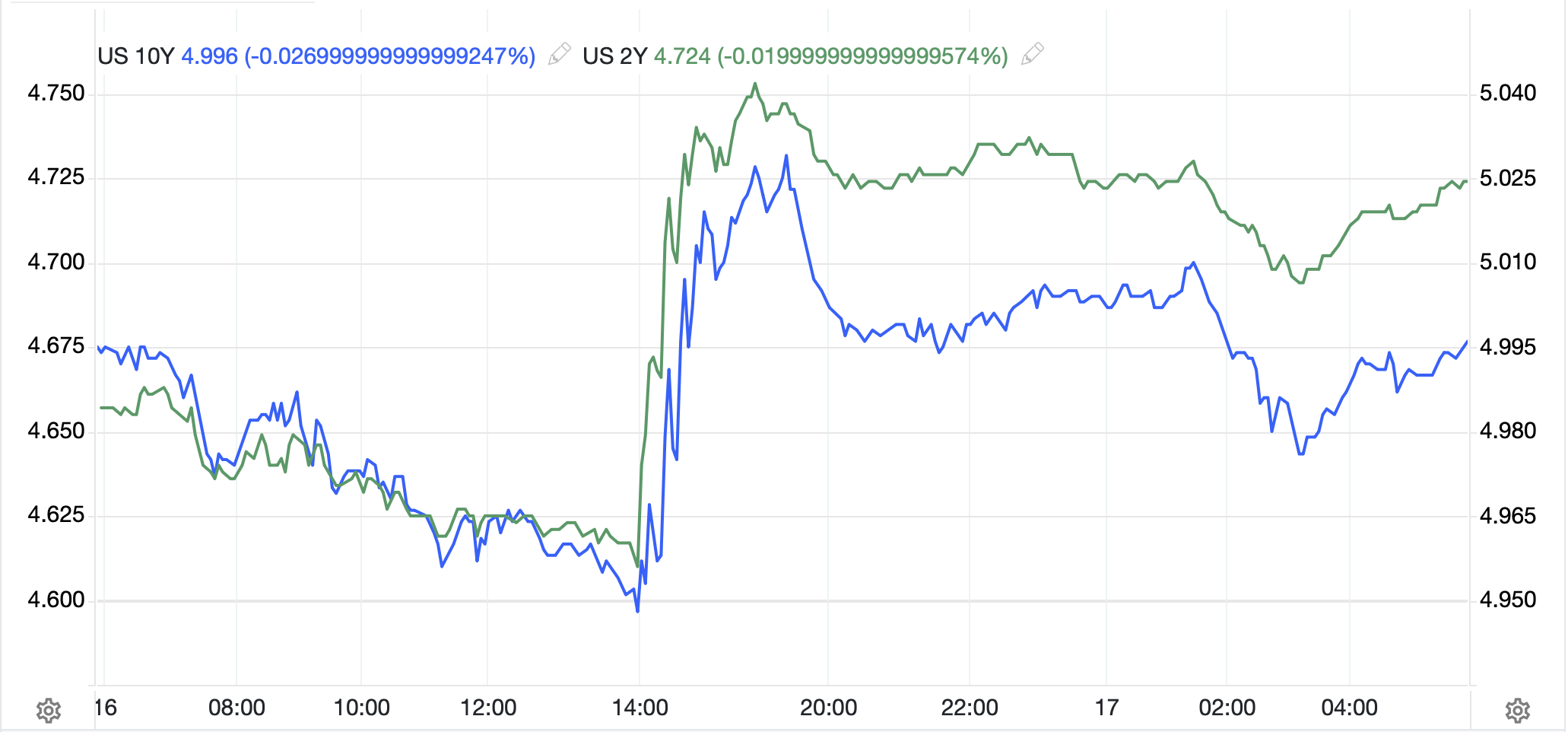
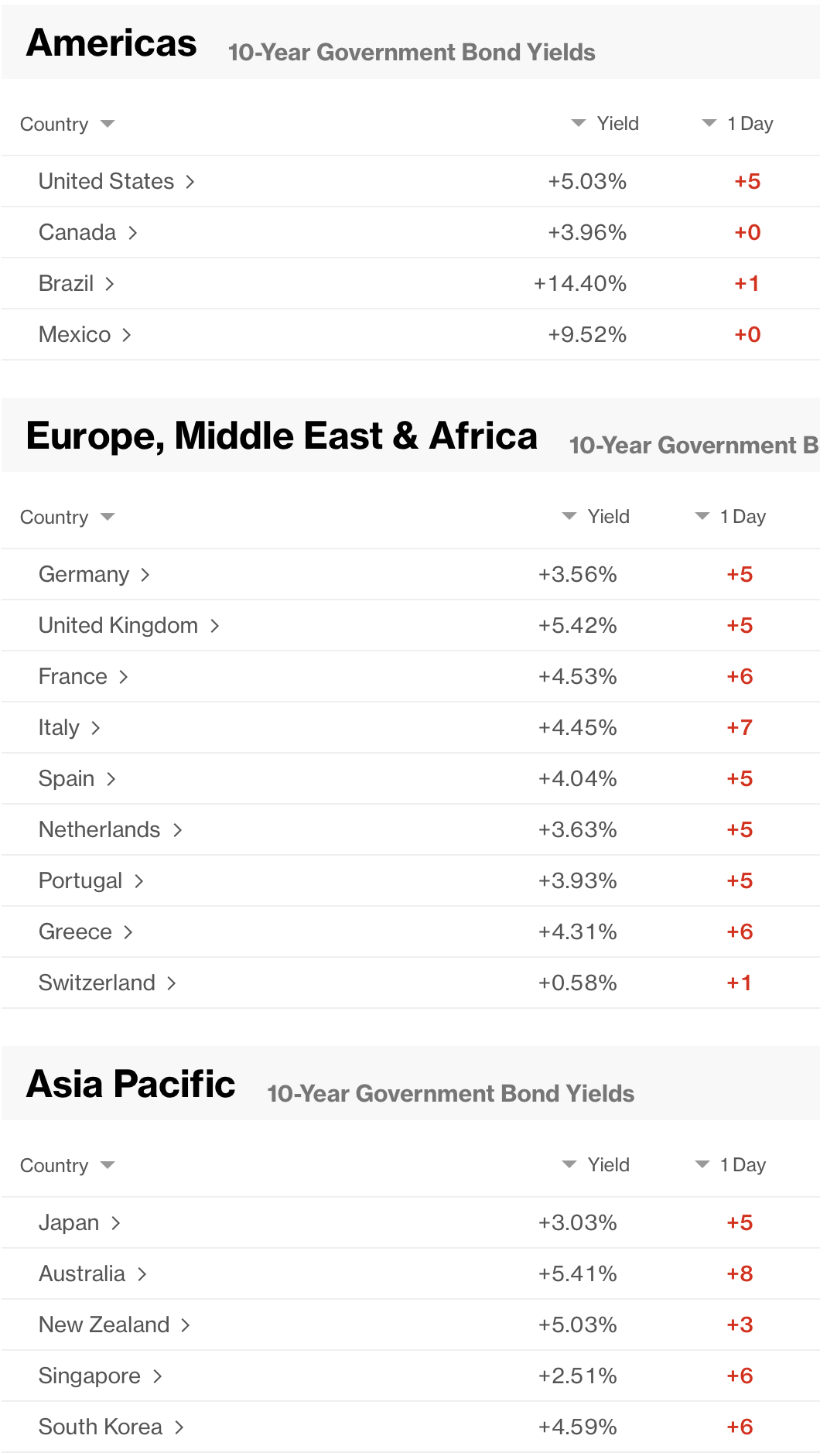
The bond market is having a tougher time around the world with Treasury yields rising yesterday by 4bps and up another 2bps this morning.  European sovereign yields are all higher by between 6bps and 8bps as inflation fears start to get built into investment theses.  Remember, Europe is probably the worst hit regarding the oil/LNG supply disruptions and prices there are likely to climb further than in the US or Western Hemisphere.  Too, JGBs (+4bps) are feeling a little strain, despite (because of?) Ueda-san and his cronies expressing concern over the war’s impact on inflation in Japan and maintaining that a rate hike in April is still a possibility.

Speaking of inflation, the Fed’s Beige Book was released yesterday as well as a NY Fed survey on prices in their region and both pointed to much more underlying inflation than the CPI data currently implies.  Wolf Richter had an excellent write-up here, and the numbers are eye opening.

In the metals markets, gold (+0.6%) really has a remarkable amount of support under all conditions.  Whether I look at a mechanically drawn trend line or the 50-day moving average, the barbarous relic remains in demand and shows no signs of breaking lower.  I continue to believe that the recent volatility and liquidations were the result of leveraged traders in other products needing to sell something to make margin calls, and gold was available for the job.

Source: tradingeconomics.com

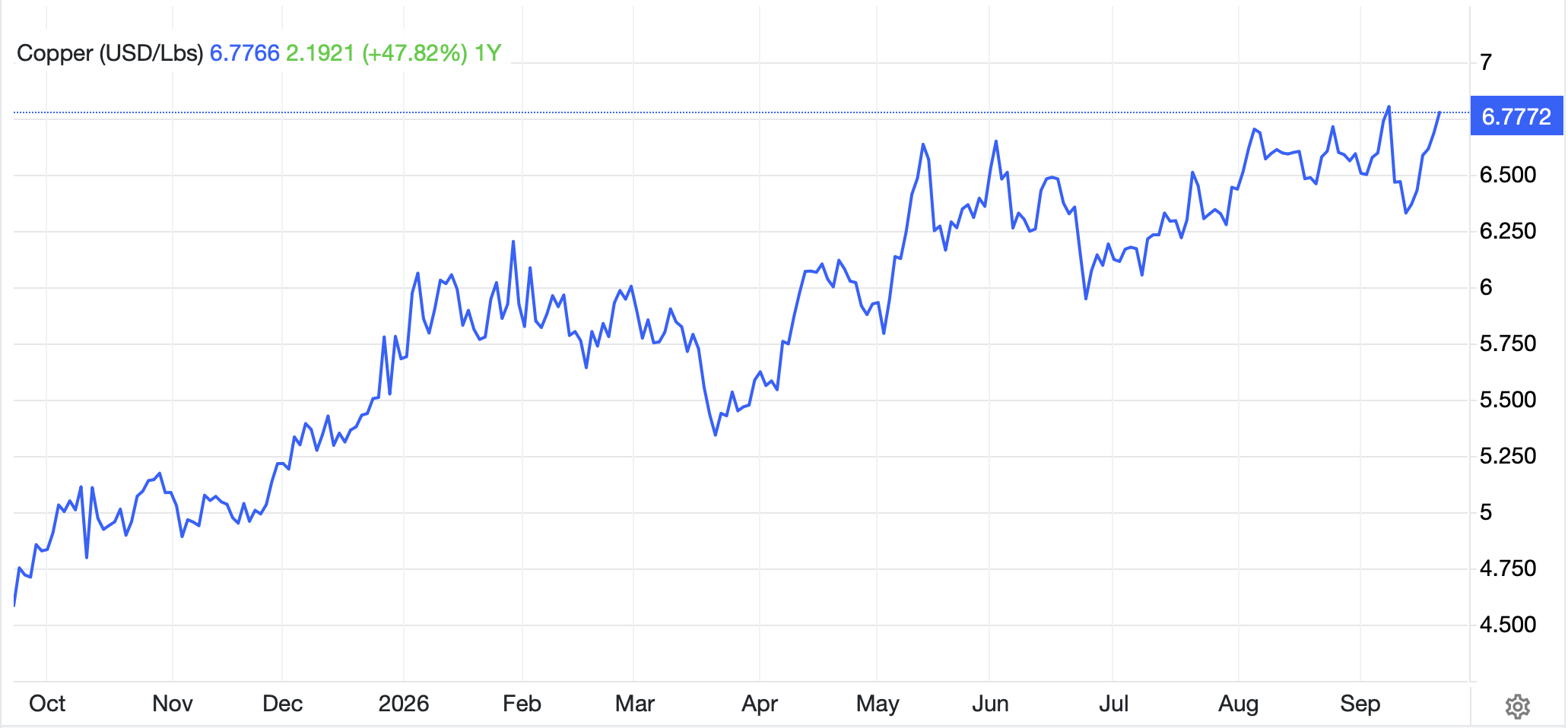
As to the other metals, silver (+1.1%) and platinum (+0.9%) are both modestly firmer while copper (-1.3%) is bucking the trend, although I see no good reason for it to decline.  One interesting thing to note is that silver in the COMEX vaults continues to decline which many see as a potential point of supply issues going forward.  Nothing has changed that story.

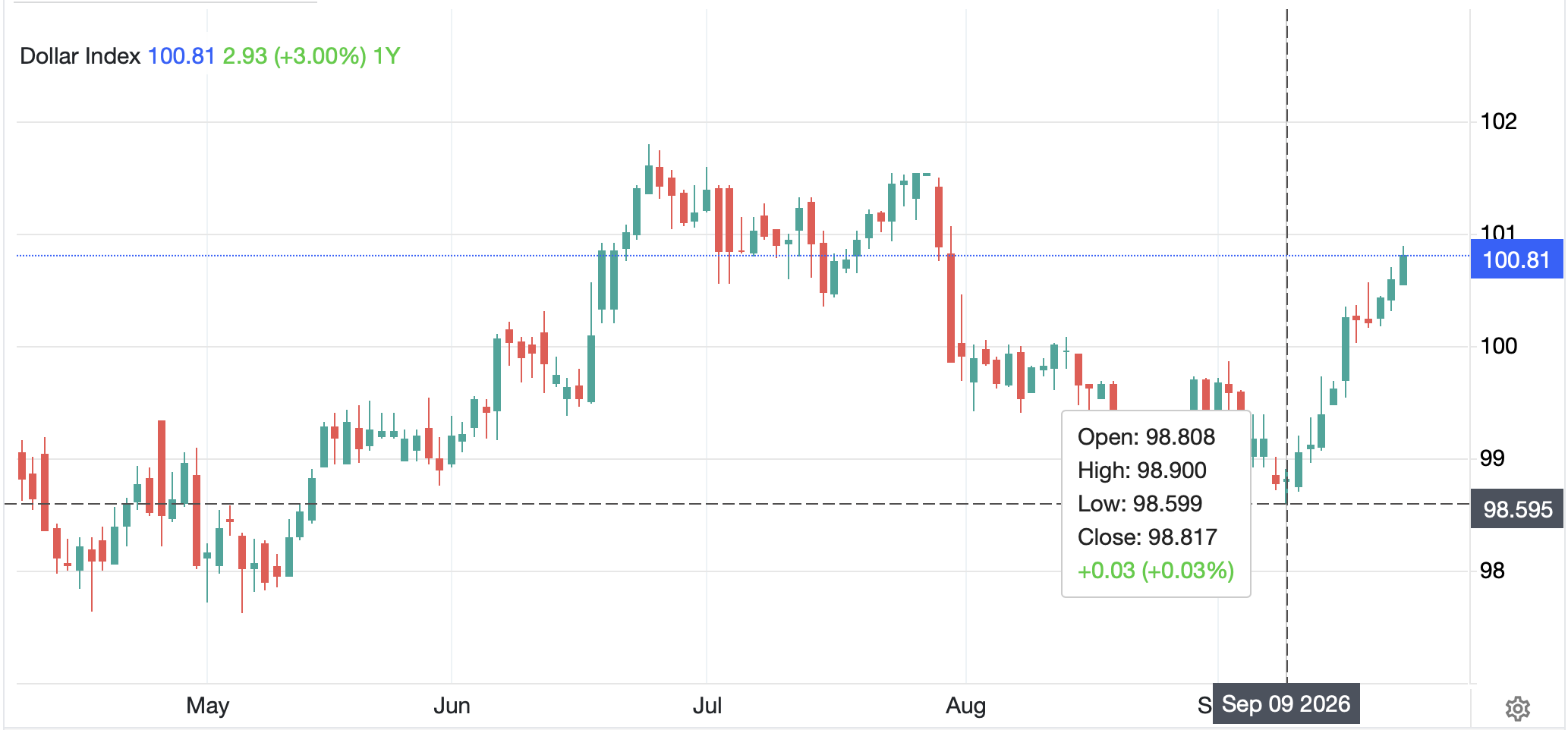
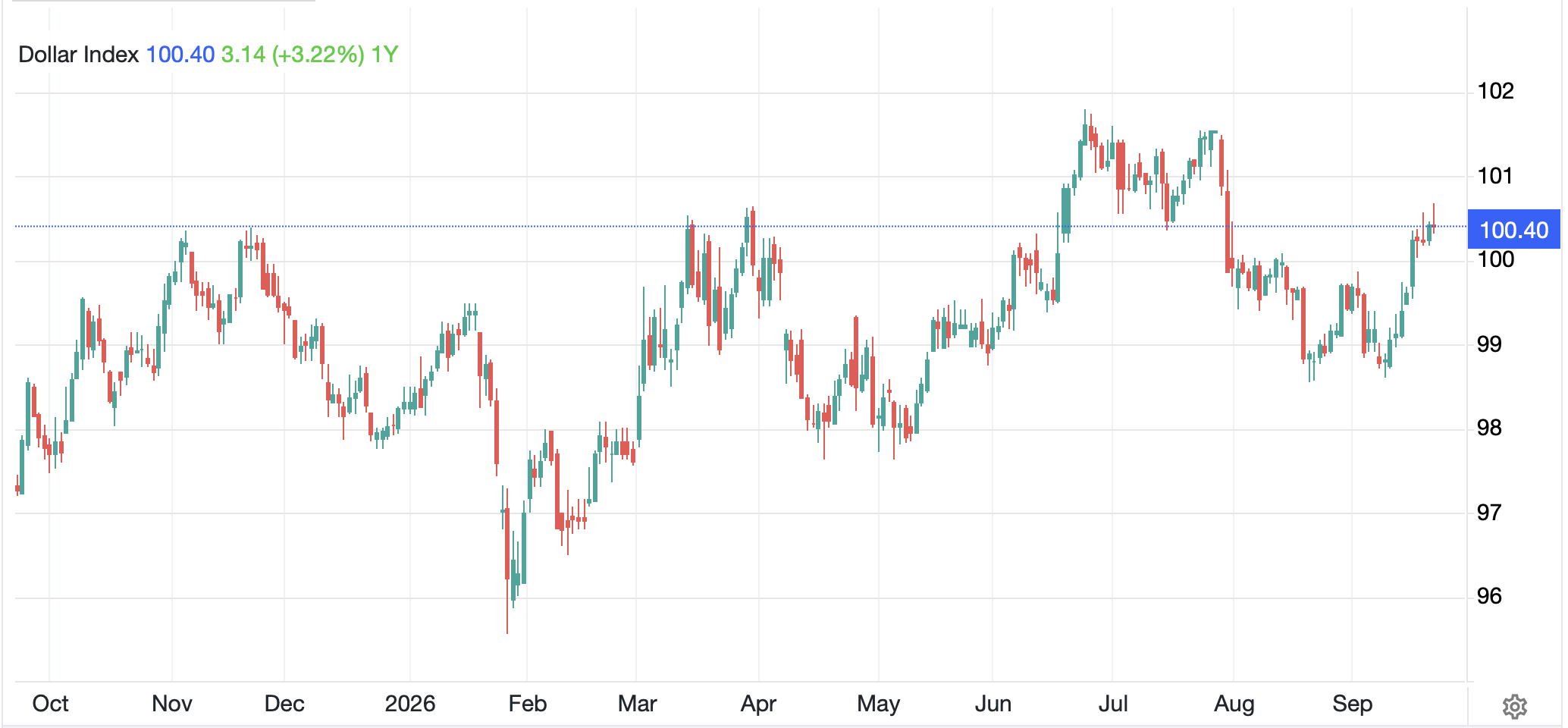
Finally, the FX markets are once again hewing toward dollars with the DXY (+0.15%) back around 99.00.  The worst performer today is CLP (-1.1%) which is feeling the pressure from copper’s struggles, but ZAR (-0.9%) is also under pressure despite gold’s rebound.  Interestingly, NOK (-0.2%) cannot seem to gain any ground despite oil’s rally, although arguably, the dollar itself has become a major petrocurrency with a positive correlation to oil.  This space is not that interesting right now.

On the data front, I neglected to mention ADP Employment yesterday, which wound up at a better-than-expected 63K.  Too, oil inventories in the US rose again last week.  This morning, Initial (exp 215K) and Continuing (1850K) Claims are due as well as Nonfarm Productivity for Q4 (1.9%) and Unit Labor Costs (2.0%).  But does the data really matter right now?  Perhaps tomorrow’s NFP will have impact, but with the war and higher oil prices, it is very difficult for me to see a scenario where the Fed will impose itself here, not where the market will care that much, at least not the stock market. Bonds would react I suppose.  But it ain’t gonna happen, so don’t worry about it.

Absent a change in the war’s current trajectory, I think investors are going to focus on trying to estimate how long oil prices will remain elevated as that is really the big question for most markets.  I can only hope it doesn’t take that much longer for a conclusion.

Good luck

Adf

To Excess

The State of the Union Address
Was, as is Trump’s wont, to excess
He touted his claims
And handed out blames
While focusing on his success
 
The market responded, it seems
Like Trump answered all of its dreams
Stocks round the world rose
Which shows, I suppose
The world does approve of his schemes

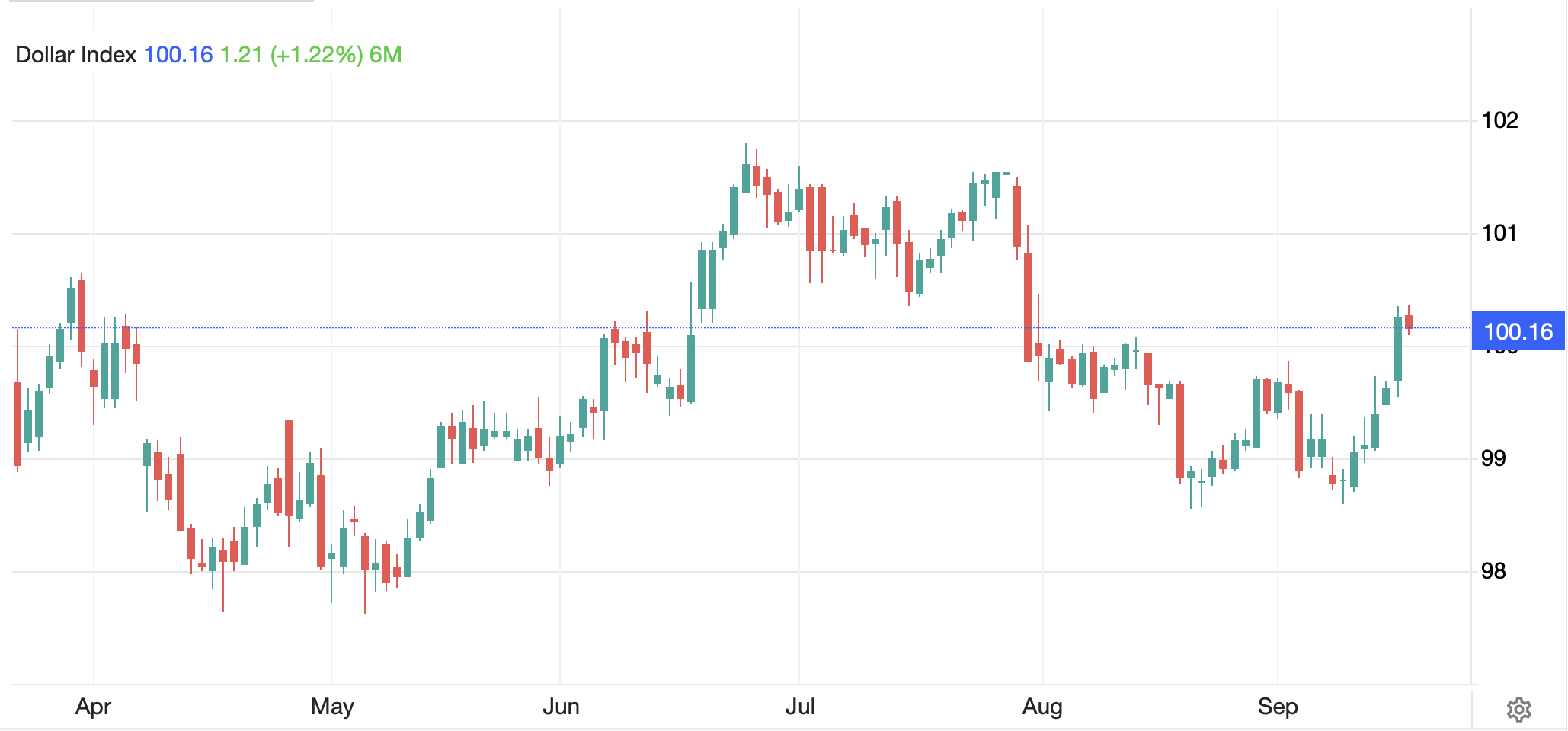
As I look at my screen this morning, literally every major equity market is higher, as per the below screenshot, as are US futures.

Source: tradingeconomics.com

In fact, if you ignore Russia, which hasn’t really been relevant since the Ukraine invasion-imposed sanctions, every market is higher over the last year, and US markets are the true laggards as seen by their monthly performance.  But you cannot look at this picture and determine that anything President Trump said last night was negative for the global economy.  I guess it’s full speed ahead now.

In true Trumpian fashion, the president remains incredibly optimistic about the future for the US and the Western world and perhaps that is what is reflected here this morning.  However, there were precious few new initiatives announced so it is unclear to me that this is going to be a topic of discussion in the financial markets going forward, although you can be sure that the political narrative is going to be very active.

So, let’s move on to things that matter for markets.

Is she hawk or dove?
Takaichi hates China,
Not easy money

As you can see in the above table, Japan’s Nikkei 225 rose sharply, nearly 4%, but that had nothing to do with the SOTU.  Rather, her administration named two new BOJ governors (it was simply time to rotate some) and both were seen as quite dovish.  In fact, one, Toichiro Asada, is known for his belief in the benefits of MMT (you remember the magical money tree idea that governments that print their own currency don’t need to worry about overborrowing).  The upshot is that while Japanese stocks raced to yet more new highs, as per the below chart, JGB yields reversed their recent declines and rose (10yr +5bps, 30yr +10bps) and the yen (-0.6%) continued its recent slide, although remains well above (dollar below) the 160.00 level, which many see as the BOJ’s line in the sand regarding intervention.

Source: tradingeconomics.com

But other than this story, it is much harder to find things that have been market drivers.  To my eye, we continue to see market participants laying back in most places as they are still recuperating from the raucous first six weeks of the year.

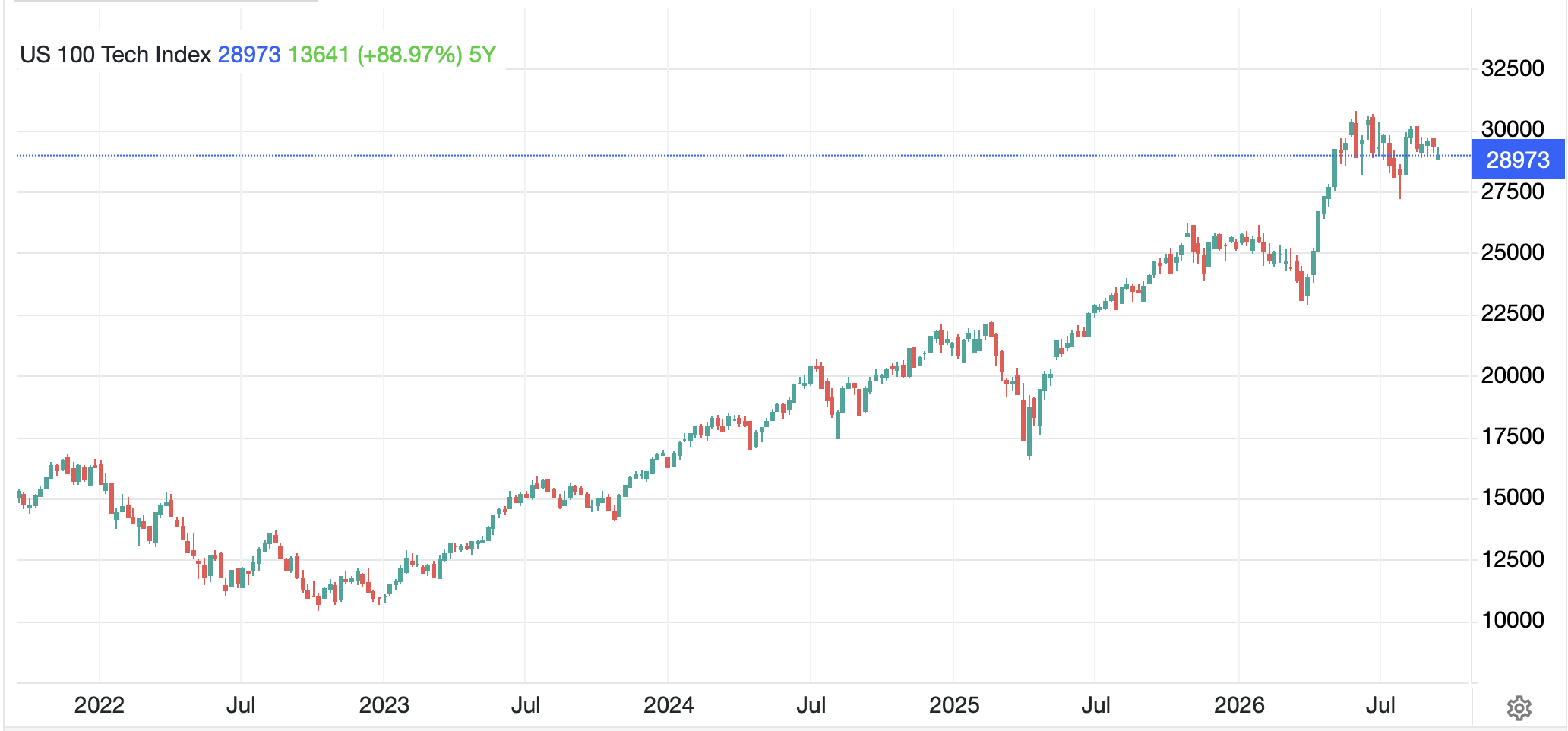
So, let’s go to the tape.  We’ve already seen the equity performance around the world, with the narratives forming that the US tariff situation is now a reduced stress on global trade as they have been reduced to 10% globally.  As well, there have been an increasing number of rebuttals to the AI piece I mentioned on Monday, with this one, I think, the most succinct takedown of the idea that AI is going to eat the world and drive us into a recession with no jobs left for people.  As such, Monday’s narrative of all stocks being worthless has changed.  Elsewhere, the tariff story and tech rally have been the key discussion points across markets.

In the bond market, yields are a touch higher with Treasuries (+2bps) edging up on what seems like ordinary trading.  The short-term trend here is lower yields, as per the chart below, but we know that nothing moves in a straight line.

Source: tradingeconomics.com

As to European sovereign yields, they, too, are mostly a few ticks higher this morning although, this also appears to be simple trading activity rather than a new narrative.  It is interesting that there are more stories today about ECB President Lagarde stepping down early, which is diametrically opposed to what she said when asked the question recently.  As I said before, I think she steps down and is going to run for President of France.

The commodity markets continue to be the place with the most price action and this morning is a continuation of that recent trend.  Gold (+0.9%), silver (+3.7%) and platinum (+5.5%) are all continuing their rebound from the extreme declines seen back on January 29th.

Source: tradingeconomics.com

I do not have any inside track as to the driver of those moves, but I continue to read and hear about significant intervention designed to burst those bubbles (and they were clearly bubbles) and allow key institutions to cover short positions at better prices.  The problem with these stories is that we have heard for years about the manipulation of the prices of both gold and silver by large banks, and the purveyors of those stories have neither great reputations nor track records, so it is always a tough sell in my mind.  There is no question that when markets go parabolic, as the precious metals did through January, the reversals have always been dramatic.  However, I cannot speculate on the driver as often times, there doesn’t need to be one.  This cartoon from Kaltoons demonstrates it perfectly.

Turning to oil (+0.8%), Iran remains a key narrative and continues to support the front month pricing.  However, it appears that several futures spreads are falling sharply, indicating a potential glut in physical supplies has developed, at least for now.  As I look at the front contracts in the futures curve, we are still in backwardation, which implies a shortage, although I suppose that is the Iran effect.  

Source: barchart.com

I understand the short-term concerns here regarding potential military escalation there, but nothing has changed my view that the long-term energy situation is one of abundance and maintaining much higher oil prices will be very difficult for the long-term.  After all, look at Venezuela, which has already increased production back above 1mm barrels per day with contracts being signed for more activity.  Too, Argentina’s Vaca Muerta shale production is at new record levels, also ~1 mmm bpd and we continue to see growth offshore Brazil and Guyana.  Longer term, there is plenty around, I think.

Finally, the dollar is mixed this morning as the yen’s weakness is being offset by modest strength in the euro (+0.1%) and pound (+0.2%).  However, the big movers today are KRW (+0.9%) which has benefitted from inward equity flows and hopes for tariff relief, as well as ZAR (+0.5%) on the back of the precious metals rally and CLP (+0.4%) on copper’s strength.  Remember, the US is not overly concerned about USD weakness in the FX markets as it suits the administration’s goals of reducing the trade deficit and encouraging onshoring of production.  But even with that, looking at the DXY, it is just below 98.00 and remains right in the middle of its trading range for the past 9 months.

Source: tradingeconomics.com

There is no major data out this morning with only the EIA oil inventories where a very modest build is anticipated.  

Big picture, I don’t think anything has changed.  Fiat currencies continue to lose value relative to ‘stuff’.  Equity markets continue to benefit from the global ‘run it hot’ policy and there is no clarity regarding the outbreak of a war in Iran.  With this in mind, it is hard to see a large move in the dollar in the near future.

Good luck

Adf

A Future, Dystopic

On Monday, an analyst wrote
His thoughts how AI might promote
A future, dystopic
Though somewhat myopic
And offering no antidote
 
Although prior views had explained
That once AI’s suitably trained
Most labor would suffer
And lacking a buffer
Folks’ politics would be quite strained

This is the research report that got tongues wagging on Wall Street yesterday and the fear it allegedly engendered was impressive.  In essence, it said that by 2028, AI would replace vast swaths of the labor force, notably white-collar workers, and that it would lead to a massive recession, and more importantly to the Street, a significant decline in stock prices.  The back and forth on X was amusing all day as there were those who hyperventilated over the coming tragedy, and those who fought back.

It is important to understand this was not a prediction, per se, but one of the scenarios they came up with, although clearly the most dramatic one.  It certainly gained a lot of clicks and notoriety, and let’s face it, isn’t that the idea these days?

Given that the tariff story has now become too complex for anyone to truly understand, and while we all await the denouement in Iran, this appeared to be the best thing to occupy time amongst the trading community.  Personally, I spent the entire morning shoveling snow, but then, I’m no longer a trader.

The upshot is that the major indices all fell more than 1% while gold and silver rallied and bond yields fell.  Fear was palpable.  But will it last?

Last month’s yen rate checks
Came not from Ueda-san
But Bessent, himself

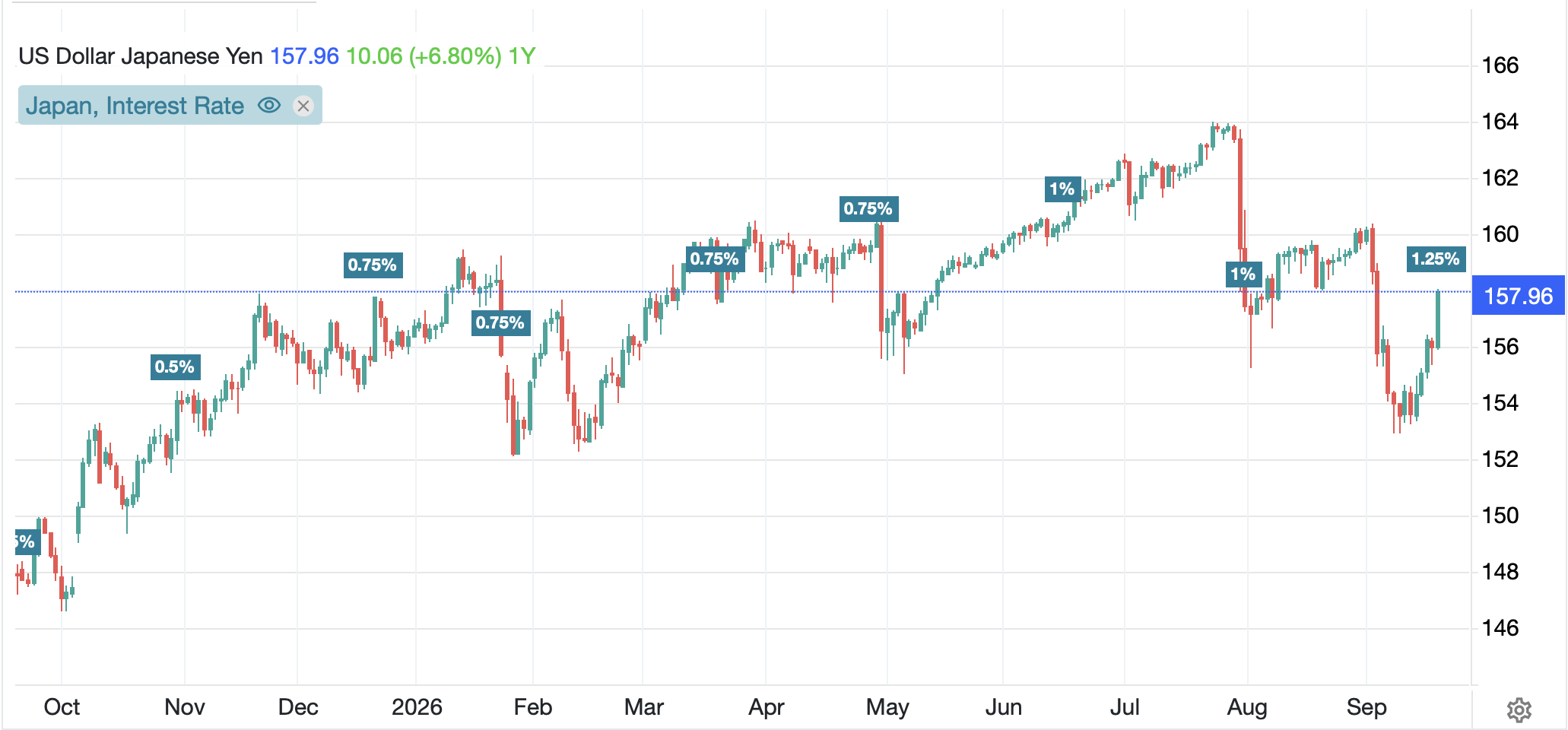
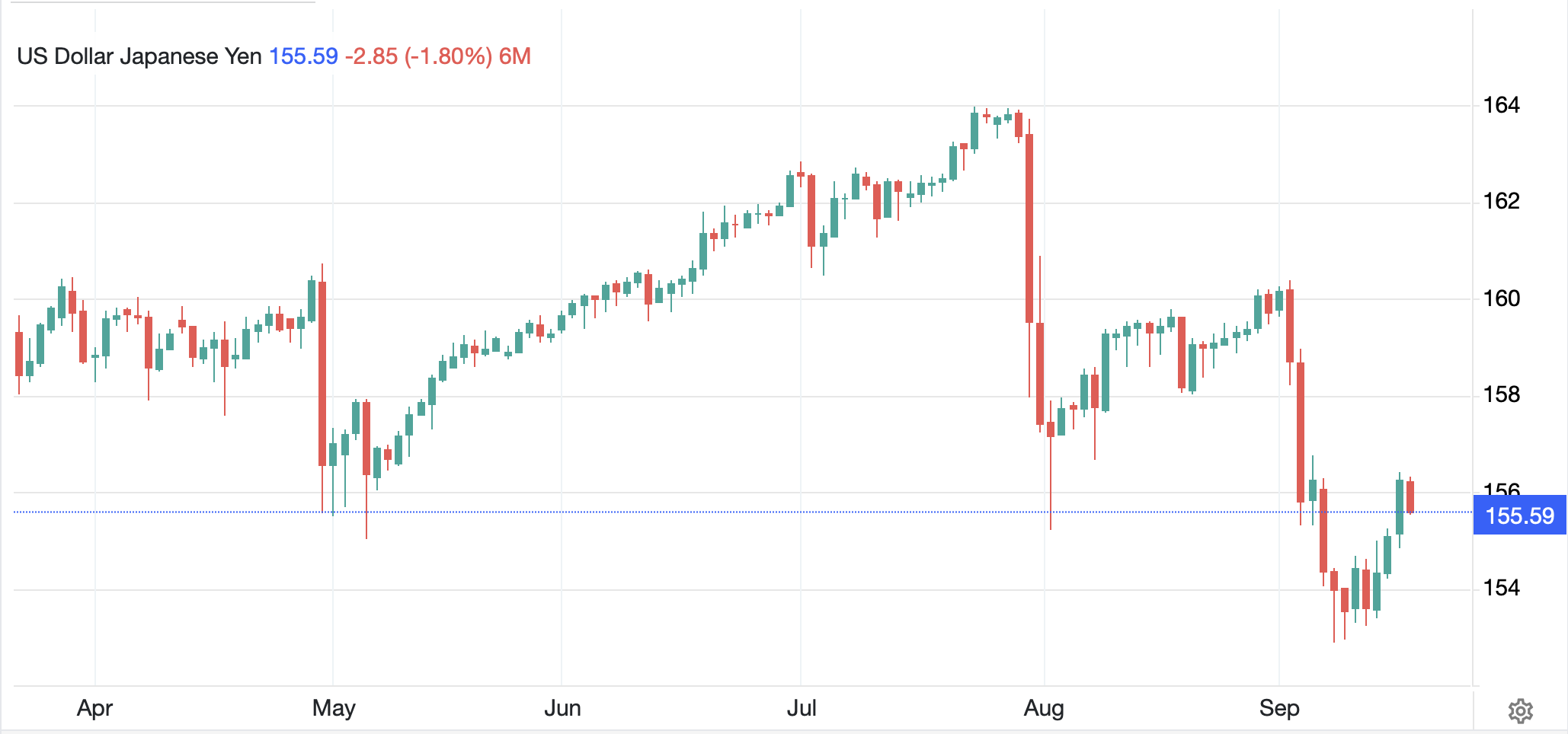
The other story of note was almost an aside, although it helps outline recent movement in USDJPY.  We all remember last month when the yen rallied very sharply during a Friday session in NY as word got out the Fed was “checking rates”.  As a reminder, this is when the Fed calls out to bank FX desks and asks for prices, although doesn’t actually deal.  However, the signal is strong as all the banks recognize the opportunity for intervention, and the news quickly spreads through the market with the effect you can see in the chart below.  During the next three sessions, the yen rallied 4.5%.

Source: tradingeconomics.com

During my career, I had never heard of this activity driven by anyone other than the BOJ, as they were always the most concerned with the yen’s value.  Certainly, they may have been responding to US pressure, but it was always their call.  Now the news comes out that Treasury Secretary Bessent did this on his own last month, a clear indication that the administration is not happy with an over weak yen.  This sets an interesting precedent regarding who controls any given currency.  Now, I doubt we will see this type of thing frequently, but we need to keep it in the back of our mind.  Meanwhile…

Seems Takaichi
Told Ueda, higher rates
Are not helping her

Last night, in a surprise to many in the market, news of a meeting between PM Takaichi and BOJ Governor Ueda resulted in Takaichi-san imploring Ueda-san to leave rates alone, rather than continue raising them.  Higher rates are not helping her growth agenda, and I imagine her belief set is that if the yen weakens too far, she can always intervene, and now that we know about Bessent’s actions, she can count on the US to help.  But I cannot observe this and think anything other than the market is going to test 160 and do so before long.  One poet’s opinion.

Ok, let’s see how markets traded overnight.  First off, last night was the first that all of Asia was back at work so overall liquidity was improved.  However, the results were mixed with Tokyo (+0.9%) ignoring the AI driven US rout while the Hang Seng (-1.8%) fell right alongside the US.  China (+1.0%) rallied in its first day back but consider that simply offset the decline of their last session and, like most other markets, it remains relatively unchanged over the period.  Meanwhile, the tech sense was strong with Korea (+2.1%) and Taiwan (+2.75%) both up nicely while India (-1.3%) suffered under the AI fear umbrella.  Elsewhere in the region, there was no pattern of note with both gainers and losers.

In Europe, the largest markets (UK, Germany and France) are basically unchanged this morning while both Spain (-0.7%) and Italy (-0.4%) are under some pressure.  There is talk of tariff issues, but I’m not sure why only those two markets are taking the heat.  As to the US, at this hour (7:00), all three major indices are higher by about 0.2%.

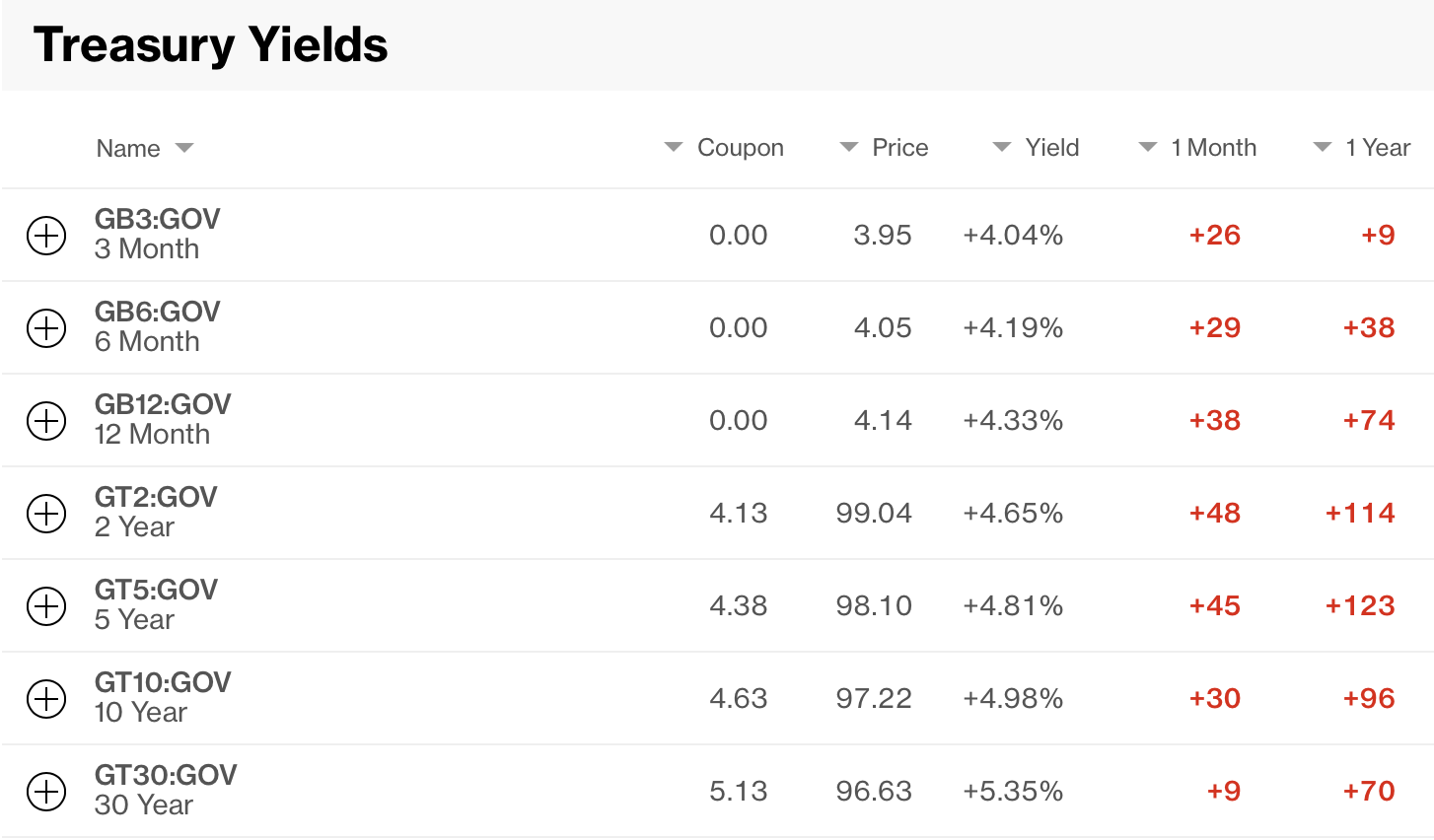
In the bond market, after a -4bp decline in Treasury yields yesterday they are unchanged this morning while European sovereigns are seeing yields slip -1bp across the board.  Too, JGB yields (-2bps) have continued their slow descent as it appears investors have acclimatized to the risks of Takaichi-nomics.  I think we will have to see inflation figures there to get a better sense.  Regarding Treasury yields, I’m not sure I can explain why I feel this way, but given how bearish sentiment is for bonds, (leveraged players are short >1 million futures contracts), it feels to me like we could see a short-term continuation of the recent rally with yields heading back to test the 3.8% level at least.  I understand both the fiscal argument and the technical argument (see long-term chart below) but neither rules out a short-term rally to inflict pain.  After all, that is what markets do best!  (full transparency, I bought some June TLT call spreads yesterday, so I am talking my book!)

Source: finance.yahoo.com

In the commodity markets, oil (+0.3%) continues to hold its recent Iran inspired gains as the world awaits the outcome of Friday’s meetings between the US and Iran.  I have no insight as to the potential outcome here other than what I read, but it does seem like there will be some type of military action as I do not see Iran ceding anything.  As to the precious metals, gold (-1.0%) is giving back yesterday’s gains but remains in its recent uptrend after the end-January crash, although it has yet to regain the old highs.  I imagine this will take more time, but it also seems quite likely to happen. This is still a quite bullish chart in my view.

Source: tradingeconomics.com

Interestingly, silver is little changed this morning as there continues to be much talk of delivery questions at the COMEX given the apparent lack of available ounces relative to outstanding contracts.  My take is things will get rolled as they usually do, but if not, beware a major spike higher on Friday!

Finally, the dollar continues to be the least interesting space there is with today’s JPY (-0.8%) move the exception that proves the rule.  Having already touched on that situation, there is literally nothing else to describe in either G10 or EMG currencies as +/-0.15% describes the entire session.

As to data this week, here’s what we have coming:

TodayCase Shiller Home Prices1.4%
 Consumer Confidence87.0
ThursdayInitial Claims216K
 Continuing Claims1872K
FridayPPI0.3% (2.6% Y/Y)
 -ex food & energy0.3% (3.0% Y/Y)
 Chicago PMI52.5

Source: tradingeconomics.com

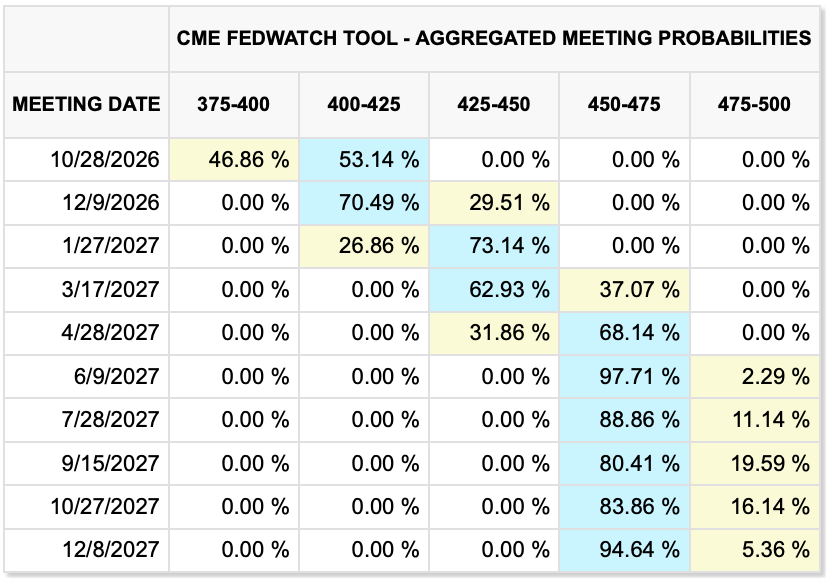
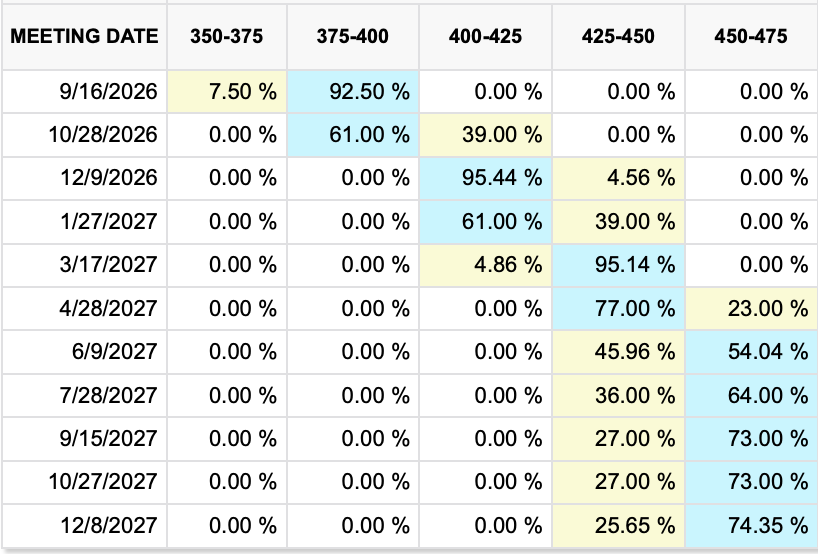
In addition to this bit, we hear from seven more Fed speakers across nine venues, but I still don’t think anybody cares.  The market has priced out any rate cuts before Powell leaves, although there is still one cut priced for the year, expected in October.  

Frankly, it is not surprising that markets have calmed down so much given how much activity we saw in January.  As I wrote then, markets have a great deal of difficulty maintaining high volatility as traders and investors simply get tired and tune out.  We will need a new catalyst to get things going, either an attack on Iran or some new China news in my view.  Tariffs are no longer interesting, and frankly I think Iran and AI have both lost some pizzazz.  Maybe the UFO releases will get things going again!

Good luck

Adf

Chock Full of Crises

Their mandate includes stable prices
And that they should use all devices
To work to achieve
That goal lest they leave
A legacy chock full of crises

Most participants, however, cautioned that progress toward the Committee’s 2 percent objective might be slower and more uneven than generally expected and judged that the risk

of inflation running persistently above the Committee’s objective was meaningful.”

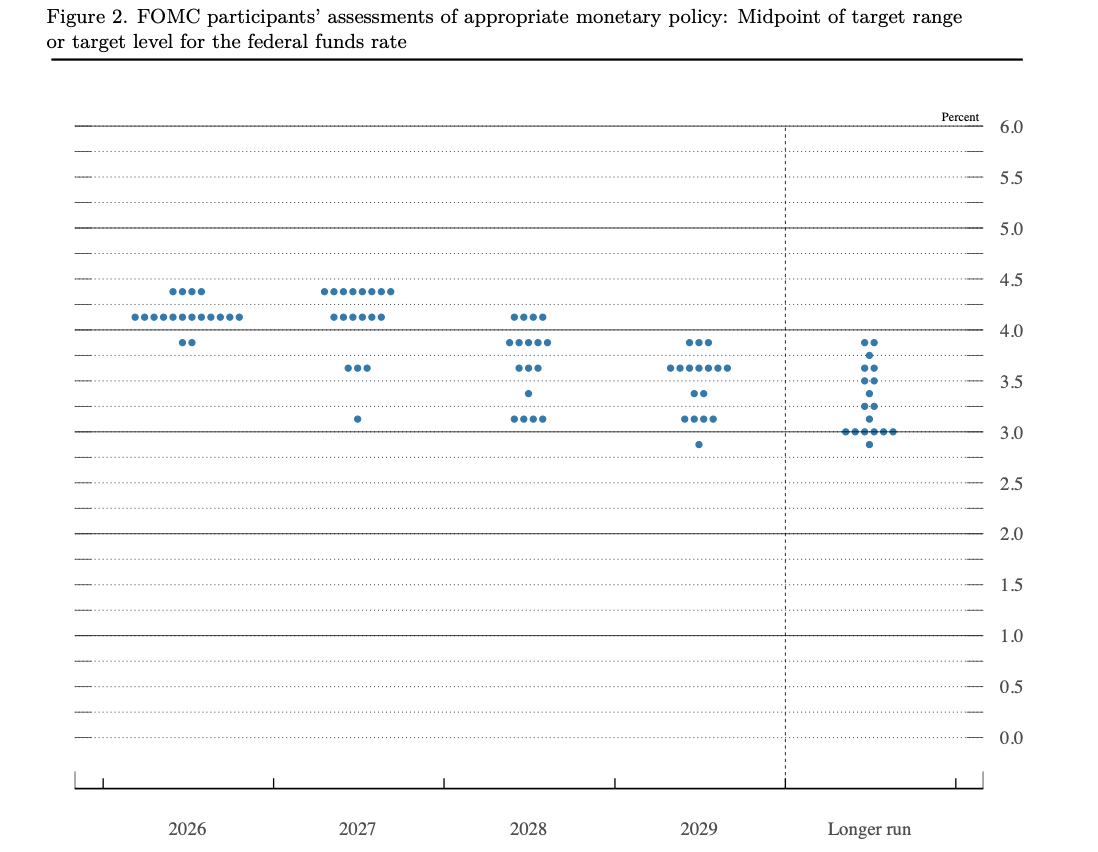
These words [emphasis added] are from the FOMC Minutes released yesterday afternoon.  To set the stage, the Fed left rates on hold then, although there were two votes for another cut.  However, a full reading of the Minutes shows there were those who would have considered a hike as well.   Now, I am just a guy in a room who observes market behavior through the lens of too many years involved on a daily basis, and my resources are virtually nil, especially compared to the Federal Reserve.  I don’t have a PhD in economics (although I believe that is a benefit in this context, if not every context).  However, the bolded part of the comment seems a tad disingenuous to me based on the below chart which shows the history of their inflation metric, Core PCE prices.

Source: tradingeconomics.com

It has been exactly 5 years since their metric was at or below their 2% target by which they defined stable prices.  The idea that they are claiming the risk of inflation running hot was a meaningful risk is perhaps the worst gaslighting comments they have made.  It is very difficult to believe that the Fed, in its current incarnation, is going to ever address the inflation issue appropriately.  Perhaps a Chairman Warsh, if he is successful at reconfiguring their operating procedures will be able to drive positive changes.  I am hopeful but not confident.  The one thing we know is that changing government institutions requires a mammoth effort.  And let’s face it, he will only have two plus years of leeway for sure depending on whoever becomes president in 2028.

I continue to believe that the market is going to increasingly focus only on Warsh’s comments going forward as the direction he has expressed is very different than the current FOMC membership mindset.  We shall see how this all evolves.  In the meantime, I expect that Fed funds are not going anywhere before Warsh is confirmed.  As to bond yields, that is a very different question and will depend on both the macroeconomic outcomes and the risk perception of investors around the world.  For now, that trading range of 4.00%. – 4.20% seems likely to hold absent a major economic data miss in one direction or the other.  But as long as we continue to get mixed data, this market will remain on the backburner.

The fear that is growing each day
Trump’s policy might go astray
Regarding Iran
Although not Japan
Thus, oil’s up, up and away

Texas tea (+1.5%) is following yesterday’s 4.6% rise with another strong session and as you can see in the chart below, is showing a very clear trend higher since December.

Source: tradingeconomics.com

This movement is very clearly a response to the ongoing buildup of US military assets in proximity to Iran, with two aircraft carriers, and somewhere above 200 military aircraft as well as the carrier group tenders with Tomahawk missiles in tow.  While negotiations are ostensibly ongoing, the one thing that seems clear is that absent a complete capitulation by the Iranian government, something big is going to happen here.  Of course, the question is, how much, and for how long, will it impact oil supplies?

Obviously, nobody knows the answer to that question, but the recent history has shown that every time there was an event in the Middle East, whether the 12-day war several months ago, the killing of Suleimani, the attacks on Saudi oil infrastructure, or others, prices retraced pretty quickly as per the below.  

Even the Ukraine invasion in February 2022 saw prices retrace 50% within a few months.  Other issues lasted less time than that.  This recent history implies that fading the rally is the right trade, but boy, that is hard to do.  And of course, in the event that the Iranian government falls, the chaos could result in a significant degradation of Iranian oil production.  Given they pump about 5 mm bpd, ~5% of global supply, that would matter a lot at the margin.  Certainly, the oil glut narrative would disappear in a hurry.  This is a very large risk to both markets and the economy, and one which needs to be hedged, if possible.  This will certainly be the focus of markets for the next few weeks, at least, so be prepared.  Personally, I do own some stuff here, but I like the drillers generally, as they are going to be employed no matter what!

Ok, let’s see what else is happening.  After a solid US session yesterday, Asia saw some major positive price action with Korea (+3.1%) the leader although Tokyo (+1.1%) also had a solid session, as did Taiwan, New Zealand, Singapore and Australia.  The exception to this rule was India (-1.5%) which suffered after a three-day positive run as traders and investors fled worrying about oil, the Fed, and the future of India’s relationship with Russia after the seizure of more ‘dark fleet’ oil tankers trying to avoid sanctions on Russian oil.  Europe, meanwhile, is uniformly lower this morning, with all the major indices slipping -0.8% or so.  The narrative is pointing to the escalation in Iran as the cause du jour.  US futures are also slipping at this hour (7:20), -0.25% or so across the board.

I touched on bonds briefly above, but today’s price action shows yields edging higher by 1bp in Treasury markets and between 1bp and 2bps across European sovereign markets.  There has been no data of note to alter views, and the only ECB news is that Spain has thrown their hat into the ring to have the next ECB president.

In the metals markets, yesterday’s gains are being followed by a mixed picture with gold (+0.2%) and silver (+0.3%) edging higher while copper (-1.6%) and platinum (-1.8%) cede those gains.  However, as I highlighted yesterday, this all still feels like consolidation.  FYI, there is much talk in the markets about silver and how there is not enough physical silver in the COMEX vaults to cover open interest, and how that could result in a major squeeze, but my take is most of it will roll forward as the fundamental supply/demand equation does not appeared to have changed.

Finally, the dollar had a strong session yesterday, rising 0.6% as measured by the DXY, and making gains vs. almost all currencies.  This morning, those trends are continuing with SEK (-0.4%) and GBP (-0.2%) leading the way lower in the G10 space while ZAR (-0.85%), INR (-0.4%) and KRW (-0.4%) are dragging down the EMG bloc.  Again, data has been scarce, so I see this as a more traditional risk-off sentiment than some new macro story.

Data yesterday was generally stronger than forecast, notably IP and Capacity Utilization, which showed solid outcomes that were ascribed to AI infrastructure building as well utilities activity.  It strikes me this is exactly what the Trump administration is trying to achieve with their reshoring goals.  I guess the question is how productive this investment will be and how will it impact inflation readings.  This morning, we see the weekly Initial (exp 225K) and Continuing (1860K) claims, as well as the Trade Balance (-$55.5B), Philly Fed (8.5) and Leading Indicators (0.0%).  The interesting thing about the Leading Indicators number is that a flat result would be the highest in 4 years.  A look at the Conference Board’s chart below shows an interesting thing about this number, and to me, anyway, calls its value into question.  Leading Indicators have been declining for four years while coincident indicators (and economic growth) have been moving along just fine.  I’m trying to figure out what these indicators lead.

And that’s really it for today.  We do see oil inventories as well, with a slight build expected and we will hear from Minneapolis Fed president Kashkari, but I cannot remember the last time he said anything interesting.  To me, the concern today, and tomorrow and next week, is that we see an escalation in rhetoric regarding Iran, at the very least, if not an actual military strike.  That feels like it would be bad for stocks, good for bonds, the dollar and gold.  Hopefully I am wrong there.

Good luck

Adf
Venting Spleen

It used to be data was seen
As noncontroversial and clean
But politics, lately
Has damaged it greatly
With both D’s and R’s venting spleen
 
So, it ought not be a surprise
That yesterday’s NFP rise
Was claimed by the left
To lack any heft
While R’s crowed out loud to the skies

By now, you are well aware that the NFP number was released much higher than the forecasts, printing at 130K vs a consensus forecast of 70K.  The previous two months were revised lower by 17K, so still a huge number, and it was the main topic of conversation in the markets all day. 

To me, the big news was that private sector jobs rose 172K, while government jobs declined by 42K.  In fact, the Federal civilian workforce is back to its smallest count since 1966!  That is an unalloyed positive in my view.  Too, manufacturing jobs increased by 5K, which is the first time we have seen a rise since November 2024.  In fact, if you look at the chart below of manufacturing jobs for the past 5 years, it is easy to see what President Trump is trying to achieve.  One month does not indicate success, but it’s a start.

Source: tradingeconomics.com

The last positive was that the Unemployment Rate fell to 4.3%, so overall, this seems like a pretty good report.  But as with everything these days, it depends on the lens through which you view it.  As with most national data in an economy as large and varied as the US, there were real and perceived negatives.  The BLS made their annual benchmark revisions to the data which removed 403K jobs from 2025’s numbers.  These revisions come as they adjust their birth-death model as well as get updated population statistics.  But for those who seek bad news for this administration, that reduction of 403K jobs is proof that the president’s policies are failing.  Another complaint has been that the bulk of the increase in NFP was in the health care sector, although given the ongoing aging of the population, that cannot be very surprising.

Nonetheless, just like every other piece of data these days, NFP was a Rorschach test of your underlying political beliefs and not so much a description of the economy.  My question is, if the employed population is ~159 million, is an adjustment of 400K really meaningful?  After all. It’s about 0.25% of the working population in a measurement of a dynamic statistic amid people changing jobs and the economy growing.  Perhaps the politics are the signal, and the data is the noise.

Given that there were two very different takes on the data, it ought be no surprise that the S&P 500 finished the day exactly unchanged which is a pretty rare occurrence, happening less than 2% of the time in the past 10 years.  In fact, that lack of movement was the norm with both the NASDAQ and DJIA slipping -0.1%.  Net, I don’t think we learned much new and now markets and the algorithms will focus on tomorrow’s CPI data.

However, the narrative writers had their work cut out for them.  All those who were seeking to pan the government had to change their tune and now they are focused on the fact that there don’t need to be rate cuts if the employment situation is better.  Again, through a political lens this is good if you are anti-Trump because it prevents him getting the rate cuts he has been demanding.  I guess we cannot be surprised that Stephen Miran, in comments yesterday, continues to explain rate cuts make sense, which simply confirms the view that everything is political these days.

So, do we know anything new this morning?  Alas, I don’t think we learned anything to change the big picture yesterday, so let’s see how the data was received around the world.  Tokyo followed the S&P’s lead and was unchanged overnight with China (+0.1%) also doing little.  HK (-0.9%) lagged as traders prepare for the Chinese New Year holiday that runs all next week and took profits.  Korea (+3.1%) continues to perform well while India (-0.7%) continues to waver as the trade deal with the US impacts different parts of the economy very differently there.  Net, a mixed session.  In Europe, Germany (+1.3%) is the leader this morning on the strength of solid earnings reports by key companies as there has been no data released.  France (+0.75%) too is having a good day on earnings although Spain (-0.2%) is lagging.  The UK (+0.1%) is the only place where data made an appearance and it showed that GDP growth has fallen to 1.0% Y/Y there, another problem for the embattled PM Starmer.  It appears his time in office will be ending soon as literally every policy decision he has made has had a negative outcome.  As to US futures, at this hour (7:30) they are firmer by about 0.3%.

Bond markets saw the biggest move yesterday, with Treasury yields rising 4bps, although they have slipped back -1bp this morning and continue to trade in their range of 4.0% – 4.2%.  while we did spend some time above that range, it appears that fears of a bond market meltdown, or that China was going to sell their bonds or something else have faded somewhat.  In fact, globally, 10-year yields this morning are essentially unchanged.

Source: tradingeconomics.com

In the commodity space, the Iran situation continues to be top of mind for oil traders although WTI (-0.3%) is not really moving much this morning.  There was no announcement from the White House regarding the meeting between President Trump and Israeli PM Netanyahu which indicates, to me at least, that nothing was decided.  While a second US aircraft carrier steams toward the Persian Gulf, we are all on tenterhooks as to how this plays out.  Right now, it doesn’t appear that discussions between the US and Iran are leading anywhere.  Meanwhile, metals (Au -0.4%, Ag -1.6%, Pt -1.3%) are giving back some of yesterday’s strong gains with gold firmly back above the $5000/oz level again.  There is much talk of a major shortage on the COMEX for deliveries for March, but we shall see how that plays out.  Certainly, there has been no change in the demand structure for silver, but we just don’t know how much silverware has been sold for scrap to help alleviate the shortage at this point.  

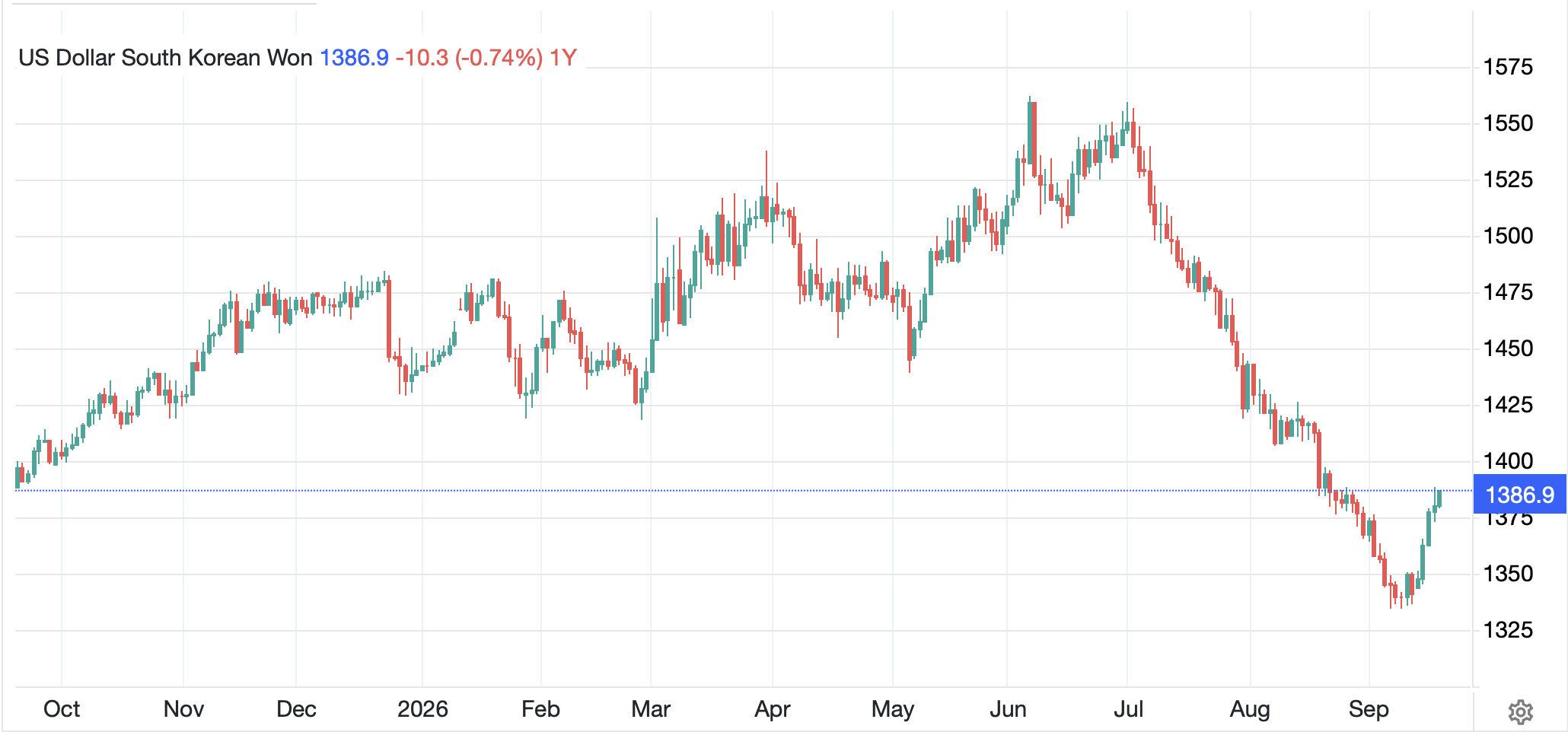
Finally, the dollar is little changed vs most major counterparts with the two outliers KRW (+0.6%) on the back of strong equity market inflows and CHF (+0.4%) which appears to be the one haven that is behaving like one this morning.  JPY (-0.2%) has strengthened several percent over the past week, and comments from the latest Mr Yen, Atsushi Mimura, make clear they continue to watch the market closely, but for right now, there seems little concern, or likelihood, that intervention is coming soon.

One thing the NFP data did achieve was to alter the Fed funds futures market which now is pricing just a 6% probability of a rate cut at the March meeting with two cuts priced for the year.  I have to say that based on the comments from Logan and Hammack, as well as the NFP data, it certainly doesn’t appear likely that the Fed is going to cut again soon.  Tomorrow’s CPI data may change some opinions there, but we will have to wait to find out.

But riddle me this, if the Fed has finished its loosening cycle, and Kevin Warsh is seen as someone who is keen to reduce the size of the Fed’s balance sheet, why would we think the dollar is going to decline sharply from here?  For now, the buck remains rangebound, but as I watch what is going on elsewhere around the world regarding economic activity, the US continues to lead the way.  I still don’t see the dollar collapse theory making sense, although frankly, I think the administration would be fine with it.  Let me leave you with the entire history of the EURUSD exchange rate since its inception in 1999 and you tell me if you think the dollar is exceptionally weak or strong here.  Remember, a weak dollar is a strong euro, so higher numbers.  Frankly, it feels like we are close to the middle of the range, or if anything, stronger rather than weaker.

Source: data FRED, graph @fx_poet

Good luck

Adf

Up and Down

The only things that really matter
Are stock prices frequently shatter
Their previous high
And rise to the sky
Like too much yeast got in the batter
 
And though prices move up and down
While traders both grin and they frown
The long term has shown
The ‘conomy’s grown
Though lately, tis gold’s worn the crown

As I wrote last week, markets have a difficult time maintaining excessively high levels of volatility for any extended period of time as traders simply get tired and effectively check out.  Now, we have had some impressive volatility lately, whether in stocks, silver or natural gas, to name three and as can be seen in the chart below.

Source: tradingeconomics.com

But a closer look at the chart tells an interesting story, despite a huge amount of movement in the past month, the net movement for the S&P 500, Silver, Natural Gas and the 10-year Treasury, has been essentially zero.  If you dig through this chart, the only net movement has been the dollar’s roughly 2% decline.

That is an interesting tale, I think.  Perhaps Macbeth said it best though, “It is a tale told by an idiot, full of sound and fury, signifying nothing.”  What exactly is the significance of the remarkable volatility we have seen over the past month across numerous markets?

If we review the past month’s activities, the most notable market event was the announcement of Kevin Warsh as the next Fed chair, and the initial assumption that he is much more hawkish than market participants had previously anticipated.  It remains to be seen if that is the case, especially since we are still months away from any confirmation hearings and his eventual swearing in, but that was certainly the initial narrative.  It was blamed for a sharp decline in equities as well as precious metals, although both are essentially unchanged over the past 30 days. 

At least NatGas made sense given the significant cold and winter storms that hit much of the US and northern Europe, but those, too, have passed, and prices are back to where they were prior to the more extreme weather.

Maybe the most interesting thing is that bond yields are basically unchanged despite the Warsh announcement.  It would not have been surprising to see a significant move there given Warsh’s ostensible hawkishness, but that was not the case.

My point is that markets move for many reasons.  Occasionally, there is a clear catalyst (Japan’s Nikkei responding positively to PM Takaichi’s landslide victory comes to mind), but more often than not, the narrative writers seek to explain price action after the fact while covering up their previous forecasting mistakes.  I, too, am guilty of this at times, which is the reason I try to step back and take a broader, longer-term view of market movement to get underlying causes.  As I no longer sit on a trading desk, I am not privy to the day-to-day tick activity, and frankly, even then, unless it was happening at my bank, I would still be in the dark.

To conclude, the strongest trends, which remain the precious metals, continue, although prices are back closer to the long-term trend than the parabolic heights seen 10 days ago as you can see in the below chart.  In fact, I don’t think we have had any changes in the underlying story, but the extreme market volatility is likely to be done for a while going forward.

Source: tradingeconomics.com

Which takes us to overnight market behavior.  While Tokyo (+2.3%) is still ripping higher on the Takaichi election news, only Taiwan (+2.1%) and the Philippines (+2.0%) are keeping pace with the rest of the region much less impressed, (China +0.1%, HK +0.6%, Australia 0.0%).  To my point, nothing has changed.  In Europe, too, price activity is fairly muted (France +0.4%, Germany +0.1%, Spain +0.2%, UK -0.2%) as there has been no news of note either economically or politically.  The most interesting data point was Norwegian inflation which came in much hotter than expected at 3.6% and has traders thinking the Norgesbank may be set to tighten again.  This has helped NOK (+0.6%) which is the leading gainer in the FX markets this morning.  As to US futures, at this hour (7:20), they are very modestly higher, just 0.15% or so across the board.

In the bond market, yields are backing off everywhere, with Treasury yields lower by -3bps, and European sovereigns lower by -1bp to -2bps across the board.  The exception, of course, is Norway (+8bps).  Perhaps, more interestingly JGB yields (-5bps) are slipping despite (because of?) Takaichi’s landslide victory.  Recall, heading into the election, expectations were for aggressive fiscal expansion and borrowing to pay for it.  However, Katayama-san, the FinMin has been explicit that they were going to be borrowing at the short end of the market, 1yr to 5yrs, so perhaps it is no surprise that the 10yr yield is slipping.  With that in mind, though 5yr JGB yields also fell last night, down -3bps, although shorter dated paper was unchanged.  I have not read of any analysts complaining that Japan is turning into an emerging market because they are funding themselves with short-dated paper, although when the US does it, apparently it is the end of the world.

Turning to commodities, oil (0.0%) continues to get tossed around on the Iran story, with no certainty as to whether a deal will be done or the US will attack.  Apparently, Israeli PM Netanyahu is meeting with President Trump tomorrow to register his opinions on the subject.  The interesting thing in this market is that the ‘peak oil demand’ narrative, which has been pushed by the climate set as occurring in the next year or two, has been pushed back to 2050 by the IEA as they take reality into account.  That may encourage more drilling, but that’s just my guess and as I’m an FX guy, what do I really know?

As to the precious metals, after a couple of days rebounding, this morning, the sector is modestly softer (Au -0.3%, Ag -1.6%, Pt -1.2%) although as per the chart above, the trend remains higher across all these metals.

Finally, the dollar, which has fallen the past two days, has stabilized and is mostly higher (save for NOK mentioned above) with most currencies softer by about -0.15 or -0.2%.  The other exception of note here is JPY (+0.5%) as there has been a lot of jawboning by the MOF there to prevent a rash of weakness.  However, it is difficult for me to look at the JPY chart below and discern a major reversal is coming.  I believe that the MOF wants to keep that 160 level as a dollar ceiling without spending any money if they can, but the problem with jawboning is that it loses its efficacy fairly quickly.  However, if they drive yields higher on shorter dated paper, perhaps that will attract more inflows, although given how low they currently are (2yr 1.29%, 5yr 1.69%) I think they have a long way to go before they become attractive to international investors.

Source: tradingeconomics.com

On the data front, NFIB Small Business Optimism fell to 99.3, a bit disappointing, and now we await the following: Retail Sales (exp 0.4%, 0.3% -ex autos) and the Employment Cost Index (0.8%).  We also hear from two more Fed speakers, Logan and Hammack, but I don’t see the Fed, other than Warsh, being that critical right now.  

And that’s really it for today.  My take is we are unlikely to see dramatic movement in any market so hedgers should take advantage of the reduced price volatility.  But otherwise, sometimes, there is just not that much to do.

Good luck

Adf
Sanae Lightning

It has been two weeks
Since she rolled the dice. Sunday
It came up hard eight!
 
Leaders round the world
Would sell their soul to obtain
The Sanae lightning

Source: asia.nikkei.com

Japanese PM Takaichi scored a resounding victory yesterday, capturing more than 76% of the seats with her coalition partners, and she now commands a super-majority, enabling her to control the dialog completely, pass any legislation and even change the constitution.  As I said, every other elected leader in the world pines for that type of power and approval, even Xi!  

The immediate market response was a 5.0% rally in the Nikkei as expectations for an aggressive fiscal policy expansion to the economy gets priced in.  Add to this more defense spending and the mooted tax cuts on food, and it is easy to understand the response.  

Interestingly, the yen, which had been under pressure from fears of unfunded spending, after declining at first, reversed course and strengthened nearly 1% from its worst levels early in the Tokyo session as per the below chart.  It certainly seems logical that yen weakness would be coming on this basis, but perhaps, what we are going to see is the Japanese use some of their FX reserves, which total about $1.3 trillion, to help fund the ¥5 trillion (~$32 billion) that the tax cuts will cost.  That would mean selling Treasuries to sell USD and buy JPY, helping to support the yen while allowing the BOJ to leave rates on hold.  In truth, it makes a lot of sense.  We shall have to see how things progress from here.

Source: tradingeconomics.com

Some pundits, when looking ahead
Are worried that Warsh at the Fed
With Bessent, will try,
To Treasury, tie
Their efforts, some assets to shed

The other big story this morning is a growing concern about a potential accord between the Fed and the Treasury once Kevin Warsh is confirmed and takes his seat as Fed chair.  Bloomberg has a big article on the subject, but it is around all over.  When combined with another article on China recommending its banks to reduce their Treasury holdings, it has helped create a narrative that the US is going to have major fiscal problems going forward which will result in massive money printing and much higher inflation.

Of course, the thing about this that I don’t understand is that Warsh is on record, repeatedly, for saying he wants the Fed’s balance sheet to shrink, and that its expansion has been one of the major economic issues in the US since QE2 back in 2012.  I also find it interesting that Warsh’s apparent desire to see the Fed’s balance sheet hold almost exclusively short-dated Treasuries, 3-years and under, is seen as a concern given that has been the Fed’s stated goal since they started shrinking the balance sheet back in April 2022.

Recall, Chairman Powell explained that in order to maintain the ample reserves framework they are currently using, the balance sheet needs to grow alongside the economy.  However, this is completely at odds with Warsh’s stated beliefs that the ample reserves framework is no longer effective and needs to be replaced eventually.  Of course, if I look at 10-year Treasury yields (+2bps today) over the past 5 years, as per the below chart, it is hard to get overly excited that things have changed much since the end of the Covid adjustments.  

Source: tradingeconomics.com

Perhaps Chinese selling will drive yields higher, or perhaps others will sell because they are concerned that the Fed and Treasury working together is inherently bad for the economy and will lead to higher inflation but so far, that is not the case.  As to inflation, while CPI and PCE remain higher than the Fed’s target, it does not appear to be galloping away at this stage.  In fact, there is much discussion on X that Truflation is now running at 0.68% and that the Fed will soon need to cut rates aggressively!  Of course, if inflation is running at 0.68%, can someone please explain the ‘affordability’ crisis that has gotten so much press?  PS, I don’t see Truflation as being an accurate representation of the world, but it sure is good for narrative writers sometimes!

And that is how we have started the week.  The Super Bowl was pretty dull overall, with defensive excellence, but nothing spectacular.  Someone made the point that this was the AI Super Bowl for advertising and the last two times we saw something dominate the advertising (dot.com in 2000 and crypto in 2022), within a year, both sectors had been decimated in the equity markets.  In the meantime, a quick tour of the overnight session shows the following:

Stocks – Asia was strong across the board with Japan (+3.9%) giving back some of the early gains but still rocketing to new highs.  The rest of the region was similarly strong, especially Korea (+4.1%) but gains of between 1.5% and 2.0% were the norm.  I guess everybody is positive on Takaichi-san!  Europe, however, has not been as robust although there are mostly gains there led by Spain (+0.6%) and Germany (+0.3%).  The laggard here is the UK (-0.1%) which is struggling as PM Starmer appears to be coming to the end of his disastrous term.  His appointment of Ambassador to the US looks to be the final straw as Peter Mandelson is widely mentioned in the Epstein files and now Starmer has lost his chief of staff because of that.  The UK will be better off, I believe, if Starmer is pushed out, although if they put in Ed Miliband, it could actually get worse given his personal insanity regarding energy.  But I would buy a Starmer removal.  As to US futures, at this hour (7:20), they are modestly lower, -0.15% or so.

Bonds – European sovereign yields are edging higher this morning, around 1bp across the board as there has been no data to change opinions and the bond markets, worldwide (Japan excepted) remain the dullest of places to play.  Japan (+6bps) did see a response to the Takaichi victory, which is what one would have expected.  We will have to watch this yield closely as if it truly does start to break out, there will be ramifications worldwide.  However, if we look at the chart below of 10-year and 30-year JGBs, they remain below the peak seen several weeks ago and, surprisingly, the overnight move was more pronounced in the 10-year than the 30-year.  Watch this space.

Source: tradingeconomics.com

Commodities – oil (+0.3%) has been chopping around either side of unchanged all evening as questions about Iran remain unanswered.  There was a story in the WSJ about the US holding back on any military action because Iran has so many medium range ballistic missiles and any reprisal could be devastating to the Middle East overall.  But if I have learned anything from observing President Trump and his negotiating style, it is impossible to know what the next move will be.  I would not rule out either a successful deal or a military strike at this point, with the former resulting in lower oil prices while the latter would see a sharp rally.  In the metals, gold (+0.9%) and silver (+2.7%) are both continuing their volatile rebound from last week’s sharp selloff, while copper is unchanged this morning.  As I have said, nothing has changed this supply demand balance in physical metals, although the paper, futures market, can still do many remarkable things that don’t necessarily make sense.

FX – the dollar is softer across the board this morning, slipping against both G10 (EUR +0.5%, GBP +0.3%, JPY +0.4%, CHF +0.7%) and EMG (MXN and BRL +0.25%, PLN +0.65%, ZAR +0.25%, CNY +0.15%) with little in the way of data as a driver anywhere.  While I have not specifically seen a reboot of the dollar is collapsing narrative, I presume the concerns over a potential Fed-Treasury accord are an underlying thesis today.

On the data front, we see both NFP and CPI this week as they come a few days late due to the short government shutdown.

TuesdayNFIB Small Biz Optimism99.9
 Retail Sales0.4%
 -ex autos0.3%
 Employment Cost Index0.8%
WednesdayNonfarm Payrolls70K
 Private Payrolls70K
 Manufacturing Payrolls-5K
 Unemployment Rate4.4%
 Average Hourly Earnings0.3% (3.6% Y/Y)
 Average Weekly Hours34.2
 Participation Rate62.3%
ThursdayInitial Claims218K
 Continuing Claims1850K
 Existing Home Sales4.15M
FridayCPI0.3% (2.5% Y/Y)
 Ex food & energy0.3% (2.5% Y/Y)

Source: tradingeconomics.com

In addition, we hear from seven more Fed speakers, with Governor Miran making three appearances as he seeks to make his case for cutting rates.

Nothing has changed my view that Warsh and Bessent are the two most important voices now, with the rest of the Fed relegated to biding their time until Warsh shows up.  As to the data, the Citi surprise index continues to show that data is better than most forecasts which speaks well of the economic situation.

Source: cbonds.com

I am not a proponent of the world ending, the Treasury market collapsing or the dollar dying despite a lot of doom porn that this is the near future.  I would contend the dollar remains rangebound for now, and we need a definitive policy adjustment to see that situation change.  Until then…choppy is the way.

Good luck

Adf
Gone Astray

Though Friday will lack NFP
We still will have something to see
The States and Iran
Will meet in Oman
To talk about nuke strategy
 
But til they, in fact, do sit down
Be careful as crude moves around
And what if talks fail
To find holy grail
Beware oil shorts and their frowns
 
With that as the background today
The narrative has gone astray
’Cause all kinds of tech
Resemble a wreck
While metals are fading away

Sometimes it’s hard to determine which stories are really driving markets as there are so many that have potential conflicts between them.  With that in mind, I will start with oil this morning, which has seen a bit of choppiness during the past week on the back of on-again, off-again, on-again talks due to be held between the US and Iran.  See if you can guess where the worries about a US military strike gained ground, were quashed by news of potential talks, saw a military skirmish in the Strait of Hormuz and then when talks were reconfirmed.

Source: tradingeconomics.com

Net, there is still an underlying concern about the situation, which is why, I believe, the price of crude (-1.1%) is still above $64/bbl.  Remember, it was not that long ago when it had seemed to find a comfort zone below $60/bbl.  It strikes me that if some type of accommodation is reached at these talks, where Iran gives up its nuclear weapon dreams and stops funding terrorism (I believe these are the administration’s goals) then there is plenty of room for oil prices to slide back below $60/bbl and continue what had been a longer term down trend as per the below chart.  

Source: tradingeconomics.com

After all, given the fact that Venezuelan oil is going to be returning to the market, the continued expansion of production in Guyana, Brazil and Argentina, and now the idea of welcoming Iran back into the good graces of nations, that is a lot of potential supply that is currently not available.  My concern is if Iran agrees to those terms, it may be an existential threat to the theocracy, so I guess they need to weigh that risk vs. the risk that the US does escalate militarily, which could also be an existential risk to the theocracy.  Net, choppiness seems to be the likely road ahead.

Finishing commodities, precious metals have reversed the reversal and are down sharply this morning (Au -1.7%, Ag -11.0%, Pt -4.4%).  Volatility remains extremely high and given the competing narratives of a) it was a bubble, and b) the fundamentals remain in place, I expect we will continue to see price action like this for a while yet.  Although remember my strong belief that markets can only maintain volatility of this nature for a few weeks as at some point, all the participants simply become too tired to trade.  There was a very interesting chart I saw on X this morning that showed the price action in gold during the German hyperinflation of the Weimar Republic a bit over 100 years ago.  

I’m not implying we are heading to a hyperinflation, just that gold (and silver and platinum) prices can move very far in short order, as we’ve seen.  In the end, nothing has changed the fundamentals with demand for gold still price insensitive, demand for silver still greater than mining supply with the same true for platinum.  But it will be a rough ride for a little while yet.

So, let’s turn to the equity markets, where there are far more plugged-in analysts than me, but I want to take a higher-level look.  While yesterday’s price action was mixed (NASDAQ and S&P lower, DJIA higher) it seems to indicate that there is an ongoing rotation out of tech stocks into other areas, amongst them consumer staples, energy and defensives.  What I find so interesting about this, though, is that if I look at a chart of the three major US indices, they are all the same chart.

Source: tradingeconomics.com

Granted, the NASDAQ had the highest high back in November, but, in reality, they all move very much in sync.  This begs the question, what can we expect going forward?  At the end of the day, I still believe that stocks represent the value created in the economy.  As such, if the Trump administration’s plans to reduce regulations and encourage banks to lend more to the real economy, rather than purchase financial assets, can be implemented effectively, that is a very real positive for equity markets over time.  However, that probably means a much less steady climb, especially if the Fed is not explicitly supporting assets as the new Chair, Warsh, tries to shrink the balance sheet.  It is going to be messy and there are going to be a lot of cross narratives and claims, so at any given time, the only reality will be increased volatility.  But at least there’s a plan.

As to the rest of the world’s equity markets, it does appear as the bifurcation between those nations that are willing to work closely with the US and those working closely with China is likely to continue.  It remains to be seen which bloc will outperform, although I like the US odds given the legal structure and the demographics.  

With all that in mind, let’s look at the overnight price action.  Asia had a tough go of it given the high proportion of tech names there.  While Tokyo (-0.9%) slipped along with China (-0.6%) the real laggards were Korea (-3.9%) and Taiwan (-1.5%) and there were far more laggards (India, Australia, Malaysia, Indonesia) than gainers (Singapore, HK).  This is the tech story writ large.  In Europe, even though they largely lack tech, weakness is the norm (Spain -1.1%, Germany -0.2%, UK -0.3%) although the French (+0.3%) have managed to buck the trend.  It is not clear why Spain is lagging so badly, although perhaps PM Sanchez’s efforts to import 500K new people while unemployment remains at 10%, the highest in the EU, has some concerned.  As to US futures, at this hour (7:15), they are pointing higher by about 0.2%.

In the bond market, once again there is nothing going on.  Treasury yields are almost exactly unchanged since early Friday morning, although we did see a dip and rebound after the Warsh announcement.

Source: tradingeconomics.com

The US yield curve is steepening as 30-year yields edge higher although those remain below 5.0%, a level that many are watching closely as a signal of a bondmageddon.  On the continent, European sovereign yields have edged higher by 1bp to 2bps, but activity is muted ahead of the ECB meeting announcement (exp no change) scheduled later this morning.  UK yields have edged lower by -1bp after the BOE left rates on hold, as expected, with a 5/4 vote, the 4 looking for a cut.  I continue to believe that the odds are for the ECB to cut rates again far sooner than the market is pricing.  And JGB yields slipped -2bps overnight as market participants await Sunday’s election results.  Given PM Takaichi is forecast to win with an increased majority, it is hard for me to believe that if she does, JGB’s will sell off sharply on the idea she has promised more unfunded spending, they already know that.

Lastly, the dollar is firmer this morning, continuing to defy all the calls for its demise.  The pound (-0.8%) is the laggard after the BOE sounded a bit more dovish than expected, but we are seeing losses across the entire G10 bloc.  As to the EMG bloc, ZAR (-0.7%) is the laggard, but given the dramatic reversal in precious metals, that is no surprise.  Otherwise, losses on the order of -0.3% or so are the norm.

On the data front, Initial (exp 212K) and Continuing (1850K) Claims lead the way and later we see the JOLTs Job Openings Report (7.2M).  The word is that the NFP report will be released next Wednesday with CPI next Friday.  Atlanta Fed president Bostic speaks later this morning, but I continue to believe that until we hear from Mr Warsh, the Fed’s words have very little impact.  Arguably, the neutering of the Fed is why the bond market remains so quiet.  Traders have lost their cues.

Risk attitudes are getting revisited around the world as the seeming permanence of increased risk appetite is starting to be called into question.  There is no better signal of this than Bitcoin, which has broken back below $70K this morning to its lowest level since October 2024.  

Source: tradingeconomics.com

It was January 2024 when the ETF, IBIT, started trading and BTC was about $43K at that time.  As BTC is a pure risk asset/vehicle, it’s recent decline may well be the biggest signal that risk-off is coming.  That could well impede the Trump efforts to rebuild the US manufacturing base, but perhaps, it could also encourage it, as business risks are easier to understand than market risks.  The volatility is not over.

Good luck

Adf
Step Five?

It takes seven steps
Ere intervention arrives
Was last night step five?


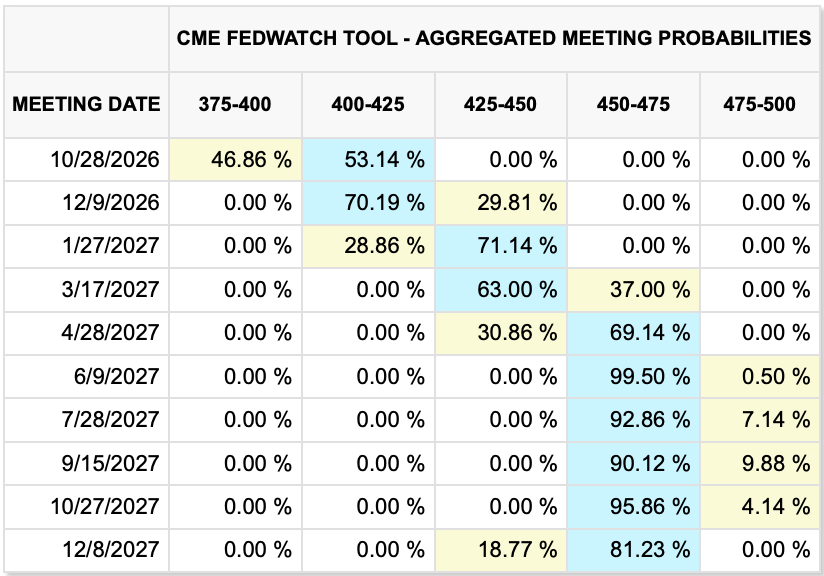
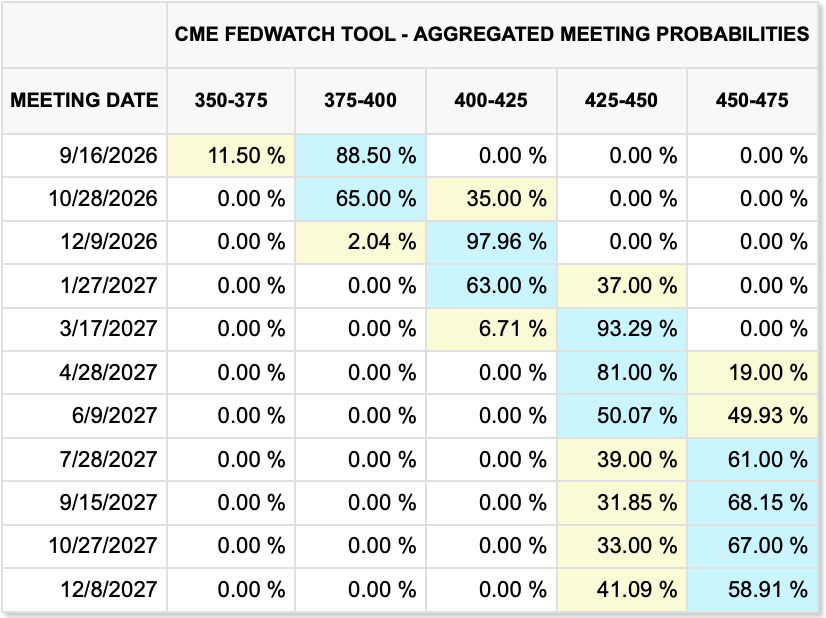
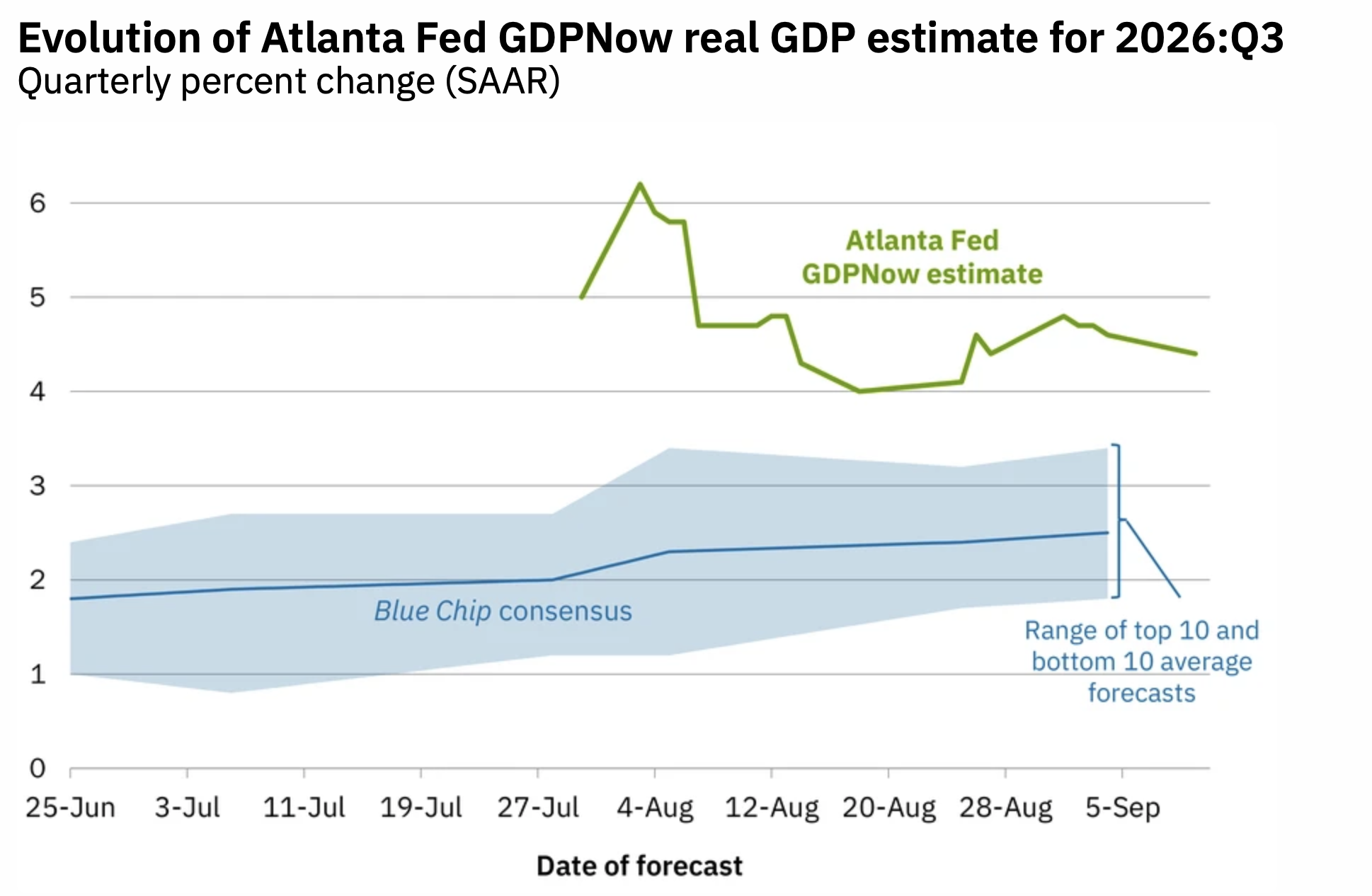
The yen continues to be in the crosshairs of traders as further weakness is anticipated based on several things I believe.  First, there had long been an assumption that the Fed was going to cut rates further, especially with President Trump haranguing Chairman Powell constantly on the subject.  In addition to that, there continues to be an underlying thesis amongst many pundits that the US economy is weakening dramatically to drive that rate decision.  Yet recent data belies those facts, notably the Atlanta Fed’s remarkable GDPNow jump, but also relative stability in other data, including employment.  The upshot is the futures market is now pricing a mere 3% probability of a cut at the end of this month and not pricing the next rate cut until June, after Chairman Powell is gone.  One key leg of the yen strength argument is weakened.

Source: cmegroup.com

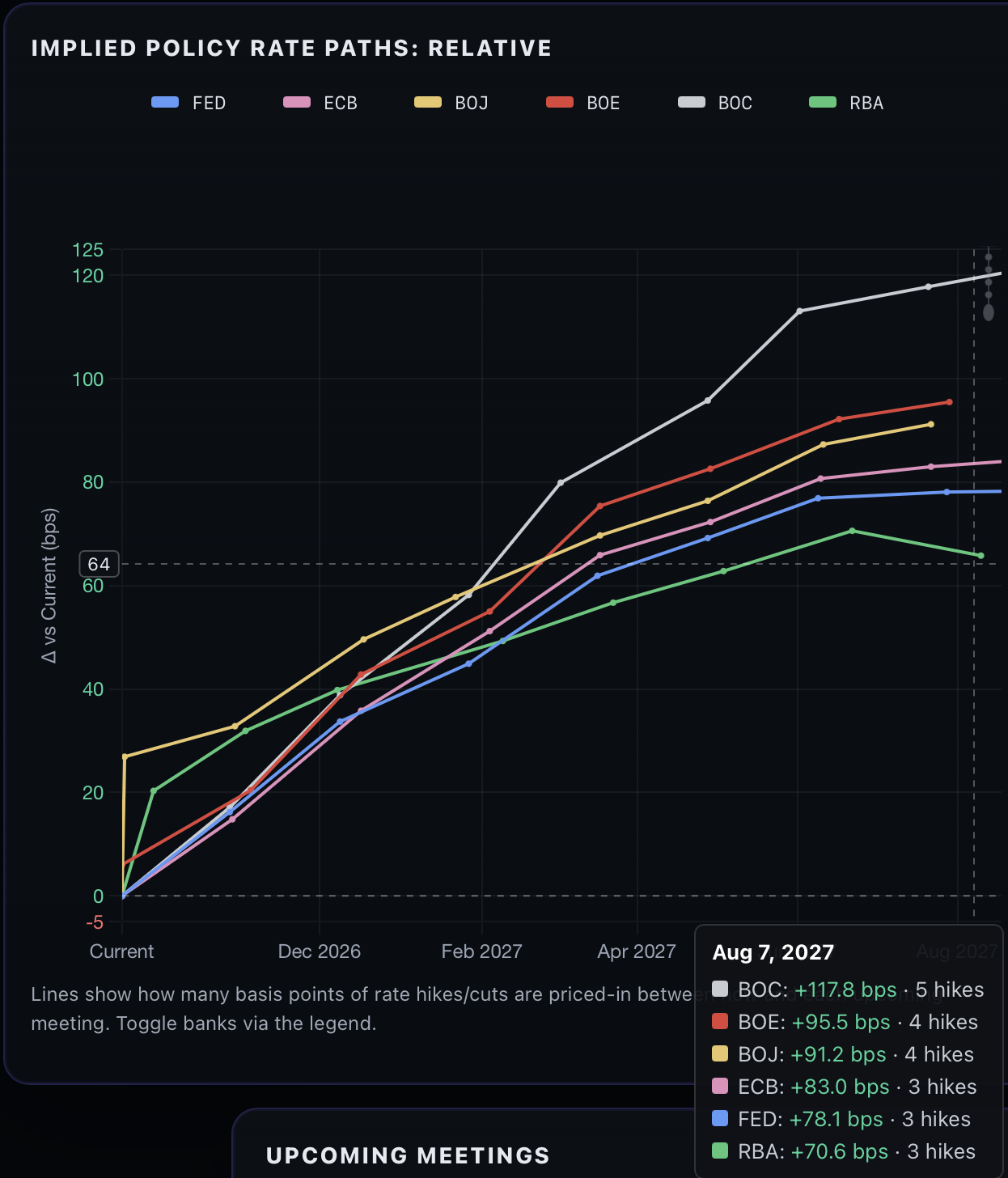
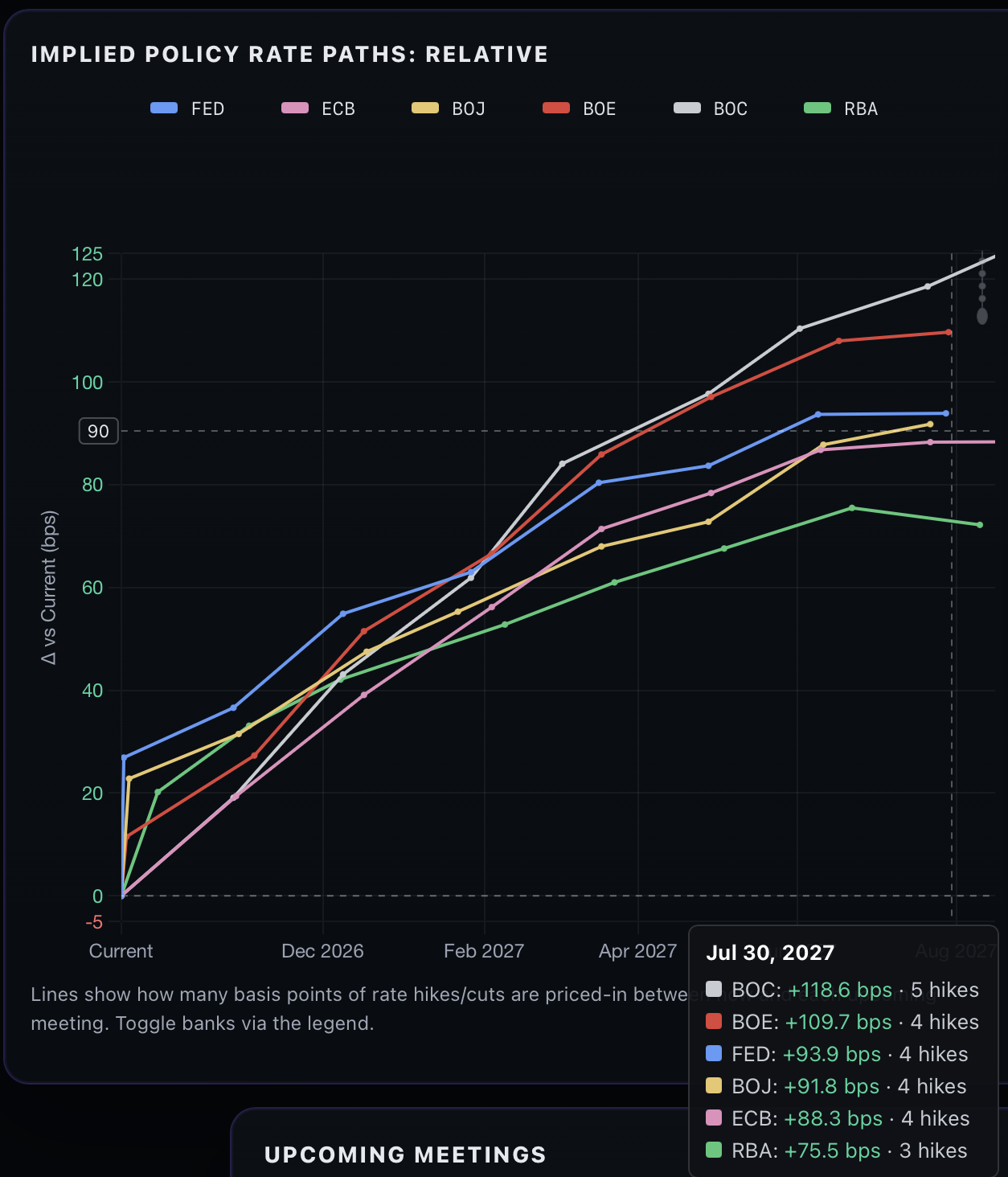
Second, there continues to be a belief that the BOJ will continue to hike interest rates, and perhaps they will, but it appears that the pace of those hikes will be far slower than previously anticipated.  Currently, the market is pricing just 50bps of hikes for all of 2026.  At the same time, Takaichi-san is set to “run it hot” in Japan just like in the US, pumping up fiscal stimulus and forcing the BOJ to come along for the ride.  The implication here, which is what we are seeing in the markets right now, is that a larger fiscal deficit will lead to strength in equities but a weaker currency.  The second leg of the yen strength argument is failing here as well.

Which brings us to last night’s commentary from Satsuki Katayama, Japan’s FinMin, who explained, [emphasis added] “We won’t rule out any means and will respond appropriately to moves that are excessive, including those that are speculative. We’ve mentioned this to the prime minister today as well.”  The kind of sudden moves we saw on Jan. 9 have nothing to do with fundamentals, and are deeply concerning,” she added. Her message was soon backed up by Atsushi Mimura, the ministry’s top official in charge of the yen, who reiterated that no options were being ruled out.

The bolded words are all part of the Japanese seven-step plan toward intervention.  At this point, I feel like we have reached number five.  The market responded predictably, with the yen strengthening vs. the dollar (and all its counterparts), albeit not all that much.  Last night saw the yen trade at 159.45, its highest since July 2024 (the last time the BOJ intervened), before the comments helped bring it back a bit.

Source: tradingeconomics.com

But one other area which the MOF/BOJ follow closely is not just the USDJPY exchange rate, but also the yen’s rate vs. other major currencies.  If, for instance, the yen is only weakening vs. the dollar, that is one thing.  However, a look at the chart below showing USDJPY, EURJPY and GBPJPY shows us that the yen is weakening against all those currencies pretty much in sync.  In fact, this argues that the yen’s current weakness is a yen specific fundamental, not a speculative move, which should argue against intervention, as that will only be a temporary sop.  However, my take is when we get to 160 or 162, which I believe is coming, we will see the BOJ selling aggressively.

Source: tradingeconomics.com

Ironically, the one currency against which the yen has been weakening steadily that I’m sure delights the BOJ/MOF is the Chinese yuan.  Since Liberation Day in the US, the yen has fallen more than 17% and continues to slide vs. the yuan as it has been doing for the past five years.  It is not hard to believe there are voices in the Japanese government that see that move and recognize how much it helps the Japanese export sector and caution against trying to arrest the yen’s weakness too aggressively.

Source: tradingeconomics.com

I look forward to much more dialog on this subject and expect that soon, we will be hearing about the end of the carry trade, yet again.  To my eyes, until Japanese fundamentals change, or at least appear to be moving in the right direction, the yen will struggle.  So, let me know when the fiscal deficit shrinks, or GDP jumps to 4% or inflation slides back to 1%.  Until then, they yen is damaged goods.

As to the rest of the market, precious metals continue to be the shining stars with the whole sector higher this morning (Au +1.0%, Ag +4.2%, Pt +2.0%) and that move taking copper (+0.4%) along for the ride.  Last night the CME raised its margining requirement and changed its nature by requiring a percentage of the value, rather than a numeric amount per contract.  My friend JJ, who writes the Market Vibes substack wrote a brilliant piece last night explaining how the flows are evolving in the silver market.  To sum it up, at this point, there appears no end in sight for the demand as short positions are covered by new shorts.  Metal for delivery remains scarce and despite the extraordinary shape of the move, it appears to have more steam to drive it forward.  Markets like this are extremely difficult to trade, and history shows that movements in the shape seen below reverse very sharply.  But as Keynes explained 100 years ago, markets can remain wrong longer than you can remain solvent.  I am happy I have been long silver for quite a while but am having a hard time figuring out what to do now!

Source: tradingeconomics.com

Meanwhile, oil (+1.4%) continues to rally on concerns that the Iran situation will lead to one of two outcomes, either a substantial decline in production as the regime collapses, or an effort by the regime to close the Strait of Hormuz which will impede shipping and reduce supply as they try to inflict pain on the US and the rest of the world who are rooting for the uprising.

Heading back to paper markets, yesterday’s weakness in the US was followed by a more mixed picture in Asia with Japan (+1.5%) rallying on continuing hope for more fiscal stimulus.  HK (+0.6%) benefitted from news that China’s trade surplus hit a new record high of $1.2 trillion (remember when they were going to grow domestic demand?) but Chinese shares suffered (-0.4%) after the regulators there raised margin requirements to 100%.  As to the rest of the region, it was far more green than red, although India continues to be a laggard overall.  In Europe, mixed is also the best description with the DAX (-0.35%) lagging while we have seen modest gains in the UK (+0.3%) and France (+0.2%).  Otherwise, it is hard to get excited about activity here today.  There continue to be existential questions about the EU and which nations will enact EU directives given that Poland, Hungary, Italy and the Czech Republic seem to be ignoring the latest issues like the Digital Asset Tax.  As to US futures, at this hour (7:00) they are softer by about -0.25% across the board.

Bond markets (except Japanese ones) remain completely uninteresting.  Treasury yields have slipped -3bps this morning and European sovereign yields are lower by -1bp.  Despite all the sound and fury about specific issues in markets, fixed income investors remain nonplussed by everything for now.  If/when that changes, we will need to watch things carefully.

Finally, aside from the yen (+0.3%) there is little to discuss overall. The DXY is still trading right around 99 and there has been very little movement of note.  Relationships that we would expect (ZAR and Au, NOK and oil) remain intact, but despite the metals dramatic movement, the rand is just gradually appreciating.

On the data front, yesterday’s CPI printed slightly softer than market expectations, but it is hard to get excited that inflation is heading back to target anytime soon.  @inflation_guy, Mike Ashton, had an excellent write-up here explaining what is going on and why much lower inflation is unlikely.  Ultimately, despite a lot of discussion regarding rental rates, those figures are not representative of the rental market as a whole and shelter costs continue to climb.  Absent a serious decline in goods inflation, it will be virtually impossible to get back to 2.0% on any sustainable basis.

As to today, it is a hodge podge of current and old data with Existing Home Sales (exp 4.21M) the only December number.  We see November Retail Sales (0.4%, 0.4% ex-autos) and PPI for both October and November which seem unlikely to impact markets greatly.  We also see EIA oil inventory data where a small draw is expected for crude but a build for gasoline.  Last week saw a massive build in products which likely helped weigh on the price last week.  But this week, things are different.  

We also hear from five more Fed speakers including Steven Miran, who will undoubtedly make his case for aggressive rate cuts again.  Then at 2:00 we get the Fed’s Beige Book.

Drinking from a firehose seems an apt metaphor for market analysts trying to make sense of the current situation.  Stepping back, I have never understood the market pricing for more rate cuts given the economy’s resilience.  The twin stories, in my estimation, are a growing level of fear regarding the debasement of fiat currencies, hence the move in metals, and the fact that the US remains the cleanest dirty shirt in the laundry, hence my preference for the dollar vs. other fiat currencies.  But on any given day, be careful!

Good luck

Adf
Too Potent a Force

The headline today’s NFP
As pundits will try to agree
On whether the Fed
When looking ahead
Will like what it is that they see
 
But, too, the Supreme Court is due
To rule whether tariffs imbue
Too potent a force
For Trump, to endorse
Or whether they’ll let them go through


As the session begins in NY, markets have been relatively quiet as traders and algorithms await the NFP data this morning.  Recall, Wednesday’s ADP number was a touch softer than forecast, but still, at 41K, back to a positive reading.  Forecasts this morning are as follows:

Nonfarm Payrolls60K
Private Payrolls64K
Manufacturing Payrolls-5K
Unemployment Rate4.5%
Average Hourly Earnings0.3% (3.6% y/Y)
Average Weekly Hours34.3
Participation Rate62.6%
Housing Starts1.33M
Building Permits 1.35M
Michigan Sentiment53.5

Source: trading economics.com

Regarding this data point, there are two things to remember.  First, last month Chairman Powell explained that he and the Fed were coming to the belief that the official data was overstating reality by upwards of 60K jobs due to concerns over the birth/death portion of the model.  That is the factor the BLS includes to estimate the number of new businesses started vs. old ones closed in any given month.  Historically, at economic inflection points, it tends to overstate things when the economy is starting to slow and understate when it is turning up.  

The second thing is that given the changes in the population from the administration’s immigration policy, with net immigration having fallen to zero recently, the number of new jobs required to maintain solid economic growth is much lower than what we have all become used to, which in the past was seen as 150K – 200K.  So, 60K, or even 40K, may be plenty of new jobs to absorb the growth in the labor market, which will come from people re-entering the market who had previously quit looking for a job.

The ancillary data, like ADP and the employment pieces of ISM were both stronger in December than November, so my take is, the estimates are probably reasonable.  I have no strong insight into why it would be dramatically different at this point.  The question is, how will markets respond?  My take is this could well be a ‘good news is bad’ situation where a strong print will see pressure on bonds and stocks as the market reduces its probability of a Fed rate cut (currently 14% for January, 45% for March) even further.  The dollar would benefit, as would oil on the demand story, but I think metals will do little as that story is not growth oriented.  A weak number would see the opposite.

Of course, the other big potential news today is the Supreme Court ruling on the legality of Trump’s tariffs.  The odds markets are at ~70% they will overturn them, but there is the question of whether it will require the government to repay the tariffs or simply stop them.  As well, most of them will be able to be reimposed via different current laws, so net, while a blow to the administration I don’t believe it will have a major long-term impact with repayment the biggest concern.  This particular issue is far too esoteric for a simple poet to prognosticate.

And those are the market stories of note, although we cannot ignore the growing protests in Iran as videos show buildings burning in Tehran and there is word that the Mullahs are at the airport, which if true tells me that the regime is on the edge.  While this would be a great victory for the people of Iran, it would also have a dramatic impact on oil markets and specifically on China.  While sanctions could well be lifted, thus depressing the price as more comes to market, China currently benefits from buying sanctioned oil at a massive discount, and that discount would disappear.

As we await all the news, let’s review the overnight activity.  A mixed US session was followed by strength in Tokyo (+1.6%) as the Japanese government surprised one and all by reporting a stronger 30-year JGB auction than anticipated as well as an uptick in spending by households.  Too, nominal GDP growth has been outpacing deficit growth driving the net debt ratio lower, exactly what the US is seeking to do.  As to the rest of the region, both China (+0.45%) and HK (+0.3%) managed gains, as did Korea and Malaysia but India (-0.7%) continues to lag as it has all year.  Data from China showed inflation fell less than expected, although the Y/Y number remains at just 0.8%.

In Europe, gains are also the norm with France (+0.9%) leading the way with both the UK (+0.55%) and Germany (+0.4%) having solid sessions.  Retail Sales data from the Eurozone was firmer than expected at 2.3%, a rare positive outcome, but showing some support.  As to the US futures market, at this hour (7:30) all three major indices are higher by about 0.15%.

In the bond market, while yields have edged higher by 2bps this morning, as you can see from the chart below, they remain within, albeit at the top, of the recent 4.0% – 4.2% trading range.  

Source: tradingeconomics.com

The most interesting data point from yesterday was the dramatic decline in the Trade deficit, which fell to -$29B, its lowest level since 2009.  Recall that a long-time issue has been the twin deficits, with the budget and trade deficits linked closely.  I wonder, are we going to see Trump’s efforts at reducing government’s size and reach result in a smaller budget deficit?  Most pundits dismiss this idea, but I’m not so sure.  As to the rest of the world, European sovereigns are essentially unchanged this morning as investors everywhere await the US data and tariff ruling.

In the commodity markets, oil (+0.9%) is creeping higher but remains in its downward trend.

Source: tradingeconomics.com

Wednesday, we saw a large draw in crude inventories abut a massive build in both gasoline and distillates which feels mildly bearish.  The narrative is the Iran story is getting people nervous for potential short-term disruption, but I remain overall bearish for now.  As to the metals markets, gold (-0.3%) is slipping after having recovered early morning losses yesterday and finishing higher, while silver (+0.6%) is still bouncing along with copper (+1.8%) and platinum (+0.4%). Metals are in demand and supply is short.  Price here have further to rise I believe.

Finally, the dollar continues to rebound off its recent lows with the DXY back to 99 again this morning.  it has rallied in 11 of the past 13 sessions, not typical price action for a trading vehicle that is in decline.

Source: tradingeconomics.com

In fact, the greenback is firmer against virtually all its G10 and EMG counterparts this morning with the largest declines seen in JPY (-0.5%), KRW (-0.5%) and NZD (-0.5%) with others typically sliding between -0.1% and -0.3%.  again, it is hard to watch recent price action and see impending weakness.  We will need to see much weaker US data to change my view.  And along those lines, the Atlanta Fed’s GDPNow number just jumped to 5.4% for Q4 after the Trade data yesterday, again, atypical of further weakness in this sector.

And that’s really all as we covered data up top.  To me, the wild cards are Iran and the USSC.  While I do believe the regime will fall in Iran (they just shut down the internet to try to prevent a further uprising) my take on the Supremes is they may stop further tariffs but will not force repayment.  Net, that won’t change much at all and given the prediction markets are pricing a 70% probability of an end to tariffs, if it happens, it’s already in the price!

Good luck and good weekend

adf