Checkmate

The talks twixt the States and Iran
Collapsed like a climate straw man
Now there’s a blockade
In Hormuz, arrayed
As Trump pivots to a new plan

The first move in oil was higher
But I would beware as a buyer
If Trump rules the Strait
That could be checkmate
And force a much longer cease fire

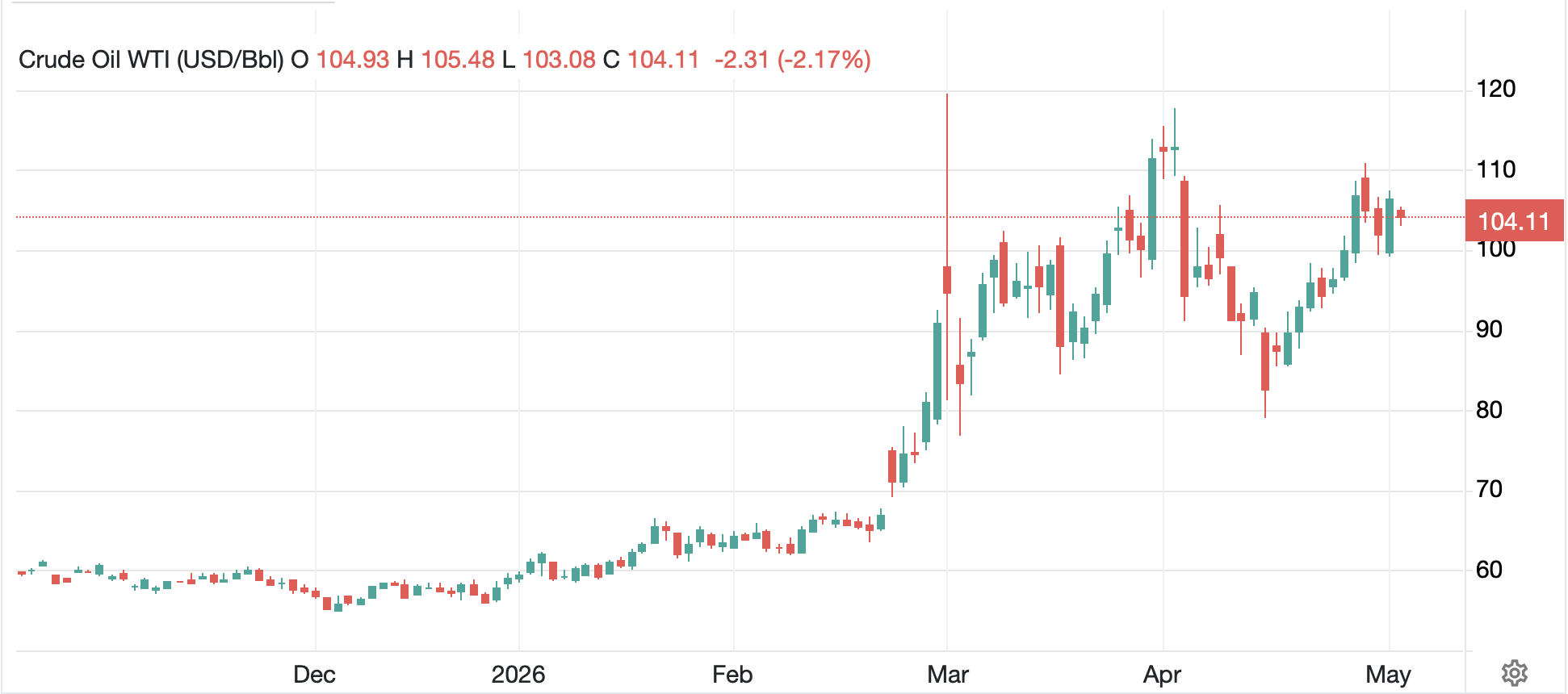
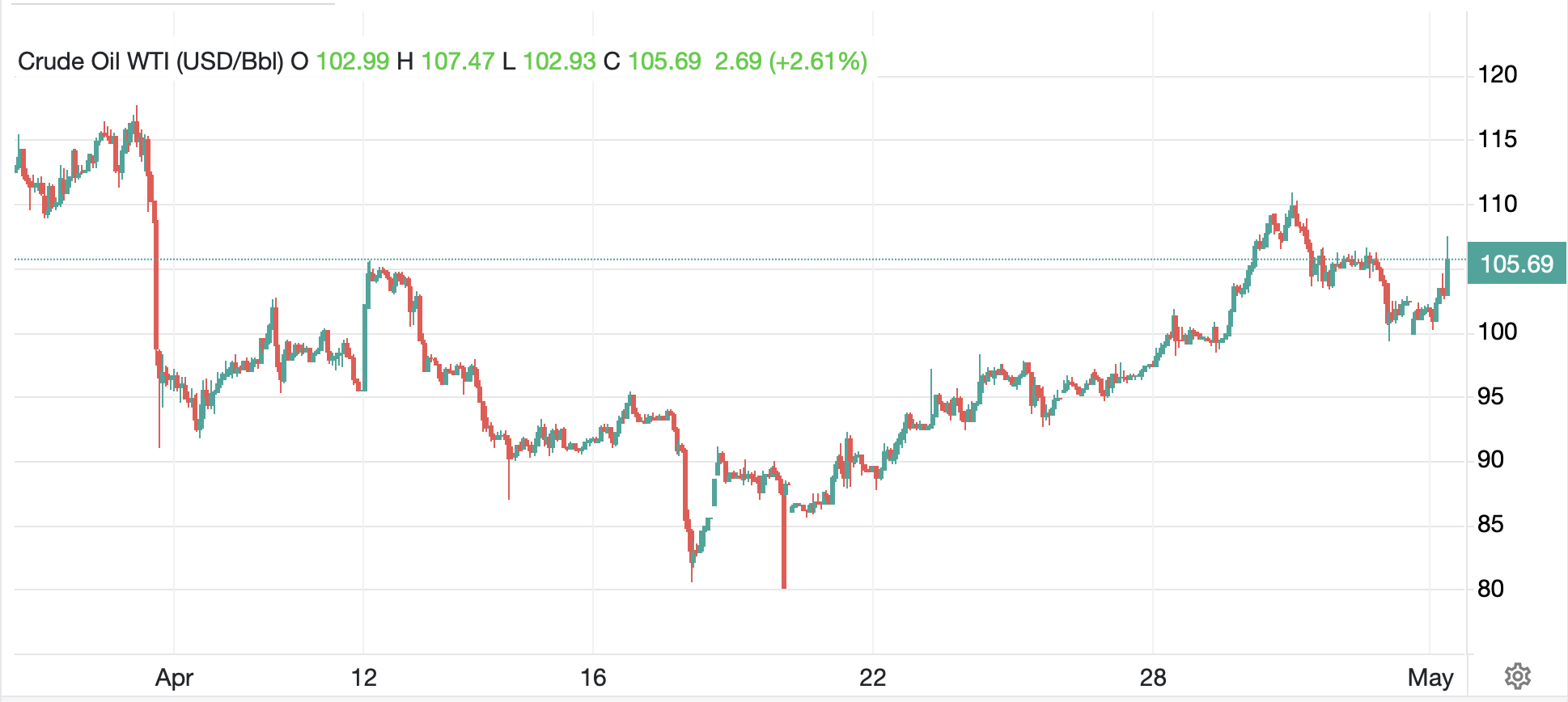
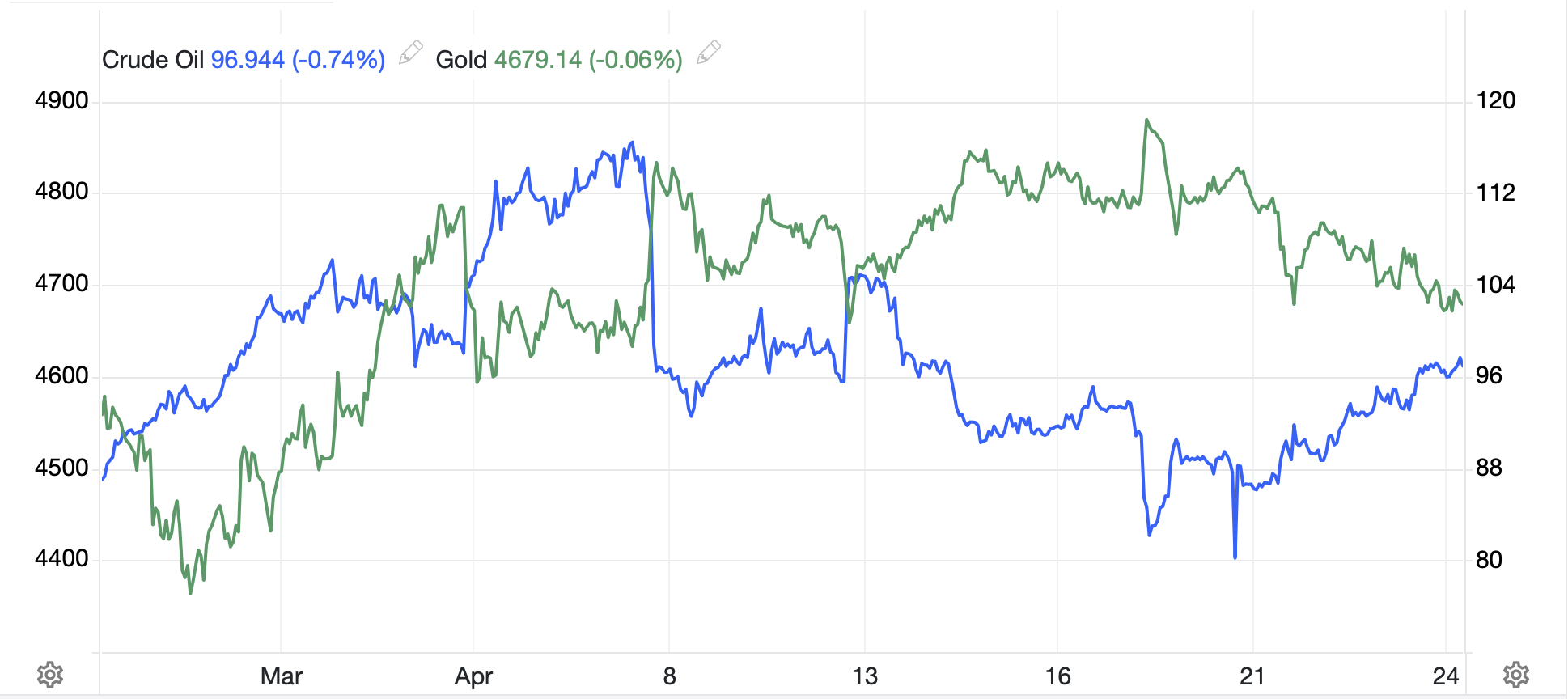
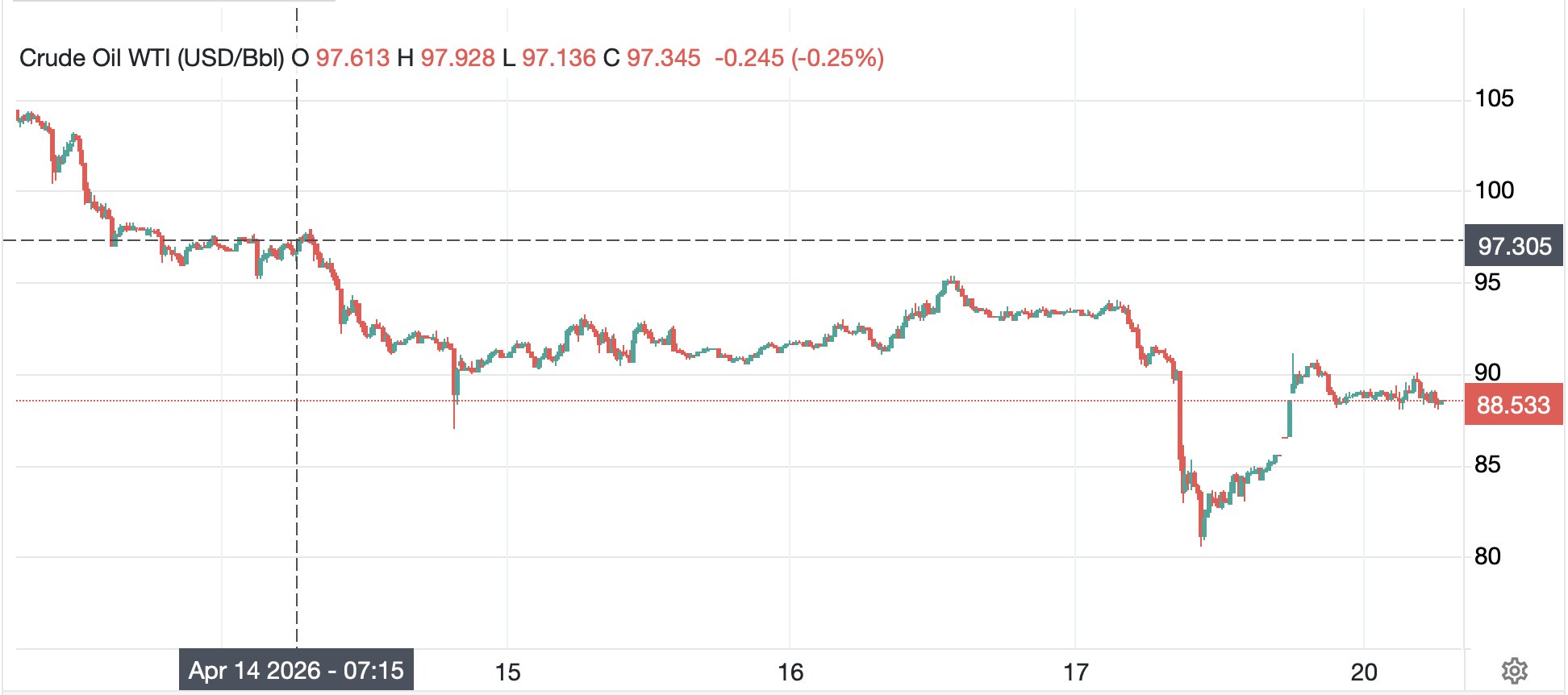
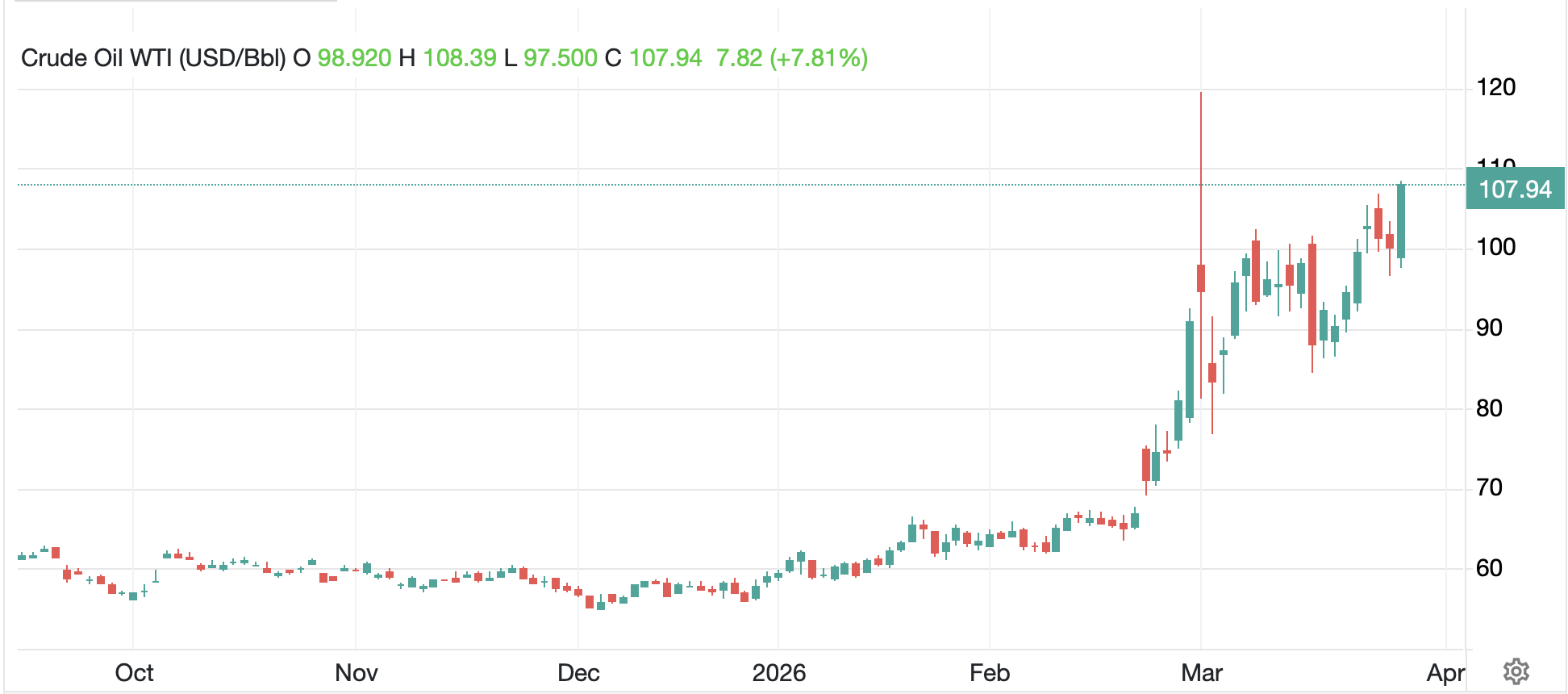
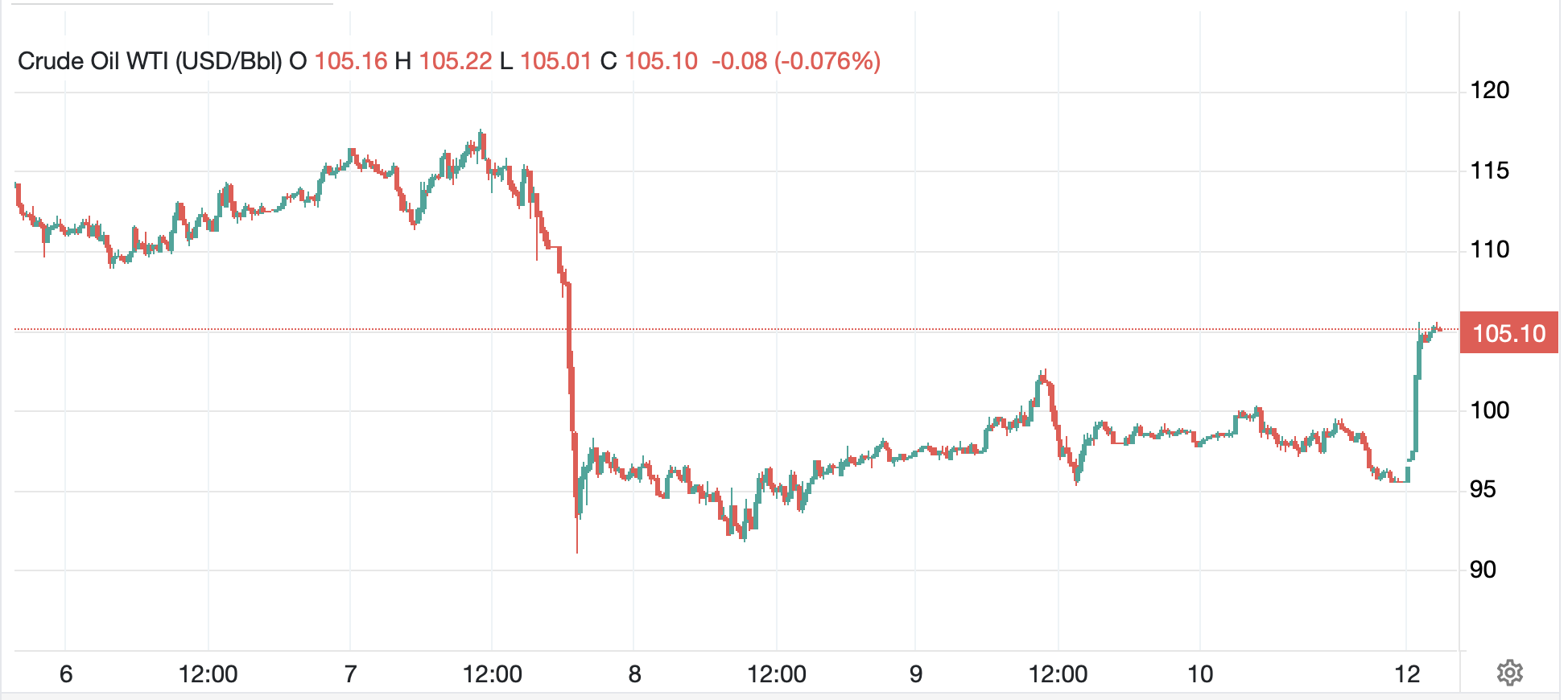
As of 8:00pm last night, after the peace talks fell apart in Islamabad and President Trump announced the US would be blockading the Strait of Hormuz so no ships carrying oil, especially Iranian oil, would be able to pass the blockade, the price of oil spiked immediately as the futures markets opened.  You can see the last week’s roller coaster in the below chart from tradingeconomics.com

The question that needs to be answered at this point is, is there a substantive difference between the US blocking traffic in the Strait and Iran doing so?  I would contend there is a huge difference, especially if you are China.  But also, if you are Iran.  After all, you just lost your trump card (pun intended) and not only that, if Iranian oil is not able to be sold, then Iran runs out of money pretty quickly.  Remember, oil revenues represent approximately 90% of Iranian total revenues.  How long can the IRGC last with no money to pay their soldiers?

In the meantime, the Saudis are pumping 7 mm bpd across the East-West pipeline now, and the UAE is pumping 1.5 mm bpd to Fujairah, taking a decent sized bite out of the missing barrels.  I read this morning that upwards of 7mm bpd are now exiting the gulf via pipeline reducing the overall reduction in oil flow.  Granted, it is still a huge disruption but shrinking.  On top of that, if this continues, the Strait loses its strategic importance, which cements Iran’s loss of power.  In the short-run, oil prices can go in either direction in my view, but this has the opportunity to completely emasculate Iran’s ability to have an impact on the global oil markets in the future.  

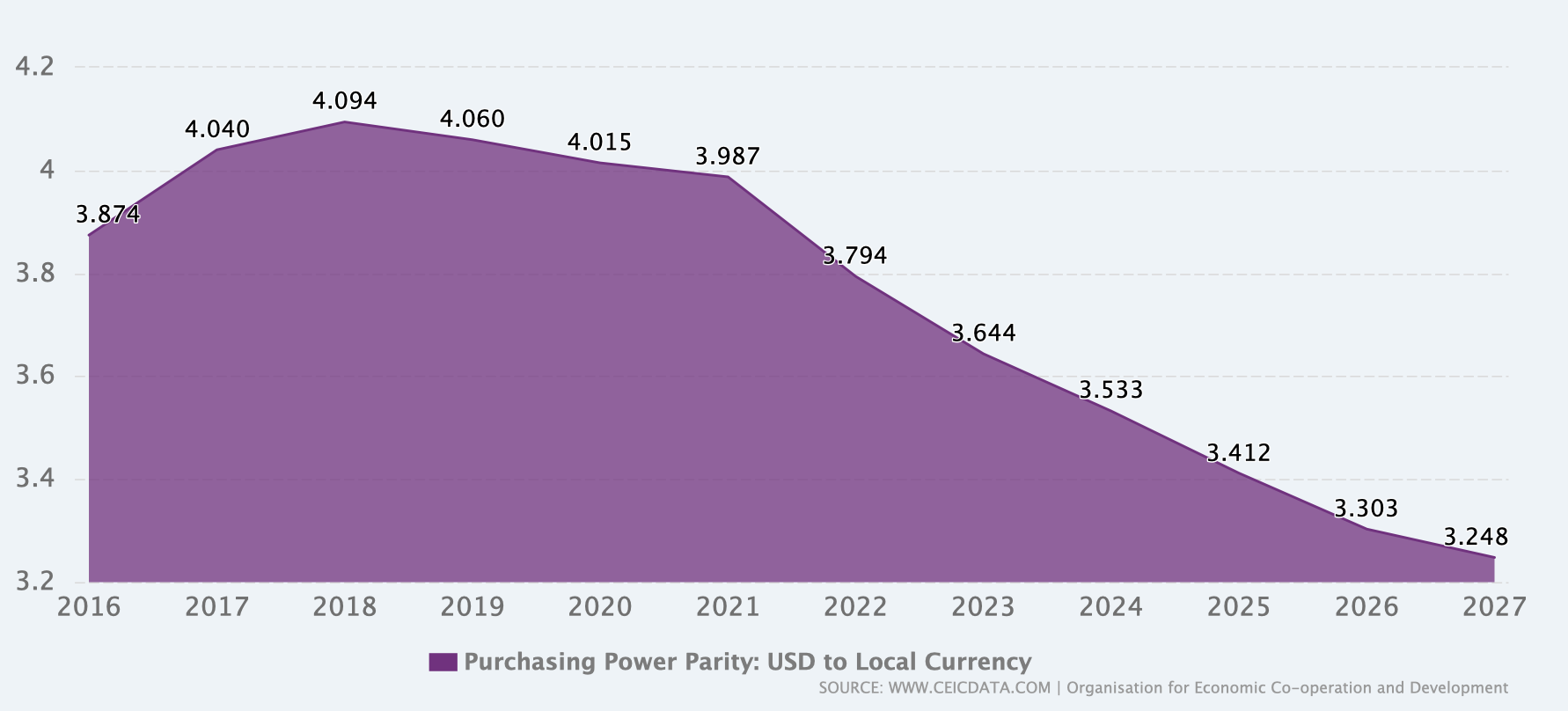
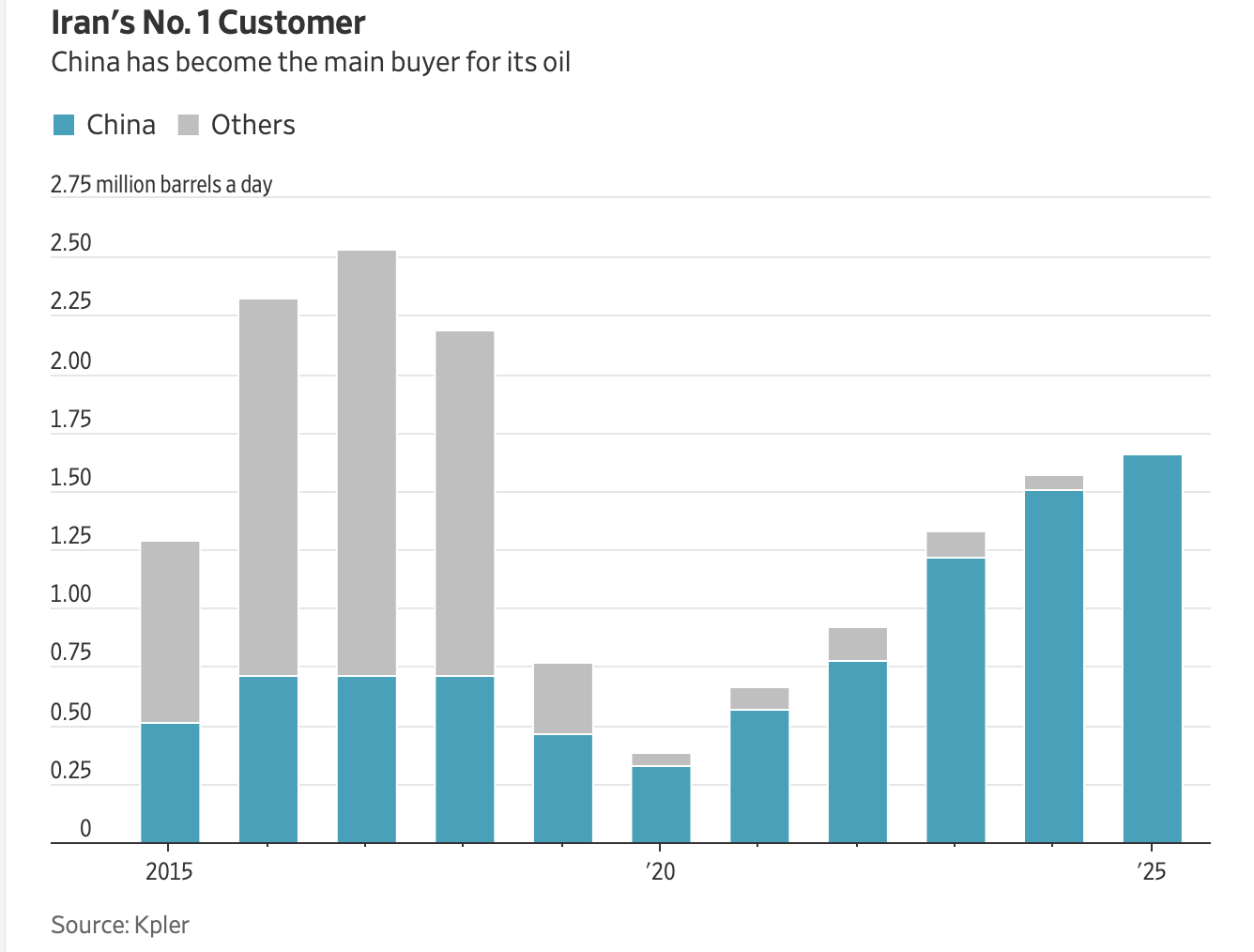
And I would not be surprised if President Xi is burning up the lines to Washington because he just lost a key source of cheap oil, and oil he paid for in CNY.  (see WSJ chart below.)

There are many twists and turns here, and I’m sure there will be more.  But as of Sunday night, from what I have read, Iran is in a much worse position than they were on Friday.  Of course, things could all go pear-shaped from here, and this could turn out to be a complete failure.  Our goal here is to try to track how markets will evolve.

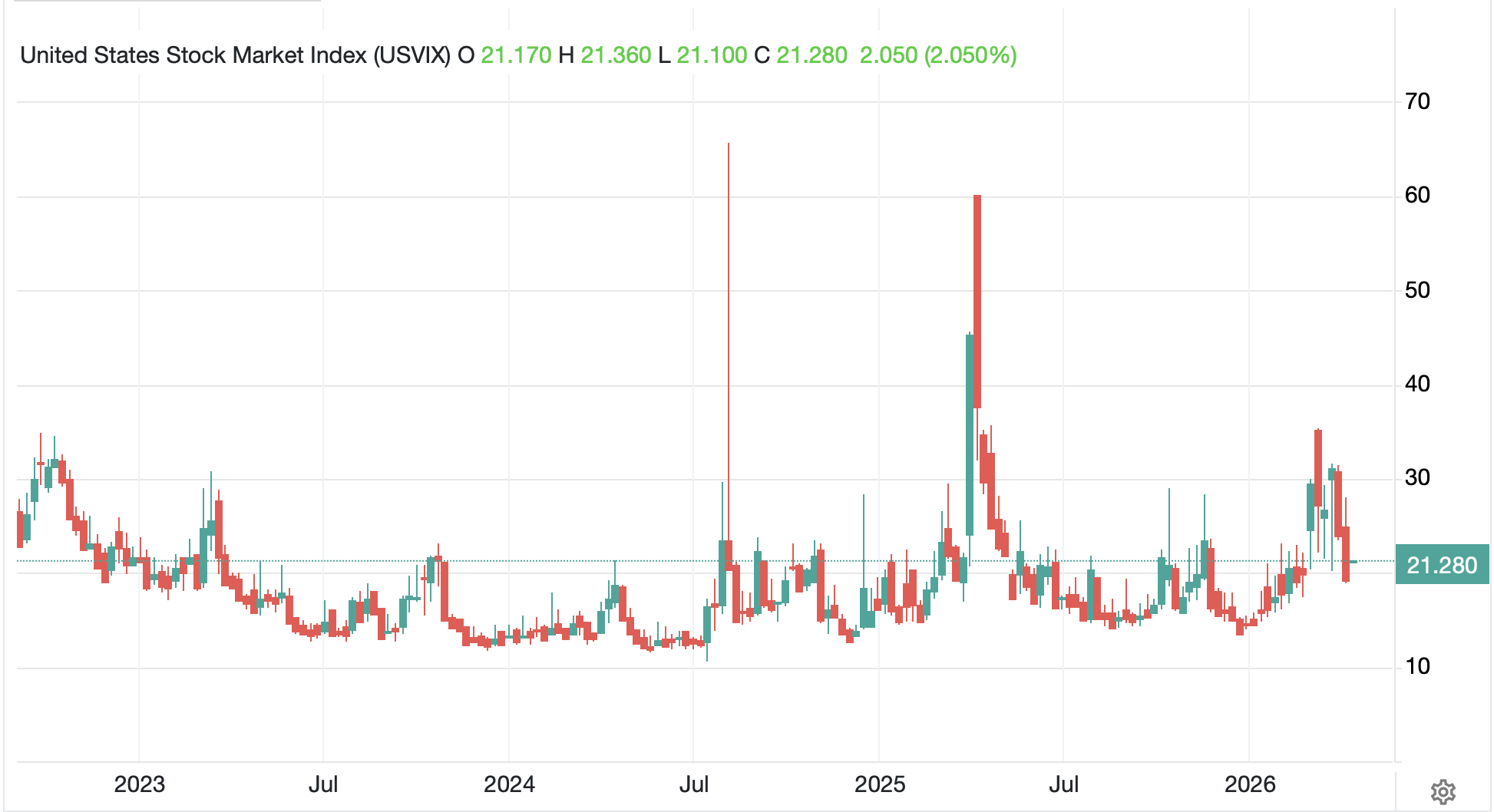
The remarkable thing, still, to me is that equity markets remain so blithe about the entire situation.  I make this claim based on the VIX Index, which remains relatively docile despite everything that is happening in Iran and the likely eventual knock-on effects.  But look at the chart of the VIX below which shows that markets are nowhere near as stressed as they have been in the past and are actually much nearer their long-term average. (The two spikes are the JPY intervention in August 2024, which lasted for just a few hours, and then the Liberation Day tariffs in April 2025 which quickly reversed as well.  

Source: tradingeconomics.com

It is worth noting that even the oil VIX, is off its highs and, while somewhat elevated, not running away.

Source: finace.yahoo.com

The thing about the VIX indices to remember, though, is that options decay and holding them is a losing proposition if the underlying market is not moving.  So, to maintain a high VIX, we need to see significant intraday as well as day-to-day price movement.

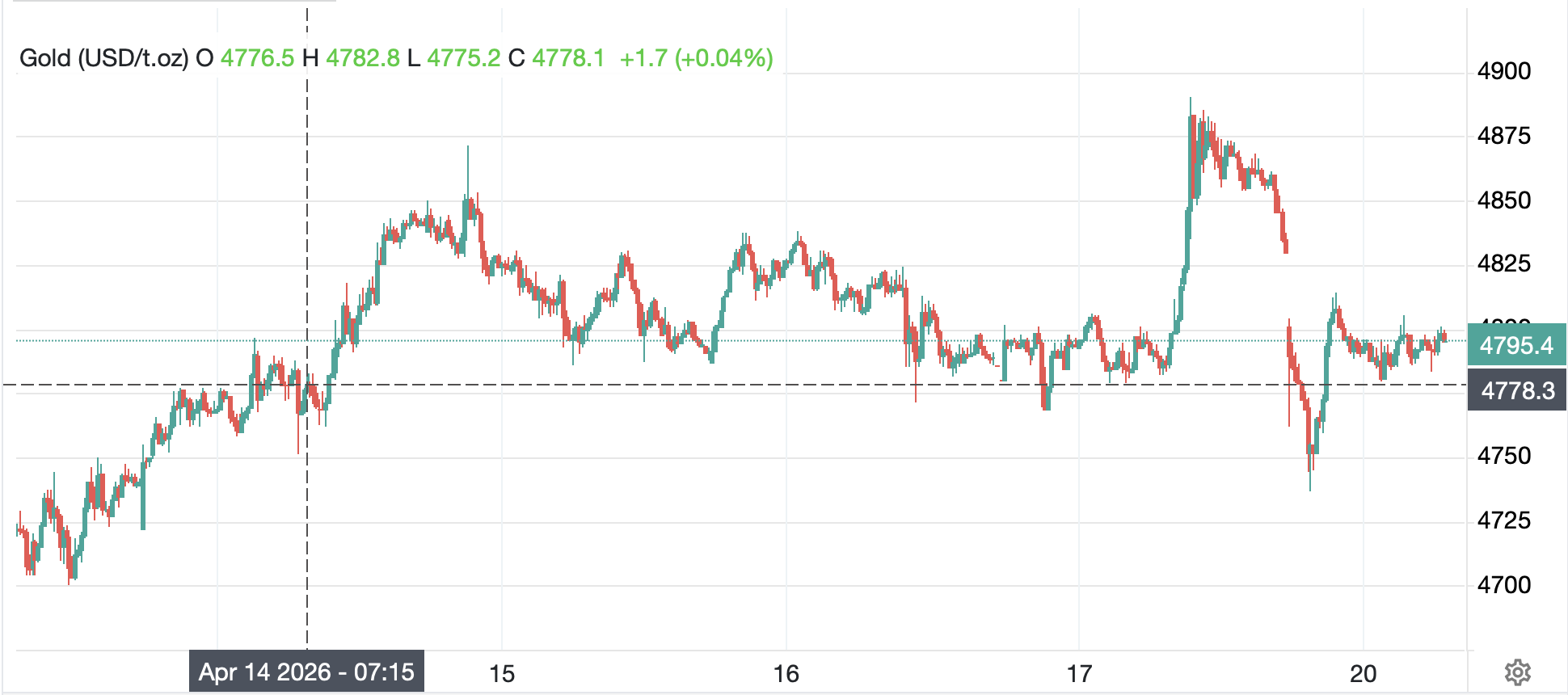
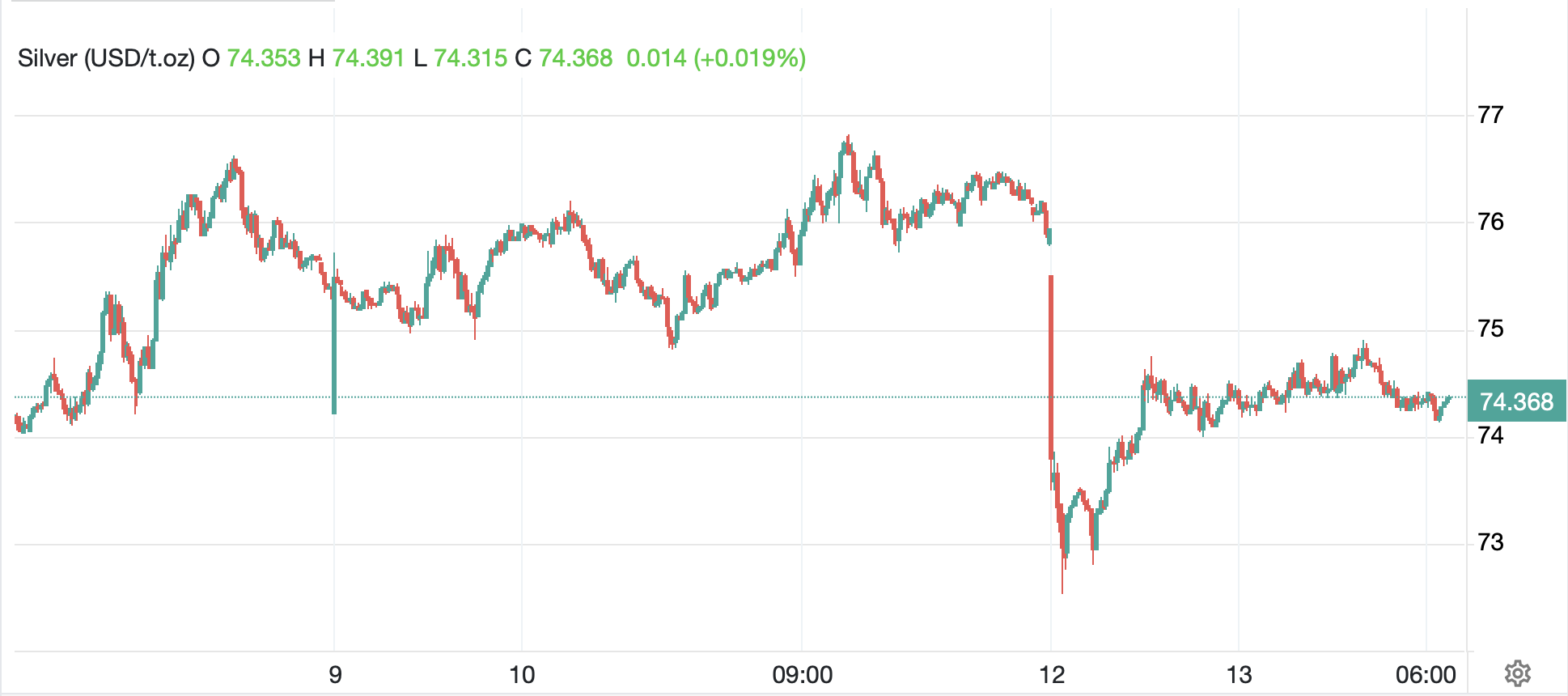
As Iran remains the major storyline for markets, let’s take a look at how things are behaving this morning.  Oil (+8.2%) has maintained its initial gains but not moved since last night.  NatGas (+1.7% in US, +9.0% in Europe) has also been impacted as there is no movement of LNG tankers through the Strait either.  Interestingly, both gold (-0.6%) and silver (-1.7%) while lower are well off the lows seen in the early overnight session as per the below chart of silver.

Source: tradingeconomics.com

I reiterate that the market perception of the current situation has not nearly matched the hysteria evident in much of the commentary.  I’m not sure whether to attribute that to market insight or market ignorance at this point, although I lean toward the former.  The problem with commentary these days is that hysterical takes generate clicks, and that is the goal of many commentators.

Turning to equity markets, Asian markets were generally, though not universally, lower.  Tokyo (-0.7%), HK (-0.9%), Korea (-0.9%) and India (-0.9%) all suffered on the breakdown in talks and the new blockade news.  New Zealand (-1.2%) was the worst performer, largely because their energy situation is deteriorating more quickly than anyone else’s.  But China (+0.2%), Taiwan (+0.1%) and Indonesia (+0.6%) all managed some gains despite the news.  Again, markets appear to be pricing a fairly benign outcome here.  Either the news is going to get better soon, or there is going to be a massive rerating of equity markets.  Something’s gotta give.

In Europe, things are a bit worse overall with Spain (-1.4%) leading the way lower although Germany (-1.0%), France (-0.9%) and Italy (-0.8%) are all under real pressure as well.  There has been a lot more press lately about how Spain’s PM Sanchez is cozying up to China as he seems to be pulling Spain away from the EU in several areas.  Of course, he is an avowed socialist, so perhaps this should not be that surprising.  However, this is further proof that NATO is surely going to die soon.

One market that has outperformed, though is Hungary (+2.8%) which is rallying sharply on the weekend’s election results that sent President Victor Orban into retirement.  Certainly, most others in Europe are thrilled as Orban had been a thorn in the side of the EU with respect to their Russia stance, but the economy there has been underperforming so new leadership is widely lauded, for now.  The forint (+1.9%) also benefitted from the election outcome.  

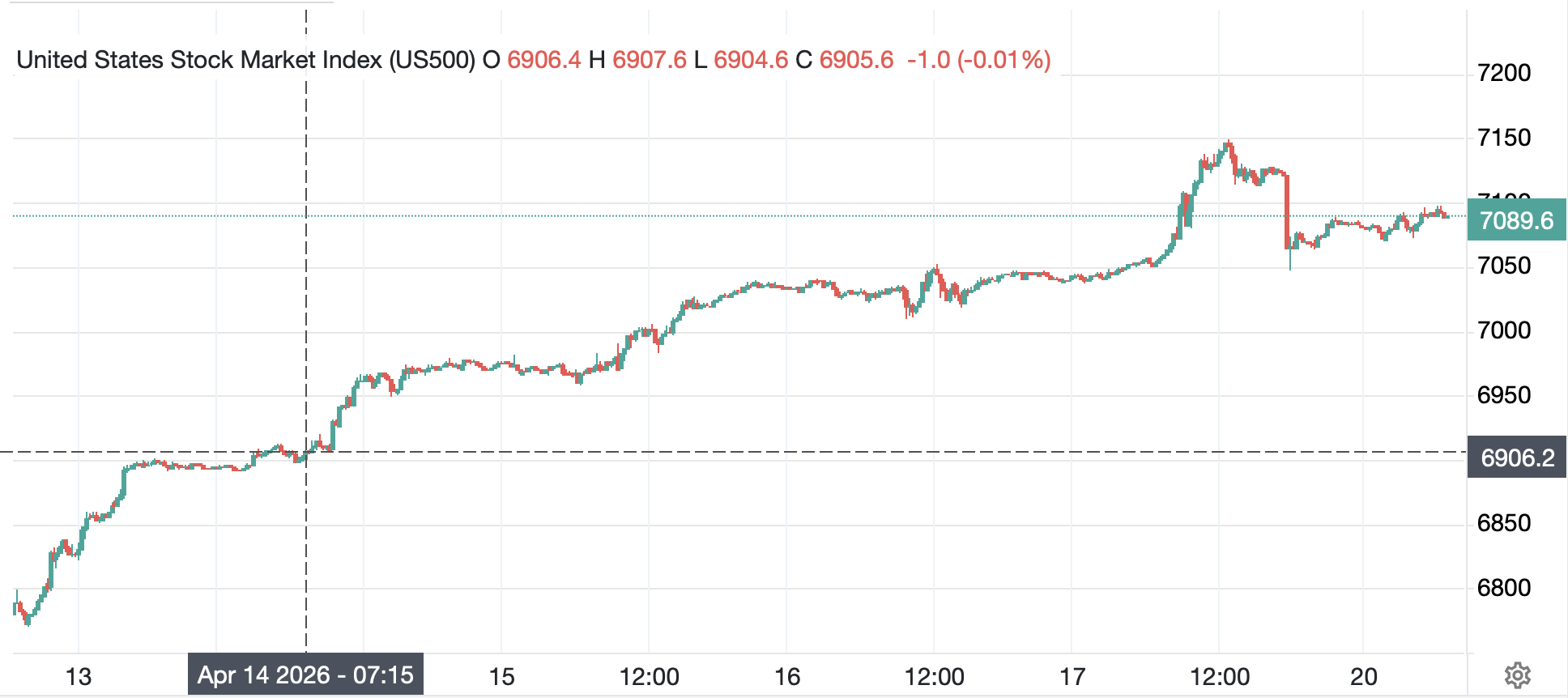
As to US futures, as I type at 7:00, the major indices are lower by -0.3% or so, well off the initial levels seen last night that were as much as -1.4% below Friday’s closing levels.  Again, markets remain sanguine over the weekend changes to the story.

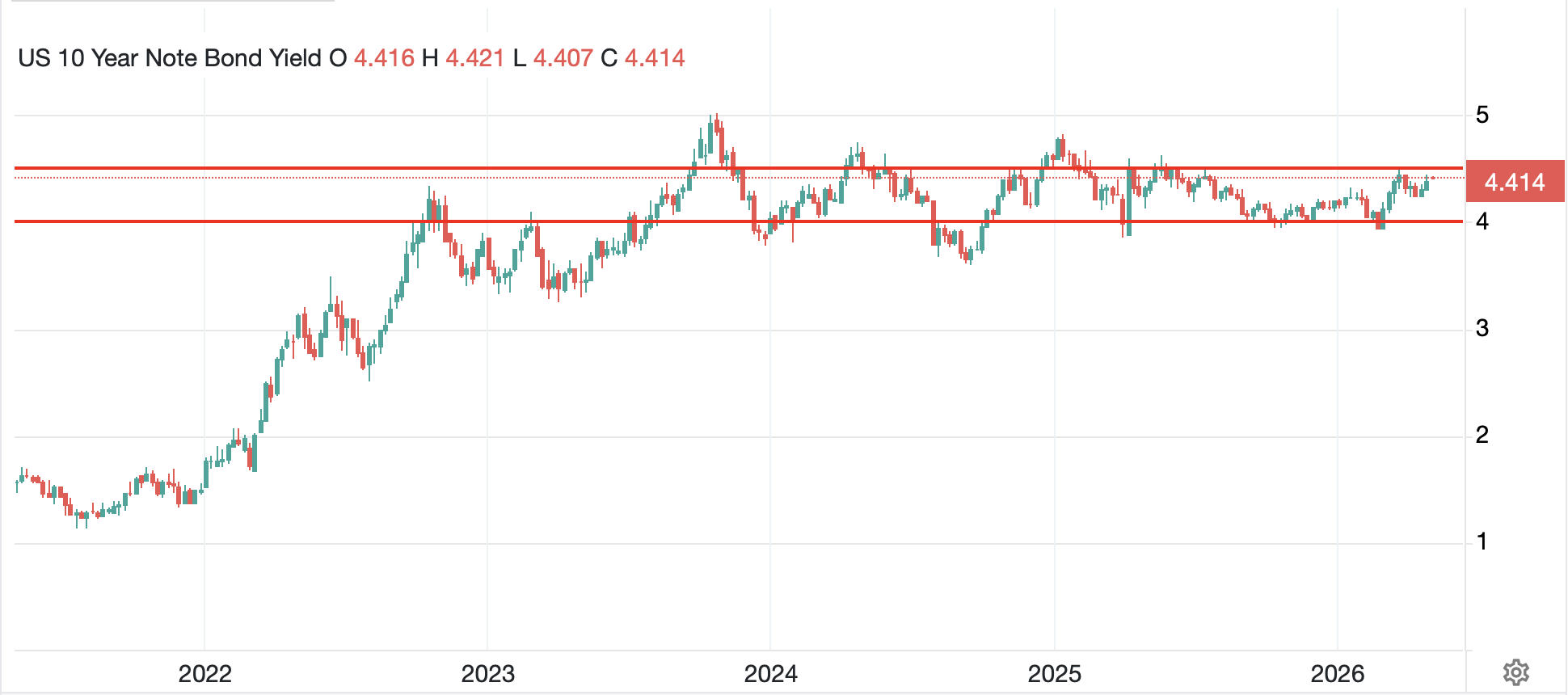
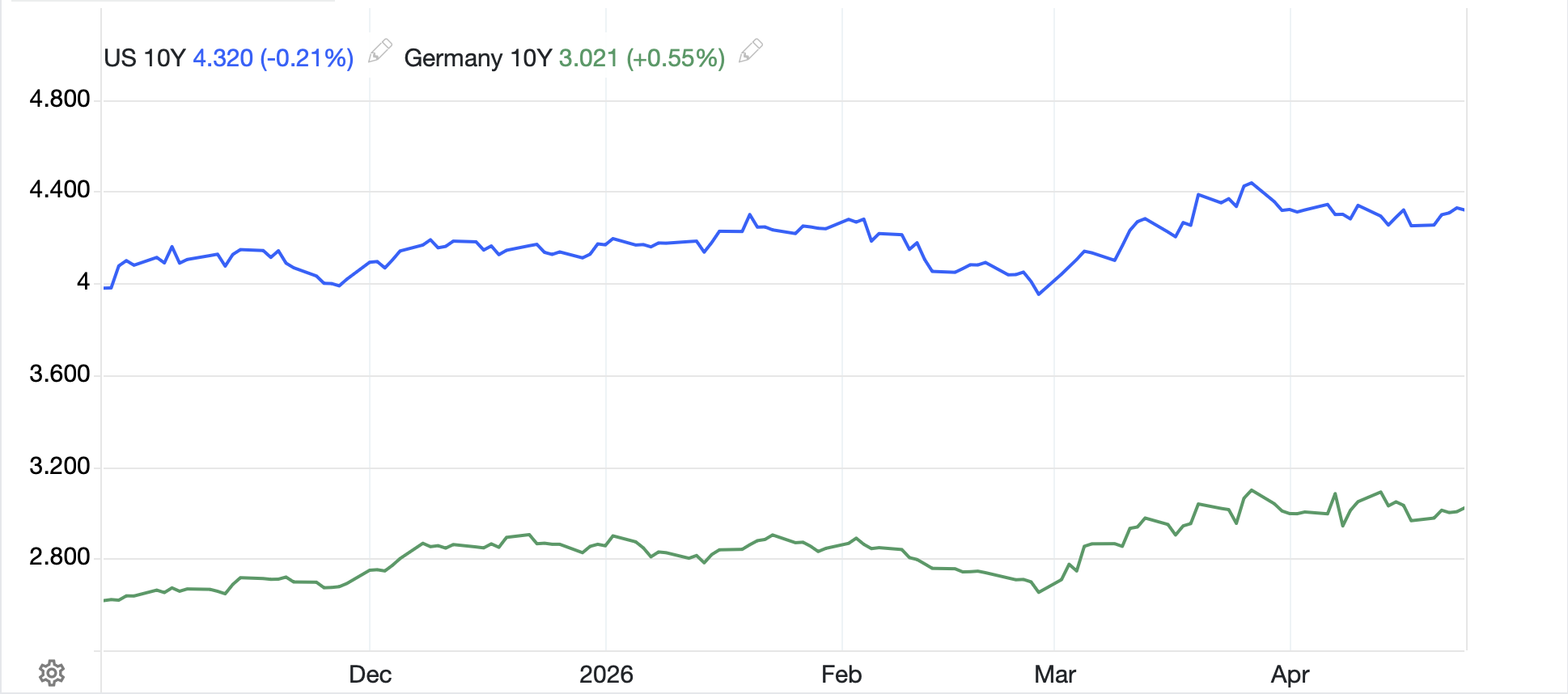
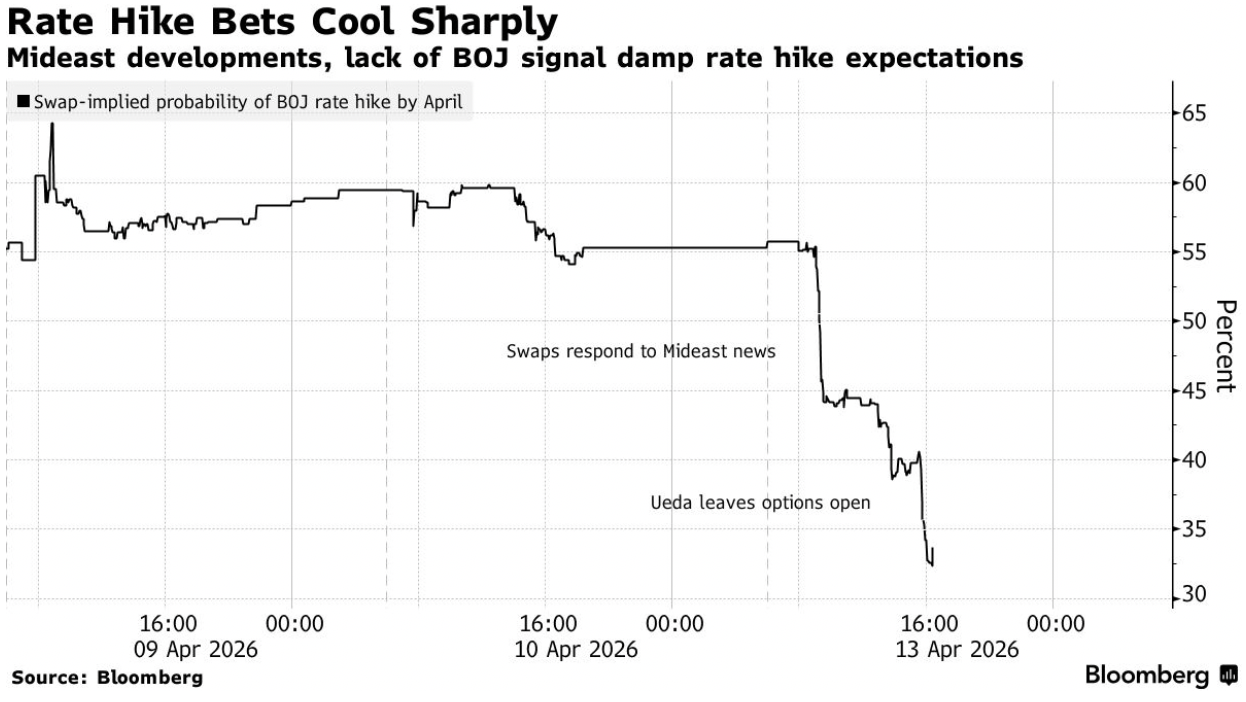
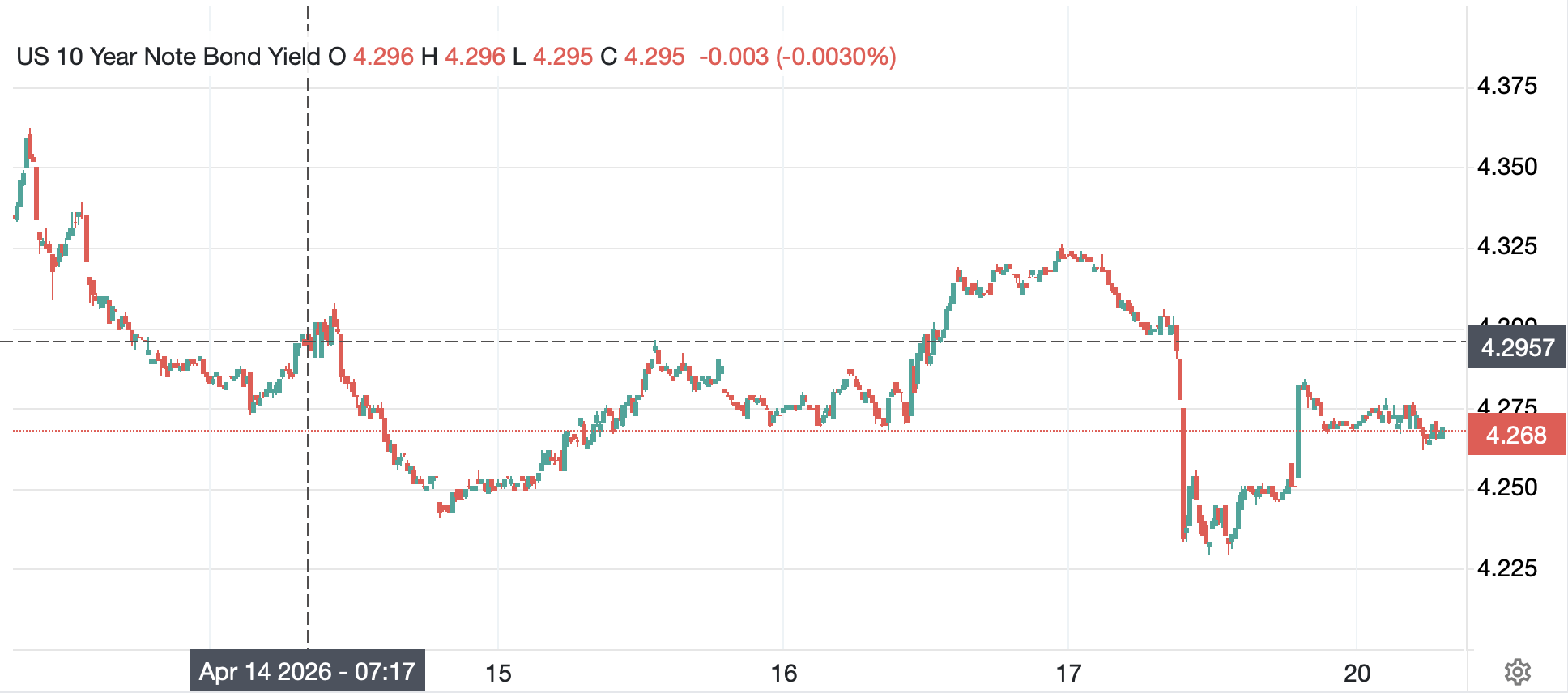
In the bond market, Treasury yields have edged higher by 1bp and in Europe, we are seeing rises of between 1bp and 3bps across the board.  Here, too, it is hard to find panic in the streets.  JGB yields (+2bps) have made a new high for the move and continue to edge higher as concerns over the path of inflation rise given the oil price rise.  Last night, BOJ Governor Ueda gave a speech (actually his deputy did because he is in Washington for the IMF/World Bank meetings) and tried to quash the view that the BOJ was definitely going to hike rates at the end of this month, an outcome that had been priced at a 65% probability prior to his speech as you can see from the Bloomberg chart below.

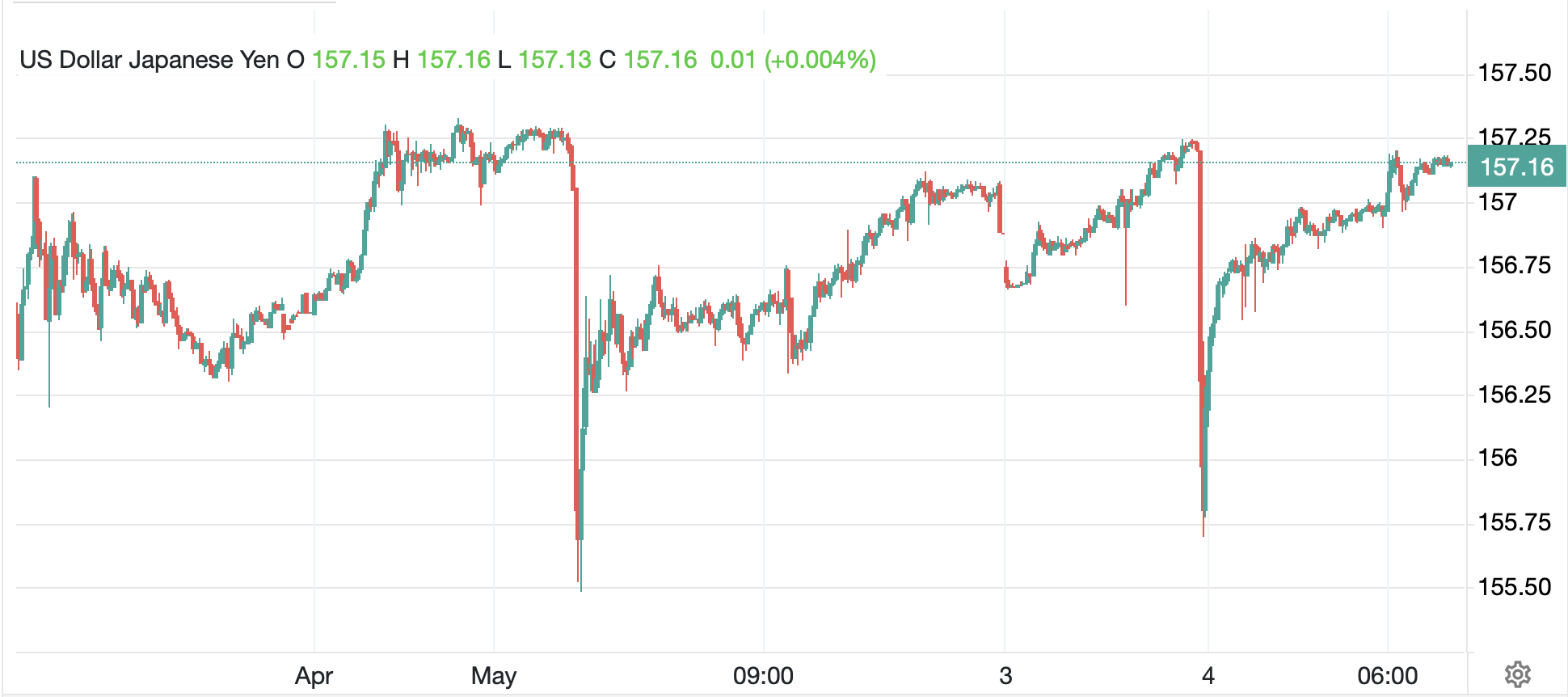
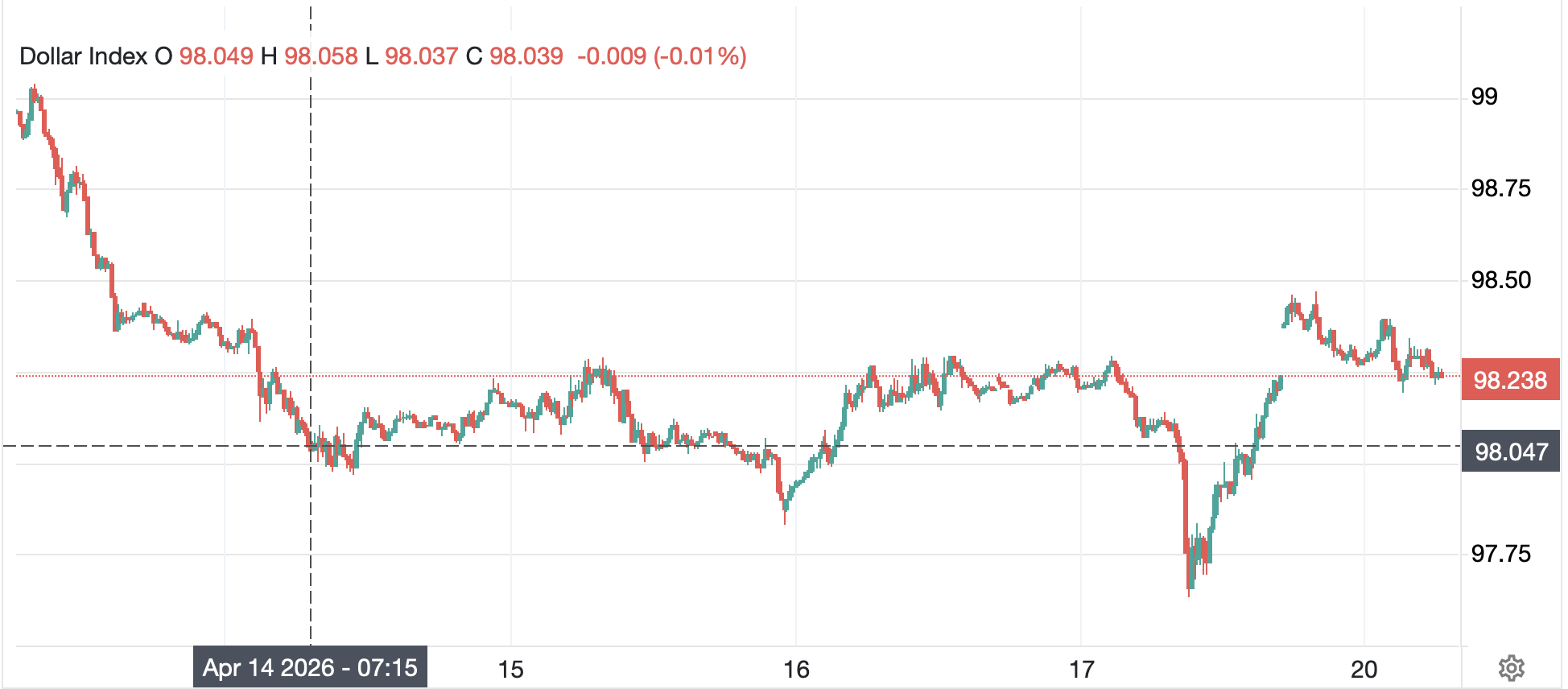
Finally, in the FX market, other than HUF as described above, and NOK (+0.6%) responding to the oil move the dollar is firmer across the board.  However, the movement is not too large, generally on the order of 0.2% or so across the G10 and perhaps a bit more in the EMG bloc.  The worst performer today is ZAR (-0.8%) which is suffering the dual problems of a lower gold and higher oil price.  The other noteworthy thing is JPY (-0.3%) is creeping back toward the 160 level, which remains the default setting for the market belief as an intervention level.

On the data front, Friday’s CPI was hot, but not quite as hot as forecast, although you can be sure that next month will remain hot.  This week brings the following mostly secondary stuff.

TodayExisting Home Sales4.06M
TuesdayNFIB Business Optimism98.6
 PPI1.2% (4.6% Y/Y)
 -ex food & energy0.6% (4.2% Y/Y)
WednesdayEmpire State Manufacturing-2.0
 Fed’s Beige Book 
ThursdayInitial Claims215K
 Continuing Claims1840K
 Philly Fed9.0
 IP0.1%
 Capacity Utilization76.3%

Source: tradingeconomics.com

As well, we hear from eight different Fed speakers over 10 venues.  An interesting aspect of the commentariat lately is that individual FOMC members are going to be far more important as there is a growing diversity of opinion.  So, the monolithic Fed Chair running things and encouraging a vote in a particular way may evolve into an actual election, where the voters vote their hearts, not the Chairman’s views just to get along.  If this is the case, and I think it would be far better than what we currently have, we will need to listen more closely to the individual speakers and start a scorecard to see who seems hawkish or dovish at any given time.  The problem is, I fear it will encourage all of them to speak more frequently, which is a worse outcome, although any given voice will likely be given far less weight.  We shall see if that is the case.

As to the broad scheme of things. My head tells me that the market is underpricing the risks out there, but my eyes explain that this is the current consensus.  I hope they are right and I am wrong about things.

Good luck

Adf

What They Most Fear

For many, it seems very clear
That war is not what they most fear
But rather, for them
They need to condemn
Each Trumpian outcome and sneer

So last night, ere clocks all struck eight
The president said he would wait
Another two weeks
As peace that he seeks
Seemed closer than it had to date

As I’m just a poet in a room in New Jersey, I don’t have any intel on the situation in Iran, but boy oh boy, the number of takes out there is remarkable.  On one side are the naysayers claiming Trump chickened out again, that Iran won this war and the US is forever seen as a loser.  On the other side is Trump played it brilliantly, raising the stakes to a level where even the IRGC leadership decided that the destruction of their nation wasn’t worth the battle.

My observation is that whatever the actual rationale, the world is better off with the fighting stopped.  With that in mind, it is hard to look at the results of the war, where Iran saw both its Navy and Air Force obliterated, its senior leadership decimated and a large proportion of its missile launchers destroyed and feel like they won.  I think this would be called a Pyrrhic Victory.

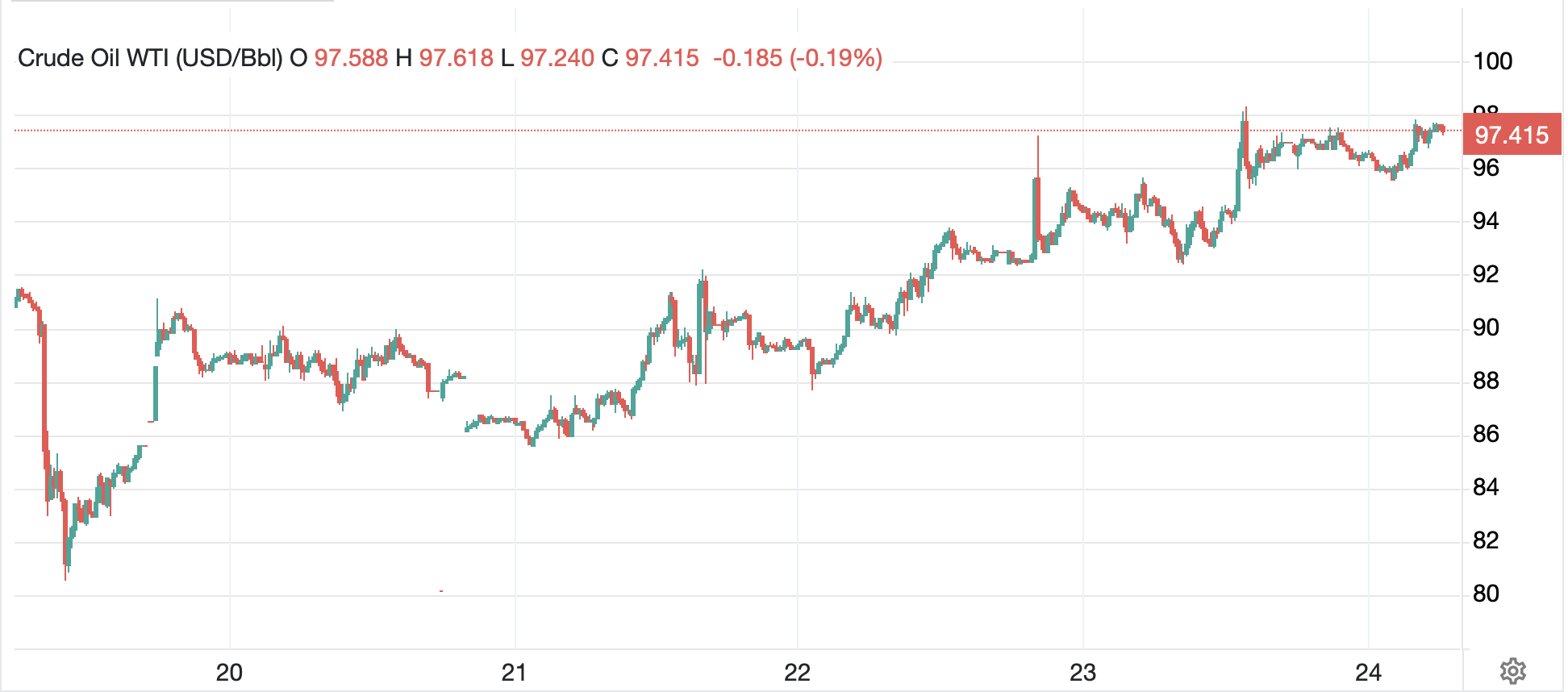
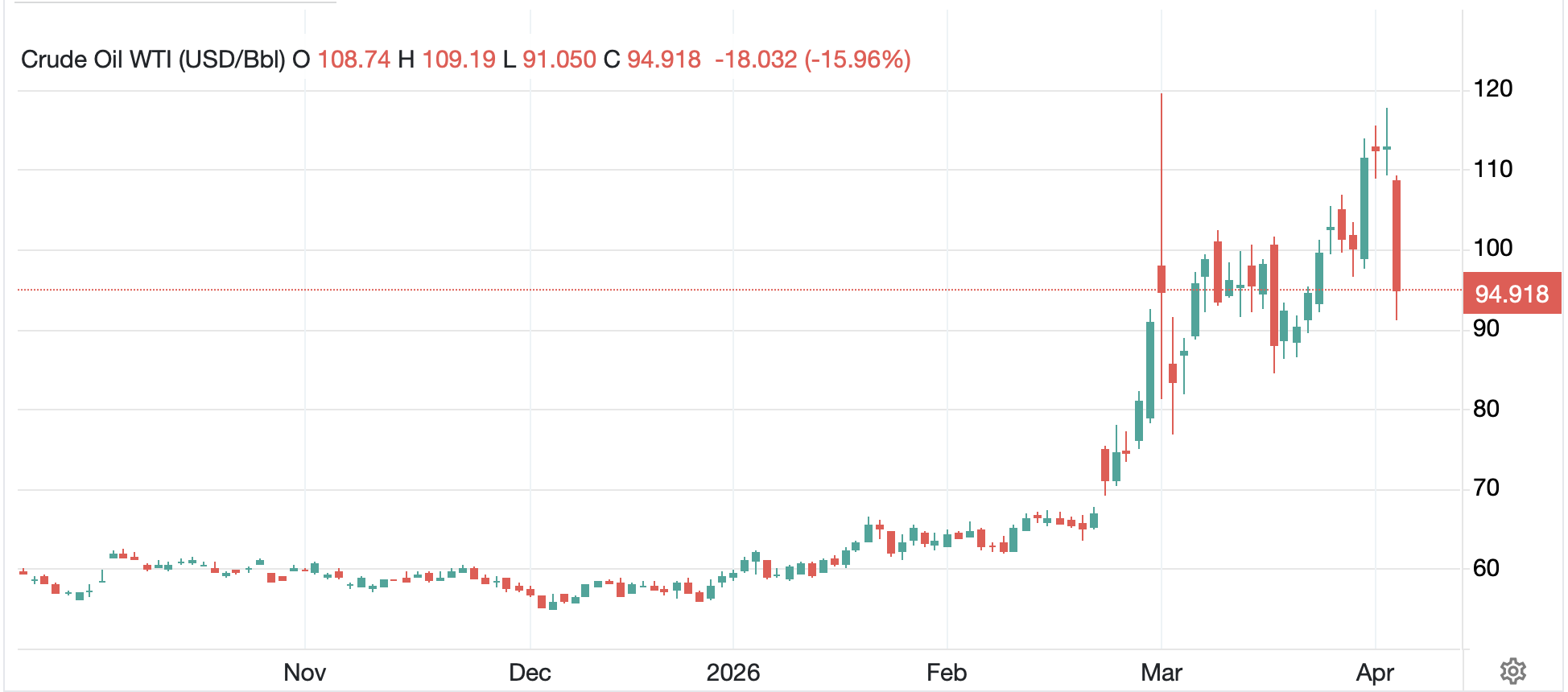
But from our perspective here, the questions of note are how did markets respond?  You will not be surprised that much of the trauma that markets have felt over the past month has already been reversed.  Let’s start with oil, as that has been the keystone for all markets.  As per the below chart, it has plunged -16% overnight, back well below $100/bbl.

Source: tradingeconomics.com

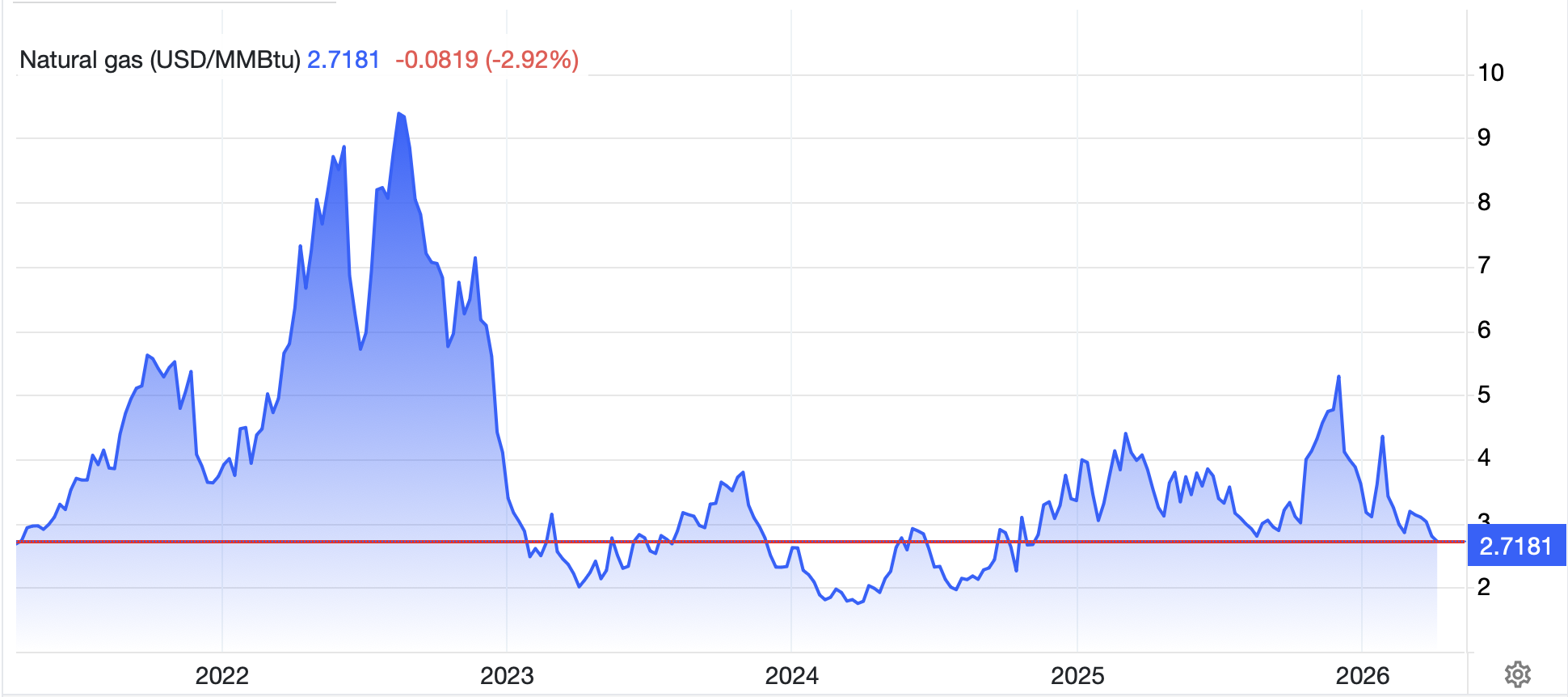
While this is a picture of WTI, Brent (-14%) also tumbled as did the markets in gasoline (-10.0%) and all other products.  NatGas (-5.3%) fell to its lowest level since October 2024, as per the below chart.

Source: tradingeconomics.com

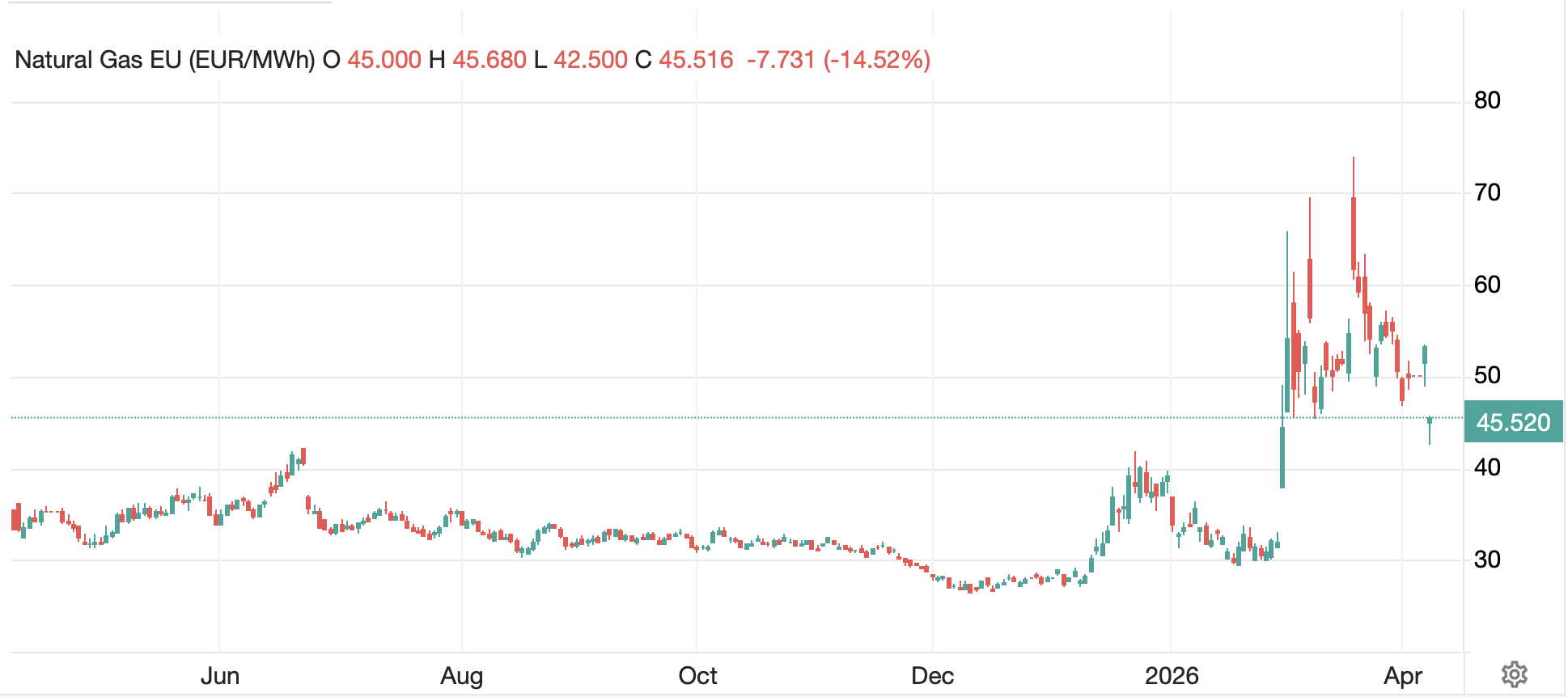
In Europe, TTF Gas (-14.7%) also tumbled but it remains far above its prewar levels as per the below.

Source: tradingeconomics.com

All told, as would be expected, energy prices have fallen sharply.  Of course, questions have rightly been raised as to whether this will remain the case because, remember, the cease fire is slated for only 2 weeks.  What happens if there is no agreement and the US resumes their attacks?  As well, the status of the Strait of Hormuz remains somewhat cloudy with mixed information about safe passage.  It appears that many ships in there may be able to exit, but will any go back in with the risk of getting stuck again?  My point is this may not be over, but for now, everybody is giddy.

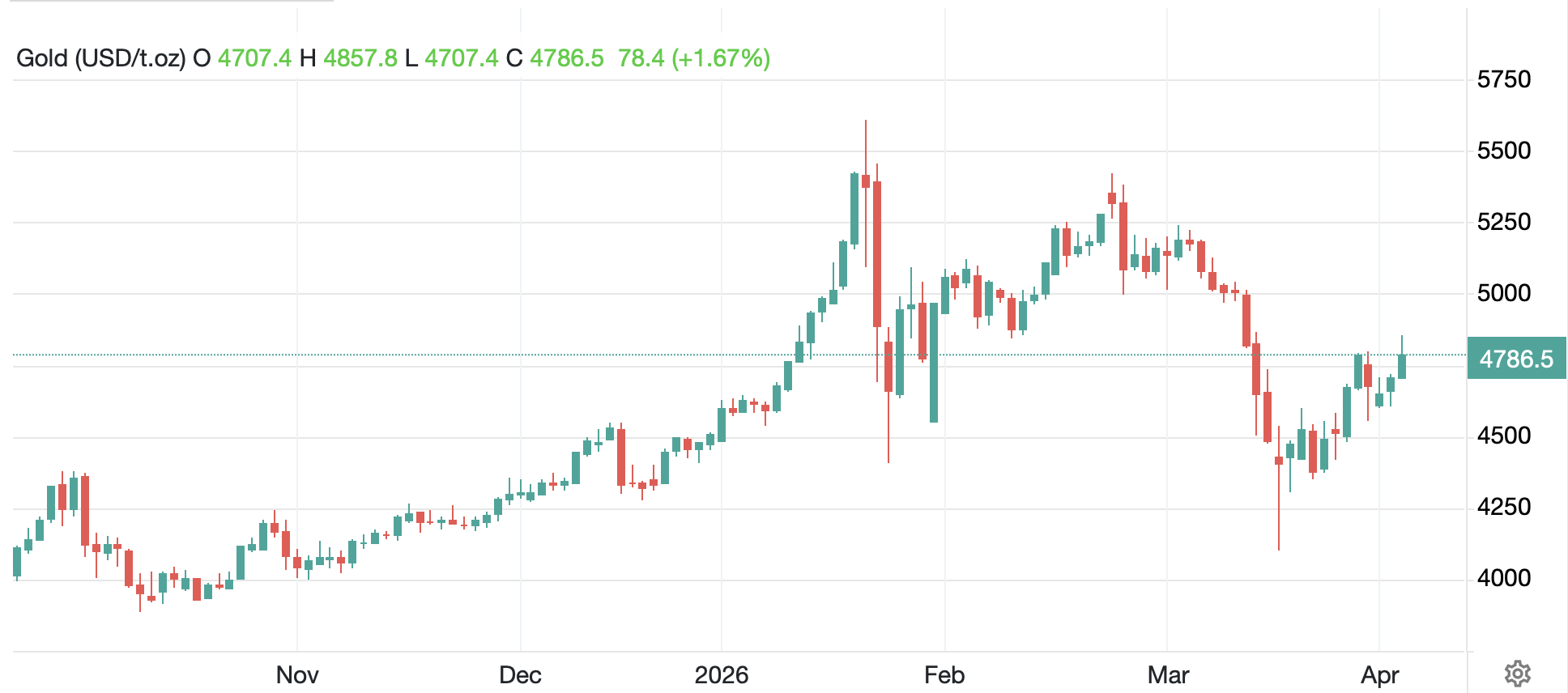
In the metals markets, the rally has been similarly impressive with both gold (+1.6%) and silver (+5.4%) continuing their rebound from the March 23rd spike lows as per the chart below of gold.

Source: tradingeconomics.com

In fact, gold has retraced 16% from that low print and silver 26%.  But here, too, it will all depend on how the Iran situation evolves going forward.  Arguably, if the fighting starts again and oil rises, precious metals will head lower while if a long-lasting peace is secured, I would look for metals to head higher again.

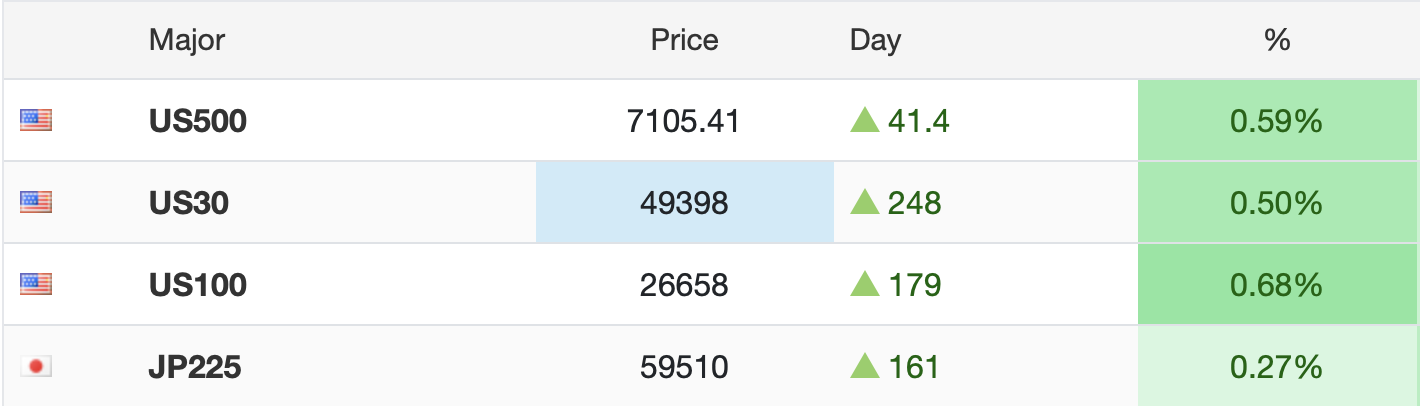
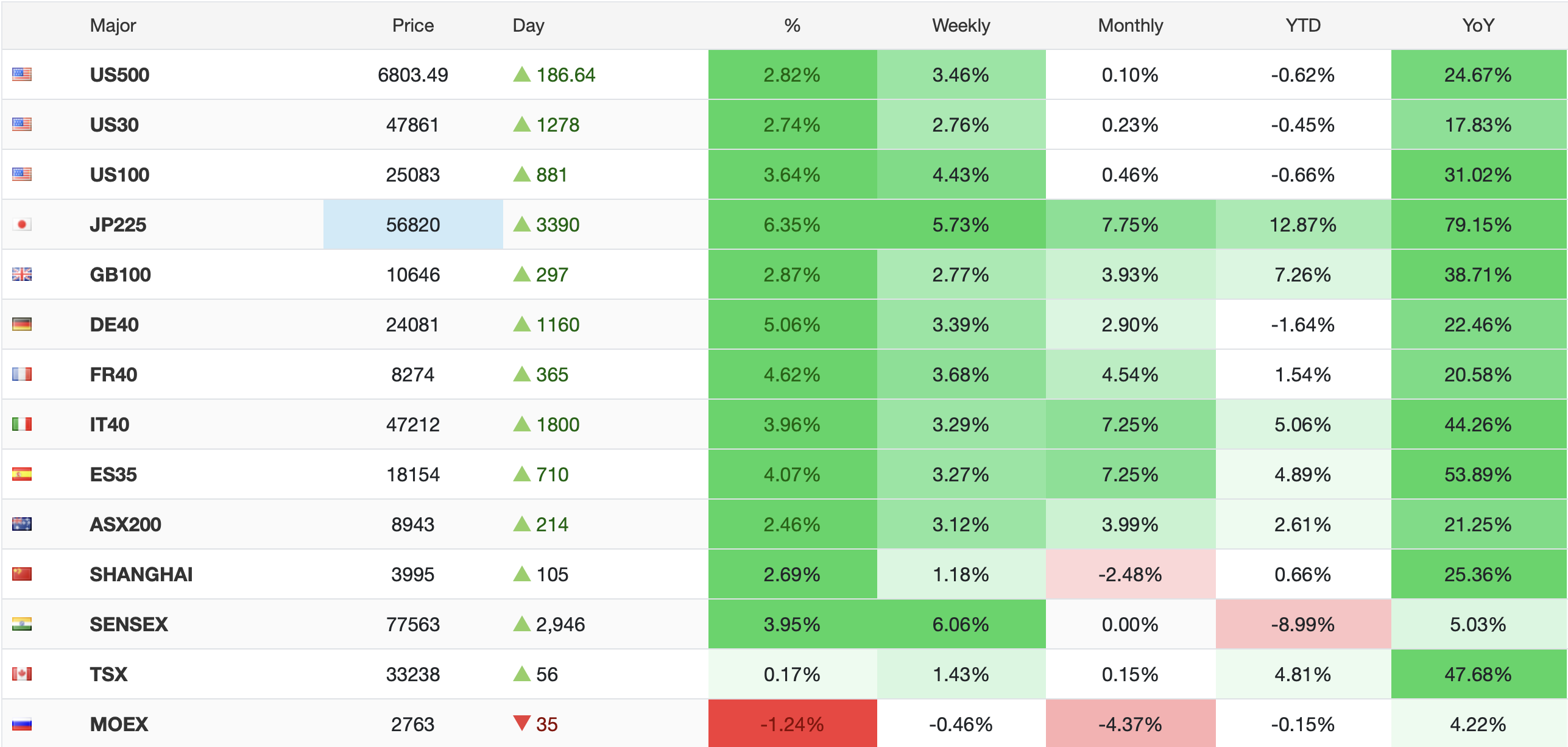
In the equity markets, the all-clear has been sounded, as you would have expected.  The screenshot below from tradingeconomcs.com of futures markets shows that the only perceived loser from this deal is Russia.  Otherwise, every market is substantially higher (Toronto’s TSX is closed in the overnight session) or was so last night in Asia.

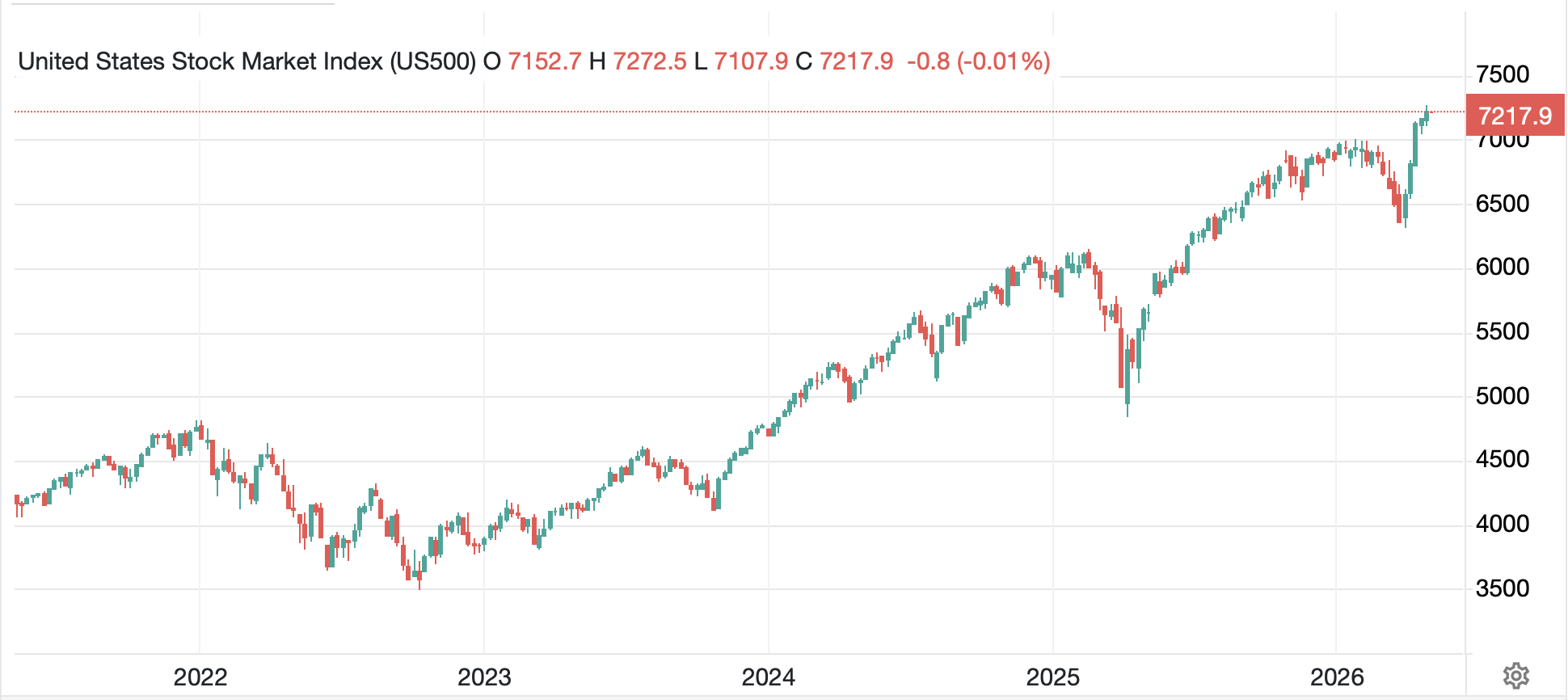
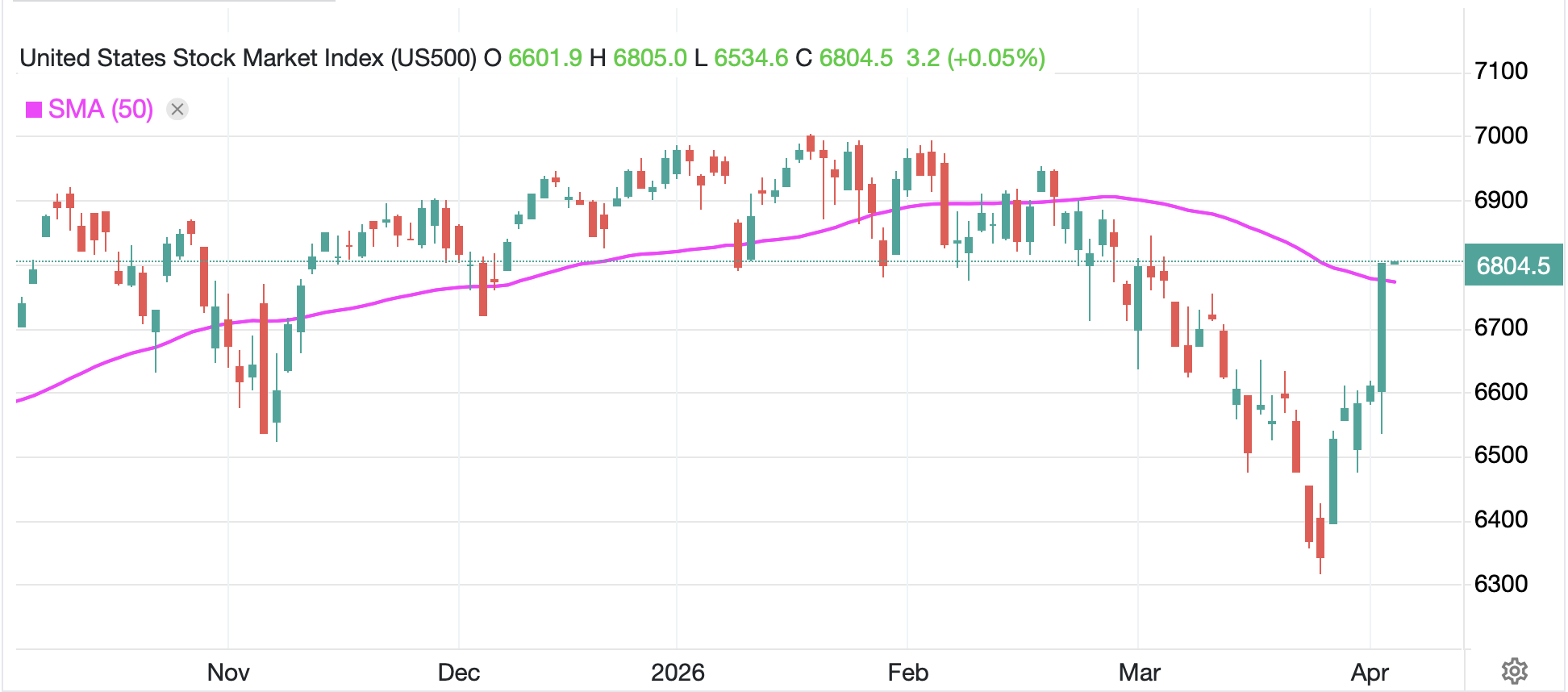
The thing we are likely to hear about a lot today is that the S&P 500 has traded back above its 50-day moving average, as per the below chart.  For the technicians, this will be seen as a key outcome and expect to hear much more about a test, and potential break, of the all-time highs of 7000 made back in January.

Source: tradingeconmomics.com

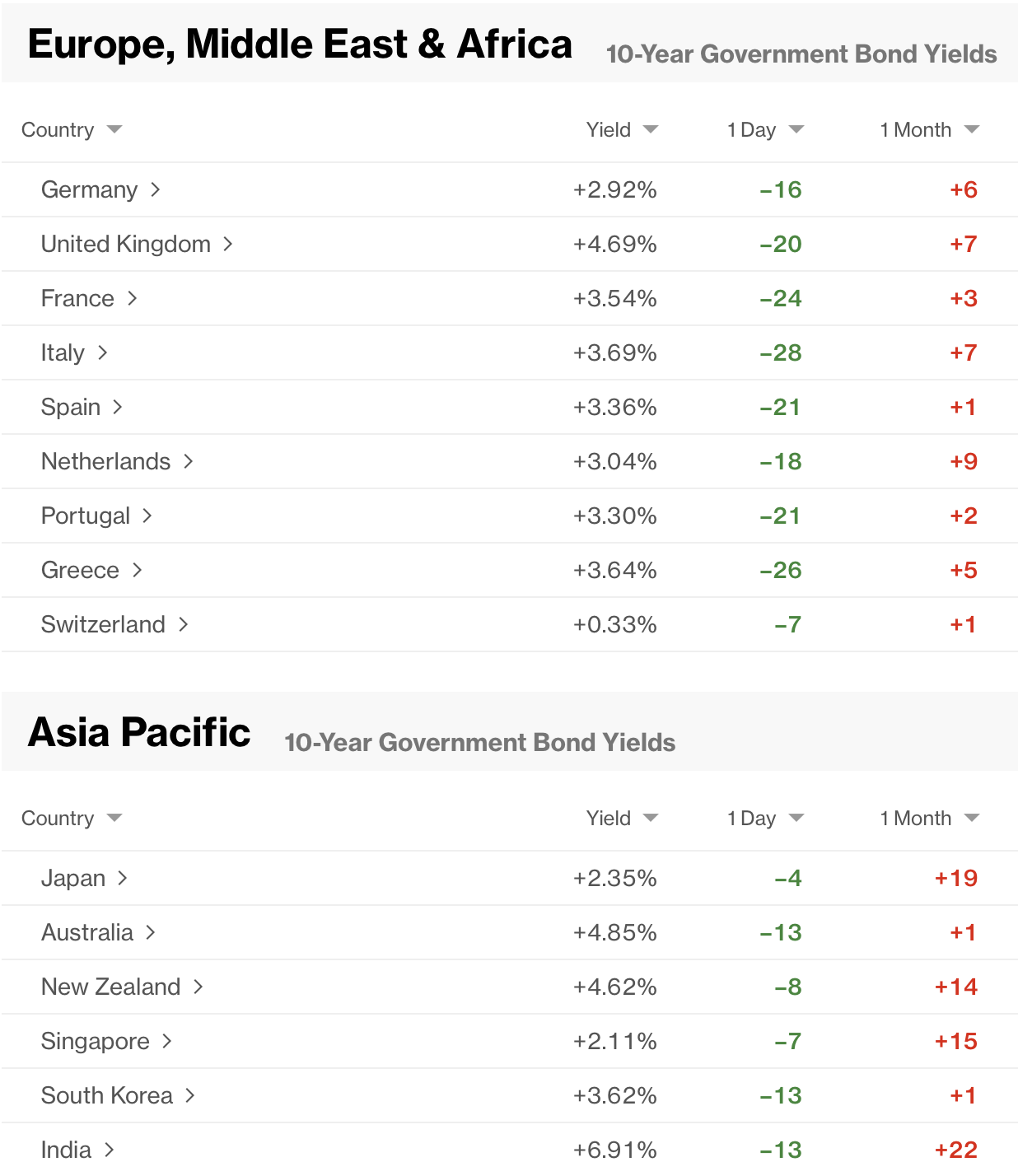
Moving on to bonds, Treasury yields are the big disappointment here, having only declined -5bps heading into the NY open, but as the Bloomberg screenshot shows, European sovereign yields have virtually collapsed, as have yields throughout Asia, although remain higher than a month ago.

It appears that all the fears about rising inflation have been virtually extinguished overnight!

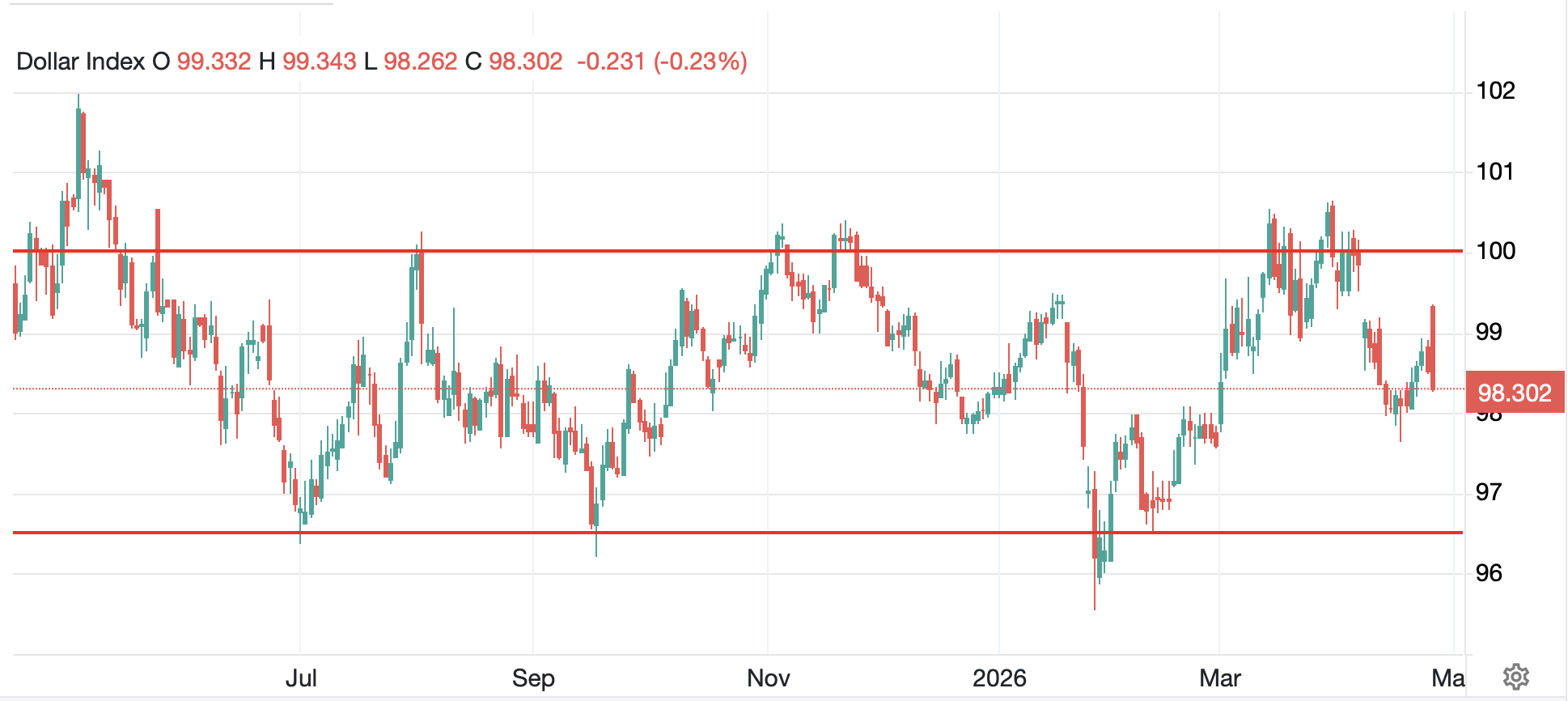
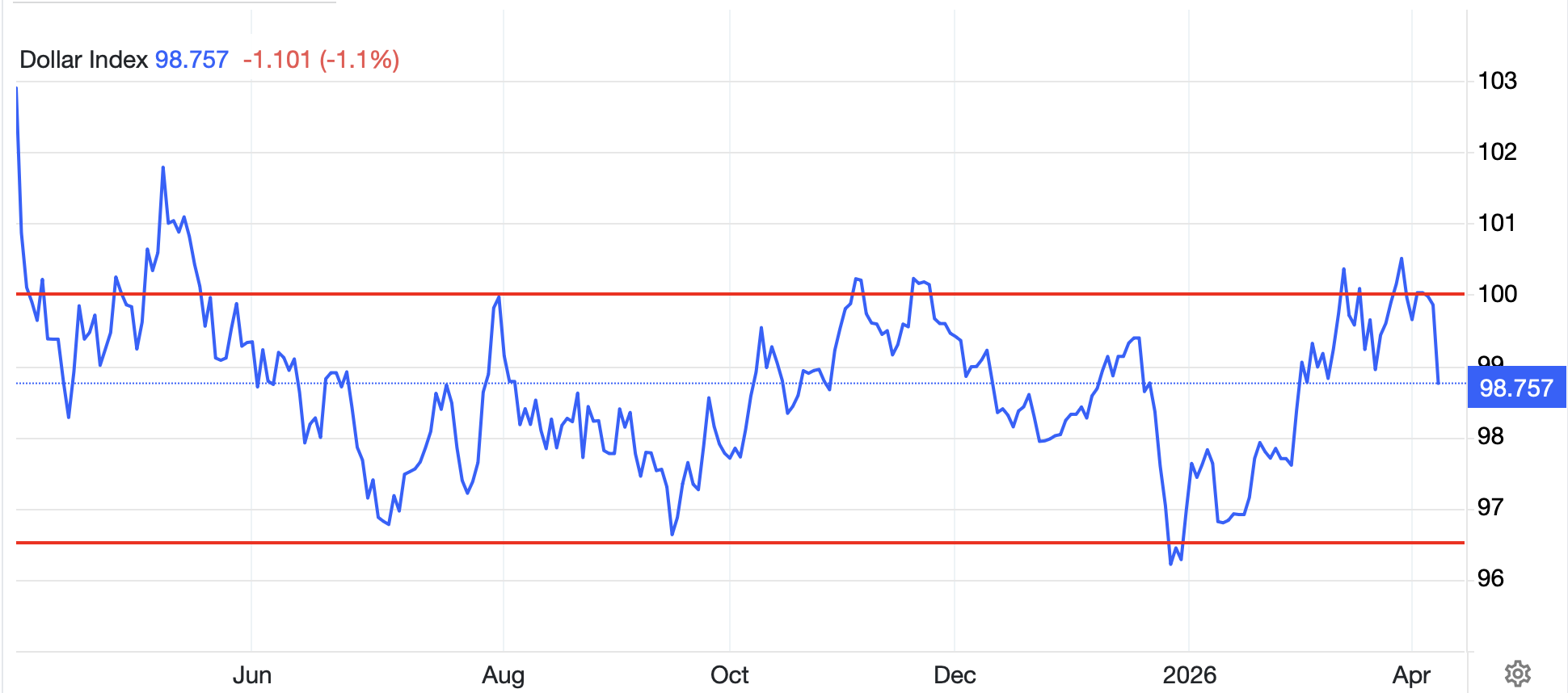
Finally, the dollar has also reversed its recent gains, falling sharply across the board.  Using the DXY (-1.1%) as a proxy, it does seem to measure the average movement, but there have been some real outliers.  For example, ZAR (+2.3%) has benefitted from the combination of much higher precious metals prices and much lower energy prices as South Africa is a net energy importer.  SEK (+2.2%) has also exploded higher, although that looks more like a reversal of yesterday’s sharp decline, than any other news.  But, broadly speaking, currency gains on the order of 1% or more are the norm this morning.  However, as we have seen across almost all markets, this movement merely returns us to the middle of the previous trading range, it is not a signal for the dollar’s collapse.  Just look at the chart below of the DXY.

Source: tradingeconomics.com

So, across all markets, we have witnessed a major reversal of the war induced trauma.  It is not completely unwound nor are we confident it will exist in two weeks if no deal is reached.  But that’s the scoop for now.

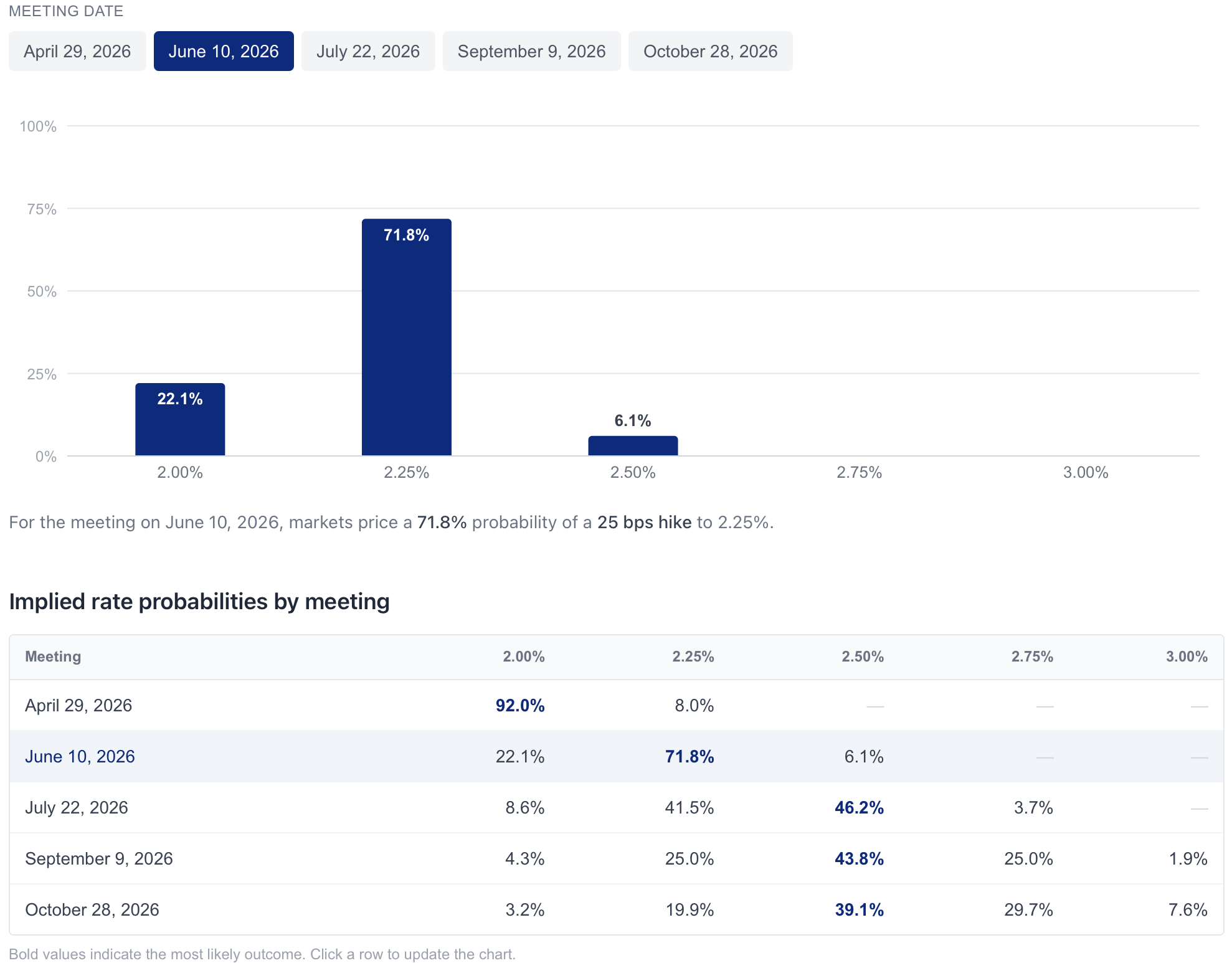
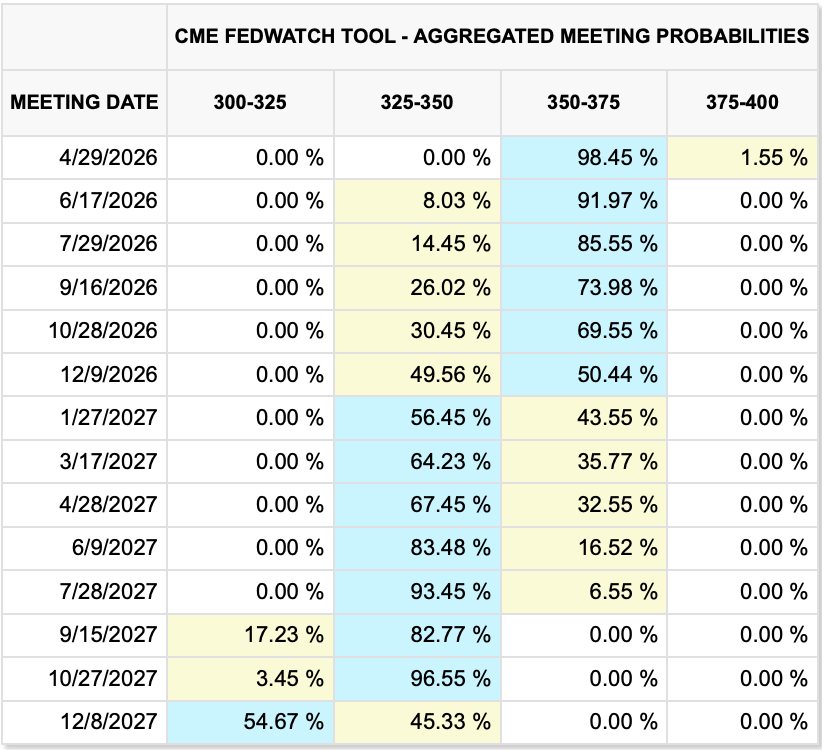
While it certainly won’t have an impact today, it is worth looking at the Fed funds futures market to see how it has behaved.  While expectations for the meeting on April 29th remain for no change, as you can see from the aggregate probability table created by the CME, cuts are back in the thought process, although not until the end of this year.

On the data front, we receive EIA oil inventory data this morning and then the FOMC Minutes are released at 2:00 this afternoon, but I cannot imagine anyone paying close attention to those given the changing situation in the Middle East and its impact on markets, especially oil and the prospects for future inflation.

To recap, we all ought to be happy that the Iran war has stopped for now with prospects for a longer peace.  You can love Trump or you can hate Trump, but if he succeeds in eliminating the terror networks that Iran has long sponsored, that is a gigantic net benefit for the entire world.  Nobody has any idea how things will ultimately resolve, but certainly, as we wake up this morning, prospects for the future look better than they did twenty-four hours ago.  Of course, my advice had been to play it close to the vest because of unexpected outcomes like this.  Nobody has any edge trading markets like this, not even the algos.  Perhaps the one thing that will change is trading volumes will start to pick up and increase overall liquidity, and that would be a net positive.

Good luck

Adf
Quite Severe

The current conclusion to draw
Which could be a huge, fatal flaw
Is war’s not deciding
For traders in guiding
Positions, as few hem and haw

But right now, a deadline draws near
Which ought, by all rights, instill fear
The war’s escalation
Will lead to stagflation
With outcomes in stocks quite severe

As I type some 14 hours from the latest Trumpian deadline for Iran to reopen the Strait of Hormuz or have their electricity and transportation infrastructure destroyed, investors appear to be quite sanguine about the entire process.  It seems very clear to me that market participants are quite certain the President will back away from this threat and extend the deadline or announce some other outcome.  That is the only conclusion I can draw from the fact that equity markets around the world are consistently higher this morning.  Investors clearly perceive this as an empty threat, which tells me that the pain trade is a sharp decline in equity markets if the US and Israel do destroy Iranian infrastructure.  I guess we shall all learn more sometime this evening in NY.

But that is the backdrop for markets this morning.  As I freely admit I do not know what the outcome will be, there is little point in hashing out the issue here.  However, I cannot help but laugh at this clip as a description of the President’s negotiating style.

Moving on, in brighter news, the 4 astronauts have circled the far side of the moon, setting the record for the furthest any humans have been from Earth, and are now starting their return trip after having sent some remarkable imagery of the moon.  

In truth, though, there’s little else to discuss so let’s look at markets.  Yesterday’s session in the US continued the rebound in share prices from the recent nadir on March 30th.  Since then, it has been four consecutive up days although futures this morning are little changed to very slightly lower.  But the US move has been mirrored around the world with essentially all of Asia and Europe back at it today.  

In Asia, while both Japan and China were essentially flat, Korea (+0.8%), India (+0.7%), Taiwan (+2.0%, catching up because it had been closed longer) and Australia (+1.7%) all had strong sessions.  Hong Kong (-0.7%) did slip, as did several of the other smaller regional exchanges, but the mood was pretty bright.  

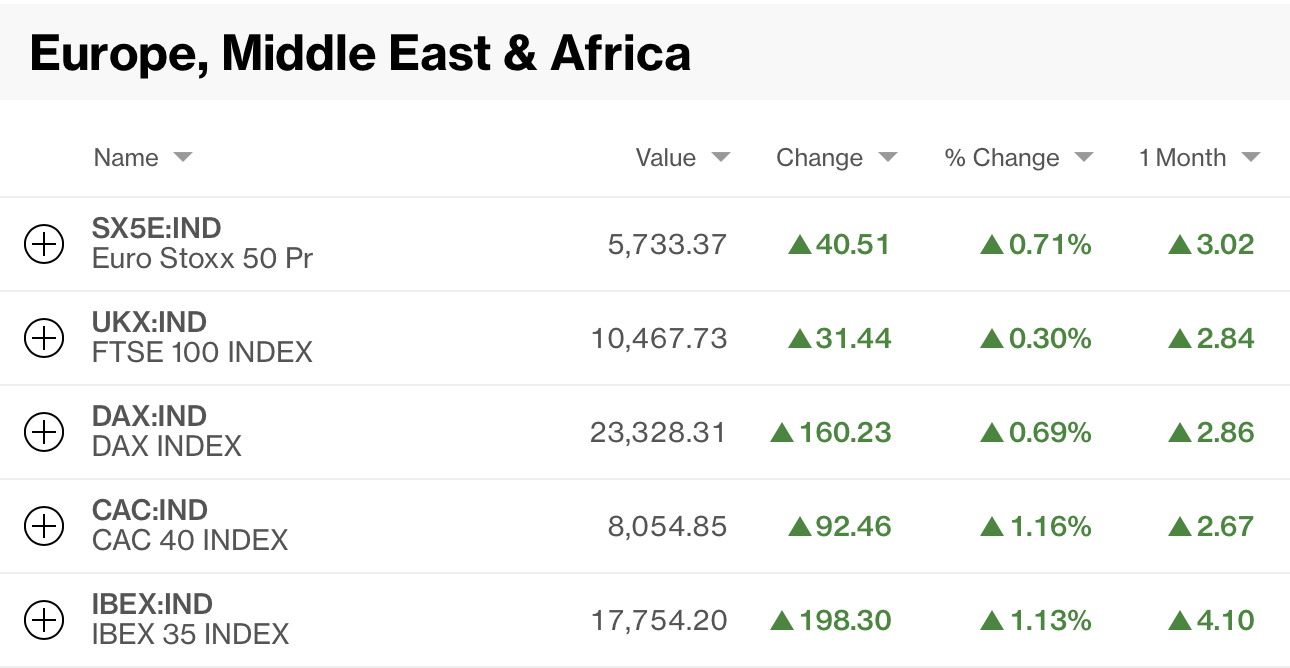
In Europe, I’ll let the following Bloomberg screenshot do the talking, but you can clearly see that fear is not on the menu right now.  

In the bond market, Treasury yields are higher by 1bp this morning after a flat session yesterday while European sovereign yields have all risen about 3bps as they catch up from their long weekend with no trading.  JGB yields are unchanged this morning as their long, slow climb takes a day of rest.

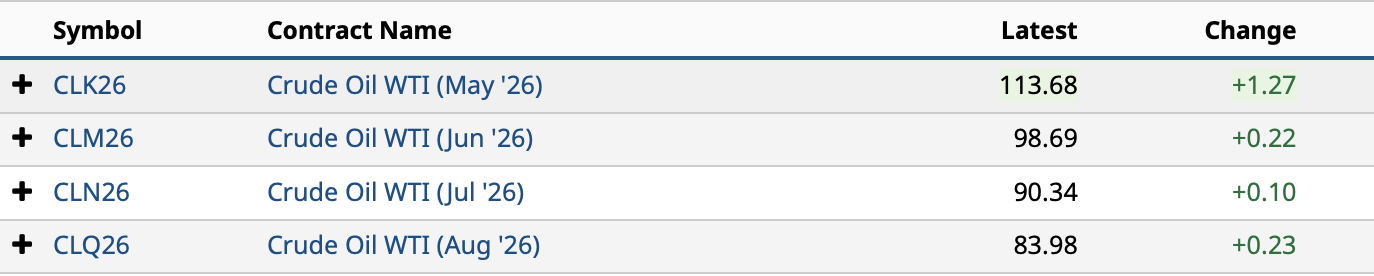
In the commodity space, I first must correct an error I have made regarding the relative prices of WTI and Brent.  My go to source for oil pricing has been tradingeconomics.com.  Their methodology shows the front month of the futures contract, but they don’t list the month in question.  Due to the nature of the two different markets, currently, WTI’s front month is May while Brent’s front month is June.  Given the steep backwardation in the oil markets, that difference is enough to explain the anomaly that I had seen.  Below I have screen shots from barchart.com of the front contracts of both WTI and Brent and you can see the difference yourself.

If you look at the corresponding month in both contracts, you can see that Brent is consistently higher than WTI. (h/t Victor Adair, thank you Victor).

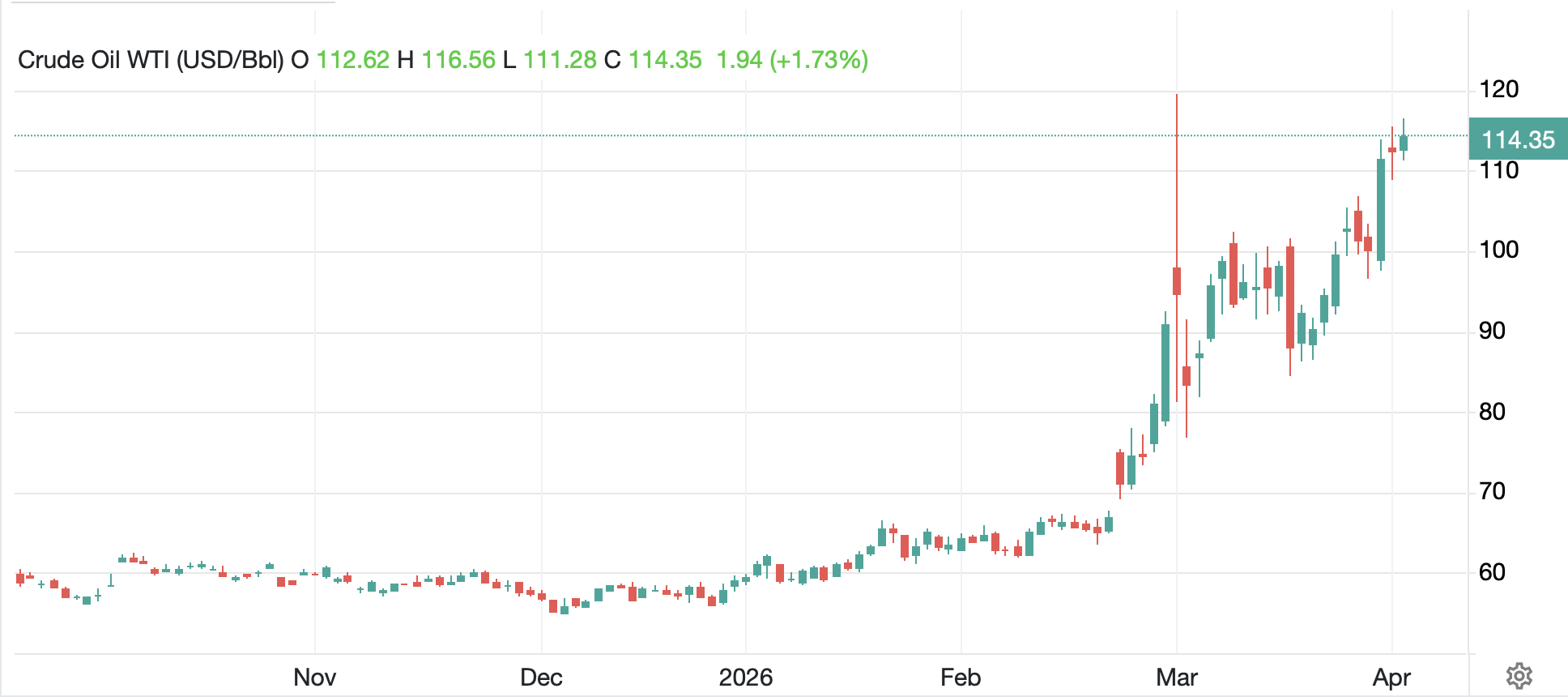
With that in mind, you can see that oil prices are a touch higher this morning, although they remain below the spike high seen at the beginning of the war.  The chart below of WTI is certainly ominous with respect to the strength of the trend higher, and I must believe that if the US does take out Iranian infrastructure, we will breech the spike high on the chart and go higher still.

Source: tradingeconomics.com

Turning to the metals markets, this is perhaps the least surprising headline one can imagine from Bloomberg:

China Ramps Up Gold Buying as Middle East War Dents Prices

With gold prices having fallen nearly 18% from their peak back in late January, and China continuing to diversify reserves out of USD directly, they saw this as a great buying opportunity.  This morning, the barbarous relic is little changed, although continues to trade lightly well above its spike lows.  Silver (-0.9%) is also doing little and it appears that commodity traders are a bit more uncertain how to move forward with the Trump ultimatum hanging over the Iranian’s heads.

Finally, as we might expect given the willingness for investors and traders to add to equity positions, the dollar is slipping a bit this morning, although as I type at 7:00, it has recouped most of its overnight declines.  Thus, the DXY is trading right at 100.00, the euro and pound have edged higher by just 0.1% and USDJPY continues to hover just below the 160 level, having touched it once on March 30, but not since.  The biggest mover today has been SEK (-0.8
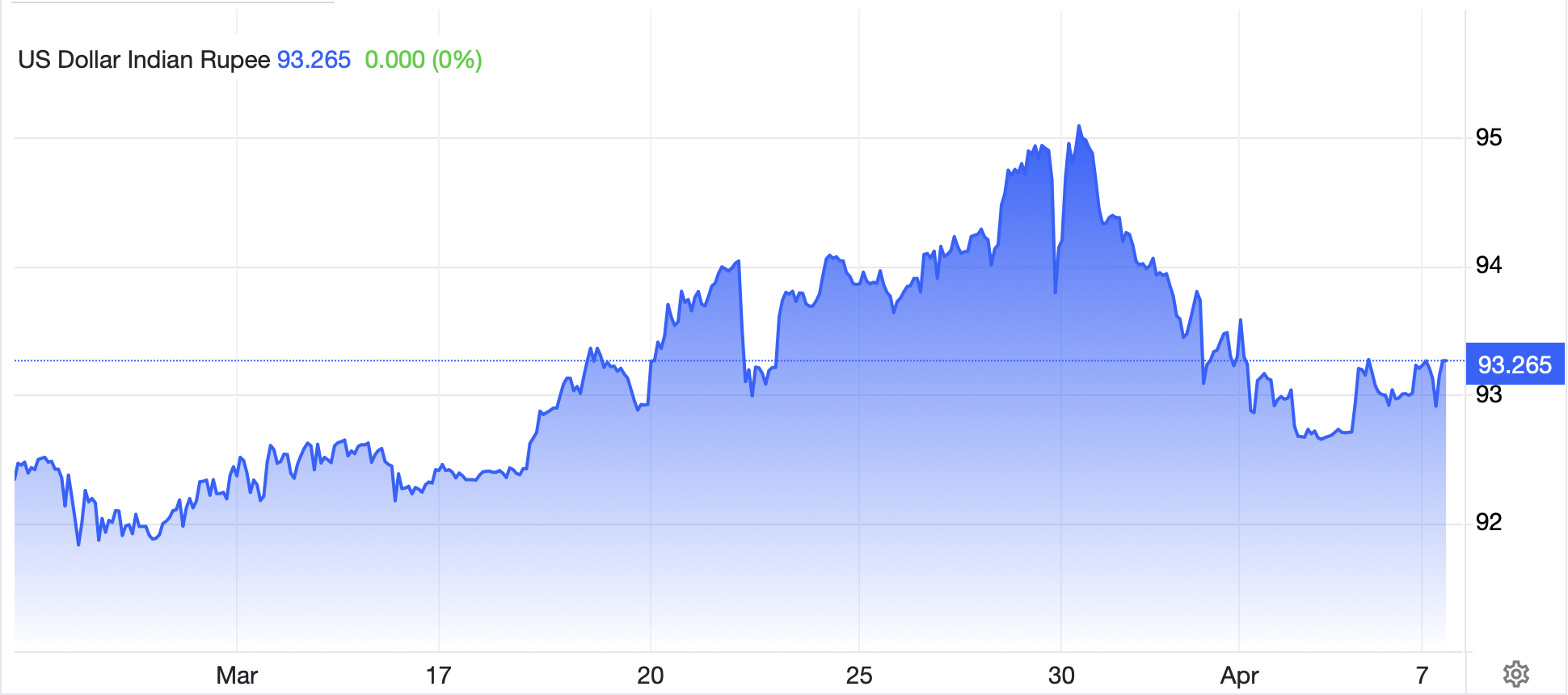
%) which has fallen on the back of softer than expected inflation data which has encouraged traders to believe the Riksbank will be able to cut rates ahead of other central banks in the event economic activity slows sharply.  There is also a lot of discussion regarding INR (-0.3%) as the RBI has instituted policies restricting the size of short rupee positions local banks are allowed to maintain and forcing a lot of rupee buying to close those positions.  Thus, the rupee remains caught between the forced position closures and concerns about oil prices depending on how things evolve in Iran.

Source: tradingeconomics.com

The one other currency move of note has been KRW (+0.6%) which continues to rebound from its worst levels seen on March 30th, as it is trading far more in line with the equity markets than the oil markets.  If things escalate in Iran, I suspect the won is going to suffer greatly.

On the data front, this morning brings only Durable Goods orders (exp -0.5%, +0.5% -ex Transport) and speeches from two Fed members, Governor Jefferson and Chicago Fed president Goolsbee.  Services PMI data was released throughout Europe this morning and it was broadly weaker than forecast (Italy, Germany, UK) although both France and Spain managed slightly better outcomes.  

While I remain cautious and hedged personally, apparently my views are out of vogue.  However, it strikes me that today will see little in the way of large movement ahead of the deadline, unless, of course, the president changes something before then.  

Good luck

Adf
Feeling the Blues

Last night we saw two things of note
The first was exciting, not rote
The Artemis II
Launched higher and flew
Just like Jackie Gleason would quote

The other was Trump’s broad address
Regarding the Middle East mess
He said that the war
Was closing the door
So, Mullahs have no nuke access

For markets, though, this latter news
Was clearly at odds with their views
So, rallies we’ve seen
Have all been wiped clean
And bulls are now feeling the blues

I will start with the highlight of the evening, the successful Artemis II space launch, where NASA’s latest mission to send four astronauts to orbit the moon and come home began.  As a child of the Sixties, I well remember being at Camp Mah-Kee-Nac, in Lenox Mass, with the entire camp gathered around a small black and white TV to watch Neil Armstrong step on the moon.  A remarkable time and achievement that portends a great future.

The other story, though, was less optimistic, at least for markets in the short term.  The President’s address did not signal an end was near, at least not to the market’s collective ear.  Instead, Mr Trump made a series of statements and claims, many of which we have heard before, but here they were all gathered in one place.

  • *TRUMP: IRAN’S NAVY IS GONE, AIR FORCE IN RUINS
  • *TRUMP: MOST OF IRAN’S LEADERS ARE DEAD
  • *TRUMP: IRAN’S ABILITY TO LAUNCH MISSILES AND DRONES CURTAILED
  • *TRUMP: DON’T NEED OIL FROM MIDDLE EAST
  • *TRUMP: WILL NEVER LET IRAN HAVE NUCLEAR WEAPON
  • *TRUMP: CORE STRATEGIC OBJECTIVES IN IRAN NEARING COMPLETION
  • *TRUMP: THESE STRATEGIC OBJECTIVES NEARING COMPLETION
  • *TRUMP: MUST COMPLETE MISSION IN IRAN
  • *TRUMP: WE WILL FINISH THE JOB VERY FAST
  • *TRUMP: GETTING VERY CLOSE TO FINISHING JOB IN IRAN
  • *TRUMP: WE ARE ON TRACK TO COMPLETE ALL MILITARY OBJECTIVES
  • *TRUMP: WE WILL NOT LET MID EAST ALLIES GET HURT OR FAIL
  • *TRUMP: WILL HIT IRAN EXTREMELY HARD OVER NEXT 2-3 WEEKS
  • *TRUMP: WILL BRING IRAN BACK TO STONE AGE WHERE THEY BELONG
  • *TRUMP: NEW LEADERS IN IRAN LESS RADICAL, MORE REASONABLE
  • *TRUMP: IF THERE IS NO DEAL, WILL HIT IRAN’S ELECTRIC PLANTS
  • *TRUMP: WE HAVE NOT HIT THEIR OIL EVEN THOUGH EASIEST TARGET
  • *TRUMP: WILL HIT IRAN WITH MISSILES IF WE SEE THEM MAKE A MOVE
  • *TRUMP: WE HAVE ALL THE CARDS THEY HAVE NONE
  • *TRUMP: ON THE CUSP OF ENDING IRAN’S THREAT TO AMERICA

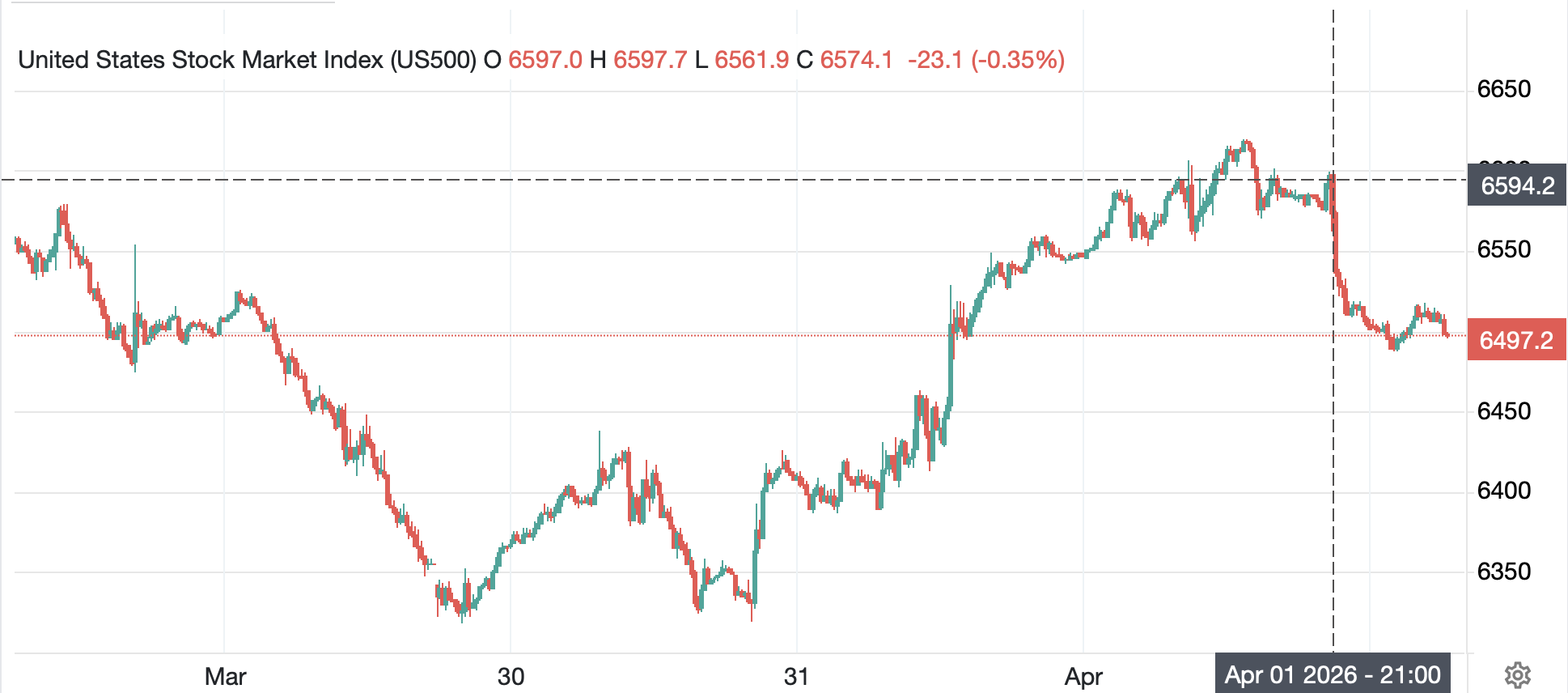
He also explained that the rising gasoline prices were a result of Iranian attacks on tankers but that the US was well supplied and would weather any storm in the short run with no problems.  However, this is not what markets were looking for, that is very clear.  So, the past two days of rainbows and unicorns are a distant memory this morning.  A look at the chart of the S&P 500 below shows the end of last week’s concerns grew into optimism right up until 9:00pm EDT last night when Mr Trump took to the podium.

Source: tradingeconomics.com

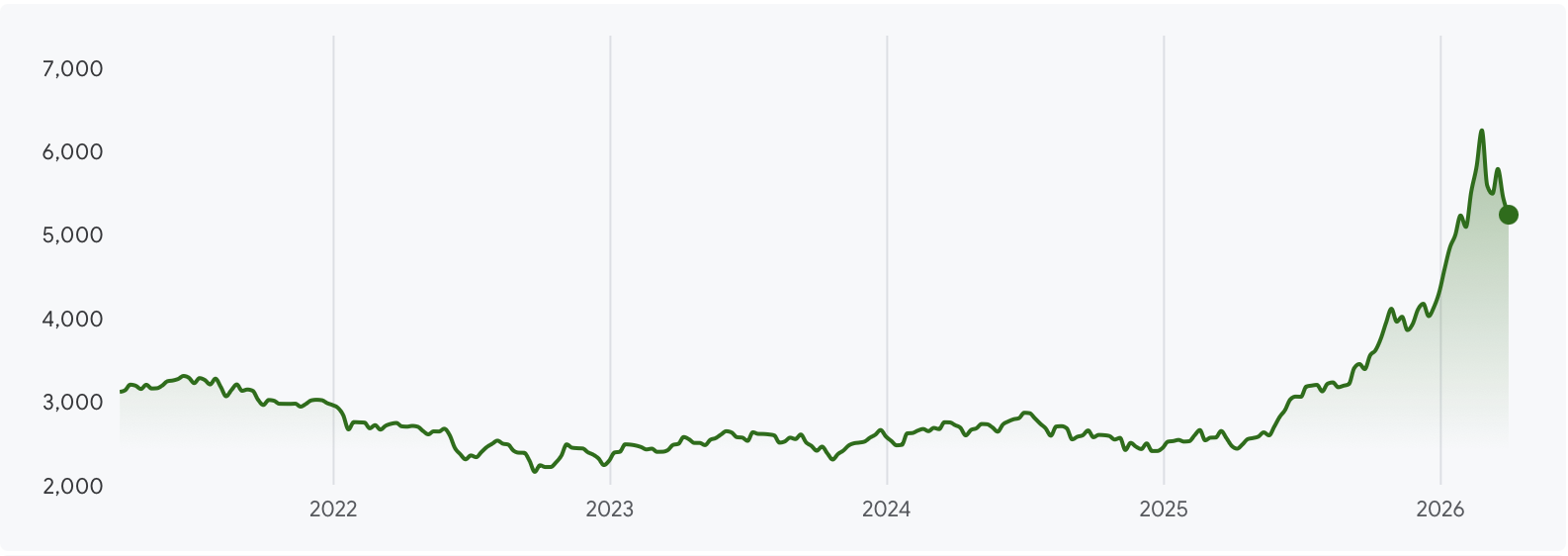
While futures are only lower by -1.0% at this hour (6:30), the response in both Asia and Europe was quite negative overall.  For instance, in Asia, Tokyo (-2.4%) led the way lower although weakness was virtually universal (China -1.0%, HK -0.7%, Australia -1.1%, Taiwan -1.8%) while the biggest loser was Korea (-4.5%) which has been in the process of unwinding what appears to have been a massive bubble there as per the below chart.

Source: google.com

European bourses are also lower across the board with the UK (-0.1%) the clear winner (least bad?), while the continental exchanges (Germany -1.85%, Spain -1.3%, Italy -1.2% and France -0.9%) are all faring poorly this morning.  It is very clear that the idea the war would be ending soon has been pushed back.  I have to say, that given the ongoing buildup in military assets in the Gulf region by the US, that always struck me as an odd belief.  I guess we will need to wait a few more days/weeks to see.

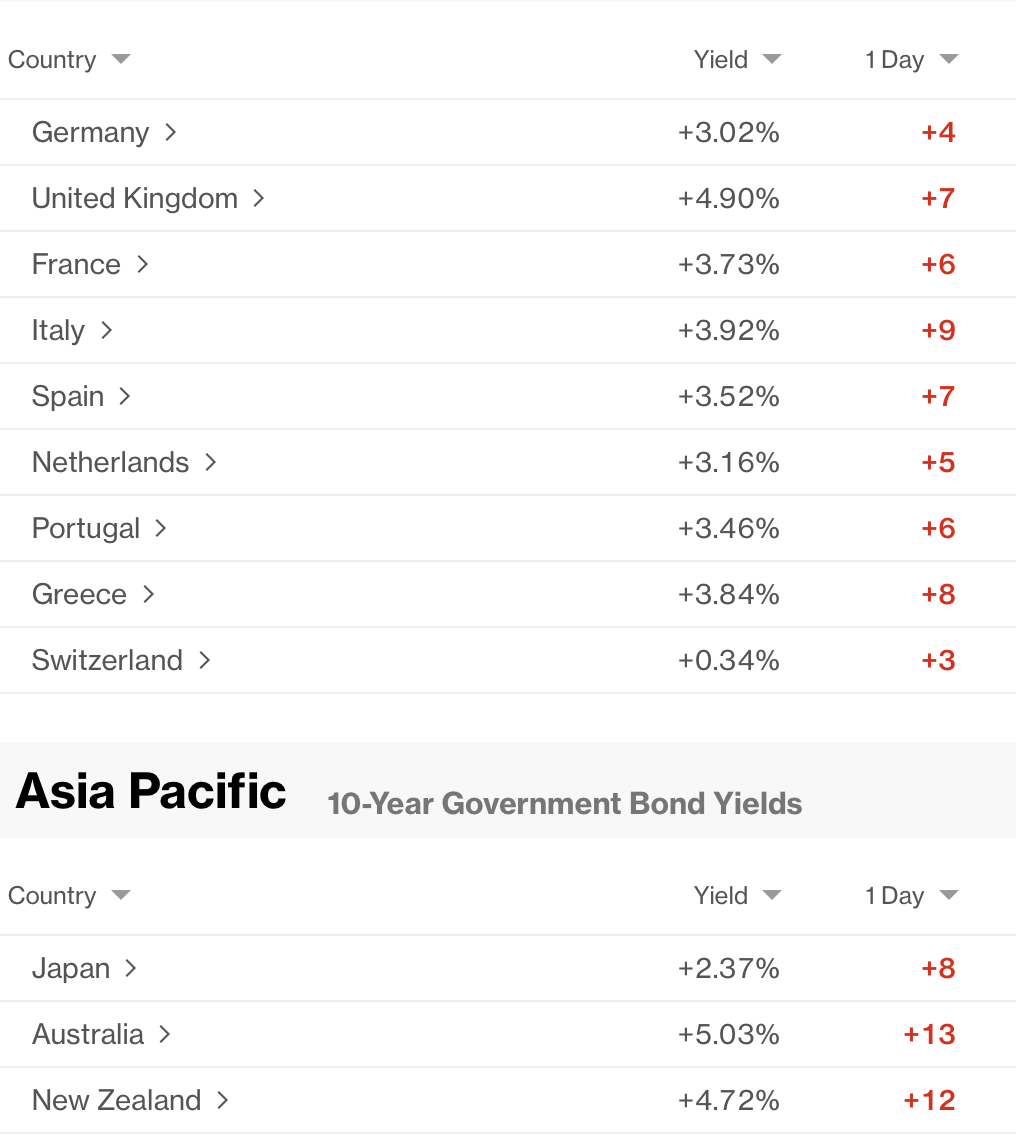
In the bond market, too, price action from the beginning of the week has reversed.  Treasury yields have rebounded 5bps this morning, although remain well below the recent peak of late last week, and you can see how Europe and Asia behaved in the Bloomberg screen shot below.

I expect that we will continue to unwind the price action from the early part of this week as the situation appears far closer to the market beliefs of last Friday than yesterday.

Turning to commodities, oil (+7.8%) has rebounded sharply as you can see in the below chart, actually trading now at its highest level since the initial spike move the evening the attacks began.

Source: tradingeconomics.com

Brent crude rose a similar amount and interestingly, the spread between Brent and WTI has collapsed to just $0.52, it’s narrowest level since May 2022.  That leads me to believe the market is pricing in a great deal more interest in US exports as oil supply will be curtailed for a while going forward.  In keeping with the unwinding theme, precious metals were sold off aggressively with gold (-3.4%) and silver (-5.5%) retracing much of their recent gains.  Both are still well above the spike lows seen two weeks ago, but I imagine that there is further to decline based on the current vibe.

Finally, the dollar has rebounded sharply against all comers this morning with the DXY (+0.6%) back above the 100 level as the euro (-0.7%) probes 1.15 again and the yen (-0.5%) trades back toward 160.00.  Nothing in the G10 has been spared, although CAD (-0.4%) and NOK (-0.4%) are the best performers as clearly oil’s rise is helping them both.  In the EMG bloc, it should be no surprise that ZAR (-1.1%) is the laggard given the move in gold and platinum (-3.4%).  But even CNY (-0.4%) has seen substantial selling while INR (-0.5%) and KRW (-0.2%) also continue to slide.  The CE4 are all weaker by -0.7% and CLP (-0.9%) is feeling the weight of copper’s decline.  The only outlier really, today, is Brazil (0.0%) which is unchanged as remember, they are a major oil producer and far away from the current problems.

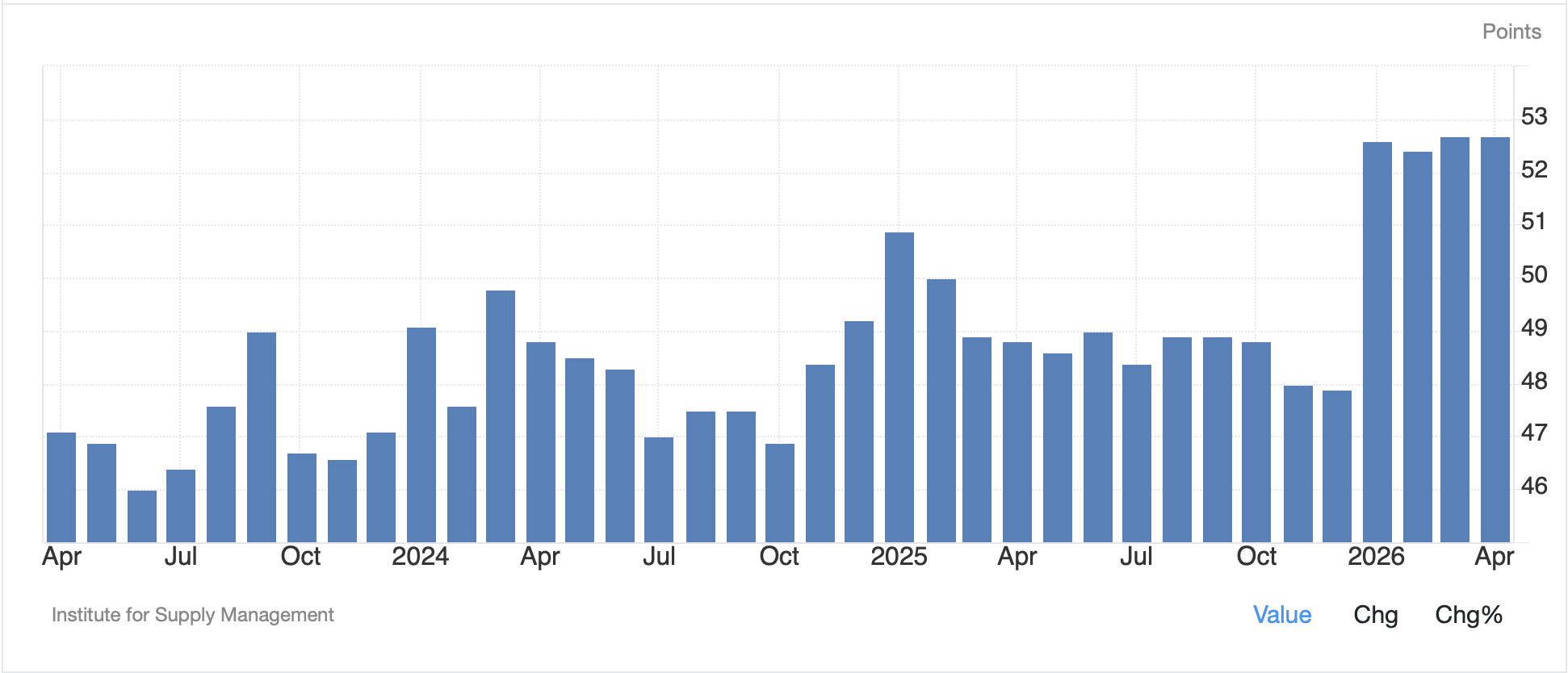
On the data front, this morning brings Initial (exp 212K) and Continuing (1840K) Claims as well as the Trade Balance (-$59.2B), none of which seem likely to matter to markets.  Yesterday saw generally stronger than expected data with ISM Manufacturing ticking up to 52.7 while Retail Sales surprised a tick higher as well at 0.6%, 0.5% ex autos.  ADP Employment was also modestly better than expected.  As such, it continues to be difficult to call for a significantly weaker US economy, at least based on the data we continue to see.  However, the Atlanta Fed’s GDPNow reading was revised to 1.9% for Q1 yesterday, down a tick from the previous estimate.  Still, that is not a collapse.

Pulling it all together, the war in Iran is going to continue for at least 2-3 more weeks and there is no clarity on whether the US is going to attempt to take Kharg Island.  It still seems to be part of the discussion, but as I wrote yesterday, strategic ambiguity is a key part of President Trump’s method.  In the meantime, my take is we are much more likely to behave like the end of last week going forward, than the beginning of this week.  That means risk will be reduced and the dollar will benefit.

Good luck

Adf
Beware

While news from Iran shows the war
Continues apace, like before
On Wall Street it seems
It’s over, with dreams
Of stock market rallies galore

Now, I realize stocks look ahead
And discount the future instead
But wars tend to last
They don’t end so fast
Beware in which markets you tread

As March and Q1 ended, it appears that there have been some changes in opinions in the investment community.  At least that is what I glean from the following Bloomberg screenshot of major global equity markets including yesterday’s US session and the overnight activity.

As far as I can tell, missiles are still flying in the Middle East, the US and Israel continue to attack specific targets with B-52’s dropping significant amounts of precision guided bombs, the Strait of Hormuz continues to have extremely restricted movement and the UAE, according to the WSJ, is now ready to join the war directly.  None of that seems like de-escalation of fighting, but then I am not a military strategist, so perhaps I don’t understand the concept of de-escalation well.

One take I saw this morning was that equity markets are pricing in the increased likelihood that the US will be leaving the conflict.  On the surface, I liked that idea, and that would certainly explain some of the US rally yesterday, but that doesn’t explain why Asia soared and Europe has rallied as well, given they would have to deal with the rest of the process.  This evening at 9:00 President Trump will be addressing the nation, so I presume we will have a better understanding of things after that.  

One other thing to remember is that the president uses his Truth Social posts to add to the fog of war and create strategic uncertainty for all parties involved.  I read this morning that the administration has been speaking (not directly) with some Iranians and creating a plan for the future, but it is not clear if those people have sufficient power to unite the country there yet.  All in all, while anything is possible, it strikes this poet that things in Iran have not ended, nor will they until the Strait of Hormuz is back to full operational capacity regardless of the President expressing the view that the US (and Israel) have done the hard part and Europe and Asia can deal with the Strait themselves.

But that is where we stand this morning, with risk back in vogue across the board as oil (-1.5% and back below $100/bbl) slipping while gold (+1.5%) continues its rebound.  Bonds (-3bps this morning and down by 20bps from their peak on Friday) continue to rally and have taken European sovereigns along for the ride with most of Europe seeing yields slide between -7bps and -9bps although German bunds, which have held up the best, are only lower by -4bps.  Happy Days are here again!

With all that good news, let’s consider what else is going on, away from Iran, that may impact markets.  At this point, we know the Fed is on hold this month, and likely through the autumn, at least, given the short-term inflation impacts of the oil situation.  

Source: cmegroup.com

As an aside, there have been a number of analysts who are calling for a significant rise in food inflation but be careful on that front.  As @inflation_guy, Mike Ashton points out, [emphasis added]

“…secondary knock-on effects that will be felt eventually in CPI. One that has gotten a lot of press recently is that less oil means less fertilizer and less fertilizer means less crop production and less crop production means higher prices for food. I actually think that’s probably overblown in terms of what the consumer will see, because most of the cost of consumer food items is in the packaging and delivery and not the raw goods, and so as raw food commodity prices go up it will likely be partially offset by transportation prices declining.” 

In fact, I expect that most central banks are terrified of the current situation as they understand, intellectually, that the oil price shock will be temporary, but will feel significant pressure when inflation starts to rise to “do something about it”.  Australia already hiked rates, but that was assumed prior to the onset of the war.  The calculation they are all trying to make is will the negative impacts on growth outweigh the rising pressure on inflation and what will the timeline be like.  In the end, my take is very few will hike in response to this event, especially if the military activity ends before the end of April.  And that is why they get paid the big bucks, to get those decisions right.  Alas, their collective track record is not great.

And beyond that, I don’t see much news directly driving the narrative.  It is still the war, and all the individual takes there, and a much lesser role to the Fed and other central banks.  Economic data is decidedly not part of the current discussion in any meaningful way and given the impact the war is going to have on data for a while going forward, it will be very difficult to suss out underlying trends from headline numbers.  

I’ve already discussed most market segments, leaving just currencies untouched at this point.  Given the reversal in views, we cannot be surprised that the dollar, which has been a major beneficiary of the war, has reversed its recent price action as well.  In fact, using the euro as our proxy, we can see in the below chart that the reversal started at 7:00am yesterday morning and the single currency has rebounded by 1.25% since then.

Source: tradingeconomics.com

And while the euro (+0.5% today) has rallied this morning, it mostly lags other currencies with the pound (+0.7%), AUD (+0.8%), CHF (+1.0%) and SEK (+1.0%) all having very strong sessions.  As well, the yen (+0.2%) has backed away from the 160 level and even CAD (+0.2%) and NOK (+0.5%) are stronger despite the decline in oil prices.  It should be no surprise that the EMG bloc is also showing strength with CLP (+1.1%) leading the way followed by HUF (+1.0%) and ZAR (+0.9%). One disappointment is KRW (+0.2%) which has been one of the worst performers for the past month (-4.0%) and is barely rebounding.  Chile is intricately bound to the price of copper, which has rallied slightly (+1.0%) in the past week, but continues to lag the precious metals.  However, there is a story about the major copper company there, Codelco, which is supporting the currency this morning.  Net, the dollar is giving back some of its recent gains today and will likely continue to do so if risk appetite remains robust.

While data hasn’t had much impact, this morning we see ADP Employment (exp 40K) as well as Retail Sales (+0.5%, +0.3% ex autos) and then ISM Manufacturing (52.5) and Prices Paid (73.0).  Yesterday’s data was in line with expectations and did nothing to alter any perceptions about the economy or path of interest rates.

And that’s all we have.  US futures are rising this morning (+1.0% across the board at 8:00) and for now, risk is the way.  I guess we will have to hear what the President says this evening to consider changing views.

Good luck

Adf
The End of the Scare?

Though words from both sides are confusing
The markets are clearly enthusing
The war will soon end
Which may well portend
The bears are all in for a bruising

With stocks round the world on a tear
And yields falling down everywhere
Plus, oil is lower
And gold’s a fast grower
Have we seen the end of the scare?

Will there be peace talks soon?  President Trump claims things are happening in that direction.  Comments from some in Iran say that is not the case.  Clearly, both sides are incented to make those claims regardless of the reality.  At the same time, US Marines and the 82nd Airborne division are on their way to the Gulf.  It is easy to conclude that this is the prelude to a US intensification and effort at physical control of the Strait of Hormuz.  Word is that the Saudis and Emiratis are also pleading with President Trump to finish the job and remove the Iranian theocracy to enable a more peaceful Middle East in the long run.  But as always, sitting here in the US, and frankly if you are sitting in Europe or China or Japan or Australia, or pretty much anywhere but the Middle East or the White House, we don’t really know the facts on the ground, and we certainly don’t know the next steps.  We are just guessing.

However, the best clues we have come from the markets, which admittedly respond to the same news flows we do, although I’m certain that large institutions have better insight than reading Bloomberg or the WSJ or listening to al-Jazeera.   But, if we look at the markets this morning, the future is a lot brighter than it was on Monday.

While equity markets in the US were lower yesterday, it was certainly not a rout.  Rather, after a weak opening, they rallied back to positive territory as this new dialog appeared, although closed off the highs.  This morning, though, as you can see from the screen shot from tradingeconomics.com of equity futures markets, green remains the dominant color.  In this table, only Toronto (TSX), Mexico (IPC) and Brazil (IBOVESPA) are not open right now, but otherwise, risk is back in vogue.

As we have seen over the past weeks, economic data has lost its importance, as have the words of central bankers around the world with the only words that matter coming from President Trump or whoever may be a spokesman for Iran these days.  It is entirely possible that the global equity markets have gotten this situation completely wrong, and that over the next several weeks, the situation in the Middle East is going to deteriorate, but I am going to lean to the side that has trillions of dollars at risk and go with them for now.  After all, given all the talk about rampant insider trading, somebody’s buying a lot of equities!

Meanwhile, bond yields around the world are sliding as well.  the Bloomberg screen shot below shows that while yields around the world have risen over the past month, today investors are starting to accept that, perhaps, oil prices may not be $100/bbl for a very long time.

We did see February UK inflation data this morning, which printed unchanged and as expected at 3.0%.  We also heard from Madame Lagarde, who explained that the ECB would act decisively and swiftly, if necessary, given their absolute commitment to a 2.0% inflation run rate.  “We will not act before we have sufficient information on the size and persistence of the shock and its propagationBut we will not be paralyzed by hesitation: our commitment to delivering 2% inflation over the medium term is unconditional.”  

The interesting thing about this, to me, is how little the FX market seemed to care about her comments.  A look at the chart below of intraday price action with 5-minute candles, shows that her comments were enough to push the euro higher by…20 pips!  And that lasted for about 90 minutes.

Source: tradingeconomics.com

As I have been saying, central bank speakers have lost their ability to move markets, something I personally believe is quite healthy.  Alas, I am sure that when the hostilities end, or at least become more background noise (see e.g., Russia/Ukraine), they will flood the airwaves with their views in order to reclaim part of the narrative.

As to the FX market overall, movement has been pretty limited with both the euro and pound unchanged on the day, although AUD (-0.4%) is under a bit of pressure, ostensibly on slightly softer than expected inflation figures there.  Elsewhere in the G10, the two laggards are CAD (-0.2%) and NOK (-0.4%) as the oil price decline weighs there.  In the EMG bloc, ZAR (+0.5%) is benefitting from gold’s rebound with commodity discussions below, and otherwise, FX remains the least interesting market around.

Finally, oil (-6.0%) has fallen back below $90/bbl in the US and $100/bbl in London although the price for crude in the gulf on the correct side of the Hormuz Strait is as high as $150/bbl I’ve seen.  Asia is still desperate for more barrels of oil and willing to pay up for them.  It certainly seems likely that if the Strait remains effectively closed for much longer, the economic damage will grow apace, but right now, oil traders, at least futures traders, are of the belief the end of this stoppage is nigh.

Source: tradingeconomics.com

At this point, oil has retraced a bit over 50% of its initial spike.  Market technicians will be looking at the $84.95 level as the next key Fibonacci retracement level, with a break below there likely to convince some that lower prices are the future.

As to the precious metals, gold (+2.1%), silver (+2.7%) and platinum (+3.9%) are all rebounding sharply on the news as is copper (+1.7%).  This simply completes the positive viewpoint that has swept over markets this morning.

On the data front, German Ifo Expectations fell to 86.0, as expected, but it’s not clear that had much impact on anything.  From the US this morning we see only the Current Account (exp -$211B) a number that is never discussed, and then EIA oil inventories with a small crude build expected, although a more sizable draw of gasoline and products.

Governor Miran speaks and will certainly explain why rate cuts are appropriate, but nobody is listening to him right now.  And that’s all we have.  As has been the case for the past three plus weeks, Iran headlines will continue to drive market action with oil the first mover.  Close to the vest remains the best call in my view.

Good luck

Adf
Banish Conceit

The back story of every war
Is nobody knows what’s in store
Especially now
As Trump’s sacred cow
Is changing his message once more

So, yesterday morning, his Tweet
Led many to think a retreat
Was on the horizon
But Trump is surprisin’
With him, one must banish conceit

This morning the story is talks
Twixt both sides are unorthodox
As leaders o’er there
Are fighting since there’s
Nobody in charge, doves nor hawks

Obviously, the Iran situation remains the key driver of all market activity at this point and the stories about negotiations are the lead.  From what I can gather, and there is no definitive source I trust completely, a number of nations including Russia, Egypt, Turkey and Saudi Arabia have been trying to get conversations going.  Of course, the biggest problem is determining who speaks for Iran as the bulk of their previous leadership has been decapitated.  My take is there are different factions, some really hard line apocalyptics who would rather the entire world burn down, especially the US and Israel, than end the hostilities, and there are others who are more pragmatic and want the fighting to end, while perhaps being willing to give up some previous goals, like nuclear weapons ownership.

Everything that I have read about the Iranian leadership structure is that there are many military group leaders who have preset plans if there is no central leadership, and I assume that is why headlines from this morning about ongoing Iranian missile attacks continue.  While I am no military strategist, just a poet, from what I have read, if the USMC does, in fact, take over Kharg Island, it is defensible militarily and would essentially end Iranian funding completely.  Trump’s comments about the US and Iran running the facility together would imply the US can determine how much oil is shipped while Iran earns the proceeds.  In that scenario, it would be possible for the US to starve Iran of the money they need to continue their reign of terror and support for proxy groups.  That could well be a very satisfactory outcome for everybody but the mullahs who continue to seek the destruction of Israel and the US.  It would also reopen the Strait of Hormuz and we would see dramatic reversals in the price of oil and inflation fears.  In fact, I bet rate cuts by central banks would be back on the table immediately!

Ok, enough prognostication from someone in the peanut gallery.  Let’s see how markets have responded some 24 hours after Trump’s tweet yesterday morning.  volatility remains the primary feature of every financial market led by oil futures.  As you can see in the chart below of the last week of WTI price action, there has been a nearly $18 trading range, about 20% of movement in that timeline.

Source: tradingeconomics.com

With the black sticky stuff higher by 2.2% this morning, I would argue that there will be no sense of calm in the markets until oil heads back toward its pre-war levels of $60/bbl or so.  If you recall, we discussed the support at $55/bbl in December and questioned what was driving the rise from there.  The daily chart for the past six months below offers a better sense of what I believe the market will find reassuring.  

Source: tradingeconomics.com

One other thing to remember is that the futures market remains in steep backwardation.  A look at the table below shows that prices for future delivery remain upwards of $20/bbl less than prompt prices.  All the evidence indicates that this war will be over soon.

Source: barchart.com

Sticking with commodities, precious metals have found some support with gold (+0.5%) and silver (+1.1%) both hanging on this morning.  

Turning to equity markets, yesterday’s solid rallies in the US, with all three major indices rising more than 1% was followed by broad strength in Asia (Tokyo +1.4%, HK +2.8%, China +1.3%) with more gainers (Korea, India Australia, Indonesia) than laggards (Taiwan, Malaysia, New Zealand) elsewhere in the region.  Two newsworthy items here were that Australia and the EU have signed a free trade agreement reducing tariffs between the two substantially, while RBNZ governor Breman talked about hiking interest rates if inflation picks up because of oil’s rise.  (As an aside, that would be a catastrophic error for the nation if she did it.)

Meanwhile, in Europe, it is a far less exciting session as they were able to respond to the Trump tweet during yesterday’s trading.  So, this morning, the DAX (-0.35%) is the laggard while the rest of the continent is +/-0.2% or less on the day.  This morning’s Flash PMI releases were broadly negative in tone as while Manufacturing readings were a touch better than expected Services in Germany, France, the UK and the EU overall, all showed substantial weakness.  I guess the prospect of another energy crisis in Europe is taking its toll.  As to US futures, at this hour (7:00) they are basically unchanged.

In the bond market, after a reversal yesterday, where Treasury yields slipped nearly -5bps, this morning they have backed up 3bps.  Bond investors remain caught between the idea that inflation is going to be a problem because of higher energy prices and the idea that the economy is going to slip into a recession because of higher energy prices.  Remember, too, there is an underlying dynamic where many analysts believe the US is going to hit a financing wall and yields are going to explode much higher.  But that story has been with us for quite a while, so I don’t put great stock in it for now.  

European sovereign yields also slipped yesterday and this morning they are little changed to slightly higher, with both France and Italy (+2bps) the worst performers and all other continental bonds, along with Gilts, essentially unchanged.  As to JGBs, last night yields slipped -5bps on both the prospects of the war ending and lower oil prices as well as a better-than-expected inflation reading where headline fell to 1.3% and core to 1.6%, down from 2% in January and a tick below expectations.

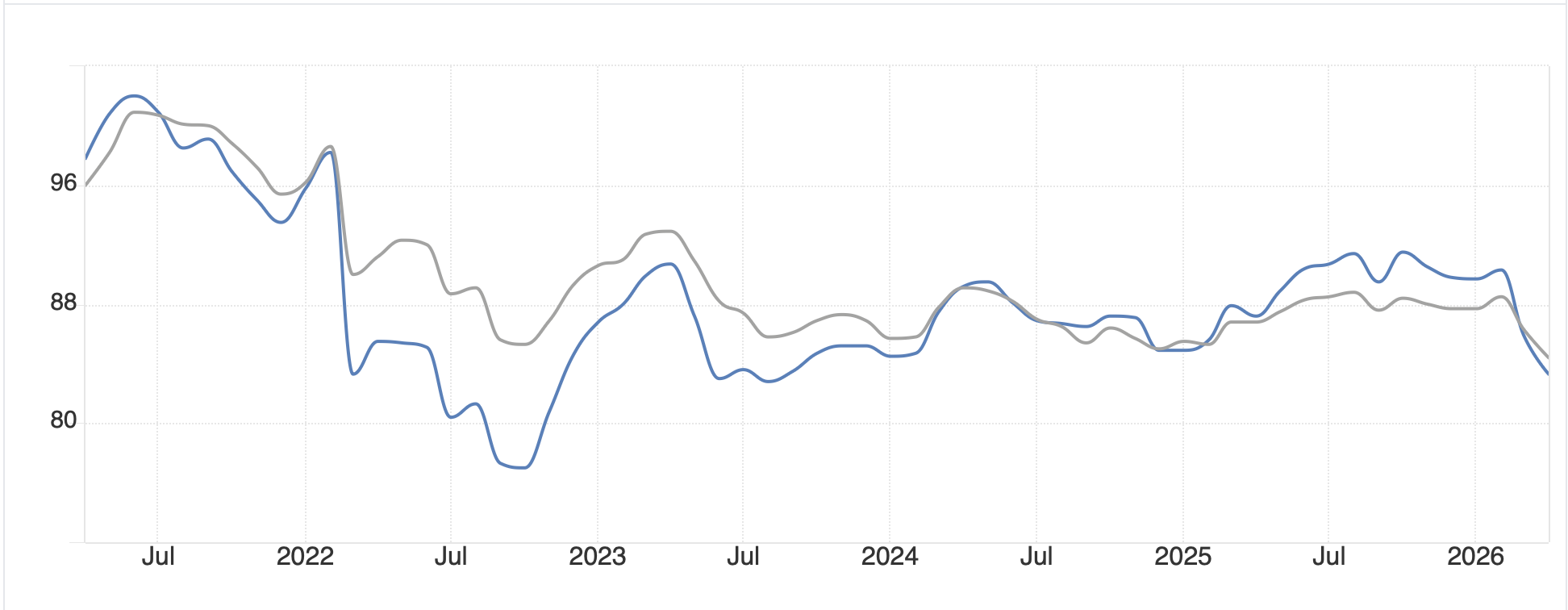
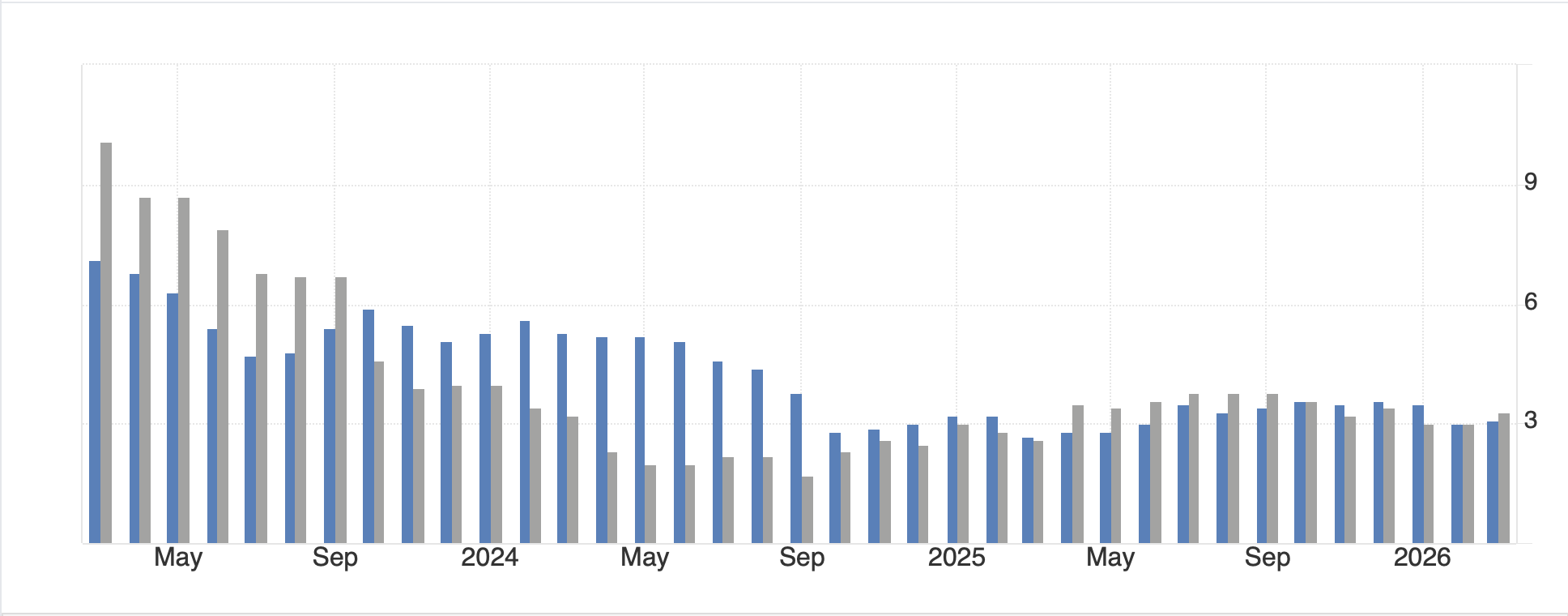
A funny thing about Japanese inflation is that if I look at a chart over the past 5 years, it is not hard to make the case that the BOJ has things moving in the right direction, and of course a reading of 1.6% is below their target.  In fact, if you look at the chart below comparing Japanese (blue bars) and US (gray space) core inflation, I expect Chairman Powell would give anything to have the Japanese chart!

Source: tradingeconomics.com

Finally, the dollar, while firmer this morning (DXY +0.3%) has traded right back into its long-term trading range of 96/100.  Again, I cannot look at the chart below and conclude that the dollar is going anywhere anytime soon.  If skyrocketing oil prices and a war in Iran cannot get a real breakout, I think we will have to go back to interest rate differentials as the driver!

Source: tradingeconomics.com

As to specific currencies, ZAR (-1.35%) is the day’s laggard as the recent sharp decline in both gold and platinum weigh on the nation’s accounts, as well as their status as a major energy importer.  We’ve also seen weakness in PLN (-0.5%), HUF (-0.6%), INR (-0.5%) and, interestingly, AUD (-0.5%) despite the latter’s deal with the EU.  I think ongoing high energy prices remain the issue here.  For the majors, -0.2% is the order of the day for the euro, pound, yen and Swiss franc.

On the data front, there’s not a ton of data this week.

TodayNonfarm Productivity Q42.0%
 Unit Labor Costs Q43.5%
 Flash Manufacturing PMI51.3
 Flash Services PMI51.5
ThursdayInitial Claims210K
 Continuing Claims1860K
FridayMichigan Sentiment53.8
 Michigan Inflation Expected3.2%

Source: tradingeconomics.com

In addition to the modest data releases, we hear from 5 Fed speakers over 7 venues this week, but it is very hard for me to believe that anything they say will matter while the war hogs the headlines.

Prognostication is silly here as headlines drive everything.  My sense is playing it close to the vest remains the best strategy.  But remember this, despite all the pearl clutching and teeth gnashing, the S&P 500 is just 6% from its high print back in January.  This has not even achieved what is typically considered a correction.  The lesson here is that history shows we can decline much further, but also that there is a lot of resilience in the market right now, hence, close to the vest.

Good luck

Adf
Wound-Licking

The clock to the deadline is ticking
And right now, most traders are kicking
All risk to the curb
But they won’t disturb
The hodlers who spend time wound-licking

The market focus right now is on the deadline that President Trump has imposed for Iran to reopen the Strait of Hormuz, which is at 7:45pm EDT this evening.  I have read several takes on the likely impact of a destruction of Iran’s power grid, all explaining the consequences would be calamitous for the nation and its people.  Within a week or two, the humanitarian crisis would be unprecedented.  And that is only on the Iranian side.  Almost certainly the Iranians would retaliate and seek to destroy as much Gulf and Israeli infrastructure as possible to inflict the same pain there.  Ultimately, I cannot believe anybody really wants to see this happen.  Alas, it is out of all of our hands.

We remain extremely fortunate that we live thousands of miles from the action and although there will be economic consequences, those are easier to adapt to then the destruction of your home and nation.  Beyond that, I have nothing to offer regarding the situation there and since I discussed the end of last week in my note last evening, let’s see how things are going this morning (spoiler alert, it ain’t pretty!)

As has been the case for the past several weeks, screens everywhere are red this morning and it is easier to show a screenshot than list them all here.

Source: tradingeconomics.com

This picture was taken of futures markets at 6:55 this morning but you can see that Asian markets and European markets are all meaningfully lower.  As has been the case since the beginning of the conflict, the rise in oil prices and its knock-on effects have been the driver.  It appears that there are two broad groups of investors right now, the leveraged ones who are being forced out of positions rapidly as every decline brings further margin calls, and the cash investors who are trying to stick it out, at least in the areas they feel will rebound.  But the pain is real, at least on a mark-to-market basis, if one is marking to market every day.

History has shown that declines of this nature tend to offer tremendous buying opportunities for those who have the means to do so.  Consider the chart below showing the S&P 500 from the year 2000 on.  

Source: finance.yahoo.com

It is easy to see the sharp decline from the GFC, as well as the Covid dip and then 2022, which was a particularly difficult year for both stocks and bonds.  But the direction of travel remains up and to the right and this dip will almost certainly be followed by significant gains going forward.  Of course, the timing of those gains remains uncertain, but absent a complete collapse of the economy, this seems the most likely outcome.  That doesn’t, however, mean it will be a painless trip.

Turning to bonds, yields everywhere are higher as inflation fears remain the feature topic throughout the world.  Here, too, a Bloomberg screenshot does all the work for me.  

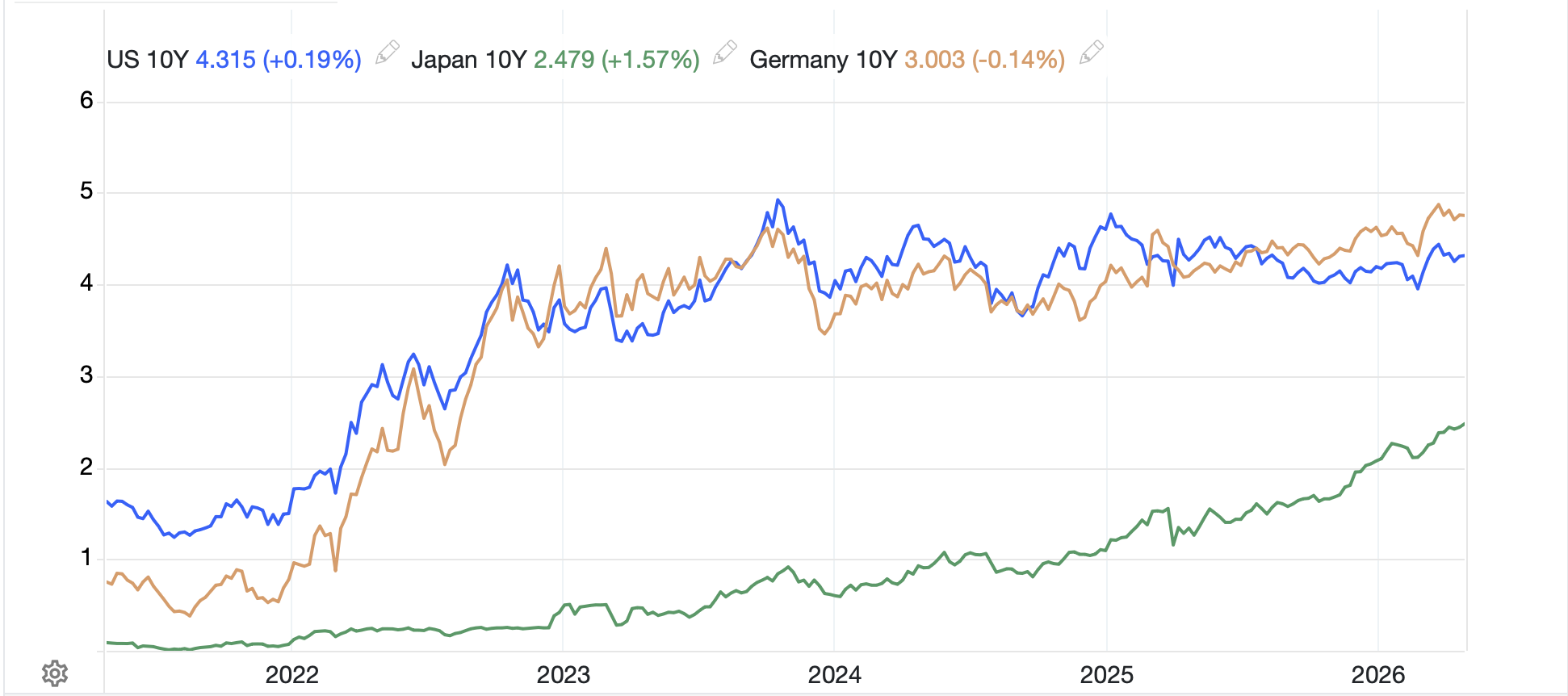
However, I think it is worth stepping back and looking at how bonds have behaved over the past five years.  the chart below shows the percentage change in 10-year bond yields in the US and Japan since early 2021.  While I am using Treasuries, despite the rise in yields everywhere in Europe, the charts there would be similar.

Source: tradingeconomics.com

My point is that while there is great angst daily regarding each basis point of movement in yields, US yields have been pretty stable for a long time.  Of course, we all know the story of JGB yields, which had been stable at extremely low levels for a decade, and have now moved much higher.  The thing is JGB yields moved much higher long before the Iran events, so while at the margin, that is having an impact, there was a strong trend already.

Once again, I believe perspective on markets is important as unless you are a professional trader, the day-to-day can drive you crazy and there is little you can do to change it.  Long-term investors need to understand that reality.

Turning to commodities, I have to wait as things have changed dramatically based on the following post by President Trump.

You will not be surprised that the worst-case declines in both stocks and bonds have reversed as per the below screen shot taken at 7:34

Source: tradingeconomics.com

And bonds from Bloomberg:

Back to commodities, below is oil’s response to the Truth Social post, falling sharply from relatively unchanged prior to the comments.

Source: tradingeconomics.com

And while gold is still lower on the day, you can see how much it, too, has adjusted based on the post.

Source: tradingeconomics.com

You won’t be surprised that the dollar, which had been much stronger earlier this morning has reversed course and is slightly lower now.

It is extremely difficult to keep up sometimes and I apologize for the numerous charts, but they truly are worth thousands of words in this situation.

I would talk about data, but I cannot believe that will really matter right now.  The growing consensus was that central banks around the world were preparing to tighten policy as oil driven inflation was going to need to be addressed, even if history showed this to be a categorical error.   And the first inkling from the Fed funds futures markets is that the probability of a rate hike is being reduced somewhat compared to the end of last week.

Frankly, nobody knows how things are going to evolve from here.  Many will say that Trump TACO’d but it is not hard to believe that whatever Iranian leadership remains has looked around and decided they couldn’t take it anymore either.  

As I have maintained for a while, play it close to the vest for now, but I expect that there are many value opportunities around, just in tiny bites.

Said Trump, we have had some good talks
And so, we will set back the clocks
On when we attack
Iran’s power stack
As doves take the lead, not the hawks.

Good luck
Adf
A Bad Dream

While yesterday’s moves were extreme
It seems like t’was all a bad dream
This morning there’s calm
And nary a qualm
Though things may not be what they seem

For now, oil’s price has retreated
And stocks, a round trip, have completed
As Trump has implied
Though not verified
Iran soon will have been defeated

One must be impressed with the price action yesterday, if nothing else.  It is a very rare occasion when the price of anything in a public market behaves like we saw oil behave yesterday.  From Friday’s closing price in the futures market of $90.71/bbl, we saw a $28.70 (31.6%) rally and a subsequent $34.35 (37.9%) decline in the first 24 hours of trading.

Source: tradingeconomics.com

With oil back to Friday morning’s, still elevated, prices, it’s almost as if nothing happened yesterday.  The two stories that appear to have driven the remarkable reversal early Monday morning were first, the discussion about the G7 potentially coordinating a release of strategic reserves, with that meeting slated for this morning.  The other catalyst apparently was a comment from President Trump that, having made significant progress on their objectives, the war could be over “very soon”.  Obviously, that would be a great outcome for all involved, although it remains to be seen if that will be the case.  

The upshot is that while oil saw the most dramatic price movement across markets, prices everywhere synchronized such that those that had declined (stocks, bonds and metals) rebounded, while the dollar, which rose, retreated.  And that’s where we are this morning.

As I read across news sources, there remains no agreement on any aspect of the ongoing war with each side of the argument maintaining their views.  There is a contingent that insists Iran is about to start a major retaliatory campaign that will devastate Israel and Gulf neighbors and a side that insists Iran’s military infrastructure has been so compromised they have nothing left but drones to fire.  As I’m not on the ground (thankfully) nor in any situation room on any side, I am completely in the dark like essentially all of us.  In fact, arguably, market price action is one of the best indicators we have, because institutions don’t invest on hope, but on the best information they have.  This tells me that the worst-case scenario has been priced out for now, meaning a prolonged conflict, but frankly, neither I nor anyone else really knows.

So, let us embrace our ignorance on the issue and simply observe market behavior to see what we can glean.  Starting with equity markets, the below chart shows the S&P 500 futures from Sunday night’s opening through this morning.  While the opening is obvious on the left, the huge green bar on the right at 3:15pm is the other major feature.

Source: tradingeconomics.com

The interesting thing to me is that Trump’s comment about the war ending soon were not made until 5:45pm.  This tells me that there was a major buy order that went through the market shortly before the close, a feature that we have seen more frequently of late.  My point is there is still much more to the markets than just the Iran conflict.  In fact, the cynical view is that the algorithms continue to control things completely and that there is a major effort to prevent a significant decline in equity markets overall, at least US equity markets.  That’s a little conspiratorial, but one cannot ignore the evidence.

At any rate, after positive closes in the US yesterday on the order of +1.0%, we saw gains across the board in both Asia (Japan +2.9%, HK +2.2%, China +1.3%, Korea +5.4%, Taiwan +2.1%,  India +0.8%, Australia +1.1%) as only New Zealand lagged, essentially unchanged on the day, amid concerns of rising inflation and a tighter RBNZ going forward.  Europe, too, is enjoying the session with strong gains across the board reversing yesterday’s declines as Spain (+2.9%) leads the way, but there is strength everywhere (Germany +2.4%, France +1.9%, UK +1.6%).  At this hour (7:10), US futures are also pointing higher, but just by 0.2% or so across the board.

Bonds also reversed yesterday, albeit not quite as dramatically.  So, in a picture remarkably similar to both oil and stocks, the yield on the 10-year gapped higher Sunday night and fell sharply enough to close lower yesterday as per the below chart.

Source: tradingeconomics.com 

Much of that retracement came after Europe closed, though, and so while this morning, 10-year Treasury yields have edged back up by 2bps, European sovereign yields are lower across the board with Italian BTPs (-6bps) leading the continent although UK Gilts (-7bps) have rallied further.  Other nations have seen a mix between -4bps and -5bps although Germany (unchanged) seems to be suffering on a relative basis after its Trade Surplus grew to €21.2B on the back of a substantial decline in imports.  Throughout all this, JGB yields (-1bp) have been the least impacted and show no signs of running away at this point despite much doomsaying for the nation.

Metals markets have reversed their decline from yesterday and are higher across the board (Au +0.9%, Ag +1.6%, Cu +1.0%, Pt +1.9%).  This is all part of the same story with price action virtually identical, although again, not quite as dramatic, as that of oil.

Finally, the dollar, which had significant support yesterday is giving back some of those gains as well.  But let’s face it, if we take a look at the dollar over the past year vs. the euro, it has largely traded withing a 1.1500 / 1.1900 range and doesn’t appear to be making a break in either direction.  

Source: tradingeconomics.com

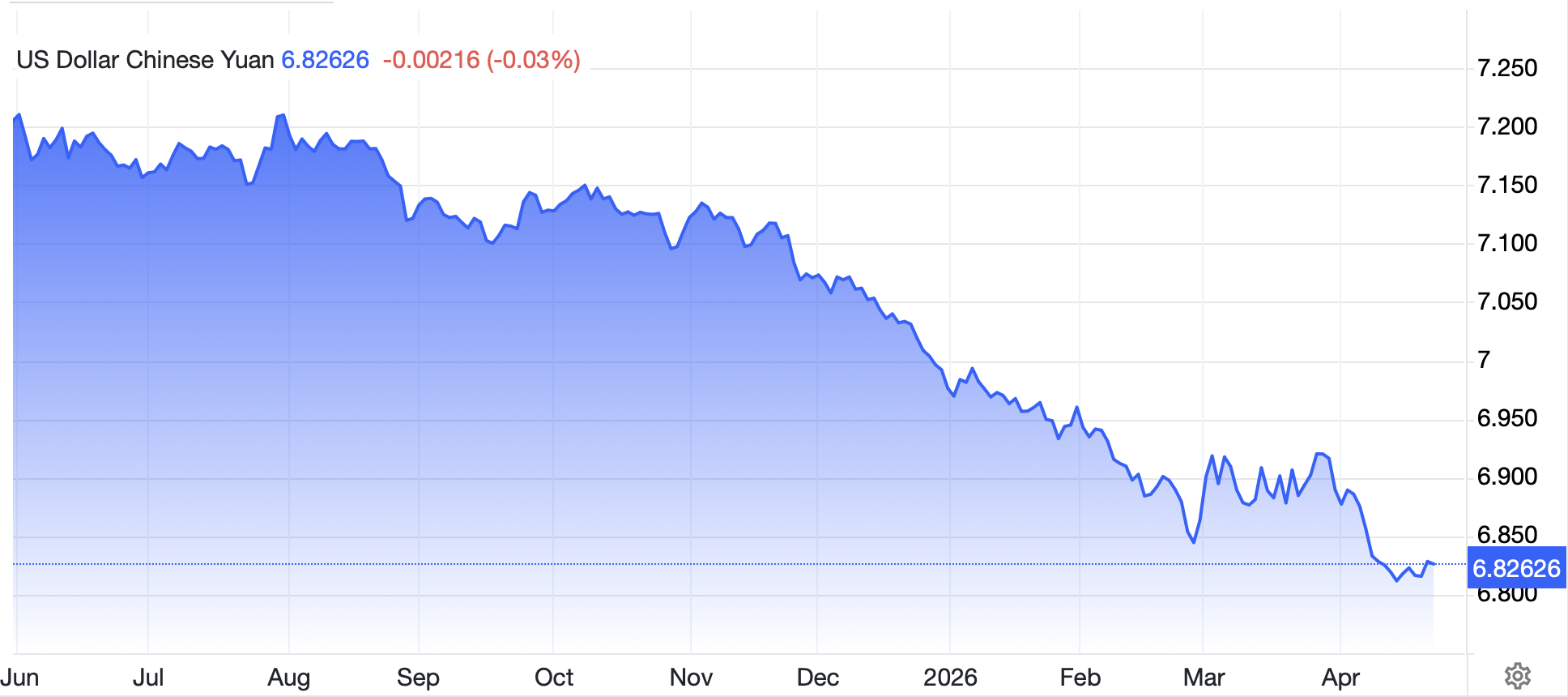
The very messy chart below shows four key EMG currencies to demonstrate that there is no trend there either.  While CNY and MXN have both strengthened during the year, INR and KRW have both fallen.  All I’m saying is that the idea that the dollar is either collapsing or exploding higher is simply not true.  Different currencies have different drivers, and while sometimes there is a key dollar issue that impacts virtually everything, many times, you need to watch the currency in question.

Source: tradingeconomics.com

Turning to the data, this morning we just saw NFIB Business Optimism print a bit soft at 98.8, exp 99.7, and we are awaiting Existing Home Sales (exp 3.89M).  Tomorrow’s CPI will garner more attention, I think.  Too, the Fed is in their quiet period as they meet next Wednesday, so even though they have been drowned out by events lately, the FOMC meeting will still get a lot of attention.

But that is where we stand.  As has been the case since President Trump’s election, White House bingo remains the biggest risk to markets since one never knows what may come out.  The backdrop of the war continues to be front of mind for all market participants, so new stories will have market impacts.  With that in mind, short term forecasts are even more of a waste of time than they usually are.  The questions I am pondering are about the long-term implications when the military activity ends.  Certainly, any result where Iran gives up its terrorist interests would not only be welcome on the global stage but would open the door for much more oil flow around the world and lower prices across the board.  Of course, a more entrenched Iranian regime would likely see even stricter sanctions there with the need for other sources to help satisfy global demand.  I guess we shall see.

Good luck

Adf
Impacts of War
The financial impacts of war
Are many, and so here are four
Inflation will rise
And what this implies
Investors, most bonds, will abhor

The dollar is like to remain
Demanded and that will cause pain
For stocks everywhere
But one thing will fare
Just fine, look for gold, more, to gain

Obviously, the war in Iran remains the top story and is likely to remain so for a few more weeks at least.  Arguably, the only way this will change is either a regime change takes place and talks for peace begin, or Iran is able to retaliate in a heretofore unknown fashion sufficient to force the US and Israel to withdraw.  President Trump has indicated he believes this campaign will last 4-5 weeks with that regime change the result.  But remember, the Russia/Ukraine war slipped from the headlines after 6-8 weeks, and it is still ongoing.  In fact, I challenge you to find a story about that war anywhere these days.

My point is, despite the ongoing hostilities, the rest of the world continues on its way, albeit with some new bumps in the road.  Clearly, the biggest bump remains the price of oil and, for much of Europe and Asia, its continued availability.  While the price of oil (+0.1% today) has risen about 18% in the past month, a look at the long-term chart below offers a bit more perspective as to just how limited this movement has been so far.

Source: tradingeconomics.com

I have highlighted the week of the Russian invasion from February 2022, which saw oil rise more than 20% at the time and remain elevated for about 5 months before it retraced to prewar levels.  The reaction this time has not been nearly as dramatic even though the effective closure of the Strait of Hormuz has removed about 20% of global oil supply from the market right now, as well as a similar proportion of LNG.  This is why we have seen the massive spike in European and Asian LNG prices as that was the destination of those cargoes.  Ironically, one of the most negatively impacted nations is China, which was Iran’s biggest oil customer, but now has seen a dramatic decline in the availability of oil. Of course, they have built a significant stockpile, their own SPR, which holds between 1.2 -1.5 billion barrels, enough to supply the nation for upwards of 4 months.  While not an immediate concern, it will start to hurt after a while if this continues.

It appears to me that unless Iran starts targeting and destroying oil production facilities throughout the Middle East, which is certainly possible, the upside for prices from here is limited under current circumstances.  My guess, and it is just that, is another 10%.  Of course, the risk for Iran there is that it draws the Saudis, Emiratis and the rest of the Gulf into the war against Iran, probably not a desired outcome either.  

As an aside, I wonder if prices rise far enough in a worst-case scenario, if the UK removes its drilling restrictions, although thus far, PM Starmer has not indicated anything of the sort.  It depends on just how painful things become I suppose.

Moving on to the equity markets, while US markets have declined somewhat since the war began, the S&P 500 remains just 2.5% below its all-time high set February 28, and as you can see from the chart below, does not appear to be altering the recent trajectory in any meaningful fashion.

Source: tradingeconomics.com

However, the same cannot be said for several other markets, notably those in Asia.  The Kospi (-12.1%) is the worst offender as seen below.  But weakness in the region was widespread with the Nikkei (-3.6%), Hang Seng (-2.0%), Taiex (-4.3%) and Thailand’s SET 50 (-5.4%) leading the way lower with most other bourses falling on the order of -1.0% to -2.0%.  This makes sense as virtually all these nations rely on energy from the Middle East, and with both higher prices and reduced supply, trouble is afoot.

Source: finance.yahoo.com

Of course, as you can also see in the KOSPI chart above, with similar price action elsewhere in the region, these stock markets have been on a tear given their tech focus (Korea’s two largest companies are Samsung and SK Hynix, both semiconductor manufacturers) so there was some room for a reversal.  In fact, remarkably, despite the KOSPI having fallen almost 20% this week, it remains above its trend line.  My take is this is a major correction and something we will see until things in the Middle East settle down.

Working in favor of my correction explanation is the fact that European bourses, which all fell sharply yesterday, are all higher this morning as per the below Bloomberg table.

 As to US futures, at this hour (7:30) they are little changed. 

Turning to the bond market, after some initial fears over the inflation implications of the war, as well as the selling that accompanies margin calls, yields have settled down a bit.  This morning Treasury yields (+2bps) are a touch higher but, at 4.08%, hardly running away.  As to European sovereign yields, they are essentially unchanged this morning, and even JGB yields (-2bps) slipped a bit last night.  As I discussed above, markets have digested much of the news and seem to have found a new equilibrium

I didn’t mention metals markets above, but this morning, in sync with other markets that are rebounding, we see the entire space higher; Au +1.7%, Ag +4.3%, Cu +1.1%, Pt +3.8%.  This story of insufficient supply to meet ongoing industrial demand has not changed, nor has the demand by both central banks and individuals, especially in Asia, to hold gold as a store of value.

Finally, the dollar is backing off slightly this morning, which given the price action elsewhere, makes perfect sense.  In the G10 space, the movement has been on the order of 0.1% to 0.2% for the majors (EUR +0.2%, GBP +0.1%, AUD +0.1%, CHF +0.2%) with only JPY (+0.35%) and SEK (+0.8%) showing real gains.  However, it is important to remember that SEK was one of the worst performers recently, so had more ground to regain.  As to the EMG bloc, movement there has been more substantial, but again, this is after much larger declines.  For instance, BRL (+0.6%) and KRW (+0.9%) have both seen sharp declines in the past week before reversing overnight as per the below chart.

Source: tradingeconomics.com

However, if we look at the DXY as our proxy, it remains in the middle of its trading range of the past 9+ months.

Source: tradingeconomics.com

In sum, we are three trading days into an entirely new geopolitical situation, and markets have digested the news and are seemingly trying to return to some sense of normalcy.  Now, there is still significant headline risk as nobody knows how things will evolve here.  What I will say is that if the Iranian regime falls or capitulates, I would look for risk to be quickly scooped up while oil prices slide.  Conversely, if things drag on much longer than another month, I think we could well see investor concern over how this will impact the global economy, especially if oil prices remain in the $75 – $80/bbl range, which likely means equity markets will suffer.

To the extent that anyone is still looking at data, this morning brings the ISM Services (exp 53.5) and then we see Crude Oil inventories later this morning.  The Services PMI data throughout Europe and Asia was in line with expectations showing slow growth remains the story.  Chinese data was marginally softer for large companies and marginally stronger for small companies.  As well, the Fed’s Beige Book is released at 2:00 this afternoon.

However, I don’t see data as a driver yet, so headline risk remains the biggest one out there, but the indications are markets are starting to absorb the war and move on.

Good luck

Adf