Shattered His Dreams

The data was hot yesterday
And that put the pressure on Jay
It shattered his dreams
‘Bout all of his schemes
To help keep inflation at bay


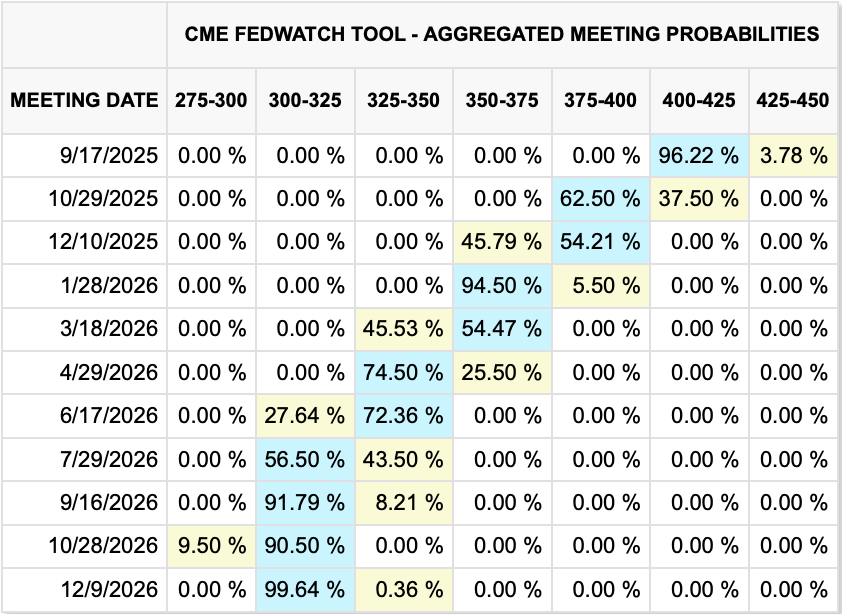
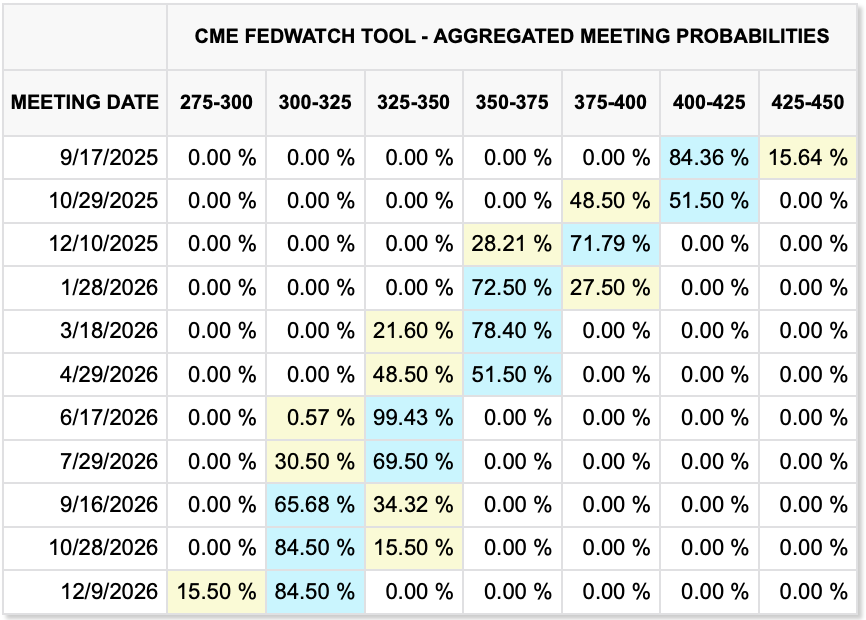
By now, I am sure you are aware that the CPI data was higher than forecast, and certainly higher than would have made Chairman Powell comfortable.  The outcome, showing Headline rising to 3.0% and core rising to 3.3% with correspondingly higher monthly rises was sufficient to alter the narrative at least a little bit.  Chair Powell even mentioned it in his House testimony, noting, “We are close, but not there on inflation…. So, we want to keep policy restrictive for now.”  Essentially, the data makes clear that the Fed is not going to be cutting the Fed funds rate anytime soon.  The futures market got the message as it is now pricing just 29bps of cuts this year, with December the likely date.

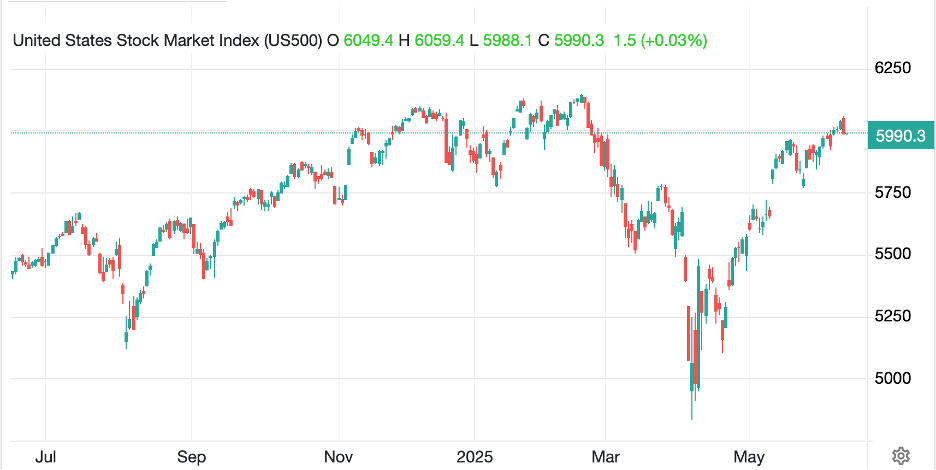
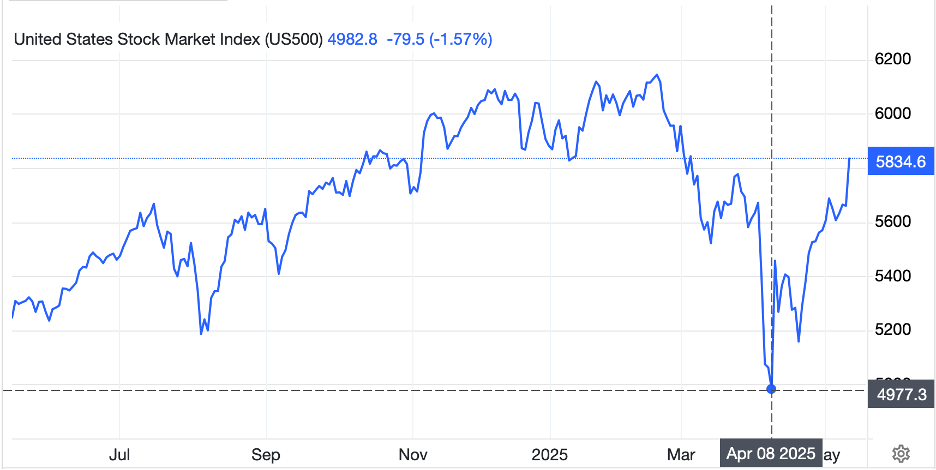
It will be no surprise that the stock market’s initial response was to sell off substantially, but as per the chart below, it spent the rest of the day clawing back the losses and wound up little changed on the day.  This morning, it remains basically unchanged as well.

Source: tradingeconomics.com

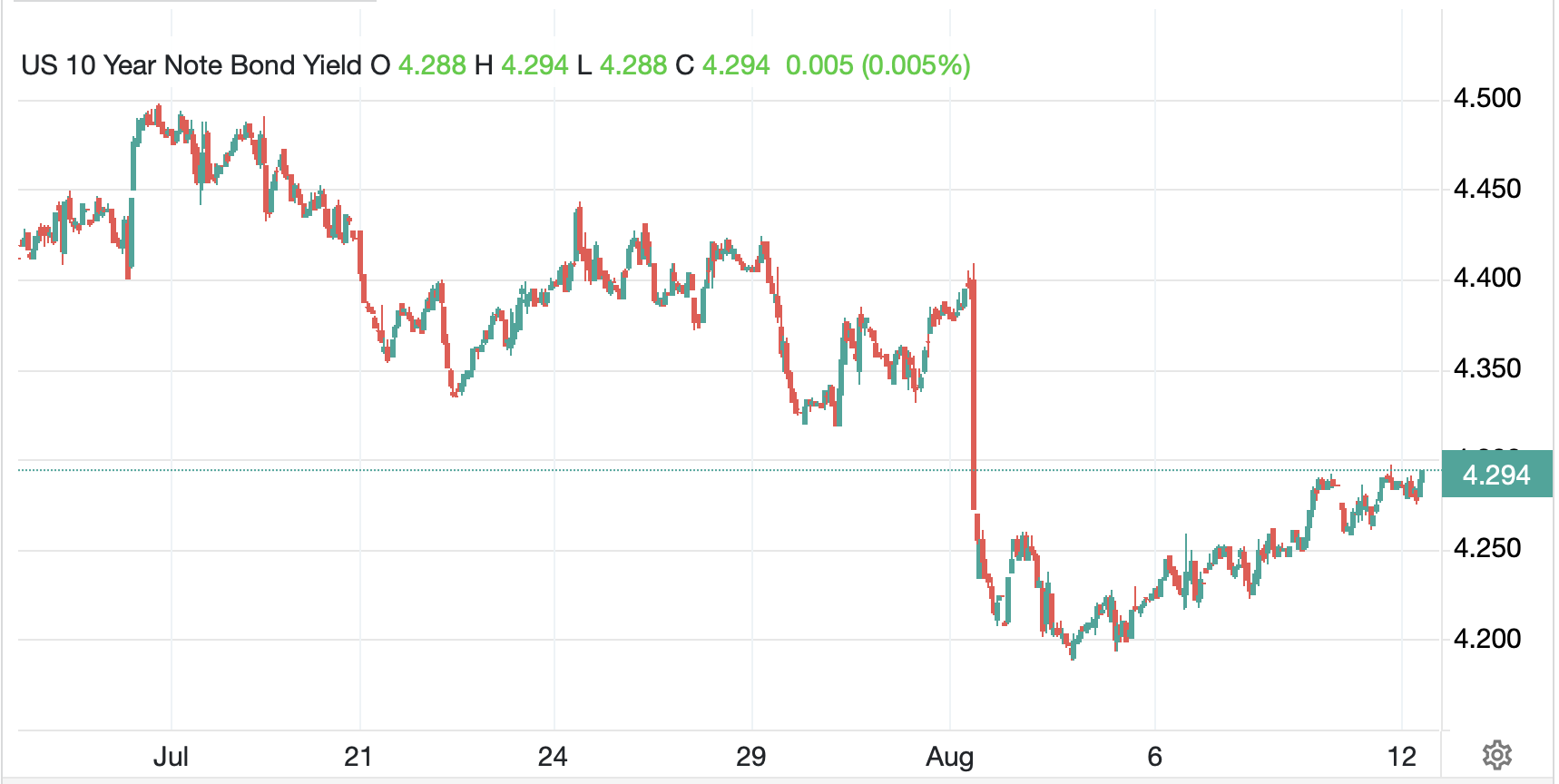
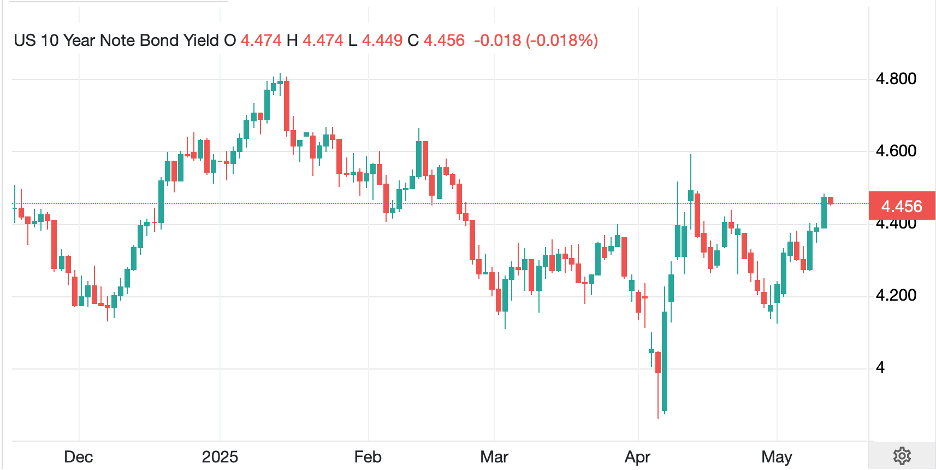
Treasury bonds, though, had a less fruitful session, falling (yields rising) sharply on the print, but never really regaining their footing with yields jumping almost 15bps at one point although finishing the day about 10bps higher and have given back 2bps more this morning.

Source: tradingeconomics.com

Now, we all know that the Fed doesn’t target CPI, but rather PCE.  However, after this morning’s PPI data release, most economists (although not poets) will be able to reasonably accurately estimate that data point for later this month, as will the Fed.  And that number is not going to be moving closer to their 2.0% target.  What seems very clear at this point is that every Fed speaker for the time being is going to be harping on the caution with which they are going to move forward.

If we look at this from a political perspective, something which is unavoidable these days, it is important to remember that Treasury Secretary Bessent has made clear that he and the president are far more focused on the 10-year yield than on the Fed funds rate.  To that end and given the fact that all this data was from a time preceding President Trump’s inauguration, I don’t think they are too worried.  I would look for the President to continue his drive to reduce waste and fraud in the government and attack that deficit.  Certainly, the news to date is there is a great deal of both waste and fraud to reduce, and if the president is successful, I believe that will play out in significantly lower 10-year yields, if for no other reason than the deficit is reduced or closed.  This story is just beginning to be written.

Now, Putin and Trump had a call
As Trump tries to end Russia’s brawl
They’re slated to meet
So, they can complete
A treaty with Europe awol

Under any interpretation, I believe the news that Presidents Trump and Putin are going to meet in an effort to hammer out an end to the Russia/Ukraine war is good news.  Beyond the simple fact that less war is an unadulterated good, I think it is very clear that this particular war has had significant market impacts, hence our interest here.  Obviously, energy prices have been impacted, as both oil and NatGas prices are higher than they would otherwise be given the removal of some portion of Russia’s exports from the global markets and economy.  As such, the end of this conflict, with one likely consequence being Western Europe reopening themselves to Russian energy imports, is likely to see prices decline.  

This matters for more reasons than the fact it will be cheaper to fill up your tank at the gas (petrol) station, it is very likely to have a very positive impact on inflation writ large.  As you can see from the chart below, there is a very strong correlation between the price of oil and US inflation expectations.  Declining oil prices are very likely to help people perceive a less inflationary future and will reduce the rate of inflation by definition.  

Source: ISABELNET

Inflation is an insidious process, and once entrenched is very hard to reduce, just ask Chairman Powell.  I also know that there has been much scoffing at President Trump’s claims he will reduce inflation, especially with his imposition of tariffs all over the place. (It is important to understand that tariffs are not necessarily inflationary by themselves as well explained by my friend the Inflation guy in this article.). However, between his strong start on reducing government expenditures and the potential for an end to the Russia/Ukraine war leading to lower energy prices, these are longer term effects that may do just that.

Ok, let’s move on to the market activities in the wake of yesterday’s CPI and ahead of this morning’s PPI data.  As discussed above, yesterday’s US markets rebounded from their worst levels of the morning and closed modestly lower with the NASDAQ actually unchanged.  In Asia, Japanese shares (+1.3%) had a solid day as the weak yen helped things along although Chinese shares (HK -0.2%, CSI 300 -0.4%) did not fare as well on the day with tariffs still top of mind.  Elsewhere in the region, other than Korea (+1.4%) movement was mixed and modest.  In Europe, the possibility of peace breaking out in Ukraine has clearly got investors excited as both Germany (+1.5%) and France (+1.2%) are seeing strong inflows. The UK (-0.7%) however, continues to suffer from economic underperformance with no discernible benefits shown from the governments weak efforts to right the ship.  GDP was released this morning and while they avoided recession, it’s very hard to get excited over 0.1% Q/Q growth.  As to the US futures market, at this hour (7:20), they are essentially unchanged.

In the bond market, we’ve already discussed Treasury yields, but another benefit of the prospects for a Ukrainian peace is that sovereign yields have fallen substantially, between -5bps and -8bps, throughout the continent.  Once again, the impact of that phone call between Trump and Putin has been quite significant.  Consider that not only are energy prices likely to slide, but the required government spending to prosecute the war is likely to diminish as well.

In the commodity markets, it should be no surprise that oil (-1.3%) prices are sliding as are NatGas prices in Europe (TTF -7.5%) as the opportunity for cheap Russian gas to flow to Europe is once again in view.  To highlight the impact that this has had on Europe, prior to the Ukraine war and the halting of gas flows, the TTF contract hovered between €5 and €25 per MWh.  Since the war broke out, even after the initial shock, it has been between €25 and €55 per MWh.  This is all you need to know about why Europe, and Germany especially, is deindustrializing.  As to the metals markets, after a few days of consolidation, gold (+0.4%) is on the move again although it has not yet recaptured the highs seen early Tuesday morning.  Give it time.  Copper (+0.6%), too, is back on the move and indicating that economic activity is set to continue to grow.

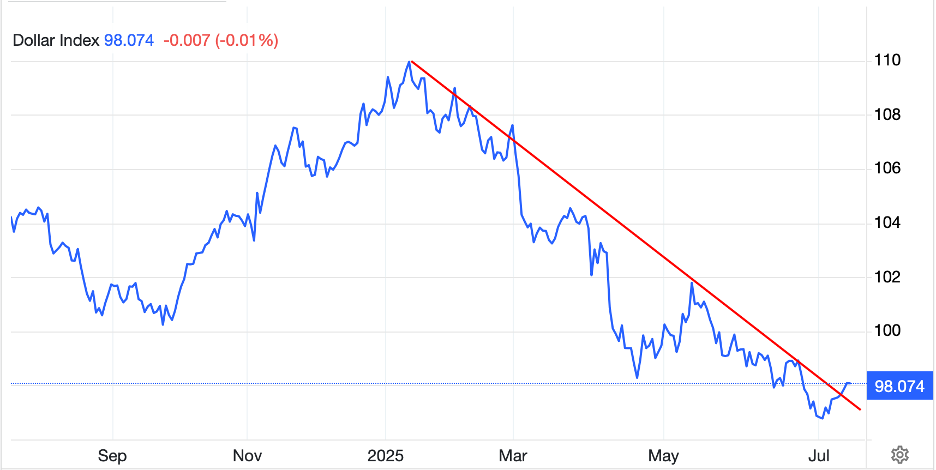
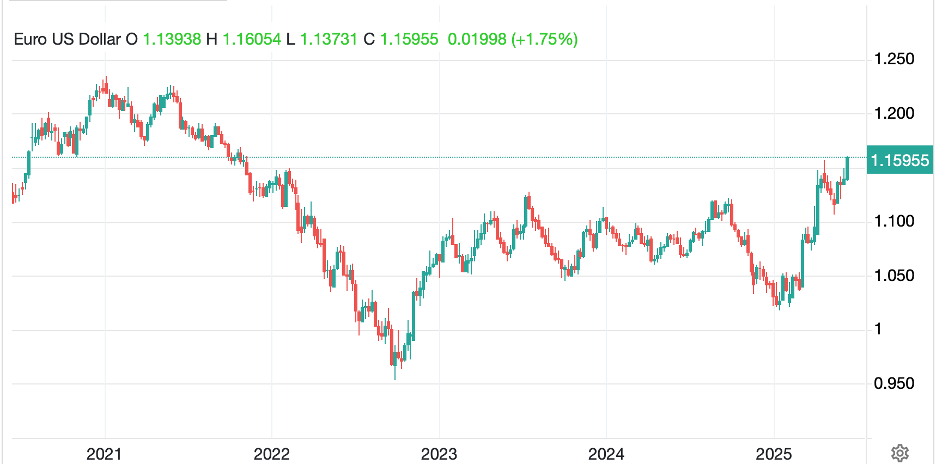
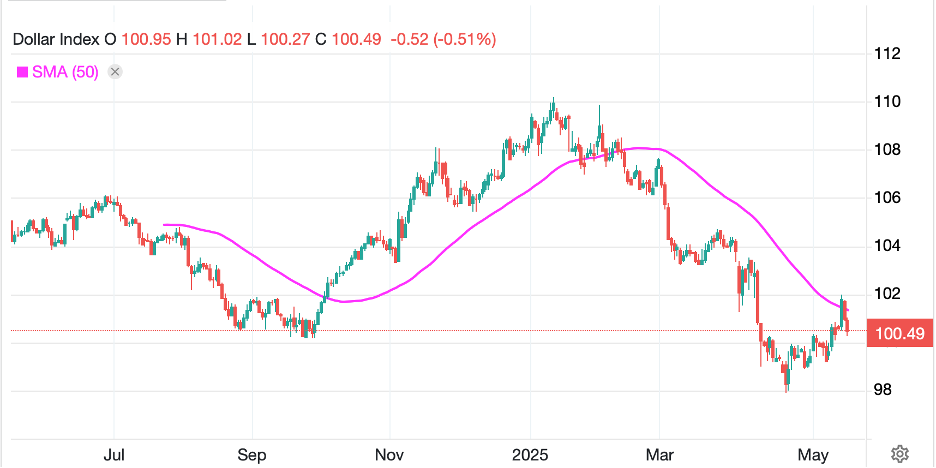
Finally, the dollar is mixed this morning, although arguably a touch softer overall, as the Russia news has traders looking for less negativity in Europe.  So modest gains in the euro and pound, about 0.15% each is offsetting larger losses in AUD (-0.3%) and NZD (-0.6%), although given the much smaller market size of the latter two, they matter much less.  JPY (+0.4%) is rebounding after yesterday’s sharp decline on the back of the jump in Treasury yields, and it is noteworthy that CHF (+0.65%) is gaining after its CPI data showed a decline in prices last month.  In the EMG bloc, CLP (+0.7%) is stronger on that copper rally, while ZAR (+0.1%) seems to be edging higher as gold continues to perform well. MXN (-0.4%) though is still struggling with the potential negative impact of tariffs and otherwise, there is not much to report.

This morning brings PPI (exp 0.3%. 3.3% Y/Y headline; 0.3%, 3.5% Y/Y core) as well as the weekly Initial (215K) and Continuing (1880K) Claims data.  There are no Fed speakers on the docket, but at this point, I expect the Fed will be fading into the background since they are clearly on hold and President Trump commands the spotlight.  Unless the data starts to veer dramatically away from what we have seen, it appears that the market is going to continue to respond to Trumpian headlines, which of course are impossible to predict.  But remember, most of the rest of the world is still in cutting mode so the dollar should continue to hold its own.

Good luck

Adf

Not in a Rush

Said Powell, we’re not in a rush
To cut rates as we try to crush
Remaining inflation
And feel the sensation
Of drawing an inside straight flush
 
Up next is the CPI data
Though not one on which we fixate-a
The surveys explain
That people remain
Quite certain that we’re doing great-a


Chairman Powell testified to the Senate Banking Committee yesterday and the key comments were as follows, “Inflation has eased significantly over the past two years but remains somewhat elevated relative to our 2 percent longer-run goal. Total personal consumption expenditures (PCE) prices rose 2.6 percent over the 12 months ending in December, and, excluding the volatile food and energy categories, core PCE prices rose 2.8 percent. Longer-term inflation expectations appear to remain well anchored, as reflected in a broad range of surveys of households, businesses, and forecasters, as well as measures from financial markets.” [Emphasis added.] He followed up, “With our policy stance now significantly less restrictive than it had been and the economy remaining strong, we do not need to be in a hurry to adjust our policy stance.  We know that reducing policy restraint too fast or too much could hinder progress on inflation.”  This is largely what was expected as virtually every Fed speaker since the last FOMC meeting has said the same thing, there is no rush to further cut rates. Powell did admit that the neutral rate had risen compared to where it was before inflation took off in 2022 but maintains that current policy is still restrictive. 

However, let’s examine the highlighted comment above a little more closely.  Two things belie that statement as wishful thinking rather than an accurate representation of the current situation.  The first is that the most recent survey released from Friday’s Michigan Sentiment surveys, shows that inflation expectations for the next year jumped dramatically, one full percent to 4.3% as per the below chart.

Source: tradingeconomics.com

Looking over the past 10 years of data, that is a pretty disturbing spike, taking us right back to the 2022-23 period when inflation was roaring.  In addition to that little jump, it is worth looking at those market measures that Powell frequently mentions.  Typically, they are either the 5-year or 10-year breakeven rate.  That rate is the difference between the 5-year Treasury yield and the 5-year TIPS yield (or correspondingly the 10-year yields).  A quick look at the chart below shows that since the Fed first cut rates in September 2024, the 5-year breakeven rate has risen 78bps to 2.64%.  Certainly, looking at the chart, the idea of ‘well anchored’ isn’t the first description I would apply.  Perhaps, rocketing higher?

At any rate, it appears quite clear that the Fed is on hold for a while yet as they await both the evolution of the economy and further clarity on President Trump’s policies on tariffs.  While there is no doubt that we will continue to hear from various Fed speakers going forward, I maintain that the Fed is not seen as the primary driver in markets right now, rather that is President Trump.

Of course, data will still play a role, just a lesser one I believe, but we cannot ignore the CPI report due this morning.  First, remember, the Fed doesn’t focus on CPI, but rather on PCE which is typically released at the end of the month and calculated by the Commerce Department, not the BLS.  But the rest of us basically live in CPI land, so we all care.  If nothing else, it gives us something to complain about as we look incredulously at the declining numbers despite what we see with our own eyes every time we go shopping.

As it is, here are this morning’s median expectations for the data, headline CPI (+0.3% M/M, 2.9% Y/Y) and core CPI (+0.3% M/M, 3.1% Y/Y).  Once again, I believe there is value in taking a longer view of this data for two reasons; first to show that we are not remotely approaching the levels to which we became accustomed prior to the Covid pandemic and government response, and second to highlight that if your null hypothesis is CPI continues to decline, that may not be an appropriate view as we have spent the past 8 months in largely the same place as per the below chart.  Too, note the similarity between the Michigan Survey chart above and this one.

Source: tradingeconomics.com

OK, those are really the stories of the day since there have not, yet, been any new tariffs imposed by President Trump, and traders need to focus on something.  Let’s take a look at how things behaved overnight.

After a mixed US equity session, the strength was in Hong Kong (+2.6%) and China (+1.0%), seemingly on the back of several stories.  First is that China is looking at new ways to address the property bubble’s implosion, potentially allocating more support there, as well as this being a reflexive bounce from yesterday’s decline and the story that President’s Xi and Trump have spoken with the hope that things will not get out of hand there.  As to Japan, the Nikkei (+0.4%) has edged higher as the yen (-0.7%), despite a lot of talk about higher rates in Japan and the currency being massively undervalued, continues to weaken.  In Europe, once again there is limited movement overall with very tiny gains of less than 0.2% the norm although Spain’s IBEX (+0.7%) is the big winner today on some positive earnings results.  US futures are little changed at this hour (7:15).

In the bond market, Treasury yields are unchanged this morning, retaining the 4bps they added yesterday, and in Europe, sovereign yields are also little changed with German Bunds (+2bps) the biggest mover in the session.  JGB yields did rise 3bps overnight, but that seems to be following US yields as there was precious little new news there.

In the commodity markets, yesterday’s metal market declines are mostly continuing this morning with gold (-0.6%) down again, although still hanging around $2900/oz.  Silver has slipped although copper (+0.3%) has arrested its decline.  Oil (-1.1%) is giving back some of yesterday’s gains and continues to trade in the middle of its trading range with no real direction.  One thing I haven’t highlighted lately is European TTF NatGas prices, which while softer this morning (-1.9%) have risen 15% in the past month as storage levels in Europe are declining to concerning levels and global warming has not resulted in enough warm days for the winter.

Finally, the dollar is mixed away from the yen’s sharp decline with the euro (+0.1%) and CHF (+0.2%) offsetting the AUD (-0.3%) and NOK (-0.5%).  It is interesting that many of the financial and trading accounts that I follow on X (nee Twitter) continue to point to JPY and CAD as critical and are anticipating strength in both those currencies imminently.  And yet, neither one is showing much tendency to strengthen, at least for the past month or two.  I guess we shall see, but if the Fed is going to remain on hold, and especially if more tariffs are coming, I suspect the default direction of the dollar will be higher.  As to the EMG bloc, there is virtually nothing happening here, with a mix of gainers and laggards, none of which have moved 0.2% in either direction.

Other than the CPI data, Chairman Powell testifies to the House Financial Services Committee, and we will see EIA oil inventories with a modest build anticipated.  We also hear from two other Fed speakers, but again, with Powell in the spotlight, they just don’t matter.

Markets overall are pretty quiet, seemingly waiting for the next shoe to drop.  My money is on that shoe coming from the Oval Office, not data or Powell, which means we have no idea what will happen.  Stay hedged, but until further notice, I still don’t see a strong case for the dollar to decline.

Good luck

Adf

Shortsighted

The CPI data delighted
Investors, who in a shortsighted
Response bought the bond
Of which they’re now fond
And did so in, time, expedited
 
But does this response make much sense?
Or is it just way too intense?
I’d offer the latter
Although that may shatter
The narrative’s current pretense


Leading up to yesterday’s CPI data, it appeared to me that despite a better (lower) than expected set of PPI readings on Tuesday, the market was still wary about inflation and concerned that if the recent trend of stubbornly sticky CPI prints continued, the Fed would soon change their tune about further rate cuts.  Heading into the release, the median expectations were for a 0.3% rise in the headline rate and a 0.2% rise in the core rate for the month of December which translated into Y/Y numbers of 2.9%% and 3.3% respectively. At least those were the widely reported expectations based on surveys.  

However, in this day and age, the precision of those outcomes seems to be lacking, and many analysts look at the underlying indices prepared by the BLS and calculate the numbers out several more decimal places.  This is one way in which analysts can claim to be looking under the hood, and it can, at times, demonstrate that a headline number, which is rounded to the first decimal place, may misrepresent the magnitude of any change.  I would submit that is what we saw yesterday, where the headline rate rose to the expected 2.9% despite a 0.4% monthly print, but the core rate was only 3.24% higher, which rounded down to 3.2% on the report. Voila!  Suddenly we had confirmation that inflation was falling, and the Fed was right back on track to cut rates again.

Source: tradingeconomics.com

Now, I cannot look at the above chart of core CPI and take away that the rate of inflation is clearly heading back to 2% as the Fed claims to be the case.  But don’t just take my word for it.  On matters inflation I always refer to Mike Ashton (@inflation_guy) who has a better grasp on this stuff than anyone I know or read.  As he points out in his note yesterday, 3.5% is the new 2.0% and that did not change after yesterday’s data.

However, markets and investors did not see it that way and the response was impressive.  Treasury yields tumbled 13bps and took all European sovereign yields down by a similar amount, equity markets exploded higher with the NASDAQ soaring 2.5% and generally, the investment world is now in nirvana.  Growth remains robust but that pesky inflation is no longer a problem, thus the Fed can continue cutting rates to support equity prices even further.  At least that’s what the current narrative is.  

Remember all that concern over Treasury yields?  Just kidding!  Inflation is dying and Trump’s tariffs are not really a problem and… fill in your favorite rationale for remaining bullish on risk assets.  I guess this is where my skepticism comes to bear.  I do not believe yesterday’s data reset the clock on anything, at least not in the medium and long term.

Before I move on to the overnight, there is one other thesis which I read about regarding the recent (prior to yesterday) global bond market sell-off which has some elements of truth, although the timing is unclear to me.  It seems that if you look at the timing of the recent slide in bond markets, it occurred almost immediately after the fires in LA started and were realized to be out of control.  This thesis is that insurers, who initially were believed to be on the hook for $20 billion (although that has recently been raised to >$100 billion) recognized they would need cash and started selling their most liquid assets, namely Treasuries and US equities.  In fact, this thesis was focused on Japanese insurers, the three largest of which have significant exposure to California property, and how they were also selling JGB’s aggressively.  Now, the price action before yesterday was certainly consistent with that thesis, but correlation and causality are not the same thing.  If this is an important underlying driver, I would expect that there is more pressure to come on bond markets as almost certainly, most insurance companies don’t respond that quickly to claims that have not yet even been filed.

Ok, let’s see how the rest of the world responded to the end of inflation as we know it yesterday’s CPI data. Japanese equities (+0.3%) showed only a modest gain, perhaps those Japanese insurers were still out selling, or perhaps the fact that the yen (+0.3%) is continuing to grind higher has held back the Nikkei.  Hong Kong (+1.25%) stocks had a good day as did almost every other Asian market with the US inflation / Fed rate cuts story seemingly the driver.  The one market that did not participate was China (+0.1%) which managed only an anemic rally.  In Europe, the picture is mixed as the CAC (+2.0%) is roaring while the DAX (+0.2%) and IBEX (-0.4%) are both lagging as is the FTSE 100 (+0.65%).  The French are embracing the Fed story and assuming luxury goods will be back in demand although the rest of the continent is having trouble shaking off the weak overall economic data.  In the UK, GDP was released this morning at 1.0% Y/Y after just a 0.1% gain in November, slower than expected and adding pressure to the Starmer government who seems at a loss as to how to address the slowing economy.  As to US futures, at this hour (7:30) they are pointing slightly higher, about 0.2%.

In the bond market, after yesterday’s impressive rally, it is no surprise that there is consolidation across the board with Treasury yields higher by 2bps and similar gains seen across the continent.  Overnight, Asian government bond markets reacted to the Treasury rally with large gains (yield declines) across the board.  Even JGB yields fell 4bps.  The one market that didn’t move was China, where yields remain at 1.65% just above their recent historic lows.

In the commodity markets, oil (-1.0%) is backing off yesterday’s rally which saw WTI trade above $80/bbl for the first time since July as despite ongoing inventory builds in the US, and ostensibly peace in the Middle East, the market remains focused on the latest sanctions on Russia’s shadow tanker fleet and the likely inability of Russia (and Iran) to export as much as 2.5 million barrels/day going forward.  NatGas (+0.75%) remains as volatile as ever and given the polar vortex that seems set to settle over the US for the next two weeks, I expect will remain well bid.  On the metals side of things, yesterday’s rally across the board is being followed with modest gains this morning (Au +0.3%) as the barbarous relic now sits slightly above $2700/oz.

Finally, the dollar doesn’t seem to be following the correct trajectory lately as although there was a spike lower after the CPI print yesterday, it was recouped within a few hours, and we have held at that level ever since.  In fact, this morning we are seeing broader strength as the euro (-0.2%), pound (-0.4%) and AUD (-0.5%) are all leaking and we are seeing weakness in EMG (MXN -0.6%, ZAR -0.6%) as well.  My take is that the bond market, which had gotten quite short on a leveraged basis, washed out a bunch of positions yesterday and we are likely to see yields creep higher on the bigger picture supply issues going forward.  For now, this is going to continue to underpin the dollar.

On the data front, this morning opens with Retail Sales (exp 0.6%, 0.4% -ex autos) and Initial (210K) and Continuing (1870K) Claims.  We also see Philly Fed (-5.0) to round out the data.  There are no Fed speakers today, although in what cannot be a surprise, the three who spoke yesterday jumped all over the CPI print and reaffirmed their view that 2% was not only in sight, but imminent!  As well, today we hear from Scott Bessent, Trump’s pick to head the Treasury so that will be quite interesting.  In released remarks ahead of the hearings, he focused on the importance of the dollar remaining the world’s reserve currency, although did not explicitly say he would like to see it weaken as well.  The one thing I know is that he is so much smarter than every member of the Senate Finance committee, that it will be amusing to watch them try to take him down.

And that’s really it for now.  If Retail Sales are very strong, look for equities to see that as another boost in sentiment, but a weak number will just rev up the Fed cutting story.  Right now, the narrative is all is well, and risk assets are going higher.  I hope they are right; I fear they are not.

Good luck

Adf

Will It Matter?

Will Japan hike rates?
How much will it matter if
They do?  Or they don’t?


Market activity and discussion has been somewhat lacking this week as the real fireworks appear to be in Washington DC where President-elect Trump’s cabinet nominees are going through their hearings at the Senate.  Certainly, between that and the ongoing fires in LA, the news cycle is not very focused on financial markets in the US.  This, then, gives us a chance to gaze Eastward to the Land of the Rising Sun and discuss what is happening there.

You may recall yesterday I mentioned a speech by BOJ Deputy Governor Himino where he explained that given the inflation situation as well as the indication that wages would continue to rise at a more robust clip in Japan, a rate hike may be appropriate.  Well, last night, Governor Ueda basically told us the same thing.  Alas, it seems that the BOJ takes a full day to translate speeches into English because there are no quotes from Ueda, but we now have the entire Himino speech from the day before.

Regardless, the essence of the story is that the BOJ is carefully watching the data and awaiting the Trump inauguration to see if there are any surprise tariff outcomes against Japan (something that has not been discussed) while they await their own meeting at the end of next week.  Market pricing now has a 72% probability of a 25bp rate hike next week, up from about 60% yesterday, and last night the yen did rally, climbing 0.7%.  However, a quick look at the chart below might indicate that the market is not overly concerned about a major yen revaluation.

Source: tradingeconomics.com

In fact, since the last BOJ meeting in December, when they sounded a bit more dovish than anticipated, the yen has done very little overall, treading water between 156.50 and 158.50.  While a BOJ rate hike would likely support the yen somewhat, there is another dynamic playing out that would likely have the opposite effect.  At the beginning of the year I prognosticated that the Fed may well hike rates by the end of 2025 as inflation seems unlikely to cooperate with their prayers belief that 2.0% was baked in the cake.  At the time, that was not a widely held view.  However, in a remarkably short period of time, market participants are starting to discuss the idea that may, in fact, be the case.  Even the WSJ today had a piece on the subject from James Mackintosh, one of their economics writers laying out the case.  The point here is that if tighter monetary policy by the Fed is in the cards, I suspect the yen will have a great deal of difficulty climbing much further.  Let’s keep an eye on the 156.00 level for clues that things are changing.

In England, inflation is rising
Less quickly than some theorizing
Meanwhile in the States
Jay and his teammates
Are hoping for data downsizing

Turning now to the inflation story, European releases were generally right on forecast except for the UK, where the headline rate fell to 2.5% while the core fell to 3.2%, 1 tick and 2 ticks lower than expected respectively.  Certainly, that is good news for the beleaguered people in the UK and it has now increased the odds that the BOE cuts rates at their next meeting on February 6th.  However, we cannot forget that the BOE’s inflation target, like that of the Fed, is 2.0%, and there is still limited belief that they will achieve that level even in 2025. But the markets did respond to the data with the FTSE 100 (+0.75%) leading the European bourses higher while 10-year Gilt yields (-8bps) have seen their largest decline in several weeks and are also leading European sovereign yields lower.  Interestingly, the pound has been left out of this movement as it is essentially unchanged on the day.  Perhaps there is a message there.

Which brings us to the US CPI data this morning.  after yesterday’s PPI data printed softer than expected at both the headline and core levels, excitement is building for a soft print and the resumption of the Fed cutting cycle.  However, it is important to remember that despite the concept that these prices should move together, the reality is they really don’t.  Looking at the monthly core movements below, while the sign is generally the same, the relationship is far weaker than one might imagine.

Source: tradingeconomics.com

In fact, since January 2000, the correlation between the two headline series is 0.04%, or arguably no relationship at all.  I would not count on a soft CPI print this morning based on yesterday’s PPI.  Rather, I am far more concerned that the ISM Services Prices Paid index last week was so hot at 64.1, a better indicator that inflation remains sticky.  But I guess we will all learn in an hour or two how it plays out.

Ahead of that, let’s look at the rest of the overnight session.  Yesterday’s mixed US equity performance (the NASDAQ lagged) was followed by mixed price action overnight with the Nikkei (-0.1%) edging lower on the modestly stronger yen and talk of a rate hike, while the Hang Seng (+0.3%) managed a gain on the back of Chinese central bank activity as the PBOC added more than $130 billion in liquidity ahead of the Lunar New Year holiday upcoming.  However, mainland shares (CSI 300 -0.6%) did not share the Hong Kong view.  Elsewhere in the region Taiwan (-1.25%) was the laggard while Indonesia (+1.8%) jumped on a surprise rate cut by the central bank there.

In Europe, though, all is green as gains of 0.4% (CAC) to 0.8% (DAX) have been driven by ECB comments that rate cuts are coming as concerns grow over the weakness of the economies there.  Germany released its GDP data and in 2024, Germany’s GDP shrank by -0.2%, the second consecutive annual decline and the truth is, given the combination of their insane energy policy and the fact that China is eating their proverbial lunch with respect to manufacturing, especially in the auto sector, it is hard to look ahead and see any positivity at all.  Meanwhile, US futures are higher by 0.5% or so at this hour (7:00) clearly with traders looking for a soft CPI print.

In the bond market, Treasury yields are lower by 3bps this morning but remain just below 4.80% and the 5.0% watch parties are still hot tickets.  European yields have also softened away from Gilts, with the entire continent lower by between -2bps and -4bps.  Right now, with dreams of a soft CPI, bond bulls are active.  We shall see how that plays out.

In the commodity space, oil (+0.3%) is modestly firmer after a reactionary sell-off yesterday.  The IEA modestly raised its demand forecast and supplies in the US, according to the API, were a bit tighter yesterday, so that seems to be the support.  NatGas is little changed right now while metals markets (Au +0.4%, Ag +0.5%, Cu +0.4%) are edging higher although mostly remain in a trading range lately.  Activity here has been lackluster with no new story to drive either direction.

Finally, the dollar is a touch softer overall, but away from USDJPY, most movement is of the 0.1% variety. Right now, the FX markets are not garnering much interest overall.

On the data front, expectations for CPI are as follows: Headline (0.3%, 2.9% Y/Y) and Core (0.2%, 3.3% Y/Y).  As well, we see Empire State Manufacturing (3.0) and then the Beige Book at 2:00pm.  We also have three Fed speakers, Williams, Kashkari and Barkin, but are they really going to alter the cautionary message?  I doubt it and the market continues to price a single 25bp cut for all of 2025.  The real fireworks will only come if/when price hikes start to get priced in as discussed above.

It is hard to get excited for market activity today as all eyes remain on the confirmation hearings and LA.  As such, I suspect there will be very little to see today.

Good luck

Adf

In the “Know”

According to those in the “know”
It’s certain that tariffs will grow
But now some are saying
The timing is straying
From instant to something more slow


In what has been a generally quiet evening in the markets, the story that President-elect Trump is considering imposing all those tariffs on a gradual basis, rather than instantaneously when he is inaugurated, was taken as a bullish sign by investors.  This seems to have been the driving force behind yesterday afternoon’s modest rebound in equity markets as the current market narrative is tariffs = bad, no tariffs = good.  From what I can determine, these are anonymous comments not directly attributed to Trump or his incoming economics team and, in fact, Trump denied that possibility.

But the market impact was real as not only did equity markets rebound a bit, but the dollar, which had soared yesterday, has given back some of those gains and is modestly lower this morning.  If we learned nothing else from President Trump’s first term, it should be clear that there is frequently a great deal of bombast emanating from the White House and responding to each and every comment is a recipe for exhaustion and disaster. While this cannot be ruled out, if one were to ascribe a Trumpian gospel it would be that tariffs are beautiful so slow-rolling them doesn’t really accord with that view.  I guess we will all find out more next week.

Now, turning to data releases
This week its inflation showpieces
Today’s PPI
Is tipped to be high
While Wednesday the core rate increases

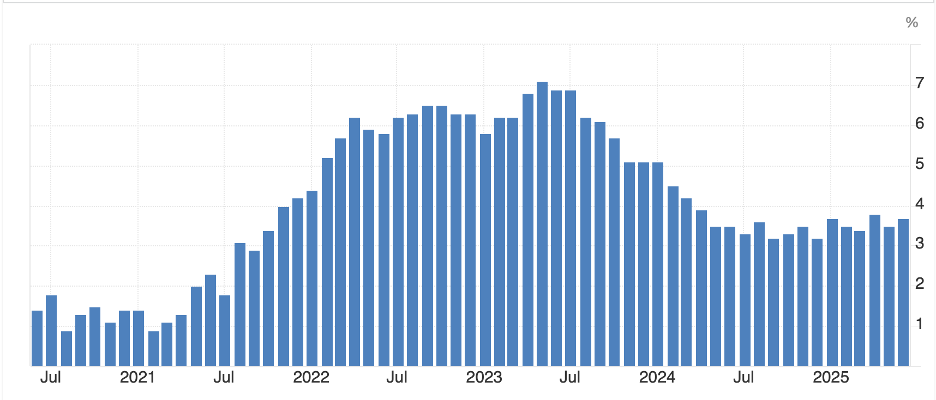
Away from that story, though, there has been little else of note overnight.  As such, let’s focus on the PPI data this morning and CPI tomorrow as they ought to help inform our views on the Fed’s actions going forward. Expectations are for headline to rise to 3.4% Y/Y while core jumps to 3.8% Y/Y.  It is difficult to look at a chart of these readings and not conclude that the bottom is in and the trend is higher.

Source: tradingeconomics.com

This is not to say that we are going to see price rises like we did back in 2022 as the waves of Covid spending washed through the economy, but the Fed’s mantra that inflation is going to head back to 2.0% over time is not obvious either.  In fact, if I were a betting man, I would estimate that we are likely to continue to see inflation run between 3.5% and 4.5% for the foreseeable future.  There is just nothing around to prevent that in the short run.  Now, if we do see significant productivity enhancements, those numbers will decline, but my take is the best opportunity for that, more effective and widespread use of AI, is still several years away.

Remember, too, that the government writ large, whether headed by R’s or D’s is all-in on inflation as it is the only opportunity they have to reduce the real value of the outstanding government debt.  Perhaps the Trump administration will take a different tack, but it is not clear they will be able to do so.  The only time inflation is a concern is when it becomes a political liability.  For the two decades leading up to Covid, it was not a daily concern of the population and central banks around the world were terrified of deflation!  In fact, there are so many comments by folks like Yellen, Bernanke and other Fed governors and presidents decrying the fact that their key regret was not getting inflation high enough, it is difficult to count them.  But as evidenced by the chart below of CPI, we no longer live in that world.

Source: tradingeconomics.com

Summing up, the current situation is that inflation has likely bottomed, the government continues to run massive fiscal deficits and given the $36 trillion in debt outstanding, the government needs to reduce the interest rate they pay on their debt.  If pressed, I would expect that we will see synthetic yield curve control (YCC) enabled by regulatory changes requiring banks and insurance companies to own a greater percentage of Treasury notes and bonds in their portfolios to ensure there is sufficient demand for issuance.  That can have the effect of turning long-term real yields negative, exactly the outcome the government wants. Remember, from 1944-1951, the Fed enacted YCC directly and it worked wonders in reducing the debt/GDP ratio.  They know this tool and will not be afraid to use it.

Ok, let’s take a look at what little action there was overnight.  After yesterday’s late rebound resulted in a mixed close with the NASDAQ still lower but the other two indices closing in the green, Asian equity markets also had a mixed picture.  The Nikkei (-1.8%) was the laggard, seemingly following last week’s US market movement after reopening from a holiday weekend.  However, Chinese shares (Hang Seng +1.8%, CSI 300 +2.6%) rallied sharply on the latest news that more Chinese stimulus was coming soon.  This time the Ministry of Commerce claimed they would be looking to boost consumption this year, but neglected to mention how they will do so.  Regardless, investors liked the story and when added to the gradual tariff story, it was all green.

European bourses are also in fine fettle this morning with gains across the board (CAC +1.2%, DAX +0.8%, IBEX +0.6%) and even the FTSE 100 (+0.1%) has managed to rally a bit.  This price movement, and that of the rest of Asia where gains were seen, seems all to be a piece with the slower tariff story discussed above.  As to US futures markets, at this hour (6:40), they are pointing modestly higher, 0.45%.

In the bond market, the only place where yields have moved significantly today is in Japan, where JGB yields have jumped 5bps and are now at their highest point since February 2011.  This followed comments from Deputy Governor Himino that the board was likely to debate a rate hike at their meeting next week and market pricing has a 60% probability priced in for the move.  There is much talk of wage increases in Japan, and Himino-san also raised questions about what the Trump administration will do and how it will impact yields.  Interestingly, despite the more hawkish rhetoric, the yen (-0.25%) actually declined today, not necessarily what you would expect.  As to the rest of the bond market, everything is within 1bp of Monday’s closing levels.

In the commodity markets, oil (-0.3%), which has been rocking lately on the increased Russia sanctions, is consolidating this morning although remains higher by nearly 6% this week and 12% in the past month. (As an aside, I don’t understand the Biden theory that sanctions driving up prices is going to be a detriment to Putin as he will make up for the loss of volume with higher prices, but then, I’m not a politician.). Meanwhile, NatGas (-3.2%) has backed off its recent highs as storage concerns ebb, although the ongoing cold weather appears to have the opportunity to push prices higher again.  As well, the latest dunkelflaute throughout Europe is driving demand for LNG.  In the metals markets, yesterday’s declines have been arrested, and we are basically unchanged this morning.

Finally, the dollar is mixed this morning, edging higher against some G10 counterparts (GBP -0.3%, JPY -0.4%) but sliding against others (NZD +0.6%).  Versus the EMG bloc, again the picture is mixed today with gainers (ZAR +0.4%, KRW +0.3%) and laggards (CZK -0.2%) although overall, I would argue the dollar is a touch softer on the back of the gradual tariff story.

On the data front, this morning’s PPI data (exp 0.3% M/M, 3.4% Y/Y) headline and (0.3% M/M, 3.8% Y/Y) core is the extent of what is to come.  Interestingly, the NFIB Index jumped to 105.1, the highest print since October 2018, as small businesses are clearly excited about the prospects of a Trump administration and the promised regulatory cuts.

Right now, both the dollar and Treasury yields are pushing to levels that have caused market problems in the past.  If these trends continue, be prepared for some more significant price action.  That could manifest as a sharp decline in equity markets, or some surprising Fed activity as they try to address any potential market structural problems that may arise.  But there is nothing due to stop the trends right now.

Good luck

Adf

Tempt the Fates

Inflation just won’t seem to die
No matter what Jay and friends try
Will he tempt the fates
To once more cut rates?
And if so, will bond yields comply?


It took until 1:10pm yesterday for Nick Timiraos at the WSJ to publish his article regarding the fact that Strengthening Inflation Poses Challenge for Trump, Fed.  I find the title of the article interesting as, to the best of my knowledge, Mr Trump has yet to take office and enact any policies.  But I suppose if Chairman Powell doesn’t like Trump (which seems to be the widely held view) he wanted to ensure his mouthpiece took a dig and distracted the audience from Powell’s problems.

Regardless, yesterday’s CPI report was a bit firmer than forecast, at least at the second decimal place, which is enough for the punditry to discuss.  Of course, it is remarkable that a statistic of this nature is considered down to the second decimal place given the broad uncertainty over its measurement overall.  However,  looking at the chart below, which shows the monthly CPI readings for the past ten years, it is not hard to see that monthly inflation bottomed back in June and appears to be finding a new home at the 0.3% or higher level.  

Source: tradingeconomics.com

I showed the 10-year chart to also highlight that pre-Covid, the monthly readings were somewhere between 0.1% and 0.2% consistently.  My point is that 0.3% per month annualizes to about 3.7% which is as good a guess as any for how inflation is going to play out going forward absent some major fiscal and monetary changes.

Aside from the fact that this is important because we all suffer the consequences in our daily lives, from a markets perspective, I believe this is the money line in the article [emphasis added], “Officials have indicated sticky inflation could lead them to slow the pace of rate reductions or stop altogether.”  Yet, despite this strong hint that the Fed is getting uncomfortable with the market’s current assessment of how much further Fed funds are going to decline, the futures market is pricing a 98.6% probability of a cut next week.  

In fairness, the market is now pricing only two more rate cuts after next week for all of 2025, a number that has been declining slowly over the past month.  But ask yourself how the Fed will behave if their firmly held belief that inflation is still heading toward their 2% goal starts to falter under the weight of continued high readings.  There are a few analysts who are discussing rate hikes for next year for just this reason.  That, my friends, would upset the apple cart!

The central bank theme of the week
Is current rates need quite a tweak
Despite CPI
That’s still on the fly
More havoc, these bankers, will wreak
 
Down Under, though they didn’t cut
The doves’ case was open and shut
The Swiss and Canucks
Made changes, deluxe
While Christine, a quarter, will strut

While we are beginning to see some changes in the market’s perception of the Fed’s future path, those changes are not obvious elsewhere.  So far this week, the RBA left rates on hold, as they had promised, but explained the need to cut was upon them, demonstrating far less concern over inflation than in the past.  You may recall that the AUD fell sharply after the RBA statement put cuts in play going forward.  Then, yesterday, the BOC cut 50bps, as expected, as they, too, have turned their focus to economic activity and away from inflation, which continues above their target.  This morning, the Swiss National Bank surprised the markets with a 50bp cut, taking their base rate back down to 0.50%, expressing concern that inflation was slowing too rapidly and could become a problem.  Finally, shortly the ECB will announce their policy rate with the market highly confident a 25bp cut is on the way, although there are a few looking for 50bps.

The funny thing about all these cuts is that other than Switzerland, where recent CPI readings were at 0.7%, inflation remains above target levels and is demonstrating the same type of behavior as in the US, where it bottomed during the summer and is rebounding.  As well, especially in Europe, unemployment does not appear to be a major problem in these nations.  This begs the question, why are central banks so keen to cut rates if inflation remains sticky above their target levels and economic activity is hanging on?  

I have no good answer for this although I suspect there may be significant pressure from finance ministries regarding the cost of all that government debt that is outstanding and needs to be refinanced.  Alas, even though almost every central bank’s primary mandate is to maintain low inflation, it has become clearer by the day that following that mandate is not seen as important as other concerns.  Whether those concerns are economic activity or financing outstanding debt, or perhaps something else, I fear that we are heading back into a world where higher inflation is going to be the norm everywhere in the world.  Plan accordingly.

Ok, after another couple of record high closes in the US yesterday, let’s see how things have played out ahead of the ECB this morning.  In Asia, both Japan (+1.2%) and China (+1.0%) rallied on the brightening tech outlook, the prospect of further rate cuts and the ongoing hopes for that Chinese bazooka to finally be fired.  As well, Hong Kong (+1.2%) and Korea (+1.6%) also fared well, although the rest of the region was more mixed on much smaller movement.  In Europe, the best description ahead of the ECB is unchanged, with every bourse within 0.1% of Wednesday’s closing levels.  US futures at this hour (7:15) are pointing modestly lower, however, down about -0.2%.

In the bond market, despite all the surety of rate cuts, investors are not comfortable holding duration, and we are seeing yields continue to rise across the board.  Treasury yields are higher by another 3bps and back to 4.30% while European sovereign yields are all higher by between 3bps and 5bps.  It seems the bond markets are not convinced that central banks are behaving properly.  Perhaps the “bond vigilantes” will truly make a return after all.

In the commodity markets, oil (+0.1%) which managed to capture the $70/bl level is holding on this morning after the IEA raised its demand forecast for 2025 based on increased expectations for Chinese demand (because of the stimulus that is expected.). In the metals market, that Chinese stimulus is helping copper (+0.5%) although the precious sector is consolidating yesterday’s gains with gold (-0.3%) backing off slightly and silver unchanged.  However, gold is back above $2700/oz and appears to have finished its consolidation.

Finally, the dollar is mixed this morning, broadly holding onto its recent gains, but seeing some weakness against specific currencies.  For instance, BRL (+1.0%) responded to the fact that the central bank there, bucking the global trend, hiked the Selic rate by 100bps, a quarter point more than expected, as their concern over rising inflation increases.  (It seems they are one of the few central banks that is focused on their job, not the politics!). But away from that outlier move, we see AUD (+0.45%) rising on stronger than expected jobs growth data while NOK (+0.4%) is continuing to benefit from oil’s recent gains.  On the flip side, CHF (-0.35%) is suffering for the larger than expected SNB rate cut and GBP (-0.2%) is under modest pressure as traders debate whether the BOE will cut rates next week or not.

On the data front, Initial (exp 220K) and Continuing (1880K) Claims lead the way alongside PPI (0.2%, 2.6% Y/Y headline, 0.2%, 3.2% Y/Y core) at 8:30 this morning.  Beyond that, there is a 30-year auction this afternoon and that is really it.  I don’t see PPI having a great deal of impact and with CPI behind us, and Timiraos having told us that the Fed is going to slow the pace of cuts, I’m not sure what else there is to watch.  Obviously, this morning’s ECB meeting matters, but really, it is hard to get overly excited about the outcome there.  I suspect that attention will now be focused on the FOMC next week, with much more concern over the dot plot and SEP than the 25bp cut that seems a foregone conclusion.  

If the Fed is truly slowing the pace of cuts, once again, it becomes difficult to see how the dollar will soften vs. its major counterparts. Keep that in mind for now.

Good luck

Adf

A New Denouement

The story is that the Chinese
Will speed up their policy ease
Creating for Yuan
A new denouement
Of currency weakness disease
 
Their problem is that in the past
That weakness could happen too fast
So, how far will Xi
Be willing to see
Renminbi decline at long last?


As we await the US CPI data this morning, the story du jour in markets revolves around the Chinese renminbi and whether President Xi will allow, or encourage, the PBOC to weaken the currency.  Strategically, Xi has made a big deal to the rest of the world that the Chinese currency will remain strong and stable as he seeks other nations to increase their use of the renminbi in commercial transactions as well as a store of value.  I believe part of this is a legitimate goal but that there is also a significant fear underlying these actions as history has shown the Chinese people will flee the currency if it starts to weaken too quickly.  It is the latter issue that has been the primary driver of the PBOC’s efforts to continuously fix the renminbi at stronger than market levels.
 
This process worked well enough for the past four years as the Biden administration, while certainly not friendly to China, was not aggressively attacking the nation’s efforts to expand its influence.  However, that situation is about to change with the Trump administration and as Mr Trump has already threatened numerous new tariffs on various parts of China’s production economy, Xi’s calculus must change.  This puts Xi in a difficult situation; allow the currency to weaken more aggressively to offset the impact of any tariffs and suffer through capital flight or maintain the renminbi’s value and see exports decline along with overall economic activity.  It is easy to see in the chart below when the story about allowing a weaker currency hit the tape.  However, there is not nearly enough information to take a longer-term view on the subject.


Source: tradingeconomics.com

One other thing to remember is that Chinese interest rates are continuing to decline with 10-year yields trading to yet another new low last night at 1.88%.  As the spread between US and Chinese yields continues to widen, by itself that will put pressure on the renminbi to decline.  The problem for Xi is that no matter the control the PBOC has over the FX markets in China, now that there is an offshore market, if the Chinese people become concerned over the value of the renminbi, it has the ability to decline far more quickly than the government would want to allow.

For those of you with Chinese assets on your balance sheet or Chinese denominated revenues, I would be looking to maximize my hedges for now.  As an aside, there were a number of forecast changes by major banks overnight with many calls for USDCNY to reach 7.50 or higher by the end of next year now.

The market’s convinced
A rate hike is on the way
Why won’t the yen rise?

The other story overnight focused on Japan, or more precisely the BOJ meeting to be held in one week’s time.  It seems that there is a lot of dissent amongst the analyst community regarding whether or not the BOJ will hike rates.  As an example of how thin all the analyst gruel really is, one of the key rationales for the belief in a rate hike was that last week, Toyoaki Nakamura, perceived as the most dovish BOJ board member, indicated he didn’t object to a rate hike, although wanted to see more data before declaring one was appropriate for December.  However, just last night the BOJ added a speech and press briefing to their calendar for Deputy Governor Ryozo Himino right before the January meeting.  This has the punditry now expecting the BOJ to wait until then rather than move next week.  The below chart shows the change in the market’s expectations for a rate hike over the past week.

As I said, the tea leaves that the punditry are reading really don’t say very much at all.  Perhaps we can look at the economic data to get a sense.  Over the past month, we have seen CPI for both the nation and Tokyo print higher than forecast and continue to slowly climb.  As well, PPI printed higher and GDP continues to grow, albeit at a modest pace.  Of greater concern is that earnings data is lagging the CPI data.  

A look at the FX market would indicate that traders are losing their taste for a rate hike next week, at least as evidenced by the yen’s recent weakness.  As you can see in the past week, it has slipped nearly 2%, hardly a sign that higher Japanese rates are expected.  But something that is not getting much press is the potential Trump impact, where the incoming president would like to see the yen, specifically, strengthen as it is truly historically undervalued.  FWIW, which is probably not that much, I am in the rate hike camp for next week and expect the yen will find some support soon.

Source: tradingeconomics.com

Ok, enough Asian currency talk.  Let’s see how everything else behaved ahead of this morning’s data.  Yesterday’s modest US equity declines were followed by virtually no movement in Japanese shares although most of the rest of Asia followed the US lower.  Hong Kong (-0.8%) and Taiwan (-1.0%) were the worst performers and the one outlier the other way was Korea (+1.0%) as the KOSPI continues to recoup the losses made after the martial law fiasco.  European bourses are mostly little changed on the day with Spain’s IBEX (-1.1%) the lone exception which has been negatively impacted by Q3 results from Inditex (the parent company of Zara).  As to US futures, at this hour (7:25) they are little changed.

In the bond market, yields continue to edge higher in Treasuries (+2bps) and European sovereigns with gains on the order of 1bp to 2bps across the board.  While there is some discussion regarding fiscal questions in Europe, ultimately, nothing has broken the connection between US and European yields, and I would contend they are all awaiting this morning’s CPI.

In the commodity markets, oil (+1.4%) is rebounding although remains below $70/bbl, which seems to be a trading pivot for now.  The China stimulus story remains the key in the market with a growing belief that if China does successfully stimulate, oil demand will increase.  Meanwhile in the metals markets, gold is unchanged this morning after another nice rally yesterday while both silver and copper are under modest pressure.  I would contend, however, that the trend for all metals remains slightly upward.

Finally, the dollar is firmer against virtually all its counterparts this morning with most G10 currencies softer on the order of -0.3% or so although CAD and CHF are little changed on the session.  In the EMG bloc, KRW (+0.3%) is rebounding alongside the KOSPI as the excesses from the martial law story last week continue to be unwound, but elsewhere in the bloc, modest weakness, between -0.2% and -0.4%, is the rule.  However, this is all dollar focused today.

On the data front, it is worth noting that yesterday’s NFIB Small Business Optimism Index shot higher in November in the wake of the election results, heading back toward its long-term average just above 100.  As to this morning, forecasts for Headline (exp 0.3%, 2.7% Y/Y) and Core (0.3%, 3.3% Y/Y) CPI continue to indicate that the Fed may be overstating the case in their belief that inflation pressures are ebbing.  Rather, I continue to believe that we have seen the bottom in the rate of inflation and a gradual increase is in our future.  Two other things of note are the BOC rate decision (exp 50bps cut) this morning and then the Brazilian Central Bank rate decision (exp 75bp HIKE) this afternoon.  The latter is clearly an attempt to rein in the BRL’s recent dramatic decline.

With no Fed speakers, if the data this morning is significantly different than expectations, I would look for the Fed Whisperer, Nick Timiraos, to publish something before the end of the day in order to get the Fed’s latest views into the market.  Absent that, nothing has gotten in the way of the higher dollar at this stage so stay sharp.

Good luck

Adf

All Goes to Hell

The Turning is coming much faster
Than forecast by every forecaster
Now Syria’s fallen
And pundits are all in
Iran will soon be a disaster
 
However, the impact on trading
Is naught, with no pundits persuading
Investors to sell
As all goes to hell
Is narrative power now fading?


The suddenness of the collapse of Bashar Al-Assad’s control of Syria was stunning, essentially happening in on week, maybe less.  But it has happened, and it appears that there are going to be long-running ramifications from this event.  At the very least, the Middle East power structure has changed dramatically as Russia and Iran both abandoned someone who had been a key ally in their networks.  Russia is clearly otherwise occupied and did not have the wherewithal to help Assad, but it is certainly more interesting that Iran did not step up.  Rumors are that the government there is growing concerned that an uprising is coming that may change the Middle East even more dramatically.

I have previously discussed the idea of the Fourth Turning when events arise that shake up the status quo, and this is proof positive that Messrs. Howe and Strauss were onto something when they published their book back in 1997.  The thing is, even those who believed the idea and did their homework on the timing of events have been caught out by the speed of recent activities.  Most of the punditry in this camp, present poet included, didn’t expect things to become unruly until much closer to the end of the decade.  And maybe it will be the case that the collapse of Syria is just an appetizer to a much larger conflagration.  (I sincerely hope not!). But my take is these events were not on many bingo cards, certainly not in the financial punditry world.

Now, the humanitarian situation in Syria has been a disaster for the past 13 years, ever since the civil war there really took shape and fomented the European migration crisis.  Alas, it seems likely to worsen for the unfortunate souls who still live there.  But for our purposes, the question at hand is will this have an impact on markets?

Interestingly, the answer, so far, is none whatsoever.  The obvious first concern would be in oil markets given the proximity to the major oil producing regions in that part of the world.  However, while oil (+1.4%) is a bit higher this morning, it remains well below $70/bbl and while I am no technical analyst, certainly appears to be well within a downtrend as per the below chart.

Source: tradingeconomics.com

Next on our list would be the FX markets, perhaps with expectations that haven currencies would be in demand.  Yet, the dollar is sliding against most of its counterparts this morning, with the notable exception of the yen (-0.3%) which is the one currency under more pressure.  That is the exact opposite behavior of a market that is demonstrating concern over future disruptions.  As to securities markets, they are much further removed from the situation and while US futures are edging lower at this hour (6:20), slipping about -0.15%, overnight activity showed no major concerns and European bourses are mixed, but all within 0.3% of Friday’s closing levels.  

Finally, bond markets are essentially unchanged this morning, with Treasury yields higher by 1bp and European sovereigns almost all unchanged on the day.  We did see yields slip a few bps in Asia, likely on the back of the weaker than forecast Chinese inflation data, but the bond market is certainly showing no signs of concern over the geopolitics of the moment.

On Sunday the Chinese did meet
And promised they’d finally complete
Their stimulus drive
And therefore revive
The growth that has been in retreat

A story that has had an impact on markets this morning is the Chinese Politburo’s comments that they are going to implement a “more proactive” fiscal policy in the upcoming year along with “moderately loose” monetary policy as President Xi scrambles to both improve the growth impulse and prepare for whatever President-elect Trump has in store for China once he is inaugurated.  Now, we have heard these words before and to date, each effort has been, at the very least, disappointing, if not irrelevant.  But hope is a trader’s constant companion and so once again we saw specific markets respond to the news.

Interestingly, mainland Chinese shares did not respond as enthusiastically as one might have expected with the CSI 300 actually slipping -0.2%.  But the Hang Seng (+2.75%) embraced the news warmly.  In the FX markets, early weakness in CNY was reversed although the renminbi closed the onshore session essentially unchanged on the day.  The big winners were AUD (+0.9%) and NZD (+0.5%) as traders bid up the currencies of the two nations likely to benefit most given their export profiles of commodities to China.  But beyond those market moves; it is hard to make a case that anyone was listening.

Ok, let’s look at the rest of the overnight session and see what we can anticipate in the week ahead. Japanese shares (Nikkei +0.2%) were little changed overnight while the big mover in Asia was Korea (-2.8%) as the ructions from the brief interlude of martial law last week continue to weigh on the short-term future of the government and economy there.  However, away from those markets, the rest of Asia saw movement of just +/- 0.3% or less, hardly newsworthy.  In Europe, the story is also mixed with the CAC (+0.5%) leading the way higher, perhaps on the back of the successful reopening of the Notre Dame cathedral, or more likely on the back of hopes that the luxury goods sector would improve based on Chinese stimulus supporting that economy.  As to the rest of the continent, more laggards than winners but movement has been small, 0.2% or less, although the FTSE 100 (+0.4%) is also higher this morning led by the mining shares in the index, also related to Chinese stimulus.

We have already discussed the bond market, which has been extremely quiet ahead of this week’s CPI and next week’s FOMC meeting so let’s turn to the commodity markets, where not only is oil rallying, perhaps more related to China than the Middle East, but we are seeing metals markets rally as well with both precious (Au +0.9%, Ag +2.2%) and industrial (Cu +1.6%, Zn +2.0%) performing well.  Surprisingly, aluminum (-0.25%) is not playing along this morning but if the China story is real, it should follow suit.

Finally, the rest of the currency story shows KRW (-0.5%) continuing to feel the pain, along with its stock market, from the politics last week.  At the same time, we are seeing solid gains in ZAR (+1.1%) on the metals moves and NOK (+0.4%) on the back of oil’s rally.  Elsewhere, while the dollar is broadly softer, it is of a much lesser magnitude, maybe 0.2% or so.

On the data front, this week brings two central banks (BOC and ECB) and a bunch of stuff, although CPI on Wednesday will be the most impactful.

TuesdayNFIB Small Biz Optimism94.2
 Nonfarm Productivity2.2%
 Unit Labor Costs1.9%
WednesdayCPI0.2% (2.7% Y/Y)
 -ex food & energy0.3% (3.3% Y/Y)
 BOC Meeting3.25% (current 3.75%)
ThursdayECB meeting3.0% (current 3.25%)
 Initial Claims220K
 Continuing Claims1870K
 PPI0.3% (2.6% Y/Y)
 -ex food & energy0.2% (3.3% Y/Y)

Source: tradingeconomics.com

Last week saw what appeared to be stronger payroll data on the surface, with the NFP rising 227K and upward revisions, while the Unemployment Rate rose the expected 1 tick to 4.2%.  As well, Average Hourly Earnings rose more than expected, to 4.0%.  And yet, the Fed funds futures market raised the probability of a rate cut next week to 87% (it was over 90% for a while in the session).  Now, there has been a group of analysts who have been claiming that the headline payroll data is very misleading and actually the jobs market is much weaker than the administration is portraying, and it seems they got a bit more traction in their case last week.  Nonetheless, it is hard for me to look at the data and justify another rate cut by the Fed, at least if their objective is to push inflation back to 2.0%.  Of course, that is another question entirely!

Mercifully, the Fed is in their quiet period so we will not hear from them until they pronounce things at the FOMC meeting a week from Wednesday.  Until then, I expect that the China story, as well as assorted Trump related stories, will drive things although keep a wary eye on the Middle East for anything more explosive.  As to the dollar, I have consistently explained that if the Fed eases in the face of rising inflation, that will undermine the greenback.  It will be very interesting to see how things play out this week and next as a set-up for 2025.  For now, I don’t see a good reason for a large move, but if I were a hedger, I would make sure that I am as hedged as I am allowed to be.

Good luck

Adf

Right On Humming

So, CPI didn’t decline
And may not be quite so benign
As Jay and the Fed
Consistently said
When hinting more rate cuts are fine
 
However, that will not deter
Chair Powell, next month, to confer
Another rate cut
Though it is somewhat
Unclear if his colleagues concur


Despite the fact the narrative is pushing Unemployment as the primary focus of the FOMC, yesterday’s CPI report, which seemingly refuses to decline to the Fed’s preferred levels, had Fed speakers beginning to hedge their bets regarding just how quickly rates would be coming down from here. [Emphasis added.]

St. Louis Fed President Alberto Musalem explained, “The strength of the economy is likely to provide the space for there to be a gradual easing of policy with little urgency to try and find where the neutral rate may be.

Dallas Fed President Lorrie Logan commented (using a series of maritime metaphors for some reason) “After a voyage through rough waters, we’re in sight of the shore: the FOMC’s Congressionally mandated goals of maximum employment and stable prices, but we haven’t tied up yet, and risks remain that could push us back out to sea or slam the economy into the dock too hard.”  

Finally, Kansas City Fed President Jeff Schmid told us, “While now is the time to begin dialing back the restrictiveness of monetary policy, it remains to be seen how much further interest rates will decline or where they might eventually settle.”  

If we ignore the oddity of the maritime metaphor, my takeaway is that the Fed is still looking to cut rates further as directed by Chairman Powell, but the speed with which they will act seems to be slowing down.  As I have maintained in the past, given the current data readings, it still doesn’t make that much sense to me that they are cutting rates at all, but arguably, that’s just another reason I am not a member of the FOMC.  Certainly, the market is on board as futures pricing increased the probability of that cut from 62% before the release to 82% this morning.  There is still a long way to go before the next meeting, with another NFP, PCE and CPI report each to be released, as well as updates on GDP and Retail Sales and all the monthly figures, so this story is subject to change.  But for now, a rate cut seems likely.

One other thing, I couldn’t help but notice a headline that may pour a little sand into the gears of the rate cutting apparatus at the Eccles Building.  This is on Bloomberg this morning: Manhattan Apartment Rents Rise to Highest Level Since July.  Again, the desperation to cut rates seems misplaced.

Despite the fact rate cuts are coming
The dollar just keeps right on humming
This morning it’s rising
Which ain’t that surprising
As more depths, the euro is plumbing

Turning our attention to the continent, European GDP figures were released this morning, and they remain disheartening, to say the least.  While the quarterly number rose to 0.4%, as you can see from the chart below, it has been several years since the continent showed any real growth, and that was really just the rebound from the Covid lockdowns.  Prior to Covid, growth was still lackluster.

Source: tradingeconomics.com

While these are the quarterly numbers, when looking at the Y/Y results, real GDP grew less than 1% in Q3 for the past 6 quarters and, in truth, shows little sign of improving.  After all, virtually every nation in the Eurozone is keen to continue their economic suicide via energy policy and regulation.  This thread on X (formerly Twitter)is a worthwhile read to get an understanding of the situation on the continent.  I show it because this morning, the euro has fallen yet further, and is touching the 1.05 level, seemingly on its way to parity and below.  It highlights that since just before the GFC, the Eurozone economy has fallen from virtually the same size as the US economy, to just 60% as large, and explains the key reasons.  Read it and you will be hard-pressed to consider the euro as a safe store of value, at least relative to the dollar.  And remember, the dollar has its own issues, but at least the US economy remains dynamic.

But the dollar is king, again, this morning, rising against virtually all its counterparts on the session.  Versus the G10, the average movement is on the order of 0.3% or so, but it is uniform.  USDJPY is now pushing 156.00, the pound seems headed for 1.2600 and Aussie is below 0.65.  My point is concerns about the dollar and its status in the world seem misplaced in the current environment.  If we look at the EMG bloc, the dollar is stronger nearly across the board as well, with similar gains as the G10.  MXN (-0.5%), ZAR (-0.4%) and CNY (-0.2%) describe the situation which has been a steady climb of the greenback since at least the Fed rate cut, and for many of these currencies, for the past 6 months.  Nothing about President-elect Trump’s expected policies seems likely to change this status for now.

If we look at equity markets, yesterday’s US outcomes were essentially little changed on the day.  However, when Asia opened, with the dollar soaring, we saw a lot more weakness than strength, notably in China with the CSI 300 (-1.7%) and Hang Seng (-2.0%) leading the way lower although the Nikkei (-0.5%) also lagged along with most other Asian markets.  While there were some modest gainers (Australia +0.4%, Singapore +0.5%) red was the predominant color on screens.  In Europe, however, investors are scooping up shares with the DAX (+1.2%) leading the way although all the major bourses are higher on the session.  It seems that there is a growing consensus that the ECB is going to cut 25bps in December and then another 25bps in January, which has some folks excited.  US futures, meanwhile, are slightly firmer at this hour (7:00).

All this is happening against a backdrop of a continued climb in yields around the world.  Yesterday, again, yields rose with 10yr Treasuries trading as high as 4.48%, their highest level since May, and that helped drag most European yields higher as well.  This morning, we are seeing some consolidation with Treasury yields backing off 1bp and European sovereign yields lower by -2bps across the board.  The one place not following is Japan, where JGB yields edged higher by 1bp and now sit at 1.05%.    Consider, though, that despite those rising yields, the yen continues to slide.  In fact, that is the correlation that exists, weaker JPY alongside higher JGB yields as you can see in the below chart.

Source: tradingeconomics.com

While it is open to question which leads and which follows, my money is on Japanese investors searching for higher yields, selling JGB’s and buying dollars to buy Treasuries.

Finally, the commodity space continues to get blitzed, or at least the metals markets continue that way as once again both precious and industrial metals are all lower this morning.  In fact, in the past week, gold (-5.7%), silver (-6.4%) and copper (-9.1%) have all retraced a substantial portion of their YTD gains.  It is unclear to me whether this is a lot of latecomers to the trade getting stopped out or a fundamental change in thinking.  My view is it is the former, as if the Trump administration is able to support growth, I expect that will reveal the potential shortages that exist in the metals space.  Oil (+0.4%) is a different story as it continues to consolidate, but here I think the odds are we see lower prices going forward as more US drilling brings supply onto the market.

On the data front, this morning brings the weekly Initial (exp 223K) and Continuing (1880K) Claims data along with PPI (0.2%, 2.3% Y/Y) and core PPI (0.3%, 3.0% Y/Y).  In addition, the weekly EIA oil data is released with modest inventory builds expected and then we hear from Chair Powell at 3:00pm this afternoon.  Arguably, that is the event of the day as all await to see if the trajectory of rate cuts is going to flatten out or not.

I cannot look at the data and conclude that the Fed will be very aggressive cutting rates going forward.  The futures market is now pricing in about 75bps of cuts, total, by the end of 2025.  That is a 50bp reduction in that view during the past month and one of the reasons the dollar remains strong.  I would not be surprised if there are even fewer cuts.  Right now, everything points to the dollar continuing to outperform virtually every other currency.

Good luck

Adf

A Warning

Though Trump has been leading the news
With folks asking who he will choose
As agency chiefs
That share his beliefs
For markets, today brings new cues
 
Inflation will soon be released
And though Jay claims he killed this beast
The data this morning
May well be a warning
Inflation, in fact, has not ceased


Source: tradingeconomics.com

Beauty (and everything else) is in the eye of the beholder.  So, what are we to make of the above chart which shows the past ten years’ worth of monthly Core CPI readings prior to this morning’s release.  Some eyes will travel to the peak in April 2021 (0.812%) and see a downward sloping line from there.  The implication is that the trend is your friend and that things are going well.  Others will gravitate to the June 2023 print (0.195%) and see that except for a blip lower in June 2024 (0.1%), the series looks like it may have bottomed and, if anything, has found a new home.

Remember, that if the monthly print is 0.3%, that annualizes to 3.7% Core CPI.  That seems pretty far above the 2.0% target that the Fed is shooting for and would call into question exactly why they are cutting interest rates.  In fact, you can look at the above chart and see that prior to the pandemic, core CPI on a monthly basis was below 0.3% every month except one, with many clearly down near the 0.1% level.

As much as Powell and his minions want to convince us that inflation is heading back to their goal and everything is ok, the evidence does not yet seem to be pointing in that direction.  For today, current median analyst expectations are for a headline of 0.2% M/M, 2.6% Y/Y and a core of 0.3% M/M, 3.3% Y/Y.  Even if the data comes as expected, it would seem very difficult to justify continuing to cut rates given the equity market remains essentially at all-time highs, while Treasury yields (-1bp today, +12bps yesterday) seem like they are starting to price in higher long-term inflation.

However, something interesting seems to be happening with the Fed speakers.  Richmond Fed President Barkin yesterday explained that things look pretty good, but declined to even consider forecasting where things will go.  As well, Minneapolis Fed President Kashkari indicated that while inflation has declined, it does not yet seem dead.  The Fed funds futures market is now pricing just a 62% probability of a rate cut in December.  One month ago, it was pricing an 84% probability.  As I have maintained, it seems increasingly difficult for the Fed to make the case that rate cuts are necessary given the economic data that we continue to see.  I understand that there are still a large group of pundits who believe things are much worse when you dig under the surface of the data, and I also understand that most people in the country don’t believe that things are going that well, hence the landslide election results for Mr Trump.  However, based on the data that the Fed allegedly follows, rate cuts seem difficult to support.  Today will be another piece of the puzzle.  If the data is hot, I expect risk assets to suffer more and the dollar to continue its rally.  If the data is soft, look for new records in stocks while the dollar retraces some of its recent gains.

With that in mind, let’s look at what happened overnight in markets.  Yesterday’s modest declines in the US market were followed by more selling than buying in Asia with the Nikkei (-1.7%) leading the way lower but weakness also seen in Australia (-0.75%), Korea (-2.65%), India (-1.25%) and Taiwan (-0.5%) as an indication of the general sense in the time zone.  The outlier here was mainland China (+0.6%) where hope remains eternal that the government will fire their bazooka.  In Europe, though, this morning is seeing a hint of red with most major indices lower by just -0.1% and Spain’s IBEX (+0.2%) even managing a small gain.  The commentary from the continent is over fears of how things will evolve with the new Trump administration and his threat of more tariffs on European exports.

But here’s something to consider.  If Trump is successful in quickly negotiating an end to the Russia/Ukraine war, won’t that be a huge benefit to Europe?  After all, if the war is over, they will be able to restart imports of cheap Russian NatGas which should have an immediate impact on their overall cost of energy, especially Germany, and help the economies there substantially.  I know they love to scream because they all hate Trump, but it seems like he could help them a lot if they would let him.  Oh yeah, US futures are a touch lower, -0.2%, at this hour (7:10).

Anyway, in the bond market, after yesterday’s rout in the US, yields are little changed this morning but in Europe, yields are climbing as they weren’t able to keep up with US yields yesterday.  So, on the continent, yields are higher between 2bps and 4bps after rising 4bps – 6bps yesterday.  In Asia, JGB yields jumped 4bps on the global rise in bond yields and are now back above 1.0%.  However, that has not been nearly enough to help the yen (-0.2%), which continues to weaken and is pushing back above 155.00 this morning.  

In the commodity markets, oil (+0.2%) is edging higher, but that seems to be consolidation after what has been a pretty awful week for the black sticky stuff.  OPEC reduced its demand forecasts for the 4th consecutive month, something else that is weighing on the price and, of course, the Trump administration is going to seek to make it much easier to explore for and produce more oil.  In the metals markets, gold (+0.5%) seems to have found a temporary bottom along with silver (+0.8%) although the damage has been substantial this week.  However, copper and aluminum remain under pressure as fears over continued weakness in China seem to be weighing on the price.

Finally, the dollar has stopped rising sharply, although it is not really declining very much, at least not vs. the G10 currencies.  In fact, vs. the G10, the dollar is softer by just 0.1% or so vs. the entire bloc other than the yen mentioned above.  However, vs. the EMG bloc, the dollar has ceded some more gains with KRW (+0.7%) the leader but MXN (+0.4%), CNY (+0.35%) and ZAR (+0.6%) all bouncing back after a week of substantial declines.  We all know nothing goes up or down in a straight line, so this consolidation is just that, it is not a trend change by any stretch.  A quick look at the MXN chart below, which is essentially what we have seen everywhere, explains just how insignificant the overnight movement has been relative to the recent trend.

Source: tradingeconomics.com

On the data front, aside from the CPI data, we hear from three more Fed speakers (Logan, Musalem and Schmid) so it will be interesting to see if they are starting to change their sense of how things are going to progress.  Of course, all eyes will be on Powell’s speech Thursday afternoon, but perhaps there are some clues to be had here.

It is not clear to me that anything has changed in the big picture.  The US economy continues to be the strongest one around and now has the added impetus of expectations for more positivity with the change in the administration.  In that environment, my long-term view on the dollar remains it has further to run.

Good luck

Adf