Talk of the Town

Two things have been talk of the town
First, silver ne’er seems to go down
But also, of late
The Dow’s in a state
Where it wears the daily stock crown
 
But if we dig deeper, we find
Industrials, as they’re defined
Don’t build many things
Instead, they pull strings
As finance and tech are combined


Before I start, this will be the last poetry of 2025.  I want to thank all my readers for continuing to read and I certainly hope I both amused you and highlighted one view of what is driving the zeitgeist in markets these days.  FX poetry will return on January 5th with my annual long-form poetic prognostications.  Merry Christmas, Happy Chanukkah and Happy New Year to you all.

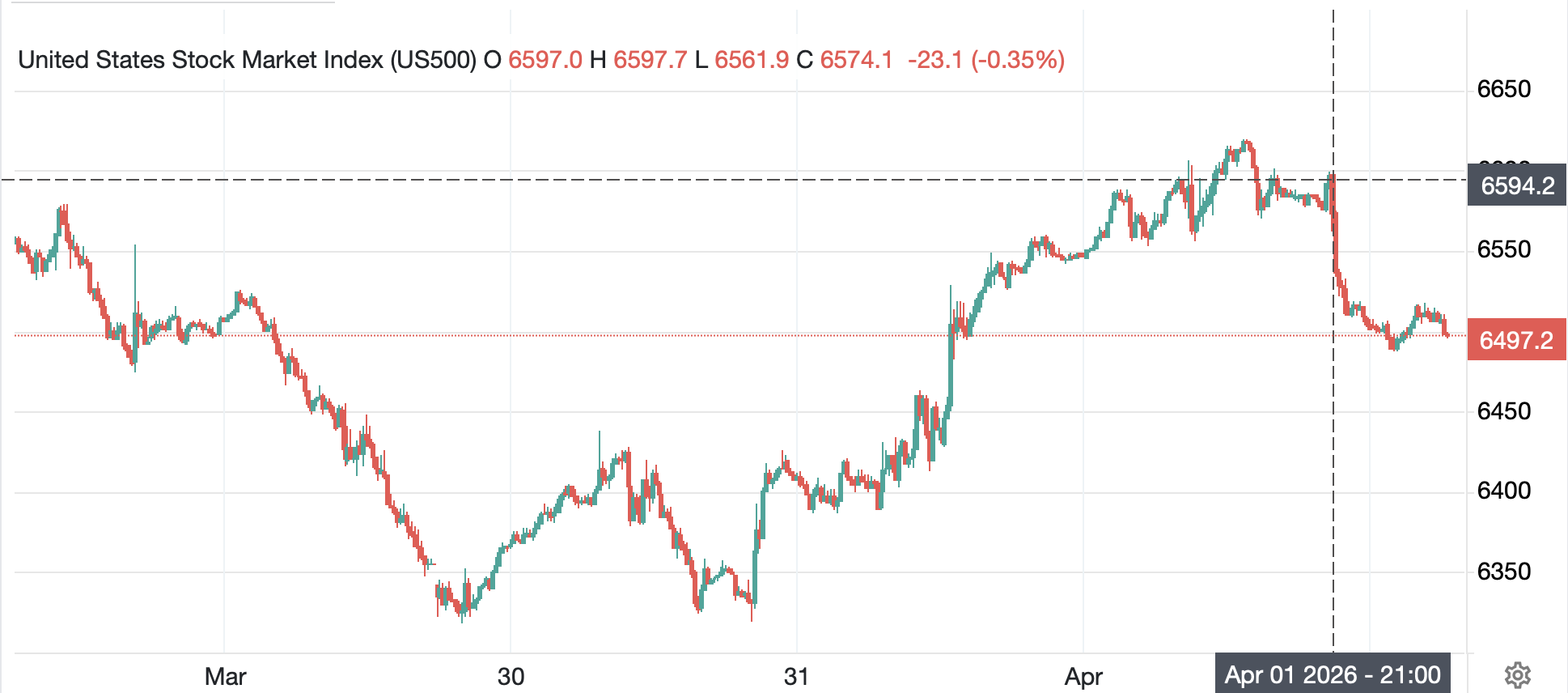
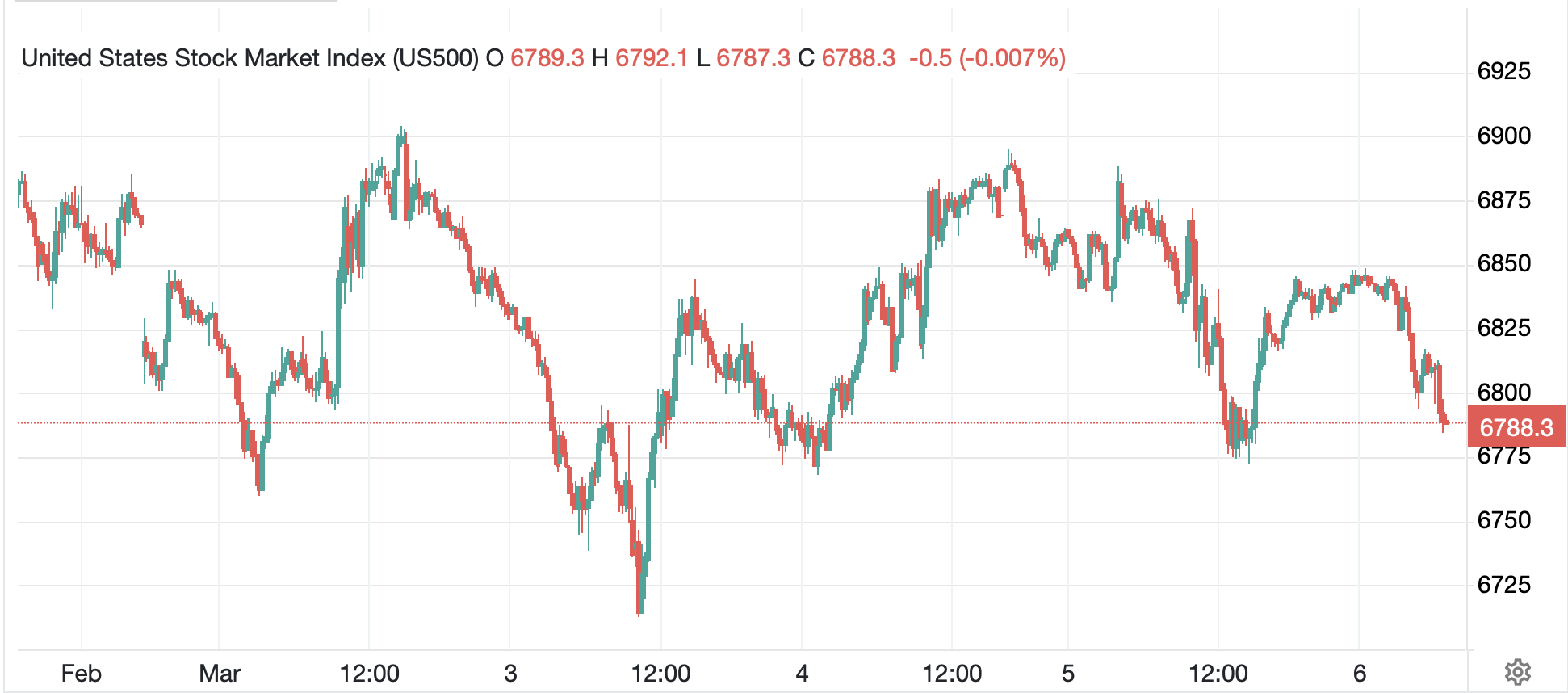
So, I was reading my friend JJ’s evening wrap up from yesterday and he highlighted the fact that the DJIA (+1.3%) made a new all-time high in trading and it was led by…Goldman Sachs.  

Source: tradingeconomics.com

Now, I have nothing against Goldman Sachs, per se, but it struck me as odd that Goldman Sachs, an investment bank, was a member of the Dow Jones Industrial Average.  It’s not that I wasn’t aware of the fact, but for some reason, this mention stuck out.  So, I thought I might look at the current membership of the Dow and see just how industrial it is.

While you will likely not be surprised that it has several non-industrial, service-based companies in the index, you might be surprised by just how many.  For instance, aside from Goldman, JPMorgan, American Express and Visa are in there as well as United Health and Travelers from the insurance space.  There are major retailers like Walmart, Home Depot, Amazon and McDonalds, along with tech and telecom/media names like Microsoft, Salesforce, Disney and Verizon.  

This is not to say that these are misplaced with respect to their relative importance in the US economy, clearly all are major corporations with long histories of profitability.  But it seems odd to list them as industrial.  I would contend that nothing explains the financialization of the US economy better than the fact that 14 out of the 30 members of the DJIA are service companies rather than producers of stuff.  Maybe they should rename it the Dow Jones Major Corporate Index.

To conclude the equity portion of our discussion, yesterday saw the NASDAQ (-0.25%) decline in the face of a broad overall equity rally as there appears to be a rotation of investors from AI into other things like financials (as hopes of another Fed rate cut spring eternal) and power producers as the power needs of AI keep getting estimated ever higher.  This rally was followed pretty much everywhere around the world as regardless of one’s religion, it appears investors are all counting on Santa to deliver higher prices.  In Asia, Tokyo (+1.4%). HK (+1.75%), China (+0.6%), Australia (+1.2%), Korea (+1.4%) and virtually every other market rallied.  The only data of note here was Japanese IP which came in a tick higher than its preliminary forecast, but to counter that, Nikkei reported that the BOJ, when they meet next week, are definitely going to raise the base rate by 25bps to 0.75%, the highest level since 1994.  That doesn’t seem that bullish, but then, I’m not Japanese.

In Europe, the gains are also universal, albeit less impressive with Spain (+0.5%) and France (+0.5%) leading the way and Germany and the UK both only marginally higher.  The most interesting news here is about the EU’s efforts to confiscatethe Russian assets that have been frozen since they invaded Ukraine, but which are being blocked by Belgium where they reside under SWIFT.  And as I type (7:45) US futures are mixed with the Dow (+0.2%) still in favor while NASDAQ (-0.5%) continues to lag.

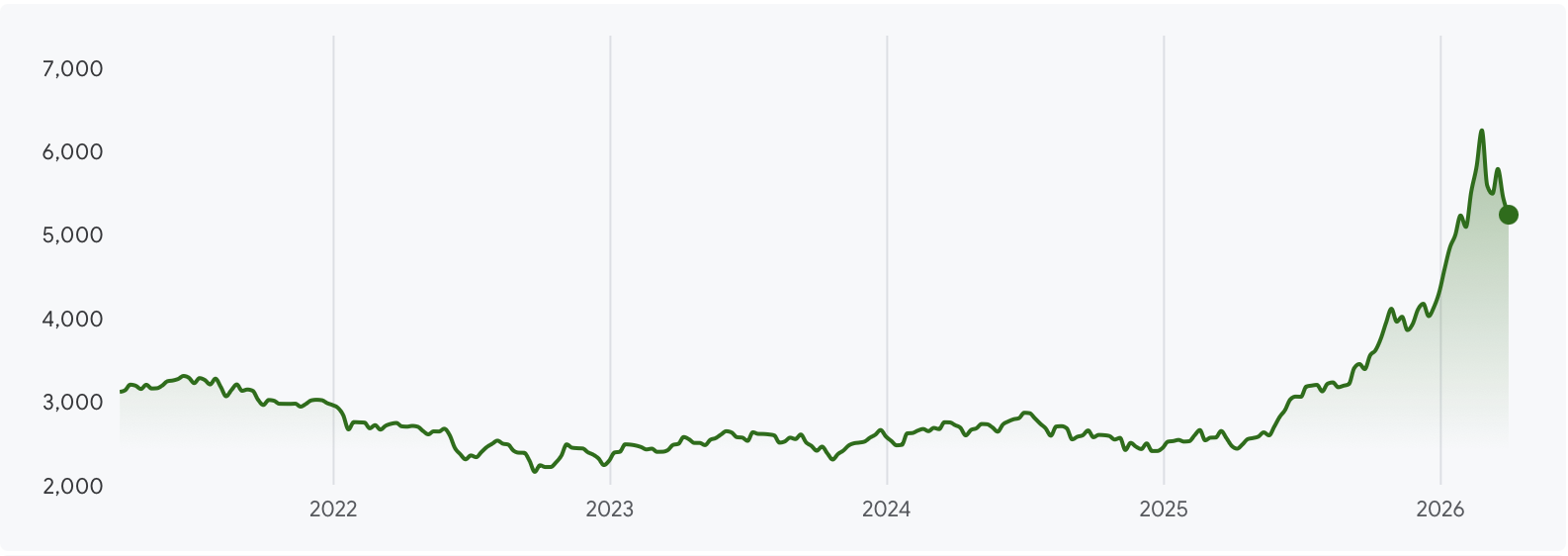
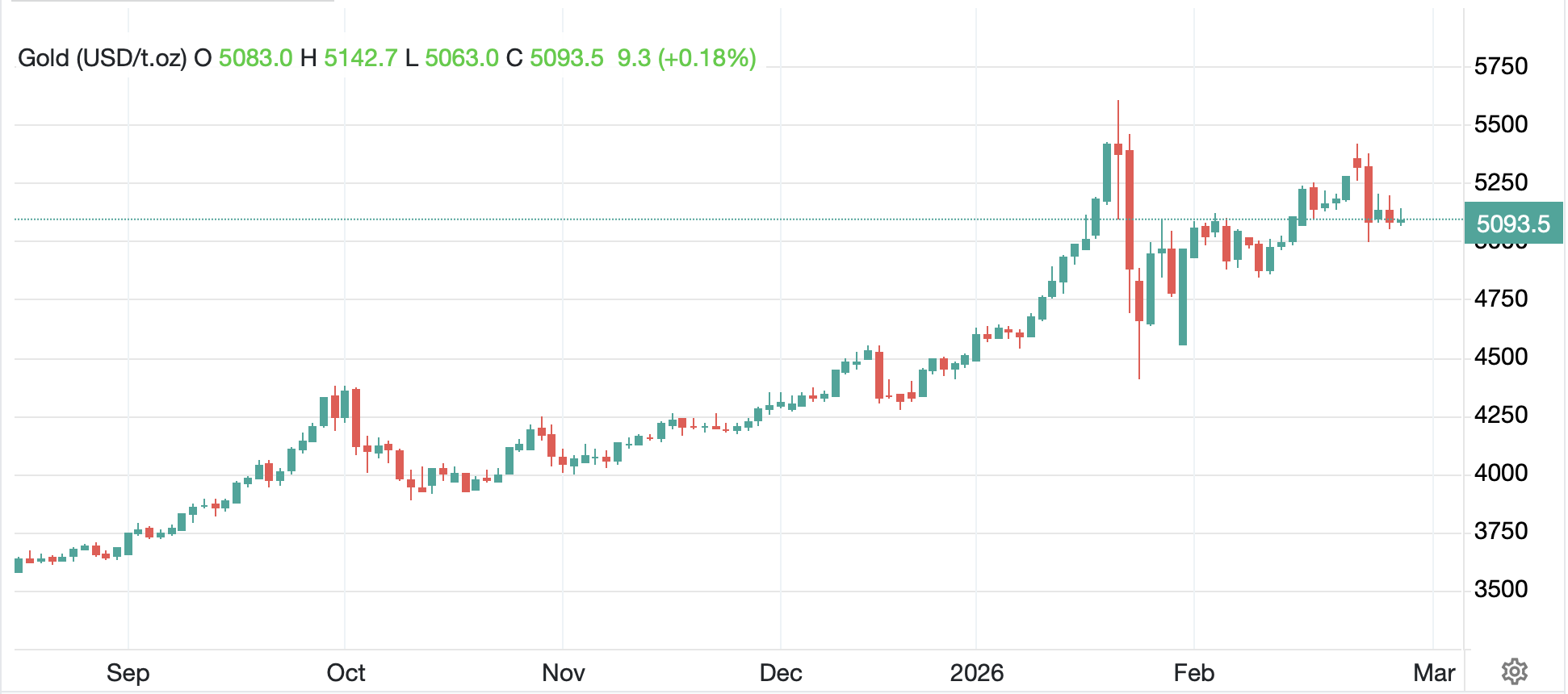
But the other story that is getting press, and arguably more press, is precious metals.  Silver (+0.9% today, +10% this week, +122% this year) is the leader and is now trading above $64/oz.  This is the very definition of a parabolic move, which is obvious when you look at the silver chart for the past 5 years.

Source: tradingeconomics.com

Referring back to JJ’s note, it is important to understand he is a commodity trader of long standing (remarkably even longer than my time in FX) and he discussed silver from an insider’s perspective.  The essence of the issue here is that there are quite a few paper short positions that have existed for a long time.  The rumor has long been that JPMorgan has been preventing silver from rising by playing in futures markets.  But now, real demand, between industrial users (solar panels and electronics) and Asian retail demand from both India and China is far higher than new supply or recovery from scrap, to the tune of 120 million oz/year, and those shorts cannot find the metal to deliver.  The last time there was a squeeze, when the Hunt’s tried to corner the market in 1980, people lined up at stores to sell their silver tea services, bringing metal to the market.  But those are all gone.  I’m not sure what will change this in the short run, but it cannot go up forever.  With that in mind, though, I think precious metals have much further to run as the ongoing debasement of fiat currencies simply adds further to demand.  

Silver managed to drag gold (+1.1% today, +3.0% this week, +65% this year) and platinum (+3.6% today, +7.2% this week, +98% this year) along for the ride and I expect this will continue across the board.  Meanwhile oil (0.0%) is unchanged this morning but has fallen -4.0% this week.  The news that the US boarded a Venezuelan oil tanker and took control in an effort to pressure Maduro didn’t seem to concern anyone in the market.  This trend remains clear.  

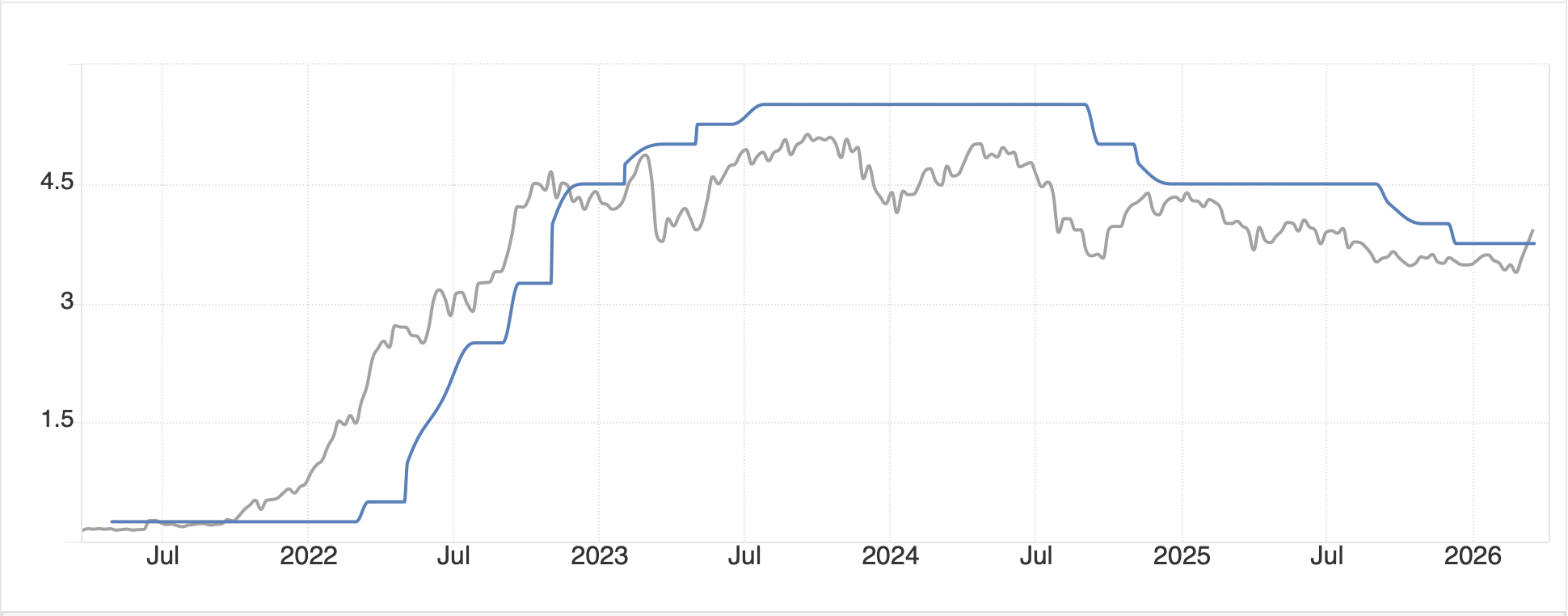
As to the bond market, this morning yields are higher by 2bps, pretty much across the board of Treasuries and all European sovereigns.  But with that in mind, the 10-year Treasury is still yielding 4.18%, below its worst level immediately following the FOMC meeting, and as I mentioned above, there appears to be a growing belief that Powell’s concern about the labor market will result in more cuts sooner rather than later.  While that is not really playing out in the futures market yet, as you can see below with the next cut priced for April with a 76% probability, that is the narrative that is being promulgated in FinX.  

Source: cmegroup.com

Next week we will get the November NFP report (exp 35K) and all the data we missed in October.  I can assure you if that comes in weak, the idea of a rate cut will explode onto the scene once again.  Too, on Wednesday evening, the WSJpublished an article indicating that Chairman Powell is concerned the employment data is overstating things because of the flaws in the birth/death model.  The point is he may be far more inclined to cut if next Tuesday’s report is weak.

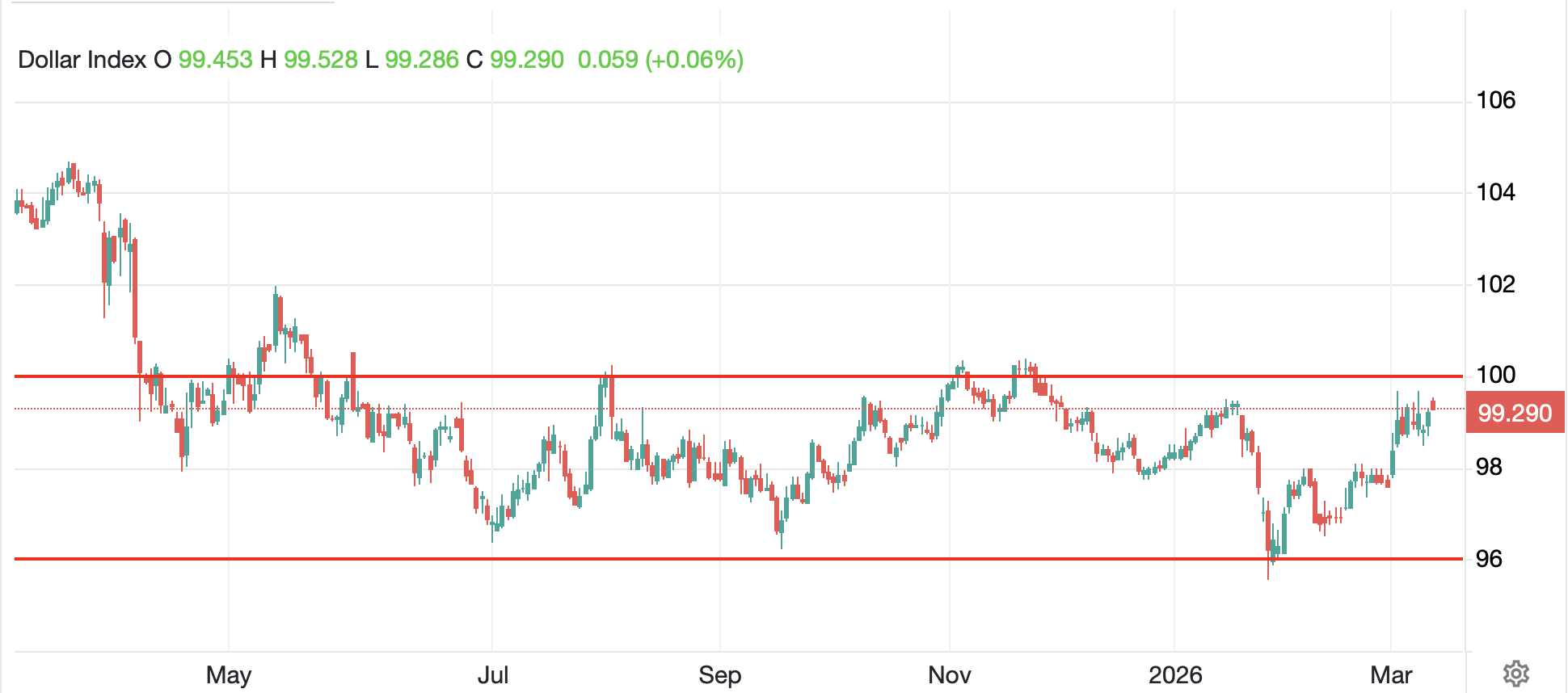
Finally, the dollar is…still here.  It sold off after the Fed, and as I showed yesterday, has fallen back to the middle of its trading range of the past 6 months.  I keep reading how the dollar is the key, but quite frankly, I’m not certain what that key will unlock.  We need out of consensus activities to change the current situation.  After all, the underlying demand for dollars because of the trillions of dollars of debt outstanding outside of the US makes it difficult to get too bearish without a major reason.  If the Fed cut 50bps intermeeting, that would do it, but I’m not holding my breath.

And that’s really it my friends.  There is no data today although we do hear from three Fed speakers.  Given the dissent on the FOMC, I expect that we are going to be need to keep score as to views for a while when these folks speak. 

In the meantime, as I said above, have a wonderful holiday all

Adf

A Latent Grim Reaper

The zeitgeist, of late, has been leaning
Toward welcoming gov intervening
Because costs have soared
So, folks once abhorred
Like Socialists, seem more well-meaning
 
Perhaps, though, the story’s much deeper
And points to a latent grim reaper
Elites on one side
Claim Trump’s only lied
While Populists serve as gatekeeper


Quite frankly, I feel like markets have become very secondary to an understanding of what is happening in the economy, and while there is intrigue over who may be the next Fed Chair, and correspondingly, if Mr Powell will resign from the FOMC when his chairmanship is up, I believe that pales in comparison to much larger macroeconomic issues with which we all have to deal on a daily basis.  Once again, my weekend reading has highlighted two key pieces that I believe do an excellent job of explaining much of what is going on, not just in the economy, but in the streets.

Last week, I highlighted Michael Green’s piece regarding a new estimate of what the poverty line looks like, putting paid to the idea that the official government level of $31,500 is appropriate, and that in suburban NJ (Caldwell to be exact) it is more like $140K.  Now, you will not be surprised that his piece garnered a great deal of attention given its premise, but I will not go into that.  However, he did write a follow-up piece which is worth reading and where he discusses the reaction.  In brief, whatever number is correct, it is clear that $31.5K is laughably low.   Ultimately, I believe this work has quantified the concept of the “vibecession” which has been making the rounds for a while.  People are allegedly making a decent living and yet are living paycheck to paycheck because the cost of living (not inflation) has risen so remarkably over time and priced many folks out of previously ordinary levels of attainment.

Which brings me to the second key piece I read this weekend, this from Dr Pippa Malmgren, which does a remarkable job explaining how the nation (and not just in the US, but we are more familiar here) has (d)evolved into two groups; Elites and Populists.  The former are the old guard politicians (both Democrats and Republicans), the global organizations like the World Bank, IMF, UN and WEF, and more perniciously in my mind, the so-called deep state.  The latter are personified by President Trump, but include NYC Mayor-elect Mamdani, AfD in Germany, Marine LePen in France and Victor Orban in Hungary, and their followers, to name a few.

The frightening conclusion Dr Malmgren drew was that there is no ability for a nation to continue to operate successfully if the population is split in this manner, and that eventually, one side is going to wind up victorious.  I would say this is the very definition of the 4th Turning and we are living through it.

So, we must ask, what are the potential ramifications from a financial markets perspective with this backdrop?  I have repeatedly highlighted that the Trump administration is going to “run it hot” going forward, meaning the goal will be to increase nominal GDP fast enough to outweigh the inevitable rise in prices.  The idea is if incomes rise quickly enough, people will be able to tolerate rising prices more easily.  

But the one thing of which I am increasingly confident is that prices and their rate of change are going to rise under this scenario.  As central banks leave policy easy, or ease further in an effort to support their respective economies, that is going to be the outcome.  A look at the chart below from the FRED data base of the St Louis Fed shows there is a very strong relationship between CPI and nominal GDP.  In fact, I ran the numbers and the correlation for the past 75 years has been 0.975!  Prices are going to rise friends, alongside M2.

What does this mean?  It means that the debasement of fiat currency is going to continue apace and so commodities, notably precious metals, but also base metals and property are going to be recognized as better stores of wealth.  If you wonder why gold (+0.9%) and silver (+2.2%) are continuing to rocket higher, look no further than this.  What about equities?  For now, I expect they will continue to perform well as all that liquidity will be looking for a home although this morning, not so much as US futures are lower by -0.5% across the board.  Bonds?  This is a tougher call, and I suspect that the yield curve will steepen further as central banks press short rates lower, but inflation undermines long duration fixed income assets.  Finally, the dollar remains, in my view, one of the best of the fiat currencies, but like all of them, will continue to degrade vs. gold and hard assets.

Keeping that in mind, there are two other stories of note this morning, only one of which is impacting markets.  The non-impactful one is that apparently President Trump has selected Kevin Hassett, currently the White House Economic Council Director, as the man to succeed Jay Powell in the chair.  He is a long-time political operative with deep ties in Washington and I presume will get through the vetting and be confirmed on a timely basis.  As I wrote above, it is not clear to me the Fed matters as much as other things in the current environment, although we will continue to hear about it.  In this light, the Fed funds futures market is currently pricing an 87.5% probability of a 25bp cut next week and is back to a 58% probability of a total of 100bps of cuts by the end of 2026 as per the below from the CME.

The other story of note, this one definitely impacting markets, is the news that Ueda-san hinted more definitively at a Japanese rate hike later this month, with Japanese swaps market raising the probability of that hike to 80% from about 60% last week.  The knock-on effects were that 10-year JGB yields jumped 7bps, to 1.86%, their highest level since 2008 and as you can see from the chart below, continue to trend strongly higher.  Of course, given that inflation in Japan remains well above target, it is not that surprising that yields are climbing.  

Too, the other outcome here has been the yen (+0.7%) gaining a little ground, as per the below chart from tradingeconomics.com, and perhaps we have seen a short-term low in the currency.  Certainly, the increasing probability of US rate cuts is weighing on the dollar overall, so that is part of the story, but it remains to be seen if there are going to be wholesale changes in investment allocations that would be necessary to completely reverse the yen’s remarkable weakness over the past nearly four years.

The move in JGB yields has been blamed for the rise in yields around the world with Treasury and European Sovereign yields uniformly higher by 3bps this morning while some other regional Asian yields climbed between 4bps and 6bps.  In the end, inflation remains a problem almost everywhere in the world and I think that is what we are witnessing here.

As well, the JGB move was seen as the cause for Japanese equities’ (-1.9%) very weak performance which also dragged down some other regional markets (Taiwan, Australia, Philippines) but was not enough to undermine the rest of the region.  The flip side of that weakness was China (+1.1%) and HK (+0.7%) where it appears that hopes for a Fed rate cut more than offset weaker than forecast PMI data from China.  Another interesting story from the mainland was that the monthly Housing price data that was compiled by two key private companies was squashed by the Chinese government after China Vanke, one of the largest Chinese property companies, explained they would be late on an interest rate payment.  One can only imagine what that data looked like!

Meanwhile, in Europe, red is the color led by Germany’s DAX (-1.5%) although with weakness across the board (CAC -0.8%, IBEX -0.6%, FTSE MIB -0.9%).  Apparently, the story that progress has been made regarding peace talks in Ukraine is not seen as a positive there.  After all, if there is peace, will European governments still be so keen to build out their military, spending billions of euros at local defense and manufacturing firms?  It seems after a very strong close to the month in November, there is a bit of profit taking underway this morning.

In the commodity space, oil (+1.3%) is bouncing back to its trend line after OPEC confirmed it will not be increasing production in Q1 next year at a meeting yesterday.  I would expect that a real peace deal would be negative for this market as some part of that would be the relaxation of sanctions, I would assume.  But maybe I’m wrong there.  However, I continue to believe the trend is modestly lower going forward as there is far more supply available.  As to the other metals, both copper (+0.6%) and platinum (+1.5%) are continuing their runs higher with no end currently in sight.

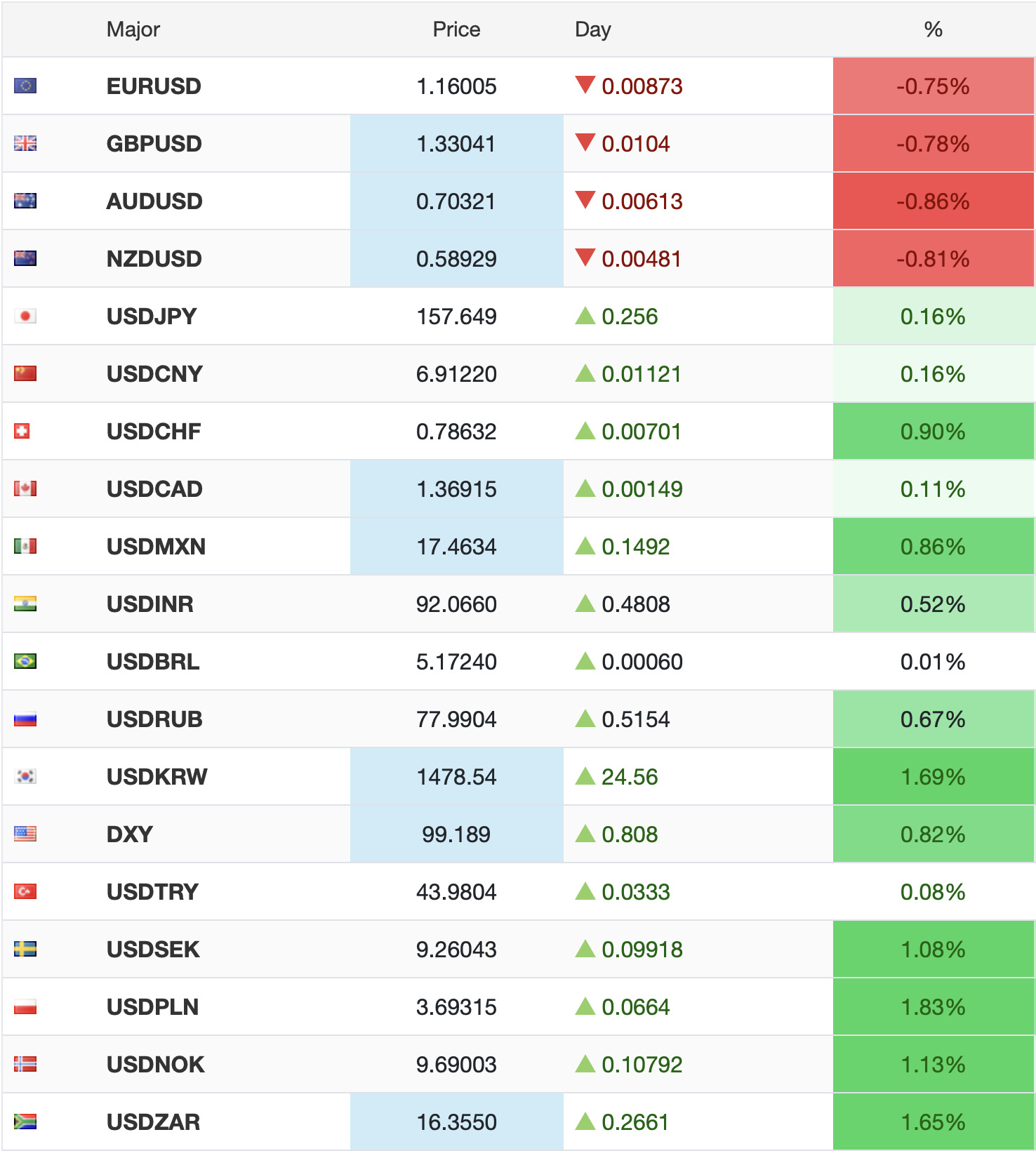
Finally, the dollar is softer overall this morning, and while the yen (+0.7%) is the leader, the euro (+0.3%), SEK (+0.3%) and CHF (+0.25%) are also nicely up on the day with the rest of the G10 little changed.  The real movement, though, has been in the EMG bloc with CZK (+0.75%), HUF (+0.5%), PLN (+0.5%), and CLP (+0.4%) all benefitting from the Fed rate cut story as well as Chile’s benefits from copper’s rally.  While a cut seems highly likely, I suspect the real dollar story will be about the dot plot and SEP as well as Powell’s presser next week.

I’ve already run too long so will just mention that ISM Manufacturing (exp 48.9) is due this morning and I will review the week’s data expectations tomorrow.  

The world is changing and I expect that we will continue to see volatility across markets as investors come to grips with those changes, whether simple central bank rate decisions or more complex social movements and electoral outcomes that lead to major policy changes.  Be careful out there.

Good luck

Adf
The Whisperer’s Roar

Most focus is still on the Fed
And what every Fed speaker said
But do not ignore
The Whisperer’s roar
That Jay’s got the votes, rates to shred
 
And this is why markets are soaring
While bond vigilantes are snoring
But, too, it’s why gold
Is bought and not sold
The question is, whose ox Jay’s goring?


One thing that is very clear right now, the demand for lower interest rates is extremely widespread, regardless of one’s political persuasion.  People may despise everything that President Trump has done or claims he will do, but those same folks are desperate for him to be able to force the Fed to cut rates further.  At least that’s my observation.  

But putting that aside, the narrative around next month’s FOMC meeting seems to be coming to a clearer point; a cut is in the cards, but a potentially long delay in the next move will follow.  While there were no Fed speakers on the calendar, at least the calendar I use, yesterday, we did hear from two more, the presidents of San Francisco and Boston, and though the former, renowned dove Mary Daly, was far more forthright in her views a cut was appropriate, the latter, centrist Susan Collins, clearly was amenable to the idea, though not forcefully so.  But we know that Chair Powell cares since the Fed Whisperer, Nick Timiraos, got top billing in this morning’s WSJ with the following article, “Fed Chair Powell’s Allies Provide Opening for December Rate Cut.”  

As this story was coming into view yesterday, we saw equity markets rise sharply in the US, or at least the tech portion (the DJIA managed only a 0.4% gain compared to the NASDAQ’s 2.7% jump).  We also have seen the Fed funds futures market up the pricing of a rate cut to 81% as of this morning, with the concerns last week about Powell’s hawkishness quickly forgotten.  One other thing of note was the strong rally in precious metals, with gold (0.0% this morning, +1.8% yesterday) and silver (-0.3% this morning, +2.6% yesterday) responding to the imminent further debasement of the dollar.  While both remain somewhat below their October highs, nothing indicates that their trends higher have ended.

Source: tradingeconomics.com

There continues to be a lot of discussion on two fronts, the state of the economy and the rationale for further equity market gains, and interestingly, they are completely independent discussions.  For the former, the dribs and drabs of data that have been released since the end of the government shutdown have been inconclusive as to what is going on, at least officially.  Yesterday brought nothing new, although this morning we are due to see September data on Retail Sales (exp 0.3%, 0.3% ex autos), PPI (2.7% for both headline and core) and House Prices (+1.4% Case Shiller) along with November Consumer Confidence (93.5, down slightly from last month).  It hardly seems this will change any views

But the market conversation is completely different.  Between talk of a Santa rally, the popping of the AI bubble (assuming there is such a thing) and growing certainty that a Fed cut will help goose the stock market, that economic uncertainty means nothing.  There remains a large swath of investors who are certain the Fed will not allow equity markets to fall in any meaningful fashion and who are prepared to continue to buy the dip.  

Interestingly, the place where these two issues meet, earnings forecasts, shows that while fixed income investors may feel uncertain about the economy’s future, 2026 earnings estimates of 14% growth have equity investors in a very different place.  While I don’t know which side is correct, I suspect that the ‘run it hot’ philosophy which has been driving everything this administration does will favor equities over bonds.  While a correction is still likely in my mind, there is still nothing to stop this train!  

Ok, let’s turn to market performance overnight.  Japan (+0.1%) didn’t love the US tech story, which is somewhat surprising, although that may be because there continues to be growing concern regarding the JGB market and the spat with China.  China (+1.0%) and HK (+0.7%) however, both rallied on the US rate cut plus tech rally story.  Taiwan (+1.5%) and Thailand (+1.3%) also liked that story, but the rest of Asia was nonplussed, and more exchanges saw weakness than strength.  As to Europe, nobody there has a strong view this morning with every major bourse +/- 0.15% or less.  The only data was German GDP, which rose to…0.0% for Q3 and clocked in at +0.3% Y/Y! Look at the history of German economic activity over the past 3 years below and ask yourself if this is the powerhouse of Europe, why would anyone want to own any European assets?

Source: tradingeconomics.com

As well, the increased focus on a potential peace in Ukraine may be a negative for the continent.  While it has the potential to help them on the energy side, much of the rally seen across these nations was predicated on the military buildup that was coming.  However, if there is peace, I sense it will be difficult for a group of nations that are massively in debt to convince their populations to borrow more to defend themselves since the threat has abated.  After all, I’m willing to wager there isn’t a single person in the EU who if given the choice between defense spending for a potential future threat or an increased pension will opt for the former.  As to US futures, at this hour (7:25) they are unchanged.

In the bond market, Treasury yields are unchanged this morning after slipping another few basis points yesterday and are sitting at 4.03%.  Either the market is sanguine about the ongoing federal deficit spending or…everybody assumes the Fed is going to restart QE in some form or another if things start to deteriorate.  European sovereign yields are slipping this morning, down between -1bp and -3bps, with the UK on the larger end despite (because of?) tomorrow’s Budget announcement.  

While you may think the US has a fiscal problem, and it does, at least it has the global reserve currency and with it, the ability to live beyond its means for a long time.  The UK, however, simply has the first part, a fiscal problem, which they have exacerbated by adopting the most idiotic energy policies in the world (who would ever have thought that solar power made sense in the UK given the fact it rains, on average, 50% of the days in the year.)  It is unclear to me what the UK can do to right the ship with the current government and its stated priorities.  I suppose that we will see new regulations requiring UK financial institutions to hold more Gilts as otherwise nobody will buy them.  Before I leave this asset class, I cannot ignore the JGB market where back-end yields continue to climb.  As you can see from the below chart, the 10-, 30-, and 40-year yields are all at record highs and show no signs of stopping their multi-year rise.

Source: tradingeconomics.com

I had a long conversation with Charlie Garcia on Substack, someone you should all follow as he has very sharp ideas, on the causes, ramifications and potential outcomes of this unprecedented rise in yields there.  Needless to say, the end game will not be very good for anyone, but the timing remains in question.  As Keynes warned us all, markets can remain wrong longer than you can remain solvent.  But Japan has its own, unique fiscal problems along with every other nation in the world.

Turning to commodities, oil (-0.3%) continues to be the least interesting thing around, drifting slowly lower, but at an increasingly leisurely pace.  The glut narrative has calmed down, but I think there is more concern over the weakening economic story.  Hard for me to say from the outside, but lower is the direction of travel here.  The opposite is true for NatGas (-3.3%) which despite today’s decline is up 55% since October 16th!

Finally, the dollar is under modest pressure today with both the euro and pound stronger by 0.2%, a move that describes almost the entire G10.  One outlier here is NOK (-0.2%) which is clearly suffering on oil’s ongoing weakness.  In the EMG bloc, though, there has been more substantial movement with KRW (+0.7%) rising as traders position for the BOK to remain on hold while the Fed gets ready to cut, thus reversing some of the recent 7% decline in the won over the past quarter.  The CE3 have also rallied nicely, on the order of 0.5%, as they continue to demonstrate their excessive beta with the euro and even CNY (+0.3%) is moving this morning on the back of a potential thaw in relations between the US and China after Presidents Xi and Trump spoke by phone yesterday.  While my long-term perspective on the dollar remains positive, if the Fed does get aggressive, the greenback can certainly come under short-term pressure.

And that’s really all there is today.  With Thanksgiving coming, I expect that volumes will begin to decline so keep that in mind when trying to execute any trades.

Good luck

Adf
Basically Fictive

For Fedniks it must be addictive
To say rates are “somewhat restrictive”
It seems like a show
As how can they know
Since R-star is basically fictive
 
Investors, though, lap up this stuff
In fact, they just can’t get enough
Of comments that hint
There is a blueprint
For policy, though that’s a bluff


Yesterday, both Richmond Fed president Barkin and Governor Jefferson explained that current Fed policy is “somewhat restrictive”.  This takes to seven the number of FOMC members who have used this phrase with Powell, Kugler, Hammack, Schmid and Collins all having used it before, as did Jefferson two weeks ago.  And they are all referring to the concept of R-star, the mythical rate at which policy is neither restrictive nor accommodative.  In fact, R-star has become the Fed’s north star, with the key difference being, we can actually see the north star while R-star, even they will admit, is unobservable.  Of course, that hasn’t stopped them from basing policy decisions on the variable.

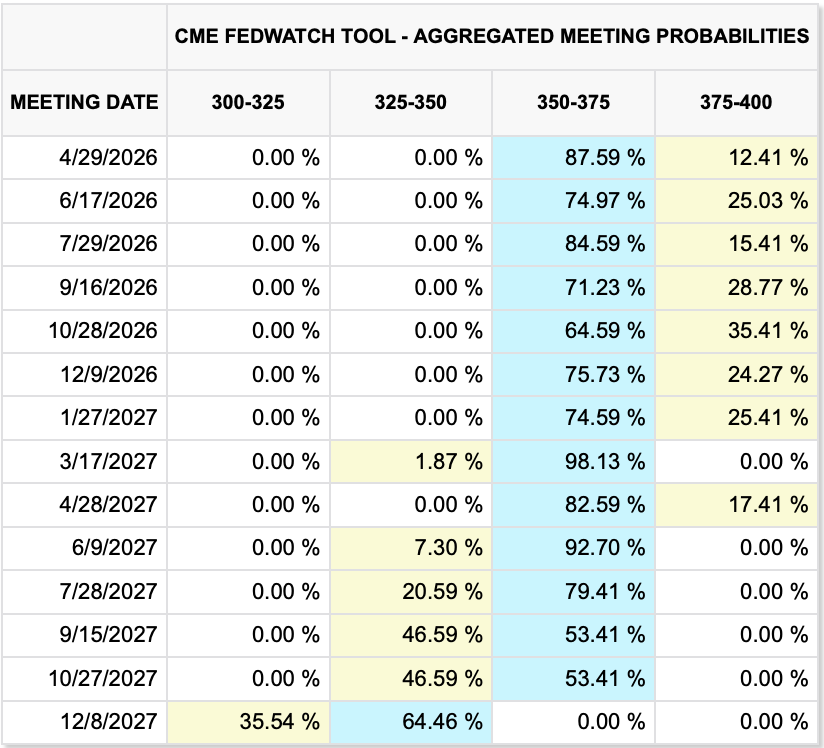
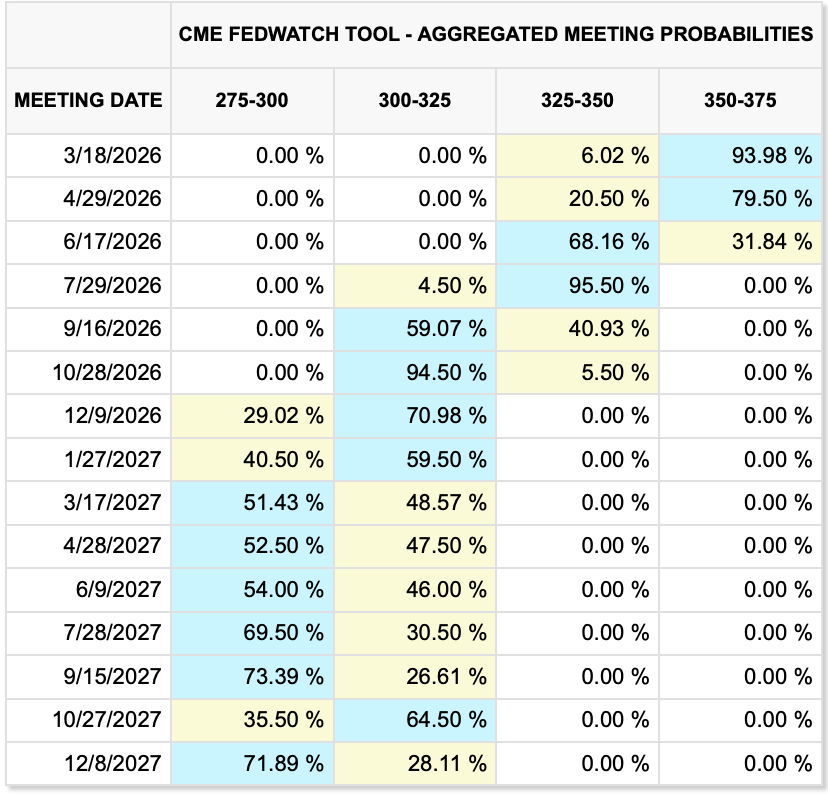
I highlight this because the tone of virtually every one of these speeches has been one of caution, with the implication being they are very close to their nirvana so the last steps will be small.  However, we cannot forget that though the last steps may be small, there is still confidence amongst the entire body that the direction of travel is toward lower rates. certainly, as you can see from the aggregated meeting probabilities from the Fed funds futures market below, there is zero expectation that rates will rise anytime during the next two years and a decent chance of another 100bps of cuts over that time.

Source: cmegroup.com

I might contend that is a pretty negative outlook on the US economy by the Fed.  Given the Fed’s models assume that a key to lower inflation is slowing economic growth, the idea that rates are going to fall implies slower growth to help them achieve the inflation portion of their mandate.  But that seems out of step with both the Atlanta Fed’s GDPNow forecast shown below and currently sitting at 4.1% annualized for Q3 and with earnings forecasts in the equity markets.

Asking Grok, the average current earnings growth forecasts for 2026 for the S&P 500 is somewhere in the 13% – 14% range with revenue growth running at ~6.9%, which is typically in line with nominal GDP growth.  (I understand that current forward PE ratios are extremely high at 23x, so be careful that companies hit their targets while their share prices fall anyway.)  But if nominal GDP is going to run at nearly 7%, and let’s assume inflation is at 3.5%, which I think is a reasonable possibility, then the math tells us that GDP is growing at 3.5% on a real basis.  With Fed funds currently at 4.0%, why would they need to decline further?

Looking back at the Fed’s September Summary of Economic Projections, it appears that the Fed sees a very different economy than the markets see.  In fact, you can see that they believe nominal GDP in the long run is going to average <4.0% (sum of longer run GDP and PCE in the table below).  

That is a really big difference, one that is the type that can lead to massive policy errors.  Now, if those 17 people cloistered in the Marriner Eccles building have a better handle on the economy than everybody else, I can understand why they believe rates need to fall further.  But is that the case?  

Here’s something else to ponder, I asked Grok about the relationship between nominal GDP and Fed funds and the below table is what it produced:

It is patently obvious how the Fed has developed its models and because of that, why they have been so wrong.  In fact, look at the SEP above and compare it to the period from 2001 – 2019, they are essentially identical.  But I would argue, and I’m not alone, that the economy from the dot.com crash up to the pandemic is no longer the reality on the ground.  The Fed’s backward-looking models seem set to make yet more errors going forward.

And with those cheery thoughts, let’s look at what happened overnight.  Yesterday’s continuation of the US stock decline seems to be finding a bottom, at least temporarily as Asian markets were mixed (Nikkei -0.3%, Hang Seng -0.4%, CSI 300 +0.4%) with the rest of the region showing a similar mixture of gainers (India, Malaysia, Indonesia, Philippines) and losers (Korea, Taiwan, Australia) as it appears the entire world is awaiting Nvidia’s earnings after the US close today.

Similarly, European bourses are edging higher this morning with the rout seemingly over for now.  This morning Spain (+0.5%) is leading the way higher followed by Germany (+0.3%) with the rest of the markets little changed overall, although leaning higher.  As to US futures, at this hour (7:30) they are pushing higher by about 0.4%.

In the bond market, Treasury yields are unchanged this morning, still sitting right around that 4.10% level while European sovereigns have seen demand with yields slipping -2bps to -3bps across the continent.  The UK is the outlier here, with yields unchanged after releasing inflation data that was bang on expectations, and below last month’s readings, though remains well above their 2.0% target.  I guess if I look at the chart below, I might be able to make the case that core UK CPI is trending lower, but similarly to the Fed, the last time they were at their target was July 2021.

Source: tradingeconomics.com

I would be remiss if I didn’t mention that JGB yields have moved higher by 3bps, pushing their decade long highs further along as concerns grow over the Japanese fiscal situation.

Oil prices (-2.4%) are falling this morning, slipping to the low side of $60/bbl after API inventories showed a surprise build of 4.4 million barrels.  However, I would contend that there is very little new here.  Perhaps the dinner last night where President Trump hosted Saudi Prince MbS has some thinking OPEC will increase production more aggressively going forward.  In the metals markets, they are all shining this morning led by silver (+3.1%) and platinum (+3.0%) with gold (+1.3%) and copper (+1.3%) lagging, although remember the latter two are much larger markets so need more interest to rise as quickly.

Finally, the dollar continues to find support, despite the precious metals gains, and this morning we see the DXY (+0.15%) pushing back toward that psychological 100.00 level.  JPY (-0.5%) has traded through 156 and certainly seems like it wants to push back to its YTYD highs of 158.80.  Interestingly, there was no Japanese commentary of note last night, but I presume if this continues, the MOF will be out warning of potential future action.  Another interesting fact is that while the dollar is firmer against virtually all G10 currencies, the EMG bloc is holding its own this morning led by HUF (+0.6%), PLN (+0.25%) and ZAR (+0.15%) with the rand obviously benefitting from gold’s rally.  The forint has benefitted from the central bank maintaining policy on hold at 6.5%, one of the highest available rates in Europe and that has helped drag the zloty along for the ride.

On the data front, this morning we see the August Trade Balance (exp -$61.0B) and then the EIA oil inventories where a small draw is expected.  We also get the FOMC Minutes at 2:00pm and hear from NY Fed president Williams this afternoon.

I cannot help but look at the difference between the Fed’s very clear view and the markets expectations and feel like the Fed is on the wrong side of the trade.  It is for this reason I fear higher inflation and ultimately, a much lower likelihood of further rate cuts.  If that is the case, the dollar will find even more support.  Interesting times.

Good luck

Adf
Doesn’t Make Sense

In England they call it the pence
But now it just doesn’t make sense
While pennies will still
Live in the cash till
We’ll speak of them in the past tense
 
And as to the shutdown, Trump signed
The CR to leave it behind
While this is good news
It won’t change the views
Of those who are not Trump aligned


For 230 years, the penny was a staple of the US currency system with more than 300 billion currently in circulation.  Of course, I don’t know that I would call them in circulation as they are generally sitting next to the cashier in a dish to be used since most folks don’t want to deal with them, or in a jar in the bedroom where they remain as people cannot throw out something valuable, but don’t want to bother with them either.  Let’s say they are in existence.  But given the rise in the price of copper, as well as the rise in general inflation, the Treasury estimates that it costs about 3.7 cents to mint each one, obviously a losing trade.  While they will remain legal tender, be prepared for everything to be rounded to the nearest nickel soon.  I guess there is no better description of inflation than the fact that the penny has outlived its useful life.  An interesting tidbit, the last coin discontinued by the Mint was the half-penny, which ended in 1857.

On to more important things, last night, President Trump signed the CR and ended the government shutdown.  It strikes me this was a whole lot of politics with no substantive changes to anything.  But it, too, is now history and we move on.  It was interesting to me that there was not a broad “sell the news” outcome as the equity rally early in the week appeared to be based on the prospects that this would occur.  Perhaps that will be today’s trade, although the futures at this hour (7:00) are little changed.  But no matter, there appear to be an increasing number of cracks in the façade of ever higher asset prices.  While the DJIA did set another record yesterday, the NASDAQ slipped.  I don’t foresee a smooth path ahead for risk assets, especially with havens continuing to perform well.

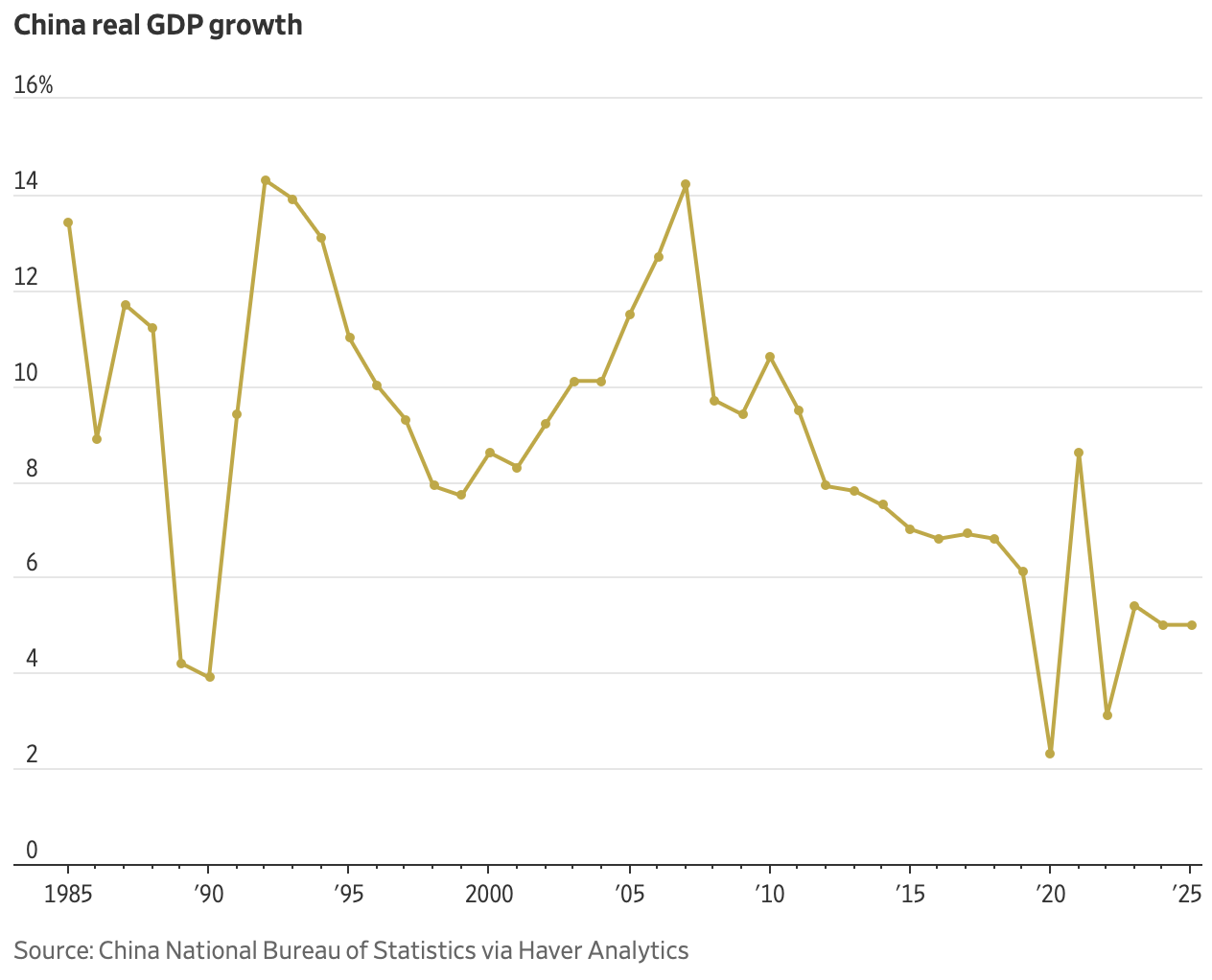
The last thing of note this morning was Chinese monetary data which was released last night.  Remember yesterday’s story about the ‘phantom’ loans?  Well, apparently, that has not been enough to keep the flywheel turning on the mainland as New Bank Loans fell to CNY220 billion, down more than CNY 1 trillion from September and well below last year’s October data of CNY 500 billion as per the chart below from tradingecomomics.com.  There is huge seasonality in this data, with every January showing massive growth, but looking at the past three years of data, my eye tells me things are slowing regularly despite their alleged 5% GDP growth.

Despite the 4th Plenum declaring they would be focusing on increasing domestic economic activity, President Xi continues to have a difficult time growing the economy organically.  The ongoing GDP targets warp investment decisions which result in overproduction of goods and massive infrastructure spending which drives up debt issuance.  The problem with this cycle is the lack of domestic consumption means that the returns on that infrastructure are terrible, likely negative, and so while building the stuff increases GDP, having it sit there idle doesn’t do anything once its built.  For now, investors continue to believe in the growth story, and I’m confident that Xi Jinping will never allow economic data to be released that would counter that narrative, but trouble is brewing there in my mind.  Just not today!

And that’s really the news this morning, at least from what I’ve seen, so let’s look at markets overnight.  The official end of the government shutdown was widely lauded in Asia with Tokyo (+0.4%), HK (+0.6%) and China (+1.2%) all closing higher in the session.  Korea (+0.5%) also rallied but elsewhere in Asia, things were less satisfactory with Australia, New Zealand and Taiwan all under modest pressure while India was unchanged.  

In Europe, the FTSE 100 (-0.6%) is slipping after weaker than expected GDP data with the Y/Y number slipping to 1.1% while IP fell -2.5%.  It is difficult to look at the chart of GDP below and get the sense that the UK economy is in very good shape.

Source: tradingeconomics.com

All this is with the backdrop of the Starmer government getting set to release its latest budget in just under two weeks and expectations they are going to be raising income taxes yet again as revenues cannot keep up with their welfare state promises.  The problem they have is the pound is not the global reserve currency nor are Gilts the global reserve asset, so it appears the Gilt vigilantes are alive and well although the bond vigilantes remain in hibernation.  As to the continent, the DAX (-0.6%) is also suffering despite no data releases while the CAC (+0.4%) is managing to rally.  The rest of the bourses are generally little changed with all eyes focused on the UK to see how they handle their problems.  Of course, virtually every country on the continent has the same problems!

In the bond market, after sliding -4bps yesterday, 10-year Treasury yields have backed up 2bps this morning.  we are seeing similar price action on the continent with virtually all sovereign debt showing rises of between 1bp (France) and 3bps (Germany, Netherlands), once again mostly tracking the Treasury market.

In the commodity space, oil (+0.7%) is bouncing after a disastrous session yesterday where it fell nearly $2/bbl on news that the IEA increased its supply forecasts (2.5 MM bbl/day) significantly more than its demand forecasts (780K bbl/day).  Certainly, this is aligned with my longer-term bearish view on oil and a look at the chart below shows the trend over the past year remains firmly downward.  Do not be surprised if we get to $50/bbl next year.

Source: tradingeconomics.com

Turning to the metals markets, the rally continues across base and precious this morning and this steady climb after a sharp pullback a few weeks ago seems to have real legs.  This morning, we see gold (+1.0%), silver (+1.3% and pushing its recent ATH), copper (+0.9% despite the loss of penny demand) and platinum (+1.2%).  When governments run it hot, precious metals benefit.

Finally, the dollar is softer this morning with the DXY (-0.25%) slipping back to the middle of its narrowing trading range as per the below chart.

Source: tradingeconomics.com

The weakness is universal, though with G10 and EMG currencies stronger across the board.  ZAR (+0.6%) is the leader today as the dollar has fallen back below 17.00 for the first time since January 2023 as it continues to benefit from the rally in gold and platinum.

Source: tradingeconomics.com

It strikes me that if one were so inclined to play a long-term trend in currencies, long ZAR vs. short NOK might be a very interesting way to play the dichotomy between oil’s ongoing decline and gold’s ongoing rally.  But everything is firmer vs. the dollar with the pound (+0.3%), euro (+0.2%) and AUD (+0.3%) highlighting the G10.  In the EMG bloc, CLP (+0.5%) is benefitting from copper’s rally while the CE4 are all higher by 0.3% to 0.4%, mirroring the euro’s rise.  Even CNY (+0.25%) is higher despite the weak monetary data.  Not to be outdone, both MXN (+0.2%) and BRL (+0.3%) are in thrall to a weaker dollar.

While the government is open now, given the closure, no data has been collected so it is not yet clear when we will be seeing the next set of numbers.  Yesterday’s Fedspeak showed caution the watchword regarding more cuts which has led the futures market to reduce the probability of a December cut to just 54% this morning and a definite change in flavor for the curve overall.  It is somewhat surprising that the dollar is not performing better given this adjustment in views. 

Equity prices feel extended and the fear and greed index continues to sit in extreme fear despite the seemingly daily record highs.  I am uncomfortable with stocks overall here and believe they are due for a reckoning, or at least a correction.  But metals have nowhere to go but up.

Good luck

Adf
Quelling the Strains

The government shutdown remains
In place, as the House is at pains
To summon the will
For them to fulfill
Their mandate, while quelling the strains
 
Meanwhile, banks in China are lending
Out cash, though in fact, they’re pretending
But quotas from Xi
Mean he wants to see
More loans to encourage more spending


While the Senate has passed a CR that will fund government completely through January 30th and includes full year funding for Veterans Affairs, the Department of Agriculture and legislative activities (they paid themselves), with the rest yet to be completed, the House is meeting today to vote on the measure, at which point, assuming it passes, it will then be sent to President Trump for his signature.  It should be completed today, but this being Congress, with numerous members seeking to preen to their TikTok viewers, until it is done, we cannot be certain.

Now, get ready to hear a lot about how much the shutdown cost as we will get many estimates from various economists and analysts, and you can be sure that they will reflect the political bias of the estimator.  I have seen estimates ranging from 0.2% of GDP to 0.6% of GDP for the quarter, with appropriate annualizations.  My personal view is the damage will be lesser, not greater, as all federal employees will be receiving back wages and most spending will have been delayed rather than destroyed.  We shall see.

Regarding the US economy, as we missed the first reading of Q3 GDP due to the shutdown, it seems we will be getting our first look at the end of this month.  Now, the Atlanta Fed did not stop working and their GDPNow estimate for Q3 remains quite robust at 4.0% as per the below chart from their website, atlantafed.org, but the damage, of course, will fall in Q4, so we won’t really know until sometime in January with the first look at that data.

However, it is important to understand that an increasing number of analysts are explaining that the economy is slowing rapidly.  Their latest ‘proof’ is from yesterday’s ADP weekly data, an entirely new statistic with a track record of exactly…2 weeks, but which showed that 11,250 jobs were lost last week.  I am no econometrician (thankfully), but it seems to me that building your case on a statistic with 2 data points is weak sauce.  Ultimately, I think the main reason that there is so much uncertainty amongst analysts is the concept of the K-shaped economy, where the wealthy are doing fine, basking in the glow of their equity returns, while those less well-off are struggling with ongoing inflation and a less robust job market.

In fact, the Fed is having the same problem, looking at the economy with no consistency as there appears to be a pretty significant rift between the hawks and doves right now.  We got further proof of this (as if the two dissents at the last meeting, one for a bigger cut and one for no move wasn’t enough proof) in this morning’s WSJ where the Fed whisperer, Nick Timiraos, published an article explaining exactly that.  There are two camps, one focused on weakening employment and wanting to cut and one still focused on inflation (allegedly) and wanting to pause.  The Fed funds futures market has reduced the probability of a December cut to 65% as of this morning, but is a lock for that cut by January with a small probability of two more cuts by then.

Nothing has changed my view that they cut next month because I believe that they are essentially unconcerned about inflation at this point, believing 3% is close enough to 2% for government work, and remain entirely focused on the job market.

Turning to the most fascinating international story, it appears that Chinese banks have started to make “phantom” loans, or at least that’s what they are being called, as President Xi is very keen to goose economic activity and the large, state-owned banks have quotas to reach.  So, apparently, what they are doing is going to their best customers, begging them to take out a loan they don’t need, and then having the loans repaid within one month.  The banks are even going so far as to pay the interest so there is no actual impact on anything other than bank loan volume.  Of course, that is the quota being met, so I imagine this will continue.

But it makes you wonder, exactly how bad are things in China that banks are resorting to these games?  Perusing the Chinese data from the past month, things are clearly slowing as per the below from tradingeconomics.com:

Too, the PMI data was soft and Foreign Direct Investment is collapsing, falling -10.4% in September. Again, if you want to understand why President Xi was willing to agree a deal with President Trump, the answer is that the Chinese economy remains under intense pressure, and while the currency doesn’t reflect anything about the economy, the fact that Chinese yields are amongst the lowest in the world is a strong signal that things are not great.

Ok, let’s turn to the overnight activity and see how things behaved.  While the US had a mixed performance (NASDAQ fell although the other indices rallied), we continue to see more positive than negative outcomes in Asia on the back of the ongoing tech rally and the end of the shutdown.  Thus, Japan (+0.4%), HK (+0.8%), Korea (+1.1%), India (+0.7% despite a terrorist attack) and Taiwan (+0.6%) all continued their recent rallies.  China (-0.1%) had a much less impressive day. But these markets continue to benefit from the tech story, and I expect that to continue if the tech story continues to be positive.  As to Europe, bourses there are also benefitting from the imminent end of the US shutdown with gains across the board on the continent (DAX +1.2%, CAC +1.1%, IBEX +1.1%) although the UK (-0.15%) is struggling as concerns grow over the nation’s ability to come up with a viable budget that pays for services without raising taxes to a crippling rate.  As to US futures this morning, at this hour (7:30), they are nicely higher, 0.5% or more.

In the bond market, Treasury yields have slipped -4bps, ostensibly on that weak ADP number which has more investors expecting a much weaker economy here.  Europe though, has seen yields tick higher by 1bp across the board, with the UK the exception (+3bps) as concerns over UK finances continue apace.

In the commodity markets, oil (-1.1%) which rallied yesterday on growing concerns over the latest US sanctions on Lukoil and Rosneft, have given back those gains and are once again hovering around $60/bbl.  The IEA released their report on the future of energy use, specifically fossil fuels, and in another sign the climate crisis is ending (or at least that it is no longer a concern), they explained that fossil fuel use would now peak in 2050 under current policies, rather than prior to the end of this decade under stated policies.  The FT was kind enough to put together a little graphic showing the two different views, but we all know that stated policies are wishful thinking.

In a nutshell, more oil demand will drive more oil supply, count on it!  Turning to metals, the rally continues this morning with gold (+0.2%) and silver (+1.1%) pushing back toward the highs seen on October 20th.  I strongly believe these markets will continue to rally as the ‘run it hot’ philosophy will be enacted in as many places around the world as can get away with it.  

Finally, the dollar is a touch firmer this morning, with DXY (+0.1%) on the back of continued weakness in the pound (-0.3%) and the yen (-0.4%).  Elsewhere, the picture is mixed with the euro little changed while the rand (+0.5%) continues to benefit from the gold rally.  Otherwise, the dollar remains a back burner issue for most investors right now, although I have read that people are talking about the carry trade again, funding investments with short yen positions.  Certainly, the yen has been quite weak overall as evidenced by its trend over the past six months below.

Source: tradingeconomics.com

There is no data this morning although we will get bombarded with five Fed speakers, three of whom are confirmed doves (Miran, Williams and Waller) while the other two seem more middle of the road (Bostic, Paulson).  At this point, there is no consensus on the economy’s strength or direction and that is evident at the Fed as well as in the analyst community.  The only consensus seems to be that stocks and gold should both continue to rally.  As to the buck, what’s not to like?

Good luck

Adf
A Day to Give Thanks

Today is a day to give thanks
To those who flew planes and drove tanks
In multiple wars
And too many tours
No matter which service or ranks
 
Now, turning to markets at hand
The bulls, yesterday, had command
So, risk assets rose
While pundits compose
A narrative, things are just grand


And the thing is, there is just not that much new of note to discuss this morning.  As it is Veteran’s Day here in the US, banks and the bond market are closed, although equities and commodities markets are open.  But the news cycle overnight was led by the fact that Softbank sold their NVDA stake for a $5.8 billion profit.  And that’s pretty thin gruel for someone who writes about market activities.  Everything else is about who won/lost regarding the shutdown and frankly, that is something markets tend to ignore.

With that in mind, and given the absence of any substantive data, let’s go right into market activity overnight.  Asian equity markets were mixed although I would say there was more red (Japan, China, Taiwan, Australia, Indonesia, Thailand, Philippines) than green (HK, Singapore, Malaysia, Korea, India) but it appears most of the activity had limited volumes and there are few stories of note as drivers.  

In Europe, though, things are looking better with all the major bourses higher this morning, led by the UK (+0.8%) where bad news was good for stocks as the Unemployment Rate ticked higher, to 5.0%, which has markets now pricing an 80% probability of a rate cut by the BOE next month.  This has been enough to help most European markets higher (CAC +0.65%, IBEX +0.5%) except for the DAX (0.0%) which is lagging after the ZEW Sentiment Index was released at a weaker than forecast 38.5, which was also down from last month’s reading.  

I think it might be worthwhile, though, to take a longer-term perspective on this sentiment survey.  As you can see from the chart below (data from ZEW.de), the current level is very middle of the pack.  In fact, the long-term average reading is 21.3, but of course, that includes numerous negative readings during recessions.  I might argue that things in Germany are not collapsing, but nowhere near robust.  My concern, if I were a German policymaker, is that it appears the survey has peaked at a much lower level than history, an indication that the best they can hope for is still mediocre.

Finally, US futures are pointing slightly lower, -0.2% or so, at this hour (7:50), arguably a little hangover from yesterday.

In the bond market, of course, Treasury yields aren’t trading, but European sovereigns are essentially unchanged as well, except for UK Gilts, which have seen yields slip -7bps on that higher Unemployment data driving rate cut expectations.  Given the ongoing fiscal issues in the UK, where they cannot seem to come up with a budget and all signs point to a worsening debt position, I’m not sure why yields there would decline, but that’s what’s happening.

Turning to the commodity markets, oil (+0.5%) continues to trade either side of $60/bbl, making no headway in either direction.  I listened to an excellent podcast yesterday with Doomberg, who once again highlighted his view that the long-term direction of the price of oil is lower.  The case he makes is that on an energy basis, NatGas, even though it is up 48% in the past year, remains significantly cheaper than oil, one-quarter the price, and that the arbitrage will close driving the price of oil lower and the price of NatGas higher.  Remember, politics is far more impactful on oil drilling than geology.  Ask yourself what will happen to the price of oil if Venezuela’s government falls and is replaced by a pro-US government allowing the oil majors in to help tap the largest oil reserves on the planet.  I assure you that is not bullish for the price of oil.

As to the metals markets, after yesterday’s very impressive moves, they are continuing higher this morning, at least the precious metals are with gold (+0.5%), silver (+0.8% and now over $50/oz) and platinum (+0.75%) all extending their gains.  These are the same charts in the metals, and my take is we had a blowoff run which has now corrected, and we could easily see another leg higher of serious magnitude.

Source: tradingeconomics.com

Finally, the dollar is mostly drifting lower this morning, although not universally so.  While the euro (+0.15%), CHF (+0.6%) and Scandies (NOK +0.6%, SEK +0.4%) are all firmer, the pound (-0.2%) and Aussie (-0.2%) are suffering a bit.  Yen is unchanged along with CAD.  In the EMG bloc, it is also a mixed bag with INR (+0.25%) and PLN (+0.25%) having solid sessions although KRW (-0.6%) is going the other way and the rest of the bloc is +/- 0.1% or so different.  Again, the dollar is just not that exciting in its own right.

There is a new data point coming out, ADP Weekly Employment change, seemingly in an effort to fill in gaps until the BLS gets back to work.  However, given its newness, it is not clear what value it will have to markets.  There is also a speech by Governor Barr but tomorrow is when the Fedspeak really hits.

It is shaping up to be a quiet day, and I suspect absent a major equity move, or some White House bingo, FX markets are going to drift nowhere of note.

Good luck

adf

Like a Fable

It seems there’s a deal on the table
To end the shut down and enable
The chattering classes
To force feed the masses
A story that’s quite like a fable
 
Both sides will claim they have achieved
Their goals, though they were ill-conceived
But markets will love
The outcome above
All else, and we’ll all be relieved


While the shutdown is not technically over as the House of Representatives need to reconvene (they have been out of session since September 19th when they passed the continuing resolution) and adjust the bill so that it matches the one the Senate agreed last night and can be voted on in the House, it certainly appears that the momentum, plus President Trump’s imprimatur, is going to get it completed sometime this week. 

The nature of the deal is unimportant for our purposes here and both sides will continue to claim that they were in the right side of history, but the essence is that there appeared to be some movement on health care funding so, hurray!

As you can see in the chart below, while the story broke late yesterday afternoon and futures responded on the open in the evening session, the reality is the market sniffed out something was coming around noon on Friday.  In fact, the S&P 500 has rallied 2.4% since noon Friday.

Source: tradingeconomics.com

So, everything is now right with the world, right?  After all, this has been the major topic of conversation, not just by the talking heads on TV, but also in markets as analysts were trying to determine how much damage the shutdown was doing to the economy.  While I have no doubt that there were many people who felt the impact, my take is there were many, many more who felt nothing.  After all, the two main features were air travel and then SNAP benefits.  Let’s face it, on average (according to Grok) about 2.9 million people board airplanes in the US, well less than 1% of the population, although SNAP benefits, remarkably, go to 42 million people.  However, those have only been impacted for the past week, not the entire shutdown.

I’m not trying to make light of the inconveniences that occurred, just point out that from a macroeconomic perspective, despite the fact that the shutdown lasted 6 weeks, it probably didn’t have much of an impact on the statistics as all the money that wasn’t spent last month will be spent next month.  Different analyst estimates claim it will reduce Q4 GDP by between 0.2% and 0.5% with a concurrent impact on the annual result.  I am willing to wager it is much less.  However, it appears it will have ended by the end of the week and so markets are back to focusing on other things like AI, unemployment and QE.

Now, those three things are clearly important to markets, but I don’t think there is anything new to discuss there today.  Rather, I would like to focus on two other issues, one more immediate and one down the road, which may impact the way things evolve going forward.

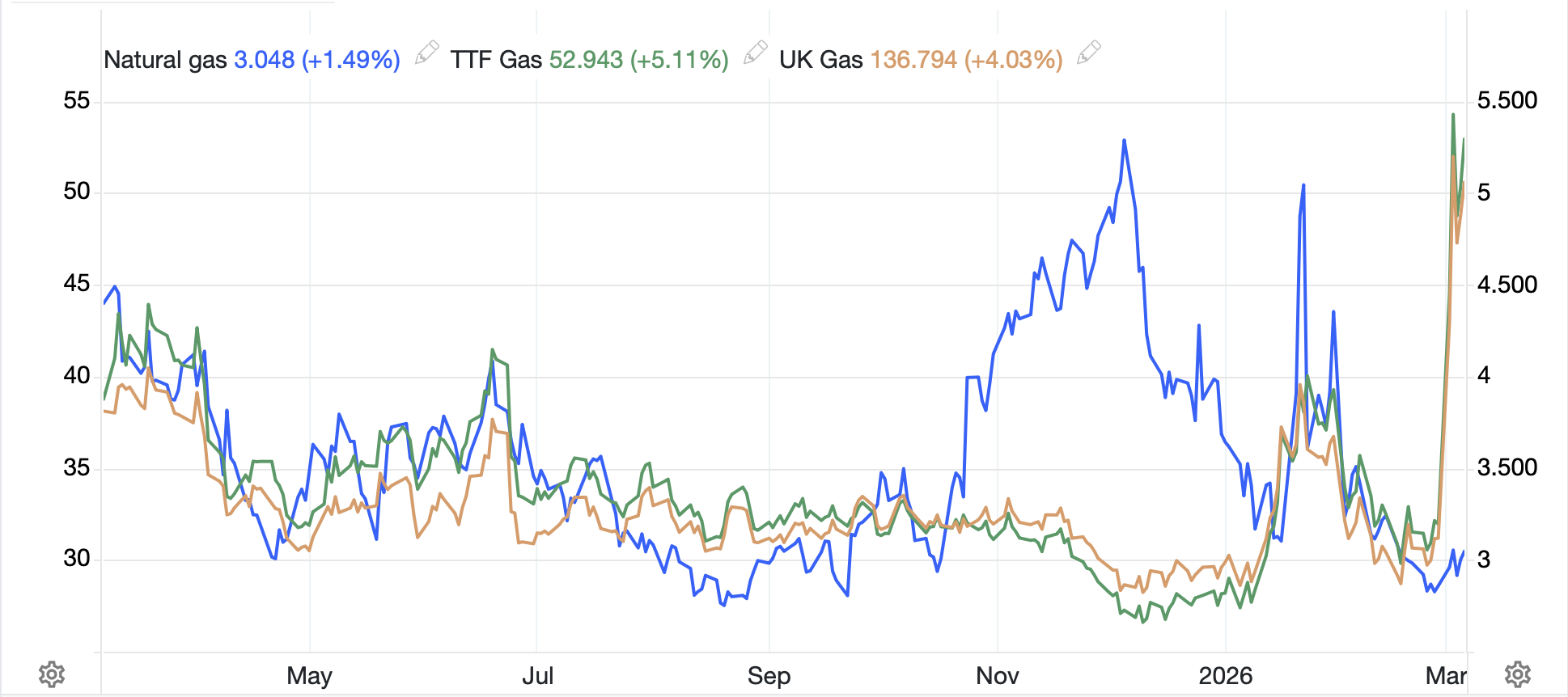
In the near term, as winter approaches, meteorologists are forecasting a much colder winter in the Northern Hemisphere across both North America and Europe, something that is going to have a direct impact on NatGas.  Bloomberg had a long article on the topic this morning with the upshot being that the Polar Vortex may break further south early this year and bring a lot of cold weather along for the ride.  This is clearly not new news to the NatGas market, as evidenced by the fact that its price has exploded (no pun intended) higher by 43% in the past month!

Source: tradingeconomics.com

While oil prices have remained stuck in a narrow range, trading either side of $60/bbl for the past 6 weeks amid a longer-term drift lower as you can see in the below chart, oil is only utilized by ~4% of homeowners for heating with 46% using NatGas.

Source: tradingeconomics.com

Ultimately, I suspect that we are going to see this feed through to inflation as not only are there the direct costs of heating homes, but NatGas is also the major source of generating electricity, with 43% of the nation’s electricity using that as its source.  We have already seen electricity prices rise pretty sharply over the past months (I’m sure you have all felt that pain) and if NatGas prices continue to climb, that will continue.  Remember, the current price ~$4.45/MMBtu is nowhere near significant highs like those seen just 3 years ago when it traded as high as $10/MMBtu.  With all this price pressure, will the Fed continue down their path of rate cuts?  Alas, I believe they will, but that doesn’t make our lives any better.

Which takes me to the second, longer term issue I wanted to mention, European legislation that is seeking to effectively outlaw the utilization of cash euros.  This substack article regarding recent Eurozone legislation is eye-opening as the ECB and Europe try to combat the coming irrelevance of the euro.  For everyone who either lives in Europe or does business there, I cannot recommend reading this highly enough.  There are many changes occurring in financial architecture, and by extension financial markets.  Keep informed!

Ok, enough of that, let’s see how markets have responded to the Senate deal.  Apparently, US politics matters to the entire global equity market.  Green is today’s color with Japan (+1.25%), HK (+1.55%) and China (+0.35%) all performing well, although not as well as Korea (+3.0%) which really had a good session.  Pretty much all the other regional markets were also higher.  In Europe, the deal has everyone excited as well with gains across the board (Germany +1.8%, France +1.4%, Spain +1.4%, UK +1.0%).  As to US futures, at this hour (7:45) they are higher by about 1% across the board.

I guess with that much excitement about more government spending, we cannot be surprised the yields have edged higher.  This morning Treasury yields are up by 3bps, which is what we saw from JGB markets last night as well, although European sovereign yields are little changed on the day.  I suspect, though, if equities continue to rally, we will see yields there edge higher.

In the commodity space, oil (+0.5%) continues to trade in its recent range.  The most interesting thing I saw here was that the IEA is set to come out with their latest annual assessment of the oil market and for the first time in more than a decade they are not going to claim that peak fossil fuel demand is here or coming soon.  The climate grift is truly breaking down.  But the commodity story of the day is precious metals which are massively higher (Au +2.5%, Ag +3.3%, Pt +2.6%) with copper (+1.6%) coming along for the ride.  The narrative here is that with the government shutdown due to end soon, President Trump talking about $2000 tariff rebate checks and the Fed likely to cut rates in December (65% probability), debasement is with us and metals is the place to be!

Interestingly, the dollar is not suffering much at all despite the precious metals story.  While AUD (+0.6%), ZAR (+0.6%) and NOK (+0.6%) are all stronger on the commodity story, the euro is unchanged, JPY (-0.4%) continues to decline and the rest of the G10 is not doing enough to matter.  In truth, if I look across the board, there are more currencies strengthening than weakening vs. the greenback, but overall, at least per the DXY, the dollar is little changed.

There is still no data at this point, although it will start up again when the government gets back to work.  Actually, there has been much talk of the weakness in Consumer sentiment based on Friday’s Michigan Index which fell to 50.3, the second lowest in the history of the series with several subindices weakening substantially.  However, that was before the news about the end of the shutdown, so my take is people will regain confidence soon.  As well, we hear from 9 Fed speakers this week, with 5 of them on Wednesday!  Both dissenters from the October meeting will speak, so perhaps things have changed in their eyes, but I doubt it.

At this point, all is right with the world as investors anticipate the US government getting back to work while the Fed will continue to support markets by easing policy further.  In truth, the dollar should not benefit here, but I have a feeling that any weakness will be short-lived at best.  Longer term, I continue to believe the dollar is the place to be.

Good luck

Adf
Curses and Squeals

Though data is scarce on the ground
This week has the chance to astound
Four central banks meet
And when it’s complete
Two cuts and two stays ought abound
 
Meanwhile, Mr Trump’s signing deals
In Asia, an act that reveals
His fervent desire
To drive markets higher
As foes let out curses and squeals


Some days, there’s very little to note, with the news cycle a rehash of stories that have been festering for weeks.  This is especially true in the political sphere, but also on the economic front.  As well, given the ongoing government shutdown and the lack of government data being released, a key market focus is missing.  But not today!

News across the tape moments ago is that President Trump has agreed a trade deal with South Korea, although the details of the deal are yet to be revealed.  When it comes to Trump and trade deals, it is always difficult to get through the hype to determine if things will actually improve, but if we use the KRW as a proxy for market sentiment, as you can see in the chart below, the announcement was seen as a benefit to the won.

Source: tradingeconomics.com

This is hardly definitive, and the nature of a trade deal is that it takes time to be able to determine its benefits for both sides, but for now, it appears markets are giving it the benefit of the doubt.  As well, it continues to be reported that Presidents Trump and Xi will be sitting down tomorrow (tonight actually) and that a trade framework has been agreed by Secretary Bessent and Chinese Vice Commerce Minister Li Chenggang which includes reduced tariffs, fentanyl, soybeans, semiconductors and rare earth minerals as key pieces of the puzzle.  

The ongoing competition between the US and China is not about to end with this deal, but perhaps it will be able to revert to a background issue rather than a headline one, and that is likely a positive for all.  Certainly, equity markets continue to believe that this dialog is a benefit as evidenced by their daily trips to new highs.

Which takes us to the other key discussion point in markets, central banks.  Over the next twenty-seven hours (it is 6:30am as I type) we are going to hear four major central banks explain their latest policy steps starting with the Bank of Canada (expected 25bps cut) at 9:45 this morning, then the FOMC at 2:00 this afternoon with their 25bps cut.  This evening at 11:00, NY time, the BOJ is expected to leave rates on hold, although there are those who believe a 25bps hike is possible, and then tomorrow morning at 9:15 EDT, the ECB will also leave rates on hold.  

While this is certainly a lot of new information, the question is, will it have any market impact?  Given the market pricing of these events, if any of the central banks do something different, you can be sure its markets will respond.  If I had to assess what might be different, both the BOC and FOMC could cut more than 25bps, and the ECB could cut 25bps rather than standing pat.  In all those cases, the currency would likely weaken sharply at first, although if all those things happened, I suppose it would simply create a new equilibrium.  But understand, I don’t think any of that WILL happen.

Regarding the Fed, though, there is another question and that is, what is going to happen to QT and the balance sheet.  Lately, there has been a great deal of discussion regarding how much longer the Fed will allow the balance sheet to shrink.  Last week I discussed the difference between ample and abundant reserves, but in numeric terms, the signals are coming from the SOFR (Secure Overnight Financing Rate) market, the one that replaced LIBOR.  It seems that there is increasing concern over the recent rise in the rate.  This is seen by numerous pundits, as well as by some in the Fed, as a signal that the reserve situation is getting tighter, thus offsetting the Fed’s attempts at ease. 

The below chart from the NY Fed shows the daily wiggles, but also, it is pretty clear that the recent trend has been higher.  You can see the September Fed funds cut in the sharp drop, and the first peak after that was September 30th, the quarter-end when banks typically look to spruce up their balance sheets, so borrow more aggressively.  But since then, this rate has been edging higher, an indication that there may not be sufficient reserves available for the banking system.

This begs the question; will the Fed end QT today?  Or wait until December?  My money is on today as they are growing concerned about the employment situation with the uptick in recent layoff announcements, and the pressure on SOFR is the best indicator they have that things have reached the point where their balance sheet no longer needs to shrink.  One other thing to keep in mind, at some point, it seems likely that the Fed is going to need to find more buyers of Treasuries as the market may develop indigestion given the amount being issued.  That pivot back to QE, whatever it is called, is easier if they are not simultaneously reducing their own balance sheet.

And one final point on the Fed.  Apparently, when they cut today, it will be the twenty-second time the Fed will have cut with stock indices at all-time highs, and of those previous twenty-one, twenty-one times equity markets were higher one year later.  Let’s keep that party rolling!

Ok, let’s look at how things have gone overnight.  Tokyo (+2.2%) was basking in the glow of all the love between President Trump and PM Takaichi, as it, too, traded to new all-time highs.  China (+1.2%) gained on the news of the trade framework, but interestingly, HK (-0.3%) did not follow suit.  And it should be no surprise that Korea (+2.1%) rallied on that trade news with India and Taiwan rising as well.  Australia (-1.0%) though, had a rougher go after a higher than forecast inflation print (3.5%) put paid to the idea that the RBA would be cutting rates again soon.

In Europe, Spain (+0.65%) is rallying on solid GDP data (1.1% Q/Q) although the rest of the continent is doing very little with virtually no change there.  In the UK, the FTSE 100 (+0.6%) is rallying on stronger corporate earnings from miners (metals are higher) and pharma companies.  As to US futures, at this hour (7:30) they are all nicely in the green, about 0.35% or so.

In the bond market, Treasury yields have backed up 2bps, but are still just below the 4.00% level, hardly signaling major concern right now.  European sovereign yields are all essentially unchanged this morning and overnight, only Australia (+5bps) moved after that CPI data Down Under.

Turning to commodities, oil (+0.5%) is bouncing after a couple of weak sessions, but net, we are right back to the $60 level which appears to be a comfortable level for both buyers and sellers.  It is also a high enough price to encourage continued exploration, so my take is we are likely to trade either side of this level for quite a while going forward.  My previous bearish views are being somewhat tempered, although I don’t foresee a major rally of any note.  

Source: tradingeconomics.com

In the metals markets, gold (+1.7%) is bouncing off its recent trading low and currently back above $4000/oz.  A look at the chart for the past month shows just how large the movements have been as the parabolic blow-off to near $4400 was seen through the middle of the month, and after a second try, the rejection was severe.  I don’t believe the long-term story in the precious metals has changed at all, the idea that fiat currencies are going to maintain their current status as reserve assets is going to be more and more difficult to defend with gold the natural replacement.  But in a market with a history of manipulation, don’t be surprised to see many more sharp moves ahead.

Source: tradingeconomics.com

As to the rest of the metals, they are all higher this morning with silver (+2.1%) leading the way and copper (+0.6%) and platinum (+1.6%) following in its wake.

Turning to those fiat currencies, the dollar is broadly firmer this morning, with only AUD (+0.15%) managing any gains against the greenback after that inflation print got traders thinking about higher rates Down Under.  But otherwise, in the G10, the dollar is ascendant.  In the EMG bloc, we already discussed KRW, but ZAR (+0.2%) is also gaining today on the back of the metals bounce.  Elsewhere, though, modest dollar strength is the rule.  What makes this interesting is the dollar is back to rallying alongside precious metals.

Ahead of the Fed, we only see EIA oil inventories with a small draw expected.  In theory, with President Trump in South Korea, one would expect him to be sleeping throughout most of today’s session, but apparently the man rarely sleeps.

The big picture is that run it hot remains the play, and that means equities should benefit, bonds should have a bit more trouble, but the dollar and commodities should do well.  I see no reason for that to change soon.

Good luck

Adf
A Pox

The world is a wonderful place
We know this because of the chase
For more and more risk
Though Washington’s fisc
Continues, more debt, to embrace
 
Investors can’t get enough stocks
And bonds have found buyers in flocks
But havens like gold
Are actively sold
As though they’ve come down with a pox


I’m old enough to remember when there was trouble all around the world; war in Ukraine was escalating, anxiety over a more serious fracture in the trade relationship between the US and China was growing, and President Trump was building a ballroom at the White House!  Ok, the last one is hardly a problem.  But just two weeks ago, risk assets were struggling and havens seemed the best place for investors to hide.  But that is sooooo last week.

By now you are all aware that the delayed CPI report on Friday came in on the soft side, thus reinforcing the Fed’s plans to cut rates tomorrow.   While Fed funds futures pricing, as seen below, has not changed very much at all, with virtual certainty of cuts tomorrow and in December, plus two more by the April meeting next year, the punditry is starting to float the idea that even more cuts are coming because of concern over the employment situation and the fact that inflation appears under control.

Source: cmegroup.com

Now, it is a viable question, I believe, to ask if inflation is truly under control, but the problem with this concern is that Chairman Powell told us, back in September, that they are not really focused on that anymore.  The fact that the official payroll data has not been released allows the Fed to avoid specific scrutiny, but literally everything I read tells me that the employment situation is getting worse.  The latest highlight was Amazon’s announcement yesterday that they would be reducing corporate staff by about 14,000 folks in the coming months as, apparently, AI is reducing the need for headcount.

In fact, I would contend the answer to the question; if the economy is doing so well, why does the Fed need to cut rates, is there is a growing concern over the employment situation which has been masked by the lack of data.

But we all know that the economy and the stock market behave very differently at times, and this appears to be one of those times.  Yesterday, yet again, equity markets in the US closed at record highs as earnings releases were strong virtually across the board.  Adding to the impetus was the news that Treasury Secretary Bessent announced a framework for trade between the US and China had been reached with the implication that when Presidents Trump and Xi meet later this week, a deal will be signed.

Putting it all together and we see the concerns that were driving the “need” for owning havens last week have virtually all dissipated.  While the Russia/Ukraine situation remains fraught, I don’t believe that equity markets anywhere in the world have paid attention to that war in the past two years.  Oil markets, sure, but not equity markets.

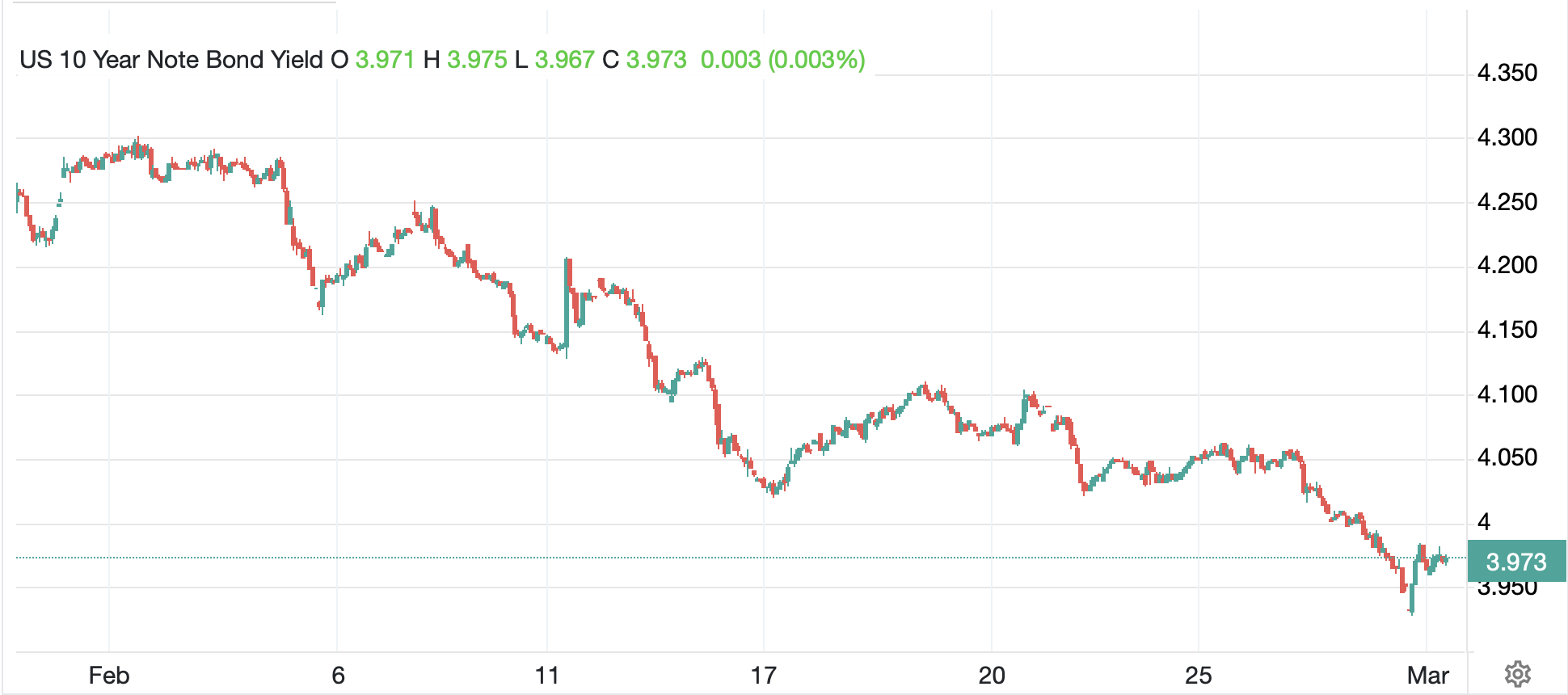
There is a fly in this ointment, though, and one which only infrequently gets much airtime.  The US is continuing to run substantial fiscal deficits.  Lately, as evidenced by the fact that 10-year yields have slipped back to their lowest level this year, and as you can see below, are clearly trending lower, this doesn’t seem to be an issue.  But ever-increasing federal deficits cannot last forever, and if the Trump plans to boost growth significantly does not work out, there will be a comeuppance.  I have described before my view that the plan is to ‘run it hot’ and nothing we have seen lately has changed that sentiment.  I sure hope it works for all our sakes!

Source: tradingeconomics.com

Ok, let’s see if the euphoria evident in the US markets has made its way around the world.  The answer is, no.  Interestingly, despite a high-profile meeting between President Trump and Japanese PM Takaichi, where Trump was effusive in his support for the new PM and her plans to increase defense spending, Japanese equities were under pressure all evening, slipping -0.6%.  Too, both China (-0.5%) and HK (-0.3%) could find no traction despite the news that a trade deal was imminent.  In fact, the entire region was under pressure with losses in Korea, Taiwan, Australia and virtually every market there.  Was this a sell the news event?  That seems unlikely to me, but maybe.  As to Europe, pretty much every major index is modestly softer this morning, down between -0.1% and -0.2%, so not terrible, but clearly not following the US.  As to US futures, at this hour (7:30), they are little changed to slightly higher.

Global bond markets are quiet this morning, with almost all unchanged or seeing yields slip -1bp.  While US yields have been trending lower, in Europe, I would say things are more that yields have stopped rising and, perhaps, topped, but are not yet really declining in any meaningful fashion yet.  Germany’s bund market, pictured below, exemplifies the recent price action.

Source: tradingeconomics.com

One interesting note is that JGB yields slipped -3bps overnight, despite PM Takaichi reaffirming that the defense budget was going up with no funding mentioned.  Like I said, the world is a better place this morning!

In the commodity markets, gold (-1.5%) continues to get punished as all those who were chasing the haven story have been stopped out.  The price went parabolic two weeks ago, and price action like that cannot hold for any length of time.  This has taken silver (-1.1%) and copper (-0.5%) lower as well, and I suspect that there could well be further to decline.  Oil (-1.1%) meanwhile seems far less concerned about the sanctions on Lukoil and Rosneft this morning.  The conundrum here is if the economy is performing well, that would seem to be a positive demand driver.  I have not seen word of major new oil sources being discovered to increase supply dramatically, but if you think back to last week, the narrative was all about a glut.  I guess we will learn more with inventory data this week.

Finally, the dollar… well nobody really seems to care.  As you can see from the below chart of the DXY, it is approaching six months where the index has traded in a very narrow range, and we are pretty close to the middle.  I don’t know the catalyst that will be needed to change this story, but frankly, I suspect that nobody (other than FX traders) is unhappy with the current situation.

Source: tradingeconomics.com

It’s not that there aren’t currencies that move around on a given day, but there is no broad trend in place here.

On the data front, the key release today is the Case-Shiller Home Price Index (exp 1.9%) and then the Richmond Fed Manufacturing Index (-14) is also due later this morning.  However, all eyes are on tomorrow’s FOMC outcome with the focus likely to be more on QT and its potential ending, than on the rate cuts, which are universally expected.  One other thing, with the government shutdown ongoing, GDP and PCE data, which were originally scheduled for this week, will not be released.

Life is good!  That is the only conclusion I can draw right now based on the ongoing strength in risk assets, at least US risk assets.  Keynes was the one who said, markets can remain irrational longer than you can remain solvent, and I have a feeling that we are approaching some irrationality.  But for now, enjoy the ride and if FX is your arena, I just don’t see a reason for any movement.

Good luck

Adf