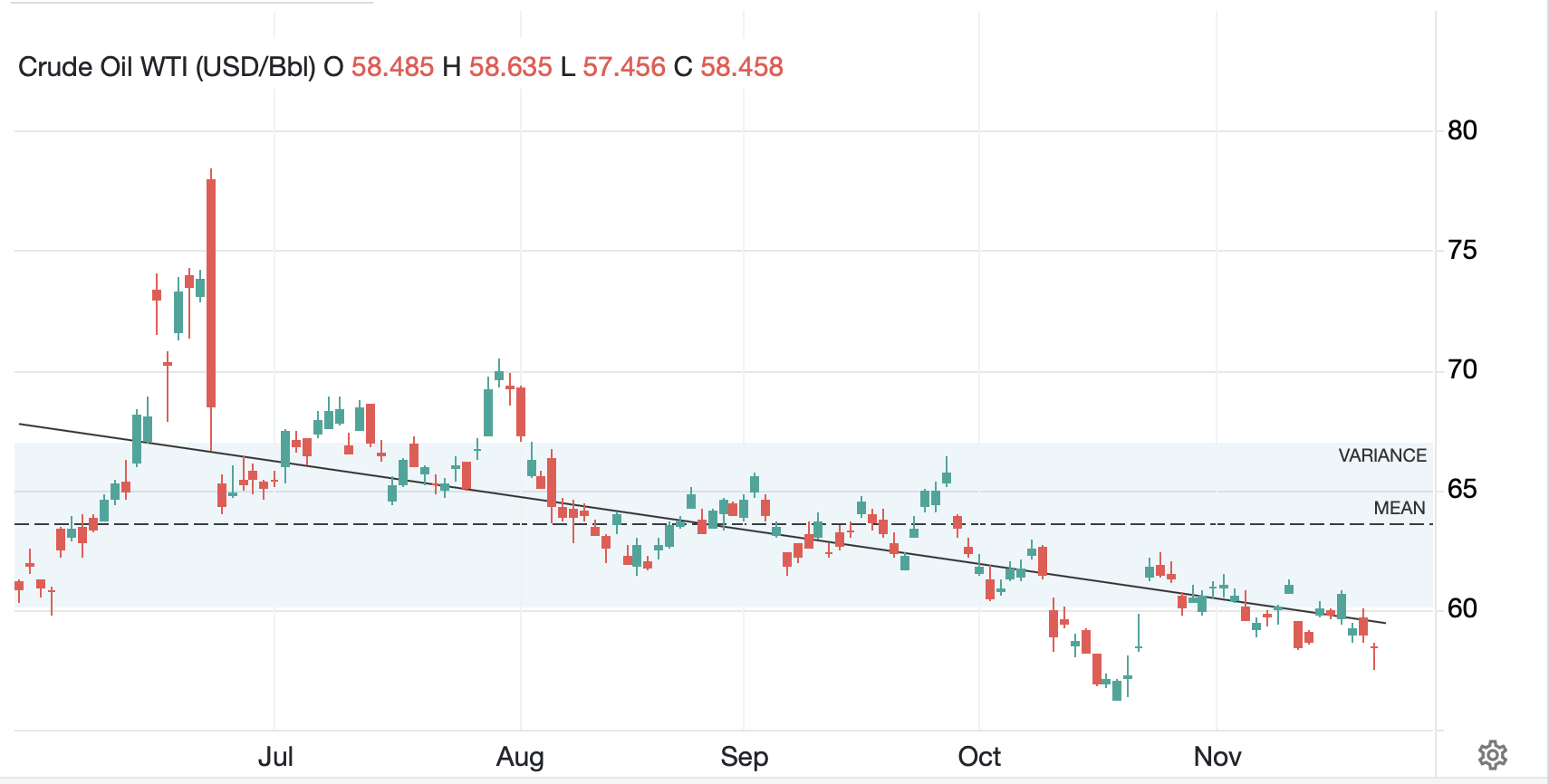
Left For Dead

Takaichi’s learned
Her chalice contained poison
Thus, her yen weakens


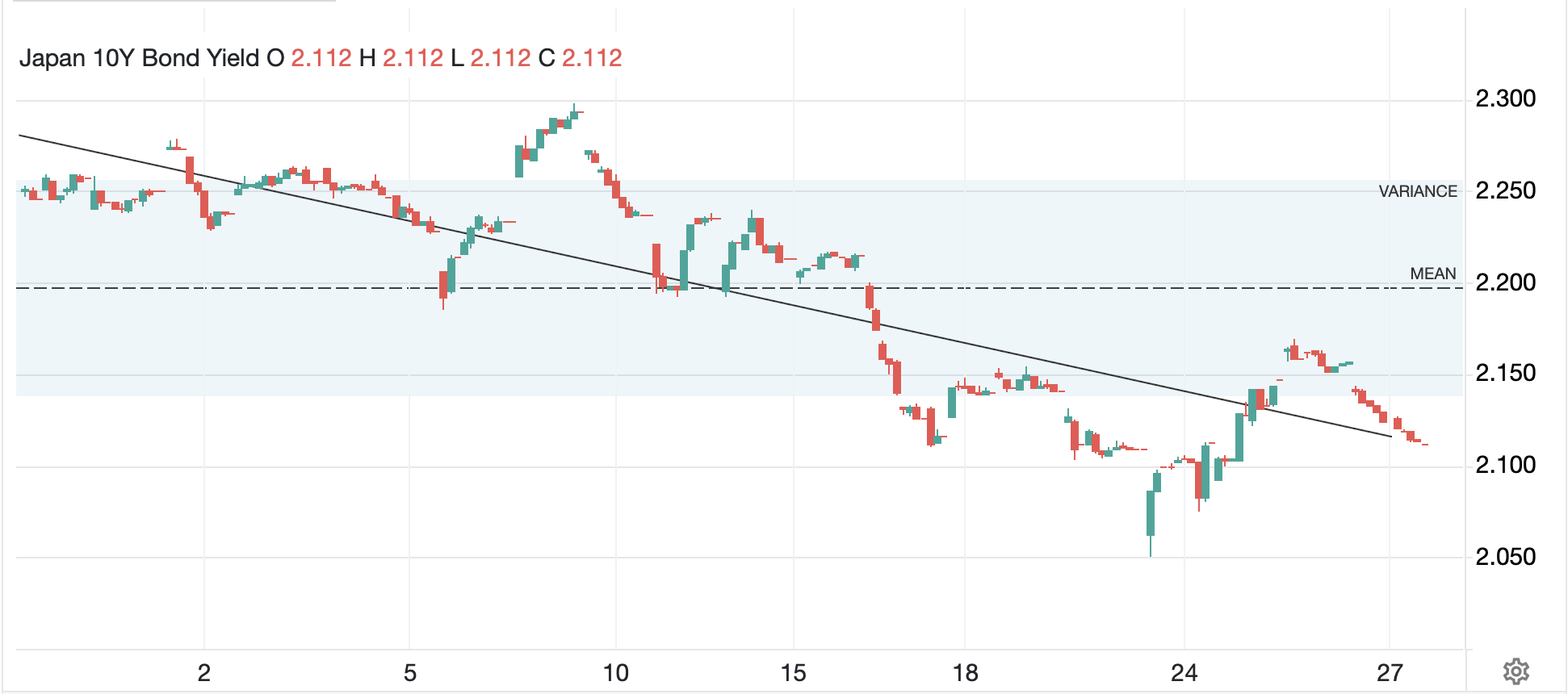
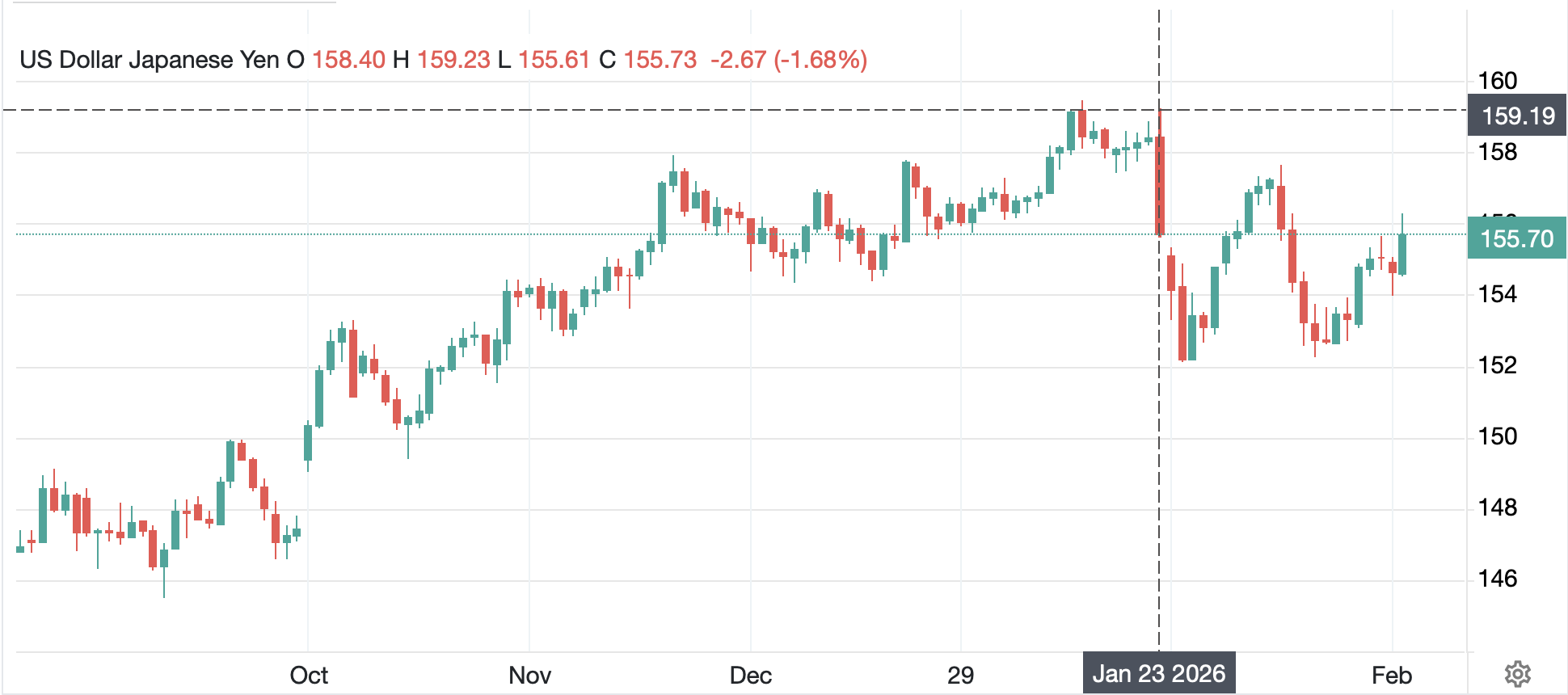
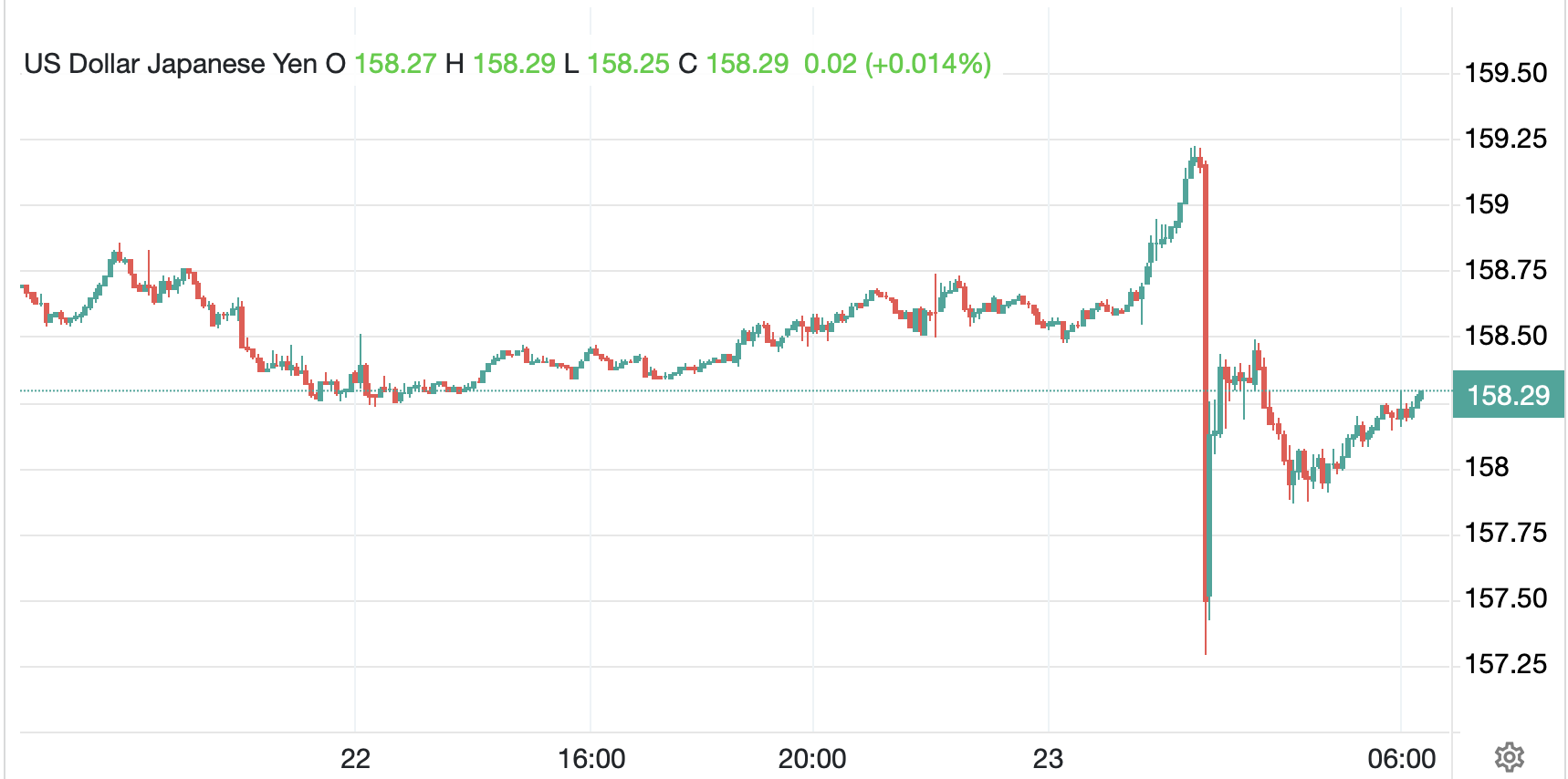
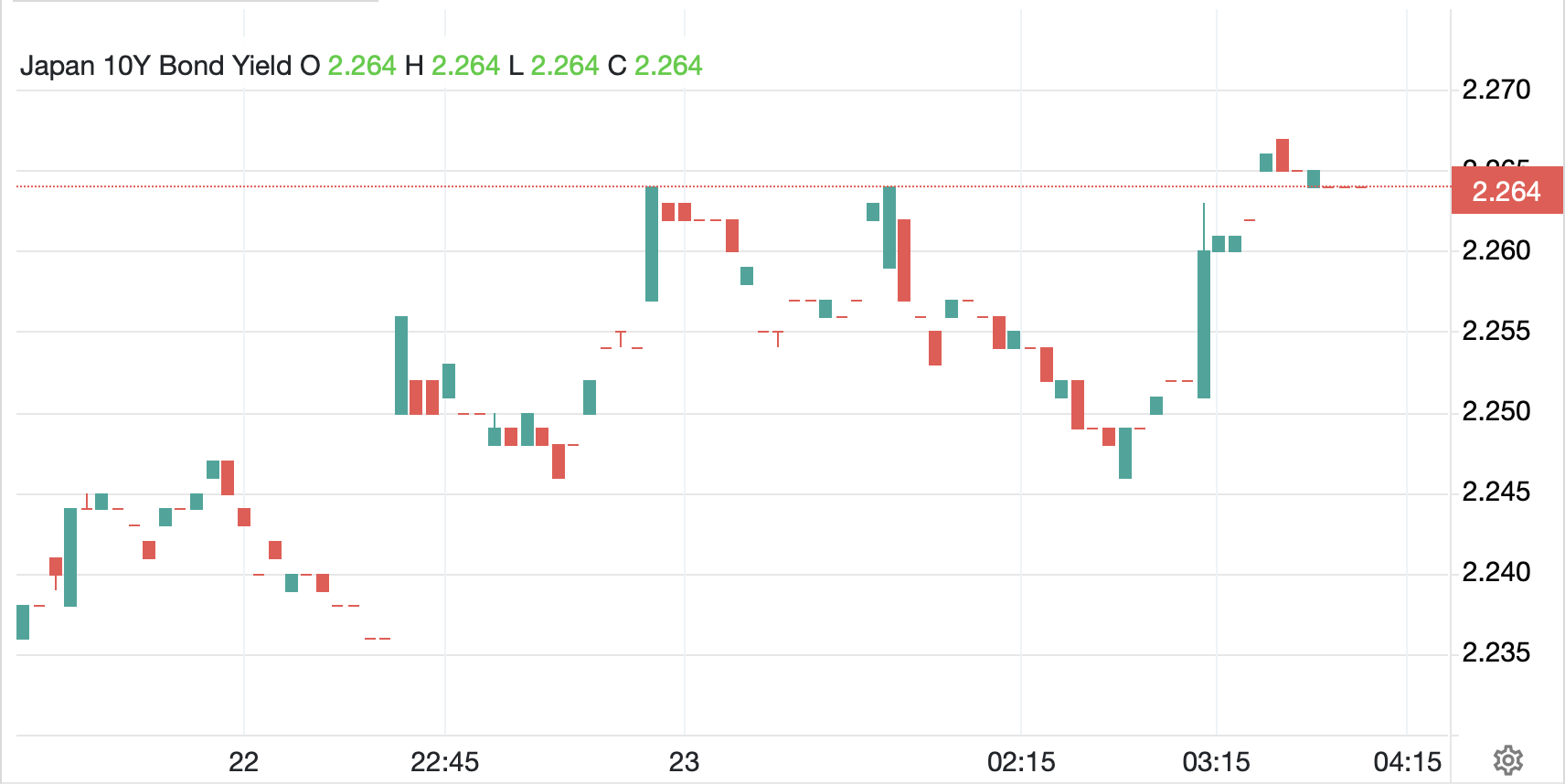
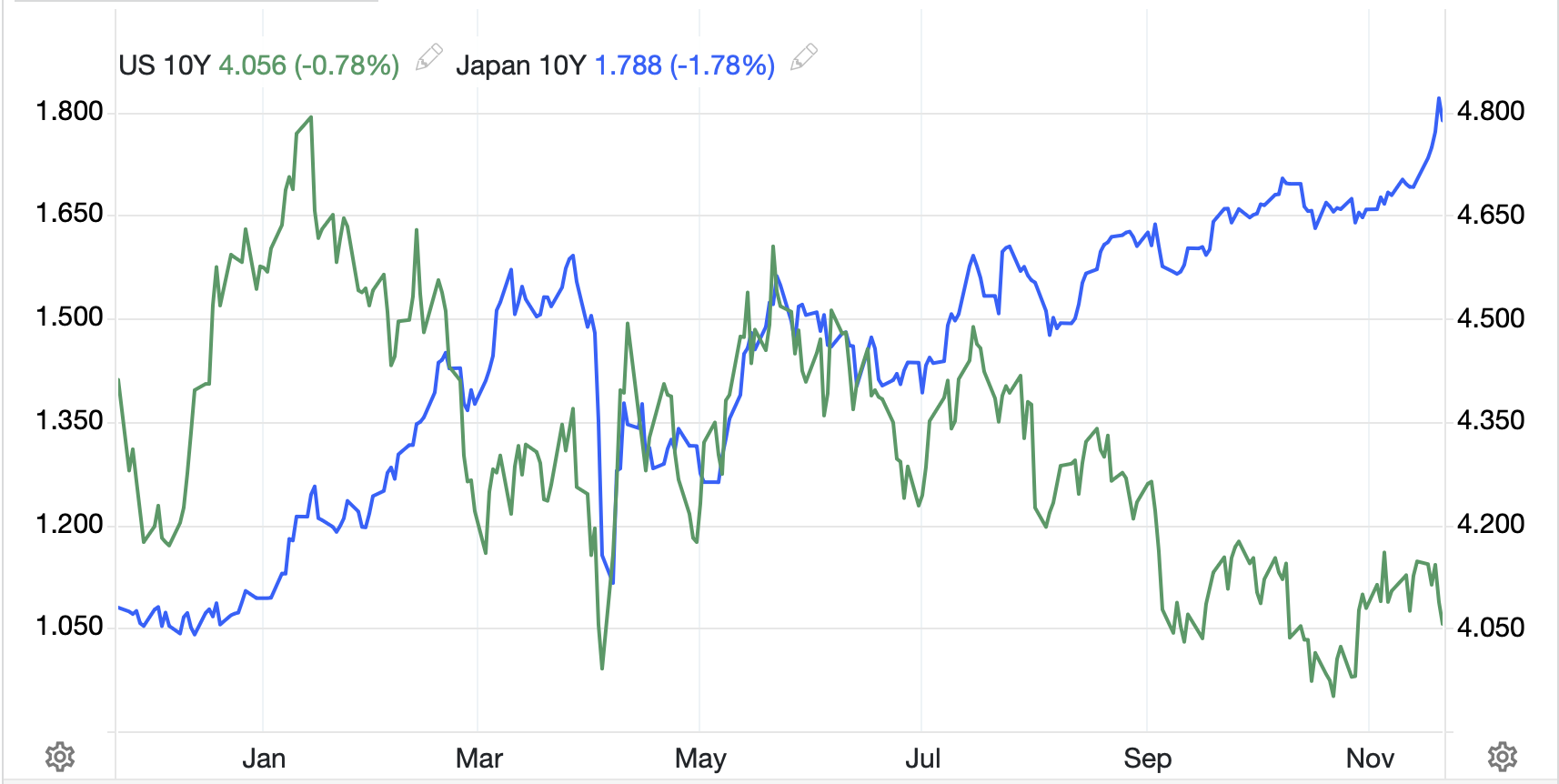
If one needed proof that interest rates are not the only determining factor in FX markets, look no further than Japan these days where JGB yields across the board, from 2yr to 40yr are trading at decade plus highs while the yen continues to decline on a regular basis.  This morning, the yen has traded through 155.00 vs. the dollar, and through 180.00 vs. the euro with the latter being a record low for the yen vs. the single currency since the euro was formed in 1999.

Source: tradingeconomics.com

Meanwhile, JGB yields continue to rise unabated on the back of growing concerns that Takaichi-san’s government is going to be issuing still more unfunded debt to pay for a massive new supplementary fiscal package rumored to be ¥17 trillion (~$109 billion).  While we may have many fiscal problems in the US, it is clear Japan should not be our fiscal role model.

Source: tradingeconomics.com

This market movement has led to the second step of the seven-step program of verbal intervention by Japanese FinMins and their subordinates.  Last night, FinMin Satsuki Katayama explained [emphasis added], “I’m seeing extremely one-sided and rapid movements in the currency market. I’m deeply concerned about the situation.”  Rapid and one-sided are the key words to note here.  History has shown the Japanese are not yet ready to intervene, but they are warming to the task.  My sense is we will need to see 160 trade again before they enter the market.  However, while that will have a short-term impact, it will not change the relative fiscal realities between the US and Japan, so any retreat is likely to be a dollar (or euro) buying opportunity.

As to the BOJ, after a highly anticipated meeting between Takaichi-san and Ueda-san, the BOJ Governor told a press conference, “The mechanism for inflation and wages to grow together is recovering. Given this, I told the prime minister that we are in the process of making gradual adjustments to the degree of monetary easing.”   Alas for the yen, I don’t think it will be enough to halt the slide.  That is a fiscal issue, and one not likely to be addressed anytime soon.

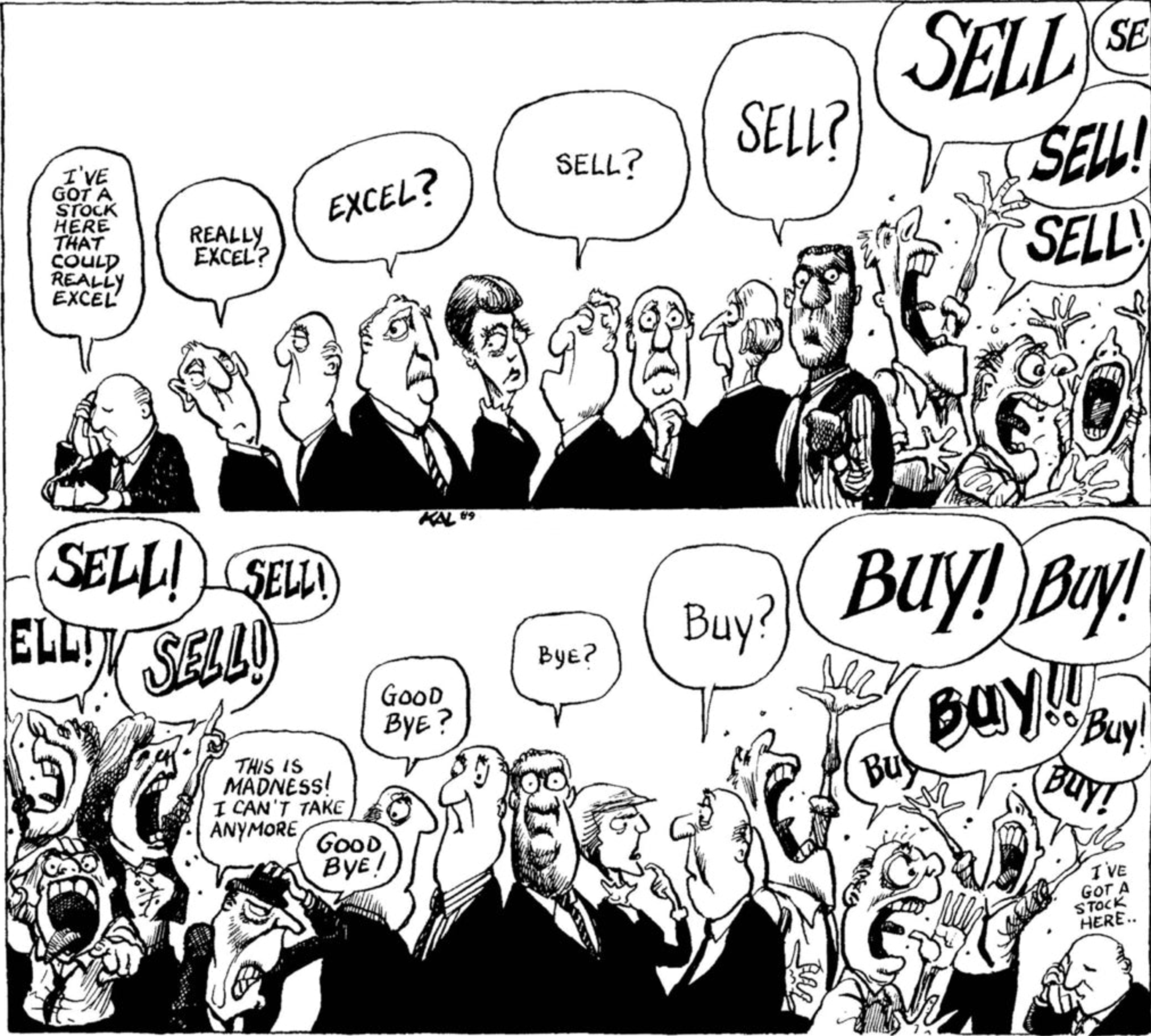
The screens everywhere have turned red
As folks have lost faith that the Fed,
Next month, will cut rates
Thus, leave to the fates
A stock market now left for dead

Yesterday, I showed the Fear & Greed Index and marveled at how it was pointing to so much fear despite equity markets trading within a few percentage points of all time highs.  Well, today it’s even worse!  This morning the index has fallen from 22 to 13 and is now pushing toward the lows seen last April when it reached 4 just ahead of Liberation Day.

In fact, it is worthwhile looking at a history of this index over the past year and remembering what happened in the wake of that all-time low reading.

Source: cnn.com

Now look at the S&P500 over the same timeline and see if you notice any similarities.

Source: tradingeconomics.com

It is certainly not a perfect match, but the dramatic rise in both indices from the bottom and through June is no coincidence.  The other interesting thing is that the fear index managed to decline so sharply despite the current pretty modest equity market decline.  After all, from the top, even after yesterday’s decline, we are less than 4% from record highs in the S&P 500.

Analysts discuss the ‘wall of worry’ when equity markets rise despite negative narratives.  Too, historically, when the fear index falls to current levels, it tends to presage a rally.  Yet, if we have only fallen 4% from the peak, it would appear that positions remain relatively robust in sizing.  In fact, BoA indicated that cash positions by investors have fallen to just 3.7%, the lowest level in the past 15 years.  So, everyone is fully invested, yet everyone is terrified.  Something’s gotta give!  In this poet’s eyes, the likely direction of travel in the short run is lower for equities, and a correction of 10% or so in total makes sense.  But at that point, especially if bonds are under pressure as well, I would look for the Fed to step in and not only cut rates but start expanding its balance sheet once again.  QT was nice while it lasted, but its time has passed.  One poet’s view.

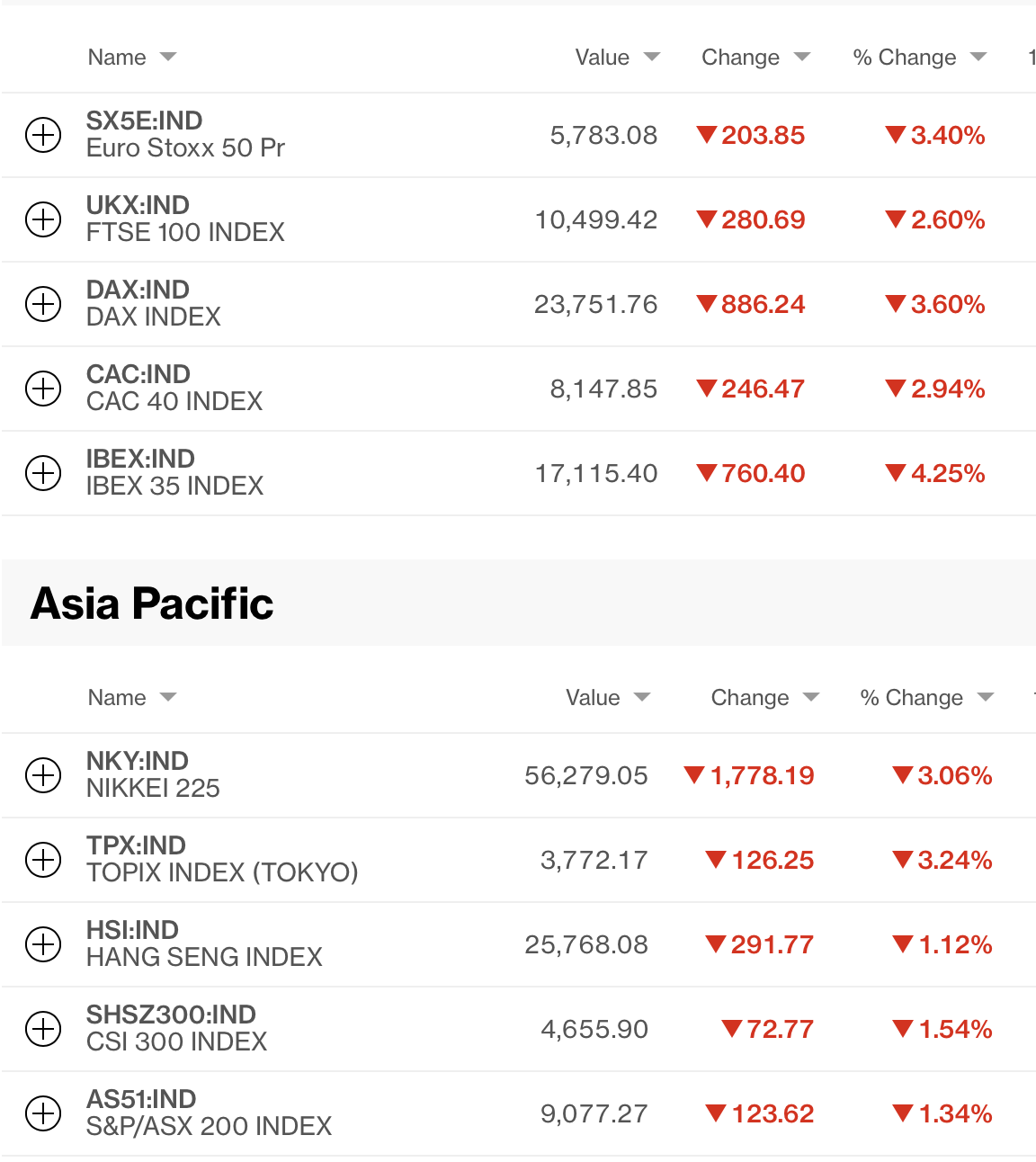
Ok, following the sharp decline in US equity markets yesterday on weak tech shares, the bottom really fell out in Asia and Europe.  Japan (-3.2%) got crushed between worries about fiscal profligacy discussed above and the tech selloff.  China (-0.65%) and HK (-1.7%) followed suit as did every market in Asia (Korea -3.3%, Taiwan -2.5%, India -0.3%, Australia -1.9%).  You get the idea.  In Europe, the picture is no brighter, although the damage is less dramatic given the complete lack of tech companies based on the continent.  But Germany (-1.2%), France (-1.3%), Spain (-1.6%), Italy (-1.7%) and the UK (-1.3%) have led the way lower where all indices are in the red.  US futures, at this hour (7:15) are also pointing lower, although on the order of -0.5% right now.

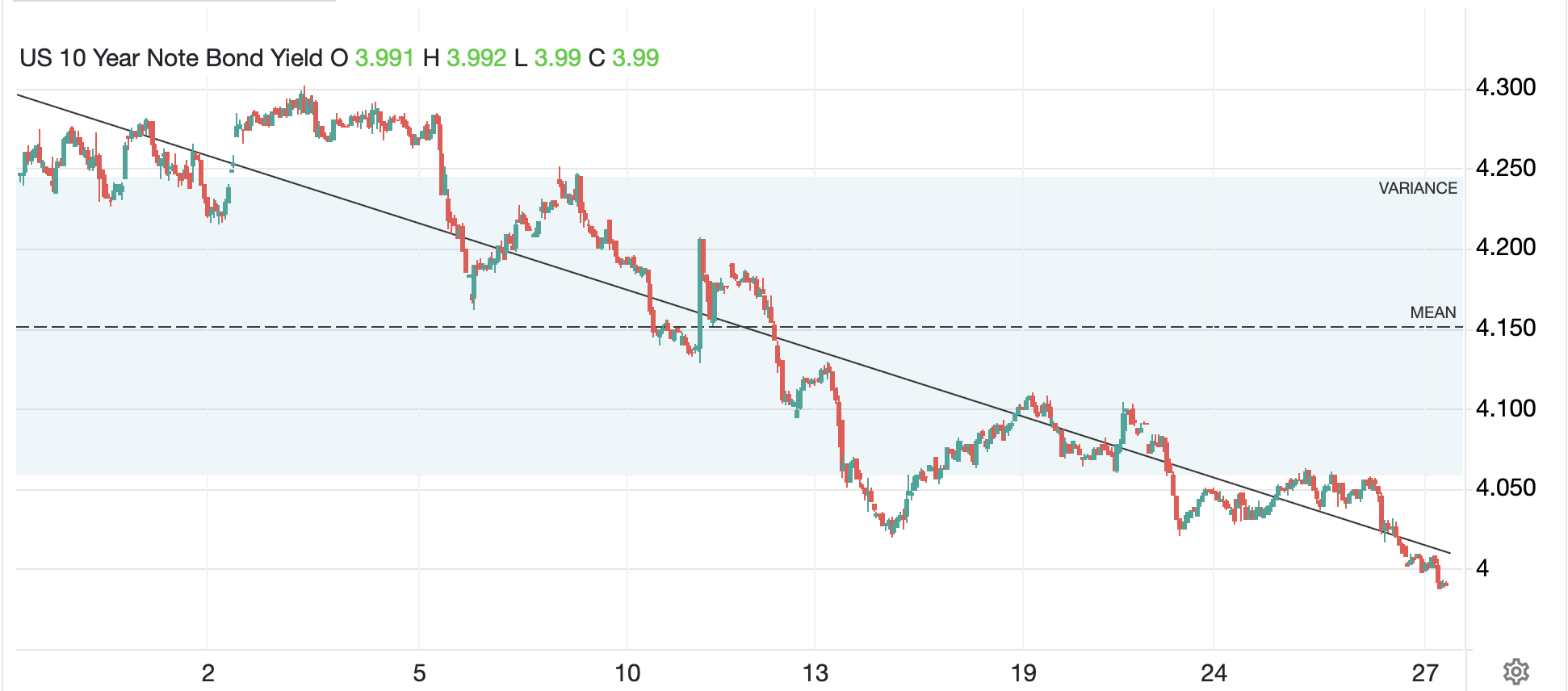
In the bond market, Treasury yields, after edging higher yesterday are lower by -4bps this morning, and back at 4.10%, their ‘home’ for the past two months as per the below chart from tradingeconomics.com.

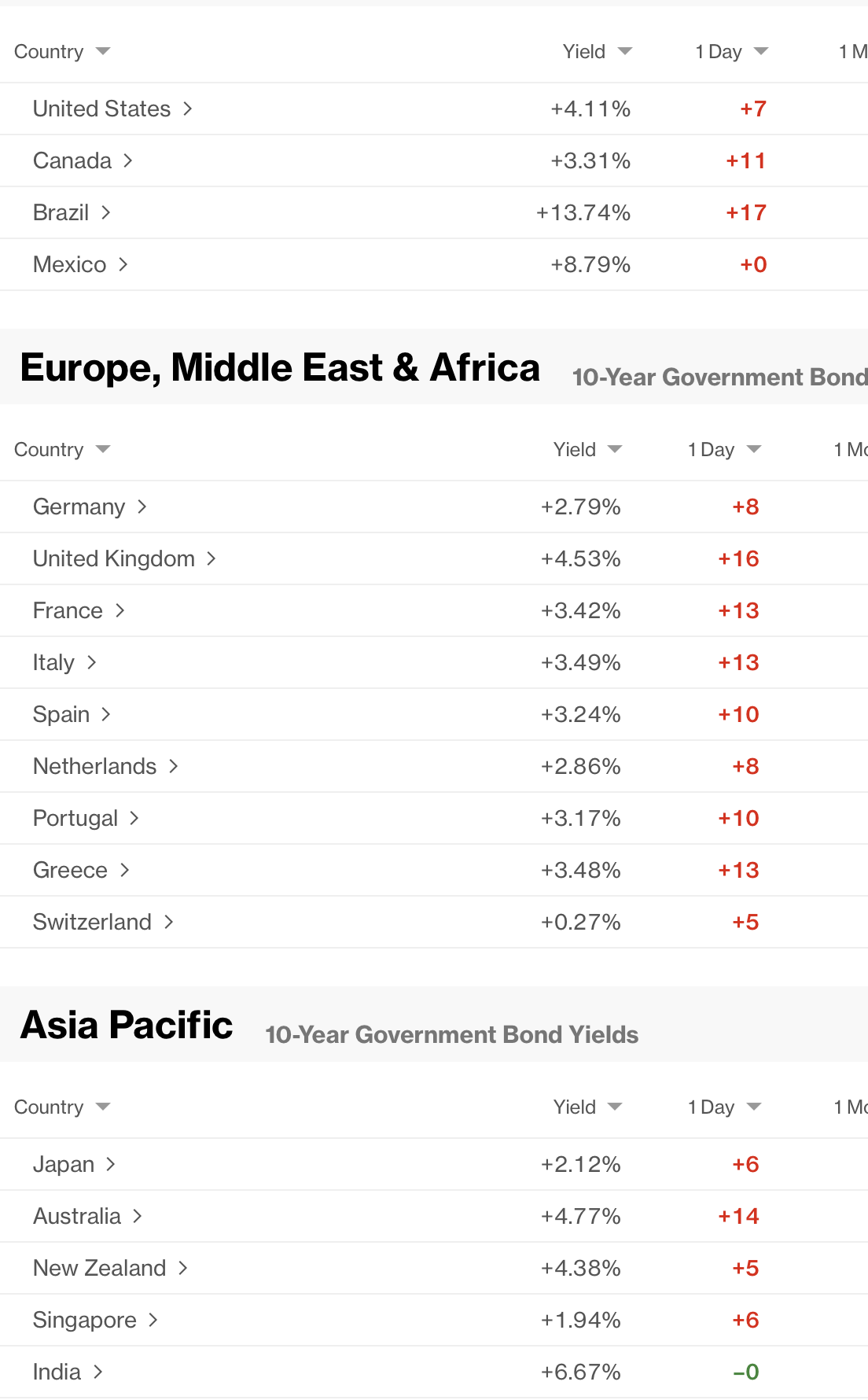
As to European sovereigns, they are not getting quite as much love with some yields unchanged (UK, Italy) and some slipping slightly, down -2bps (Germany, Netherlands), and that covers the entire movement today.  We’ve already discussed JGBs above.

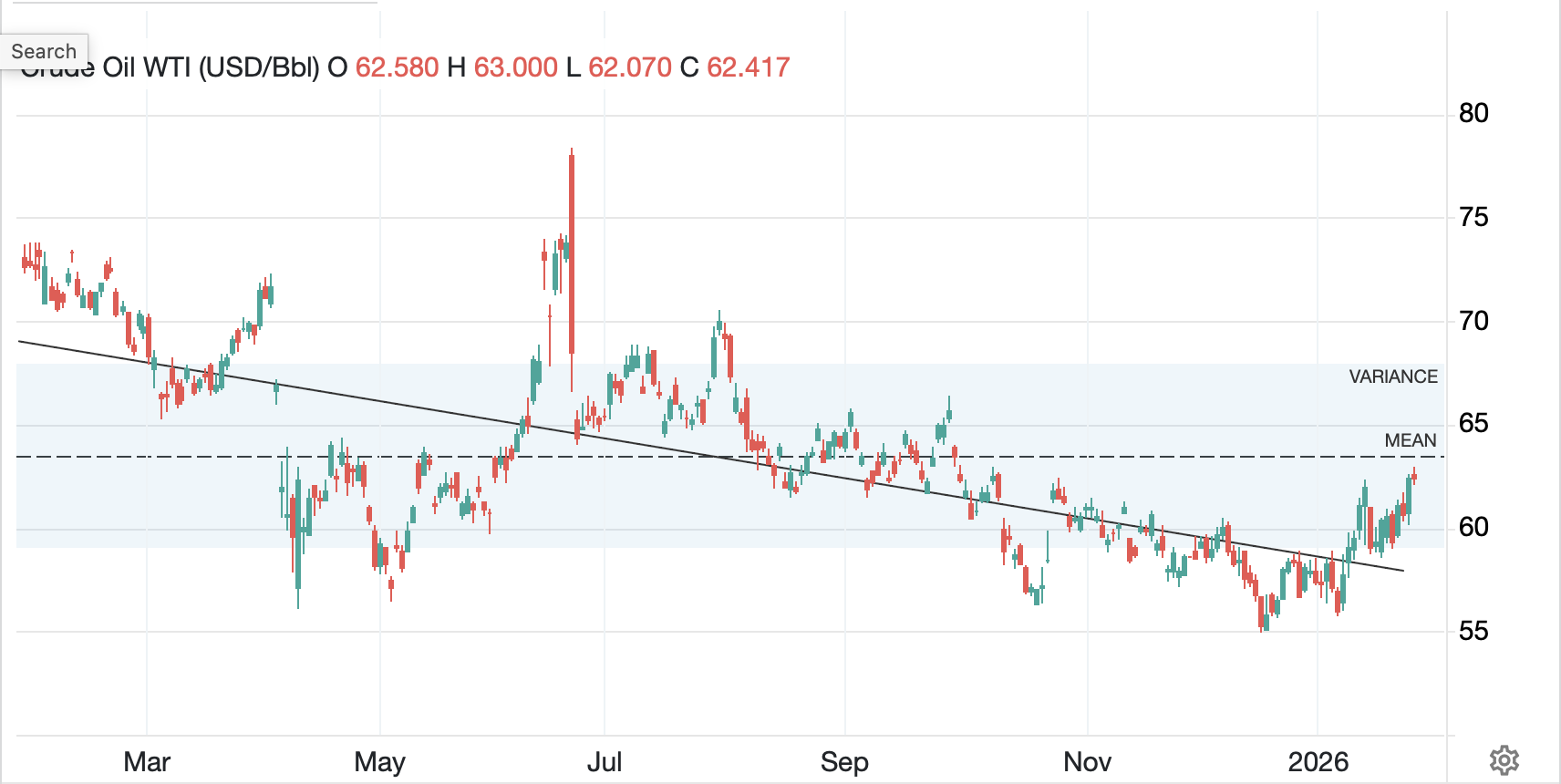
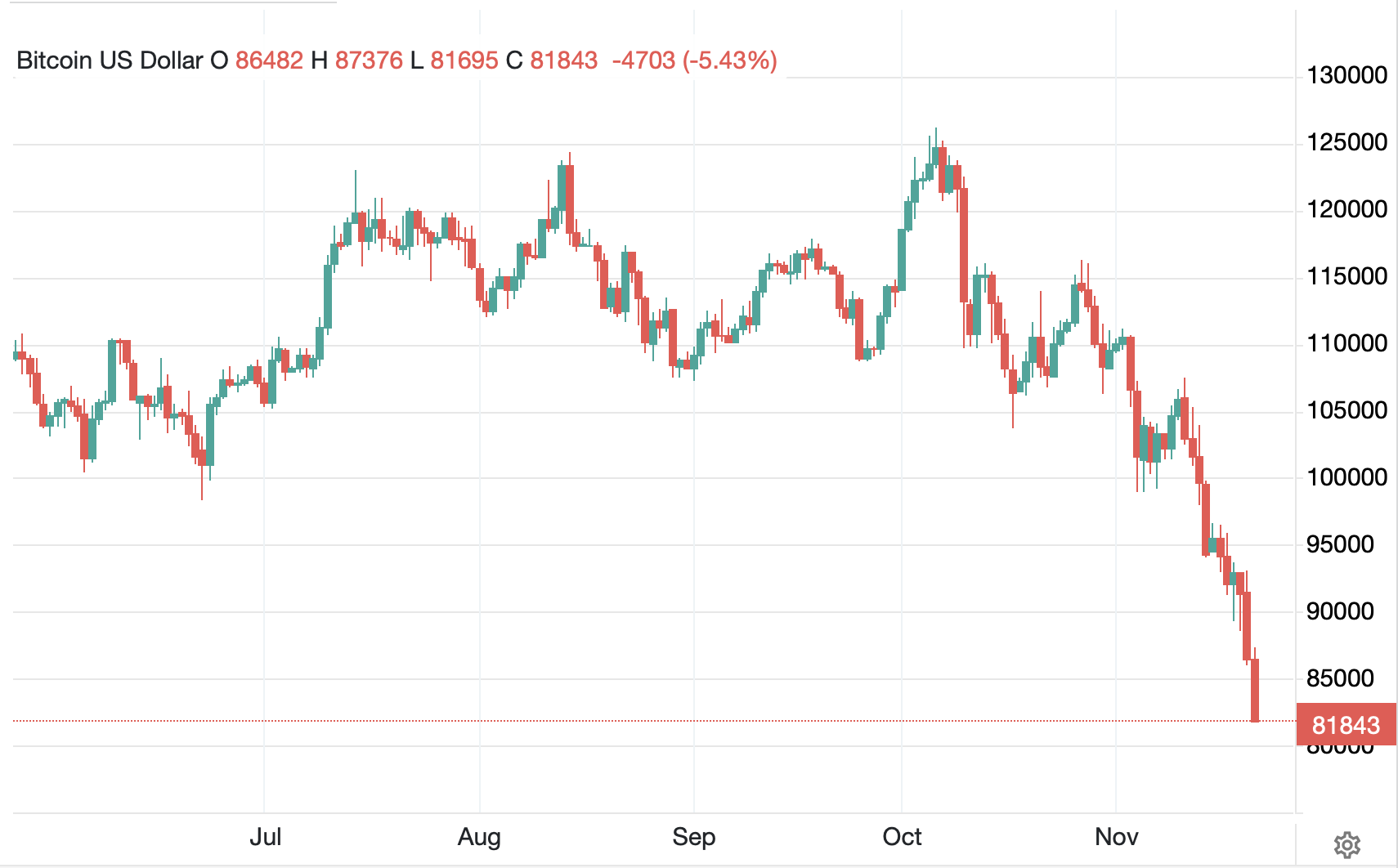
In the commodity space, oil (-0.2%) continues to trade either side of $60/bbl and it remains unclear what type of catalyst is required to move us away from this level.  Interestingly, precious metals have lost a bit of their luster despite the fear with gold (-0.25%), silver (-0.2%) and platinum (-0.2%) all treading water rather than being the recipient of flows based on fear.  Granted, compared to the crypto realm, where BTC (-1.0%, -16% in the past month) has suffered far more dramatically, this isn’t too bad.  But you have to ask, if investors are bailing on risk assets like equities, and bonds are not rallying sharply, while gold is slipping a bit, where is the money going?

Perhaps a look at the currency market will help us answer that question.  Alas, I don’t think that is the case as while the dollar had a good day yesterday, and is holding those gains this morning, if investors around the world are buying dollars, where are they putting them?  I suppose money market funds are going to be the main recipient of the funds taken out of longer-term investments.  One thing we have learned, though, is that the yen appears to have lost its haven status given its continued weakening (-3.0% in the past month) despite growing fears around the world.  

On the data front, yesterday saw Empire State Manufacturing print a very solid 18.7 and, weirdly, this morning at 5am the BLS released the Initial Claims data from October 18th at 232K, although there is not much context for that given the absence of other weeks’ data around it.  Later this morning we are due the ADP Weekly number, Factory Orders (exp 1.4%) and another Fed speaker, Governor Barr.  Yesterday’s Fed speakers left us with several calling for a cut in December, and several calling for no move with the former (Waller, Bowman and Miran) focused on the tenuous employment situation while the latter (Williams, Jeffereson, Kashkari and Logan) worried about inflation.  Personally, I’m with the latter group as the correct policy, but futures are still a coin toss and there is too much time before the next meeting to take a strong stand in either direction.

The world appears more confusing than usual right now, perhaps why that Fear index is so low.  With that in mind, regarding the dollar, despite all the troubles extant in the US, it is hard to look around and find someplace else with better prospects right now.  I still like it in the medium and long term.

Good luck

Adf

A Day to Give Thanks

Today is a day to give thanks
To those who flew planes and drove tanks
In multiple wars
And too many tours
No matter which service or ranks
 
Now, turning to markets at hand
The bulls, yesterday, had command
So, risk assets rose
While pundits compose
A narrative, things are just grand


And the thing is, there is just not that much new of note to discuss this morning.  As it is Veteran’s Day here in the US, banks and the bond market are closed, although equities and commodities markets are open.  But the news cycle overnight was led by the fact that Softbank sold their NVDA stake for a $5.8 billion profit.  And that’s pretty thin gruel for someone who writes about market activities.  Everything else is about who won/lost regarding the shutdown and frankly, that is something markets tend to ignore.

With that in mind, and given the absence of any substantive data, let’s go right into market activity overnight.  Asian equity markets were mixed although I would say there was more red (Japan, China, Taiwan, Australia, Indonesia, Thailand, Philippines) than green (HK, Singapore, Malaysia, Korea, India) but it appears most of the activity had limited volumes and there are few stories of note as drivers.  

In Europe, though, things are looking better with all the major bourses higher this morning, led by the UK (+0.8%) where bad news was good for stocks as the Unemployment Rate ticked higher, to 5.0%, which has markets now pricing an 80% probability of a rate cut by the BOE next month.  This has been enough to help most European markets higher (CAC +0.65%, IBEX +0.5%) except for the DAX (0.0%) which is lagging after the ZEW Sentiment Index was released at a weaker than forecast 38.5, which was also down from last month’s reading.  

I think it might be worthwhile, though, to take a longer-term perspective on this sentiment survey.  As you can see from the chart below (data from ZEW.de), the current level is very middle of the pack.  In fact, the long-term average reading is 21.3, but of course, that includes numerous negative readings during recessions.  I might argue that things in Germany are not collapsing, but nowhere near robust.  My concern, if I were a German policymaker, is that it appears the survey has peaked at a much lower level than history, an indication that the best they can hope for is still mediocre.

Finally, US futures are pointing slightly lower, -0.2% or so, at this hour (7:50), arguably a little hangover from yesterday.

In the bond market, of course, Treasury yields aren’t trading, but European sovereigns are essentially unchanged as well, except for UK Gilts, which have seen yields slip -7bps on that higher Unemployment data driving rate cut expectations.  Given the ongoing fiscal issues in the UK, where they cannot seem to come up with a budget and all signs point to a worsening debt position, I’m not sure why yields there would decline, but that’s what’s happening.

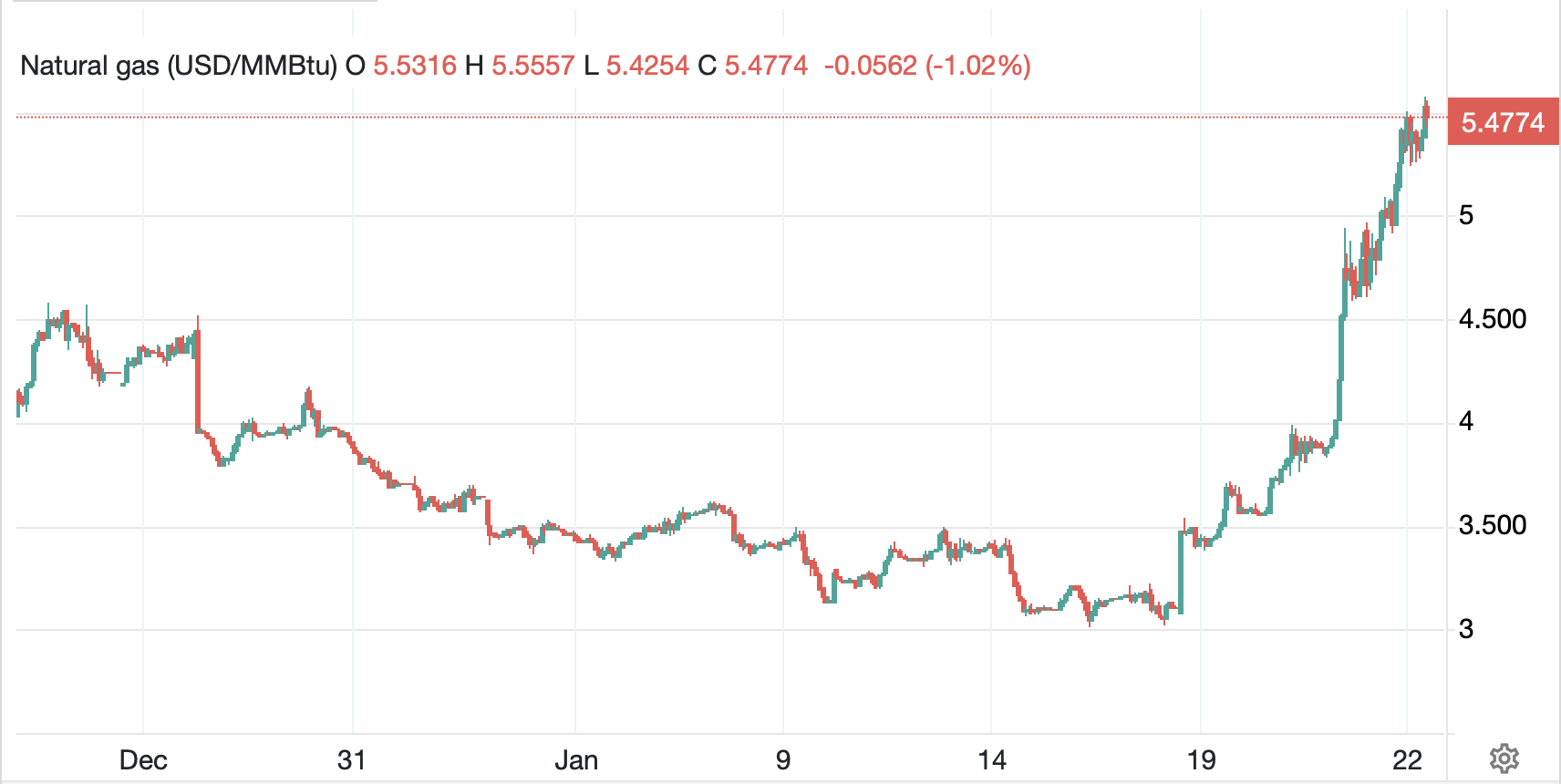
Turning to the commodity markets, oil (+0.5%) continues to trade either side of $60/bbl, making no headway in either direction.  I listened to an excellent podcast yesterday with Doomberg, who once again highlighted his view that the long-term direction of the price of oil is lower.  The case he makes is that on an energy basis, NatGas, even though it is up 48% in the past year, remains significantly cheaper than oil, one-quarter the price, and that the arbitrage will close driving the price of oil lower and the price of NatGas higher.  Remember, politics is far more impactful on oil drilling than geology.  Ask yourself what will happen to the price of oil if Venezuela’s government falls and is replaced by a pro-US government allowing the oil majors in to help tap the largest oil reserves on the planet.  I assure you that is not bullish for the price of oil.

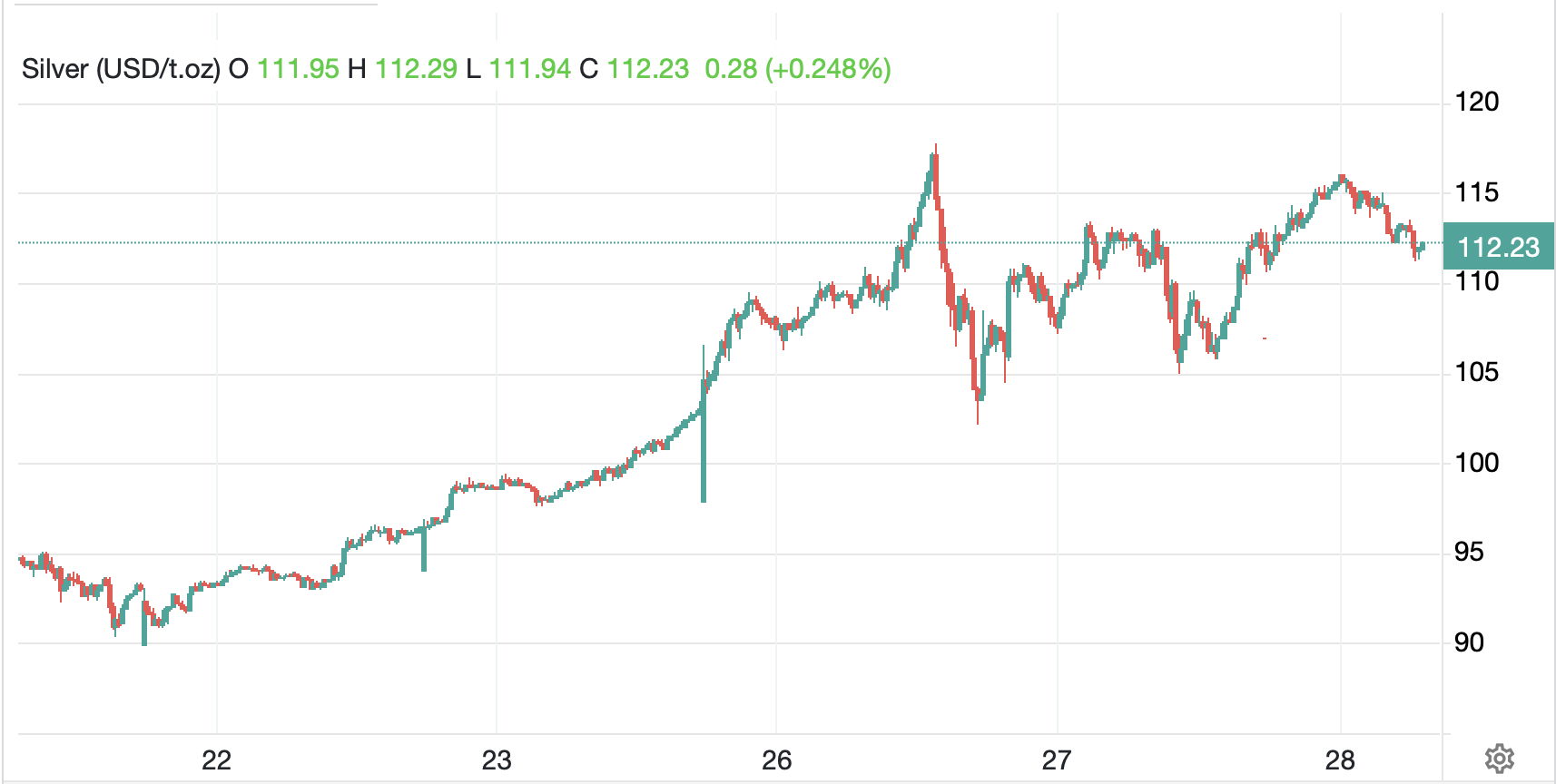
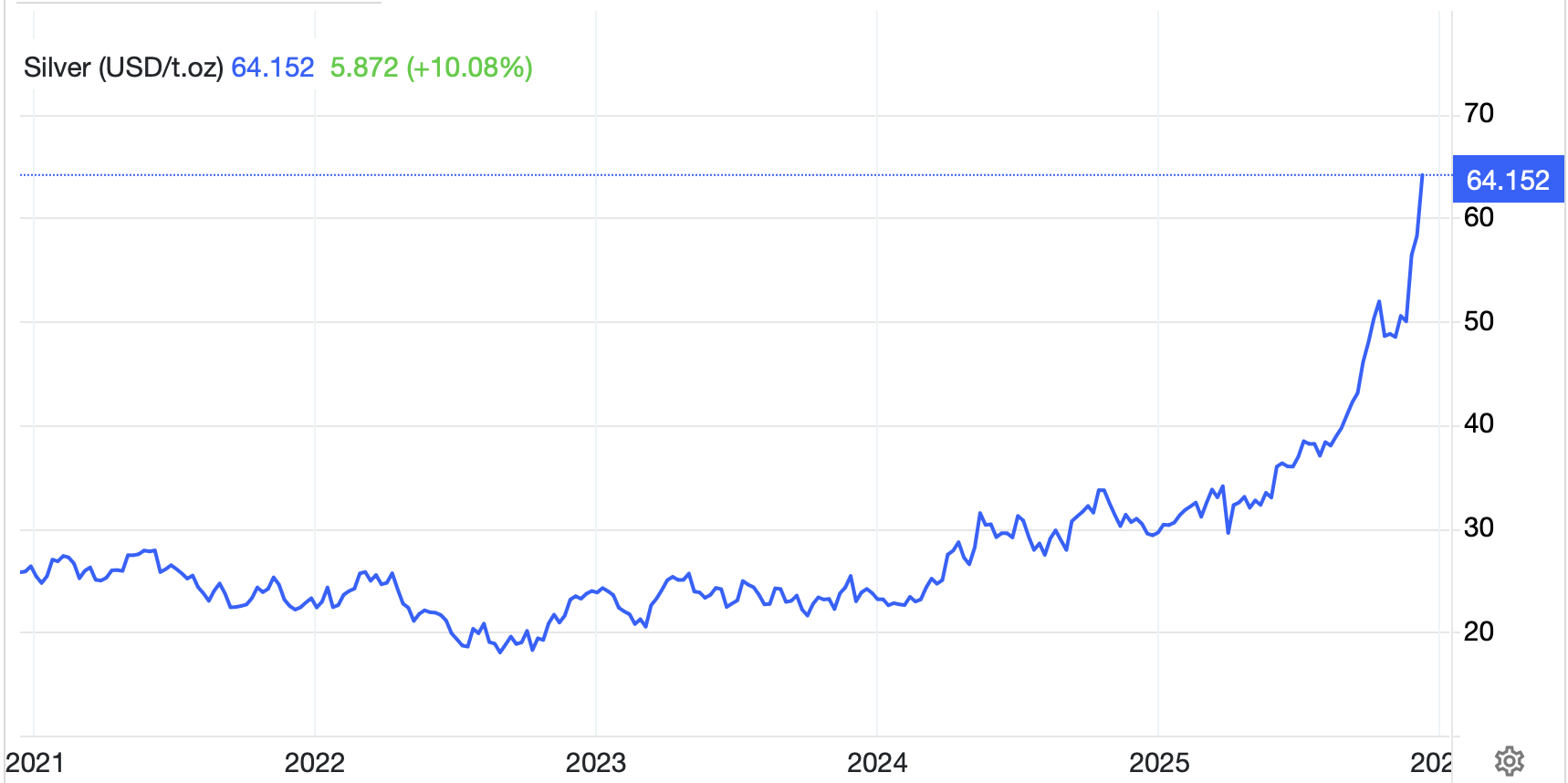
As to the metals markets, after yesterday’s very impressive moves, they are continuing higher this morning, at least the precious metals are with gold (+0.5%), silver (+0.8% and now over $50/oz) and platinum (+0.75%) all extending their gains.  These are the same charts in the metals, and my take is we had a blowoff run which has now corrected, and we could easily see another leg higher of serious magnitude.

Source: tradingeconomics.com

Finally, the dollar is mostly drifting lower this morning, although not universally so.  While the euro (+0.15%), CHF (+0.6%) and Scandies (NOK +0.6%, SEK +0.4%) are all firmer, the pound (-0.2%) and Aussie (-0.2%) are suffering a bit.  Yen is unchanged along with CAD.  In the EMG bloc, it is also a mixed bag with INR (+0.25%) and PLN (+0.25%) having solid sessions although KRW (-0.6%) is going the other way and the rest of the bloc is +/- 0.1% or so different.  Again, the dollar is just not that exciting in its own right.

There is a new data point coming out, ADP Weekly Employment change, seemingly in an effort to fill in gaps until the BLS gets back to work.  However, given its newness, it is not clear what value it will have to markets.  There is also a speech by Governor Barr but tomorrow is when the Fedspeak really hits.

It is shaping up to be a quiet day, and I suspect absent a major equity move, or some White House bingo, FX markets are going to drift nowhere of note.

Good luck

adf

Cracks Have Shown Through

A shift in the narrative view
On AI has started to brew
What folks had thought certain
From behind the curtain
Seems like, now, some cracks have shown through
 
For stock markets, this is bad news
‘Cause AI has been the true fuse
Of recent price action
And any distraction
Could well, bullish thoughts, disabuse


While equity markets around the world continue to trade near record highs which were set just weeks ago, there has been a subtle change in the narrative, at least based on my perusal of FinX.  Although there are still many in the ‘buy the dip’ camp who strongly believe that it is different this time and AI is the future, there has been an increase in the number of voices willing to say that things have gone too far.  One of the stories getting a lot of press is the fact that Tesla’s shareholders voted to give Elon Musk a pay package that could amount to $1 trillion if the company meets its milestones over the next 10 years, including having the company’s market cap rise to $8.5 trillion from the current $1.5 trillion.  This certainly has a touch of excess attached to it.

But more broadly, I couldn’t help but notice this graph, originally created by the Dallas Fed, but more widely disseminated by the FT showing the potential future of AI’s impact on humanity.  Under the standard of a picture is worth a thousand words, I might argue the information in this picture falls some 985 words short.  Rather, they simply could have said, ‘AI could be amazing, it could be catastrophic, or it might not matter at all.’ 

However, aside from the inanity of this chart, and more importantly for those paying attention to markets and their portfolios, things look a bit different.  There has been a lot of discussion regarding the everything bubble which has been led by the massive increase in value of the Mag7 stocks.  Recently, it set some new valuation records with the Shiller CAPE (Cyclically Adjusted Price Earnings) ratio now trading at its second highest level of all time, at 41.2, exceeded only during the dotcom bubble of 2000.

Source: @DavidBCollum on X

Added to this is the fact that only about half the companies in the S&P 500 are trading above their 200 day moving averages, a key trend indicator, which implies that the uptrend may be slowing, and the fact that we have had seven down days in the past eight sessions (and US futures are lower this morning by -0.2% as I type at 7:15) indicates that perhaps, a correction of some substance is starting to take shape.

Source: tradingeconomics.com

As of this morning, the S%P 500 is merely 3% below the highs seen on October 29th, so just a week ago.  The conventional description of a correction is a 10% decline, and a bear market is a 20% decline.  I am not saying this is what is going to happen, but my spidey sense is really starting to tingle.

Source: giphy.com

Remember, I’m just a poet, and an FX one at that, so my takes on markets are just one poet’s views based on too many years in markets.  This is not trading advice in any way, shape or form.  But what I can say is, be careful with your investments, things are changing.

So, let’s move on to the overnight session to see how things played out following the selloff yesterday in the US.  Let me say this, it wasn’t pretty.  Pretty much all Asian markets were lower to end the week led by Korea (-1.8%) which has seen its market race higher than the NASDAQ this year, but there was weakness in Japan (-1.2%), China (-0.3%), HK (-0.9%), Taiwan (-0.9%) and Australia (-0.7%) with most other regional exchanges flattish to lower by -0.5%.  Given the tech story is critical to Asia overall, if that is starting to falter, we can expect these markets to slip as well.  Too, there was news from China showing its Trade Surplus shrank slightly, to $90.7 billion, but more ominously, exports actually declined -1.1% while imports rose only 1.0%.  Arguably, the reason President Xi was willing to make a deal with President Trump is because the domestic economic situation in China is troublesome and he knows that more trade problems will be a domestic nightmare for him.

In Europe, red is the dominant color on screens as well with the IBEX (-0.9%) leading the way lower, but the DAX (-0.9%), FTSE 100 and (-0.7%) and CAC (-0.5%) all fading as well and losses the universal story on the continent.  Now, we know that it is not a tech story since, arguably, Europe has no tech presence.  So the problems here are more likely a combination of following the global trend lower and ongoing soft Eurozone data implying that economic growth, and hence corporate profits, are going to continue to be weak.  With the ECB taking themselves out of the equation for now, claiming rates are at the correct level and turning their focus to the idea of a digital euro (which will never be important), if we continue to see the US market slip, you can be certain that European bourses will follow.

In the bond market, it is hard to get excited about anything right now as Treasury yields, which slipped a basis point yesterday, are higher by 1bp this morning.  We remain right at the level from the immediate aftermath of the FOMC meeting, which tells me that traders are awaiting the next major piece of news.  European sovereign yields are also higher by 1bp across the board with only the UK (+3bps) the outlier here today while JGBs overnight slipped -1bp following yesterday’s Treasury price action.

In the commodity space, both oil (+0.8%, but below $60/bbl) and gold (+0.5% but below $4000/oz) continue to trade in a range and basically have not moved anywhere of note over the past 2+ weeks as you can see in the chart below.

Source: tradingeconomics.com

There have certainly been some choppy moves, but net, nothing!  Silver (+1.0%) however, has gotten a boost after the US designated it a critical mineral implying government support.  It would not be surprising to see silver outperform gold for a while going forward.

Finally, the dollar remains an afterthought to markets.  The DXY rallied to above 100 briefly, but has now slipped back below that level into its multi-month trading range as per the below chart.

Source: tradingeconomics.com

Looking at the major currencies today, +/-0.2% describes the price action, which means nothing is happening.  The only notable difference is KRW (-0.7%, which has continued to decline on the back of growing outflows of capital, perhaps anticipating the flows that will come with Korea’s promises for investing in US shipbuilding and semiconductor manufacturing.  But the won has been tumbling since early July, down 8% in that period.

Source: tradingeconomics.com

And that’s really it this morning.  Looking at the KRW, though, we must really consider what I mentioned yesterday about the Supreme Court’s tariff ruling, whenever that comes.  If the tariffs are overturned, it’s not the repayment of those collected that is the issue, it is the change in the investment flows, and that will be a very good reason to turn negative on the dollar.  But until such time, while risk managers need to stay hedged, traders have carte blanche.  If tech stocks really do correct, a risk off scenario is likely to support the dollar, at least for a while.  Hopefully, that won’t be today’s outcome.

Good luck and good weekend

Adf

Filled With Chagrin

The vibe in the market is fear
As equities get a Bronx cheer
Commodities, too
Most traders eschew
The dollar, though’s, getting in gear
 
So, what has the catalyst been
To drive such a change in the spin
No story stands out
But there is no doubt
Investors are filled with chagrin


Ladies and gentlemen, boys and girls, this morning things just feel bad.  As I peruse the headlines around the major publications, there is no obvious story that is driving today’s weakness in risk assets, but there is no mistaking the vibe.  Certainly, there are several issues outstanding that might be seen as a negative, but none of them are new.  

  • The government has been shut down for 35 days as of today, and it doesn’t sound like the Senate Democrats are ready to vote to reopen it.  Granted, the problems of the shutdown increase with time, but there has been no apparent change in tone for at least the past two weeks, so why is today the day when things look bad?
  • The war in Ukraine continues apace with no obvious timeline to ending, but this has been ongoing for nearly 4 years, so what is it about today that may have changed?
  • Concerns over fraud have increased after the recent bankruptcy filings by First Brands and Tricolor, as well as accusations by banks of other situations, but again, no new story broke overnight.
  • Perhaps it is the fact that today is Election Day in the US, and there is concern that Zoran Mamdani, a self-described Democratic Socialist, could become the next mayor of NYC, which given it is still home to so many financial markets, has those market participants unnerved.

Some days, it’s just not clear why markets move in the direction they do, and there can be far less dramatic drivers.  For instance, we have seen a major rally in equity markets, and risk assets in general, over the past 5 years, with an acceleration over the past 6 months and they are simply taking a breather.  Whatever the driver, the movement is clear.

Source: tradingeconomics.com

So, given the absence of obvious drivers to discuss, let’s simply recap the damage. After yesterday’s mixed session in the US, Asia was under significant pressure led by Tokyo (-1.75%) with HK (-0.8%) and China (-0.75%) slipping as well.  But Australia (-0.9%) fell after the RBA left rates on hold, as expected, although Governor Bullock sounded a touch more hawkish than expected, and the rest of the region saw almost universal weakness with Korea (-2.4%) the worst of the bunch, but declines everywhere (India, Taiwan, Indonesia, Singapore, Thailand) except New Zealand, which managed a small gain, to reach yet another record high, on solid earnings numbers from key companies.

Meanwhile, European bourses are all sharply lower as well (DAX -1.3%, CAC -1.2%, IBEX -1.1%) as the overall market vibe weighs on these markets, all of which recently traded at new all-time highs.  Ironically, the UK (-0.6%) is about the best performer despite a speech from Chancellor of the Exchequer, Rachel Reeves, which explained…well, it is not clear what it explained.  The UK has major budget problems and has discussed raising taxes, but given growth is lagging, there is a lot of pushback, even within the Starmer government, on that subject.  As with virtually every G10 economy, the government is spending far more than they take in and they don’t know how to address the deficit.  Unfortunately for the UK, the pound is not the global reserve currency and so they are subject to market discipline, unlike the US…so far.  But, in this space, US futures are all lower this morning, down -1.0% or so as I type at 7:10am.

Now, your first thought might be that bonds have rallied nicely on all this risk aversion, but while they have, indeed, moved higher (yields lower) I don’t know that nicely would describe the movement.  Rather, barely is a better description as 10-year yields are lower by -2bps in the Treasury market and between -1bp and -2bps in all European sovereign markets.  In fact, despite the weakness in Japanese stocks overnight, JGB yields are unchanged.  The message is, bonds are not that appealing, even if stocks aren’t either.

Turning to commodities, oil (-1.4%) is having a hard time this morning alongside the equity markets, with virtually all energy prices lower across the board.  Given there has been no announcement of a major energy breakthrough, this has the feel of growing concern over economic activity going forward.  With that in mind, though, WTI is still trading right around $60/bbl, which seems to be its “home” lately.

In the metals markets, gold (-0.15%) continues to trade around the $4000/oz level, which seems to be its new “home” as traders await the next catalyst in this space.  Silver (-0.3%) is similarly fixated on its level of $48/oz and seems likely to follow gold’s lead going forward.  However, copper (-2.3%) seems like it is more in sync with oil lately, as the two are both so intimately linked with economic activity and changes thereto.  It’s funny, despite the risk asset weakness, I have not seen anything new on a pending recession in the US, nor globally, although there continues to be a steady stream of analysts who have been explaining we are already in one.

Finally, the dollar is today’s winner, rising against every one of its counterparts except the yen (+.45%) which responded to a second round of verbal intervention from FinMin Katayama, who once again drew from the MOF seven-step playbook with a half-step overnight: “I’m seeing one-sided and rapid moves in the currency market. There’s no change in our stance of assessing developments with a high sense of urgency.”  

But away from the yen, it is merely a question of which currency looks worst.  The pound (-0.65%) has traded down to levels not seen since Liberation Day, as it appears the FX market did not take Chancellor Reeves’ comments that well.

Source: tradingeconomics.com

For those who view the DXY as the key indicator, it has traded above 100 for the first time since August, and I know many technicians are looking for a breakout here.  The fact remains that the Fed’s recent seeming mildly hawkish turn is out of sync with most of the rest of the world and will support the dollar for now.  Of course, the futures market is still pricing a 72% probability of a rate cut in December, so traders are taking the ‘hawkish’ comments by Chair Powell at the press conference last week with a grain or two of salt.  In fact, one of the things weighing on the pound is the idea that the BOE may cut this week despite still high inflation.

But wherever you look in this space, the dollar is sharply higher.  ZAR (-1.0%), NOK (-0.9%), MXN (-0.85%) and SEK (-0.9%) lead the way, but declines of -0.5% are rampant across all three regional blocs.  Today is a straight up dollar story.

And that’s all we have today.  Yesterday’s ISM data was a touch weaker than forecast, and last month, slipping to 48.7 with Prices Paid (58.0) slipping as well.  Weirdly, the S&P PMI was a better than expected 52.5, rising from last month and beating expectations.  It seems a mixed message.  Yesterday’s Fed speakers didn’t tell us anything new, with Governor Cook explaining that December is a “live” meeting.  I’m not sure what that means.  Is the implication they may not cut there?  That would not go down well in either markets or the White House.

Given how far equity prices have come in the past 6 months, it would not be a surprise to see a more substantial pullback.  In fact, it would be healthy for the market to remove some of the excesses that abound.  The fraud stories are concerning as they tend to flourish at the end of bull markets, and while they are not yet flourishing, they are starting to become more common.  In the end, while I expect the Fed will cut in December, and then again in January, I don’t see a reason for the dollar to decline sharply.

Good luck

Adf

Decidedly Glum

The mood is decidedly glum
In markets, as traders succumb
To views that the world
Is coming unfurled
And fears that the game’s zero-sum
 
So, stories ‘bout regional banks
With problems are joining the ranks
Of reasons to sell
Ere things go to hell
And why folks are buying Swiss francs


It doesn’t seem that long ago when equity markets were trading at all-time highs, arguably a sign of significant positive attitudes, and yet here we are this morning with equity markets around the world under significant pressure.  Of course, the reason it doesn’t feel like it was that long ago is BECAUSE IT WASN’T.  In fact, as you can see from the chart below, it was just last week!

Source: tradingeconomics.com

And understand, that even with futures pointing lower by -1.0% this morning, the S&P 500 is only 3% off its highs.  That hardly seems like a collapse, but the vibe I am getting is decidedly negative.  Certainly, haven assets are in demand this morning with both the yen (+0.5%) and the Swiss franc (+0.45%) rising sharply after bottoming on the same day as the S&P’s top, with both currencies back to their levels from a month ago.

Source: tradingeconomics.com

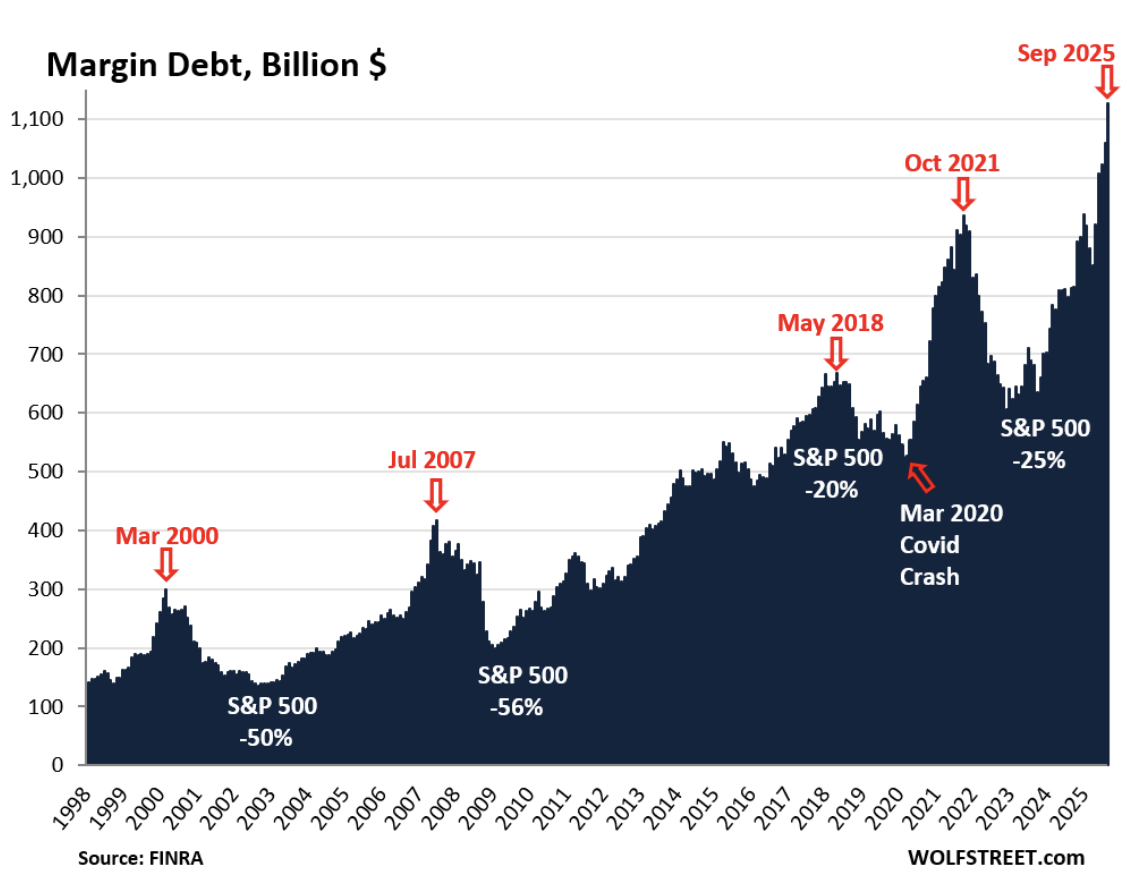
Is the world ending?  Probably not today but that doesn’t make it feel any better.  After all, we have been living through an unprecedented growth in leverage, with margin debt growing to new record highs every week, despite a backdrop of massive global uncertainty regarding trade, economic activity and kinetic conflict.  It is hard to believe that the fact that the FOMC is likely to cut rates by 25bps at the end of the month and again in December was enough to convince investors that future earnings were going to rise dramatically.

But that is where things stand this morning.  I must admit I have seen and read more stories about the idea that the AI hype train has run too far and needs to correct, and while that has probably been the case for a while, it is only in the past few days that those stances are becoming public.  There has also been an uptick in chatter about bad debt and more insidiously, fraud, that has been underlying some of the recent hype.  The First Brands bankruptcy is reverberating and now two regional banks, Zion and Western Alliance, have indicated that some recent loan losses may be tied to fraud.  While the amounts in question for the latter two are not enough to be a real problem for either institution, numbering in the $10’s of millions, history has shown that fraud tends to arise when money/lending standards are just too easy, and a sign that the end of good times may be nigh.

Again, it is a big leap to say that because some fraud was uncovered that signals the top.  But history has also shown that there is never just one cockroach, and if the lights are coming on, we are likely to see others.  While big bank earnings were solid, that was for last quarter.  And that’s just the market internal story for one industry.

If we add things like concerns over a potential conflict between the US and Venezuela, which is the top article in the WSJthis morning, or the idea that the US may send Tomahawk missiles, with ranges of up to 1500 miles, to Ukraine, it is unlikely to calm any fears.  And adding to that we continue to have the government shut down, although I personally tend to think of that as a benefit and since it doesn’t seem to be helping the Democrat party, the MSM stopped covering it, and we have the escalating trade conflict with China.  Looking at all the potential problems, it cannot be that surprising that some investors are a bit concerned about things and lightening their exposures.  Too, it is a Friday in October, and we have seen some particularly bad outcomes over weekends in October, notably in 1987!

I’m not forecasting anything like that, believe me, just reminding everyone that while history may not repeat, it often rhymes.  So, let’s look at the overnight session, which had a decidedly risk-off tone.  While the declines in the US markets weren’t that large, they left a bad taste everywhere in Asia with only India (+0.6%) managing to rise on the session.  Otherwise, Japan (-1.4%), China (-2.25%), HK (-2.5%), Taiwan (-1.25%), Australia (-0.8%) and virtually all the rest of the markets declined with Korea managing to close unchanged.  Fear was rampant, especially in China on the ongoing trade concerns.

In Europe, it should be no surprise that equity markets are also sharply lower led by the DAX (-2.1%) and FTSE 100 (-1.2%) with Paris (-0.7%) and Madrid (-0.95%) also under pressure.  The causes here are the same as everywhere, worries that things have gotten ahead of themselves while fears over escalations in both the trade and kinetic conflicts grow.  As well, the banking sector here is under pressure as credit concerns grow globally.  As to US futures, at this hour (7:15), they have bounced off their worst levels and are lower by just -0.25% to -0.5%.

Bond markets have been a major beneficiary of the growing fear with Treasury yields bouncing just 1bp this morning and sitting just below 4.00% after a -7bp decline yesterday.  European sovereign yields also fell sharply yesterday and are finding a near-term bottom as they retrace between 1bp and 2bps higher on the session.  If fear is growing, despite all the budget deficits, the default process is to buy bonds!

In the commodity markets, oil (-0.3%) has bounced off its lowest levels of the session which coincide with the lows seen back in April, post Liberation Day.  (see tradingeconomics.com chart below). It seems that not only are there economic concerns, but API inventory data showed a surprising build there.

Turning to the metals markets, gold (-0.2%) had a remarkable day yesterday, rising $100/oz, more than 2%, so a little consolidation here can be no surprise.  In fact, all the metals saw gains yesterday and are backing off a bit this morning in very volatile, and what appear to be illiquid markets.  Looking at the screen, the price is rising and falling $5/oz on a tick.  This 5-minute chart shows just how choppy things are.

Source: tradingeconomics.com

Finally, the dollar is softer, which on the one hand is surprising given its traditional haven status, but on the other hand, given the ongoing decline in yields and the fear pervading markets, is probably not that surprising.  Remember, one of the drivers for the dollar is capital flows and if US equity markets decline, we are going to see foreign investors sell, and then likely sell those dollars as well.  However, I would take exception with the Bloomberg headline explaining that the dollar is weakening because of Fed rate cut expectations given those expectations have been with us for several weeks.  At any rate, the weakness this morning is broad-based, but shallow with the two havens mentioned above the exception and most other currencies gaining 0.1% or 0.2% at most.  It seems President Trump has also made a comment about the trade war indicating that the current tariffs are unsustainable and he confirmed he would be meeting President Xi in a few weeks.

And that’s really all there is to end the week.  There is no data at all, and the only Fed speaker is KC Fed president Musalem.  The general takeaway from the Fedspeak this week is that they are prepared to cut rates but given the lack of data, will not be aggressive.

The world is a messy place.  No matter your political views, when viewing markets, it is important to focus on the reality of what is happening.  We know that leverage has been growing and helping to drive stock market indices to record highs.  We know that gold and other precious metals have been rallying on a combination of central bank (price insensitive) and growing retail buying as fears grow of impending inflation.  We have seen several instances of what appears to be lax lending standards, something that historically has led to substantial chaos in markets.  The advice I can offer here is maintain position hedges, especially those of you who are corporate risk managers.  Yes, volatility has risen a bit, but I assure you, if things really come undone, that will be insignificant compared to the benefit of the hedge.

And with those cheery words, I wish you all 

Good luck and a good weekend

Adf

Warnings Arise

The headline today is ‘bout peace
In Gaza, and hostage release
Can this program last?
And both sides hold fast?
Or once more will violence increase?
 
Now, turning to markets we see
Risk assets continue their spree
But it’s no surprise
More warnings arise
That markets shun reality


In what can only be described as a monumental breakthrough in the Middle East, a peace plan between Israel and Hamas has been agreed that will see to the release of the remaining hostages and the disarmament of Hamas fighters while the Israeli army pulls back to specified lines near the border.  The idea is that a group of Arab nations will oversee the Gaza strip with funding coming from the Saudis, amongst others, and it appears this may be the best chance for peace in the area in centuries if not millennia.  President Trump has orchestrated this and deserves enormous credit for a truly momentous outcome.  I certainly hope the plans are fulfilled and we can remove one historical warzone from the map.  While this has had no immediate market impact, its importance is such that it cannot be ignored IMHO.

Ok, let’s move to the markets. Stocks, gold and the dollar continue to rally, continuing the conundrum that we have observed for the past several weeks.  However, my take is there has been an increase in the number of warnings that the end is nigh.  For instance, Bloomberg has a headline article about Nassim Taleb, the author of Black Swans, explaining that a debt crisis is looming and you need to hedge against that outcome.  As well, all over my XFin feed, I continue to see comments about how the end is nigh with respect to the equity market rally as the debt situation is going to soon overwhelm everything.

And I understand this concept well (and have been carrying Index put options for a while accordingly) but thus far, the mooted equity market collapse seems to be awaiting the mooted recession that has also yet to arrive.  The government shutdown has had essentially no impact on markets, perhaps improving them given the lack of data that tends to cause significant gyrations.  The Russia/Ukraine war is just background noise to markets at this point and the one thing that remains constant is that money supply continues to grow around the world with the result that both asset prices and high street prices rise.  In other words, governments around the world are ‘running it hot’ and will continue to do so for as long as they can.

The FOMC Minutes were released yesterday, and they explained what we already knew based on the dot plot (shown below), there is a wide dispersion of views on the committee.

Perhaps the most interesting thing is that despite there being a pretty even split between those expecting two more rate cuts this year and those expecting no more rate cuts this year, the Fed funds futures market is still pricing a 95% probability for a cut at the end of this month and a 79% probability for a second cut in December as per the below CME table.

As well, given the absence of recent data, the Fed speak is not coalescing around a single narrative so that dot plot is still our best estimate of what FOMC members are thinking, i.e. there are 17 independent views right now.

I understand the concerns which range from an incipient debt crisis to the risks that stem from AI and AI investment representing virtually all economic growth right now to the exclusion of almost all other economic sectors.  But markets are going to do what markets are going to do, and right now, the bears are having a tough time making their case.  

Remember, timing is everything in life, and in markets being early is effectively the same as being wrong unless one has significant ability to withstand drawdowns.  There are certainly signs around of the beginning of the unraveling (sudden bankruptcies of large firms like Tricolor and First Brands; SOFR spreads widening; difficult Treasury auctions, etc.).  For now, there is no obvious catalyst to change the recent direction of travel, but markets don’t need a specific catalyst, sometimes it is just time to change.  This is why hedging matters.

Ok, let’s recap how things played out overnight.  After more record closes for the S&P 500 and NASDAQ, Tokyo (+1.8%) exploded higher again on the back of more AI related news.  China (+1.5%) opened higher after its one-week hiatus although HK (-0.3%) lagged.  The news on the mainland appears to be some optimism regarding the upcoming Trump-Xi meeting.  Korea remains closed although India and Taiwan both had positive sessions, which given the tech focus there should not be surprising.  Elsewhere it was mostly modest gains although the Philippines saw a decline despite the central bank cutting rates in a surprise move.

I fully admit I no longer understand the reaction function in European shares as the DAX (+0.3%) continues to rally despite one dire economic report after another.  This morning Germany released trade data showing both exports (-0.5%) and imports (-1.3%) fell far more than expected which given the declines indicates a complete lack of growth, if not shrinkage.  Too, the CAC (+0.2%) is modestly higher as the French are going to try to get another PM to pass a budget, although I am skeptical.  However, the rest of Europe is modestly softer this morning.  As to US futures, at this hour (7:00), they are essentially unchanged.

In the bond market, yields are basically unchanged across the board, with French OATs the best performers (-2bps) on the positive political news.  While we have definitely seen an uptick in commentary about the unsustainable debt story in the US over the past month, market participants don’t seem to be reading those stories.  A quick look at the chart below shows that we have spent the bulk of the time of the last month with 10-year Treasury yields trading between 4.05% and 4.15%, hardly a sign of crisis.

Source: tradingeconomics.com

On the commodity front, oil (-0.5%) continues to trade within the middle of its recent range and is just not very interesting right now.  Metals, however, remain the focus and while gold (0.0%) is unchanged consolidating at its new highs, we see silver (+1.65%, and just 35¢ from $50/oz), copper (+2.3%) and platinum (+1.6%) all continuing their recent rallies.

Finally, the dollar continues to rally as well with the euro (-0.2%) looking a lot like it is going to trade below 1.16 soon.  Remember, it wasn’t that long ago when the “consensus” view was it was going to trade to and through 1.20!  The pound (-0.3%) is slipping and JPY (-0.1%) while not moving much so far today, is just below 153 and shows no signs of stopping its recent decline (dollar rally).  The Scandies are weak, CLP (+0.4%) is benefitting from copper’s rise and overall, the DXY is now above 99.00 and looking like 100.00 is just a matter of days away.

Arguably, the biggest news this morning is Chairman Powell speaking at the Community Bank Conference in Washington, but given the venue, I have a feeling we will not hear very much of note regarding monetary policy.  

The current correlations seem to be holding, so higher stocks and higher metals lead to a higher dollar, although it is not clear that is the causation route.  Perhaps it is demand for those dollar-denominated instruments is driving dollar demand.  But I don’t see a reason for it to change for now.  Risk is still there, and hedging still matters, don’t forget that, but enjoy the ride!

Good luck

Adf
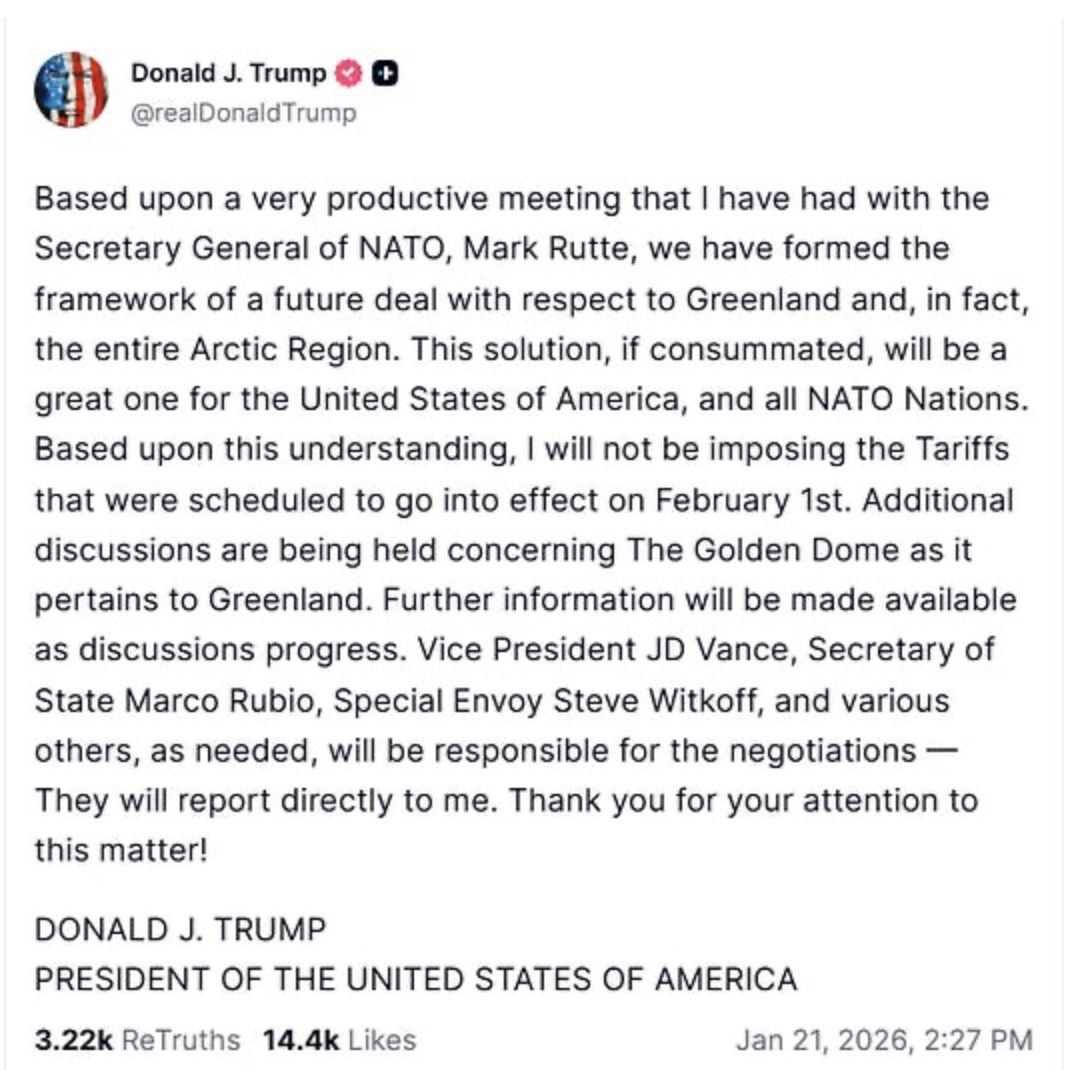
Jobs is Passe

The usual story today
Would be NFP’s on its way
But with BLS
On furlough, I guess
The story on jobs is passe
 
But ask yourself, if we don’t get
A data point always reset
That’s only a fraction
Of total job action
Is this something ‘bout we need fret?


I guess the question is, is the government shutdown impacting markets?  Frankly, it’s hard for me to see that is the case. Today offers a perfect scenario to see if it is true.  After all, if the government was working, the BLS would have released the weekly Claims data yesterday and market participants would be waiting with bated breath for today’s NFP number.  As I said yesterday, while Ken Griffin is likely quite annoyed because I’m sure Citadel makes a fortune on NFP days, the rest of the world seems to be getting along just fine.  In fact, maybe this is exactly what market participants need to learn that the data points on which they rely don’t really matter.  

With NFP in particular, the monthly number, which since 1980 has averaged 125K with a median of 179K seems insignificant relative to the number of people actually employed, which as of August 2025 was recorded as 159.54 million.  Now I grant, that the employed population has grown greatly in the past 45 years, so when I take it down to percentages, the average monthly NFP result is 0.10% of the workforce during that period, with the median a whopping 0.14%.  The idea that business decisions are made, and more importantly, monetary policy decisions are made on such a tenuous thread is troublesome, to say the least.  Did this report really tell us that much of importance?  Especially given its penchant for major revisions.

Below is a graphic history of NFP (data from FRED) having removed the Covid months given they really distorted the chart.

And below is a chart showing total payrolls (in 000’s) on the RHS axis with the % of total payrolls represented by the monthly change in NFP on the LHS.  Notice that almost the entire NFP series, as a %age of total employment, remains either side of 0 with only a few outcomes as much as even 0.5%.  My point is, perhaps the inordinate focus on this data point by markets and policymakers alike, has been misguided, especially as the accuracy of the initial releases seems to have worsened over time.  Maybe everybody will be able to figure out that they can still do their jobs even without this data.  (Ken Griffiin excepted. 🤣)

Food for thought.

Like swallows return
To Capistrano, Japan
Votes again this year


The other notable news story is tomorrow’s election in Japan’s LDP for president of the party and the likely next Prime Minister.  While there are technically 5 candidates, apparently, it is really between two, Sanae Takaichi, a former economic security minister and a woman who would be the first female PM in the nation’s history, and Shinjiro Koizumi, son of former PM Junichiro Koizumi, and a man who would become the nation’s youngest prime minister.  There are several others, but these are the front runners.  From what I gather, Takaichi-san is the defense hawk and the more conservative of the two, an updated version of Margaret Thatcher, to whom she will constantly be compared if she wins.  Meanwhile, Koizumi is more of the same they have had in the past.

There are some analysts who are trying to make the case that this election has had a major impact on Japanese markets, and one might think that makes sense.  But if I look at USDJPY (0.0% today), as per the below chart, I am hard pressed to see that the election campaign has had any impact of note.

Source: tradingeconomics.com

If we turn to the Nikkei (+1.9%) which made a new high last night, it seems that is tracking US technology shares and is unconcerned over the election.  

Source: tradingeconomics.com

Arguably, if the equity market is forward looking (which I think is true) investors are indifferent to the next PM.  Finally, a look at JGBs shows that yields continue to climb there, albeit quite slowly, but consistently make new highs for the move and are back to levels last seen in 2008.

In fact, like almost everything since the GFC, perhaps the recent run of incredibly low yields in Japan is the aberration, not the rule!  But the argument for higher Japanese yields is more about the fact that inflation there is running at 3.5% and the base rate remains at 0.50%.  Investors remain concerned that the recent history of virtually zero inflation in Japan may be a thing of the past and so are demanding higher yields to hold Japanese debt.

I have no idea who will win this election, although I suspect that Takaichi-san may wind up on top.  But will it change the BOJ?  I don’t think so.  And the fact that the LDP does not have a working majority means not much may get done afterwards anyway.  All told, it is hard to be excited about holding yen in my eyes.

Ok, let’s look at the rest of the world quickly.  Despite a soft start, US equity markets managed to close in the green and this morning all three major indices are pointing higher by 0.25%.  Away from Japan, Chinese markets are closed for their holiday, and most of the rest of Asia followed the US higher, notably Korea (+2.7%) and Taiwan (+1.5%).  The only outlier was HK (-0.5%) which looked to be some profit taking after a sharp run higher in the past week.  In Europe, Spain (+0.8%) and the UK (+0.6%) are the best performers despite (because of?) slightly softer PMI Services data.  Either that, or they are caught up in the US euphoria.

The bond market saw yields slip a few basis points yesterday and this morning, while Treasury yields are unchanged at 4.08%, European sovereigns are sliding -1bp across the board.  I think the slightly softer data is starting to get some folks itching for another ECB rate cut, or at least a BOE cut.

In the commodity markets, oil (+0.4%) which continued to fall throughout yesterday’s session to just above $60/bbl, looks like it is trying to stabilize for now.  There continues to be discussion about more OPEC+ production increases, and it seems that whatever damage Ukraine has done to Russia’s oil infrastructure is not considered enough to change the global flows.  As to the metals, gold (+0.2%) and silver (+1.2%) absorbed a significant amount of selling yesterday in London, which may well have been one account, as they reversed course late morning and have been climbing ever since.  Copper (+1.1%) is also pushing higher and the entire argument about the defilement of fiat currencies remains front and center.  I guess JP is now calling it the debasement trade as Gen Z, if I understand correctly, is selling other assets and buying a combination of gold and bitcoin.

Finally, the dollar is…the dollar.  Back on April 20, DXY was at 98.08.  This morning it is 97.75.  look at the chart below from tradingeconomics.com and tell me you can get excited about any movement at all.  We will need a major outside catalyst, I believe, to change any views and right now, I see nothing on the horizon.

And that’s really all there is.  We do get ISM data this morning as it’s privately compiled and released (exp 51.7) and Fed speakers apparently will never shut up.  What is interesting there is that Lorrie Logan, Dallas Fed president, has come out much more hawkish than some of her colleagues.  That strikes me as a disqualification for being elevated to Fed chair.

I continue to read lots of bear porn and doom porn, and it all sounds great and markets clearly don’t care.  The government shutdown has been irrelevant and that should make a lot of people in Washington nervous given this administration.  President Trump has been angling to reduce government, and if it is out of action and nobody notices, it will make his job a lot easier.  But for now, nothing stops this train with higher risk assets the way forward.

Good luck and good weekend

Adf

Who Will Blink First?

The question’s now, who will blink first?
With Democrat leaders immersed
In internal strife
Concerned their shelf life
Is short and their party’s been cursed
 
Or will the Republican leaders
Start caring if New York Times readers
Scream loudly enough
The polls will turn rough?
My bet’s on the Dems as conceders


So, the government is shut down and yet, the sun continues to rise and set, and life pretty much goes on as before.  Is this, in fact a big deal?  It all depends on your point of view, I suppose.  It is certainly a big deal for those furloughed government employees, especially those whose jobs may disappear in the pending RIF.  But as I have often said, if they leave government and become baristas at Starbucks, they are almost certainly adding more value to the economy.  And consider, whenever you have to interface directly with the federal government (post office, passports, IRS, etc.) has the customer service ever been useful or effective?  Explaining that people will have to wait longer is hardly a compelling argument.  In fact, of all the places where AI is likely to be most useful, repetitive government tasks seems one of the most beneficial potential applications.

Nonetheless, this is the story that is going to lead the headlines for a few more days.  Ultimately, as we have already seen several Democrat senators vote to pass the CR, I expect enough others to do so to reopen the government, if not at the next scheduled vote tomorrow, then at the one following next week.  Ultimately, I believe what we’ve relearned is that most politics is simply performance art.

Too, remember that the decision as to who is considered essential, when the government shuts down, is left up to the president.  So, the Democrats shut down the government and have allowed President Trump to decide what gets done.  Pretty soon, I suspect they will figure out that was a bad idea as we have already seen specific projects in NY (home to both House and Senate minority leaders) get halted with the funds flows stopping as well.

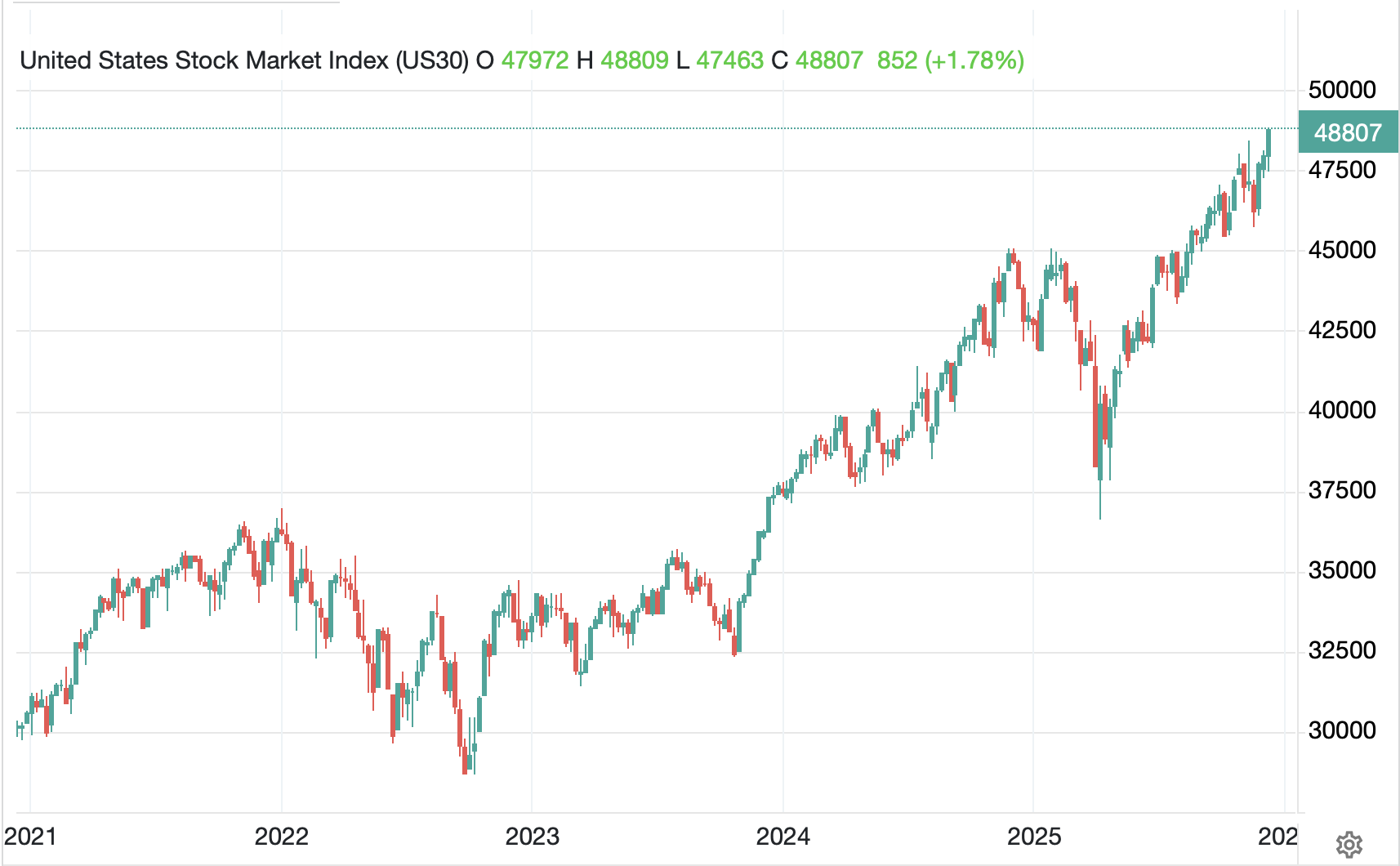
Meanwhile, in the markets, nobody appears to have noticed that the government has shut down.  That is the key conclusion to be drawn from the continuation of the equity market rally where all three major US indices closed at record highs yet again. I am hard pressed to look at the below chart of those indices and glean any concern by markets regarding the government shutting down.  Perhaps, even, they are applauding the idea as it means less spending!

Source: tradingeconomics.com

Arguably, the market’s biggest concern is that government data releases will be missing from the mix, although, that too, might be a blessing.  The person most upset there will be Ken Griffin, as Citadel’s algorithms will not be able to take advantage of the data prints before everyone else!  In fact, I suspect that he is already bending the ears of the Democratic leadership to get things back to normal.

Meanwhile, would it be too much to ask to close the Fed during the shutdown?  Asking for a friend!

Ok, what is happening elsewhere in the world.  Japanese Tankan data the night before last came in a tick weaker than forecast, and than last month, but remains solid overall.  Deputy BOJ Governor Uchida reiterated that if the economy performs as currently expected, the BOJ will continue to remove policy accommodation going forward with expectations for a rate hike at the end of the month priced at a 60% probability.  Interestingly, despite that, the Nikkei (+0.9%) rallied overnight along with the yen (+0.3% overnight, +2.1% in the past week), although the yen move makes more sense.  As to the rest of Asian equity markets, China (+0.5%) and HK (+1.6%) are clearly unperturbed by the US situation as a positive outlook on trade talks with the US are the narrative there heading into their weeklong National holiday.  Elsewhere in the region, every major bourse is higher with some (Korea +2.7%, Singapore +1.7%) substantially so.  The US rally is dragging along the world.

This is true in Europe as well with the DAX (+1.4%) and CAC (+1.3%) leading the way as all major bourses rise alongside the US.  Apparently, increasing global liquidity is good for risk assets.

In the bond market, Treasury yields continue to slide, down another -1bp overnight after slipping -4bps yesterday.  The only data was the ADP Employment Report which showed a decline of -32K jobs compared to expectations of +50K.  It is important to recognize that this report included ADP’s benchmark revisions which, not surprisingly, resulted in fewer jobs create last year just like the QCEW showed with the NFP report two months’ ago.  This data took the probability of a Fed cut at the end of the month up to 99% and pushed the probabilities for cuts next year higher as well.

Source: cmegroup.com

Of course, this is the very definition of bad news is good for equities and bonds, as there continues to be a strong expectation that rate cuts are designed to support asset prices rather than address real weakness in the economy.  And in a way, this makes sense.  After all, the Atlanta Fed’s GDPNow forecast for Q3 is currently at 3.8%, hardly the sign of an impending recession.

So, stronger than long-term growth and rate cuts seem an odd policy pairing, but the stock markets love it!

The other markets that love this policy are precious metals which continue to make new highs as well, for gold (+0.5%) these are all-time highs, for silver (+0.3%) they are merely 14-year highs.  But the one thing that is clear (and this is true of platinum and palladium as well) is that investors are starting to look at the current policy mix and grow concerned over the value of fiat currencies.  Oil (-0.7%), though, is currently on a different trajectory, trading right back to the bottom of its months’ long trading range less than a week after touching the top.

Source: tradingeconomics.com

There seems to be a difference of opinion regarding future economic activity between equity and oil markets.  I have read a number of analyses describing peak oil, yet again, although this time they are calling for peak demand, not peak supply.  Given that fossil fuels continue to generate more than 80% of global energy, and that oil also is the base for some 6000 products utilized around the world in everyday applications and the fact that there are some 7 billion people who are energy starved compared to the Western nations, I find the peak demand story to be hard to accept.  But that’s just me and I’m an FX guy, so what do I know?

Speaking of FX, the decline in yields and growing belief in easier US monetary policy has worked its way into the dollar, pushing it a bit lower, about -0.15% based on the DXY.  But looking across both G10 and EMG currencies, the yen’s 0.3% move describes the maximum gain with the rest having either gained less or declined a bit.  Right now, the dollar doesn’t appear to be the focus of the macro world, although that is certainly subject to change at a moment’s notice.

We know there is no government data coming, although apparently, the Treasury is still auctioning T-bills today, that activity will not be delayed!  We also hear from Dallas Fed President Logan, someone who ostensibly has been mooted as a potential next Fed chair.  Again, the one thing we know about the FOMC right now is that there is no consensus opinion on what to do next, at least based on the dispersion of the dot plot from the last meeting.

While the Trump administration may be getting ready to axe a lot of Federal jobs, that will not stop the liquidity impulse.  It’s not that this government is going to spend less, it is just spending money on different priorities.  But running it hot is clearly the MO for now and the foreseeable future.  Ultimately, if the GDPNow forecast is correct, a much weaker dollar seems unlikely regardless of the Fed’s moves.  But that doesn’t mean a dollar rally, rather we could stay near here for a lot longer.

Good luck

Adf
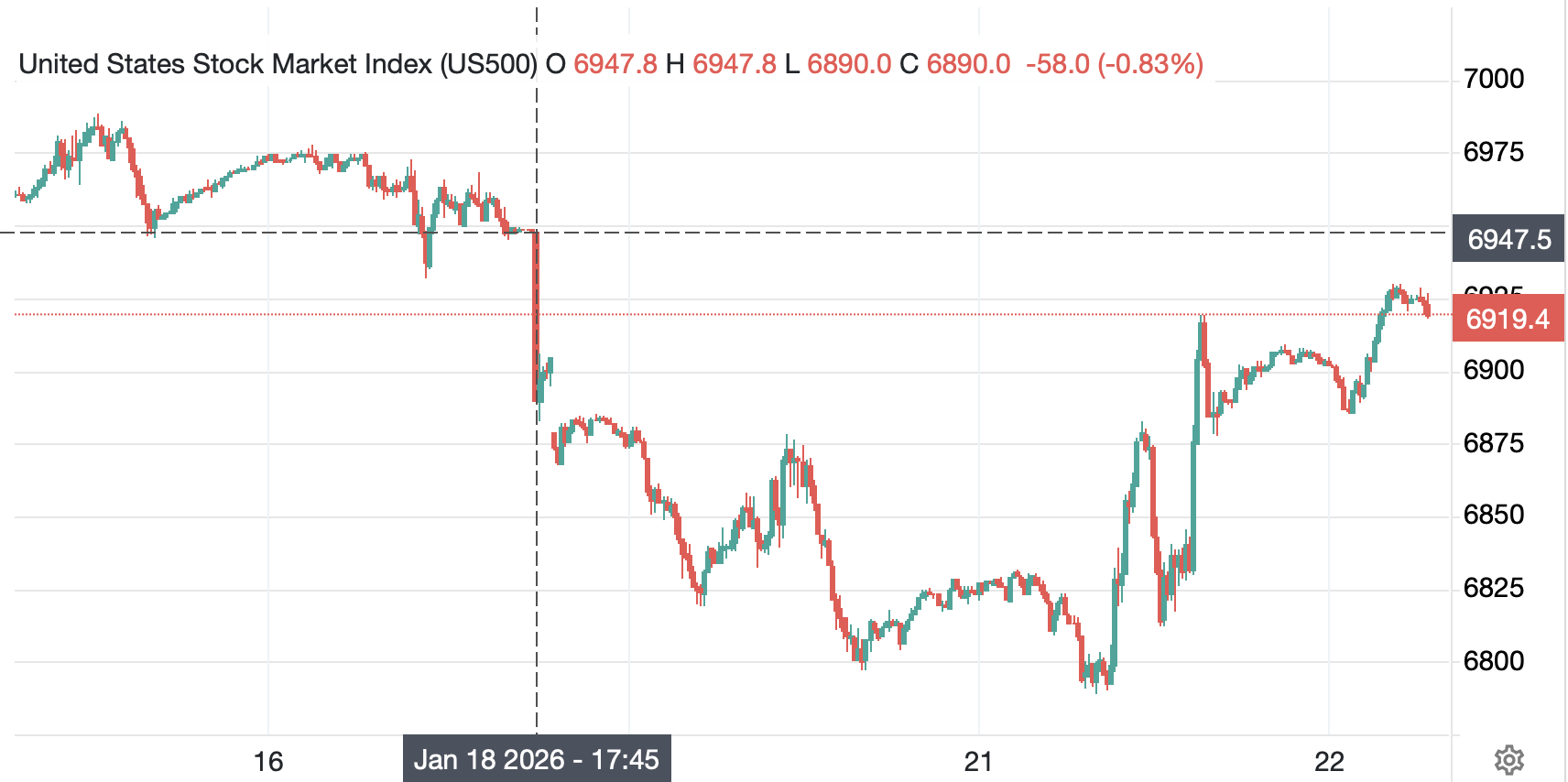
Fading

In Germany, growth has been fading
Down Under, inflation’s upgrading
Chair Jay gave his views
But it was old news
And Trump, for more cuts, is crusading


Some days, there is less to discuss than others, and this morning that seems to be the case.  Even my X feed had very little of interest.  Arguably, the top story is German Ifo readings came out much lower than expected and have now reversed most of the gains that occurred from front-running US tariff policy changes.  Germany’s bigger problem, though, is that the trend here is abysmal, as ever since Russia’s invasion of Ukraine and the dramatic rise in energy prices there, the German economy has been under significant pressure.  A look at the 5-year history of the Ifo series does an excellent job of explaining why growth has completely stalled there.

Source: tradingeconomics.com

In fact, if we look at the last three+ years of GDP activity in Germany, as per the below chart, we see that seven of the thirteen quarters were negative while two were exactly flat and the sum total of growth was -0.9%.  It’s amazing what happens to a nation that decides to impose extreme conditions on the production of energy domestically.  Or perhaps it’s not so amazing.  After all, economic activity is merely energy transformed.  If the cost of energy is high, economic activity is going to be slow.

Source: tradingeconomics.com

I highlight this because it runs counter to the narrative that Europe is a better place to invest than the US, which has been the thesis of the ‘end of American exceptionalism’ trade.  Germany is the largest European nation by far and had been a manufacturing powerhouse.  But those days appear to have passed.  If Germany is going to continue to lag, and I see no reason for that to change based on the current political dynamic there, please explain the idea behind long-term strength in the euro.  As I wrote yesterday, if the Fed cuts aggressively, the dollar will decline in the short run, but one cannot look at the trajectories of the relative economies and claim Europe is the place to be in the long run.

This morning, the euro (-0.5%) has responded logically to the data but the dollar is broadly stronger as well after Chair Powell’s speech yesterday where he continued the modestly hawkish tone from the FOMC press conference.  He continues to agonize over the fact that inflation won’t fall while unemployment is edging higher, although he finally admitted that tariffs would likely have a temporary, one-off impact on prices.  While there is no doubt the dollar has fallen since the beginning of the year, a 10% or 15% move is hardly unprecedented, but rather occurs pretty frequently.  A look at the below chart from the beginning of the euro’s existence in 1999 shows at least six or seven other instances when the euro rallied that much in a short period of time.

Source: tradingview.com

In fact, to demonstrate the politicization of the current world, one need only go back to the period in 2008 when the euro peaked at 1.60 or so to see that it was not seen as a global calamity, simply a period where US monetary policy had loosened dramatically relative to the rest of the world.

The other marginally interesting story this morning is Australia’s inflation rate, which came in at 3.0%, higher than expected and demonstrating what appears to be a break in the declining trend previously seen.

Source: tradingeconomics.com

This matters as AUD (+0.1%) is outperforming all its G10 peers this morning on the back of the idea that the RBA will be stuck on hold, rather than cutting rates again soon.  Too, this weighed on Australian equities (-0.9%) which underperformed other Asian markets overnight.

But that’s really all the interesting stuff, and it wasn’t that interesting, I fear.  So, let’s look at the rest of the market behavior overnight.  While I thought it was illegal, yesterday resulted in US equity markets declining on the session, albeit less than 1%.  And this morning, you’ll be happy to know, the futures are all modestly green.  As to Asian markets, Japan (+0.3%), China (+1.0%) and HK (+1.4%) all had strong sessions although it appears most of the other regional bourses declined.  The Chinese story making the rounds is the lessening in trade tensions between the US and China was seen as a key positive while HK survived Typhoon Ragasa without any major impacts.  But Korea, India, Taiwan and Singapore were all softer on the session.

In Europe, markets have generally done little with marginal declines the norm although, surprisingly, Germany’s DAX is unchanged on the day despite the weak Ifo data.  However, it is hard to get excited about anything happening there right now.

Bond yields fell yesterday with Treasuries declining -4bps although this morning they have edged back higher by 1bp.  Perhaps Powell’s tone yesterday was enough to keep the bond vigilantes on the sidelines, or perhaps there is simply not enough new information to change any views right now.  The Fed funds futures market continues to price a 94% probability of a cut at the end of next month and apparently bond investors are cool with that.  European yields are also little changed this morning as were JGB yields last night.

In the commodity space, oil (+1.1%) is heading back toward the top of the range I highlighted yesterday, but still more than $1 away and there have been no stories to drive things.  This is all just range trading in my view.  As to the metals markets, this morning gold and silver are essentially unchanged, consolidating their recent gains while copper (-.0.75%) is slipping slightly and has retraced some of its gains from earlier in the month.  Remember, copper is much more an economic play than a fear play or inflation play.

Finally, the dollar is firmer across the board this morning with gains against almost all G10 counterparts on the order of 0.5% and against EMG counterparts it is more like 0.8%.  Even CNY (-0.25%) is weakening as it appears Chinese state banks are selling renminbi in the spot market and hedging in the swap market to help mitigate its recent gains.  It is beginning to feel like the dollar’s decline this year, which has been widespread, is coming to an end.  

On the data front, today brings only New Home Sales (exp 650K) and EIA oil inventories.  Yesterday’s Flash PMI data was right in line with expectations, and my take is until NFP a week from Friday, there is going to be little of interest on the data front for markets overall.  Even PCE this week will have to be significantly different from expectations to have any impact.

It appears that absent Stephen Miran convincing the rest of the FOMC to cut rates aggressively, a very low probability event, the dollar is finding a bottom, and the next major move will be higher on the basis of stronger growth in the US vs. the rest of the world.  Of course, if the Fed does start to get more aggressive, then the dollar will suffer, I just don’t see that happening anytime soon.

Good luck

Adf
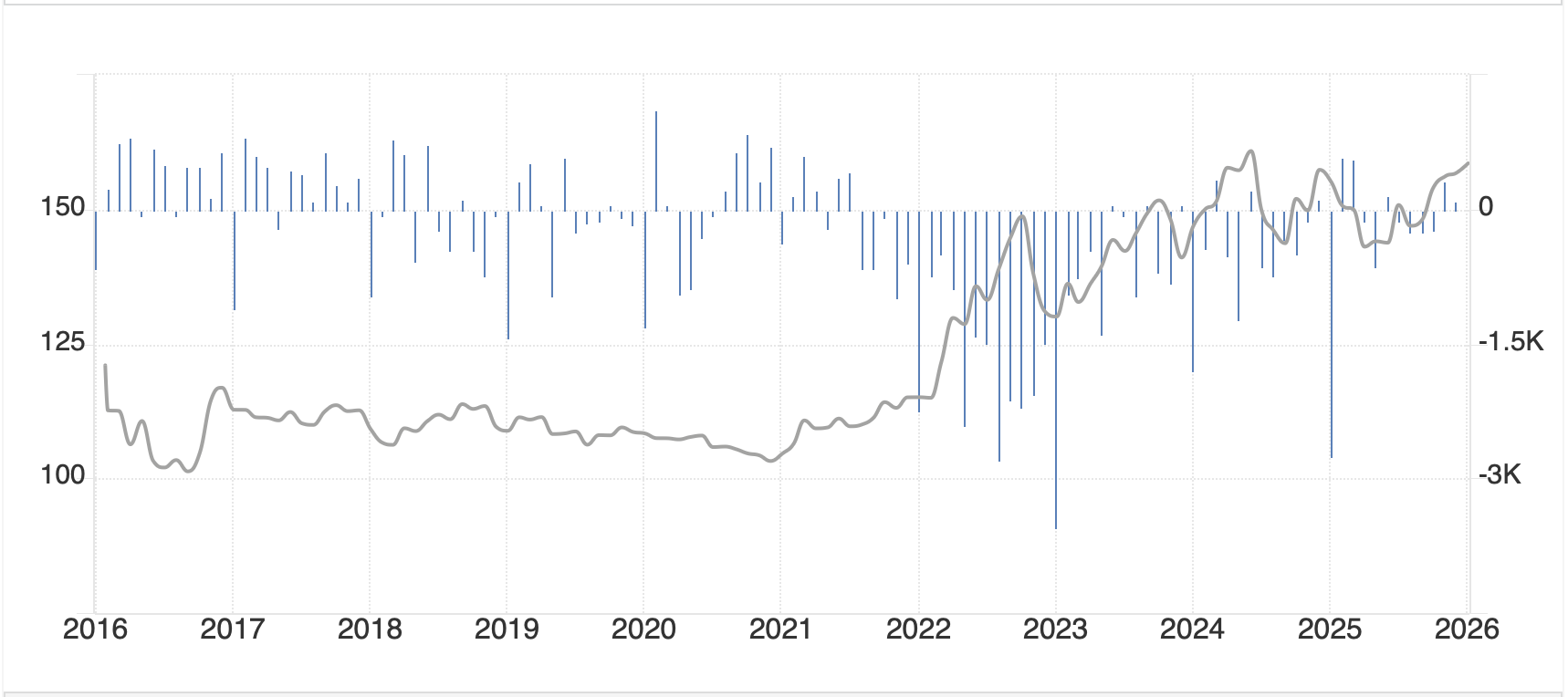
Falling Fast

His swords were words he wielded well
He spoke his truths, but would not yell
His followers enrapt
His enemies then snapped
And undeservedly he fell
 
RIP Charlie Kirk
 
A score plus four of years have passed
Since thousands died, we were aghast
No logic could be found
For those at, zero, ground
Society is falling fast


A generation after the horrific events of September 11, 2001, it appears that memories have faded.  Personally, having observed those events from one block away, it is indelibly imprinted on my brain.  But now, in the course of a week we have seen several senseless murders make the news as whatever decorum may have existed at the turn of the century is long gone.  Messrs. Howe and Strauss were always quite clear that the 4thTurning involved chaos and the destruction of institutions.  I fear the process is accelerating.  I also fear that it must play out to get through to the other side.  Civil war feels excessive as a description, but as I have forecast for the past year or two, one of the major political parties was likely to explode.  Right now, it feels like the Democrats are on that path.  I don’t know what will replace it, but something must, and it would behoove us all if there is some coherence in their policies when it appears.  I remain confident that Socialists are not the answer, nor will they be embraced across the nation. 
 
The reason I discuss this, which seems outside the bounds of my market perspective, is that it is going to impact markets even more than it already has.  The ongoing politicization of the media, businesses and entertainment does not lead to kumbaya, but rather volatility and distress.  If you wonder why gold continues to perform well, look no further.  Whatever the data, whatever the Fed does, whatever Trump and his administration do, or what Congress tries to do, gold has a history of maintaining value for the past 5 millennia.  Everything else is new and prices are all relative to gold.  Remember that as you approach your day job and your investments, whether you hedge for a living, or simply are trying to make a living.
 
There are now two things on the docket
That could lead risk assets to rocket
First, CPI comes
The Jay and his bums
Decide what gets put in our pocket

Considering these very serious issues, it seems almost ridiculous to discuss markets, but they will continue to trade and the ability to keep your eye on that particular ball is still critical to financial outcomes.  So, let us turn to the two stories (well, maybe two and a half stories) that have the potential to change some viewpoints.  The first is today’s CPI, then next week’s FOMC meeting with a half nod given to today’s ECB meeting.

Regarding the least important, the ECB is almost certainly going to leave policy unchanged.  The only opportunity for anything new will come from Madame Lagarde’s press conference and if she displays a new tone, whether hawkish (I doubt) or perhaps more dovish as European data continues to ebb.

But let’s move on to CPI.  After yesterday’s much lower than expected PPI data, where the M/M numbers for both headline and core were -0.1% compared to +0.3% expected, there has been some talk on the margins that we could see much softer CPI data.  However, it is worth knowing that for the inflation cognoscenti (e.g., @inflation_guy) PPI data is seen as a random number generator with very little direct impact on the consumer data.  (In fact, after my look at NFP data, aren’t all the data points random?)  With that in mind, current median expectations remain as they were earlier in the week (0.3% M/M for both headline and Core with the Y/Y numbers expected at 2.9% and 3.1% respectively).  

Given the market is currently pricing a full 25bp cut with an 8% probability of 50bps, my take is the only way to change things would be for CPI to also print like the PPI data as negative numbers.  If that were to be the case, and I do not anticipate that outcome by any stretch, it would give Chairman Powell ample opportunity to cut 50bps with the market welcoming the outcome along with President Trump.  On the flip side, I don’t think CPI can print a high enough number to remove the 25bp cut.  As a reminder, below are the cumulative probabilities for future Fed funds rates based on the CME’s futures contract.  A total of 75bps remains the default view for the rest of 2025.

We will learn about the outcome at 8:30 this morning and I have no particular insight into whether those median forecasts are high, low or on the money.  This is a wait and see situation.

As to the FOMC meeting, it has the opportunity to be far more impactful.  While 25bps is currently baked in the cake, I remain of the opinion that 50bps is a very viable outcome.  Recall, the most recent Fed discussions were about the importance of the employment portion of their mandate as opposed to the inflation portion.  With the newly revised reduction in NFP over the past twelve months, characterizing the employment situation as solid or strong seems unreasonable.  Weakening would seem a more apt description and should have the discussion be between 25bps or 50bps.  We already know there are at least two governors, Bowman and Waller, who wanted to start cutting last time, and it appears that Stephen Miran, Trump’s current head of the CEA, is going to get approved by the Senate in time to sit in the meeting next week.  One would assume that is a vote for easier policy.   

ITC Markets has a very nice table on the perceived hawkishness/dovishness of FOMC members, and it shows that the governors, as a whole, live in the dovish camp with only a few regional presidents as known hawks.  In fact, one of the remarkable things about the entire Lisa Cook affair is that she was always one of the more dovish members of the board and the fact that she was not pushing for cuts never made any sense.  At least based on her background and history.  However, if you take politics into account, and the idea that she didn’t want to cut because President Trump wanted a cut, it begins to become clearer.  At any rate, it strikes me that based on this table, which feels reasonable, 50bps is in play.

With all that in mind, let’s take a quick turn around the markets to see what is happening ahead of this morning’s data.  As seemingly always, equity markets rallied in the US yesterday, well mostly.  The DJIA slipped, but the other indices managed to continue their hot streaks.  It is very hard to link economic activity to equity market outcome these days, at least to my eyes.

But on to Asia, where Japan (+1.2%) had a solid session on the back of the remarkable rise in Oracle shares and the idea that Japanese tech companies will benefit.  China (+2.3%) was the beneficiary of the story that President Xi is now looking to have banks prop up local governments that have stopped paying contractors now that their property sale gravy train has derailed.  It seems that they have figured out if you don’t pay people, they don’t consume anything.  So, upwards of CNY 1 trillion will be injected into local government coffers specifically to pay these late bills and try to kickstart consumption.  But, as I look through the rest of the region, it was a much more mixed picture with some gainers (Korea, Indonesia, Thailand), some laggards (HK, Malaysia, Australia) and many markets that barely moved.

In Europe, all the major markets are green this morning led by the CAC (+0.85%) and UK (+0.5%) with the others showing much smaller gains (DAX +0.2%, IBEX +0.25%).  There is no obvious reason for the gains as expectations for the ECB remain static and there has been no data of note released.  Meanwhile, US futures are higher by 0.25% at this hour (7:30).

Bond markets remain frozen as Treasury yields have edged higher by just 1bp and European sovereign yields are +/-1bp from yesterday’s close.  As you can see from the chart below, the range on 10-year Treasuries has been fairly narrow for the past week.  Perhaps today’s CPI will shake things up.

Source: tradingeconomics.com

In the commodity space, oil (-1.25%) is giving back the gains it saw earlier in the week but basically remains unchanged overall.  If fears grow that a recession is upon us, I could see a rationale for oil to decline, but it is hard to get excited about the market right now.  Gold (-0.6%) is backing off its most recent all-time high, but is still firmly above $3600/oz.  Given the recent run, it is no surprise it takes a breather here and there is no reason to believe that precious metals are topping out.  In fact, a look at the charts tells me that there is plenty of upside left across the space.

Source: tradingeconomics.com

Finally, the dollar is a bit firmer this morning, probably one reason the precious metals are under some pressure, but here too, if we use the DXY as our proxy, the range is pretty clear.

Source: tradingeconomics.com

JPY, INR and ZAR are the largest movers this morning, each declining -0.4%, while the rest of the world is mostly softer by -0.1% to -0.2%.  Broad based dollar strength but no depth whatsoever.  We shall see how things behave after the CPI release.

And that’s really it.  For now, the big picture remains the same, where the prospects of an easier Fed will weigh on the dollar and support commodities.  Equities will like that for now, at least until inflation picks back up, and bonds feel subject to manipulation so I’m just not sure.

Good luck

Adf