Out in the Cold

So, suddenly, silver and gold
Are both getting bought and not sold
But oil’s still rising
So, what are folks prizing?
Perhaps risk’s now out in the cold

At least, here at home that’s the case
As AI stocks sell off apace
And what of the buck?
It’s basically stuck
While bonds are just standing in place

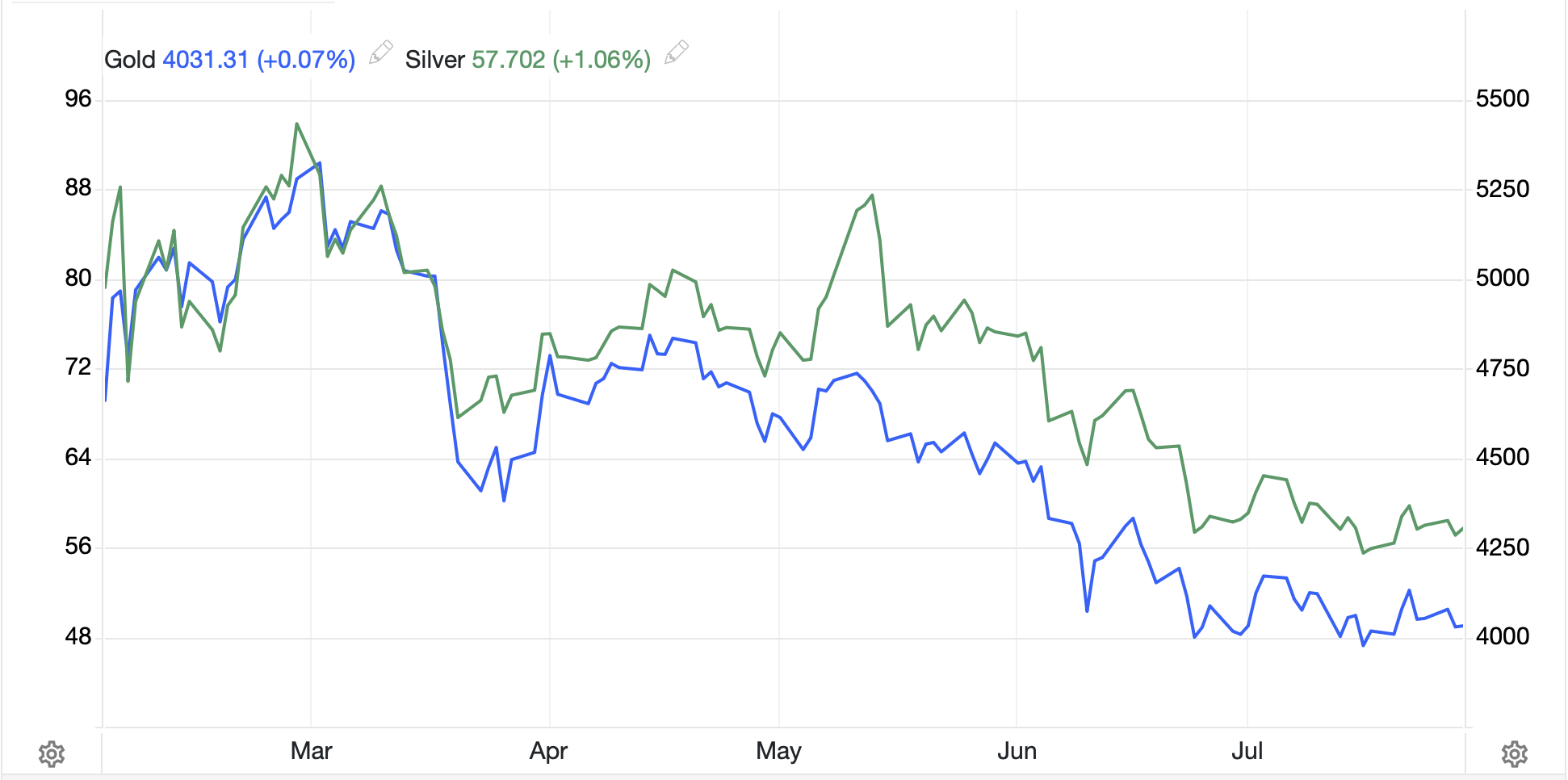
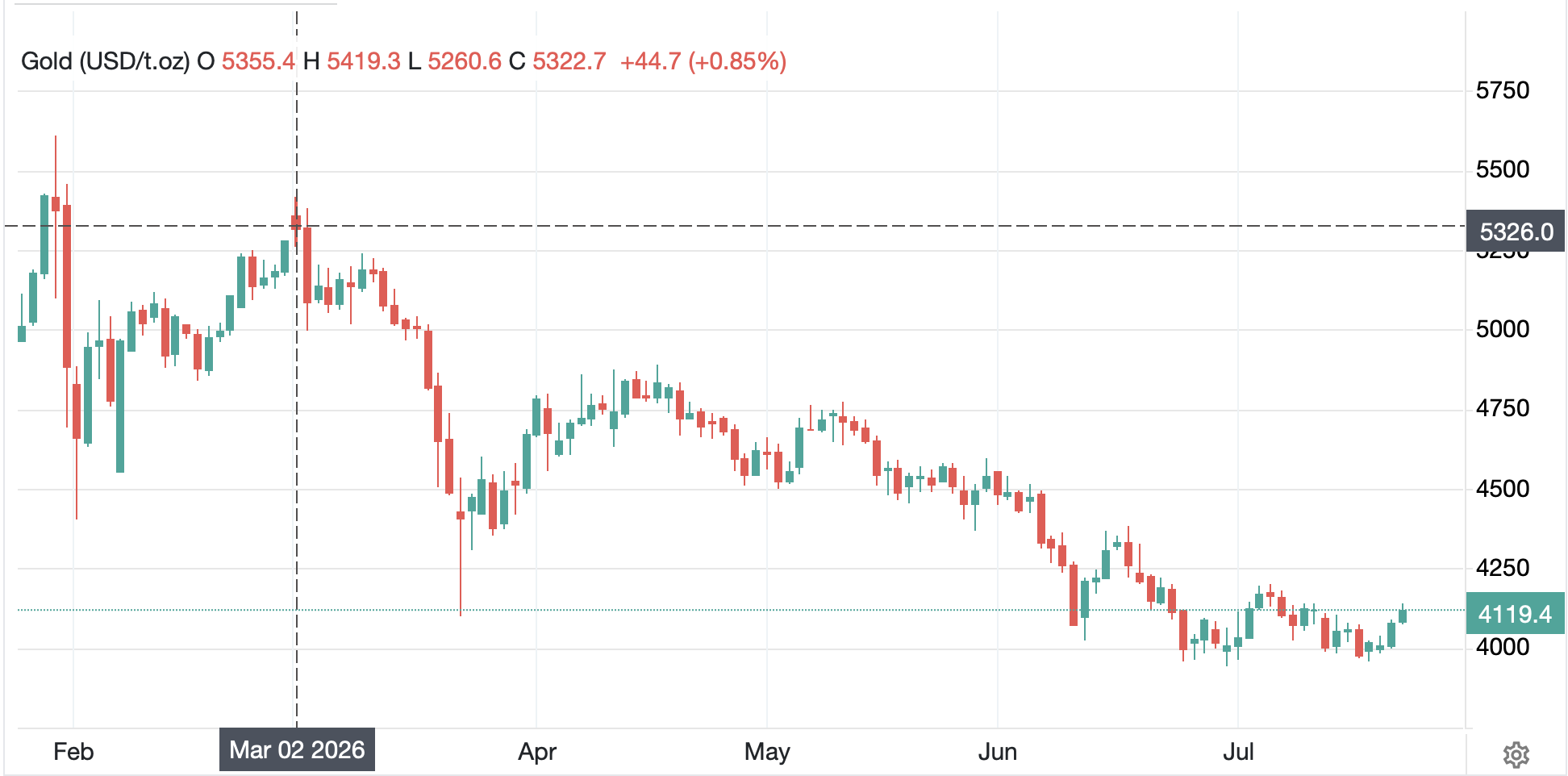
Arguably, the biggest change in market relations in the past two sessions is that the metals markets have rallied alongside the price of oil.  Since basically the beginning of this conflict, this has been one of the conundrums in markets.  Gold, which has a long history as a safe haven, started selling off (granted from a parabolic move) shortly before the US attacked Iran.  In fact, many ascribed the sell off to the naming of Kevin Warsh as Fed Chair given the view he was the most hawkish of the potential candidates.  But once the fighting started, gold continued to decline, falling some 27% from its initial burst higher at the beginning to its recent low, below $4000/oz.

Source: tradingeconomics.com

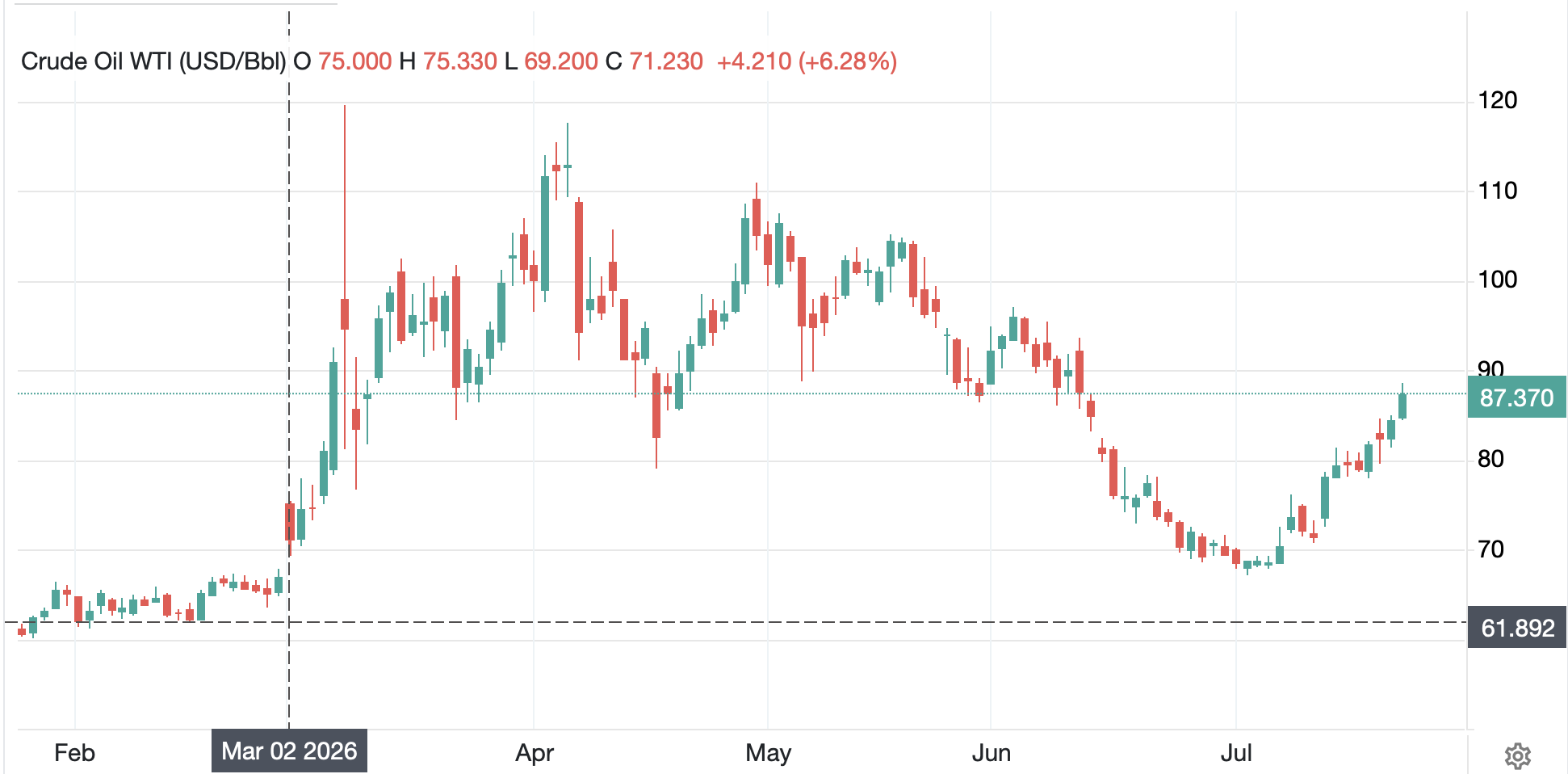
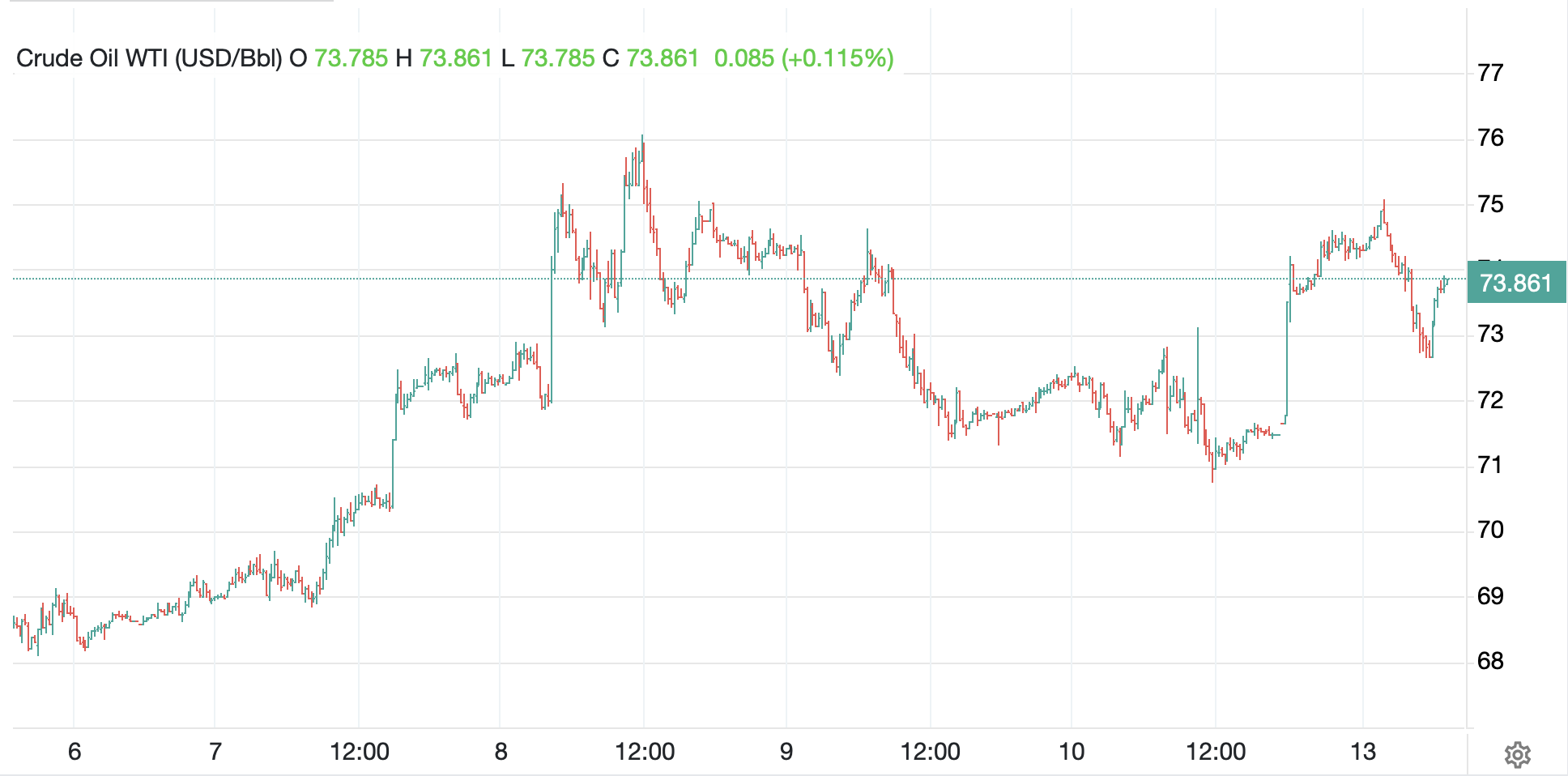
Of course, the oil story is quite different as there were far more twists and turns in the price action as the military activity ebbed and flowed and as comments about ceasefires and peace talks were made and denied on a regular basis.  

Source: tradingeconomics.com

But certainly, the impression from the recent price action was that when oil rallied, gold sold off and vice versa.  The ostensible rationale was that higher oil prices would drive inflation higher and interest rates would follow thus reducing the attractiveness of holding gold.  And perhaps that was true, at least to some extent.  However, that was never a satisfying explanation to me.  And, throughout the conflict I have maintained that the medium and long-term views for the metals was quite positive.

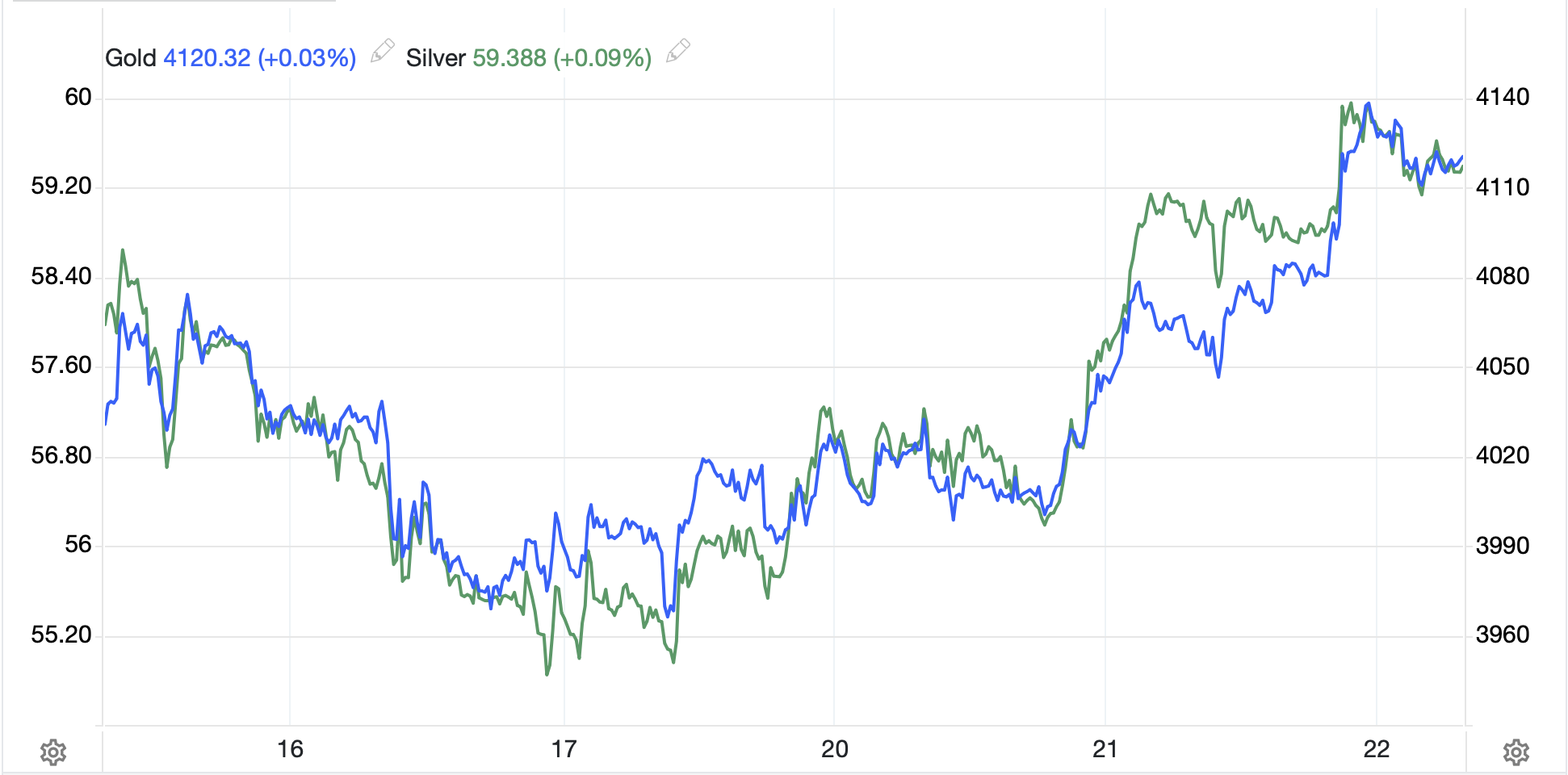
However, something seemed to have happened yesterday, and I see no indication of exactly what that was, but we saw oil, gold and silver all rally nicely on the day.  The oil story is clear as the latest issue is the Houthis now blocking Saudi ships from traversing the Bab-al-Mandeb at the southern tip of the Red Sea and reducing flows.  But the metals story remains a mystery.  Granted, this has only been ongoing for a bit more than twenty-four hours, but the magnitude of the metals moves (Au +3.0%, Ag +5.7%) in the past two sessions is pretty substantial for markets that had been doing very little but sliding for months.

Source: tradingeconomics.com

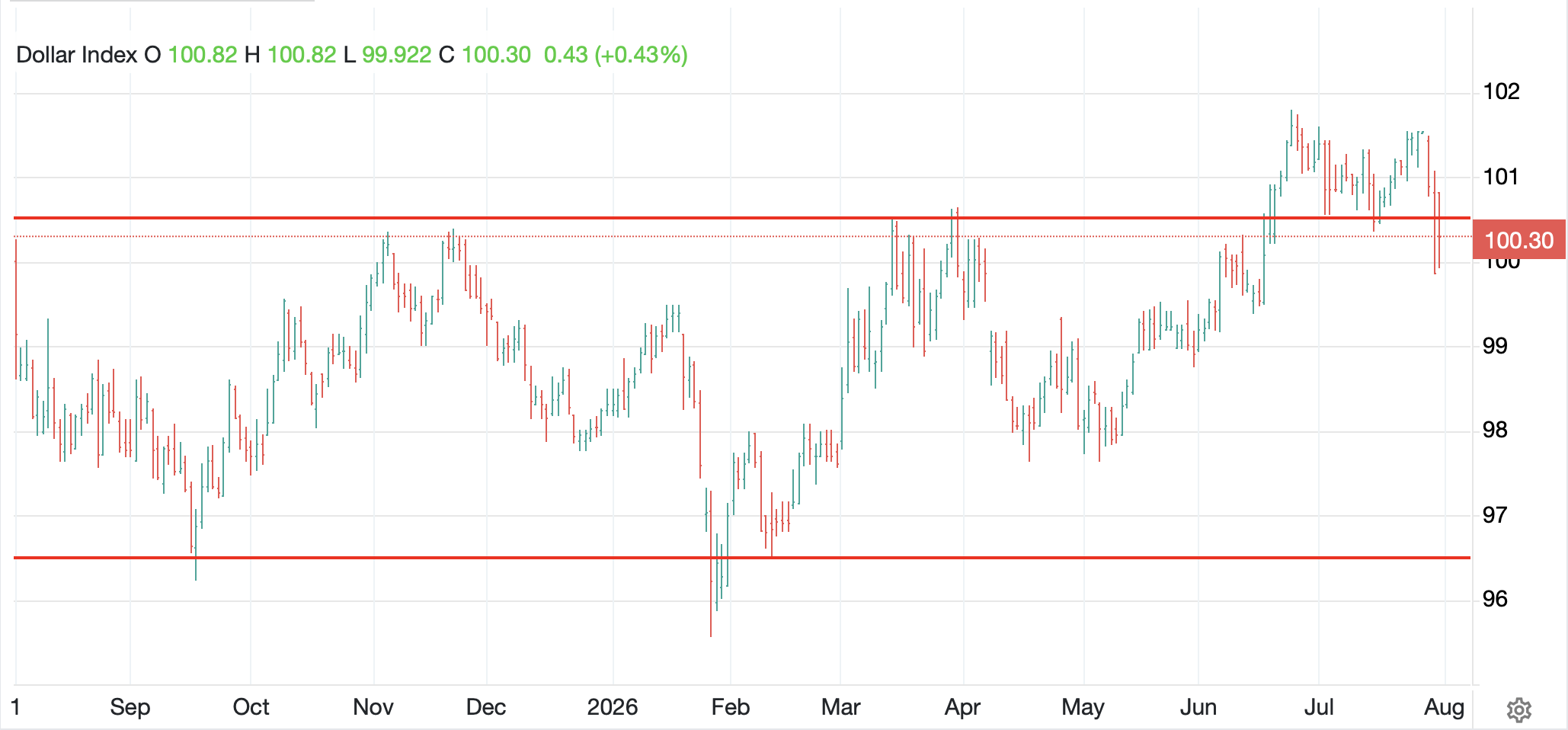
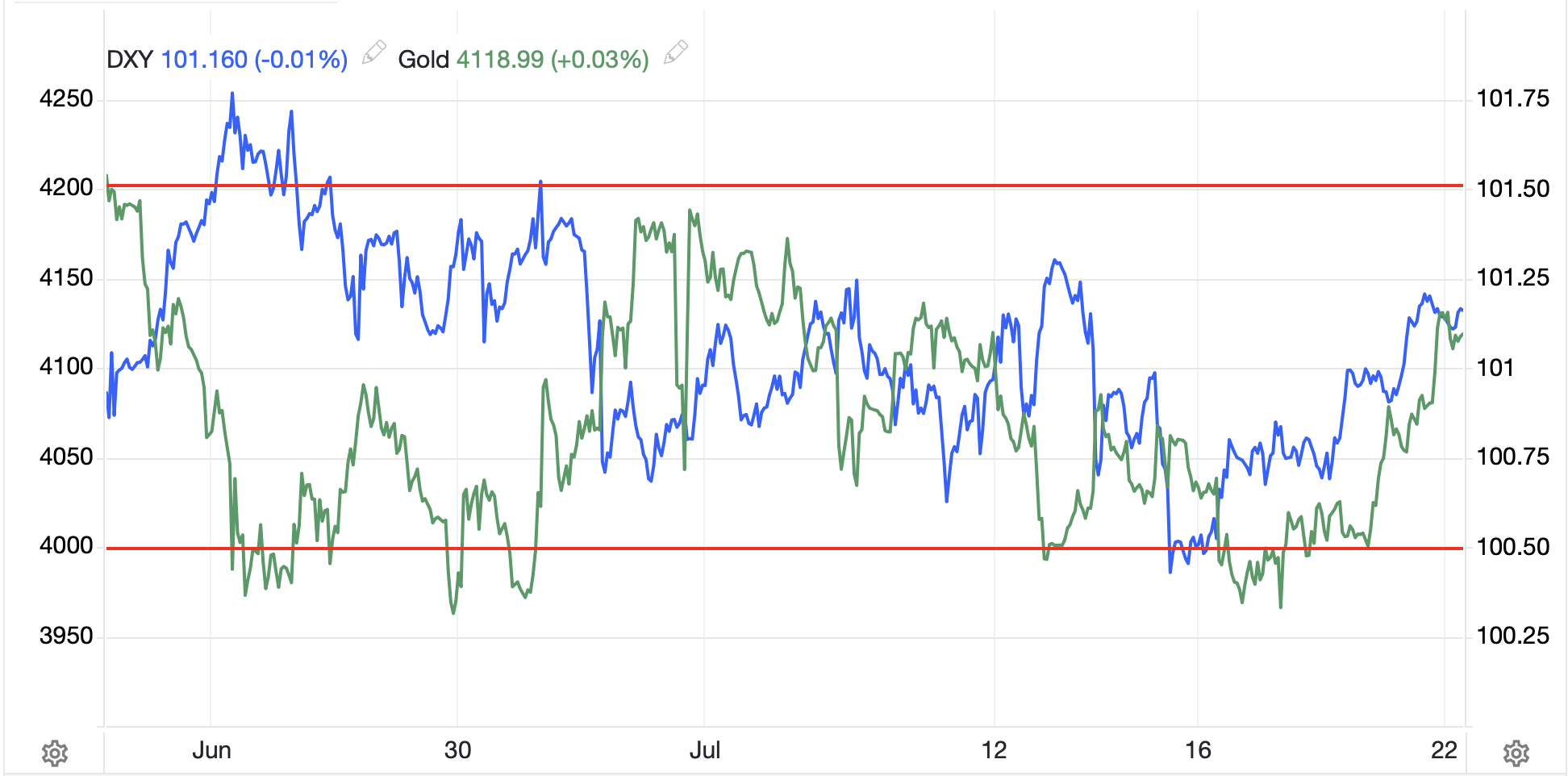
I don’t believe this has been short covering, as in reality, both markets had lost speculative interest given the lack of volatility over the past months, and so short sellers were not involved.  There were far too many other, juicier targets for them.  As to the dollar, which has long had a negative correlation to the precious metals, as it has traded in a 1% range for the past month, as per the below chart, it is hard to ascribe much causality there.

Source: tradingeconomics.com

However, I sense that we are beginning to see some changes to the relationships that have held for the past several months, so we need to be alert for other seeming anomalies.

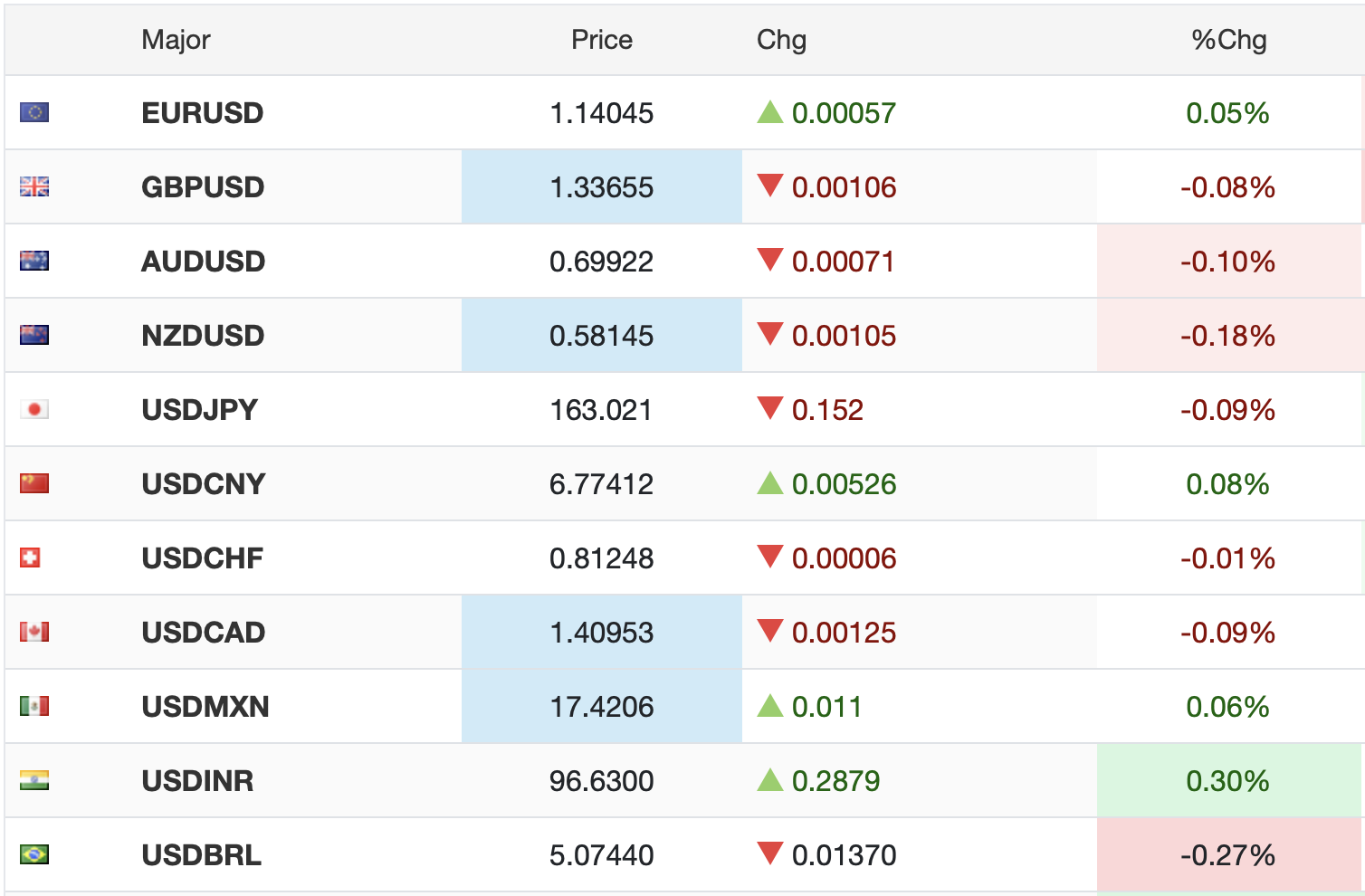
Turning to the other markets, and continuing with FX, while generically today, it is doing very little as per the below screenshot,

Source: tradingeconomics.com

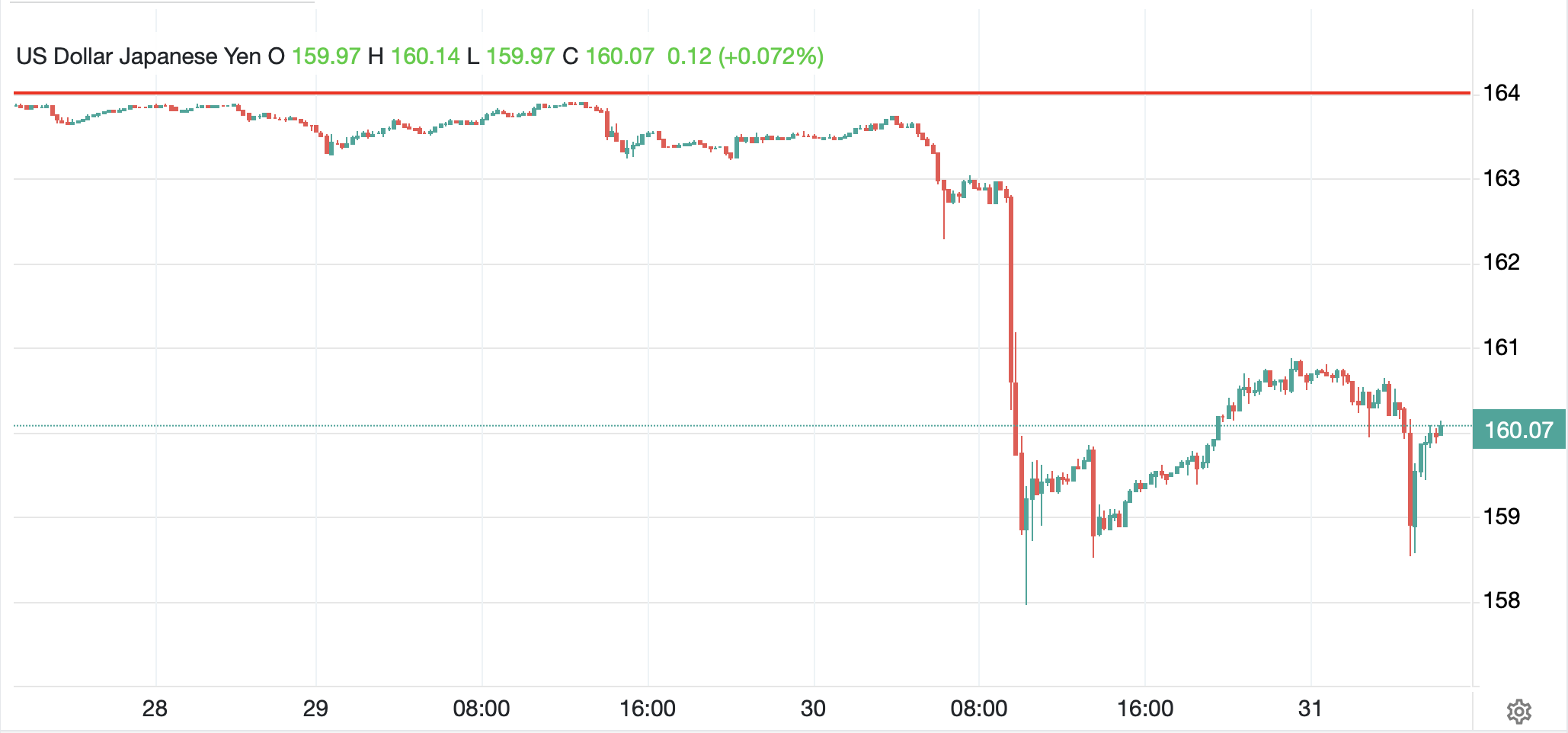
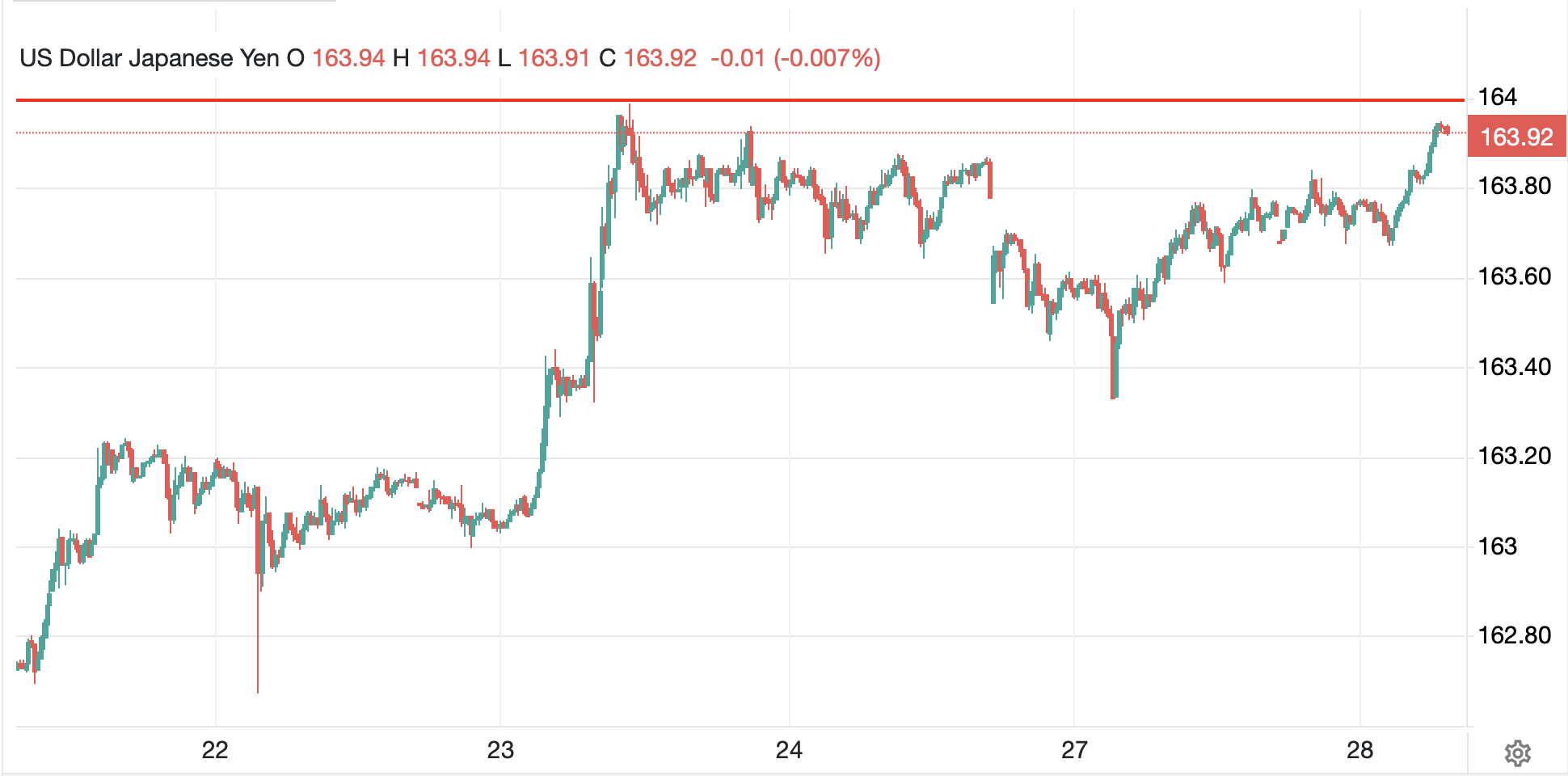
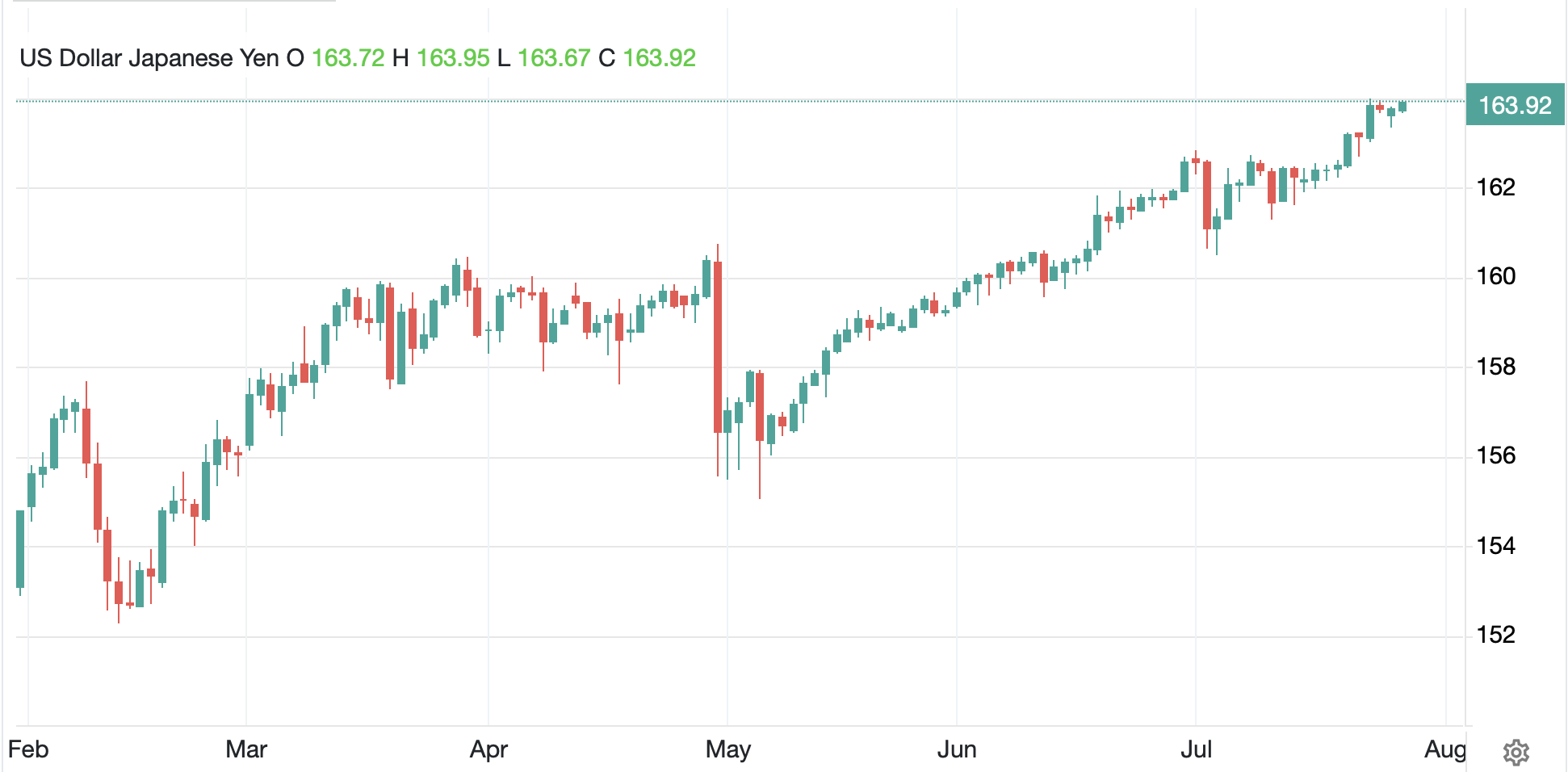
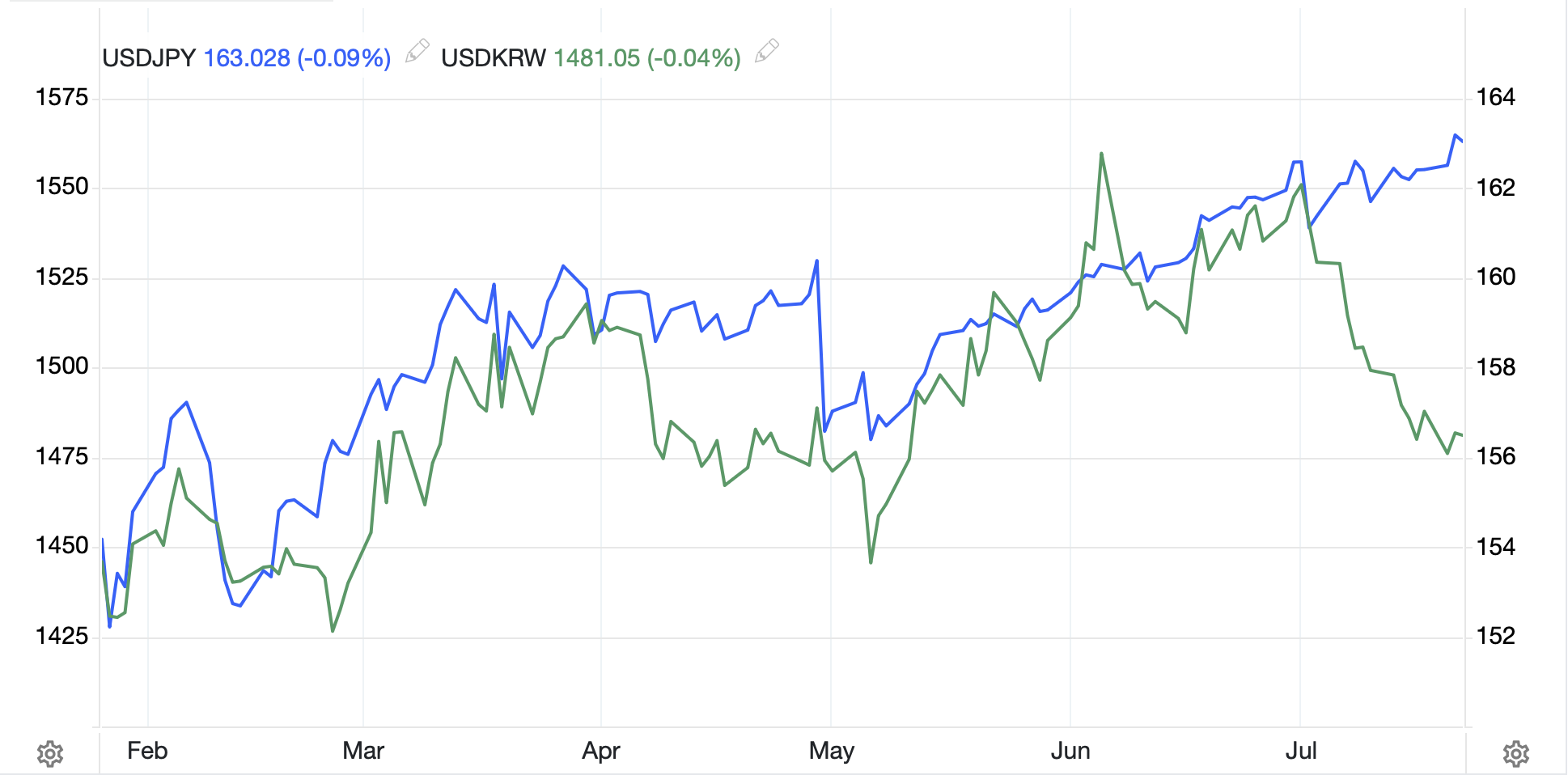
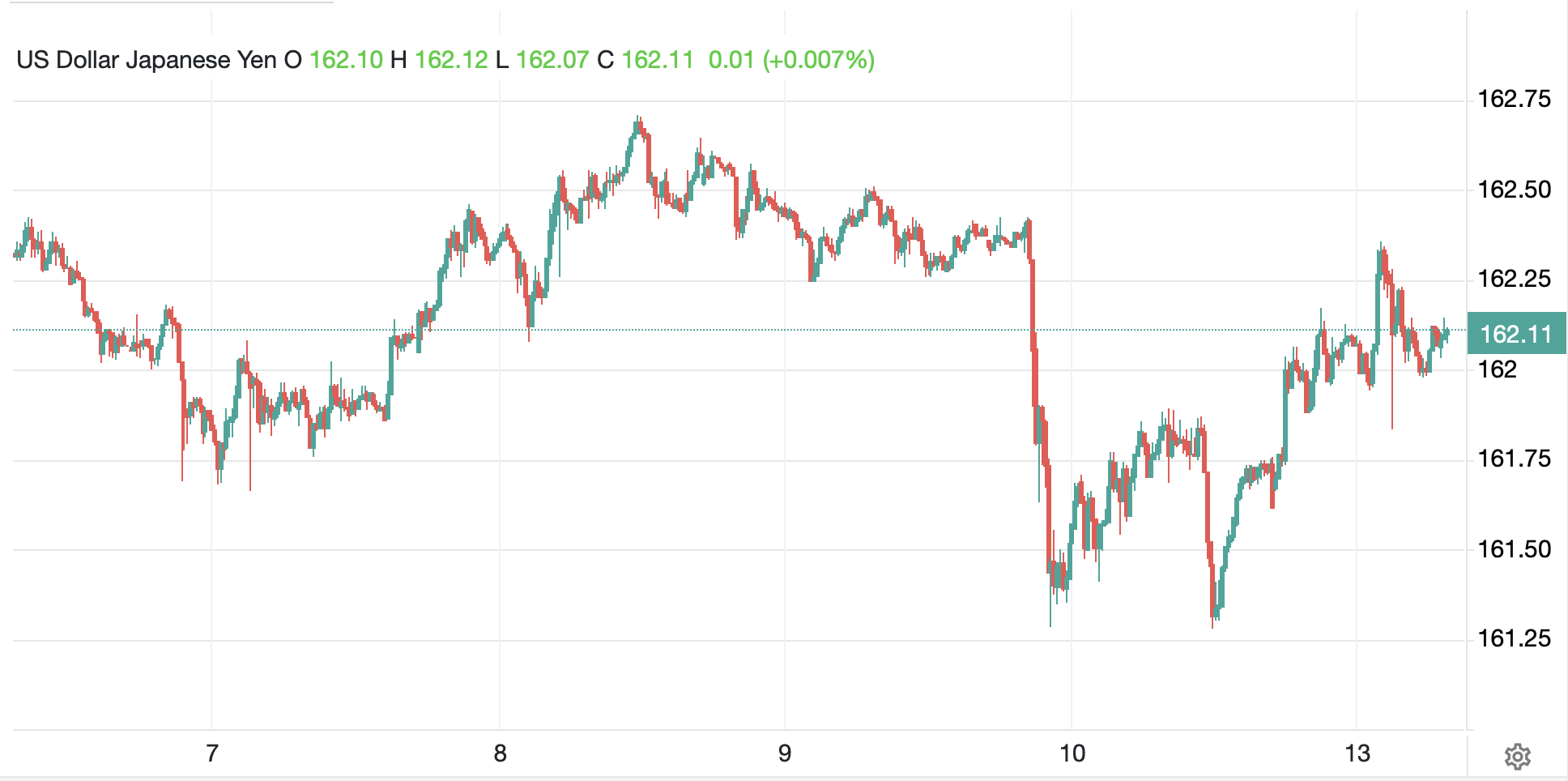
It is worth discussing the yen, which yesterday traded below (dollar above) the 163 level for the first time since 1986.  Not surprisingly, we heard from FinMin Katayama as follows: “The situation involving the US and Iran has taken a sudden turn for the worse — a deterioration that the world did not foresee — creating a very difficult environment. Our policy remains completely unchanged: We will take appropriate and bold action at any time, should the need arise.”  However, as I have maintained, given the incredibly slow pace of the decline of the currency and given that speed of decline and the volatility in markets has always been an important part of the MOF’s decision matrix regarding intervention, it seems we are not near that step.  One need only compare the JPY to KRW, a currency with low historic volatility, to see that the yen has not been very active.  In fact, the biggest movements have been caused by the MOF in their intervention and comments.

Source: tradingeconomics.com

There has been an increase in market discussion regarding whether the BOJ is going to hike rates again at the end of this month, which is not the market forecast, nor would it be considered the norm given they hiked rates last month.  Most analysts expect the pace of rate hikes to be every six months as they gradually tighten policy.  Of course, they could change that, but again, the yen’s weakness has many fundamental drivers with rates being only one of the issues.  Personally, I don’t see a hike next week, but I guess anything is possible.

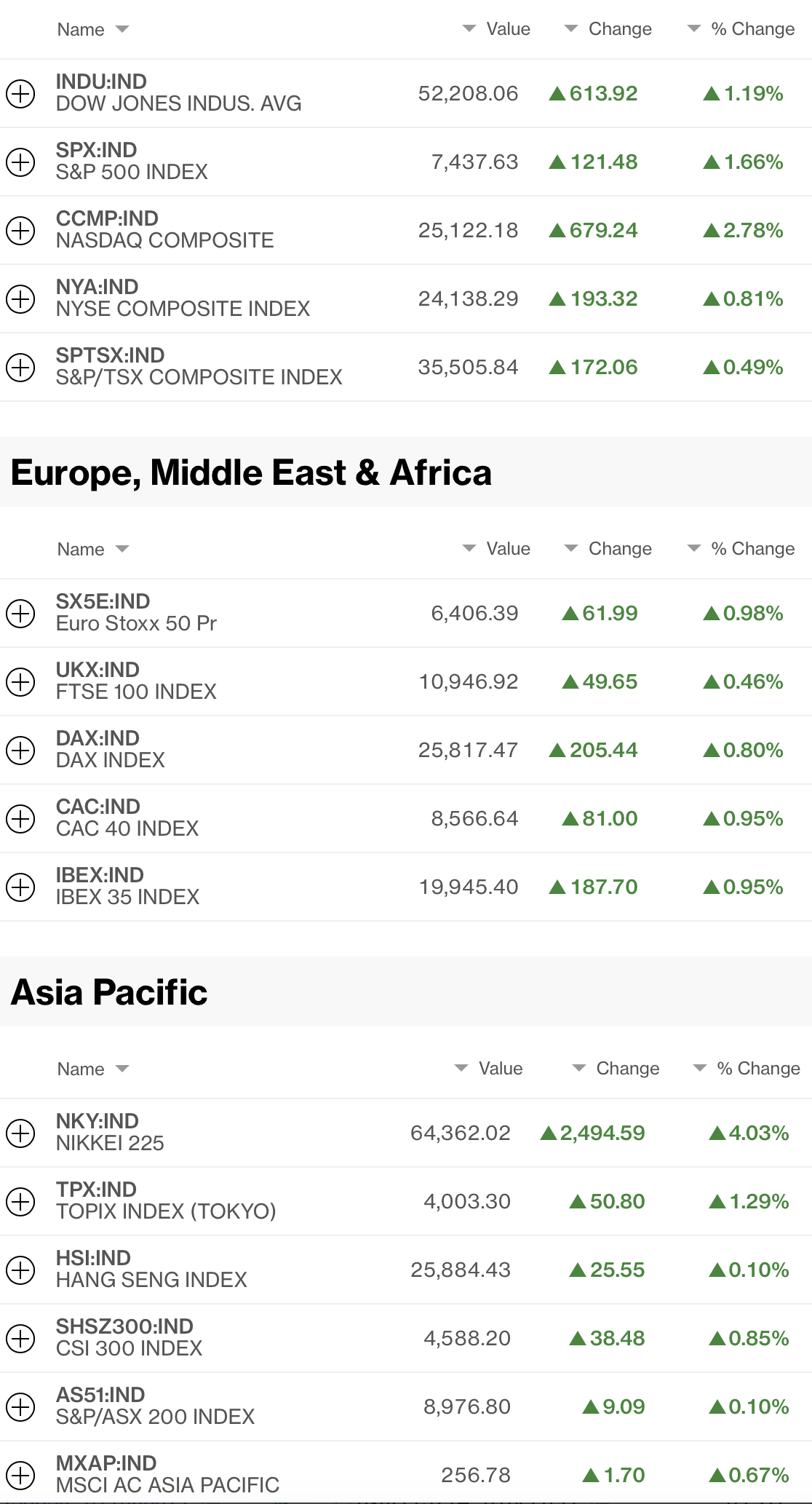
Which leaves us with bonds where yields around the world are creeping higher on a regular basis, Treasuries +1bp, European sovereigns +3bps today, and equities.  Yesterday was a solid day in the stock market in the US with tech stocks leading the way higher.  And while Europe is following suit this morning (UK +1.2%, France +0.8%, Spain +1.0%, Germany +0.3%), last night’s Asian markets were less buoyant.  Tokyo (-0.2%), China (-0.5%) and HK (-1.0%) led the charge lower although there were some bright spots, notably Singapore (+1.2%), Taiwan (+1.3%) and Korea (+0.7%).  I guess overall it was a mixed session.  As to US futures this morning, as I type at 8:05 they are pointing lower led by NASDAQ futures (-1.5%).  

Net, some of the relationships with which we had become familiar seem to be breaking up a bit.  I think no matter how you slice the equity market, it is trading at rich levels, so a correction of some sort seems realistic.  I presume that if the tech earnings next week disappoint, we will see a pretty big downdraft.  As to oil, while there is still plenty around, the war drums are beating louder and that is not helping things.  But bonds and the dollar are sitting this move out, at least for now.

There is no data released today and the Fed is in its quiet period, so we remain beholden to headlines from Iran, the White House and other earnings outcomes.  I have a sense of uneasiness about the day, but nothing to put my finger on.

Good luck

Adf
Many Critiques

This evening the president speaks
And pundits have many critiques
Meanwhile in Iran
There’s no clear game plan
As havoc, the president wreaks

But right now, seems traders don’t care
‘Bout Persia or any warfare
Instead, soft inflation
Has changed the narration
So, pundits, high rates now foreswear

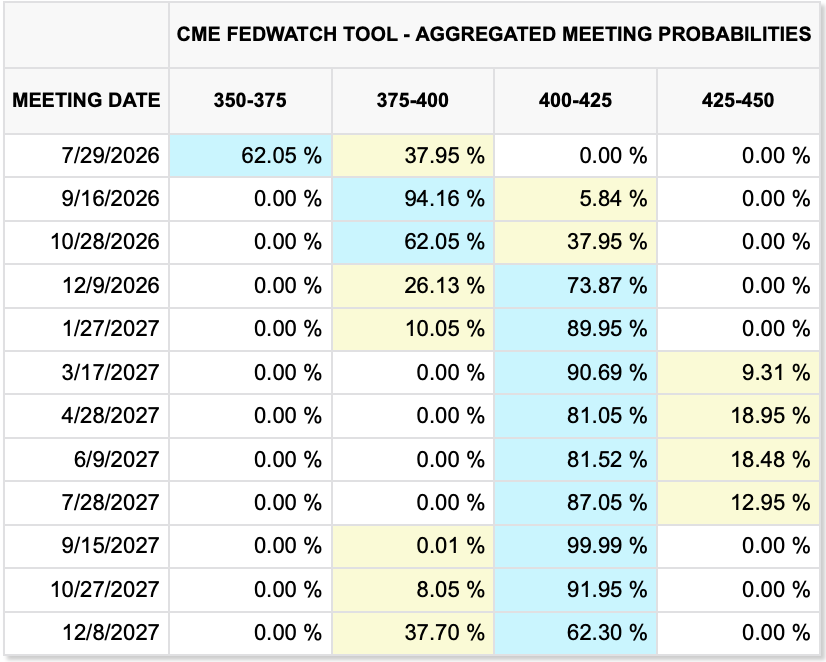
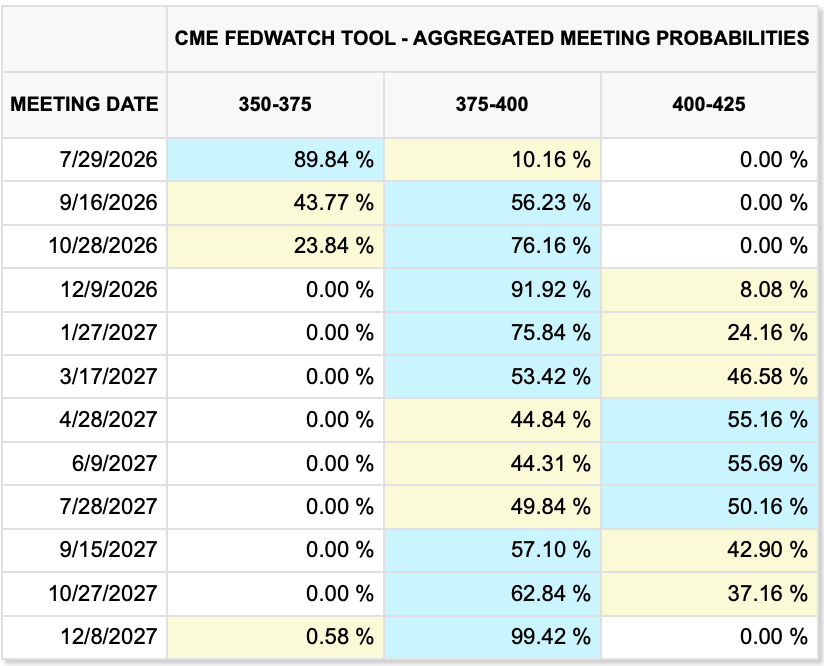
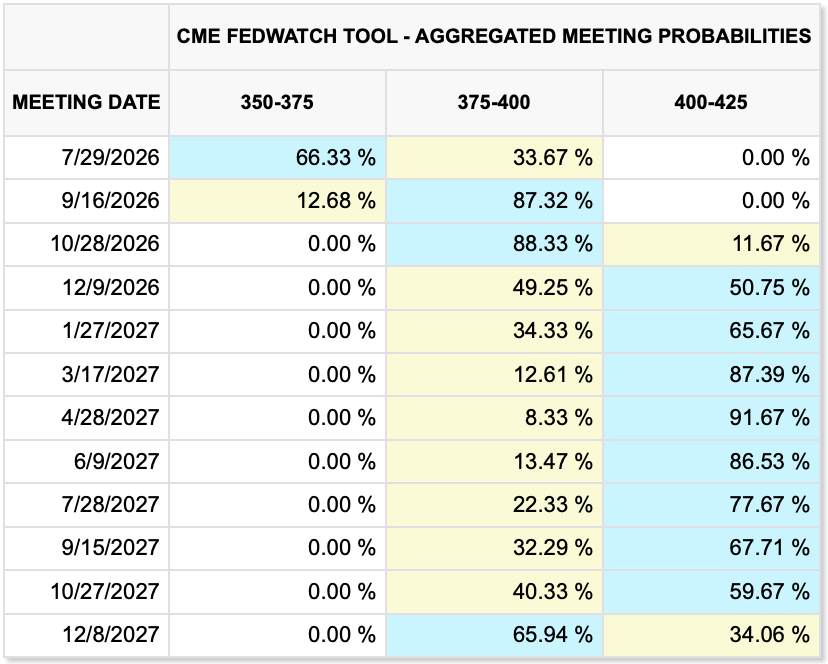
Some days, it’s simply more difficult to find stories that bring coherence to the narrative.  But let me try.  Yesterday’s PPI data was also much cooler than forecast, although still clearly quite high on a year over year basis, but it certainly added to Tuesday’s CPI result and has changed a lot of views regarding the Fed’s future actions.  For instance, if we look at my favorite CME table for current probabilities of future rate moves, we see that there is now just a 10% probability of a hike in two weeks’ time, and just one hike priced in for the next 18 months.

Remember, Monday, there was a 40% probability of a hike priced for the July meeting and two+ hikes priced through 2027.  (As I recall, I was an advocate of fading that price action.)  I expect that this will alter the narrative as calls for an immediate rate hike to burnish Warsh’s, and the Fed’s, credibility are likely to fade away.  In the meantime, he didn’t say anything new at the Senate testimony and the rest of the Fed talking heads continue to reiterate that they would be comfortable raising rates if inflation pressures rise.  Remarkably, they didn’t seem to notice the recent numbers.

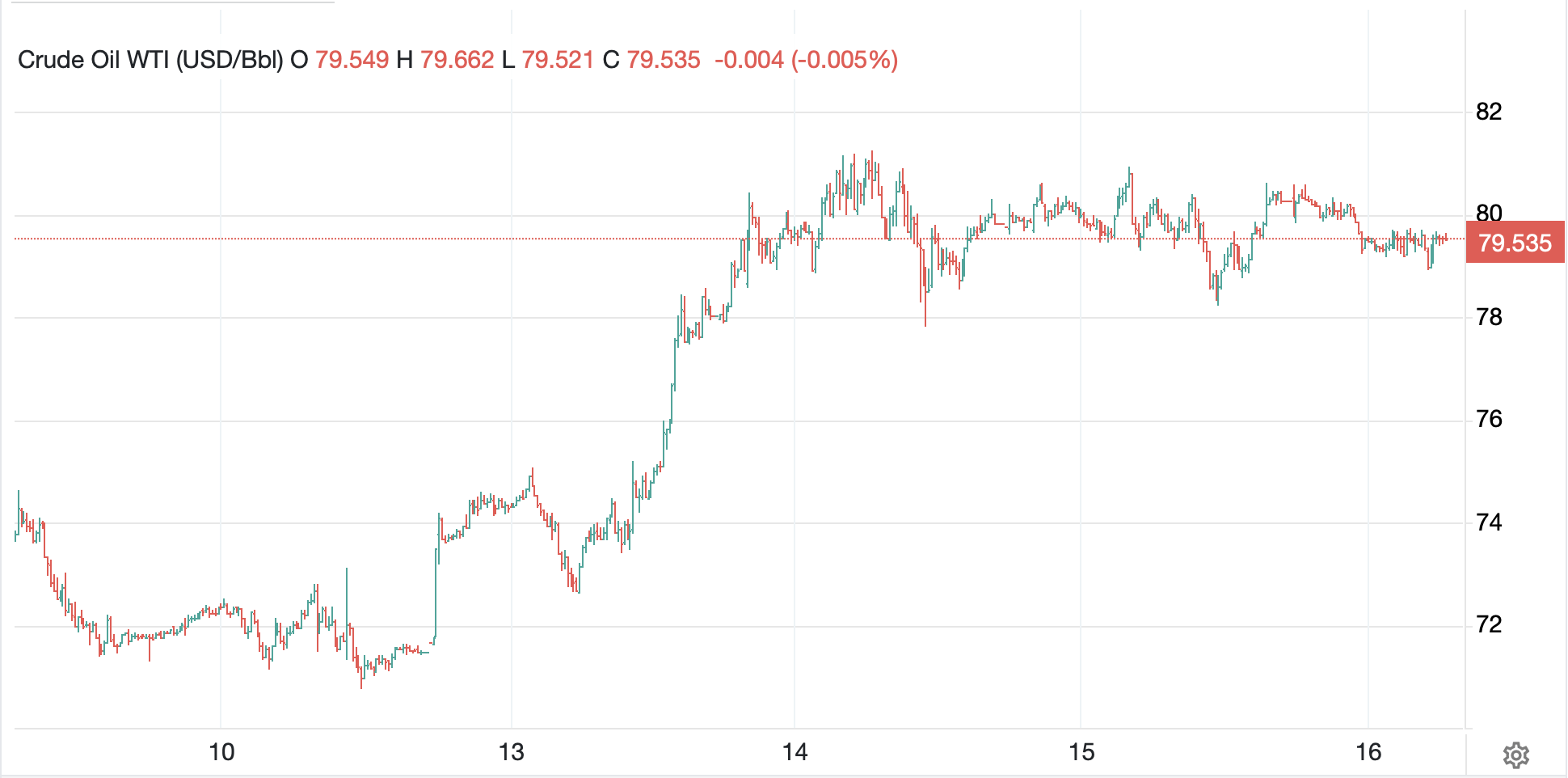
Turning to the Strait of Hormuz, the US blockade of Iranian vessels is back in force and there have been a significant number of new US attacks on Iranian military sites.  As well, the IRGC has fired drones/missiles at several tankers trying to exit the Strait on the Omani side.  I read this morning that the president is considering whether to escalate things by attacking Kharg or Qeshm Islands, two key Iranian strongholds, and my guess is if that were to be the case, the oil market would likely take a turn higher.  But right now, WTI is effectively unchanged on the day, and has been since Monday’s rise.  I guess $80/bbl +/- is the new home.

Source: tradingeconomics.com

As to the President’s speech tonight, the word is it is going to involve election related issues, seemingly regarding the integrity of elections, the SAVE Act and the results of the 2020 elections.  Recall, Tulsi Gabbard, before she resigned to care for her husband, declassified a great deal of information and some portion apparently was election related.  Alas, this will simply further stoke partisan feelings as there is very little evidence that showing proof of something political has the ability to change the opposing viewpoints of partisans.

So, away from oil, we are now into earnings season, and the big banks all had monster quarters while there is growing angst over the AI sector and whether the main players will be able to make the money that was assumed for so long.  So, while yesterday saw US indices trade higher, the overnight session has been far less positive.

Starting in Asia, Tokyo (-2.8%), China (-1.9%) and Korea (-6.4%) all felt the pain of semiconductor weakness although HK (+1.3%) bucked the trend with most of the rest of the region showing far less movement in either direction.  There was precious little data to drive things, so this clearly seemed to be tech sector woes.  In Europe, broad, but modest, weakness is today’s theme with both France and Germany lower by -0.65% with Spain (-0.5%) also under pressure and the UK (-0.3%) the best of the bunch after GDP data was mildly better than the last reading at 1.3% Y/Y in May.  While the Trade Balance improved a bit, IP was weak and although it has been spun as a positive report, it hardly quickens the pulse.  Meanwhile, at 7:20 this morning, NASDAQ futures are lower by -1.1% although the other two major indices are little changed.  Tech is definitely under pressure here.

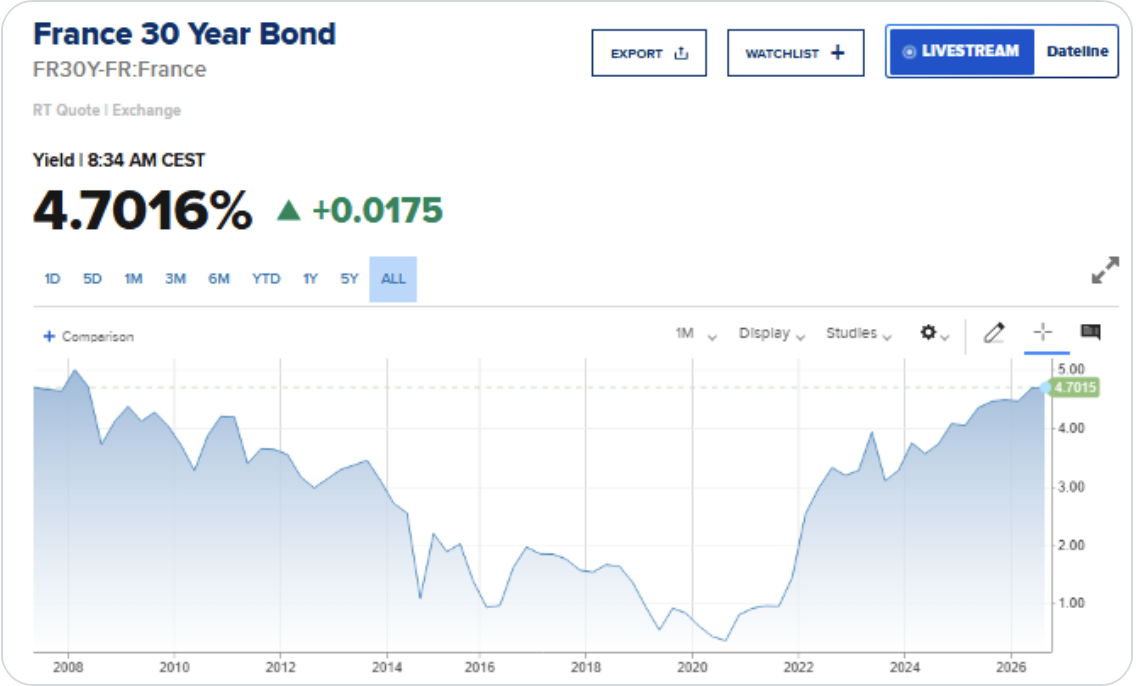
In the bond market, this morning we are seeing yields higher by basically 2bps across the board in Treasuries and European sovereigns.  Much is being made of the French OAT 30-year yield this morning as it trades to its highest level since the GFC as per the below from barchart.com.

While this headline of the highest rate in X years is splashy, what we have been seeing consistently, across all nations, is that debt issuance continues to rise and central banks have not been absorbing nearly as much as they had in the more recent past.  This means that the private sector needs to buy bonds, and they are demanding higher yields.  Someone made the point (and I cannot remember where I first read it, but it is valid) that bond yields appear to be less about inflation concerns, per se, and more about the ability for markets to absorb the ever-increasing amount of debt being issued by governments…and companies.  Just look at how much debt is being issued by the hyperscalers to fund their AI buildout.  Regardless of what happens to the front end of the curve and central bank rate activities, it does feel like the back end of the curve is where the signal is going to be found going forward.

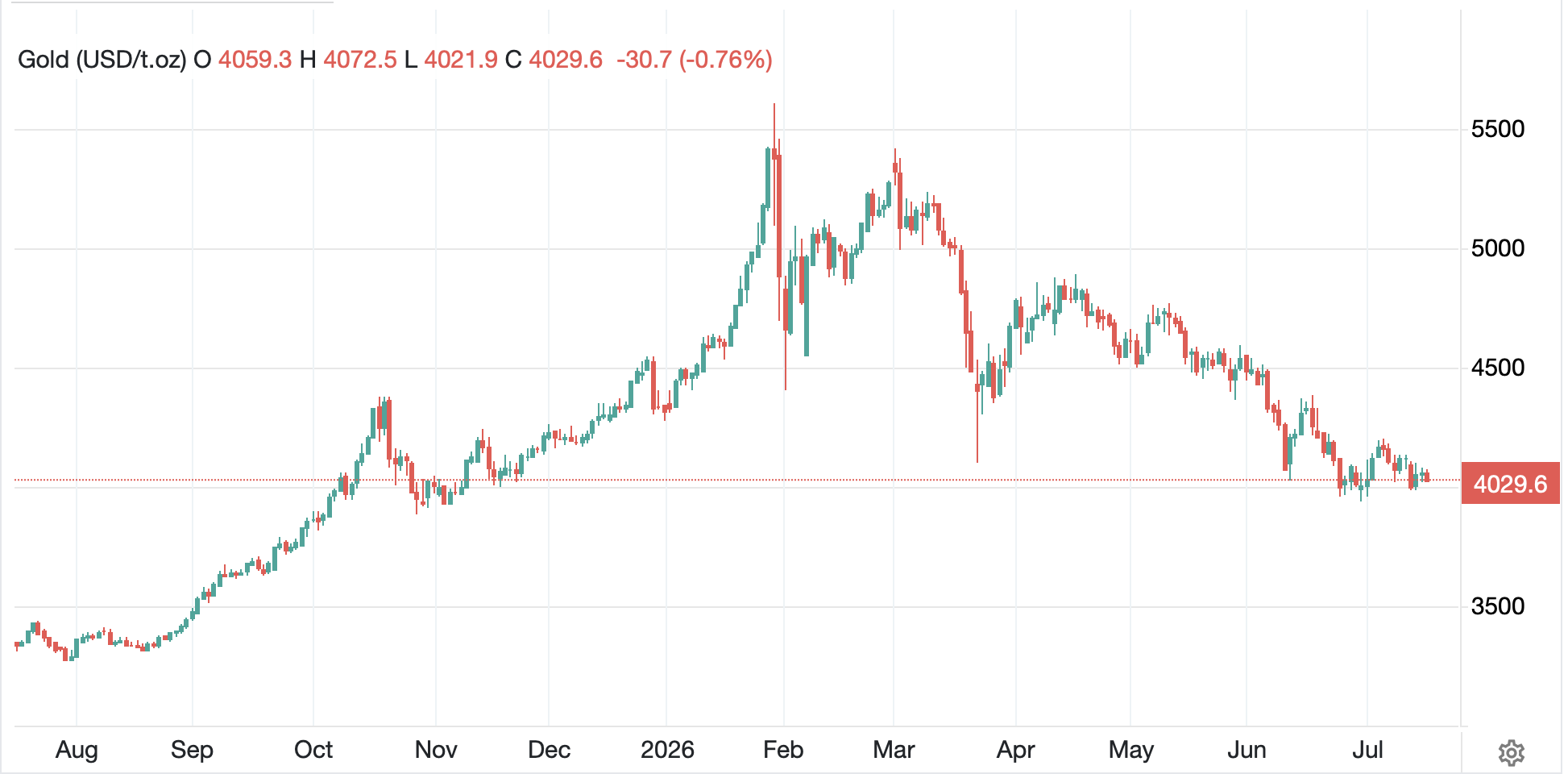
Precious metals continue to bat about, rallying and then giving those gains back, but net remain under pressure as gold (-0.75%) and silver (-1.9%) are both softer this morning although copper (+0.7%) continues to find support.  It is difficult to look at the gold chart and be optimistic about a reversal of fortune in the near-term.  

Source: tradingeconomics.com

However, as per the discussion above regarding the increasing issuance of government debt around the world, at some point, the larger fiat vs. physical stores of value question is going to reassert itself and gold will be one of the main beneficiaries of that story.  Alas, it has a history of doing nothing from a price perspective for years on end.

Finally, the dollar, which suffered yesterday, with the DXY slipping -0.5%, is not very interesting this morning.  the pound, interestingly, has slipped -0.3% despite what many are trying to spin as a positive GDP report.  The other noteworthy mover is KRW (+0.4%) on the back of the BOK raising interest rates by 25bps to 2.75% last night.  While this was widely expected, the rhetoric about faster growth driving the need for higher rates has been a boon to the won.  (And remember, this was despite the KOSPI getting crushed last night on weakness in the two big semiconductor firms.)

On the data front, this morning brings the weekly Initial (exp 217K) and Continuing (1820K) Claims as well as Retail Sales (0.2%, -0.1% ex autos) and the Philly Fed (13.0).  With the recent surprises in CPI and PPI, I’m sure there will be a lot of focus on this morning’s Retail Sales data.  Certainly, a weak number will feed into the new, growing narrative, that the economy is slowing and rate hikes are slipping from view.  But yesterday’s Empire Mfg number was quite strong. There are still many inconsistencies in the data, which if nothing else, allows every analyst to point to something and claim they are right.

Ultimately, to me the great concern is an escalation of US activity in Iran, especially bringing troops into play.  In that case, I think things would change a lot, and we could well see another jump in oil prices.  But absent that, right now there is a lot of noise, but not much signal.  I don’t think the big picture has changed, i.e. investment into the US remains strong and that is going to support both the economy and the dollar.  But there will be many twists and turns.

Good luck

Adf
Much Hotter

This weekend both wars got much hotter
Iran attacked ships on the water
Ukraine sent its drones
Across three time zones
And struck inside Vlad’s magna mater

Thus, oil has risen a bit
While gold and stocks both trade like sh*t
And soon, CPI
Will prove or deny
That views at the Fed are now split

By now, of course, you know that there has been more military activity in the Strait of Hormuz with the IRGC attacking commercial ships and the US retaliating with significant strikes of military sites along the Strait.  From what I can see, there are factions within the IRGC that do not want to end the conflict and whatever government exists within Iran has no control over them.  As such, it is no surprise that the price of oil (+3.5%) has risen, but even in this scenario, it is well off its overnight highs.

Source: tradingeconomics.com

At this point, I believe the trading community will need far greater proof that there is a shortage of oil before responding with significantly higher prices.  Of course, one way that could come about is if Ukraine continues its success with attacks on Russian oil infrastructure as there has been an uptick in that activity with several refineries having been hit in the past several days and Russia imposing an export ban on diesel.  Net, things in the oil space remain precarious, but for all the analysts who continue to promulgate the idea that the end is nigh, markets continue to disagree.  As always, I vote with markets here.

And, not surprisingly, other markets have responded in a similar fashion to their recent trends with higher oil prices leading to pressure on both stocks and bonds, as well as precious metals while the dollar finds some support.  The thing is, my take is the strength of these correlations has been waning somewhat.  Frankly, and remarkably, it appears as though an increase in military activity in the Strait of Hormuz has become somewhat normalized to traders and they are looking for other, fresher signals as to their next move.

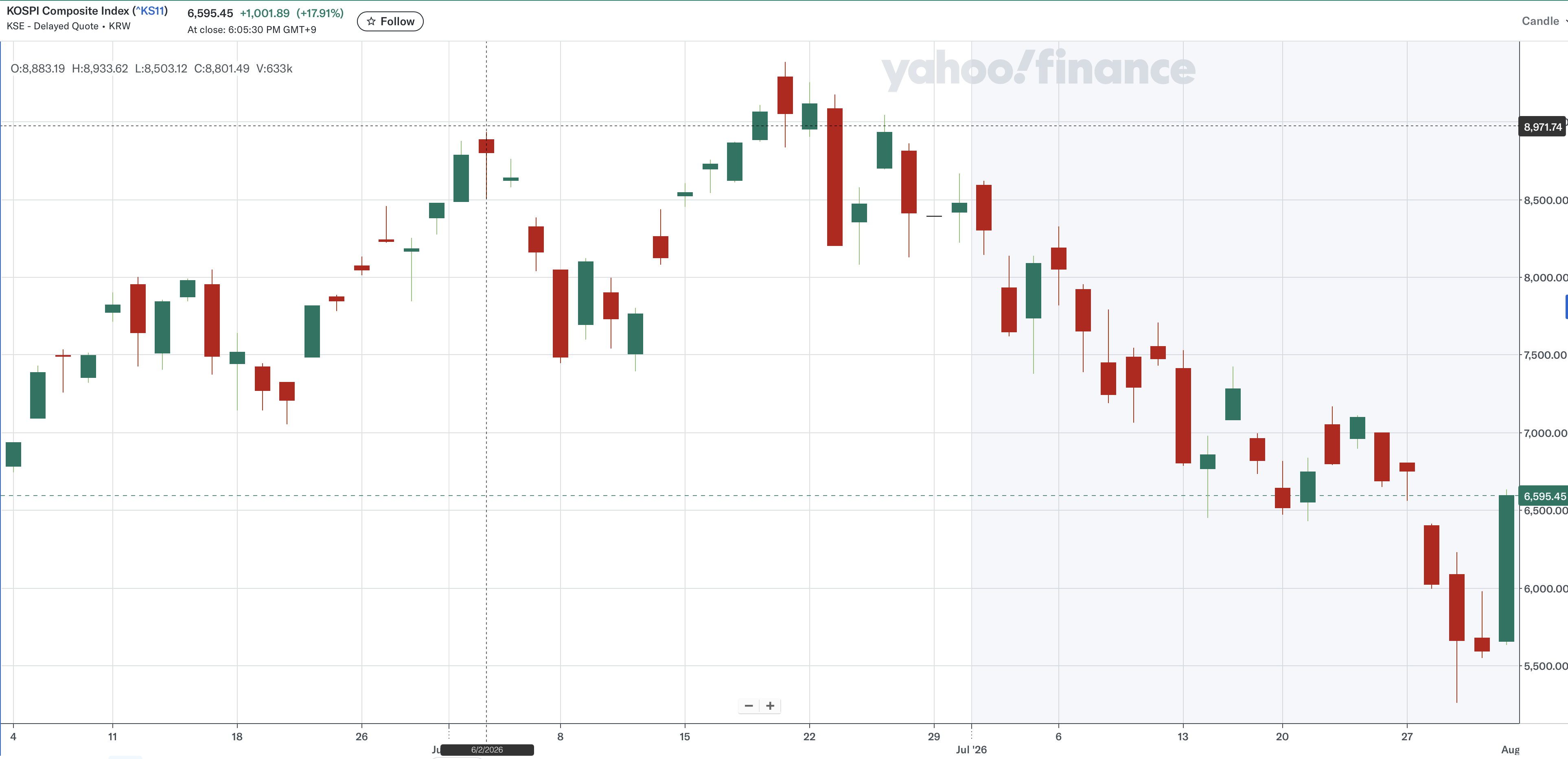
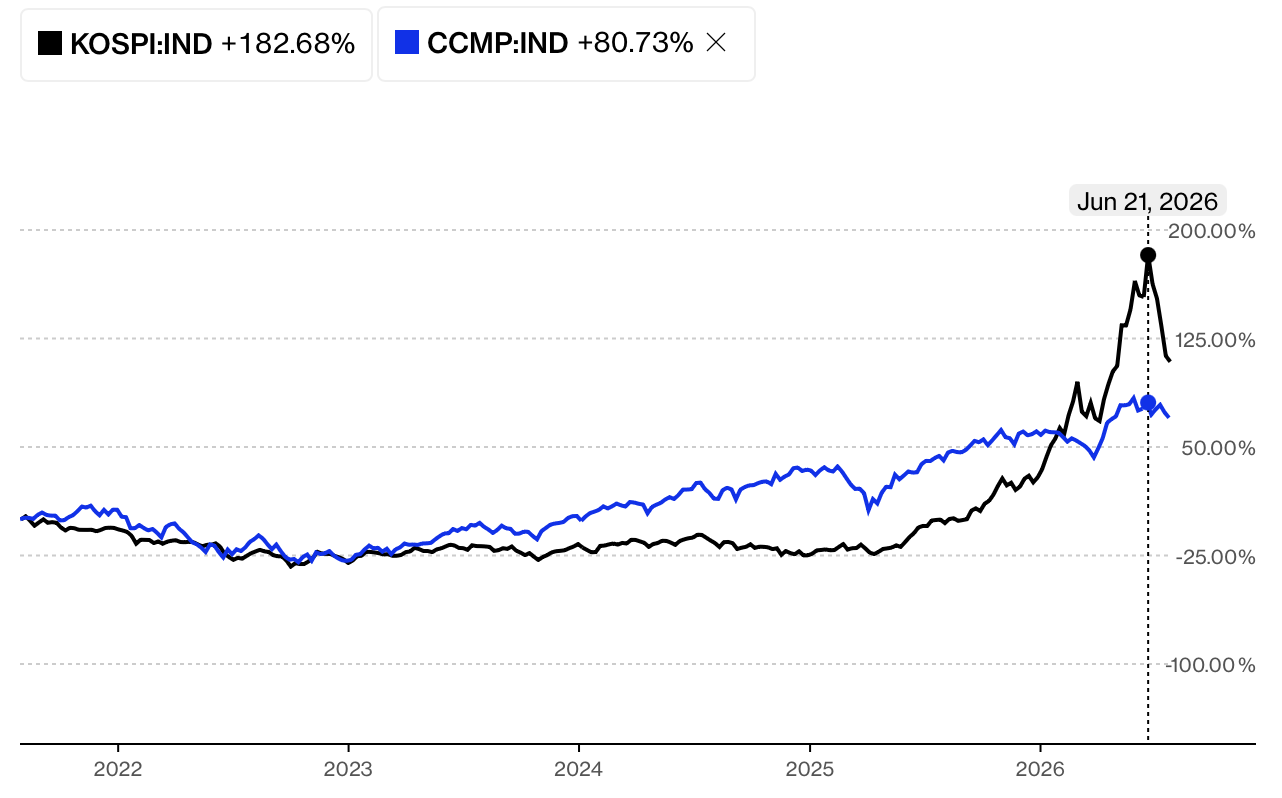
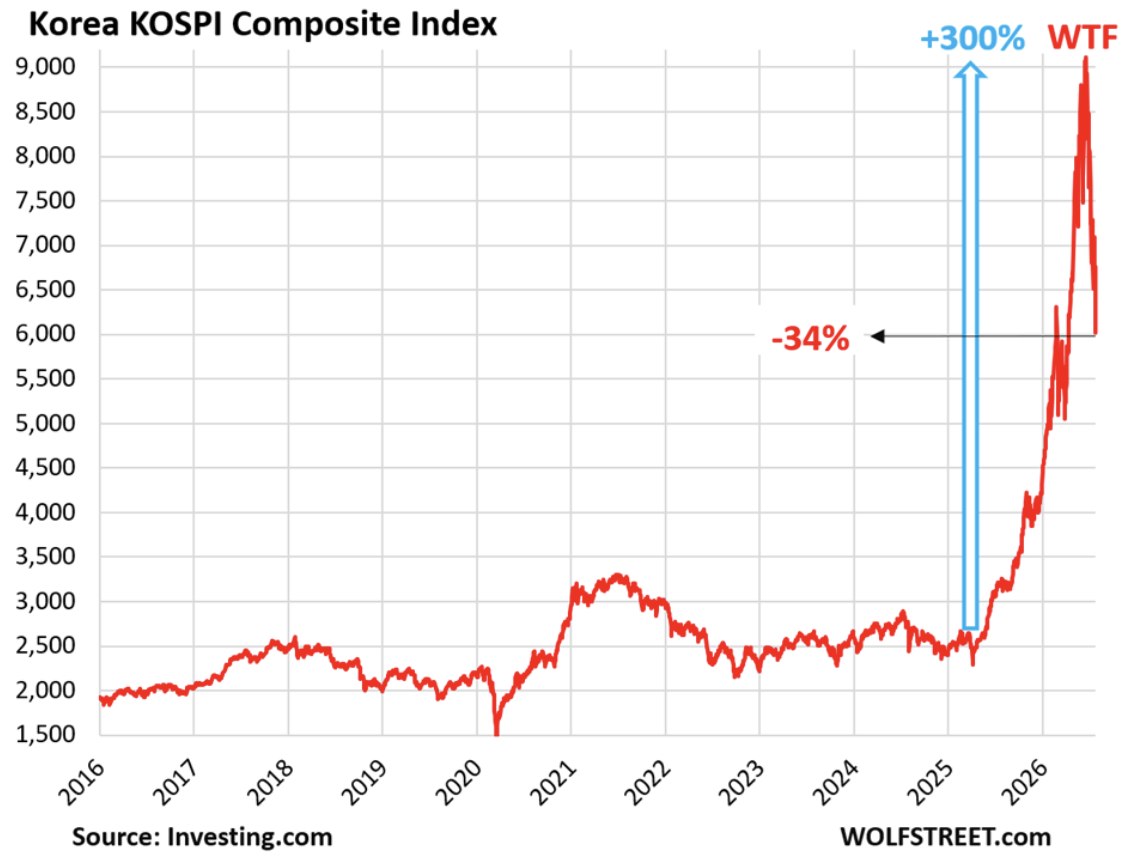
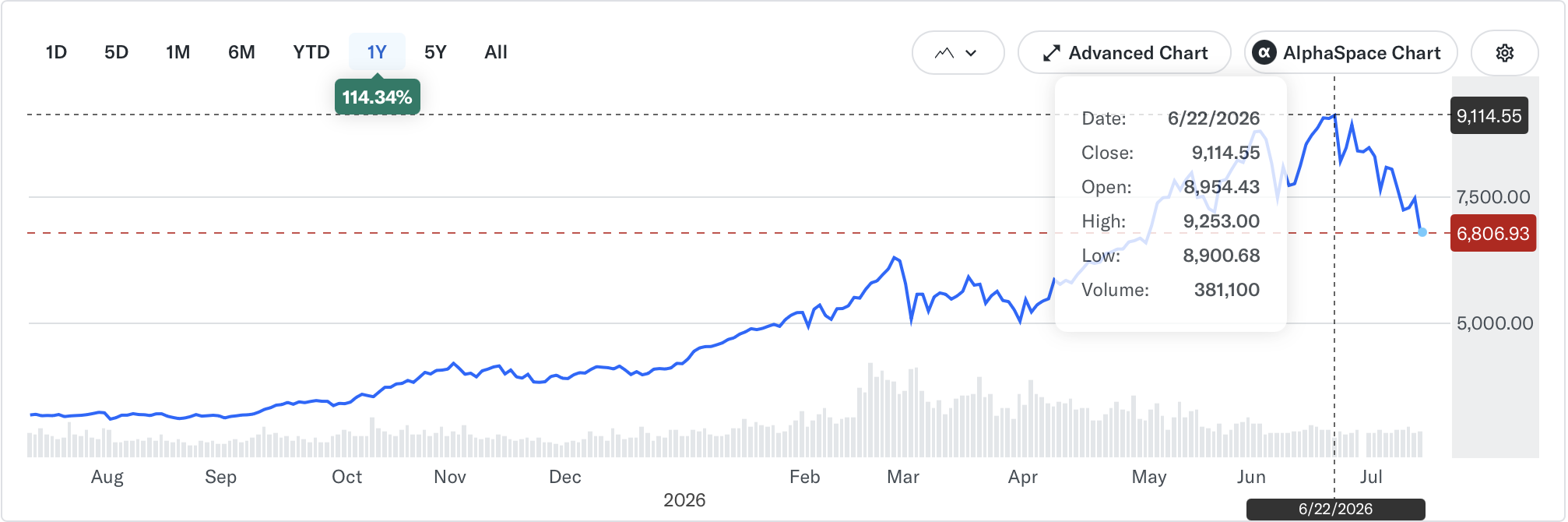
What might those other signals be?  Well, much was made of SK Hynix’s IPO in the US on Friday, which many pundits are now calling the top as the stock fell sharply in Korea overnight, down -15.4% dragging the KOSPI down -9.0% and tech stocks, in general much lower.  Of course, the KOSPI had risen dramatically over the past year, as you can see below, and is still higher by more than 100%  in the past year despite the recent decline of more than 25% since its peak on June 22.

Source: finance.yahoo.com

The problem with calling the top in stocks is that the earnings data, which starts in earnest this week, has been pretty good so far.  If companies continue to earn real profits, investors will continue to purchase stocks.

So, where else can we turn for new information?  Tomorrow brings the latest CPI report (exp 3.8% headline, 2.9% core), and you know that will be heavily scrutinized as the punditry tries to determine the FOMC’s reaction function and if it has changed with the new Chairman.  At this point, I do believe the Fed’s reaction function has changed, and more importantly, I don’t think anybody knows what it will be like, the Fed included.  The previous Fed whisperer, Nick Timiraos at the WSJ put out an article overnight discussing the idea that Chairman Warsh needs to decide whether to undo the most recent rate cuts.  However, there is no evidence that Warsh speaks to Timiraos and based on everything Warsh has said, he is not likely to tip his hand.  Chairman Warsh does testify to Congress this week, but I expect he will deflect all questions about the future path of monetary policy, and let’s face it, with the likes of Maxine Waters on the House committee, they won’t understand anything he says anyway.

And really, those are the only things that I think matter for now, so let’s review the overnight activity in markets.  As mentioned above, stocks are generally under pressure, but not universally so.  For instance, in Asia, Tokyo (-1.9%), China (-1.8%) and the aforementioned South Korea all had rough sessions, but HK, Taiwan, India and Australia were all basically flat on the day.  The big surprise is Taiwan as given the semiconductor weakness; I would have thought that market would have been significantly impacted.  But I guess not.  Meanwhile, European investors appear to be completely focused on tomorrow’s France-Spain World Cup semifinal as equity indices there are virtually unchanged this morning.  As to US futures, at this hour (7:30) NASDAQ futures are weaker by -1.2%, but the other markets are little changed.

Bond yields are higher this morning, but not hugely so.  Treasury yields have edged up by 1bp, and European sovereign yields are higher by 2bps across the board with UK Gilts (+4bps) the real laggard there.  Overnight, JGB yields backed up 4bps as well, but that story has more to do with the GPIF than anything else.

Remember Friday?
Japan was bringing home yen
They were just kidding

Think back to Friday.  Japanese FinMin Katayama mentioned that the GPIF and other Japanese pension funds ought to consider investing more money in Japan and less abroad.  That got tongues wagging about a major policy change coming that would serve to support the yen, and the JGB market while undermining Treasuries as the idea was the GPIF would sell their US Treasuries and buy JGBs instead.  Well, it turns out that is not actually the case.  The GPIF reevaluates its policy annually but has expressed no urgency to change things now despite the FinMin’s comments, at least according to Reuters.  The upshot is that JGBs sold off as did the yen (-0.3%) as per the below chart.

Source: tradingeconomics.com

Perhaps more surprisingly, though, the dollar is mixed on the day, not higher across the board as might have been expected given the uptick in oil and military activity.  So, we have seen weakness in GBP (-0.1%), AUD (-0.2%) and INR (-0.5%) while EUR (+0.1%), NZD (+0.2%), NOK (+0.3%) and KRW (+0.4%) have all had decent sessions.  Net, the DXY is essentially unchanged this morning.

Finally, and quickly, both gold (-1.5%) and silver (-2.0%) are under pressure with the higher oil price although copper (+0.6%) continues to find support and remains well above $6.00/lb.

In addition to the CPI data, it is a pretty busy week as follows:

TuesdayNFIB Small Biz Optimism95.6
 CPI-0.1% (3.8% y/Y)
 -ex food & energy0.2% (2.9% Y/Y)
 Warsh Testimony 
WednesdayPPI-0.1% (6.2% Y/Y)
 -ex food & energy0.3% (5.2% Y/Y)
 Empire State Mfg8.9
 Warsh Testimony 
 Fed’s Beige Book 
ThursdayInitial Claims218K
 Continuing Claims1811K
 Retail Sales0.2%
 -ex Autos-0.1%
 Philly Fed13.5
FridayHousing Starts1.30M
 Building Permits1.40M
 IP0.2%
 Capacity Utilization76.2%
 Michigan Sentiment51.5

Source: tradingeconomics.com

We also hear from 9 other Fed speakers (it almost seems like they didn’t get the memo about reducing communication) but with Warsh on the stand both Tuesday and Wednesday, I don’t think the others will matter that much.  Of course, it will be interesting to hear the other speeches if CPI comes in softer than expected as it may put a crimp in the hawks’ views.

In the end, not that much has really changed I would argue.  The war is an exogenous variable, and the market has learned to largely ignore it.  The Fed is still too uncertain in its new construction for many views to have changed, but I think the one thing we can conclude is that the old models of their reaction function are no longer viable.  My take is the beauty of the task forces for Chairman Warsh is they won’t report for at least 3 months, and probably more like 6 months, so until they report, absent a massive spike in measured inflation, the Fed is not going to do anything.  The Fed funds futures market is now pricing a one-third probability of a hike at the end of this month and certainty of one and 50% probability of two by the end of the year.  I would fade those trades.

Good luck

Adf

Discussing Their Plight

Now, all eyes will turn to the chat
When Warsh and his minions, they sat
Round oak polished bright
Discussing their plight
‘Bout prices and jobs and all that

But since they met three weeks ago
Chair Warsh very clearly did show
His view that inflation
Was short in duration
And rate hikes were not apropos

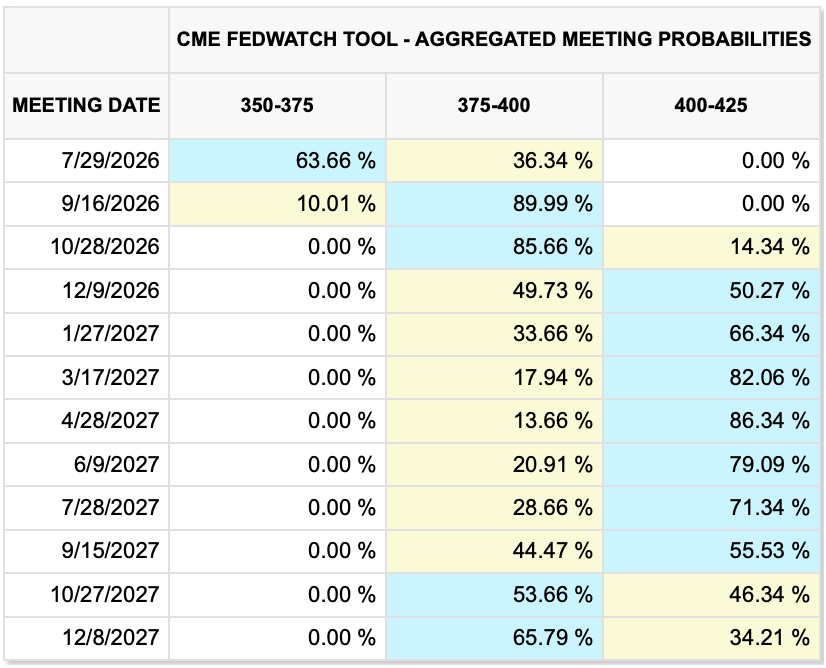
It is getting increasingly difficult to maintain a hawkish Fed view as both the data and the Chairman are working against you.  While we all enjoy the World Cup this week, arguably the biggest market related news will be Wednesday’s release of the Minutes from the last FOMC meeting.  You may recall that in the wake of that meeting, interest rate hawks were in the ascendancy with an October hike fully priced and odds for a second, December, hike priced as well as you can see in the below CME table from June 24th.

Now, in the wake of that meeting and the press conference, the combination of the dot plot showing half the committee expecting a hike this year and the lack of forward guidance along with the succinct statement explaining the Fed would achieve their 2.0% inflation mandate had many analysts expecting a serious tightening cycle upcoming.

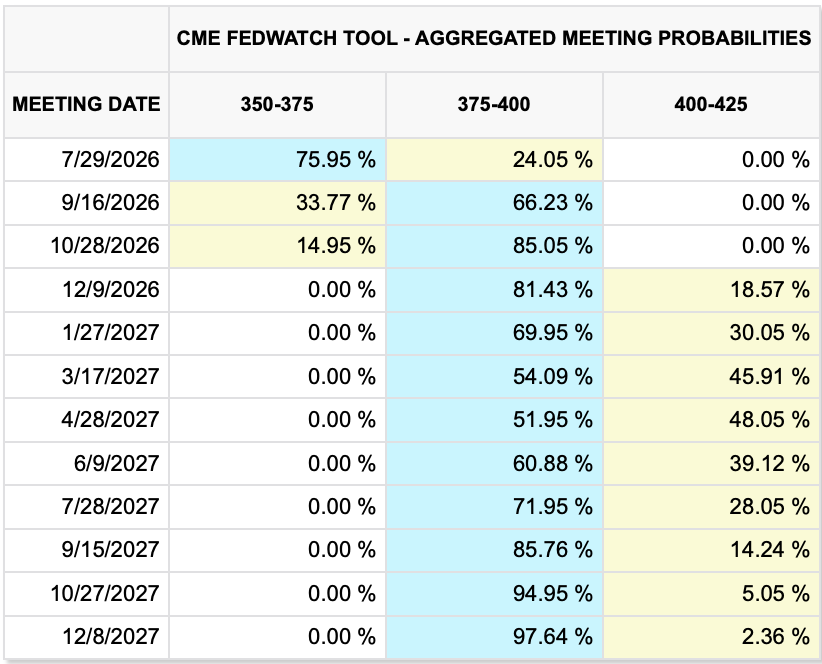
But a funny thing happened on the way to the next FOMC meeting, still three weeks hence, the price of oil, and energy in general, accelerated its decline.  Given how much effort was made to explain that the core inflation readings were heading higher because of the impact that energy has on everything, hence the need to hike rates, this has been an inconvenient outcome for the hawks.  Add to that Chairman Warsh’s comments at Sintra, Portugal last week, regarding the easing of inflationary pressures as energy prices decline (oil -0.9% this morning) and futures traders have been adjusting their views pretty steadily as per this morning’s CME table.

While a hike is still assumed by year end, the second one has fallen by the wayside.  Personally, as we continue to see inflation pressures subside alongside energy prices, I expect that not only will we not see a hike this year at all, but a cut by December is viable.

Adding to the downward bias on Fed funds futures was Thursday’s payroll report, where the headline number was softer than expected, although the Unemployment Rate did slip another tick to 4.2%.  I think a key problem with using the Unemployment report as such a critical signal is the fact that since President Trump’s inauguration and the actual closing of the Southern border, as well as the deportation (by both the government and on a self-basis) of somewhere between 2.5 million and 3.0 million according to Grok, the old econometric models of what type of job growth was necessary to maintain solid economic growth are no longer terribly useful. If we throw in the dramatic changes to the economy on the back of the increase in AI as a tool and infrastructure investment, it becomes increasingly difficult to utilize the old models.  Too, one of the main themes from several months ago was that AI was going to replace hundreds of thousands of jobs and unemployment would skyrocket, while now, those ideas are being rethought with many analysts now expecting AI will support more jobs.  Perhaps, the best thing that can come of this change is that markets will no longer radically adjust based on an outdated statistic.

There is still a long way to go before the next FOMC meeting and I doubt that the many task forces will have come to any conclusions yet, but if energy prices continue to decline, and I couldn’t help but notice this WSJ article discussing the sudden glut of oil driving prices lower, and I am growing increasingly confident in my views.

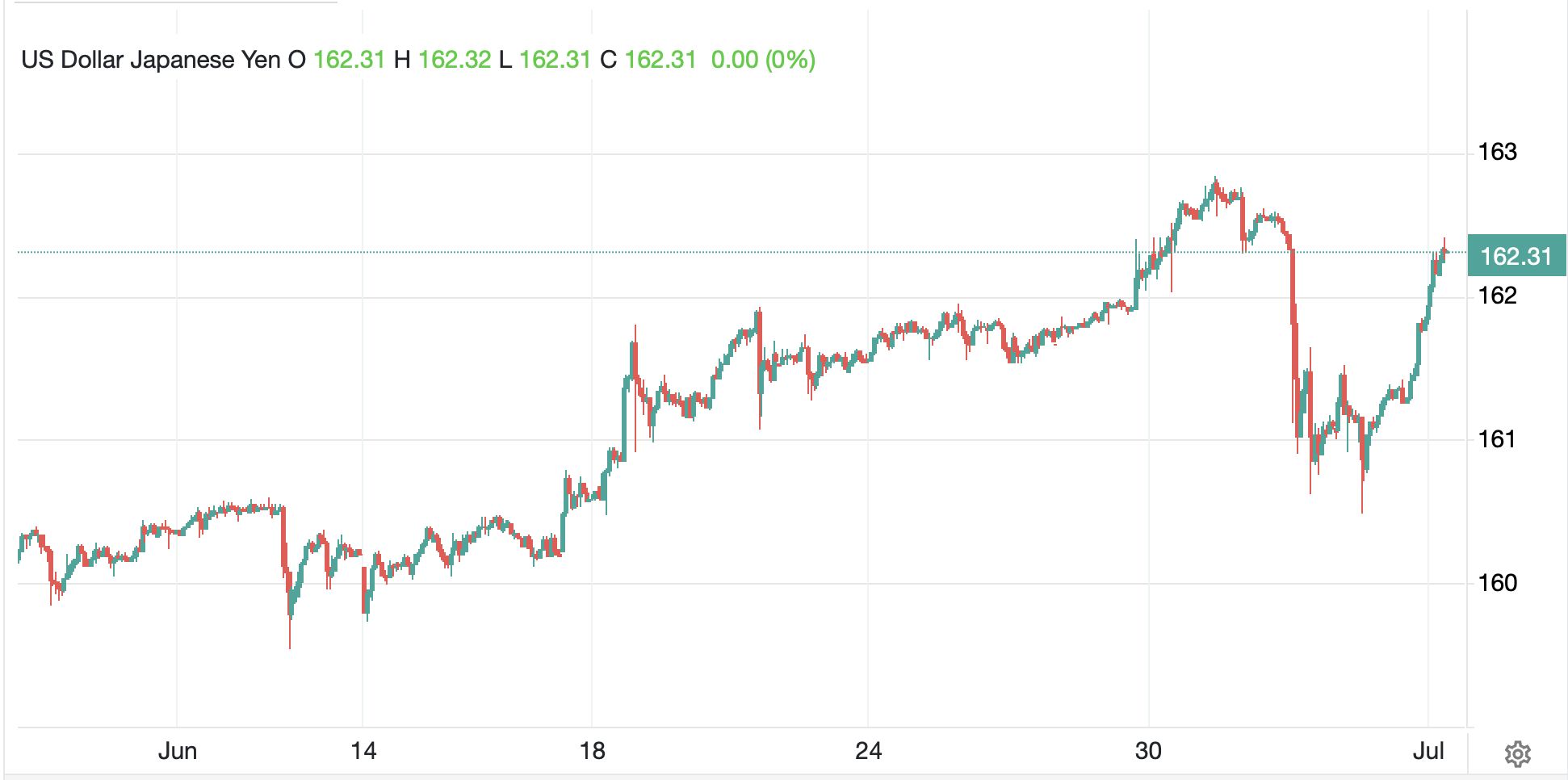
Which takes us to the currency that most needs to see a more dovish FOMC, the yen (-0.6%).  You may remember last week when the yen, after making yet another new low for the move, suddenly reversed course ahead of the July 4thholiday.  While there was no actual intervention, the discussion was that the MOF would no longer discuss their intentions ahead of any intervention and with a holiday weekend seeing reduced liquidity, many anticipated some action.  Well, as you can see from the chart below, that idea has essentially been erased with the yen softening again and pushing back to those lows seen last week.

Source: tradingeconomics.com

Bloomberg ran an article this morning about a former Vice Minister from the MOF explaining his view that the yen was undervalued by 20% or so.  If we look at the yen on a PPP basis, the IMF claims the value should be about 93-95 instead of the current 162+.  The Economist’s Big Mac Index calls for 78.00, and by all accounts, visiting Japan is relatively inexpensive for most foreigners.  In fact, I read that Japan was increasing the visa fees to try to discourage the massive amount of tourism as people around the world see it as a cheap destination.

Ultimately, the problem with the yen, in my view, remains that real interest rates remain deeply negative and the government’s spending plans continue to indicate massive deficits as far as the eye can see.  While reduced energy prices are a boon, the yen was falling sharply long before the Iran conflict began.  Policy changes of substance are required, and they are still uncomfortable for domestic politics.  While the pace of the yen’s decline may slow, I still see it weakening going forward.

So, let’s briefly look at markets overnight before closing.  Regarding the dollar, it is broadly stronger this morning with only BRL (+0.3%) finding any support despite their ignominious defeat to the Norwegians.  But modest slippage across the G10 is the rule, -0.1% to -0.2%, while similar movement has been observed in the rest of the EMG space.  For now, the yen remains the only interesting currency.

In the commodity markets, despite oil’s continuing slide, this morning the metals (Au -0.4%, Ag -0.6%, Cu -0.1%) are also under pressure, but that accords with the dollar’s strength.  As long as the dollar remains bid, it appears the metals markets will have difficulty gaining traction.  But if I am correct regarding the Fed and the market turning toward a more dovish view, I would look for the metals to head higher again.

In the bond market, Treasury yields (-3bps) are slipping as the market reopens after the holiday weekend, arguably following through on the softer payroll data.  European sovereign yields are little changed to lower by -1bp amid a quiet market while JGB yields (+4bps) are the notable outlier, arguably as concerns rise over the weakening yen.

Finally, equity markets remain beholden to the semiconductor and AI trade and with the US having been closed on Friday, there was less information for the rest of the world.  But this morning, NASDAQ futures (+0.9%) look like they are set to resume their march higher, dragging the S&P with them.  But this follows a mixed to lower session in Asia (Tokyo 0.0%, China 0.0%, HK +1.1%, Korea -0.5%, India +0.7%, Taiwan -0.5%) as leadership was lacking.  Not surprisingly, European bourses are also mixed this morning (Spain -0.7%, UK -0.2%), Germany and France both +0.1%) as the question of note is how much defense investment is going to be forthcoming from NATO and European nations and how much of that will be spent in Europe.  Perhaps excitement in the US will help global risk appetite as the day wears on.

On the data front, it is a quiet week for numbers with just the below on the docket:

TodayISM Services54.0
TuesdayTrade Balance-$78.0B
WednesdayFOMC Minutes 
ThursdayInitial Claims220K
 Continuing Claims1810K
 Existing Home Sales4.20M

Source: tradingeconomics.com

As well, we hear from three Fed speakers, Waller, Williams and Logan. Now it will be interesting to see if any of them start to discuss the lower energy prices and how that is likely to moderate their inflation concerns.  If we do hear something like that, I expect the Fed funds table above will reflect that quickly.  We shall see.

It is summer, and there is not much new to discuss.  With the US playing Belgium tonight, all eyes will be there, and my take is we are not looking forward to a terribly exciting session today.

Good luck

Adf

‘Pocalypse Dreams

Though many have preached the buck’s dead
The greenback keeps moving ahead
And right now, it seems
Their ‘pocalypse dreams
Are still all confined to their head(s)

But narrative writers ignore
Whatever they said from before
Right now, it’s the buck
That’s causing bad luck
As rate hike bets all start to soar

In a fairly rare set of circumstances, the dollar has drawn the spotlight in markets for the past few sessions.  While it always matters to some extent, it is rarely seen as the cause of many other market movements, just a coincident one.  But right now, I read more about how the strong dollar is driving equity weakness and commodity weakness as more and more bets get placed on the Fed hiking rates aggressively to address inflation by the end of the year.

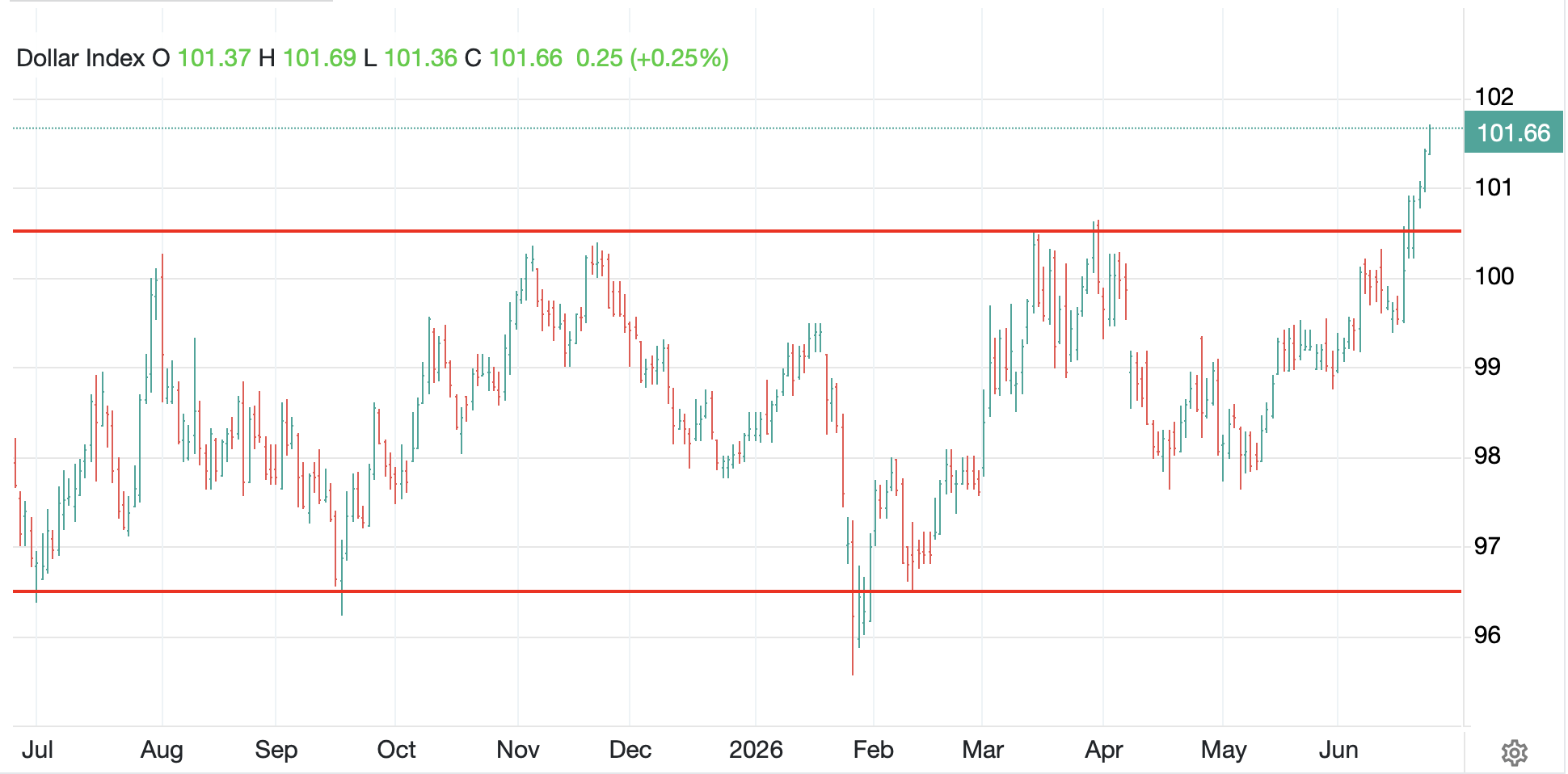
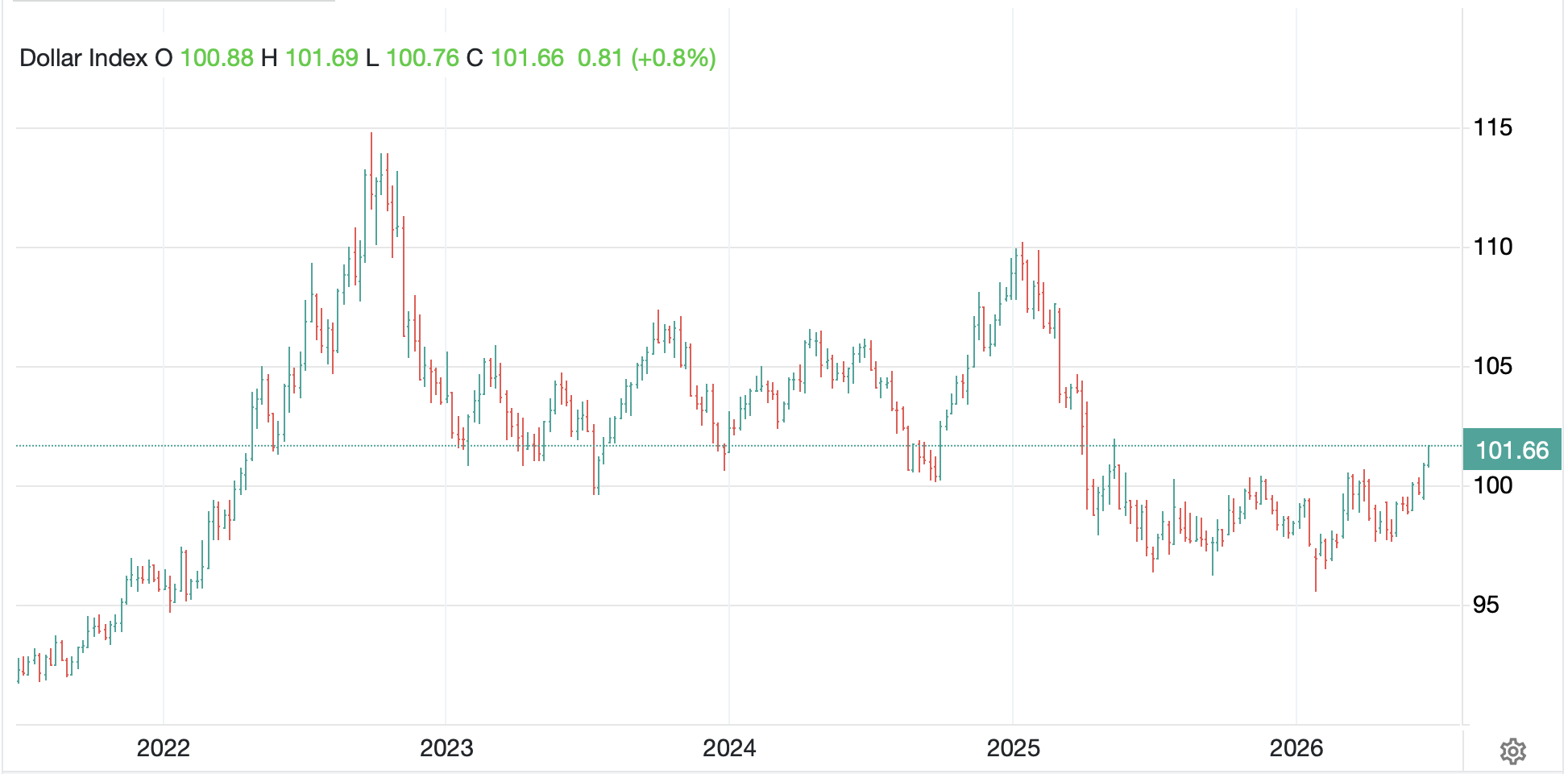
Using the DXY as proxy, the first chart is the one everybody wants you to focus on, showing the last year and how we have had a clear break above the trading range top of 100.50 and now people are creating targets for just how high it can go.

Source: tradingeconomics.com

And it certainly can go higher, as a quick step back to get some more perspective shows where the dollar has been during the past 5 years. It seems to me I could create a narrative that the dollar has been massively undervalued over the past 18 months, and this move is simply returning it closer to its longer-term fair value.  In fact, just eyeballing, it seems quite reasonable to think the 5yr average of the DXY is somewhere around 103-104 (subsequently confirmed with Grok), still a few percent higher than current levels.  Reversion to the mean anyone?

Source: tradingeconomics.com

All of this, though, begs the question, are rate hikes really on the near-term horizon?  I remain firmly in the camp that is not the case.  Fortunately, someone on my side is super smart, Bob Elliott, former hedge fund manager at Bridgewater.

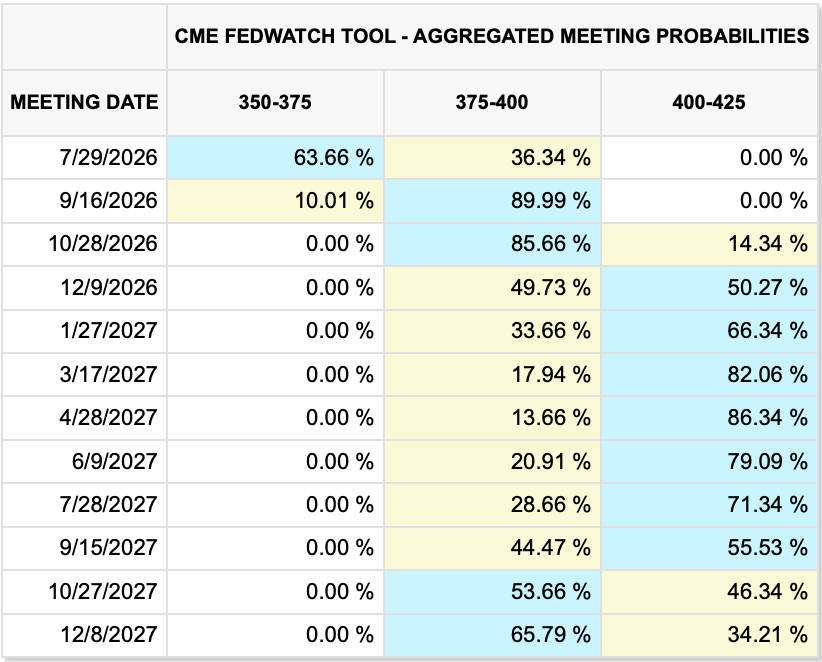
On the rate hike front, the below CME probability table has barely changed from yesterday as the narrative is strong that rate hikes are coming.  

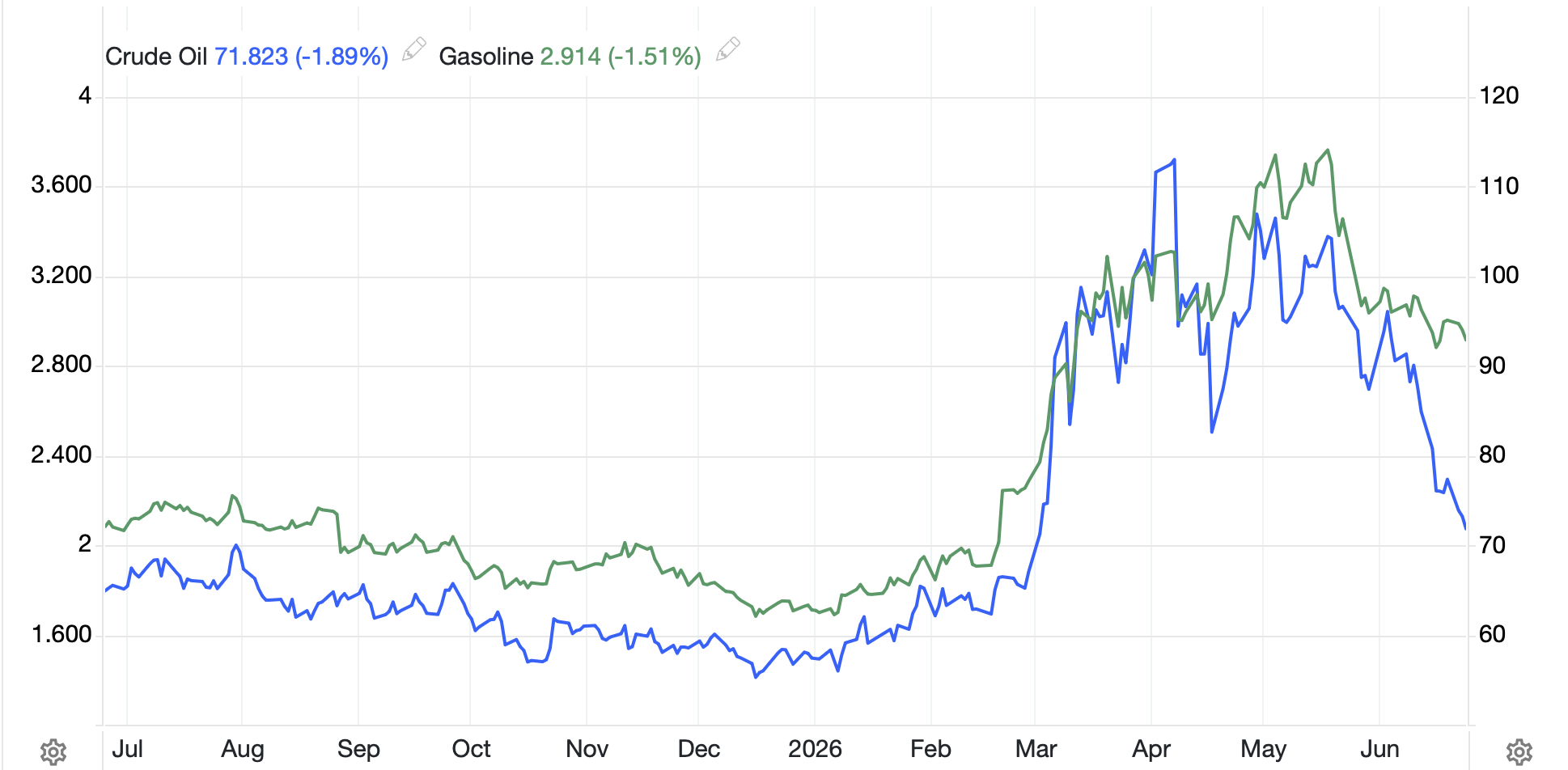
I cannot really understand why this is suddenly the belief set given the fact that the key driver of recent higher inflation data has been the price of oil, and that price continues to fall, down a further -2.0% this morning.  I understand that gasoline prices have not fallen quite as dramatically, but nothing about the chemistry has changed and I remain highly confident that those prices will be falling as well, catching down to oil.

Source: tradingeconomics.com

So, I remain confused as to why everybody seems to believe the Fed, which despite a new Chair remains the same institution that observed inflation run higher for years during Covid and calling it transitory, has become the reincarnation of the Bundesbank.  In fact, the only rationale I see is that other than Waller, Warsh and Bowman, who were all appointed by Trump, everybody else in that room has TDS and is terrified that things will work out such that by the time the election rolls around, the economy is ticking over nicely with inflation a historical issue.  And frankly, I think most of them do share that affliction.

But other than Powell, and Cook to some extent, none of them have really felt the force of the critiques that come with upsetting President Trump, and frankly he didn’t care about Cook per se, she was just a convenient target to get ousted so he could put his man in there.  And in fairness, Cook is a massive dove, and should agree with Trump on this policy, but I’m sure she doesn’t because…Trump.  I am confident none of them signed up for being in that spotlight.

Apparently, BOA is calling for 3 rate hikes this year in the final four meetings.  I think that’s nuts, but futures are pricing a 2/3 chance of a hike at the end of July, which I also think is nuts.

The recent hiccup in stocks, and the steadier downturn in commodities has been blamed on dollar strength which is being driven by expectations of rate hikes coming soon.  While I like the dollar in the long-term, that is because I believe investment flows into the US will drive it, not financial arbitrage flows.  As things evolve, I expect the market to understand the Fed will not be hiking rates and narratives will need to find a new bogeyman.

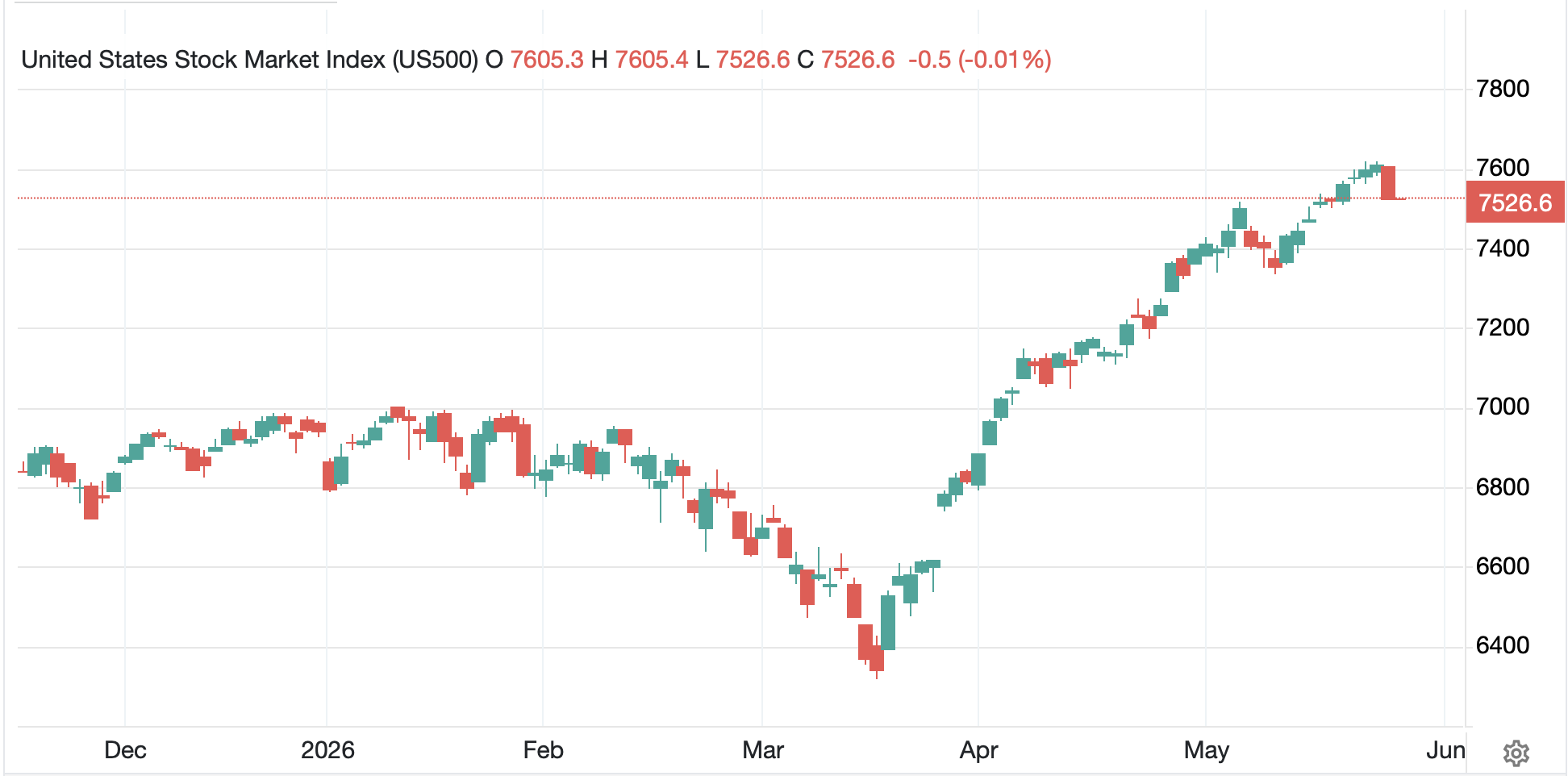
Ok, let’s tour markets quickly.  Yesterday’s equity market selloff in the US, following the tech selloff in Asia closed well off the lows and futures this morning are pointing slightly higher.  Asia was mixed overnight with Korea (+3.3%) rebounding sharply although there was weakness in Japan (-0.9%), Taiwan (-2.25%), Indonesia (-3.6%) and the Philippines (-2.2%).  But on the flip side, China (+0.5%), HK (+0.3%) and India (+1.0%) all followed Korea while other regional exchanges had much more limited movement.  It appears that people are trying to figure out what to do for now.

In Europe, Germany (-1.0%) is the laggard after Germany cancelled its plans for a new warship and Rheinmetall, the company set to win biggest there, got crushed.  But elsewhere +/-0.3% or less is the norm with little new information as traders await the next shoe to drop.

In the bond market, interest is low as 10-year Treasury yields continue to track around the 4.5% level and movement has been 1bp or so lower across all of Europe.  Nothing to see here for now.  Just wait until views start to change on rate hikes though!

Metals markets continue to get hammered with gold (-1.7%), silver (-2.9%) and copper (-1.6%) all still falling as the opening narrative about higher rates and a stronger dollar play out.  The thing is, I think the fundamentals remain positive for metals markets as there continues to be central bank demand for gold as well as industrial interest in silver and copper and long-term shortages of supply.  But right now, none of that matters.

Finally, looking beyond the DXY, it is no surprise the euro (-0.35%) and pound (-0.35%) are lower given the DXY’s continued rise, but the yen (-0.1% and at a new low (dollar high) for the move) continues to slide and there is weakness pretty much across the board in both the G10 and EMG blocs.  KRW (-1.0%) is today’s laggard while INR (+0.2%) is the lone currency holding its own.  This continues to be a dollar focused story so when the rates story changes, so will the dollar.

On the data front, we see New Home Sales (exp 640K) and then EIA Oil inventories with yet another large draw expected.  And that’s it for today.  As long as this rate hike narrative remains primary, look for weaker risk appetite and a strong dollar.  But I think it is a short-term phenomenon.

Good luck

Adf

There’ll Be Chagrin

Since April, the story has been
The stock market’s yang with no yin
But yesterday’s fall
Reminds one and all
Be wary or there’ll be chagrin

Since the beginning of April, as you can see in the below chart of the S&P 500, stocks have risen sharply (~18%) as up days outnumbered down days 33 to 12, including yesterday’s drop.  That’s a pretty good definition of a raging bull market.

Source: tradingeconomics.com

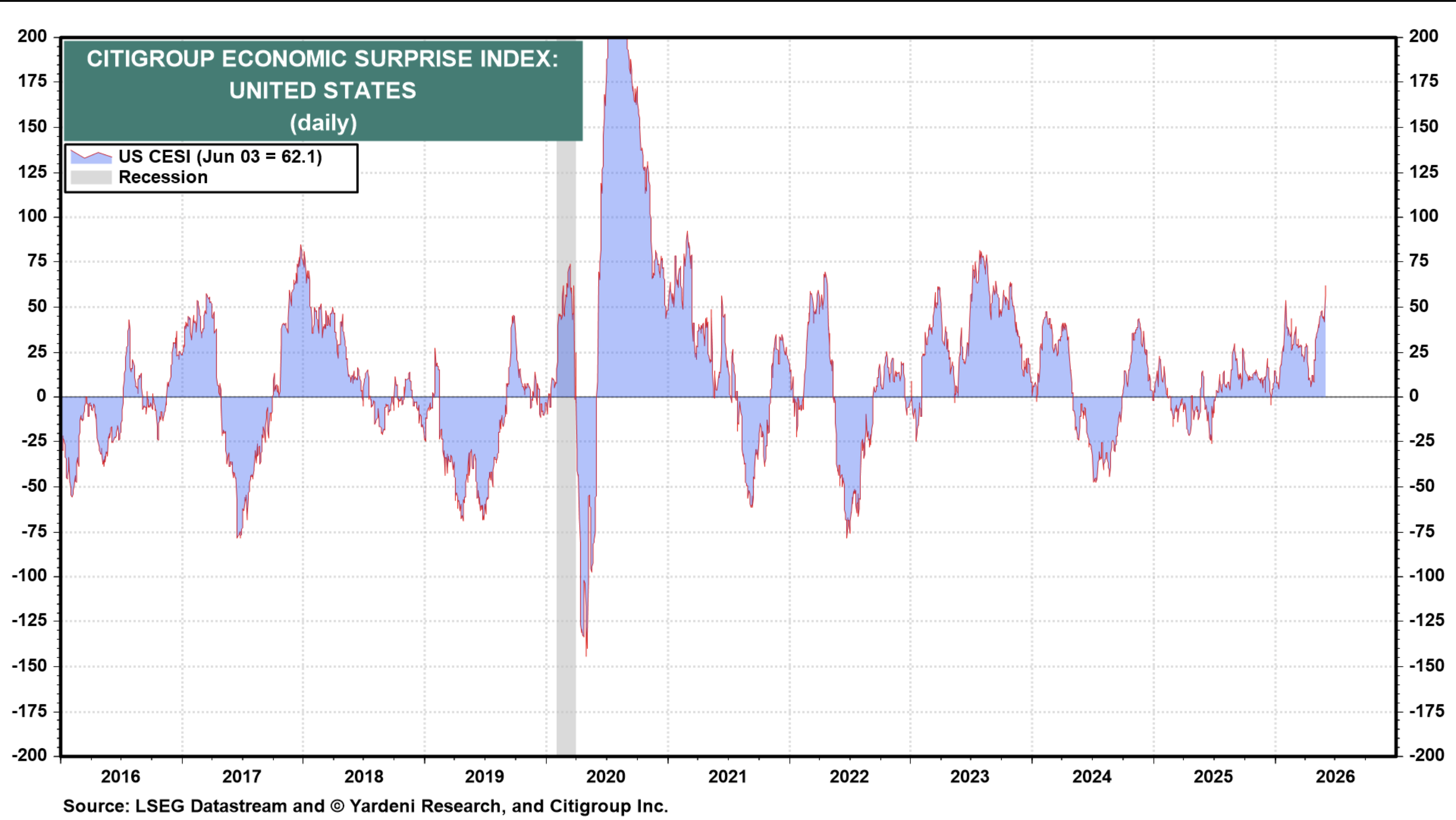
Here’s the thing; nothing really changed yesterday.  Certainly, there has been no change in the status with the Iran conflict, and therefore no change in the prospects for oil prices going forward.  If anything, the data we have been getting has been demonstrating that the US economy is performing better than expected with yesterday’s ISM and Factory Orders data stronger than forecast as was the ADP Employment Report.  If you add that to the JOLTs data from Tuesday, it appears that the overall jobs situation in the US is diverging from the narrative that AI is going to take all the jobs and there is nothing left for people to do.  In fact, a look at the Citi Surprise Index, designed to show the difference between actual economic releases and the forecasts ahead of those releases shows it has risen to its highest level since mid-2023 as per the below chart.

This is a strong signal that the economy, despite a lot of negative talk, is doing pretty well.  Of course, by now we have all learned that the stock market and the economy are very different things.  While historically, the relationship between equity markets and the economy was clearer, with equity markets a reasonable estimator of future economic activities, with somewhere between a 6 month and 1 year lag, ever since the GFC and the financialization of the economy, that relationship has lost much of its luster.  Rather, akin to my discussion of the yen being dependent on capital flows, not economic activity, that is also the story of stocks right now.

This brings us to the story that really seems to be percolating around the market, and that is the imminent IPO’s of SpaceX, Anthropic and OpenAI, as well as Google’s $80 billion share sale.  For the last 30ish years, between share repurchases by companies and the growth of Private Equity which gobbled up public companies, the number of publicly listed company equities has been shrinking, with the number falling roughly in half during that period.  According to Grok, at the end of 2025 there were just 3,657 domestic companies listed on US exchanges, not even enough to fill out the Russell 5000!  With that in mind, and remembering the laws of supply and demand, it ought not be a surprise that prices rose while supply fell.

But is that getting set to change?  While headline companies like SpaceX will get all the press, it seems likely that PE firms are going to be looking to IPO many of their holdings given current overall valuations.  Remember, many of these companies were bought during the era of ZIRP, so debt financing made lots of sense, but once the Fed tightened policy, it has been a problem.  Retail investors have been hoovering up equities for a while now, and I suspect we are going to see a lot more equities come available to meet that demand.  In fact, this is the best story I have heard about what can halt the rally.

But this can also highlight the difference between the economy and the stock market.  Consider the ramifications of the mega names issuing stock and using the funding to continue to build out the AI infrastructure including data centers, power production, turbines, semiconductor fabs, etc., that is all going to result in significant economic activity as people get hired to do the work and all the benefits that accrue from investment lead to real growth in GDP.  We could easily see equity markets stall, or stumble while the economy powers ahead.  Something to consider for the medium-term view here.

But in the short-term, let’s turn to markets and see how yesterday’s US declines played out overnight.  Asia had a generally miserable session with every major and most other regional exchanges sliding.  This included Tokyo (-1.4%), HK (-1.5%), China (-0.7%), Korea (1.8%), Taiwan (-1.7%) and Australia (-1.1%).  And the smaller markets were no better as India (0.0%) was the top performer.  In Europe, though, the picture is not so dire as only the UK (-0.9%) is under real pressure with the continent (France +0.6%, Germany +0.35% and Spain +0.25%) all managing small gains.  Perhaps the driver here has been inflation data which showed that it has not risen as fast as feared and therefore there is a bit less concern about more aggressive ECB tightening.  As to US futures, they are mixed this morning with NASDAQ (-1.35%) falling sharply on poor Broadcomm earnings although the DJIA (+0.7%) are rebounding from yesterday’s losses as investors rotate a bit from tech to industrials while oil prices have slipped aiding things.

Speaking of oil (-2.3%), it appears to be responding to comments that the US will not resume an all-out war absent the death of US troops.  At least that’s one rationale, although the idea of the price heading back to its recent average is viable as well.  However, this has helped metals markets (Au +1.25%, Ag +1.8%, Cu +0.5%) as that relationship remains quite solid.

In the bond market, yields are also responding as would be expected with Treasuries (-3bps) leading the way as European sovereign yields all slip between -1bp and -2bps.

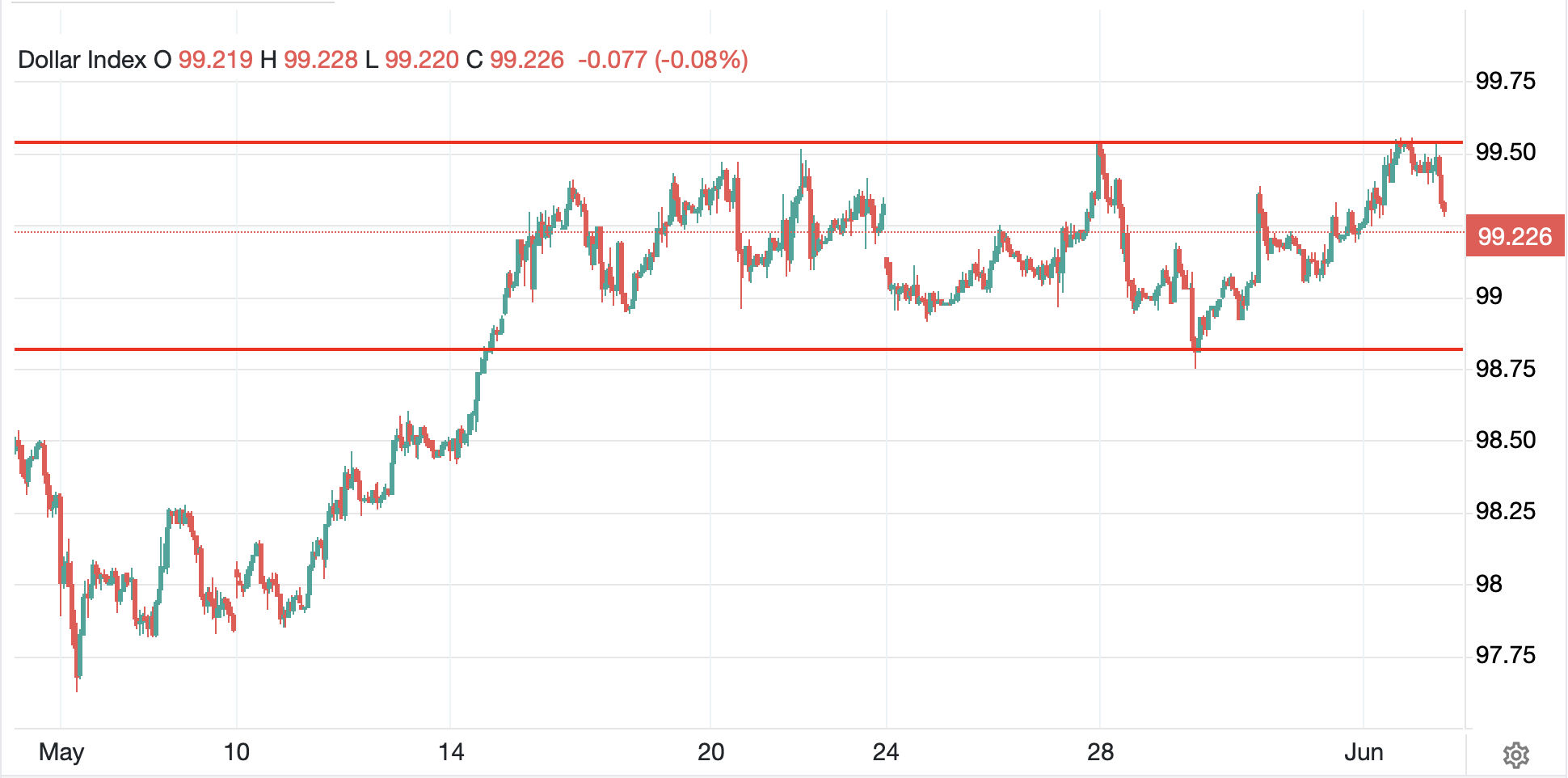
Finally, the dollar is giving up some of its recent gains but as you can see in the chart below for the DXY, during the past 3 weeks, the index has traded between 98.85 and 99.55, a very tight range and indicative of the general lack of movement in the dollar.

Source: tradingeconomics.com

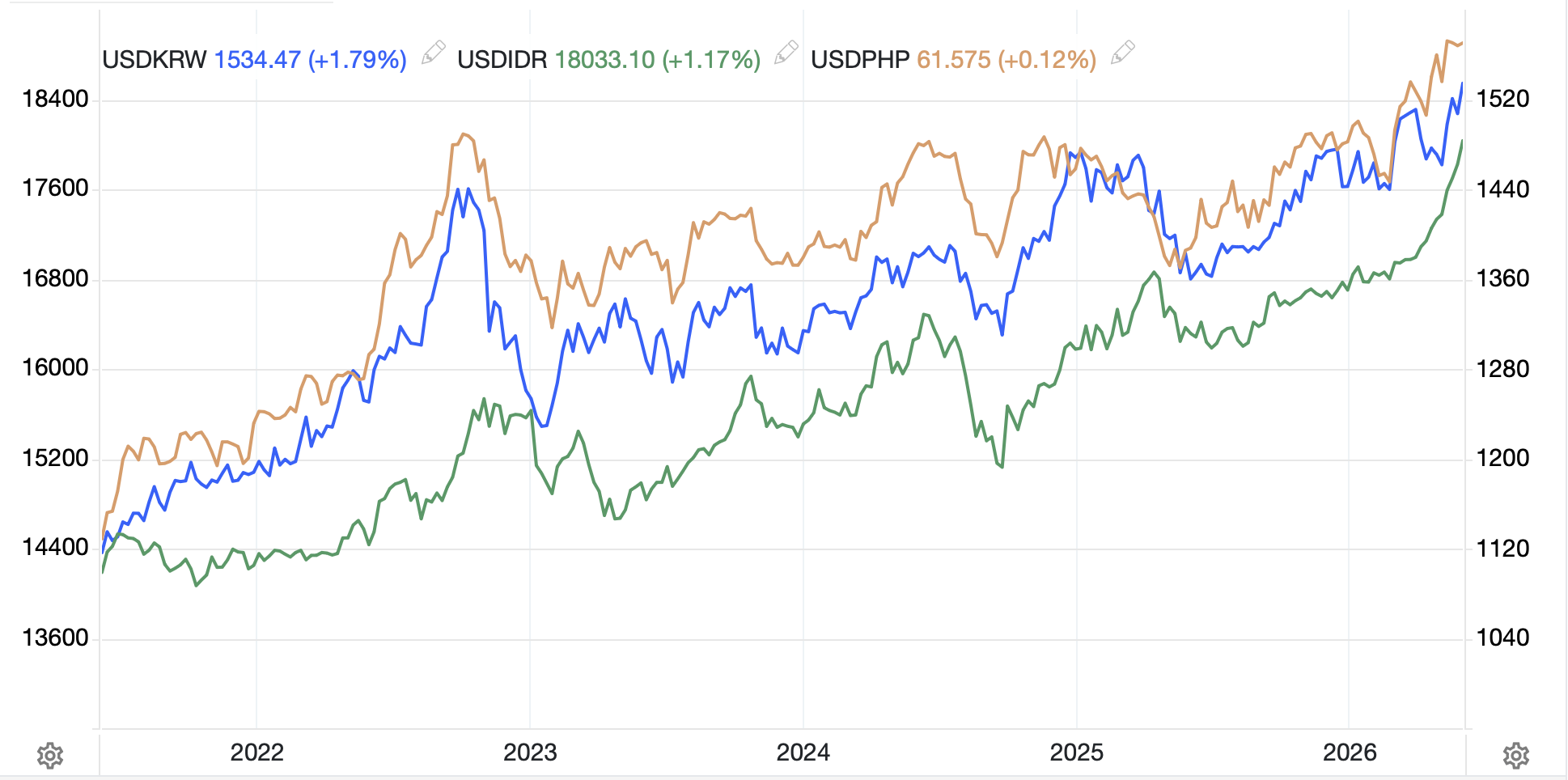
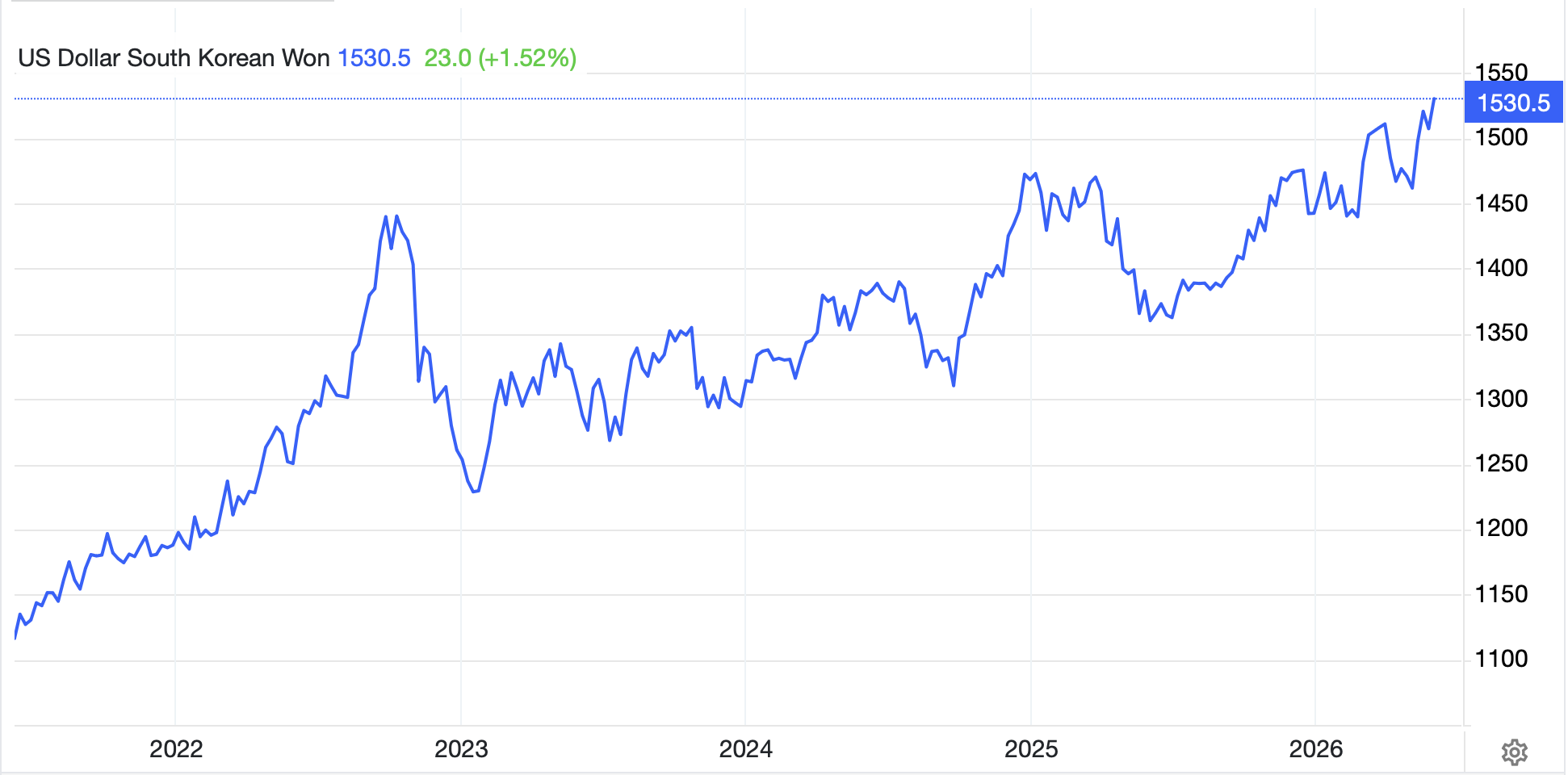
However, that is the dollar writ large vs. major currencies.  Against several Asian currencies, the story is not the same.  The below chart shows the Korean won, Indonesian rupiah and Philippine peso, all of which are trading at their lowest levels since the GFC as the pressure from higher oil prices and reduced supplies has really impacted their economies and currencies by extension.

Source: tradingeconomics.com

As to the JPY, it managed to trade through 160.00 yesterday, but only just, and this morning sits just below that level with no sign of the BOJ/MOF.  The Japan story remains the same, but the changes required there will be politically fraught.  However, for the smaller Asian nations, much is out of their hands, and my sense is that while they will all seek to mitigate the pace of decline, there is very little they can do to stop it on their own.  That will require the Iran situation to end and oil prices to head back lower with supplies rebuilding.

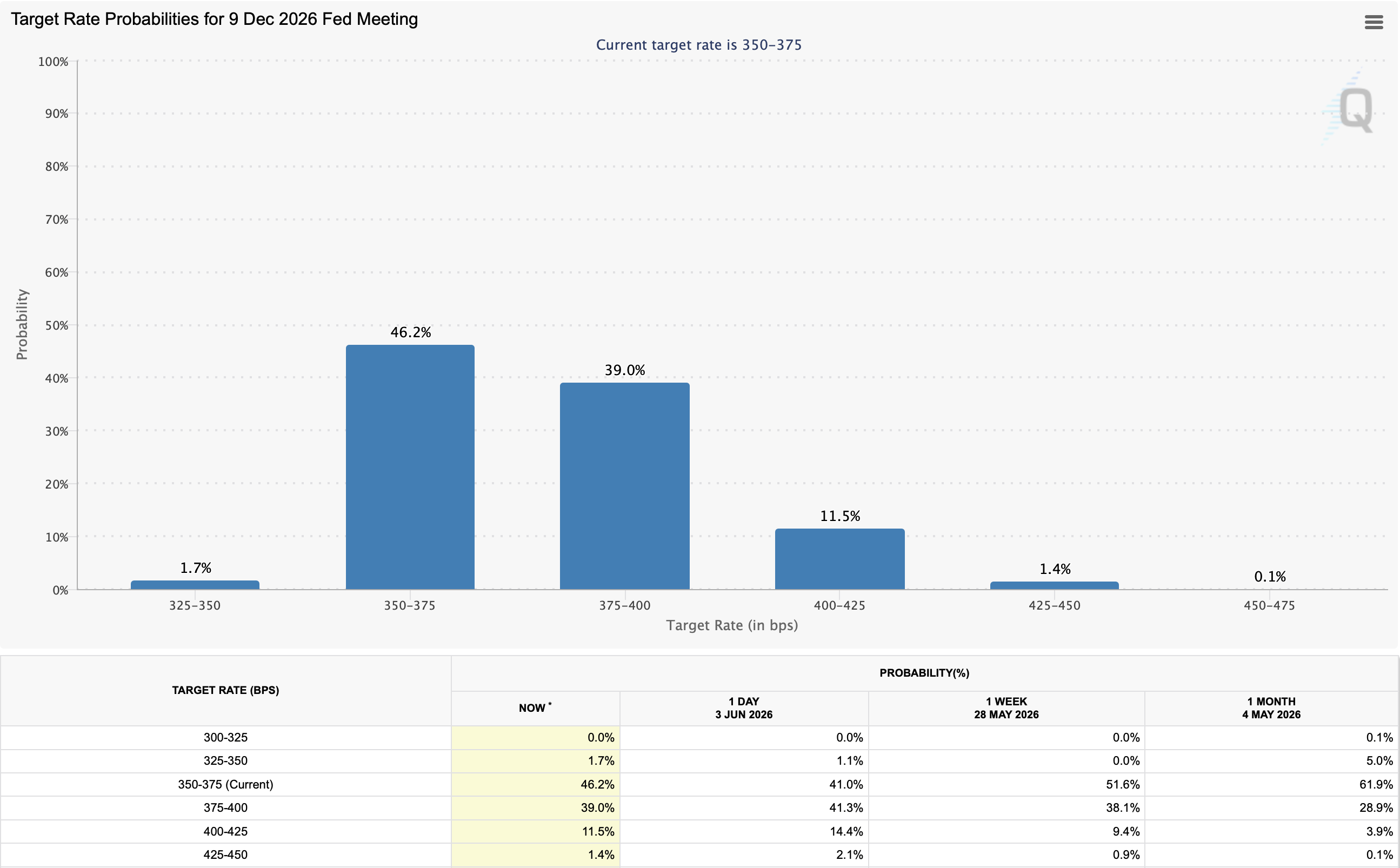
On the data front, this morning brings the weekly Initial (exp 213K) and Continuing (1780K) Claims data as well as Nonfarm Productivity (0.5%) and Unit Labor Costs (2.5%.  Too, we hear from several more Fed speakers but given all the other things that are ongoing, their words don’t seem to move markets.  For instance, yesterday Dallas Fed president Logan said she thought inflation pressures indicated rates may need to rise.  But she is a known hawk, one of the hawkish dissents at the last meeting, and thus this is not new news.  Below is the CME’s futures probability page for the December meeting which shows a slightly more than 50% chance of a hike by then.  However, if you look at the table at the bottom, you can see that the probability has been creeping higher in the past month, although that is just as likely on the back of the better data than any Fedspeak.  Certainly, next week’s first Warsh chaired meeting will get a great deal of attention.

And that’s really it for the day.  In the FX market, as well as bonds frankly, I don’t expect anything of note.  Oil looks to be drifting lower while metals drift higher and the real wild card is equities, which have been showing inordinate strength.  My thoughts above reflect my views for potential later in the year, not today.

Good luck

Adf

One Sixty

The asymptote nears
Will they act at One Sixty?
Can they afford to?

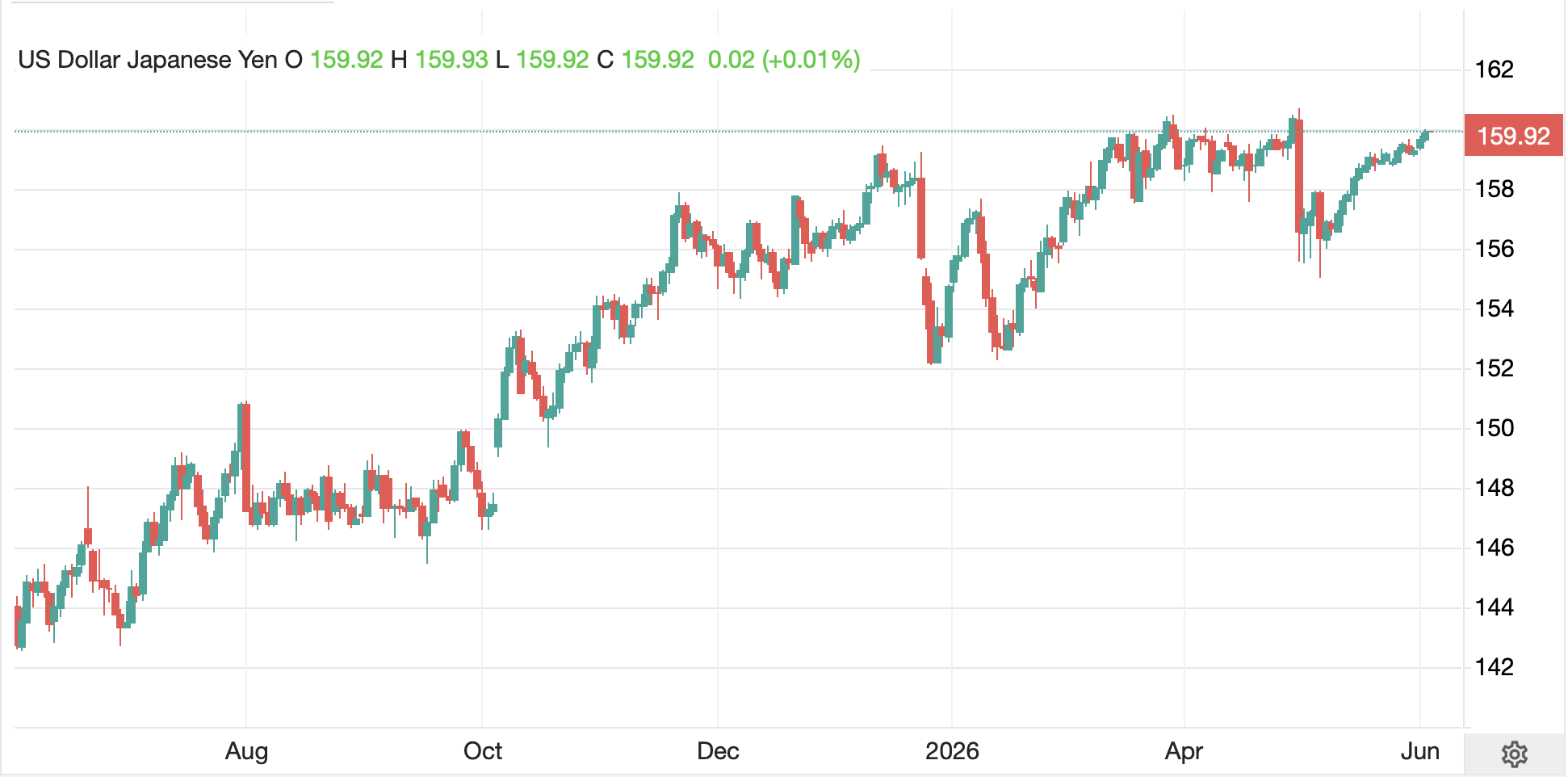
Yesterday saw the yen edge ever closer to the 160 level, the point at which the MOF/BOJ acted in April.  Frankly, looking at the chart, it reminds me of an asymptotic limit from calculus, but the one thing we know is there is no natural limit, only whatever artificial one is imposed (or tried to be imposed) by the Japanese government.

Source: tradingeconomics.com

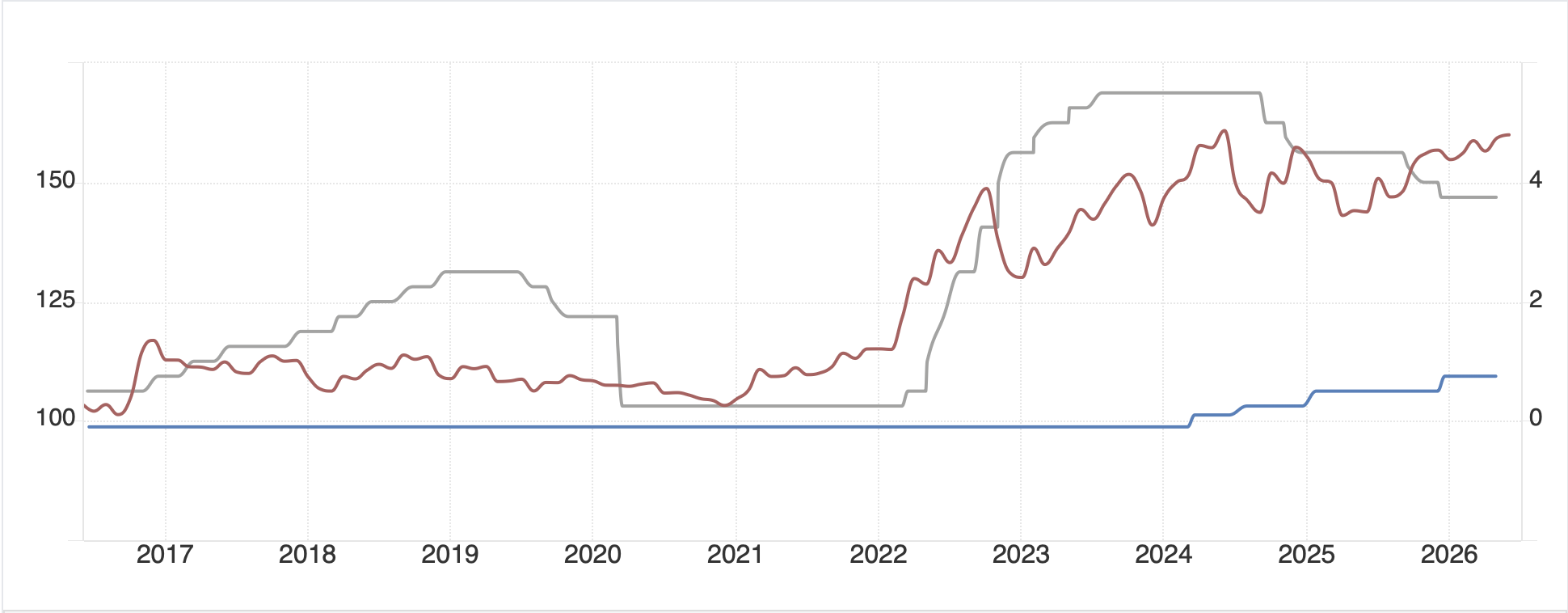
The market continues to price a high probability, ~86% according to the OIS market, of a 25bp hike by the BOJ next week, and I’m confident they will do that.  But to me, the question is, will it matter to the FX markets?  Here’s the thing about FX, typically there are two separate, but related, drivers of the relative value of one currency vs. another.  The most common discussion is about short-term interest rate differentials, typically proxied by central bank base rates.  Below is a chart of the past ten years of data for Fed funds (grey line), BOJ base rate (blue line) and USDJPY (brown line).

Source: tradingeconomics.com

It is abundantly clear that there is a strong relationship here, as US rates shot higher in the post-Covid inflation bout and USDJPY shot higher as well.  Now, since the Fed started cutting rates back in September 2024, while Japanese rates have edged higher over the same time frame, it would be reasonable to assume that USDJPY should retreat somewhat.  However, as you can see in the first chart, that is just not happening.  In fact, the pressures are the other way, with far more weakness than strength.

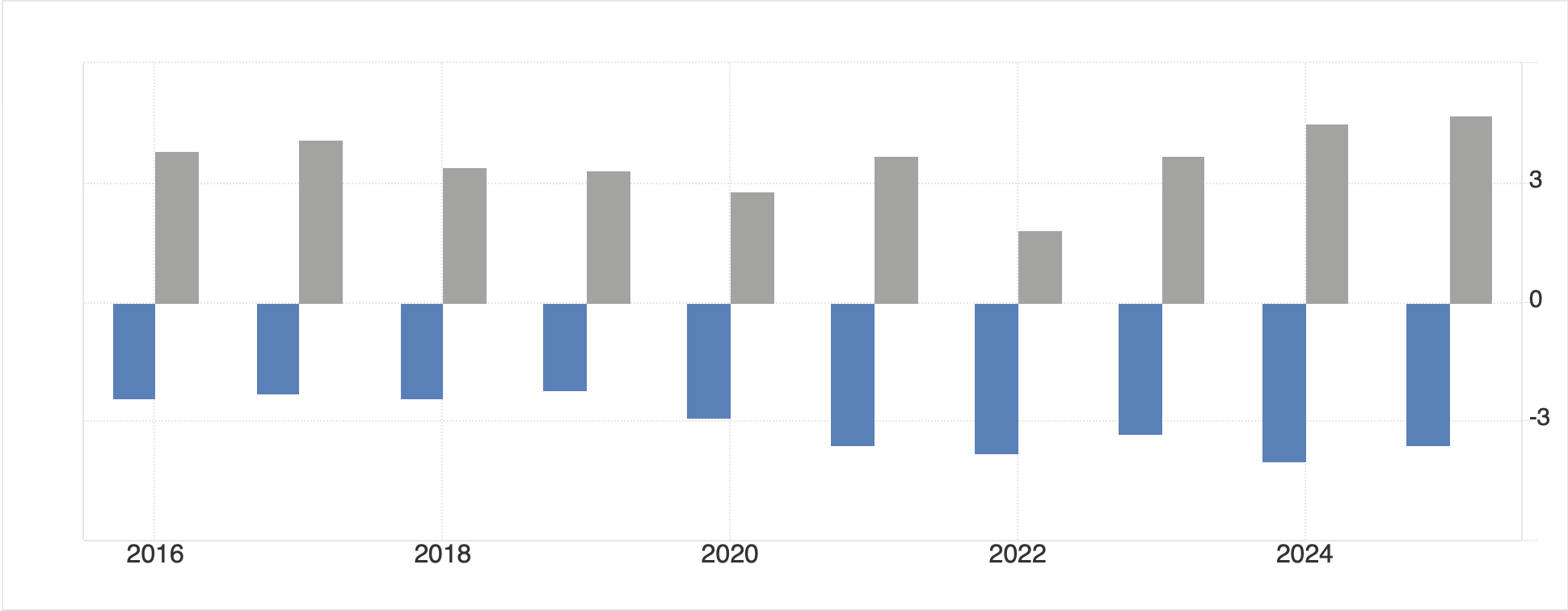
Why, one might ask, is this the case?  This takes us to the other major factor in FX rates, relative capital flows.  Nations that see substantial inflows in capital will typically see their currencies appreciate.  Now, ask yourself, which nation sees the biggest inflows of capital in the world?  Yes, the US, as the capital account surplus is the mirror image of the massive current account deficit that we run.  In fact, if you look at the below chart, it shows the relative current accounts of Japan (grey bars) and the US (blue bars) in percentage of GDP which most recently showed -3.6% for the US and +4.7% for Japan.

Source: tradingeconomics.com

Now, let’s do the math.  US GDP is ~$28.8 trillion while Japanese GDP is ~$4.4 trillion.  3.6% of $28.8 trillion = ~$1.037 trillion of capital inflows.  4.7% of $4.4 trillion = $202 billion of capital outflows.  Of course, we know that everybody in the world is piling into US technology stocks, and that is where the capital is mostly flowing, but in order to do so, they are buying USD.  This is true of Japanese investors as well as others around the world.  

There is a narrative that is developing that claims as the Japanese raise interest rates, the massive, short yen positions that exist to fund many speculative trades will unwind, and with that, the yen will strengthen dramatically as well as we will see many other markets sell off sharply as those positions unwind.  But the NASDAQ is up 21% YTD and 40% in the past year.  If you are an investor and you are funding a speculative position at 0.75% annually that rises to 1.00% while you are returning 40% on the other side, do you really care?

To my eye, for the yen to change course, intervention is irrelevant, and so is a 25bp rate hike.  We need to see a wholesale change in the combination of Japanese fiscal and monetary policies as well as changes in those policies in the US.  Historically, a tight monetary and loose fiscal policy combination will strengthen a currency (something that the US currently has), but can Japan afford to tighten monetary policy that much?  My money is on no, and while 25bps seems pretty certain next week, I would not be looking for USDJPY fall very far, if at all.  And remember, the market is pricing a 50% chance of a Fed hike by the end of the year.  Don’t be taken in by this story in my view.

Away from this issue, it is difficult to find other critical news.  Yes, there was another skirmish in Iran straining the concept of a ceasefire, but all-out war has not resumed.  The elections in California and LA will take several weeks to determine who will be on the ballot in November, which, when you think about it, sums up the incompetence of California governance writ large.  

So, oil is higher along with the dollar and yields, but so are stocks, while metals slip.  Let’s look at the overnight activity.  Another set of equity records in the US was followed in Asia by broad based strength as Tokyo (+2.5%), China (+0.5%), Korea (+0.2%) and Taiwan (+2.0%) all continued to climb. Both HK (-1.6%) and India (-0.4%) were not as robust with the former seeing profit taking after a few strong sessions while the latter felt pressure from those rising oil prices.  One outlier here was Indonesia (-4.5%) which suffered after weaker than expected trade data, higher than expected inflation data, and a weakening rupiah which set another record low (dollar high), touching 18,000.

European bourses, meanwhile, are mostly under pressure after President Trump has devised a new way to impose tariffs on nations that allow “forced labor” which is defined as “all work or service which is exacted from any person under the menace of any penalty for its nonperformance and for which the worker does not offer himself voluntarily.”  One must give the president props for his continuous efforts to impose tariffs, if nothing else.  At any rate, Germany (-0.9%) is leading the way lower, followed by Italy (-0.3%), France (-0.2%) and the UK (-0.2%) although Spain (+0.5%) is bucking that trend on the strength of the earnings for Inditex (Zara clothing parent) which is one of the largest companies in the nation.  US futures, at this hour (6:40) are mixed.

In the bond market, yields are rising again on the back of the oil price rise with Treasury yields (+4bps) gaining alongside the entire European sovereign market, all of which have risen a similar amount.  Last night, JGB yields also rose 6bps, as they respond to the oil market as well as pending rate hikes by the BOJ.

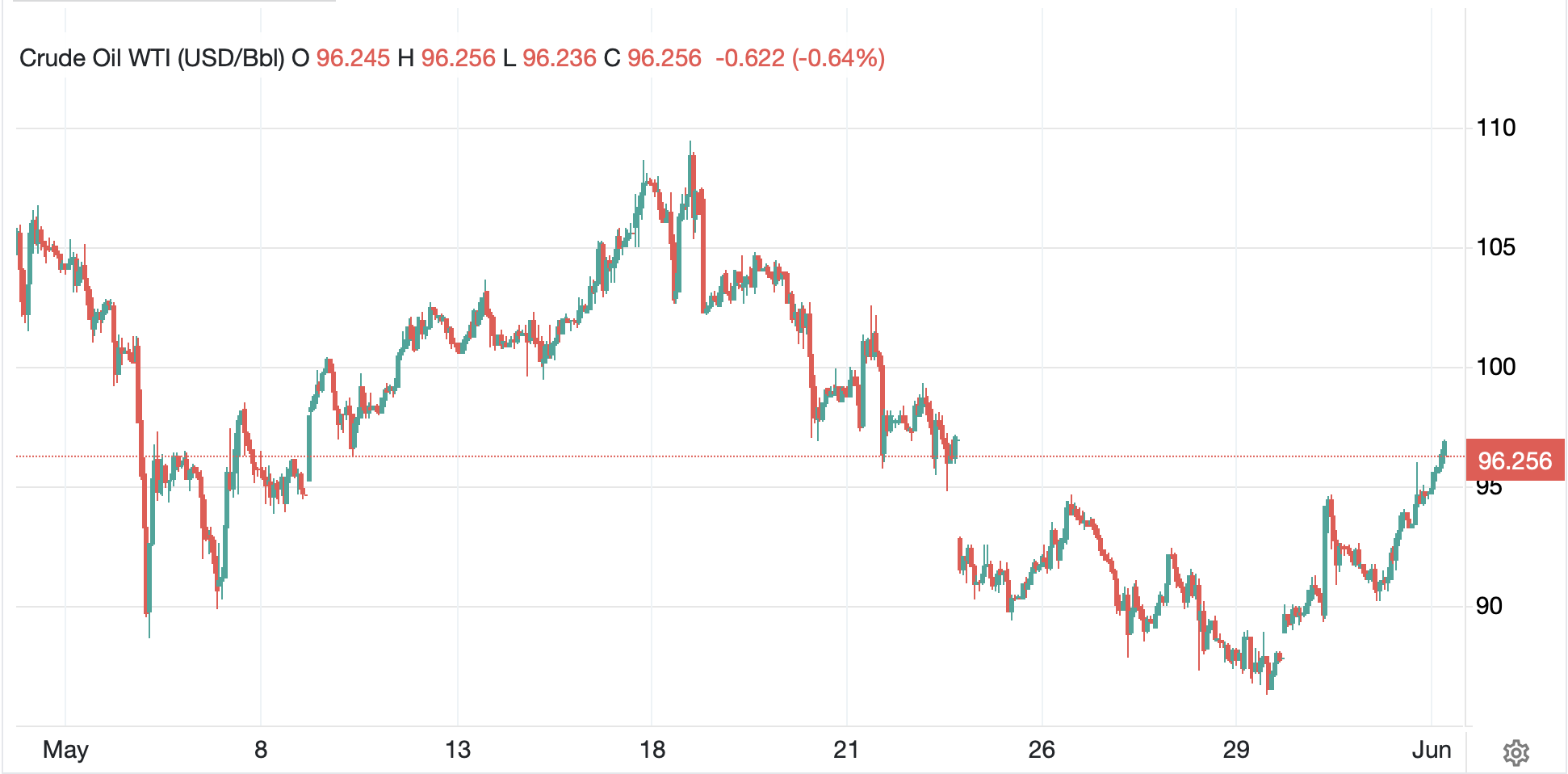
In the commodity market, if you think back to late May, you may recall an announcement that a deal with Iran was close which prompted a gap lower in oil prices as you can see in the chart below.  Well, that gap has now been filled.

Source: tradingeconomics.com

Just as nature abhors a vacuum, markets abhor a gap and seek to fill it whenever possible.  My take here, though, is now that the gap is filled, there is less reason to see oil rally much further and a consolidation before a slow decline is in the cards.  As to metals markets, gold (-0.8%), silver (-1.2%) and copper (-1.1%) are all softer on the day, with their negative correlation to oil intact.

Finally, the dollar is firmer this morning, keeping in line with its recent relationship with other markets.  However, the movement remains relatively muted with most G10 currencies softer by -0.2% or so as only SEK (-0.6%) and NOK (+0.1%) really buck that trend.  NOK is clearly benefitting from the oil price rise while SEK seems to be suffering from a slightly higher beta to the broad dollar move.  In the EMG bloc, KRW (-0.9%) is the laggard as it continues under pressure and trading to its lowest levels (highest dollar) since 2009.

Source: tradingeconomics.com

But otherwise, most of these currencies are slipping a similar amount to the G10 bloc, on the order of -0.2% or so.

On the data front, this morning brings ISM Services (exp 53.8) as well as Factory Orders (4.6%, 0.8% ex-Transport) and then the EIA crude oil inventories with another sizable draw anticipated.  At 2:00, the Fed’s Beige Book is released which should make for some interesting reading.  Yesterday’s JOLTs data was surprising in that it showed a significant jump in job openings, 700K more than expected which does not portray a weakening labor market.

Overall, equity markets seem to be disconnected from the impact of oil prices, something that very few analysts would have forecast in February.  But the dollar remains closely linked to those prices for now.  As we all sit here, waiting for the next headline, I cannot help but look at the US data and consider that the economy continues to tick over pretty well.  Ultimately, I believe that bodes well for the dollar over time, or at least until some other major economy shows it can perform well.

Good luck

Adf

No Black Swan

For all of the angst that Iran
Has ended the talks and moved on
The market for oil
Has come off the boil
As risk takers see no black swan

So, stocks keep on making new highs
And it cannot be a surprise
That bond yields have slipped
While in today’s script
Elections will garner all eyes

Once again, I am having a hard time reconciling the narrative and the price action.  Yesterday saw a sharp rally in oil as the talks between the US and whoever is representing Iran apparently collapsed.  Yet, as you can see from the below chart, while that was worth nearly $5/bbl early in yesterday’s session, those gains dissipated over time and this morning, oil (-1.2%) continues that slide.

Source: tradingeconomics.com

One thing I saw on X this morning claimed Iran was done talking, had received a nuclear bomb from a third party (Pakistan? North Korea?) and was going to detonate it somewhere.  Another was that the talks are still ongoing.  I do find it interesting that so many are willing to take statements from the Iranian news agency, TASNIM, a body that has lied repeatedly for 47 years, and assume their claims are gospel.  Propaganda is always an ongoing project on both sides (in truth from every government everywhere) and thus every claim must be seen for what it is, speaking to a specific audience to achieve a response, not an unbiased description of reality.  Thus, it seems many folks see what they want to see to confirm their prior beliefs.  I come back to the market as the most unbiased arbiter, and it continues to point to an end to the conflict on a relatively short timeline.

Which takes us to the other story today, US primary elections, notably in California where there is a gubernatorial primary and a mayoral one in LA that has garnered the most attention based on the seeming outstanding performance of former reality-TV star (?) Spencer Pratt running against the incumbent Karen Bass.  This race seems like it may be quite important nationally as it would offer the possibility that the deepest blue of cities may finally have had enough incompetence in the mayor’s office and wants to change directions, at least a little bit.  Of course, NY just elected an incompetent mayor, as did Seattle and Chicago before them, so maybe the people in these cities like the situation.  I’m hopeful that is not the case.

But otherwise, it is hard to get too excited about much this morning.  equity markets in the US made yet another set of new highs yesterday across the major indices as no matter the news, it appears there is a bullish spin.  So, let’s turn to markets this morning.  Asian equity markets were mixed overnight with Tokyo (-0.3%) slipping slightly although HK (+2.5%) and China (+1.5%) both rallied nicely on the back of the US tech rally.  Net, there were far more winners in the region (Korea, India, Taiwan, Philippines, Thailand, Singapore, Indonesia), than laggards (Australia, New Zealand, Malaysia) with the laggards barely slipping at all.  So, despite all the angst over Asian nations running out of oil and oil products, equity investors are all in there!

In Europe, it’s happy days as well as per the below Bloomberg screenshot.

This is despite Eurozone inflation rising to 3.2%, its highest level since September 2023, and, as per the below chart, certainly looking like it is beginning to trend higher on the back of 3+ months of higher oil prices feeding through the entire economy.

Source: tradingeconomics.com

Of course, given Eurozone GDP is indistinguishable from zero (see below chart), and has been for 3 years, it is fair to wonder if this is setting up to be a particularly egregious central banking error by Madame Lagarde.  

Source: tradingeconomics.com

Too, while short-term inflation expectations have unsurprisingly risen, a look at the 5-year result shows limited concern by consumers.  As an aside, there is good reason to believe that inflation expectations are irrelevant in future inflation readings, at least according to the academic literature, but it is a driving force in current central banking models, so needs to be considered.

In the end, though, the ECB is going to hike rates next week, on that you can depend, and if when economic activity declines, they will blame Putin or Trump or Elon or anything but their own failed policies.

As to US futures at this hour (7:10), they are modestly lower, maybe -0.2% or so across the board.

In the bond market, Treasury yields have fallen back -3bps this morning after round-tripping 5bps higher yesterday and finishing the day unchanged.  European sovereign yields are having a better day, with declines of -6bps to -7bps across the continent and JGB yields (-11bps) are really falling.  My conclusion is that investor concerns over runaway inflation simply do not exist despite the narrative pushing that story.  The ostensible crises in May apparently never arrived, at least not yet.

In the commodity market, it can be no surprise that metals prices (Au +1.0%, Ag +1.8%, Cu +1.0%) are higher this morning given the overall risk environment.  The negative correlation between metals and oil remains largely intact for now.  The interesting thing to note, though, is that despite the daily gyrations, in reality, neither oil nor the precious metals have gone anywhere in a while.  The same is not true for copper which is at new all-time highs.

Finally, the dollar is modestly softer this morning, on the order of 0.1% against its G10 counterparts with AUD (+0.3%) the best performer.  In the EMG bloc, ZAR (+0.6%) is responding to the combination of lower oil and higher gold prices and MXN (+0.4%) is also having a pretty good session, but that seems more like beta vs. the dollar than anything else.  I would be remiss if I didn’t spotlight JPY (0.0%) which continues to edge closer to the 160.00 level as per the below chart, but was also the subject of much discussion as FinMin Katayama was out explaining that, “As for foreign exchange, we continue to maintain our stance that we stand ready to take appropriate action at any time, as needed.”  However, while the market expects a 25bp rate hike in two weeks, that is already in the price.  In order to stop the yen’s slide, they will need to really change policy, something which I maintain is not in the cards for now.

Source: tradingeconomics.com

On the data front, this morning brings only the JOLTs Job Openings (exp 6.88M), essentially unchanged from last month.  Yesterday’s ISM Manufacturing data was quite solid across the board except for the employment subindex, which remains lackluster as companies expand with more automation.

I think it is fair to say nobody knows what will happen in the Iran conflict nor the timing.  While markets can be completely wrong, and forced to reprice suddenly, that is an extremely rare occurrence.  Too, the one thing on which we can count is if something hugely negative occurs, central banks around the world will step in, add liquidity and cut rates, to ameliorate the slide.  My point is, I will not bet against the market view that this will end sooner rather than later.

Good luck

Adf

Tough Call

The peace talks have yet to conclude
And yesterday, both sides pursued
A little more fighting
Despite the gaslighting
Which helped push the price up in crude

But it still remains far below
The levels where it needs to go
To foster more drilling
And help in refilling
The buffers from which barrels flow

As we start the week, oil prices have rebounded from last week’s close (as per the below chart) as progress on the peace talks remains slow, at best, and there was another series of military attacks by both sides, with each side claiming defensive maneuvers. 

Source: tradingeconomics.com

Now, I am not a military scholar, but firing missiles at another nation doesn’t sound defensive, rather I would use the word retaliatory.  And there is no way we can know who initiated what during the latest exchange, as both sides claim the other did and there is no neutral arbiter.  But my take is that there is still a way to go before this is over.  Certainly, the IRGC seems committed to the last man, at least for now, and President Trump has indicated he is in no hurry.  Personally, I am still thinking a July 4th resolution timeline.

I did, however, see an increase in the discussion about the imminent collapse of supplies and the estimates that oil prices will finally (?) head up to the $150-$200/bbl level that a number of pundits have forecast.  But looking through these X posts, they are retweeting the comments I posted on Friday from the Exxon SVP Neil Chapman.  Time will tell if they are correct and the changes in the system have not been sufficient, at least not yet, to address the reduction of available oil from the Gulf.  But so far, whatever calculations have been made regarding demand destruction and additional production elsewhere, plus the rerouting of oil away from the Strait has been sufficient to prevent the worst-case scenarios that have been painted since this began back in March.  Plus, the one thing of which I am highly confident is that going forward, the Strait of Hormuz will not be nearly as strategic as it currently seems.  Production elsewhere and pipelines will reduce its importance dramatically.

The BOJ meets
In two weeks’ time. Do rate hikes
Still matter? Tough call.

Two weeks from tomorrow, the BOJ meets to discuss monetary policy with the backdrop that the yen is essentially back to the levels seen in April just before the most recent bout of intervention.

Source: tradingeconomics.com

The swaps market is pricing in a 78% probability of a 25bp rate hike, which would take the base rate to 1.00%, still amongst the lowest in the world, but its highest level since September 1995 as you can see below in the chart from tradingview.com

Think about that for a moment, interest rates in Japan have been below 1.0% for more than 30 years.  That is an extraordinary situation.  Consider the bubble that was blown in the US by having rates that low for ‘only’ a decade following the GFC, or for an even shorter time post-Covid.  I guess we need to ask why Japanese equities never inflated the same way.  Perhaps that is the best evidence of the financialization of the US economy vs. that of Japan.  Liquidity in Japan didn’t lead to FOMO of the latest investment thesis.

Nonetheless, my take is there is a modest fear about the yen weakening much further and so the BOJ will hike rates.  Alas, since the market is already priced for that outcome, it is not clear it will do much to moderate the yen’s weakness, at least if they only go 25bps.  Now, if they hike 50bps and explain more hikes are on the way, that will matter.  The problem with that theory is that the latest CPI reading in Japan was 1.4%, well below their 2.0% target, and it has been that way since January as per the below chart.  It seems it could be tricky for Ueda-san to explain a very aggressive rate hike with the current inflation reading.

Source: tradingeconomics.com

Ok, I think those are the stories of note so let’s review market activity overnight.  let’s finish with commodities where oil’s gains (+3.6%) are not having the typical response in the metals markets with gold ‘only’ lower by -0.8% and silver (+0.6%) and copper (+2.5%) higher.  I don’t believe we are at the point where these markets are truly independent, but perhaps some of this negative correlation has been overdone.

In the FX markets, the dollar is modestly higher vs. most of its G10 counterparts with NZD (-0.6%) the laggard, but the rest of the group mostly softer by between -0.1% and -0.2%.  In other words, not too significant, and this includes the yen (-0.1%).  I believe all the yen talk is based on the idea that the BOJ meeting is close enough that it is a topic of conversation in a dull market.  Now, if the yen were to weaken dramatically ahead of the meeting, that would certainly change some views.  As to the EMG bloc, it is a bit more mixed although movement, overall, remains muted.  BRL (+0.4%) is the biggest winner with no particular newsworthy events to note, but when looking at the chart, it really hasn’t done too much since the middle of last month when the news about Lula’s competition broke with Bolsonaro fils suddenly less likely to compete for president.

Source: tradingeconomics.com

But otherwise, it is a mix of gainers and laggards on the order of 0.1% to 0.3% in either direction.

In the bond market, yields have ticked higher everywhere following oil’s rebound with Treasury yields higher by 2bps and most of Europe higher by 4bps.  US yields continue to drive the global situation, certainly directionally, if not in magnitude.  

Finally, equity markets appear quite sanguine regarding the oil price rise as Asian markets saw a mix of gainers (Tokyo +0.9%, HK +0.9%, Korea +3.7%! Taiwan +1.4%, Singapore +1.0%) and laggards (China -1.0%, India -0.7%) although clearly far more positive than negative.  Meanwhile, in Europe, the picture is mixed but with much less movement as Germany (+0.4%) and France (+0.1%) edge higher while Spain (-0.2%) and the UK (-0.2%) both slipped.  The news here was the PMI data which largely declined from last month, but not quite as far as forecast.  At this hour (7:30) US futures are all pointing higher between 0.2% and 0.6%.

On the data front, as it is the beginning of a new month, we get plenty including the NFP report on Friday.

TodayISM Manufacturing53.0
 ISM Prices Paid85.5
TuesdayJOLTs Job Openings6.82M
WednesdayADP Employment110K
 ISM Services53.7
 Factory Orders4.6%
 -ex Transport0.8%
ThursdayInitial Claims213K
 Continuing Claims1790K
 Nonfarm Productivity0.8%
 Unit Labor Costs2.3%
FridayNonfarm Payrolls85K
 Private Payrolls78K
 Manufacturing Payrolls0K
 Unemployment Rate4.3%
 Average Hourly Earnings0.3% (3.4% Y/Y)
 Average Weekly Hours34.3
 Participation Rate61.7%
 Consumer Credit$16.0B

Source: tradingeconomics.com

The labor market is certainly confusing compared to what many of us have known throughout our careers.  It is obvious the change in immigration stance by this administration has had a major impact, but so, too, has AI and company responses to that.  I continue to read bifurcated takes on AI either destroying everybody’s jobs or creating many new ones with both sides absolutely certain of the outcome.  One thing I will note is that while the BLS NFP numbers have been subject to major revisions given the inadequacies of the birth/death model for small businesses, I wonder about the ADP data, which I understand is a count of all the paychecks they distribute.  But that data also gets revised, so there is no perfect solution.  What I do think is clear is that less new jobs are necessary to maintain the Unemployment Rate at levels which, in the past, would have been deemed a huge success for the Fed and government.

As to today, headline bingo remains the biggest risk, but there is an awful lot of belief that the equity train rolls on and with it, so too with the dollar’s broad strength in my view as funds flow into the US to hop on board.

Good luck

Adf

To Sink or To Climb

While talks about peace seem to be
In limbo, from what I can see
The threats from each side
Are not bona fide
But rather, the talks’ apogee

So, markets are biding their time
Not sure if to sink or to climb
Thus, things that have rallied
Have all dilly-dallied
While laggards change their paradigm

The dichotomy between the increased intensity of the recent threats from both the US and IRGC and the lack of market response to those threats is quite interesting.  After President Trump responded to a question thusly, “I hope we don’t have to do the war, but we may have to give them another big hit,” the IRGC responded in kind, “If the aggression against Iran is repeated, the regional war that was promised will this time go beyond the borders of the region, and you will be dealt crushing blows in places you do not expect, and you will fall into the abyss of defeat and destruction.

Once again, I am neither in the situation room nor in Vahidi’s cave, so can only observe from a distance, however, my take is elevated threats on both sides indicate a play to the home crowd showing how tough both sides are being in the negotiations as those talks find a conclusion.  Now, it is possible that Vahidi is truly apocalyptic and doesn’t care, but again, it is very difficult to believe that someone would strive to reach the pinnacle of power in a nation just to destroy it.  

But it is more than my amateur psychology that leads me to this belief, it is the fact that the oil market continues to behave as though things are going to be corrected fairly soon.  Once again, I understand markets can be wrong and misprice things, but there just does not appear to be an actual dearth of oil around the world right now.  Certainly, there are some places suffering more than others, but it is not universal.  And if I look at the chart of WTI below, $100/bbl keeps coming back as a “home” of sorts and has since the conflict began.  Thus, my view has become that by July 4th, as an appropriate date for President Trump, Hormuz will have reopened and there will be a deal on the nuclear material.  In the meantime, alternative routes for oil delivery out of the gulf are being developed post haste.  None of this has changed my view that oil’s price is driven by politics, not geology.

Source: tradingeconomics.com

Turning to the FX market, I thought I might take a trip down memory lane regarding the dollar.  You may recall at the beginning of 2025 when the dollar slid about 10% and there were breathless takes about the end of the dollar and how this was unprecedented in such a short period of time.  You can see the move as the farther right trend line in the chart below.

Source: tradingeconomics.com

The other trendline is steeper (i.e. the dollar fell more rapidly) and that happened just two years prior.  Now, the beginning of 2025 was right at President Trump’s inauguration and one of the main narratives at the time was that he would like to see the dollar weaken to enhance the competitiveness of US manufacturers, but pundits, to highlight the unusual nature of the move, clung to the idea that it was the sharpest decline in the dollar at the beginning of the year since sometime in the 1980’s.  Of course, we know, the calendar doesn’t really matter to a market that trades 24/5.  But I raise the issue as despite the ongoing narrative about the dollar’s still impending collapse, the below chart of both INR and IDR shows that, in fact, these are currencies that are having significant problems and have been selling off steadily despite explicit actions by both nations’ central banks to stop the slide.

Source: tradingeconomics.com

Last night, Bank Indonesia surprised markets and raised rates by 50bps to 5.25% to help mitigate the rupiah’s decline while the RBI entered the market and directly intervened after the rupee fell (dollar rose) below 97.00, a record low.  Both currencies have fallen by about 10% this year vs. the dollar.  Again, the dollar is not going anywhere.

Ok, let’s tour the other markets.  Looking at the dollar more broadly, it is little changed to modestly softer after a solid rally over the past two days on the back of rising yields.  In the G10, most everything is within +/-0.2% or less, hardly worth mentioning and USDJPY is around 159, not quite in the danger zone.  In the EMG bloc, aside from INR (+0.4%) responding to the intervention, ZAR (+0.6%) is getting a reprieve on softer oil prices and then otherwise, things here have also barely moved.

As per the first chart, oil (-2.1%) is slipping again showing no impending fears of disaster.  This, in turn, has helped the metals markets (Au +0.2%, Ag +2.8%, Cu +0.7%) all of which have been under pressure while both oil and yields rose.  For now, I suspect this relationship will remain intact, but as I continue to look for oil to ultimately slide back more substantially, the metals should rebound at that time.

In the bond market, yields are lower across the board this morning, backing off the highs seen yesterday.  I think the below Bloomberg screenshot tells the story well.

It is key to know that neither Brazilian nor Mexican markets are open as I type at 7:30.

Finally, turning to the equity markets, as it appears most people are holding their breath for this afternoon’s Nvidia earnings report, the current situation shows that Asian markets overnight followed the US markets lower with Tokyo (-1.2%), HK (-0.6%), Korea (-0.9%) and Australia (-1.3%) leading the way although other regional exchanges were also generally lower.  Arguably, the one exception of note was India (+0.2%) which seemed to benefit from the FX intervention.

In Europe, though, it’s happy days as you can see below from the Bloomberg screenshot.

Only the UK is not keeping pace and that is despite lower-than-expected inflation readings this morning, which I would have thought would be seen as beneficial.  As to US futures, at this hour they are all higher by about 0.4%, I guess in anticipation of those Nvidia earnings.

On the data front, the only thing today is the EIA oil inventory data where another large draw, about 5 million barrels, is expected.  This is, of course, due to the selling of oil from the SPR and the fact that the US is exporting a record 5 million bpd lately elsewhere in the world of refined products.  As well, the FOMC Minutes are released at 2:00 this afternoon, but given that was Powell’s last meeting and Mr Warsh is due to be sworn in on Friday, and the fact that the market is already aware that the discussion was about potential hikes and what to do about rising inflation, I don’t think they will teach us very much.  This morning there are also two more Fed speakers but right now, they are speaking into a void.

My belief continues to be that the conflict will end sooner rather than later, that oil prices will slide accordingly along with Treasury yields and the dollar, while stocks and precious metals will rally.  I haven’t seen anything to change that view as of now, but I keep on looking.

Good luck

Adf