Crazier Still

There once was a time when the Fed
When meeting, and looking ahead
All seemed to agree
The future they’d see
And wrote banal statements, when read
 
But this time is different, it’s true
Though those words most folks should eschew
‘Cause nobody knows
Which way the wind blows
As true data’s hard to construe
 
So, rather than voting as one
Three members, the Chairman, did shun
But crazier still
The dot plot did kill
The idea much more can be done


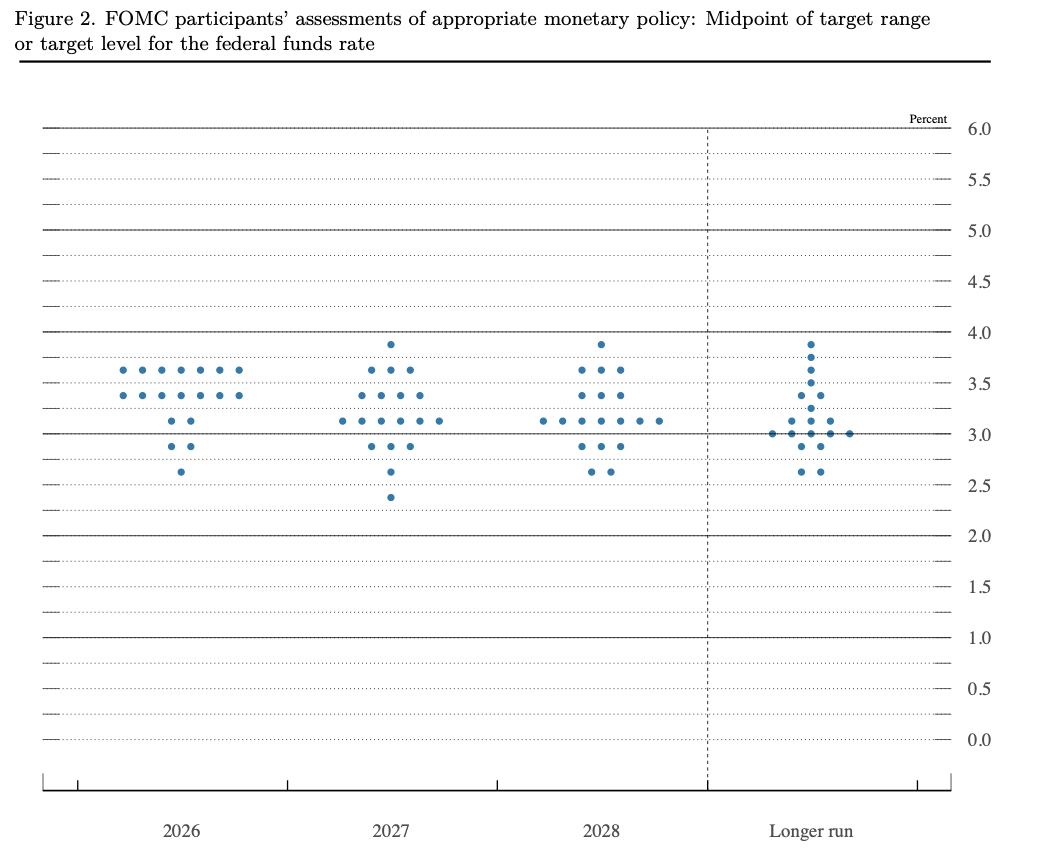
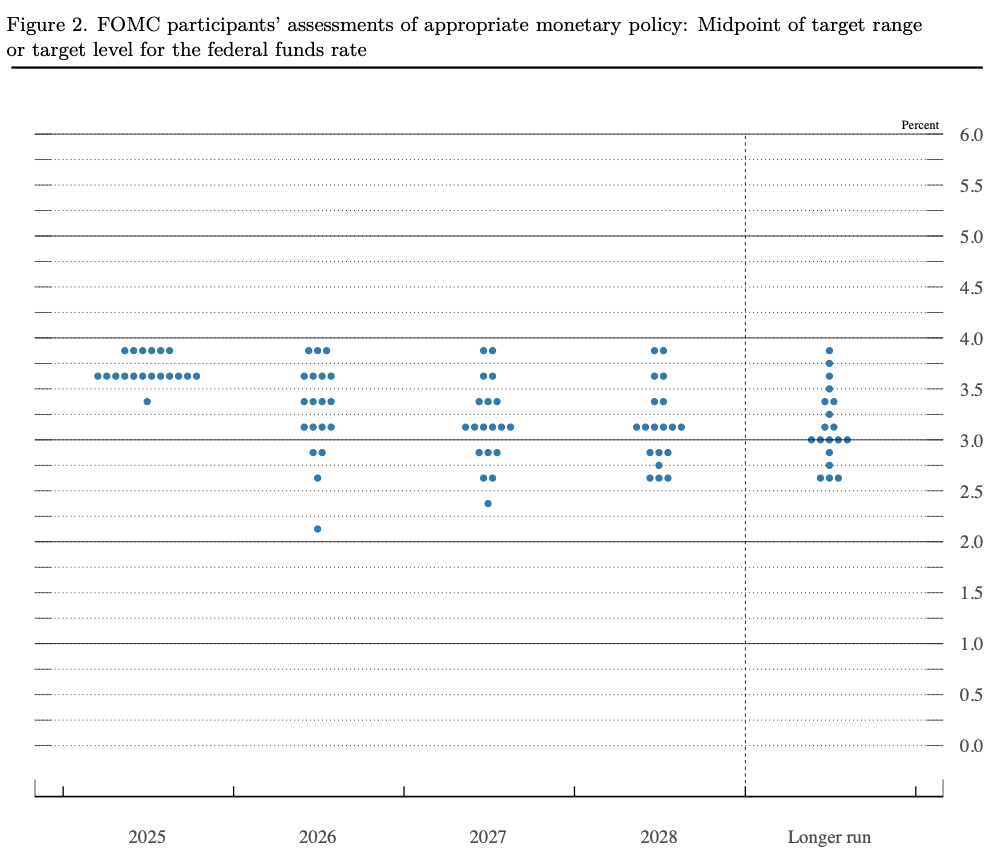
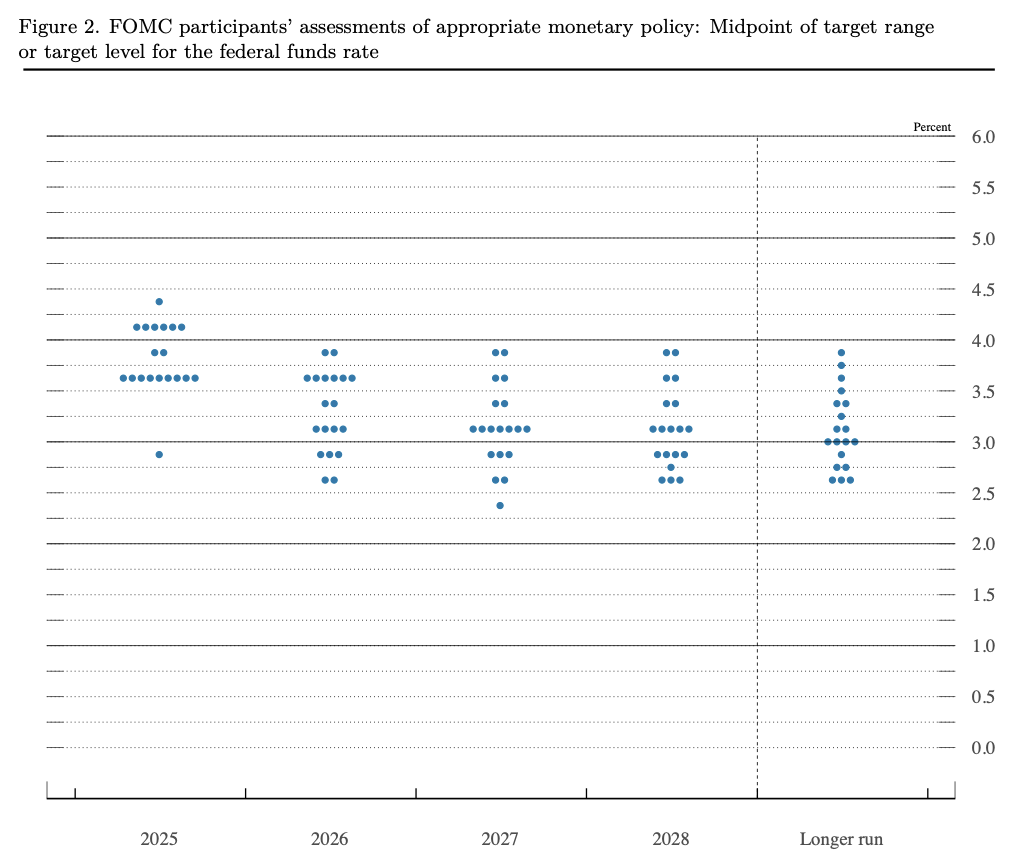
I think it is appropriate to start this morning’s discussion with the dot plot, which as I, and many others, expected showed virtually no consensus as to what the future holds with respect to Federal Reserve monetary policy.  For 2026, the range of estimates by the 19 FOMC members is 175 basis points, the widest range I have ever seen.  Three members see a 25bp hike in 2026 and one member (likely Governor Miran) sees 150bps of cuts.  They can’t all be right!  But even if we look out to the longer run, the range of estimates is 125bps wide.

Personally, I am thrilled at this outcome as it indicates that instead of the Chairman browbeating everyone into agreeing with his/her view, which had been the history for the past 40 years, FOMC members have demonstrated they are willing to express a personal view.

Now, generally markets hate uncertainty of this nature, and one might have thought that equity markets, especially, would be negatively impacted by this outcome.  But, since the unwritten mandate of the Fed is to ensure that stock markets never decline, they were able to paper over the lack of consensus by explaining they will be buying $40 billion/month of T-bills to make sure that bank reserves are “ample”.  QT has ended, and while they will continue to go out of their way to explain this is not QE, and perhaps technically it is not, they are still promising to pump nearly $500 billion /year into the economy by expanding their balance sheet.  One cannot be surprised that initially, much of that money is going to head into financial markets, hence today’s rally.

However, if you want to see just how out of touch the Fed is with reality, a quick look at their economic projections helps disabuse you of the notion that there is really much independent thought in the Marriner Eccles Building.  As you can see below, they continue to believe that inflation will gradually head back to their target, that growth will slow, unemployment will slip and that Fed funds have room to decline from here.

I have frequently railed against the Fed and their models, highlighting time and again that their models are not fit for purpose.  It is abundantly clear that every member has a neo-Keynesian model that was calibrated in the wake of the Dot com bubble bursting when interest rates in the US first were pushed down to 0.0% while consumer inflation remained quiescent as all the funds went into financial assets.  One would think that the experience of 2022-23, when inflation soared forcing them to hike rates in the most aggressive manner in history, would have resulted in some second thoughts.  But I cannot look at the table above and draw that conclusion.  Perhaps this will help you understand the growth in the meme, end the fed.

To sum it all up, FOMC members have no consensus on how to behave going forward but they decided that expanding the balance sheet was the right thing to do.  Perhaps they do have an idea, but given inflation is showing no signs of heading back to their target, they decided that the esoterica of the balance sheet will hide their activities more effectively than interest rate announcements.

One of the key talking points this morning revolves around the dollar in the FX markets and how now that the Fed has cut rates again, while the ECB is set to leave them on hold, and the BOJ looks likely to raise them next week, that the greenback will fall further.  Much continues to be made of the fact that the dollar fell about 12% during the first 6 months of 2025, although a decline of that magnitude during a 6-month time span is hardly unique, it was the first such decline that happened during the first 6 months of the year, in 50 years or so.  In other words, much ado about nothing.  

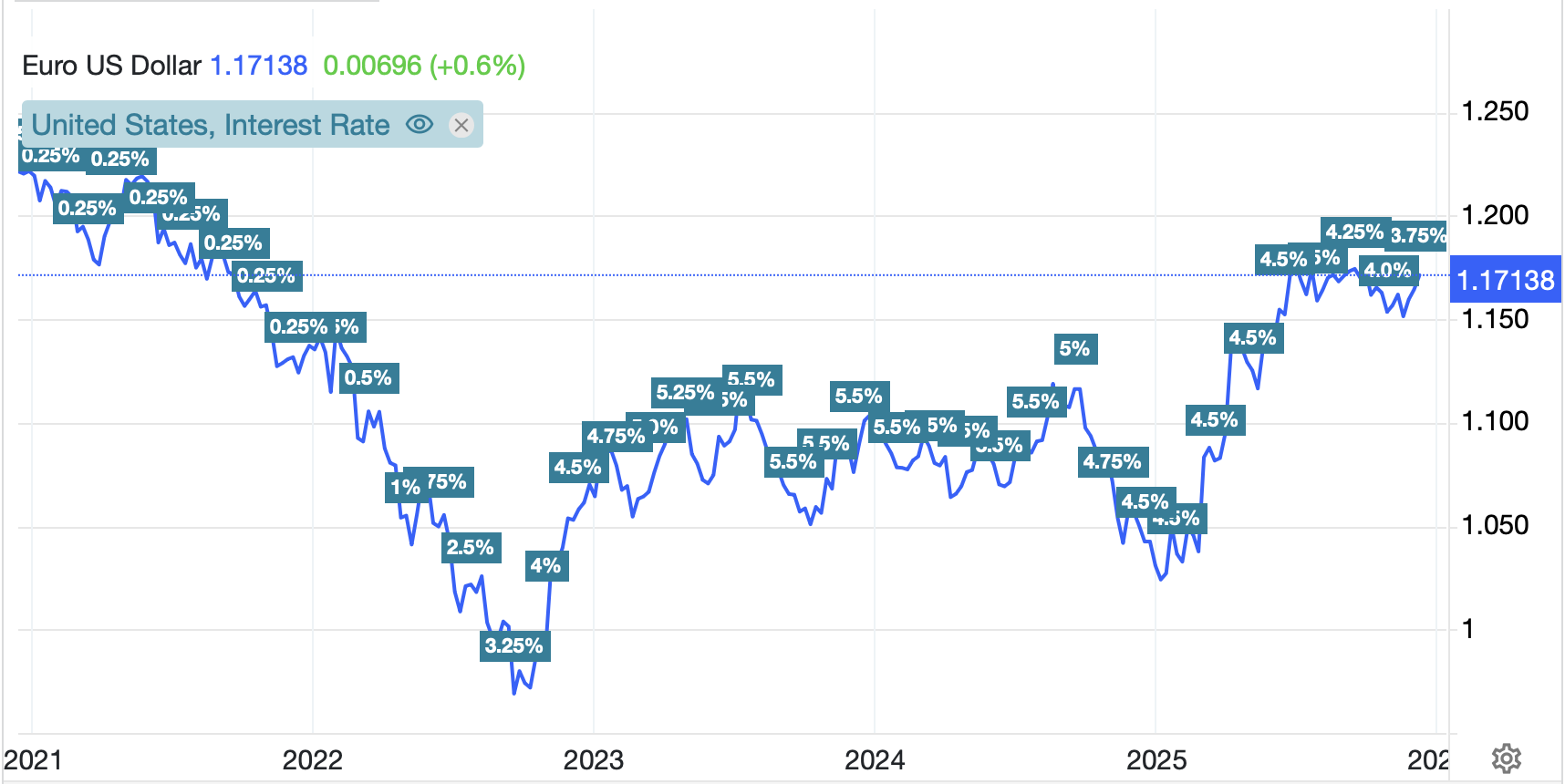
The latest spin, though, is look for the dollar to decline sharply after the rate cut.  I have a hard time with this concept for a few reasons.  First, given the obvious uncertainty of future Fed activity, as per the dot plot, it is unclear the Fed is going to aggressively cut rates from this level anytime soon.  And second, a look at the history of the dollar in relation to Fed activity doesn’t really paint that picture.  The below chart of the euro over the past five years shows that the single currency fell during the initial stages of the Fed’s panic rate hikes in 2022 then rallied back sharply as they continued.  Meanwhile, during the latter half of 2024, the dollar rallied as the Fed cut rates and then declined as they remained on hold.   My point is, the recent history is ambiguous at best regarding the dollar’s response to a given Fed move.

Source: tradingeconomics.com

I have maintained that if the Fed cuts aggressively, it will undermine the dollar.  However, nothing about yesterday’s FOMC meeting tells me they are about to embark on an aggressive rate cutting binge.

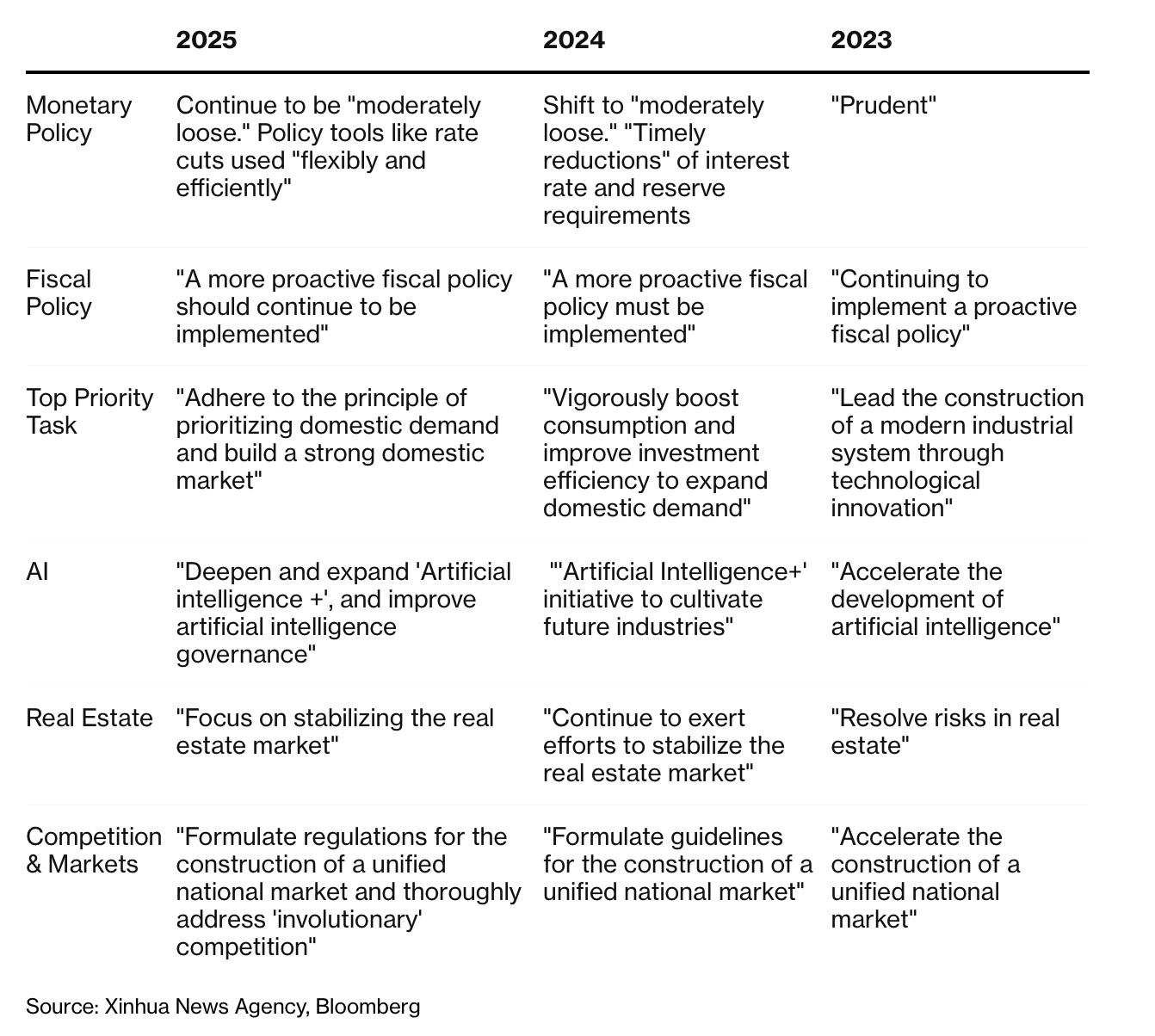
The other noteworthy story this morning is the outcome from China’s Central Economic Work Conference (CEWC).  I have described several times that the President Xi’s government claims they are keen to help support domestic consumption and the housing market despite neither of those things having occurred during the past several years.  Well, Bloomberg was nice enough to create a table highlighting the CEWC’s statements this year and compare them to the past two years.  I have attached it below.

In a testament to the fact that bureaucrats speak the same language, no matter their native tongue, a look at the changes in Fiscal Policy or Top Priority Task, or even Real Estate shows that nothing has changed but the order of the words.  The very fact that they need to keep repeating themselves can readily be explained by the fact that the previous year’s efforts failed.  Why will this time be different?

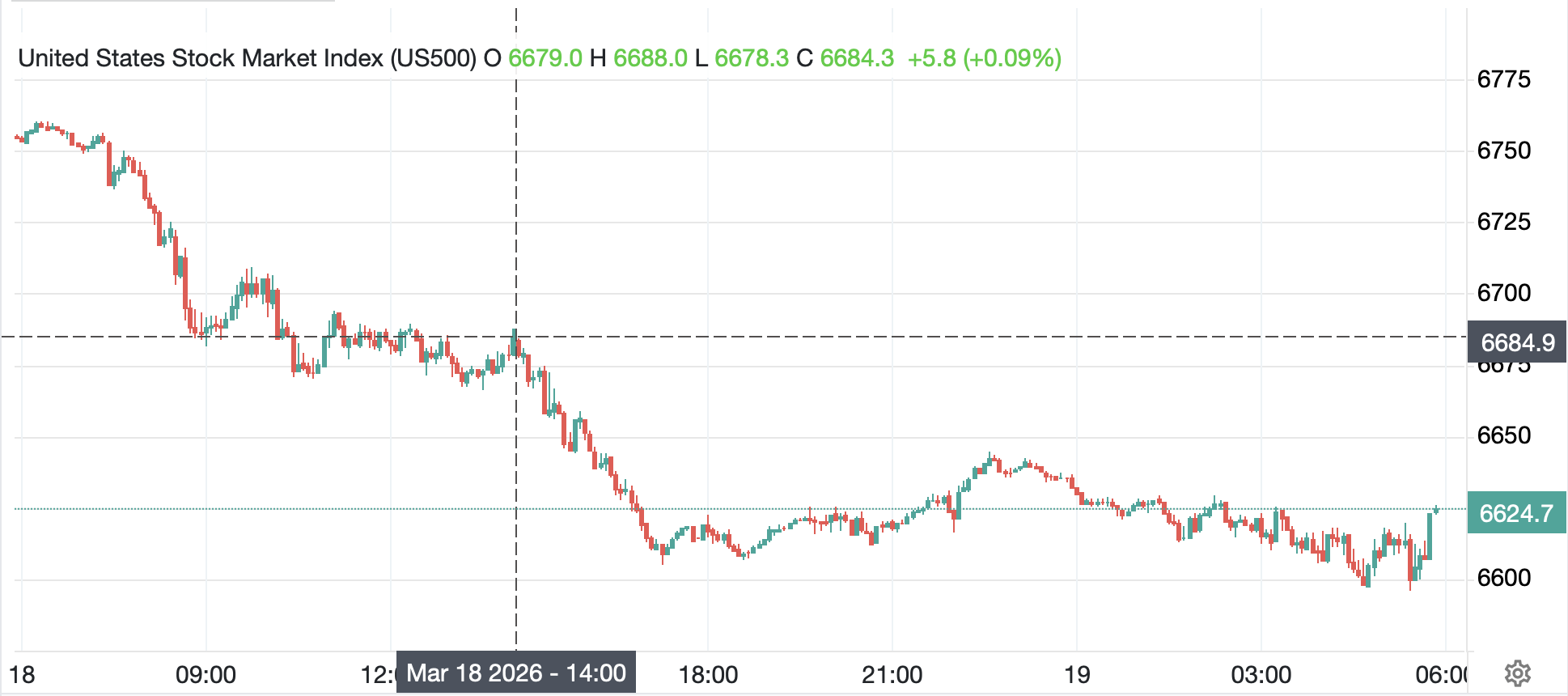
Ok, a quick tour of markets.   Apparently, Asia was not enamored of the FOMC outcome with Tokyo (-0.9%) and China (-0.9%) both sliding although HK managed to stay put.  Elsewhere in the region, both Korea (-0.6%) and Taiwan (-1.3%) were also under pressure as most markets here were in the red.  The exceptions were India, Malaysia and the Philippines, all of which managed gains of 0.5% or so.  

In Europe, things are a little brighter with modest gains the order of the day led by Spain (+0.5%) and France (+0.4%) although both Germany and the UK are barely higher at this hour.  There was no data released in Europe this morning although the SNB did meet and leave rates on hold at 0.0% as universally expected.  There has been a little bit of ECB speak, with several members highlighting that ECB policy is independent of Fed policy but that if Fed cuts force the dollar lower, they may feel the need to respond as a higher euro would reduce inflation.  Alas for the stock market bulls in the US, futures this morning are pointing lower led by the NASDAQ (-0.7%) although that is on the back of weaker than expected Oracle earnings results last night.  Perhaps promising to spend $5 trillion on AI is beginning to be seen as unrealistic, although I doubt that is the case 🤔.

Turning to the bond market, Treasury yields have slipped -2bps overnight after falling -5bps yesterday.  Similar price action has been seen elsewhere with European sovereign yields slipping slightly and even JGB yields down -2bps overnight.  Personally, I am a bit confused by this as I have been assured that the Fed cutting rates in this economy would result in a steeper yield curve with long-dated rates rising even though the front end falls.  Perhaps I am reading the data wrong.

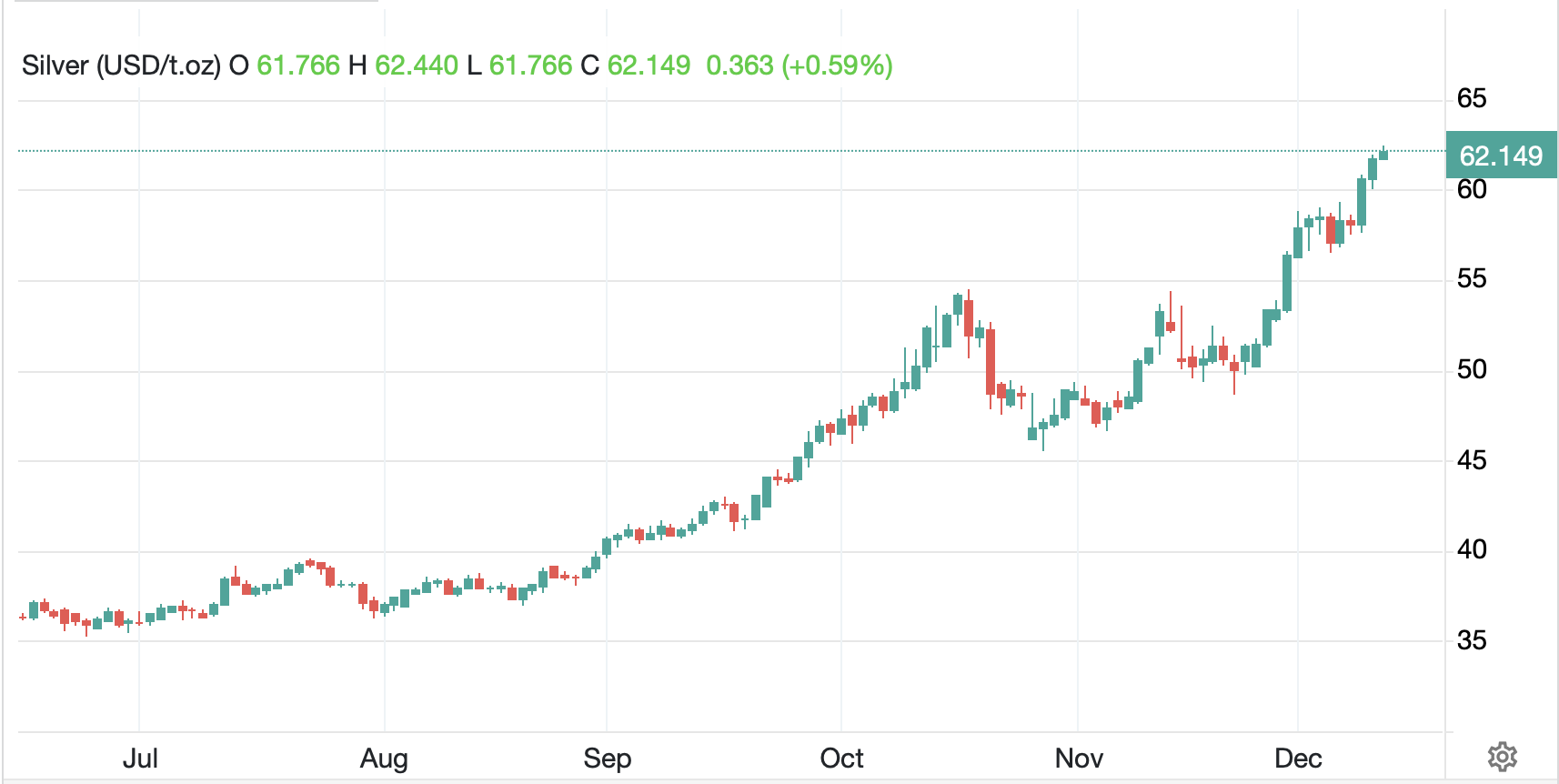
In the commodity markets, the one truth is that there are no sellers in the silver market.  It is higher by another 0.5% this morning and above $62/oz as whatever games had been played in the past to cap its price seem to have fallen apart.  Physical demand for the stuff outstrips new supply by about 120 million oz /year, and new mines are scarce on the ground.  This feels like there is further room to run.

Source: tradingeconomics.com

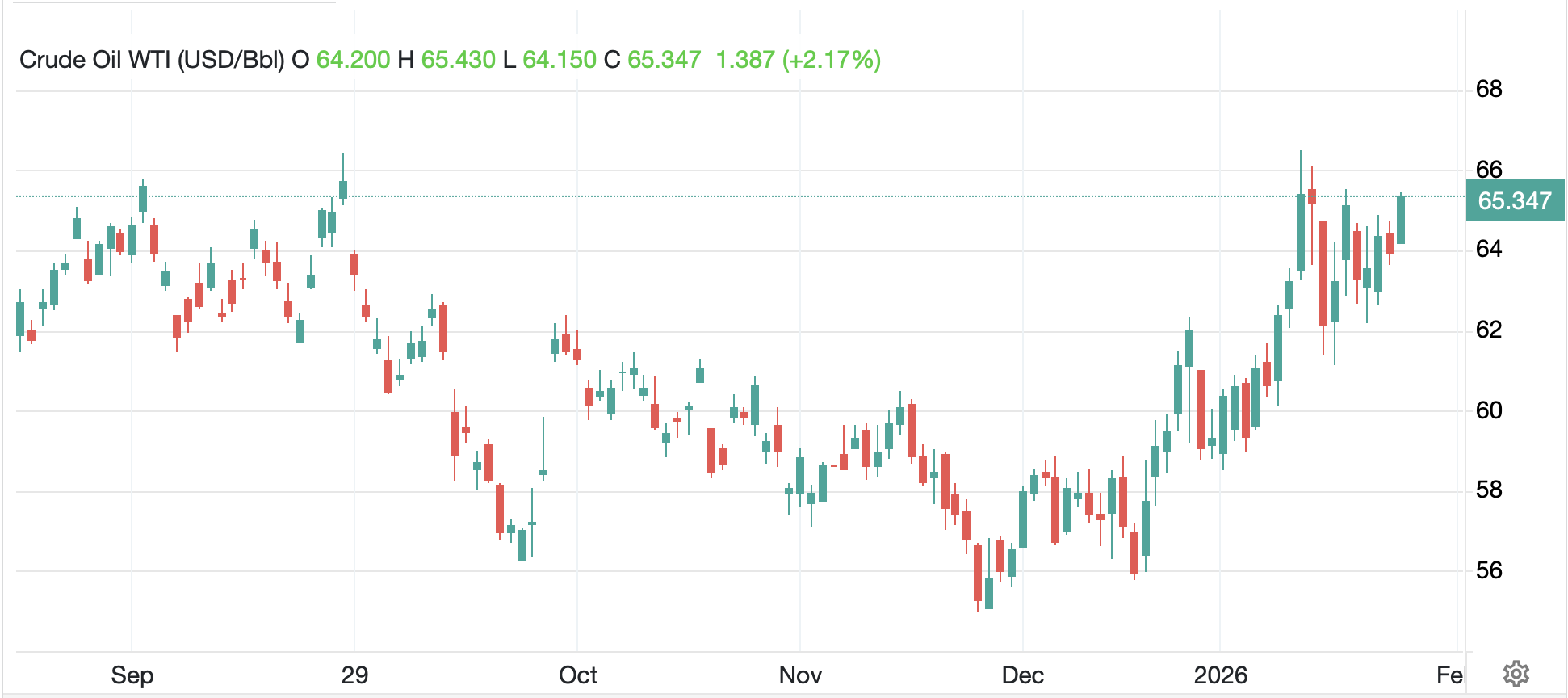
As to the rest of the space, gold (-0.2%) which had a nice day yesterday is consolidating, as is copper.  Turning to oil (-1.1%) it continues to drift lower, dragging gasoline along for the ride, something that must make the president quite happy.  You know my views here.

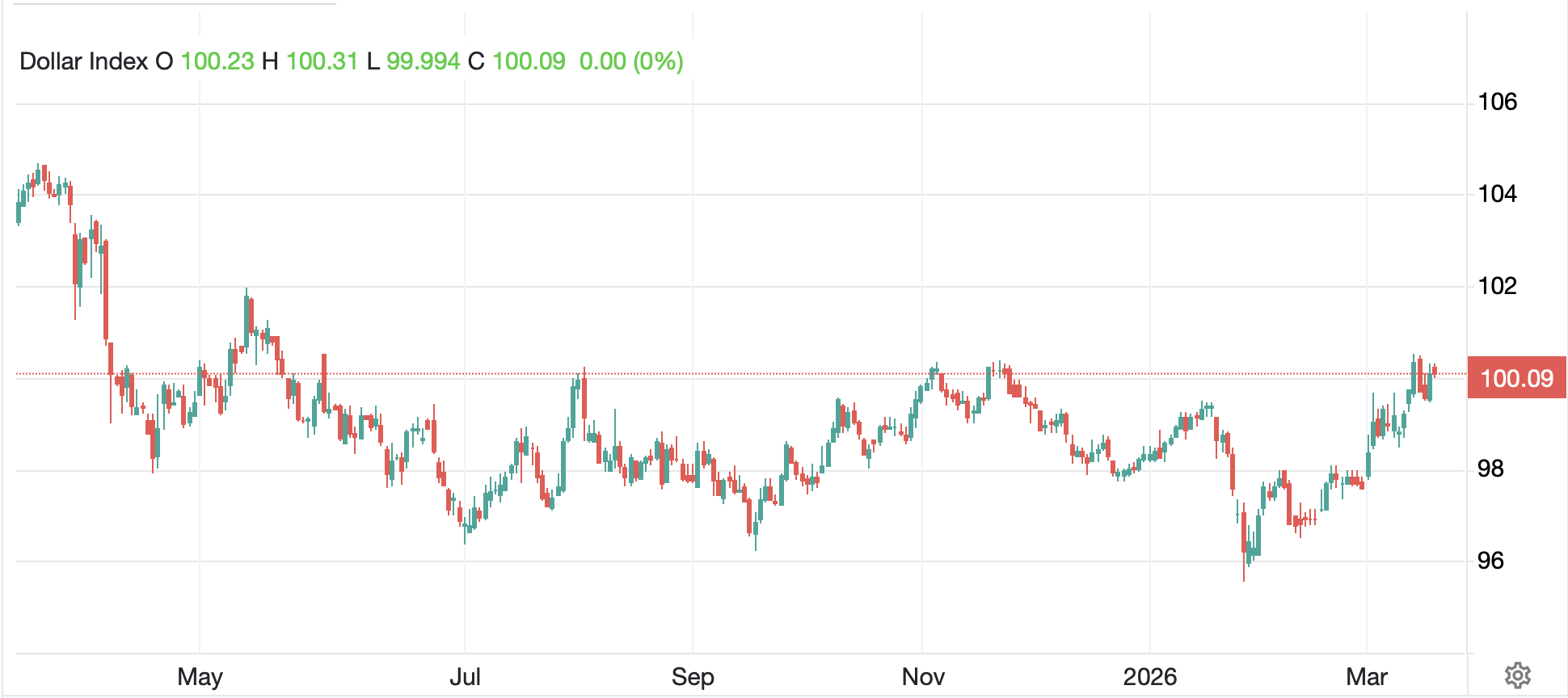
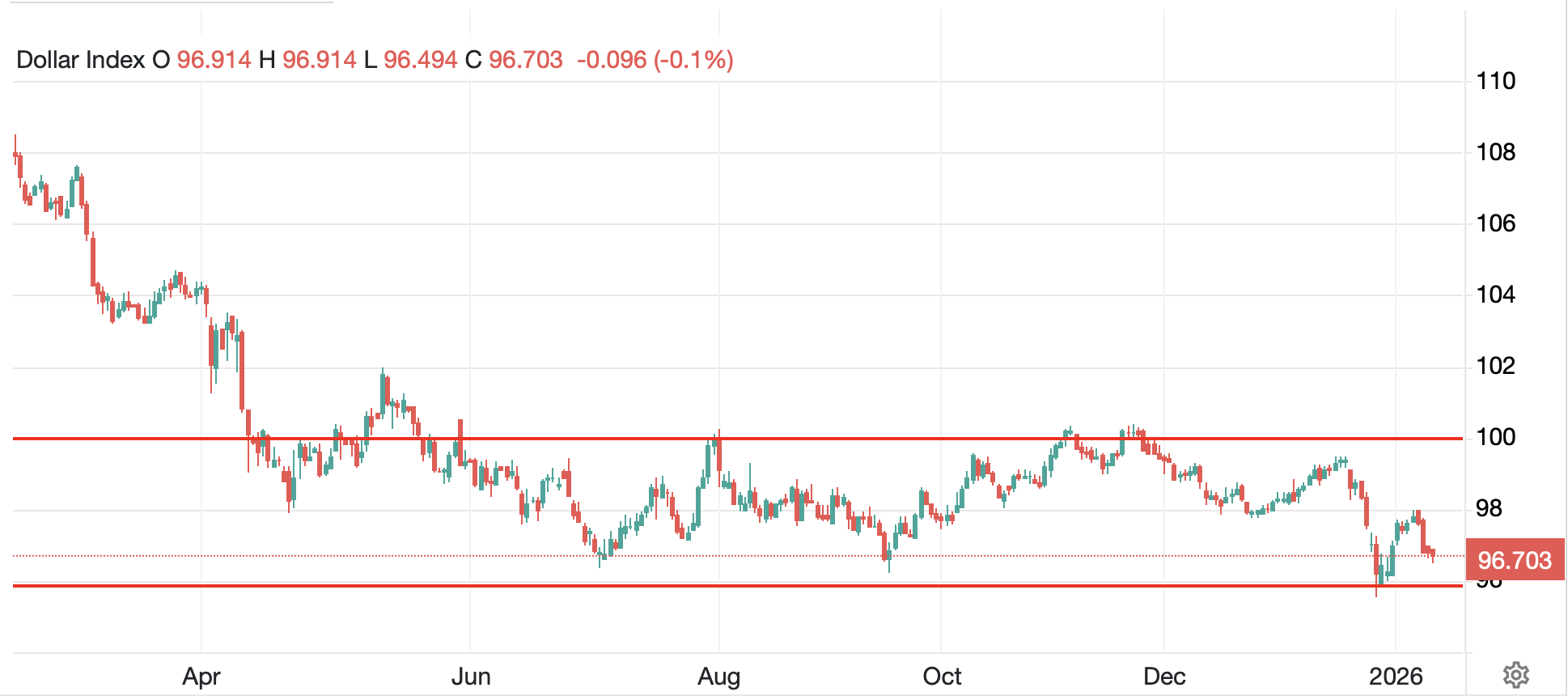
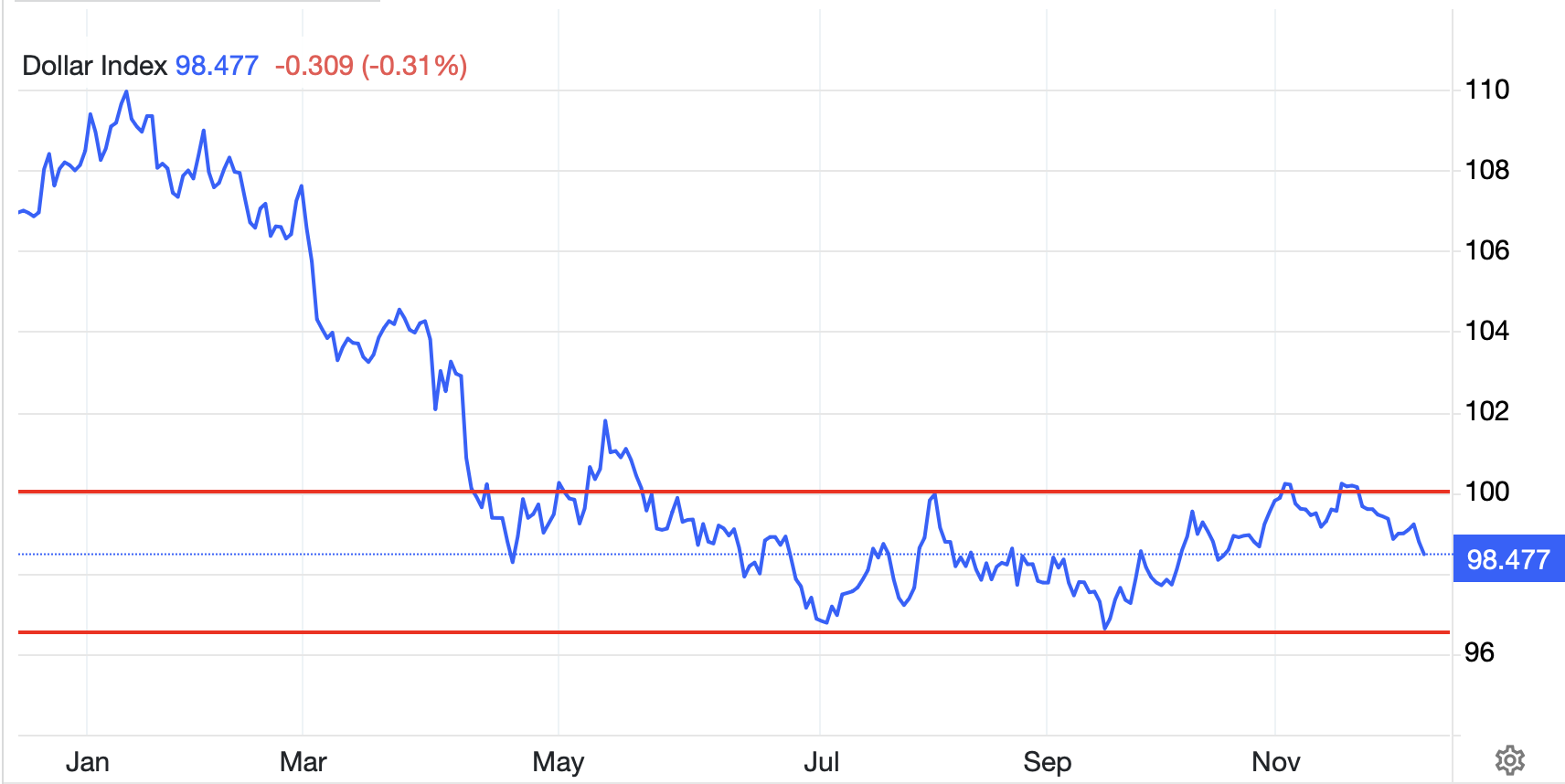
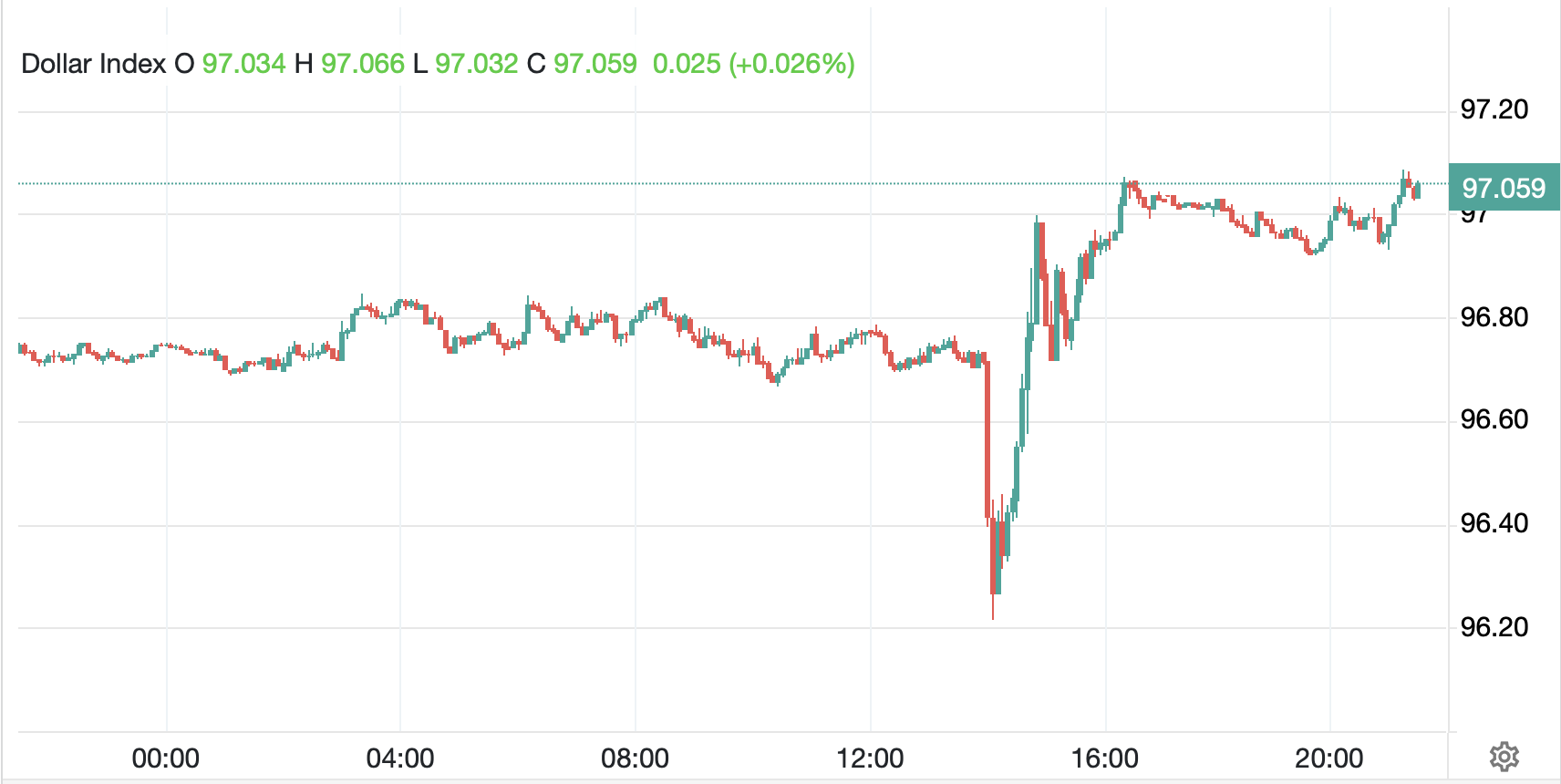
As to the dollar writ large, while it sold off a bit yesterday, as you can see from the below DXY (-0.3%) chart, it is hardly making new ground, rather it is back to the middle of its 6-month range.  

Source: tradingeconomics.com

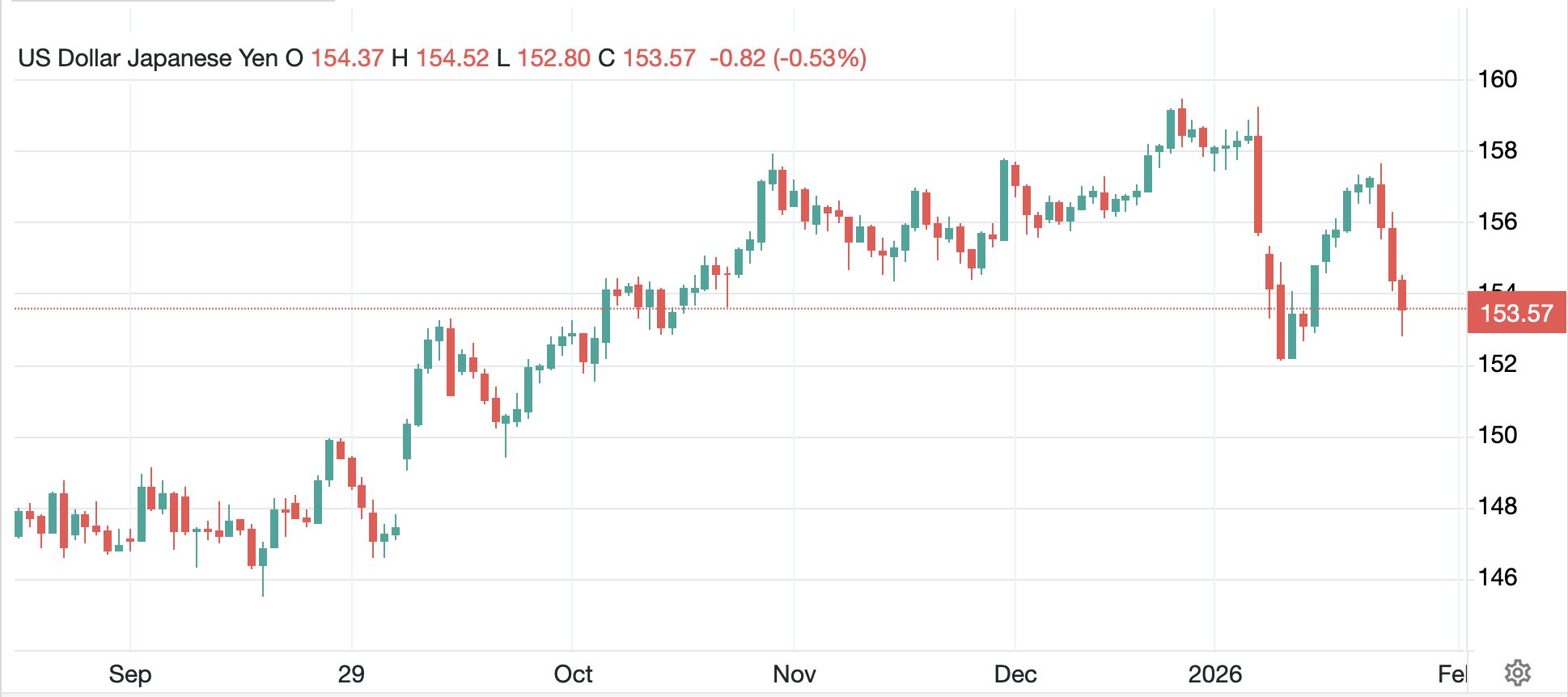
This morning more currencies are a bit stronger but in the G10, CHF (+0.45%) is the leader with everything else far less impactful.  And on the flip side, INR (-0.7%) has traded to yet another historic low (USD high) as the new RBI governor has decided not to waste too much money on intervention.  Oh yeah, JPY (+0.2%) has gotten some tongues wagging as now that the Fed cut and the BOJ is ostensibly getting set to hike, there is more concern about the unwind of the carry trade.  My view is, don’t worry unless the BOJ hikes 50bps and promises a lot more on the way.  After all, if the Fed has finished cutting, something that cannot be ruled out, this entire thesis will be destroyed.

On the data front, Initial (exp 220K) and Continuing (1950K) Claims are coming as well as the Trade Balance (-$63.3B).  There are no Fed speakers on the docket, but I imagine we will hear from some anyway, as they cannot seem to shut up.  

It would not surprise me to see the dollar head toward the bottom of this trading range, but I think we need a much stronger catalyst than uncertainty from the Fed to break the range.

Good luck

Adf

Ere Recession Arose

There once was a Fed Chair named Jay
Who fought ‘gainst the prez every day
He tried to explain
That tariffs brought pain
So higher rates needed to stay
 
But data turned out to expose
The job market, which had no clothes
So, he and his friends
Were forced, in the end
To cut ere recession arose


The Fed cut 25bps yesterday, as widely expected (although I went out on a limb and called for 50bps) and markets, after all was said and done by Chair Powell, saw equities mixed with the DJIA rising 0.6% while the S&P 500 and NASDAQ both slipped slightly.  Treasury yields rose 5bps which felt much more like some profit taking after a month-long rally, than the beginning of a new trend as per the chart below.

Source: tradingeconomics.com

Gold rallied instantaneously on the cut news, trading above $3700/oz, but slipped back nearly 2% as Powell started speaking and the dollar fell sharply on the news but rebounded to close higher on the day as per the below chart from tradingeconomics.com.  See if you can determine when the statement was released and when Powell started to speak.

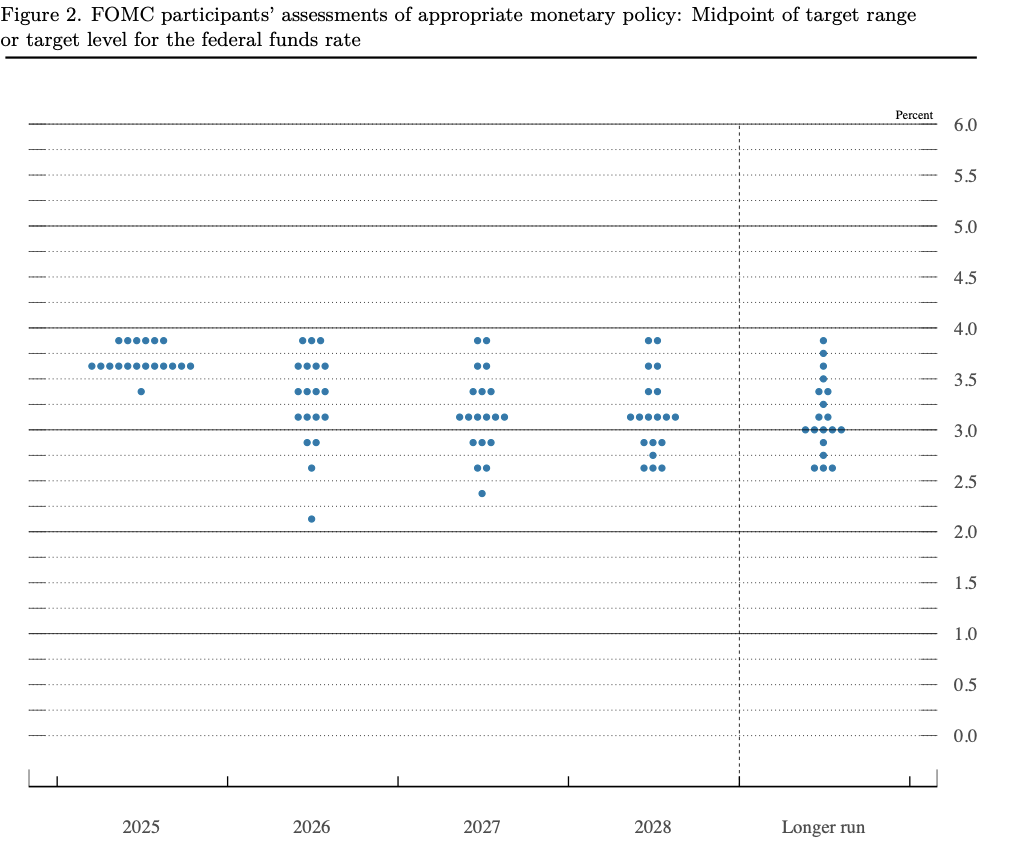
Did we learn very much from this meeting?  I think we learned two things, one which is a positive and one which is not.  On the positive side, there is clearly a very robust discussion ongoing at the Fed with respect to how FOMC members see the future evolving.  This was made clear in the dot plot as even the rest of 2025 sees a major split in expected outcomes.  But more importantly, looking into the future, there is certainly no groupthink ongoing, which is a wonderful thing.  Simply look at the dispersion of the dots for each year.

Source: federalreserve.gov

The negative, though, is that Chairman Powell is very keen to spin a narrative that seems at odds with the data that they released in the SEP.  In other words, the flip side of the idea that there is a robust discussion is that nobody there has a clue about what is happening in the economy, or at least Powell is not willing to admit to their forecasts, and that is a problem given their role in policy making.

It was a little surprising that only newly seated Governor Miran voted for 50bps with last meeting’s dissenters happy to go with 25bps.  But I have a feeling that the commentary going forward, which starts on Monday of next week, is going to offer a variety of stories.  If guidance from Fed speakers contradicts one another, exactly where is it guiding us?  (Please know I have always thought that forward guidance was one of the worst policy implementations in the Fed’s history.)

Moving on, the other central banks that have announced have done exactly as expected with both Canada and Norway cutting 25bps.  Shortly, the BOE will announce their decision with market expectations for a 7-2 vote to leave rates on hold, especially after yesterday’s 3.8% CPI reading.  Then, all eyes will turn to Tokyo tonight where the BOJ seems highly likely to leave rates on hold there as well.

If you think about it, it is remarkable that equity markets around the world continue to rally broadly at a time when central banks around the world are cutting rates because they are concerned that economic activity is slowing and they seek to prevent a recession.  Something about that sequence seems out of sorts, but then, I freely admit that markets move for many reasons that seem beyond logic.

Ok, having reviewed the immediate market response to the Fed, let’s see how things are shaping up this morning.  Asian equity markets had both winners (Tokyo +1.15%, Korea +1.4%, Taiwan +1.3%, India +0.4%) and laggards, (China -1.2%, HK 1.4%, Australia -0.8%, Malaysia -0.8%) with the rest of the region seeing more laggards than gainers.  The China/HK story seems to be profit taking related while the gainers all alleged that the prospect of another 50bps of cuts from the Fed this year is bullish.  Meanwhile, in Europe, while the UK (+0.2%) is biding its time ahead of the BOE announcement, there has been real strength in Germany (+1.2%), France (+1.15%) and Italy (+0.85%) while Spain (+0.25%) is only modestly firmer.  While there was no data of note released, we did hear from ECB VP de Guindos who said the ECB may not be done cutting rates.  Clearly that got some investors excited.  As to US futures, at this hour (6:55), they are solidly higher, on the order of 0.8% or more.

In the bond market, Treasury yields are backing off the highs seen yesterday and have slipped -4bps, hovering just above 4.0% on the 10-year.  European sovereign yields are essentially unchanged this morning as were JGB yields overnight.  It seems investors were completely prepared for the central bank actions and had it all priced in.  I guess the real question is are those investors prepared for the fact that the Fed is no longer that concerned about inflation and will allow it to rise further?  My guess there is they are not, but then, that’s where QE/YCC comes into play.

In the commodity markets, oil (-0.25%) is slightly lower this morning despite Ukraine attacking two more Russian refineries last night.  What makes that particularly interesting is that the EIA inventory data showed a massive net draw of oil and products last week of more than 11 million barrels, seemingly a bullish signal.  But hey, I’m an FX guy so maybe supply and demand in oil markets works differently!  In metals, gold (+0.2%) and silver (+0.4%) continue to rebound from their short-term lows from yesterday.  It is abundantly clear that there is growing demand for alternatives to fiat currencies.

Speaking of which, in the fiat world, rumors of the dollar’s demise remain greatly exaggerated.  After yesterday afternoon’s gyrations discussed above, it is largely unchanged this morning with some outlier moves in smaller currencies, NZD (-0.5%), ZAR (+0.3%), KRW (-0.3%) while amongst the true majors, only JPY (-0.25%) has moved any distance at all.  

***BOE Leaves rates on hold, as expected, with 7-2 vote, as expected.***

Turning to this morning’s data, we see the weekly Initial (exp 240K) and Continuing (1950K) Claims as well as Philly Fed (2.3), then at 10:00 we get Leading Indicators (-0.2%).  Something I read was that last week’s Initial Claims number of 263K was caused by a data glitch in Texas, implying it was overstated.  I imagine we will find out more on that this morning.  

Recapping all we learned yesterday and overnight, the Fed seems reasonably likely to cut at both of their last two meetings this year, but expect only one cut in 2026, which is at least 50bps less of cuts than had been expected prior to the meeting.  Meanwhile, equity markets don’t seem to care and continue to rally while bond investors remain under a spell, believing the Fed will fight inflation effectively.  Gold is under no such spell, and the dollar is the outlet for all of it, toing and froing on the back of various theories of the day.  If forced to guess, I do believe there is a bit more weakness in the dollar in the near-term, but do not look for a collapse.  In fact, I suspect that as investment flows into the US pick up, we will see a reversal of note by the middle of next year.

Good luck

Adf

Not Yet Foregone

The US has not yet been drawn
To war, though it’s not yet foregone
That won’t be the case
While Persians now brace
For busters of bunkers at dawn
 
But until such time as we learn
That outcome, the current concern
Is Jay and the Fed
And what will be said
At two o’clock when they adjourn


So, every top headline this morning discusses the idea that President Trump is considering whether to initiate US military action in Iran, specifically to drop the so-called bunker buster bombs to destroy Iran’s nuclear enrichment and bomb-making facilities.  There is certainly a lively discussion on both sides of the argument with the best description of the problem that I’ve seen being a poll showing that 74% approve Trump’s position that Iran must not get nuclear weapons, but 60% oppose US involvement in the war.  I’m glad I don’t have to thread that needle!

Obviously, there are market implications if the US does get involved but given the complete lack of clarity on the situation at this point, I do not believe I can add much to the discussion.  The only thing I will say is that the longer-term trends for both oil (lower) and metals (higher) are still intact, but we are likely to see some significant volatility along the way.

Which takes us to the next most important market discussion, the FOMC meeting that ends today and the potential market impacts.  It is universally assumed that there will be no policy change at the meeting, either interest rates or QT, which means that now the punditry is focused on the arcana of Fed policy.  As this is a quarter end meeting, the Fed will release its latest SEP (summary of economic projections) and dot plot, and with nothing else to discuss until the war in Iran either ends or intensifies, those are the key discussion points in the market.  

I have long maintained that one of the greatest blunders of the Bernanke era was the institution of forward guidance.  While it may have served its purpose initially, it has now become a major distraction.  Far too much attention is paid to the dot plot, where if one member adjusts their view by 25bps, it can impact markets which have built algorithms to respond to the median outcome.

Below is the March dot plot which showed a median “expectation” of Fed funds for the end of 2025 at 3.875%, or 50 basis points lower than the current level.  However, if two more FOMC members (out of 17) thought there was only going to be one cut, that would have shifted the median “expectation” as well as the narrative.

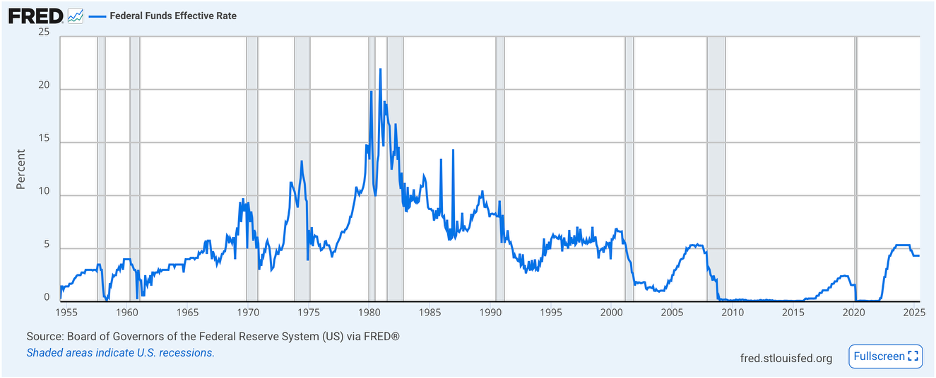
As such, the importance of the dot plot feels overstated compared to its actual value.  After all, no FOMC member has an impressive track record with respect to their analysis of the economy and its future outcomes, let alone what the appropriate rate structure should be at any given time.  In fact, nobody has that, which is the argument for restricting the Fed’s duties to be lender of last resort and allow markets to determine the proper level of interest rates based on the supply and demand of money.  But this is the world in which we live.  My one observation is that the post GFC era has greatly distorted views on the economy and appropriate monetary policy.  It is hard not to look at the below history of Fed funds and see the anomaly that occurred during the initial QE phase.  

Concluding, regardless of my, or anyone not on the FOMC’s, views on appropriate policy, it doesn’t matter one whit.  They are going to do what they deem appropriate, and while I don’t doubt their sincerity, I do doubt they have the tools for the mission.  Perhaps the most interesting thing that could come from this meeting is further information on their assessment of the current Fed process, including their communication policy.  I remain strongly in favor of them all shutting up and letting markets do their job although that seems unlikely.  But perhaps they will get rid of the dots which seem to have outlived any value they may have had initially.

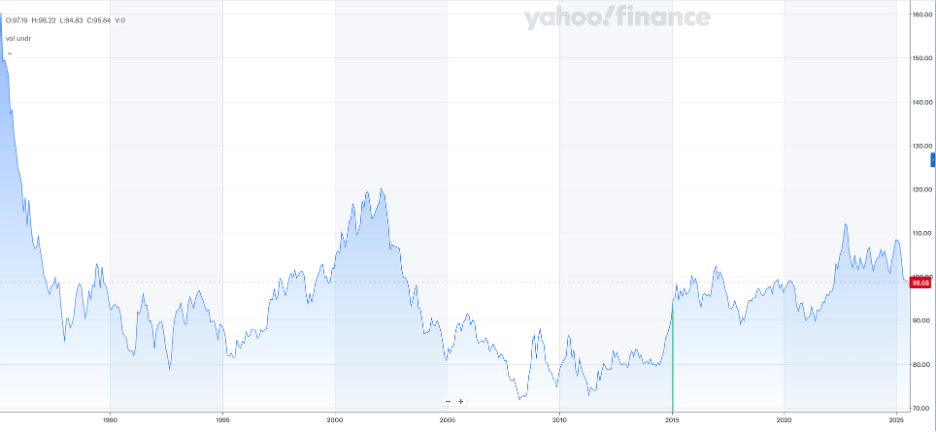
Before we go to markets, I have to highlight one other market discussion this morning with Bloomberg publishing two different articles, here and here,  on the end of the dollar’s hegemony.  The first highlights a speech by PBOC governor Pan Gongsheng and his vision of a multicurrency world which, of course, includes the renminbi as a major part of the process.  I will believe that is a possibility as soon as China opens its capital accounts completely and allows flows into and out of the country with no restrictions.  (I’m not holding my breath.)  The second takes the Michael Bloomberg Trump hatred in the direction of the president is destroying the dollar’s reign because of his policies and to highlight the dollar has fallen 10% already this year!  But let us look at a long-term chart of the dollar, using the DXY as a proxy, and you tell me if you can see the recent move as being outsized in any sense of the word.  In fact, the dollar’s recent price action is indistinguishable from anywhere in its history, and it is not anywhere near to its historic lows.  In fact, it is just a few percent below its long-term average.

Ok, now let’s look at markets.  Yesterday’s selloff in equities seemed to be based on concerns over the escalation in Iran, but as that drags out, traders don’t know what to do.  They are certainly not pushing things much further.  In fact, overnight saw the Nikkei (+0.9%) have a solid gain although HK (-1.1%) followed the US lower.  Elsewhere in the region, South Korea and Taiwan performed well, while India and Indonesia lagged and the rest were +/-20bps or less.  Europe, though, is softer this morning with declines on the order of -0.4% on the continent across the board.  I think investors here are also waiting on the potential events in Iran.  But US futures are actually pointing slightly higher at this hour (7:30).

In the bond market, yields around the world are slipping with Treasuries falling -2bps and most of Europe seeing declines between -1bp and -3bps.  This is after a few basis point decline yesterday as well.  I guess the fear of too much US debt is in abeyance this morning.

In commodity markets, oil, which rallied sharply yesterday on fears of the US entering the war, is little changed on the day after that climb as while there has been lots of talk, oil continues to flow through the Strait of Hormuz, and everybody is pumping nonstop to take advantage of the current relatively high prices.  Gold is unchanged although the other metals (Ag +0.25%, Cu +0.7%, Pt +2.4%) continue to see significant support.  In fact, platinum this morning has broken above the top of an 11-year range and many now see an opportunity for a significant rally from here.

Finally, the dollar is somewhat softer this morning, slipping about 0.2% against the pound, euro and yen, with similar declines against most other currencies.  The exceptions to this are the KRW (+0.45%) which seems to be benefitting from a growing hope that a trade deal will be completed between the US and Korea shortly, and ZAR (-0.5%) as CPI data release there this morning shows inflation under control and no reason for SARB to consider tightening policy further.

On the data front, because of tomorrow’s Juneteenth holiday, we see Initial (exp 245K) and Continuing (1940K) Claims as well as Housing Starts (1.36M) and Building Permits (1.43M).  And of course, at 2:00 it’s the Fed.  My sense is absent a US escalation in Iran, it will be quiet until the Fed, and probably thereafter as well given the lack of reason for any policy changes.  After all, there is no certainty as to either war or trade policy right now, so why would they do anything.

If I had to opine, I would say the dollar is likely to decline over the next year, but that in the longer run, it will be firmer than today.  

Good luck

Adf

Indigestion

The answer to yesterday’s question
Is CPI’s seem some regression
Both stocks and bonds soared
The dollar was floored
But Powell now has indigestion
 
To no one’s surprise he left rates
Unchanged, while the dot plot translates
To higher for longer
Though pressure’s grown stronger
To cut to achieve his mandates


Unequivocally, the CPI data was cooler than market forecasts.  Month over month prices were unchanged at the headline level and grew only 0.16% on a core basis, with the year-on-year numbers each coming in one tick below expectations.  It took absolutely no time for markets to run with this data as the following charts from tradingeconomics.com for the NASDAQ 100, 10-year Treasury yields and EURUSD demonstrate.  See if you can determine when the CPI data was released.

Now, as I explained, and has become abundantly clear to anyone watching, the equity market is in a world of its own.  While yields backed up and the dollar rebounded (euro fell) after the somewhat more hawkish than expected FOMC statement, dot plot and Powell press conference, the NASDAQ ignored everything and kept on rallying.  While that is remarkably impressive, I remain of the opinion that trees still don’t grow to the sky, although apparently, they can get really tall!

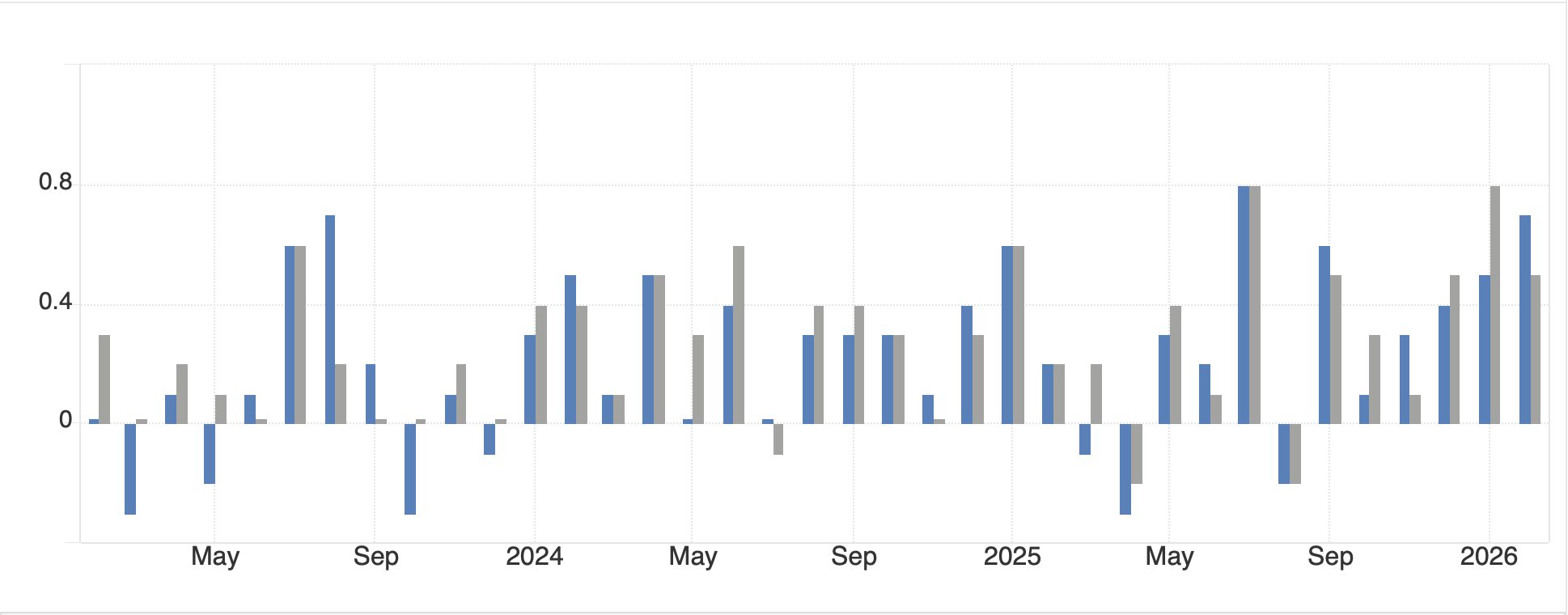
At any rate, a quick look under the hood at the CPI shows that core goods prices continue to fall, which was largely why today’s data looked so good, but primary rents and OER continue to climb at about 0.4% monthly despite many assurances by many pundits, analysts and economists that rental inflation was sure to begin declining soon.  It has been rising at this pace or faster for more than two years, and while the actual pace has backed off from the rate a year ago, if you annualize 0.4% you come up with just under 5.0% inflation.  It remains hard to believe that shelter costs can rise at that pace and the general price level is going to get back to 2.0%.  Yesterday’s data was good, but we are not out of the woods yet.

Turning to the FOMC, the statement was virtually unchanged from the May statement, which makes sense since the mix of data that we have seen in the interim shows some hot and some cold numbers and no clear line of sight to the end game.  As such, it is not surprising that Chairman Powell tried to veer hawkish at the press conference in what appears to have been an attempt to offset the (over)reaction to the CPI data.  In fact, a look at the dot plot shows that, as I suggested, the median expectation for rate moves in 2024 is down to a single cut, although they are more confident that inflation will continue to fall next year with the median expectation for an additional 4 cuts.  However, as I also suggested, the longer-term outlook continues to rise with the median there now up to 2.80% from 2.60% in March, and 2.5% or below for the 3 years prior to that.

Interestingly, in their Summary of Economic Projections they expect PCE inflation to be 2.6% this year, up from 2.4% in March, with core PCE to be at 2.8% this year, up from 2.6% in March.  They did, however, maintain their views of GDP growth (2.1%) and Unemployment (4.0%).  At least, unlike Madame Lagarde who cut rates despite raising inflation forecasts, the Fed’s inaction made far more sense.

But pressure is building on Powell and the Fed to cut rates.  Today, several senators wrote (and released) a letter to Powell exhorting him to cut rates because everybody else is doing it.  They claim that his intransigence is hurting the economy, although the whole point of higher for longer is that there is scant evidence that the economy, as a whole, is in trouble despite rates where they are, although certainly some sectors are feeling a pinch.  As an aside, given the extreme degree of financial and economic ignorance that is routinely demonstrated by virtually every member of the House and Senate, this letter is simply political grandstanding.  But pressure is pressure, and Powell will certainly feel it, although I don’t think he is too concerned by this group overall.

While this morning brings PPI (exp 0.1%/2.5% headline and 0.3%/2.4% Core) as well as the weekly Initial (225K) and Continuing (1800K) Claims data, it is hard to believe that either of those data points are going to have any substantive impact given everything we learned yesterday.  So, let’s look elsewhere to see what is happening.

One of the interesting stories right now is the ongoing situation in France with the snap elections called by President Macron.  Apparently, the quick timing has resulted in significant confusion on both the left and right of the spectrum as to who will be allying with whom, and what they stand for.  While this is amusing in its own right (see this Twitter thread), the ramifications are greater for the impact on the French OAT market and the euro.

Briefly, the issue is that France has been slowly sliding from the figurative north of Europe to the South, meaning that it used to be considered a country with almost Germanic fiscal sensibilities and now it is much more akin to the PIGS than Germany.  The WSJ had an interesting article this morning describing the situation.  Ultimately, the market response has been for French yields to rise compared to German yields, adding pressure to the country as it needs to continue to finance its 5%+ budget deficit.  Now add to that the absolute trainwreck that is the current government leadership (as evidenced by that Twitter thread) and investors have decided that there are better places to invest with less credit risk.  After all, S&P Global downgraded French debt last month due to their profligate spending and I assure you, whatever the election outcome, there will be more spending not less.  

If we view this through a FX lens, the combination of clear dysfunction in Europe, lower interest rates in Europe and a Fed still committed to seeing the whites of 2%’s eyes before cutting rates here, it is very easy to anticipate the euro will be biased downwards over time.  While I know there are many who continue to write the dollar’s obituary, the fact remains that it is still standing with no competitors of note.  In fact, part of the raison d’etre of the euro was to be able to replace the dollar as a reserve currency.  It seems that hasn’t worked out all that well.

Ok, let’s see how global markets responded to the US data yesterday.  Perhaps the most interesting thing was that even in the US, the DJIA fell slightly, despite the conviction that rates are heading lower.  In Asia, the picture was mixed with Japan (-0.4%) and China (-0.5%) sliding while Hong Kong (+1.0%) rallied on the tech rally.  Many consider the Hang Seng to be China’s NASDAQ with respect to the weight of tech companies in the index.  As to European bourses, they are all in the red this morning by more than -1.0% with France (-1.4%) leading the way lower.  Of course, based on the above discussion, that can be no surprise.  Lastly, in the US, futures at this hour (6:45) are mixed with NASDAQ higher by 0.6% while DJIA futures are -0.4%.  Apparently, the prospect of lower rates doesn’t help more mature companies.

In the bond market, after yesterday’s wild ride (see above chart), Treasury yields have edged lower by -1bp, but in Europe, yields are continuing higher from their closing levels, catching up to the Treasury yield rebound in the wake of the FOMC meeting.  Not surprisingly, French OATs are leading the way with yields higher by 4bps while Germany has seen only a 2bp rise.

This morning, commodities are uniformly under pressure with oil (-0.8%) sliding after a solid weekly performance while metals markets are also slipping (Au -0.1%, Ag -0.8%, Cu -0.6%) as traders try to come to grips with the next interest rate moves and adjust their positions.  An interesting story this morning is that a shipment of copper from Russia to China for 2000 tons apparently never arrived in China.  This is simply the latest quirk in the metals markets where confirmation of what is being traded is limited.  You may recall the story last year about nickel inventories at the LME actually being bags of painted rocks.  In this space, the broad trend remains that there is excess demand for metals, especially copper, silver and aluminum, as all three are critical to electrification of systems and grids, but it is going to be a bumpy ride higher!

Finally, the dollar, which was decimated in the immediate wake of the CPI data yesterday, managed to claw back some of those losses in the afternoon thanks to the more hawkish Fed and this morning, that slow rebound continues with the greenback higher vs. almost all its counterparts in both the G10 and EMG blocs.  However, nothing really stands out as having moved significantly, with a general trend of about 0.2% or so across the board.

And that is really all we have today.  The first post-FOMC speaker is NY Fed president Williams at noon, although I suspect his message will be identical to Powell’s yesterday.  As to the rest of things, the BOJ meets tonight and while there is no expectation of a policy change, Ueda-san’s comments will be carefully parsed for any clues to when a change may be coming.  

Since nothing seems to matter to the NASDAQ and everyone wants to own it, I suspect that the dollar will maintain its gradual strength until further notice.

Good luck

Adf

Cooed Like Doves

Well, Jay and the Fed cooed like doves
And treated the bulls with kid gloves
But under the hood
Was it quite so good?
It’s clear number up’s what he loves!
 
The upshot is stocks really soared
As everyone’s sure Jay’s on board
To cut first in June
And thrice when Cold Moon
Is seen, near the birth of our Lord


Whatever the pundits thought about the hottish inflation readings in January and February, they clearly did not read the room properly, at least not the room in the Eccles Building.  Despite raising their 2024 forecasts for GDP growth (2.1% from 1.4%) and Core PCE (2.6% from 2.4%), as well as maintaining their forecast for the Unemployment Rate to remain quiescent (4.0% to 4.1%), they are hell-bent on cutting rates this year, with June still the most likely starting point.  I created a little table to show, however, that perhaps the consensus is not quite what the headlines would have you believe.

 DecMar
 MedianAvgMedianAvg
20244.6254.7044.6254.809
20253.6253.6123.8753.783
20262.8752.9473.1253.066
Longer Term2.5002.5862.6252.813

Source: Data FRB, calculations @fx_poet

The highlighted points show that while the median for 2024 remained the same, the average was nearly a full cut less.  In fact, if one more member had adjusted their forecast higher, the median would have come out for just 2 cuts this year.  But as I wrote yesterday, perhaps of more importance is the Longer Term view, where not only did the median rise by 12.5bps, but the average is substantially higher, a full 25bps higher than the December views.  

However, the market has ignored this wonkish number crunching and accepted the numbers at face value; three cuts this year and three more next year helping drive equity prices to yet another set of new all-time highs.

Regarding the tapering of the balance sheet, Powell explained at the press conference that they had, indeed, discussed the topic as they were trying to determine the best way to continue the process without any untoward events, but that is not the issue.  The issue is…BUY STONKS!!!

I would estimate that Chairman Powell is pretty happy with the outcome and am certain that Secretary Yellen is very happy with the outcome.  After all, the equity rally continued while bond yields managed to drift lower by a couple of basis points.  But the really happy campers are the holders of gold which rallied more than 1% and traded above $2200/oz for the first time ever.  The market has reviewed this outcome and decided that the biggest risk going forward is a further devaluation of the dollar vs. stuff, although vs. other fiat currencies it is likely to hold its own.  In other words, inflation ain’t dead.  I expect the bond market to determine this is the case over the next several weeks and see yields rising further, especially if the PCE data next week is hot again.

While Jay may have had the most press
In Switzerland, Tom did aggress
He cut twenty-five
In order to drive
Their growth with a bit more largesse


This morning, we have seen three more G10 central banks and the only surprise comes from Switzerland, where soon-to-retire President, Thomas Jordan, cut their base rate by 25bps to 1.50%.  While there were several analysts who had suggested this might be the case (including this poet on Monday), the bulk of the market was in the no change camp.  However, cut they did, and the result was an immediate 1.1% decline in the Swiss franc, arguably a key part of their goal.  In the statement, they explained that inflation had been well within their target range, and they would have the tool of further currency intervention if they felt the franc was weakening too much.

One theory on the surprise cut is that the SNB wanted to get ahead of the pack as they only meet 4 times each year and their next meeting is after the June Fed and ECB meetings.  As well, many pundits are now saying this is the “proof” that the Fed and ECB are going to cut in June.  My take is that while I agree the ECB is a done deal come June, I think the Fed may have a tougher time as there is still no evidence that inflation is heading back to their 2% target.  We have two more CPI and PCE reports before the June meeting, and if the recent price activity continues (and given energy prices remain buoyant I expect they will), it will be very difficult for Chair Powell to explain the need to cut rates unless Unemployment is surging.  Perhaps that will be the case, but right now, the data does not indicate things are collapsing.  The next three months should be quite interesting.

Ok, let’s see how other markets have responded to Powell and the SNB surprise.  Equity markets are in a happy place right now after records fell in the US yesterday.  The Nikkei (+2.0%) also set a new record and the Hang Seng (+1.9%) continued its recent rebound.  In fact, only mainland Chinese stocks couldn’t muster a rally last night, with every other nation in APAC in the green, often by more than 1%.  In Europe, though, the picture is a bit more mixed with more gainers than losers, but still several nations seeing modest pressure on their equity indices.  It should be no surprise that Swiss stock markets are higher, but France and Denmark are suffering somewhat today.  The best performer is the UK (+0.9%) which seems to be benefitting from a solid uptick in its Flash Manufacturing PMI (49.9, exp 47.8).  Lastly, in what should not be a surprise at all, US futures are pointing higher across the board.

In the bond market, all is right with the world this morning as there are bids everywhere with yields declining correspondingly.  Treasury yields slipped another 4bps overnight and throughout Europe, we are seeing declines between 3bps and 5bps with Swiss bonds lower by 7bps.  In fact, Asia is where things were modestly different as JGB’s remain unchanged (tighter policy remains an idea not a reality yet) and Australian yields rose after much stronger than expected employment data was released last night.

In the commodity space, oil (-0.25%) is a touch softer after a decline of more than 1% during yesterday’s session.  With all the focus on the Fed, there was not a lot of news driving things here specifically.  But the real winner in the commodity space is gold (+1.0%) as the market appears to be calling BS on the Fed’s inflation and QT forecasts.  The thing to remember about gold is it is not so much a good hedge for consumer inflation, but it is a very good hedge for monetary inflation (i.e. the excess printing of money).  While those two inflations tend to be correlated, they are not tick for tick, so gold seems to be amiss at times.  But the very idea that despite ongoing inflationary pressures, and the continued supplying of liquidity by the global central banking cast, is the right time to cut interest rates is a step too far for gold markets.  I believe this has room to run higher.  As well, copper (+0.7%) is also rebounding, and I expect that we will see most commodities continue to perform well going forward in this environment.

Finally, the dollar is under some pressure this morning, adding to yesterday’s declines in the wake of the Fed meeting.  Recall, the dollar had rallied the first half of the week as the punditry was looking for the Fed to seem more hawkish.  But that was not to be and this morning it is broadly, though not universally lower.  AUD (+0.3%) and JPY (+0.2%) are the biggest gainers in the G10 while CHF (-0.65%) is the laggard after the rate cut, although has rebounded from its worst levels.  In the EMG space, PHP (+0.4%), MYR (+0.5%) and IDR (+0.4%) are the leading gainers although we are seeing weakness in EEMEA with ZAR (-0.3%) and CZK (-0.3%) lagging.  

On the data front, as it is Thursday, we see Initial (exp 215K) and Continuing (1815K) Claims as well as the Current Account deficit (-$209B) and Philly Fed (-2.3) all at 8:30.  Then as the morning progresses, we see the Flash PMI data (51.7 Manufacturing, 52.0 Services), Existing Home Sales (3.94M) and Leading Indicators (-0.2%).  As well, we get our first Fed speaker post the meeting, vice-chairman for regulation Michael Barr, this afternoon, but given my assessment that the Fed is happy with the market response, I don’t imagine he will say anything new.

Overall, the bulls and doves are walking hand in hand (what a terrible metaphor, sorry) and that means that risk assets are likely to continue to perform well for now and the dollar seems likely to come under a bit more pressure.  I maintain that the bond market is going to figure out the inflation story is not great and react, but that is not today’s story.

Good luck

Adf

Still Inchoate

The Fed is the talk of the town
Are dots set to move up, or down?
At this point it seems
Those with dovish dreams
Will finish the day with a frown

The other discussion of note
Is balance sheet size and its bloat
Will QT soon end?
Or will it extend?
It seems this idea’s still inchoate

Yesterday I offered my view that the most important potential changes in today’s FOMC statement and releases was the Longer Run median interest rate estimate.  Any change there will imply that the framework in which the Fed has been working is changing.  And one thing we know about changes in frameworks is they bring volatility.  But there is another issue I did not discuss yesterday, QT.  Currently, the Fed is allowing up to $60 billion/month of Treasury securities to mature from their balance sheet without being replaced and up to $35 billion in mortgage-backed securities.  This process has seen their balance sheet decline in size from a shade under $9 trillion in March 2022 to a shade over $7.5 trillion as of last week.

Doing the math, if the balance sheet had declined in size each month by their capped amounts, the current size would have been ~$6.7 trillion, so they have not kept up their desired pace.  The reason is that their mortgage portfolio is not rolling off very quickly since mortgages are not being prepaid at anywhere near the previous rates.  This is due to the impact of the Fed’s actions on the housing market.  Mortgage-backed securities get prepaid when the mortgages underlying are paid off.  That happens in one of two situations, either the house is sold or the homeowner refinances.  With so many homeowners having refinanced when rates were much lower, they have no incentive to do so now, so that channel has been essentially closed.  At the same time, given the dramatic slowdown in the sales of existing homes, that channel is moving at a much slower pace as well.

Prior to the quiet period, Governor Chris Waller gave a speech where he discussed the idea that he would like to see all the mortgages off the Fed’s balance sheet, and the balance sheet hold a far larger percentage of T-bills rather than the current construction of mostly longer-dated coupons.  If this is the consensus view at the FOMC, that means they have a lot of work left to do.  As well, many have questioned whether they can continue to shrink the balance sheet at the same time they are cutting interest rates.  When any FOMC member has been asked that question, they maintain the two issues are separate.  However, I would contend if they do operate in that manner, the results may not be what they want.  It would be a classic pressing on the accelerator and the brake at the same time type of situation.  Another framework change and the chance for more volatility.

It is not clear if the Fed will even discuss the end of QT in their statement although I suspect Powell will have to address the question in the press conference regardless.  But as I look at today’s potential outcomes, the thing that jumps out at me is the chance for several of their decisions to lead to more volatile markets going forward.  And that is across asset classes, so stocks, bonds and the dollar.  It is for times like these that hedging policies are important.  Properly constructed hedges can be very effective at reducing market driven volatility of results, whether corporate or trading profits.

Ok, let’s turn to the overnight session to see how things are shaping up heading into the meeting today.  Equity markets in Asia were generally positive with the Nikkei (+0.65%) recapturing the 40K level.  Chinese markets were ever so slightly firmer despite the fact that the PBOC left the Loan Prime Rate unchanged.  There seemed to be a lot more hope for a change than evidence the PBOC would act.  Europe, on the other hand is having a little more trouble this morning with most markets softer led by the CAC (-0.6%). The outlier here is the DAX (+0.2%) which seems to be responding to a larger than expected decline in German PPI to -4.1% Y/Y.  The implication is German corporate margins may improve.  As to the US, at this hour (7:15), futures are edging higher by about 0.1% across the board after another solid session yesterday.

In the bond market, Treasury yields have edged down 1bp in the 10yr with similar movement across the curve.  In Europe, yields have fallen a bit more, between 3bps and 5bps with UK Gilts (-5bps) leading the way after CPI data this morning printed at a softer than expected 3.4% headline, 4.5% core.  With the BOE on tap tomorrow, investors believe this improves the odds of a more dovish outcome, although no rate cuts are likely at all.

As to the continent, Madame Lagarde regaled us this morning with the following: “Our decisions will have to remain data dependent and meeting-by-meeting, responding to new information as it comes in. This implies that, even after the first rate cut, we cannot pre-commit to a particular rate path.”  In other words, she continues to sing from the same hymnal that all the G10 central bankers are using.  Once again, I don’t understand why anyone would believe that the central banks will be able to pivot on a timely basis if/when recession is coming.  By maintaining their data dependence, they are assured that they will be reactive, not proactive, since all data is backward looking.  And one more thing, JGB yields have been unchanged since the BOJ policy change.  Tighter policy is not in the cards here either.

In the commodity market, everything is under a bit of pressure this morning with oil (-0.8%) slipping back a bit on what seems more like a trading response than a fundamental change in anything.  EIA data later today can certainly have an impact if the recent drawdown in inventories continues because production does not appear to be increasing anywhere.  In the metals markets, gold is a hair softer, although remains within spitting distance of its recently traded all-time highs while copper (-1.0%) has been slipping the past several sessions and is basically right back at $4.00/lb.  This market remains beholden to the growth story overall, and China’s lack of activity last night is probably weighing on the red metal here.

Finally, the dollar is still kicking butt and taking names with the DXY back above 104 this morning.  The yen has not found its footing yet, trading to 151.65, down another -0.5%, and really getting hammered on the crosses vs. the euro and the pound, at all-time lows there.  But really, this remains a dollar strength story as hopes continue to recede for the Fed to start easing policy very soon.  On a relative basis, the US economy continues to be the best performing major economy (7% budget deficits will do that for you), but the reality is reasons for the Fed to start cutting rates remain scarce.  Until those change, the dollar should continue to perform well.  And remember, when that does change, we are likely to see every G10 nation cutting rates aggressively, so the dollar should still hold up well.

And that is it.  There is no data ahead of the Fed so I imagine we will all collectively hold our breath until the statement at 2:00 and Powell’s presser at 2:30. Until then, I foresee little in the way of movement.  After that, it all depends on what he does and says.

Good luck
Adf

Just a Memory

The doves are in flight
Alongside Dollar / Yen. NIRP
Just a memory


As many had been forecasting, notably the Nikkei News who as I mentioned yesterday have a perfect forecasting record, the BOJ ended NIRP by raising their overnight call rate to a range of 0.00% – 0.10%.  Thus ends one of the longest policy experiments in history.  I continue to believe when future historians look back at this time they will ask, what were they thinking?  At any rate, here is what they offered up to the world:

Summarizing the key changes, there is now a range for the short-term rate, like the Fed’s range, which is a new feature, although they maintain they will seek to keep the rate close to the ceiling.  As well, YCC is gone for good with no targets of any sort.  However, they committed to continuing to purchase JGBs in roughly the current amounts and retain the flexibility to increase that amount at any time as they see fit.  Regarding equities, REITs, and corporate bonds, they have officially declared those programs to be over, although in practice that has been the case for the past several months.

The market response was a classic ‘sell the news’.  The yen has fallen 0.9% and is firmly back above 150 this morning while JGB yields edged lower yet again, down 3bps and trading at 0.73%.  In the press conference, Ueda-san explained, “We judged that achieving the goal of sustainable 2% inflation has come within view. The large-scale monetary easing policy served its purpose.”  However, he was clear that this was not the beginning of a massive tightening of policy a la the Fed or other G10 central banks.  At the same time, PM Kishida said, “[The government] believes it is appropriate that the accommodative financial environment will be maintained from the perspective of taking a new step forward in light of the current situation and further ensuring positive economic developments.”

Summing everything up I would say that while this policy is marginally tighter than previous policy, there is no evidence that the BOJ is hawkish in any sense of the word.  They will still be buying JGBs regularly, ergo monetizing government debt, and they will respond ‘nimbly’ as they see fit if something changes.  My take on the impact is that the yen will be beholden to the Fed now and if the recent more hawkish narrative continues to evolve, look for USDJPY to continue to rise.  JGB yields are likely to drift higher alongside yields elsewhere is the world while the Nikkei has room to run.

It’s time now to turn to the Fed
With pundits now starting to dread
The idea rate cuts
Are now seeming nuts
An idea to which they were wed
 
So, while we know rates will remain
Unchanged, we’ve got dots on the brain
Are three cuts in store?
Or fewer called for?
That outcome is what’s most germane


Interestingly, given how much has been written by analysts and pundits, as well as this poet, already on the topic of the FOMC meeting that starts at 9:00 this morning and culminates in their statement at 2:00pm tomorrow, I feel like all that is necessary here is a recap.

As I type this morning, the Fed funds futures market is now pricing just 72bps of rate cuts for all of 2024 and 139bps of cuts through September of 2025.  While I had started discussing the concept of the dot plot pointing to a median of only two cuts this year several weeks ago, before the quiet period began and we started hearing more hawkish language from several FOMC members, that has become a mainstream discussion now.  In fact, I suspect that is the default setting for most analysts, although the dovish acolytes will still be arguing for at least three cuts.  Perhaps of more interest will be where the longer-term dots are printed.  

Remember, the dot plot shows each members forecasts for the next three years individually as well as the ‘Longer Run’.  In December, the Longer Run had a median of 2.50% and that has been the case for a very long time.  The implication is that the Fed’s broad view of their policy is that the infamous r*, or neutral interest rate, is 2.5% which consists of a 2% inflation target and a 0.5% real interest rate.  However, there has been a significant increase in the discussion amongst the analyst community about how that might change.  If we consider that the nature of the economy post-pandemic, has changed in two key areas, the size of the workforce has shrunk and the efforts at reshoring or nearshoring productive capacity has expanded greatly, both of those things would lead one to expect a higher level of inflation and correspondingly higher interest rates.  So, while a change in the Fed’s target rate is not likely anytime soon, a change in the Fed’s thinking of the appropriate r* is very possible.  

Do not be surprised to see that median rise to 2.75% as members increasingly accept that the current state no longer resembles the previous, pre-pandemic, state.  And that, I believe, is where there is more potential for market reaction than anywhere else.  A rise in the longer run median forecast implies that Treasury yields, and in fact, the entire yield curve, should be permanently higher.  While there has been some discussion of this idea, I would contend that is nowhere near the consensus view, and certainly not the current market narrative.  But that would imply a pretty sharp sell-off in bonds with a corresponding rise in yields.  Initially, I do not believe that would be a net positive for risk assets, although ultimately, I believe equity markets will absorb the news as companies adjust to the change.  But it could get messy during that adjustment.  This is where my eyes will be tomorrow.

Ok, let’s recap the overnight session.  After a solid day in the States yesterday to start the week, the Nikkei (+0.65%) managed to recapture the 40K level amid a weaker yen and the new understanding that policy is not going to ratchet much tighter.  China, on the other hand saw equity weakness in both Hong Kong (-1.25%) and on the mainland (-0.7%) as traders await the news tonight as to whether the PBOC is going to reduce the Loan Prime Rate again as they did last month.  Clearly, there is not much hope right now!  In Europe, markets are mostly a touch higher, but movement is very modest, +/-0.2% basically, as all eyes there are also on the FOMC tomorrow.  As to US futures, they are modestly weaker this morning at this hour (7:30), down -0.4% on average.

In the bond market, Treasury yields are unchanged this morning after having drifted another 2bps higher yesterday.  In Europe, it is a mixed picture with UK Gilt yields sliding 3bps, while the continent is seeing either no movement or a 1bp rise.  The only data of note was German ZEW sentiment which rose significantly, to 31.7, back to its highest level in two years.  We also continue to hear from ECB speakers that they are not yet ready to cut rates and remain data, not Fed, dependent!

Oil (+0.1%) continues to power higher on the back of softer supply data, increased success by Ukraine in attacking Russian refineries and a new situation, Iraq promising to abide by the OPEC+ production cuts.  WTI is firmly above the $80/bbl level and looks like it wants to try for a move toward $90/bbl, at least on a technical basis.  That cannot be helping central bank efforts at reducing inflation.  As to the metals markets, they are softer this morning with gold (-0.2%) still holding up quite well given the dollar’s rebound, and copper (-1.1%) also under pressure today, but also holding the bulk of its recent gains.

Finally, the dollar is in the ascendancy today as not only is the yen under pressure, but too, the Aussie dollar (-0.6%) and its little brother NZD (-0.5%) after the RBA left rates on hold last night, as universally anticipated, but adopted modestly more dovish language in their statement and Governor Bullock was unable to convince the market in her press conference that they could still raise rates if inflation reappeared.  But the dollar is higher vs. essentially all its counterparts, both G10 and EMG, with the CHF (0.0%) the best performer of the bunch.  There is no need to seek other idiosyncratic stories for this move.

As to the data today, Housing Starts (exp 1.425M) and Building Permits (1.495M) are all we’ve got.  Keep an eye on Canadian CPI (exp 3.1%) as that would represent an uptick from last month akin to what we are seeing elsewhere in the G10.  Inflation is not dead my friends.

And that’s really it for today.  It is hard to see the data having a substantive impact and that means that traders will spend the day adjusting their positions to prepare for tomorrow afternoon’s excitement.  I imagine we could see the dollar drift off a bit today given how far it’s come, but nothing of note seems likely.

Good luck

Adf

What’s the Rush?

Said Waller, my god “what’s the rush?”
‘Cause things are OK at first blush
The ‘conomy’s roaring
The stock market’s soaring
And so, dreams of cuts, I must crush

But really, does anyone care
What Powell or Waller declare?
NVIDIA rallied
And gains have been tallied
So, rate cuts don’t have savoir faire

I am old enough to remember when the inherent strength of the US economy was based on its diversity of industry and geography as well as its bounty of abundant natural resources.  The governmental framework of property rights and the rule of law were critical aspects of what made this nation stand out.  But that is sooooo last week.  Instead, let me recount a famous scene from the movie, The Graduate, but updated for today:

Mr McGuire: I just want to say one word to you.  Just one word.
Benjamin: Yes, sir.
Mr McGuire: Are you listening?
Benjamin: Yes, I am.
Mr McGuire: Plastics NVIDIA

At this point, I might refute the idea of the Magnificent 7 stocks, first because Tesla hasn’t been following the script all year, but second because the reality is there is only one true god stock, NVIDIA.  It appears that the entire nation’s economy is reliant on that single company continuing to outperform analyst expectations and grow at 100% annually.  As long as it continues, the US will maintain its status as the world’s most important economy.  Seems pretty simple.  In fact, it is not clear to me why anyone would own any other stock than NVIDIA at this point, perhaps with a small percentage of assets in Bitcoin.  Only then will an investor be ready for the future!

Of course, this is not what I believe, nor would I ever suggest that someone consider this approach.  But, boy, if there is another piece of news that is remotely as important, I am still searching for it.  Every market seems to take its cues from the stock and government policies seem to be designed to either support its growth or inhibit its products from getting into the wrong hands.  Perhaps it is time to rename our nation to The United States of NVIDIA and be done with it.

Alas for this poet, equity markets are not my primary focus so I will try to look through the other scraps of information and see if there is anything interesting.  Top of the list were the assorted commentaries by four different Fed speakers yesterday, all of whom said essentially the same thing, while they expect rate cuts at some point this year, it is still too early as they are not yet confident that inflation will sustainably return to their 2% target.  That was the message from Wednesday’s FOMC Minutes, that was the message from Powell at the press conference and that has been the consistent message since the last meeting.

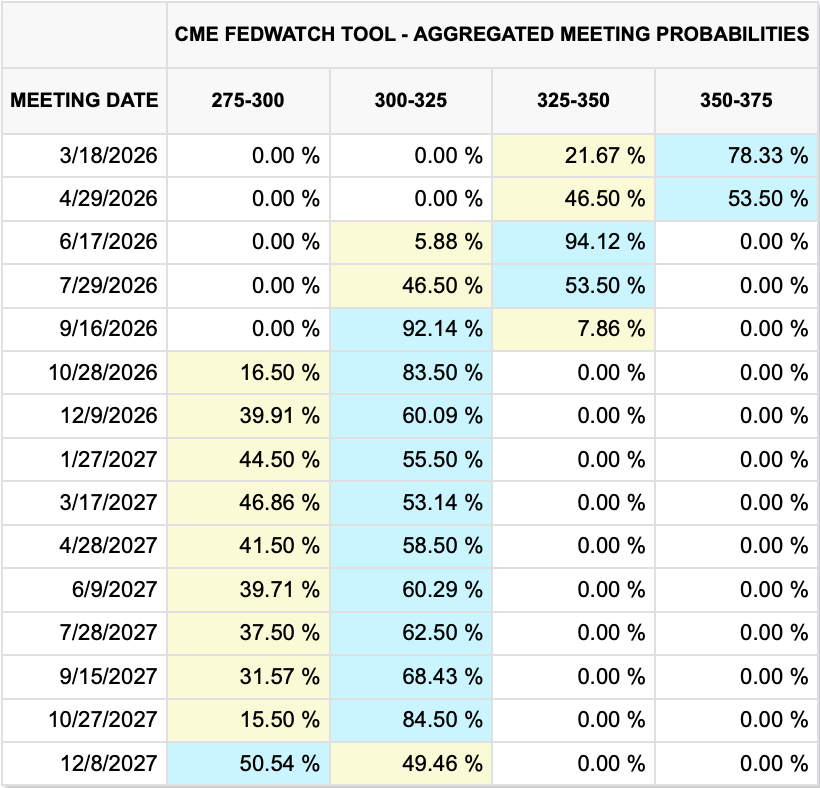
Happily, it appears that the markets are starting to understand this idea as a look at the Fed funds futures market shows the probabilities of rate cuts continues to decline, now 2.5% in March, 21% in May and just 66% in June.  In fact, for the full year, the market is now pricing just 85bps total, not much more than the last dot plot’s median outcome showed.

From my perspective, I remain uncertain as to why they are even considering cutting interest rates.  After all, GDP continues to power along, financial conditions continue to ease with a rising equity market, and inflation has many earmarks of remaining sticky.  Absent a collapse in the commercial real estate market that drags down a number of banks, or some other true black swan type event, it appears that the need to cut rates in the US is limited at best.  Do not be surprised to see the dot plot in March show just 2 rate cuts as the median end-2024 outcome as the hawks will have to reevaluate their stance given the economy’s strength since December.  And as I have said before, if inflation really does start to tick higher again, a rate hike seems possible, which is clearly not on very many bingo cards right now.

But really, the Fed discussion pales in comparison to the NVIDIA discussion and the impact on equity markets in general.  Since there has been very little other data even released, let’s recap the overnight session and head into the weekend.

After the massive rally in the US yesterday, with all 3 major indices setting new all-time highs, most markets in Asia were unable to follow through in any real manner, with very modest gains everywhere that was open (Japan was closed for a holiday).  In Europe, the picture is mixed with some gainers (CAC +0.6%), some losers (IBEX -0.5%) and some nothings (FTSE 100 and DAX unchanged). As there was limited data to drive things and the ECB speakers are trying to hew the line that they, too, will remain patient, nothing has changed there of late.  I continue to believe that the ECB will cut before the Fed because the Eurozone economy is in much worse shape than the US economy.  As to US futures, at this hour (7:30) they are basically unchanged.

In the bond market, after yields rising yesterday afternoon by some 6bps, Treasuries are unchanged this morning.  There are growing concerns that the supply question is going to begin to impact yields in the US, with more than $500 billion of new coupon issuance due over the rest of the year.  It is possible yields will need to rise to find buyers for all that.  As to Europe, yields there are higher by 3bps or so this morning as they missed most of the US move.

Commodity markets are under some pressure this morning with oil (-1.7%) giving up any recent strength and now lower on the week.  However, I believe it remains rangebound and need to see compelling evidence of something changing to see a real move here.  In the metals markets, gold, which slid a bit yesterday is edging higher this morning but both copper and aluminum are under pressure on demand concerns.

Finally, the dollar, which did recover yesterday to finish roughly flat on the session, is beginning to soften a bit as NY is walking in after an extremely quiet overnight session.  But overall, the movement here remains marginal with most currencies, both G10 and EMG, remaining within a +/-0.25% range from yesterday.  With monetary policies around the world seemingly on hold for now, it is unrealistic to look for large moves in the FX market.  We will need to see a change in central bank tunes to make this happen.  (either that or Jensen Huang, NVIDIA’s CEO, will need to explain that the dollar needs to move in one direction or another to boost earnings!)

There is no US data to be released and there are no Fed speakers on the calendar either.  With that in mind, equity markets are going to be the driver of note.  If the rally continues, and risk is embraced, I suspect the dollar can slide a bit further.  However, if there is any late week profit-taking, perhaps the dollar finds a bid.

Good luck and good weekend
Adf
What He’s Sought

On Monday, the market did naught
As traders were giving much thought
To how Jay explains
The work that remains
For him to achieve what he’s sought

And so, while no change is expected
In rates, look at what is projected
The June dot plot showed
The Fed’s preferred road
Was four cuts will soon be effected

Once again, the overnight activity remains fairly dull as traders and investors around the world await the results of tomorrow’s FOMC meeting.  At this point, it seems quite clear the Fed will remain on hold tomorrow leaving Fed funds in a 5.25%-5.50% range while continuing their QT program.  With this in mind, all the excitement will come from the new Summary of Economic Projections (SEP) which includes the dot plot.  The dot plot is the graphical representation of the FOMC members’ expectations for the path of Fed funds going forward.  Below is the most recent release from the June meeting (chart from Bloomberg).

The chart shows each of the FOMC members’ forecasts for where Fed funds will be at the end of 2023, 2024, 2025 and over the long term.  The green line shows the median forecast which in June indicated a belief there will be one more rate hike in 2023 and then four rate cuts in 2024 with another five cuts in 2025 before eventually seeing Fed funds move back to the perceived ‘neutral’ rate of 2.5%.

However, let us consider how some alternative scenarios might evolve.  For instance, I continue to wonder why the Fed will be cutting rates by 100bps in 2024 if they no longer forecast a recession in the US.  After all, if the economy continues to chug along with rates at 5.5%, what purpose would be served by cutting rates?  And if the economy does enter a recession next year, something which seems realistic, then the Fed will be cutting far more than 100bps.  It’s funny, if you look at the dispersion of expectations for 2024, there is one member who feels certain a recession is coming, with an expected rate of 3.625%, and another one who sees higher for longer as lasting the entire year.  At least those two members are making some sense.  However, the idea that the Fed will cut just because, without a more severe economic shock, seems quite unlikely.  After all, Chairman Powell has invoked the ghost of Paul Volcker numerous times and explained they will not be fooled by a temporary decline in inflation.  Rather, they are in this for the long haul and will win the battle.

There are those who would argue that the Fed will cut rates, regardless of the economic situation, because the US cannot afford to continue to pay interest at the current level on their >$32 trillion in debt.  As such, Powell will feel enormous pressure from the administration to reduce rates to help the government.  Now, that is the exact opposite of central bank independence, but certainly not an impossible outcome.  But absent that type of situation, it strikes me that we remain a very long way from the Fed achieving their target inflation rate of 2.0%.  At this point, the one thing Powell has made abundantly clear is that he will not stop until they achieve that goal.  

Another fly in the rate cutting ointment is the price of oil.  Again, this morning it is higher, +0.8%, and now above $92/bbl and seemingly approaching the magical $100/bbl level.  In the wake of the Russian invasion of Ukraine, the Biden administration released some 300 million barrels from the US’s Strategic Petroleum Reserve (SPR) which helped moderate price increases at the time.  However, the ability to repeat that exercise does not exist as currently, the SPR only holds about 350 million barrels and there are actual physical constraints regarding the integrity of the salt domes in which the SPR is kept.  If too much is released, the domes could cave in.  When considering this alongside the ongoing production cuts from OPEC+ as well as the administration’s effective war on domestic oil production, it is reasonable to conclude that oil prices have higher to climb.  Working our way back to the Fed, the problem is that high energy prices ultimately become embedded in all prices, as even services require energy to be accomplished.  This underlying cost pressure is going to prevent any significant decline in the rate of inflation and, in turn, support the Fed’s higher for longer narrative for even longer.

Wrapping up the discussion, I would contend that absent a sharp recession, the Fed is not going to be pressured into cutting the Fed funds rate anytime soon.  Instead, I expect that we will continue to see longer end rates rise slowly as the combination of massive new issuance of Treasury debt and lingering inflation will require higher yields to find buyers.  Currently, the two largest non-Fed holders of Treasury securities are China and Japan, and both of them have been slowly liquidating their portfolios as they need dollars to sell in the FX markets in order to support their own currencies.  When push comes to shove, I expect that we will see US rates retain their advantage over other G10 currencies and that it will continue for a while to come.  As such, I continue to expect the dollar to outperform, at least until something really breaks.  However, what that something is remains open to debate.

Turning to the overnight session, which was quite uninteresting as mentioned above, we saw mixed to weaker performance in Asian equities, with only the Hang Seng managing to eke out any gains at all, while European bourses are mixed with the major exchanges all within 0.2% of yesterday’s closing levels.  Yesterday’s US performance was as close to unchanged as it could get while being open, and this morning’s futures market is showing tiny gains (<0.1%) at this hour (8:00).

Bond markets are somewhat mixed on the day, with Treasury yields backing up 2bps, while UK gilt yields are lower by 4bps and everything else is in between.  Eurozone final CPI for August was released with the headline ticking down 0.1% to 5.2%, but core unchanged at 5.3%, with both, obviously, still well above the ECB target.  Madame Lagarde must be praying quite hard for inflation to fall further as she made it clear she does not want to raise rates again.  In the end, the Eurozone has myriad problems with sticky high prices and slowing growth, an unenviable position.

Aside from oil’s gains, gold has been performing relatively well lately, which given the dollar’s resilience and higher interest rates seems somewhat odd.  One possible explanation is that there continues to be significant demand in Asia, where, for example, the Shanghai Gold exchange price is currently some $30/oz higher than on the COMEX, and this spread has been growing.  We have heard much about the record amount of gold buying by central banks this year, and this seems of a piece with that outcome.  However, looking at industrial metals, both copper and aluminum are softer this morning as the prospects for Chinese growth diminish and with them so do prospects for demand for those metals.

Finally, the dollar is a bit softer this morning vs. most of its G10 counterparts with NOK (+0.75%) leading the way higher on the back of oil’s continuing rally.  In fact, the entire commodity bloc is at the top of the charts today.  However, in the EMG bloc, we are seeing more of a mixed picture with an equal number of gainers and laggards and none showing exuberance in either direction.

On the data front today, we see Housing Starts (exp 1439K) and Building Permits (1440K) as well as Canadian CPI (3.8% headline, 3.7% core), with both measures rising and keeping pressure on the BOC.  There are still no speakers, so my take is that things will be dull until tomorrow’s FOMC announcement at 2:00pm.

Good luck

Adf

Baked in the Cake

A quarter is baked in the cake
Ere next time, when Jay takes a break
At least that’s the view
Of so many who
Get paid for, such statements, to make

The question, of course, is why Jay
Would wait, lest inflation’s at bay
The narrative, though,
Is all-in that low
Inflation is now here to stay

Well, it’s Fed Day so all focus will be there until this afternoon at 2:00 when the Statement is released and then, probably more importantly, at 2:30 when Chairman Powell begins his press conference.  Under the guise of a picture is worth a thousand words, I believe the next two charts, both unadulterated from Bloomberg are very effective at describing the current market expectations.  The first is a tabular and graphic depiction of the Fed funds futures market over the next year, which shows that today’s hike is fully priced in, and then there is a just under 50% probability of a hike either September or November.  After that, though, the market is convinced that Fed funds are going to fall, with more than 100 basis points of decline priced in through 2024.

Now, compare that to the second chart, the Dot Plot from the June FOMC meeting:

In truth, the two curves look pretty similar with perhaps the biggest difference the Fed’s current belief that they will absolutely hike twice before the end of 2023 rather than simply a 50% probability of such.  So, can we just assume this is the way things are going to be?  After all, if markets and the Fed agree on the same outcome, it seems likely to be realized, no?

Alas, this is where the narrative is based on crystal balls, not on data.  Whether it is the punditry or the Fed (or the FX Poet), nobody knows how things are actually going to play out.  One of the things that seems to be a throwaway line by every Fed speaker but is actually the most important part of the commentary is that their views are based on, ‘if the economy evolves as we expect it to.’  The problem is that the history of Fed prognostications is awful. 

Obviously, the most recent glaring error was the ‘inflation is transitory’ narrative that they peddled for a year while inflation was rising sharply for many very clear reasons.  Why we should think that their modelling prowess has improved since then is beyond me.  I have often opined that the problem for the Fed is that every one of their models is broken since they don’t accurately reflect the economy, not even a little bit.  Add to that the underlying premise which is that inflation is naturally at 2% and will head back there on its own, something with exactly zero empirical or theoretical support, and you have a recipe for policy errors.  

The latest policy error was the transitory delay, but perhaps the bigger problem for the Fed is the potential for a relatively unprecedented set of economic variables with higher than target inflation combined with slow economic activity yet low unemployment (due to the shrinkage of the labor force.). I don’t think their playbook has a play to address that problem and I fear that the politics of the outcome will have a disproportionate impact on any policies they implement.  If there is one thing of which we can be sure, it is that political solutions to economic problems are the worst kind with the longest-term negative impacts.  

It is for this reason that Powell’s press conference is so widely anticipated as that is where we will learn any new information.  But until then, I expect that markets will remain relatively benign.

A quick tour of the overnight session shows that there was no follow through to Monday night’s Chinese equity performance with the main exchanges in China and Japan all modestly lower.  Europe, however, is having a much tougher time this morning with the CAC (-2.0%) leading the way lower as concerns seem to be growing over the ongoing central bank tightening policies continuing into a recession.  There was vanishingly little data and no commentary of note, but we have seen some weaker than expected earnings numbers out of the continent, a sign that not all is well.  As to US futures, they are essentially unchanged at this hour (8:00) as investors await this afternoon’s Fed meeting.  I would be remiss, though, not to point out that there were several worse than expected earnings numbers, notably from Microsoft, which is a chink in the armor of the idea of infinite growth for AI.

Meanwhile, bond markets are under pressure in Europe with yields higher across the board there, on the order of 2.5bps to 3.5bps.  This appears to be a move based on expectations of continuing higher interest rates from the ECB.  Treasury yields, though, are unchanged on the day, and at 3.88%, currently sit right in the middle of the trading range we have seen for 2023.  As to JGB yields, they slipped 2bps last night with limited concern that Ueda-san is going to rock the boat tomorrow night.

Oil prices (-1.0%) are a bit softer, but this looks like a trading correction after a strong run higher rather than a fundamentally based story.  Base metals are also softer this morning as the Chinese inspired euphoria seems to have dissipated quickly while gold (+0.4%) is creeping higher despite rising yields and a modestly firmer dollar.  It appears to me there is an underlying bid to the yellow metal that will not go away regardless of the macro situation.

Finally, the dollar is slightly firmer this morning as risk aversion seems to be supporting the greenback.  JPY (+0.35%) is the G10 outlier on the plus side with the commodity bloc under the most pressure (AUD -0.7%, NOK -0.7%, SEK -0.5%).  In the emerging markets, THB (+0.7%) has been the best performer after a surprisingly positive Trade Balance with a large negative one anticipated.  However, the rest of the EMG space is mixed with some very weak currencies (HUF -1.0%, ZAR -0.9%) and some other modestly strong ones (BRL +0.4%, MYR +0.3%).  The forint story continues to revolve around central bank activity, with concerns they will ease policy with inflation still high, while the rand is simply suffering from its commodity basis.  Meanwhile, the real jumped after Fitch upgraded the country’s debt rating BB (stable) from BB-.

Ahead of the FOMC decision, we see New Home Sales (exp 725K) but that will be a nonevent given the afternoon’s agenda.  It is a fool’s errand to try to anticipate exactly how Powell will respond to the questions he receives, or even exactly how they will phrase their current views.  As such, today is one to watch and wait, then evaluate afterwards.

Good luck

Adf