Jobs is Passe

The usual story today
Would be NFP’s on its way
But with BLS
On furlough, I guess
The story on jobs is passe
 
But ask yourself, if we don’t get
A data point always reset
That’s only a fraction
Of total job action
Is this something ‘bout we need fret?


I guess the question is, is the government shutdown impacting markets?  Frankly, it’s hard for me to see that is the case. Today offers a perfect scenario to see if it is true.  After all, if the government was working, the BLS would have released the weekly Claims data yesterday and market participants would be waiting with bated breath for today’s NFP number.  As I said yesterday, while Ken Griffin is likely quite annoyed because I’m sure Citadel makes a fortune on NFP days, the rest of the world seems to be getting along just fine.  In fact, maybe this is exactly what market participants need to learn that the data points on which they rely don’t really matter.  

With NFP in particular, the monthly number, which since 1980 has averaged 125K with a median of 179K seems insignificant relative to the number of people actually employed, which as of August 2025 was recorded as 159.54 million.  Now I grant, that the employed population has grown greatly in the past 45 years, so when I take it down to percentages, the average monthly NFP result is 0.10% of the workforce during that period, with the median a whopping 0.14%.  The idea that business decisions are made, and more importantly, monetary policy decisions are made on such a tenuous thread is troublesome, to say the least.  Did this report really tell us that much of importance?  Especially given its penchant for major revisions.

Below is a graphic history of NFP (data from FRED) having removed the Covid months given they really distorted the chart.

And below is a chart showing total payrolls (in 000’s) on the RHS axis with the % of total payrolls represented by the monthly change in NFP on the LHS.  Notice that almost the entire NFP series, as a %age of total employment, remains either side of 0 with only a few outcomes as much as even 0.5%.  My point is, perhaps the inordinate focus on this data point by markets and policymakers alike, has been misguided, especially as the accuracy of the initial releases seems to have worsened over time.  Maybe everybody will be able to figure out that they can still do their jobs even without this data.  (Ken Griffiin excepted. 🤣)

Food for thought.

Like swallows return
To Capistrano, Japan
Votes again this year


The other notable news story is tomorrow’s election in Japan’s LDP for president of the party and the likely next Prime Minister.  While there are technically 5 candidates, apparently, it is really between two, Sanae Takaichi, a former economic security minister and a woman who would be the first female PM in the nation’s history, and Shinjiro Koizumi, son of former PM Junichiro Koizumi, and a man who would become the nation’s youngest prime minister.  There are several others, but these are the front runners.  From what I gather, Takaichi-san is the defense hawk and the more conservative of the two, an updated version of Margaret Thatcher, to whom she will constantly be compared if she wins.  Meanwhile, Koizumi is more of the same they have had in the past.

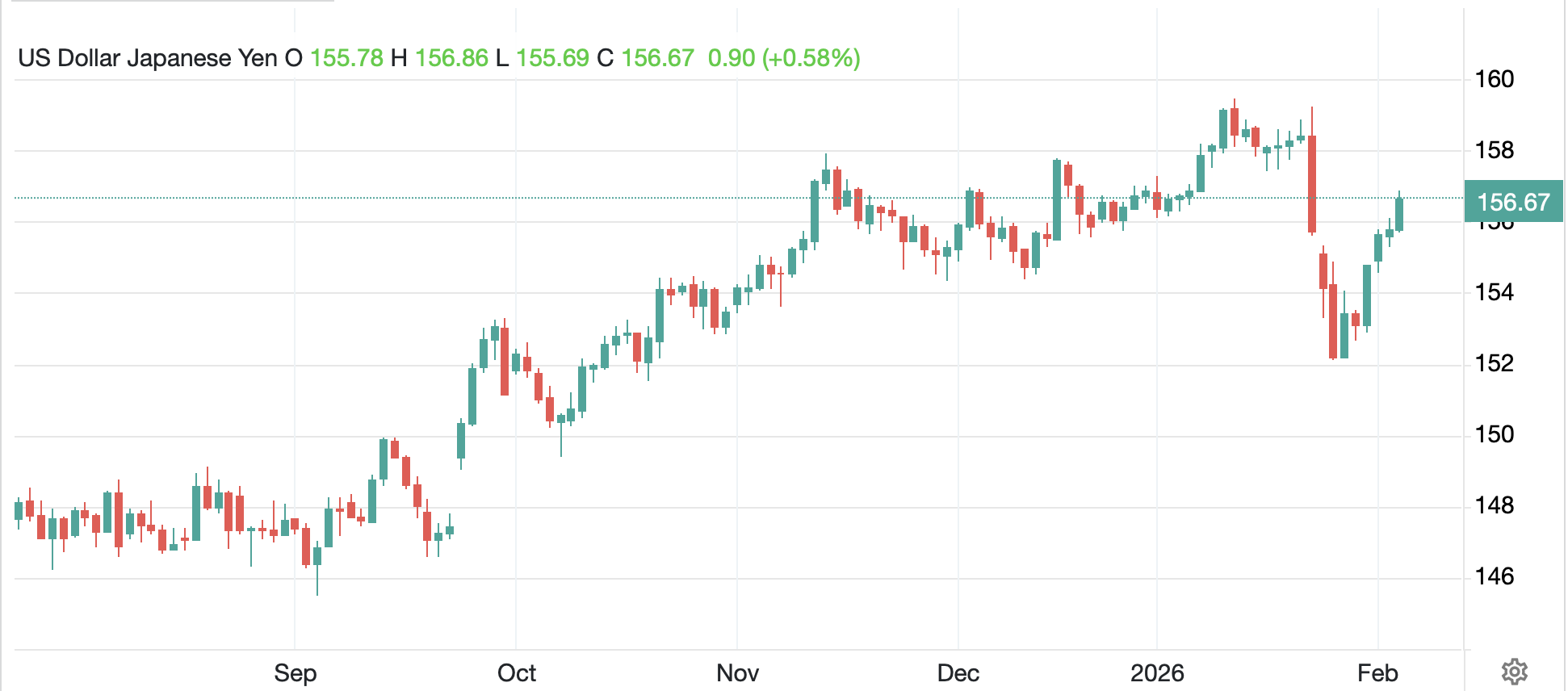
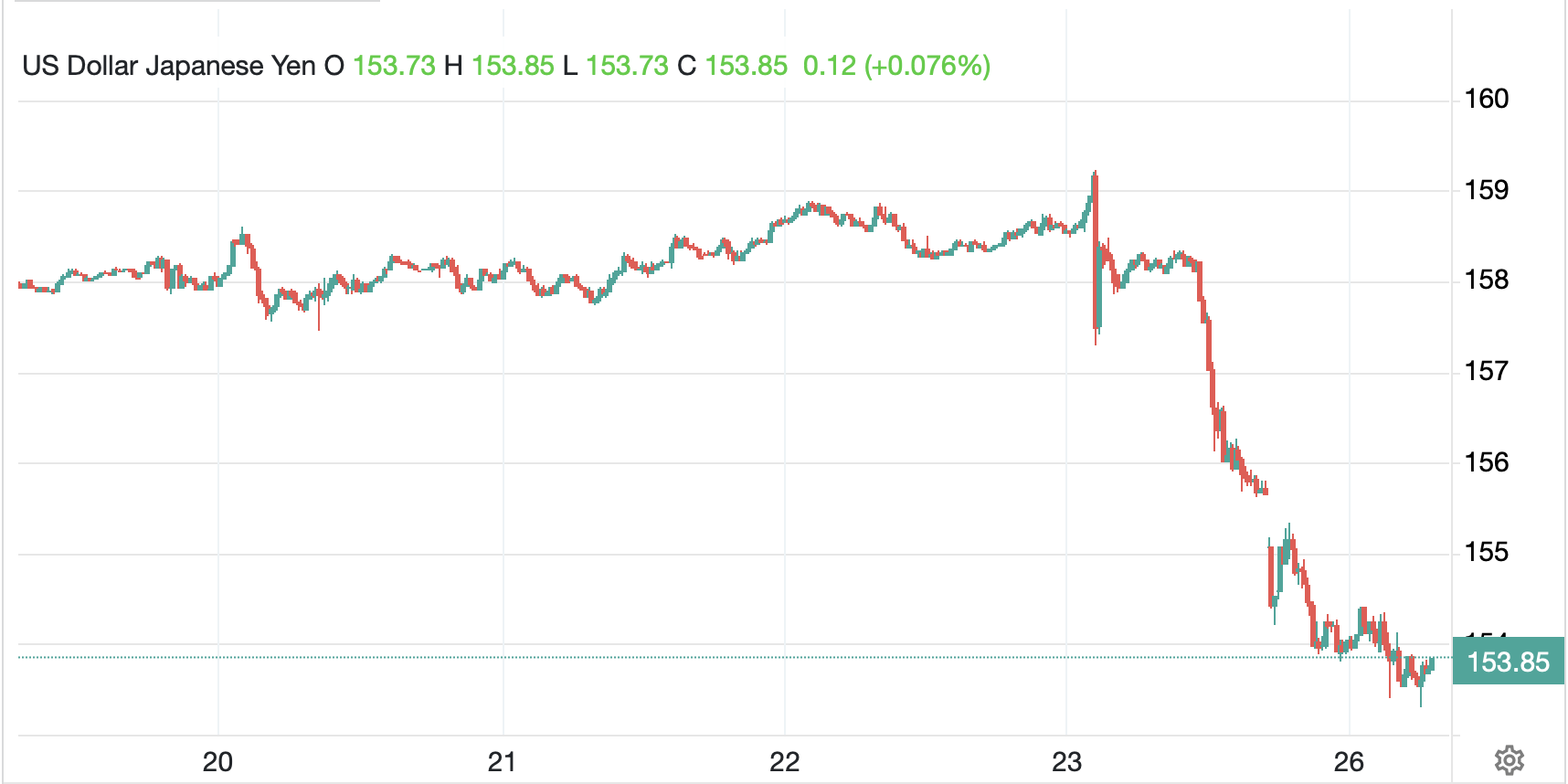
There are some analysts who are trying to make the case that this election has had a major impact on Japanese markets, and one might think that makes sense.  But if I look at USDJPY (0.0% today), as per the below chart, I am hard pressed to see that the election campaign has had any impact of note.

Source: tradingeconomics.com

If we turn to the Nikkei (+1.9%) which made a new high last night, it seems that is tracking US technology shares and is unconcerned over the election.  

Source: tradingeconomics.com

Arguably, if the equity market is forward looking (which I think is true) investors are indifferent to the next PM.  Finally, a look at JGBs shows that yields continue to climb there, albeit quite slowly, but consistently make new highs for the move and are back to levels last seen in 2008.

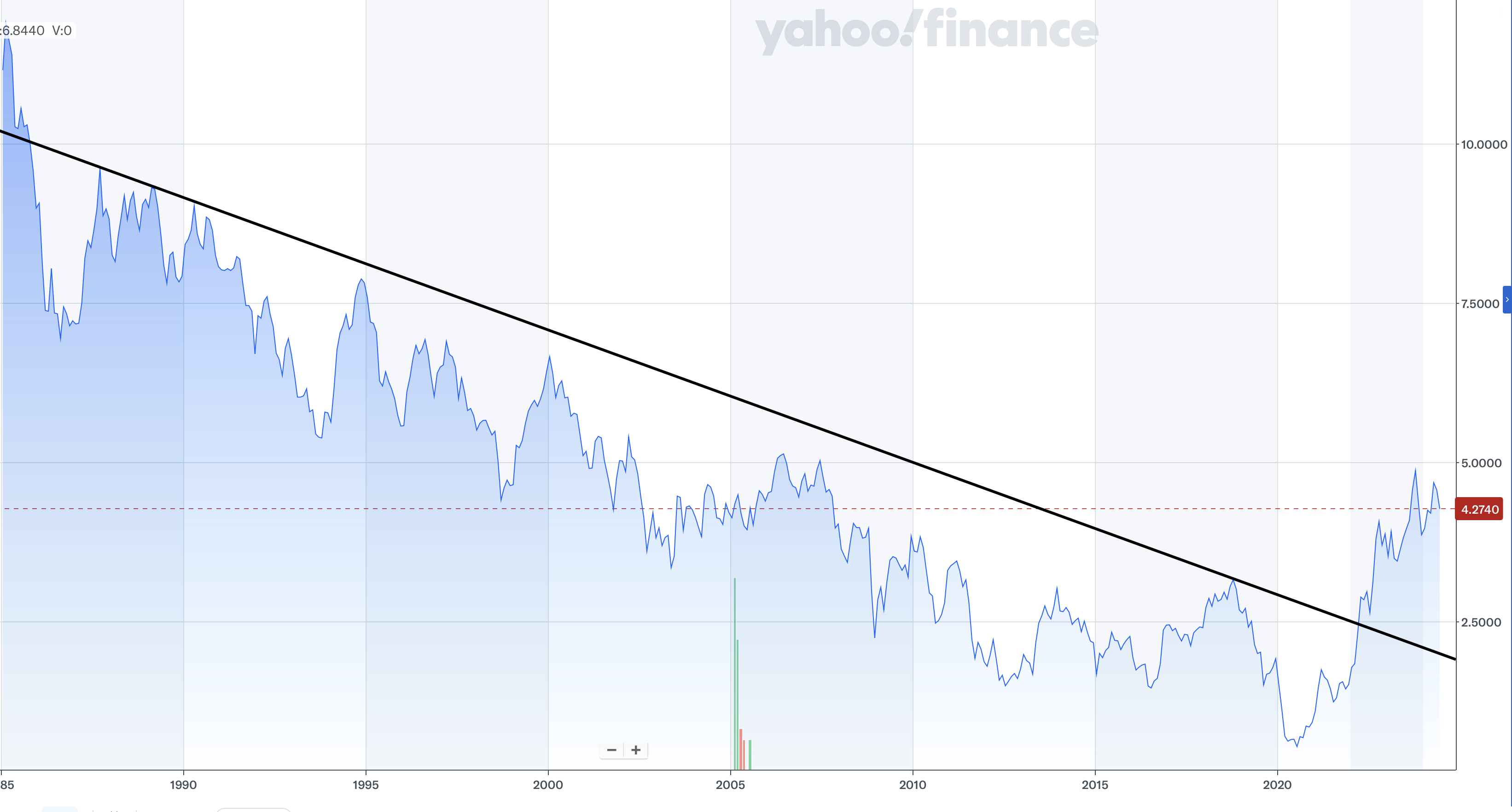
In fact, like almost everything since the GFC, perhaps the recent run of incredibly low yields in Japan is the aberration, not the rule!  But the argument for higher Japanese yields is more about the fact that inflation there is running at 3.5% and the base rate remains at 0.50%.  Investors remain concerned that the recent history of virtually zero inflation in Japan may be a thing of the past and so are demanding higher yields to hold Japanese debt.

I have no idea who will win this election, although I suspect that Takaichi-san may wind up on top.  But will it change the BOJ?  I don’t think so.  And the fact that the LDP does not have a working majority means not much may get done afterwards anyway.  All told, it is hard to be excited about holding yen in my eyes.

Ok, let’s look at the rest of the world quickly.  Despite a soft start, US equity markets managed to close in the green and this morning all three major indices are pointing higher by 0.25%.  Away from Japan, Chinese markets are closed for their holiday, and most of the rest of Asia followed the US higher, notably Korea (+2.7%) and Taiwan (+1.5%).  The only outlier was HK (-0.5%) which looked to be some profit taking after a sharp run higher in the past week.  In Europe, Spain (+0.8%) and the UK (+0.6%) are the best performers despite (because of?) slightly softer PMI Services data.  Either that, or they are caught up in the US euphoria.

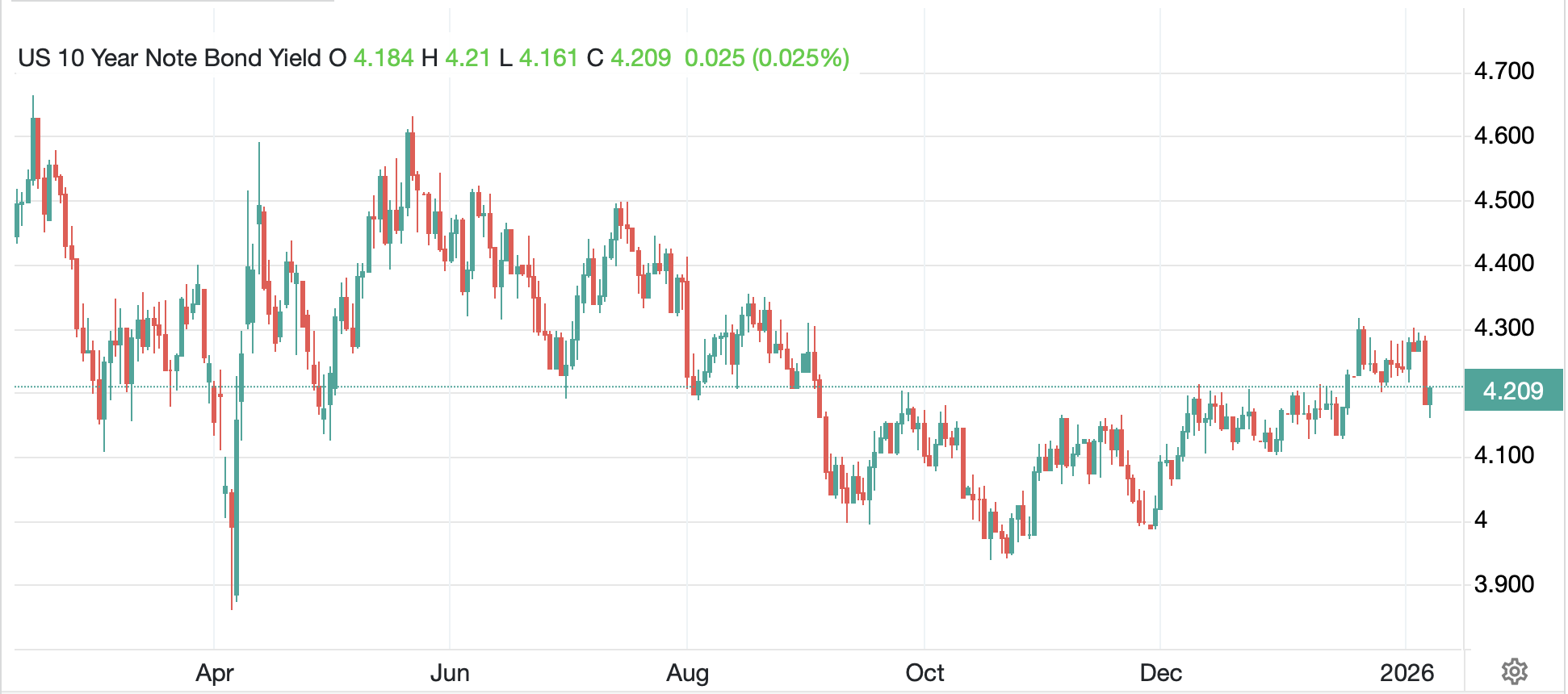
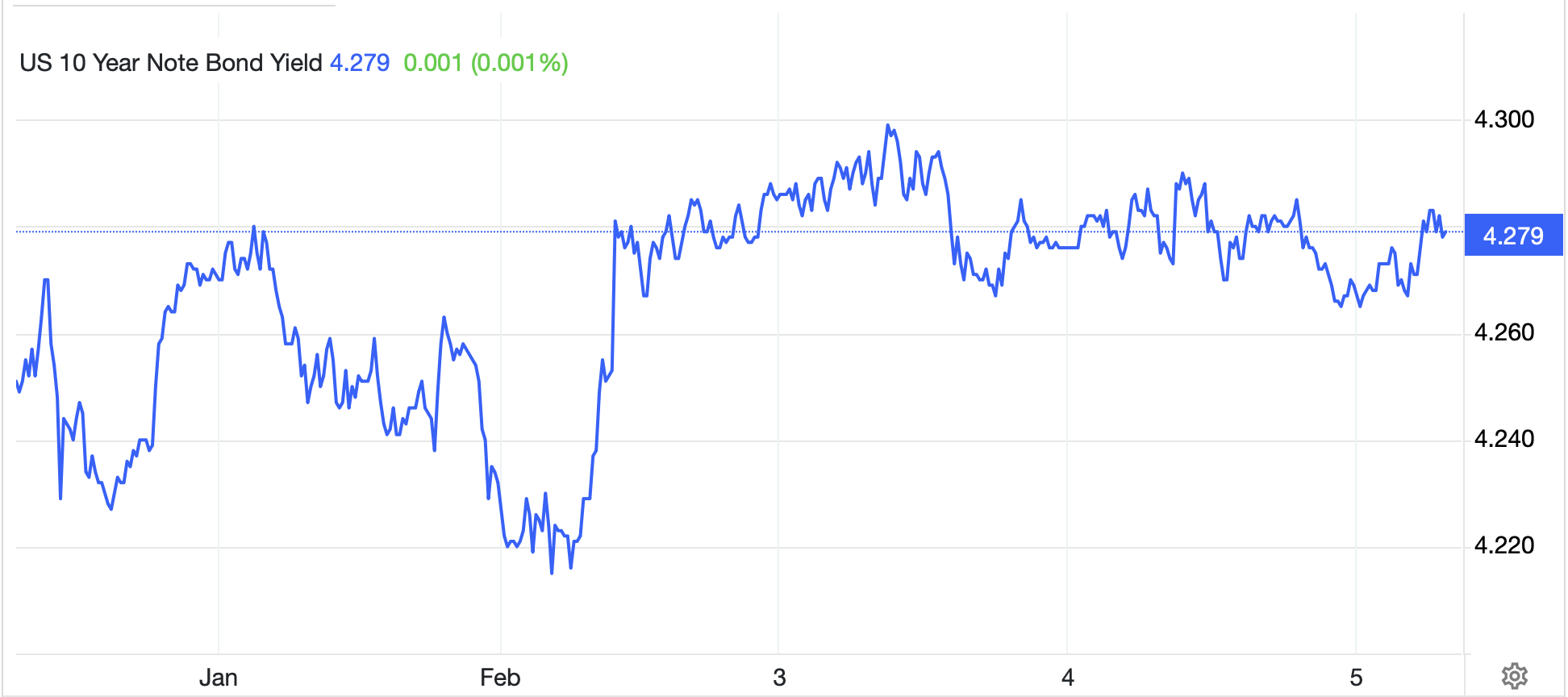
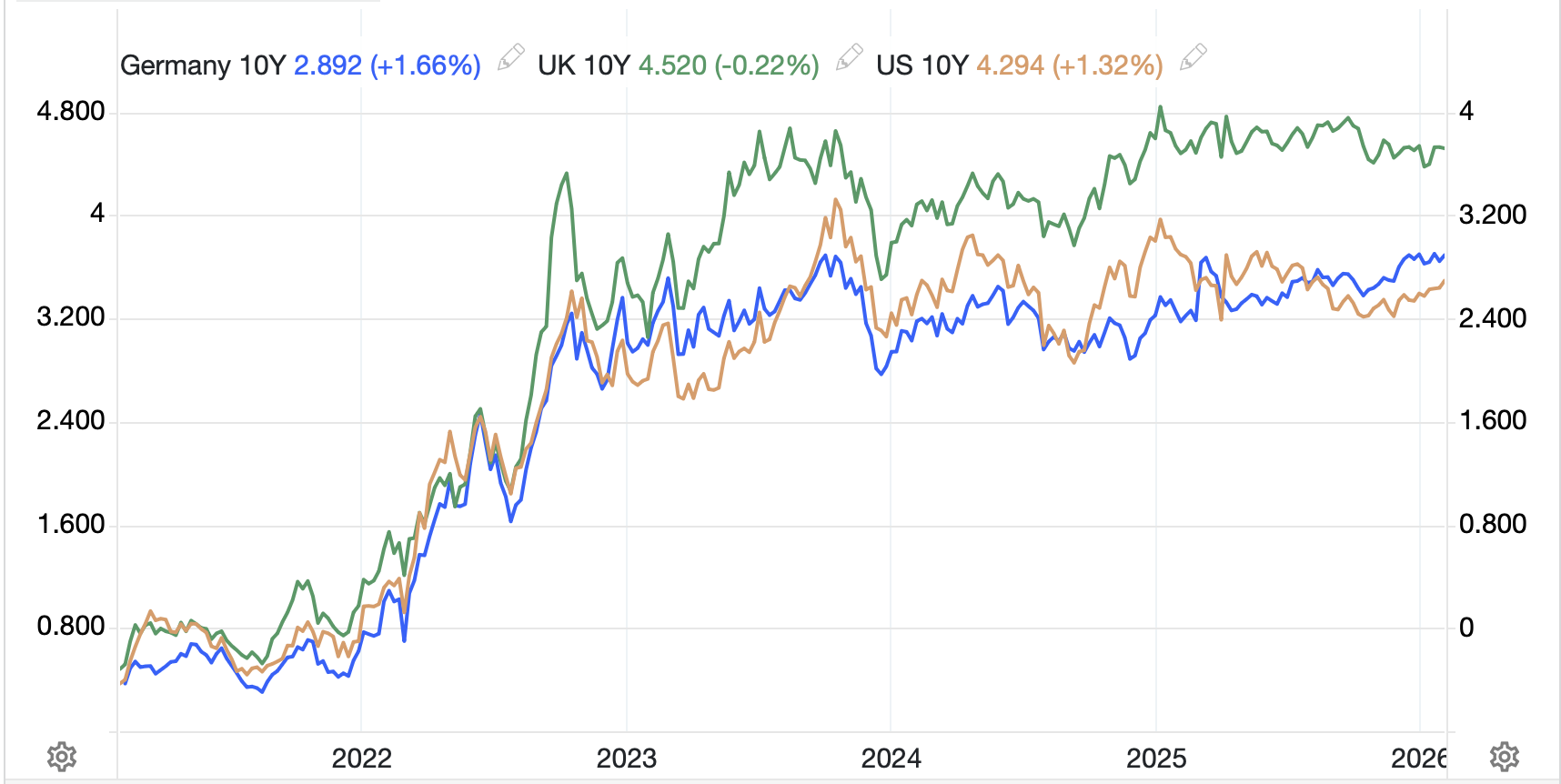
The bond market saw yields slip a few basis points yesterday and this morning, while Treasury yields are unchanged at 4.08%, European sovereigns are sliding -1bp across the board.  I think the slightly softer data is starting to get some folks itching for another ECB rate cut, or at least a BOE cut.

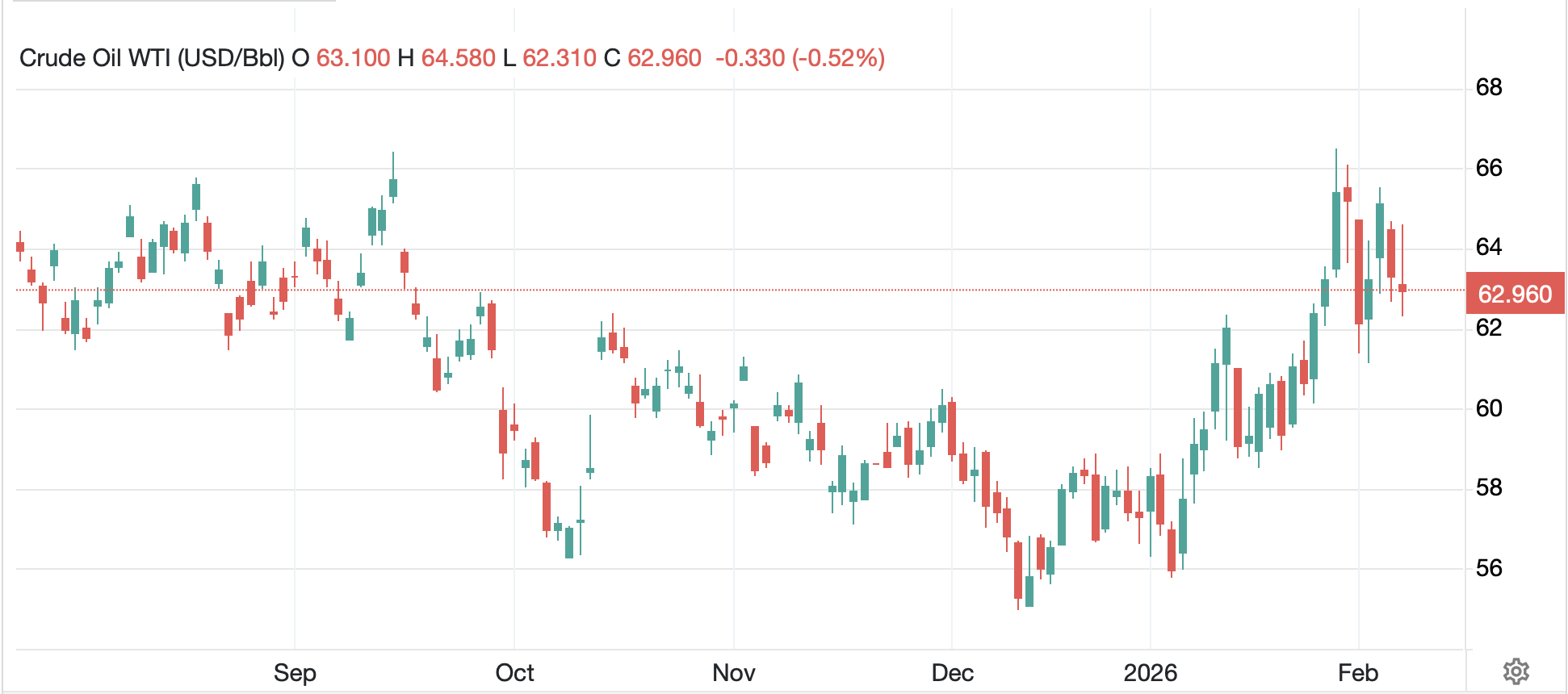
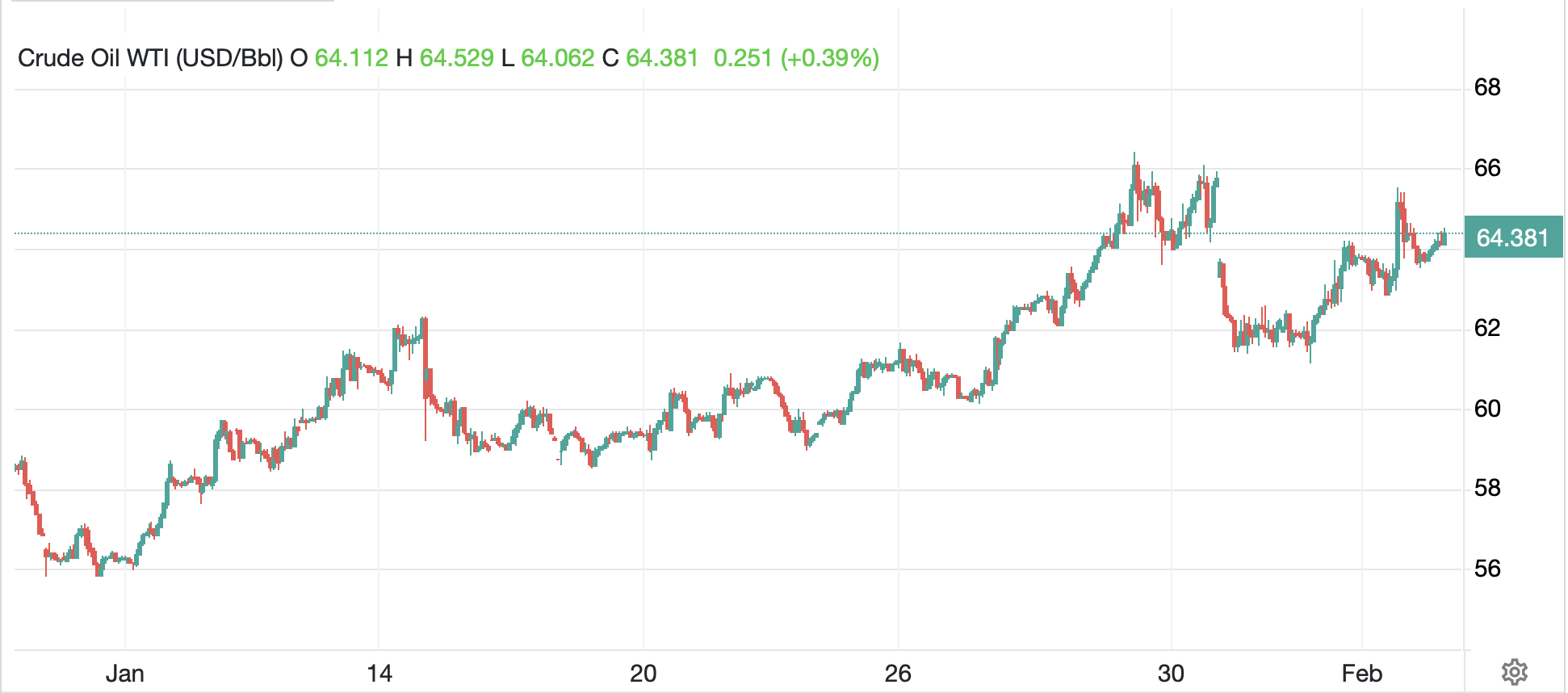
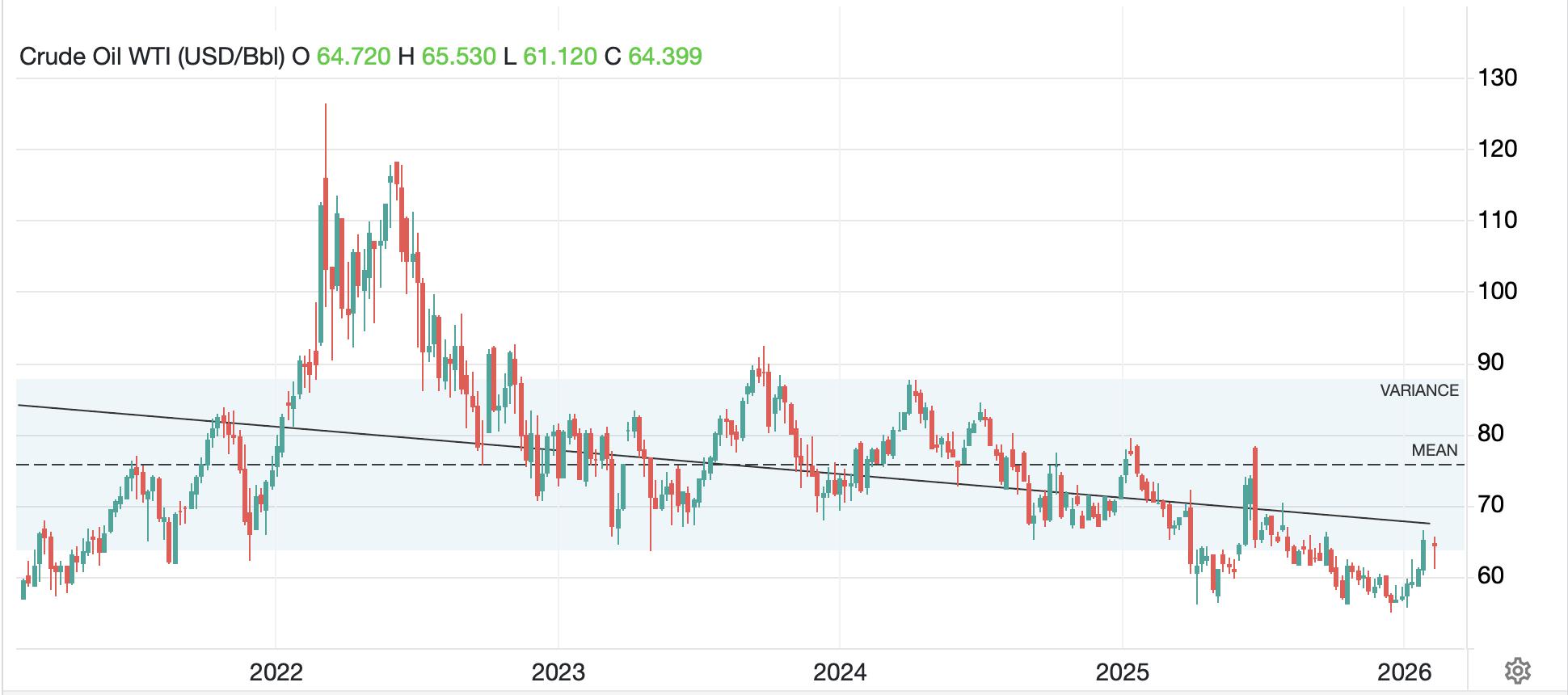
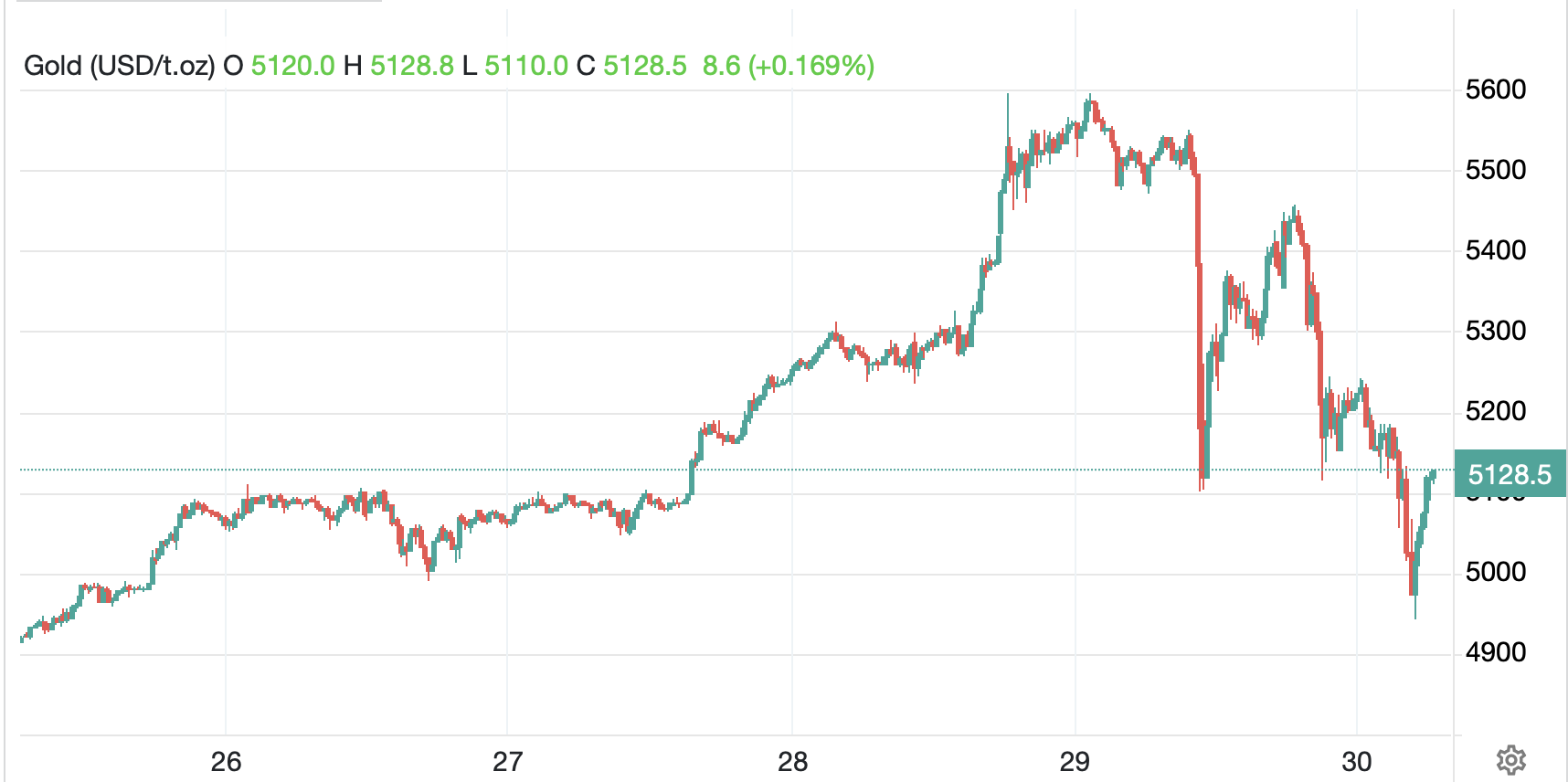
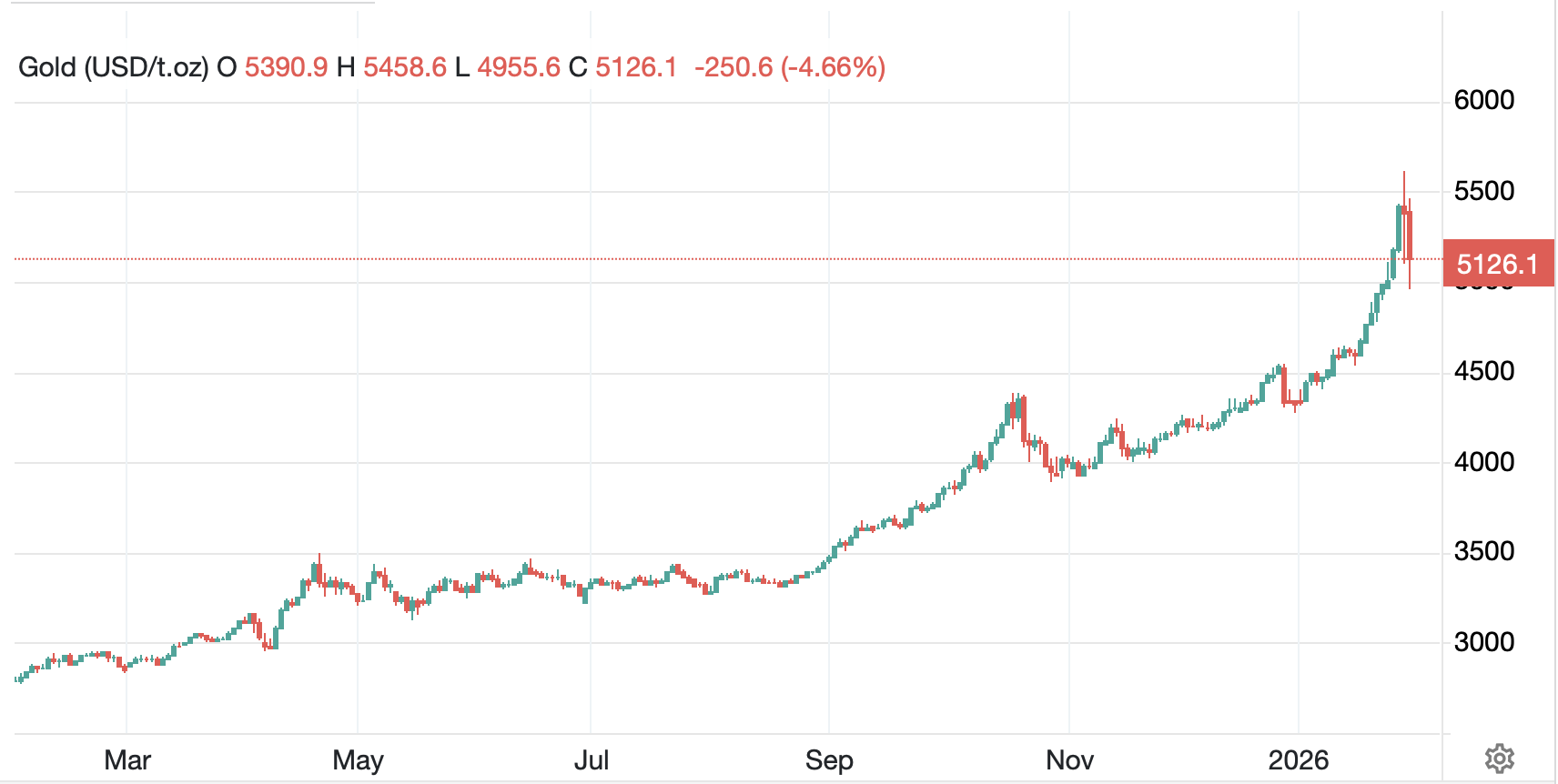
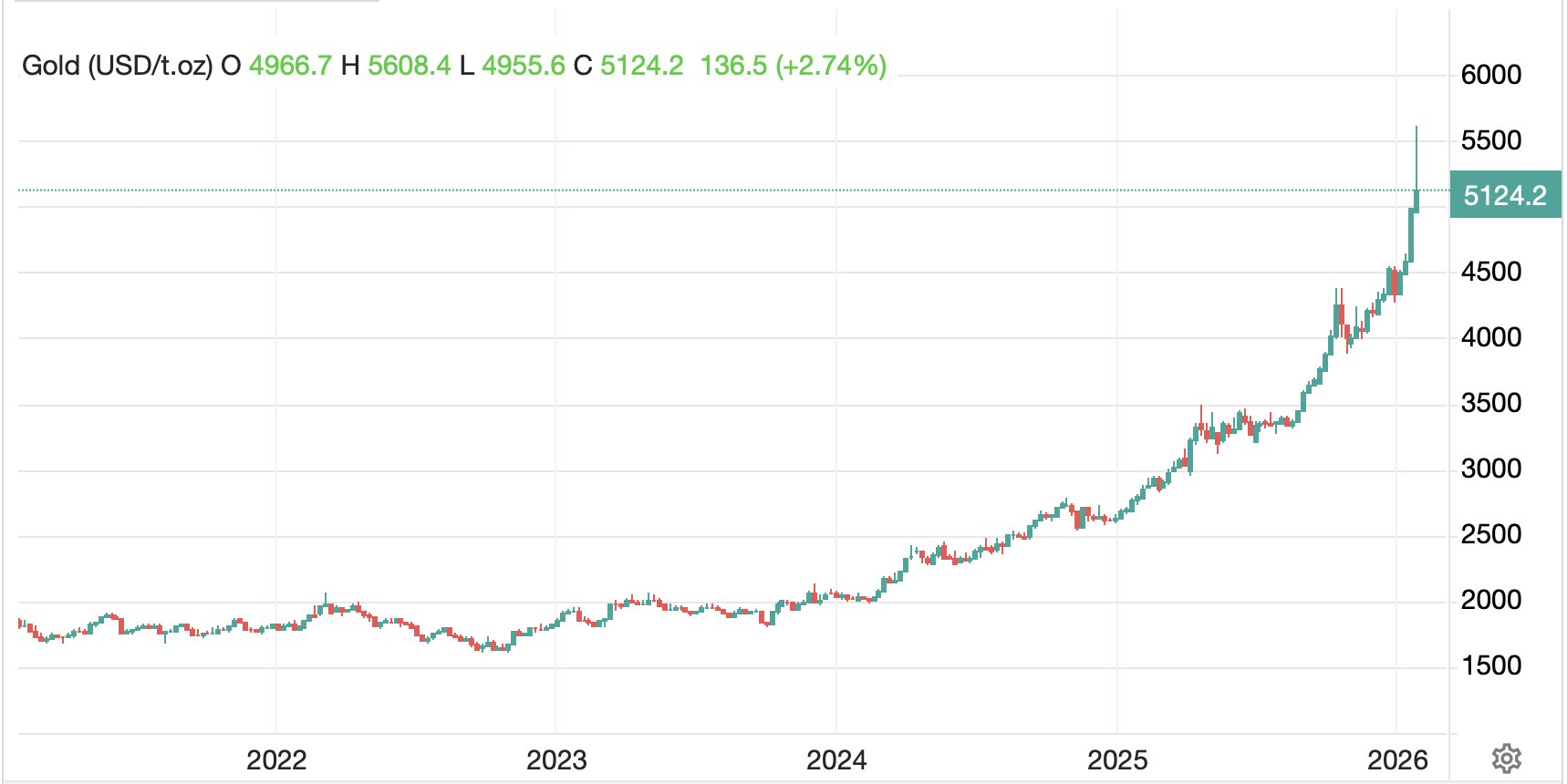
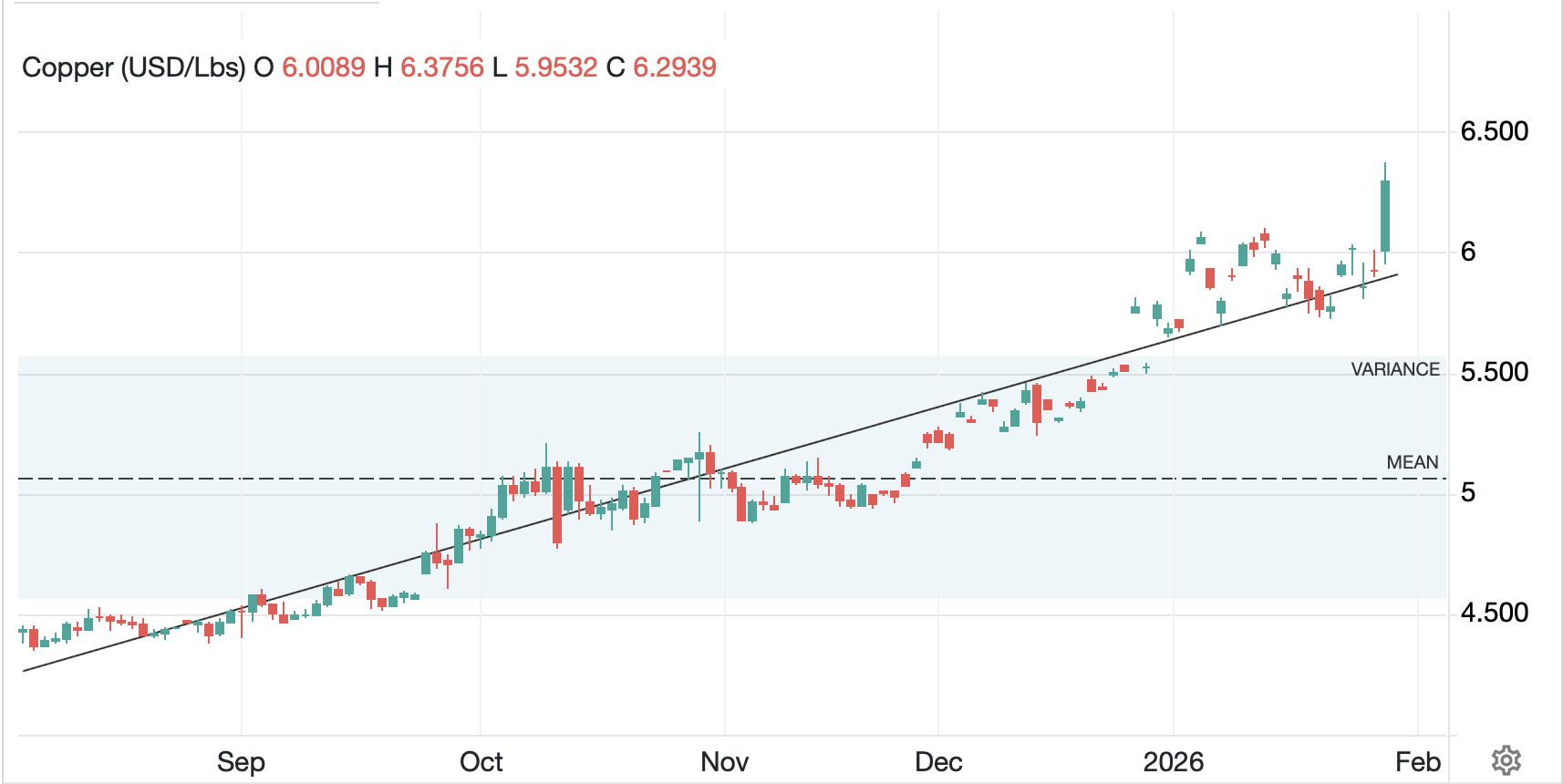
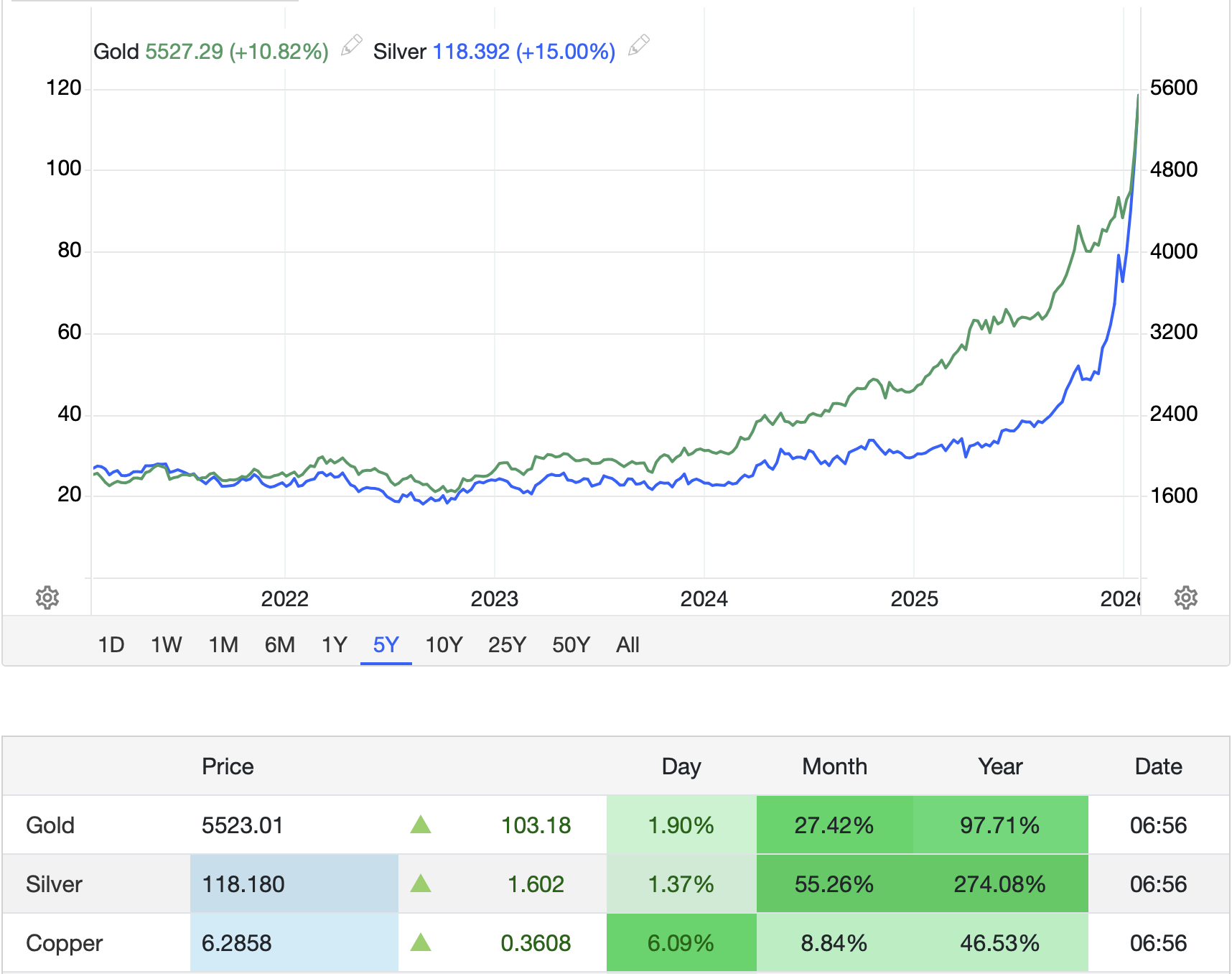
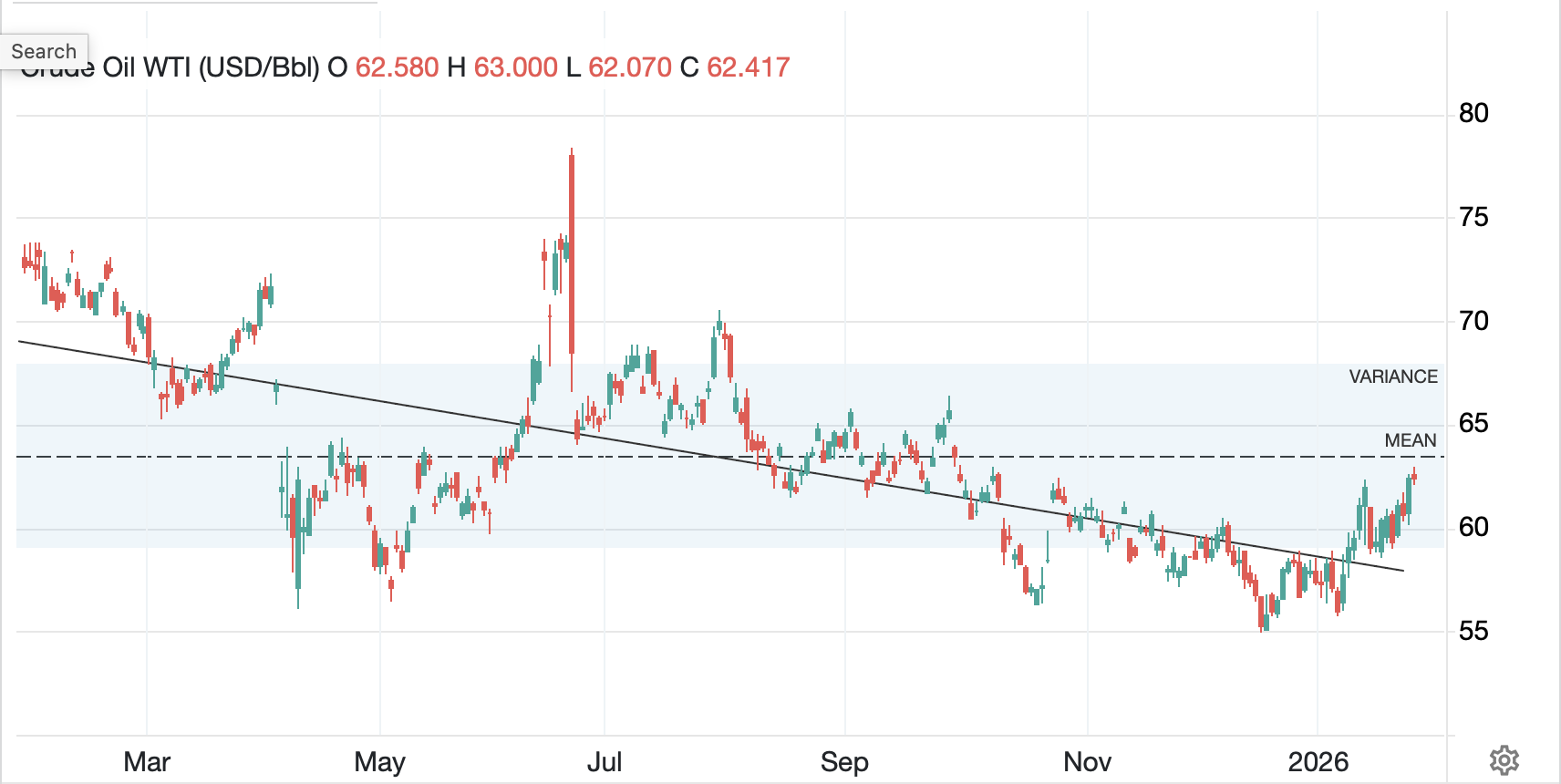
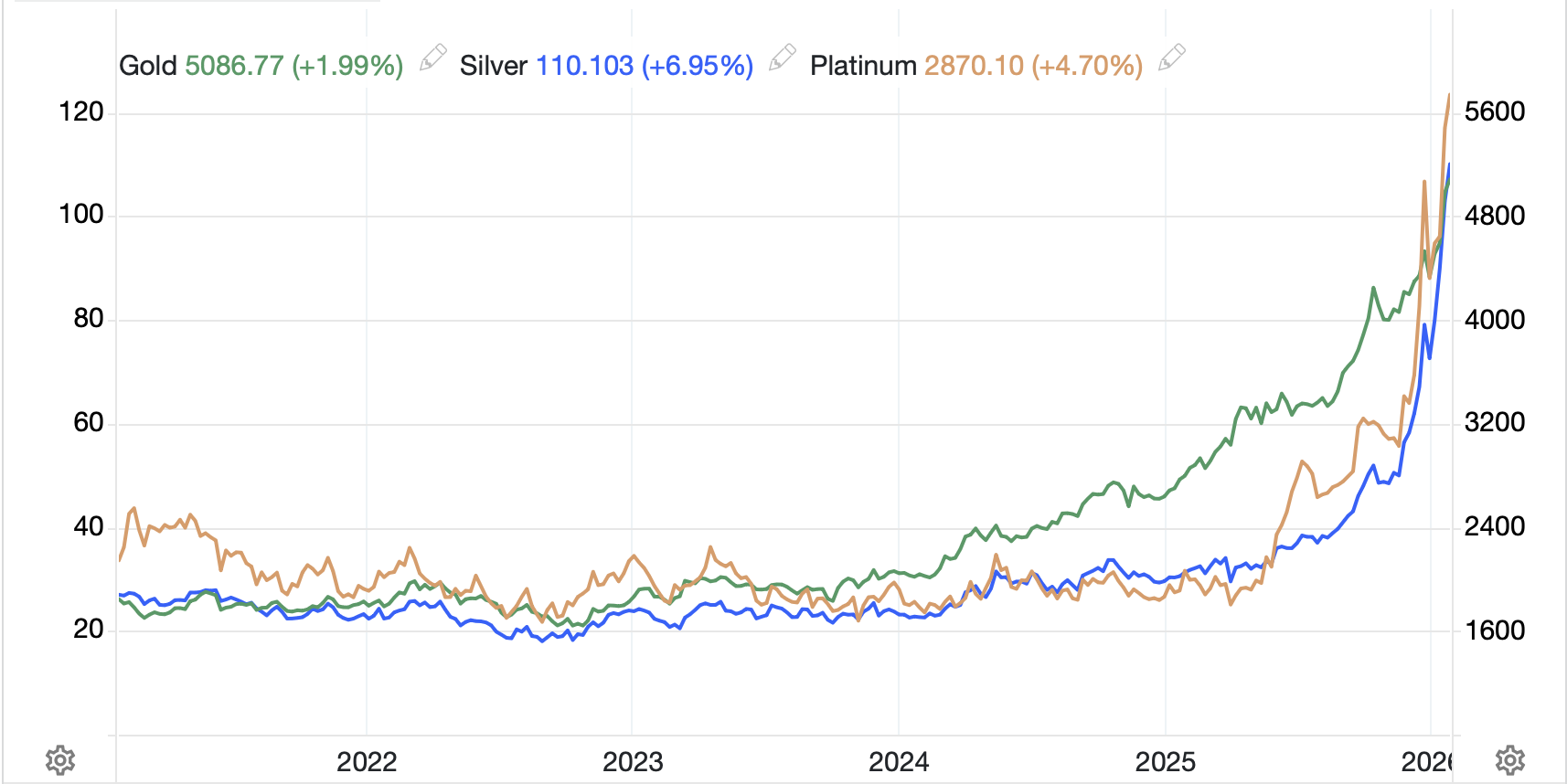
In the commodity markets, oil (+0.4%) which continued to fall throughout yesterday’s session to just above $60/bbl, looks like it is trying to stabilize for now.  There continues to be discussion about more OPEC+ production increases, and it seems that whatever damage Ukraine has done to Russia’s oil infrastructure is not considered enough to change the global flows.  As to the metals, gold (+0.2%) and silver (+1.2%) absorbed a significant amount of selling yesterday in London, which may well have been one account, as they reversed course late morning and have been climbing ever since.  Copper (+1.1%) is also pushing higher and the entire argument about the defilement of fiat currencies remains front and center.  I guess JP is now calling it the debasement trade as Gen Z, if I understand correctly, is selling other assets and buying a combination of gold and bitcoin.

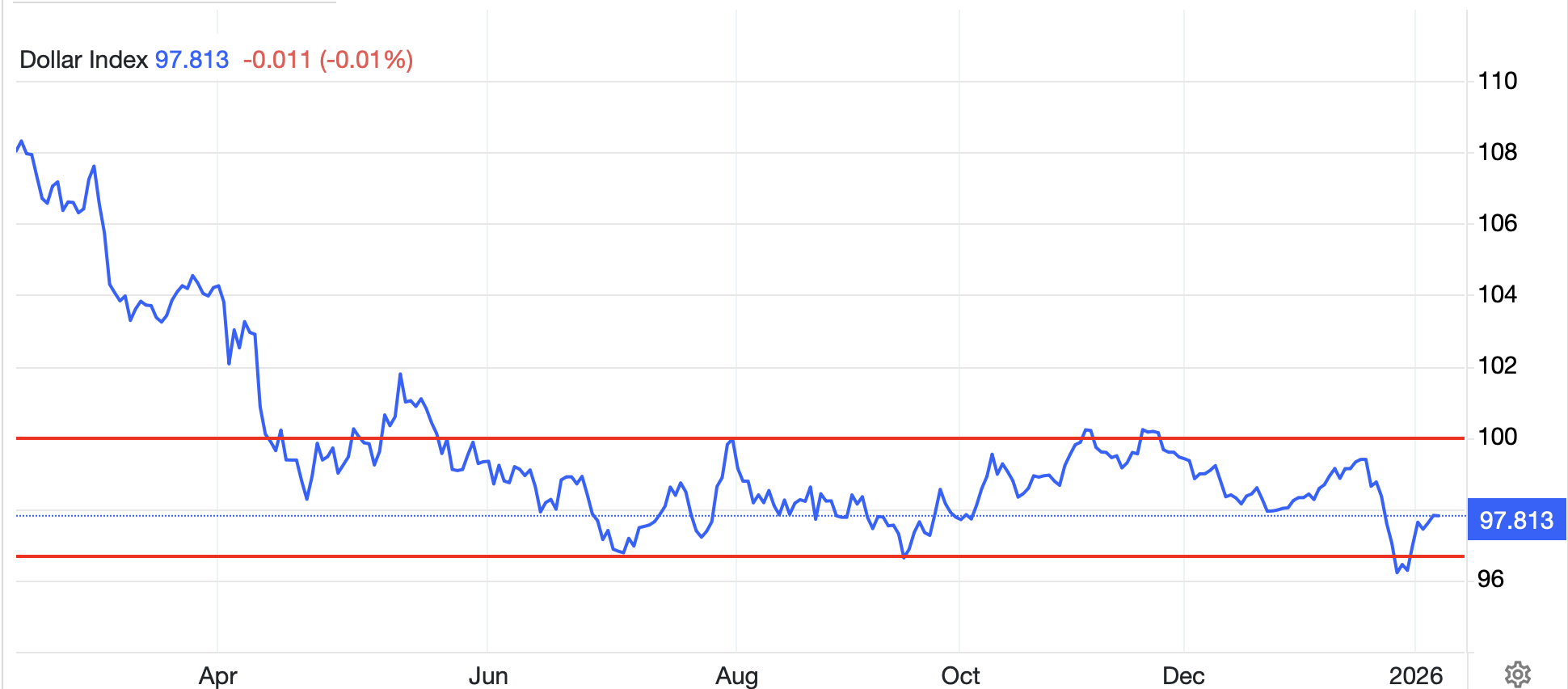
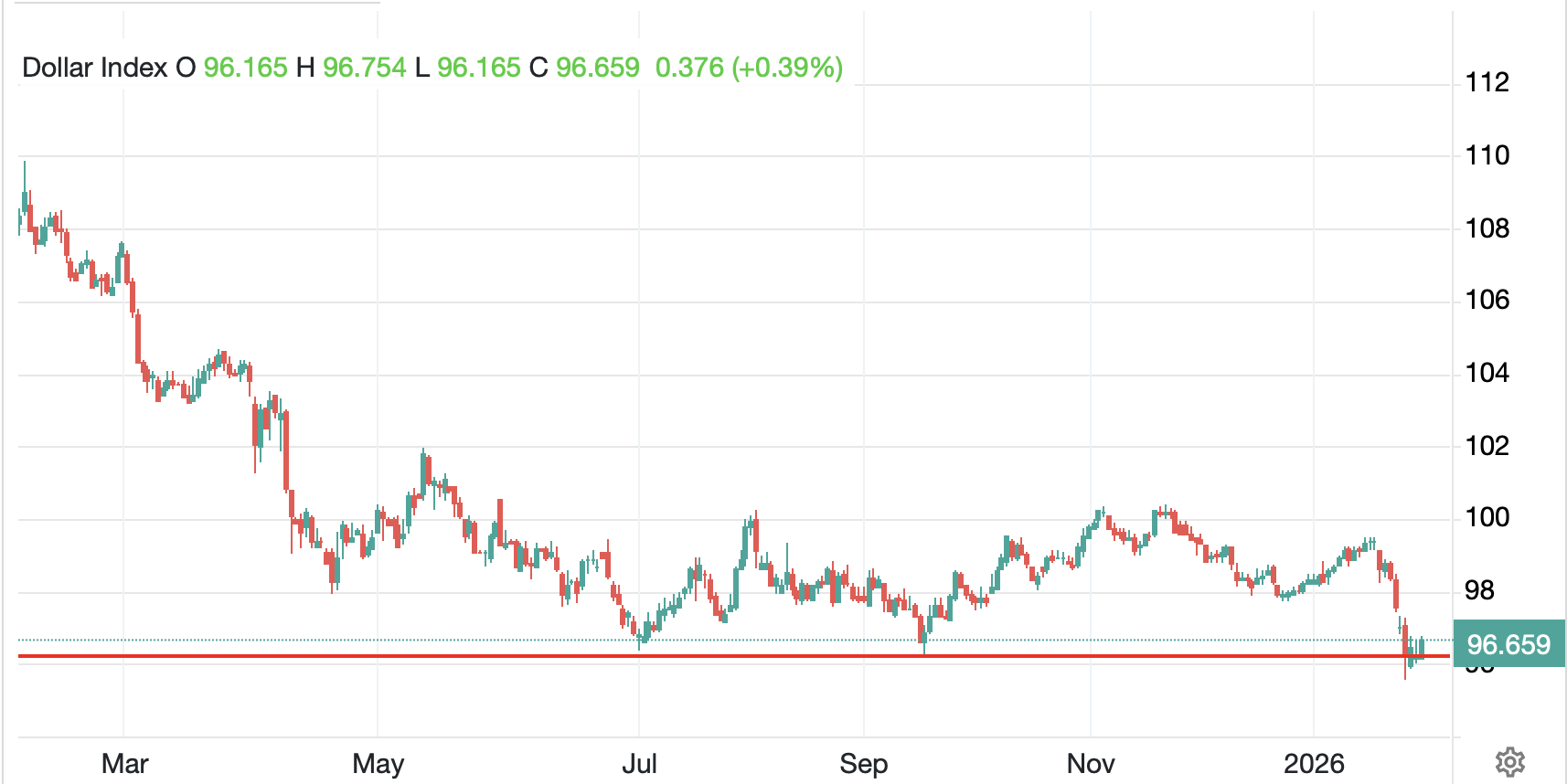
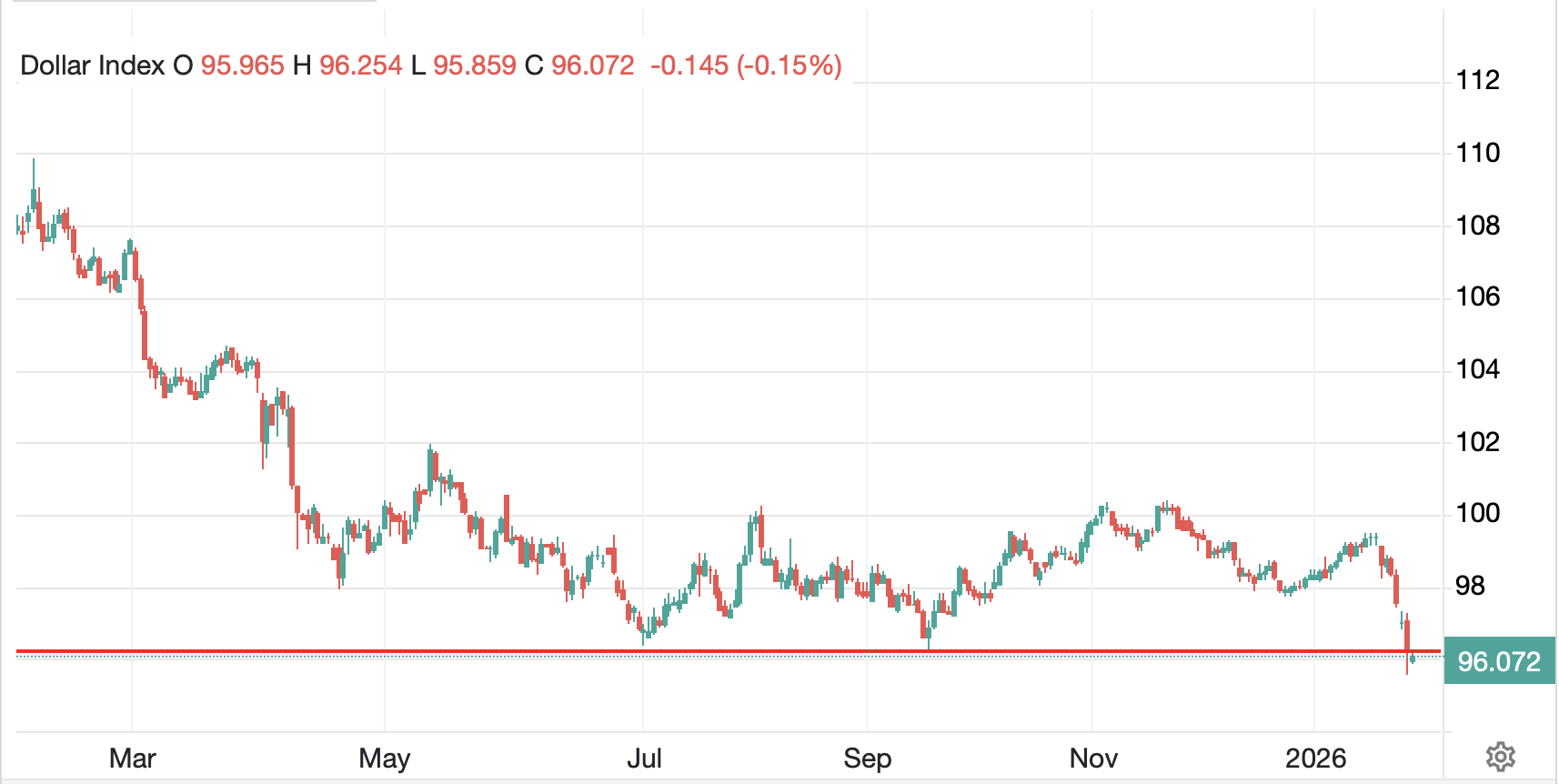
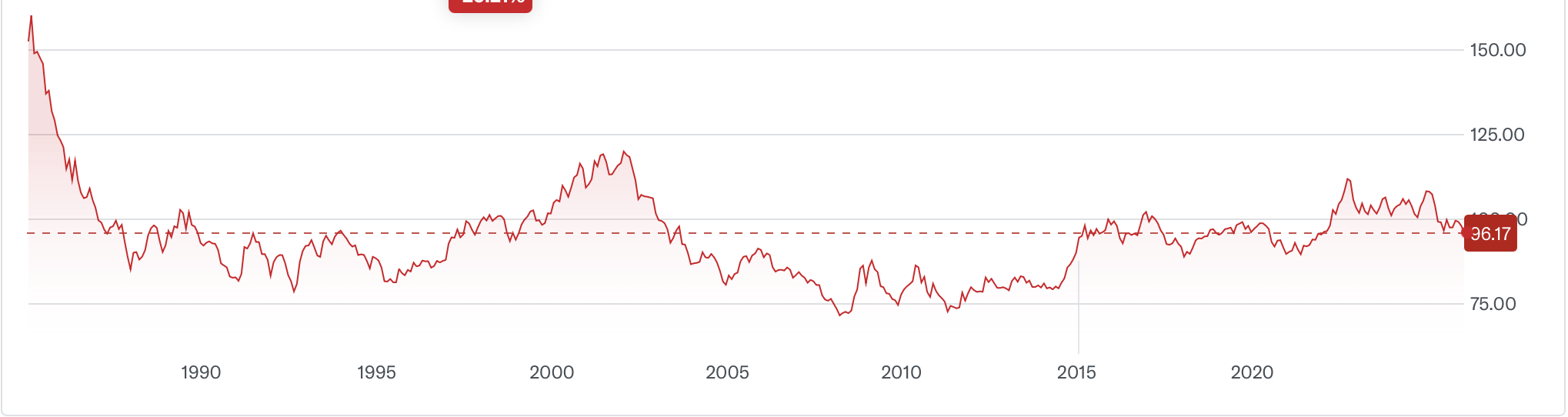
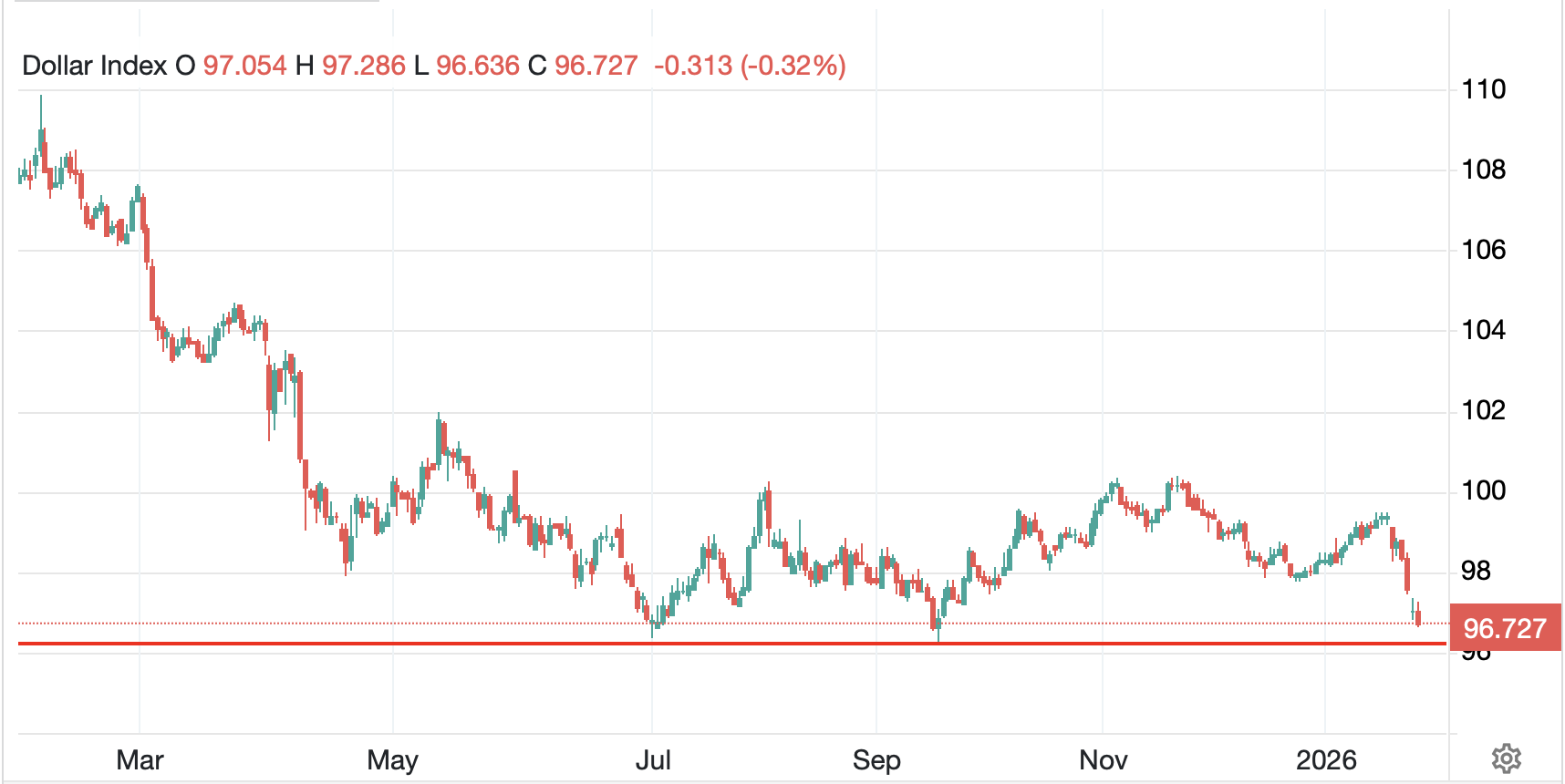
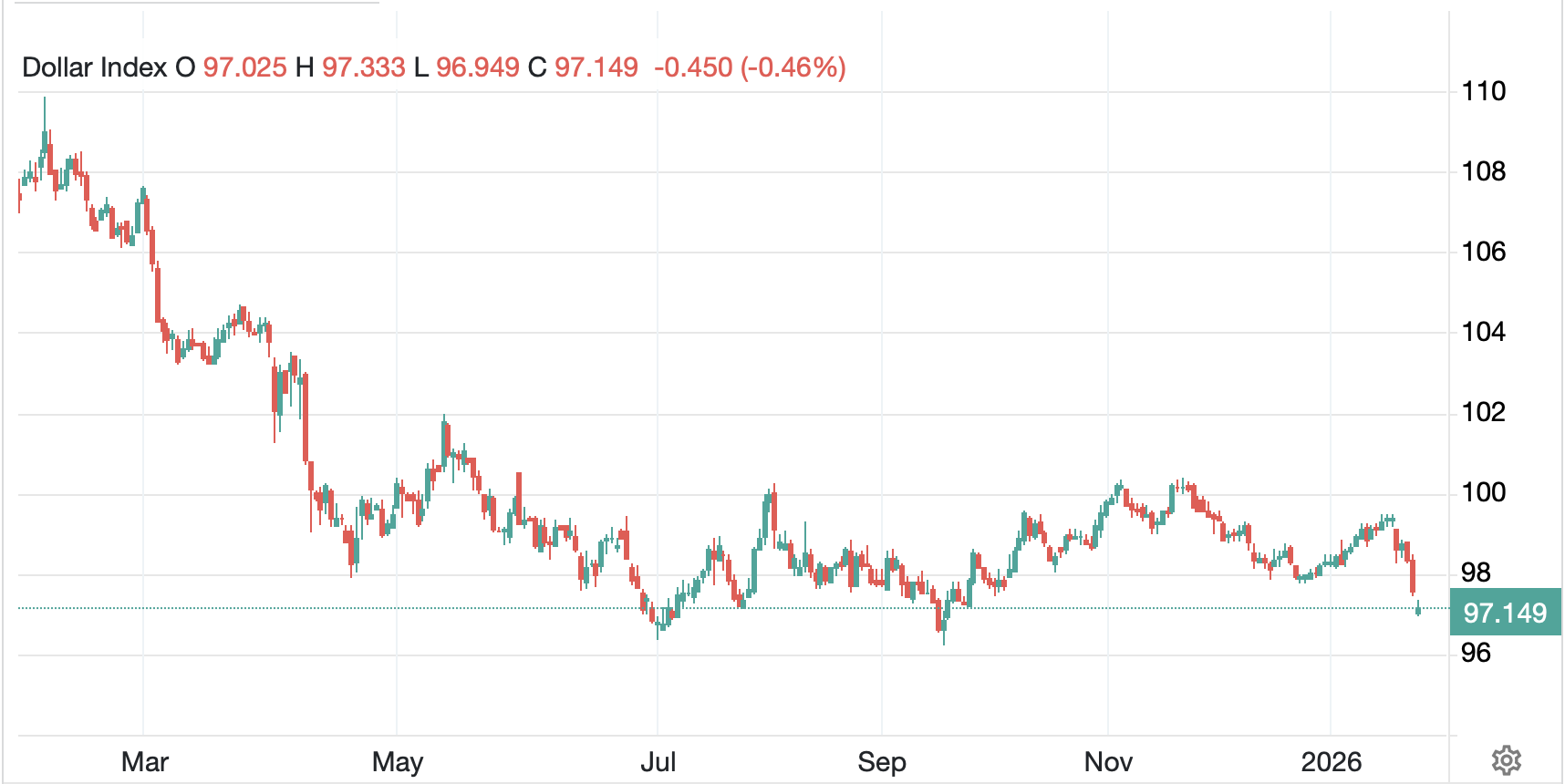
Finally, the dollar is…the dollar.  Back on April 20, DXY was at 98.08.  This morning it is 97.75.  look at the chart below from tradingeconomics.com and tell me you can get excited about any movement at all.  We will need a major outside catalyst, I believe, to change any views and right now, I see nothing on the horizon.

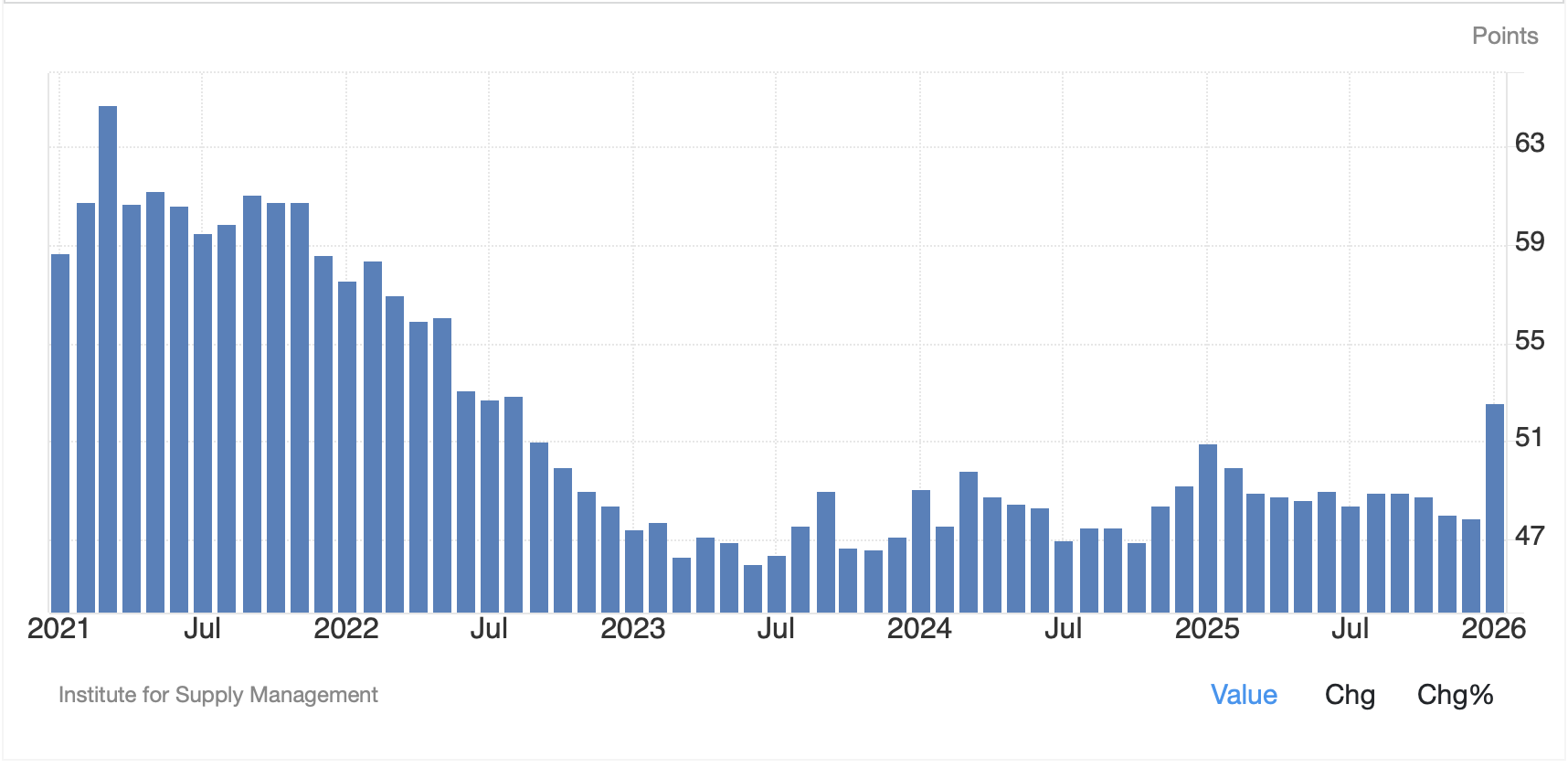
And that’s really all there is.  We do get ISM data this morning as it’s privately compiled and released (exp 51.7) and Fed speakers apparently will never shut up.  What is interesting there is that Lorrie Logan, Dallas Fed president, has come out much more hawkish than some of her colleagues.  That strikes me as a disqualification for being elevated to Fed chair.

I continue to read lots of bear porn and doom porn, and it all sounds great and markets clearly don’t care.  The government shutdown has been irrelevant and that should make a lot of people in Washington nervous given this administration.  President Trump has been angling to reduce government, and if it is out of action and nobody notices, it will make his job a lot easier.  But for now, nothing stops this train with higher risk assets the way forward.

Good luck and good weekend

Adf
Who Will Blink First?

The question’s now, who will blink first?
With Democrat leaders immersed
In internal strife
Concerned their shelf life
Is short and their party’s been cursed
 
Or will the Republican leaders
Start caring if New York Times readers
Scream loudly enough
The polls will turn rough?
My bet’s on the Dems as conceders


So, the government is shut down and yet, the sun continues to rise and set, and life pretty much goes on as before.  Is this, in fact a big deal?  It all depends on your point of view, I suppose.  It is certainly a big deal for those furloughed government employees, especially those whose jobs may disappear in the pending RIF.  But as I have often said, if they leave government and become baristas at Starbucks, they are almost certainly adding more value to the economy.  And consider, whenever you have to interface directly with the federal government (post office, passports, IRS, etc.) has the customer service ever been useful or effective?  Explaining that people will have to wait longer is hardly a compelling argument.  In fact, of all the places where AI is likely to be most useful, repetitive government tasks seems one of the most beneficial potential applications.

Nonetheless, this is the story that is going to lead the headlines for a few more days.  Ultimately, as we have already seen several Democrat senators vote to pass the CR, I expect enough others to do so to reopen the government, if not at the next scheduled vote tomorrow, then at the one following next week.  Ultimately, I believe what we’ve relearned is that most politics is simply performance art.

Too, remember that the decision as to who is considered essential, when the government shuts down, is left up to the president.  So, the Democrats shut down the government and have allowed President Trump to decide what gets done.  Pretty soon, I suspect they will figure out that was a bad idea as we have already seen specific projects in NY (home to both House and Senate minority leaders) get halted with the funds flows stopping as well.

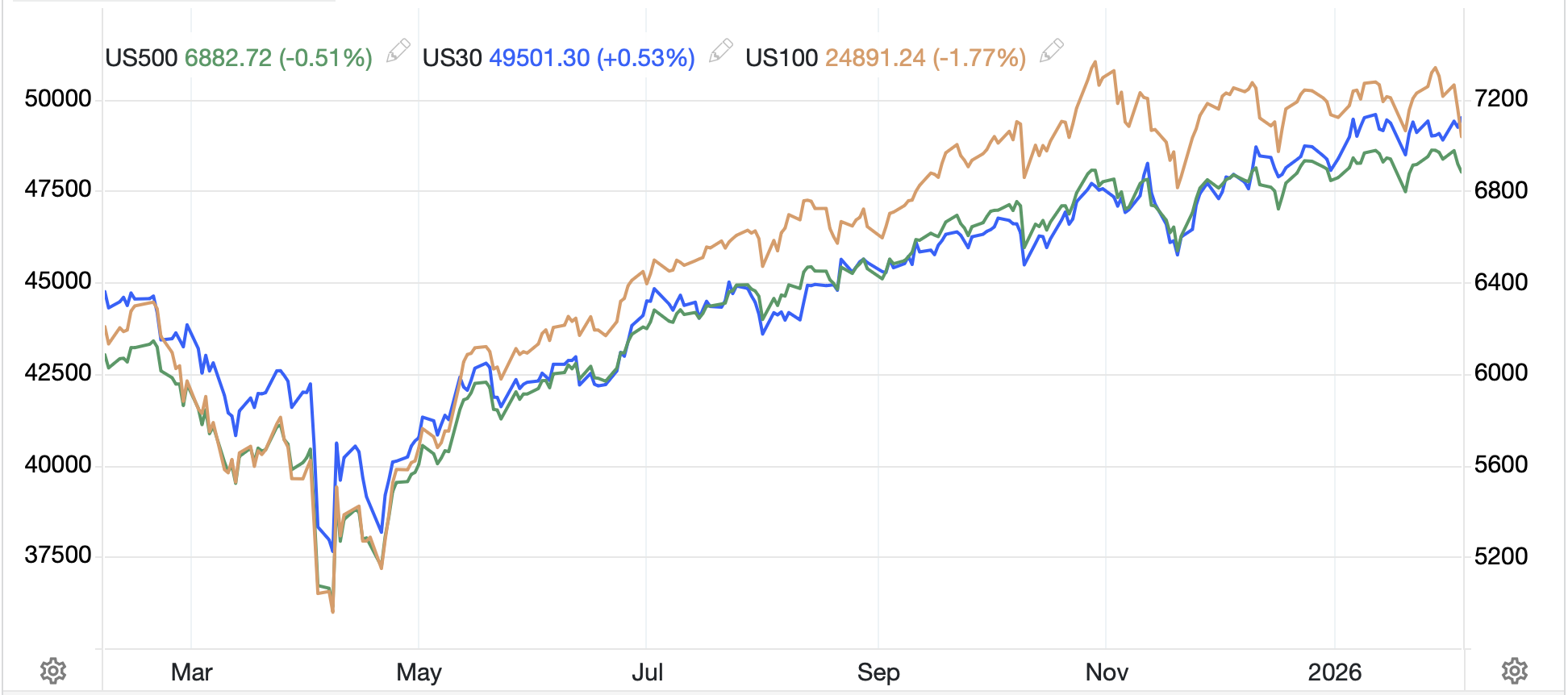
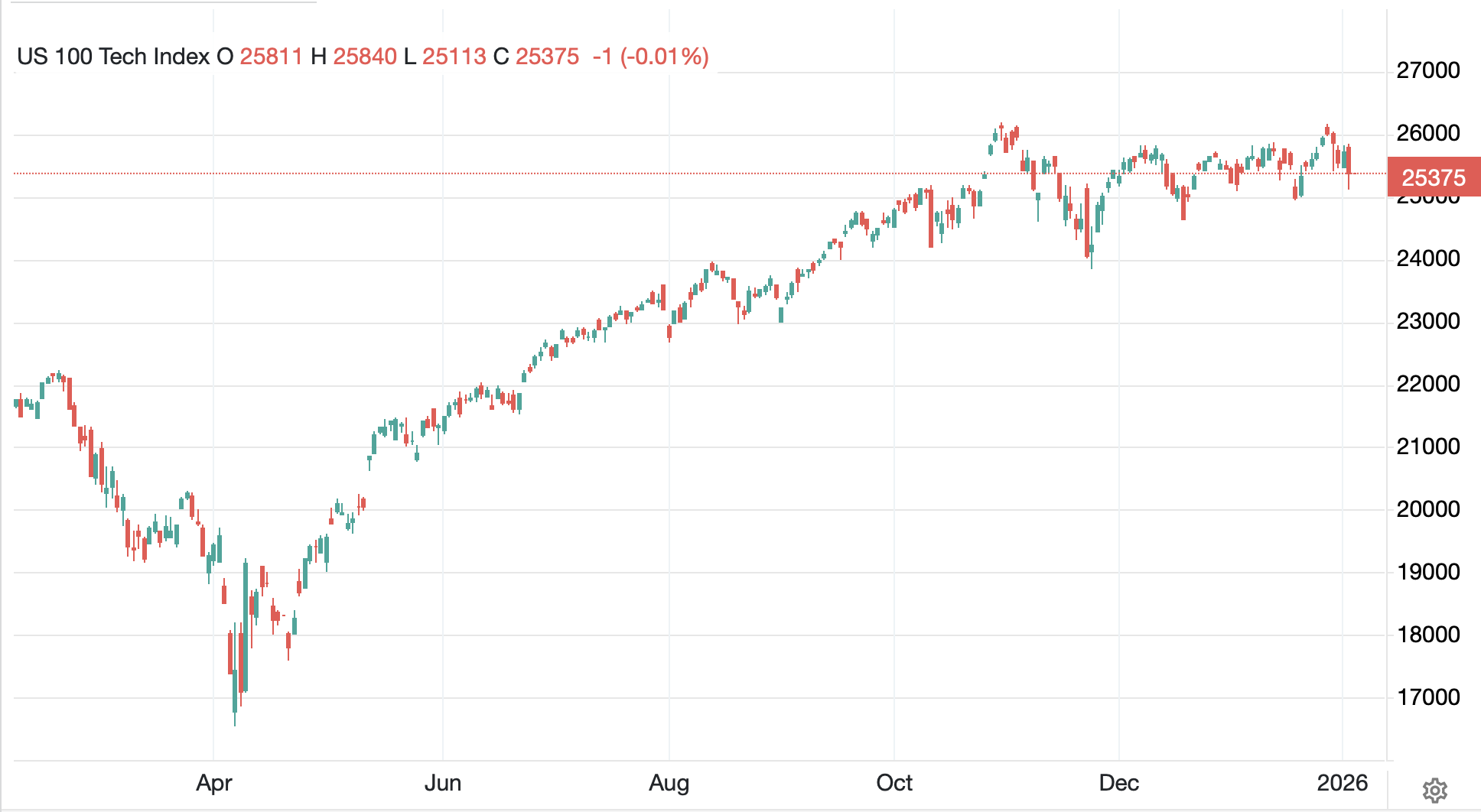
Meanwhile, in the markets, nobody appears to have noticed that the government has shut down.  That is the key conclusion to be drawn from the continuation of the equity market rally where all three major US indices closed at record highs yet again. I am hard pressed to look at the below chart of those indices and glean any concern by markets regarding the government shutting down.  Perhaps, even, they are applauding the idea as it means less spending!

Source: tradingeconomics.com

Arguably, the market’s biggest concern is that government data releases will be missing from the mix, although, that too, might be a blessing.  The person most upset there will be Ken Griffin, as Citadel’s algorithms will not be able to take advantage of the data prints before everyone else!  In fact, I suspect that he is already bending the ears of the Democratic leadership to get things back to normal.

Meanwhile, would it be too much to ask to close the Fed during the shutdown?  Asking for a friend!

Ok, what is happening elsewhere in the world.  Japanese Tankan data the night before last came in a tick weaker than forecast, and than last month, but remains solid overall.  Deputy BOJ Governor Uchida reiterated that if the economy performs as currently expected, the BOJ will continue to remove policy accommodation going forward with expectations for a rate hike at the end of the month priced at a 60% probability.  Interestingly, despite that, the Nikkei (+0.9%) rallied overnight along with the yen (+0.3% overnight, +2.1% in the past week), although the yen move makes more sense.  As to the rest of Asian equity markets, China (+0.5%) and HK (+1.6%) are clearly unperturbed by the US situation as a positive outlook on trade talks with the US are the narrative there heading into their weeklong National holiday.  Elsewhere in the region, every major bourse is higher with some (Korea +2.7%, Singapore +1.7%) substantially so.  The US rally is dragging along the world.

This is true in Europe as well with the DAX (+1.4%) and CAC (+1.3%) leading the way as all major bourses rise alongside the US.  Apparently, increasing global liquidity is good for risk assets.

In the bond market, Treasury yields continue to slide, down another -1bp overnight after slipping -4bps yesterday.  The only data was the ADP Employment Report which showed a decline of -32K jobs compared to expectations of +50K.  It is important to recognize that this report included ADP’s benchmark revisions which, not surprisingly, resulted in fewer jobs create last year just like the QCEW showed with the NFP report two months’ ago.  This data took the probability of a Fed cut at the end of the month up to 99% and pushed the probabilities for cuts next year higher as well.

Source: cmegroup.com

Of course, this is the very definition of bad news is good for equities and bonds, as there continues to be a strong expectation that rate cuts are designed to support asset prices rather than address real weakness in the economy.  And in a way, this makes sense.  After all, the Atlanta Fed’s GDPNow forecast for Q3 is currently at 3.8%, hardly the sign of an impending recession.

So, stronger than long-term growth and rate cuts seem an odd policy pairing, but the stock markets love it!

The other markets that love this policy are precious metals which continue to make new highs as well, for gold (+0.5%) these are all-time highs, for silver (+0.3%) they are merely 14-year highs.  But the one thing that is clear (and this is true of platinum and palladium as well) is that investors are starting to look at the current policy mix and grow concerned over the value of fiat currencies.  Oil (-0.7%), though, is currently on a different trajectory, trading right back to the bottom of its months’ long trading range less than a week after touching the top.

Source: tradingeconomics.com

There seems to be a difference of opinion regarding future economic activity between equity and oil markets.  I have read a number of analyses describing peak oil, yet again, although this time they are calling for peak demand, not peak supply.  Given that fossil fuels continue to generate more than 80% of global energy, and that oil also is the base for some 6000 products utilized around the world in everyday applications and the fact that there are some 7 billion people who are energy starved compared to the Western nations, I find the peak demand story to be hard to accept.  But that’s just me and I’m an FX guy, so what do I know?

Speaking of FX, the decline in yields and growing belief in easier US monetary policy has worked its way into the dollar, pushing it a bit lower, about -0.15% based on the DXY.  But looking across both G10 and EMG currencies, the yen’s 0.3% move describes the maximum gain with the rest having either gained less or declined a bit.  Right now, the dollar doesn’t appear to be the focus of the macro world, although that is certainly subject to change at a moment’s notice.

We know there is no government data coming, although apparently, the Treasury is still auctioning T-bills today, that activity will not be delayed!  We also hear from Dallas Fed President Logan, someone who ostensibly has been mooted as a potential next Fed chair.  Again, the one thing we know about the FOMC right now is that there is no consensus opinion on what to do next, at least based on the dispersion of the dot plot from the last meeting.

While the Trump administration may be getting ready to axe a lot of Federal jobs, that will not stop the liquidity impulse.  It’s not that this government is going to spend less, it is just spending money on different priorities.  But running it hot is clearly the MO for now and the foreseeable future.  Ultimately, if the GDPNow forecast is correct, a much weaker dollar seems unlikely regardless of the Fed’s moves.  But that doesn’t mean a dollar rally, rather we could stay near here for a lot longer.

Good luck

Adf

A Few Glitches

Though stocks worldwide this year are higher
Investors have sought to inquire
If their dreams of riches
Might have a few glitches
And if they all sell, who’s the buyer?
 
Meanwhile, the key news of the day
Revolves around government pay
Will seven Dems buck
The warnings of Chuck
Or will the “resistance” hold sway?


Midnight tonight is the deadline for Congress to pass a continuing resolution to keep the government funded.  Democratic leaders, Representative Hakeem Jeffries and Senator Chuck Schumer, met with President Trump yesterday but came to no agreement.  The House has passed a clean CR, meaning it continues funding exactly as currently laid out, but the Senate needs 60 votes and Minority leader Schumer wants to increase spending by upwards of $1.5 trillion over the next 10 years to support the CR.  

Looking at the list of Senators, I count 9 democrats in states that President Trump won in the 2024 election and who may feel it is in their best interest to consider voting for the resolution than shutting down the government although history shows elected Democrats vote the party line regardless of the consequences.

I asked Grok what happens in a shutdown and reading through what occurs in each cabinet department, it will take several weeks, I believe, before anybody really notices.  The War Department and Homeland Security continue to function, so ICE agents are not going to disappear from the streets anytime soon.  Too, Social Security, Medicare and Medicaid are untouched.  I would argue those are the biggest issues.  The FBI and prisons remain active as does the FAA and TSA.  Maybe the biggest short-term issue is economic data will be delayed so there will be no NFP on Friday.  Given its recently demonstrated inaccuracies, that may be a benefit, although I’m sure that’s not the case.

Of course, the most important question is, will a government shutdown cause the stock market to decline, as we all know a rising stock market is the MOST important thing ongoing!  Thus far, it doesn’t appear investors are that worried, but perhaps that will change today.  After all, all the major US indices rallied yesterday although as of this morning (6:25) futures are pointing lower by about -0.1%.

But here’s the thing about stocks, no matter how much angst some folks have had, and how many calls for recession have been made, and how much people may hate President Trump, below is a table from tradingeconomics.com showing most major stock market indices and their performance YTD at the far right.  Take away Russia, which isn’t really major, and there is an awful lot of green!

Perhaps the proper question is, why has this been the case and can it continue?  Certainly, the fiscal underpinnings of almost every nation are deteriorating as debt grows rapidly alongside government spending while the prospects of repaying said debt diminishes.  So, the macroeconomic backdrop in many nations is shaky, at best (France, UK, US, Germany, Australia, Japan, to name a few).

Of course, any individual company will typically reflect the prospects of that company, the very fact that markets have rallied so strongly this year continues to support the rally.  Remember, there have been numerous recession calls, and even the Fed has begun to look at the employment situation as becoming a bigger issue than inflation, indicating they, too, are concerned over future economic growth prospects.  Hence, the widespread expectations for further rate cuts.  in fact, looking at the futures market, not only is it pricing two more cuts this year, but a further two more by September 2026, and then a long period of 3.0% Fed funds afterwards.

Thus, it appears the equity market is counting on rate cuts to support future earnings even though those rate cuts imply weaker economic activity which will undermine future earnings.  Quite the balancing act!  But then, I’m just an FX guy, so the intricacies of equities are clearly lost on me. 

Ok, you’ve already seen the overnight equity movement with Chinese shares the largest beneficiary of PMI data showing modest growth.  Combining that with the news of further stimulus yesterday and things in China look pretty good right now.

Turning to bonds, yields fell yesterday despite any noteworthy data.  Perhaps it was the Fed speakers who highlighted the need to ease policy further as their concerns grow over slowing employment.  At any rate, this morning, 10-year Treasury yields are unchanged at 4.14%, while a few bps above the lows seen last week, hardly demonstrating a major move higher.  European sovereign yields have edged higher by 1bp this morning across the board, also not really demonstrating much concern about things.  We did see some Eurozone data this morning with French inflation soft (1.2% Y/Y) while German Unemployment rose slightly and German state inflation data has generally been higher than last month.  The nationwide number is released at 8:00 this morning.  Meanwhile, Italian inflation was a bit softer than forecast (1.6%), so bond investors seem satisfied for now.

As has been the case for a while now, the biggest moves have come in the commodity space with oil (-0.7%) falling back to the middle of its trading range as per the below chart from tradingeconomics.com.

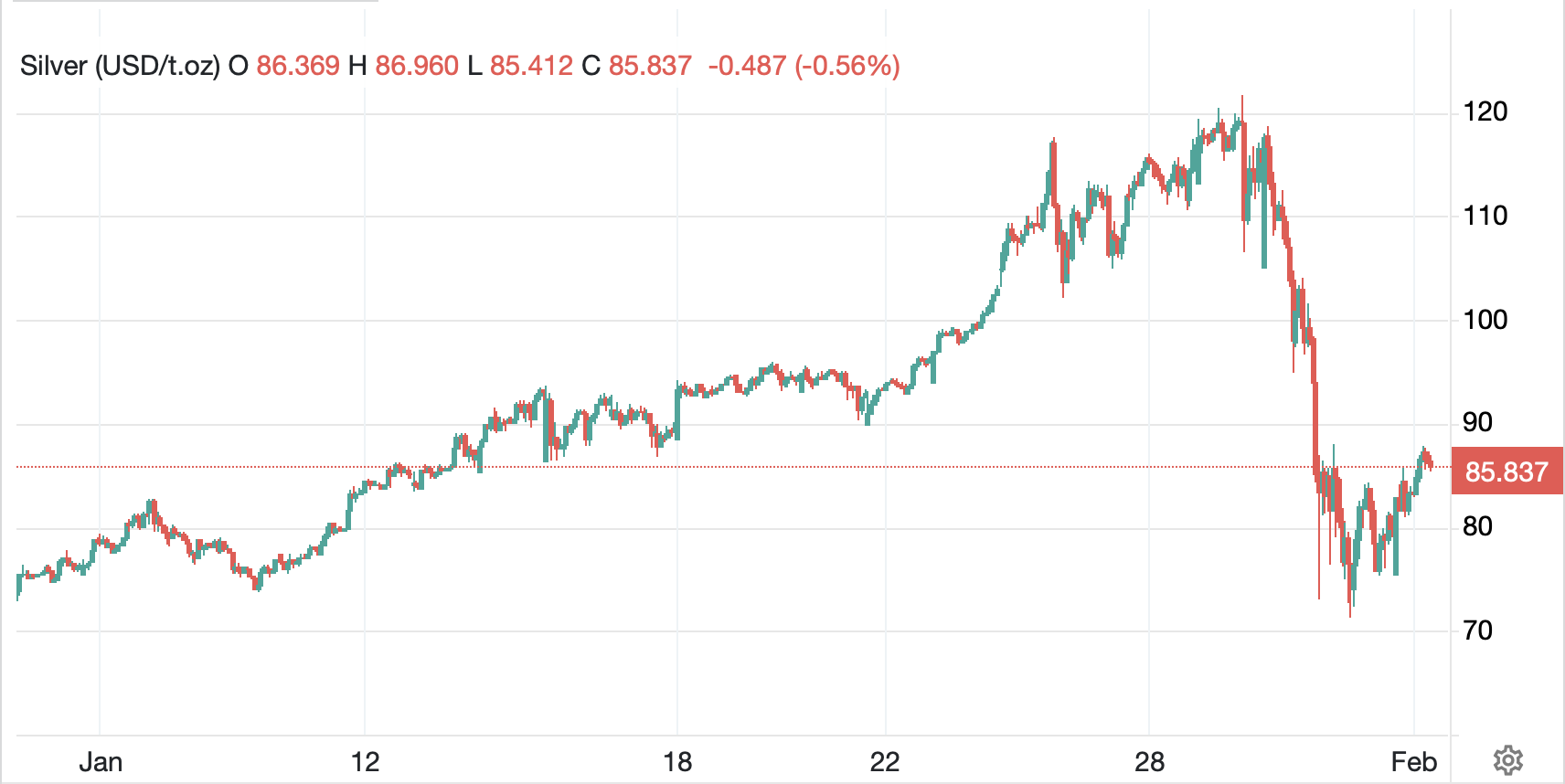
For whatever reason, the end of last week had oil bulls out in force, but they are an unhappy lot this morning.  Apparently, President trump and Israeli PM Netanyahu have agreed a Gaza peace plan, although the Palestinians were not privy to the details.  Perhaps peace there is reducing concerns in the oil market although I would have thought the Russia/Ukraine situation has a more direct impact.  As to metals, after another series of new highs across the precious space yesterday, this morning we are finally seeing a bit of profit taking (Au -0.7%, Ag -1.7%, Pt -2.8%, Cu -1.0%).  However, it is difficult to look at the chart and sense that this is over.

Source: tradingeconomics.com

Finally, the dollar is a touch softer this morning, essentially unchanged vs. the euro and pound although the yen (+0.4%) and Aussie (+0.4%) have both managed to rally.  The RBA met last night and left rates on hold, as expected, although their commentary afterwards had a hawkish tilt regarding the future of inflation which undermined equities and helped the currency.  As to the yen, their ‘Minutes’ were released and indicated there was growing support for a rate hike in October, although I will believe it when I see it.  But away from those two, there was virtually no movement and no news of note.

On the data front, I will lay out the alleged releases, although with the shutdown, the BLS and BEA ones will likely be delayed.

TodayCase Shiller Home Prices1.6%
 Chicago PMI43.0
 JOLTs Job Openings7.2M
 Consumer Confidence96.0
WednesdayADP Employment50K
 ISM Manufacturing49.0
 ISM Prices Paid63.2
ThursdayInitial Claims223K
 Continuing Claims1930K
 Factory Orders1.4%
 -ex Transport0.1%
FridayNonfarm Payrolls50K
 Private Payrolls60K
 Manufacturing Payrolls-7K
 Unemployment Rate4.3%
 Average Hourly Earnings0.3% (3.7% Y/Y)
 Average Weekly Hours34.2
 Participation Rate62.3%
 ISM Services51.7

Source: tradingeconomics.com

Today’s data will be released, and tomorrow’s is privately sourced, so shouldn’t be a problem, but come Thursday and Friday, that’s when things will go missing.  Ironically, the biggest impact will be on options traders who frequently place trades in anticipation of a data point, and with that data point missing, those premia are likely to diminish quickly.  Too, spare a moment for the algorithms who won’t have anything to trade against without data.  Poor programs 🤣.

History has shown the dollar tends to decline through government shutdowns, if they last any length of time (>3 or 4 days), so if we shut down and are still that way next week, I expect we could see some weakness.  But I’m sure there will be one more vote today to see if it will happen.  My take is a shutdown is in the cards but for how long, I have no idea.

Good luck

Adf

Battlelines

The battlelines are being drawn
On one side, the dollar is gone
‘Cause debt will explode
And once down that road
They claim folks would rather the yuan
 
But others are making the case
That dollar debt has much more space
To grow and expand
As it can withstand
More stress since it’s used everyplace
 
And finally, one thing left to note
Is Europe appears set to float
A digital euro
That ought to ensure-oh
The market, its price, will demote


Friday, I highlighted an idea which I had toyed with, but never explained eloquently, but that was done so by Michael Nicoletos (@mnicoletos on X).  While I offered a link to his work Friday, I know that many never click on links in notes like this, so I am copying his page showing this perspective.  It is clear, clean and asks the proper questions.

The reason I am doing this is because this weekend, I listened to a podcast with another very smart macro guy, Luke Gromen (@lukegromen) who has a very different take on the state of the world.  In short, Luke’s belief is that the US is already past the point of no return and that a potential downward spiral, caused by excessive US debt, is going to kick off soon.  The result is that we will see the dollar decline severely (as described by the DXY), gold, bitcoin, and equities rally, and that Treasury debt, especially long dated debt, will get killed.  In essence, he is explaining the inflation trade, higher US inflation will lead to those outcomes.

Let me start by saying, I agree with Luke on certain things, like the fact that we are likely to see higher inflation going forward as the government is in no mood to cut off the liquidity taps.  If you look at the below chart of M2 from the FRED database of the St Louis Fed, you can see that this measure has set a record high and risen 7.8% since its local nadir on October 30, 2023.

So, in a bit less than 2 years, it has grown about 8% after having shrunk that much in the prior 2 years during the first phases of the Fed’s QT program.  But now, despite the fact the Fed continues to slowly shrink their balance sheet, money supply is growing again, and my take is it will continue to do so for the foreseeable future as the government needs to essentially monetize the debt.  

Back to the argument, I believe that in this scenario of run it hot, gold and equities will do well while bonds will do poorly, but the question of the dollar on the FX markets is very different.  And this is where the Nicoletos’s theory comes into play.  If he is correct, and we adjust our idea about what constitutes excess leverage for the US, then expecting the dollar to fall in the FX markets may not be the best idea.  Rather, the news that the ECB is seeking to institute a digital euro, as per a speech by Madame Lagarde two weeks’ ago, and UK PM Starmer is claiming digital ID is necessary, to be followed by a digital pound, leads me to believe that institutions and individuals may decide they want more control over their own finances, rather than governments who have proven themselves exceptionally incompetent across numerous areas (energy, finance, and defense come to mind).  That implies that the dollar is likely to find a lot more support than those claiming it is set to collapse.

Again, I ask, will developing nations really want to keep their reserves in the CNY, or store their reserves of gold in Shanghai given the long history of capriciousness that the CCP has demonstrated.  People may hate the US; yet more people want to come here than go anyplace else because they have a higher degree of faith that their property will remain their property.  

This is not to say things are great, there are huge problems worldwide, just to say that my medium- and longer-term views are the dollar will be seen as TINA if other nations go down the road they are currently claiming they will follow.

The overnight narrative’s turned
To government shutdown concerns
As Trump and Dems meet
The word on the Street
Is too many bridges are burned

As to this morning’s market activity, the most noteworthy story is the question of whether the Senate will pass a continuing resolution (CR) to keep the government operating past midnight on Tuesday when the current spending authority runs out.  The House of Representatives have passed a ‘clean’ resolution which leaves the spending levels exactly where they are and lasts for 6 weeks allowing Congress time to pass the individual spending bills.  However, in the Senate, they need 60 votes to overcome the filibuster, and the Republicans only have 53 seats.  Minority Leader Schumer has promised to shut down the government unless he gets spending promises in the CR of upwards of $1 trillion over the next 10 years, and that feels unlikely.  Too, the House of Representatives is in recess, so no changes to their bill can be made on a timely basis.

My take is the Senate will cave in, but if not, they will not be able to withstand the pressure for very long as I believe that they will ultimately receive the blame for the outcome.  Turning to the market impact of this story, the most notable move overnight has been in precious metals where Gold (+1.3%), Silver (+1.8%) and platinum (+0.8%) are all continuing their recent runs and all at recent (and for gold all-time) highs.  However, it is difficult for me to understand this as a response to the potential shutdown in isolation.

Perhaps, if we turn to the dollar, which is lower, but only by -0.2% on the DXY, we can have a better understanding as at least it would make some sense that the dollar declines if the government does shut down.  And certainly, a weaker dollar manifests as stronger commodity prices, but the metals moves are so much larger, I have to believe there is another driver there.  Some talk focuses on the fact that Friday’s PCE data was not too hot thus keeping alive the hopes for further Fed rate cuts.  Personally, I lean toward the idea that the combination of concerns over increased military activity and the ensuing inflation are much more likely to be the drivers of precious metals’ rally.

Weirdly, despite concerns over inflation, bond yields are not responding in the manner one might expect as Treasuries are lower by -3bps and we are seeing similar moves throughout all the European sovereigns this morning.  As well, there was a very interesting article in the WSJ this morning about the fact that credit markets are incredibly strong, meaning the spread between corporate and Treasury yields has shrunk to the lowest levels on record for investment grade, and near that for junk bonds.  

To sum this up, bond markets are completely unconcerned with future inflation while precious metals markets are screaming inflation is coming soon.  Of course, one possible explanation for this seemingly divergent behavior is that the amount of liquidity that continues to be pumped into markets globally by central banks is driving fixed income investors to seek investments within their remits, i.e. bonds, while others are watching and trying to prepare for the inevitable.  In a funny way, the fixed income folks may be doing the right thing because if YCC comes into play, and I am almost certain it will, then yields will be lower still!

As to the rest of markets, equities are all about more liquidity as Friday’s US rally, which is continuing this morning with futures higher by 0.5% at this hour (7:15) demonstrates.  In Asia overnight, Japan (-0.7%) did not follow suit as a BOJ member hinted that a rate hike was coming at the October meeting, and we all know how much equities hate rate hikes.  But China (+1.5%) and HK (+1.9%) both rocked as word of a new government plan to inject CNY 500 billion into local governments to spur investment made the news.  Korea also benefitted from the combination of those things although India was unchanged and Taiwan (-1.7%) seemed to respond to a story that President Xi is seeking to get President Trump to agree that Taiwan is part of China.

As to Europe, the UK (+0.55%) is the leading gainer amid stories about pharma giants there raising prices, while continental markets are +/-0.2%, really not showing much life at all.

Oil (-1.8%) is slipping on news that Kurdish oil in the amount of up to 180K bbl/day is going to start flowing to the market again, adding to supply as OPEC is also talking of increasing production.  There was, however, an interesting article in the WSJ about the fact that Russian production is starting to turn down as 3 years of war and sanctions has reduced their capability of producing absent Western technology.

Finally, the dollar, as mentioned above, is a bit softer this morning with JPY (+0.4%) and NZD (+0.4%) the G10 leaders although the rest of the bloc has seen gains on the order of 0.1% or 0.2% only.  In the EMG bloc, KRW (+0.6%) is top dog with CNY (+0.2%) actually the next best performer.  So, overall, movement here has not been that impressive despite the narrative.

I’ve gone on far too long and as there is no front-line data today, I will post it tomorrow.  Of course, payrolls come Friday and be aware of five Fed speakers today and a total of ten this week.

Good luck

Adf

Tariff Redux

While many have called for stagflation
The ‘stag’ story’s lost its foundation
Q2 turned out great
With growth, three point eight
While ‘flation showed some dissipation
 
Meanwhile, Mr Trump’s on a roll
As he strives to still reach his goal
It’s tariff redux
On drugs and on trucks
While ‘conomists tally the toll


Analysts worldwide have decried President Trump’s policies as setting up to lead the US to stagflation with the result being the dollar would ultimately lose its status as the world’s reserve currency while the economy’s growth fades and prices rise.  “Everyone” knew that tariffs were the enemy of sane fiscal and trade policy and would slow growth leading to higher unemployment and inflation while the Fed would be forced to choose which issue to address.  In fact, when Q1 GDP was released at -05%, there was virtual glee from the analyst community as they were preening over how prescient they were.

But yesterday, we learned that things may not be as bad as widely hoped proclaimed by the analyst community after all.  Q2 GDP was revised up to +3.8% annualized growth, substantially higher than even the first estimate of 3.0% back in July.  Not only that, Durable Goods Orders rose 2.9% with the ex-Transport piece rising 0.4% while the BEA’s inflation calculations, also confusingly called PCE rose 2.1%.  Initial Claims rose only 218K, well below estimates and indicative that the labor market, while not hot, is not collapsing.  Finally, the Goods Trade Balance deficit was a less than expected -$85.5B, certainly not great, but moving in President Trump’s preferred direction.

In truth, that was a pretty strong set of economic data, better than expectations across the entire set of releases, and clearly not helping those trying to write the stagflation narrative.  Now, Trump is never one to sit around and so promptly imposed new tariffs on medicines, heavy trucks and kitchen cabinets to try to bring the manufacture of those items back into the US.  Whatever your opinion of Trump, you must admit he is consistent in seeking to achieve his goal of returning manufacturing prowess to the US.

Meanwhile, down in Atlanta, their GDPNow Q3 estimate is currently at 3.3%, certainly not indicating a slowing economy.  

In fact, if that pans out, it would be only the 14th time this century that there were two consecutive quarters of GDP growth of at least 3.3%, of which 4 of those were in the recovery from the Covid shutdown.

It would be very easy to make the case that the US economy seems to be doing pretty well, at least based on the data releases.  I recognize that there is a great deal of angst about, and I have highlighted the asynchronous nature of the economy lately, but what this is telling me is that things may be syncing up in a positive manner.

So, what does this mean for markets?  Perhaps the first place to look is the Fed funds futures market as so much stock continues to be put into the Fed’s next move.  Not surprisingly, earlier exuberance over further rate cuts has faded a bit, with the probability of an October cut slipping to 85%, down about 10 points in the wake of the data, and a total of less than 40bps now priced in for the rest of the year.  Recall, it was not that long ago that people were considering 100bps in the last three meetings of the year.

Source: cmegroup.com

The next place to look is at the foreign exchange markets, where the dollar’s demise has been widely forecast amid changing global politics with many pundits highlighting the idea that the BRICS nations would be moving their business away from dollars.  For a long time, I have highlighted that the dollar is currently within a few percent of its long-term average price, neither particularly strong nor weak, and that fears of a collapse were unwarranted.  However, I have also recognized that a dovish Fed could easily weaken the dollar for a period of time.  Short dollar positions remain large as the leveraged community continues to bet on that outcome, although I have to believe it is getting expensive given they are paying the points to maintain that view.

But if we look at how the dollar has performed over the past several sessions, using the DXY as our proxy, we can see that despite a very modest -0.1% decline overnight, it appears that the dollar may be breaking its medium-term trend line lower as per the chart below from tradingeconomics.com

Again, my point is that the idea that the US is facing a catastrophic outcome with a recession due and a collapsing dollar is just not supported by the data or the markets.  And here’s an interesting thought from a very smart guy, Mike Nicoletos (@mnicoletos on X) regarding some of the key drivers of the current orthodoxy regarding the dollar, notably the debt and deficit.  What if, given the dollar’s overwhelming importance to the world economy, we should be comparing those things to its global scale, not just the domestic scale.  If using that framework, as he describes here, the debt ratio falls to 58% and the budget deficit is down to 2.9%, much less worrying and perhaps why markets and analysts are out of sync.

Markets are going to go where they will, but having a solid framework as to how the economy impacts them is a very helpful tool when managing money and risk.  Perhaps this needs to be considered overall.

Ok, a really quick tour.  Yesterday was the third consecutive down day in the US, although all told, the decline has been less than -2%, so hardly devastating.  Asia mostly fell overnight as concerns over both tariffs and a Fed less likely to cut rates weighed on equities there with Japan (-0.9%), China (-1.0%) and HK (-1.35%) all under pressure.  The story was worse for other regional bourses with Korea (-2.5%), India (-0.9%) and Taiwan (-1.7%) indicative of the price action.

However, Europe has taken a different route with modest gains across the board (DAX +0.3%, CAC +0.45%, IBEX +0.6%) as investors seem to be looking through the tariff concerns.  US futures are also edging higher at this hour (7:45).

In the bond market, Treasury yields have slipped -1bp this morning, and while they remain above the levels seen immediately in the wake of the FOMC last week, they appear to be finding a home at current levels of 4.15% +/-.  European sovereigns are all seeing yields slip -3bps this morning as today’s story is focusing on how most developed nations are reducing the amount of long-dated paper they are selling to restrict supply and keep yields down.  This has been decried by many since then Treasury Secretary Yellen started this process, but as with most government actions, the expedience of the short-term benefit far outweighs the potential long-term consequences and so everybody jumps on board.

Turning to commodities, oil (-0.1%) is still trading below the top of its range and while it has traded bottom to top this week, there is no sign of a breakout yet.  I read yet another explanation yesterday as to why peak oil demand is going to be seen this year, or next year, or soon, which will drive prices lower.  While I do think prices eventually slide lower, I take the other side of that supply-demand idea and believe it will come from increased supply (Argentina, Guyana, Brazil, Alaska) rather than reduced demand.  In the metals markets, yesterday saw silver (-0.2%) jump nearly 3% to yet another new high for the move as traders set their sights on $50/oz.  Meanwhile gold (0.0%) continues to grind higher in a far less flashy manner than either silver or platinum (+10% this week) as regardless of my explanation of relative dollar strength vs. other fiat currencies, against stuff, all fiat remains under pressure.

And finally, the dollar after a nice rally yesterday, is consolidating this morning.  The currency I really want to watch is the yen, where CPI last night was released at 2.5%, lower than expected and which must be giving Ueda-san pause with respect to the next rate hike.  Most analysts are still convinced they will hike in October, but if inflation has stopped rising, will they?  I would not be surprised to see USDJPY head well above 150, a level it is fast approaching, over the next month.

On the data front, this morning’s BLS version of PCE (exp 0.3%, 2.7% Y/Y) and Core PCE (0.2%, 2.9% Y/Y) is released at 8:30 along with Personal Income (0.3%) and Personal Spending (0.5%).  Then at 10:00, Michigan Sentiment (55.4) is released and somehow, I have a feeling that could be better than forecast.  We hear from a bunch more Fed speakers as well although a pattern is emerging that indicates they are ready to cut again next month, at least until they see data that screams stop.

The world is not ending and in fact, may be doing just fine, at least economically. Meanwhile, the dollar is finding its legs so absent a spate of very weak data, I think we may see another 2% or so rebound in the greenback over the next several weeks.

Good luck and good weekend

Adf
No Cash Left in the Fisc

Right now, markets keep taking risk
And lately, the pace has been brisk
But coming next week
We could see a peak
If there’s no cash left in the fisc
 
A government shutdown would raise
Concerns about ‘nomic malaise
As well, what I see
Is Trump’s OMB
Is planning a RIF anyways


Volatility remains absent from most markets these days, metals excepted, and given the dearth of data until tomorrow’s PCE report, the focus is beginning to turn elsewhere.  Perhaps the biggest story developing right now is the potential US government shutdown if no continuing resolution is passed by Congress.  The government’s fiscal year runs from October 1 through September 30, and the rules are if Congress hasn’t passed appropriations bills by the end of the fiscal year, nonessential services are ended, and government employees are furloughed until that process is completed.  As of right now, the House of Representatives has passed a clean bill, meaning it continues spending at the current rate, and we are all awaiting on the Senate.  However, the Senate needs 60 votes to pass it to overcome the filibuster and right now, the Democratic Minority Leader, Chuck Schumer, claims they will not support the bill.

First, understand this is not unprecedented.  In fact, according to Grok, it has happened 21 times since 1980 with the longest being 35 days in 2018-19 over funding for the border wall.  Now, I ask you, can anyone remember the impact of any of those shutdowns, which in fairness typically last less than a week?  

Next, it is worth understanding what actually happens during a shutdown.  National Parks are closed, while passport services, HUD services, SBA services, scientific research and EPA inspections are the type of things that are put on hold.  Also, the BLS will pause data collection and calculations, although given their recent track record, that may be seen as a benefit!  But things like Social Security, Medicare, Medicaid and the Military are all unaffected.

Naturally, there is a lot of politicking ongoing with this process and apparently, President Trump has given marching orders for departments to begin a RIF if the government is shut down.  So, when things reopen, there will be fewer federal employees, one of the goals of this administration, and something that is anathema to his opponents.

From a market perspective, the impact on equity markets during the December 2018 – January 2019 shutdown was actually a rally of just over 10%, although the market did decline in the month leading up to the shutdown.  My point is, there is a lot more politics than economics in this process.

But away from that story, commodities remain the market with the most interest as oil (-0.5%) continues to trade within the range I highlighted earlier this week with a top at $65.50, but has made a technical break above its 50-day moving average, which has the bulls starting to get excited.  As well, the backwardation of the curve is increasing, another bullish sign and much of this is being laid at the feet of President Trump’s seeming turn on the Russia/Ukraine war, where he is quite tired of President Putin’s dissembling.  Certainly, a break above that range top would be at least short term bullish for crude.

Source: tradingeconomics.com

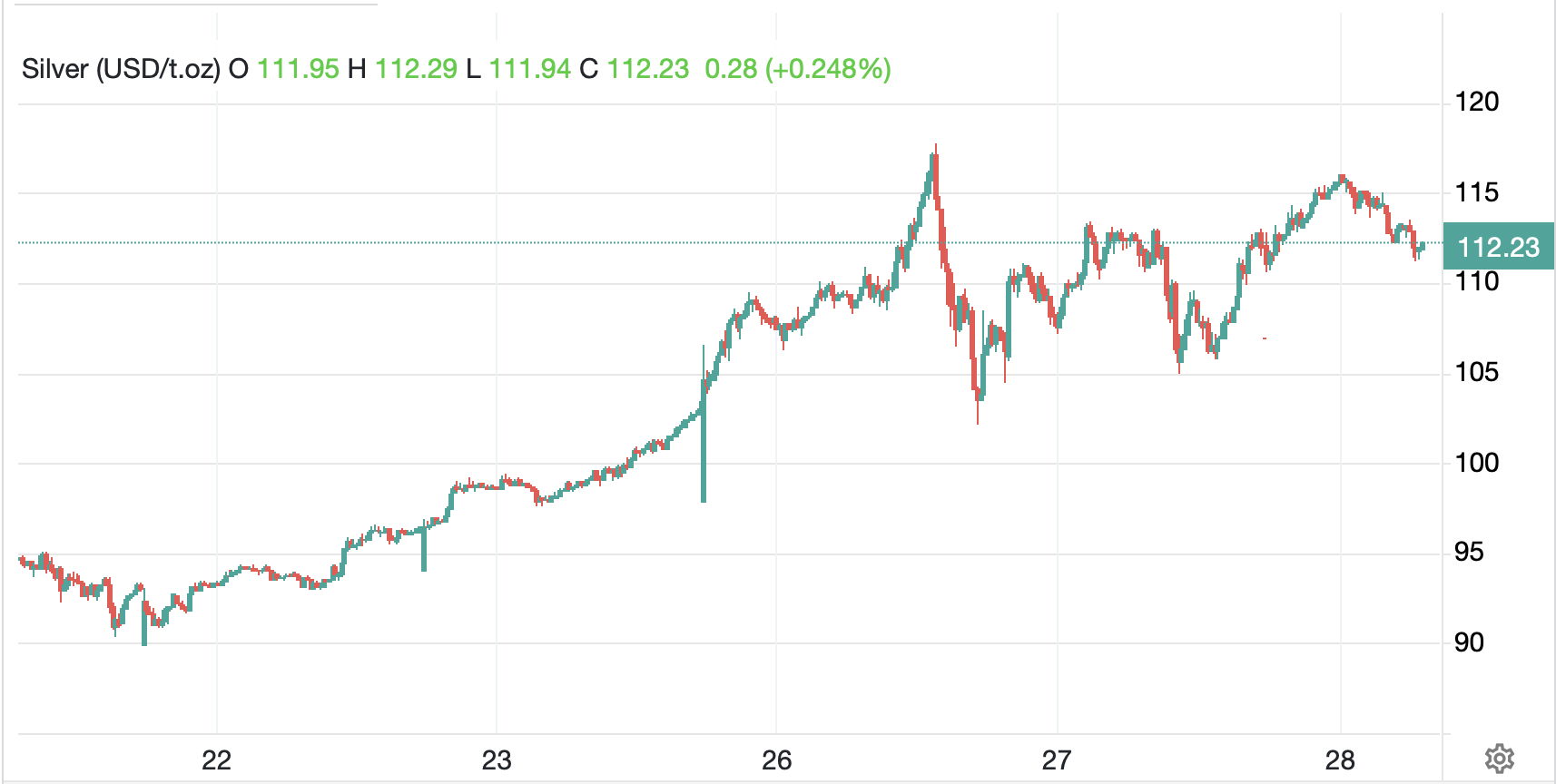
As to the precious metals, while gold continues to trade well, silver has taken the mantle and as you can see from the chart below, is accelerating higher at an even more impressive clip than the yellow metal.  This is a common occurrence as silver historically outperforms gold, on a percentage basis, when both are in bull markets like this.  Just wait until it reaches $50/oz, and makes new all-time highs, and you will see even more discussion of the metals and why they are rallying with inflation concerns a major part of that discussion.

Source: tradingeconomics.com

Meanwhile, financial instruments are far less exciting lately with equity markets stabilizing after their recent run and bond markets also doing little.  Granted, we have seen two consecutive down days in US equity markets, but the magnitude of the decline was de minimis, so it is not really telling us very much.  European markets appear more closely linked to the US, with all bourses there lower by between -0.1% and -0.5% this morning although we did see some modest gains in Asia (China +0.6%, Japan +0.3%).  Net, it seems investors are not certain where to turn right now and are waiting for more clarity from the Fed as to whether more rate cuts are on the way.

The same is true of bond investors who apparently are unconcerned over the shutdown threats, with yields unchanged despite the increasingly combative rhetoric.  We did hear from SF Fed president Daly yesterday, a known dove, who explained that she is coming around to the idea that more cuts are necessary, and they were simply waiting to see how tariffs were going to impact things.  I might argue that she is anxious to cut rates but also doesn’t want to seem to support President Trump’s demands.

Finally, the dollar, after a pretty solid rally yesterday, is essentially unchanged this morning as well.  (That seems to be the theme today, no change.). As I look across my screen, the largest move I see is 0.15%, which is how far CHF has declined on the session, otherwise things have been completely dead.

On the data front, this morning brings the weekly Initial (exp 235K) and Continuing (1930K) Claims data as well as Durable Goods (-0.5%, 0.0% ex-Transport) and the final Q2 GDP reading (3.3%) all at 8:30 with Existing Home Sales (3.96M) at 10:00.  Yesterday saw New Home Sales rise dramatically more than expected at 800K although most analysts expect that number to be revised lower as the Census Bureau gets more information.  Nonetheless, it is a sign that the economy is not collapsing, that’s for sure.  

We also hear from four more Fed speakers today, Williams, Bowman, Barr and Daly again, and we will need to see how they all interpret the current situation.  We learned from the dot plot that there are a lot of different opinions at the Fed right now, and personally, I am very glad to see that.  Given the overall confusion, and the asynchronous nature of the economy right now, it would be more concerning if everyone was on the same page.

As far as the shutdown is concerned, you can be sure that this process will continue until next Tuesday night, at the earliest, if the Democrats cave, and if not, we will then be bombarded by both sides claiming it is the other side’s fault.  Eventually a spending bill will be passed, and as we saw back in 2019, markets pretty much look through this stuff.  Meanwhile, unless the data starts to really deteriorate and brings Fed comments along for that ride, I think the dollar is probably in a rough equilibrium space for now.

Good luck

Adf

Fading

In Germany, growth has been fading
Down Under, inflation’s upgrading
Chair Jay gave his views
But it was old news
And Trump, for more cuts, is crusading


Some days, there is less to discuss than others, and this morning that seems to be the case.  Even my X feed had very little of interest.  Arguably, the top story is German Ifo readings came out much lower than expected and have now reversed most of the gains that occurred from front-running US tariff policy changes.  Germany’s bigger problem, though, is that the trend here is abysmal, as ever since Russia’s invasion of Ukraine and the dramatic rise in energy prices there, the German economy has been under significant pressure.  A look at the 5-year history of the Ifo series does an excellent job of explaining why growth has completely stalled there.

Source: tradingeconomics.com

In fact, if we look at the last three+ years of GDP activity in Germany, as per the below chart, we see that seven of the thirteen quarters were negative while two were exactly flat and the sum total of growth was -0.9%.  It’s amazing what happens to a nation that decides to impose extreme conditions on the production of energy domestically.  Or perhaps it’s not so amazing.  After all, economic activity is merely energy transformed.  If the cost of energy is high, economic activity is going to be slow.

Source: tradingeconomics.com

I highlight this because it runs counter to the narrative that Europe is a better place to invest than the US, which has been the thesis of the ‘end of American exceptionalism’ trade.  Germany is the largest European nation by far and had been a manufacturing powerhouse.  But those days appear to have passed.  If Germany is going to continue to lag, and I see no reason for that to change based on the current political dynamic there, please explain the idea behind long-term strength in the euro.  As I wrote yesterday, if the Fed cuts aggressively, the dollar will decline in the short run, but one cannot look at the trajectories of the relative economies and claim Europe is the place to be in the long run.

This morning, the euro (-0.5%) has responded logically to the data but the dollar is broadly stronger as well after Chair Powell’s speech yesterday where he continued the modestly hawkish tone from the FOMC press conference.  He continues to agonize over the fact that inflation won’t fall while unemployment is edging higher, although he finally admitted that tariffs would likely have a temporary, one-off impact on prices.  While there is no doubt the dollar has fallen since the beginning of the year, a 10% or 15% move is hardly unprecedented, but rather occurs pretty frequently.  A look at the below chart from the beginning of the euro’s existence in 1999 shows at least six or seven other instances when the euro rallied that much in a short period of time.

Source: tradingview.com

In fact, to demonstrate the politicization of the current world, one need only go back to the period in 2008 when the euro peaked at 1.60 or so to see that it was not seen as a global calamity, simply a period where US monetary policy had loosened dramatically relative to the rest of the world.

The other marginally interesting story this morning is Australia’s inflation rate, which came in at 3.0%, higher than expected and demonstrating what appears to be a break in the declining trend previously seen.

Source: tradingeconomics.com

This matters as AUD (+0.1%) is outperforming all its G10 peers this morning on the back of the idea that the RBA will be stuck on hold, rather than cutting rates again soon.  Too, this weighed on Australian equities (-0.9%) which underperformed other Asian markets overnight.

But that’s really all the interesting stuff, and it wasn’t that interesting, I fear.  So, let’s look at the rest of the market behavior overnight.  While I thought it was illegal, yesterday resulted in US equity markets declining on the session, albeit less than 1%.  And this morning, you’ll be happy to know, the futures are all modestly green.  As to Asian markets, Japan (+0.3%), China (+1.0%) and HK (+1.4%) all had strong sessions although it appears most of the other regional bourses declined.  The Chinese story making the rounds is the lessening in trade tensions between the US and China was seen as a key positive while HK survived Typhoon Ragasa without any major impacts.  But Korea, India, Taiwan and Singapore were all softer on the session.

In Europe, markets have generally done little with marginal declines the norm although, surprisingly, Germany’s DAX is unchanged on the day despite the weak Ifo data.  However, it is hard to get excited about anything happening there right now.

Bond yields fell yesterday with Treasuries declining -4bps although this morning they have edged back higher by 1bp.  Perhaps Powell’s tone yesterday was enough to keep the bond vigilantes on the sidelines, or perhaps there is simply not enough new information to change any views right now.  The Fed funds futures market continues to price a 94% probability of a cut at the end of next month and apparently bond investors are cool with that.  European yields are also little changed this morning as were JGB yields last night.

In the commodity space, oil (+1.1%) is heading back toward the top of the range I highlighted yesterday, but still more than $1 away and there have been no stories to drive things.  This is all just range trading in my view.  As to the metals markets, this morning gold and silver are essentially unchanged, consolidating their recent gains while copper (-.0.75%) is slipping slightly and has retraced some of its gains from earlier in the month.  Remember, copper is much more an economic play than a fear play or inflation play.

Finally, the dollar is firmer across the board this morning with gains against almost all G10 counterparts on the order of 0.5% and against EMG counterparts it is more like 0.8%.  Even CNY (-0.25%) is weakening as it appears Chinese state banks are selling renminbi in the spot market and hedging in the swap market to help mitigate its recent gains.  It is beginning to feel like the dollar’s decline this year, which has been widespread, is coming to an end.  

On the data front, today brings only New Home Sales (exp 650K) and EIA oil inventories.  Yesterday’s Flash PMI data was right in line with expectations, and my take is until NFP a week from Friday, there is going to be little of interest on the data front for markets overall.  Even PCE this week will have to be significantly different from expectations to have any impact.

It appears that absent Stephen Miran convincing the rest of the FOMC to cut rates aggressively, a very low probability event, the dollar is finding a bottom, and the next major move will be higher on the basis of stronger growth in the US vs. the rest of the world.  Of course, if the Fed does start to get more aggressive, then the dollar will suffer, I just don’t see that happening anytime soon.

Good luck

Adf

No Reprieve

The barbarous relic is soaring
As Stephen Miran is imploring
That Fed funds should be
At 2, don’t you see
An idea that Trump is adoring
 
But what else would happen if Steve
Is Fed Chair, when Powell does leave?
At first stocks would rally
Though bonds well could valley
And ‘flation? There’d be no reprieve


Arguably, the most interesting news in the past twenty-four hours has been the speech given by the newest FOMC member, Stephen Miran, where he explained his rationale for interest rates going forward.  There is no point going into the details of the argument here, but the upshot is he believes that 2.0% is the proper current setting for Fed funds based on his interpretation of the Taylor Rule.  That number is significantly lower than any other estimate I have seen from other economists, but then, the track record of most economists hasn’t been that stellar either.  Who am I to say he is right or wrong?

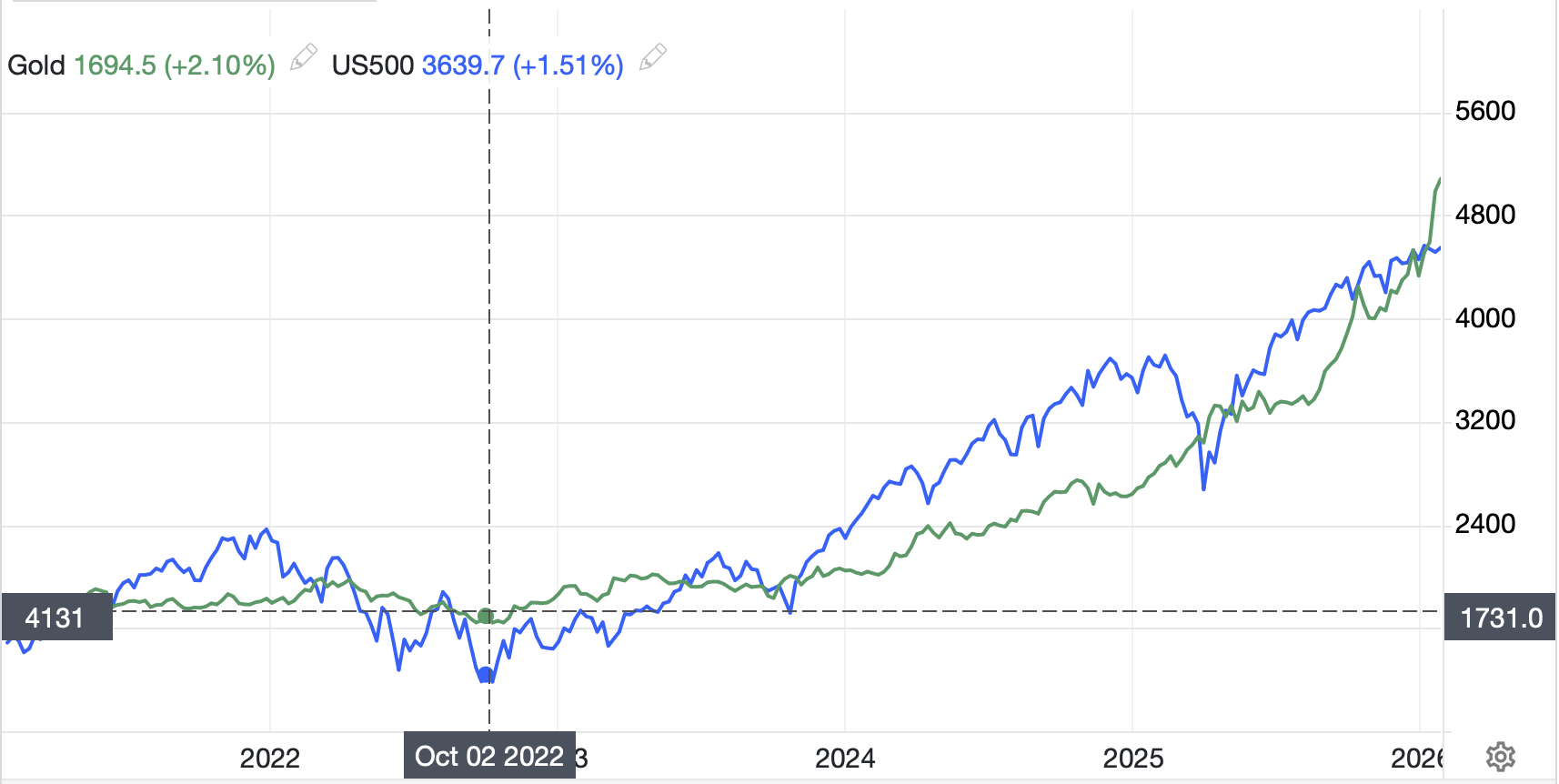
Well, actually, I guess that’s what I do, comment from the cheap seats, and FWIW, I suspect that number is far too low.  But forgetting economists’ views, perhaps the best arbiter of those views is the market, and in this case, the gold market.  With that in mind, I offer the following chart from tradingeconomics.com:

Those are weekly bars in the chart which shows us that the price of gold has risen for the past five weeks consecutively, during which time it has gained more than 14% on an already elevated price given the rally that began back in the beginning of 2024. Today’s 1% rise is just another step toward what appears to be much higher levels going forward.  

Why, you may ask, is gold rallying like this?  The thought process, which Miran defined for us all yesterday, is that he is in line to be the next Fed chair when Powell leaves, and so his effort will be to cut rates as quickly as possible to that 2% level.  Of course, the risk is inflation readings will continue to rise while the Fed is cutting.  If that occurs, and I suspect it is quite likely, then fears about a weaker dollar are well founded (that has been my view all along, aggressive rate cuts by the Fed will undermine the dollar in the short-run, longer term is different) and gold and other commodities will benefit greatly.  As to bonds…well here the picture is likely to be pretty ugly, with yields rising.  In fact, I wouldn’t be surprised to see 10-year Treasury yields head back toward 5.0% at which point the Treasury and the Fed, working hand in hand, will cap them via some combination of QE and YCC.

Of course, this is just one hypothesis based on what we know today and won’t happen until Q2 or Q3 next year.  Gold is merely sniffing out the probability of this outcome.  Remember, too, that the Trump administration has been quite unpredictable in its policy moves, and so none of this is a sure thing.

As an aside, given the inherent dovishness of the current make up of Fed governors, it would seem that a Miran chairmanship with a distinctly dovish bent will not have much problem getting the rest of the FOMC to go along, except perhaps for a few regional presidents.  And that doesn’t even assume that Governor Cook is forced out.  After all, she is a raging dove, just a political one that doesn’t want to give President Trump what he wants.

And before I start in on the overnight activity, here is another question I have.  Generally, economists are much more in favor of consumption taxes (that’s why they love a VAT) rather than income taxes and it makes sense, in that consumption taxes offer folks the choice to pay the tax by consuming or not.  If that is the case, why are these same economists’ hair all on fire about the tariffs, which they plainly argue is a consumption tax?  I read that the US is set to generate $400 billion in tariff revenue this year which would seem to go a long way to offsetting no tax on tips and other tax cuts from the OBBB.  I would expect that if starting from scratch, an honest economist, with no political bias (if such a person were to exist) would much rather see lower income tax rates and higher consumption tax rates.  Alas, that feels like a conversation we will never be able to have.

Anyway, on to markets where yesterday saw yet another set of new all-time highs in the US across all the major indices with futures this morning slightly higher yet again.  Japan was closed for Autumnal Equinox Day, while the rest of the region had a mixed performance.  China (-0.1%) and HK (-0.7%) suffered on continuing concerns over the Chinese economy with news that banks which are still dealing with property loan problems are now beginning to see consumer loan defaults as well.  Elsewhere Korea and Taiwan both rallied nicely, following the tech-led US while India suffered a bit on the H1-B visa story with the rupee falling to yet another historic low (dollar high) now pushing 89.00.  There were some other laggards as well (Thailand, Philippines) but most of the rest were modestly higher.  

In Europe, green is the theme with the CAC (+0.7%) leading the way while the DAX (+0.2%) and IBEX (+0.3%) are not as positive.  Ironically, Flash PMI data showed that French activity was lagging the most, with both manufacturing (48.1) and services (48.9) below the 50.0 breakeven level and much worse than expected.  It seems the fiscal issues in France are starting to feed into the private sector.  As to the UK, weaker Flash PMI data there has resulted in no change in the FTSE 100 as it appears caught between inflation worries and growth worries.

In the bond market, Treasury yields which rose 2bps yesterday have slipped by -1bp this morning while continental sovereigns are all essentially unchanged.  The one outlier here is the UK where gilts (-3bps) are rallying on hopes that the PMI data will lead to easier monetary policy.

Elsewhere in the commodity markets, oil (+1.1%) is bouncing from its recent lows but has not made much of a case to breech its recent $61.50/$65.50 trading range as per the below.

Source: tradingeconomics.com

The other precious metals are rocking alongside gold (Ag +0.7%, Pt +2.6%) with silver having outperformed gold since the beginning of the year by nearly 10 percentage points.  Oh, and platinum has risen even more, more than 63% YTD!

Finally, the dollar is basically unchanged this morning, with marginal movement against most of its counterparties.  There are only two outliers, SEK (+0.5%) which rallied despite (because of?) the Riksbank cutting their base rate by 25bps in a surprise move.  However, the commentary indicated they are done cutting for this cycle, so perhaps that is the support.  On the other side of the coin, INR (-0.5%) has been weakening steadily with the H1-B visa story just the latest chink in the armor there.  PM Modi is walking a very narrow tight rope to appease President Trump while not upsetting Presidents Putin and Xi.  His problem is that he needs both cheap oil and the US market for the economy to continue its growth, and there is a great deal of tension in his access to both simultaneously.  But away from those currencies, +/- 0.1% describes the session.

On the data front, today brings the Flash PMI data (exp 52.0 Manufacturing, 54.0 Services) and the Richmond Fed Manufacturing Index (-5.0).  remember, the Philly Fed Index registered a much higher than expected 23.2 last week, so the manufacturing story is clearly not dead yet.

Arguably, though, of far more importance than those numbers will be Chairman Powell’s speech at 12:35 this afternoon on the Economic Outlook in Providence, RI.  All eyes and ears will be on his current views regarding the employment situation and inflation, especially in light of Miran’s speech yesterday.

While the gold market is implying our future is inflationary and fiat currencies will weaken, the FX market has not yet taken that idea to extremes.  Any dovishness by Powell, which given the lack of data since we heard from him last week would be a surprise, will have an immediate impact.  However, I suspect he will maintain the relatively hawkish tone of the press conference and not impact markets much at all.

Good luck

Adf

Many Ructions

Just two days before Halloween
When Jay and his minions convene
With great joie de vivre
Investors believe
A quarter-point cut will be seen
 
But what if the model that Jay
Consults might have led him astray
Then Fed fund reductions
May cause many ructions
In markets, and too, the beltway


But I am just a poet and my voice is not so loud in financial markets.  However, John Mauldin is someone with much greater reach and his letter this week highlighted that exact issue. (For those of you who are not familiar with John, his weekly letter, “Thoughts from the Frontline” is usually an excellent read and completely free, you should sign up.)  At any rate, he reprinted a chart originally in the WSJ that I think does an excellent job of demonstrating the flaws in models developed pre-Covid.

It is quite apparent how this particular model, which appears to use the type of inputs that most econometric models utilize, had done a pretty good job, even throughout the GFC, of anticipating changes in consumer sentiment right up until Covid.  However, it is also clear that since then, it has a terrible track record.  

And this is the problem.  I would wager that every one of the models built by the hundreds of PhD’s at the Fed has a similar problem, things that used to drive economic decision making no longer do.  I guess when people get used to the government supporting them completely, many are willing to sit back and do nothing.  And when that support stops, it appears that people aren’t very happy about that situation.  Go figure!

The bigger picture here is that I believe it is time for the Fed to question its own modeling prowess.  Consider the situation that with interest rates at their current levels of 4% +/- a bit depending on the tenor, many people, especially retirees, were quite content to clip coupons and were spending those funds supporting the economy.  At the same time, interest expense for small companies never really fell that far, so current rates are not deathly. 

But you know who benefits from low interest rates?  The government and large corporations who have access to capital markets and pay the lowest rates.  And even there, companies like Apple, Google and Microsoft have so much cash on hand that they are net earning interest with higher rates.

All this begs the question, what is the purpose of the Fed cutting rates?  A key risk is that inflation will return with a vengeance.  It has been 55 months since core PCE was at or below the Fed’s target level of 2.0% as you can see in the below chart, and I feel confident in saying that when the data is released this Friday, it will not be changing that trend.

Source: tradingeconomics.com

So, savers will suffer as their income will be reduced, the risk of rising inflation will increase as easier monetary policy typically precedes that type of movement, and long-term yields, which have rebounded recently, run the risk of starting higher again.  Remember what happened last year when the Fed cut, 10-year Treasury yields rose 100bps. (see chart below)

Source: tradingeconomics.com

It is far too early to claim the outcome will be the same this time, but it is a real risk.  After all, bond yields have a strong relationship with inflation, running at a long-term correlation of 0.36 and as can be seen in the chart below I prepared from FRED data.

Concluding, the current batch of economic models utilized by analysts and the Fed appear to have limited ability to describe the economy, whether it is because of the asynchronous nature of the current state of the world, or because the unprecedented government responses around the world to the Covid pandemic have changed the way everything works.  The market is pricing a 93% probability of another rate cut in October, and it appears Chairman Powell believes that to be the case.  But is it the right move at this time?  I feel like that is not the question being asked, but it needs to be by people more powerful than this poet.

Ok, I’ll step down from my soapbox to survey the market activity overnight.  Friday’s US closes at yet more all-time highs were followed by a more mixed session in Asia.  While Japanese investors got the joke, with the Nikkei rising 1.0%, Hong Kong (-0.8%) and India (-0.6%) were both under pressure with the former suffering from a strengthening currency and concern about a major typhoon about to hit the island nation, while India is suffering from the backlash of the Trump policy change on H1-b visas, now charging $100,000 for them.  It turns out Indian firms were the largest user of those visas and there is concern over a serious economic impact there.  Otherwise, the region saw a mixture of green (China, Taiwan, Australia, Malaysia) and red (New Zealand, Indonesia, Singapore, Thailand).

European bourses, though, are having a tougher time this morning with the continental exchanges all under pressure (DAX -0.7%, CAC -0.3%, IBEX -1.0%, FTSE MIB -1.0%) as concerns rise over the Flash PMI data to be released tomorrow and the idea it may show a much weaker economy than previously considered.  As well, USD futures are softer at this hour (6:40), with all three major indices showing declines on the order of -0.25%.  However, we must keep in mind that the trend in equity markets has been strongly higher so a modest pullback would not be a surprise and perhaps should be welcomed.

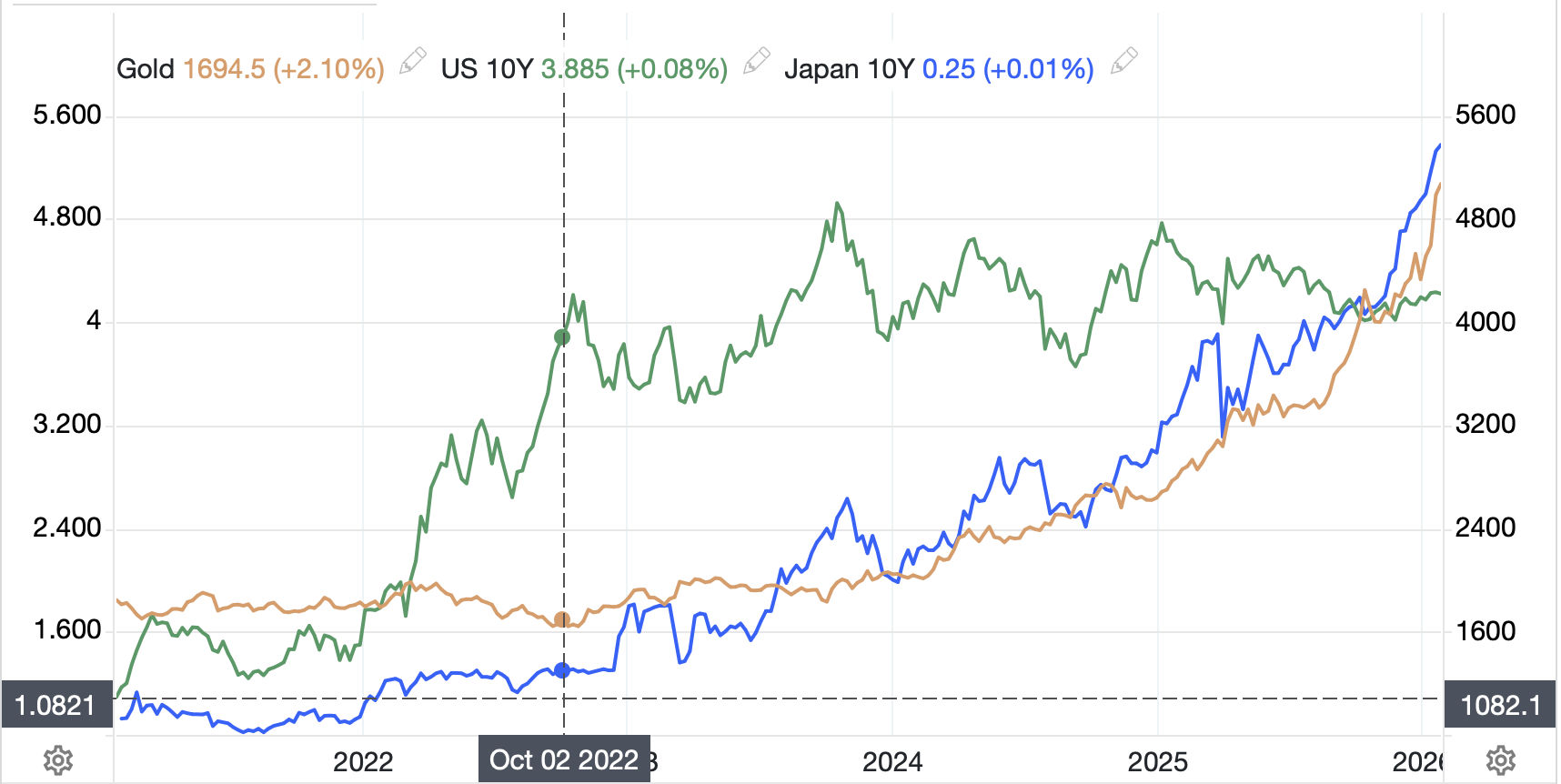
In the bond market, yields having moved higher on Friday, are quite stable this morning with Treasury yields unchanged and most of Europe seeing a -1bp decline.  The only outlier here is Japan, where JGB yields topped 1.65%, a new high for the move and the highest level since 2008 as per the below chart from marketwatch.com.  Ueda-san has to start getting worried soon, I think.

In the commodity space, oil (-0.7%) is continuing its recent decline but remains within the trading range and doesn’t appear to have much impetus in the short term in either direction.  However, I continue to look for an eventual decline here.  As to gold (+1.15%) and silver (+1.6%), nothing is going to stop this train.  Well, certainly there is no indication that policy changes are coming anywhere in the world that would force investors to rethink the idea of continuous depreciation of fiat currencies, and let’s face it, that’s all this represents.  I continue to see analysts raise their target price for the barbarous relic and I agree there is plenty of room to run as interest has been modest, at best, by Western investors.

Finally, the dollar is a touch softer this morning with both the euro (+0.25%) and pound (+0.25%) leading the way in the G10, although the yen is basically unchanged.  There was an interesting story in Bloombergdiscussing how volatility in the FX markets has been declining rapidly with many attributing this to the rise of algorithmic trading.  As well, all over X this morning are stories about how the dollar’s decline this year (about -14% vs. the euro) is unprecedented.  It’s not at all which is one of the reasons you need be careful about what people put up there.  It seems that some analysts are putting undue emphasis on the starting point being January 1st, rather than when the market tops.  But saying the dollar is declining in an unprecedented manner is absurd and picayune.  Meanwhile, EMG currencies are all over the place with gainers (KRW +0.4%, ZAR +0.4%) and laggards (MXN -0.5%, INR -0.25%) and everything in between.  

On the data front, PCE is Friday’s offering, but before then there is some stuff and more interestingly, there is lots of Fed speak.

TodayChicago Fed National Activity-0.17
TuesdayFlash Manufacturing PMI52.0
 Flash Services PMI53.9
WednesdayNew Home Sales650K
ThursdayDurable Goods-0.5%
 -ex transport-0.2%
 GDP (Q2)3.3%
 Initial Claims235K
 Continuing Claims1930K
 Existing Home Sales3.96M
FridayPCE0.3% (2.7% Y/Y)
 Core PCE0.2% (2.9% Y/Y)
 Personal Income0.3%
 Personal Spending0.5%
 Michigan Sentiment55.4

Source: tradingeconomics.com

On top of the data, we hear from…wait for it…ten different Fed speakers, including Chair Powell tomorrow, across 16 different events.  I expected to hear from a lot as there is clearly no real consensus at this point in time there.

People love to hate the dollar, and if the Fed is going to ease more aggressively, I understand that, but longer term, I think the story is different.  Just be careful.

Good luck

Adf

A Centruy Hence

A century hence
The BOJ’s equities
May well have been sold
 
But policy rates
Were left unchanged yet again
What of inflation?


Finishing up our week filled with central bank meetings, the BOJ left rates untouched last night, as universally expected, and really didn’t indicate when they might consider the next rate hike.  Ueda-san has the same problem as Powell-san in that inflation continues to run hotter than target while the economy appears to be struggling along.  In addition, the political situation in Tokyo is quite uncertain as PM Ishiba has stepped down and a new LDP leadership election is set to be held on October 4th with the two leading candidates espousing somewhat different views of the future.  If I were Ueda, I wouldn’t do anything about rates either.  Interestingly, there were two dissents on the BOJ board with both calling for another rate hike.

But there was a policy change, albeit one that does not feel like it is going to have a significant impact for quite some time.  The BOJ has decided to start to sell its equity and ETF holdings, which currently total about ¥37.2 trillion, at the annual rate of…¥330 billion.  At this pace, it will take almost 113 years for the BOJ to unwind the “temporarily” purchased equities acquired during the GFC to support the market.  While the Nikkei initially fell about 2% after the announcement, it rebounded over the rest of the session to close lower by a mere -0.6%.  However, in a strong advertisement for the concept of buy and hold, a look at the below chart shows when they started buying and how well the BOJ has done.

Source: finance.yahoo.com

There is no indication that the BOJ has unrealized losses on their balance sheet like the Fed does!

What of USDJPY you might ask?  And the answer is, nothing.  It is essentially unchanged on the day and in truth, as you can see from the chart below, it has done very little for the past 5+ months, trading at the exact same level as prior to the Liberation Day tariff announcements.  While there was an initial decline in the dollar then, that was a universal against all currencies, but we are back to where we were.

Source: tradingeconomics.com

Consider, too, that over the course of the past year, the Fed has cut Fed funds by 125bps while the BOJ has raised their base rate by 60bps, and yet spot USDJPY is effectively unchanged.  Perhaps, short-term interest rate differentials aren’t always the driver of the FX market after all. 

In fact, there is a case to be made that the driver in USDJPY is the capital flowing out of Japan by fixed income investors as they seek a less chaotic situation than they have at home.  This could well be the reason for the ongoing rise in long-dated JGB yields to record after record, while Treasury yields seem to have found a top.  Recall, in the latest 10-year auction, dealers took down only 4% of the auction with foreign interest rising to 71%.  While there has been much discussion amongst the punditry of how nobody wants to buy Treasuries and they are no longer the haven asset of old, the nobody of whom they speak are foreign central banks.  But foreign private investors seem pretty happy to scoop them up and are doing so at a remarkable pace.  I think there are a few more years left before the dollar disappears.

Ok, let’s tour the markets here as we reach the end of the week.  Record highs across the board in the US yesterday as investors apparently decided that the Fed was just like Goldilocks, not too hawkish and not too dovish.  And the hits keep on coming this morning as futures are all higher by about 0.25% at this hour (7:15).  As to Asia, we discussed Japan already, and both China and HK were unchanged.  But elsewhere in the region, the euphoria was not apparent as Korea, India, Taiwan, Singapore and Thailand all fell by at least -0.3% or more while Australia, New Zealand and Indonesia were the only gainers, also at the margin on the order of 0.3% or so.

Europe this morning is also mixed with the DAX (-0.2%) lagging after weaker than expected PPI data indicated that economic activity is slowing more rapidly than anticipated, while both the CAC (+0.2%) and IBEX (+0.4%) are edging higher absent any new data.  There was a comment by an ECB member, Centeno from Portugal, that the ECB needs to be wary of “too low” inflation, a particularly tone-deaf comment after the past several years!  But I guess that is the first hint that the ECB is ready to cut again.

In the bond market, Treasury yields have been bouncing since the FOMC meeting and are now higher by 13bps since immediately after the FOMC statement.  Again, my view is this is a case of selling the news after the market was pricing in the rate cut ahead of the meeting.  I would argue that no matter how you draw the trend line of the decline in yields over the past several months, we are nowhere near testing it.

Source: tradingeconomics.com

And in what cannot be a surprise, European sovereign yields are all rising alongside Treasuries, with today’s bump up of another 1bp to 2bps adding onto yesterday’s 5bp to 7bp raise across the board.  As well, we cannot ignore JGBs which have jumped 4bps after the BOJ meeting last night.  I guess Japanese investors didn’t get any warm and fuzzy feelings about how Ueda-san is going to fight inflation.

Turning to commodities, oil (-0.4%) remains firmly within its recent range, ignoring Russai/Ukraine news as well as inventory data and economic statistics.  I don’t know what it will take to change this equation, but it certainly seems like we will be in this range for a while yet.  Peace in Ukraine maybe does it, or a major escalation there.  Otherwise, I am open to suggestions.  Gold (+0.2%) continues to be accumulated by central banks around the world as well as retail investors in Asia, although Western investors appear oblivious despite its remarkable run.  Silver (+0.7%) too is rallying and has been outperforming gold of late.  Perhaps of more interest is that the precious metals are doing so well despite the dollar’s rebound in the FX markets.

Speaking of which, this morning the dollar is firmer by 0.25% to 0.4% vs most of its G10 counterparts although some of the Emerging Market currencies are holding up better.  So, the euro (-0.25%), pound (-0.5%), AUD (-0.25%), CHF (-0.35%) and SEK (-0.6%) are defining the G10 with only the yen (0.0%) bucking the trend.  As to the EMG currencies, HUF (-0.65%), KRW (-0.6%) and PLN (-0.3%) are the laggards with the rest showing far less movement.  However, while short dollar positions are rife, there is not much joy there lately.  I grant that the trend in the dollar is lower, and we did see a new low for the move print in the immediate aftermath of the FOMC meeting, but it appears that people have not yet abandoned the greenback entirely.  Perhaps the lure of more new record highs in the stock market is enough to get foreigners to reconsider their “end of American exceptionalism” idea.

There is no data today nor are any Fed speakers on the calendar.  Perhaps the most notable data we have seen is UK Public Sector Net Borrowing, which fell to -£17.96B, a massive jump from last month and much worse than expected.  As you can see from the chart below, while there is much angst over US budget deficits, at least the US has the reserve currency on which to stand.  The UK has nothing, and the fiscal situation there is becoming more dire each day.  Yet another reason that the Starmer government can fall sooner rather than later.

Source: tradingeconomics.com

It is hard to look at that chart and think, damn, I want to buy the pound!  

For all the hate it gets, the dollar is still the cleanest dirty shirt in the laundry, and while it may trade somewhat lower in the near term, it will find its legs and rebound.

Good luck and good weekend

Adf