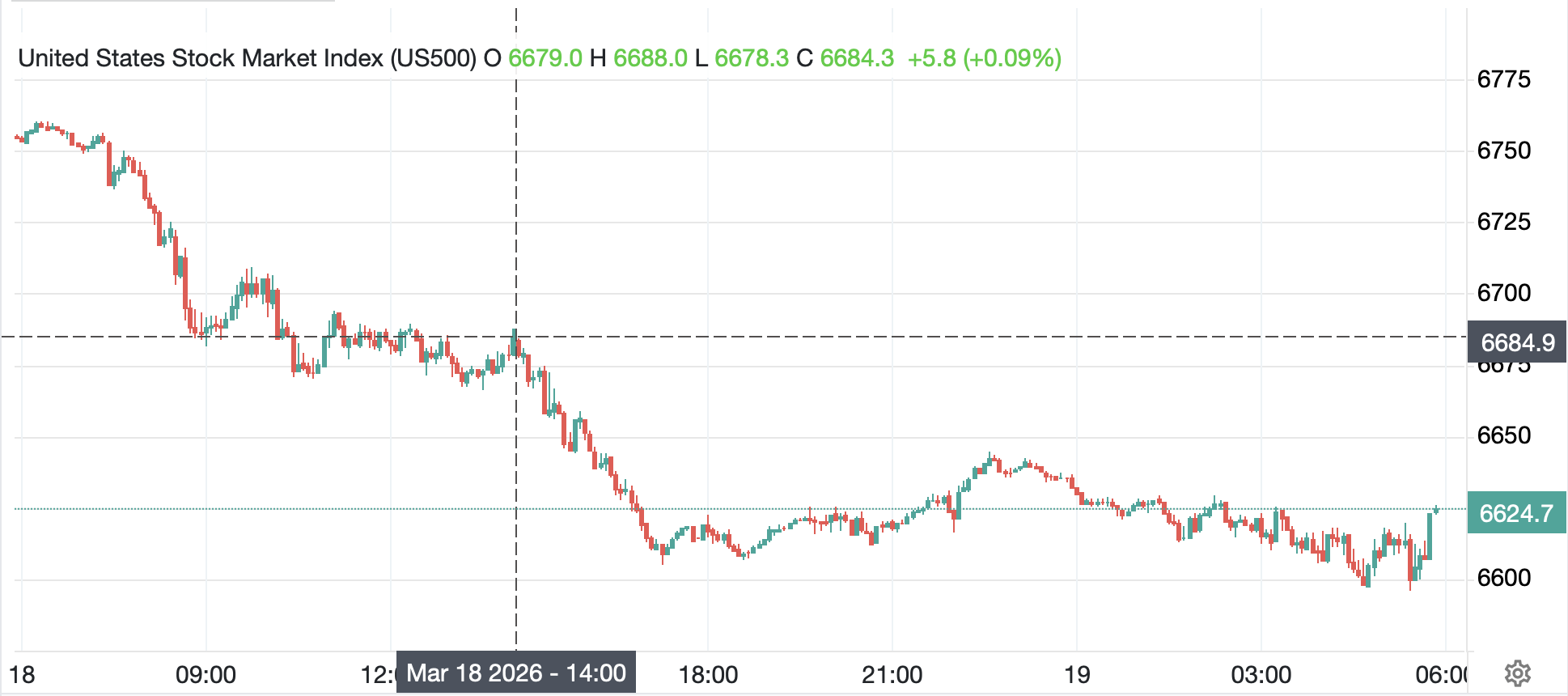
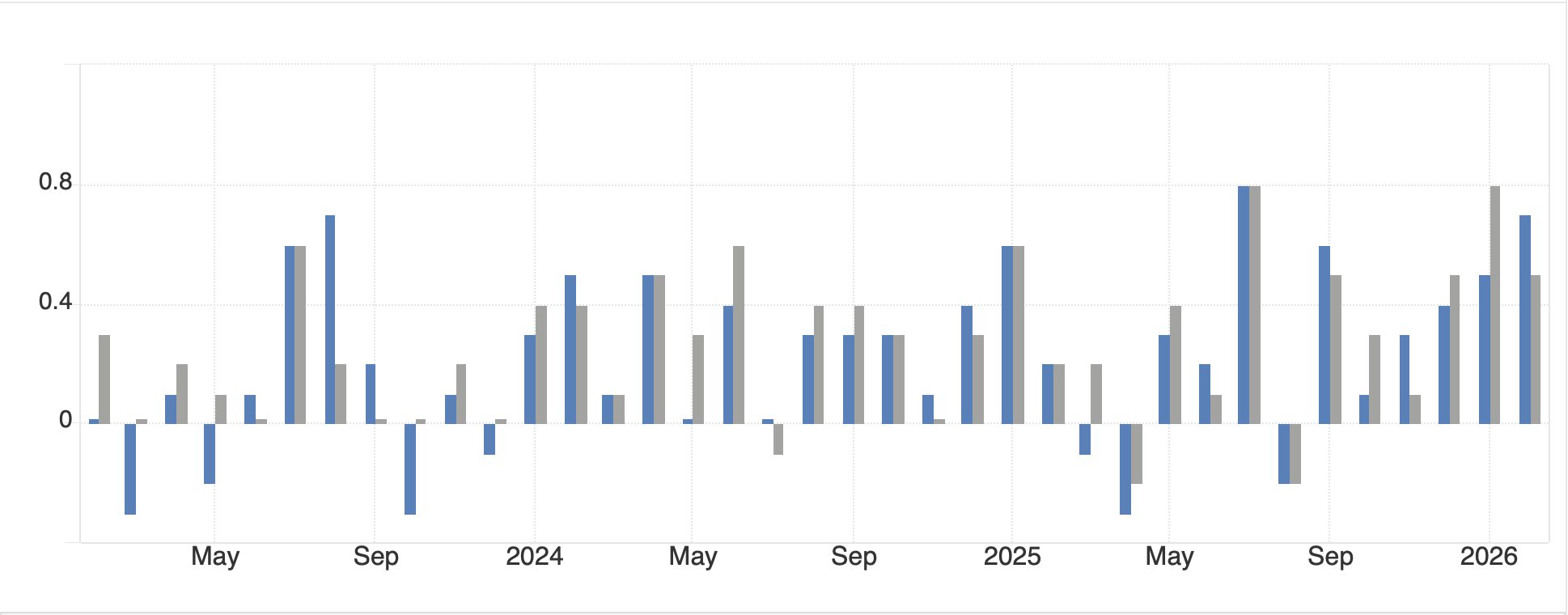
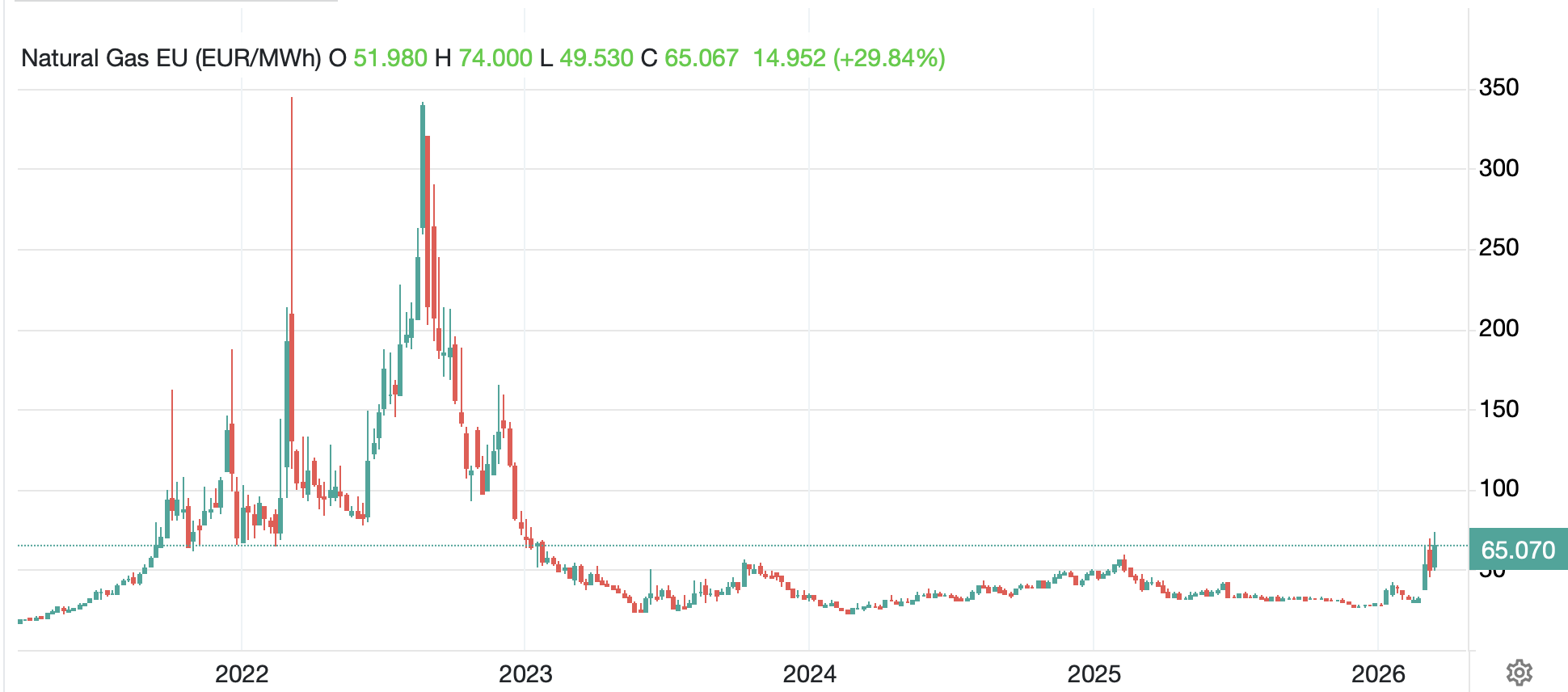
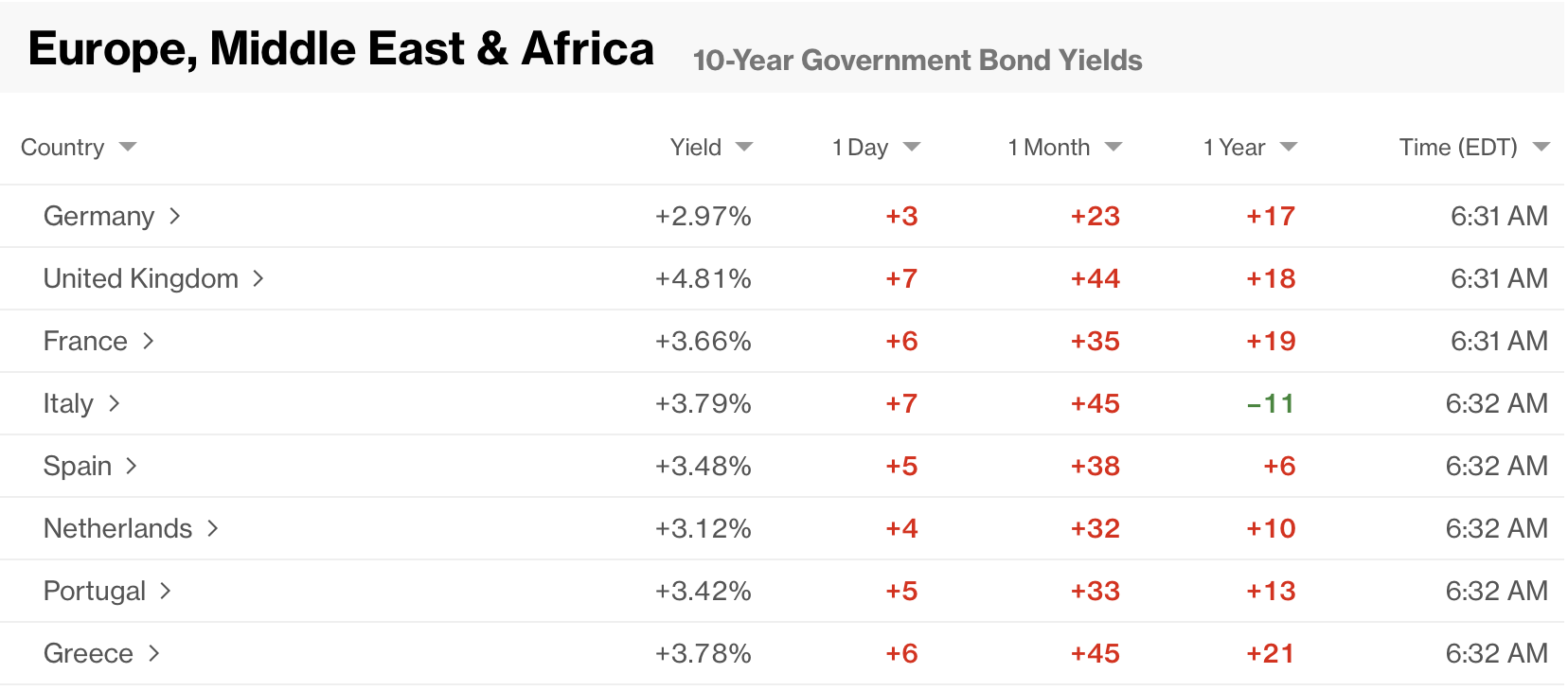
Remarkable Fragility

JGB yields have
Risen to multi-year heights
Is this why stocks fell?


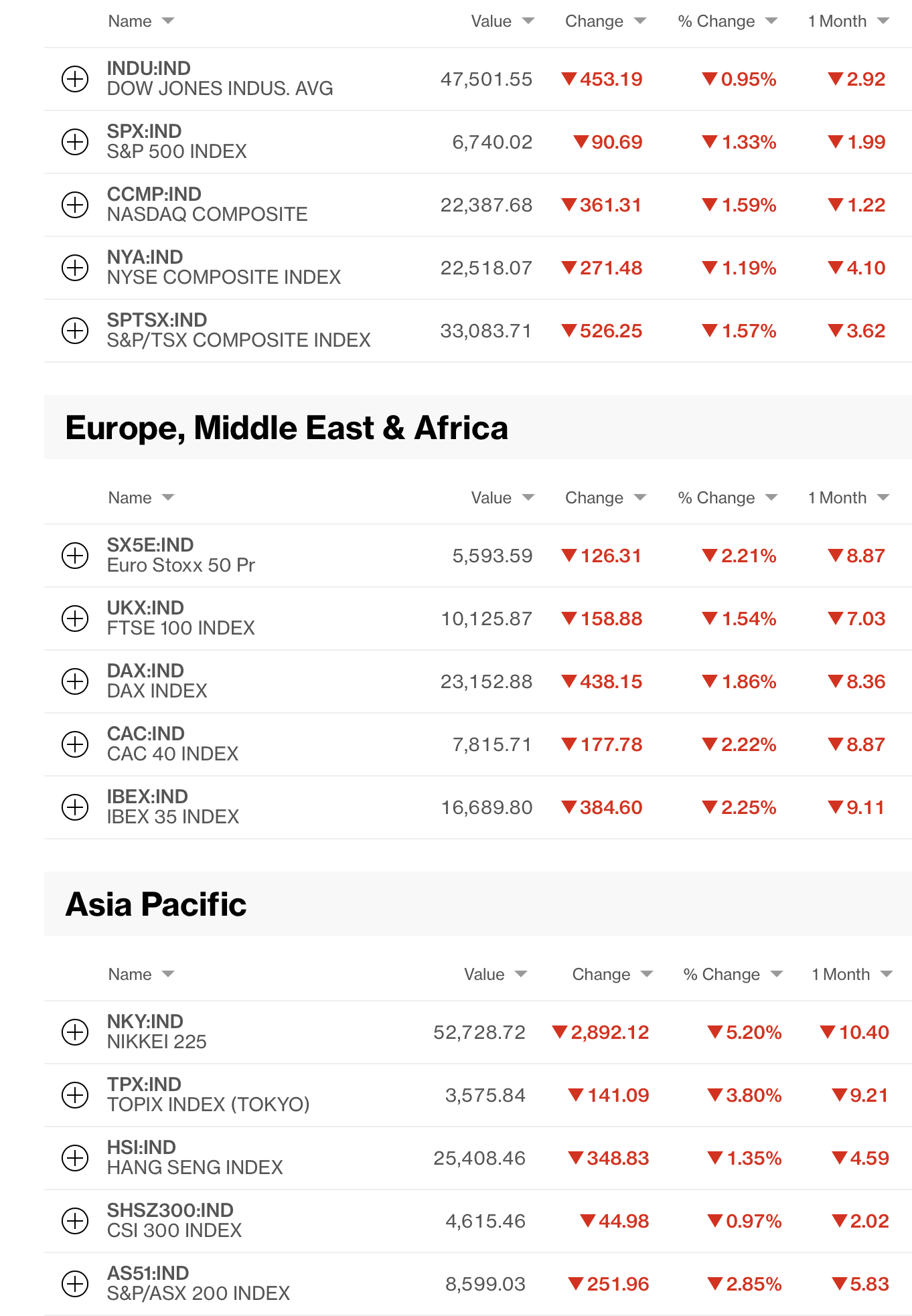
Yesterday I highlighted that 10-year JGB yields had risen to their highest level since 2008.  As you can see below, the same is true for 30-year JGBs and essentially the entire curve there.

Source: tradingeconomics.com

Ostensibly, this move was triggered by comments from BOJ Governor Ueda indicating that a rate hike was coming this month.  However, the thing I find more interesting is that this move in JGB yields has become the bête noire of markets, now being blamed for every negative thing that happened yesterday.  

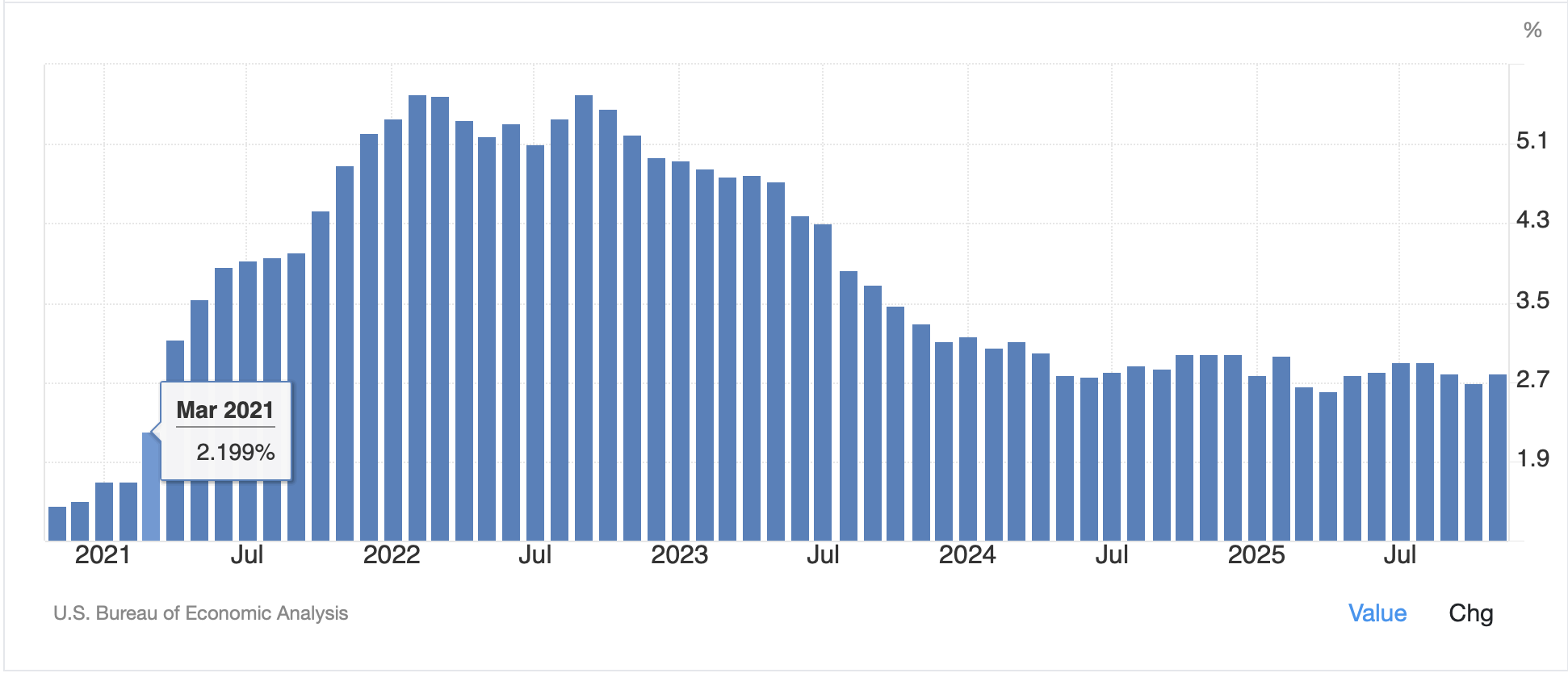
For instance, Treasury yields yesterday rose 7bps despite ISM data indicating that manufacturing activity remains sluggish at best.  In fact, the initial response to that data was that it confirmed the Fed will be cutting rates next week.  But the narrative seems to be that Japanese investors are now willing to repatriate funds, selling Treasuries to buy JGBs, in order to invest locally because they are finally getting paid to do so.  Certainly, looking at the chart above shows that Japanese yields had been tantamount to zero for a long time prior to 2024, and even then, have only started to show any real value in the most recent few months.  Of course, real 10-year yields in Japan remain significantly negative based on the latest inflation reading of 3.0%.  The upshot is, rising JGB yields are deemed the cause of Treasury market weakness.

Turning to risk assets, the story is the same for both stocks (which saw US equities decline across the board yesterday) and cryptocurrencies, notably Bitcoin.  Ostensibly, the rise in yields, and the prospect of a rate hike by the BOJ (to just 0.75% mind you) has been cited as the driver of an unwinding in leveraged trades as hedge funds seek to get ahead of having their funding costs rise thus crimping their margins.  

There is no doubt in my mind that the yen has been a critical funding currency for a wide array of carry trades, that is true.  In fact, that has been the case for several decades.  But is 25 basis points really enough to destroy all the strategies that rely on that process?  If so, it demonstrates a remarkable fragility in markets, and one that portends much worse outcomes going forward.  

If we look at the relationship between Bitcoin and 10-year JGBs, it appears that there has been a significant change in tone.  For the past two months, while JGB yields have continued to climb, BTC has broken its correlation with JGBs and has fallen dramatically instead. (see below chart from tradingeconomics.com). When it comes to crypto, I am confident that leverage levels are higher than anywhere else, in fact that seems part of the attraction, so it should not be as surprising to see something of this nature.  But again, it speaks to a very fragile market situation given there was no discernible change in the Japanese yield trend to drive a Bitcoin adjustment.

The upshot here, too, is that rising JGB yields are claimed to be the reason Bitcoin is declining.  In fact, nearly all the commentary of late seems to be focusing on JGBs as the driver of everything.  While I concede that Japanese yields are an important part of the USDJPY discussion, it is difficult for me to assign them blame for everything else.  I have seen numerous commentators explaining that the Japanese have been selling Treasuries because they don’t trust the US, and this has been ongoing for years.  I have also seen commentators explain that because Japanese surpluses had been invested internationally for years and funding so much of the world’s activity, now that they can invest at home, liquidity everywhere will dry up, and asset prices will fall.  

Responding to the first issue, especially with new PM Sanae Takaichi, I do not believe that is a concern at all.  If anything, I expect that the relationship between the US and Japan will deepen.  As to the second issue, that may have more import but the one thing of which we can be sure is that central banks around the world will not allow liquidity to dry up in any meaningful fashion.  Remember, the Fed ended QT yesterday and it won’t be long before the balance sheet starts to grow again, adding liquidity to the system.  One thing I have learned in my many years observing and trading in markets is, there doesn’t need to be a catalyst for markets to move in an unexpected direction.  Certainly not a big picture catalyst.

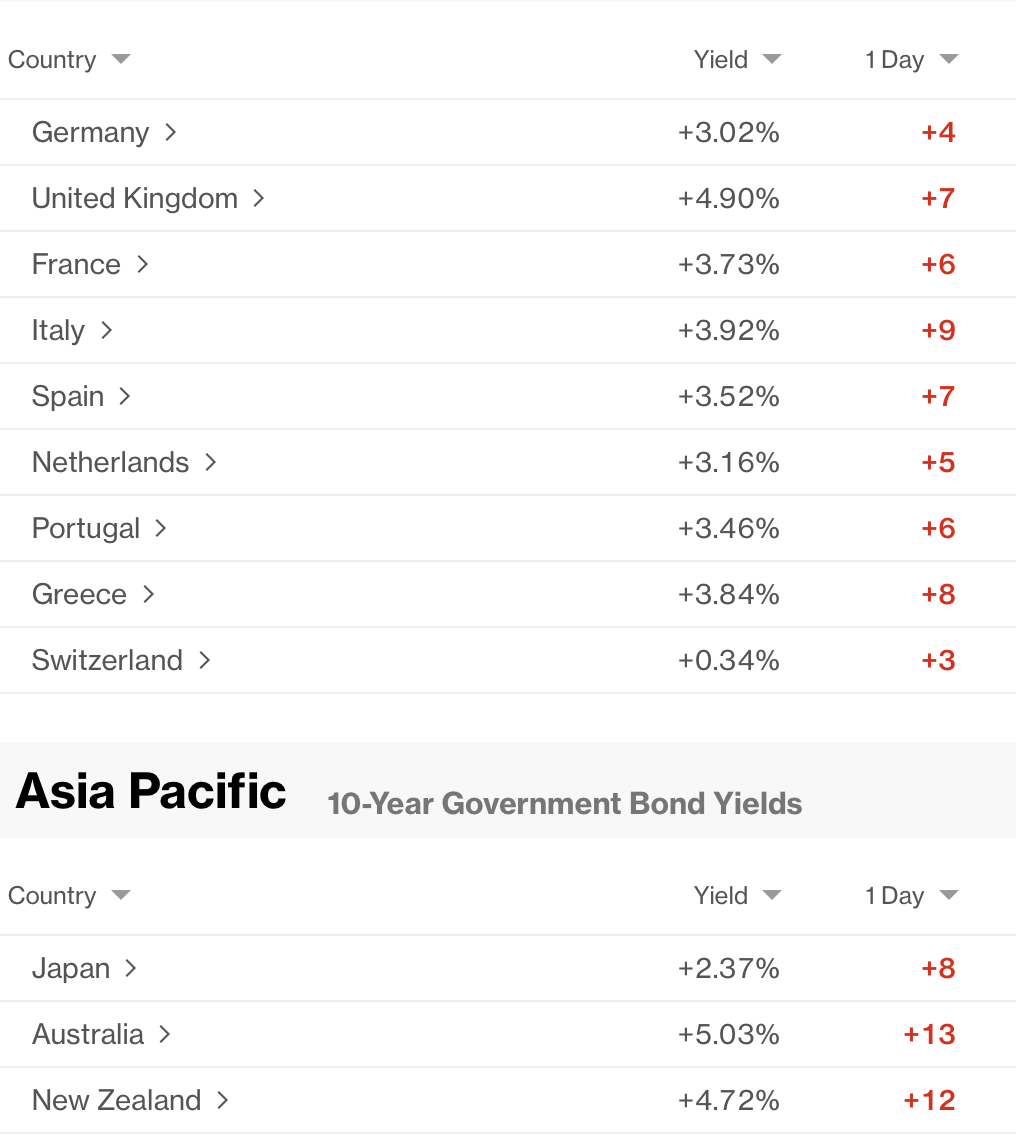
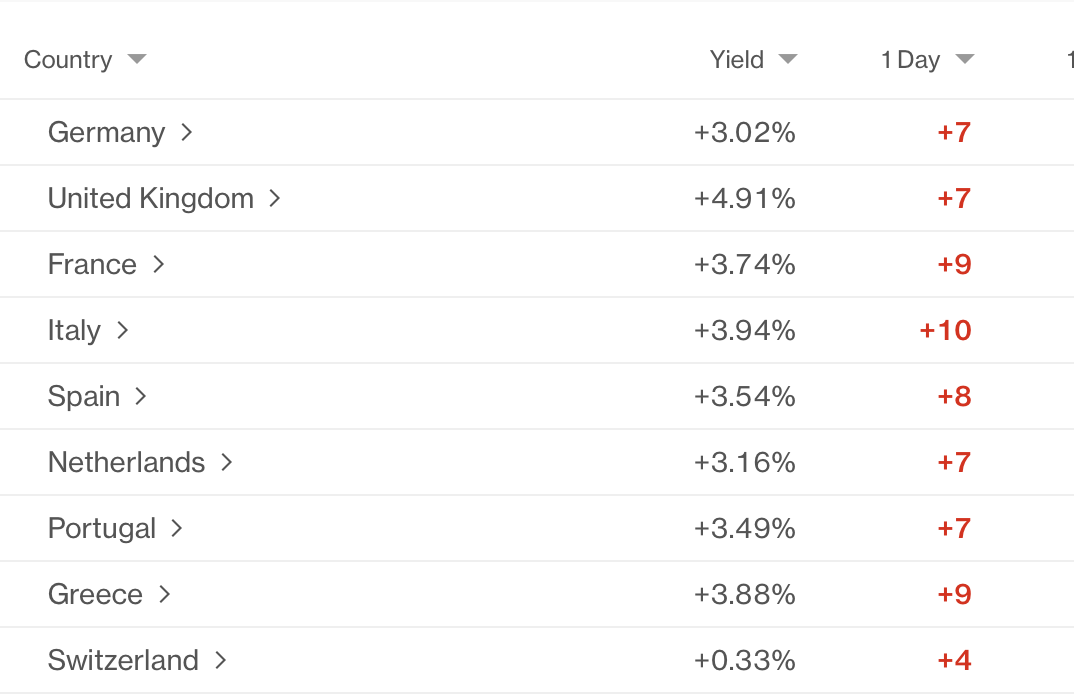
And with that, let’s look at how markets responded overnight to yesterday’s risk-off session in the US.  Looking at the bond market first, yesterday’s rise in yields was nearly universal with European sovereigns all following the Treasury market’s lead.  And this morning, across the board sovereigns are higher by 1bp, the same as Treasury yields.  While JGB yields didn’t budge overnight, we did see Australia and other regional yields catch up to yesterday’s rise.  I fear bond investors are stuck as they see the potential for inflation, but they also see weakening economic activity as a moderator there.  As an example, the OECD just reduced its US GDP forecast for 2026 to 2.9% this morning, from 3.2%.  Personally, I don’t think anything has changed the run it hot scenario.

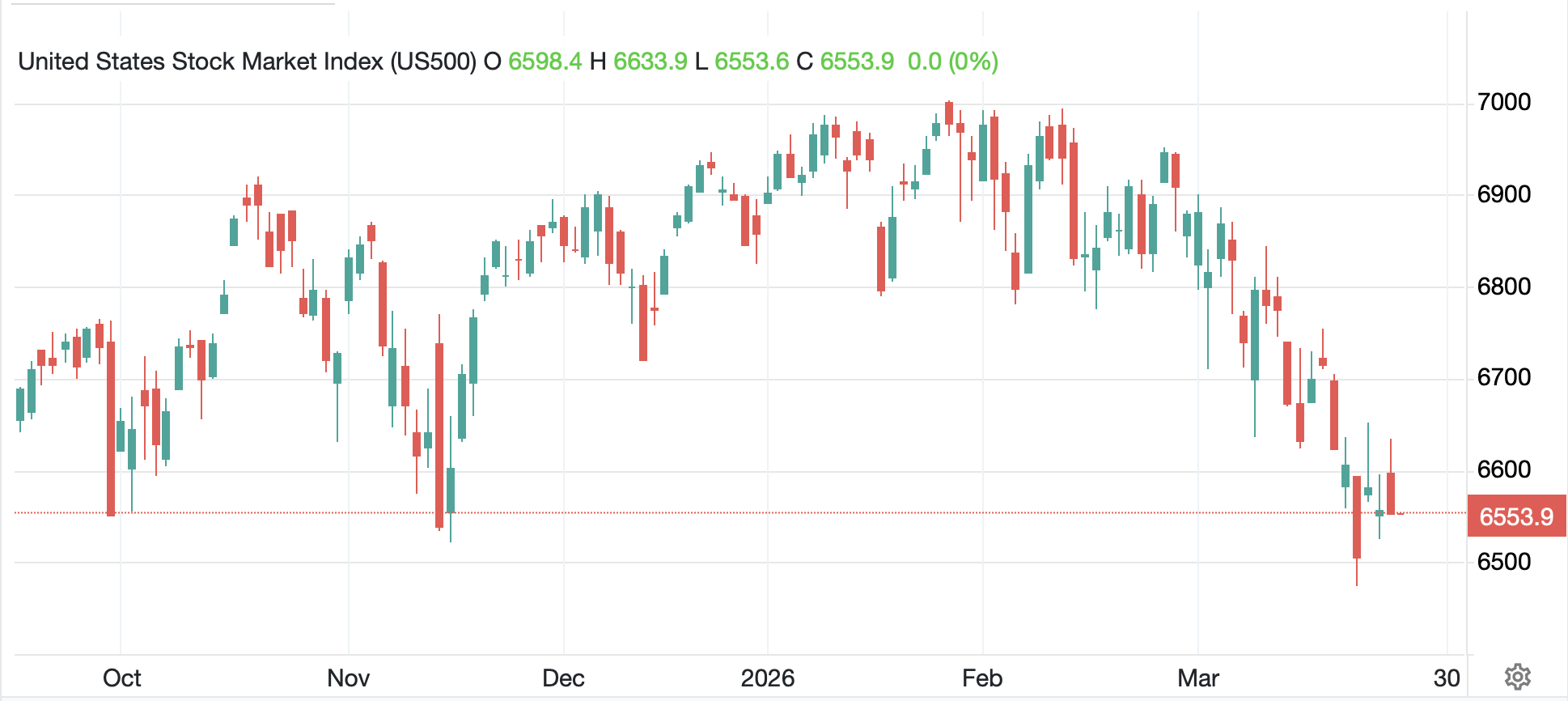
In the equity markets, Asian bourses were mixed with Korea (+1.9%) and Taiwan (+0.8%) the notable gainers while elsewhere movement was much less substantial (Japan 0.0%, HK +0.2%, China -0.4%).  There was no single story driving things there.  As to Europe, things are brighter this morning led by Spain (+1.0%) and Italy (+0.5%) although there is no single driving issue here either.  US futures are edging higher at this hour as well, +0.2%, so perhaps yesterday was more like a little profit taking after last week’s strong rally, than anything else.

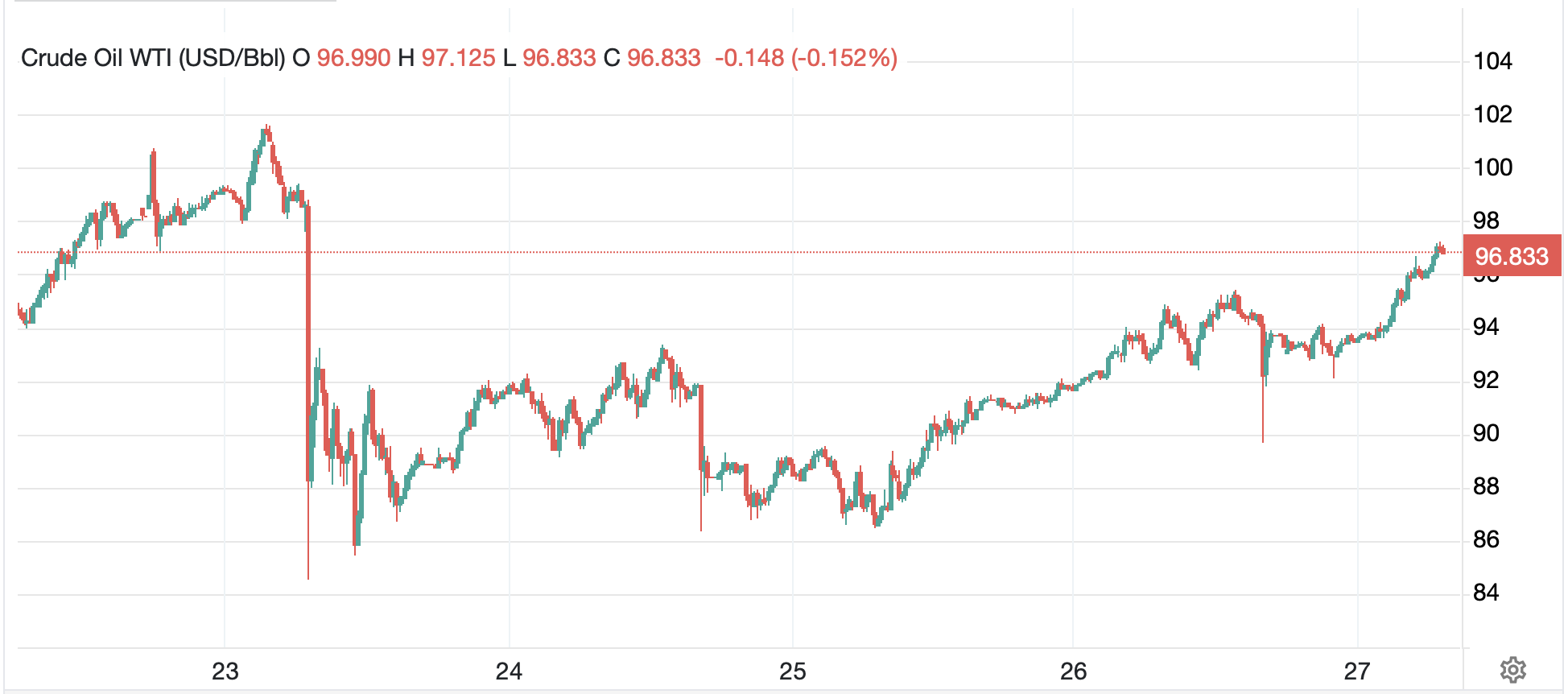
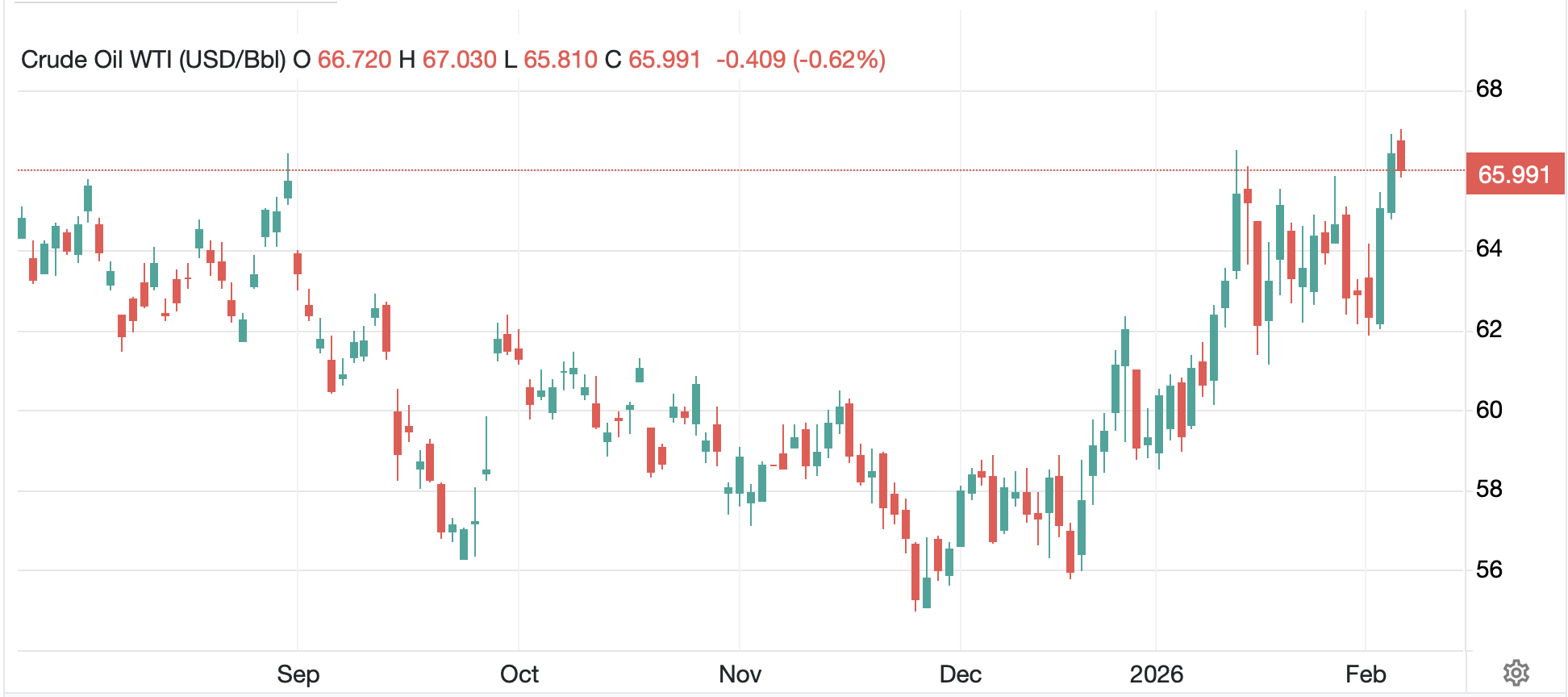
In the commodity sector, oil (-0.3%) is slipping after yesterday’s rally.  I suppose the potential peace in Ukraine is bearish, but that story has been dragging on for a while so I’m not sure when it will come to fruition.  In the metals markets, after a gangbusters rally yesterday, with silver trading to $59/oz, we are seeing a modest retracement this morning across the board (Au -0.6%, Ag -1.2%, Pt -2.0%) although copper (+0.4%) is holding its gains.  Nothing indicates that these metals have topped.

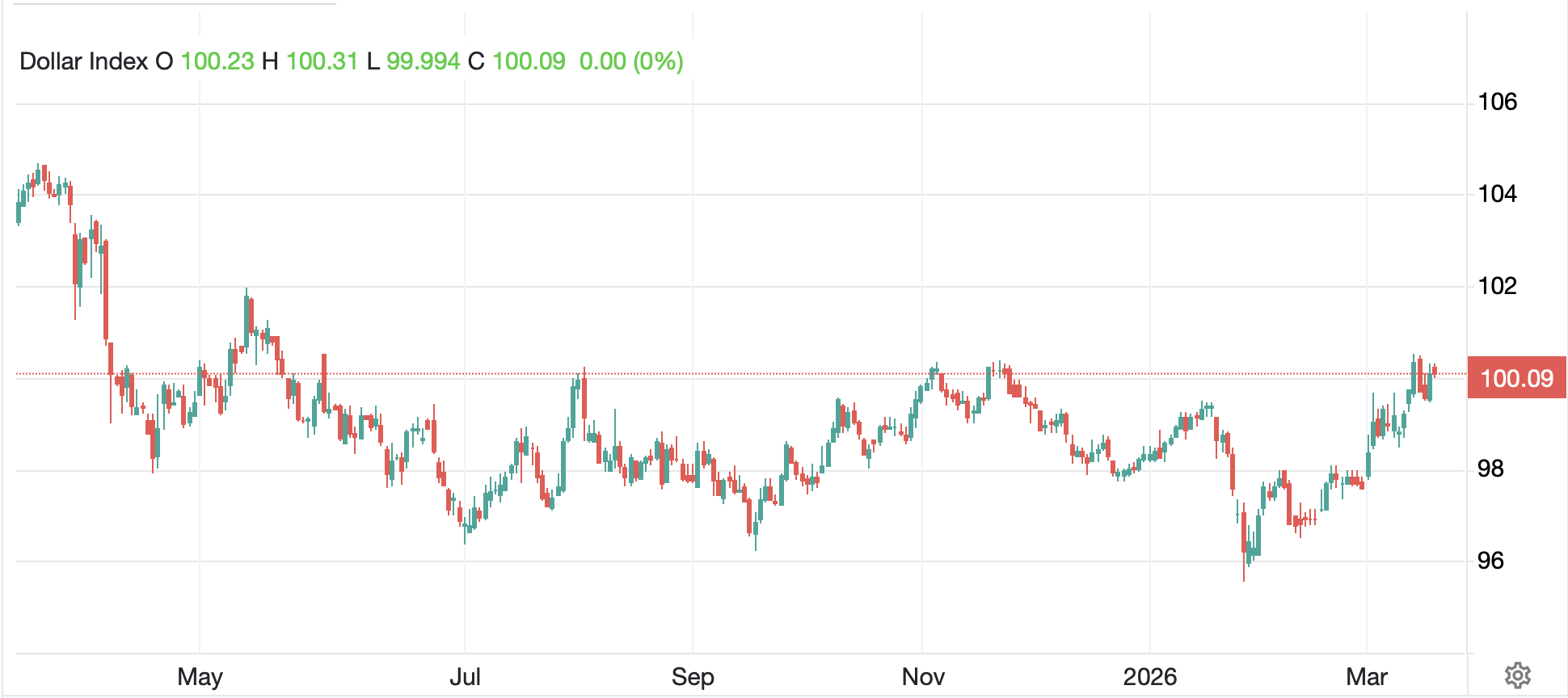
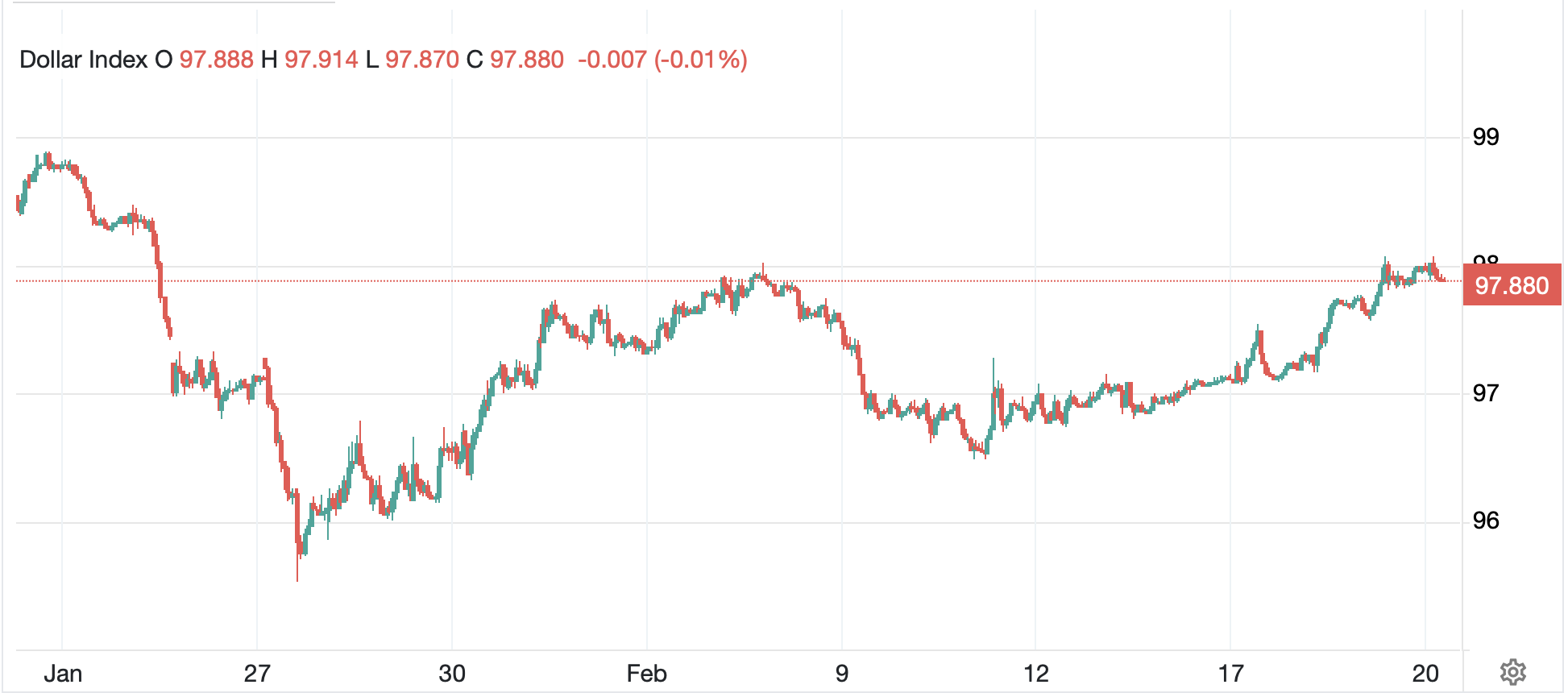
Finally, the dollar is little changed as I write, giving back some early modest strength.  JPY (-0.3%) continues to be amongst the worst performers, and although it has bounced from its recent lows, remains within a few percent of those levels.  My take here is we will need to see both a more aggressive Fed and a more aggressive BOJ to get USDJPY back to 150 even, let alone further than that.  If we look at the DXY, it is sitting at 99.45, and still well within its trading range for the past 6+ months as per the below.  For now, the dollar remains a secondary story.

Source: tradingeconomics.com

On the data front, here’s what comes the rest of this week:

WednesdayADP Employment 10K
 IP0.1%
 Capacity Utilization77.3%
 ISM Services52.1
ThursdayInitial Claims220K
 Continuing Claims1960K
 Trade Balance -$65.5B
FridayPersonal Income (Sep)0.4%
 Personal Spending (Sep)0.4%
 PCE (Sep)0.3% (2.8% Y/Y)
 -ex food & energy0.2% (2.9% Y/Y)
 Michigan Expectations51.2
 Consumer Credit$10.5B

Source: tradingeconomics.com

As the Fed is in its quiet period, there are no Fed speakers until Powell at the presser next week.  Given the age of the PCE data, I don’t see it having much impact.  Rather, ADP and ISM are likely the things that matter most for now.

Ultimately, I believe more liquidity is going to come to the market via central banks around the world, and that will support risk assets, as well as prices for the things we buy.  Nothing has changed in my view of the dollar either.

Good luck

Adf
A Latent Grim Reaper

The zeitgeist, of late, has been leaning
Toward welcoming gov intervening
Because costs have soared
So, folks once abhorred
Like Socialists, seem more well-meaning
 
Perhaps, though, the story’s much deeper
And points to a latent grim reaper
Elites on one side
Claim Trump’s only lied
While Populists serve as gatekeeper


Quite frankly, I feel like markets have become very secondary to an understanding of what is happening in the economy, and while there is intrigue over who may be the next Fed Chair, and correspondingly, if Mr Powell will resign from the FOMC when his chairmanship is up, I believe that pales in comparison to much larger macroeconomic issues with which we all have to deal on a daily basis.  Once again, my weekend reading has highlighted two key pieces that I believe do an excellent job of explaining much of what is going on, not just in the economy, but in the streets.

Last week, I highlighted Michael Green’s piece regarding a new estimate of what the poverty line looks like, putting paid to the idea that the official government level of $31,500 is appropriate, and that in suburban NJ (Caldwell to be exact) it is more like $140K.  Now, you will not be surprised that his piece garnered a great deal of attention given its premise, but I will not go into that.  However, he did write a follow-up piece which is worth reading and where he discusses the reaction.  In brief, whatever number is correct, it is clear that $31.5K is laughably low.   Ultimately, I believe this work has quantified the concept of the “vibecession” which has been making the rounds for a while.  People are allegedly making a decent living and yet are living paycheck to paycheck because the cost of living (not inflation) has risen so remarkably over time and priced many folks out of previously ordinary levels of attainment.

Which brings me to the second key piece I read this weekend, this from Dr Pippa Malmgren, which does a remarkable job explaining how the nation (and not just in the US, but we are more familiar here) has (d)evolved into two groups; Elites and Populists.  The former are the old guard politicians (both Democrats and Republicans), the global organizations like the World Bank, IMF, UN and WEF, and more perniciously in my mind, the so-called deep state.  The latter are personified by President Trump, but include NYC Mayor-elect Mamdani, AfD in Germany, Marine LePen in France and Victor Orban in Hungary, and their followers, to name a few.

The frightening conclusion Dr Malmgren drew was that there is no ability for a nation to continue to operate successfully if the population is split in this manner, and that eventually, one side is going to wind up victorious.  I would say this is the very definition of the 4th Turning and we are living through it.

So, we must ask, what are the potential ramifications from a financial markets perspective with this backdrop?  I have repeatedly highlighted that the Trump administration is going to “run it hot” going forward, meaning the goal will be to increase nominal GDP fast enough to outweigh the inevitable rise in prices.  The idea is if incomes rise quickly enough, people will be able to tolerate rising prices more easily.  

But the one thing of which I am increasingly confident is that prices and their rate of change are going to rise under this scenario.  As central banks leave policy easy, or ease further in an effort to support their respective economies, that is going to be the outcome.  A look at the chart below from the FRED data base of the St Louis Fed shows there is a very strong relationship between CPI and nominal GDP.  In fact, I ran the numbers and the correlation for the past 75 years has been 0.975!  Prices are going to rise friends, alongside M2.

What does this mean?  It means that the debasement of fiat currency is going to continue apace and so commodities, notably precious metals, but also base metals and property are going to be recognized as better stores of wealth.  If you wonder why gold (+0.9%) and silver (+2.2%) are continuing to rocket higher, look no further than this.  What about equities?  For now, I expect they will continue to perform well as all that liquidity will be looking for a home although this morning, not so much as US futures are lower by -0.5% across the board.  Bonds?  This is a tougher call, and I suspect that the yield curve will steepen further as central banks press short rates lower, but inflation undermines long duration fixed income assets.  Finally, the dollar remains, in my view, one of the best of the fiat currencies, but like all of them, will continue to degrade vs. gold and hard assets.

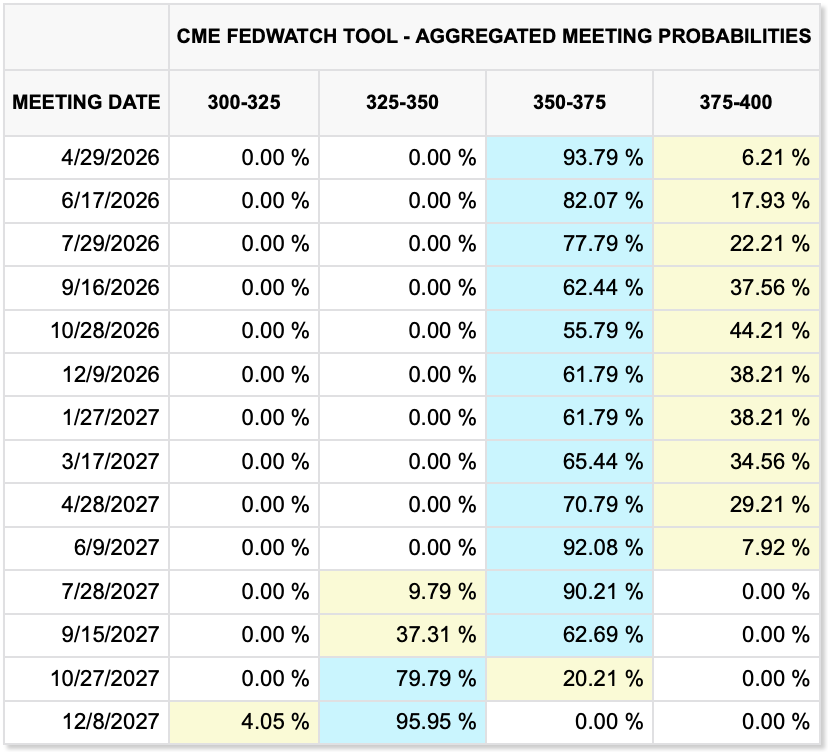
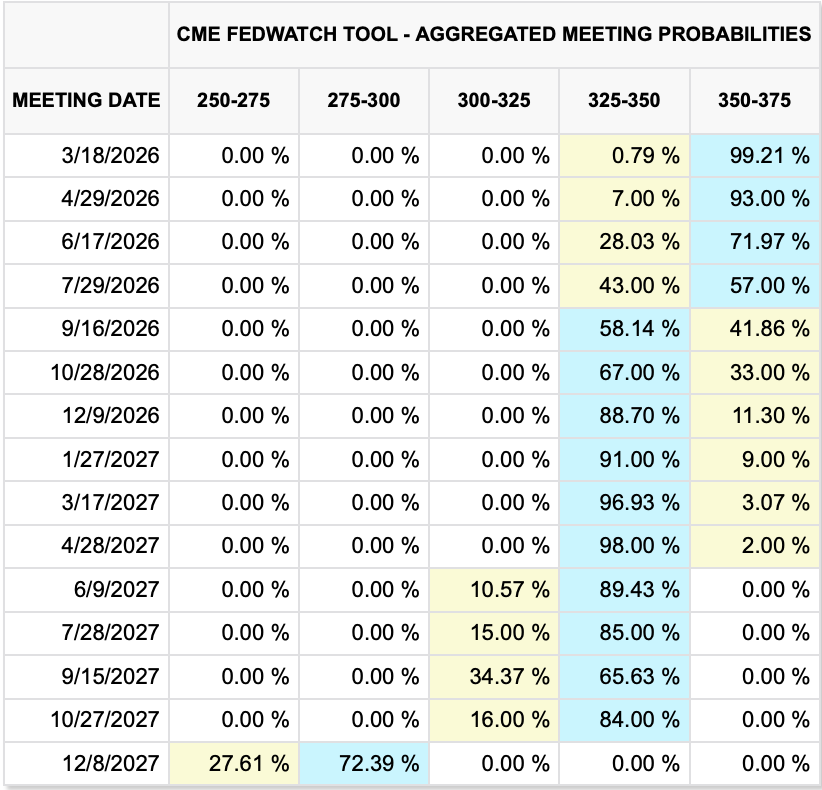
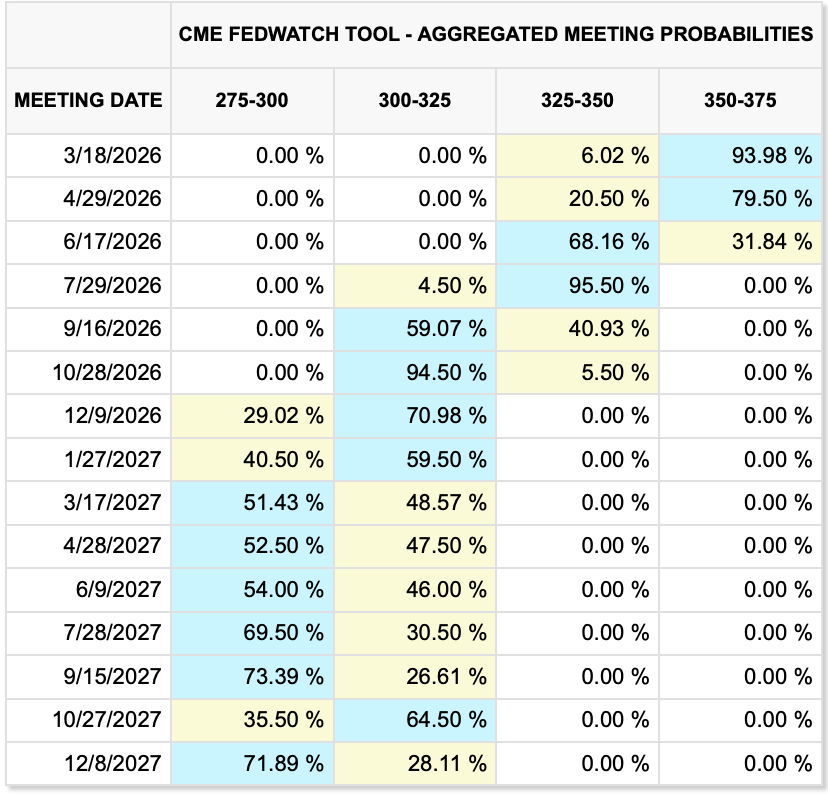
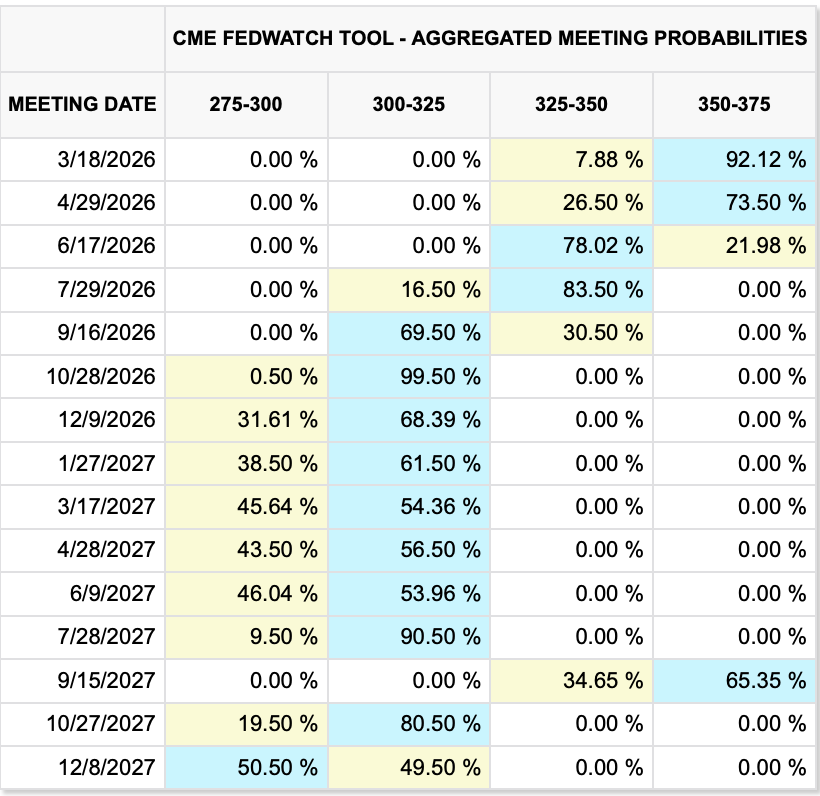
Keeping that in mind, there are two other stories of note this morning, only one of which is impacting markets.  The non-impactful one is that apparently President Trump has selected Kevin Hassett, currently the White House Economic Council Director, as the man to succeed Jay Powell in the chair.  He is a long-time political operative with deep ties in Washington and I presume will get through the vetting and be confirmed on a timely basis.  As I wrote above, it is not clear to me the Fed matters as much as other things in the current environment, although we will continue to hear about it.  In this light, the Fed funds futures market is currently pricing an 87.5% probability of a 25bp cut next week and is back to a 58% probability of a total of 100bps of cuts by the end of 2026 as per the below from the CME.

The other story of note, this one definitely impacting markets, is the news that Ueda-san hinted more definitively at a Japanese rate hike later this month, with Japanese swaps market raising the probability of that hike to 80% from about 60% last week.  The knock-on effects were that 10-year JGB yields jumped 7bps, to 1.86%, their highest level since 2008 and as you can see from the chart below, continue to trend strongly higher.  Of course, given that inflation in Japan remains well above target, it is not that surprising that yields are climbing.  

Too, the other outcome here has been the yen (+0.7%) gaining a little ground, as per the below chart from tradingeconomics.com, and perhaps we have seen a short-term low in the currency.  Certainly, the increasing probability of US rate cuts is weighing on the dollar overall, so that is part of the story, but it remains to be seen if there are going to be wholesale changes in investment allocations that would be necessary to completely reverse the yen’s remarkable weakness over the past nearly four years.

The move in JGB yields has been blamed for the rise in yields around the world with Treasury and European Sovereign yields uniformly higher by 3bps this morning while some other regional Asian yields climbed between 4bps and 6bps.  In the end, inflation remains a problem almost everywhere in the world and I think that is what we are witnessing here.

As well, the JGB move was seen as the cause for Japanese equities’ (-1.9%) very weak performance which also dragged down some other regional markets (Taiwan, Australia, Philippines) but was not enough to undermine the rest of the region.  The flip side of that weakness was China (+1.1%) and HK (+0.7%) where it appears that hopes for a Fed rate cut more than offset weaker than forecast PMI data from China.  Another interesting story from the mainland was that the monthly Housing price data that was compiled by two key private companies was squashed by the Chinese government after China Vanke, one of the largest Chinese property companies, explained they would be late on an interest rate payment.  One can only imagine what that data looked like!

Meanwhile, in Europe, red is the color led by Germany’s DAX (-1.5%) although with weakness across the board (CAC -0.8%, IBEX -0.6%, FTSE MIB -0.9%).  Apparently, the story that progress has been made regarding peace talks in Ukraine is not seen as a positive there.  After all, if there is peace, will European governments still be so keen to build out their military, spending billions of euros at local defense and manufacturing firms?  It seems after a very strong close to the month in November, there is a bit of profit taking underway this morning.

In the commodity space, oil (+1.3%) is bouncing back to its trend line after OPEC confirmed it will not be increasing production in Q1 next year at a meeting yesterday.  I would expect that a real peace deal would be negative for this market as some part of that would be the relaxation of sanctions, I would assume.  But maybe I’m wrong there.  However, I continue to believe the trend is modestly lower going forward as there is far more supply available.  As to the other metals, both copper (+0.6%) and platinum (+1.5%) are continuing their runs higher with no end currently in sight.

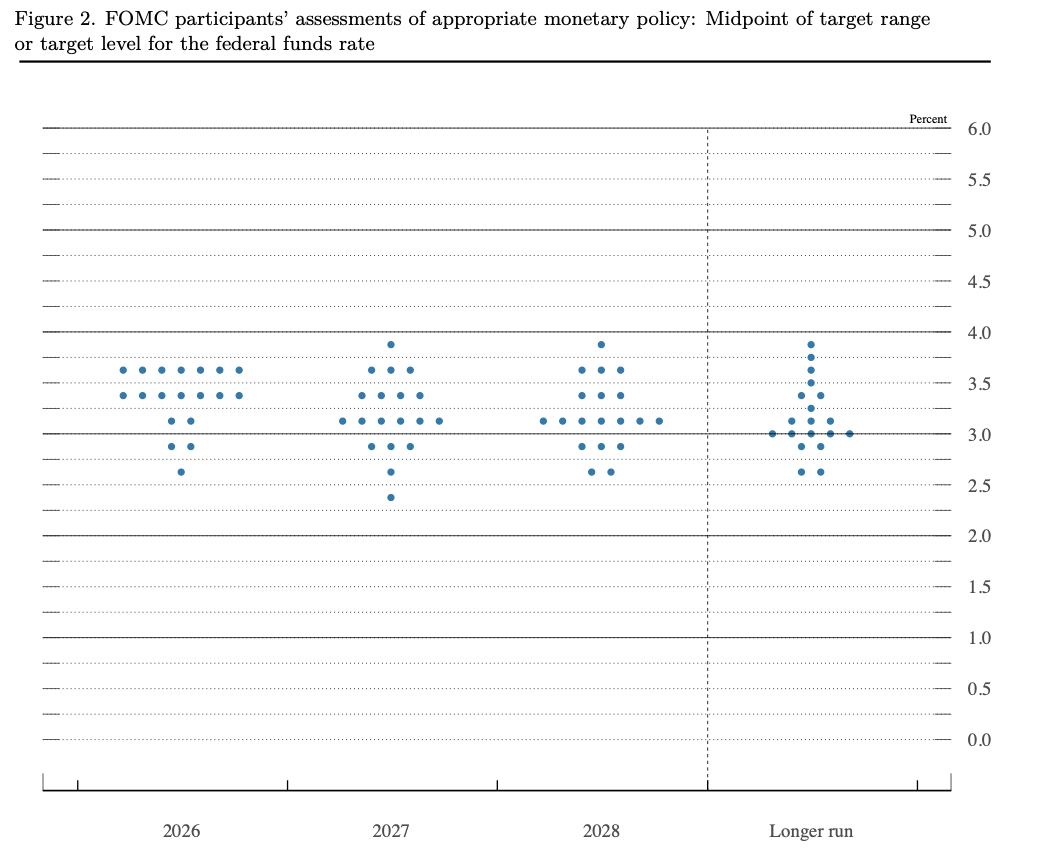
Finally, the dollar is softer overall this morning, and while the yen (+0.7%) is the leader, the euro (+0.3%), SEK (+0.3%) and CHF (+0.25%) are also nicely up on the day with the rest of the G10 little changed.  The real movement, though, has been in the EMG bloc with CZK (+0.75%), HUF (+0.5%), PLN (+0.5%), and CLP (+0.4%) all benefitting from the Fed rate cut story as well as Chile’s benefits from copper’s rally.  While a cut seems highly likely, I suspect the real dollar story will be about the dot plot and SEP as well as Powell’s presser next week.

I’ve already run too long so will just mention that ISM Manufacturing (exp 48.9) is due this morning and I will review the week’s data expectations tomorrow.  

The world is changing and I expect that we will continue to see volatility across markets as investors come to grips with those changes, whether simple central bank rate decisions or more complex social movements and electoral outcomes that lead to major policy changes.  Be careful out there.

Good luck

Adf
Markets Ain’t Fair

The pundits, when looking ahead
All fear that their theses are dead
‘Cause bitcoin’s imploding
And that is corroding
The views they have tried to embed
 
The thing is, it’s simply not clear
What caused this excessive new fear
But those with gray hair
Know markets ain’t fair
And force us to all persevere


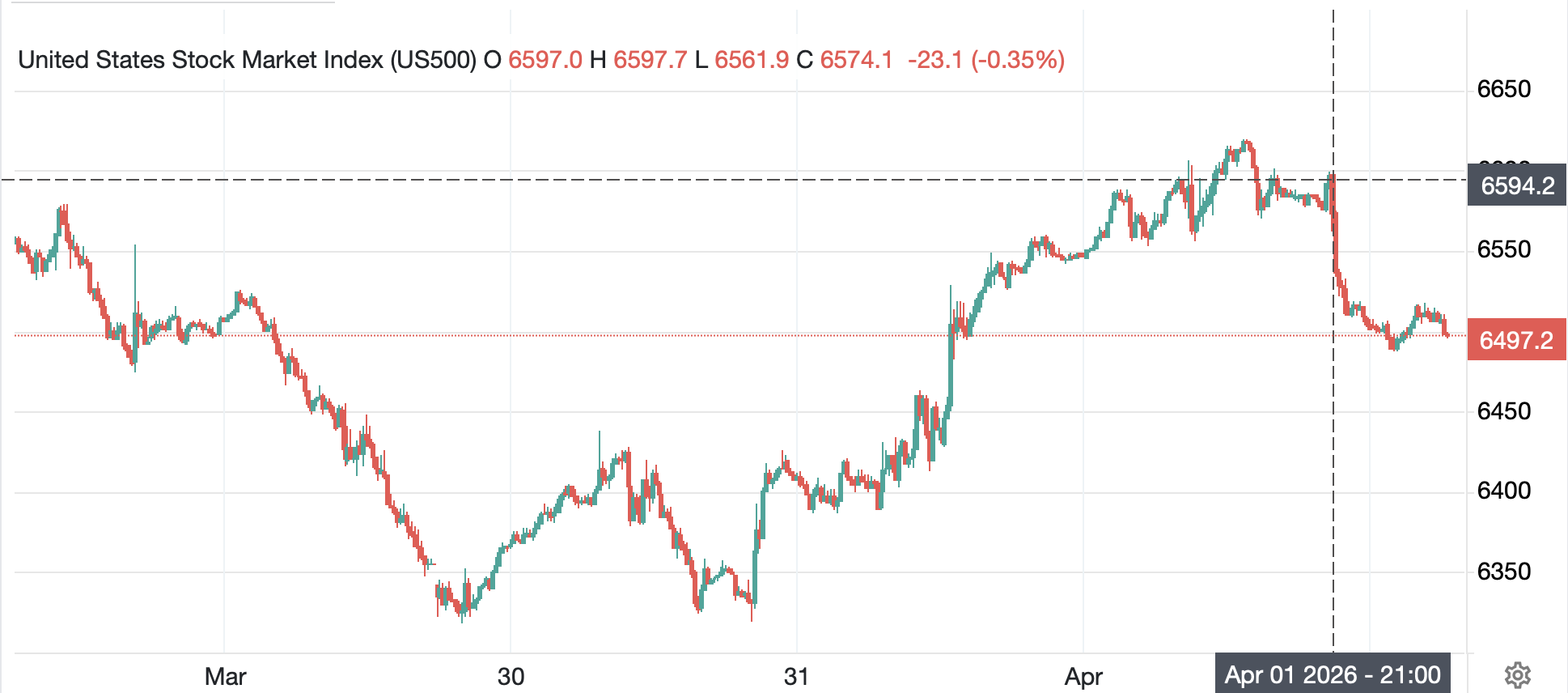
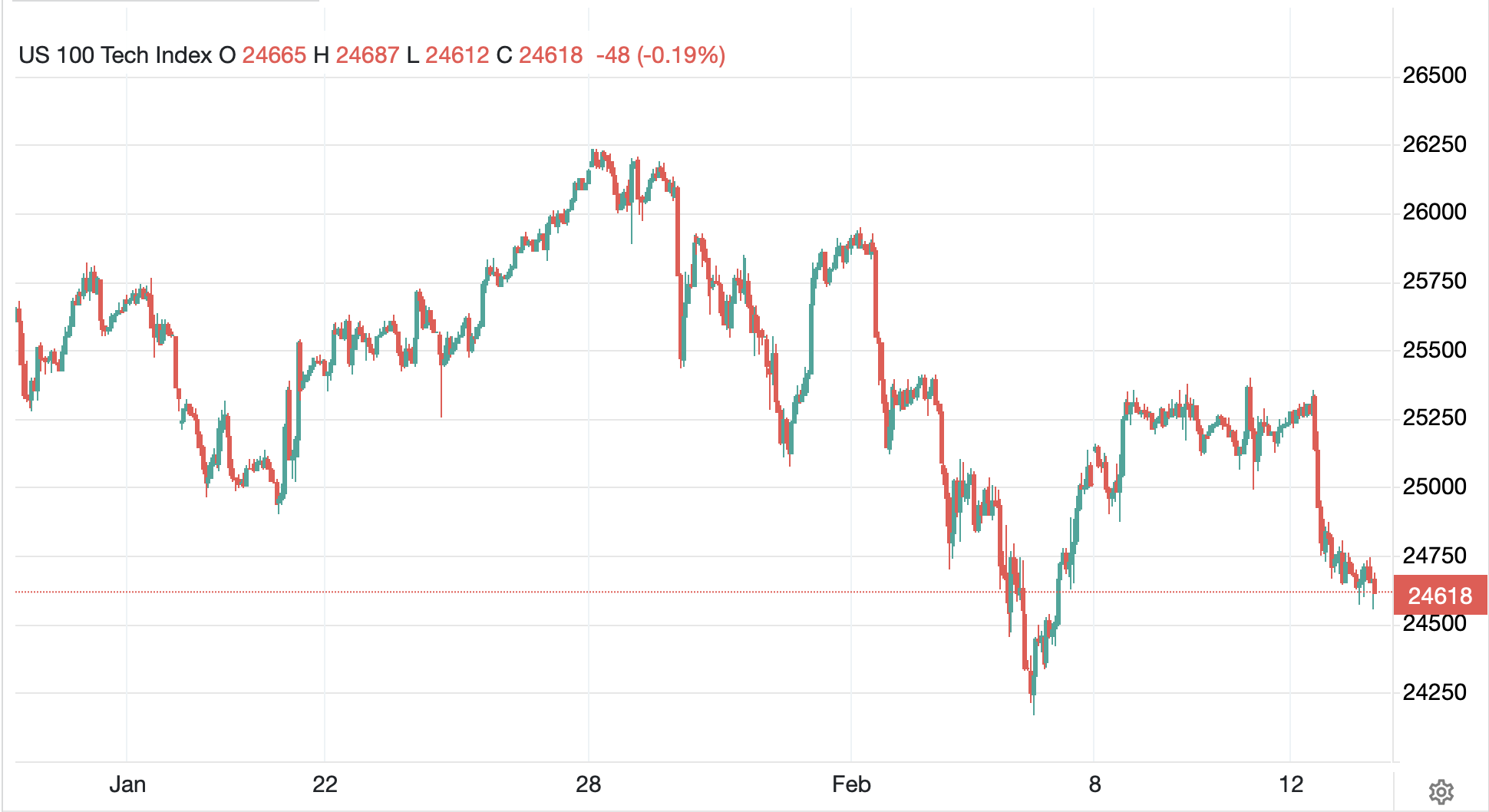
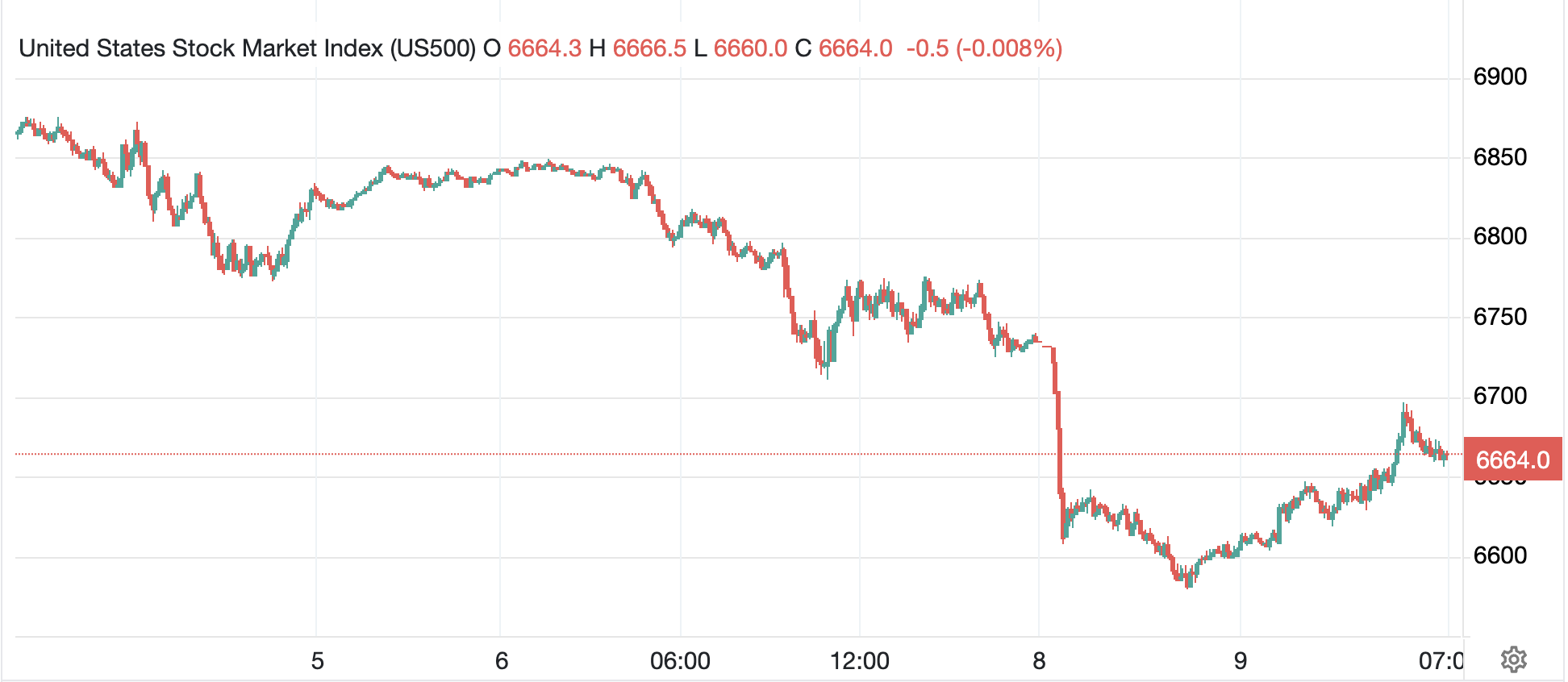
It all came undone yesterday around 10:45 in the morning for no obvious reason.  There was no data released then to drive trader reaction nor any commentary of note.  In fact, most of the punditry was still reveling in the higher Nvidia earnings and planning which Birkin bag they were going to buy for their girlfriends wives.  But as you can see from the NASDAQ chart below, in the ensuing two hours, the index fell by 4% and then slipped another 1% or so from there into the close, the level that is still trading at 6:30 this morning

Source: tradingeconomics.com

As a member in good standing of the gray hair club, I have seen this movie before, and I have always admired the following image as a perfect example of the way things work in markets.  

And arguably, this is all you need to know about how things work.  Sure, there are times when a specific data release or Fed comment is a very clear driver of market activity, but I would contend that is the exception rather than the rule.  The day following Black Monday in 1987, the WSJ asked noted Wall Street managers what caused the huge decline.  Former Bear Stearns Chairman, Ace Greenberg said it best when he replied, “markets move, next question.”  And that is the reality.  While I believe that macroeconomics offers important information for long-term investing theses, on any given day, anything can happen.  Yesterday is a perfect example of that reality.

But let us consider what we know about the overall financial situation.  The Damoclesian Sword hanging over everything is excessive leverage across the board.  I have often discussed the idea that global debt is more than 3X global GDP, a clear an indication that there will be repayment problems going forward.  And something that seems to have been driving recent equity market gains has been an increase in margin buying of stocks and leverage in general.  After all, the fact that there are ETFs that offer 3X leverage on a particular stock or strategy is remarkable.  But a look at the broad levels of leverage, as shown by the increase in margin debt in the chart below from Wolfstreet.com (a very worthwhile follow for free) tells me, at least, that when things turn, there is going to be an awful lot of selling that has nothing to do with value and everything to do with getting cash for margin calls.

It is this process that drives down the good with the bad and as you can see in the chart, happens regularly.  I’m not saying that we are looking at a major reversal ahead, but as I wrote earlier this week, a correction seems long overdue.  Perhaps yesterday was the first step.

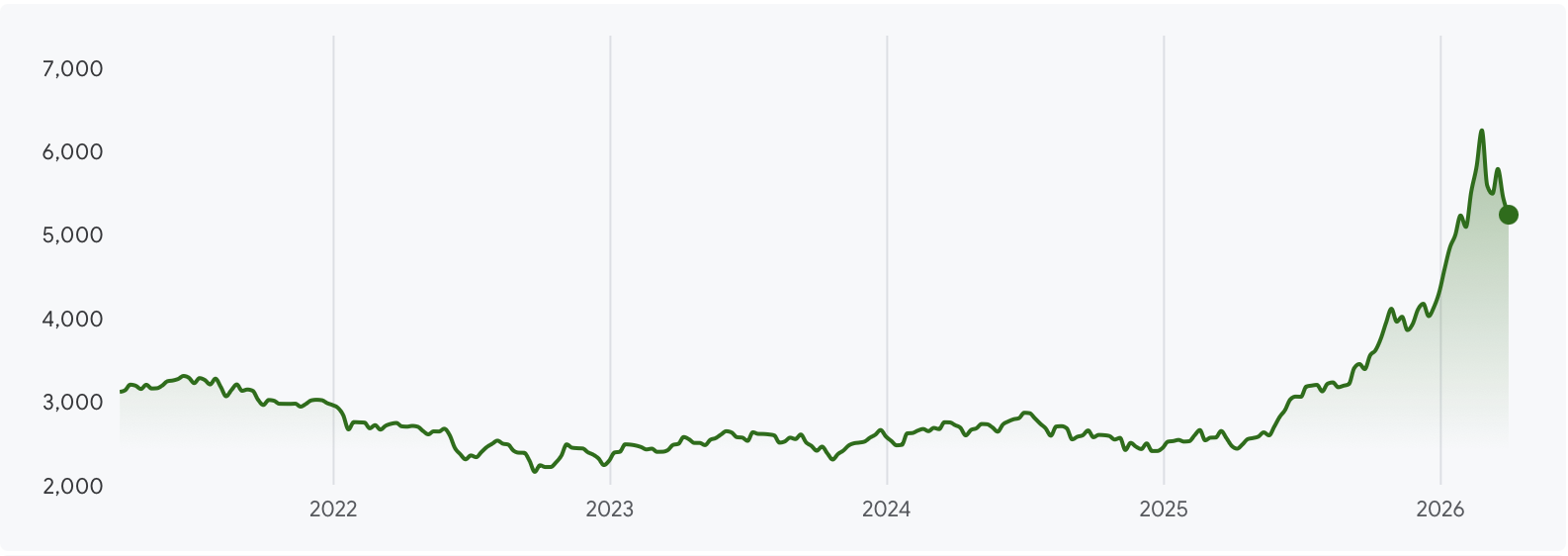
One last thing.  I mentioned Bitcoin at the top and I think it is worthwhile to look at the chart there to get a sense of just how speculative assets behave when times are tough.  Since its peak on October 6th, 46 days ago, it has declined ~45% as of this morning.  That, my friends, is a serious price adjustment!

Source: tradingeconomics.com

Ok, let’s see how other markets are behaving in the wake of this, as well as the recent news.  Remember, yesterday we saw a slew of old US data on employment, but it is all we have, so probably has more importance than it deserves.  After all, it is pre-shutdown and things have clearly changed since then.

Starting in Asia, it wasn’t pretty with the three main markets (Nikkei, Hang Seng, CSI 300) all declining by -2.40%.  Korea (-3.8%) and Taiwan (-3.6%) fared even worse but the entire region was under pressure.  The narrative that is forming as an explanation is that there is trouble in tech land, despite the Nvidia earnings, and since Asia is all about tech, you can see why it fell.

Meanwhile, the antithesis of tech, aka Europe, is also lower across the board this morning, albeit not as dramatically.  Spain’s IBEX (-1.3%) is leading the way down but weakness is pervasive; DAX (-0.8%), CAC (-0.4%), FTSE 100 (-0.4%), as all these nations also released their Flash PMI data which came in generally softer across the board.  But there is one other thing weighing on Europe and that is the publication of a 28-point peace plan designed to end the Russia/Ukraine war.  The plan comes from the US and essentially ignored Europe’s views as it is patently clear they are not interested in peace.  In fact, it appears peace will be quite the negative for Europe as it will undermine their rearmament drive and likely force governments there to focus on domestic issues, something which, to date, they have proven singularly incompetent to address.  In fact, if the war really ends, I suspect there are going to be several governments to fall in Europe with ensuing uncertainty in their economies and markets.  As to the US futures markets, at this hour (7:30) they are basically unchanged to leaning slightly higher.  Perhaps the worst is past.

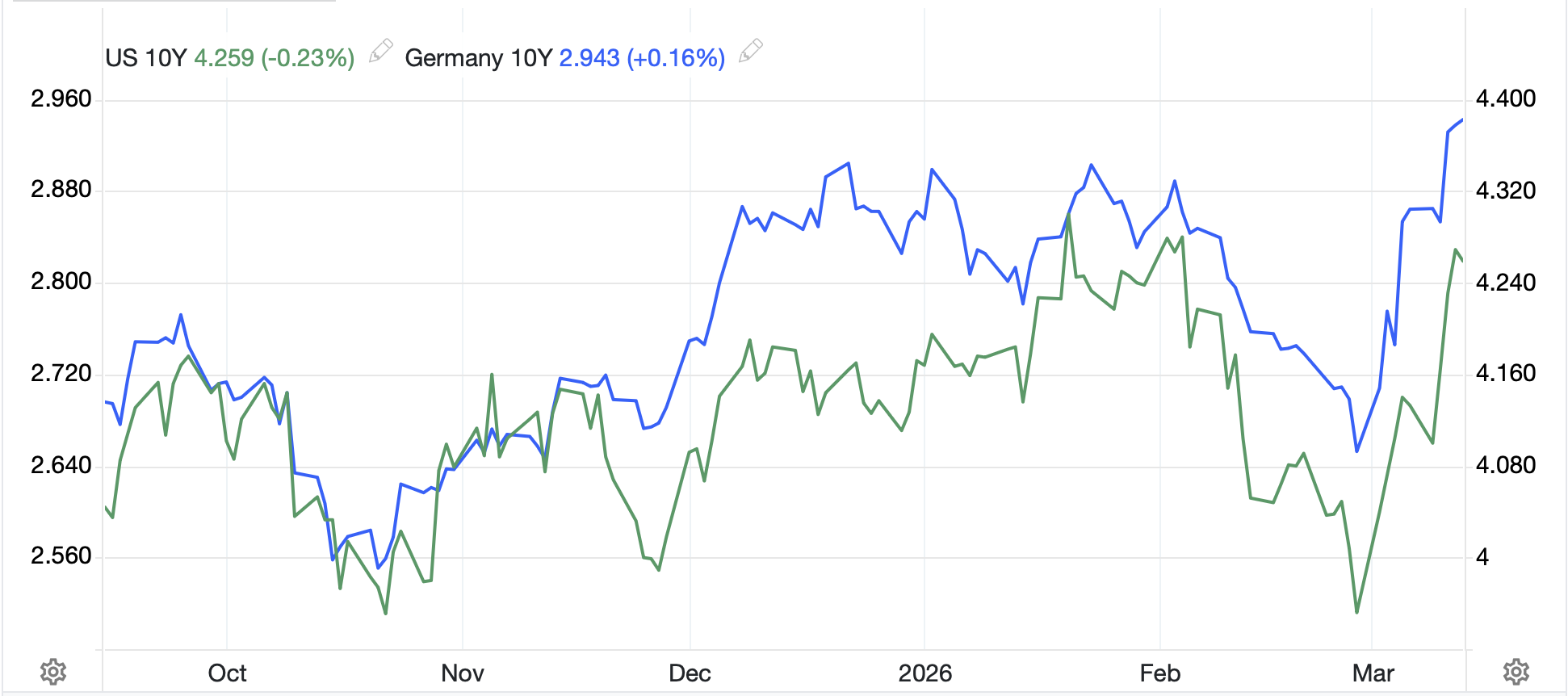
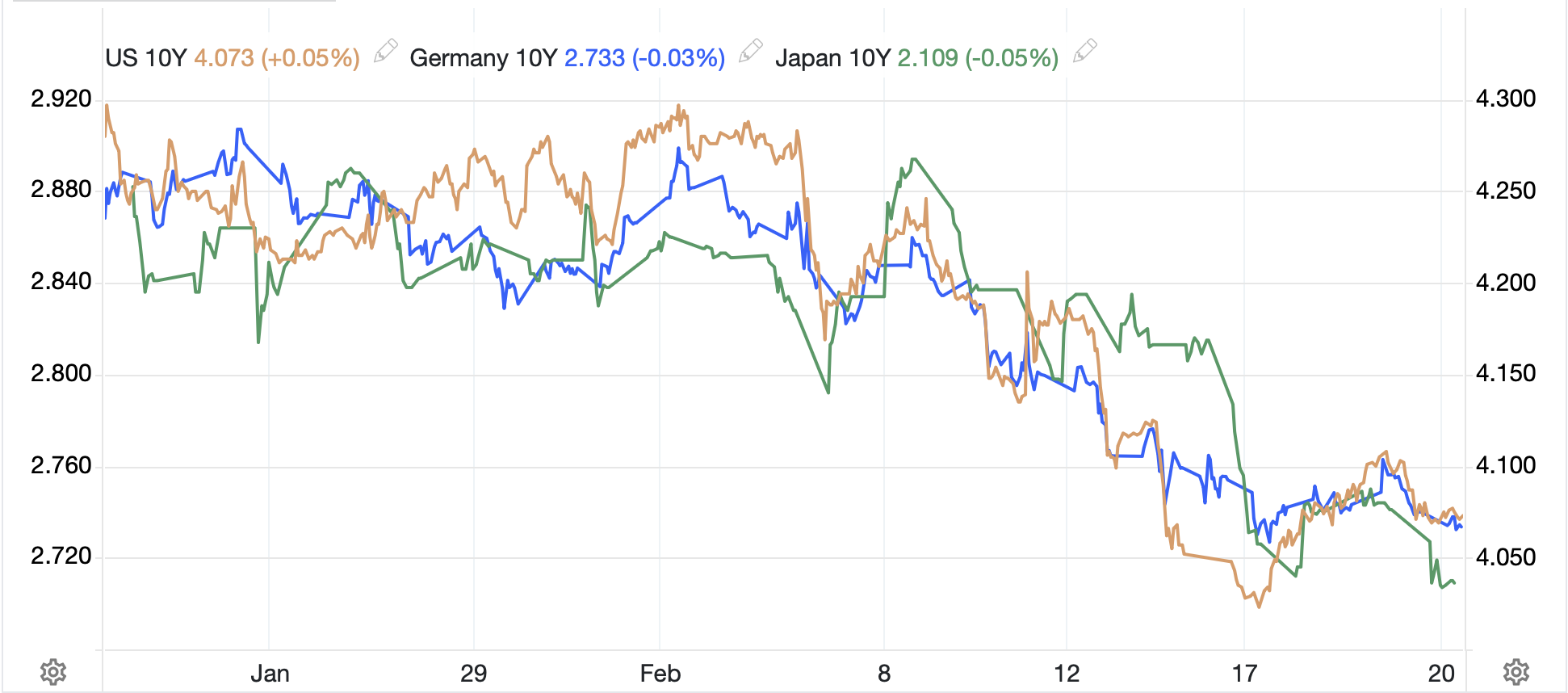
In the bond market, yields are lower across the board led by Treasuries (-4bps) while European sovereign yields have slipped -2bps to -3bps.  Certainly, the European data does not scream inflationary growth, but I have a feeling this is more about tracking Treasuries than anything else.  I say that because JGB yields also fell -4bps despite the passage of an even larger supplementary budget than expected, ¥21.7 trillion, which is still going to be paid for with more borrowing.  That is hardly the news to get investors to buy JGBs and I suspect yields will climb higher again going forward.  I think it is worth looking at the trend in US vs. Japanese 10-year yields to get a fuller picture of just how different things are in the two nations.  Of course, there is one thing that is similar, inflation continues to remain above their respective 2.0% targets and is showing no signs of returning anytime soon.

Source: tradingeconomics.com

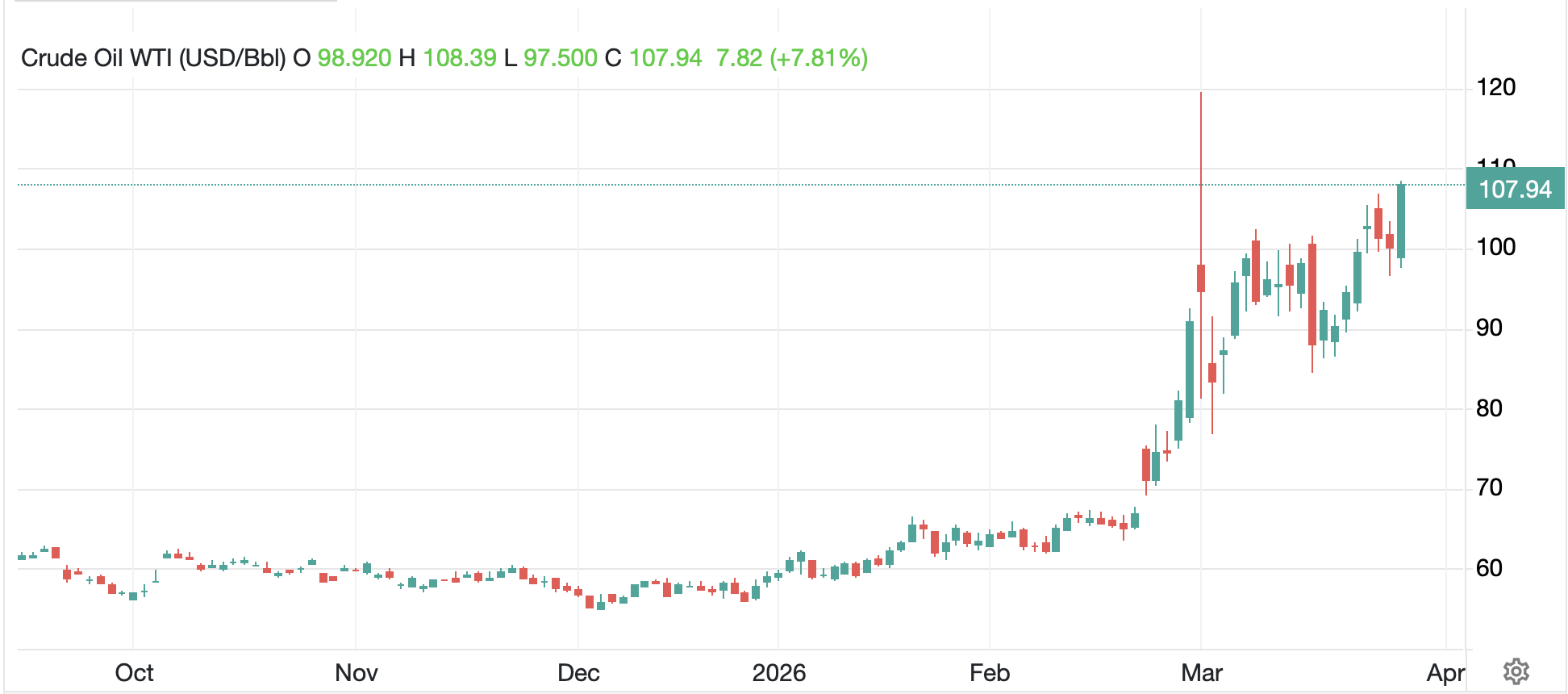
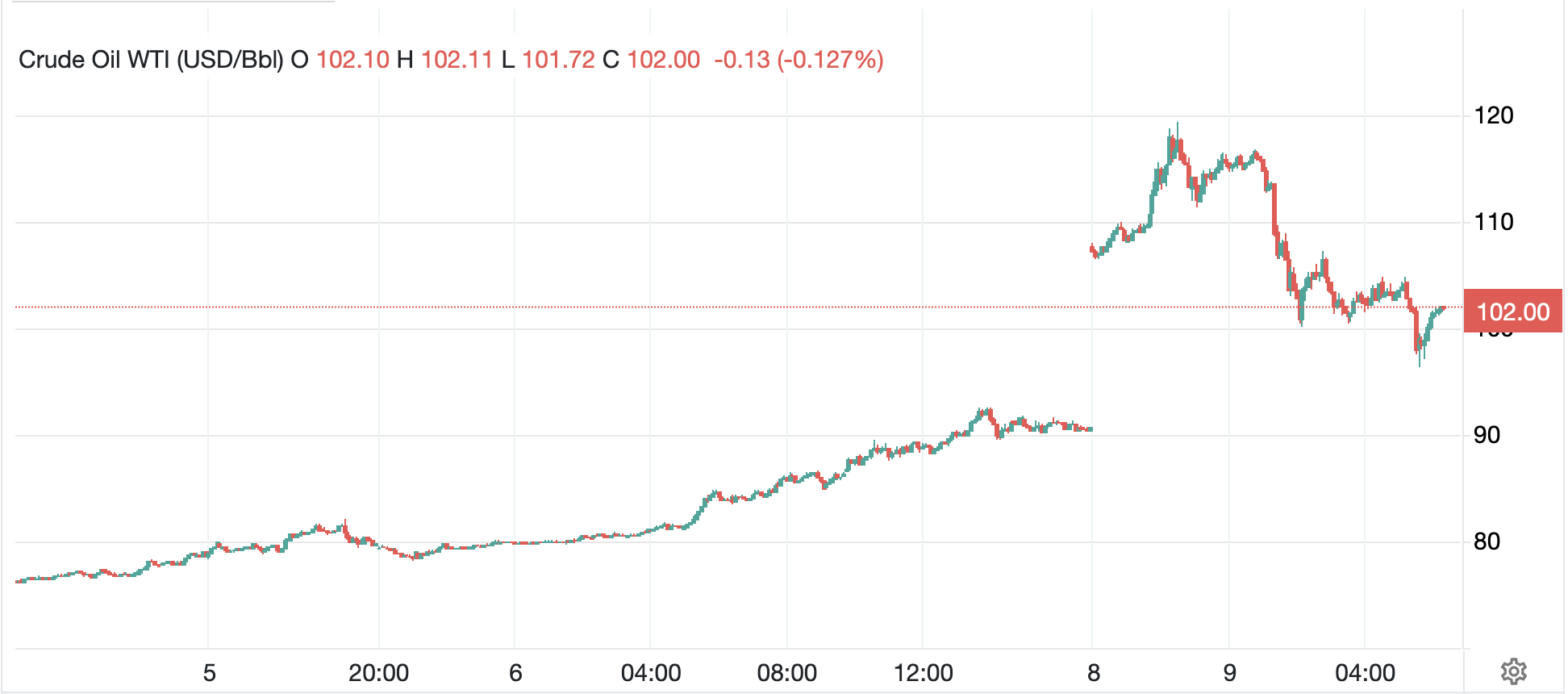
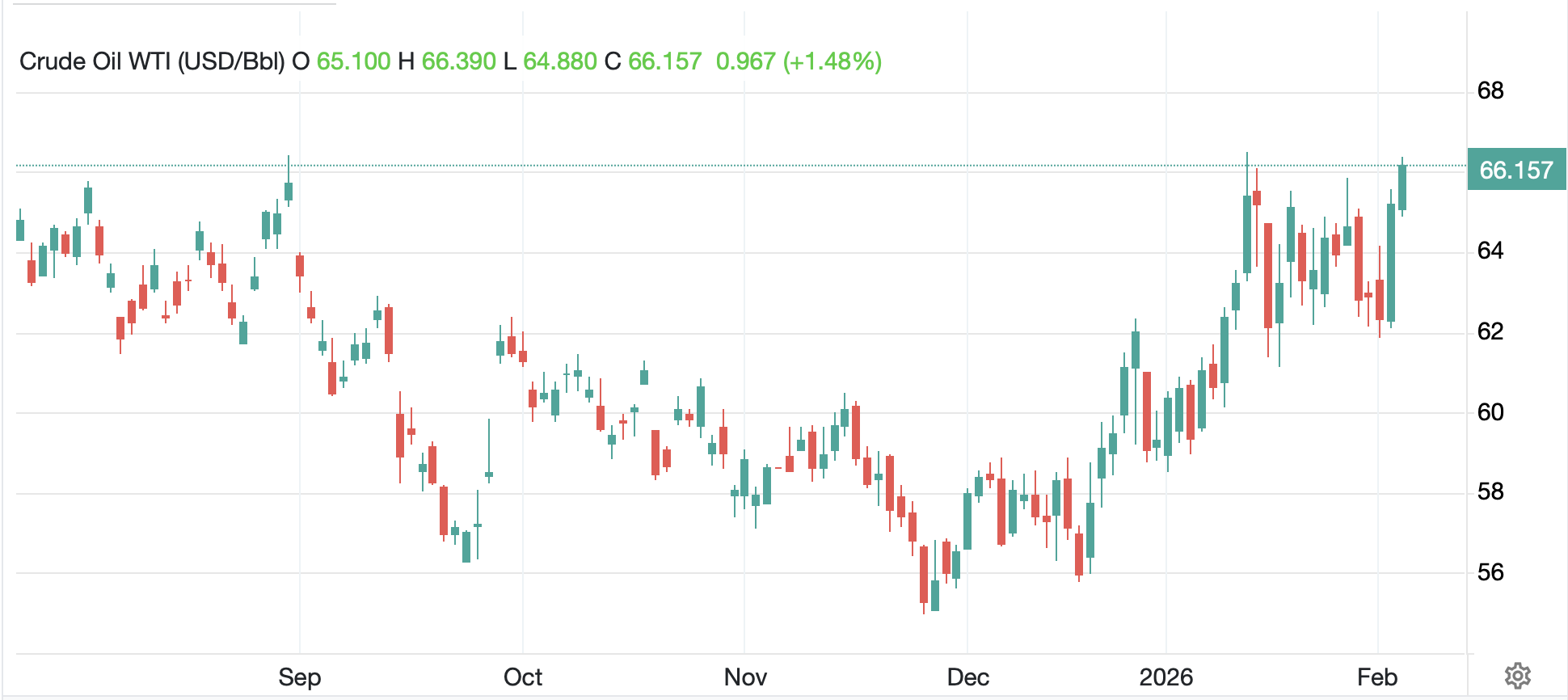
You will not be surprised to know that commodity prices remain extremely volatile.  Oil (-1.0%) had a bad day yesterday and is continuing lower this morning although as you can see from the chart below, it is off its worst levels of the session.  But the one thing that remains true despite the volatility is the trend remains lower.

Source: tradingeconomics.com

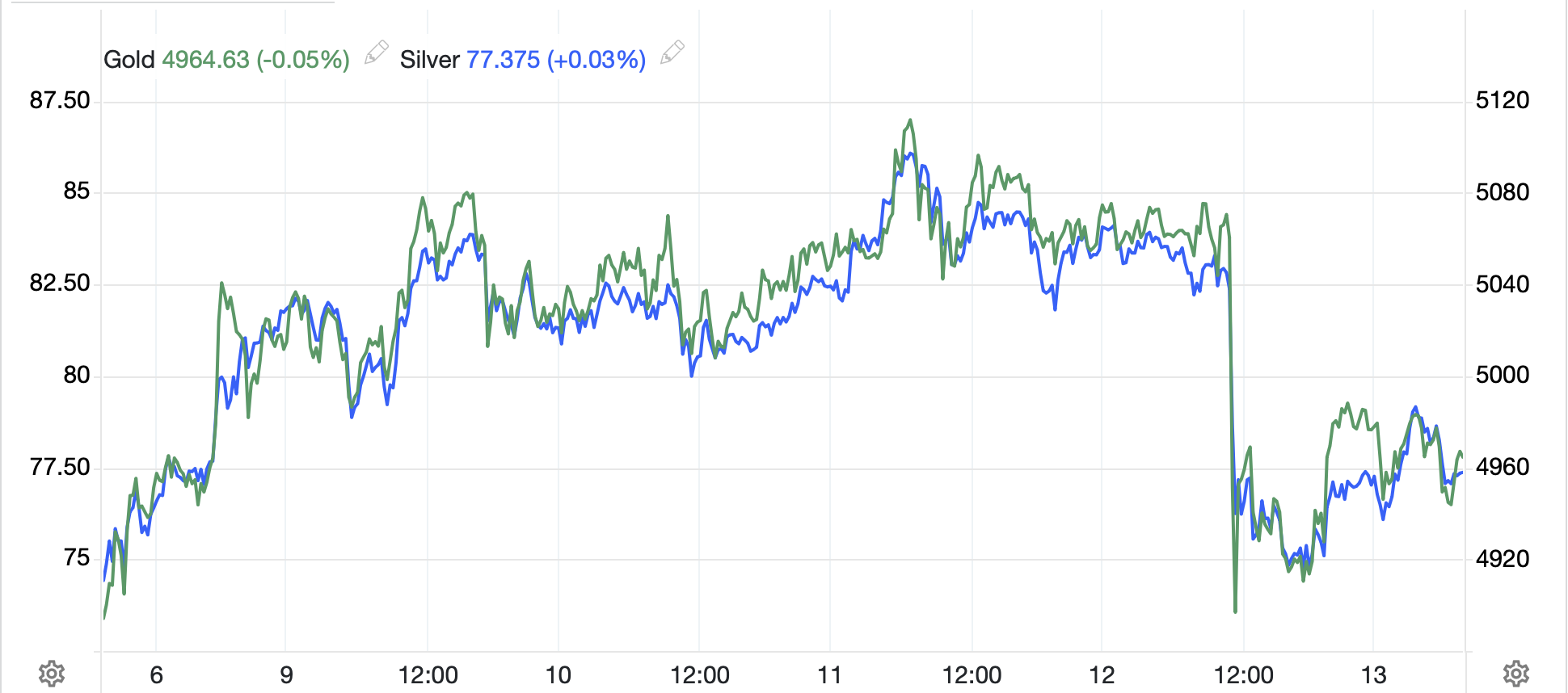
Metals markets also suffered yesterday and are under pressure this morning with gold (-0.4%) and silver (-2.5%) sliding.  One thing to remember is that when margin calls come, traders/investors sell what they can, not what they want, and given the liquidity that remains in both gold and silver, they tend to get sold to cover margin calls.  Too, today is the weekly option expiry in the SLV ETF and as my friend JJ (writes at Market Vibes) regularly explains, there is a huge amount of silver activity driven by the maturing positions.

Finally, the dollar continues to remain solidly bid, although is merely consolidating recent gains as it trades just above the key 100 level in the DXY.  Two things of note today are JPY (+0.5%) which responded to comments from not only the FInMin, but also Ueda-san explaining that a weak yen is driving inflation higher and might need to be addressed.  Step 4 of the dance toward intervention?  As to the rest of the G10, movement has been minimal.  But in the EMG bloc, INR (-1.1%) fell to record lows (dollar highs) after the RBI stepped away from its market support.  It sure seems like it is going to break through 90 soon and I imagine 100 is viable.  As well, ZAR (-0.7%) is suffering on the weaker metals prices, along with CLP (-0.5%) while BRL (-0.5%) slipped as talk of a more dovish central bank stance started percolating in markets.

Today’s data brings US Flash PMI (exp 52.0 Manufacturing, 54.6 Services) and Michigan Sentiment (50.5).  We hear from five more Fed speakers, with a mix of hawks and doves.  It will be interesting to see how the doves frame yesterday’s better than expected September NFP report as their entire thesis is softening labor growth is going to be the bigger problem than rising prices.

I, for one, am glad the weekend is upon us.  For today, I am at a loss for risk assets.  The case can be made either way and I have no strong insight.  However, the one thing that I continue to believe is the dollar is going to find support.  Remember, when things get really bad (and they haven’t yet) people still run to T-bills to hide, and that requires buying dollars.

Good luck and good weekend

Adf

Left For Dead

Takaichi’s learned
Her chalice contained poison
Thus, her yen weakens


If one needed proof that interest rates are not the only determining factor in FX markets, look no further than Japan these days where JGB yields across the board, from 2yr to 40yr are trading at decade plus highs while the yen continues to decline on a regular basis.  This morning, the yen has traded through 155.00 vs. the dollar, and through 180.00 vs. the euro with the latter being a record low for the yen vs. the single currency since the euro was formed in 1999.

Source: tradingeconomics.com

Meanwhile, JGB yields continue to rise unabated on the back of growing concerns that Takaichi-san’s government is going to be issuing still more unfunded debt to pay for a massive new supplementary fiscal package rumored to be ¥17 trillion (~$109 billion).  While we may have many fiscal problems in the US, it is clear Japan should not be our fiscal role model.

Source: tradingeconomics.com

This market movement has led to the second step of the seven-step program of verbal intervention by Japanese FinMins and their subordinates.  Last night, FinMin Satsuki Katayama explained [emphasis added], “I’m seeing extremely one-sided and rapid movements in the currency market. I’m deeply concerned about the situation.”  Rapid and one-sided are the key words to note here.  History has shown the Japanese are not yet ready to intervene, but they are warming to the task.  My sense is we will need to see 160 trade again before they enter the market.  However, while that will have a short-term impact, it will not change the relative fiscal realities between the US and Japan, so any retreat is likely to be a dollar (or euro) buying opportunity.

As to the BOJ, after a highly anticipated meeting between Takaichi-san and Ueda-san, the BOJ Governor told a press conference, “The mechanism for inflation and wages to grow together is recovering. Given this, I told the prime minister that we are in the process of making gradual adjustments to the degree of monetary easing.”   Alas for the yen, I don’t think it will be enough to halt the slide.  That is a fiscal issue, and one not likely to be addressed anytime soon.

The screens everywhere have turned red
As folks have lost faith that the Fed,
Next month, will cut rates
Thus, leave to the fates
A stock market now left for dead

Yesterday, I showed the Fear & Greed Index and marveled at how it was pointing to so much fear despite equity markets trading within a few percentage points of all time highs.  Well, today it’s even worse!  This morning the index has fallen from 22 to 13 and is now pushing toward the lows seen last April when it reached 4 just ahead of Liberation Day.

In fact, it is worthwhile looking at a history of this index over the past year and remembering what happened in the wake of that all-time low reading.

Source: cnn.com

Now look at the S&P500 over the same timeline and see if you notice any similarities.

Source: tradingeconomics.com

It is certainly not a perfect match, but the dramatic rise in both indices from the bottom and through June is no coincidence.  The other interesting thing is that the fear index managed to decline so sharply despite the current pretty modest equity market decline.  After all, from the top, even after yesterday’s decline, we are less than 4% from record highs in the S&P 500.

Analysts discuss the ‘wall of worry’ when equity markets rise despite negative narratives.  Too, historically, when the fear index falls to current levels, it tends to presage a rally.  Yet, if we have only fallen 4% from the peak, it would appear that positions remain relatively robust in sizing.  In fact, BoA indicated that cash positions by investors have fallen to just 3.7%, the lowest level in the past 15 years.  So, everyone is fully invested, yet everyone is terrified.  Something’s gotta give!  In this poet’s eyes, the likely direction of travel in the short run is lower for equities, and a correction of 10% or so in total makes sense.  But at that point, especially if bonds are under pressure as well, I would look for the Fed to step in and not only cut rates but start expanding its balance sheet once again.  QT was nice while it lasted, but its time has passed.  One poet’s view.

Ok, following the sharp decline in US equity markets yesterday on weak tech shares, the bottom really fell out in Asia and Europe.  Japan (-3.2%) got crushed between worries about fiscal profligacy discussed above and the tech selloff.  China (-0.65%) and HK (-1.7%) followed suit as did every market in Asia (Korea -3.3%, Taiwan -2.5%, India -0.3%, Australia -1.9%).  You get the idea.  In Europe, the picture is no brighter, although the damage is less dramatic given the complete lack of tech companies based on the continent.  But Germany (-1.2%), France (-1.3%), Spain (-1.6%), Italy (-1.7%) and the UK (-1.3%) have led the way lower where all indices are in the red.  US futures, at this hour (7:15) are also pointing lower, although on the order of -0.5% right now.

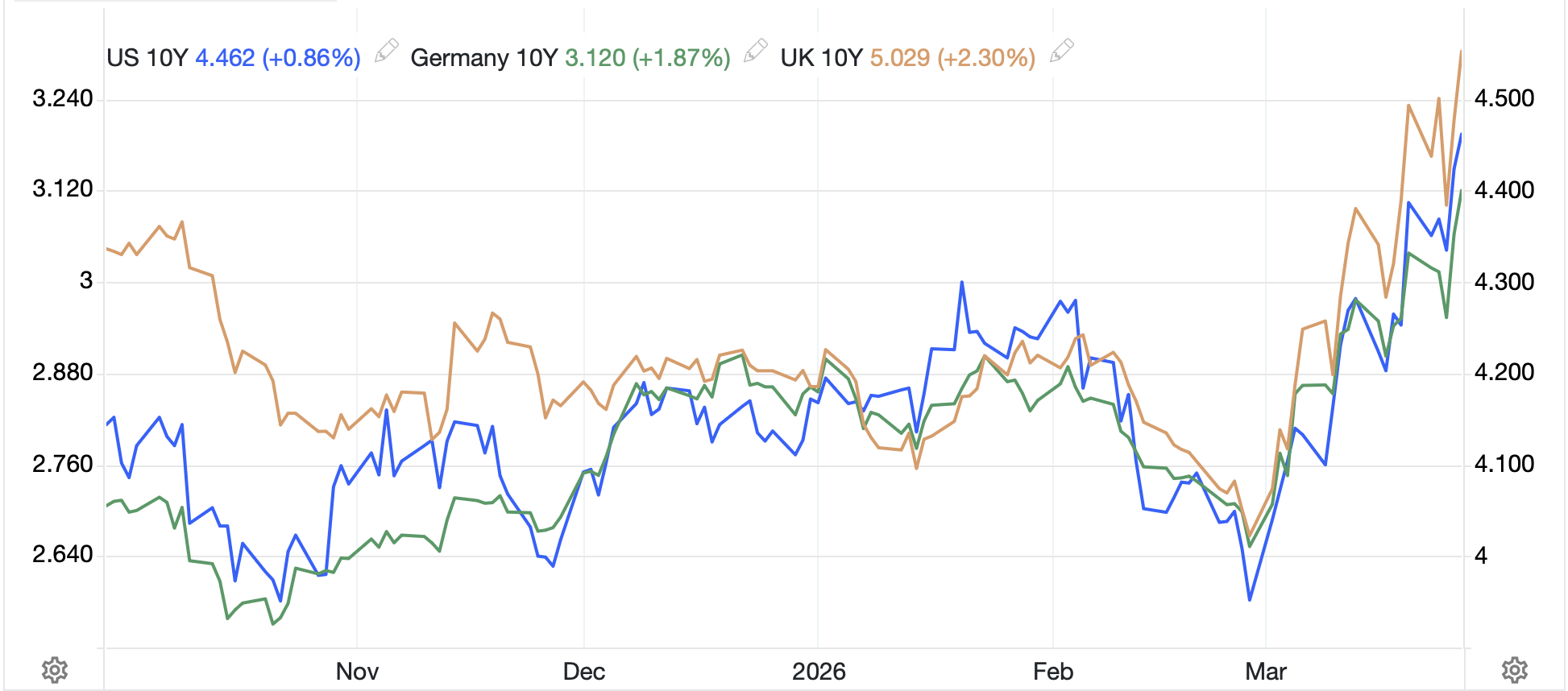
In the bond market, Treasury yields, after edging higher yesterday are lower by -4bps this morning, and back at 4.10%, their ‘home’ for the past two months as per the below chart from tradingeconomics.com.

As to European sovereigns, they are not getting quite as much love with some yields unchanged (UK, Italy) and some slipping slightly, down -2bps (Germany, Netherlands), and that covers the entire movement today.  We’ve already discussed JGBs above.

In the commodity space, oil (-0.2%) continues to trade either side of $60/bbl and it remains unclear what type of catalyst is required to move us away from this level.  Interestingly, precious metals have lost a bit of their luster despite the fear with gold (-0.25%), silver (-0.2%) and platinum (-0.2%) all treading water rather than being the recipient of flows based on fear.  Granted, compared to the crypto realm, where BTC (-1.0%, -16% in the past month) has suffered far more dramatically, this isn’t too bad.  But you have to ask, if investors are bailing on risk assets like equities, and bonds are not rallying sharply, while gold is slipping a bit, where is the money going?

Perhaps a look at the currency market will help us answer that question.  Alas, I don’t think that is the case as while the dollar had a good day yesterday, and is holding those gains this morning, if investors around the world are buying dollars, where are they putting them?  I suppose money market funds are going to be the main recipient of the funds taken out of longer-term investments.  One thing we have learned, though, is that the yen appears to have lost its haven status given its continued weakening (-3.0% in the past month) despite growing fears around the world.  

On the data front, yesterday saw Empire State Manufacturing print a very solid 18.7 and, weirdly, this morning at 5am the BLS released the Initial Claims data from October 18th at 232K, although there is not much context for that given the absence of other weeks’ data around it.  Later this morning we are due the ADP Weekly number, Factory Orders (exp 1.4%) and another Fed speaker, Governor Barr.  Yesterday’s Fed speakers left us with several calling for a cut in December, and several calling for no move with the former (Waller, Bowman and Miran) focused on the tenuous employment situation while the latter (Williams, Jeffereson, Kashkari and Logan) worried about inflation.  Personally, I’m with the latter group as the correct policy, but futures are still a coin toss and there is too much time before the next meeting to take a strong stand in either direction.

The world appears more confusing than usual right now, perhaps why that Fear index is so low.  With that in mind, regarding the dollar, despite all the troubles extant in the US, it is hard to look around and find someplace else with better prospects right now.  I still like it in the medium and long term.

Good luck

Adf
Cracks Have Shown Through

A shift in the narrative view
On AI has started to brew
What folks had thought certain
From behind the curtain
Seems like, now, some cracks have shown through
 
For stock markets, this is bad news
‘Cause AI has been the true fuse
Of recent price action
And any distraction
Could well, bullish thoughts, disabuse


While equity markets around the world continue to trade near record highs which were set just weeks ago, there has been a subtle change in the narrative, at least based on my perusal of FinX.  Although there are still many in the ‘buy the dip’ camp who strongly believe that it is different this time and AI is the future, there has been an increase in the number of voices willing to say that things have gone too far.  One of the stories getting a lot of press is the fact that Tesla’s shareholders voted to give Elon Musk a pay package that could amount to $1 trillion if the company meets its milestones over the next 10 years, including having the company’s market cap rise to $8.5 trillion from the current $1.5 trillion.  This certainly has a touch of excess attached to it.

But more broadly, I couldn’t help but notice this graph, originally created by the Dallas Fed, but more widely disseminated by the FT showing the potential future of AI’s impact on humanity.  Under the standard of a picture is worth a thousand words, I might argue the information in this picture falls some 985 words short.  Rather, they simply could have said, ‘AI could be amazing, it could be catastrophic, or it might not matter at all.’ 

However, aside from the inanity of this chart, and more importantly for those paying attention to markets and their portfolios, things look a bit different.  There has been a lot of discussion regarding the everything bubble which has been led by the massive increase in value of the Mag7 stocks.  Recently, it set some new valuation records with the Shiller CAPE (Cyclically Adjusted Price Earnings) ratio now trading at its second highest level of all time, at 41.2, exceeded only during the dotcom bubble of 2000.

Source: @DavidBCollum on X

Added to this is the fact that only about half the companies in the S&P 500 are trading above their 200 day moving averages, a key trend indicator, which implies that the uptrend may be slowing, and the fact that we have had seven down days in the past eight sessions (and US futures are lower this morning by -0.2% as I type at 7:15) indicates that perhaps, a correction of some substance is starting to take shape.

Source: tradingeconomics.com

As of this morning, the S%P 500 is merely 3% below the highs seen on October 29th, so just a week ago.  The conventional description of a correction is a 10% decline, and a bear market is a 20% decline.  I am not saying this is what is going to happen, but my spidey sense is really starting to tingle.

Source: giphy.com

Remember, I’m just a poet, and an FX one at that, so my takes on markets are just one poet’s views based on too many years in markets.  This is not trading advice in any way, shape or form.  But what I can say is, be careful with your investments, things are changing.

So, let’s move on to the overnight session to see how things played out following the selloff yesterday in the US.  Let me say this, it wasn’t pretty.  Pretty much all Asian markets were lower to end the week led by Korea (-1.8%) which has seen its market race higher than the NASDAQ this year, but there was weakness in Japan (-1.2%), China (-0.3%), HK (-0.9%), Taiwan (-0.9%) and Australia (-0.7%) with most other regional exchanges flattish to lower by -0.5%.  Given the tech story is critical to Asia overall, if that is starting to falter, we can expect these markets to slip as well.  Too, there was news from China showing its Trade Surplus shrank slightly, to $90.7 billion, but more ominously, exports actually declined -1.1% while imports rose only 1.0%.  Arguably, the reason President Xi was willing to make a deal with President Trump is because the domestic economic situation in China is troublesome and he knows that more trade problems will be a domestic nightmare for him.

In Europe, red is the dominant color on screens as well with the IBEX (-0.9%) leading the way lower, but the DAX (-0.9%), FTSE 100 and (-0.7%) and CAC (-0.5%) all fading as well and losses the universal story on the continent.  Now, we know that it is not a tech story since, arguably, Europe has no tech presence.  So the problems here are more likely a combination of following the global trend lower and ongoing soft Eurozone data implying that economic growth, and hence corporate profits, are going to continue to be weak.  With the ECB taking themselves out of the equation for now, claiming rates are at the correct level and turning their focus to the idea of a digital euro (which will never be important), if we continue to see the US market slip, you can be certain that European bourses will follow.

In the bond market, it is hard to get excited about anything right now as Treasury yields, which slipped a basis point yesterday, are higher by 1bp this morning.  We remain right at the level from the immediate aftermath of the FOMC meeting, which tells me that traders are awaiting the next major piece of news.  European sovereign yields are also higher by 1bp across the board with only the UK (+3bps) the outlier here today while JGBs overnight slipped -1bp following yesterday’s Treasury price action.

In the commodity space, both oil (+0.8%, but below $60/bbl) and gold (+0.5% but below $4000/oz) continue to trade in a range and basically have not moved anywhere of note over the past 2+ weeks as you can see in the chart below.

Source: tradingeconomics.com

There have certainly been some choppy moves, but net, nothing!  Silver (+1.0%) however, has gotten a boost after the US designated it a critical mineral implying government support.  It would not be surprising to see silver outperform gold for a while going forward.

Finally, the dollar remains an afterthought to markets.  The DXY rallied to above 100 briefly, but has now slipped back below that level into its multi-month trading range as per the below chart.

Source: tradingeconomics.com

Looking at the major currencies today, +/-0.2% describes the price action, which means nothing is happening.  The only notable difference is KRW (-0.7%, which has continued to decline on the back of growing outflows of capital, perhaps anticipating the flows that will come with Korea’s promises for investing in US shipbuilding and semiconductor manufacturing.  But the won has been tumbling since early July, down 8% in that period.

Source: tradingeconomics.com

And that’s really it this morning.  Looking at the KRW, though, we must really consider what I mentioned yesterday about the Supreme Court’s tariff ruling, whenever that comes.  If the tariffs are overturned, it’s not the repayment of those collected that is the issue, it is the change in the investment flows, and that will be a very good reason to turn negative on the dollar.  But until such time, while risk managers need to stay hedged, traders have carte blanche.  If tech stocks really do correct, a risk off scenario is likely to support the dollar, at least for a while.  Hopefully, that won’t be today’s outcome.

Good luck and good weekend

Adf

Filled With Chagrin

The vibe in the market is fear
As equities get a Bronx cheer
Commodities, too
Most traders eschew
The dollar, though’s, getting in gear
 
So, what has the catalyst been
To drive such a change in the spin
No story stands out
But there is no doubt
Investors are filled with chagrin


Ladies and gentlemen, boys and girls, this morning things just feel bad.  As I peruse the headlines around the major publications, there is no obvious story that is driving today’s weakness in risk assets, but there is no mistaking the vibe.  Certainly, there are several issues outstanding that might be seen as a negative, but none of them are new.  

  • The government has been shut down for 35 days as of today, and it doesn’t sound like the Senate Democrats are ready to vote to reopen it.  Granted, the problems of the shutdown increase with time, but there has been no apparent change in tone for at least the past two weeks, so why is today the day when things look bad?
  • The war in Ukraine continues apace with no obvious timeline to ending, but this has been ongoing for nearly 4 years, so what is it about today that may have changed?
  • Concerns over fraud have increased after the recent bankruptcy filings by First Brands and Tricolor, as well as accusations by banks of other situations, but again, no new story broke overnight.
  • Perhaps it is the fact that today is Election Day in the US, and there is concern that Zoran Mamdani, a self-described Democratic Socialist, could become the next mayor of NYC, which given it is still home to so many financial markets, has those market participants unnerved.

Some days, it’s just not clear why markets move in the direction they do, and there can be far less dramatic drivers.  For instance, we have seen a major rally in equity markets, and risk assets in general, over the past 5 years, with an acceleration over the past 6 months and they are simply taking a breather.  Whatever the driver, the movement is clear.

Source: tradingeconomics.com

So, given the absence of obvious drivers to discuss, let’s simply recap the damage. After yesterday’s mixed session in the US, Asia was under significant pressure led by Tokyo (-1.75%) with HK (-0.8%) and China (-0.75%) slipping as well.  But Australia (-0.9%) fell after the RBA left rates on hold, as expected, although Governor Bullock sounded a touch more hawkish than expected, and the rest of the region saw almost universal weakness with Korea (-2.4%) the worst of the bunch, but declines everywhere (India, Taiwan, Indonesia, Singapore, Thailand) except New Zealand, which managed a small gain, to reach yet another record high, on solid earnings numbers from key companies.

Meanwhile, European bourses are all sharply lower as well (DAX -1.3%, CAC -1.2%, IBEX -1.1%) as the overall market vibe weighs on these markets, all of which recently traded at new all-time highs.  Ironically, the UK (-0.6%) is about the best performer despite a speech from Chancellor of the Exchequer, Rachel Reeves, which explained…well, it is not clear what it explained.  The UK has major budget problems and has discussed raising taxes, but given growth is lagging, there is a lot of pushback, even within the Starmer government, on that subject.  As with virtually every G10 economy, the government is spending far more than they take in and they don’t know how to address the deficit.  Unfortunately for the UK, the pound is not the global reserve currency and so they are subject to market discipline, unlike the US…so far.  But, in this space, US futures are all lower this morning, down -1.0% or so as I type at 7:10am.

Now, your first thought might be that bonds have rallied nicely on all this risk aversion, but while they have, indeed, moved higher (yields lower) I don’t know that nicely would describe the movement.  Rather, barely is a better description as 10-year yields are lower by -2bps in the Treasury market and between -1bp and -2bps in all European sovereign markets.  In fact, despite the weakness in Japanese stocks overnight, JGB yields are unchanged.  The message is, bonds are not that appealing, even if stocks aren’t either.

Turning to commodities, oil (-1.4%) is having a hard time this morning alongside the equity markets, with virtually all energy prices lower across the board.  Given there has been no announcement of a major energy breakthrough, this has the feel of growing concern over economic activity going forward.  With that in mind, though, WTI is still trading right around $60/bbl, which seems to be its “home” lately.

In the metals markets, gold (-0.15%) continues to trade around the $4000/oz level, which seems to be its new “home” as traders await the next catalyst in this space.  Silver (-0.3%) is similarly fixated on its level of $48/oz and seems likely to follow gold’s lead going forward.  However, copper (-2.3%) seems like it is more in sync with oil lately, as the two are both so intimately linked with economic activity and changes thereto.  It’s funny, despite the risk asset weakness, I have not seen anything new on a pending recession in the US, nor globally, although there continues to be a steady stream of analysts who have been explaining we are already in one.

Finally, the dollar is today’s winner, rising against every one of its counterparts except the yen (+.45%) which responded to a second round of verbal intervention from FinMin Katayama, who once again drew from the MOF seven-step playbook with a half-step overnight: “I’m seeing one-sided and rapid moves in the currency market. There’s no change in our stance of assessing developments with a high sense of urgency.”  

But away from the yen, it is merely a question of which currency looks worst.  The pound (-0.65%) has traded down to levels not seen since Liberation Day, as it appears the FX market did not take Chancellor Reeves’ comments that well.

Source: tradingeconomics.com

For those who view the DXY as the key indicator, it has traded above 100 for the first time since August, and I know many technicians are looking for a breakout here.  The fact remains that the Fed’s recent seeming mildly hawkish turn is out of sync with most of the rest of the world and will support the dollar for now.  Of course, the futures market is still pricing a 72% probability of a rate cut in December, so traders are taking the ‘hawkish’ comments by Chair Powell at the press conference last week with a grain or two of salt.  In fact, one of the things weighing on the pound is the idea that the BOE may cut this week despite still high inflation.

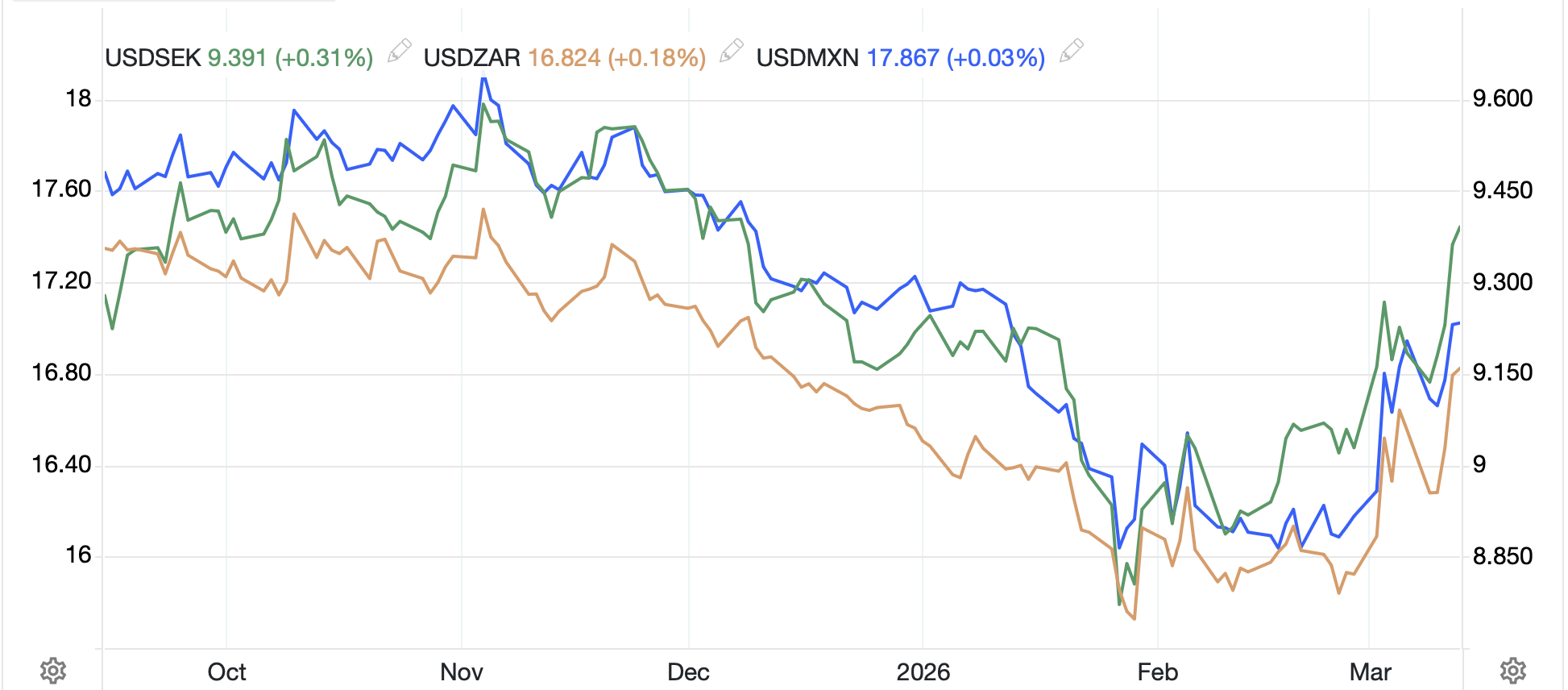
But wherever you look in this space, the dollar is sharply higher.  ZAR (-1.0%), NOK (-0.9%), MXN (-0.85%) and SEK (-0.9%) lead the way, but declines of -0.5% are rampant across all three regional blocs.  Today is a straight up dollar story.

And that’s all we have today.  Yesterday’s ISM data was a touch weaker than forecast, and last month, slipping to 48.7 with Prices Paid (58.0) slipping as well.  Weirdly, the S&P PMI was a better than expected 52.5, rising from last month and beating expectations.  It seems a mixed message.  Yesterday’s Fed speakers didn’t tell us anything new, with Governor Cook explaining that December is a “live” meeting.  I’m not sure what that means.  Is the implication they may not cut there?  That would not go down well in either markets or the White House.

Given how far equity prices have come in the past 6 months, it would not be a surprise to see a more substantial pullback.  In fact, it would be healthy for the market to remove some of the excesses that abound.  The fraud stories are concerning as they tend to flourish at the end of bull markets, and while they are not yet flourishing, they are starting to become more common.  In the end, while I expect the Fed will cut in December, and then again in January, I don’t see a reason for the dollar to decline sharply.

Good luck

Adf
Decidedly Glum

The mood is decidedly glum
In markets, as traders succumb
To views that the world
Is coming unfurled
And fears that the game’s zero-sum
 
So, stories ‘bout regional banks
With problems are joining the ranks
Of reasons to sell
Ere things go to hell
And why folks are buying Swiss francs


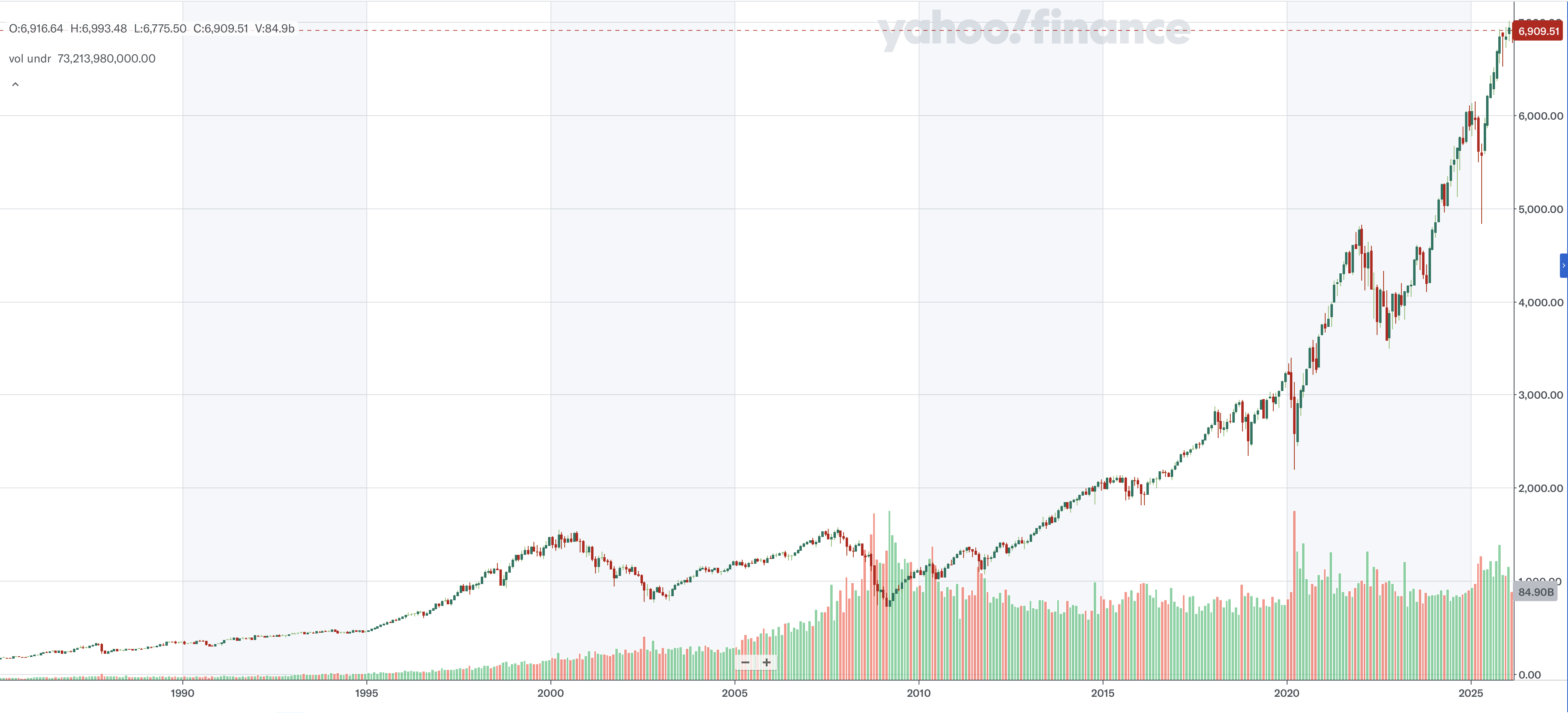
It doesn’t seem that long ago when equity markets were trading at all-time highs, arguably a sign of significant positive attitudes, and yet here we are this morning with equity markets around the world under significant pressure.  Of course, the reason it doesn’t feel like it was that long ago is BECAUSE IT WASN’T.  In fact, as you can see from the chart below, it was just last week!

Source: tradingeconomics.com

And understand, that even with futures pointing lower by -1.0% this morning, the S&P 500 is only 3% off its highs.  That hardly seems like a collapse, but the vibe I am getting is decidedly negative.  Certainly, haven assets are in demand this morning with both the yen (+0.5%) and the Swiss franc (+0.45%) rising sharply after bottoming on the same day as the S&P’s top, with both currencies back to their levels from a month ago.

Source: tradingeconomics.com

Is the world ending?  Probably not today but that doesn’t make it feel any better.  After all, we have been living through an unprecedented growth in leverage, with margin debt growing to new record highs every week, despite a backdrop of massive global uncertainty regarding trade, economic activity and kinetic conflict.  It is hard to believe that the fact that the FOMC is likely to cut rates by 25bps at the end of the month and again in December was enough to convince investors that future earnings were going to rise dramatically.

But that is where things stand this morning.  I must admit I have seen and read more stories about the idea that the AI hype train has run too far and needs to correct, and while that has probably been the case for a while, it is only in the past few days that those stances are becoming public.  There has also been an uptick in chatter about bad debt and more insidiously, fraud, that has been underlying some of the recent hype.  The First Brands bankruptcy is reverberating and now two regional banks, Zion and Western Alliance, have indicated that some recent loan losses may be tied to fraud.  While the amounts in question for the latter two are not enough to be a real problem for either institution, numbering in the $10’s of millions, history has shown that fraud tends to arise when money/lending standards are just too easy, and a sign that the end of good times may be nigh.

Again, it is a big leap to say that because some fraud was uncovered that signals the top.  But history has also shown that there is never just one cockroach, and if the lights are coming on, we are likely to see others.  While big bank earnings were solid, that was for last quarter.  And that’s just the market internal story for one industry.

If we add things like concerns over a potential conflict between the US and Venezuela, which is the top article in the WSJthis morning, or the idea that the US may send Tomahawk missiles, with ranges of up to 1500 miles, to Ukraine, it is unlikely to calm any fears.  And adding to that we continue to have the government shut down, although I personally tend to think of that as a benefit and since it doesn’t seem to be helping the Democrat party, the MSM stopped covering it, and we have the escalating trade conflict with China.  Looking at all the potential problems, it cannot be that surprising that some investors are a bit concerned about things and lightening their exposures.  Too, it is a Friday in October, and we have seen some particularly bad outcomes over weekends in October, notably in 1987!

I’m not forecasting anything like that, believe me, just reminding everyone that while history may not repeat, it often rhymes.  So, let’s look at the overnight session, which had a decidedly risk-off tone.  While the declines in the US markets weren’t that large, they left a bad taste everywhere in Asia with only India (+0.6%) managing to rise on the session.  Otherwise, Japan (-1.4%), China (-2.25%), HK (-2.5%), Taiwan (-1.25%), Australia (-0.8%) and virtually all the rest of the markets declined with Korea managing to close unchanged.  Fear was rampant, especially in China on the ongoing trade concerns.

In Europe, it should be no surprise that equity markets are also sharply lower led by the DAX (-2.1%) and FTSE 100 (-1.2%) with Paris (-0.7%) and Madrid (-0.95%) also under pressure.  The causes here are the same as everywhere, worries that things have gotten ahead of themselves while fears over escalations in both the trade and kinetic conflicts grow.  As well, the banking sector here is under pressure as credit concerns grow globally.  As to US futures, at this hour (7:15), they have bounced off their worst levels and are lower by just -0.25% to -0.5%.

Bond markets have been a major beneficiary of the growing fear with Treasury yields bouncing just 1bp this morning and sitting just below 4.00% after a -7bp decline yesterday.  European sovereign yields also fell sharply yesterday and are finding a near-term bottom as they retrace between 1bp and 2bps higher on the session.  If fear is growing, despite all the budget deficits, the default process is to buy bonds!

In the commodity markets, oil (-0.3%) has bounced off its lowest levels of the session which coincide with the lows seen back in April, post Liberation Day.  (see tradingeconomics.com chart below). It seems that not only are there economic concerns, but API inventory data showed a surprising build there.

Turning to the metals markets, gold (-0.2%) had a remarkable day yesterday, rising $100/oz, more than 2%, so a little consolidation here can be no surprise.  In fact, all the metals saw gains yesterday and are backing off a bit this morning in very volatile, and what appear to be illiquid markets.  Looking at the screen, the price is rising and falling $5/oz on a tick.  This 5-minute chart shows just how choppy things are.

Source: tradingeconomics.com

Finally, the dollar is softer, which on the one hand is surprising given its traditional haven status, but on the other hand, given the ongoing decline in yields and the fear pervading markets, is probably not that surprising.  Remember, one of the drivers for the dollar is capital flows and if US equity markets decline, we are going to see foreign investors sell, and then likely sell those dollars as well.  However, I would take exception with the Bloomberg headline explaining that the dollar is weakening because of Fed rate cut expectations given those expectations have been with us for several weeks.  At any rate, the weakness this morning is broad-based, but shallow with the two havens mentioned above the exception and most other currencies gaining 0.1% or 0.2% at most.  It seems President Trump has also made a comment about the trade war indicating that the current tariffs are unsustainable and he confirmed he would be meeting President Xi in a few weeks.

And that’s really all there is to end the week.  There is no data at all, and the only Fed speaker is KC Fed president Musalem.  The general takeaway from the Fedspeak this week is that they are prepared to cut rates but given the lack of data, will not be aggressive.

The world is a messy place.  No matter your political views, when viewing markets, it is important to focus on the reality of what is happening.  We know that leverage has been growing and helping to drive stock market indices to record highs.  We know that gold and other precious metals have been rallying on a combination of central bank (price insensitive) and growing retail buying as fears grow of impending inflation.  We have seen several instances of what appears to be lax lending standards, something that historically has led to substantial chaos in markets.  The advice I can offer here is maintain position hedges, especially those of you who are corporate risk managers.  Yes, volatility has risen a bit, but I assure you, if things really come undone, that will be insignificant compared to the benefit of the hedge.

And with those cheery words, I wish you all 

Good luck and a good weekend

Adf

Will Not Be Quelled

Both sides in the trade war appear
To want nothing more than to steer
The narrative toward
A place where each scored
Political points, crystal clear
 
But markets, which yesterday felt
The problems would soon, away, melt
Are nervous today
And cannot allay
Their fear losses will not be quelled


It is becoming more difficult to discuss markets writ large as we have seen some historic relationships fall apart over the past 6 months.  For instance, the idea that both gold (and all precious metals) and the dollar would rise simultaneously is hard for old-timers like me to understand.  In ordinary times, the two had a very different relationship as gold was, essentially, just another currency.  If you look at the two charts below from tradingeconomics.com, you can see a longer-term chart that demonstrates, at best, independent behavior, and while the magnitudes of the movements are somewhat different, you can see that as the dollar peaked in late 2022, gold was bottoming and there is a general inverse correlation.

However, over the past month, that story is completely different as evidenced by this chart (which is based on percentage moves):

The other day I mentioned the debasement trade, the idea that investors were scooping up gold and bitcoin because they didn’t want to hold dollars.  However, it is harder to make that case about dollars, although fiat in general may be a different story.

I highlight this because I use the term ‘markets’ all the time as a generic concept, but lately, I need more specificity, I think.  So, Friday, when there appeared to be a sudden escalation in the trade war between China and the US, equity markets fell sharply, precious metals rallied, and bonds rallied while the dollar edged lower.  Yesterday, with the bond market closed, and a concerted effort by both sides to claim nothing had changed and that Presidents Trump and Xi would still be meeting at the ASEAN conference in two weeks, equity markets rebounded sharply, precious metals continued to rally, and the dollar rebounded.  Bringing us up to date now, equity markets are back under pressure (it appears that the trade situation is still an issue), precious metals are still rallying alongside the dollar, and as the bond market reopens, it, too, is rallying with yields slipping -3bps to 4.00%.

Some of this doesn’t make much sense, but I will try to address things, at least broadly speaking.  The constant across these moves has been precious metals rallying and I believe there are two stories working together here.  There is a fundamental story where central banks and, increasingly, individual investors are buying gold as they are seeking safe havens in an increasingly uncertain world.  Silver and platinum both benefit from this, as well as ongoing industrial demand, especially from the technology sphere.  But there is also a serious short squeeze unfolding in both the gold and silver markets as there is a mismatch between inventories held on exchanges and demand for physical metal.  

In the leadup to Liberation Day, you may remember the story of a huge inflow of gold and silver to the COMEX in the US ahead of feared tariffs on precious metals imports, although those tariffs never materialized.  However, all that metal sits in COMEX vaults today and is likely hedged with short futures contracts.  Meanwhile, London has a shortage of available metal and owners of LME contracts are seeking delivery, thus pushing the shorts to buy back at ever higher prices.  My friend JJ (Market Vibes on Substack) made the point there is a big difference between a bubble and a short squeeze, and a squeeze can go on much longer depending on the size of the short relative to the market’s overall size.  I think that’s what we are currently witnessing in both gold and silver.

As to the debasement trade idea, there are two things that call this theory into question, the dollar’s continued rebound and the bond market’s rally driving yields lower.  Arguably, the key concern in debasement is a dramatic increase in inflation, something I also fear.  But if that is the fear, how is it that bond yields, which are entirely reliant on pricing future inflation, are declining.  And that is what they have been doing since the beginning of the year, with 10-year yields falling ~80bps, and in truth, having gone nowhere since late 2022.

Source: tradingeconomics.com

Meanwhile, the dollar, which did decline in the first half of the year, looks very much like it is forming a base here.  It is certainly not in a serious decline as evidenced by the chart below.

Source: tradingeconomics.com

What about equity markets?  Well, they have much that goes on away from macroeconomic issues, such as company earnings and more sector specific events, although the macro can have an impact.  We all know the AI story has been THE driver of the equity rally this year, really the past 2+ years, pushing everything else aside.  However, the trade tiff between China and the US, and growing around the world (the Netherlands just expropriated a Chinese owned chip company!) is highly focused on the AI story, and if trade is severely impacted, especially in chips and technology, that does not bode well for the drivers of the equity rally.  Whether that results in a rotation into other companies or a wholesale liquidation is far less clear.  

This morning, for instance, all European bourses are lower (DAX -1.6%, CAC -1.3%, FTSE 100 -0.6%, IBEX -0.6%) and overnight we saw significant weakness on Japan’s reopening (-2.6%) as well as China (-1.2%) and HK (-1.7%).  Too, US futures are lower across the board at this hour (7:15) by -1.0% or so.  The indication is that a rotation is not the story, rather a reduction of risk.  Of course, we could easily see more comments from both China and the White House (who are meeting at the IMF meetings in Washington right now) that things have de-escalated and turn the whole ship back around.  It should be no surprise that the VIX is rallying.

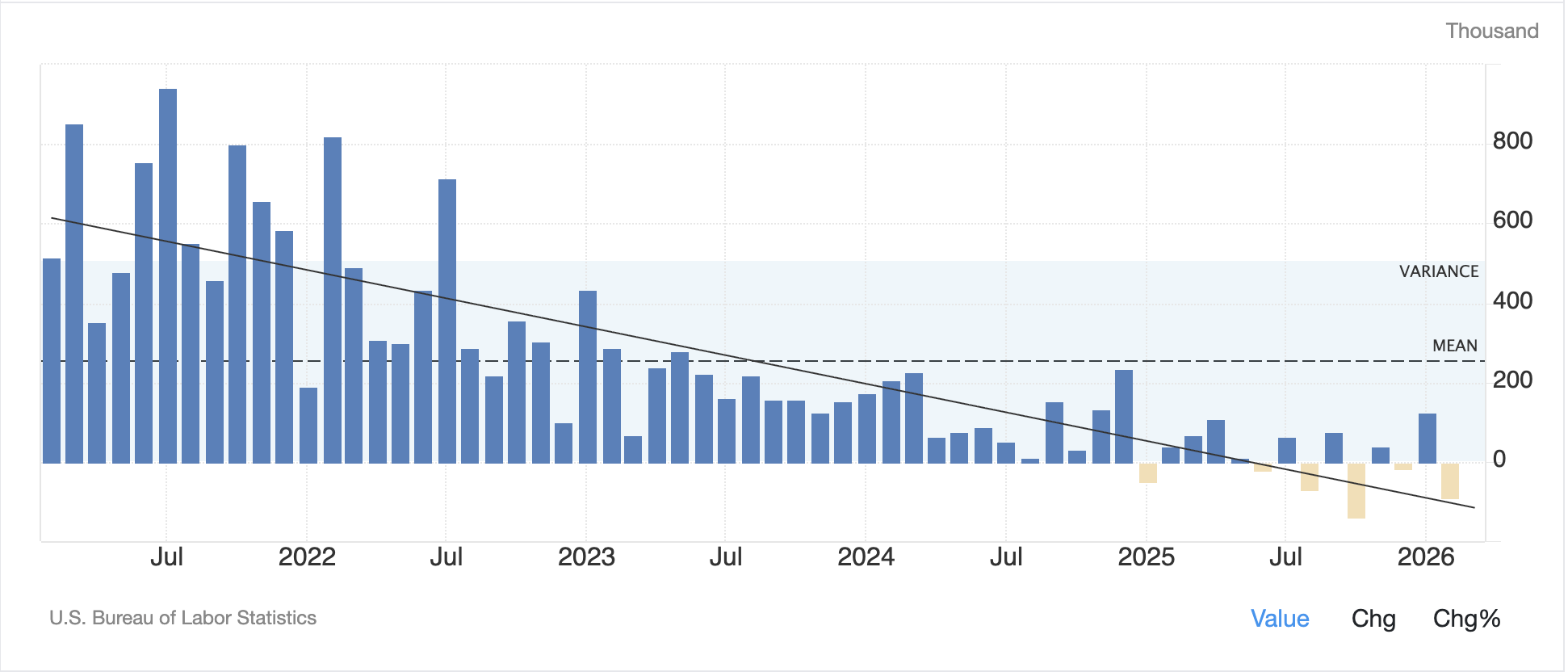
As to bonds, European sovereign yields have fallen by between -3bps and -4bps across the continent while UK gilts (-7bps) have fallen further after employment data there showed the Unemployment Rate ticked up to 4.8% unexpectedly while there were job losses as well.  In fact, looking at the chart below of Payroll Changes over the past three years, the trend seems pretty clear!

Source: tradingeconomics.com

Those UK employment figures also weighed on the pound (-0.45%) which is declining in line with most of the G10 bloc (NOK -1.1%, AUD -0.9%, NZD -0.5%) although the yen (+0.25%) is bucking the trend, perhaps because of its haven status.  NOK is suffering from oil’s (-2.2%) sharp decline after the IEA, once again, said there would be a supply surplus, although their forecasts have been wrong, and consistently overestimating supply and underestimating demand, for the past decade.  

As to the EMG bloc, despite the rally in precious metals, both ZAR (-0.9%) and MXN (-0.8%) are under pressure as is KRW (-0.6%) after the story that China is imposing restrictions on Korean ship builders in the US that are helping America try to reverse the decimation of our shipbuilding industry.  

Trying to recap all that is happening, fear is pervasive across investors of all stripes.  The hunt for havens continues and absent a more lasting trade truce between the US and China, something I think will be very difficult to achieve, volatility is likely to be the dominant feature in all markets.  In the end, though, there is no evidence that the dollar is being ‘dumped’ in any manner and while gold and precious metals may continue to rally, given 2 Fed rate cuts are already priced in for the rest of the year, we will need something completely outside the box to see the dollar fall in any meaningful manner, I believe.  For hedgers, markets like these are why you remain hedged!

Good luck

Adf
Under Real Threat

The PCE data was warm
And still well above Powell’s norm
The problem for Jay
Despite what folks say
Is tariffs ain’t causing the storm
 
Instead, service prices keep rising
With wages not yet stabilizing
And so, long-date debt
Is under real threat
As traders, those bonds, are despising


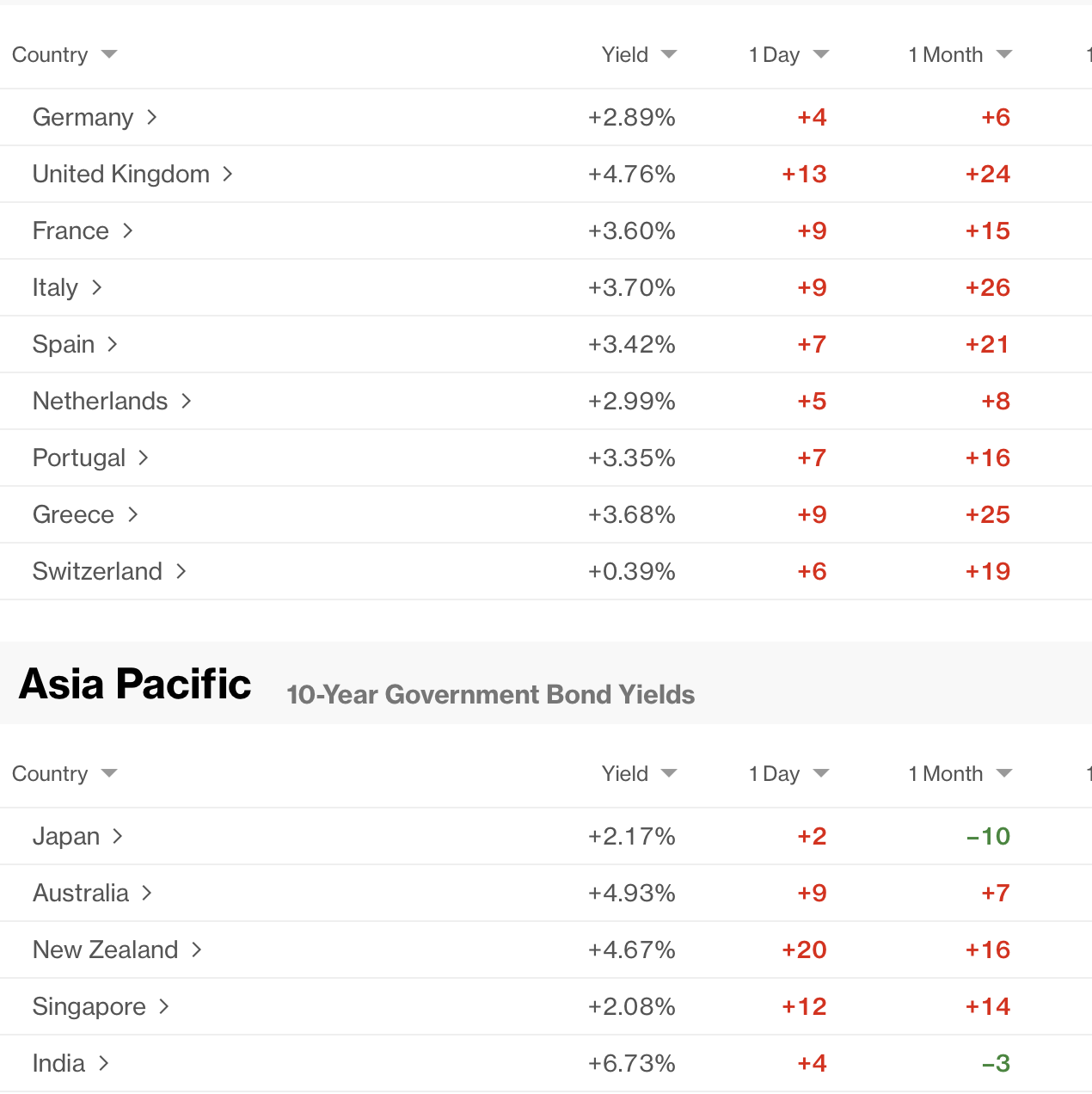
Under the rubric, economic synchronization remains MIA, I think it is worth looking at the performance of 30-year bond yields across all major nations as per the below chart.  While the actual rates may be different, the inescapable conclusion is that yields across the board continue to rise to their highest levels in more than five years and the trend remains strongly in that direction.  Regardless of central bank actions, or perhaps more accurately because of their attempts to keep rates low, it is increasingly clear that confidence in government debt, the erstwhile safest assets around, continues to slide.  

Arguably, this is a direct response to the fact that despite their vaunted independence, central banks around the world have very clearly abandoned their inflation targets and are now doing all they can to support their respective economies with relatively easy money.  Friday’s PCE data is merely the latest in a long line of data points showing that although most of these banks are allegedly targeting 2.0% Y/Y inflation, the outcomes have been higher than target, yet excuses to cut rates are rife.  If you are wondering why gold continues to rally, look no further than this.

Source: tradingeconomics.com

In fact, this morning’s Eurozone CPI reading of 2.1%, 2.3% core, is merely another chink in the armor as it was a tick higher than expected.  One of the problems, I believe, is that there remains a very strong belief that the key driver of inflation is economic growth, not money supply growth, despite all evidence to the contrary.  But it is a Keynesian fundamental belief, and every central bank around the world is convinced that slowing economic activity will result in declining inflation rates.  Alas, as long as central banks continue to support their domestic government bond markets, inflation will remain.  

This is where the synchronicity, or lack thereof, of the economy is having its biggest impact.  The fact that certain parts of the economy, notably AI investment, continues to run at record pace and continues to support excess demand for certain things offsets weakness in other parts of the economy, for instance, commercial property, which is looking at a significant deterioration in its finances.  A look (see chart below) at Commercial Mortgage-Backed Securities (CMBS) for office buildings shows that the delinquency rate has reached an all-time high, higher even than the GFC, as the changes in the US working population and the increase in work-from-home have devastated the value of many office buildings.

Perhaps more interesting is the fact that multifamily CMBS (financing for apartment buildings) is also suffering despite a housing shortage and rising rents.  While delinquency rates have not reached GFC levels, as you can see, they are rising rapidly as well.

So, which is it?  Are yields rising because growth is driving inflation higher (the Keynesian view of the world)?  How does that accord with rising delinquencies if growth is the driver?  In the end, there is no single, simple answer to explain the dynamics of an extraordinarily complex system like the economy.  I do not envy policymakers’ current situation as there are no correct answers, merely tradeoffs (just like all economics).  But it is increasingly clear that investors are losing their interest in holding onto government debt as they seemingly lose faith in governments’ ability to manage their respective finances.  Which brings us to one more chart, the barbarous relic (which for those of you who don’t know, was Keynes’ term of derision for gold).  I thought it might be instructive to see how gold and 30-year Treasury yields seem to have the same trajectory as the shiny metal regains its all-time highs this morning.

Source: tradingeconomics.com

With that cheery thought after a beautiful Labor Day weekend, let’s see how markets are behaving now that September is upon us.  Friday’s selloff in the US (a disappointing way to end the month) was followed by a mixed session in Asia with the Nikkei (+0.3%) managing to rally although China (-0.75%) and Hong Kong (-0.5%) followed the US lower despite a slightly better than expected RatingDog (formerly Caixin) PMI of 50.5 released Sunday night.  Elsewhere in the region, Korea (+0.95%) was the big winner with modest losses almost everywhere else in the region.  As to Europe, the DAX (-1.25%) is the worst performer, although Spain’s IBEX (-0.95%) is giving it a run for its money as the higher Eurozone inflation squashed hopes that the ECB may cut rates again soon.  Interestingly, French shares are unchanged this morning, significantly outperforming the rest of the continent despite continued concerns over the status of the French government which seems likely to collapse next week after the confidence vote on Monday.  Perhaps the idea that the government will not be able to do anything is seen as a benefit!  As to US futures, negative is the vibe this morning, with all the major indices pointing lower by at least -0.6%.

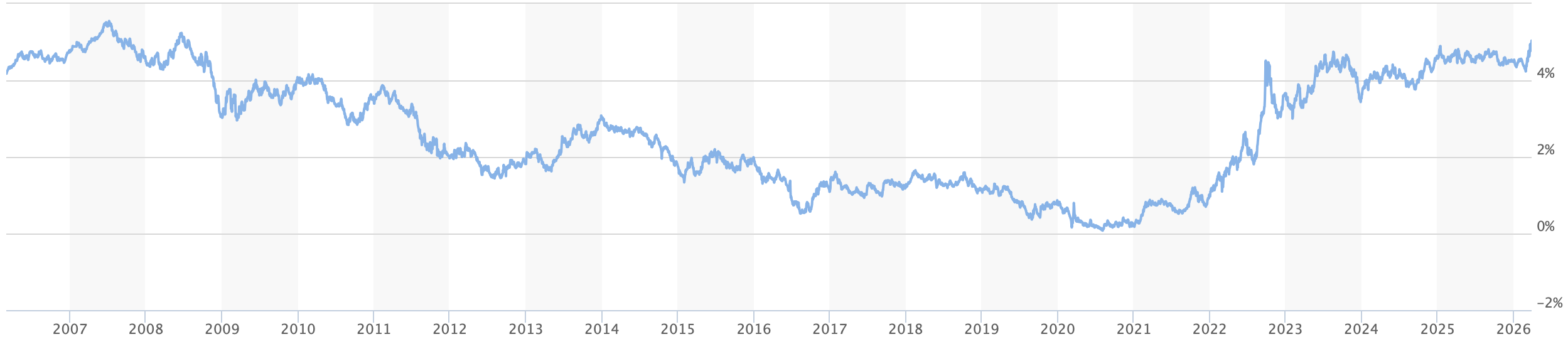
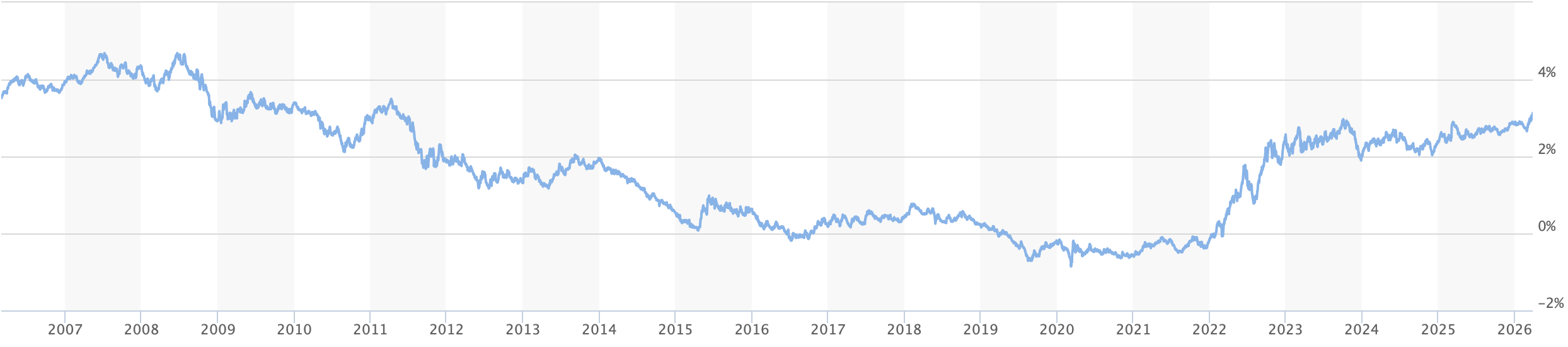
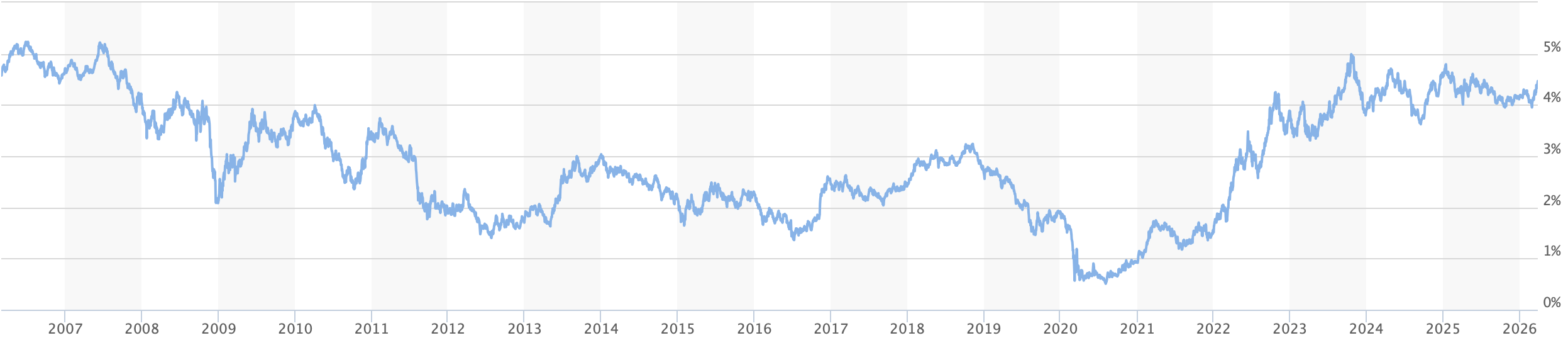
In the bond market, based on my commentary above, you won’t be surprised that Treasury yields are higher by 6bps this morning and European sovereign yields are all higher by between 4bps and 6bps.  The big story here is that French yields are rising to Italian levels as the former’s finances are crumbling while Italy has stabilized things for the time being.  Of course, all this pales compared to UK yields (+4bps) where 30-year yields have climbed to their highest level since 1998 and the 10-year yields are now nearly 200 basis points higher than during the ‘Liz Truss’ moment of 2022 as per the below.  It is not clear to me if the UK or France will collapse first, but I suspect that both may be begging at the IMF soon!

Source: tradingeconomics.com

Oil prices (+1.8%) continue to rise as Russia and Ukraine intensify their fighting with Ukraine attacking Russian refining capacity, apparently shutting down up to 17% of their output.  However, while we have seen oil rebound over the past several weeks, the longer-term trend remains lower.

Source: tradingeconomics.com

As to metals, this morning gold (+0.2%) continues to set new highs while silver (-0.4%) is backing off of its recent multi-year highs, although remains well above $40/oz.  Precious metals are in demand and likely to stay that way for a long time to come in my view.

Finally, the dollar is much firmer this morning with the pound (-1.25%) the laggard across both G10 and EMG currencies as investors flee from the ongoing policy insanity there (between the zeal with which they are trying to reduce CO2 and the crackdown on free speech, it seems the government is trying to alienate the entire native population.). But the euro (-0.7%), Aussie (-0.7%), yen (-1.0%) and SEK (-0.75%) are all under pressure in the G10 bloc.  The UK is merely the worst of the lot.  As to the EMG bloc, MXN (-0.7%), ZAR (-0.7%) and PLN (-0.9%) are also sharply lower although Asian currencies (KRW -0.2%, INR -0.2%, CNY -0.15%) are faring a bit better overall.

On the data front this week, we have a bunch culminating in payrolls on Friday.

TodayISM Manufacturing49.0
 ISM Prices Paid 65.3
WednesdayJOLTS Job Openings7.4M
 Factory Orders-1.4%
 Fed’s Beige Book 
ThursdayInitial Claims230K
 Continuing Claims1960K
 Trade Balance-$75.3B
 Nonfarm Productivity2.7%
 Unit Labor Costs1.2%
 ISM Services51.0
FridayNonfarm Payrolls75K
 Private Payrolls75K
 Manufacturing Payrolls-5K
 Unemployment Rate4.3%
 Average Hourly Earnings0.3% (3.7% Y/Y)
 Average Weekly Hours34.3
 Participation Rate62.1%

Source: tradingeconomics.com

In addition, we hear from four Fed speakers with NY Fed president Williams likely the most impactful.  The current probability for a Fed funds cut according to CME futures is 92%.  A weak print on Friday will juice that and get people talking about 50bps to start.  A strong number will stop that talk in its tracks.  But until then, it is difficult to look at the messes everywhere else in the world and feel like you would rather own other currencies than the dollar (maybe the CHF).

Good luck

Adf
Stroke of a Pen

While NFP’s top of the list
For traders this morning, the gist
Of recent releases
Show more price increases
A trend that cannot be dismissed
 
As well, Tariff Man, once again
Imposed more by stroke of a pen
While stocks are declining
The dollar’s inclining
To rise vs. the euro and yen


Let’s get the upcoming data out of the way first as the Employment report is due to be released at 8:30. Current median expectations are as follows:

Nonfarm Payrolls110K
Private Payrolls100K
Manufacturing Payrolls-3K
Unemployment Rate4.2%
Average Hourly Earnings0.3% (3.8% Y/Y)
Average Weekly Hours34.2
Participation Rate62.3%
ISM Manufacturing49.5
ISM Prices Paid70.0
Michigan Sentiment62.0

Source: tradingeconomics.com

This report is obviously of great importance as the Fed continues to rely on a solid labor market as its key justification for not cutting rates.  At least that’s its public stance.  Recall, too, that last month’s result of 147K was significantly higher than forecast and really backed them up.  In fact, I would contend that one of the reasons that Chairman Powell was willing to sound mildly hawkish on Wednesday is because of the labor market’s ongoing performance.  

It is interesting to juxtapose this strength with the increasing number of stories about how the increase in investment and usage of AI, especially at tech firms, is driving a significant amount of personnel reductions.  And yet, the broad data continue to point to a solid labor economy.

However, I think it is worth taking a closer look at recent inflation focused data as that, too, is going to be a key driving force in the central bank debate worldwide.  Yesterday’s PCE data was largely as expected but resulted in a faster pace of inflation on both the headline and core bases.  If we consider the trend over the past three years, as per the Core PCE chart below, it appears that the nadir was reached back in June of last year, and while not every print has been higher, I will contend the trend is starting to point upwards.

Source: tradingeconomics.com

Meanwhile, if we turn our attention to European inflation data, while this morning’s Eurozone flash print was unchanged from last month, it was higher than expected.  We saw the same trend in individual Eurozone nations yesterday with Germany, Italy and France all showing the recent disinflationary trend stopping, at least for the past month.  With these recent releases, the analyst community is of the mind that the ECB is likely to hold rates steady again in September, extending the pause on their previous rate cutting cycle.  The strong belief is that US tariffs are going to dampen economic activity and, with that, inflation pressures.

As to the US, with President Trump having announced another wave of tariffs yesterday, as the 90-day window closed, once again the analyst community is calling for inflation to rise here.  Ironically, these analysts may be correct that US inflation is going to be slowly heading higher, but whether that is due to tariffs, or perhaps the fact that more than ample liquidity remains in the economy and services prices continue to rise has yet to be determined.

At this point, I think it might be useful to break out an updated version of a chart that has made the rounds before showing price changes since 2000 broken down by categories.  Virtually every sector that has seen significant price rises is on the service side of the ledger while most goods saw either deflation or very modest (~1% per annum) inflation.

Housing, which is both a good and a service, and textbooks, which are directly linked to tuition, are the two outliers.  Now, many will complain that something like New Cars having risen only 24.7% since 2000 is crazy given their much higher sticker prices, and that is clearly hedonic adjustments doing its job.  But if you consider the key expenses in your life, housing, food and health care are generally top of the requirements.  It is abundantly clear from this chart that the American angst on prices is well founded.  With that in mind, tariffs are exclusively imposed on goods, not services, so given services represent 77.6% of the US economy as of 2022 (as per Grok), the inflationary impact of tariffs seems like it might not be quite as high as the hysteria indicates.

(This is a perfect time to remind you of a great way to manage your inflation risk if you participate in the cryptocurrency markets by buying USDi, the only fully backed inflation tracking coin available.  Learn more at www.usdi.com.  It is essentially inflation-linked cash.)

Coming back around to the market, I think it is a good time to review one of the other major narrative themes, that the dollar is collapsing as foreigners flee because of the massive debt load, and that the dollar will soon lose its reserve status.  You know I have dismissed this idea from the beginning as nothing more than doom porn and an effort by some analysts to get clicks.  

There is no doubt that there had been a downtrend in the dollar for the first six months of 2025, and as has been written repeatedly, the decline was the largest during the first half of the year since the 1980’s.  As well, my concern over the dollar has been based on the idea that the Fed would indeed be cutting rates despite no need to do so, and that would undermine its yield advantage.  But a funny thing happened on the way to the death of the dollar, it stopped falling.  While I have been using the DXY chart as my proxy, pretty much every chart looks the same as per the below of both the euro and yen, where the nadir was at the beginning of July and the dollar has risen vs. both somewhere between 3% and 5%.

Source: tradingeconomics.com

In fact, as I look down my board, the dollar has risen against every major currency over the past month, with even tightly controlled CNY declining -0.8%, and the yen falling furthest, down nearly -5.0%.  Combine this with the news that Treasury auctions have been well attended with significant foreign interest, and it is hard to conclude the end is nigh for the US economy.

Ok, a really quick turn to markets here as this has gone on longer than I expected.  Equities are red everywhere this morning after yesterday’s US declines.  Japan (-0.7%), China (-0.5%) after weak PMI data, Hong Kong (-1.1%) and Australia (-0.9%) set the tone for Asia.  In Europe, it is even worse with the CAC (-2.2%) and DAX (-1.9%) both under more pressure as a combination of increased worries over trade (although given they ostensibly have a deal, I’m not sure what the issue is) and companies there reporting weaker than forecast results have been the problem.  US futures at this hour (7:30) are all pointing lower by about -0.85%.

Despite the fear in stocks, bonds are not seen as the answer this morning with Treasury yields edging higher by 1bp and European sovereign yields all higher by between 3bps and 5bps.  I guess the inflation reading has a few traders nervous.  Interestingly, if you look at the ECB’s own website showing rate change probabilities, there is a 14% probability of a rate HIKE priced in for the September meeting!  JGB yields have also edged higher by 1bp as the BOJ, in their policy briefing yesterday, raised their inflation forecasts for 2026, ostensibly as a precursor to the next rate hike there.  I’ll believe it when I see it!

As to commodities, oil (-1.1%) after touching $70/bbl yesterday has rejected the level.  While secondary sanctions on Russian oil exports continue to be discussed, they have not yet been implemented.  I continue to believe the price ought to be lower, but clearly there is a risk premium for now.  In the metals markets, gold (+0.4%) continues to find support despite weakness in other markets (Ag -0.6%, Cu -0.9%) as its millennia-long status as the only true safe haven is reasserting itself.  After all, Bitcoin (-0.6%) has not been able to match the relic’s performance of late despite its modern twist.

And that’s really all there is (I guess that’s enough) as we head into the weekend.  The market tone will be set by the NFP data, where my take is a strong report will see the dollar rally, bonds suffer, and stocks suffer as well as hopes for a rate cut fade further.  Conversely, a weak report should see the opposite impacts.

Good luck and good weekend

adf