Impuissance

The world now awaits the response
Of Israel, which at the nonce
Has traders concerned
Restraint will be spurned
While mullahs pray for impuissance

Thus, oil continues to rise
And it oughtn’t be a surprise
The talk that inflation
Achieved its cessation
Has slowed while concerns crystalize

The most important market story this morning, I would contend, is the potential response by Israel after Iran’s missile attacks yesterday.  While only a handful of the approximately 180 missiles breached the Israeli aerial defenses, some damage was inflicted.  Israel has promised a response at their leisure and history has shown they have been effective in inflicting greater damage than they receive.

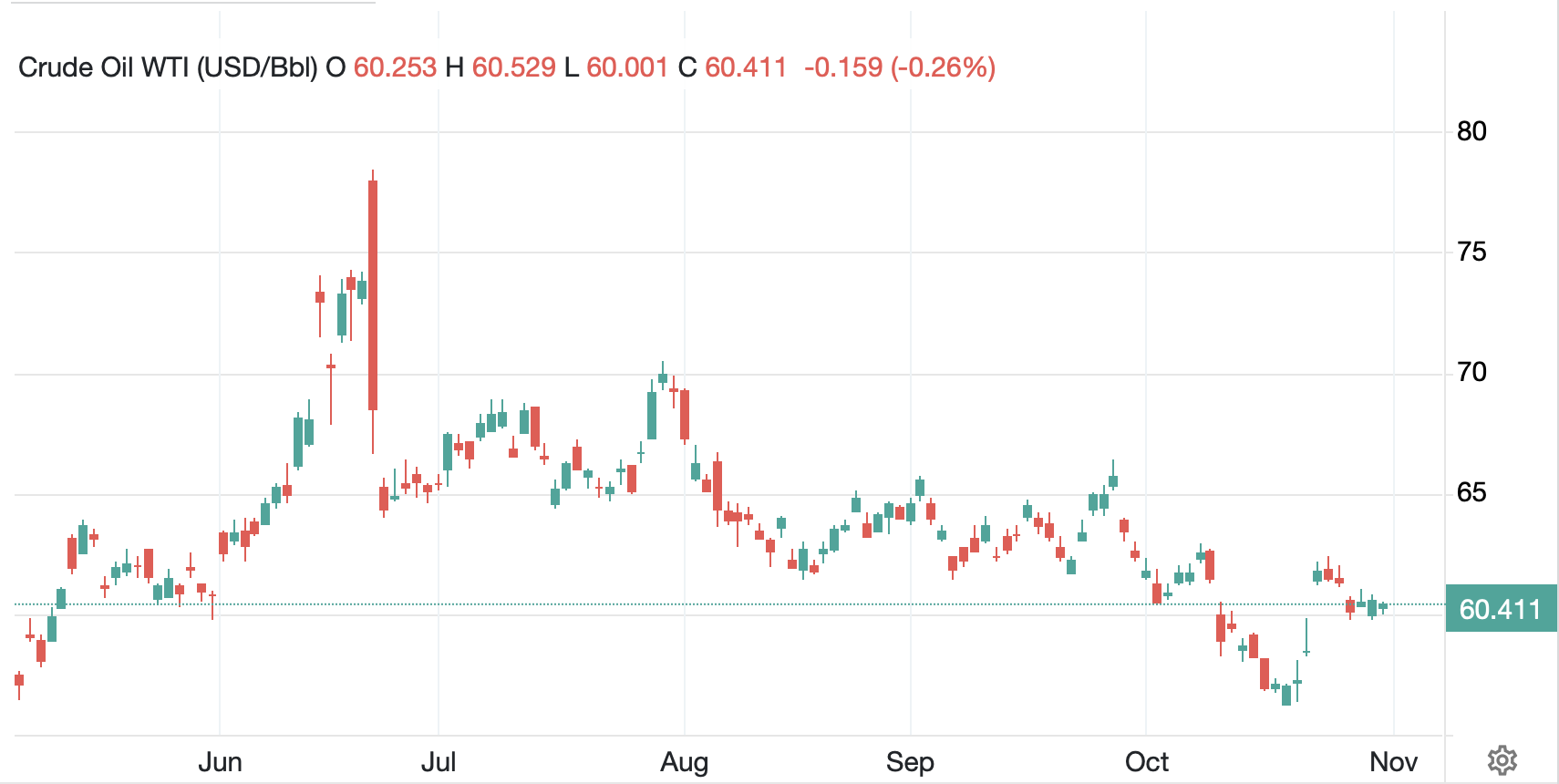
The major market concern is that Israel will attack Iran’s oil production capability, something which would certainly drive oil prices, which have spiked more than 8% in the past two sessions, higher still.  Currently, Iran is producing about 3.27 mm barrels/day, a solid 3% of global production and consumption.  Given the highly inelastic nature of the oil price, any attack there would have a substantial impact, at least in the short term.  Remember, though, that the Saudis have something along the lines of 3mm barrels/day of production shut in as OPEC+ has tried to support the price.  I expect that they would be able to bring that online quite quickly, so any price move would be short-lived.  The downside, though, is that it would use up the available spare capacity so any other event, say another hurricane which shuts in Gulf of Mexico production, would have an outsized impact.  Net, a response of that nature may only have a short-term impact on the price but would lead to more fragility overall.

As well, I am confident that the Biden administration is really working to convince Israel to leave the oil assets alone as during the campaign, a spike in oil, and by extension gasoline, prices will not be a welcome turn of events.  However, from Israel’s point of view, the destruction of Iran’s oil production capacity would result in a much weaker Iran, one that would have far more difficulty promoting their attacks on Israel.  At this point, we can only wait and see.

Away from that news, yesterday saw the PMI and ISM data releases which simply confirmed that global manufacturing activity remains in a slump.  The US report, printing at a weaker than expected 47.2, the 22ndmonth in the last 23 that the reading has been below the boom/bust line of 50.0, continues to drive concerns about economic weakness in the US.  Of course, manufacturing represents less than 25% of the economy directly, although many service jobs are dependent on the manufacturing sector.

Arguably, the perception of economic weakness that remains prevalent in the US stems from this situation, where manufacturing remains weak, and the ancillary activity typically driven by it remains weak as well.  These are the traditional blue-collar jobs, and it is those people who seem to be feeling the current economic malaise most severely.  In fact, this is as good an explanation as I can find for why despite some decent top line economic data, there are still so many people in the US who are highly stressed and living paycheck to paycheck.  While this is a macroeconomic discussion, it is also a key political discussion as it will highly likely be an important driver of voters come November.

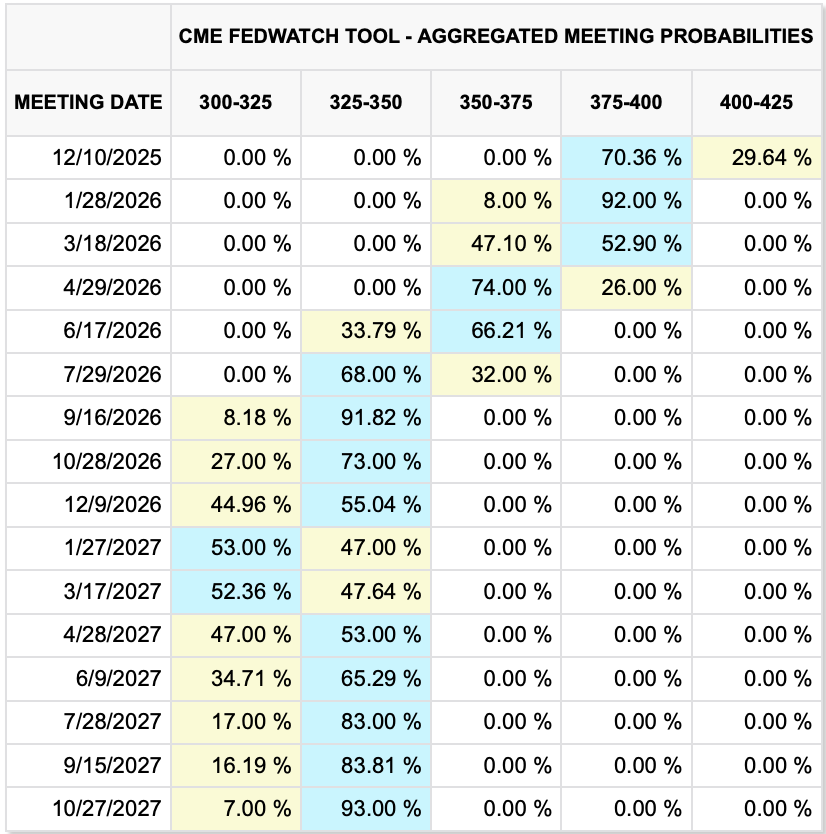
As to the other topic that has traders engaged, central bank policy, the plethora of Fed speakers yesterday did nothing to alter any views on their next steps.  Currently, the Fed funds futures market is pricing a 35% probability of a 50bp cut in November, but still pricing an 85% probability that there will be 75bps of cuts by year end.  Now, this is less cutting than had been priced just a week ago, but that move was driven by Powell on Monday.  Given the amount of data that we will be receiving between now and the November meeting, including two NFP reports as well as a CPI and PCE report this month, and the first look at Q3 GDP, many views can change.

And that’s kind of it this morning.  Last night’s VP debate had no market impact, nor would I have expected it to do so.  Worries about the Middle East and questions about central bank policy are the current market drivers.

With that in mind, let’s see how things played out overnight after yesterday’s weak showing in US markets.  In Japan, the Nikkei (-2.2%) gave back Tuesday’s gains as the market tries to determine exactly how new PM Ishiba is viewing the economy and central bank.  In a statement, he indicated the government would work with the BOJ to achieve joint goals, and his initial hawkish perception has been walked back.  In fact, it is odd that Japanese stocks fell given JGB yields (-2bps) also declined alongside the yen (-0.7%) on those comments.  As to the rest of Asia, the Hang Seng (+6.2%) rocketed higher on the Chinese stimulus story (mainland markets are still closed for their holiday), but the other Asian markets that were open, including Korea, Malaysia and Indonesia, all saw selling pressure with declines on the order of -1.0%.

In Europe, continental bourses are all lower led by the DAX (-0.6%) and IBEX (-0.6%) although the FTSE 100 (+0.2%) has managed a small gain.  The UK move has been driven by energy stocks rallying on the Middle East story while the lack of energy stocks on the continent seems to be the key to losses as investors turn cautious.  As to US futures, at this hour (7:30), they are lower by between -0.2% and -0.4%.

Bond yields are lower this morning with Treasuries down -2bps while European sovereign yields have all fallen between -5bps and -6bps.  The weak PMI data there has increased the discussion about more aggressive policy ease from the central bank and the likelihood that inflation stays quiescent.

We have already discussed oil but a look at the metals markets shows that after a 1% rally yesterday, gold (-0.3%) is consolidating near its all-time highs, while both silver (+0.3%) and copper (+0.8%) continue to move higher.  For the latter two, everything I read is about how both metals are critical for building out the energy transition infrastructure and both metals are in structural shortage with stockpiles being utilized as mining output lags demand and getting new mines up and running is a decade long affair.  My take is both have further to rise.

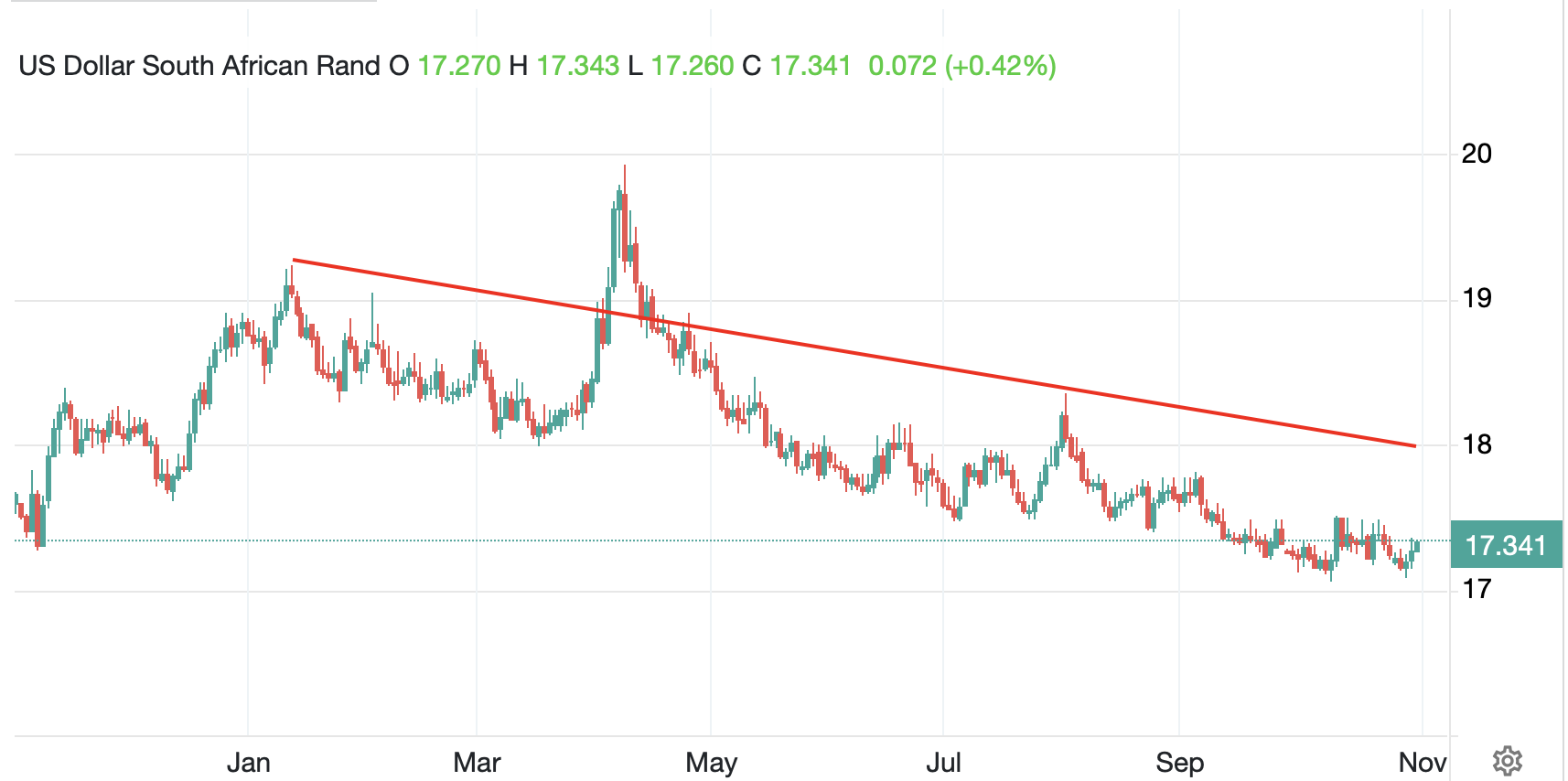
Finally, the dollar is net little changed this morning after a very solid two-day rally.  Remember it was just Monday that I was discussing key technical levels in the DXY (100.00), EUR (1.1200) and GBP (1.3500).  Well, we have moved well away from all those levels as the dollar weakness story takes a break.  When Chairman Powell explained he was in no hurry to cut rates rapidly, that part of the narrative needed to change quickly…and it did.  So, this morning, aside from the yen’s weakness mentioned above, the other large mover is NOK (+0.7%) which is simply responding to the oil rally.  In fact, the commodity currencies are doing exactly what they are supposed to be doing with CLP (+0.5%) tracking copper and MXN (+0.4%) tracking both silver and oil.  ZAR (unchanged) is actually the surprise here although it has been rallying steadily since April on a combination of the strong metals markets and continued belief in a better economic situation based on the new government’s business friendly policies.

On the data front, this morning brings only ADP Employment (exp 120K) and the EIA oil inventories where further inventory drawdowns are anticipated.  We also hear from four more Fed speakers although given Powell’s lack of concern regarding the speed of cuts, it will be hard for these speakers to change the market perception in my view.  This leaves us with the big picture.  Right now, employment remains the most important data for the Fed and their policy views.  As such, this morning’s ADP is likely to have more importance than it ordinarily would, despite the limited correlation between this data and the NFP to be released on Friday.

It seems that there are some subtle changes in central bank views with market perceptions of FX moves impacted.  The Fed is now seen as not quite as dovish, while the BOJ and ECB are seen as a touch more dovish, hence the dollar’s gains against both the yen and euro.  However, I think the central bankers realize they are still feeling their way in the dark and will be slow to respond to outlier data, so this vibe seems likely to hold in the near term.

Good luck
Adf

More Money to Mint

As an eagle soars
So too did the yen after
Ishiba-san won


Political change in Japan is far less bombastic and exciting than here in the US as evidenced by the election of Shigeru Ishiba as the new leader of the Liberal Democratic Party (LDP) last night.  Given the LDP’s large majority in the Diet (Japan’s parliament), as the new leader, Ishiba-san is now all but certain to be the new Prime Minister. This will likely be confirmed by a vote as early as next Tuesday, but sometime very soon regardless.

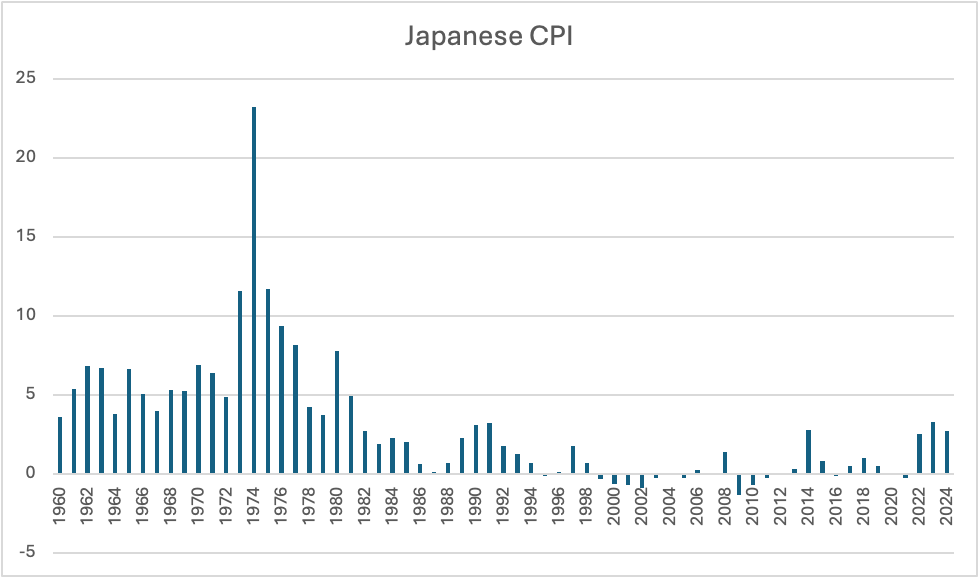
Ishiba’s background, a party veteran and former defense minister, seems to have been the right focus at the right time as strains with China have recently increased and the electorate (LDP members, not the general population) are clearly hearing about security concerns more than other issues.  The implication is that economic issues were not the driving force here, but in that vein, Ishiba’s views appear to be to allow the BOJ and Governor Ueda to continue their normalization process, finally ending the decade plus of Abenomics that worked to raise inflation.  

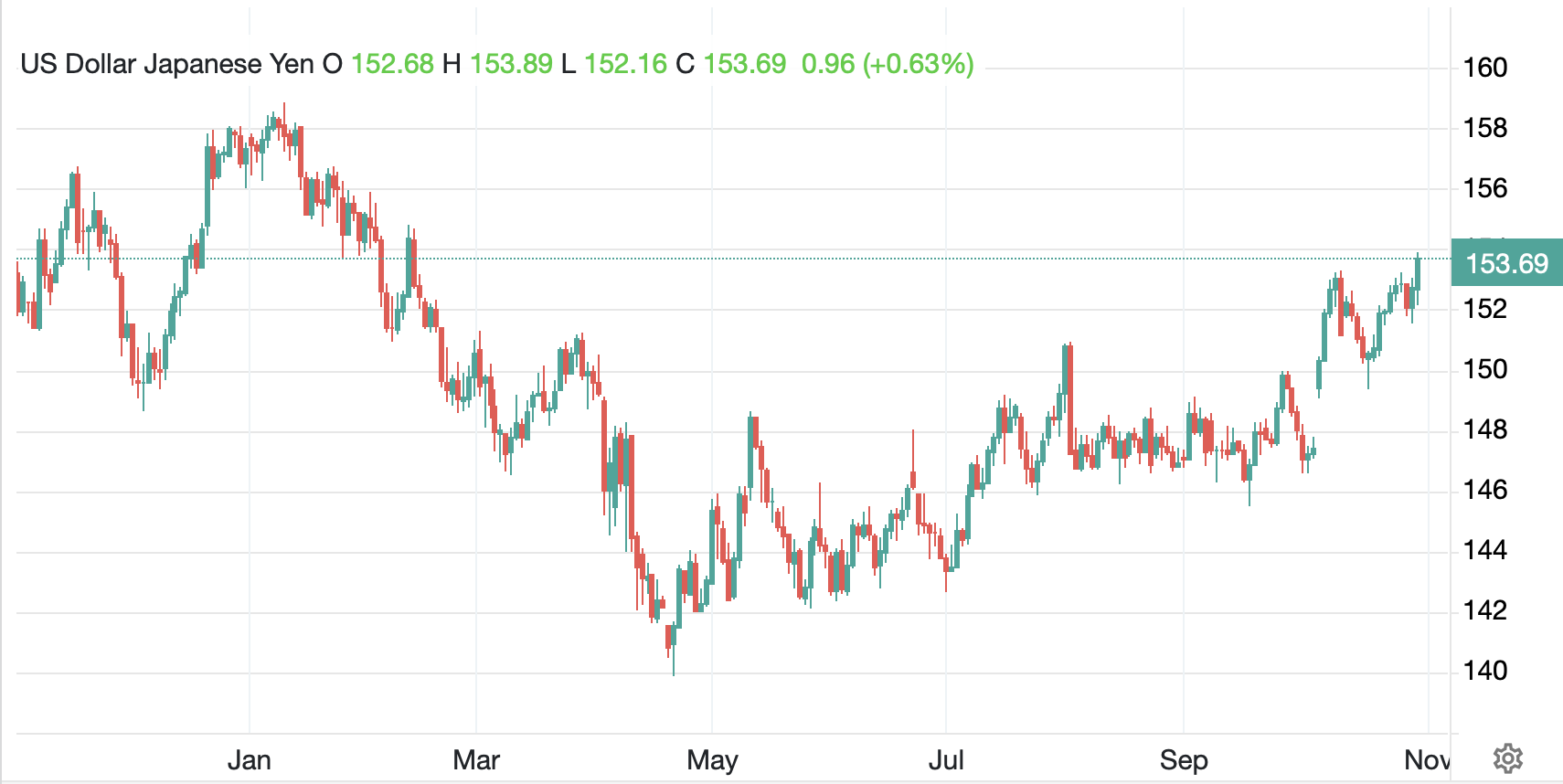
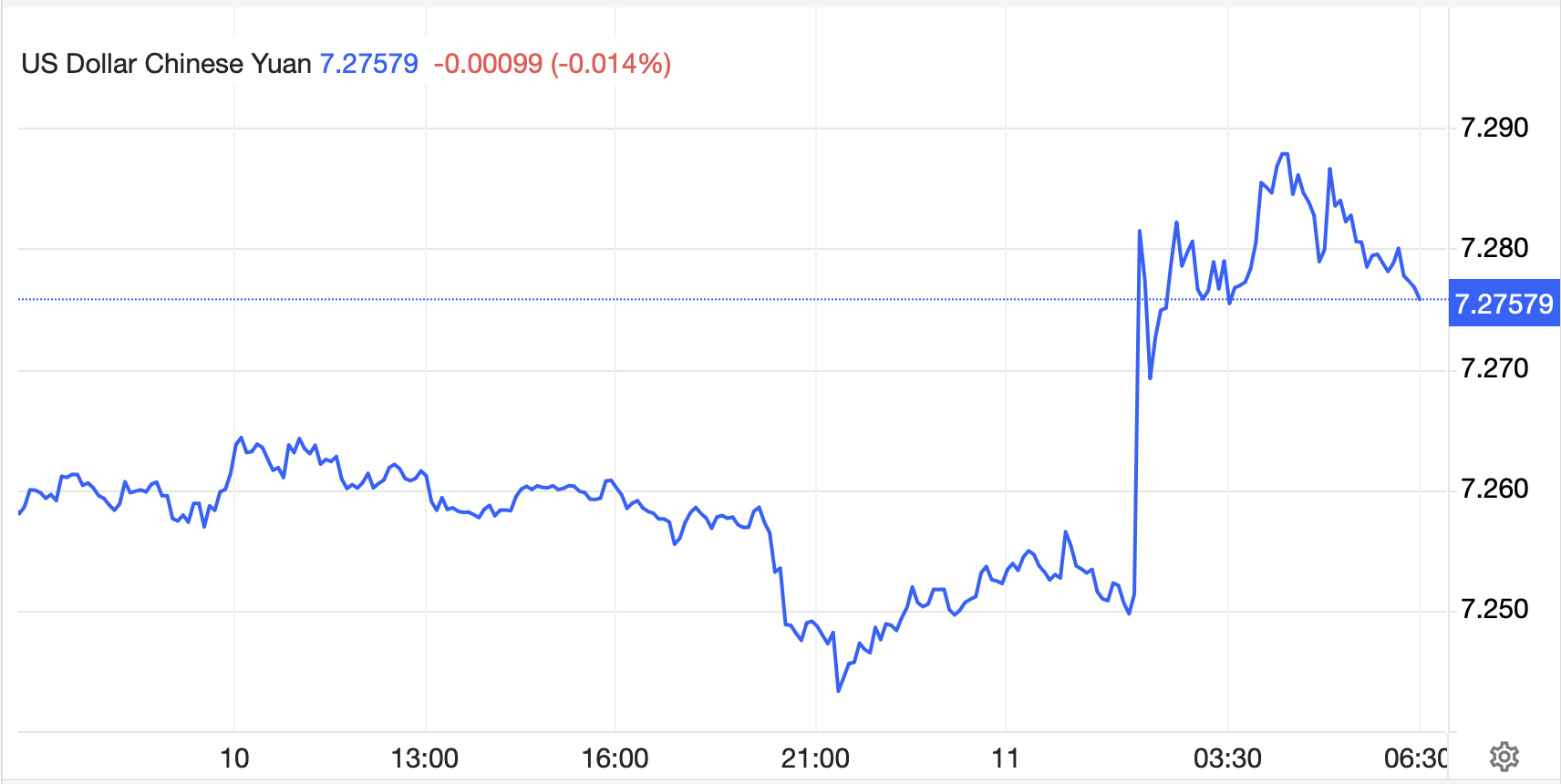
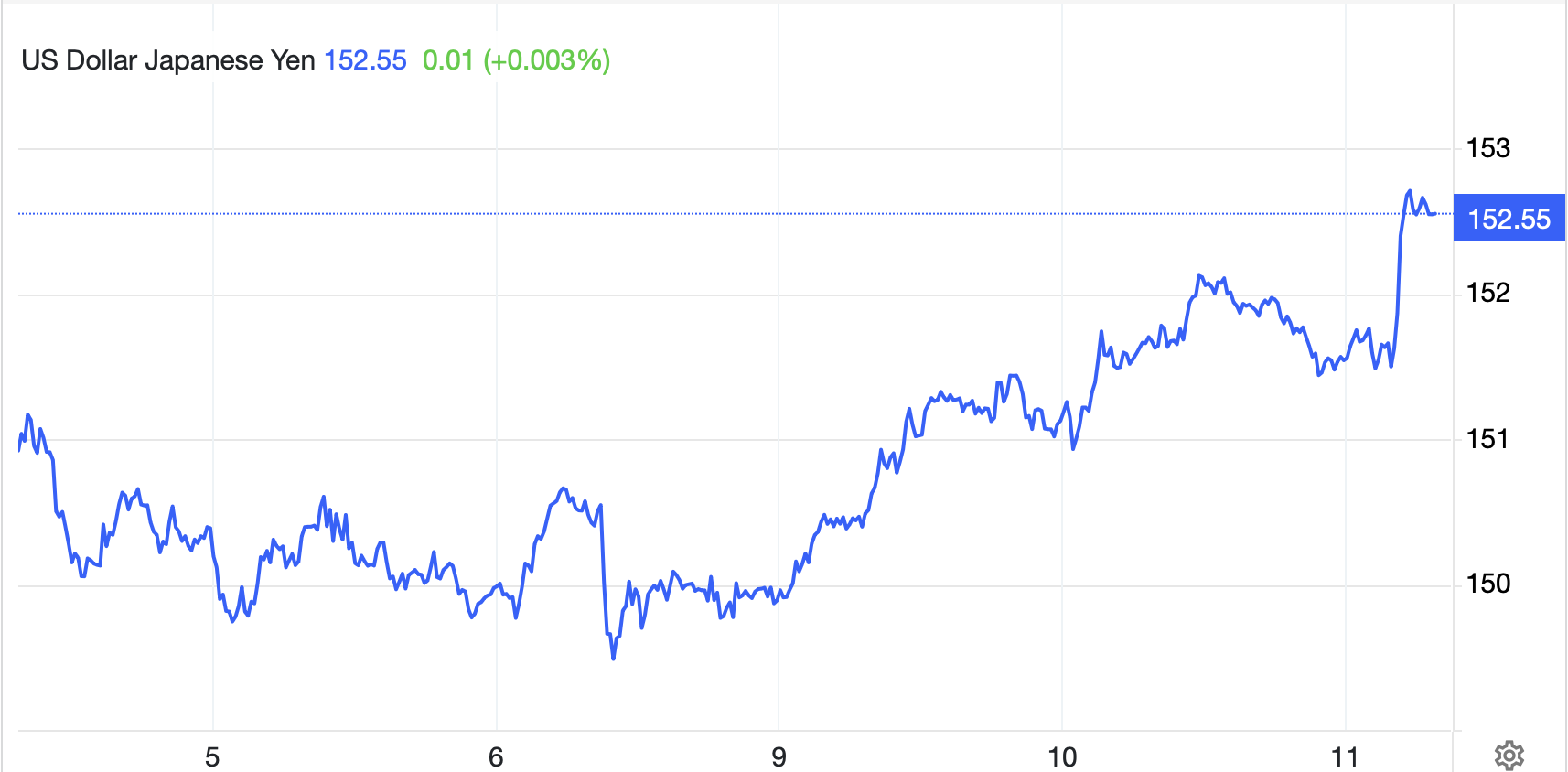
Now, as it happens, last night Tokyo inflation was released with the headline falling to 2.2% and the core falling to 2.0%, as expected.  It also appears that one of his key opponents, Sanae Takaichi, had been an advocate of pressuring the BOJ to slow its policy normalization, so with the results, market participants reacted swiftly, and the yen rallied sharply on the news as per the below chart while the Nikkei after an initial sharp decline, rebounded and closed higher by 2.3%.

Source: tradingeconomics.com

Going forward, it seems unlikely that the yen is going to be a focus of the new Ishiba administration.  Rather, he is clearly focused on defense strategy so Ueda-san will be able to continue his normalization efforts at his own pace.  As evidence, JGB yields stopped their recent slide and backed up 2bps overnight.  I suspect that we will see a very gradual move higher here with key drivers to be purely economic issues rather than political ones, at least for a while.

This morning, the PCE print
Will help give another key hint
To whether the Fed
When looking ahead
Will soon start, more money, to mint

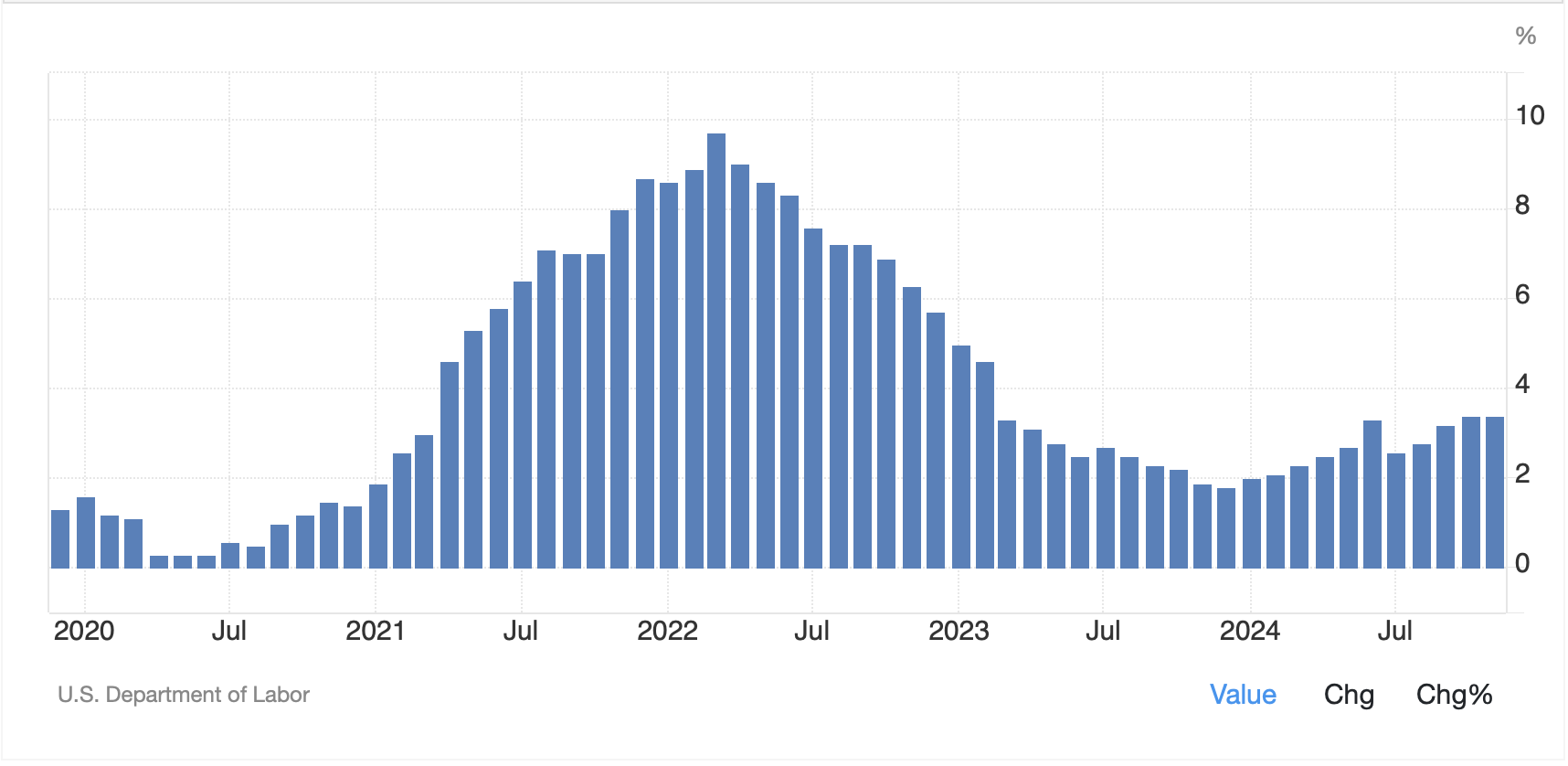
The other story for the day is the PCE report to be released at 8:30. Current expectations are for a 0.1% M/M, 2.3% Y/Y rise in the headline number and a 0.2% M/M, 2.7% Y/Y rise in the ex-food & energy reading.  If these are the realized outcomes, the trend lower in inflation will remain on track and all the Fed speakers will feel vindicated that the 50bp cut last week was appropriate.  But I think it is worthwhile to take a quick look at a chart of how this number (core PCE) has evolved over time to help us better understand where things are in relation to the pre-pandemic economy. 

Source: tradingeconomics.com

Now, while there is no doubt that we are well below the highest levels seen two years ago, it is not difficult to look at this chart and see a potential basing formation, well above the pre-pandemic levels.  In fact, today’s expectations on the core reading are for a bounce higher of 0.1% which would only reinforce the idea that we have seen the bottom in this reading.  Of course, any one month’s data is not definitive as everything is subject to revisions, and simply looking at the chart, it is easy to see both ebbs and flows in the data well before the pandemic.  But I continue to be concerned that the Fed’s very clear ‘mission accomplished’ attitude on inflation is a big mistake that will come back to haunt us all sooner than you think.

Ahead of the data, a look at the overnight session shows that the ongoing rally in risk assets that started with the Fed and has been goosed by China’s efforts this week, remains the dominant theme.  In fact, Chinese shares had another gargantuan session last night (CSI 300 +4.5%, Hang Seng +3.6%) as hedge funds who had been quite short the Chinese stock market prior to the announcements this week continue to scramble to cover those shorts as well as get long for the rest of the expected ride.  But away from China and Japan, the rest of Asia was far less excited with declines seen in India, Korea and Australia leading most indices lower there.  As to European bourses, they are firmer this morning led by the DAX (+0.8%) but green everywhere after preliminary inflation data for September from France and Spain saw declines well below expectations to 1.5% and investors increased the probability of an October ECB rate cut substantially.  While some ECB members remain concerned over the stickiness of services prices, which continue to hover above 4%, if the headline numbers are falling below 2%, I think it will be very difficult for Madame Lagarde to push back against another cut next month.  Meanwhile, ahead of the data, US futures are unchanged.

In the bond market, Treasury yields have edged lower by 1bp while European sovereign yields have moved a similar amount except for French OATs which have slipped 3bps.  The story about French debt yielding more than Spain, one of the original PIGS has gotten a lot of press and it seems deeper thinkers disagree with the idea and are buying ‘undervalued’ French OATs.  

In the commodity markets, oil (+0.15%) has finally stopped falling, at least for the moment, although the recent trend is anything but encouraging for oil bulls.  Crude is lower by -4.5% in the past week and -9.0% in the past month, clearly helping the headline inflation readings.  As to the metals markets, after another strong day yesterday, they are consolidating with very modest declines (Au -0.2%, Ag -0.1%, Cu -0.4%) although the trend in all three remains firmly higher.

Finally, the dollar, after several sessions under a lot of pressure, is also bouncing slightly, at least against most of its counterparts.  We have already discussed the yen’s gains, but vs. the rest of the G10, it is firmer by roughly 0.15% or so while vs. its EMG counterparts some are seeing losses  (CE4 -0.3% to -0.4%) while there are others with modest gains (ZAR +0.3%, MXN +0.4%).  For now, the trend remains for a lower dollar, and if we see a soft PCE reading this morning, I expect that to reassert itself as thus far, today’s price action appears more like a trading response to the recent weakness.

In addition to the PCE data, we also see Personal Income (exp 0.4%), Personal Spending (0.3%), the Goods Trade Balance (-$99.4B) and Michigan Sentiment (69.3).  Mercifully, on the Fed front, only Governor Bowman speaks, she of the dissent at the last meeting, although yesterday’s plethora of Fed speakers taught us nothing new at all.  

I don’t have a strong opinion as to how this data will play out, but I would caution that if PCE is firmer than expected, look for a hiccup in the recent euphoria over stocks and bonds, while the dollar consolidates its support.  However, if we see a softer print than forecast, watch out for a much bigger rally in stocks and a much weaker dollar.

Good luck and good weekend

Adf
Sayonara Yen

Ueda did not
Accept the challenge and hike
Sayonara yen


Market excitement has ebbed after yesterday’s massive risk rally around the world, especially with limited new information released.  The one place where there was a chance for excitement was Tokyo, where the BOJ was meeting.  Heading into the meeting, the analyst community anticipated no policy changes although it seems clear that there were at least some market participants who thought Ueda-san would take this opportunity to surprise markets once more.  However, in this case, the analysts were correct.  Policy was left as is, with the overnight rate remaining at 0.25%, and there was no discussion regarding the reduction of QE at all, in fact, the most noteworthy thing about the policy statement was the frequency with which they used the term ‘moderate’ or variations thereof.  

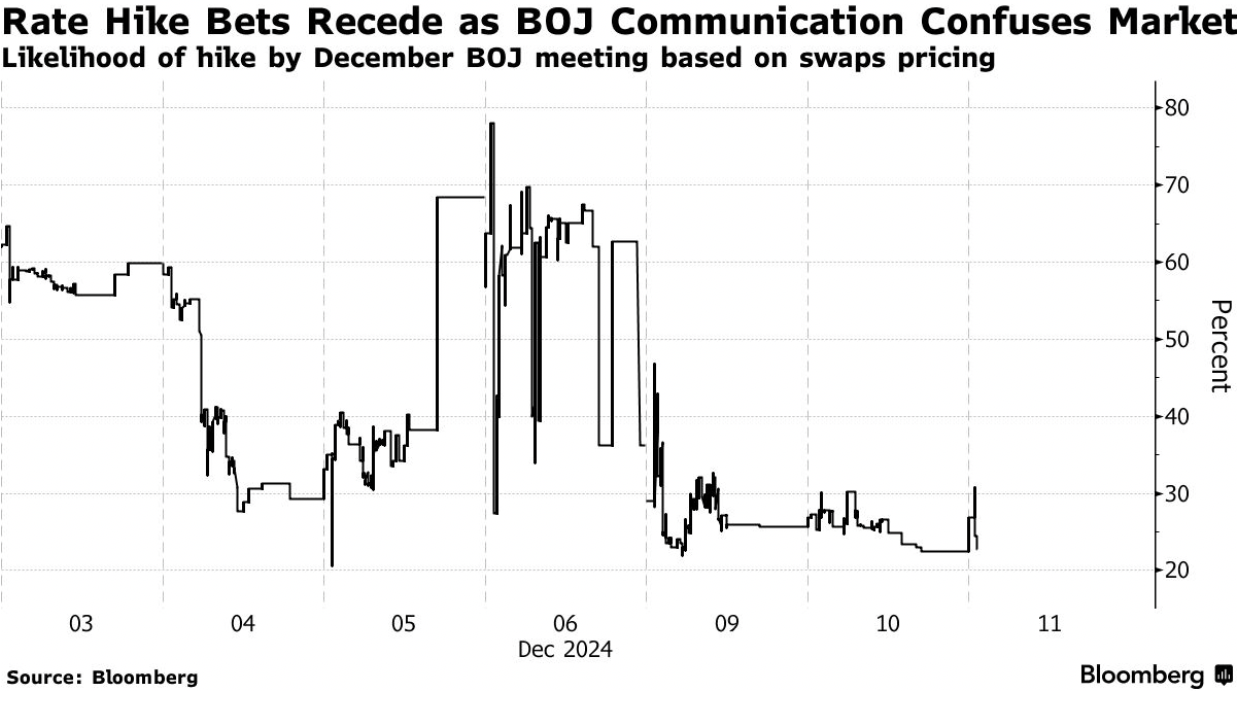
They explained that the Japanese economy’s recovery, overseas economies’ growth, corporate profits, private consumption, business fixed investment, and inflation expectations have all been increasing moderately.  As such, the unanimous decision was that policy was just fine already with no imminent concern over rising inflation and no need to do anything.  The upshot is that the Nikkei (+1.5%) continues its recent rebound rally, JGB yields didn’t budge and the yen (-0.9%) fell sharply, proving to be the worst performing currency in the session.  See if you can figure out when the BOJ news was released based on the chart below.  This is what I meant when I said while analysts weren’t looking for any policy changes, clearly FX traders were.

Source: tradingeconomics.com

However, beyond the BOJ nonevent, there has been very little to discuss overall.  There is still a sense of euphoria around equity markets as congratulations abound for Chairman Powell and his bold action on Wednesday, at least from the Keynesian audience.  The one other thing to mention is that the barbarous relic (+1.0%) has absorbed all this information and traded to yet another new all-time high, well above $2600/oz, dragging the rest of the metals complex along for the ride.

Some days, there is just not much to discuss, so I will recap markets and let us all start the weekend early.

Following the big rally in the US yesterday, alongside Japan, Hong Kong (+1.35%) stocks rallied as did most of Asia (Korea, India, Australia, Malaysia) although there were a few laggards (Indonesia and New Zealand stick out).  As to mainland Chinese shares (+0.15%), they did edge higher, which given their performance of late is clearly a positive, but the news from China continues to disappoint.  Last night, the PBOC left their 1yr and 5yr loan rates unchanged, unwilling to take advantage of the Fed’s rate cut to help try to boost the domestic economy.  There is talk that the government there is going to ease the Hukuo restrictions, a type of internal passport that restricts what citizens there can do, to try to goose the property market, but no confirmation of that.  

But there was also news that the youth unemployment rate rose again, up to 18.8%.  You may recall that last summer, when the numbers started to really get bad, rising above 25%, they simply stopped publishing them.  Well, they rejiggered the data and brought them back at the beginning of the year, and now they are rising once again.  China still has many intractable problems and the equity market there seems likely to remain under pressure for a while yet.  As to US futures, at this hour (7:00) they are backing off a bit from recent highs, down -0.25% or so.

In the bond market, it is an extremely quiet session everywhere, with Treasury yields edging higher by 1bp and similar moves in some European sovereign markets while others remain unchanged.  It seems that with central bank meetings now behind us, there is no reason to anticipate the next move yet, so no reason to rock the boat.  I assume that as more data shows up, NFP, inflation, etc., we will see more movement, but for now, likely very little activity.

As mentioned above, the metals markets are rocketing this morning but the same is not true in energy with oil (-0.3%) and NatGas (-0.6%) both slipping a bit.  However, both have had strong weekly rallies, so this feels much more like a profit taking response as traders head into the weekend than anything fundamental.  After all, escalation in the Middle East doesn’t seem to faze traders, nor in Russia/Ukraine. 

Finally, the dollar is a touch higher overall, but really, in the G10 other than the yen, most currency movements have been very modest.  In the emerging markets, CNY (+0.25%) is the outlier, with those looking for a cut unwinding their short positions, but we have seen weakness elsewhere (KRW -0.65%, MXN -0.25%, ZAR -0.25%) all of which seem to be a reaction to the dollar’s sharp decline of the past two sessions.  Again, profit-taking on a Friday with no data is pretty common.

And that’s really it.  There is no data and only one Fed speaker, Philly Fed president Harker, who will be the first post-FOMC speaker we hear.  It is hard to get excited about anything in the markets today.  I expect that we will see more profit taking in those markets which moved significantly, like equities and eventually metals by the close.  In fact, if the metals markets don’t retrace, I think that could be a signal that there is a larger move in that space coming our way.

Good luck and good weekend

Adf
Recalibration


All week we had heard many clues
That fifty is what Jay would choose
And that’s what he cut
With only one but
From Bowman, who shuns interviews
 
The key is now recalibration
In order to tackle inflation
Without driving higher
The joblessness spire
So, trust us, it’s all celebration


Recent indicators suggest that economic activity has continued to expand at a solid pace. Job gains have slowed, and the unemployment rate has moved up but remains lowInflation has made further progress toward the Committee’s 2 percent objective but remains somewhat elevated.” [emphasis added]

Reading the opening paragraph of the FOMC Statement, it might be confusing as to why they needed to cut rates 50bps.  After all, the economy is expanding at a solid pace (In fact, after the Retail Sales data on Tuesday, the Atlanta Fed’s GDPNow reading for Q3 is up to 3.0%!)  unemployment remains low and inflation is still somewhat elevated.  I know I am a simple poet, but the plain meaning of those words just doesn’t lead my thinking to, damn, we better cut 50 to get started.  But I guess that is just another reason I am not a member of the FOMC.

Perhaps the more interesting thing was the Summary of Economic Projections and the dot plot which showed that while expectations were for rates to fall far more dramatically than in June, the longer run expectations continue to rise.  In fact, Chairman Powell specifically addressed the SEP in the press conference, “If you look at the SEP you’ll see that it’s a process of recalibrating our policy stance away from where we had it a year ago when inflation was high and unemployment low to a place that’s more appropriate, given where we are now and where we expect to be, and that process will take place over time.” [emphasis added] In fact, there was a lot of recalibrating going on as that appears to be the Chairman’s new favorite word, using it 8 times in the press conference.

Source: federalreserve.cgov

Notice that their current forecasts are for GDP to slow to 2.0% with Unemployment edging only slightly higher while PCE inflation magically returns to their 2.0% target.  And take a look at the last two lines, with the Fed funds rate projections falling substantially for the next three years, far more quickly than their previous views, although they think the long-run level will be higher.  

I wonder about that last issue.  Historically, the thought was that the long run Fed funds rate would be inflation (2.0%) + real interest rate (0.5%) and they pegged it at 2.5% for years.  Now that they see it at 2.9%, is that because they think inflation is going to be higher (not according to their projections) which means that for some reason they think real interest rates are going to be higher.  However, when asked, Chairman Powell and every member of the board has been unable to explain this change.

But what really matters is how have markets responded to this earth-shattering news?  The initial movement was as expected, with stocks rallying sharply (see chart below) and yields sliding along with the dollar while commodities rallied.

Source: Bloomberg.com

But a funny thing happened on the way to the close, as can be seen in the chart.  Stocks gave back all their gains and then some, with all three major indices lower on the session while 10yr Treasury yields backed up 7bps and the dollar rebounded.  Arguably, this was a sell the news response, but we need to be careful.  Remember, there are many analysts who believe the economy is in deep trouble already and by starting off with a big cut, those with paranoia may be wondering what the Fed knows that the data, at least the headline data, is not really showing.

So much for yesterday, now let’s look at markets this morning beyond the initial knee-jerk responses.  Absent any other major news or data (Norgesbank leaving rates on hold doesn’t count as major), markets have played out far more along the lines of what would have been expected in the wake of a 50bp cut.  In other words, the dollar has fallen sharply against almost all its counterparts, equity markets have rallied around the world, commodity prices have rallied sharply, and bond yields are…unchanged? 

Which brings us to the question that has yet to be answered.  Which market is right, stocks or bonds?  They appear to be telling us different stories with stocks pushing to new highs amid rising multiples and rising profit growth expectations while bonds are pricing in another 200bps of rate cuts by the end of 2025, an outcome that would only seem to make sense in the event the economy fell into a recession.  But if we are in a recession, corporate earnings seem highly unlikely to rise as much as currently forecast and typically, P/E multiples contract.  Meanwhile, if the economy is humming along such that current equity pricing is warranted, what will be the driver for the Fed to cut rates as that will almost certainly reignite inflation.  

History has shown that the bond market tends to get these big questions right when they are pointing in different directions, but that doesn’t mean that risk assets will stop rallying right away.  In fact, this will likely take quite a while to play out.

Ok, so let’s put a little more detail on the market activity overnight.  Tokyo rocked (+2.0%) as did Hong Kong (+2.0%), Taiwan (+1.7%), Singapore (+1.1%) and even mainland China (+0.8%) managed to rally some.  It appears that investors around the world believe the Fed has opened the floodgates for a much lower interest rate environment everywhere.  European bourses, too, are sharply higher led by the CAC (+2.1%) but with strength across the board (DAX +1.5%, FTSE 100 +1.3%).  And US futures have shaken off the late selloff yesterday and are firmly higher this morning led by the NASDAQ (+2.2%).

Bond yields, though, are largely unchanged on the day, with yesterday’s backup in Treasury yields maintained and European sovereigns all within 1bp of yesterday’s close.  It appears that bond investors are less confident in a soft landing than equity investors.  Interestingly, JGB yields rose 2bps last night as Japanese markets prepare for the BOJ meeting tonight.

In the commodity markets, oil (0.75%) is continuing its recent rebound after another massive inventory draw was revealed by the EIA yesterday prior to the Fed meeting.  There is a growing concern that inventories in Cushing, Oklahoma are falling to a point where products like gasoline and diesel will not be able to be produced.  As an example, gasoline futures have risen far more than crude futures this week on that fear.  As to the metals markets, gold briefly touched $2600/oz yesterday immediately in the wake of the FOMC but sold off hard afterwards.  This morning, however, it is back pushing up to that level again and the entire metals complex is rising nicely.

Finally, the dollar, has been a whipsaw of late.  Post the FOMC, it fell sharply across the board, and then into yesterday’s close it rebounded to close higher on the day.  However, this morning it has given back all those late gains and then some, and is now sitting at its lowest level, at least per the DXY, since April 2022.  This morning, in the G10, we are seeing many currencies rally between 0.5% (EUR) and 1.3% (NOK) vs the dollar and everywhere in between.  The one exception to that is the yen (-0.2%) which is biding its time ahead of the BOJ meeting.  The working assumption is that the BOJ will do nothing tonight, but now that the Fed has cut 50bps, and given Ueda-san’s history of actively trying to surprise markets to achieve outcomes he wants, we cannot rule out another rate hike in Japan.  Monday morning, USDJPY fell below 140 for the first time in 18 months.  My take is Ueda-san is quite comfortable with it heading back to the 130 level, if not the 120 level.  If he were to surprise markets and raise the base rate by even 10bps tonight, I think we would see a sea change in sentiment and a much lower dollar.  And given inflation in Japan seems to have stalled at 2.8%, well above their 2.0% target, he has a built-in excuse.

Too, watch the CNY (+0.45%) as it is now trading at its highest level (weakest dollar) in more than a year, and is approaching the big, round number of 7.00.  the linkage between JPY and CNY is tight as they constantly compete in markets, especially now in autos and electronics.  If the Fed is really going to cut as much as markets are pricing, both these currencies should strengthen much further.

It is almost anticlimactic to discuss the data today but here goes.  First, the BOE left rates on hold, as expected and the market impact was limited.  Expectations are they will cut next in November.  As to data, we see Initial (exp 230K) and Continuing (1850K) Claims, Philly Fed (-1.0) and Existing Home Sales (3.90M).  None of that is likely to change any views.  Prior to the BOJ meeting, at 7:30 this evening we see Japanese CPI, which may change views there.

For now, the dollar is very likely to remain on its back foot as enthusiasm builds for multiple rate cuts by the Fed going forward.  However, if the data continues to impress like it has lately, that enthusiasm will need to be tempered.

Good luck

Adf

Fednesday

Well, Fednesday is finally here
And traders, for fifty, still cheer
But arguably
The prices we see
Account for a half-point rate shear
 
So, if they just cut twenty-five
Prepare for a market nosedive
The doves will all scream
Jay’s killing the dream
While hawks everywhere all will thrive


First, I did not create the term Fednesday, I saw it on Twitter but thought it quite appropriate.  In fact, looking, I cannot determine who did create it but kudos to them.

As I have already written twice on the subject of today’s meeting, I will be brief this morning, especially because not much has changed.  Yesterday’s stronger than expected Retail Sales data resulted in Fed funds futures reducing the probability of a 50bp hike during the session, but overnight, we have returned to the 65%/35% probability spectrum for a 50bp cut.  I continue to believe that will be the case based on the number of articles we have seen in the mainstream media about the merits of a 50bp cut, mostly centering on the idea that rates are “too” high despite the fact that growth continues apace, the employment situation remains solid, if cooling somewhat, and inflation remains well above target.  Perhaps the big surprise will be that there will be a dissent on the vote, something we have not seen in two years.  (In fact, the last time a governor dissented was 2006 I believe).  

But something I have not touched on is the dot plot which will give us an idea as to the members’ collective belief for the rest of the year.  For instance, if the dot plot indicates Fed funds will be at 4.5% by year end, then 25bps today will be followed by at least one 50bp cut.  That should be net equity bullish and bearish for the dollar.  If the dot plot indicates only 75bps of cuts, so 4.75% at year end, my take is that will be seen as somewhat hawkish overall, and we should see risk assets decline while the dollar rallies.  Finally, if it is more than 100bps expected, I think that could be a situation of the market asking, what does the Fed know that we don’t?  That would not be a positive for risk assets but would also hammer the dollar.  Bonds would rally as would gold.  At least those are my views.

Moving on, tomorrow brings a BOE meeting where the current expectation is for no cut, although one is priced for the next meeting in the beginning of November.  Early this morning, the UK released its inflation report which showed headline CPI at 2.2%, as expected while the core rate rose to 3.6%, a tick more than expectations and up 0.3% from the July reading.  Arguably, that is what has the BOE concerned, the fact that despite the decline in energy prices which has taken headline CPI lower, the underlying stickiness of inflation remains extant within the UK.  As well, the UK also released its PPI data, all of which showed declines greater than expected, if nothing else implying that UK corporate margins should be healthy.  The pound (+0.35%) has rallied on the news, although the dollar is weaker overall, so just how much of this move is UK related is open to debate.  I guess we can say that the short-term differences in central bank stance is likely to continue to help the pound for a while.  In fact, the pound is back to levels last seen in summer 2022 and there is a growing bullish sentiment for the currency based on current perceptions of the divergence between the Fed and BOE.  My view is the BOE will fall in line pretty quickly so this will change, but for now, especially with the dollar under broad pressure, the pound has further to go.

On Friday we’ll learn
If Ueda can once more
Surprise one and all

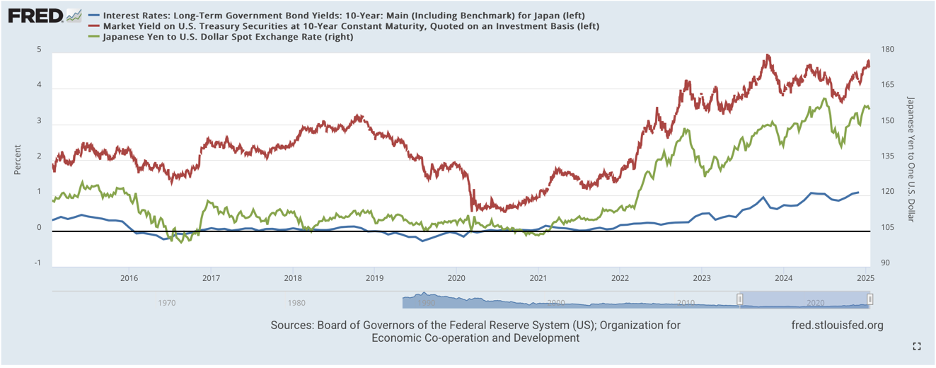
The other central bank meeting this week is the BOJ early Friday morning.  Currently, there is no expectation of a BOJ policy change although many analysts are looking for a rate hike by December.  However, I think it is worth looking at USDJPY in relation to the policy adjustments we have seen by both central banks over the past several years.  Hopefully you can see in the chart below that the exchange rate here has returned to the level when the Fed last raised rates in July 2023.  

Source: tradineconomics.com

Since then, after a dramatic further decline in the yen, with both policy rates on hold, the BOJ first adjusted the cap on YCC higher (from 0.50% to 1.0%) then eventually raised the policy rate from -0.1% to +0.25% where it is today.  During that time, Ueda-san has surprised markets several times, and has had help from the MOF regarding intervention, taking a completely different approach to the process than the Fed, who never wants to surprise markets. With this in mind, we must be prepared for another surprise on Friday.  One thing to remember is that the BOJ meeting announcement occurs after the market in Tokyo closes, so even though other markets, and of course the FX market will be able to respond, the Tokyo equity and JGB markets won’t be able to move until Monday.  The point is the reaction may take time to play out.  In this situation, I don’t have enough information to take a view, but I will say that if he tightens policy in any manner, USDJPY is likely to fall much further.

One other thing I realize is that I have not discussed QT/QE.  If the Fed changes that process, the current $25 billion/month of balance sheet runoff, that will be extremely dovish and be quite a boost for stocks, bonds and commodities while the dollar will get run over.

Ok, heading into this morning, and after a mixed and lackluster session yesterday in the US, Asian equity market all rallied with Japan (+0.5%) continuing its recent rally, while even mainland Chinese shares (CSI 300 +0.4%) managed a gain today.  However, European bourses are all softer this morning with the FTSE 100 (-0.6%) lagging after the higher-than-expected inflation data driving concerns the BOE won’t cut rates much.  But screens everywhere are red, albeit only modestly so.  US futures are currently (7:45) edging slightly higher as I continue to believe traders and investors are looking for a 50bp cut.

In the bond market, yields are higher across the board as the euphoria we have seen lately seems to be running into a bit of profit taking with Treasury yields higher by 3bps and European sovereign yields all higher by between 4bps and 6bps.  Perhaps the one surprise is that JGB yields are unchanged this morning as there seems to be no anticipation of a BOJ move, at least not yet.

In the commodity markets, oil (-1.0%) is giving back some of its recent gains but remains above $70/bbl.  It seems that the stories of a massive military strike by Ukraine deep in Russia have raised concerns amongst the punditry of an escalation of the war there, but it has not concerned energy markets, at least not yet.  In the metals markets, gold (+0.2%), which sold off yesterday, continues to find support while copper has been on a roll and has risen once again.  

Finally, as mentioned above, the dollar is softer overall against all its G10 counterparts and most EMG currencies as well. The one outlier here was KRW (-0.35%) where traders are starting to price in rate cuts by the BOK after yet another mild inflation report earlier this week.

Ahead of the Fed we see Housing Starts (exp 1.31M) and Building Permits (1.41M) as well as the EIA oil inventory data where expectations are for no real changes.  Until the FOMC release, look for quiet markets. Afterwards, I’ve given my views above.

Good luck

Adf

The New Norm

The CPI data was warm
But not warm enough to deform
The view that the Fed
Was moving ahead
With rate cuts which are the new norm
 
While fifty seems out for next week
Investors, by year end, still seek
A full percent cut
Just when, though, is what
Defines why we need Jay to speak


It turns out that core CPI printed a tick higher than expected on the monthly result, although the Y/Y number was right in line with most forecasts.  In the broad scheme of things, it is not clear to me that a 0.1% difference in one month matters all that much, but markets are virtually designed to overreact to ‘surprising’ data.  At least, the algorithms that drive so much trading are designed to do so, or so it seems.  However, as can be seen by the chart below, it was a pretty short-lived dip and then the march higher in equity prices continued.

Source: tradingeconomics.com

While Fed funds futures pricing has adjusted the probability of a 50bp cut next week by the Fed down to just 15%, that market is still pricing in 100bps of cuts by the December meeting which means that there needs to be a 50bp cut in either November or December as they are the only two meetings left after next week.  As @inflation_guy highlighted in his always perceptive writeups on the CPI report, yesterday’s number ought not have changed the Fed’s thinking.  And perhaps that is exactly what we saw from the equity market, the realization that 50bps is still on the table for next week, especially since there is a growing feeling that’s what Powell wants to do.  I’m confident if Powell pushes for 50bps, he will have no trouble gaining quick acceptance around the table.

Ultimately, I think the problem with focusing on CPI is that the Fed doesn’t focus on CPI, even when they are worried about inflation.  However, especially now that they seem to believe they have achieved victory in that part of their mandate, it strikes me that the numbers about which they really care are the employment numbers.  Last week’s NFP report was mixed at best, although the actual NFP data was the weakest part of the report.  This morning, we get the weekly Claims data (exp Initial 230K, Continuing 1850K), but those numbers have been very stable of late, and not pointing to serious difficulties at all.  To my eye, from the perspective of the economic data that we continue to see, there is limited reason for the Fed to cut at all, especially with inflation still well above their target, but Powell promised a cut, and we have seen nothing since his Jackson Hole speech that could have changed view.  

A better question is, are they really going to cut 250bps by the end of 2025?  That would imply, at least to me, that the economy has slowed substantially, and likely headed into recession.  And, if the data turns recessionary, I can assure you that the Fed will have cut far more than 250bps by the end of next year, probably more like 350bps-400bps.  My point is I cannot look at the market pricing of interest rates and make it fit with the economic outlook at this time.  What I can do, however, is feel confident that if the Fed starts to cut rates aggressively with economic activity at current levels (remember, the GDPNow forecast is at 2.5% for Q3), inflation is likely to pick back up more quickly than people anticipate and the dollar, and bond market, will suffer while commodities and gold rise.

In the meantime, in a short while we will hear from Madame Lagarde as she follows up the almost certain 25bp rate cut they will declare today with her press conference.  I would argue the bigger news out of Europe is the ongoing discussion about increasing Eurozone debt issuance, as suggested by Mario (whatever it takes) Draghi in his report I discussed on Monday.  A look at the recent data from the continent shows that Unemployment is currently at historic lows for Europe, although that is still 6.4%, and inflation has fallen to 2.2%, just barely above their 2.0% target.  As such, here too it seems that the data is not screaming out for action.  Now, the punditry is looking for a so-called hawkish cut, one where the commentary does not discuss future cuts as a given, and I think that would be a sensible outcome.  But not dissimilar to the US situation, where a key driver of rate cut desires is the governments who are the biggest borrowers, there is intense political pressure to cut rates and reduce interest expense.  In fact, I believe that is a key reason behind Draghi’s report, to gain support and remove some of that direct interest rate expense from certain countries’ cost structure.  Thinking it through, net this should benefit the euro in the FX market as the Fed seems hell-bent on cutting and the ECB a bit less so.  We shall see,

Ok, so let’s turn to the overnight sessions to see where things are now.  After the US rebounded yesterday afternoon on the back of strength in the tech sector, we saw a huge rally in Tokyo (Nikkei +3.4%) on the same premise.  And while the Hang Seng (+0.8%) had a good session, once again, mainland Chinese shares (CSI 300 -0.4%) did not participate.  In fact, most of Asia was in the green, once again highlighting the weakness in the Chinese market, and the perception of that weakness in the Chinese economy.  As to Europe, it too has seen strength everywhere with gains between 0.8% (FTSE 100, CAC) and 1.20% (DAX).  This story is one of following the US, hopes for a bit more dovishness from the ECB, and a growing story about the potential for bank mergers in Europe with news that Italy’s UniCredit Bank has taken a stake in, and is considering buying, Germany’s Commezbank.  As to the US futures market, at this hour (7:20) they are all very modestly in the green.

In the bond markets, yields continue to back up slowly from the lows seen earlier this week with both Treasury (+2bps) and most European sovereign (Bunds +2bps, Gilts +2bps, OATs +1bp) slightly higher this morning.  Overnight, we saw JGB yields tick up only 1bp despite a relatively hawkish speech from BOJ member Naoki Tamura.  He indicated that rates should be raised to 1.0% by the end of their current forecast cycle, which sounds like a lot until you realize that is the end of 2027!  Maybe the 1bp move is appropriate after all.

In the commodity markets, oil (+1.7%) is continuing yesterday’s rally as questions about how quickly Gulf of Mexico production will restart in the wake of Hurricane Francine are driving markets.  While the weak demand story still has proponents, the reality is that oil prices have fallen more than 12% in the past month, a pretty large decline overall, so a bounce cannot be surprising.  In the metals markets, after a solid session yesterday, metals prices are higher in both the precious and industrial spaces.

Finally, the dollar is doing very little this morning, but if forced to define the move, it would be slightly softer.  While most currencies in both the G10 and EMG blocs are just a touch firmer, between 0.1% and 0.2%, the biggest mover, ironically is a decline, ZAR (-0.4%), although other than short term trading and positioning, there doesn’t seem to be a clear catalyst for the decline.

On the data front, in addition to the Claims data noted above, we see PPI (exp headline 0.1% M/M, 1.8% Y/Y; core 0.2% M/M, 2.5% Y/Y). Of course, there are no Fed speakers, but after the ECB announcement and press conference, we will hear from some ECB speakers as well.  Right now, the dichotomy between what the bond market is expecting (much lower rates anticipating weaker economic activity) and the stock market is expecting (ever higher earnings growth amid economic strength) remains wide.  While there are decent arguments on both sides, my sense is the bond market is more likely correct than the stock market.  And that is probably a dollar negative, at least at first.

Good luck

Adf

Numb

It seems that nobody is willing
To trade, ere Nvidia’s spilling
The beans on their income
So, markets remain numb
Awaiting an outcome, fulfilling


Some days it is extremely difficult to find a noteworthy story at all, and today is one of those days.  The combination of a lack of new economic data on which to build theories and models, along with most of the central banking community taking their summer vacations has left the trading and investment communities without any new catalysts for action.  Arguably, the story that will soon drive things is this afternoon’s Nvidia earnings report, but that is far outside this poet’s lane of travel.  With this in mind, it should be no surprise that market movement overnight has been quite limited.

Perhaps the most interesting story was a speech given by BOJ Deputy Governor Ryozo Himino (the Japanese don’t typically take off all of August) describing that the BOJ would continue to “normalize” policy, albeit at an indeterminate rate.  Speaking in Yamanashi prefecture, west of Tokyo, he said [emphasis added], “The bank’s basic stance on the future conduct of monetary policy is that it will examine the impact of market developments and the July rate hike and that, if it has growing confidence that its outlook for economic activity and prices will be realized, it will adjust the degree of monetary accommodation.”  You will not be surprised after a ‘powerful’ statement like that, the Nikkei managed a 0.2% rally while JGB yields edged higher by 2bps.  Perhaps the latter qualifies as a large move although the 10yr yield there remains well below 1.00%.

Otherwise, passing comments by two different ECB bankers, one a hawk (Knot saying he wants more data before deciding on a September cut) and one a dove (Centeno saying it is clear another cut is due) were the best that we had.  Perhaps that was enough to generate some excitement as the dollar has managed to rebound from the lows seen yesterday, although that is just as likely a trading bounce as a change in sentiment.

So, with this very limited amount of new information in mind, and prospects for a quiet day ahead, let’s look at what happened overnight.  While US markets did edge slightly higher yesterday, the movement was tiny, less than 0.2%.  And that type of movement was the rule of thumb in Asian markets as well with one exception, both China (-0.6%) and Hong Kong (-1.0%) continue to lag global markets as ongoing concerns over the pace of growth in the Chinese economy weigh on markets there.  I believe one of the new concerns is that Western nations (Canada being the latest) are coming together as one with respect to tariffs on Chinese goods in an effort to prevent a massive onslaught that damages their own companies.

In fairness, European shares have seen some more positive performance, notably the DAX (+0.8%), although that is due to some slightly better than expected corporate earnings releases rather than any broader macro story.  Looking across the rest of the continent, and the UK, there is a mix of gainers and laggards with nothing more than 0.2% in either direction.  Again, not much excitement here.  As to the US, futures are essentially unchanged at this hour (7:10) as all eyes are on the tape after the close when Nvidia releases its earnings.

In the bond market, yields, which backed up a few basis points yesterday, are ceding those gains this morning.  10-year Treasuries are lower by 1bp while European sovereigns are down by as much as 4bps to 5bps.  However, that is tracking what Treasuries did yesterday afternoon after the European close.  In the end, fixed income markets in the G10 remain rangebound in yield as investors continue to try to determine the timing of the widely anticipated rate cuts.  Yields have clearly declined from levels seen in the spring, but I believe for much further movement will need to see a far more aggressive rate cutting stance by central banks.

In the commodity markets, oil (-2.0%) is giving back its recent gains as supply disruption fears that were piqued by the shutdown of part of Libya’s production seem to have dissipated, or at least have been overwhelmed by the weak demand story on slowing growth in China and Europe.  At this point, it is very difficult for me to get too bullish on oil as there appears to be ample spare production capacity in OPEC to prevent disruptions and the global economic outlook is clearly fading.  Arguably of more interest is the metals markets which are under pressure this morning with gold (-0.8%) giving back some of its recent gains, although remaining above $2500/oz, while both silver (-1.8%) and copper (-3.6%) feel far more pressure on the weak economic story.  

One other potential drag on the metals markets is the dollar, which has bounced nicely from its lows yesterday.  For instance, the euro (-0.5%) is the G10 laggard although that is after testing the round number of 1.12 again yesterday.  It seems that Klaas Knot is not seen as a viable spokesman for the ECB with visions of rate cuts coming.  But we are seeing weakness in the pound (-0.25%), yen (-0.3%) and even Swiss franc (-0.2%).  In other words, it is pretty broad-based dollar strength.  In the EMG bloc, the CE4 are all substantially weaker, more than -0.5%, while KRW (-0.6%) led most APAC currencies down.  The one exception this morning is MXN (+1.0%) which is rallying nicely on the back of Banxico comments that they will maintain restrictive monetary policy for the time being.  

The data calendar has only the EIA oil inventories coming at 10:30, with more drawdowns expected, and then much later this evening, Atlanta Fed president Bostic speaks.  As trading desks remain lightly staffed given the Labor Day holiday approaching next week and given that there is important data coming after the close as well as tomorrow (Initial Claims) and Friday (PCE), today has all the hallmarks of a sleeper.

Good luck

Adf

Like a Stone

When Ueda-san
Raised rates, stocks responded by
Falling like a stone
 
Now Ueda-san
Is treading lightly, lest an
Avalanche begins


I’m sure we all remember the day, just three weeks ago, when the Nikkei Index fell more than 12% leading to a global rout in stocks.  At that time, the proximate cause was claimed to be the combination of a more hawkish BOJ and a less dovish FOMC leading to a massive unwinding of the yen carry trade.  It was a great story, and almost certainly contained much truth.  But was it really the only thing going on?

It seems quite plausible that the dramatic market reactions at that time may have been sparked by that combination of central bank events, but the sole reason the moves were so dramatic was the fact that leverage in the markets has become a key driving force in everything that occurs.  This is the reason that central banks around the world, which continue to try to reduce their balance sheets, are forced to move so slowly.  There have already been two noteworthy accidents in balance sheet reduction processes; the September 2019 repo problem in the US and the October 2022 UK pension problem, both of which were exacerbated, if not specifically driven, by excess leverage.

With this in mind, the most recent market dislocation was the main topic of discussion last night in Tokyo when BOJ Governor Ueda was called on the carpet in a special session of the Diet to explain what he’s doing.  (As an aside, the underlying premise that cannot be forgotten is that despite all the alleged focus on economic outcomes, the only thing that gets governments exorcised is when stock markets fall sharply.  At that point, inquiries are opened!)

At any rate, last night, Ueda-san explained the following: “If we are able to confirm a rising certainty that the economy and prices will stay in line with forecasts, there’s no change to our stance that we’ll continue to adjust the degree of easing.” He followed that with, “We will watch financial markets with an extremely high sense of urgency for the time being.”  In other words, the BOJ is still set on tightening monetary policy but will continue with their major goal, which is to prevent significant market dislocation (read declines).  

The upshot here is that nothing has really changed, at least at the BOJ.  Given the pace with which the BOJ acts on a regular basis, it is not surprising that they expect to continue to tighten policy very gradually and will adjust the pace to prevent major financial market moves.  The market response to these comments was for the yen to rally initially, with the dollar falling nearly one full yen, but then reversing course as Ueda backed away from excessive hawkishness.

A graph with lines and numbers

Description automatically generated

Source: tradingeconomics.com

Which takes us to Chairman Powell and his speech this morning.

There once was a banker named Jay
Whose goal was for both sides to play
When joblessness rose
The question he’d pose
Was, see how inflation’s at bay?

It is somewhat ironic to me that the most recent market ructions were a response to the combined efforts of the BOJ on a Tuesday night and the Fed on a Wednesday morning, less than 12 hours apart.  And here we are this morning with Ueda-san having spoken on a Thursday night with Chair Powell slated to speak Friday morning, although this time a bit more like 15 hours apart.  Should we be concerned that more ructions are coming?
 
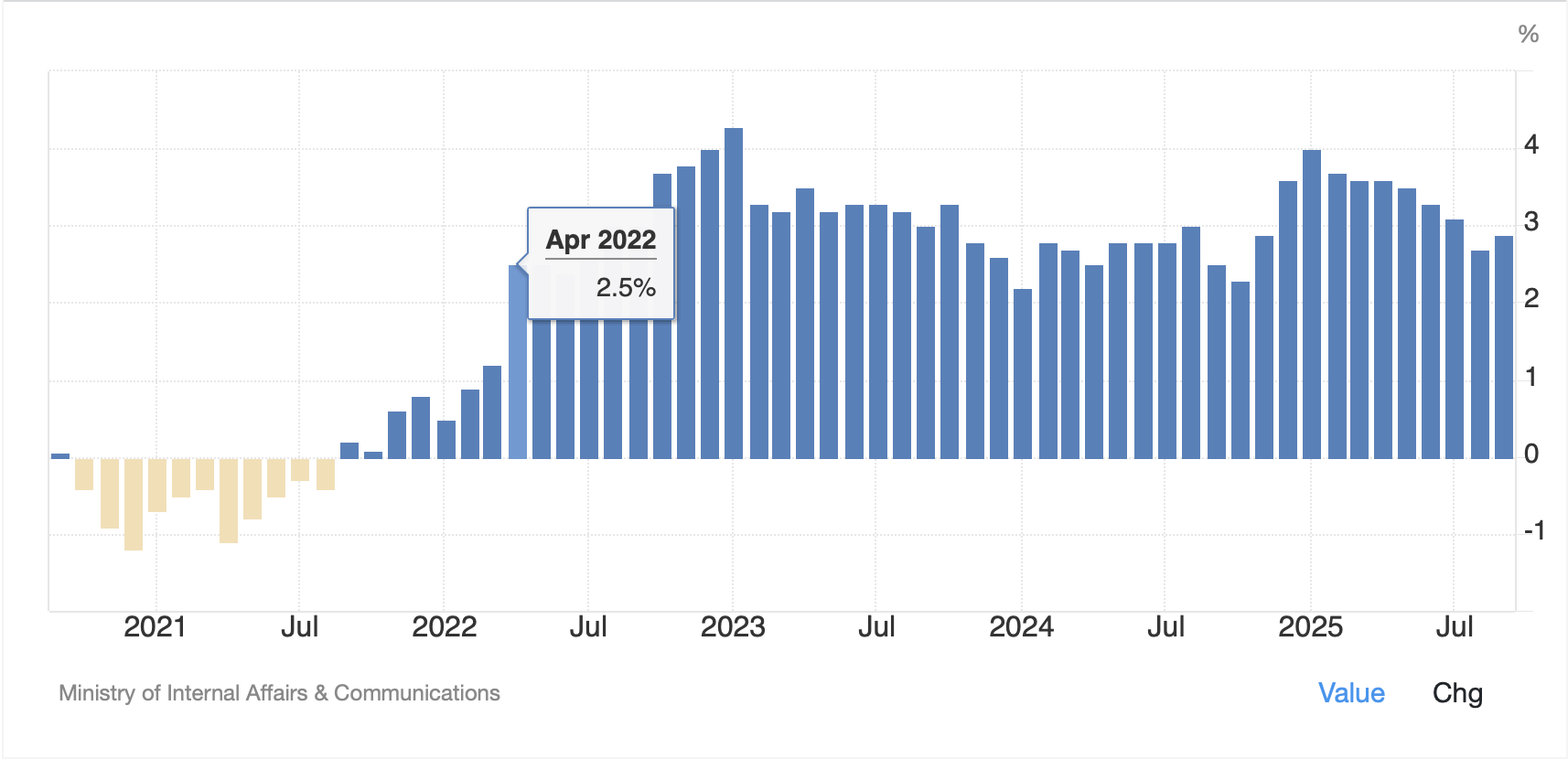
As per the above, it seems as though the BOJ is going to make every effort to tighten policy, albeit slowly, given that the inflation picture in Japan is not improving in the manner they would like to see.  In fact, last night, the latest figures were released showing that headline inflation remained at 2.8% and core rose a tick to 2.7%, although that was the expected outcome.  The one bright spot was their “super-core” reading fell to 1.9%.  In the past, I was given to understand that super-core was the number that mattered the most to the BOJ, but given Ueda seems keen to continue to tighten policy, I suspect it will not be the focus for now.
 
Which takes us to the other side of this equation, the Fed.  What will Chairman Powell tell us today?  Well, yesterday we heard both sides of the argument from FOMC members with Boston’s Susan Collins and Philadelphia’s Patrick Harker both explaining that the time for cutting rates was coming soon and that the process would be gradual.  On the other side, the host of the Jackson Hole shindig, newly named KC Fed president Jeffrey Schmid, explained, “It makes sense for me to really look at some of the data that comes in the next few weeks. Before we act — at least before I act, or recommend acting — I think we need to see a little bit more.”  
 
Based on the Minutes released on Wednesday, it certainly appears that the committee is ready to cut rates next month.  The real question is at what pace will they continue once they start.  Despite all the hubbub about the NFP revisions in the Twitterverse, none of the FOMC members interviewed explained that it altered their opinions about the economy.  As I type, three hours before Powell speaks, the Fed funds futures market is pricing a 26.5% probability of a 50bp hike with a 25bp hike fully priced in.  I have read arguments by some analysts that they need to start with 50bps because the payroll revisions paint a less positive picture of the economy.  But it is hard for me to believe that Powell will want to act more than gradually absent a major dislocation in the data still due between now and the next meeting.  If NFP is <50K or the Unemployment Rate jumps to 4.5% or 4.6%, that could see a 50bp cut, but otherwise, I believe Powell will be measured and not really give us anything new today.
 
Ok, let’s look at how markets have behaved ahead of his speech.  After yesterday’s disappointing US session, the Nikkei shook off any initial concerns about Ueda’s hawkishness and rallied 0.4% on the session.  But most of the rest of the region was in the red, with Hong Kong, Korea and Australia all sliding although the CSI 300 managed a 0.4% gain.  In Europe, though, green is the theme with every major market firmer this morning led by Spain’s IBEX (+0.7%) and Germany’s DAX (+0.65%).  There was no notable data, so it is not clear the driver here.  Of course, US futures are rallying at this hour as well, with the NASDAQ futures higher by 1.0% leading the way.  Based on these markets, there is clearly a belief that Powell will be dovish.
 
In the bond markets, Treasury yields have slipped 1bp this morning but have been hanging around the 3.85% level for several sessions.  There was a dip on Wednesday after the Minutes seemed dovish, but that reversed course before the day ended and we have done nothing since.  In Europe, investors and traders are also biding their time with virtually no change in yields there.  Finally, JGB yields did rise by 3bps in response to Ueda’s marginal hawkishness.
 
In the commodity markets, oil (+1.3%) is continuing to rebound from its recent lows in what looks like a technical trading bounce although the EIA data on Wednesday did show more inventory draws than expected.  In the metals markets, while yesterday was a terrible day in the space, with metals selling off hard during the NY session, this morning they have rebounded and are higher across the board.  Nothing has changed my view that if the Fed turns dovish, metals markets, and commodities in general, will rally sharply.
 
Finally, the dollar is under pressure this morning, slipping broadly, but not deeply.  The euro is unchanged, while the pound (+0.2%) and AUD (+0.4%) pace the gainers in the G10.  In the EMG bloc, ZAR (+0.4%), MXN (+0.3%) and KRW (+0.3%) all showed modest strength as it appears traders are looking for a somewhat dovish Powell speech as well.  The dollar will be quite reactive to Powell, I believe, so watch closely.
 
In addition to Powell, and any other FOMC members that are interviewed at the symposium, we only see New Home Sales (exp 630K).  Yesterday, Existing Home Sales stopped their declines and printed as expected at 3.95M.  Claims data was also as expected although the Chicago Fed National Activity Index printed at a much lower than expected -0.34 after a revision lower to the previous month.  That is a negative economic indicator.
 
This poet’s view is Powell will try to be as middle of the road as possible, acknowledging the likelihood of a cut in September but not promising anything beyond that.  That said, I believe the market is looking for a much more dovish speech.  If he does not provide that, I expect that we could see some market negativity overall with the dollar rebounding.
 
Good luck and good weekend
Adf

Waxes and Wanes

The story of note for today
Is how will the BLS play
Employment revisions
And then what decisions
Will Powell be likely to weigh?
 
For now, markets still seem assured
That rate cuts will soon be secured
The doves still want fifty
But most are more thrifty
With twenty-five likely endured
 
But what if Chair Powell decides
Inflation, just like ocean tides
Both waxes and wanes
And though they’ve made gains
No rate cuts, to Fed funds, provides


So, the big story today, which I briefly discussed on Monday, is that the BLS is going to make benchmark revisions to their NFP data for the year through March 2024.  These revisions come from a closer analysis of the Quarterly Census on Employment and Wages (QCEW) data, which is the most comprehensive data set on jobs available.  Remember, for their monthly reports, the BLS uses a model that incorporates samples of data from respondent companies, and then includes their own adjustments based on the birth-death model of new businesses and how many jobs they create.  But the QCEW data doesn’t model things, it counts all the data from states regarding unemployment insurance and reports required to be filed by companies regarding quarterly contributions.  It is the gold standard.

Naturally, when the QCEW is released (the most recent was released in June), the analyst community goes through everything and makes their own estimates as to the changes that will occur.  Prior to any revision, the BLS data show that the economy added 2.9 million jobs in the 12 months from April 2023 through March 2024.  But analyst estimates range from a reduction in that number ranging from 300K to as much as 1 million fewer jobs.  

Given the increased importance the Fed has placed on the employment side of their mandate lately, and given that one of the reasons, if not the key reason, Powell has been willing to leave rates at current high levels is the employment situation has remained robust, if he and his colleagues were to suddenly find out that there were one million less employed people around, that would likely have a serious impact on their views as to where rates should be.

Based on the stories that I have seen on this topic over the past several days, as well as the positioning that is being revealed by the Commitment of Traders’ reports showing massive long positions in both treasury bond futures and SOFR call options, both of which are real money expressions of expectations of lower interest rates coming soon, it strikes me that the pain trade is the opposite.  In other words, what if this revision is much smaller than the largest estimates, maybe 100K or something.  Suddenly, the idea that the Fed is going to be pressured into cutting rates despite the fact that inflation, though lower, remains well above their target, is not quite as certain.  

The thing is, based on what I keep reading and hearing, it strikes me that the market is set up for a bond sell-off and higher yields today.  Either, the number is large, about 1 million jobs removed, and then we will see profit taking on the outstanding positions, or the number is small, and the entire story needs to be rewritten regarding the timing of the first rate cut, which means that positions need to be abandoned.  I’m not sure what the goldilocks number needs to be to have traders maintain their positions ahead of Friday’s Powell speech, but given that is a wild card as well, I think that is the least likely outcome, no change in positions.

Elsewhere, the only other noteworthy thing was a story about a BOJ staff paper that discussed the idea that inflation in Japan is still structural and that higher rates are still appropriate, but that is a staff paper, and not necessarily Ueda-san’s view.  The BOJ next meets on September 20, two days after the FOMC, so Ueda-san will have lots more new information to decide just how hawkish he wants to be.  Recall, the dramatic market collapse in Japan at the beginning of the month, while completely reversed now, forced their hand to back off their hawkishness.  Perhaps, the second time, if they remain hawkish, they will be able to withstand that type of movement.

So, as we all await this BLS revision, which comes at 10:00 this morning, here is how things behaved overnight.  After the first down day in the US in 9 sessions, Japanese (-0.3%) and Chinese (-0.3%) markets were also soft although the rest of the region was mixed with some gainers (India, Indonesia, Australia) and some laggards (Hong Kong, Taiwan, New Zealand).  In Europe, though, equity markets are modestly firmer this morning, somewhere between 0.25 and 0.5%, although there has been a lack of new information seemingly to drive things.  As to the US, futures at this hour (7:30) are edging higher by about 0.1%.

In the bond market, Treasury yields have edged up 1bp this morning, although they have been trending down for the past week in anticipation of this BLS employment adjustment.  European sovereign yields are essentially unchanged this morning while JGB yields dipped 1bp.  The story there remains that 10-year JGBs are yielding well less than 1.00%, the perceived key level at which more Japanese funds flow home.  I think we will need to see a much more hawkish BOJ to get that trade going.

In the commodity markets, oil (0.0%) has stopped falling for the time being, but remains under pressure overall, down more than 6.6% in the past month.  Yesterday’s API data (the private sector version of the EIA data to be released later this morning) showed a small build of inventory as opposed to the continued draws that we have seen lately and that were expected.  However, a look at the oil chart tells me that we are much closer to the bottom of its trading range for the past 3 years, than the top, and seem likely to rebound a bit.  Gold (-0.15%) is consolidating its recent gains and remains above that big round $2500/oz level but both silver (+0.5%) and copper (+0.5%) are rallying today.  I keep reading stories about how the physical shortages in both those markets, due to increased production of solar panels and batteries, is going to become the key driver going forward.  While I have believed that story, it is always hard to ascribe a given day’s movement to something like that absent a major new piece of information, and I haven’t seen that piece of the puzzle.

Finally, the dollar is bouncing slightly this morning, although that is after a pretty straight-line decline for the past two months.  Given the hype about Fed rate cuts, especially adding in this new focus on the BLS job data adjustment, it is easy to see why traders are looking for much lower US rates and therefore selling the dollar.  But remember, in the big scheme of things, at least based on the Dollar Index, the dollar is pretty much at its long-run average, neither weak nor strong.  I will say that if the Fed does enter a serious rate cutting cycle, the dollar is likely to weaken quite a bit more, perhaps with the euro testing 1.15 – 1.20 before it ends.  However, remember, if the Fed starts cutting aggressively, so too will the ECB, BOE and BOC, so any weakness will be somewhat limited.  As to today’s price action, the dollar’s strength is universal, but pretty modest overall with the biggest mover JPY (-0.5%) although obviously there are other things ongoing there.  

Aside from that employment report revision, there is no other data to be released and there are no Fed speakers scheduled today.  Today will be driven by that revision.  The larger the revision, the more likely we see the dollar decline, although the initial reaction on interest rates may be opposite on profit taking.

Good luck

Adf

That Trade Again

Remember when everyone knew
That BOJ hikes would come through
The Fed would cut rates
And all the debates
Were focused on what next to do?
 
It turns out the very next thing
For those getting back in the swing
Was selling the yen
(Yes, that trade again)
And buying stuff that has more zing


We all know that the carry trade died two weeks ago.  After all, the BOJ hiked rates in a surprise to the markets which was followed by Chairman Powell essentially promising to cut rates.  Those actions spooked traders, and arguably algorithms as well, and we saw a dramatic decline in equity markets around the world, led by Japanese stocks.  The premise was that much of the market activity was driven by borrowing yen at near 0.0% and then converting those yen into other currencies and buying other assets, or just depositing the dollars, or Mexican pesos or Brazilian reals and earning the interest rate differential.

Now, don’t get me wrong, that was an active trade and clearly a part of the ongoing risk asset rally that was evident throughout most of the world.  But that trade took several years to build up, and the idea that it was unwound in a week is laughable.  But, that sharp move two weeks ago succeeded in doing one thing, it scared the 💩 out of the central bankers around the world.  Within days, the BOJ walked back all their tough talk about normalizing monetary policy and ending QQE.  As well, despite desperate calls from some of the punditry for an emergency rate cut, or at the very least, a guarantee of a 50bp cut in September by the Fed, the few Fed speakers we have heard continue with their mantra that while some things are looking encouraging, the time is not yet right to cut rates.

And, you know what that means?  It means that the interest rate differentials between Japan and the rest of the world remain plenty wide enough to reinvigorate that self-same carry trade that was declared dead just two weeks ago.  The obvious proof is in the equity markets which, while not quite back to the highs of July 16th, have rebounded between 6.8% (S&P500) and 8.8% (NASDAQ) from the bottoms seen at the beginning of the month.  (see chart below)

A graph of a line graph

Description automatically generated with medium confidence

Source: tradingeconomics.com

But equally important to this story is the fact that the yen has declined more than 4% from its highs at the peak of the fear as investors are far less concerned about much tighter BOJ policy.  This is also evident in the JGB market, where 10-year yields, while climbing 3bps overnight, remain well below the 1.0% level that was seen as a harbinger of the new monetary framework in Japan.

A graph showing the price of a stock market

Description automatically generated

Source: tradingeconomics.com

Of course, there has been other news that has abetted this price action, namely the recent US data which showed that the employment situation may not be as dire as the NFP report at the beginning of the month.  This was demonstrated yet again yesterday when Initial Claims fell to 227K, its lowest point in 5 weeks and the second consecutive decline in the result.  As well, Retail Sales were a much stronger than expected 1.0% (although the autos component seemed a bit funky), indicating that real economic activity was still growing.  Granted, the IP (-0.6%) and Capacity Utilization (77.8%) data were soft as were both the Philly Fed (-7.0) and Empire State Manufacturing (-4.7) surveys, but none of that matters when the markets get on a roll.

If I had to describe the narrative this morning it would be, everything’s fine.  The economy is still doing well, the jobs market is not collapsing, and the Fed is still on track to cut rates next month.  Goldilocks has come out of hiding and is back headlining the show.  While there are still some doubters out there, their voices are being drowned out by all the shouting to buy more stocks.

So, as we head into the weekend, let’s see how things have performed overnight.  In Asia, markets everywhere rallied following the strength in the US yesterday.  The Nikkei (+3.6%) led the way and has now rebounded more than 20% from its nadir at the height of the fear.  But the Hang Seng (+1.9%) showed strength and we saw strength throughout the region (Australia +1.3%, Korea +2.0%, India +1.7%) with one notable exception, mainland China, where shares edged up just 0.1%.  It seems that President Xi has, at the very least, a marketing problem with respect to getting investors to put money into China. In Europe, most markets are higher between 0.25% (CAC) and 0.6% (DAX) although the FTSE 100 (-0.4%) is struggling this morning after Retail Sales data there were seen as less than stellar.  As to the US, ahead of the opening futures markets are little changed at this hour (7:15).

In the bond market, yesterday’s stock euphoria played out as a sale of bonds with the corresponding rise in yields of 7bps in the US Treasuries.  However, this morning, those yields have backed off by 5bps and we have seen similar price action throughout Europe with sovereigns there showing yield declines of between 3bps and 5bps after following Treasury yields higher yesterday.  For now, bonds are certainly behaving like a haven asset.  Also, it is worth noting that the yield curve inversion is back to -17bps, edging slowing away from normalization.

In the commodity markets, after a solid performance yesterday, oil (-2.6%) is under real pressure this morning as market participants look to the lackluster Chinese economic activity and are worried that demand is not going to pick up anytime soon.  Certainly, yesterday’s Chinese data was nothing to write home about, and this morning they released their Foreign Direct Investment data showing it had decline -29.6% YTD in July.  This does not inspire confidence.  In fact, under the rubric a picture is worth 1000 words, here is a chart of that Chinese FDI.  It seems clear that something has changed in the way the world views China.

A graph of blue and orange lines

Description automatically generated

Source: tradingeconomics.com

As to the metals markets, gold (+0.4%) continues to find support as despite the equity rally, there remains a steady interest to hold something other than USD and fiat currencies.  However, the rest of the complex is softer this morning as weaker industrial activity would indicate less demand.

Finally, the dollar is ceding some of its gains from yesterday with some pretty substantial moves in both G10 and EMG blocs.   Versus the G10, the yen, which fell sharply yesterday, has rebounded 0.75% this morning, although remains above 148.  But we have seen strength in AUD (+0.3%), NZD (+0.7%) and GBP (+0.35%) as virtually all the G10 is firmer.  The pound is a bit odd given the equity market’s response to the UK data, but the other currencies seem to be simply retracing yesterday’s weakness.  In the EMG bloc, ZAR (+0.4%) is firmer on the back of gold and the generally weak dollar, but we are seeing MXN (-0.2%) lag the move.  CNY (+0.2%) is also benefitting today as broad dollar weakness plays out far more aggressively here than it has historically.  While the dollar’s long-awaited demise is still far in the future, today it is under some pressure.

On the data front, this morning brings Housing Starts (exp 1.33M), Building Permits (1.43M) and Michigan Consumer Sentiment (66.9).  As well, this afternoon we hear from Chicago Fed president Goolsbee.  He has been one of the more dovish FOMC members so look for him to talk up the chances of a more aggressive rate cut next month.  However, there is still a lot to learn between now and then with PCE next week, then another NFP and CPI report as well as the Jackson Hole conference.  As it stands this morning, the Fed funds futures market is pricing a 27% chance of a 50bp cut, with 25bps a lock.  But if the data continues to shine, please explain why they need to cut.  I think we are in a ‘good news is good’ scenario, so strength in this morning’s data should support the dollar and weakness impair it.  We shall see.

Good luck and good weekend

Adf